Namibia
Jun 6-18
ET553 YYZ-ADD, ET835 ADD-WDH, ET834 WDH-ADD, ETT552 ADD-YYZ
Namibia has been on our travel list for a number of years, but we finally decided to move forward in mid-2025. Our previous safari experiences in South Africa, Botswana and Zambia were all booked through Wild Wings Safari, so I reached out to them to plan our trip. There were lots of options for organized group tours each with pros and cons, but ultimately we decided that a private guided tour would allow us to see everything we wanted and focus on the best photography opportunities.
As we planned so far in advance, I was also able to use our points to get the best flight routing on Ethiopian Airlines through Addis Ababa. It was a bit of an extravagant trip, but we wanted to make sure we got the most out of our time there.
Jun 7
After the 16-hour overnight flight from Toronto, we had a couple of hours to visit the lounge in Addis Ababa. Our last time in Addis was in 2013, and since then the growth of Ethiopian and their hub was remarkable. In 13 years the airline grew from 58 aircraft to 168, and we could barely recognize the terminal. After another six-hour flight, we arrived in Windhoek in the early afternoon, and completed the slow immigration process. We were then transferred to our hotel, where we had time to shower and unwind, and I headed out for a walk to stretch my legs after a long two days of travel.
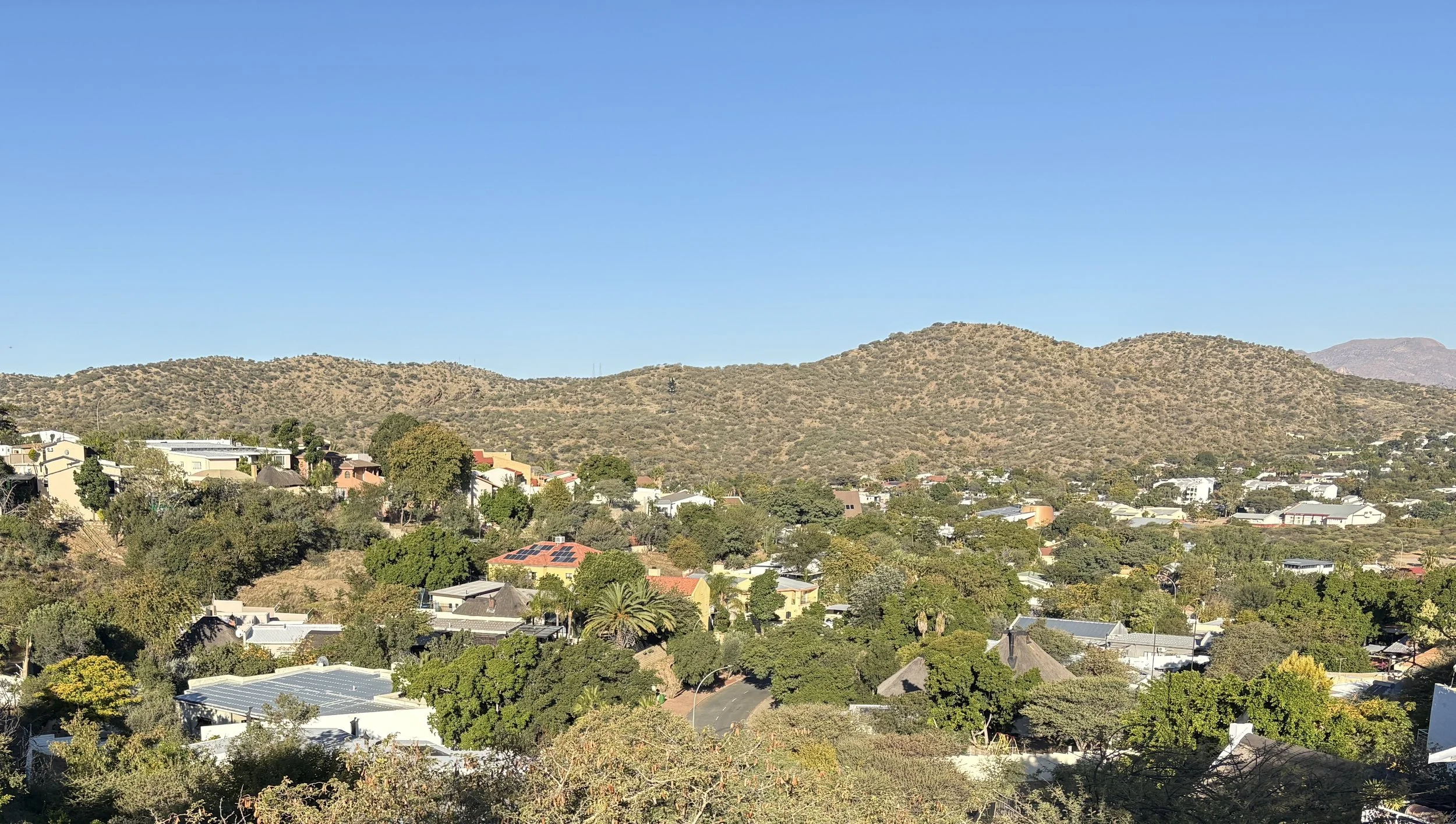
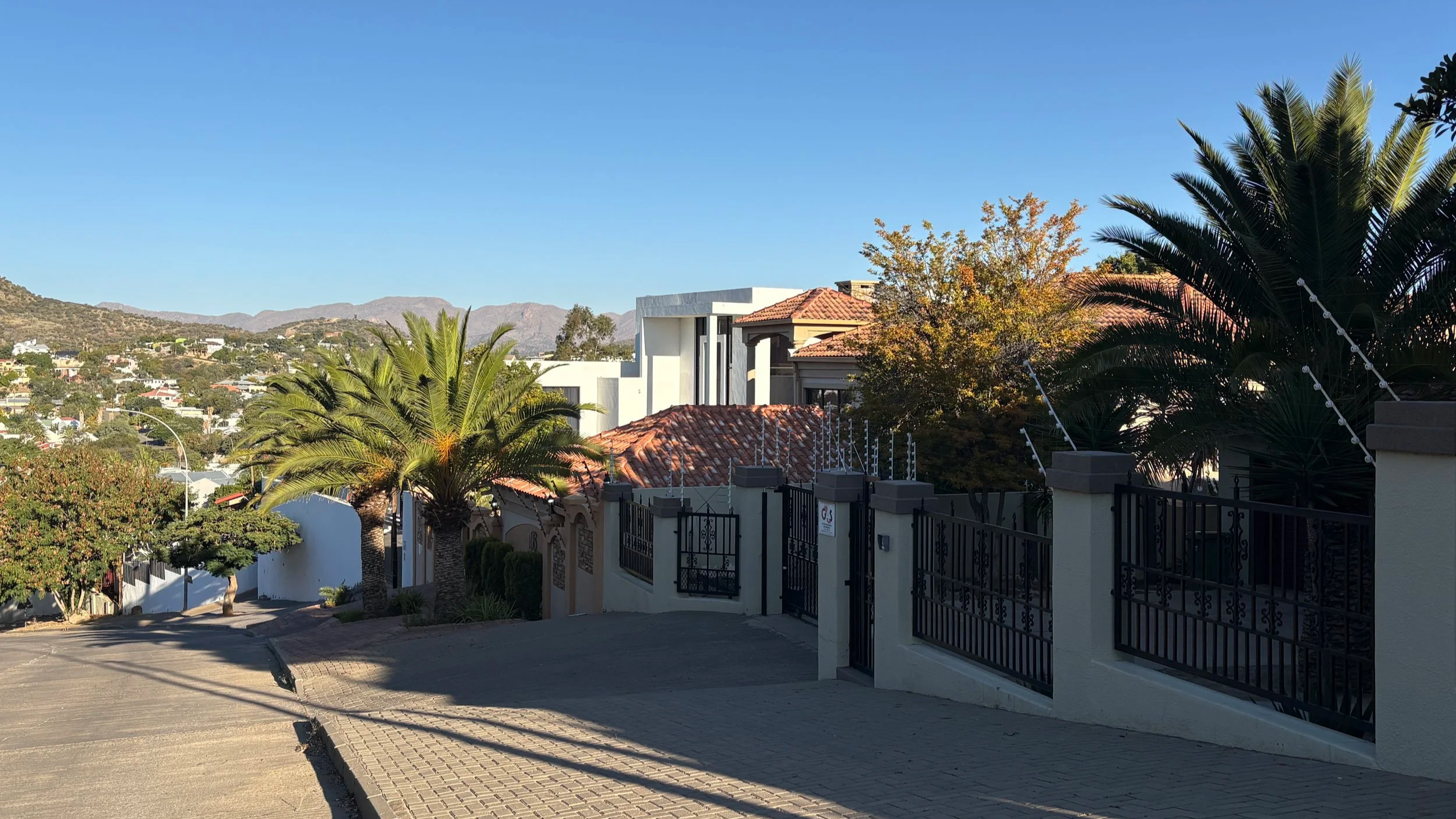
View of Windhoek from the affluent Eros neighbourhood in the hills over the city
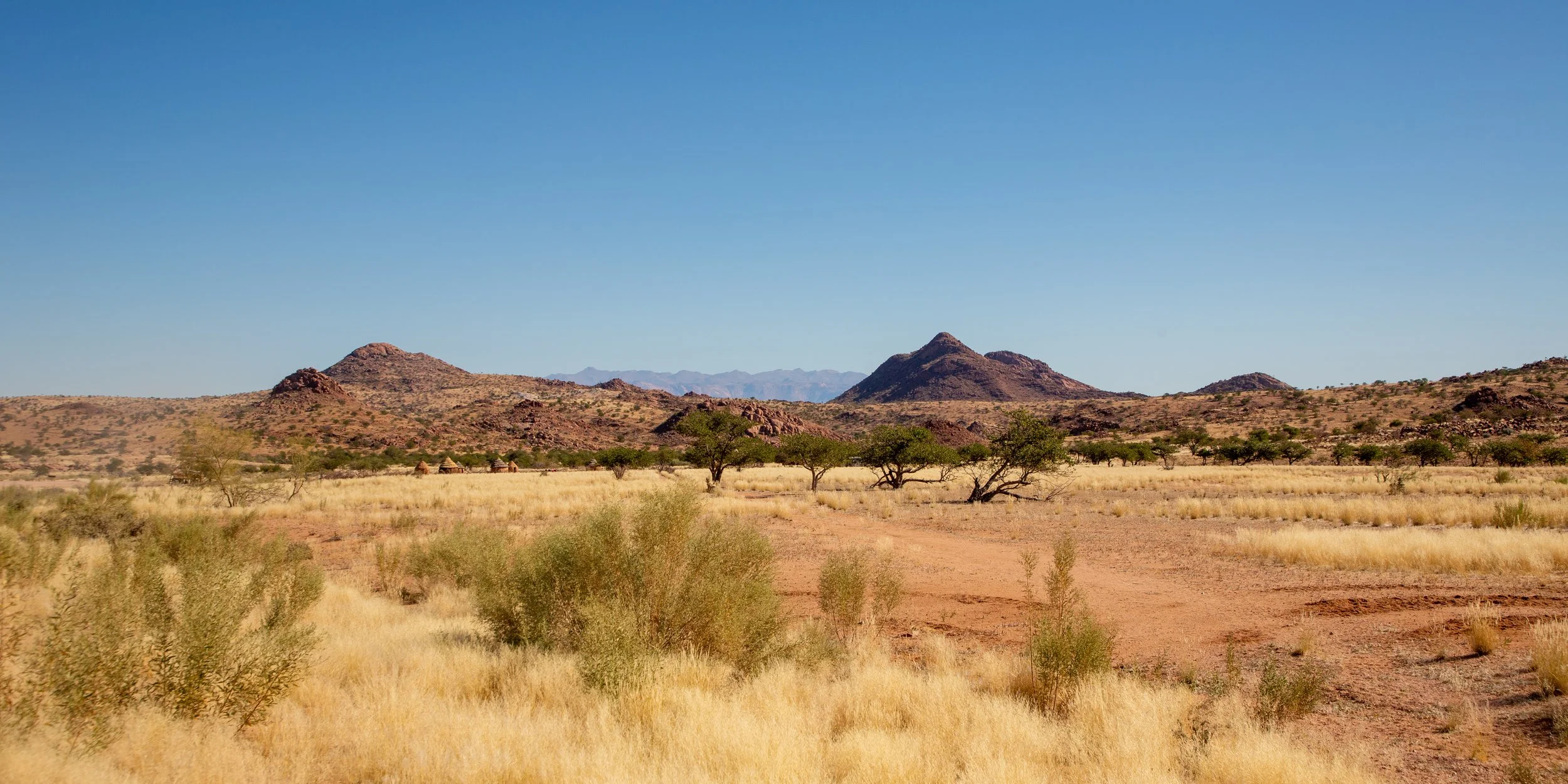
Although Namibia is not the richest country in Africa, we were very much surrounded by a concentration of wealth
Just before dinner at our hotel, we met William Steenkamp, our guide from Ultimate Earth, the company operating our tour, and were oriented to the plans for our upcoming adventure. Although we knew the plan when we booked the trip almost a year earlier, it was feeling very real to see the details on a road map and to understand the long journey we had ahead.
Jun 8
After breakfast, we were greeted by William who loaded up our safari vehicle with provisions for the full-day drive ahead. We headed out at about 7:30am, and enjoyed the highway drive to our first pit stop in Rehoboth, that started the day on what would be the smoothest road conditions we’d have for a number of days.
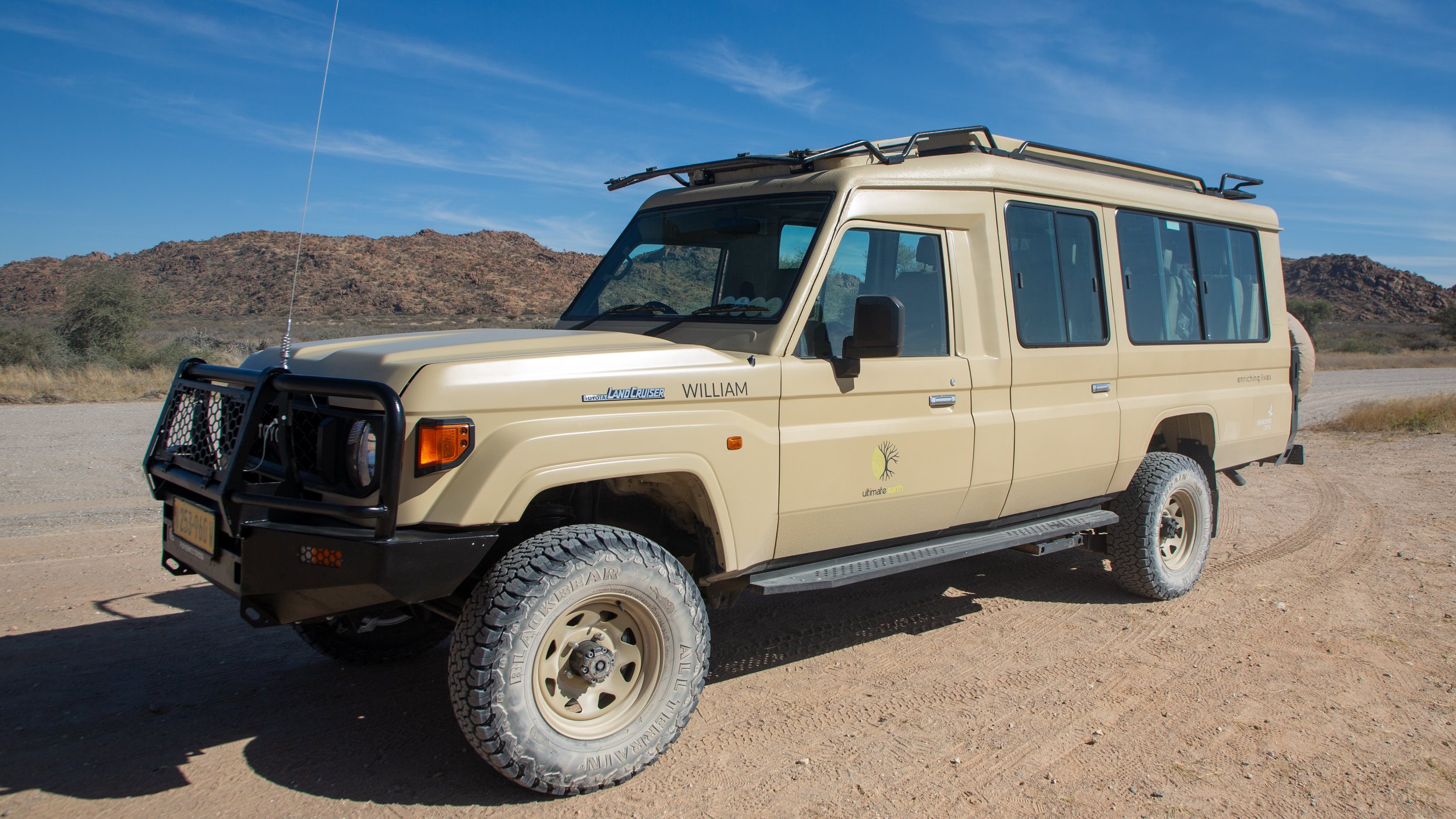
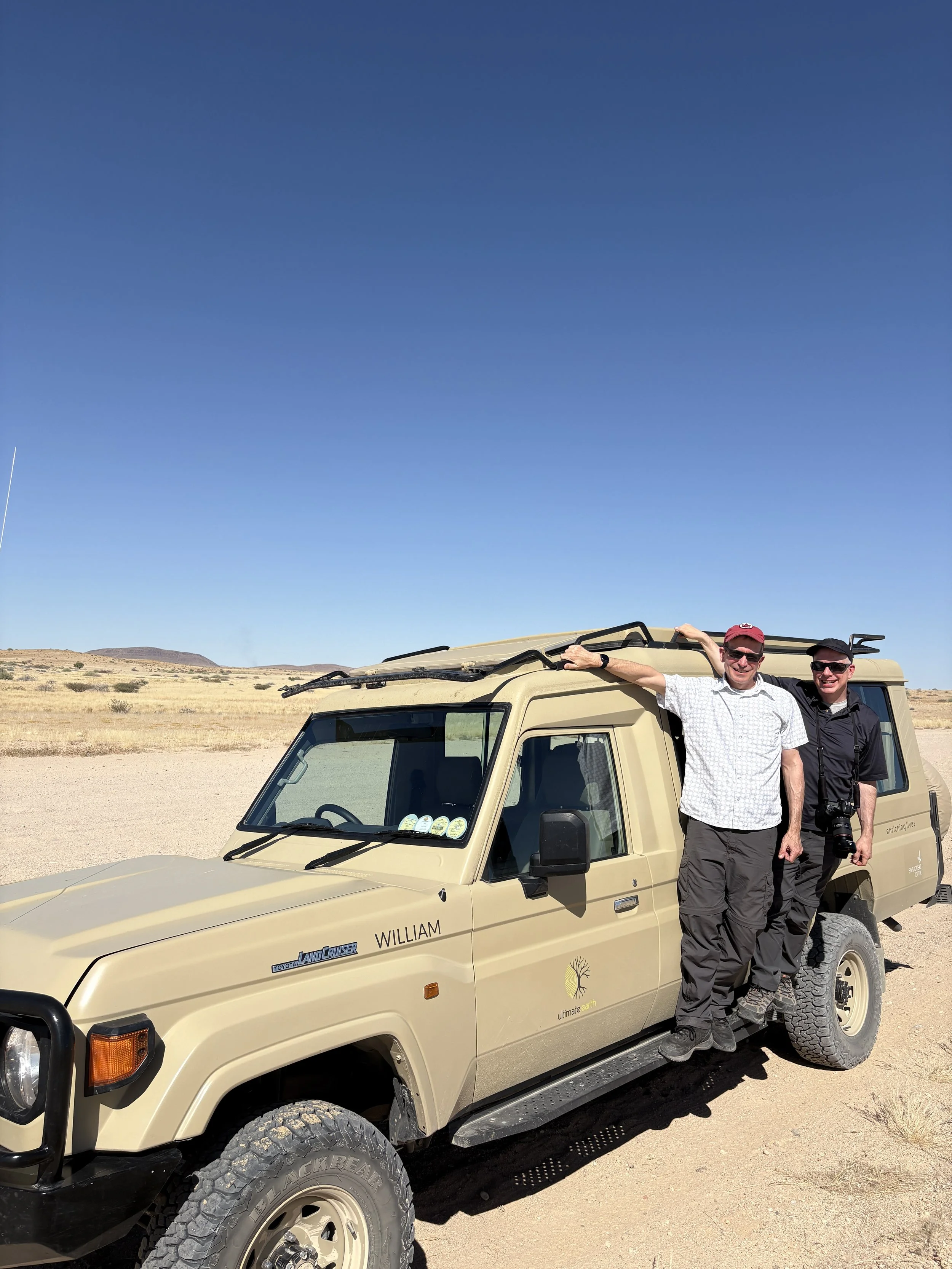
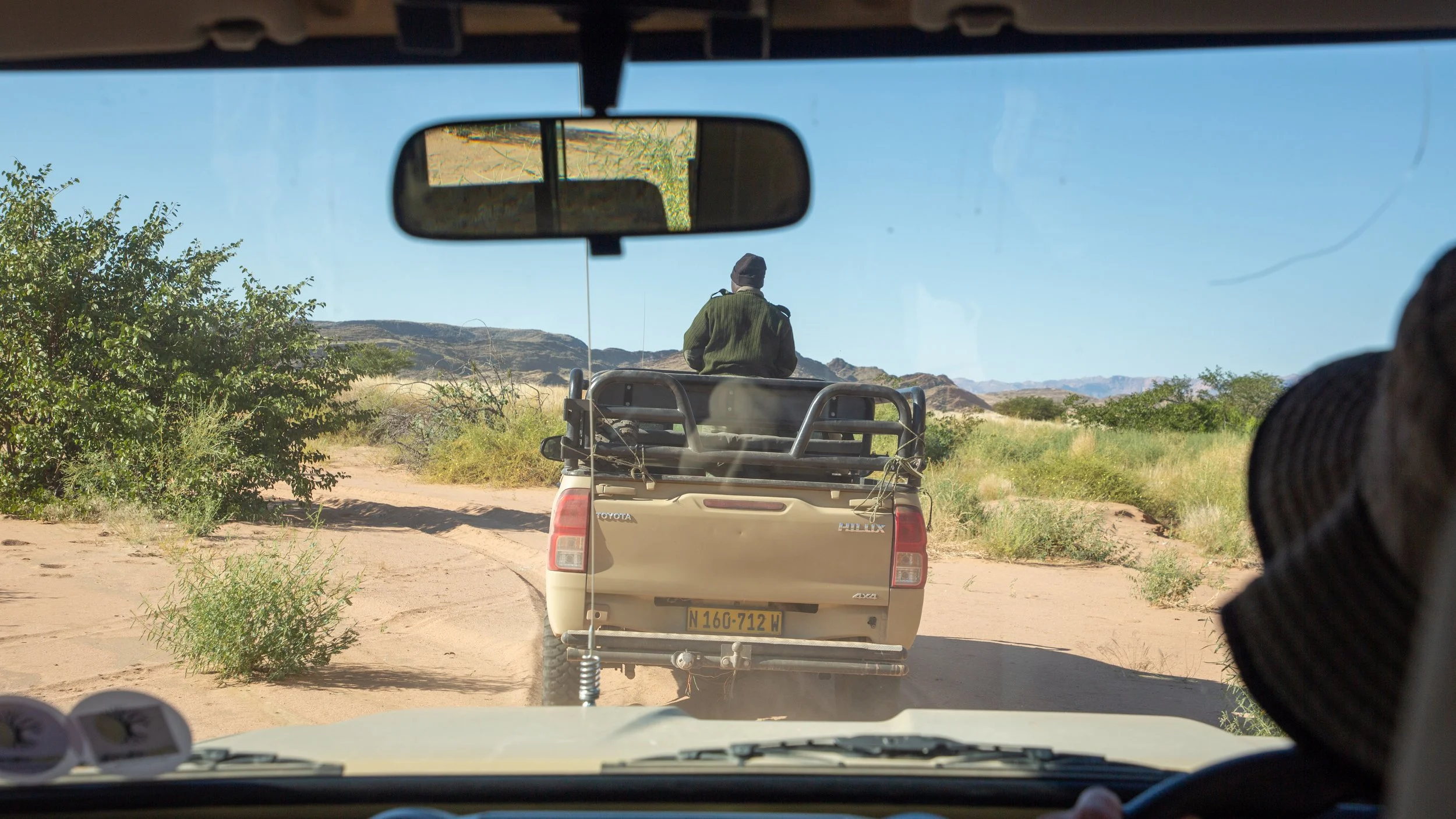
William’s safari-modified Toyota Land Cruiser, our reliable partner for the next 10 days.
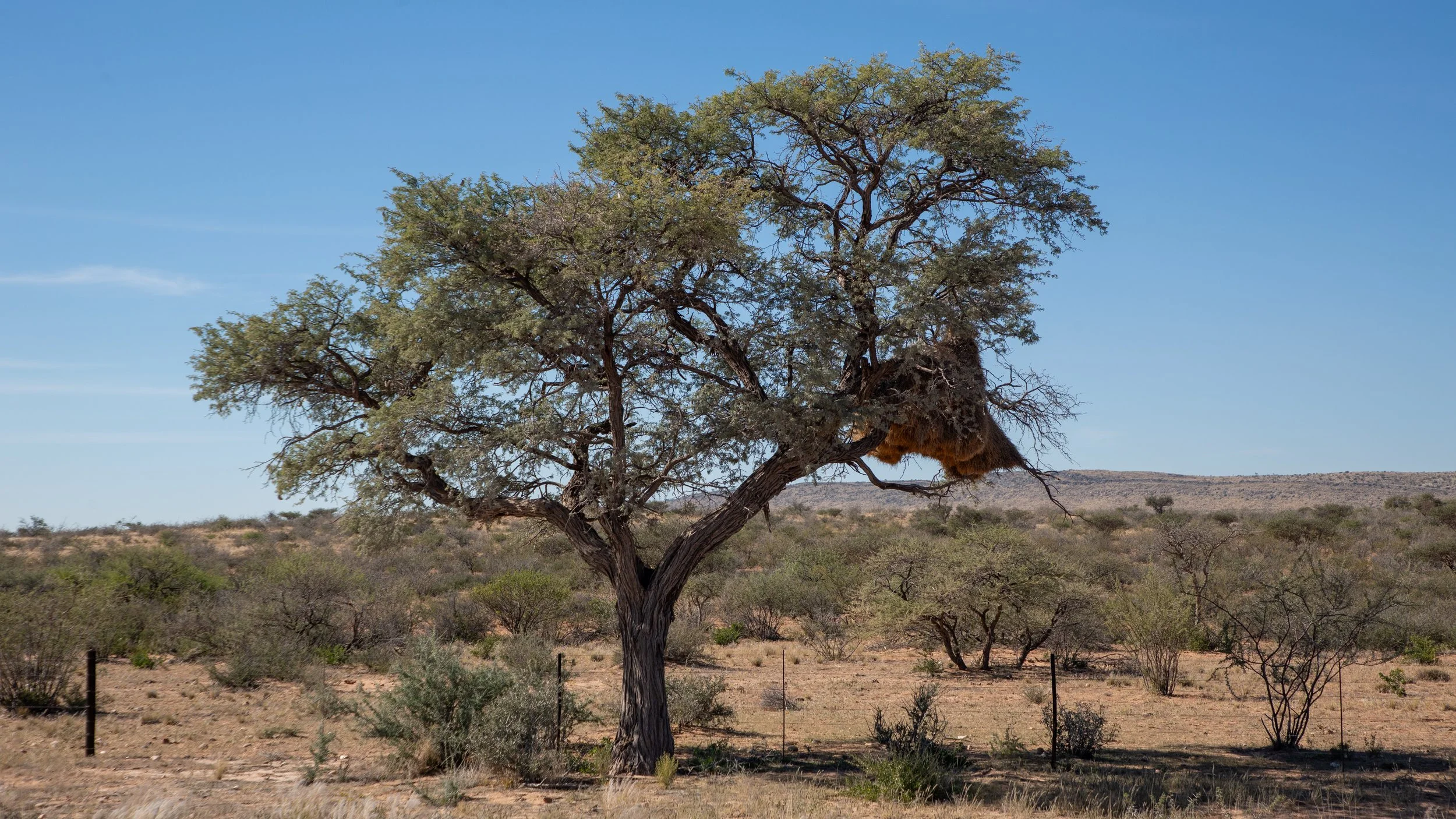
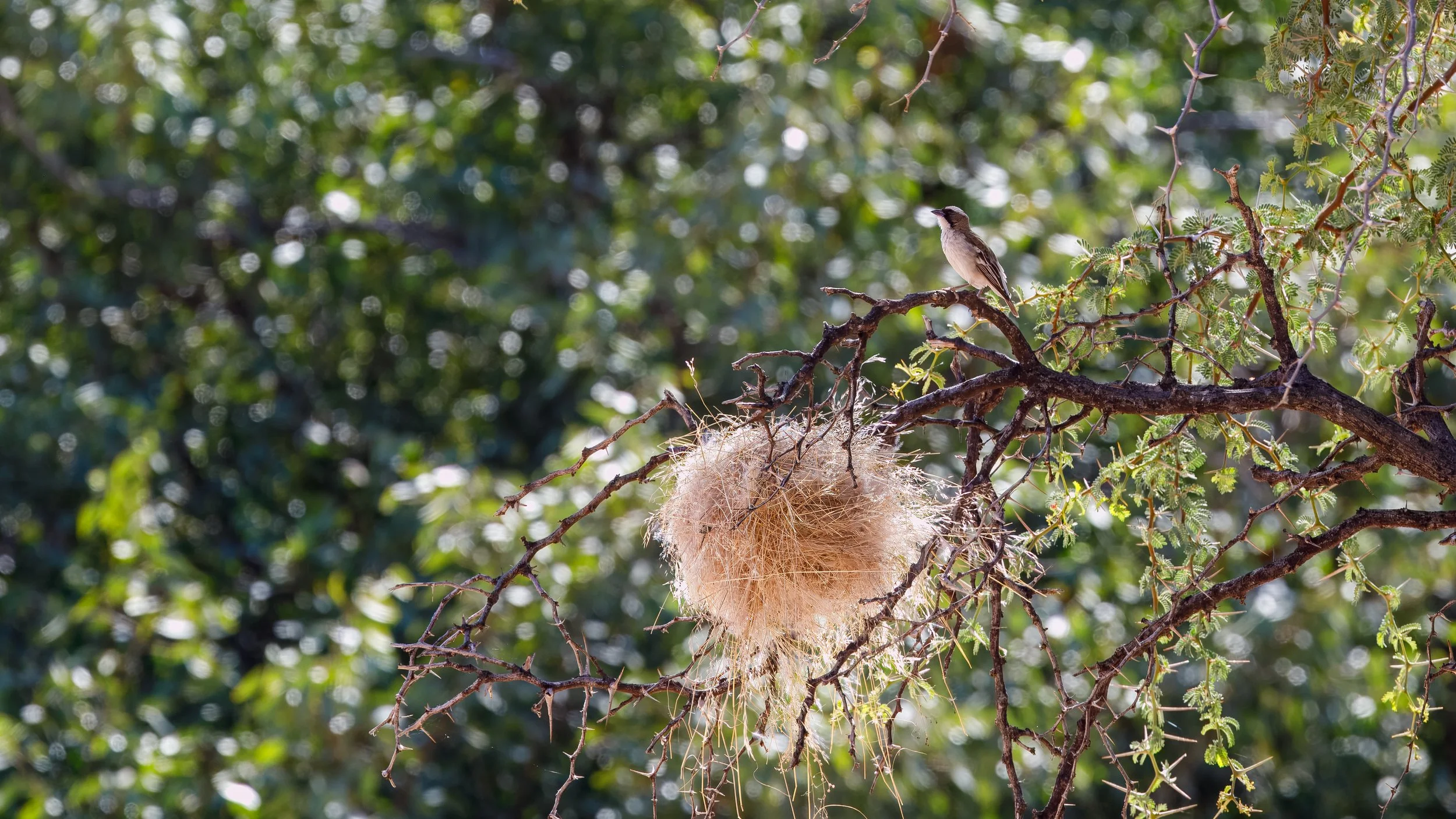
Crossing the baron landscape we spot our first sociable weaver nest, a shared nest with hundreds of birds, in a camel thorn tree
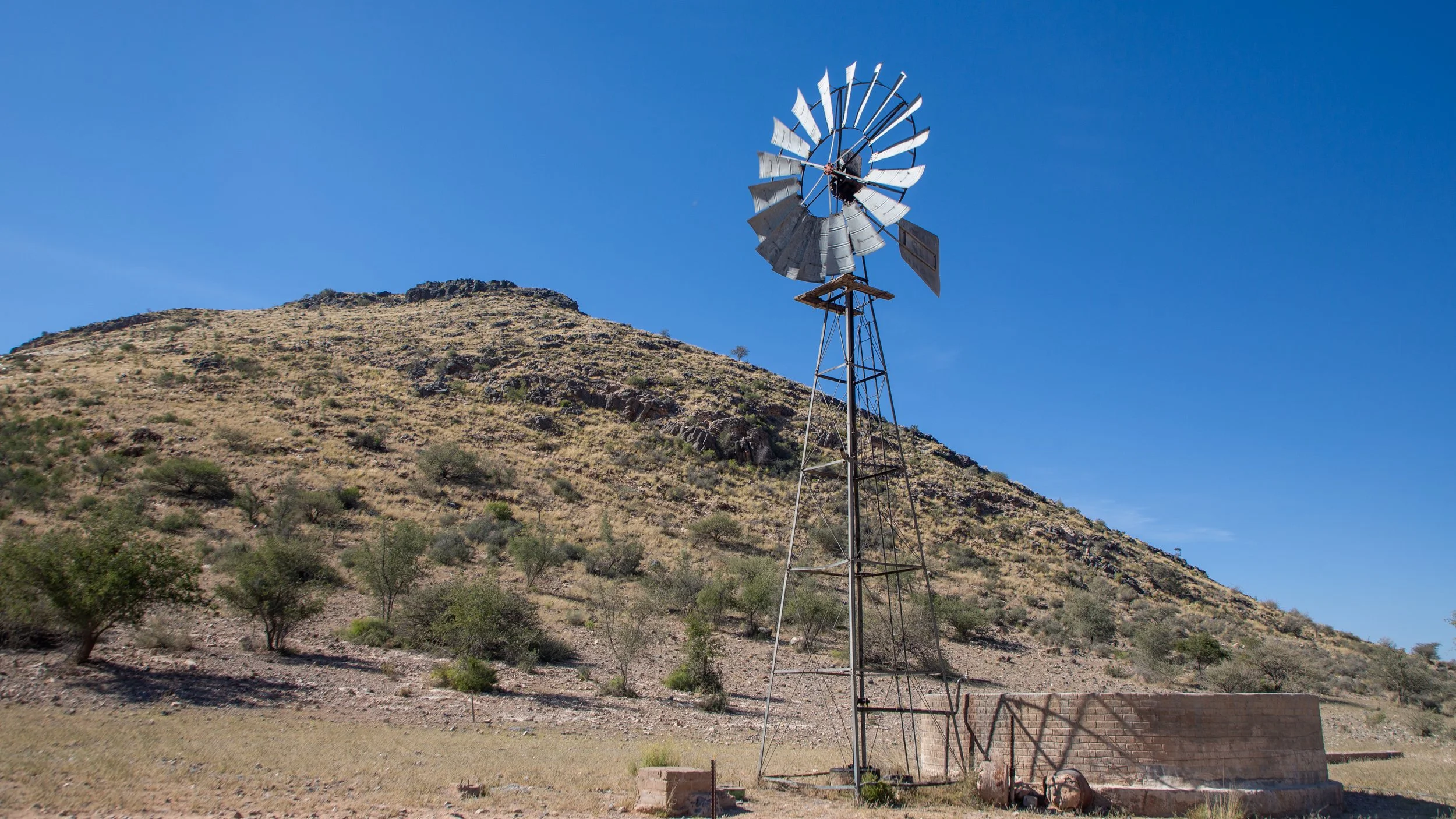
Windmill powers a pump at a watering hole at our lunch picnic stop; unfortunately this pump wasn’t working and the hole had run dry.
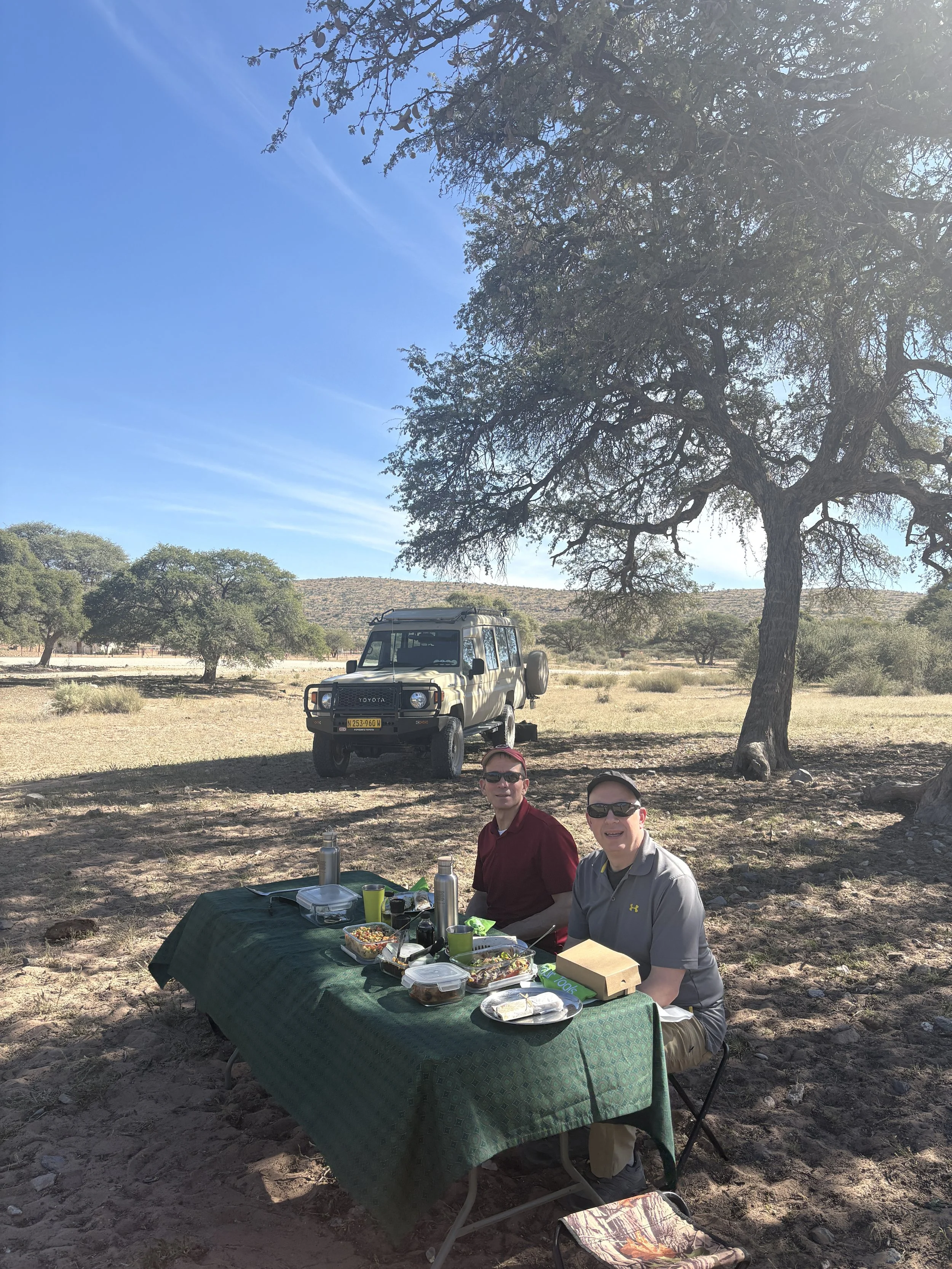
William provided an impressive lunch during our rest, before continuing the long drive
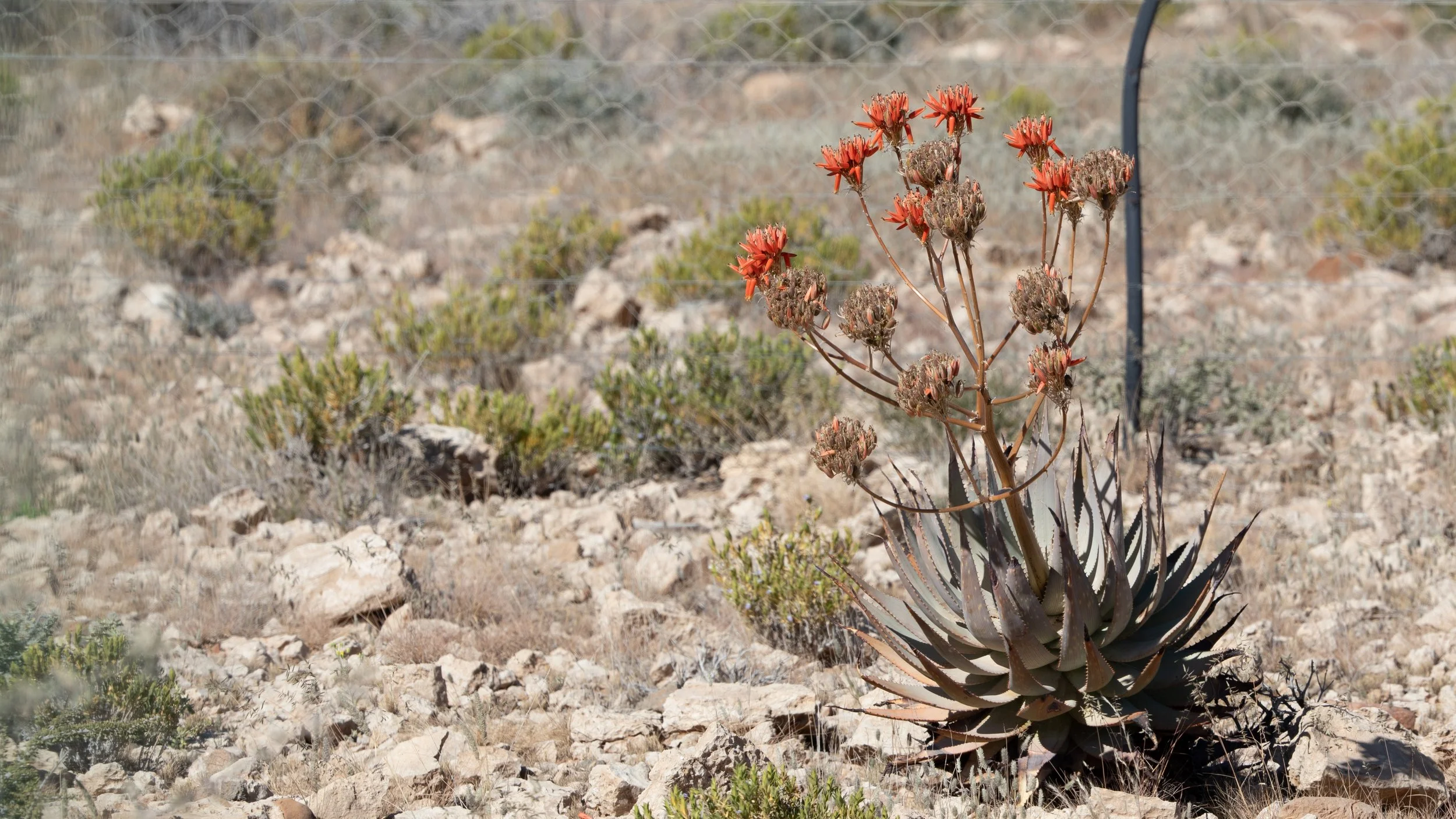
Aloe hereroensis, commonly known as the Sand Aloe; a good descriptor for the dry surroundings
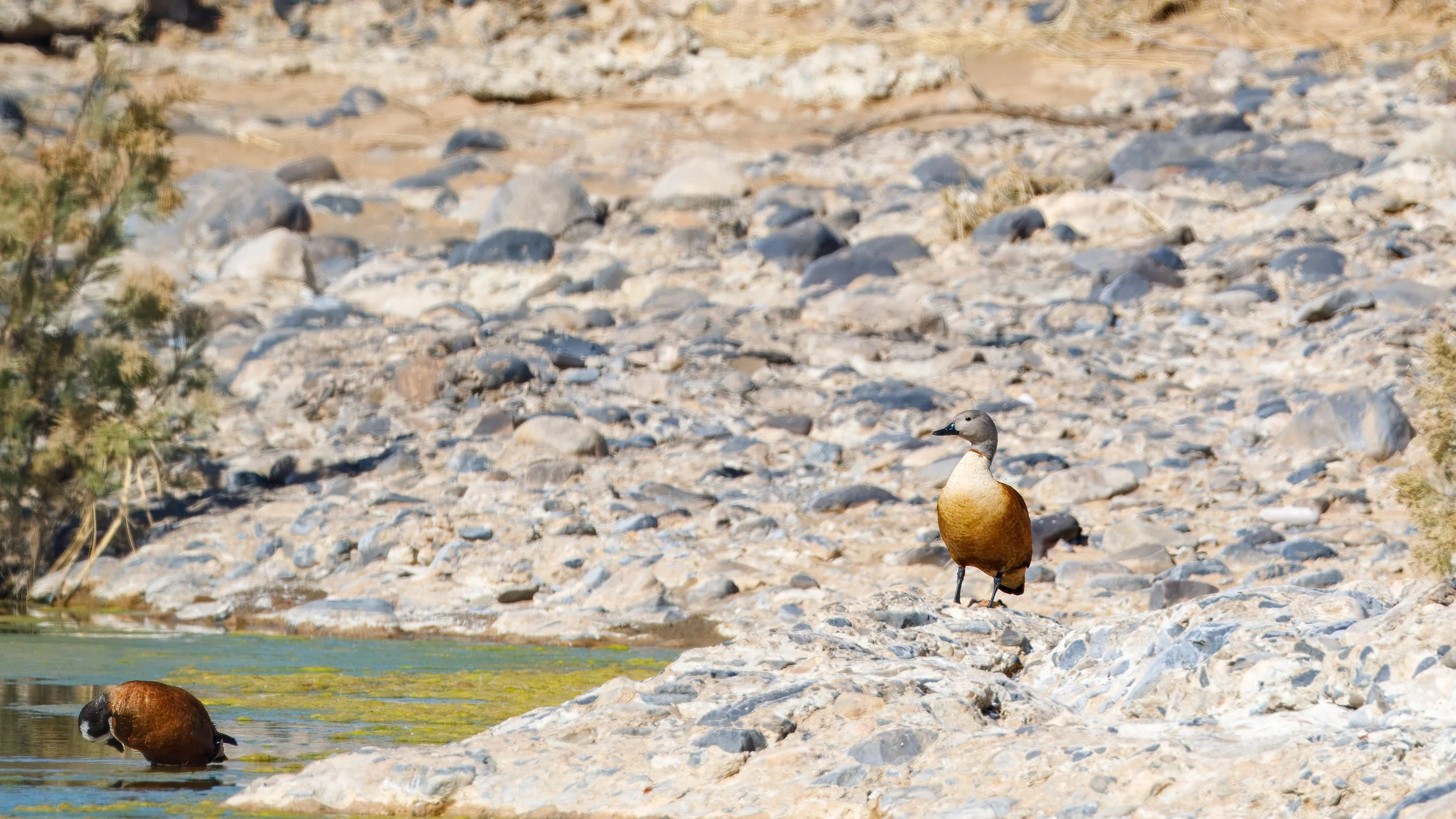
Female South African (or Cape) shelduck enjoying the water of the Tsauchab River
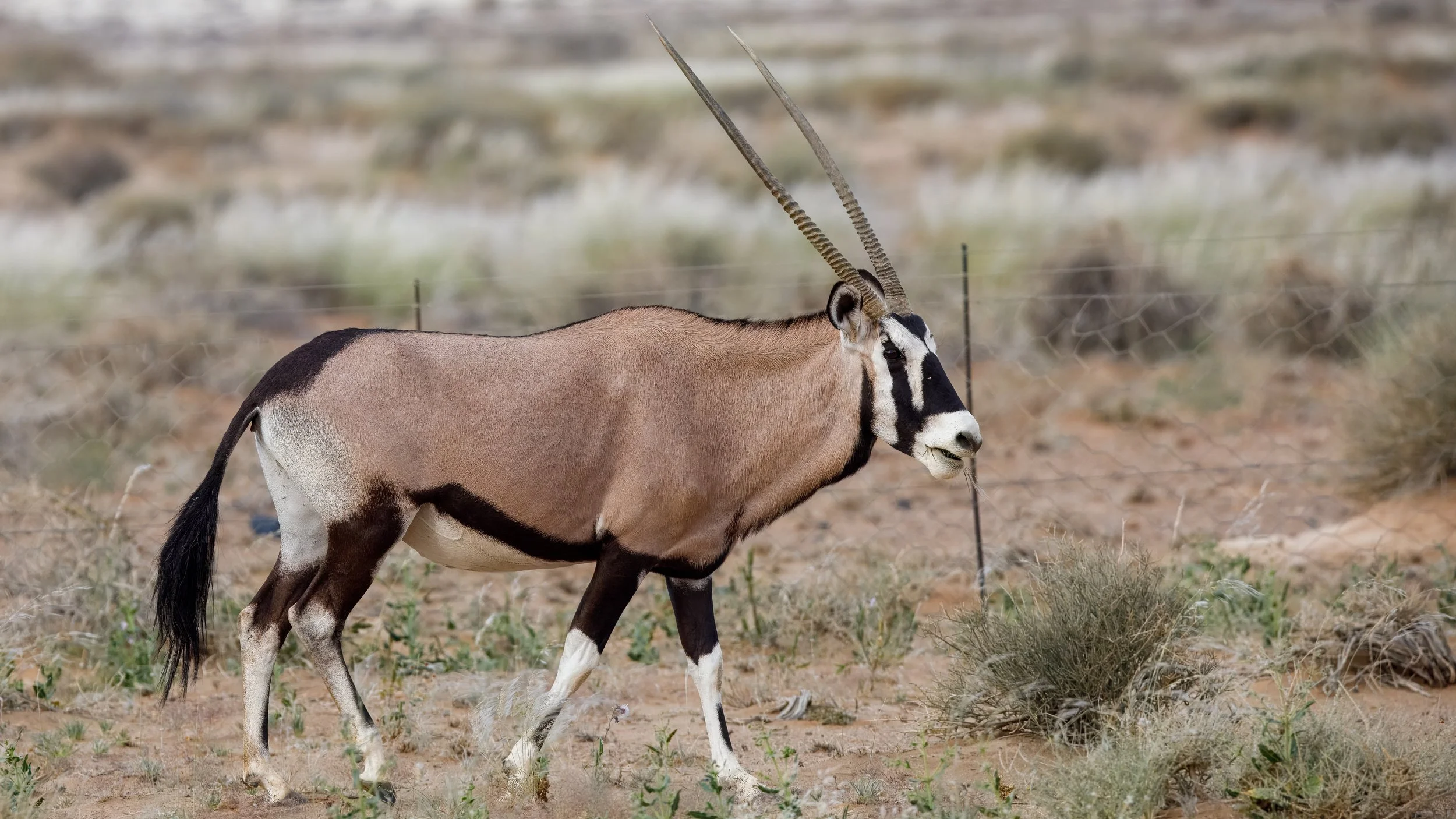
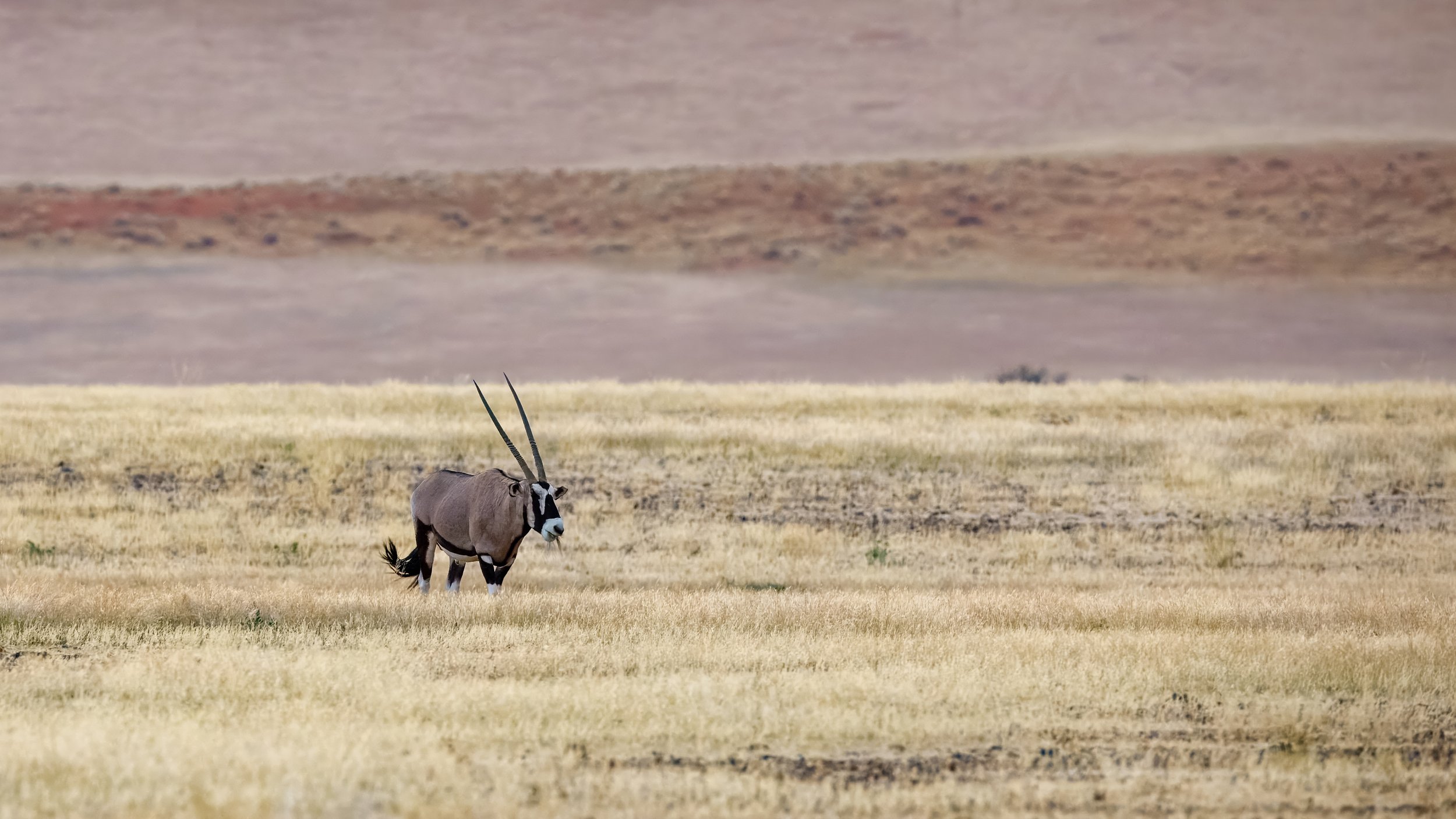
After checking into our lodge in Namib-Naukluft National Park we found our first of many oryx along the roadside
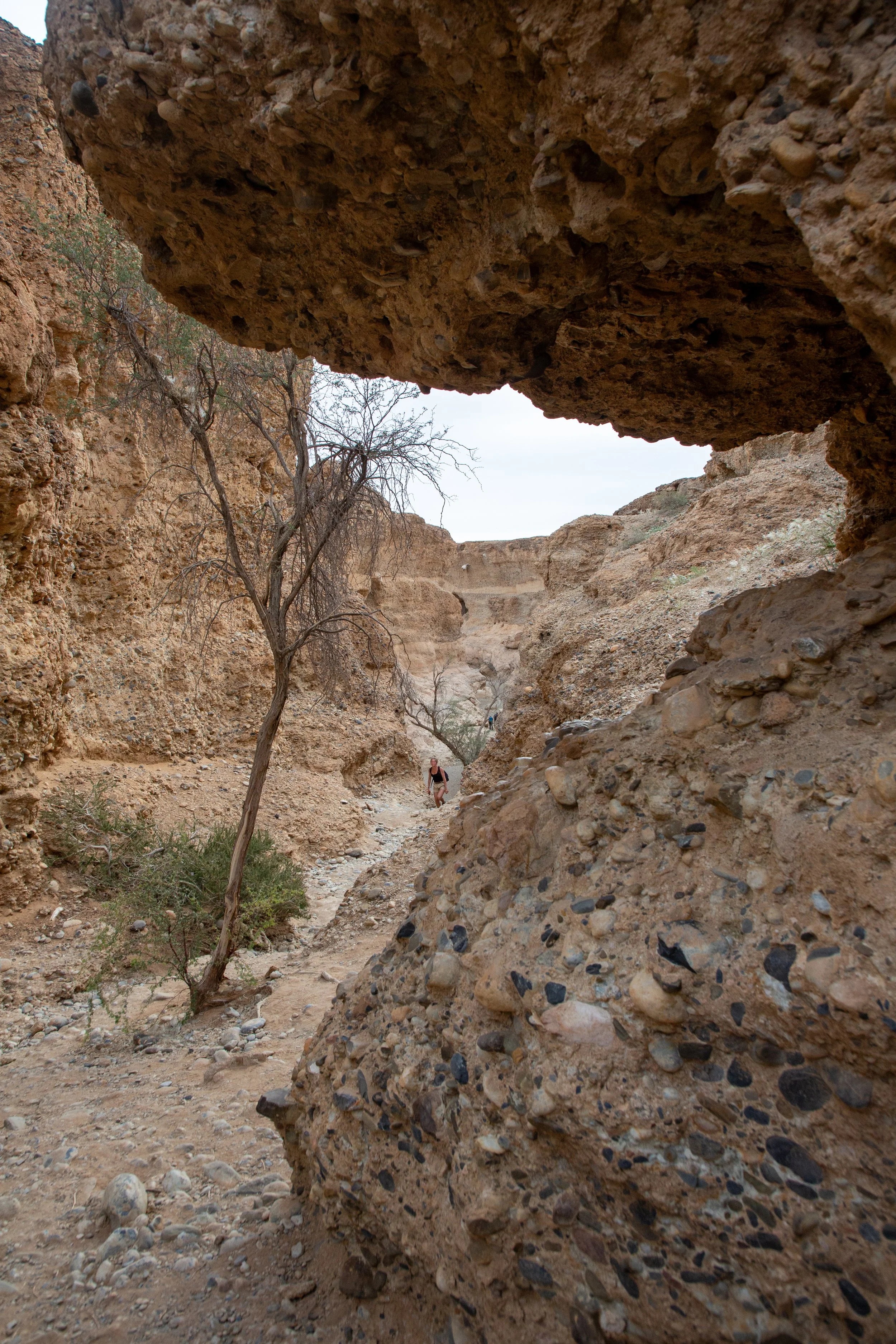
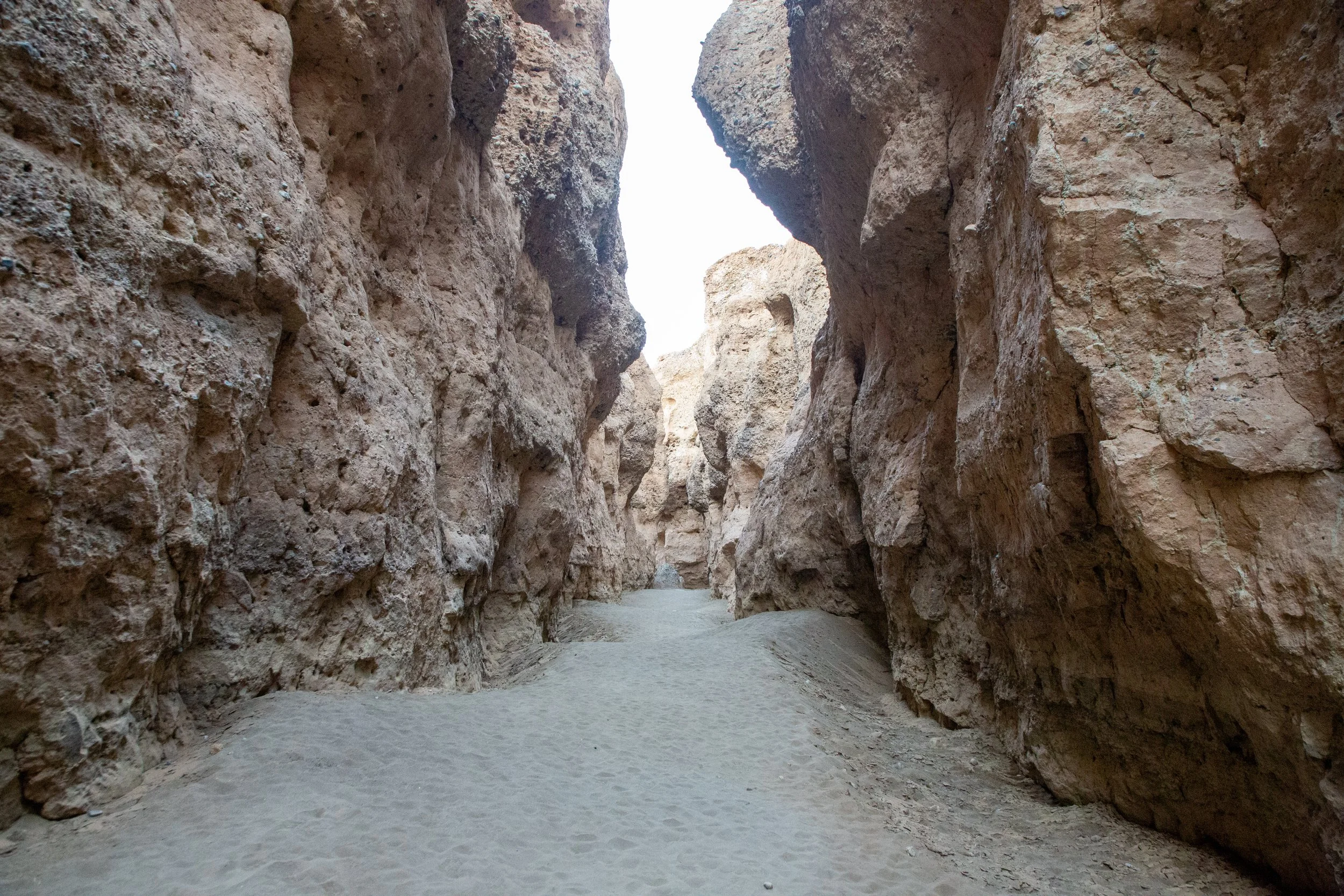
Hiking into Sesriem Canyon in the national park
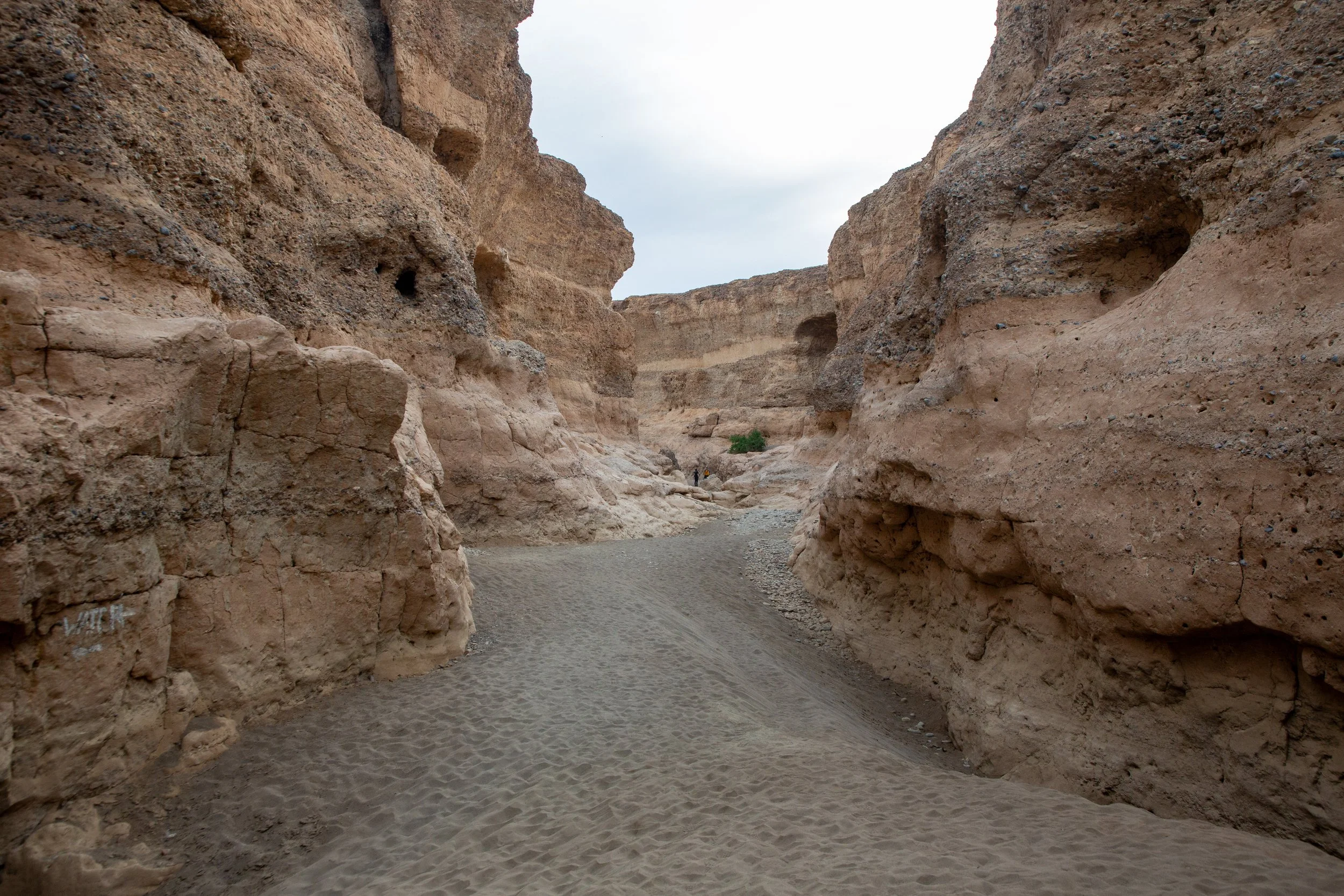
The riverbed is mostly sand, making for an easy hike into the canyon
The trail eventually leads to the end of the river
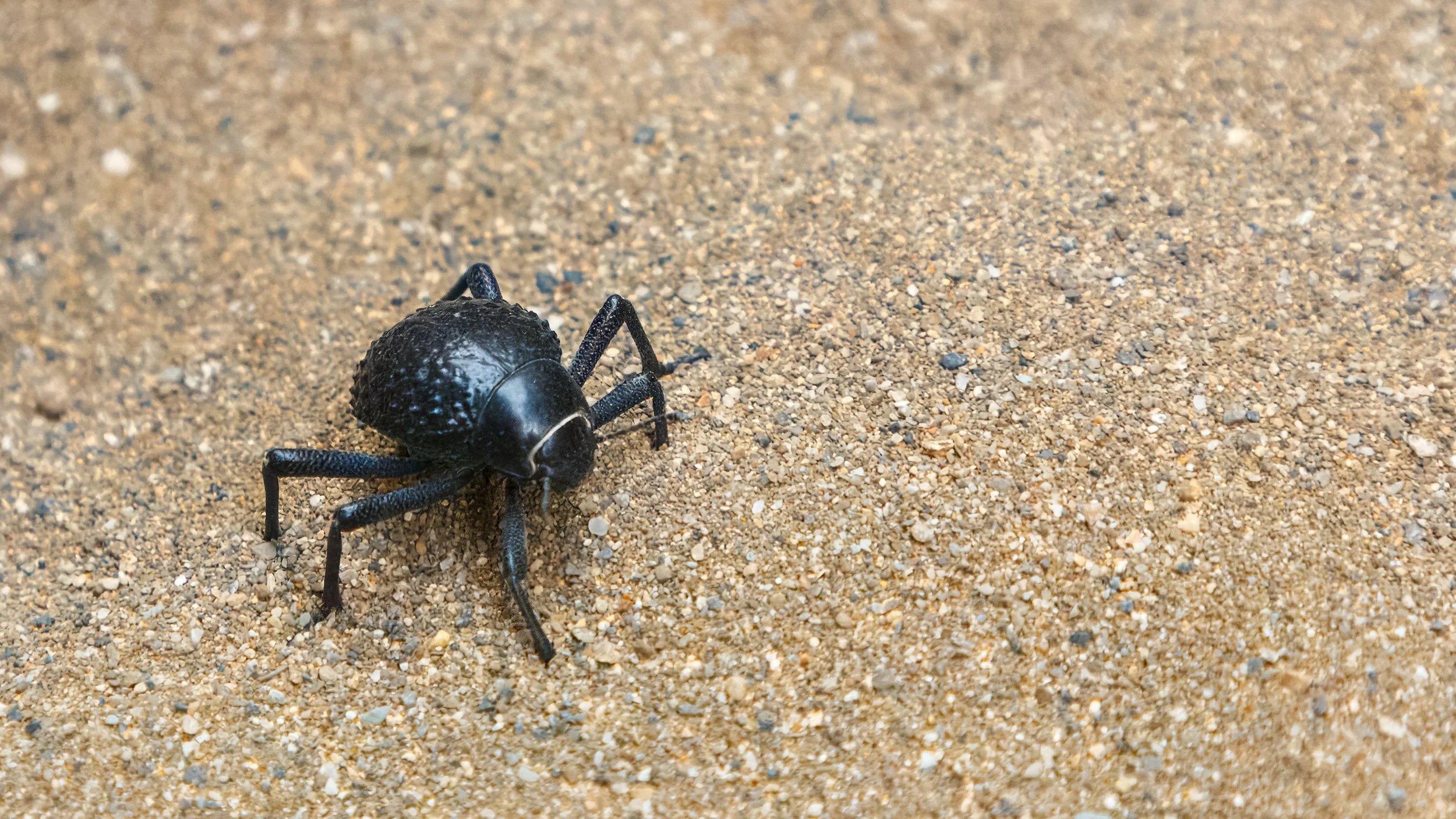
With a body the size of a dime, a Namib desert beetle shares the canyon floor with us
Looking for a good sunset vantage point, we find another oryx
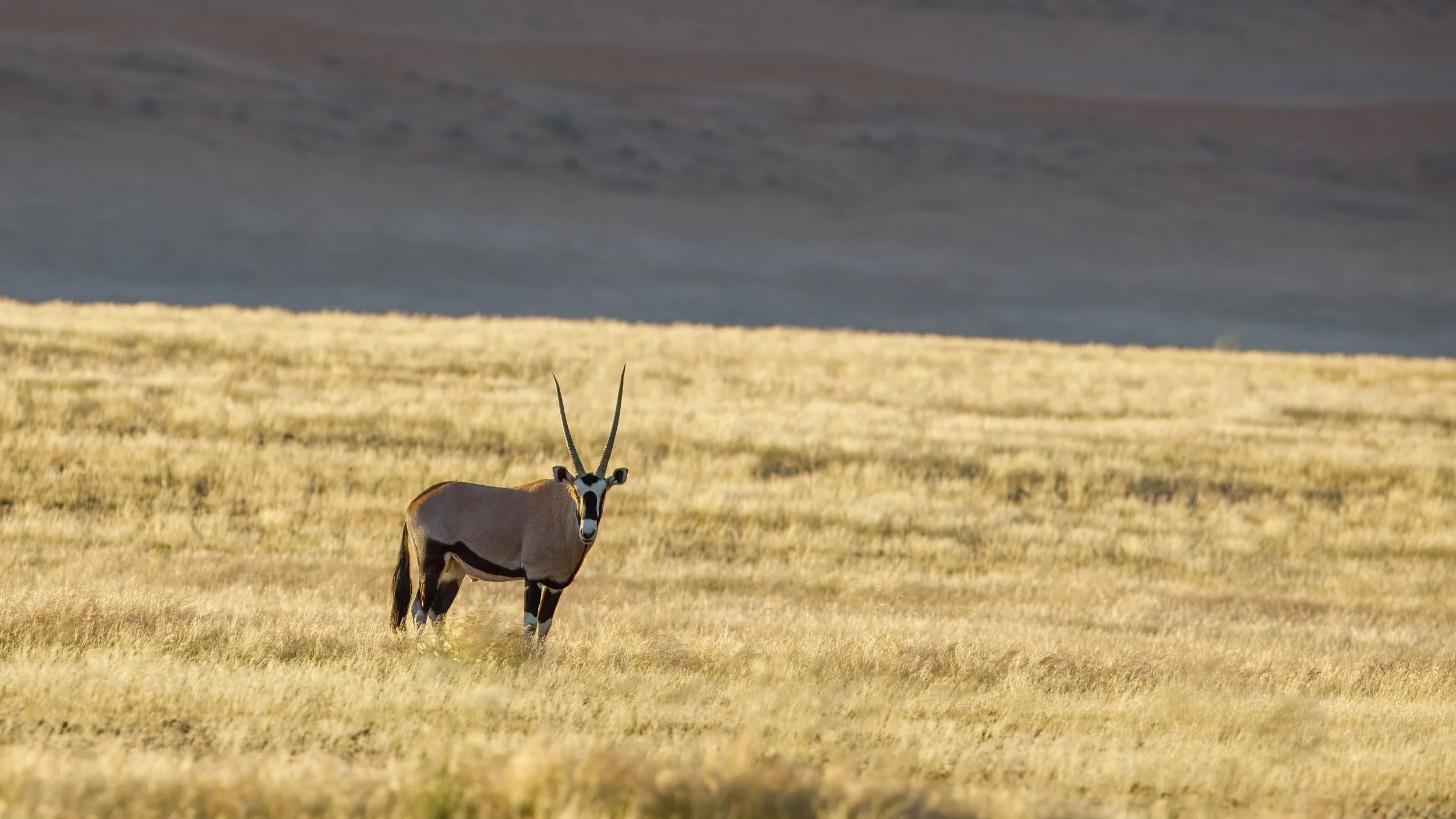
Another golden hour oryx
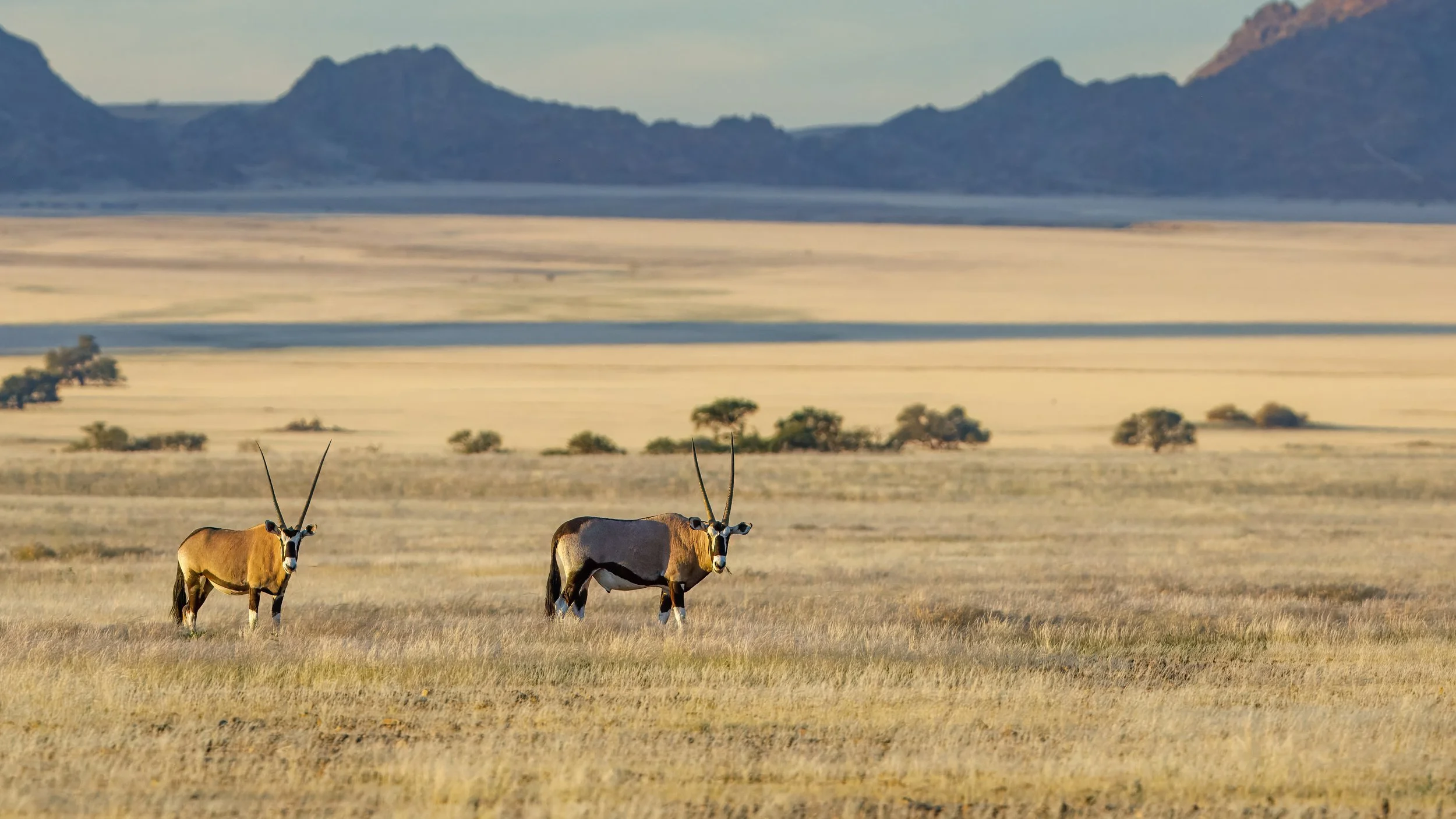
A pair of oryx with the mountains in the background
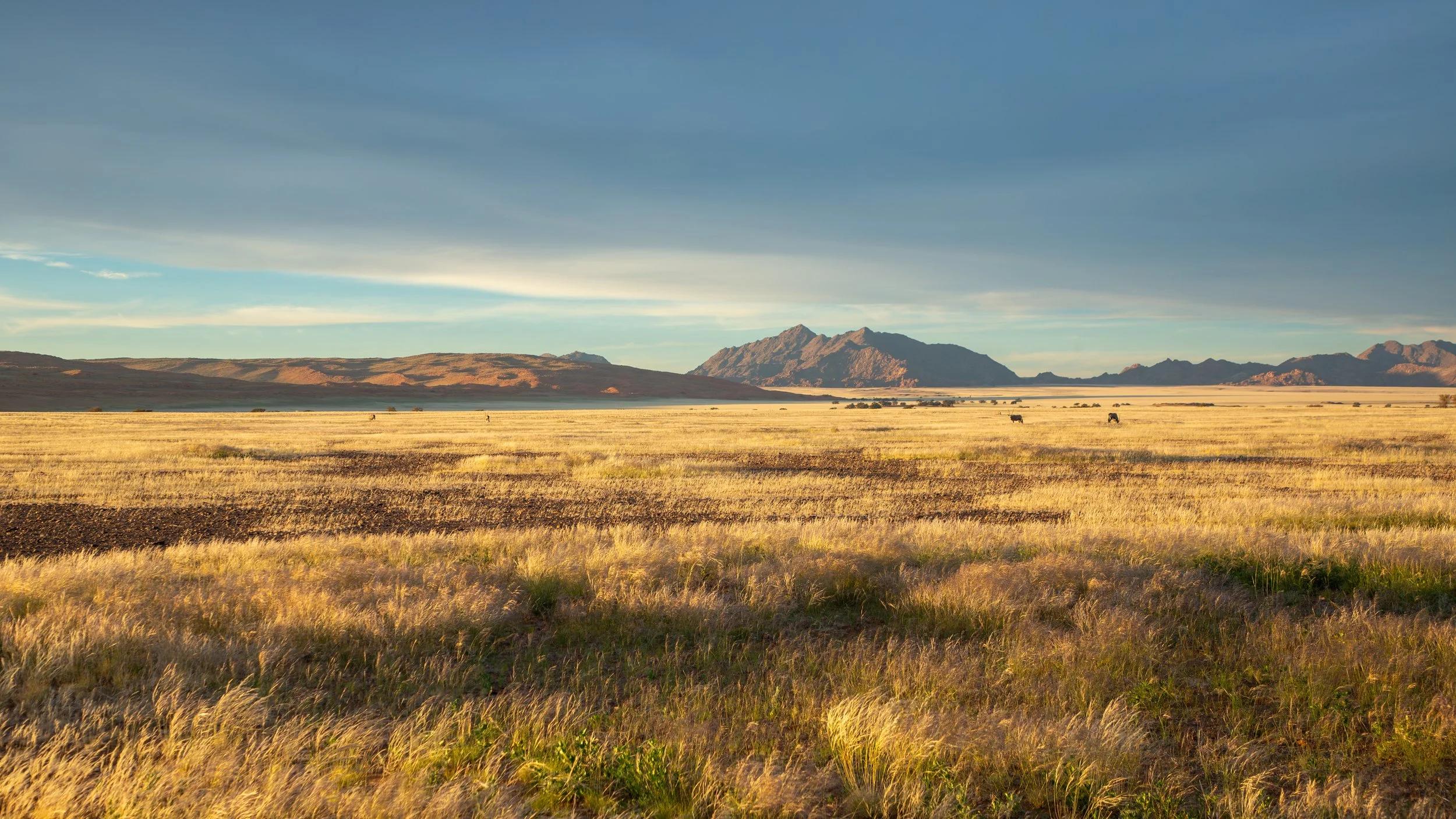
Wildlife in the distance with the beautiful plains in the foreground
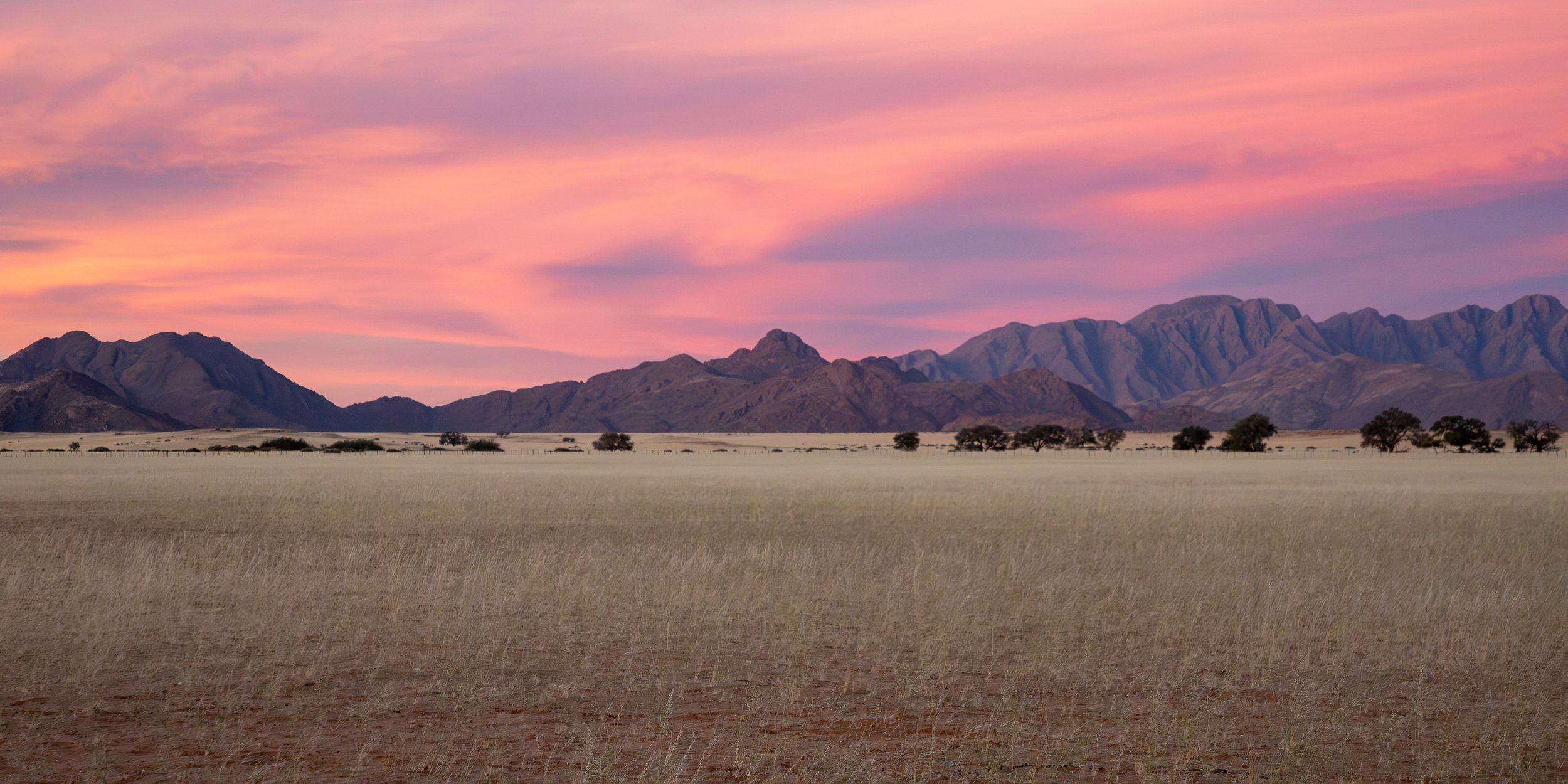
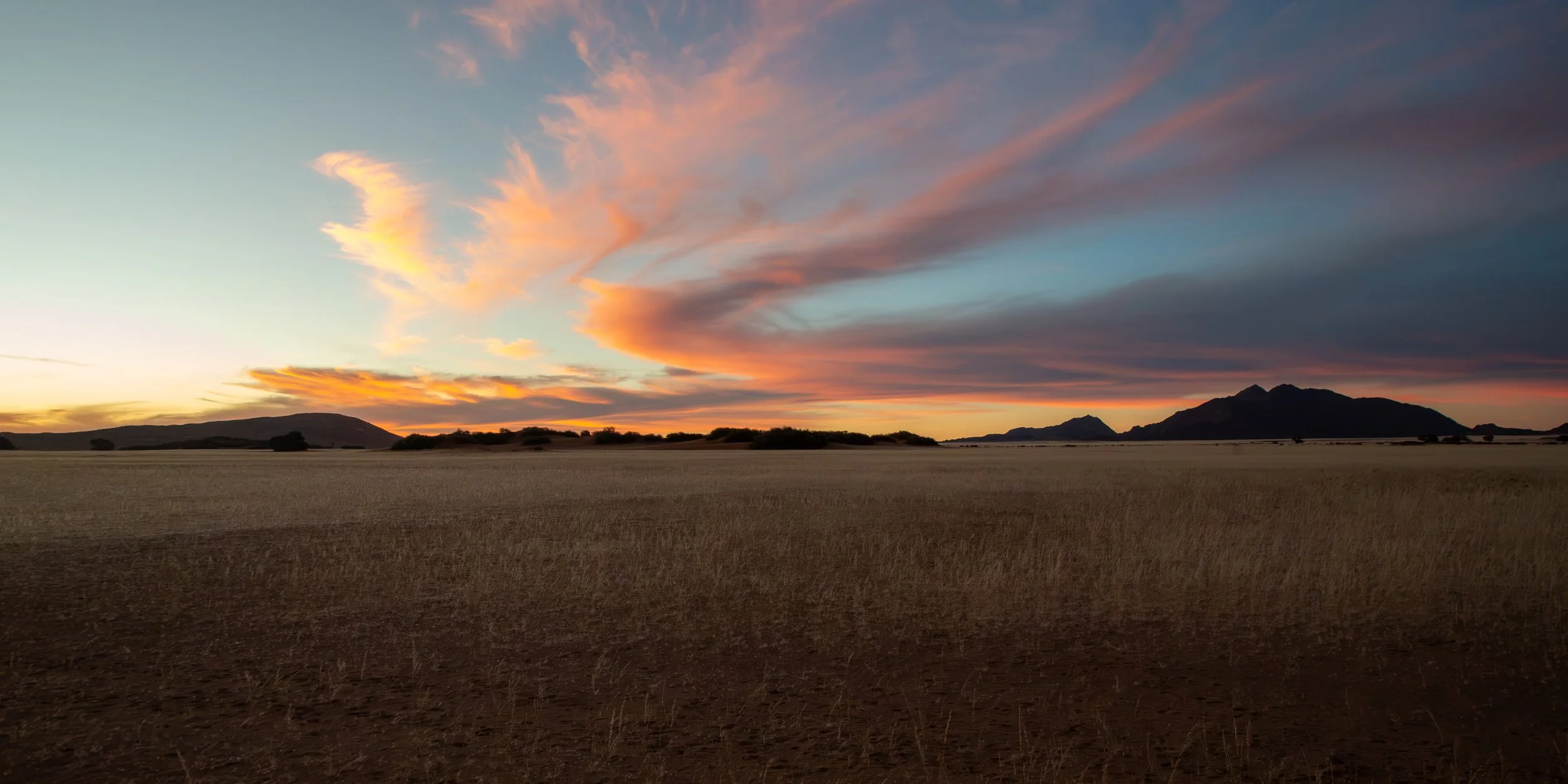
One last sunset shot before we make our way to our lodge
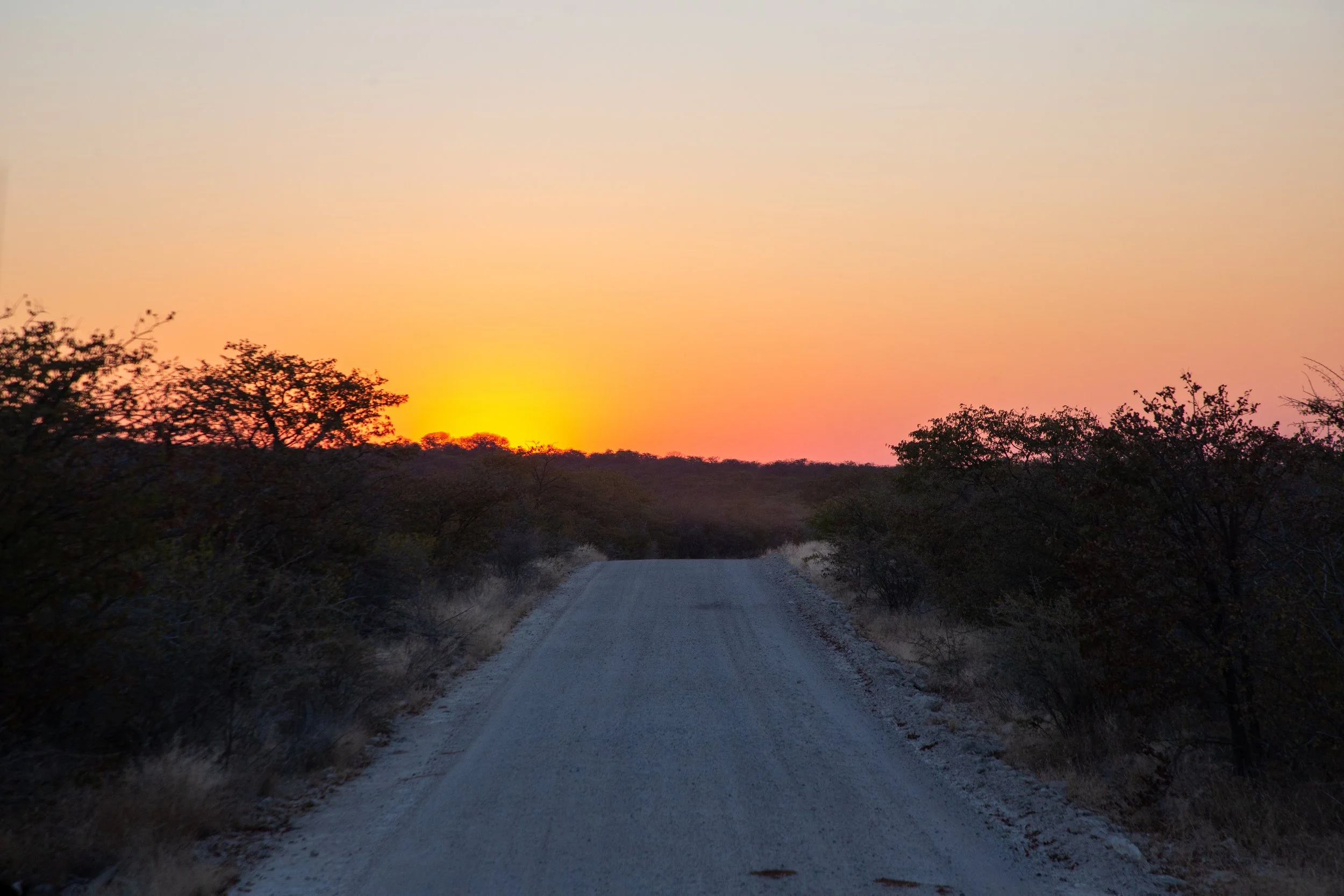
Making our way to our cabin in the Dead Valley Lodge, we got the last of the sunset
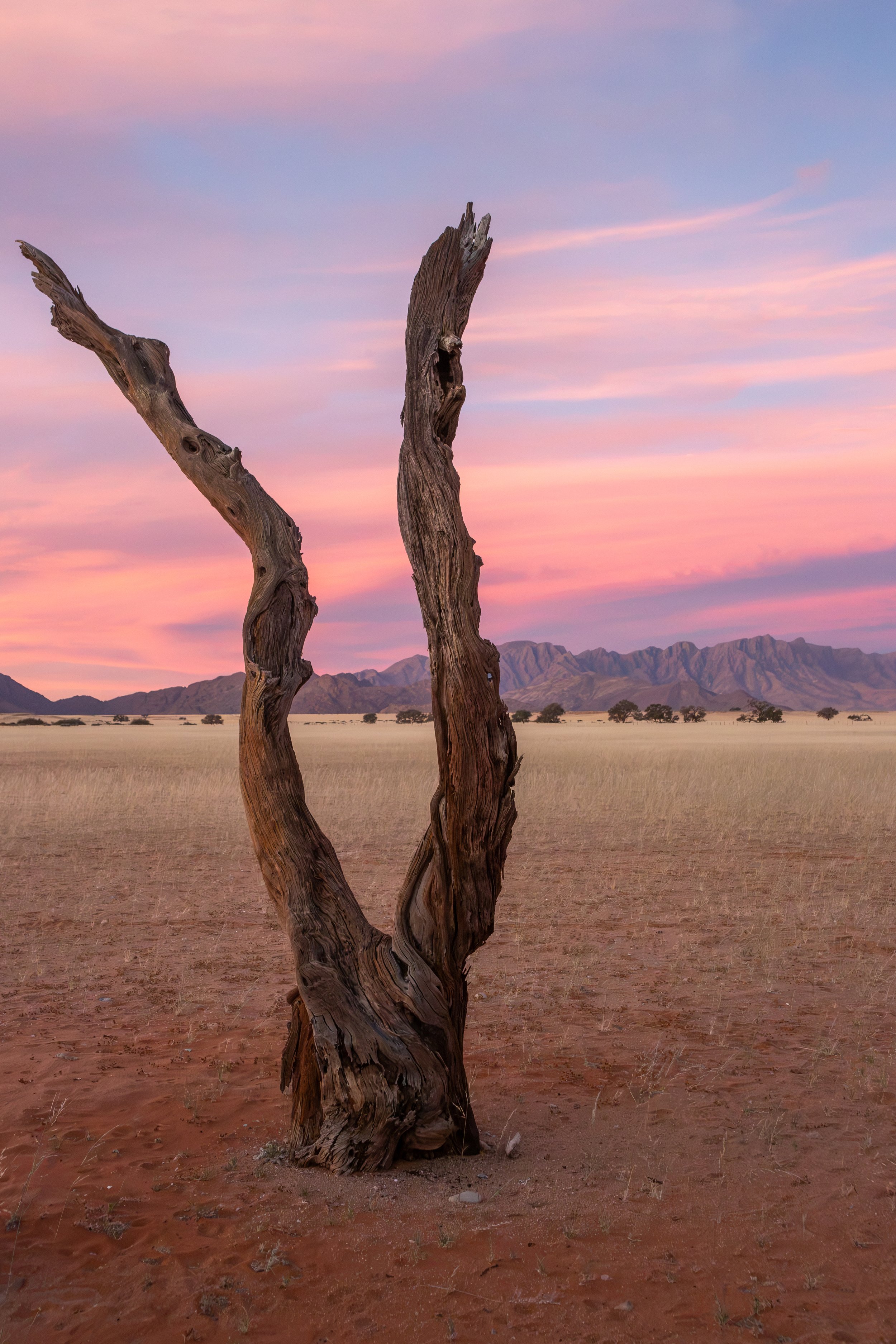
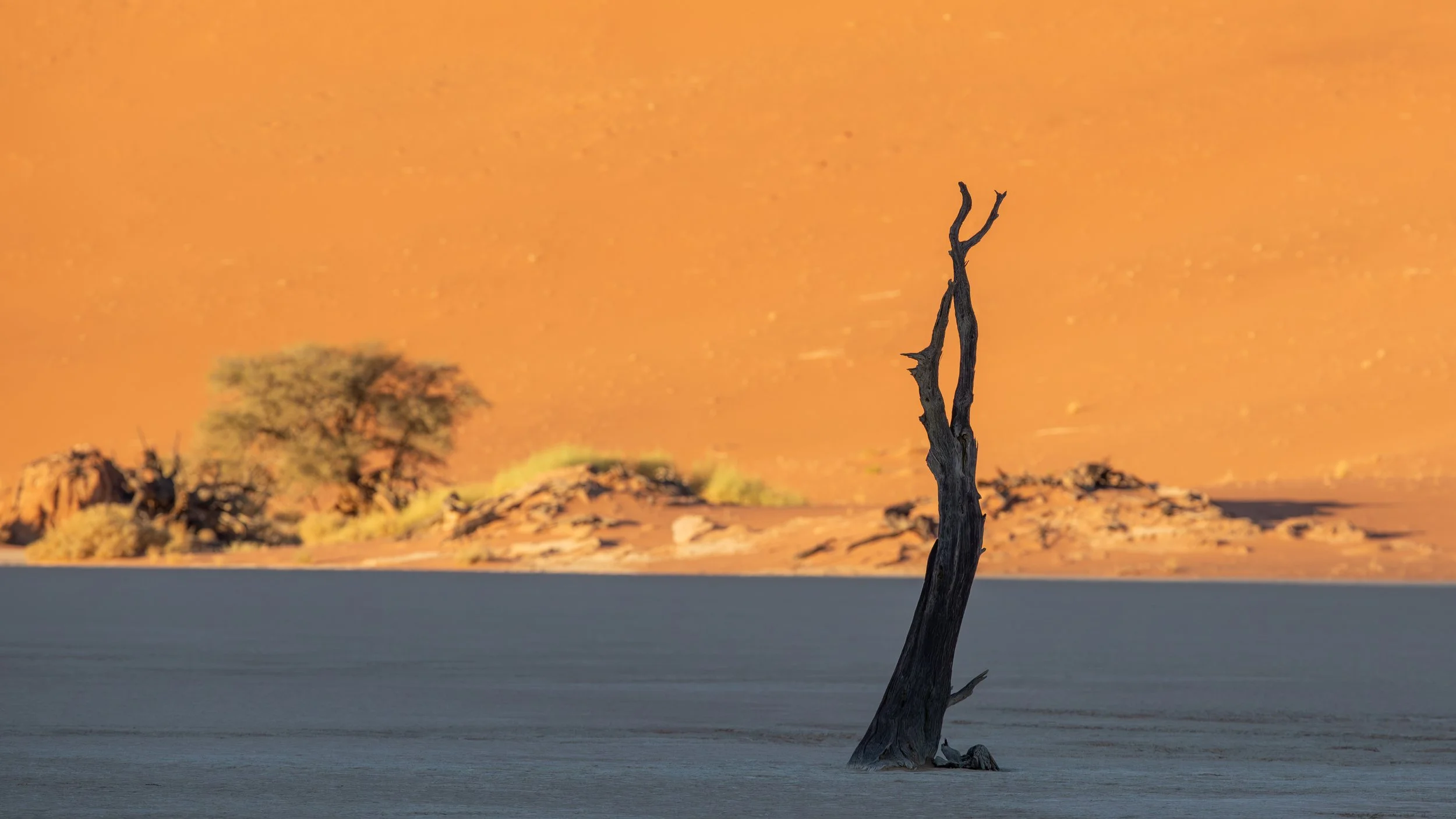
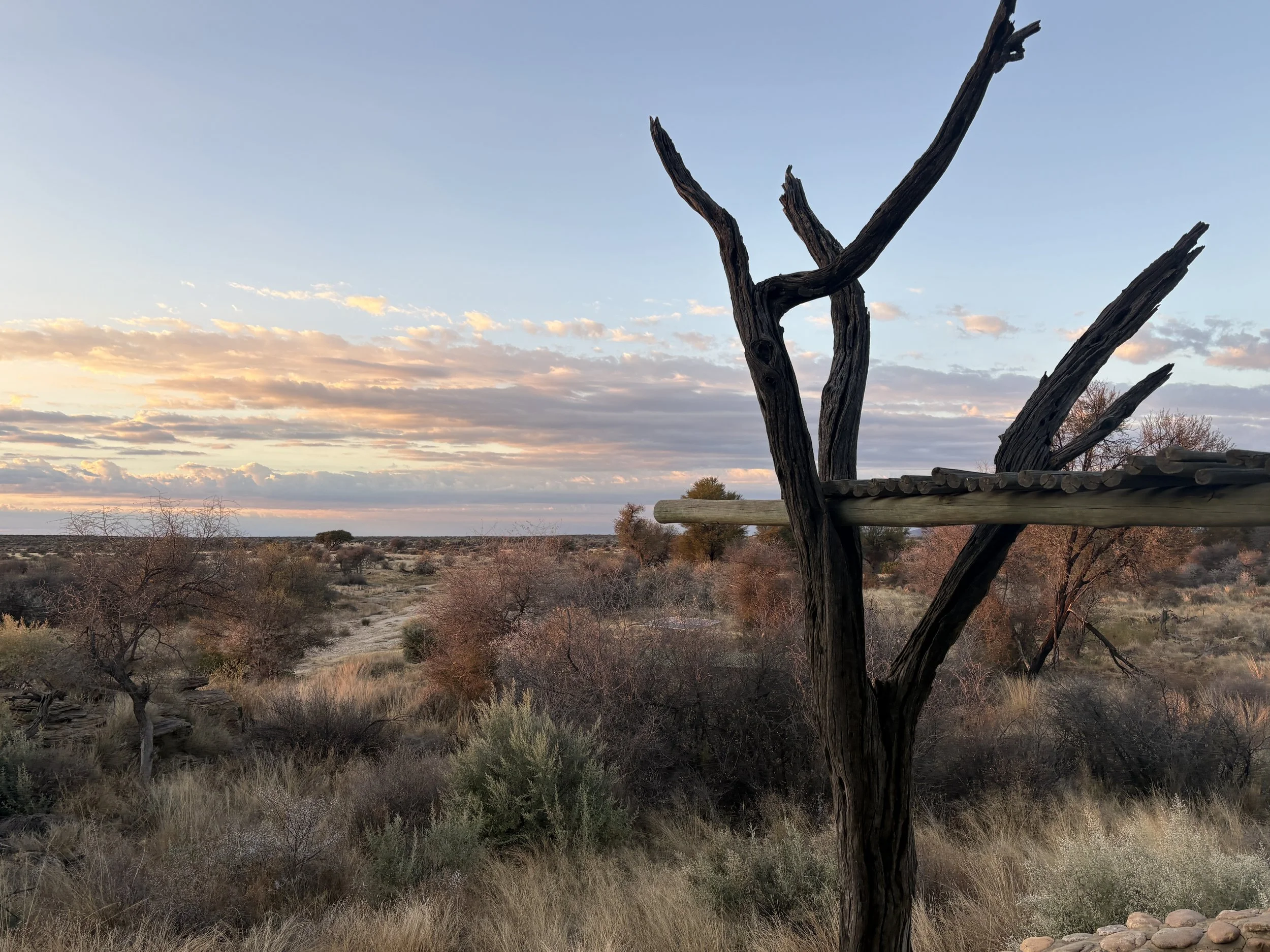
Right outside the lodge lobby, the remains of a tree lit up perfectly for the sunset
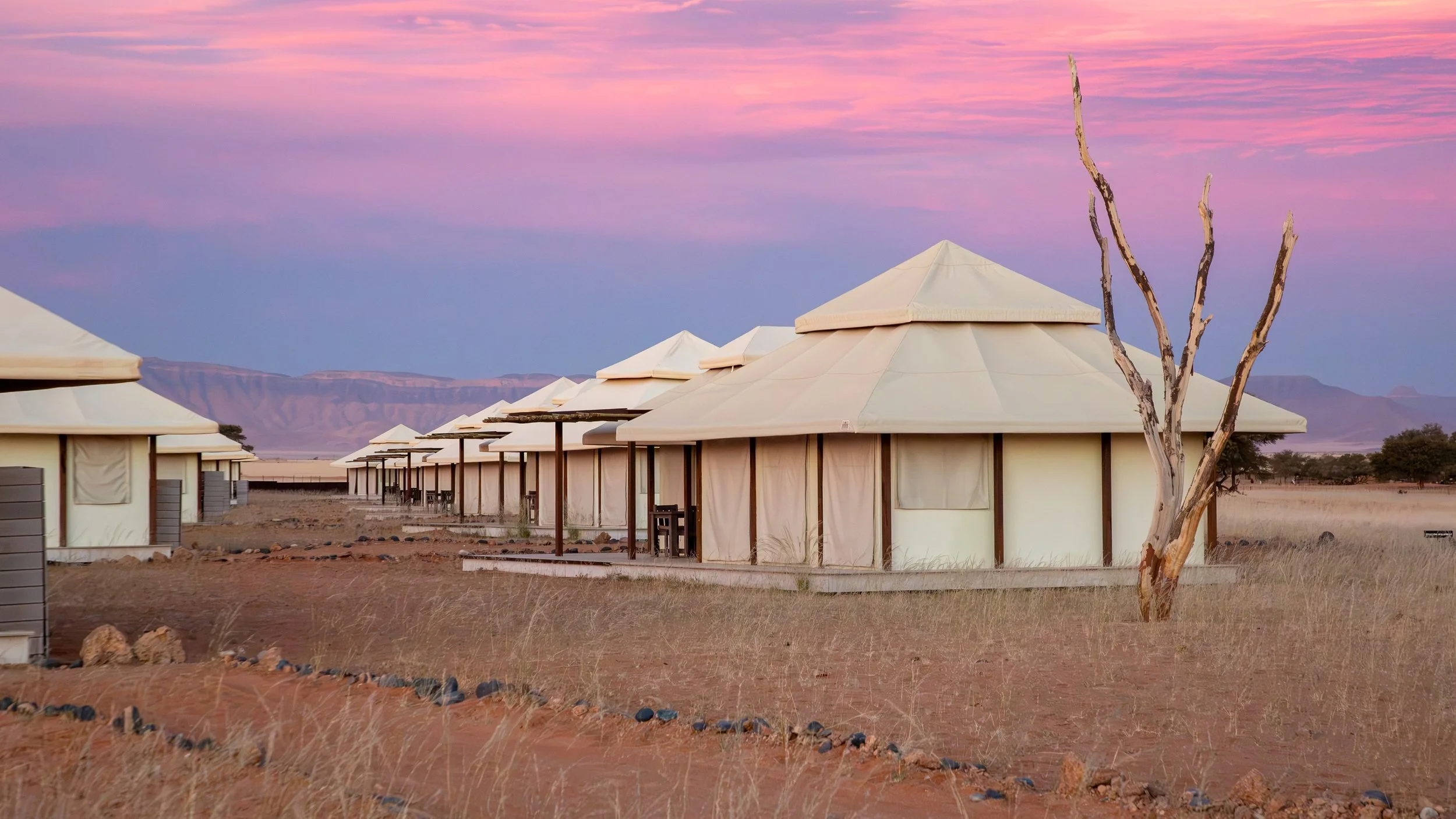
Our tented chalet home for the evening had a cement frame with canvas walls and roofing, with all modern conveniences except heating
Last bit of light as we headed back to the main lodge for dinner
After a wonderful first day in Namibia, we learned that sleeping under the canvas of our “Luxury Tented Chalet” is great except for when the nighttime desert temperatures get close to freezing. Many layers of blankets helped, but the journey from under the covers and outside to our washroom was a long one.
Jun 9, 2026
Our full day in Sossusvlei needed to start early to get the best experience in Deadvlei. So after a very cold start to the day, we warmed up next to a space heater at breakfast and were out of the lodge before 7:00am to be among the first into the national park and on the road to Deadvlei.
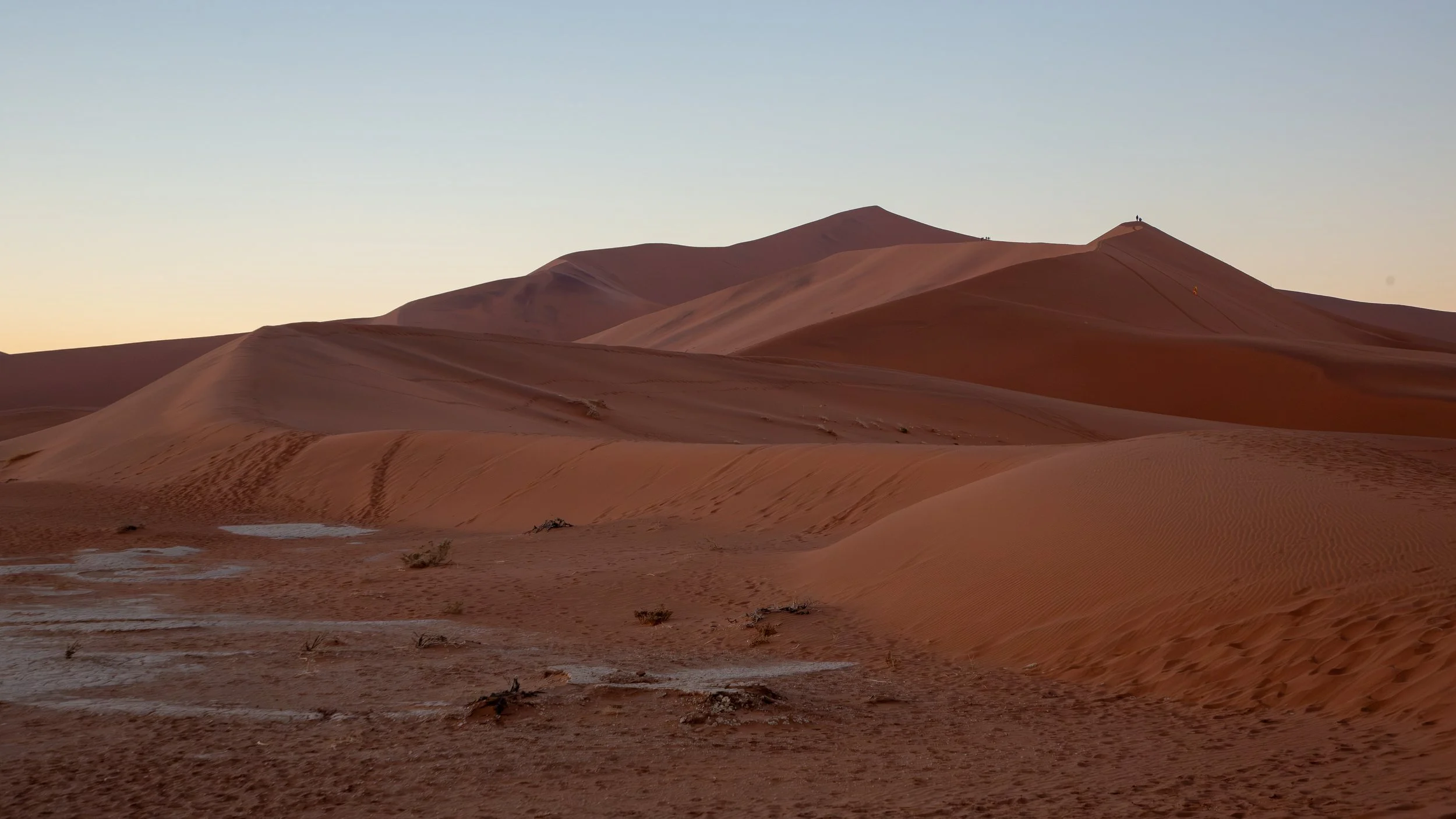
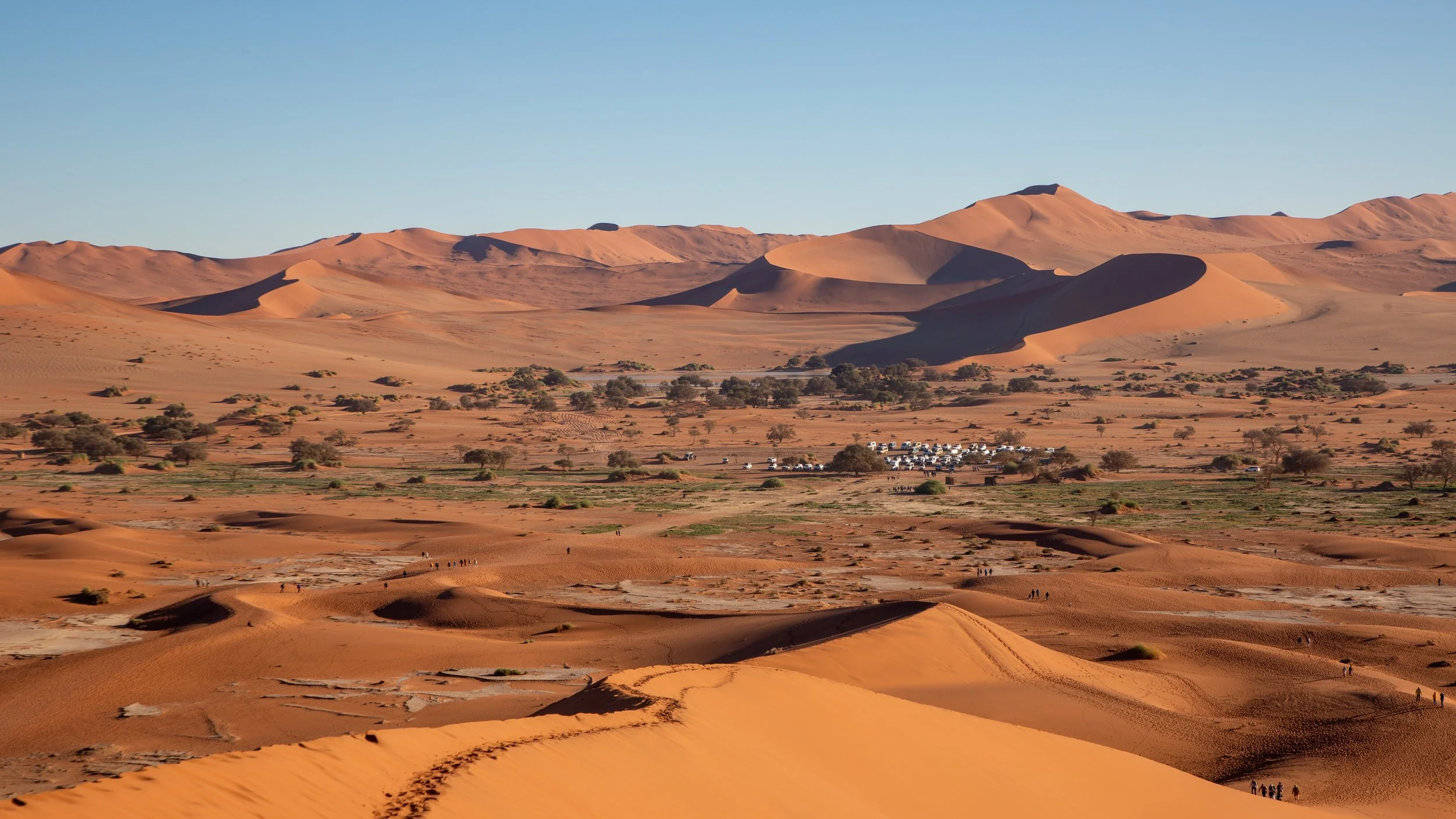
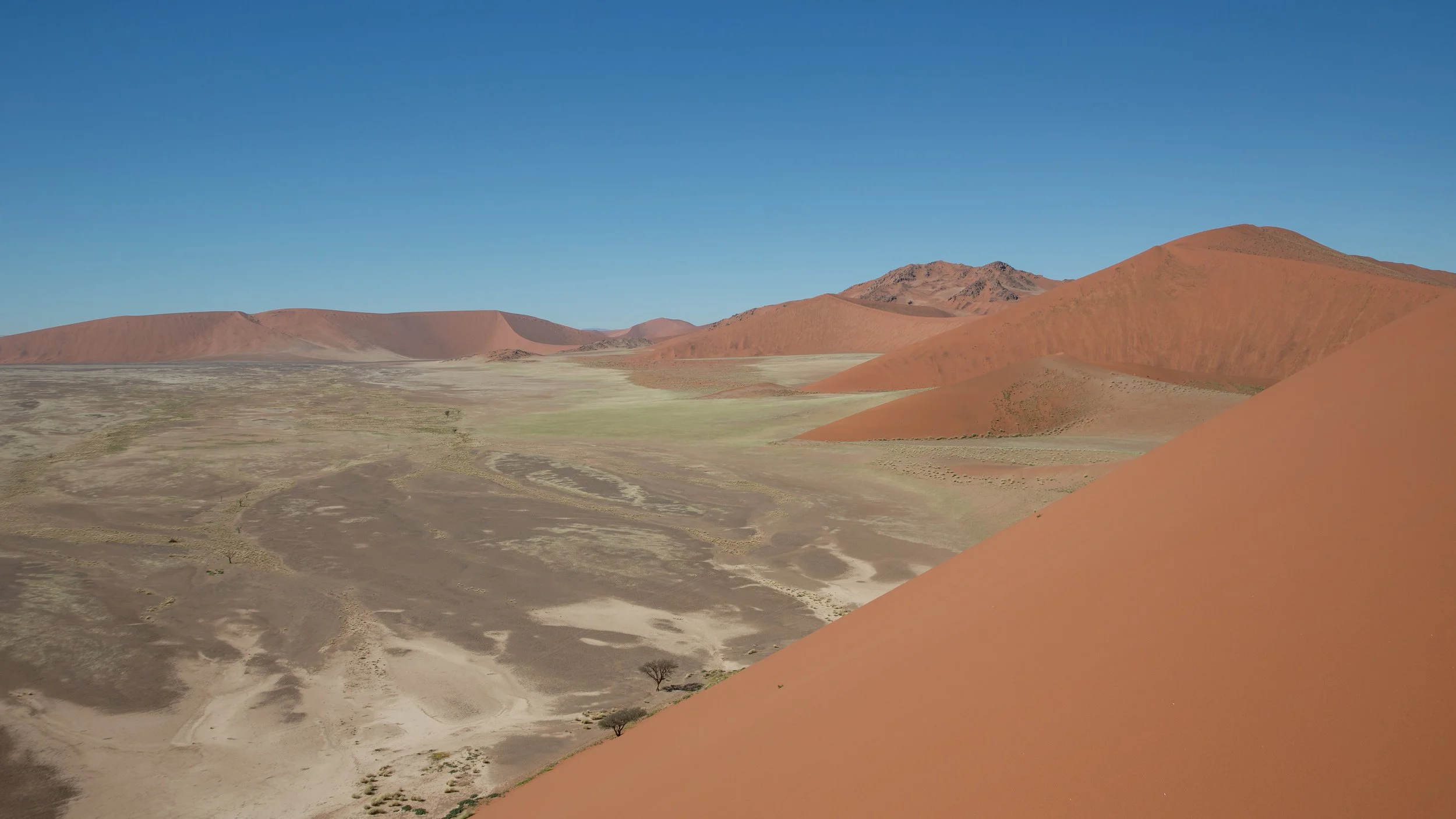
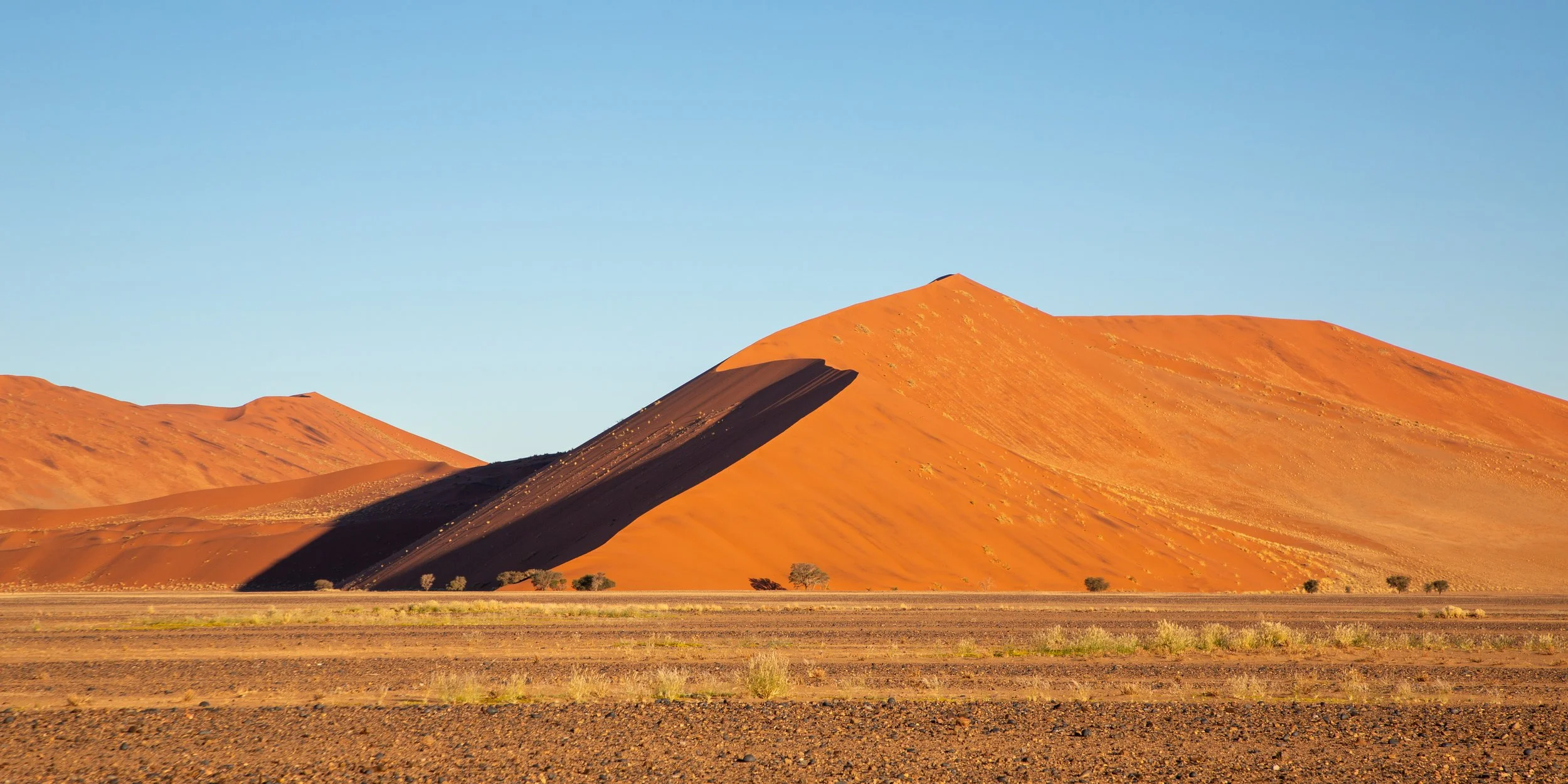
Our first view of the massive iconic sand dunes of Sossusvlei that stretch all the way to the coast
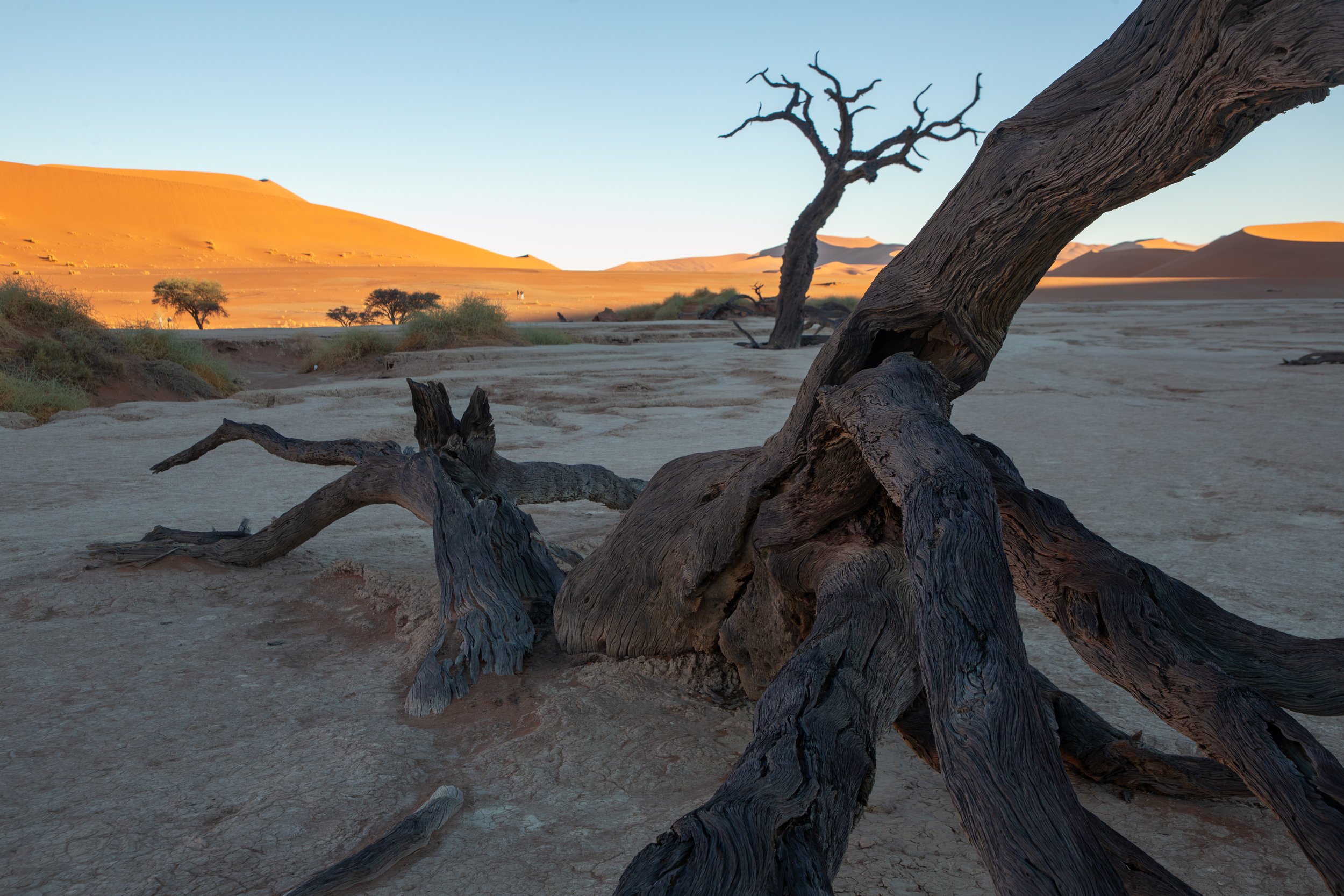
After a brief hike from our parking location, we had lots of time to explore the desiccated dead trees in the salt pan of Deadvlei
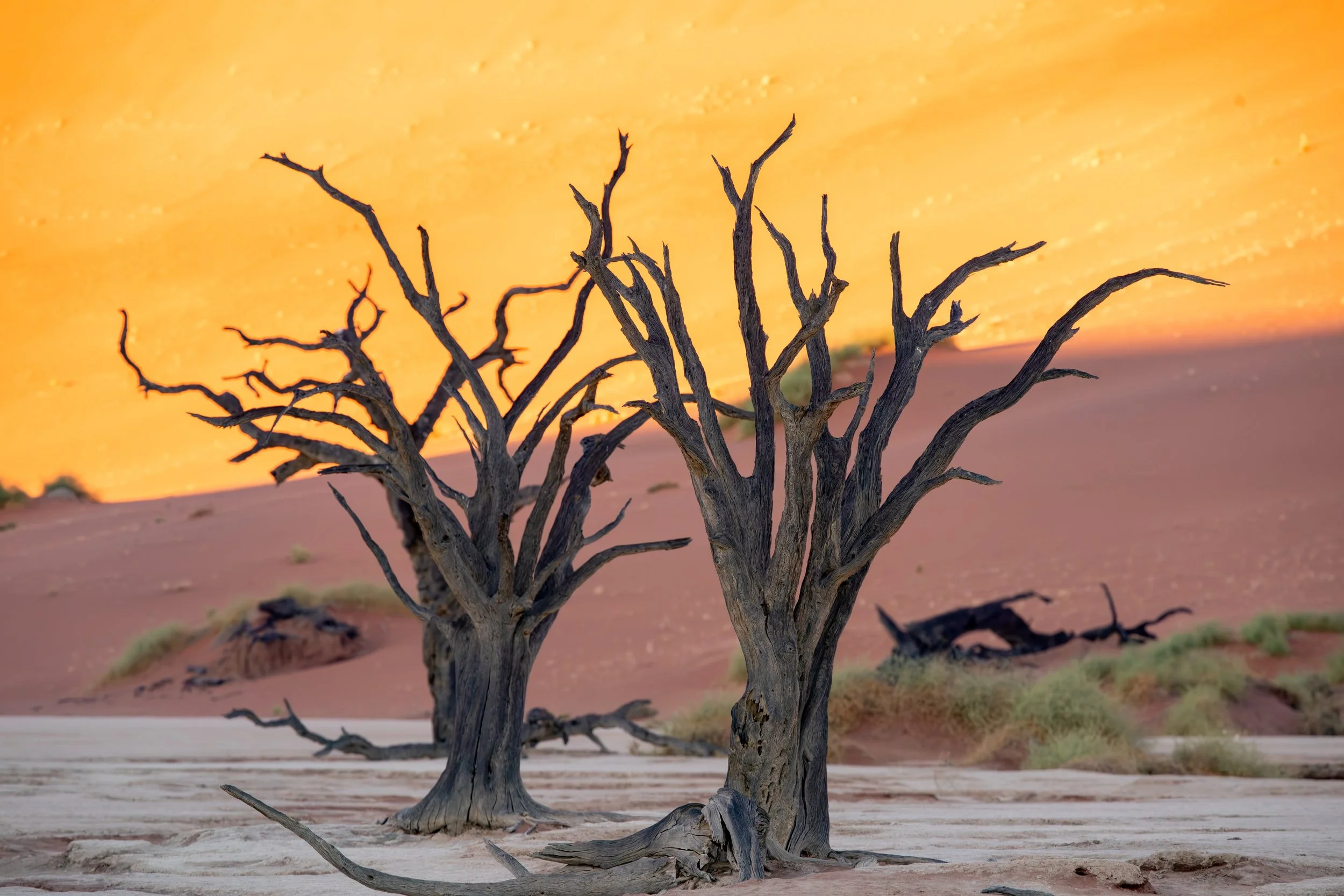
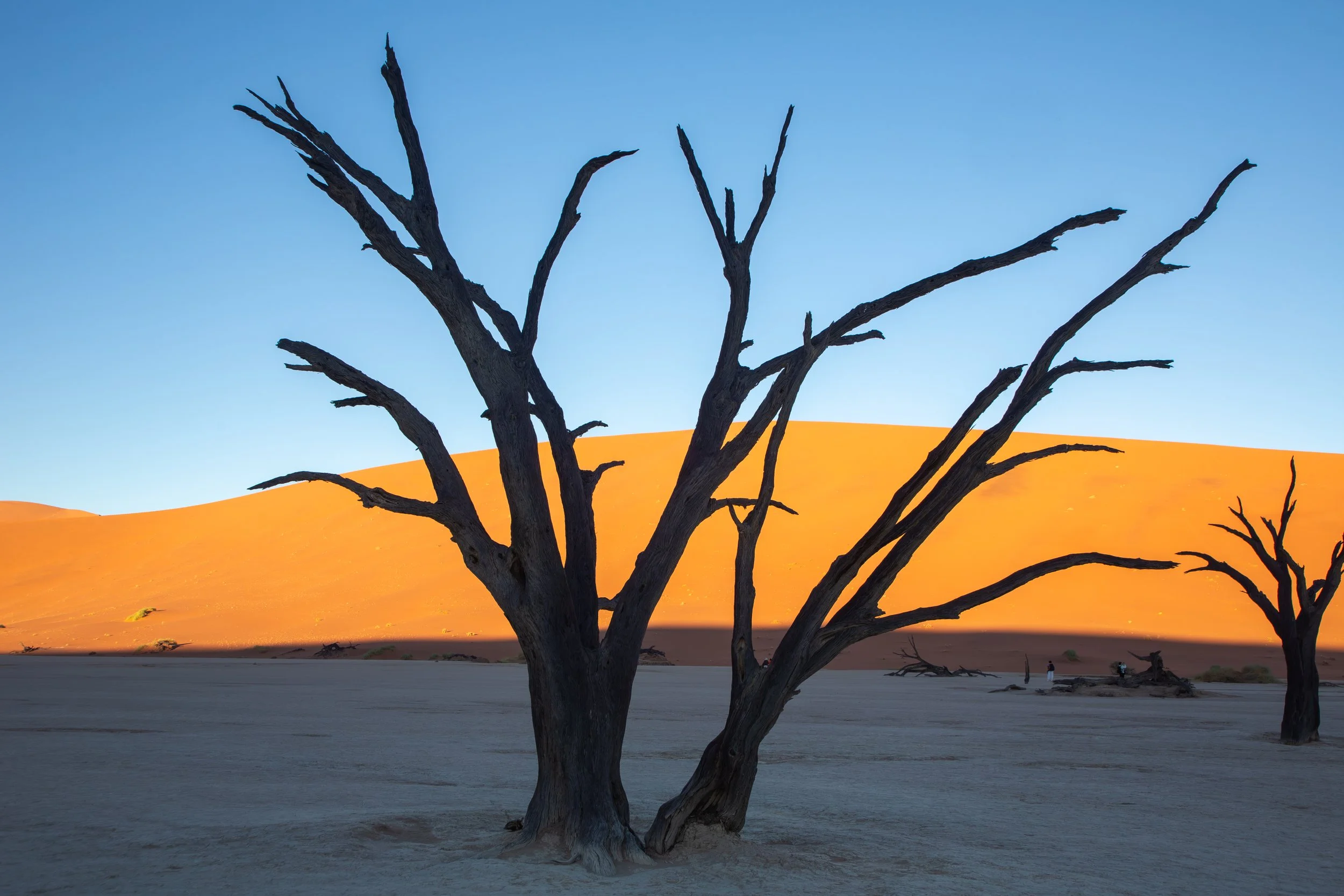
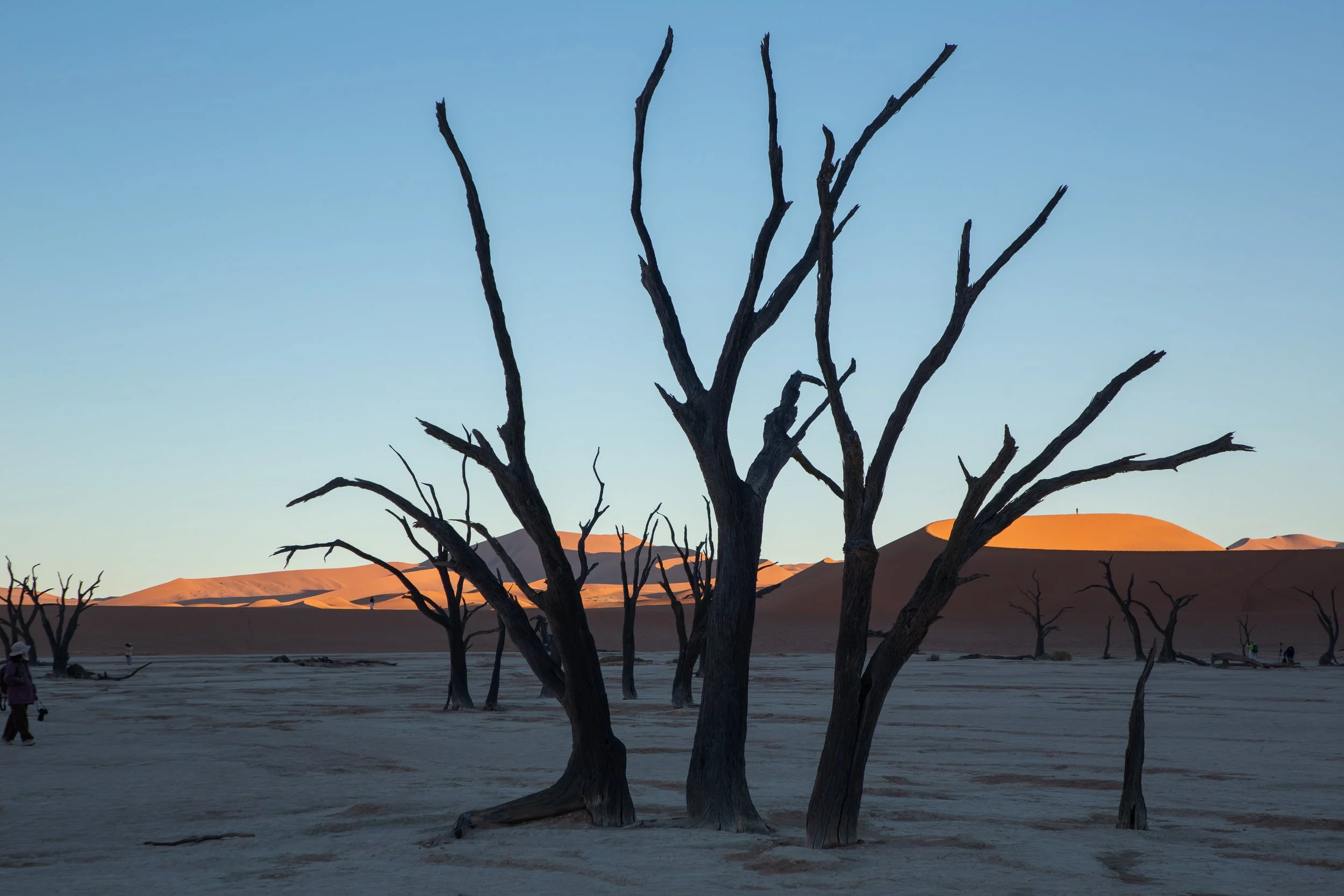
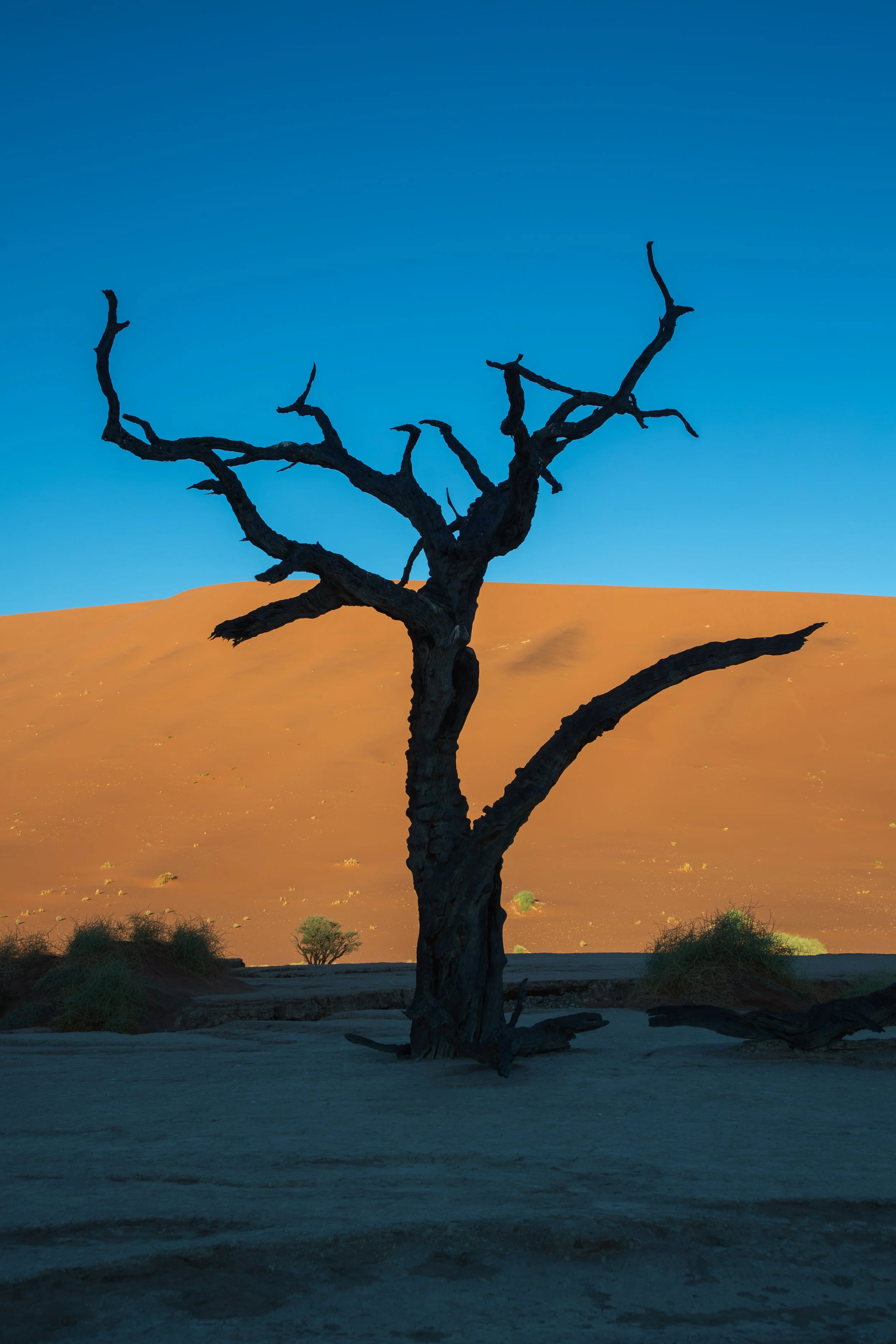
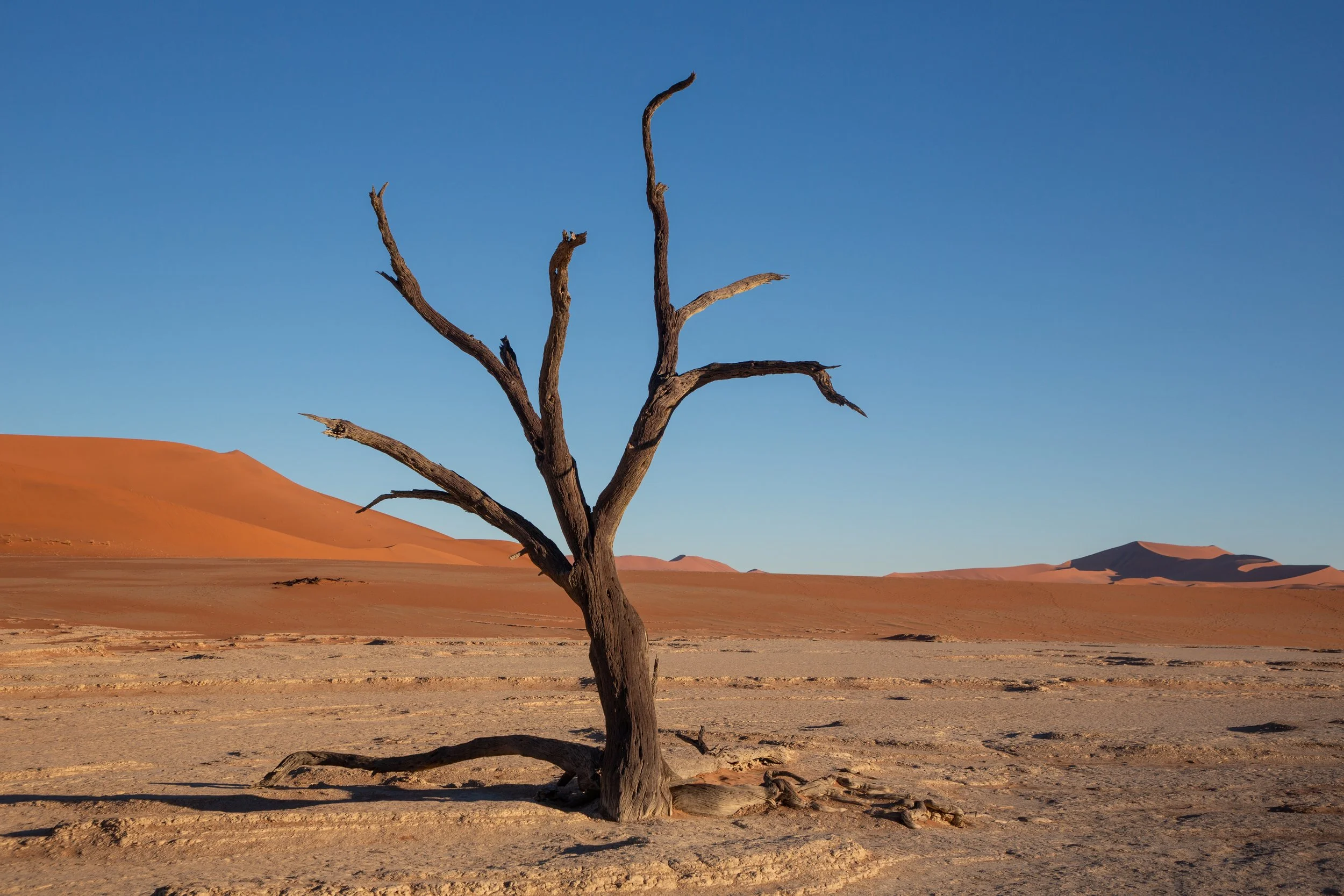
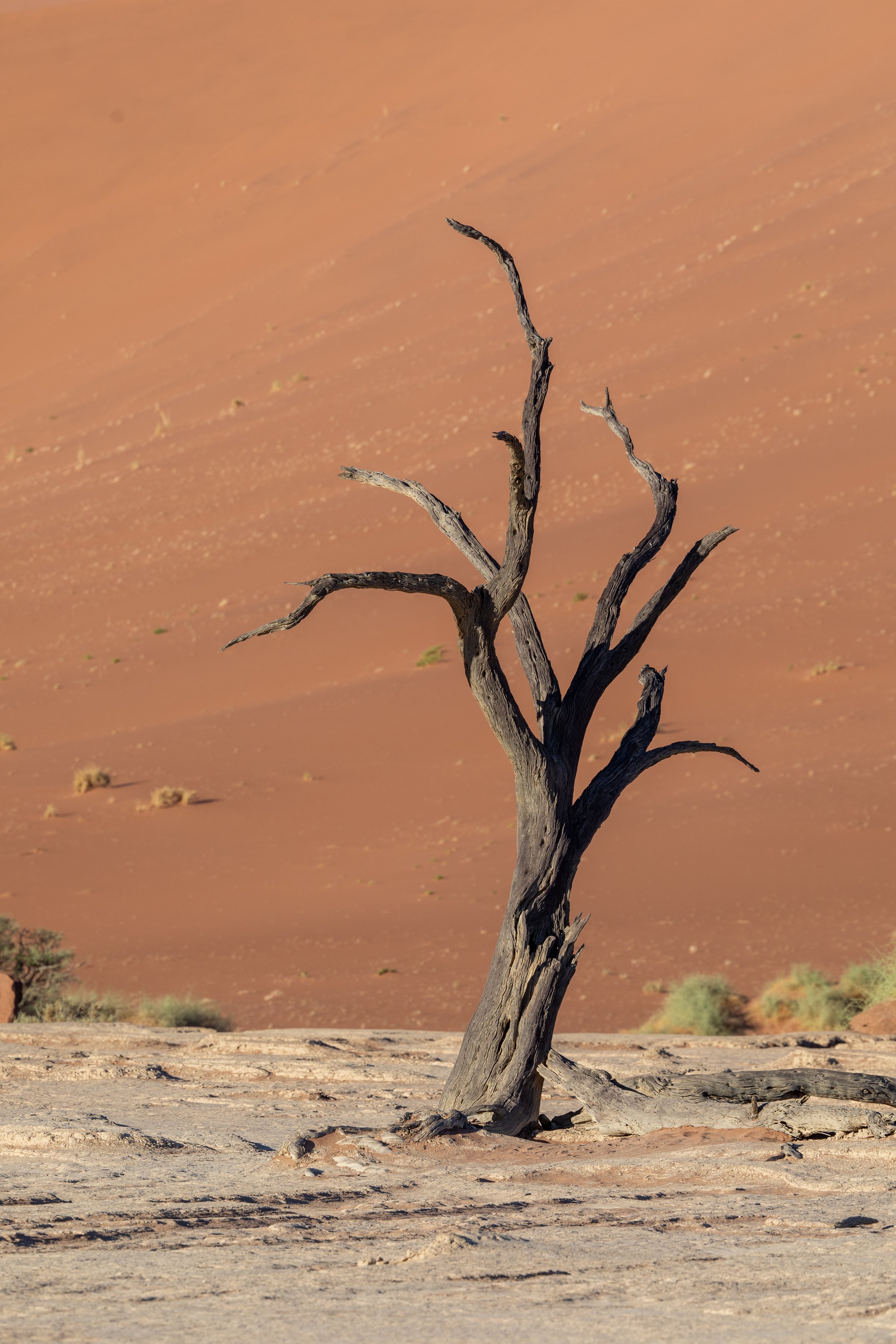
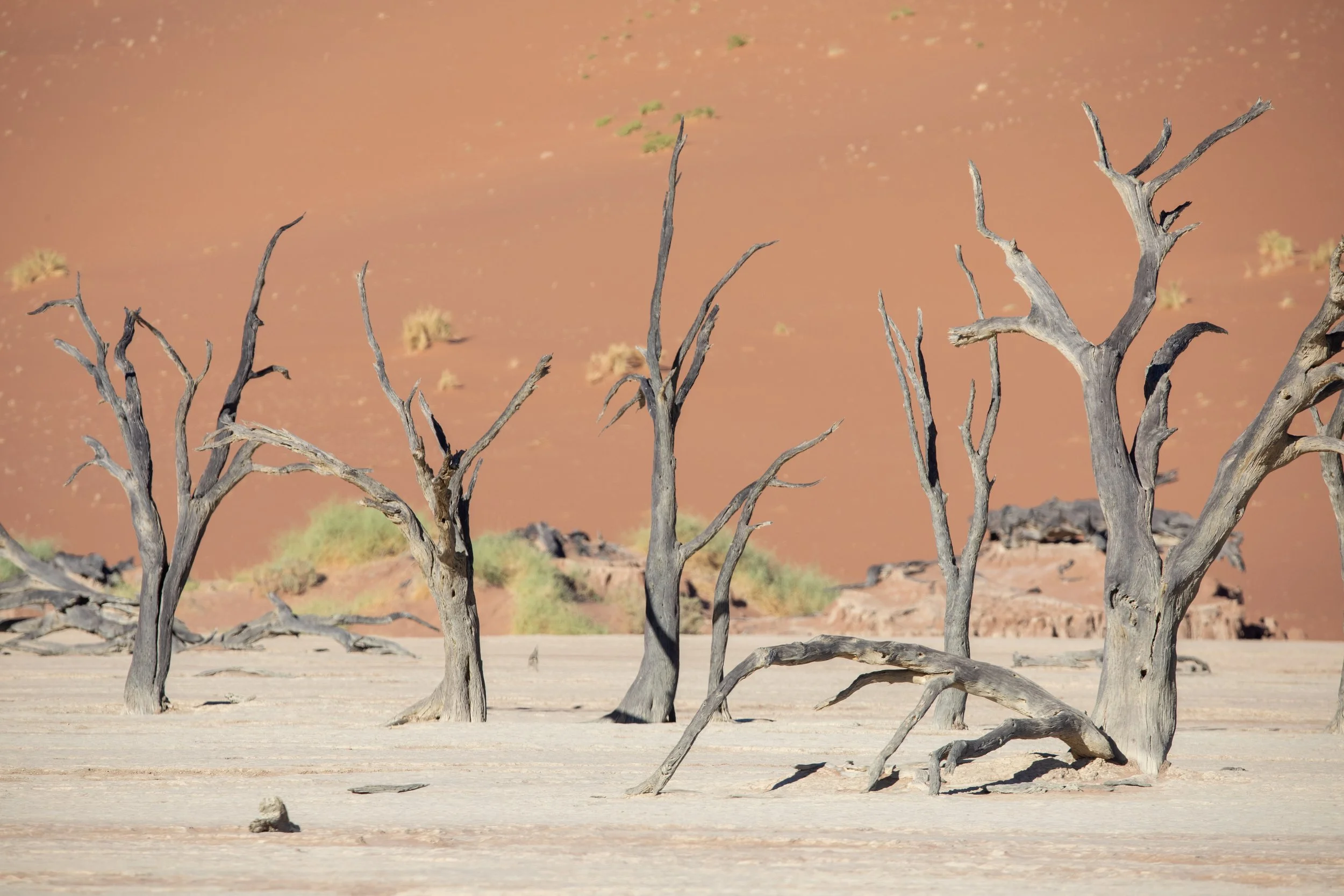
The tree of the Deadvlei have been dead for 600-700 years, but because of the dry desert climate, they have not decomposed
The trees in Deadvlei comprise one of the iconic images of Namibia, and were beautiful to explore
As the sun started to rise over the nearby dunes, we began to chase its light for warmth
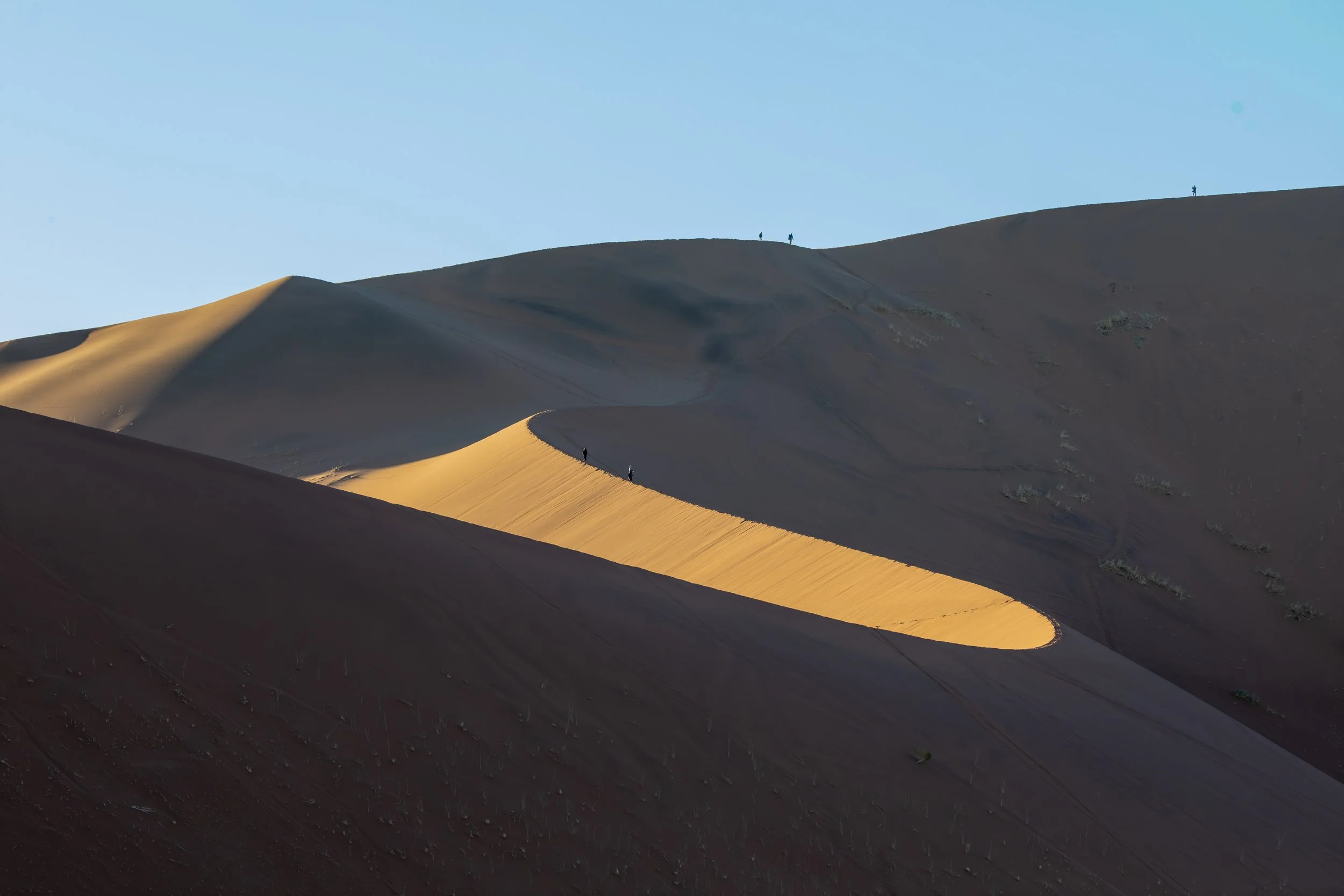
Early morning hikers made their way up Big Daddy Sand Dune, which peaks at approximately 325m (1066’) high
Each tree had unique beauty in the early morning sun
Tom did an excellent job hiding the 100 or so early risers sharing the valley with us
Once we were fully in the sun, we got fewer shadows and a chance to warm up
Last tree shot before we started to climb up the surrounding dune
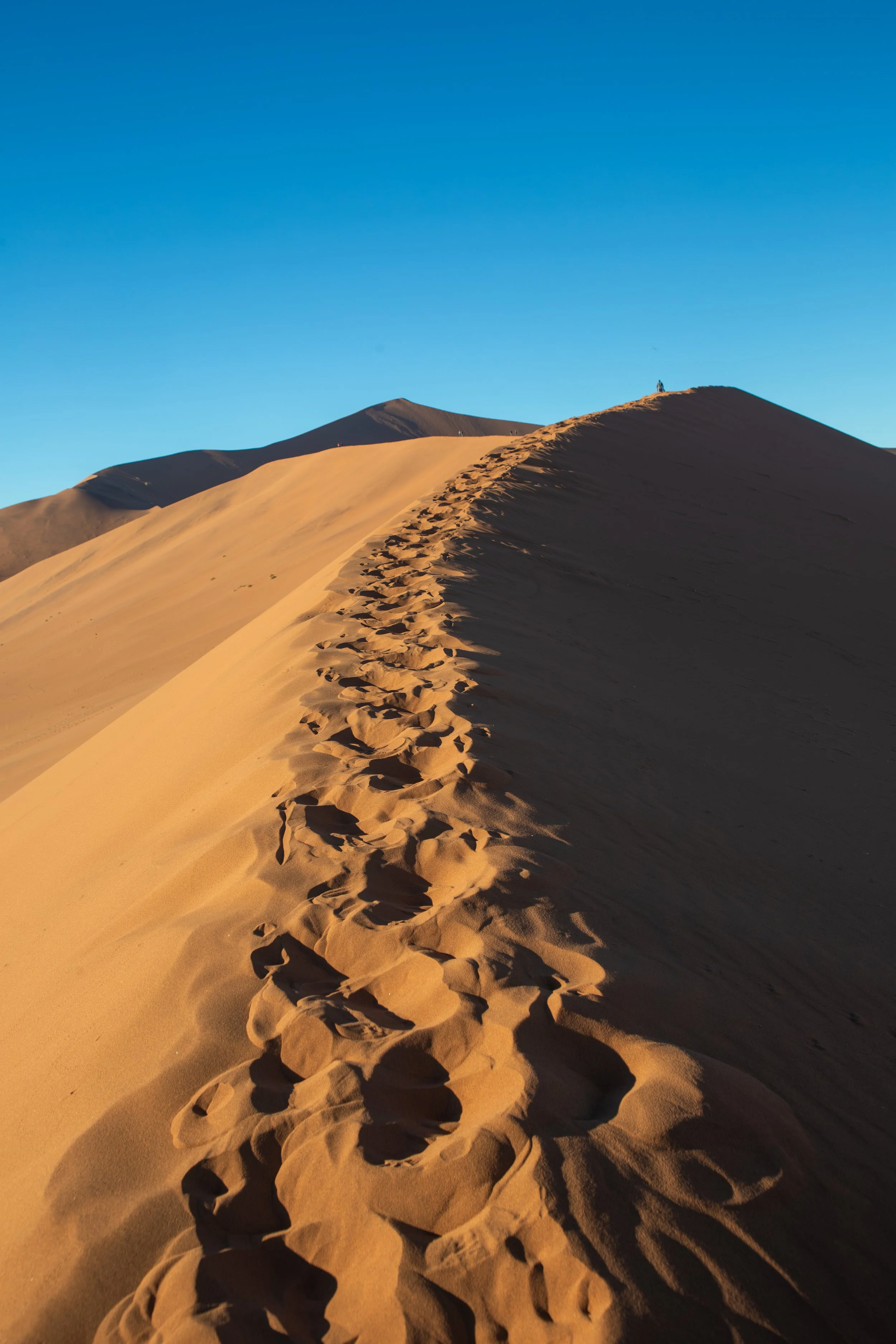
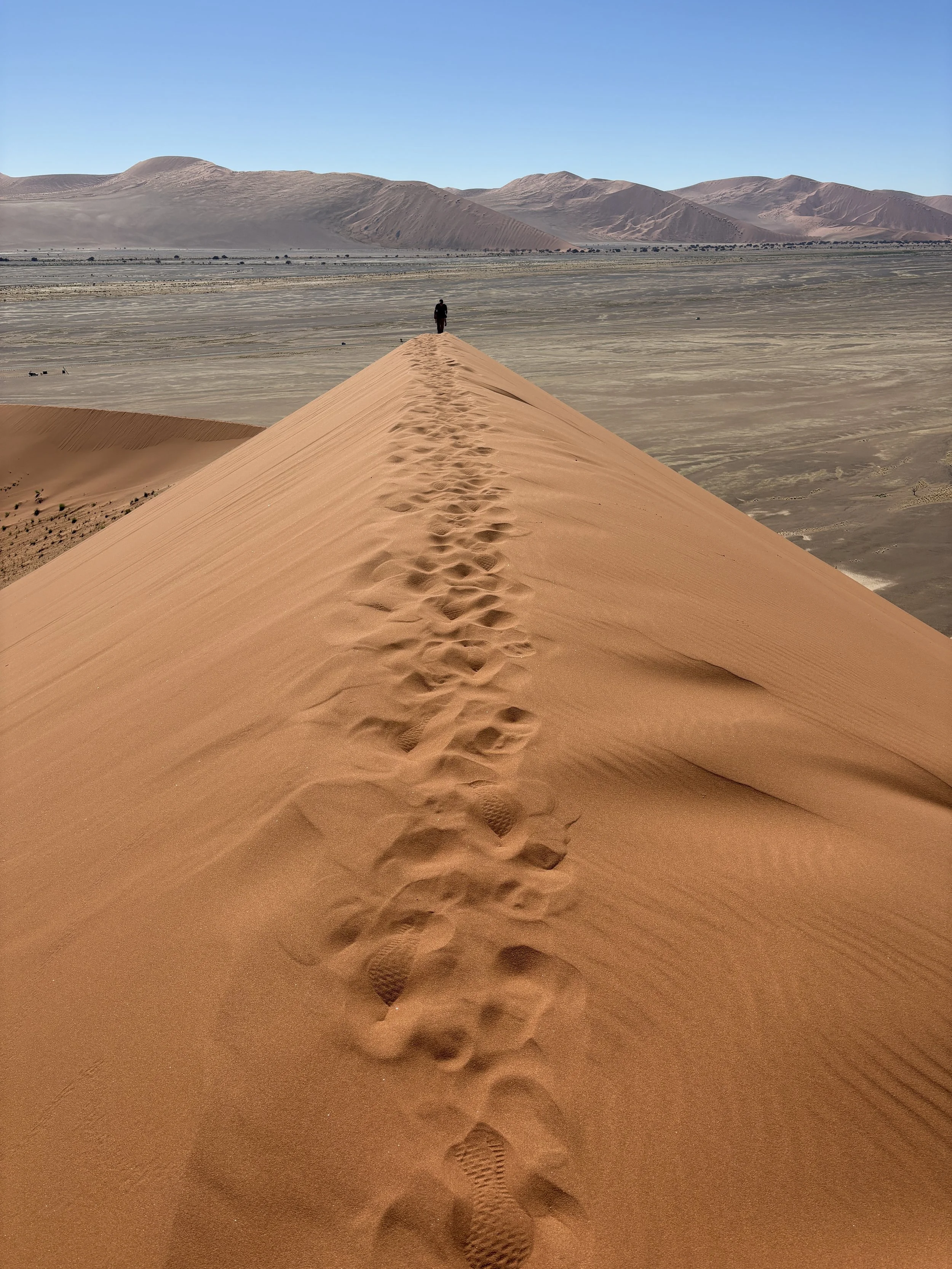
Following the footsteps up Big Daddy is easier than it looks, as long as you don’t mind some sand in your shoes
Opposite Deadvlei, the desert and dunes stretch out
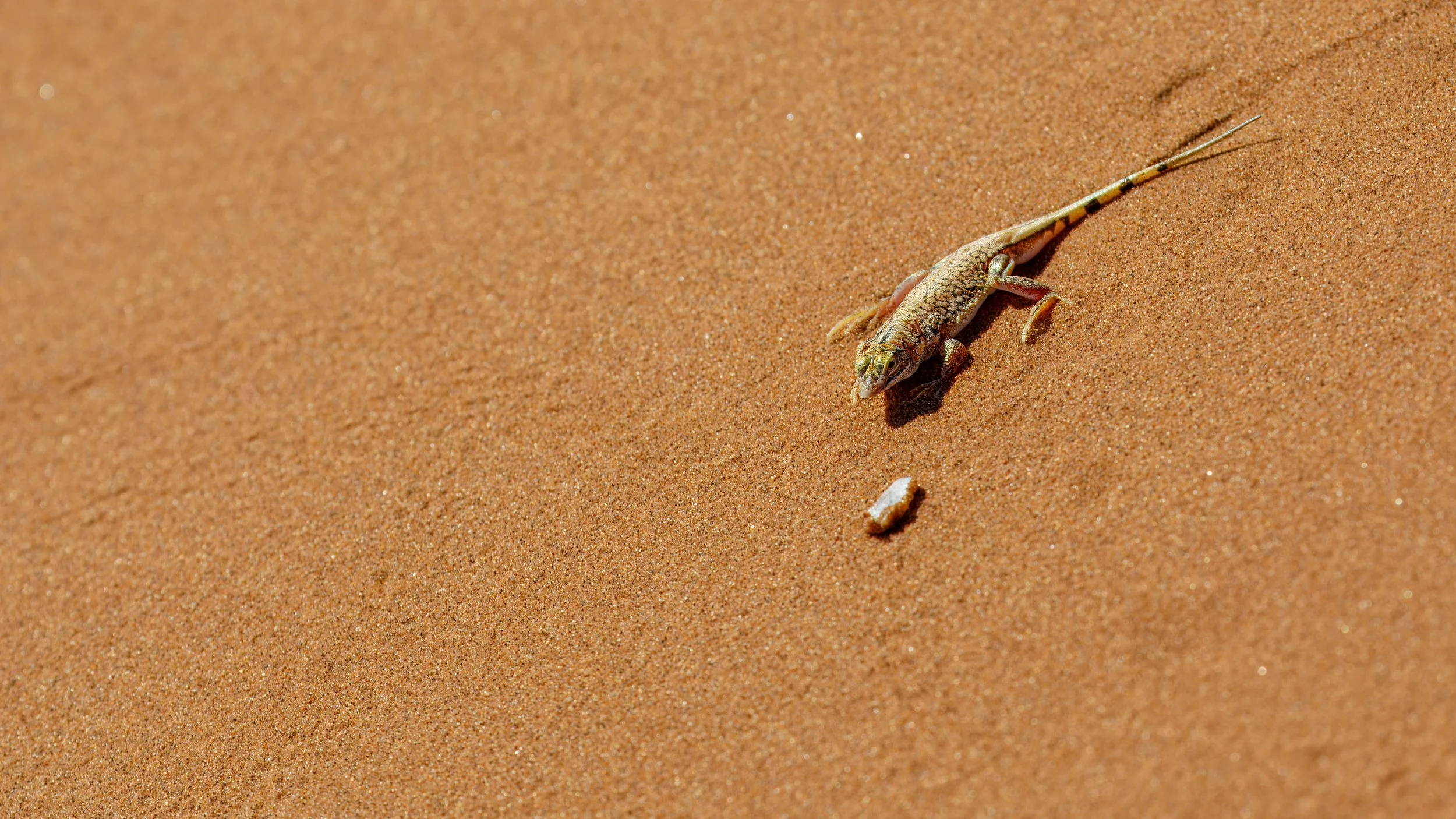
A sand lizard didn’t seem to mind the climbers
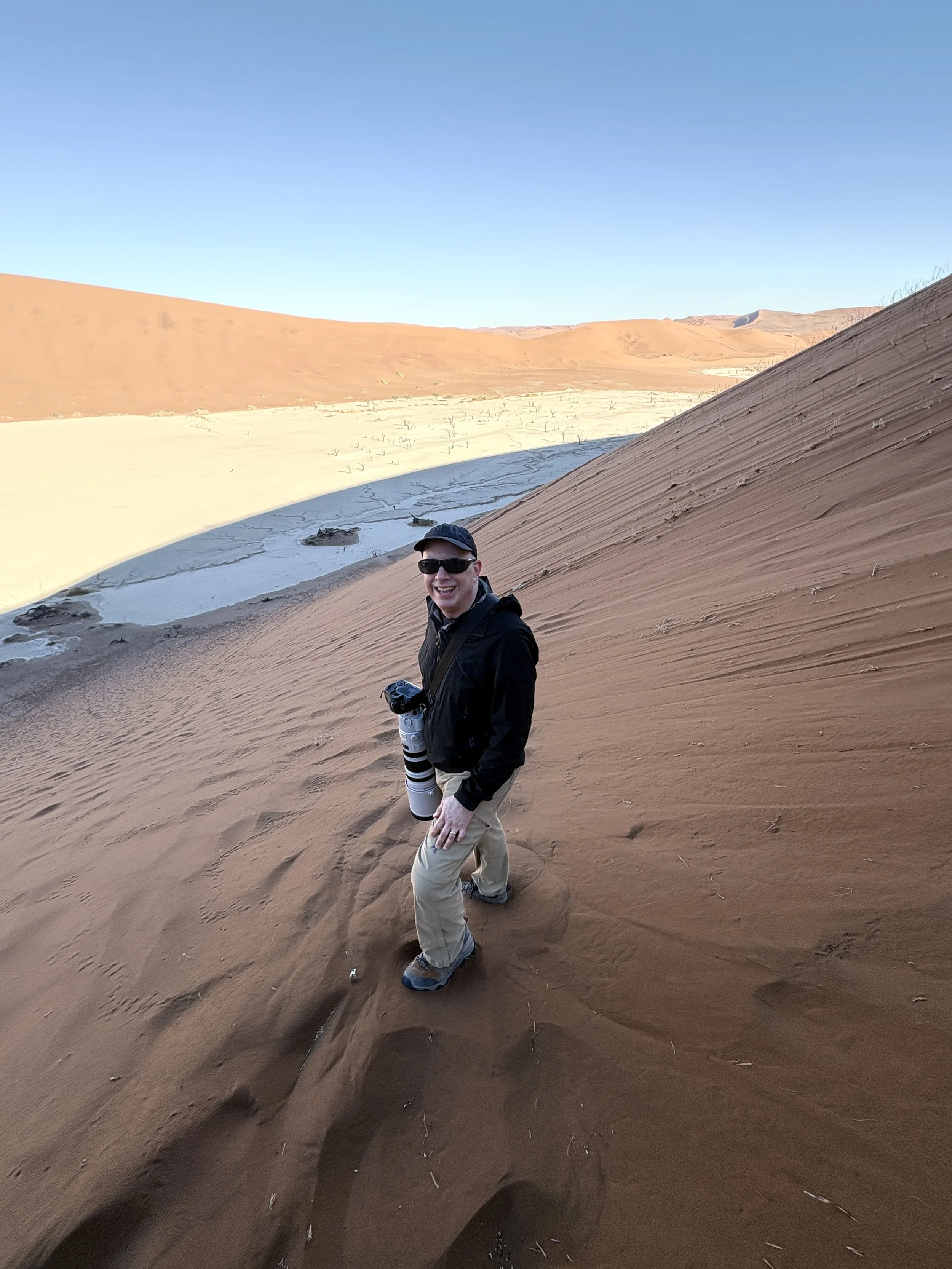
Tom leading the way near some of the express paths down or up
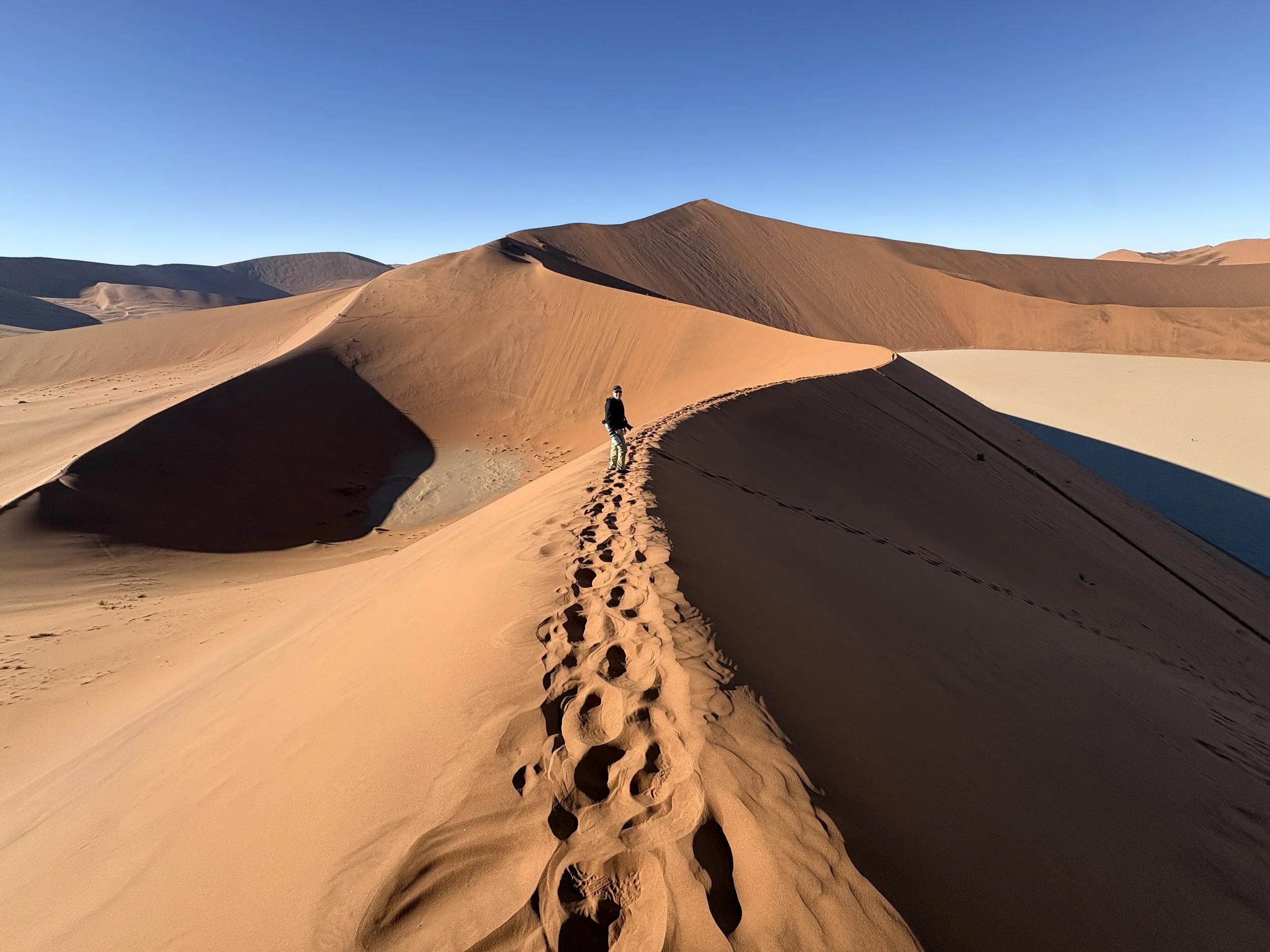
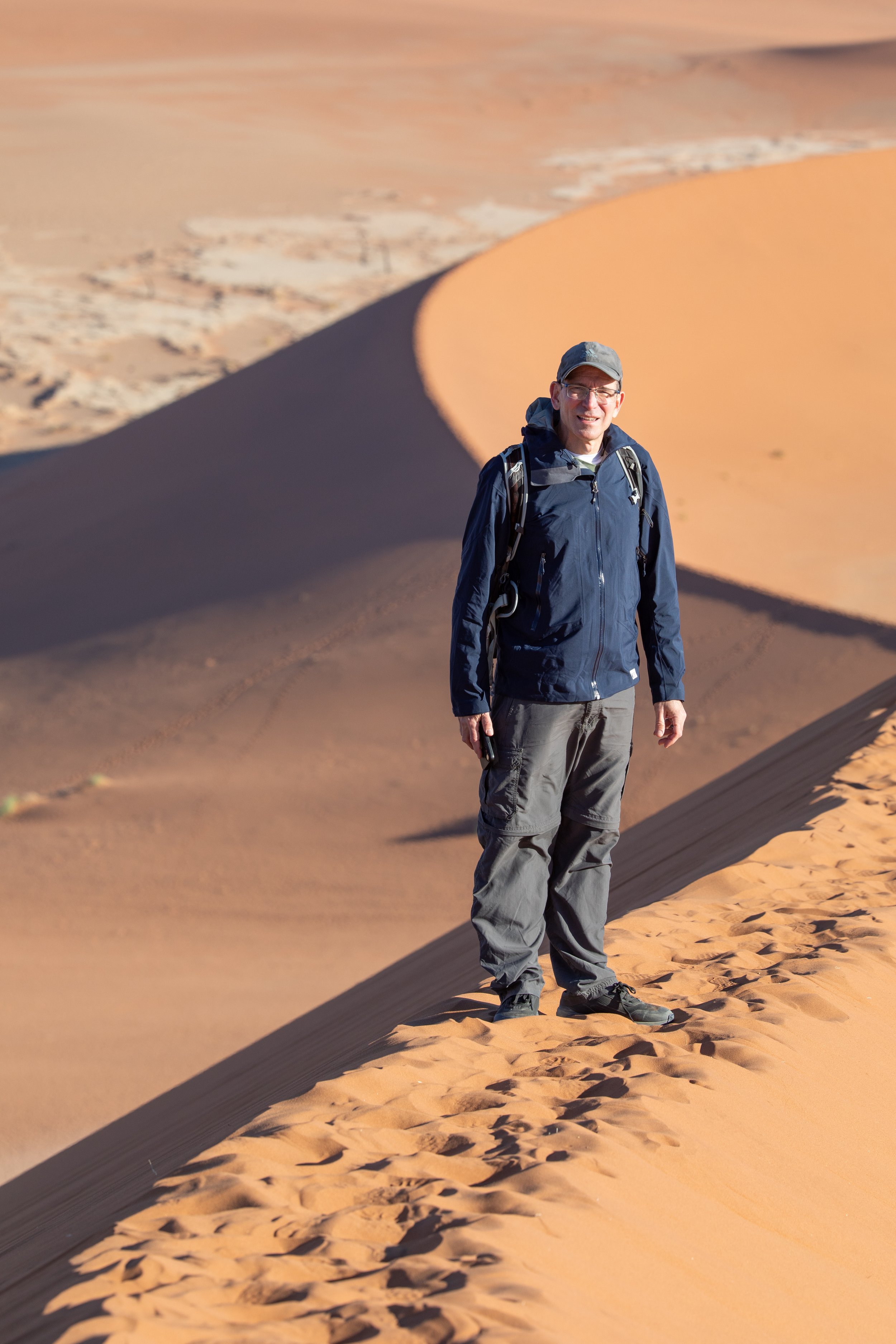
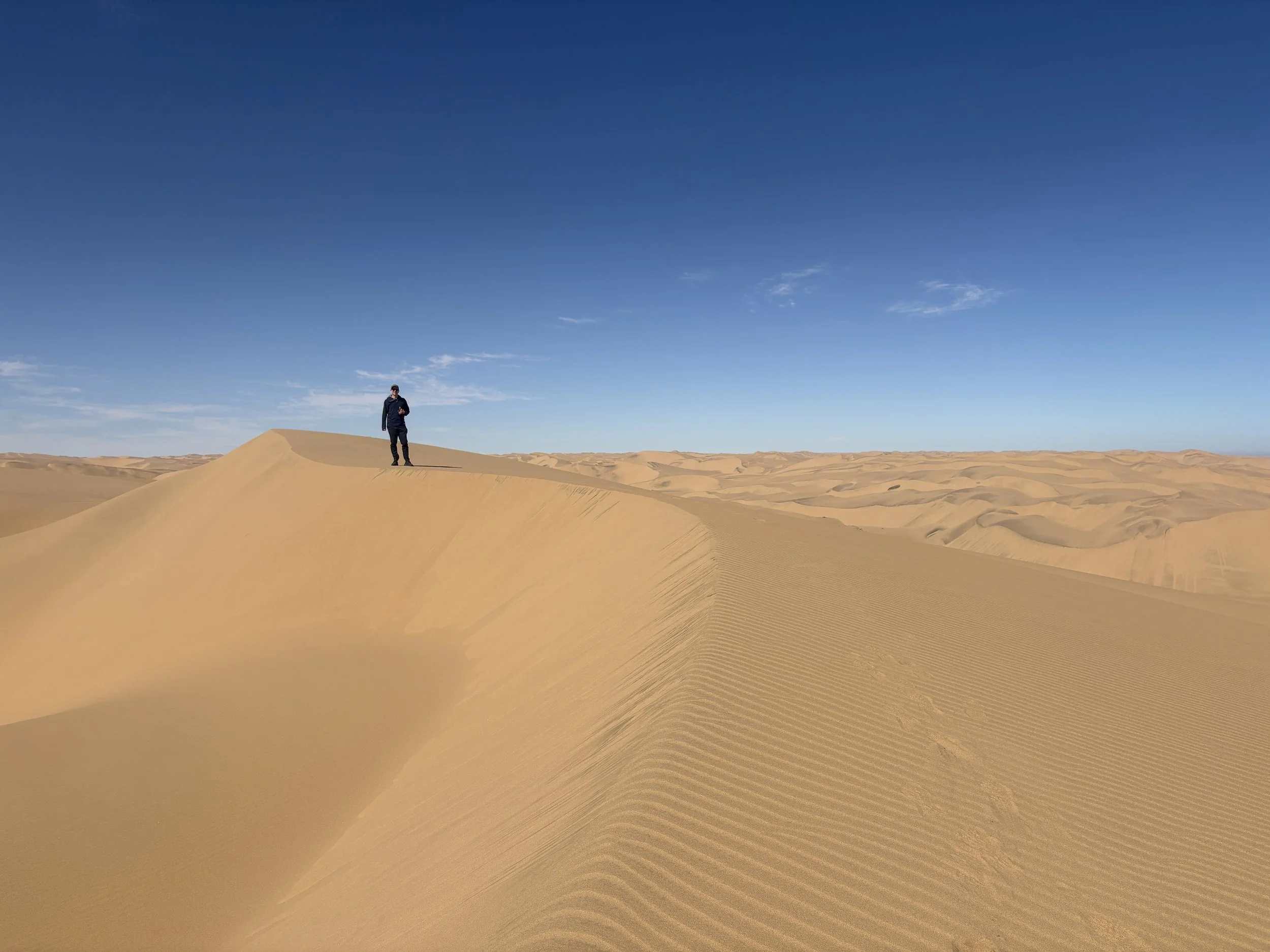
Feeling like the king of the castle and wondering how this ridge built entirely of sand is not collapsing beneath me
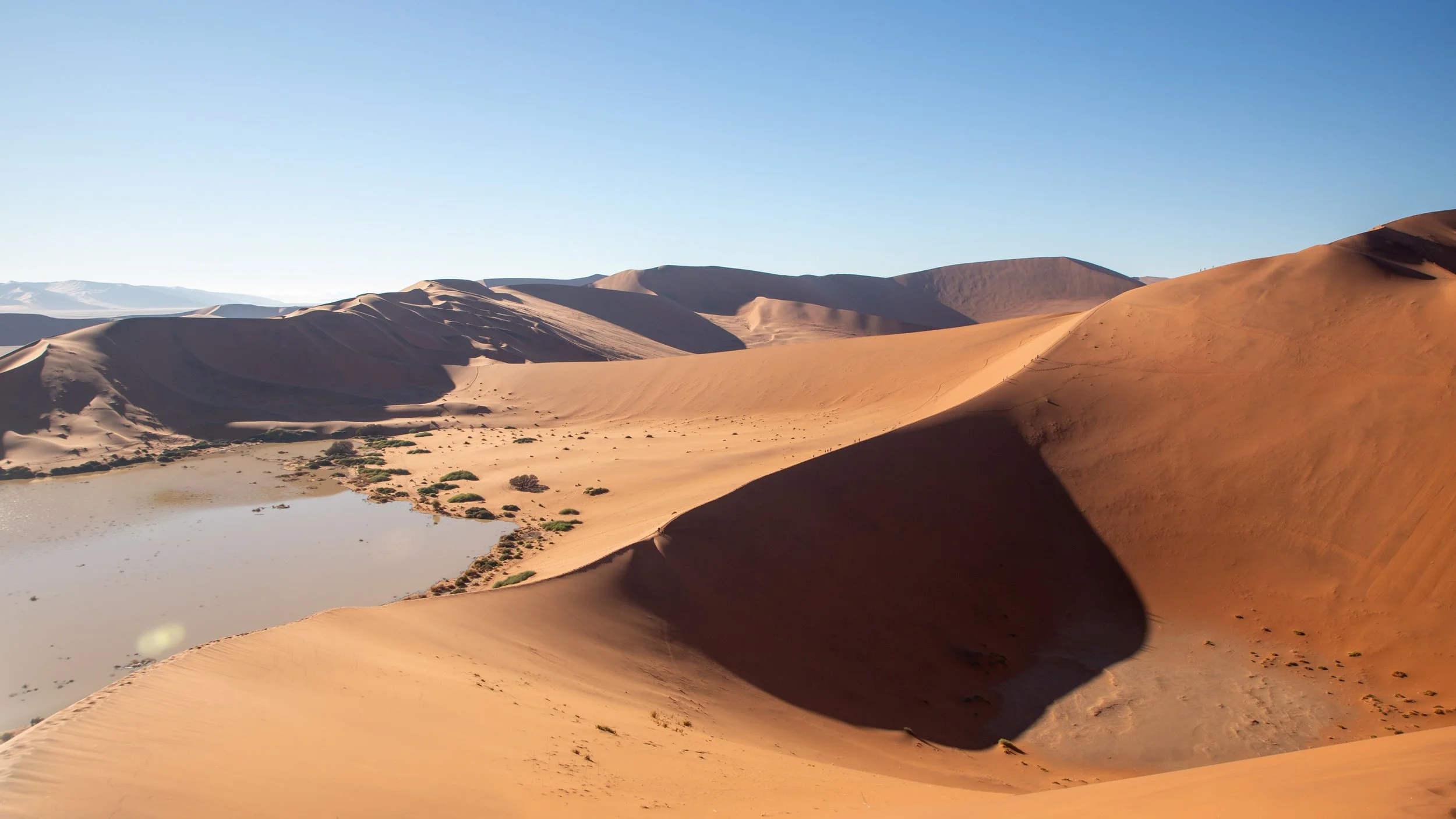
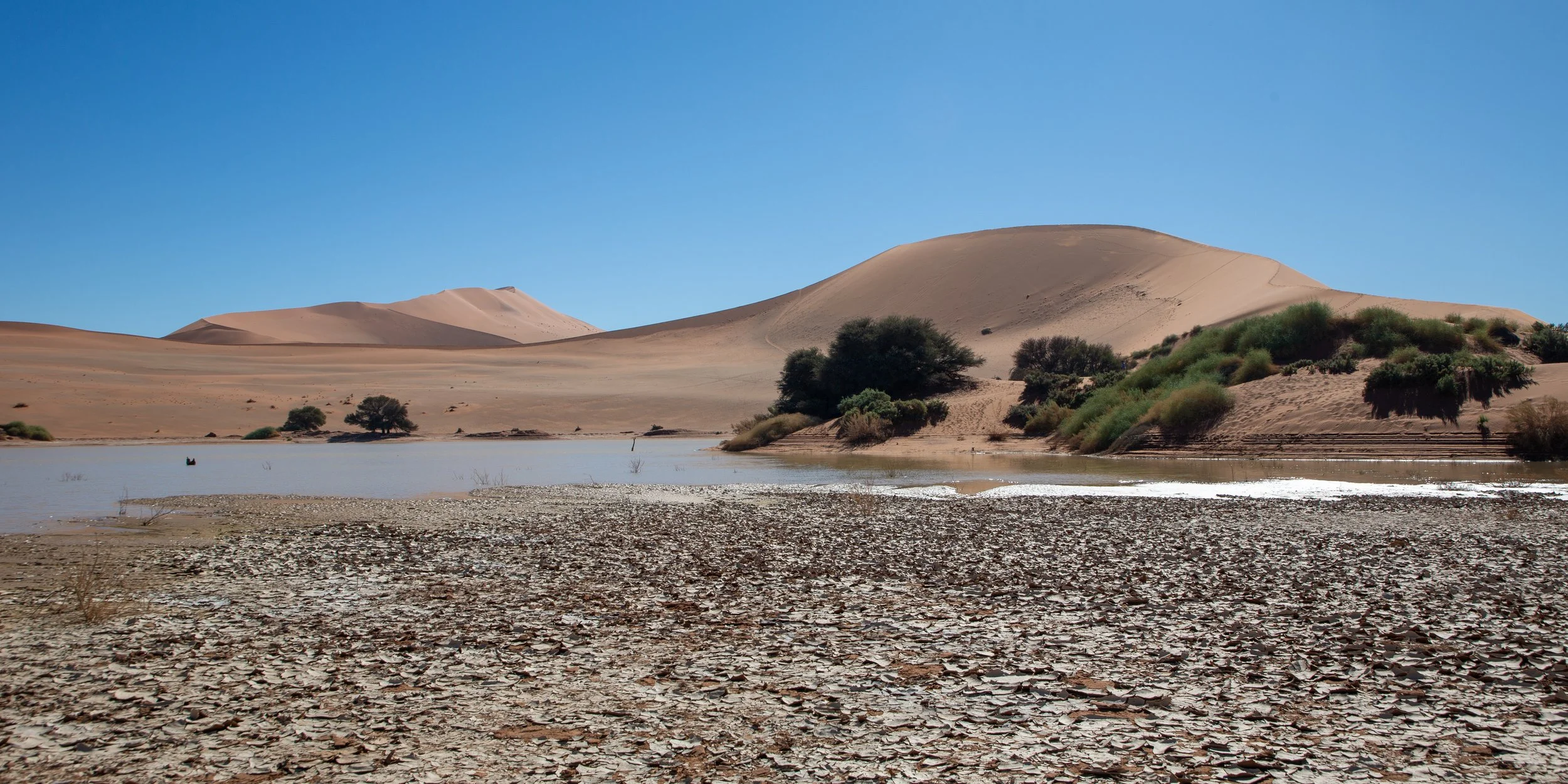
Some water still remains in this area of the desert from the rains earlier in the winter
Although we took the gradual way up, making your own path straight down was a lot more fun
After sliding our way down the dune, the valley was now is now in full sun with fewer shadows
With our early morning start, it was nice to stop for a larger breakfast near Deadvlei
Camelthorn tree seed pods provide nutrition for the desert animals who by eating, activate and spread the seeds in their poop
At the edge of lake, we walked across the caked sand
What remained of the temporary pond in the Namib desert
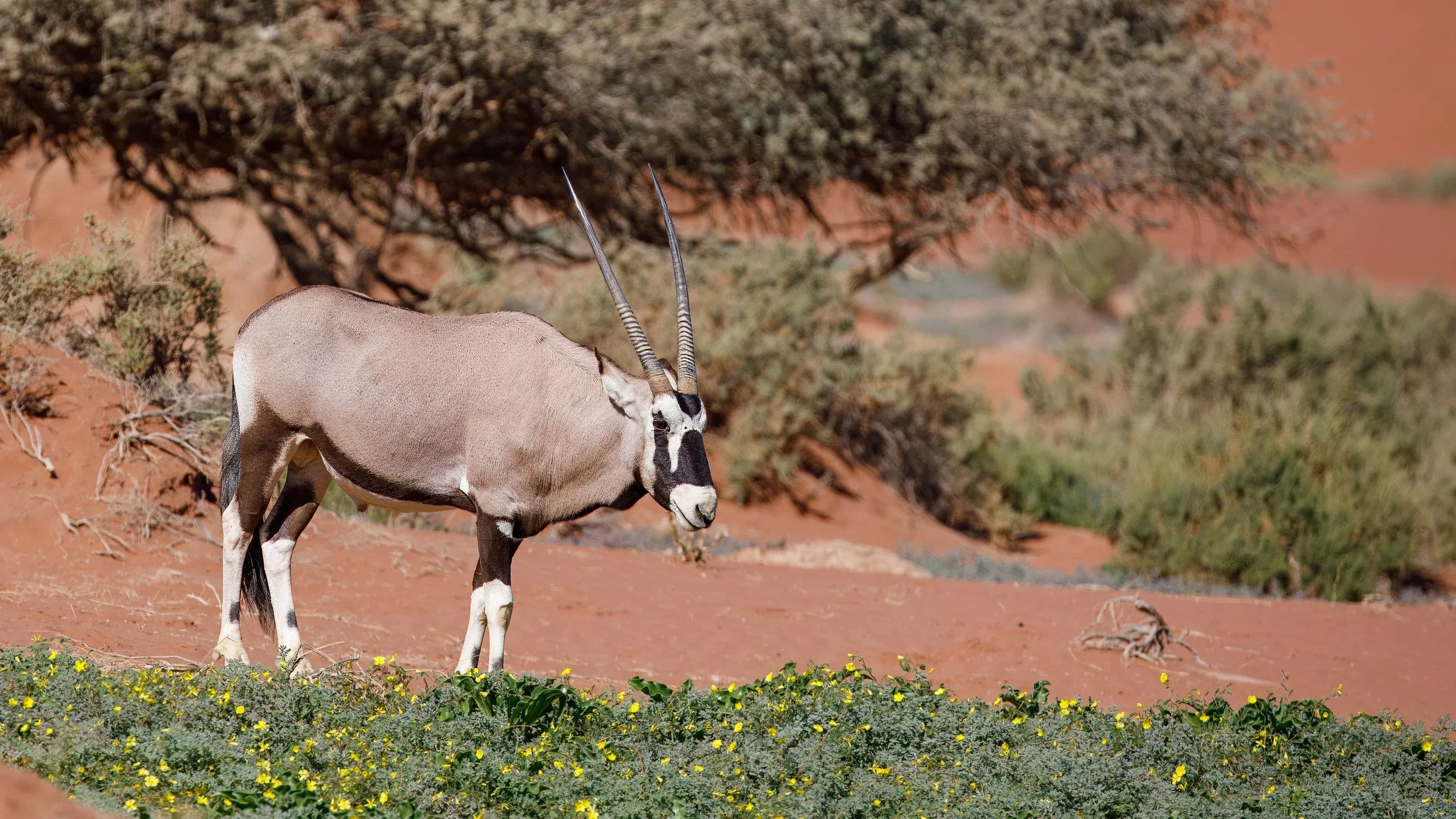
Oryx enjoying the desert flowers
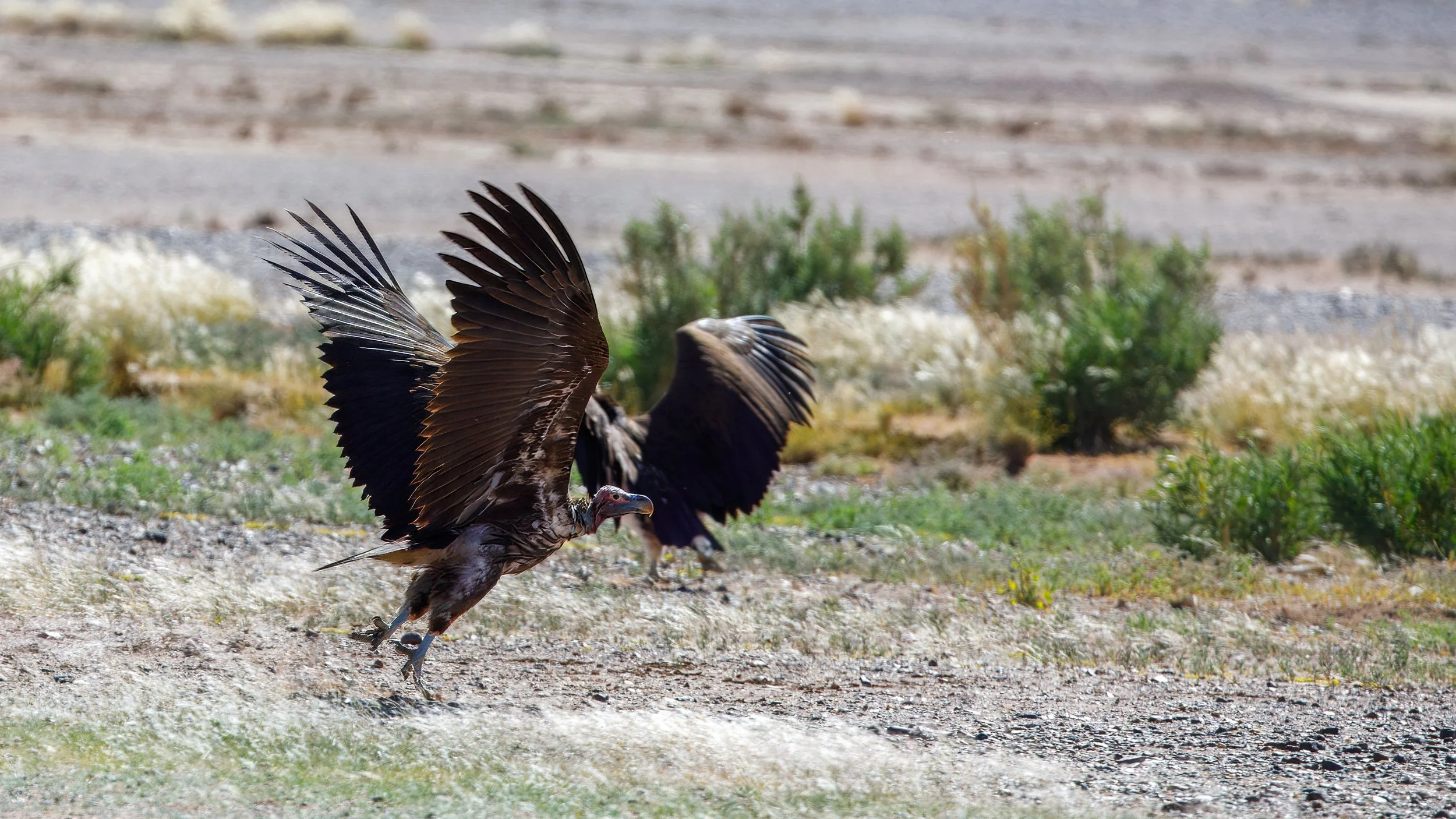
Two lappet-faced vultures on the hunt
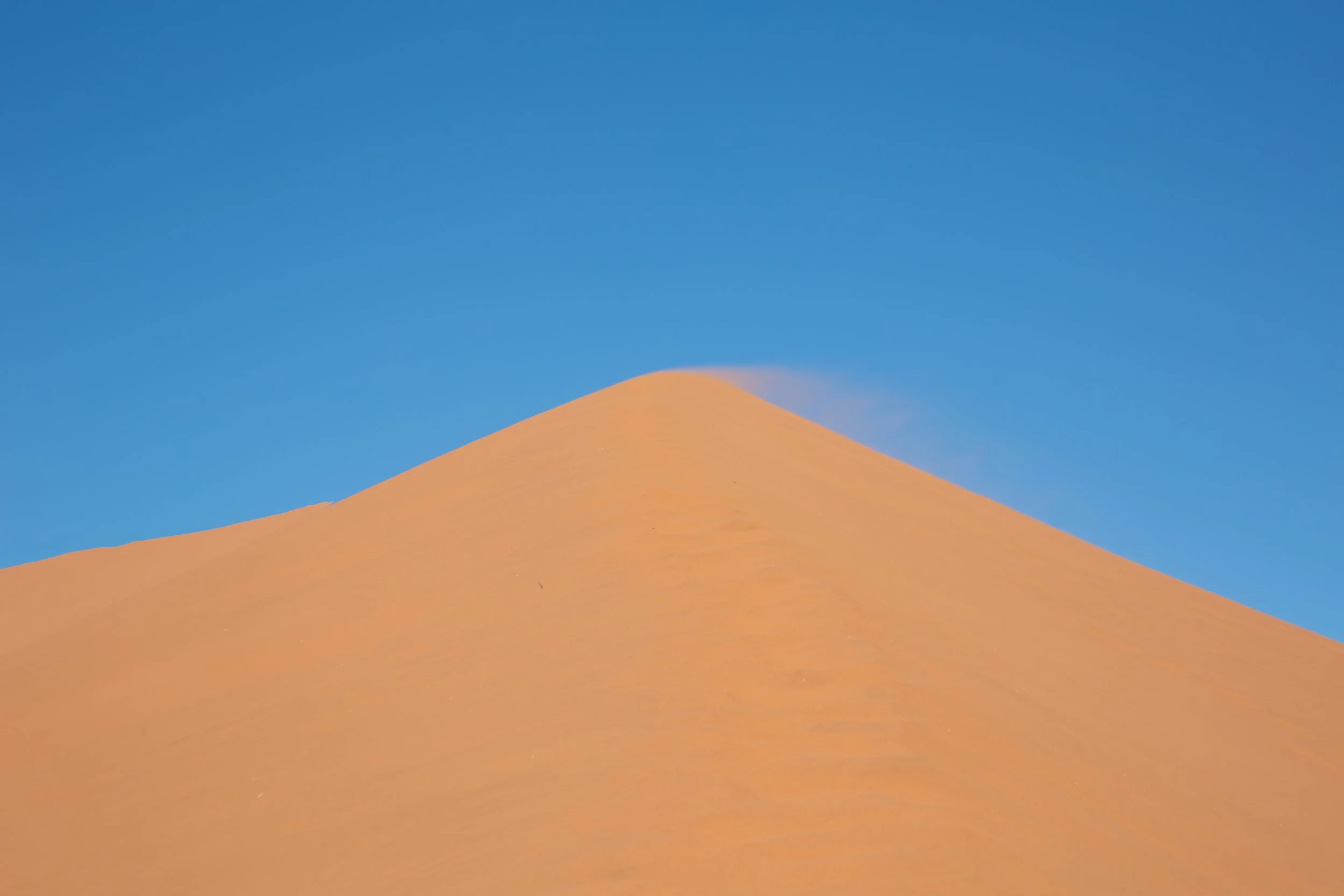
Looking at the top of one of the dunes, you can see how the winds push the dunes north at a speed of up to 9m per year
Climbing a smaller dune, we could see the contrast between the desert and collection of sand dunes
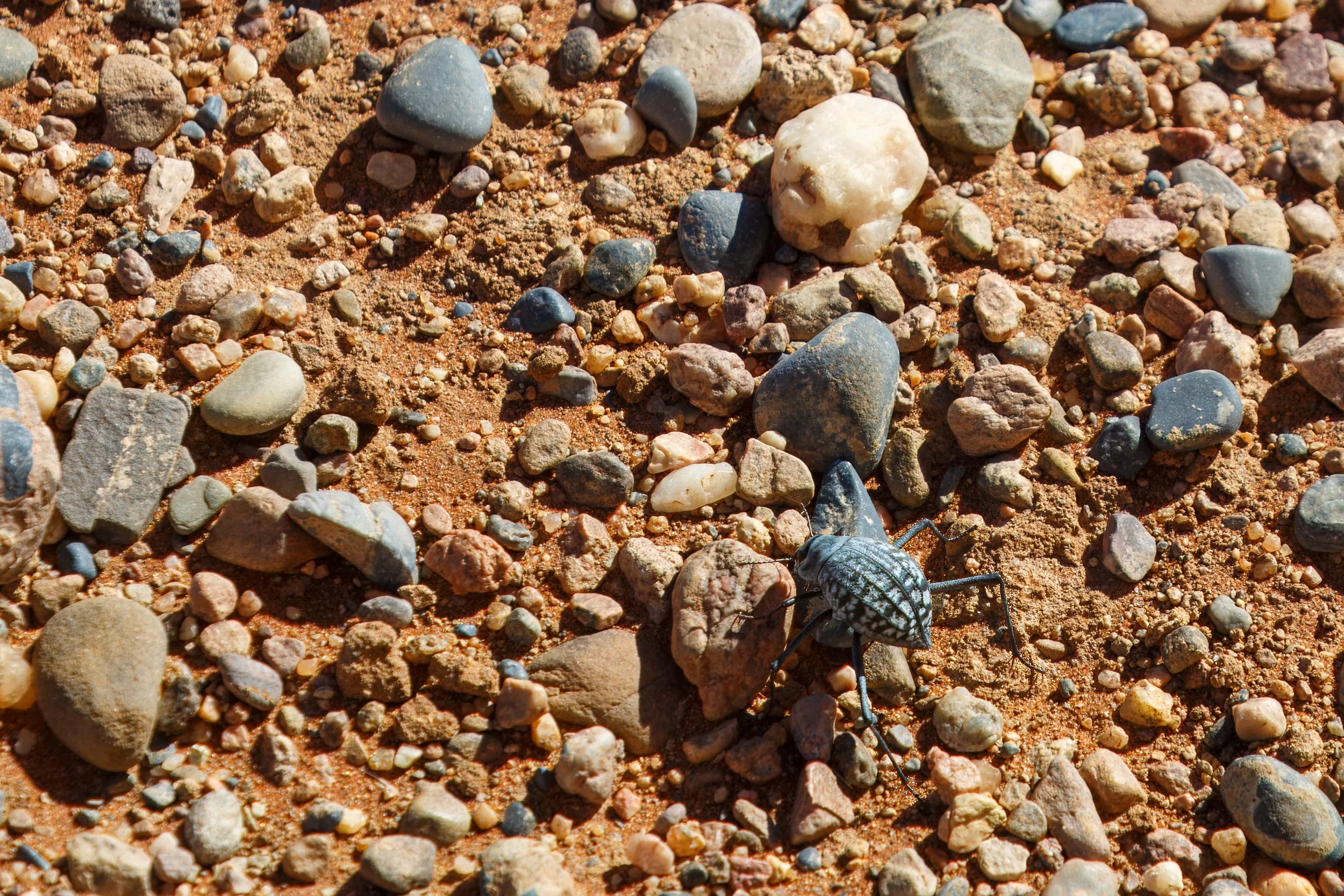
Namibia desert beetle blends into the rocks
Climbing to the top of 170m Dune 45, named for the distance down the road from the national park entrance gate
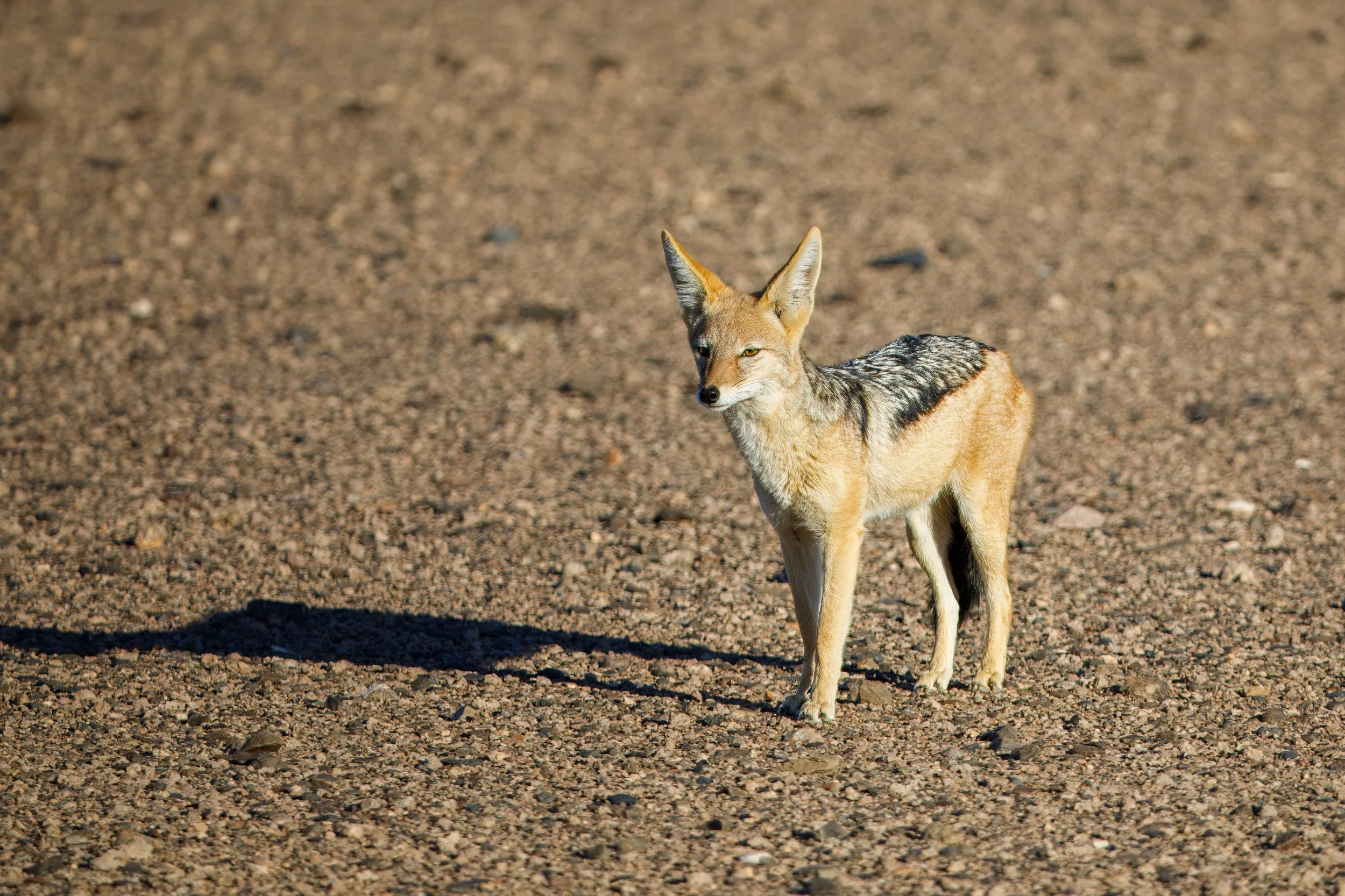
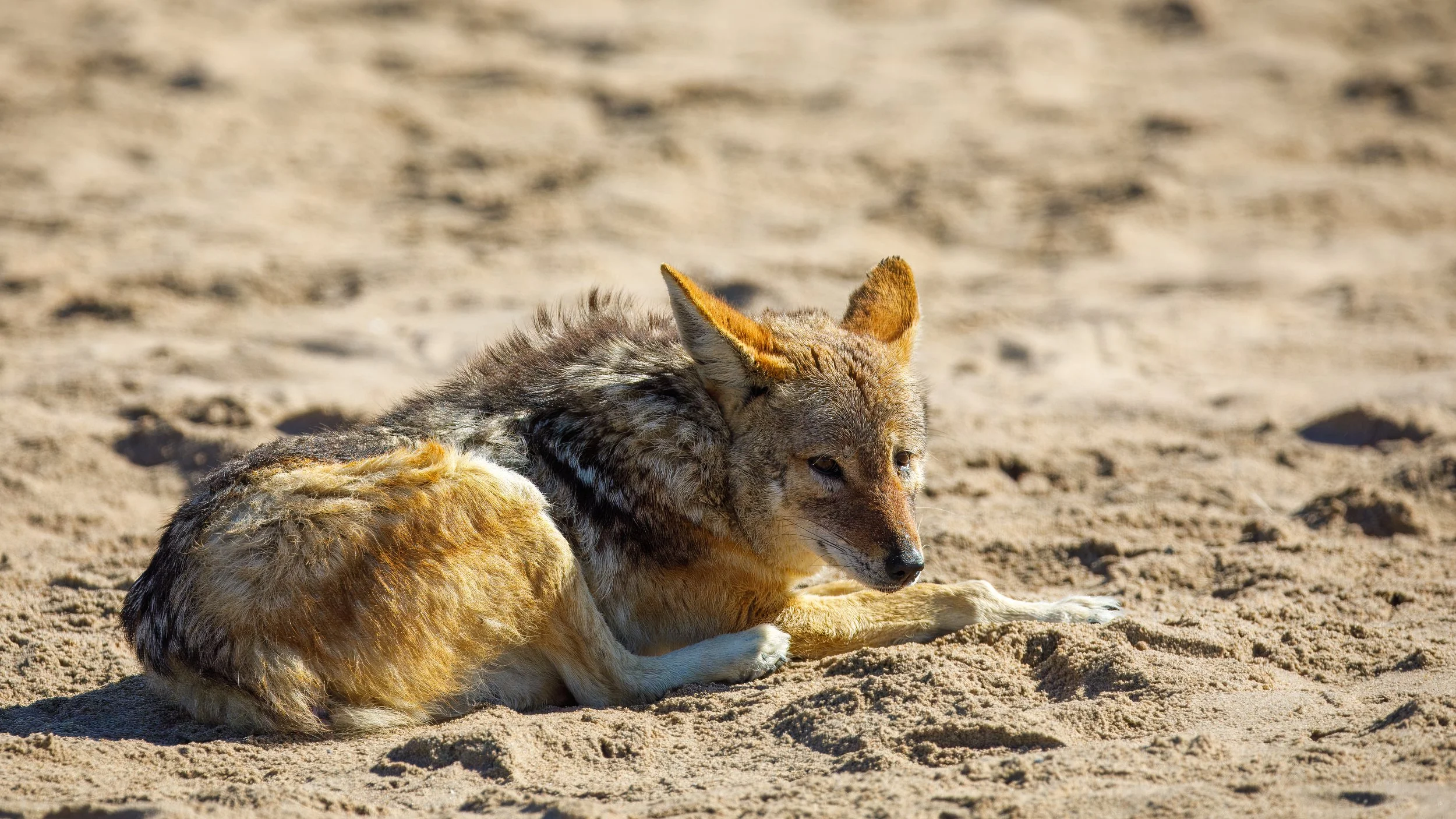
After stopping for a late lunch at the lodge, we headed back out and found a lone black-backed jackal wandering the desert
More dunes under the afternoon sun
Although low in the sky, the afternoon sun was still quite bright
Nearing the end of the day at the Namib Desert
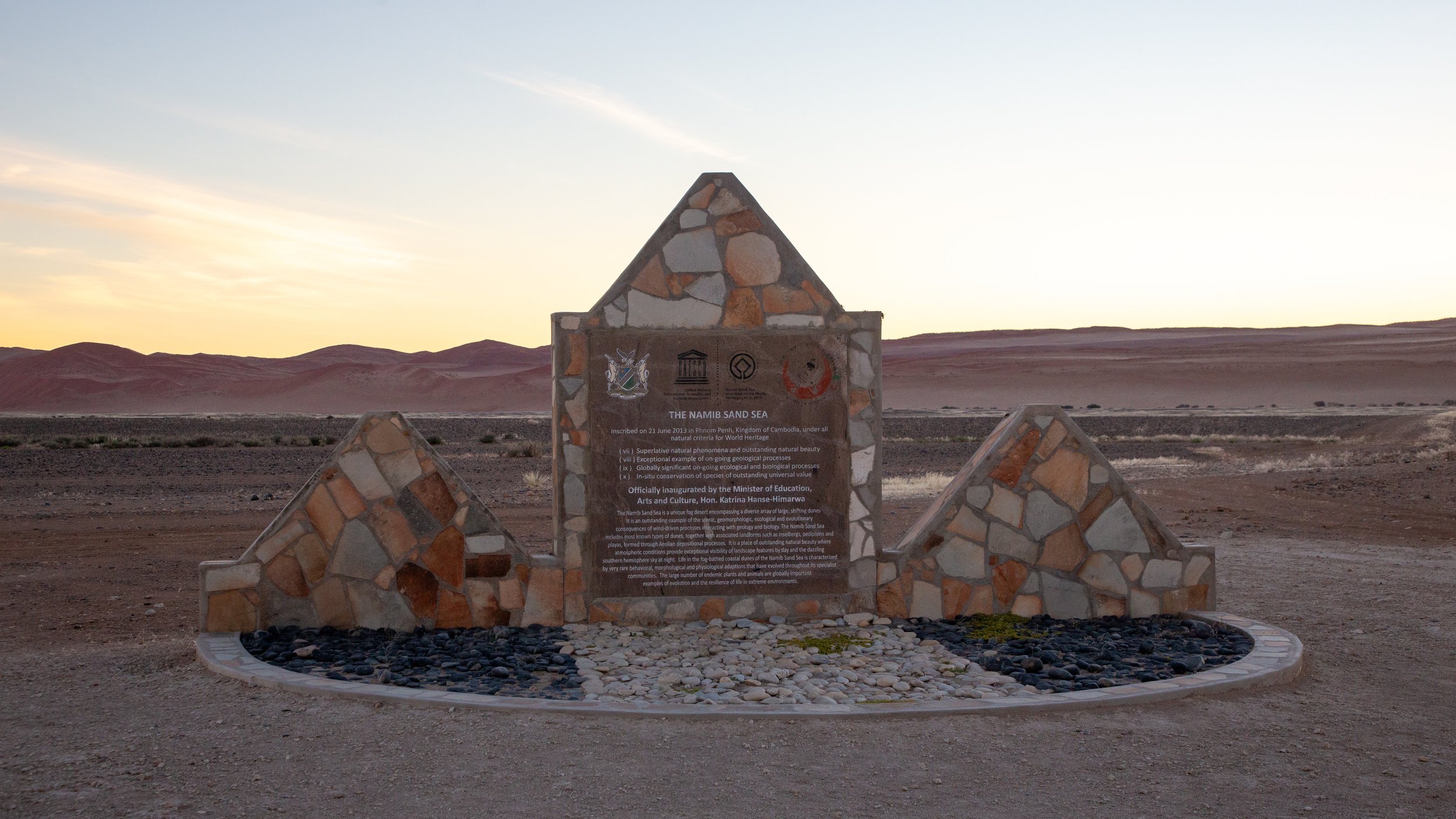
UNESCO placard for the “Namib Sand Sea”
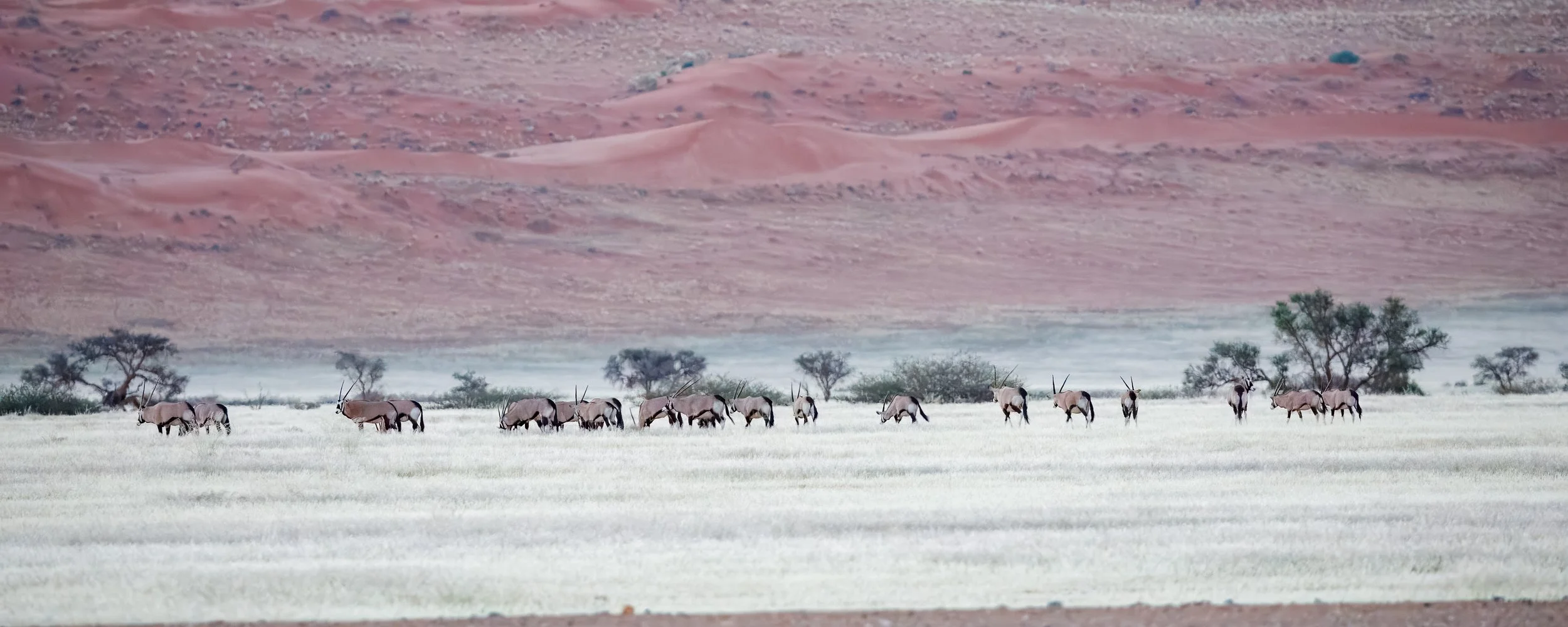
Herd of oryx at twilight
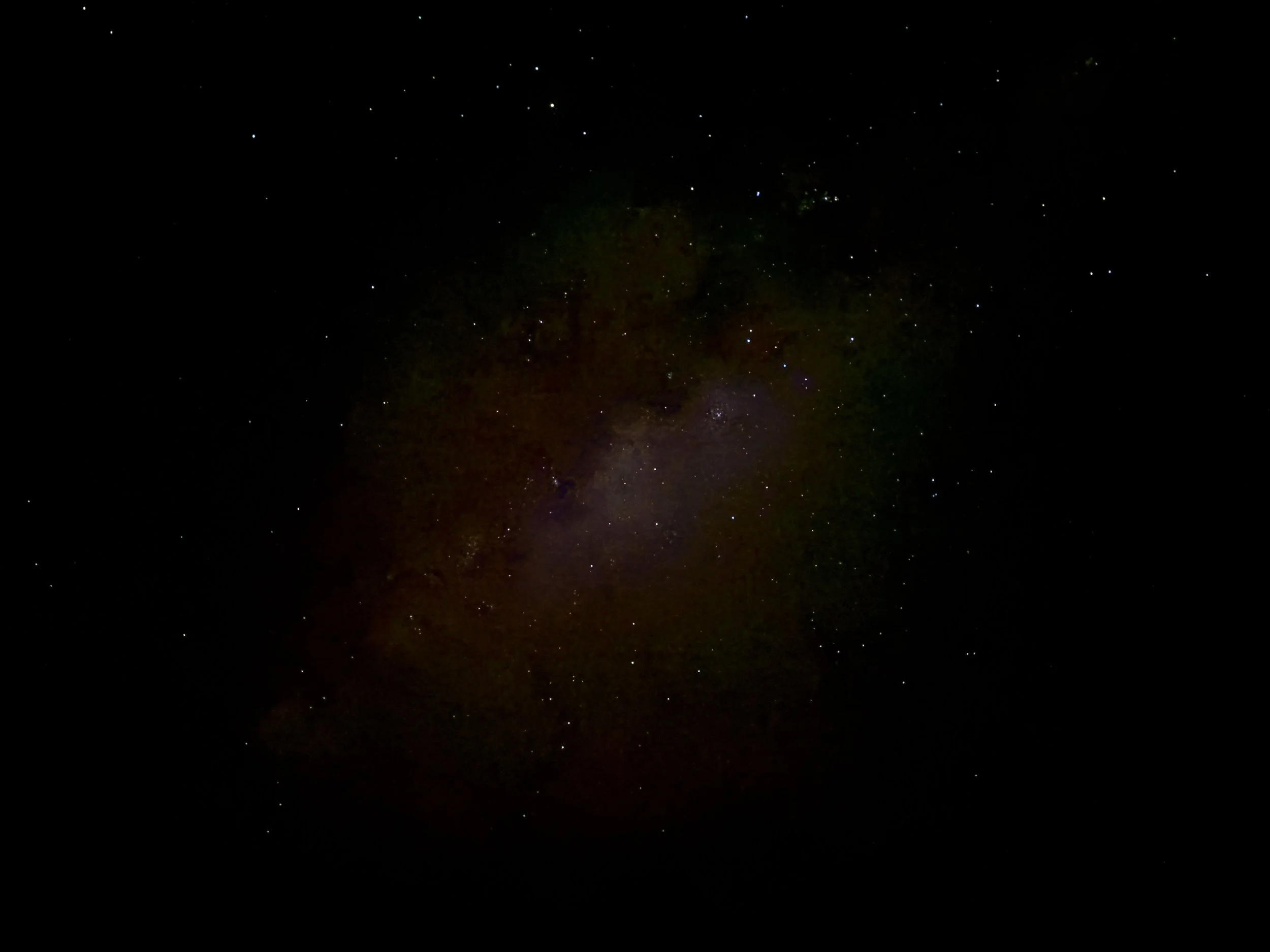
After a long day in the national park, we were happy to get back to the lodge to unwind and have a lovely meal in the open air lodge restaurant. It was difficult to capture on the camera, but we were rewarded with a beautiful star-filled sky for our walk back to our cabin tent.
Jun 10
As we had a long journey ahead through the desert to Swakopmund, we started with an early morning wake up and our most frigid start of the day. We enjoyed the warmth of the bed as long as we could before showering and making our way to the relative warmth of breakfast and our favourite space heater. We were loaded with supplies and on the road to Swakopmund before 8:00am.
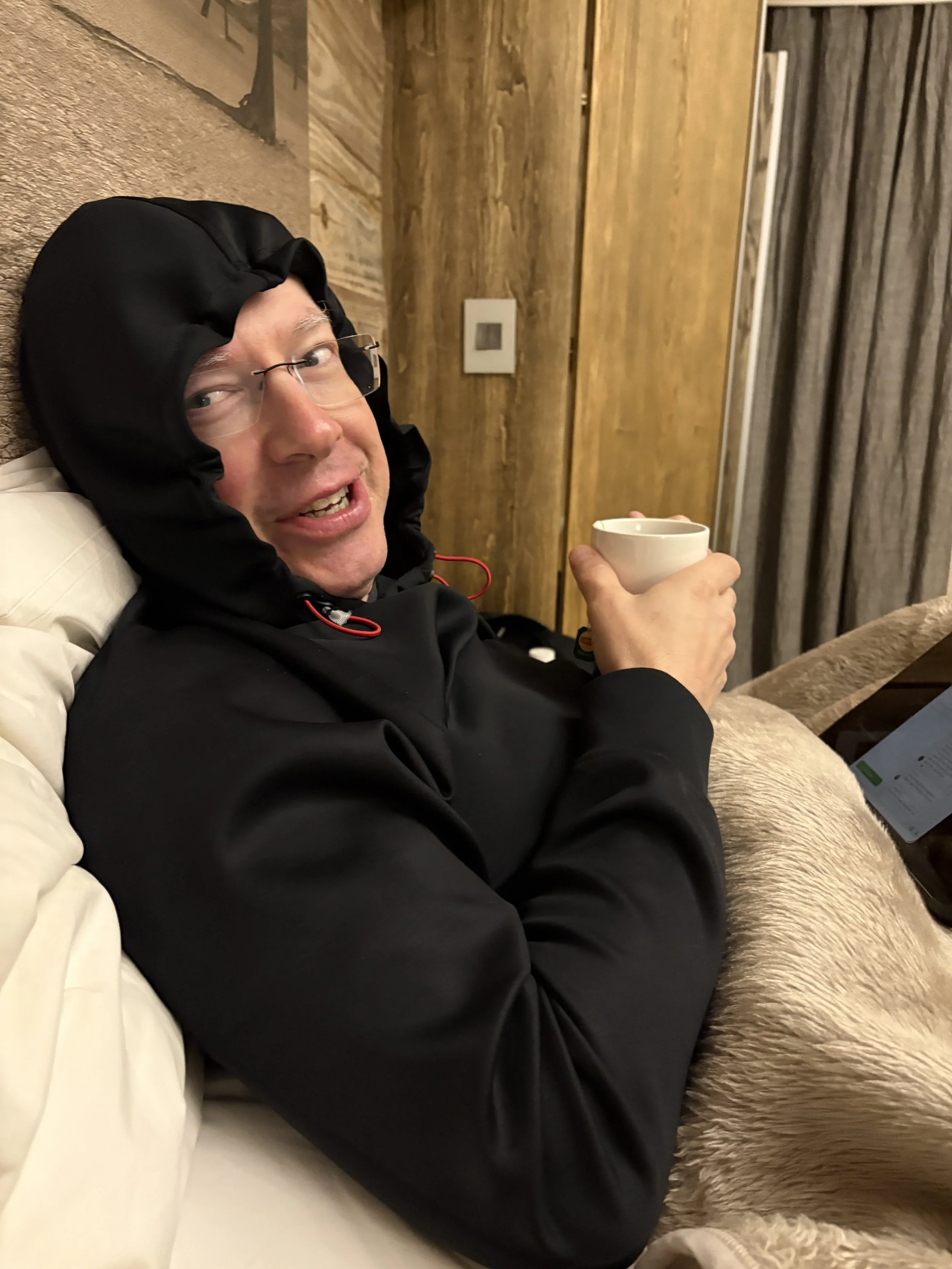
Tom demonstrating just how cold our chalet was in the morning.
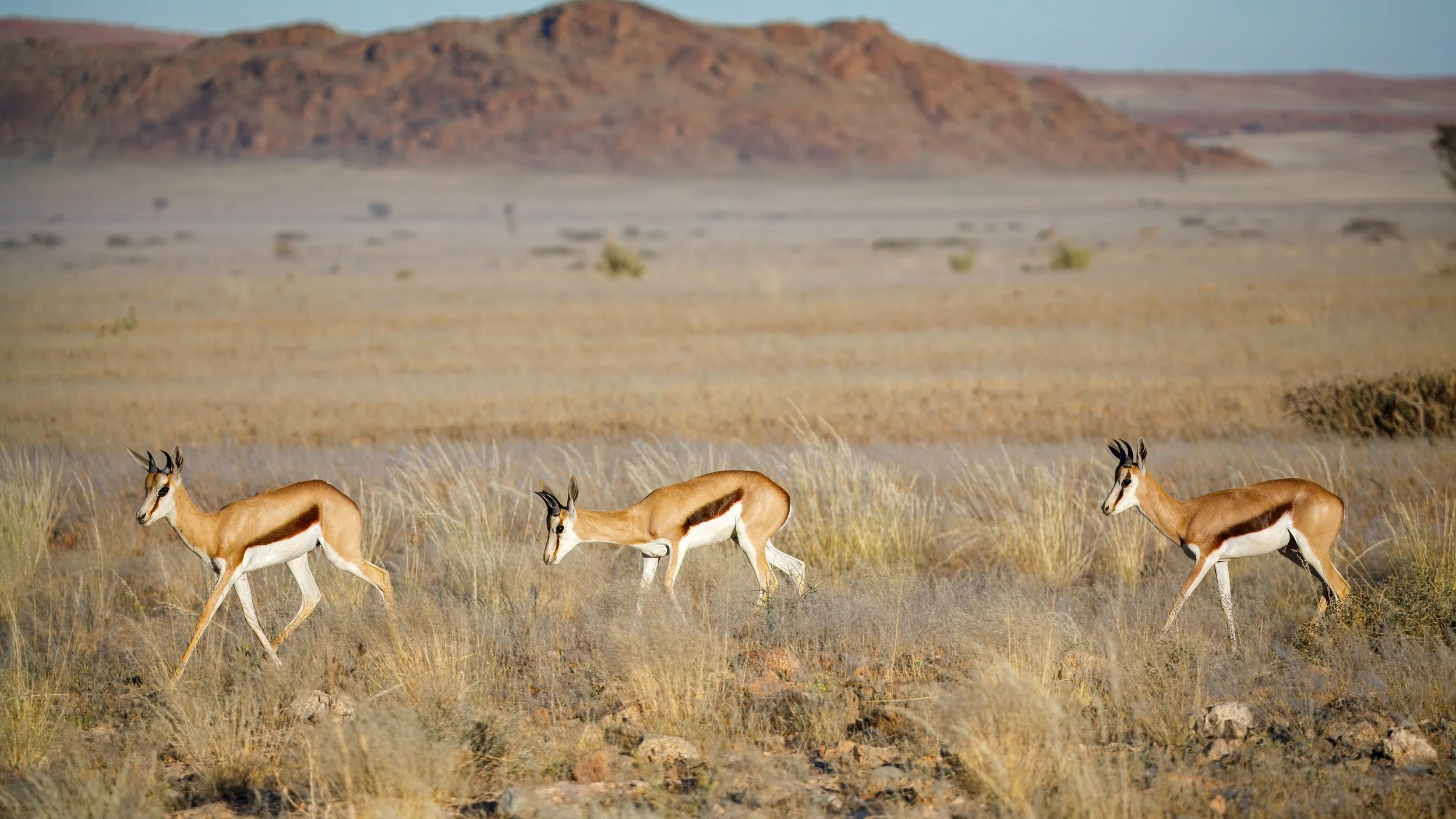
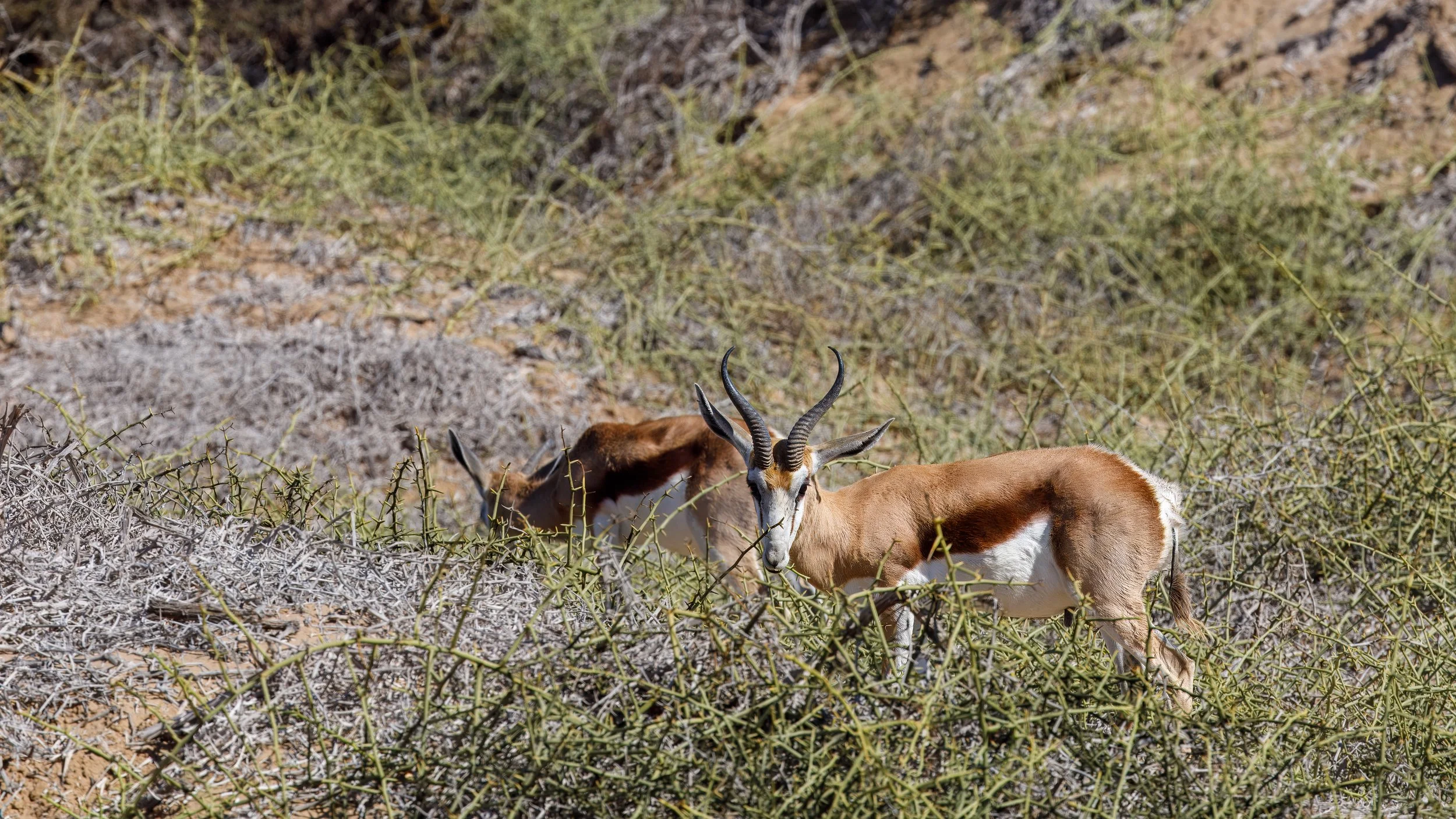
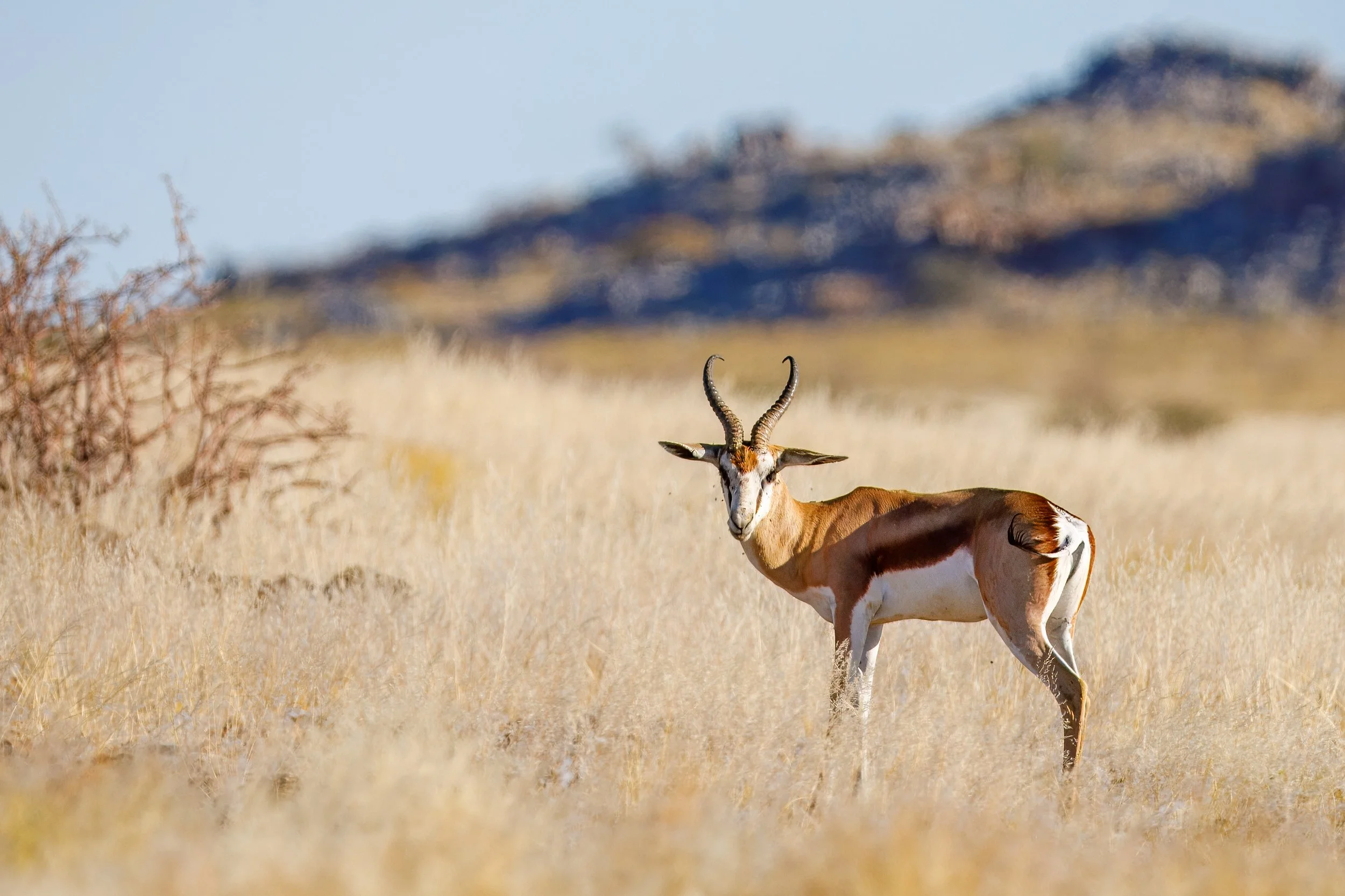
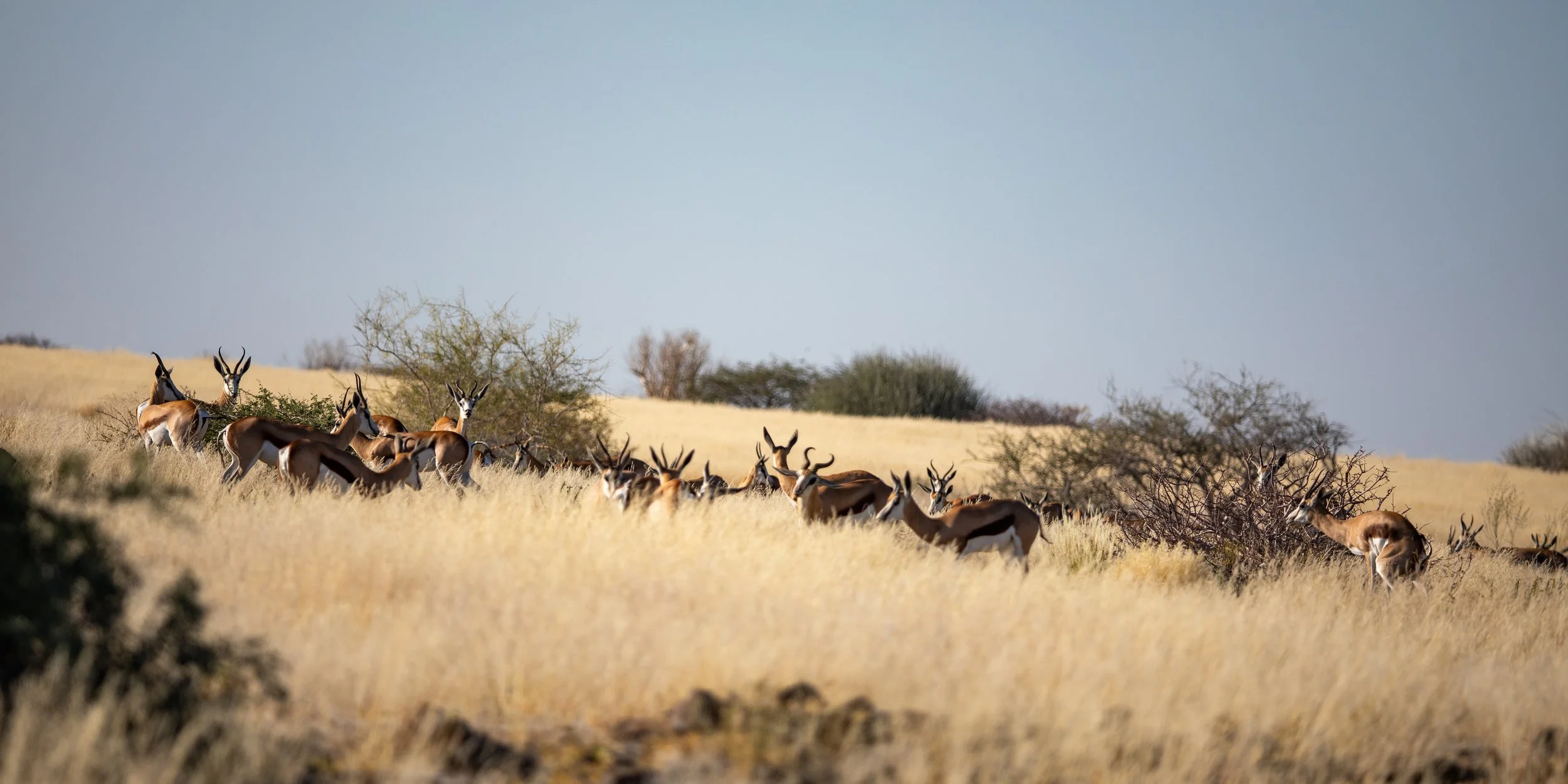
Springboks making their way through the desert landscape
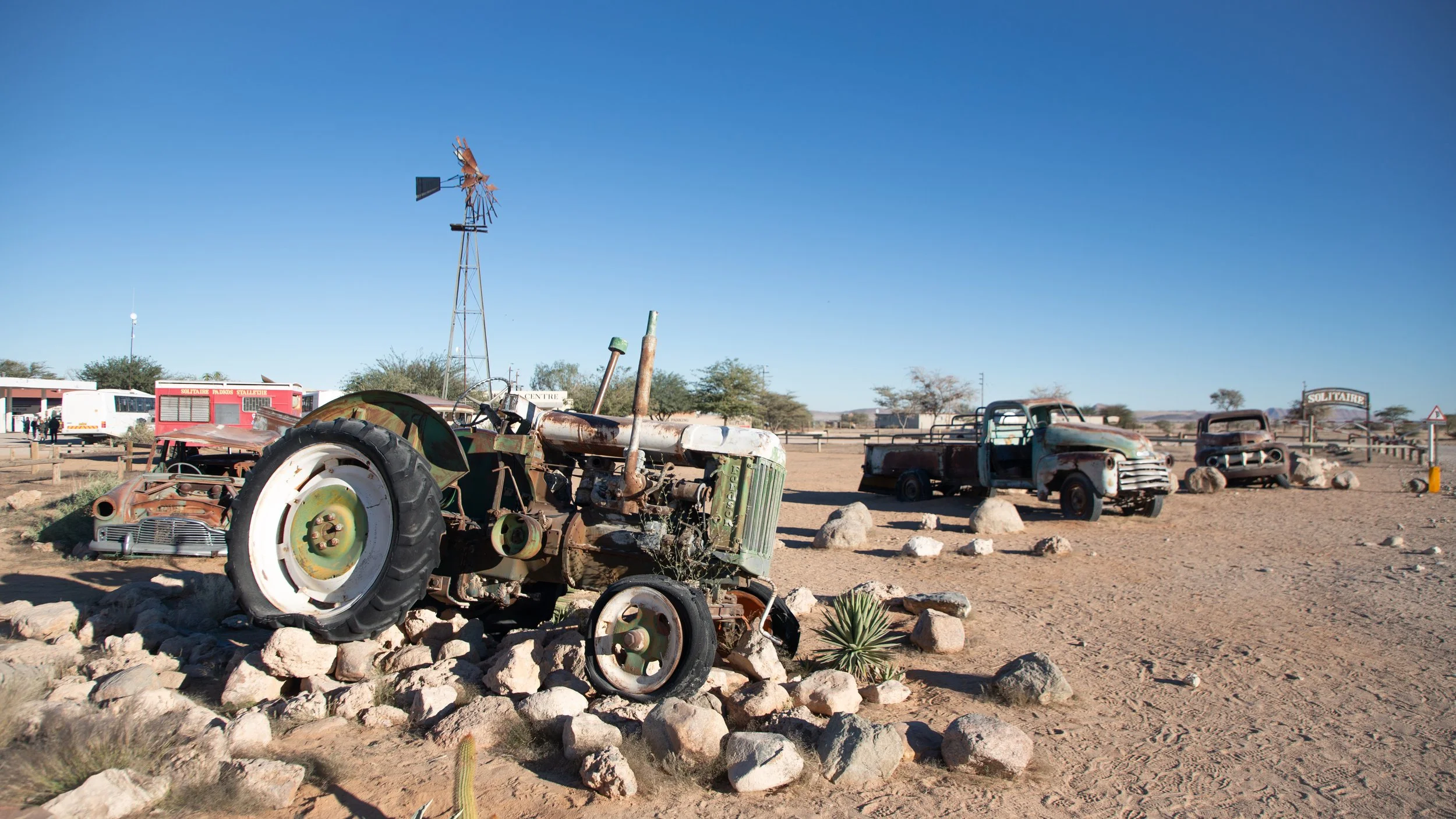
In the very small town of Solitaire, we stopped at Moose McGregor’s Desert Bakery. While now famous for its apple crumble, it actually started as a less-than-successful auto repair shop
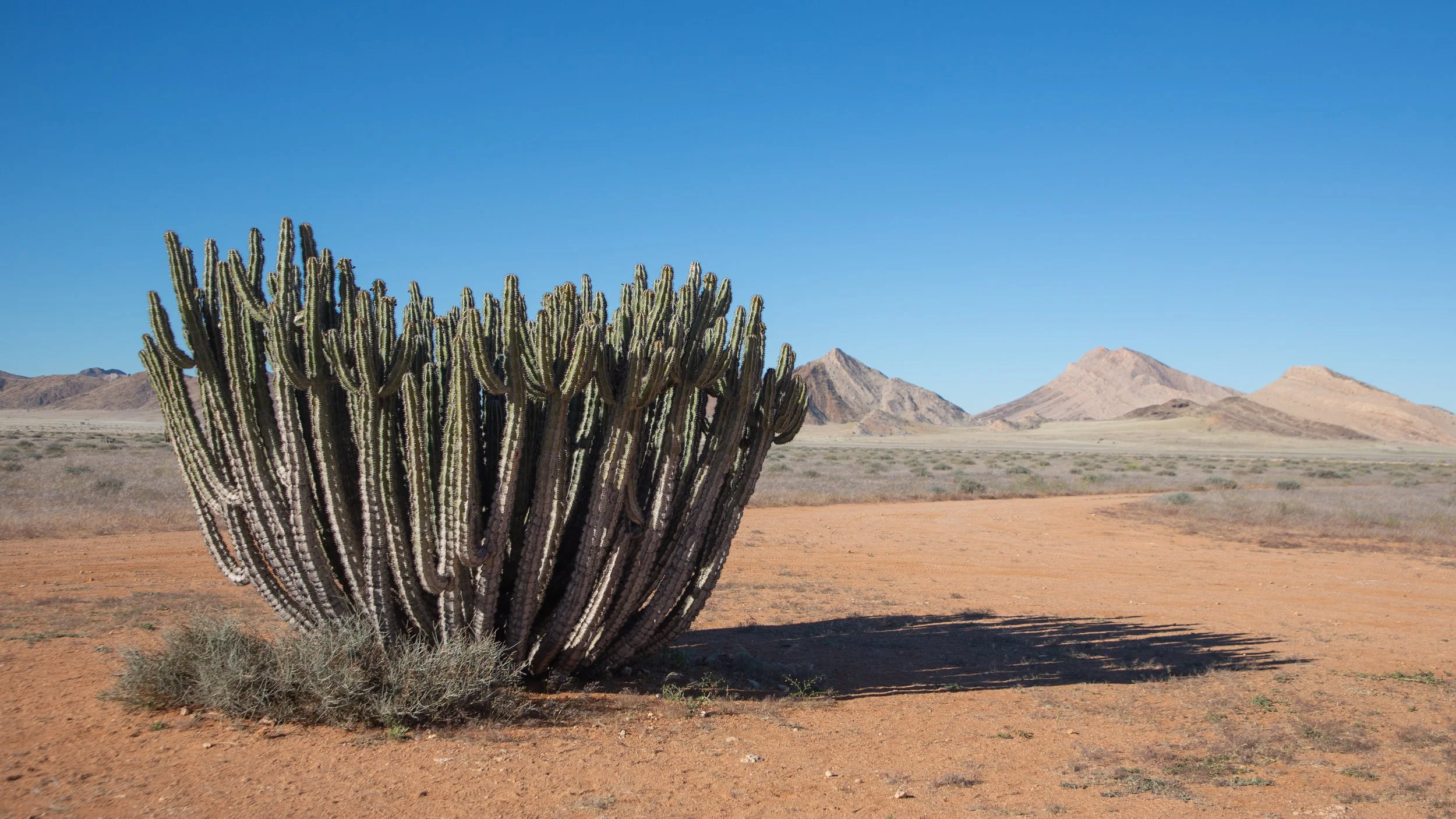
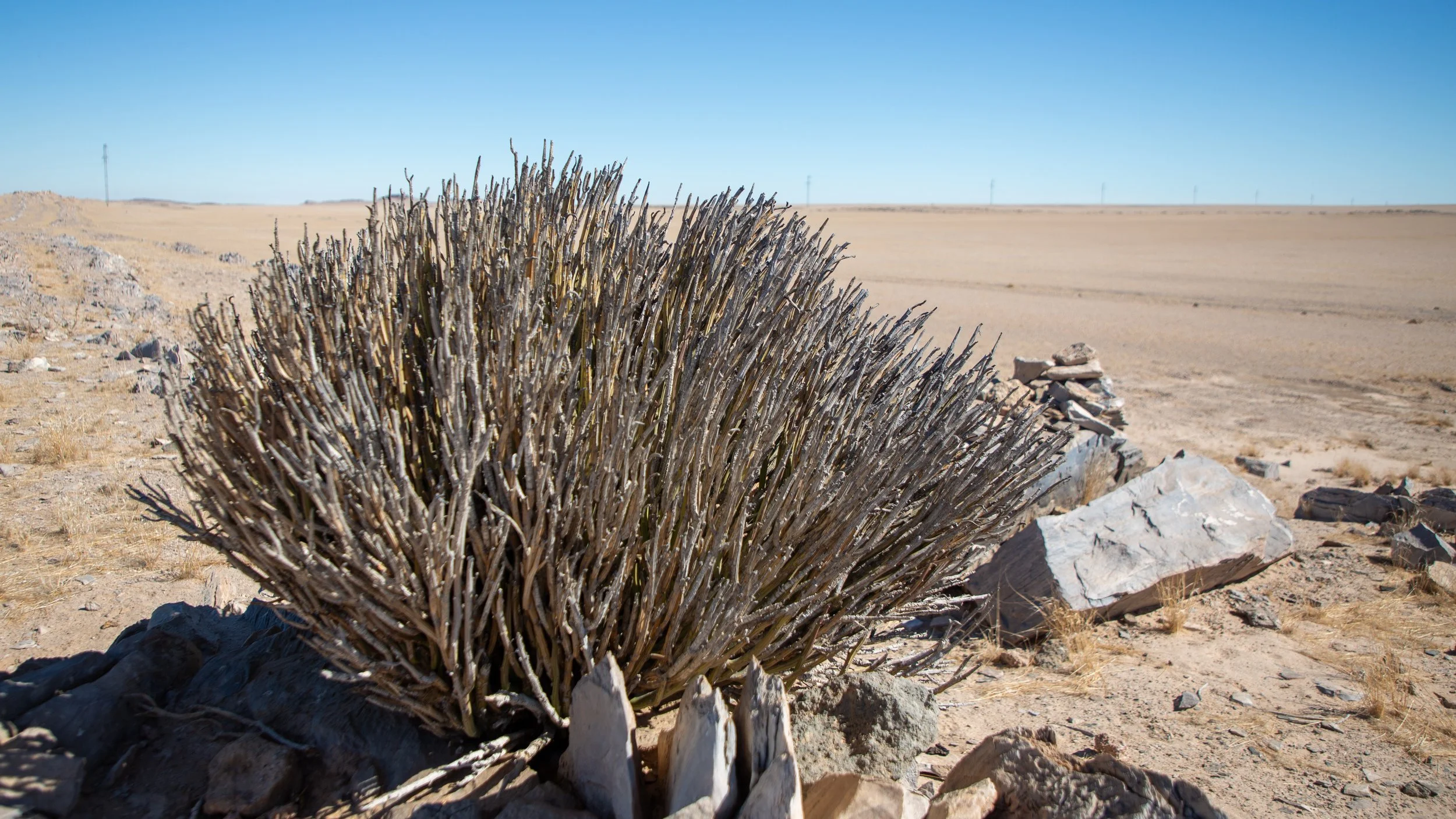
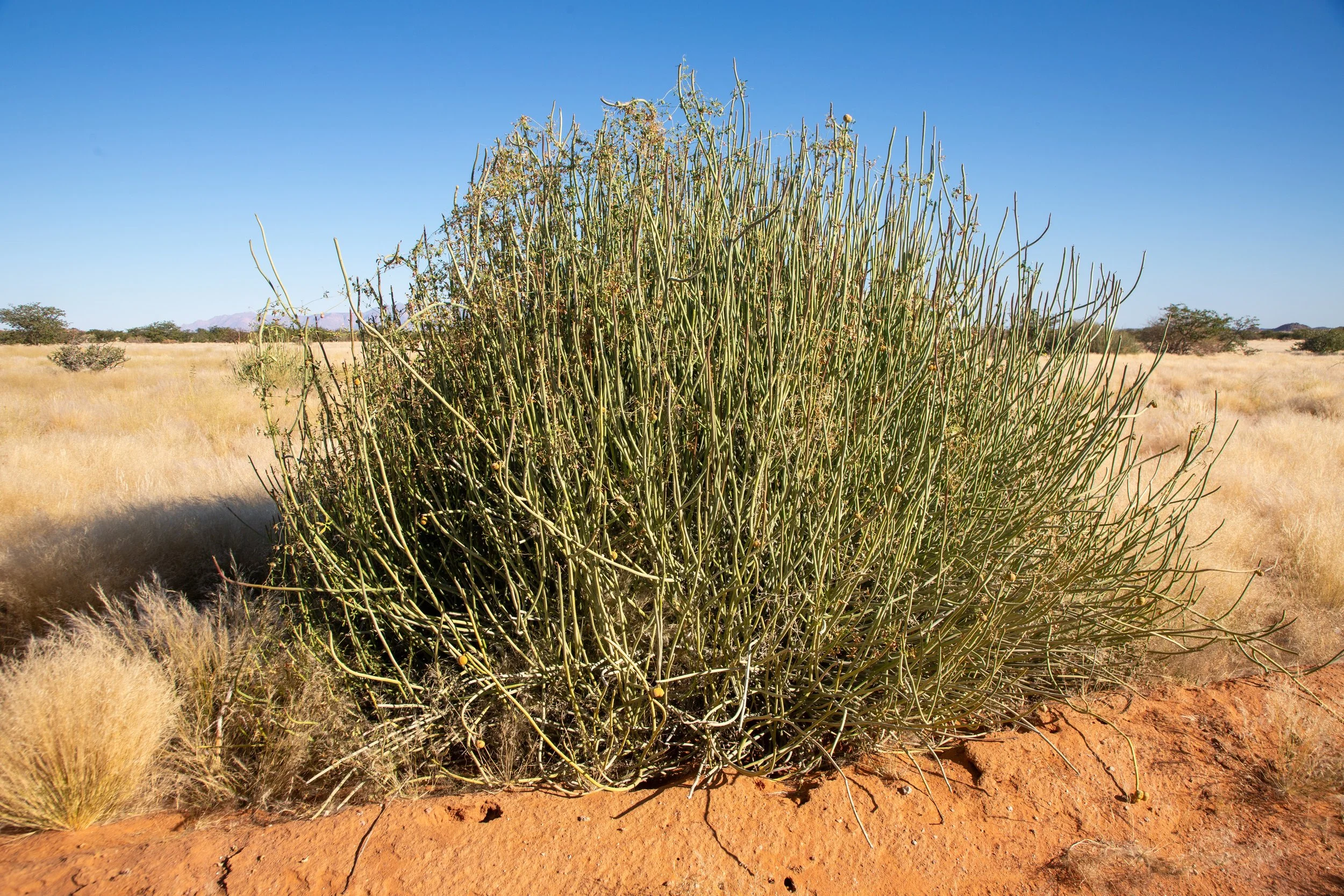
Large euphorbia virosa, also known as the poison tree due to its poisonous white sap, is one of the plants adapted to the desert climate
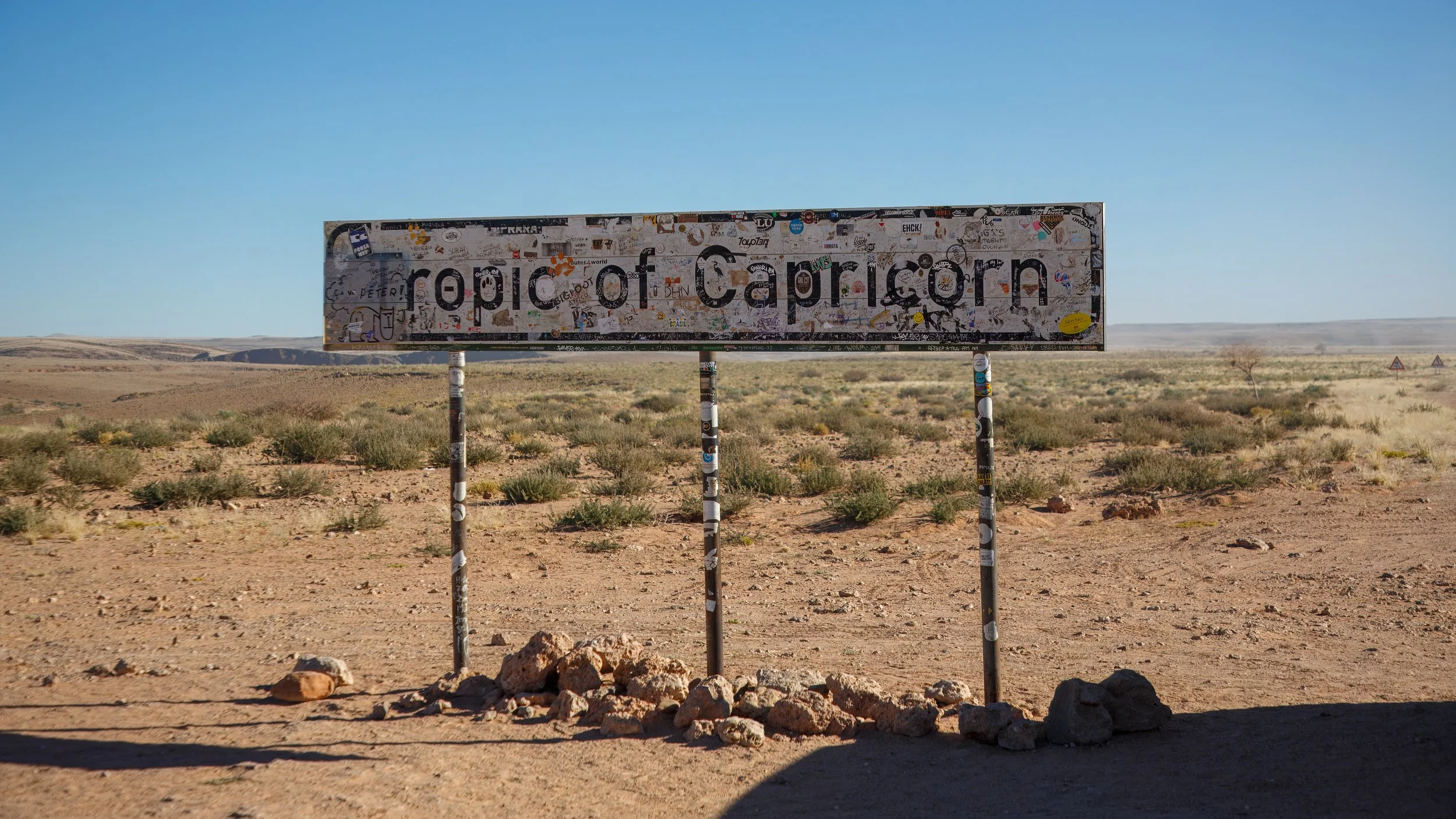
Passing through the Tropic of Capricorn for the second time on our trip, but this time with a sign
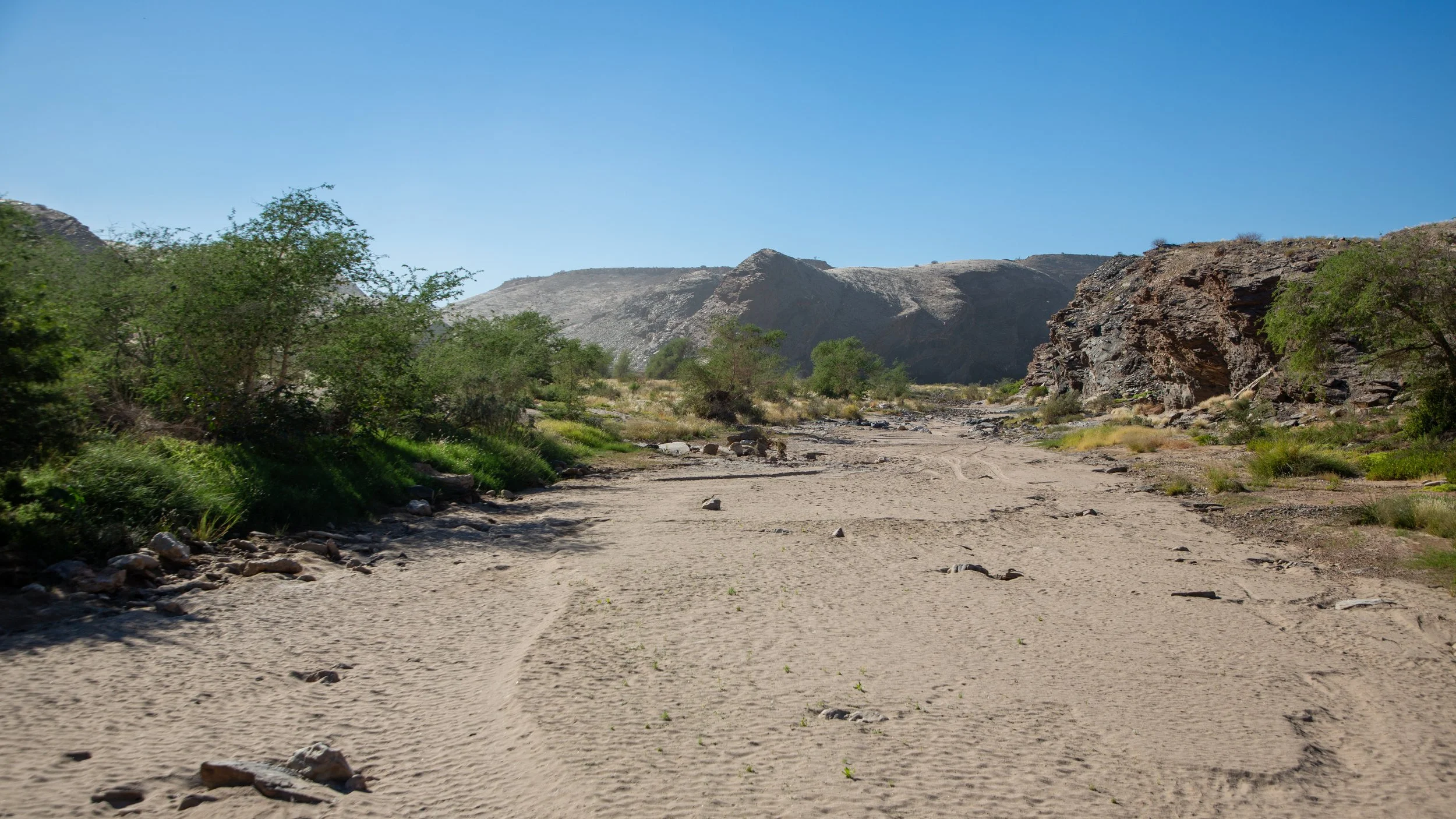
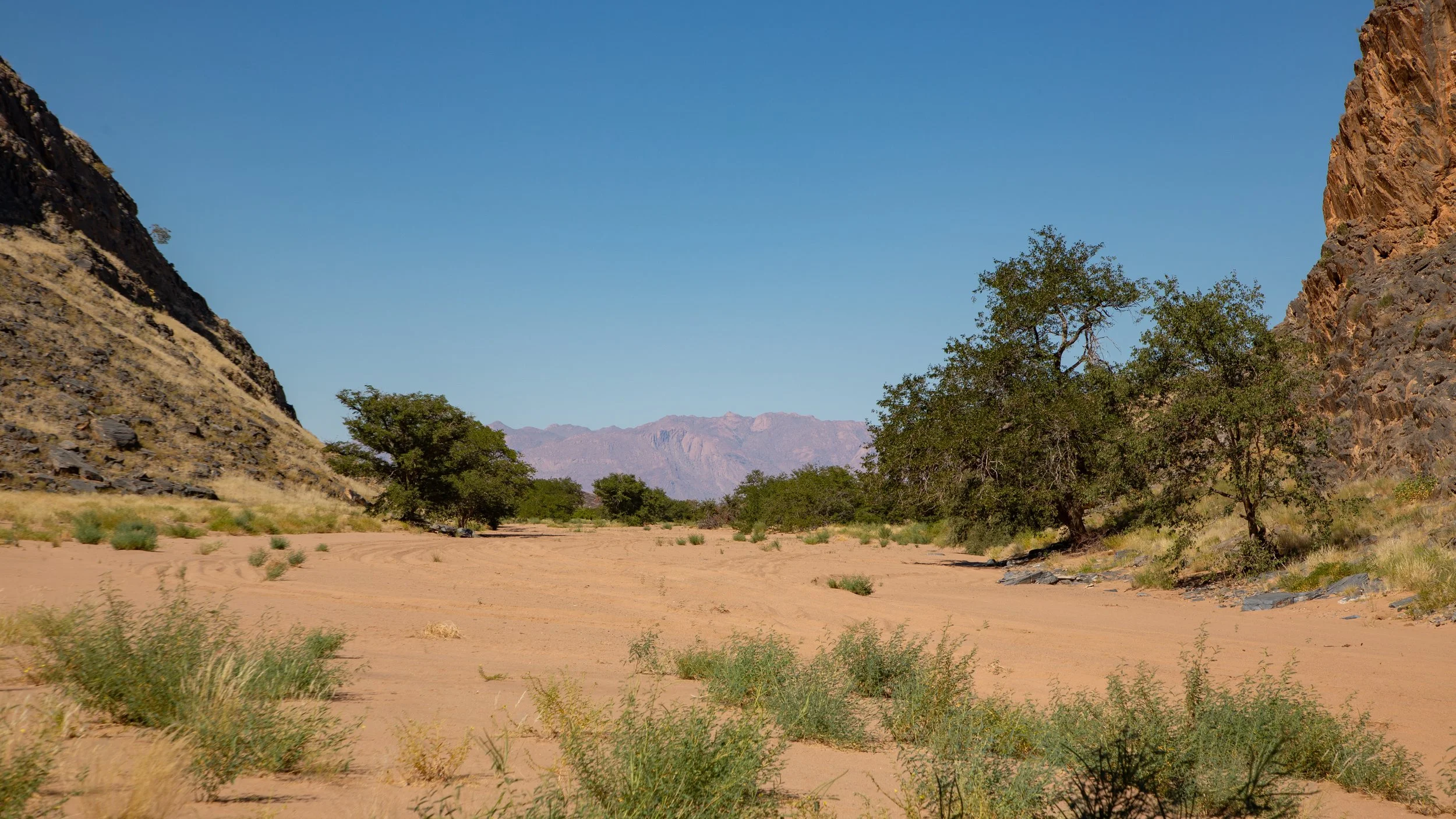
Where water would flow through the desert during the rare winter rains
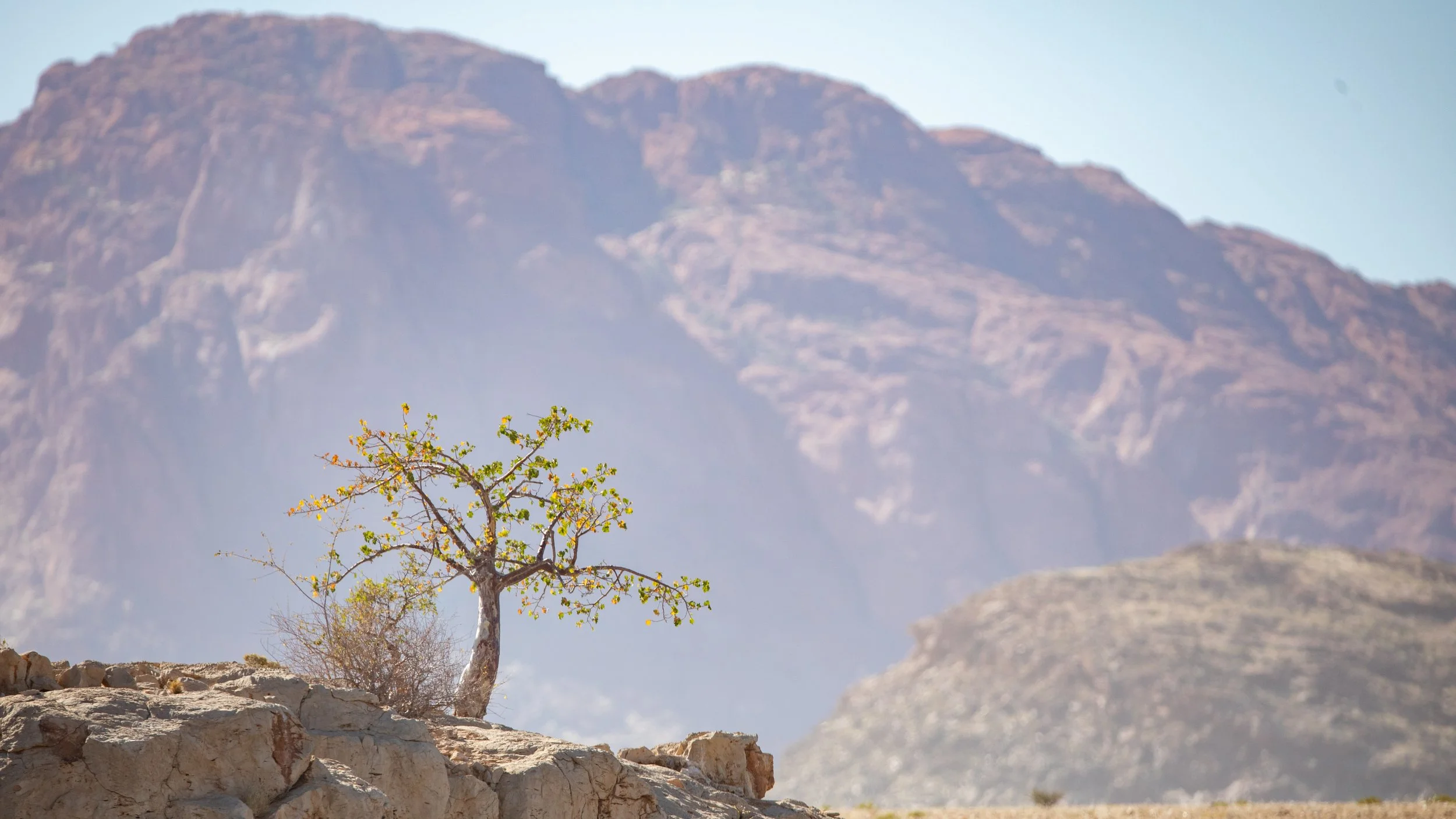
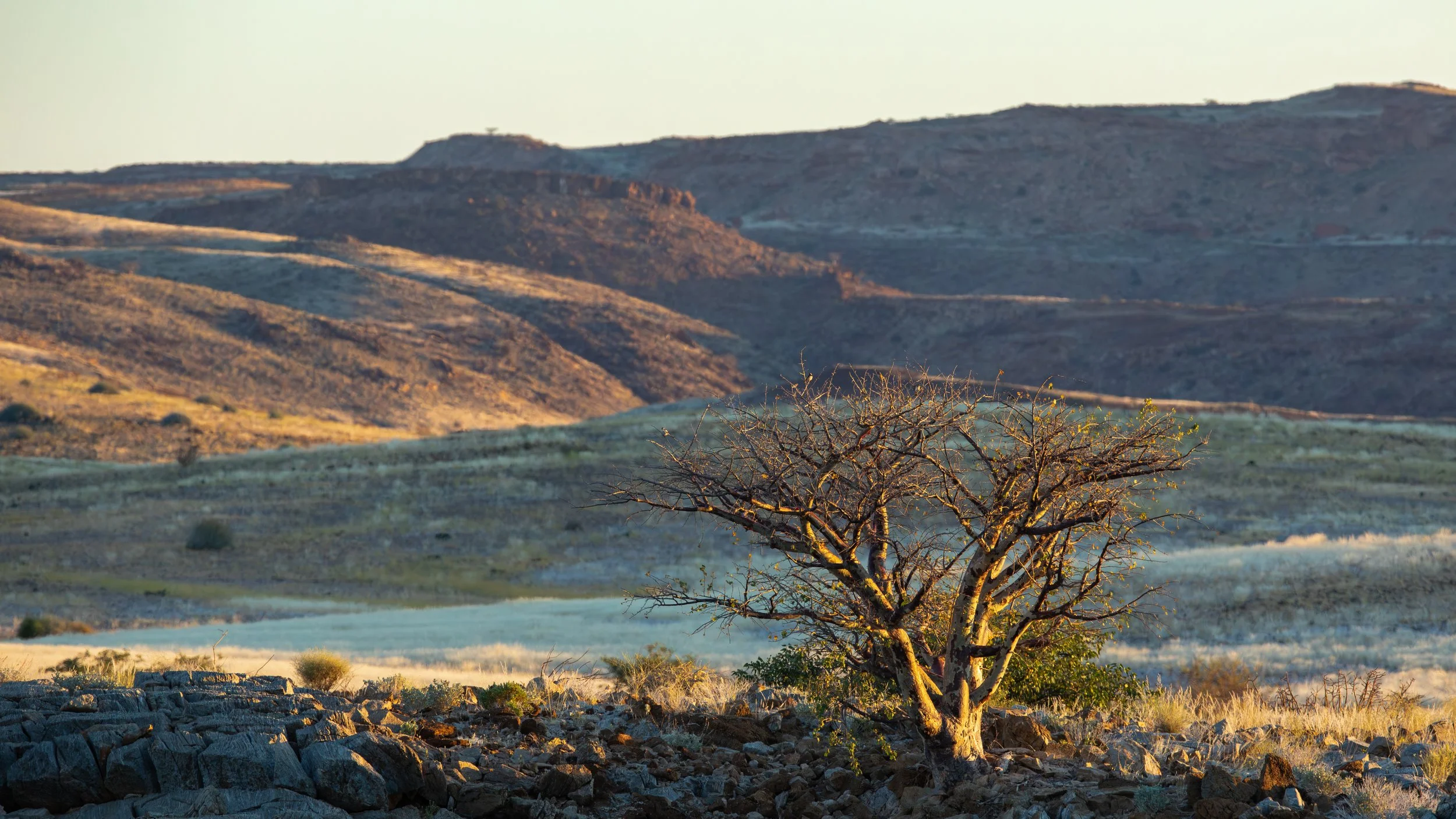
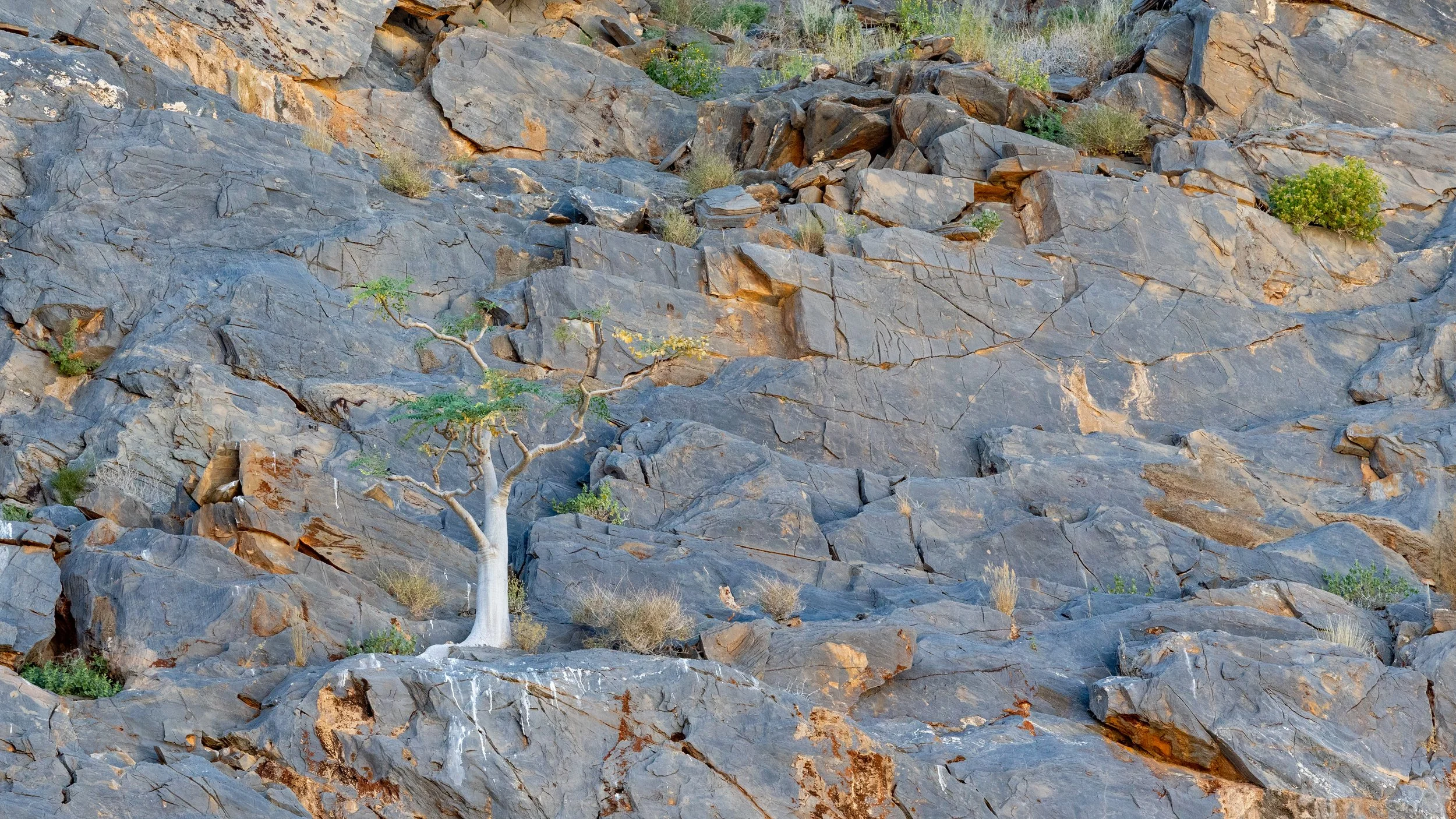
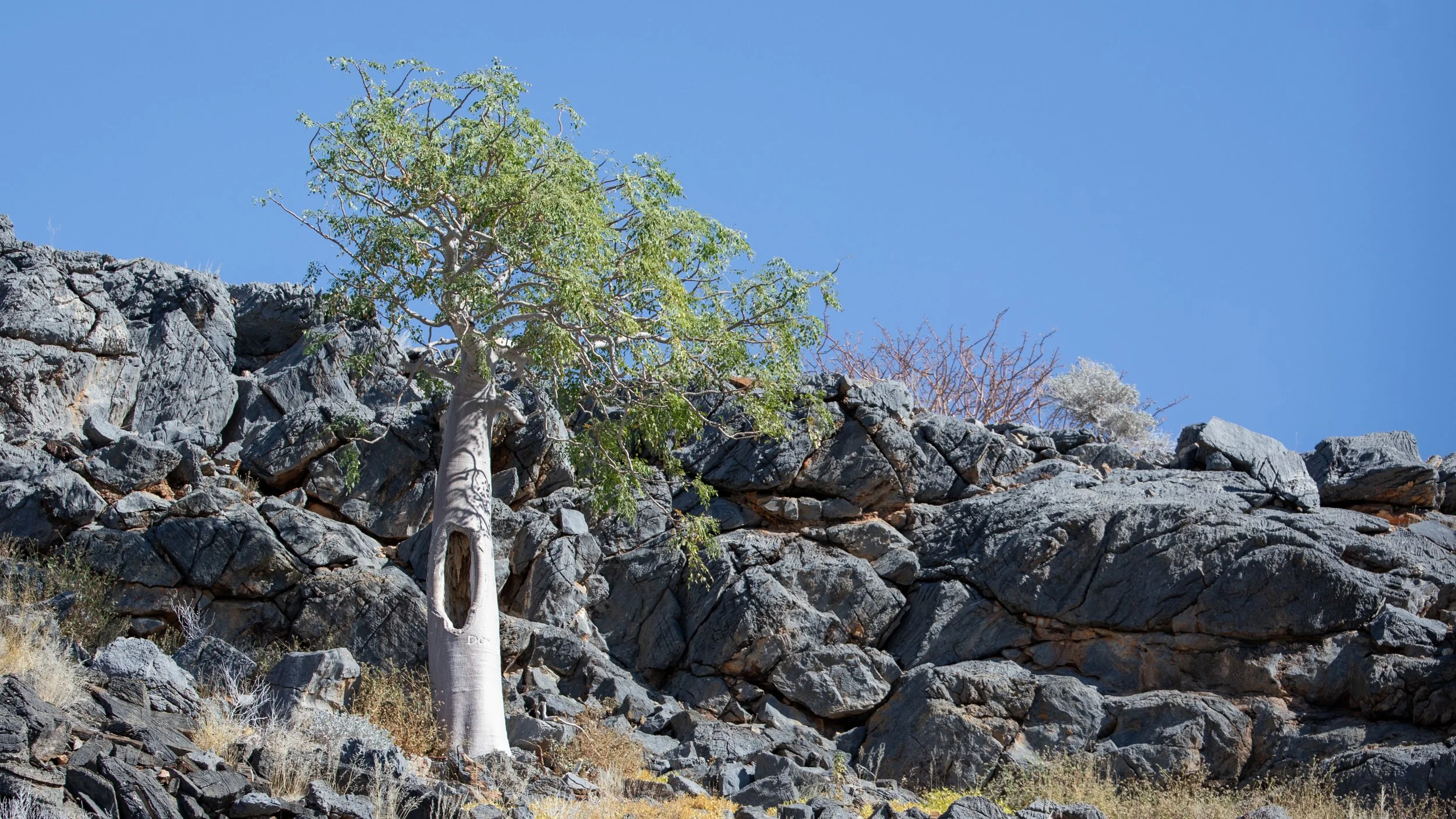
A lone moringa tree, adapted to the desert climate, with its swollen trunk holding precious moisture in the dry climate
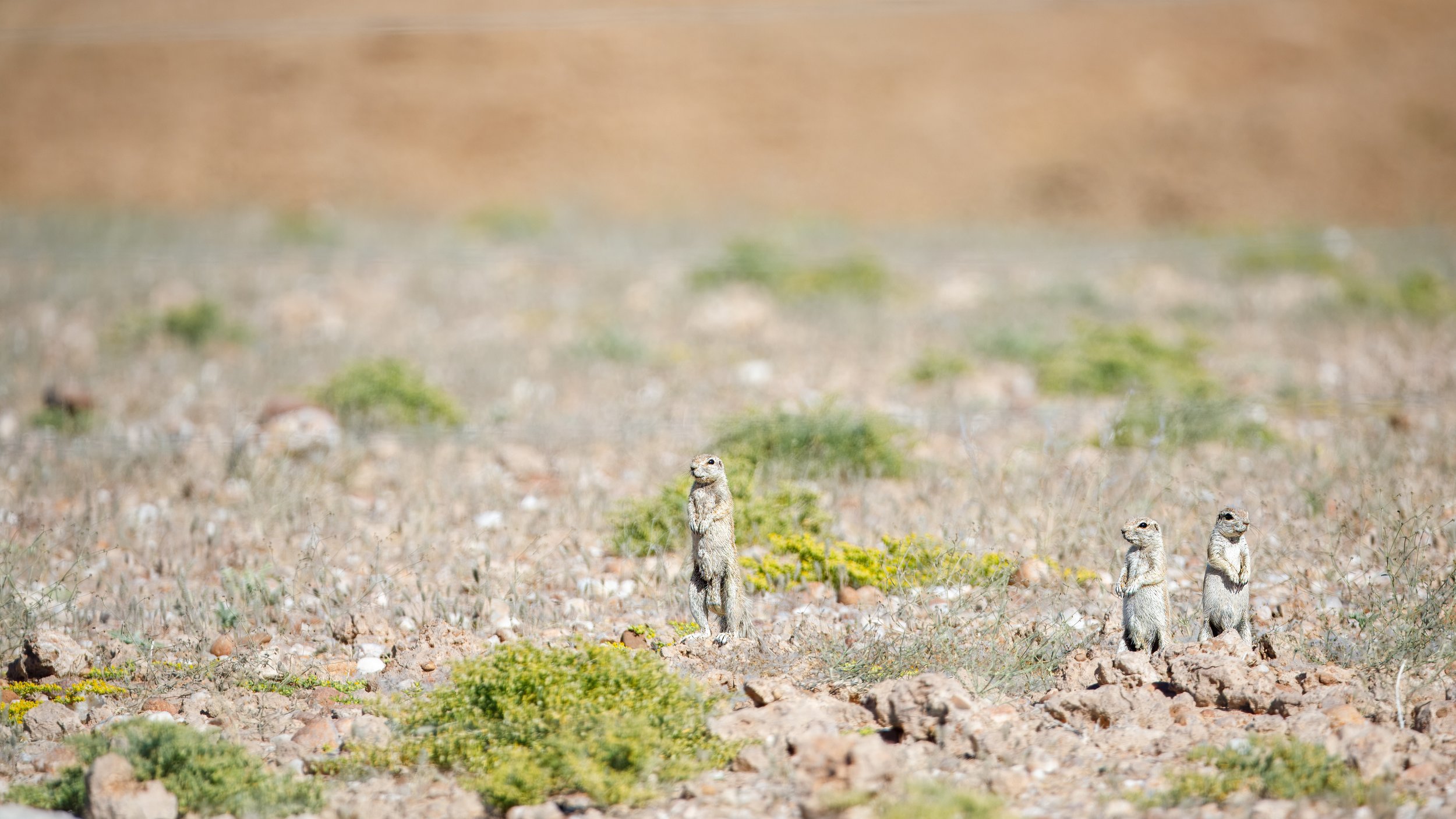
Mountain ground squirrels on the lookout
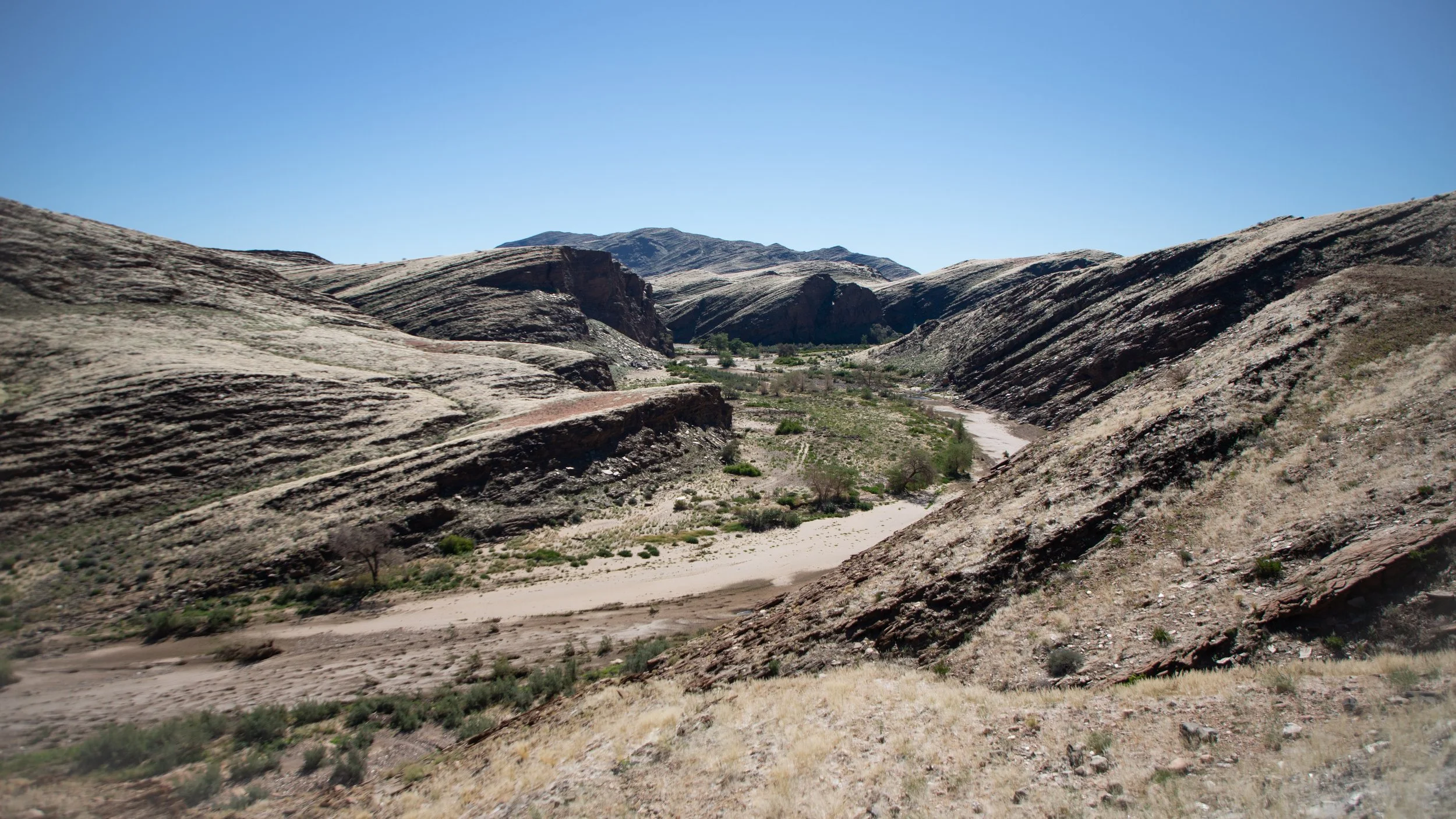
Scenic Kuiseb Pass has views of the surrounding canyons
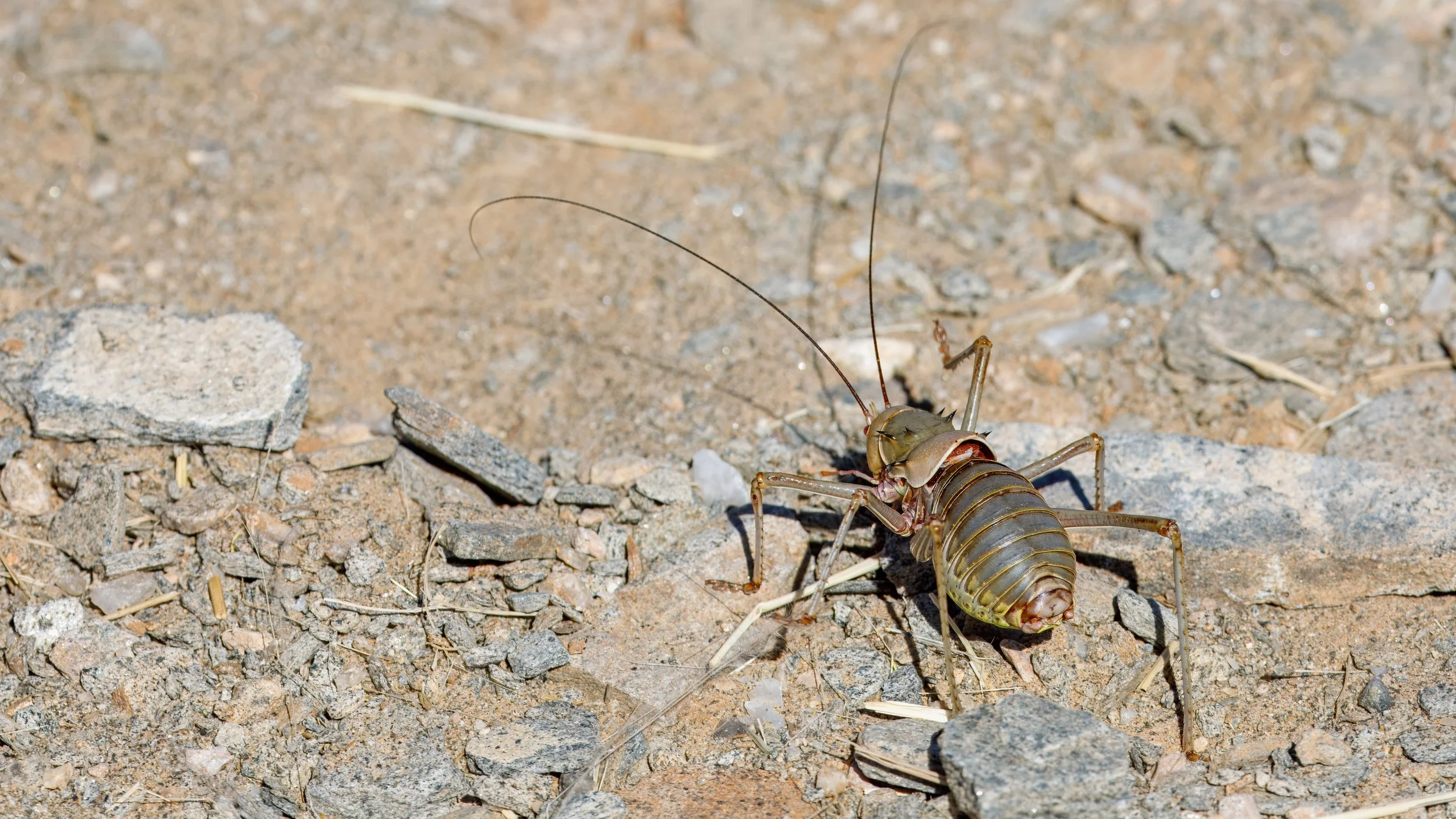
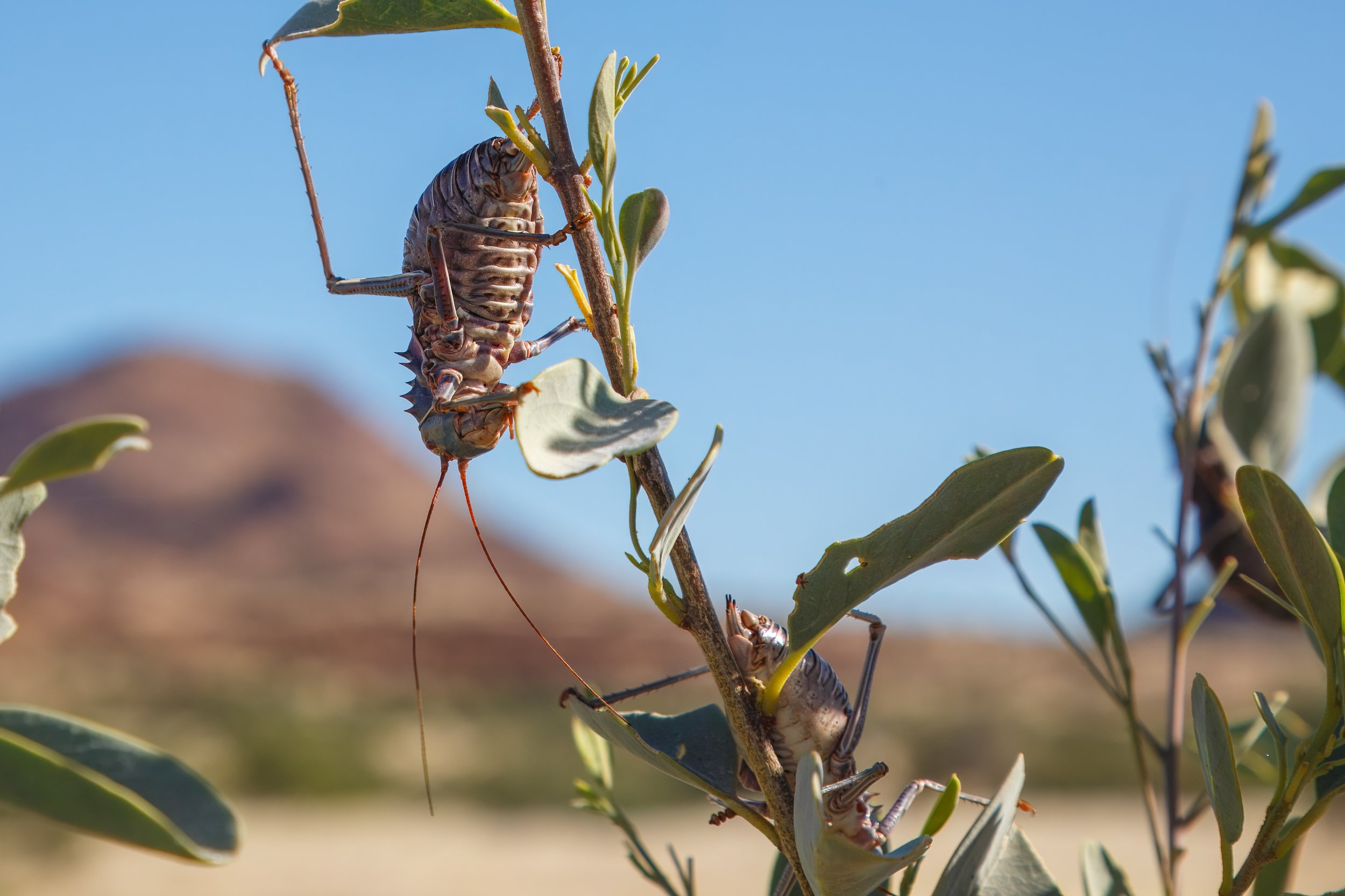
An armoured bush cricket
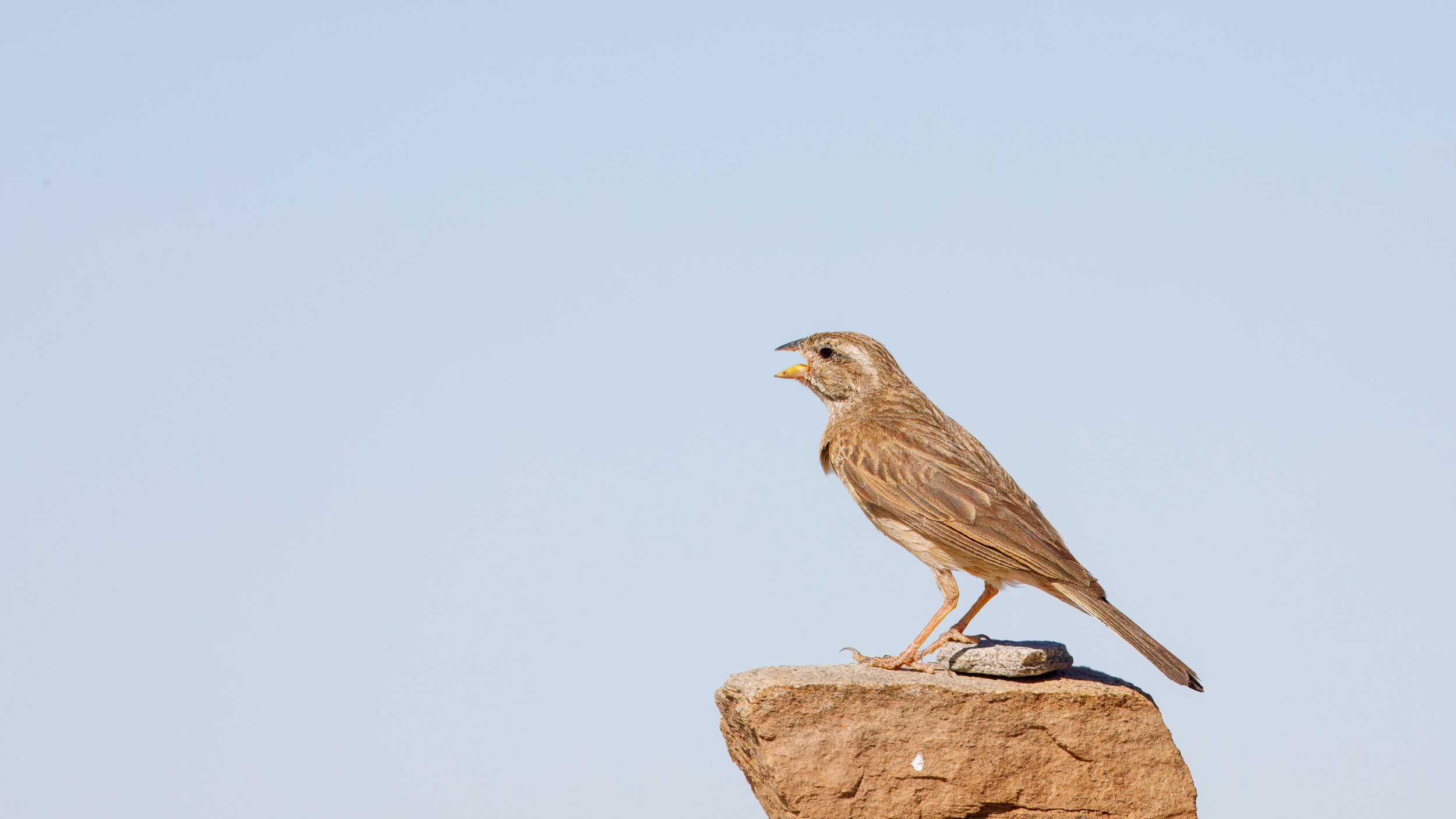
We found a lark-like bunting making its presence known
Kuiseb river bed and canyon
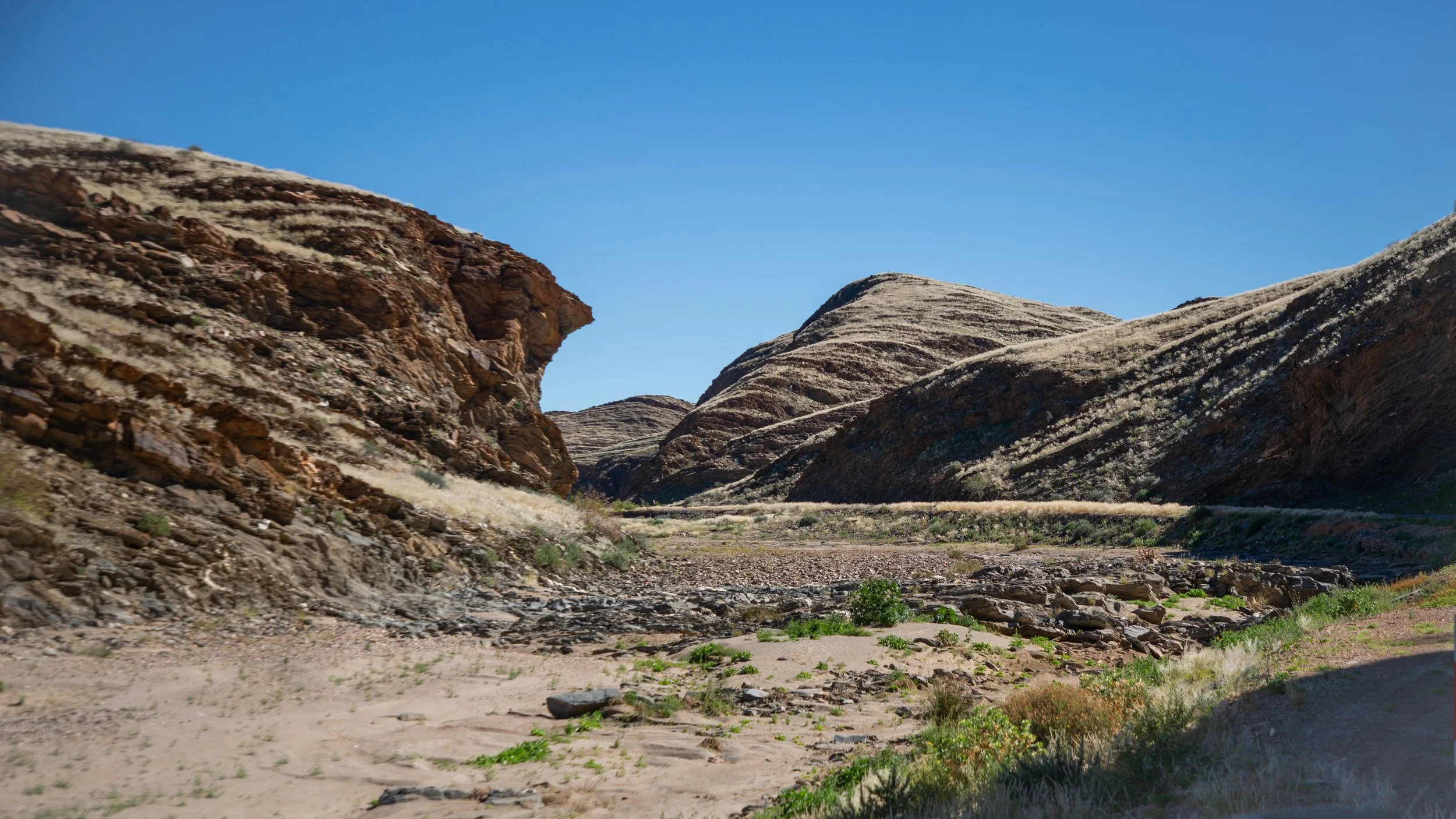
The rough road making its way through the canyon pass
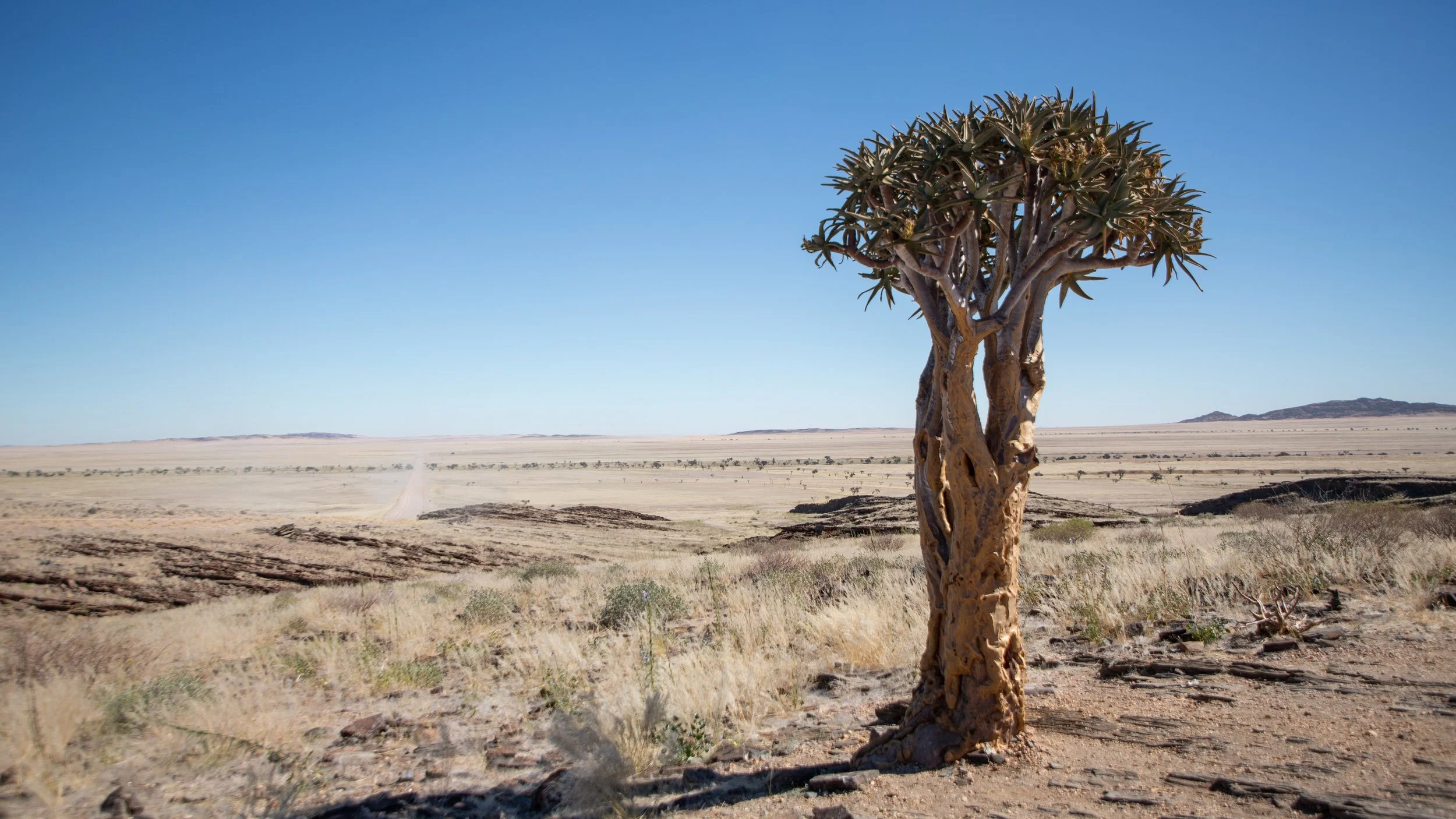
A lone quiver tree, close to where we stopped for lunch along the road
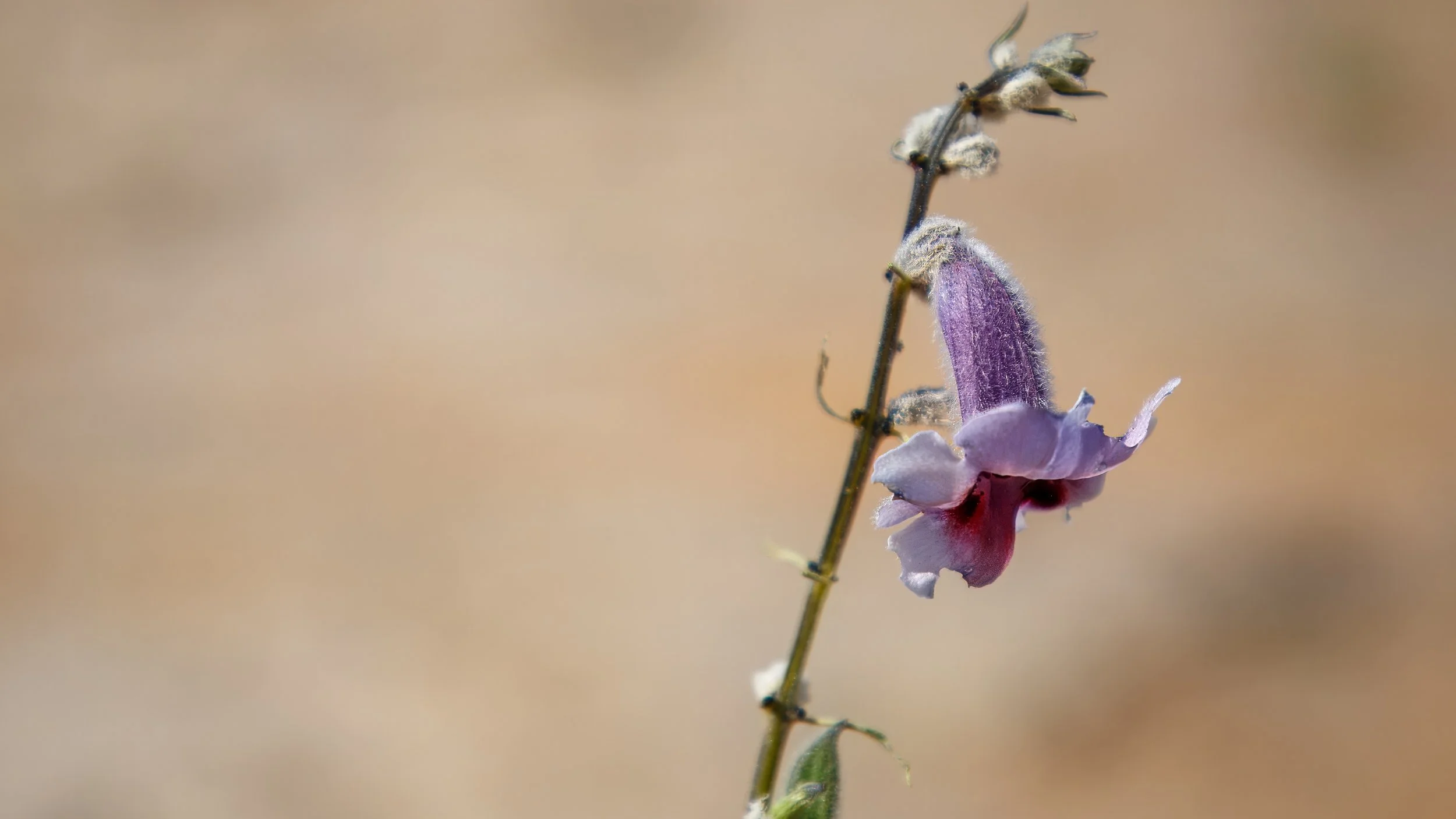
An African foxglove, bringing some colour to the desert
Damara milk-bush
Not the worst road we drove on that day
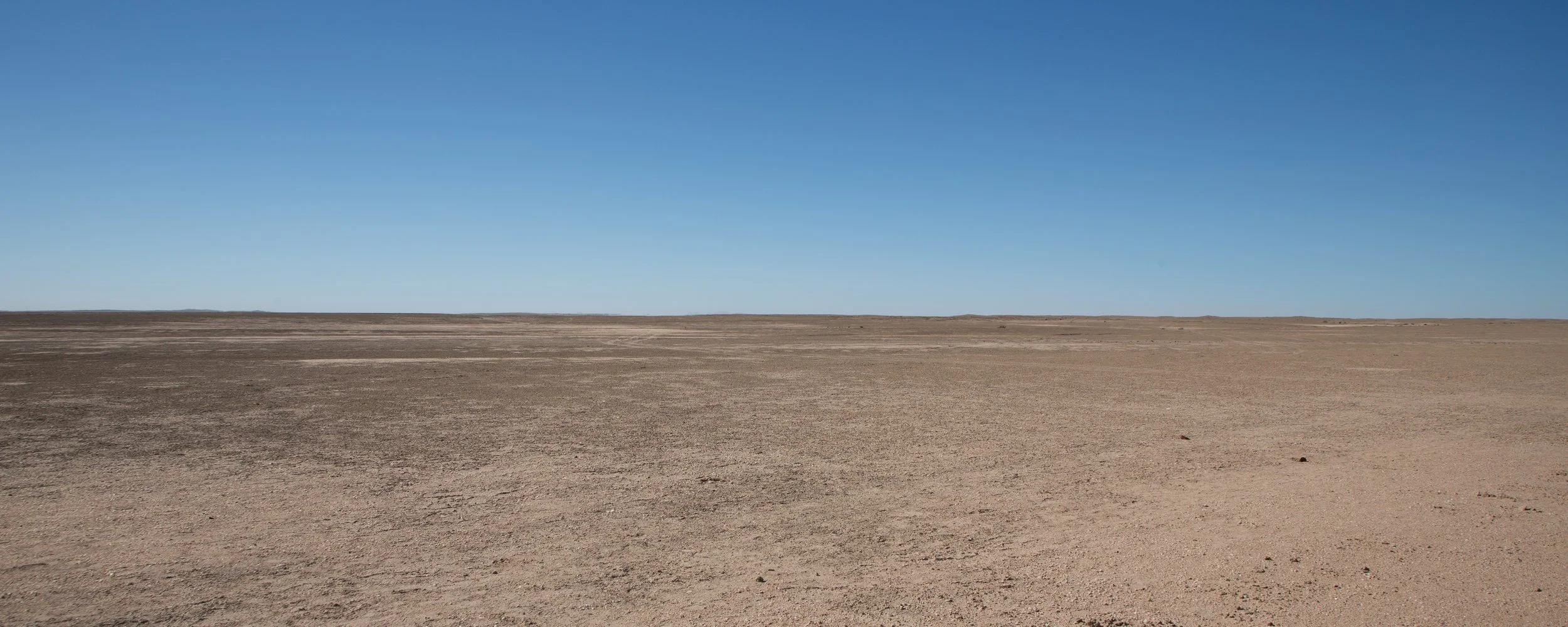
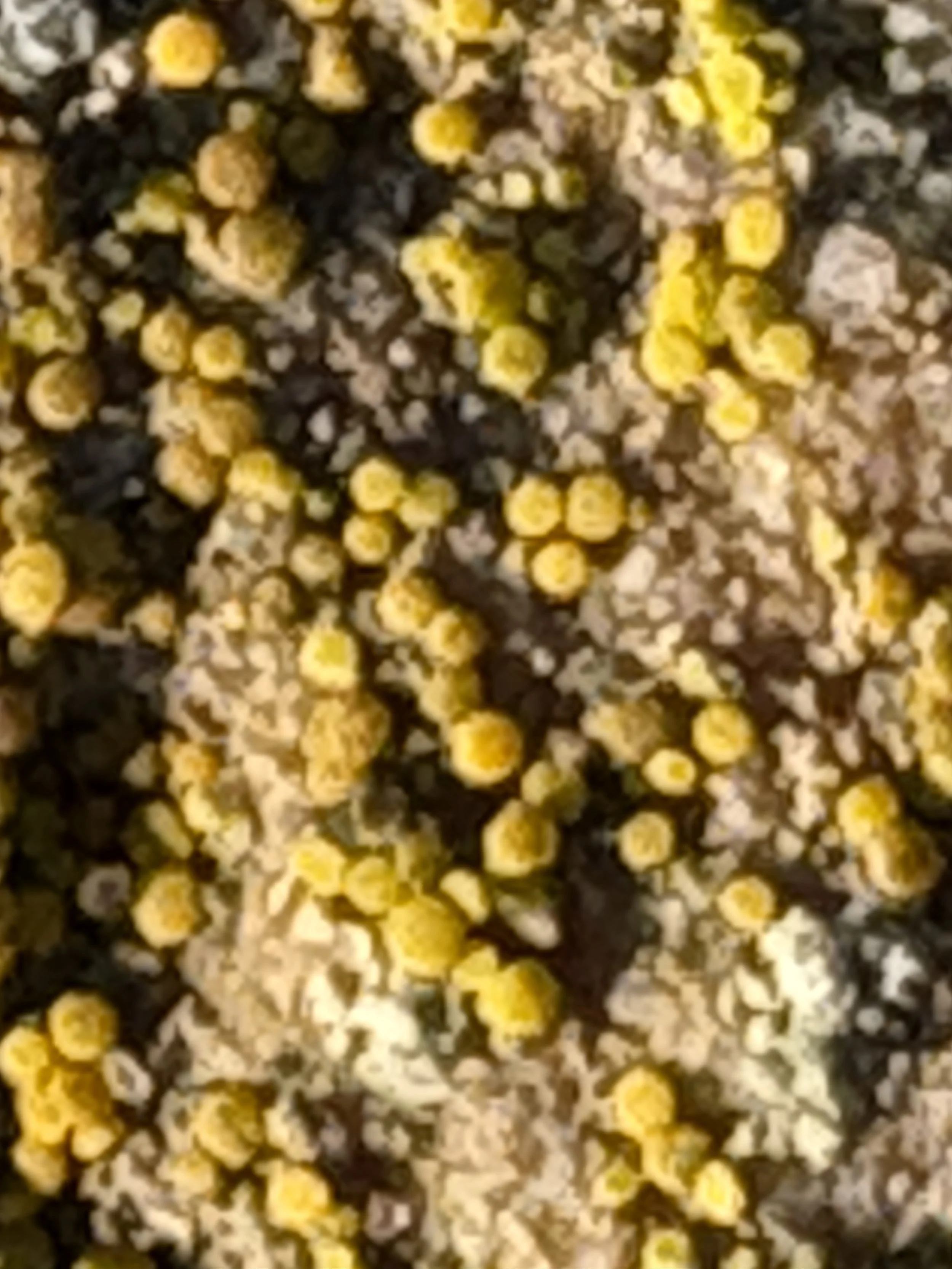
Away from the rocky terrain, we got a sense of the expanse of desert as we approached the coast and Walvis Bay. As barren as it seems, even this desert contains life in the form of lichens.
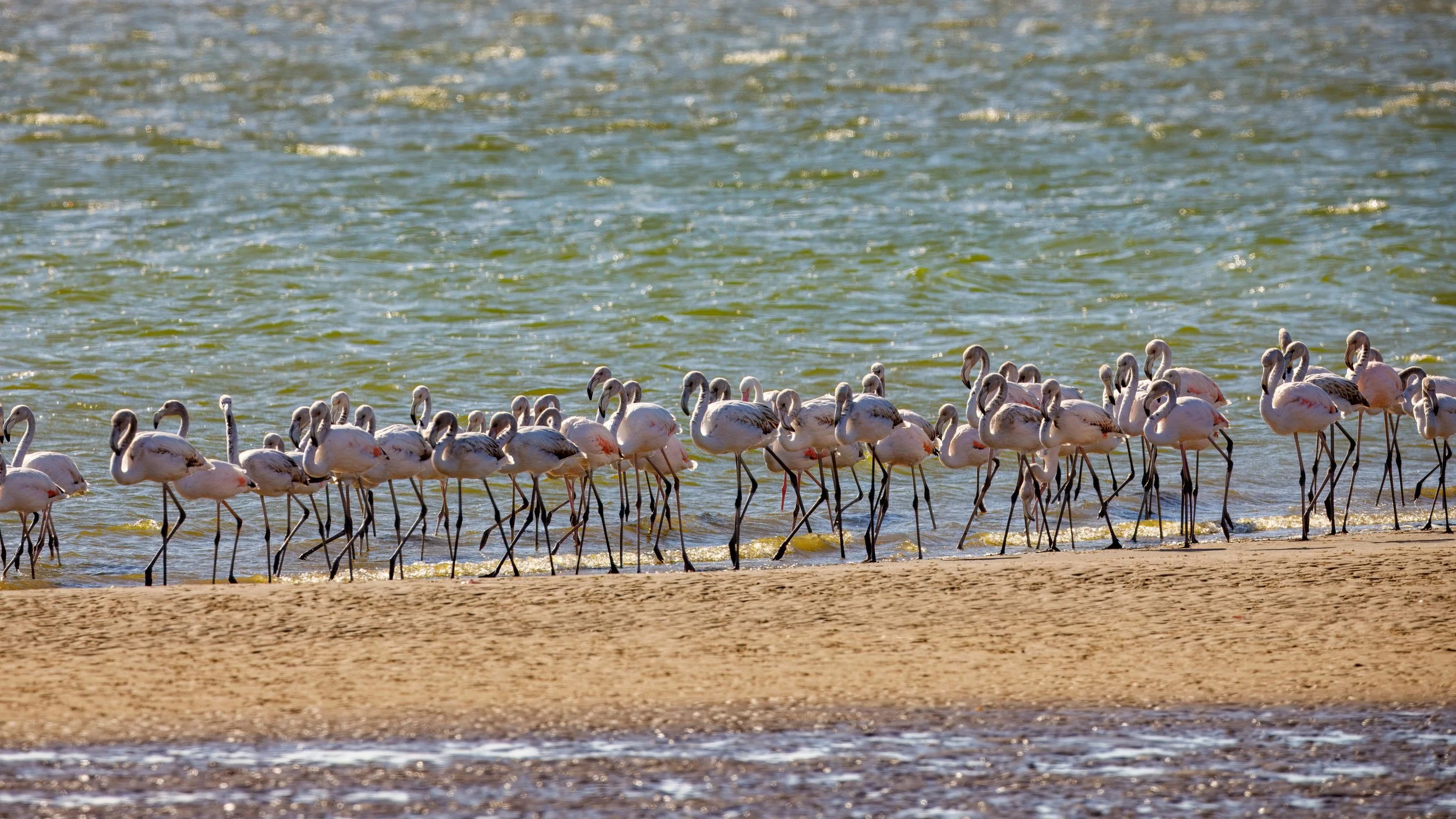
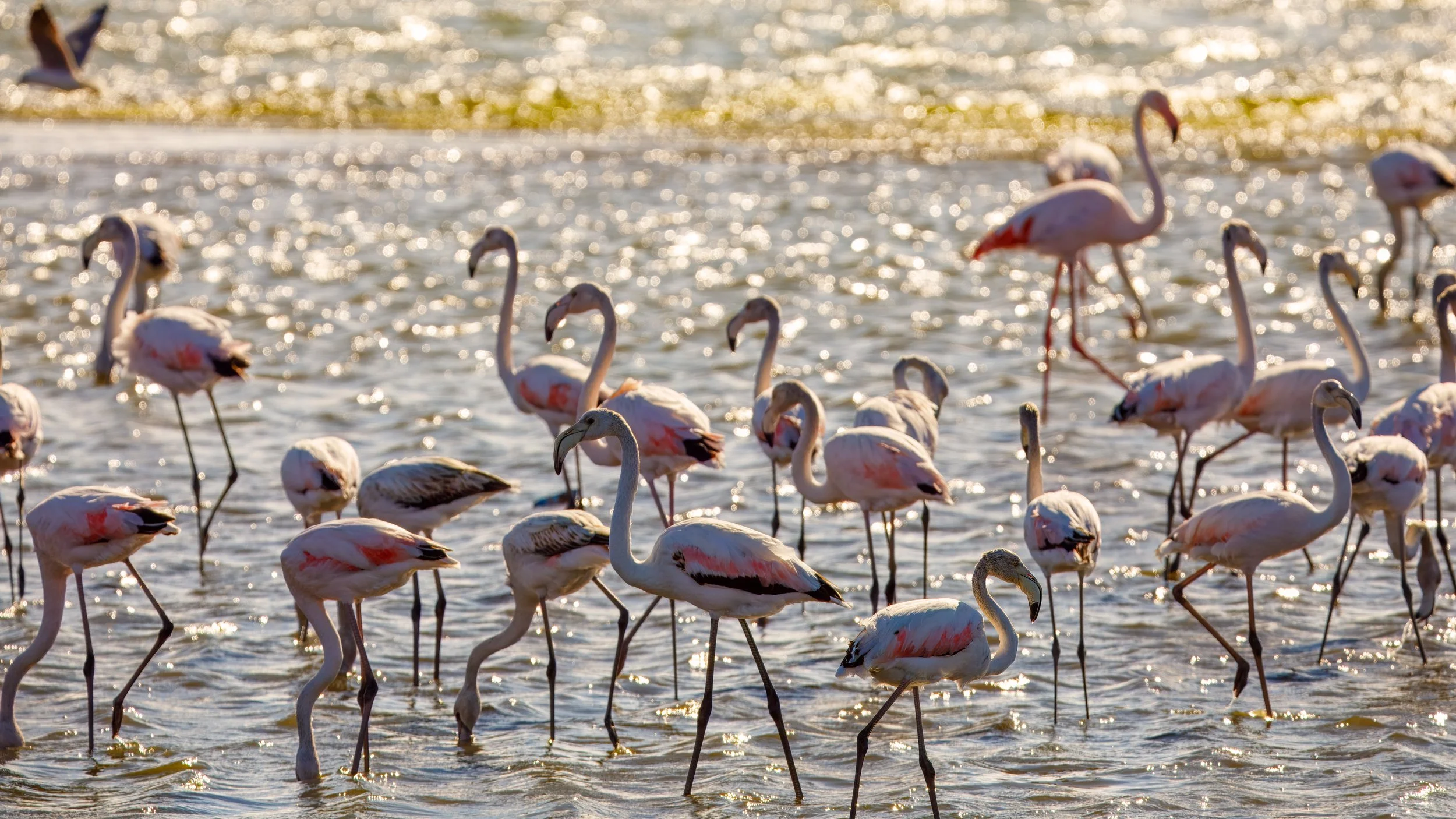
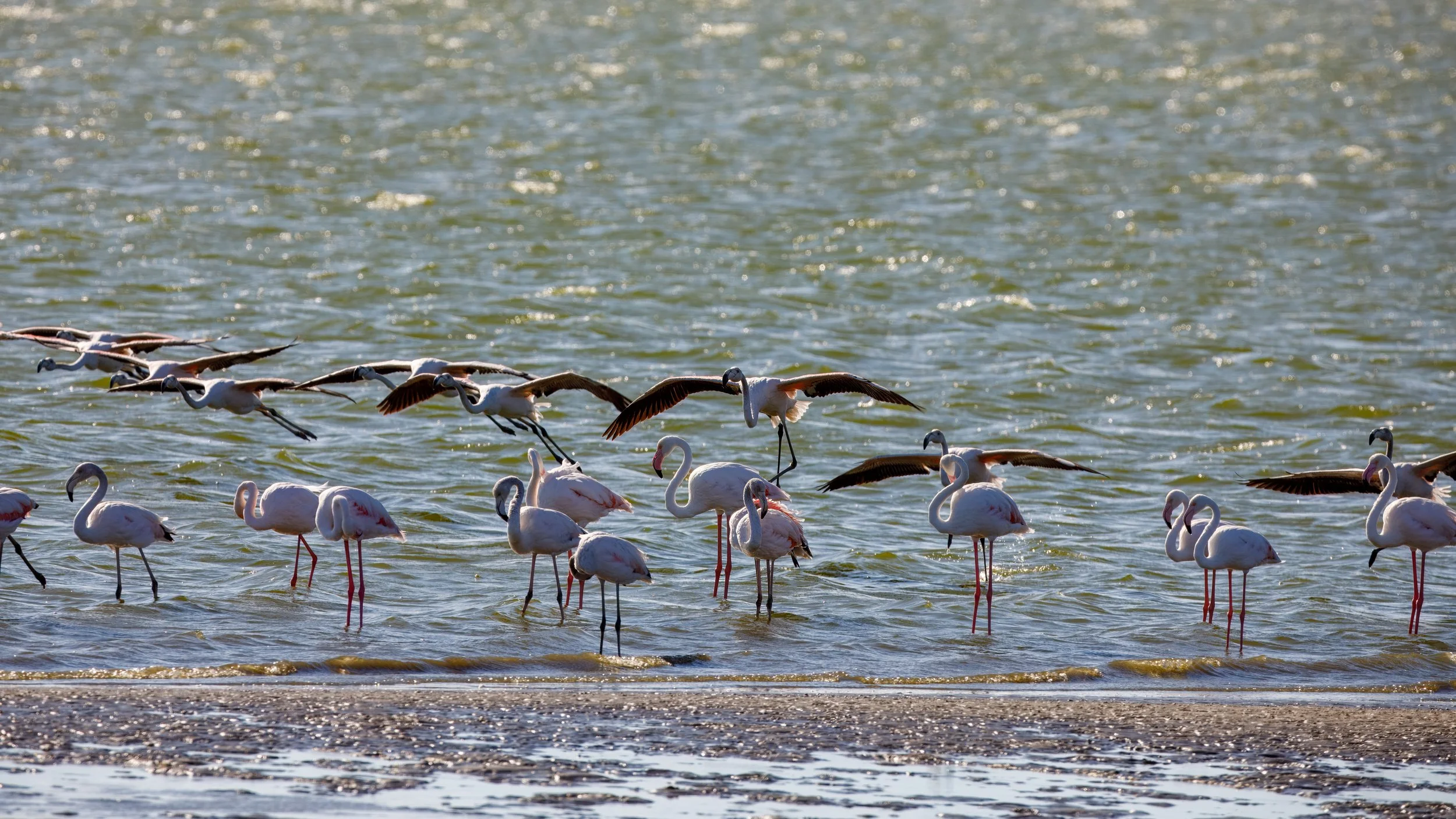
At Walvis Bay, we encountered a large flock of flamingos.
With the sun setting behind them, the lighting wasn’t terrific, but we enjoyed watching them gather while we basked in the cooler ocean weather after the long drive through the desert
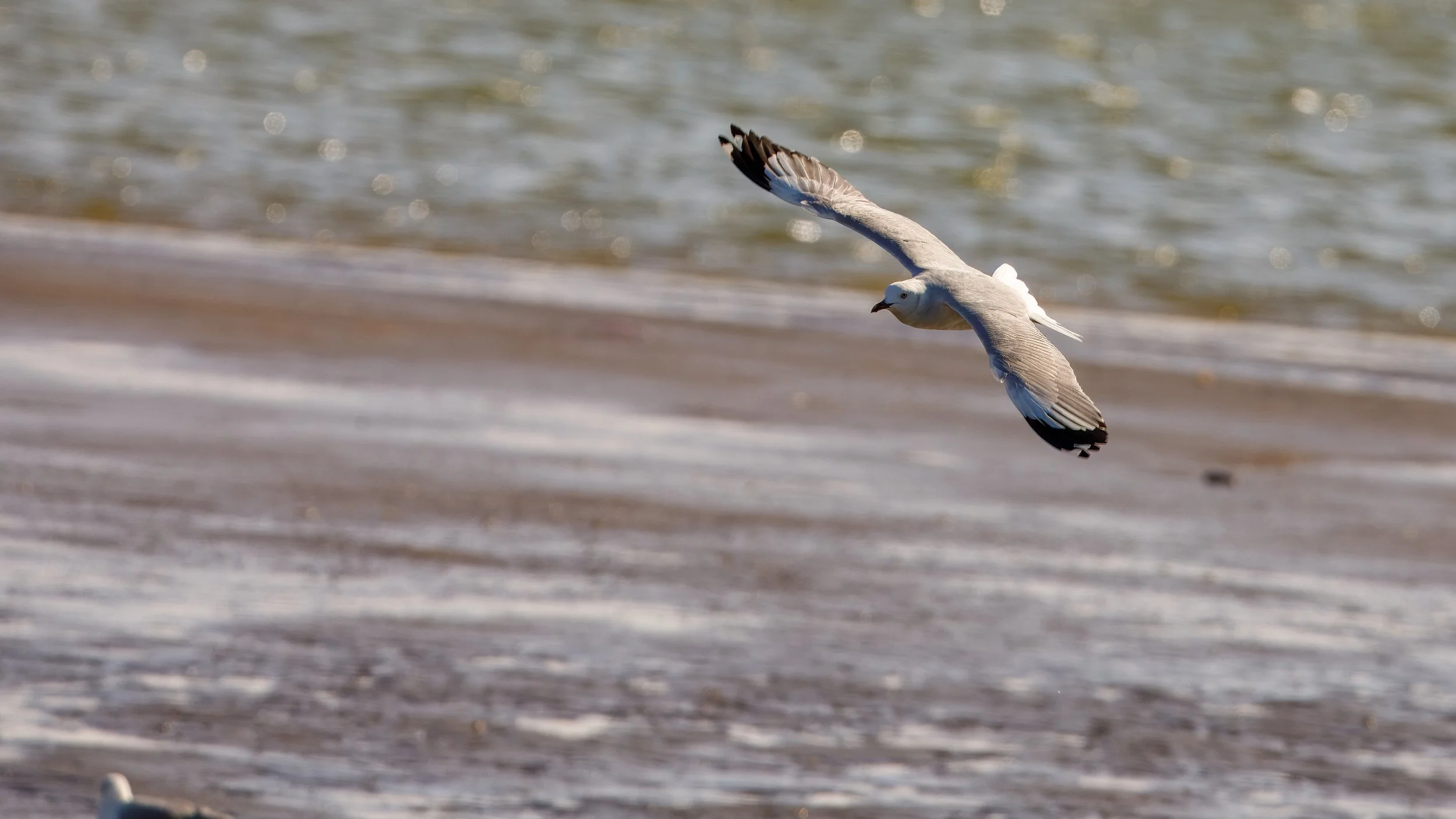
Kelp gull
Watching flamingos take flight is always fascinating
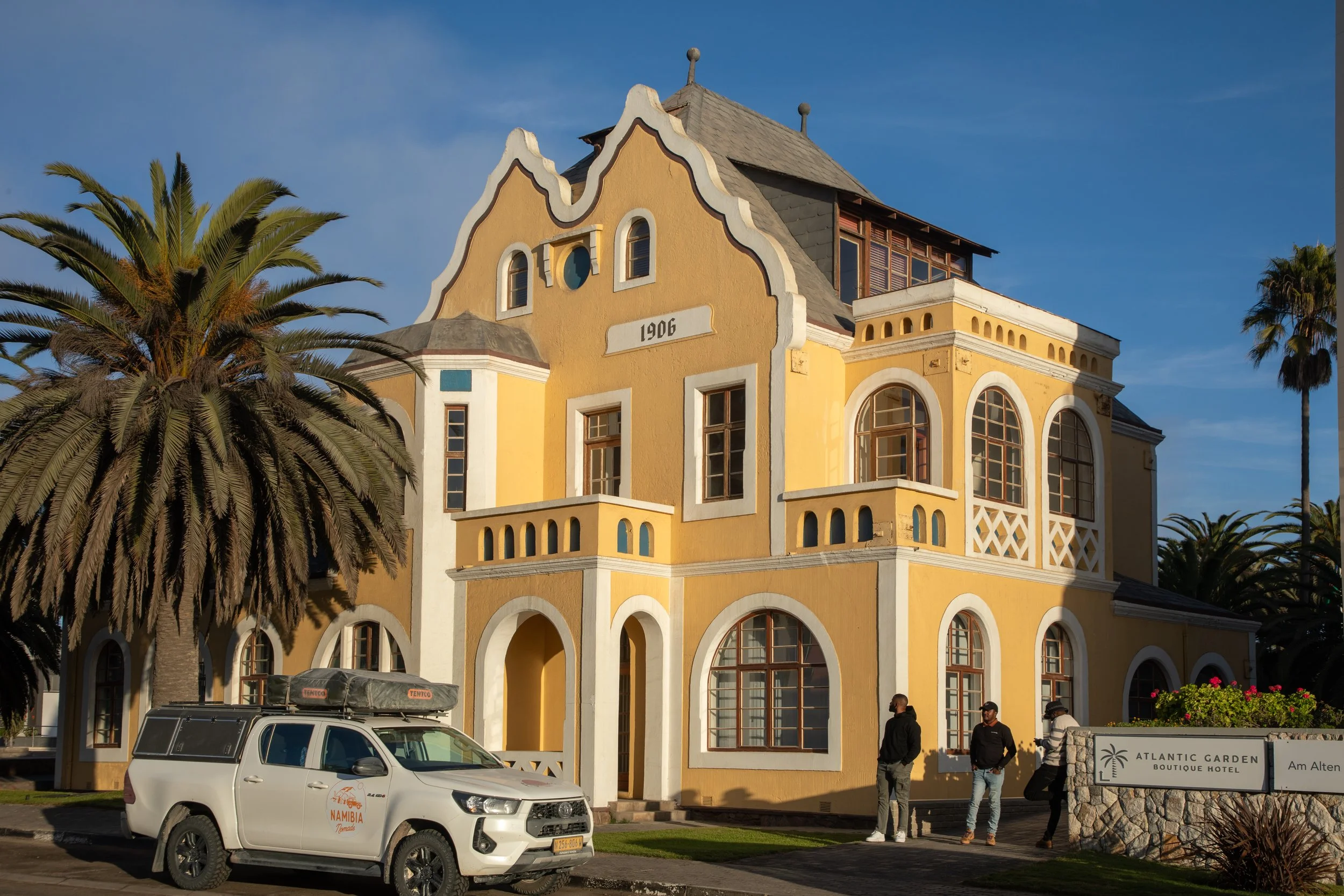
Altes Amtsgericht (Old Courthouse), one of many German colonial buildings for which Swakopmund is famous
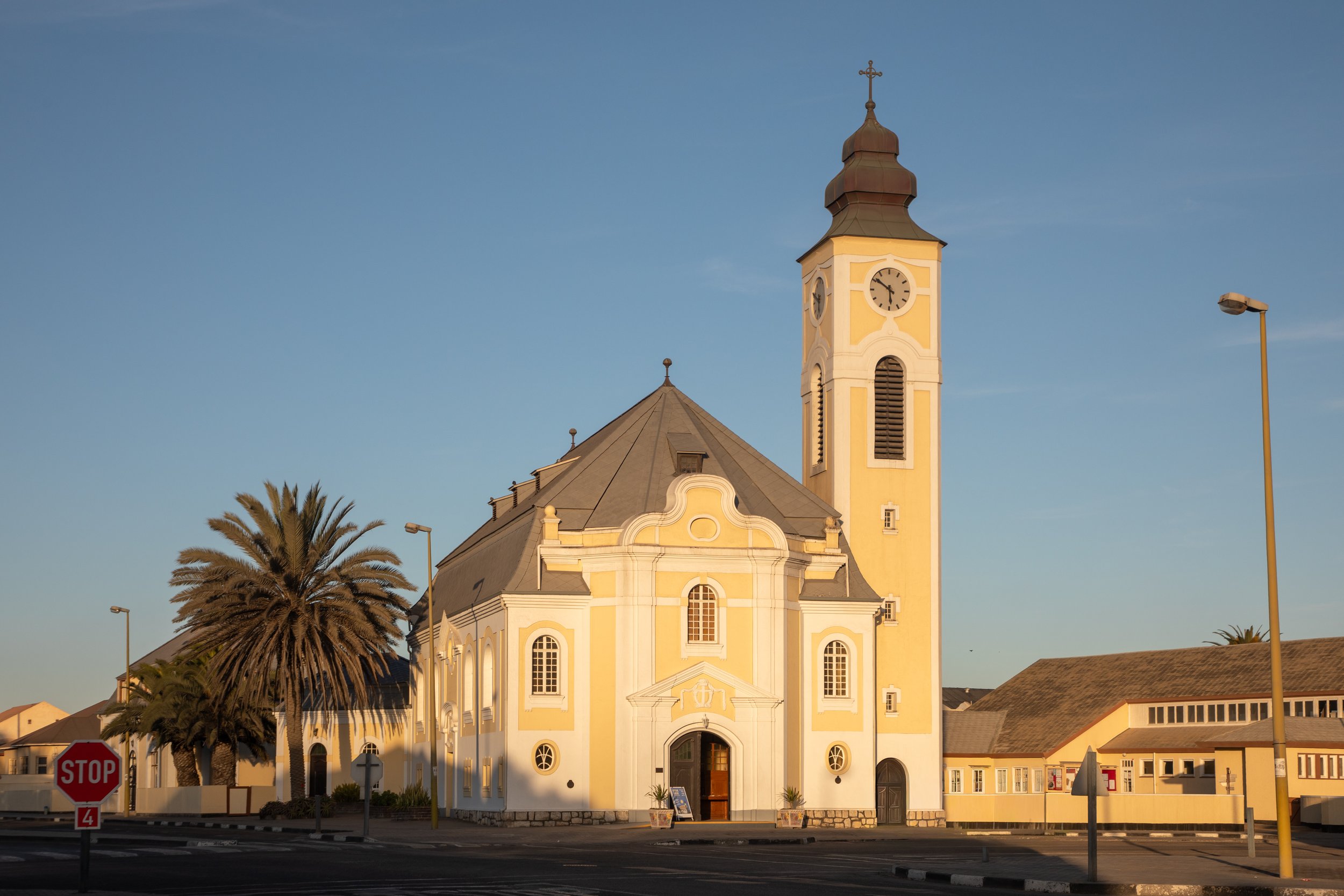
1906 German Evangelical Lutheran Church
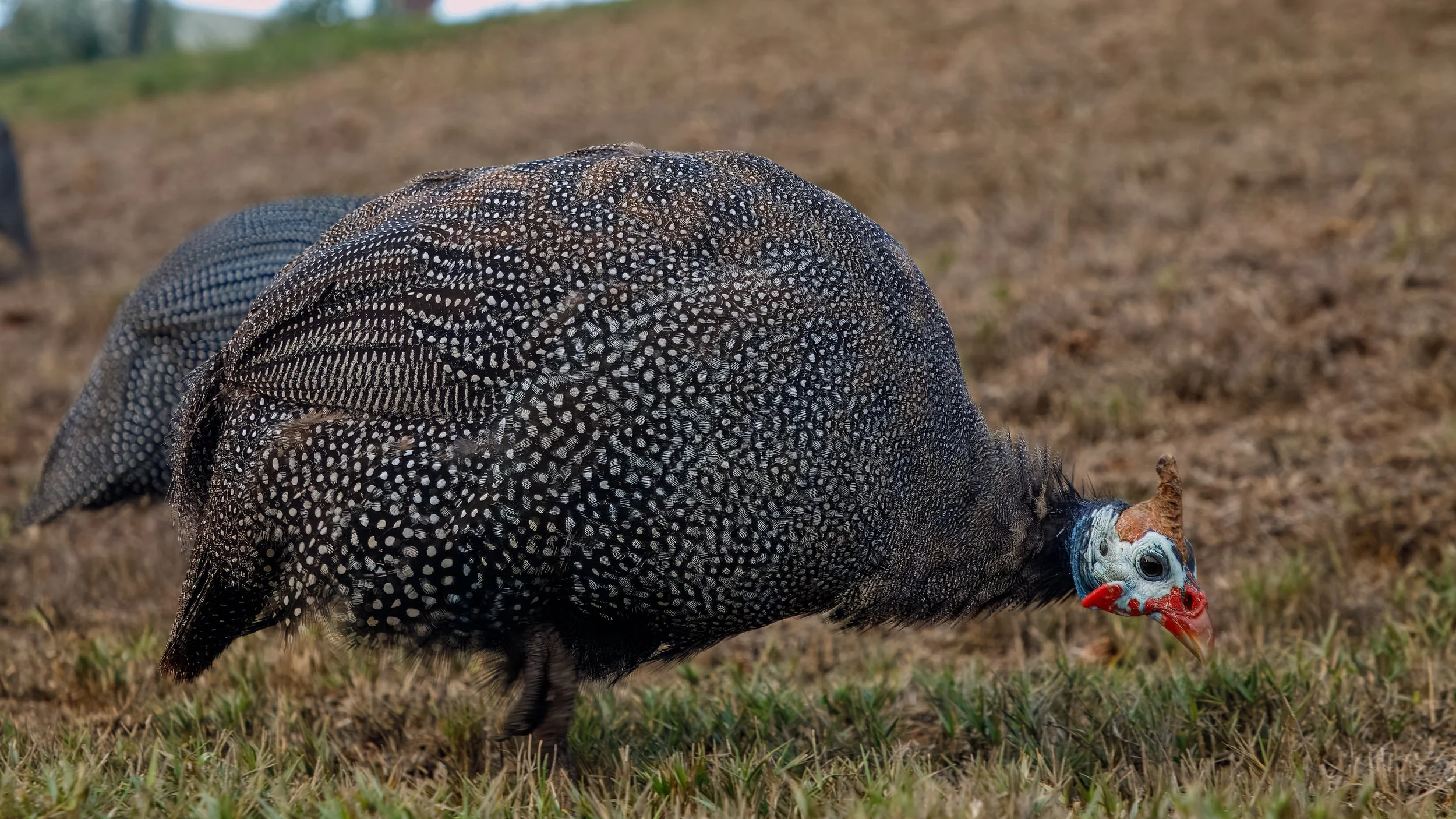
Helmeted guinea fowl roaming the ground near the city hall
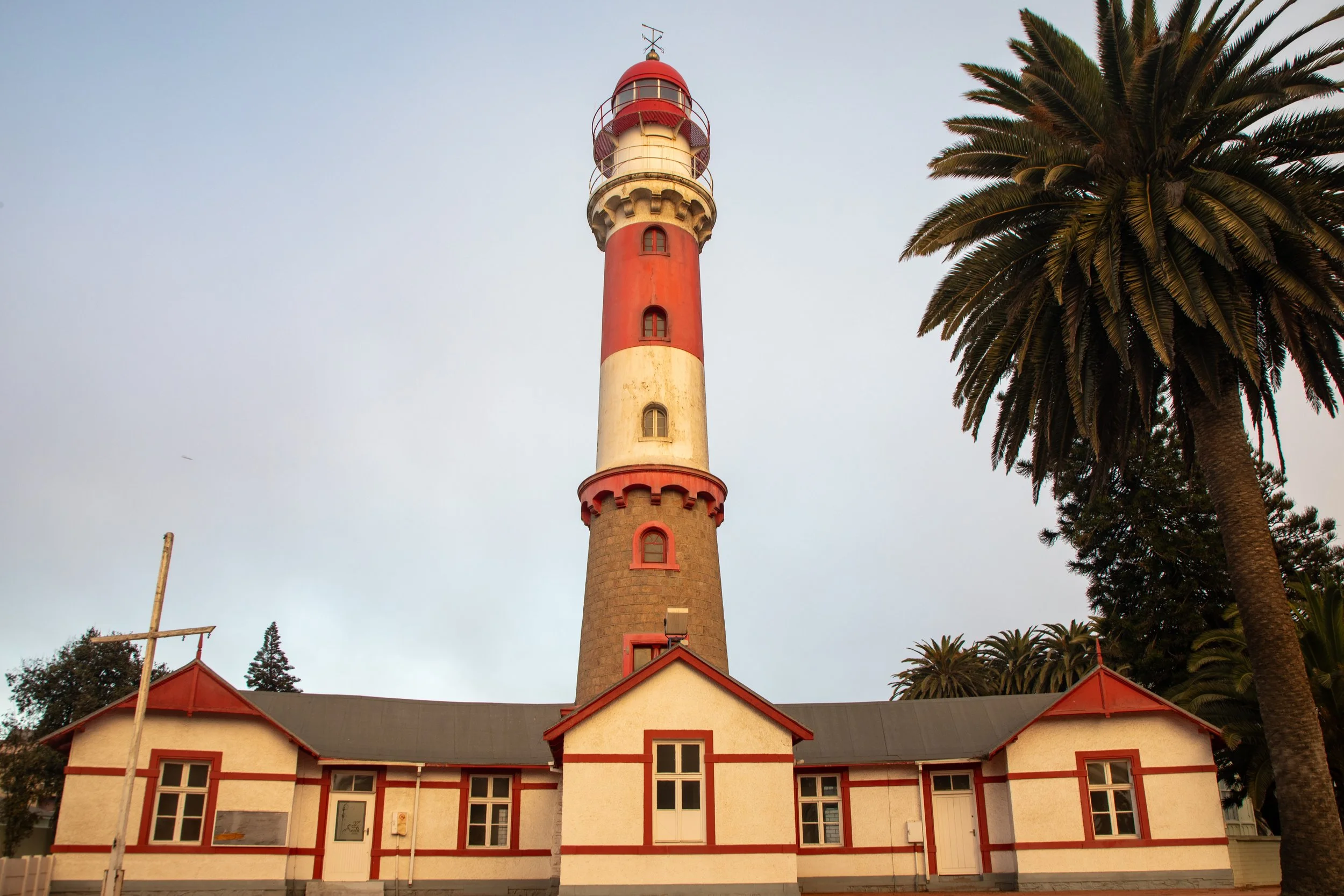
Swakopmund Lighthouse, continuing in the colonial period, built in 1908
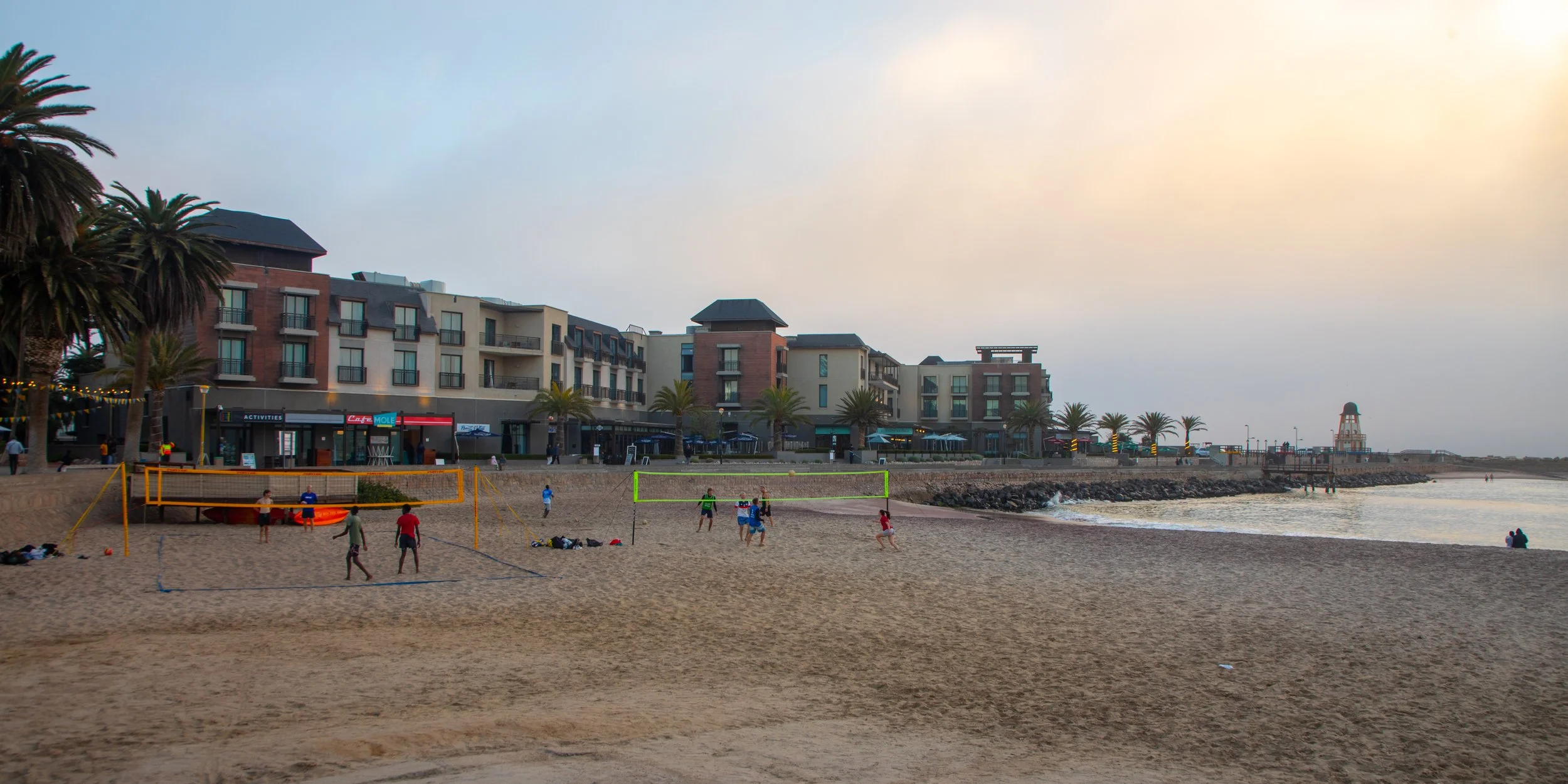
Locals enjoying the afternoon sun
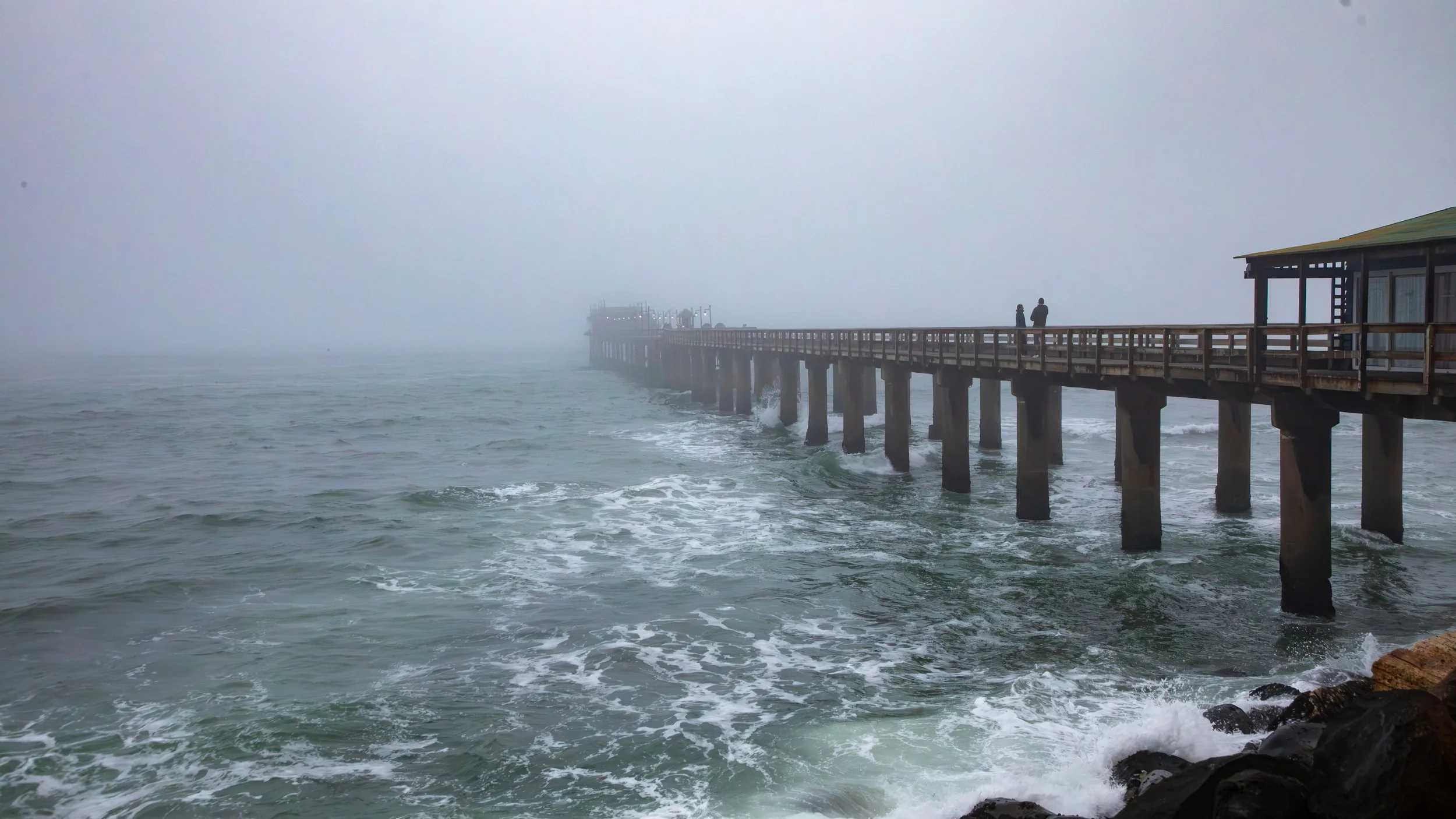
Our dinner was at the Tug, a beautiful seafood restaurant directly on the coast
From desert to sea, we had a great sample of much of what Namibia offers over one full day on the road. Happy to have had a terrific dinner at the Tug, we enjoyed the walk back to our guesthouse and a nice relaxing evening.
Jun 11
After breakfast at our guest house in Swakopmund, William drove us back to Walvis Bay and handed us off to a separate, private guide that would take us out to the sand dunes of Sandwich Harbour and Pelican Point Peninsula. Our smaller 4x4 vehicle and experienced driver were perfect for exploring the coastal dunes.
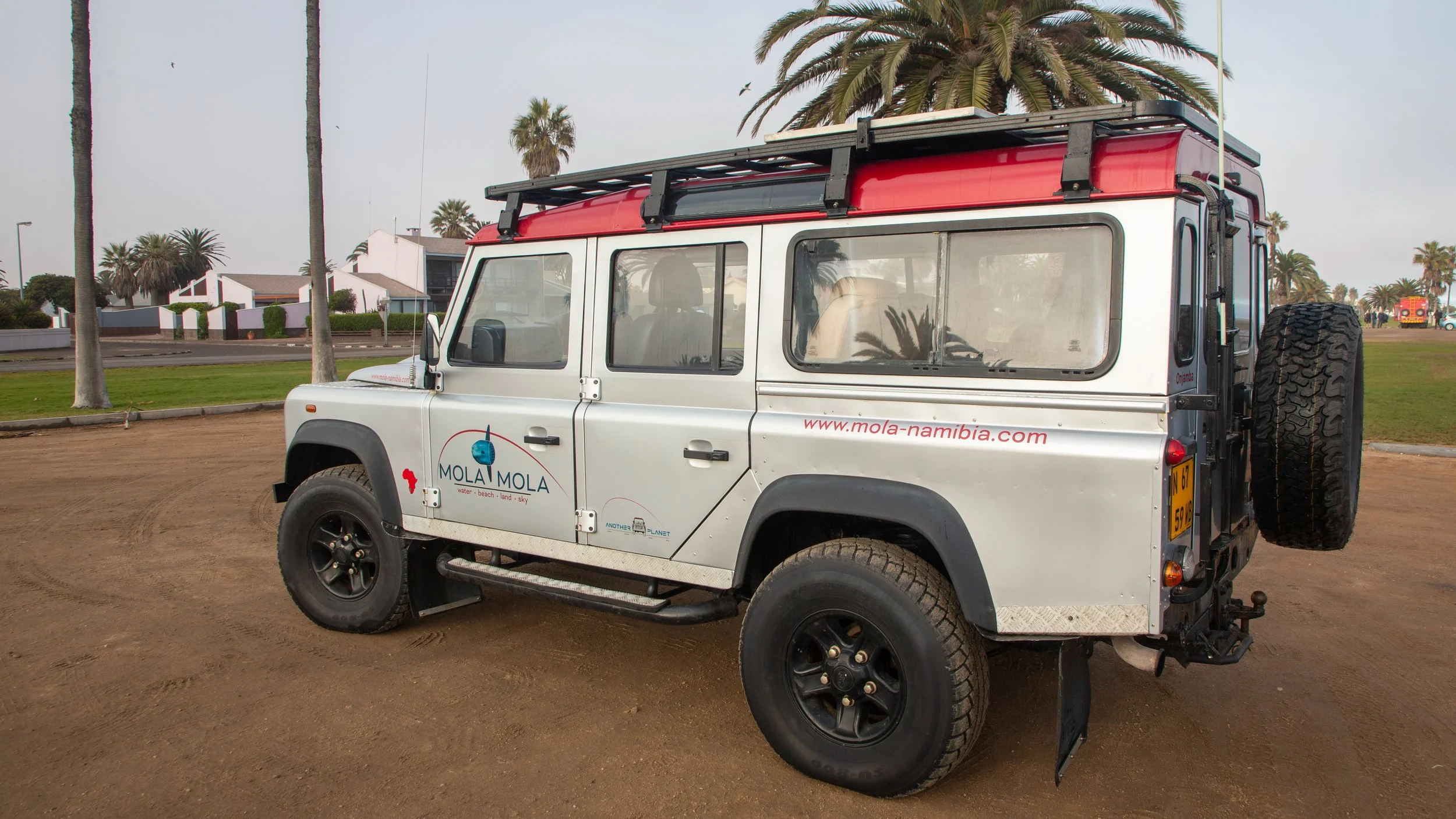
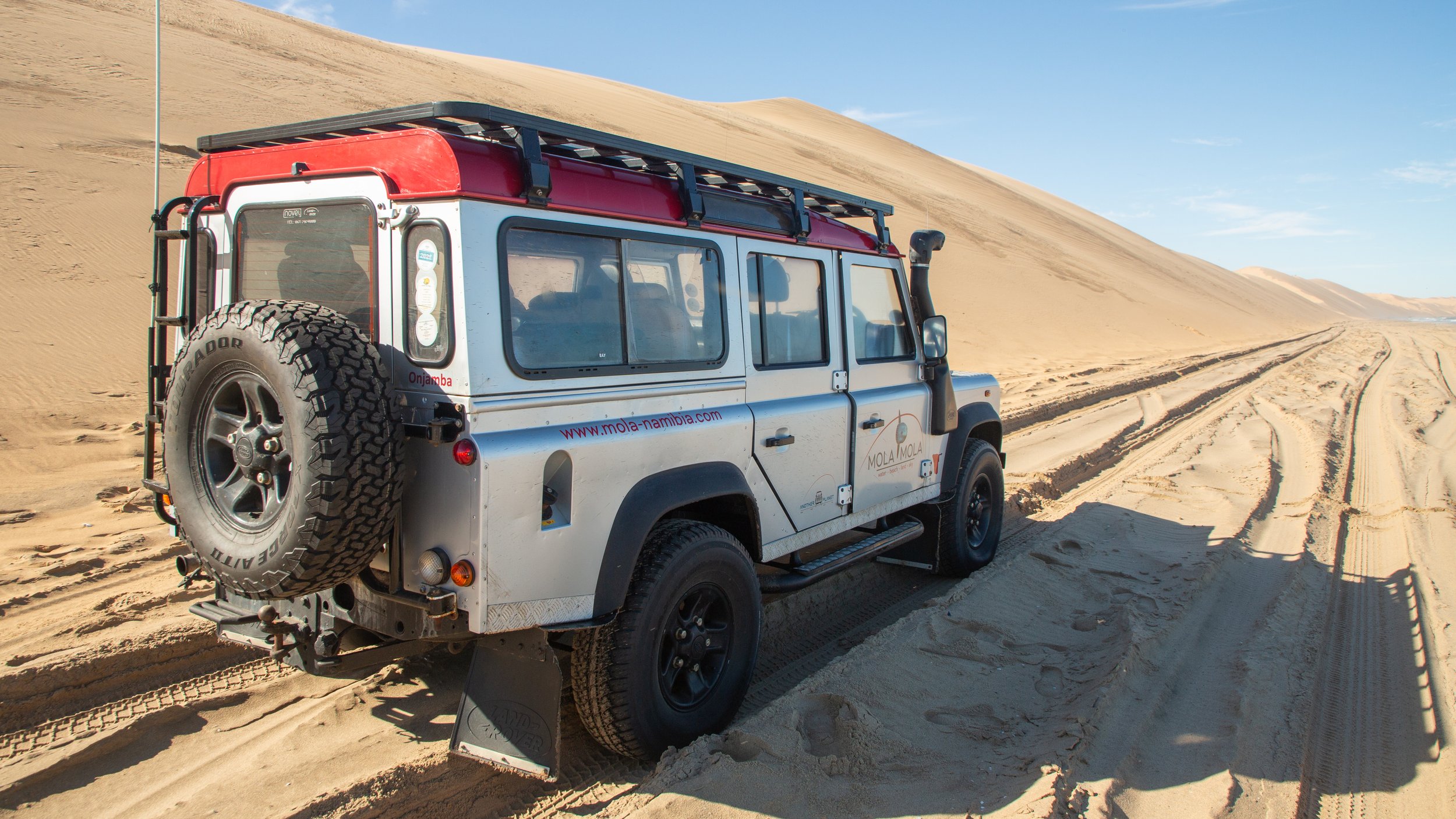
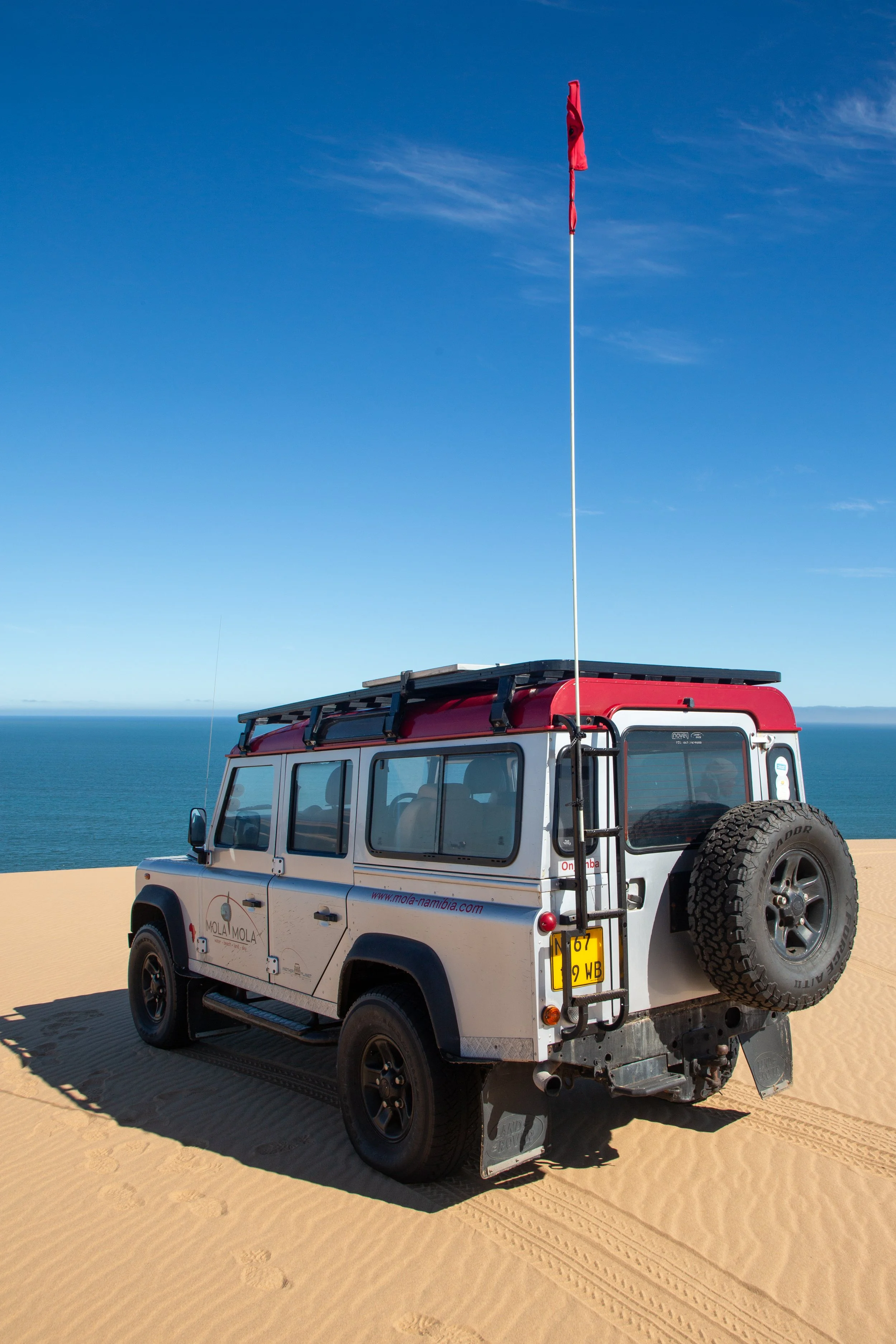
Is this a Jeep? No, it’s British. Practical. Good in the sand.
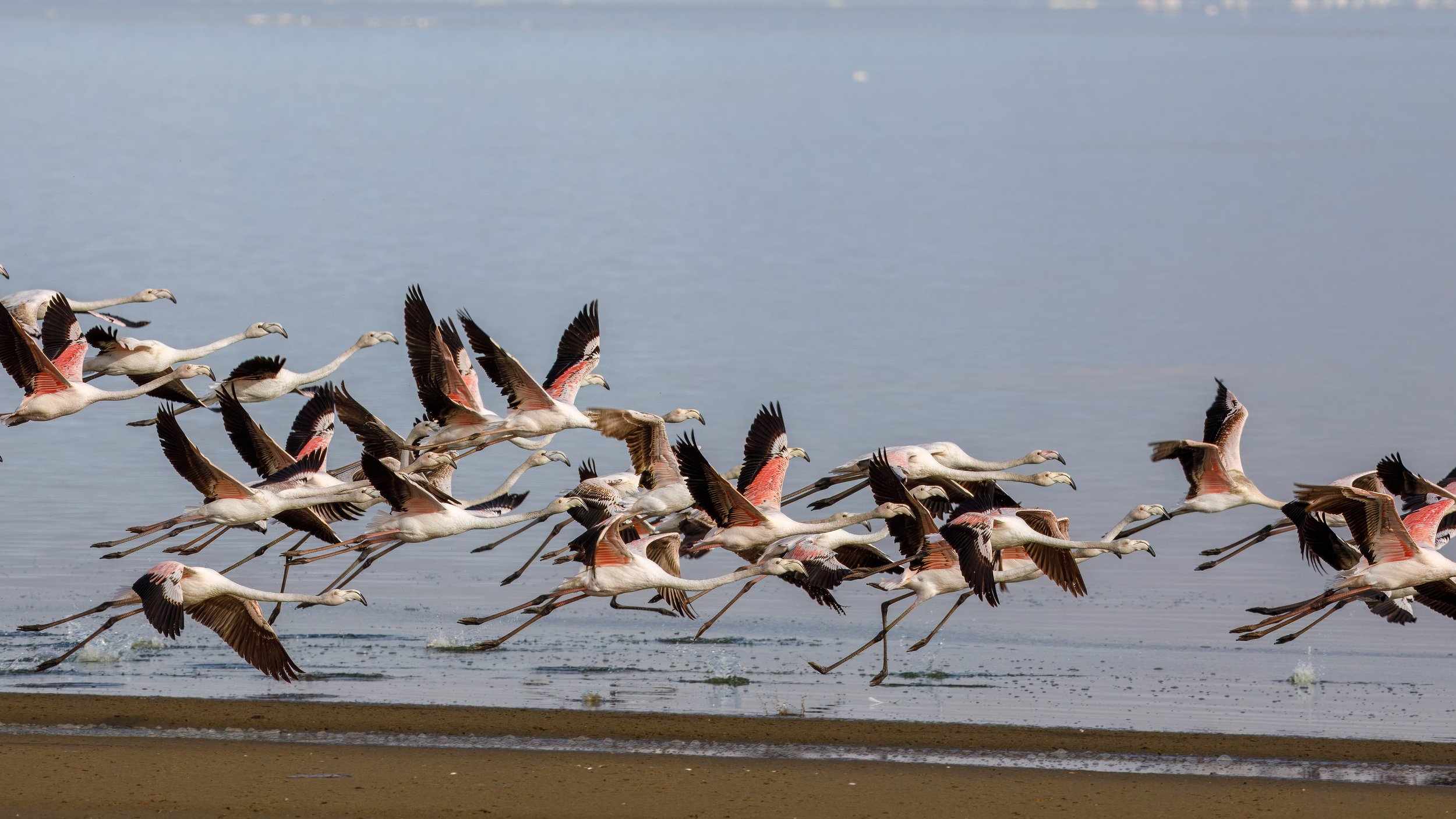
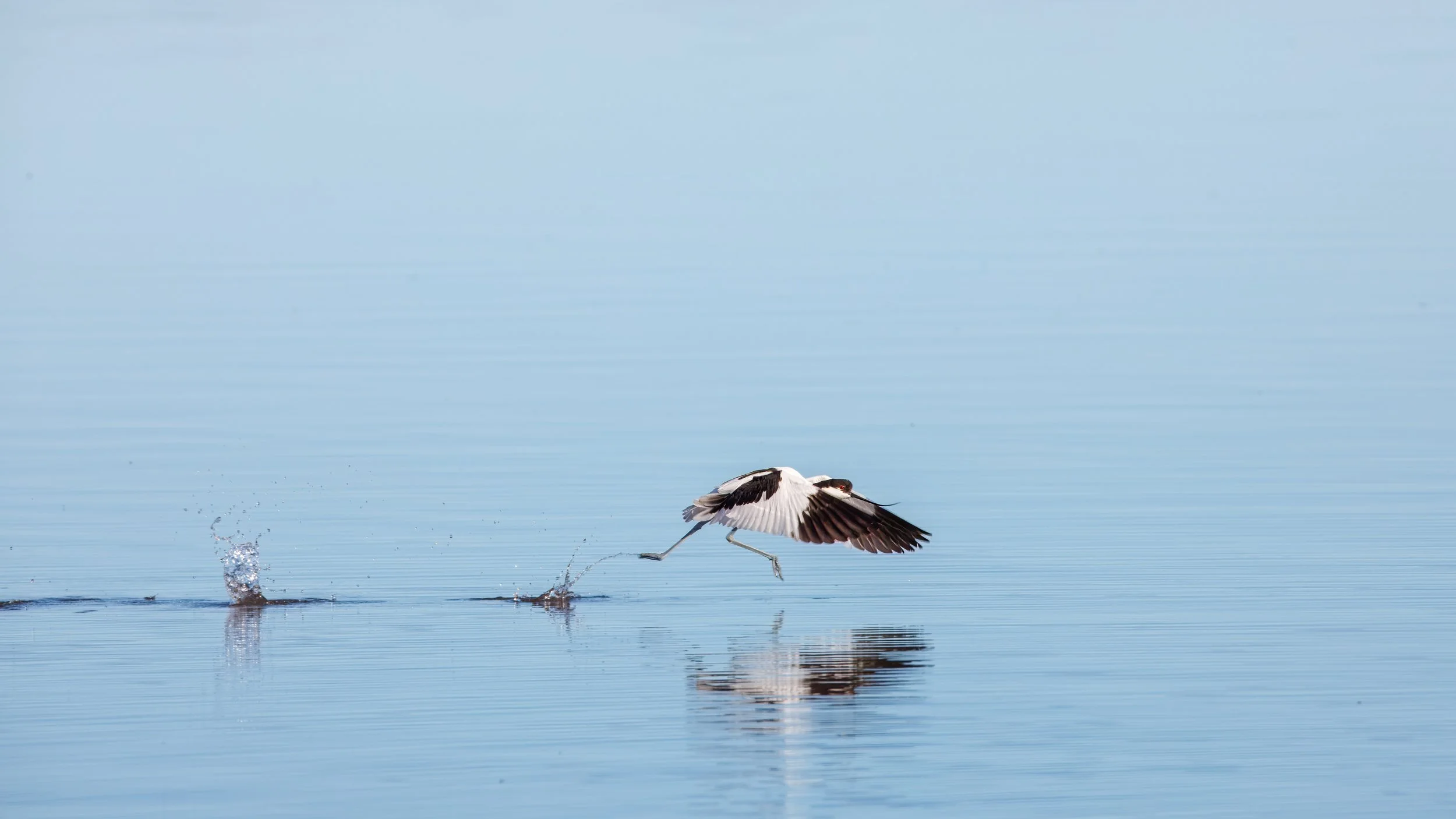
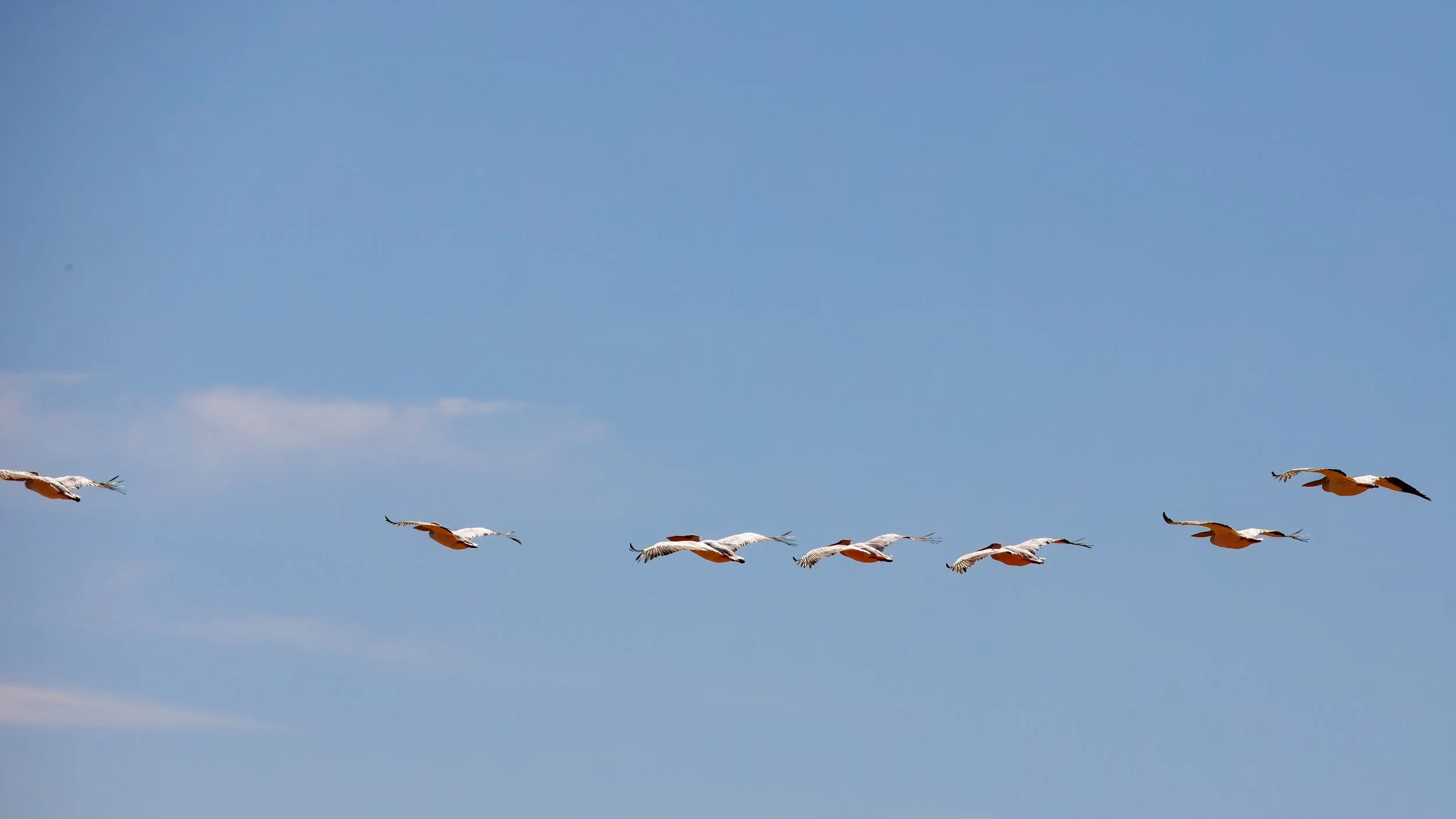
Like the previous day, the coastline was full of flamingos, and we caught this group just taking flight — first, running across the surface of the water, and then getting enough speed to take to wings
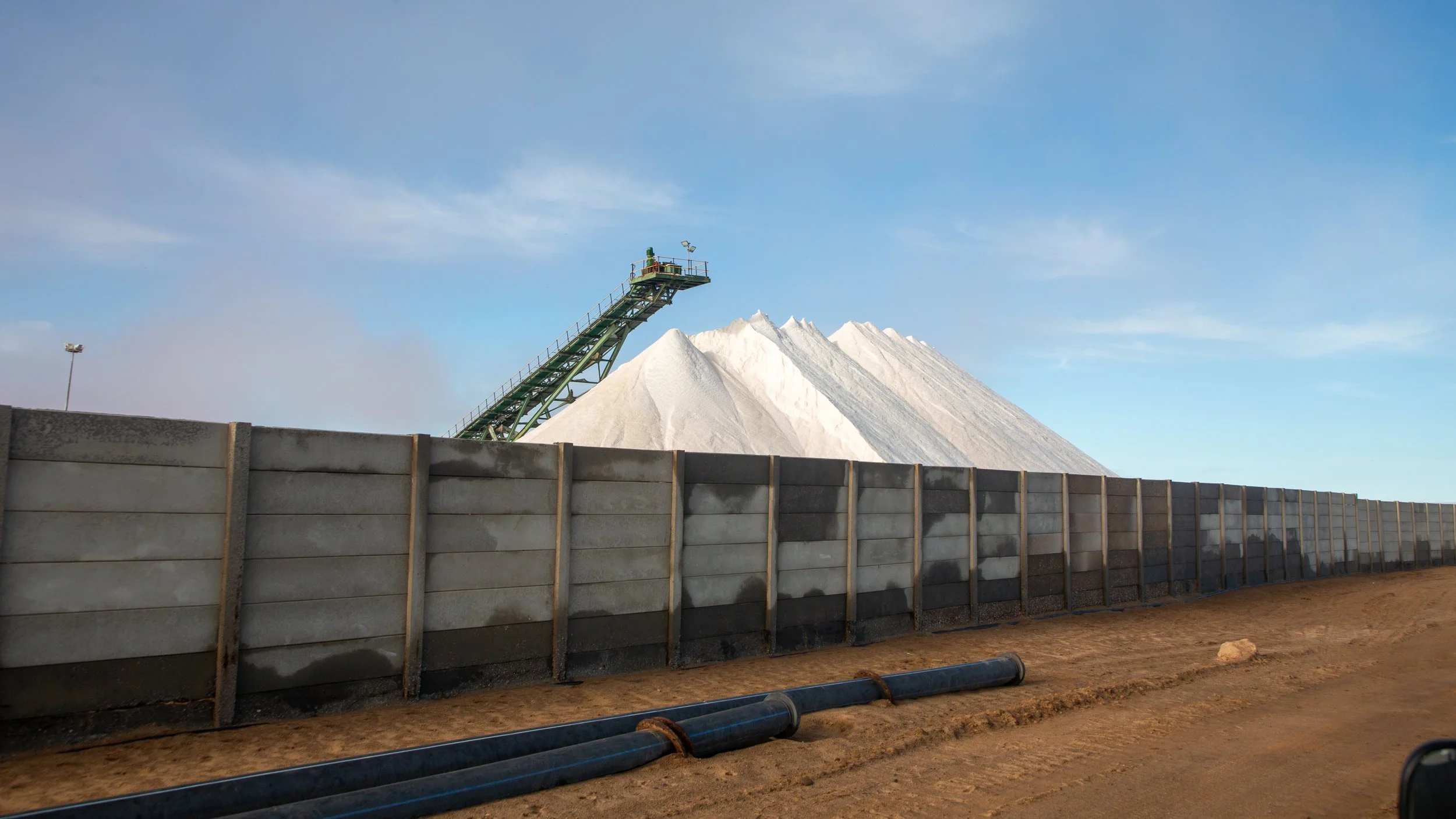
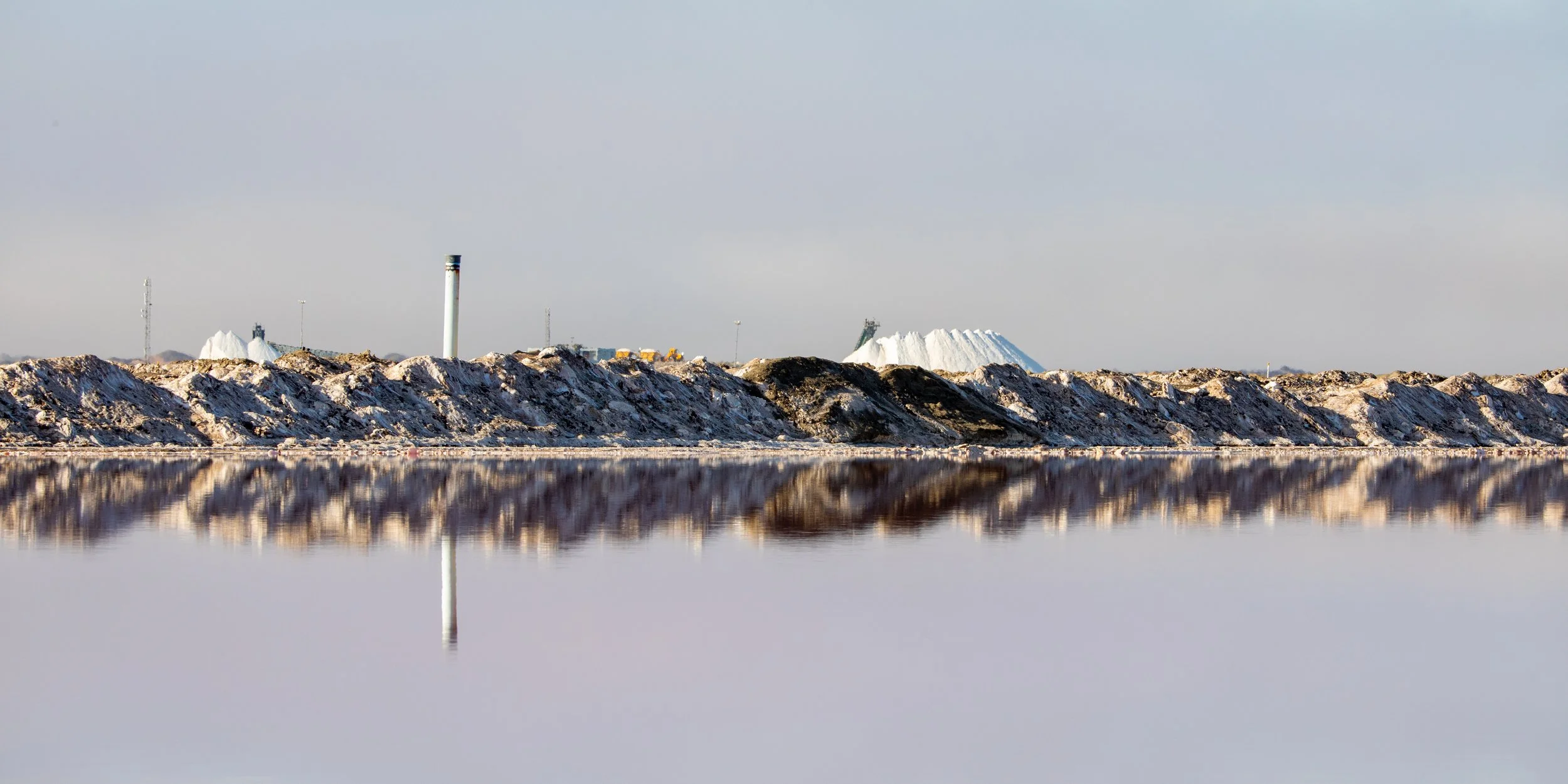
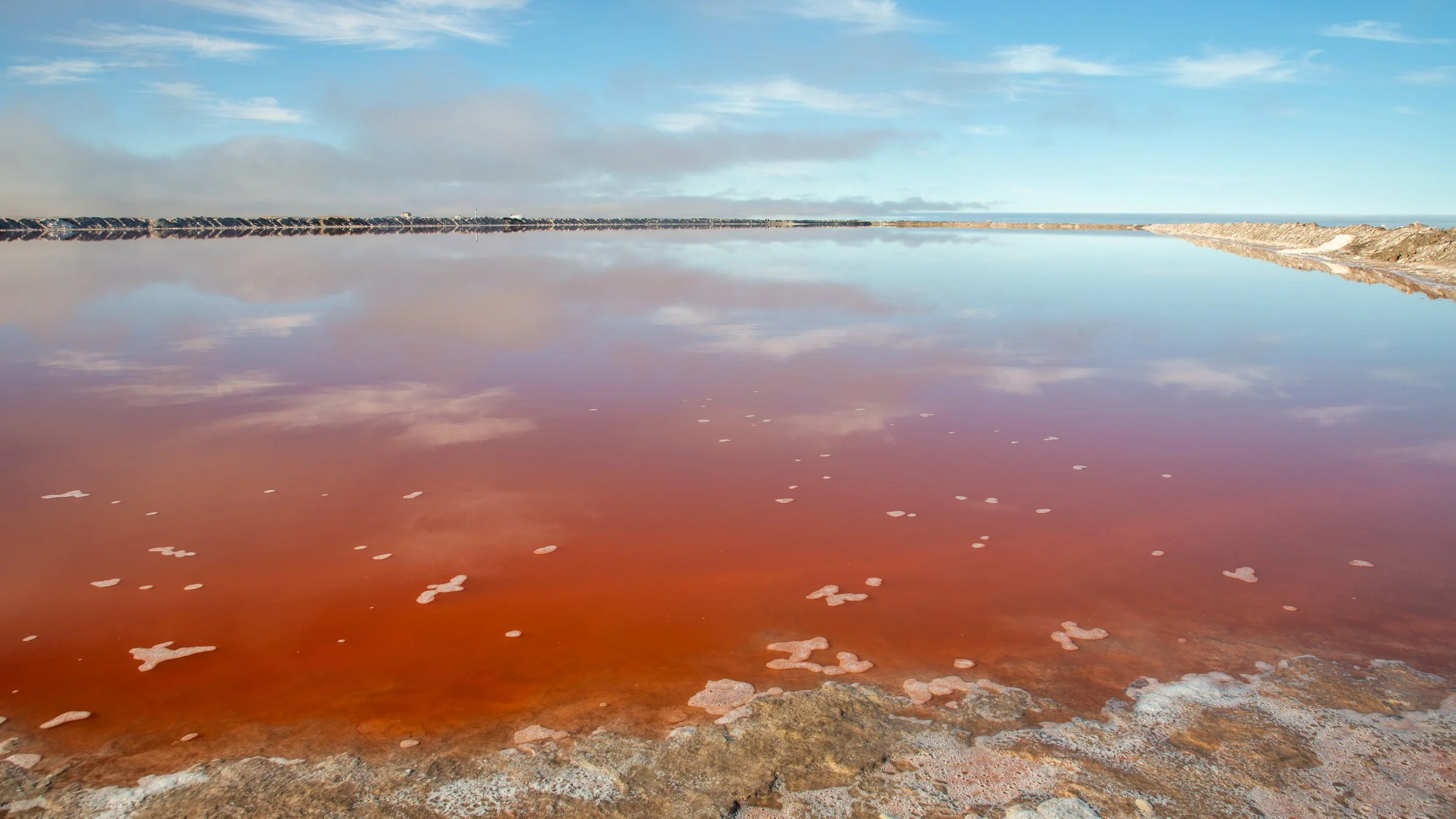
With the warm desert climate and lots of space, the area produces a lot of salt by pooling and damming ocean water, then evaporating it
Salt pool early in the evaporation cycle
As the water content reduces, the minerals create colourful patterns in the pools
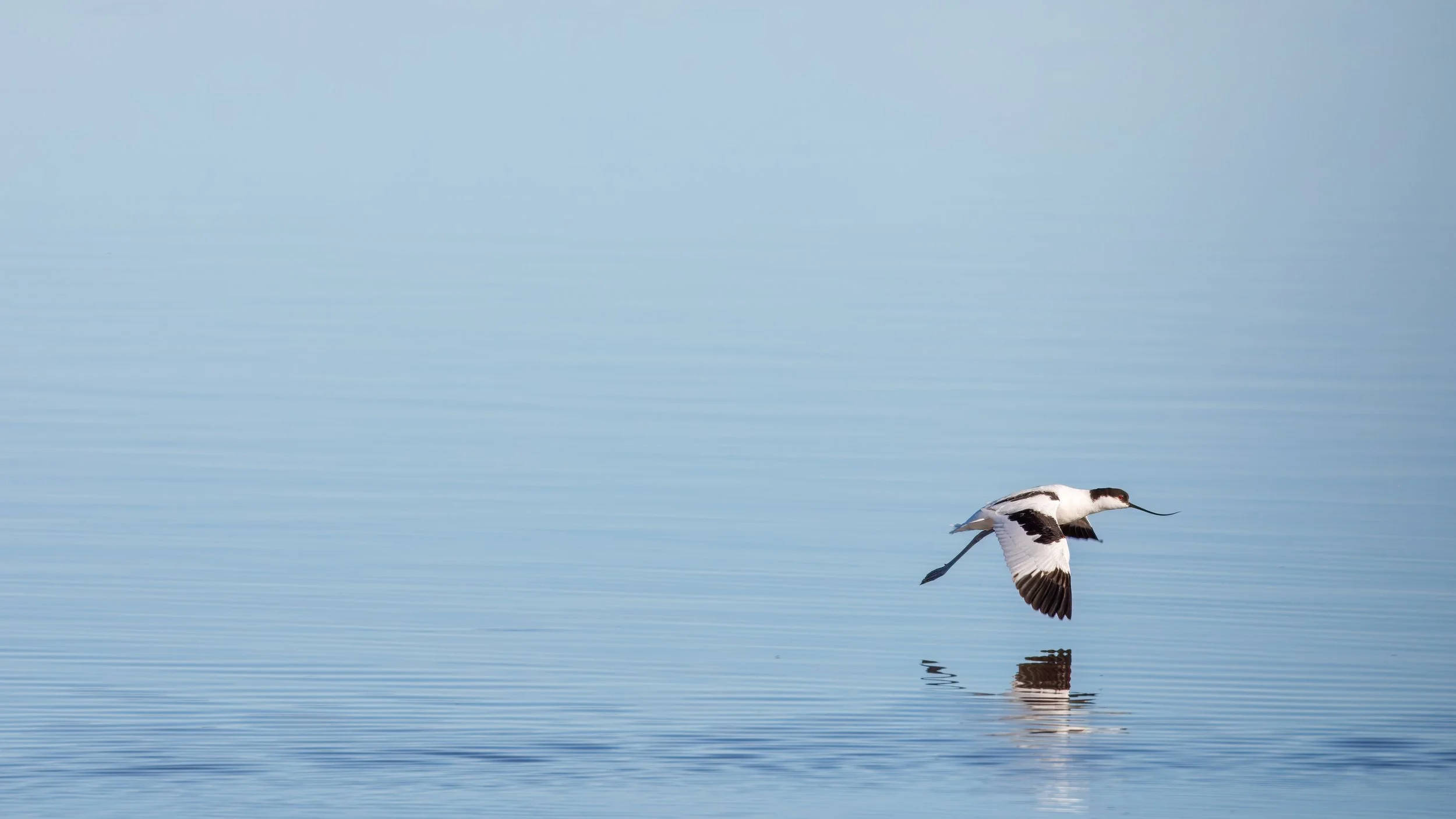
Pied avocet taking flight along the mudflats in Walvis Bay
Sticking close to the water as it hunts for food
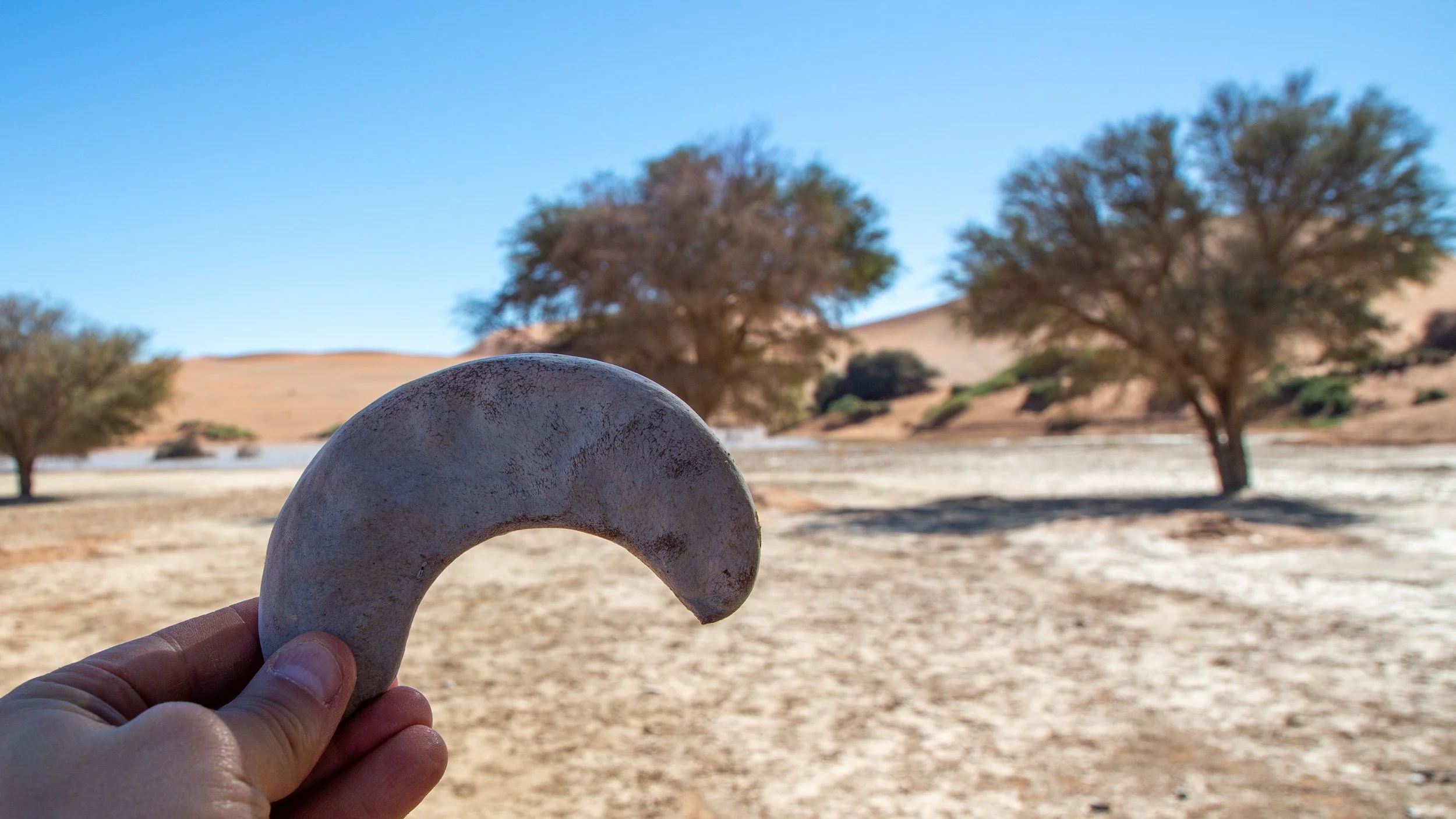
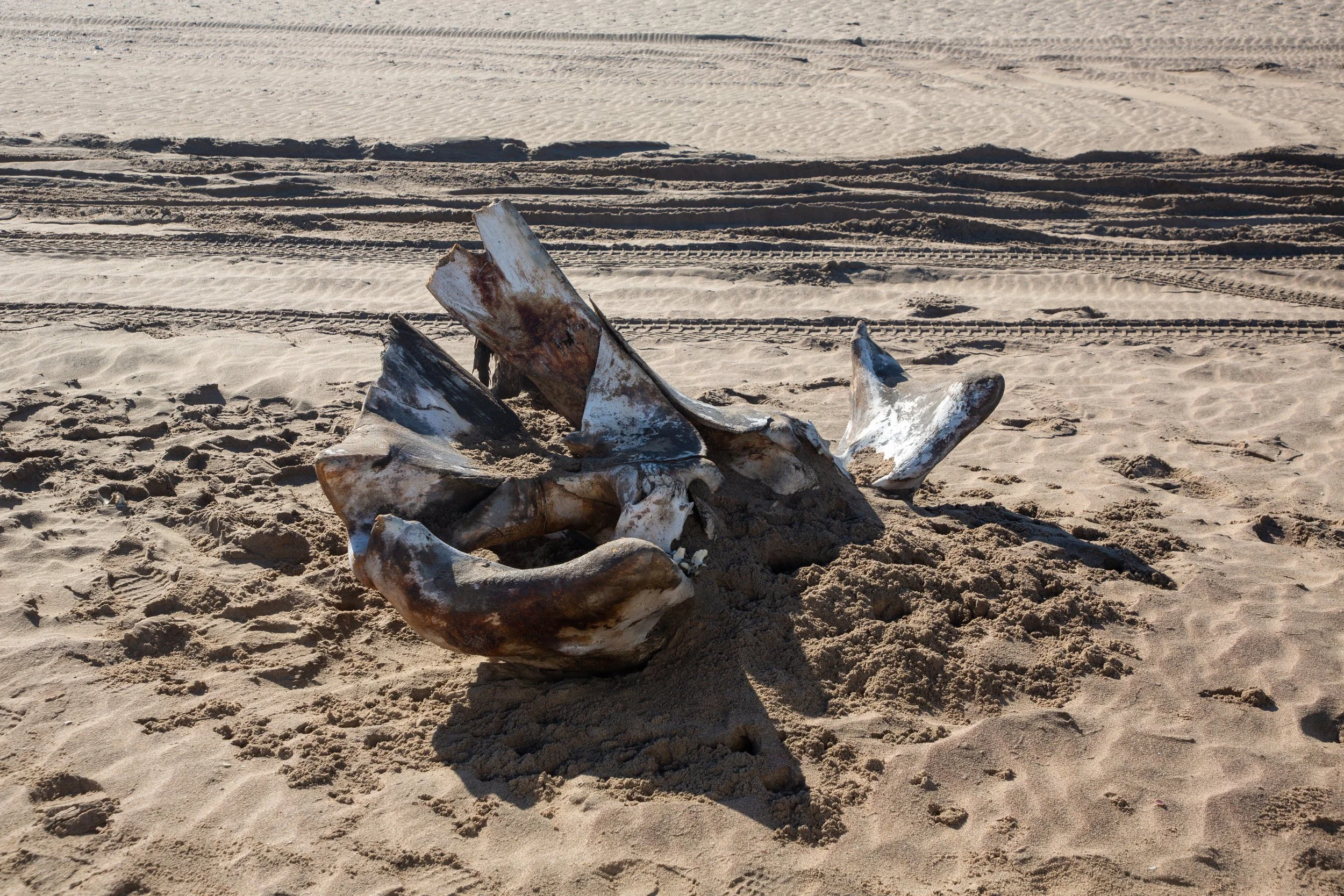
Portion of a whale skeleton left on the beech
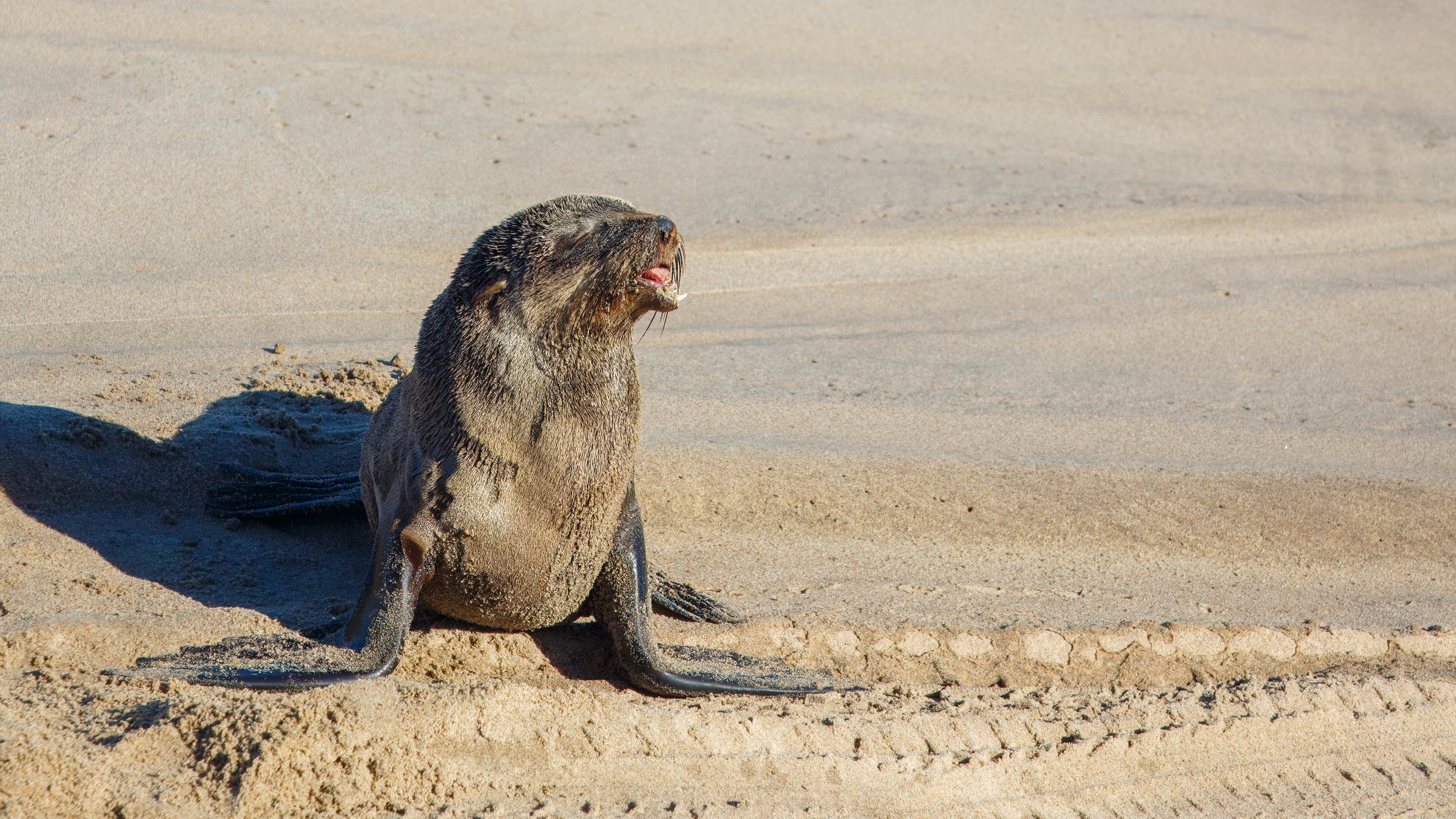
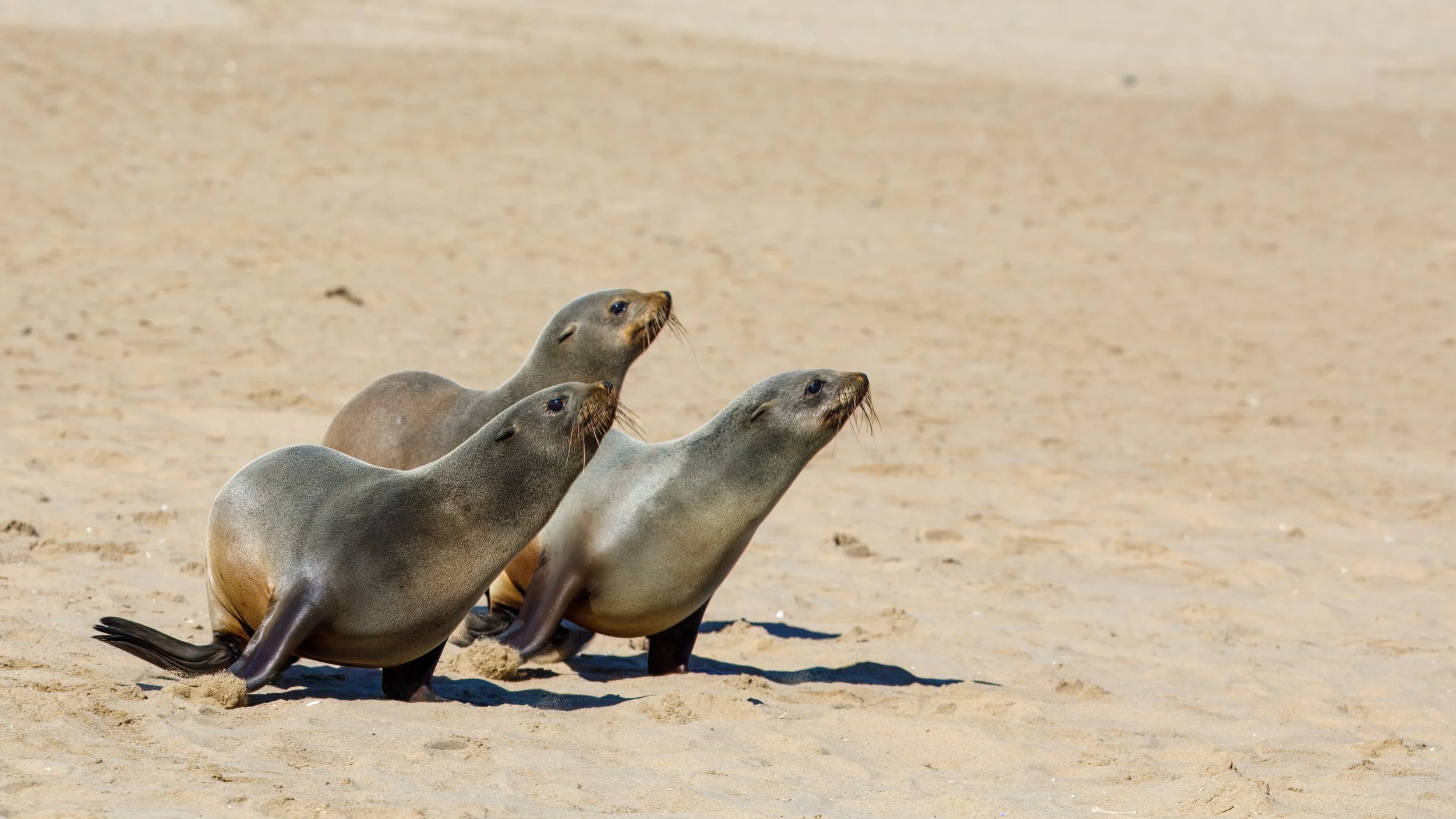
A less than healthy looking seal, away from its bigger colony
Moving quickly along the well-defined track to get to Sandwich Bay before the tide was too high
With the tire pressure lower, we had more traction to continue our journey
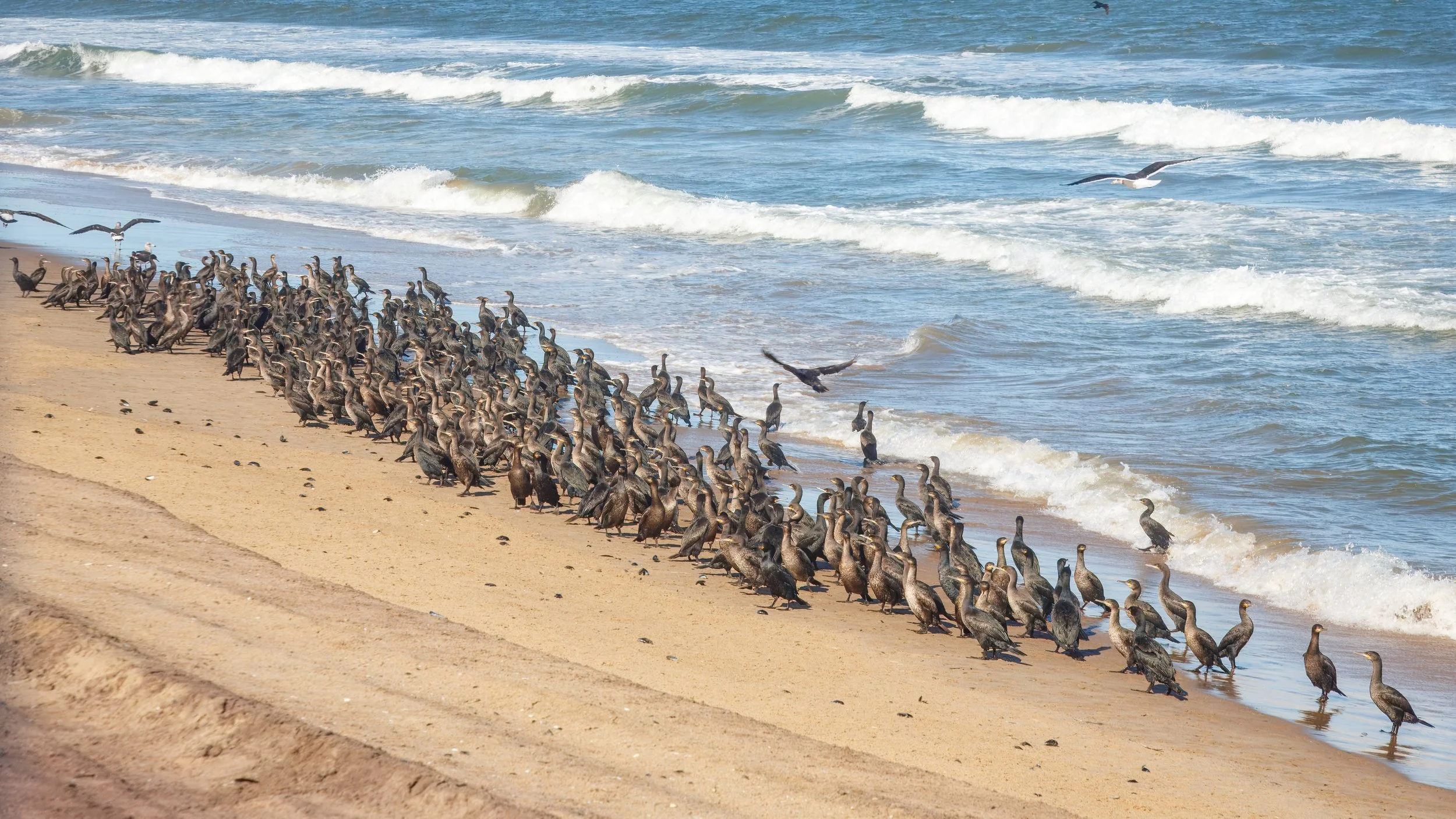
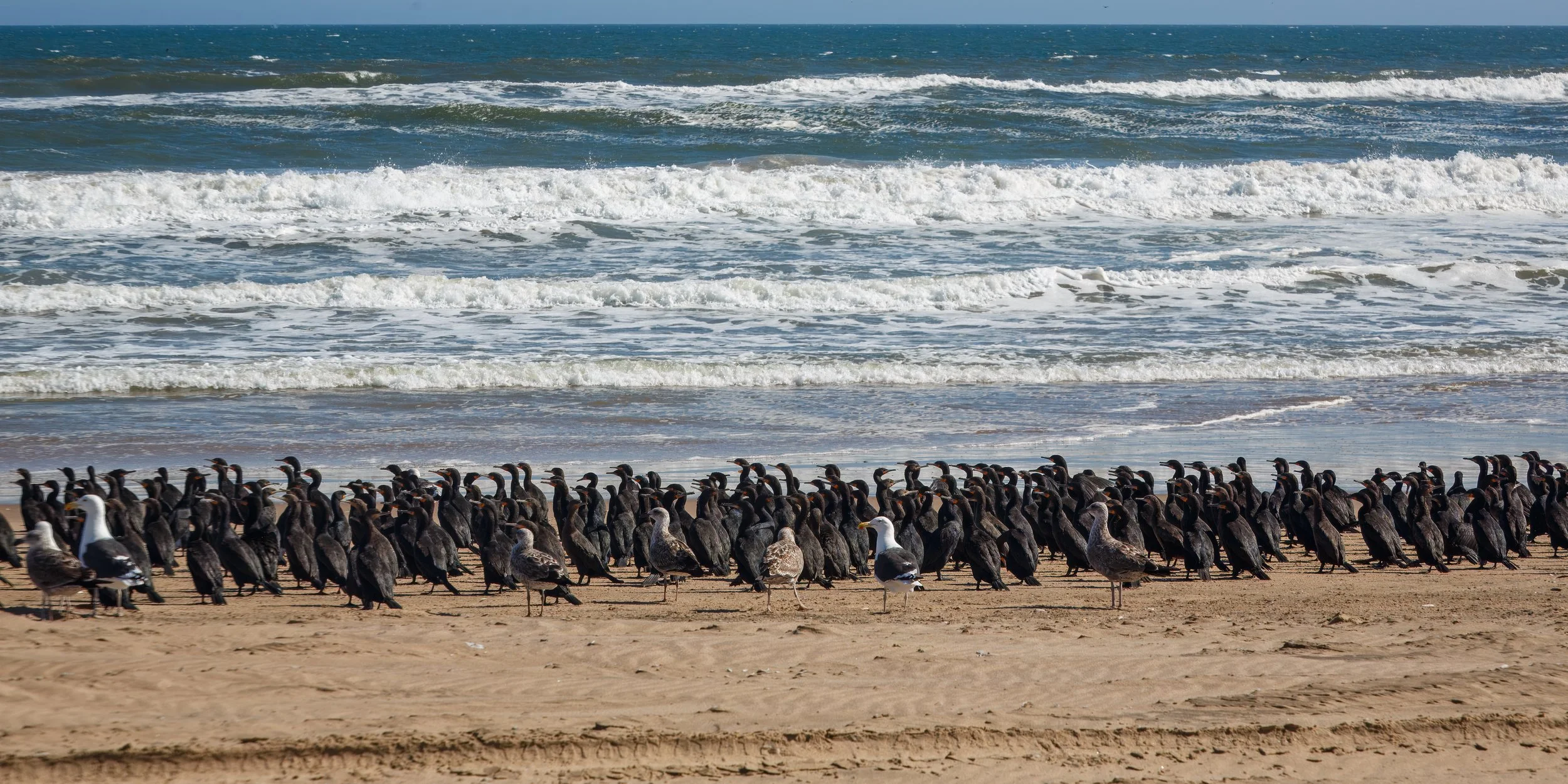
Giant flock of cape cormorants that covered a large portion of the beach
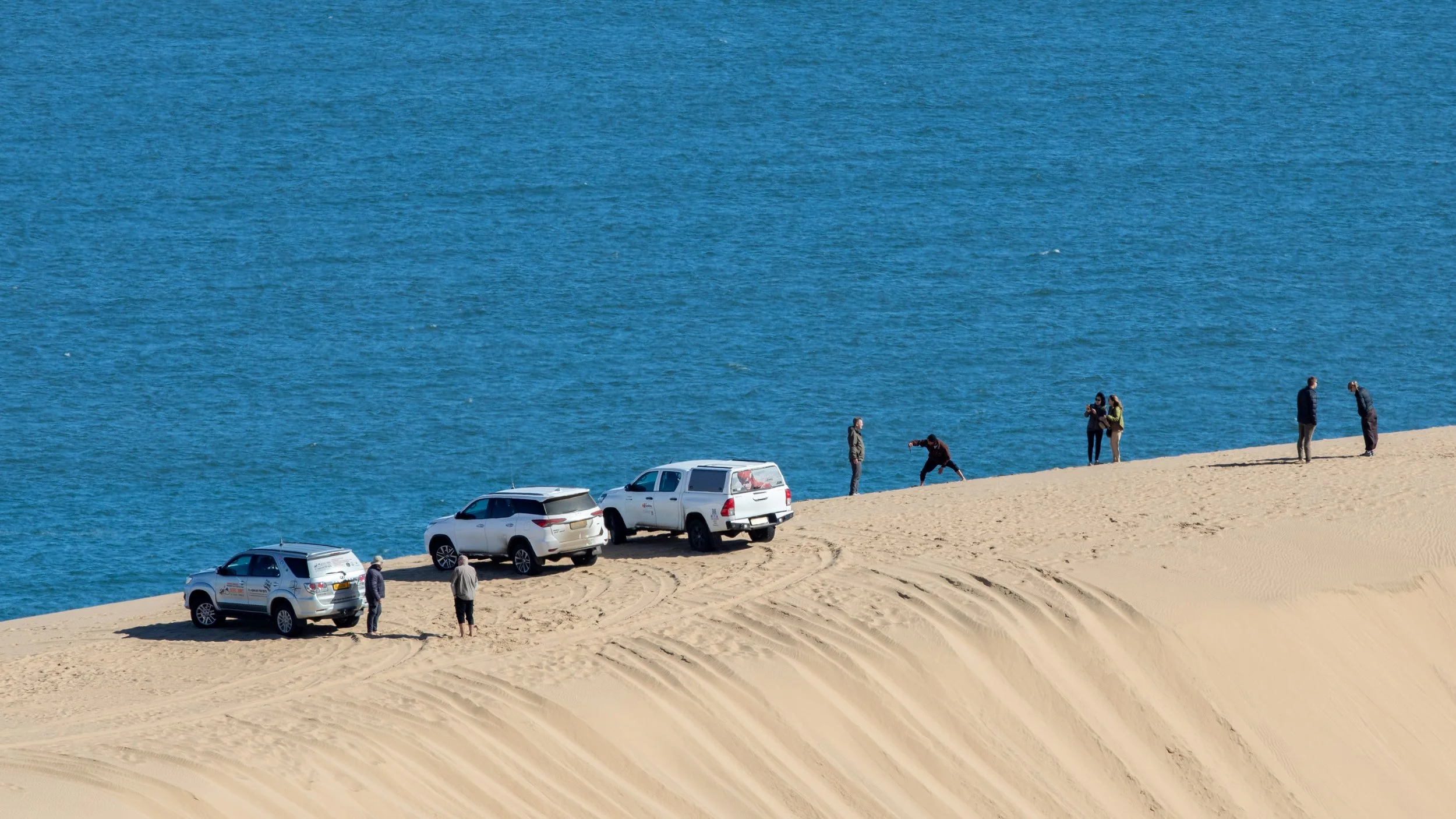
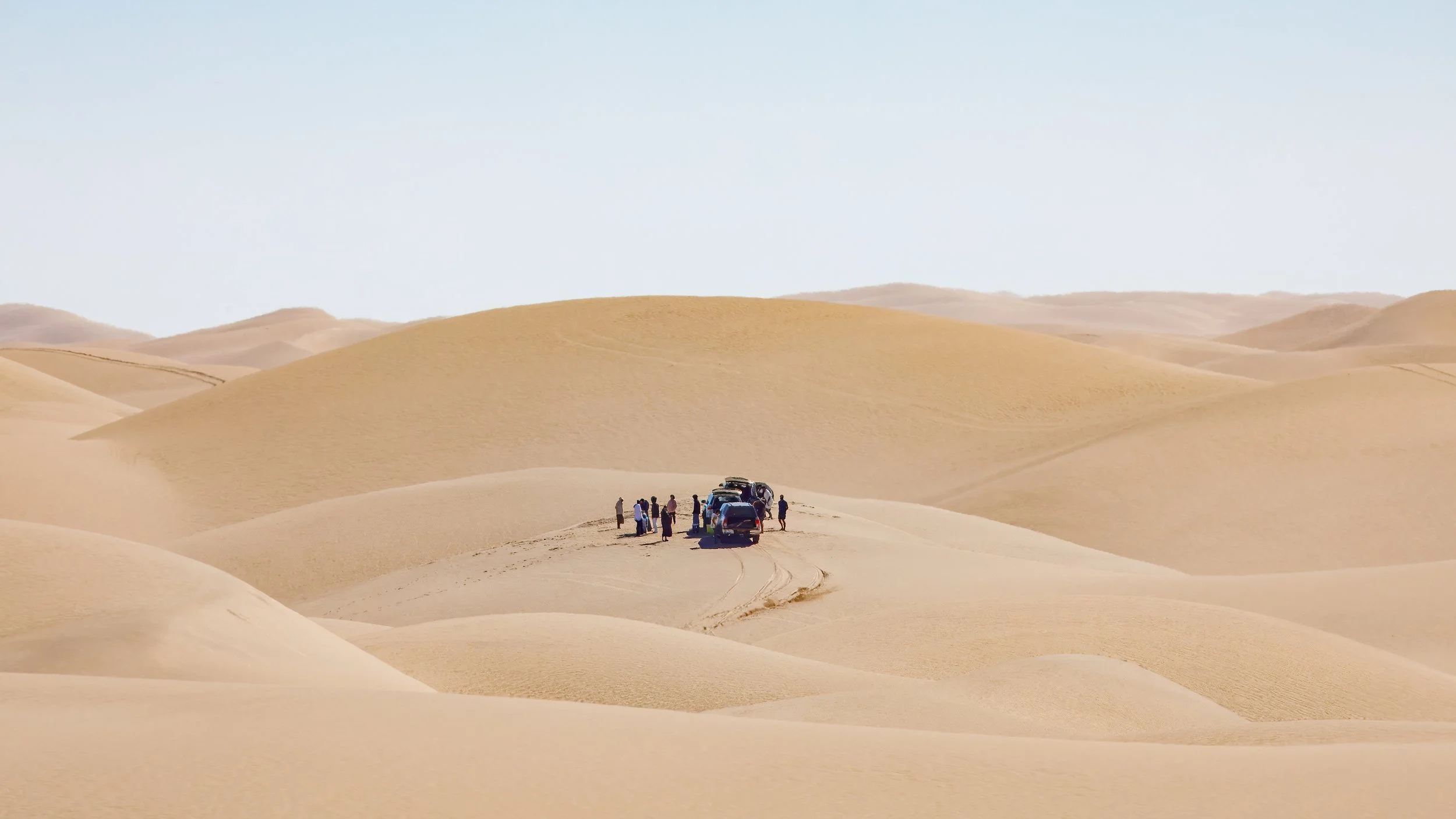
From our higher vantage points, we can see some of the other tour groups. Private drivers are no longer allowed on the dunes, as they often got stuck in the sand
Surveying the sand
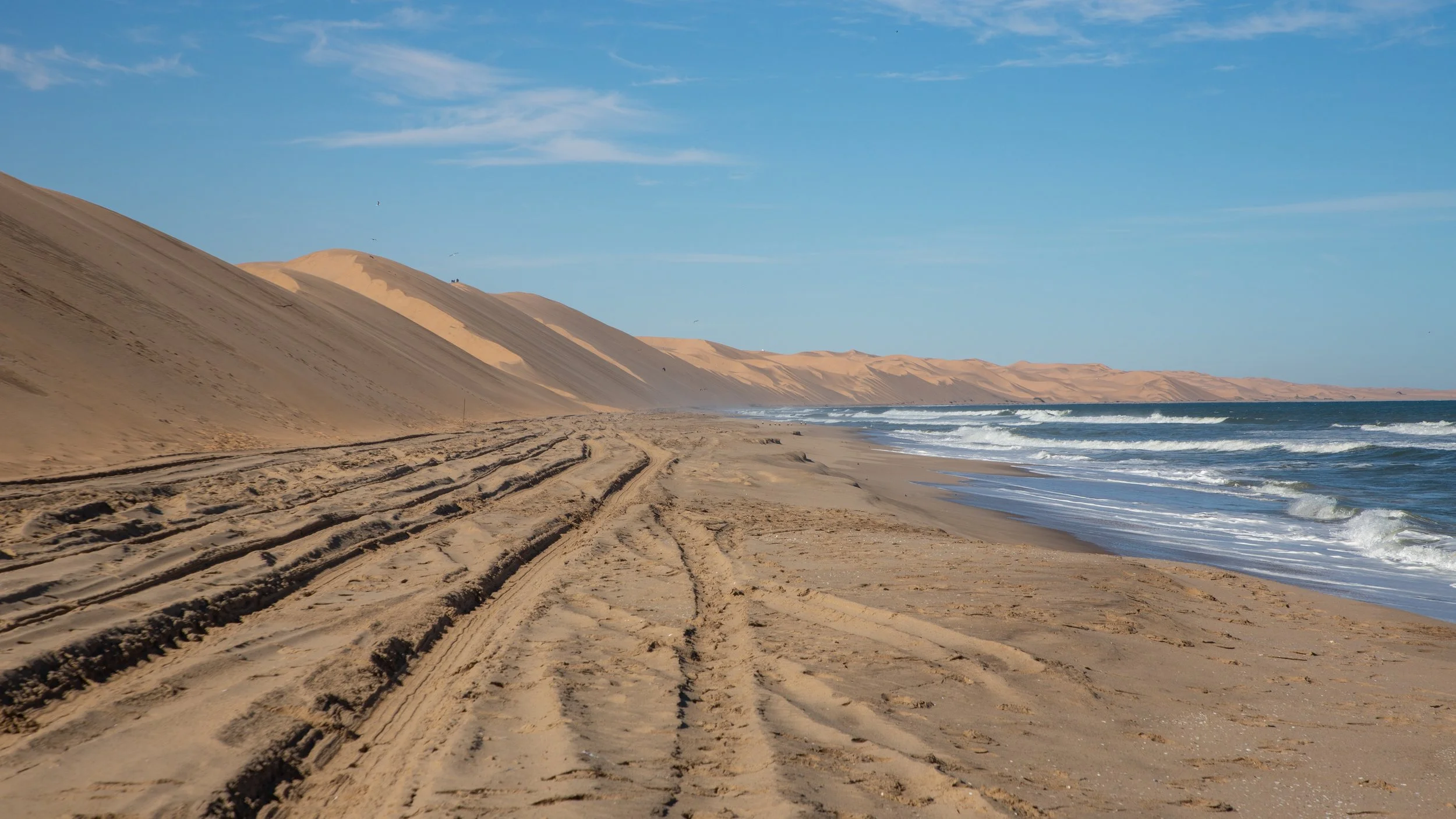
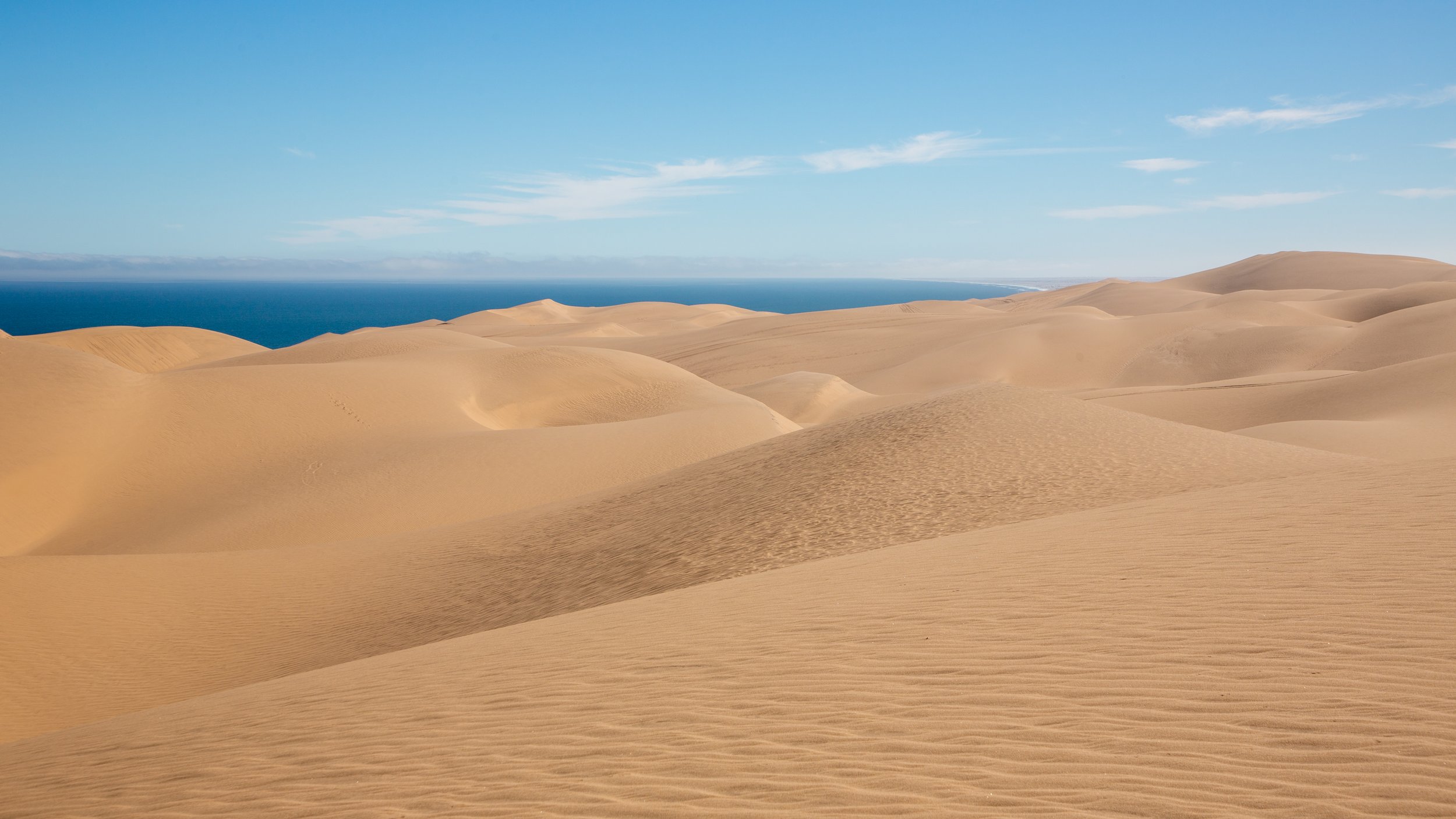
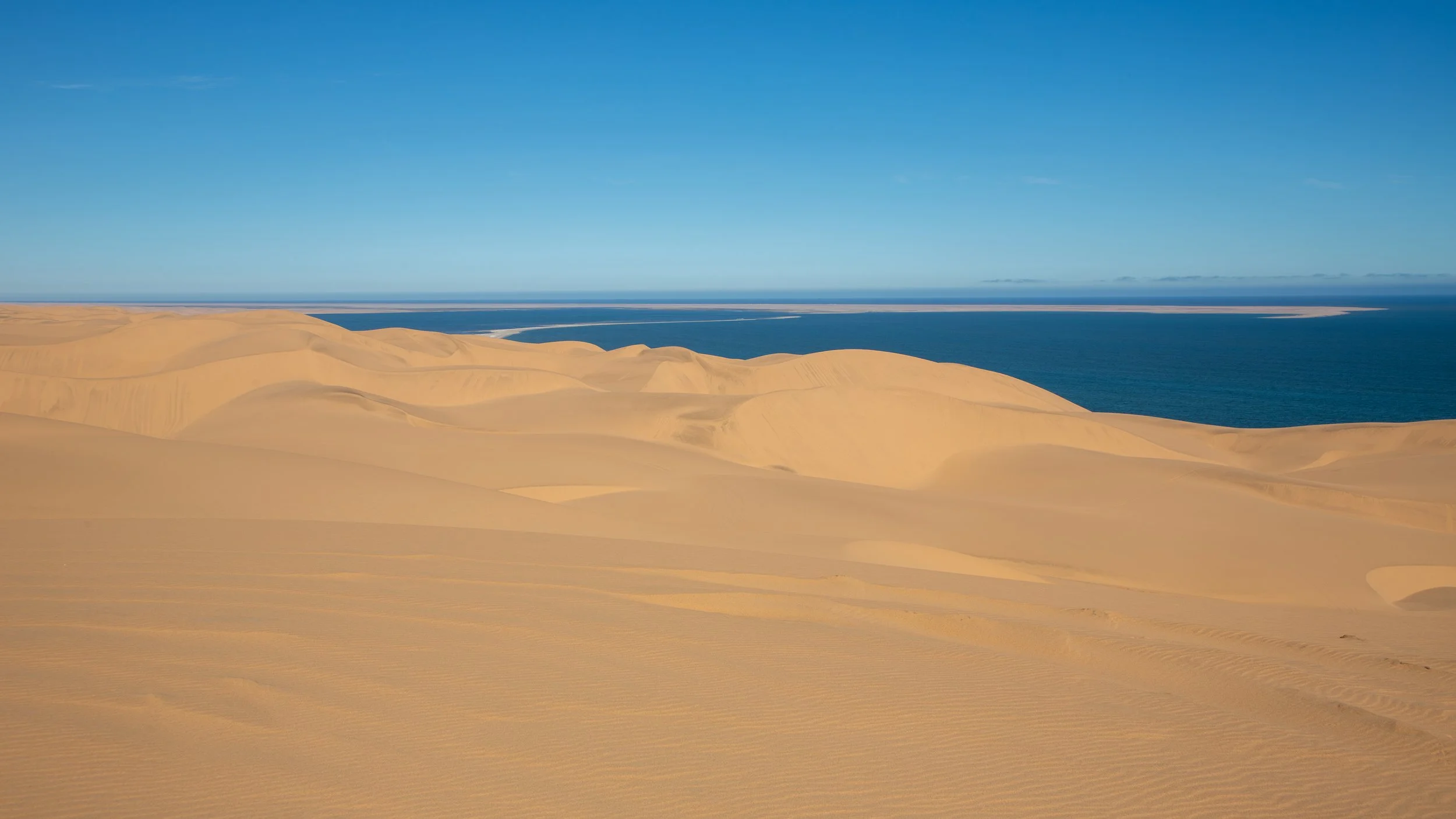
The desert uniquely goes right to the shore, and actually prevented early European colonization, as explorers didn’t think there was anything beyond the vast desert
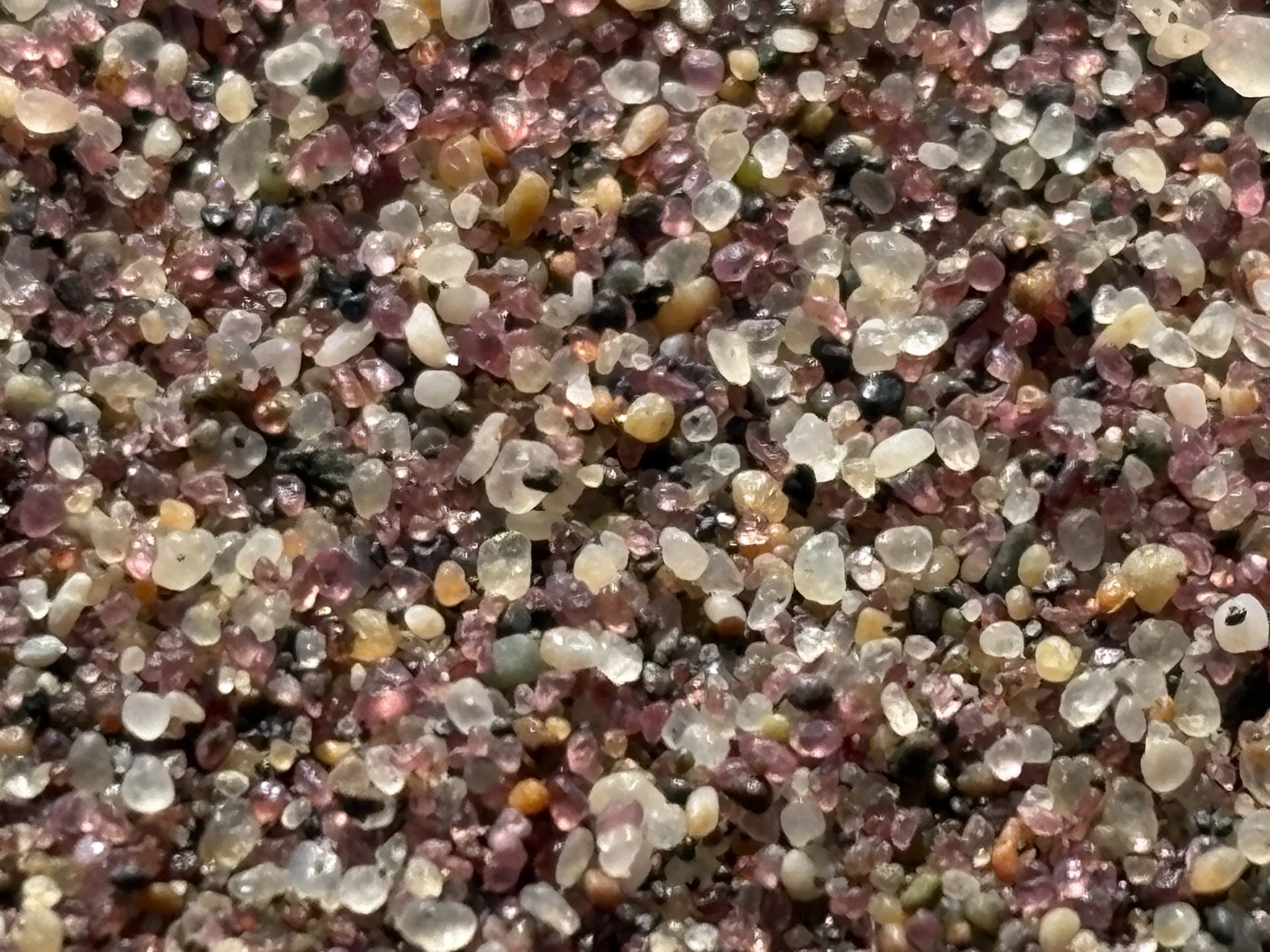
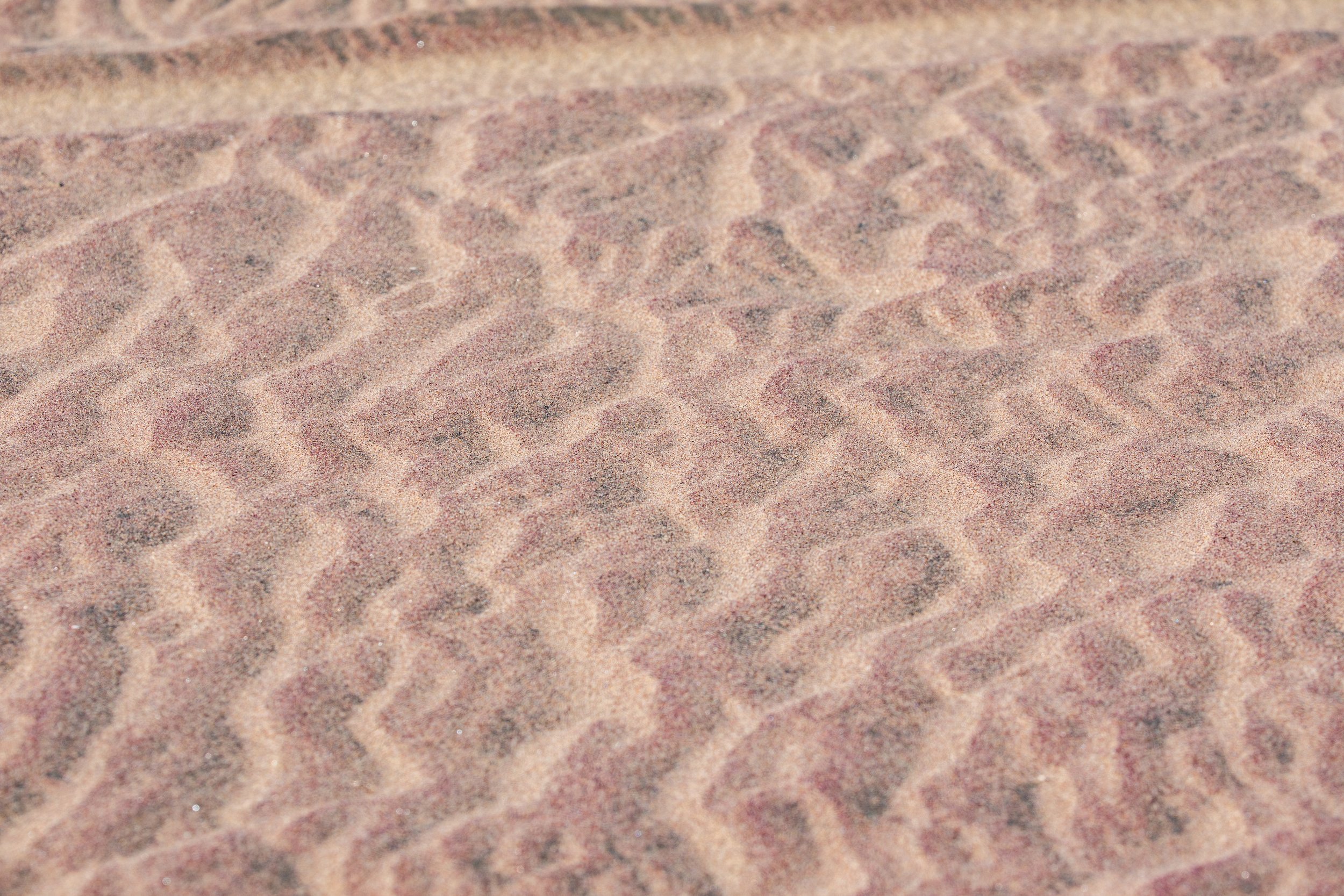
This is the same Namib desert that we left behind a few days back, but the newer sand here is white. The older sand inland is more red, as its iron content has had time to oxidize as it blows from the beach towards the interior.
Looking across at Ilhea Point that creates the protected Sandwich Harbour
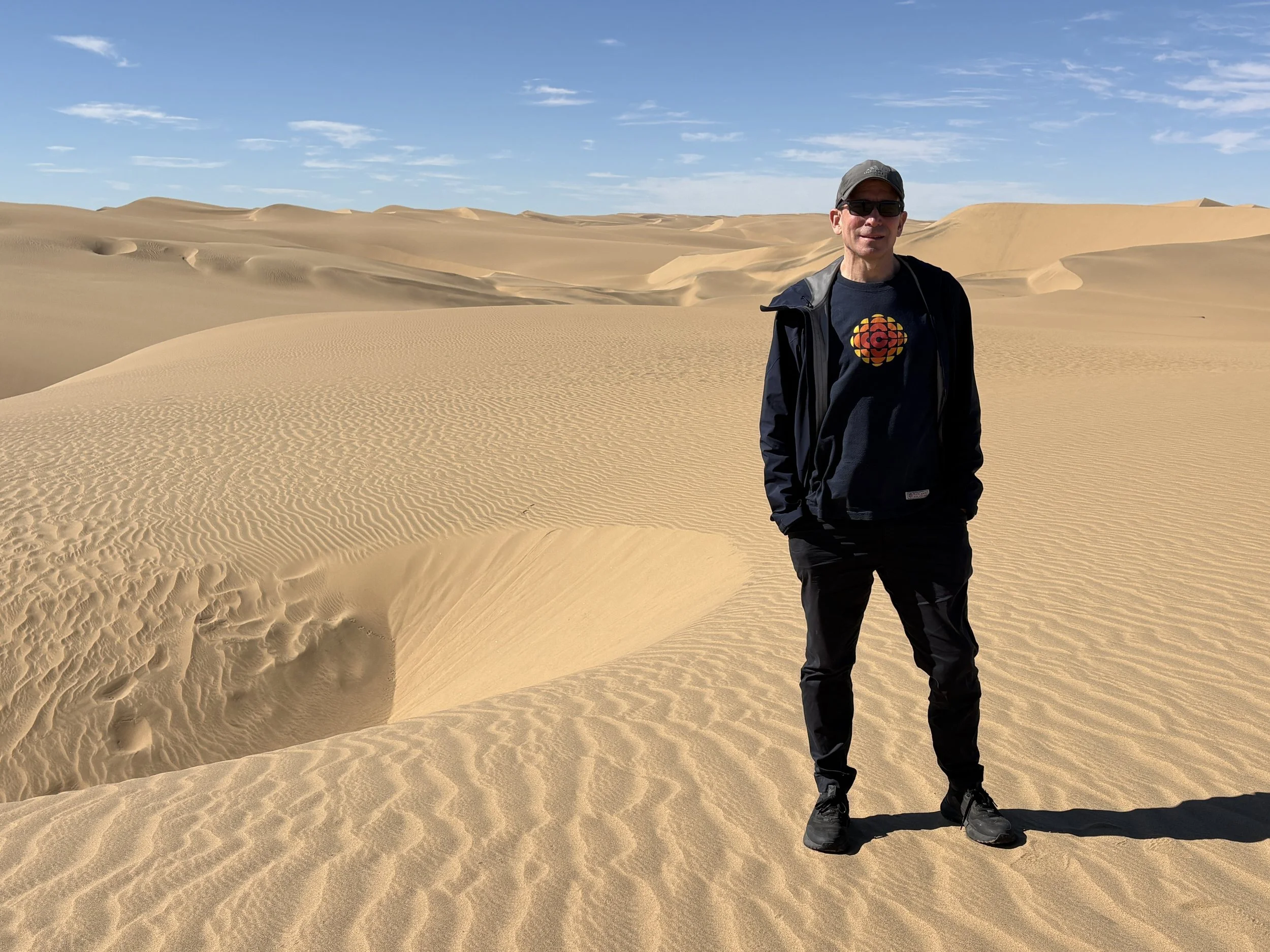
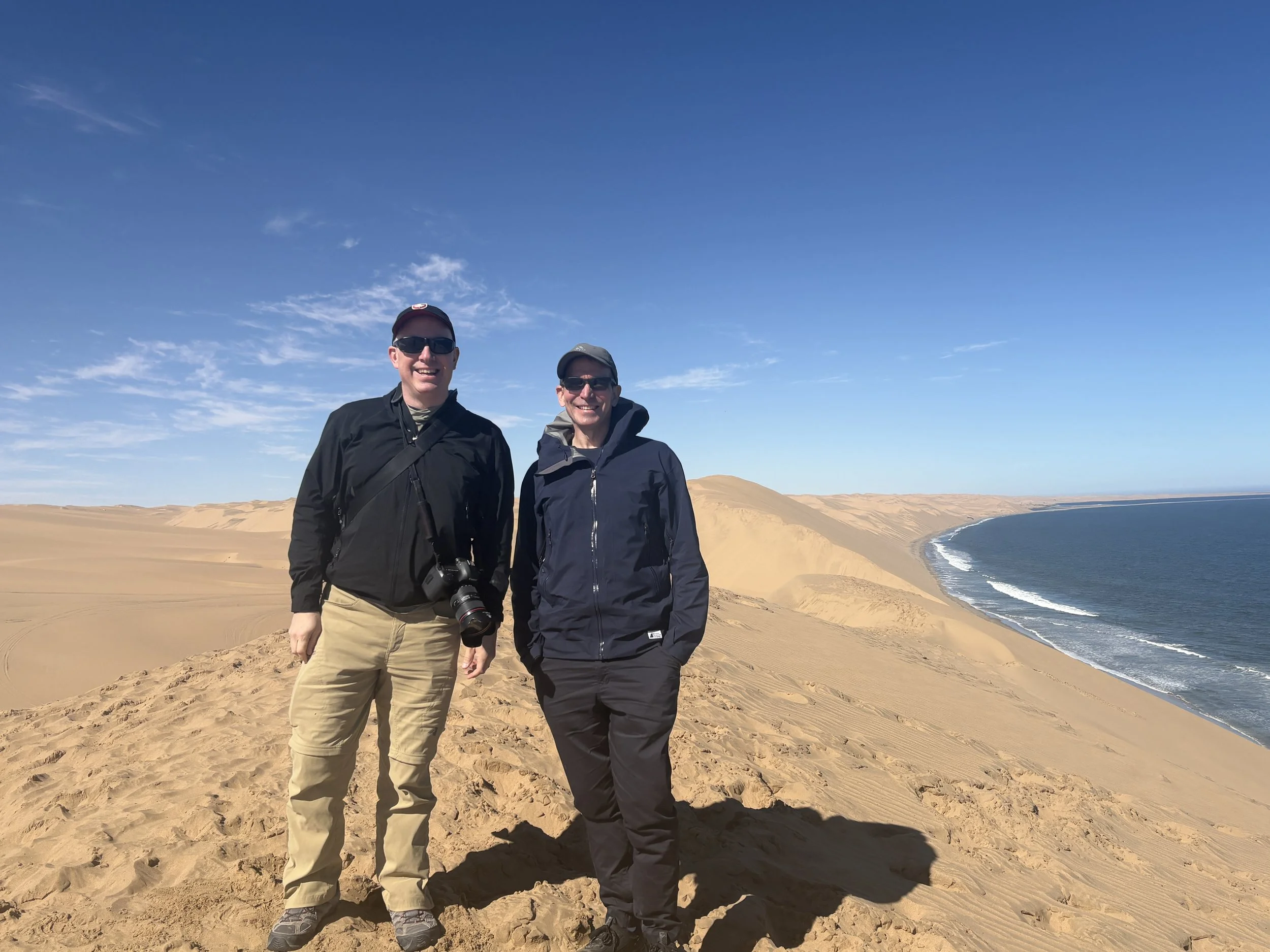
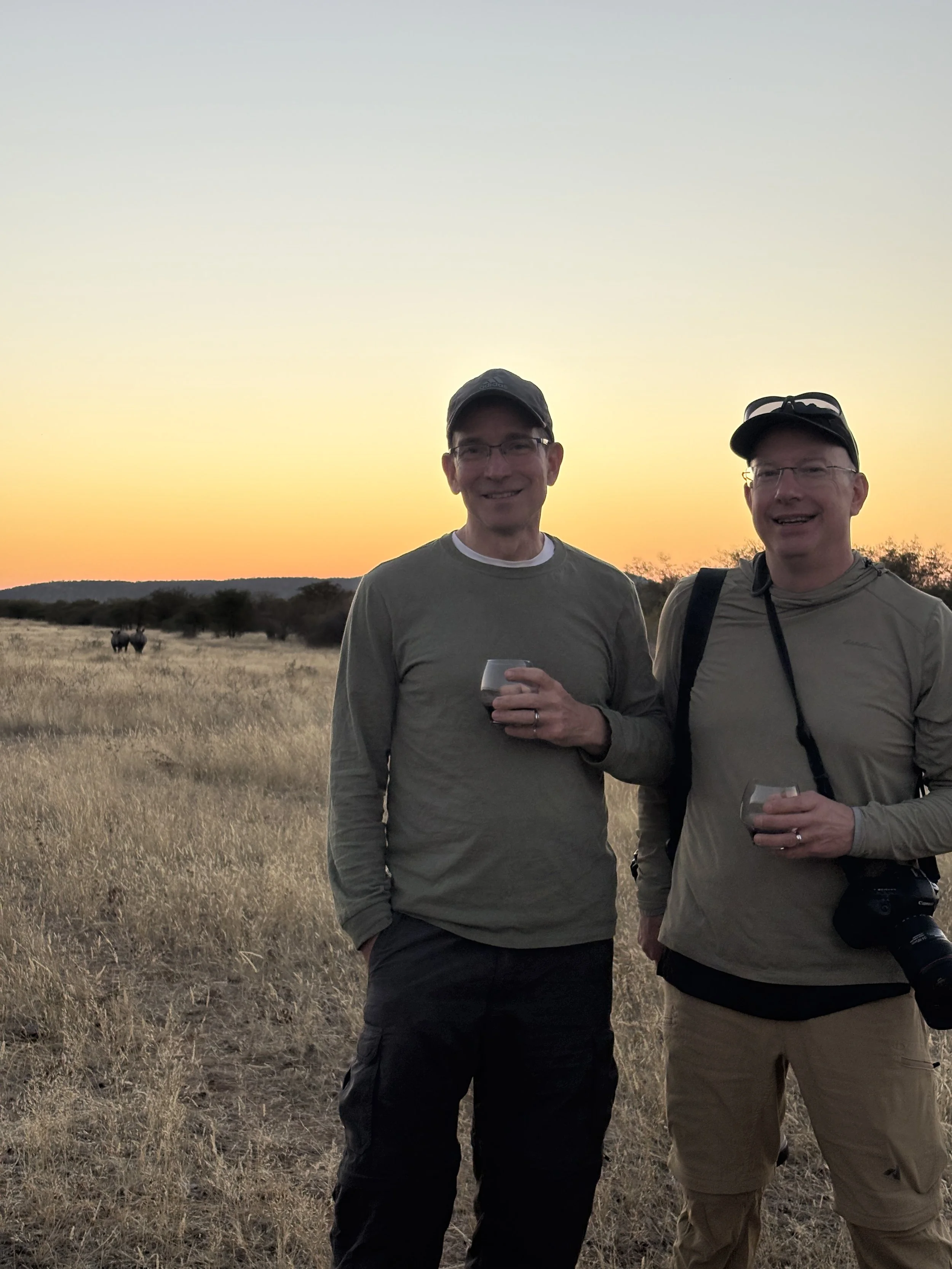
Proof that we both made it to Sandwich Harbour
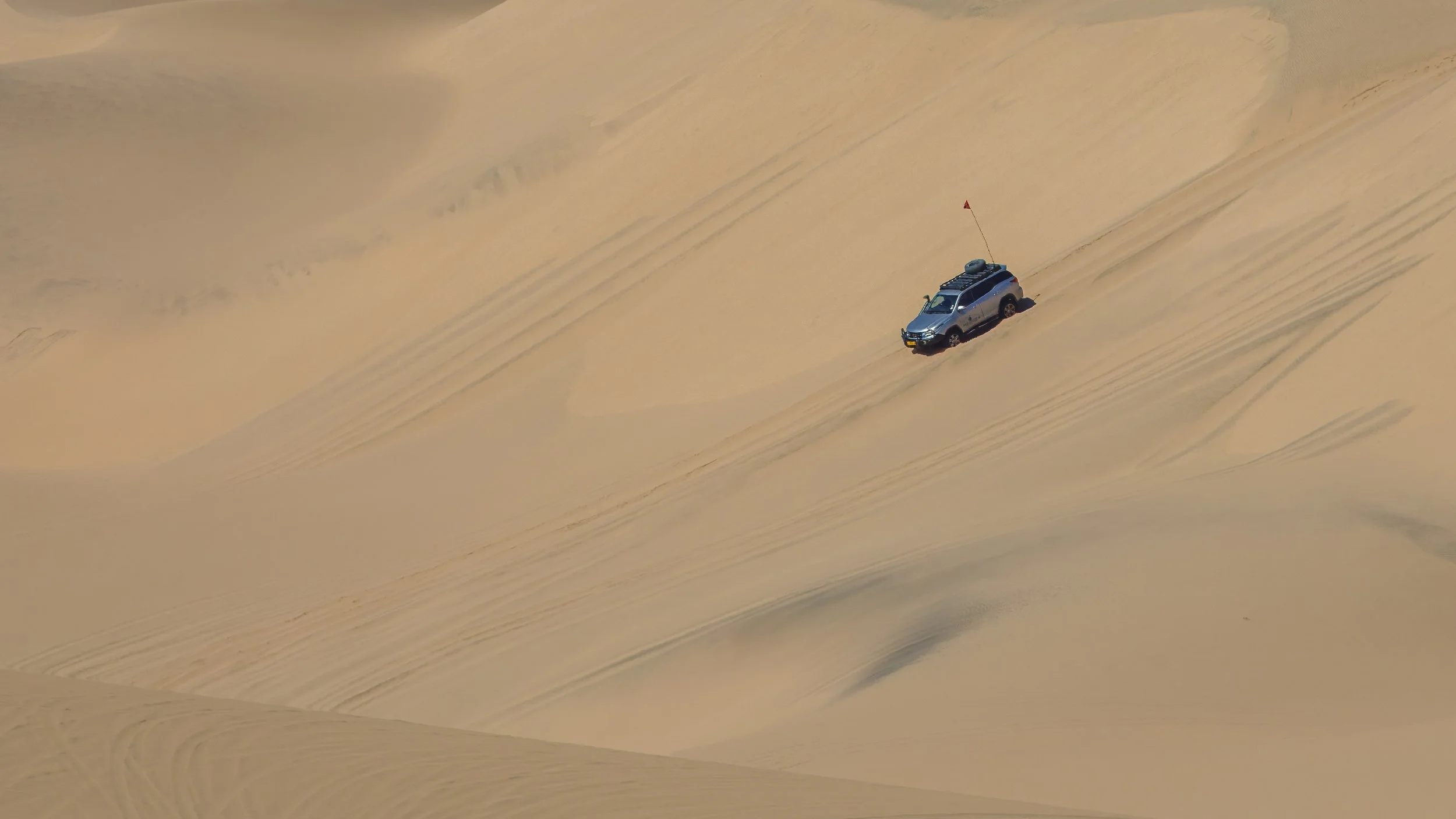
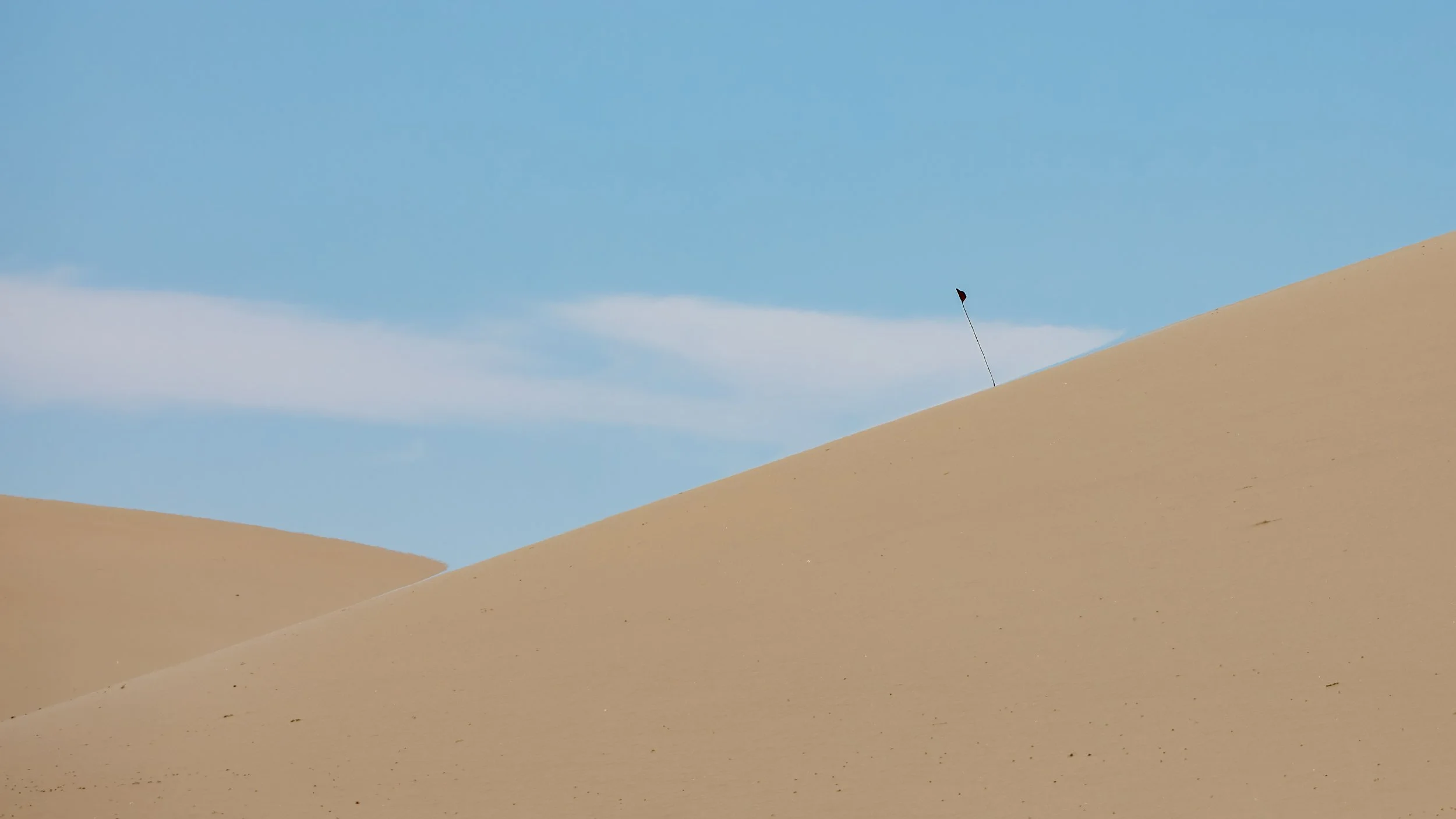
Our tour company uses dune flags to make it easier to see approaching vehicles on the hilly terrain
A sense of the types of paths that we took to navigate up and down the massive dunes
Flamingos making their way further down the coast
Out for a walk on the dunes at our refreshment stop
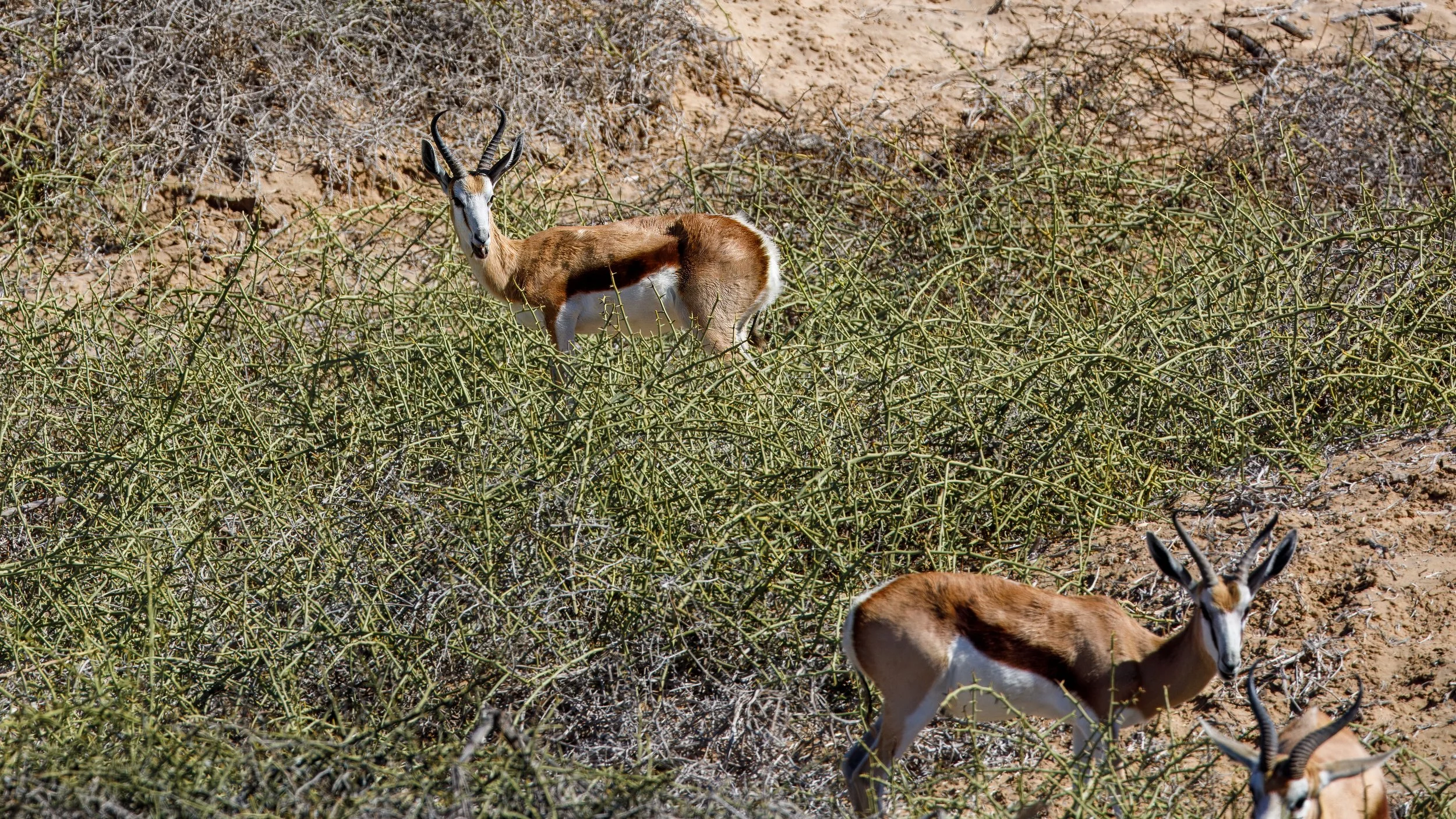
Although we spent a lot of time looking for wildlife in this bush, we only found springbok
Our best view of the limited wildlife
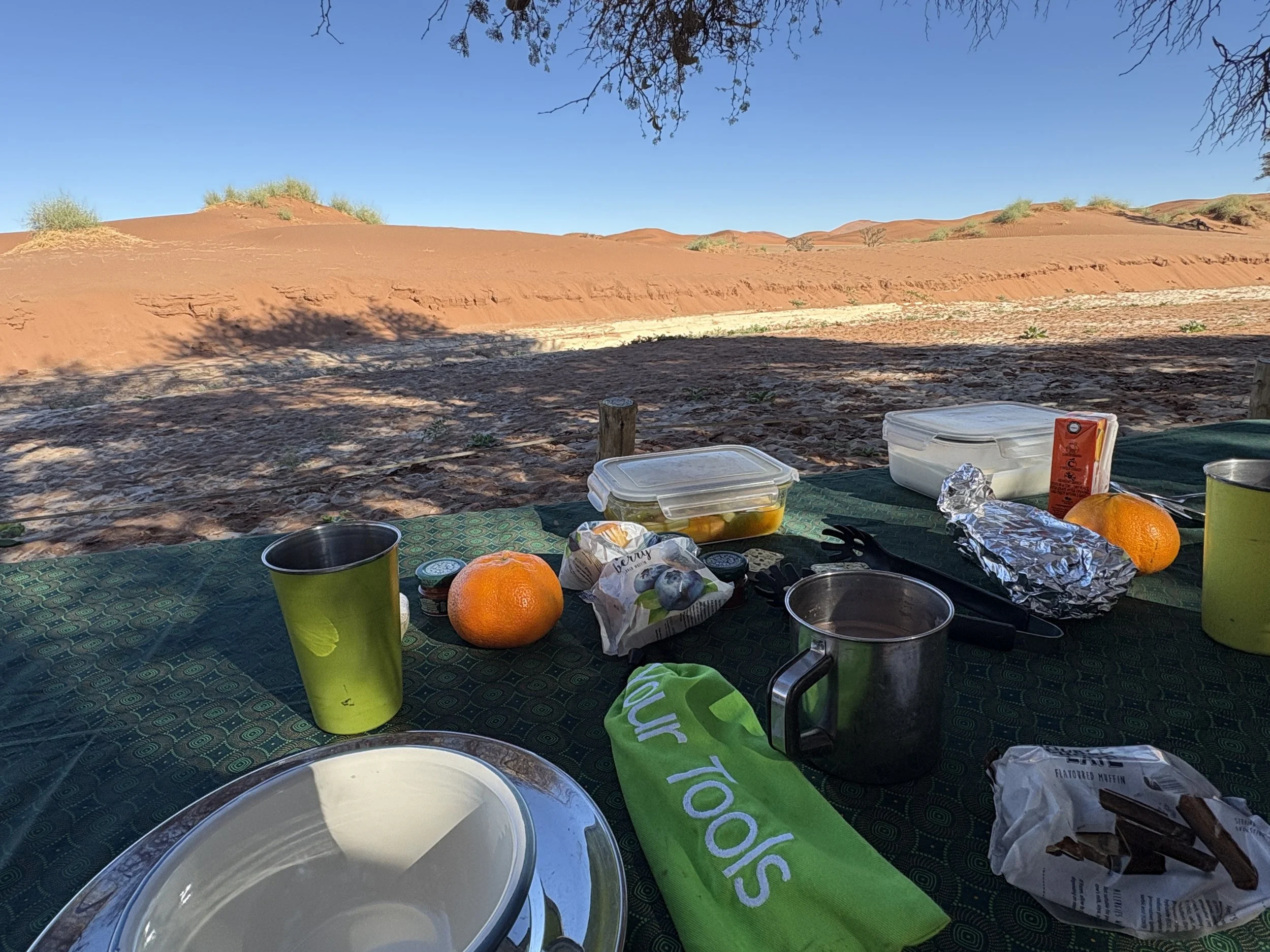
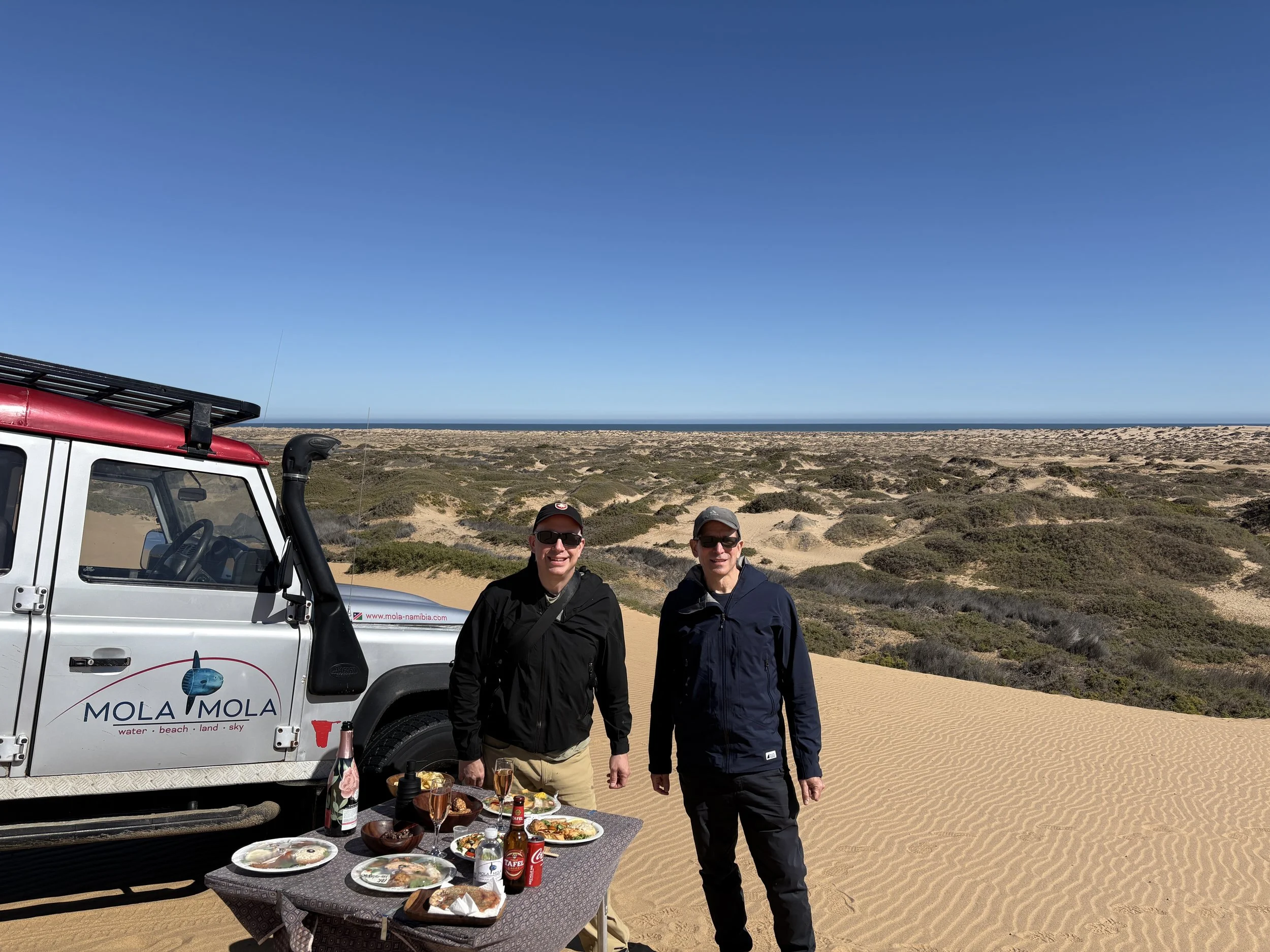
Definitely not suffering for food with this lovely picnic lunch on the dunes
Another vehicle about to crest over the dunes
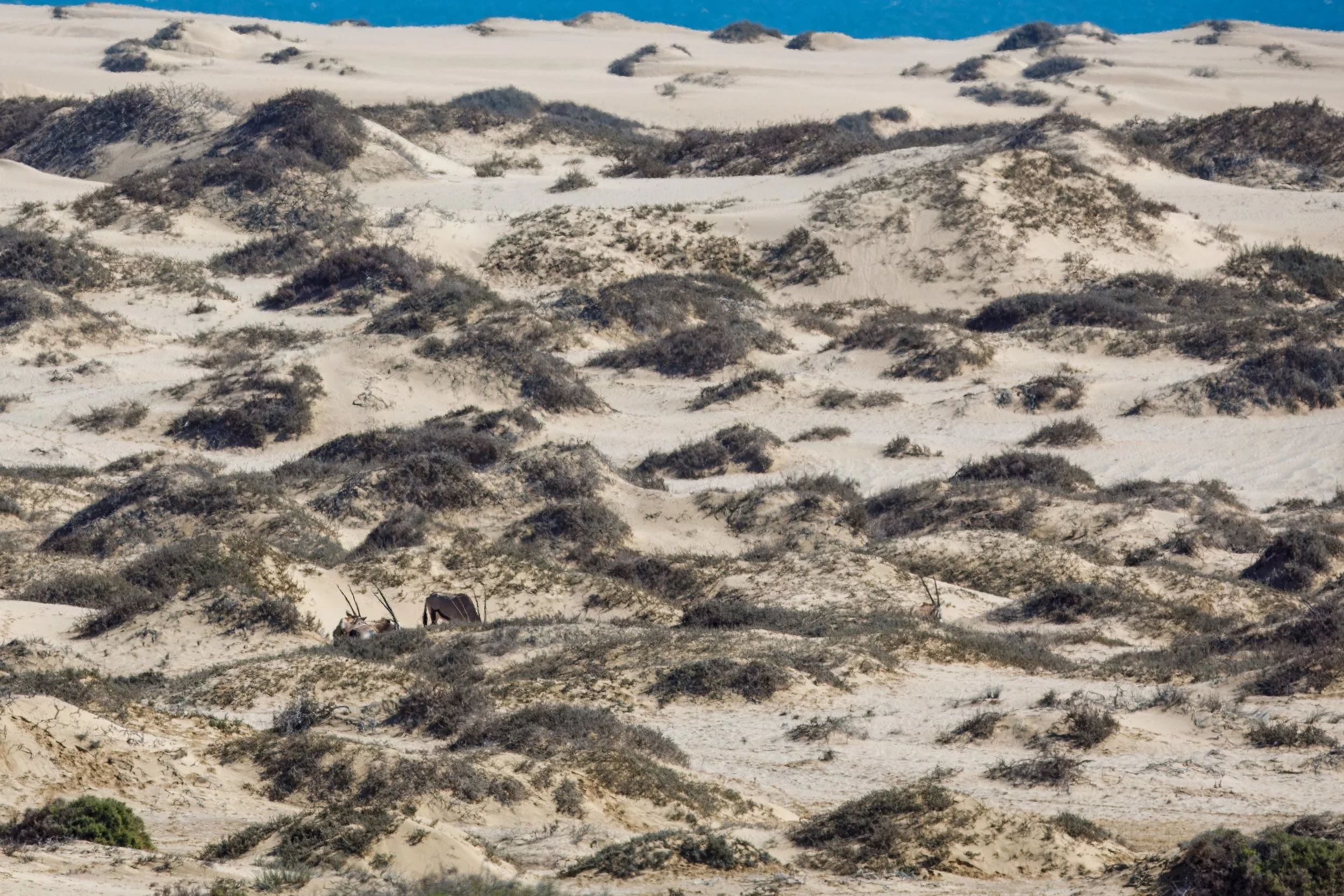
Further afield, if you look very closely, you can see three oryx
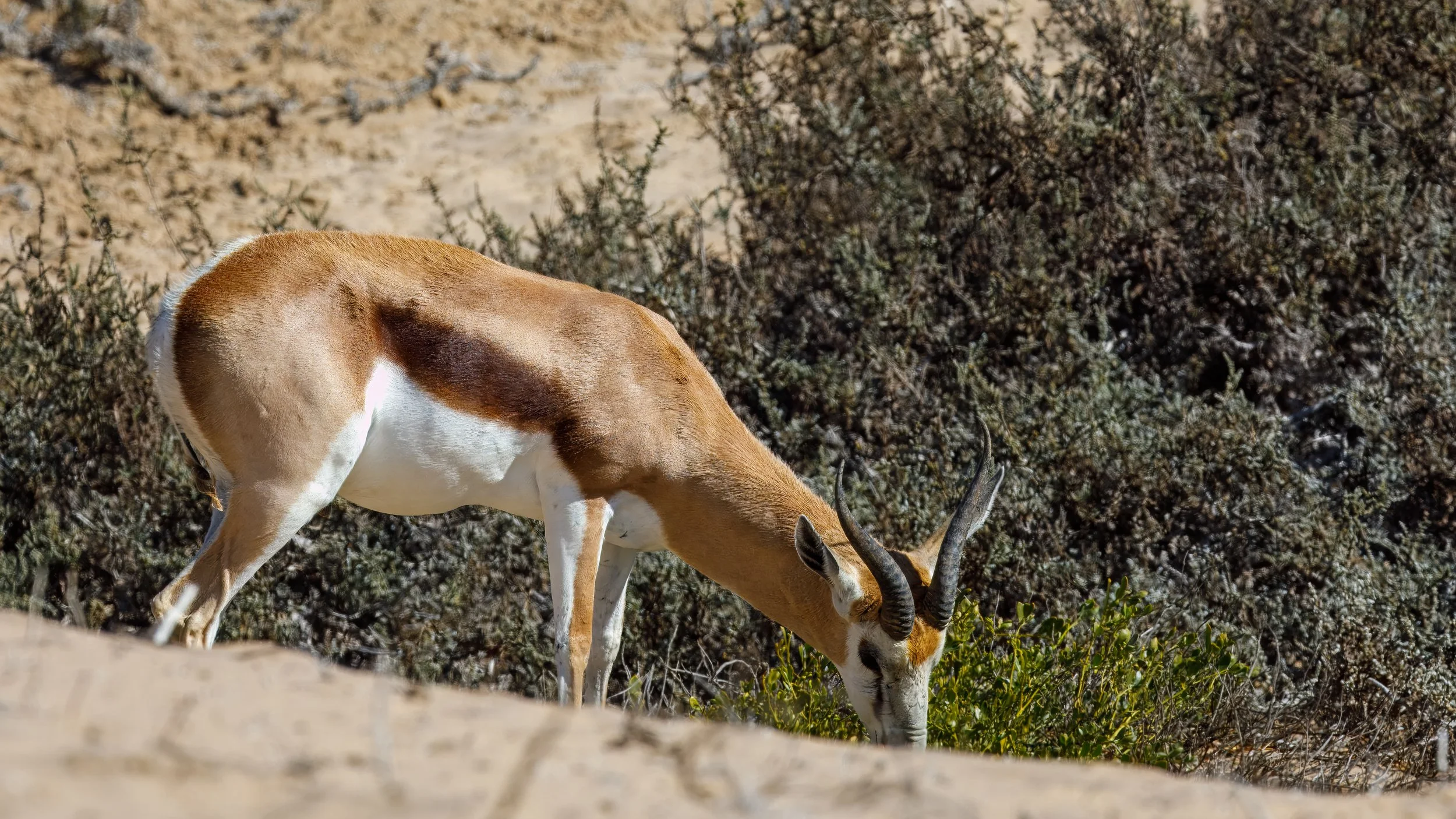
Another springbok further along the beach
With the aid of my iPhone camera, we could zoom into to see the composition of the ‘white’ sand
Some of the more colourful variances of the sand
A further sense of the incredible number of cape cormorants along the coast as we made our way north
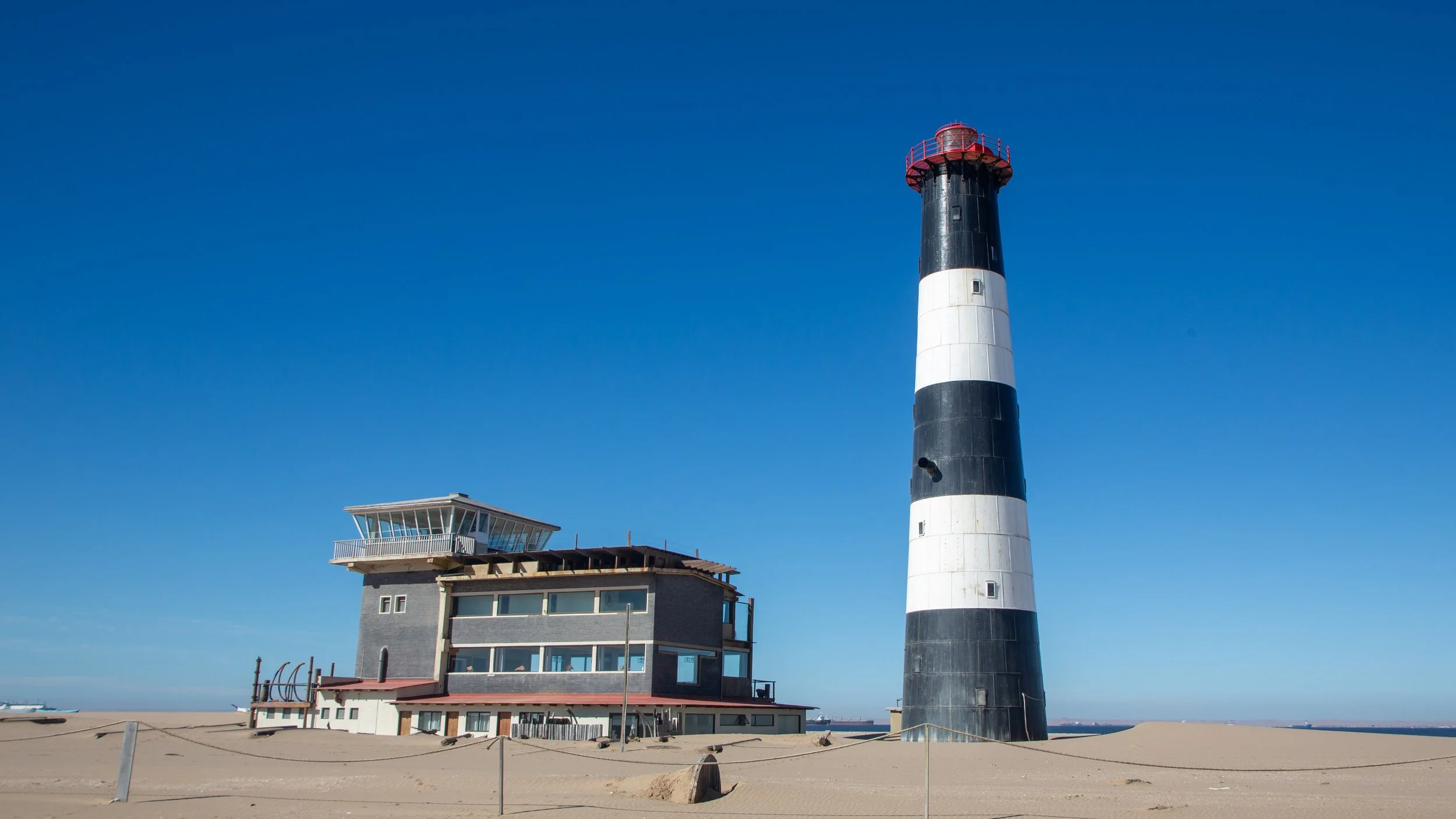
Pelican Point Lighthouse and adjacent hotel
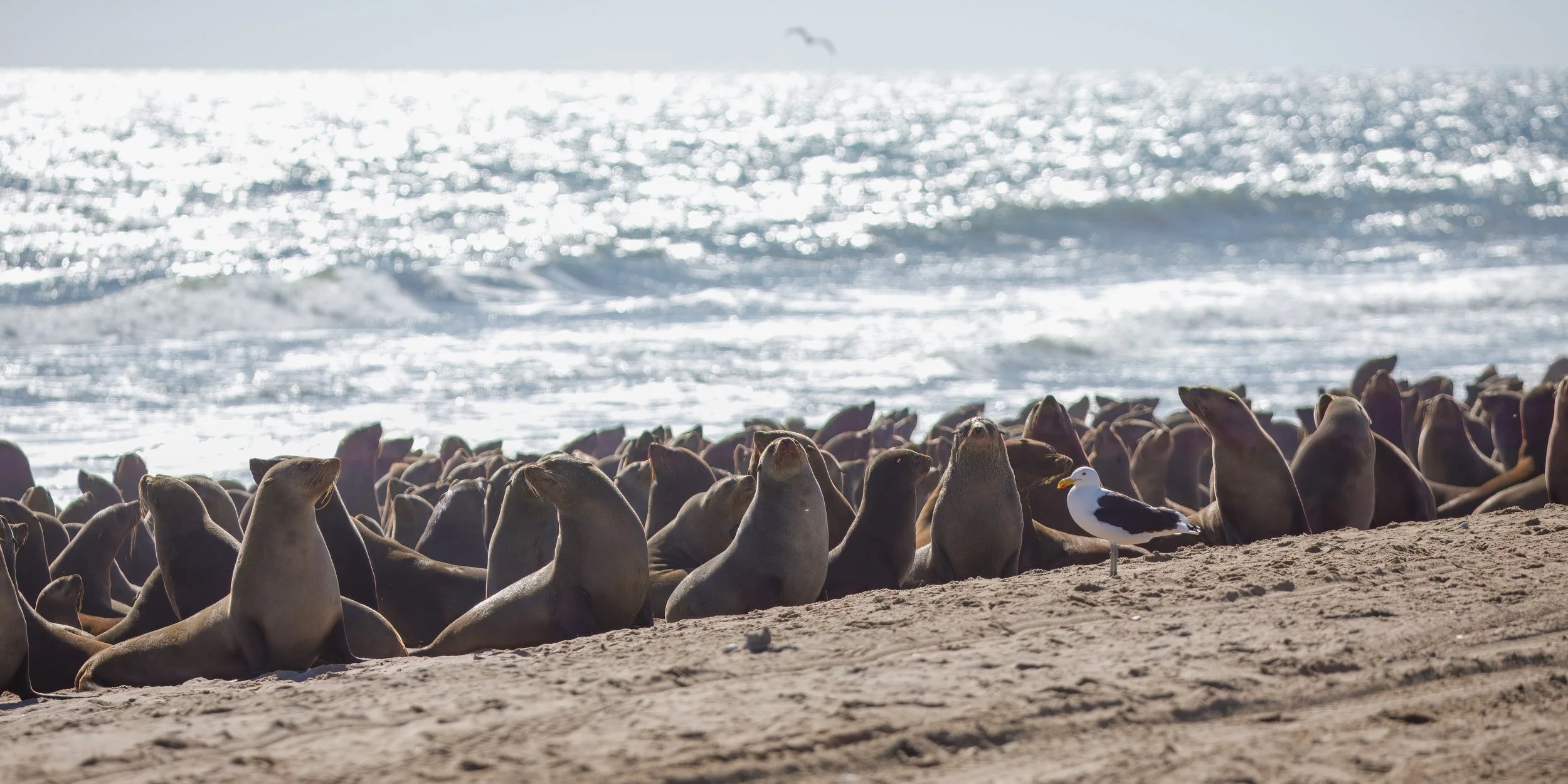
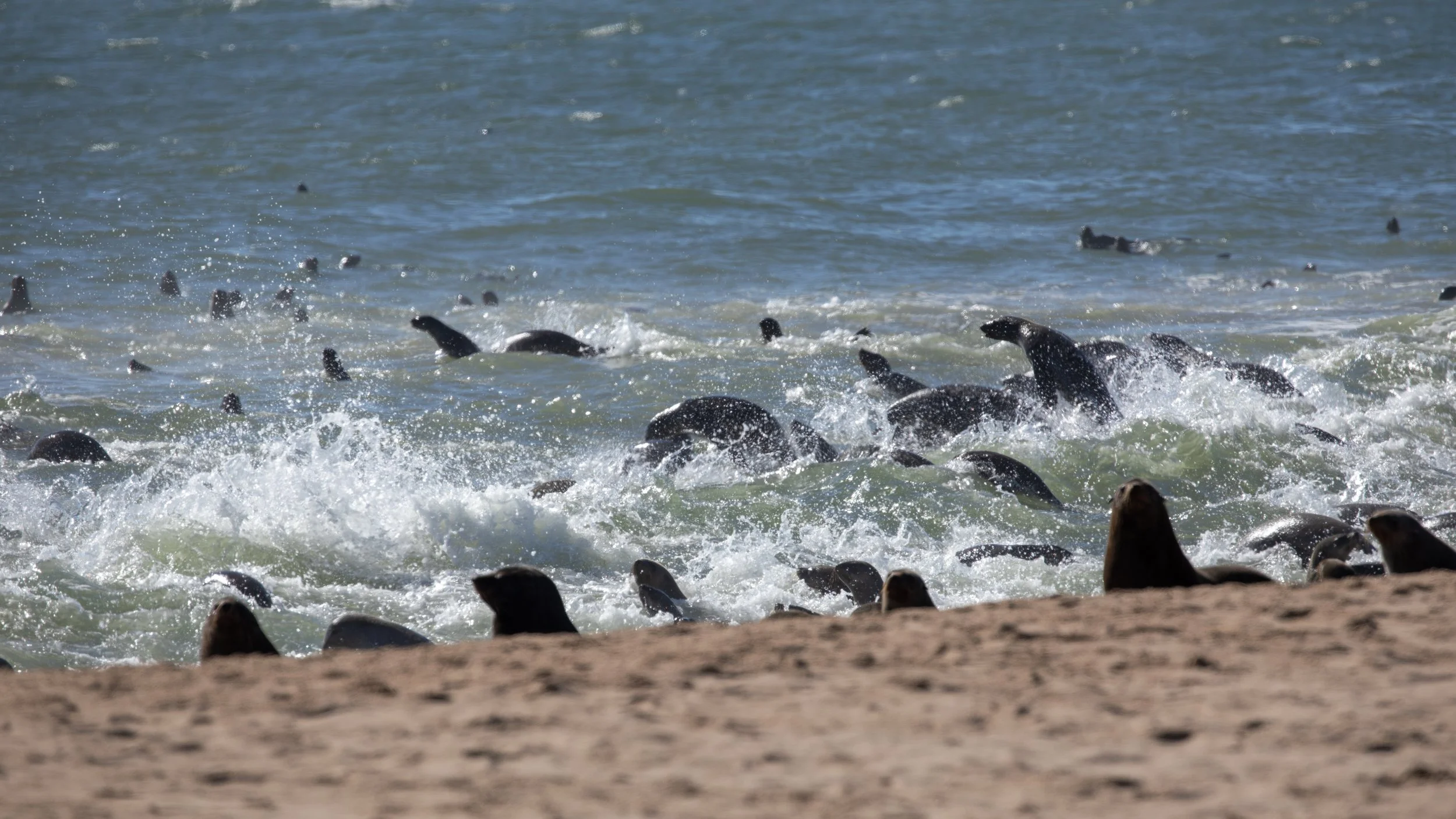
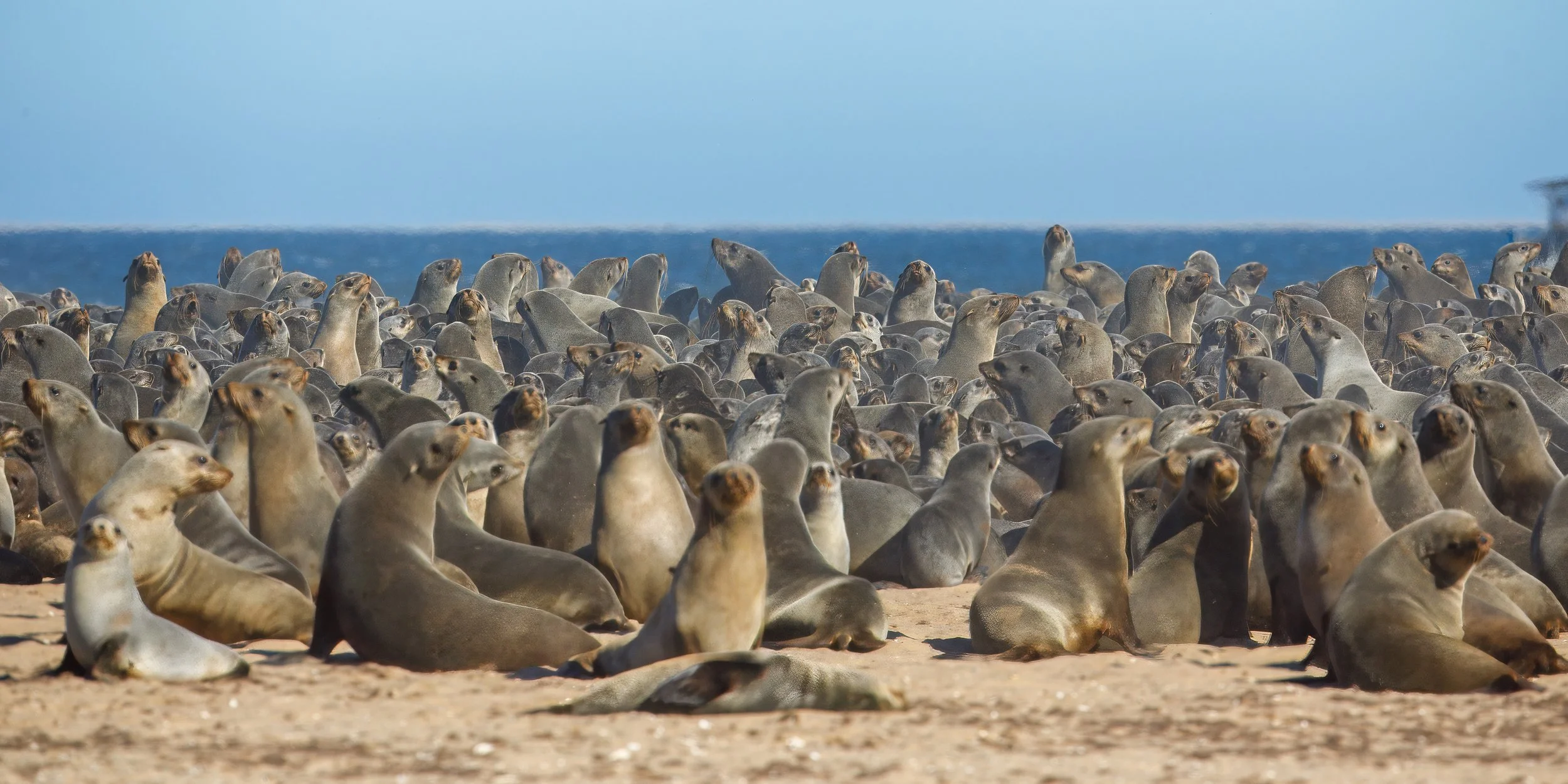
A small sample of the massive seal colony that surrounds Pelican Point
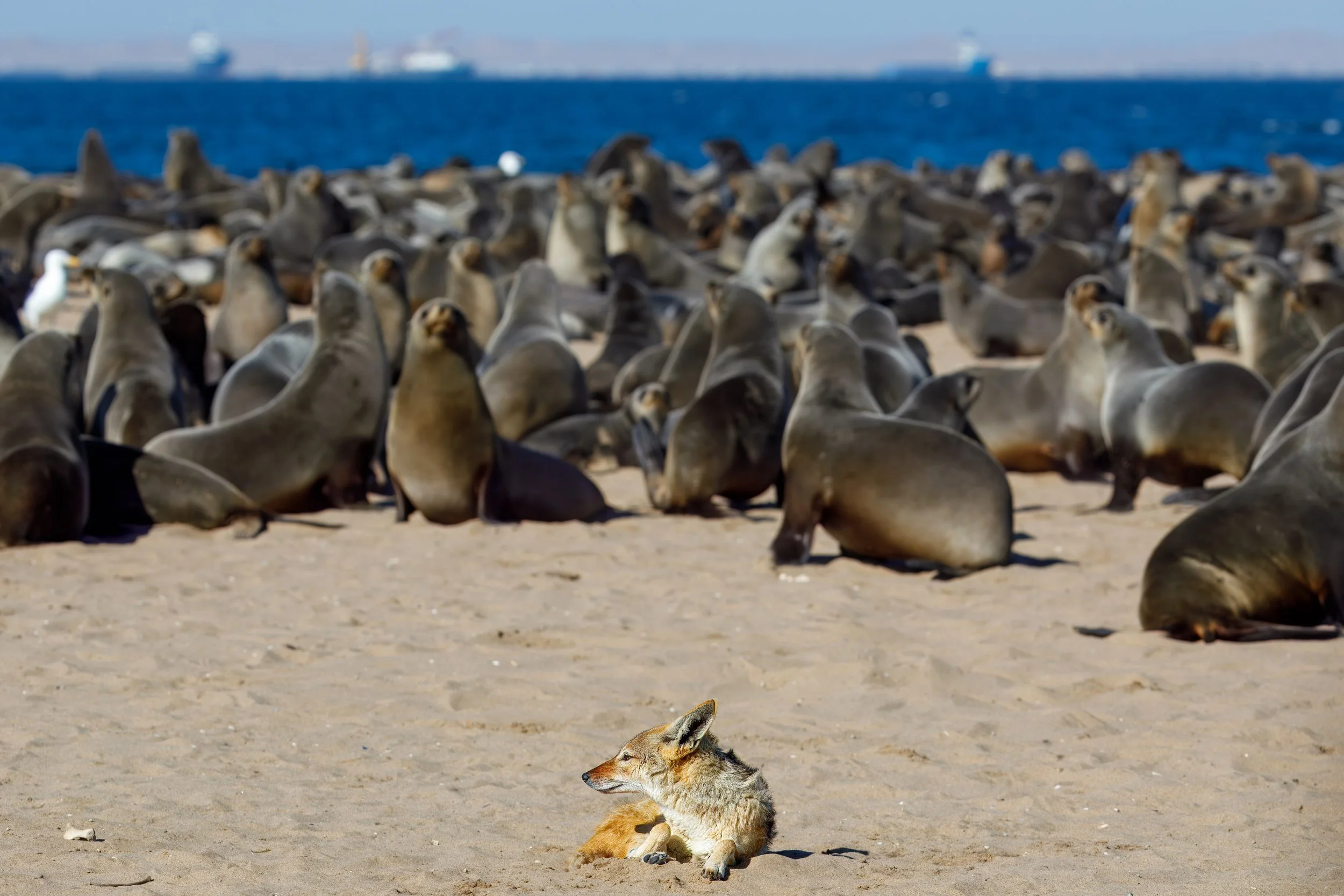
Black-backed hyena hanging out on the side of the seal colony looking and waiting for food opportunities in the form of younger seal pups or injured adults
A few seals away from the larger colony
A more active group entering the cold coastal waters
A further sense of the size and scope of the colonies
Another hyena staying close to the giant colony
After a nice day on the Dunes, William drove us back to our guest house in Swakopmund early enough for me to have a nice run along the waterfront. For dinner, William picked another lovely seafood restaurant and we sampled more of the local fish with another fabulous view.
Jun 12
Up early enough for another run before breakfast, we were on our way around 8:00am and got to experience some of the coastal fog that the area is known for. Thankfully, we didn’t suffer through any of this on our previous days, and it didn’t impact our morning too badly as we were headed away from the coast.
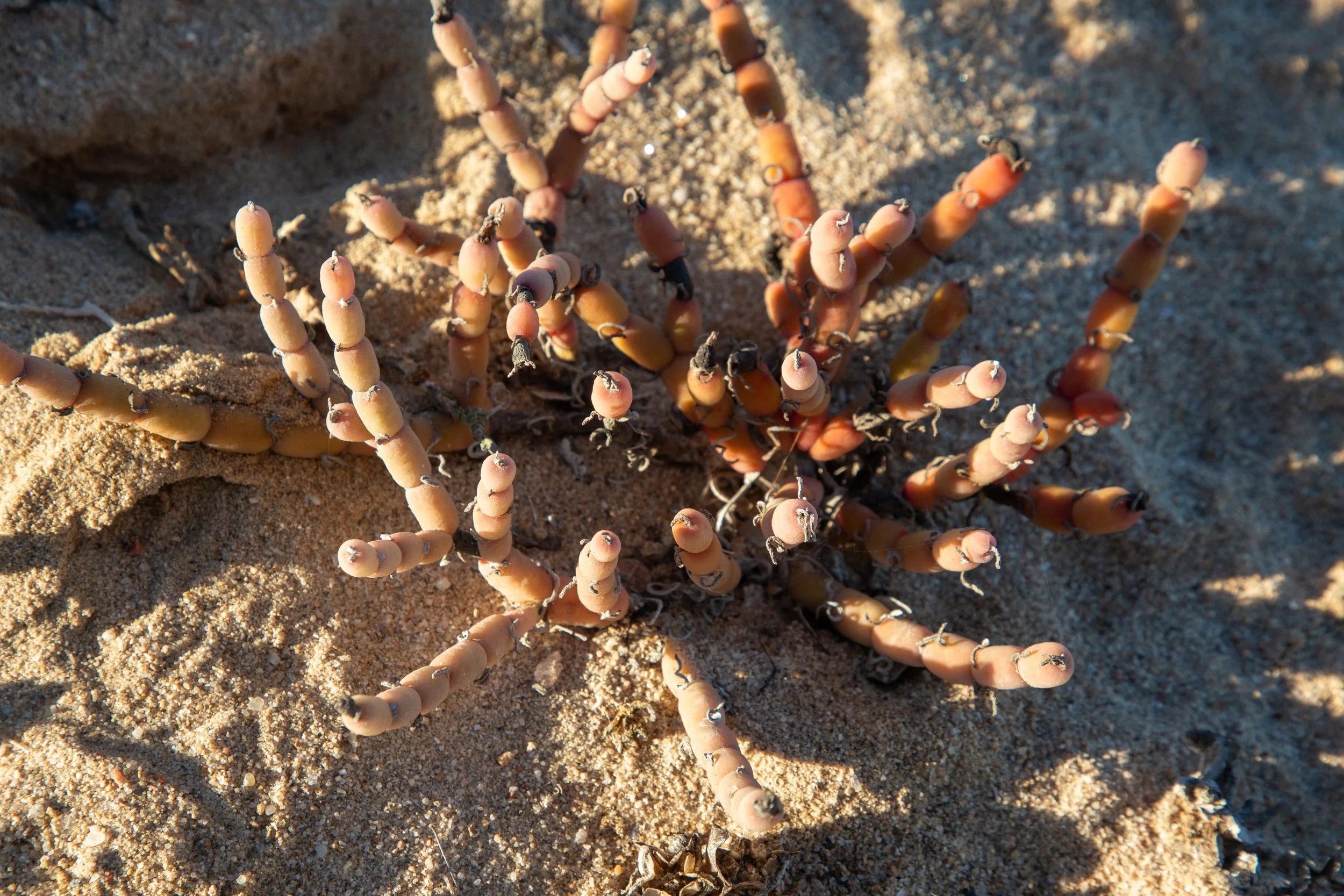
Seekoraal, a salt-tolerant succulent commonly known as glasswort, is well adapted for the salt sea air
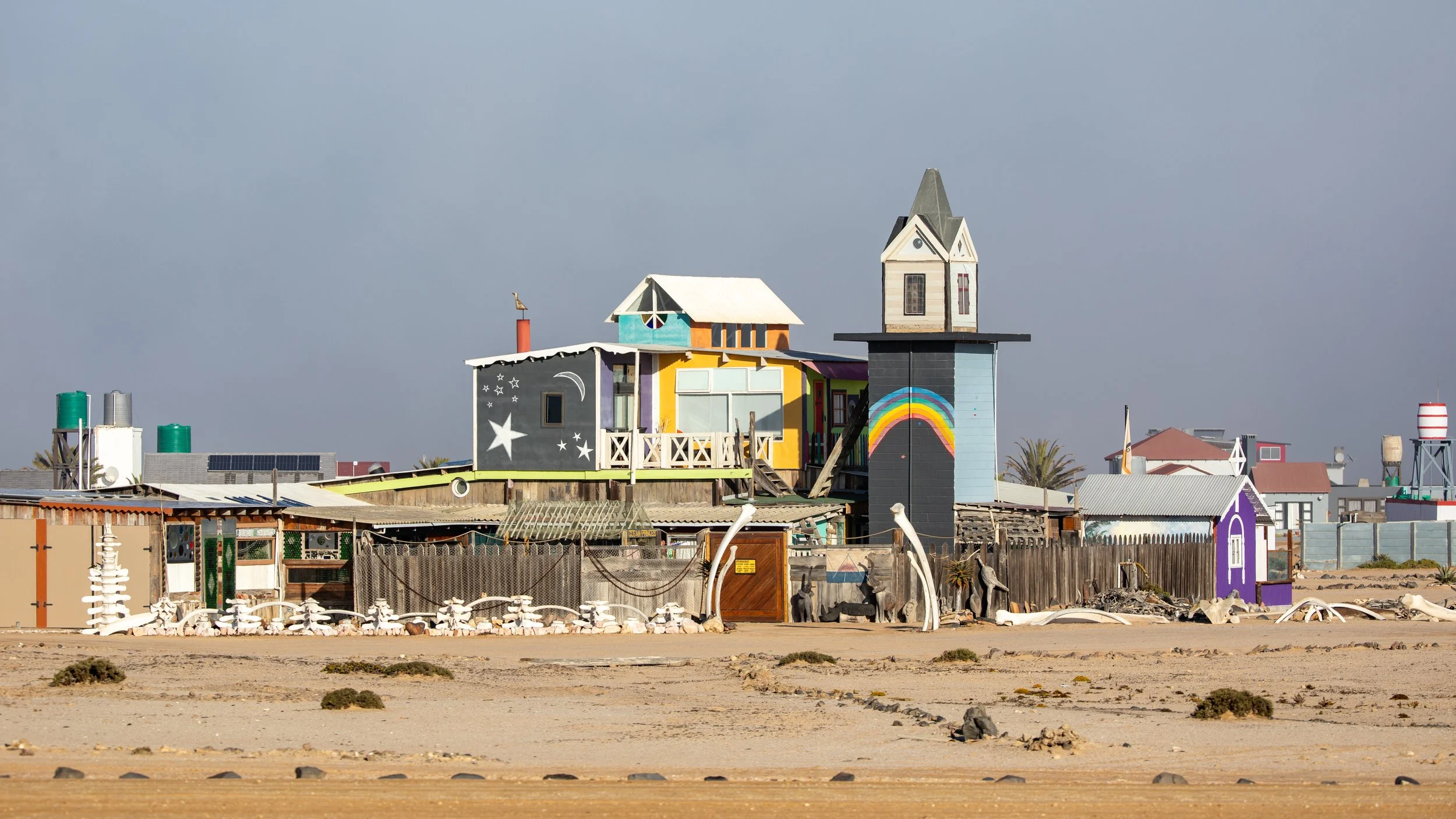
Colorful house in Wlotzkasbaken, a small coastal holiday settlement along the Skeleton Coast
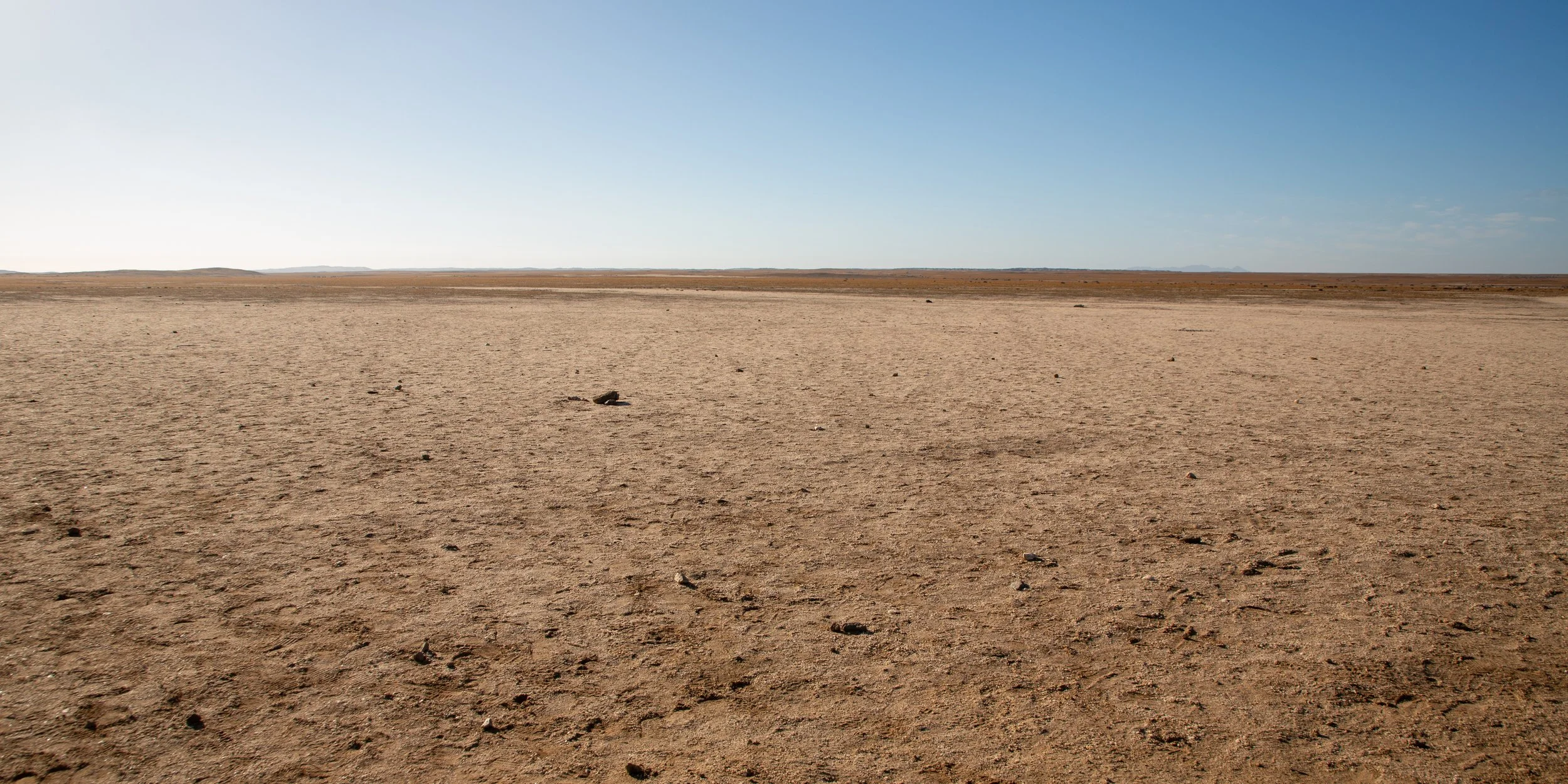
Looking inland, the barren flatlands actually have small micro algae
Using my cellphone zoom you can see the small living organisms
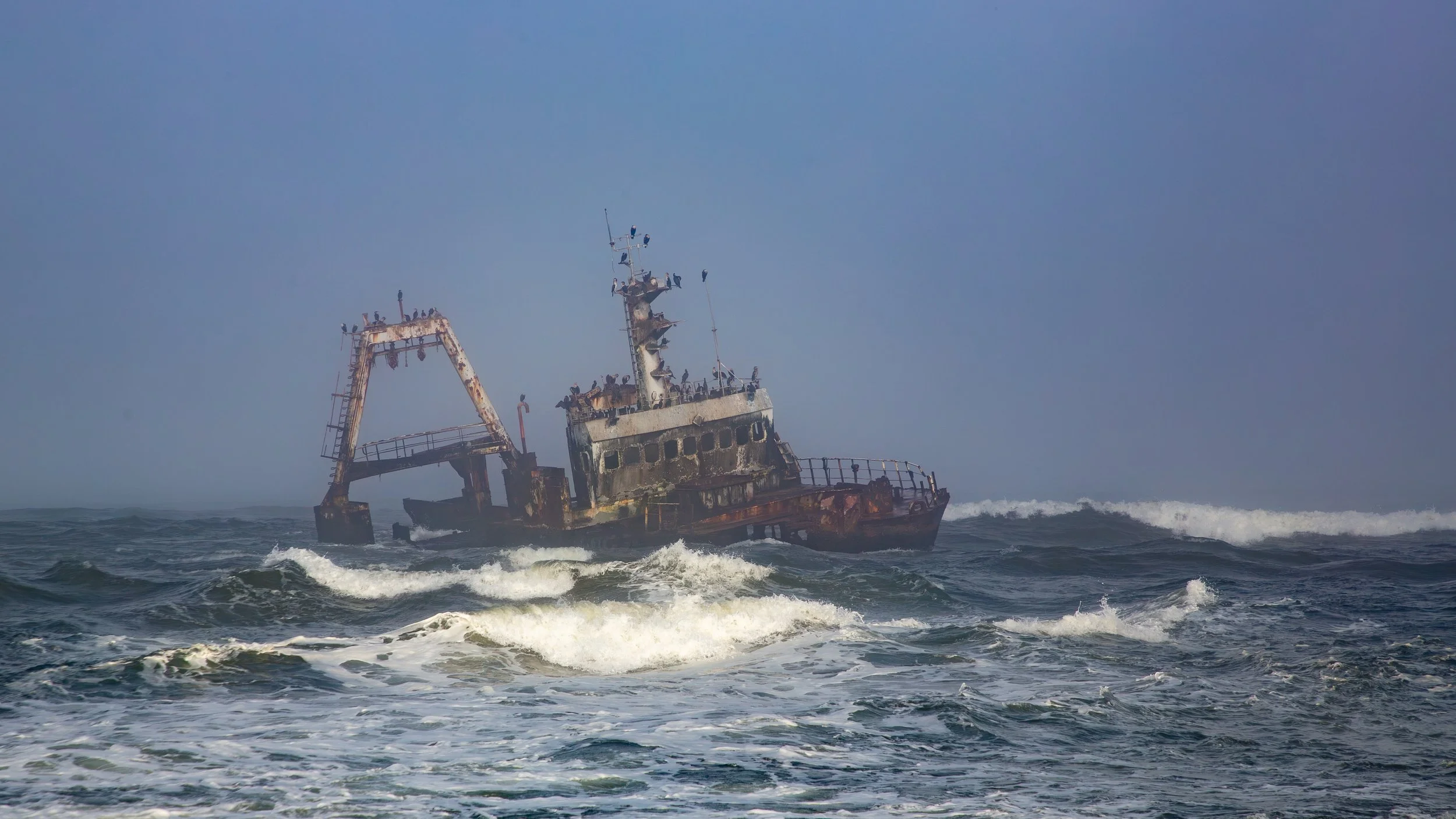
The coastal fog lifted briefly for a decent view of the Zeila Shipwreck, an Angolan fishing vessel that crashed on the rocky coast in a winter storm in August 2008
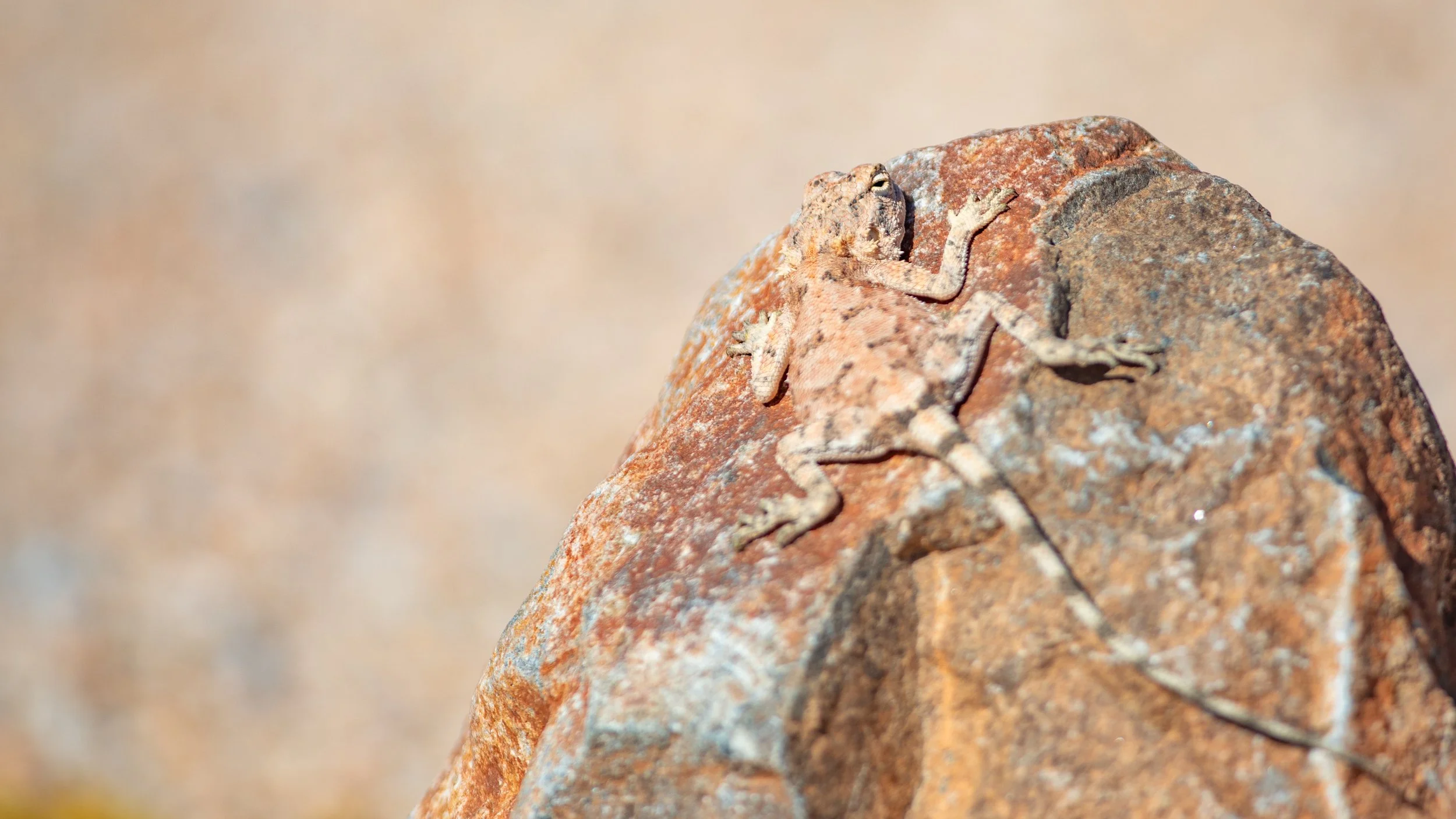
In Damara Land, the ground agama lizard is almost perfectly camouflaged on a rock
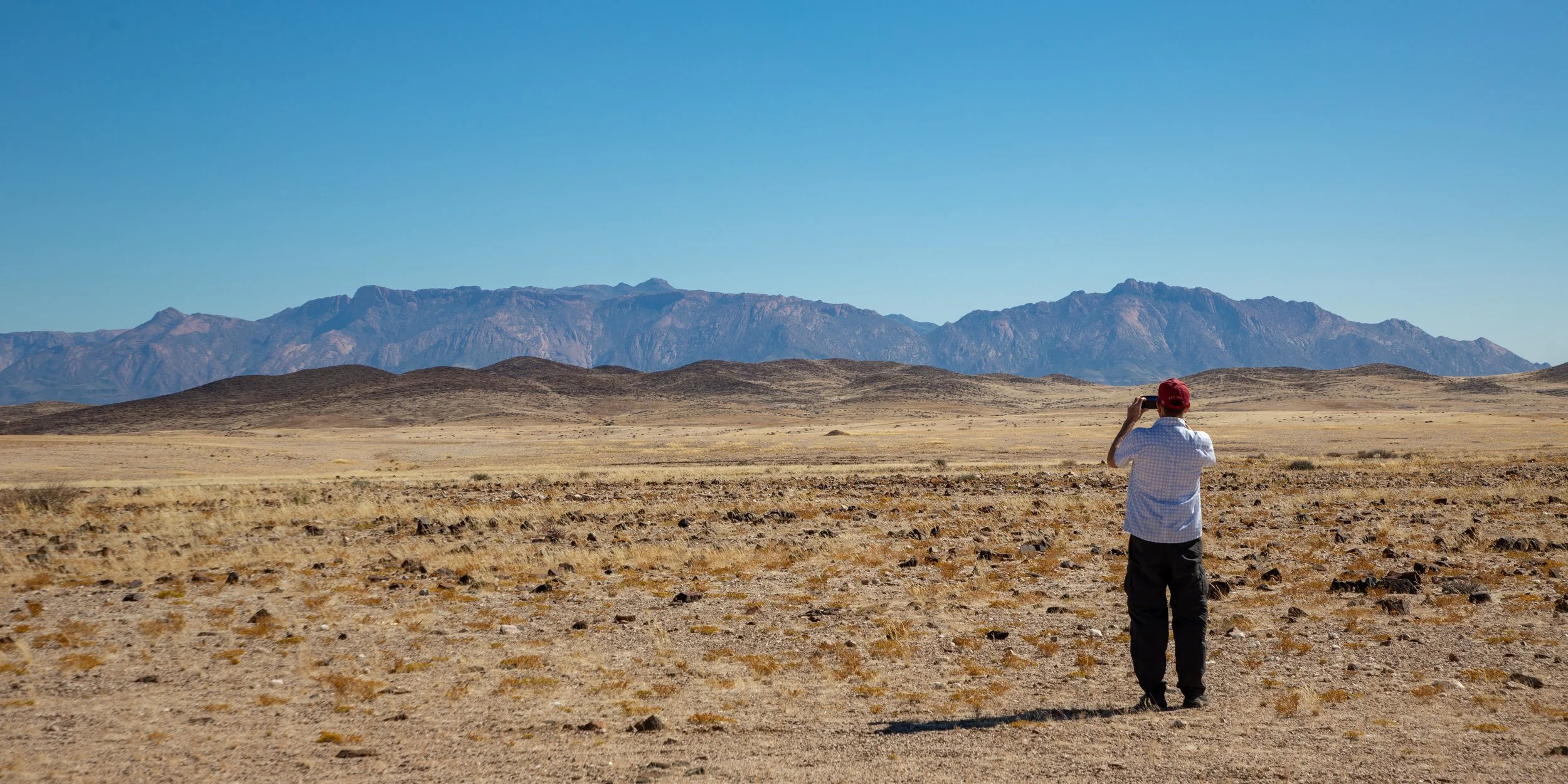
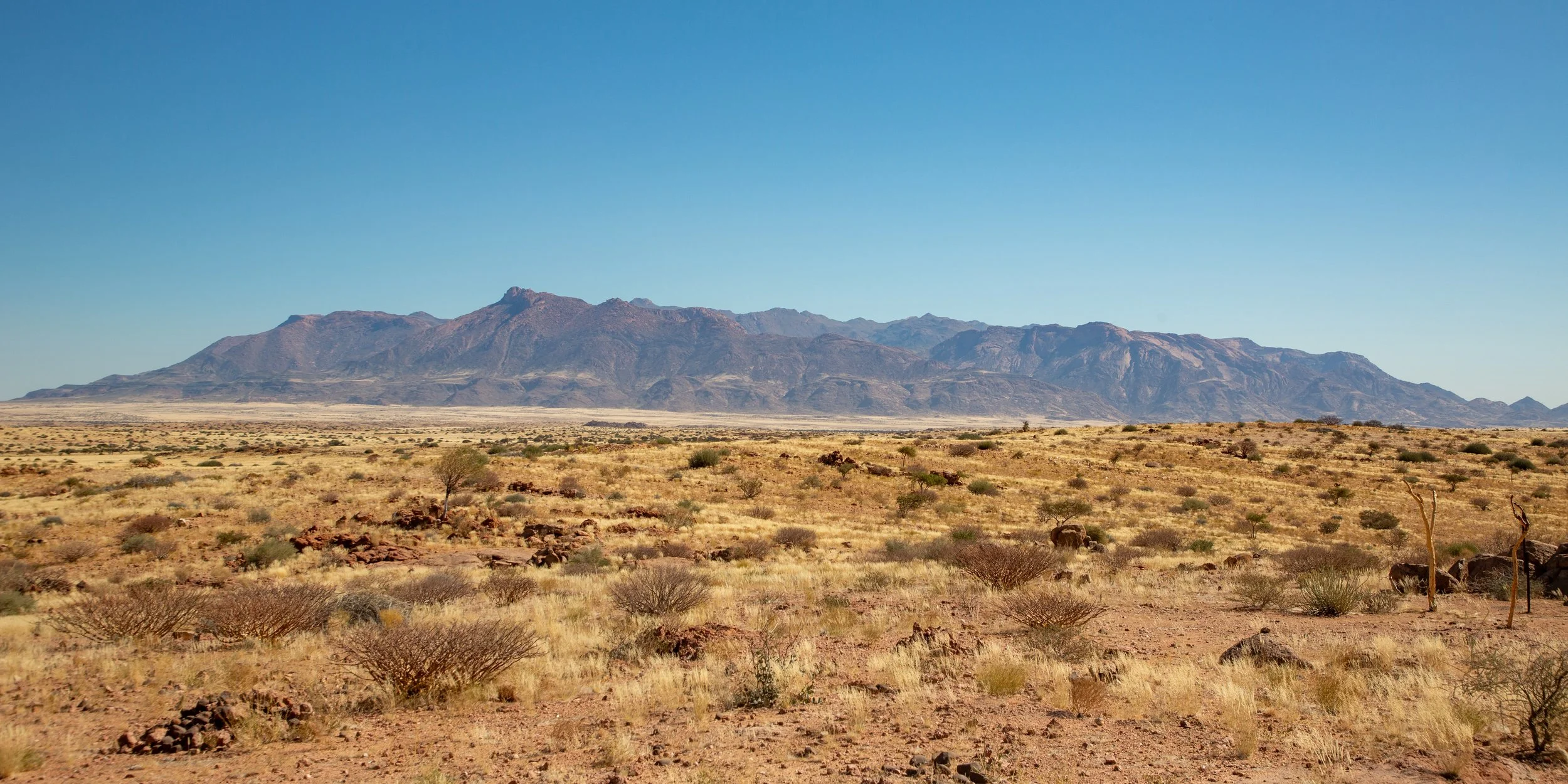
We traveled in the shadows of Brandberg Mountain, the highest in Namibia, throughout the day
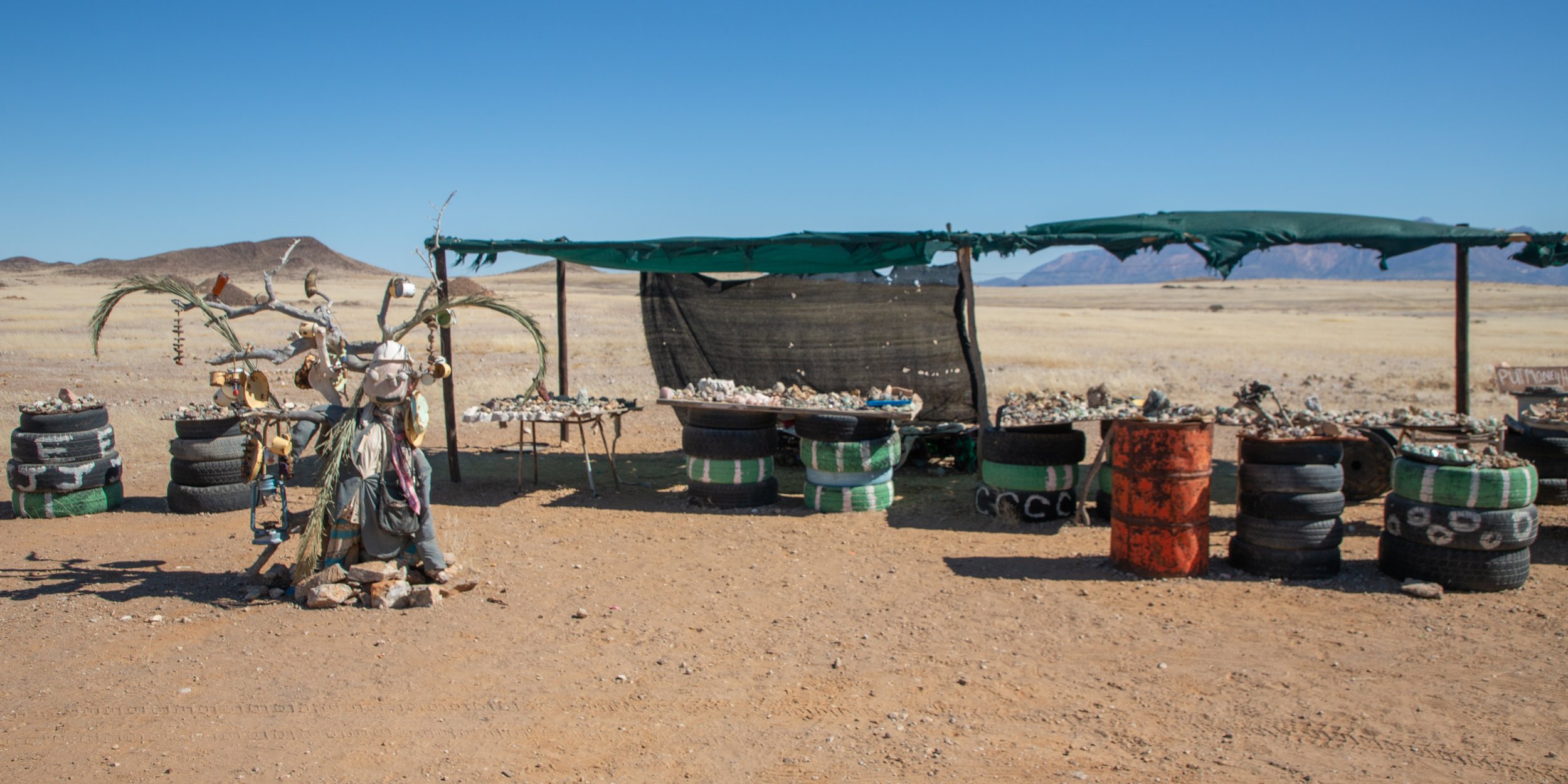
Local native tribes sell various stones and crafts at honour stalls where you are expected to leave money for anything you take
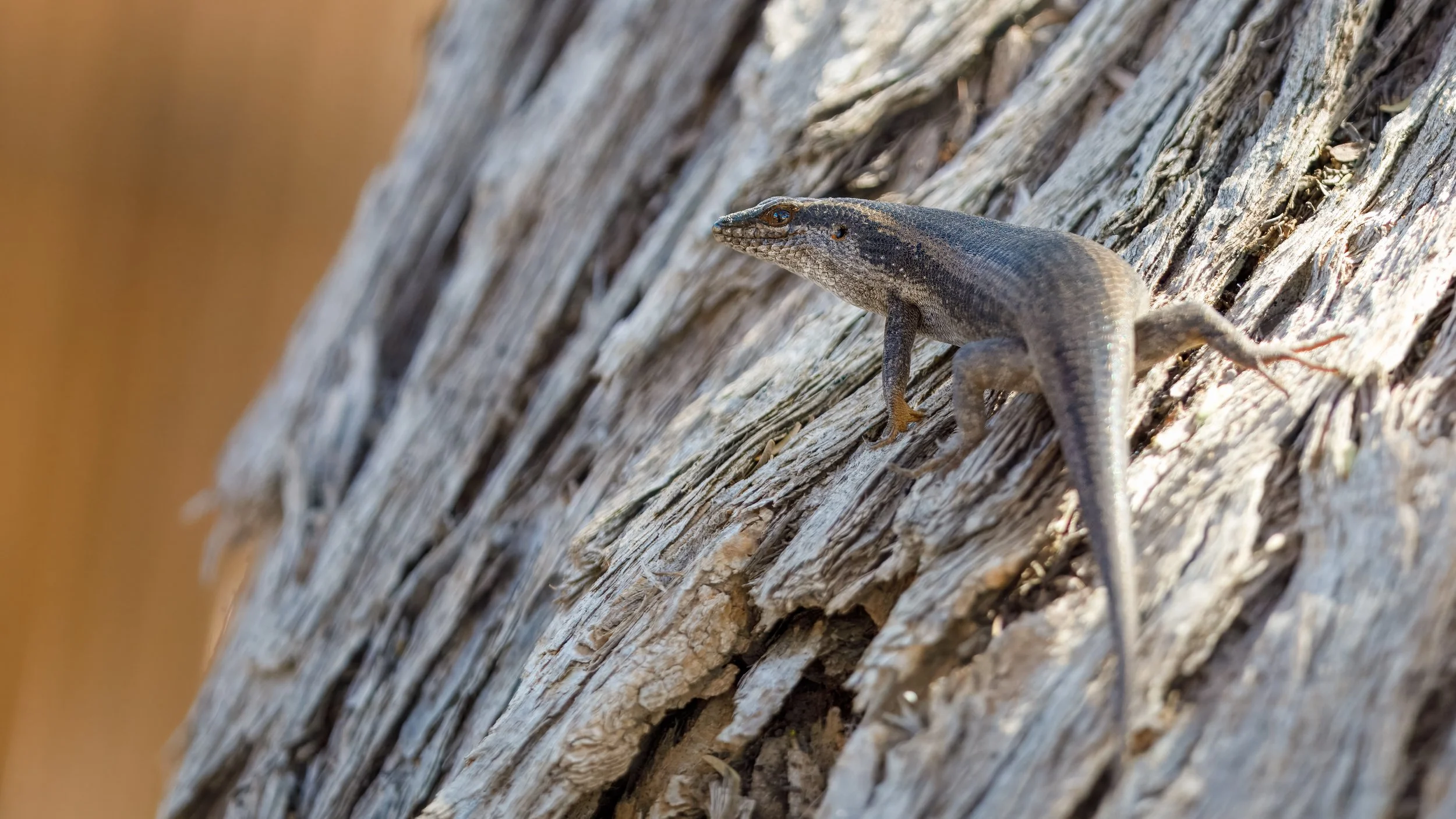
A Kalahari tree skink, blending into the tree trunk, next to where we stopped for lunch in the small town of Uis
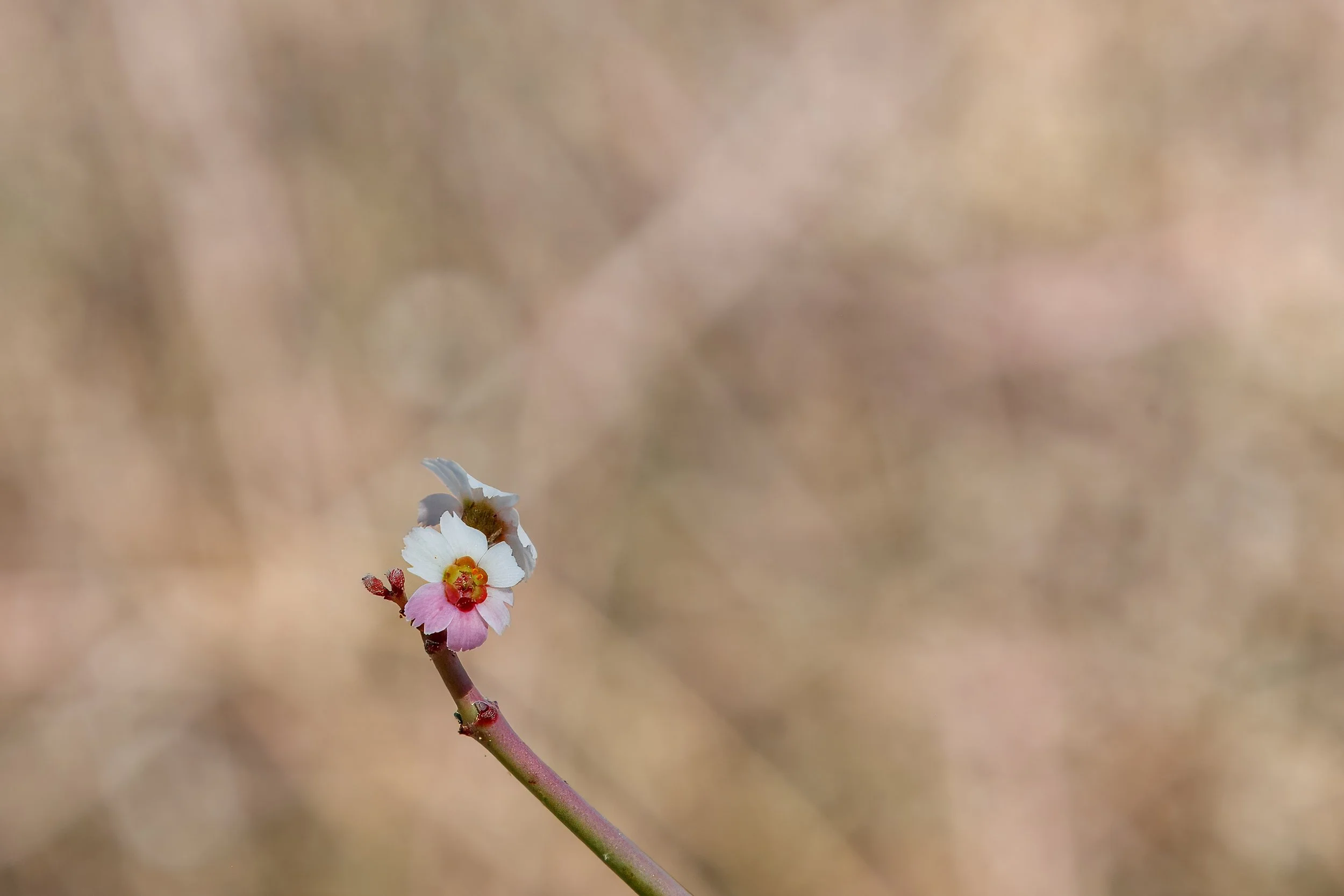
South-West Edelweiss flower, a succulent plant endemic to the arid regions neighboring the Namib Desert
Our vehicle had no trouble covering the hard-packed road, but was not as comfortable on some of the rockier roads ahead
Some anthills break up the dry desert terrain leading to the mountains
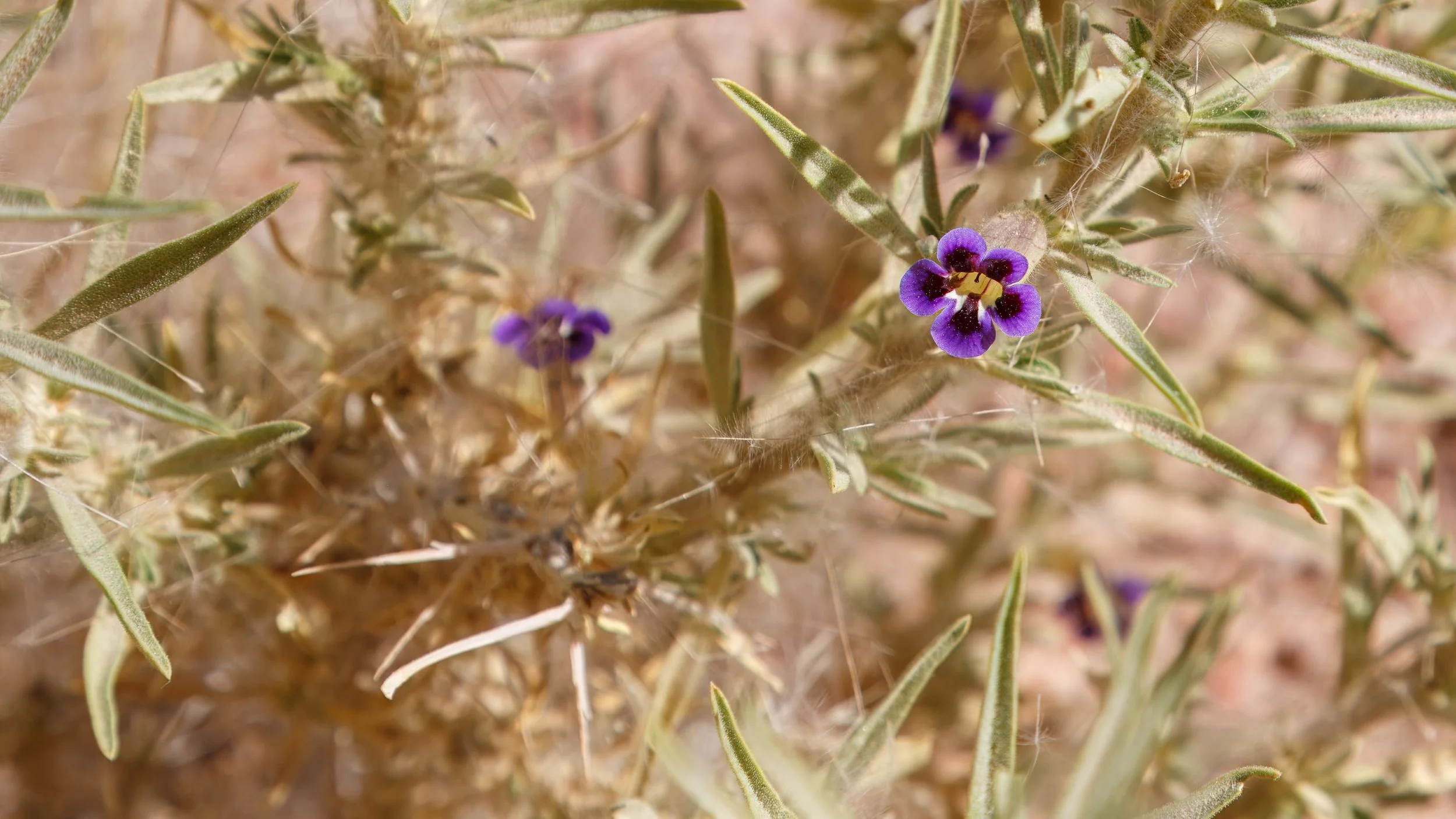
A karoo violet, a low-growing, thorny desert plant found in arid regions like Damaraland
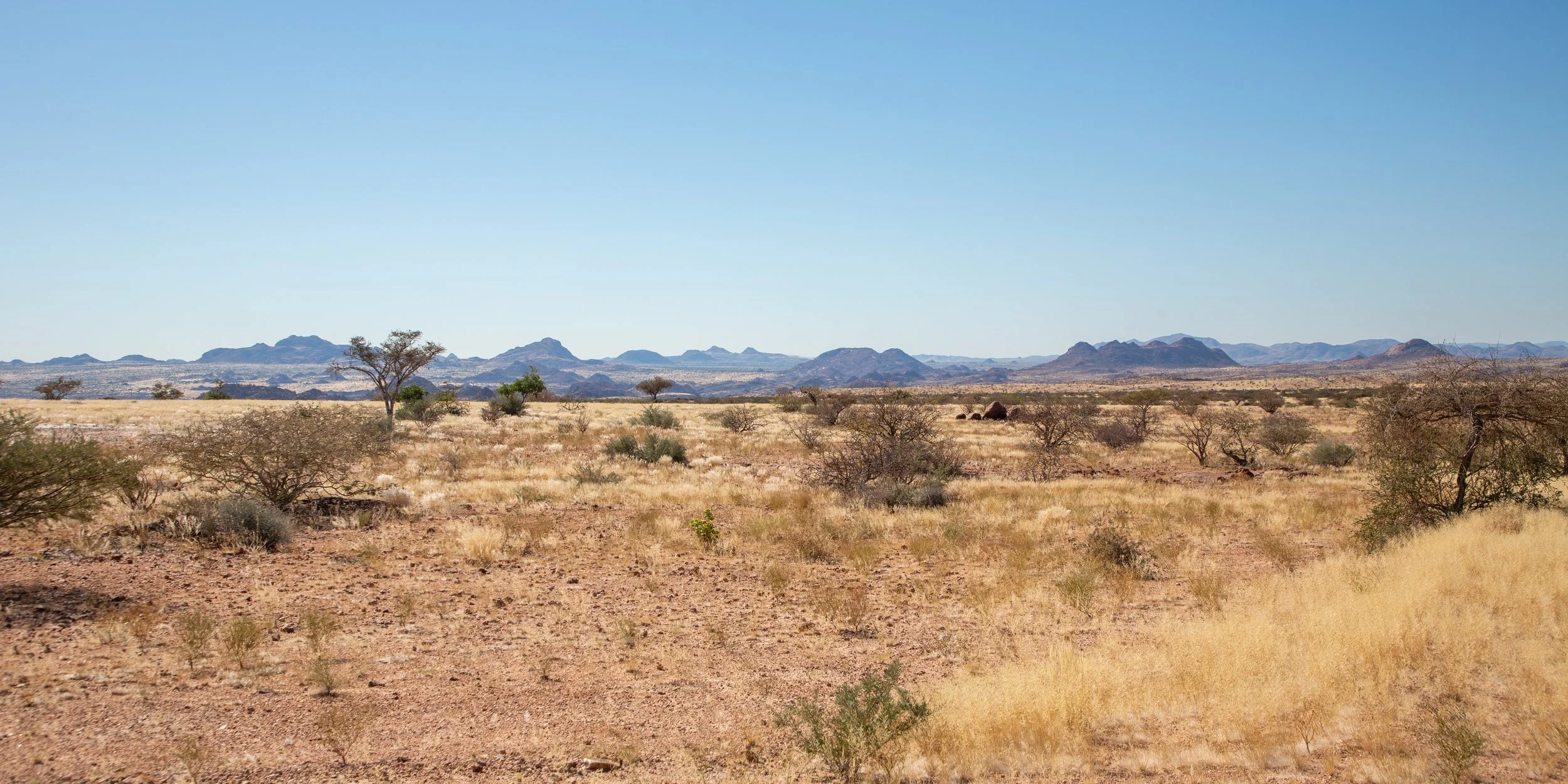
A few more patches of vegetation break up the desert terrain
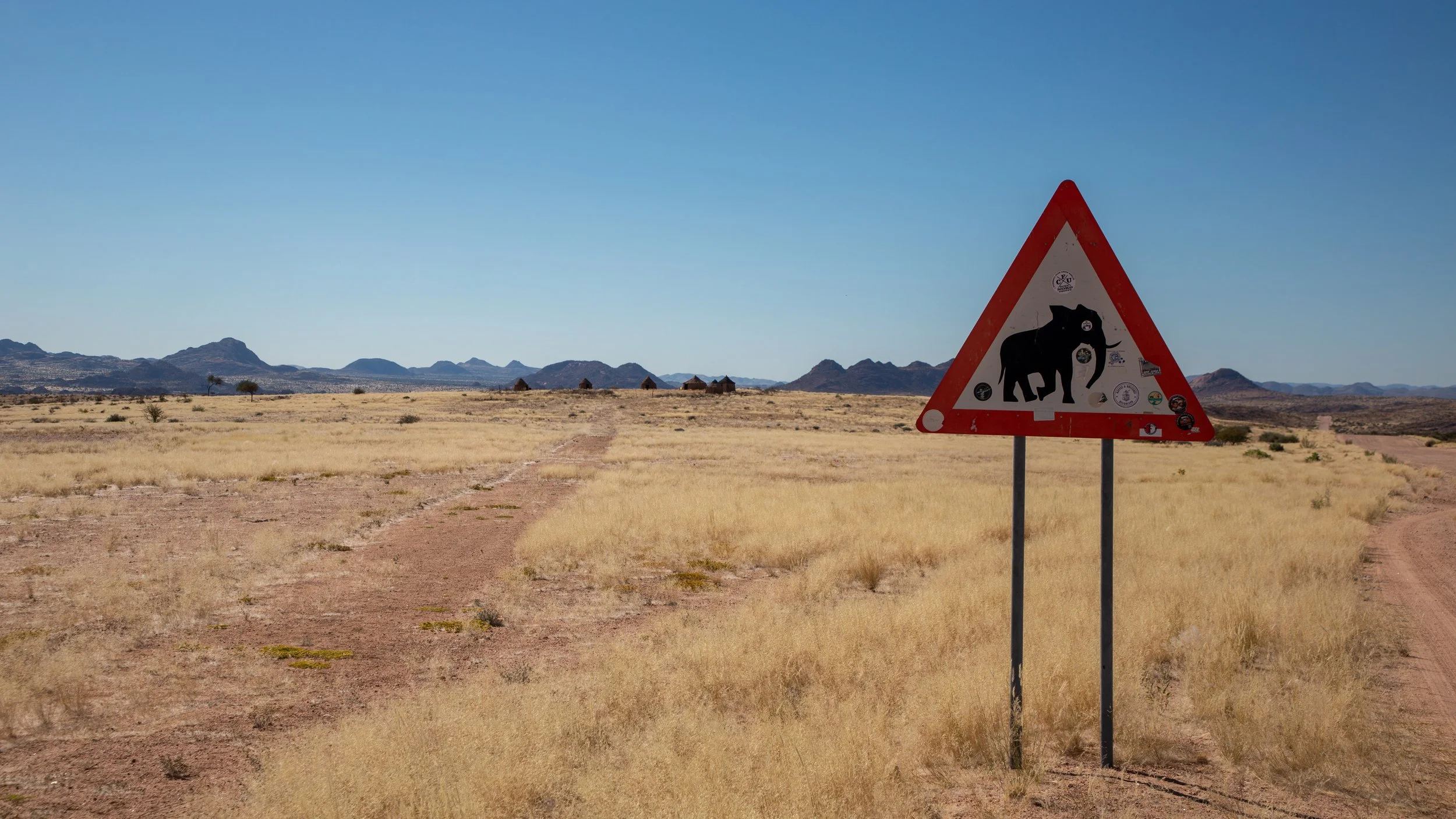
A small number of desert-adapted elephants roam the area, but we only saw the sign
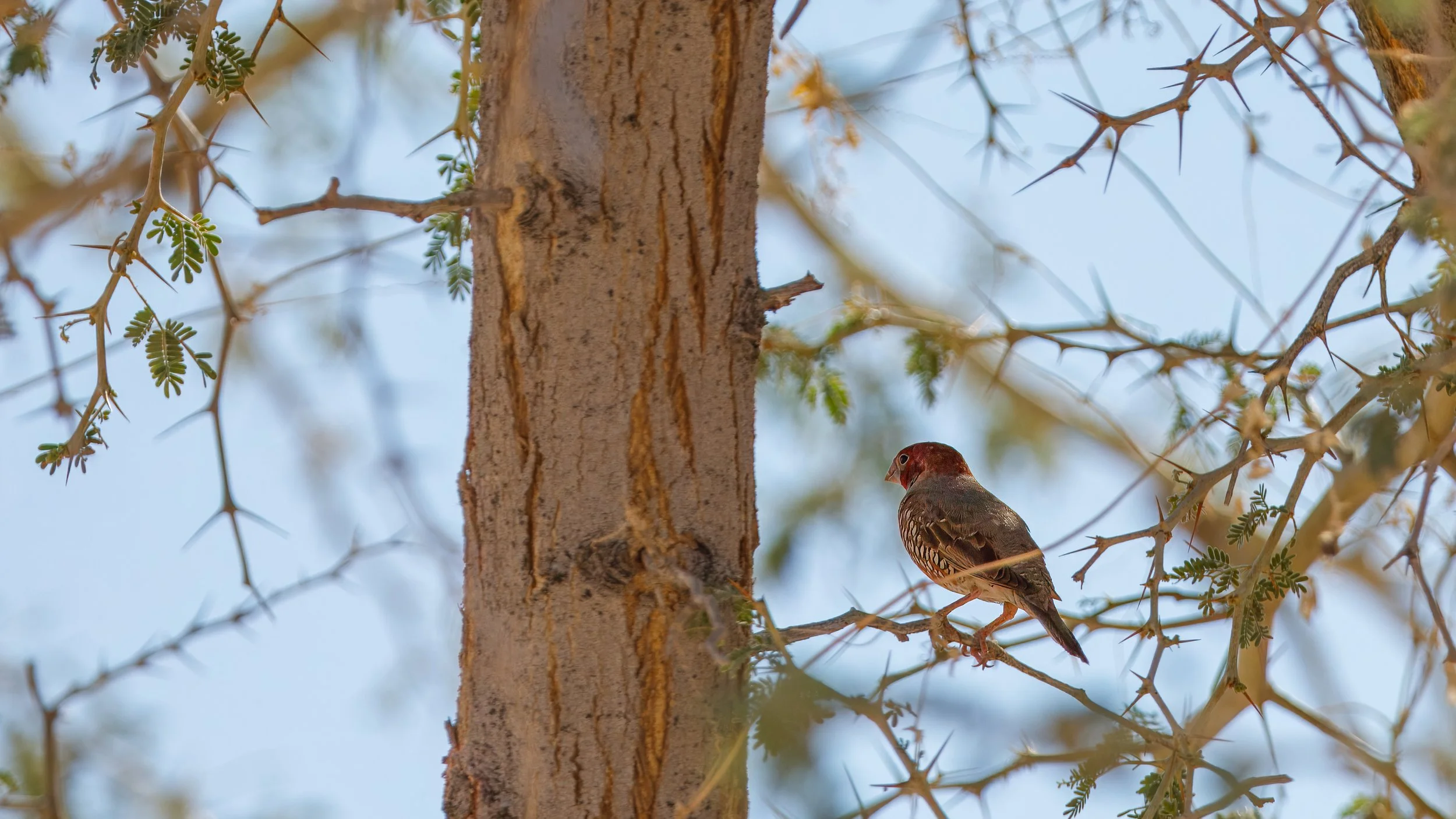
Red-headed finch
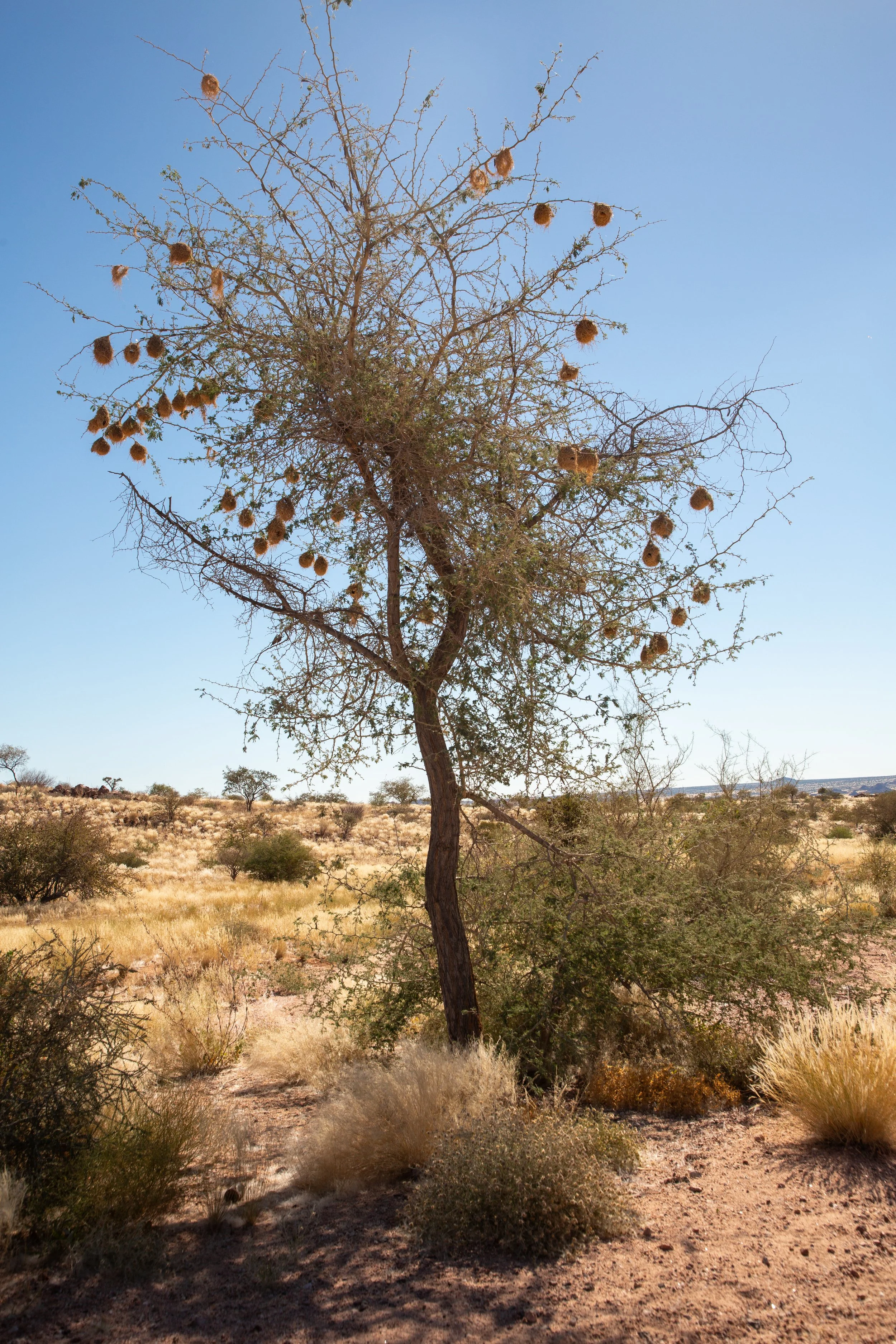
Individual weaver nests, different than the large sociable weaver nests that we saw earlier
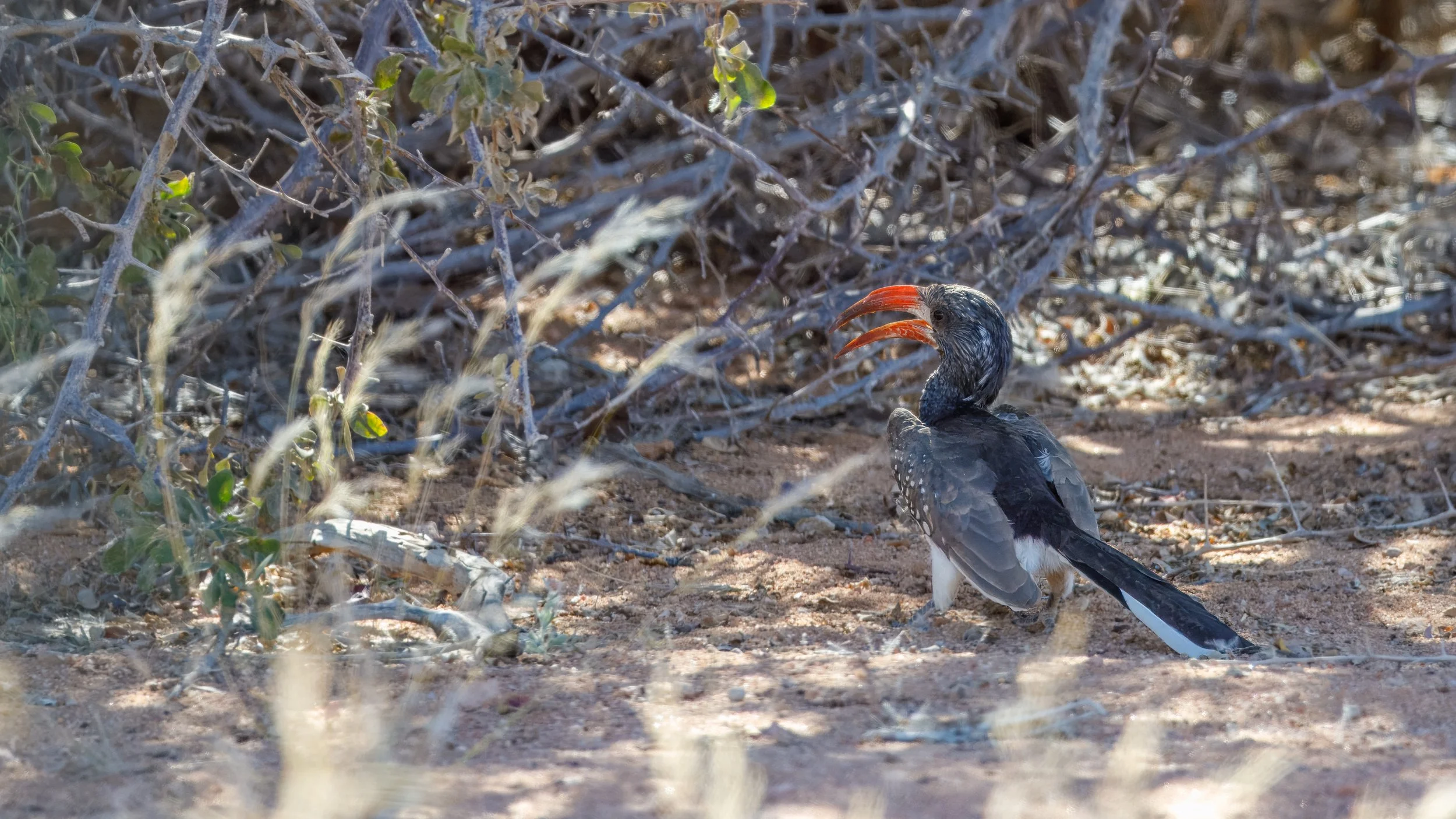
Monteiro's hornbill is a "near-endemic" species to Namibia. This means almost the entire global population lives right within the country's borders, with only a few birds crossing over into southwestern Angola
Getting closer to our destination, there is a little more green
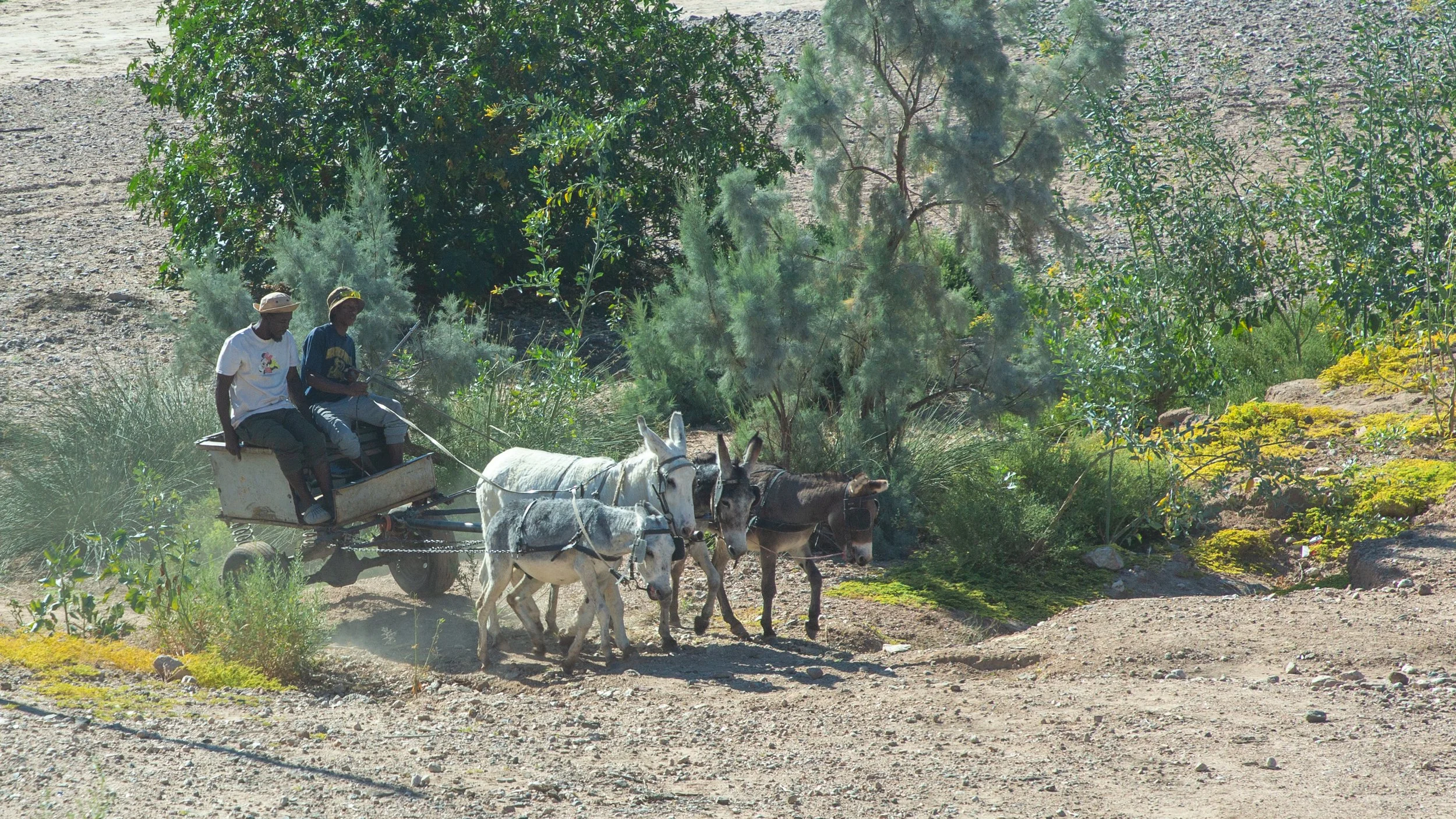
Locals getting around the traditional way
Closeup of an armoured ground cricket enjoying the leaves
Damara Milkbush, a large succulent shrub native to the arid regions of Namibia
Now within the Doros Joint Management Area, a 19,000 hectare concession consisting of largely sparse semi-arid mountainous savanna, we see more wildlife
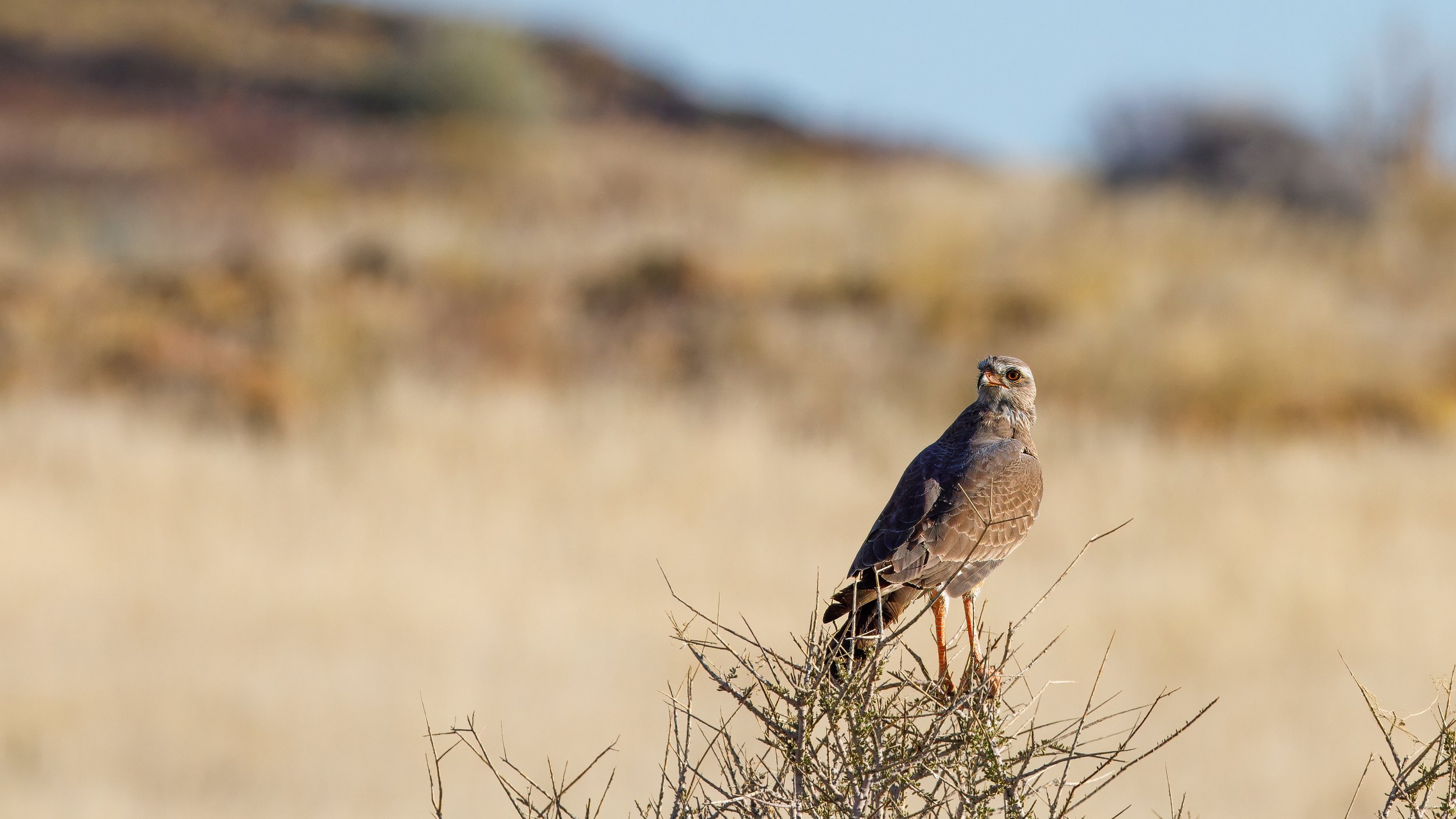
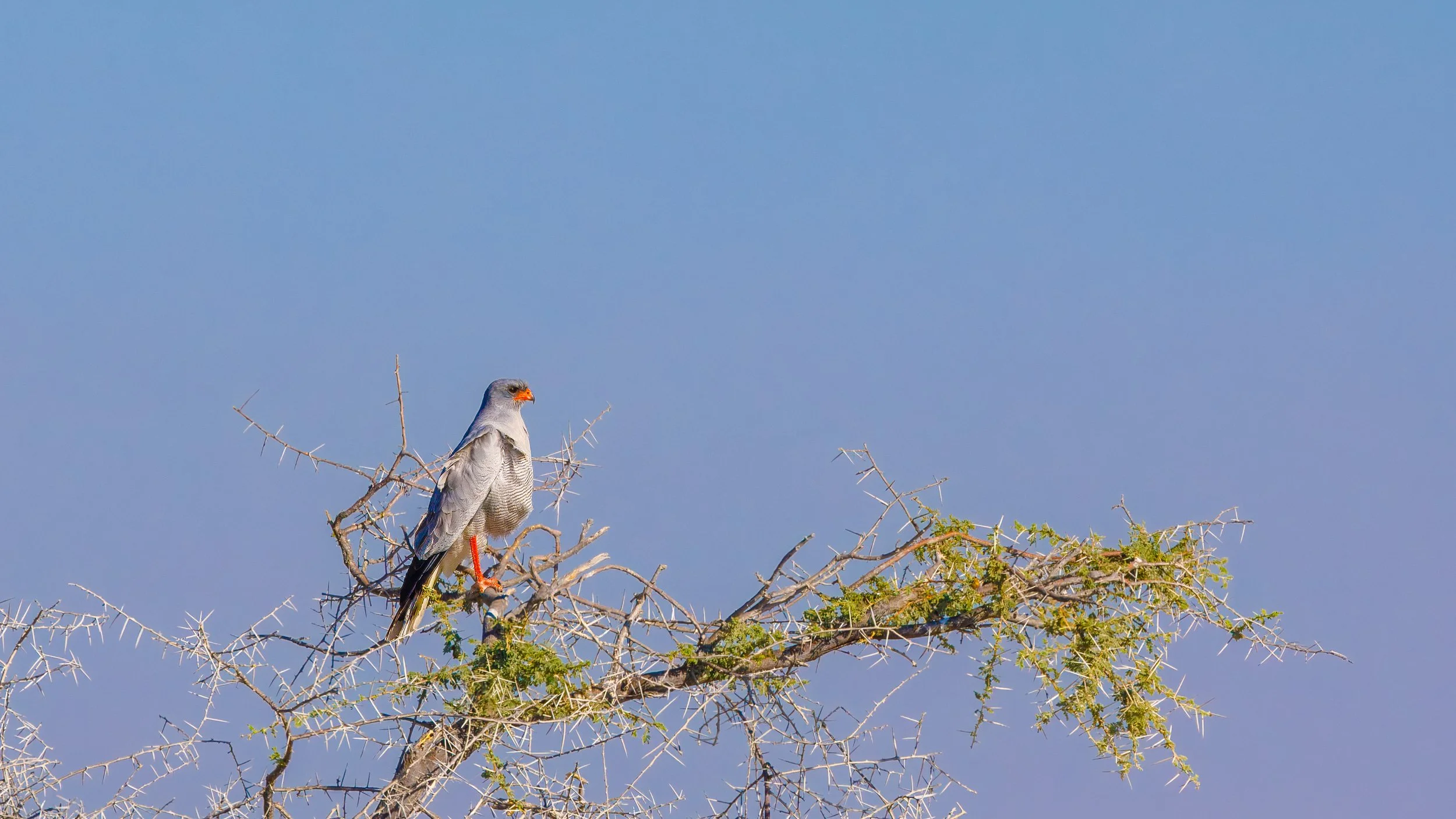
A southern pale chanting goshawk, one of a number of raptors in the area
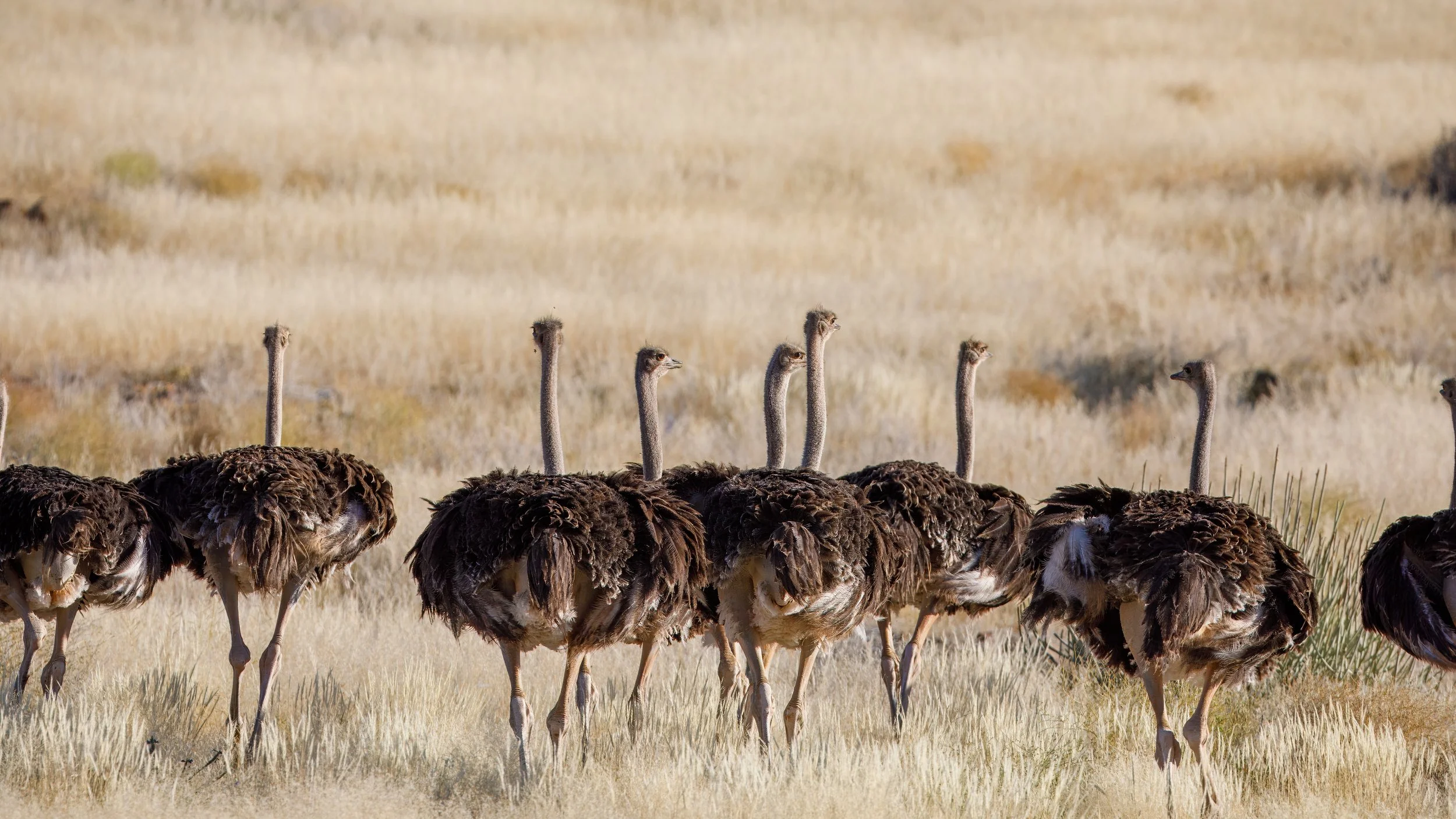
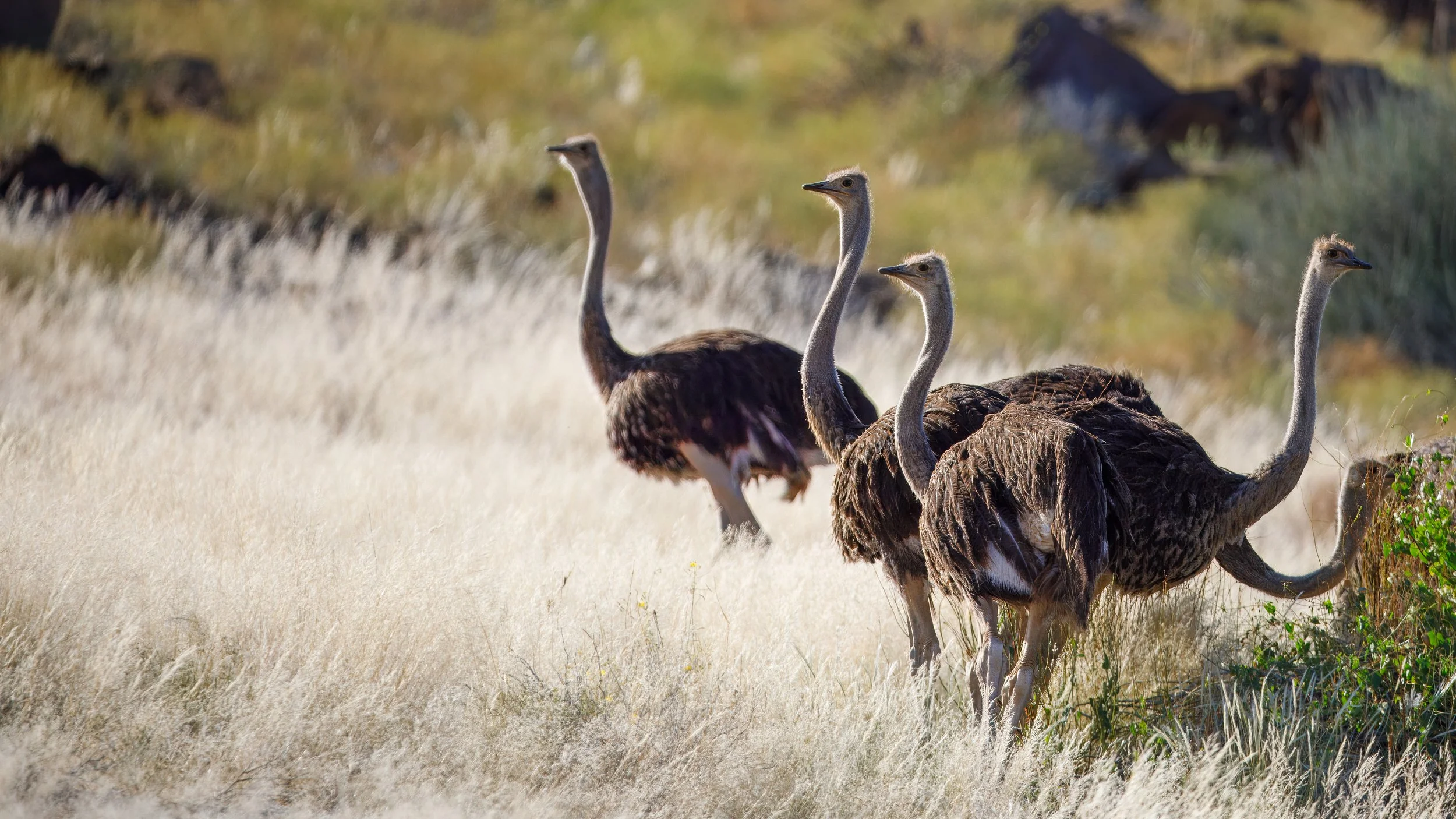
Many ostrich roam the Doros area
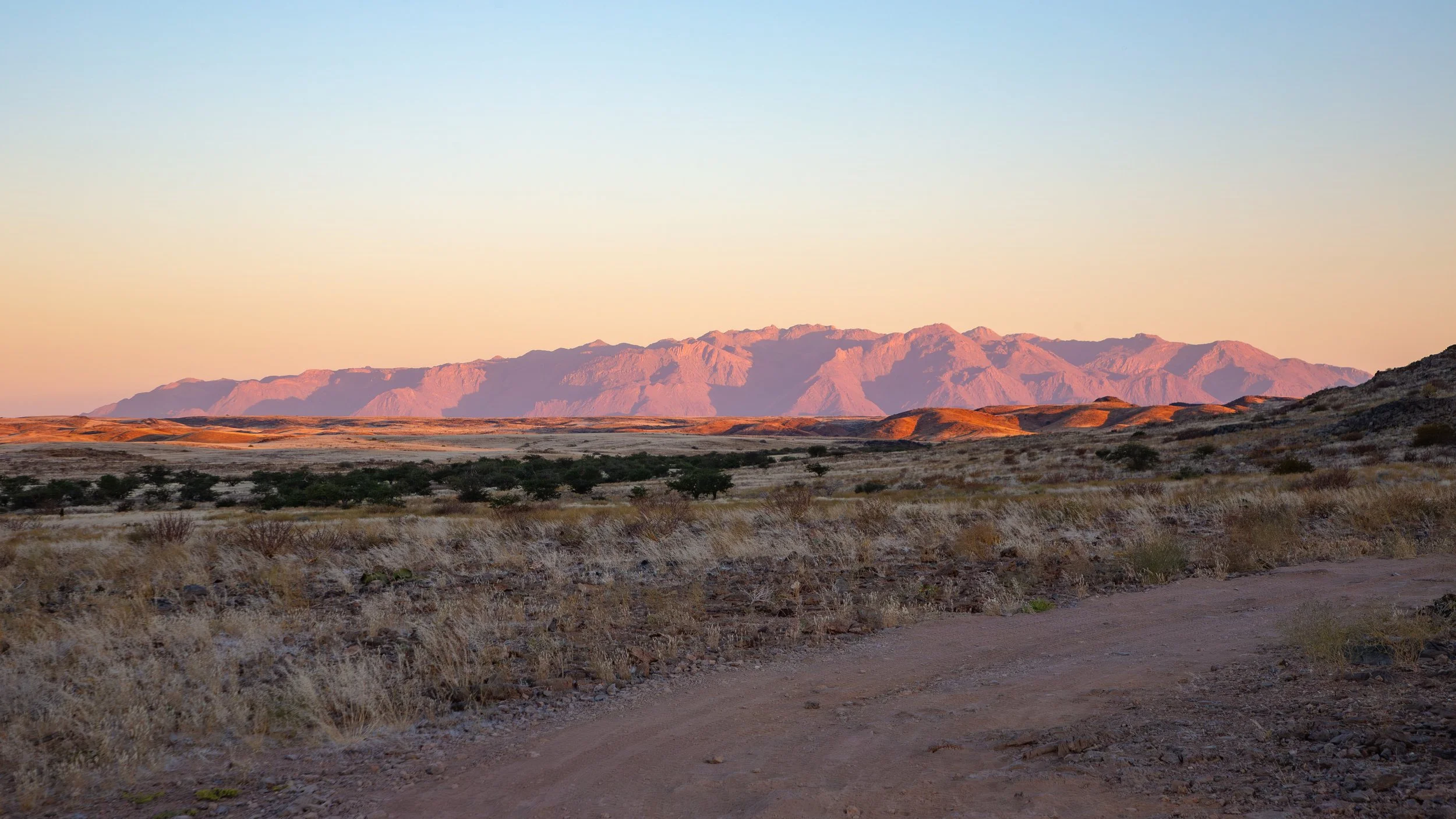
As we get close to 6pm and the end of a long day of driving, one last vista before getting to our camp
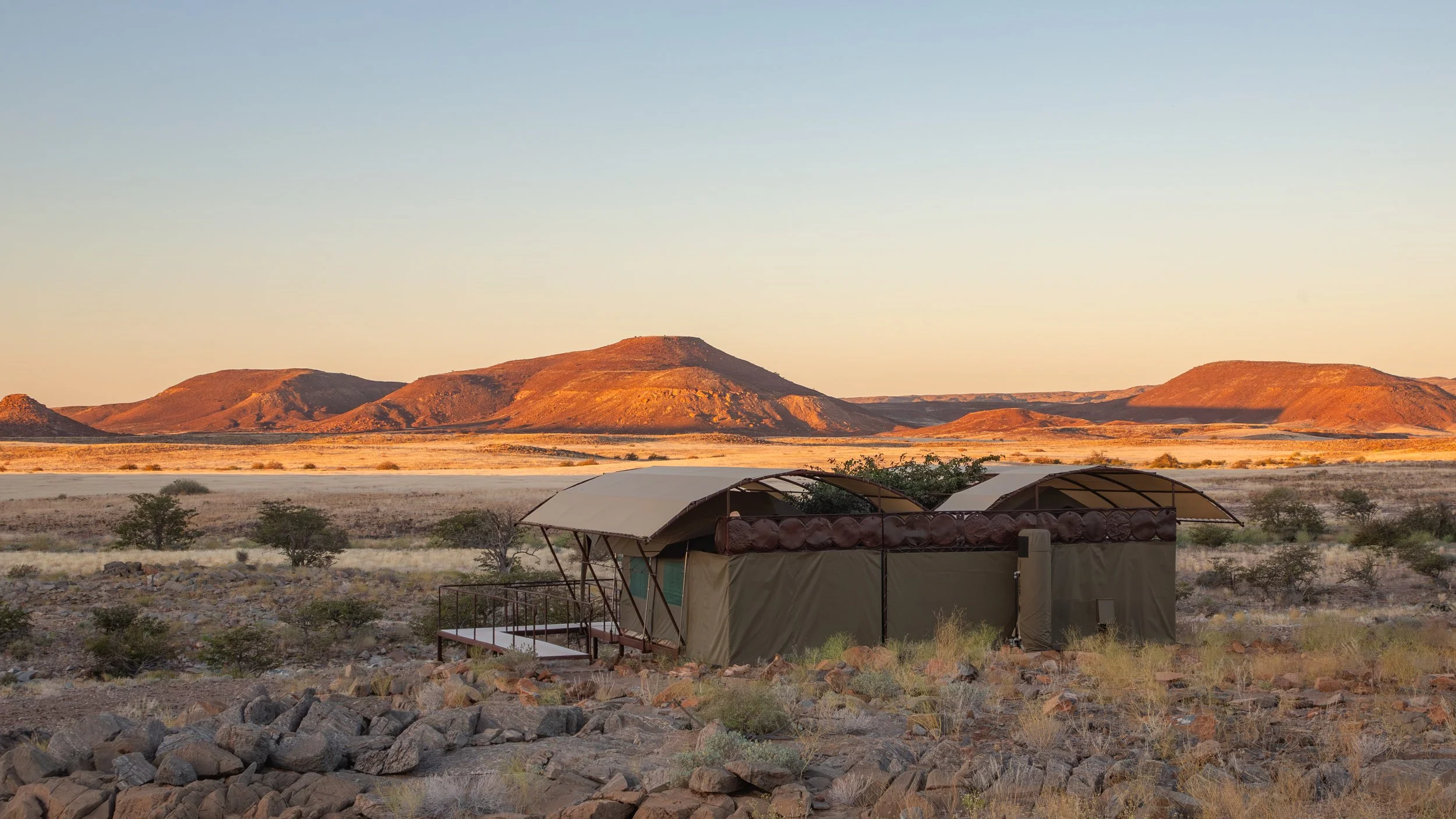
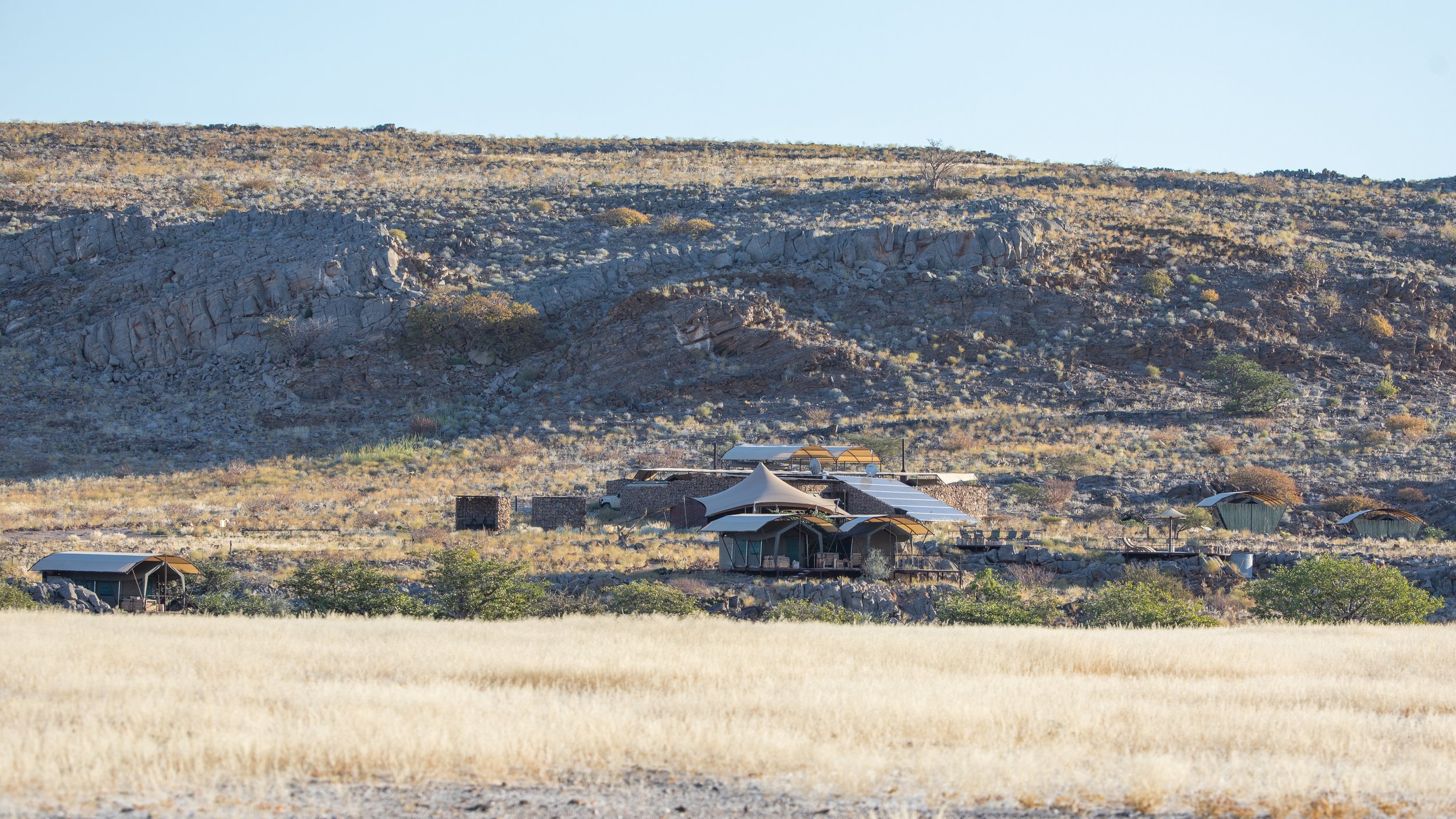
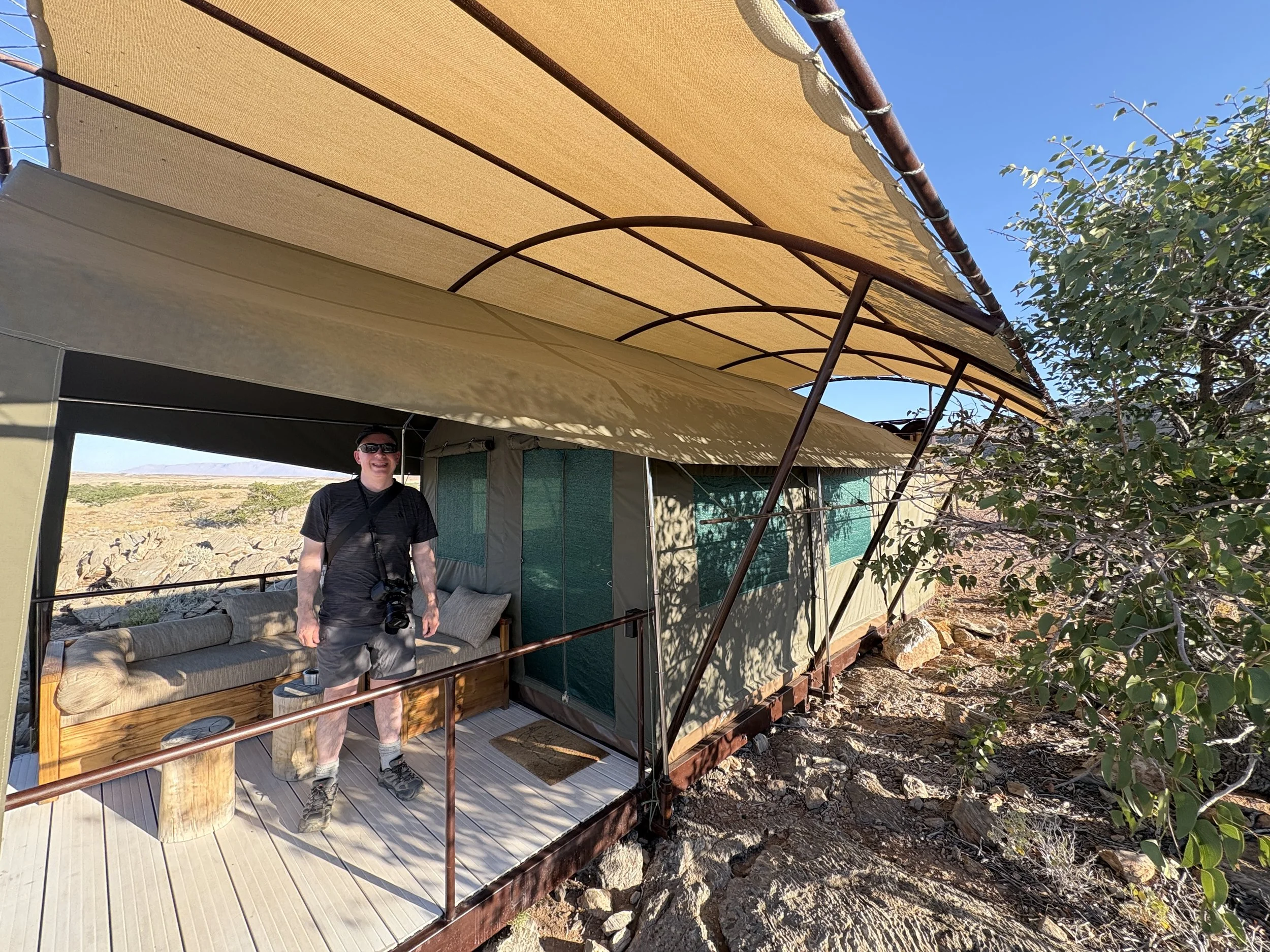
Camp Doros and our luxury tent home for the next two nights
View from the camp
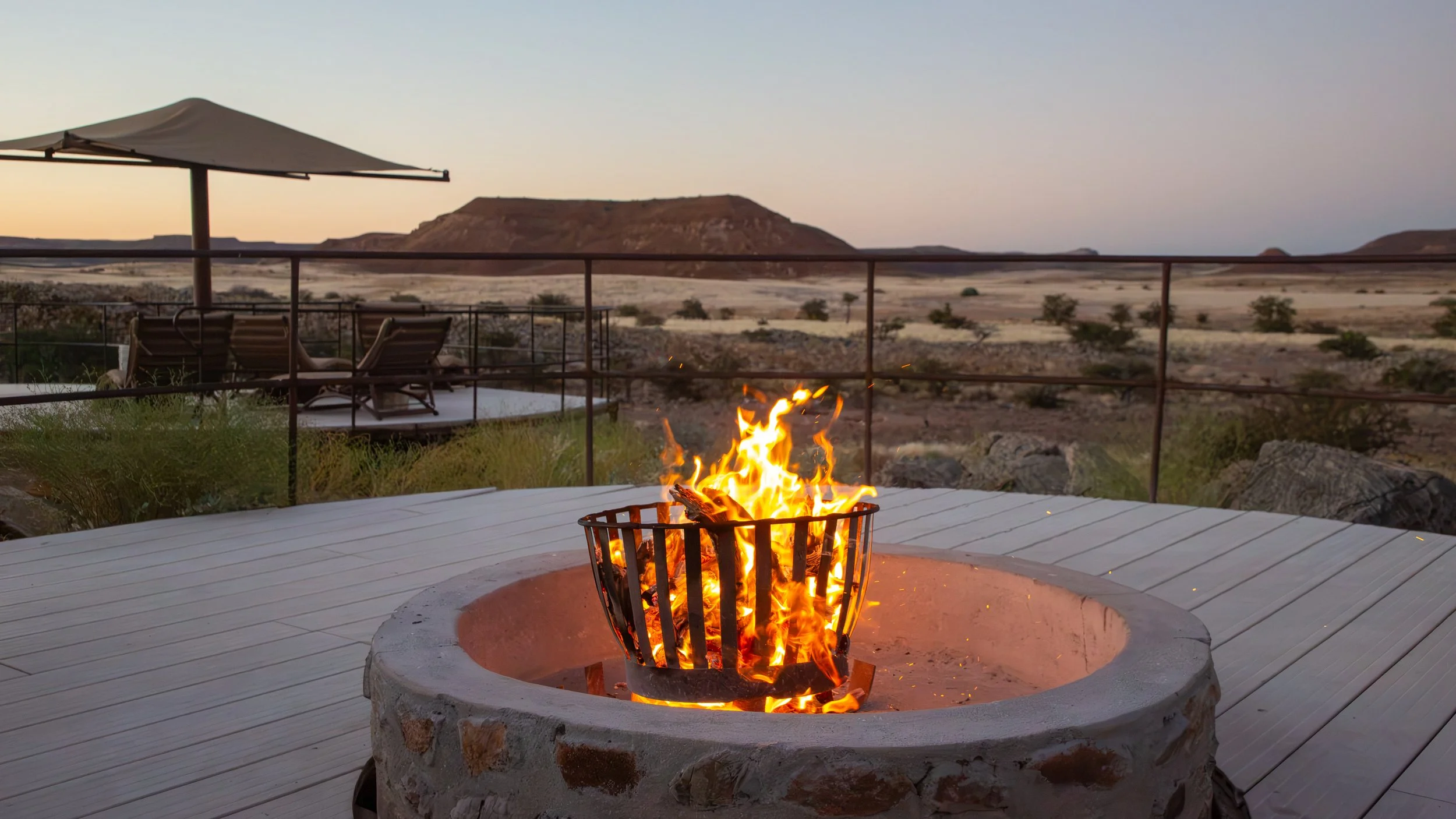
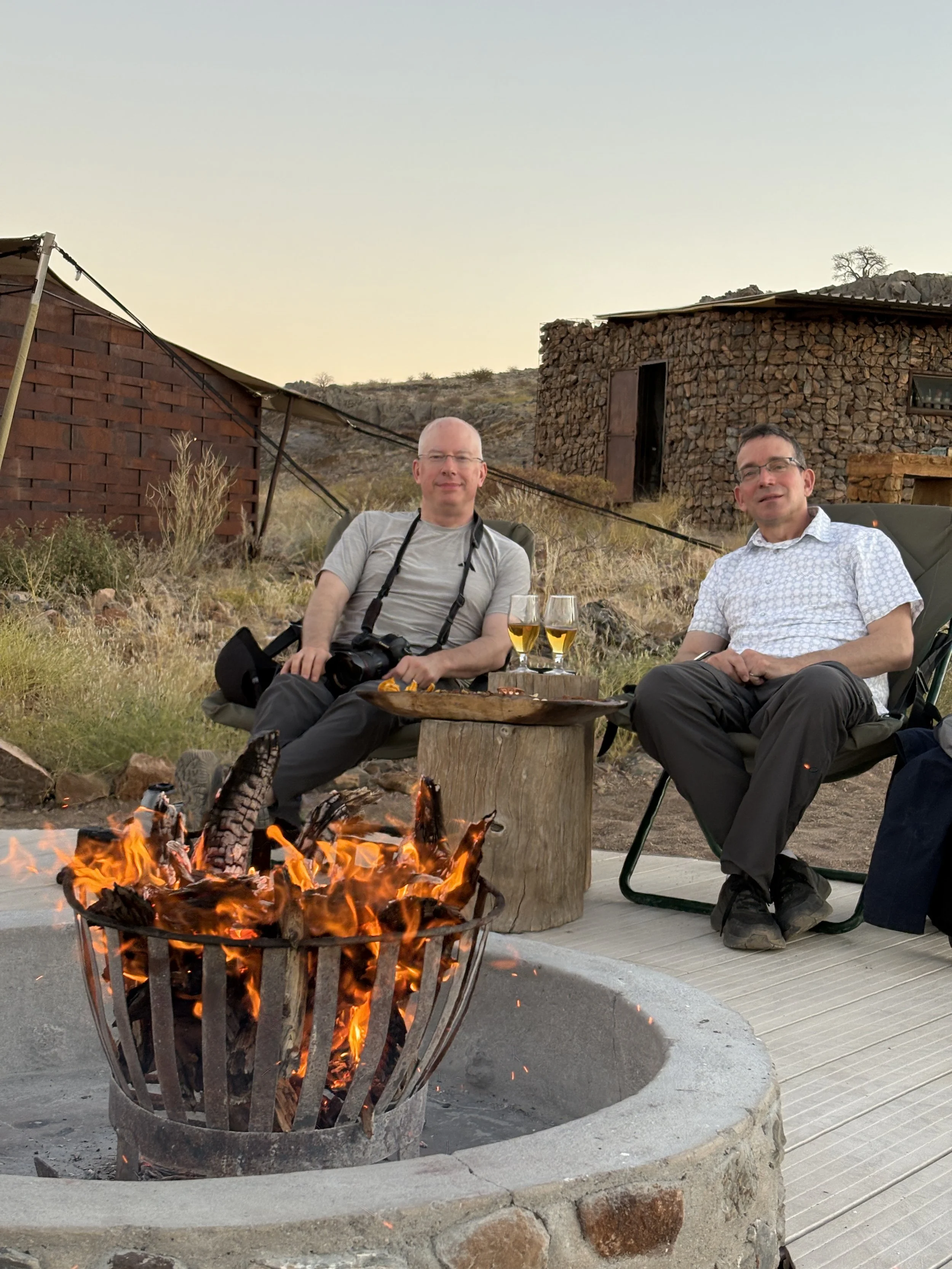
A lovely firepit and some sundowner drinks kept us warm as the cool desert air set in
The beer was refreshing after a long and rough day on the road
With a very new moon and no light pollution the nighttime sky was full of visible stars
After happy hour drinks, we had a lovely meal in our camp, which is very much not roughing it. Everything was terrific, and as were further north it was as cold at night as our last outdoor adventure.
Jun 13
Our glamping tent made for a very comfortable night’s sleep, but we were up early for sunrise and breakfast on the patio. The main focus of today was rhino tracking. Within the conservancy area, they track and protect a number of desert-adapted black rhinos. Each morning, the conservancy’s rhino trackers, with the protection of armed police, work to find and track a rhino as part of the conservancy program. They have an arrangement with the lodge to allow guests to join the tracking, which can take a few hours to an entire day with no guarantees of success. After the trackers were on the hunt, we hung back waiting for word, exploring the geography and other wildlife.
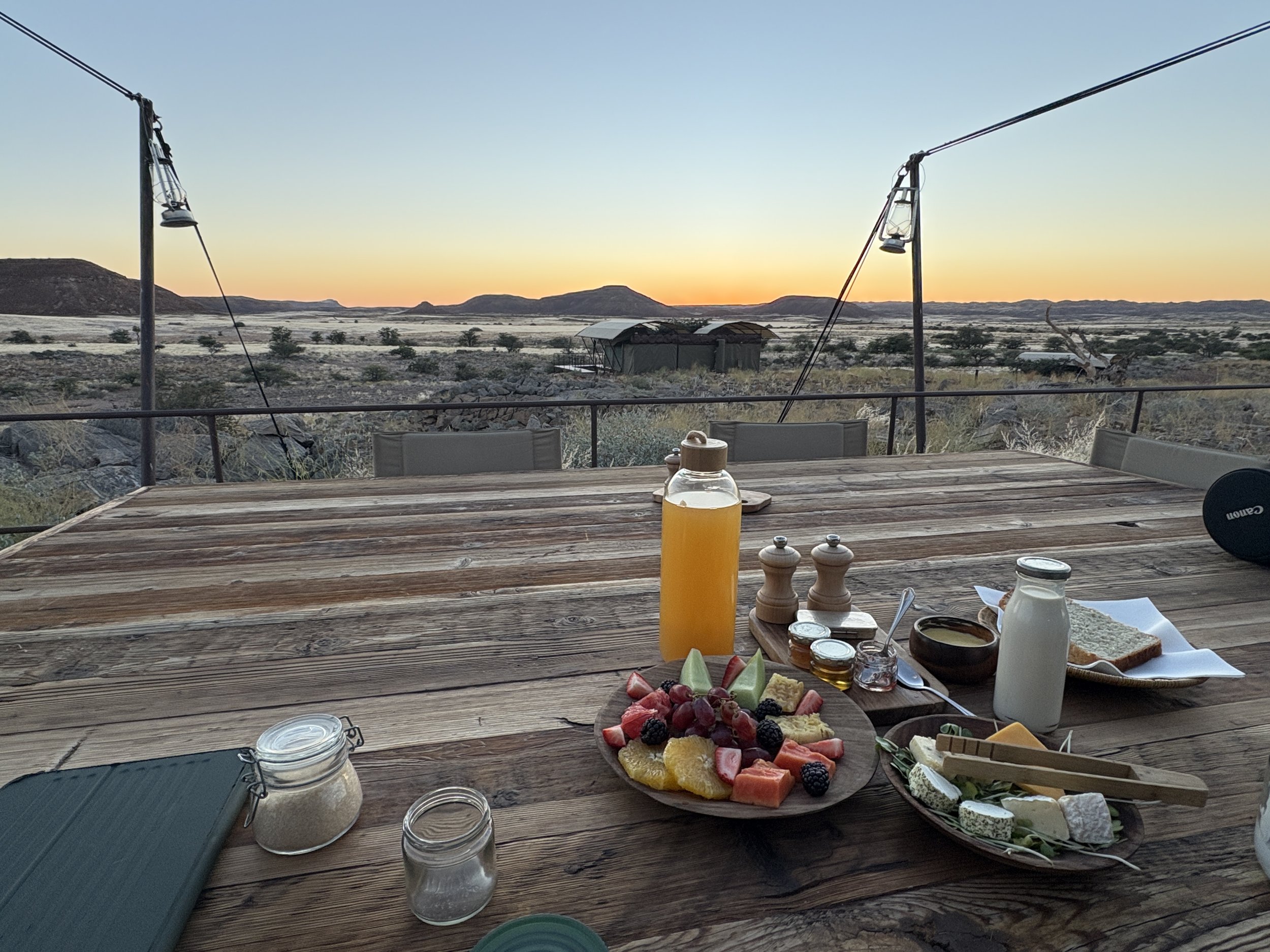
Starting our sunrise breakfast
Exploring the reserve in our safari vehicle as we wait to hear of any rhino sightings
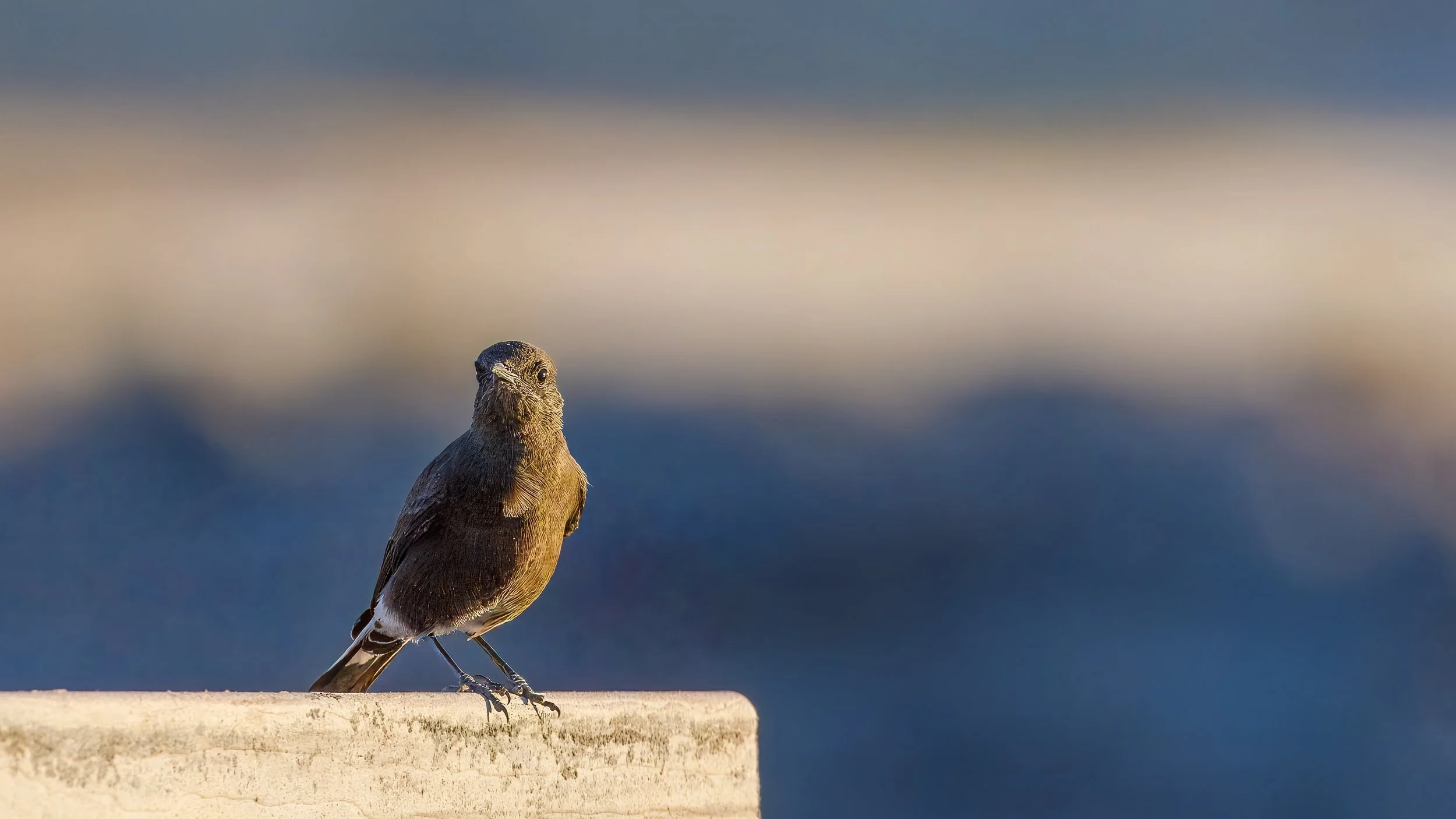
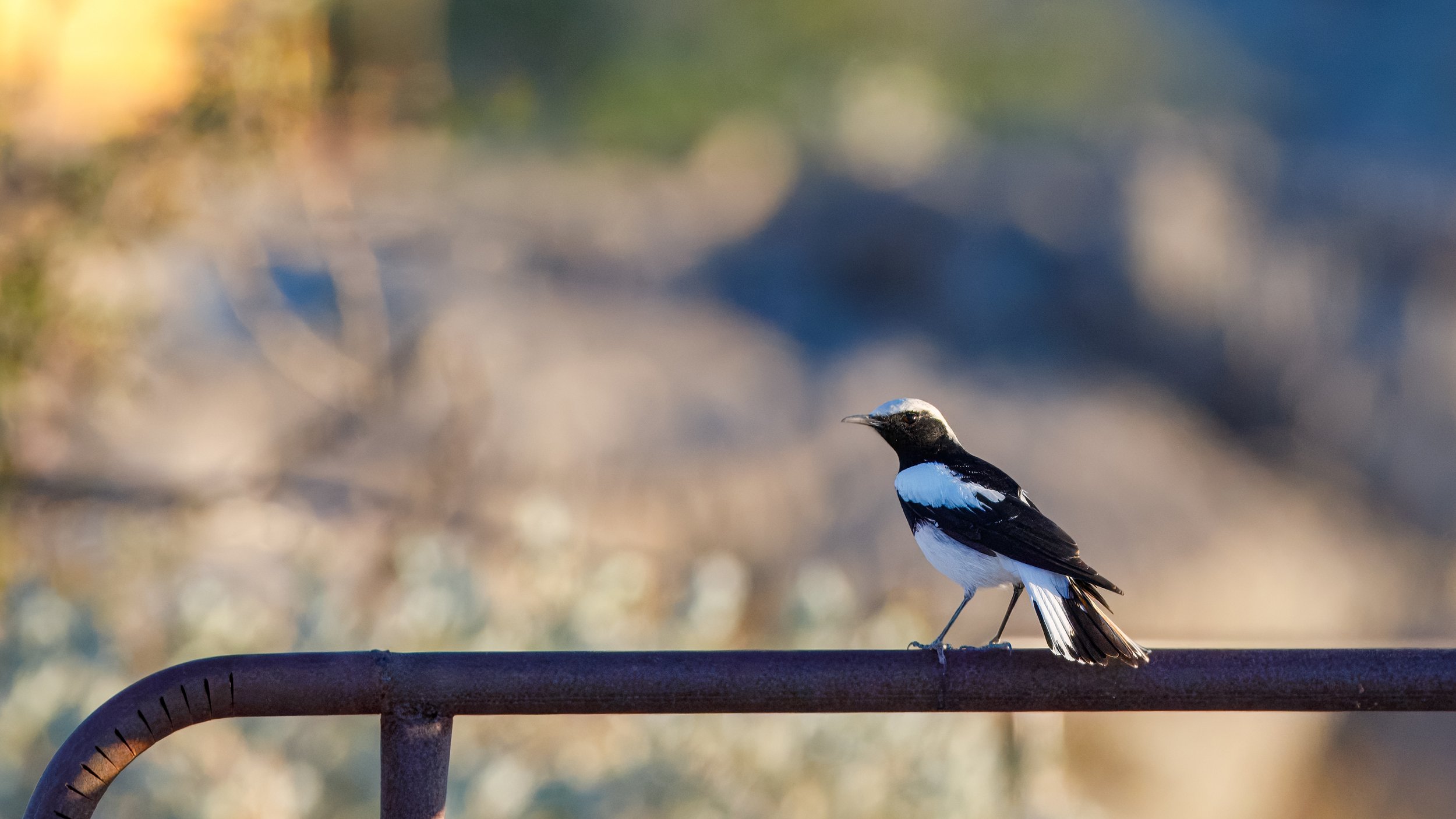
Mountain chat
White-browed sparrow-weaver
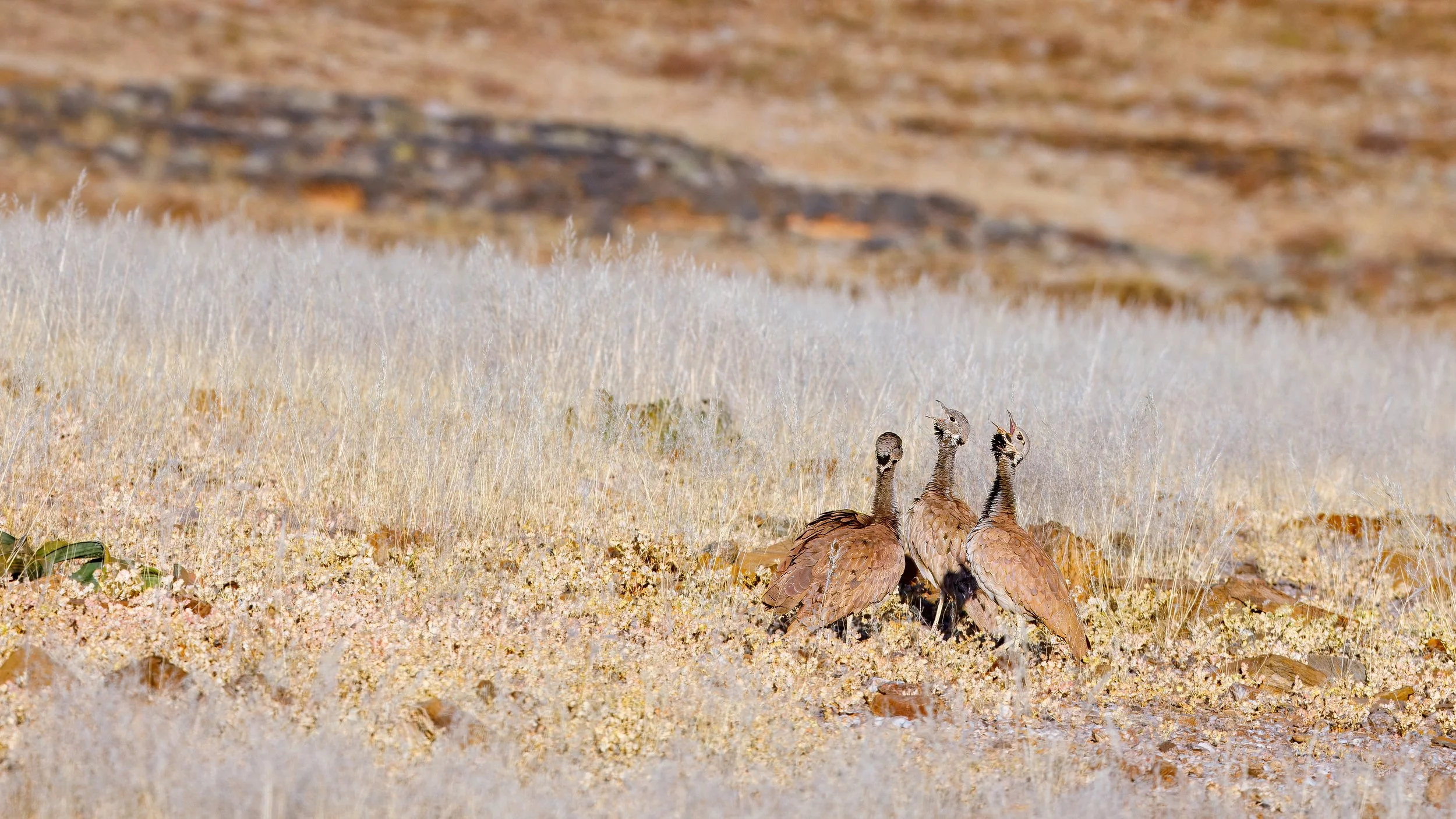
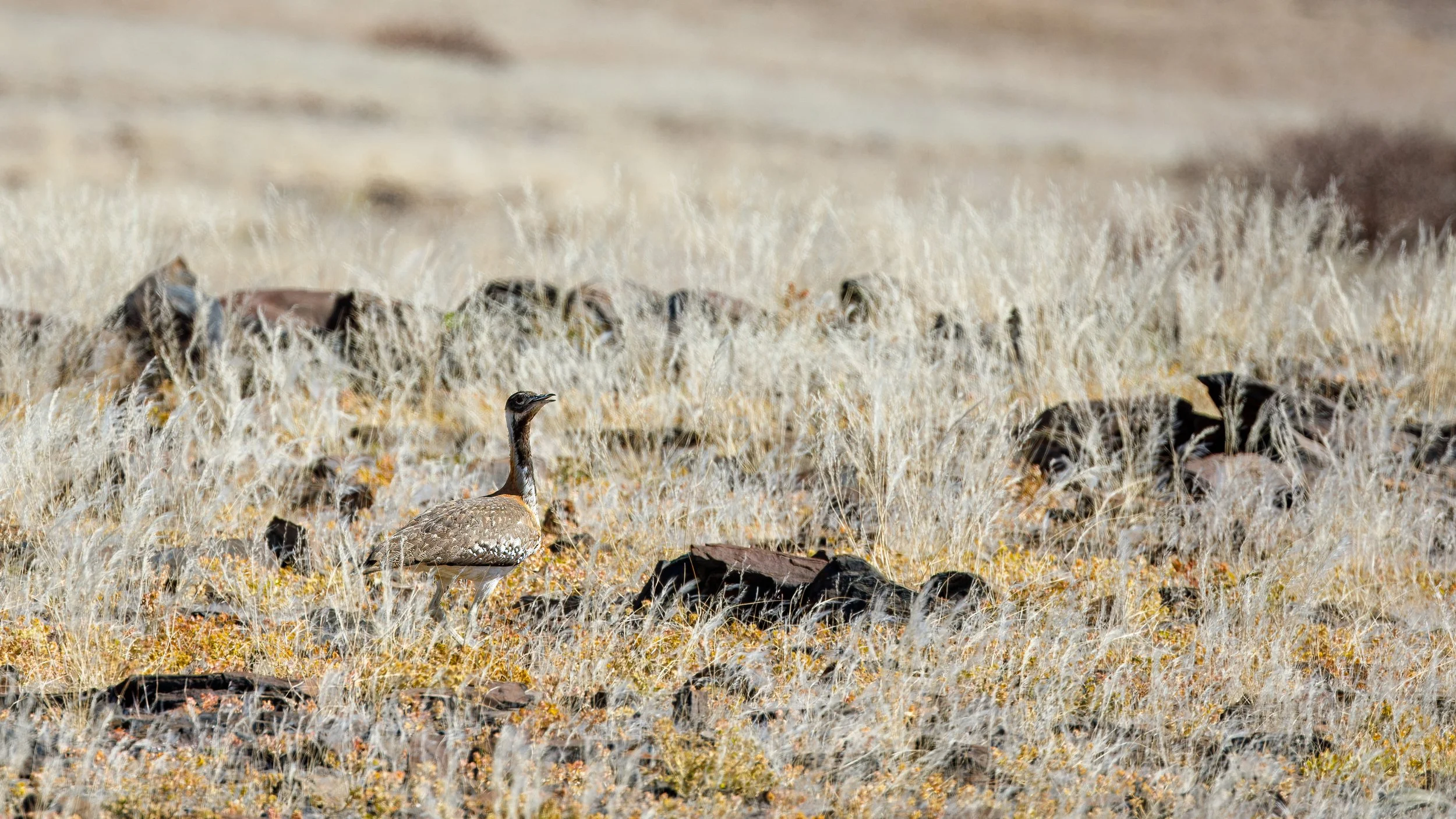
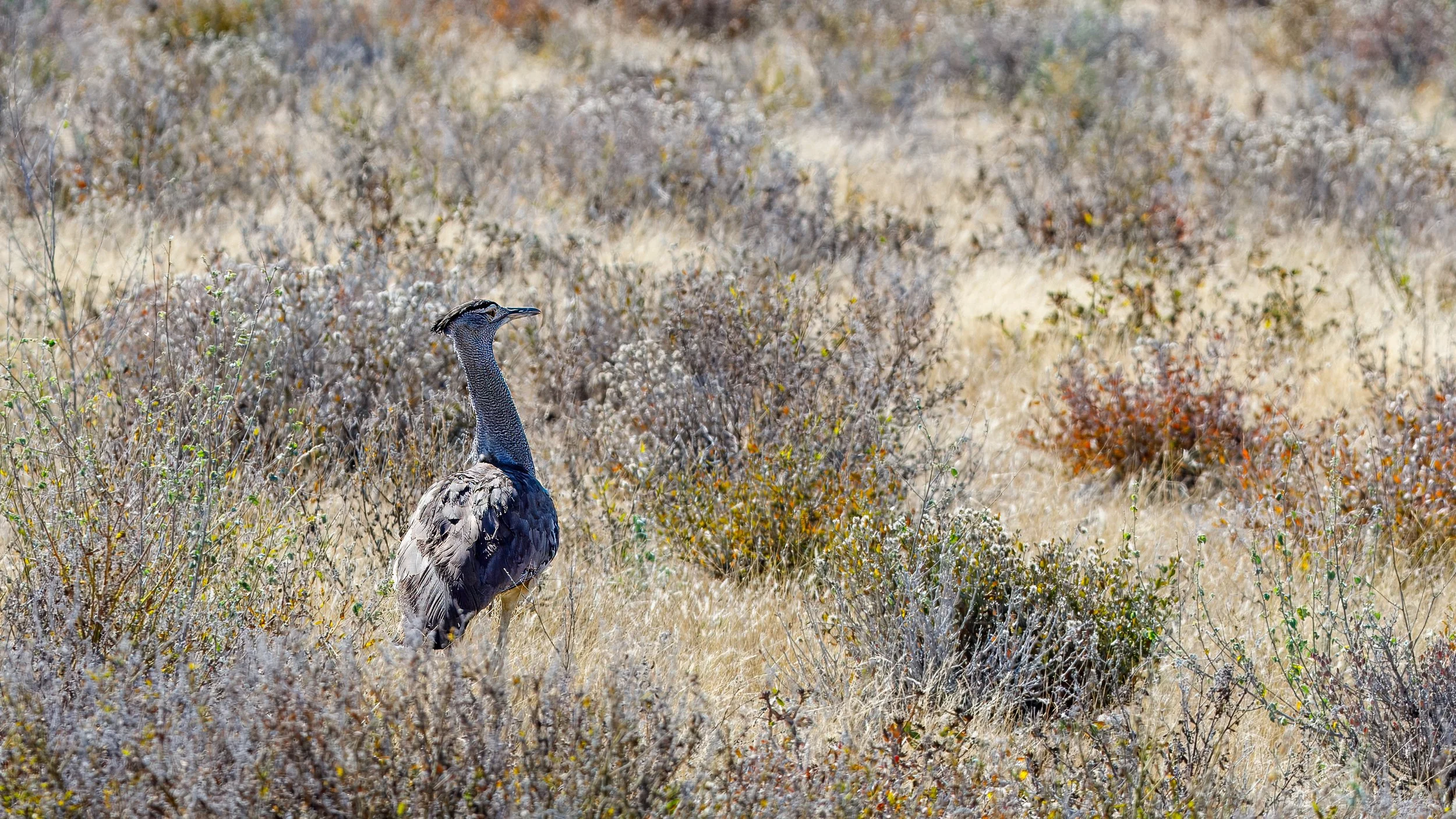
A few isolated bustards provide a soundtrack to our exploration
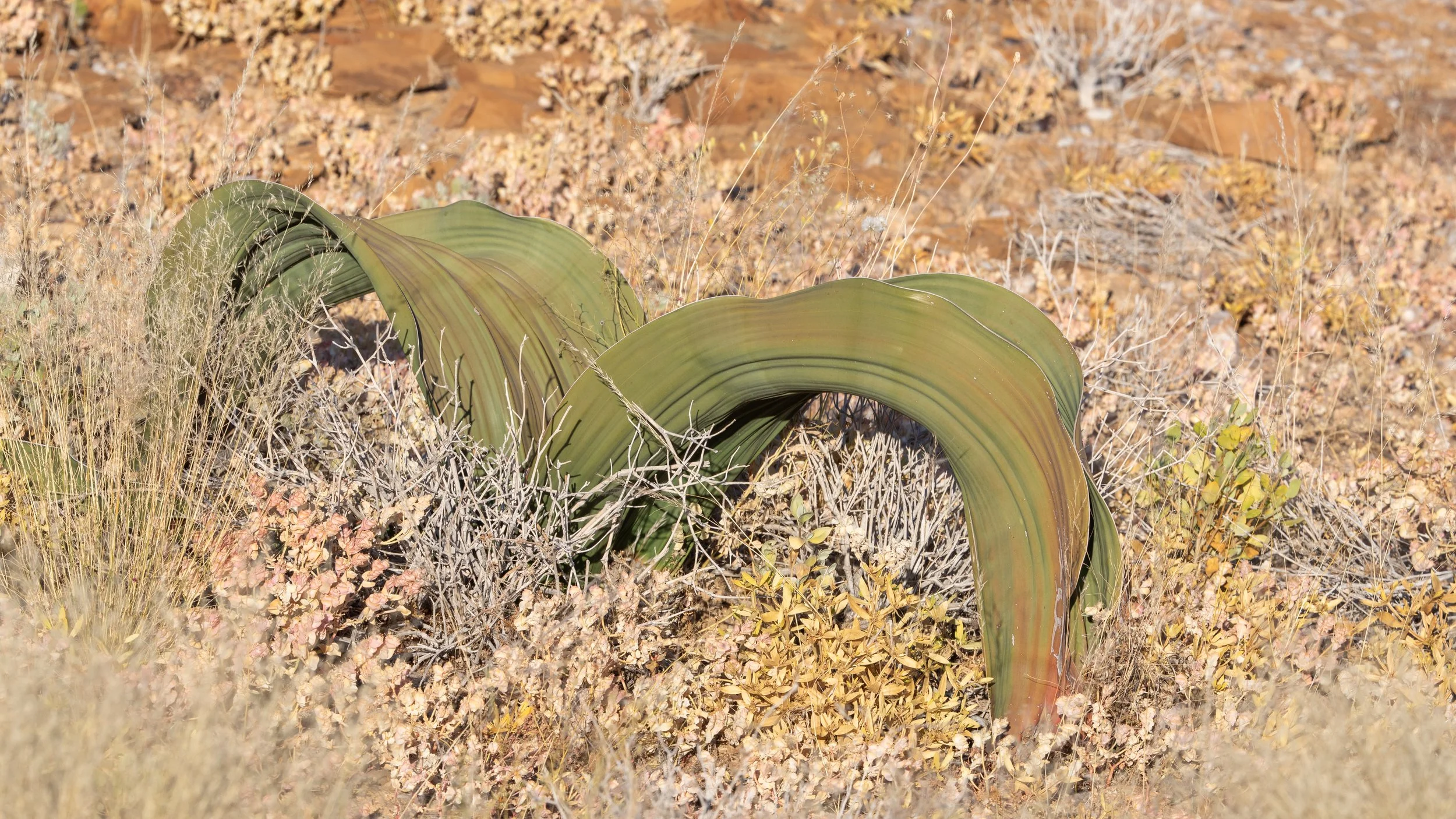
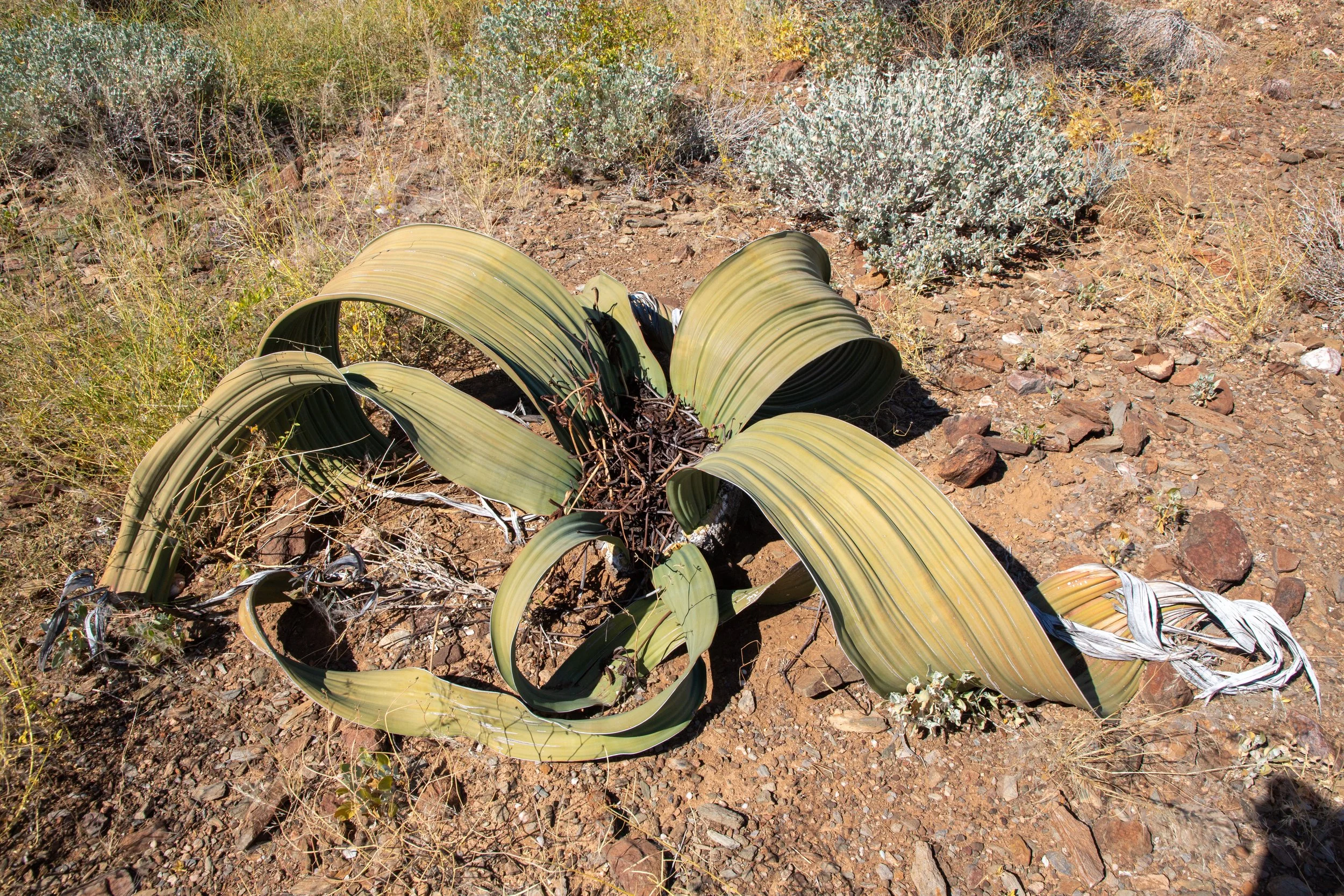
Welwitschia mirabilis, a desert plant native to the Namib desert, lives from 1000-2000 years old. This particular plant was approximately 500 years old, as estimated by the width of the two leaves.
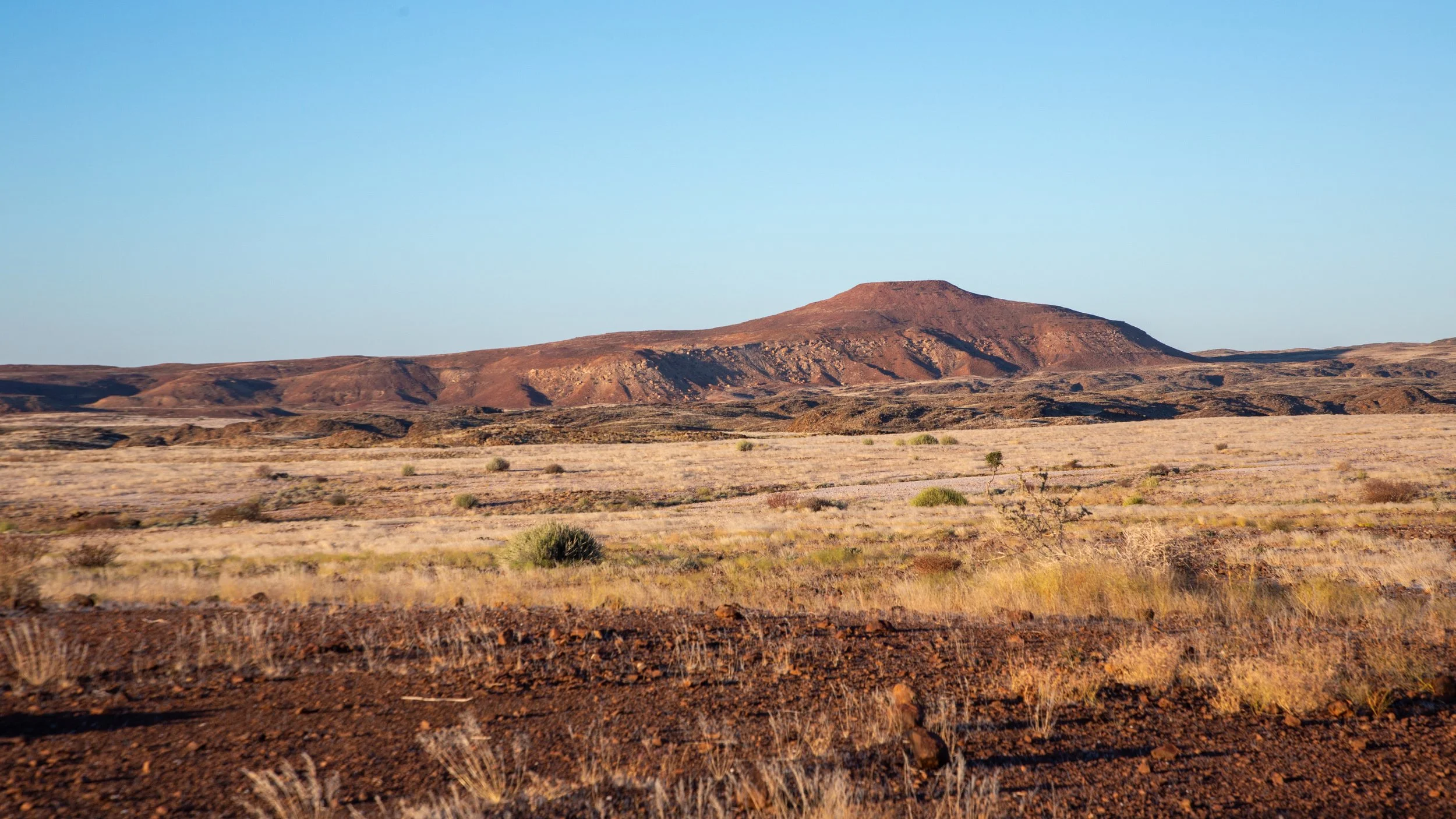
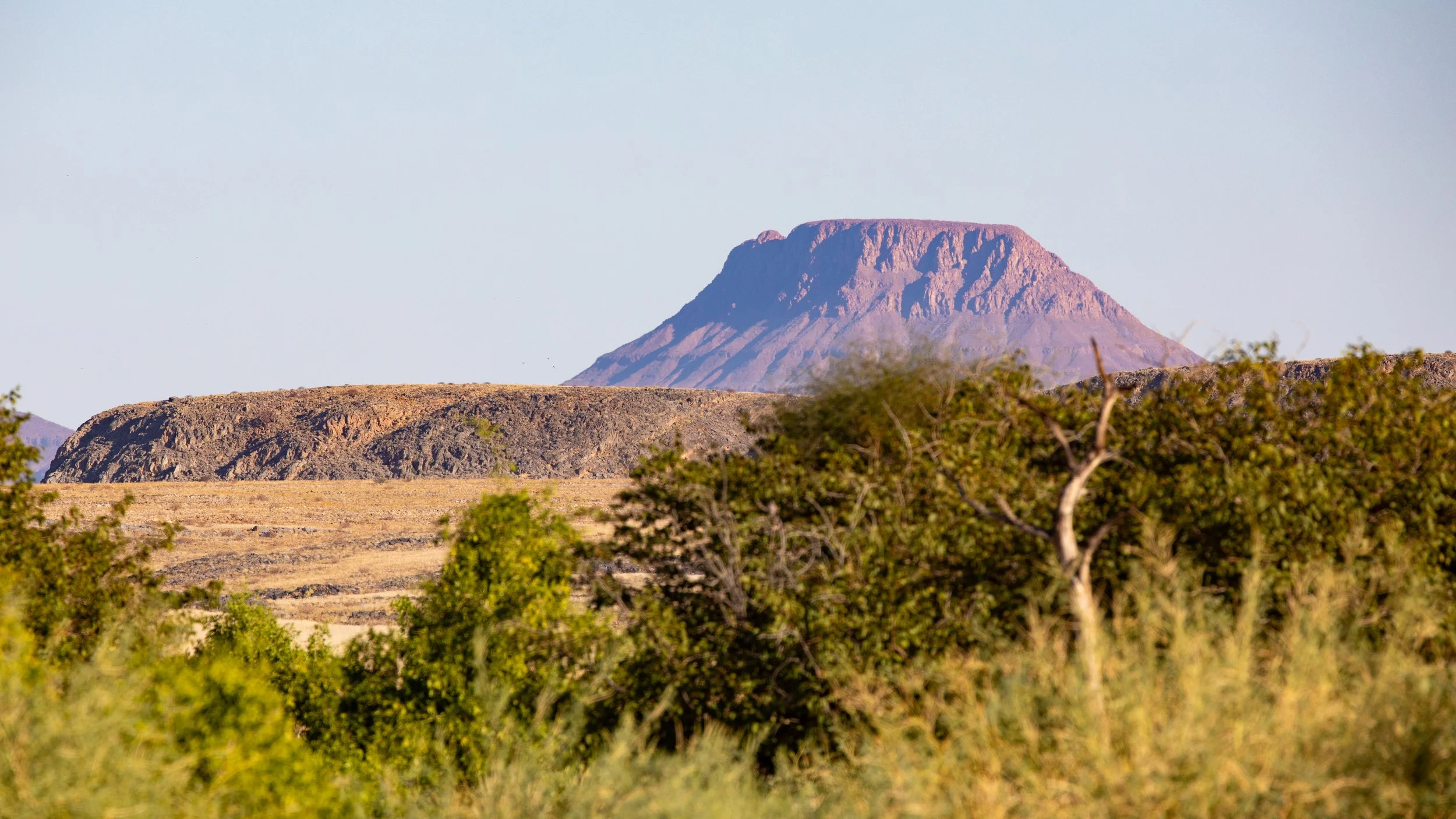
Exploring the varied terrain of the Doros conservatory with Brandberg mountain in the backdrop
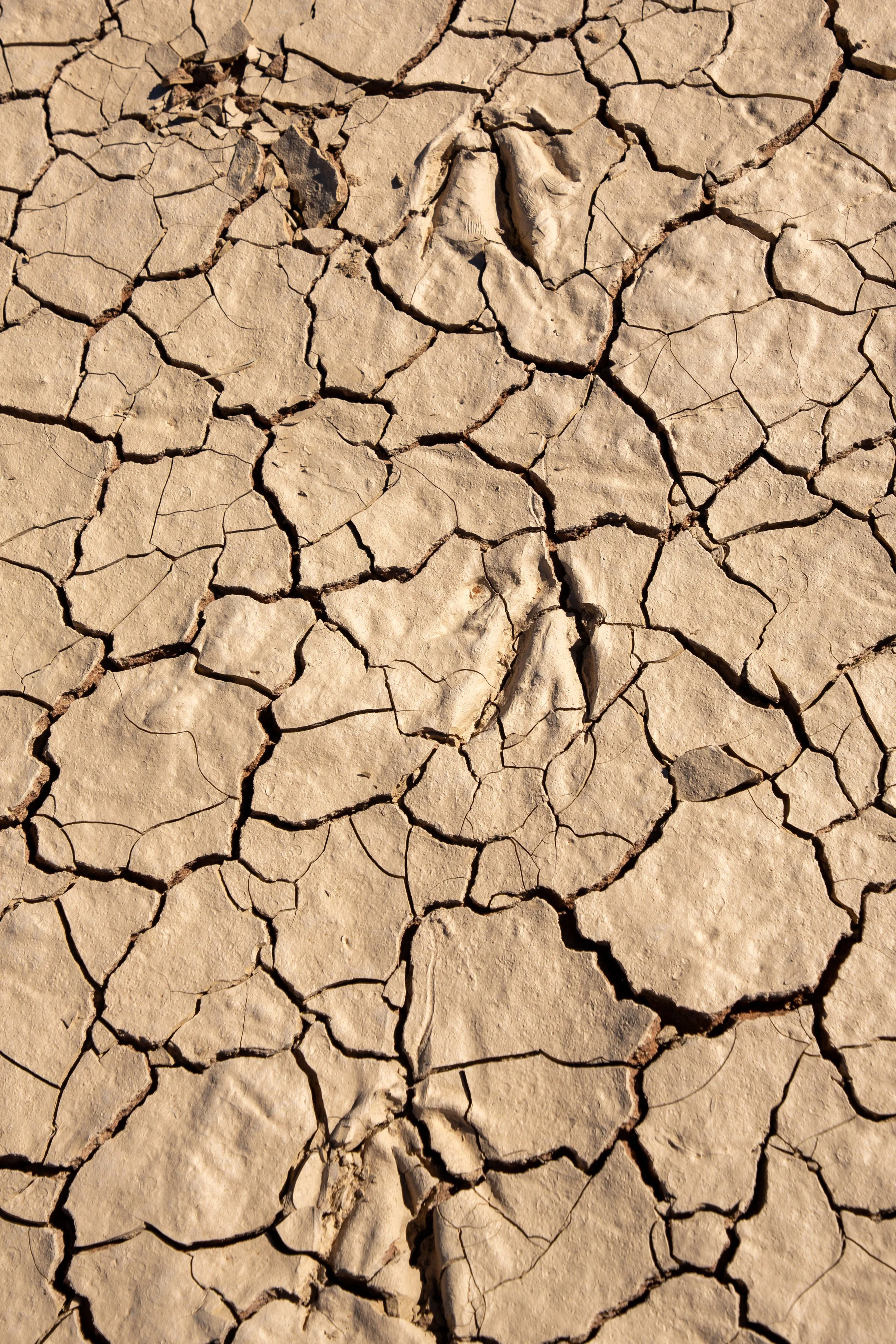
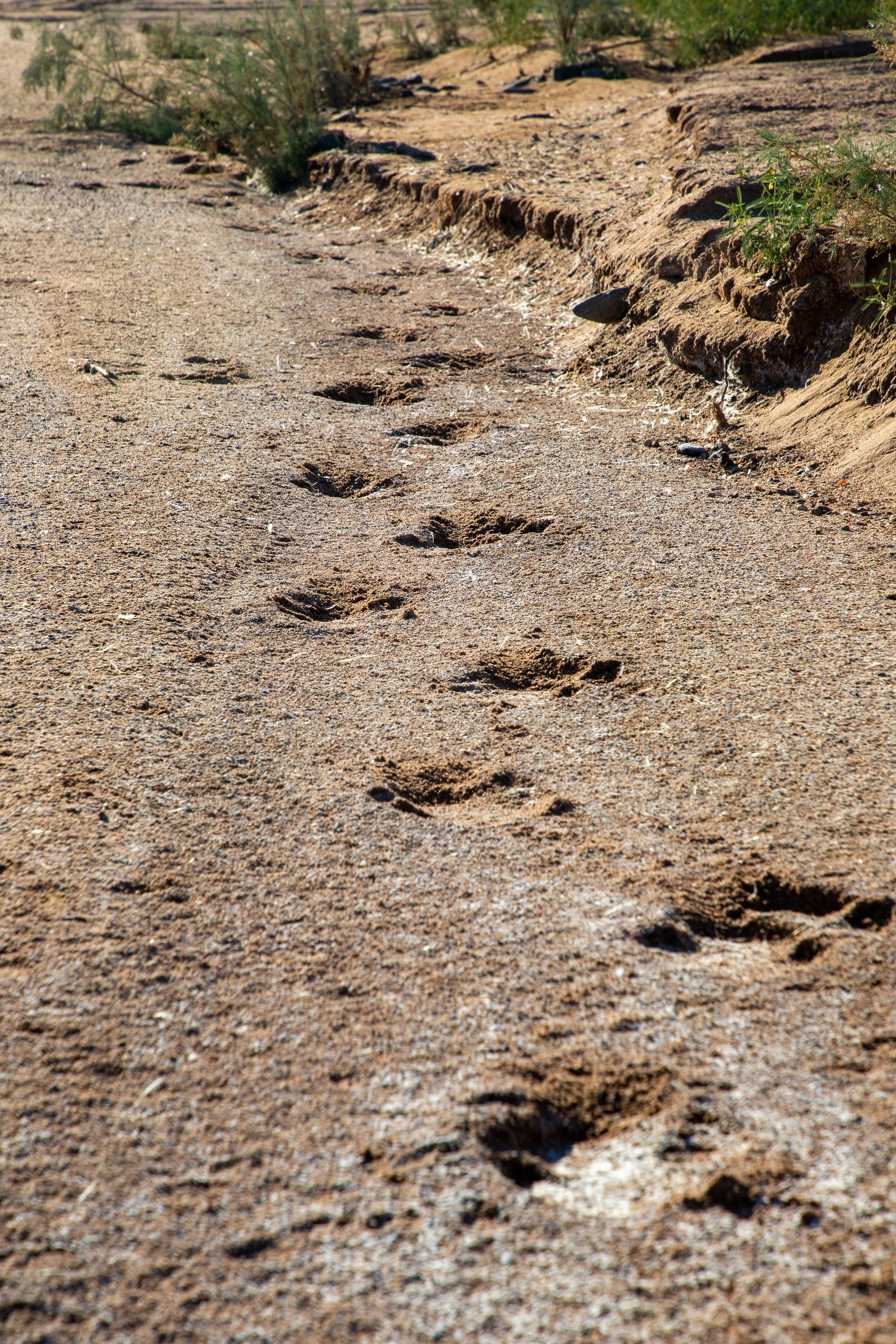
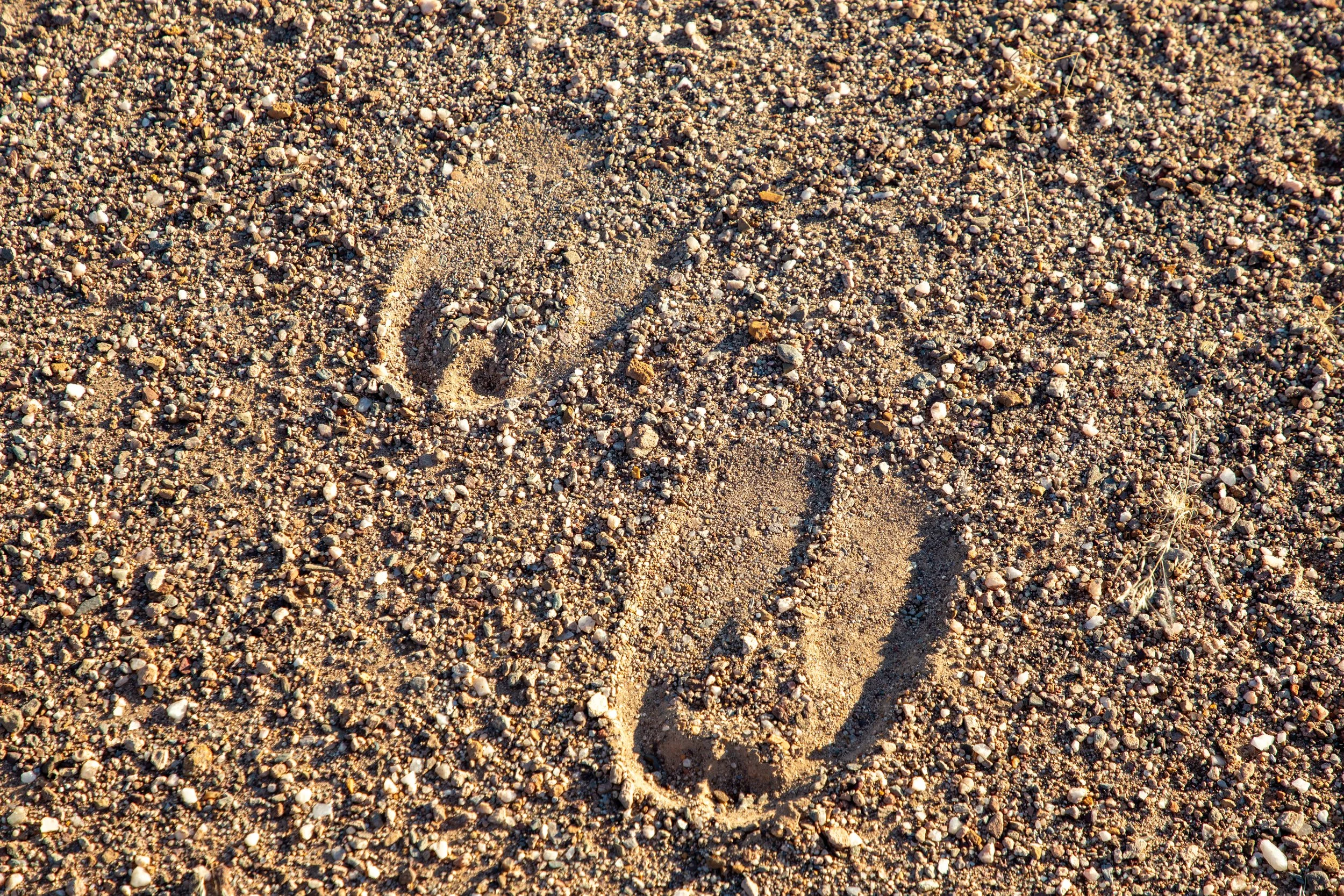
Some much earlier rhino tracks set in the mud
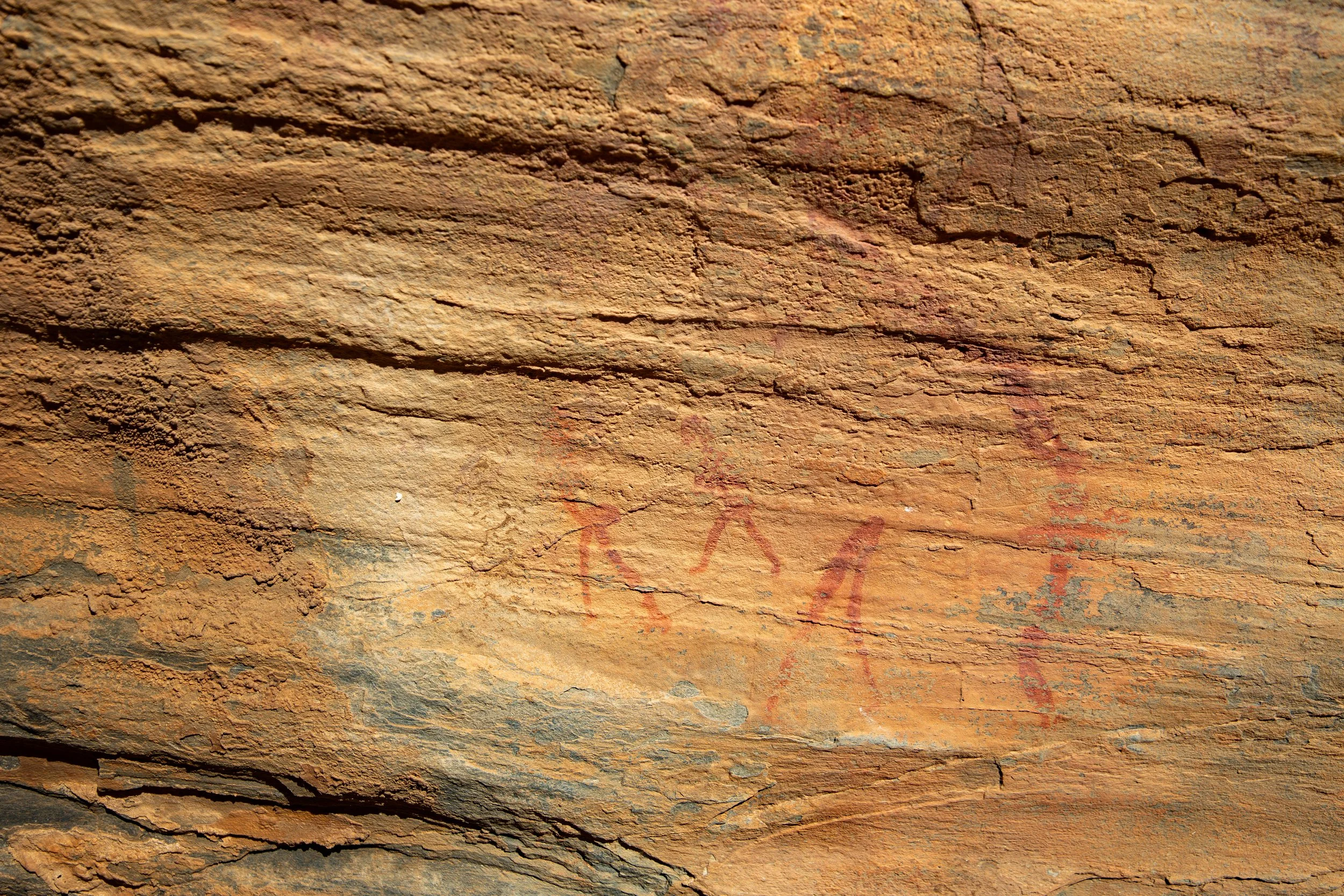
These petroglyphs on a cliffside in Doros are about 6000 years old
Once we got a radio call from the rhino trackers, we caught up to them following a trail
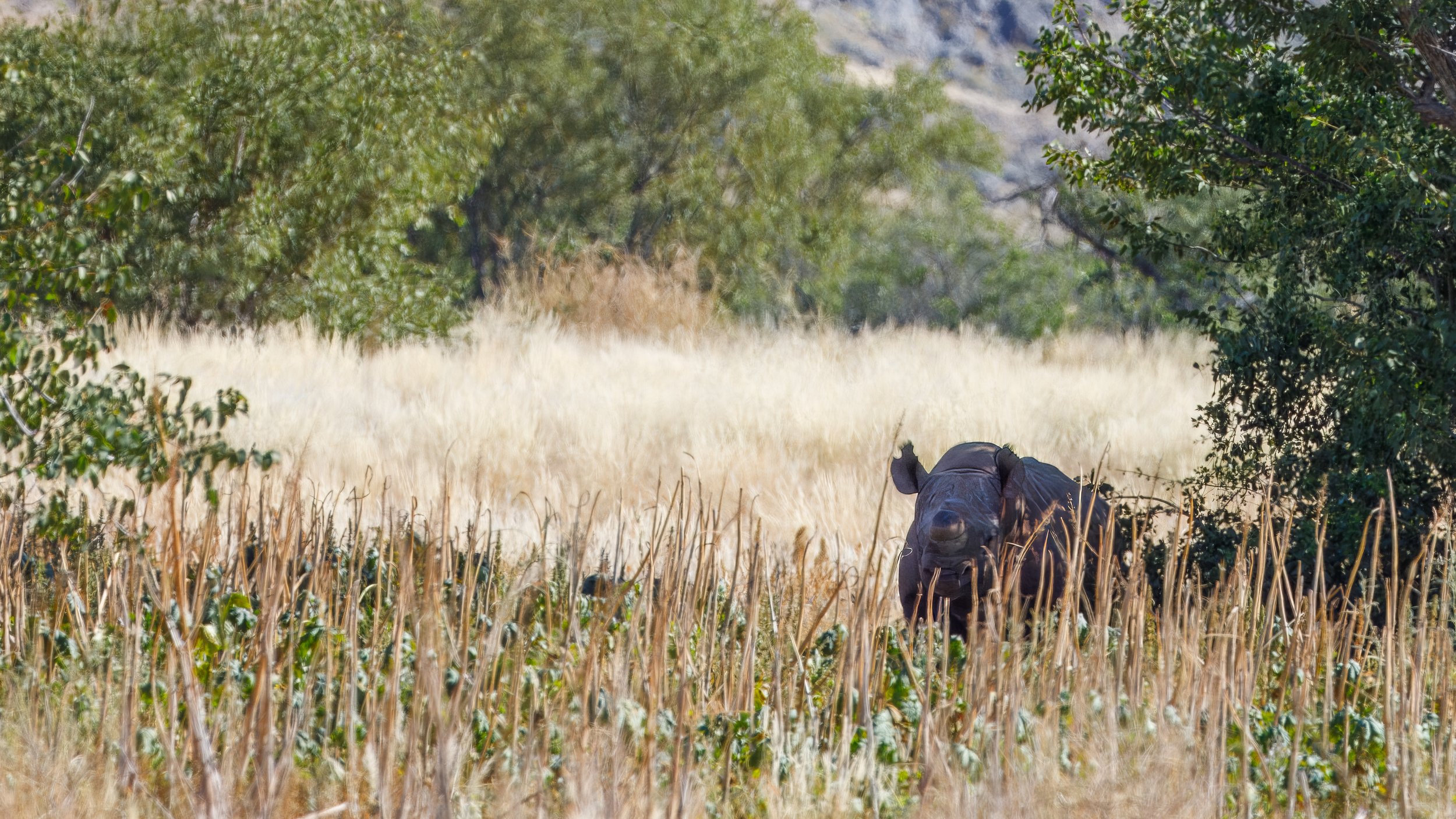
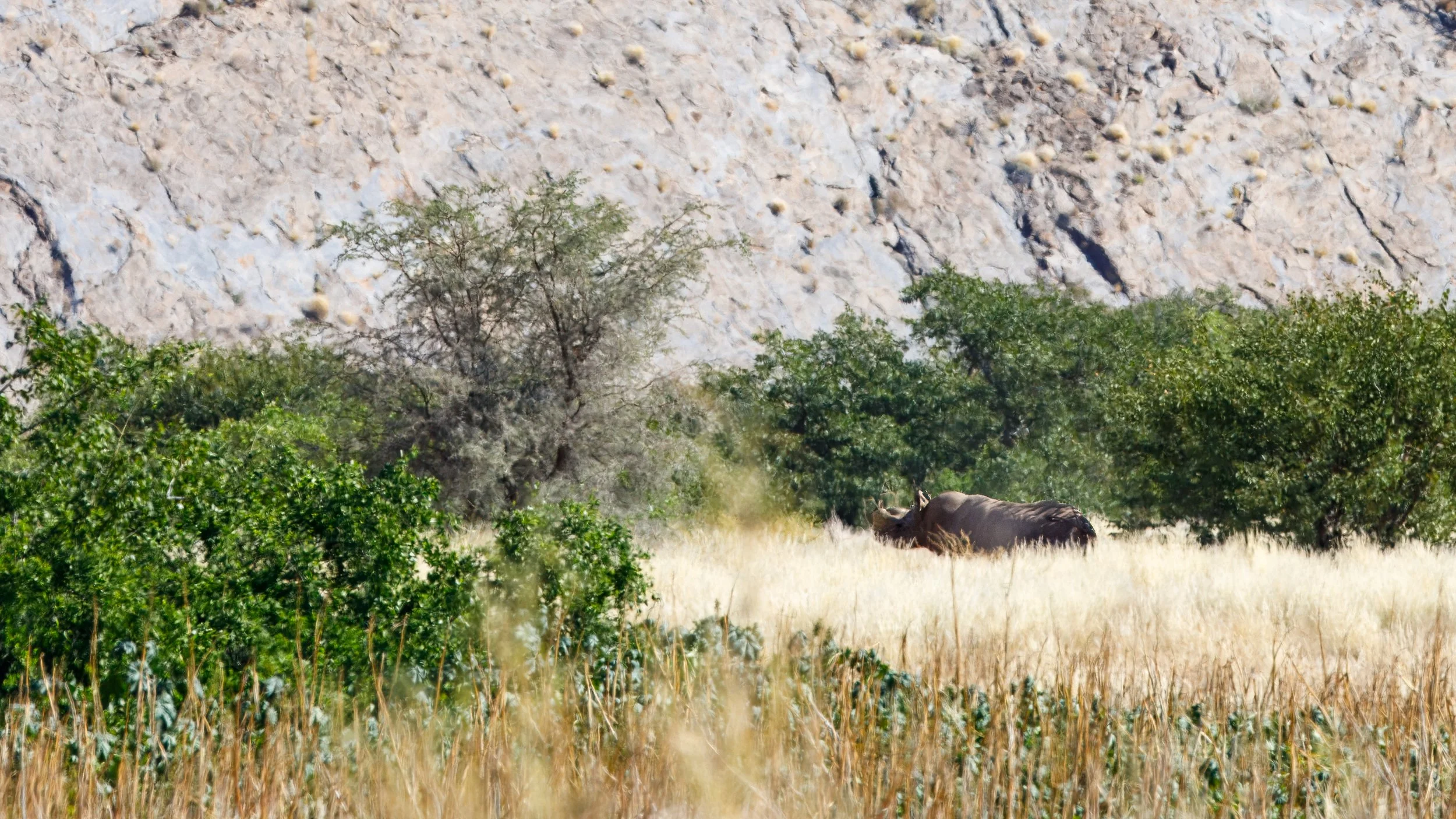
After parking, and then quietly following our tracker on foot, we got our first view of Kennedy
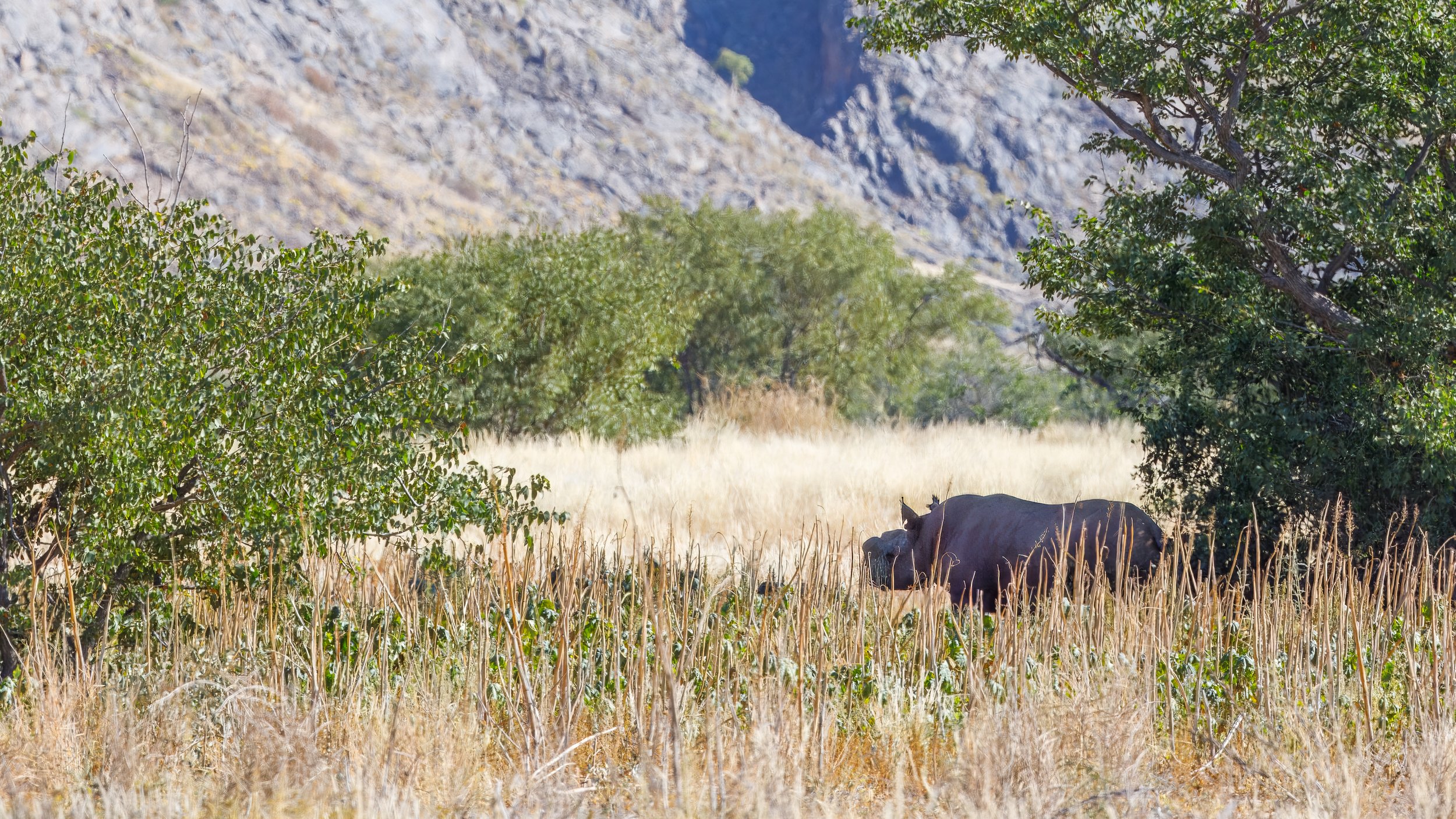
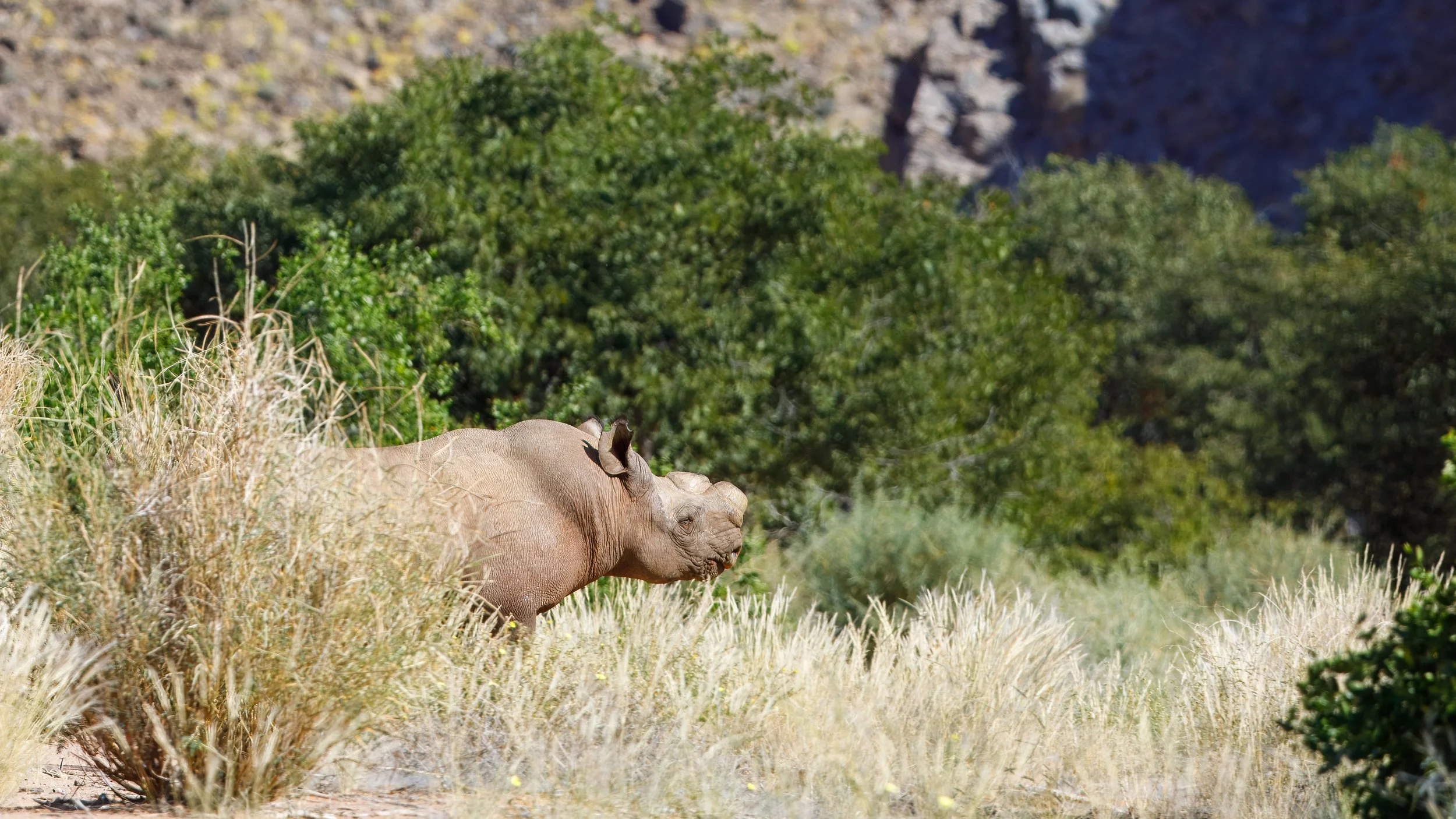
Kennedy gave us a brief glance before moving on, and we could see that he had been dehorned to make him less desirable for poachers
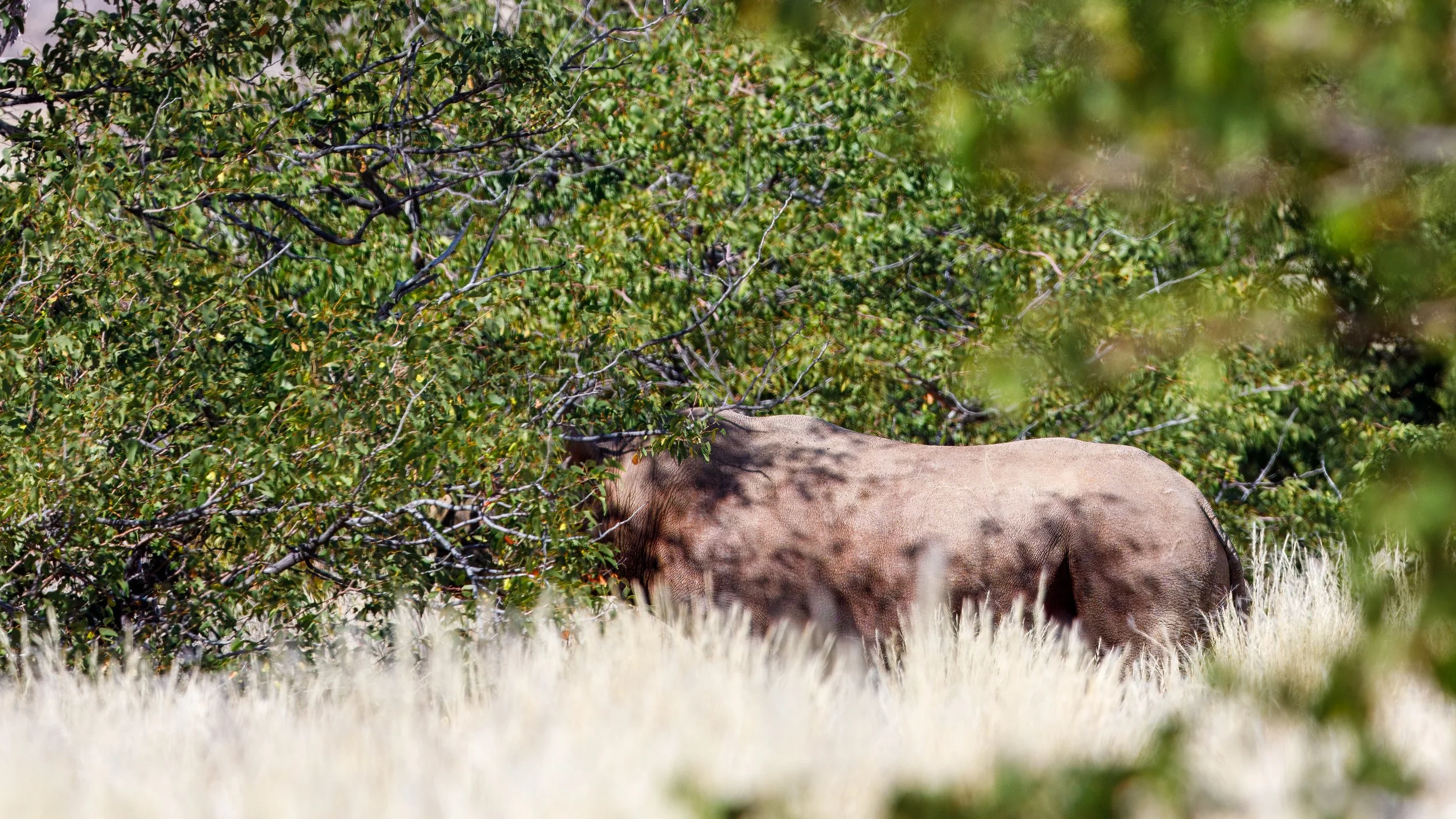
Following Kennedy’s departure as he ambled off
Still not a great vantage point but we got one more view
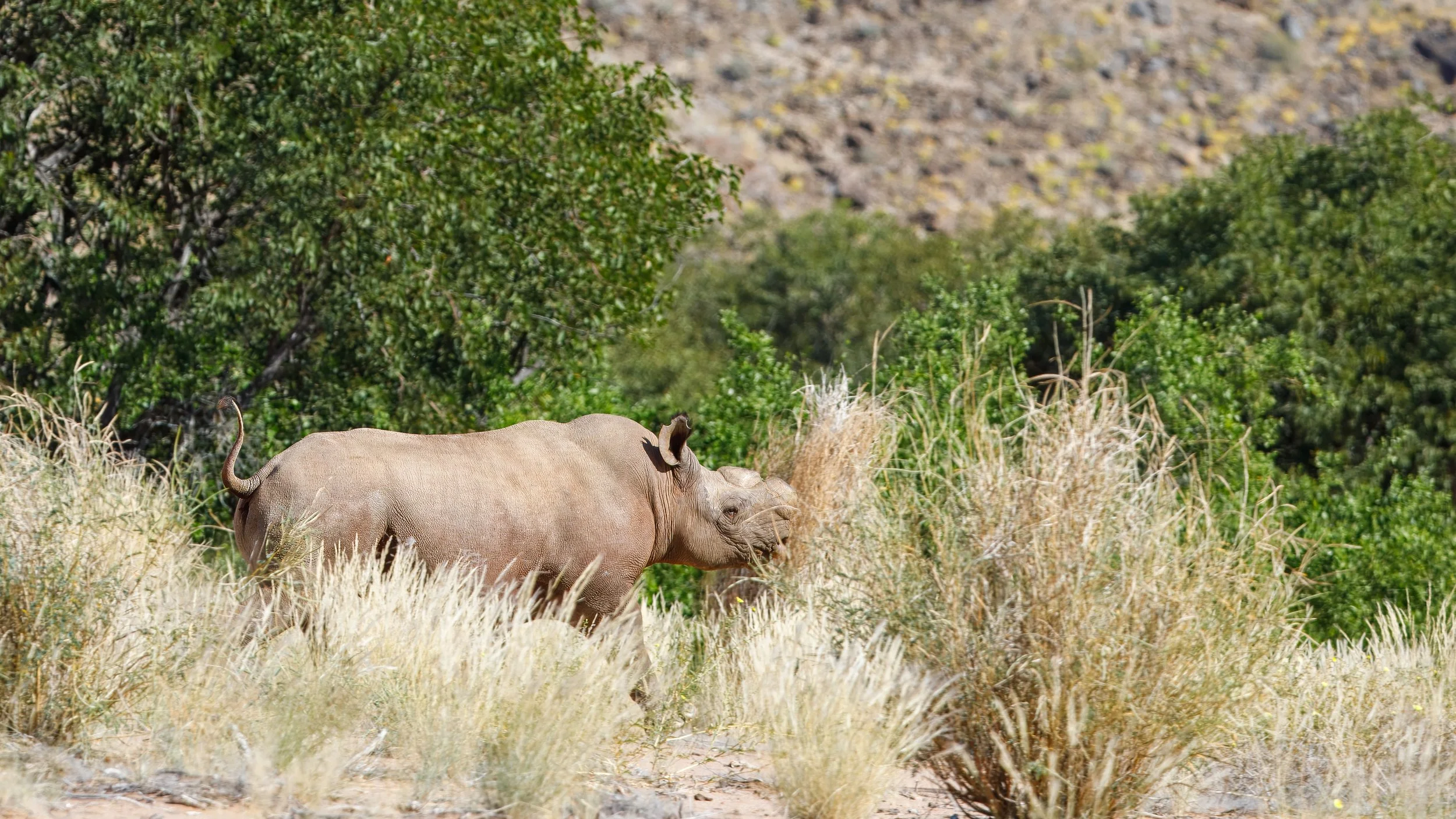
Unfortunately Kennedy was a little skittish and when he heard Tom’s camera shutter ran away quickly
While our guides were screaming to get behind the vehicle, Tom followed the lead of the tracker and stayed in the open to gather another photo
Single family chestnut weaver nest, in contrast to the giant connected nests of the sociable weavers, that live together
River valley typical of the “roads” we were navigated through the conservatory
African star-chestnut clings to the rocky cliff, with roots finding and making cracks in the rock
An older Welwitschia mirabilis shows damage wear and tear of its hundreds of years; they only ever grow two leaves, even if they start splitting apart over time
Phantom tree finds roots near the cliffside in the river valley
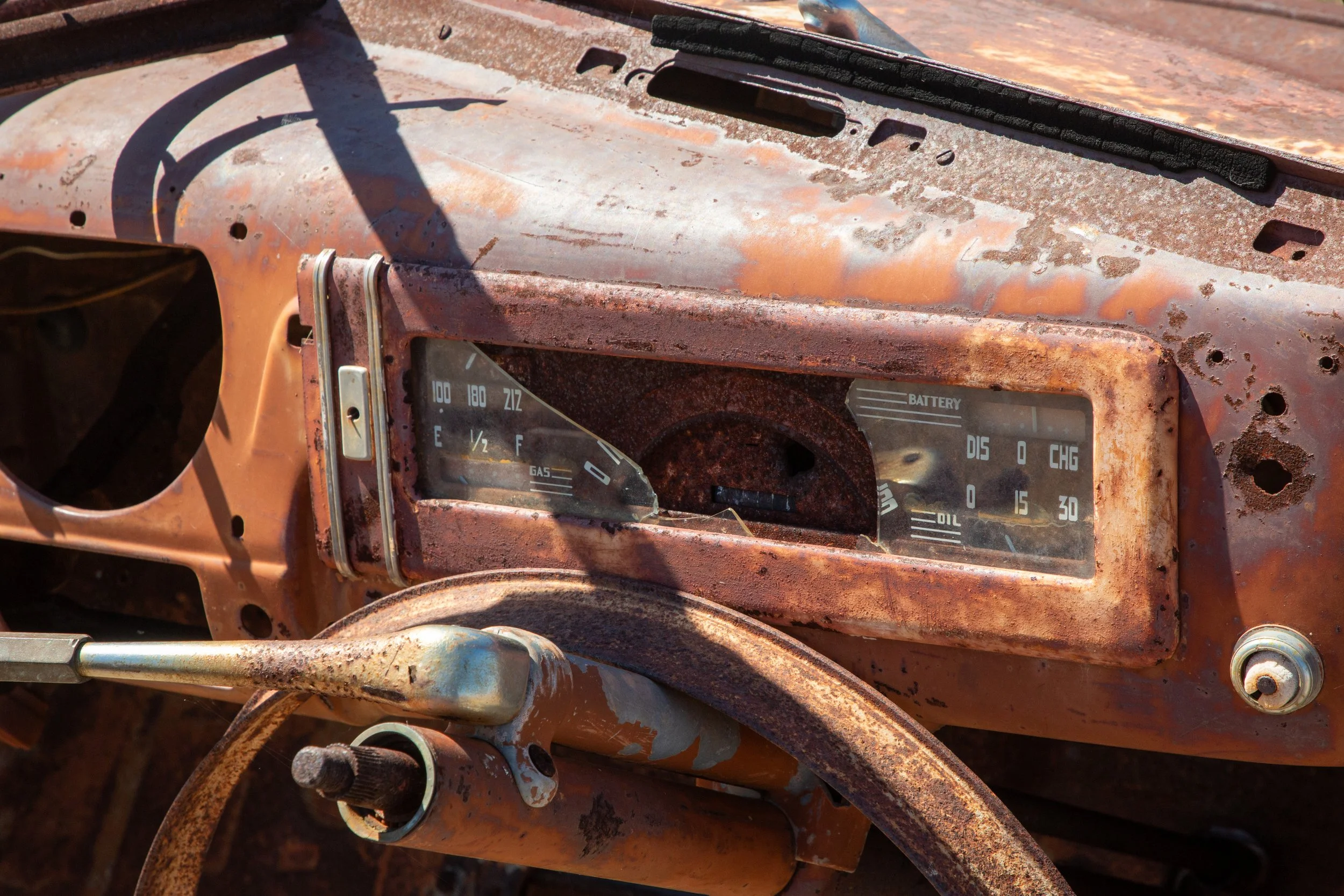
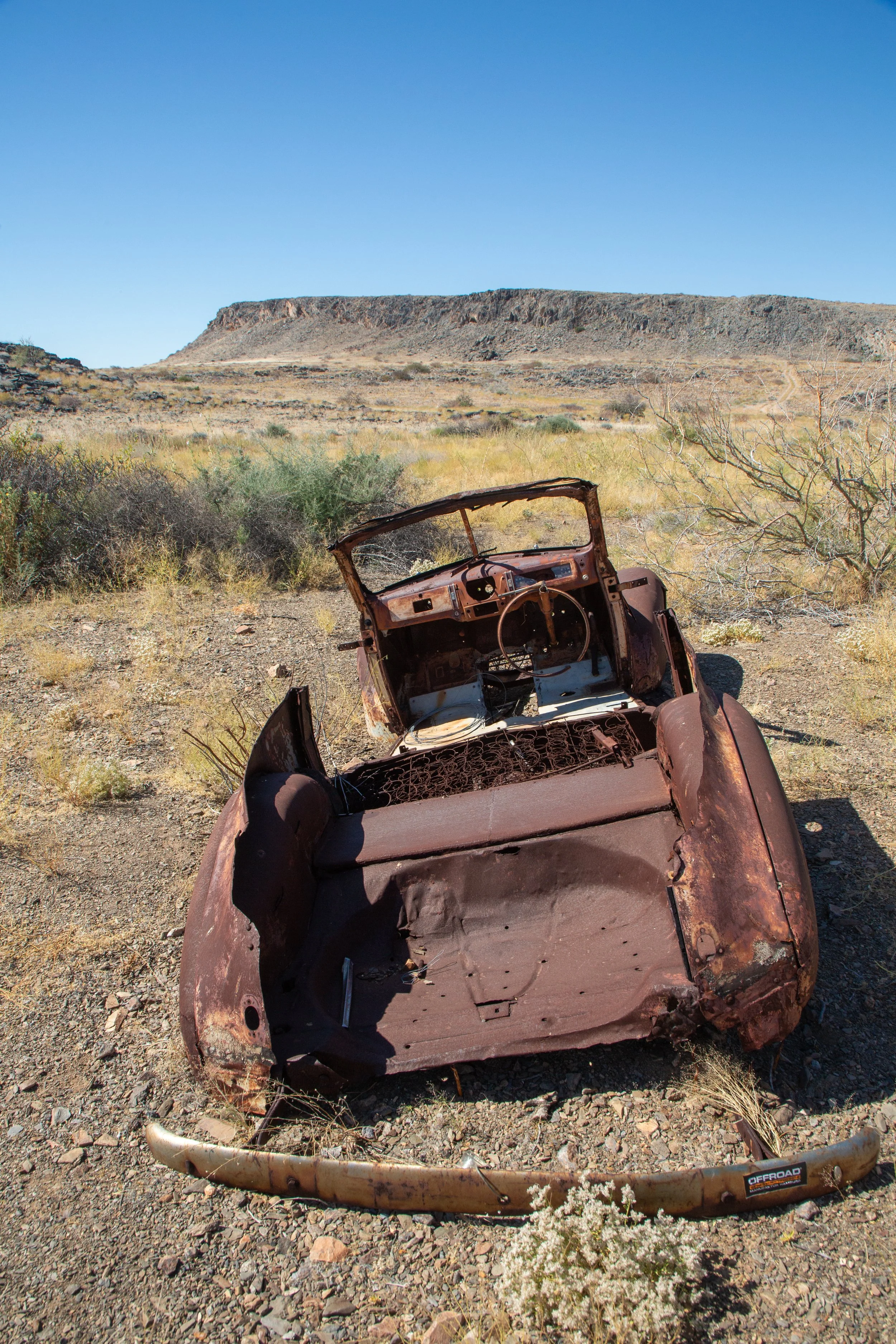
Knowing how rough the roads, surprised there aren’t more abandoned cars
Not clear how long the car has been here, but it did provide an interesting contrast to the surrounding desert
More bustards in the desert
Although we were no longer on the hunt, we did find some more rhino tracks
Approaching Camp Doros you can see our tent and the central compound
Refreshing at our tent before sundown happy hour
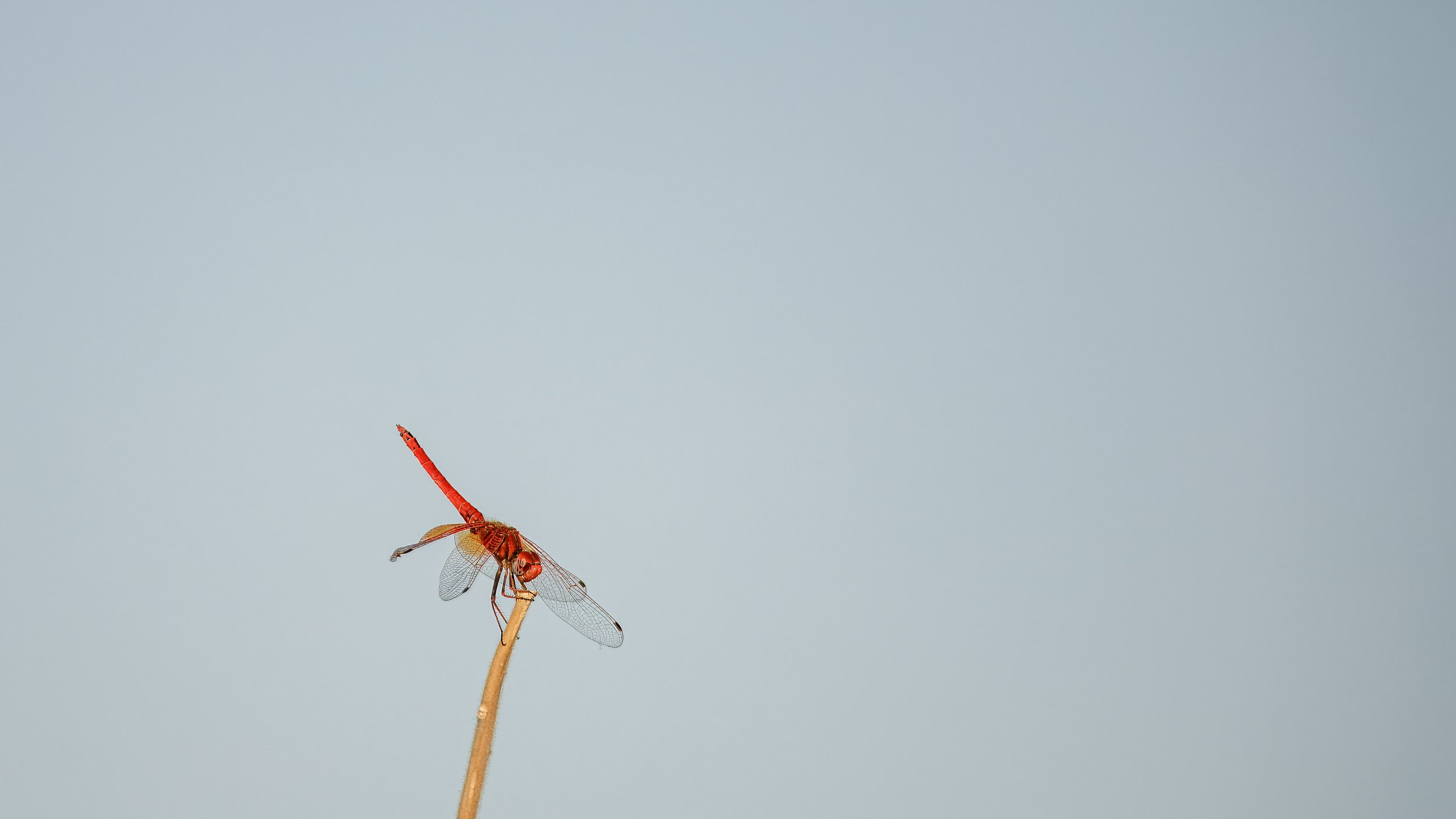
A red-veined dropwing dragonfly
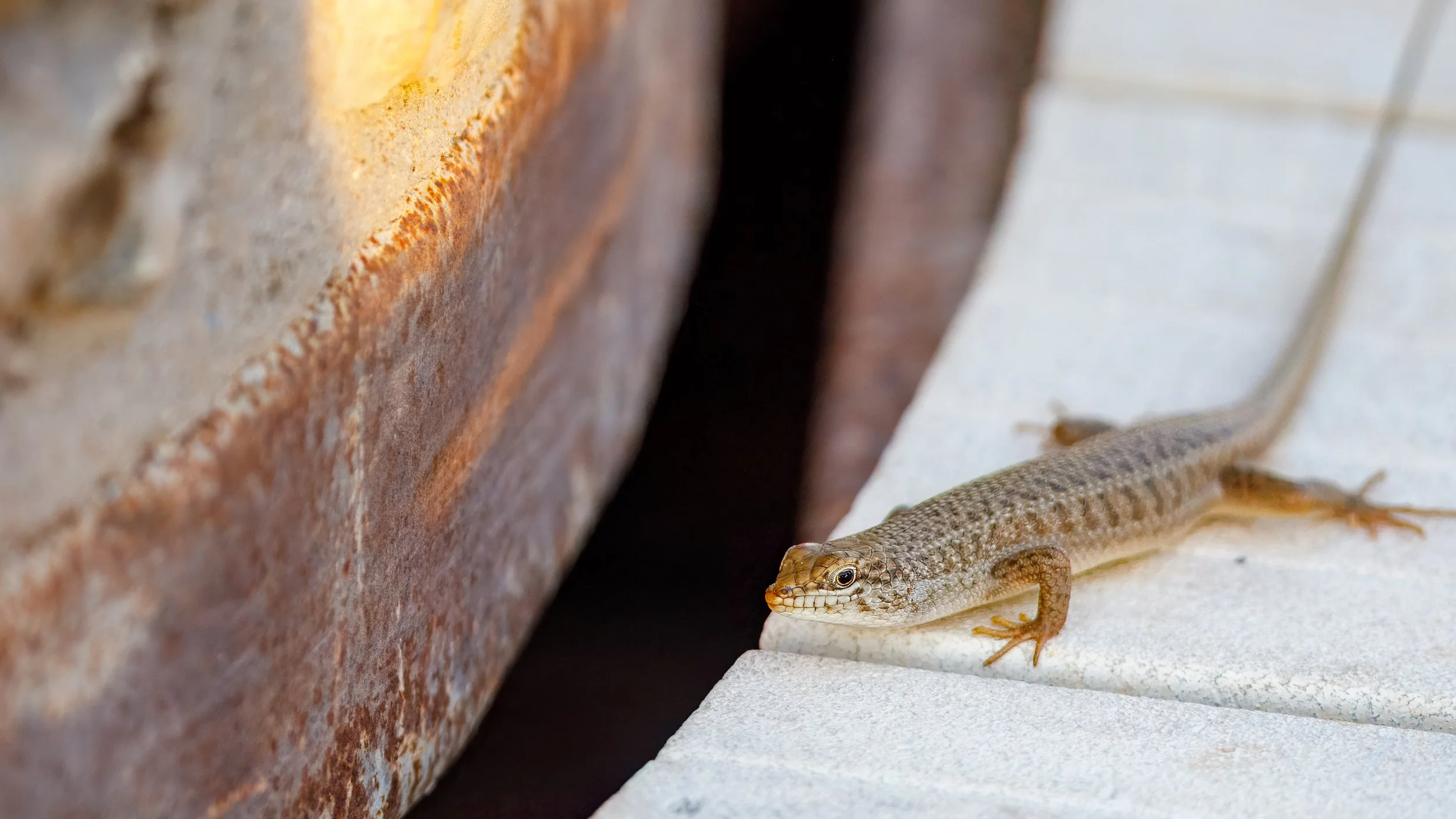
A curious sand lizard joined us for sundowner happy hour
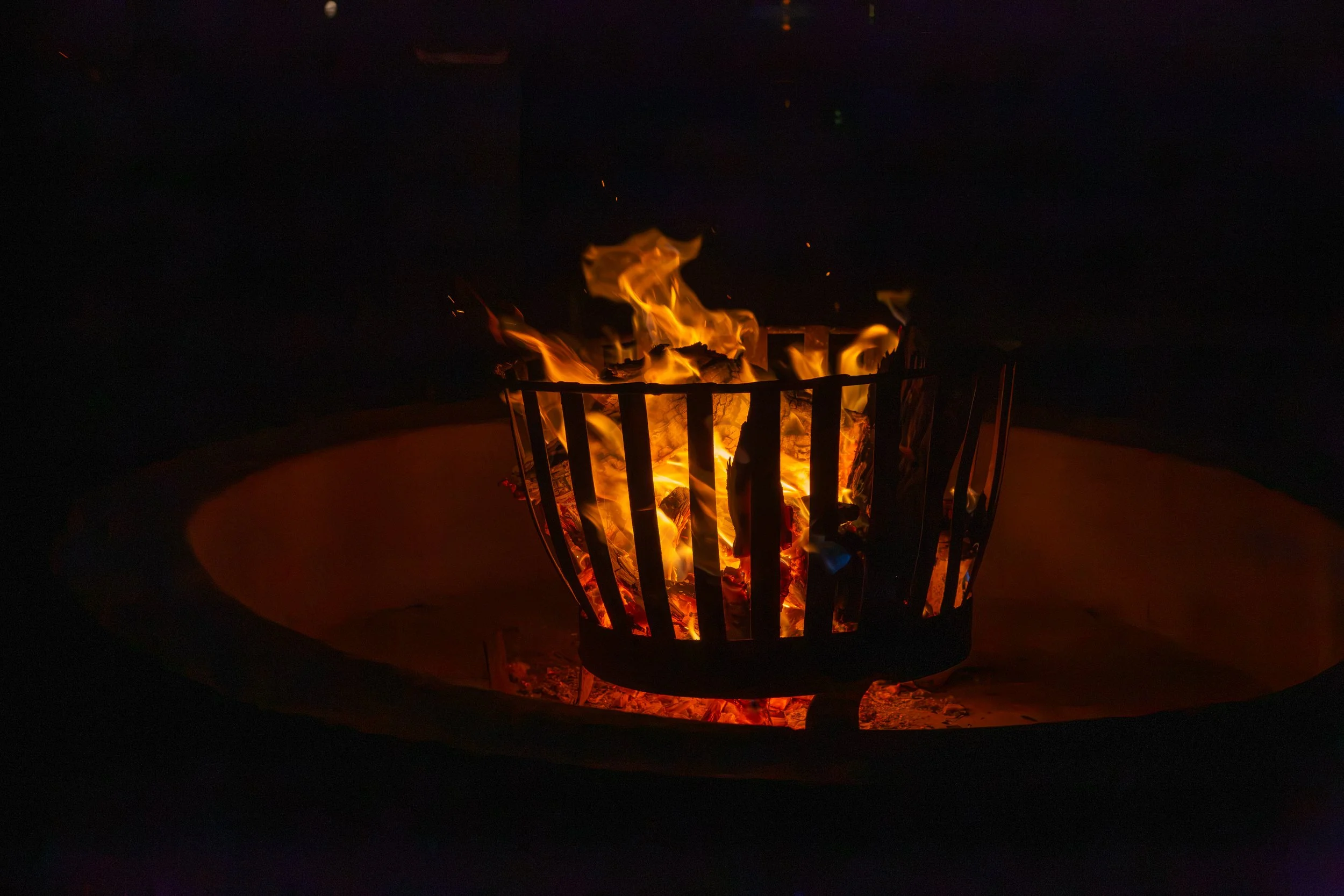
Camp fire ambiance near the outdoor dining room
After a successful day with a lot of bumpy roads, we enjoyed the refreshments and gourmet meal in the main communal area of the property. We got to chat with a couple from Australia who had been doing a self-drive version of our tour, which sounded a little more challenging than what we’d signed up for. After dinner, we enjoyed the beautiful star-filled night before bed.
Jun 14
After breakfast, we packed up and got on the road, heading to our furthest north destination of Etosha National Park. Etosha is a large salt plain that is the premier safari location for Namibia, giving our best extended opportunities for wildlife viewing. It was about a four hour drive to the Ongava Lodge where we were staying, but there would be some photo opportunities on the way.
Making our way out of the Doros conservatory we ran into more ostrich
Grazing springbok enjoying the tall grass
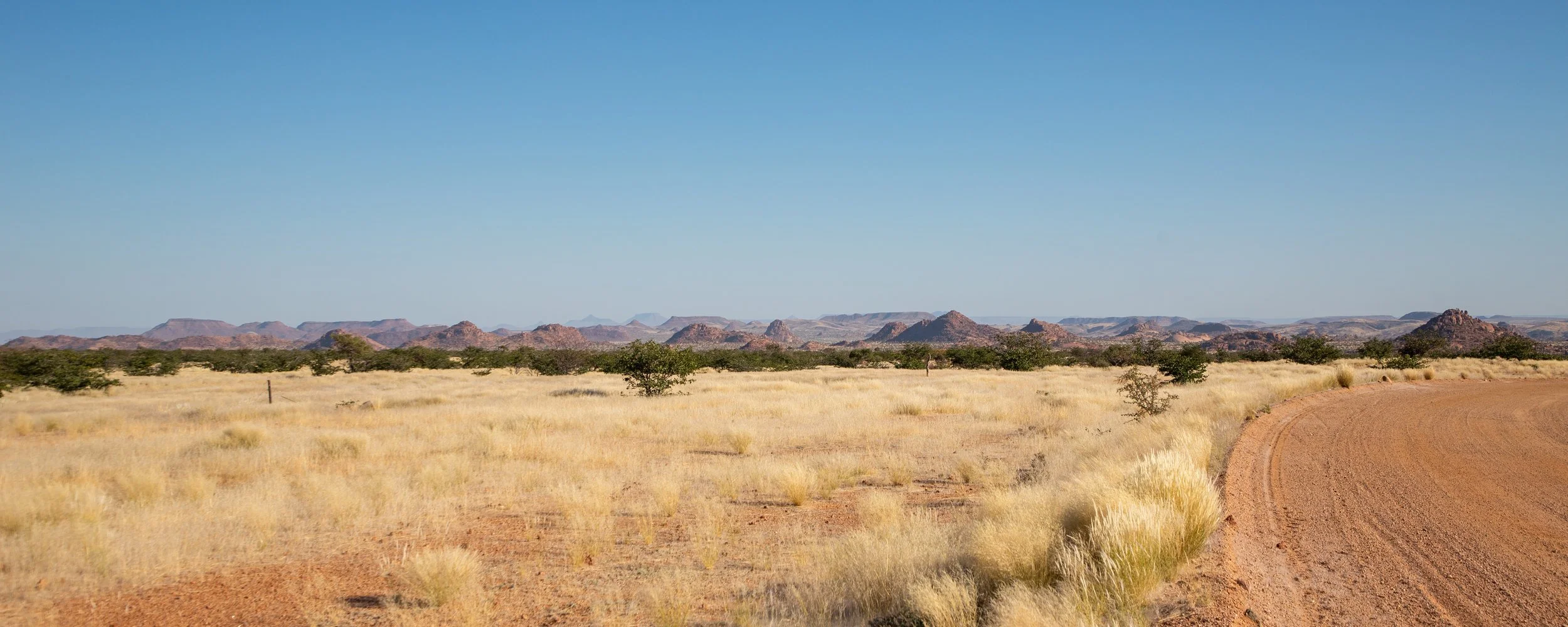
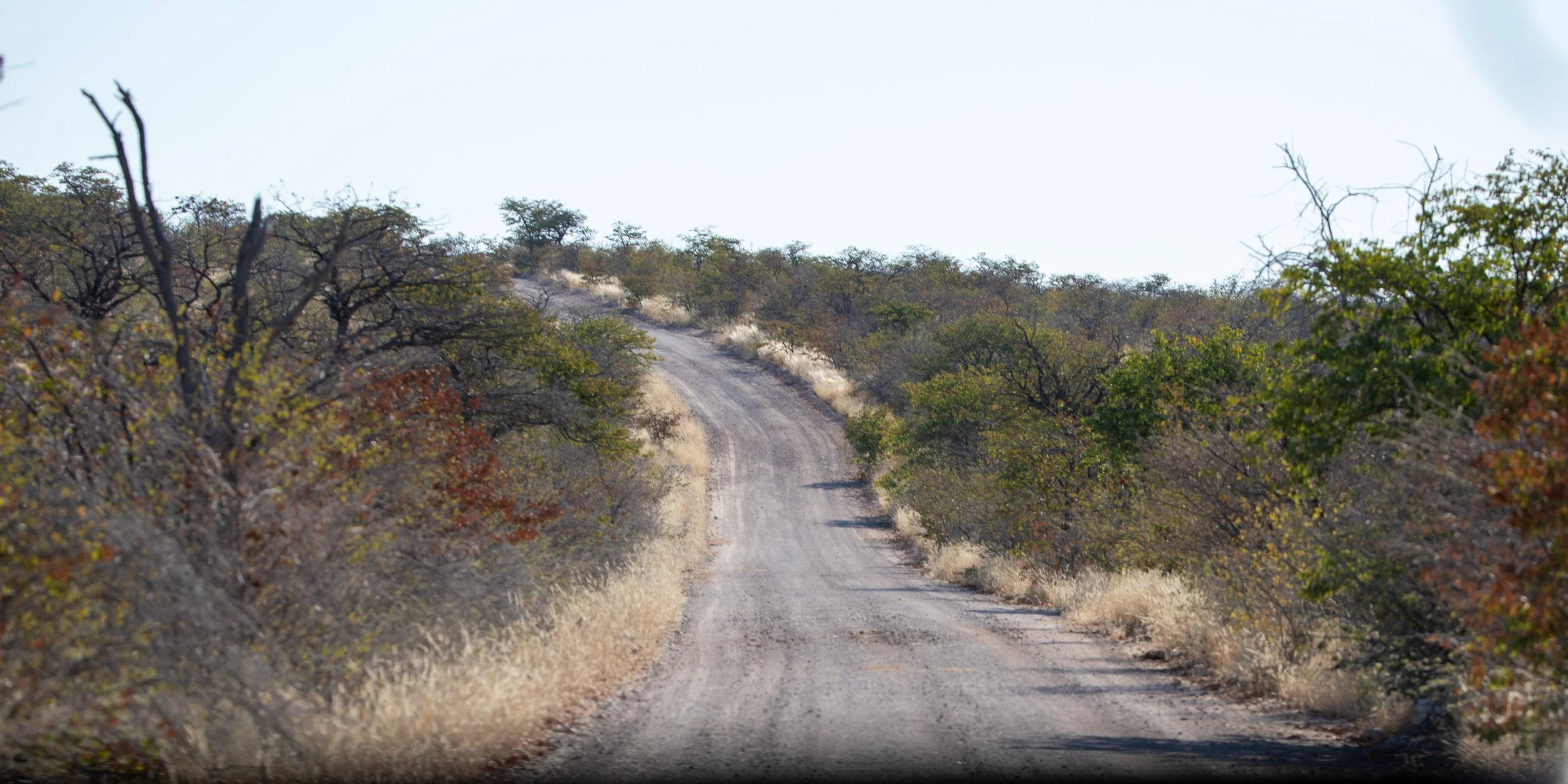
A sample of the last bits of poor road before we get to the more traveled portions of Namibia
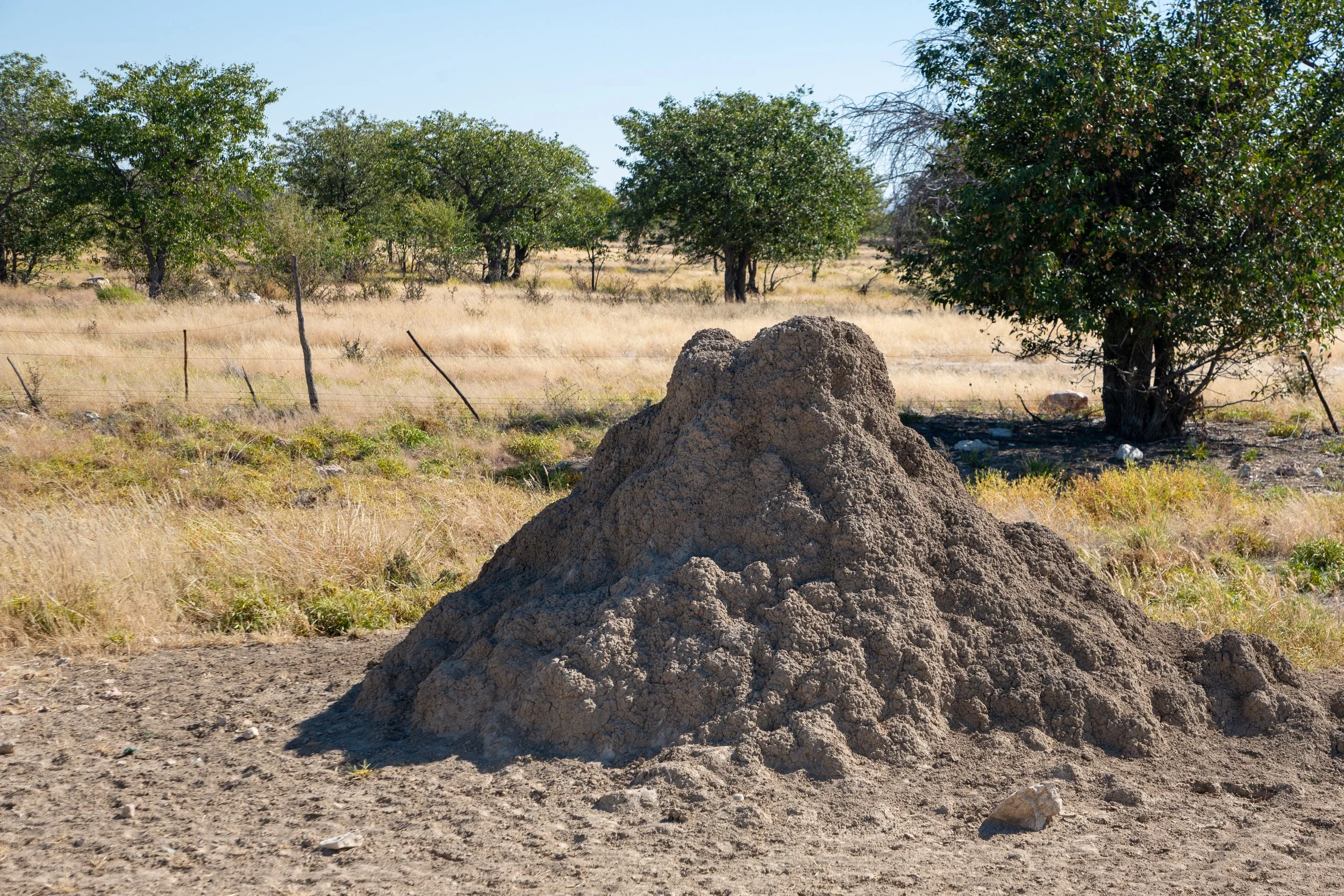
A harvester termite mound, where queens can live up to 40 years and lay 60,000 eggs a day
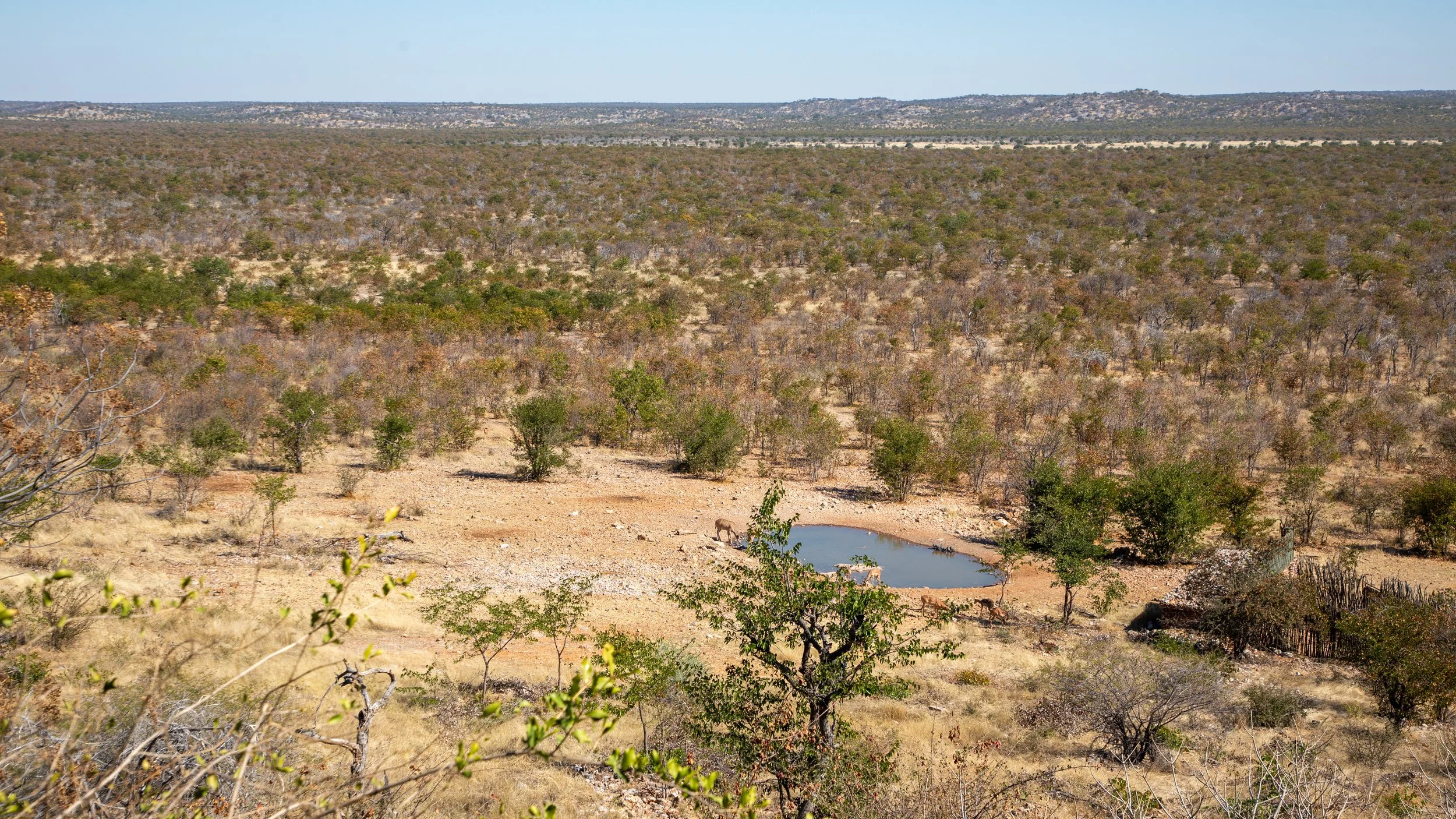
After checking into Ongava Lodge, we enjoyed lunch with a view of the property’s watering hole
In the heat of the day, we found only springbok taking advantage of the watering hole
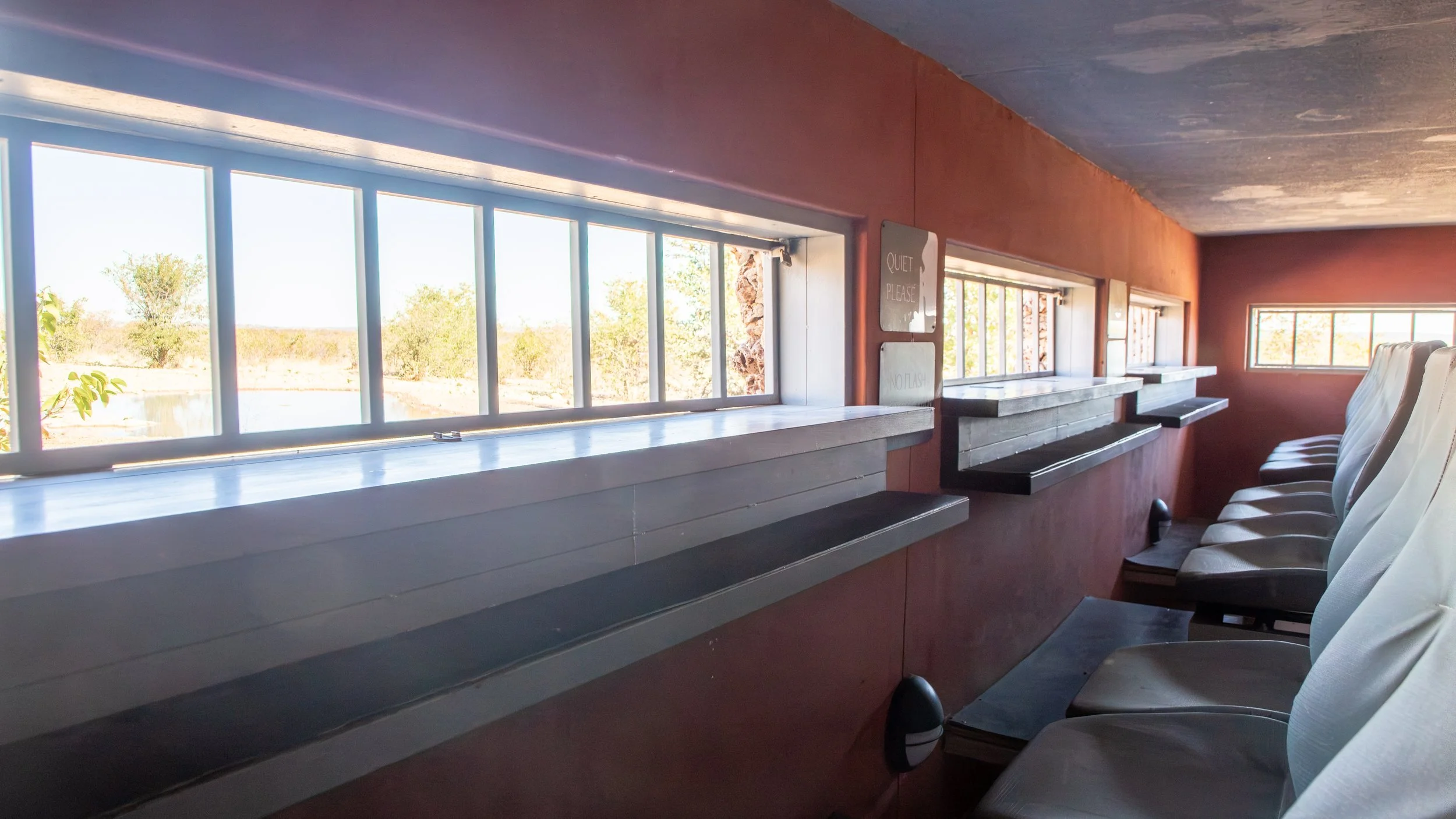
The lodge has a viewing hide, set up for comfortable viewing of the waterhole visitors. It was empty during the middle of the day, now but would become quite busy when the rhinos visit in the evening
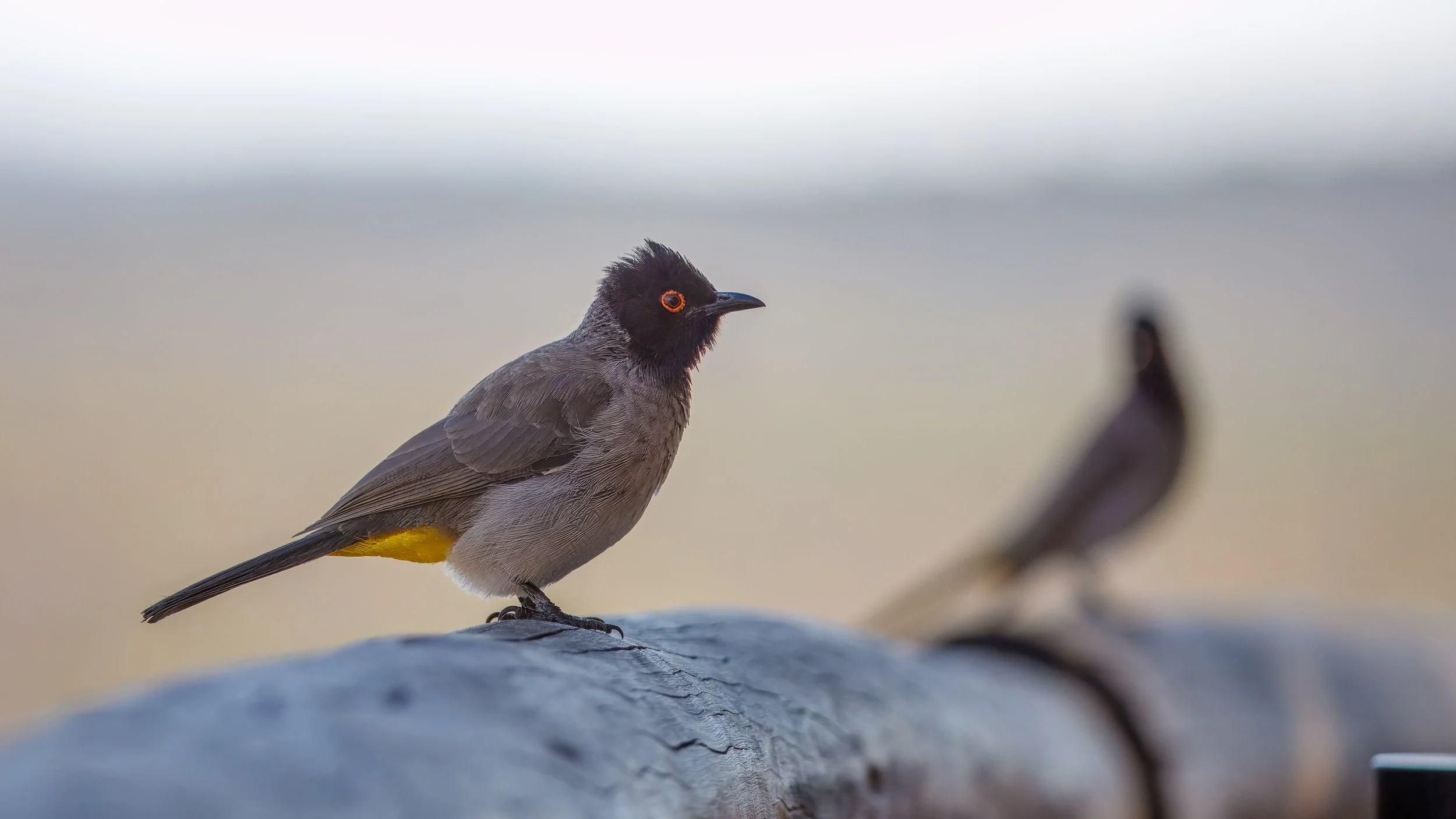
A red-eyed bulbul
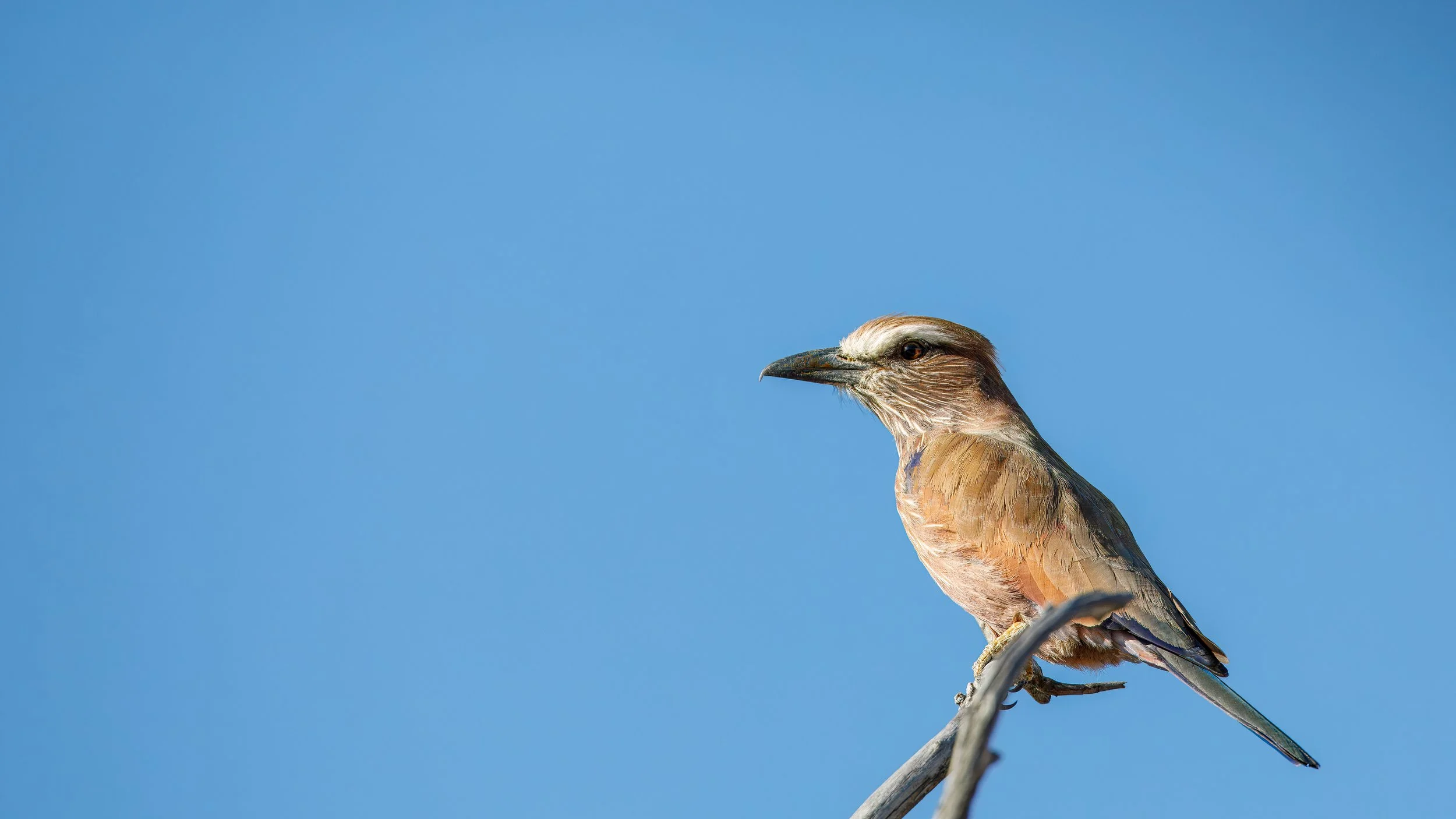
Purple roller
The road winding through the Ongava Private Reserve next to the national park
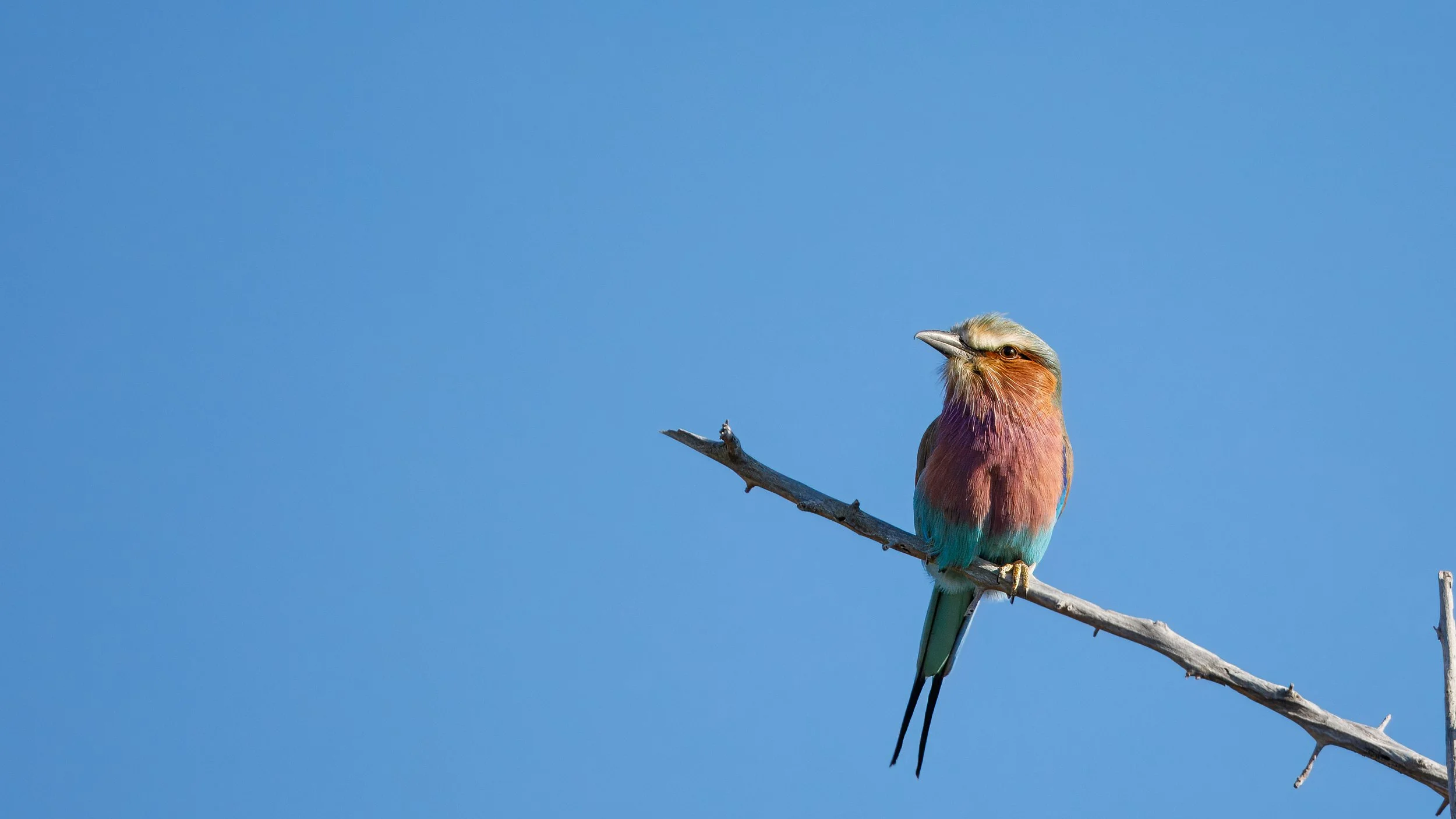
Brightly coloured lilac-breasted roller
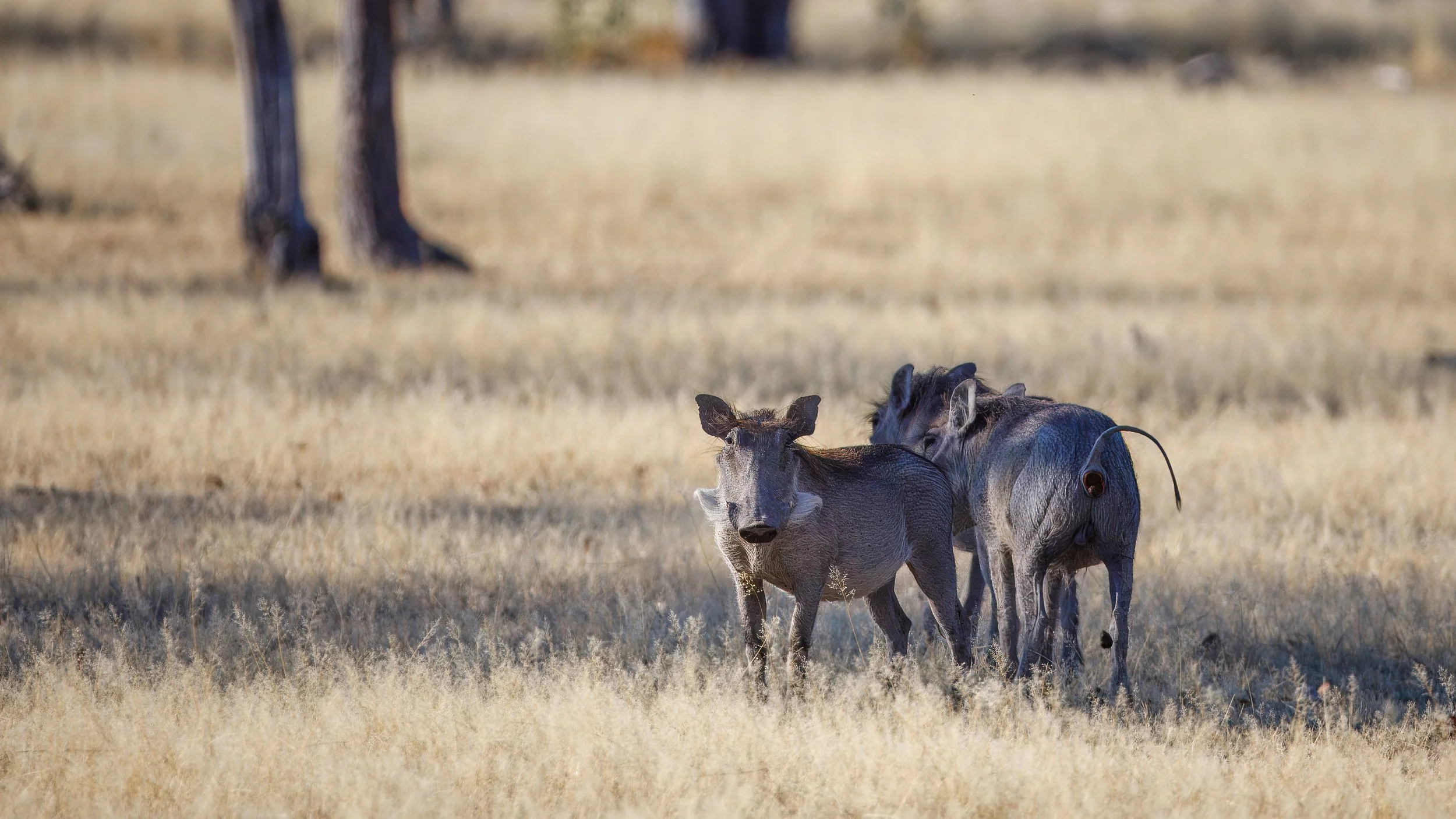
Warthogs, a wild member of the pig family
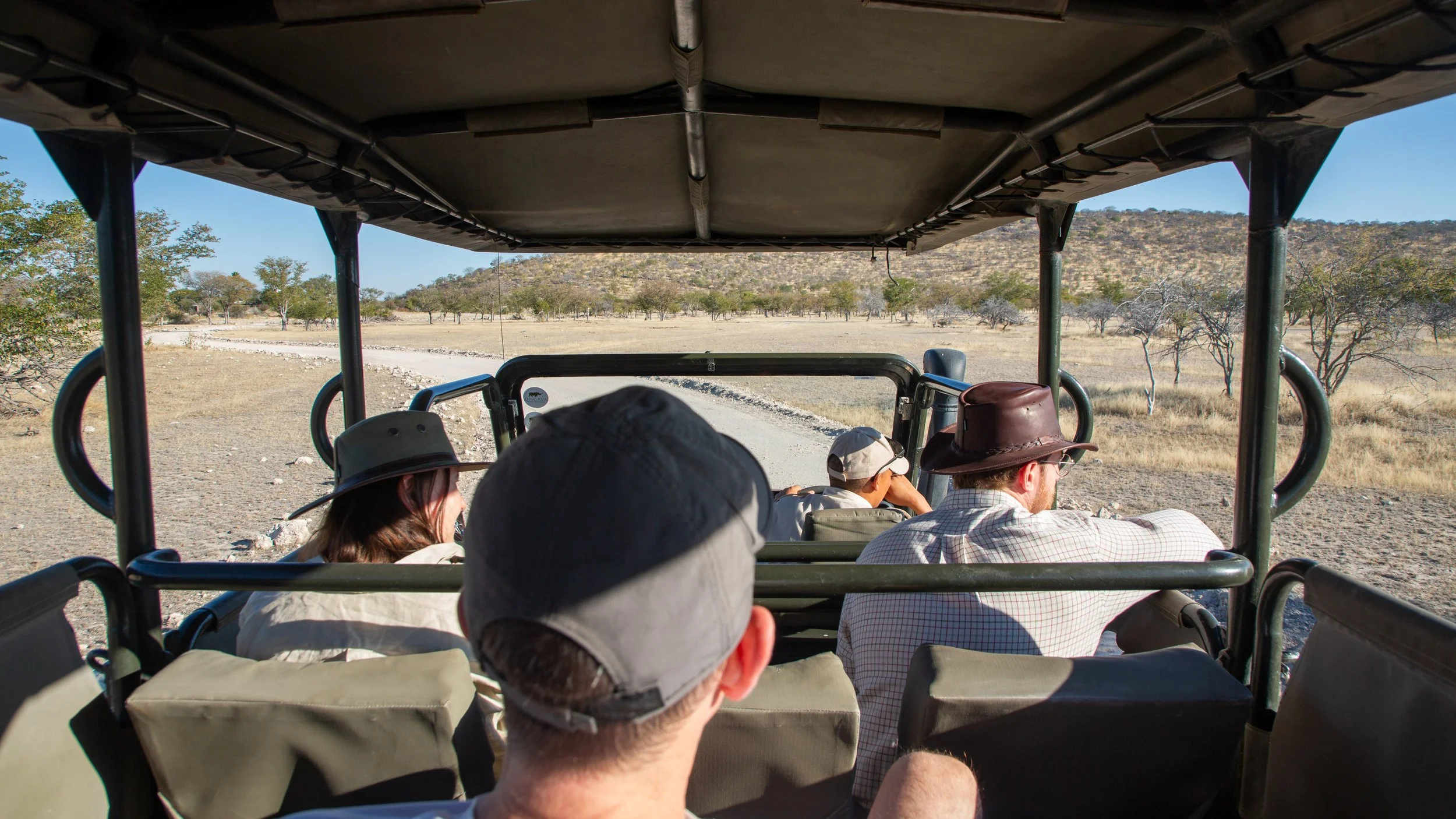
On the reserve, we were driven by a dedicated guide and more open-air safari vehicle, luckily not too crowded
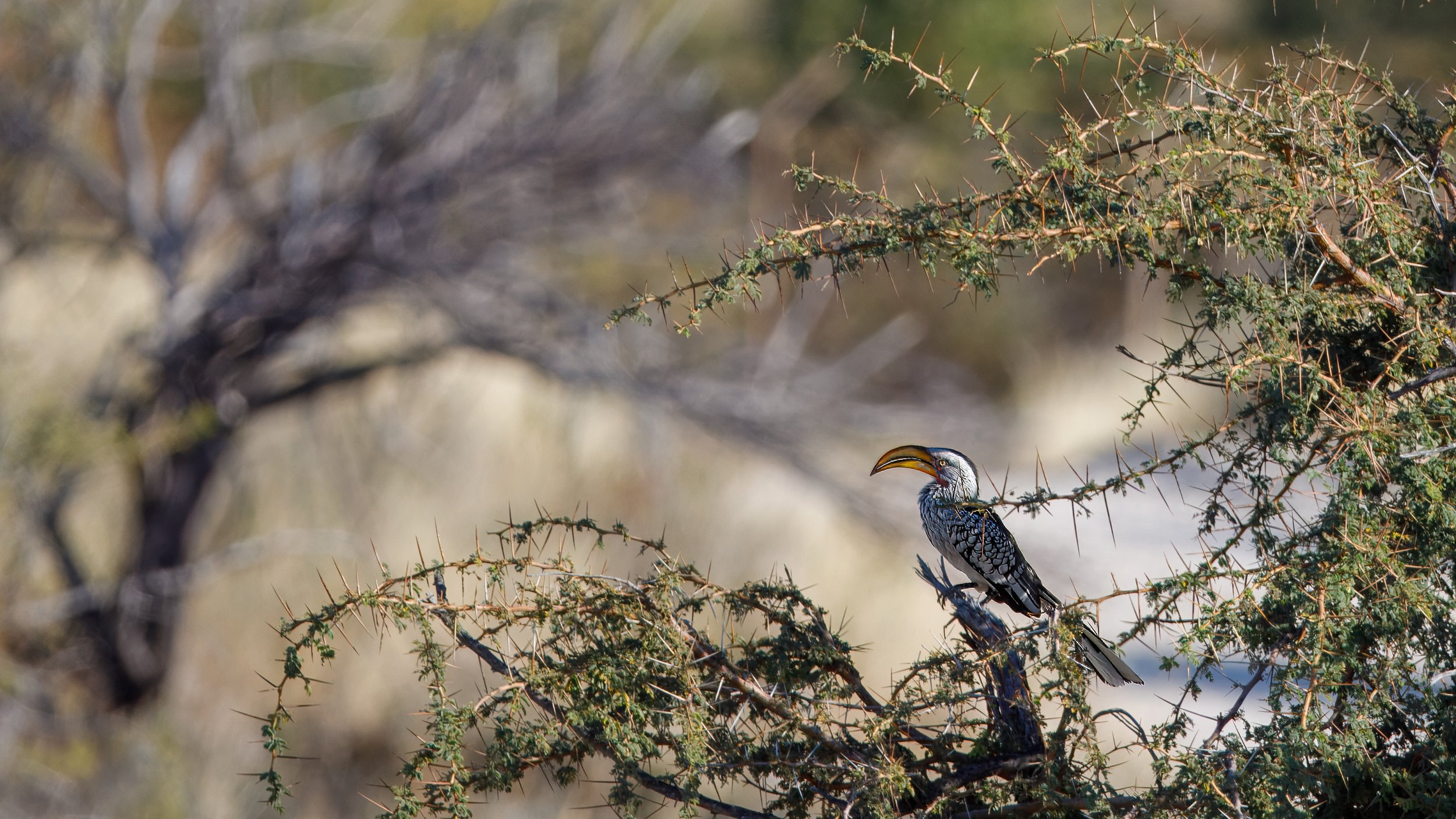
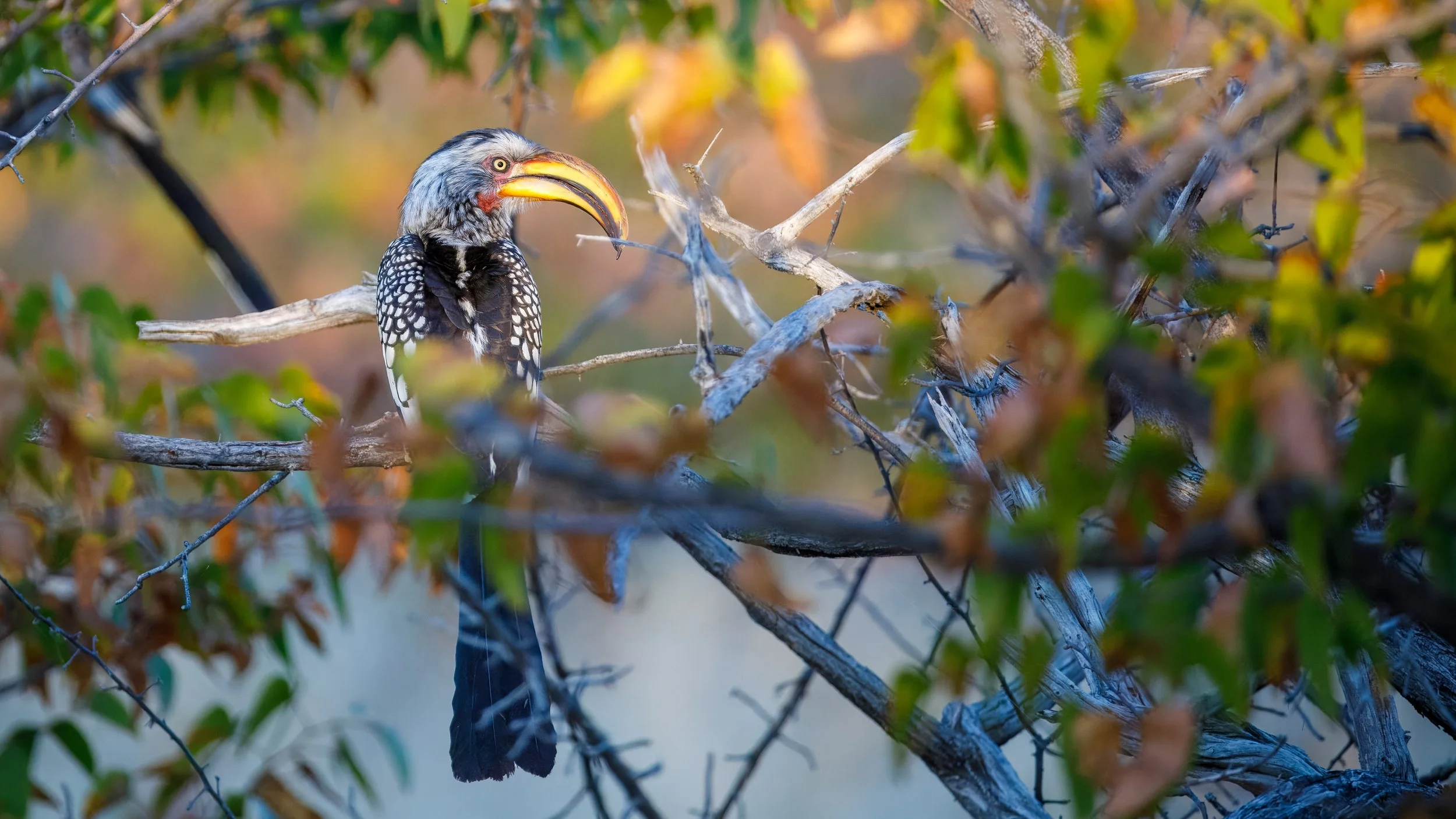
Yellow-billed hornbill
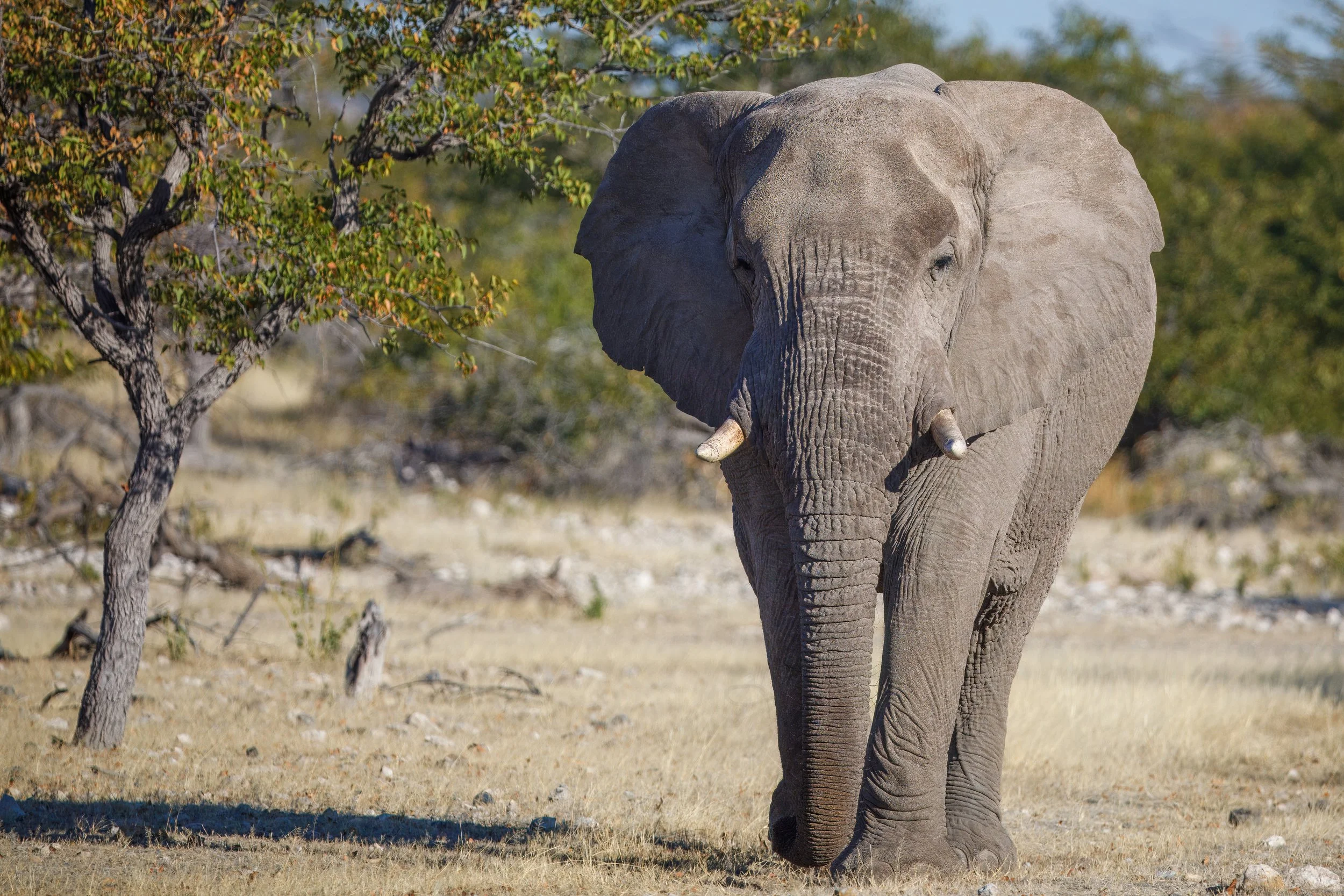
Our first of many elephant sightings for the trip
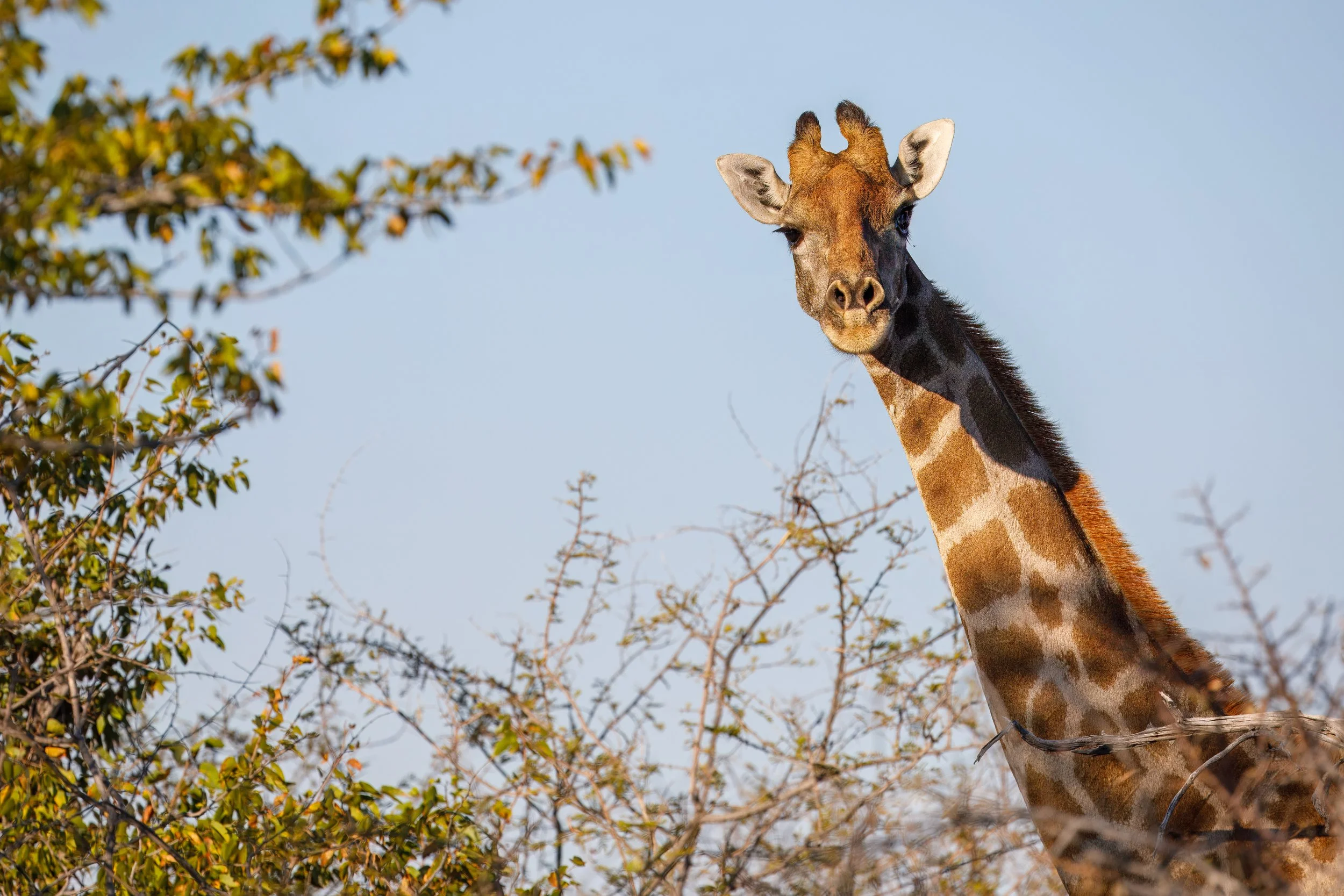
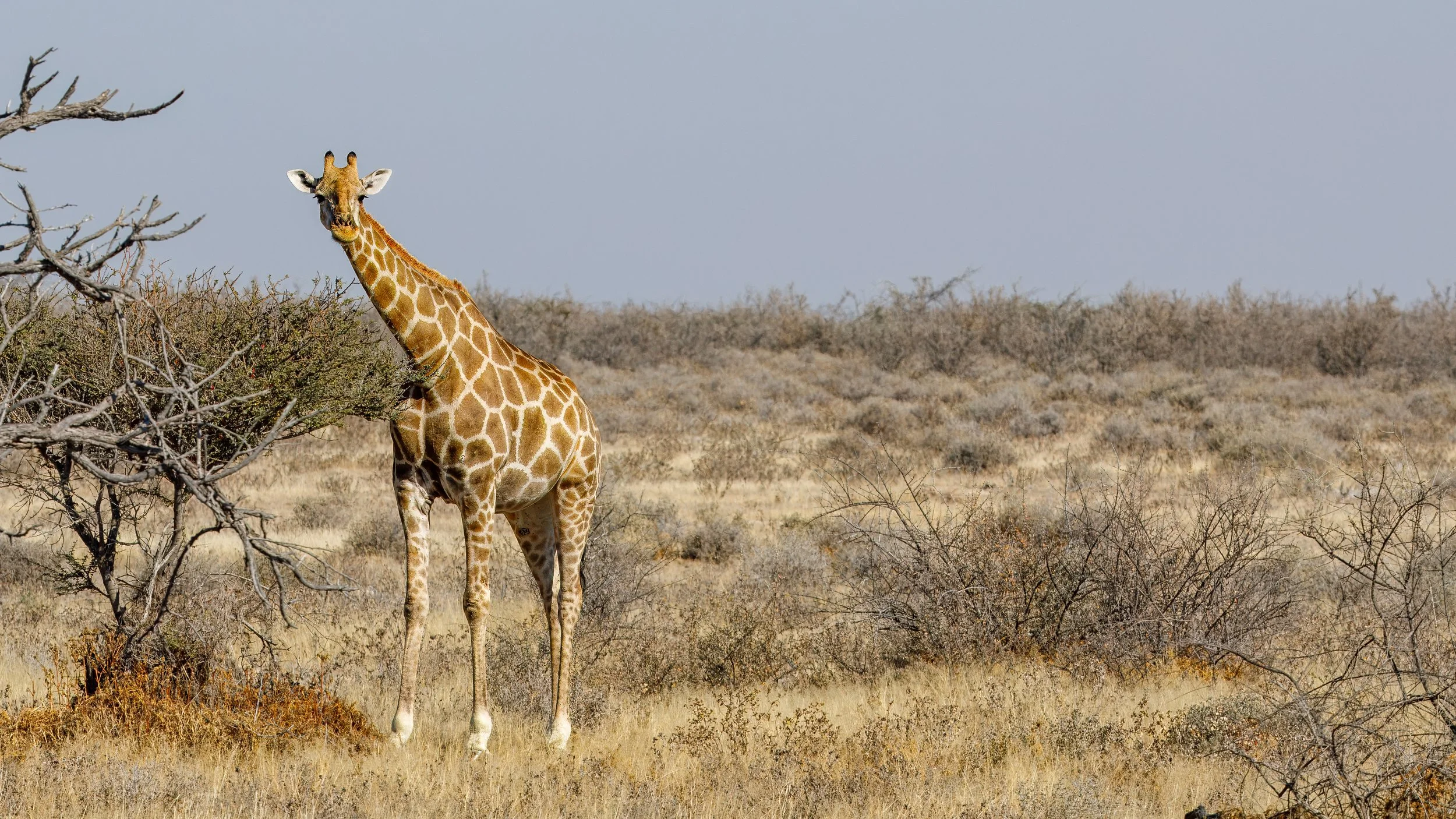
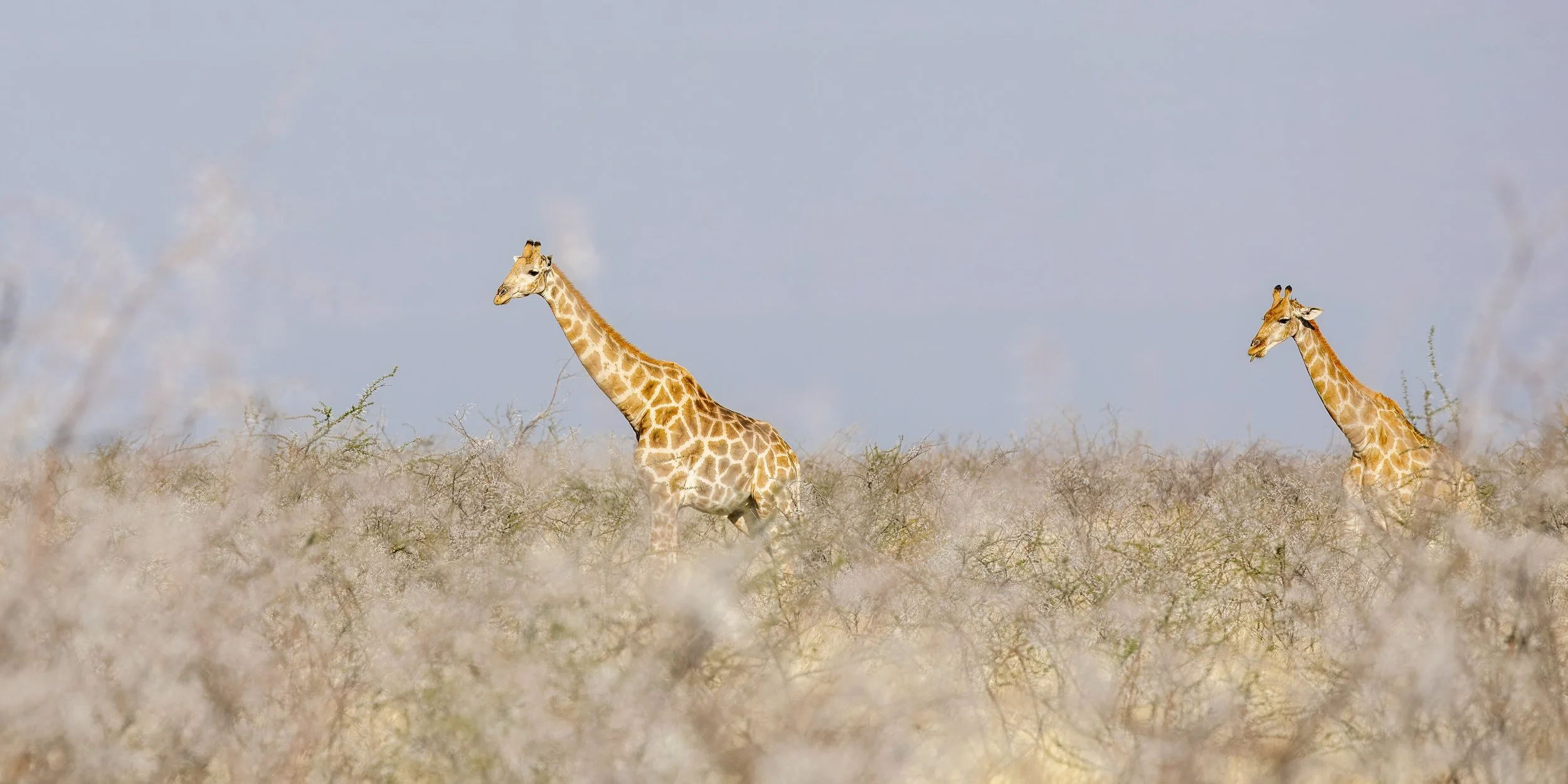
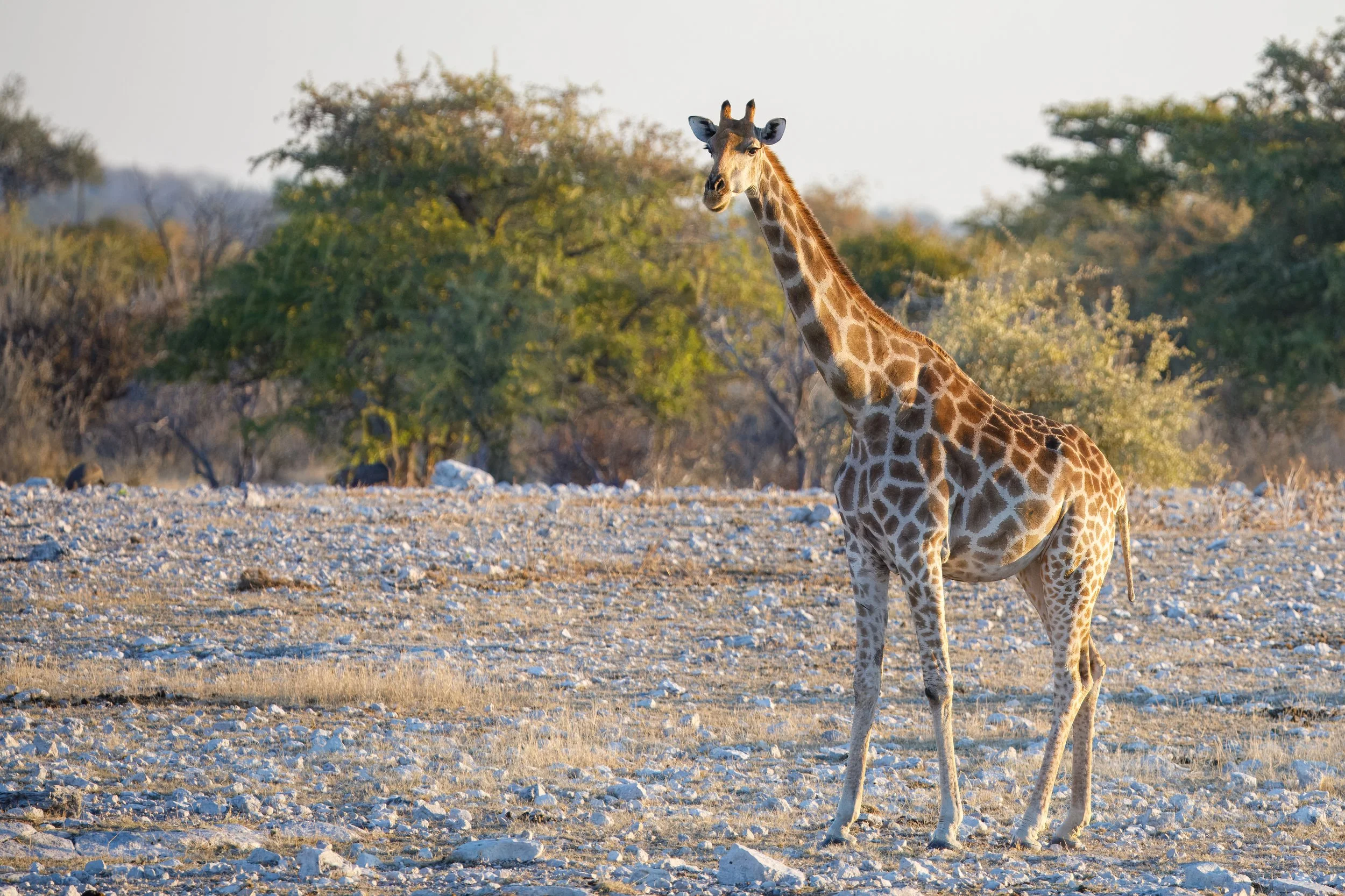
Giraffes always seem to be very curious when approached
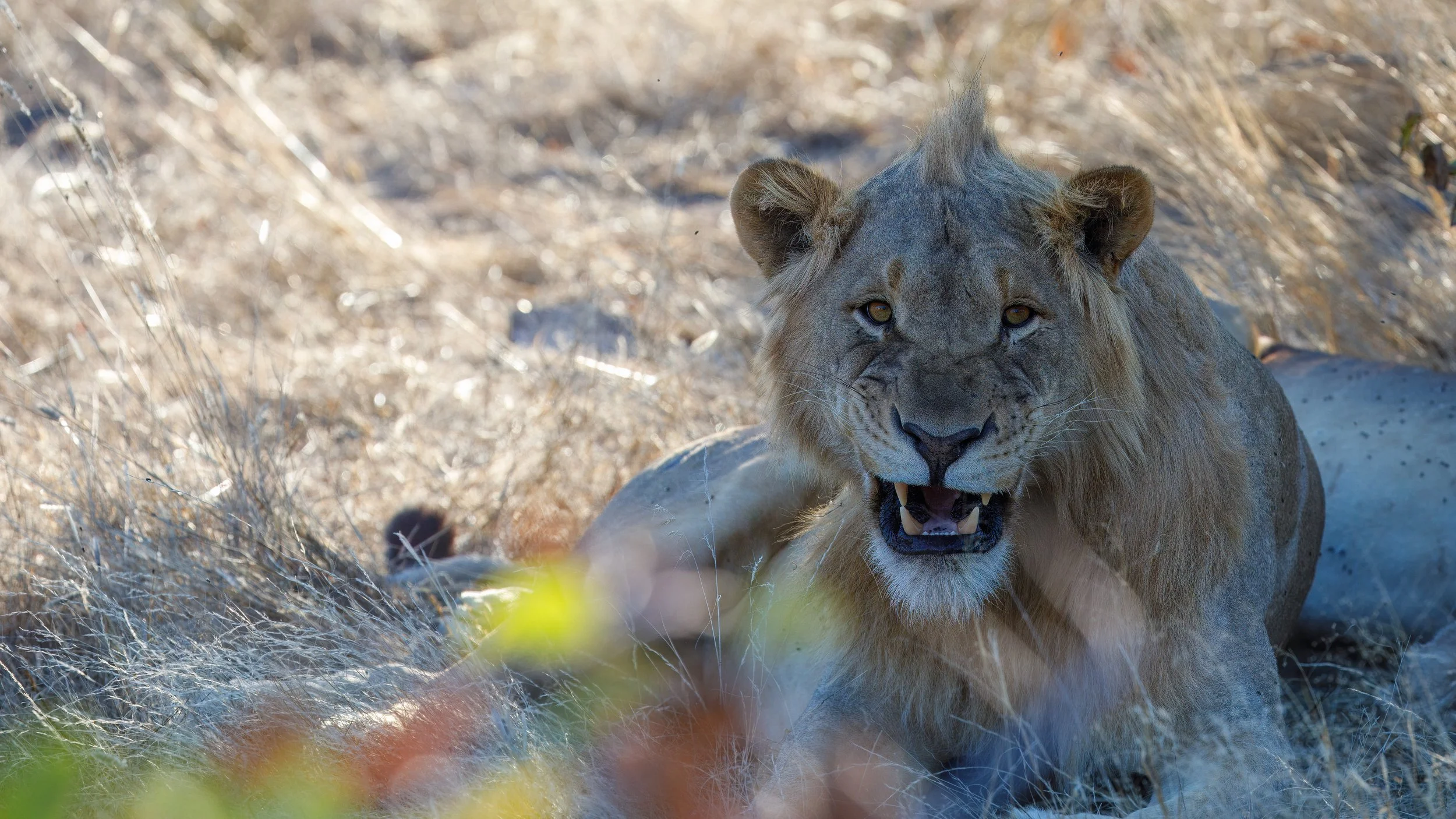
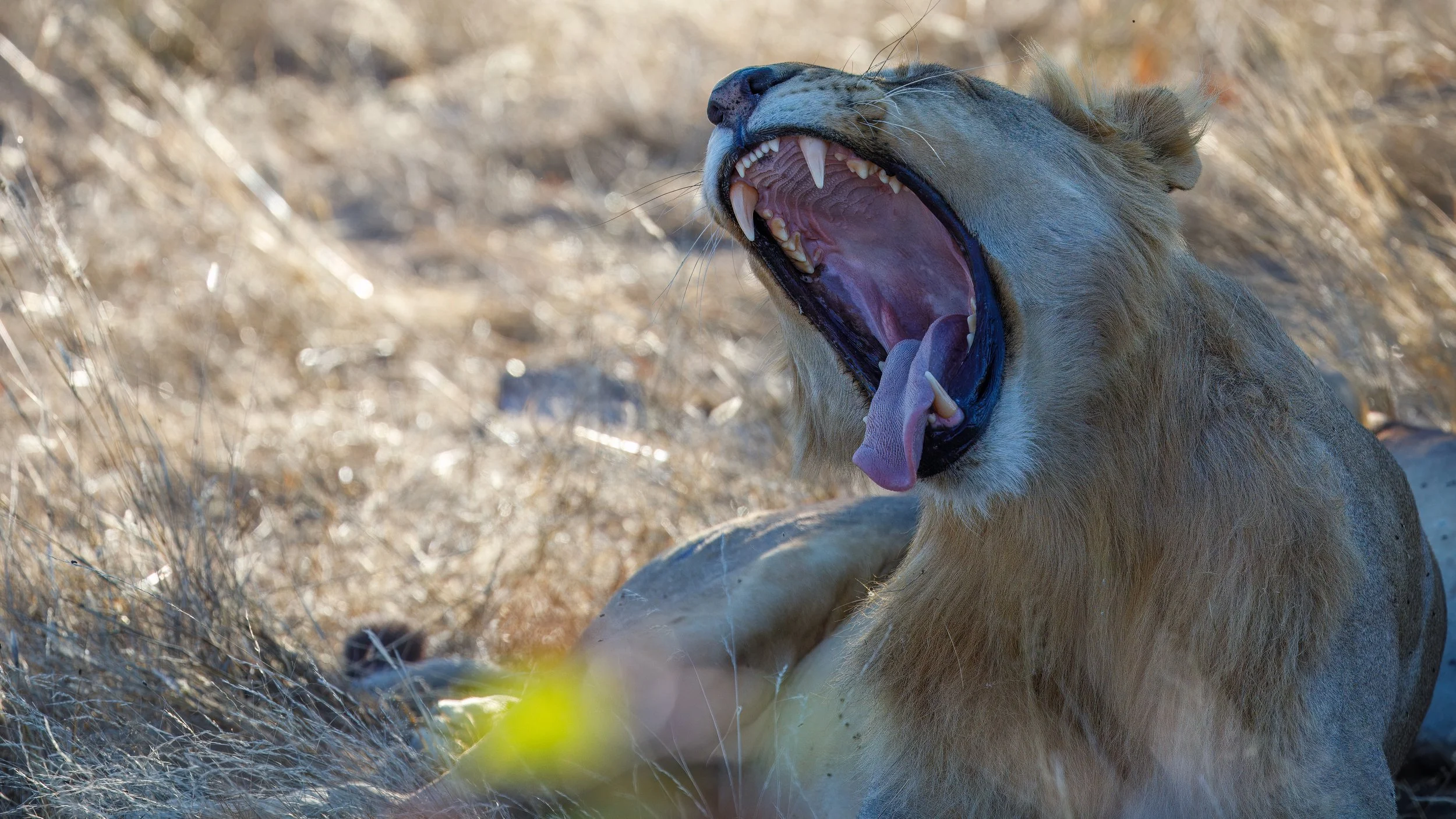
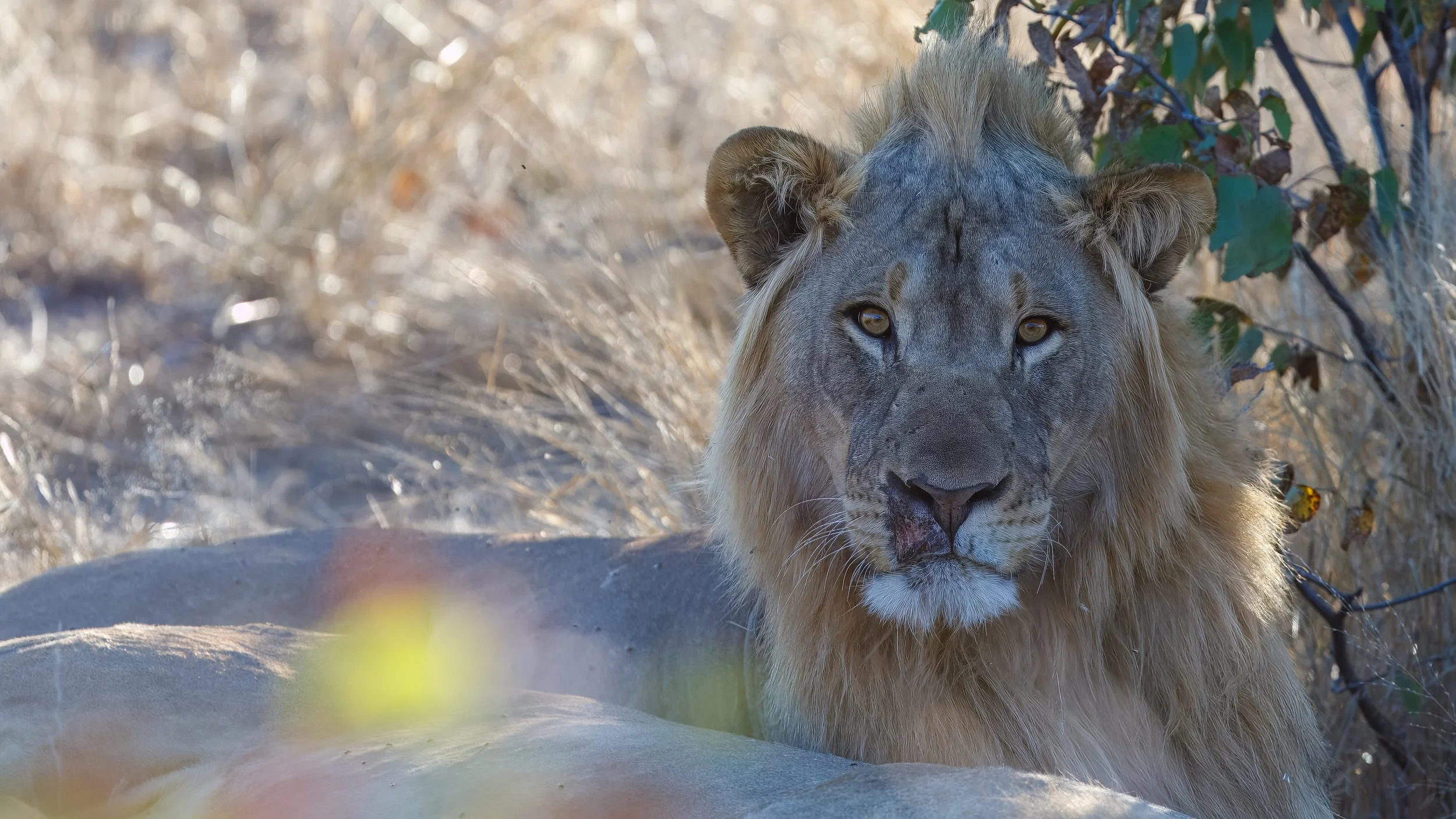
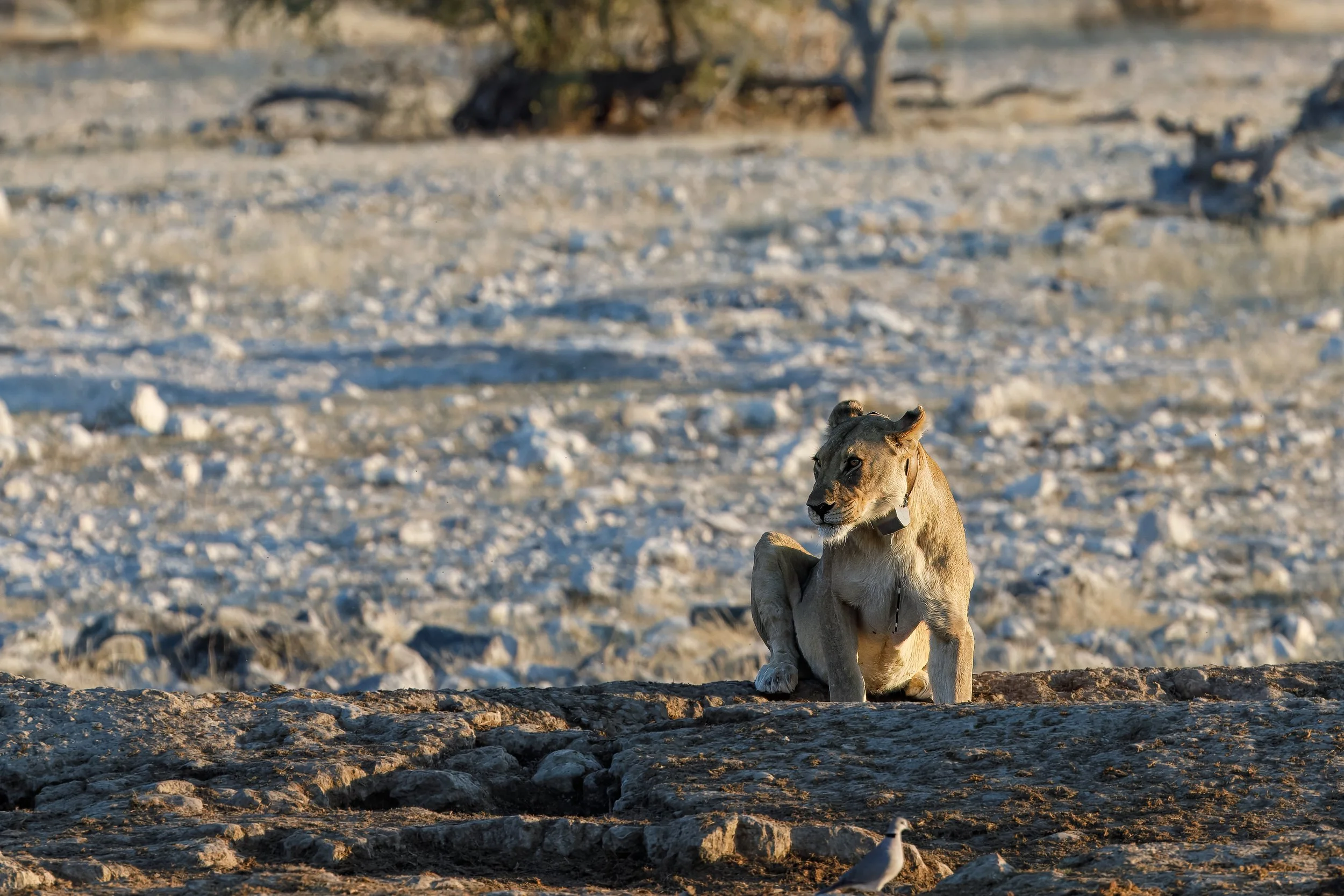
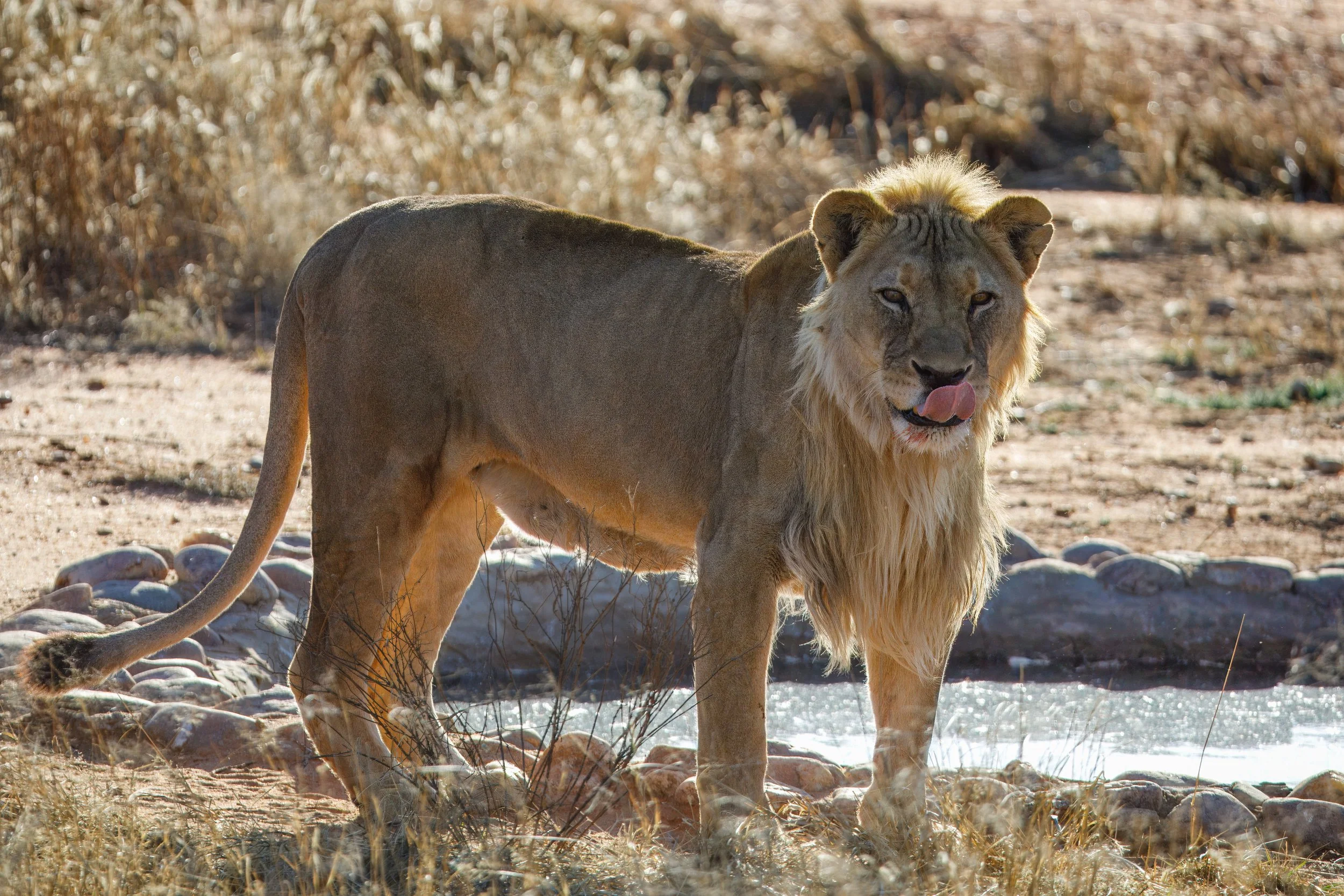
It took a bit of effort to get close but we were awarded with a great lion photo
Looking both cute and scary
A more serious stare
Beautifully lit yellow-billed hornbill as the golden hour approaches
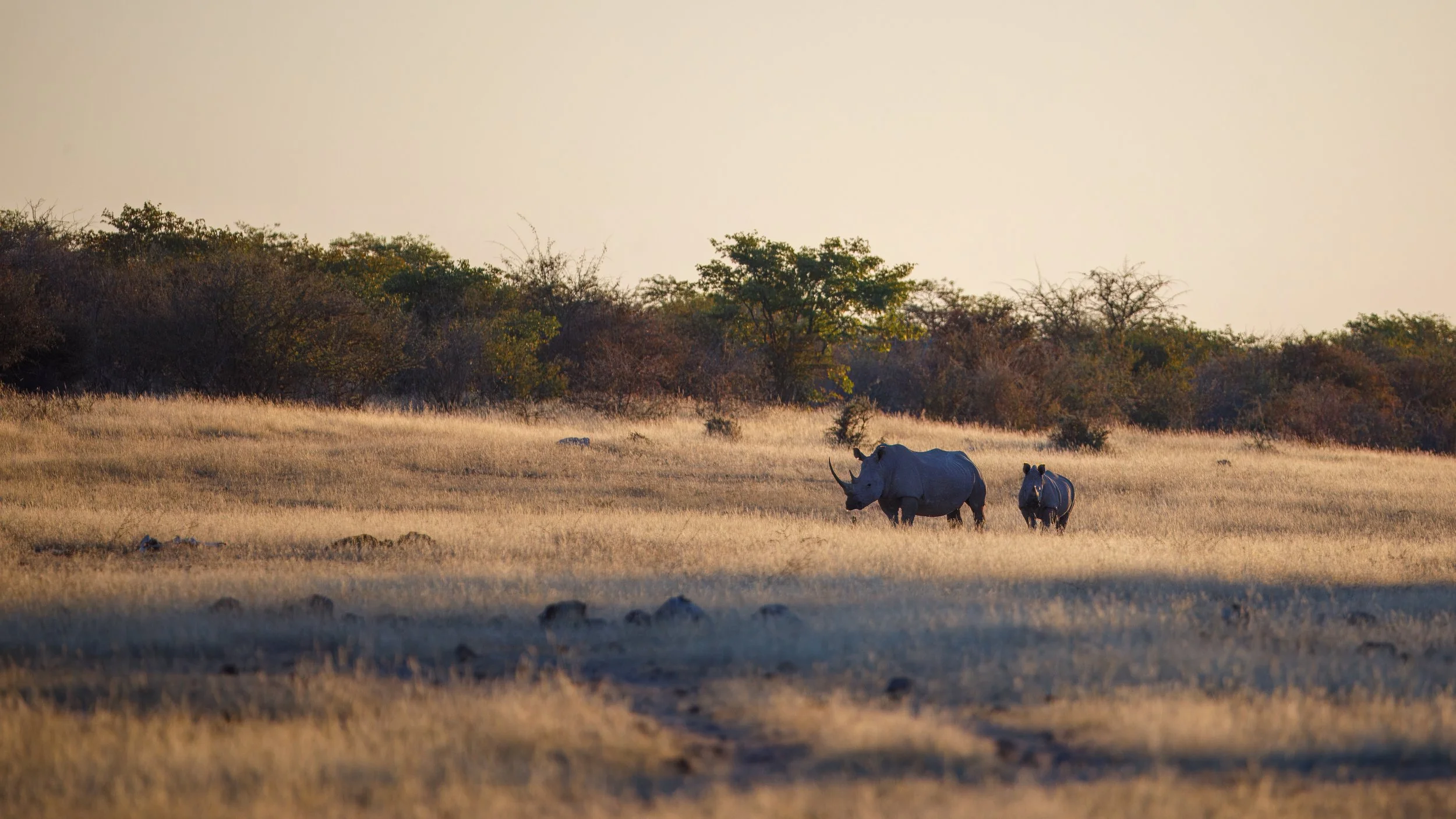
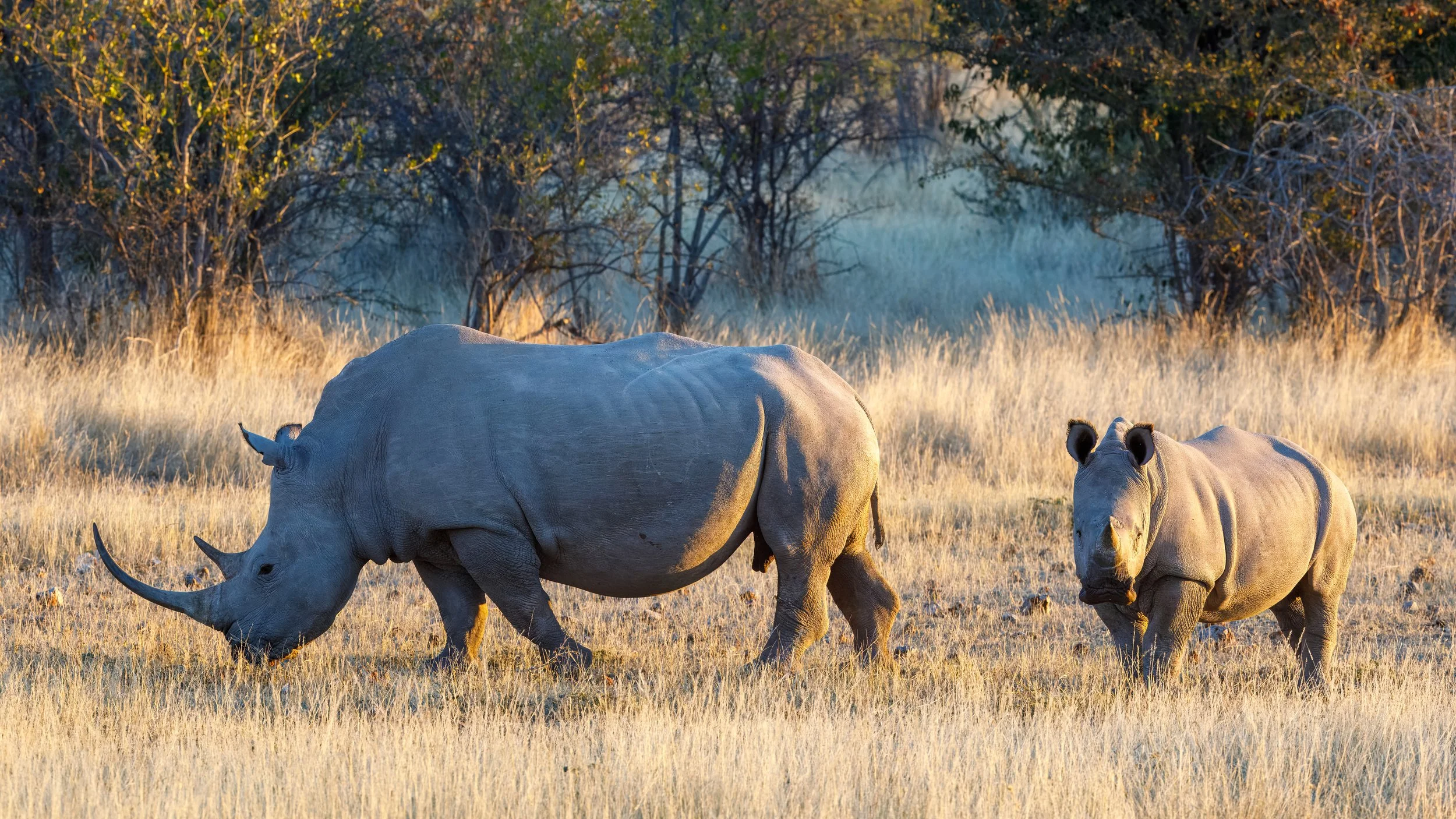
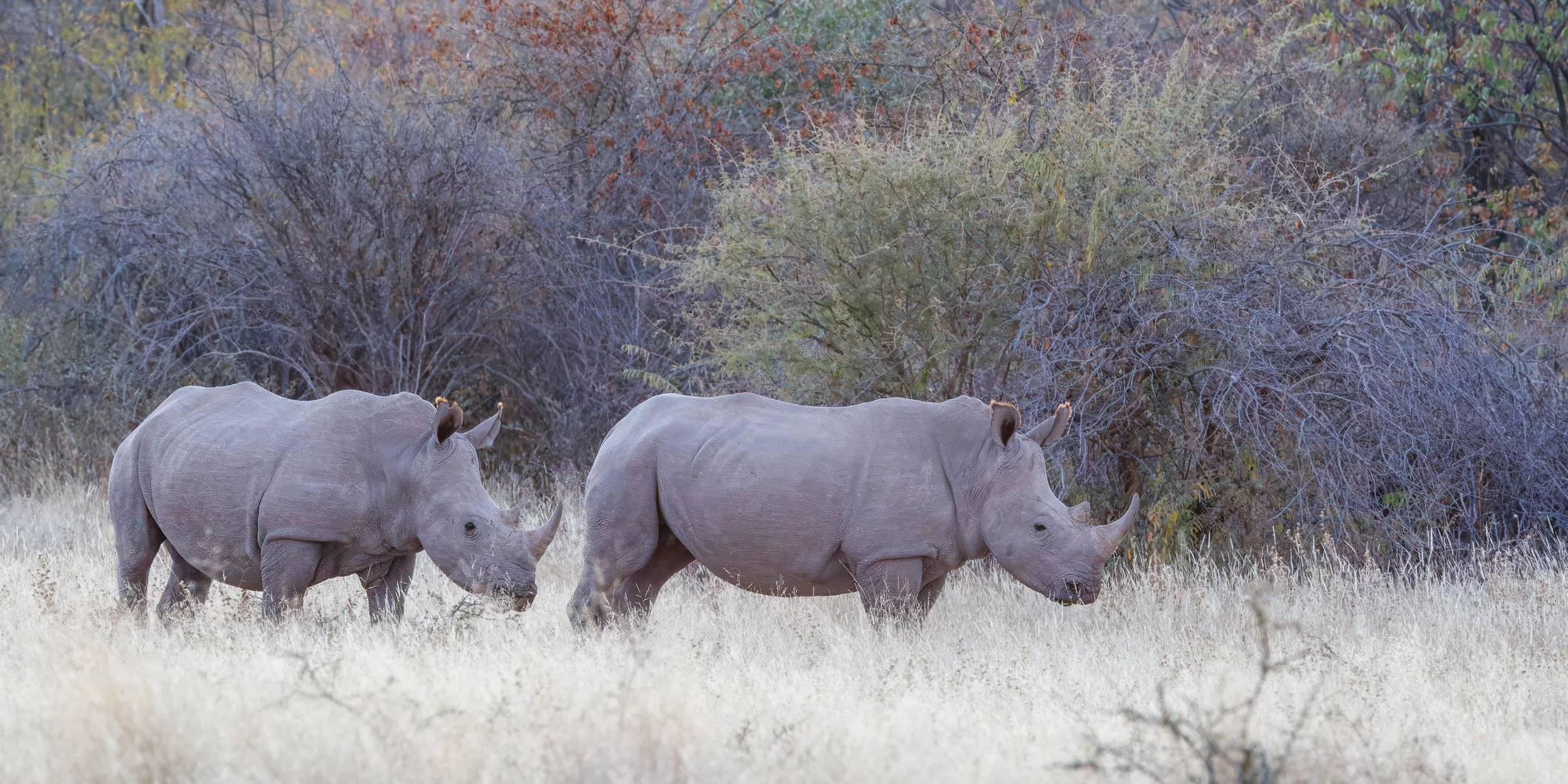
Being visited by an approximately 2-year old white rhino and its adult supervision, walking our way
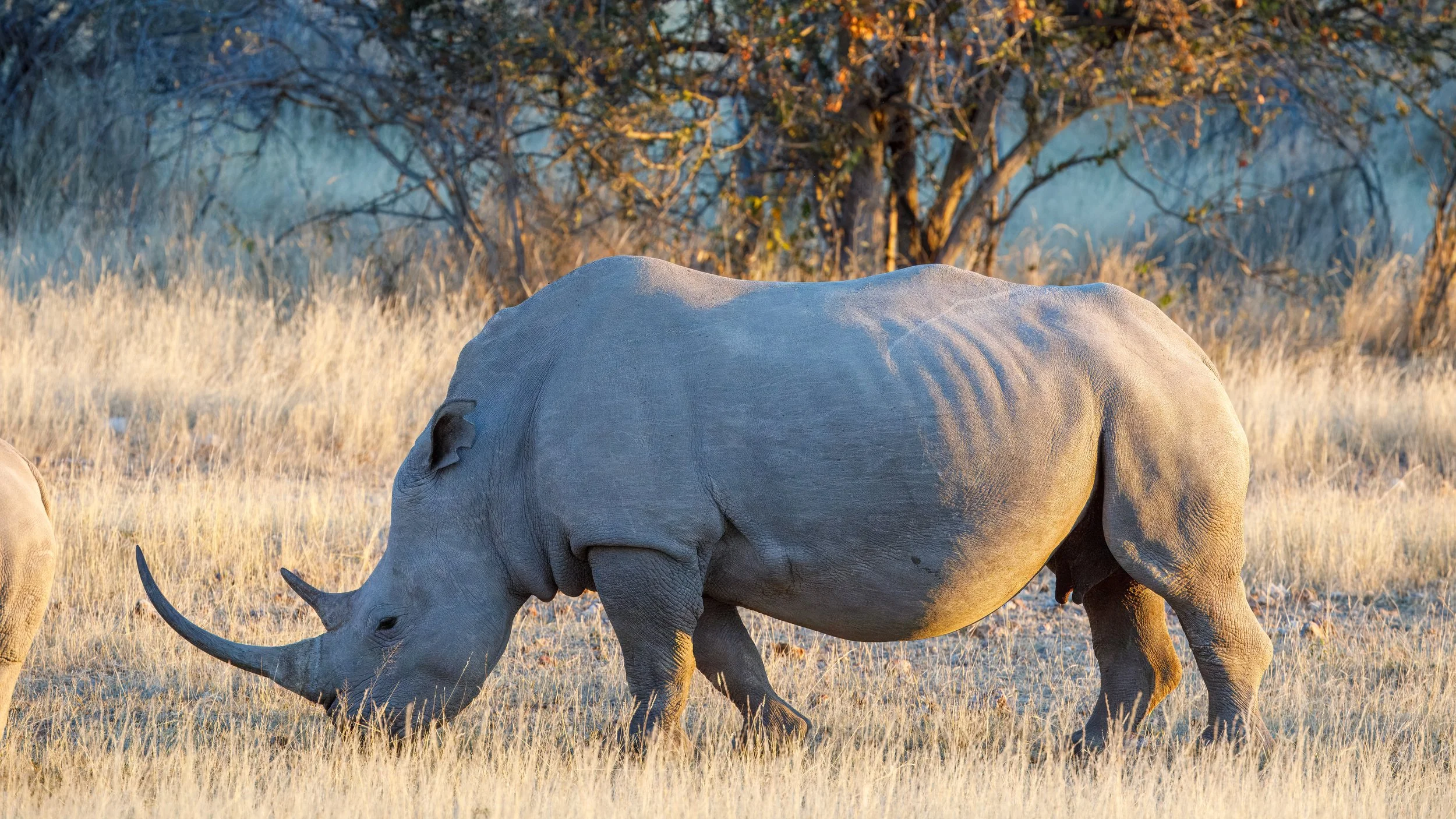
A closer view of the massive creatures
Focused in on the large adult. Unlike the unfenced rhinos in the open Doros Conservancy, the rhinos in the fenced private game reserve have not been dehorned.
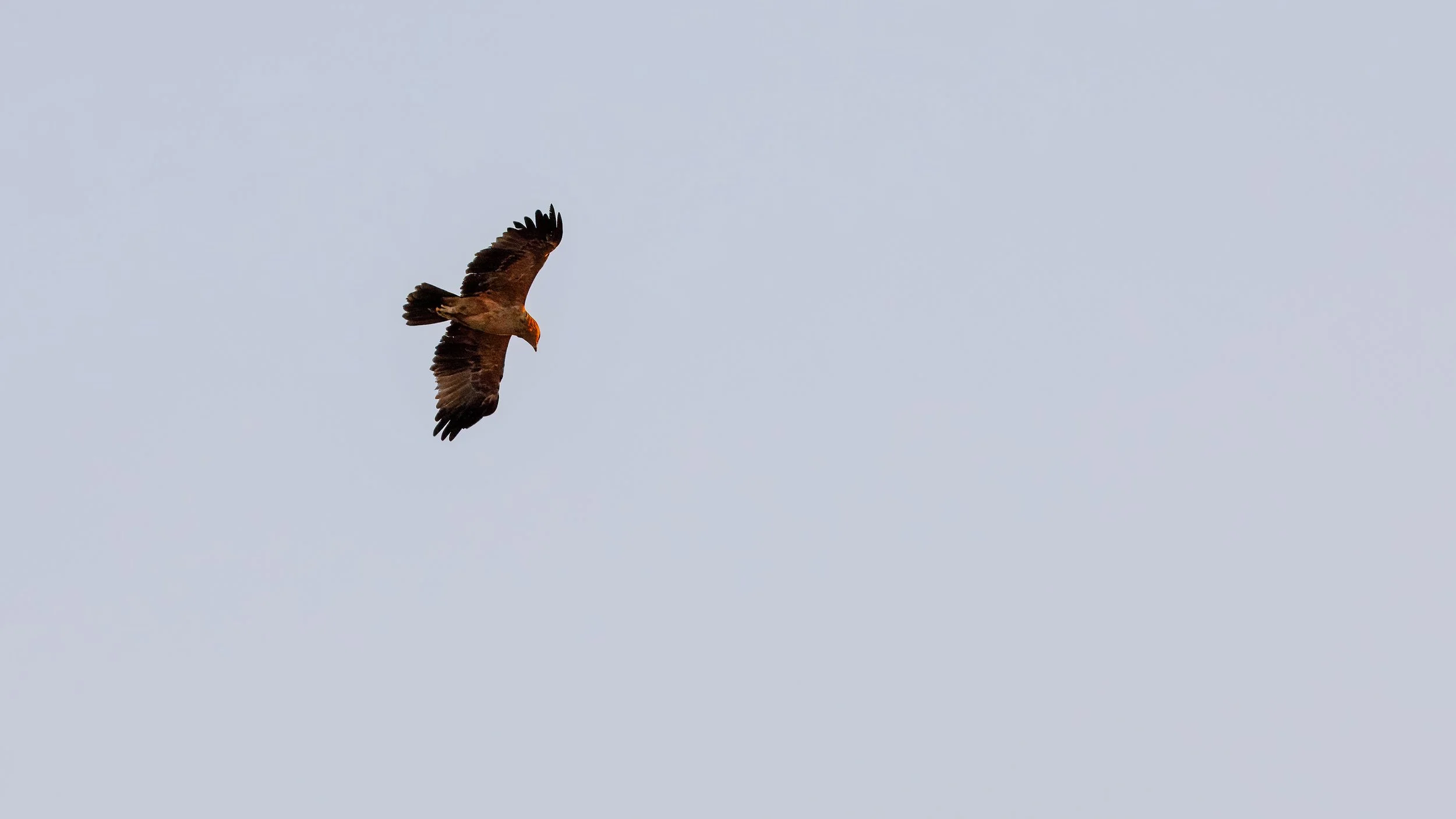
Tawny eagle in fight
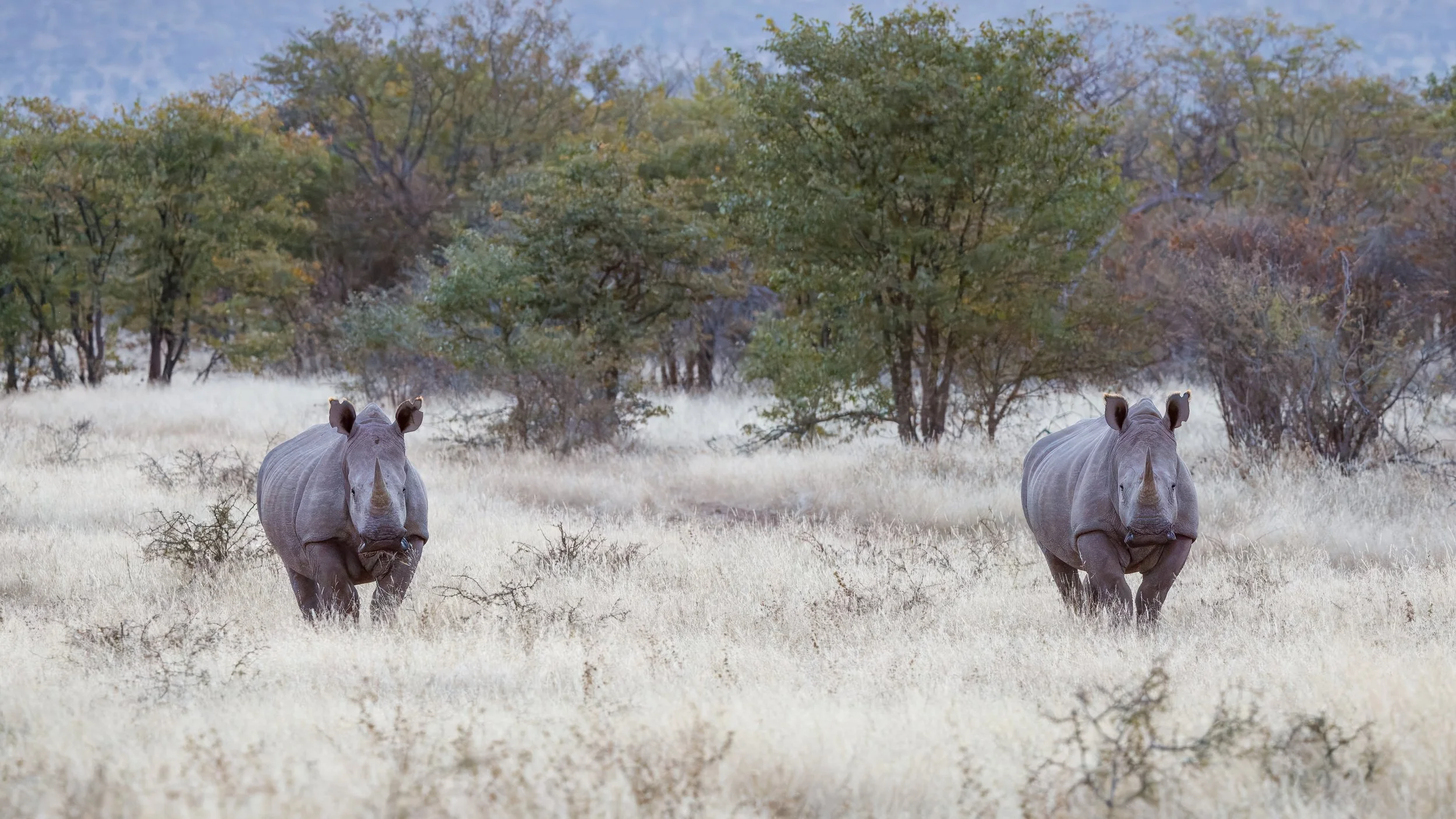
As we enjoy our sundown beverages, two white rhinos approach
The rhinos continued to approach but changed their path to keep a comfortable distance
Watching them depart before we pack up our sundowner snacks and beverages
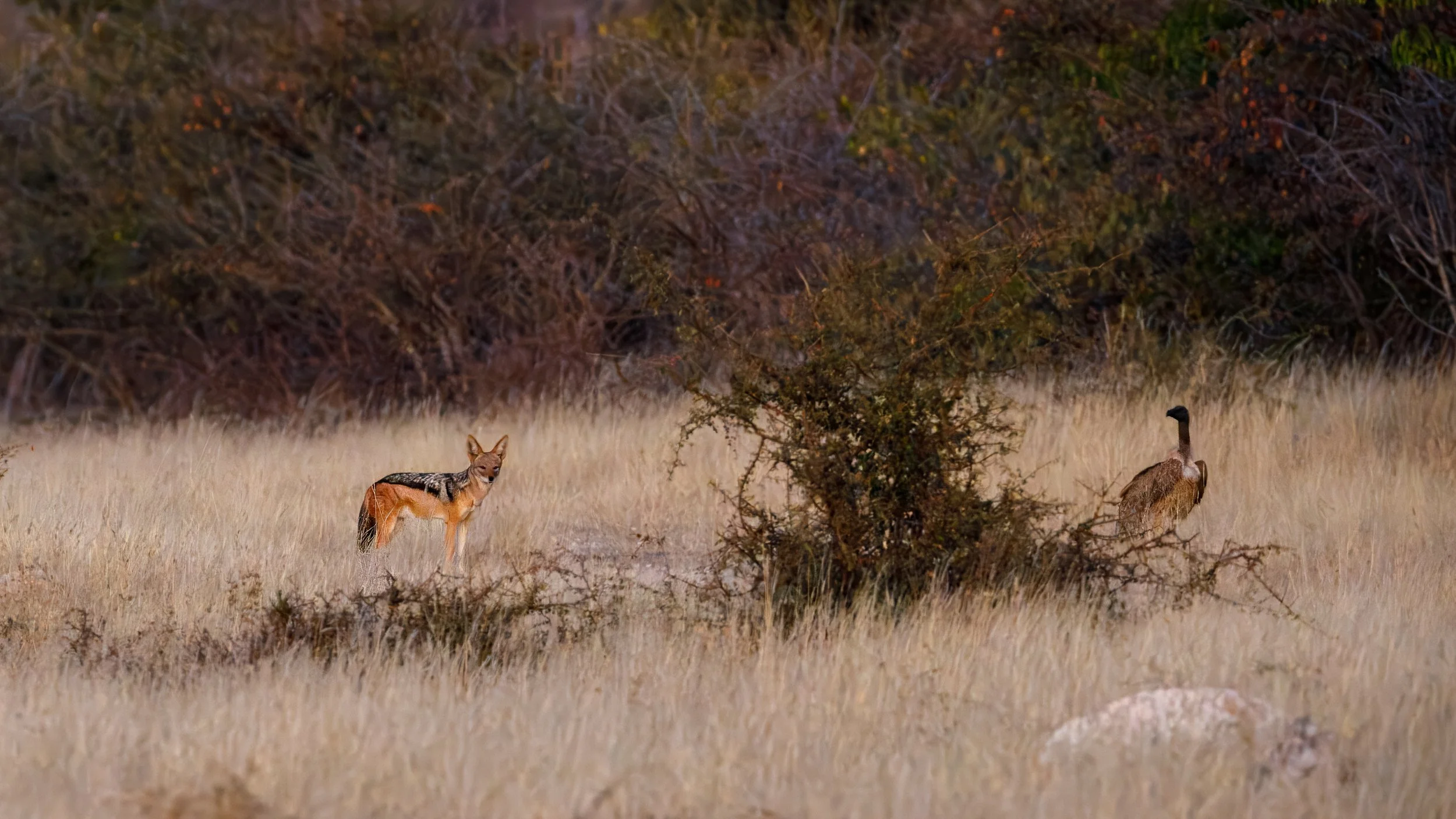
Being watched by a black-backed jackal and vulture
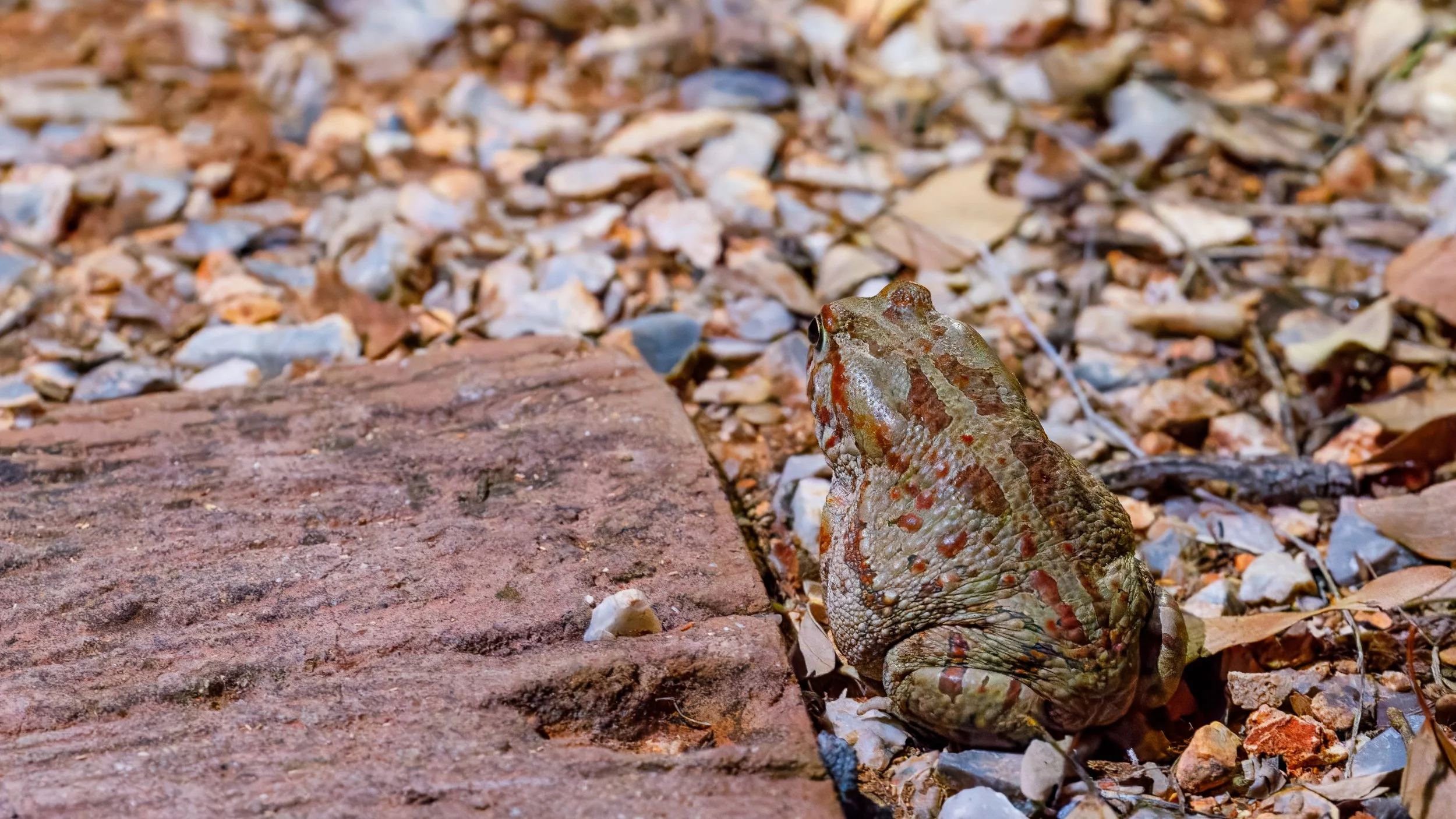
Garman’s toad
As the sun sets on the private reserve, our safari driver dropped us back at the lodge. Without fences around our lodge property, lions have occasionally been found roaming the property overnight. To protect the guests after dark, we were required to have an armed escort to remote cabins, so we decided to head right to dinner when we returned from the safari. The restaurant has a terrific view of the watering hole so over dinner we enjoyed a stream of rhinos visiting while we dined. When we were done dinner we made our way to the hide hoping for a close up view, but unfortunately the animal parade had ended for the evening. We headed to bed with the help of our escort.
Jun 15
To get the best experience in Etosha National Park, we needed to start the day early to be near the front of the line at the gate. After an early morning breakfast, we headed out and were amongst the first tranche of visitors. There was an early lion sighting near the gate which was the focus of most people, but unfortunately it was too far from the road for us to view. We decided to separate from the crowd and explore deeper into the park.
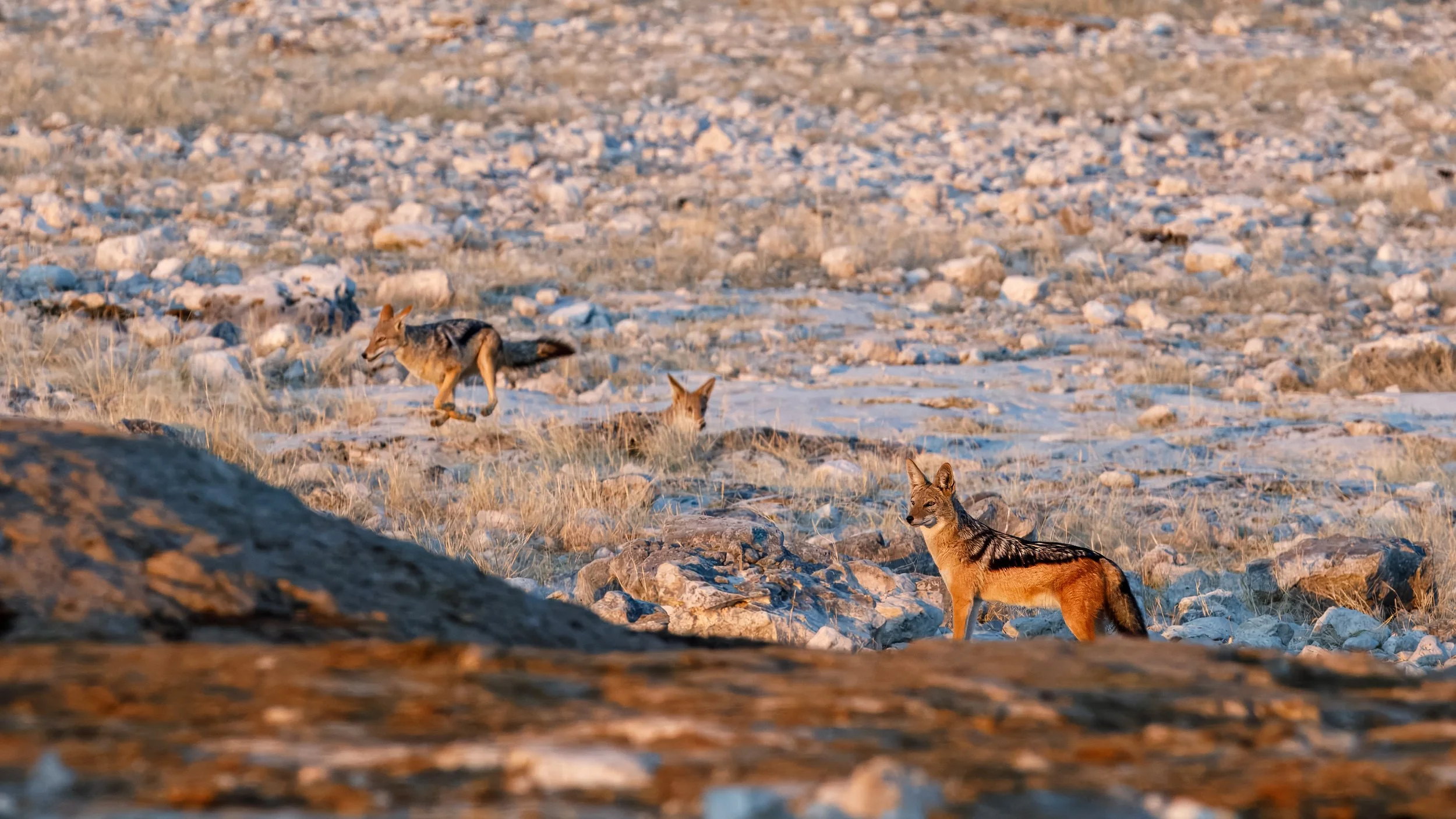
Pack of black-backed jackals
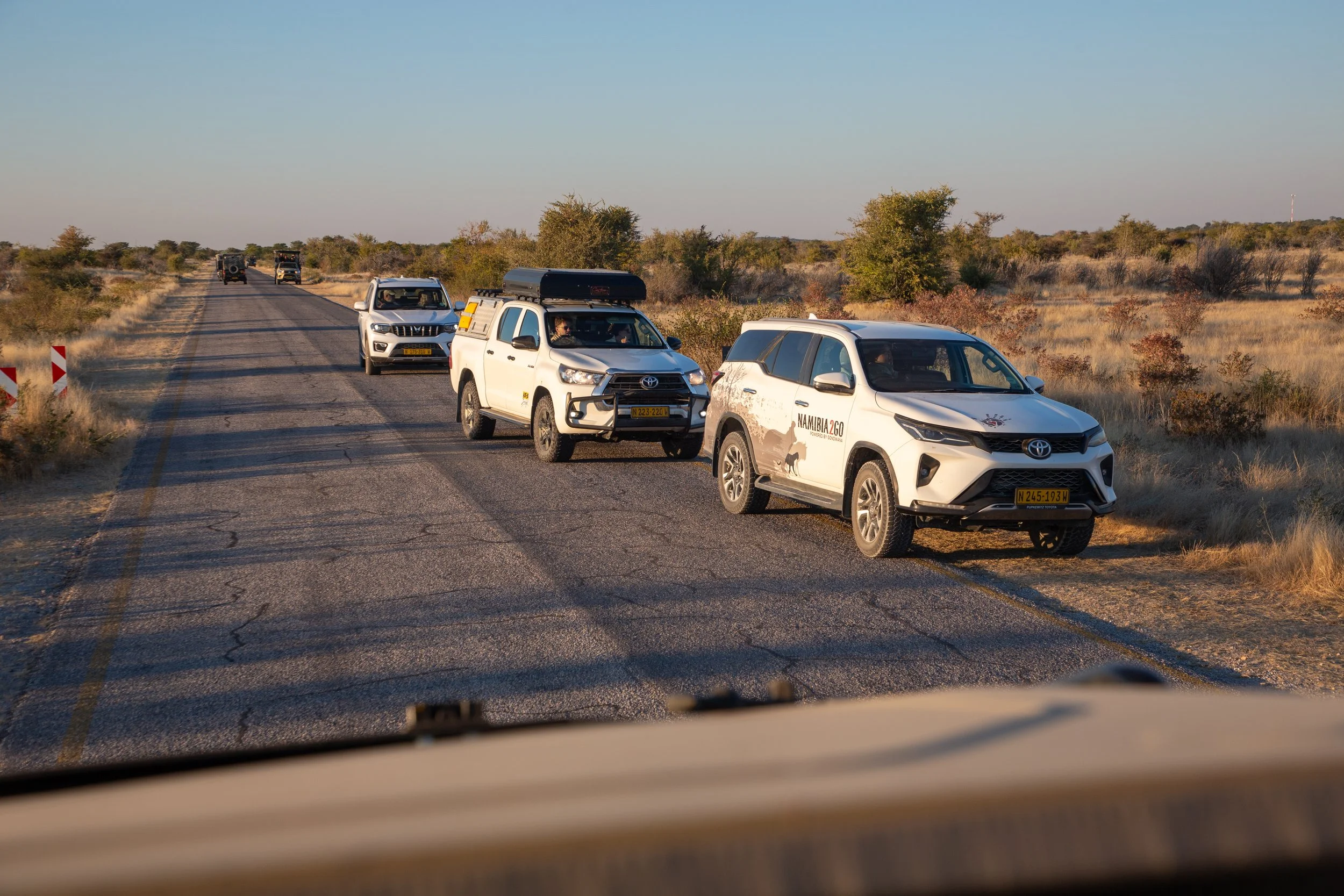
Crowd of vehicles hoping for a lion sighting
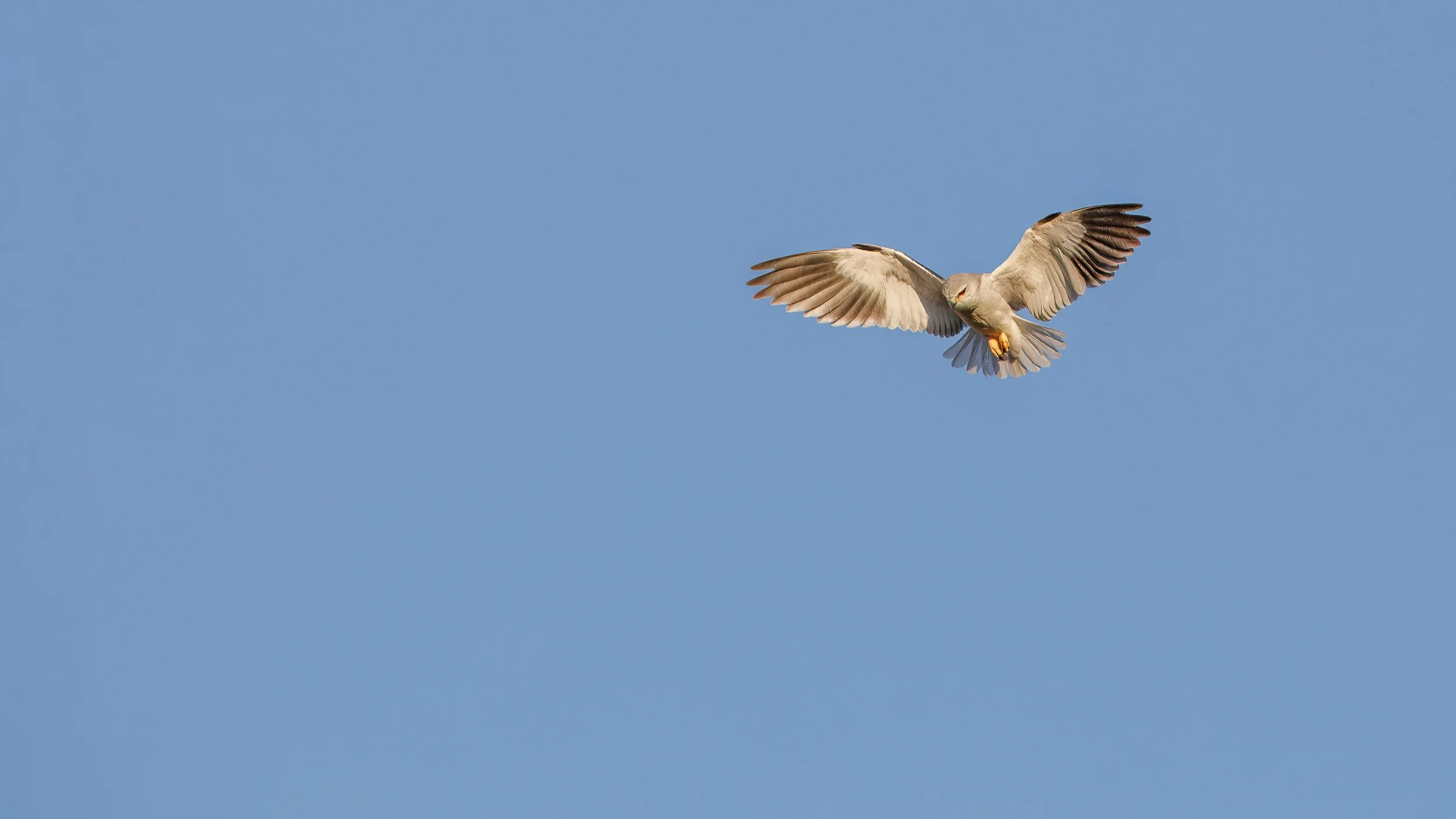
Black-winged kite, hunting
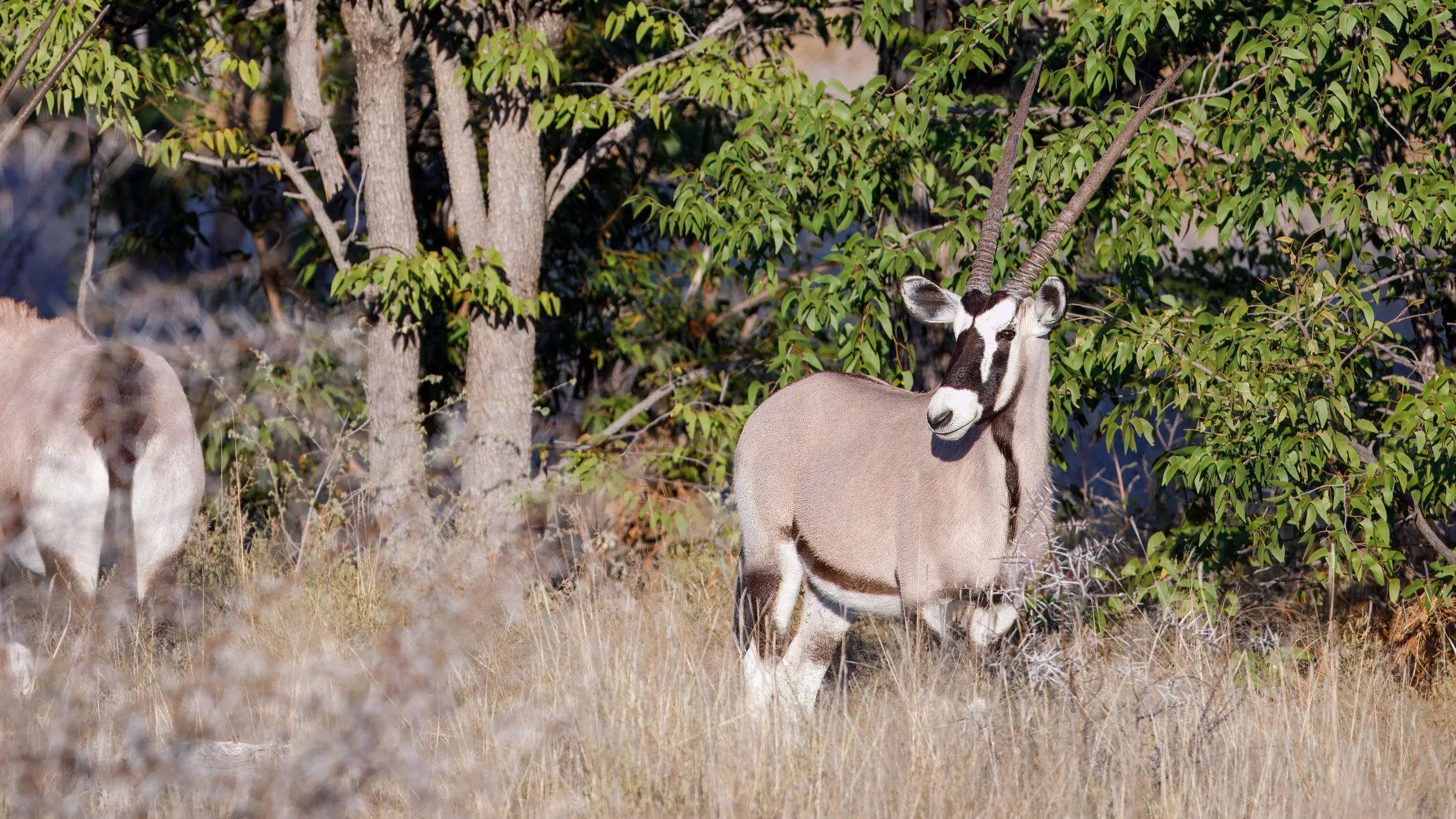
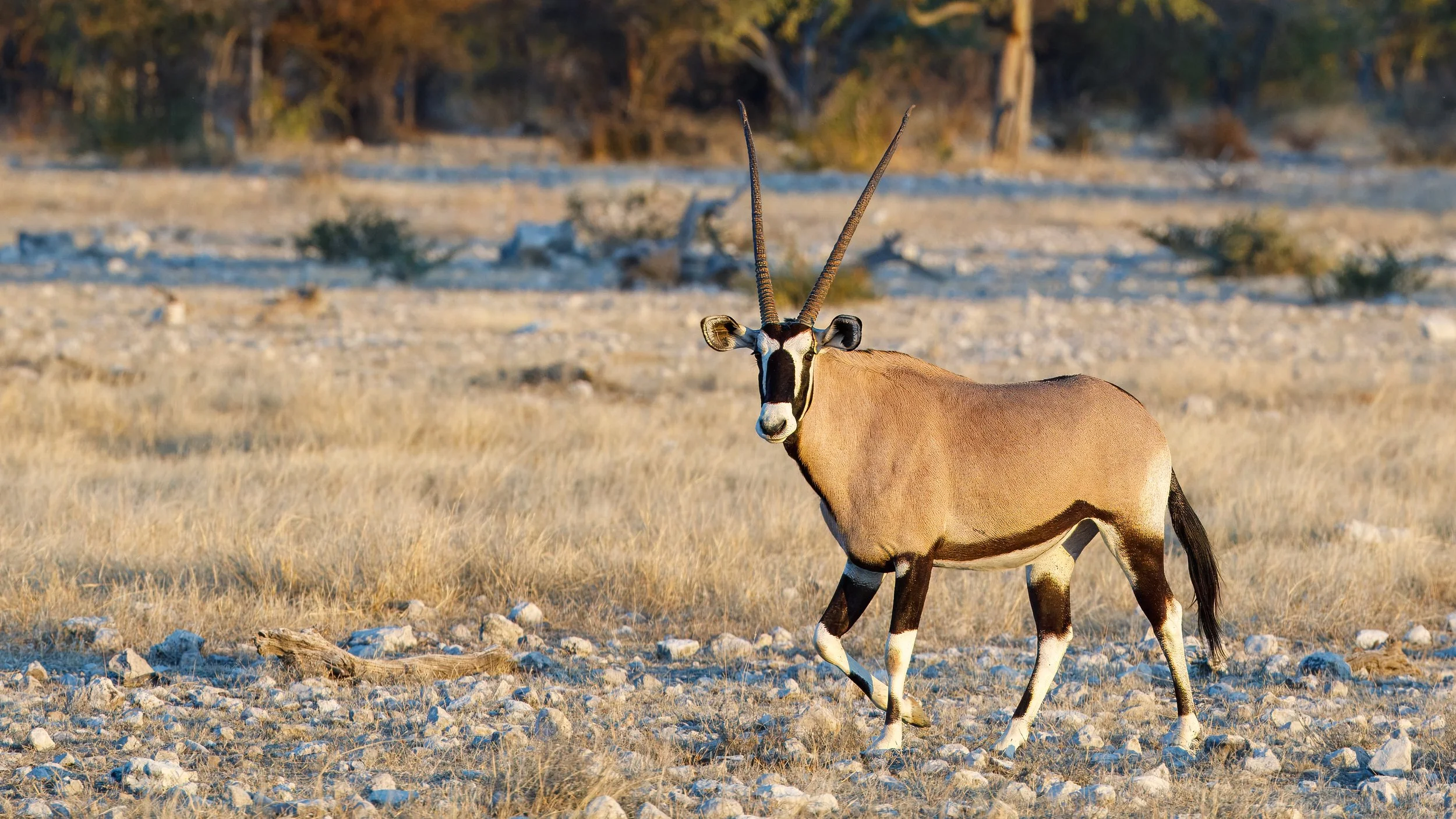
Oryx
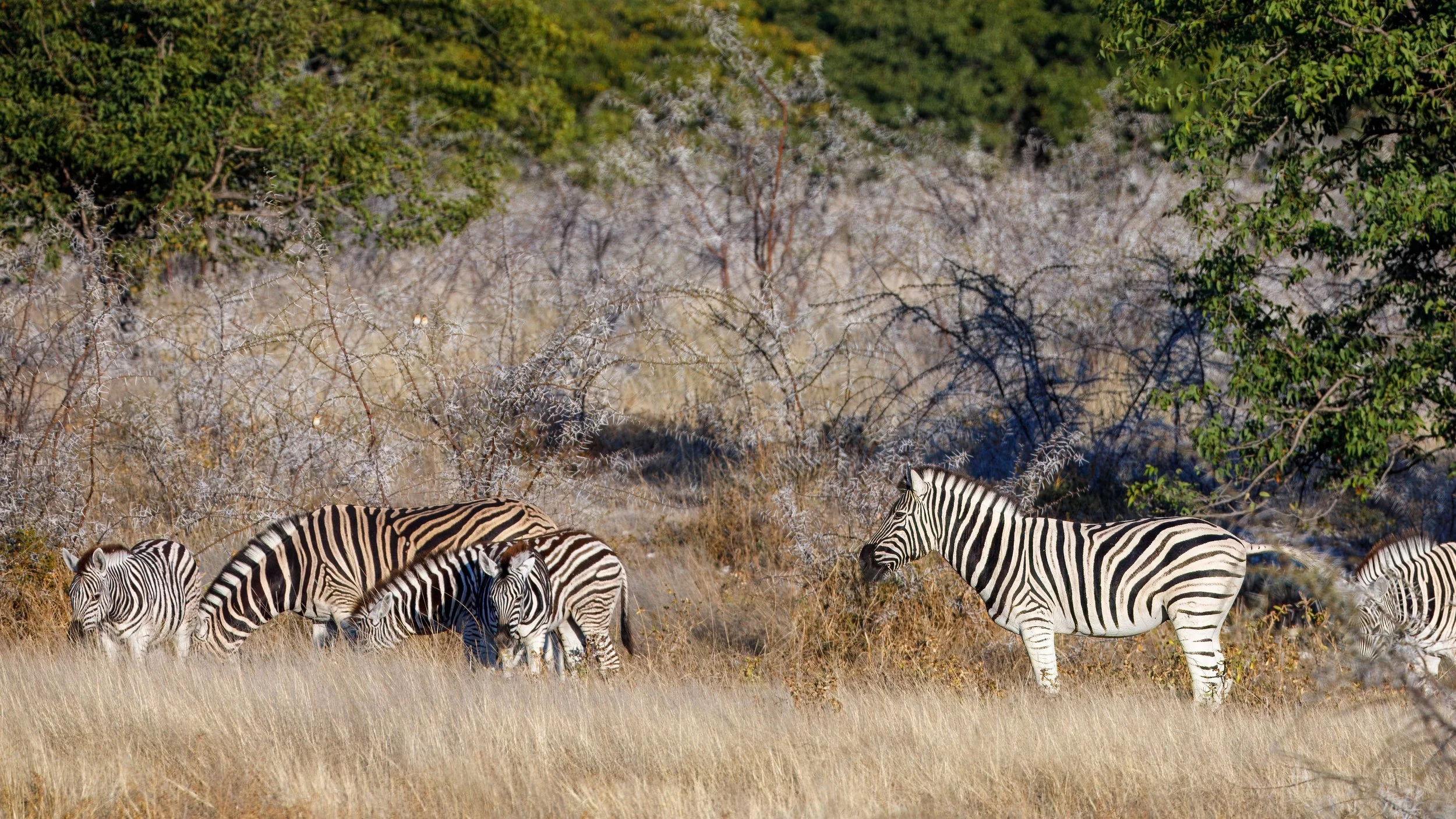
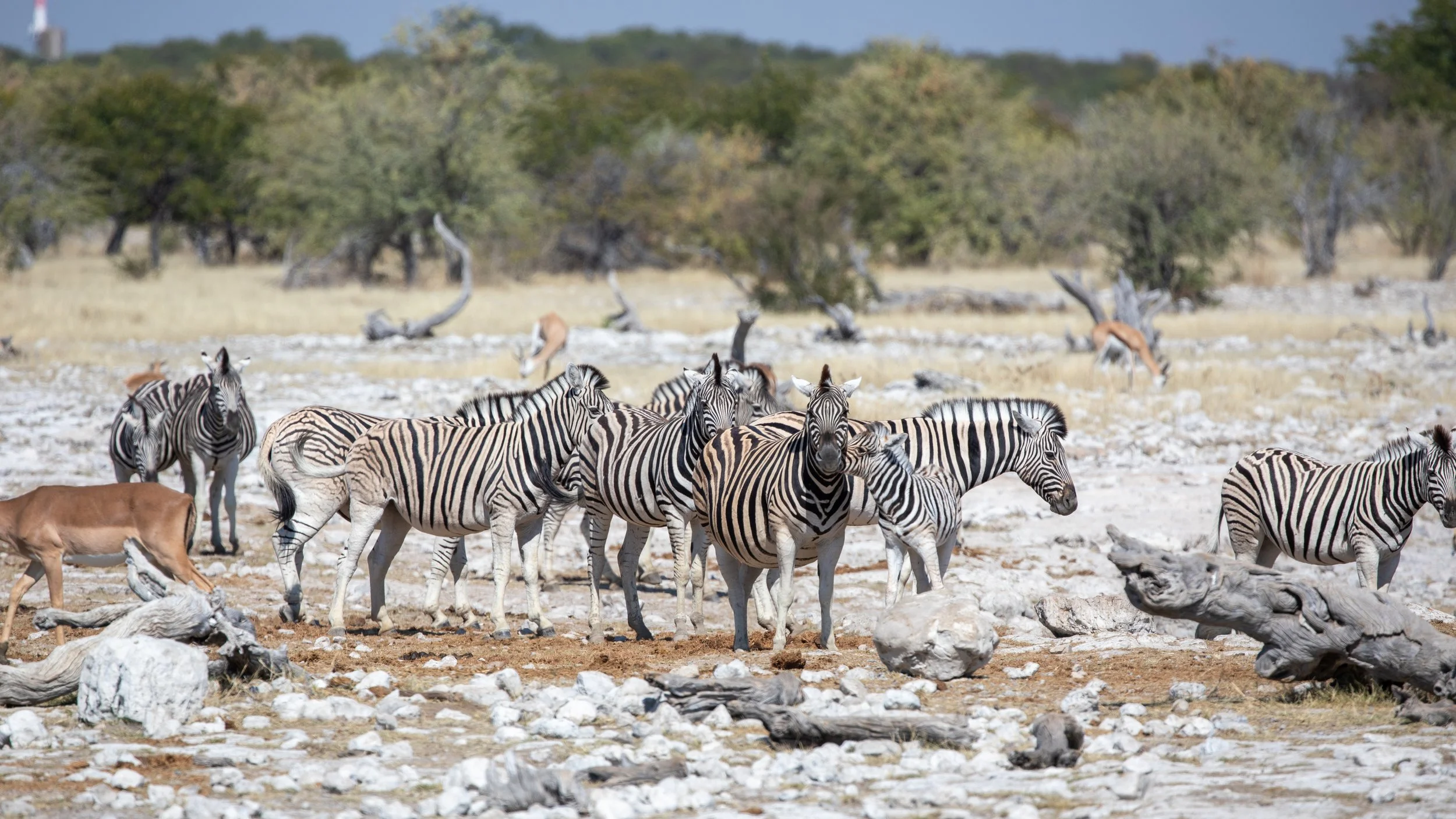
Plains zebras
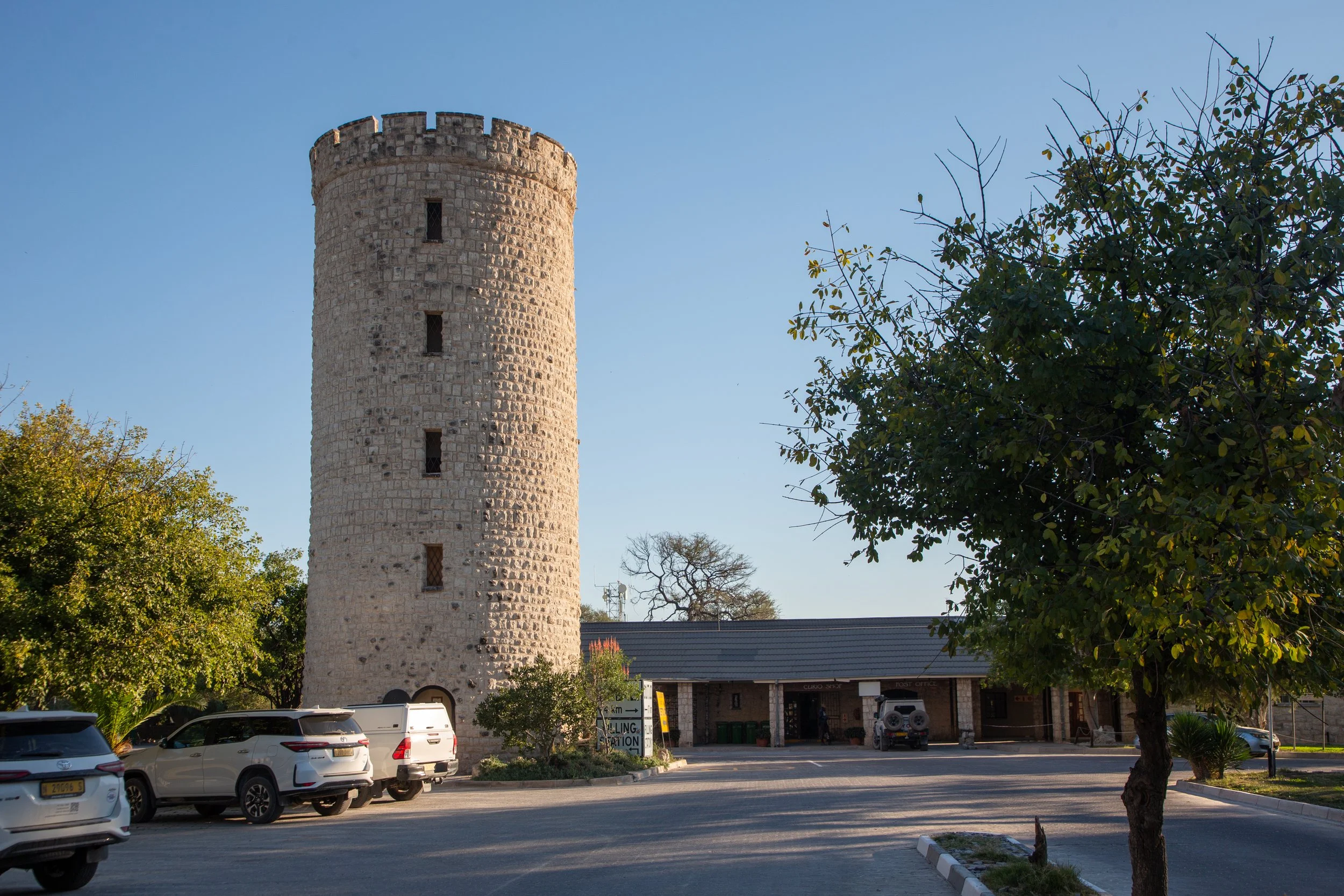
Stone watchtower at the Okaukuejo Rest Camp, a great place to stay directly in the park, but not quite as comfortable as our nearby lodge
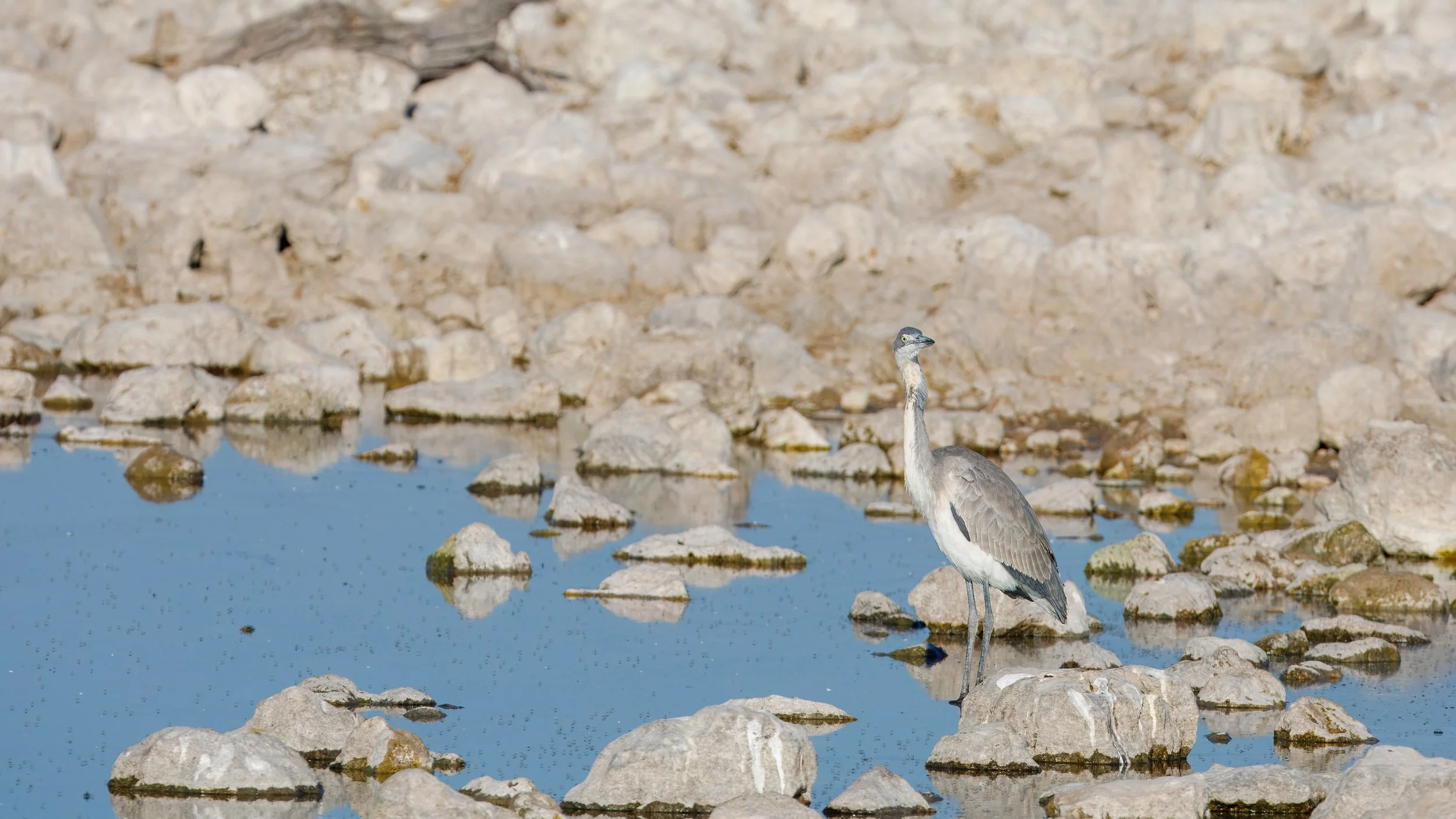
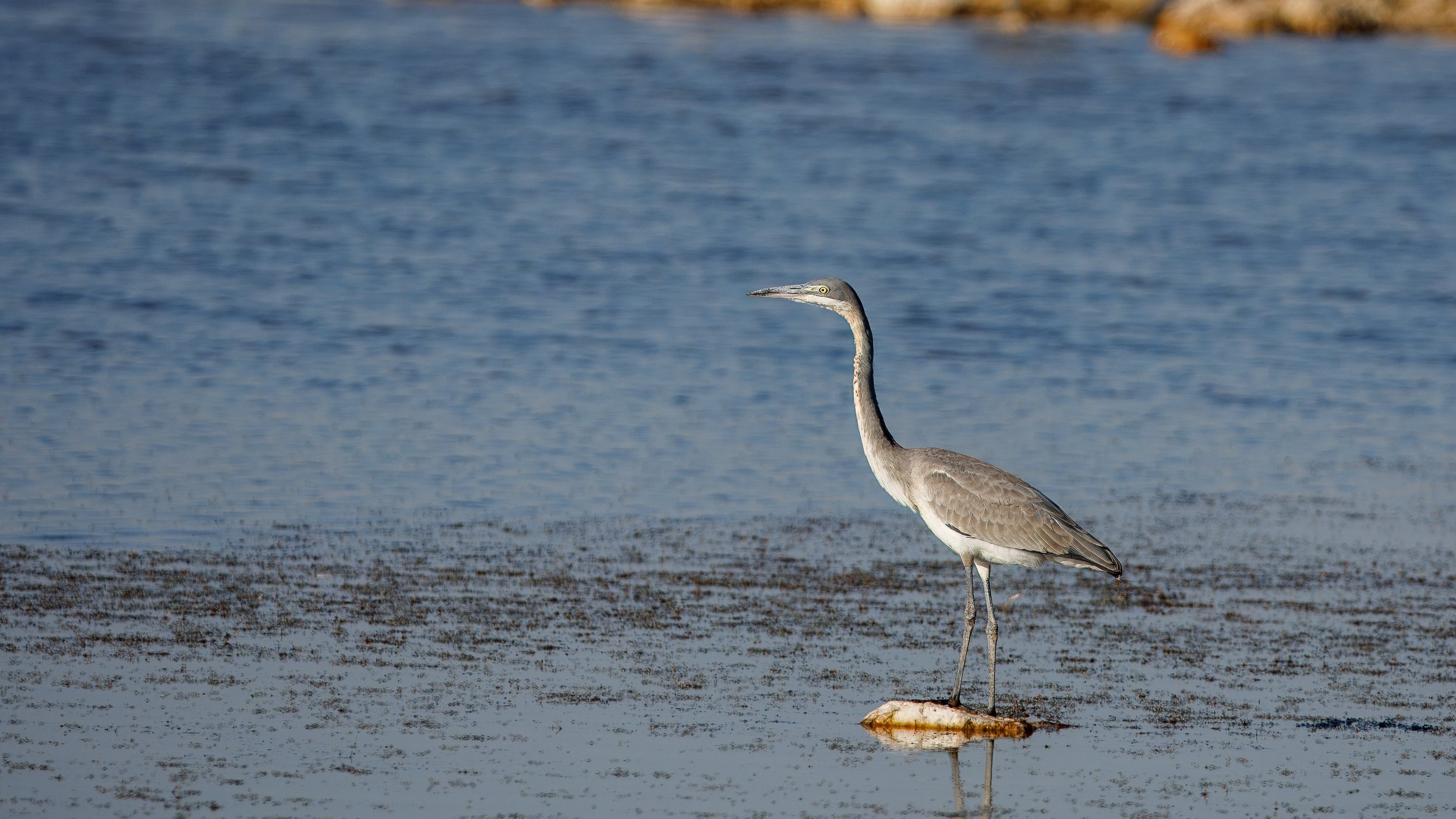
Grey heron at the Okaukuejo waterhole
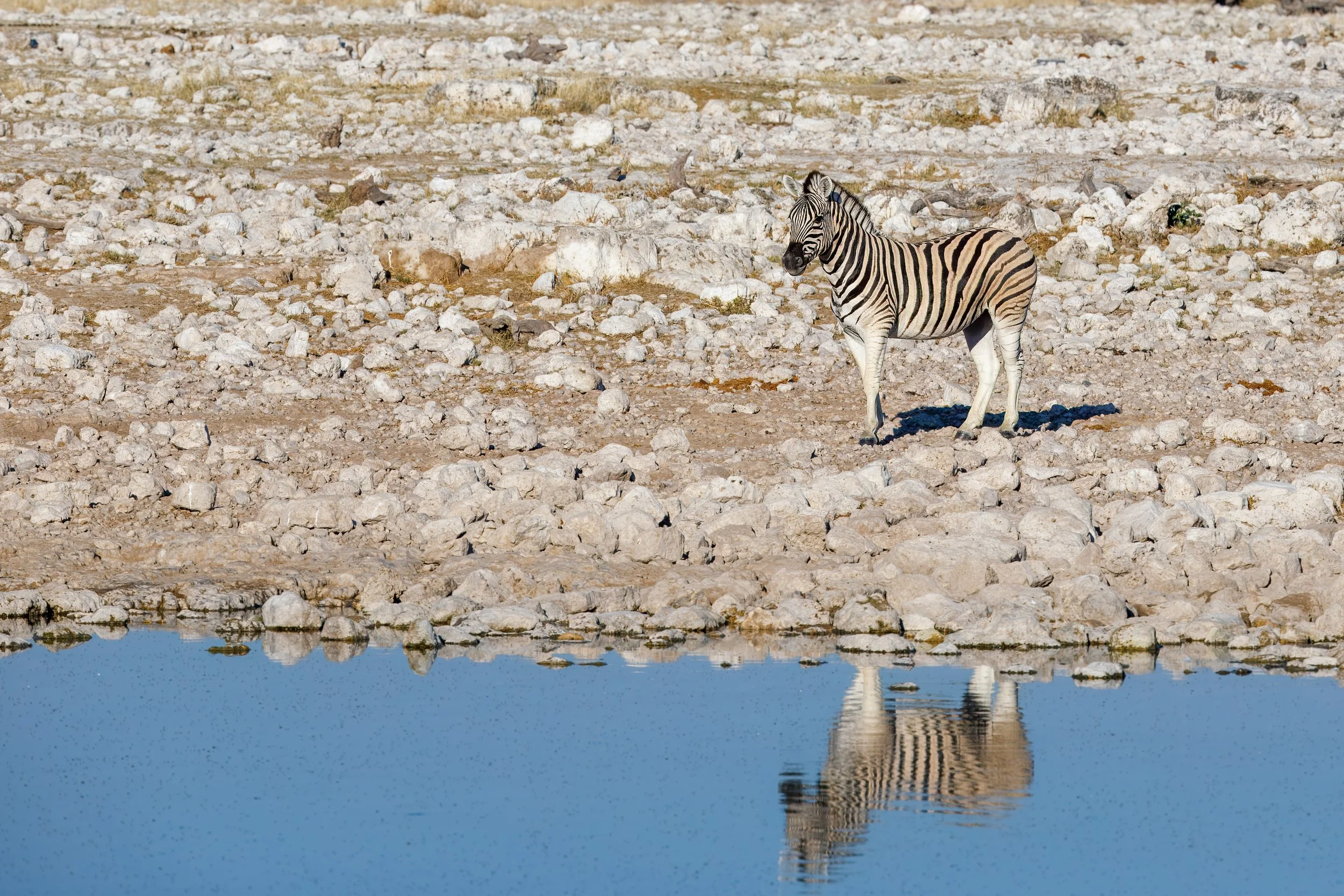
A single zebra approaches during the relative mid-morning calm
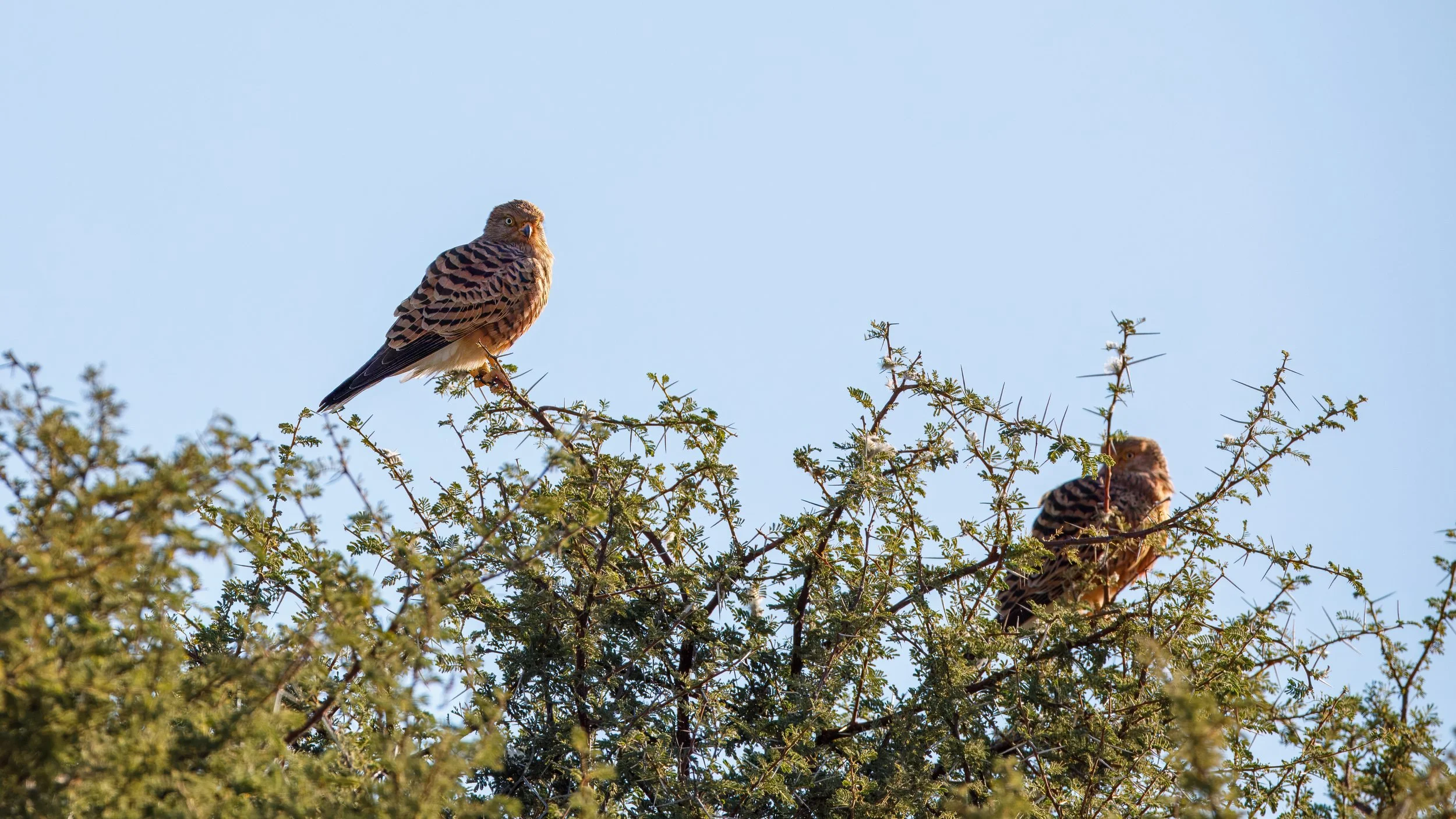
Two greater kestrel
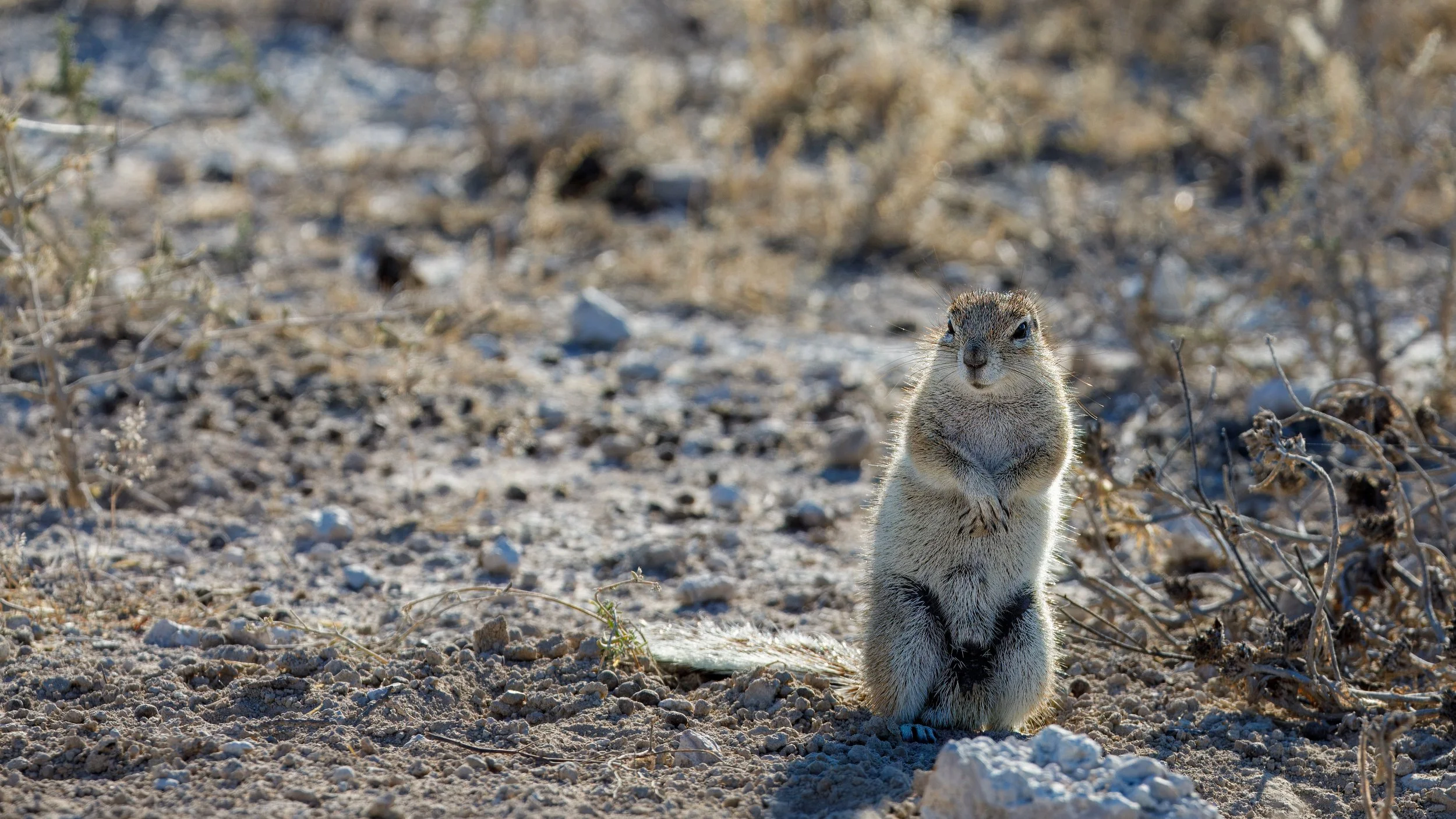
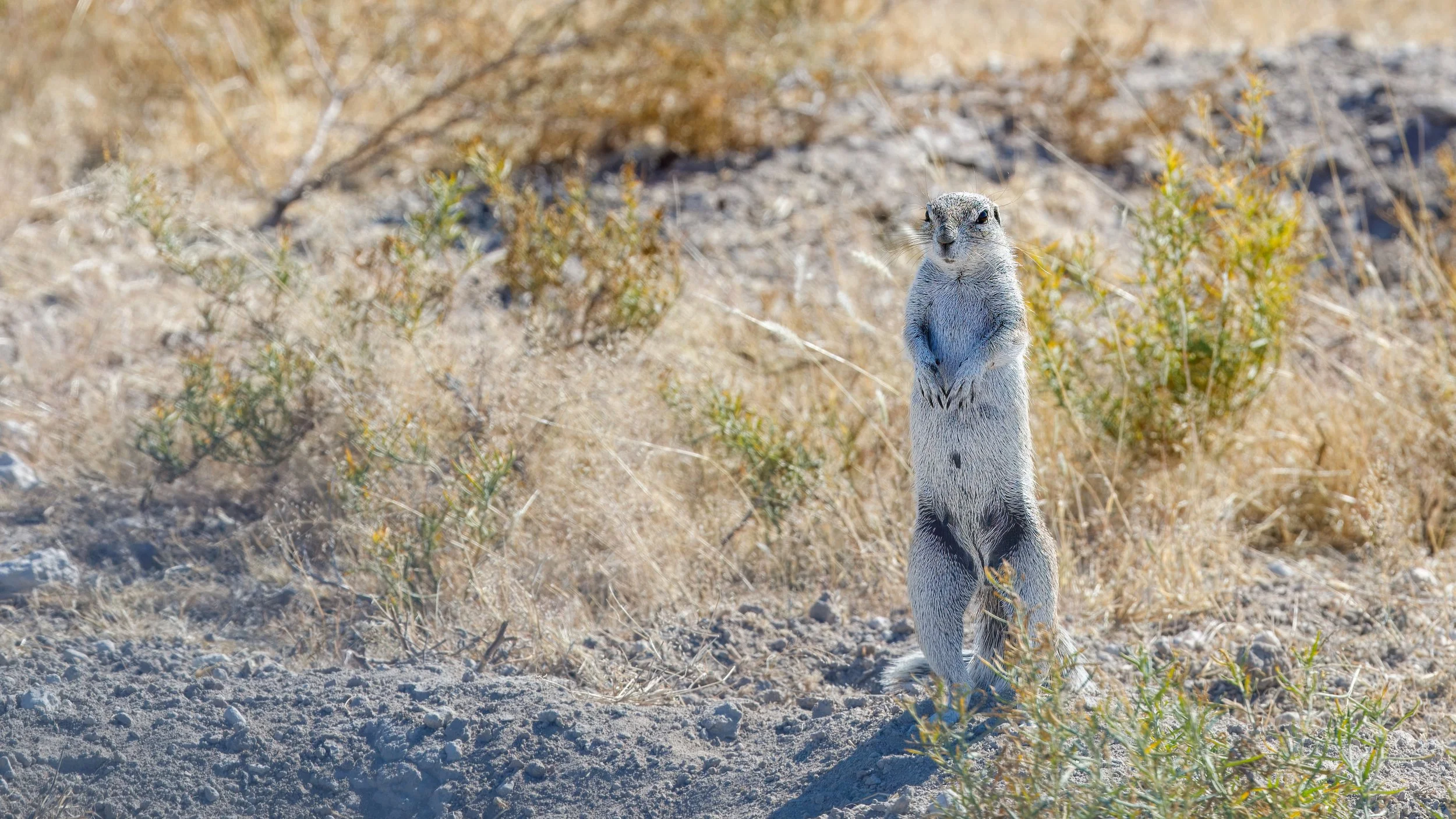
Cape ground squirrel in the familiar pose
With patience, we got our own lion sighting away from the larger crowds
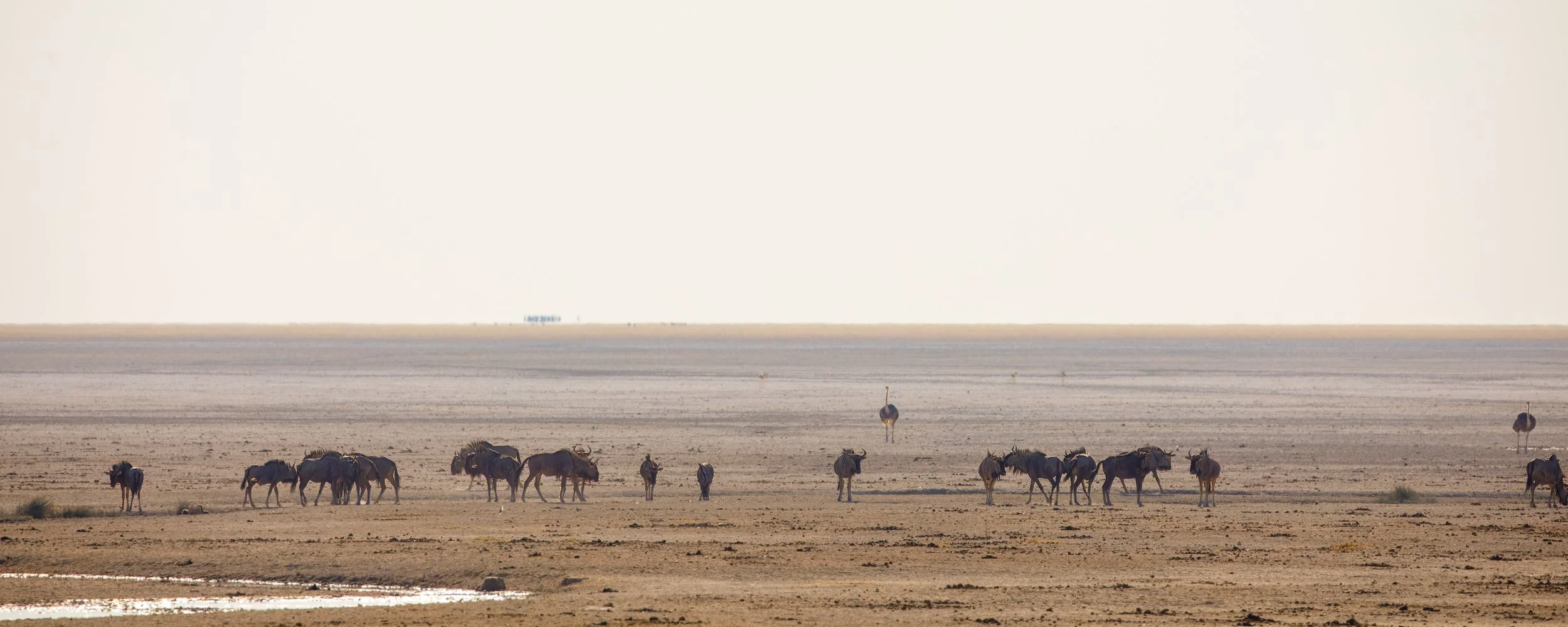
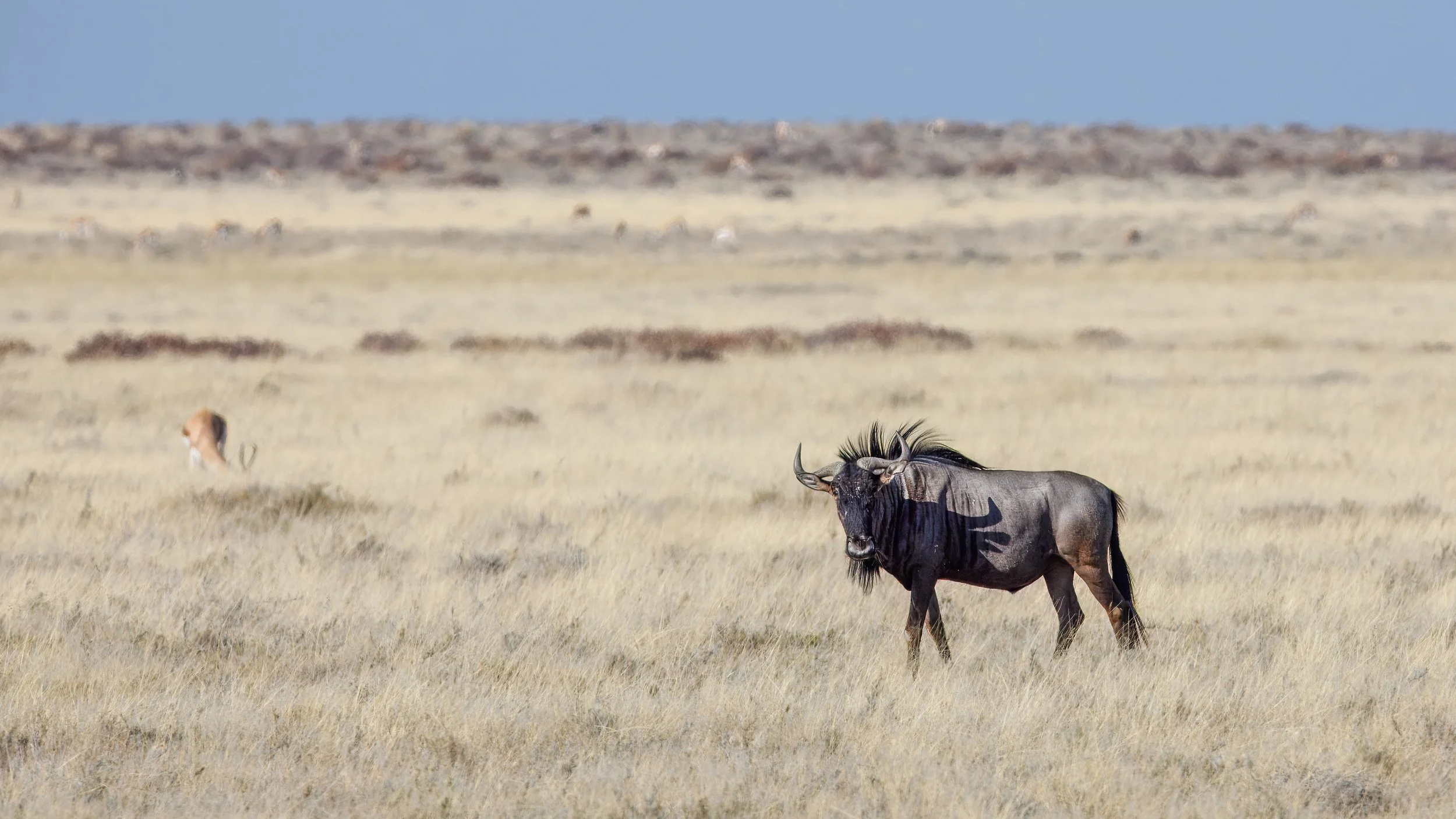
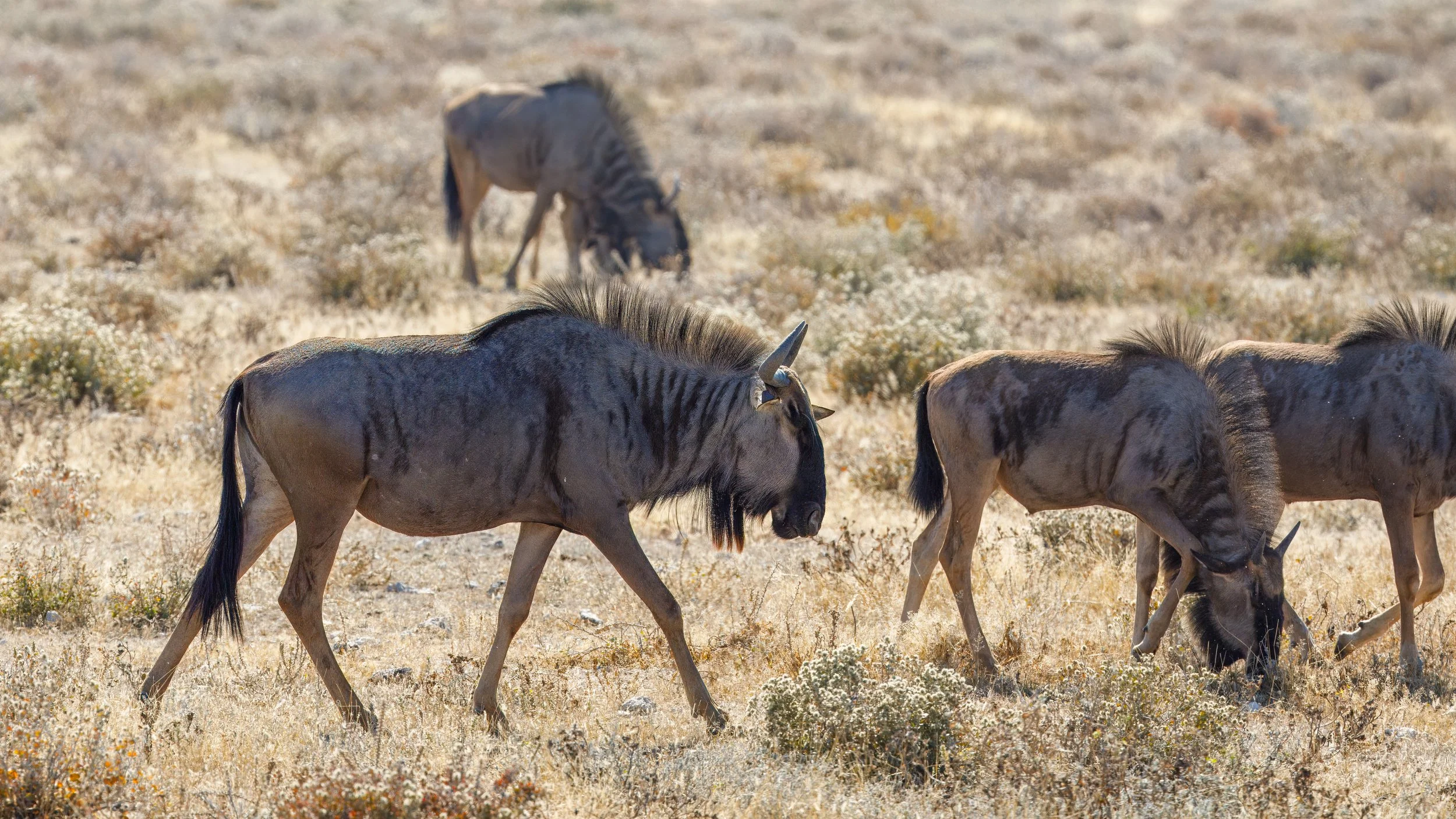
Herd of wildebeest on the salt flat
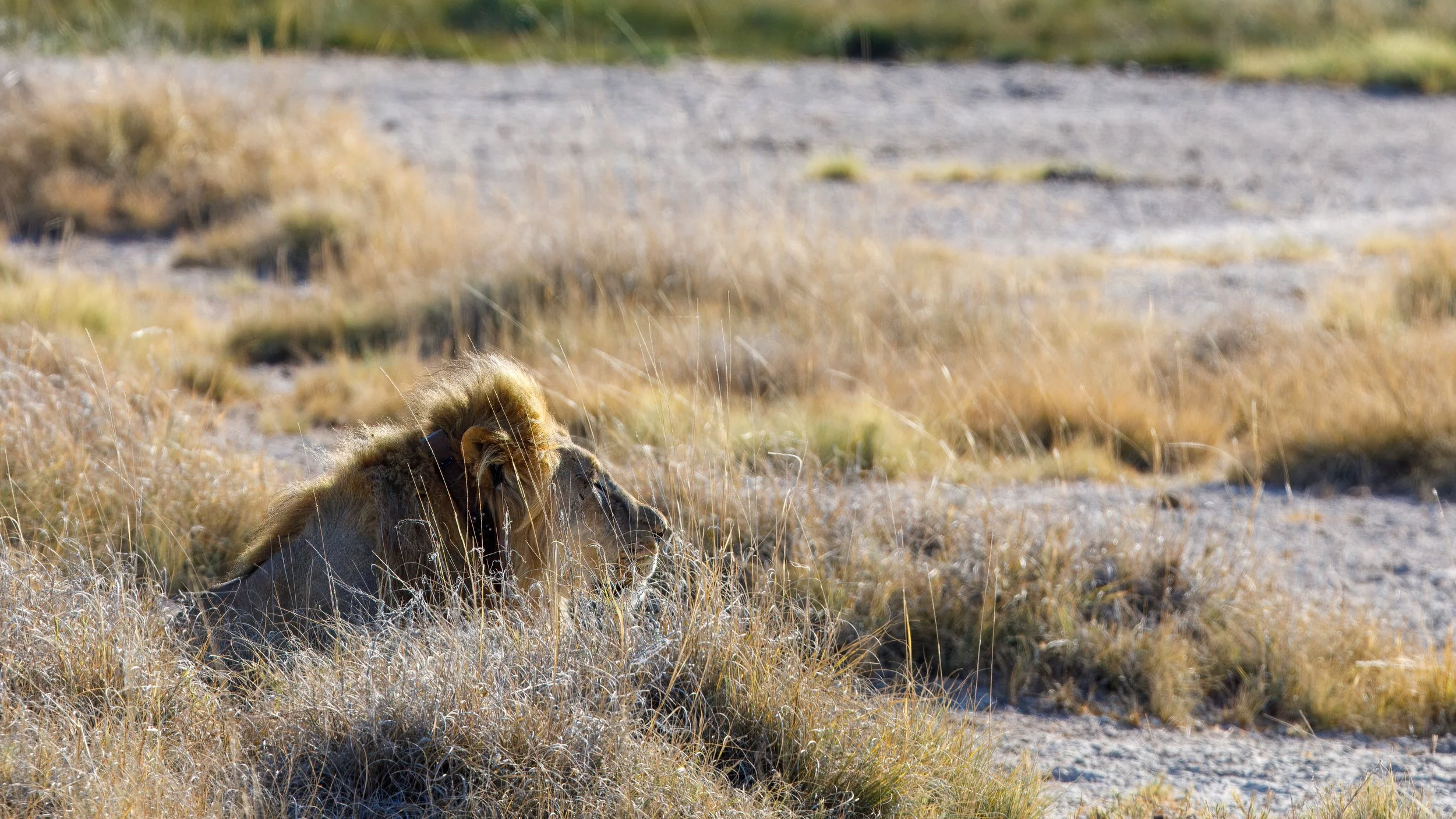
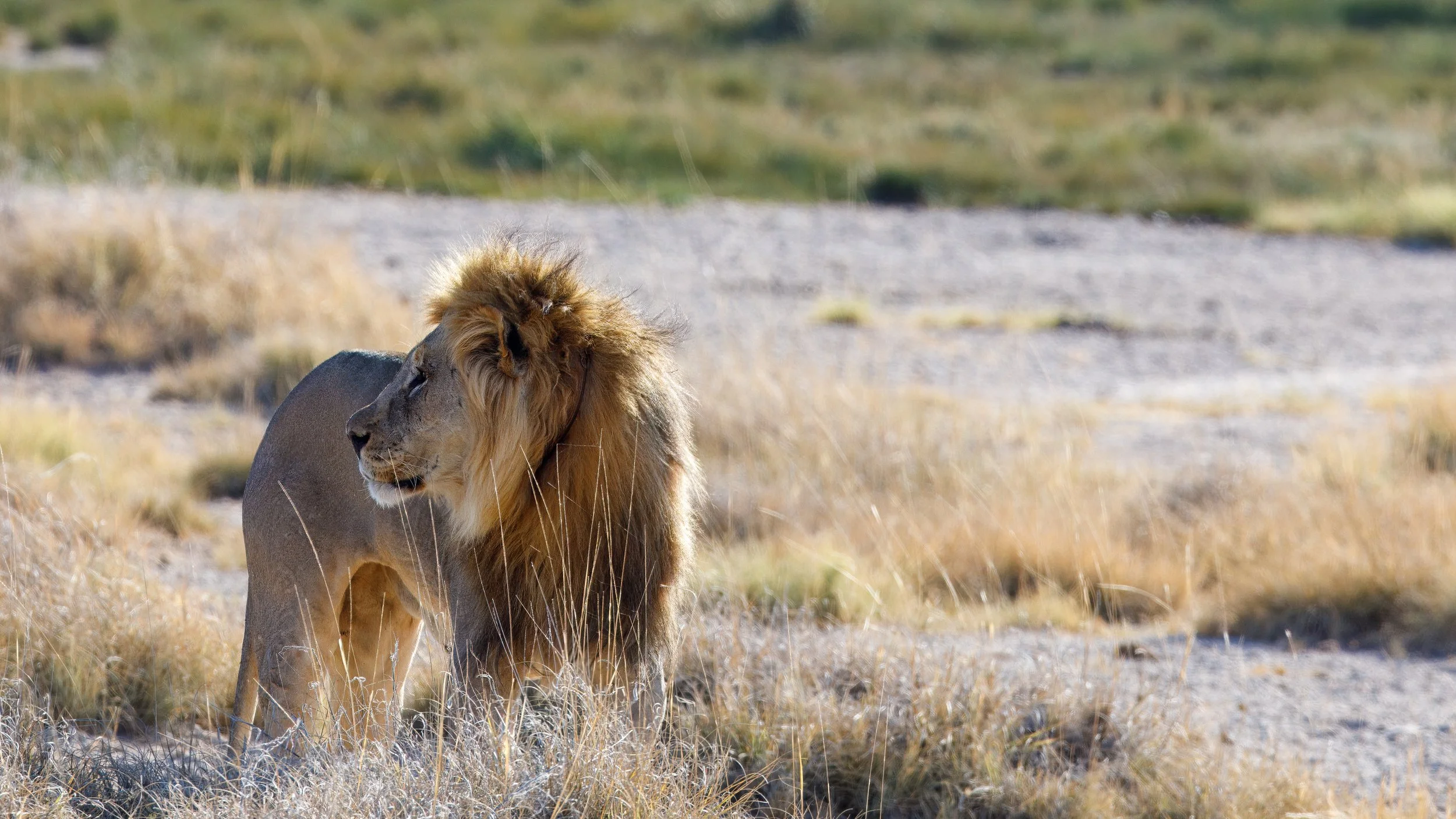
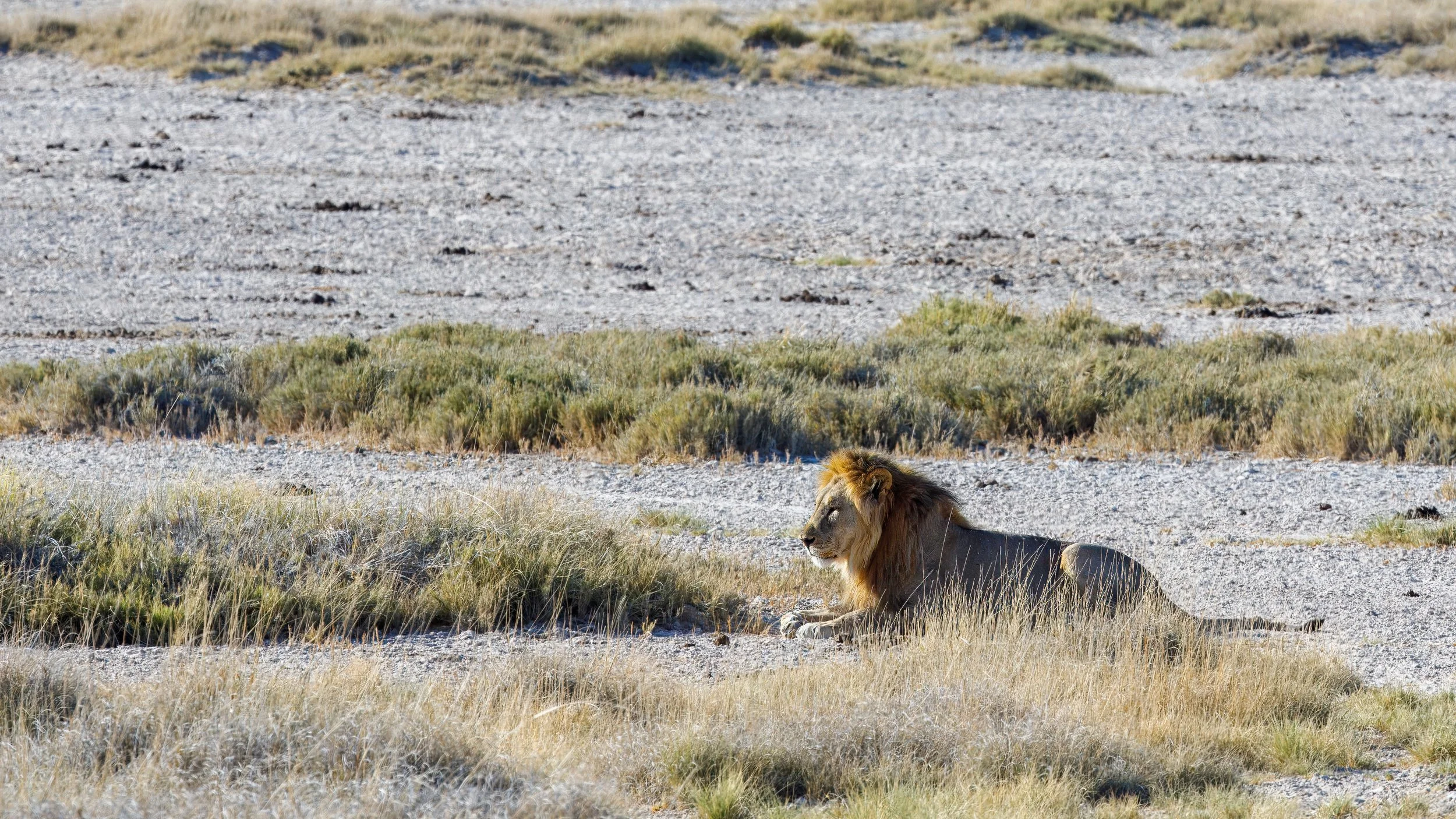
Large adult male lion gets up for a brief stroll before lying back down
In a more-typical pose
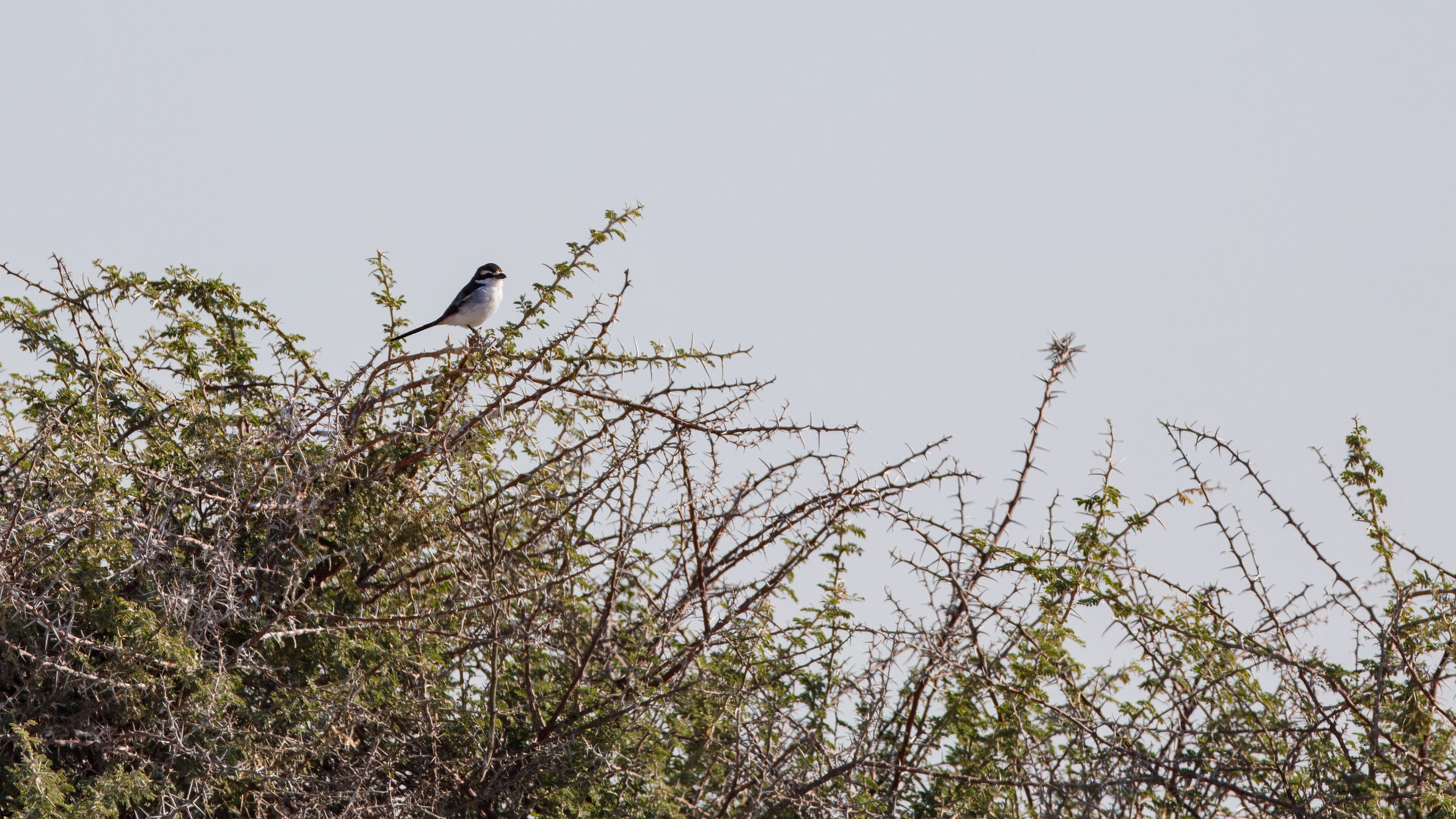
A southern fiscal, looking on
Wildebeest surrounded by springbok
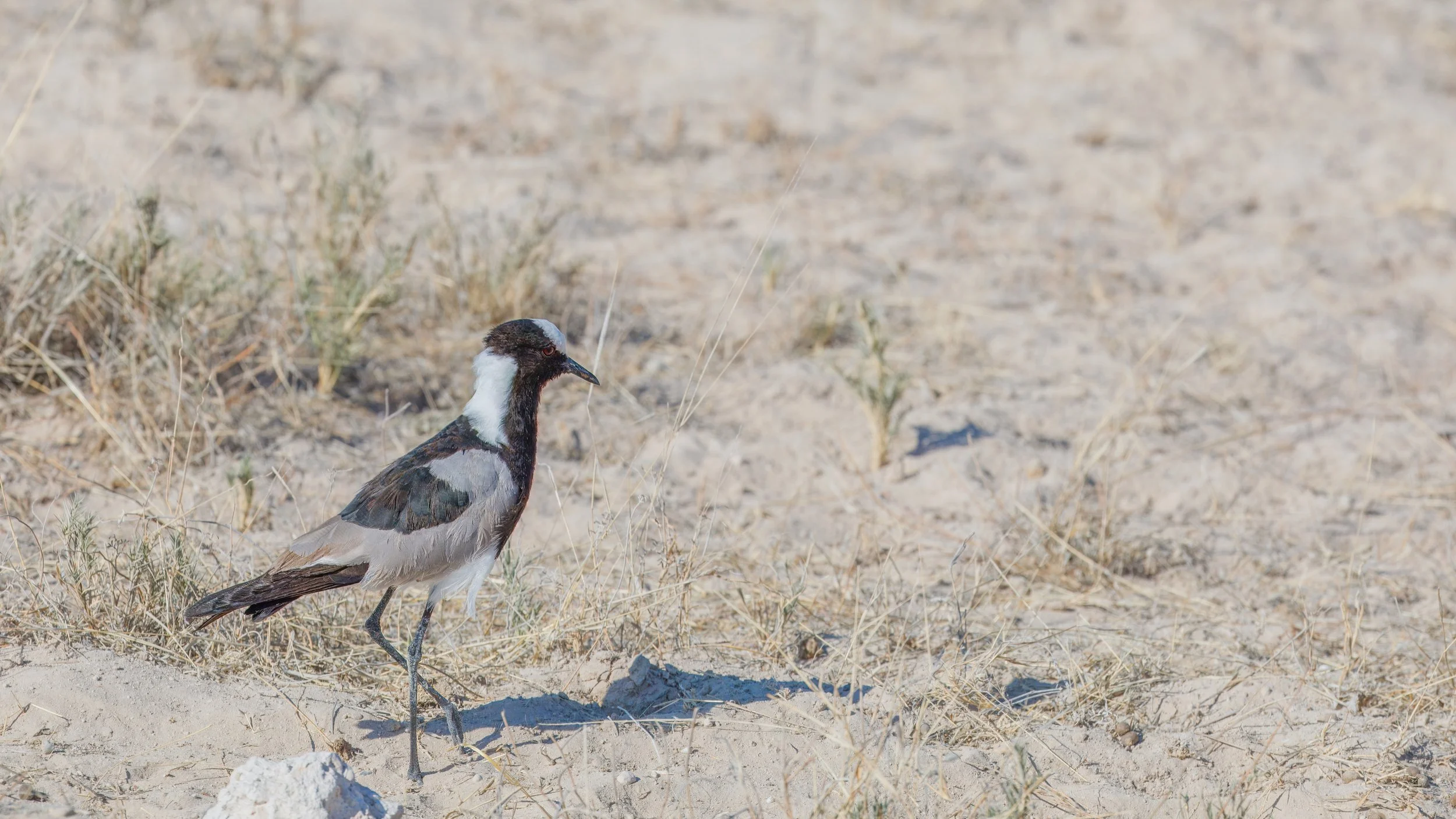
Blacksmith lapwing
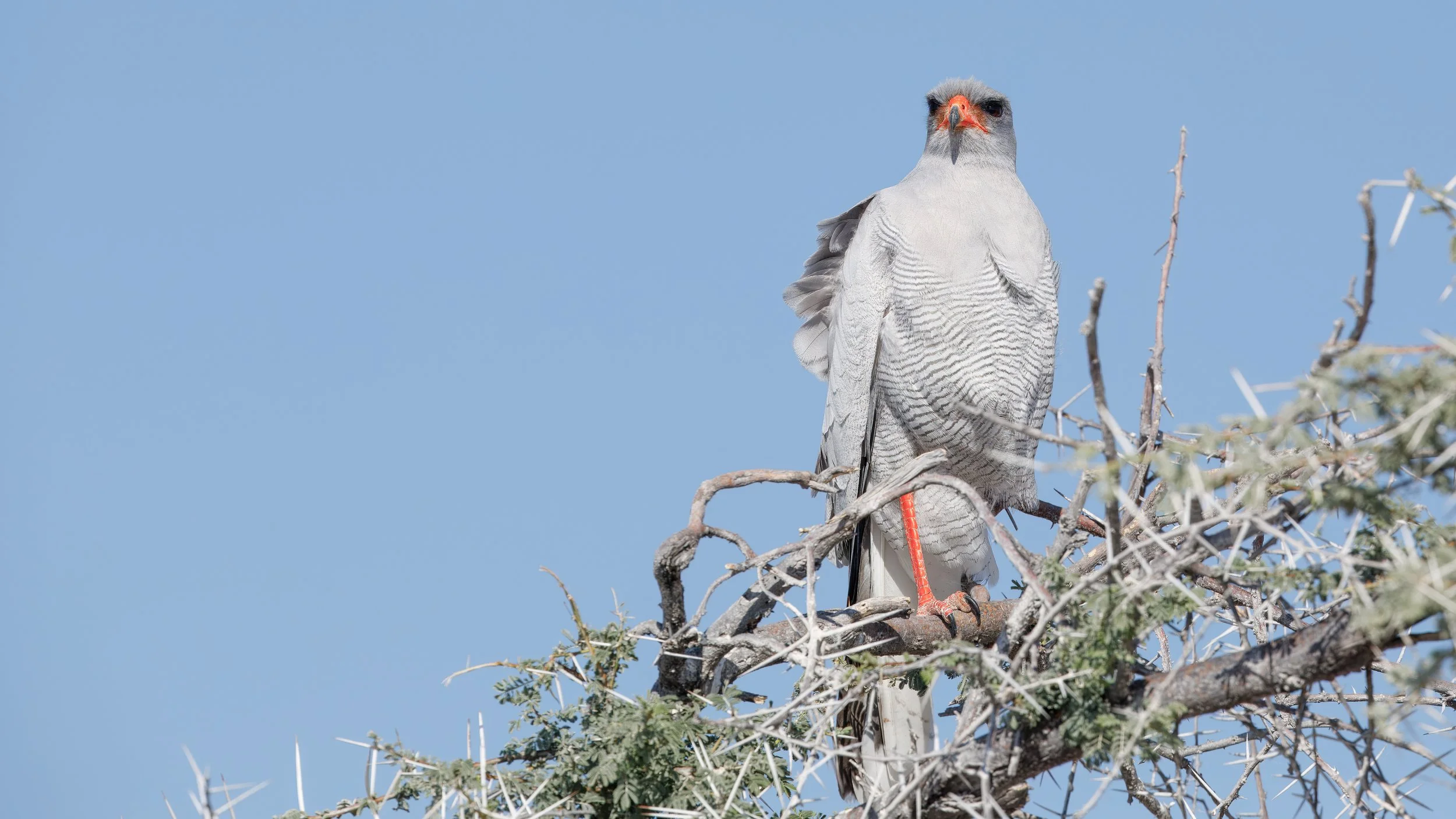
Pale chanting-goshawk
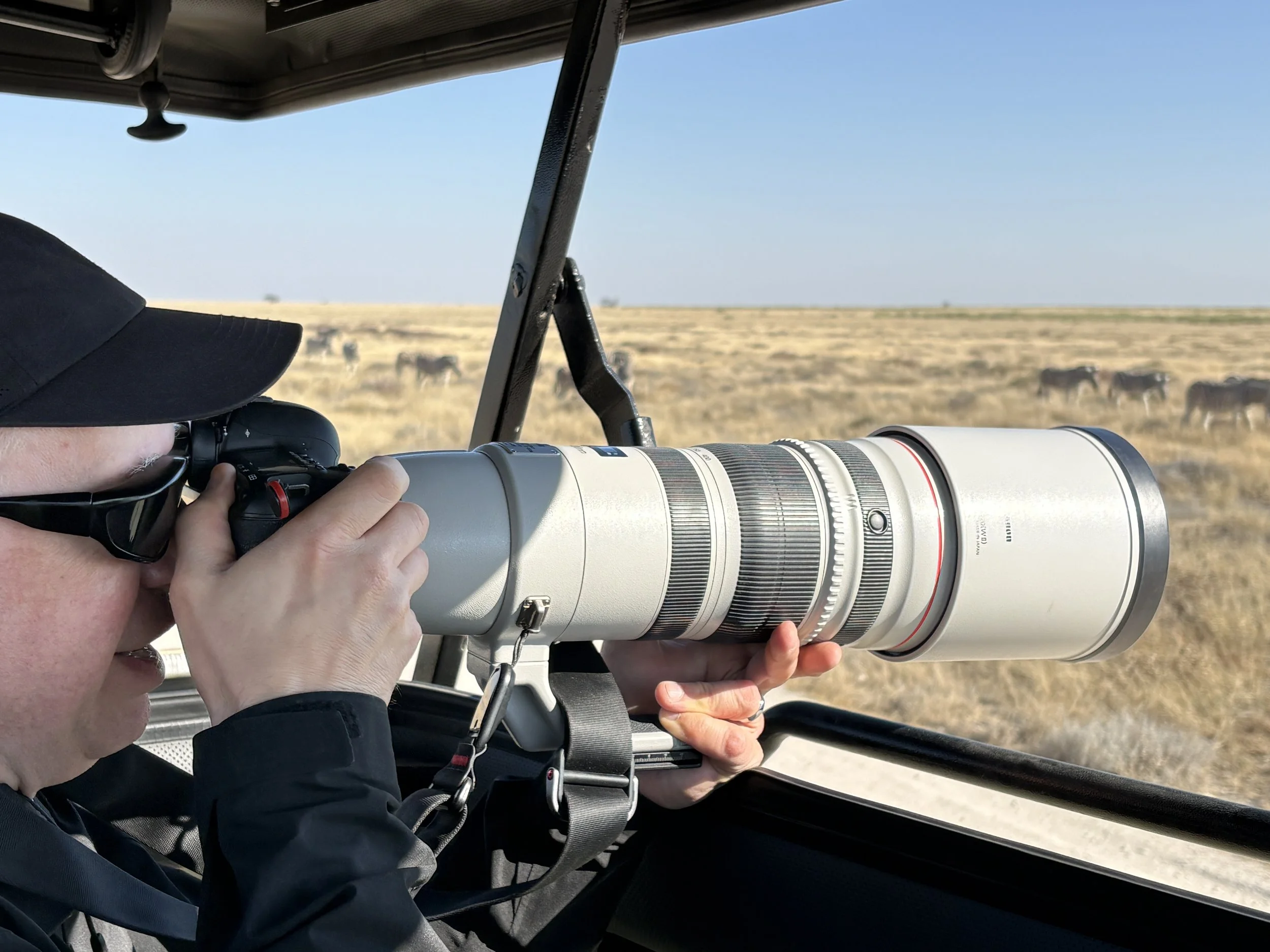
Tom taking advantage of the raisable roof of our safari vehicle
Pale chanting-goshawk on the prowl
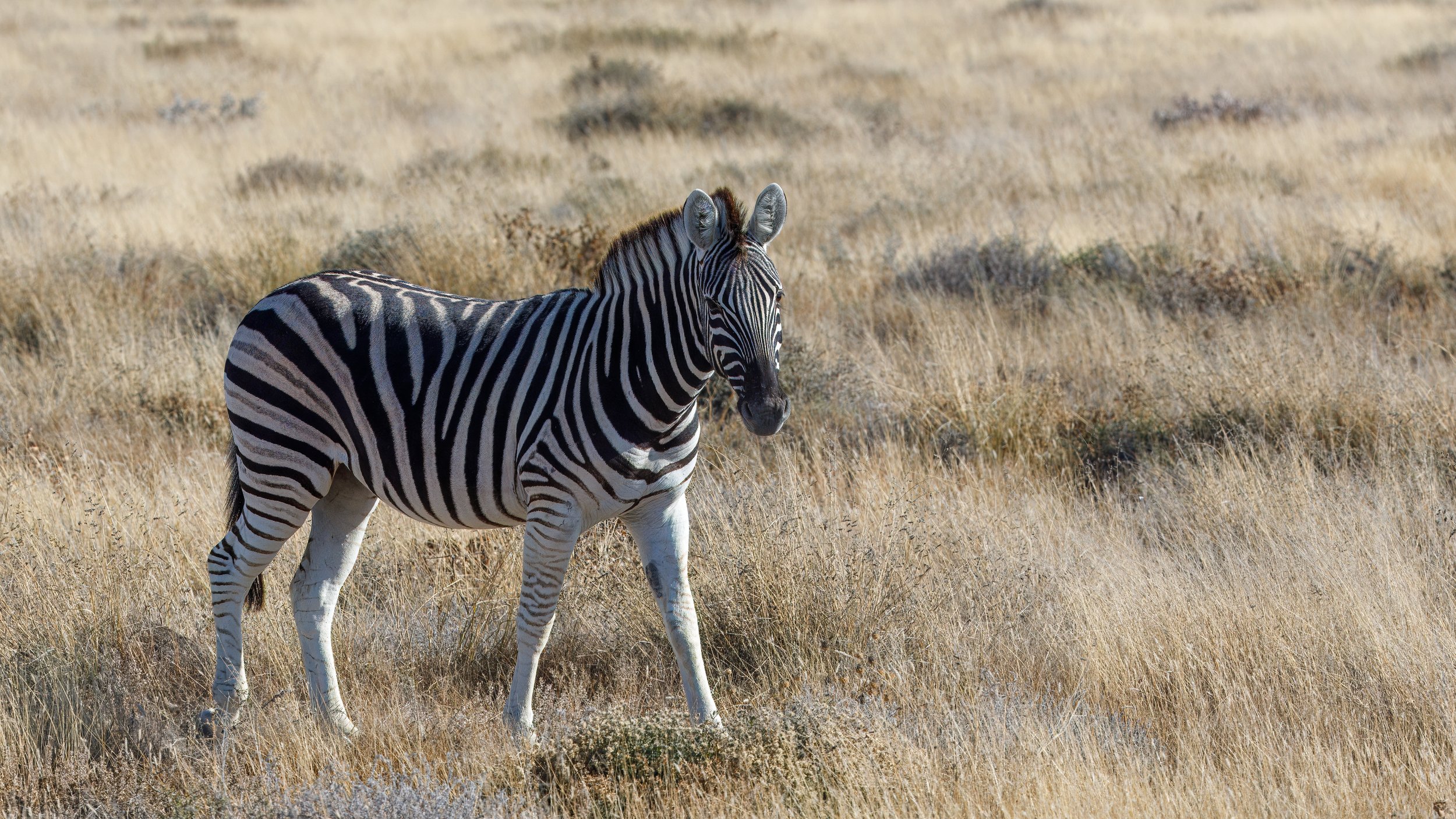
Plains zebra
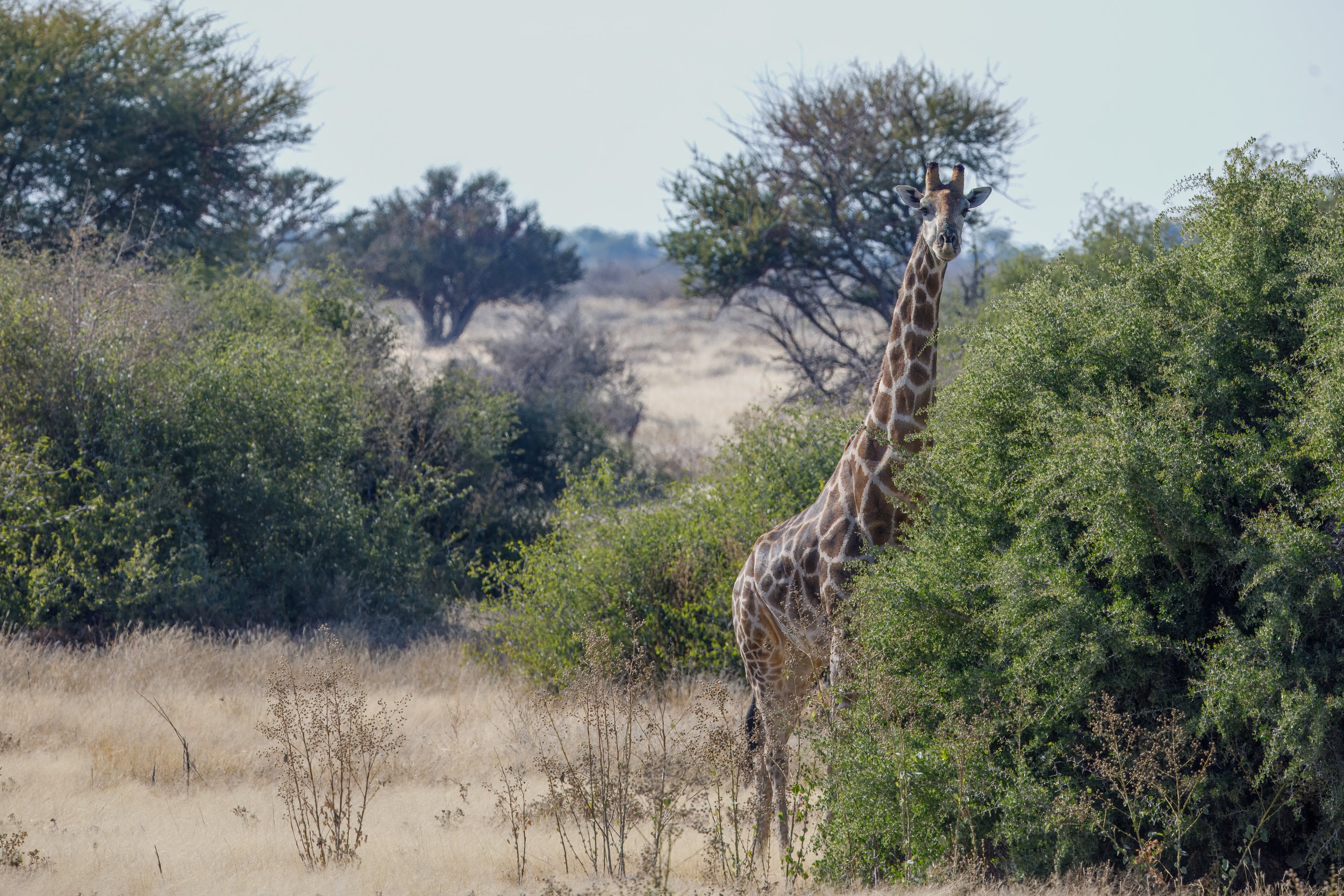
Giraffe enjoying the foliage
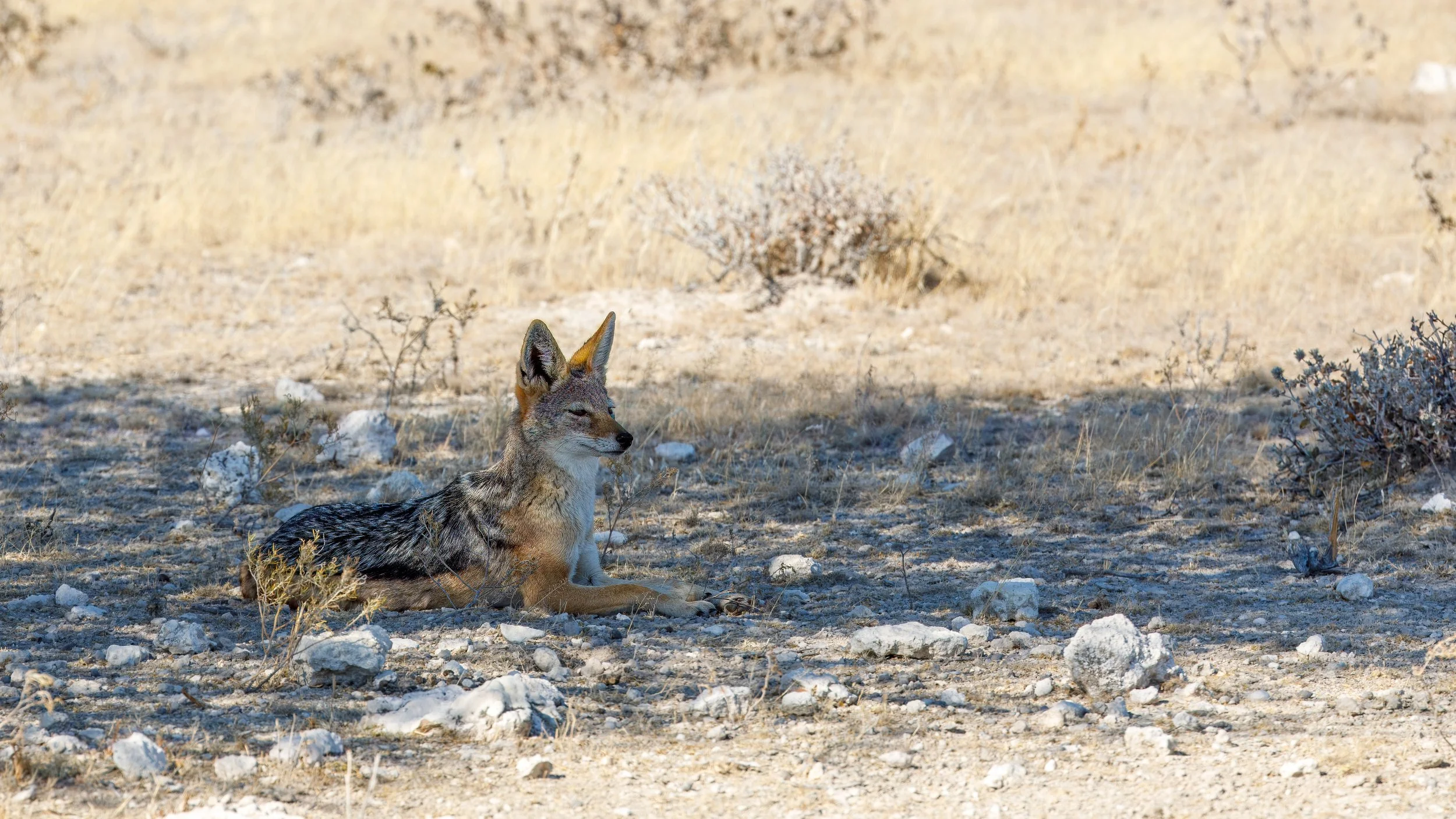
Black-backed jackal continuing to look cute as it rests in the shade
Another ground squirrel posing for us
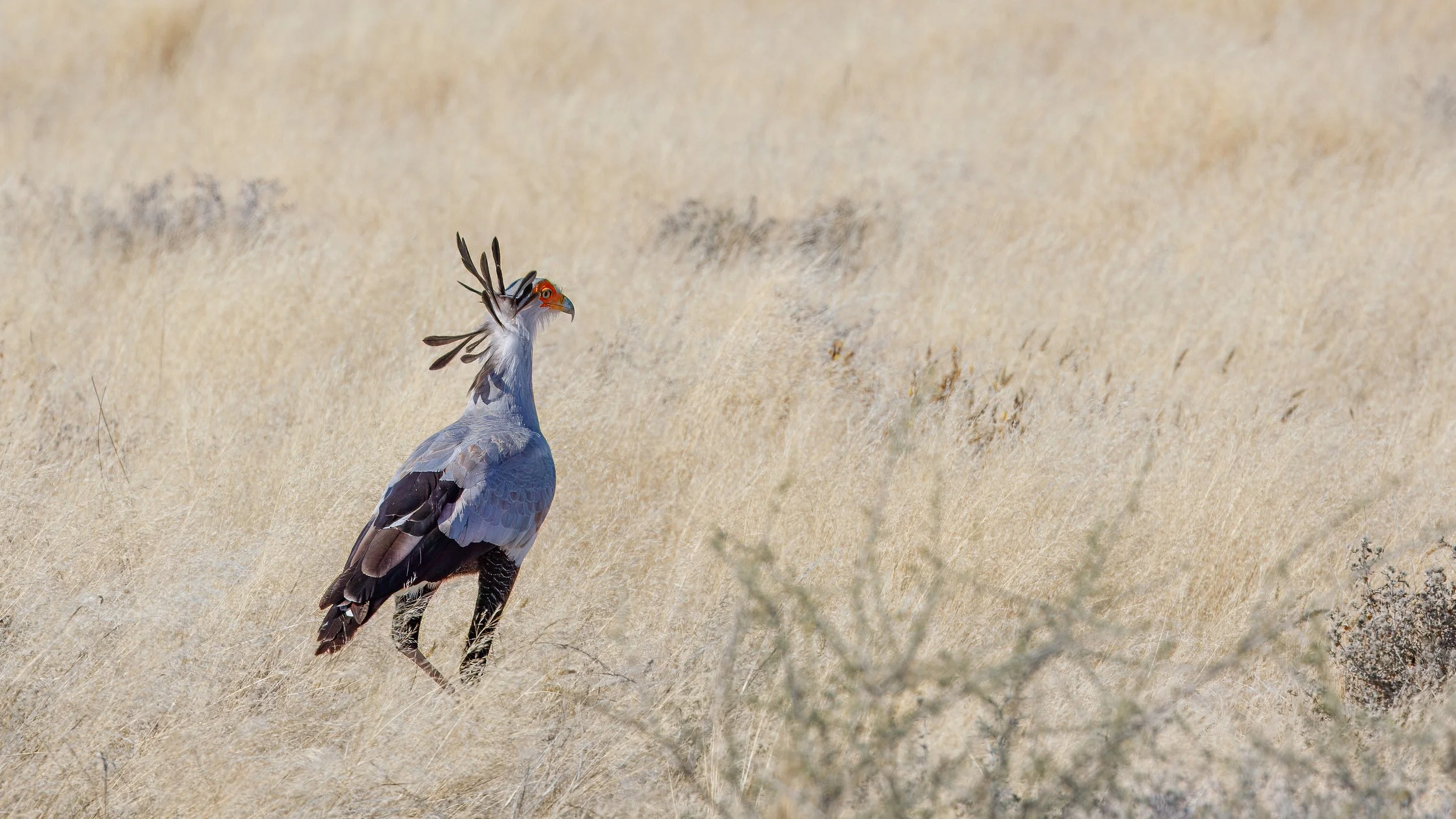
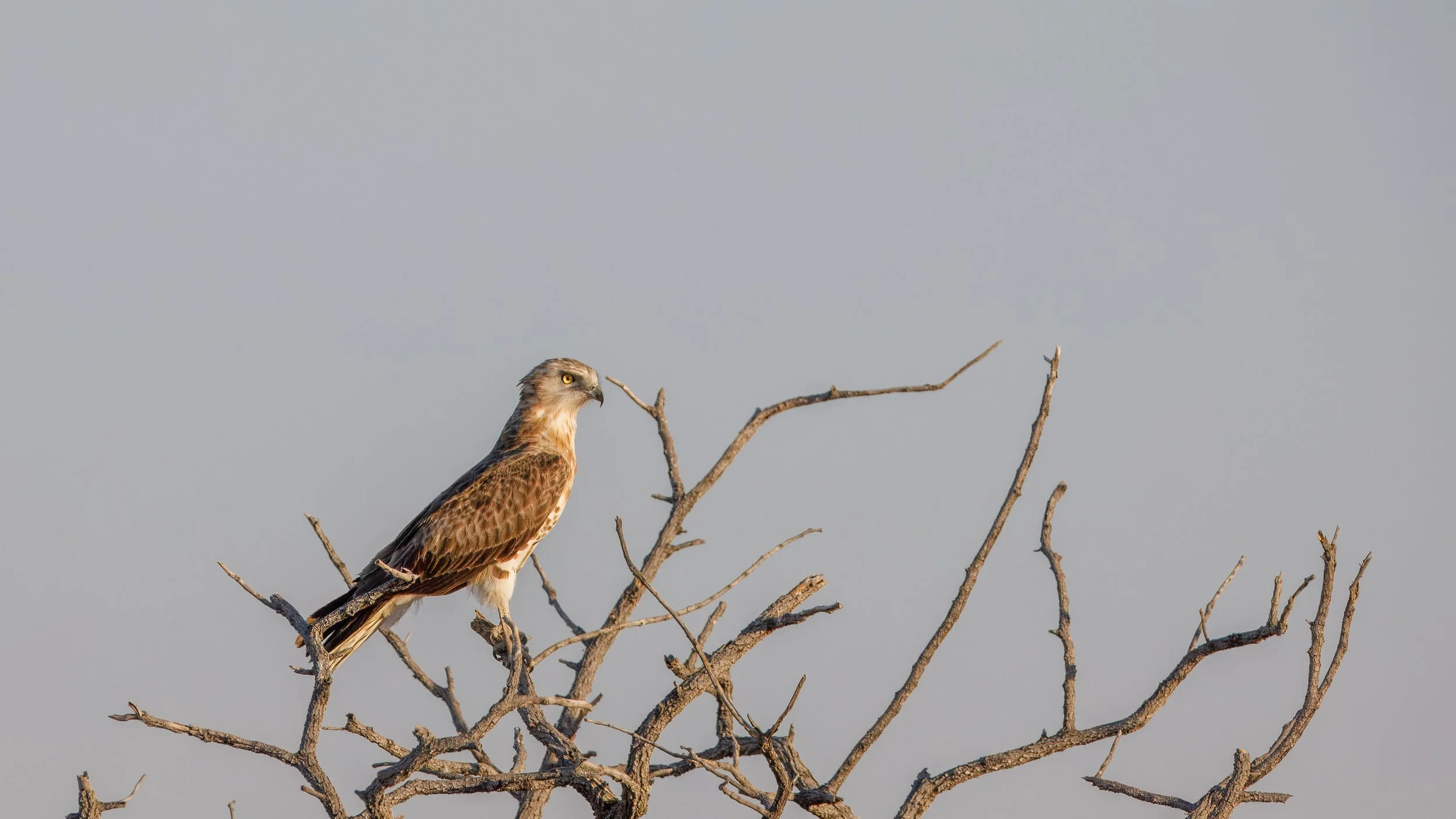
A secretary bird, large and terrestrial, named for the appearance of a secretary with pens in their hair
Another giraffe roaming the park
More wildebeest
Kori bustard
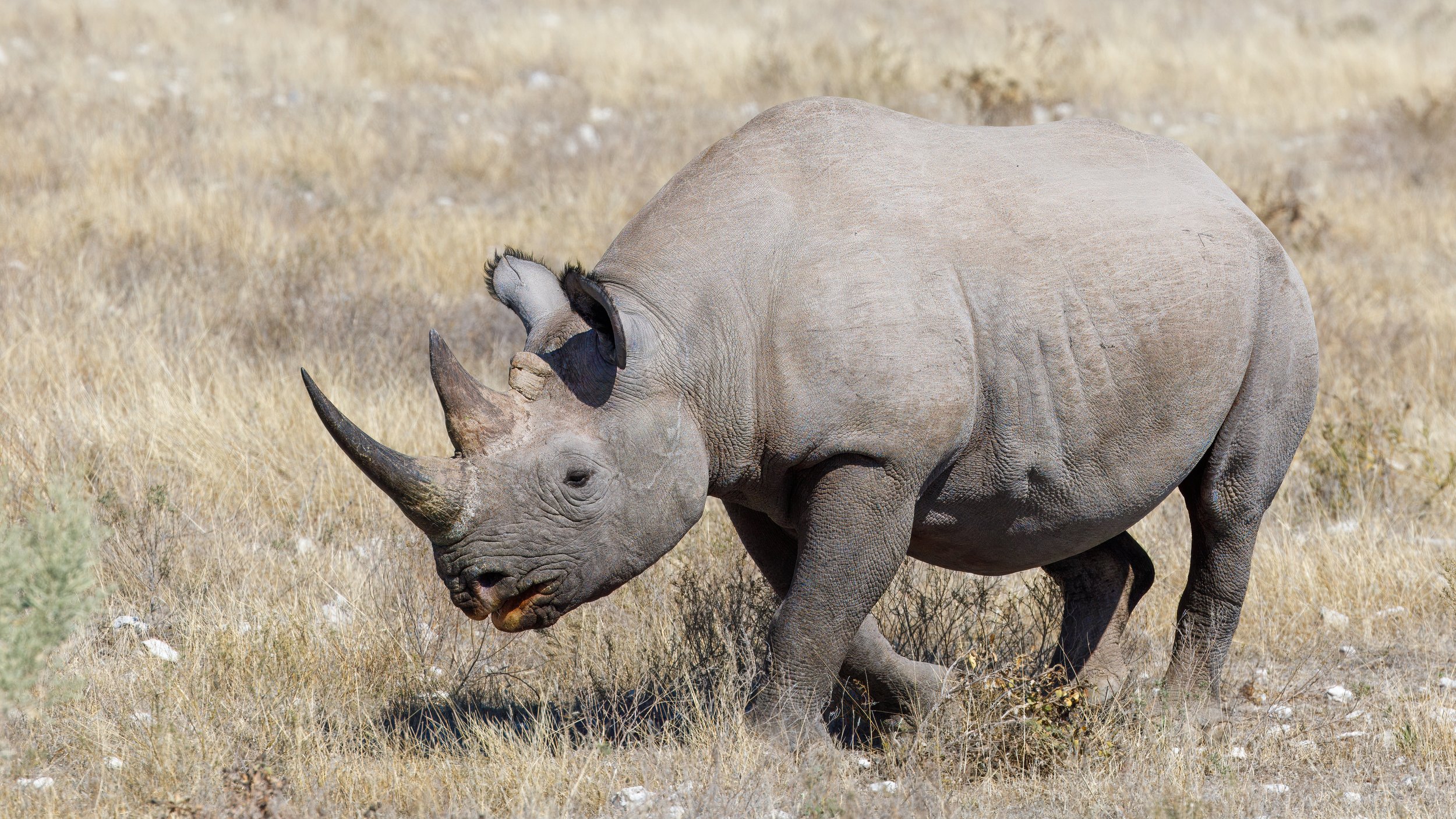
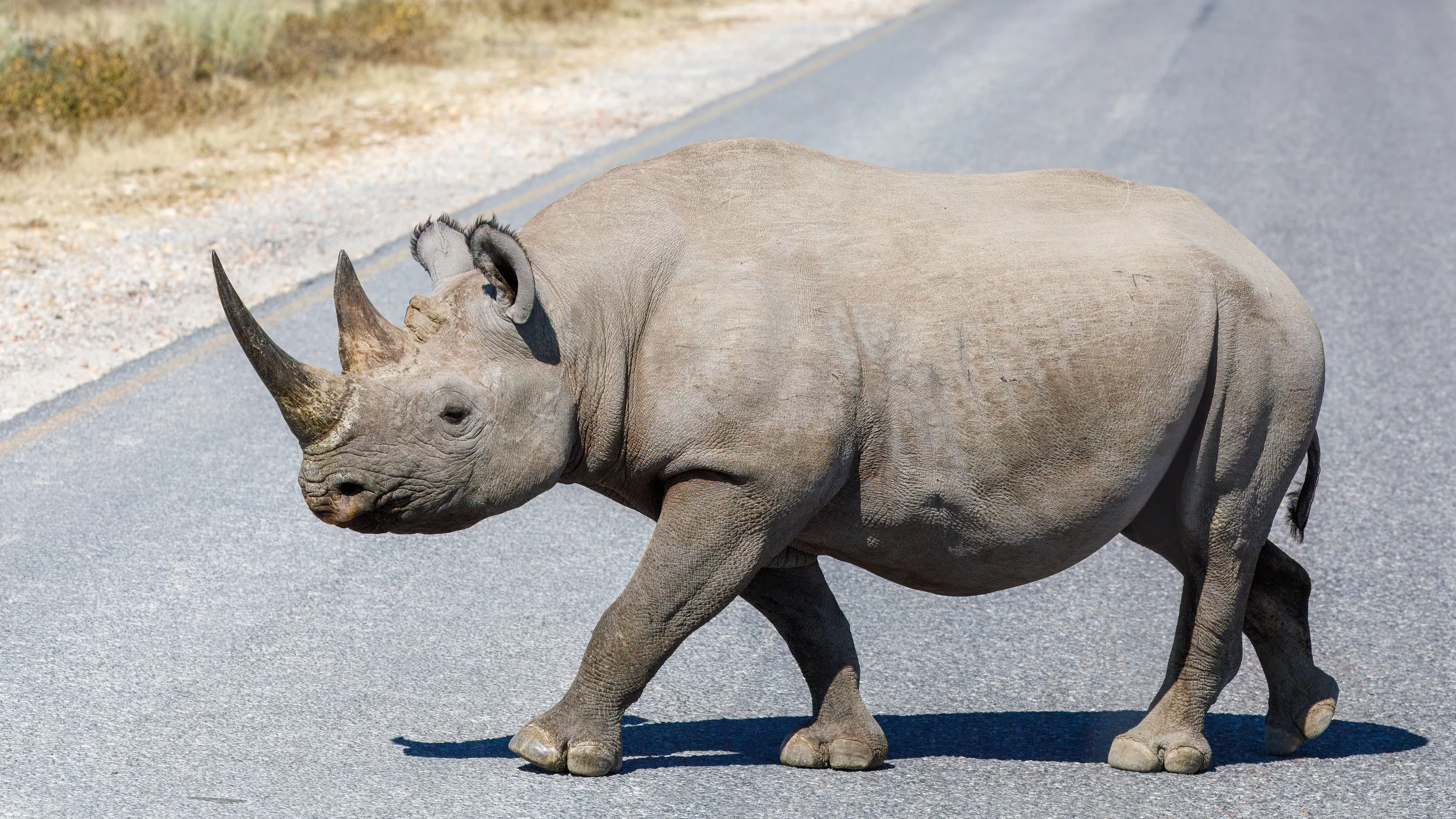
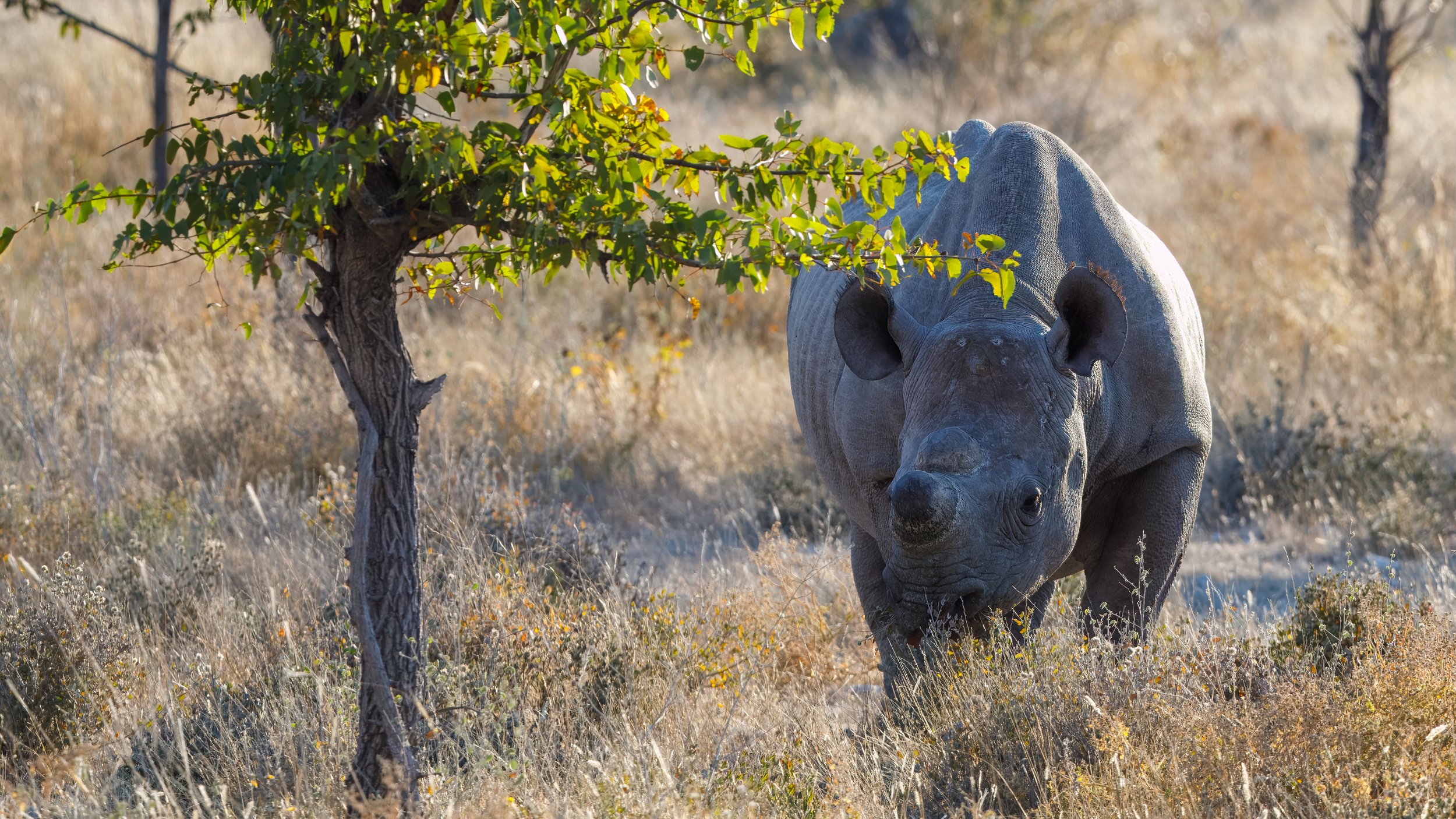
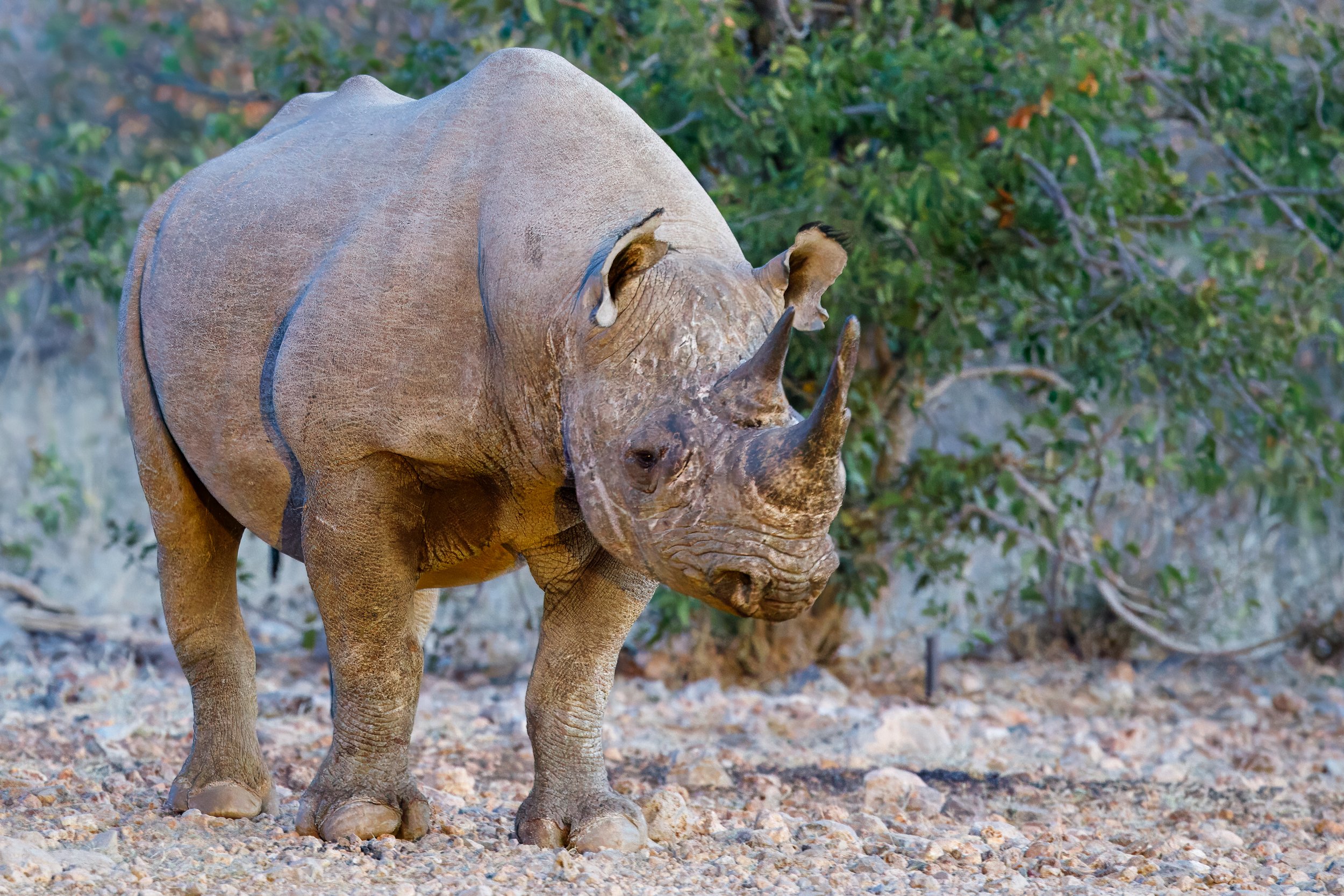
With a tip from the guide group chat, we had a close run in with a black rhino crossing the road outside Okaukuejo
Luckily we are only slightly interesting to the massive rhino
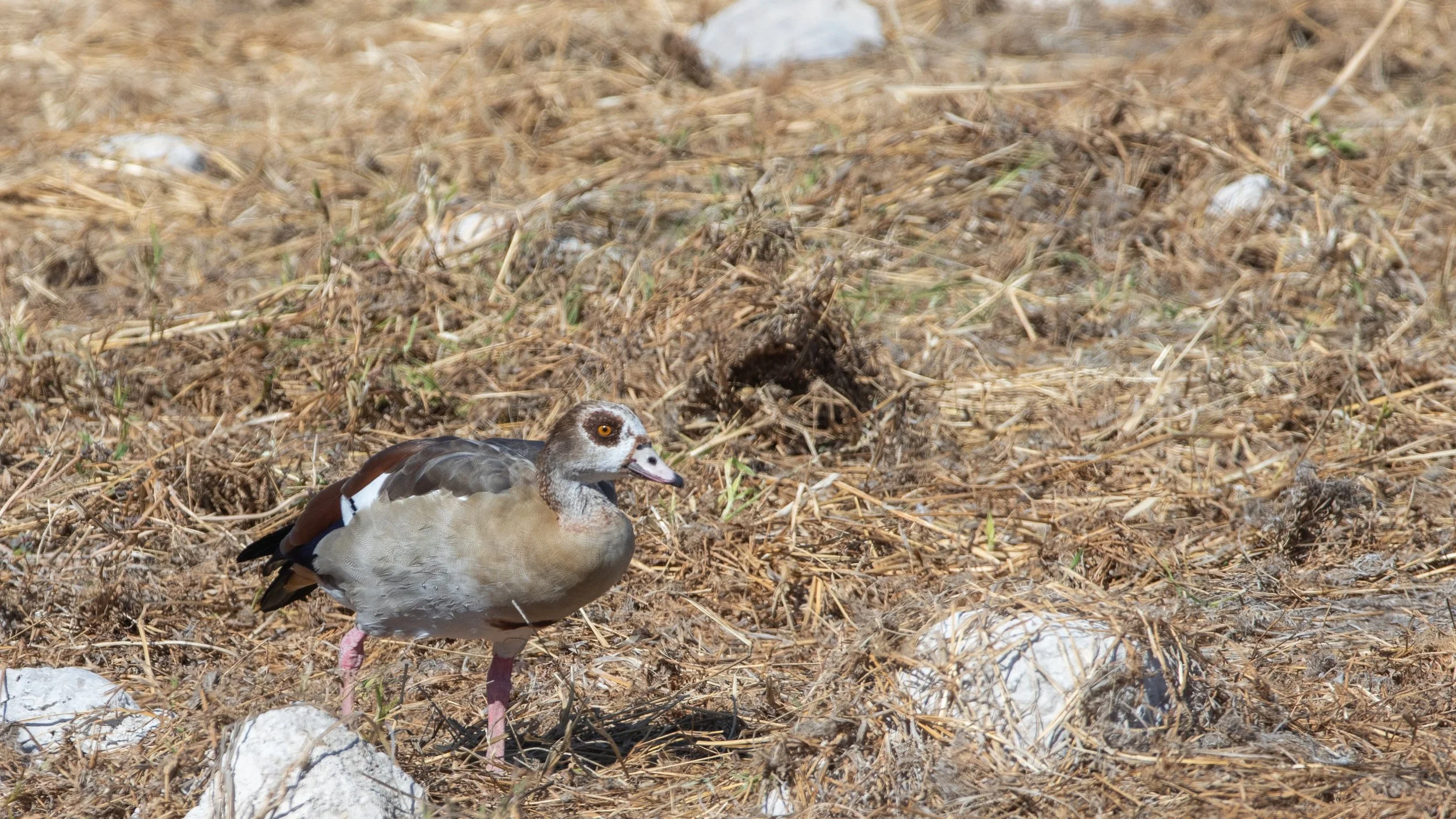
Egyptian goose, a type of shelduck, a biological cross-category between a duck and a true goose
With the rhino past us we are back at the more busy Okaukuejo waterhole
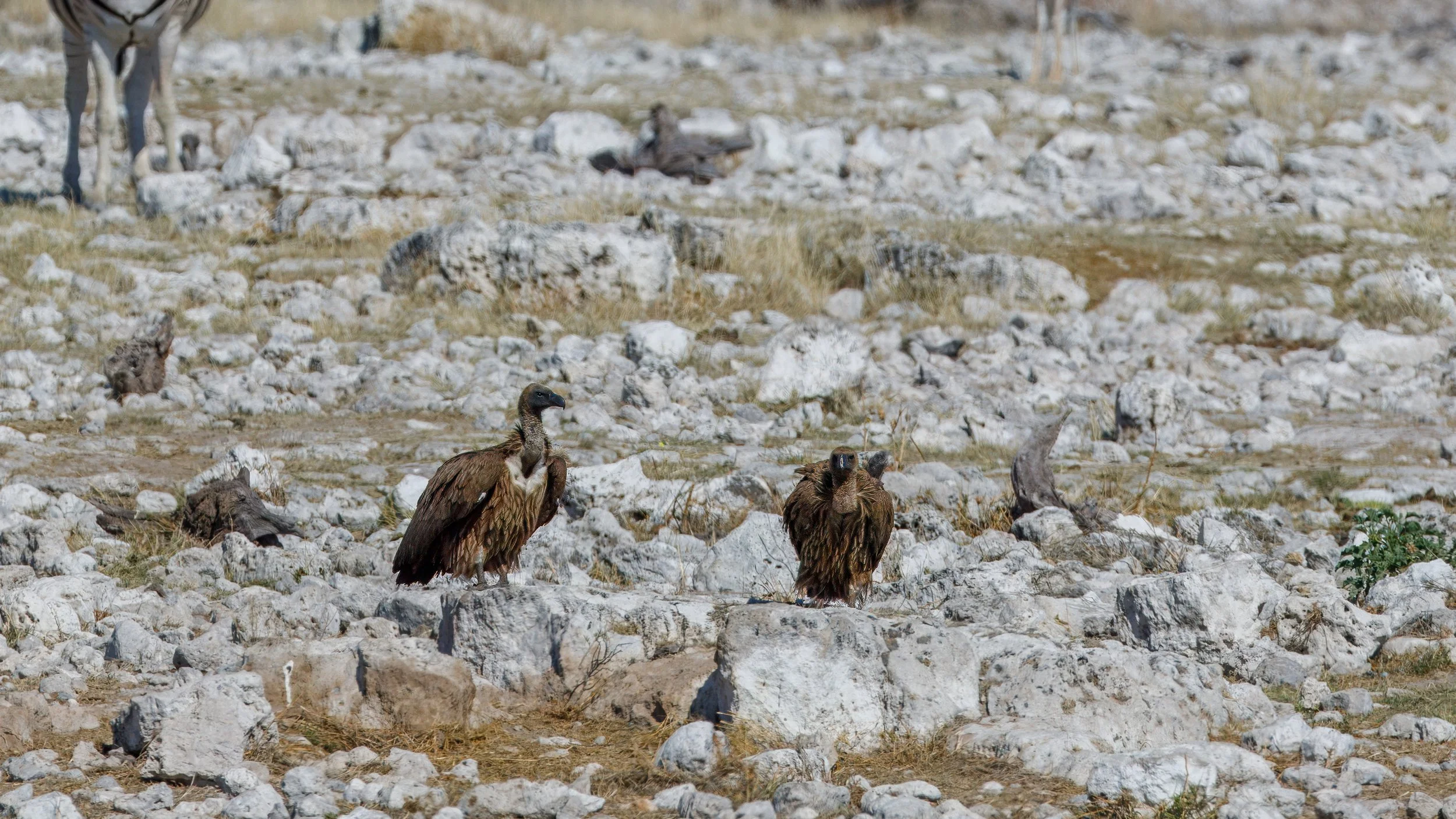
African white-backed vultures, monitoring the watering hole
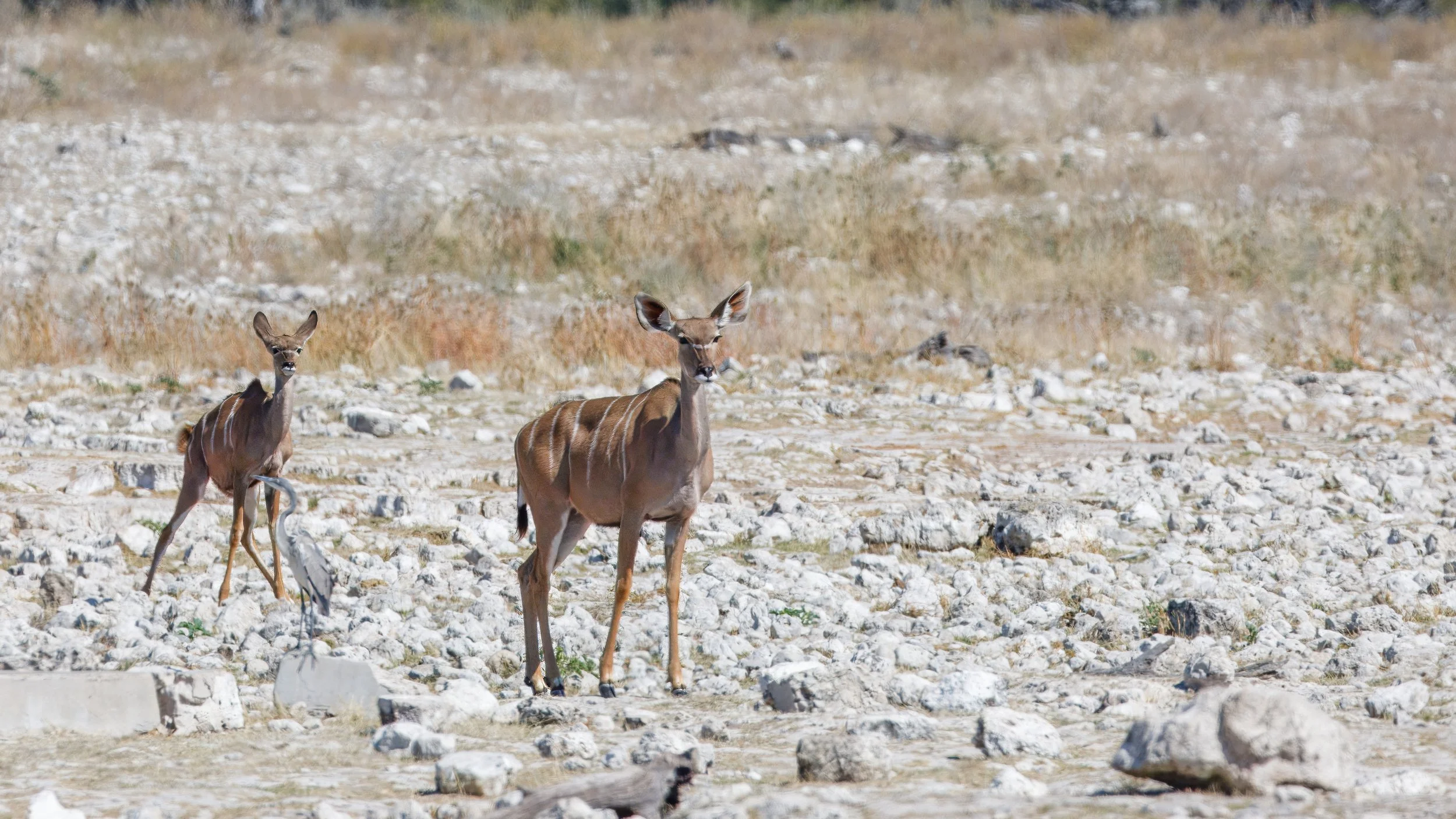
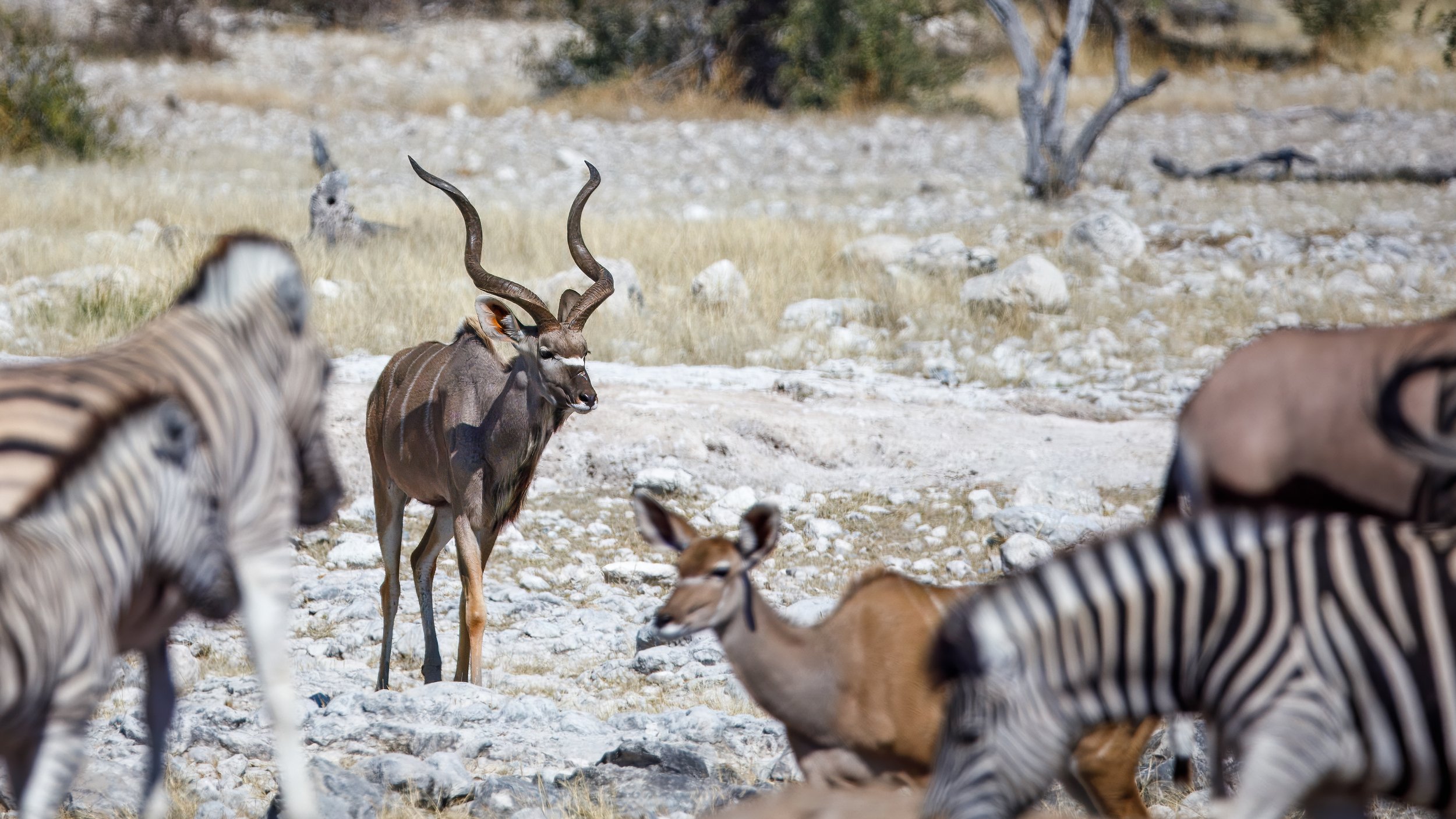
Greater kudus waiting for their turn at the waterhole
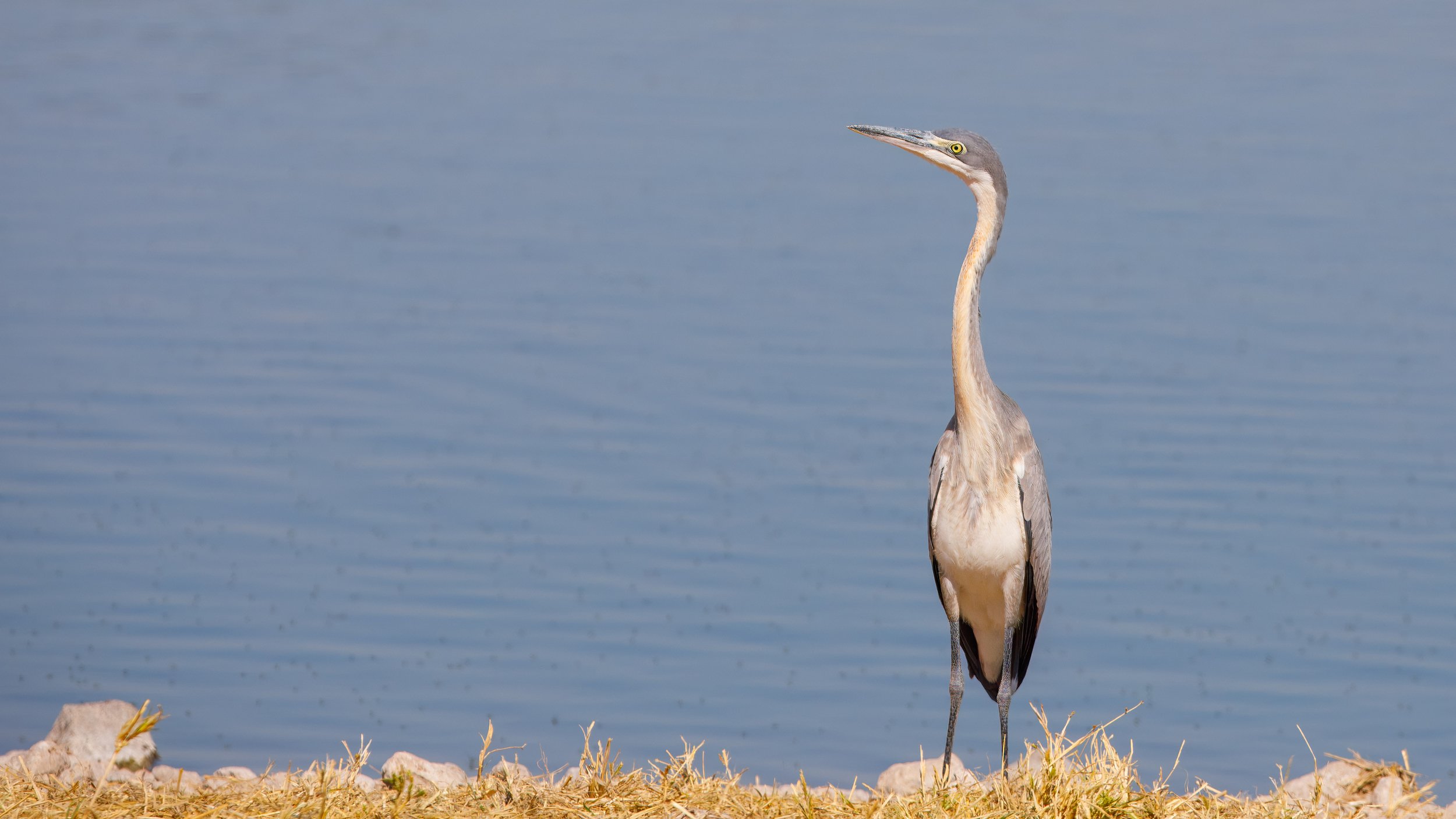
Grey heron
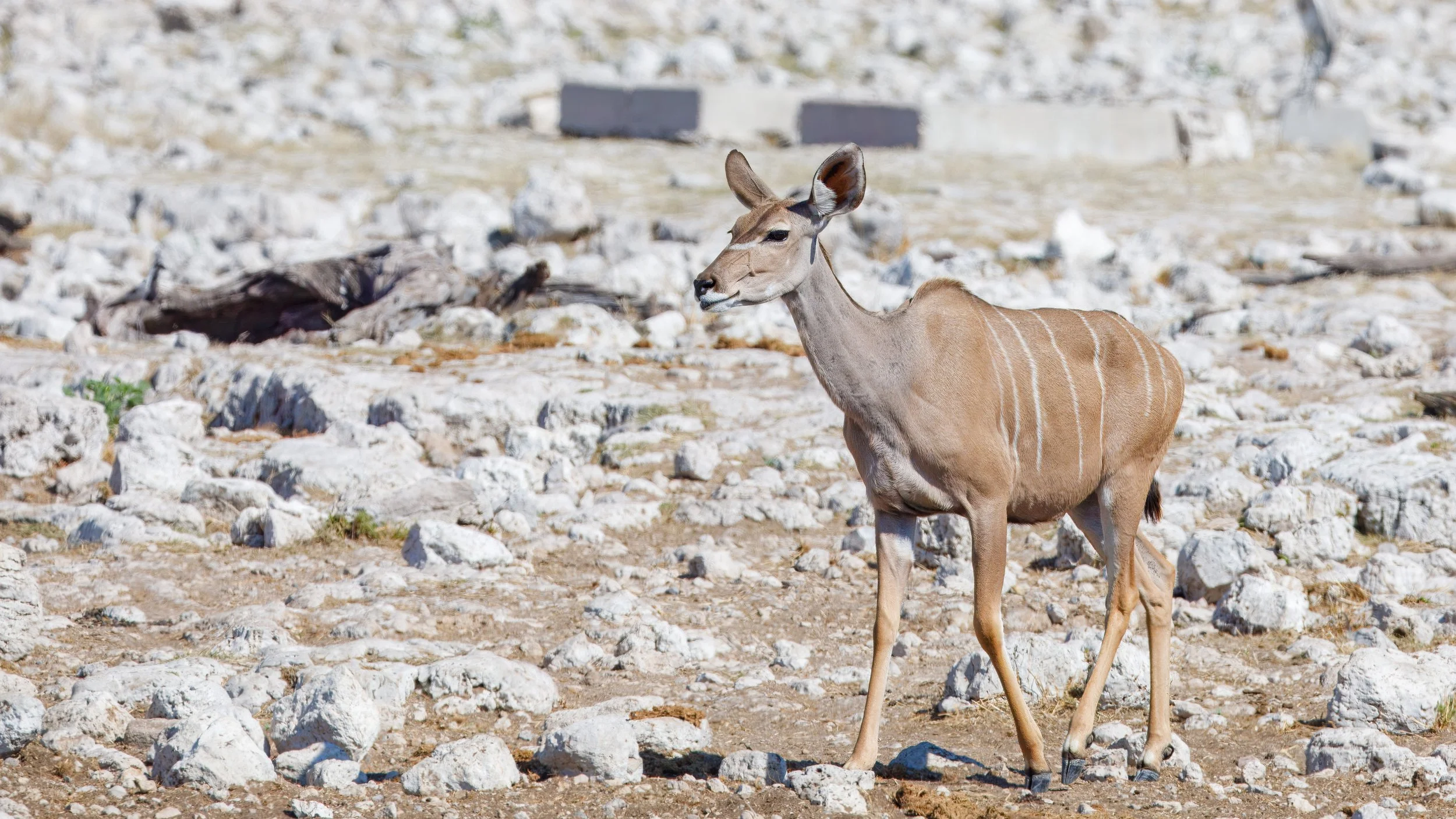
Greater kudu
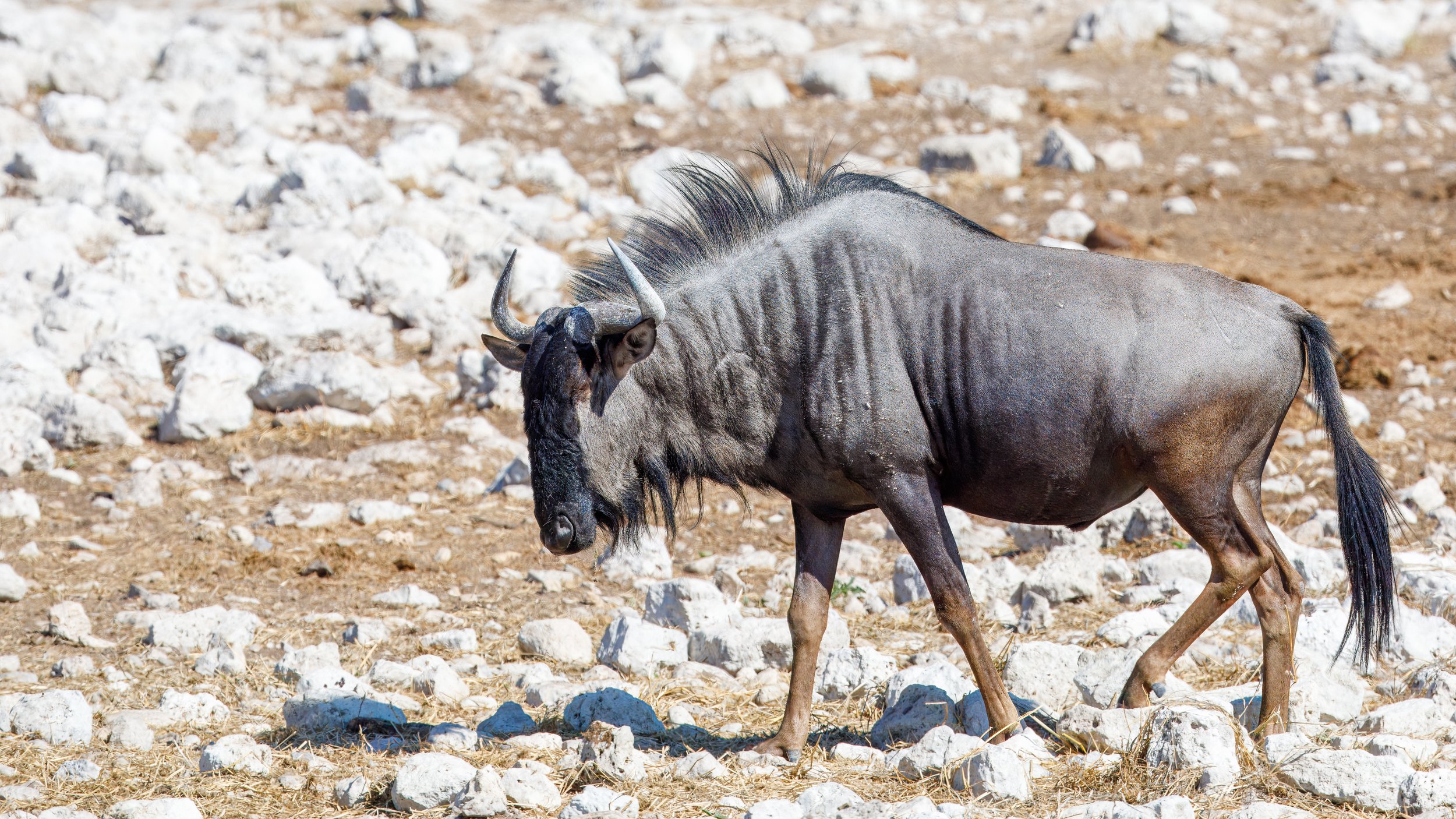
A wildebeest at the busy waterhole
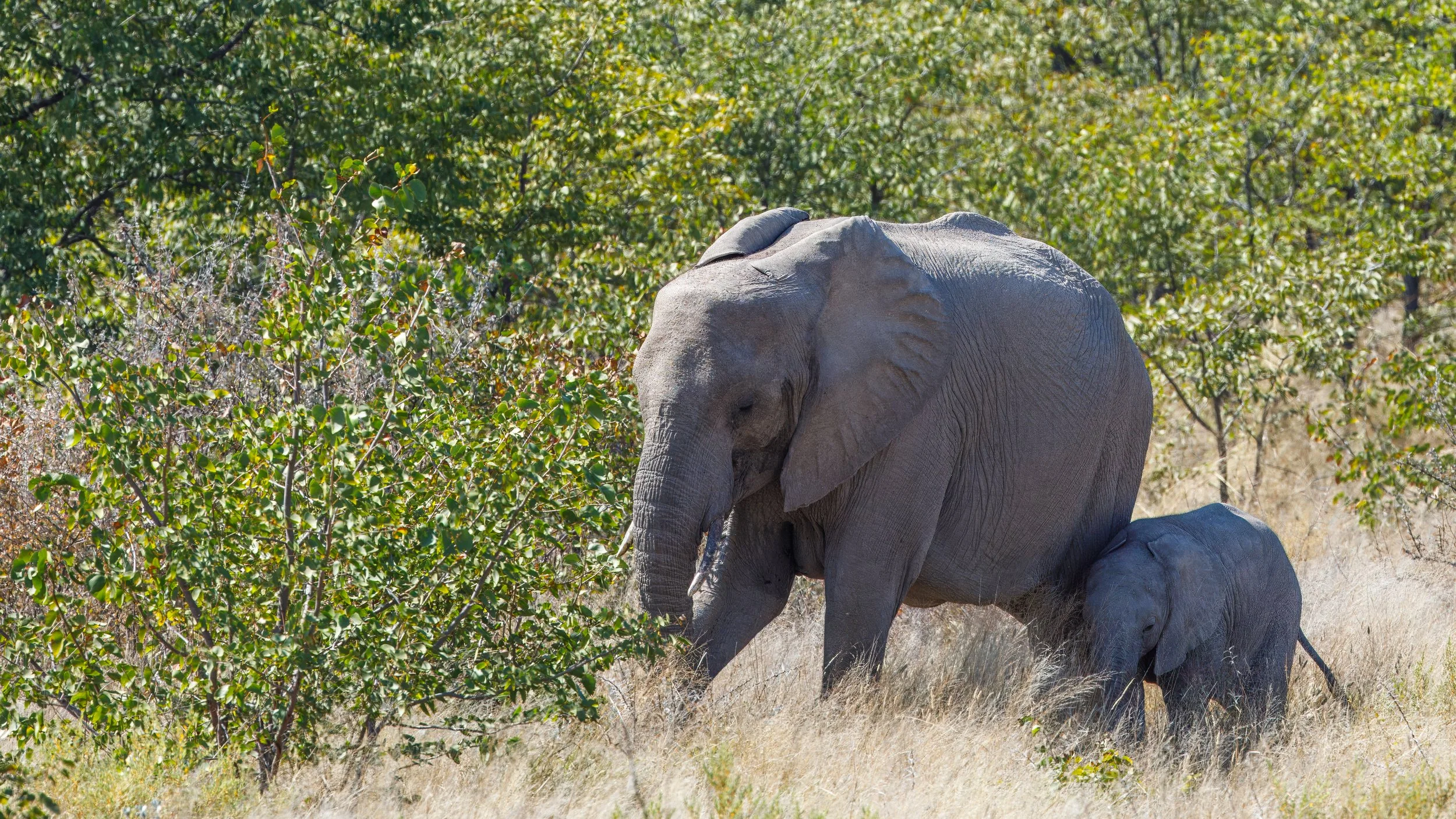
Elephant with her infant
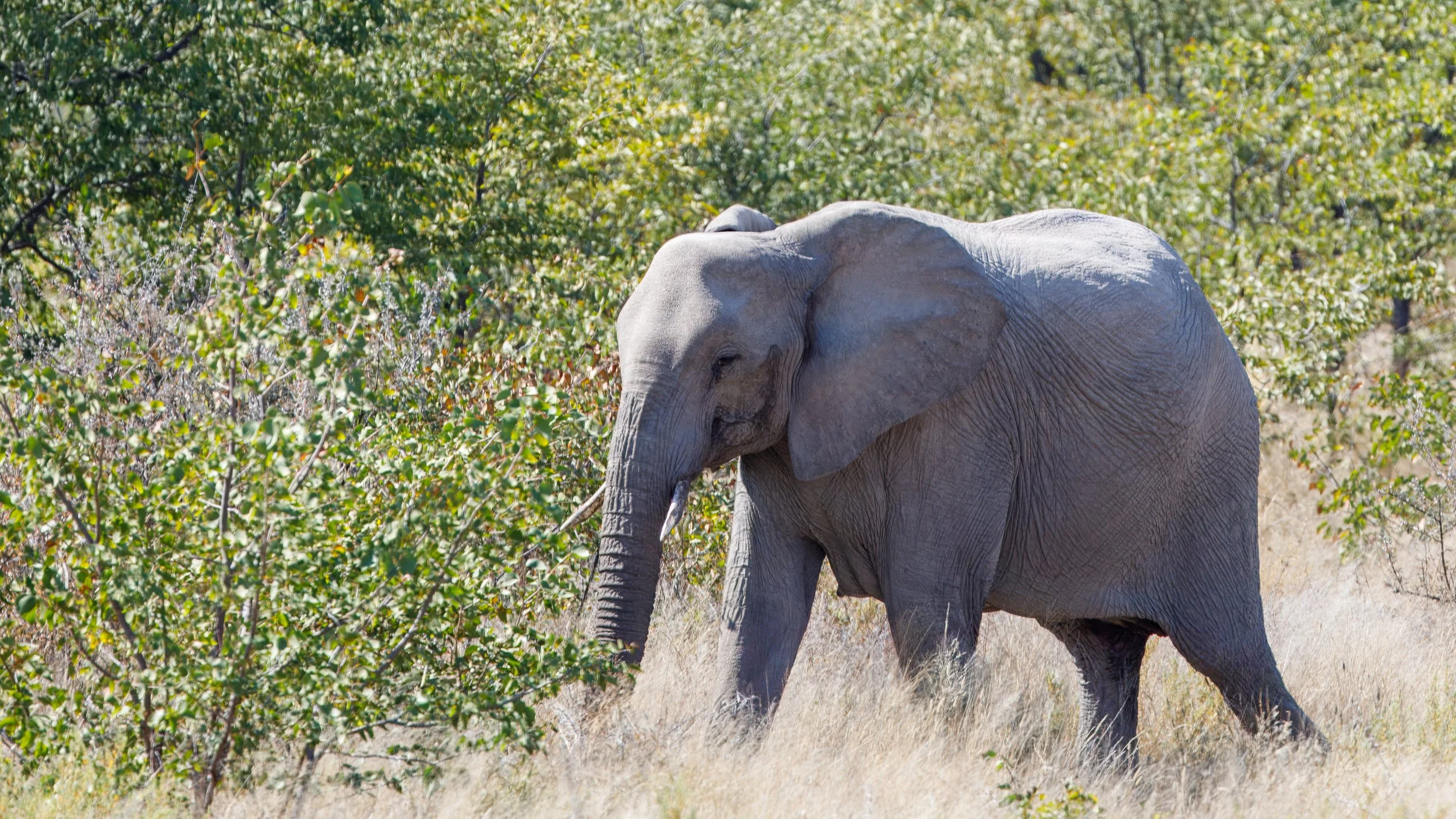
Elephant out for a walk next to the road
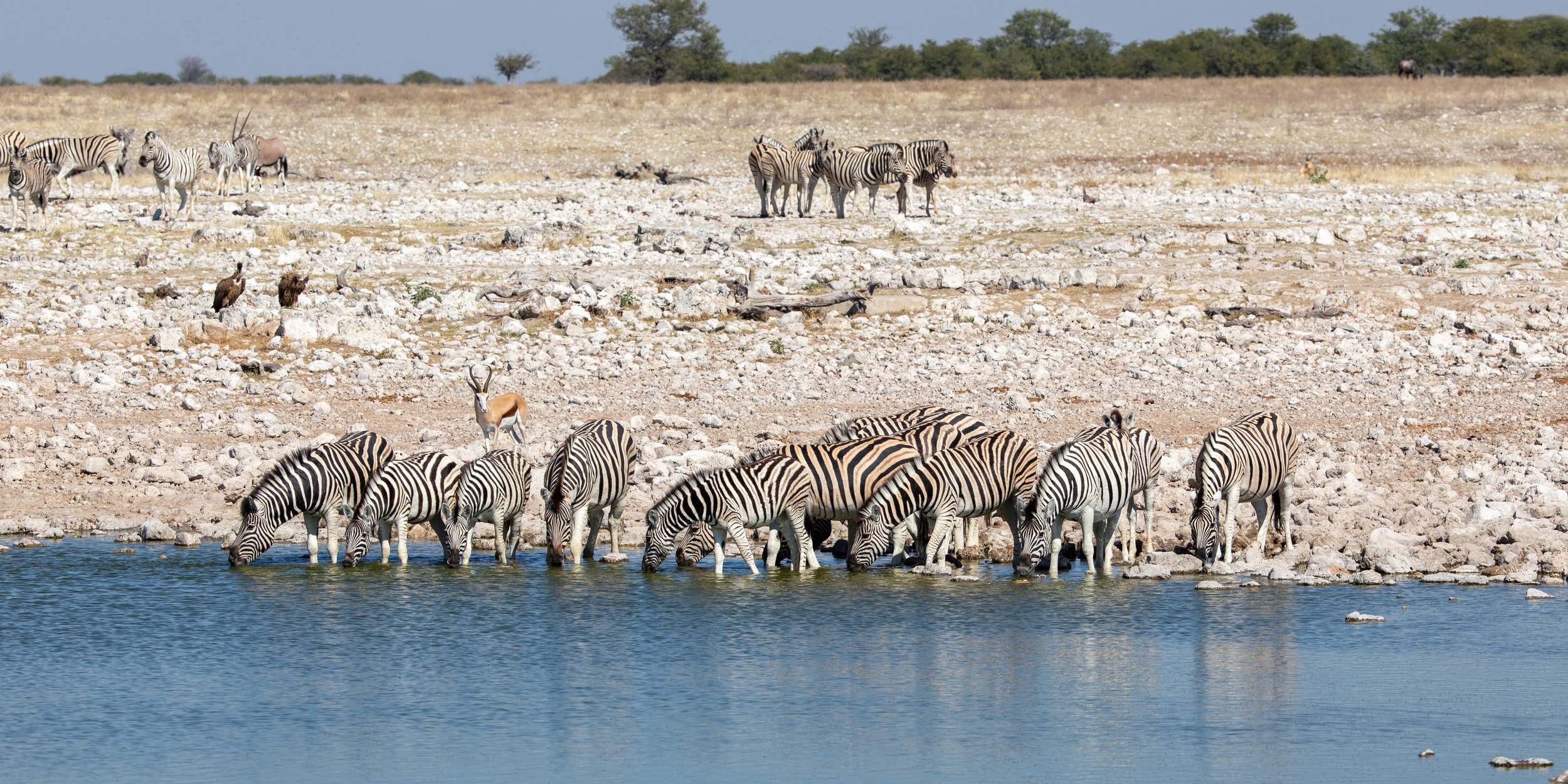
The waterhole gets more crowded with zebras and other visitors
It’s cool to see all the various species hanging out in relative harmony with no threat in sight
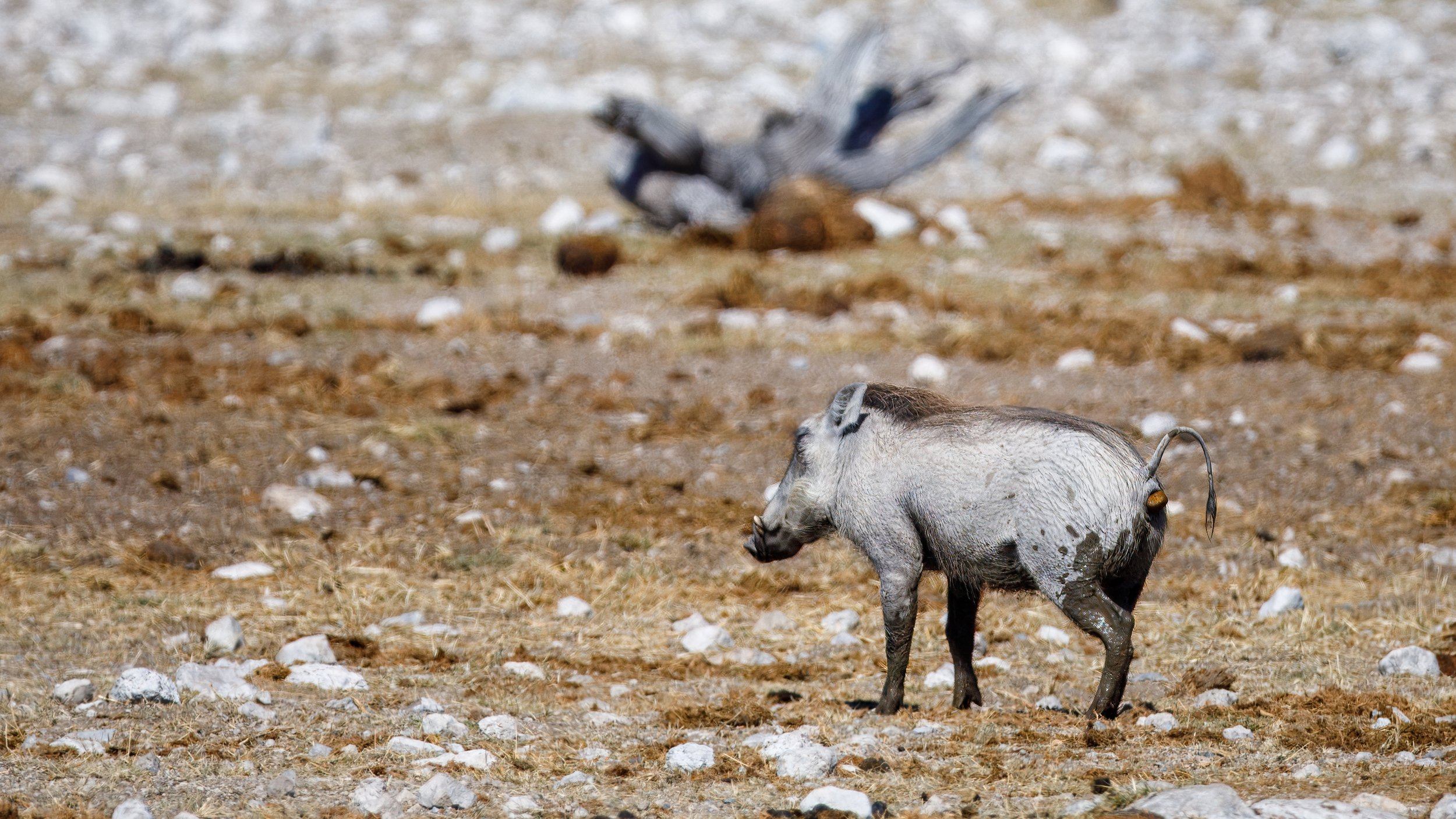
A warthog, still quite ugly, but fun to observe
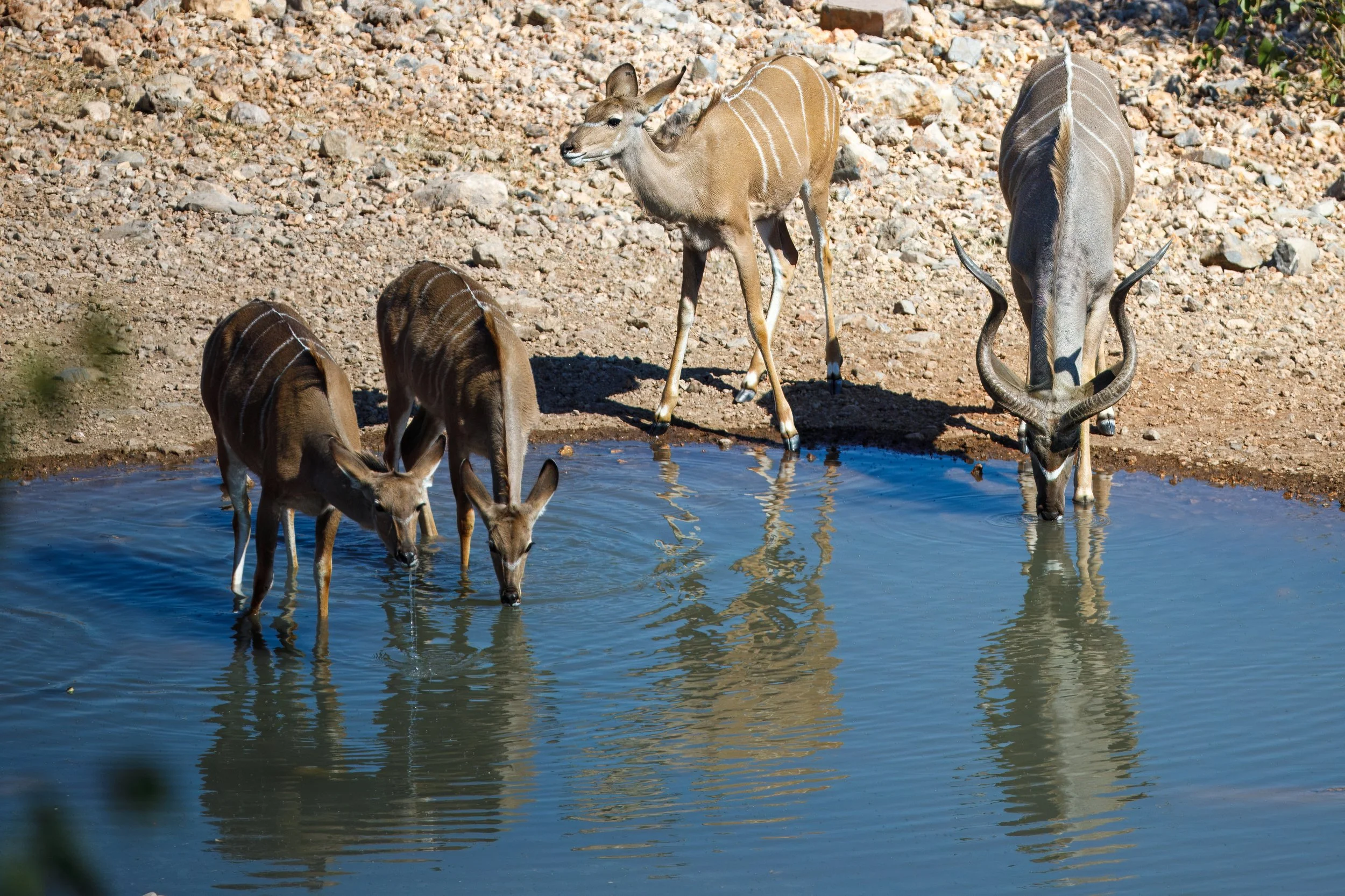
Kudus enjoying the refreshing water
Giraffes on the move
Another grey heron, perched in the watering hole
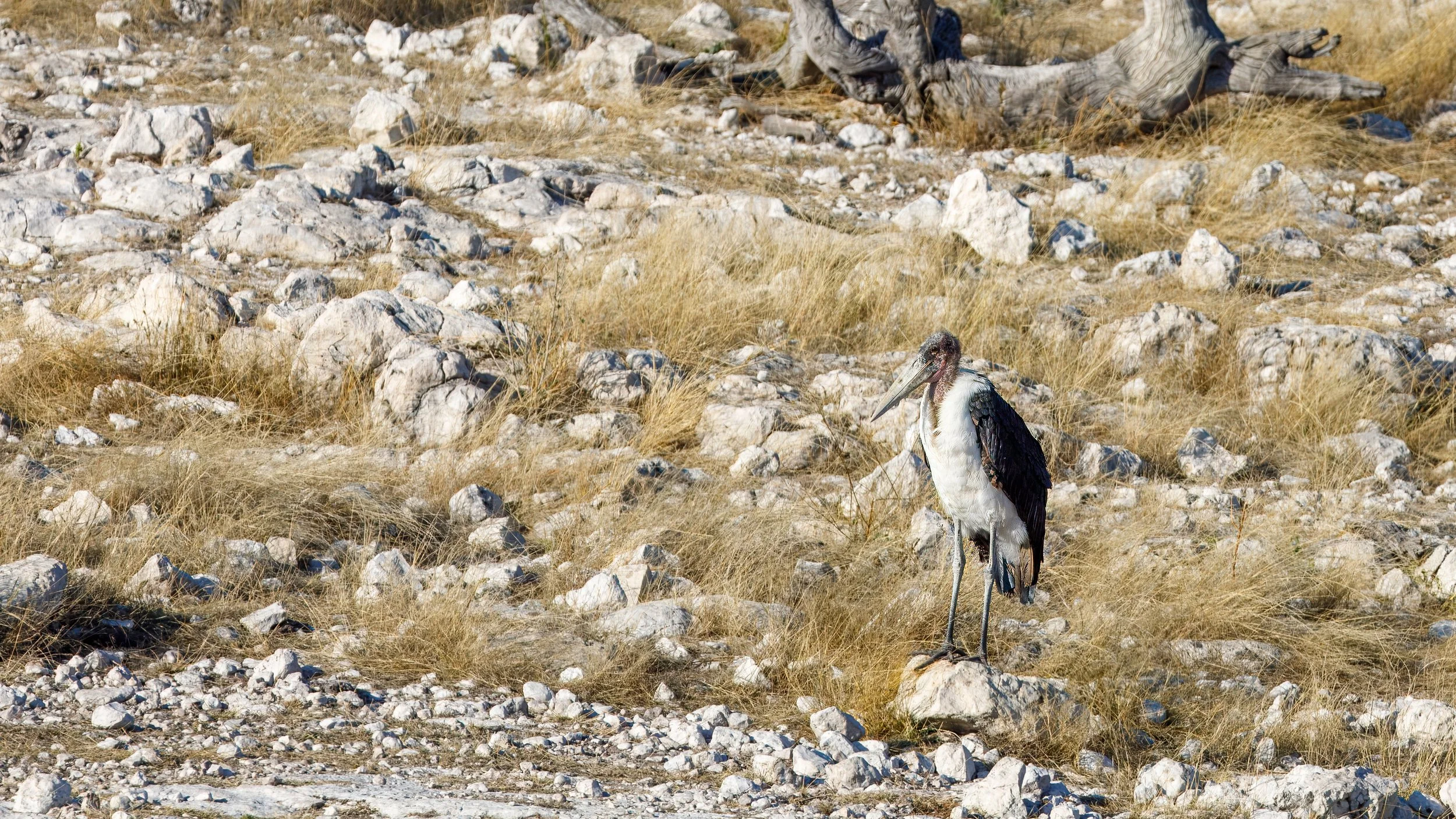
A marabou stork, often referred to as the "undertaker bird", known for its massive size and scavenging habits
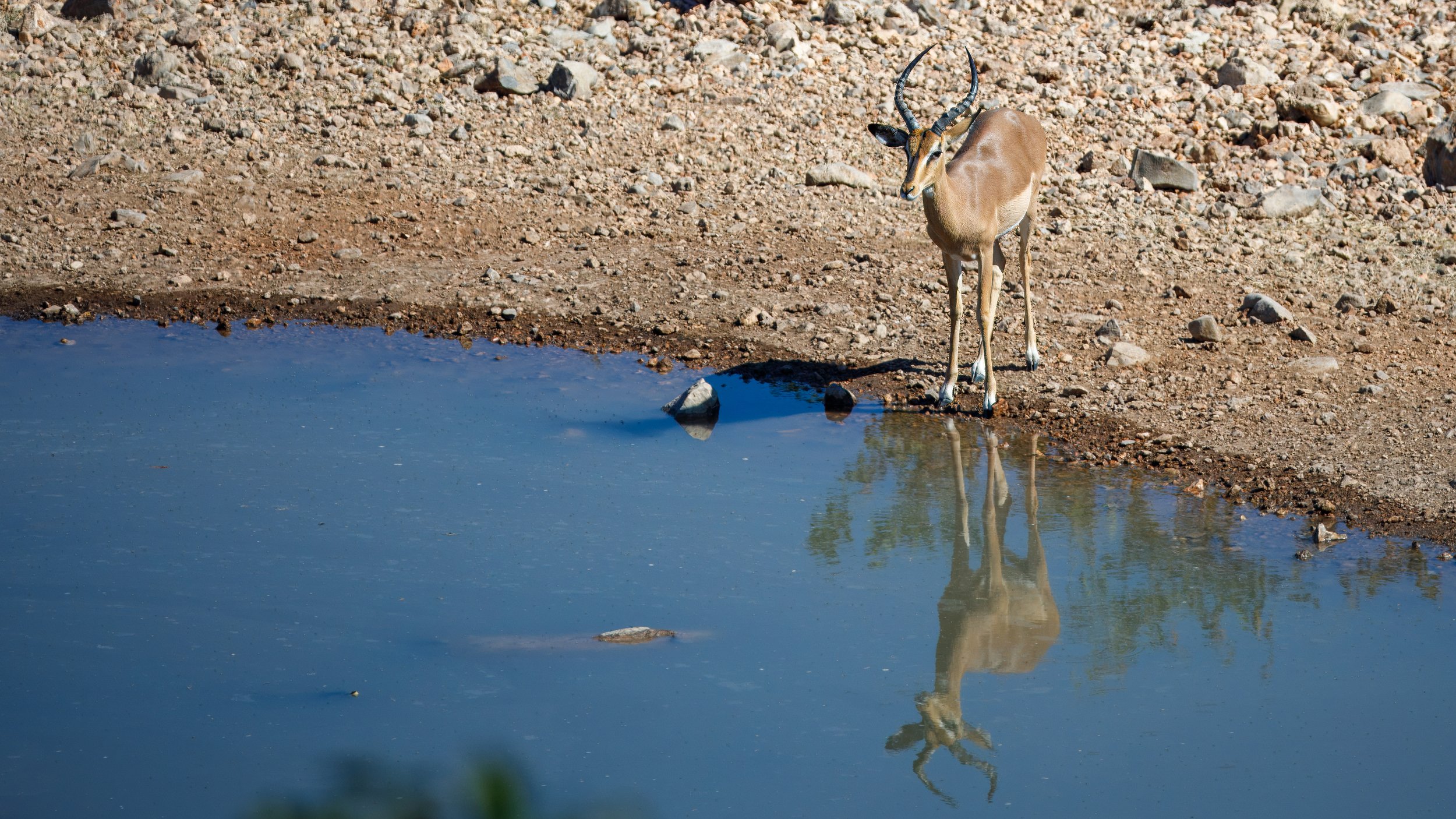
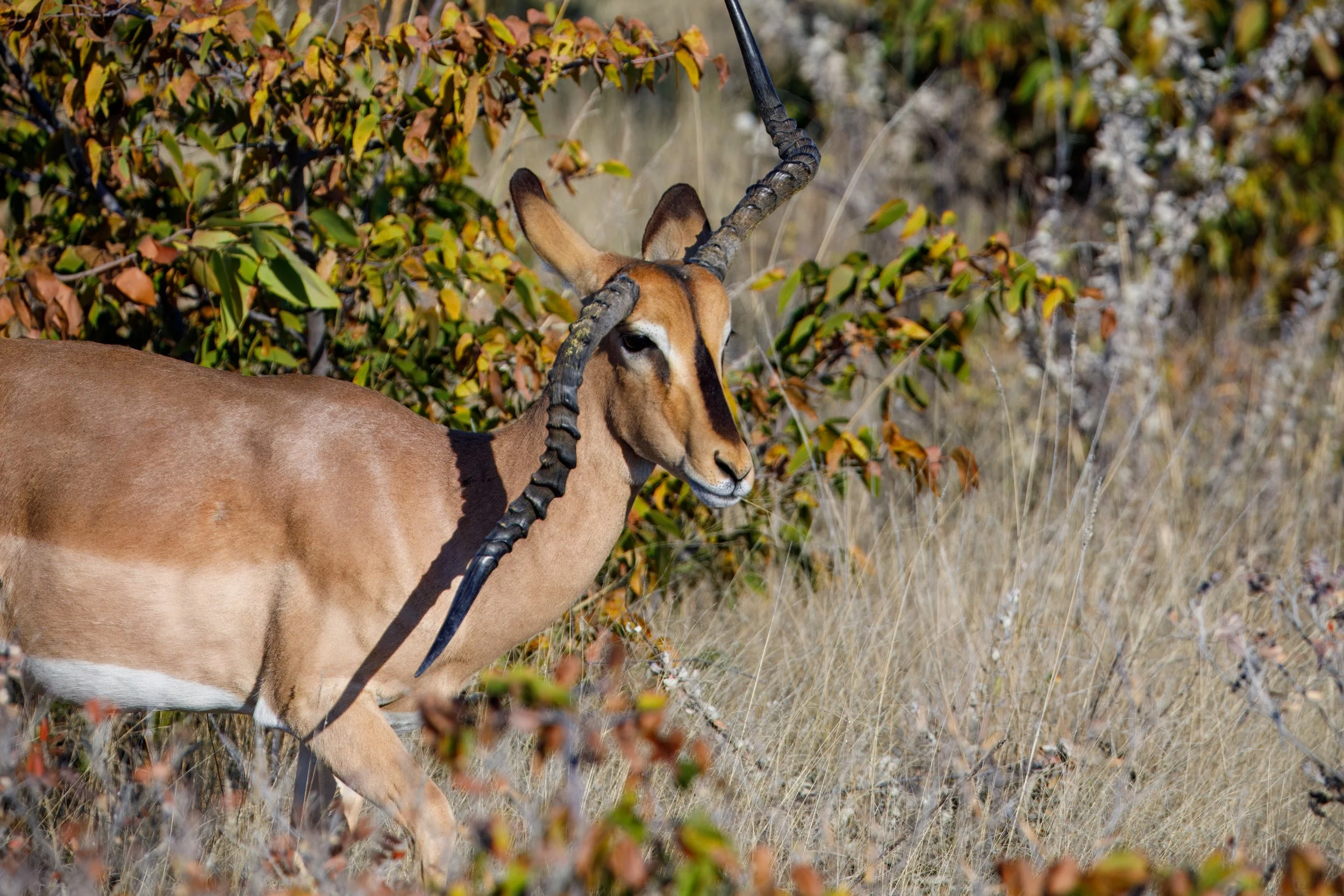
A black-faced impala with an unfortunate deformed horn pattern that will likely make life challenging
Although we were unsuccessful hunting for leopards and cheetahs, we did find another black rhino on the move
Black-chested snake eagle on the prowl
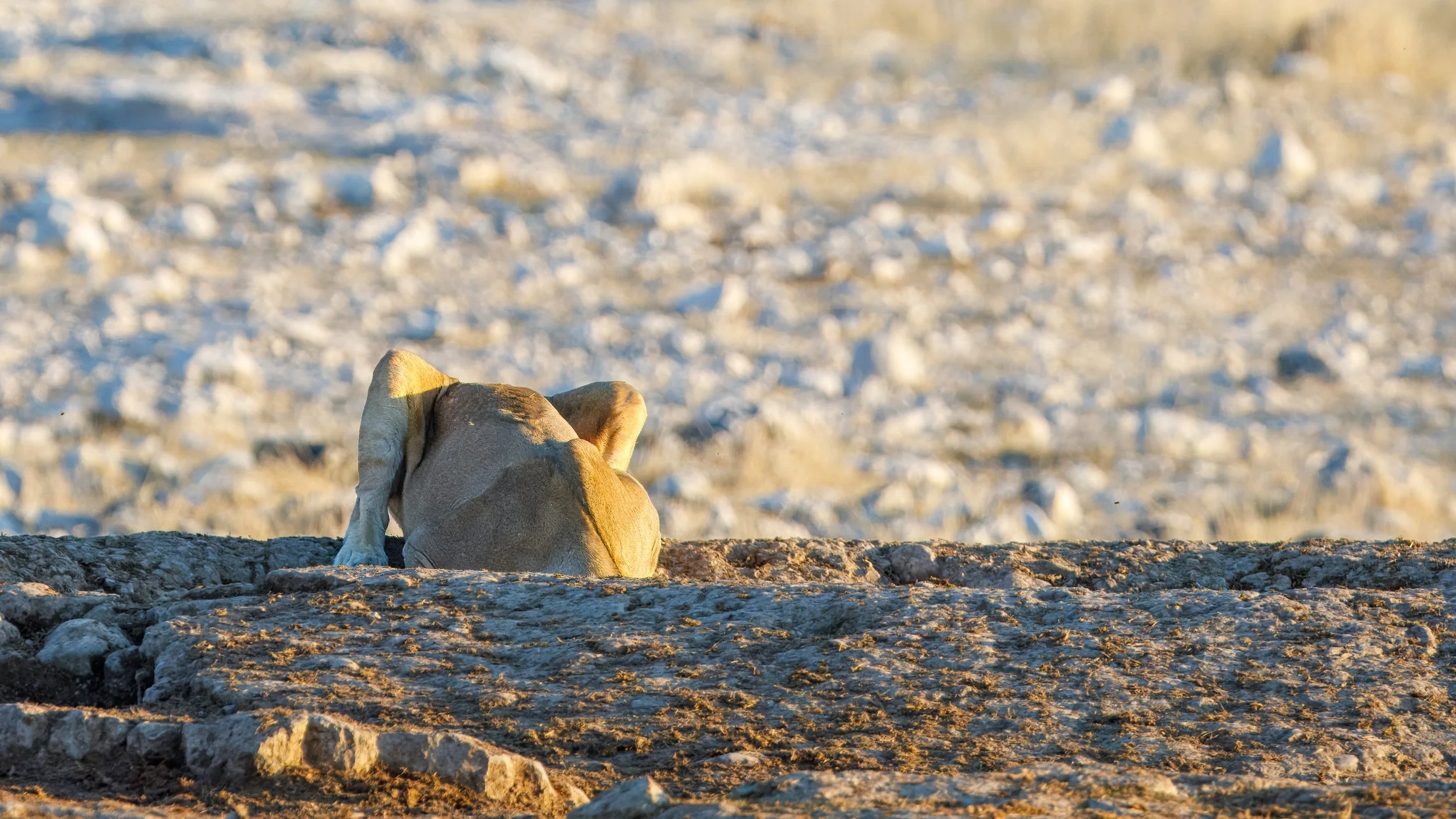
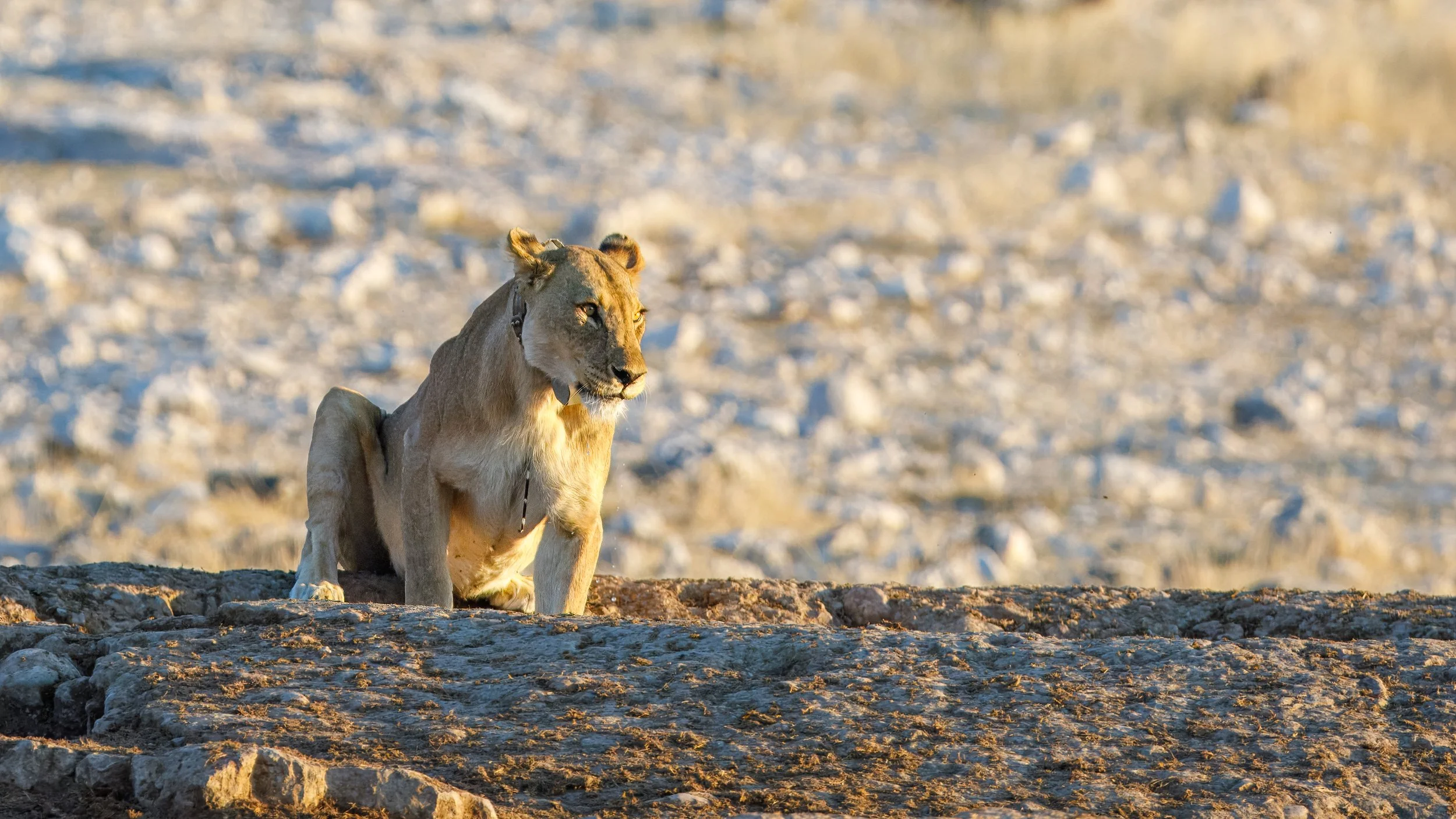
Lion enjoying a drink in a pool outside a larger watering hole
The lion actually had been stuck with a porcupine quill that we only noticed after comments on a social media post
Giraffe cautiously approaching the waterhole, very aware of the nearby lion
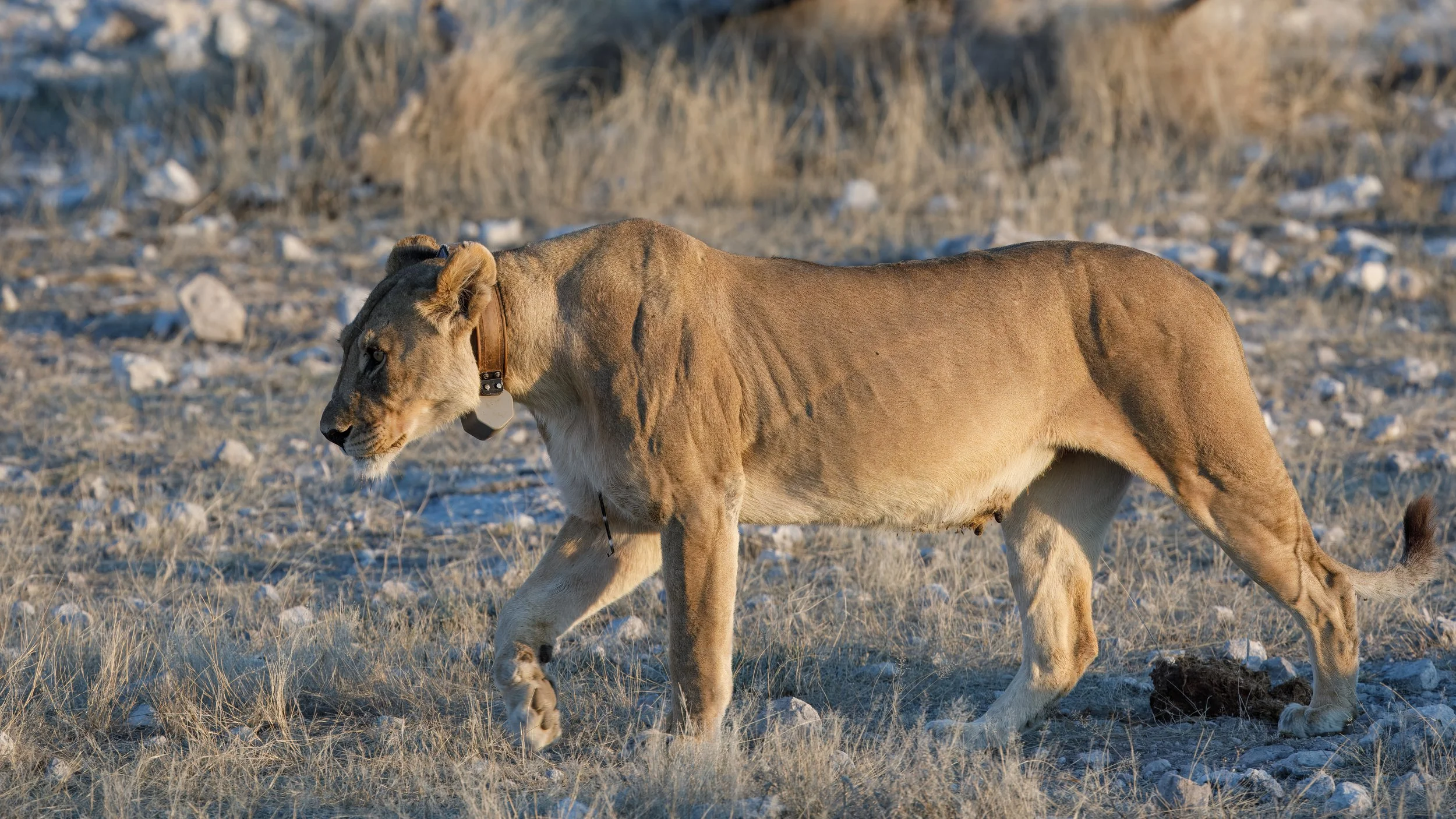
Moving away from the pool, we could clearly see the tracking device that the park was using to monitor the lion’s activity; because of their interest, our guide, William, decided to notify the park of the porcupine quill injury
Although we never saw them, our guide believed there might have been small cubs nearby
A gemsbok, also observing the situation from afar
Getting out of the park just before the gate closes at sunset, we headed back to the lodge for the evening
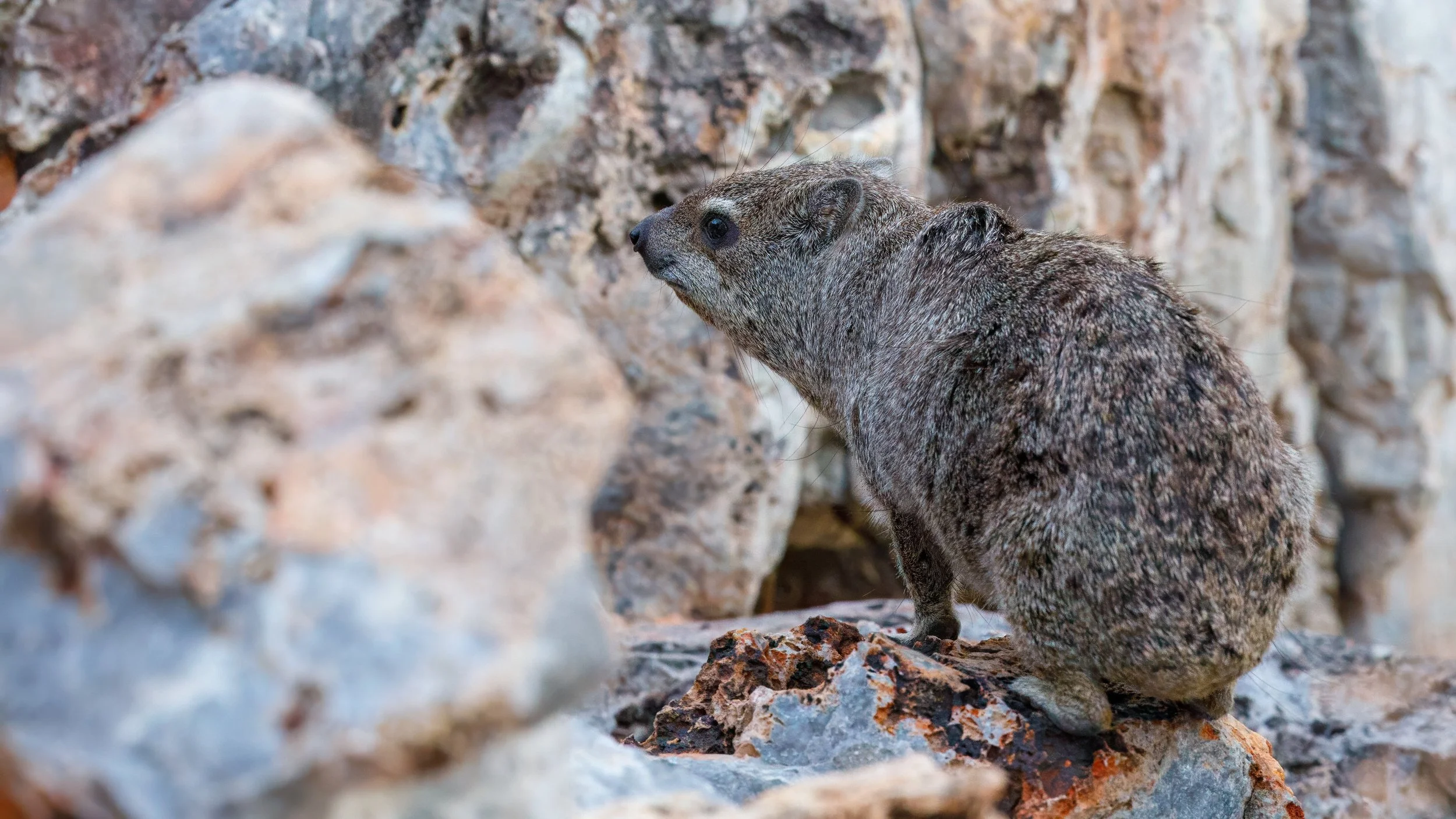
A rock hyrax startled us as we made our way back onto the lodge property
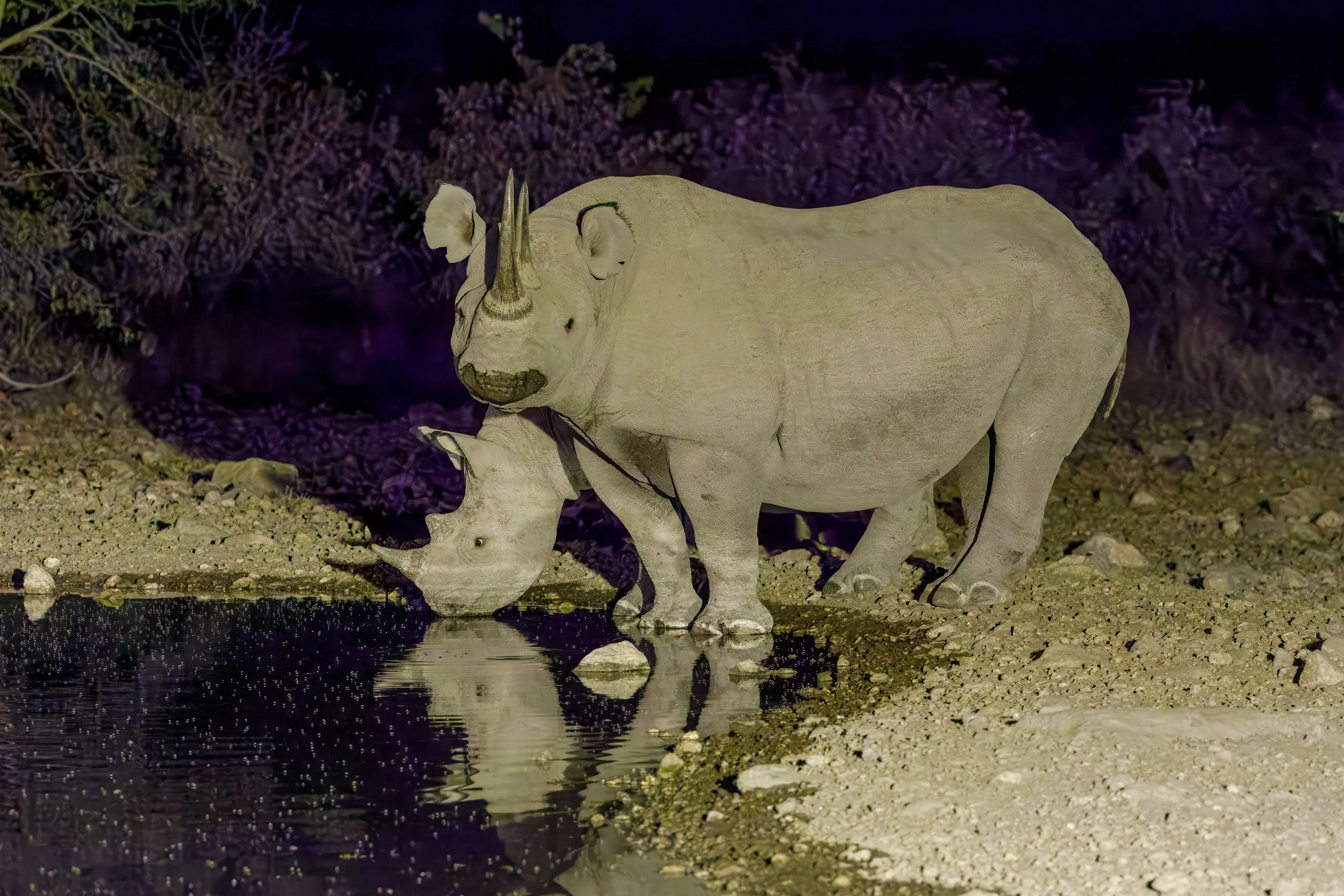
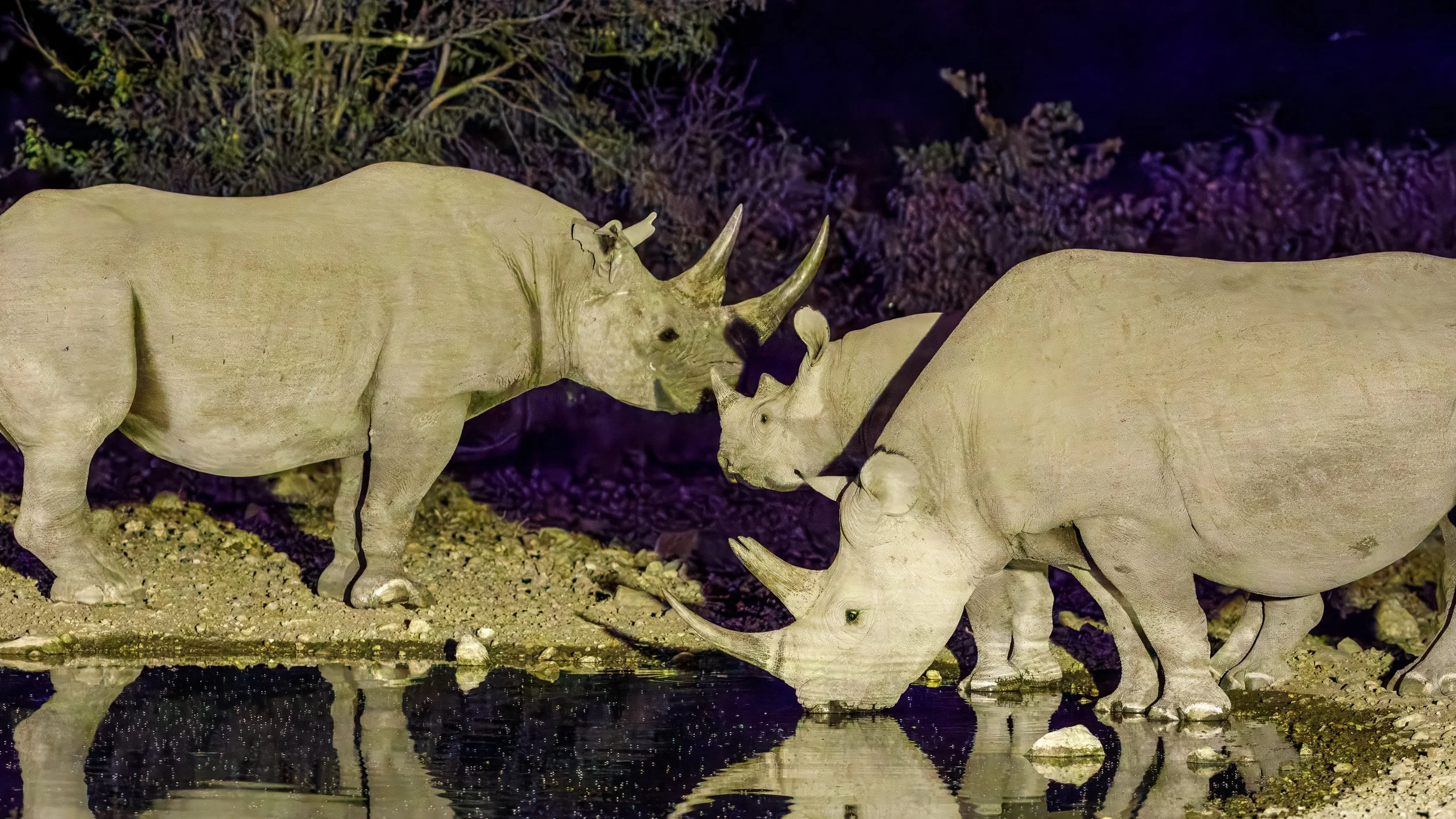
As the light faded, the lodge waterhole was visited by a continuous parade of rhinos
From the hide, we could see each rhino up close, in safety
The watering hole was the main attraction
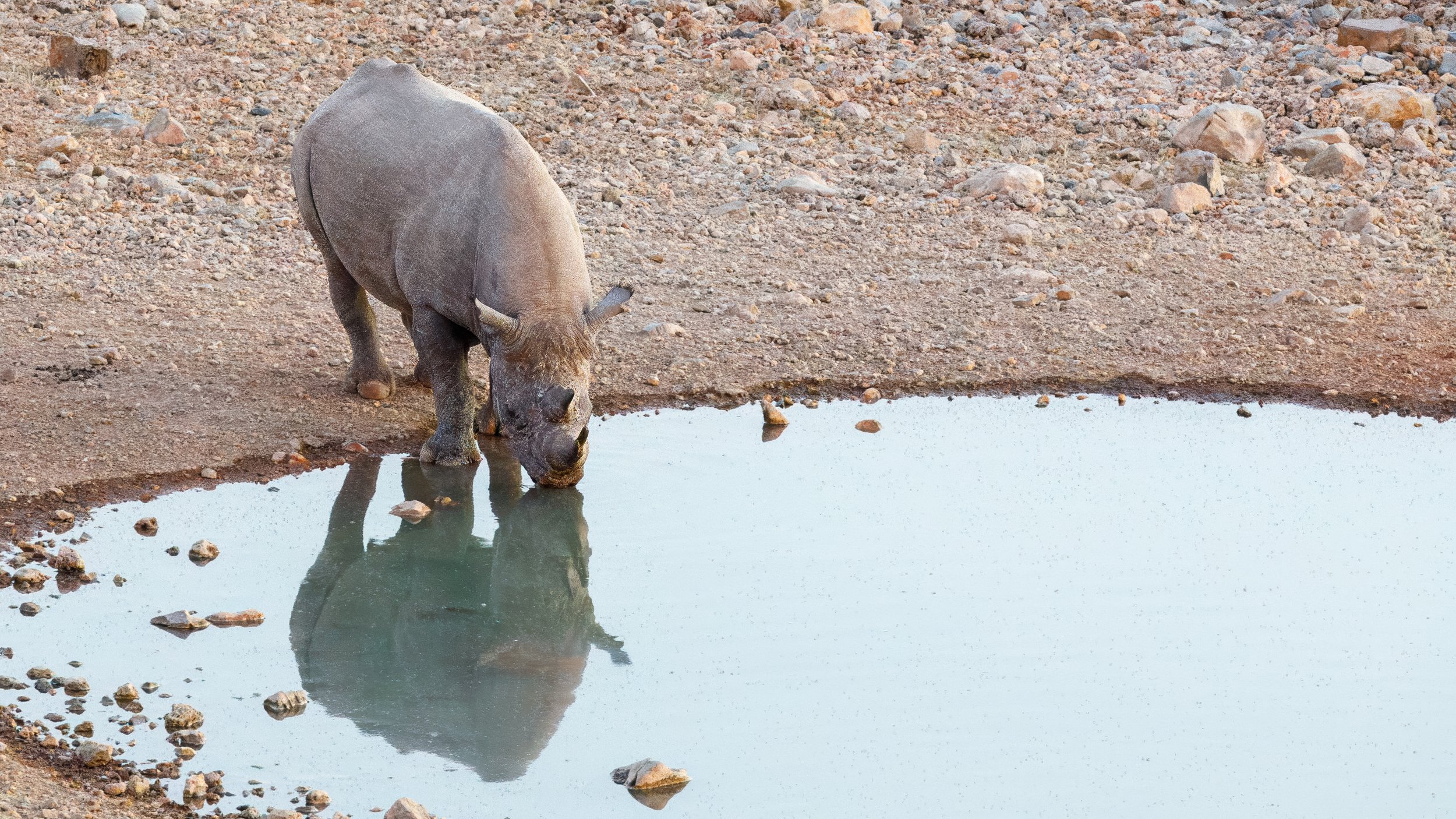
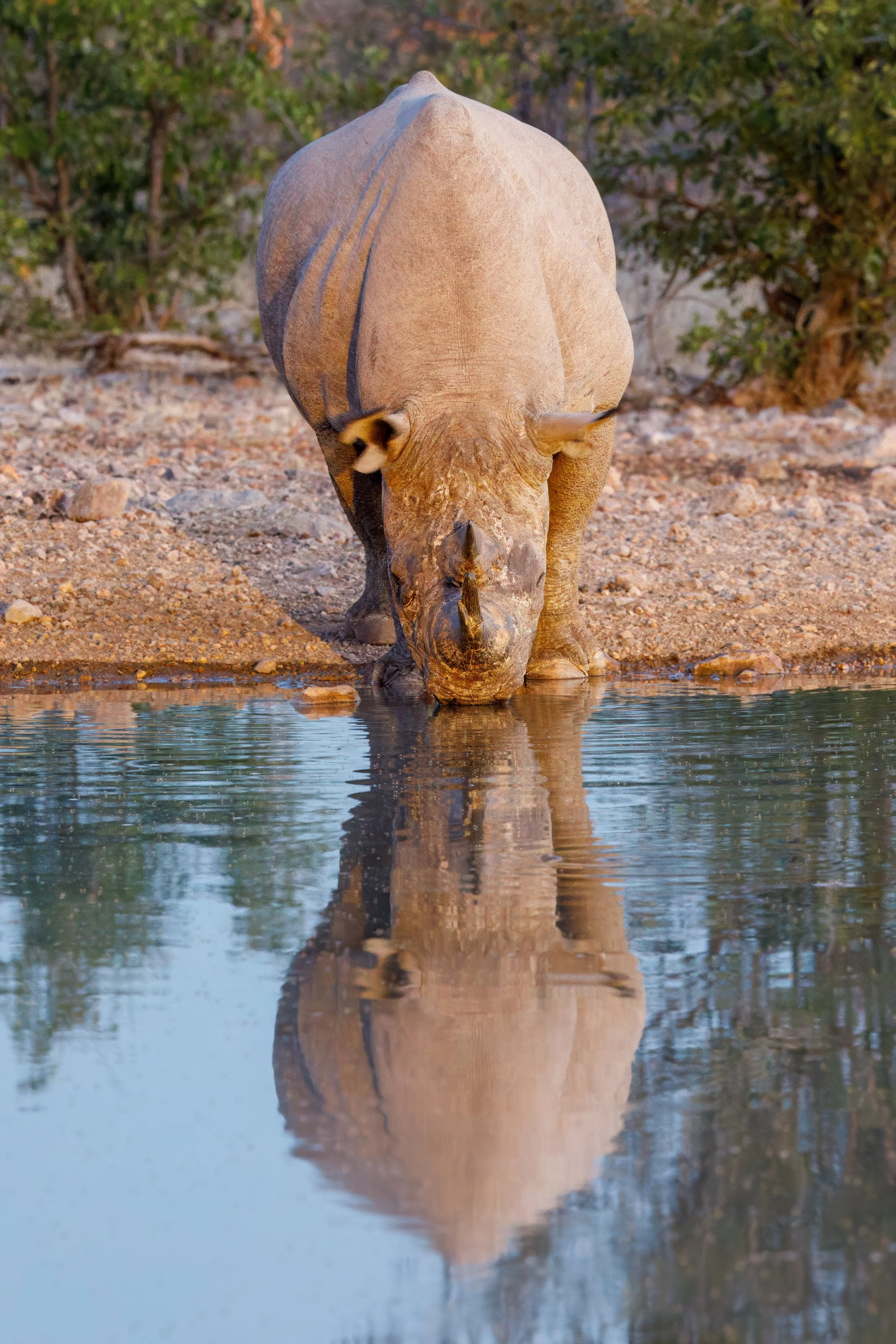
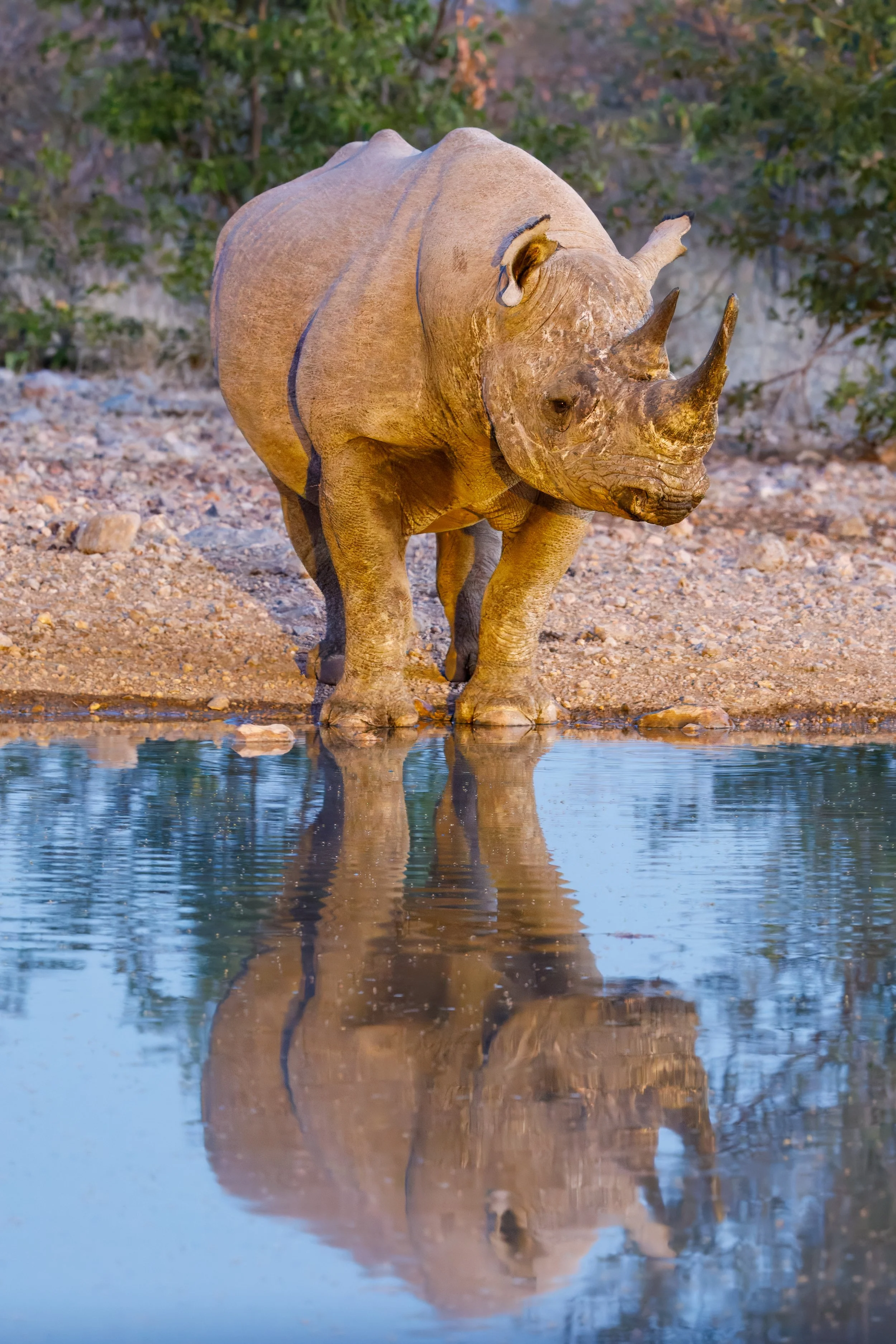
In addition to providing water to the rhinos, the pool provided excellent reflective views for us
After another fabulous dinner at the lodge, we headed back to the hide in time for some new visitors
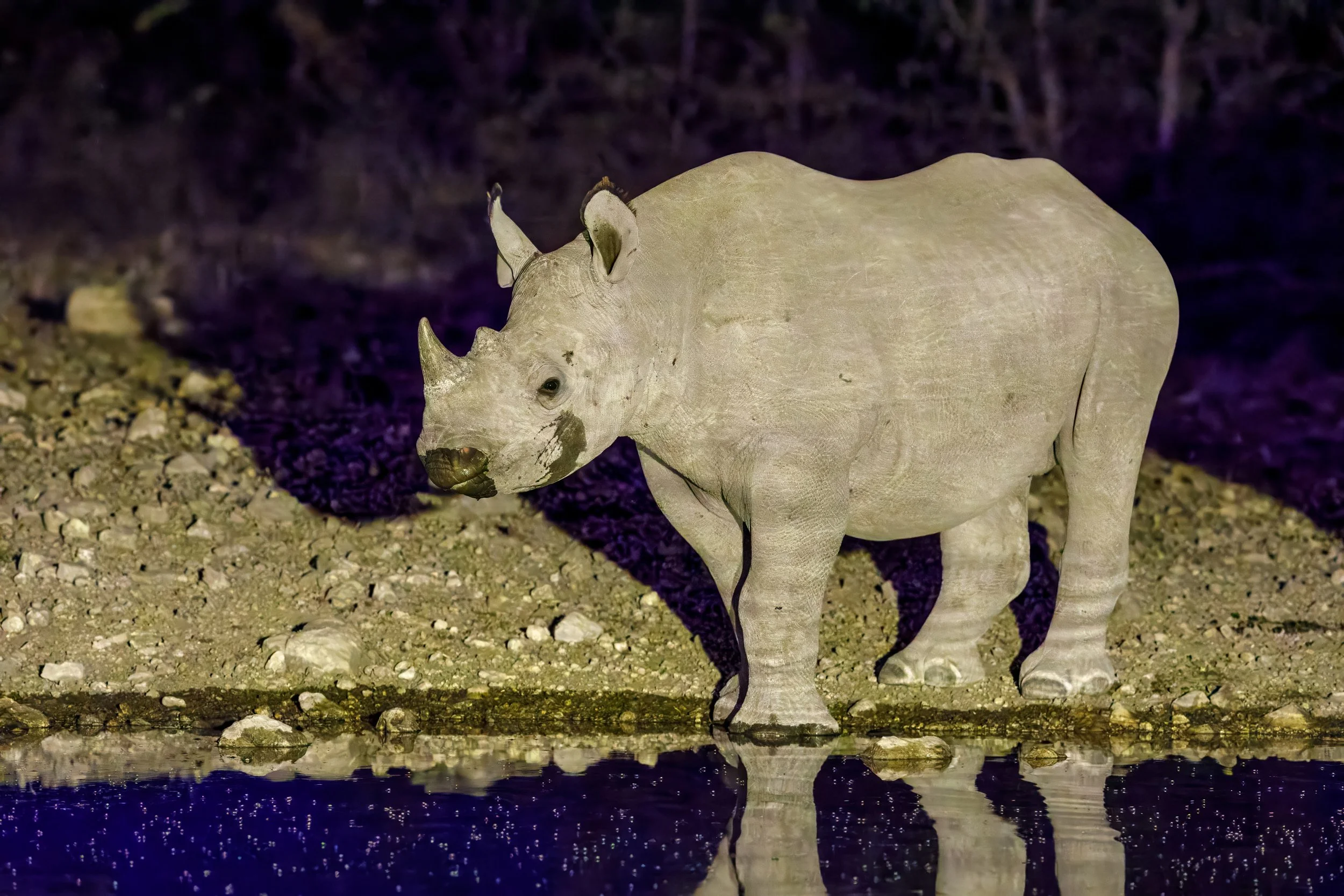
The lighting showcased the wet spots on the rhinos face
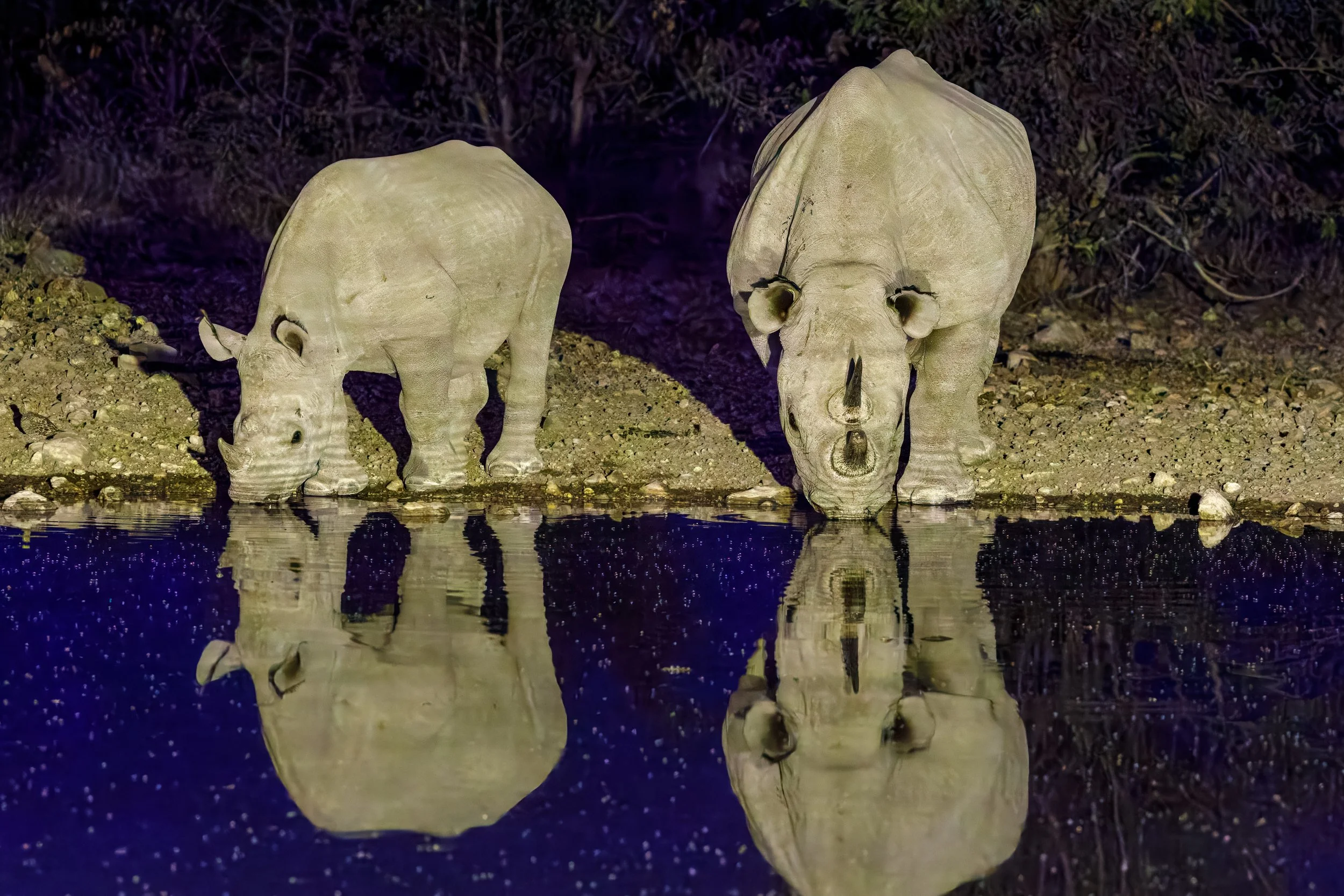
Parents and child enjoying the pond and giving us just a little bit of attention
One last group of visitors before heading back to our cabin for the evening
The watering hole in our lodge and Etosha National Park area was a terrific way to end our private safari. After dinner and our animal viewing at the hotel hide, we got our escort back to our hut, where we were able to unwind and get a nice night’s sleep.
Jun 16
For our last full day, we had an early start with breakfast before sunrise and were on the road early for a five-hour drive back to Windhoek and to our final adventure at the Naankuse Wildlife Sanctuary on the outskirts of town. This wildlife sanctuary housed a variety of animals that, because of their history or interactions with humans, could not safely be returned to the wild, and thus were taken care of in confinement. Some had been raised as pets or born in confinement; some had been wild animals that had become habituated to human presence or become a community nuisance.
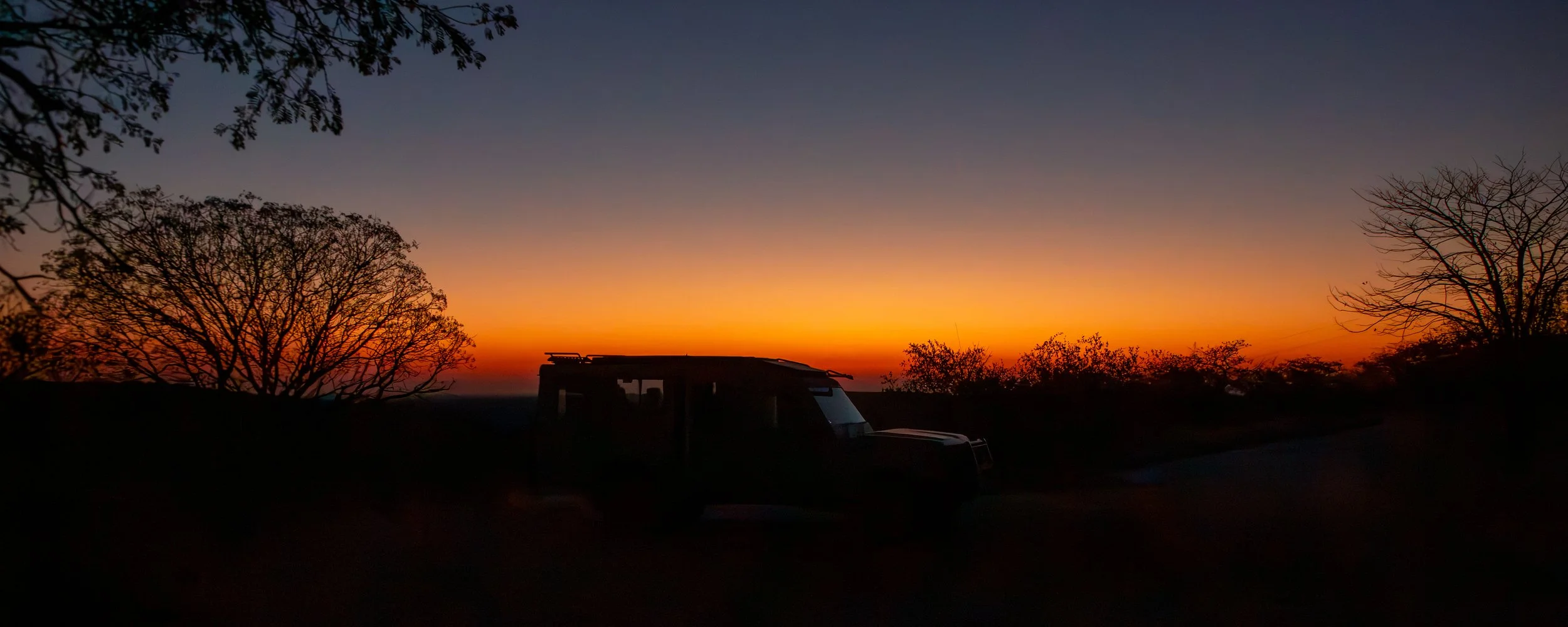
Sunrise, and the vehicle was loaded with our luggage and ready to go
After checking into the hotel, we had a number of options to choose from in the sanctuary and chose the carnivore feeding tour. Our first stop was the leopard cage.
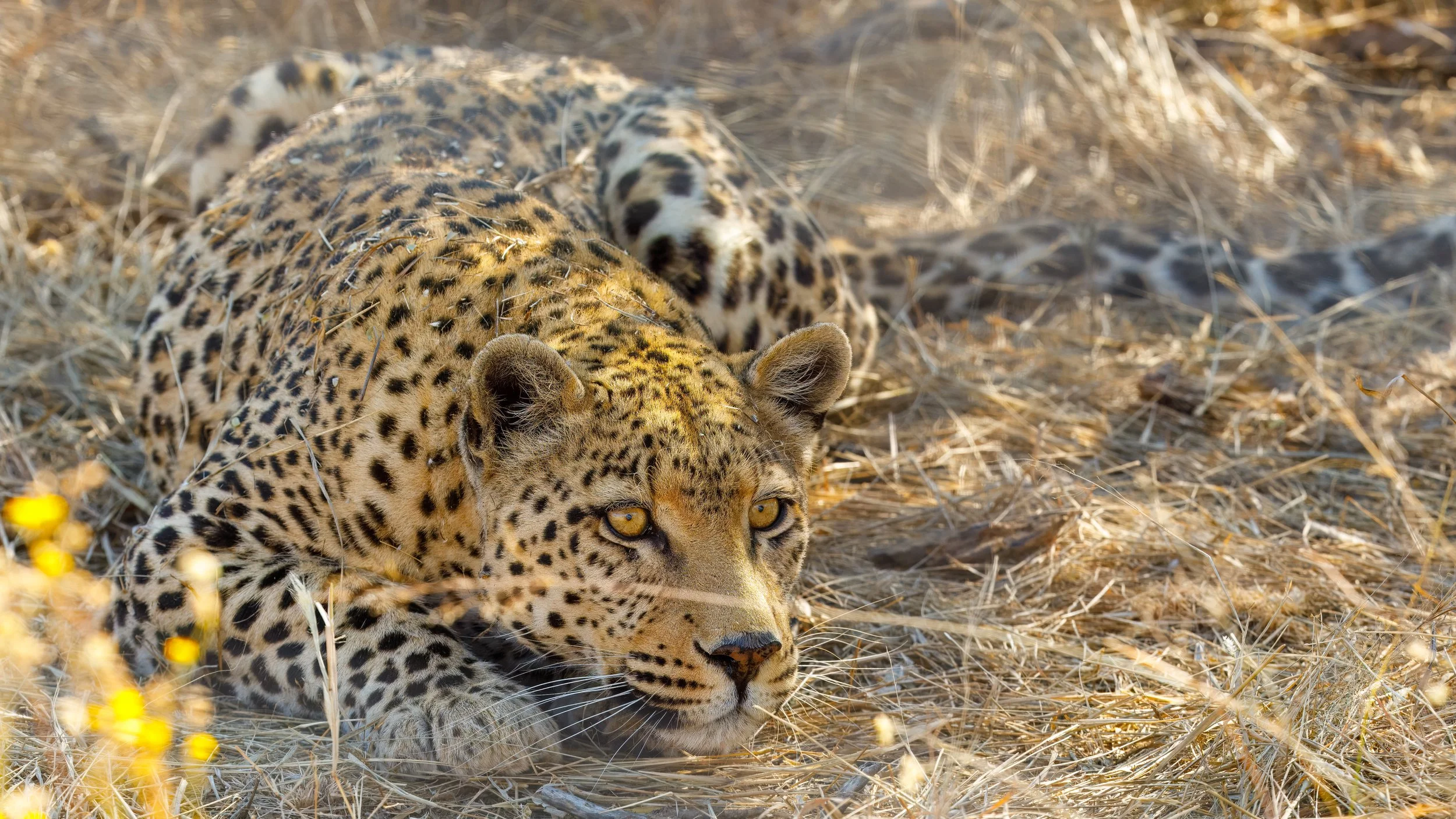
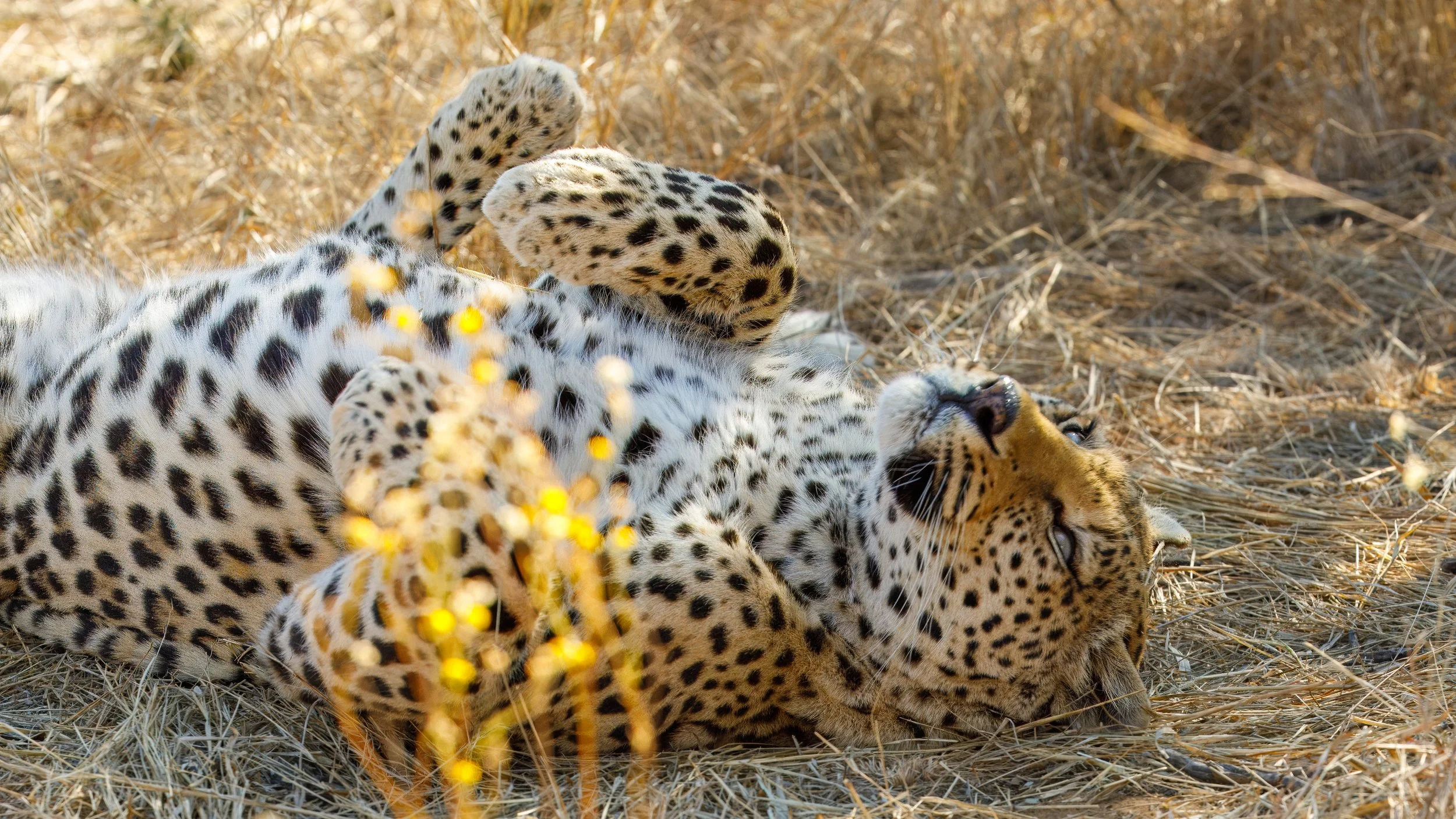
Looking very playful and cuddly, but we were happy for the fence
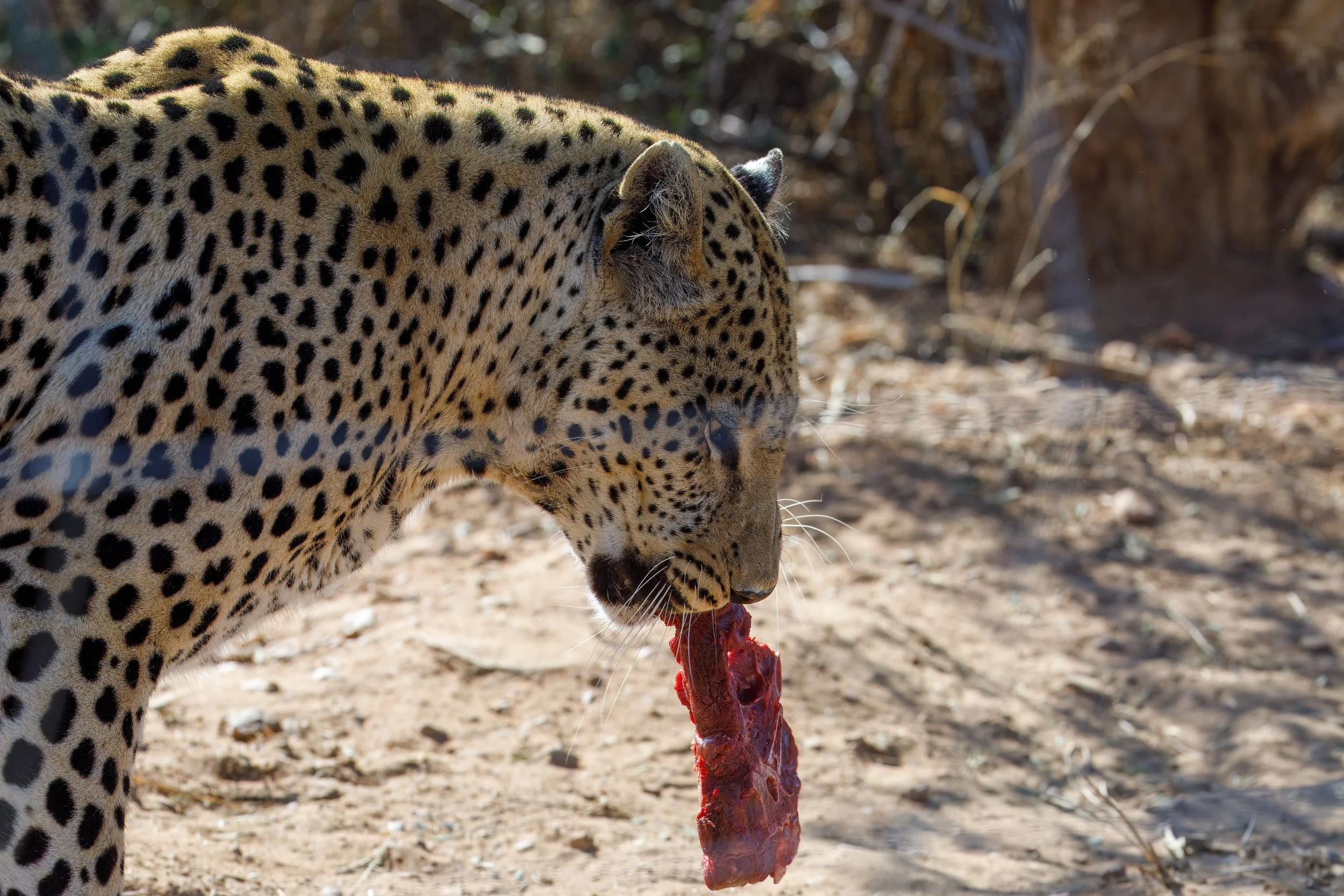
Zebra was on the menu today, and they were definitely ready for lunch
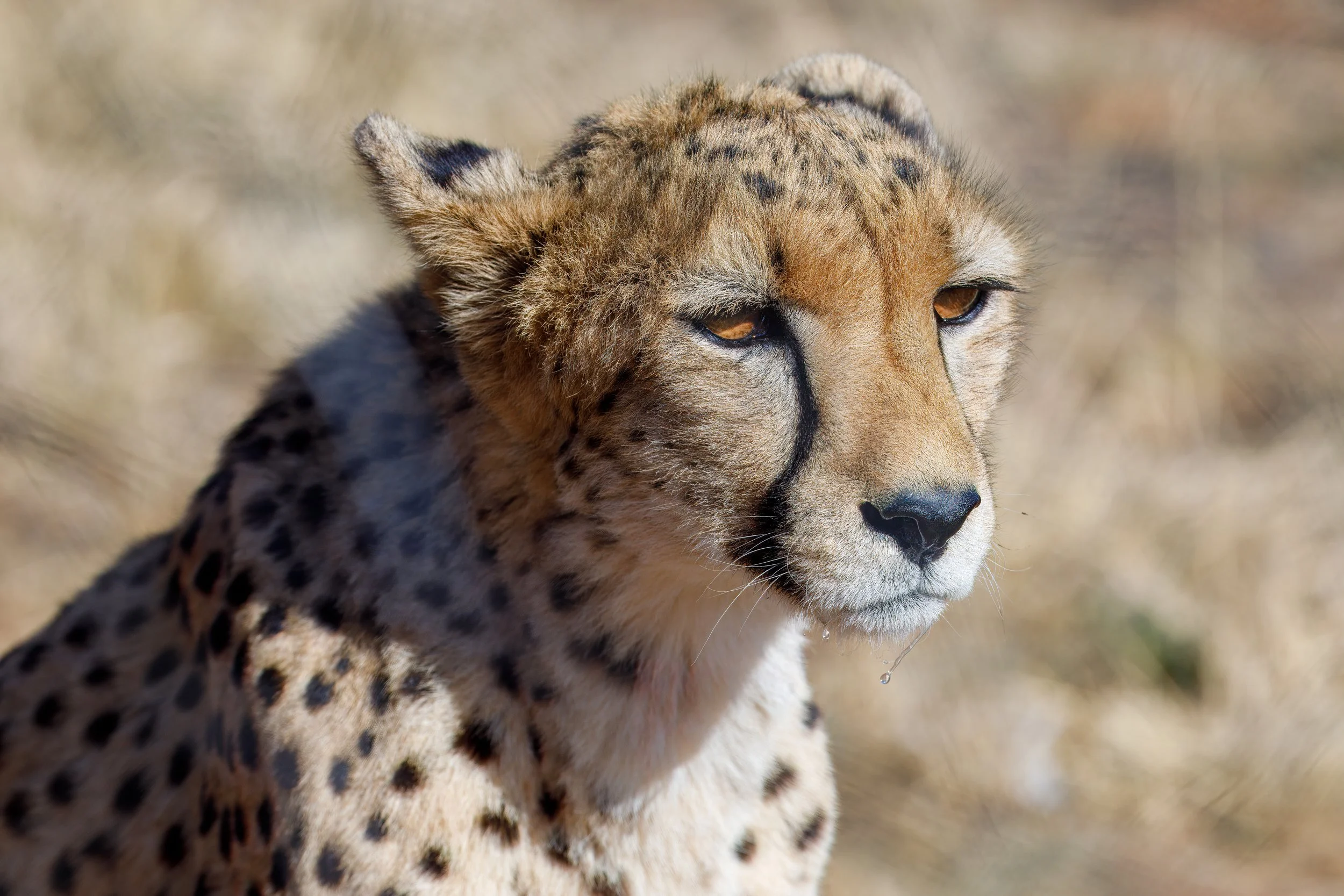
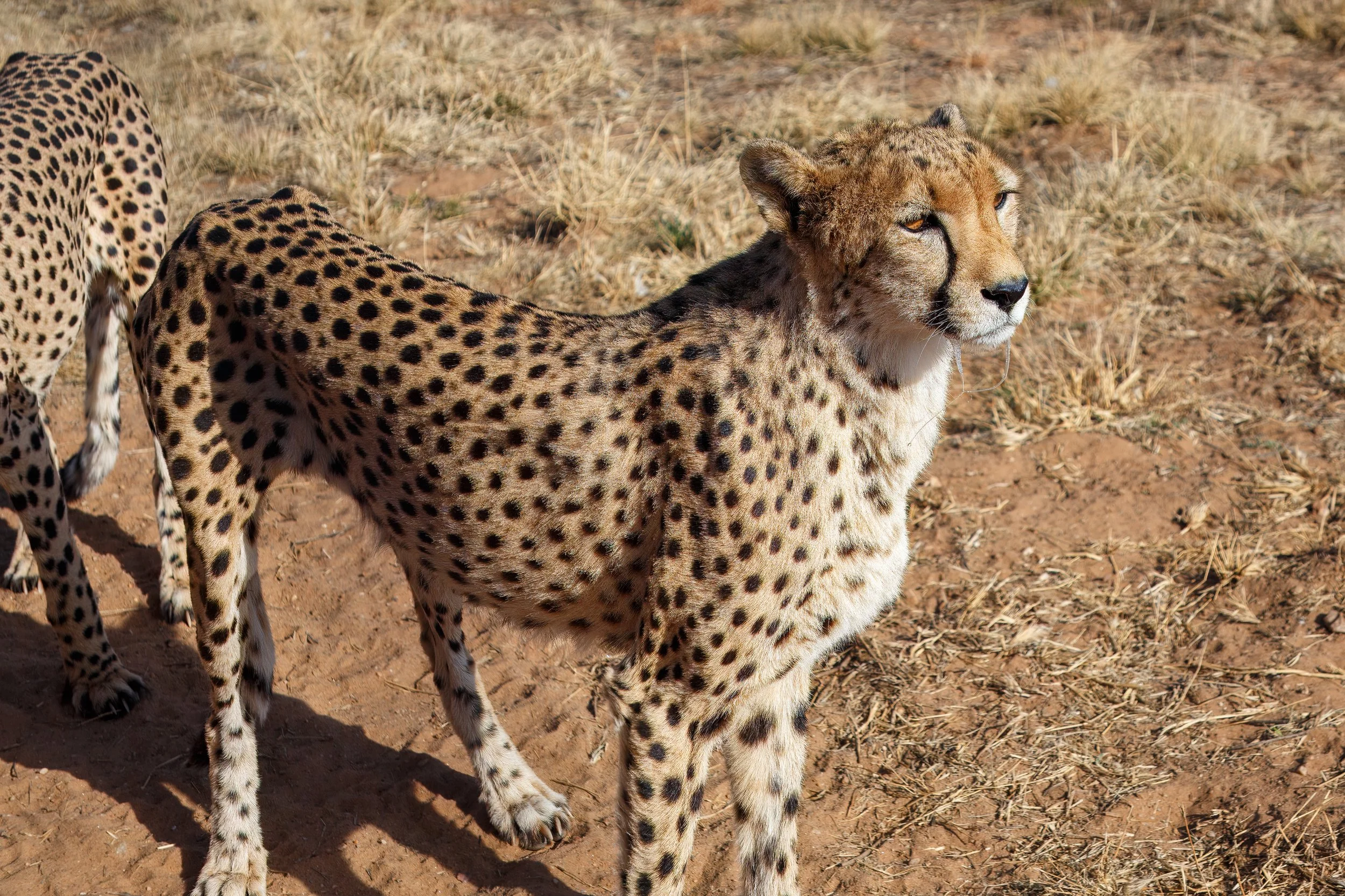
Our next stop on the tour was the cheetah pen, looking very majestic
These cheetahs had a special benefactor. Angelina Jolie is bankrolling the care of Shiloh, Wonder, and Odyssey, and occasionally visits.
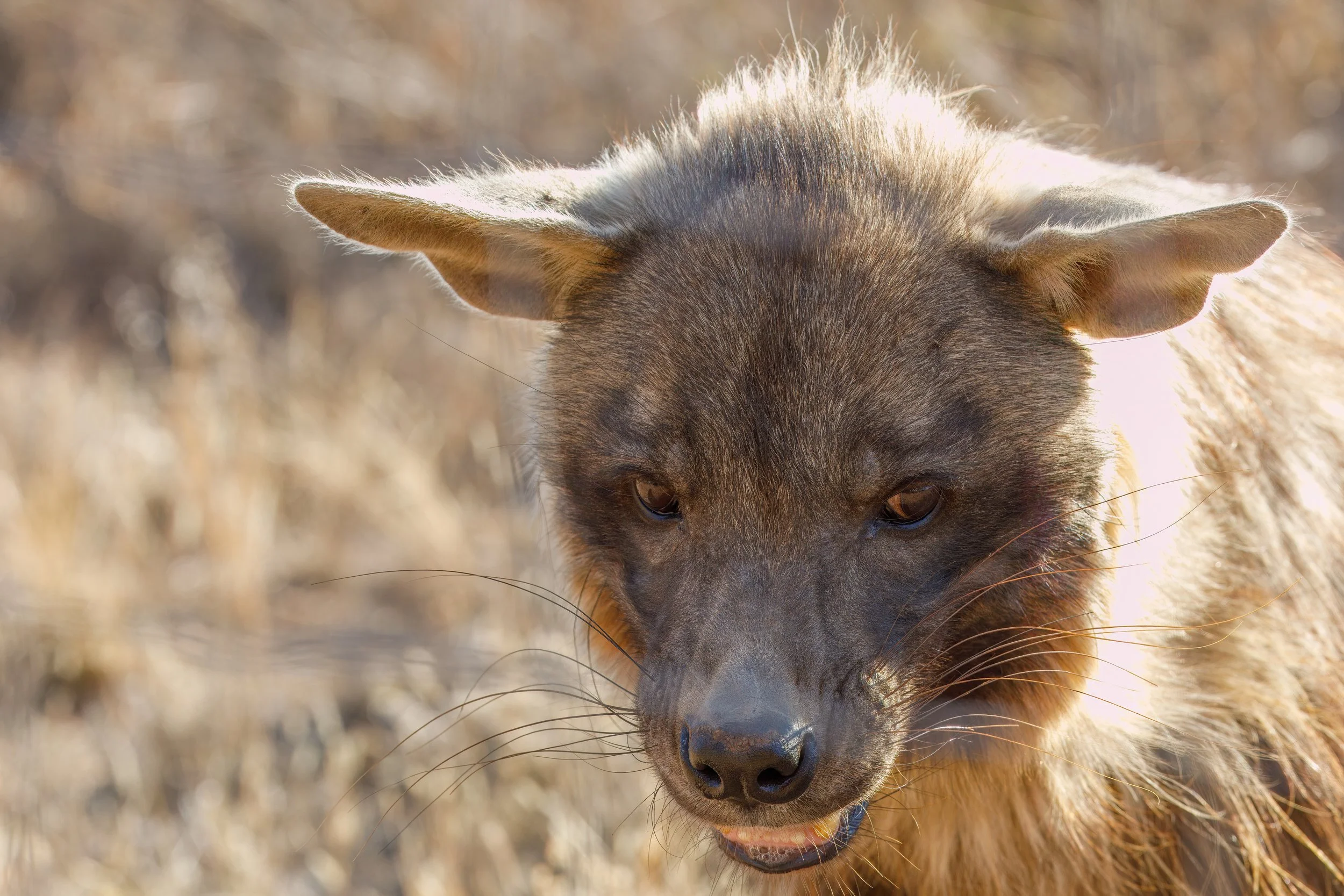
Strangely the hyena was one of the more scary animals we visited. It was very hungry and based on the loud “laugh” didn’t seem to care what was on the menu.
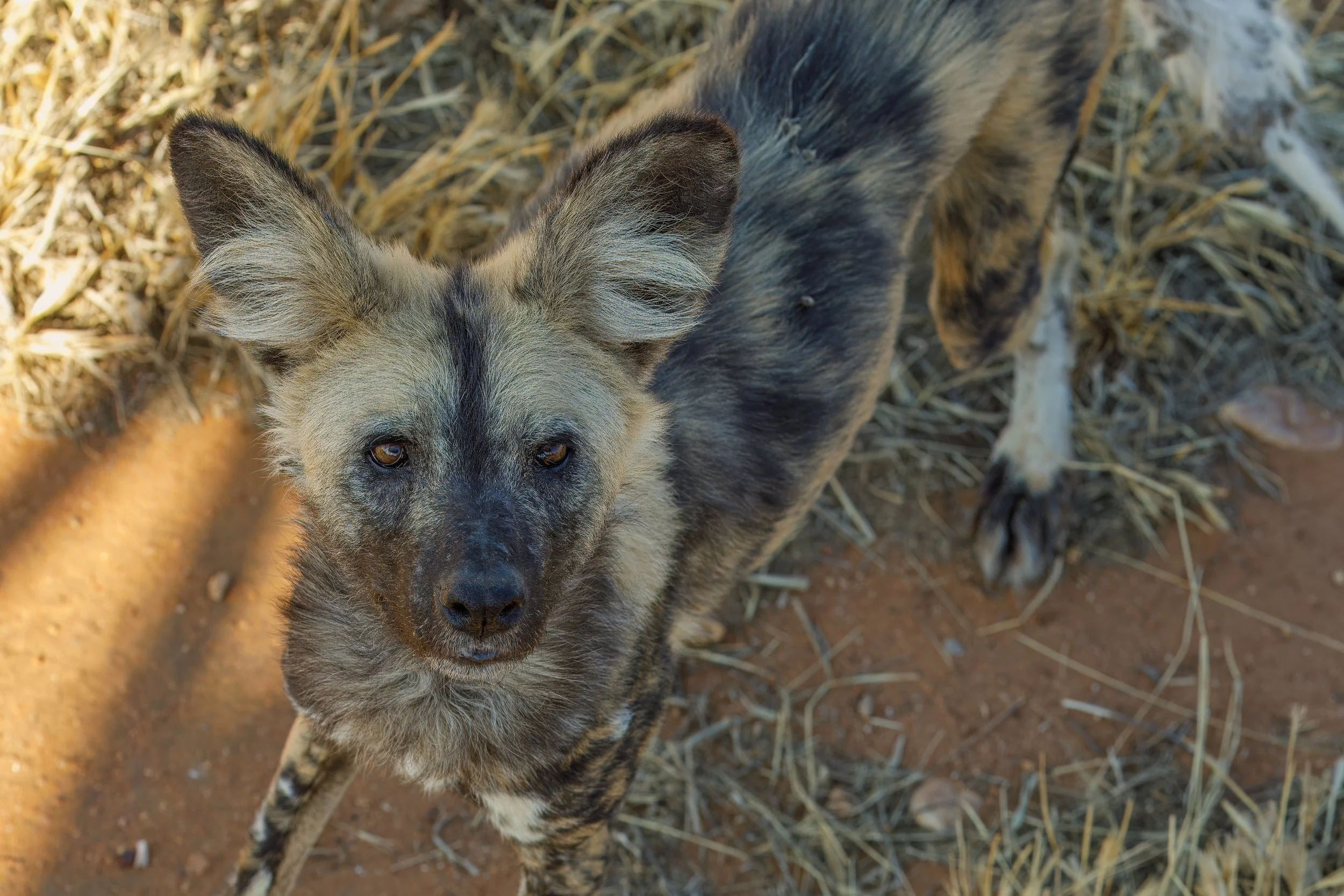
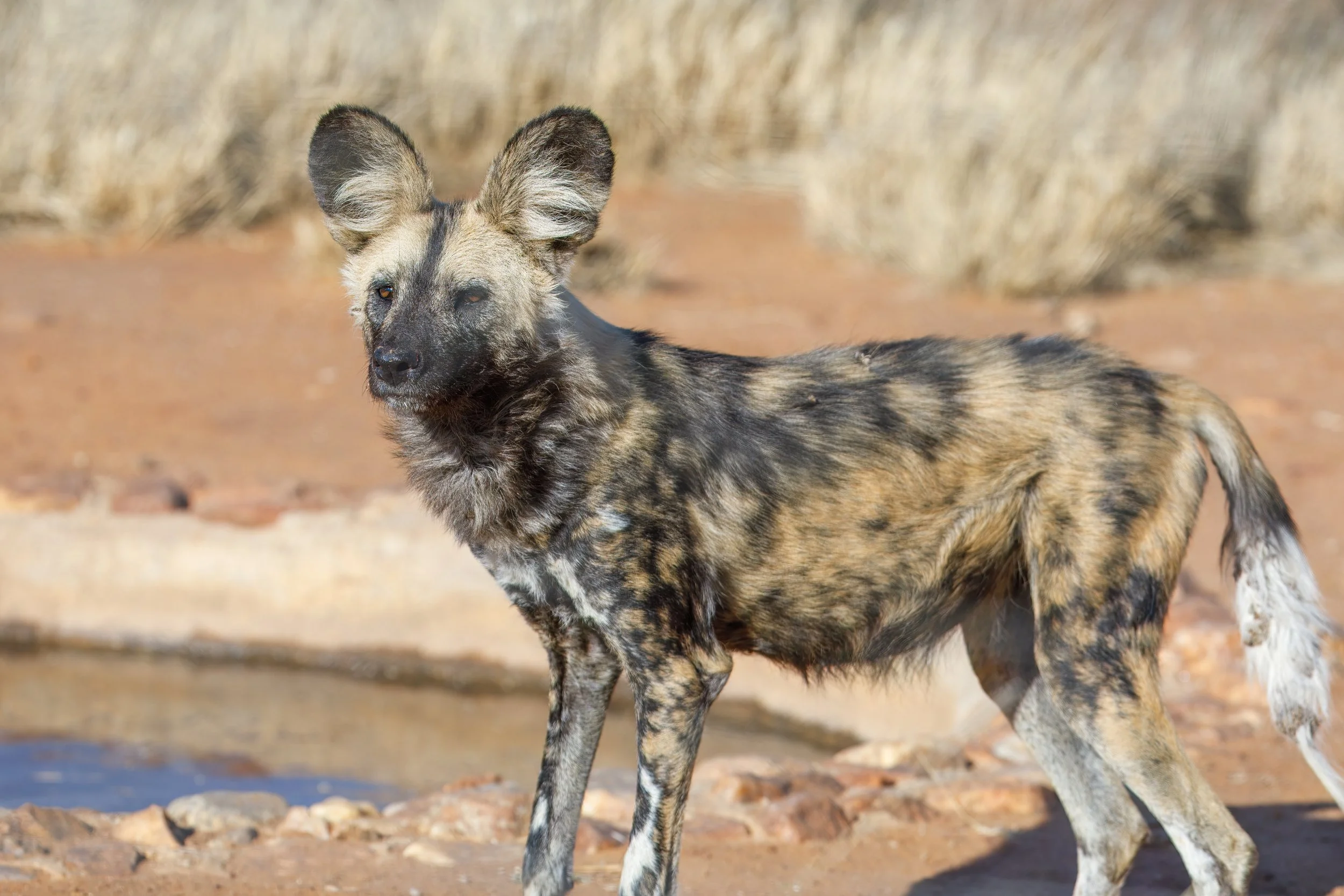
The African wild dog wasn’t quite as scary, but I still didn’t want to get in the cage
Beautiful spotted coat unique to the wild dog species
Our extra layer of protection. The same vendor that we invested in for physical security around some of the higher risk sites in a previous role
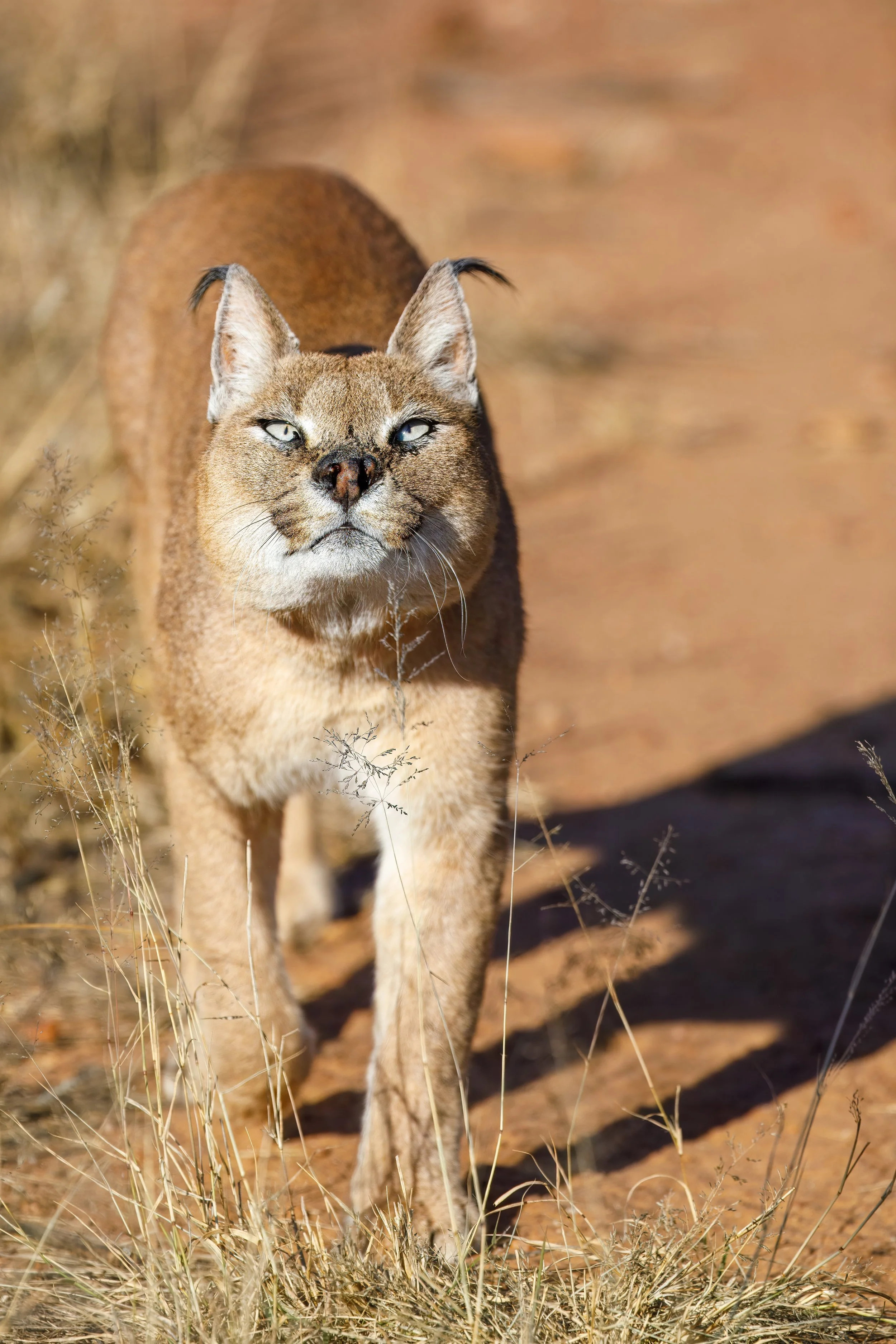
I was not familiar with the caracal breed of cats until this visit. This one was very shy, and had to be coaxed out for feeding time, by our guide entering the fenced area.
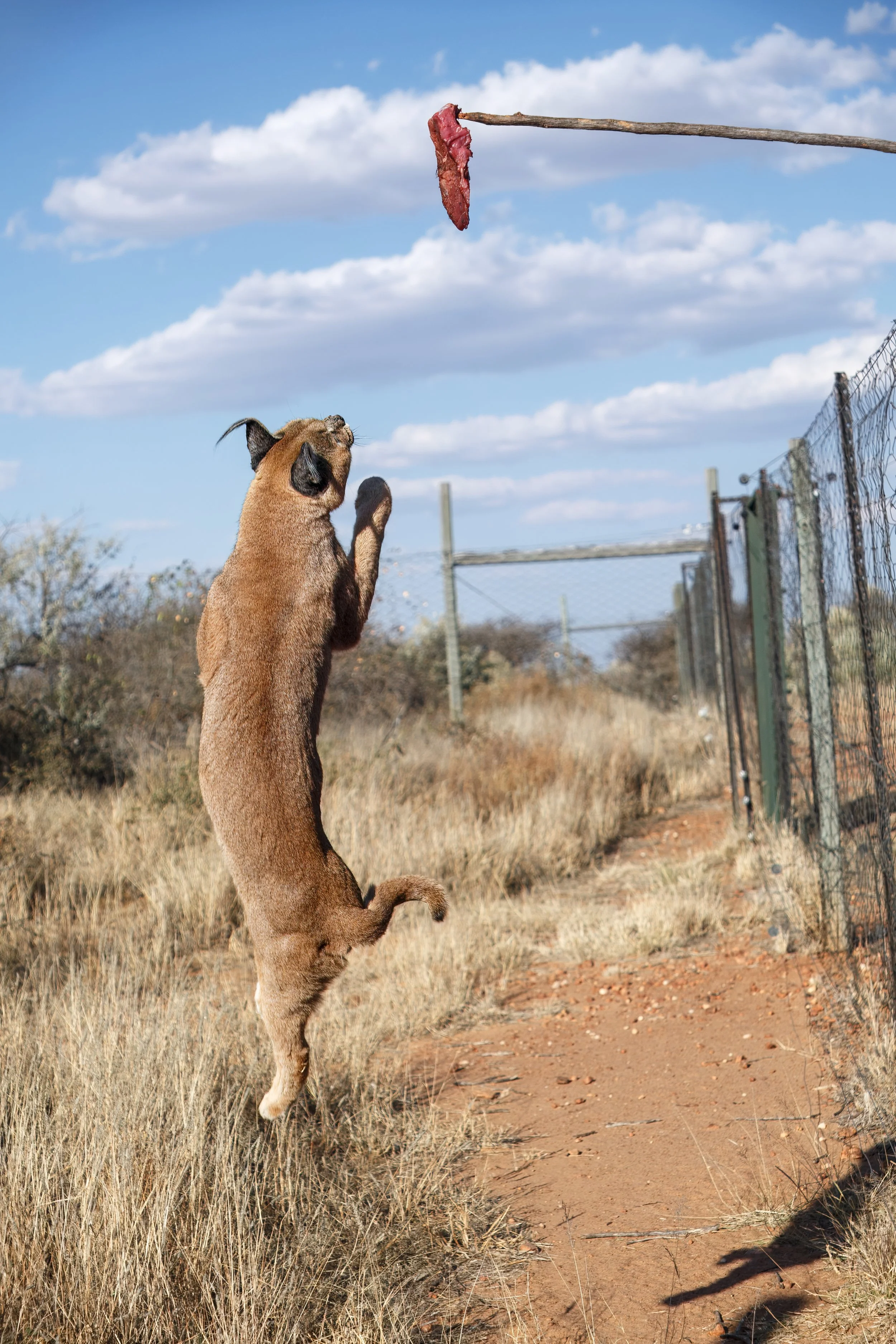
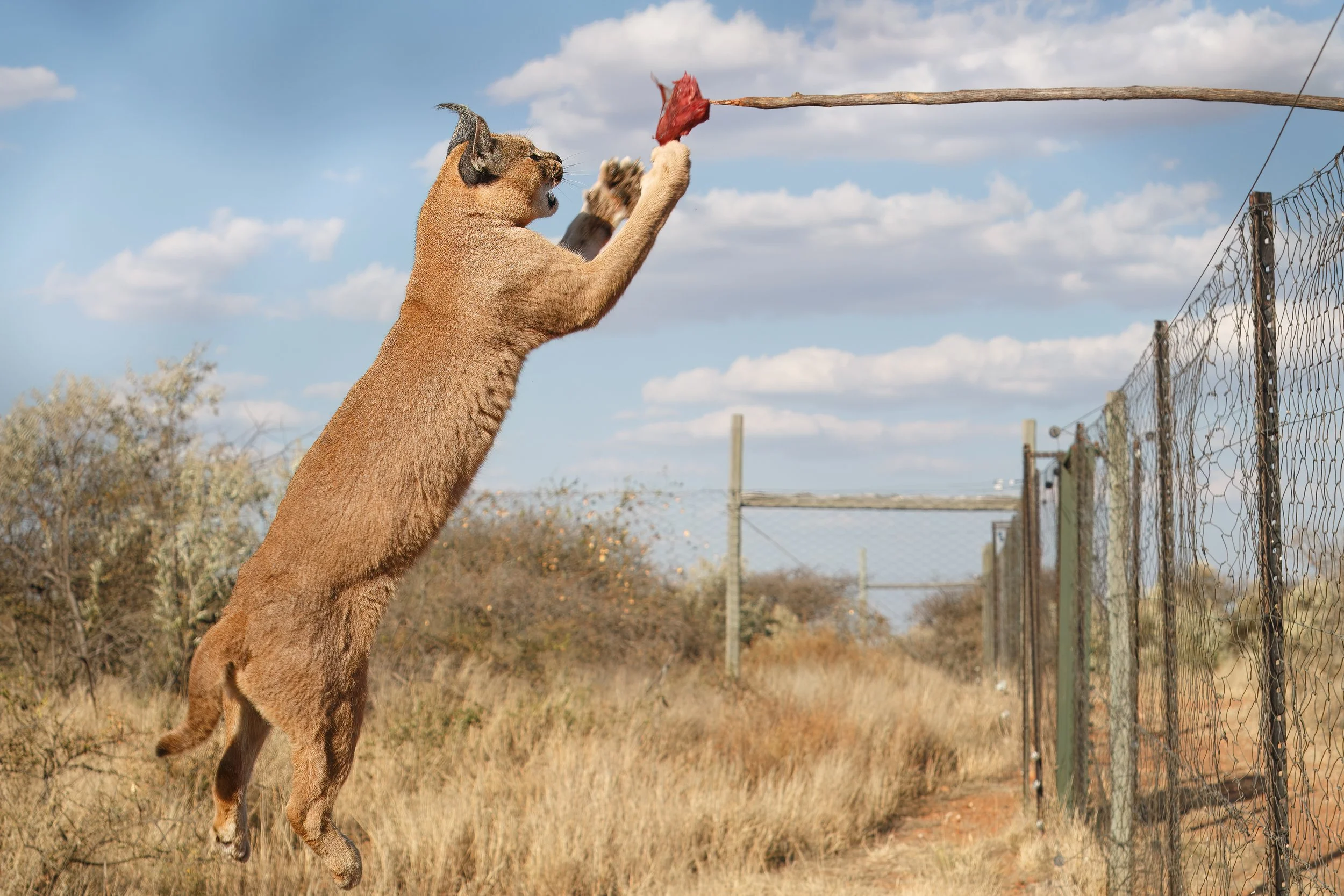
Once they surfaced, they proved more interested in “hunting” for their food
The jumps for the food were quite extraordinary and a highlight of the tour
The lion enclosure was our last stop, where we were informed that the fence was merely a deterrent and if they wanted to they were capable of escape.
Luckily they were mostly just interested in us and their lunch
Once she had her portion she was content to take it away to consume
Feeding time can always create a bit of drama
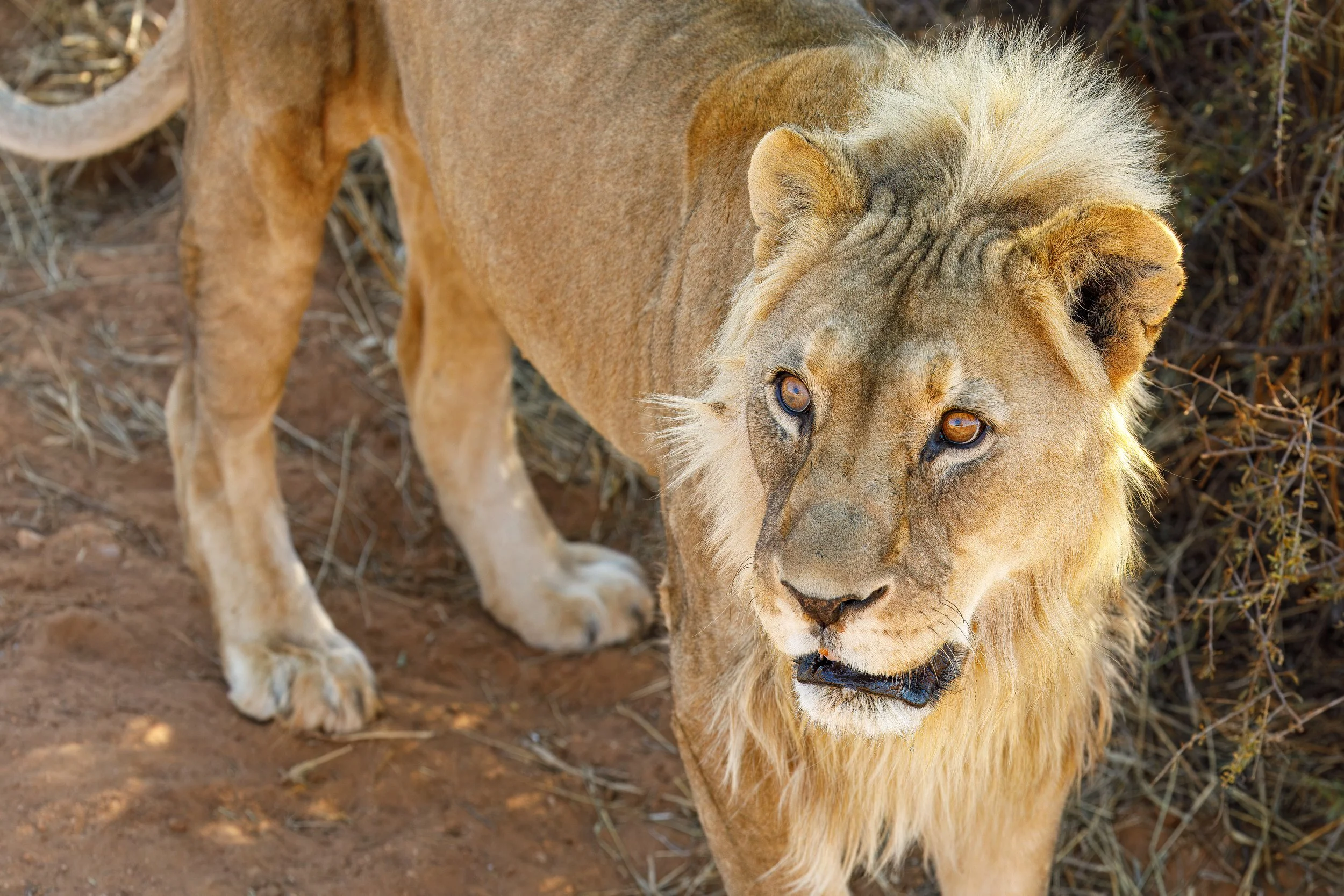
This female lion had actually developed the male characteristic beard, as she hadn’t had any cubs
One final glance as we completed our tour
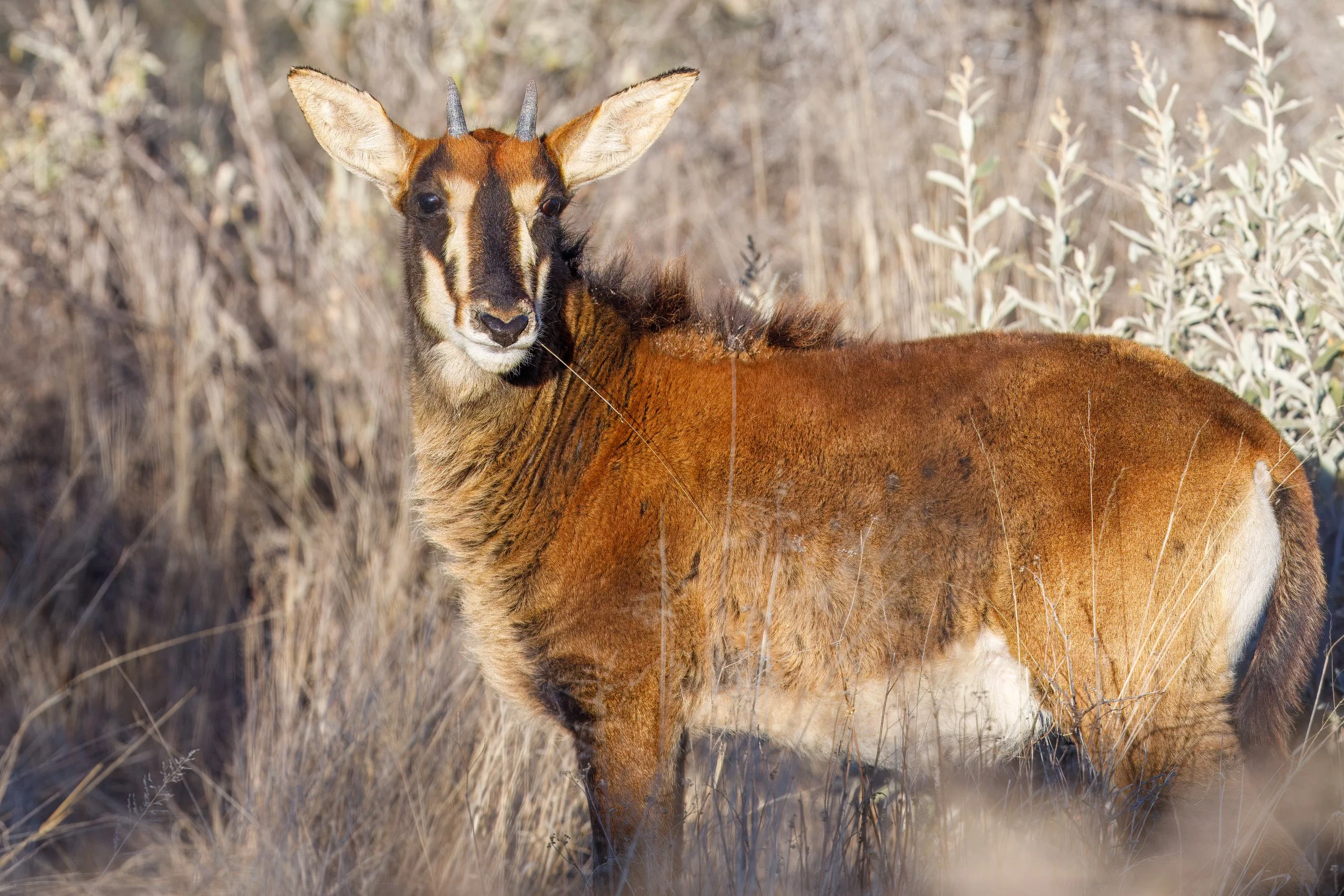
After the tour, on our way back to our cabin, we had our first sighting of a sable antelope
Unfortunately, the main lodge at the wildlife sanctuary was closed for repairs. Apparently, local baboons had done a good job of destroying the roof over the restaurant, requiring the complete reconstruction of the roof structure. Practically, that meant that our meals required a 15-minute van ride through the sanctuary to the visitor reception area and a less fancy ambience for dinner. It did ultimately turn into a mini-safari as we still came across a number of free-roaming animals on the journeys including giraffes, baboons and numerous antelope species. Our cabin was quite lovely, but felt very isolated from everything. I didn’t get any good photos, but the baboons were still very much around the cabin and we were sure to make noise to make our presence known.
Jun 17
With our afternoon flight and hotel checkout timing, it wasn’t really practical to do any more tours of the sanctuary, so we had a lazy start to the day before requesting our ride to Reception for a late breakfast.
View from our patio of the sanctuary property
Although we were physically very close to the airport, the layout and condition of the roads meant we wanted to get an early start and ensure we had plenty of time. Our flights home were on time and quite comfortable with newer Ethiopian planes, but unfortunately we did not get a terminal gate coming in from Windhoek and the very busy bus transfer experience and extra layers of security were quite chaotic. We still managed to arrive in Toronto the next day, relatively well-rested and ready for the rest of the work week. We also officially marked off our visit to country #122.