Barcelona
Feb 13-17
AC414 YYZ-YUL, AC822 YUL-BCN, AC823 BCN-YUL, AC423 YUL-YYZ
We thoroughly enjoyed our recent trips to Madrid and elsewhere in Spain, but noted that the last time we were in Barcelona was over 18 years ago over New Years 2008. Time certainly flies, and with all our travels, we were excited to get back to one of our earlier European destinations. Booked as part of our trip to London in December, we nested this trip to take advantage of cheaper business fares from Europe to North America.
As I was not working on Friday and I had lots of free time, I made a sure I had a comfortable connection time and moved myself to an earlier afternoon flight, spending a few hours in the Montreal lounge waiting for Tom to eventually catch up. This was also my first trip to Toronto Pearson since the new (and very delayed) Eglinton LRT, and I was very pleased with my 50-minute door-to-terminal time with a short walk to the LRT and connection to Up Express. Our flight to Barcelona ended up being an hour late out of Montreal, so everyone had plenty of time to connect.
Feb 14
After the overnight flight, we were through passport control and at the hotel just after noon. Having slept most of the of the flight, we needed just a bit of time for a shower and a nap before heading into the city. We started with the tourist centre of the Rambla, Barcelona’s main boulevard, to get reoriented to the city that we knew had changed in the last 18 years. Unfortunately the cobblestone streets of the Rambla were getting a facelift in the off season making the walk a little more challenging. That coupled with the threat of pick pockets kept us on our toes.
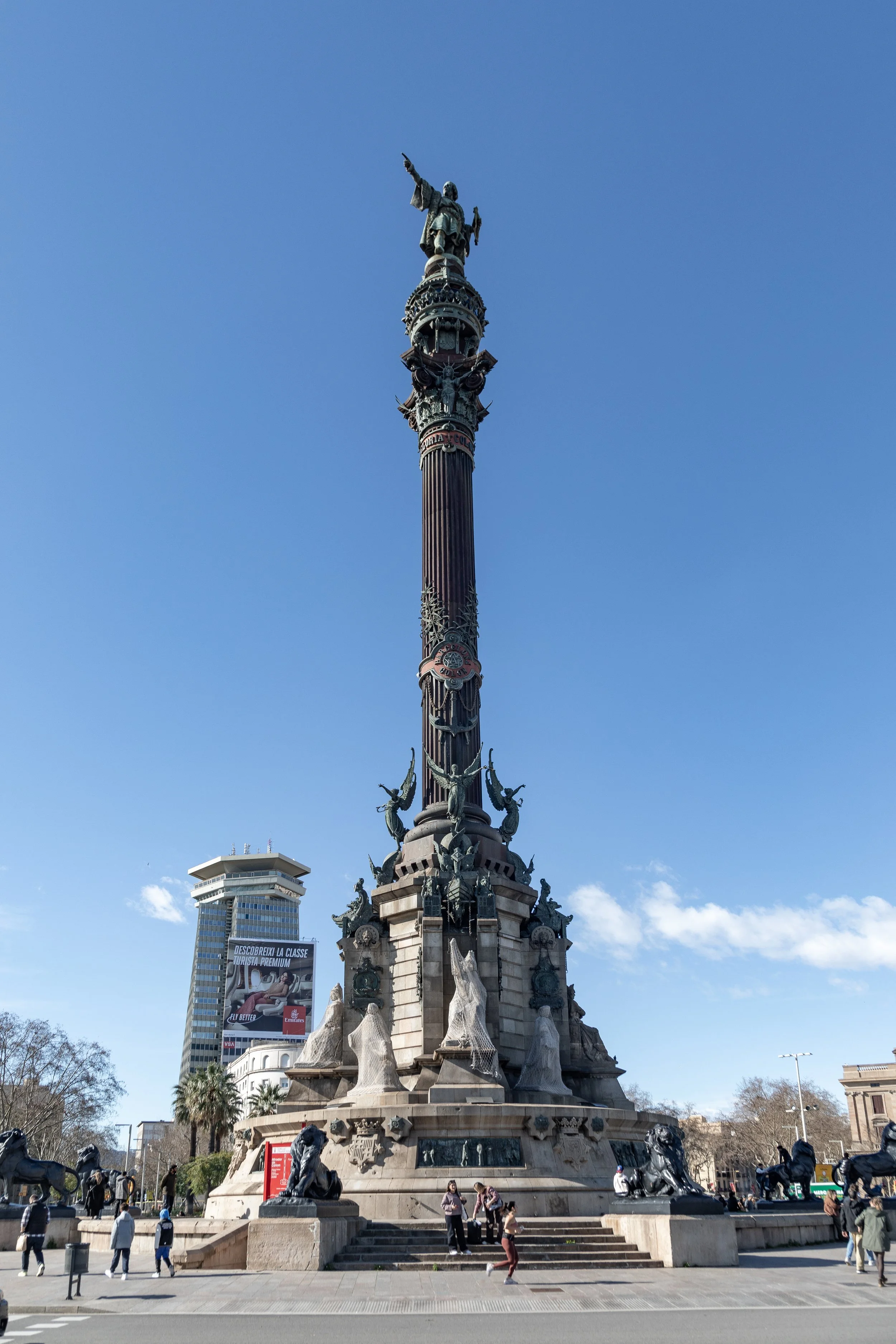
The imposing Columbus Monument stands at the foot of the Rambla
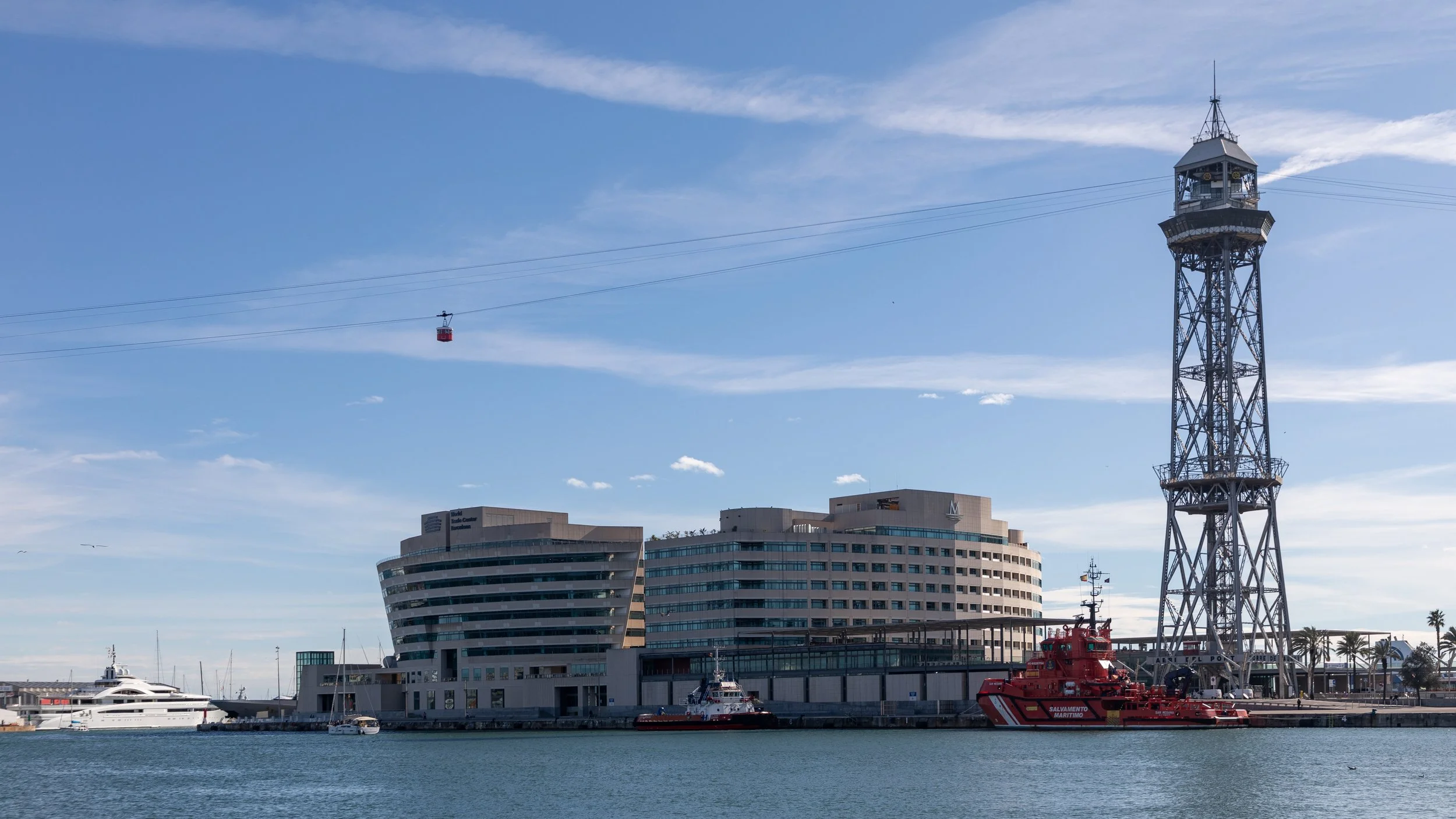
Looking across the harbour and Barceloneta and the cable car to Montjuic
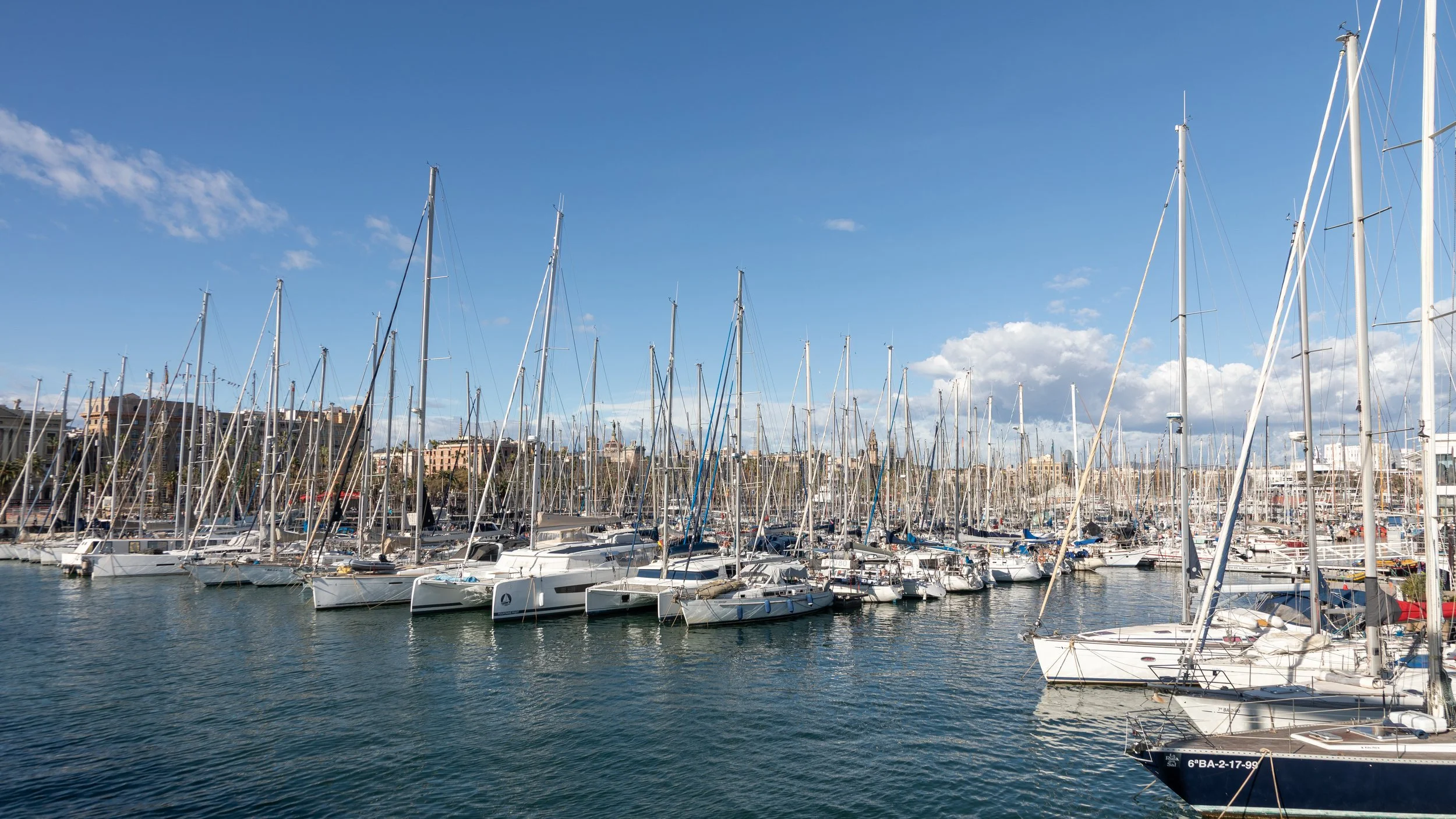
Given the cooler weather, the majority of boats were docked in Marina Port Vell
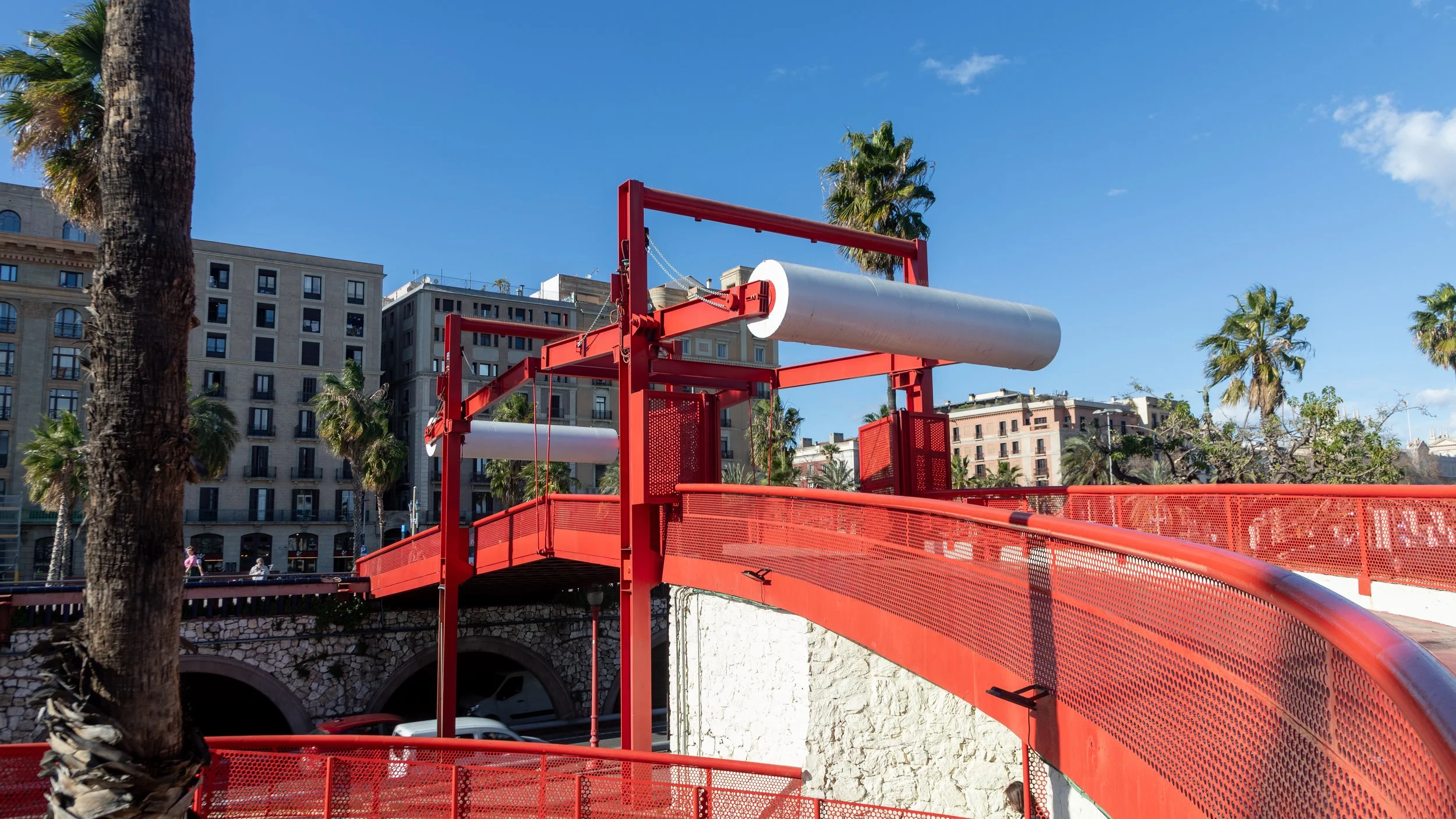
Lift bridge over the highway running along the port
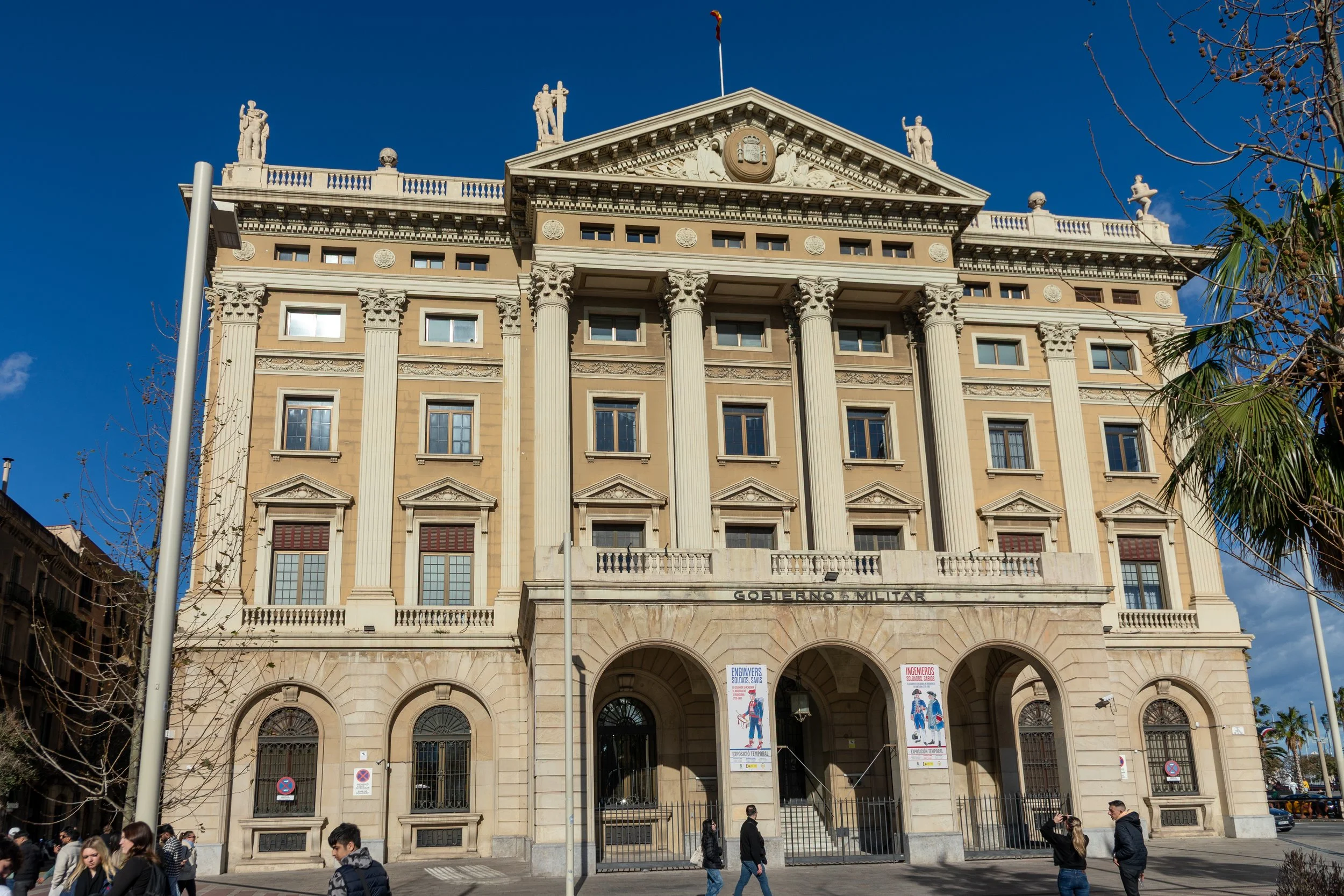
Military Government Building in the Plaza del Portal de la Paz
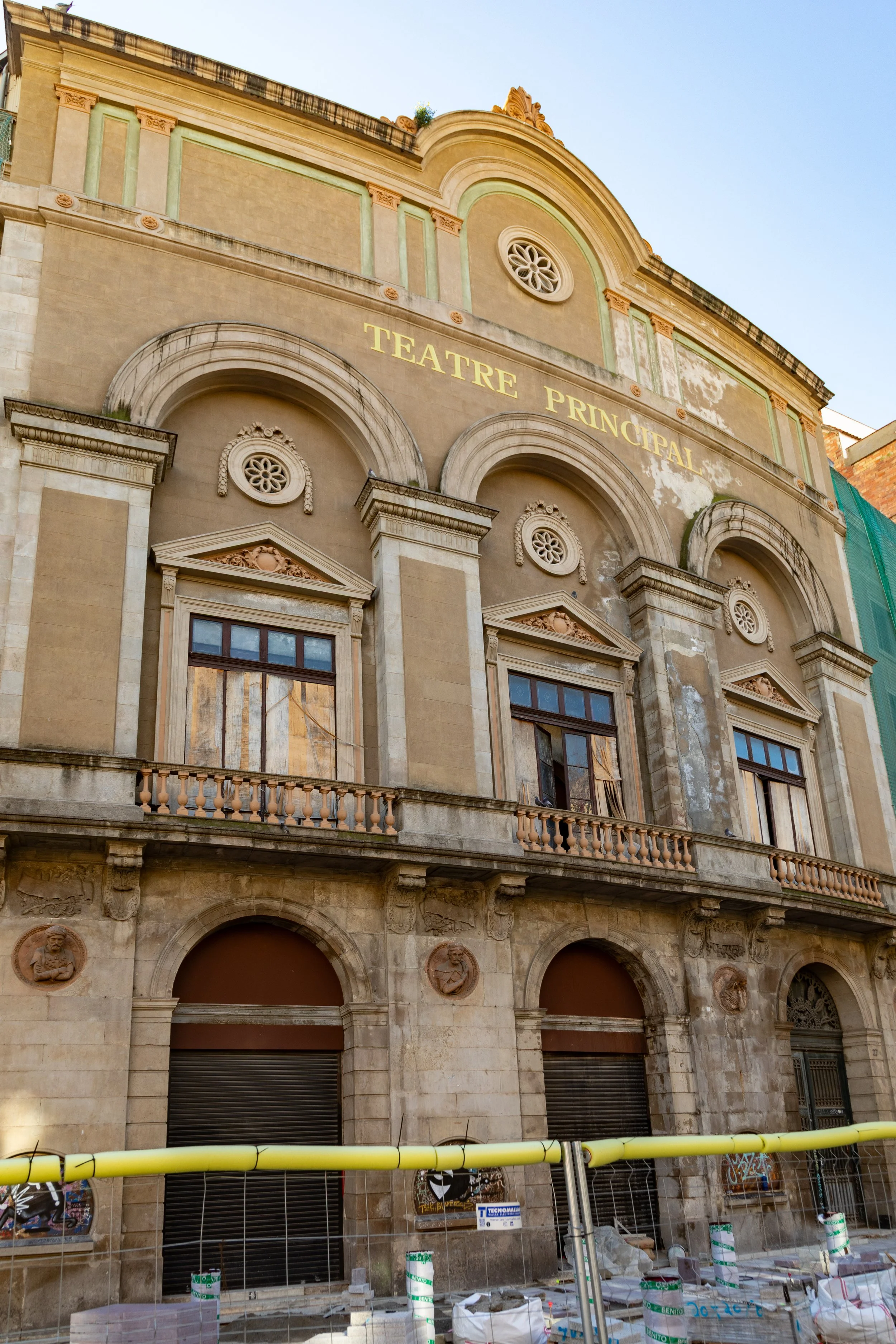
Making our way up the Rambla, Teatre Principal, the oldest theatre in Barcelona, originally founded in 1579, currently under renovation
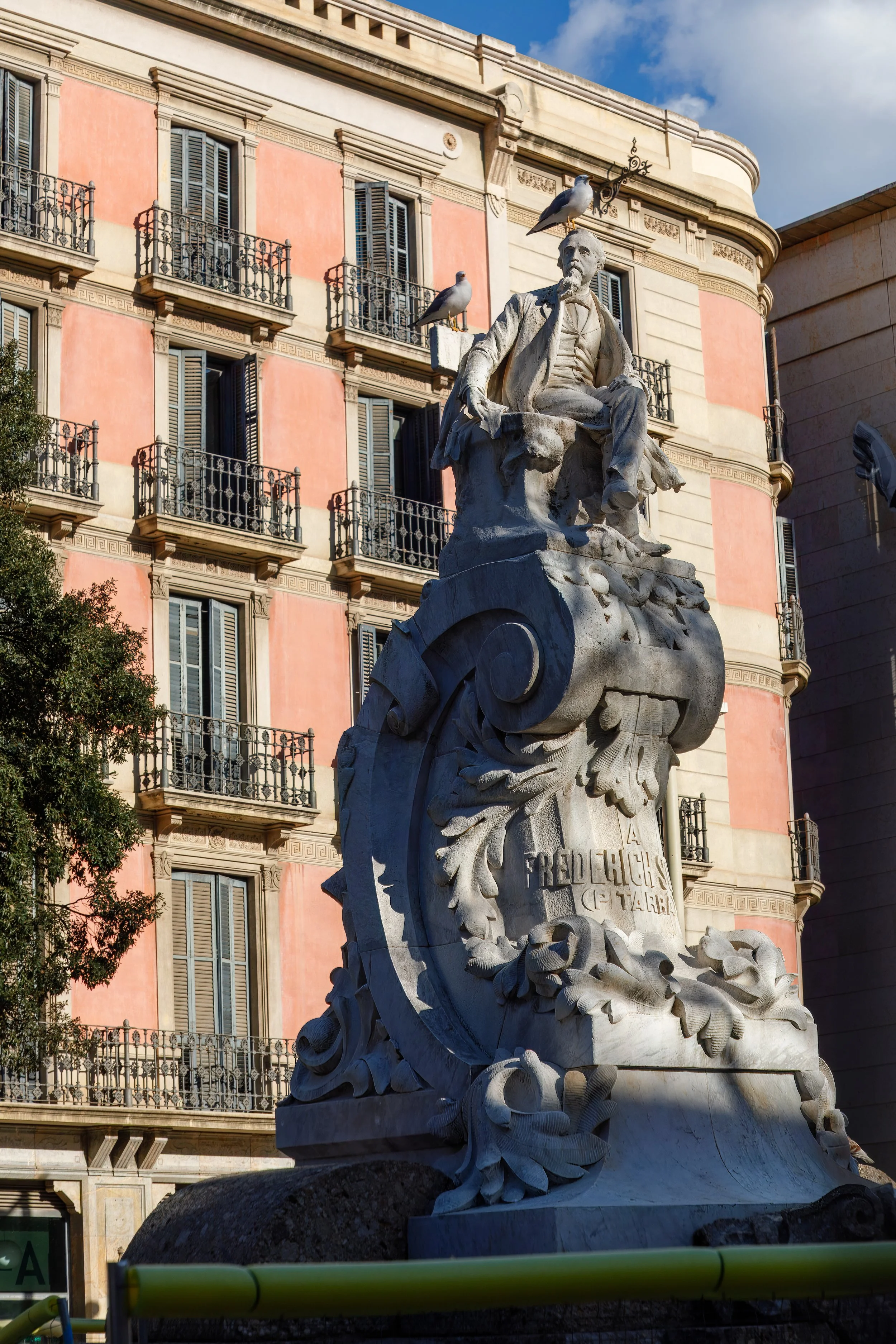
The Monument to Frederic Soler i Hubert, in Plaça del Teatre, honors Frederic Soler (1839–1895), a prominent Spanish and Catalan poet
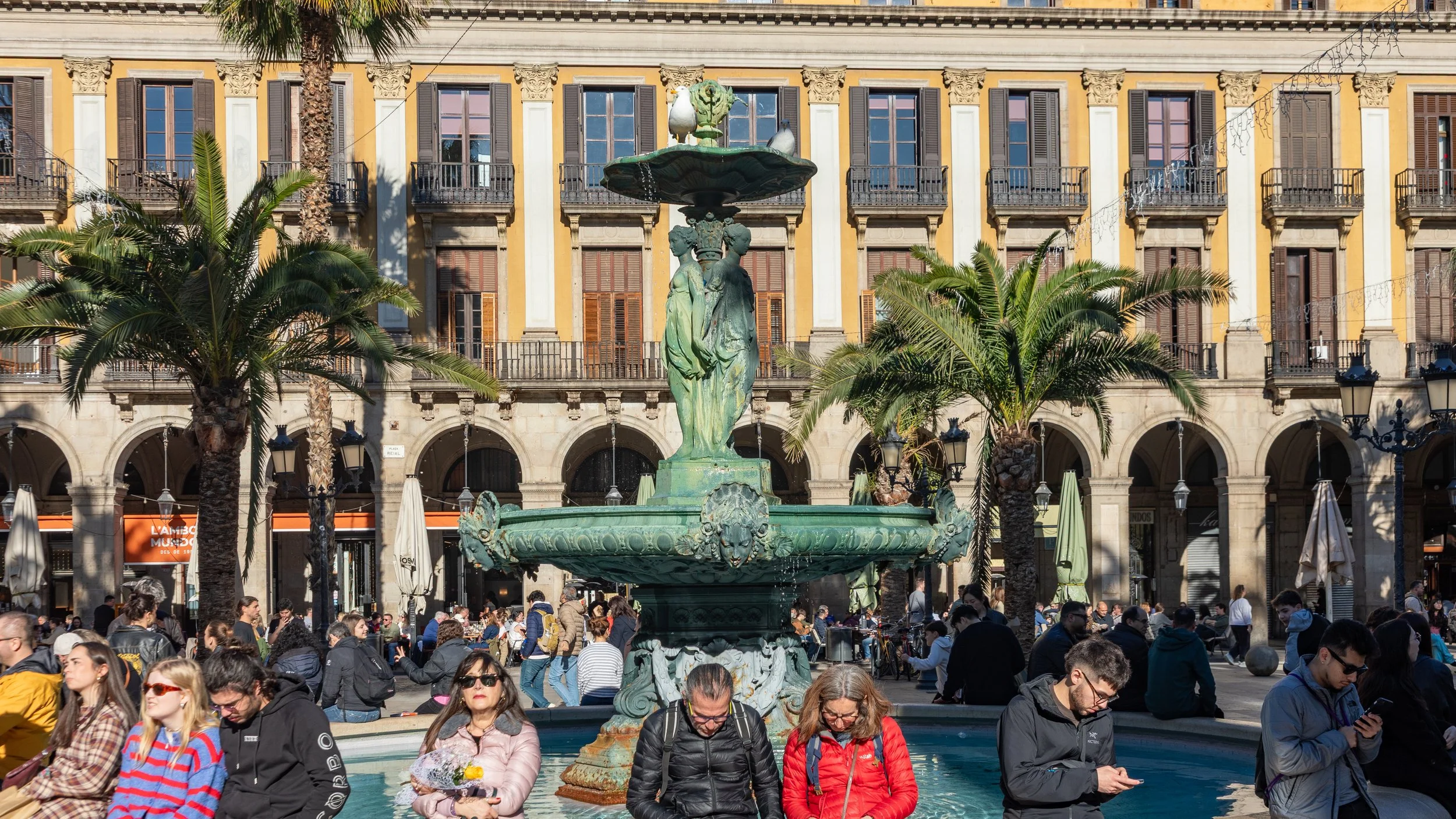
The central "Three Graces" fountain in Plaça Reial ("Royal Plaza")
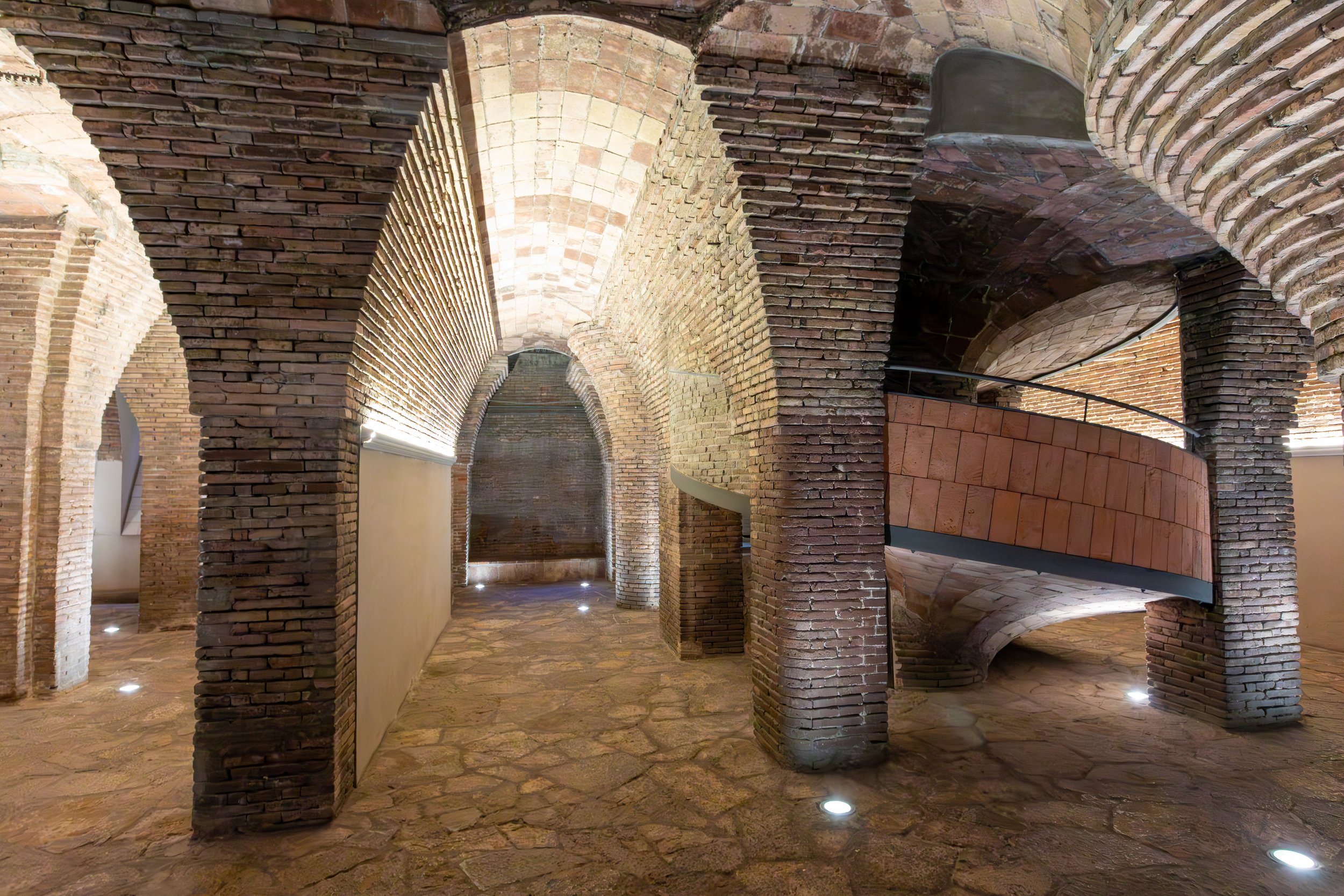
The stables in the lower level of Palau Güell in 1885, the first commission from Güell to Gaudí, and some of his earlier work
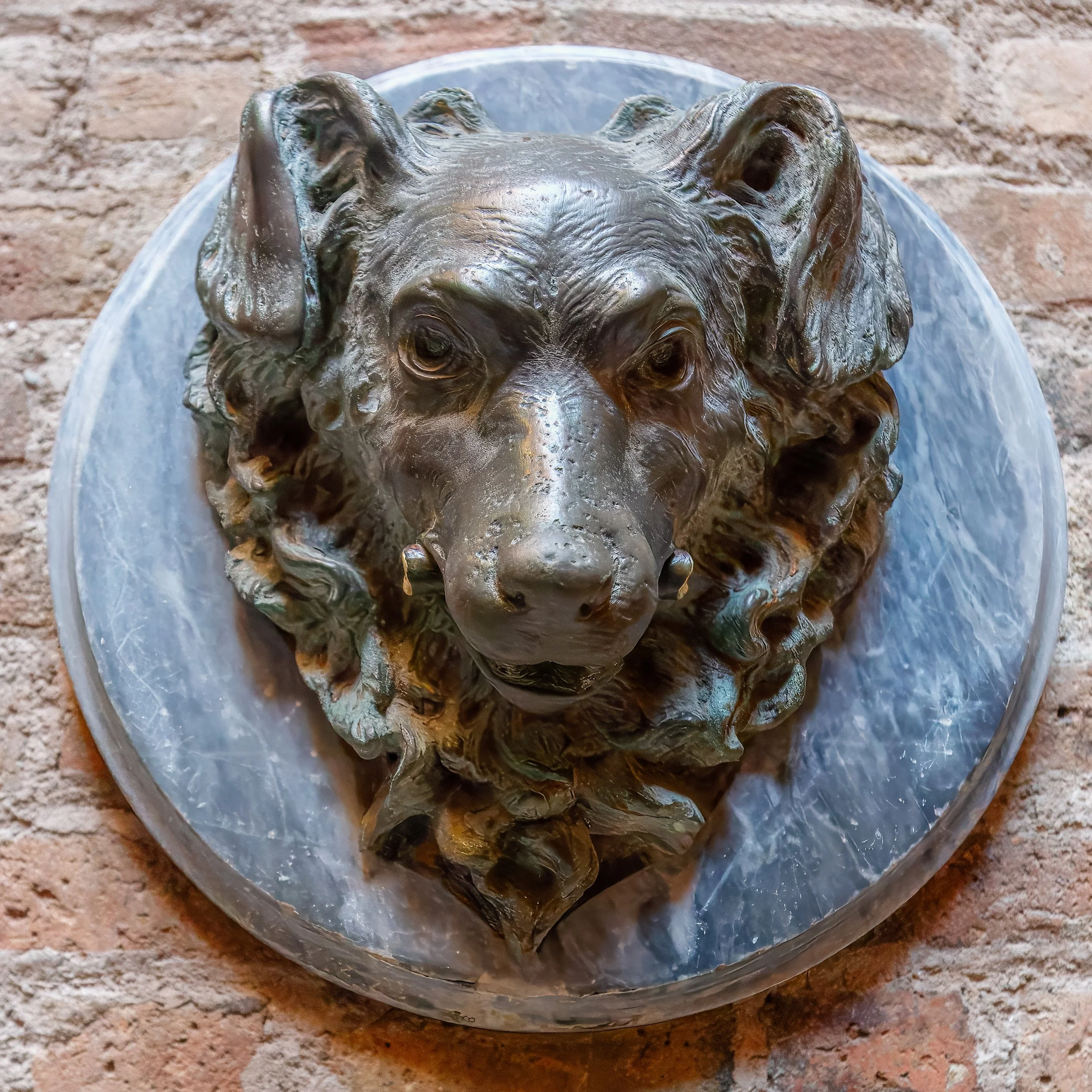
Bronze wall sculpture in the stables
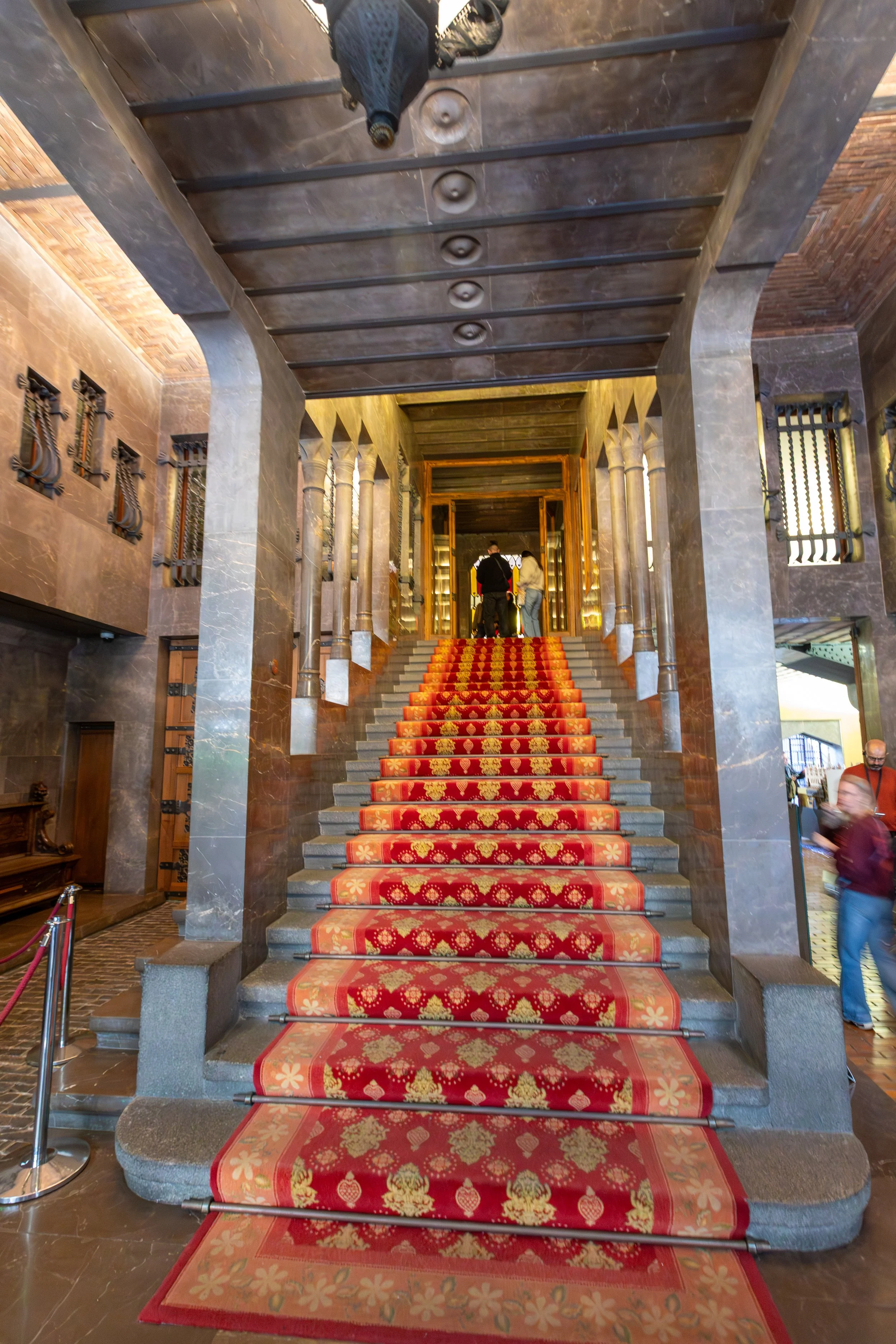
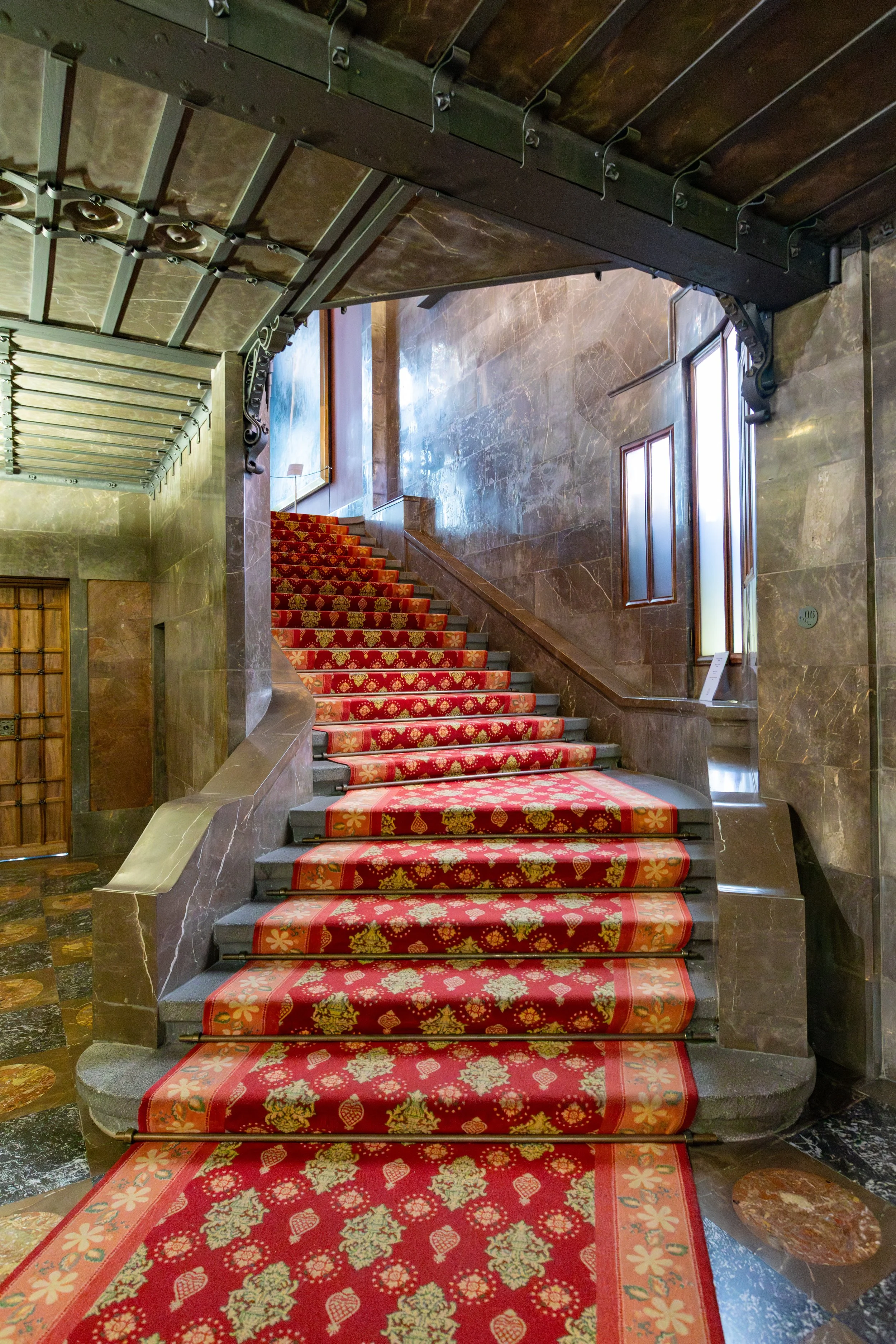
Main entrance into the Palace up to the first floor
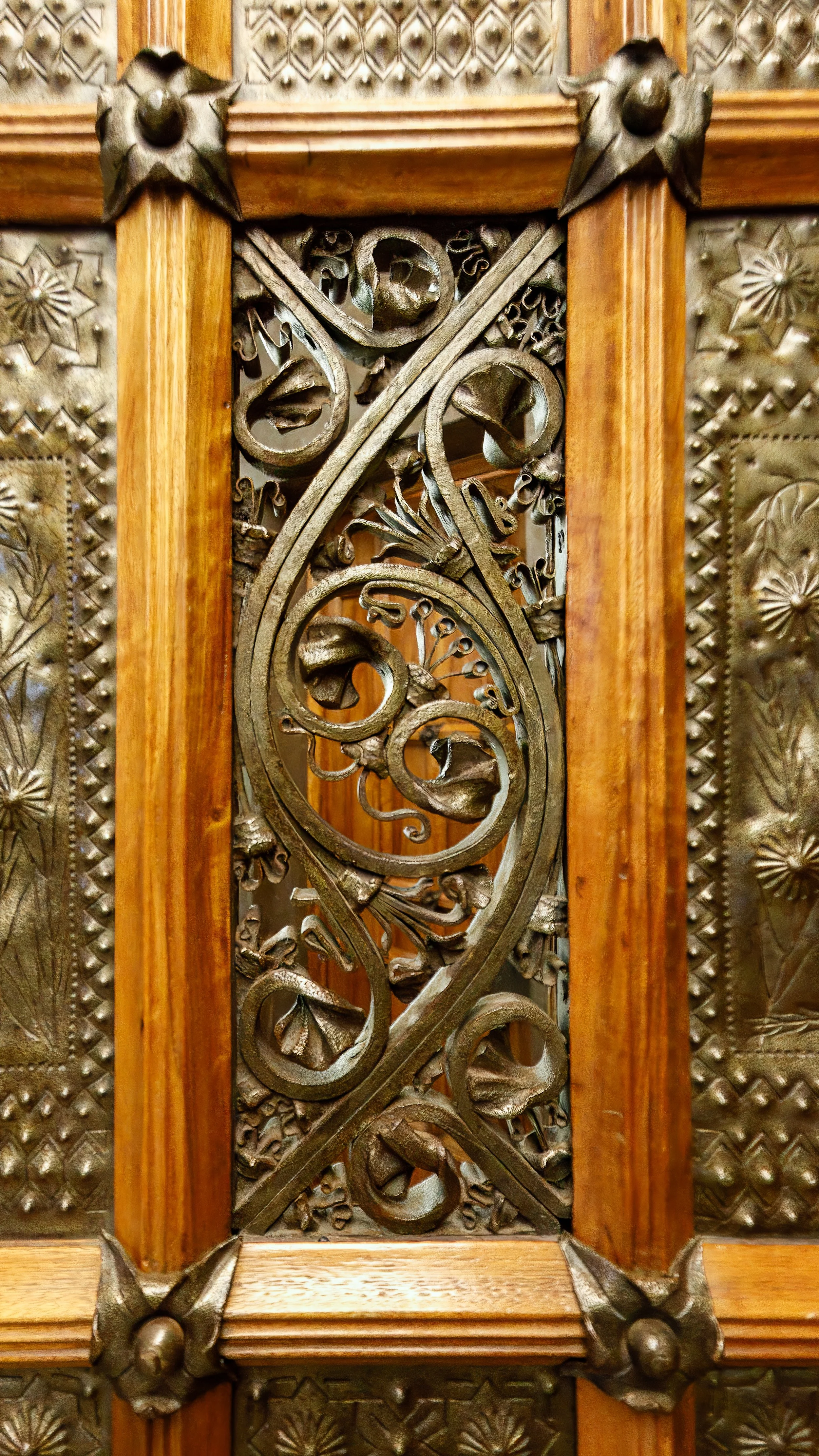
Intricately decorated door
Staircase continues up to the 2nd floor
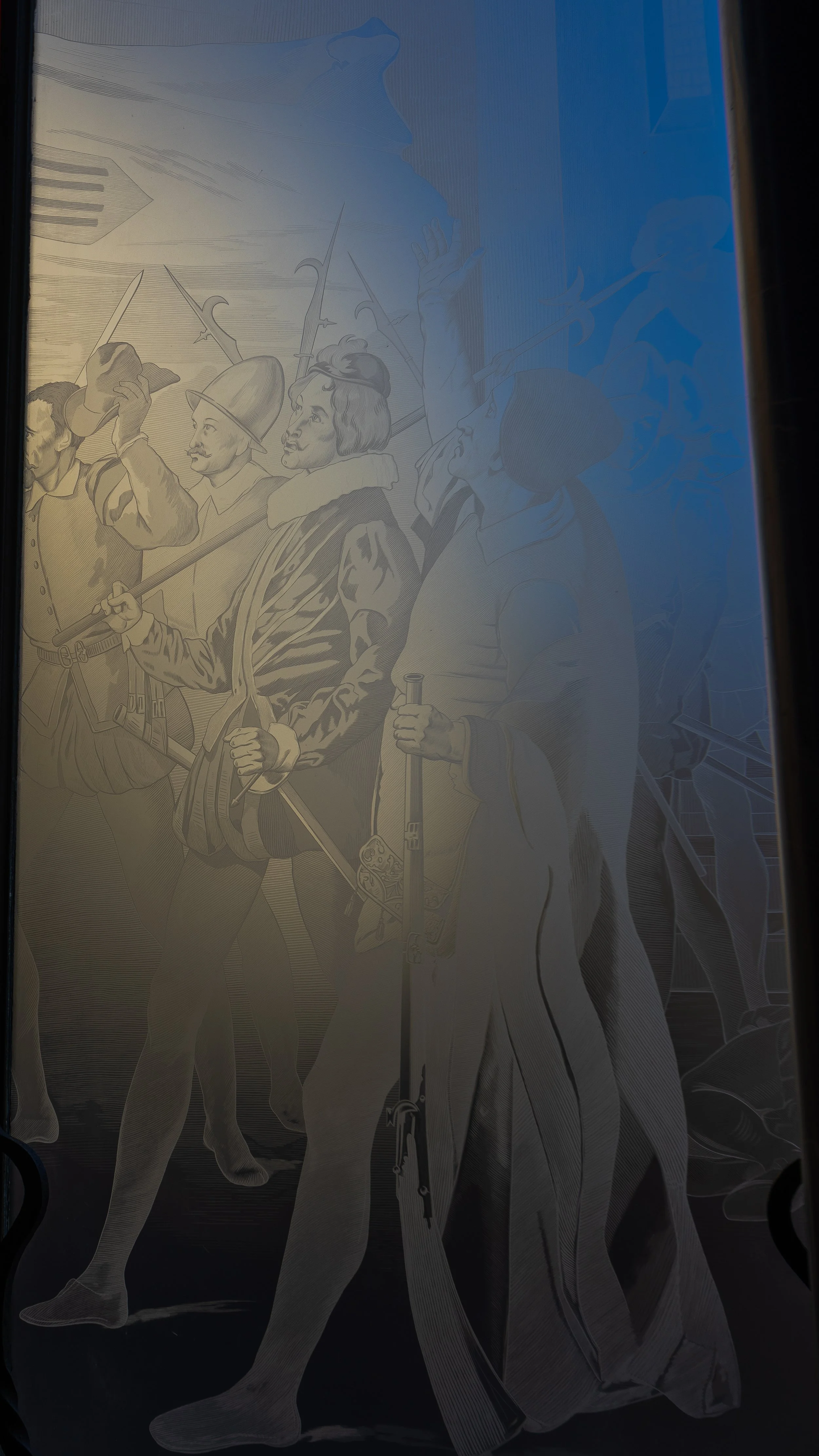
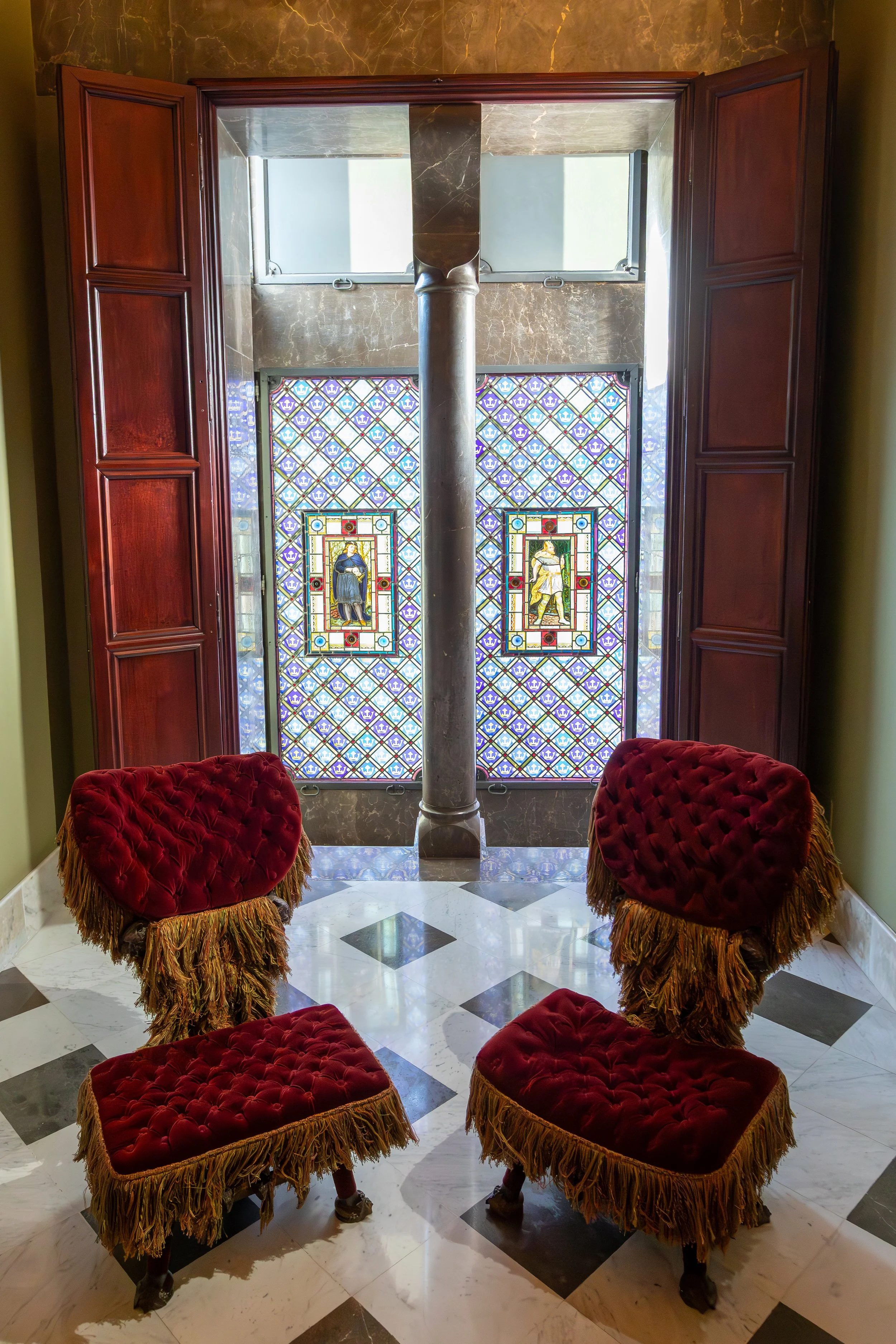
Etched glass windows decorate the palace
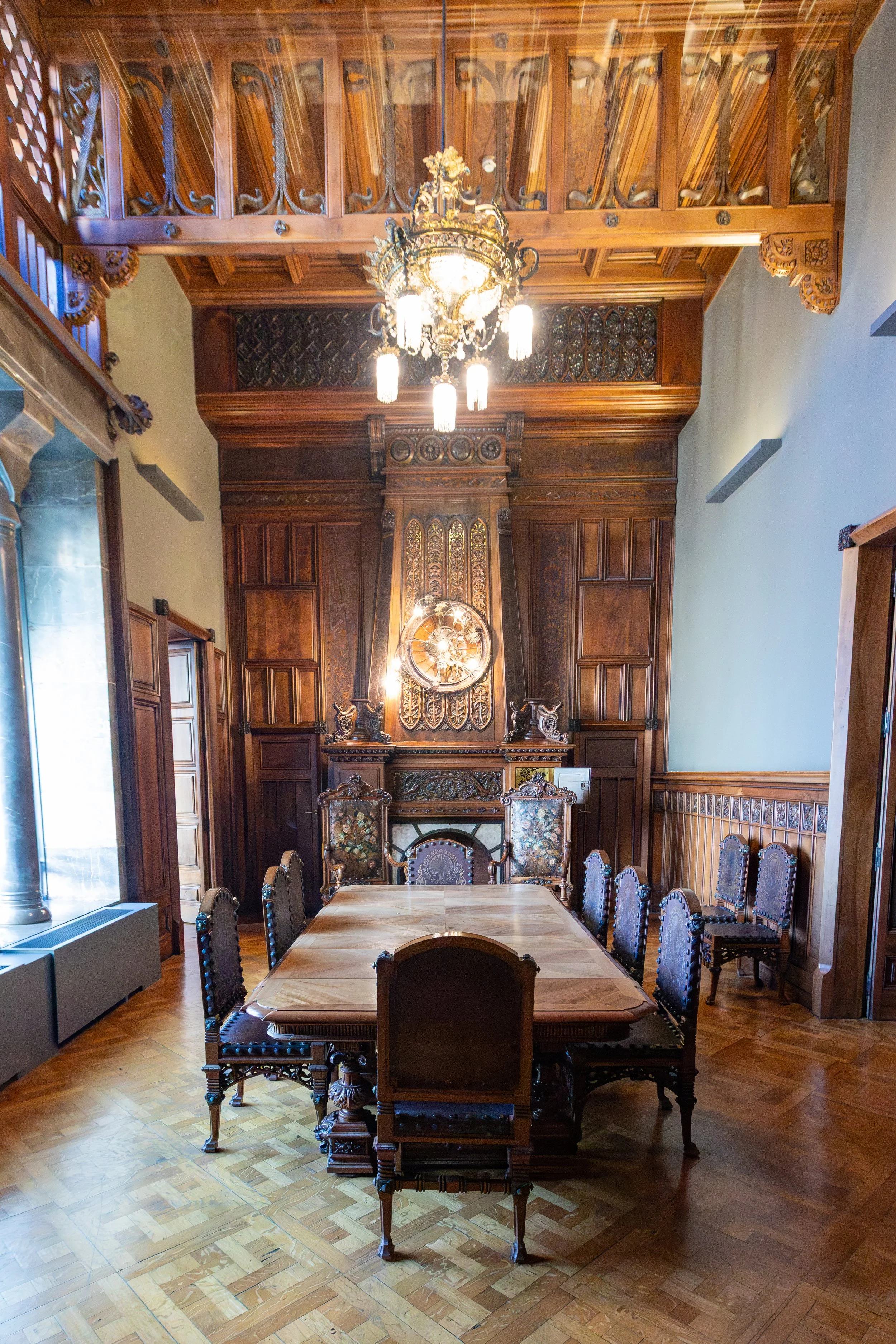
Main dining room
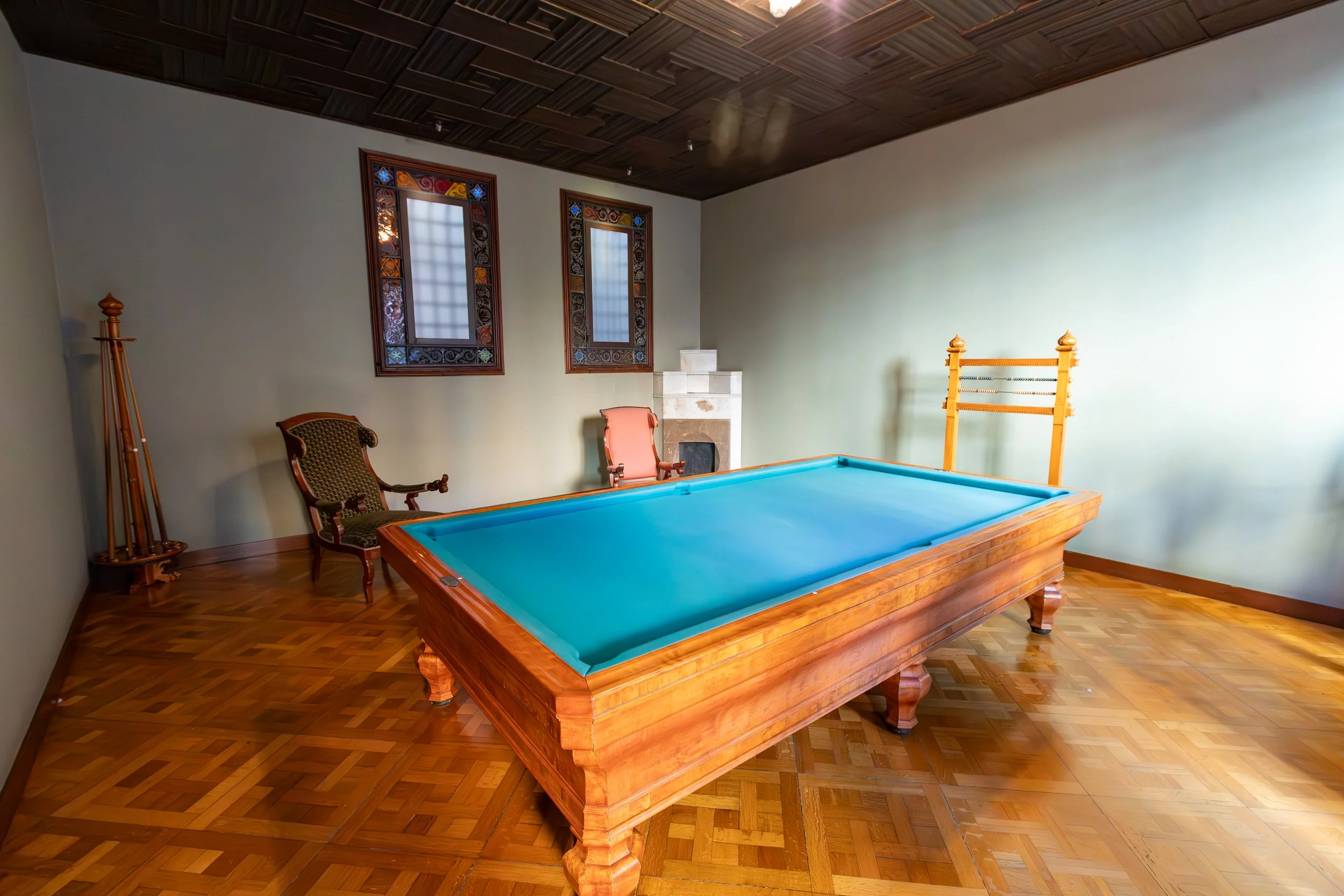
The billiards room
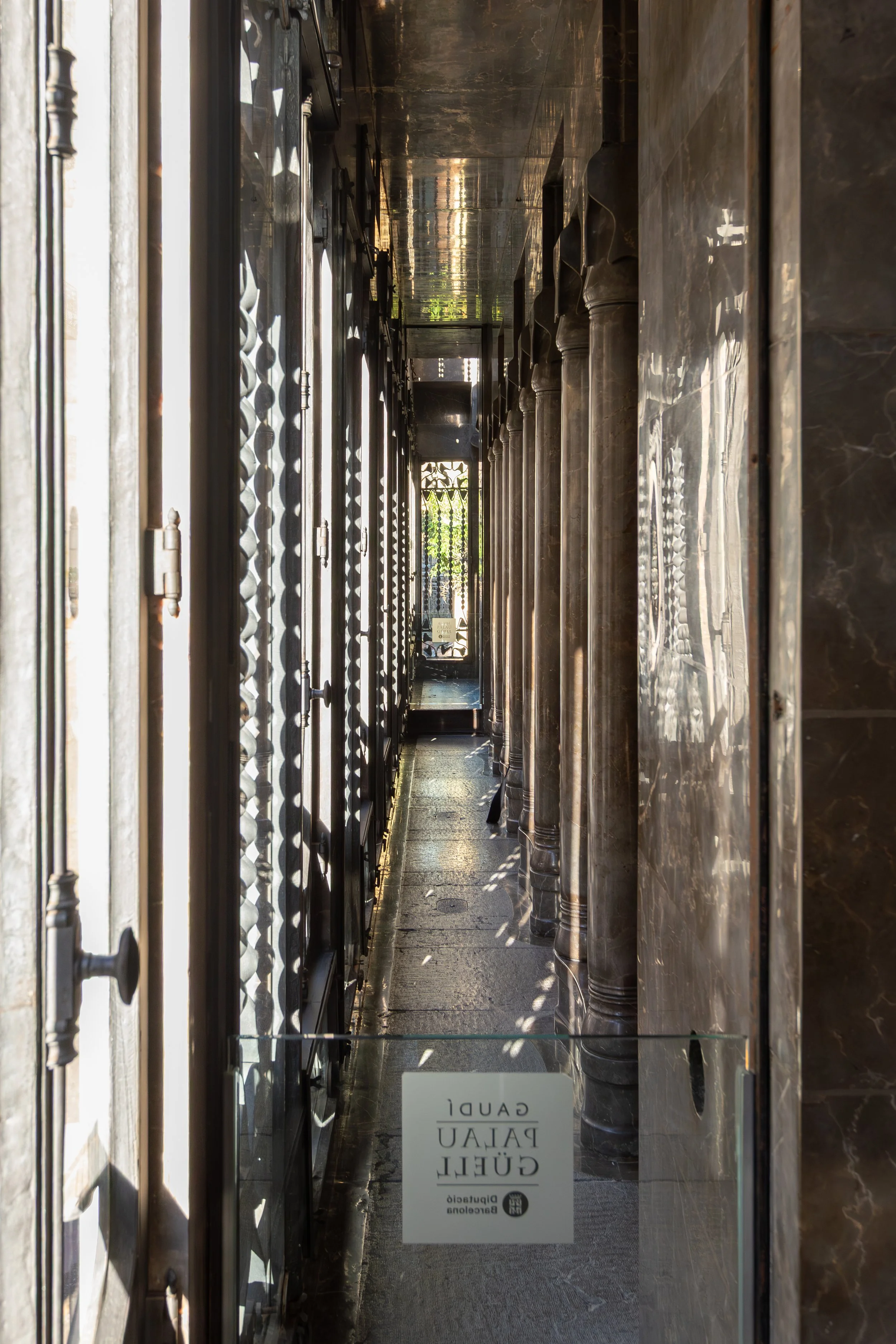
Narrow balcony runs along the front of palace
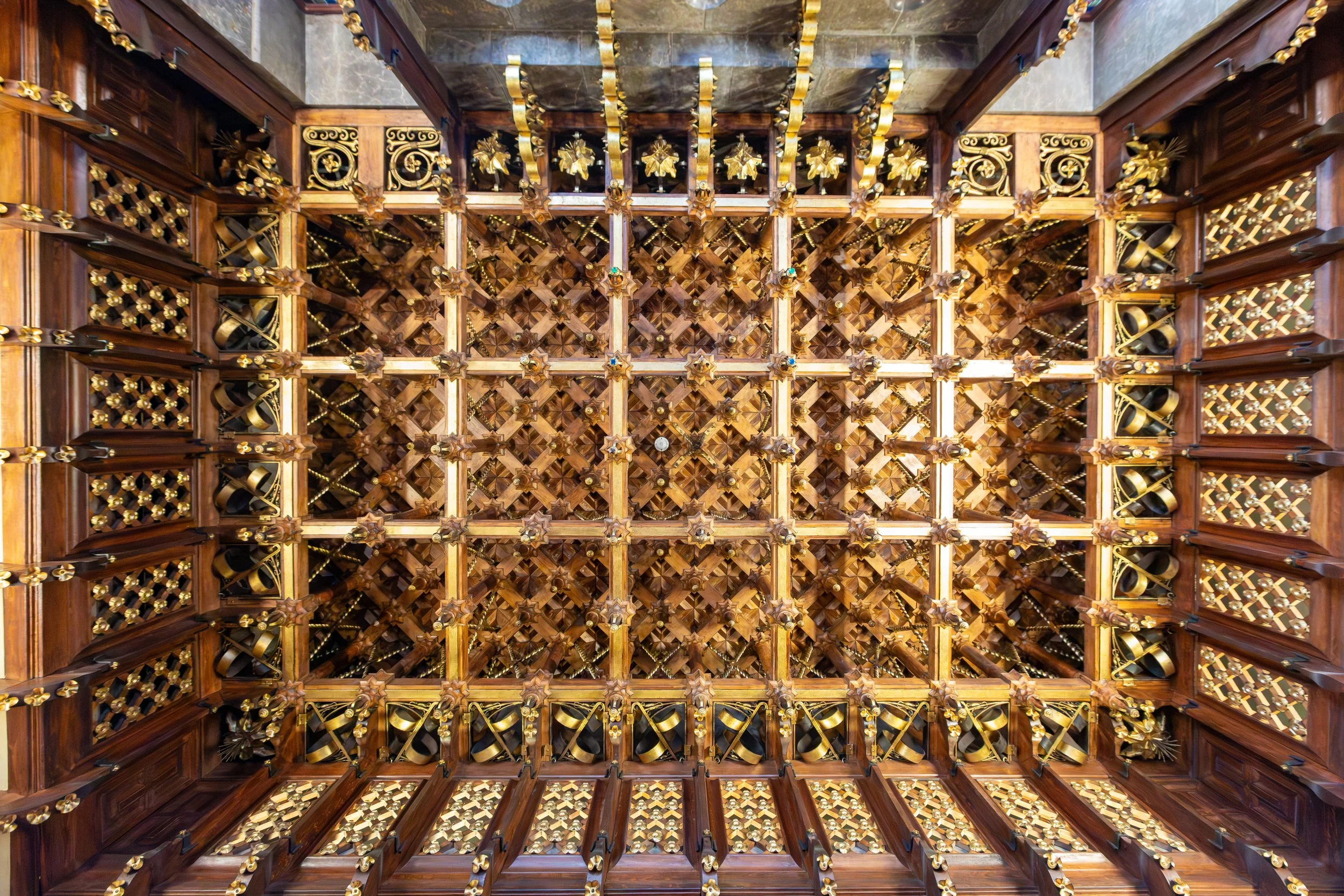
Ornate wood ceiling
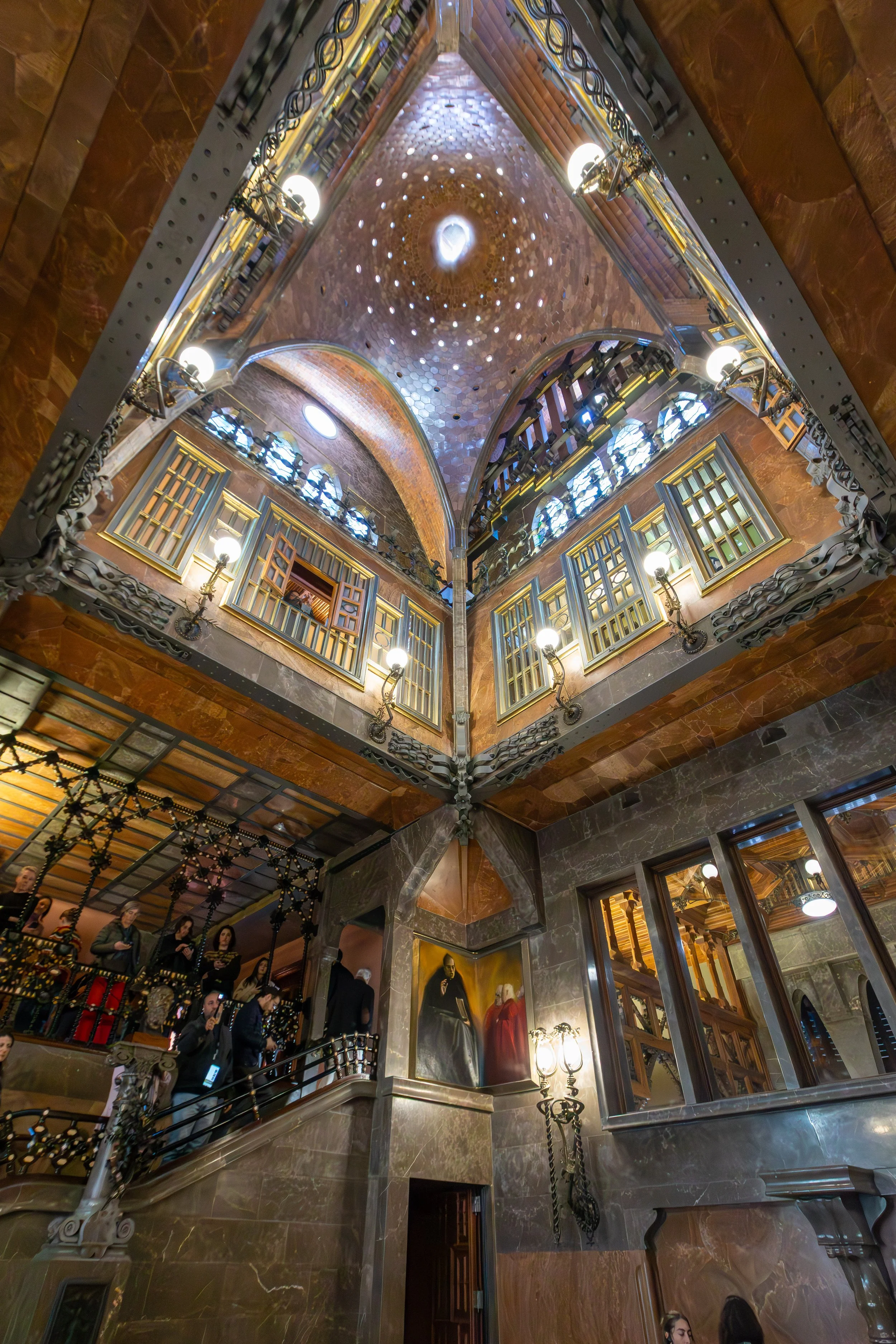
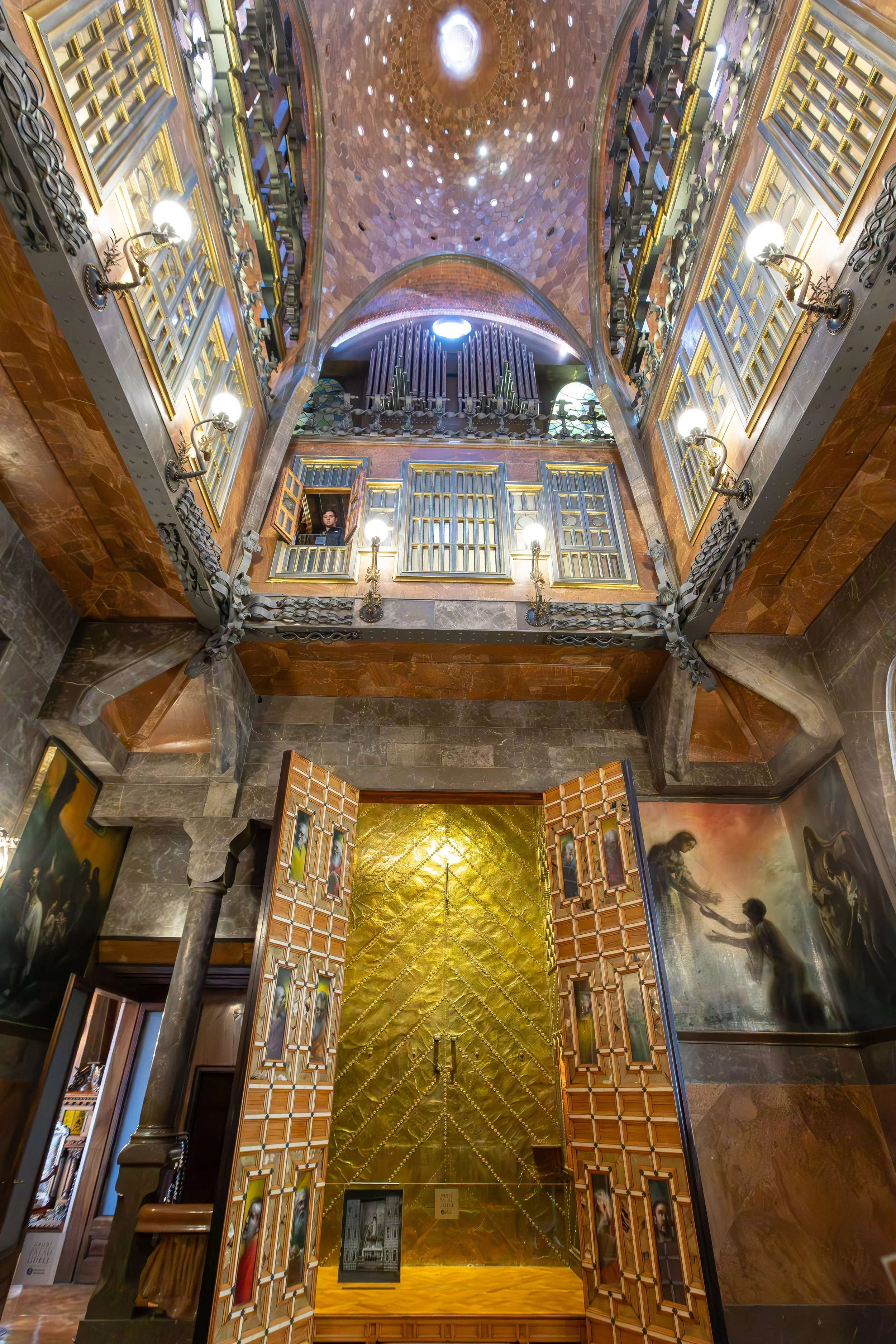
Grand central hall features a high dome designed to resemble a starry night sky
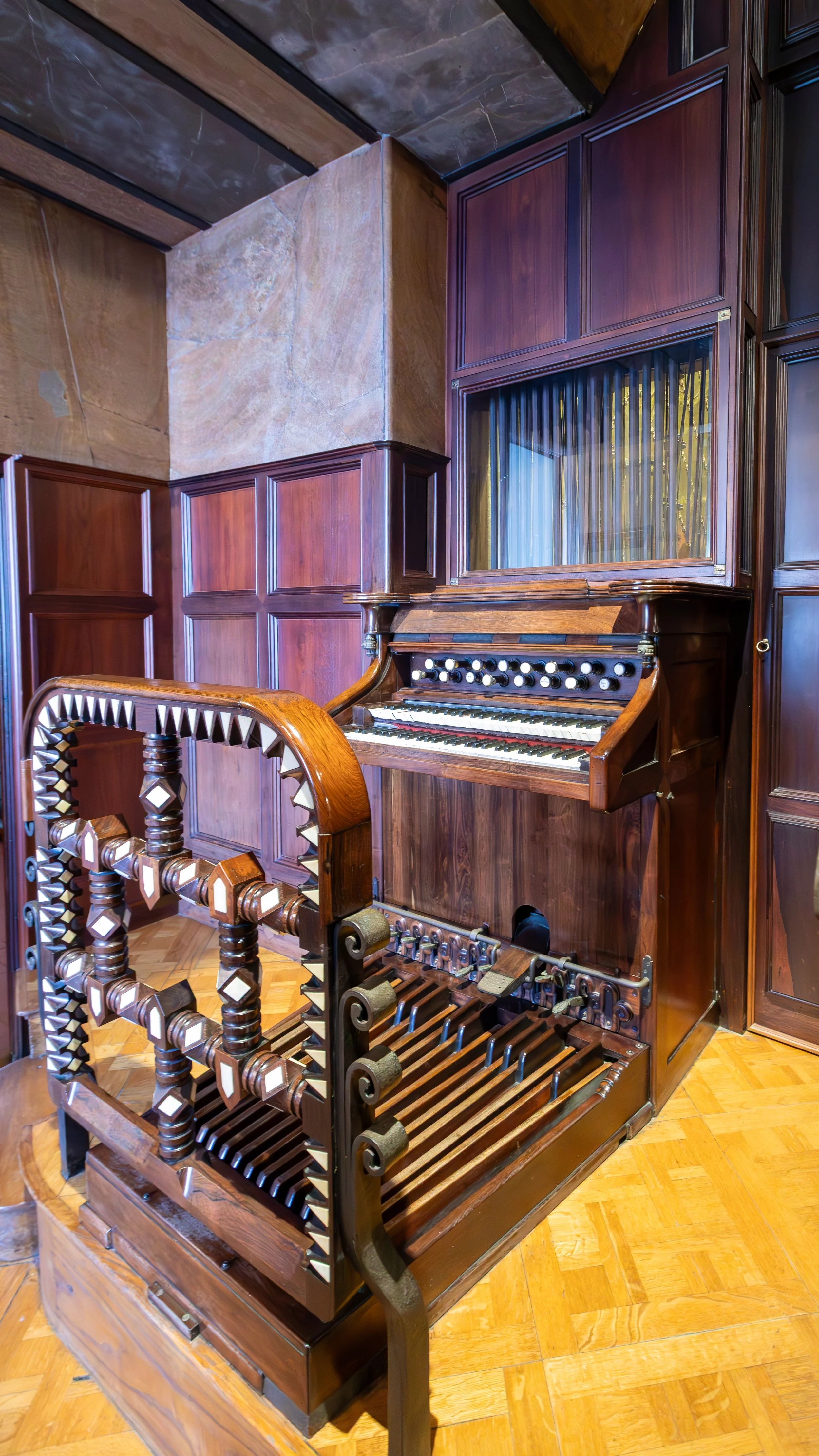
Organ
Looking up at more of the impressive hall
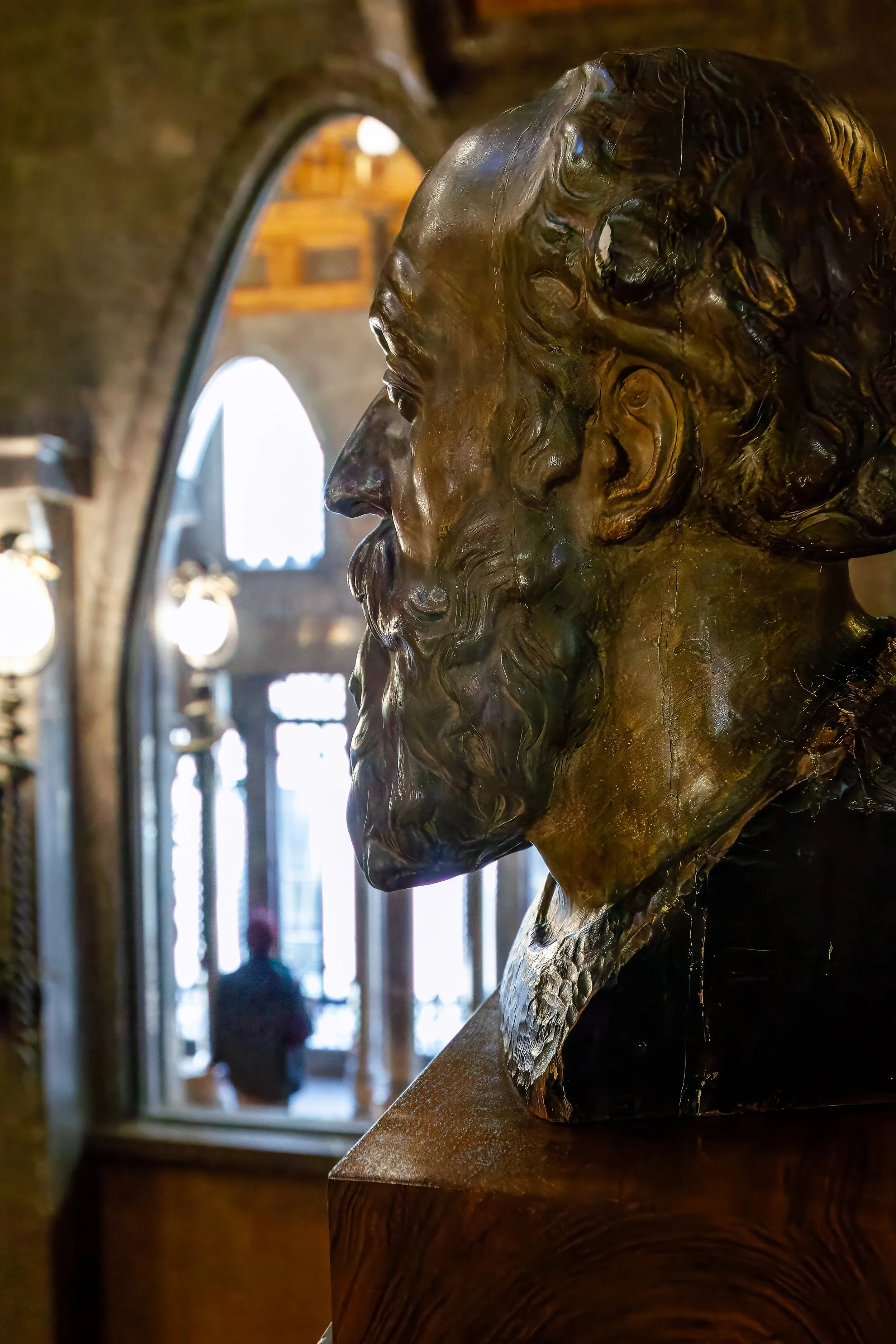
One of the busts decorating the hall
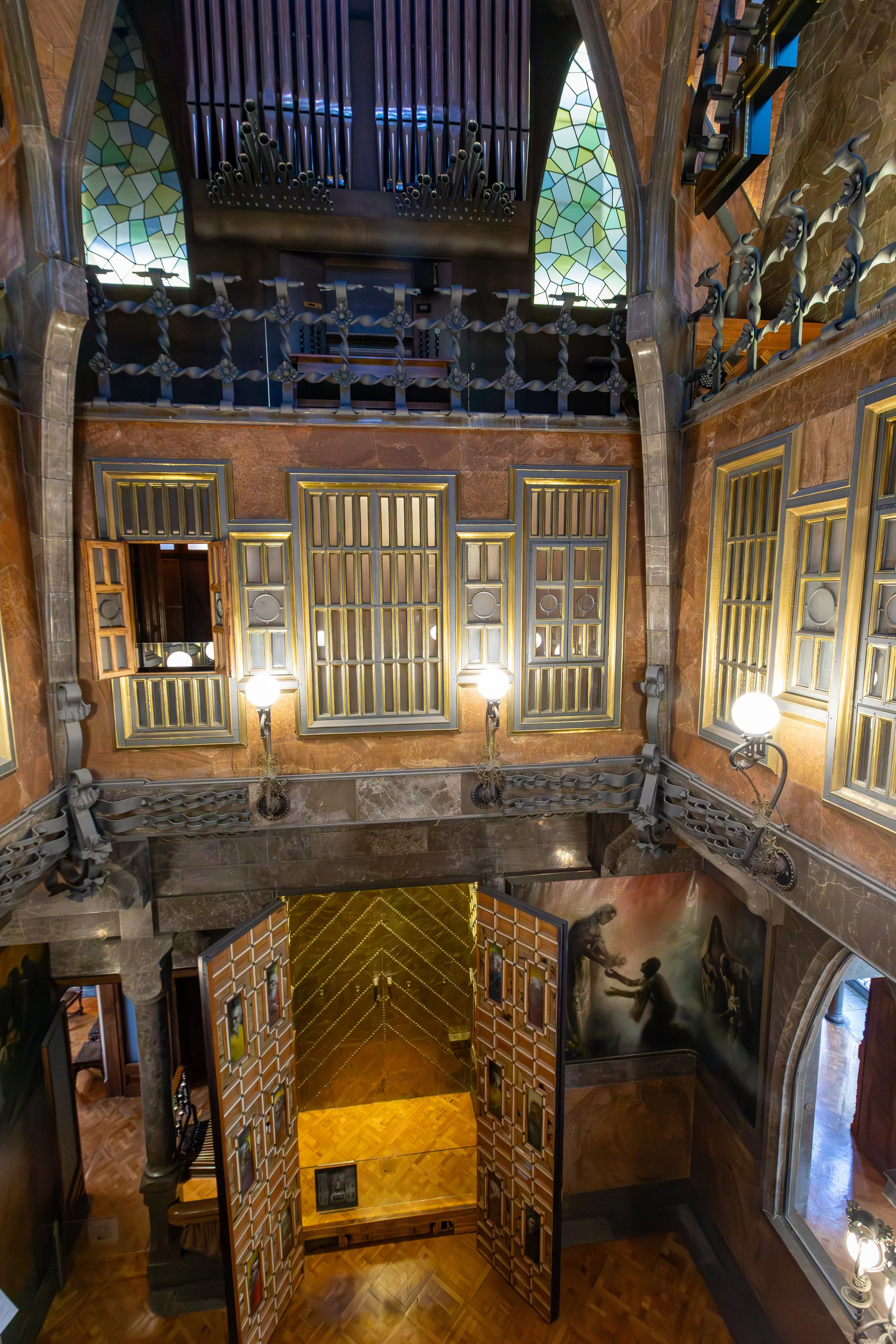
Organ pipes reach up to the ceiling
Isabel Güell’s Bedroom
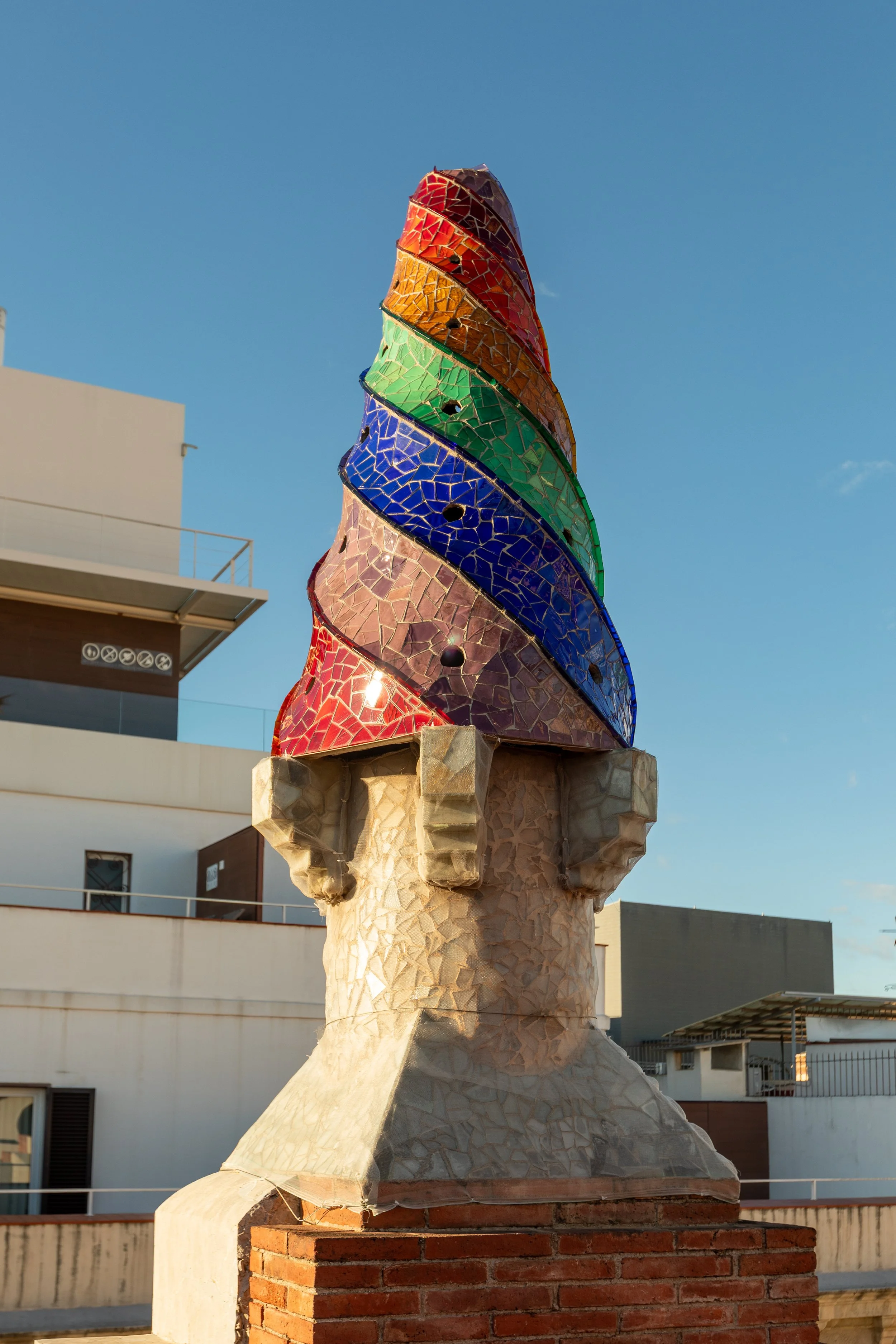
One of the colourful chimneys characteristic of Gaudí’s style
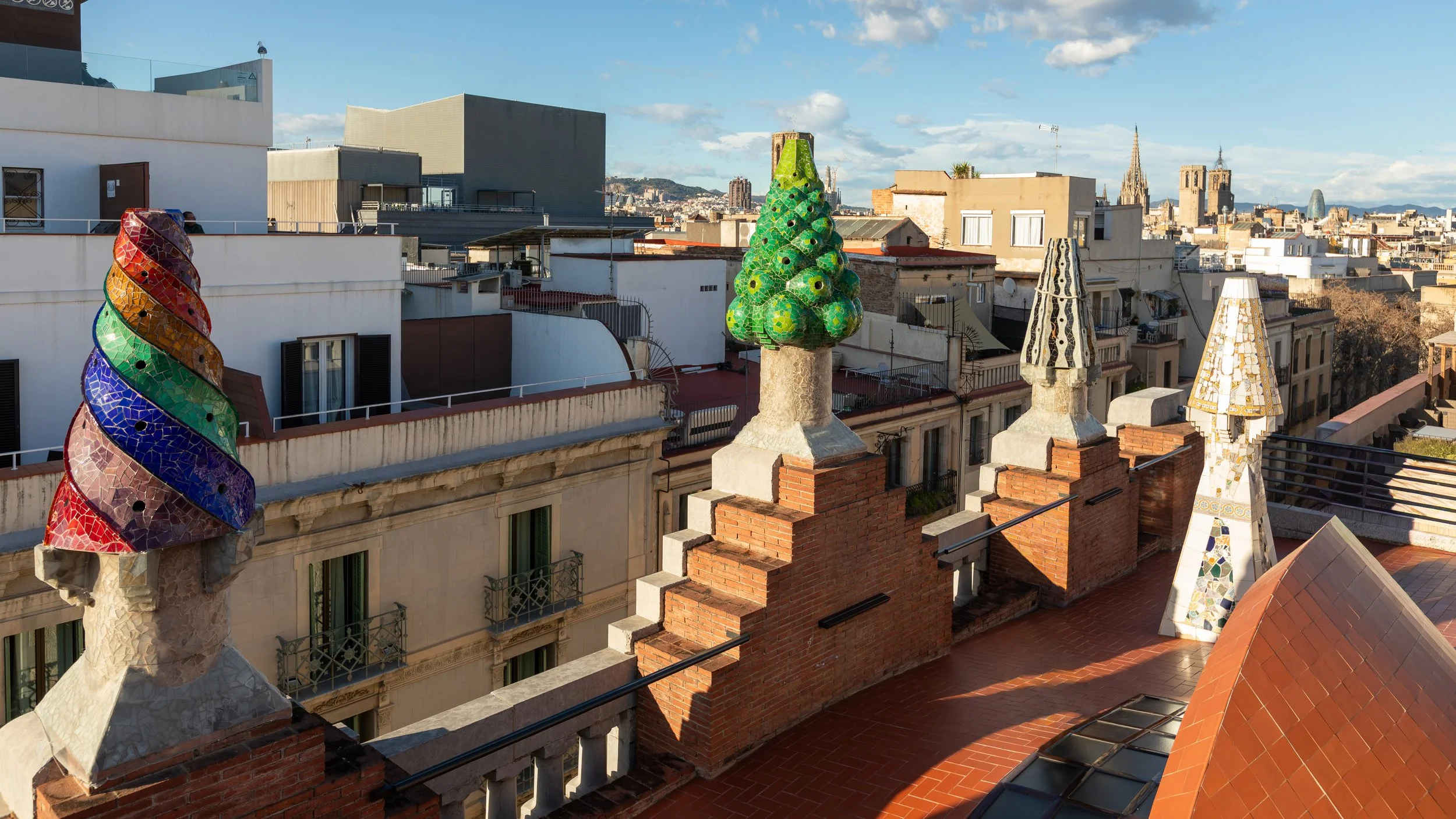
More of the chimneys decorating the flowing rooftop
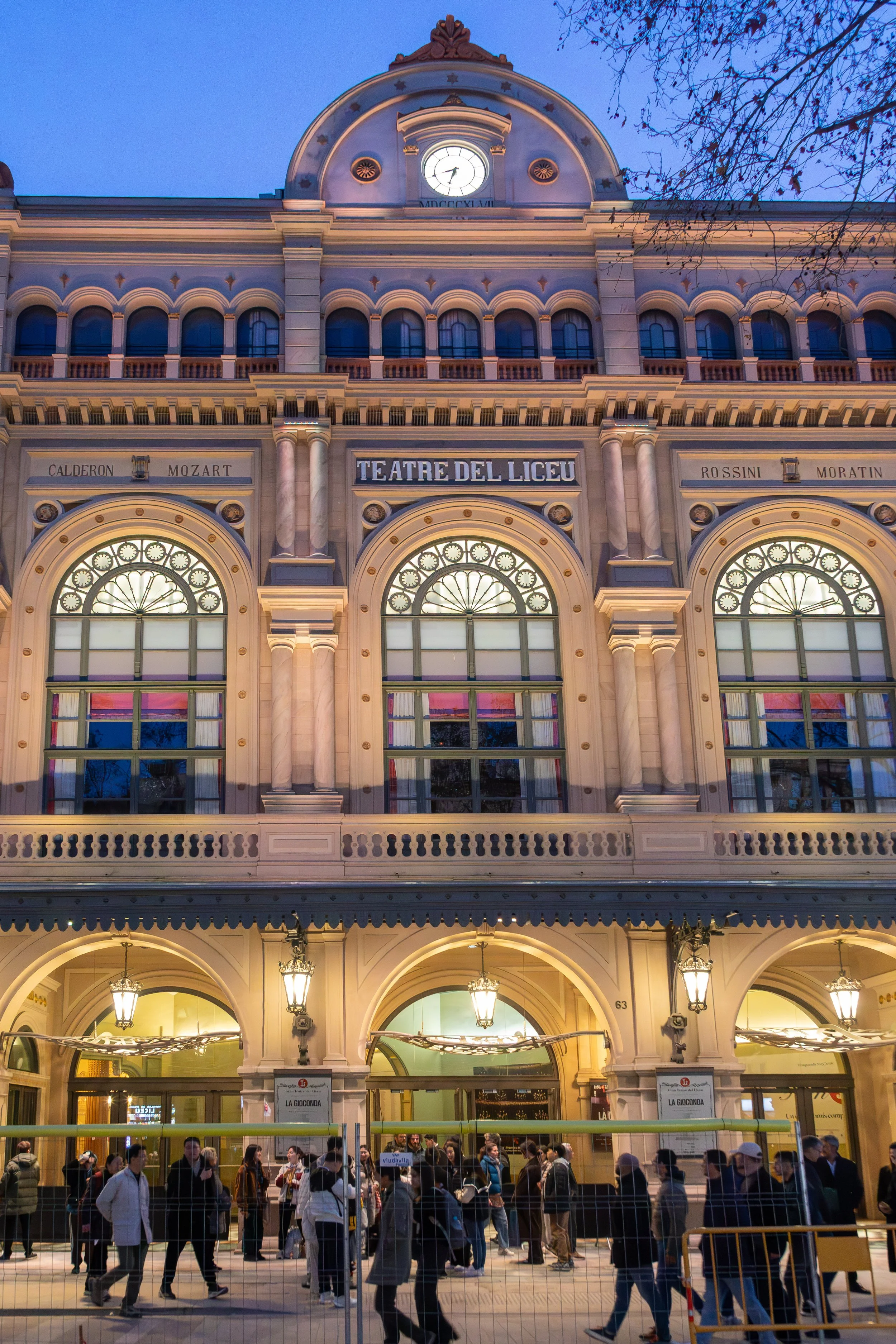
After a break for some tapas at the hotel, back on the Rambla, very much under construction, at Gran Teatre del Liceu, an 1847 opera house still used for its original purpose
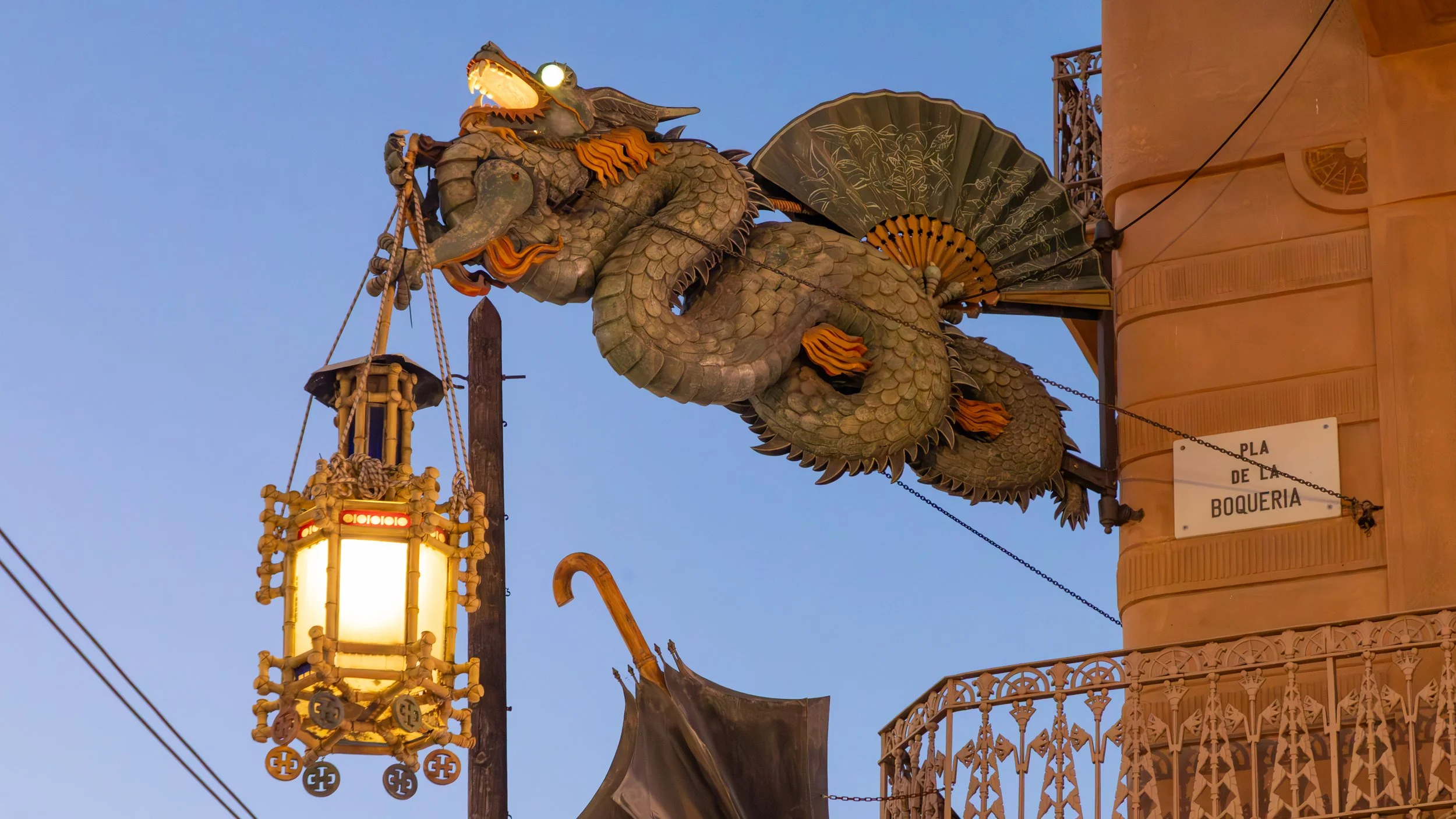
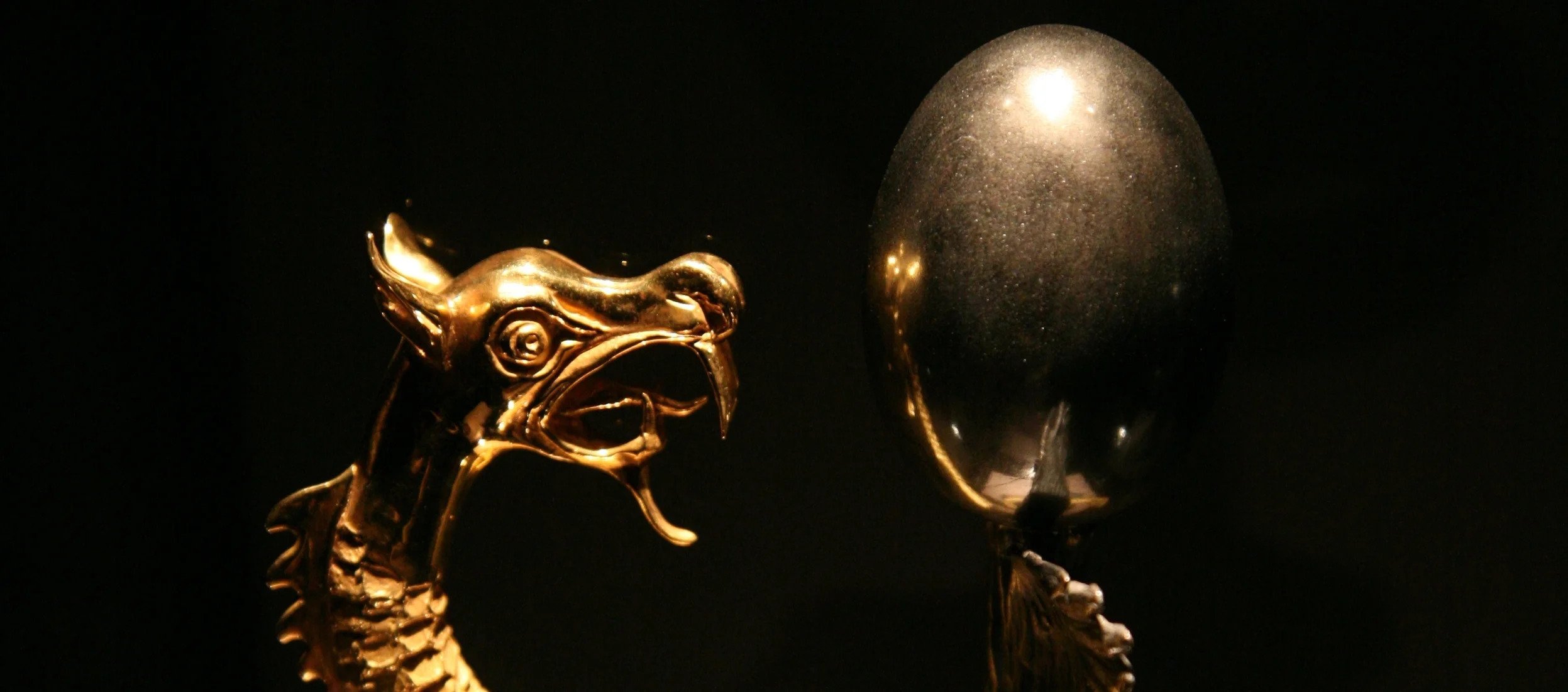
At Plaça de la Boqueria, a former umbrella shop is decorated by a Chinese dragon, a symbol of Catalan Pride
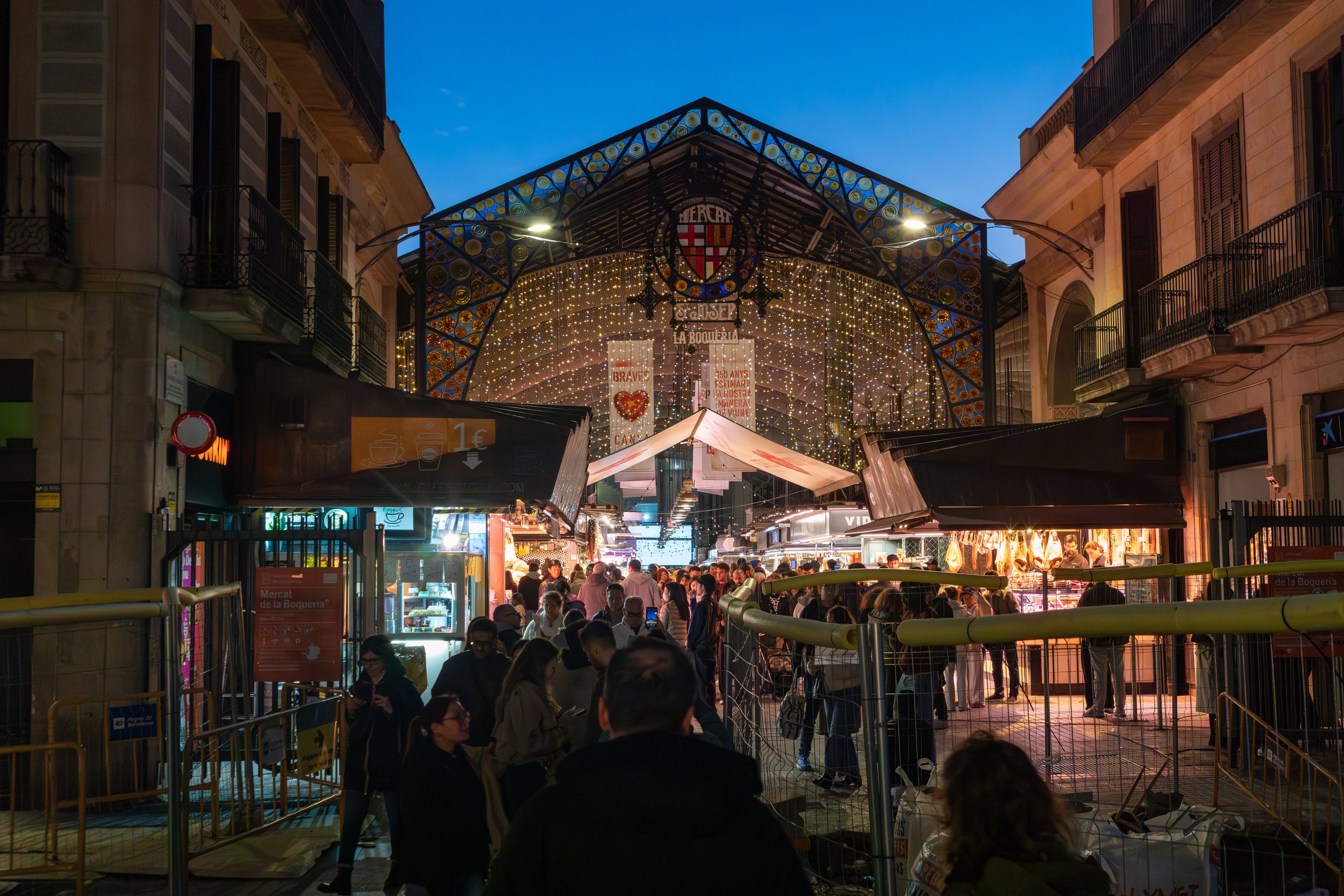
Entrance to lively La Boqueria Market, winding down from a busy Saturday
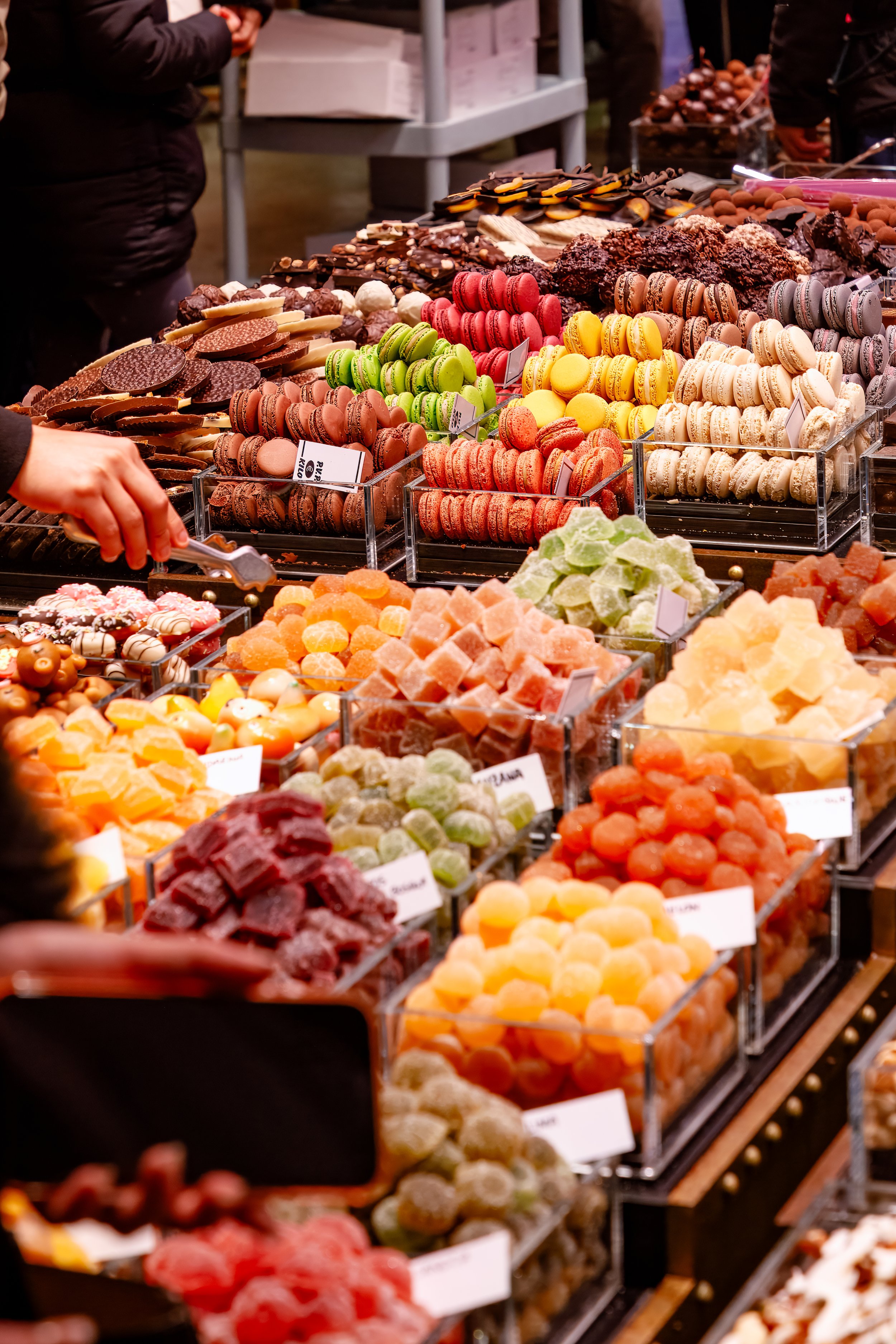
A selection of sweets on display at one of many merchants
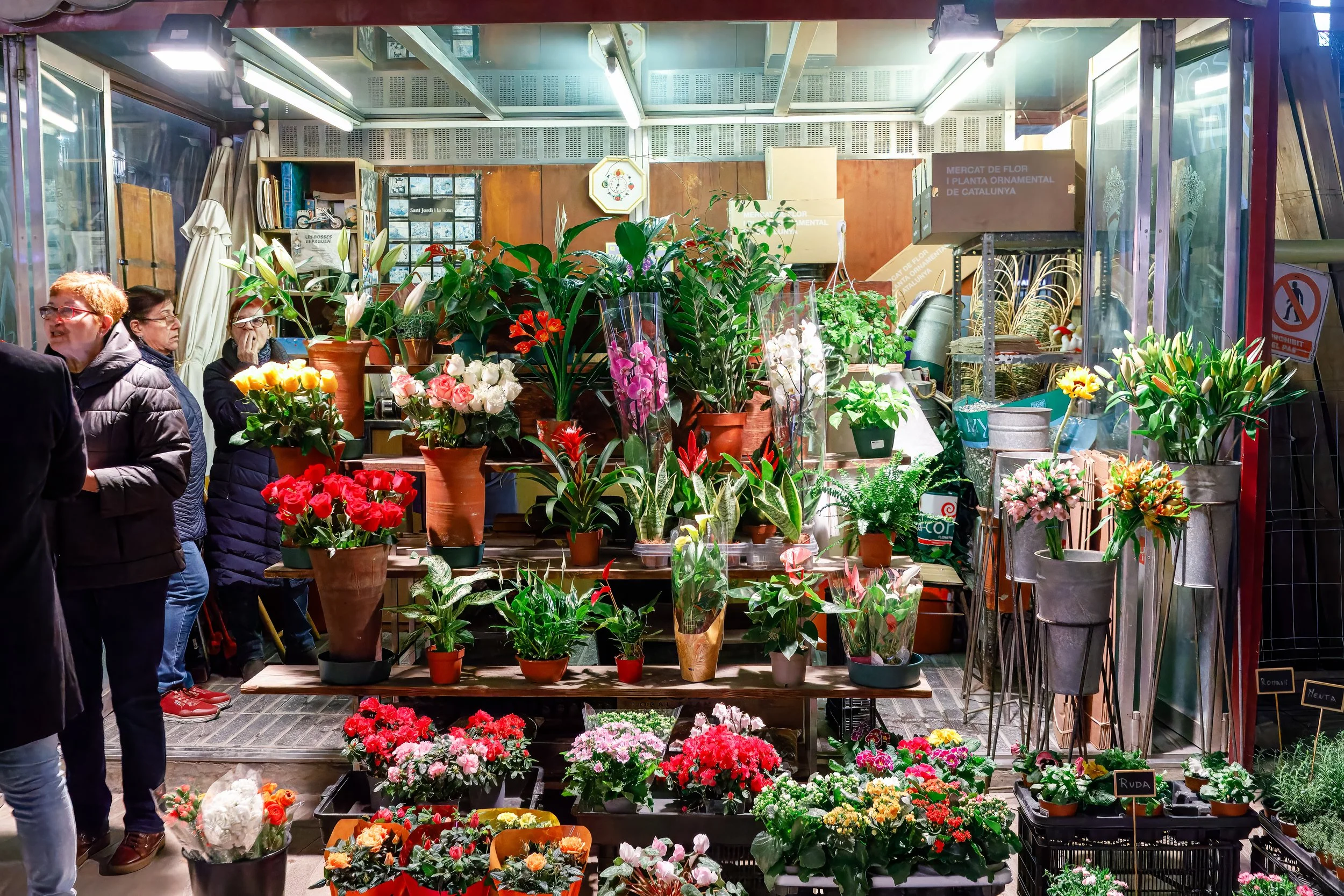
A section of the Rambla famous for its flower and seed shops where you can buy Padron pepper seeds
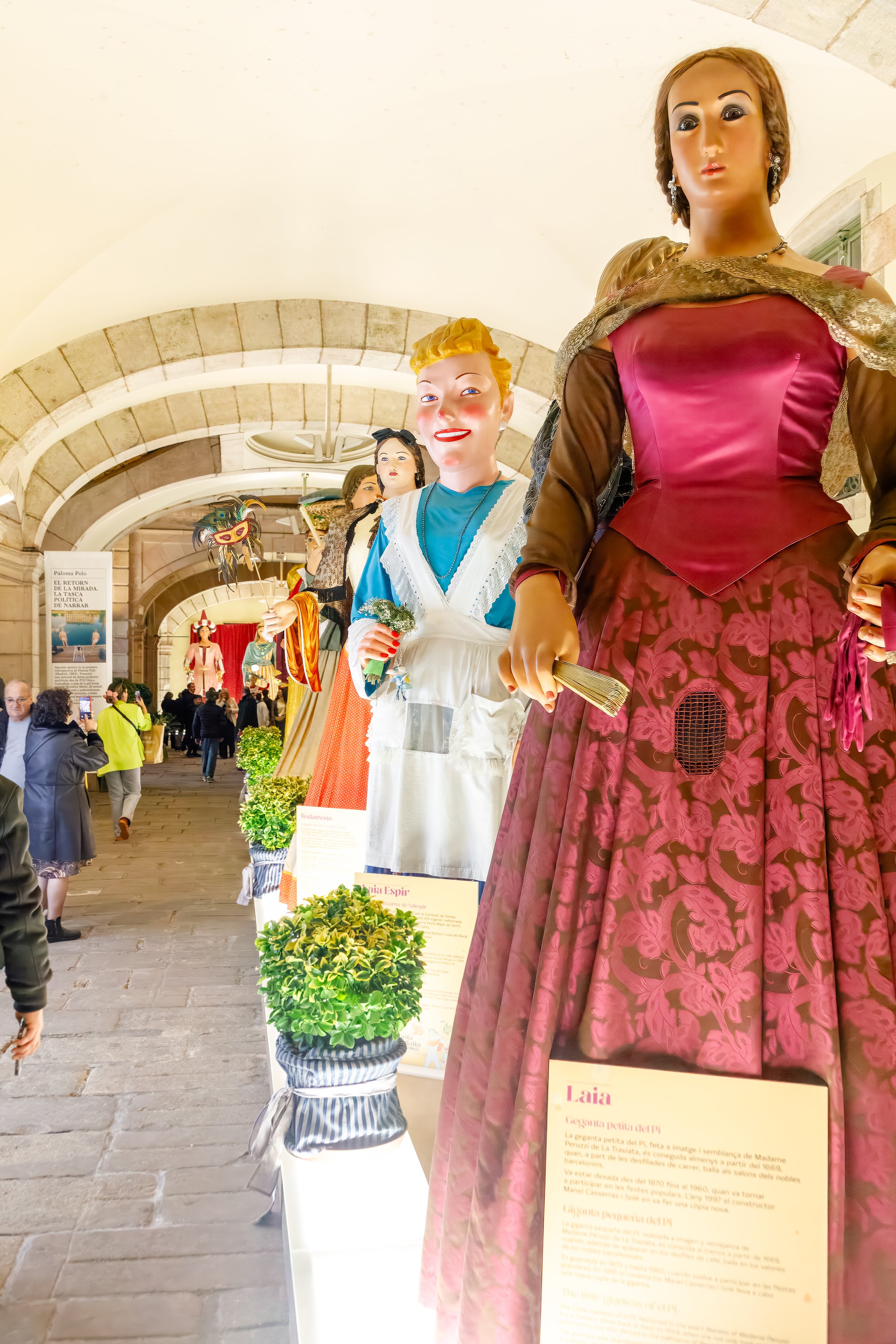
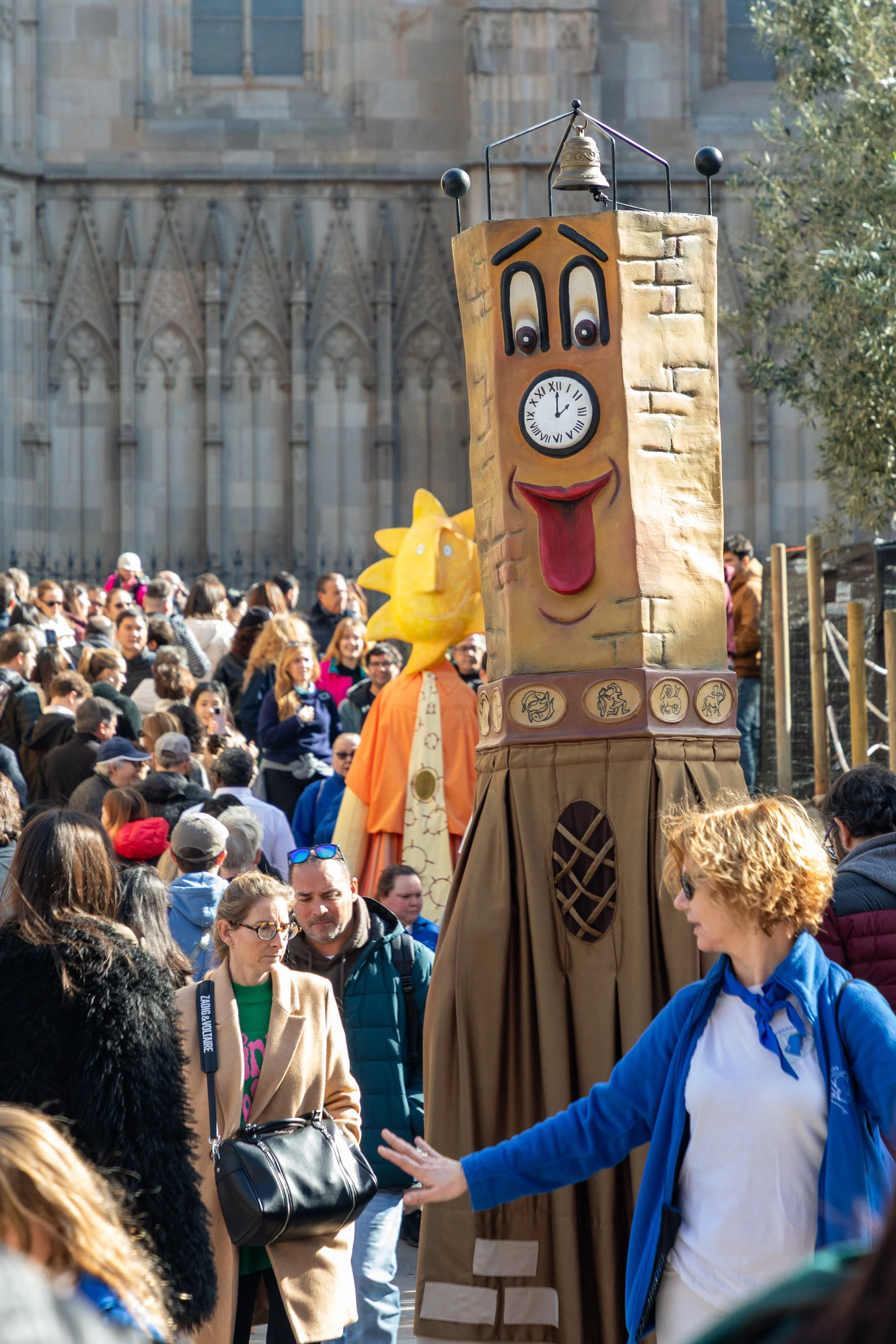
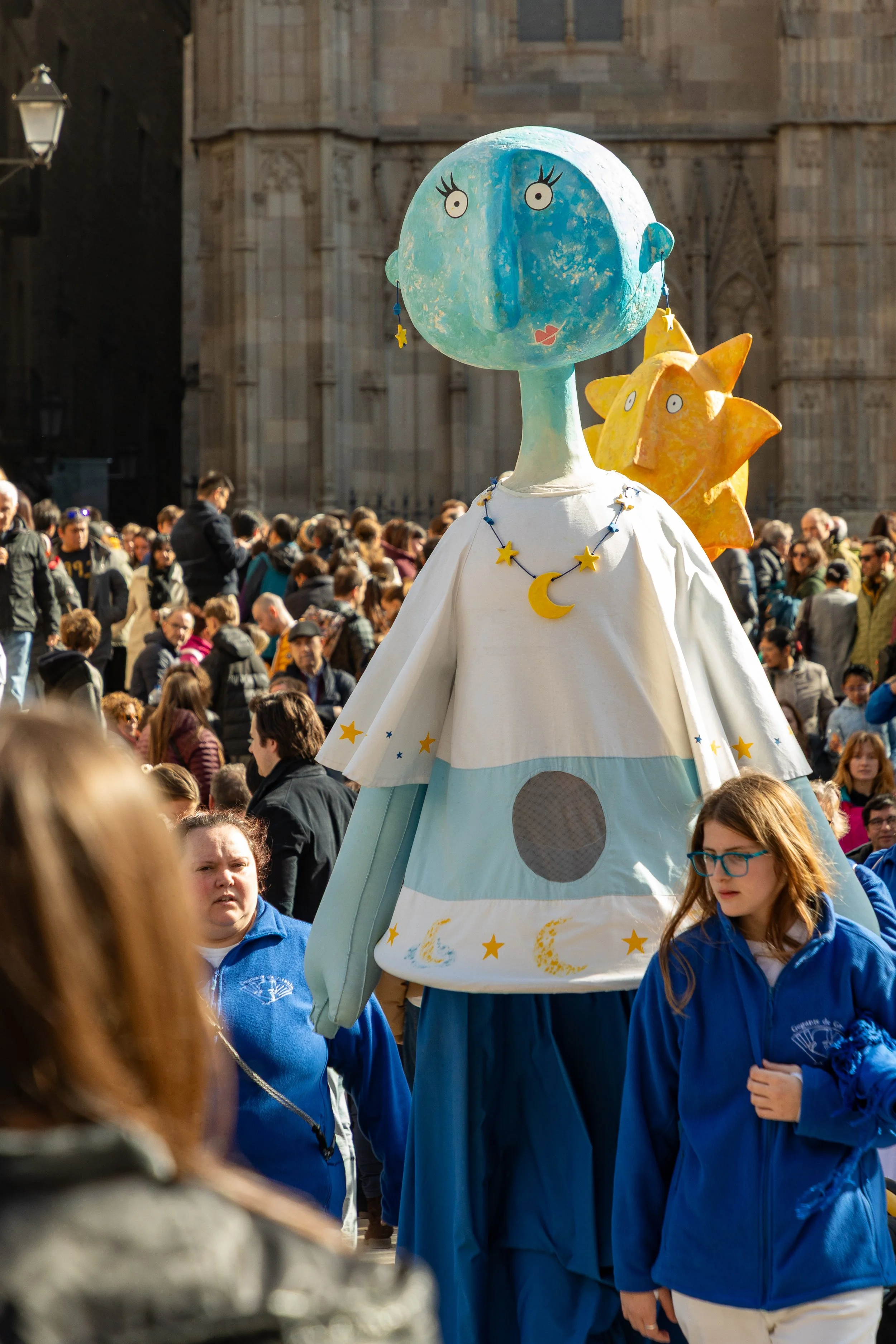
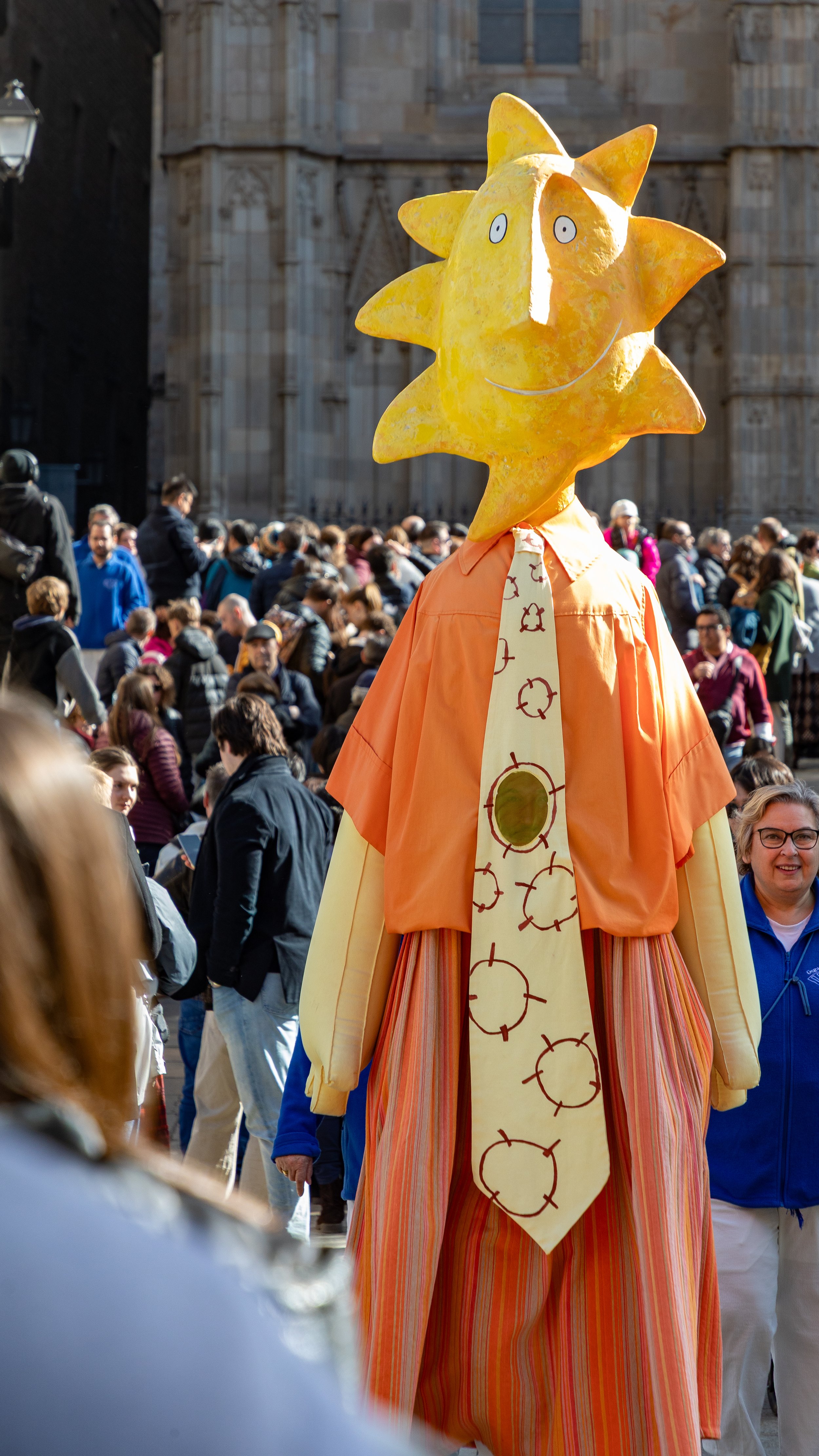
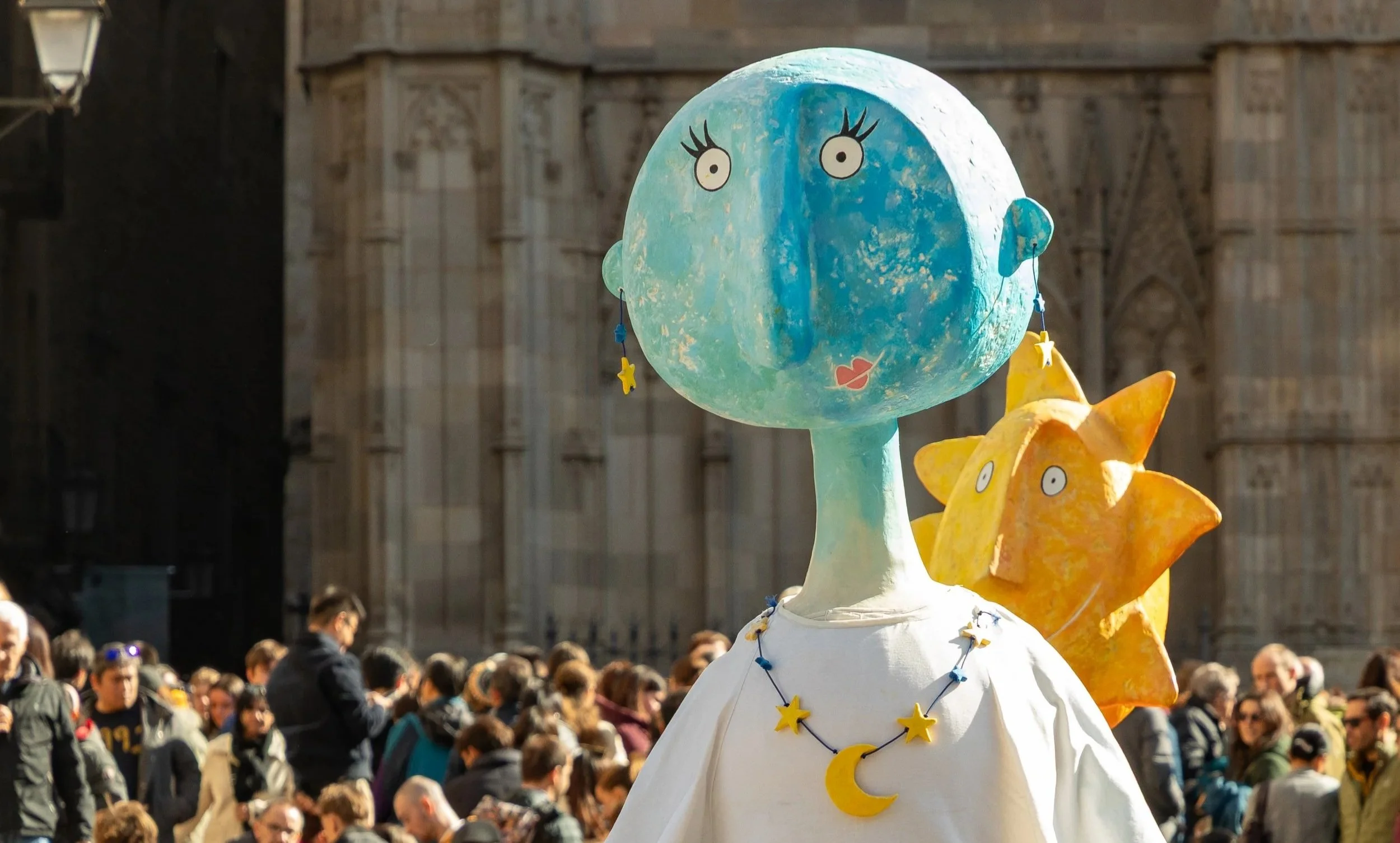
We had coincidentally arrived during Festival de Santa Eulàlia, a celebration of the patron saint characterized by parades featuring these giant figures (Gegants)
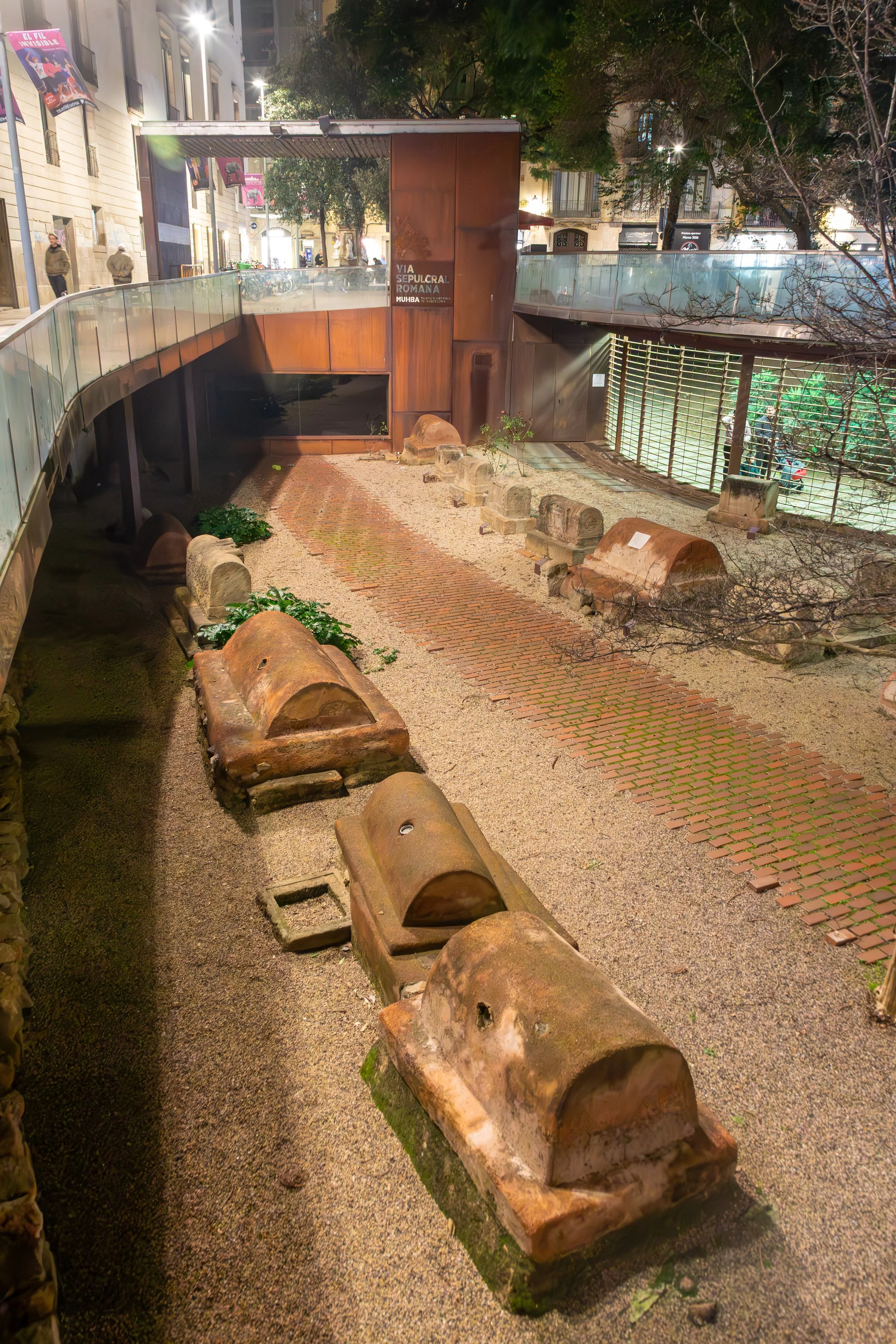
Slightly off the Rambla, we found ruins of a Roman necropolis from 10BC, when the city was known as Barcino
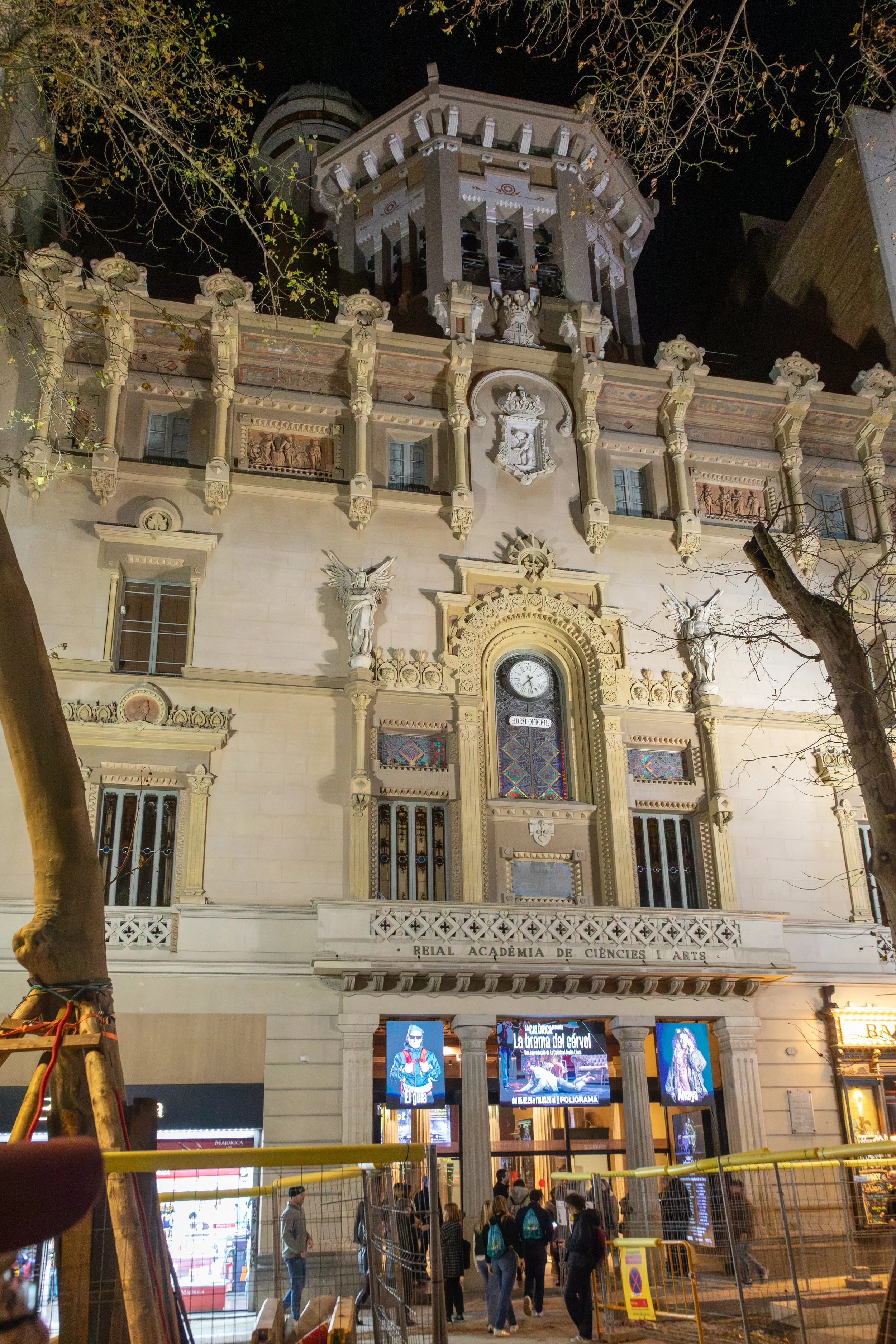
Royal Academy of Sciences and Arts of Barcelona, behind the Rambla construction barriers
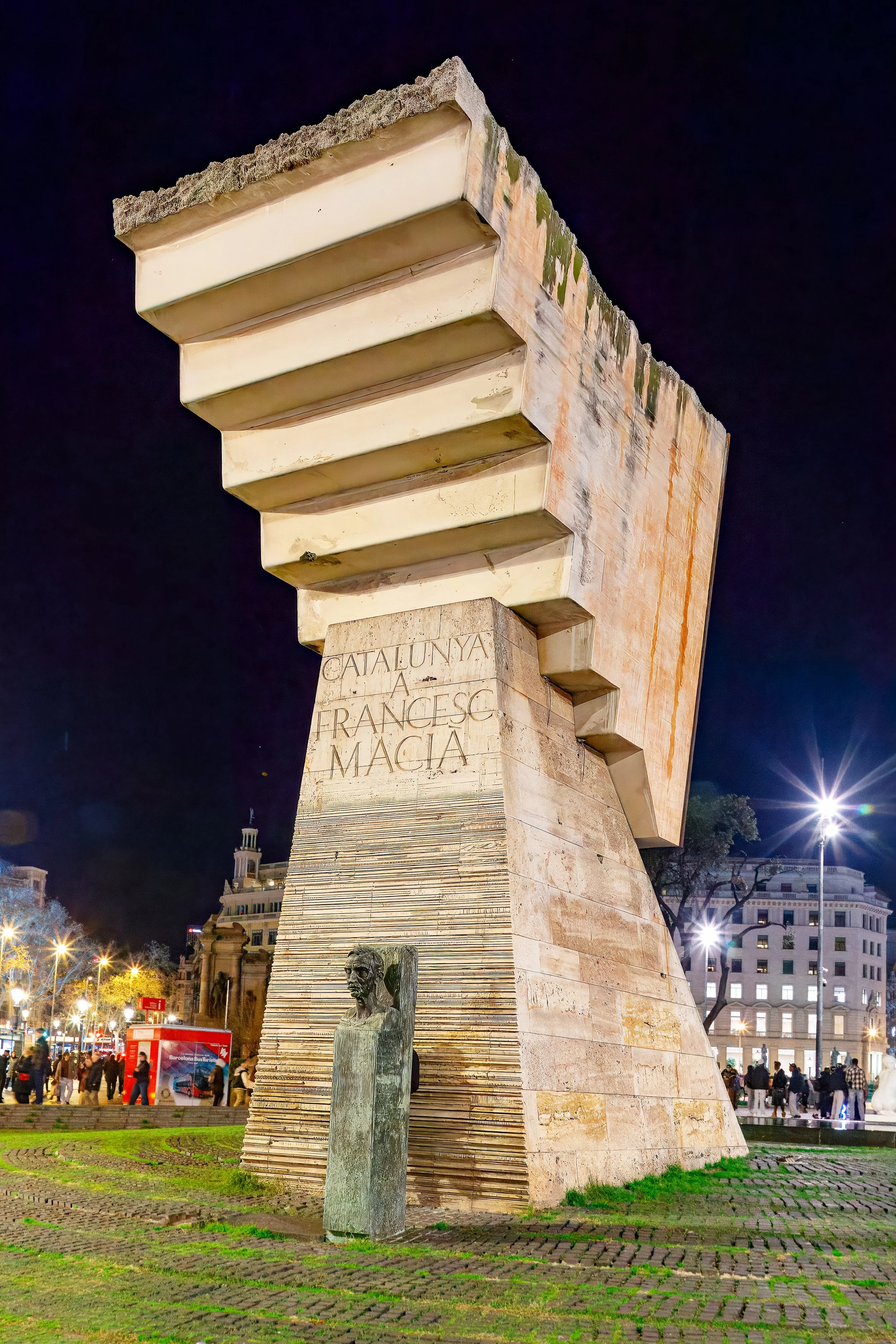
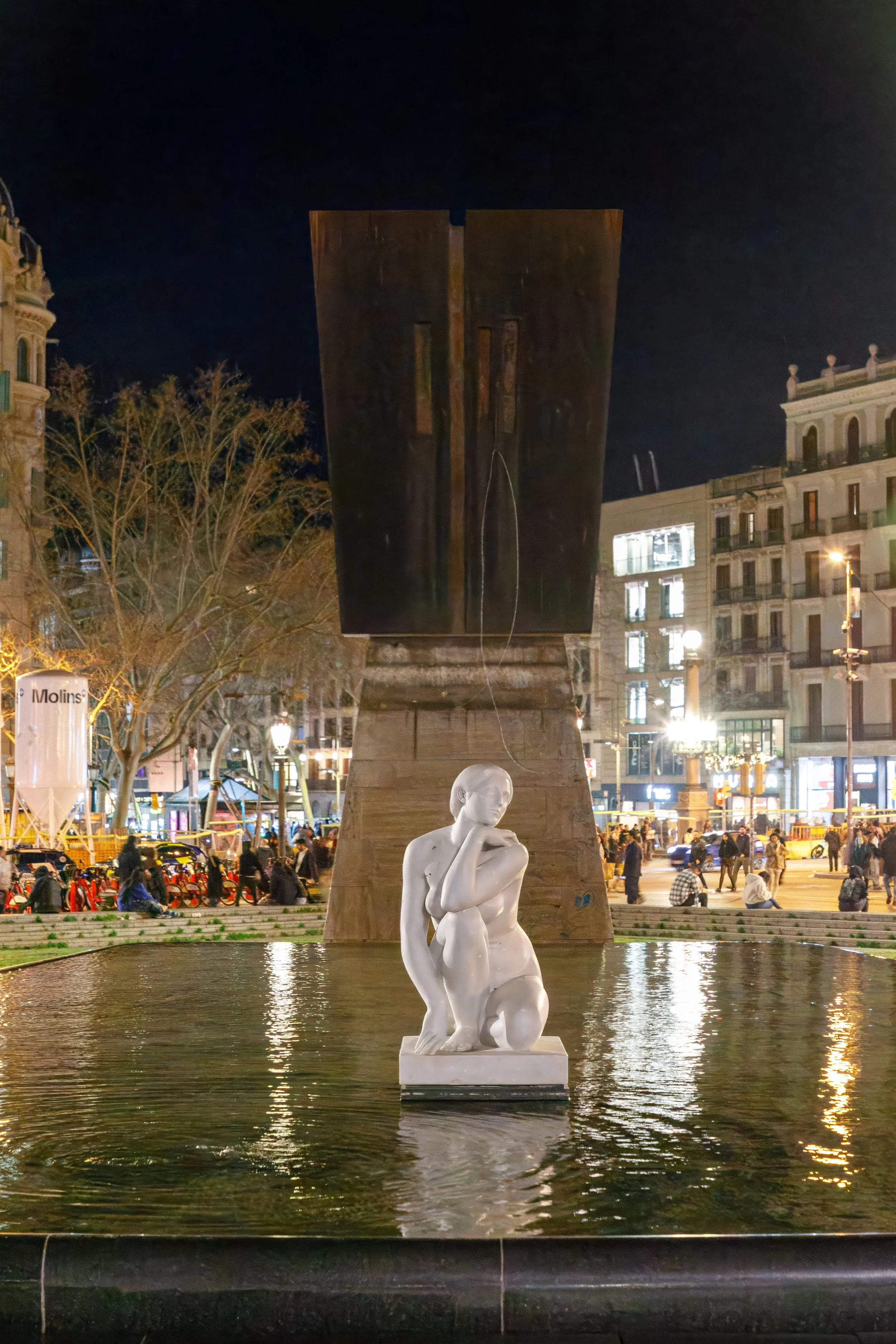
Francesc Macià Catalunya monument in Plaça de Catalunya
Fountain opposite the monument looking towards the start of the Rambla
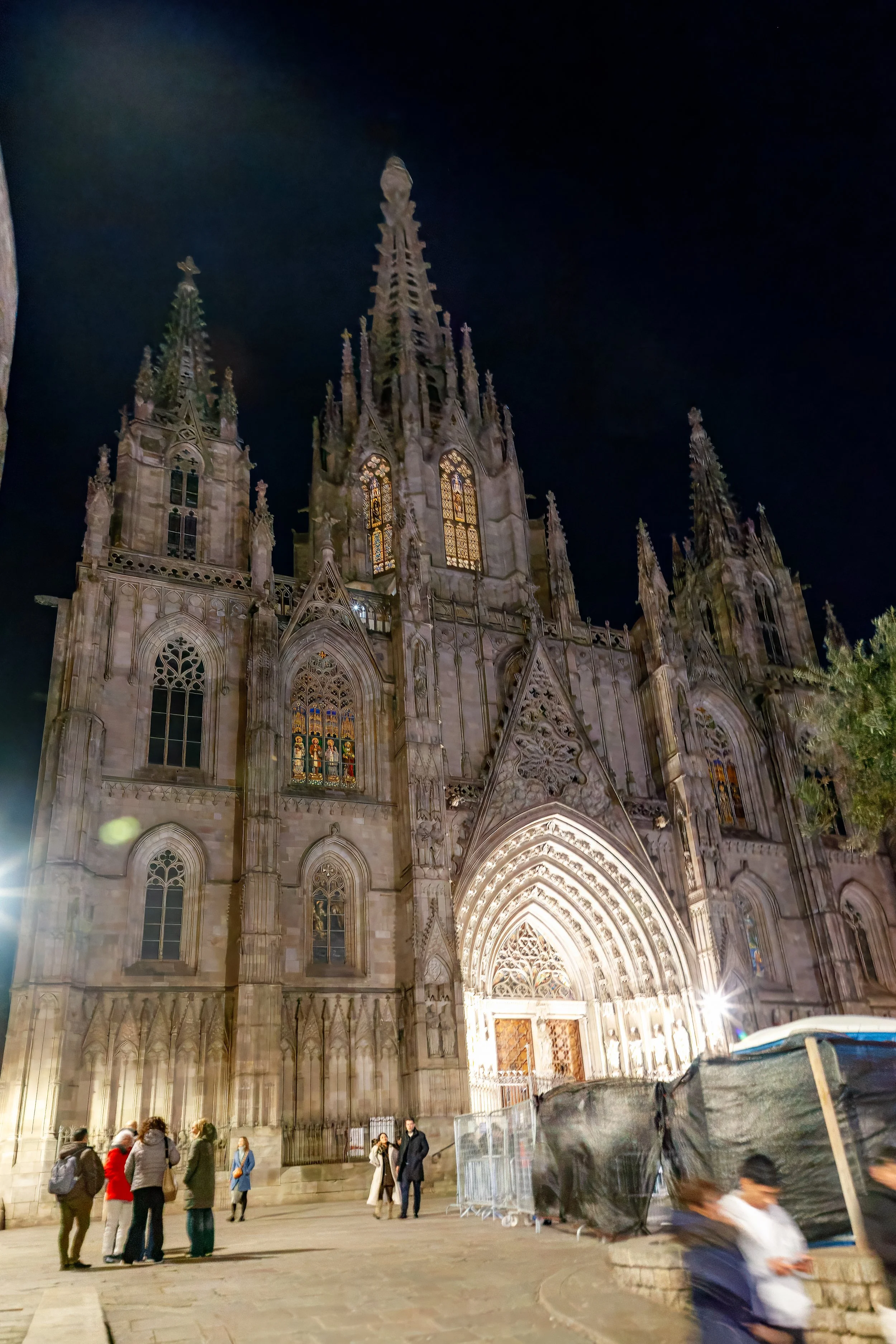
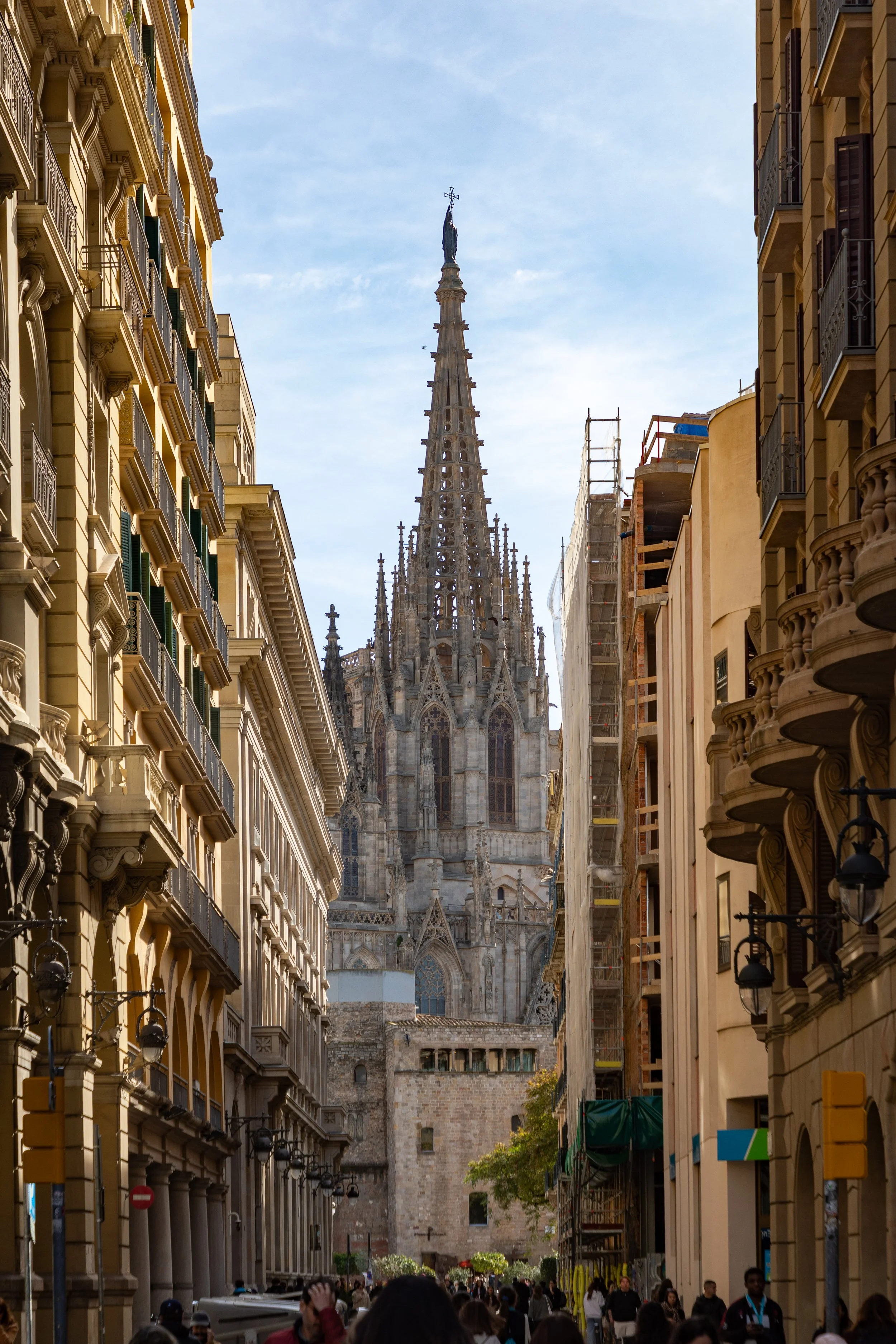
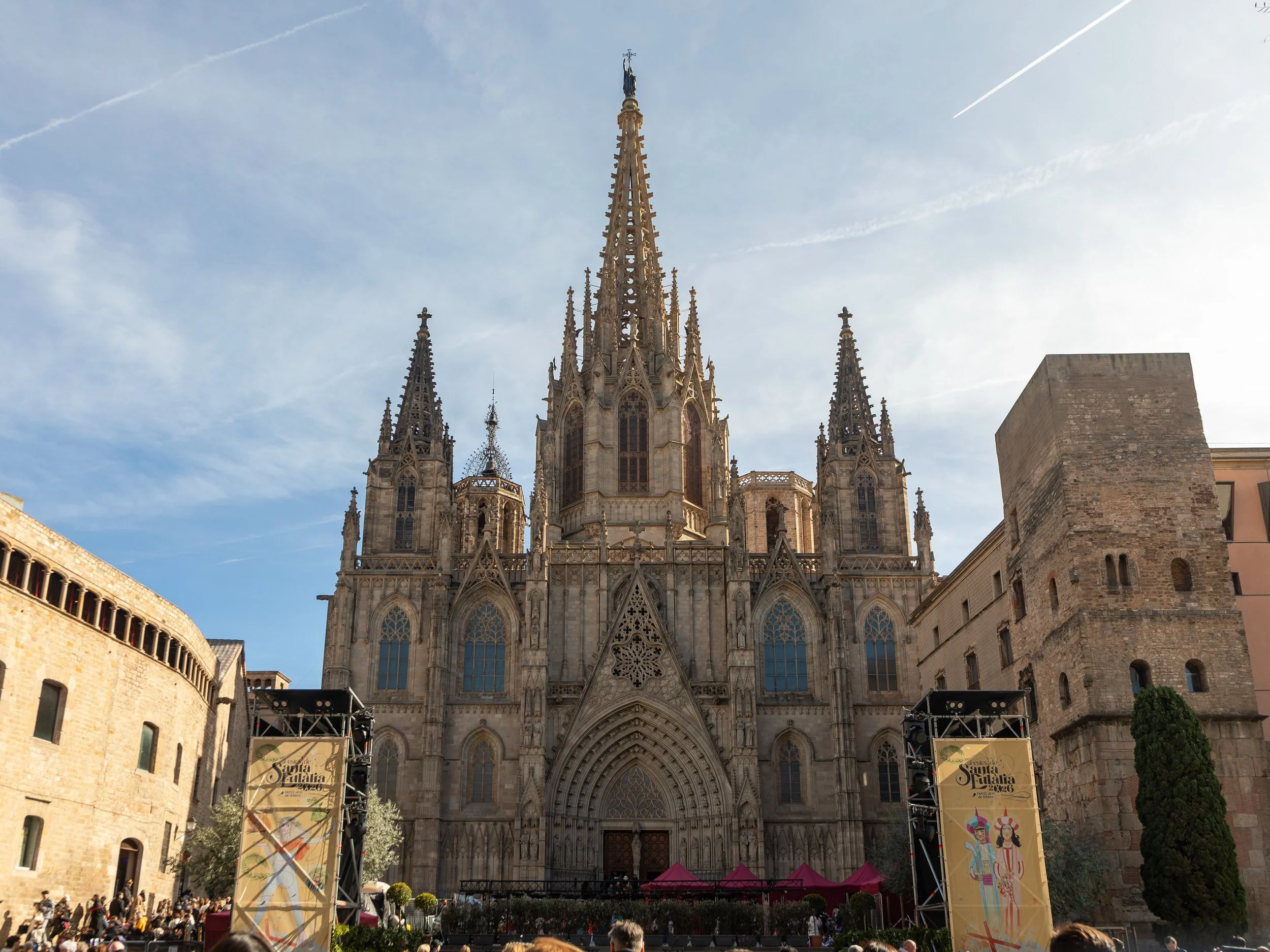
Barcelona Cathedral, started around 1300 and finished in 1450, with the newer facade from the 1800s
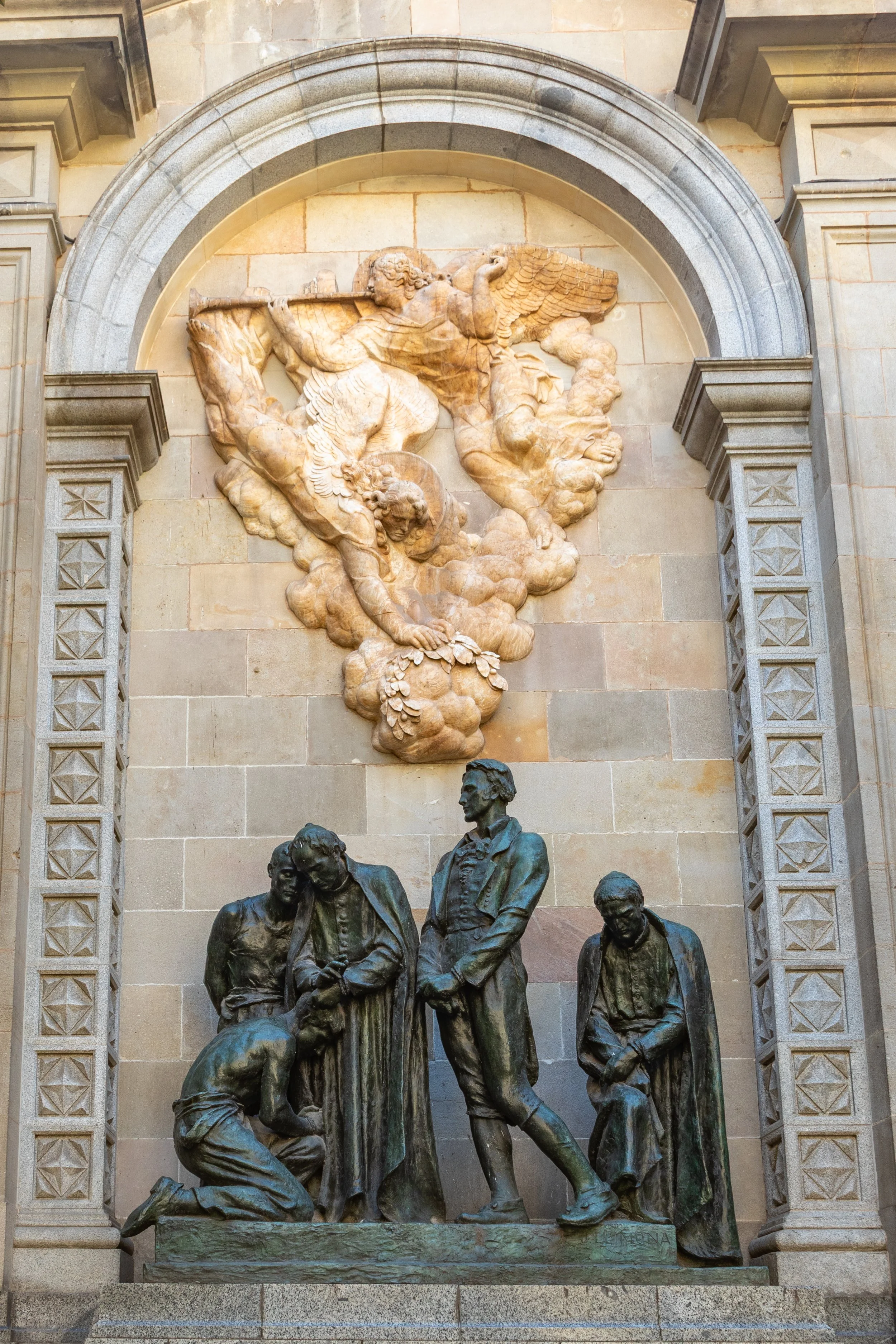
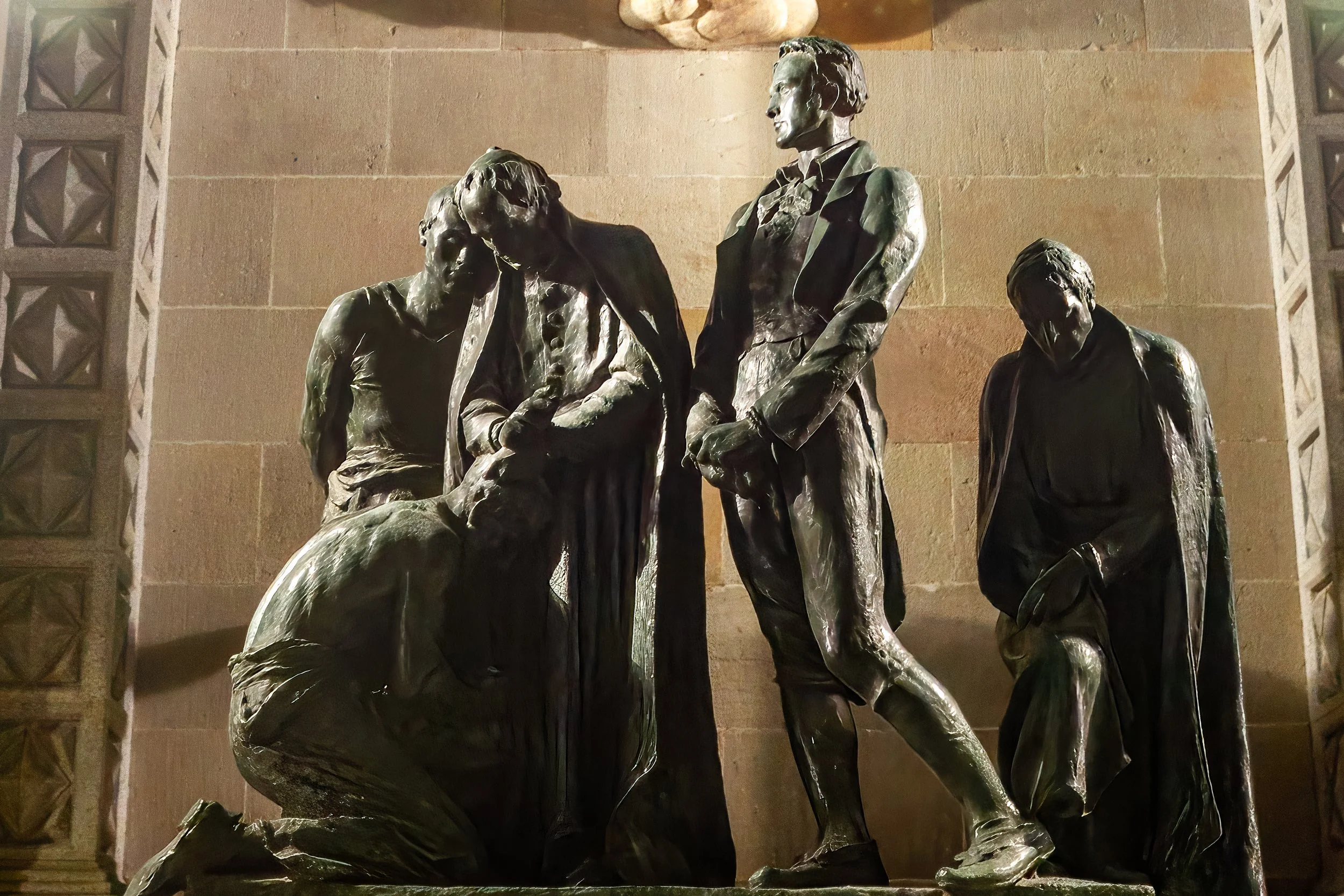
The monument to Martyrs of Independence, as we roamed the Gothic Quarter (Barri Gòtic)
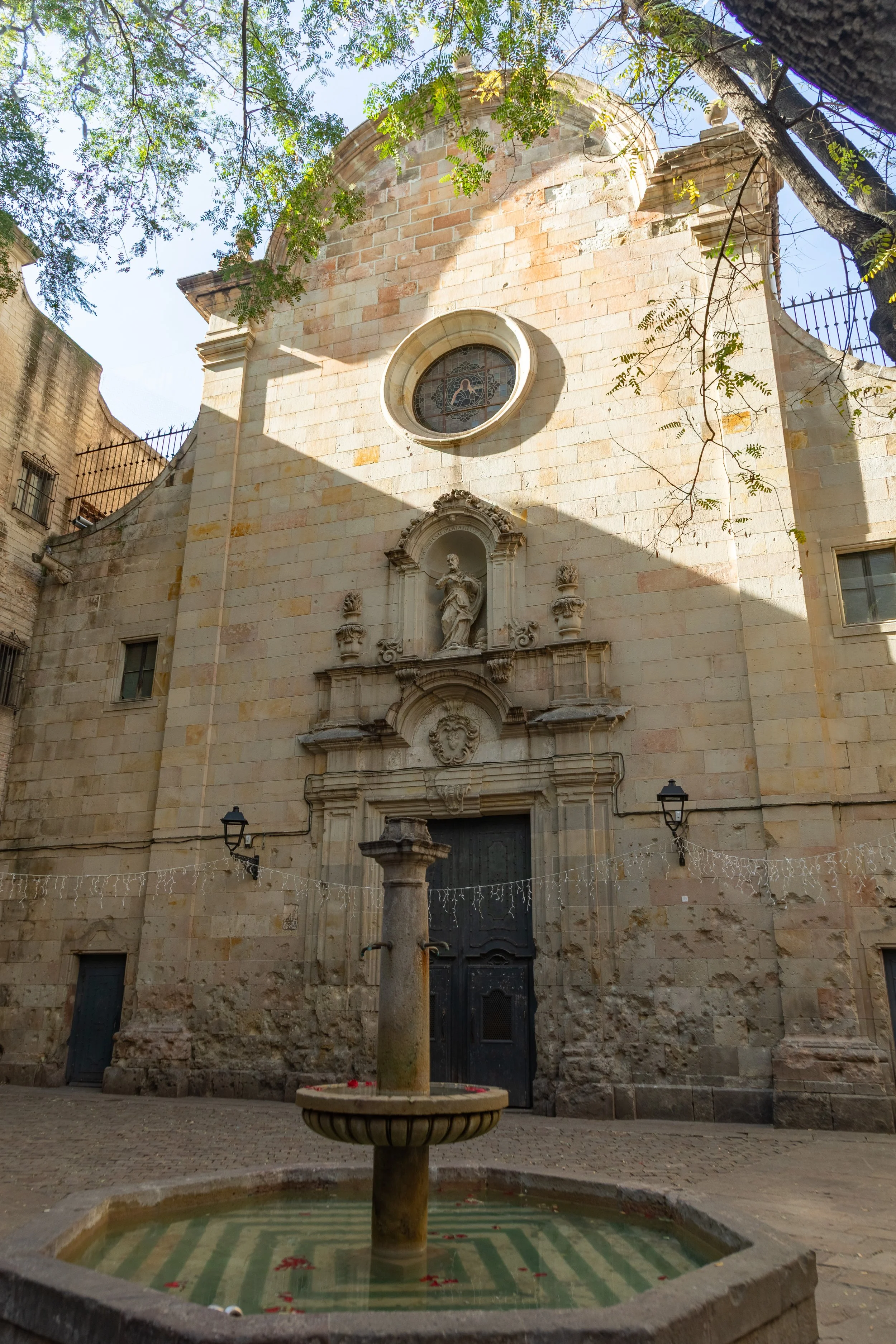
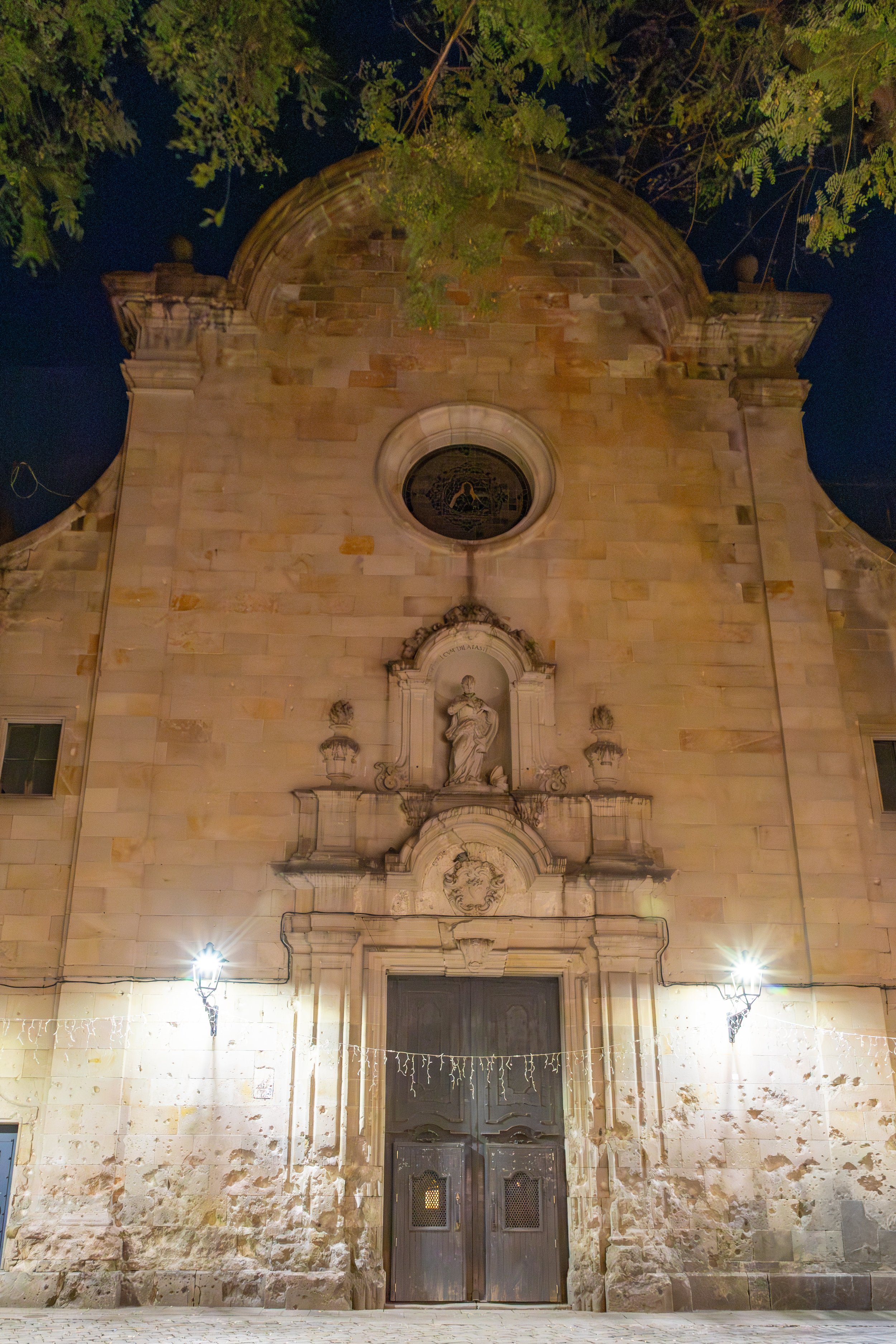
The Church of Sant Felip Neri still pocked with 1938 bomb damage from the Spanish Civil War, including a monument to 42 (mostly children) killed from an aerial bombardment
Having experienced both afternoon and evening along the Rambla and surrounding neighbourhoods, we certainly had a full day and felt reacquainted with the city after all those years. With so much time, it is odd how you forget most things but then have a very clear memory of another place. Before passing out for the night, we booked a couple of visits to tourist sites for Sunday, while there were still available bookings.
Feb 15
With the need to book things in advance, as Barcelona has become more popular, our schedule was anchored by our two booked tours, but after breakfast we had some free time and flexibility so headed to Montjuïc, an area that we hadn’t explored much on our last trip. We also found out that our trip coincided with the running of a marathon, which provided some unique experiences later in the morning.
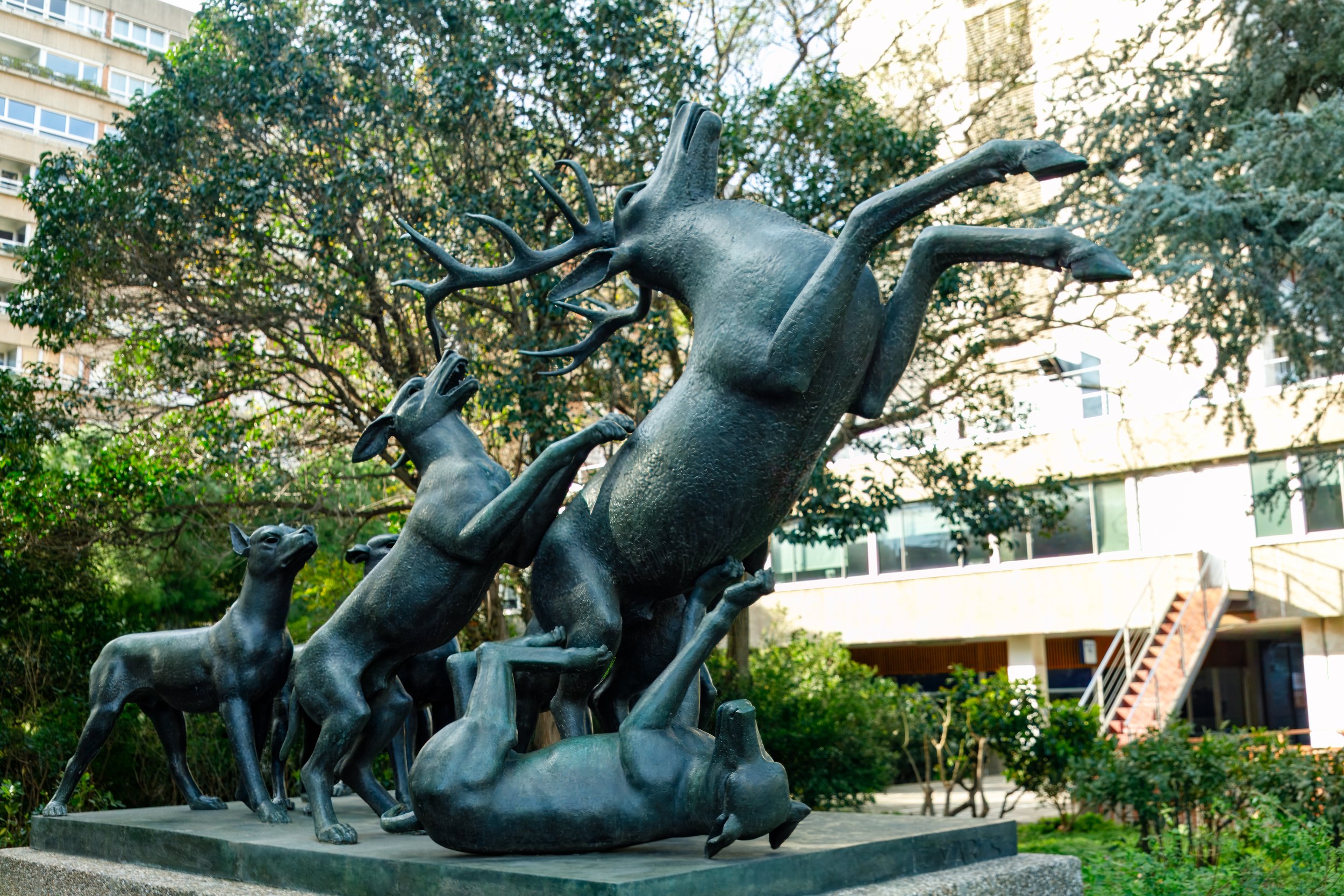
The park near our hotel had a number of hunting themed statues that we passed on our numerous trips to and from the Metro station
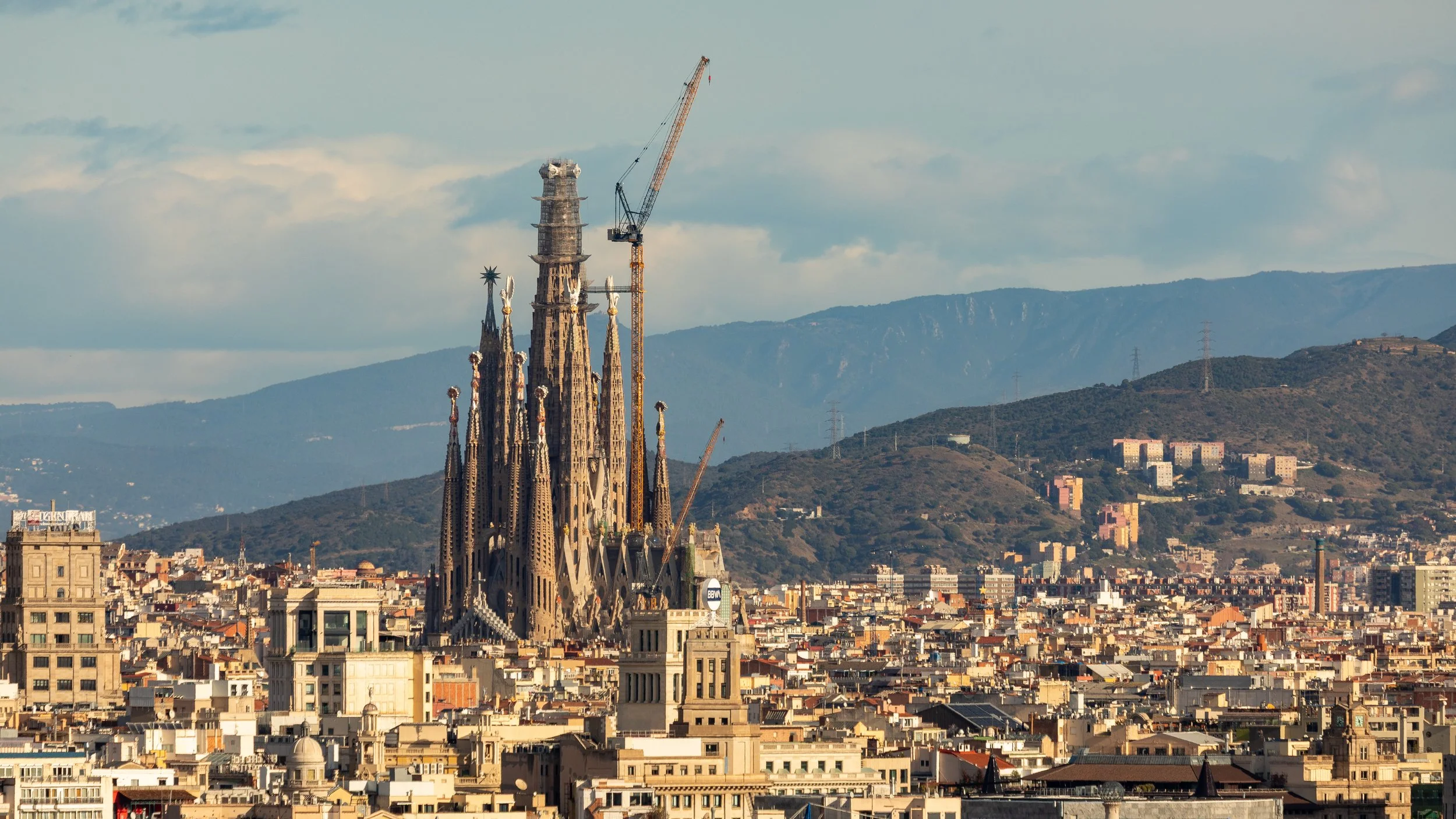
Excellent view of Barcelona dominated by Sagrada Familia, from 173m high hill Montjuïc
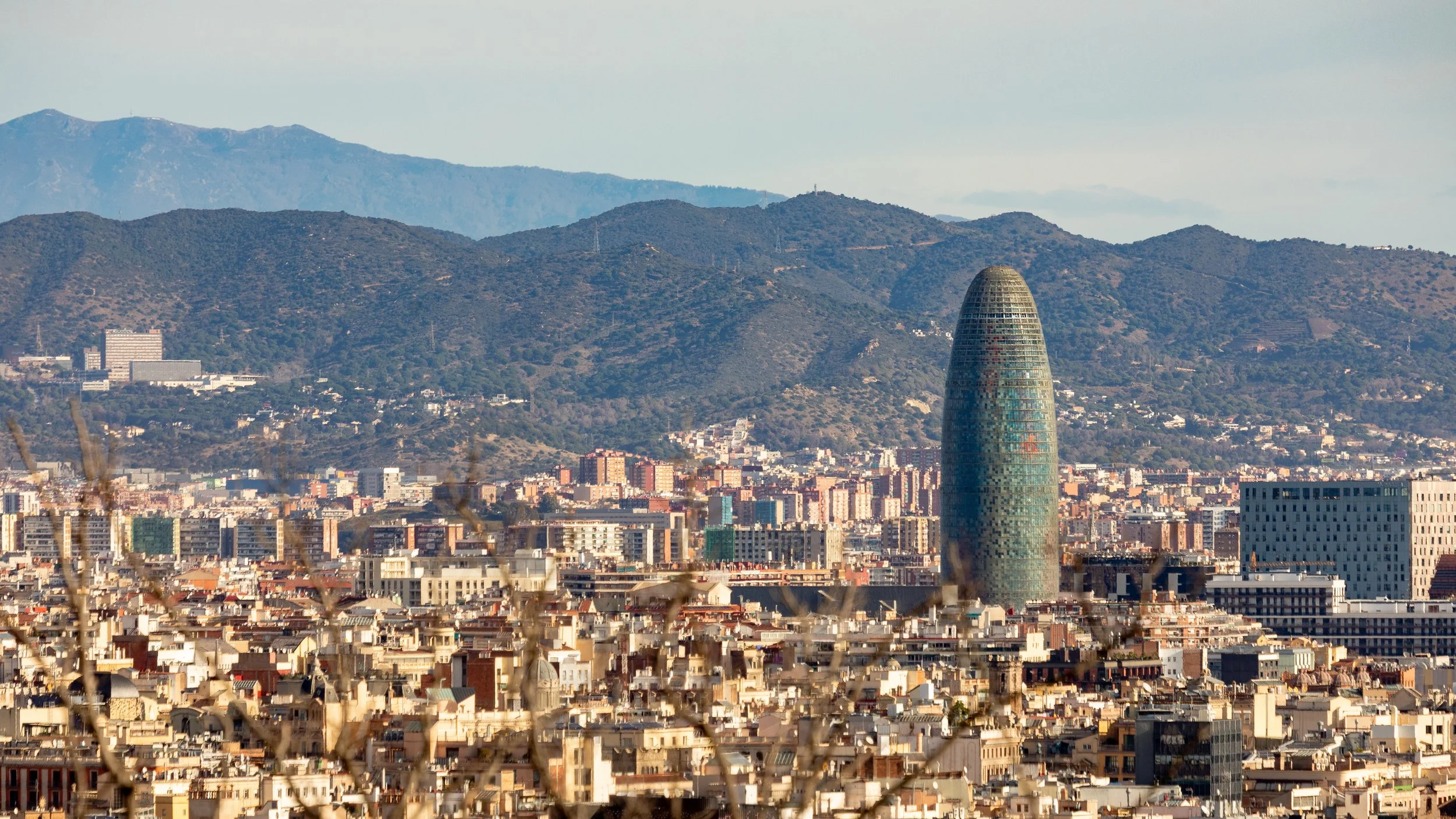
Looking further south, the Torre Glòries, formerly known as Torre Agbar, a 38-story gherkin-like skyscraper, stands out from the older architecture
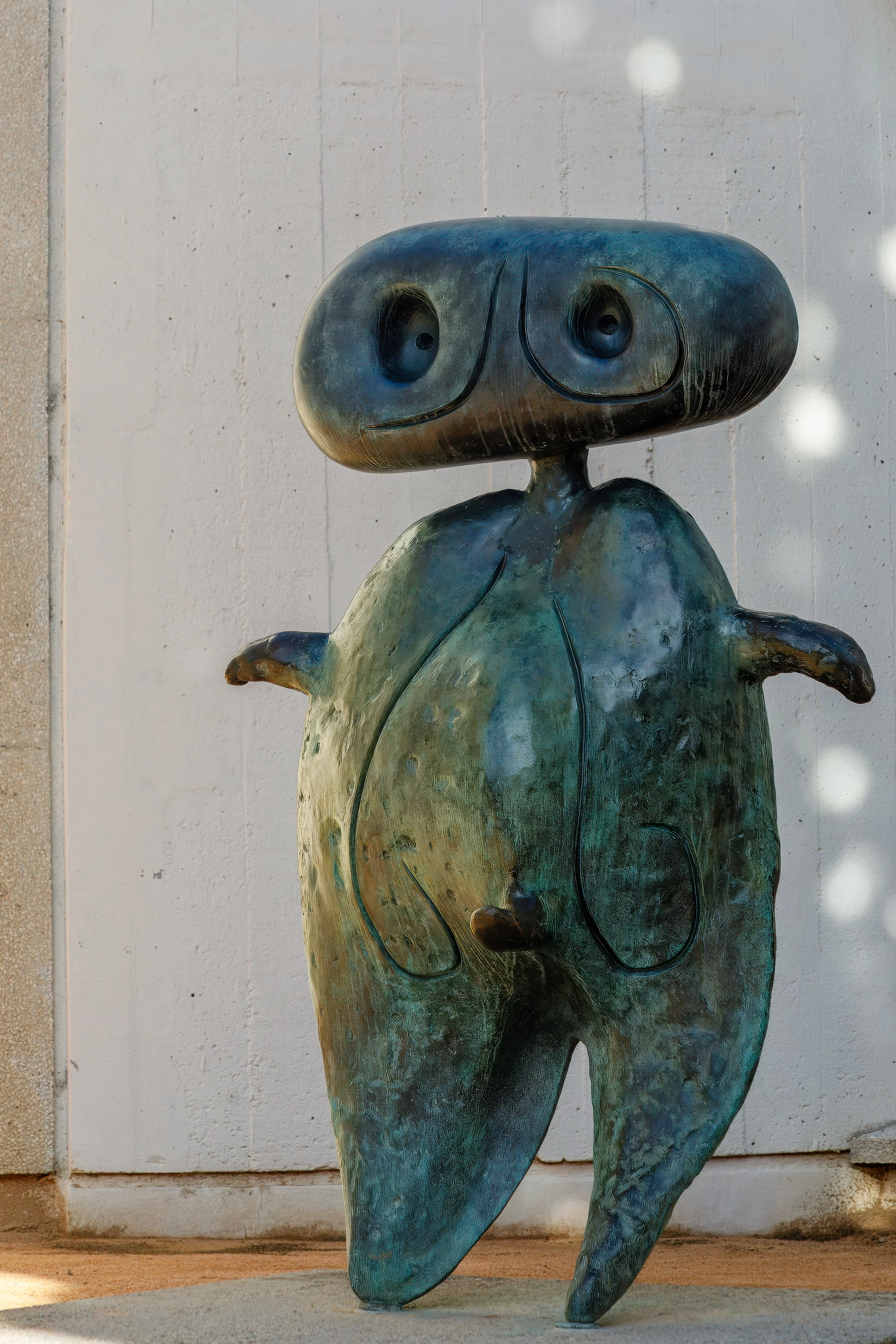
Personnage, a bronze sculpture created by the artist Joan Miró, located at entrance to the Fundació Joan Miró museum
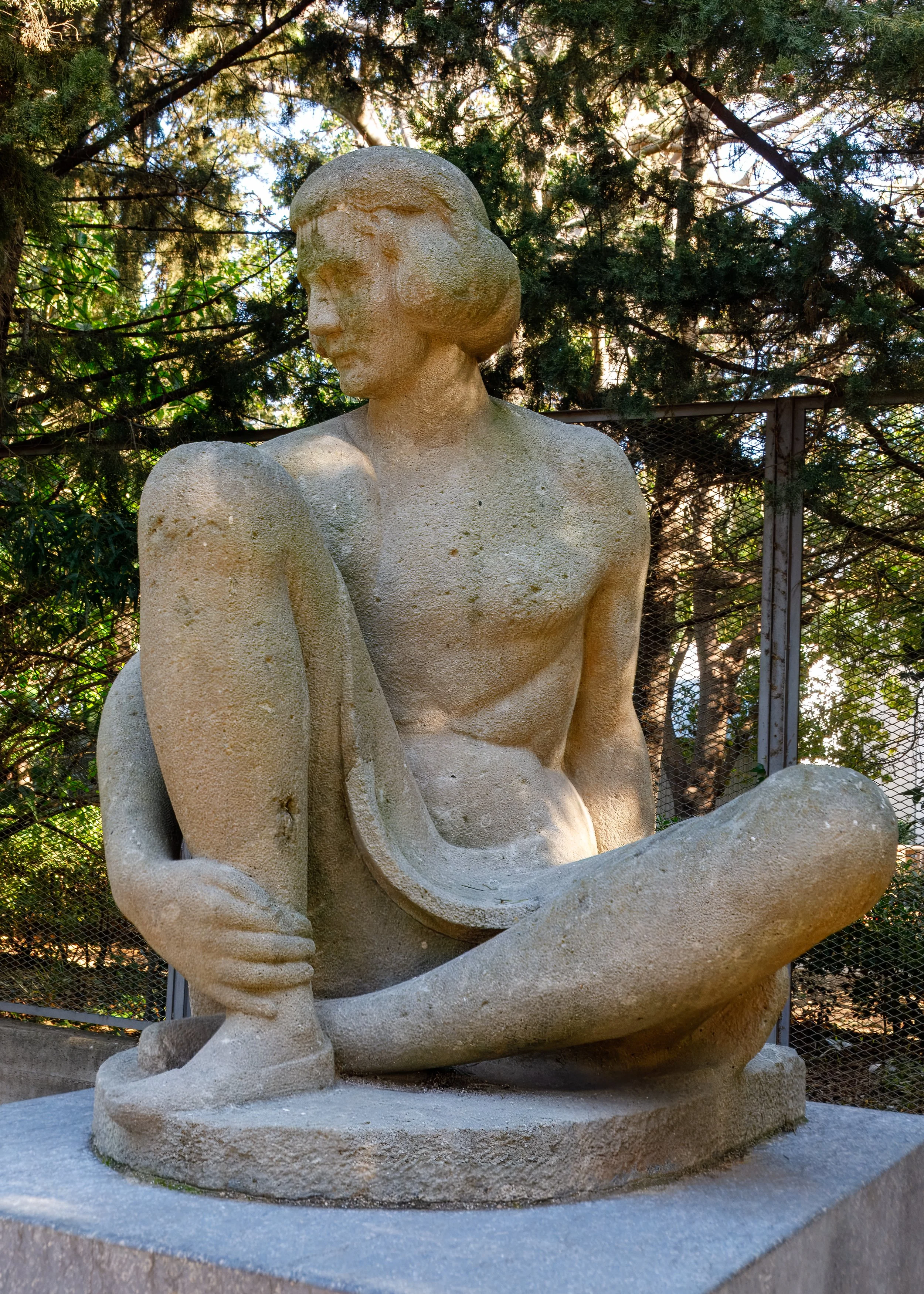
One of numerous statues in Jardin de Laribal
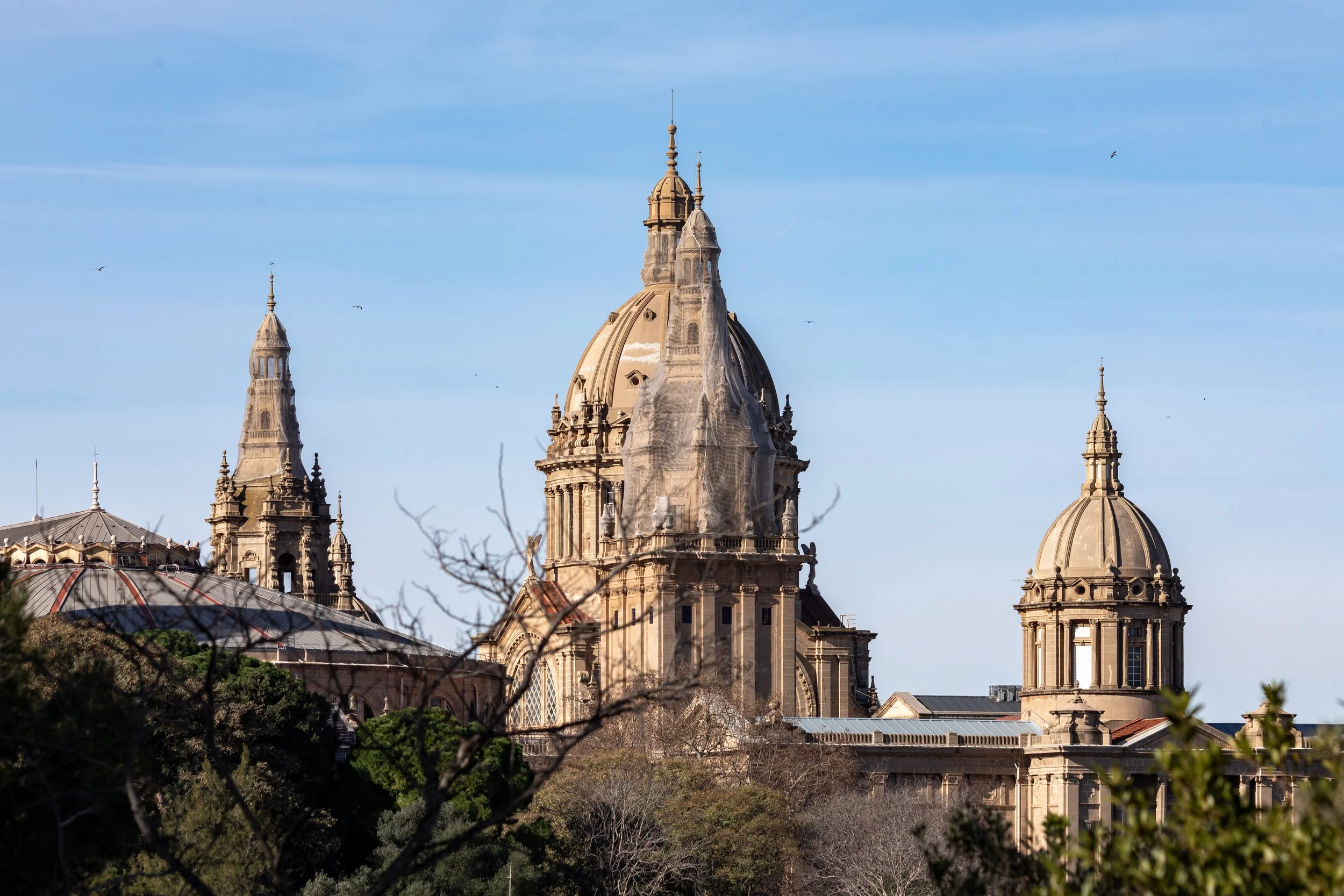
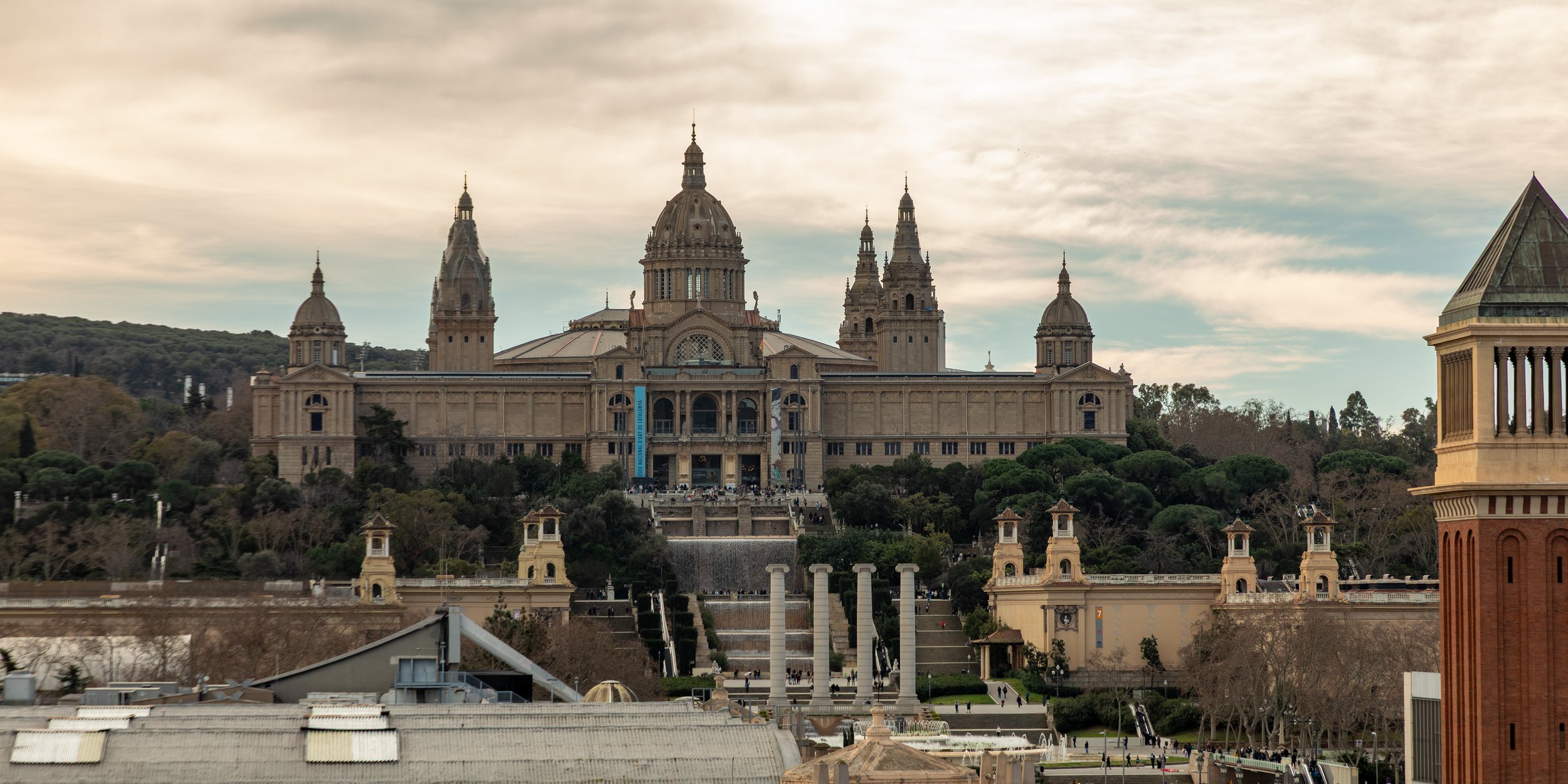
Palau Nacional, also located on Montjuïc, was the main site of the 1929 International Exhibition and currently houses the Museu Nacional d'Art de Catalunya
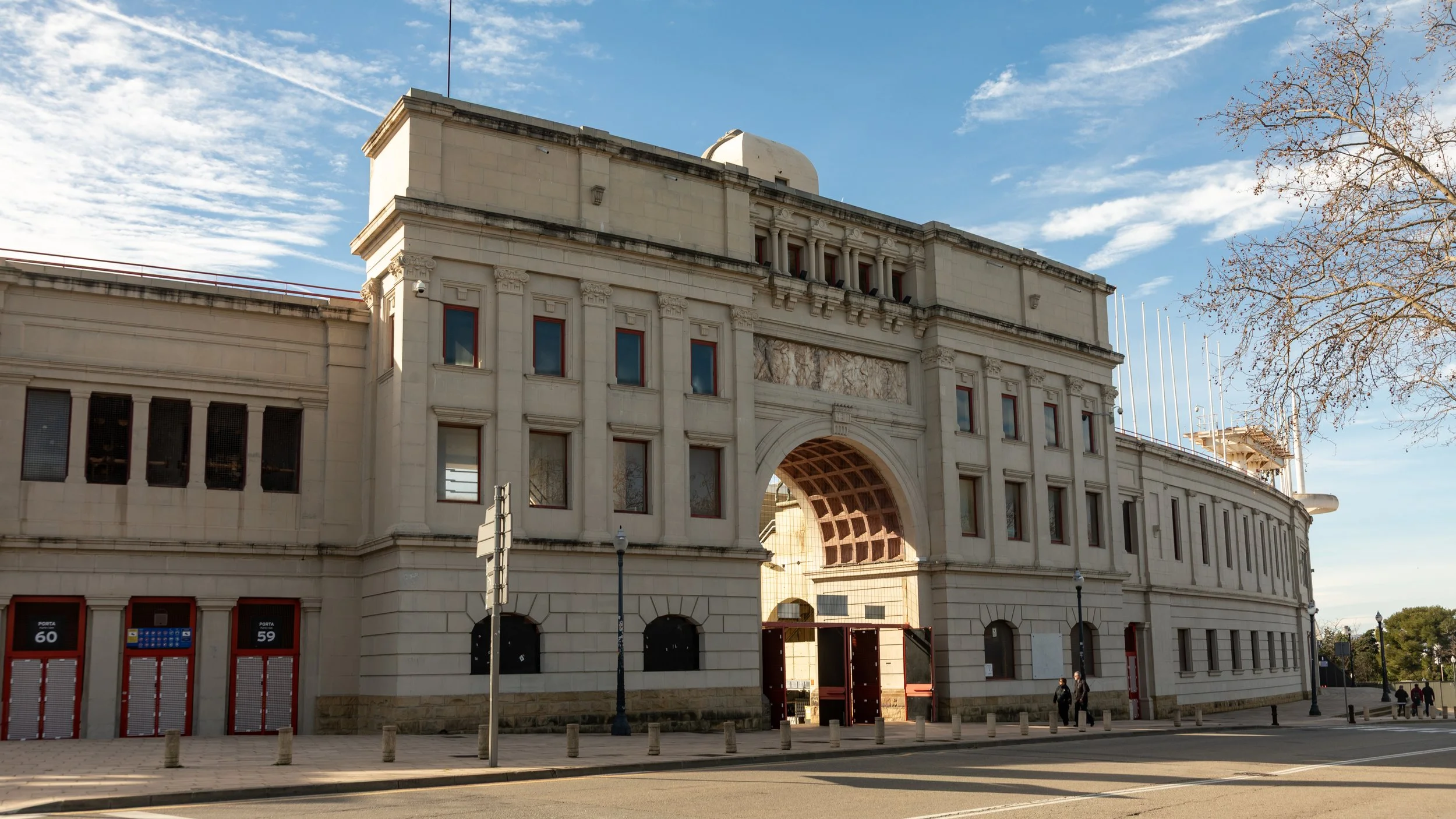
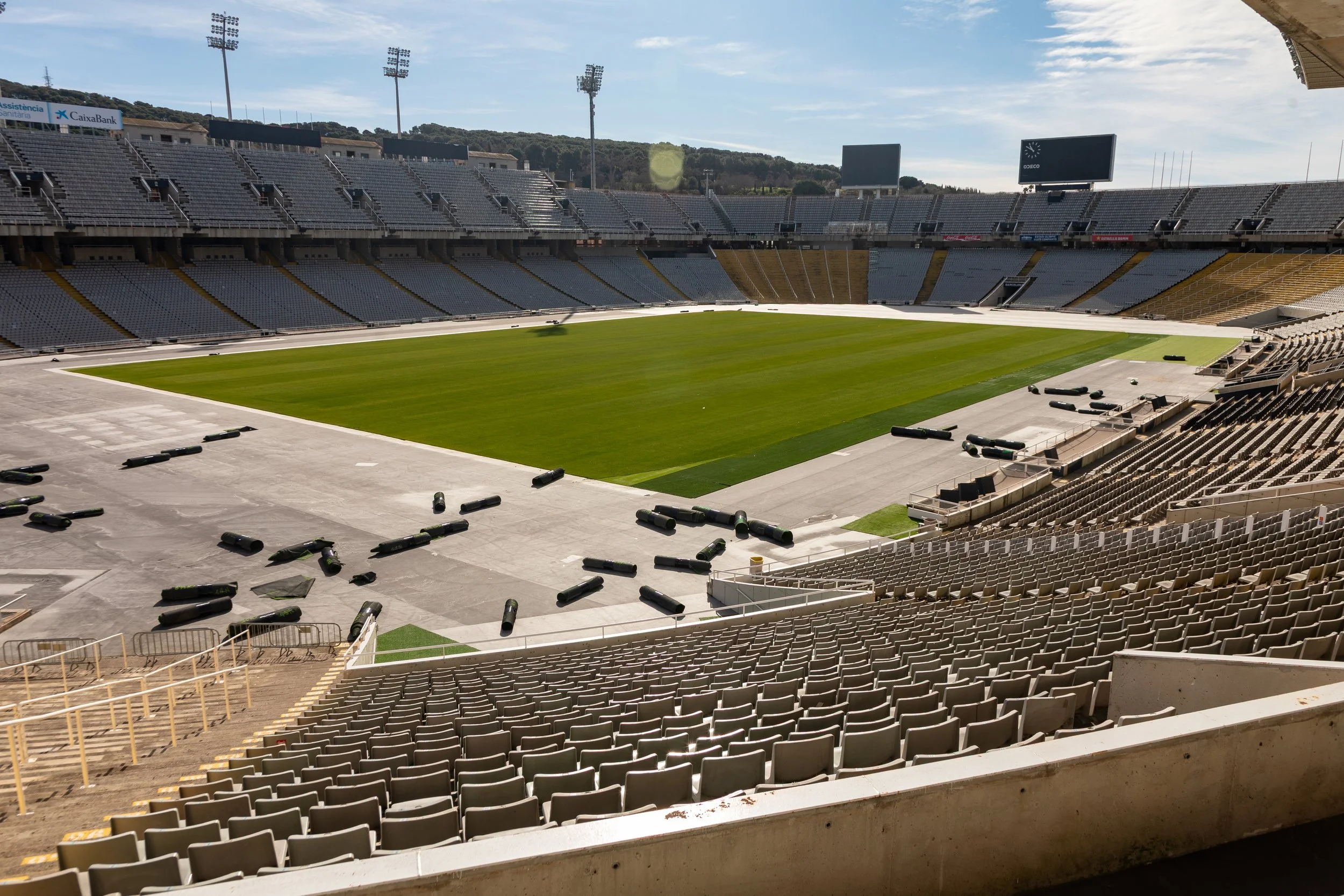
Entrance to Estadi Olímpic Lluís Companys (Lluís Companys Olympic Stadium)
The hilltop stadium was originally built for the 1929 International Exhibition and later refurbished to serve as the main stadium for the 1992 Summer Olympic Games
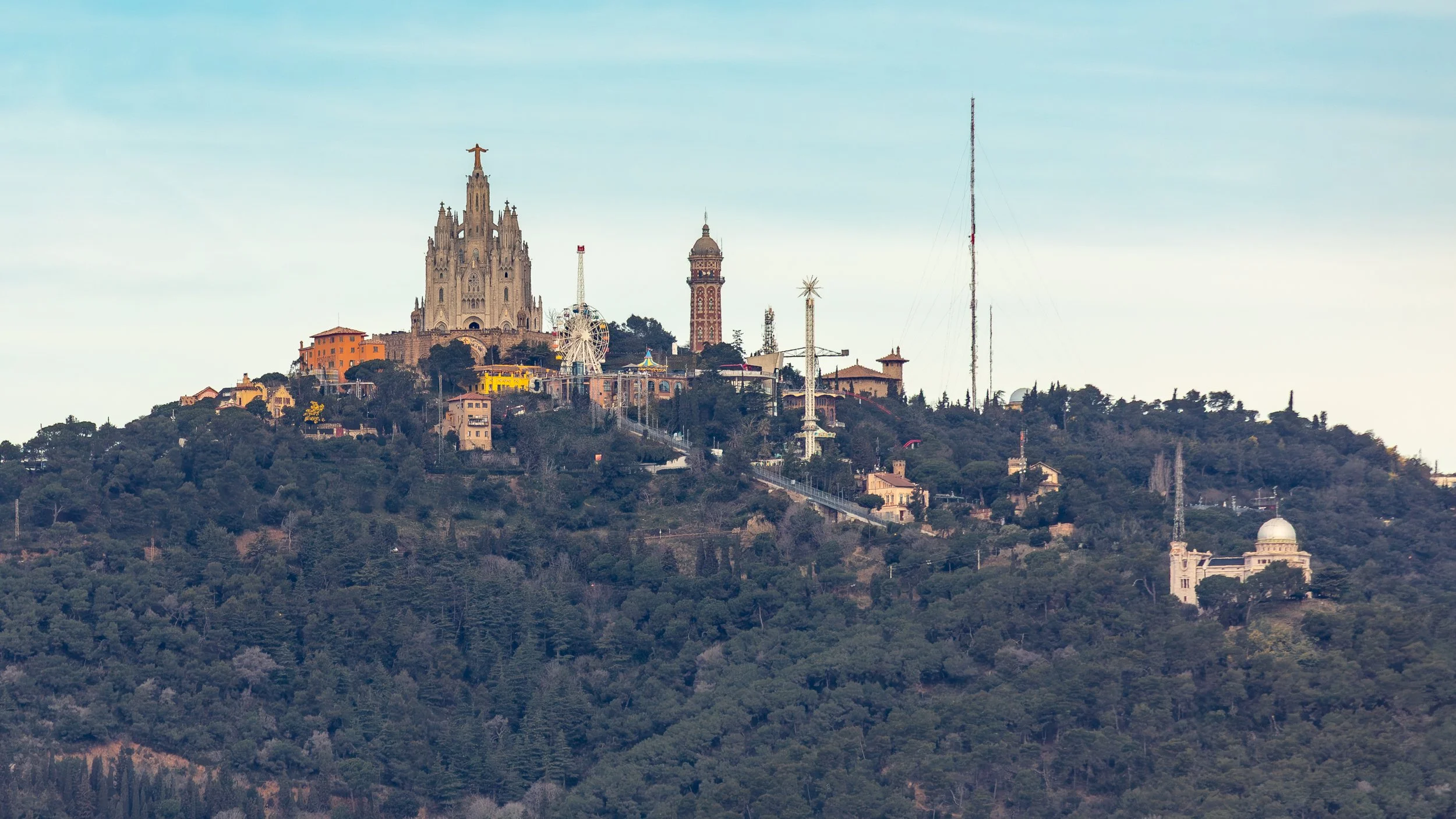
With the aid of a telephoto lens looking across the city to 512m Tibidabo Mountain
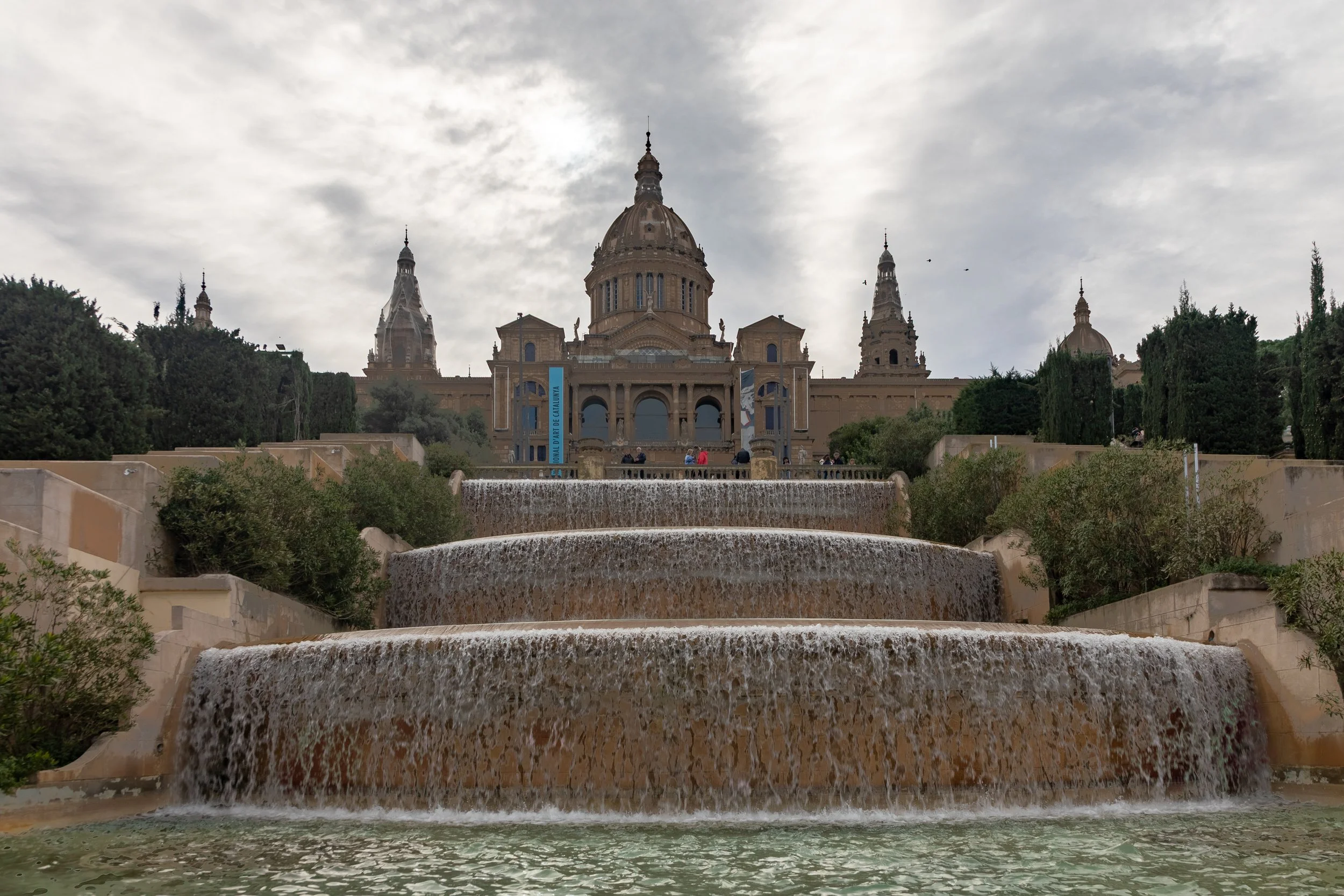
Looking up at Museu Nacional d'Art de Catalunya across numerous fountains making their way down the hill to Plazas de las Cascadas
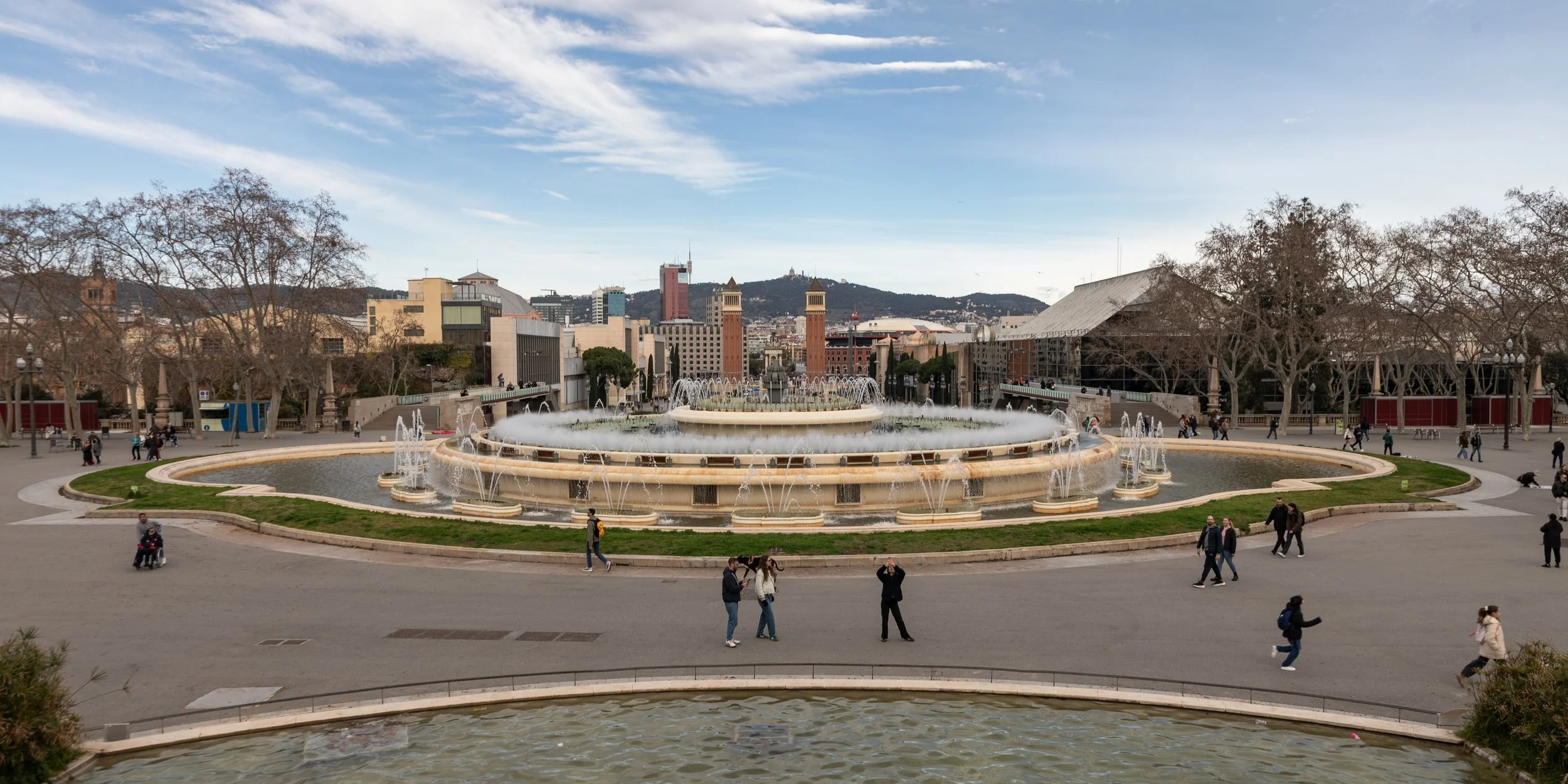
Magic fountain, relatively quiet during the day, puts on a show each evening
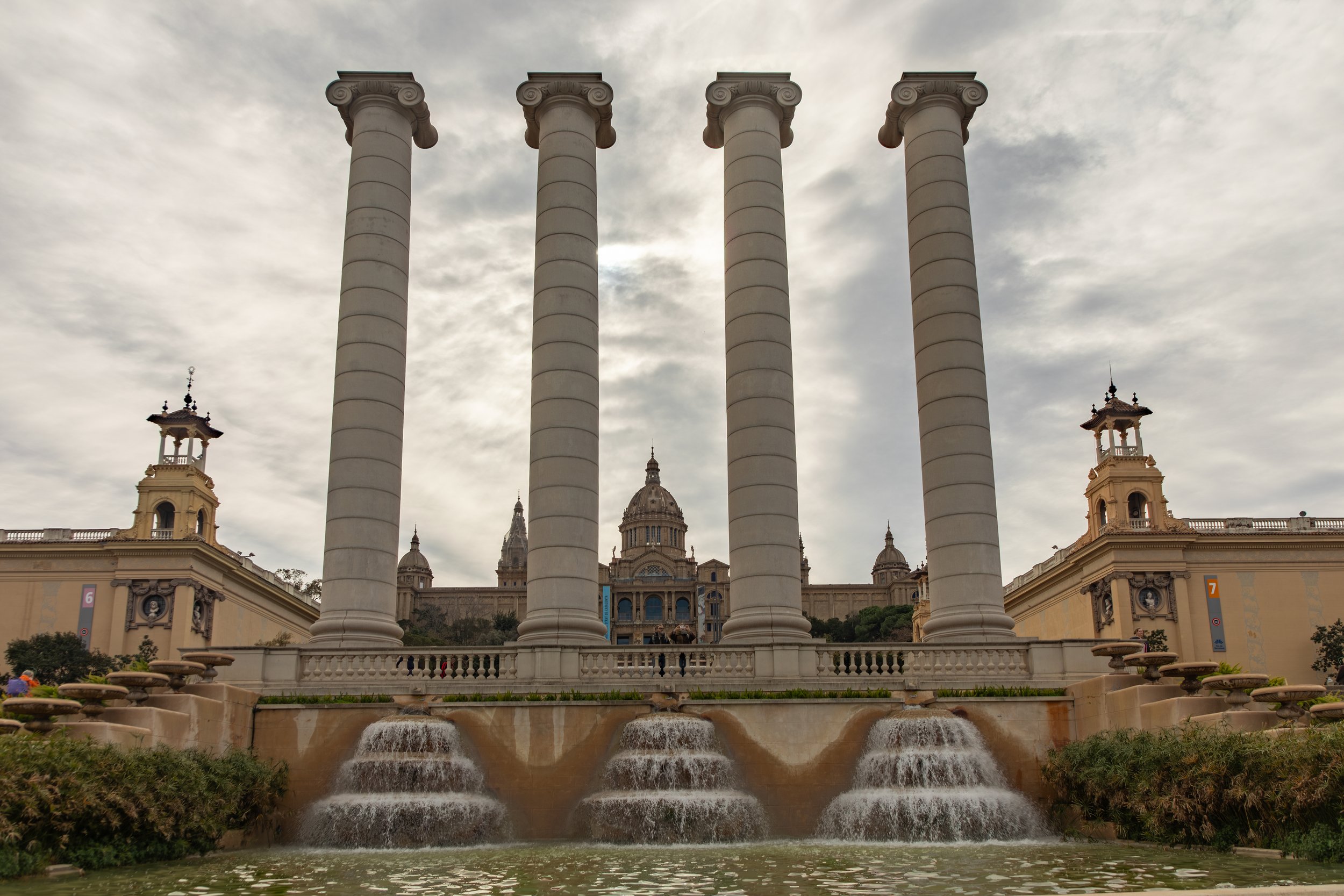
The Four Columns, symbolizing the four stripes of the Catalan Senyera, were intended to become one of the main icons of Catalanism, were removed prior to the 1929 World Exposition, but restored here in December 2010
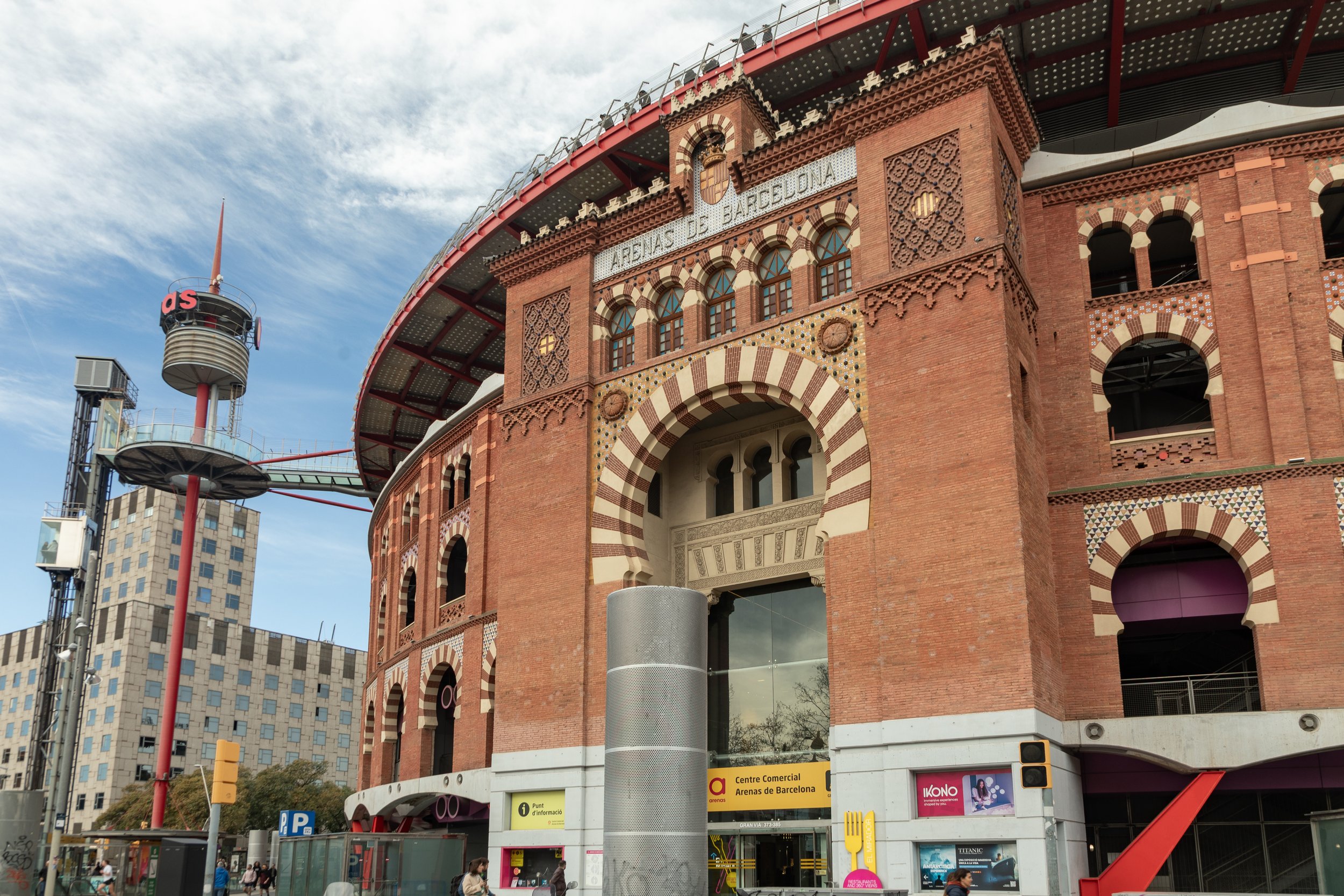
Arenas de Barcelona, a former bullfighting stadium, is now a complex of shops and restaurants with an excellent rooftop
From the rooftop of Arenas de Barcelona, looking back up to the Montjuïc where we started our walk
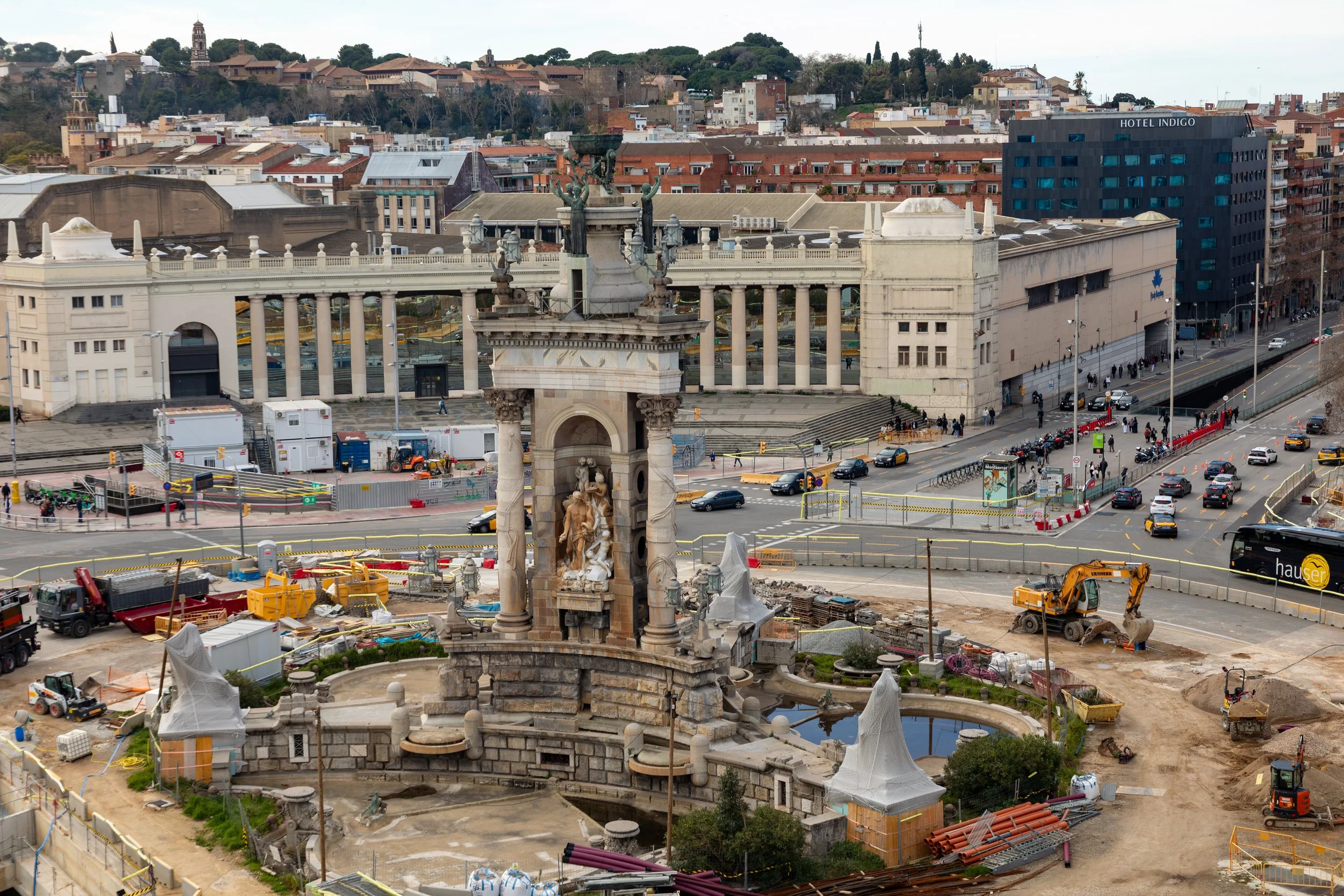
The main monument of La Plaça d'Espanya under active restoration
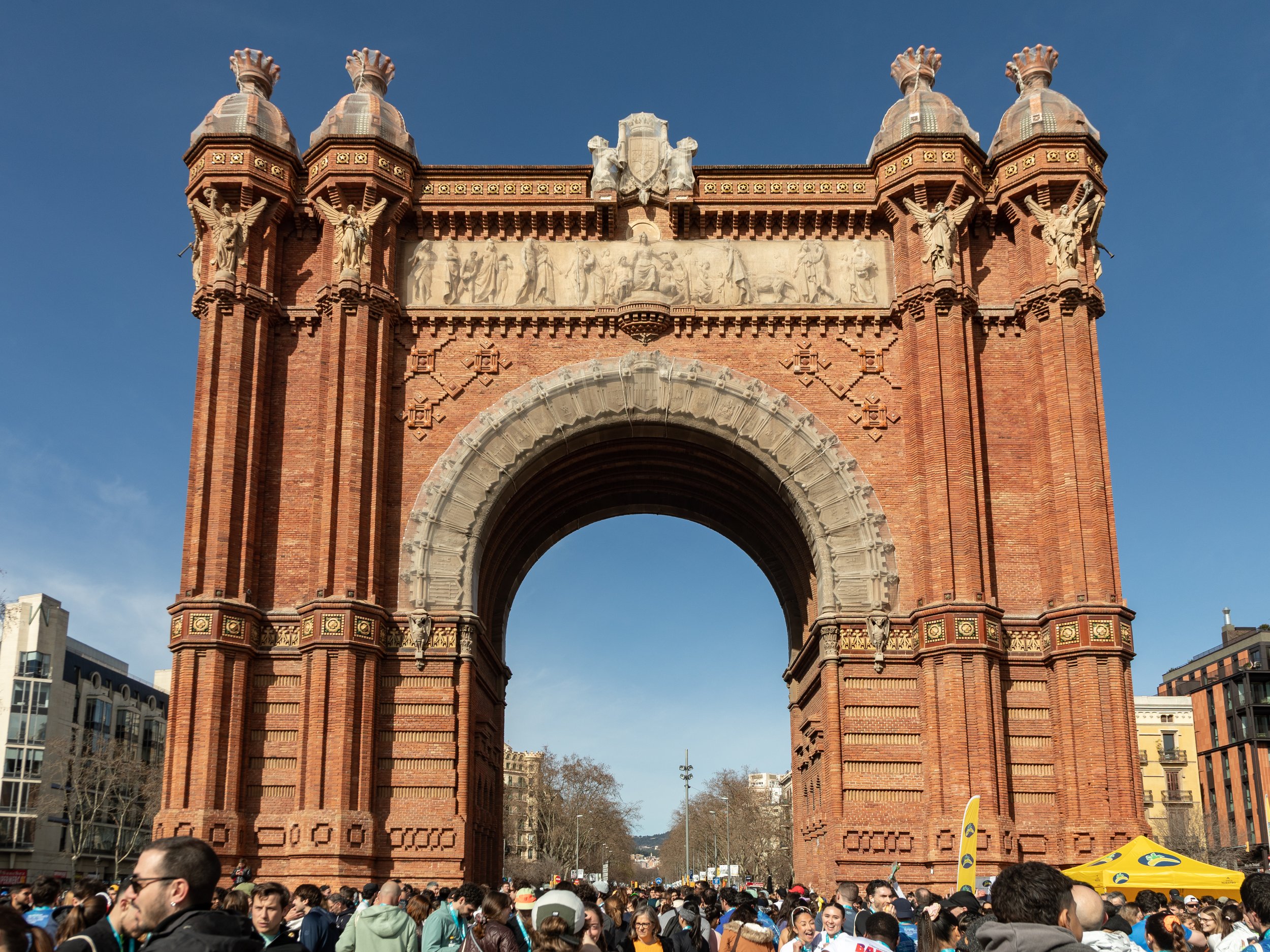
Not knowing the path of the marathon, we decided to check out Arc de Triomf on our way to our tour, but actually ended up at the crowded finish line for the race
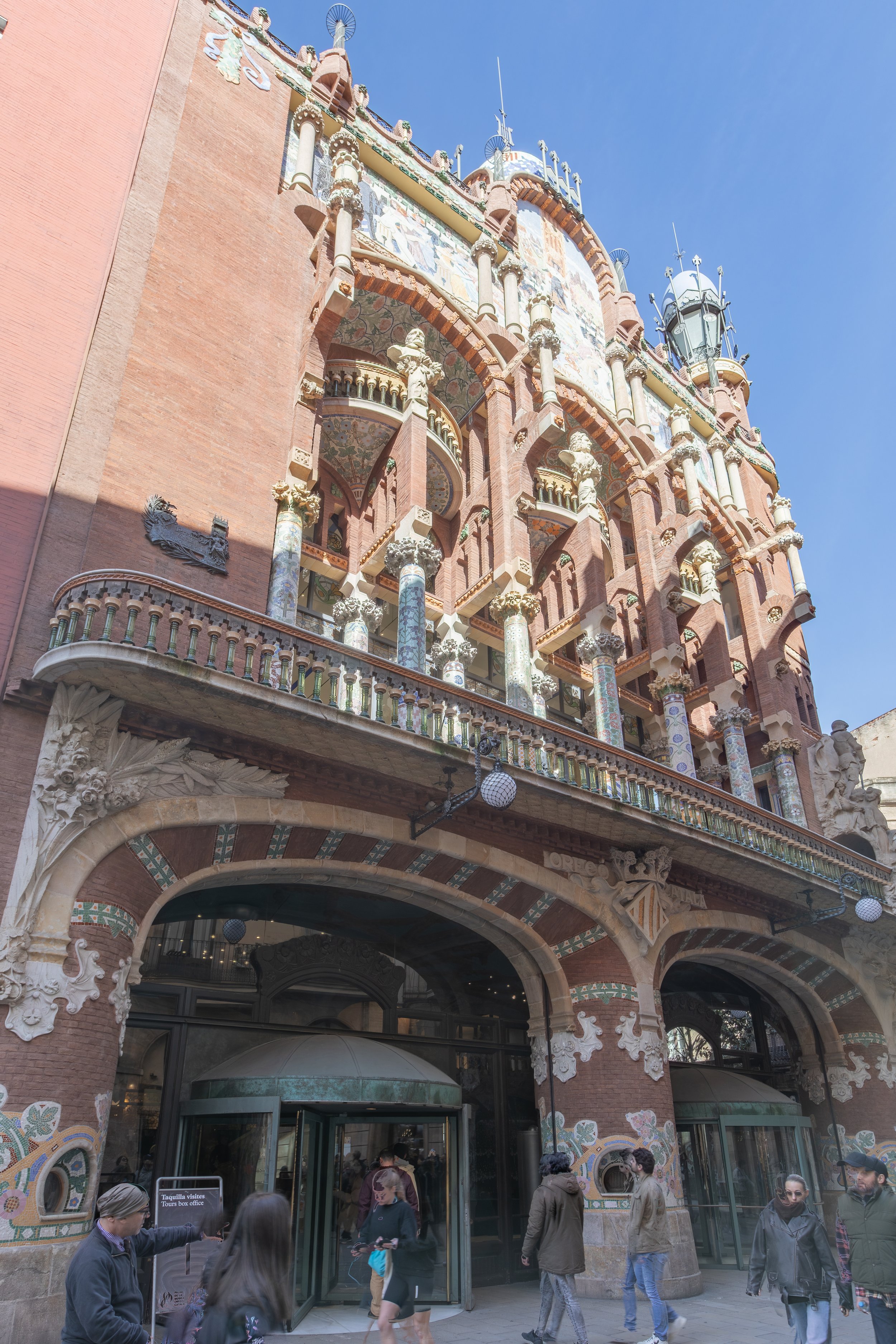
Exterior of Palau de la Música Catalana (1908), designed in the Catalan modernista style by the architect Lluís Domènech
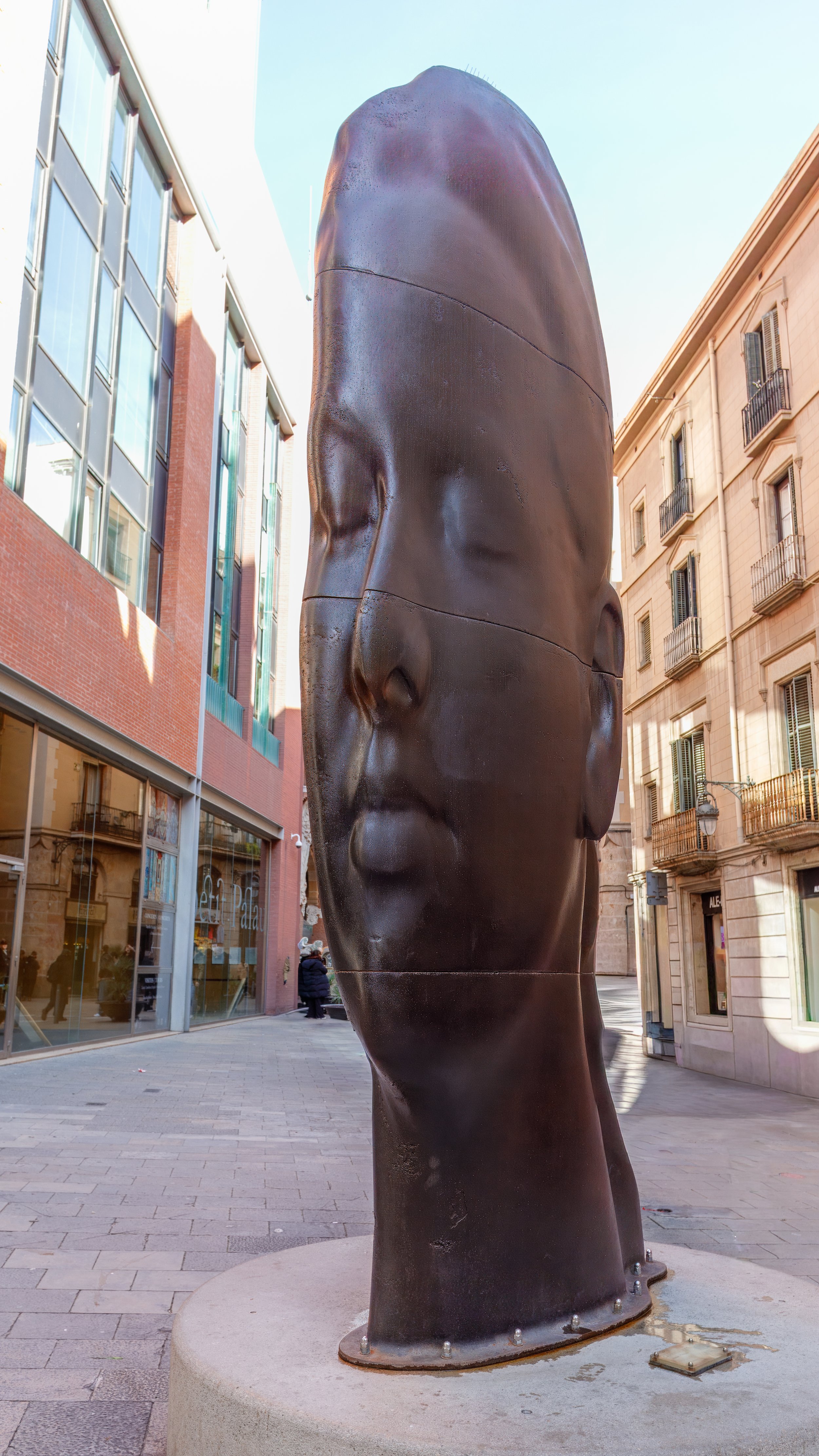
Outside the theatre, the 4.5m high Carmela cast-iron sculpture by renowned Catalan artist Jaume Plensa, is consistent with similar of his works we’ve observed in Madrid and in Toronto’s Financial District
With our guided tour of the theatre we can check out the modernist influences up close
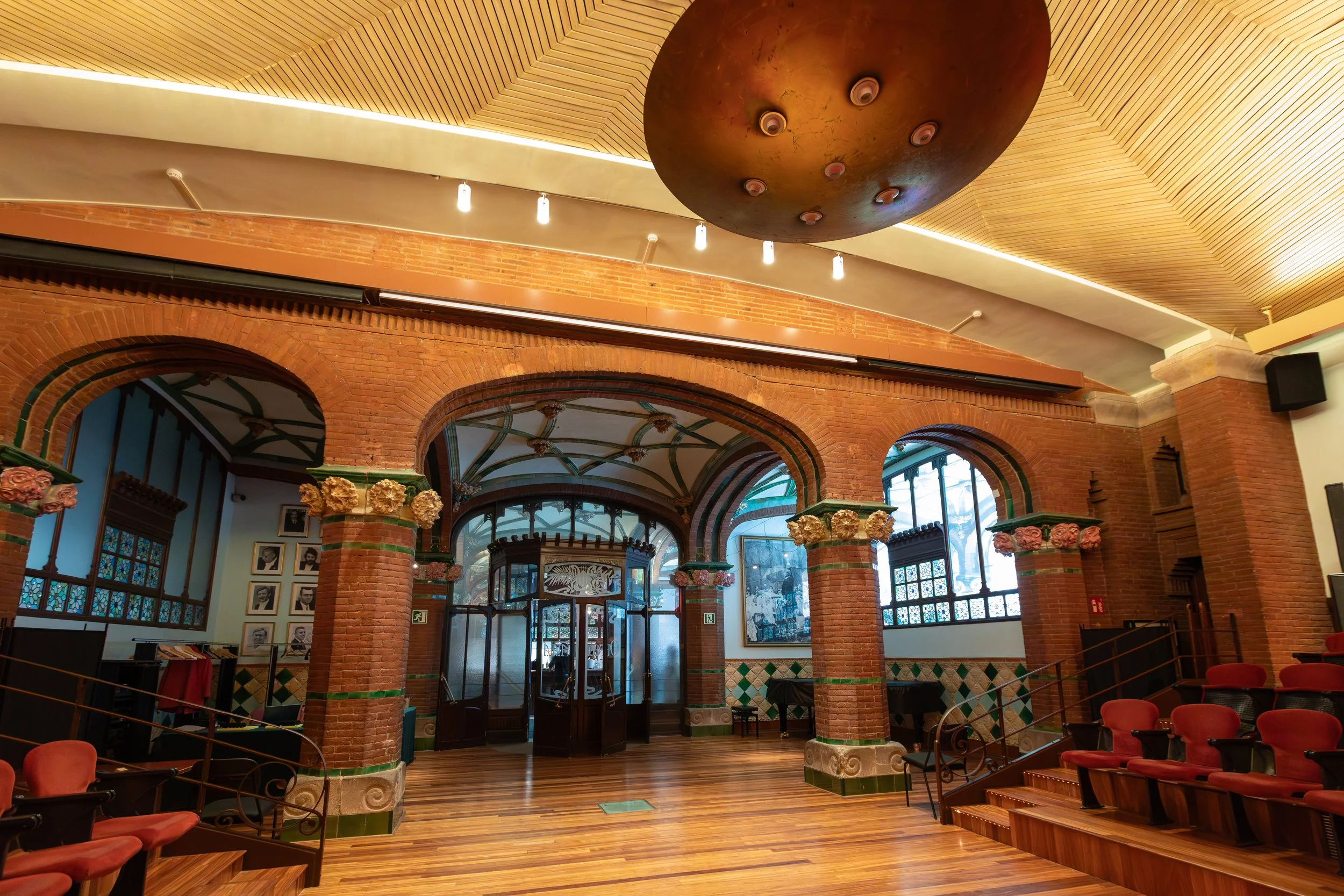
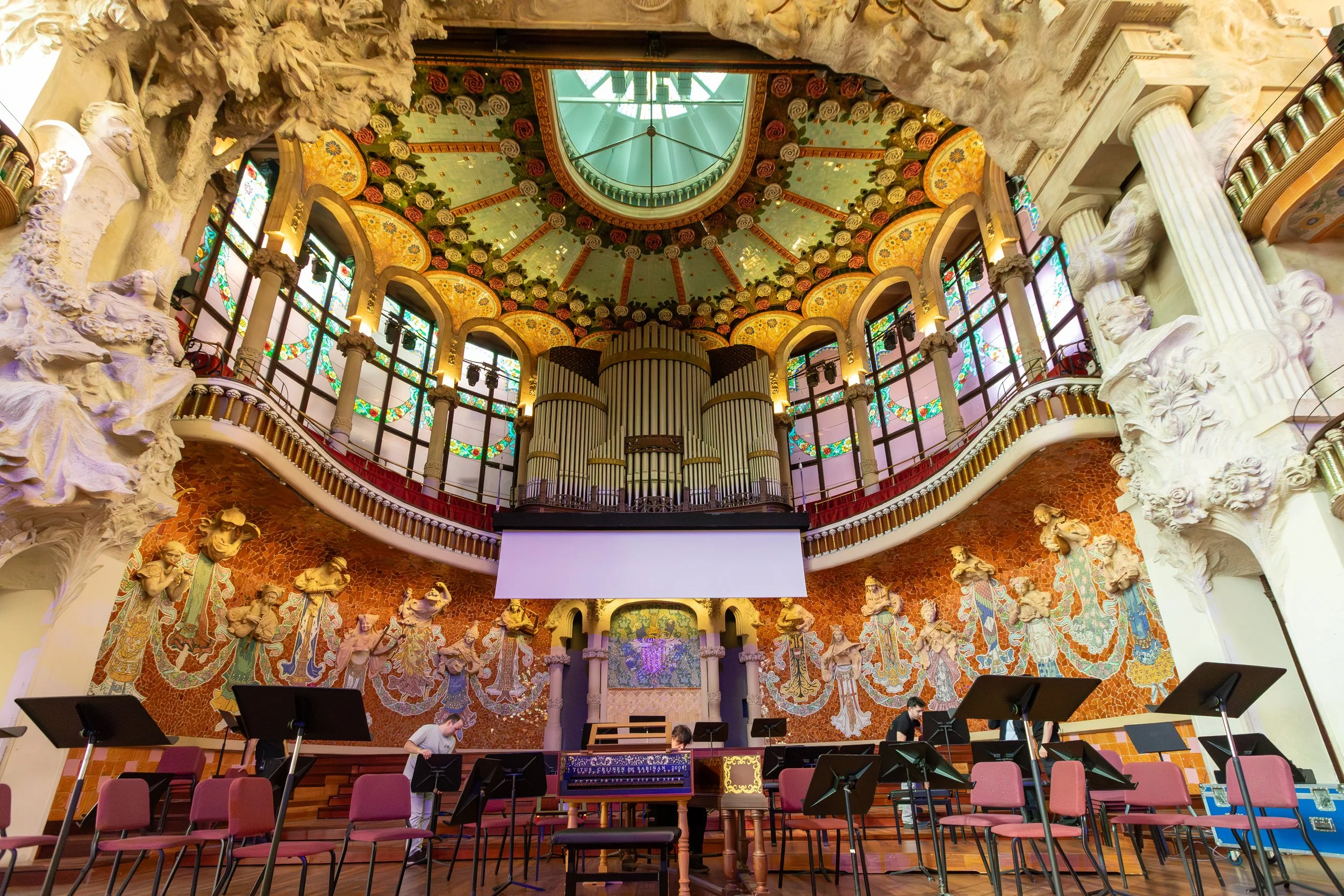
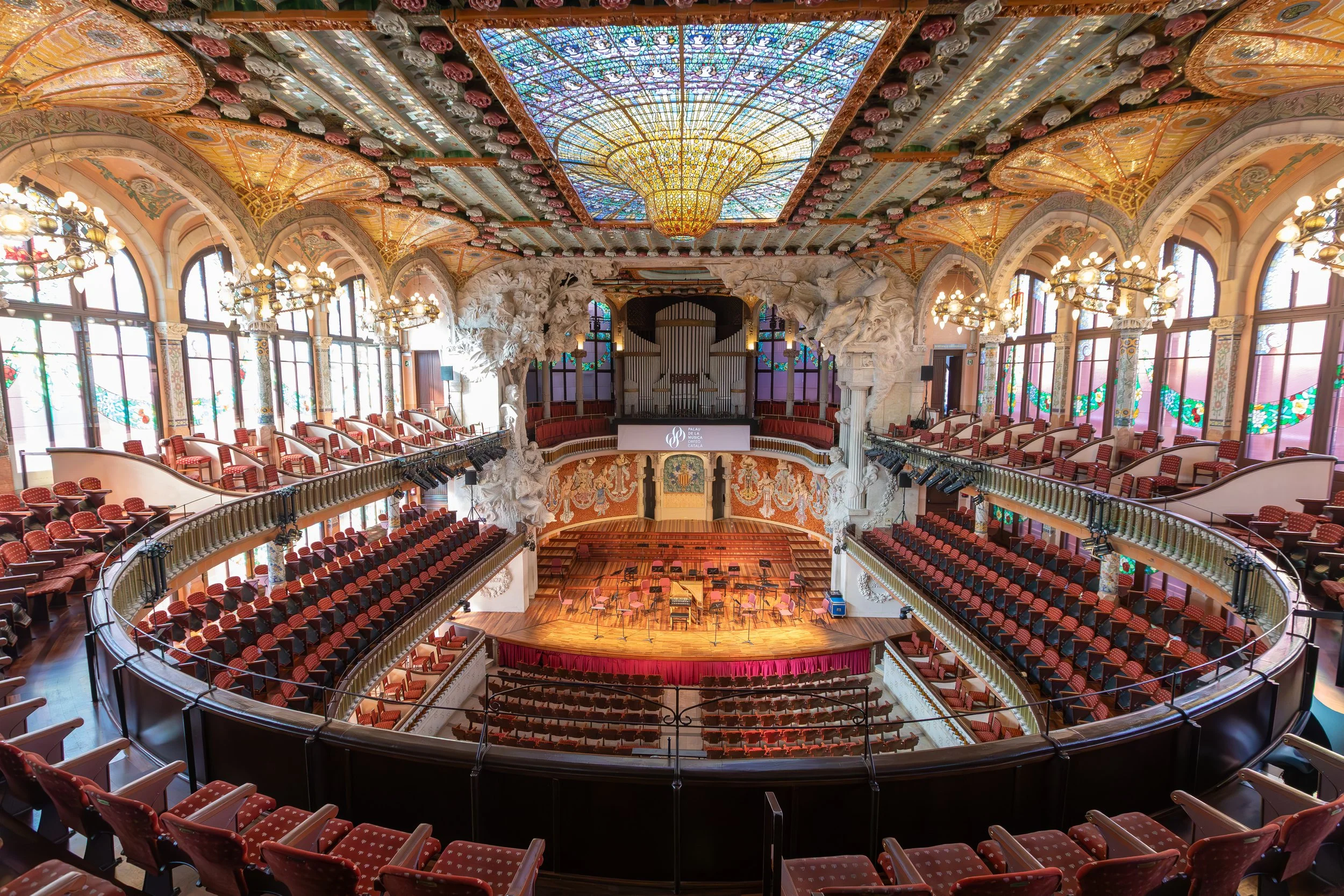
The main stage of the theatre shows Lluís Domènech i Montaner’s earlier modernist stylings before Gaudí
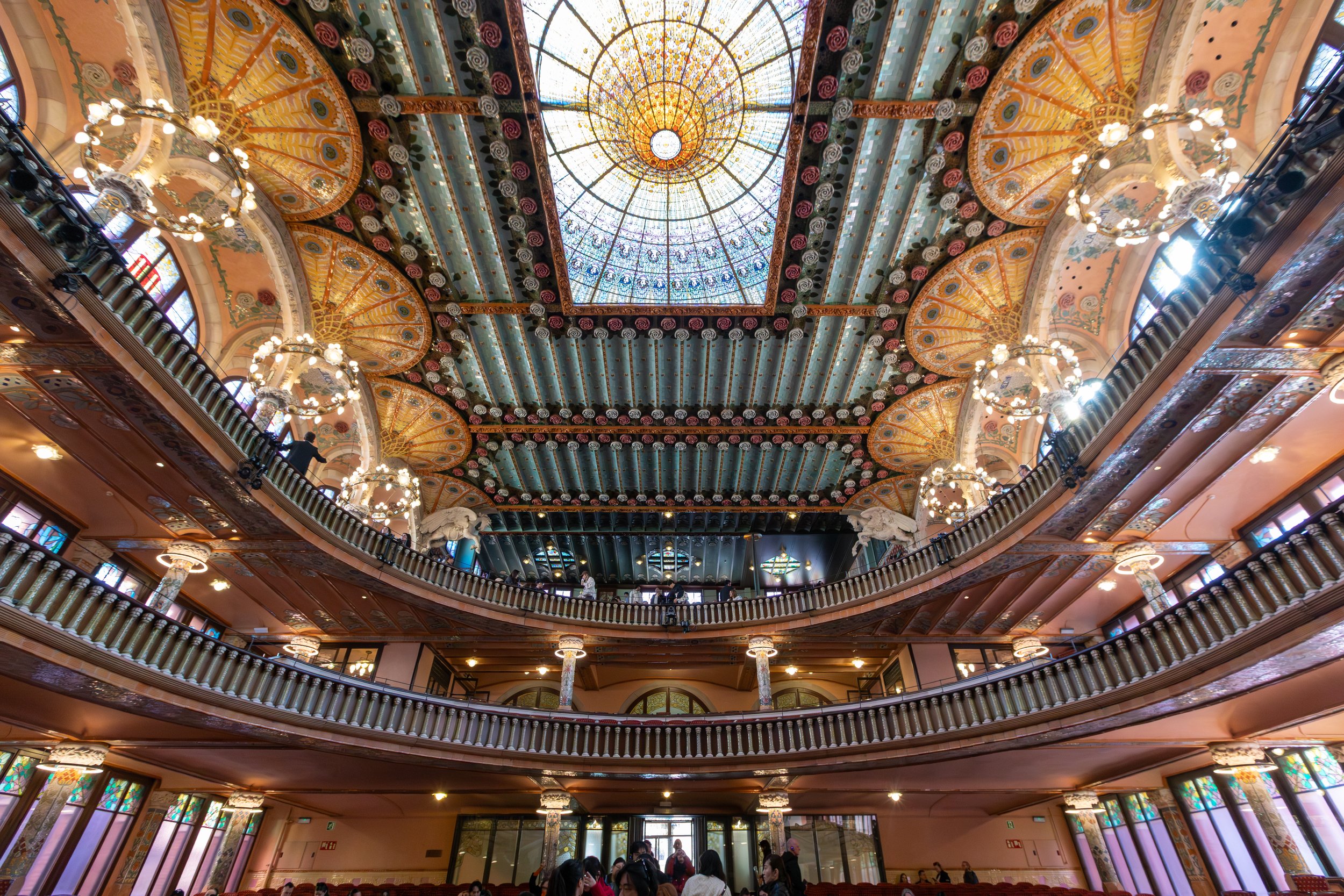
Impressive roof, lit with natural light during the day and electric lights in the evening
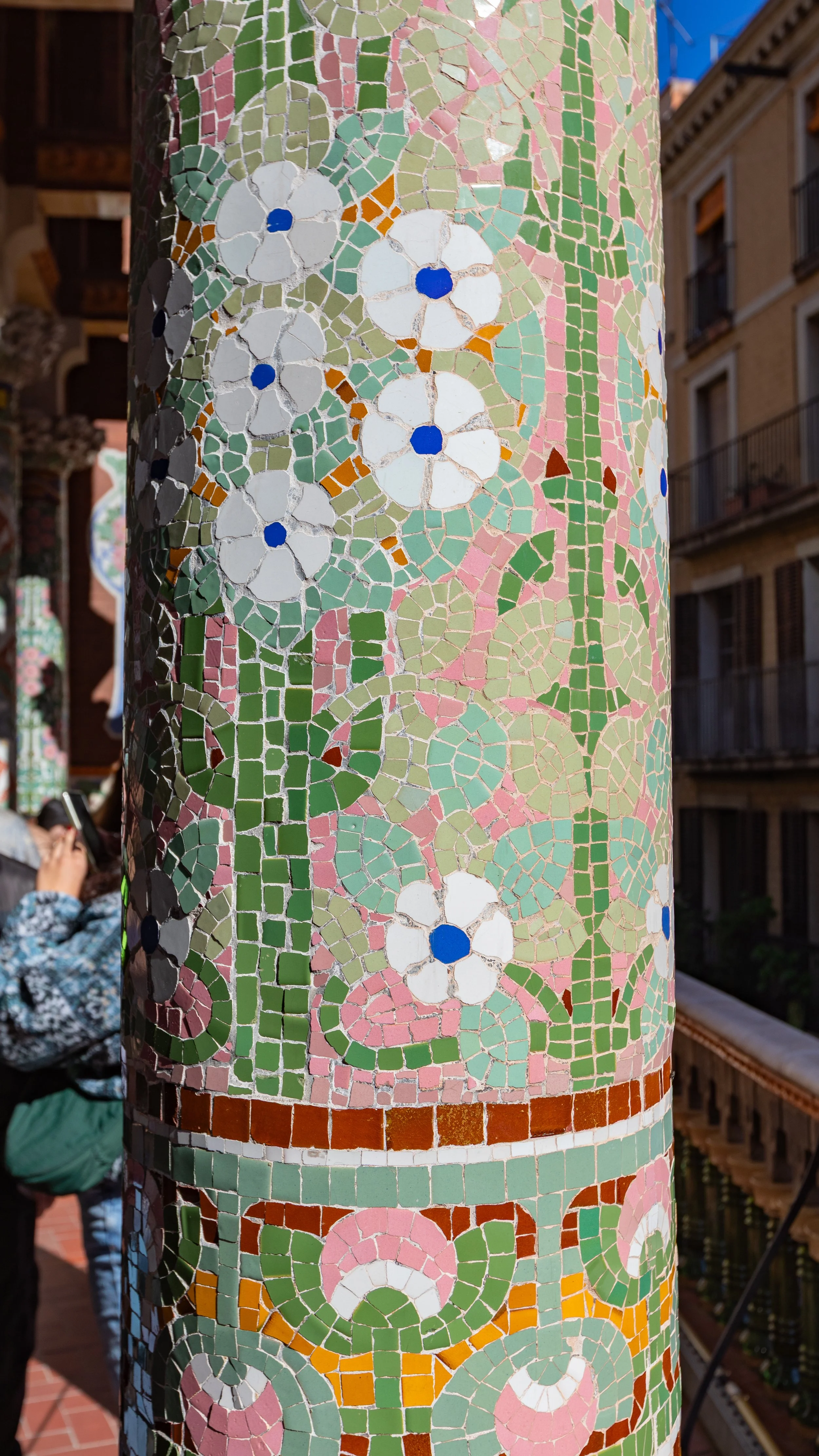
Mosaic column decorations on the balconies
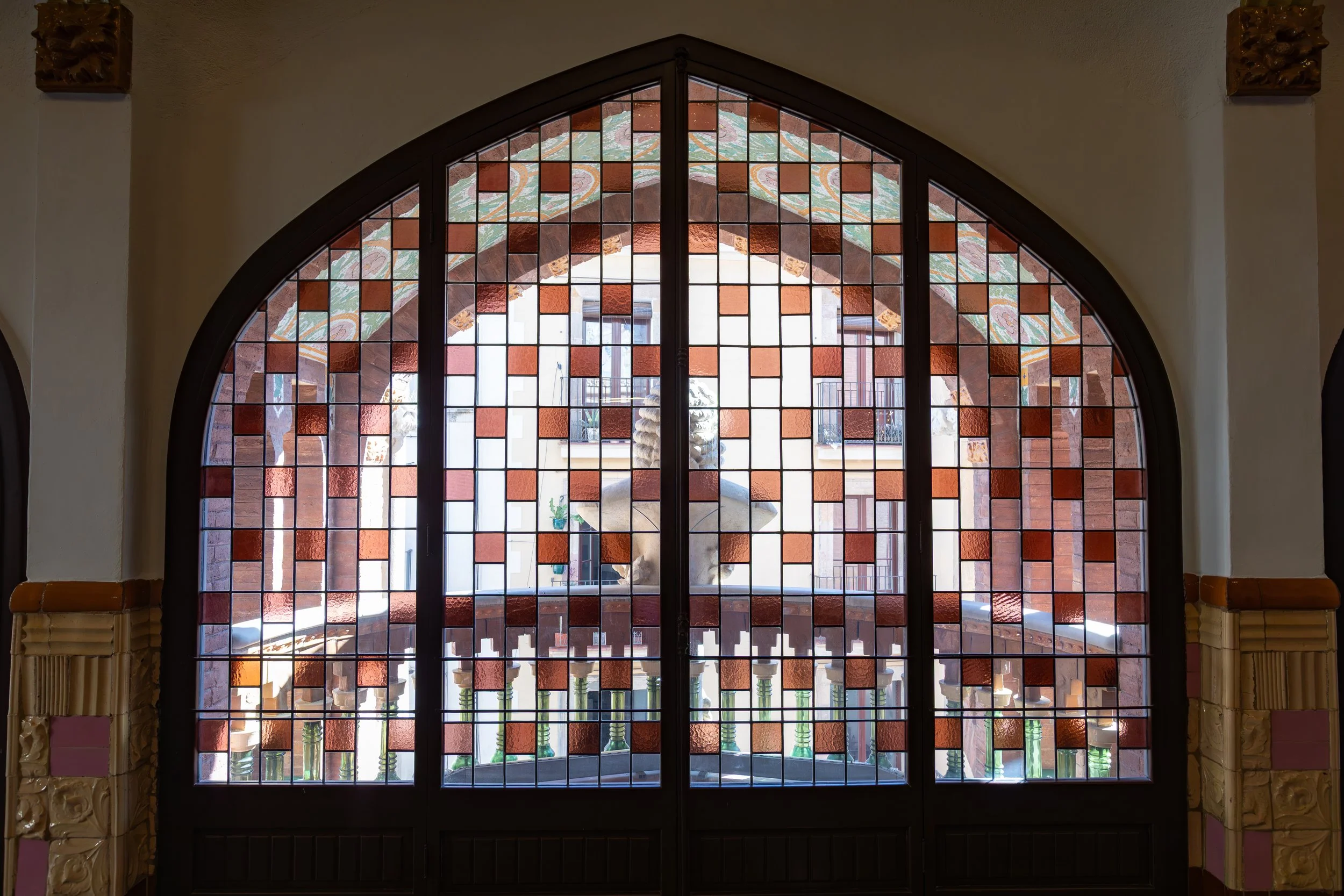
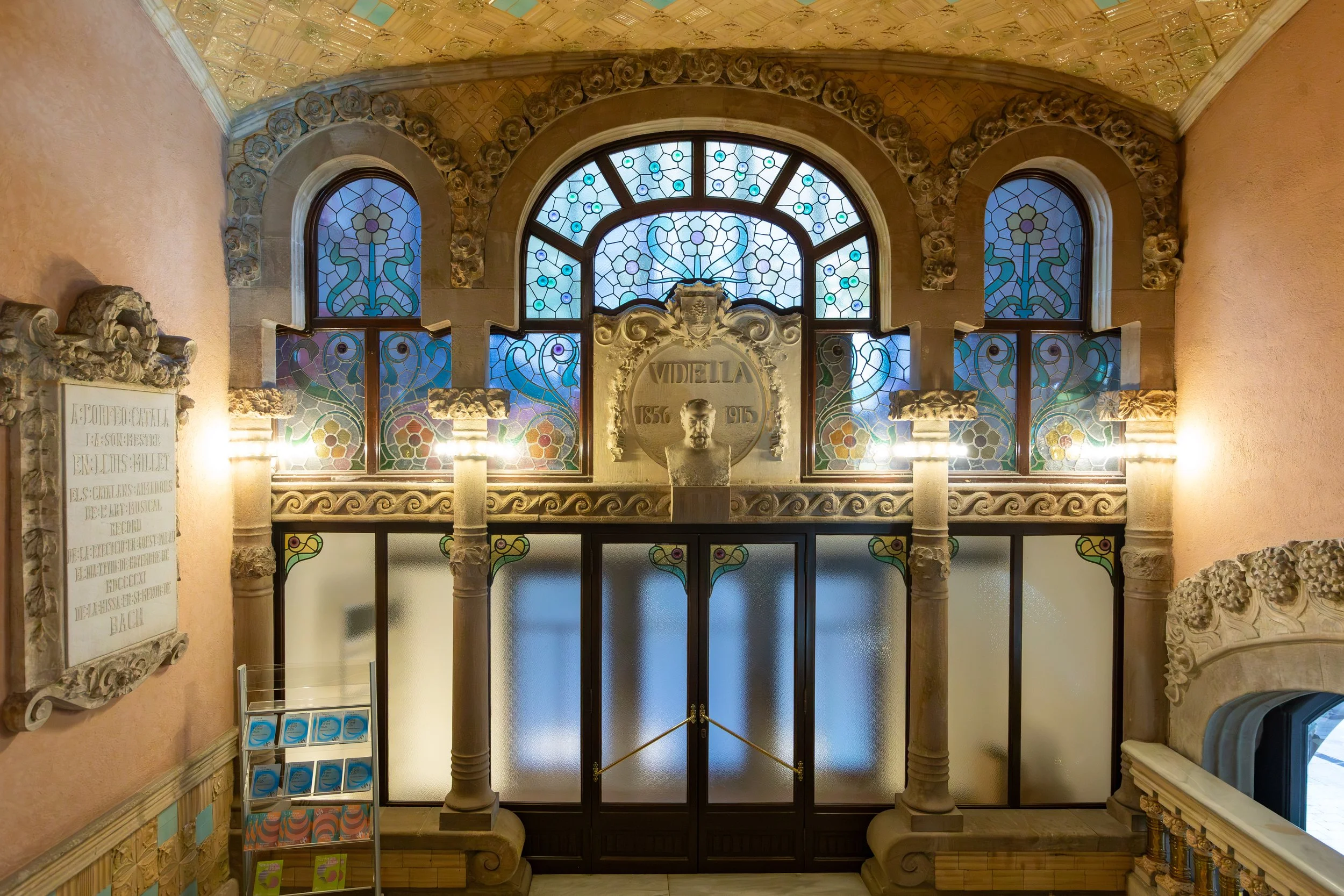
Stained glass windows looking out into the small balcony at the street-side front of the theatre
Wide view of the 2200-seat theatre shows that in some performances, they have seats above and behind the main stage
More stained glass decorates the front lobby
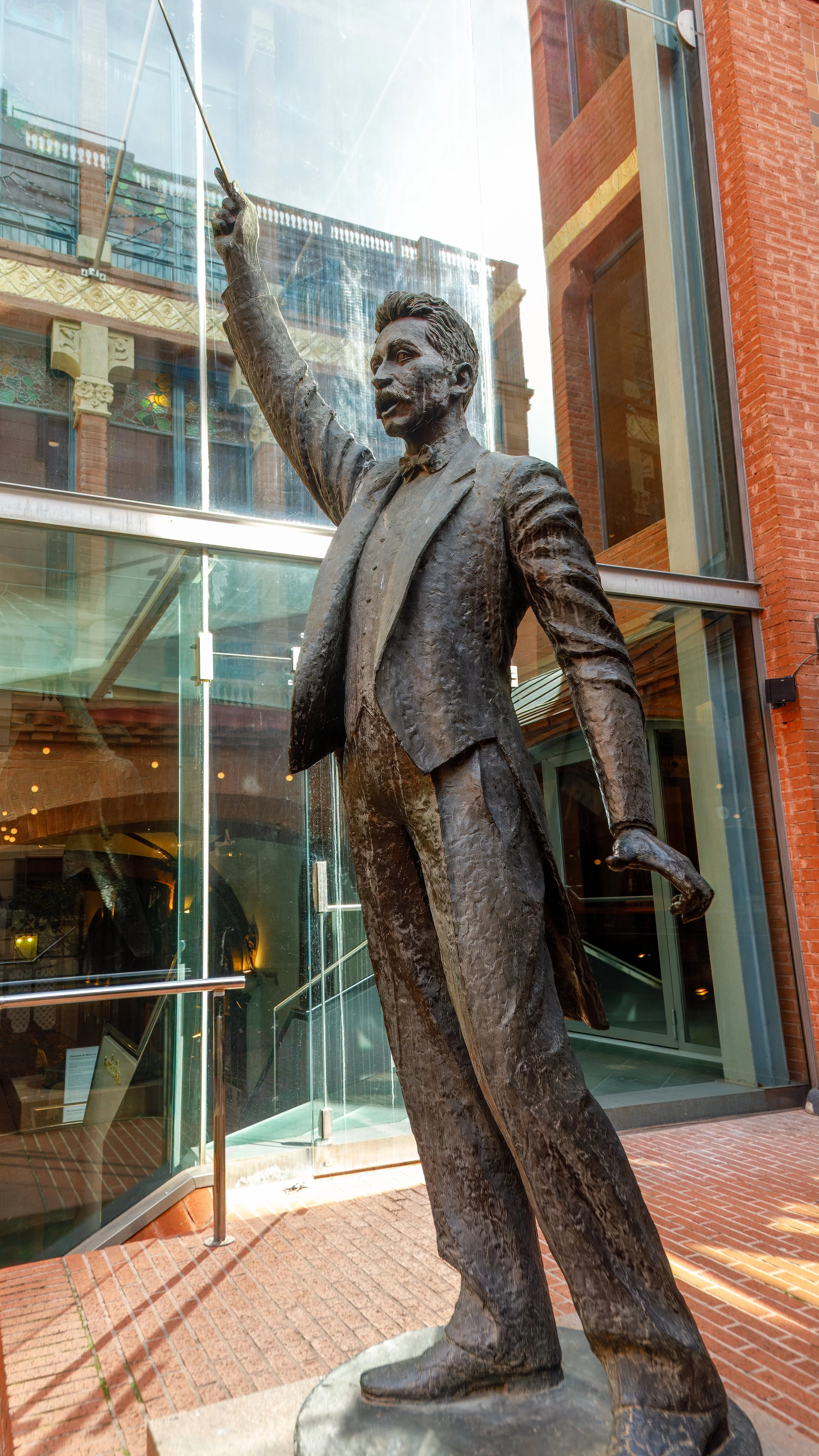
Outside the Palau de la Música Catalana, a Statue of the Catalan composer and conductor Lluís Millet, founder of the Orfeó Català choral society in 1891
Back in the Gothic Quarter (Barri Gòtic), we encountered Barcelona Cathedral as we’d visited the night before, from a different angle
Catching one of the processions of Gegants of the Santa Eulàlia Festival
More of the festive Gegants
Last Gegants of the procession navigates the crowd with their guide
Main stage of Festes de Santa Eulàlia festival in front of the cathedral
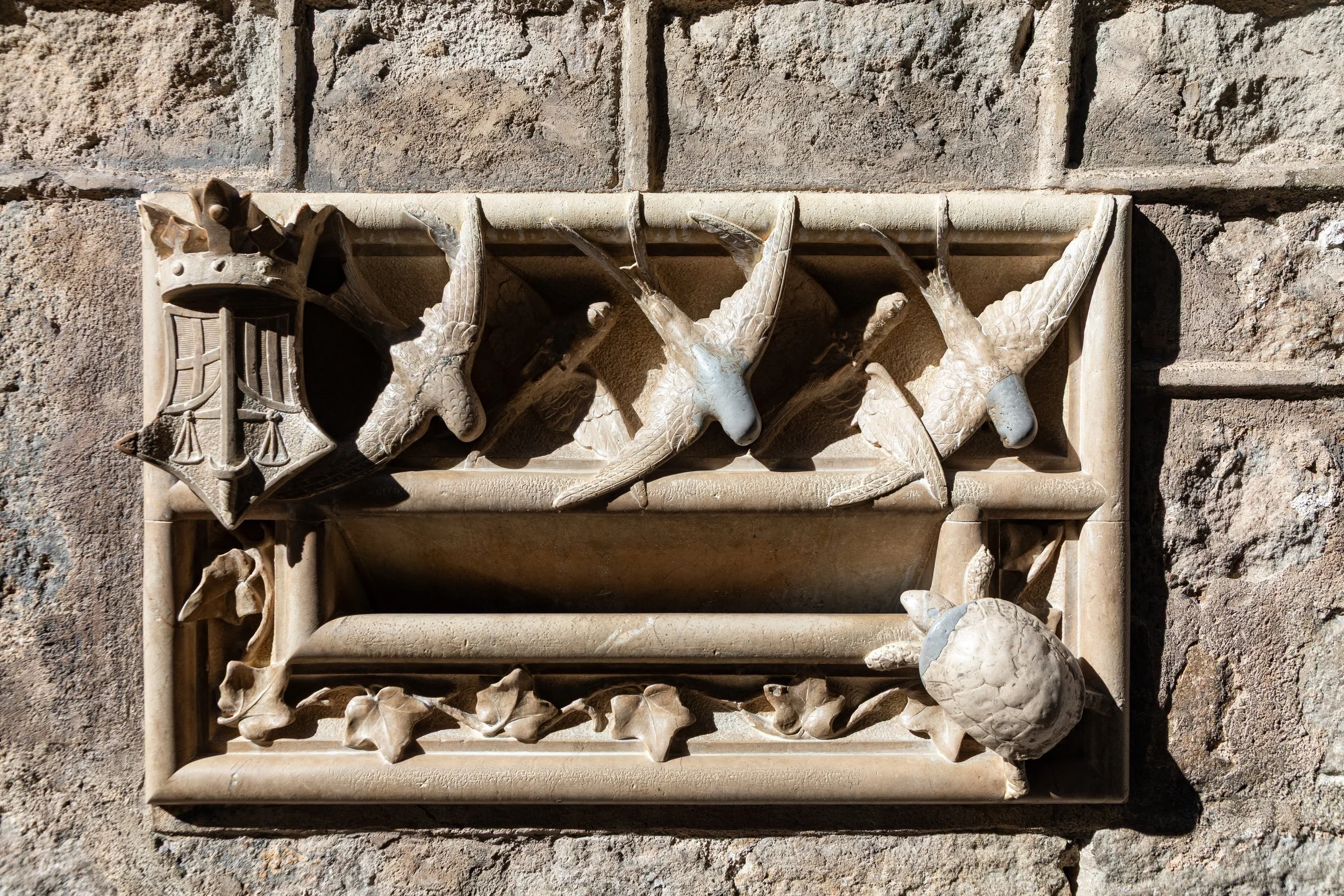
Intricately carved mailbox, located on the facade of the Casa de l'Ardiaca (Archdeacon's House)
Back at the monument to Martyrs of Independence
Plaça de Sant Felip Neri and the Church of Saint Philip Neri
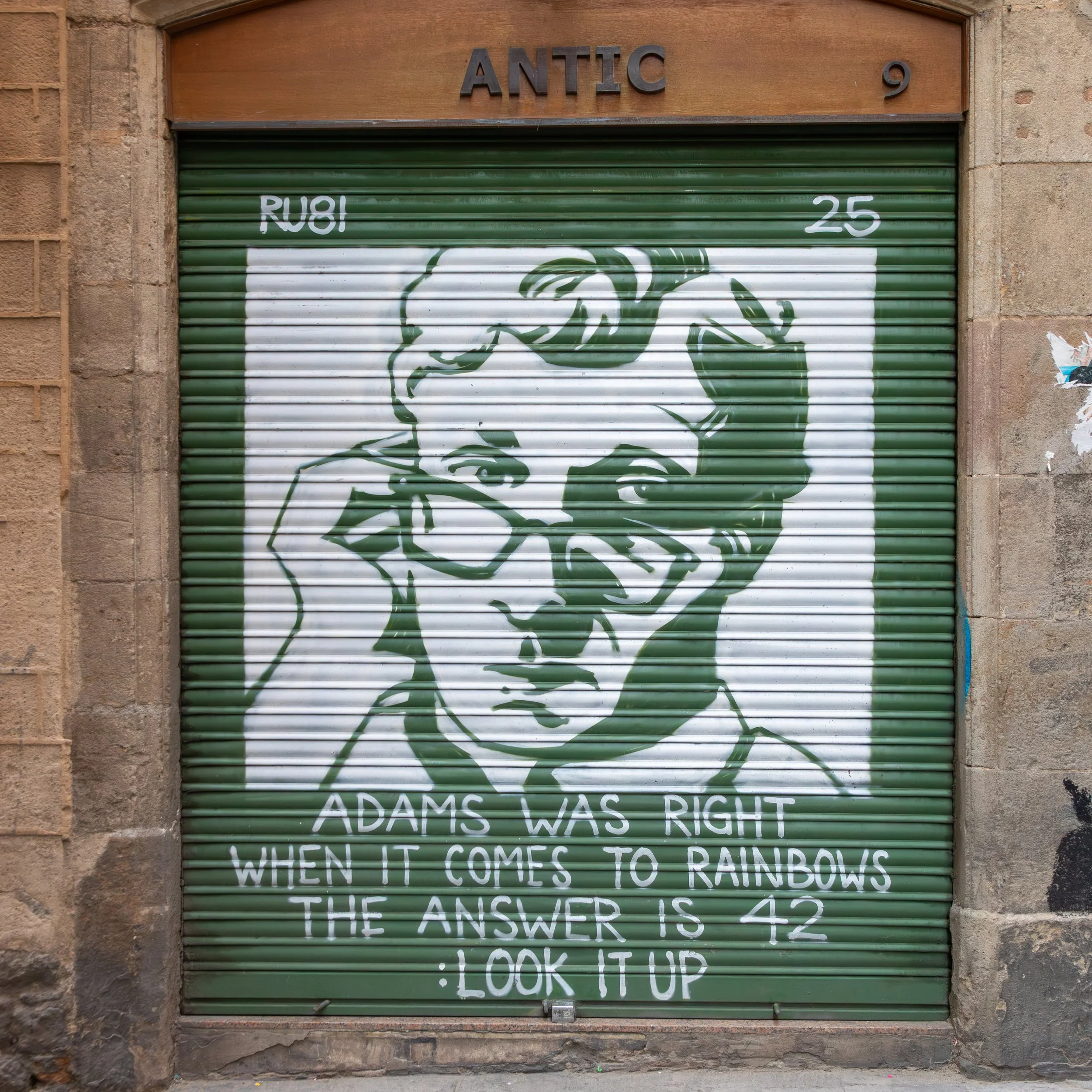
Street art featuring a portrait of author Douglas Adams with a reference to Adams' famous series, The Hitchhiker's Guide to the Galaxy, where 42 is the "Answer to the Ultimate Question of Life, the Universe, and Everything".
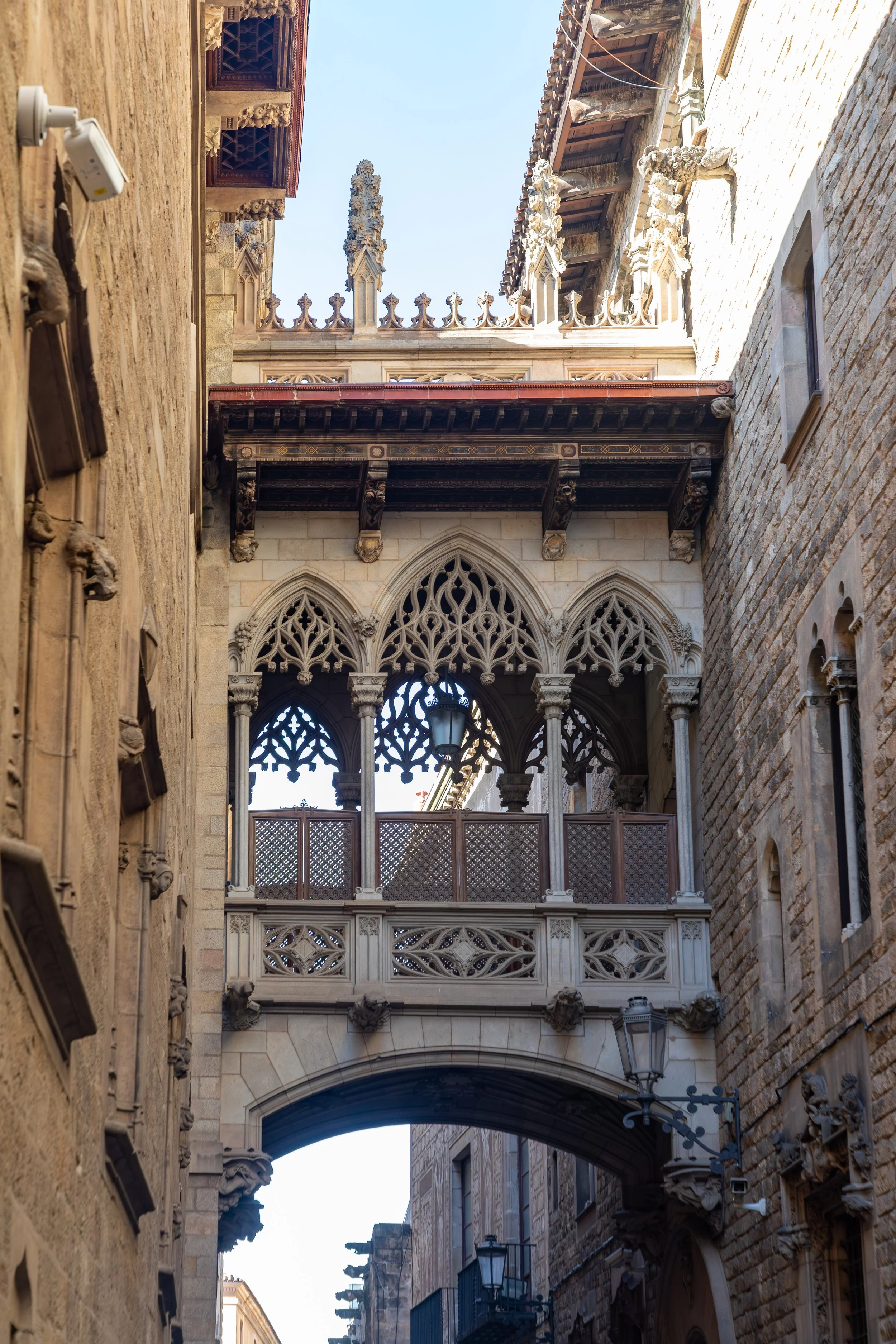
Carrer del Bisbe Bridge connects Catalan Government building to the president’s ceremonial residence
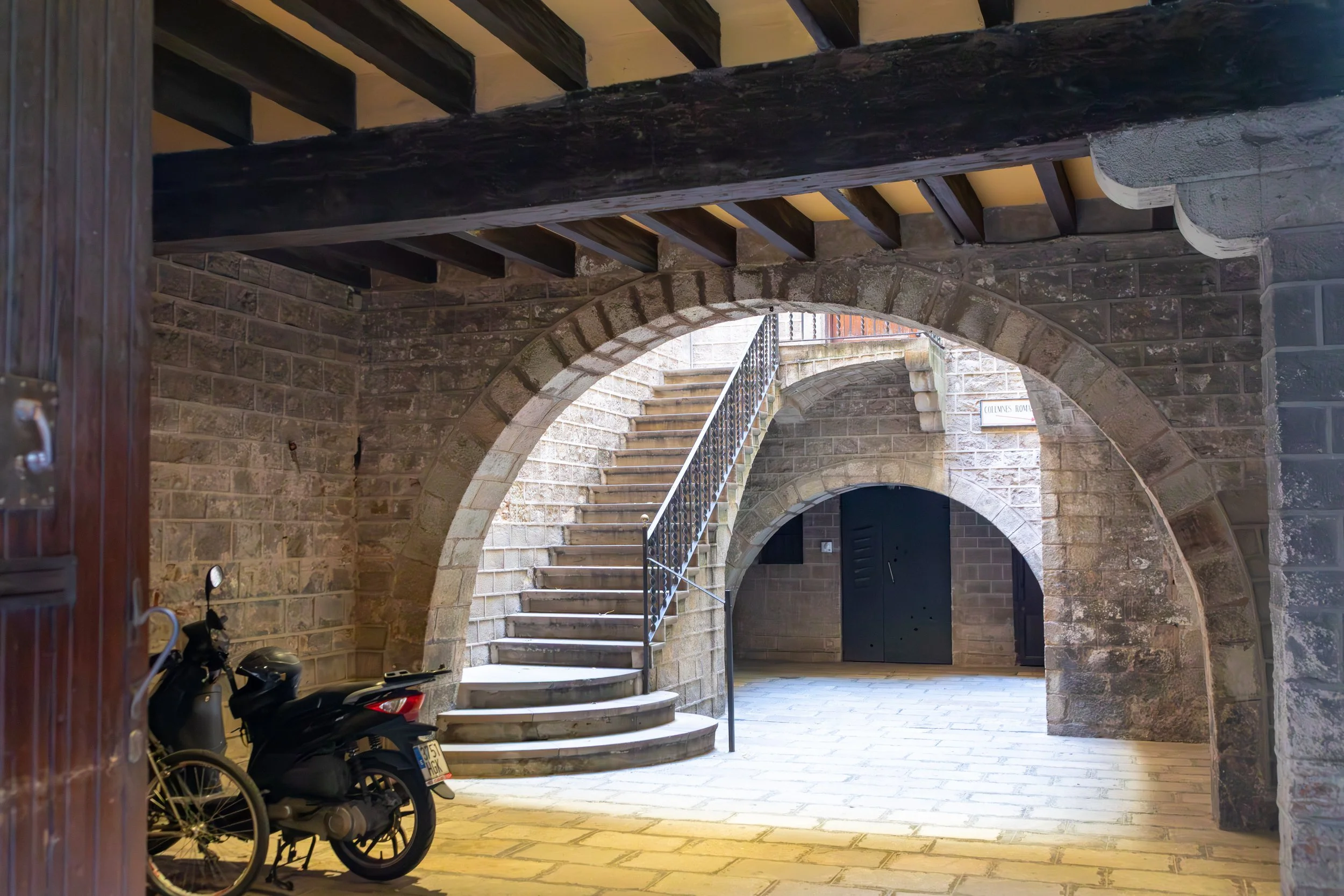
Gothic courtyard leading to Roman columns
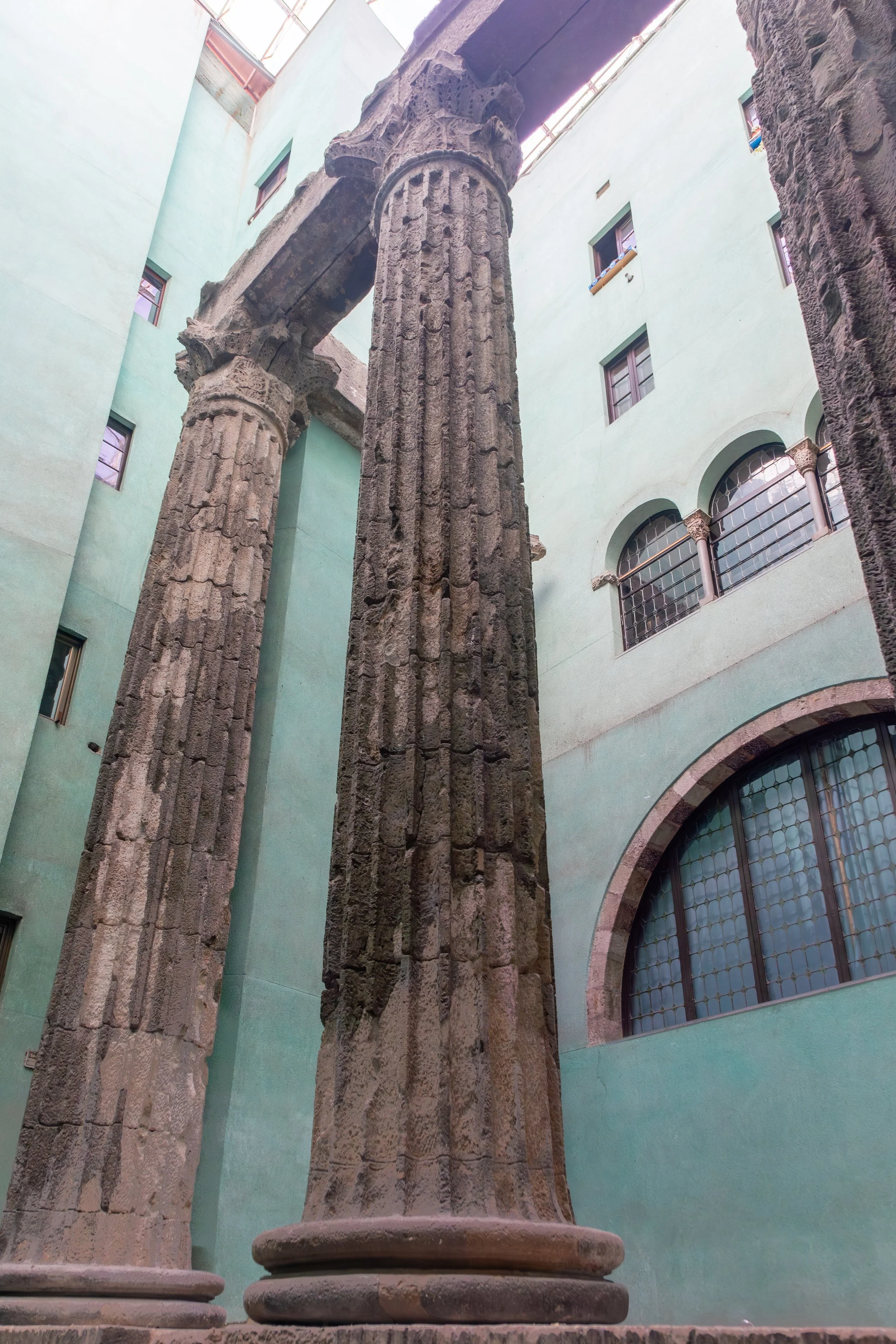
2,000-year-old Roman columns hidden within the courtyard
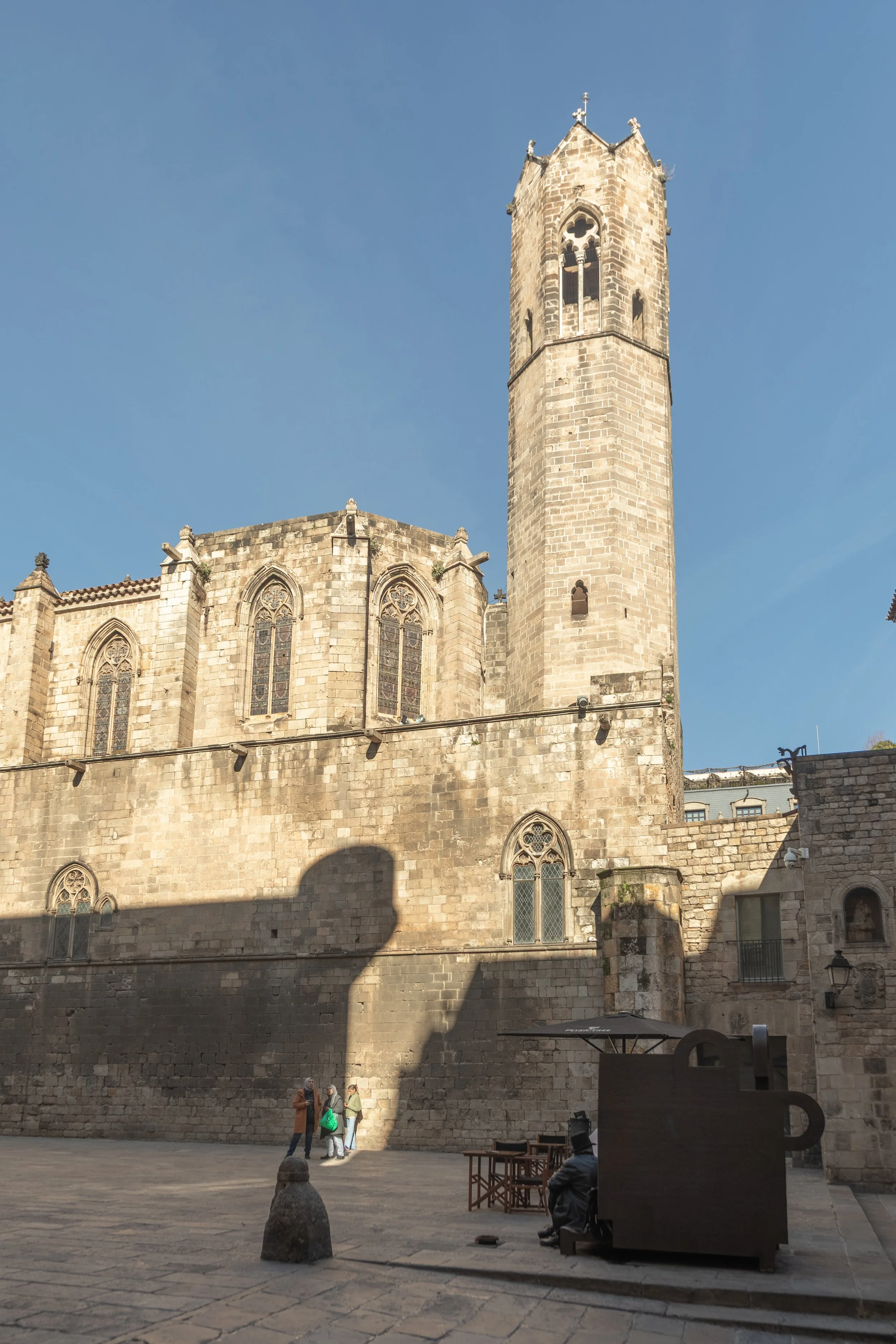
Chapel of Santa Àgata (1302) in Plaça del Rei (King's Square)
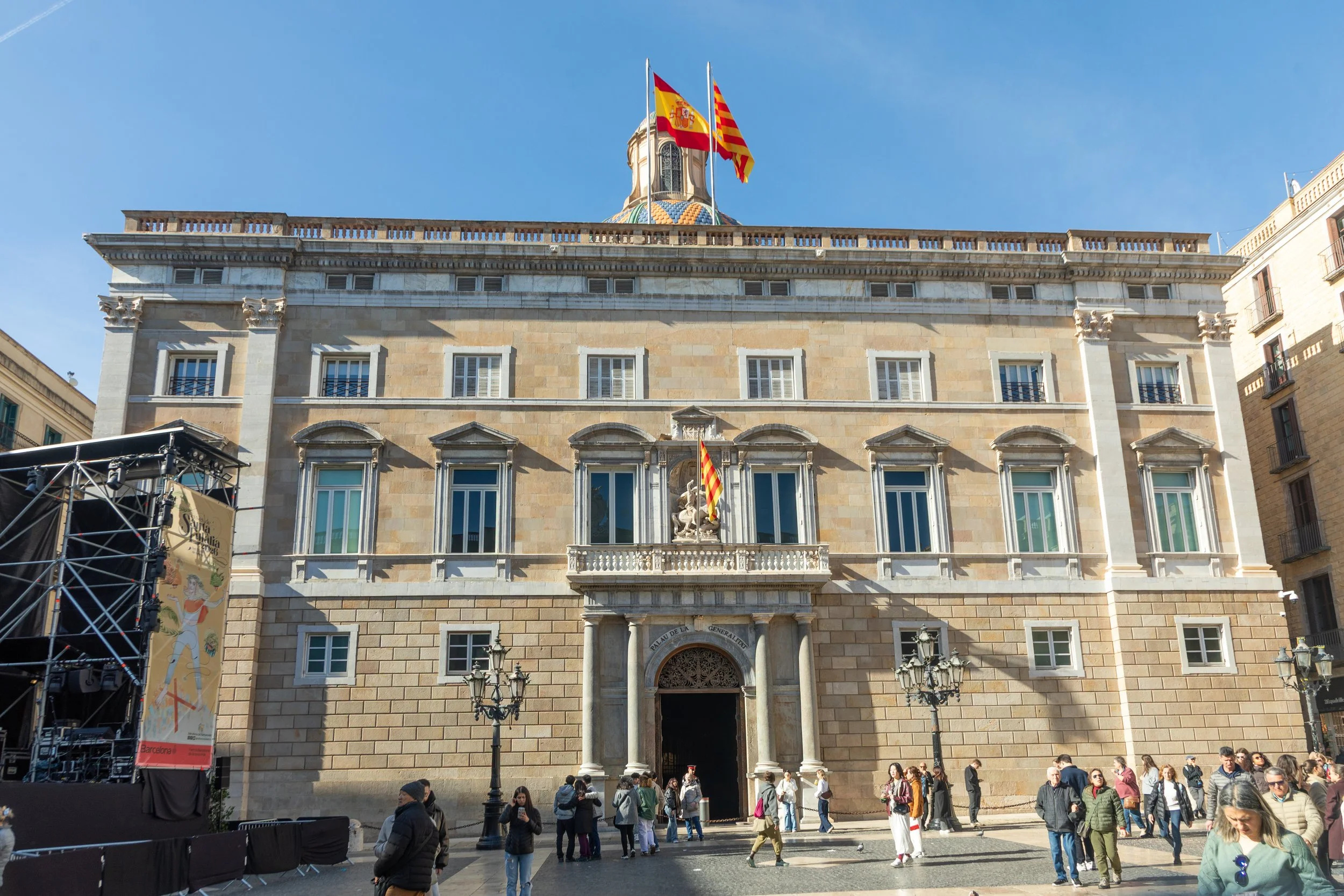
Palau de la Generalitat de Catalunya serves as the seat of the Presidency of the Generalitat de Catalunya
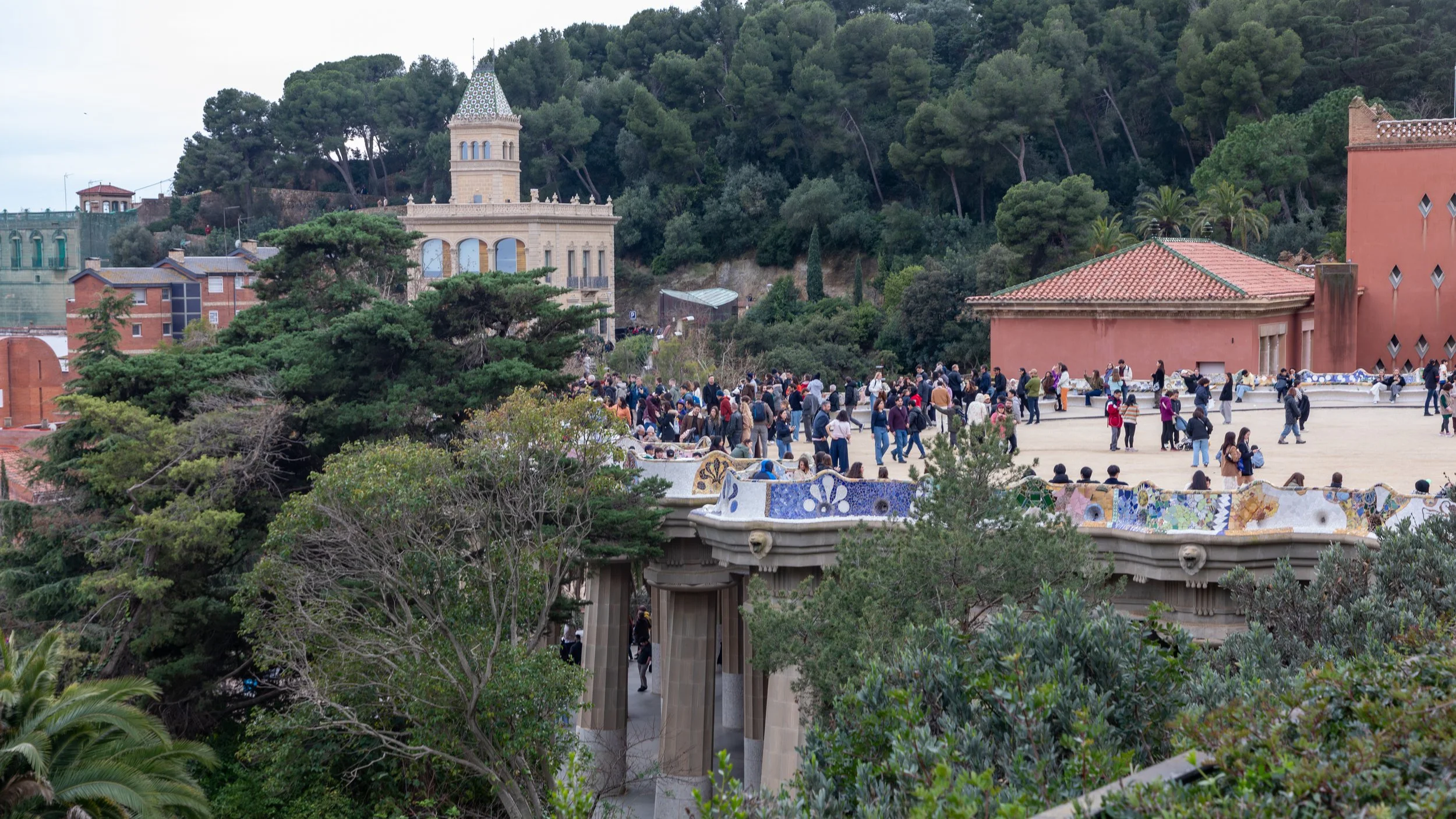
As Park Güell was a highlight of Gaudí's Barcelona, we were anxious to return and booked a reservation. The main terrace was hopping for a late Sunday afternoon.
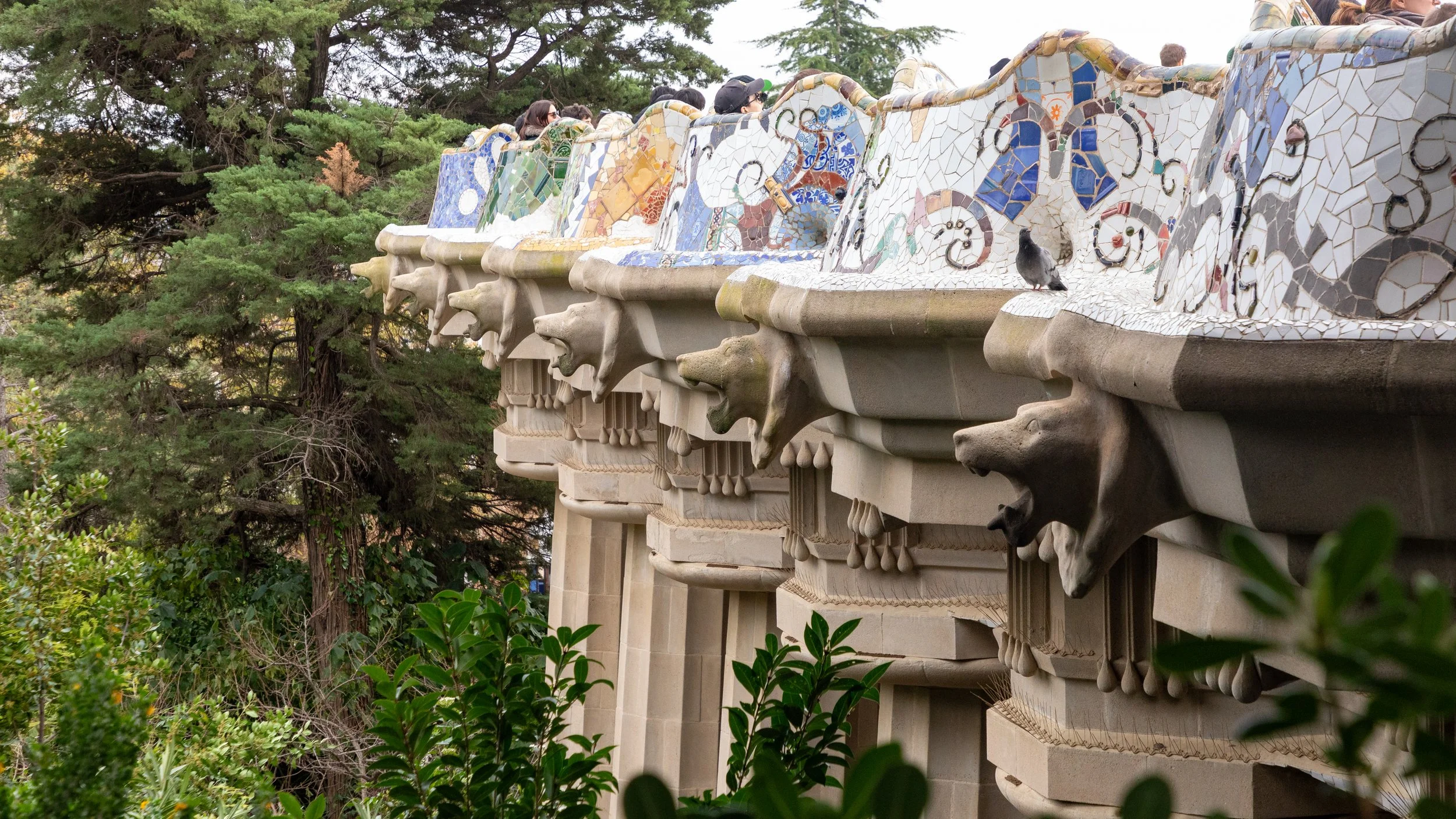
Columns support the large terrace lined with benches along the edge
Some of the many architectural elements blending in with the hillside nature
Fighting the afternoon crowds for the famous view from the busy terrace
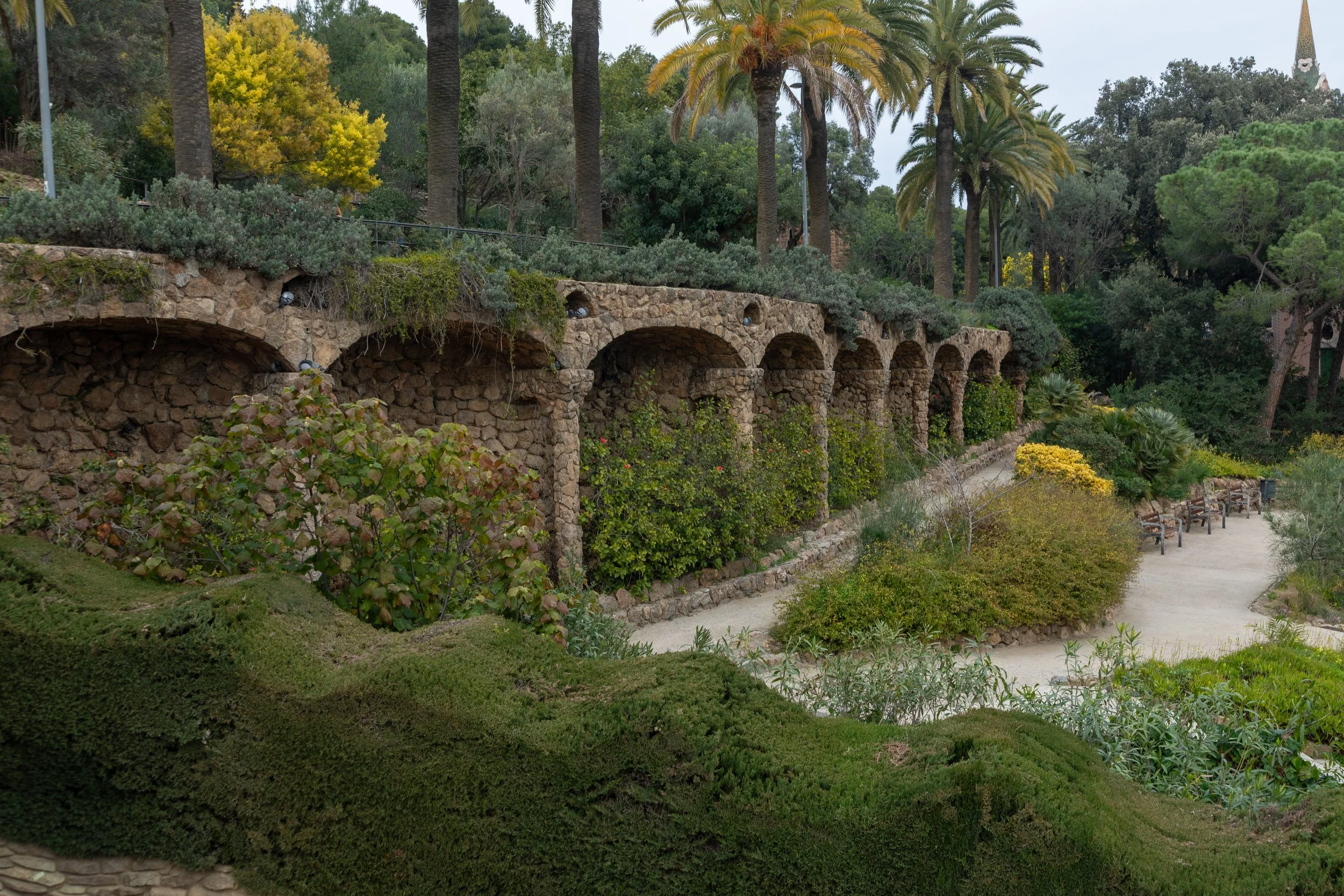
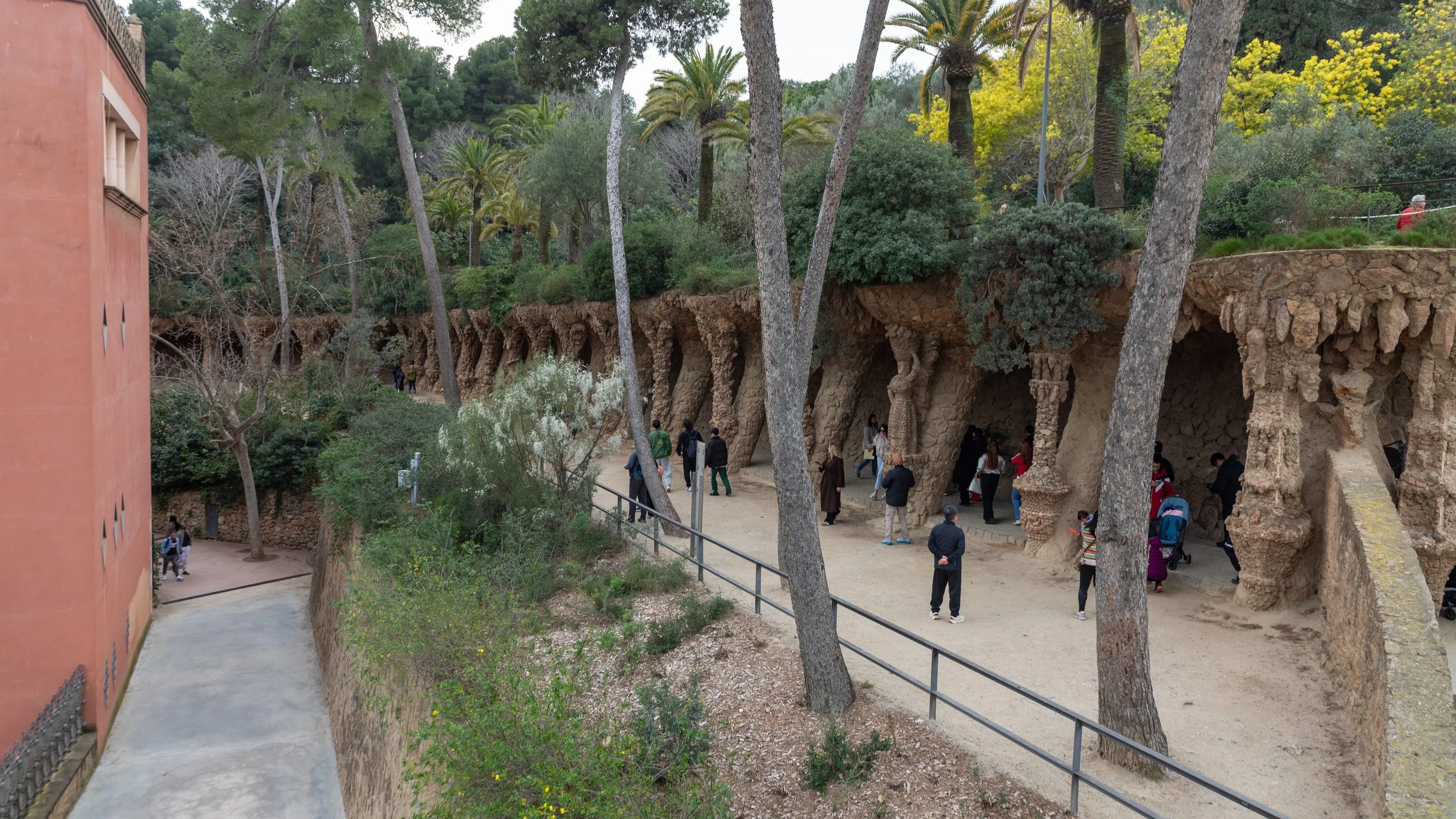
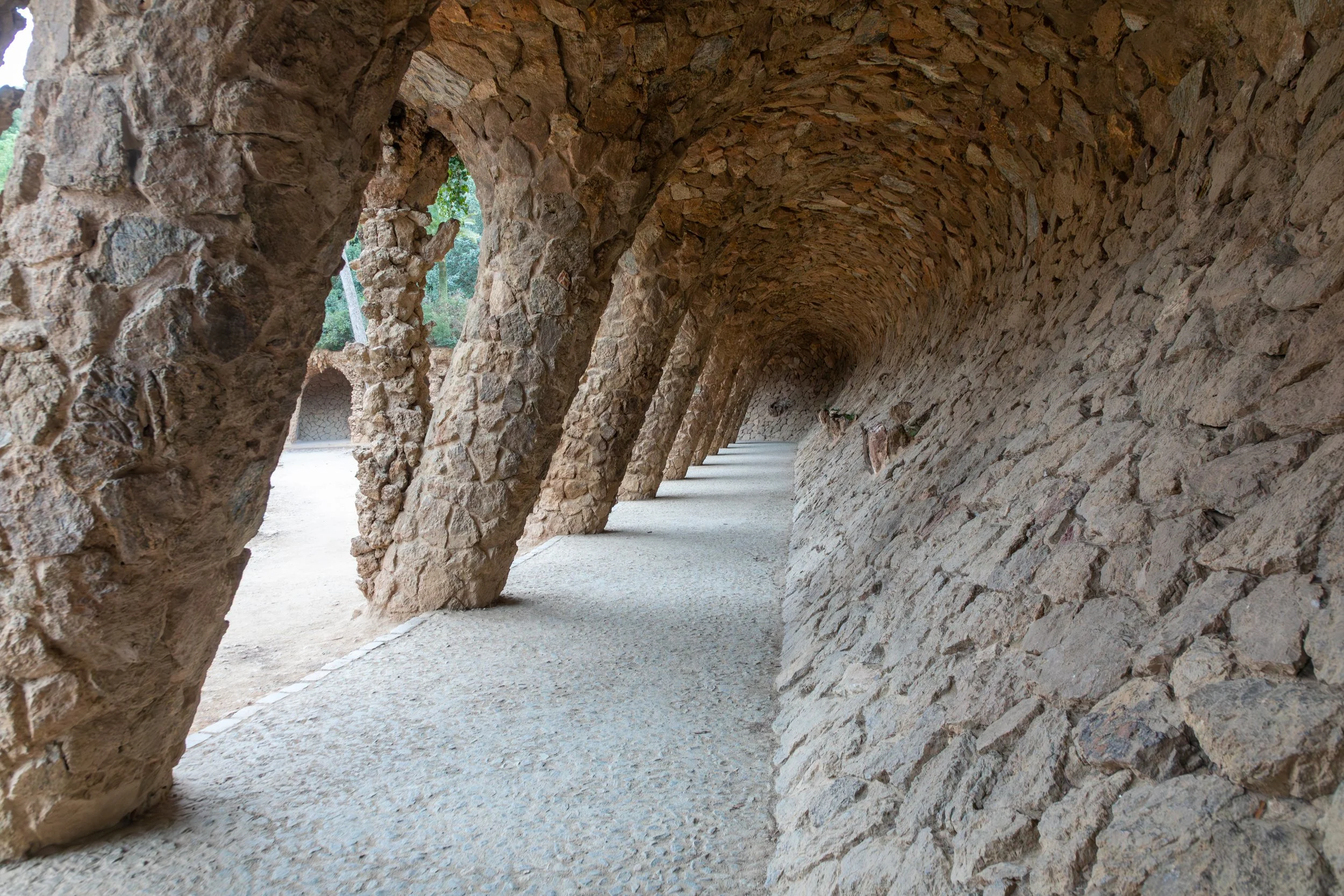
Making our way down from the terrace, the pathway of columns is designed to blend into nature
With a bit of patience, we were able to briefly have the pathway of columns to ourselves
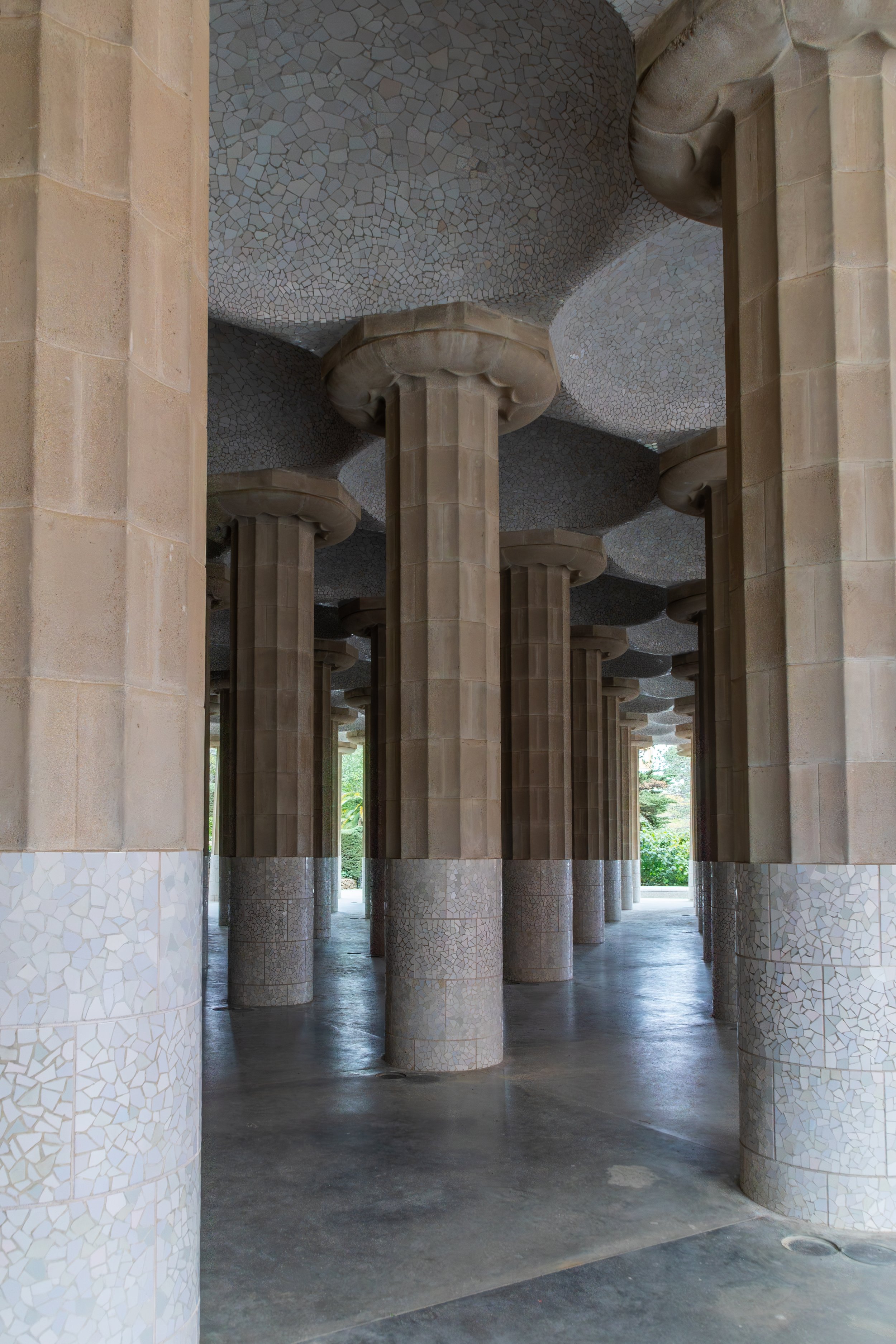
The marketplace (Hypostyle Room) was designed as a produce market for the park, which was originally meant to be a housing development
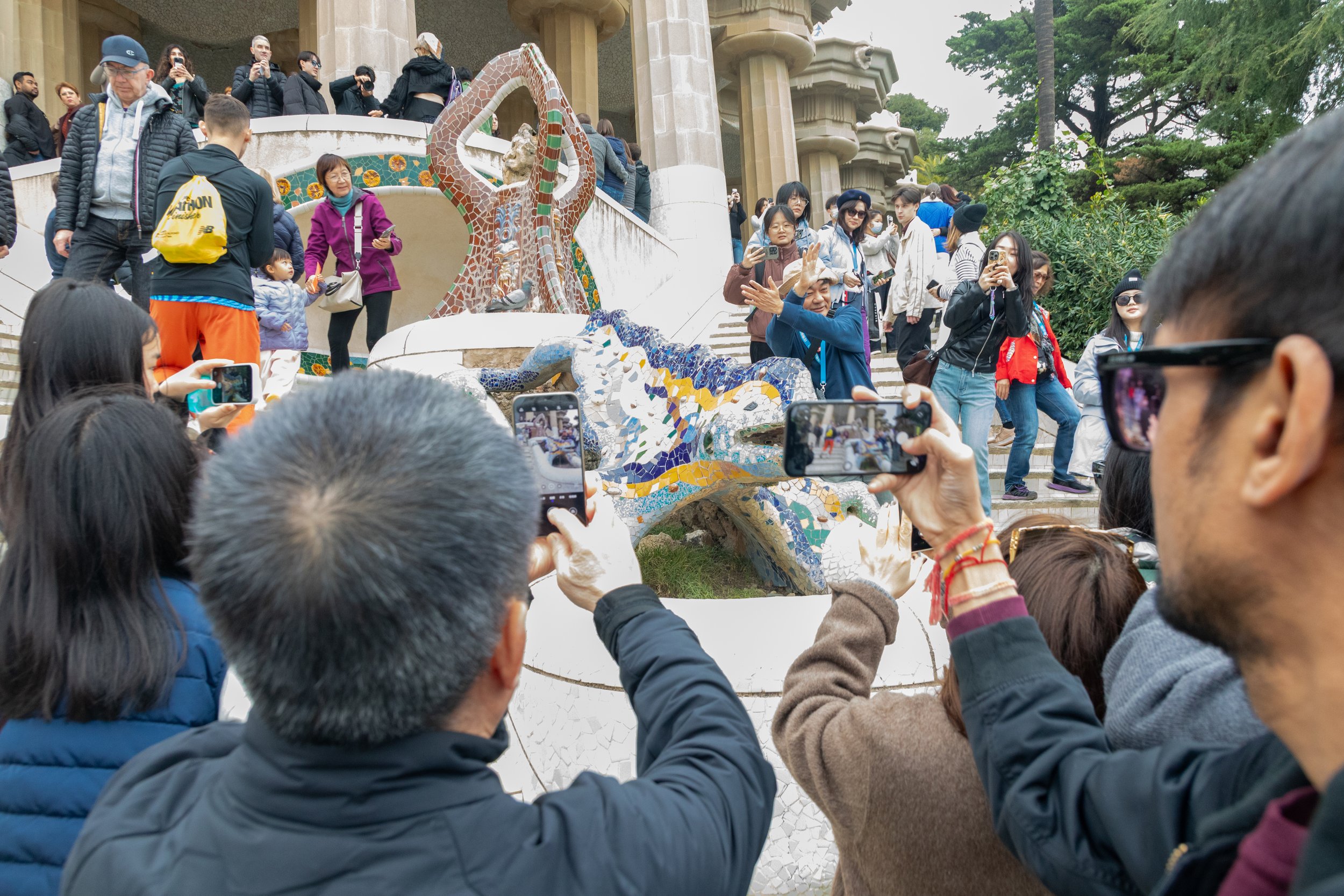
The first of the cascading mosaic fountains attracted a large crowd of photographers
So many cameras focused on the dragon stairways and fountain
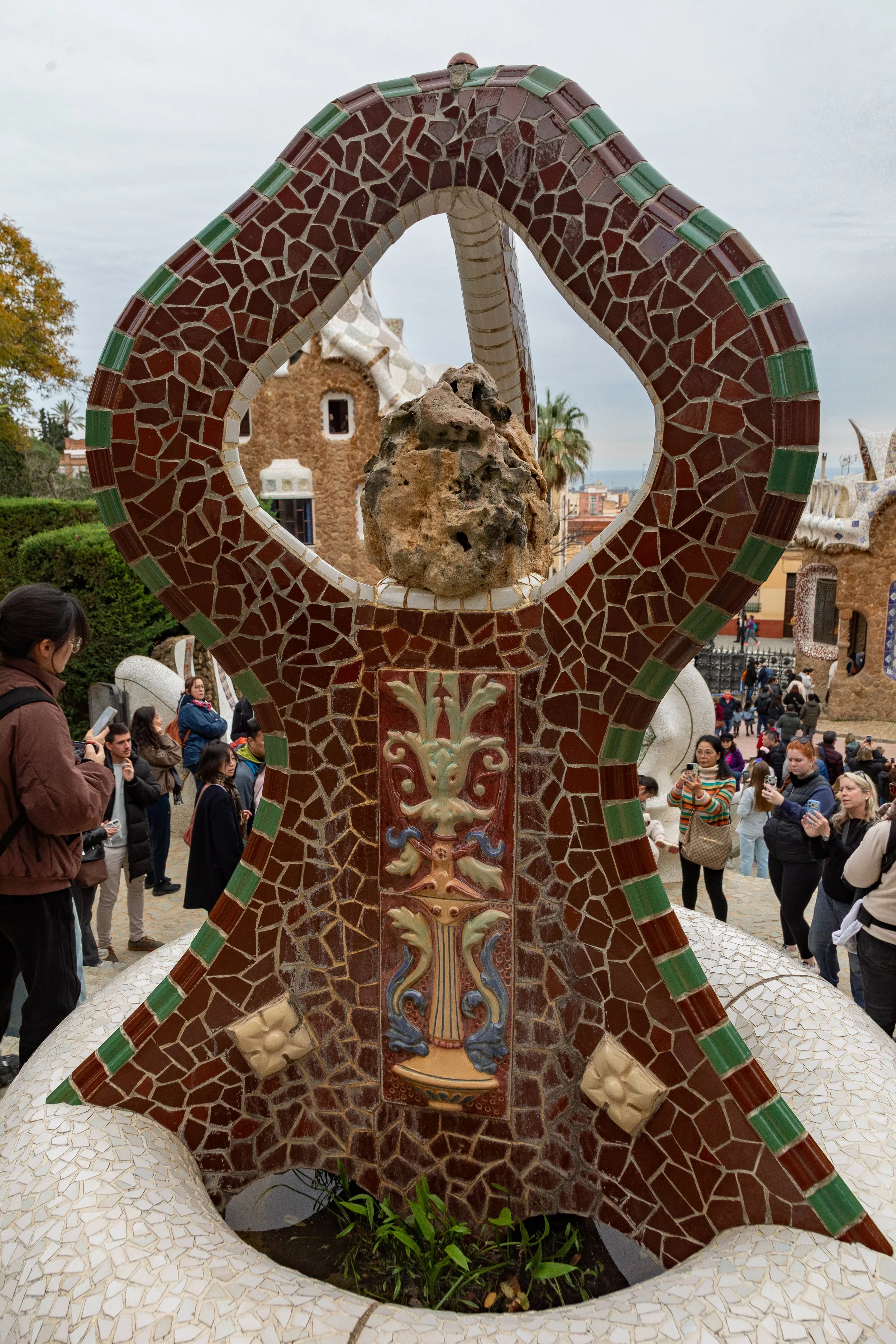
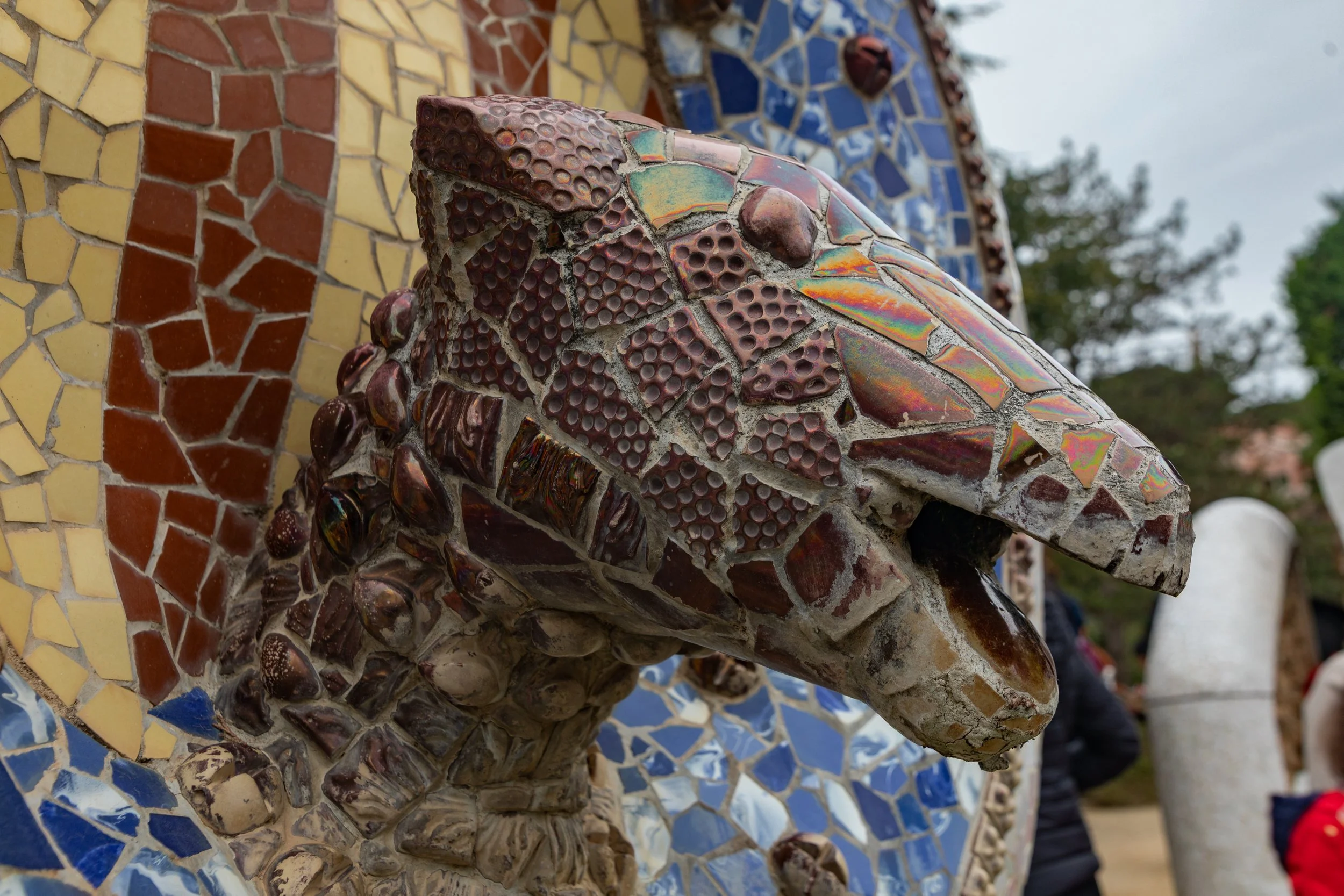
The last fountain has a serpent poking out of the red and gold Catalan shield
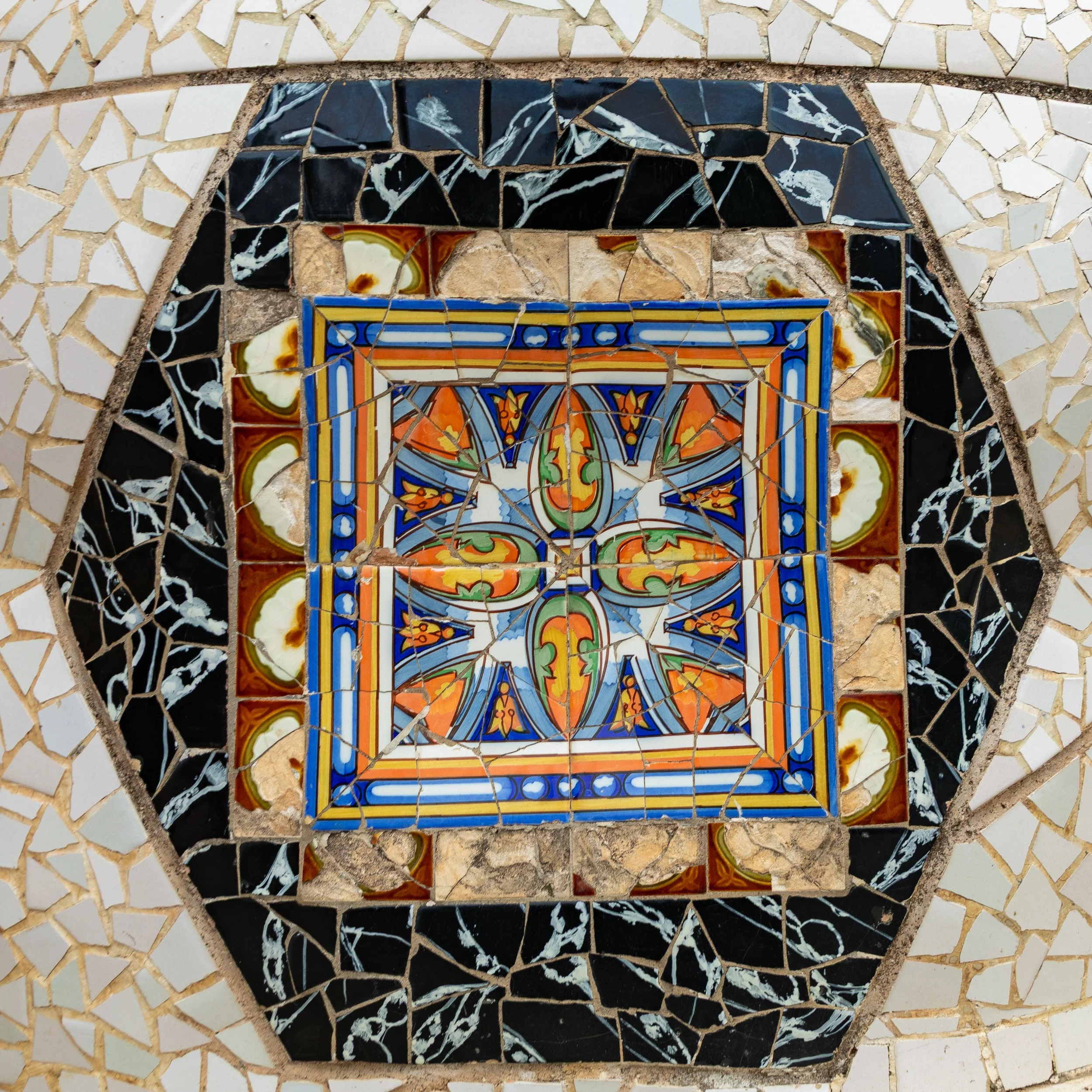
More of the intricate tile work that decorate the lower portion of the park
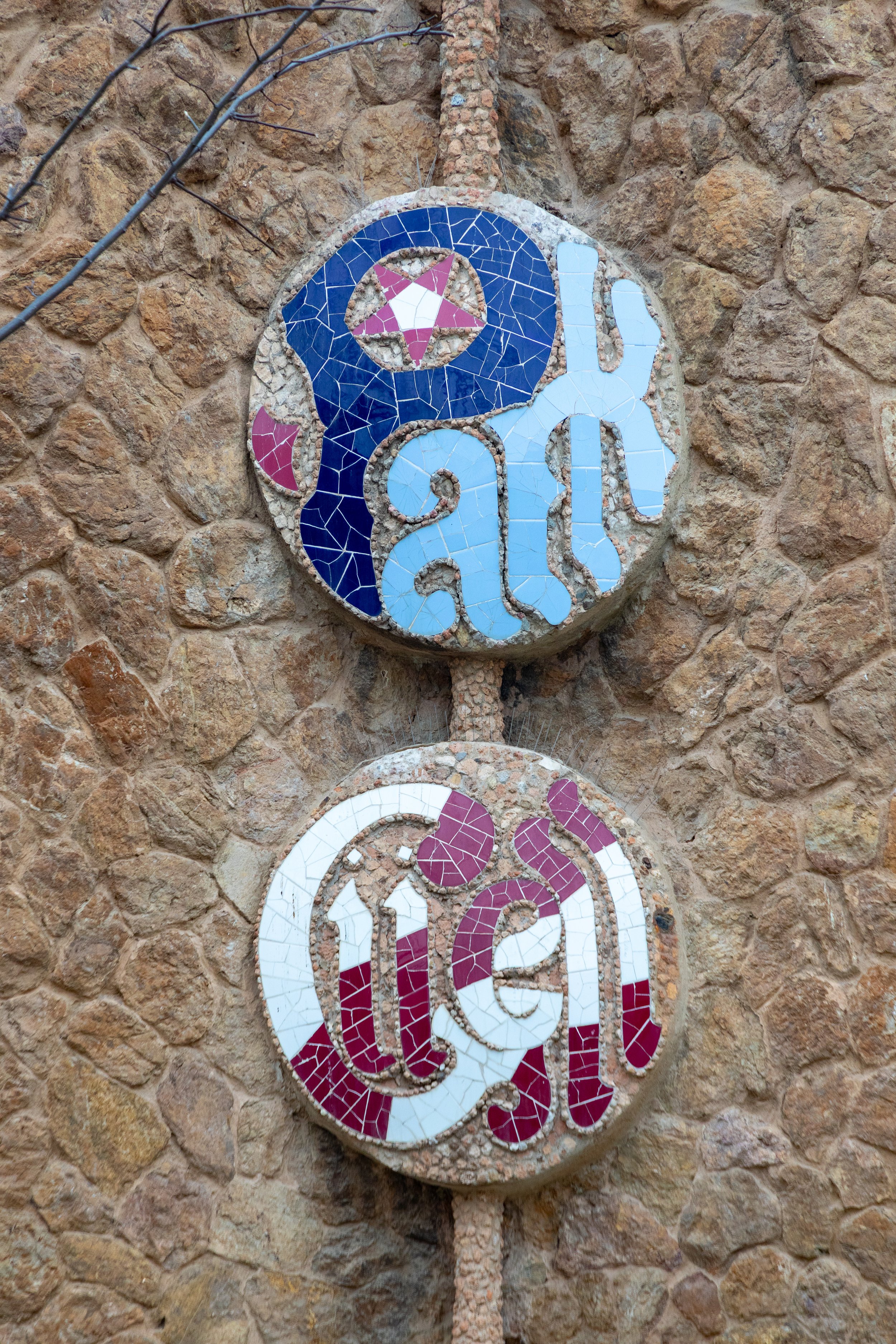
The park name displayed on the decorations outside the main entrance
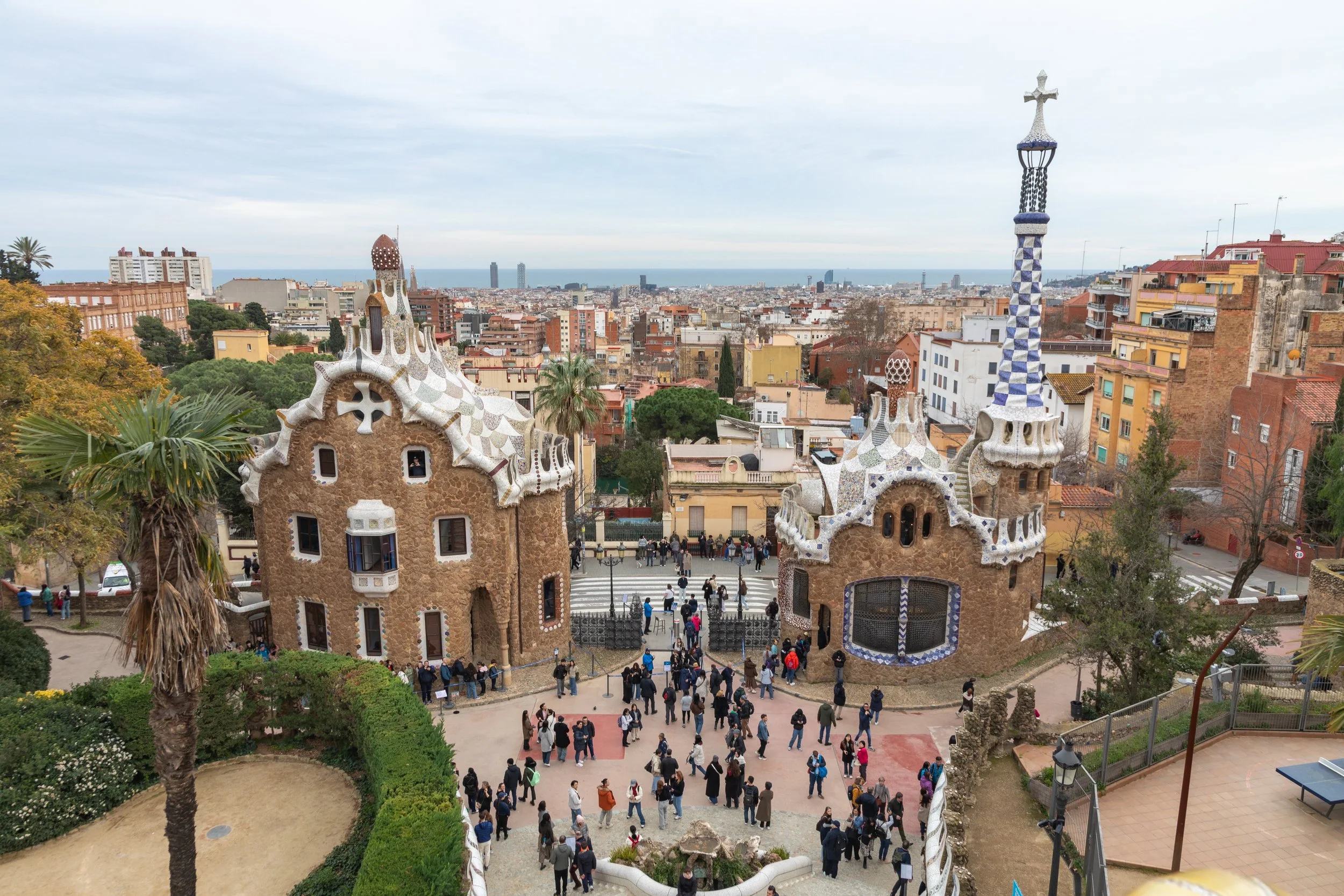
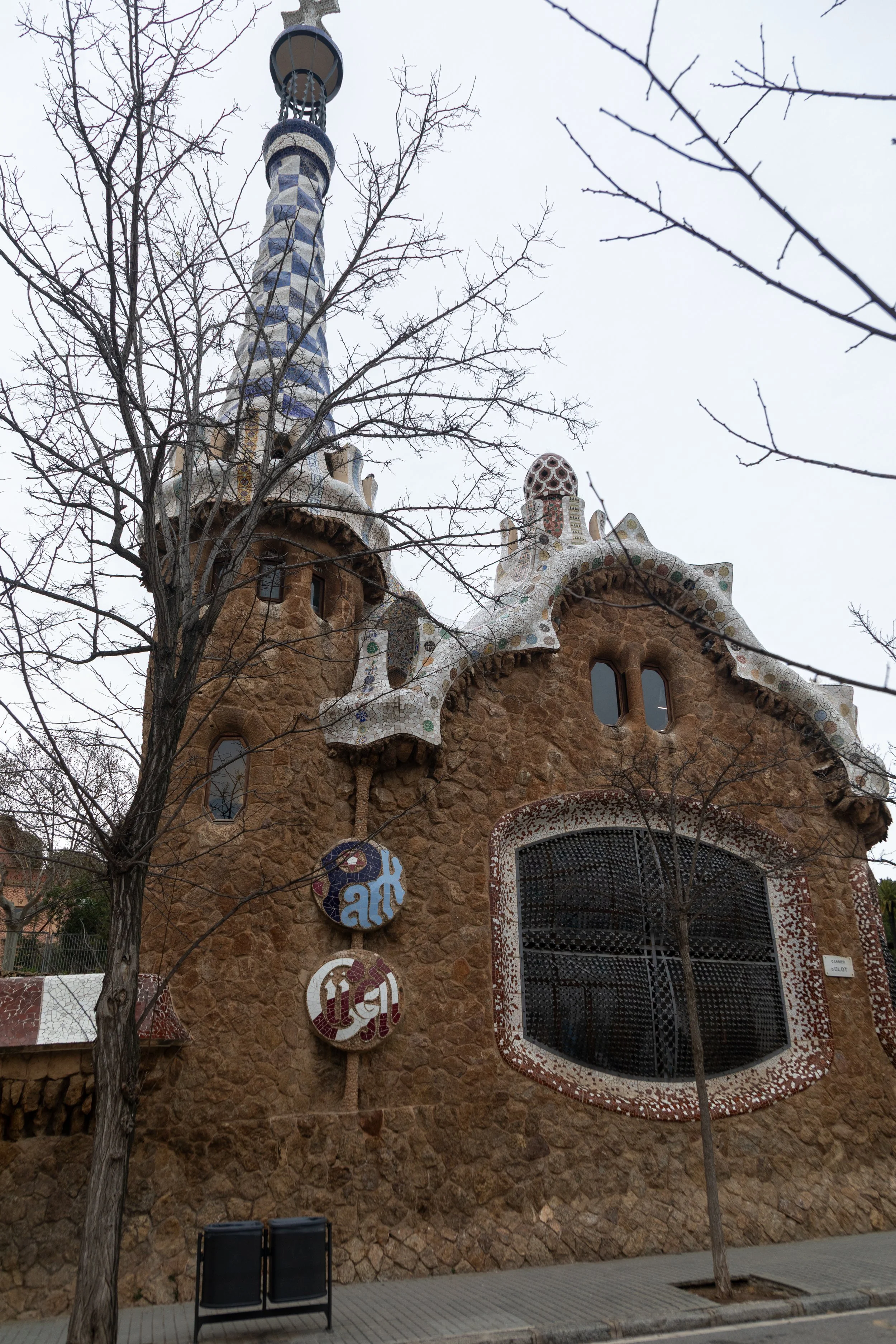
In the distinctive Gaudí style, of one of the two buildings flanking the main entrance
After our dusk tour of Park Güell, we had enough modernism for one day, and settled in for the evening back at the hotel. The hotel featured a spa with a number of options, with hot and cold pools, jets and rooms, so I relaxed to recover from the day before locking in our plans for our last full day around Barcelona.
Feb 16
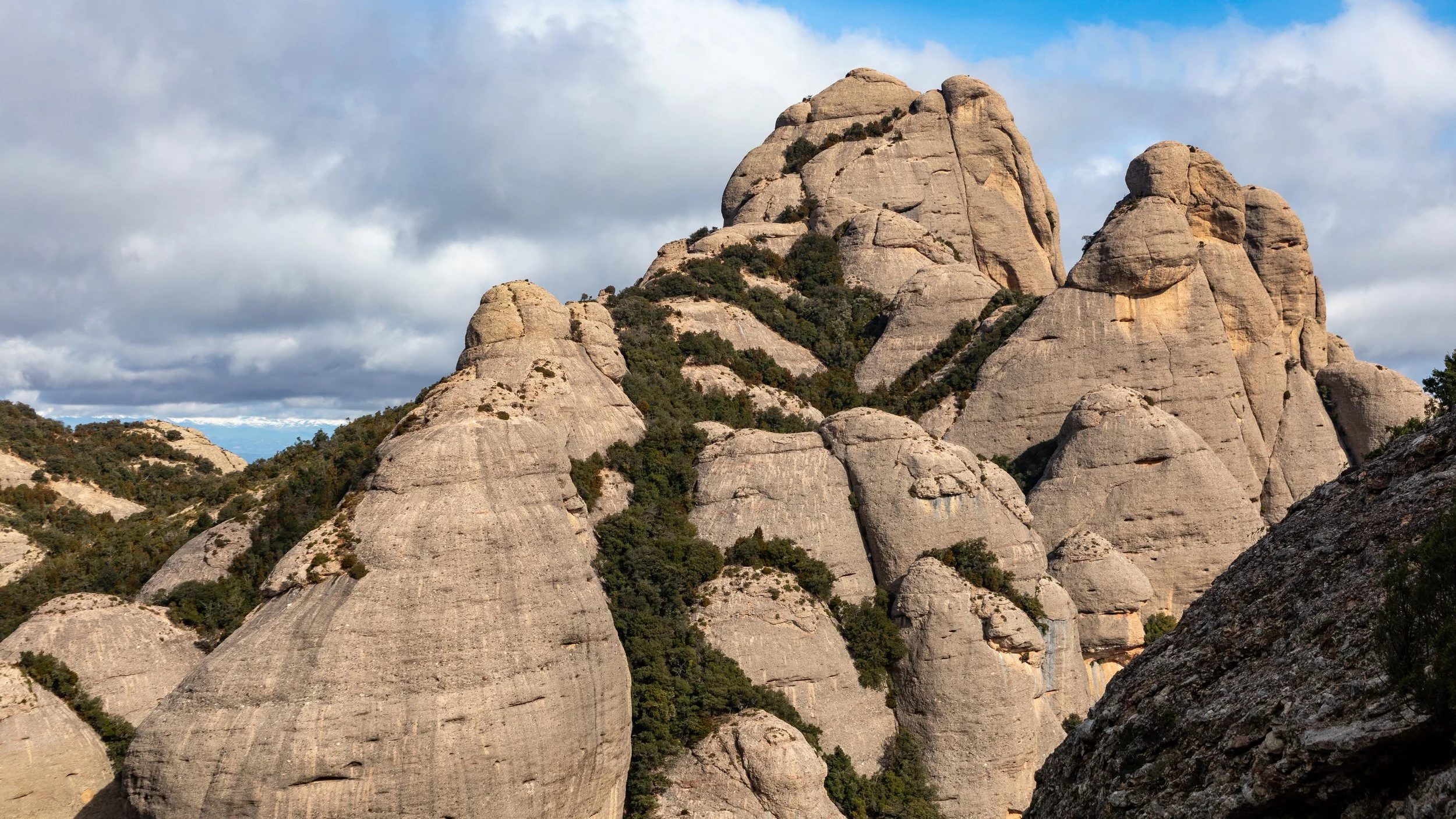
As we’d covered most of the highlights of Barcelona in this and our previous trip, we decided to spend our last day on a day trip. We had already been further afield to Figueres and the Dali Theatre-Museum, so this time we decided to check out the nearby Montserrat area. About 50km Barcelona it required a combination of a commuter train, a rack railway that climbed the mountain, and finally a funicular to climb the last hill. After an early breakfast, we got on the subway to catch the 9:40 regional train, and were at the monastery just after 11:00am.
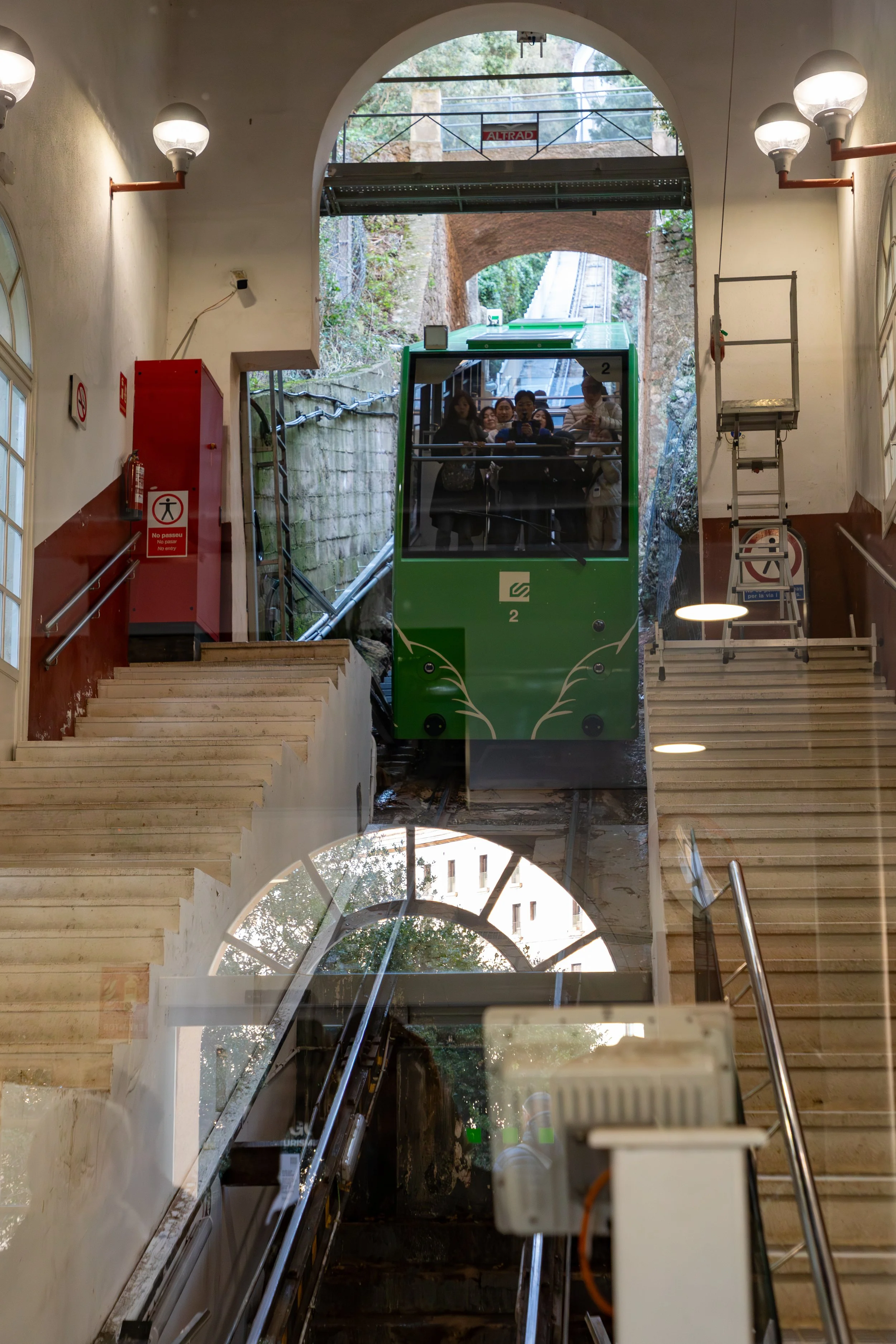
Just missed the San Joan Funicular
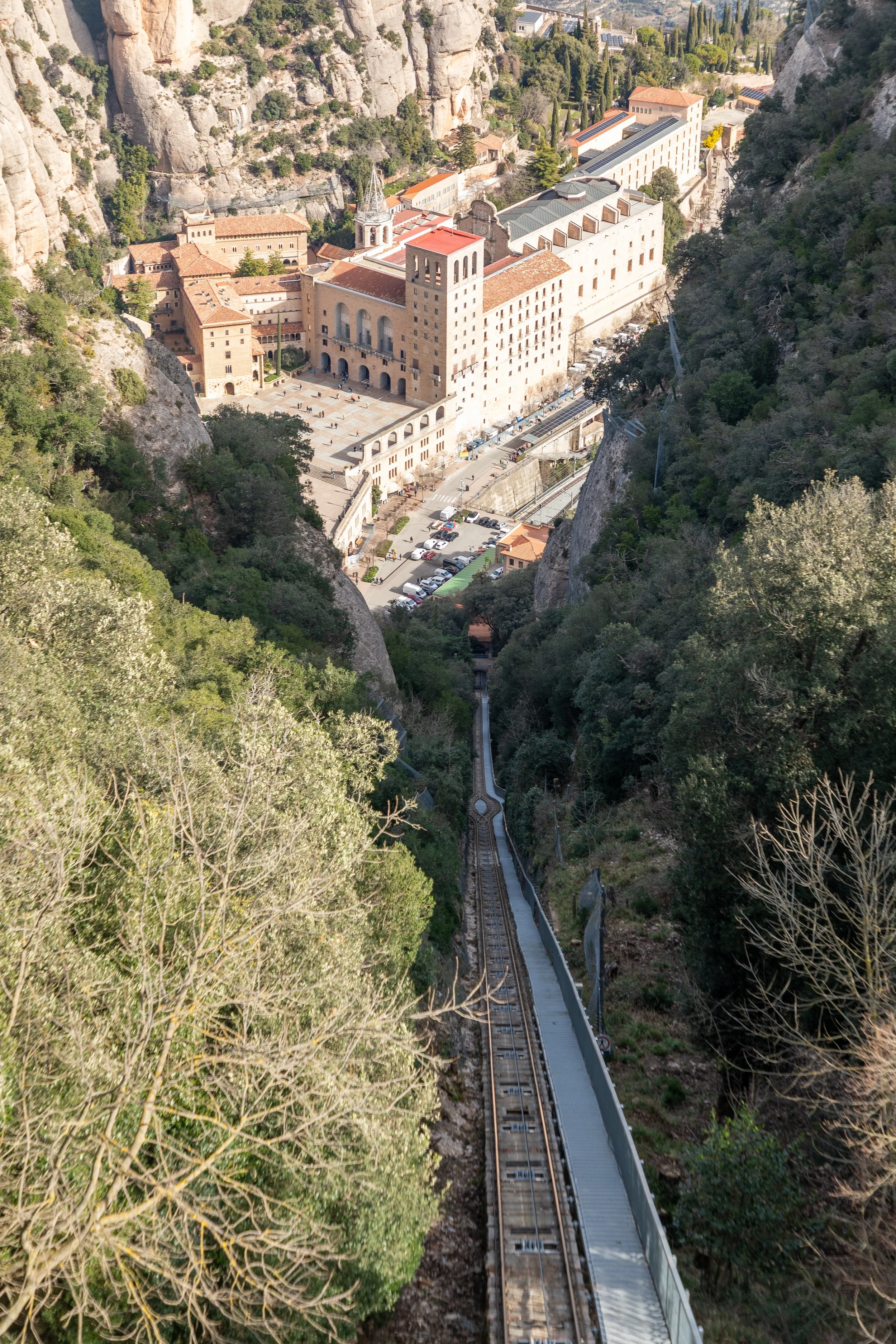
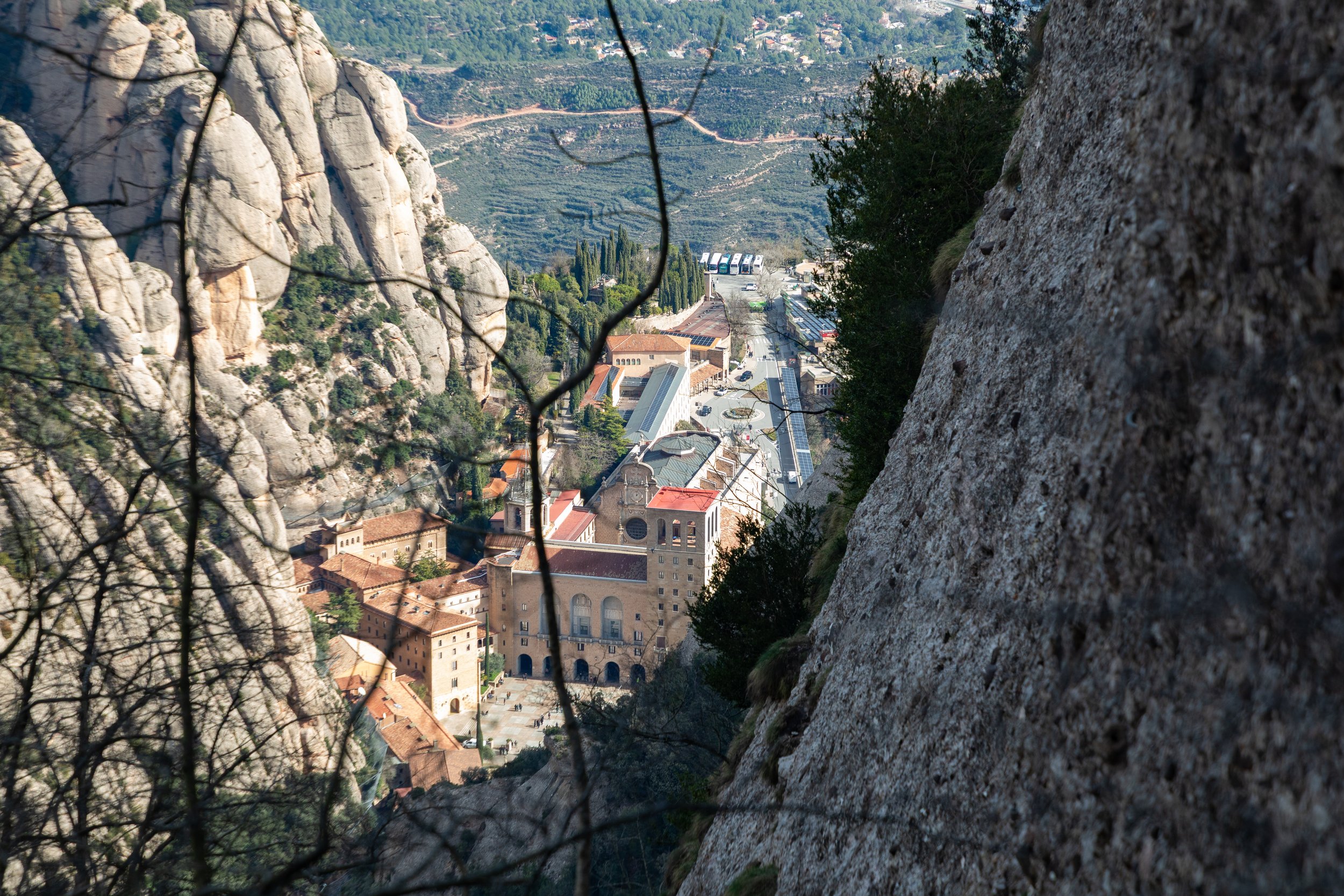
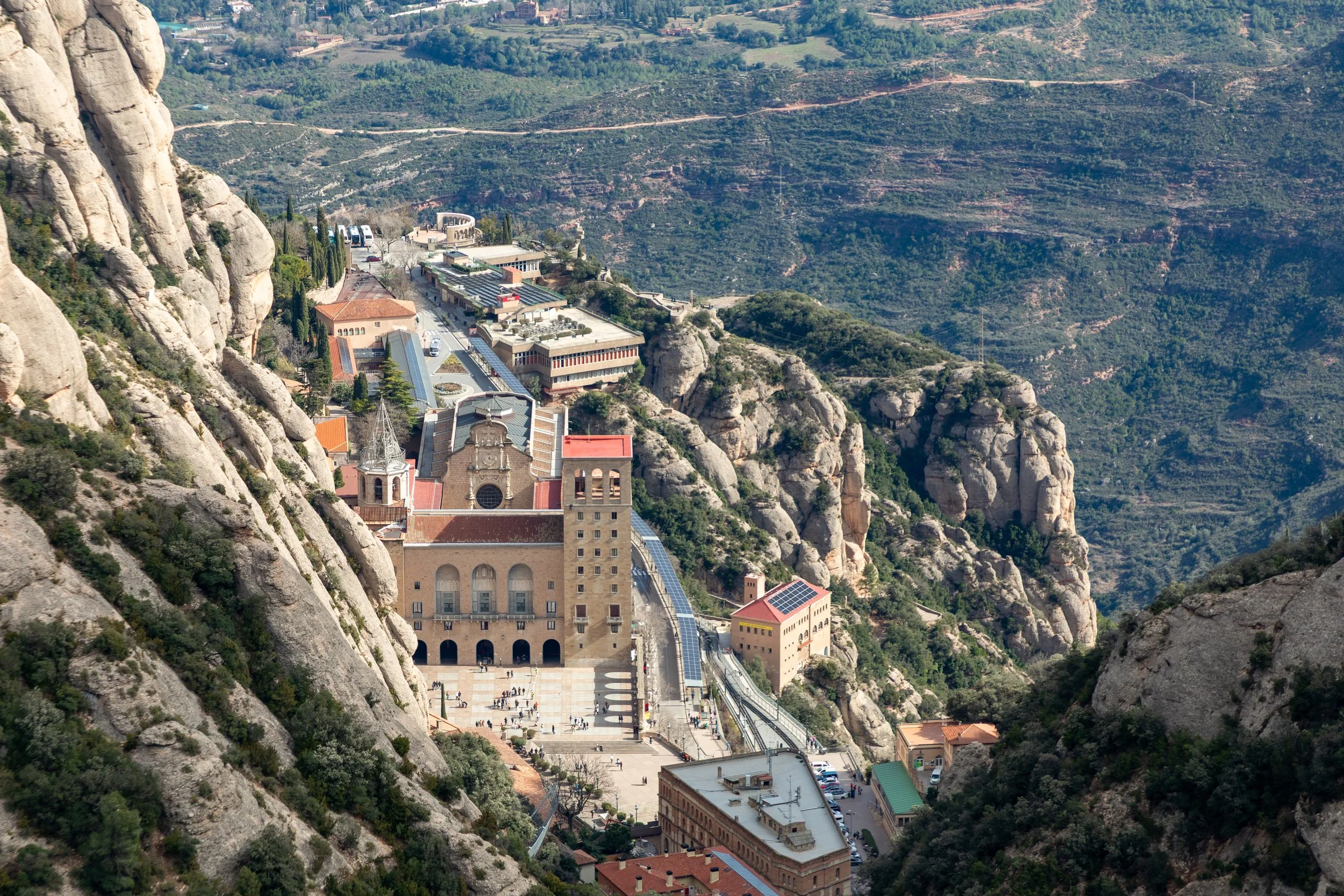
Looking down 250m below to the Montserrat Basilica from the top of the funicular
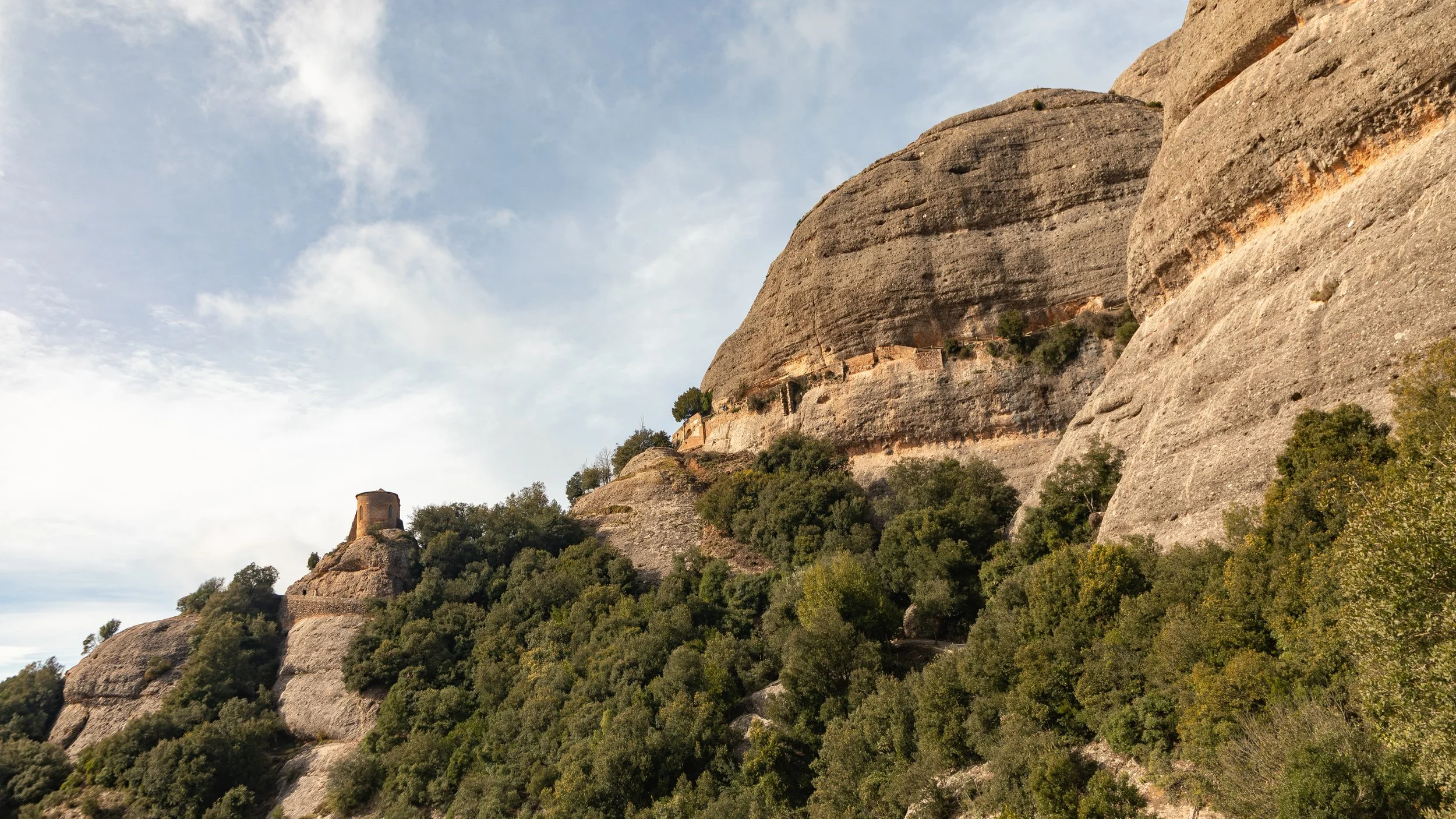
Enjoying the mountain scenery, broken up by various small chapels
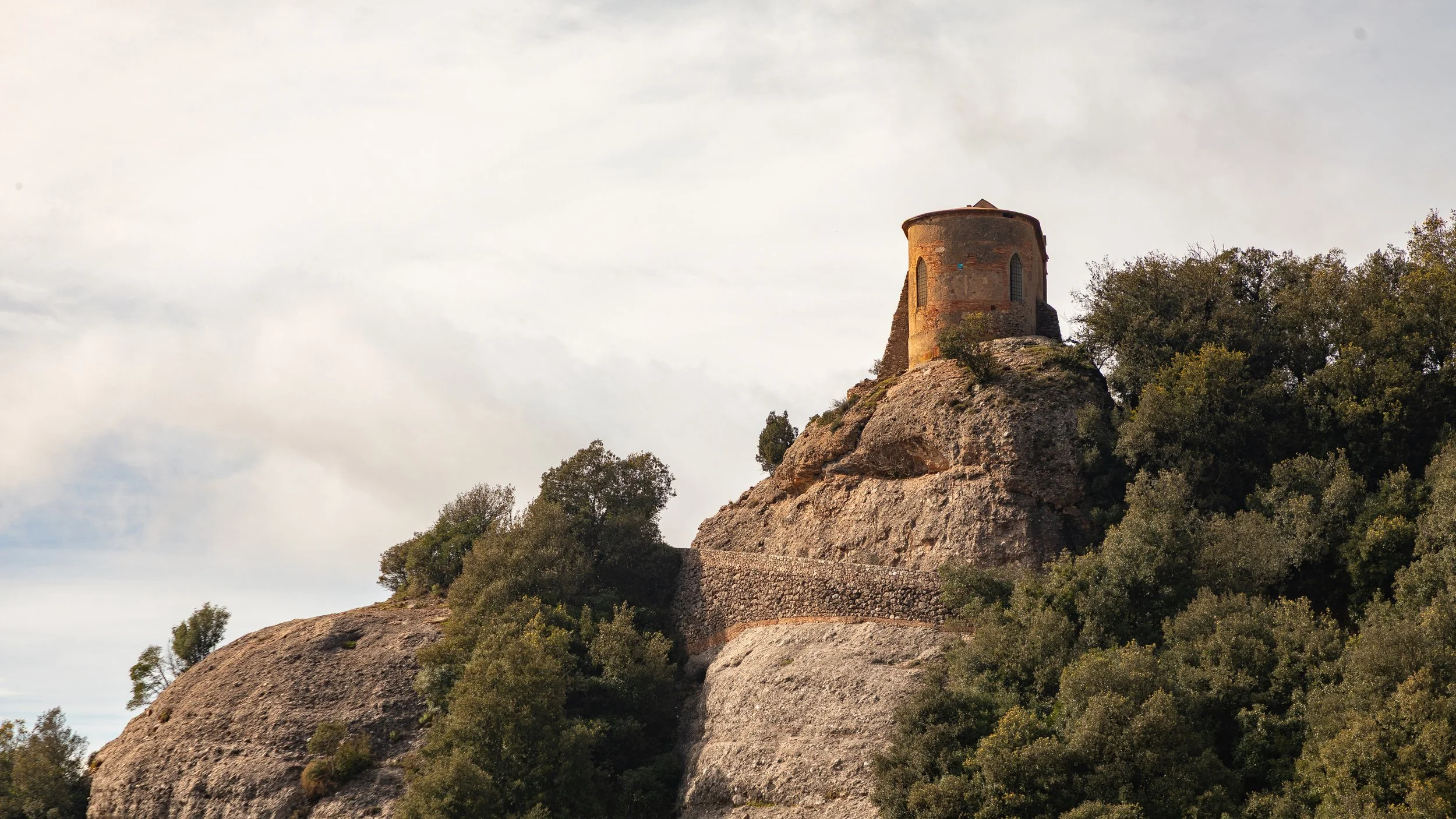
Making our way towards the Sant Joan Chapel
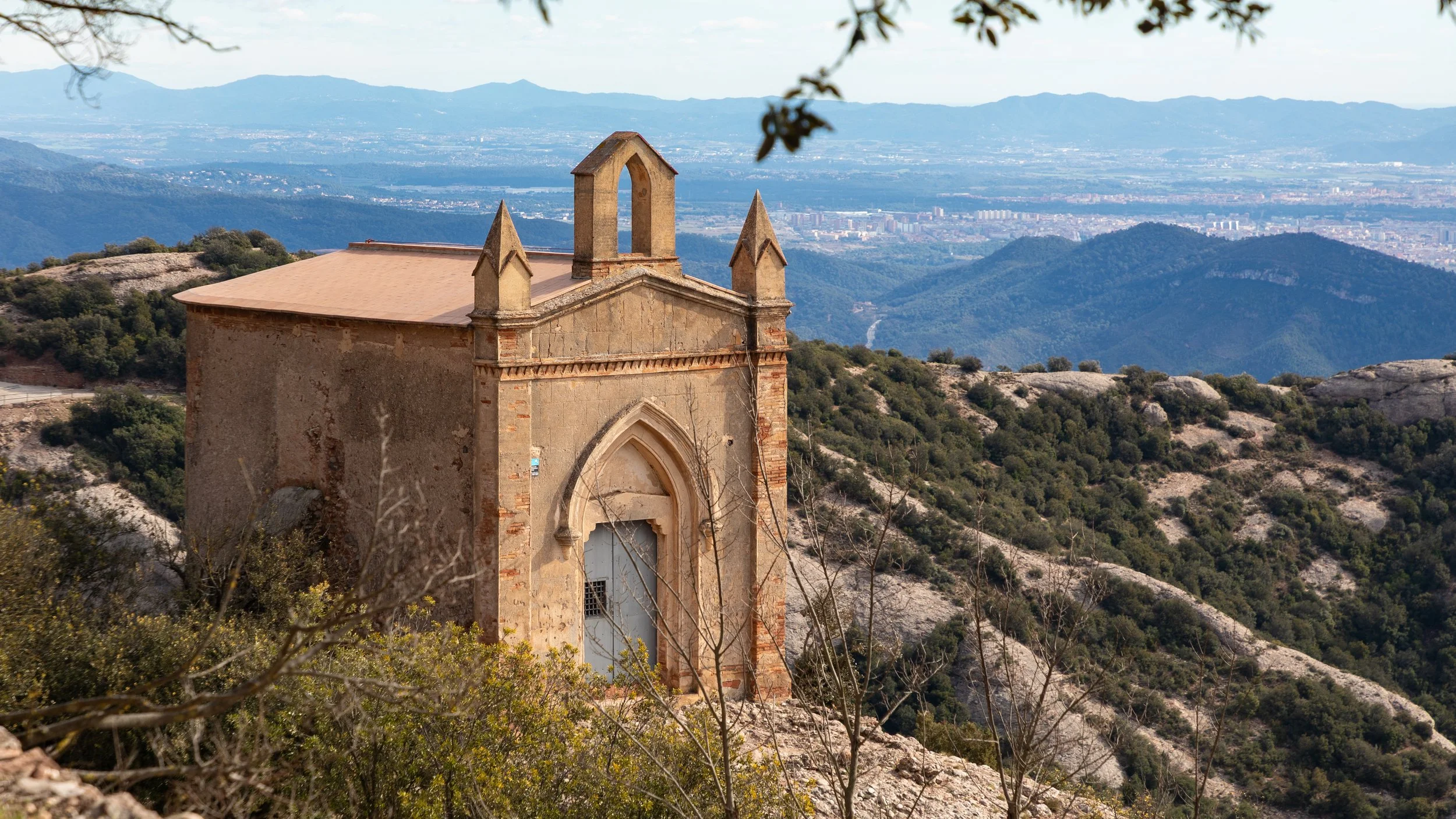
Sant Joan Chapel, with Barcelona’s sprawling suburbs in the background
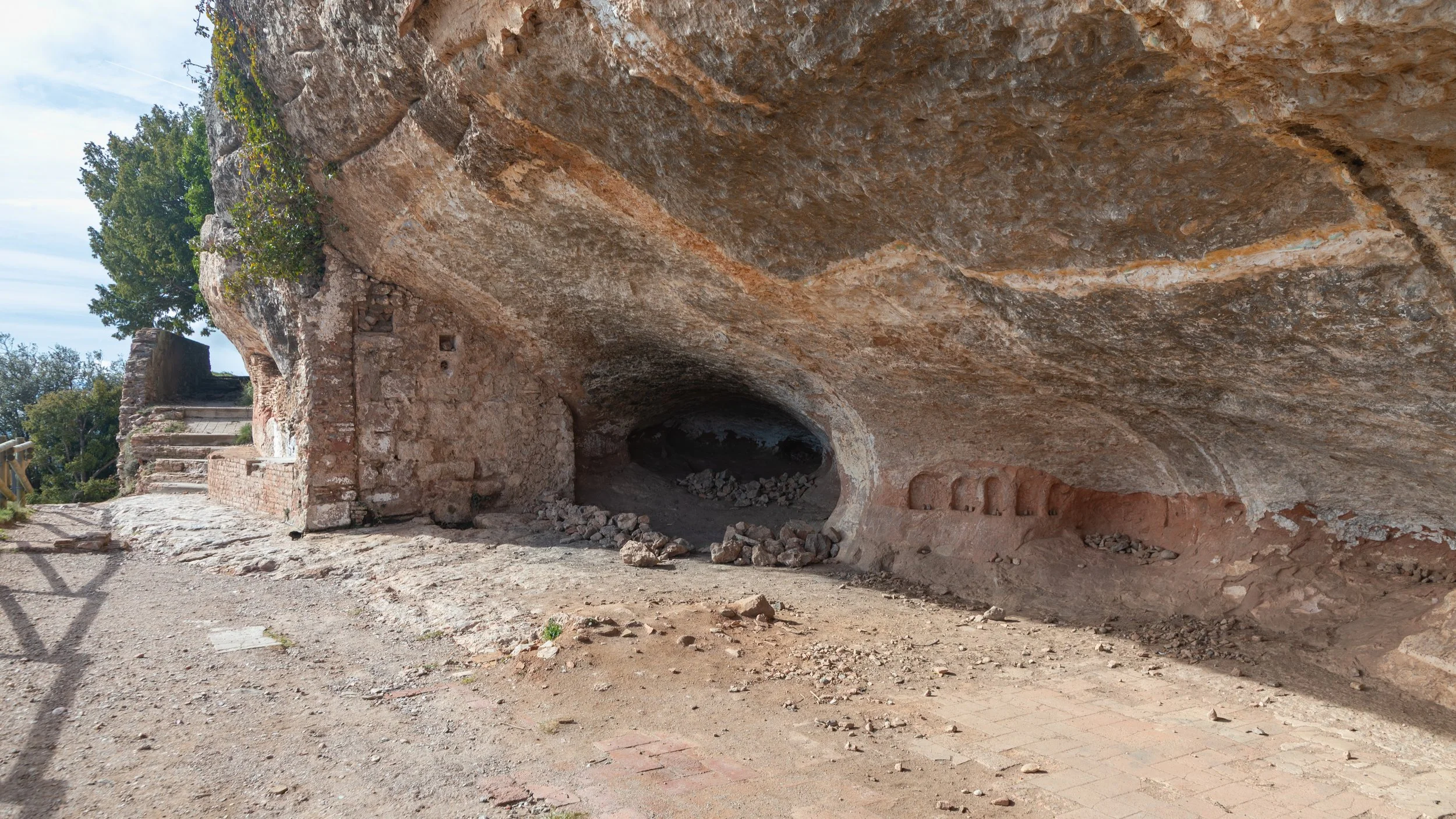
Ruins of more of the buildings cut into the mountainside
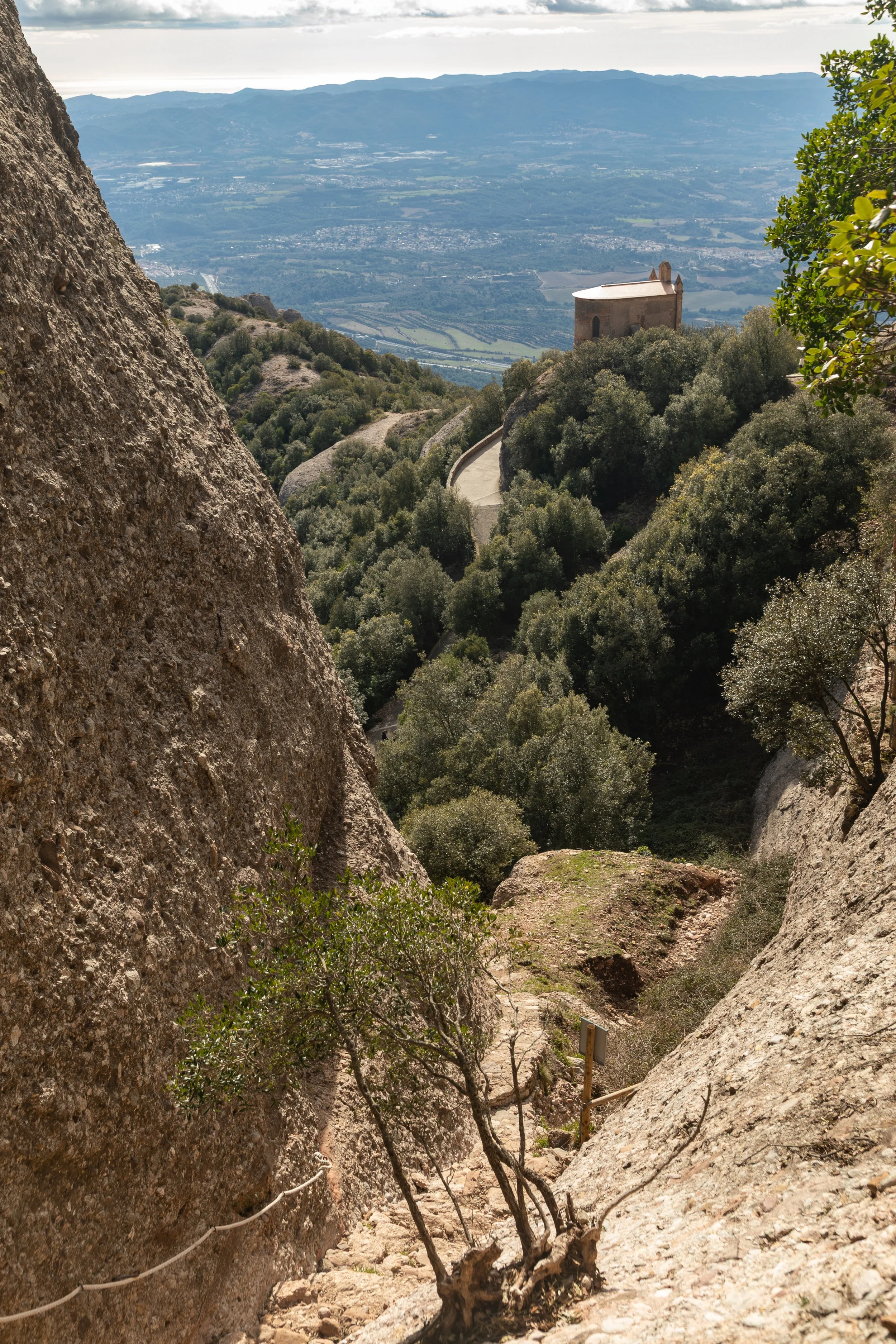
Hiking our way up the hillside, looking back at the chapel with the Mediterranean coastline
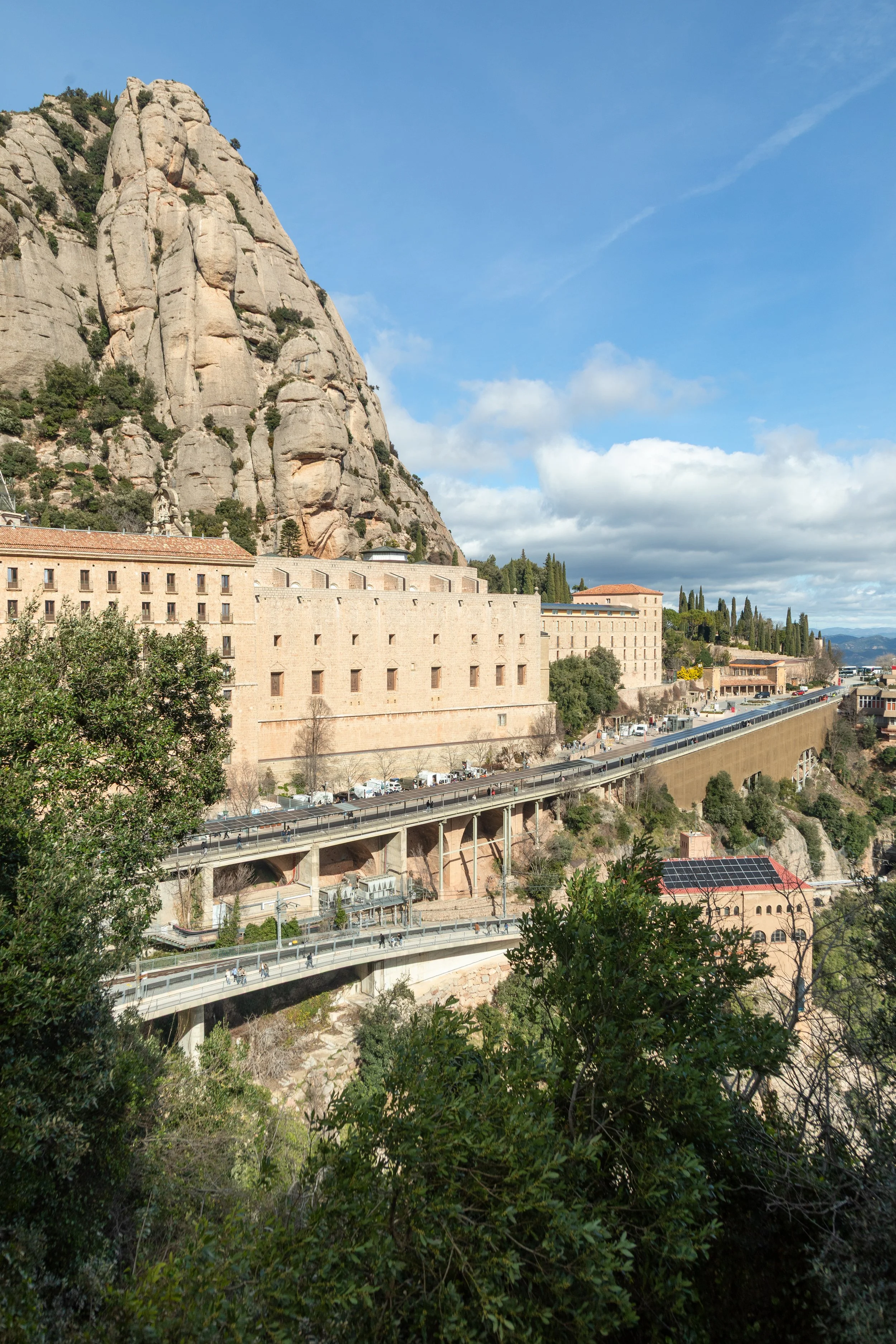
From the trail, the Monastery dominates many of the views
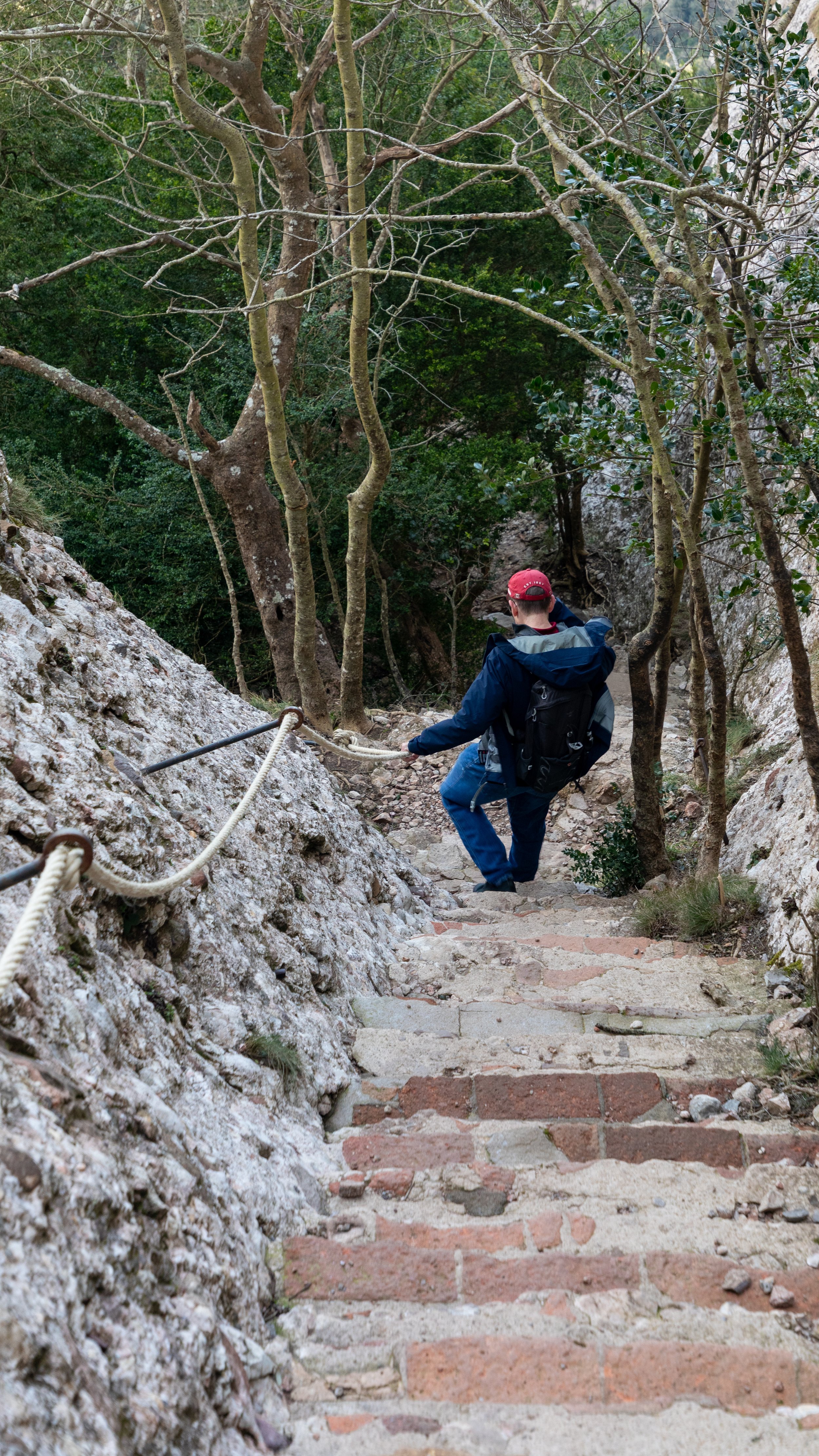
This portion of the historic trail was a little tricky
View of the monastery complex and the basilica
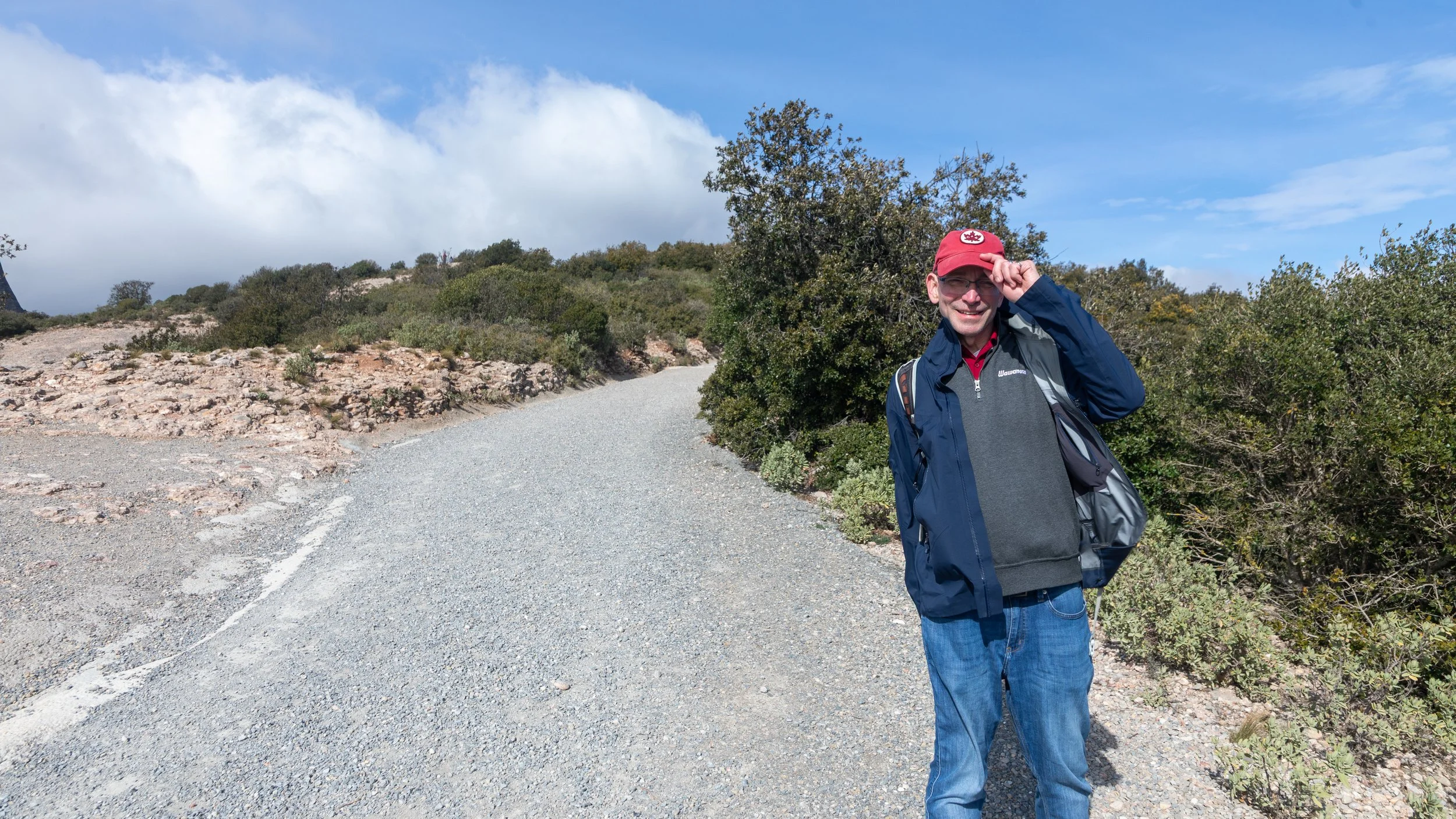
Making our way downhill, the very strong winds make it a challenge to keep my hat on
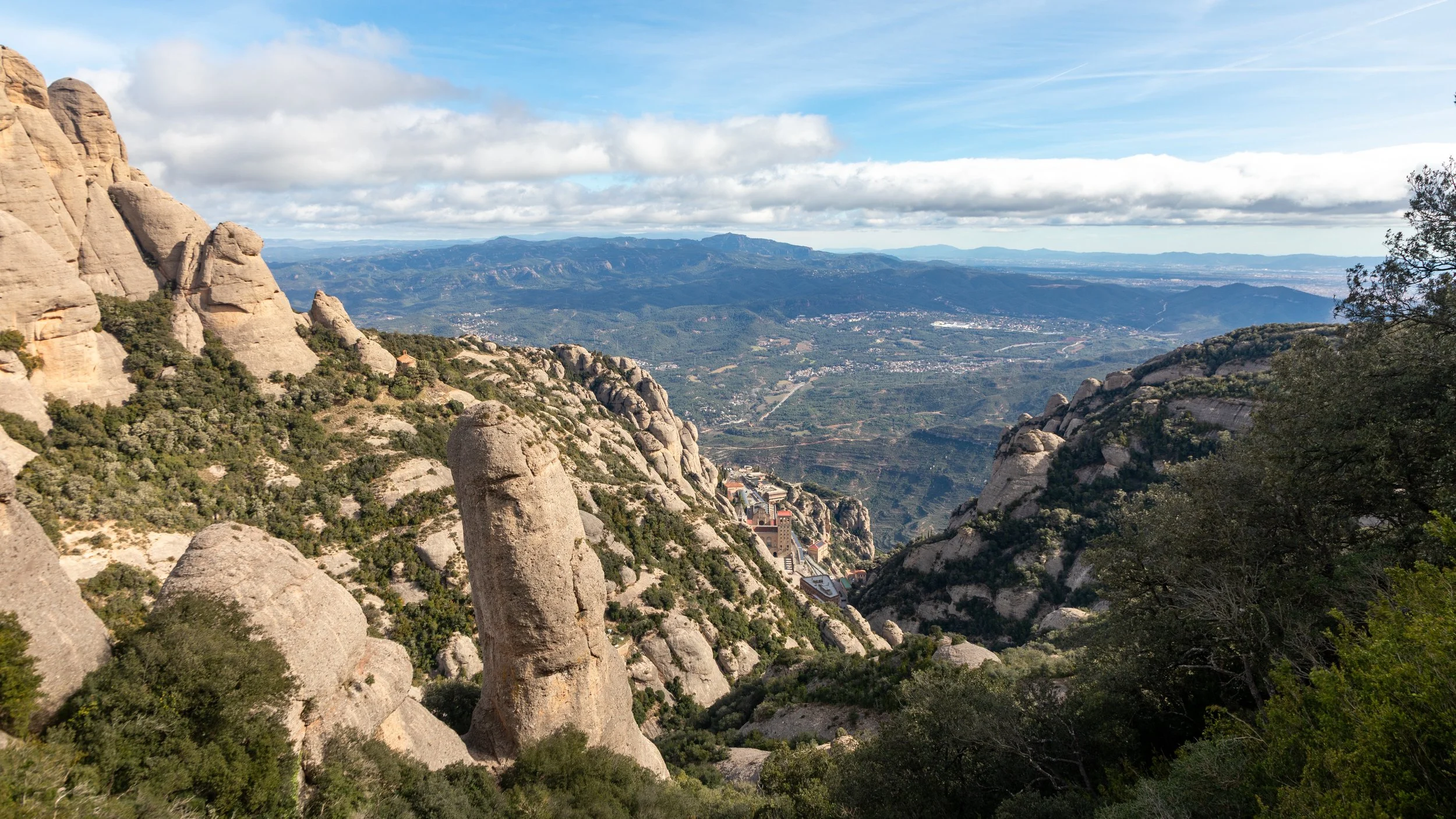
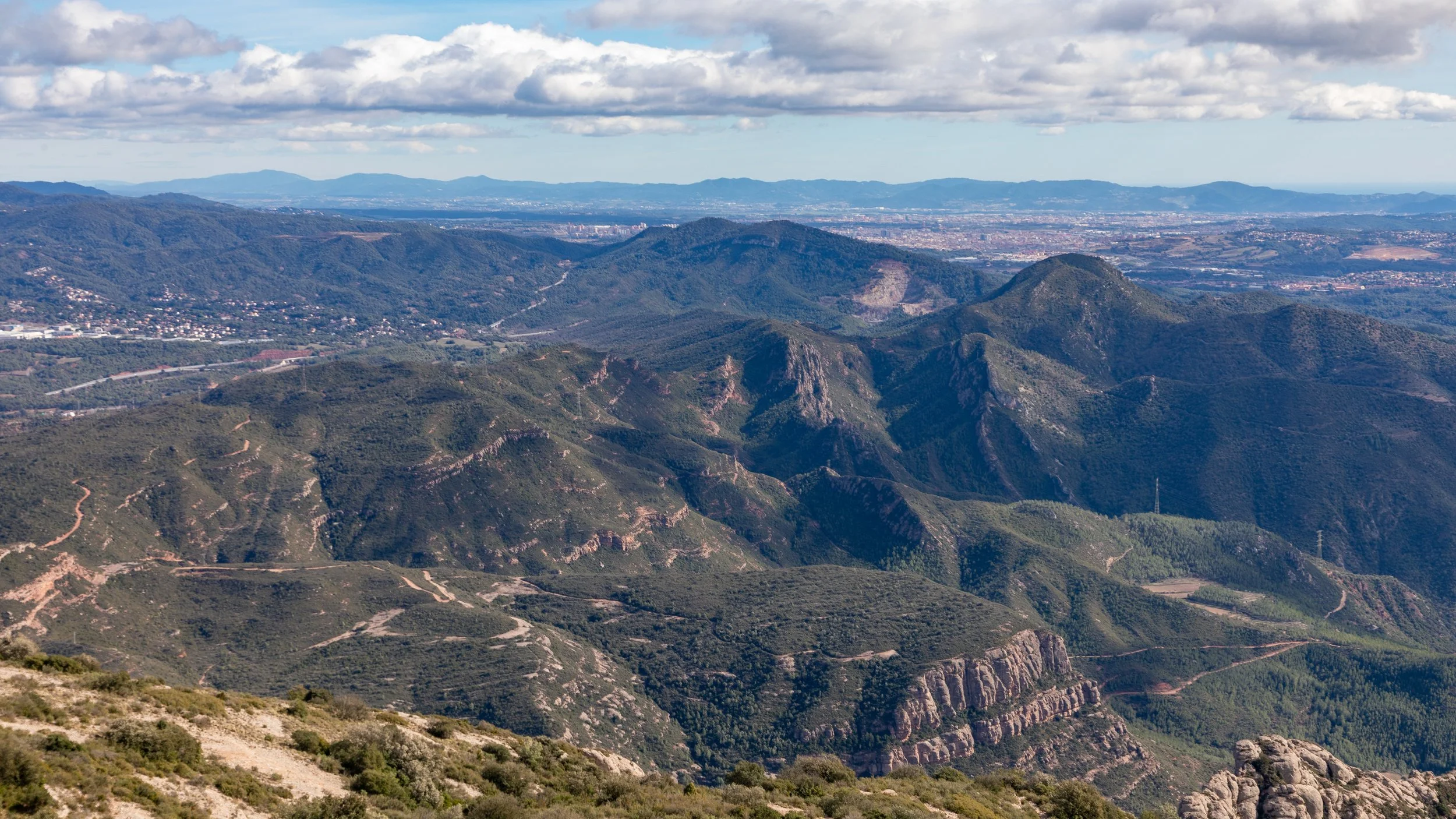
Our trail eventually connected to one of the longer hikes along the mountain ridge with some scenic views into the valley below
Hiding under the clouds is the snow-capped mountains of the Pyrenees
More of the beautiful view towards the coast
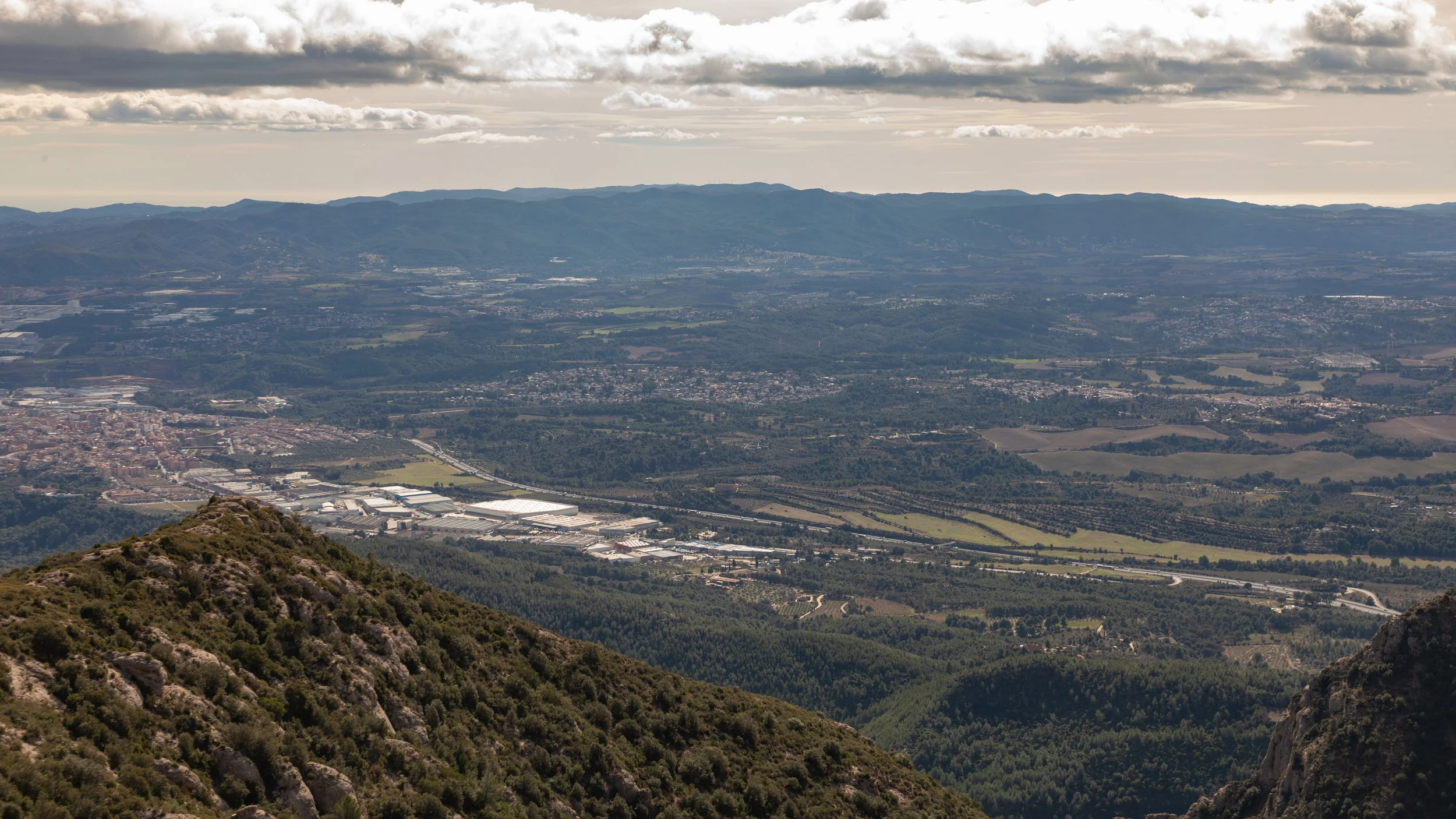
50km from Barcelona, you can still recognize many of the features from the city
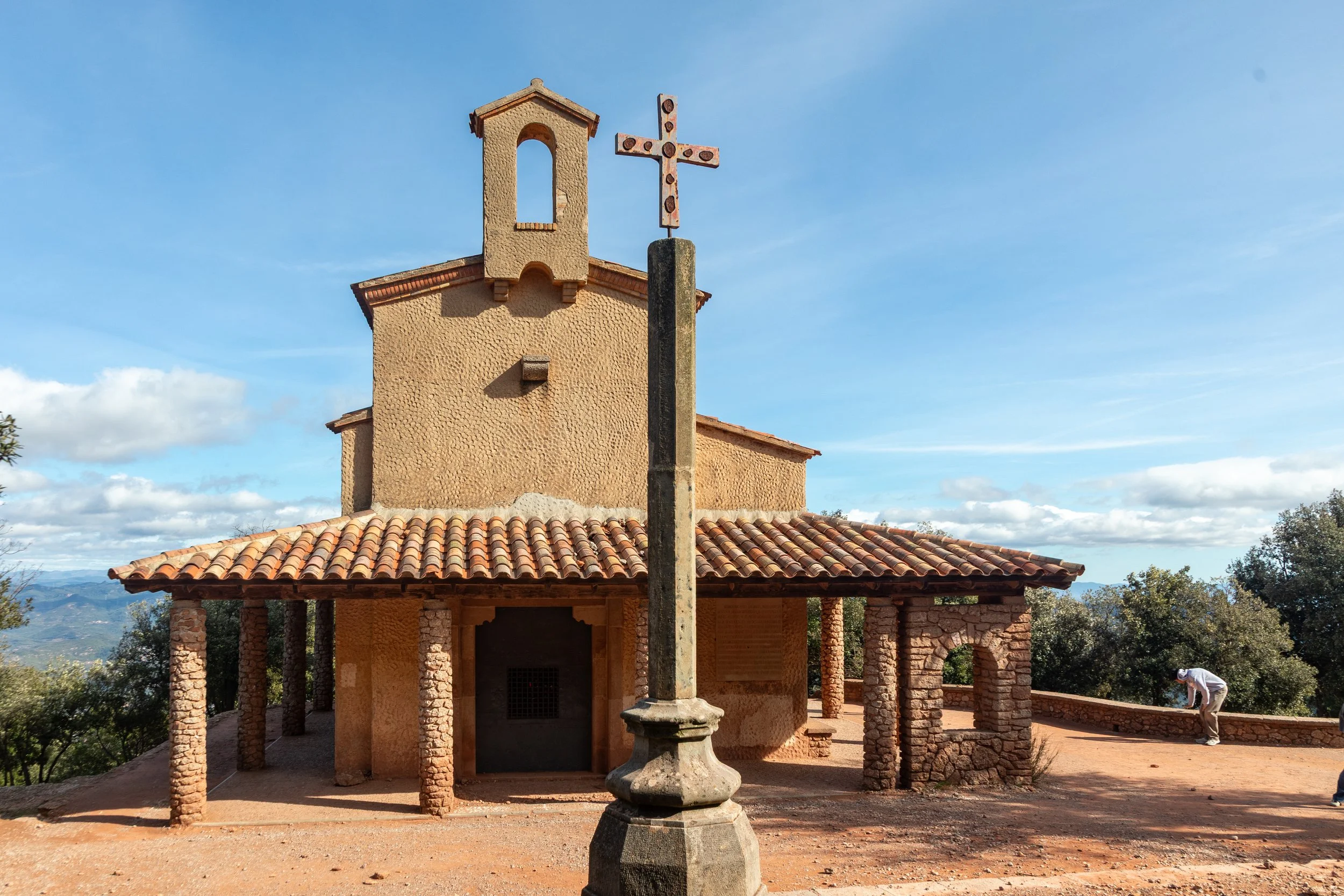
Small Sant Miquel Chapel, as the trails continues closer to the Monastery
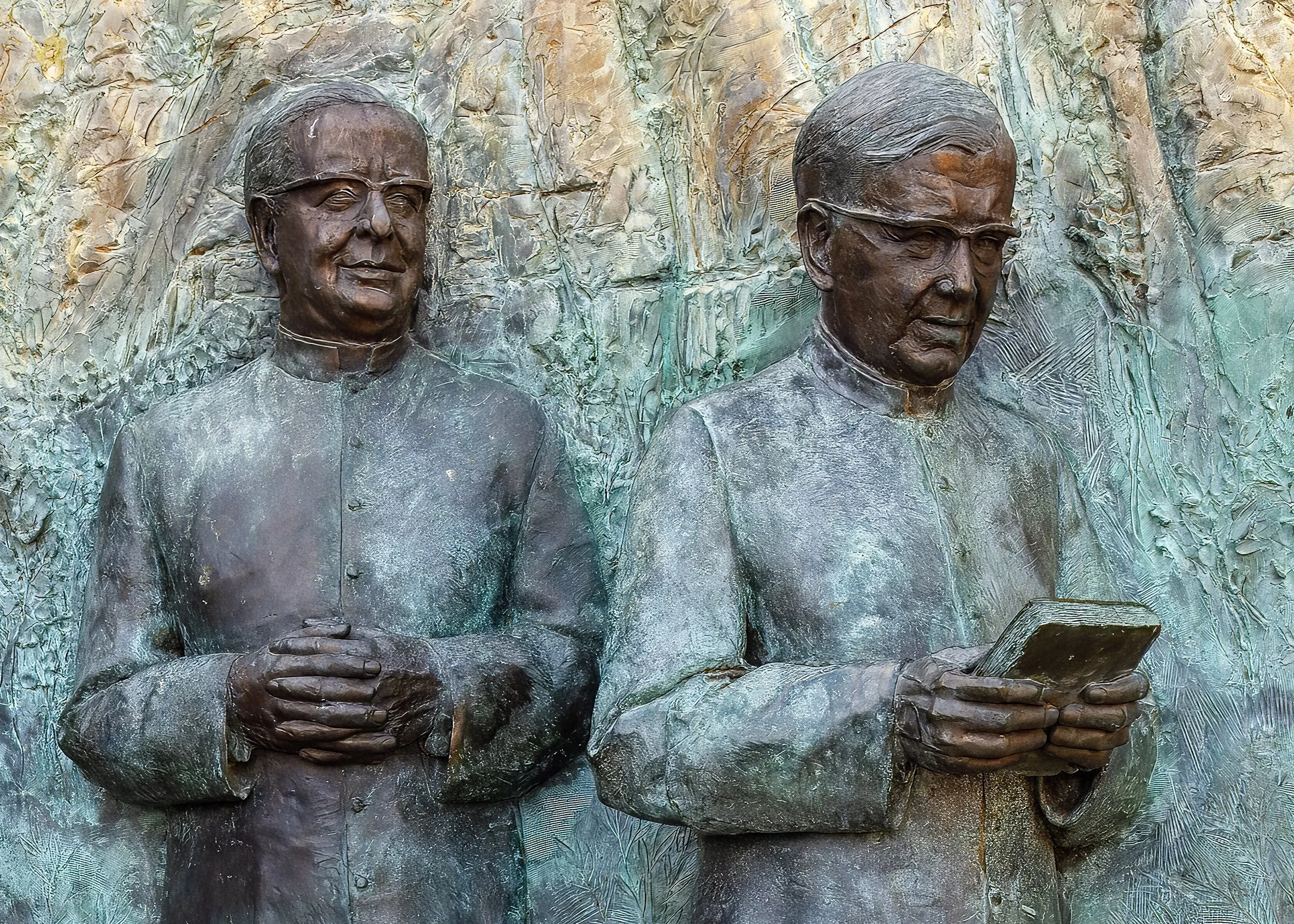
A 2024 relief sculpture of Saint Josemaría and Blessed Álvaro del Portillo at the start of the pathway
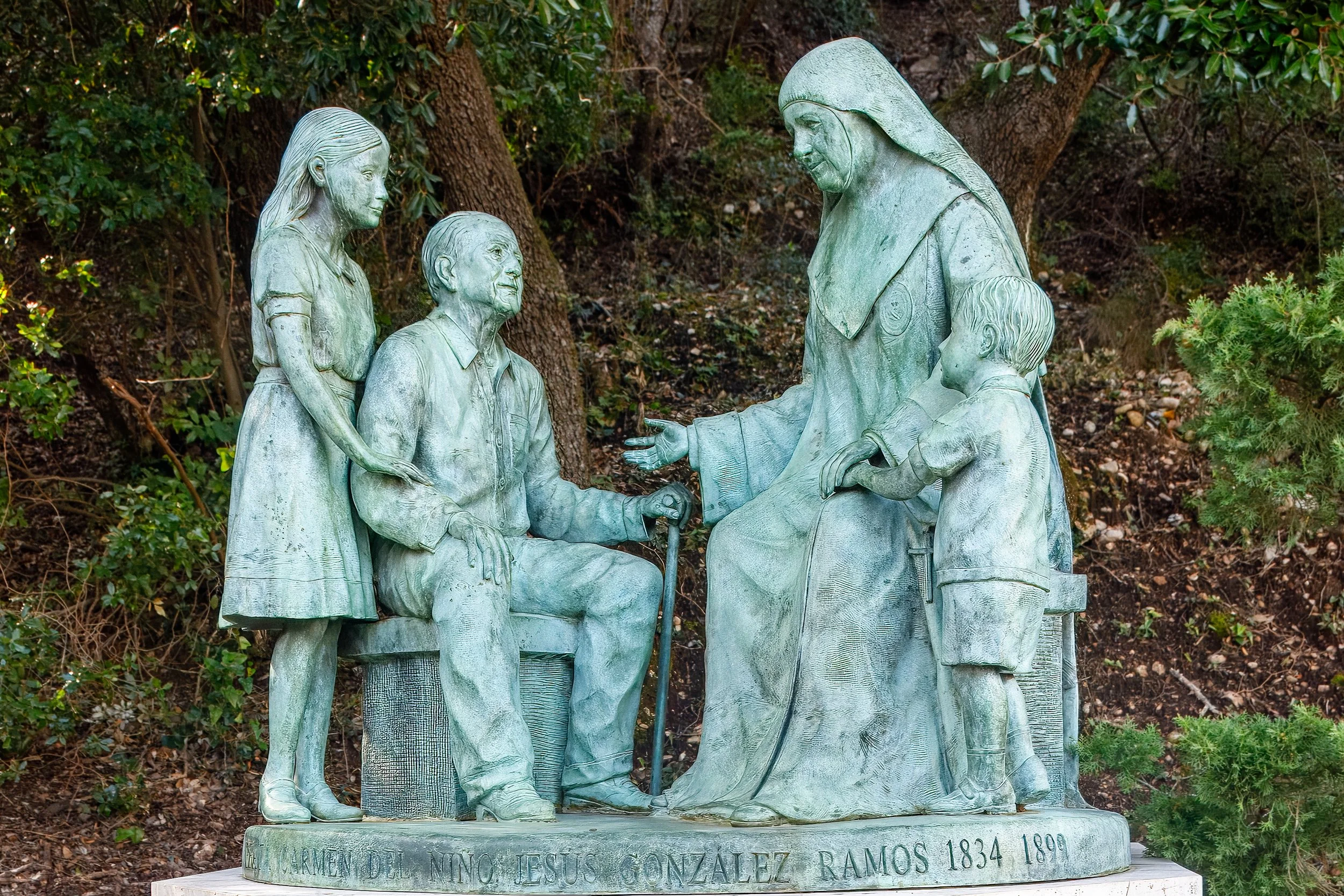
The Madre Carmen bronze sculpture depicts Mother Carmen interacting with an elderly man and two children
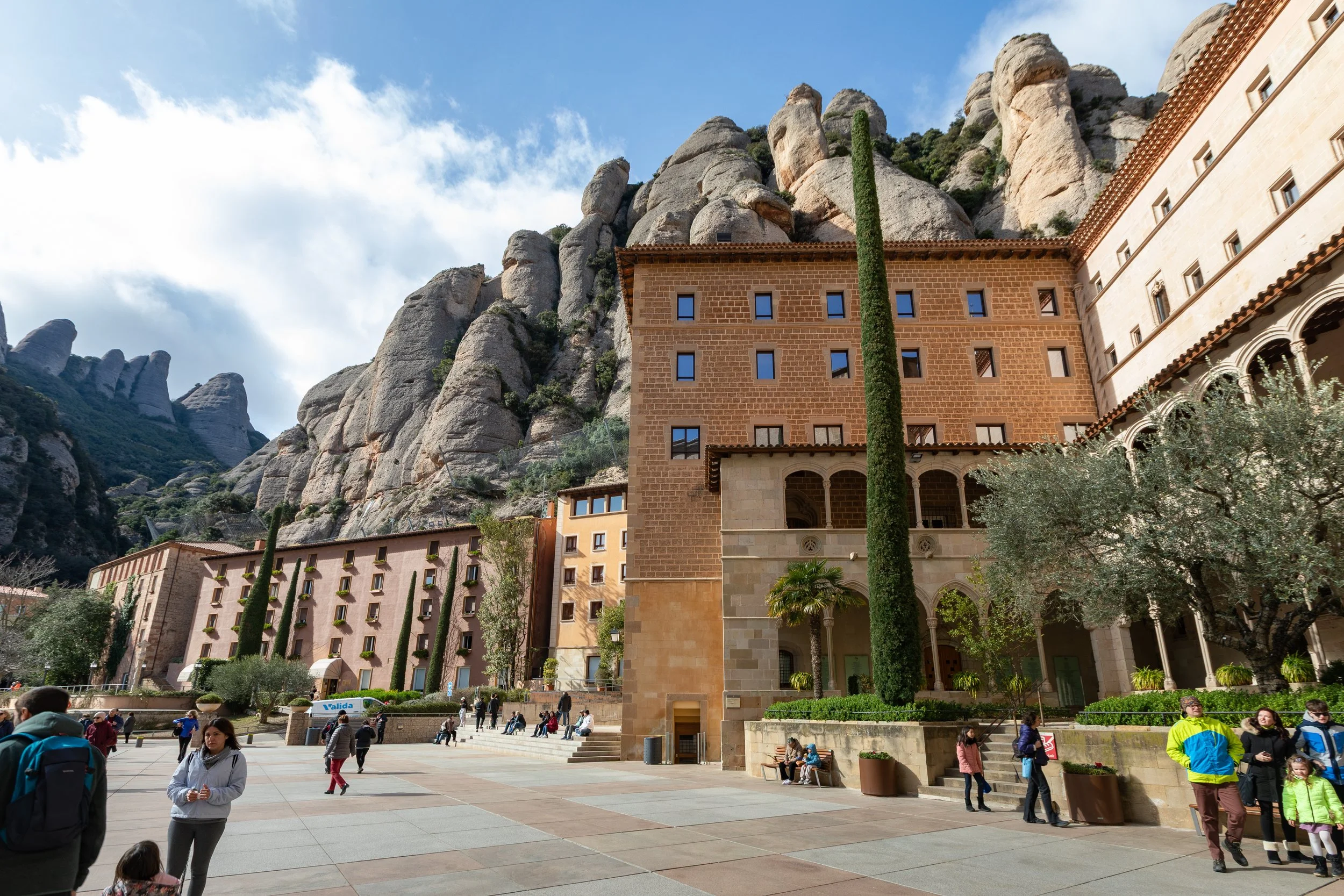
Back at the main monastery complex, the end of the rack railway tracks that brought us up the mountain are visible
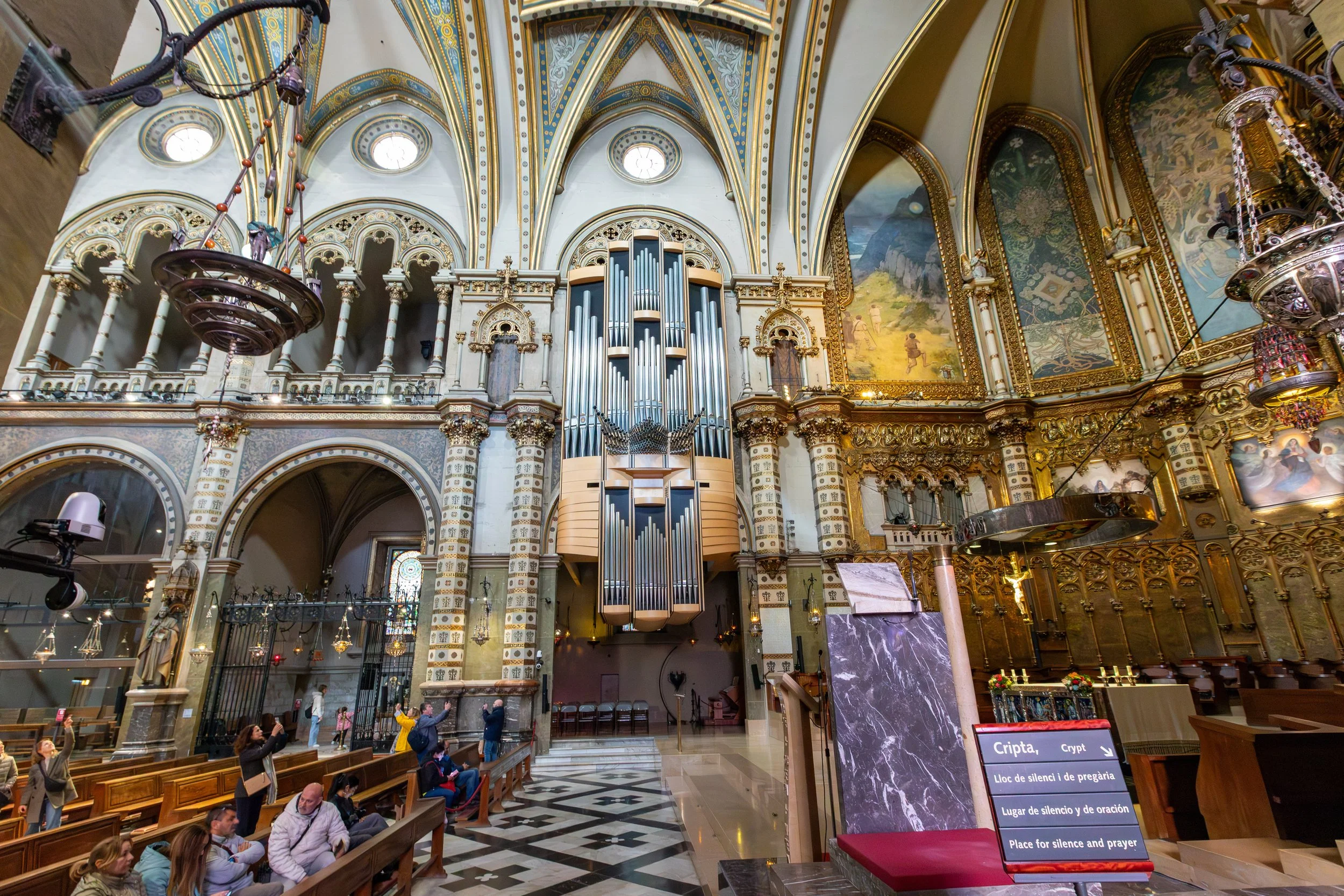
Inside the basilica, the main draw for most of the tourists
Although there has been a church at this location since the 11th Century, this basilica was constructed in the 1850s
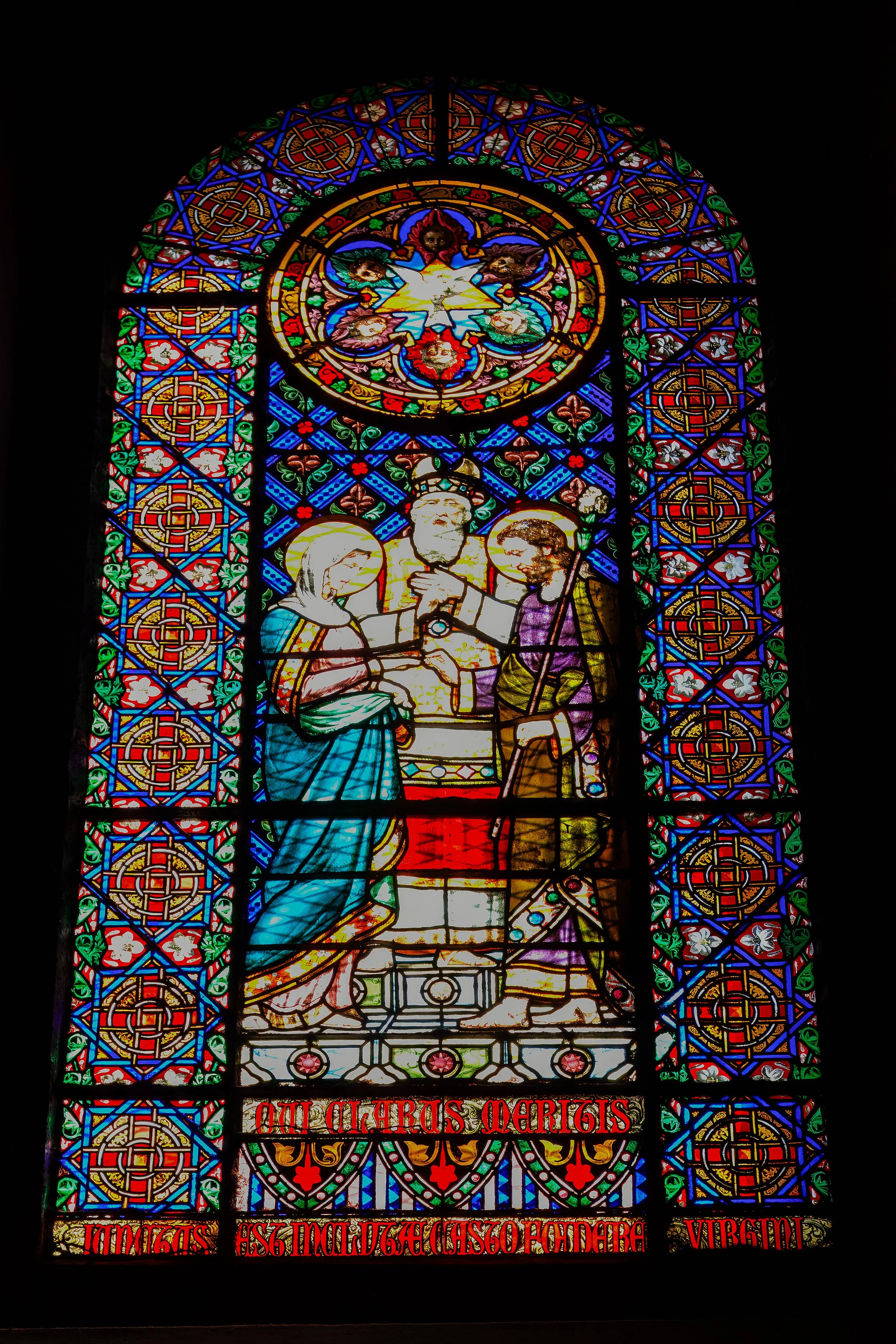
Main stained glass feature
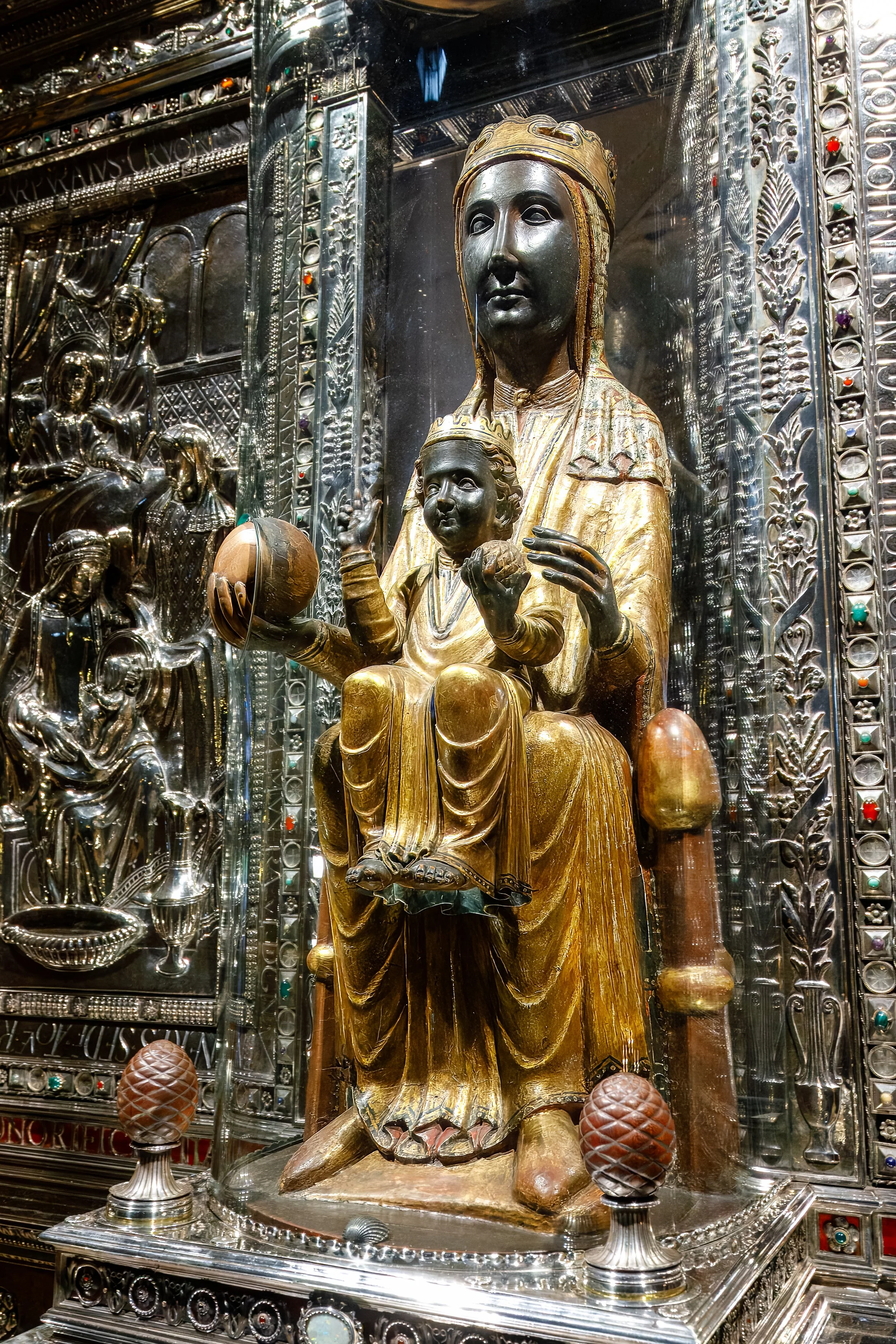
The 800-year-old Black Virgin (La Moreneta) is the main draw, and sits high above the altar with its exposed royal orb open to the touch of pilgrims to the site
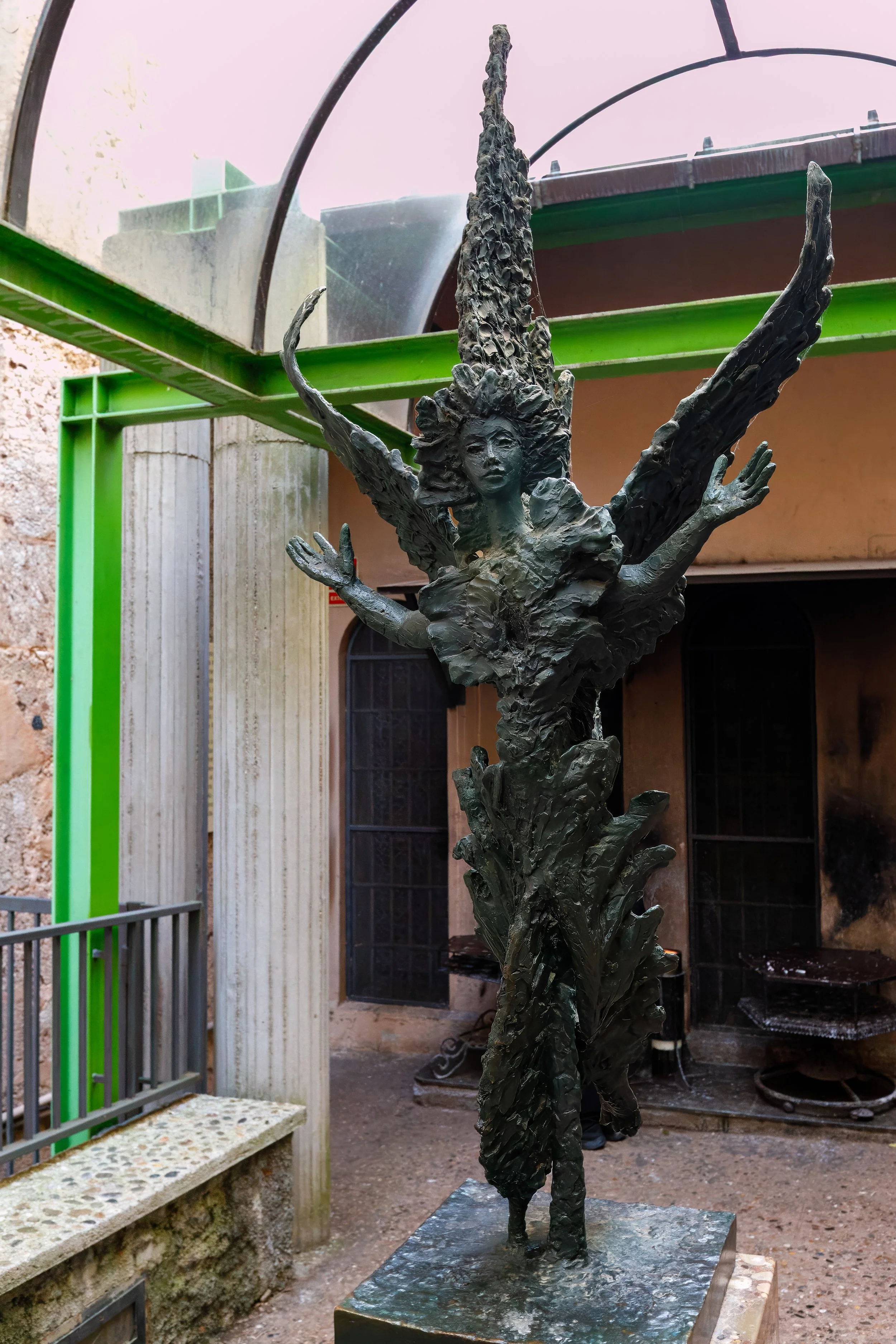
The Annunciation to Mary bronze sculpture depicts the announcement of the Incarnation of Christ by Angel Gabriel to Mary
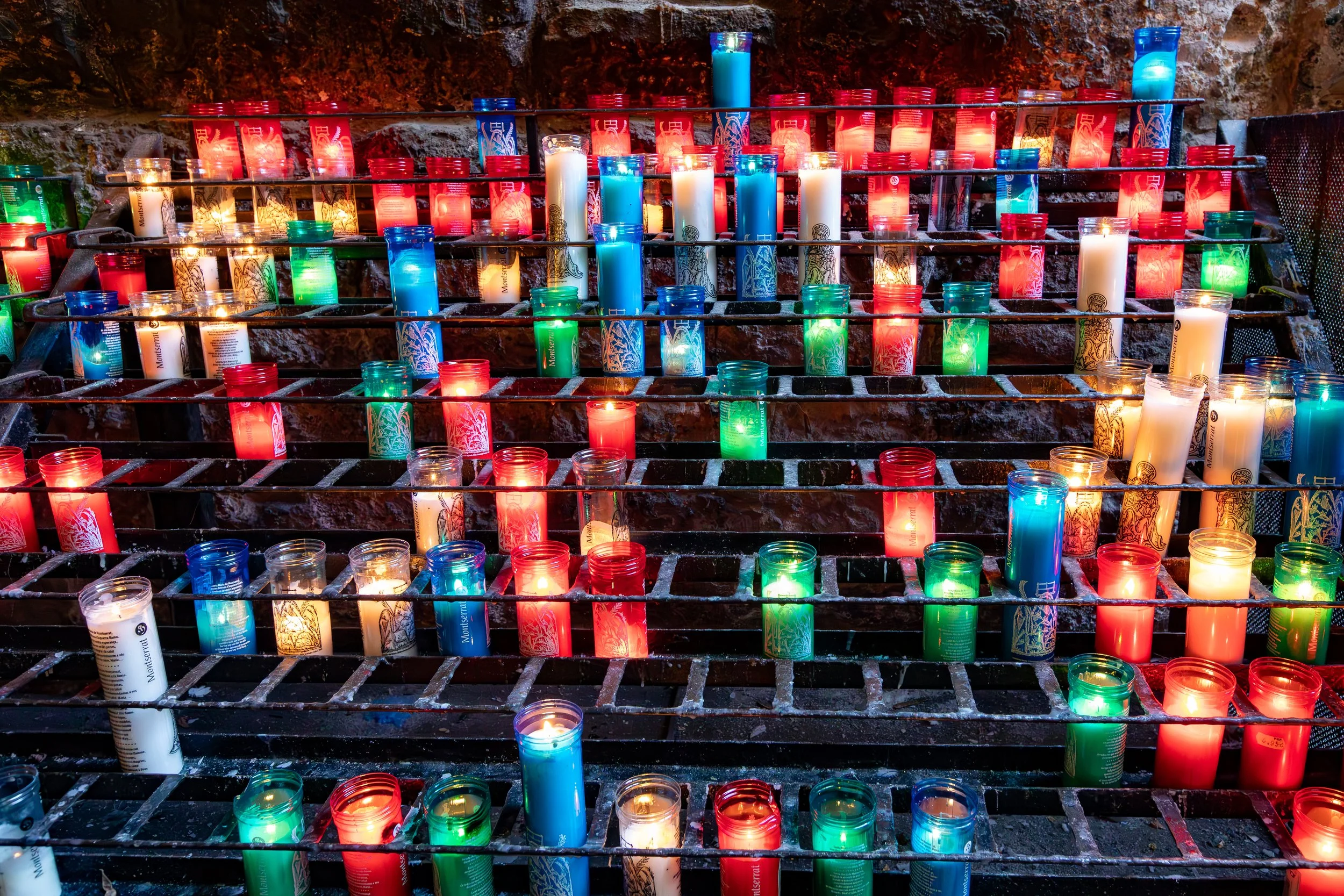
Numerous prayer candles of visitor and pilgrims to the basilica
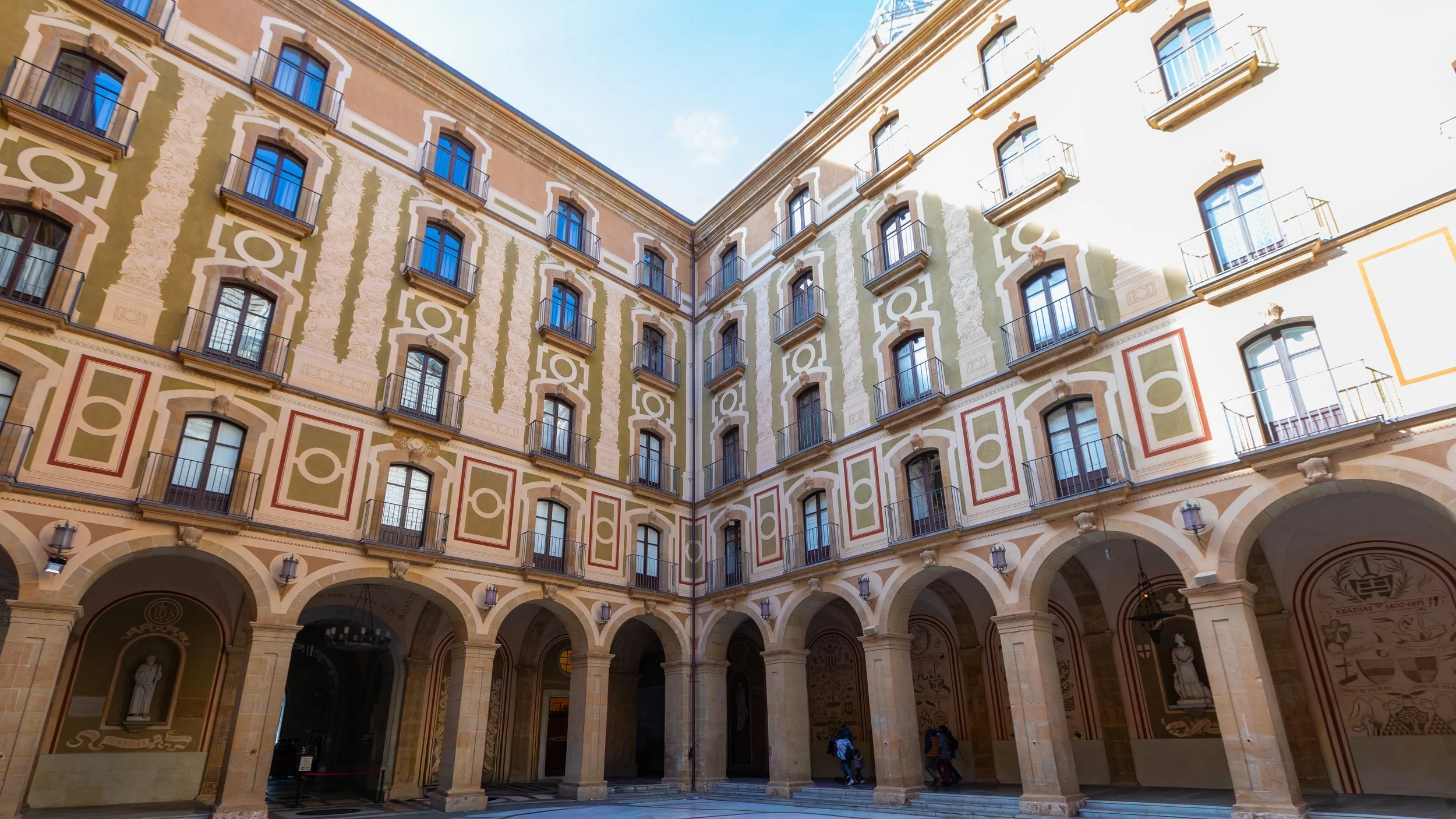
Inner courtyard connecting the basilica to the monastery
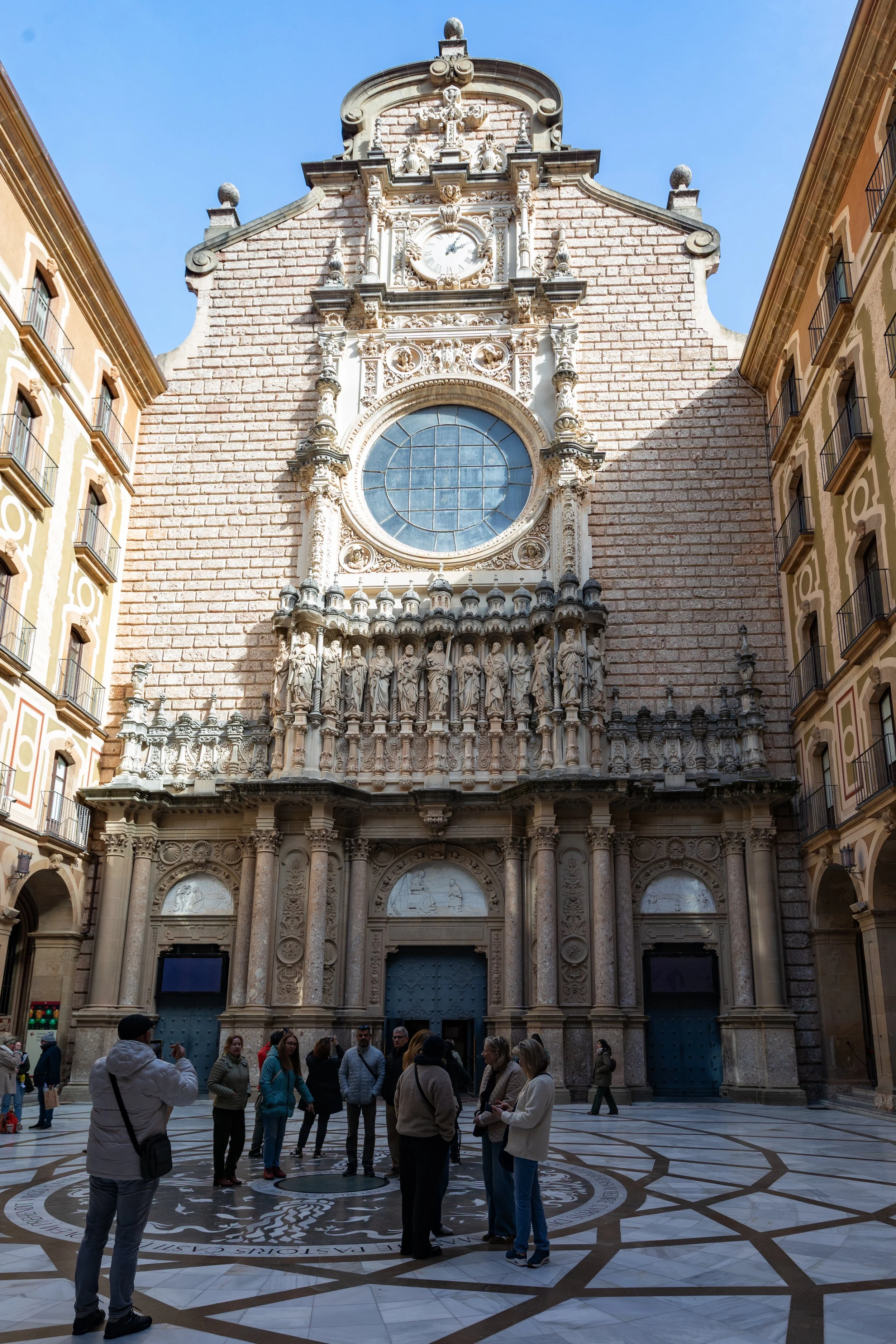
The main facade of the basilica is actually the newest addition, dating from 1968
Looking back at the monastery flanked by the mountains we had hiked on earlier
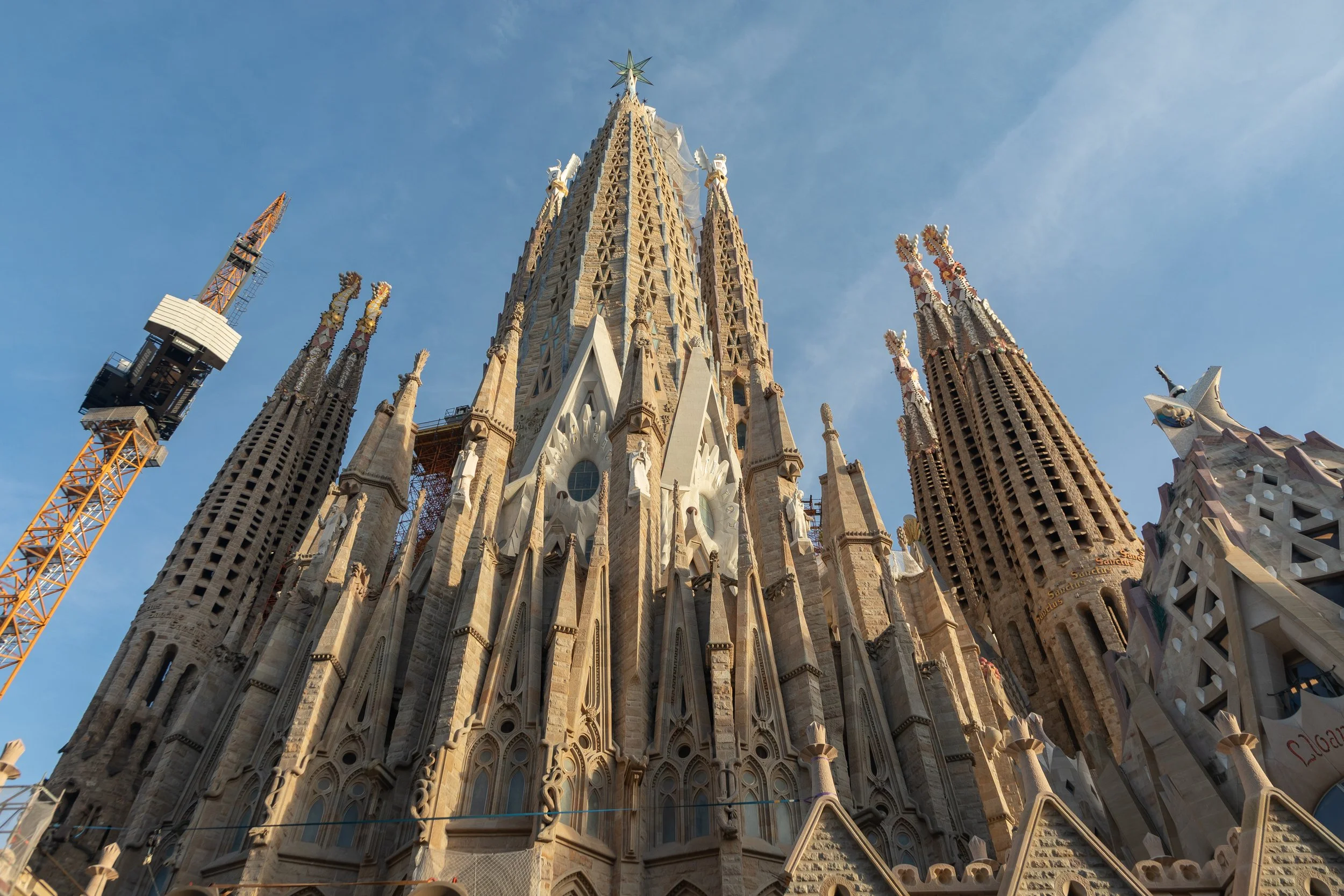
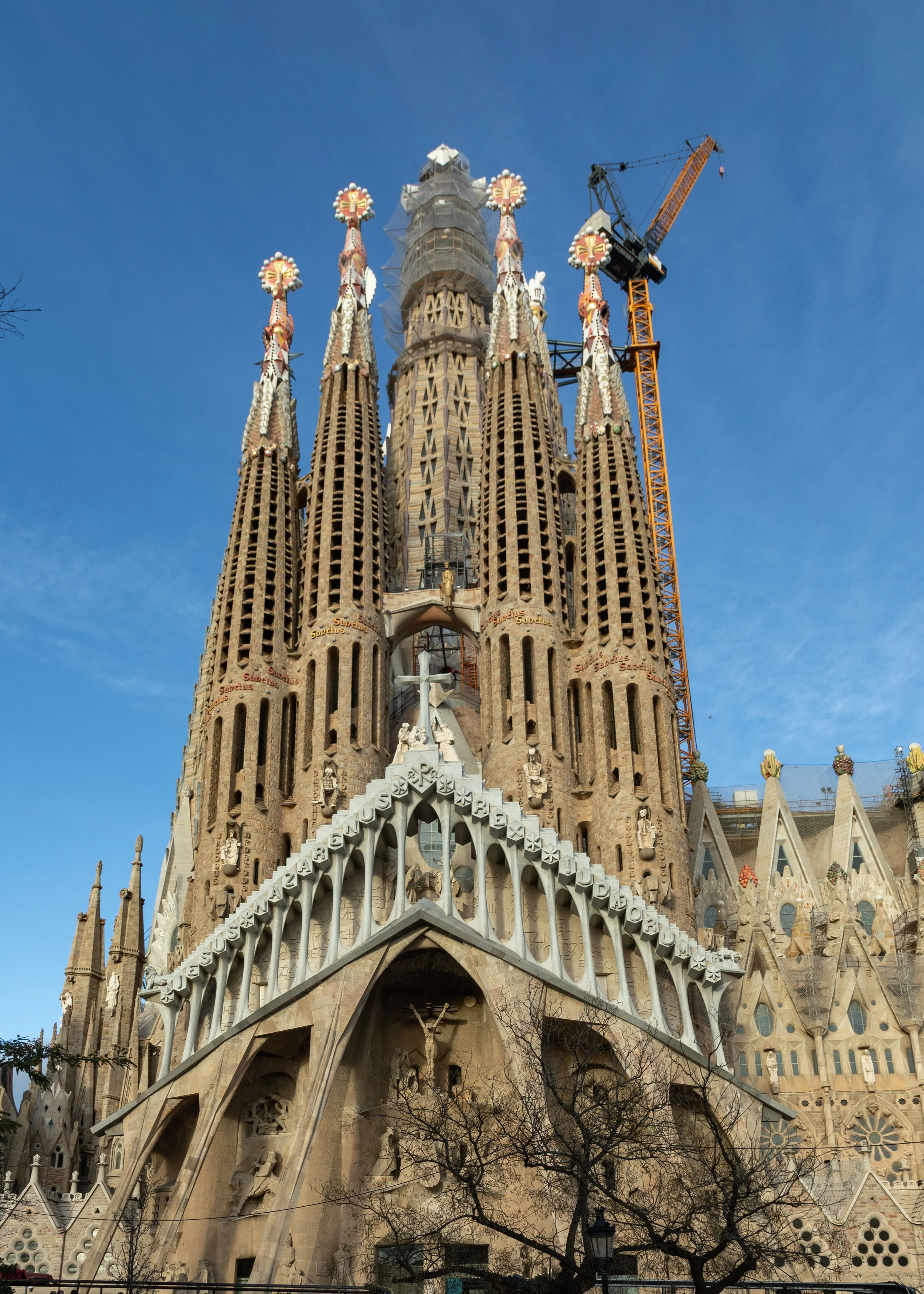
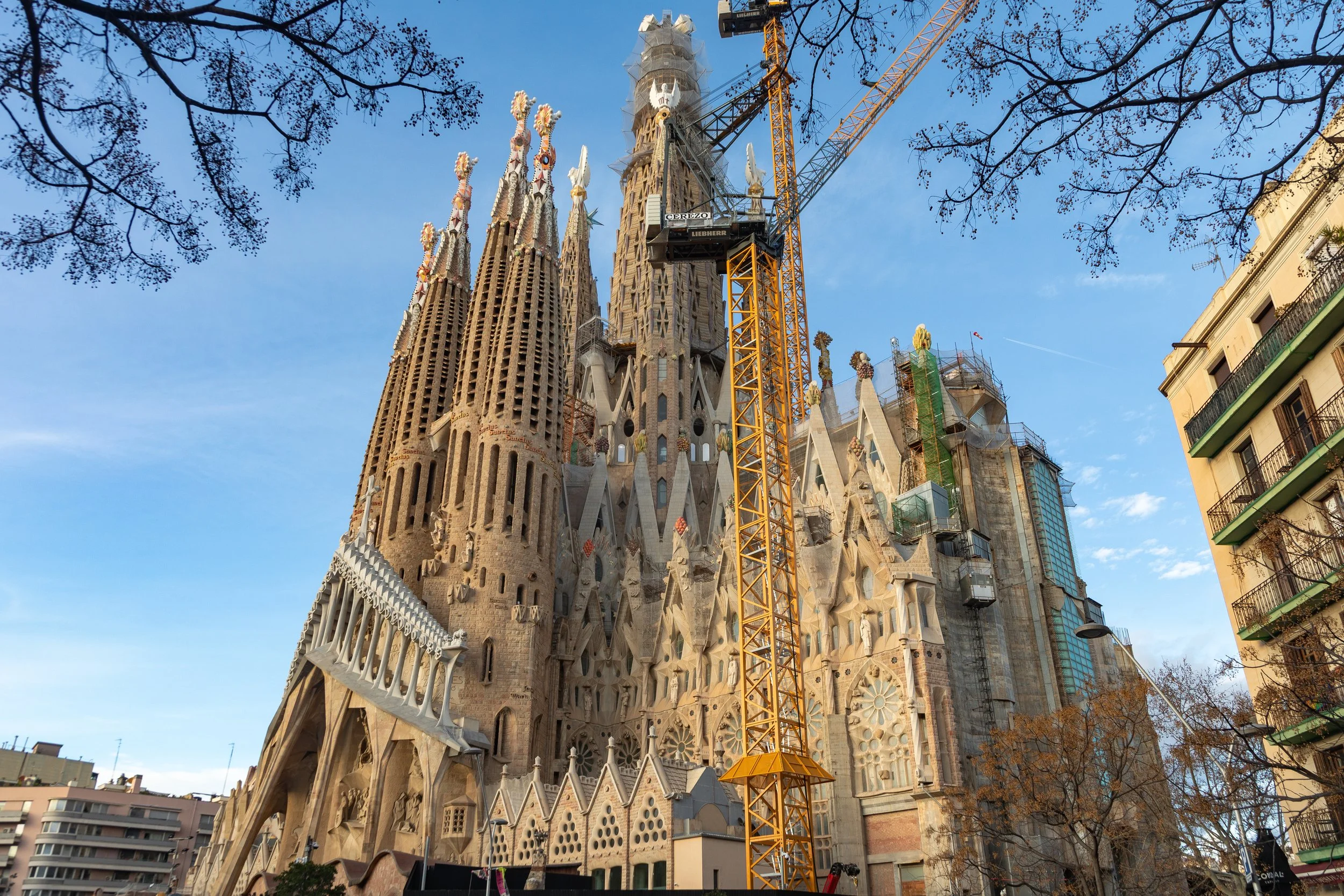
After a brief rest at our hotel, we headed out to the last and most famous Gaudí building, Sagrada Família
Gaudí started working on the church in 1883, and worked on it until his death in 1926. WIth the design complete, construction has continued since then. Funded by private donations, it is now expect to complete in 2033.
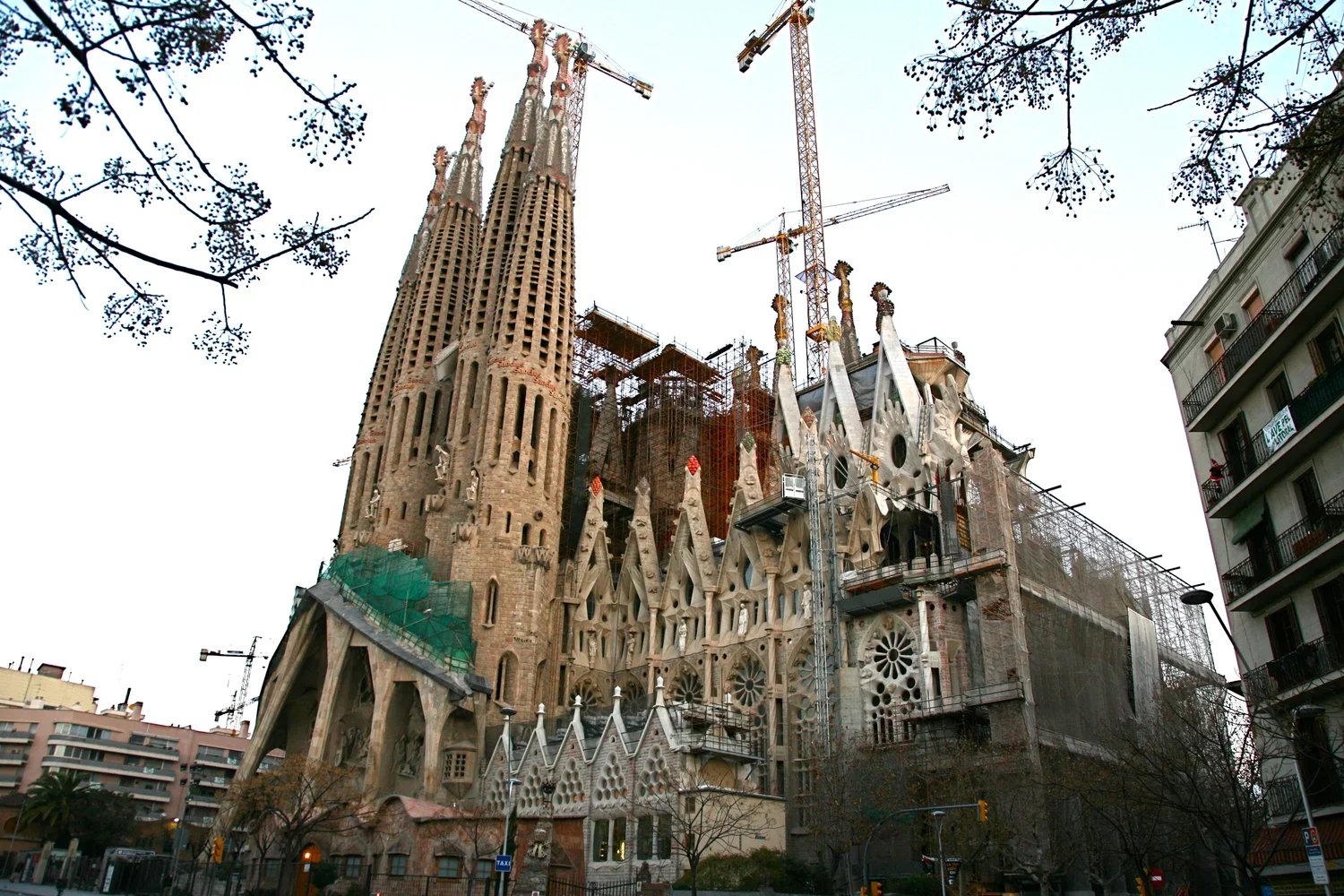
Since our last visit over 17 years ago, we saw a tremendous change for the building, previously without much of a roof, no central spire and much fewer flourishes
A similar vantage point from Dec 2007 shows just how much progress as been made. At the time they thought it would be done in 2030.
With a fair bit of hiking around the hills of Montserrat, and finally returning to check on the progress of Sagrada Familia, I was ready for another visit to the spa before turning in for the evening.
Feb 17
Our flight back to Canada through Montreal left mid-afternoon, so we had a leisurely morning with enough time for a visit to the gym and a breakfast with, my last chance for some Spanish hot chocolate to kick start my day. We arrived in Montreal a bit early, but couldn’t get confirmed on an earlier flight, so ended up with a late arrival in Toronto.