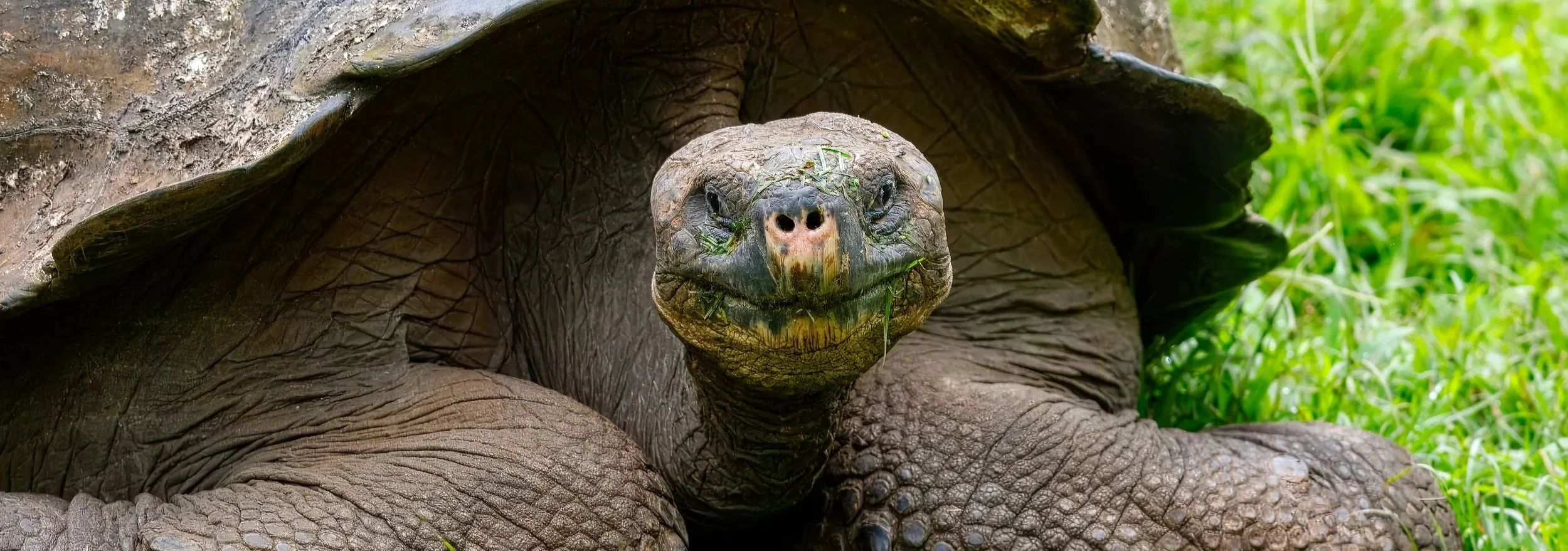
Galápagos and Quito
Sep 25-Oct 6
AV205 YYZ-BOG, AV169 BOG-UIO, Sep 29 AV1790 UIO-GPS, Oct 5 AV1791 GPS-UIO, AV124 UIO-BOG, AV204 BOG-YYZ
Galápagos has been on our short list of travel destinations for a while, and eventually needed to make its way to the top. We’ve been stalled on progressing the BBC 50 Places to See Before you Die, so were happy to move forward again with a relatively easy trip.
There are many cruise options in Galápagos, mostly 16-person ships to maintain an appropriate proportion of guide to passengers, which I was concerned would be difficult for sea sickness. I got a recommendation from a coworker who traveled in 2024, and was quite happy with their cruise experience on a 50-person Celebrity Cruise. Unfortunately, Celebrity recently sold off those ships before we could book and ended up with just the Flora, a 100-passenger ship.
Before booking, I was a little concerned about the larger-sized ship, but based on all the reviews, it sounded like the larger ship offered more stability with additional amenities. In addition, the excursions ultimately ended up with generally around a dozen people with one guide, so it never felt crowded. Celebrity had two cruise routes, an Inner and Outer Loop that had different itineraries. Ultimately, we chose the Inner Loop based on the wildlife opportunities, and most specifically the red footed booby, unique to this itinerary.
Sep 26
After our overnight flight from Toronto to Bogota, we had a few hours before continuing on to Quito, and we were able to shower in the lounge. Avianca business class was readily available with Aeroplan Points, but unfortunately doesn’t have a very comfortable seat so didn’t exactly arrive well rested.
A Celebrity representative met us at the airport and drove us to the pre-cruise hotel in Quito. Luckily, I have lifetime Marriott status, so we were able to get an early check-in and a nice room upgrade. Knowing that we’d have a formal tour the following day, we decided to just have a relaxing day at the hotel and give some time to adjust to the higher altitude.
Sep 27
As part of our cruise package, we had an add-on of a full-day tour of Quito. In addition to allowing us to experience more of Ecuador, it ensured that we’d have common transport to the ship. The majority of passengers on the cruise did the same, so we got to connect with many of them in advance. Kudos to the cruise company to putting the majority of the Canadians together on the same tour bus, giving us common ground.
Although it was a full day, it wasn’t rushed, and we had time for a leisurely breakfast before the buses picked us up at the hotel.
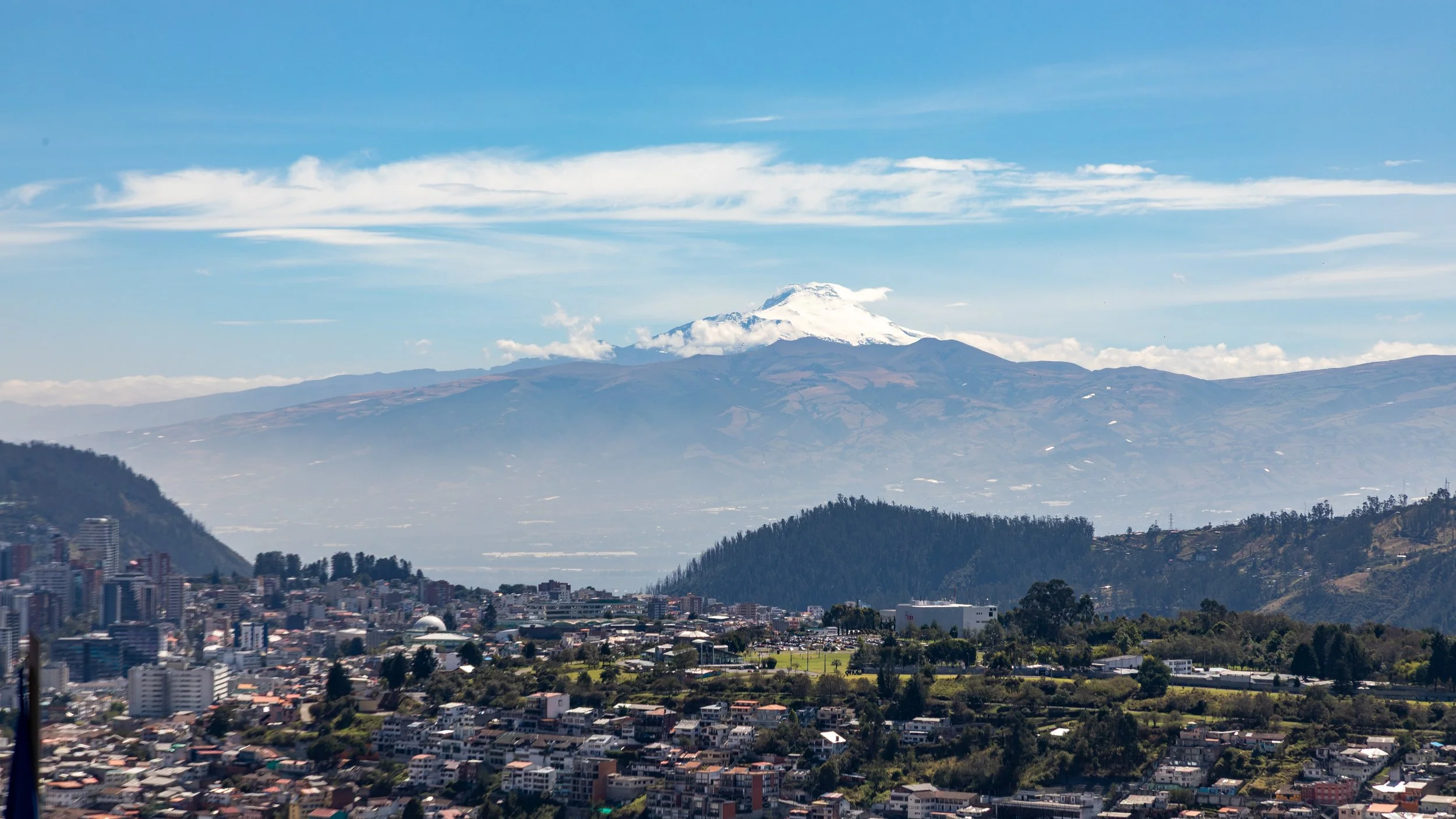
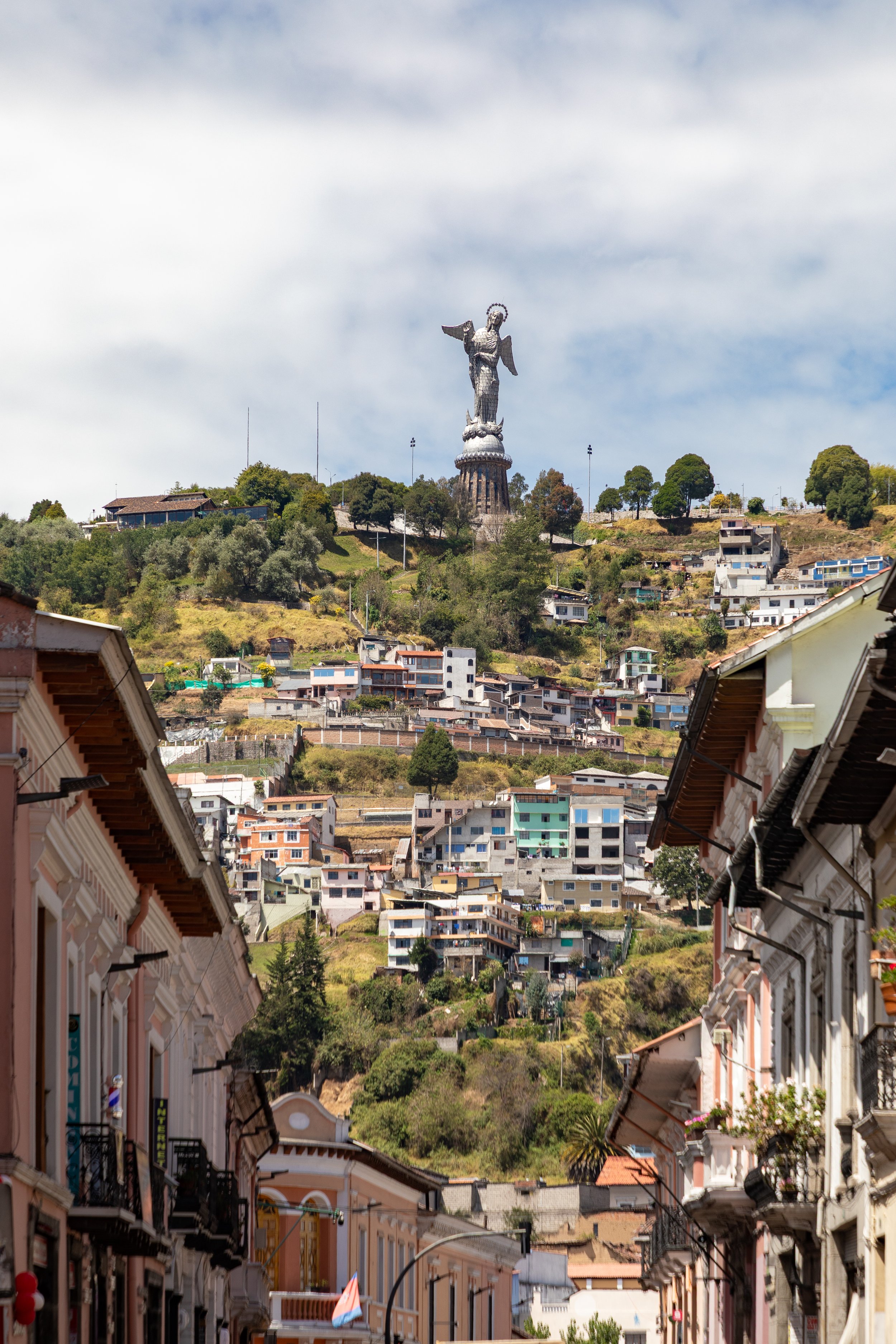
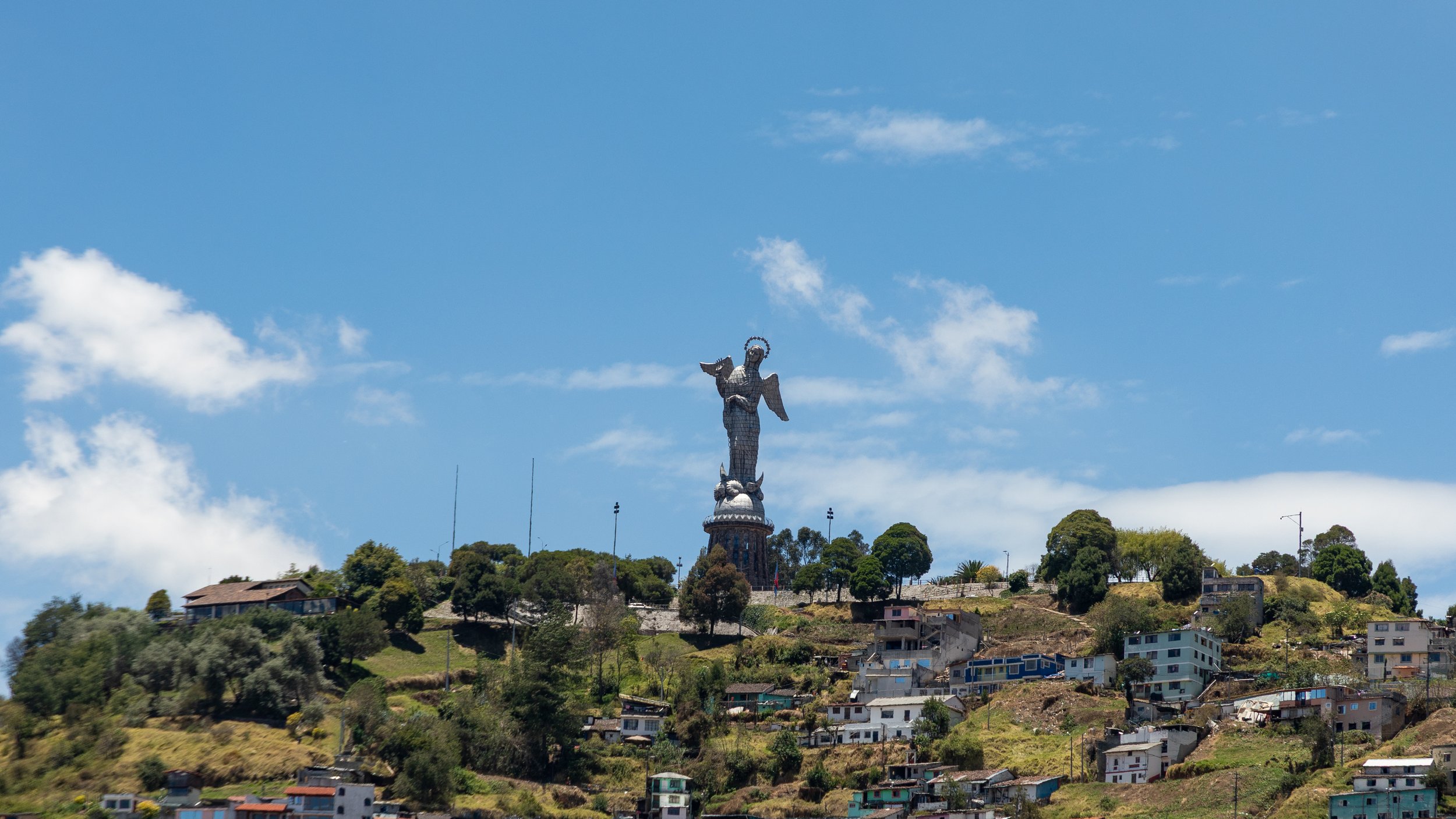
Our first stop was a lookout at the top of the hill of El Panecillo
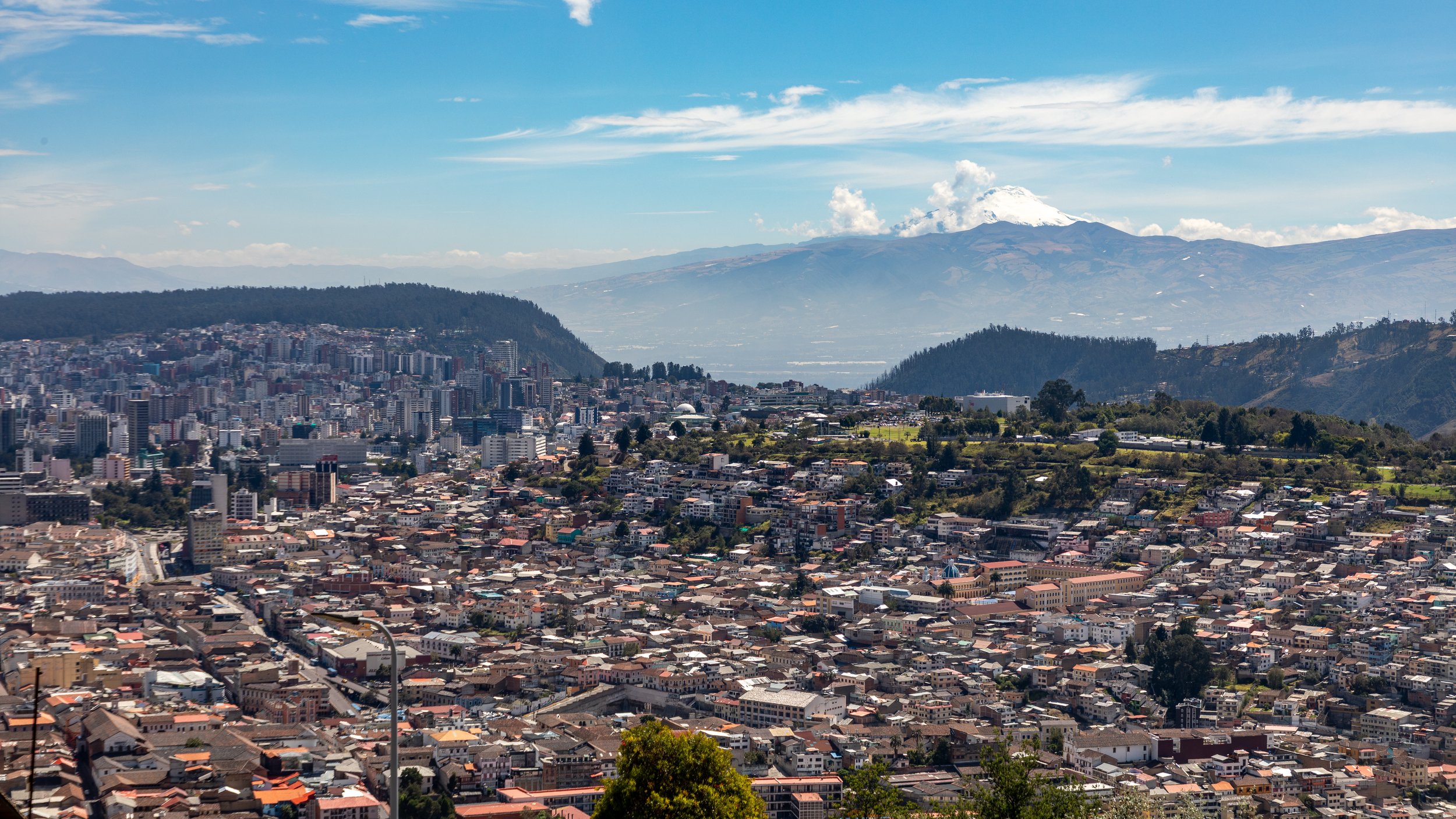
The hill is a loaf-shaped hill in the heart of Quito with great views of the city below
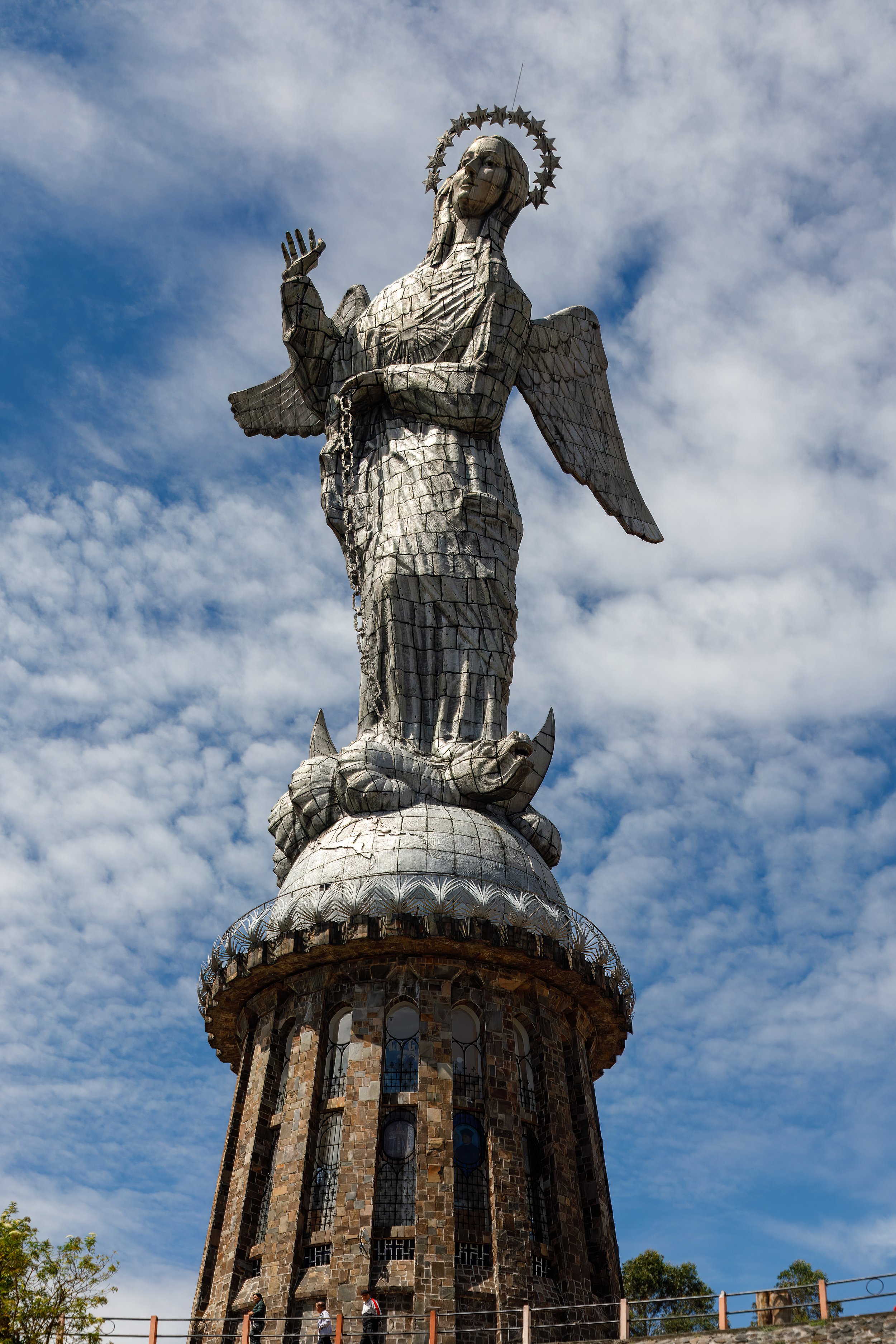
41m Virgin of Quito monument dominates the top of the hill
After enjoying the view, we down to the pedestrian streets of the UNESCO World Heritage site of the historic centre
Looking back at the lookout where we started our day
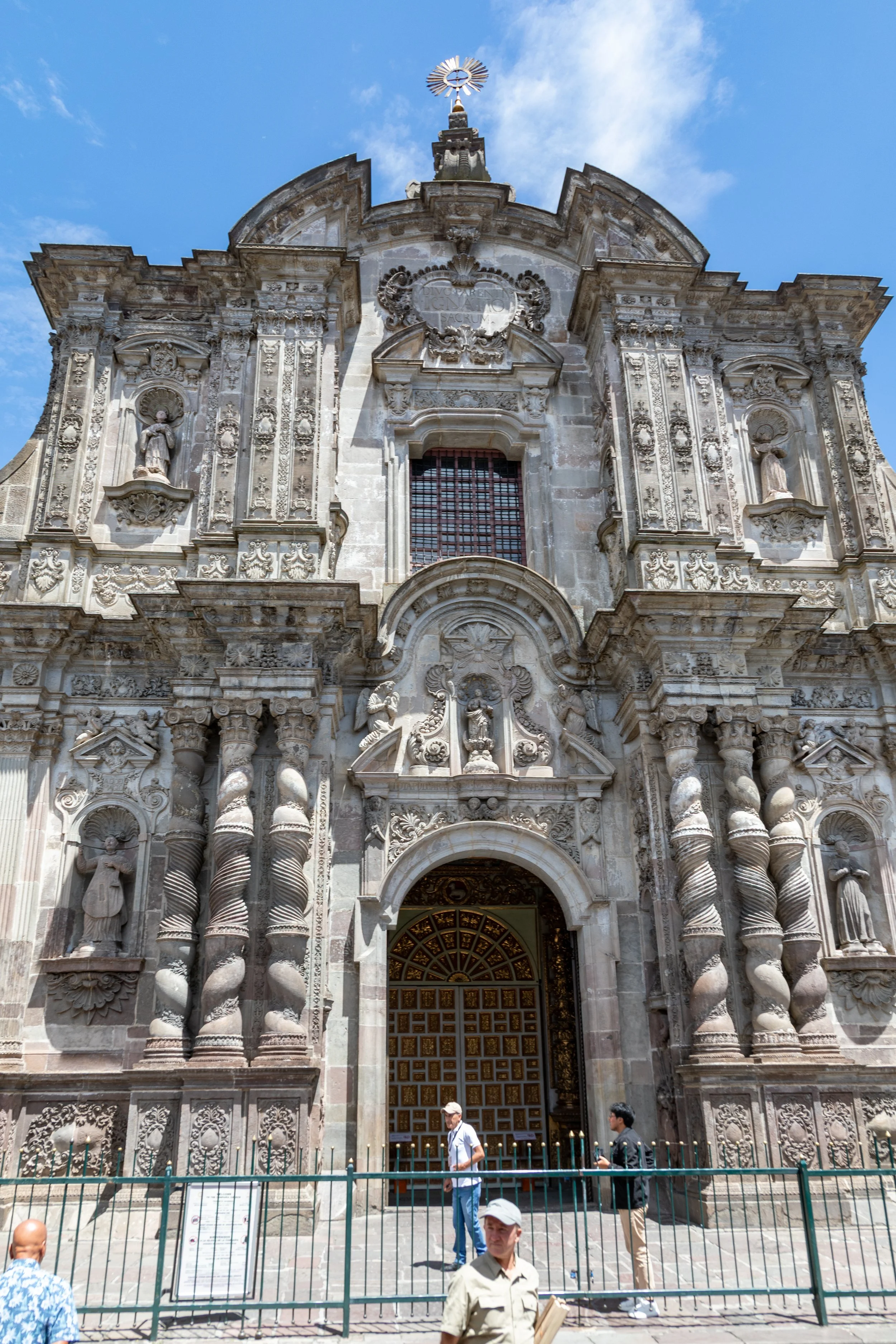
Church of the Society of Jesus (Iglesia de la Compañía de Jesús) constructed between 1605 and 1765
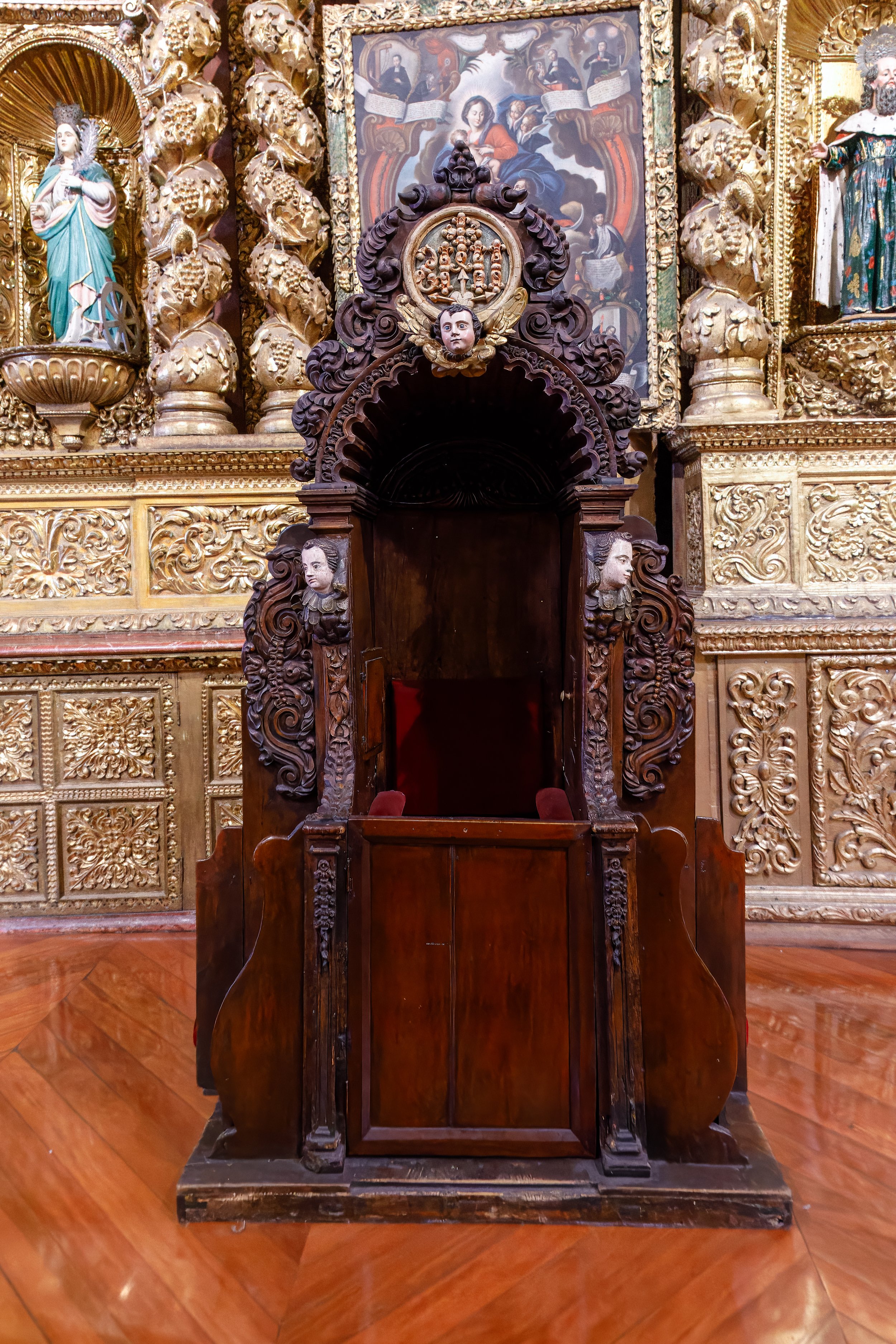
Carved wooden confessional inside the church
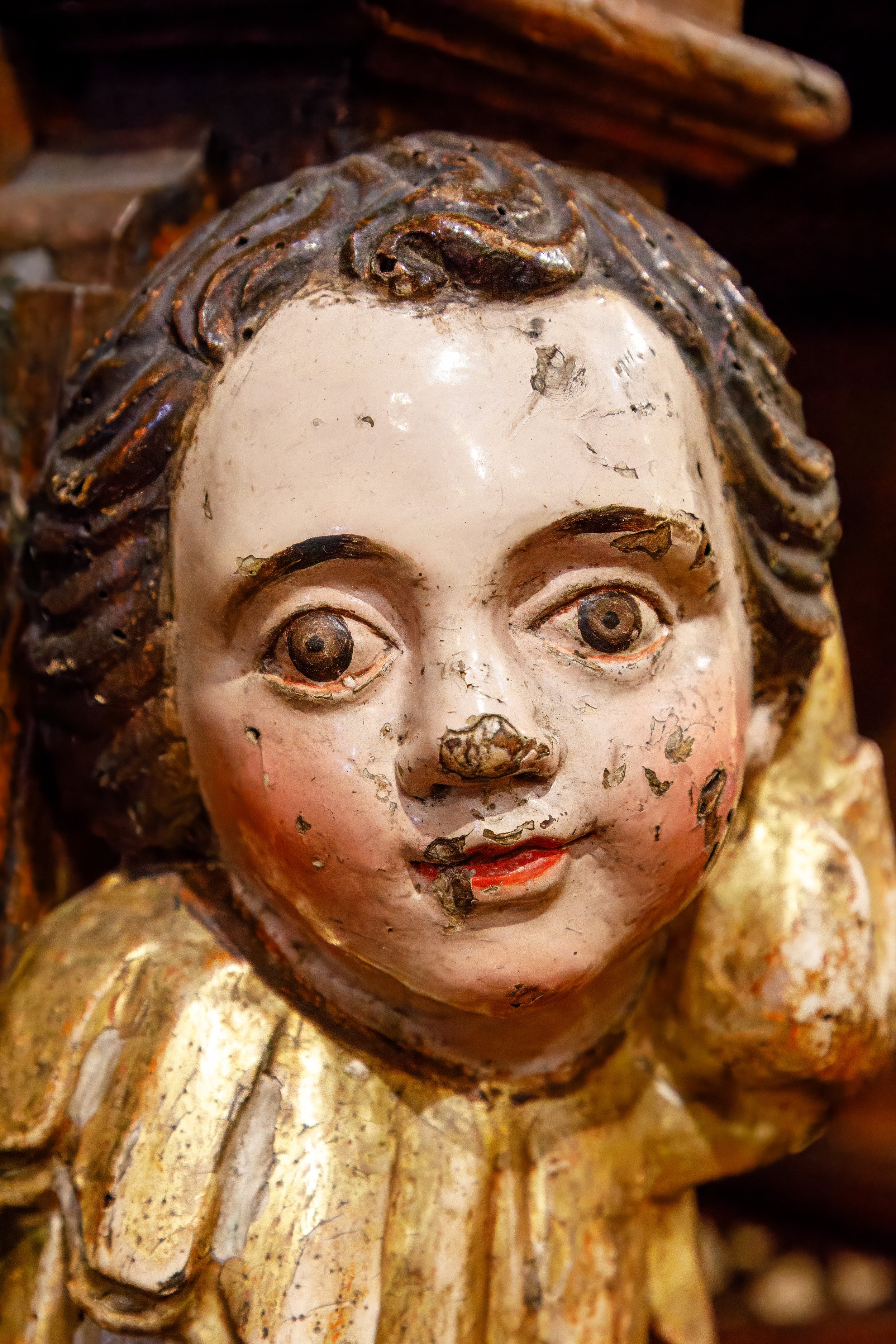
Antique carved wood angel head
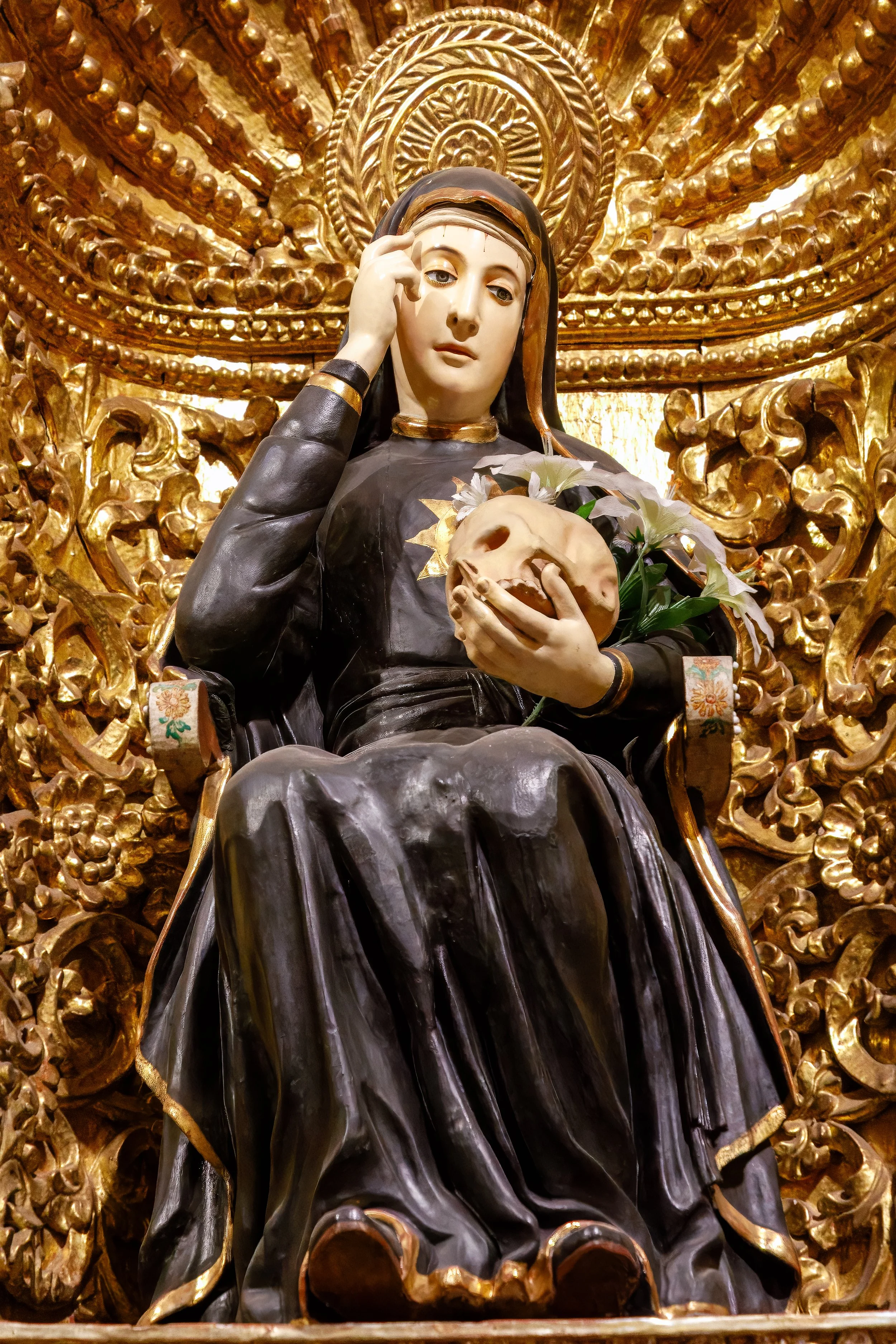
Statue of St. Mariana de Jesús de Paredes, the patron saint of Ecuador, often referred to as the "Lily of Quito"
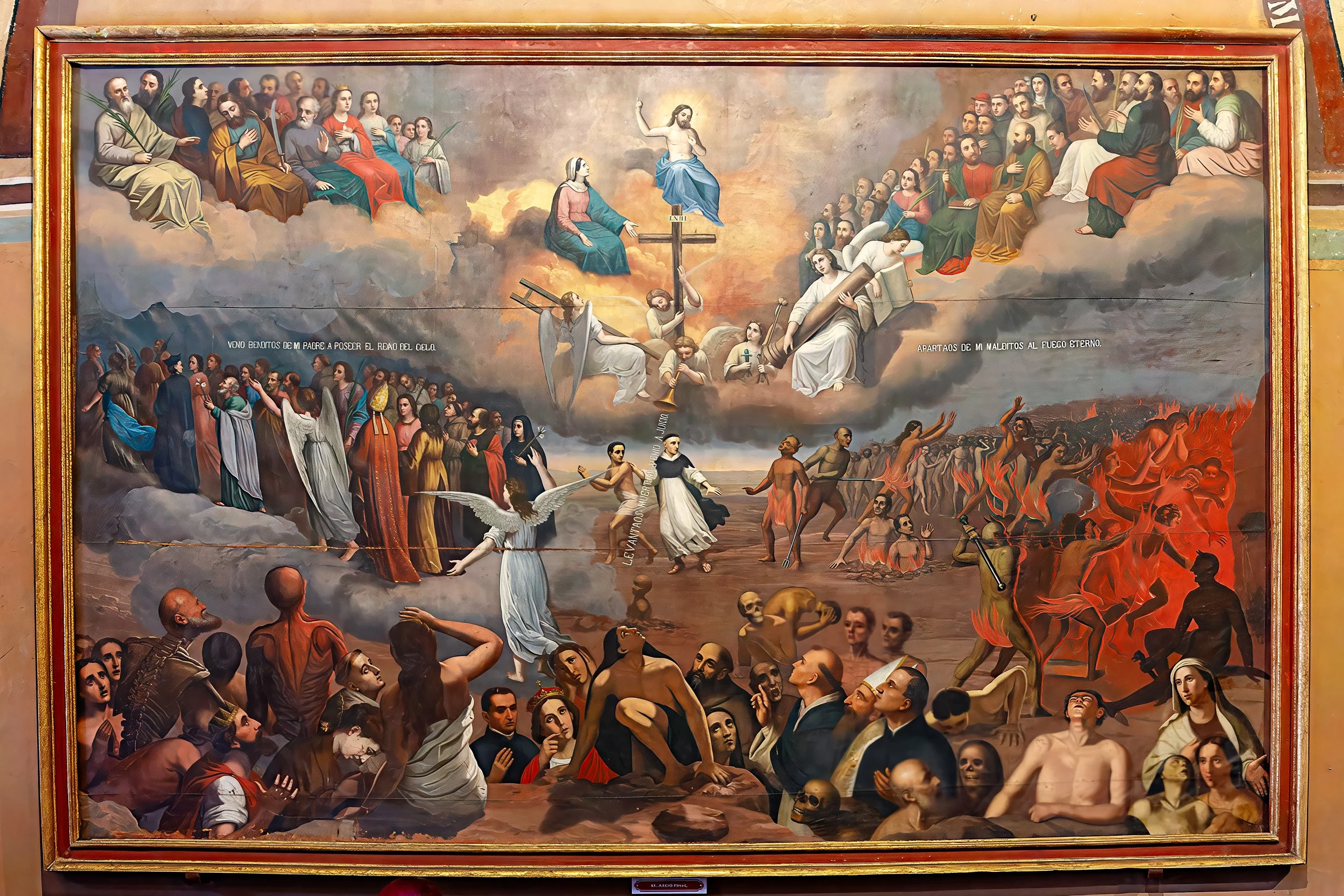
Final judgement painting in the cathedral
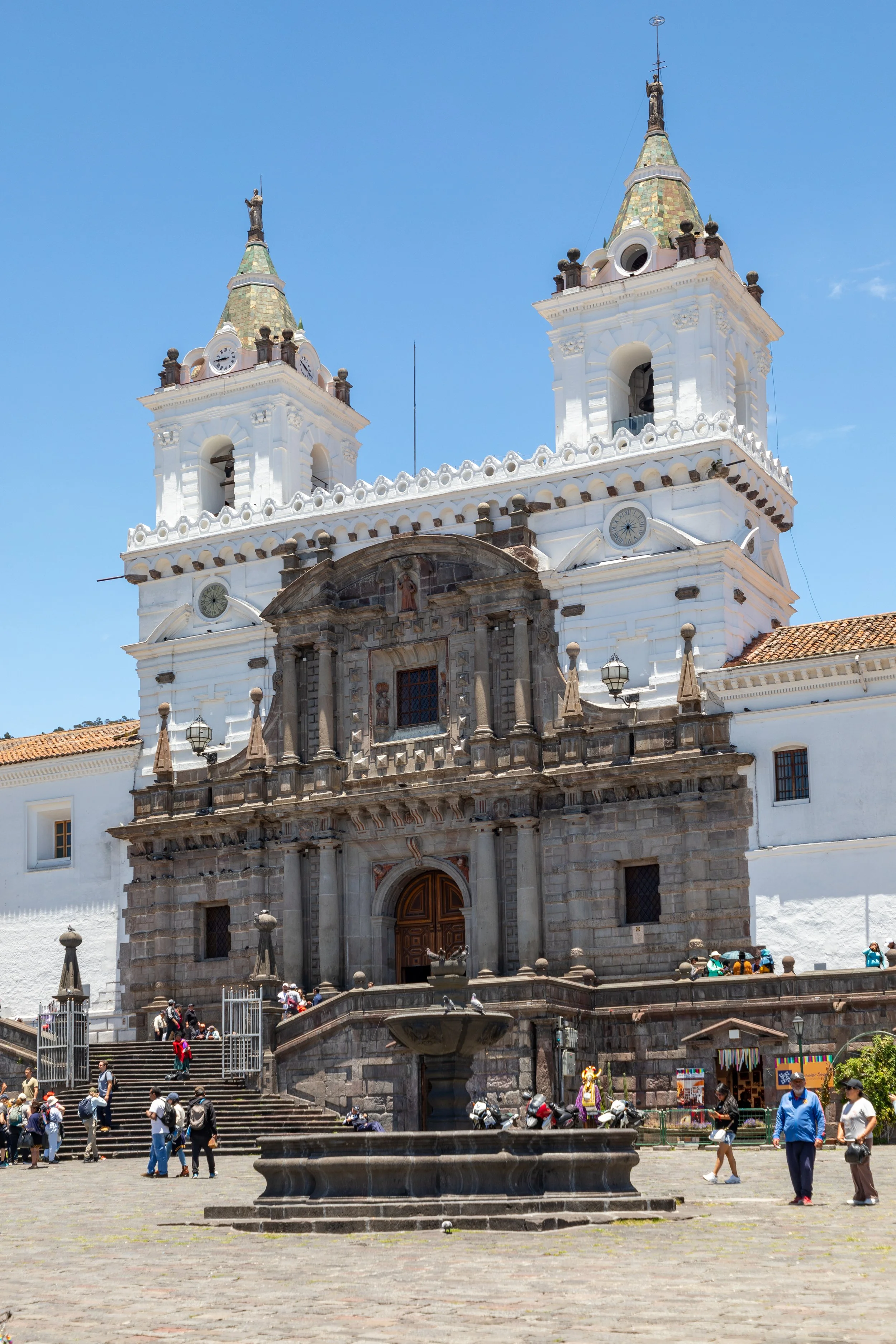
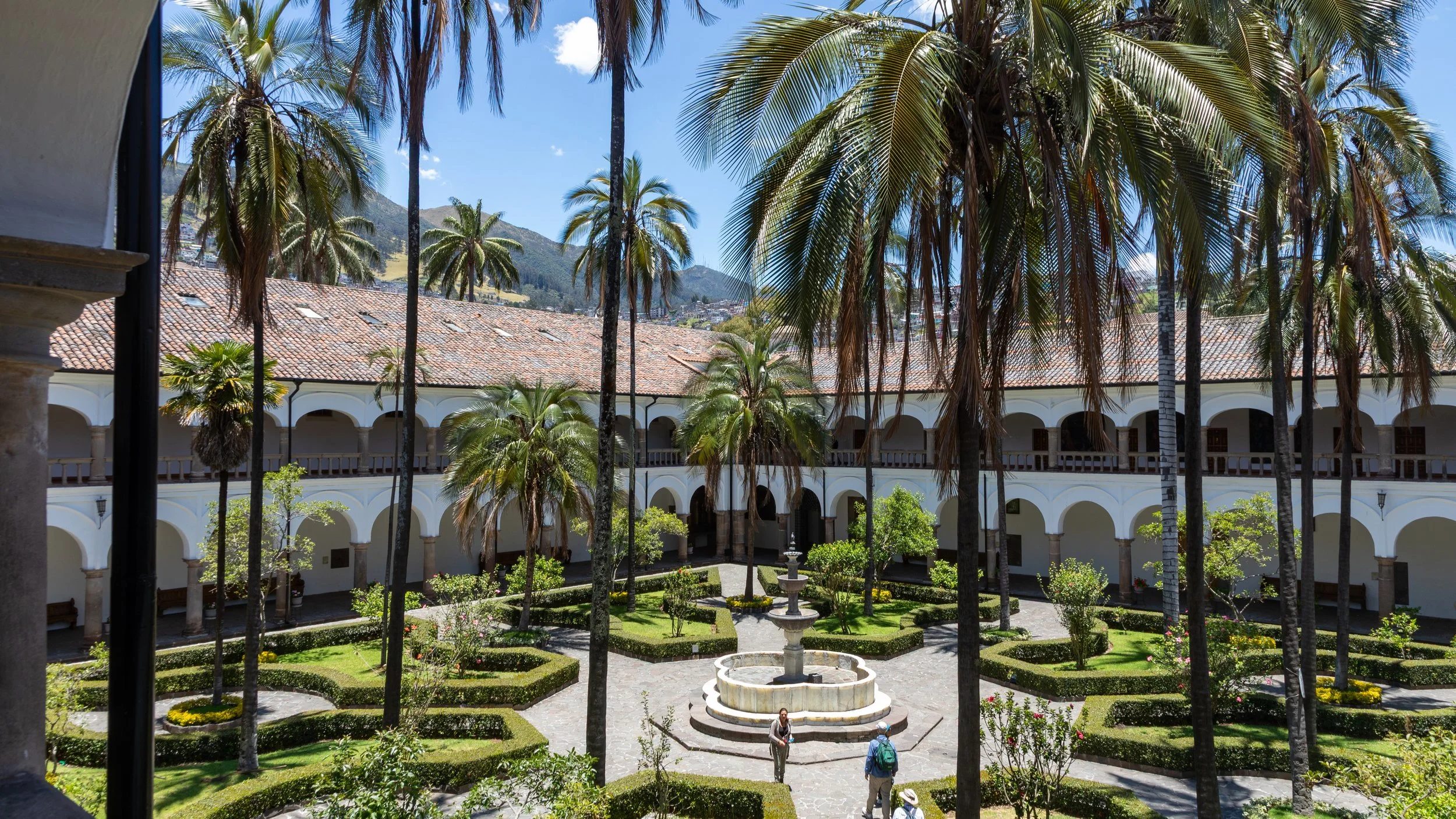
Basilica and Convent of San Francisco, the oldest and most important religious site in Ecuador
Looking back again at the Virgin of Quito
Interior convent gardens
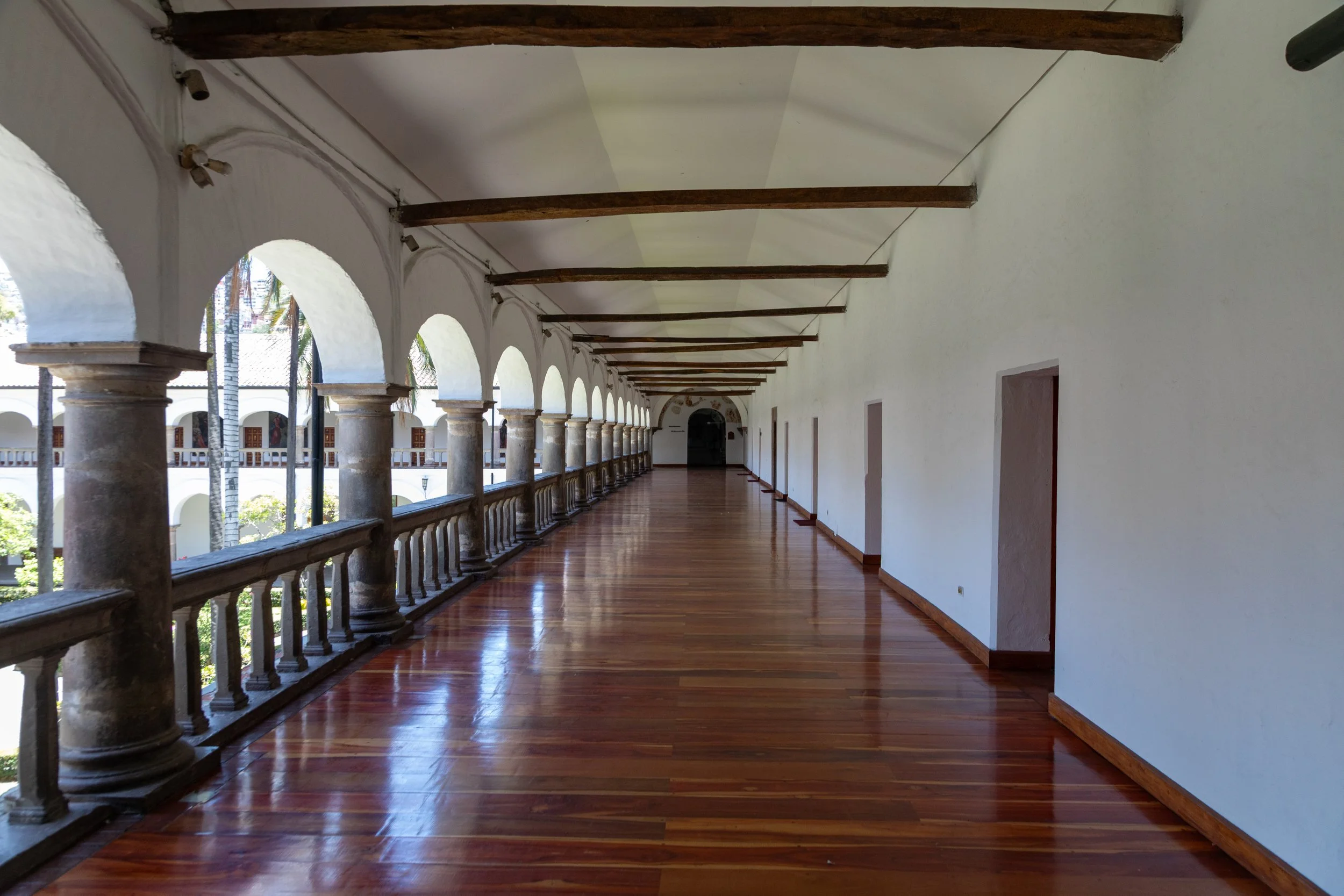
Impressive wood floor on of the exterior covered corridors
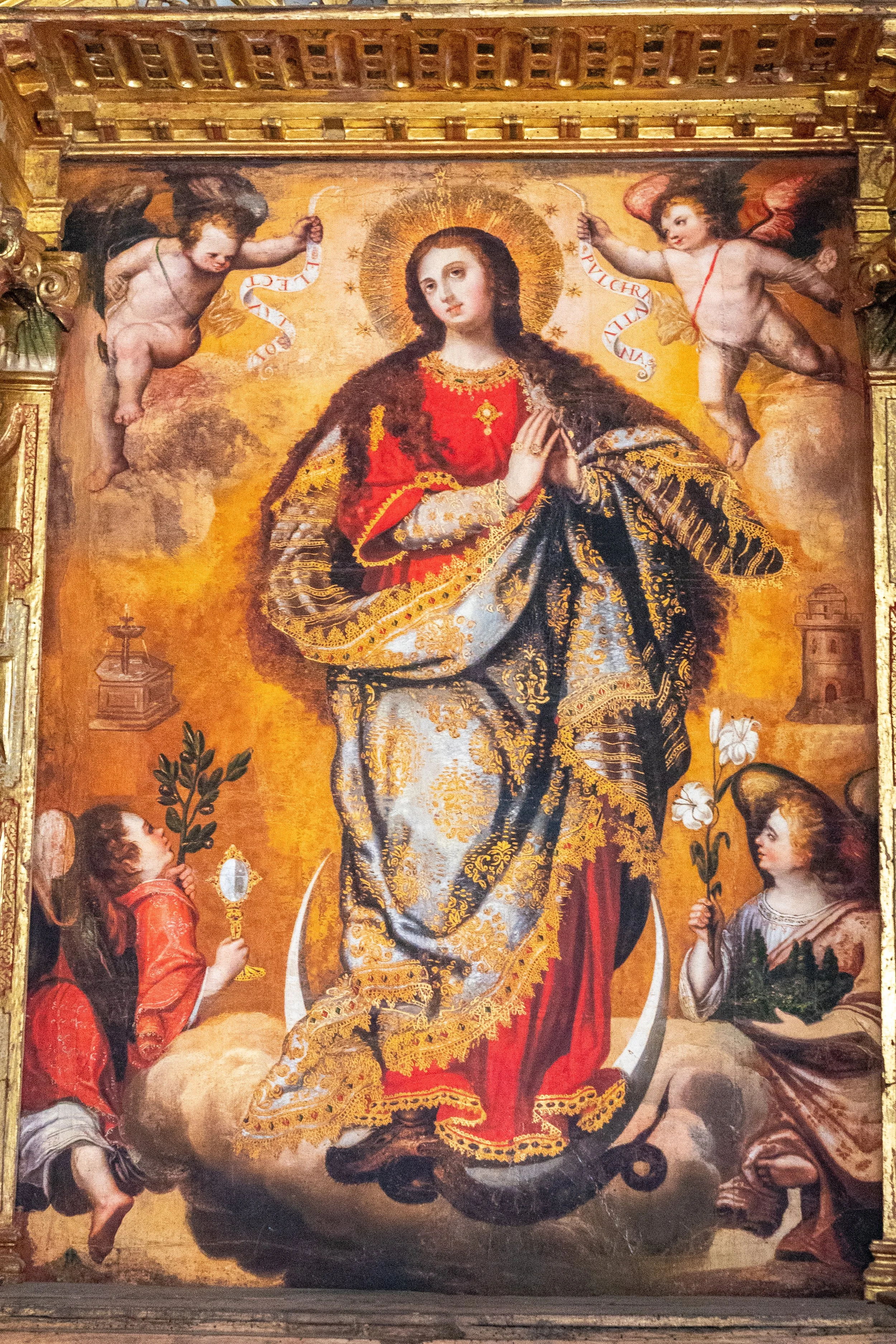
Immaculate Conception painting in the church interior
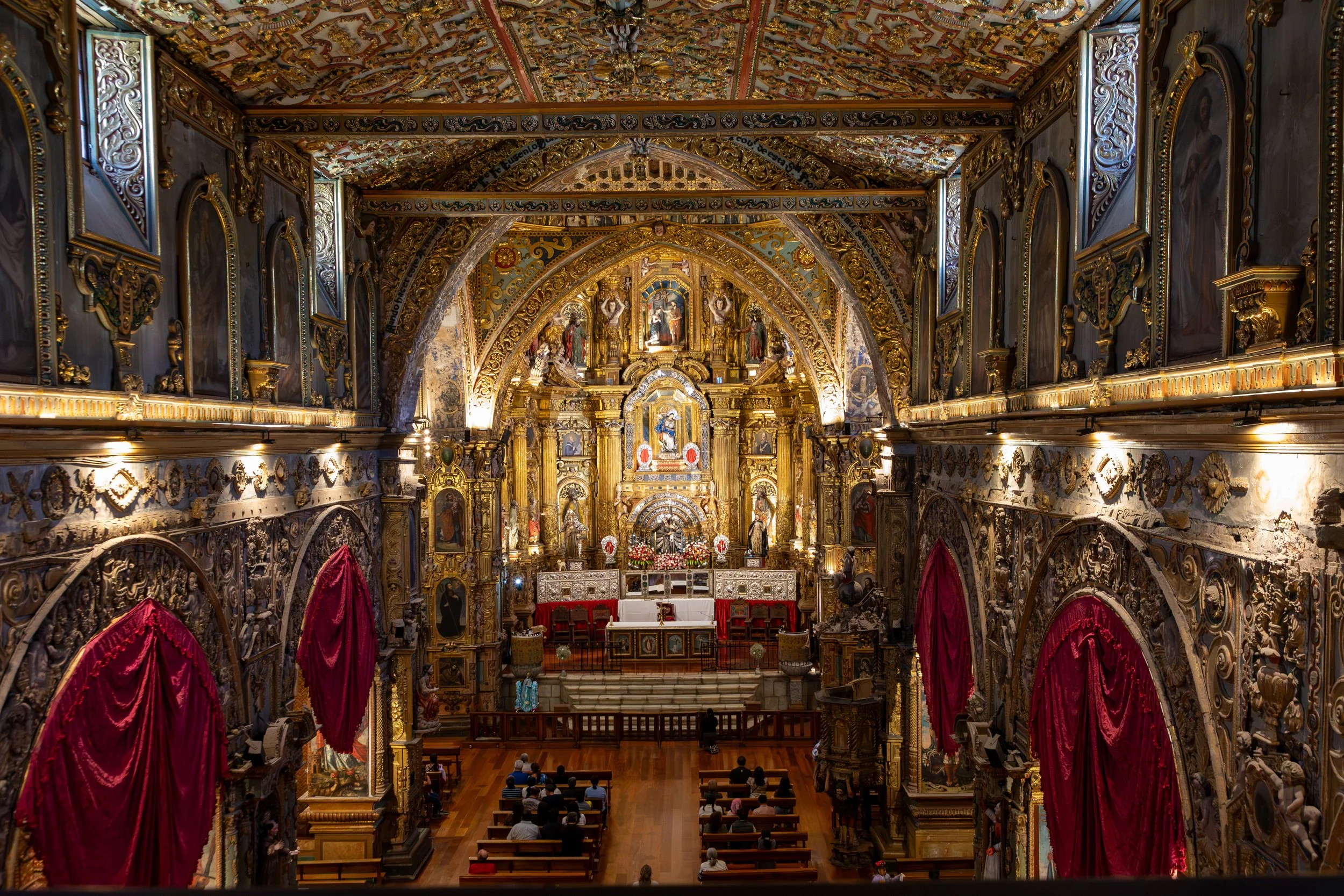
Looking down on the impressive church from the high choir (coro alto)
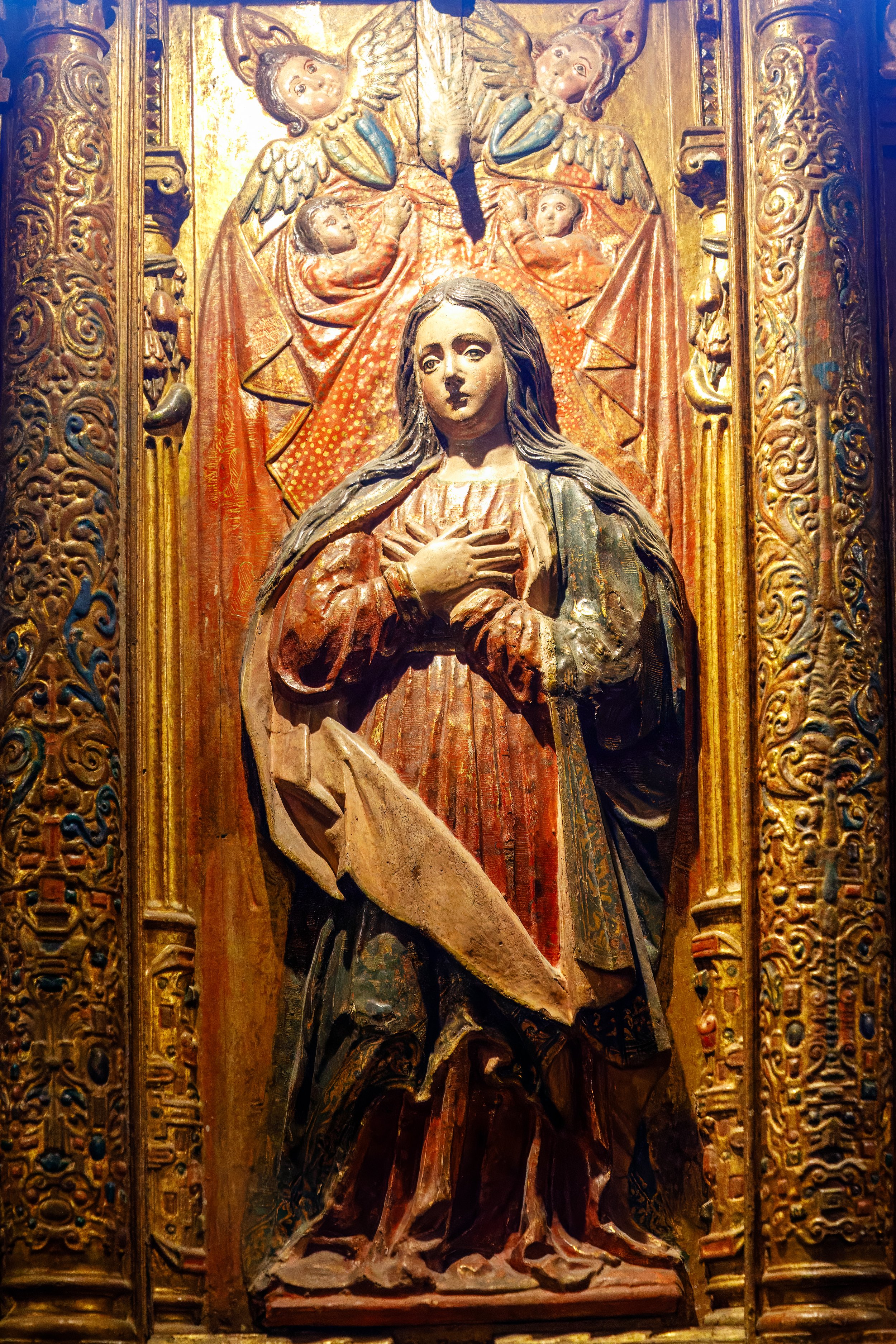
An ornate and colourful wooden Mary Statue adorns the church walls
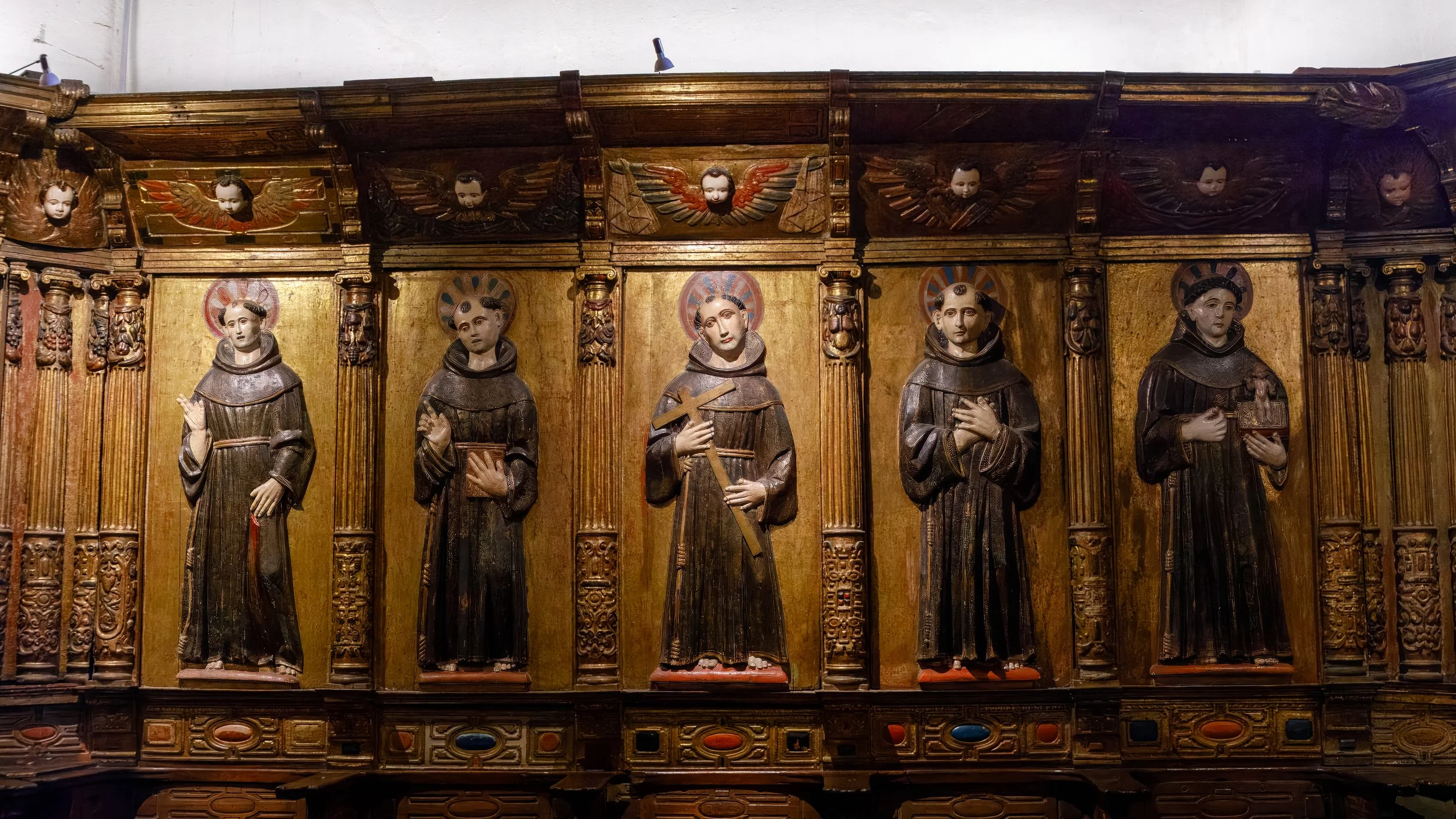
Wooden choir stalls depicting Franciscan friars also in the high choir
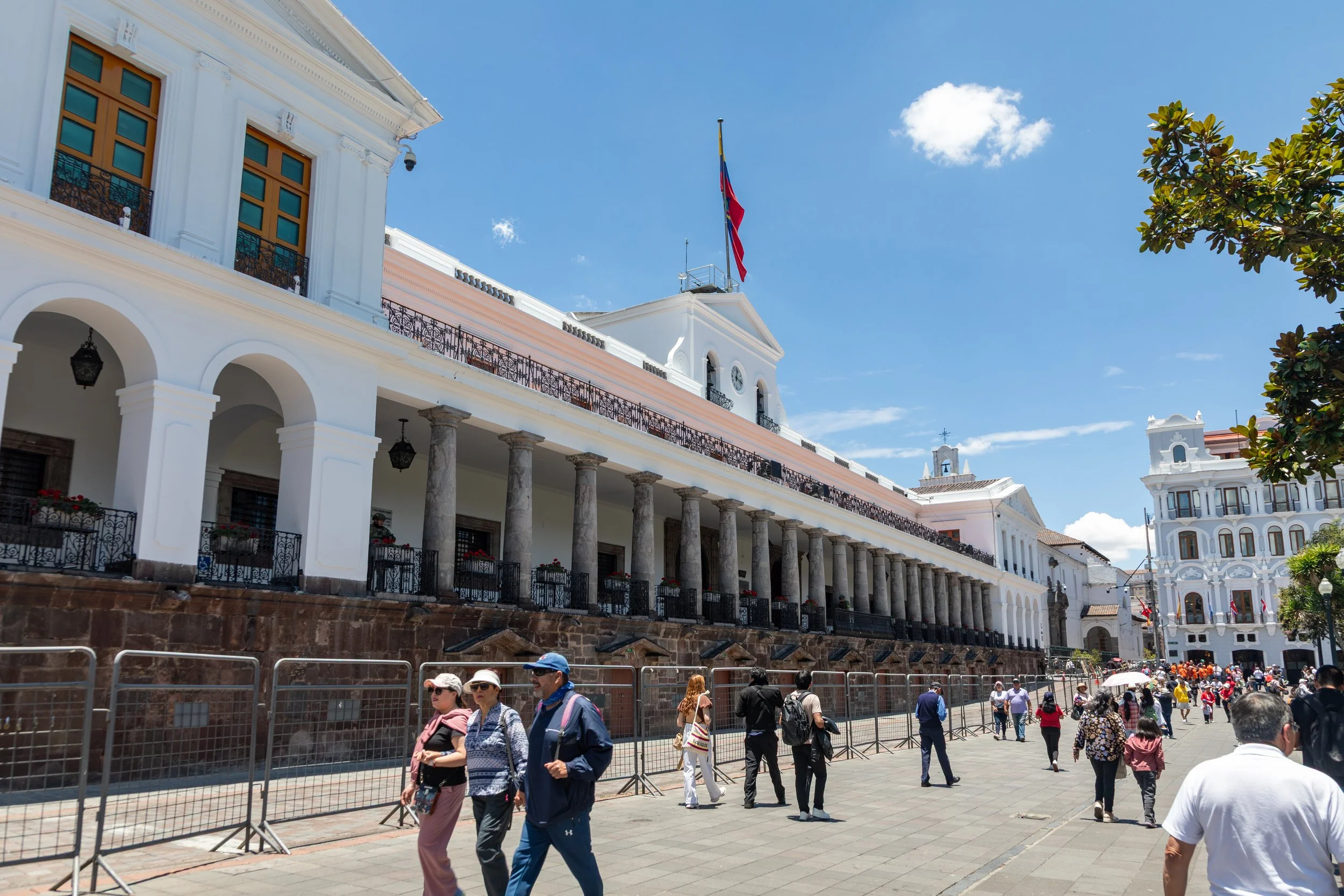
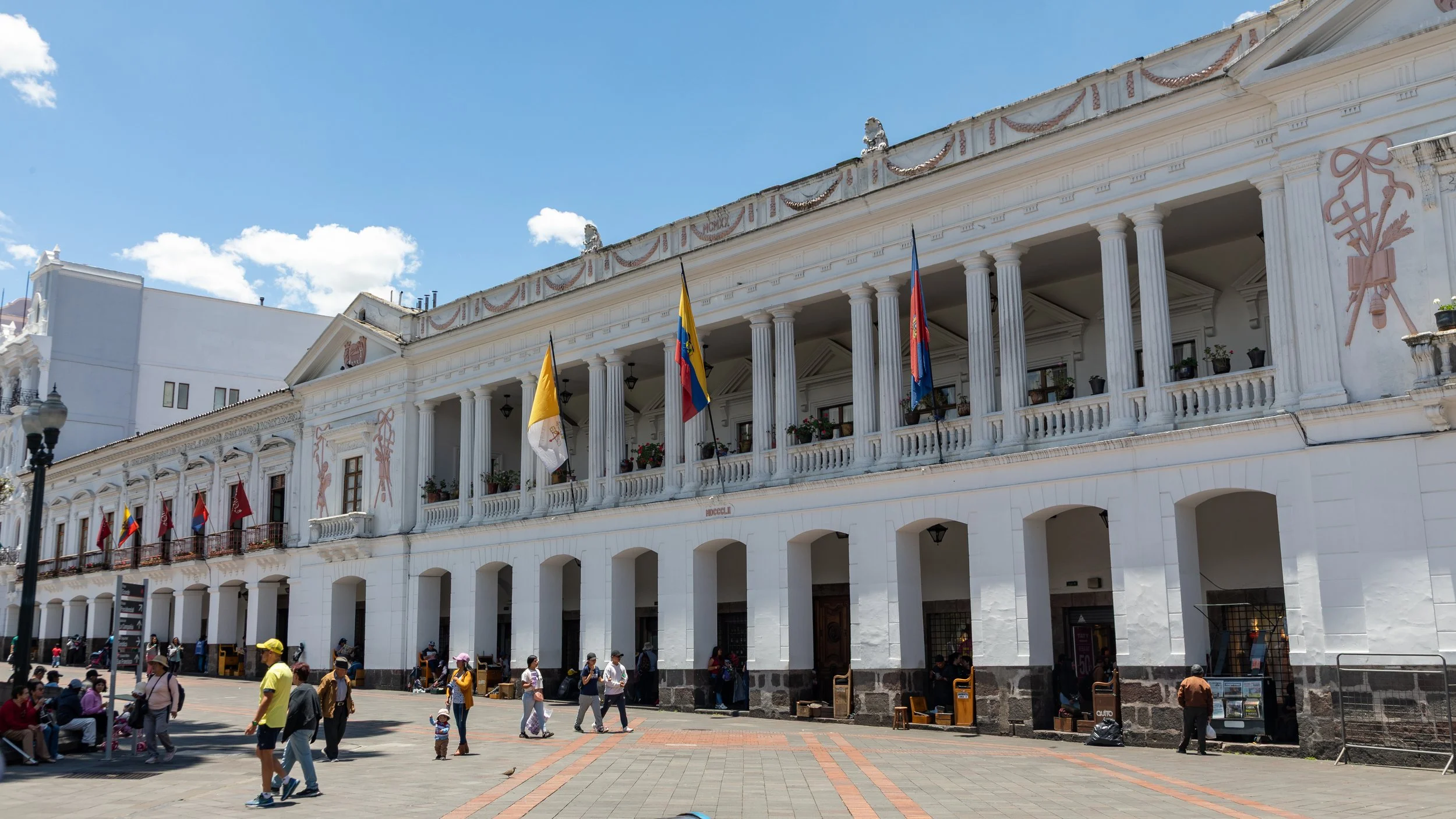
16th Century Palacio de Carondelet, the seat of government and official residence of the President of Ecuador
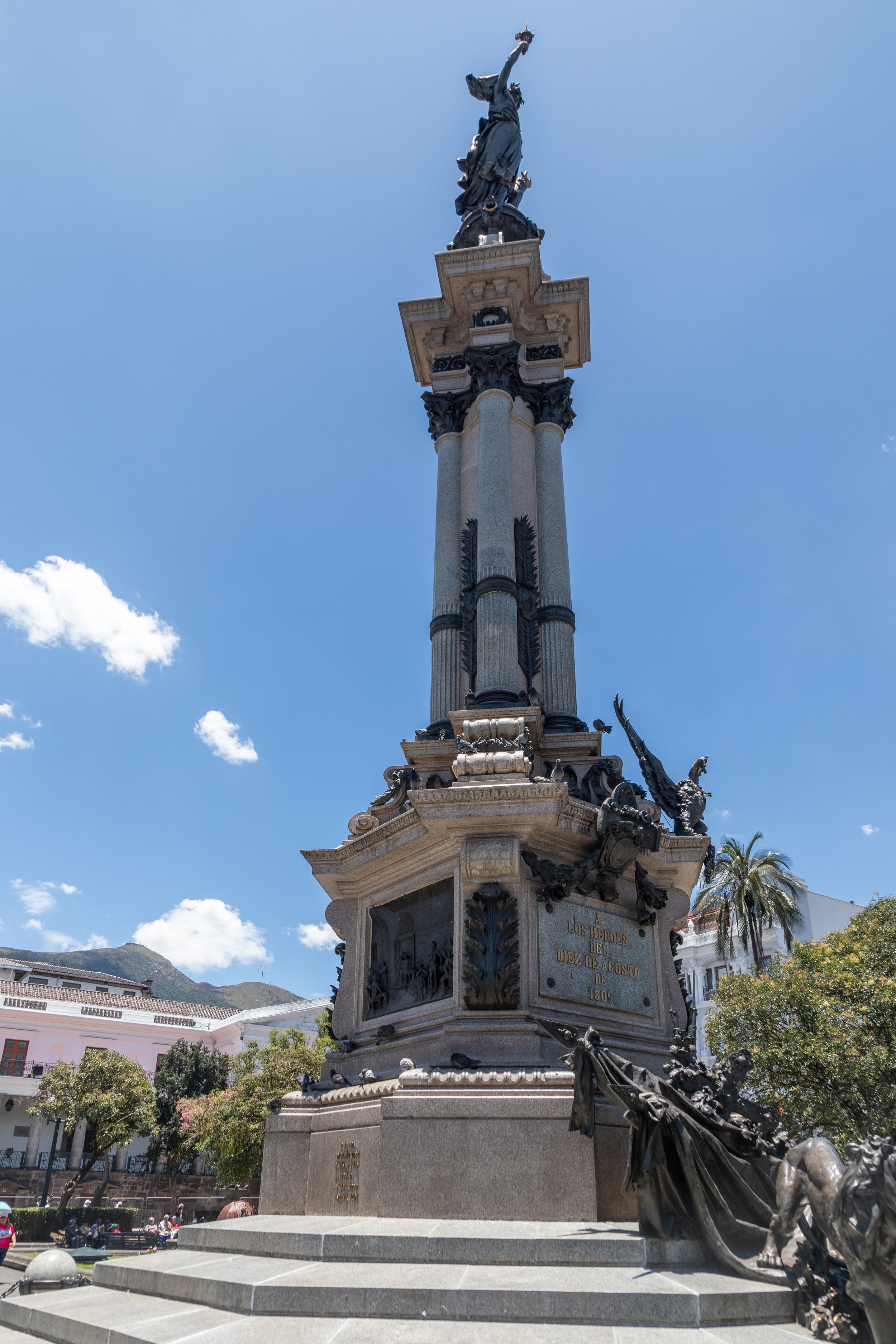
Independence Monument, also known as the Monument to the Heroes of August 10, 1809, in the Plaza de la Independencia
Archbishop's Palace, also located in Plaza de la Independencia
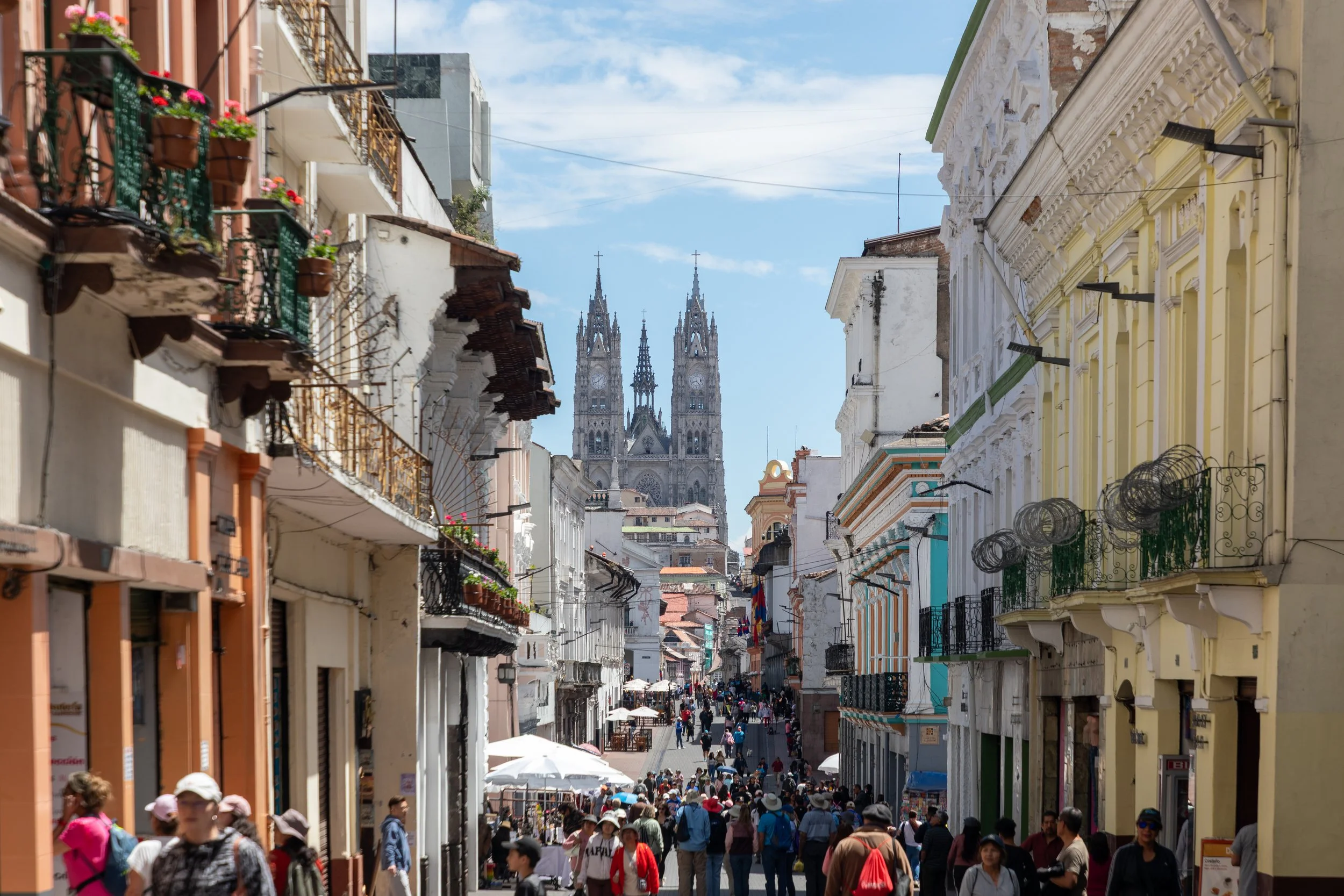
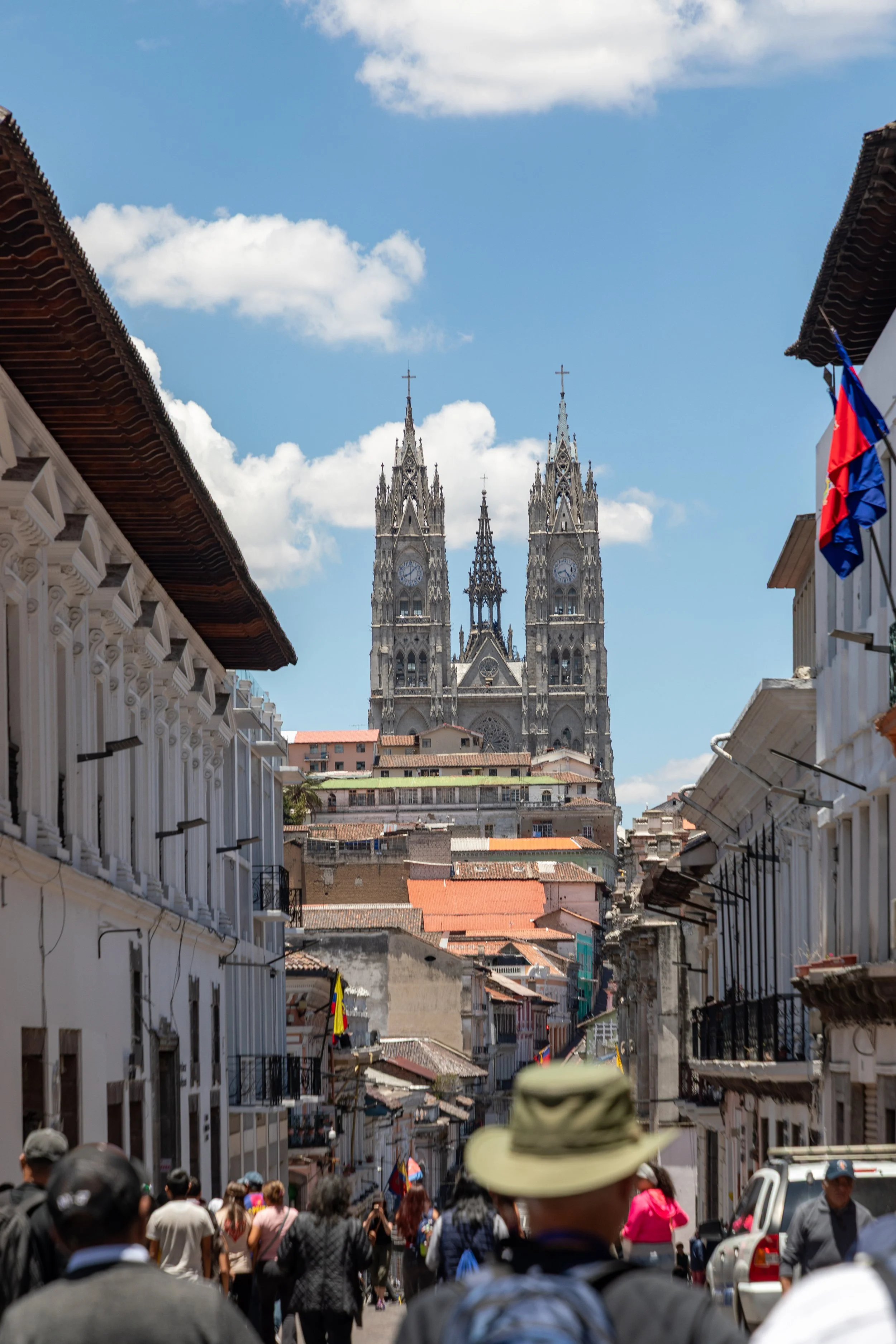
Old city street view leading to the Basílica del Voto Nacional, the largest neo-Gothic basilica in the Americas and technically still under construction since 1892
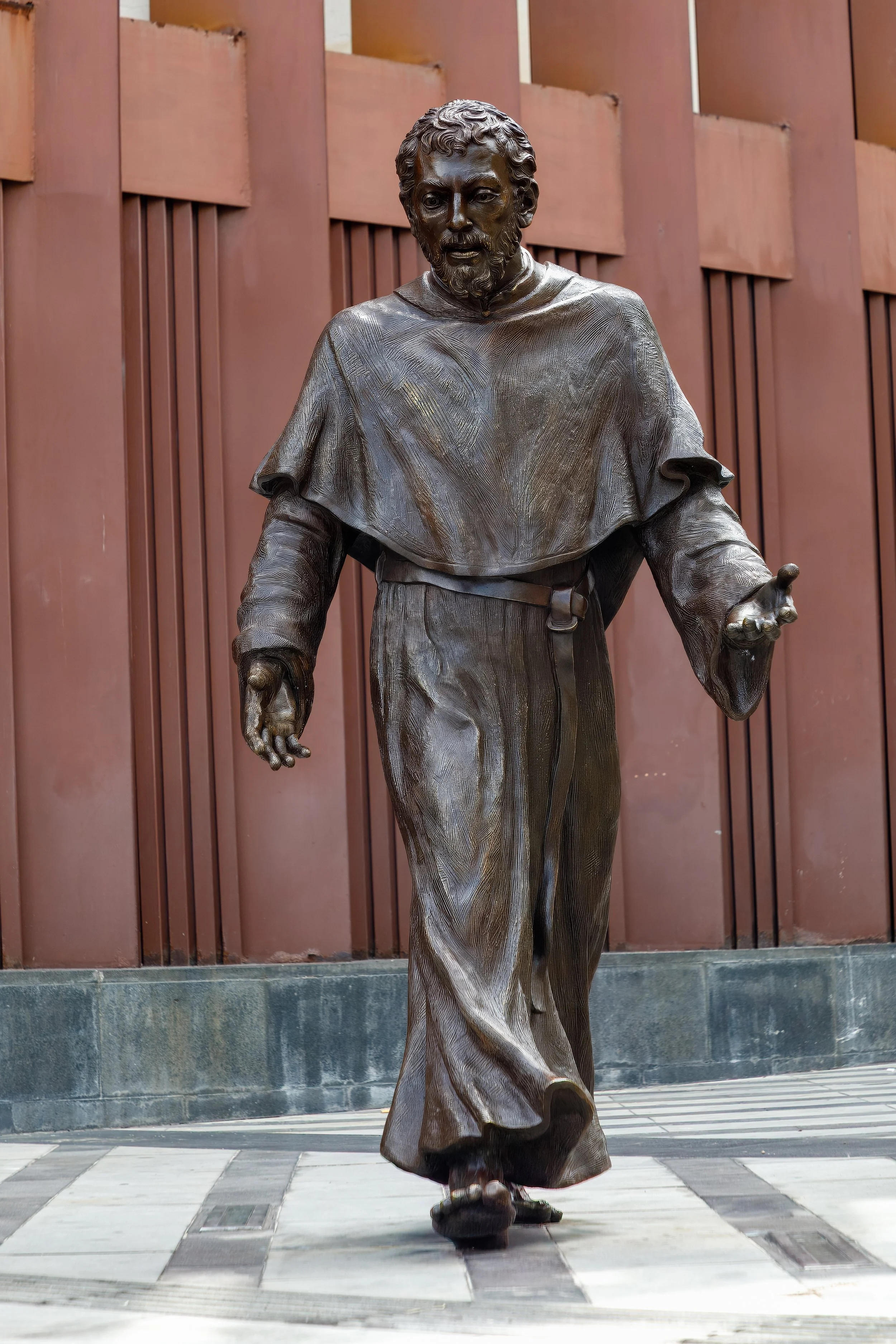
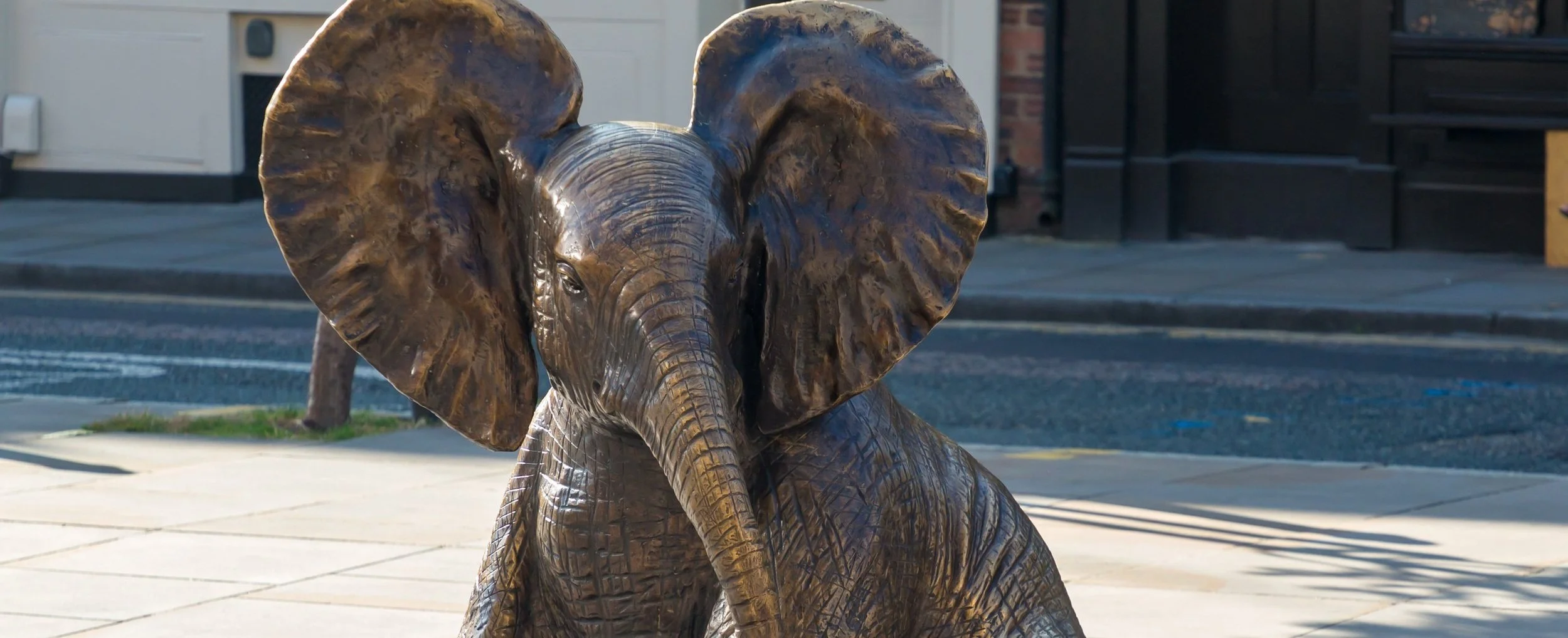
Bronze statue located at the Plaza Huerto San Agustin, our last stop before lunch
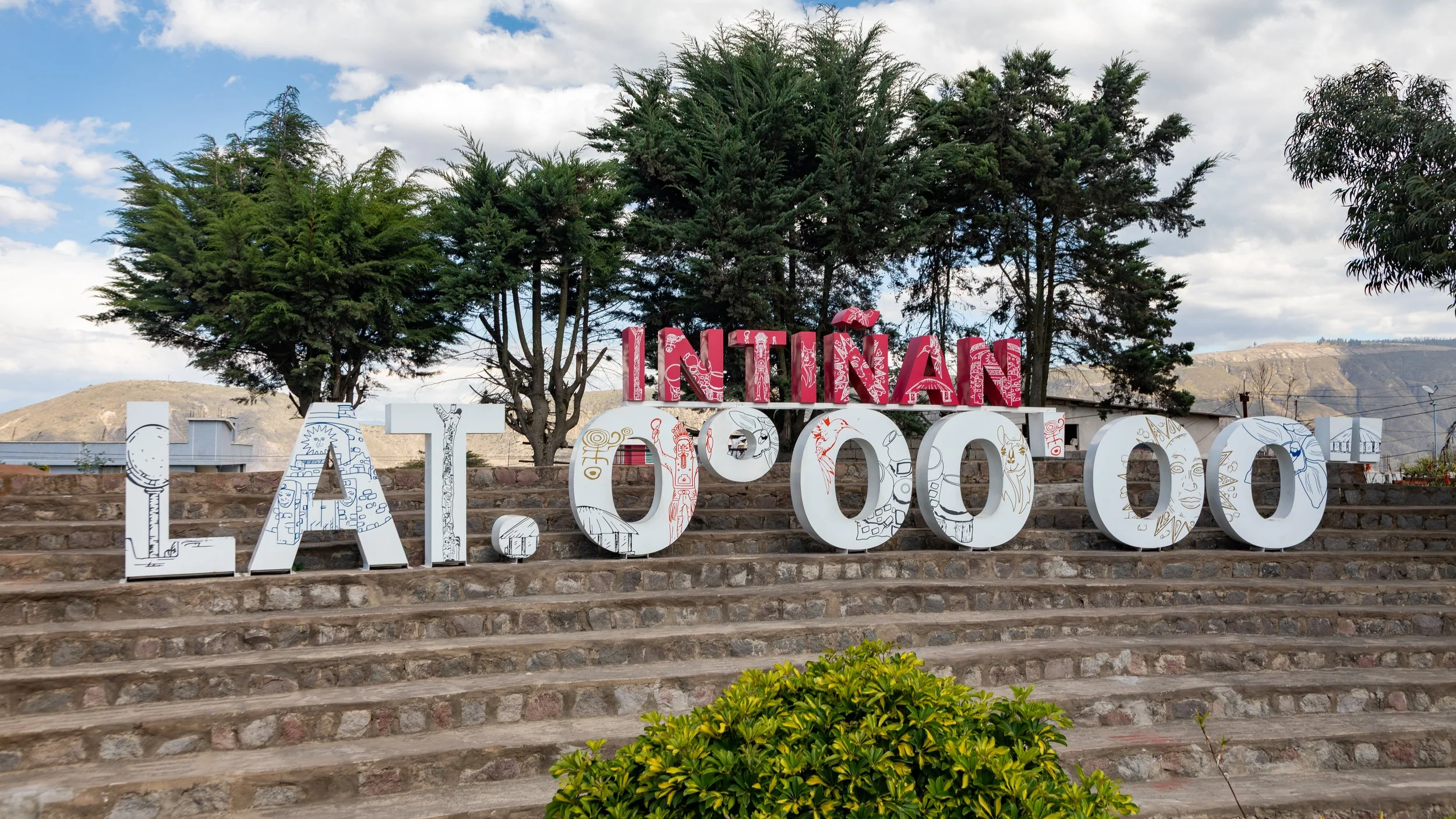
After a wonderful lunch, our bus transferred us to the Equator for some equatorial fun
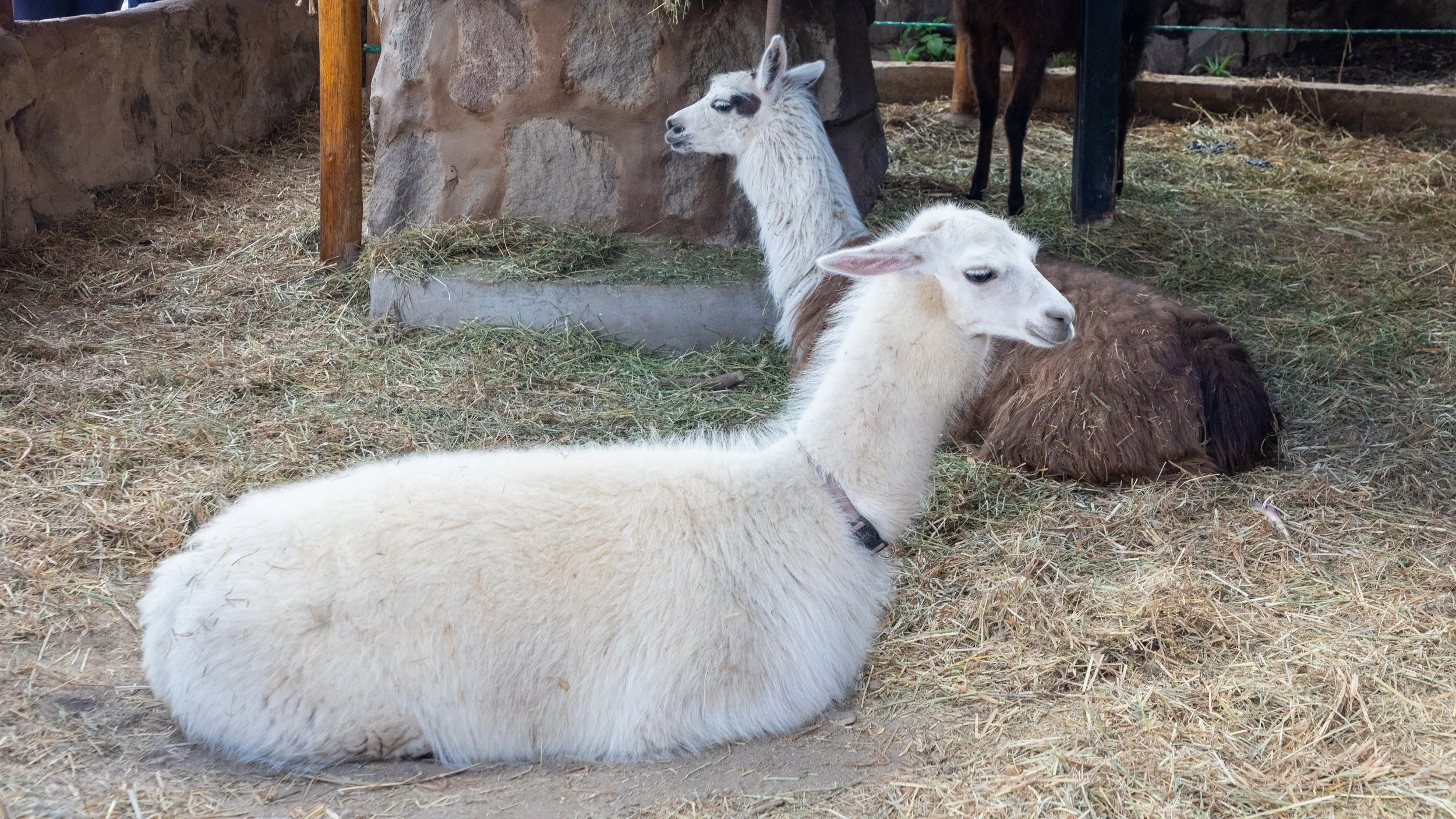
Llama on display as part of the Intiñan Equator Museum, part of the effort to bring some additional cultural elements to an imaginary line
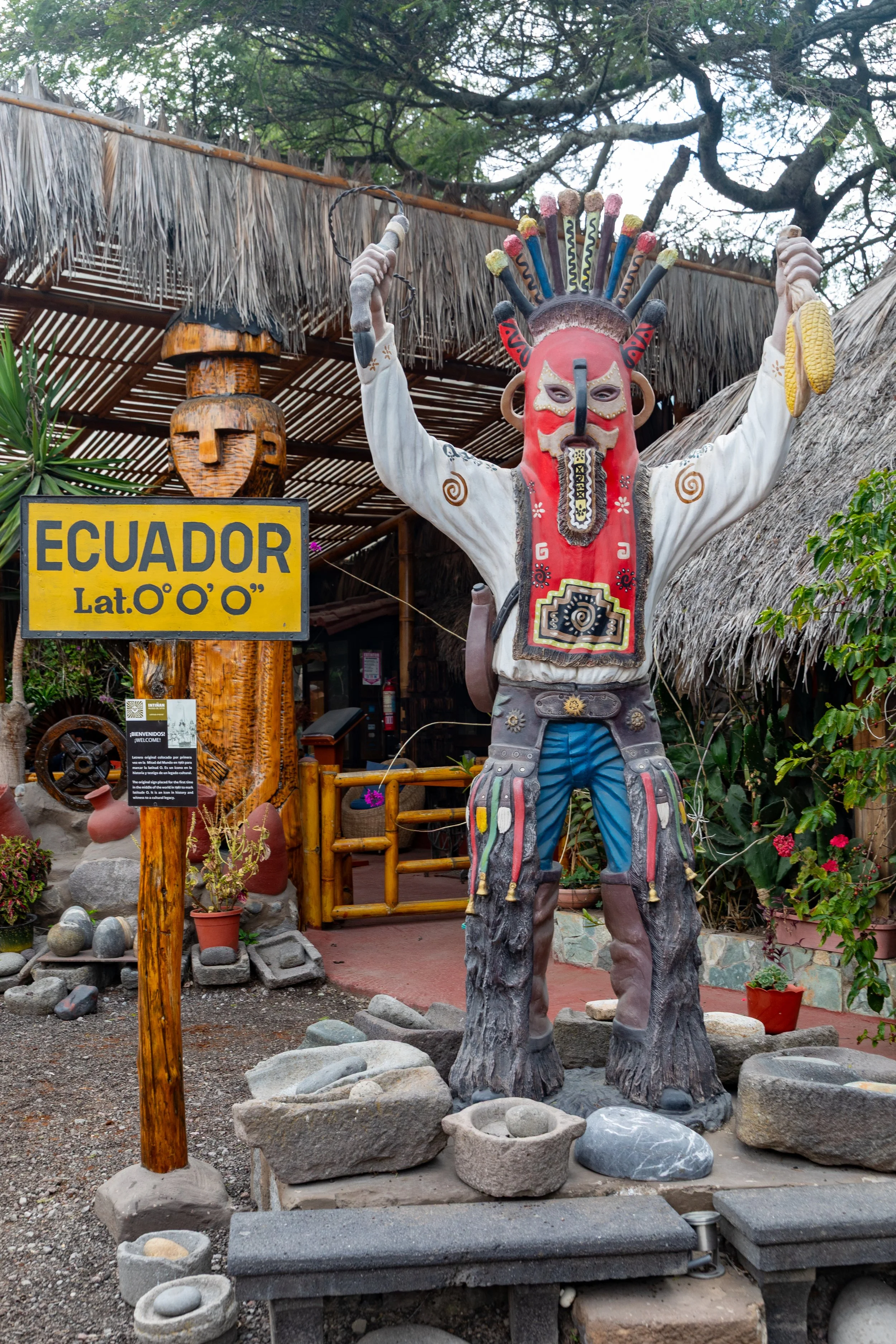
Entrance to the museum gives clue to the exhibits on the indigenous cultures of Ecuador that would be covered
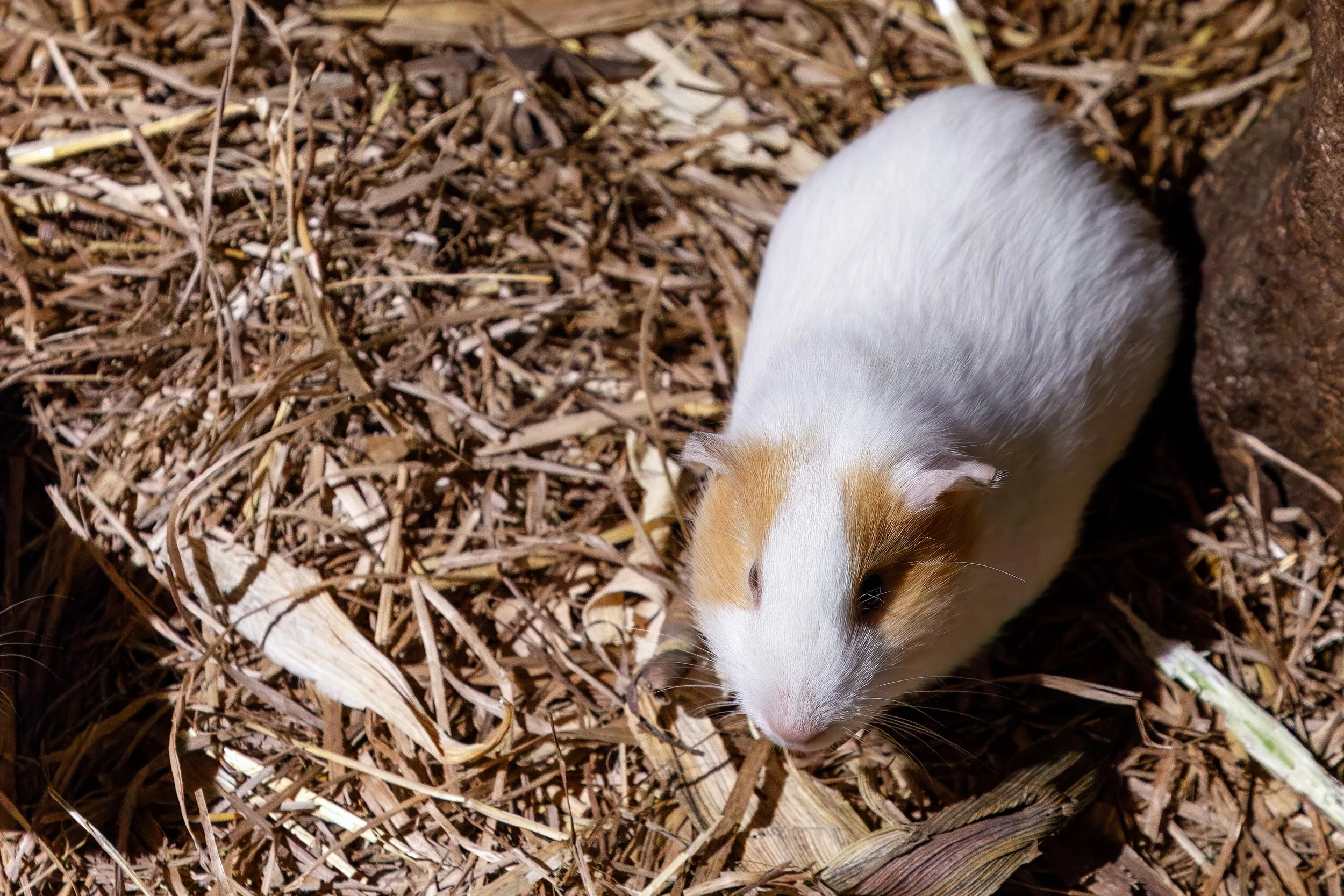
Guinea pig, a local delicacy that luckily wasn’t on the menu for us
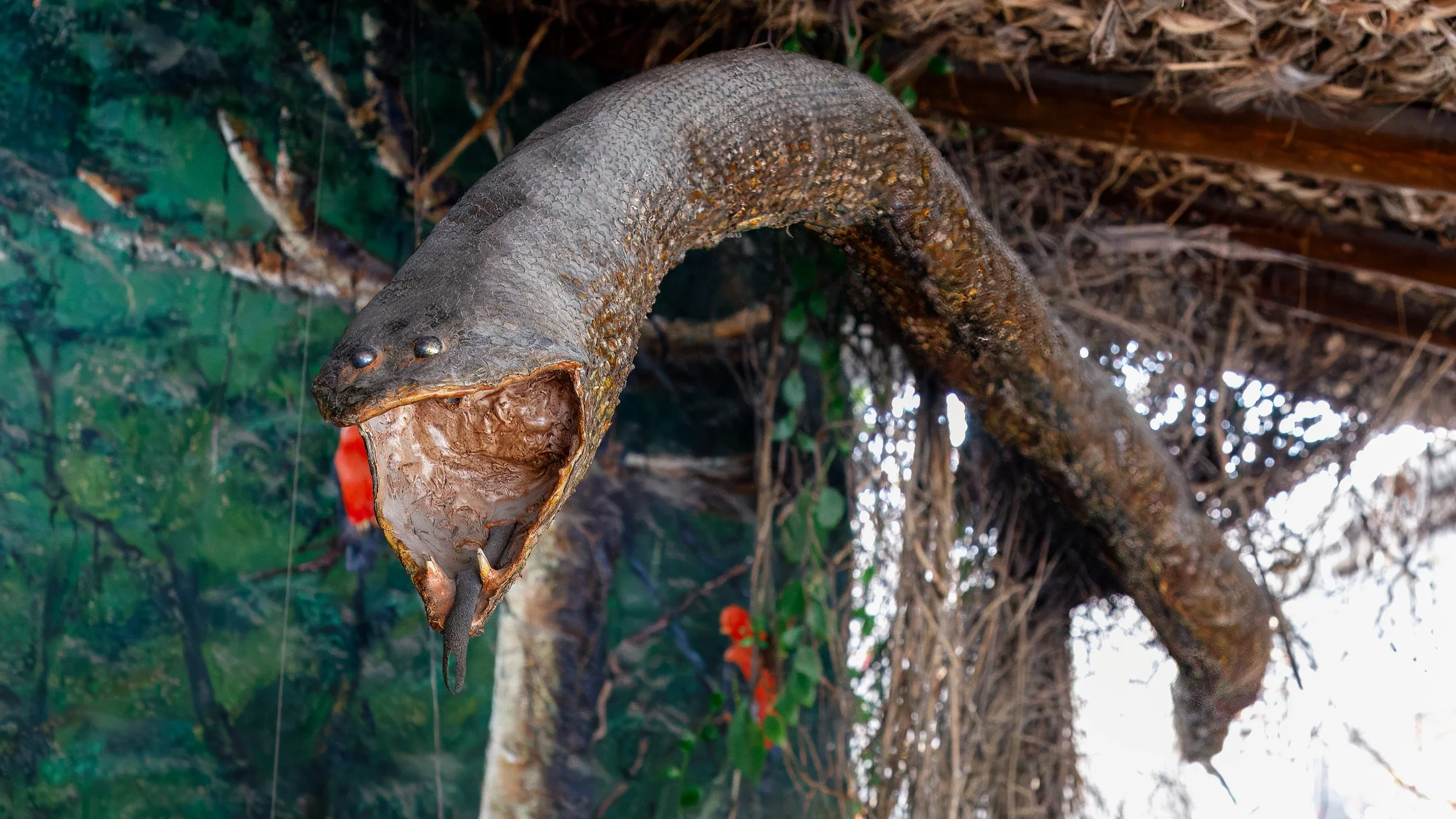
Anaconda skin was part of the Amazon region display
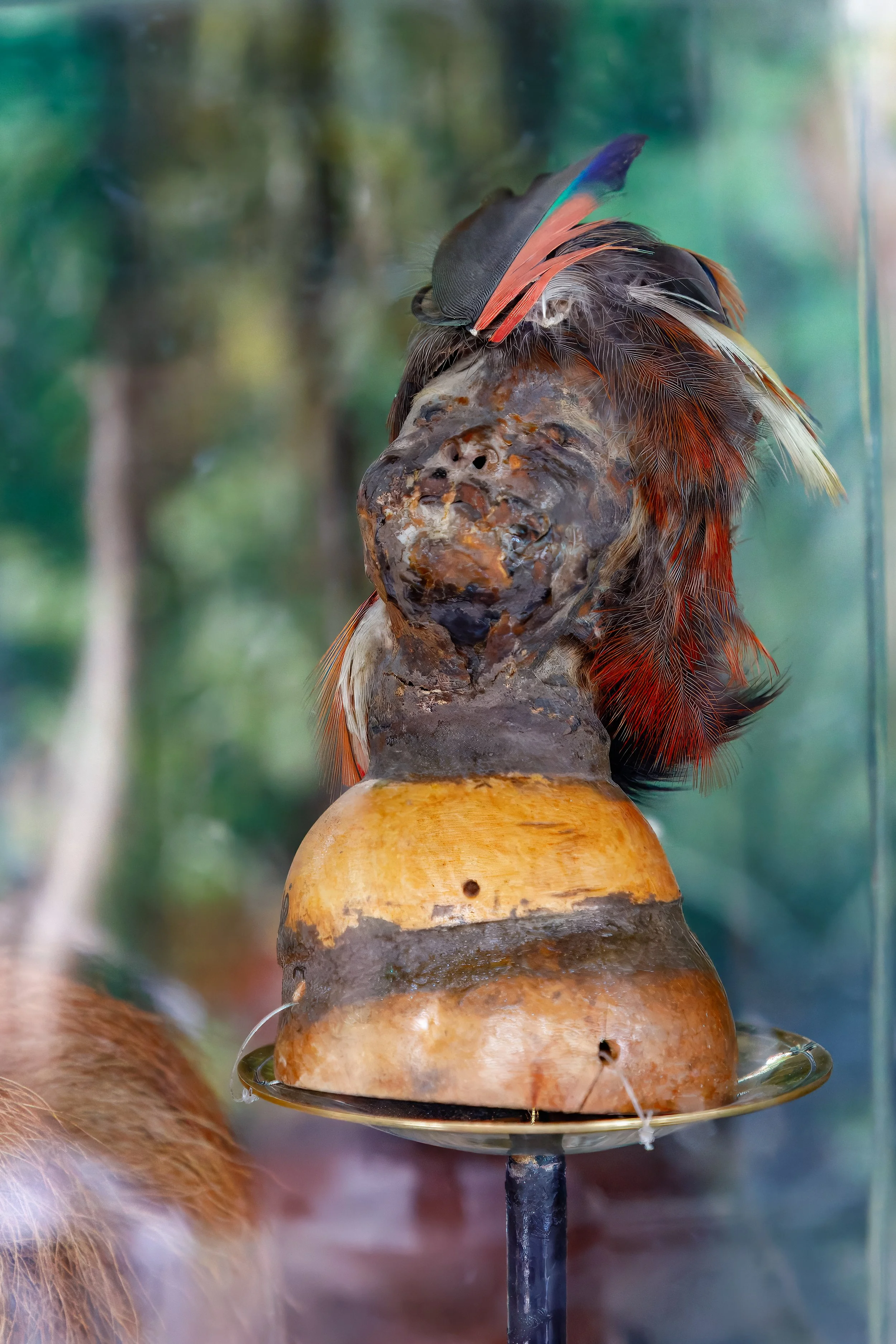
A replica of a shrunken head, traditionally created by the Shuar and Achuar peoples of Ecuador from the heads of slain enemies
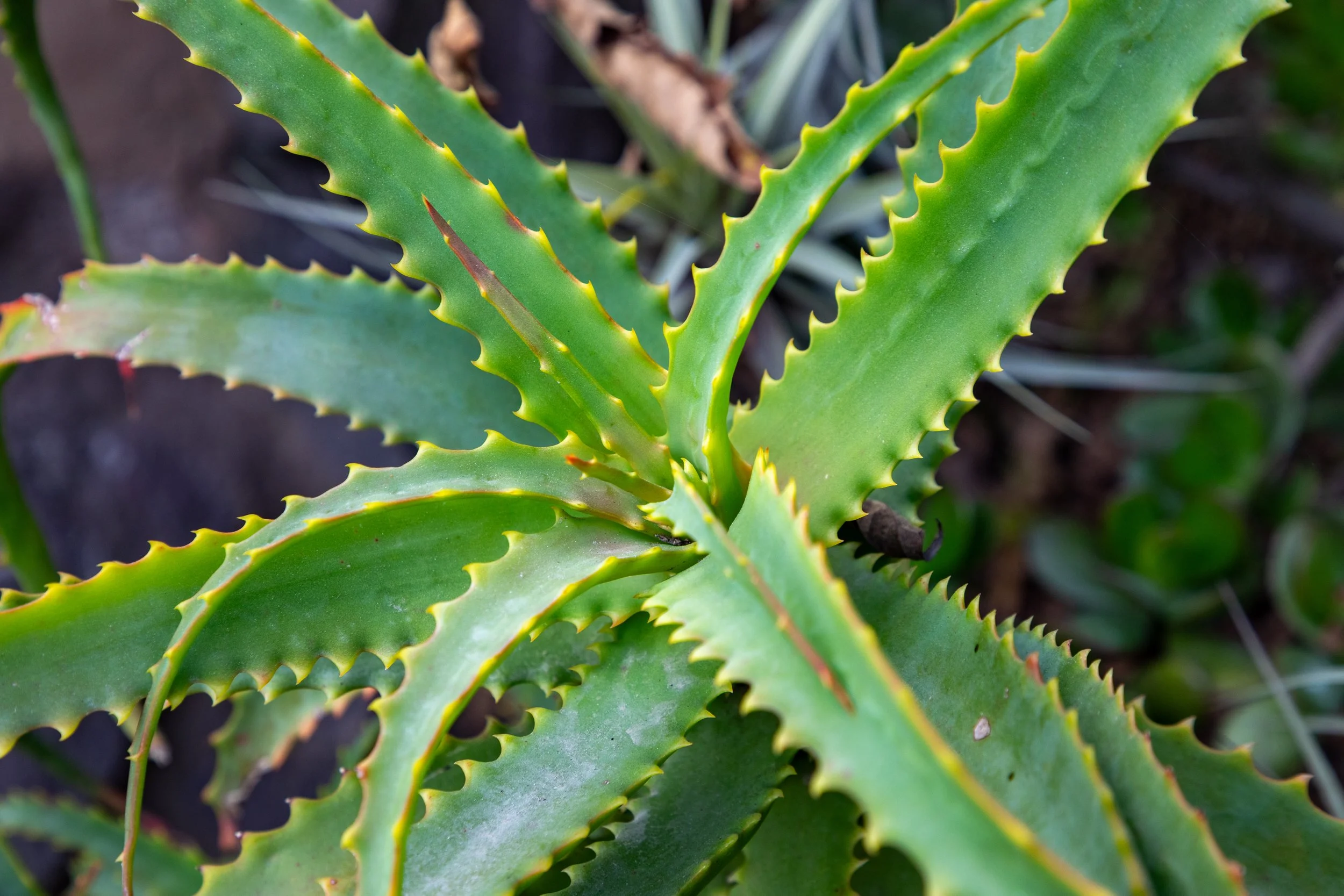
Aloe plant
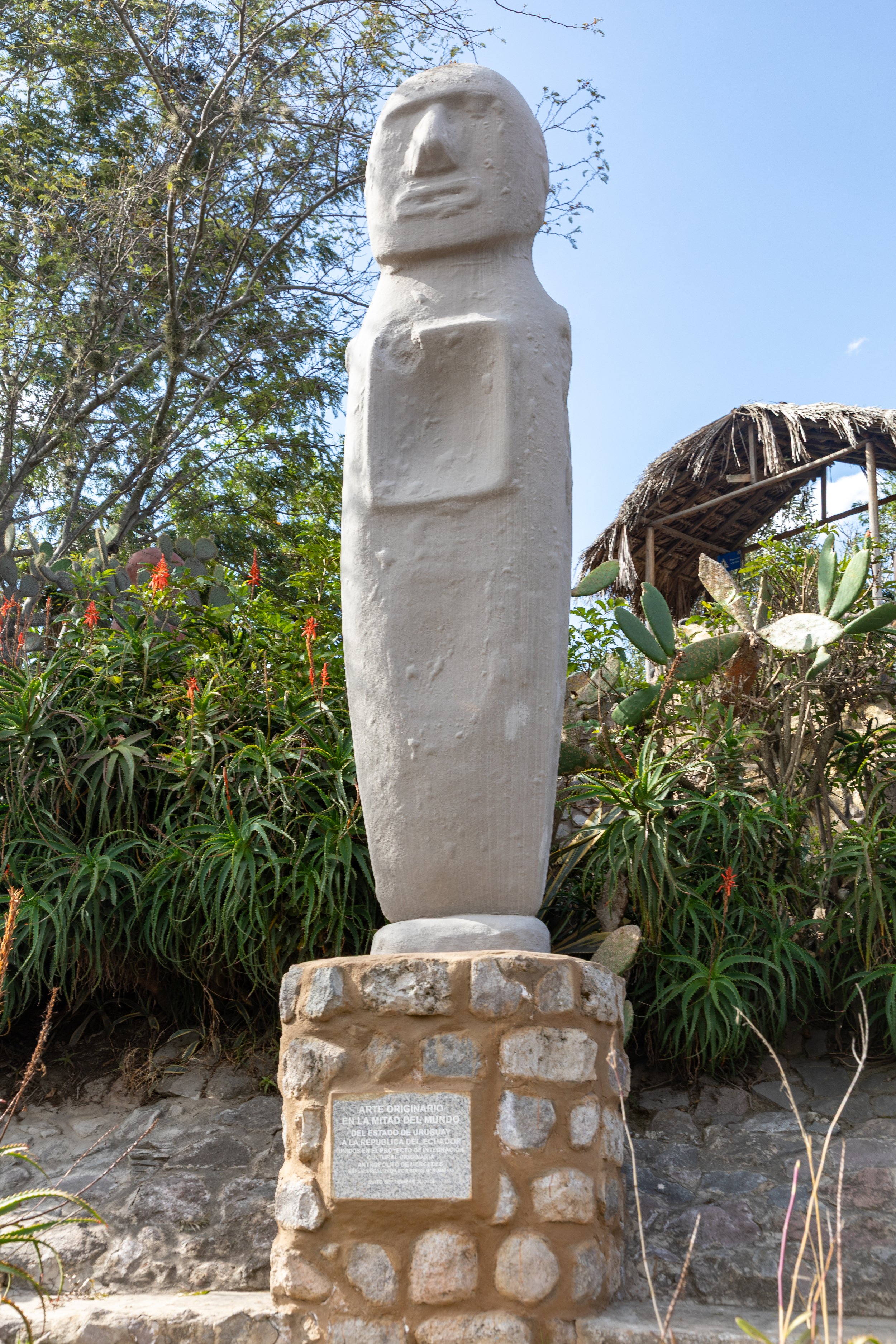
Indigenous statue centred on the equatorial line
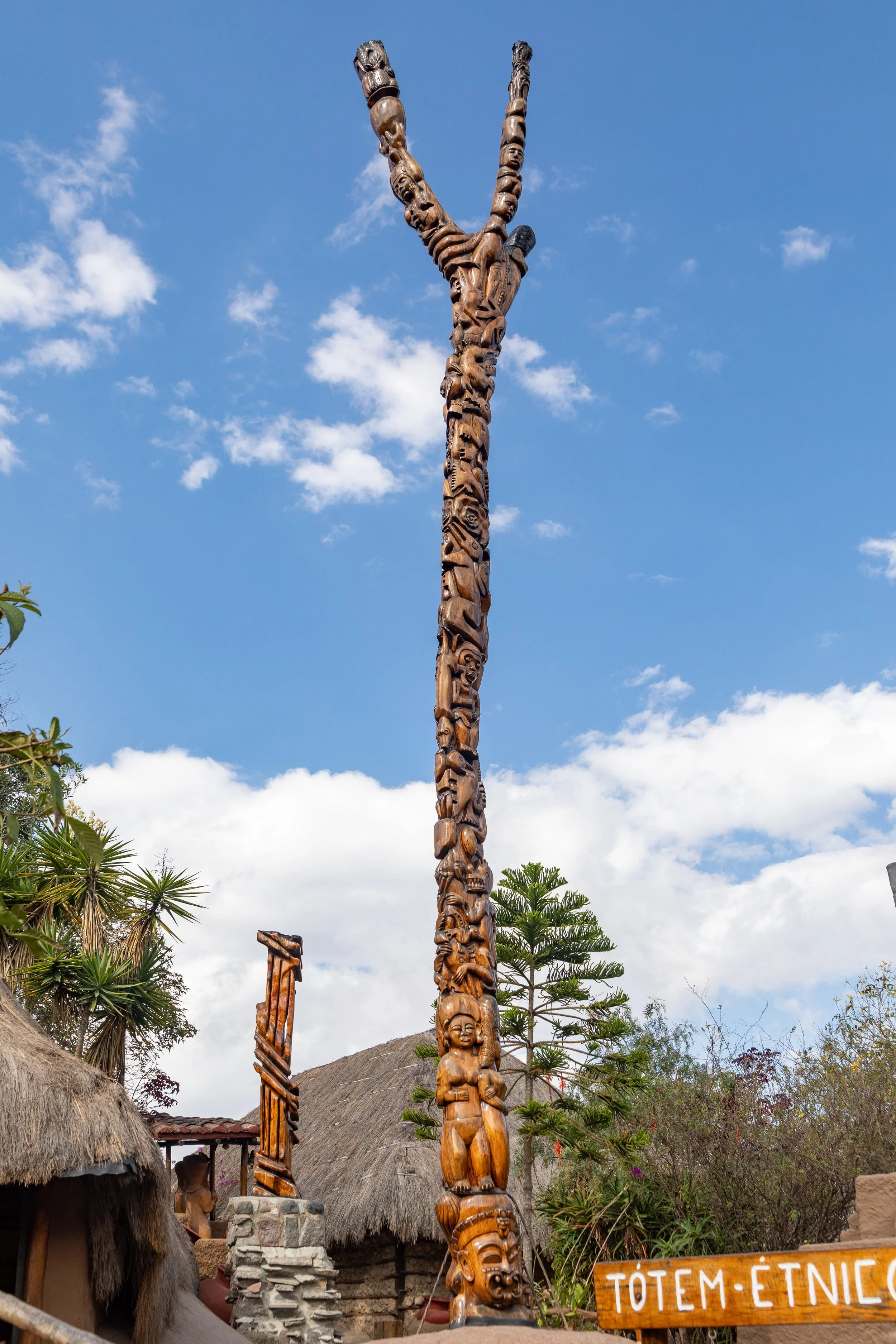
Large totem pole, also on the equatorial line, reflects a celebration of South American indigenous culture and history
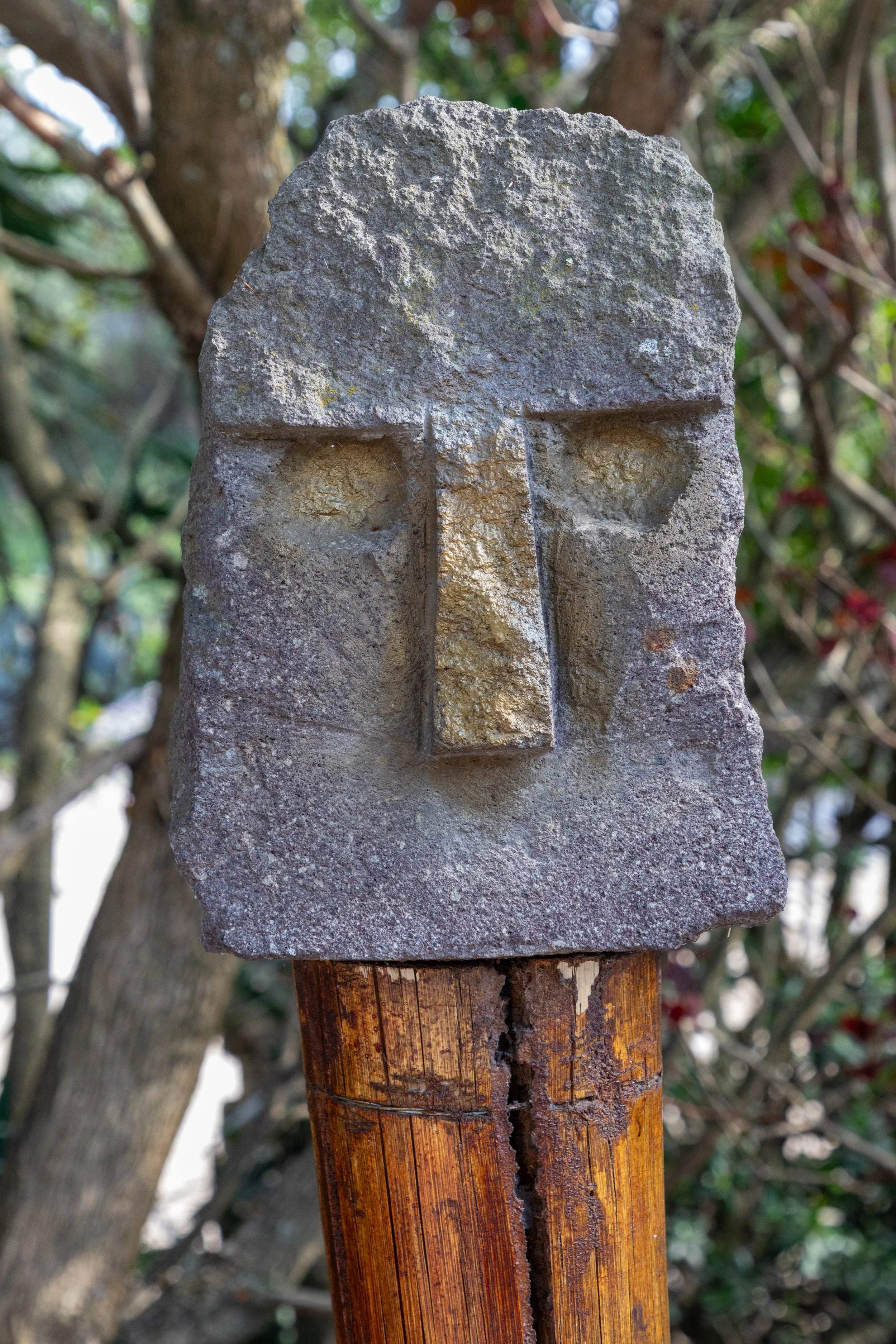
Primitive stone face sculpture
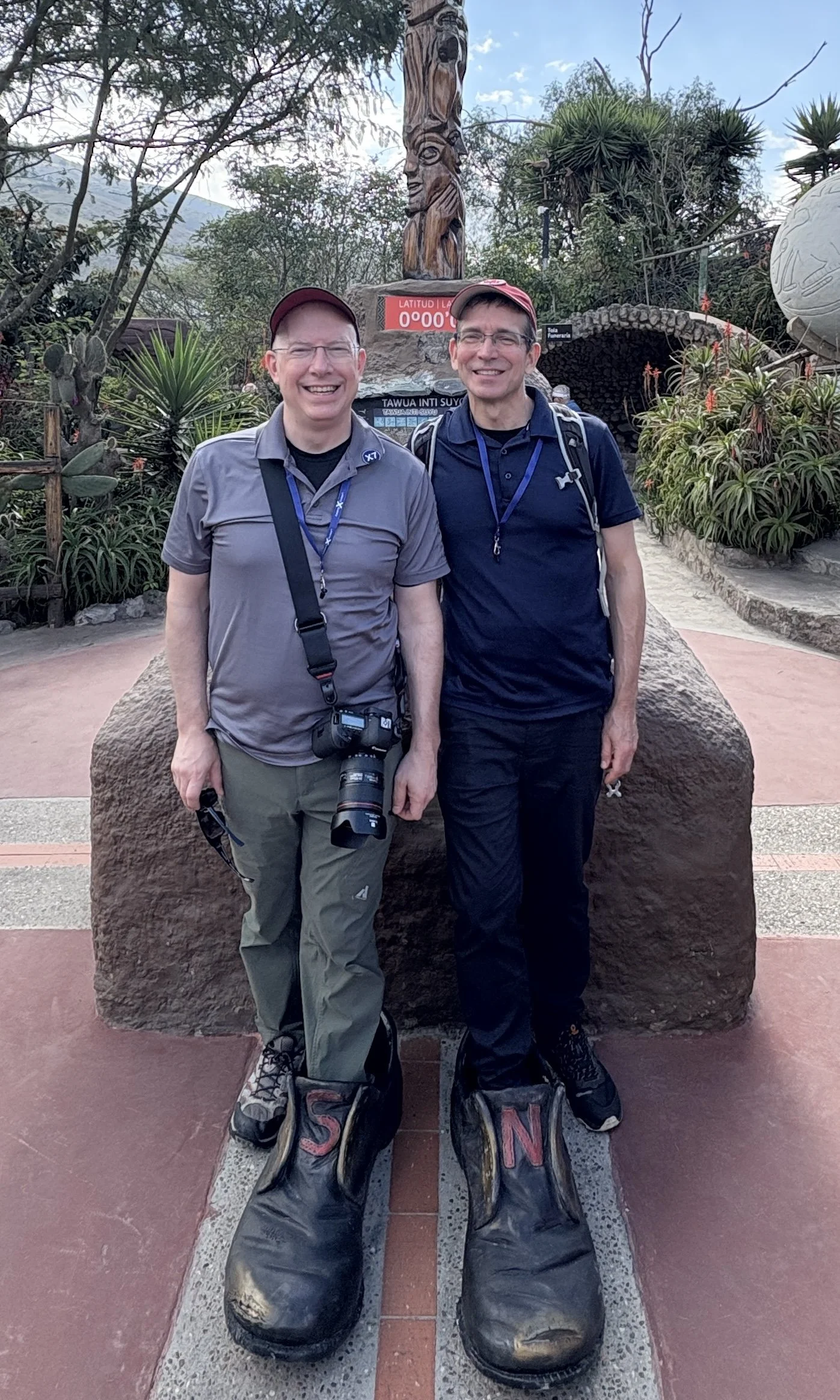
One of the necessary photos straddling the equator
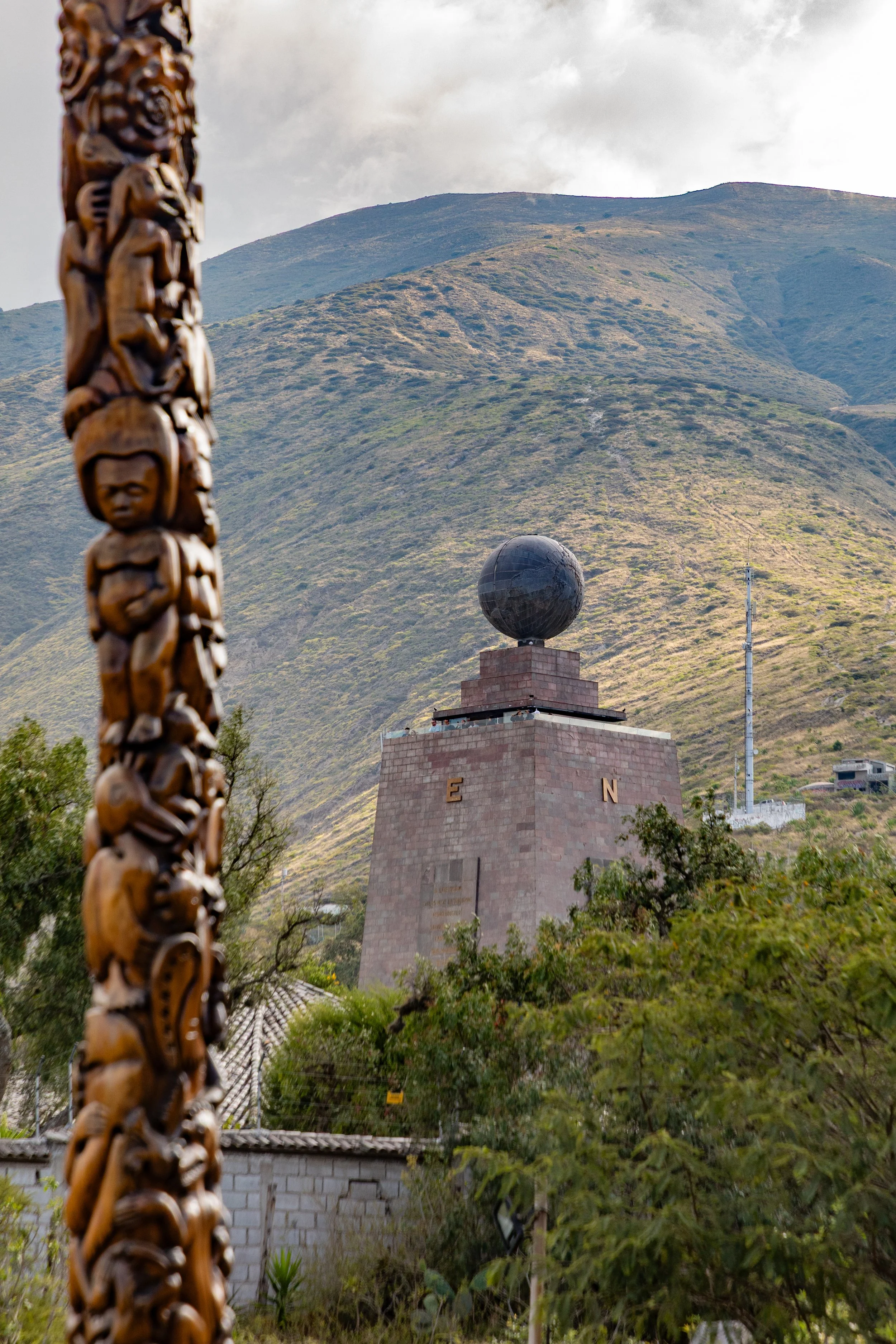
A number of metres away, The Middle of the World monument marks the line where an 18th-century French geodesic mission determined the location of the equator
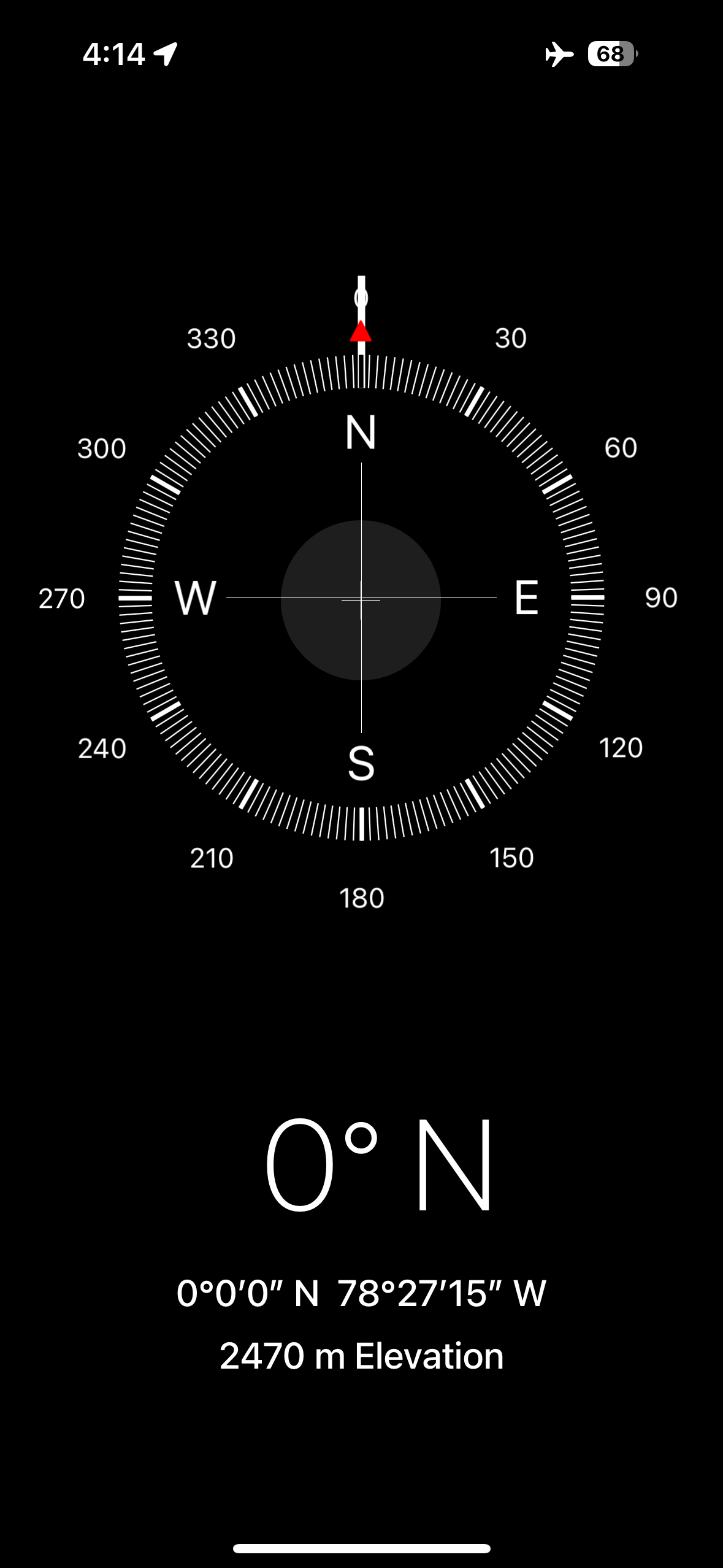
Also metres away from the official equator line is where Apple’s GPS saw the equatorial line
At the end of the museum tour, there were a number of equator trick demonstrations that attempted to demonstrate variation in the flow of water down the drain and challenges balancing on the equator because of effects on inner ear. Although nice science lessons, ultimately the small differences weren’t enough to trigger what they were claiming to demonstrate, but it was fun to pretend.
After a bus ride back to Quito, there was time for me to have a quick swim in the hotel pool prior to a wonderful diner in a nearby restaurant with more opportunities to meet the other cruise guests that we’d be with for the next week.
Sep 28
Having suffered through a very early cruise transfer and flight diversion on our trip to Antarctica the previous year, we were happy to have a more civilized wake up call and airport transfer with no real drama. The flight from Quito to Baltra Islands was on time. After landing and staging in the airport, we were on buses to the port for tender transfer to our ship. For the first day, we were oriented to the ship, set up for the upcoming activities, and were able to enjoy a late lunch. NB: although I recognize the correct spelling of Galápagos, for simplicity going forward I’ve anglicized and removed the accent.
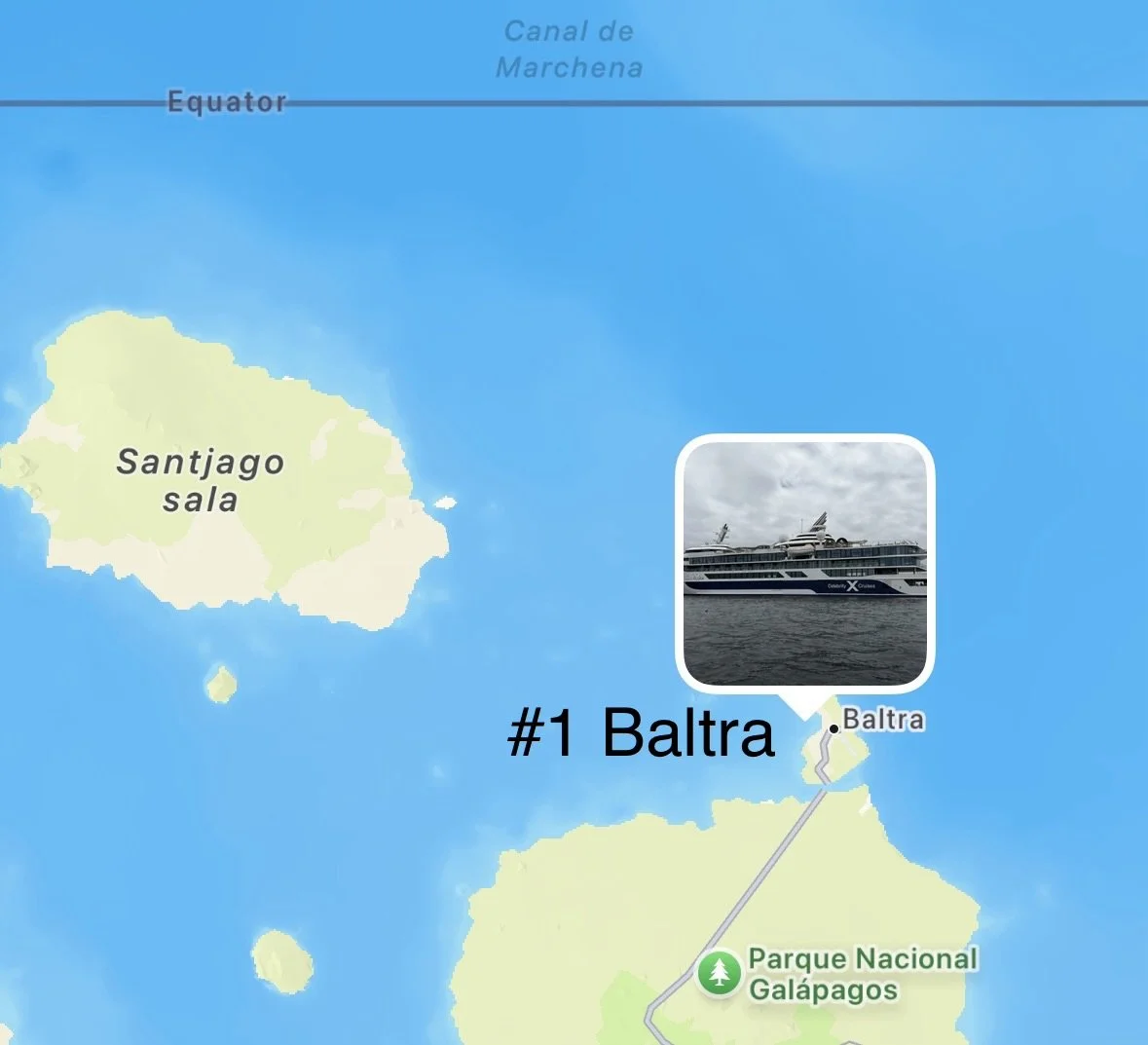
For our first day we anchored near the airport
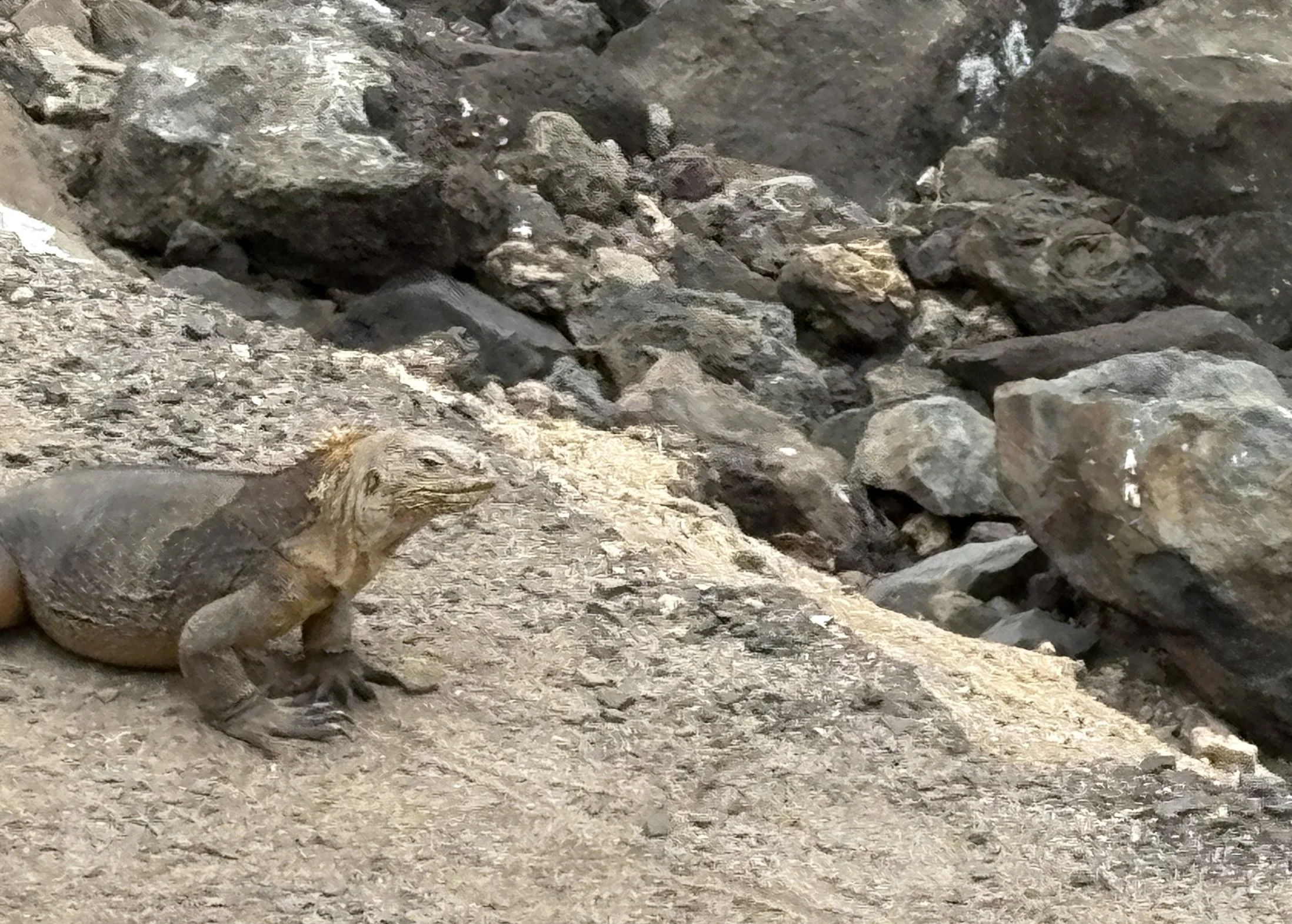
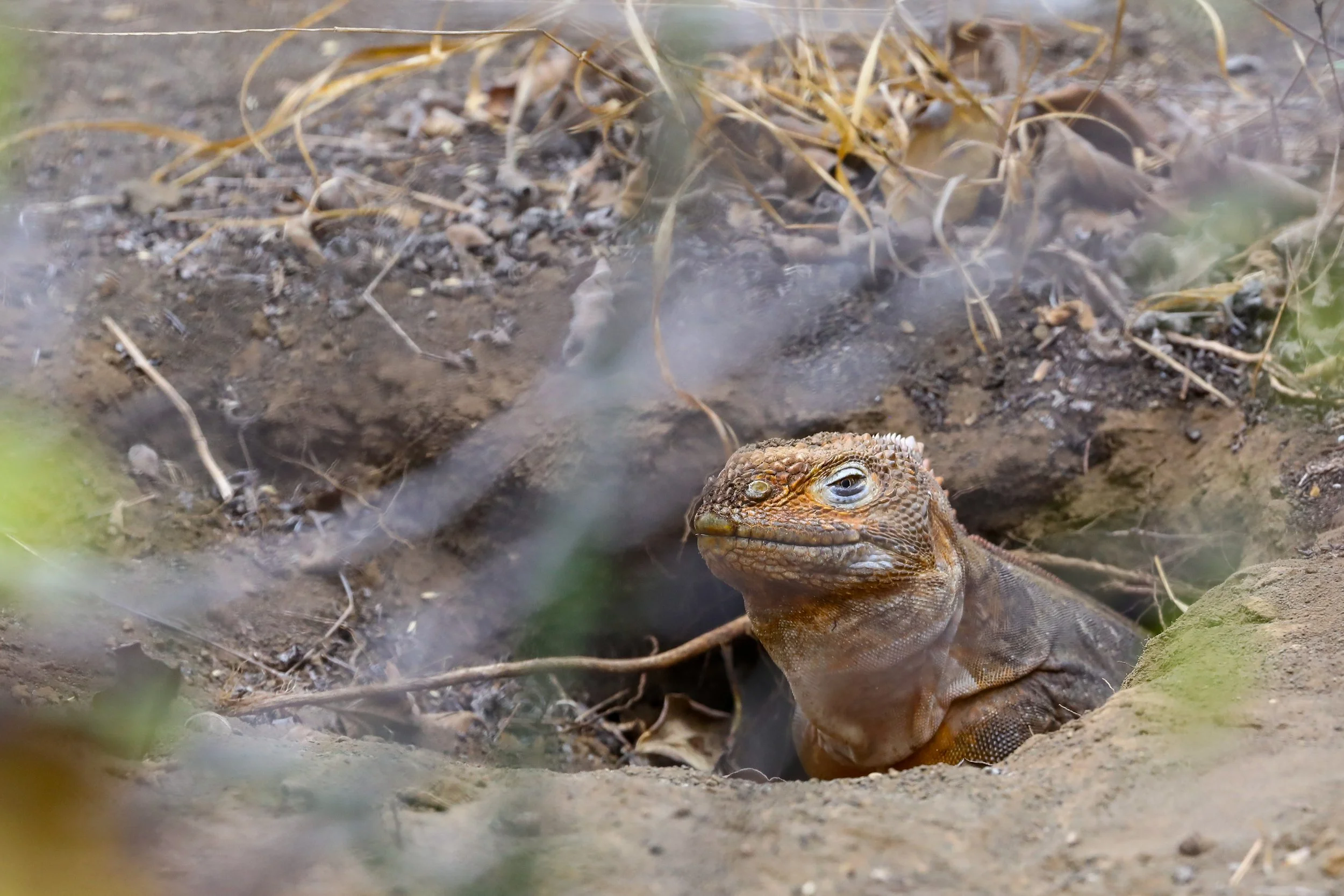
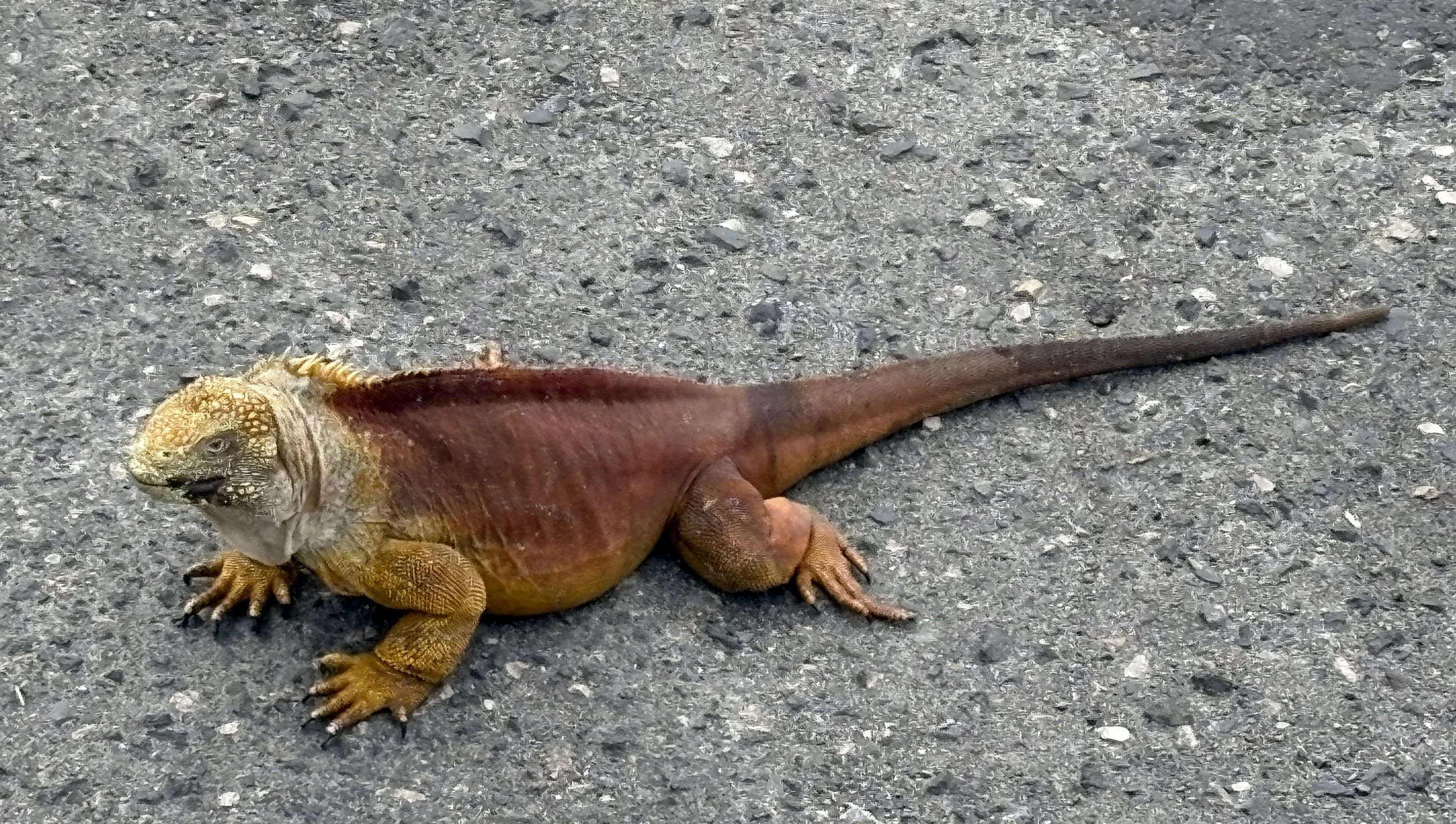
During our airport transfer we had our first land iguana sighting at roadside
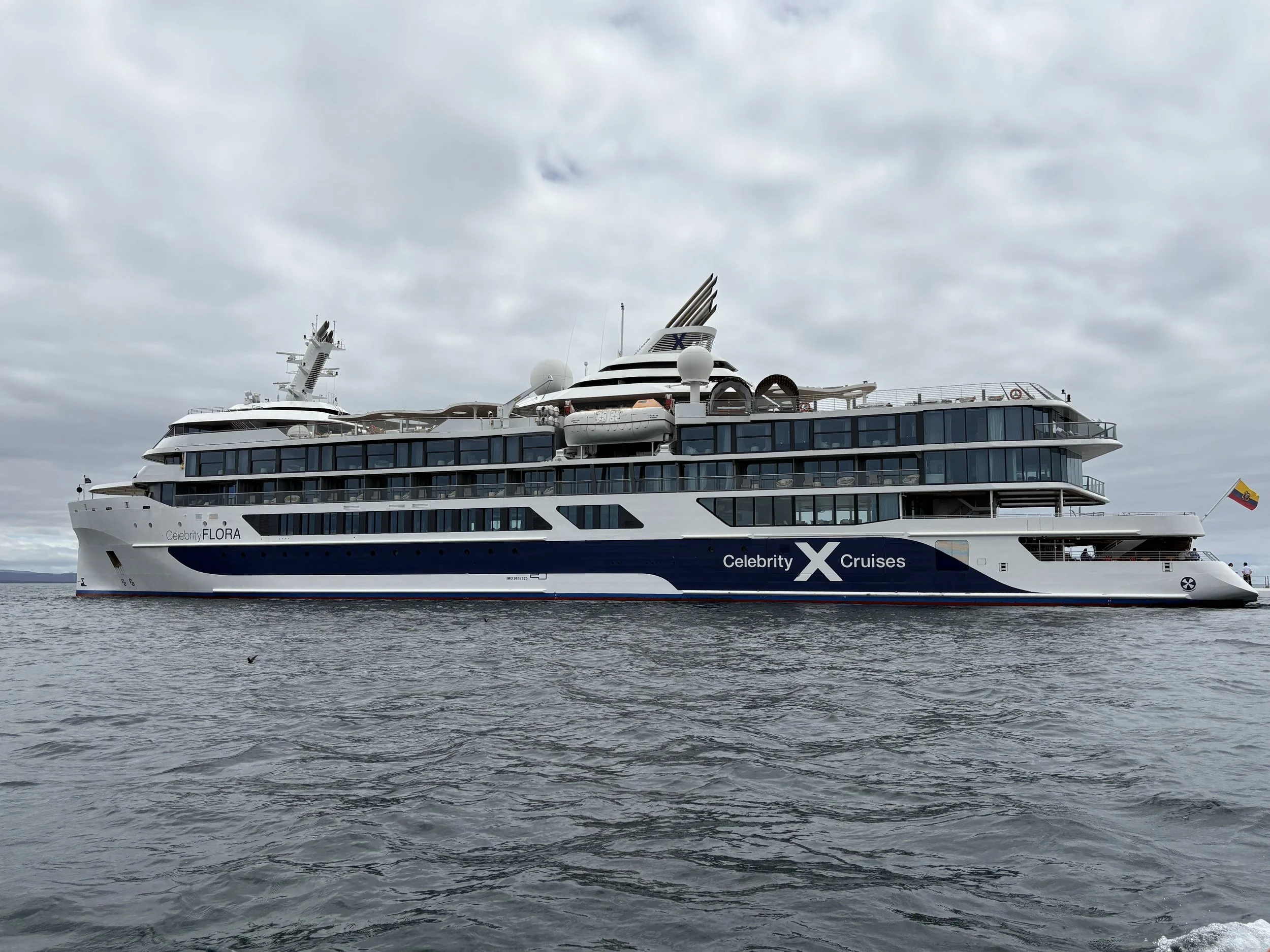
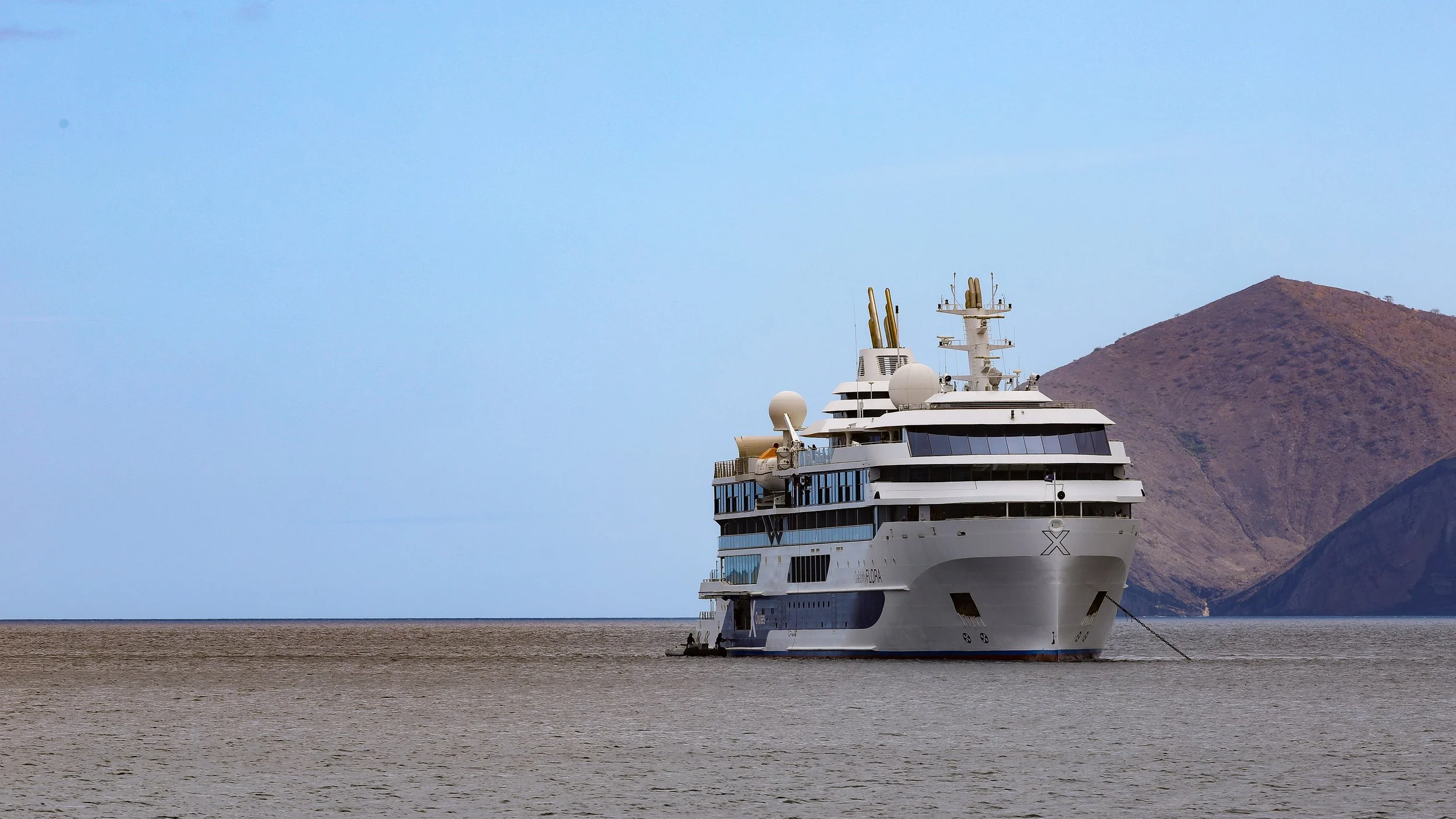
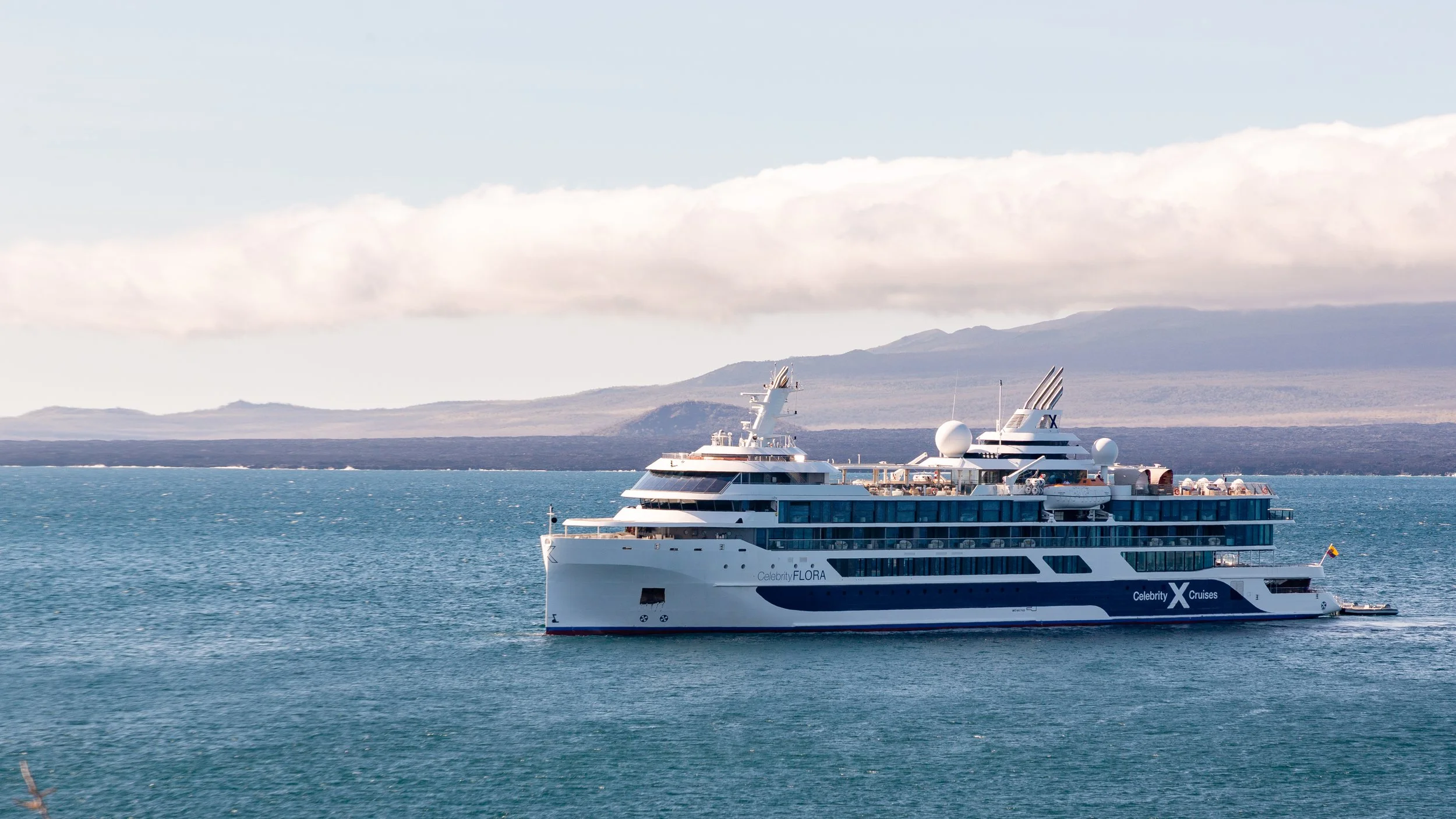
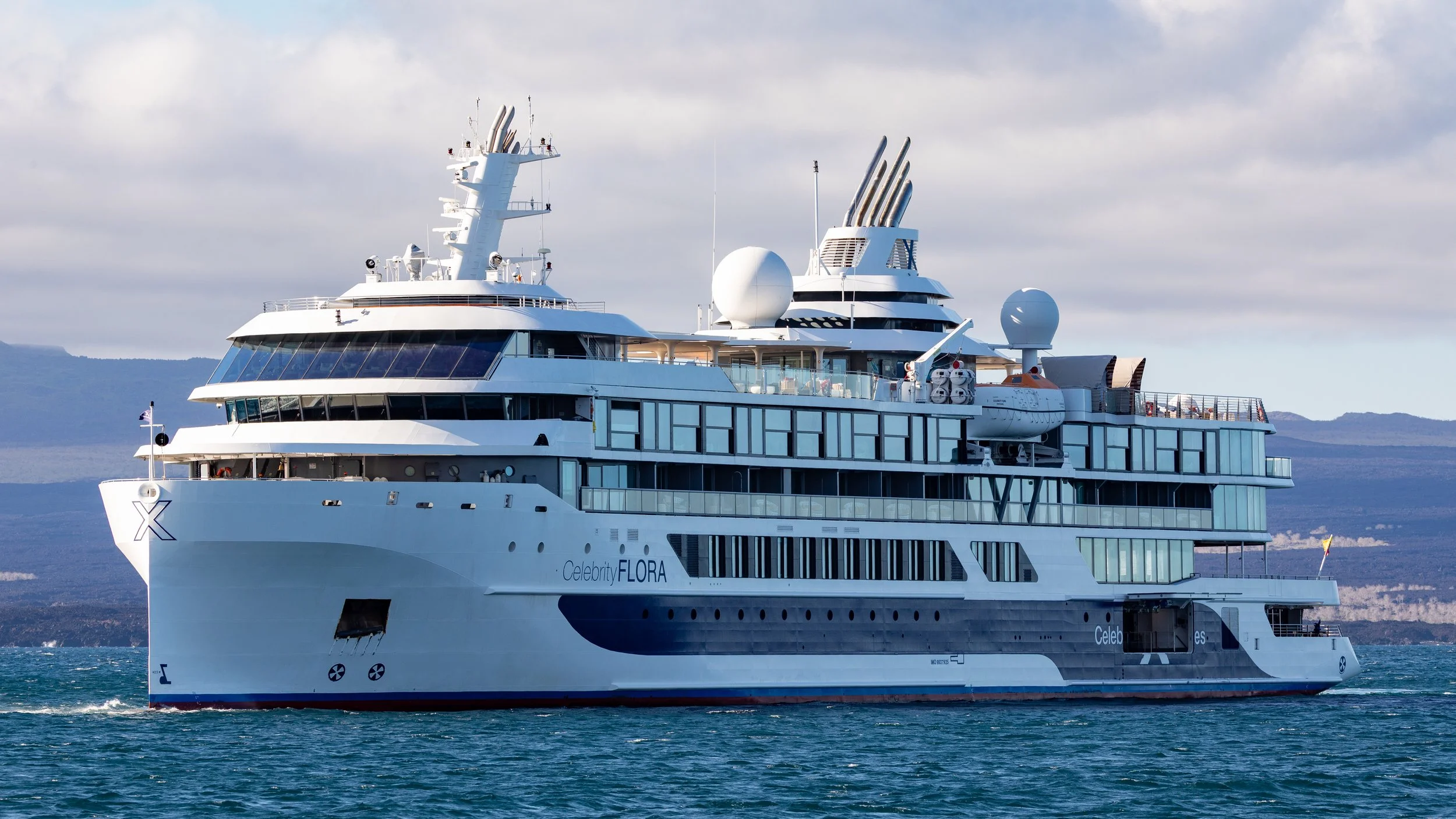
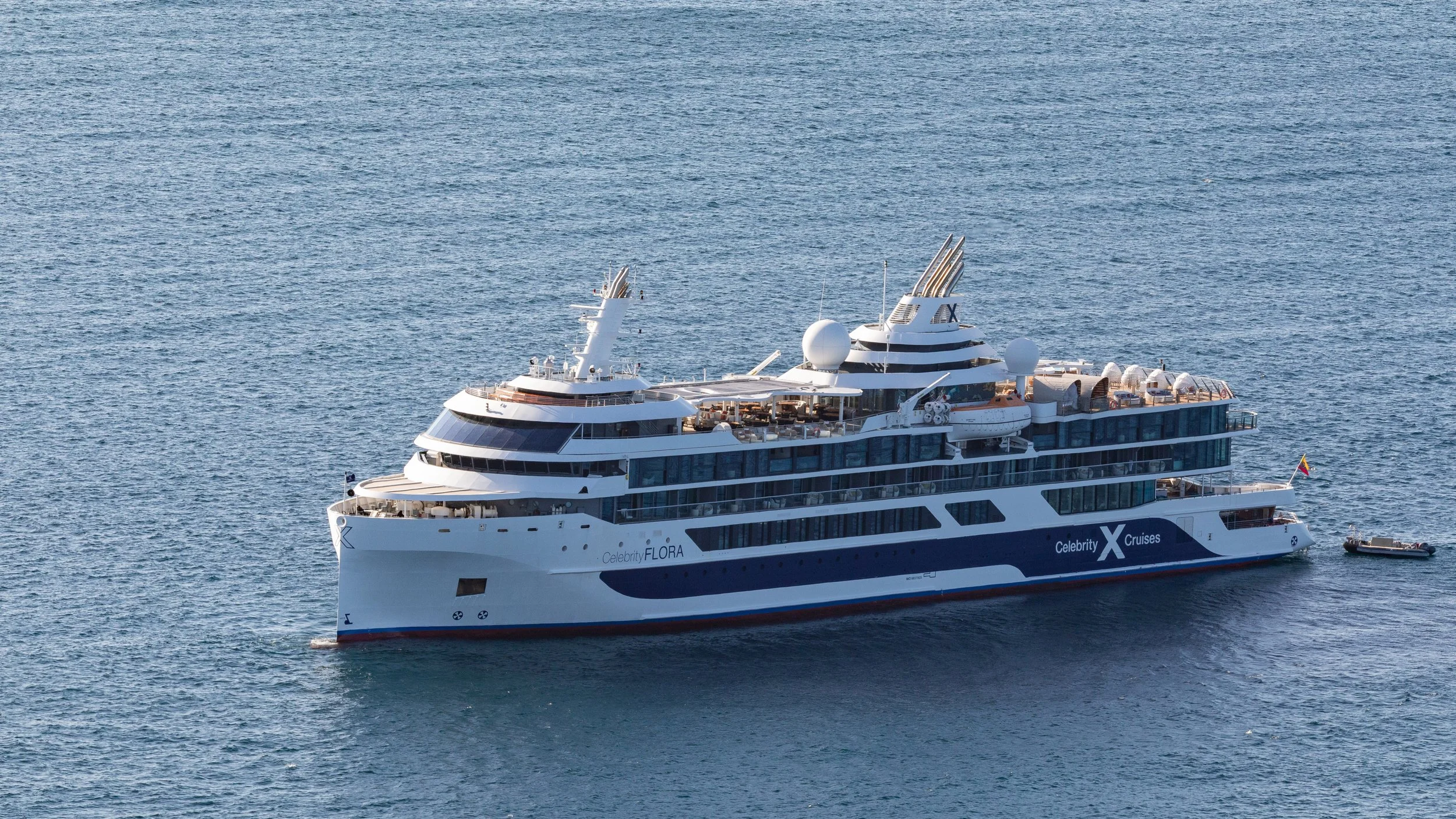
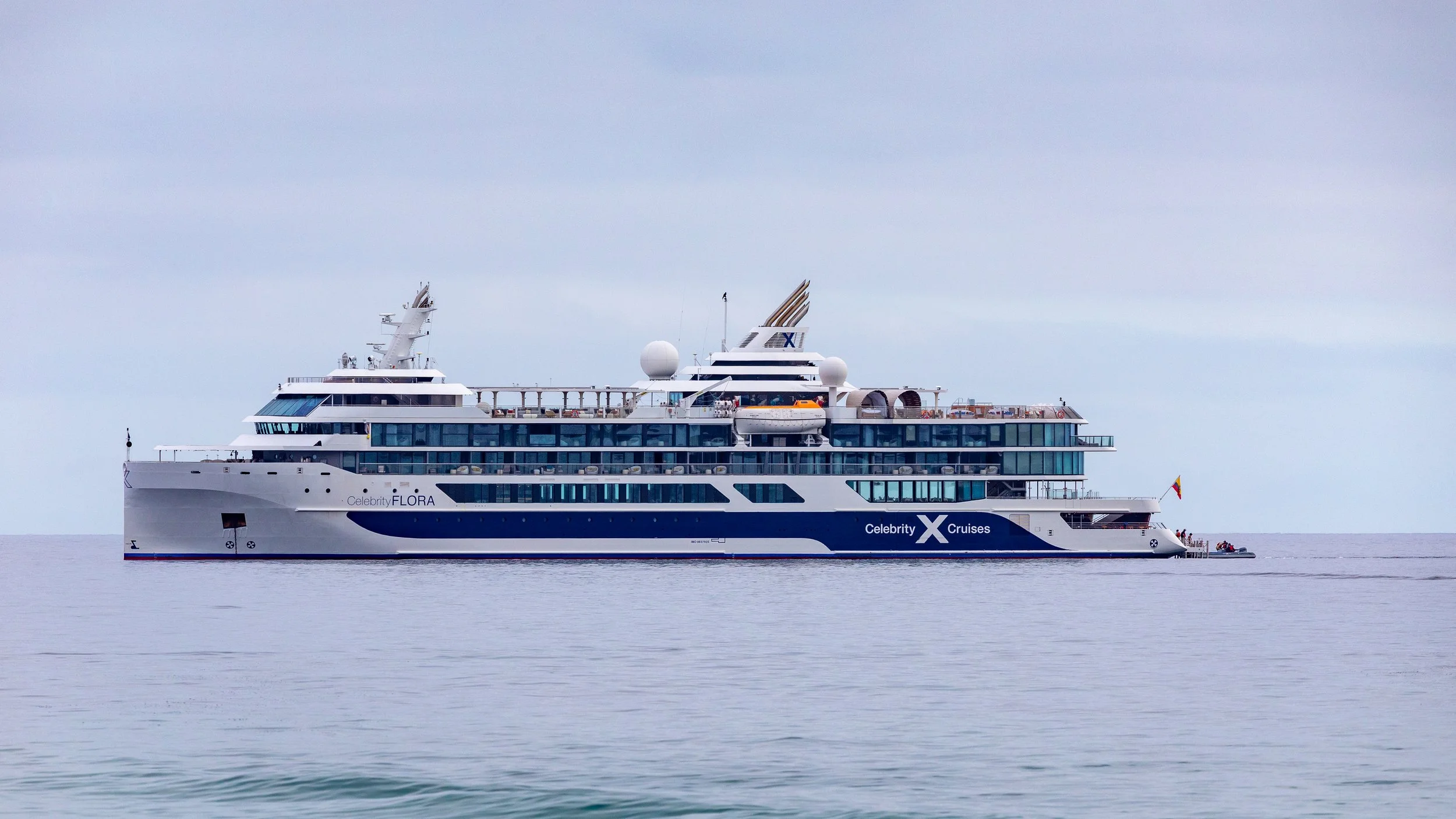
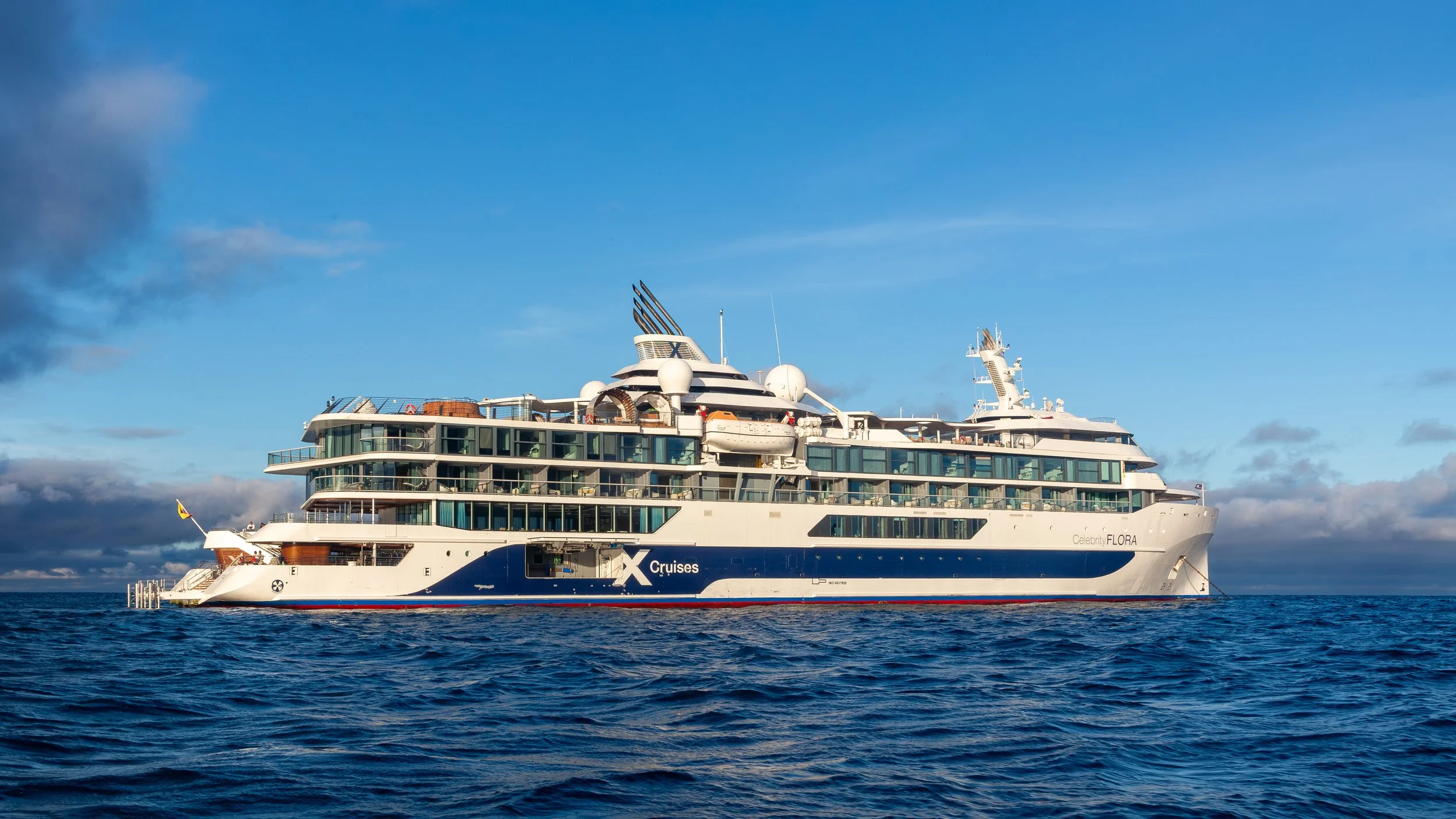
Our first view of the Celebrity Flora, our temporary home for the next week
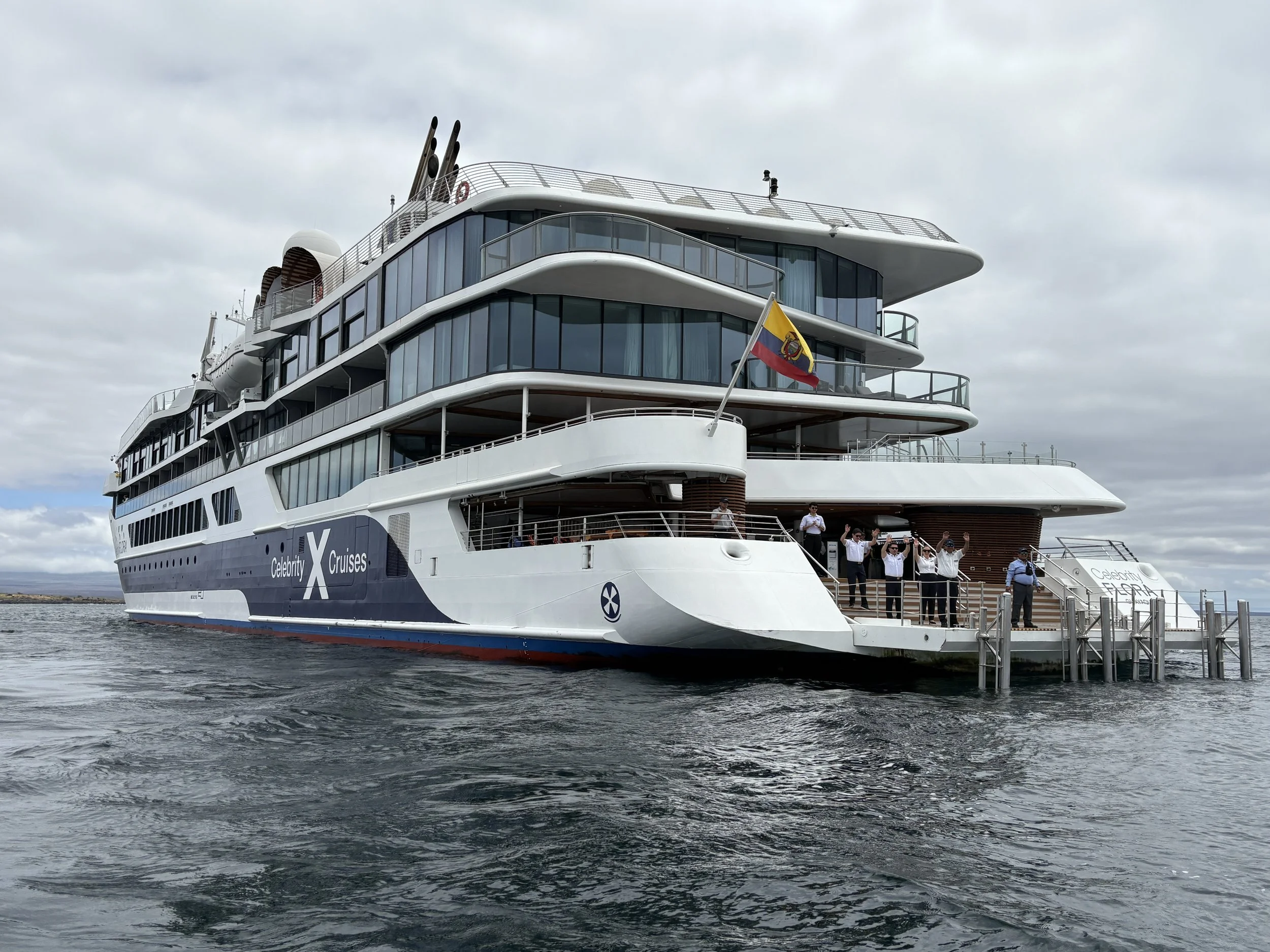
Crew welcoming our tender as we first arrive
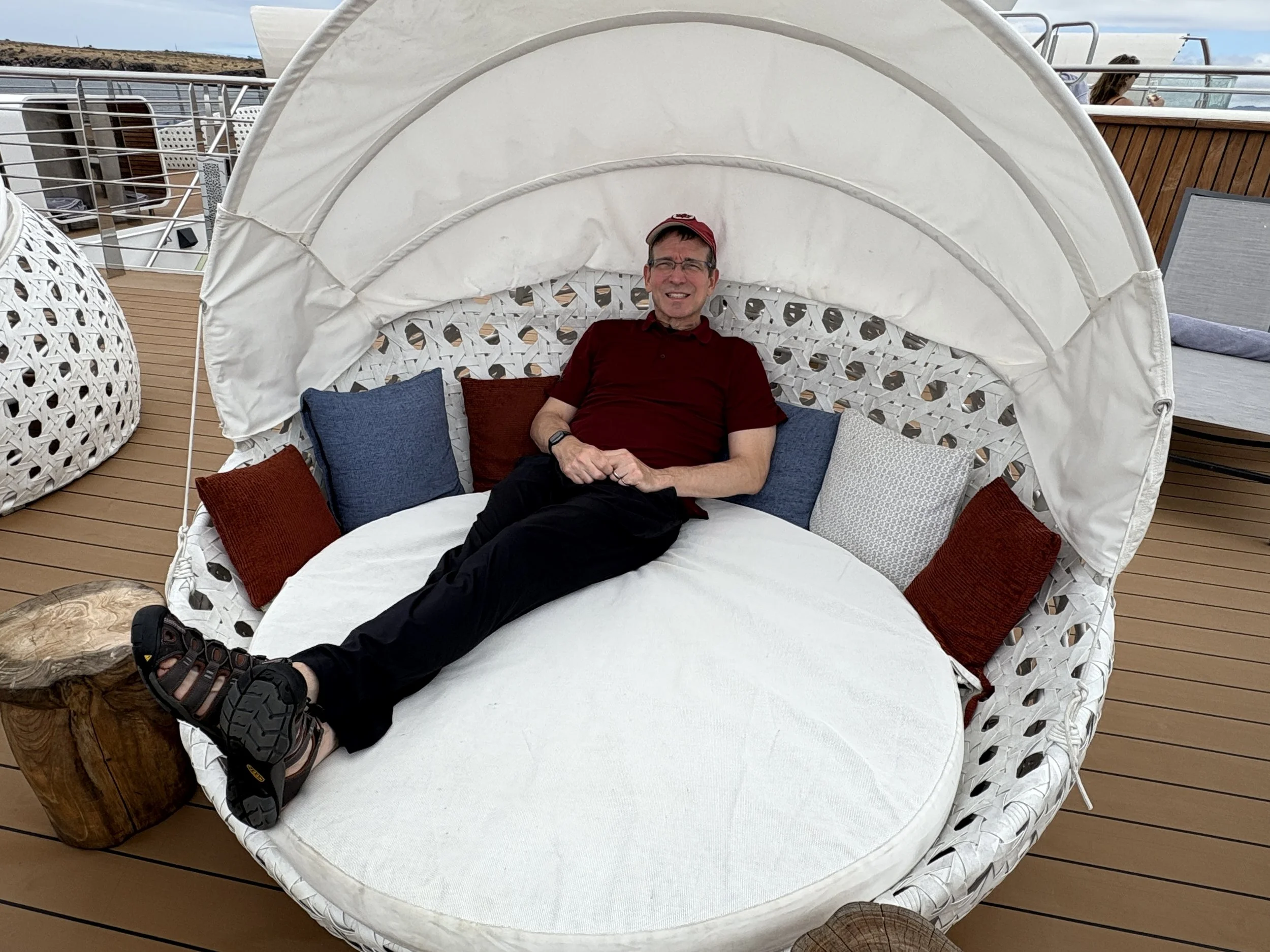
Checking out one of the many seating options on the top deck
Catching sunset before dinner
With our safety drill and excursion introduction and snorkeling equipment pick up done, we felt very prepared for our first day. We had a lovely late dinner before turning in for the night, while the ship left anchor for Santiago Island.
Sep 29 - morning
For our morning option, we chose the option of a long walk and snorkel. After breakfast, we were ready for our first tender transfer and wet landing on Galapagos.
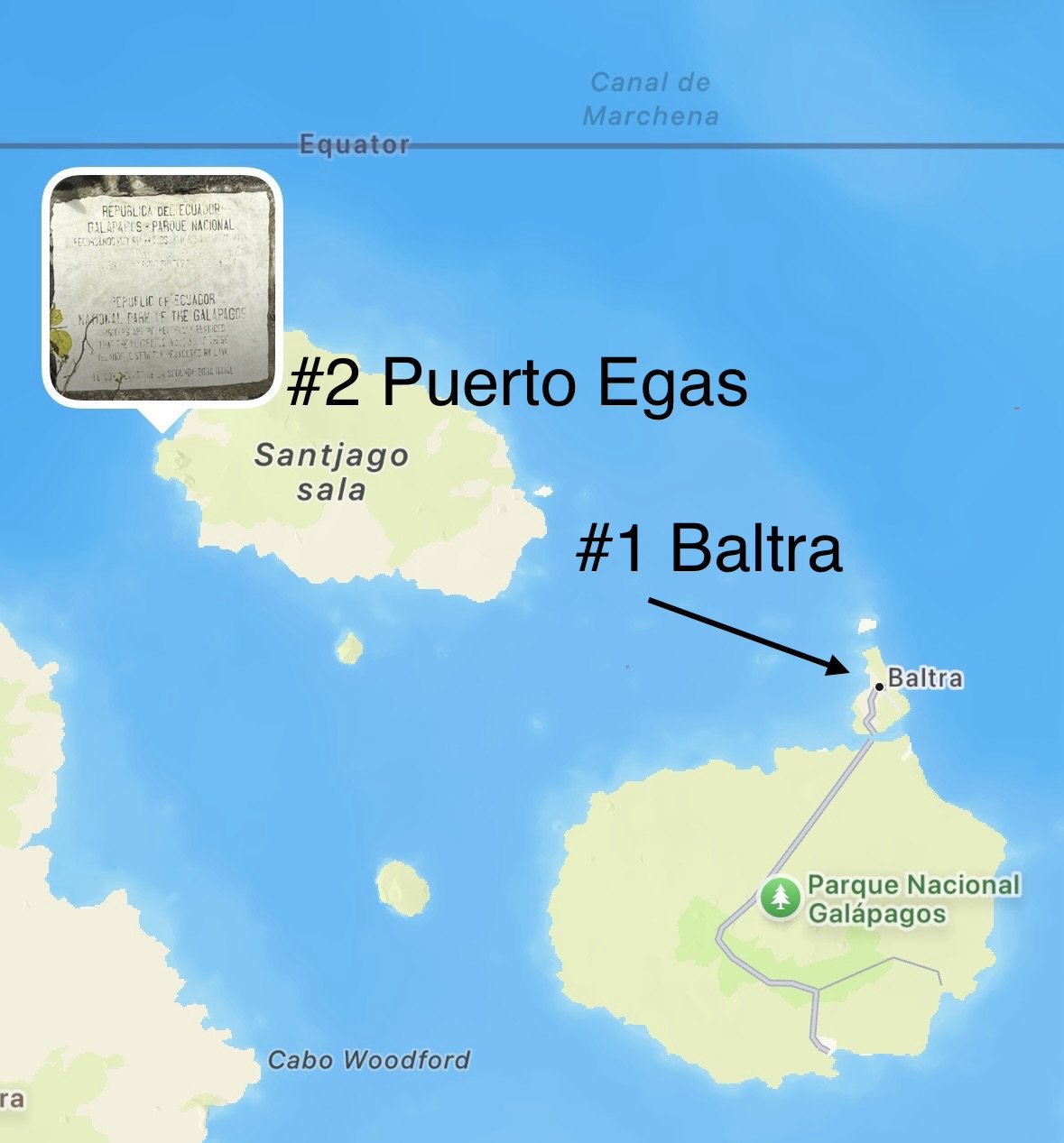
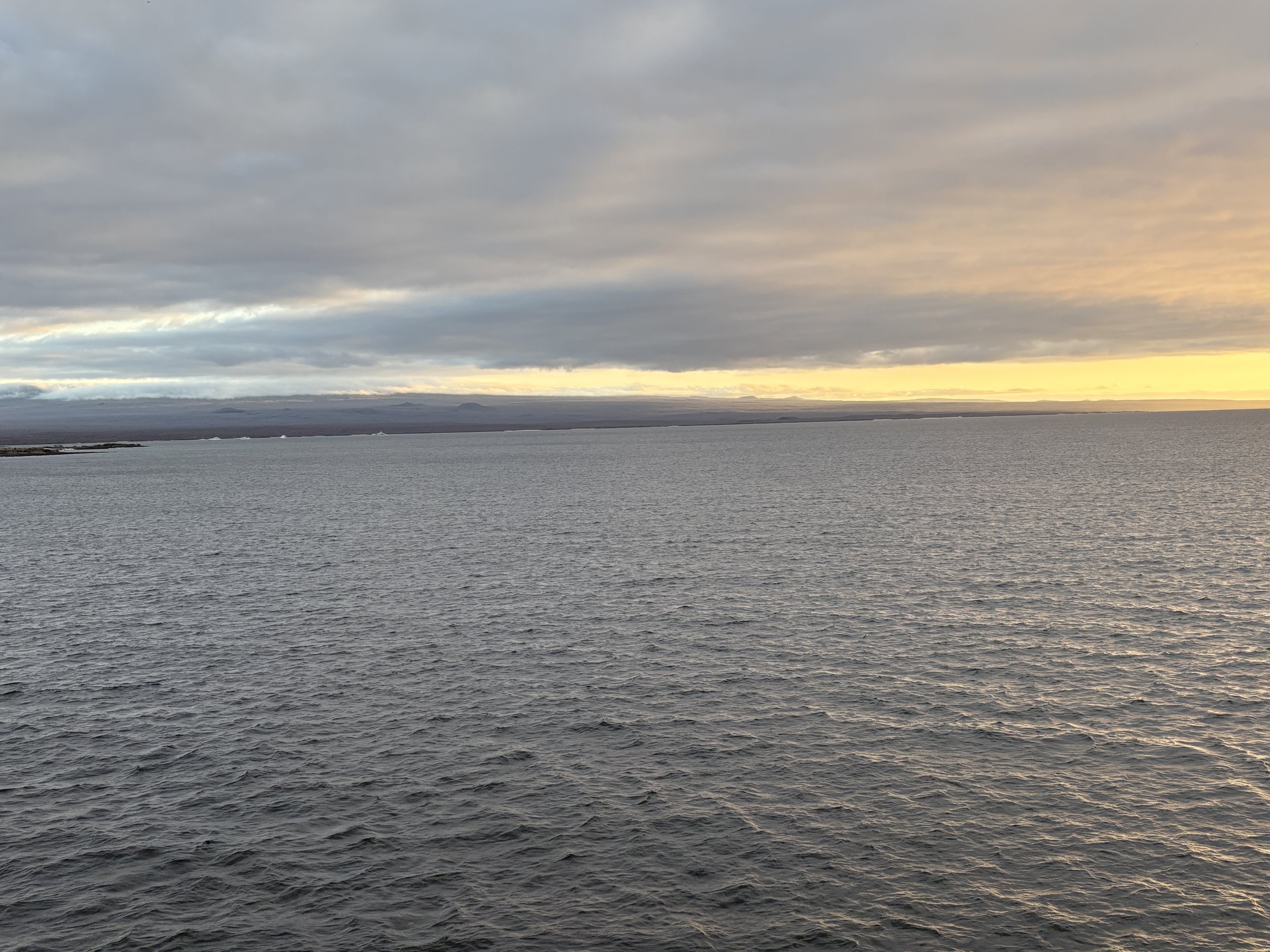
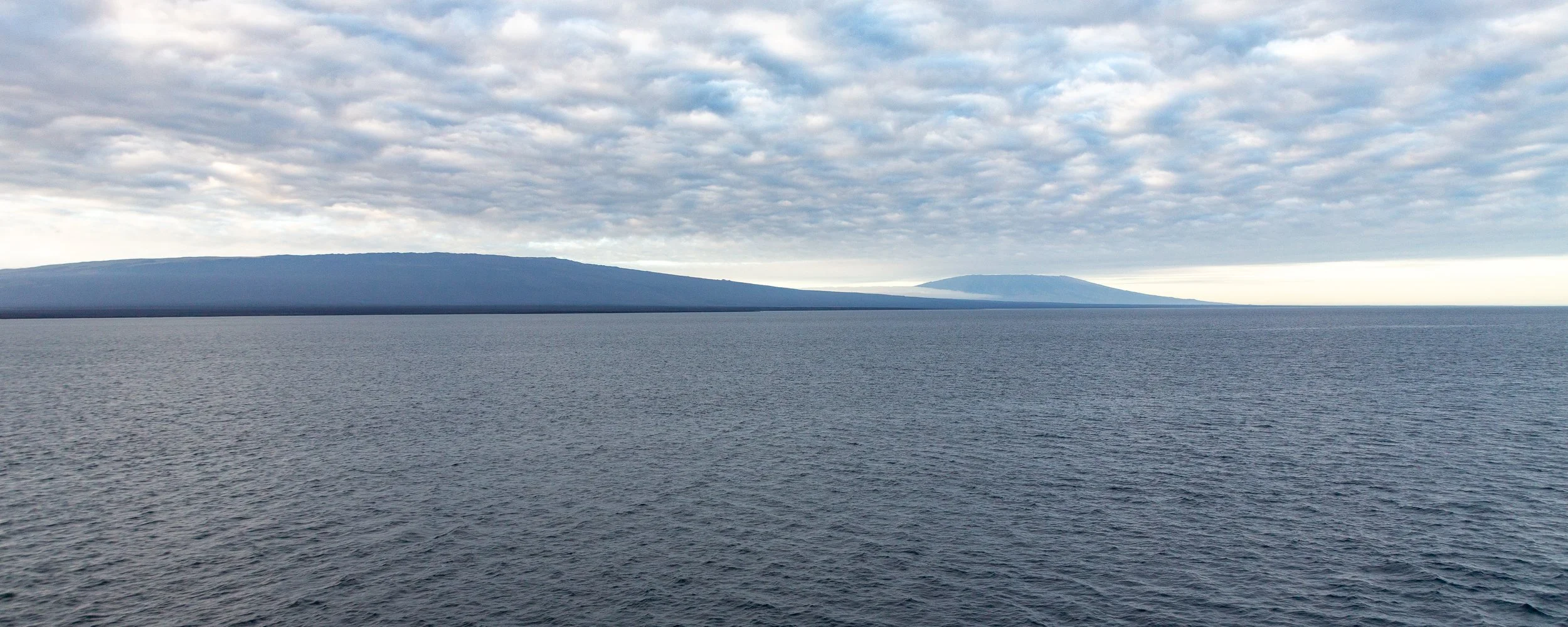
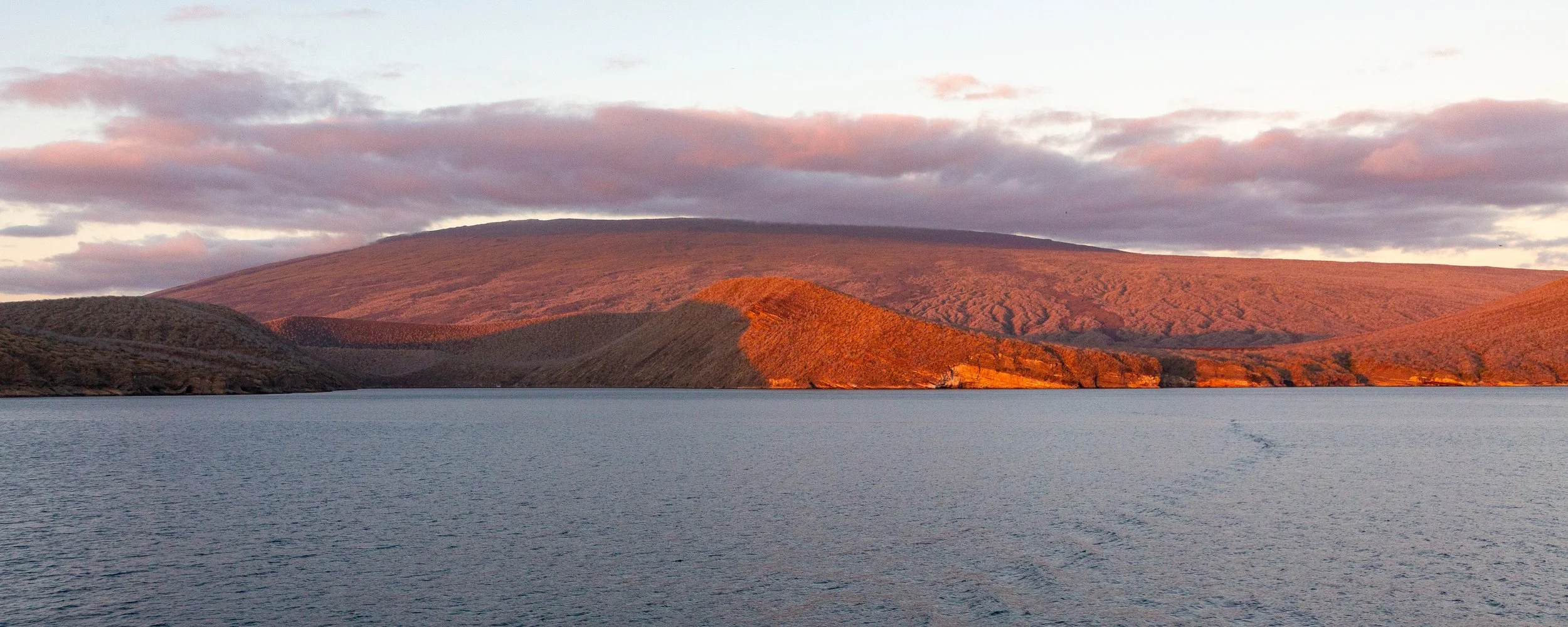
Overnight we made our way to the west coast of Santiago Island
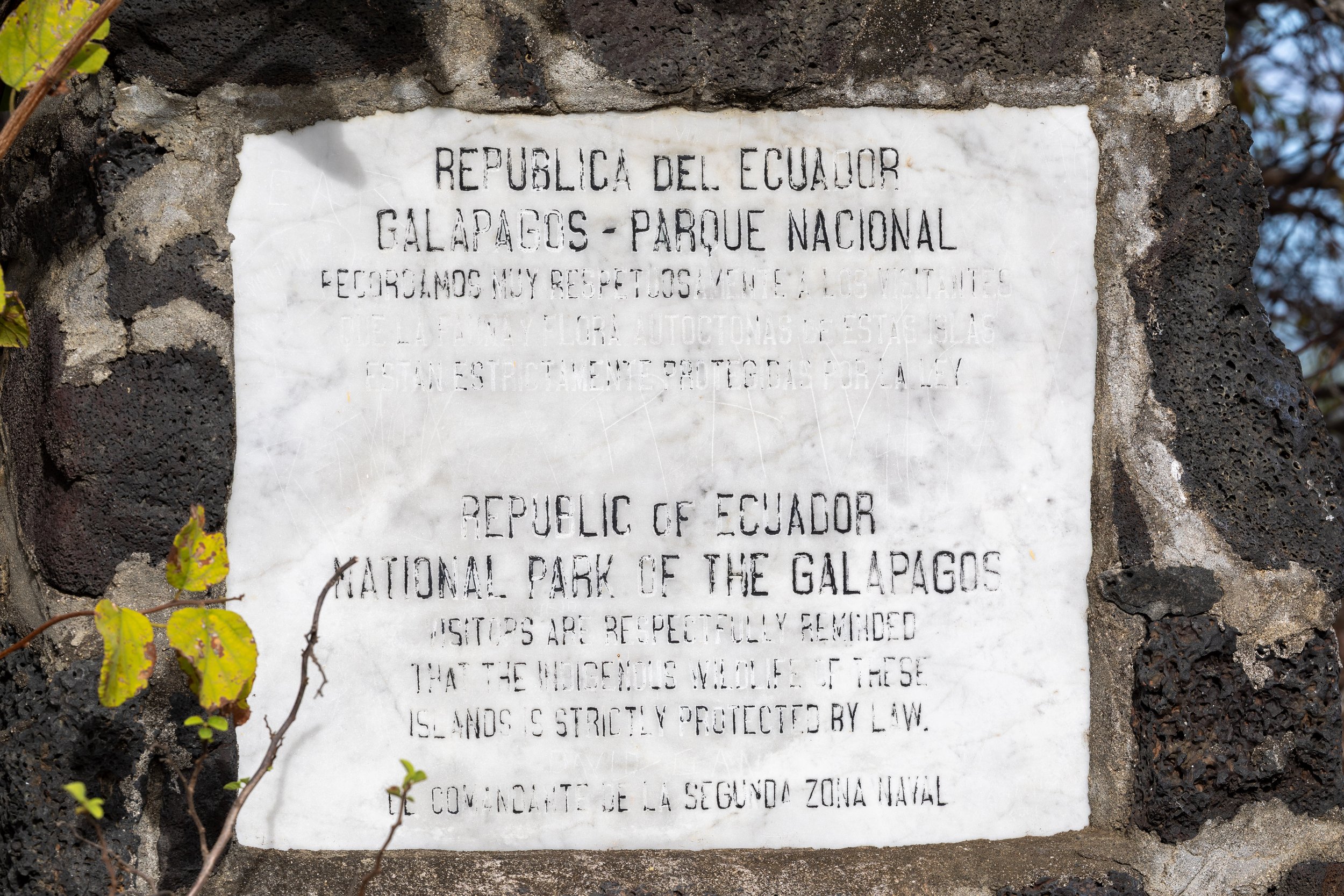
Historic plaque for Galapagos national park
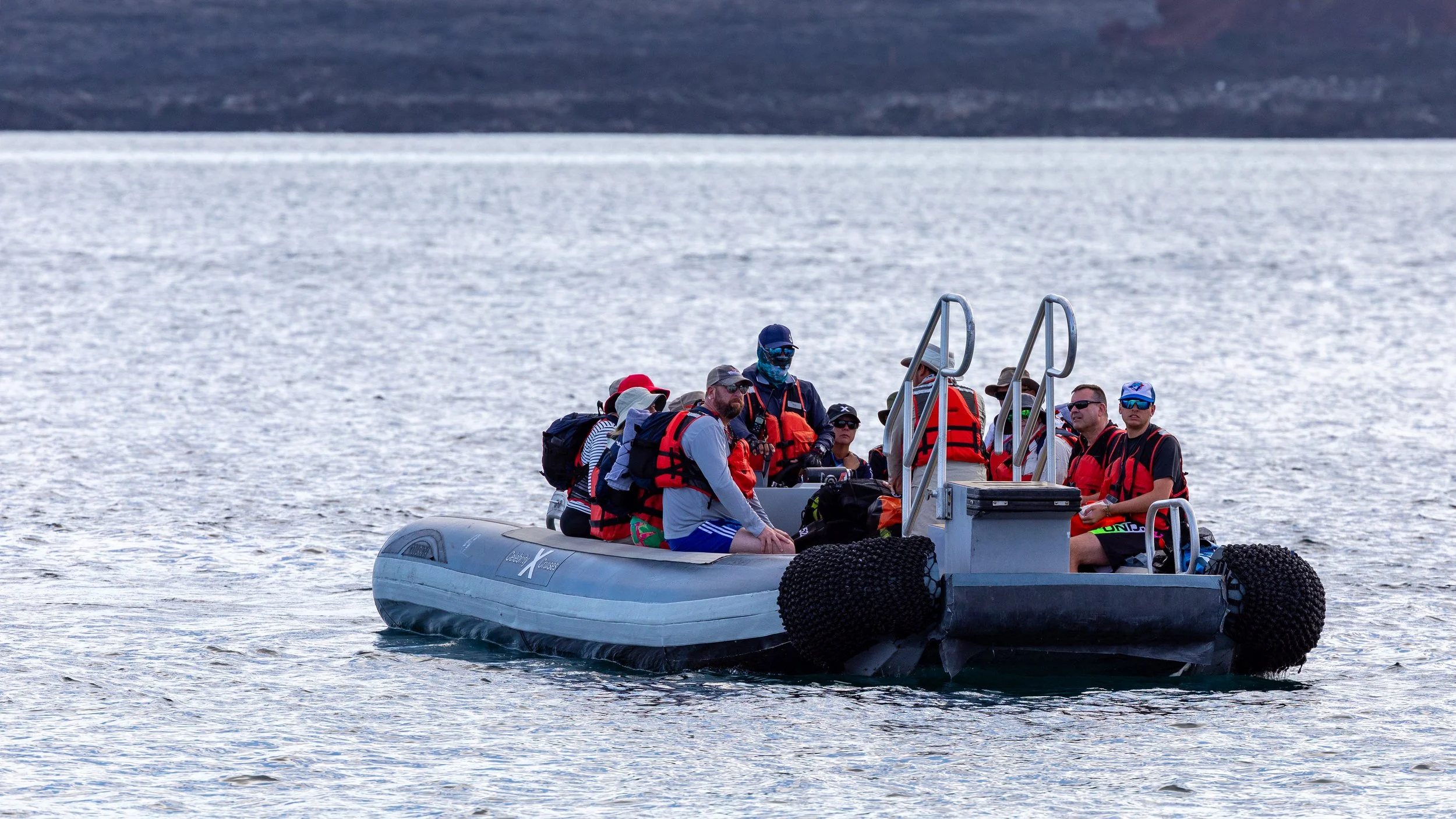
The next tender ready to drop off the next batch of hikers
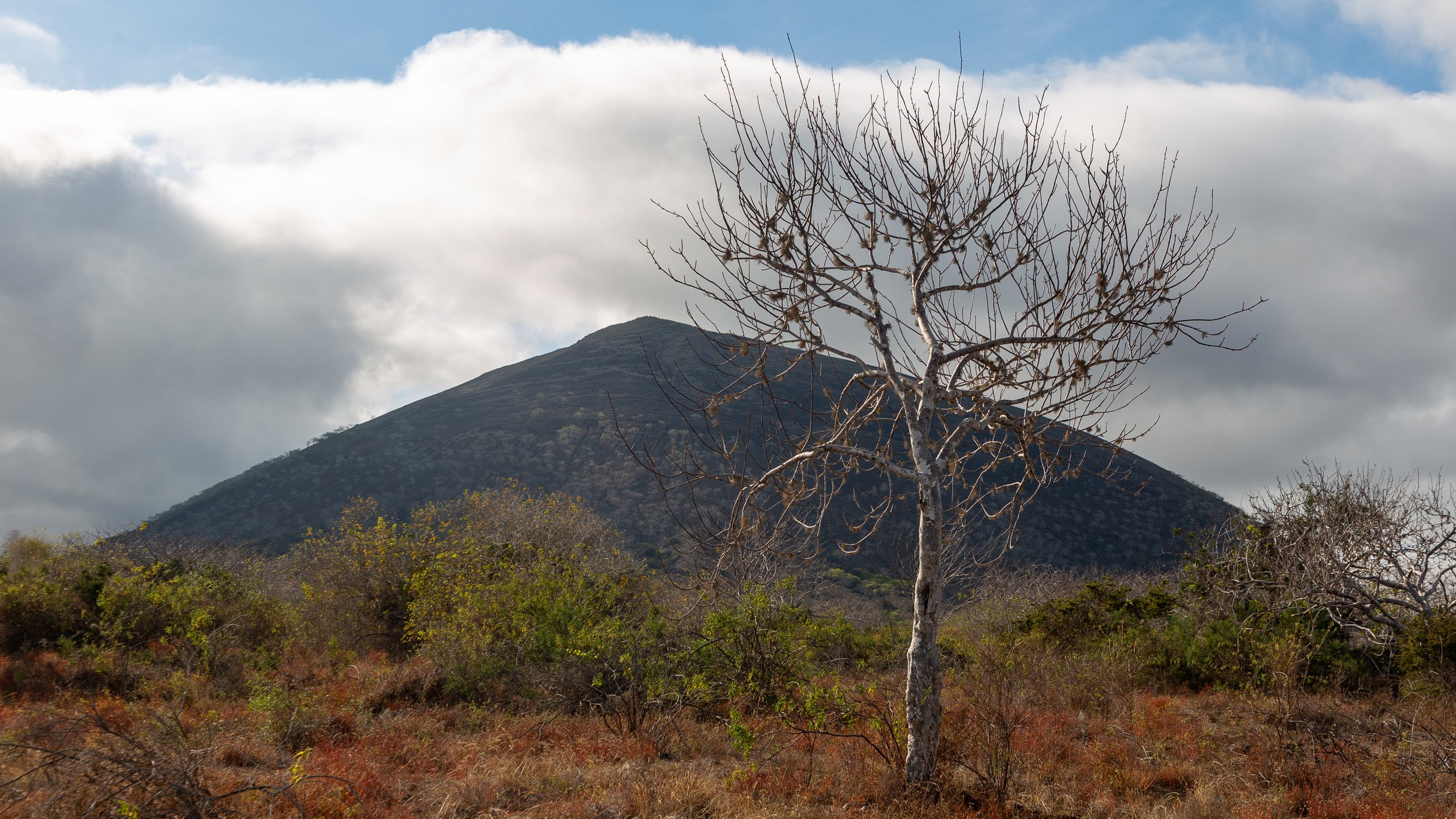
One of the volcanic mountains of Santiago Island
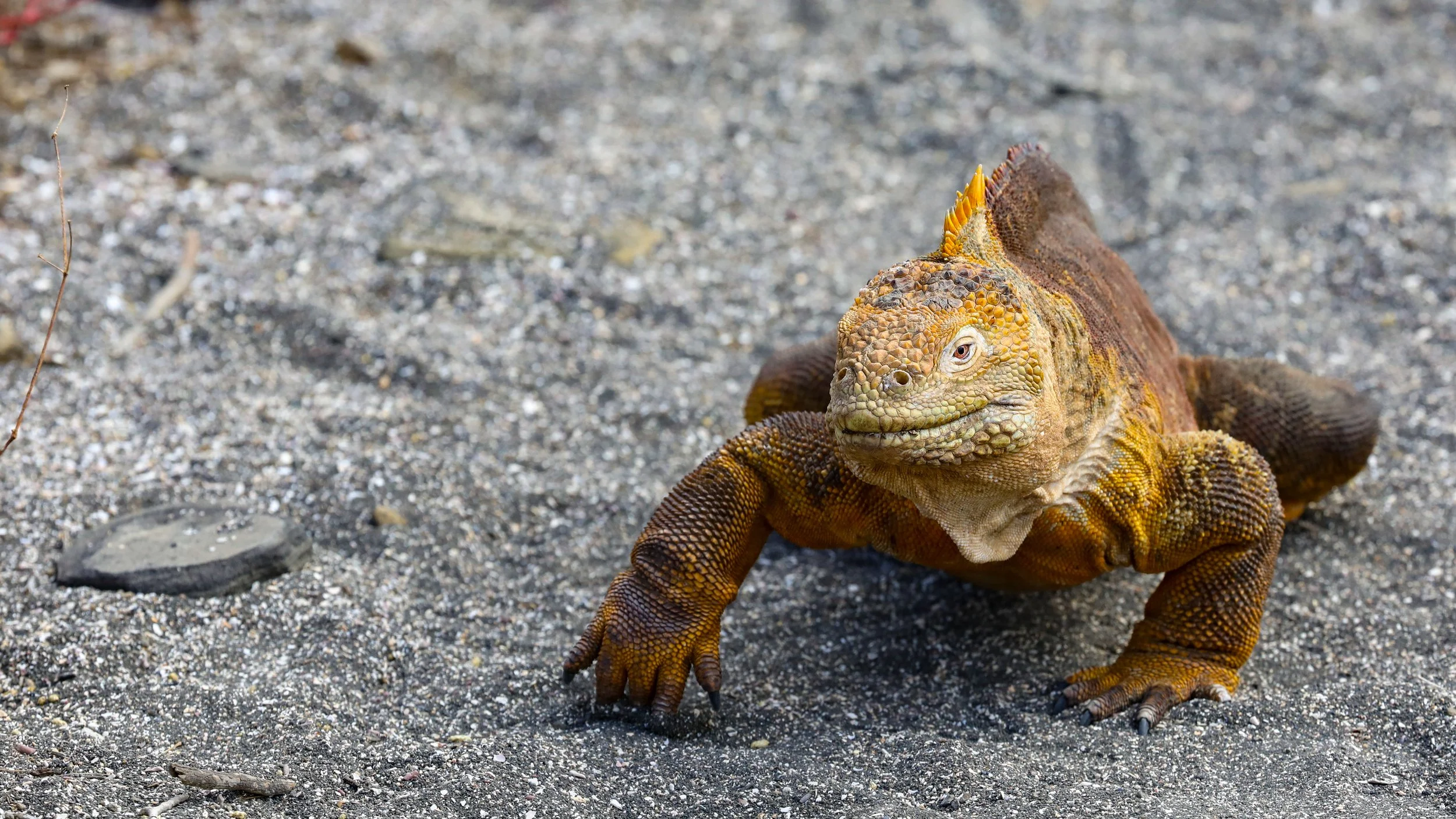
One of a number of land iguanas on our nature hike
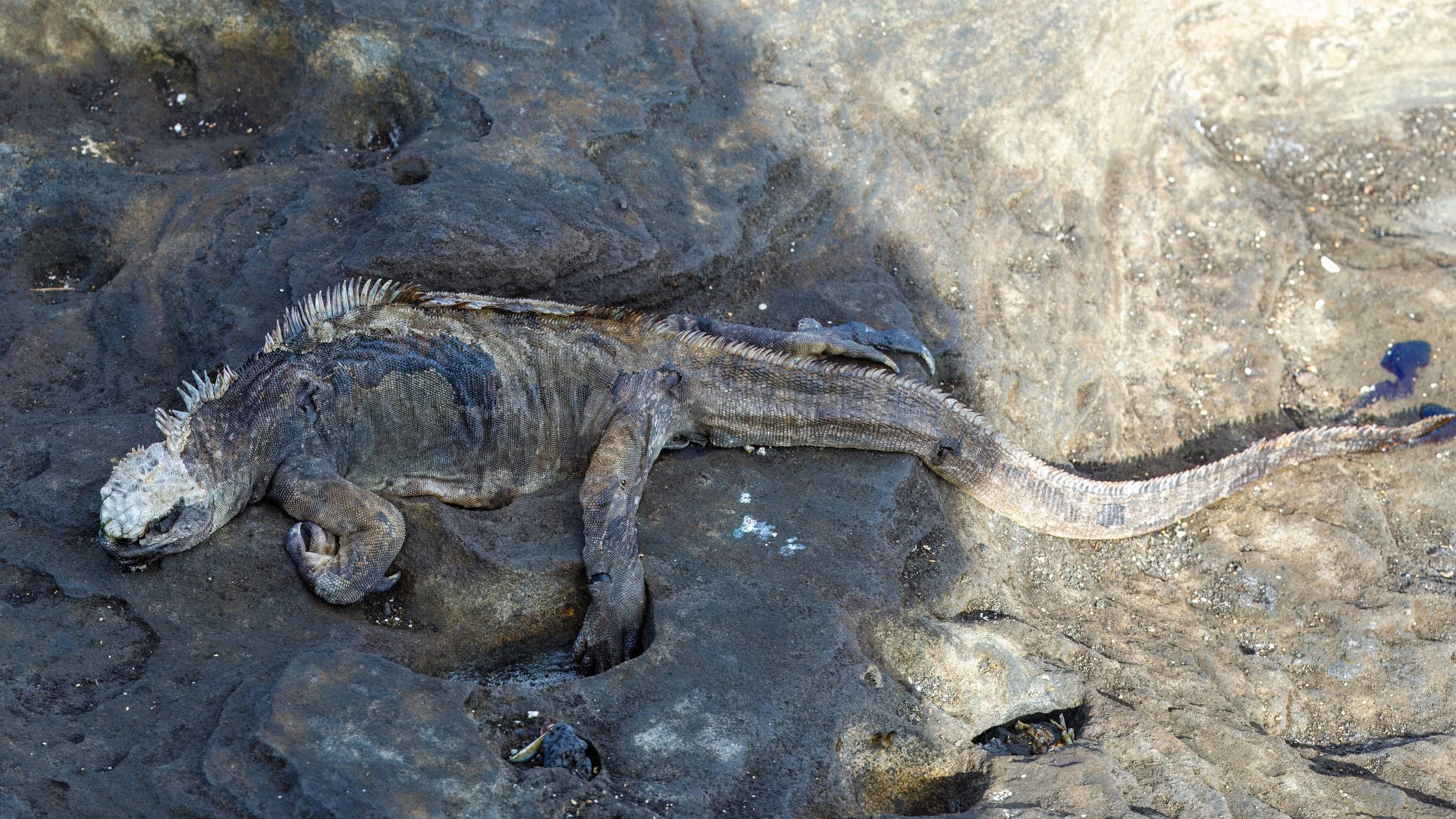
Unfortunately this sea iguana carcass was also found on our hike
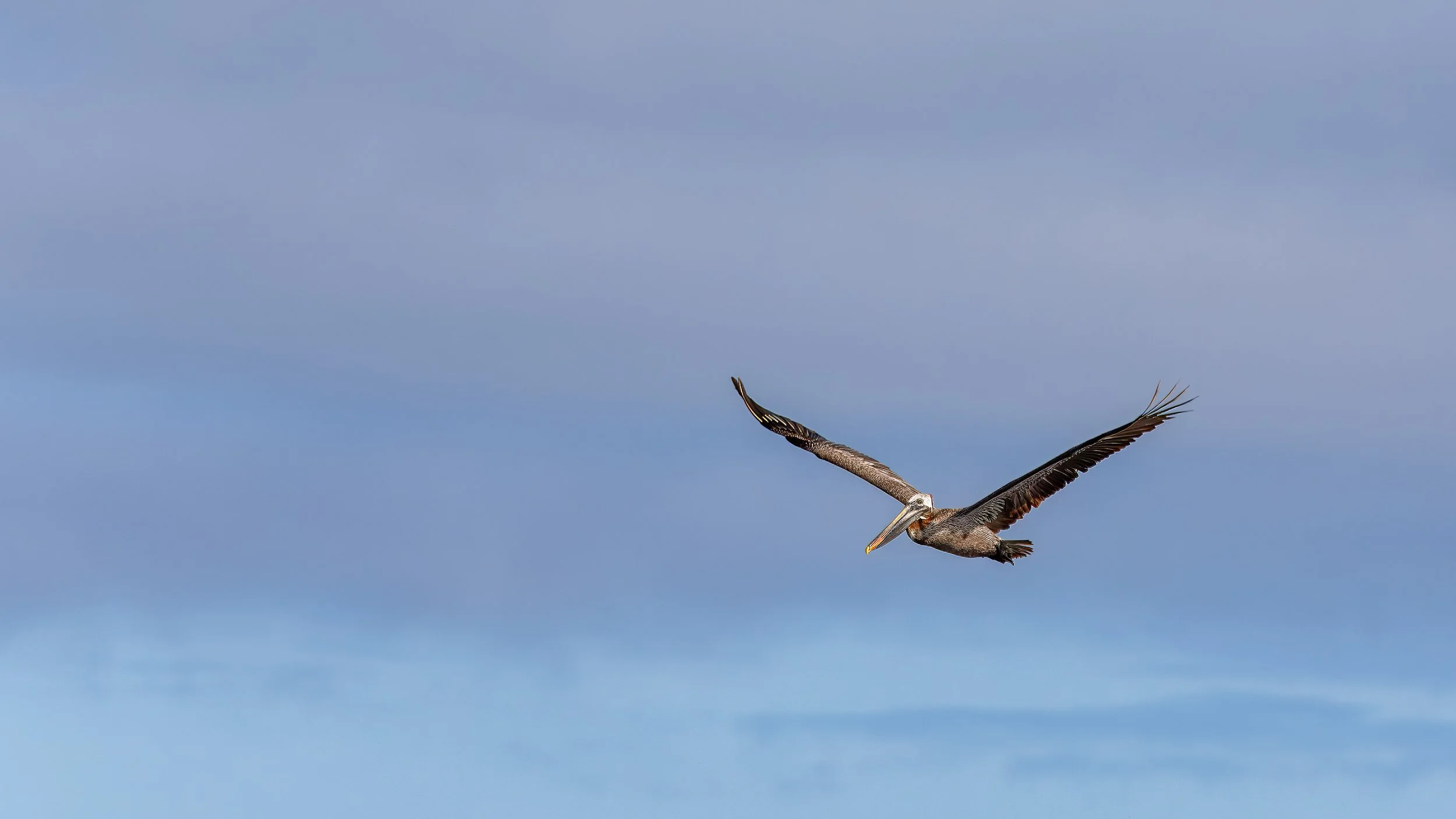
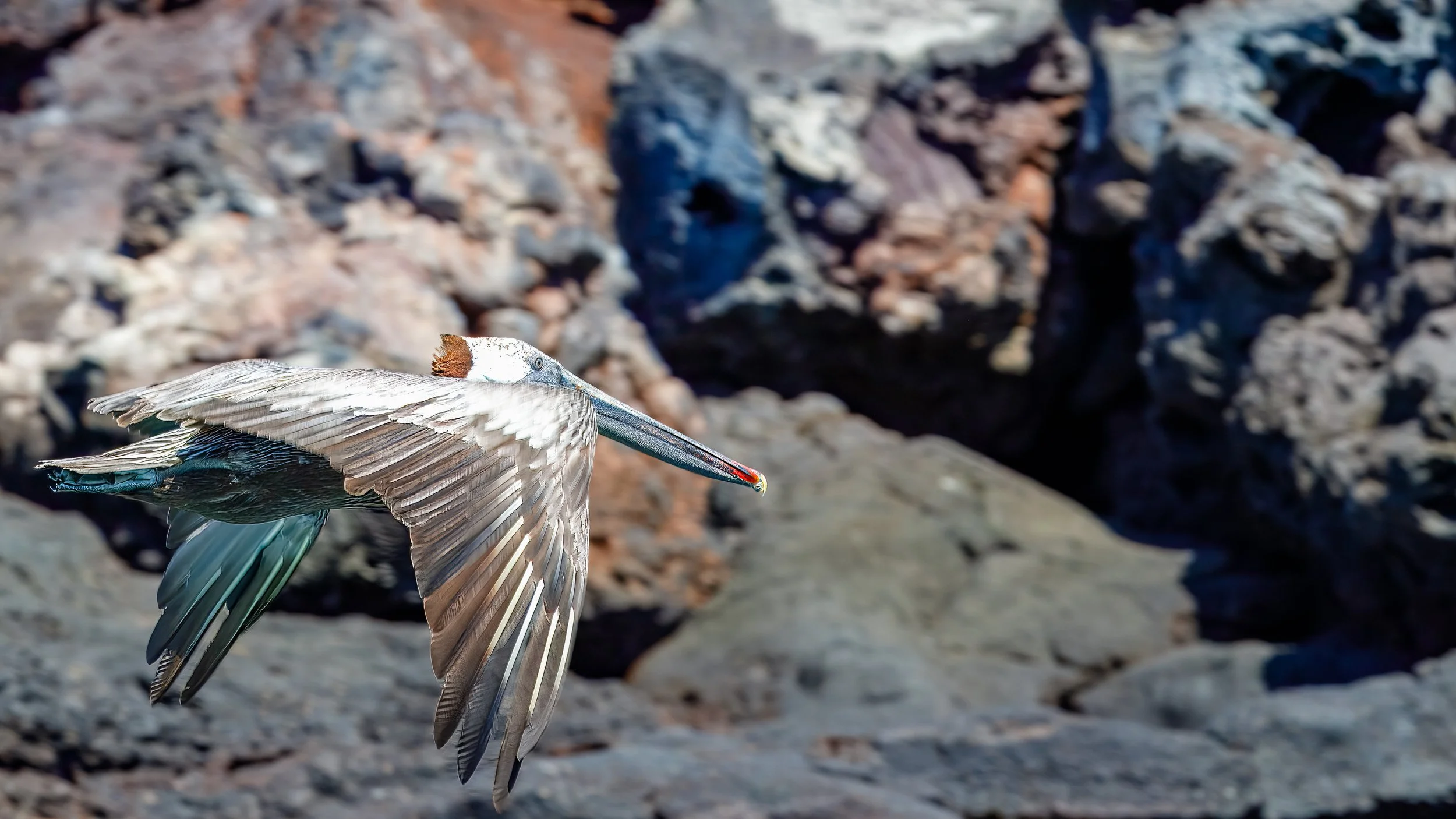
Galapagos Brown Pelican in flight
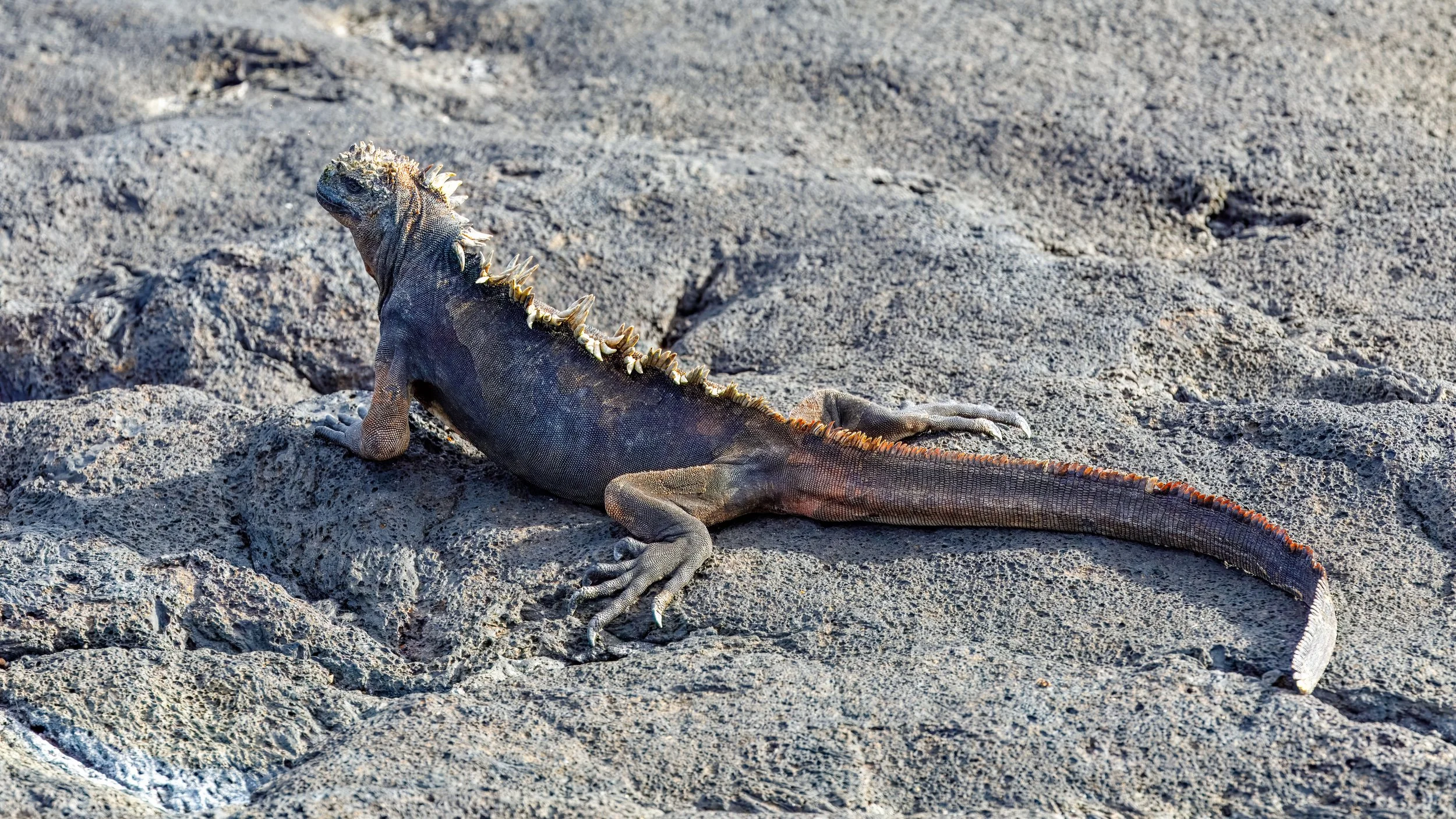
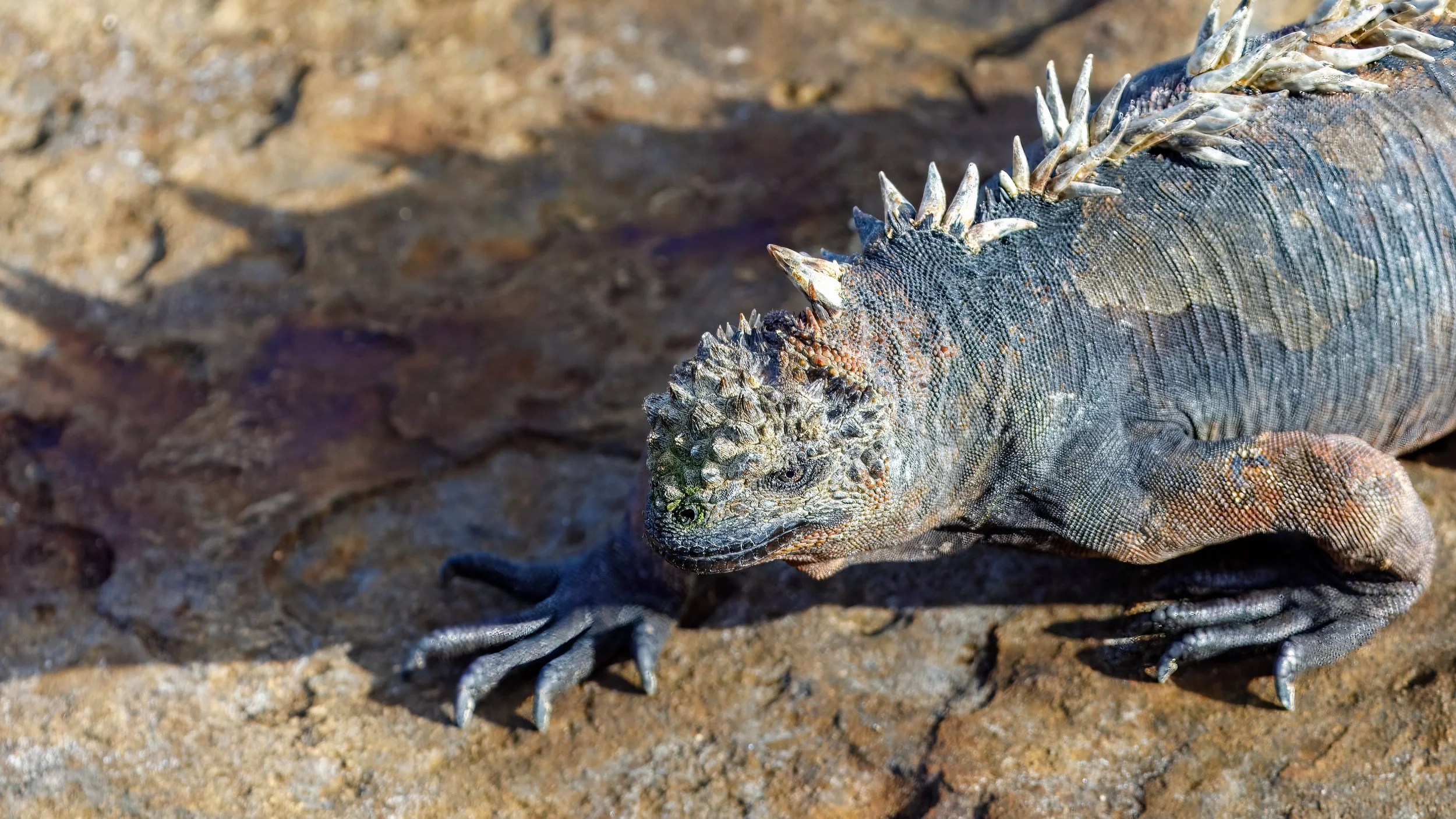
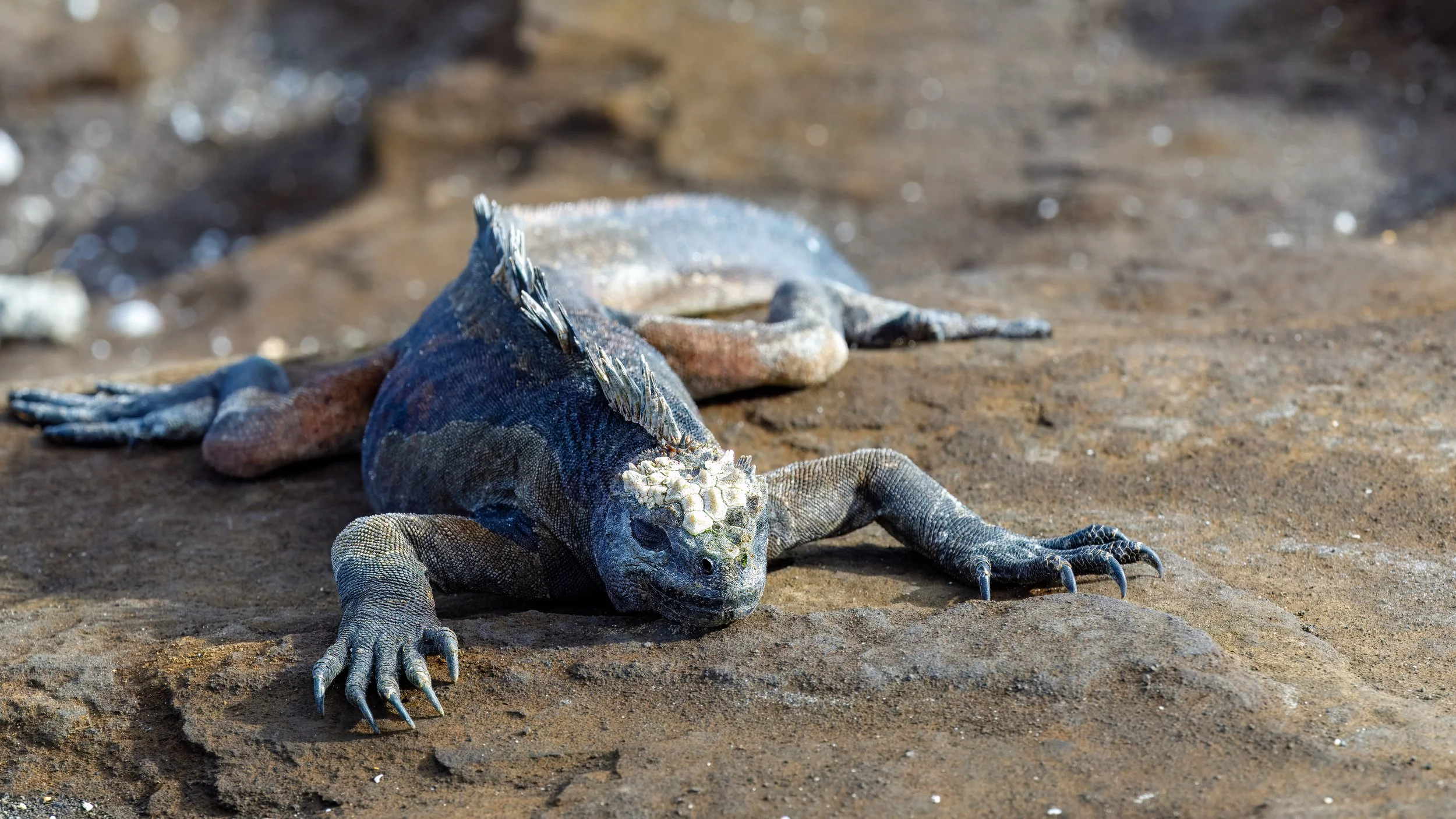
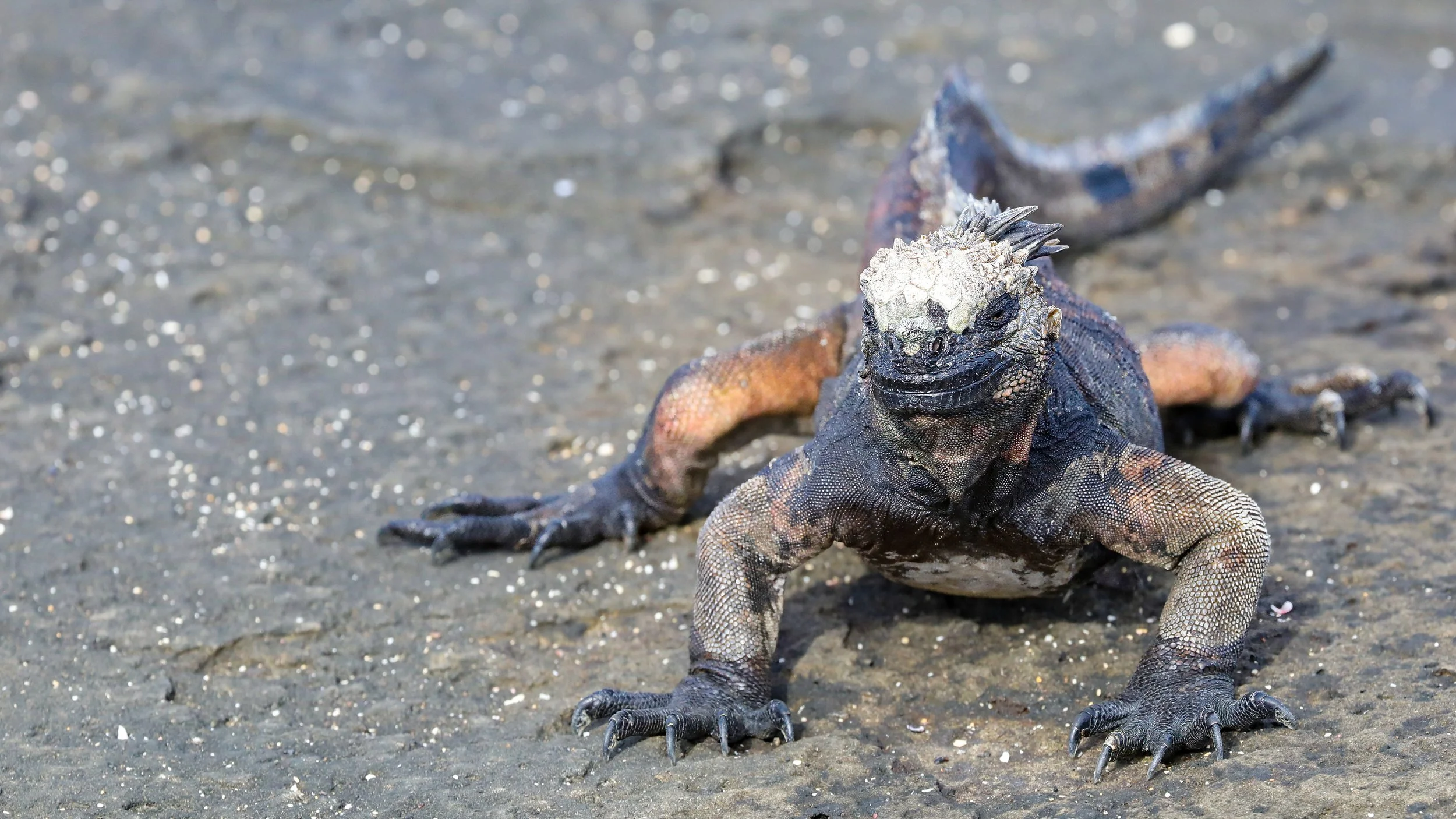
Sea iguana in better shape
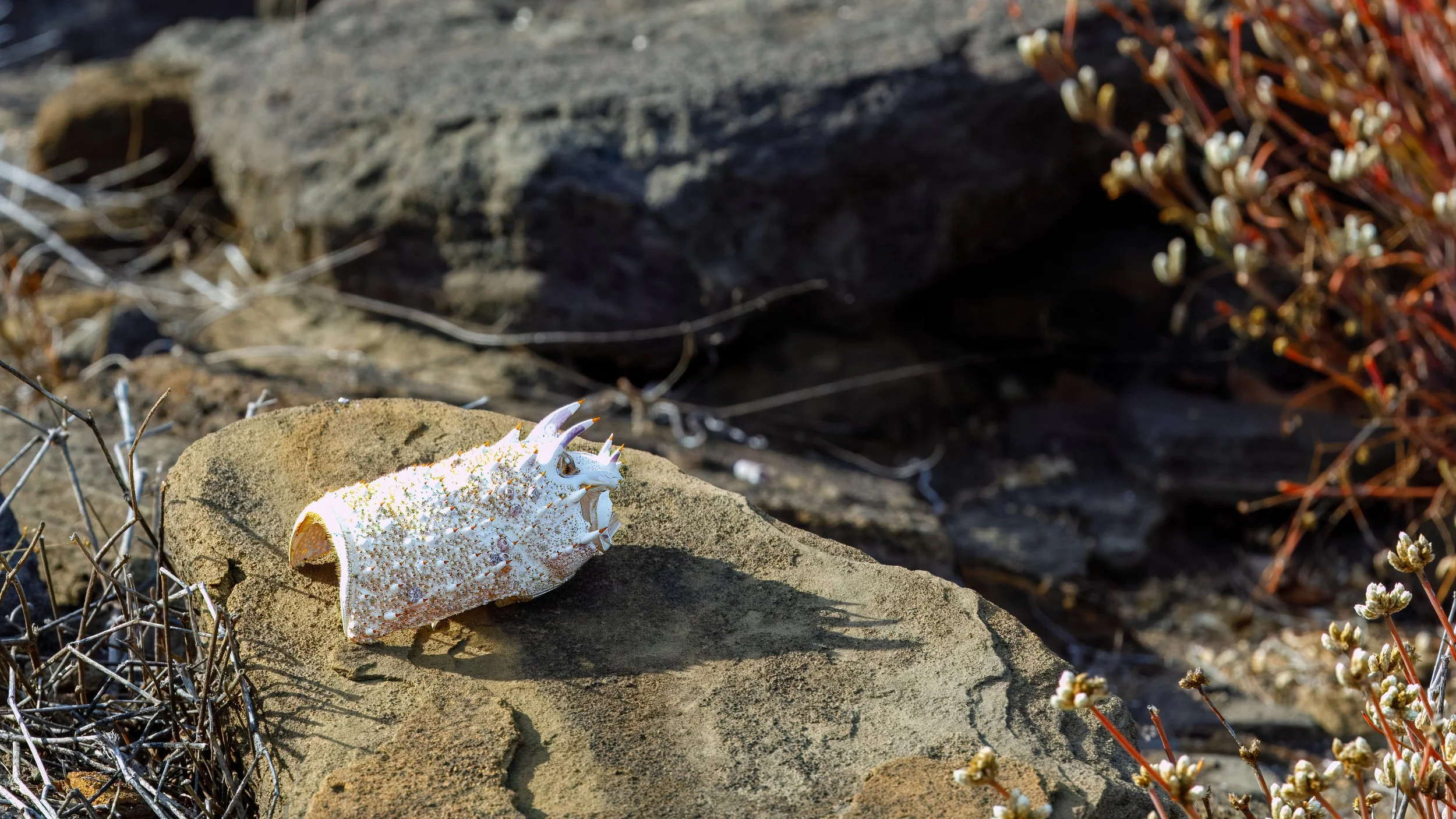
One of many abandoned shells on the beach
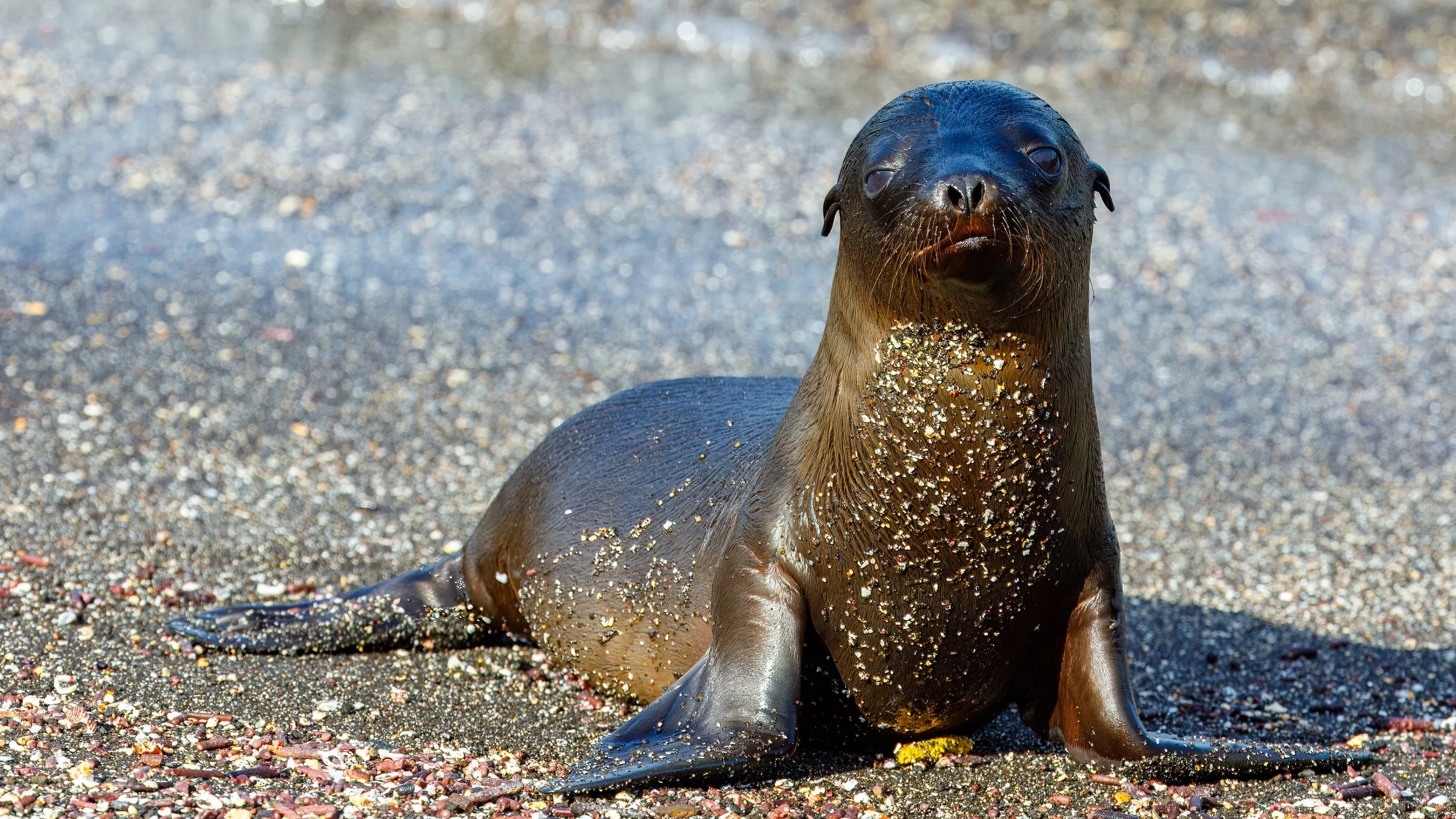
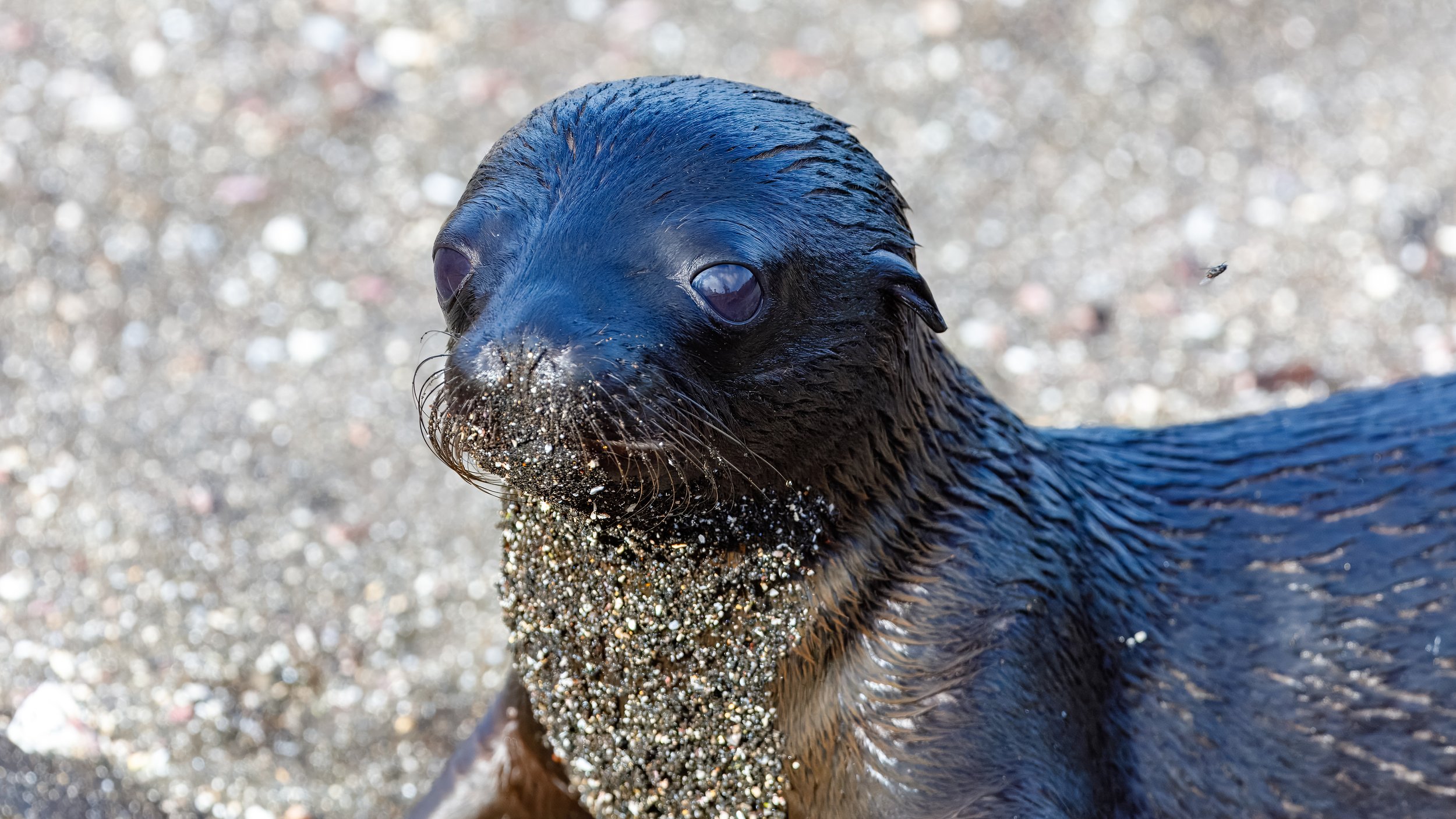
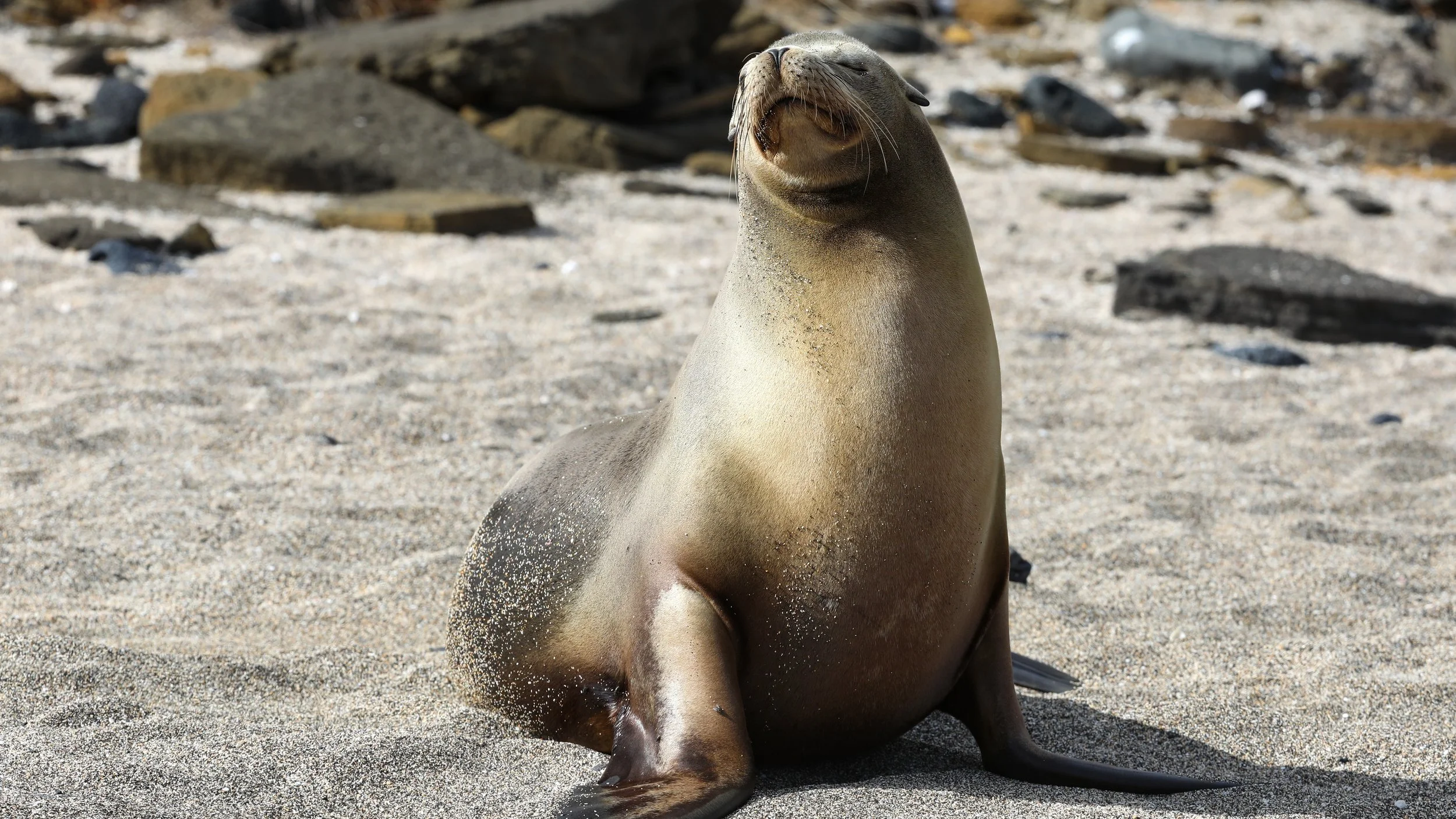
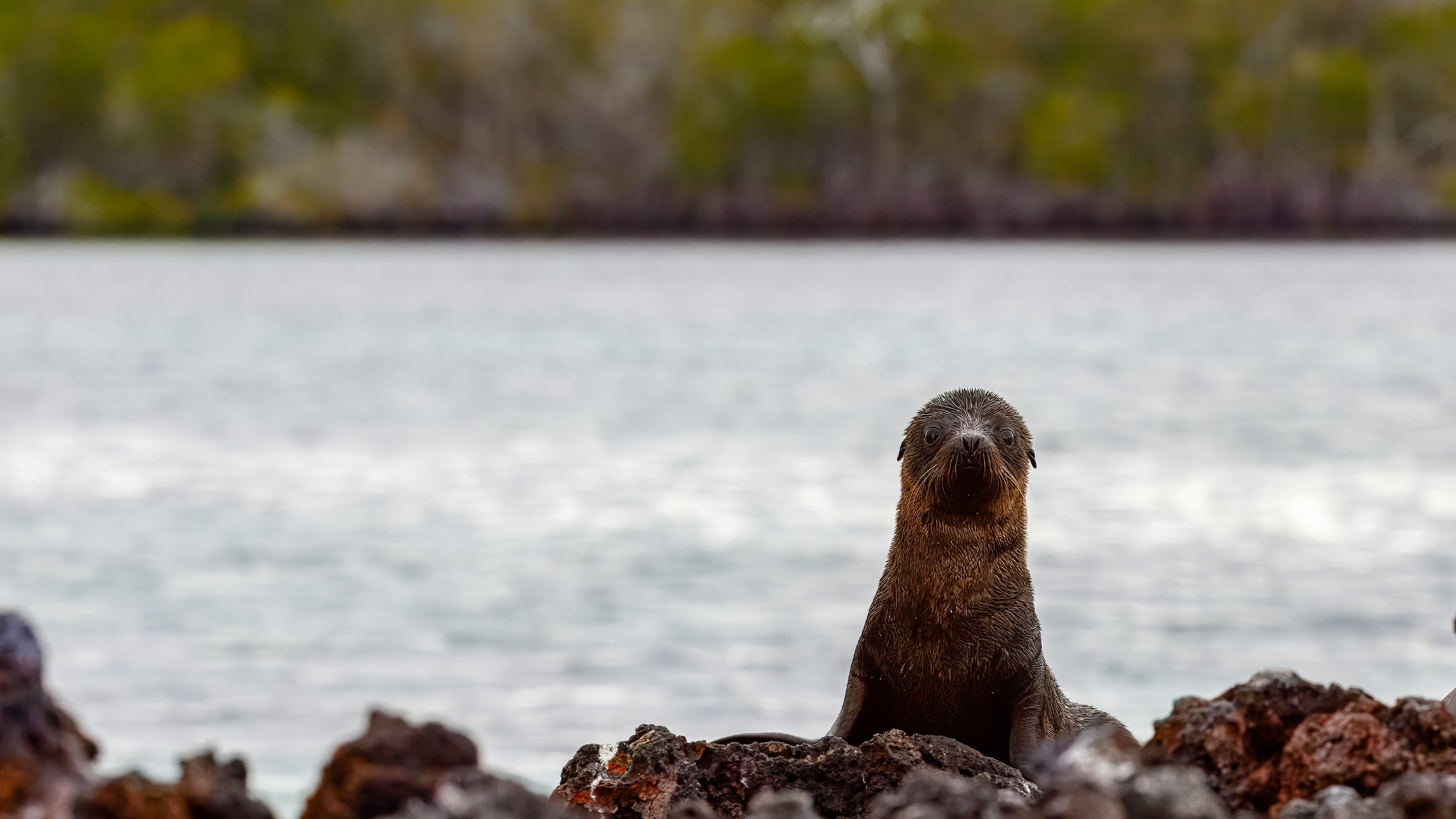
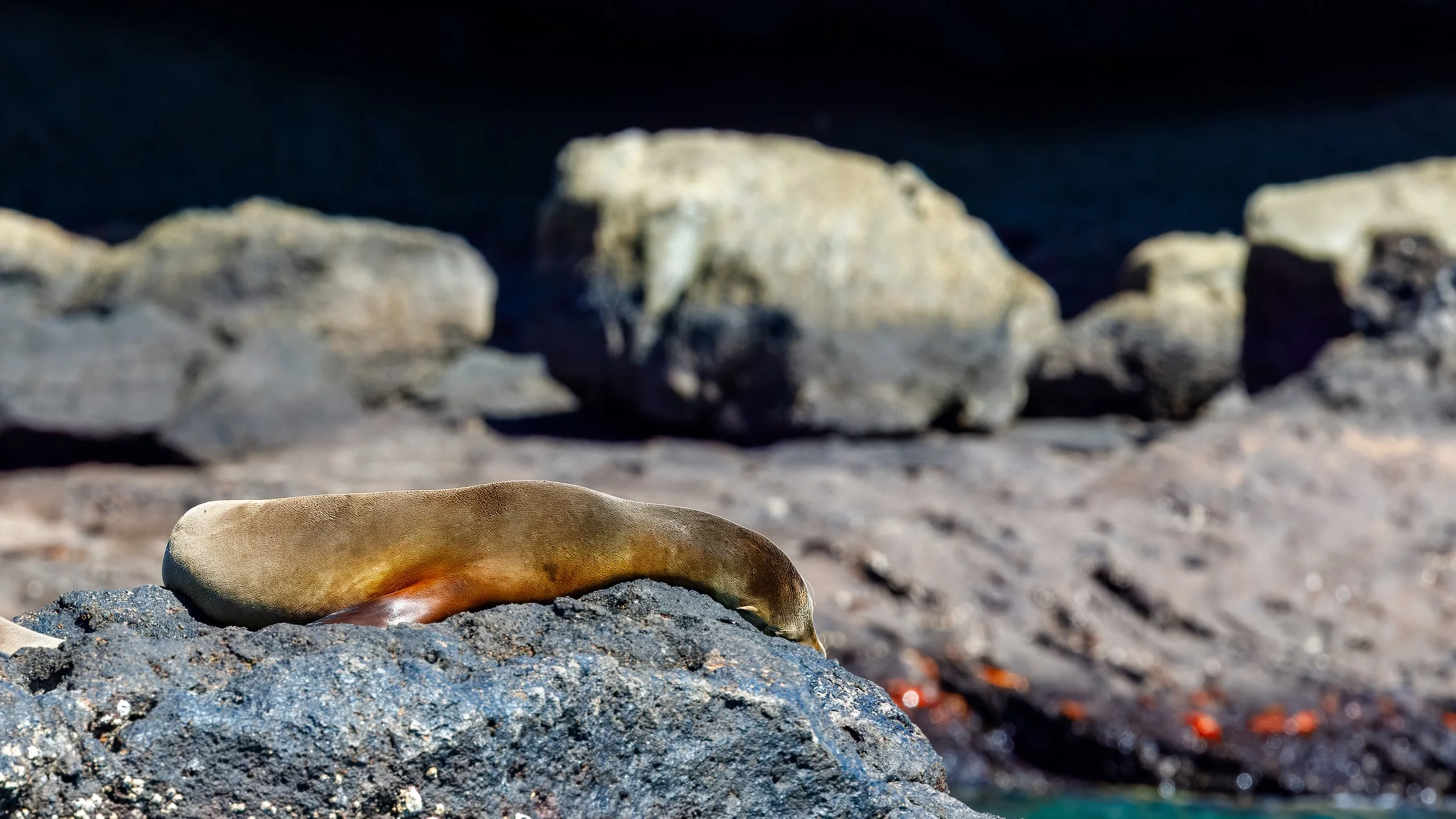
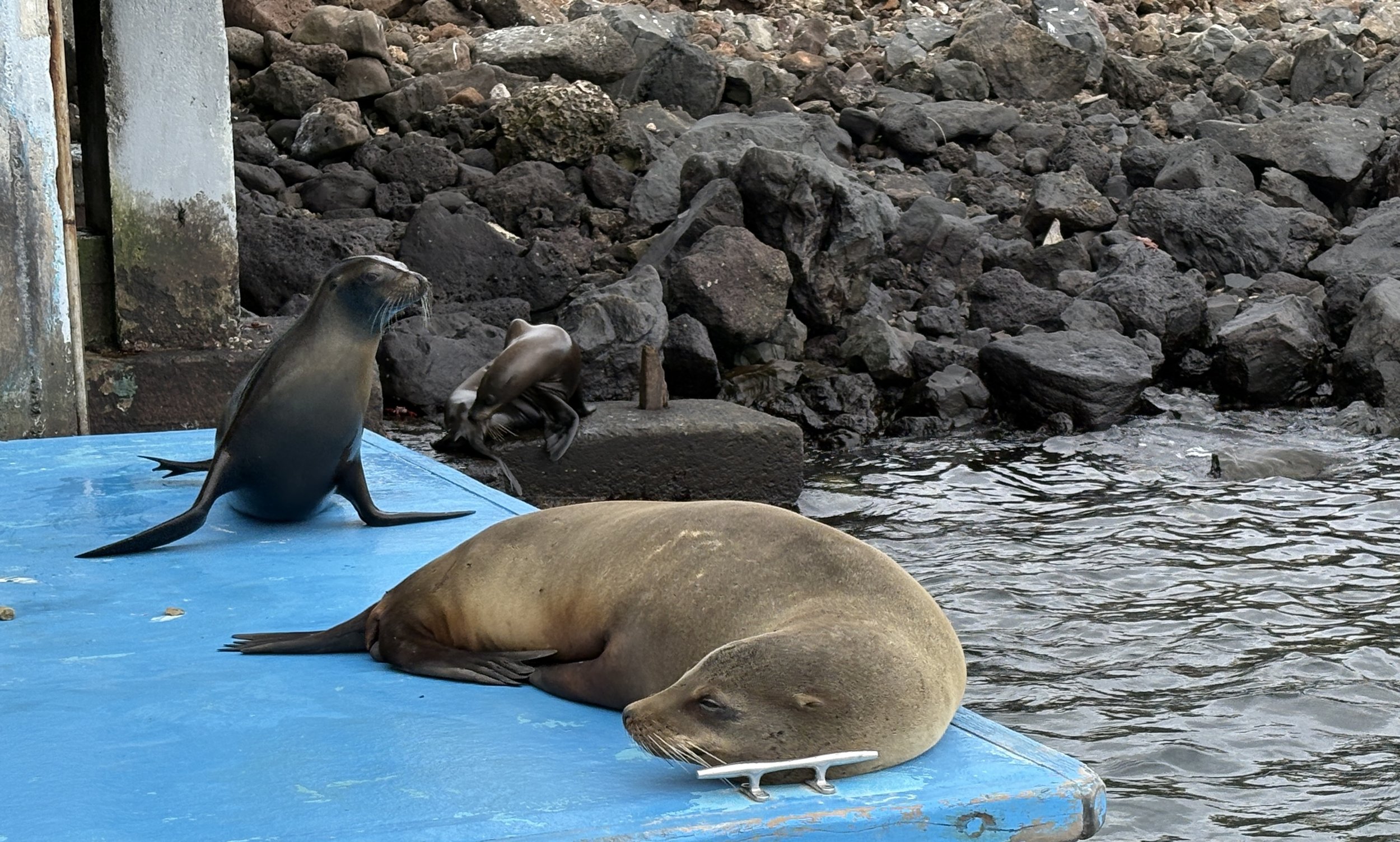
Young Galapagos sealion
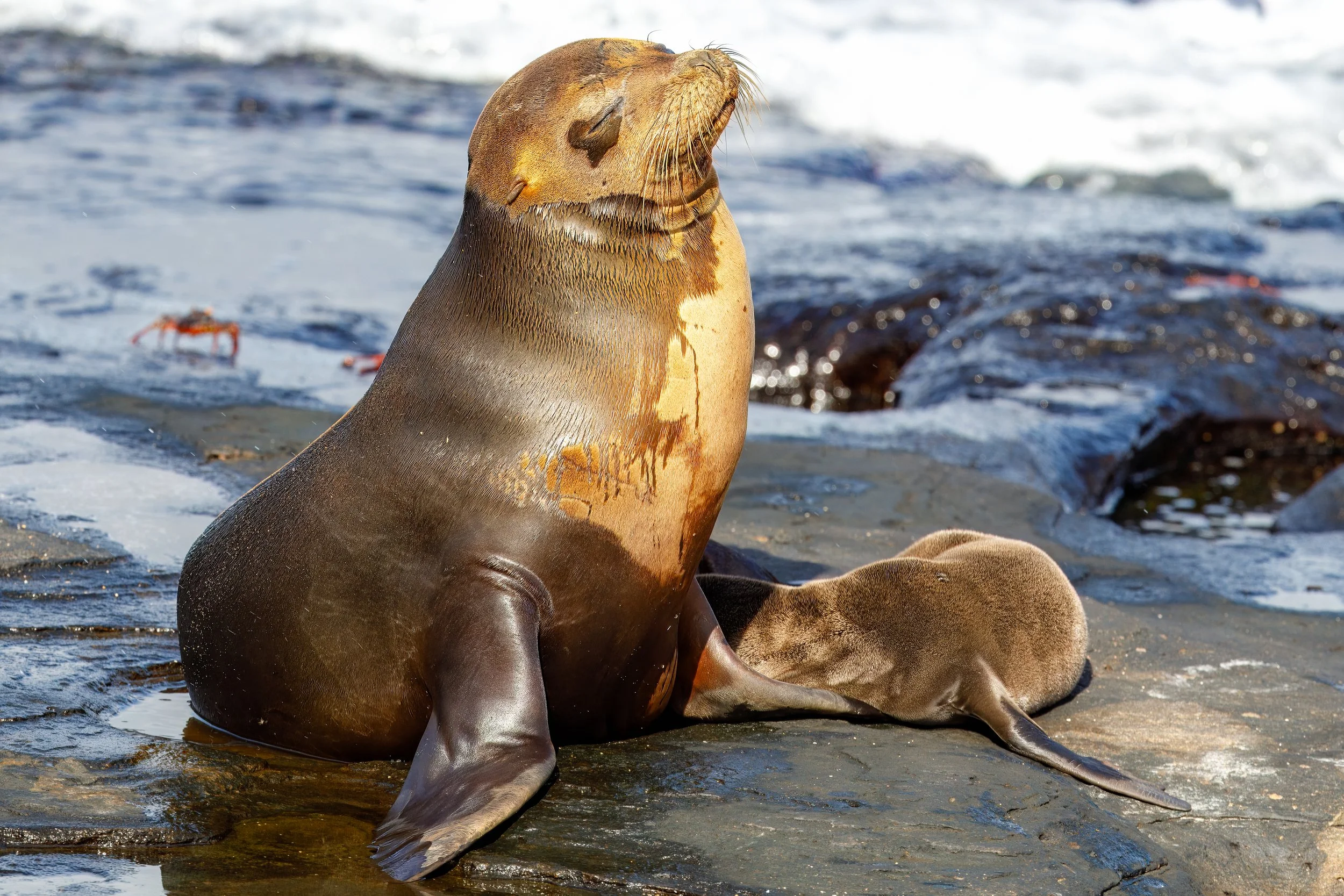
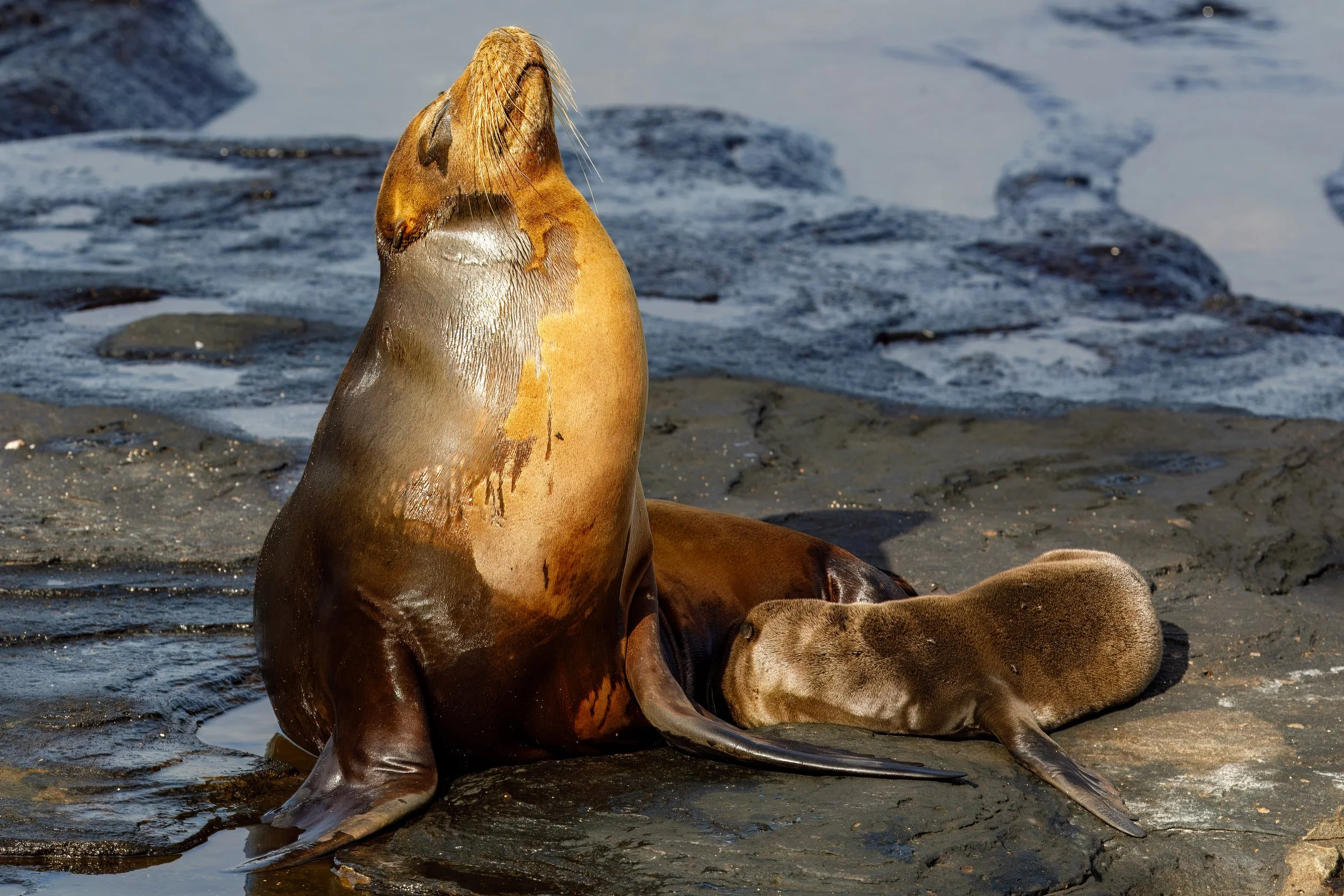
Mother feeding young cub along the shore
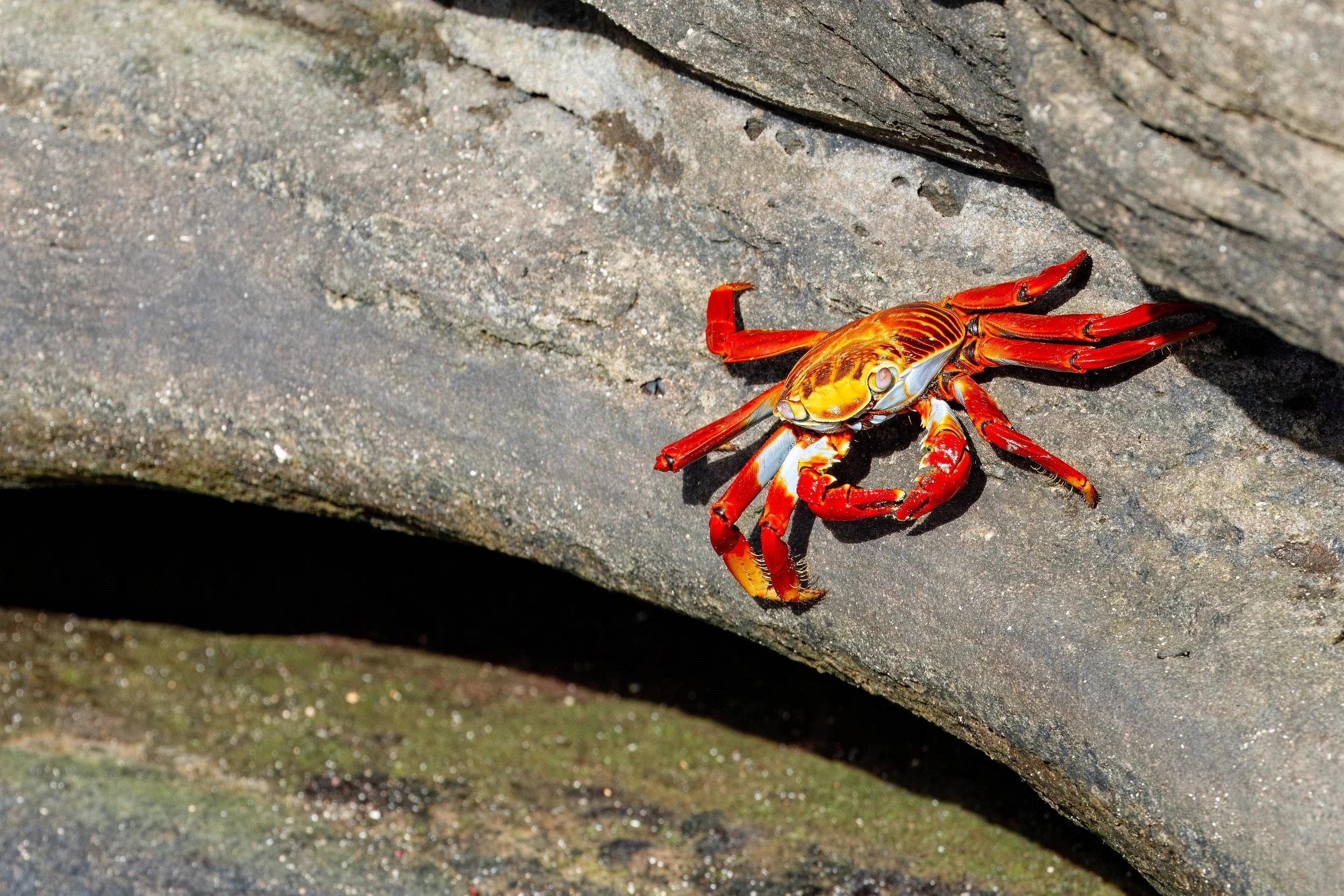
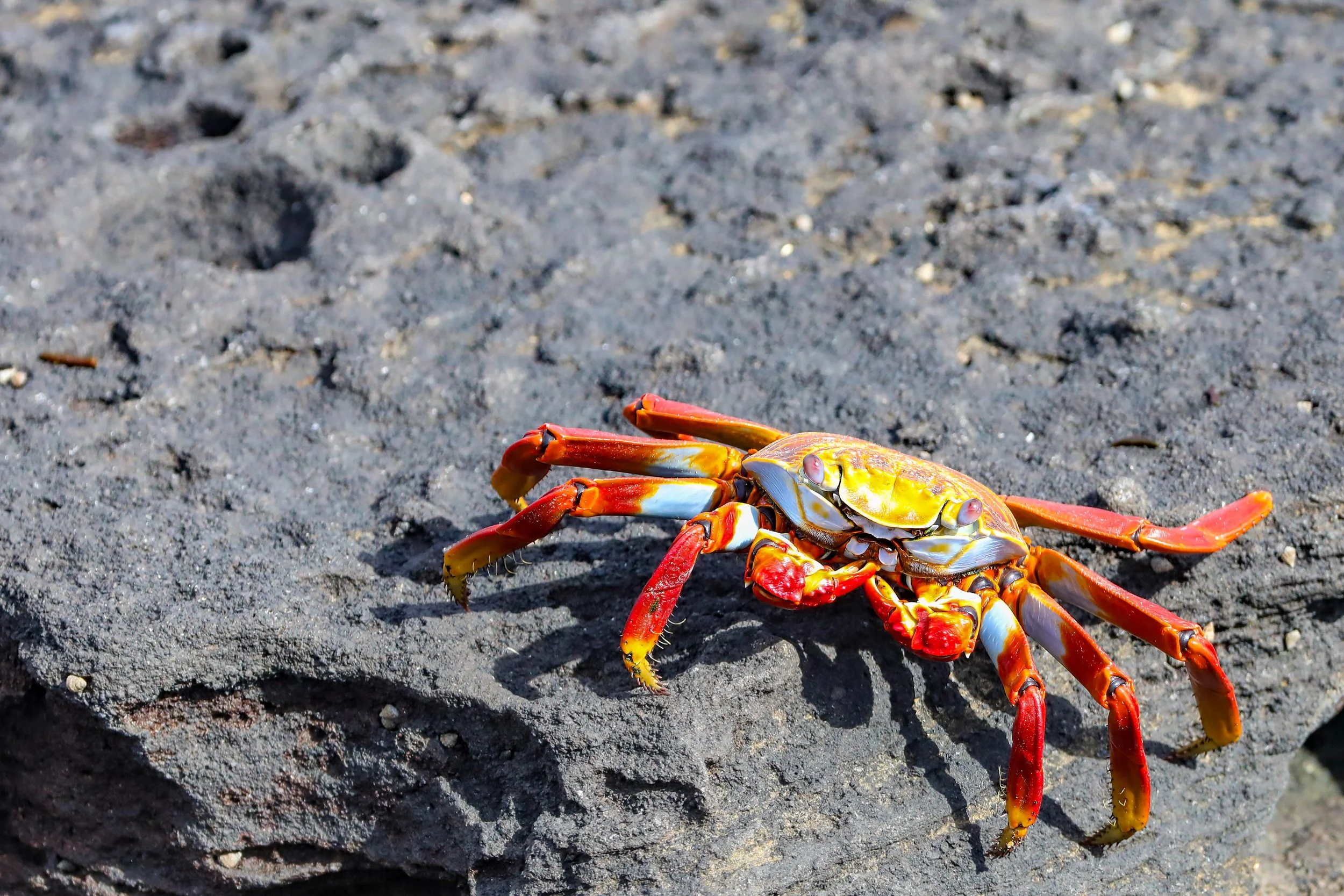
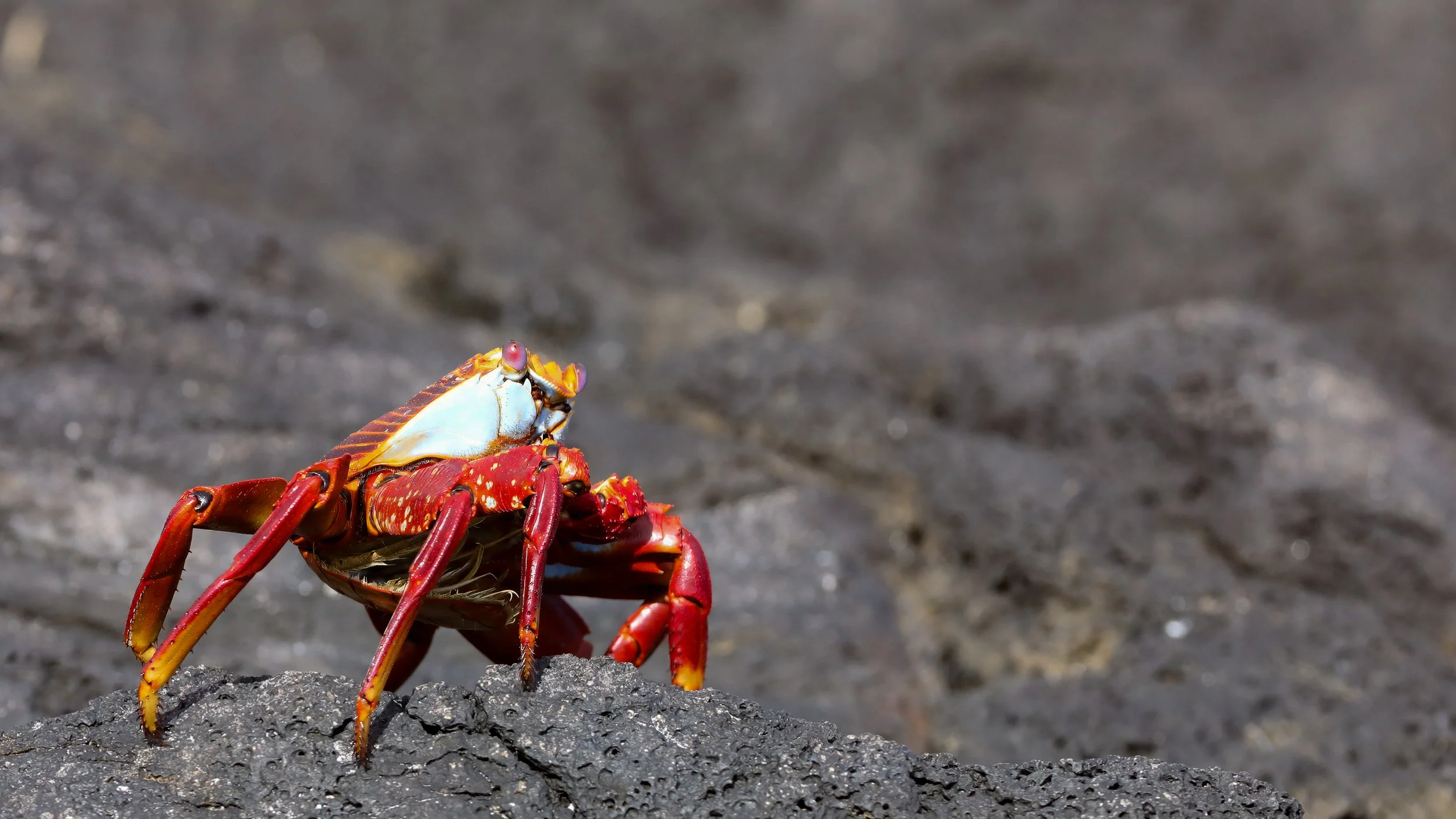
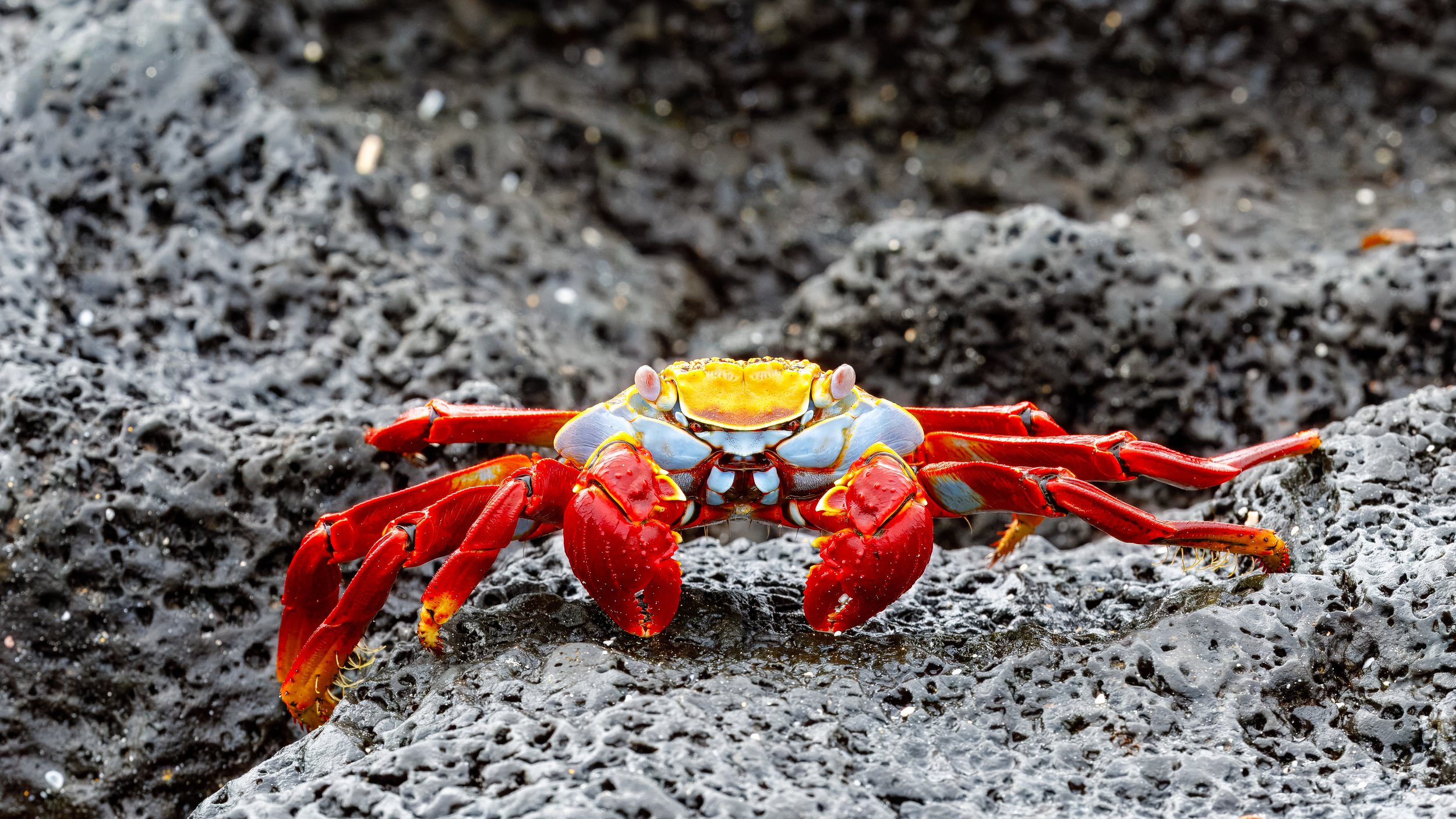
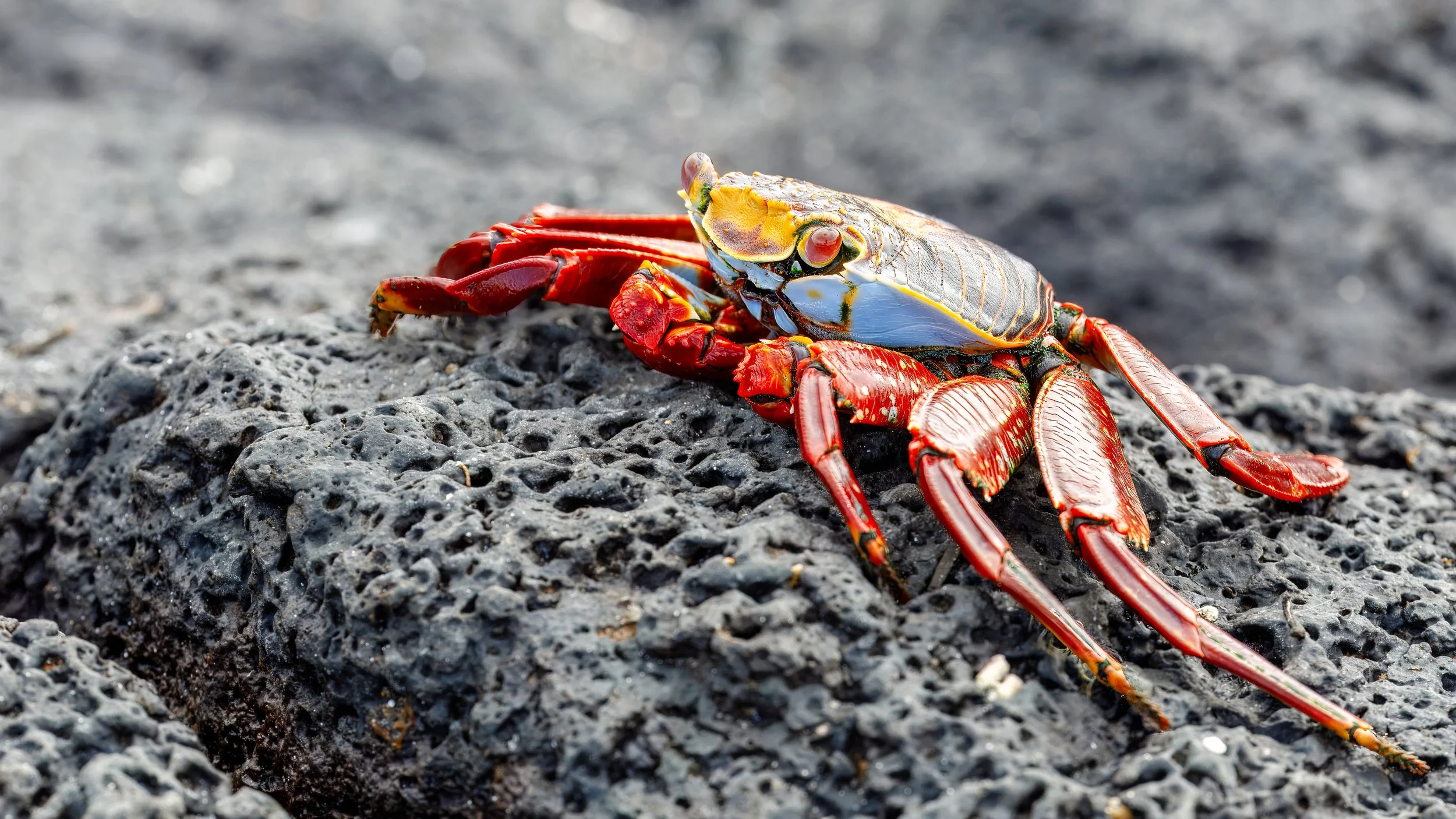
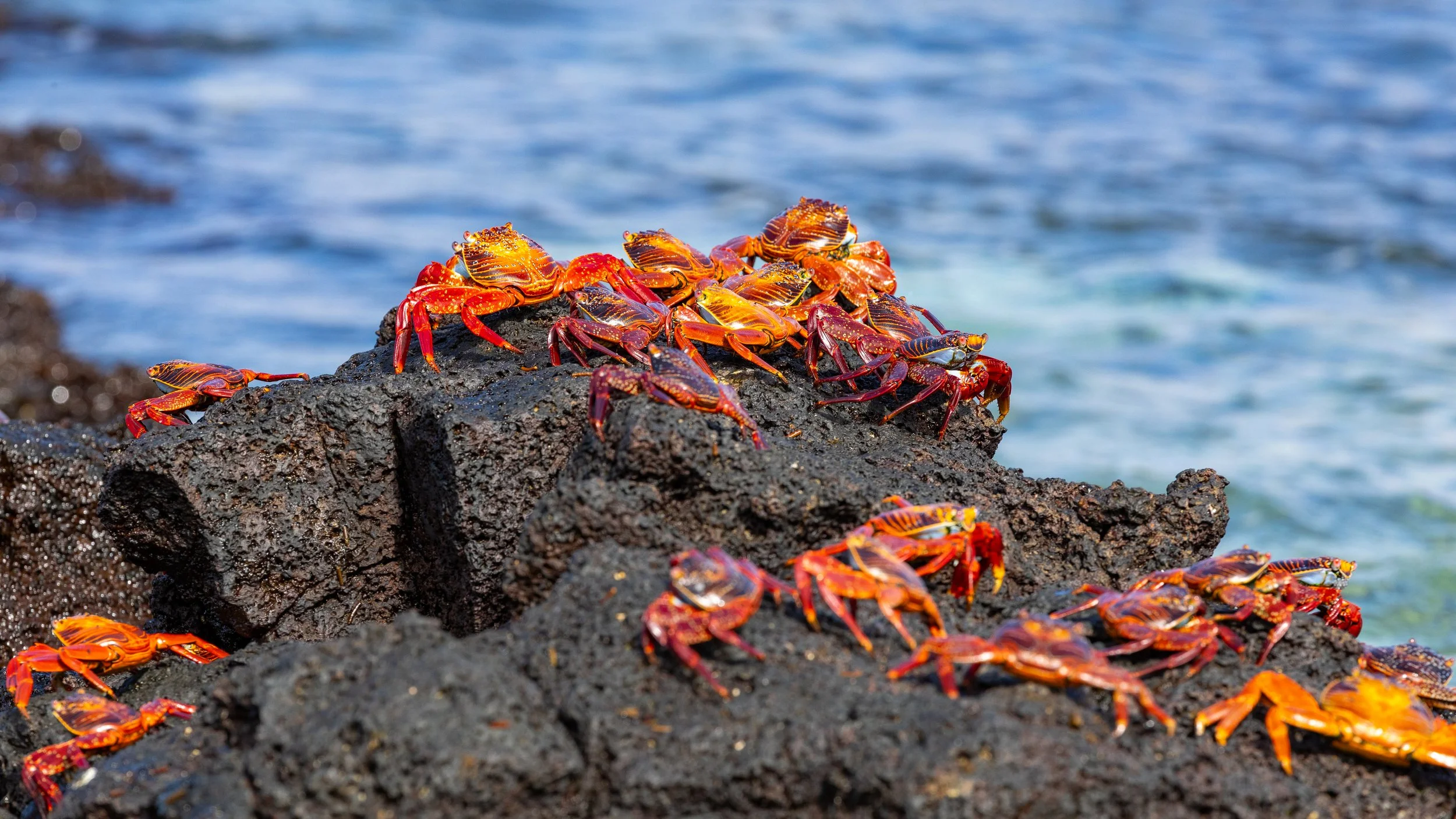
One of many colourful Sally Lightfoot crabs along the beach
The young sealion showing off his features
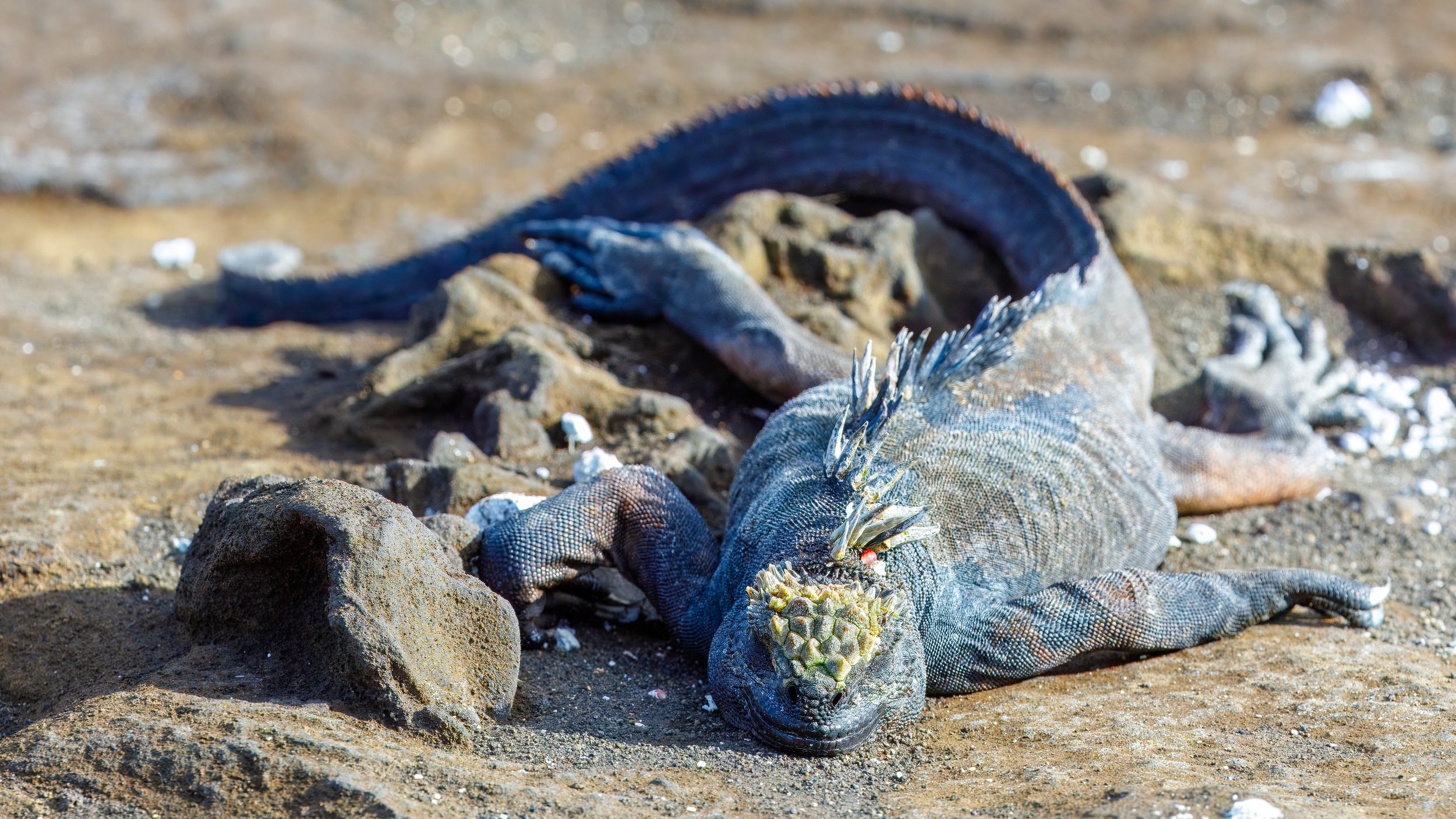
Colourful sea iguana resting on the beach
Another beautiful shot of the nursing mother
The claws look very frightening, but they usually do not move quickly
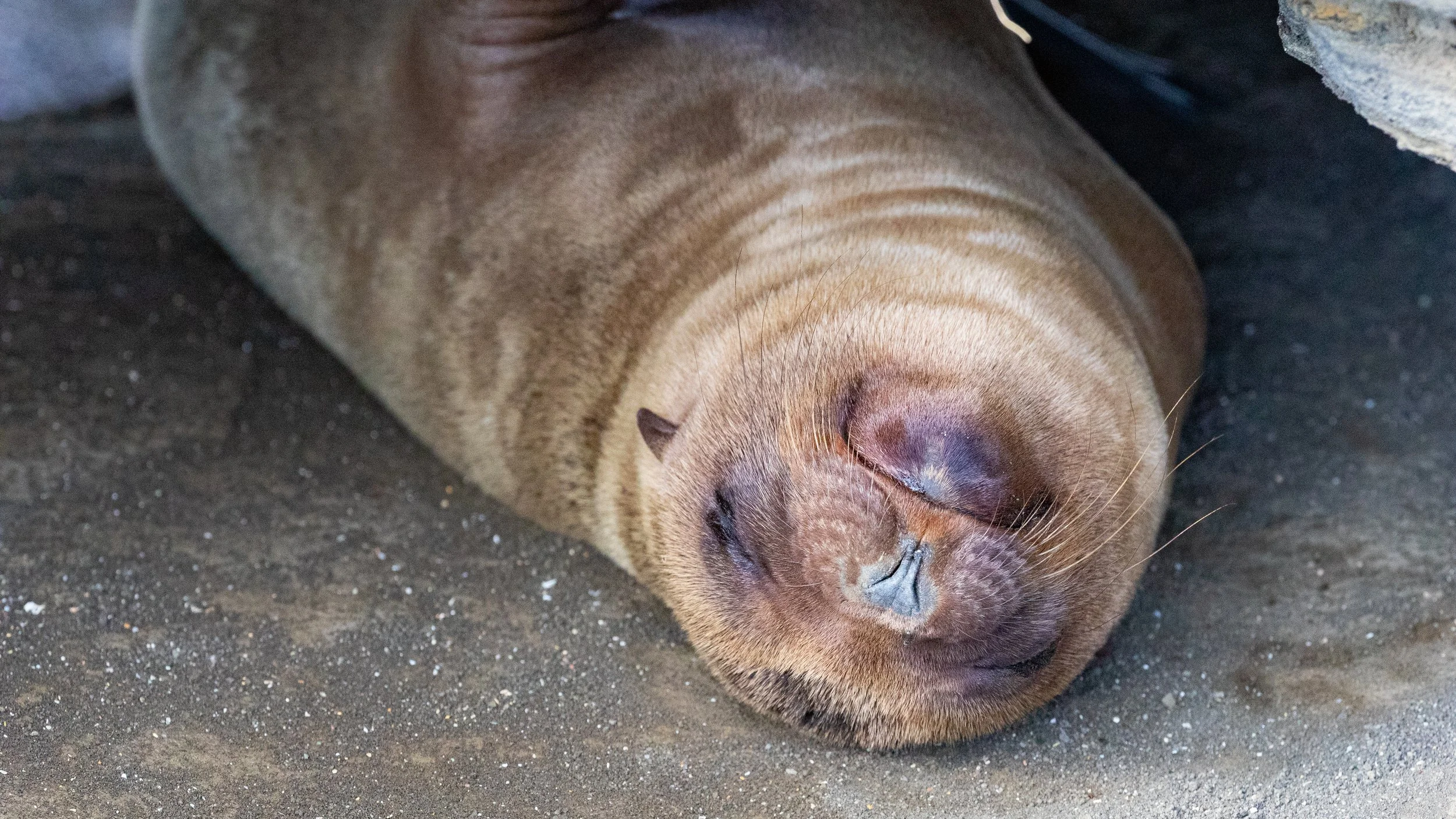
Relaxing sealion has no fear of the visitors with no real predators on the island
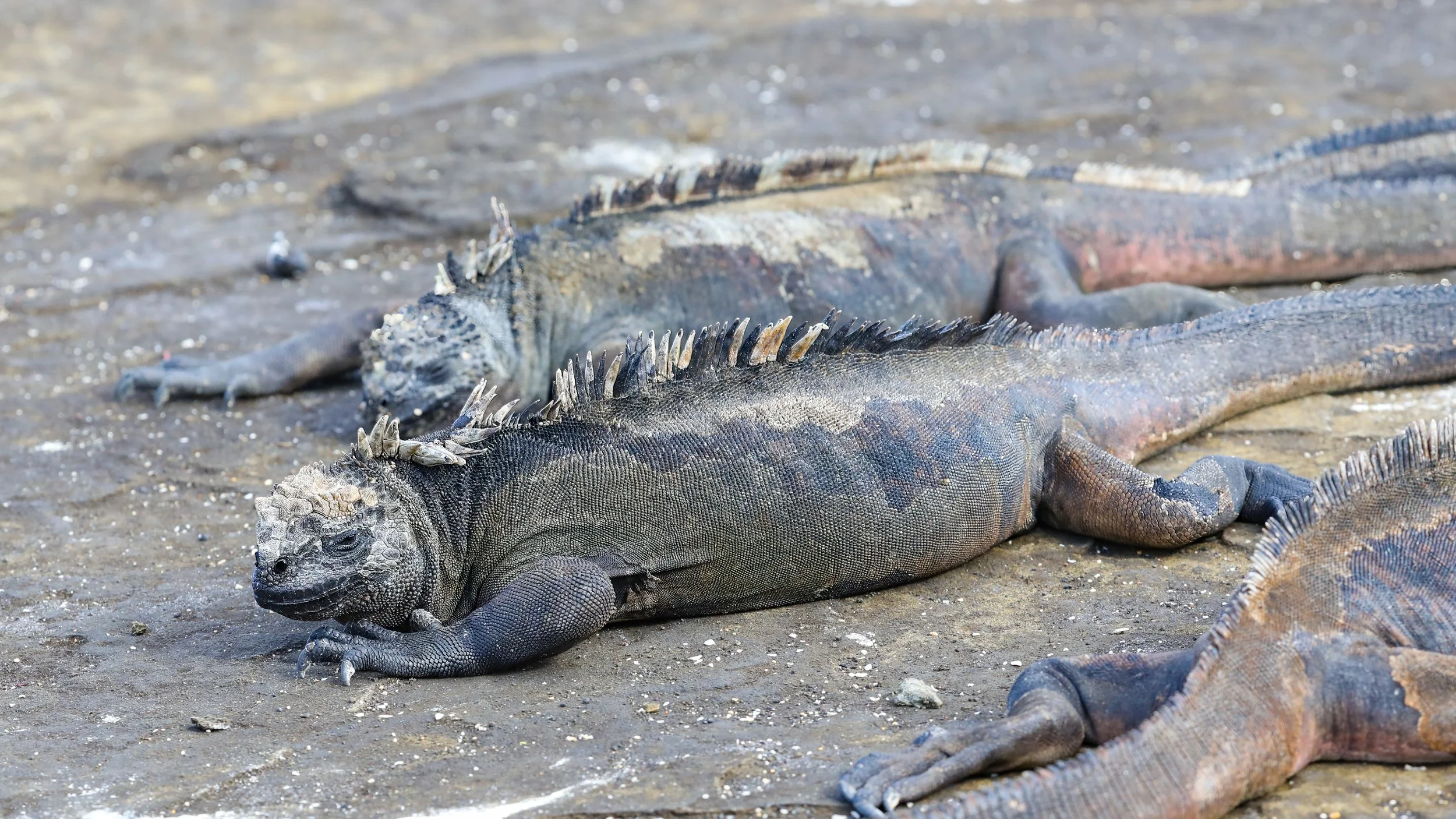
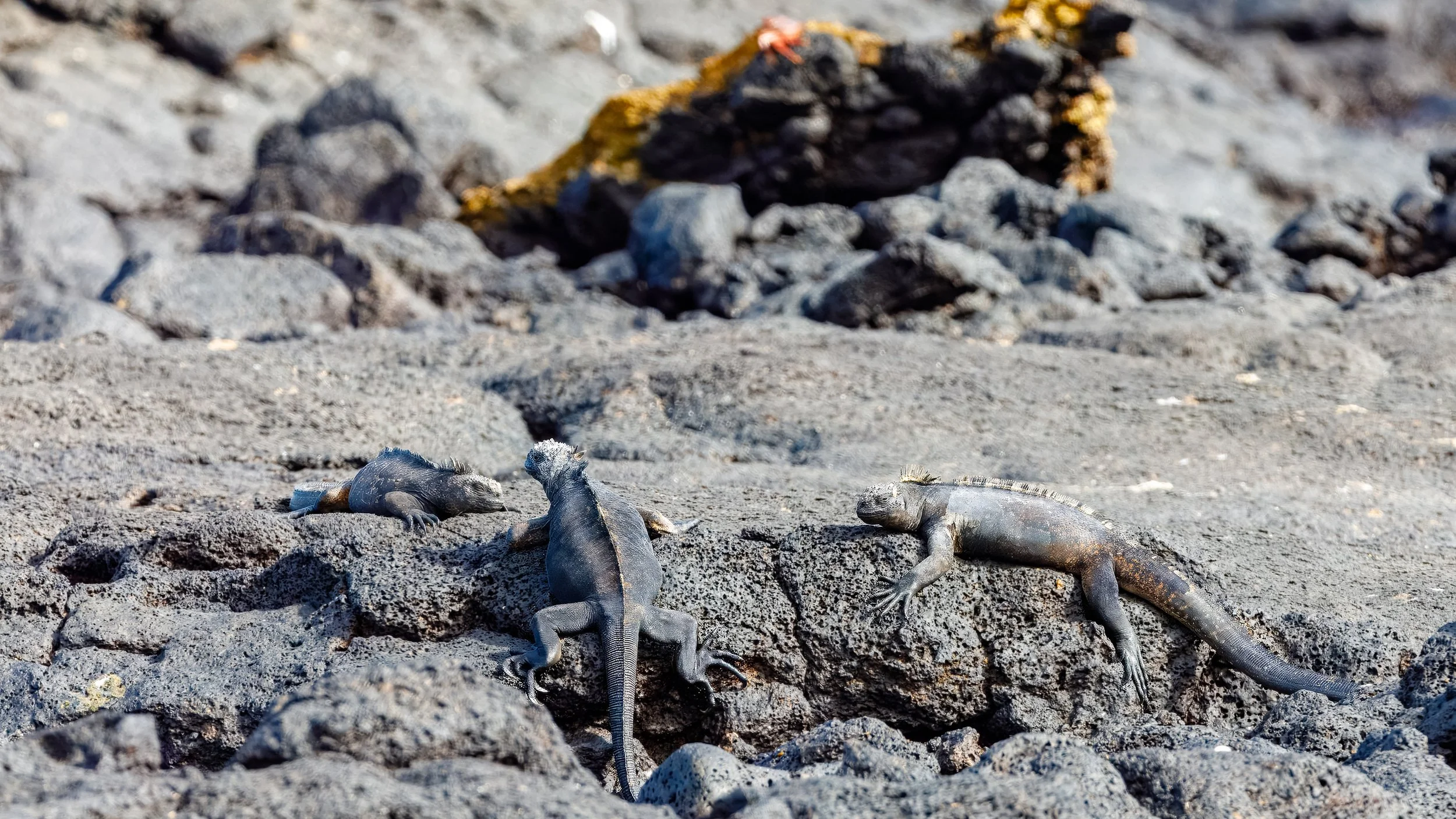
An iguana gathering spot on the beach
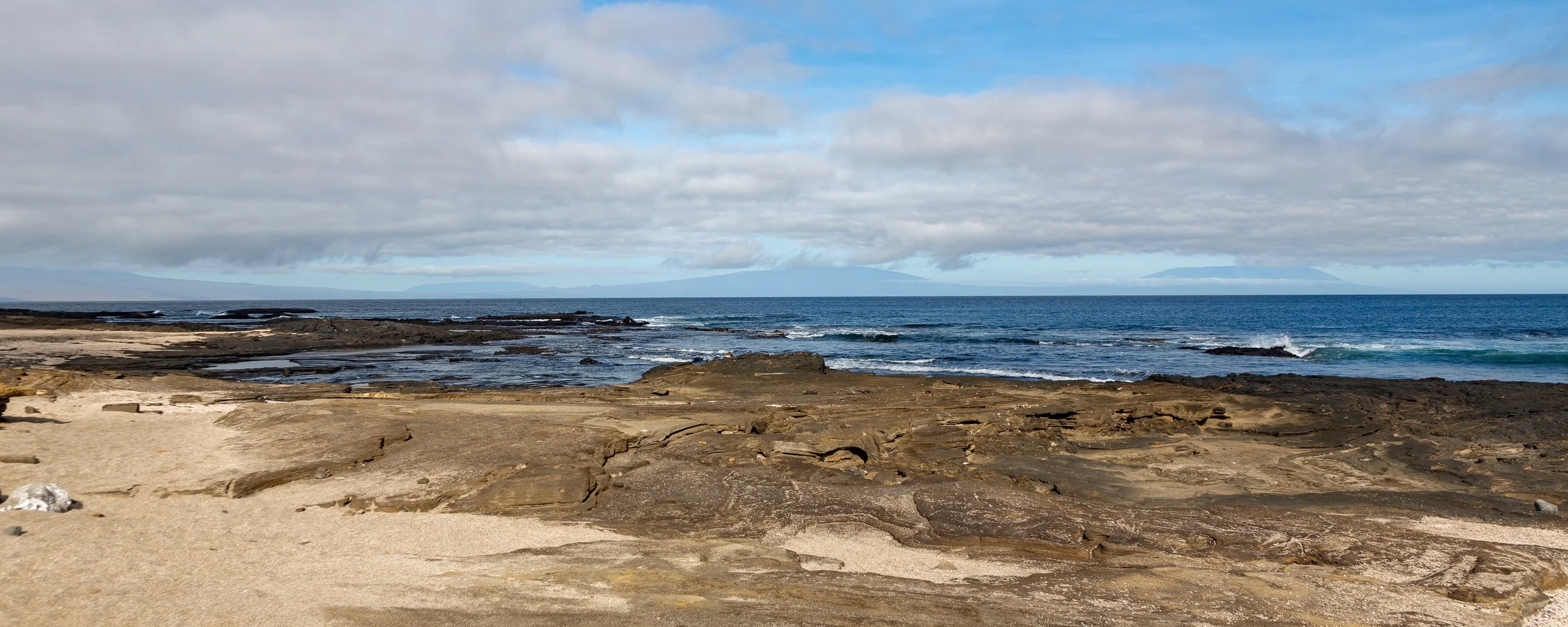
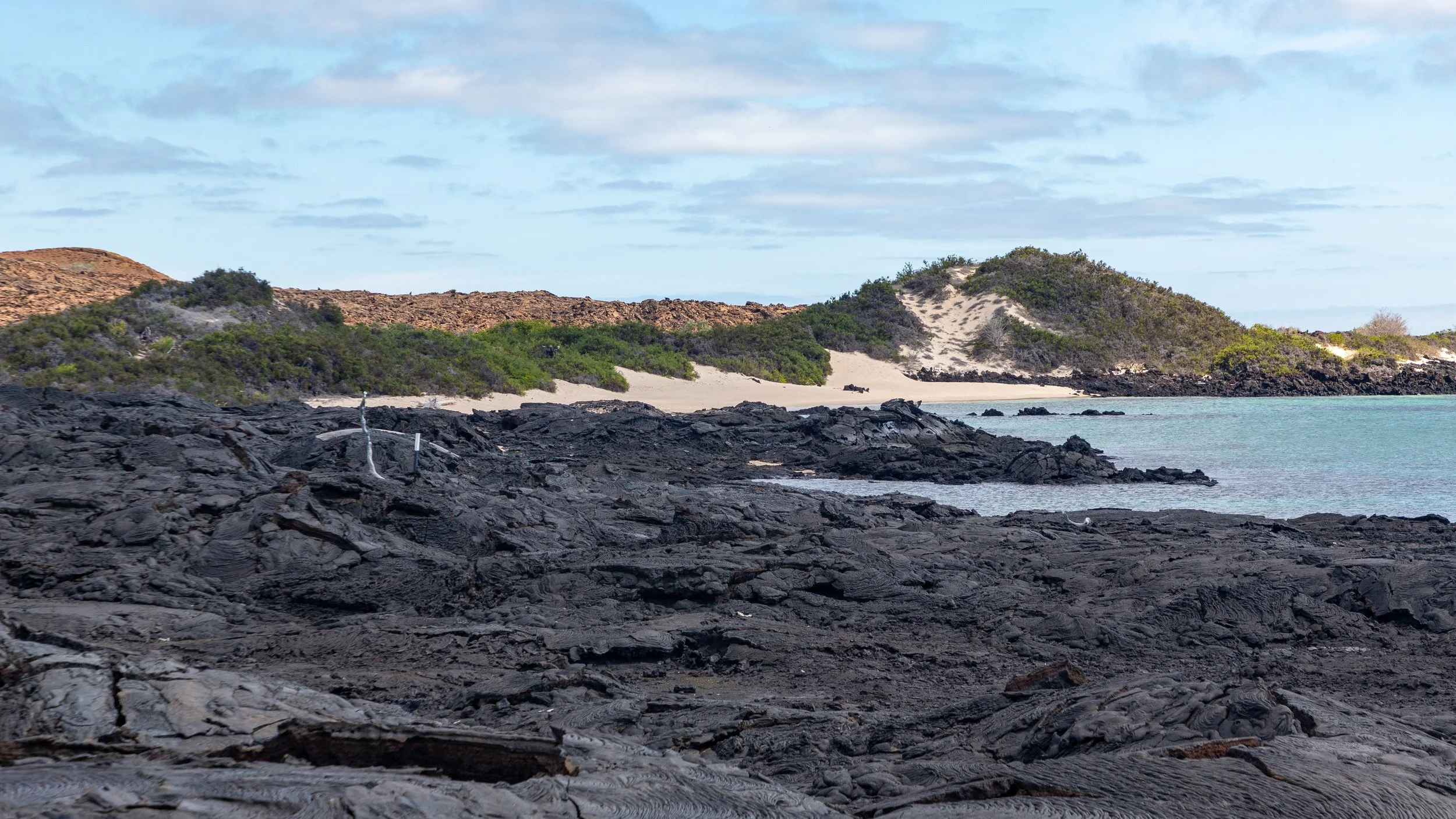
Beautiful rocky beach
Each iguana had different shading
Another sealion happy to pose for us
The contrast of the crabs on the rocky beach was quite striking
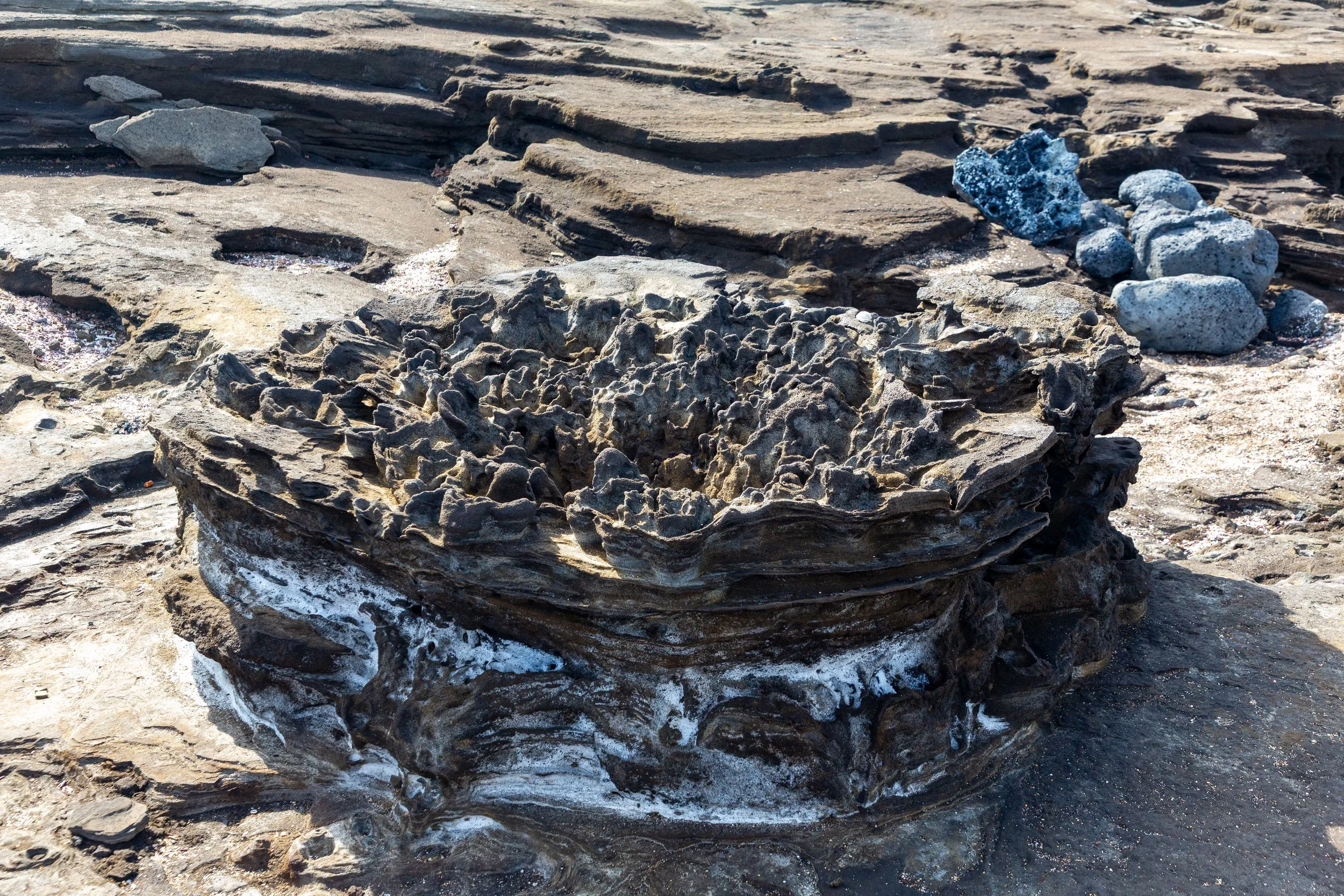
Some of the volcanic layers of the island surfaces through beach erosion
Although they each have red colouring, the patterns are also unique
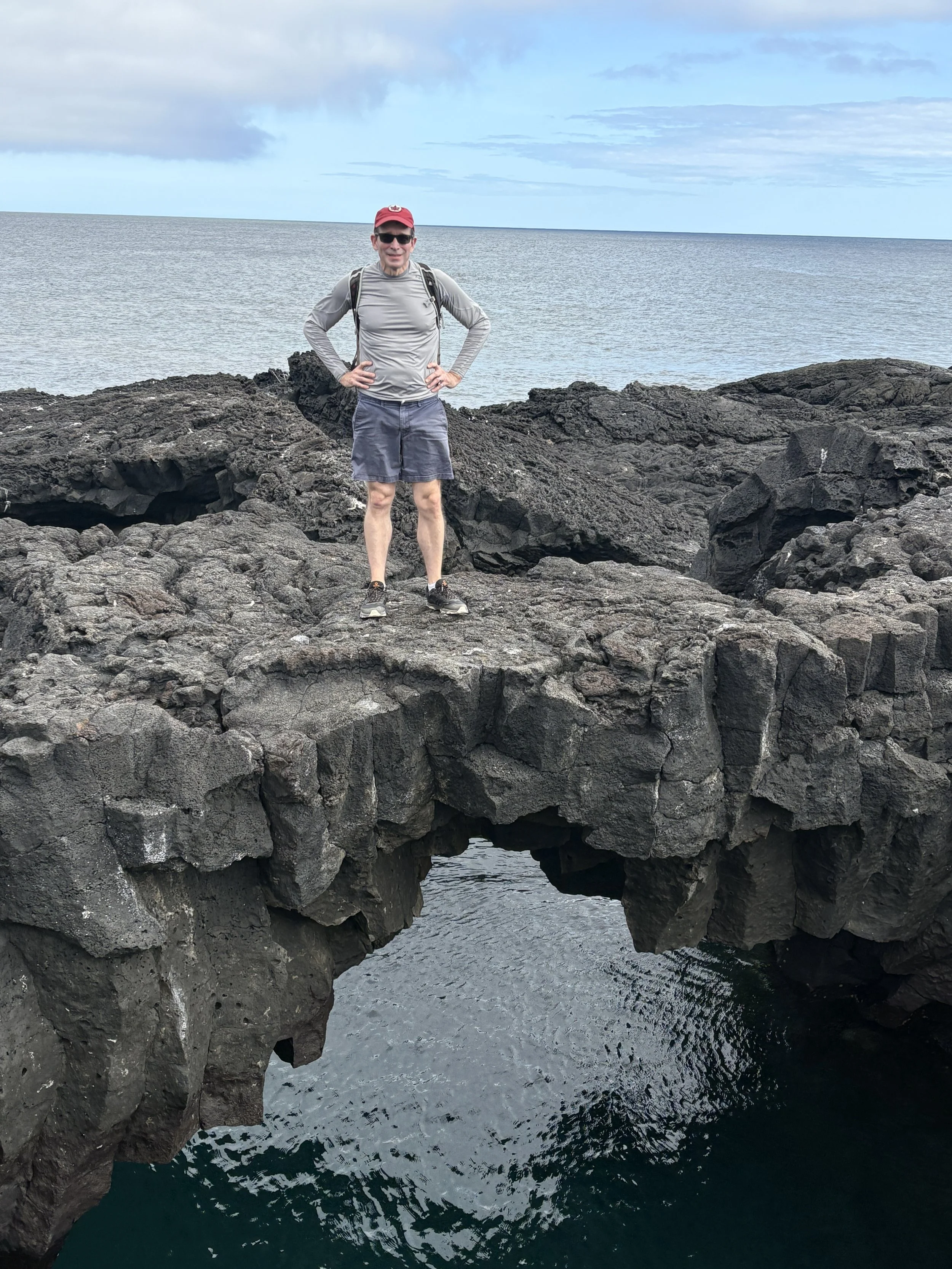
Testing the integrity of the volcanic sea arch
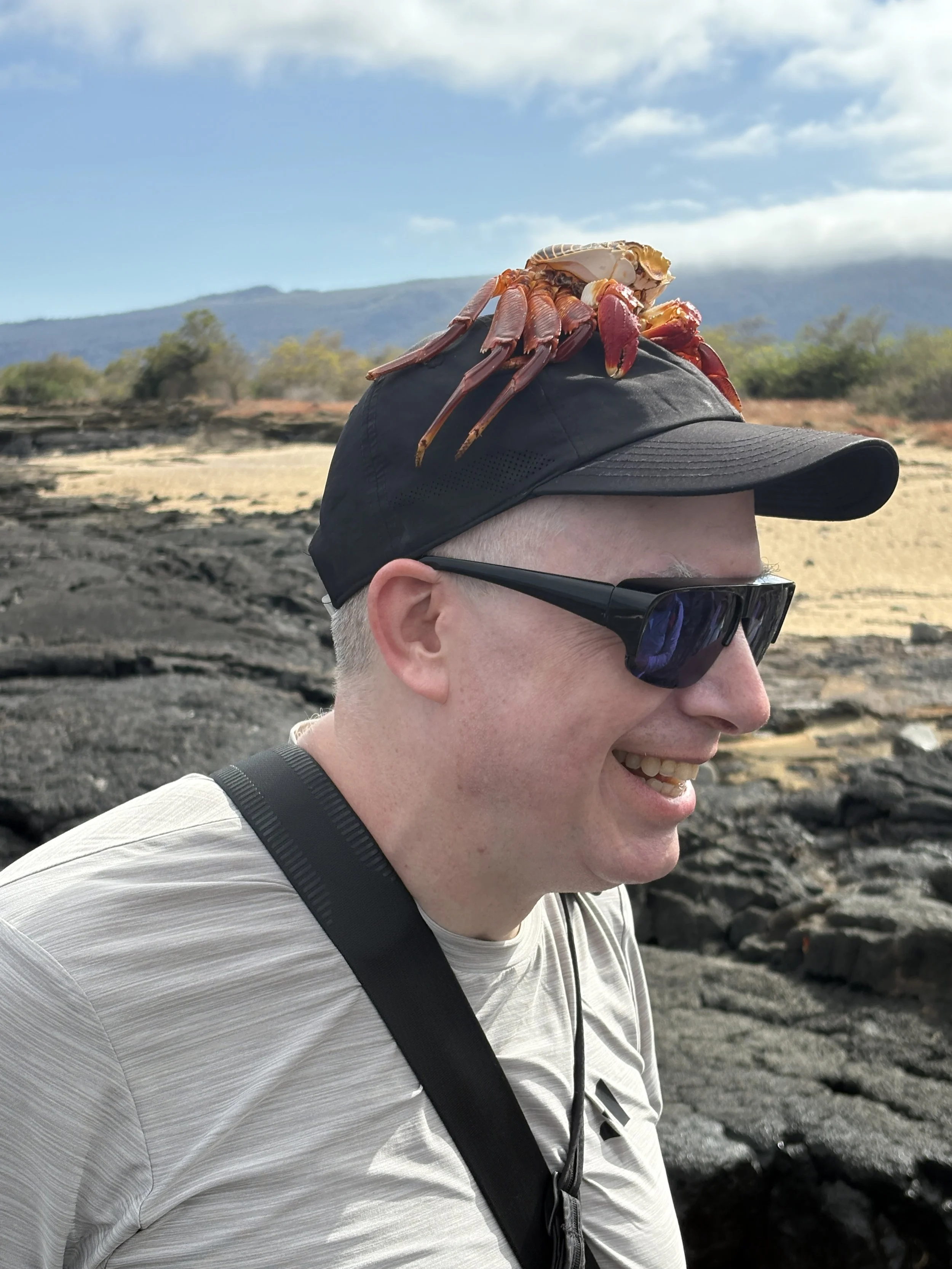
With the original crab having moved onto a bigger home, the guide borrowed the abandoned shell for a temporary hat
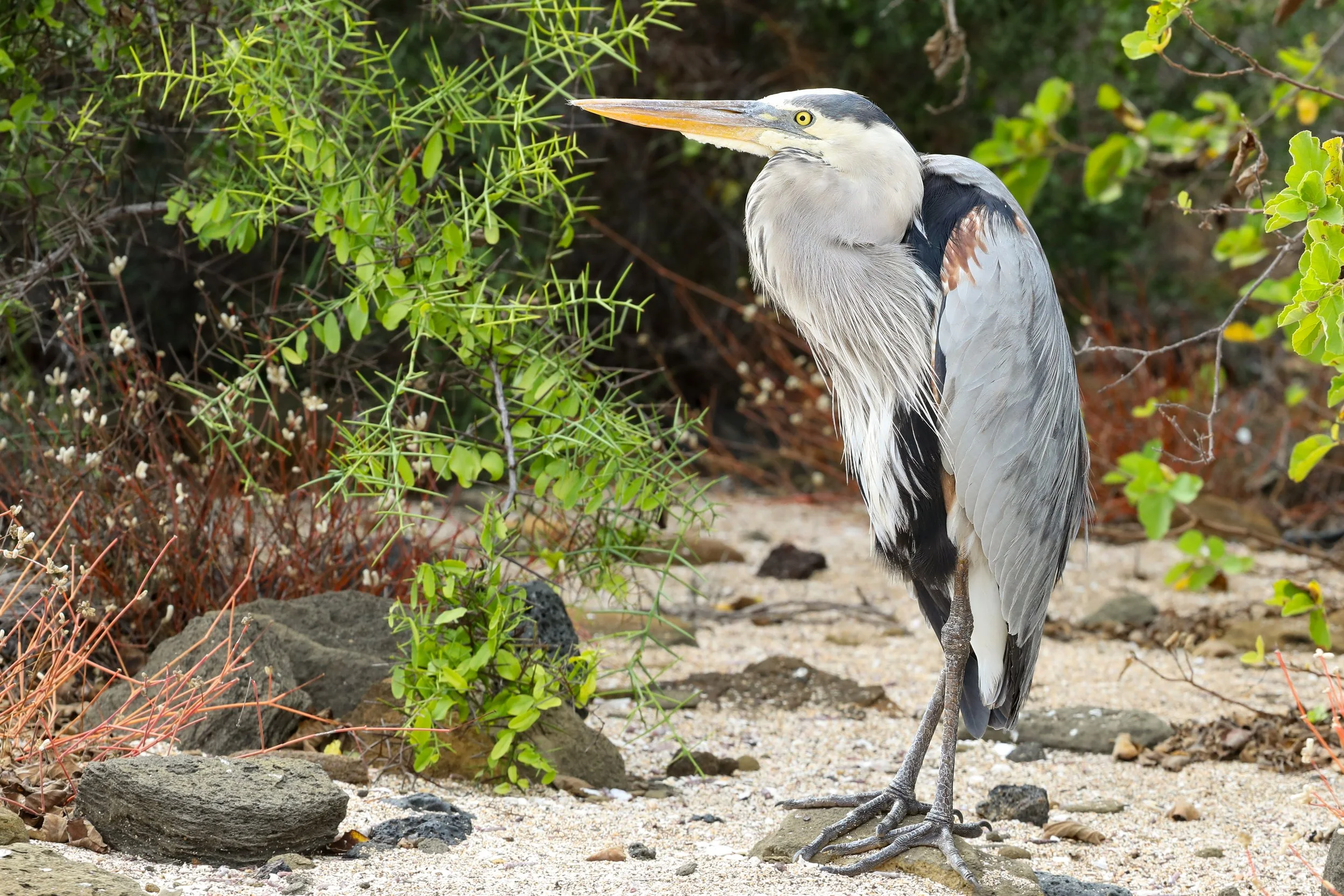
Great blue heron
Nesting land iguana
Catching the Galapagos Land Iguana walking along our path
Evidence of the desert conditions on the island
Looking back at to our ship with the island in the background
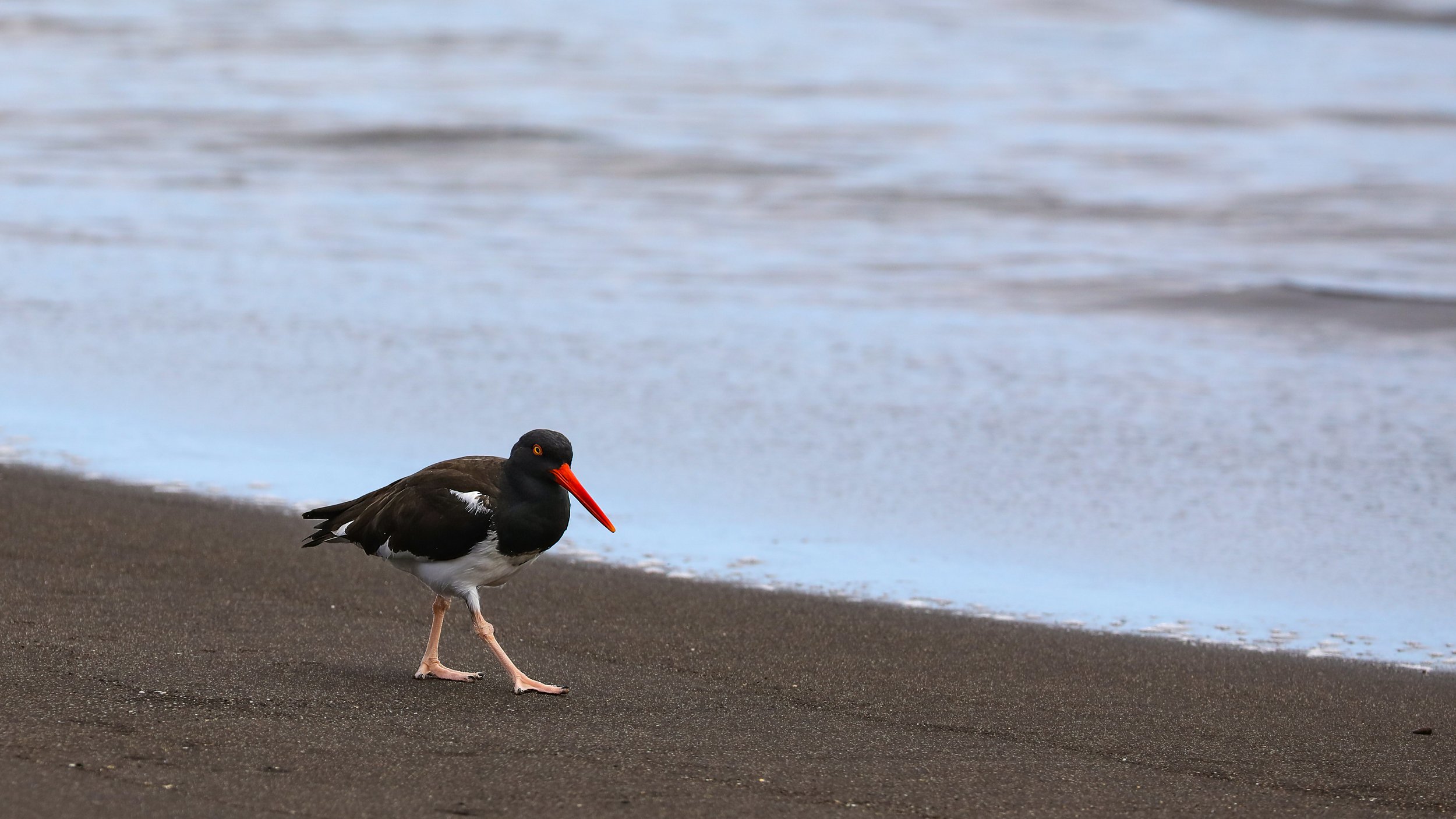
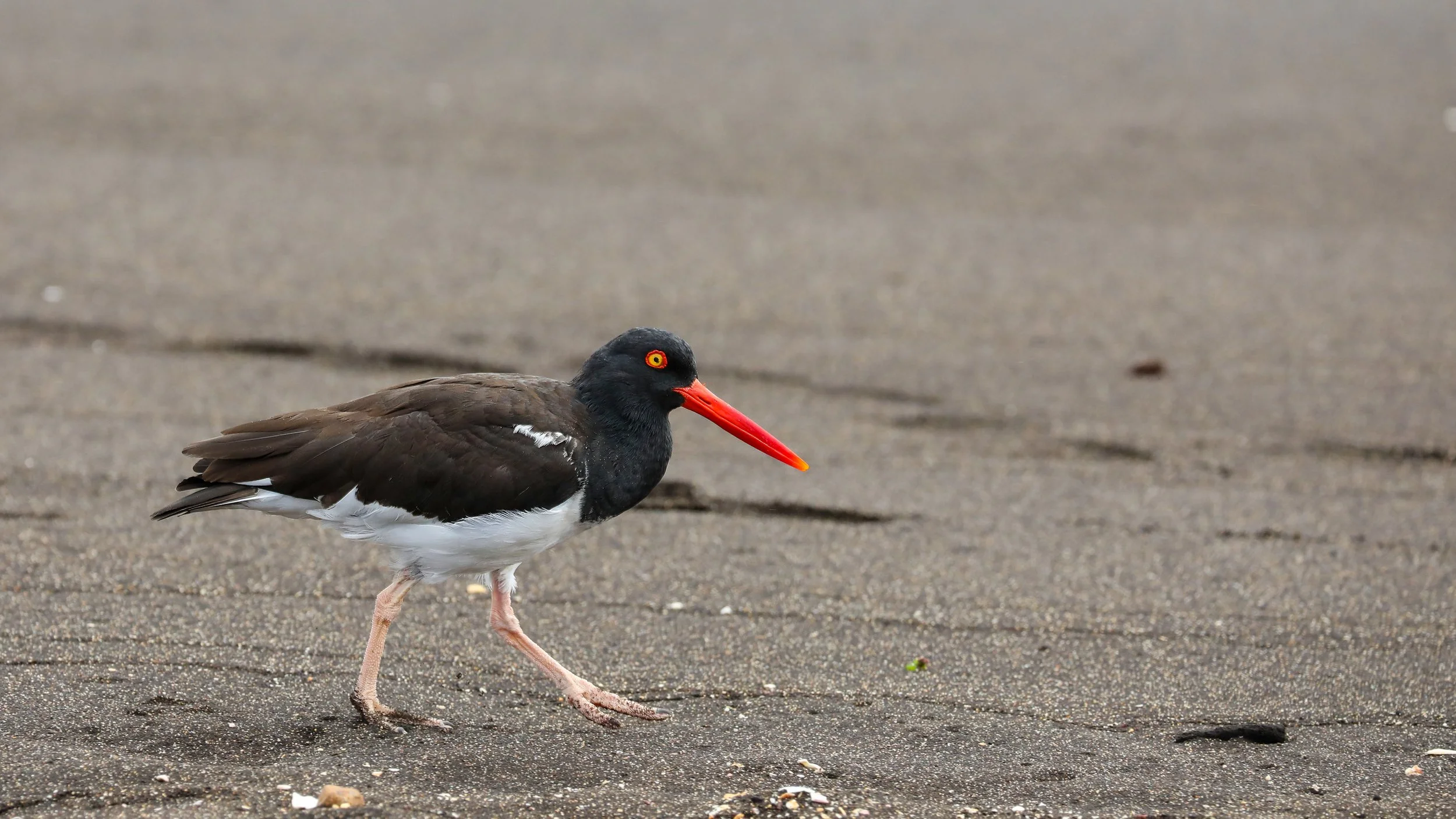
American Oystercatcher, also resident of the Galapagos Islands
Continuing to search for food to “catch” along the beach
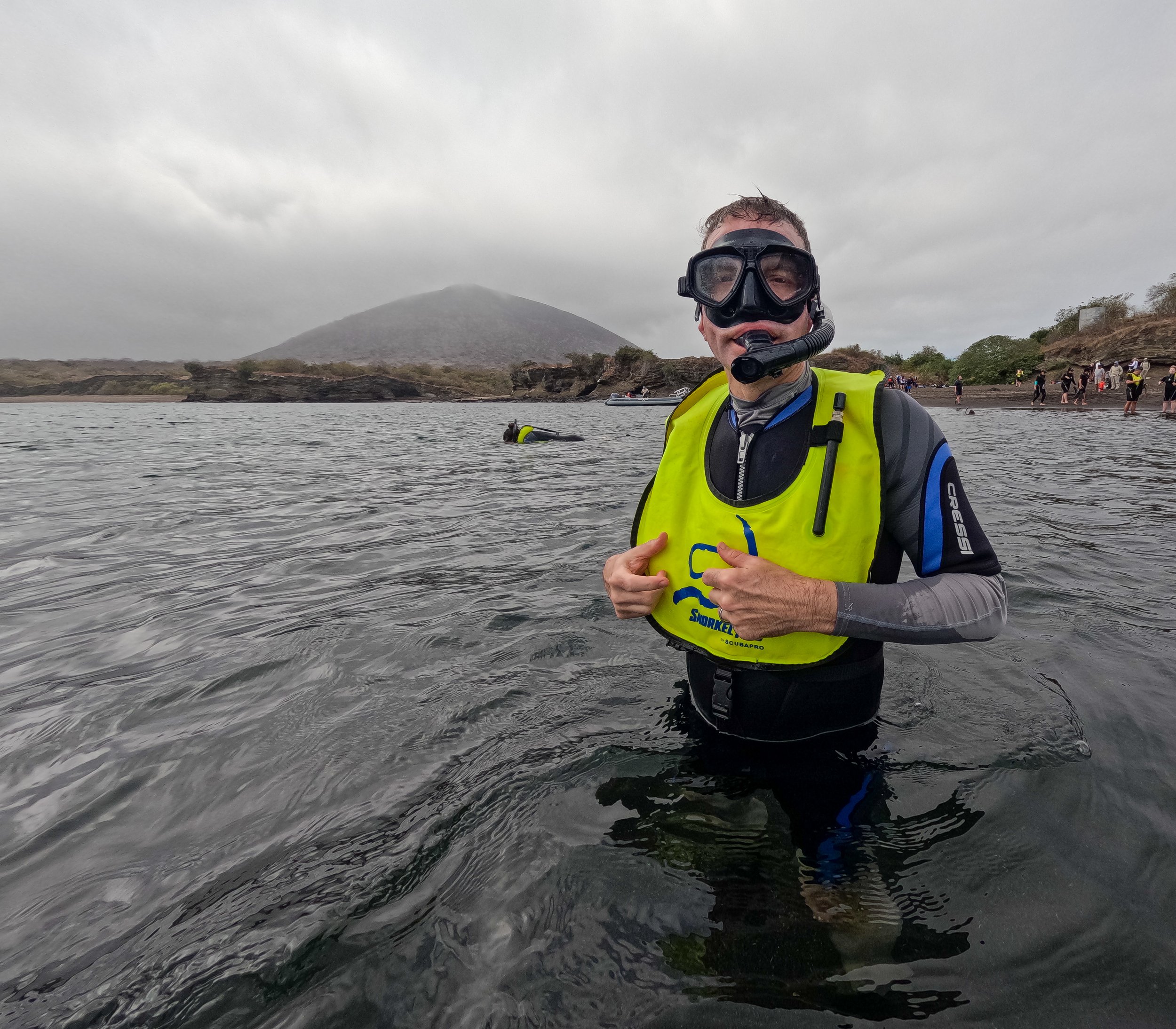
Not a confident swimmer or snorkeler, this was my first and only attempt at it for the trip
The hike was great and we were happy with all of our nature sightings. Unfortunately, we did not do well on the snorkeling as we weren’t comfortable enough to get into the deeper water with more fish. Tom also injured himself on a sharp rock making his way back, so after some local first aid we made our way back to the ship.
Sep 29 - afternoon
After lunch, we had time to relax before our long walk, our choice for our afternoon outing.
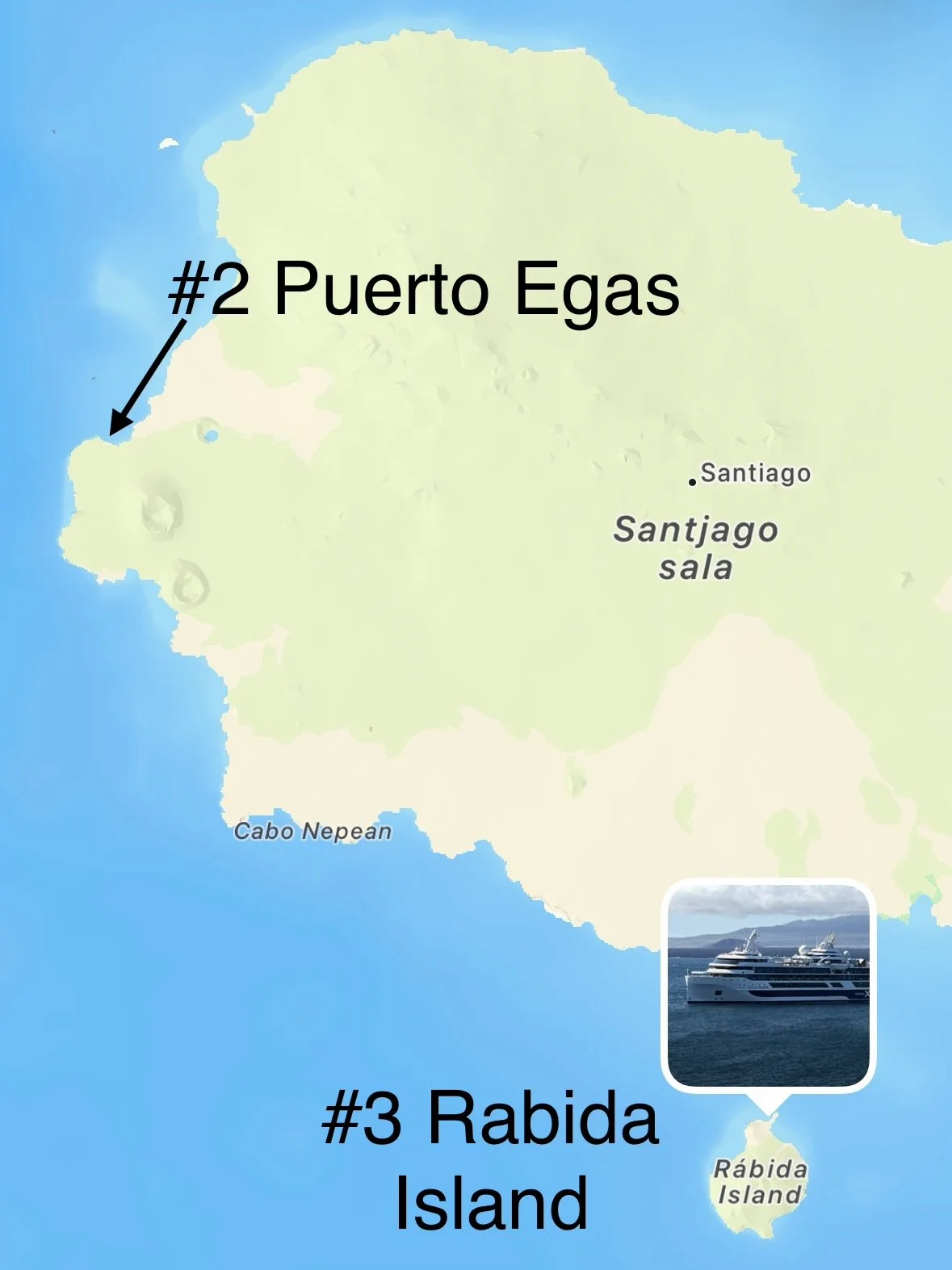
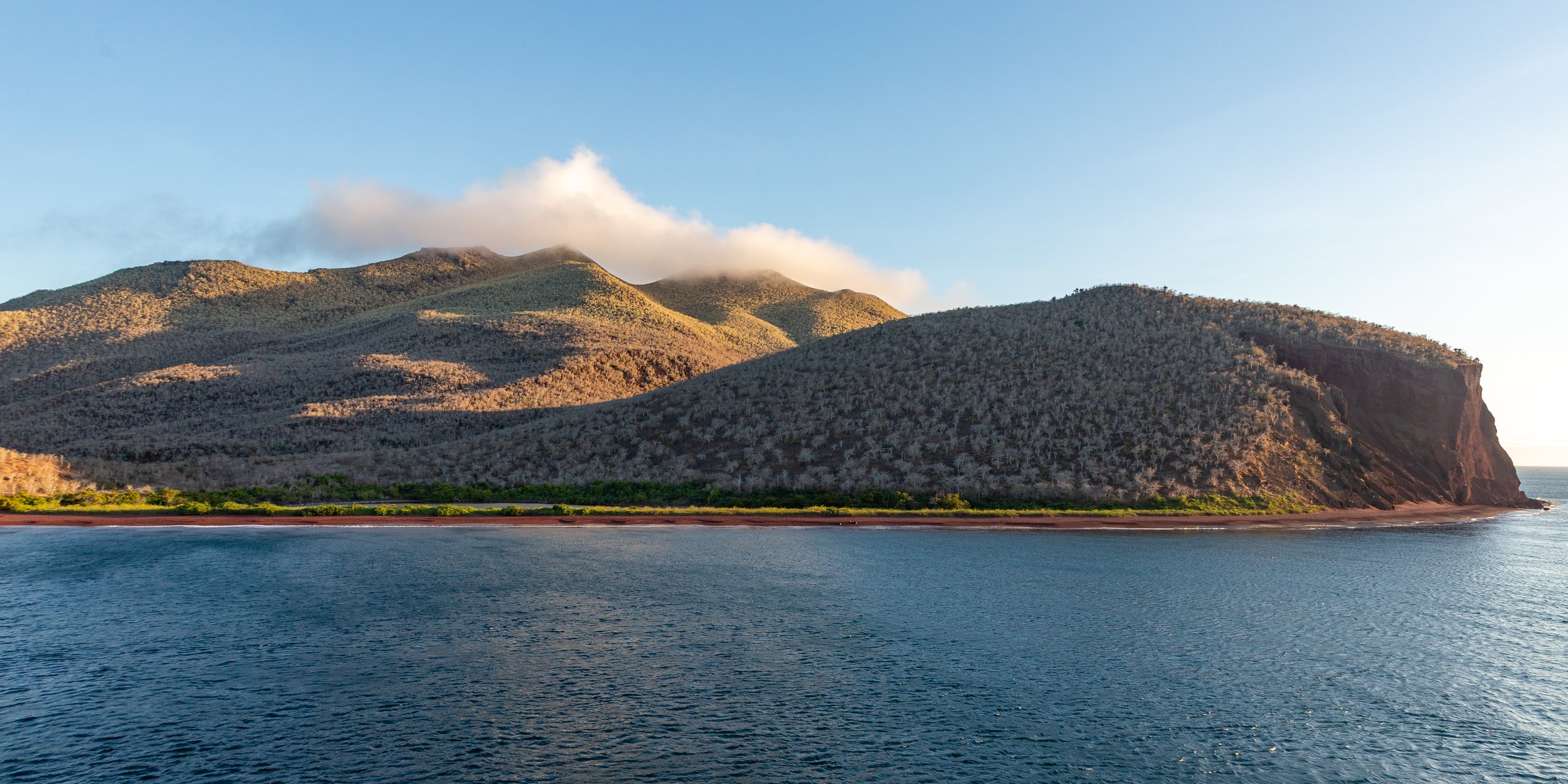
Over lunch and during the early afternoon we had made it to the small Rabida Island off the southern coast of Santiago Island
Looking back at the ship after our water landing
Iguana camouflaged well with the dry soil along the beach
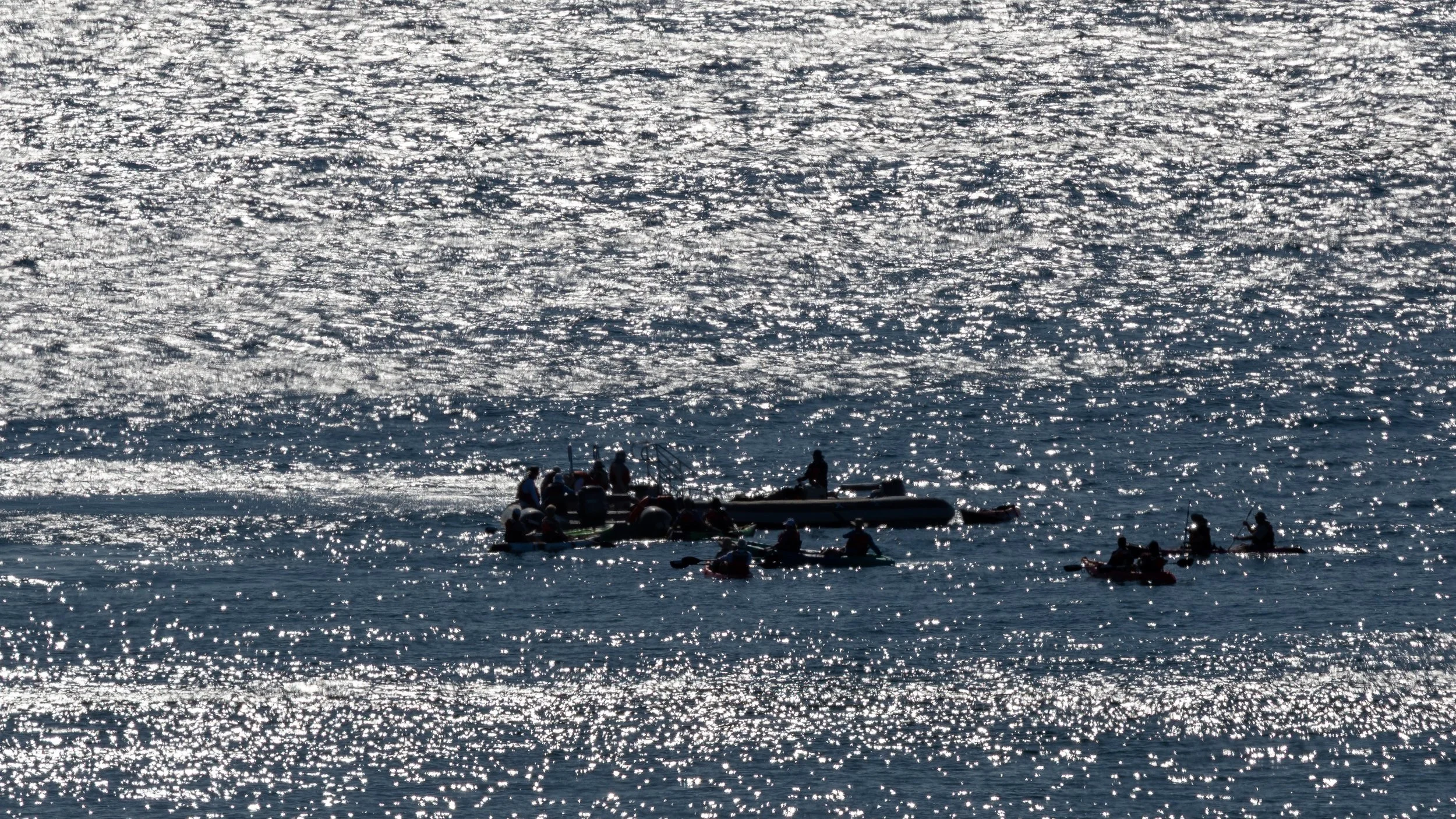
First group of kayakers out for their excursion
Tender boat making its way back for more hikers
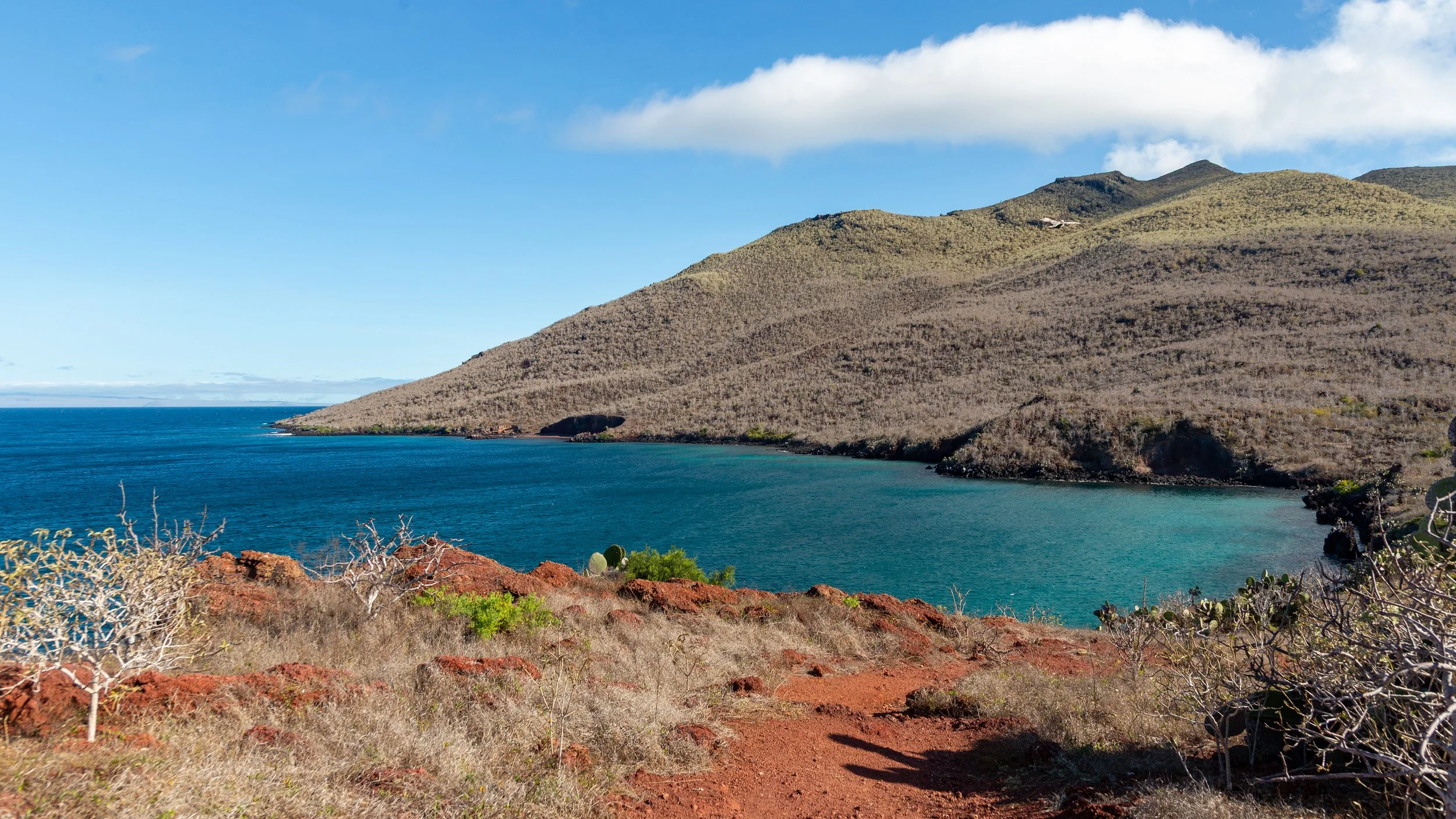
Red sand contrasts with the greenery of the remainder of the island
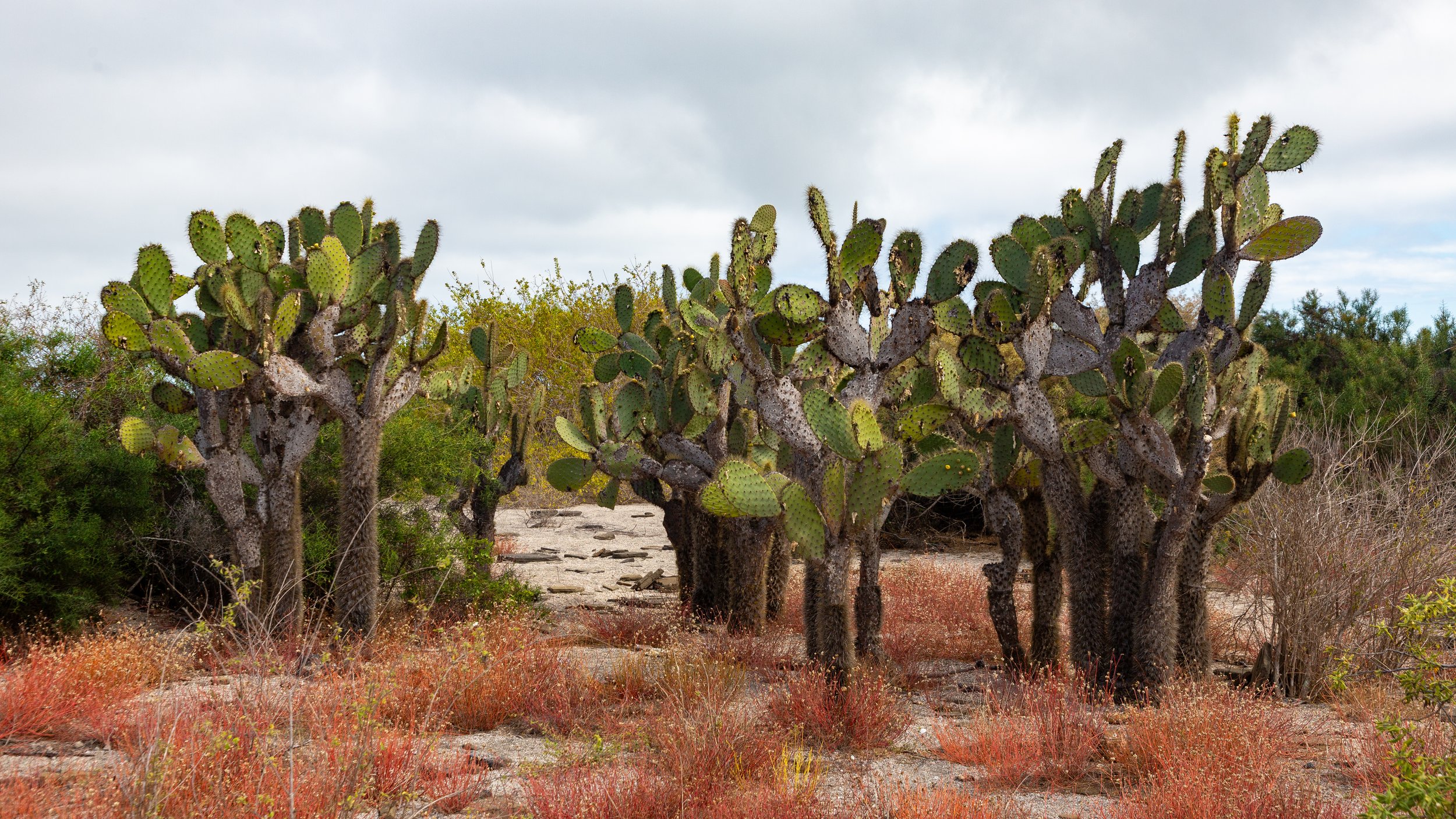
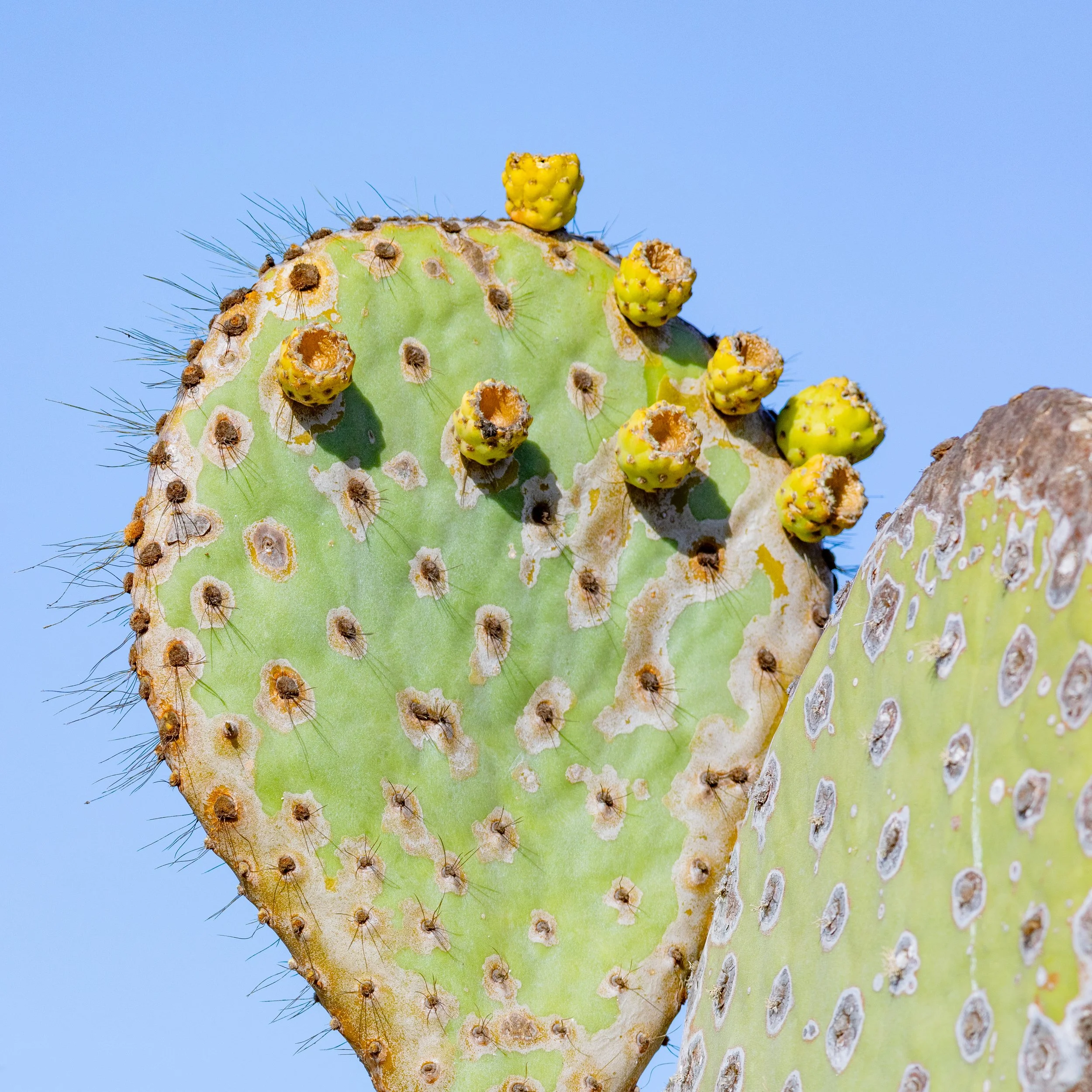
Galapagos Prickly Pear cactus with fruit
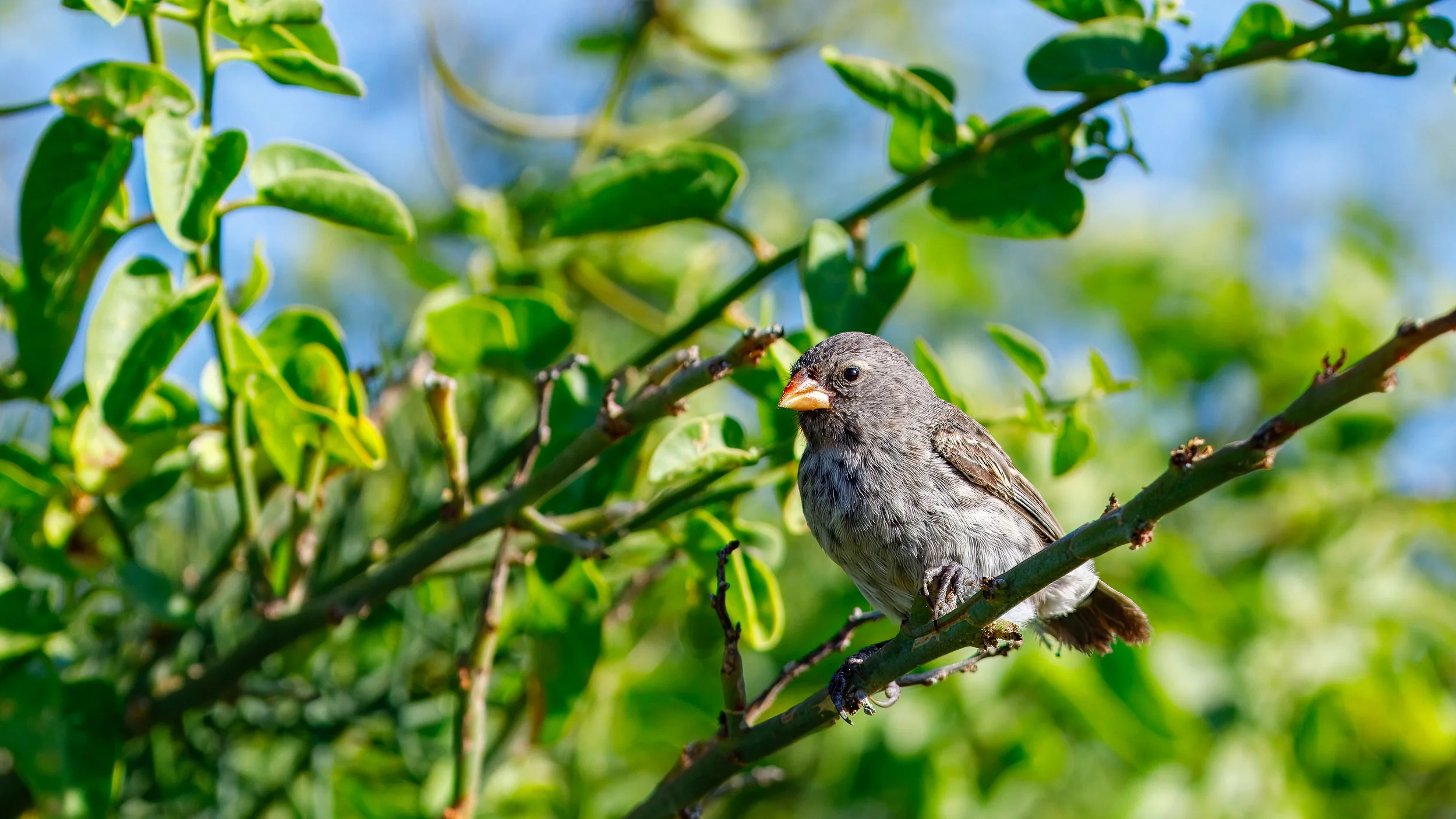
Lucky run-in with a mangrove finch, a critically endangered species endemic to the Galapagos Islands
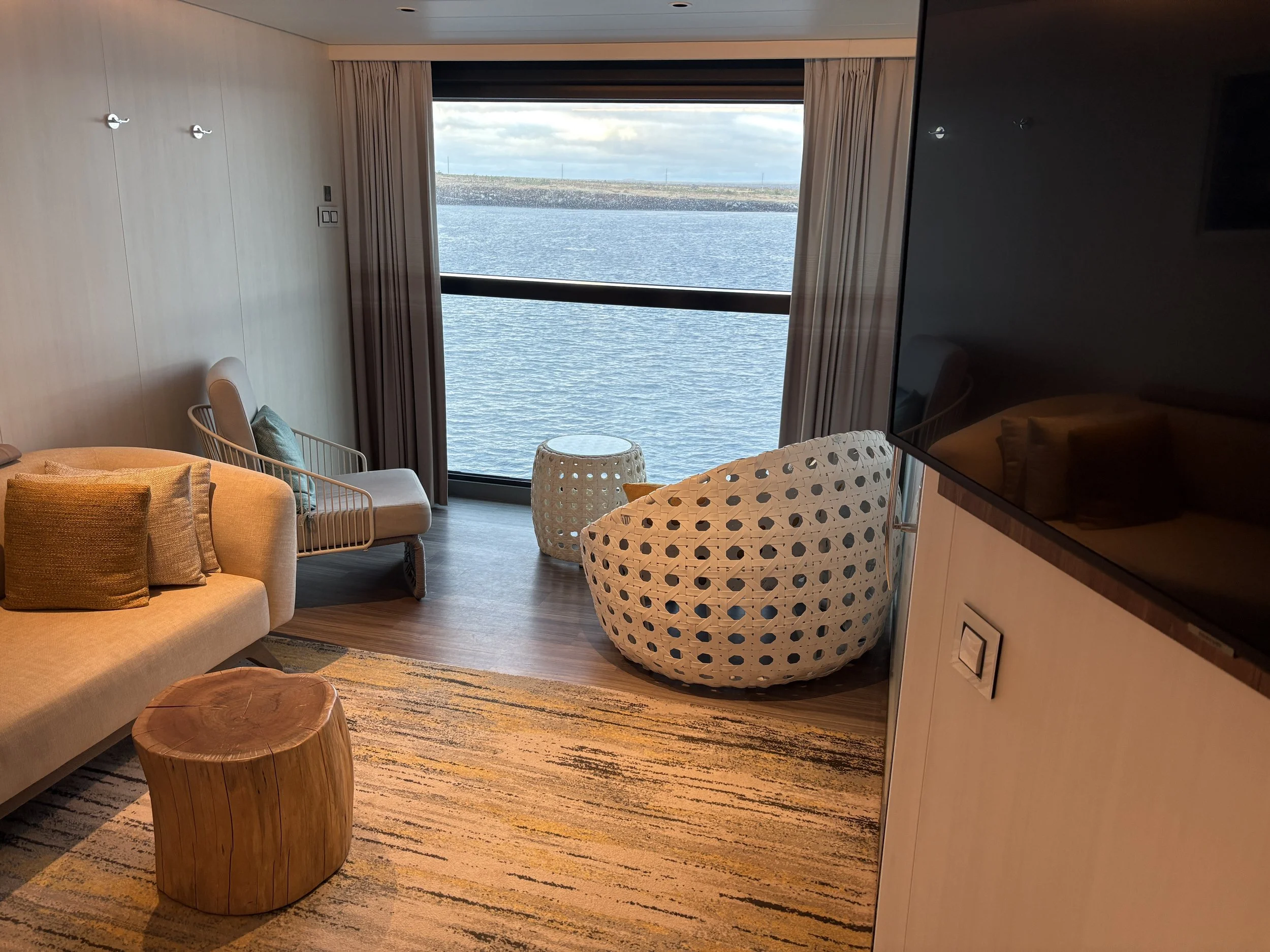
Another beautiful view of the ship. We were on the sixth deck, with floor-to-ceiling windows that opened up to create a French balcony
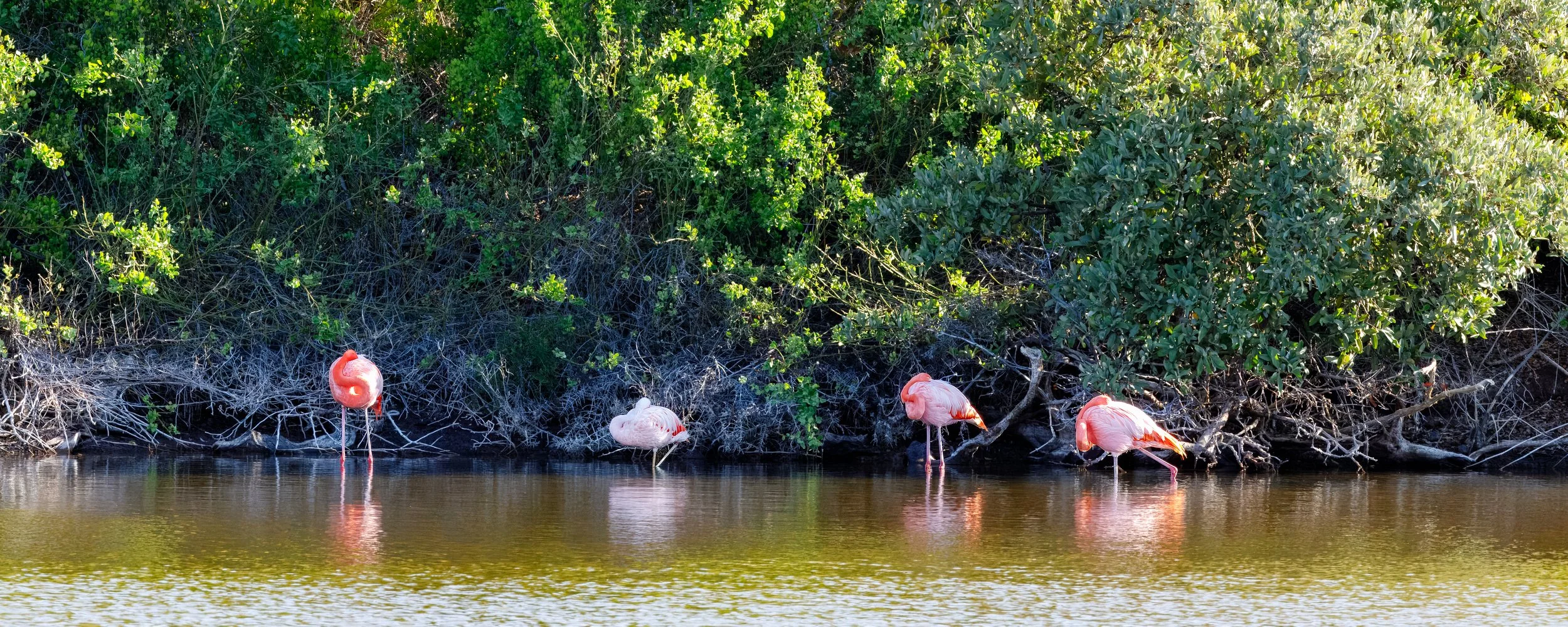
Flamingoes hanging out in the Flamingo Pool.
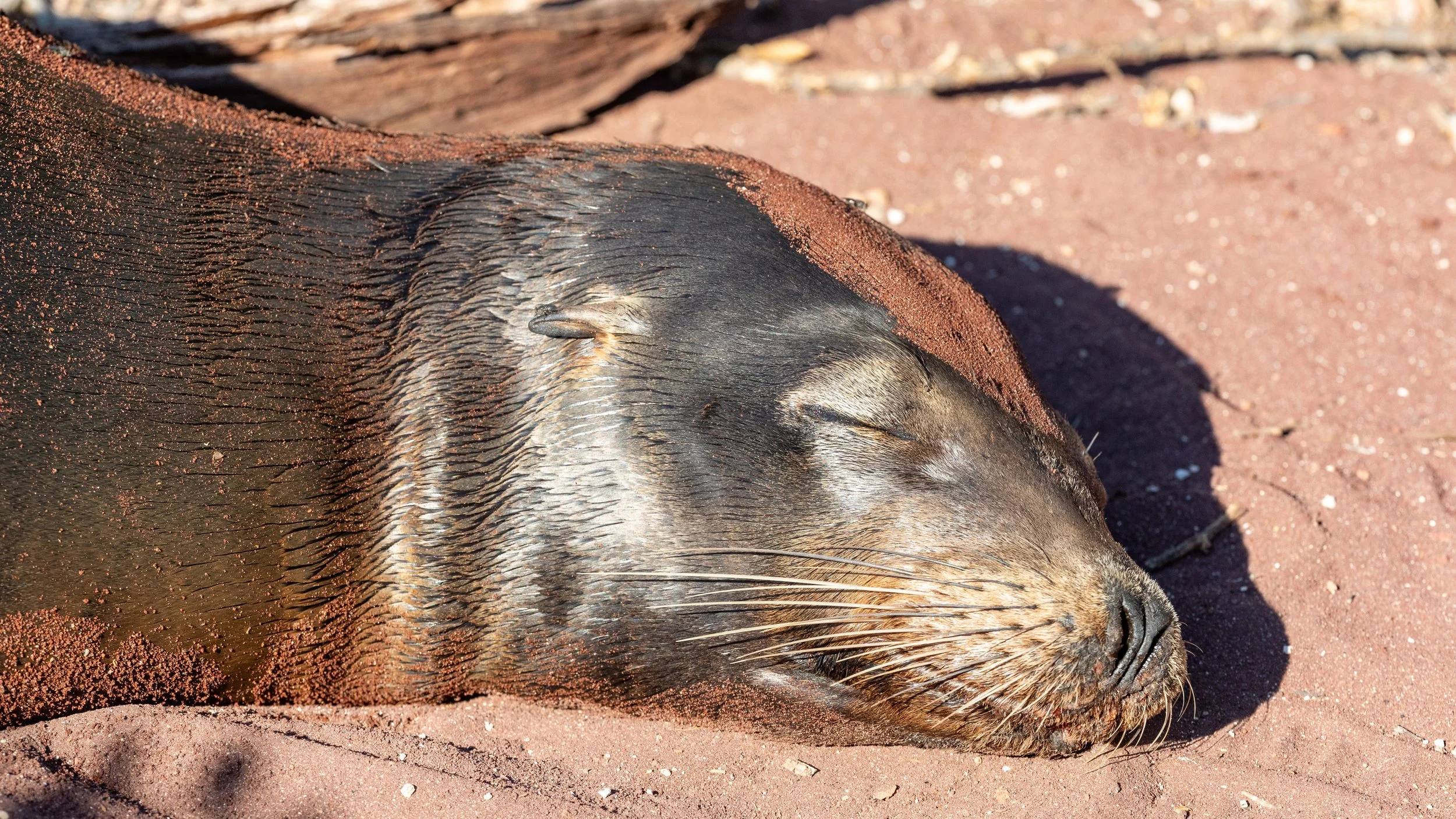
A sleepy Galapagos sealion rests on the beach near our water landing location
Back on the ship, looking back on Rabida Island
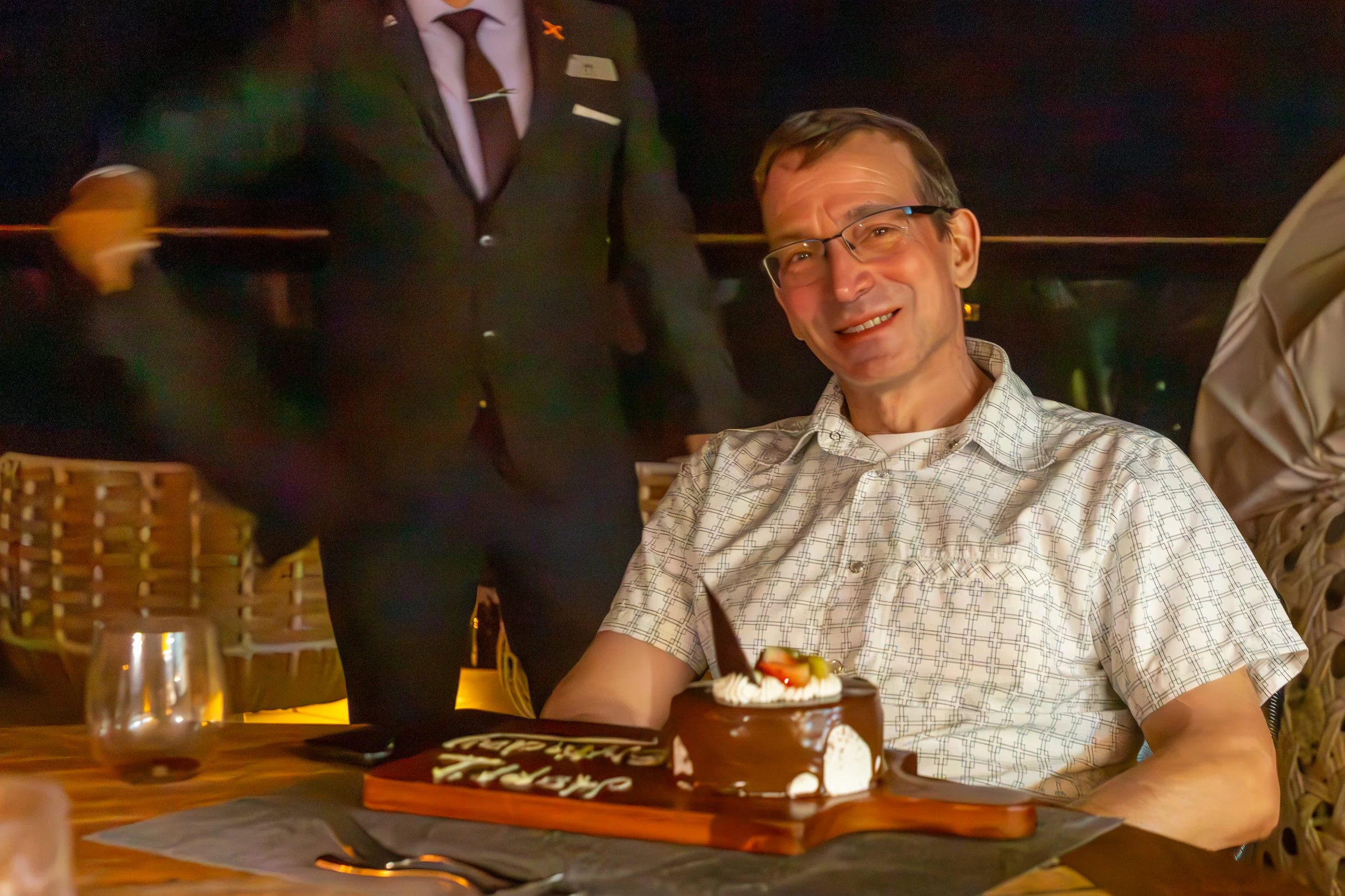
The crew went out of their way to recognize by birthday, including this cake and an over-the-top song
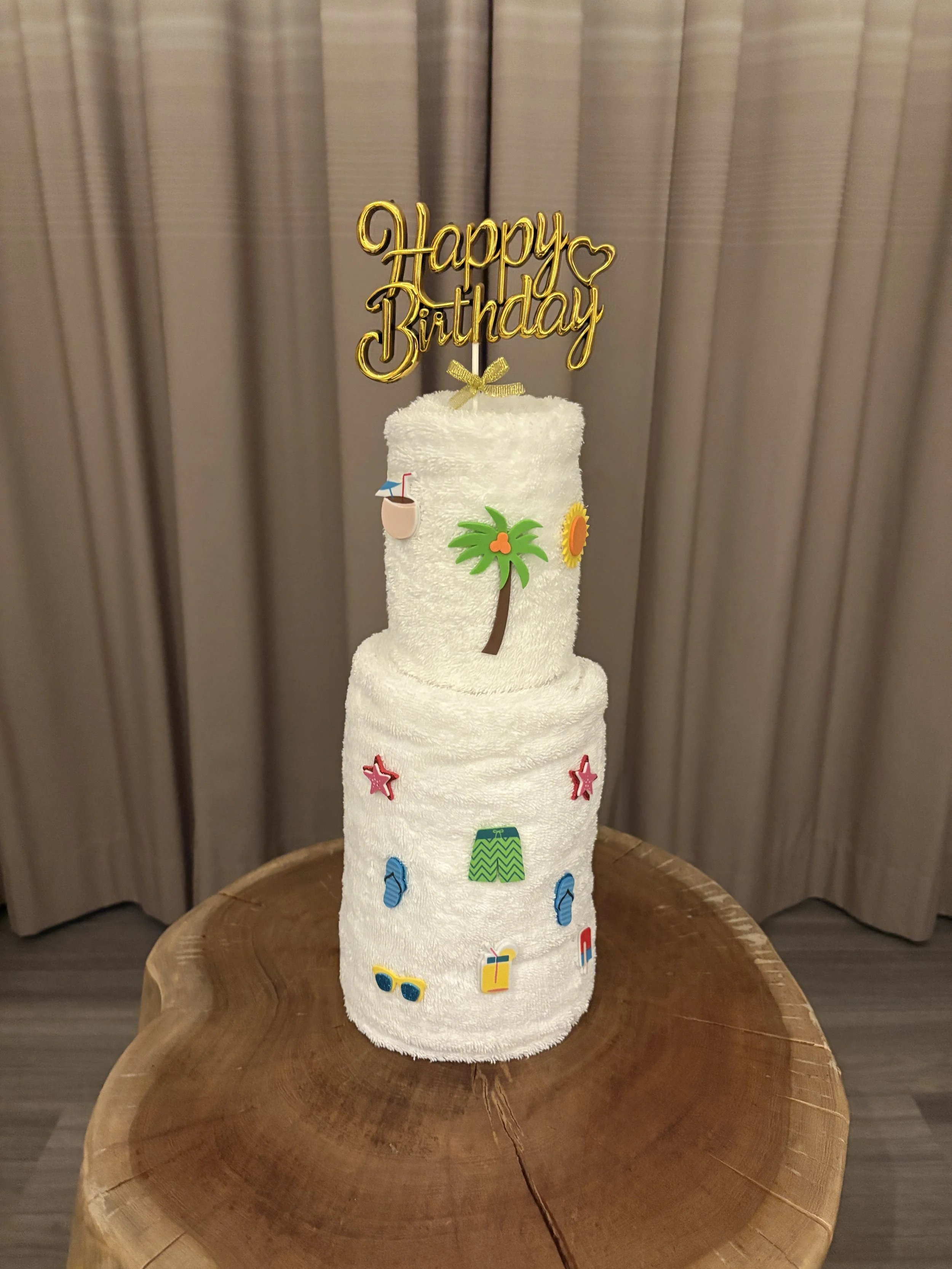
Another birthday decoration left by our fabulous room attendant
We thoroughly enjoyed our first full day in the Galapagos and a great start to our week. It was also a great day to celebrate my birthday, and we were glad that we had our dinner outside on the upper deck with some new friends we’d met on the cruise. As well as it being a beautiful night, I was happy to have a smaller audience for the birthday celebration.
Sep 30 - morning
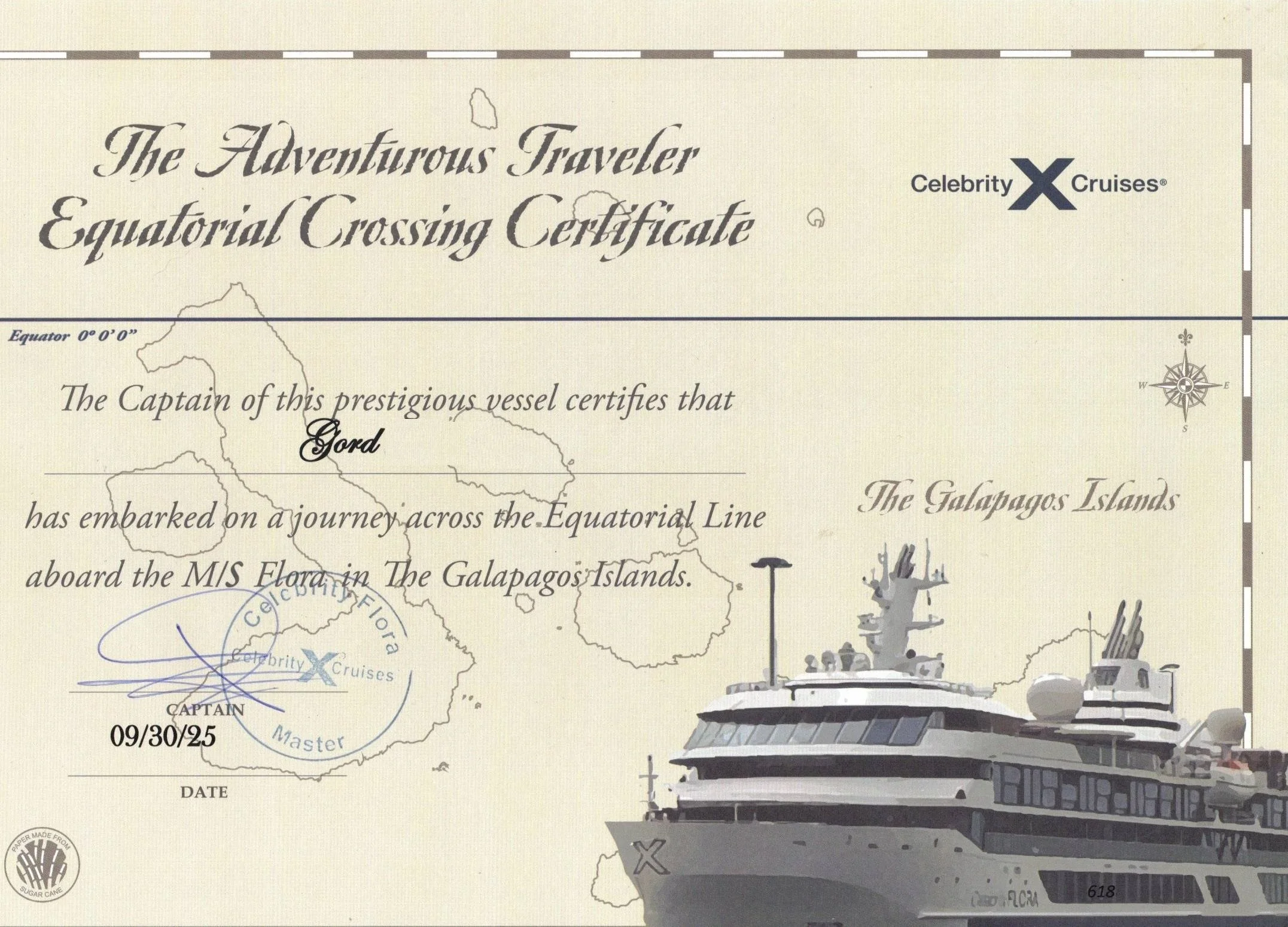
Overnight, we had one of our longer sailings, making our way around the northern side of Isabela Island passing twice across the equator. Having just recently straddled the border near Quito, and having flown over it many times, it was nice to have the new experience of an equatorial crossing over the ocean. The morning excursion was a wildlife tender ride around Elizabeth Bay.
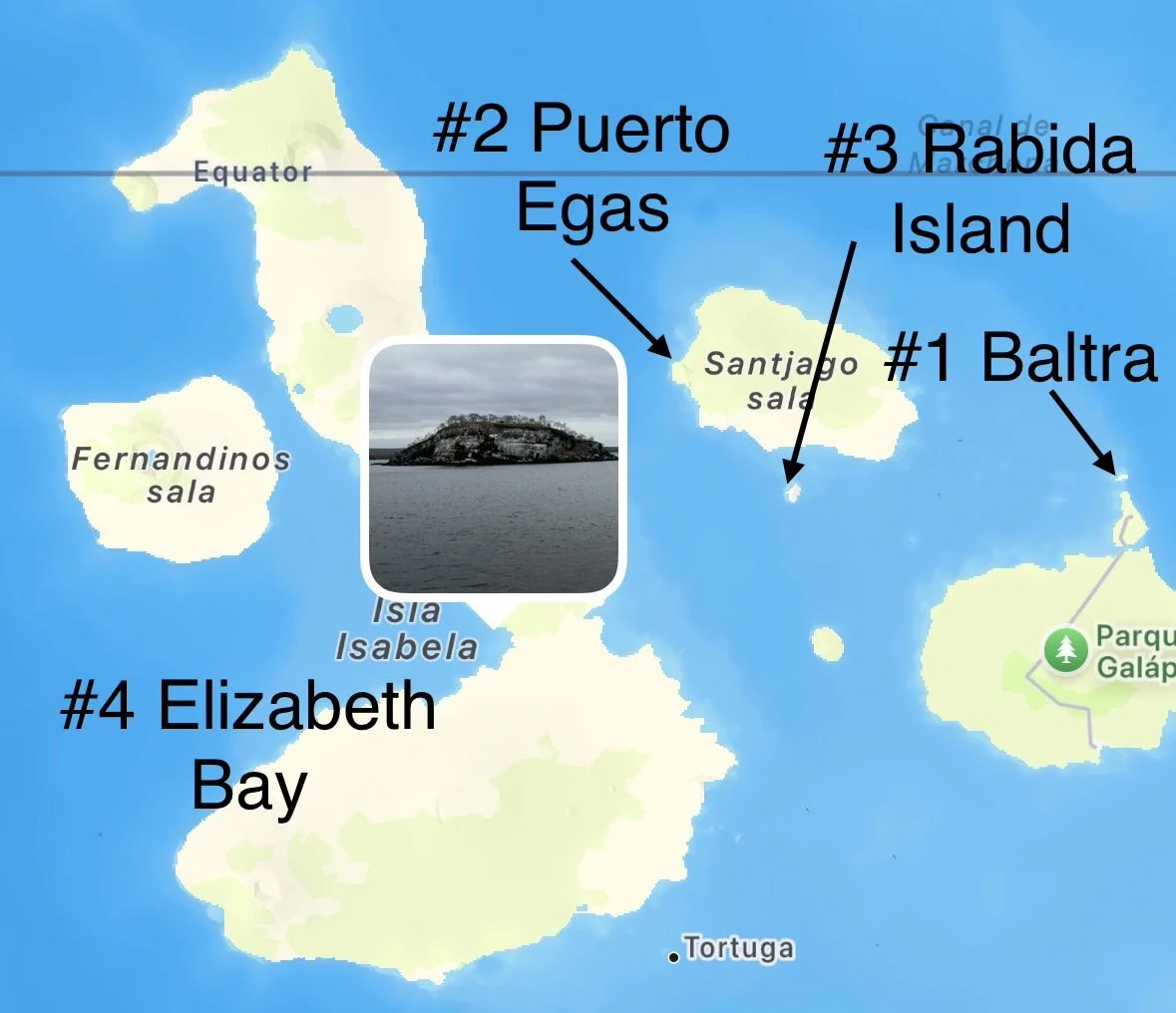
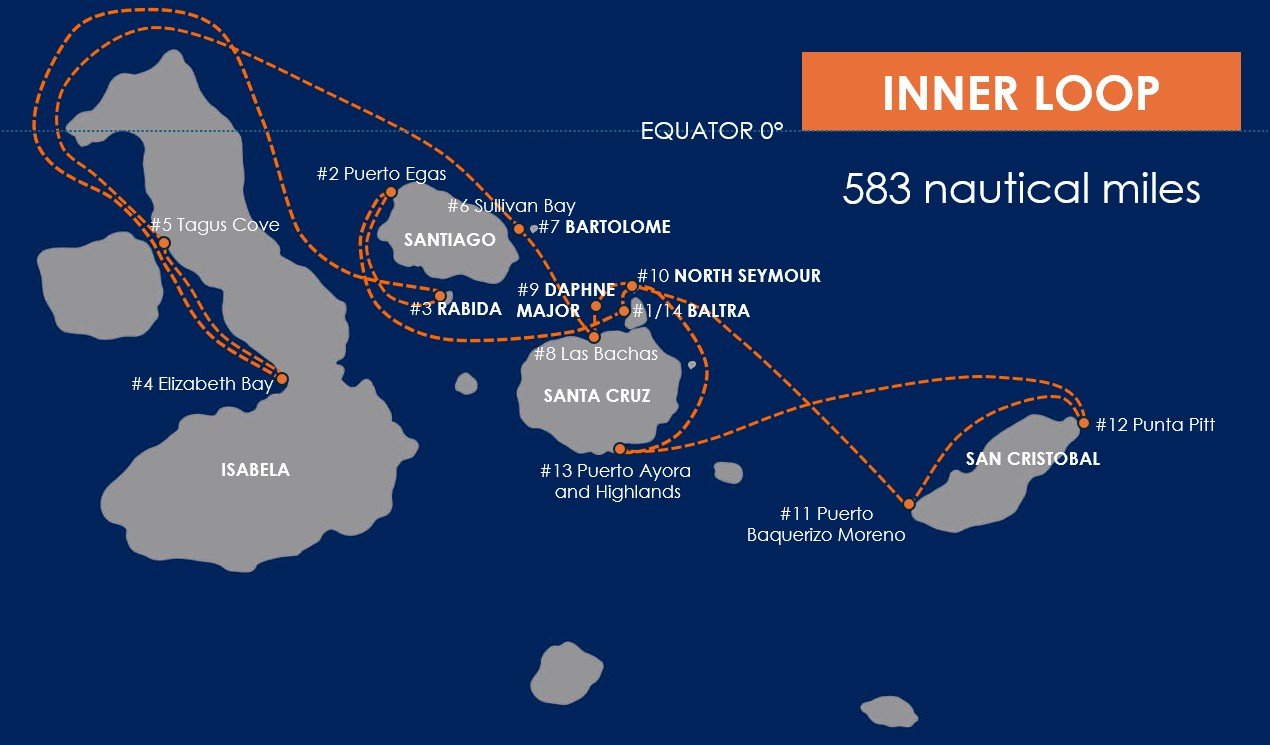
Recapping our route to Elizabeth Bay
Approaching Isabela Island
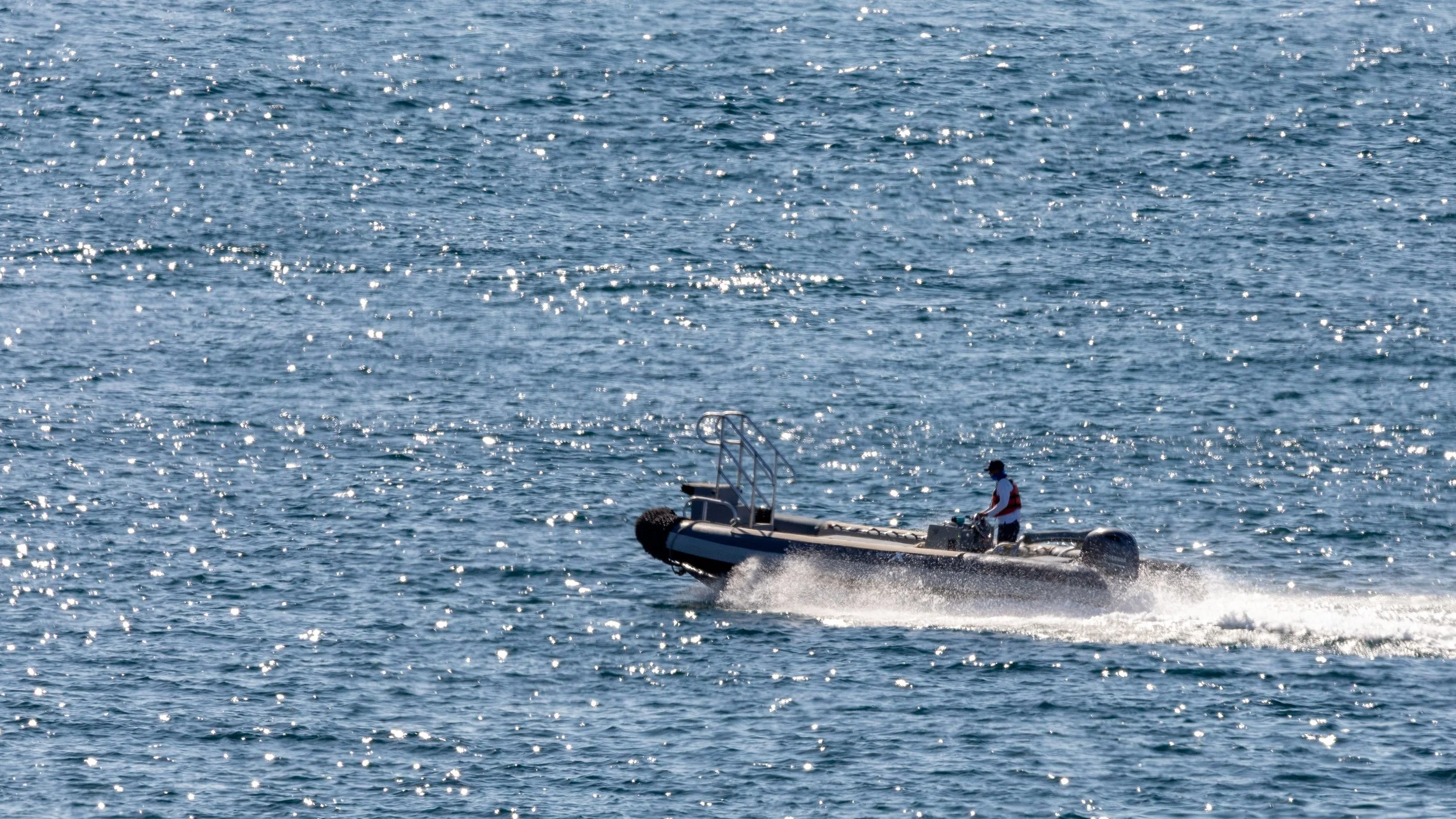
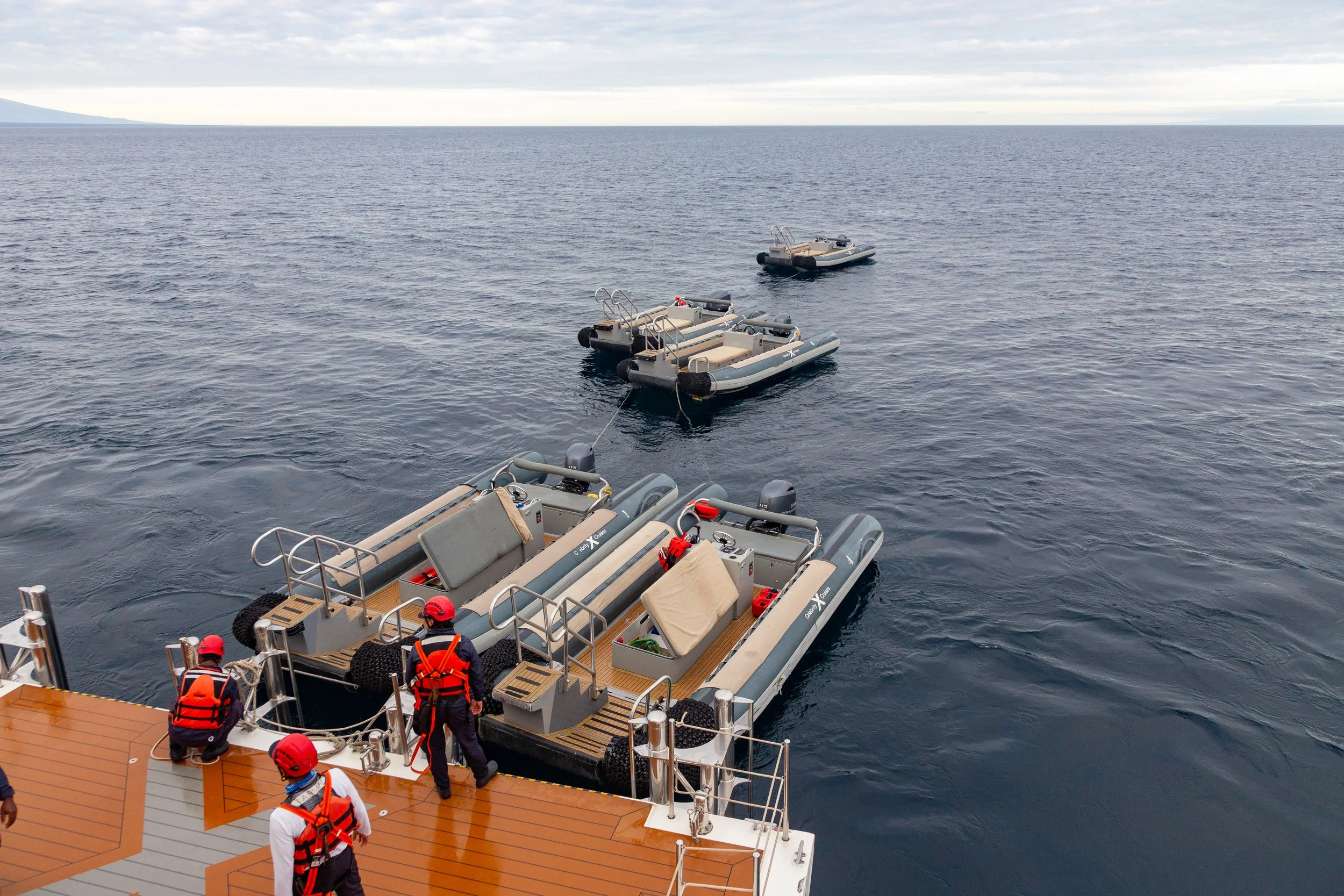
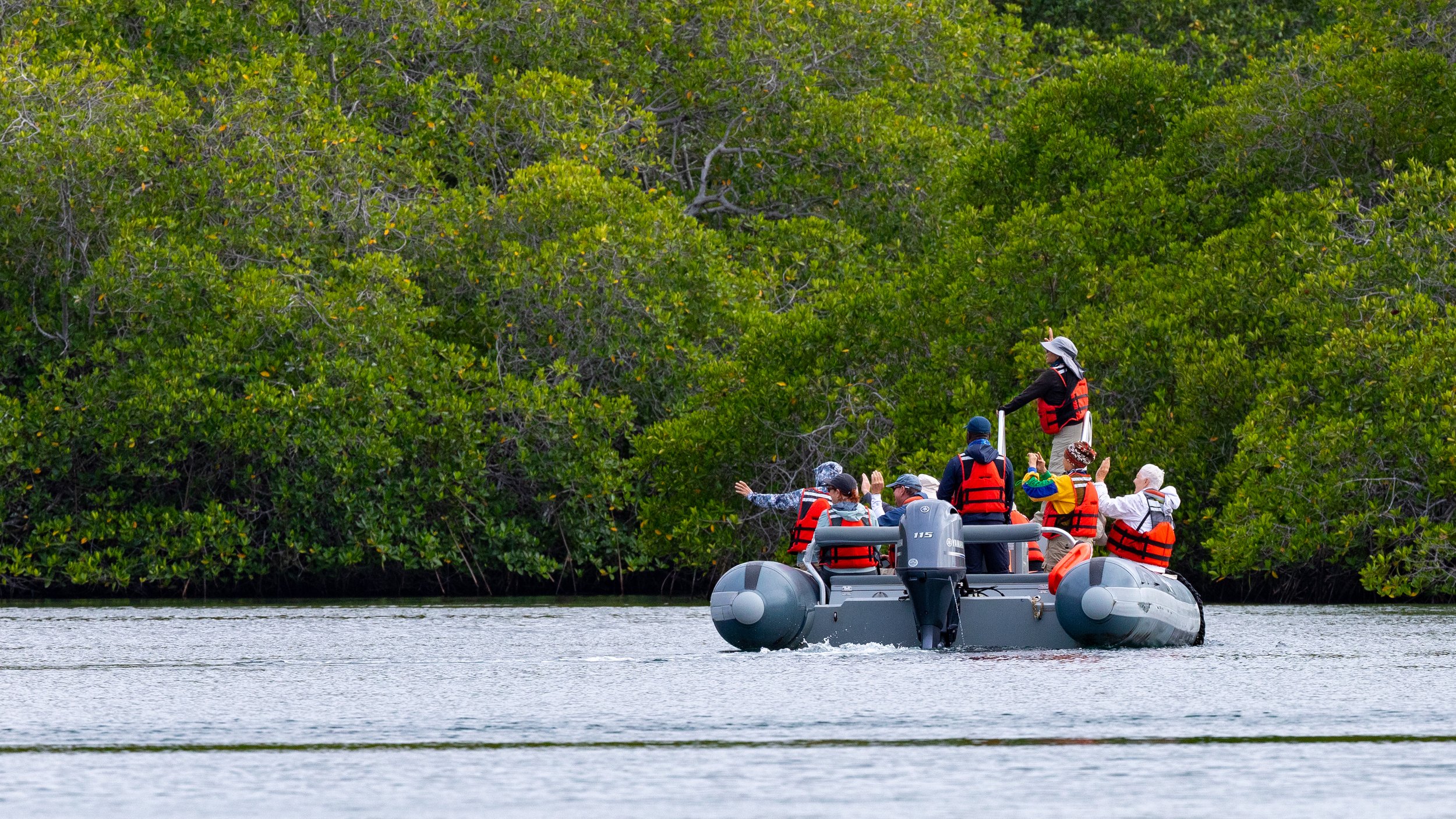
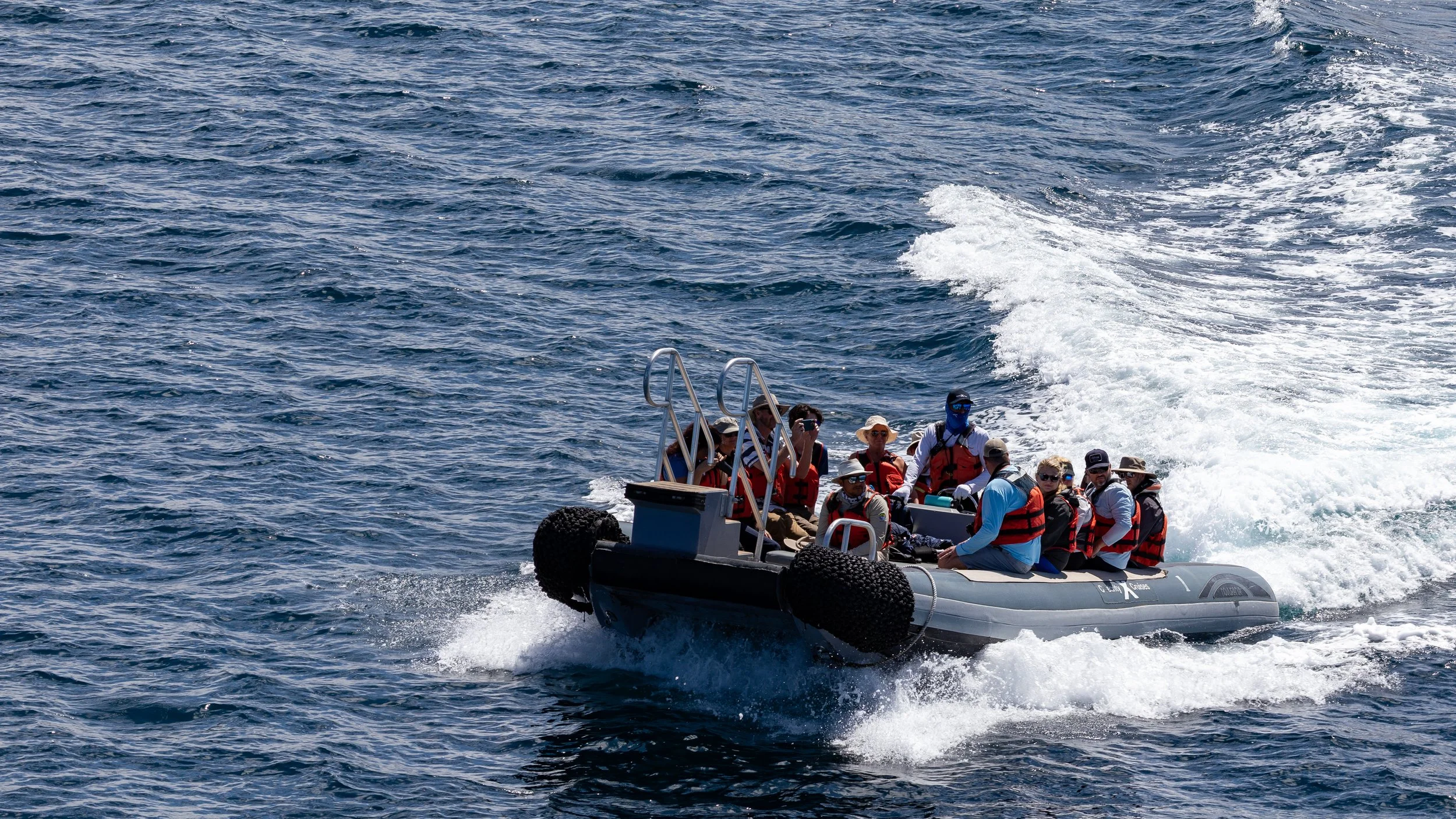
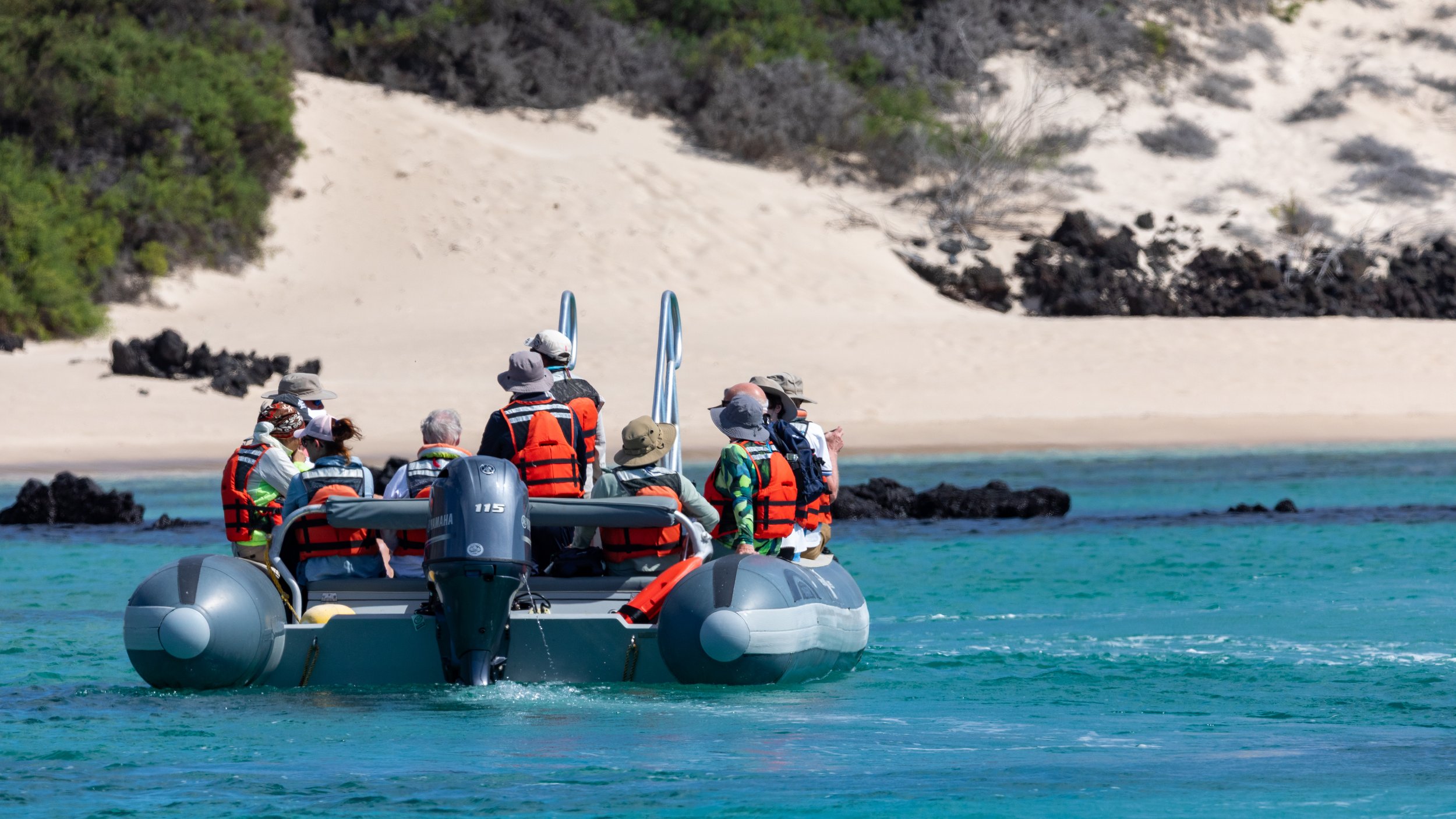
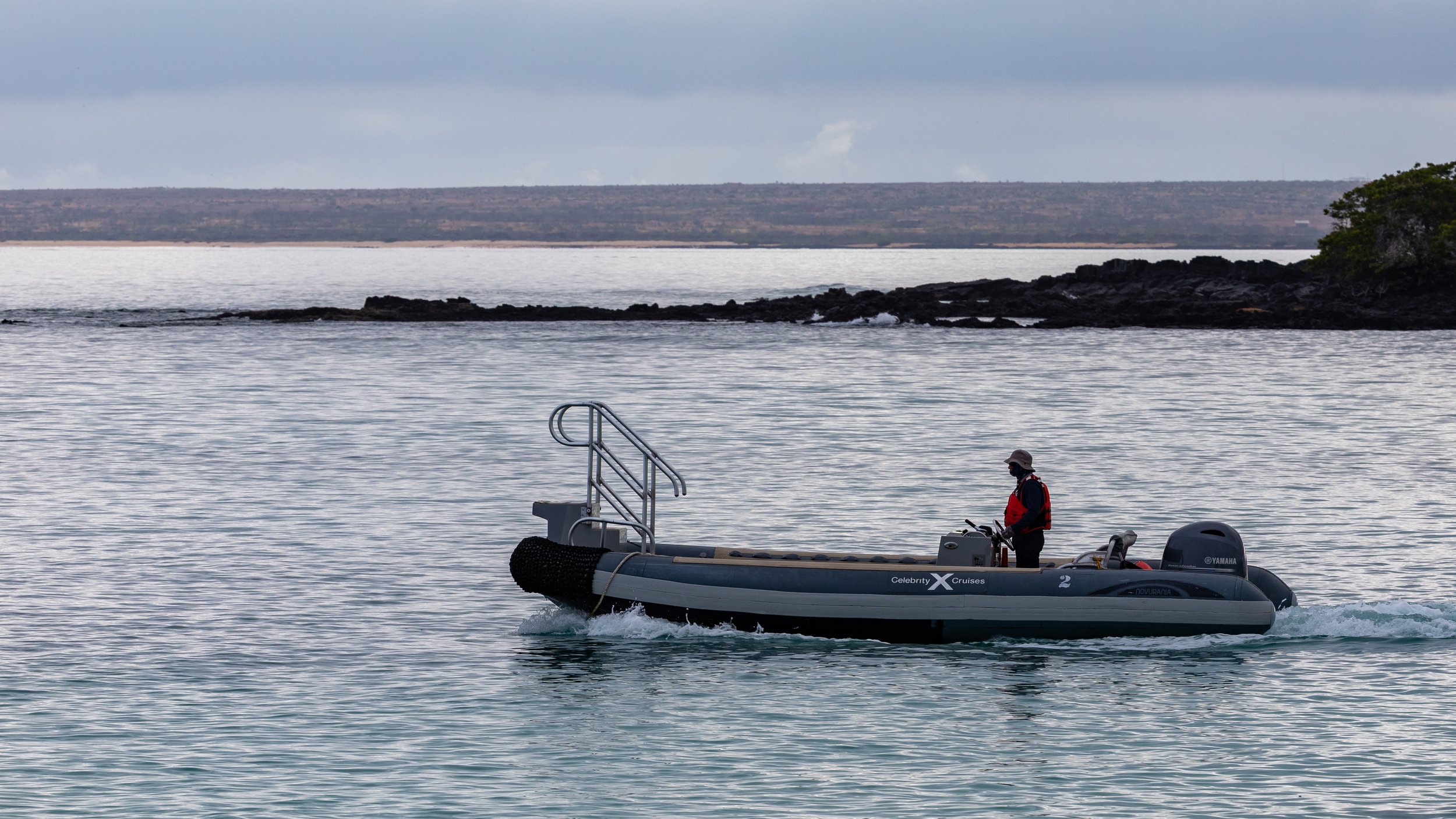
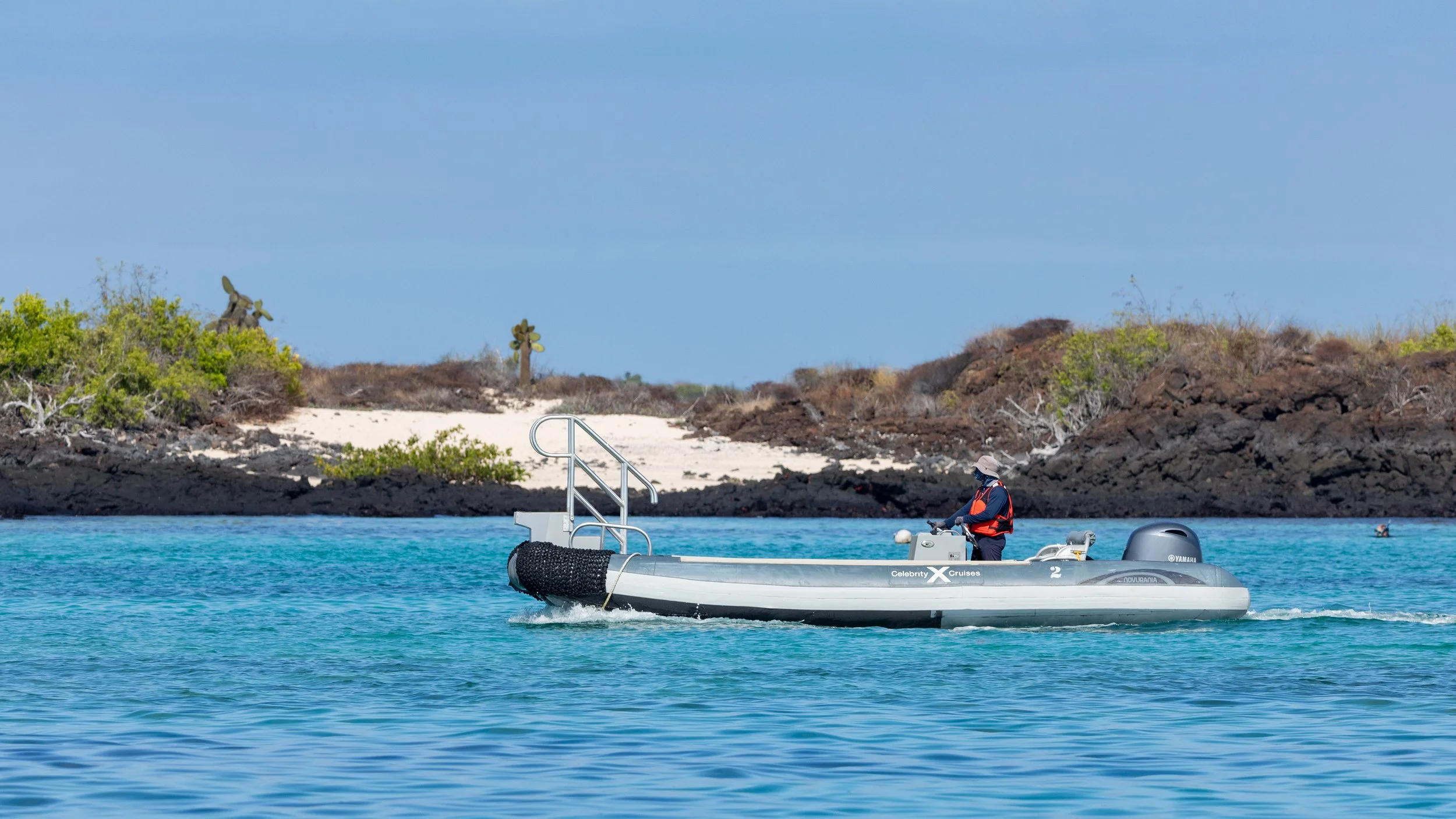
The tender boats, Zodiacs modified with stairs for easier access, staged for the morning outing
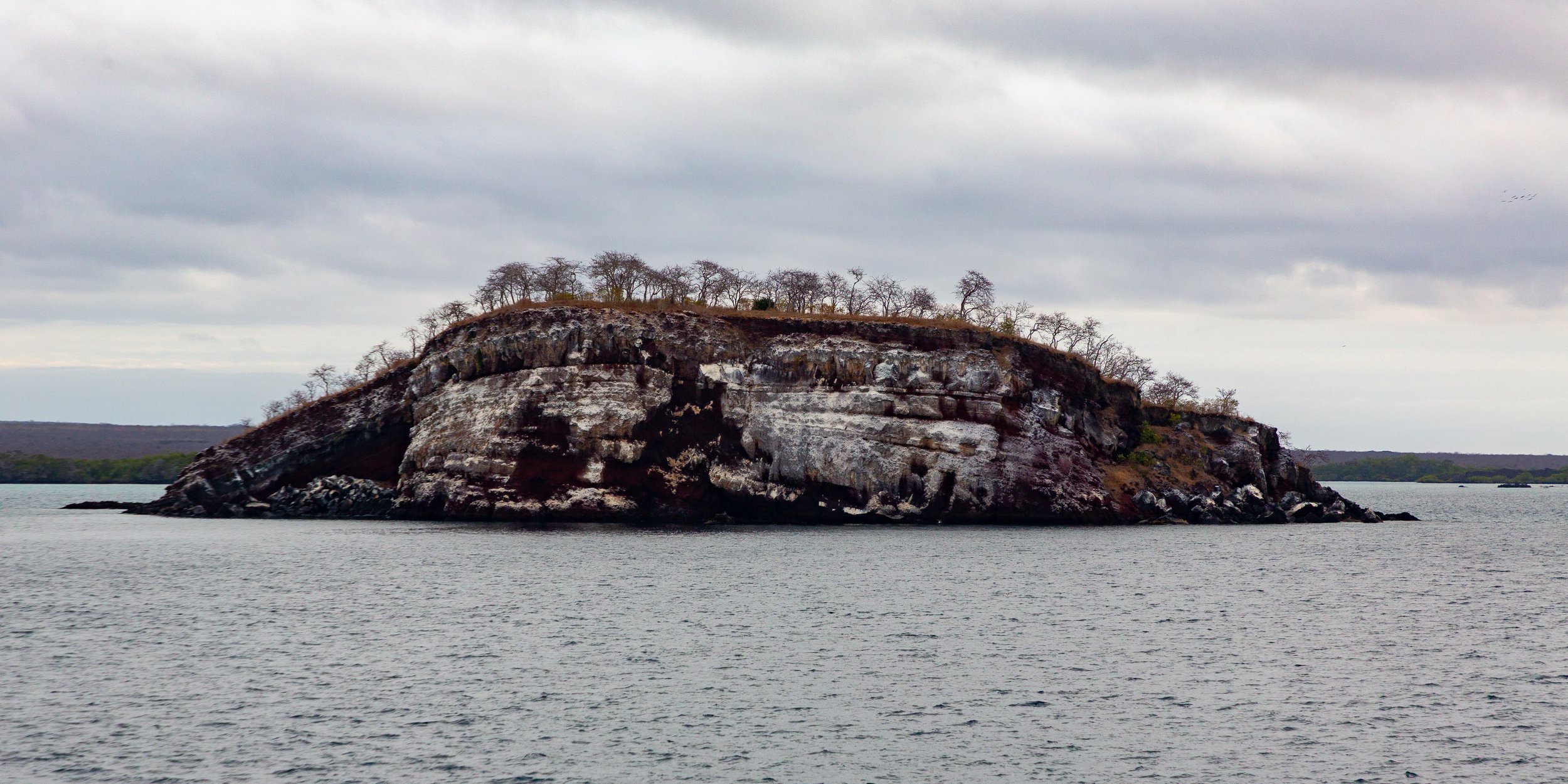
A small island on our way into the bay
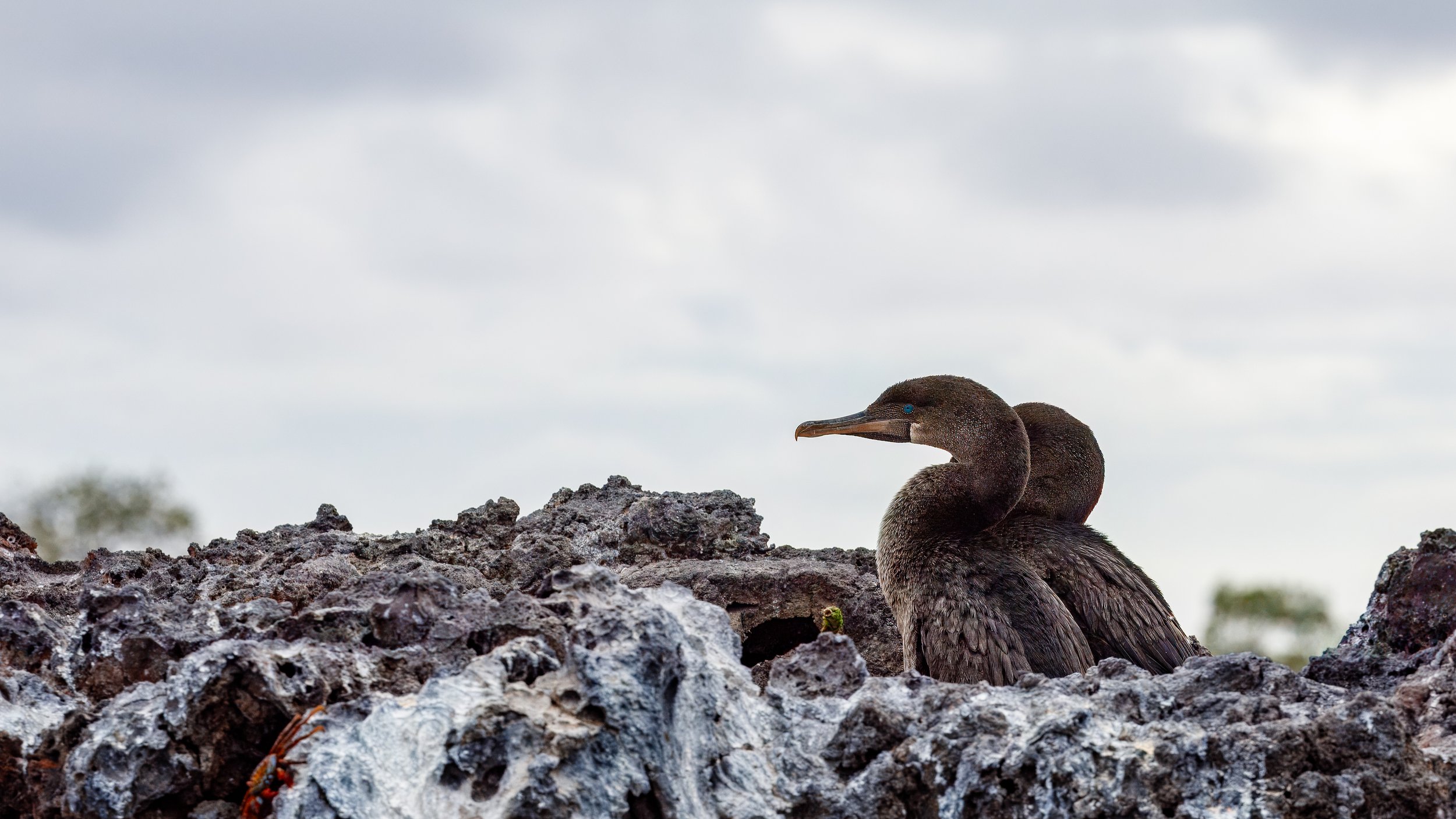
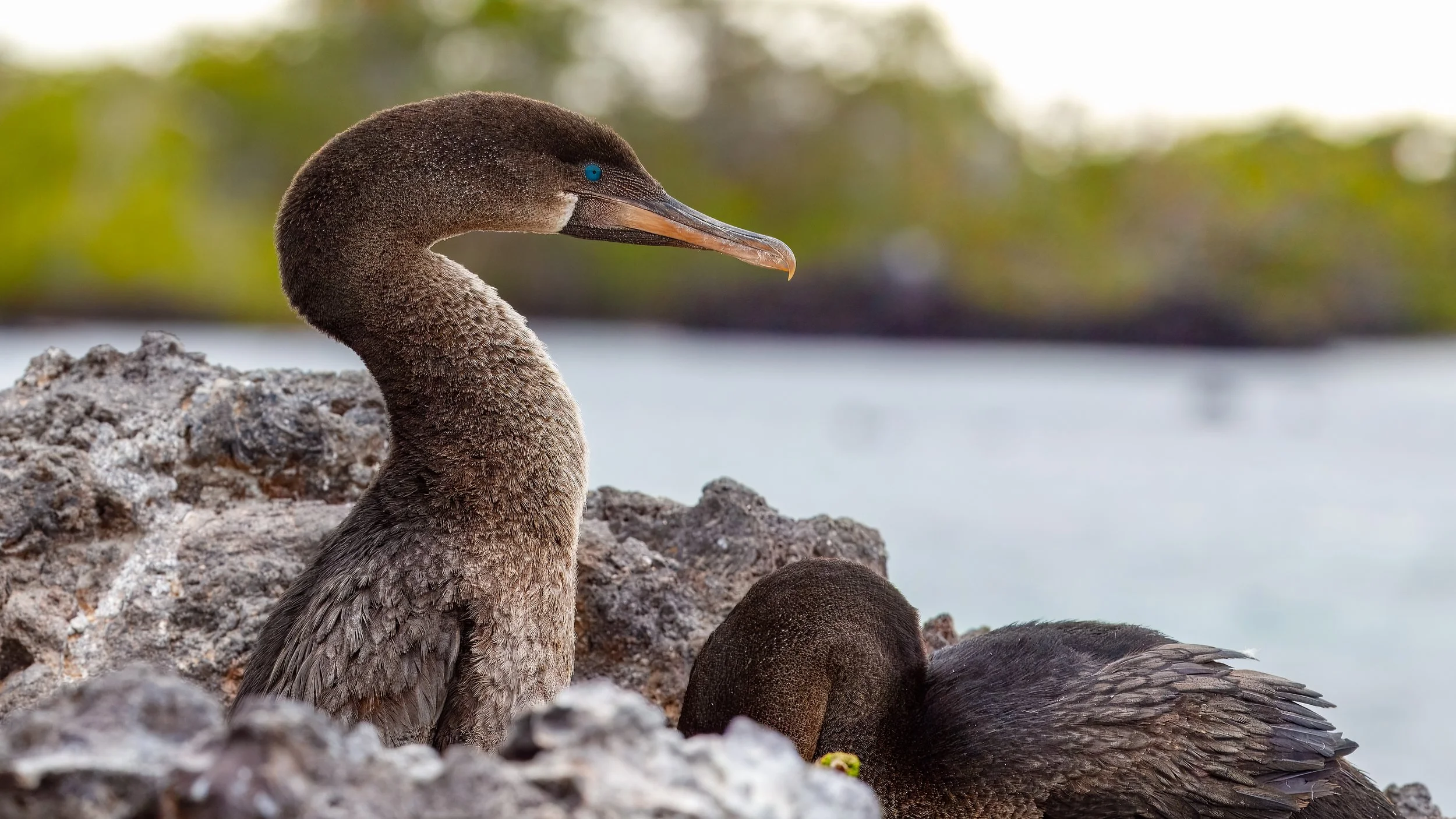
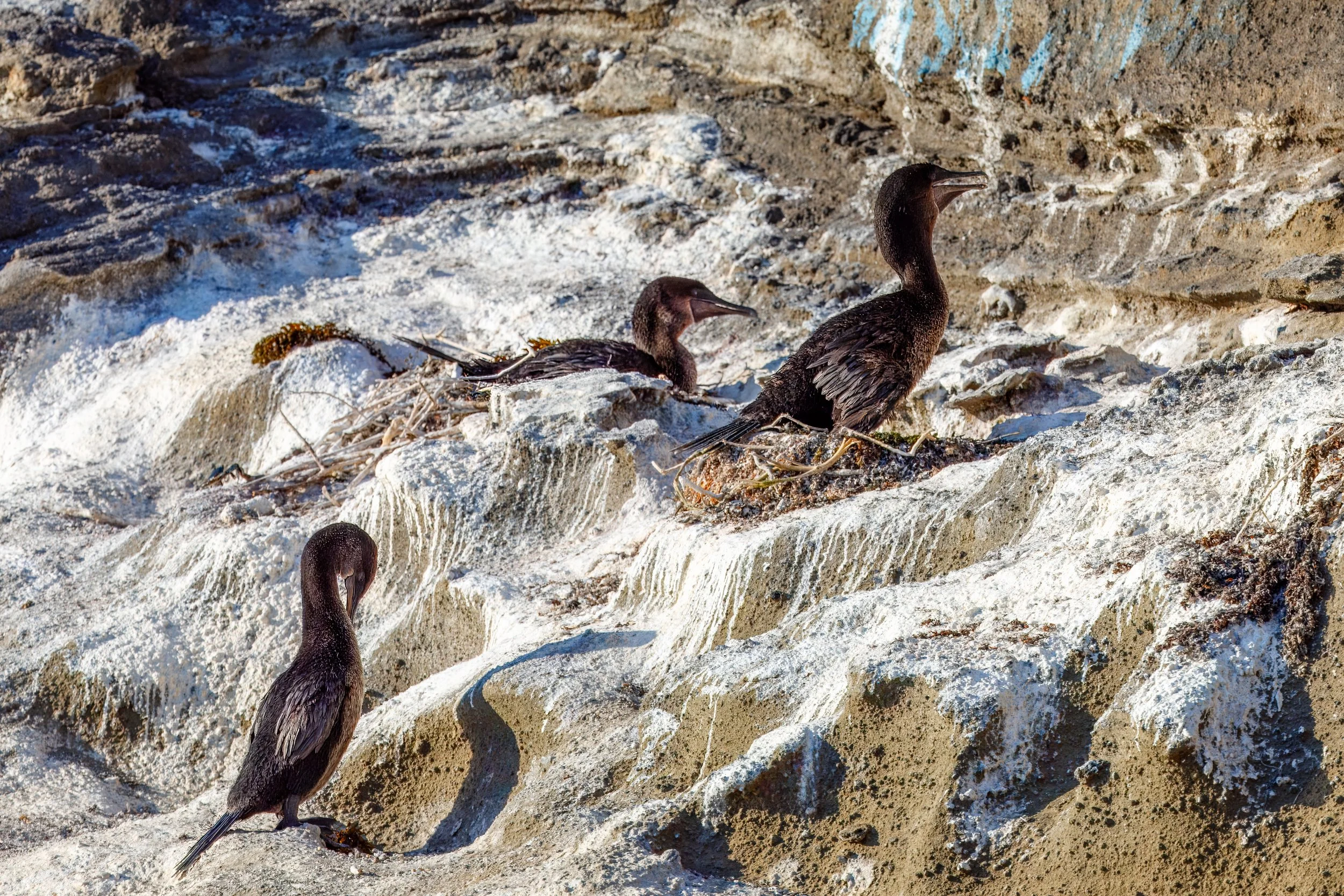
Nesting flightless Galapagos cormorants, an endemic bird to the islands
The only flightless cormorant species evolved flightlessness due to the lack of land predators on the islands and is exclusive to Isabela and nearby Fernandina islands
A well-framed sealion welcoming us into the bay
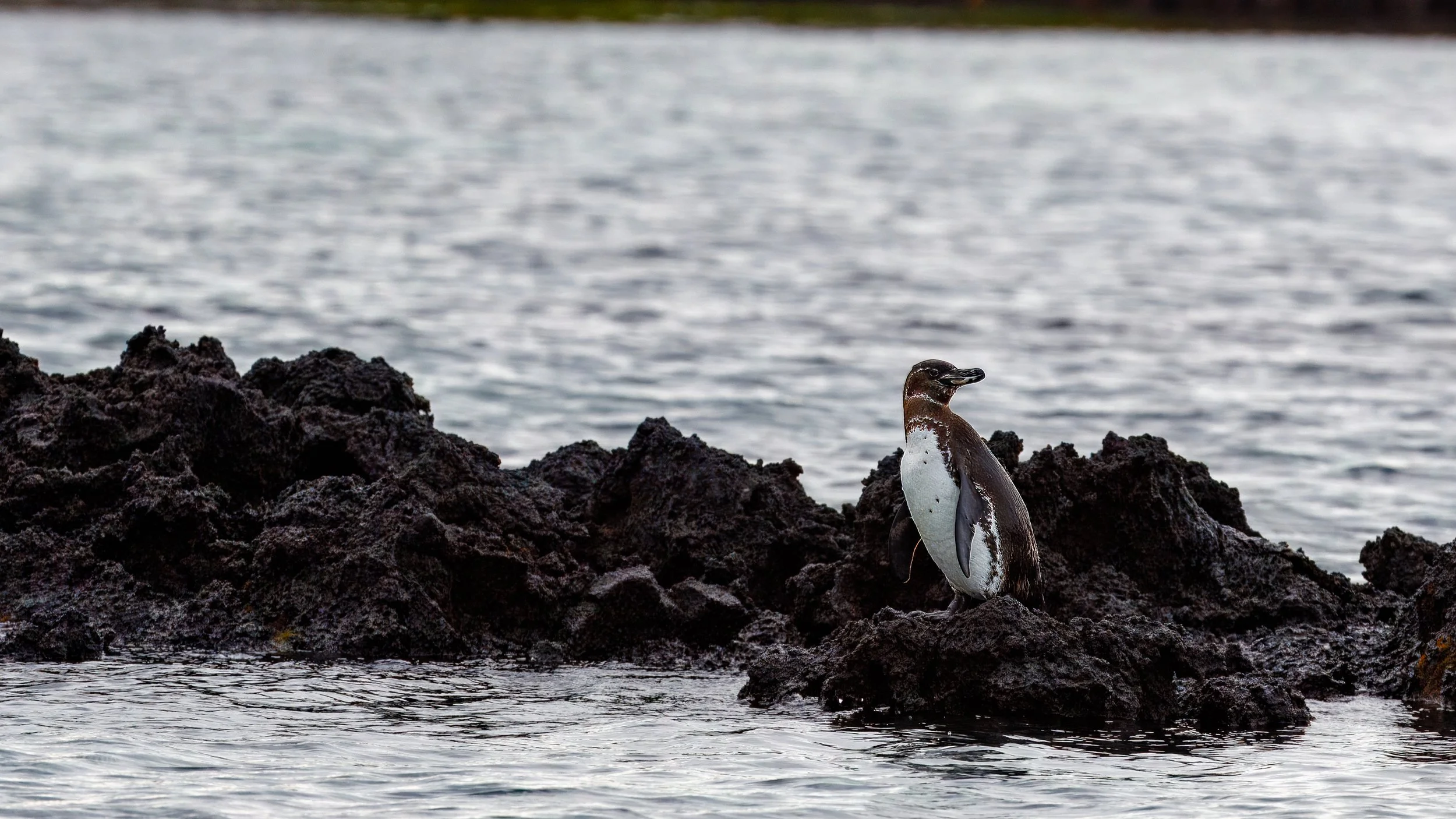
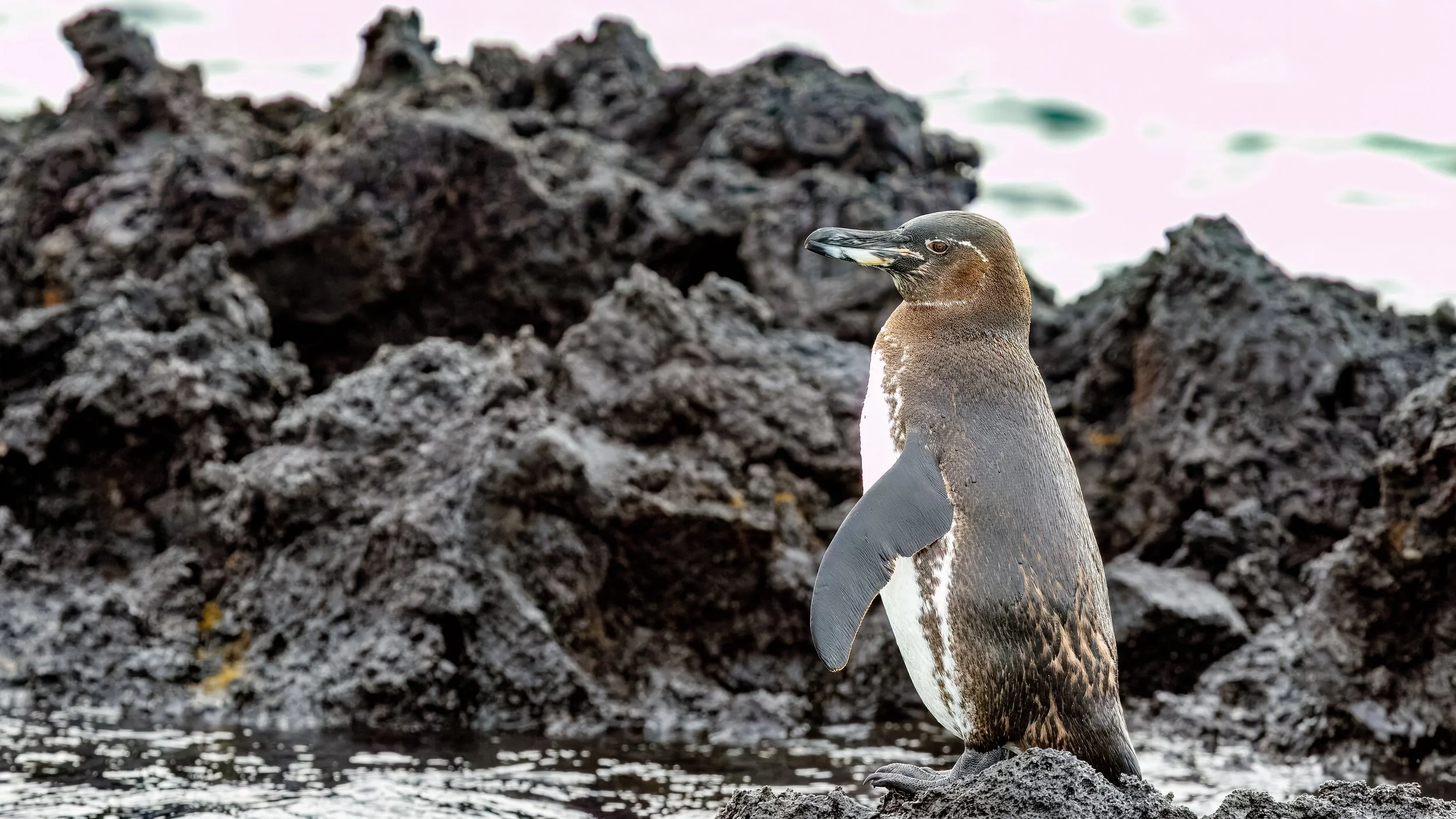
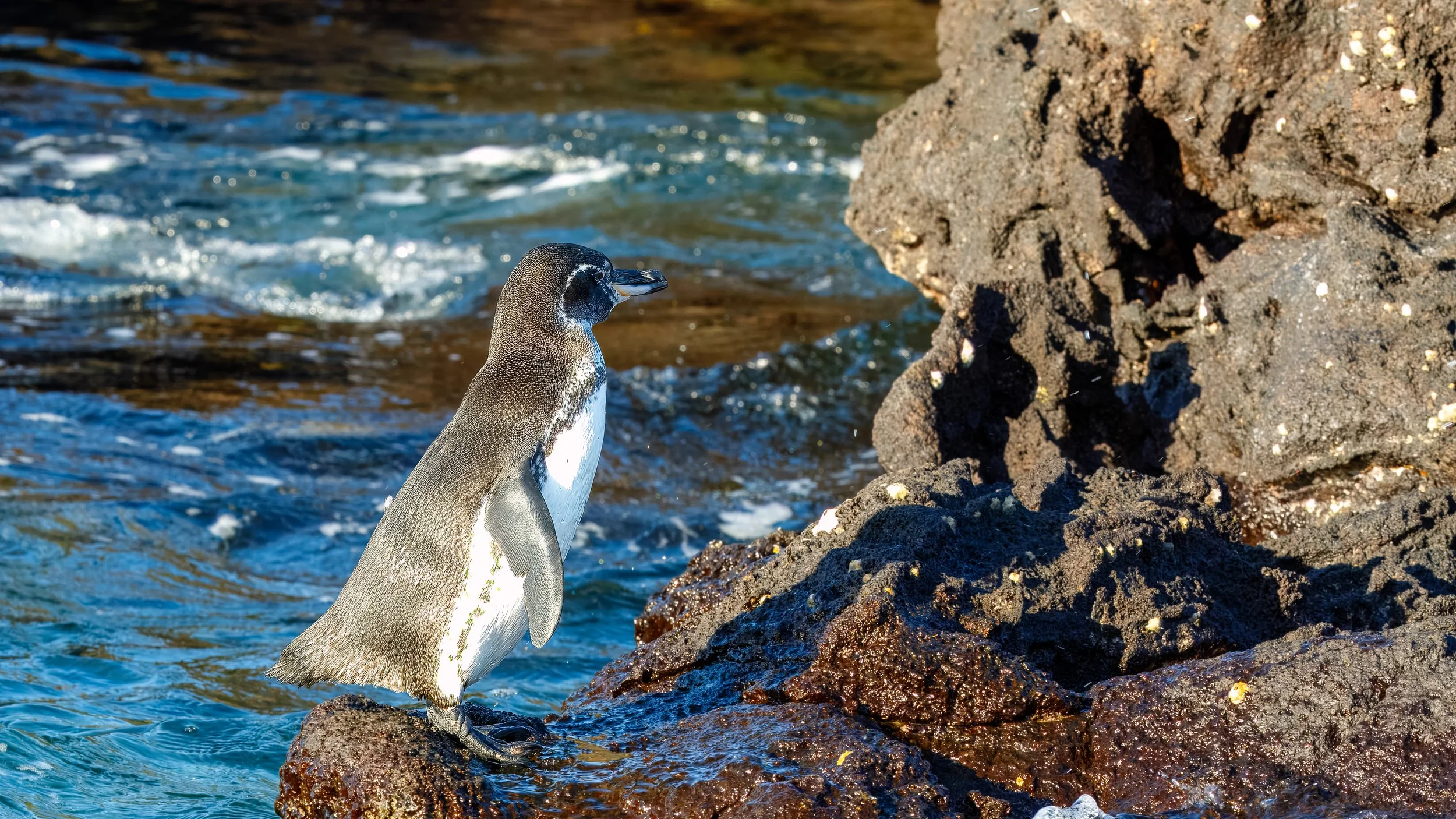
Our first Galapagos Penguin sighting
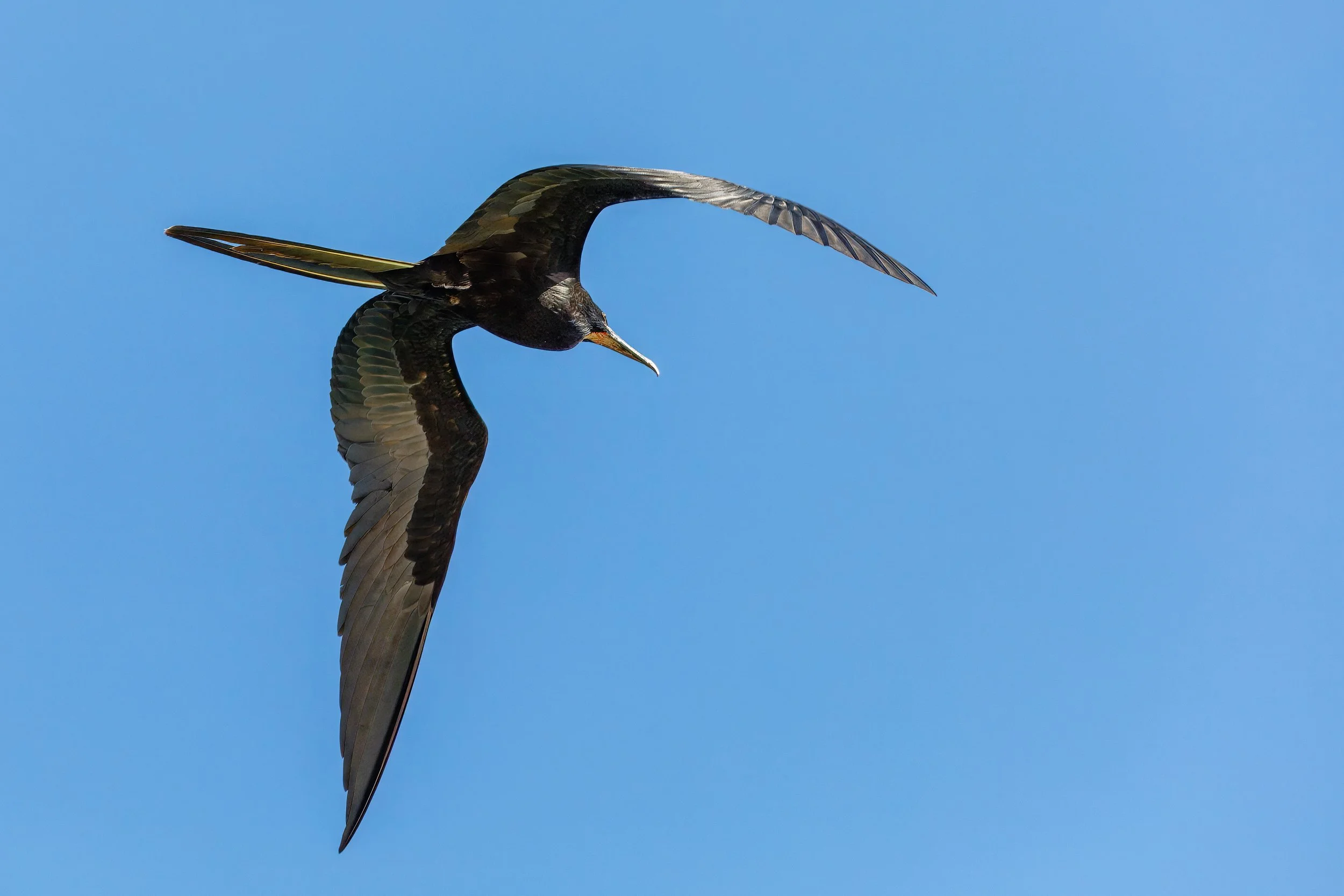
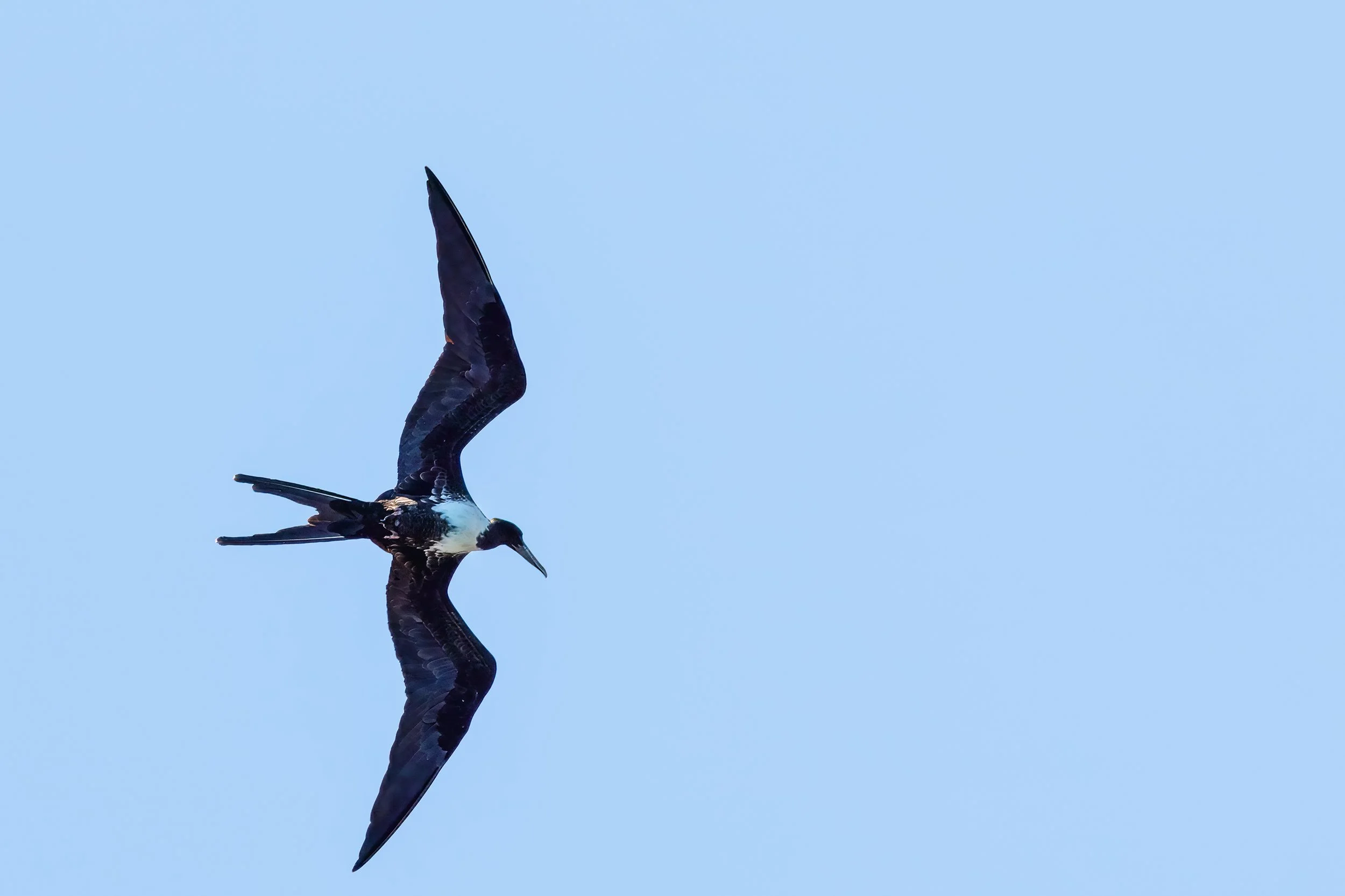
Magnificent frigatebirds in flight
Another lone penguin
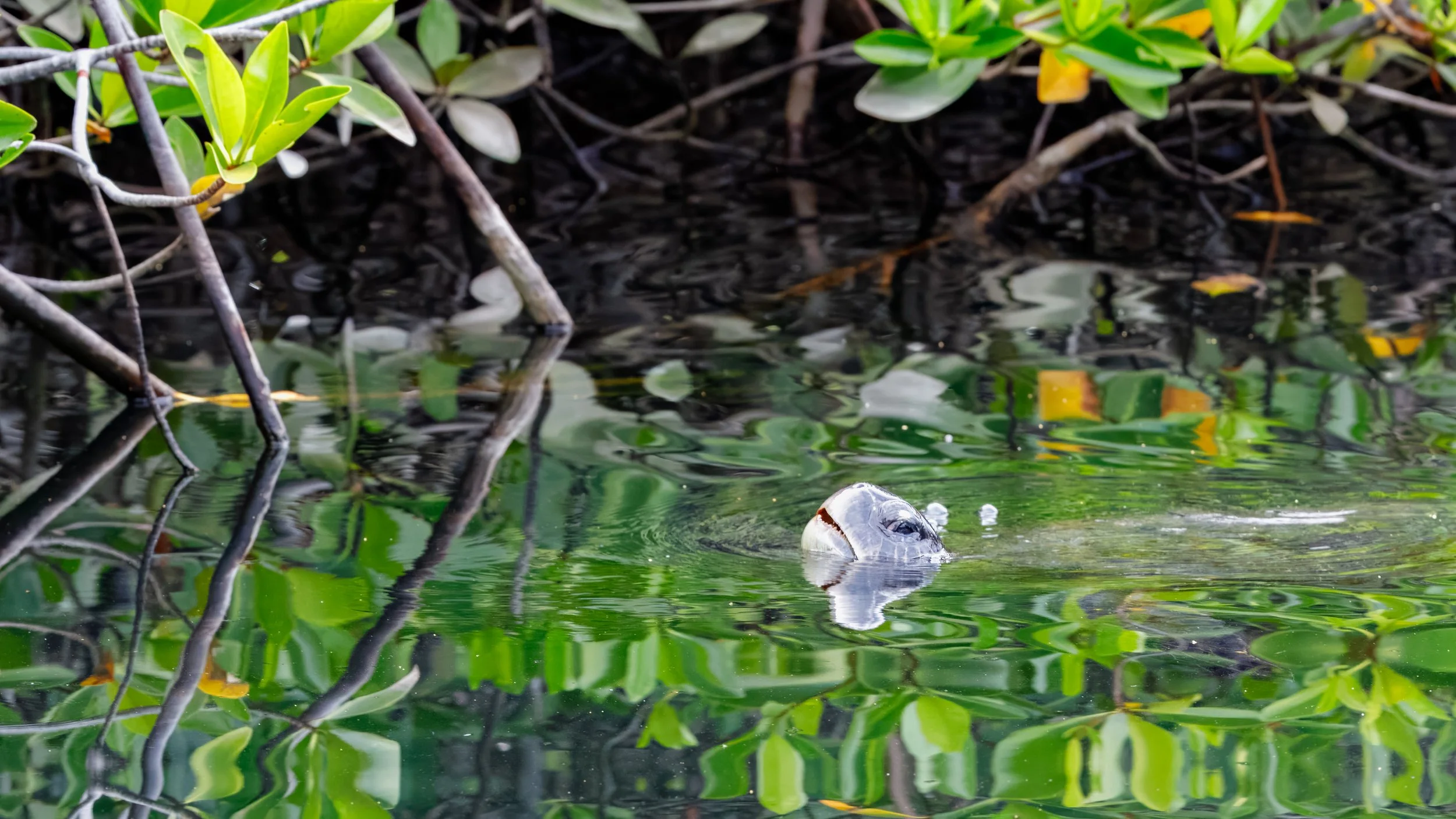
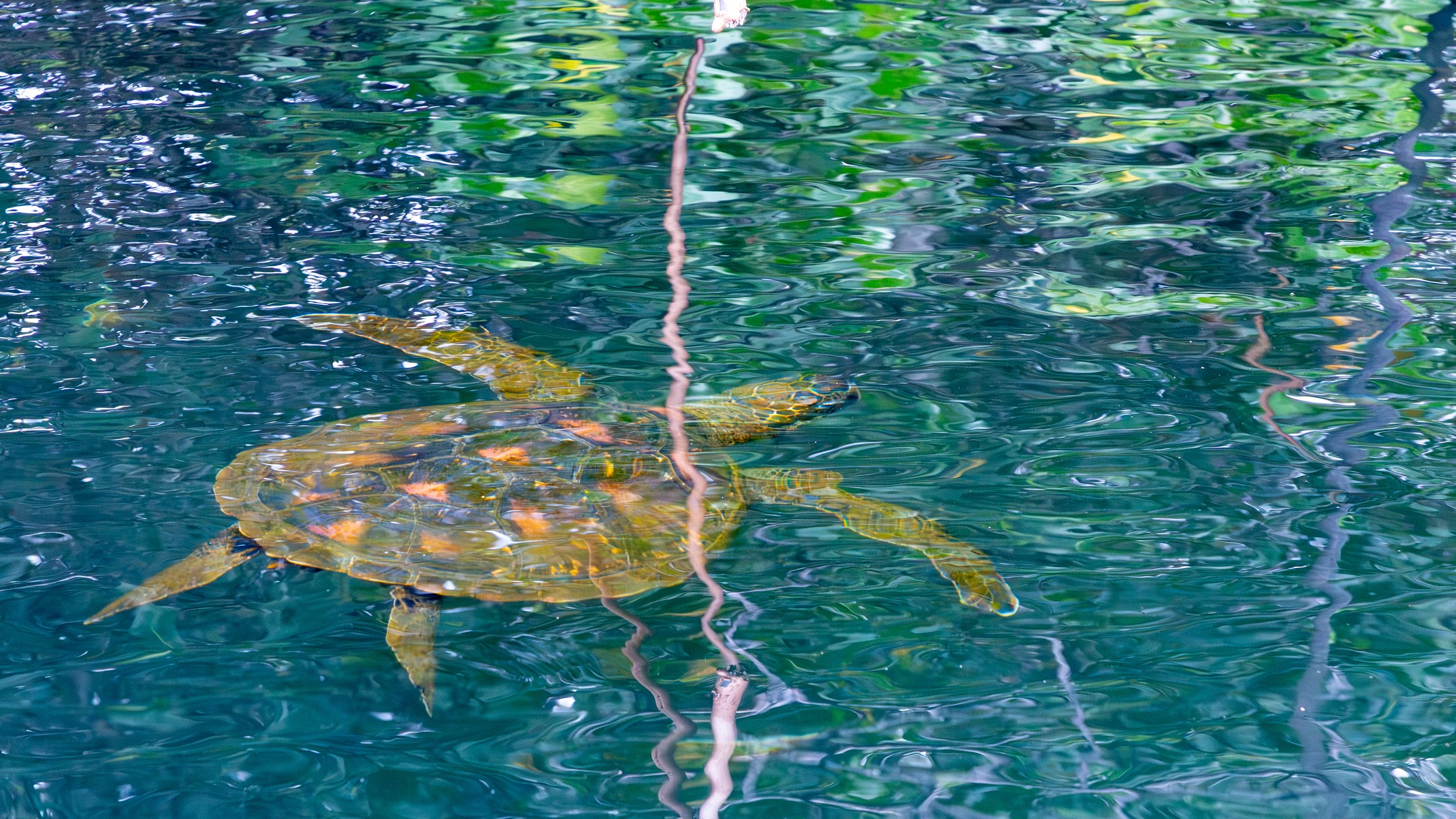
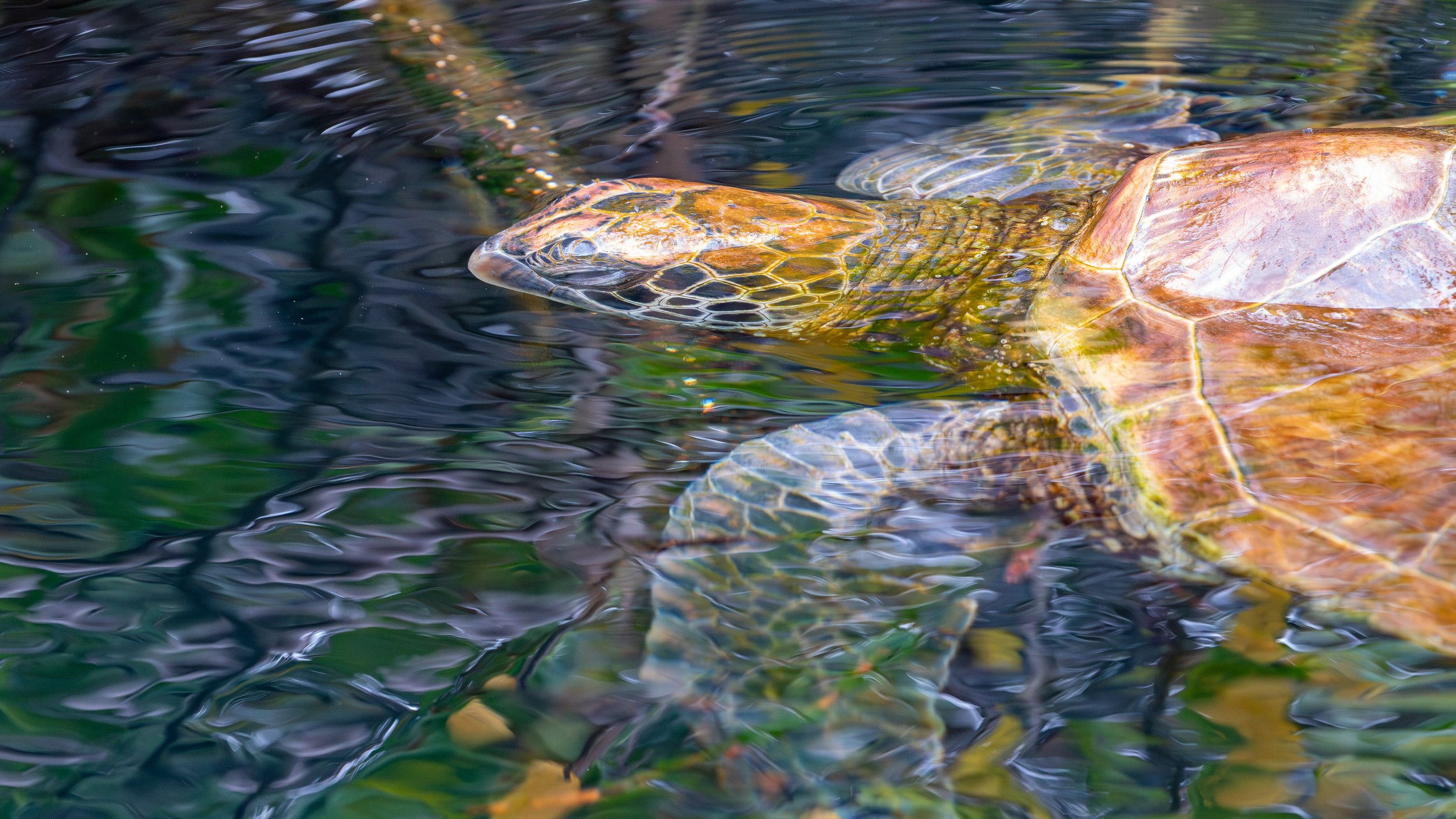
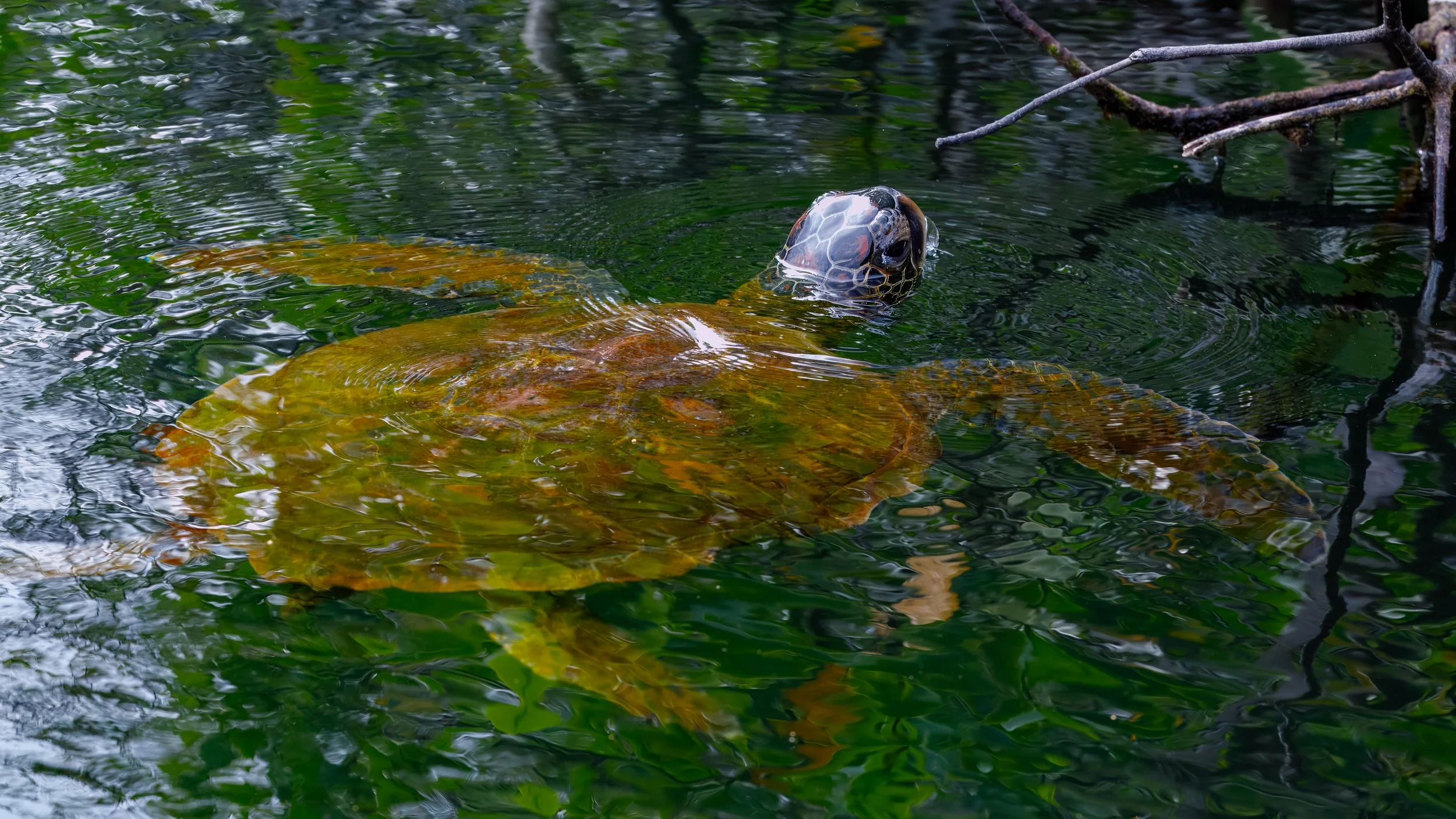
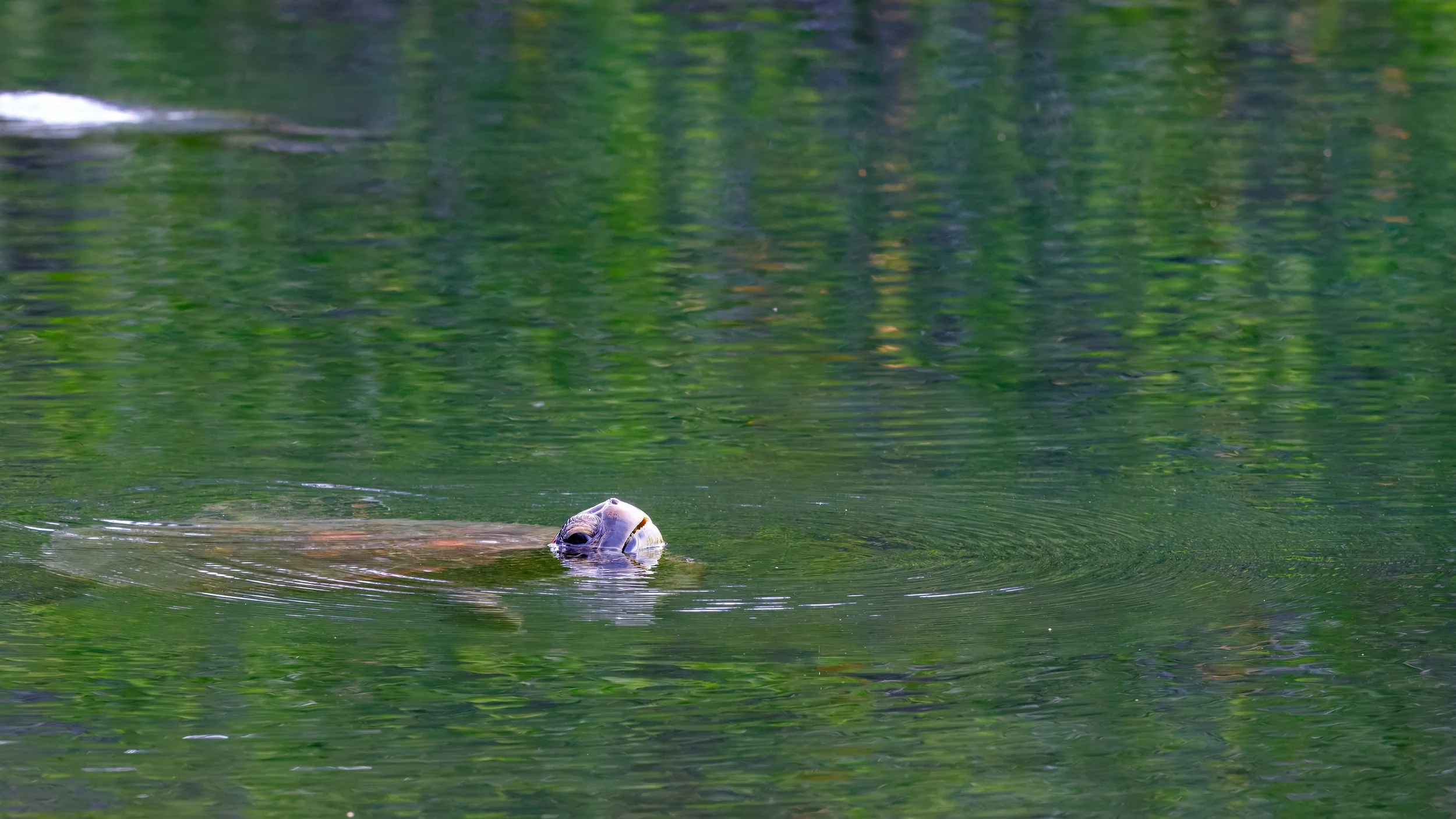
Further into the bay we are able to get close to sea turtles
Getting as close as we can to the turtle in the bay
Another tender chasing their own shots
More the green sea turtle
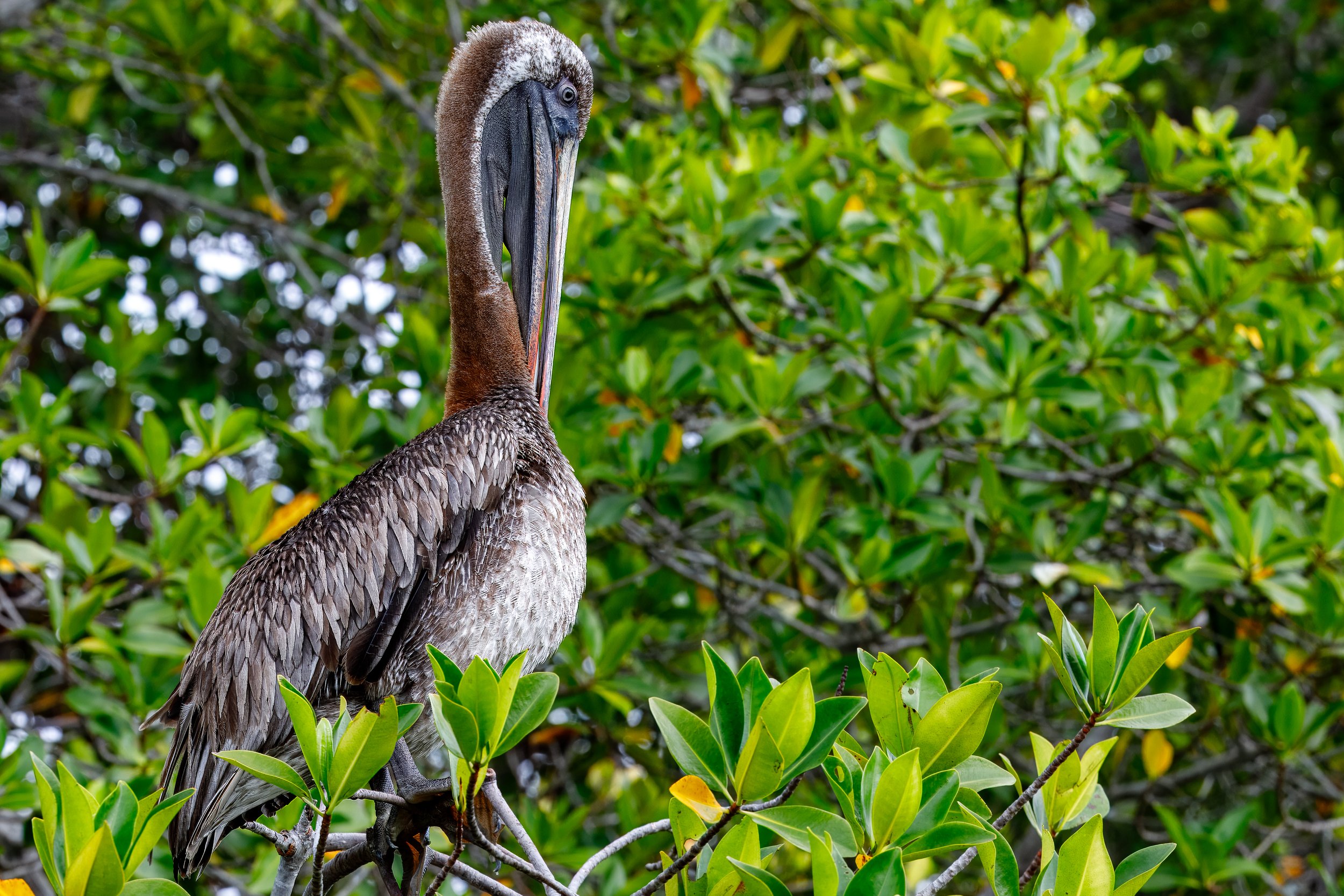
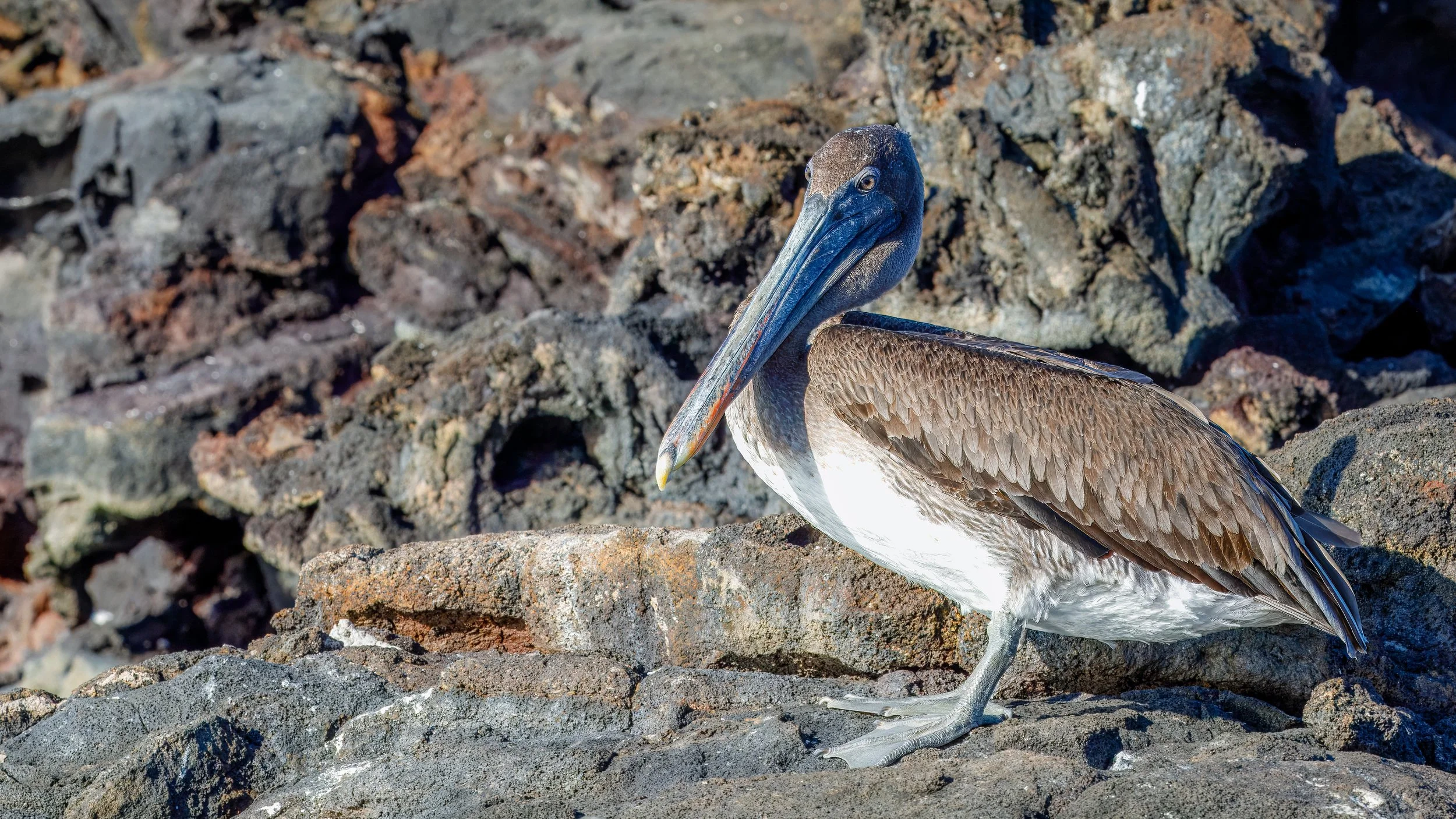
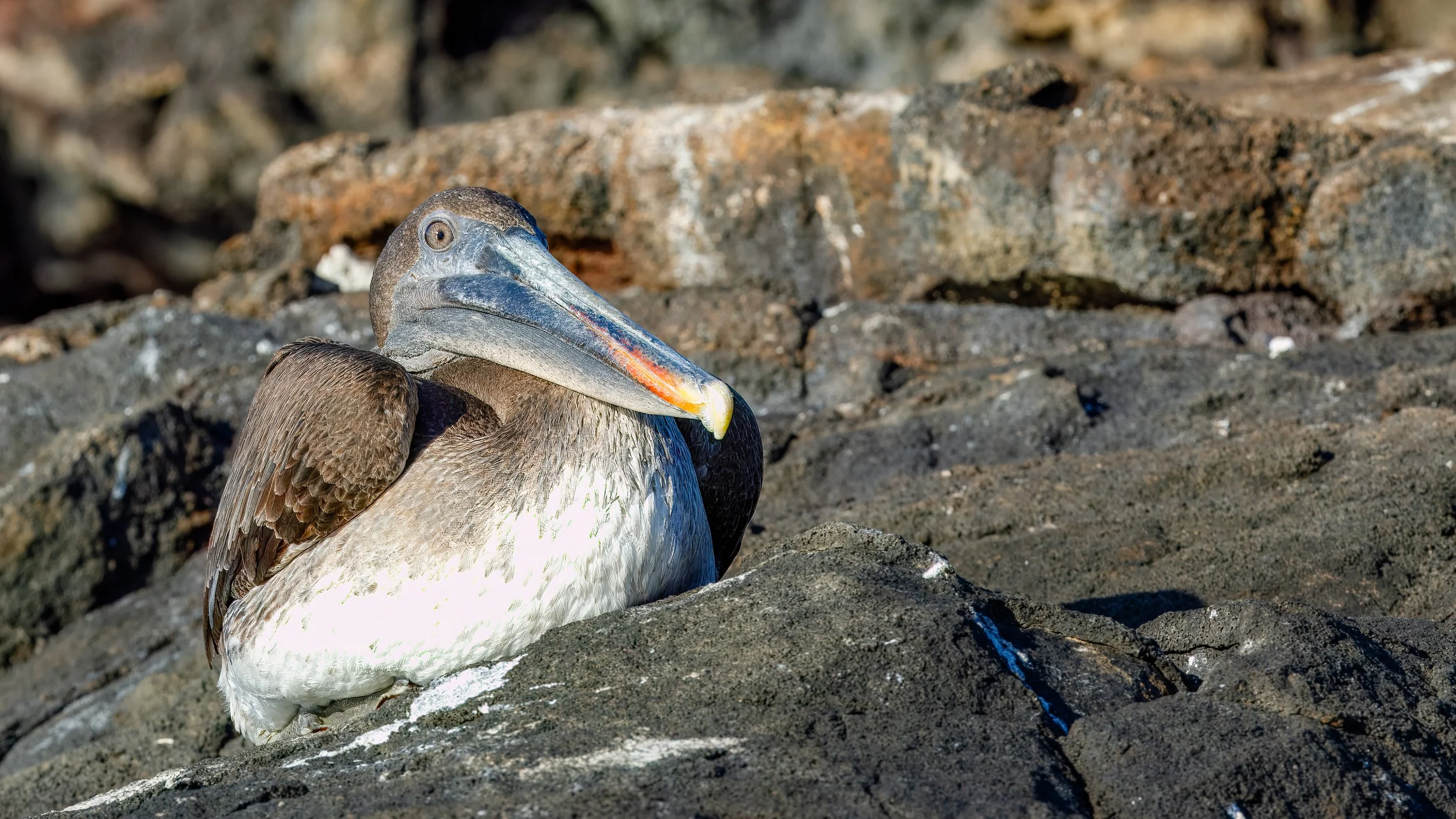
Brown pelican perched along the shore
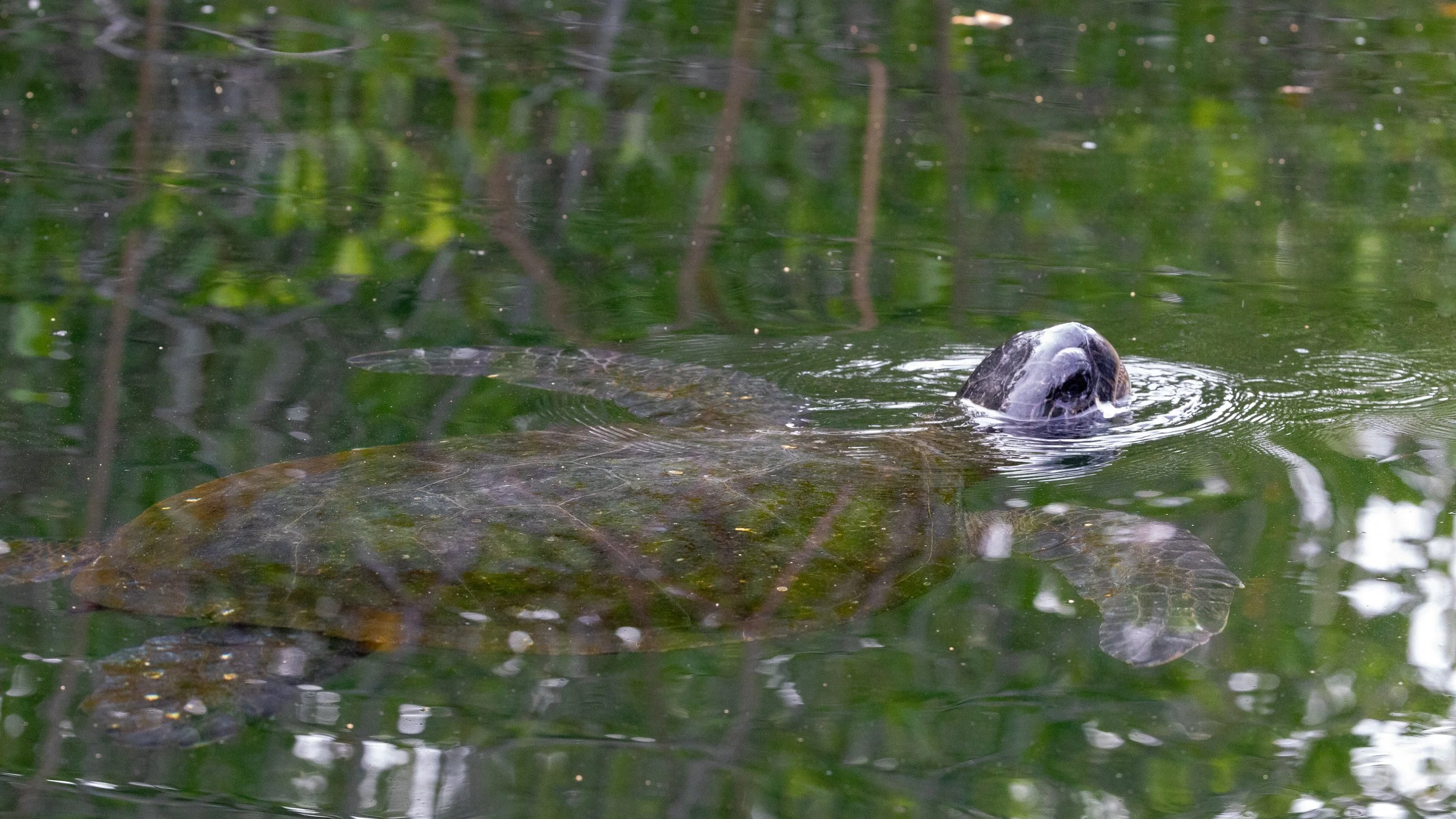
We never got tired of watching the turtle swim near the surface
Full perspective of the turtle
Turtle head shot
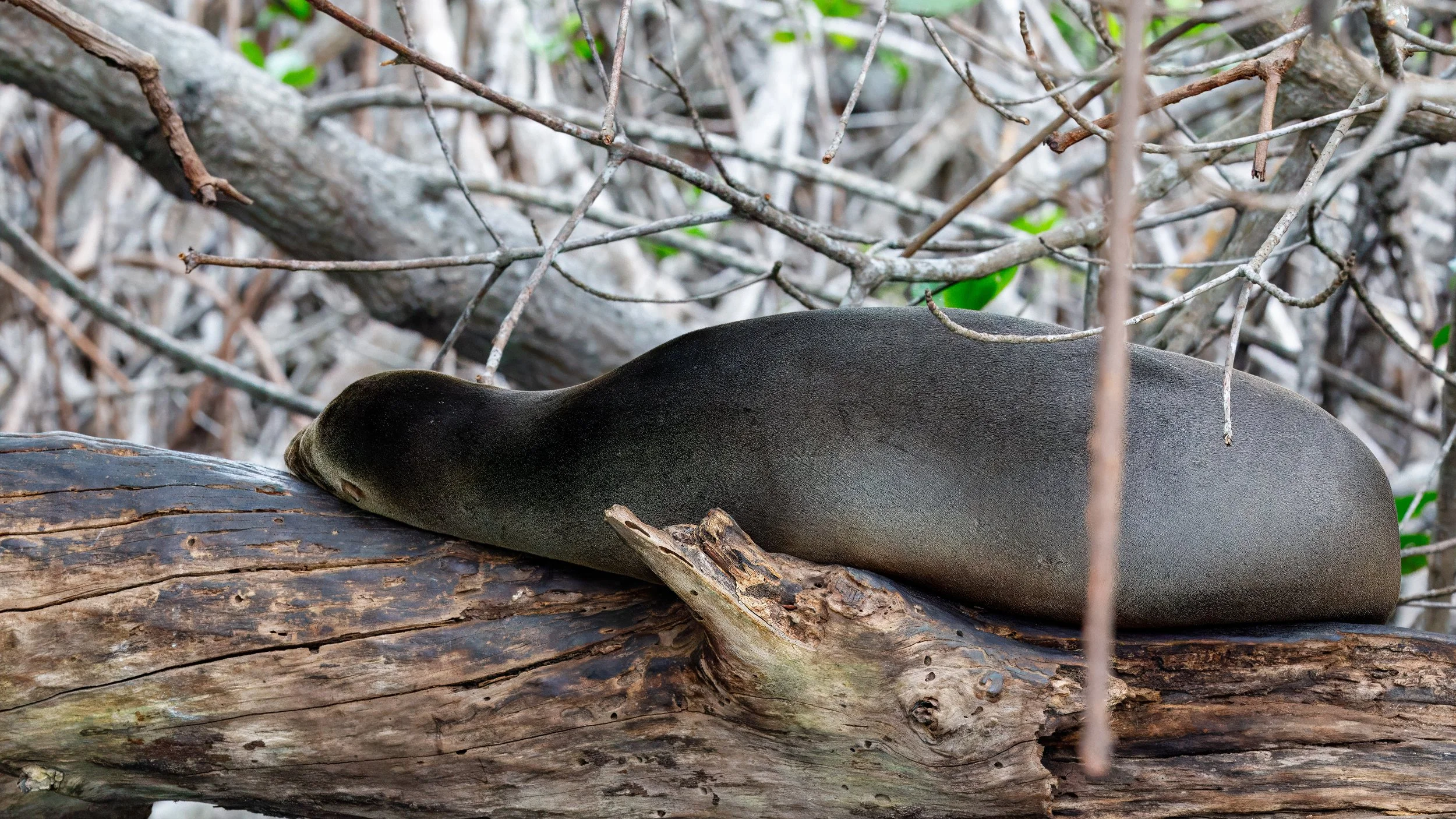
Before heading out we were lucky to find a Galapagos sealion resting on a branch
Using my GoPro able to catch string rays
Our first excursion without a landing was a definite highlight that allowed us to focus on the wildlife. With the early start to the day, we had a long break to relax and enjoy lunch before our afternoon activities at 3:00pm.
Sep 30 - Afternoon
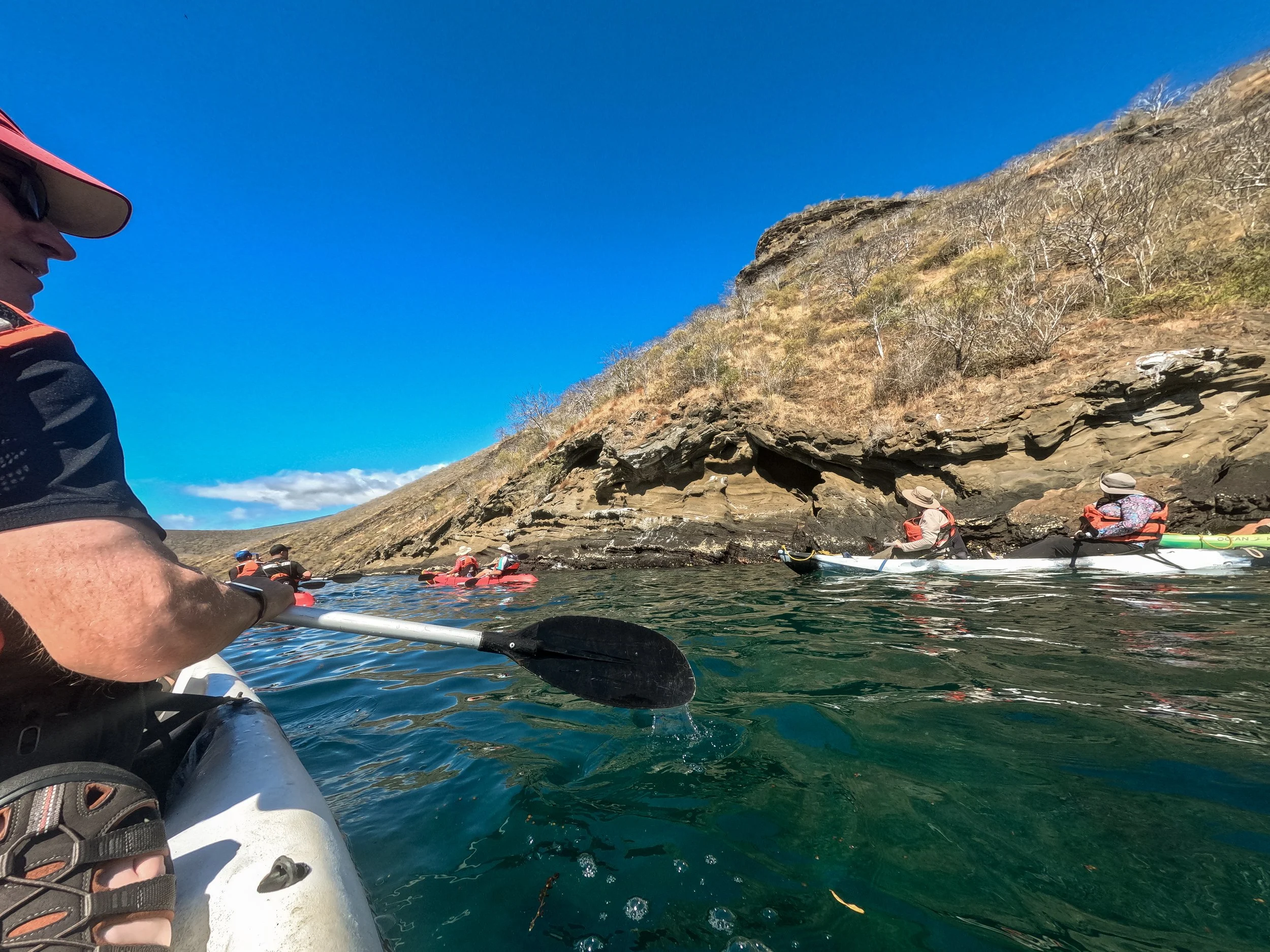
For the afternoon, in addition to a fast-paced fitness walk, we choose to go out on kayaks. This was the second kayak option of the trip, but we weren’t really experienced so were reluctant to sign up. Thankfully, we were convinced by friends that did it the day before, that we’d have no issues and committed to the extra outing.
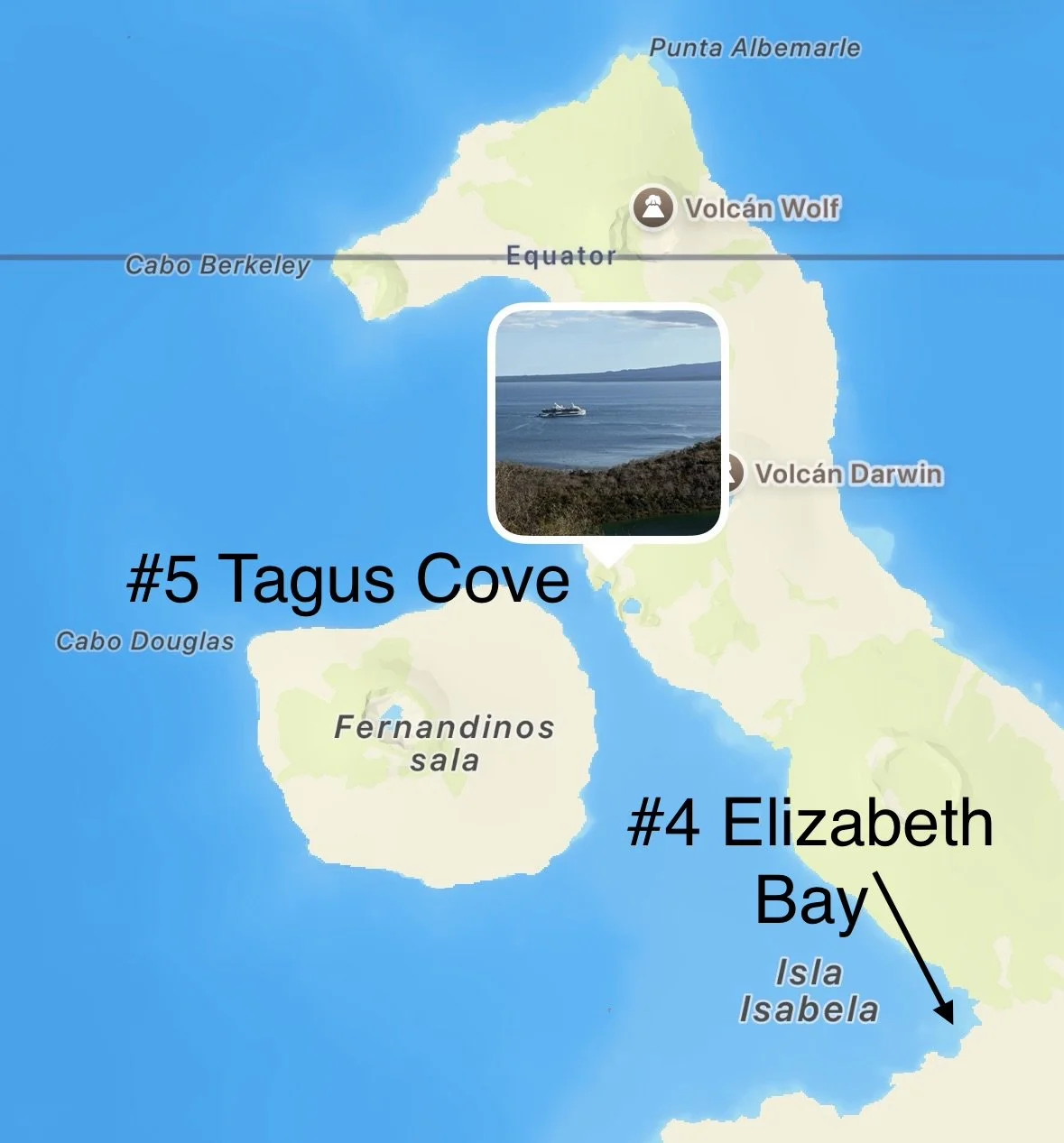
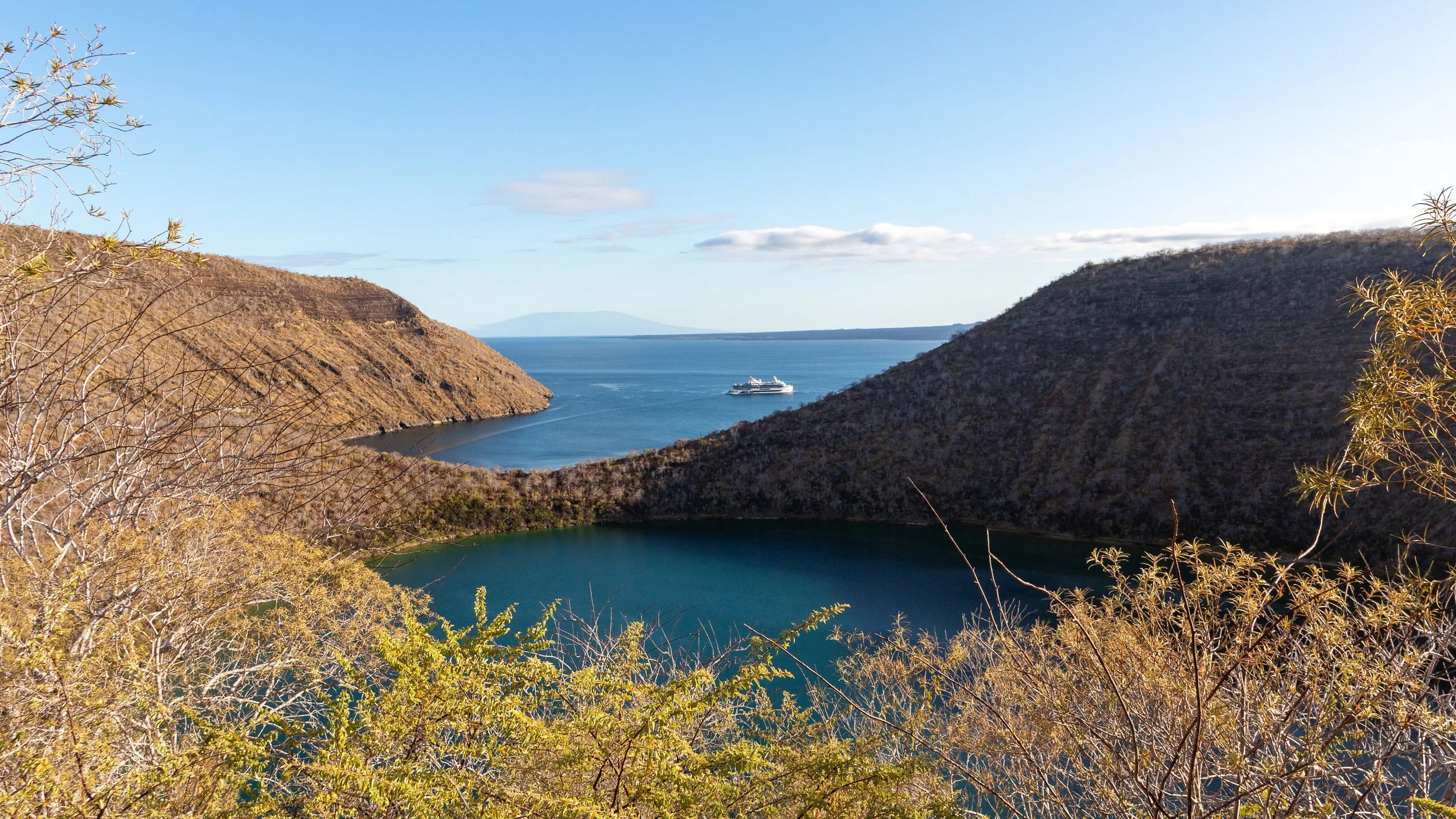
For the late afternoon outings we made our way up the coast to Tagus Cove
Evidence that we can actually kayak
Tender heading to dry landing on Tagus Cove
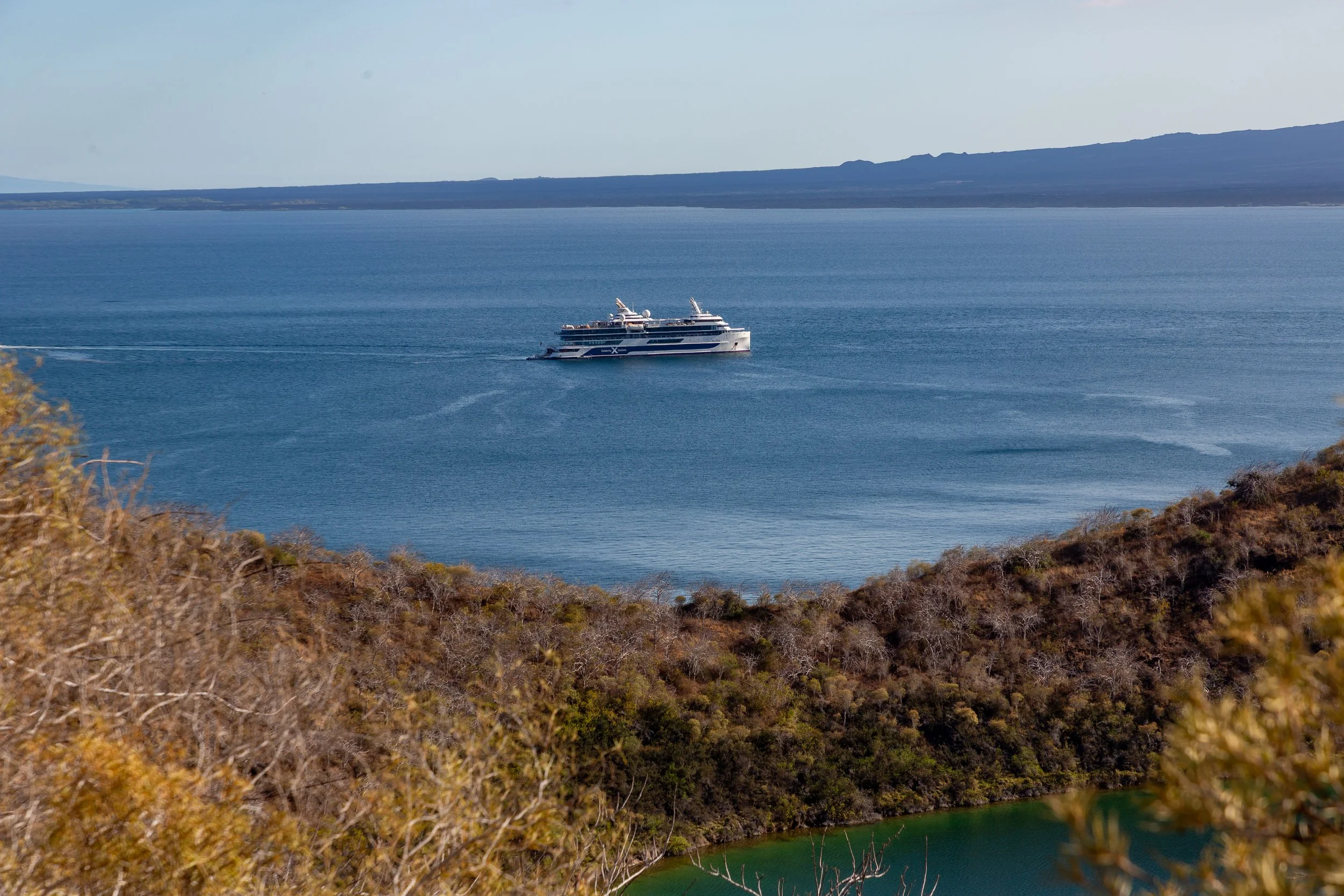
Our payoff from our fast-paced hike to the viewpoint was the view of the ship with Fernandina Island in the background
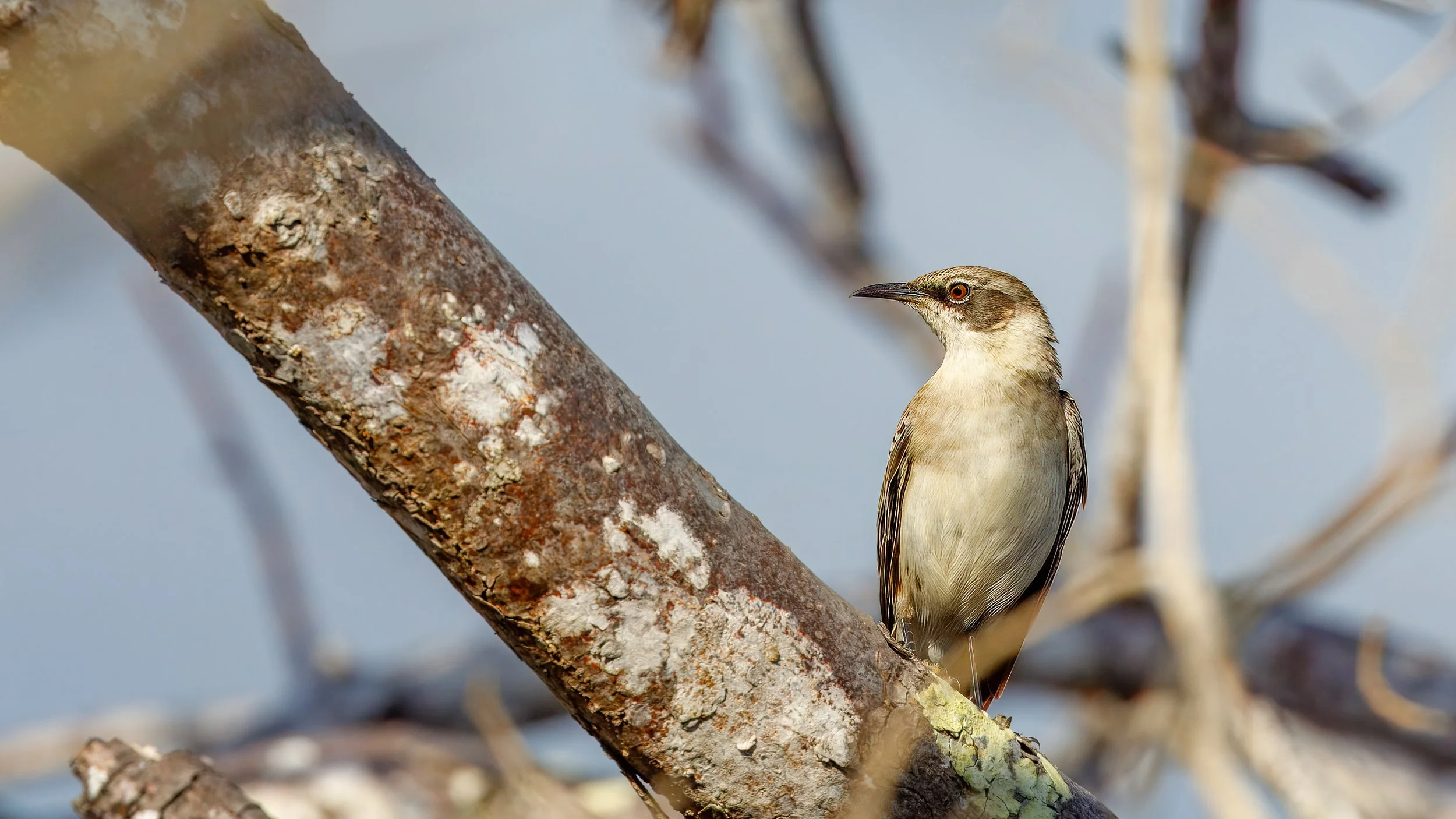
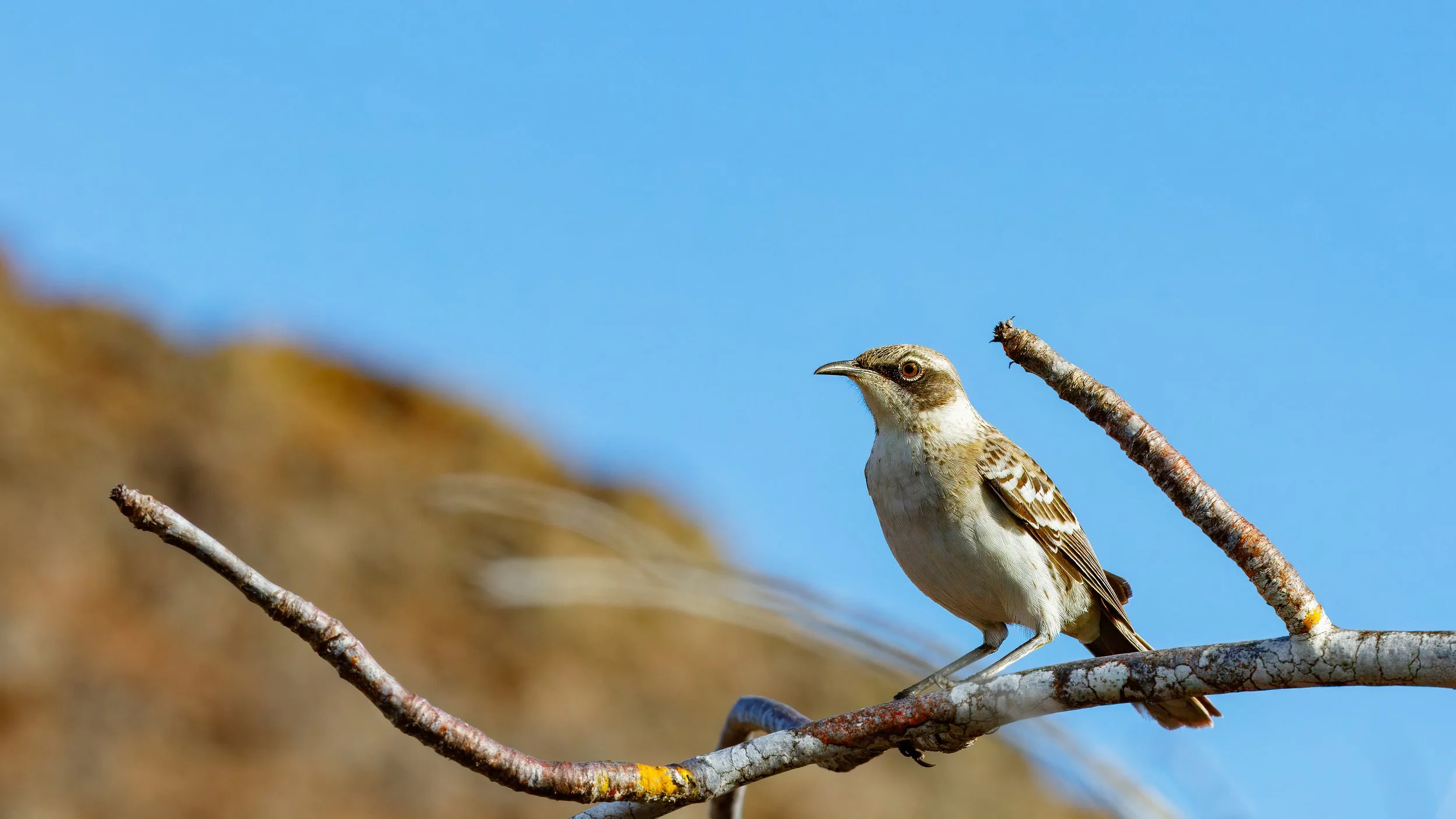
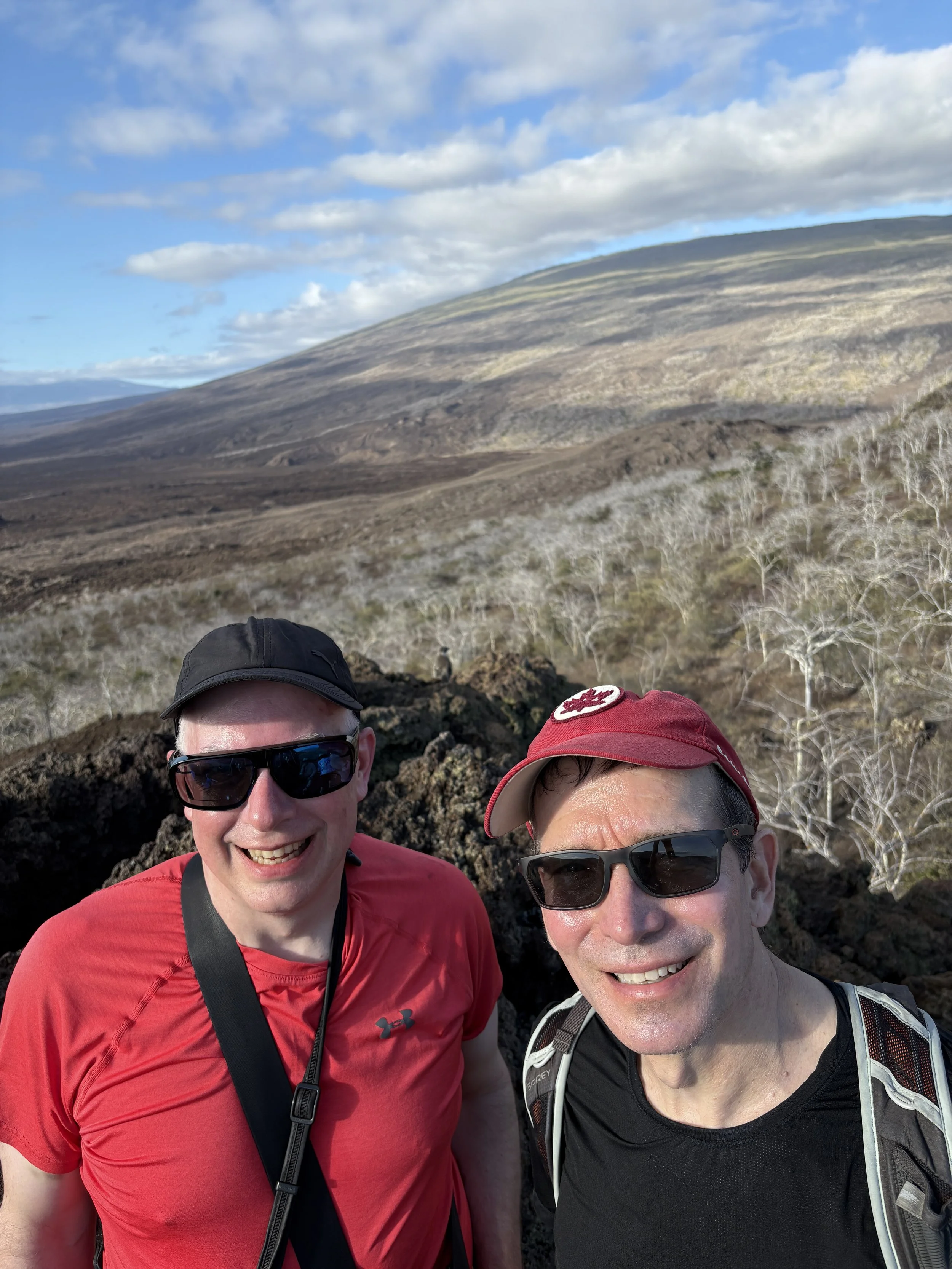
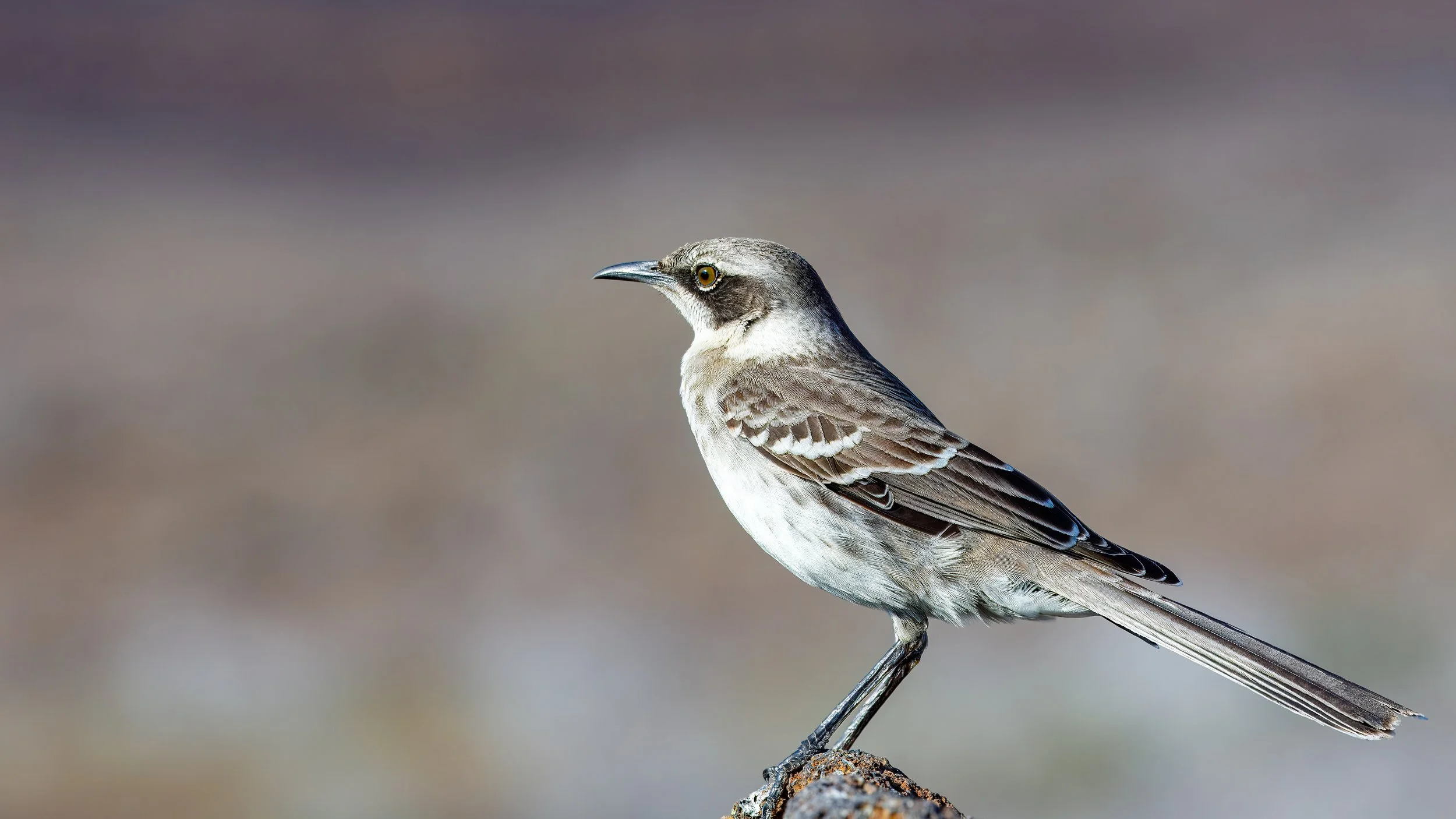
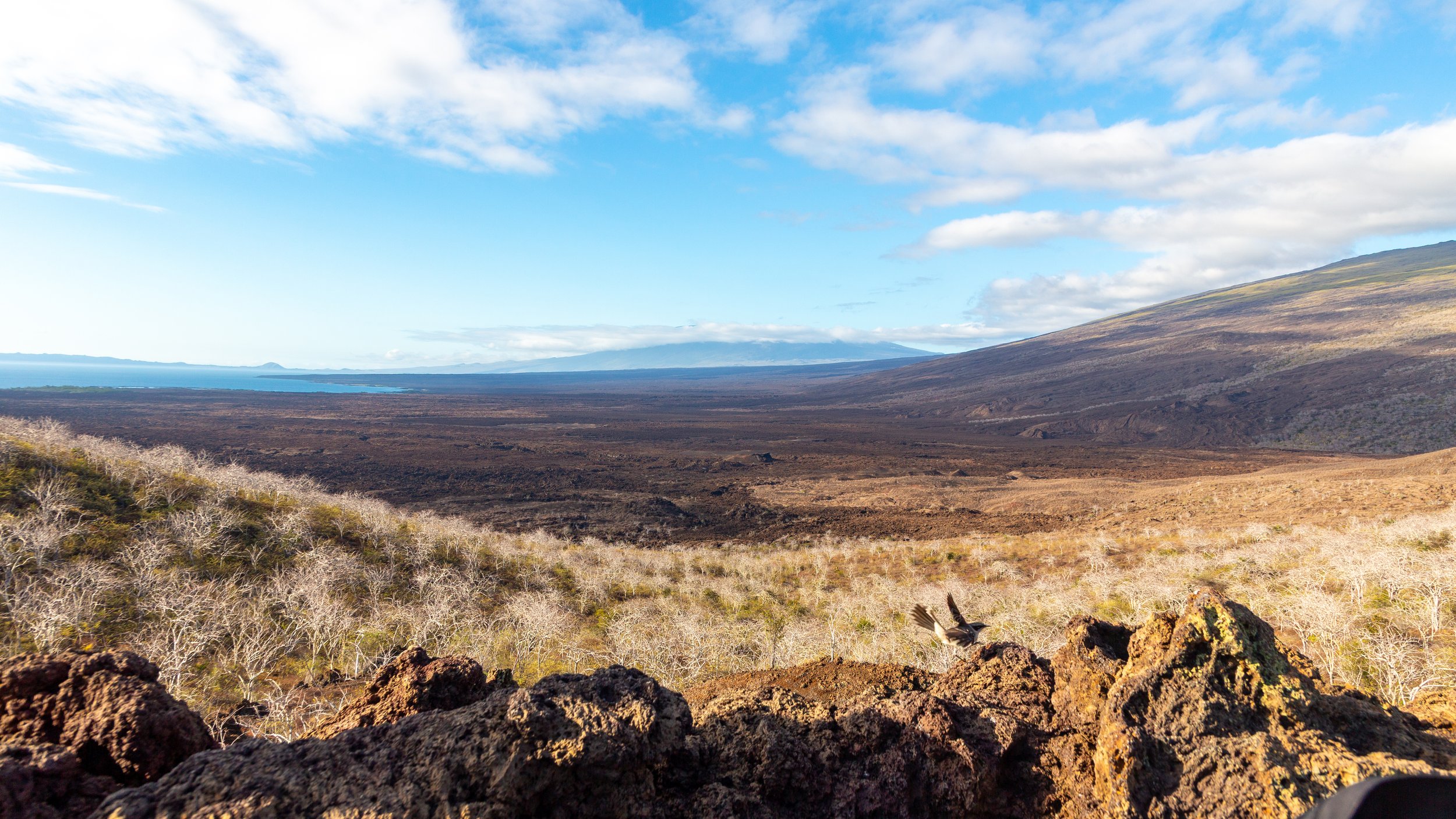
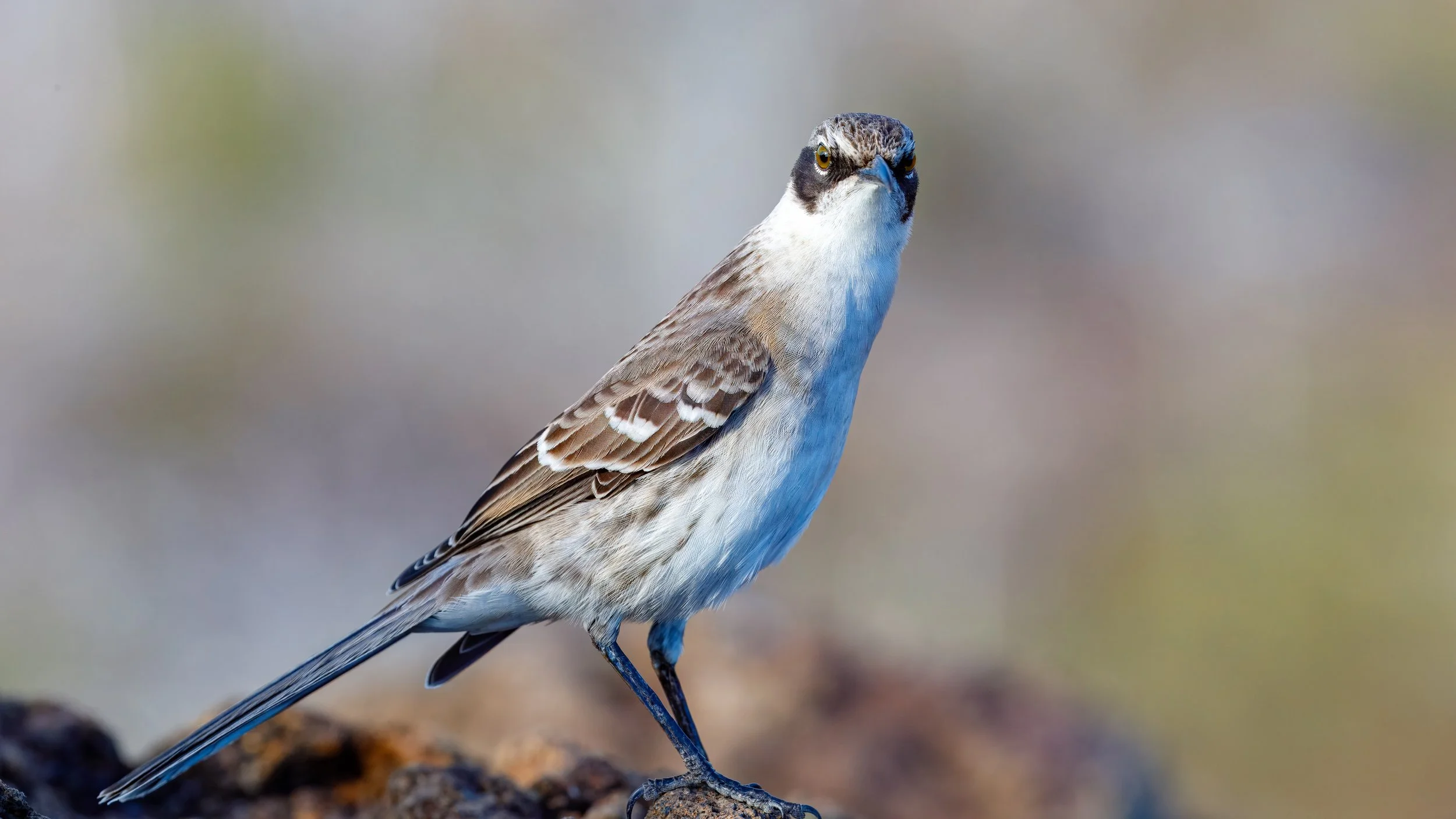
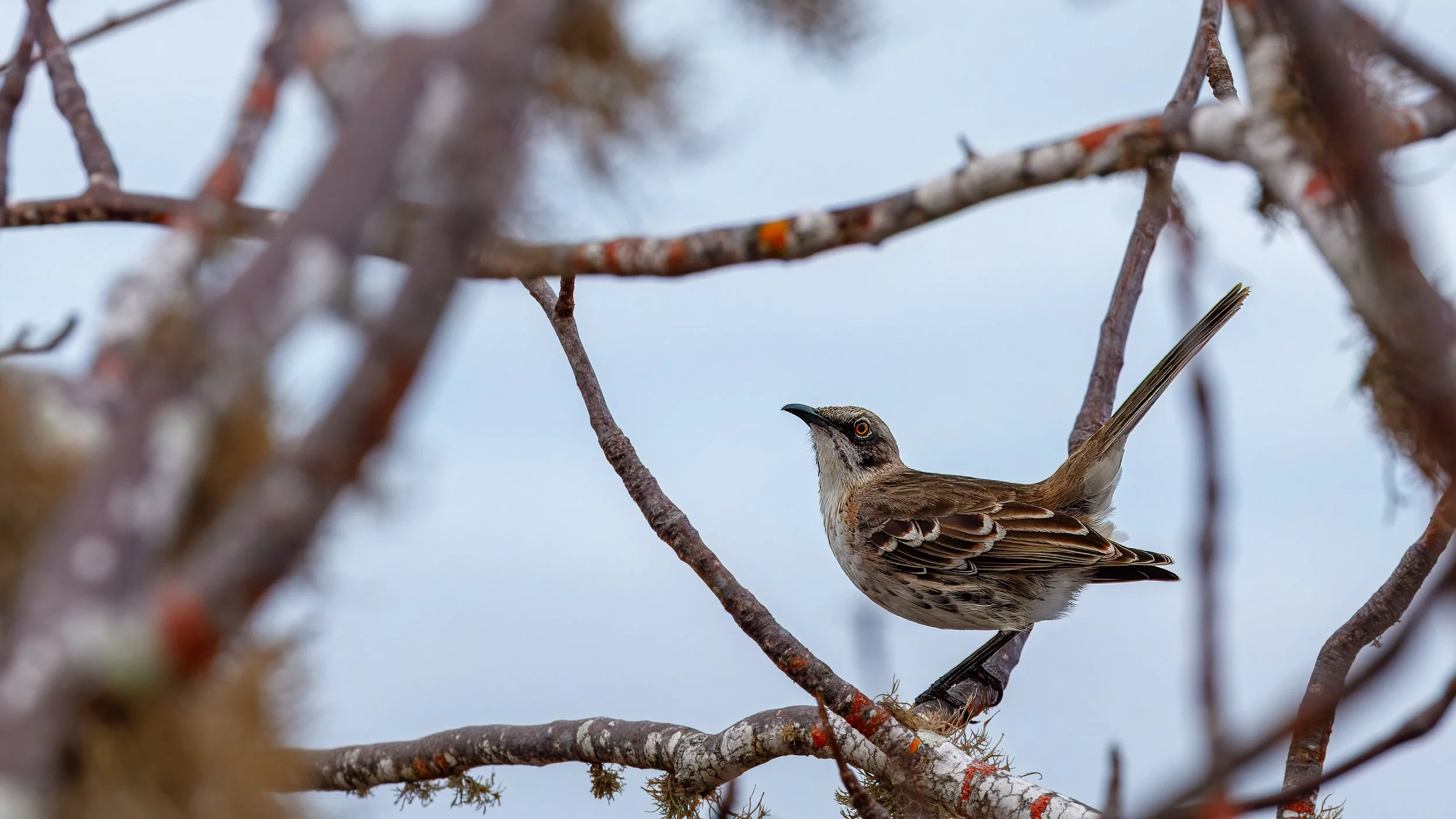
Our guide, proud of his bird-calling abilities, found us a Galapagos mockingbird
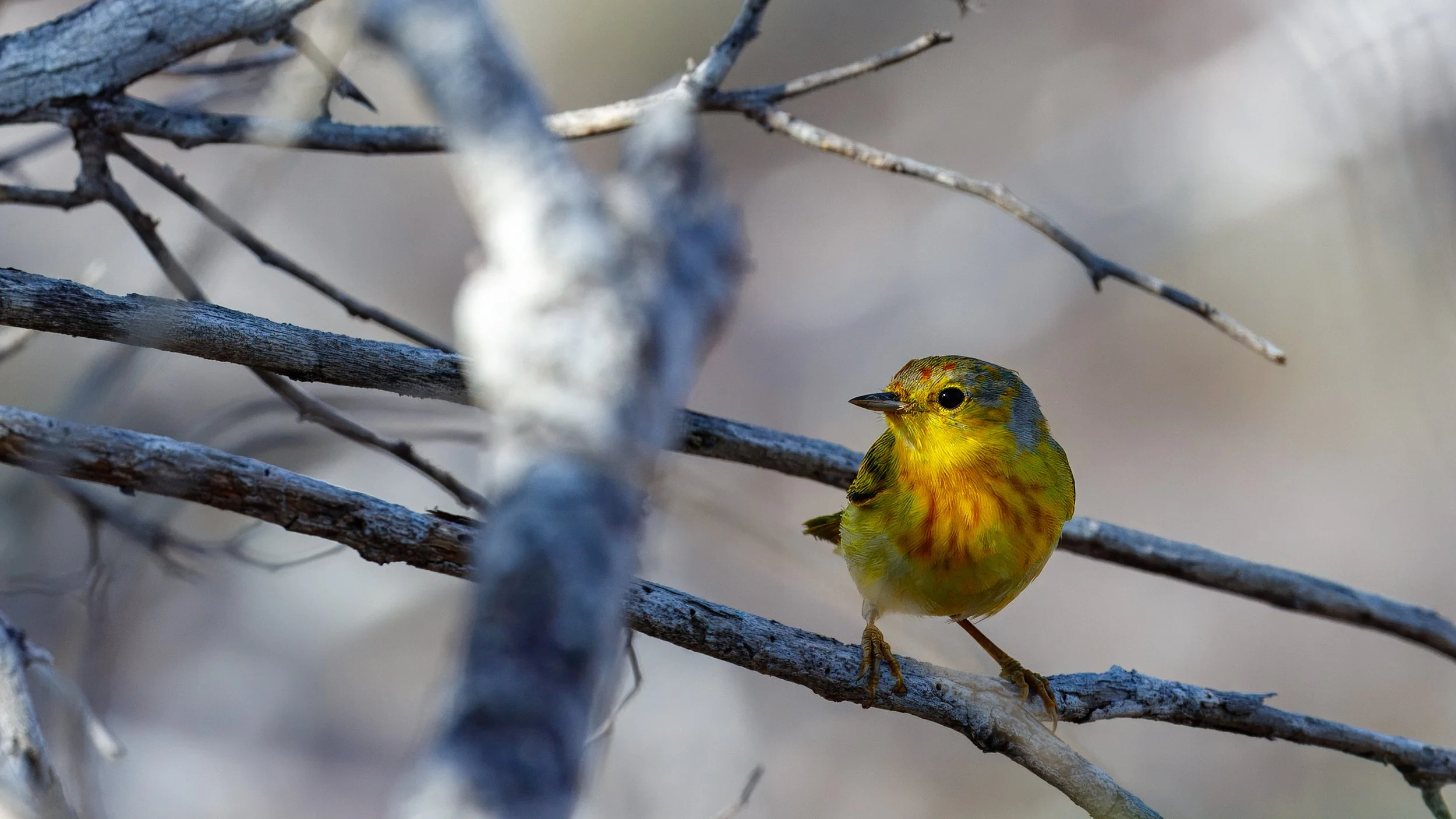
Mangrove Yellow Warbler
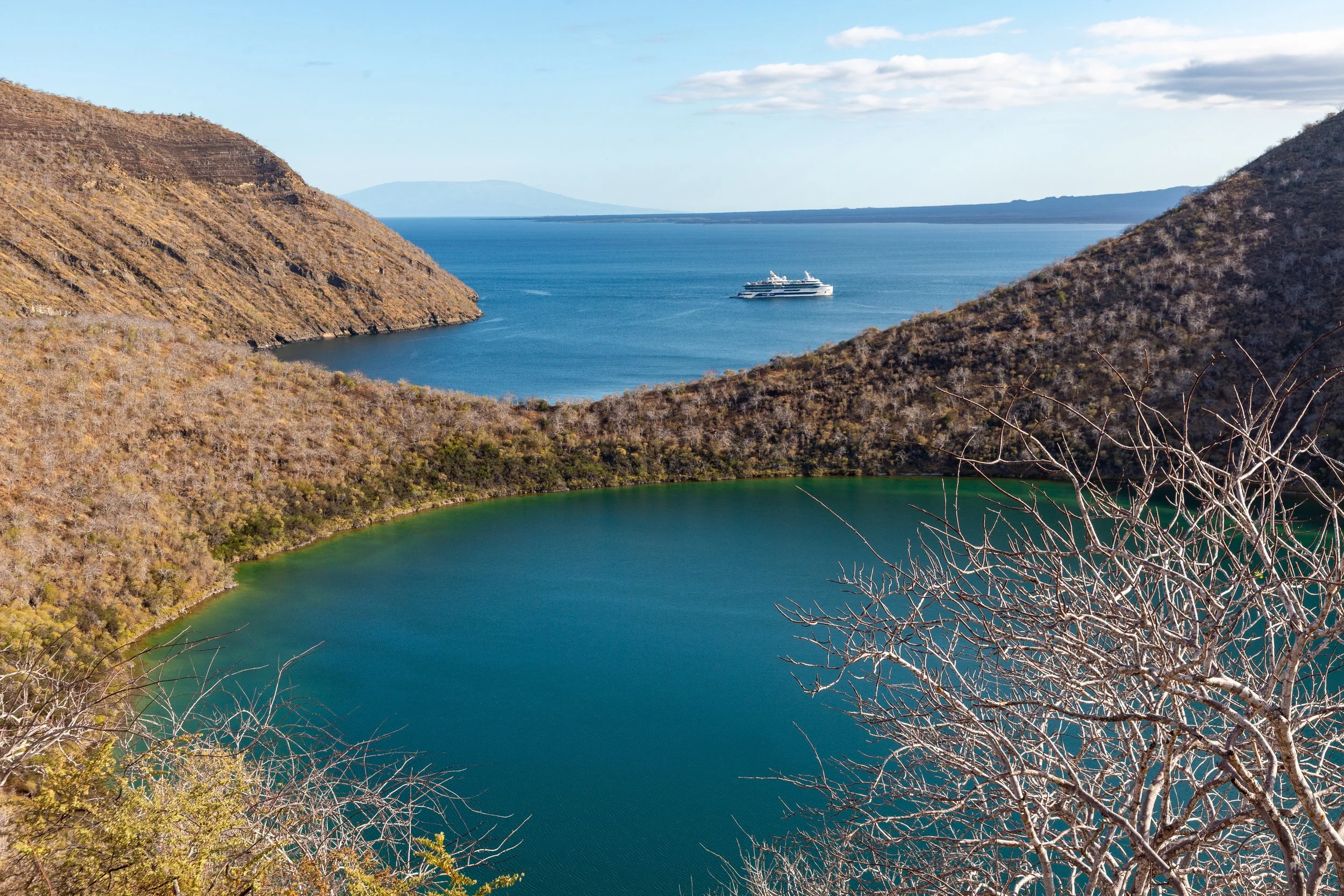
Broader perspective of the crater lake before we continue our hike
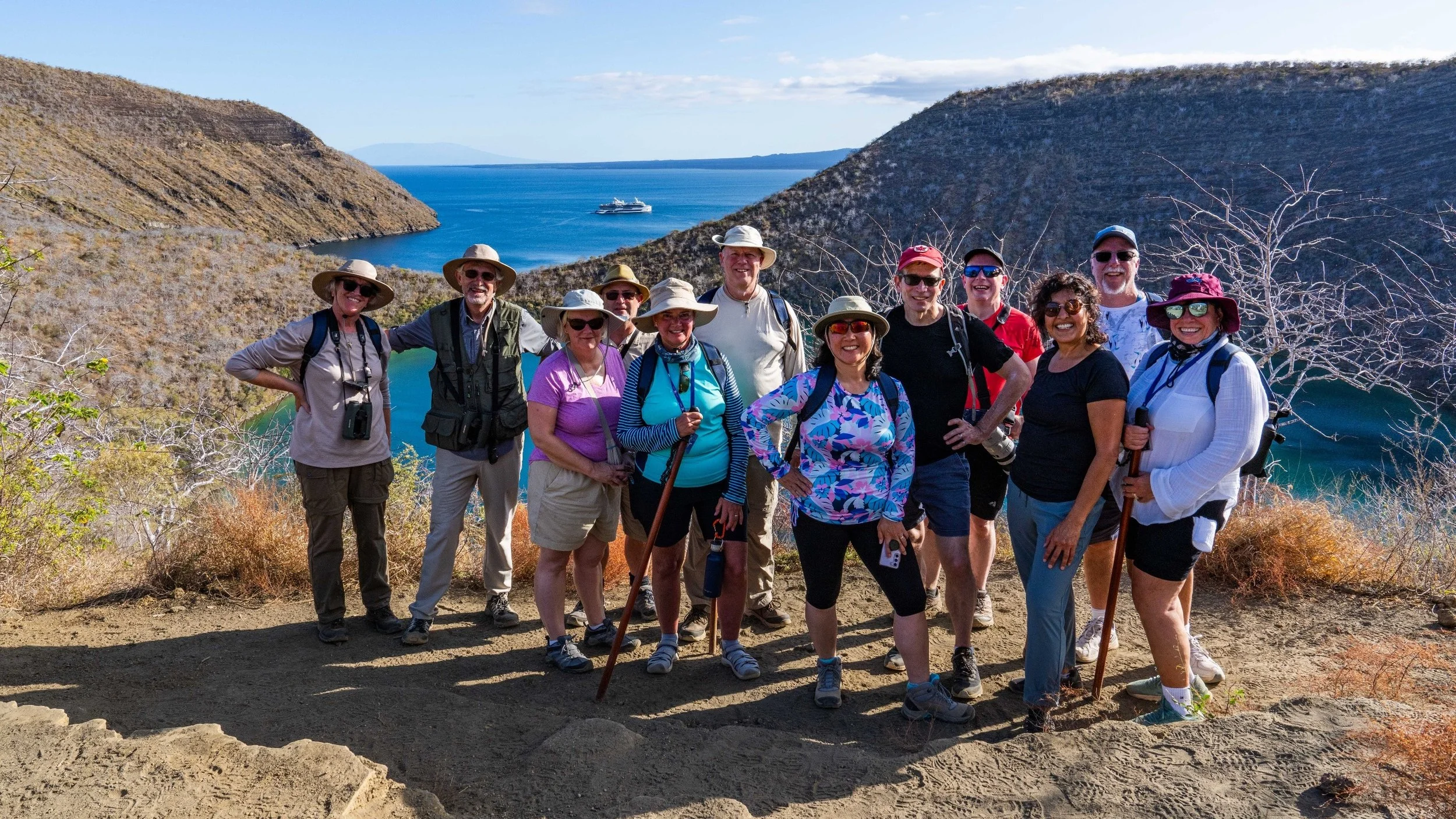
Evidence that the whole group made it
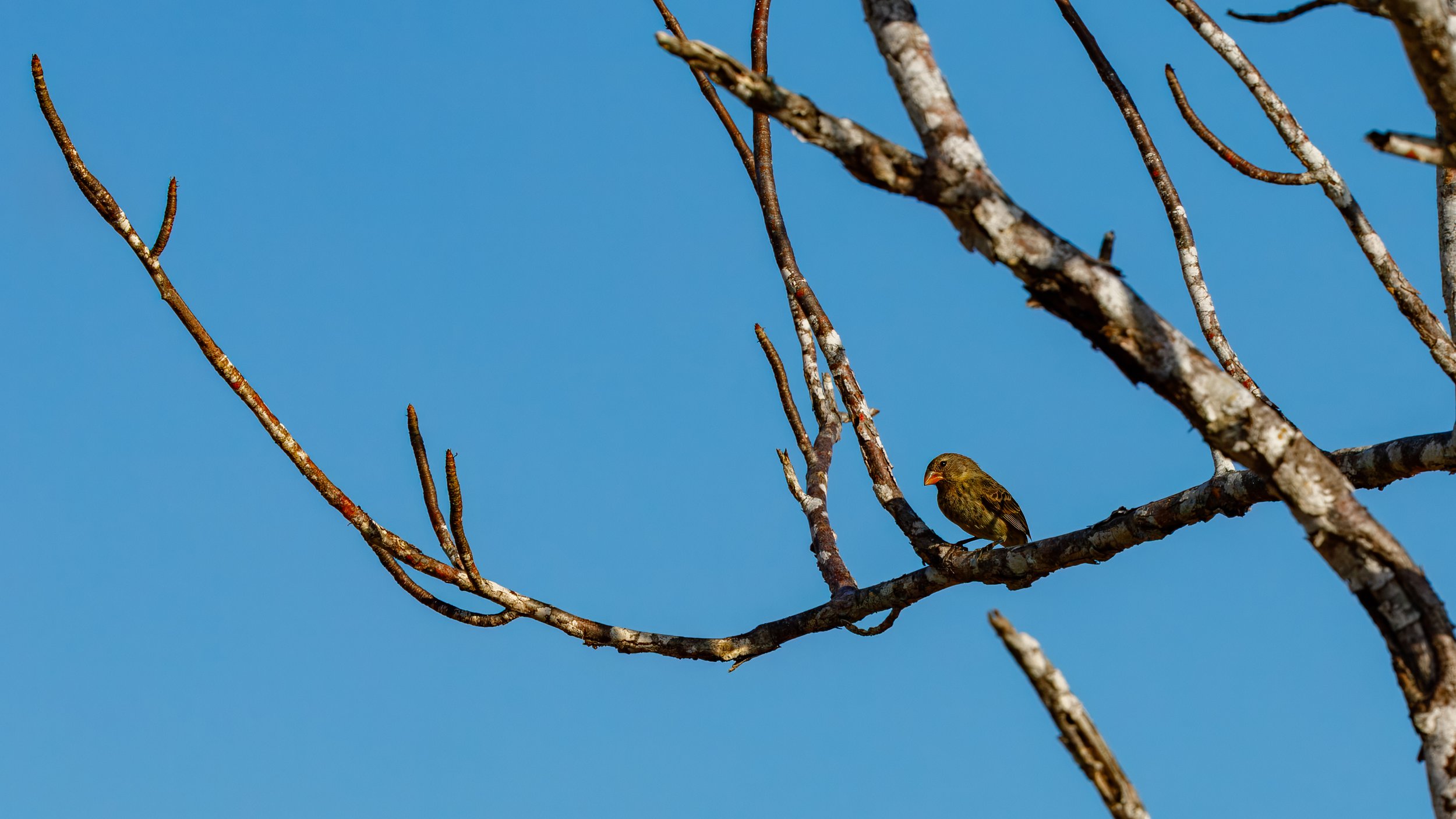
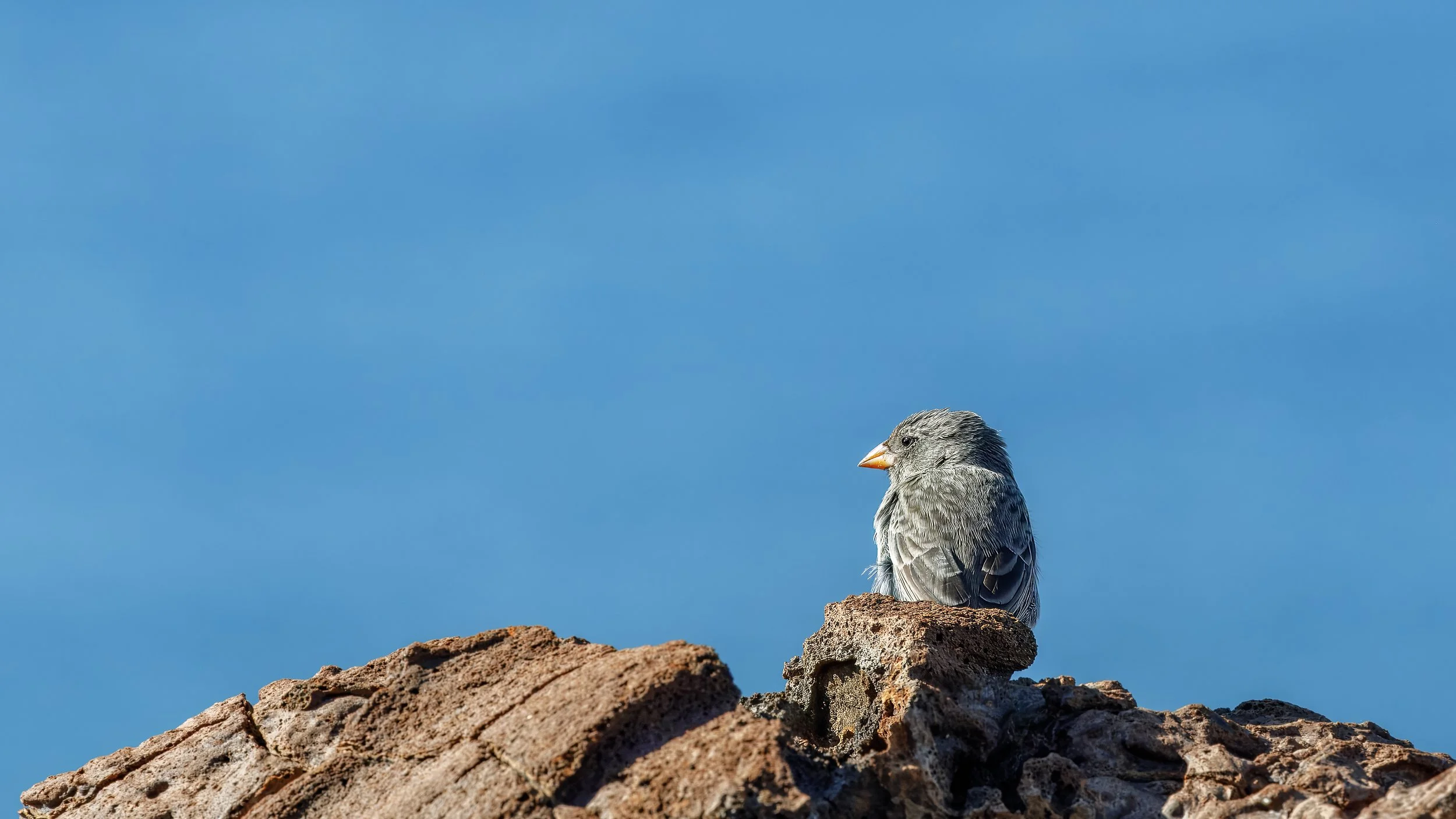
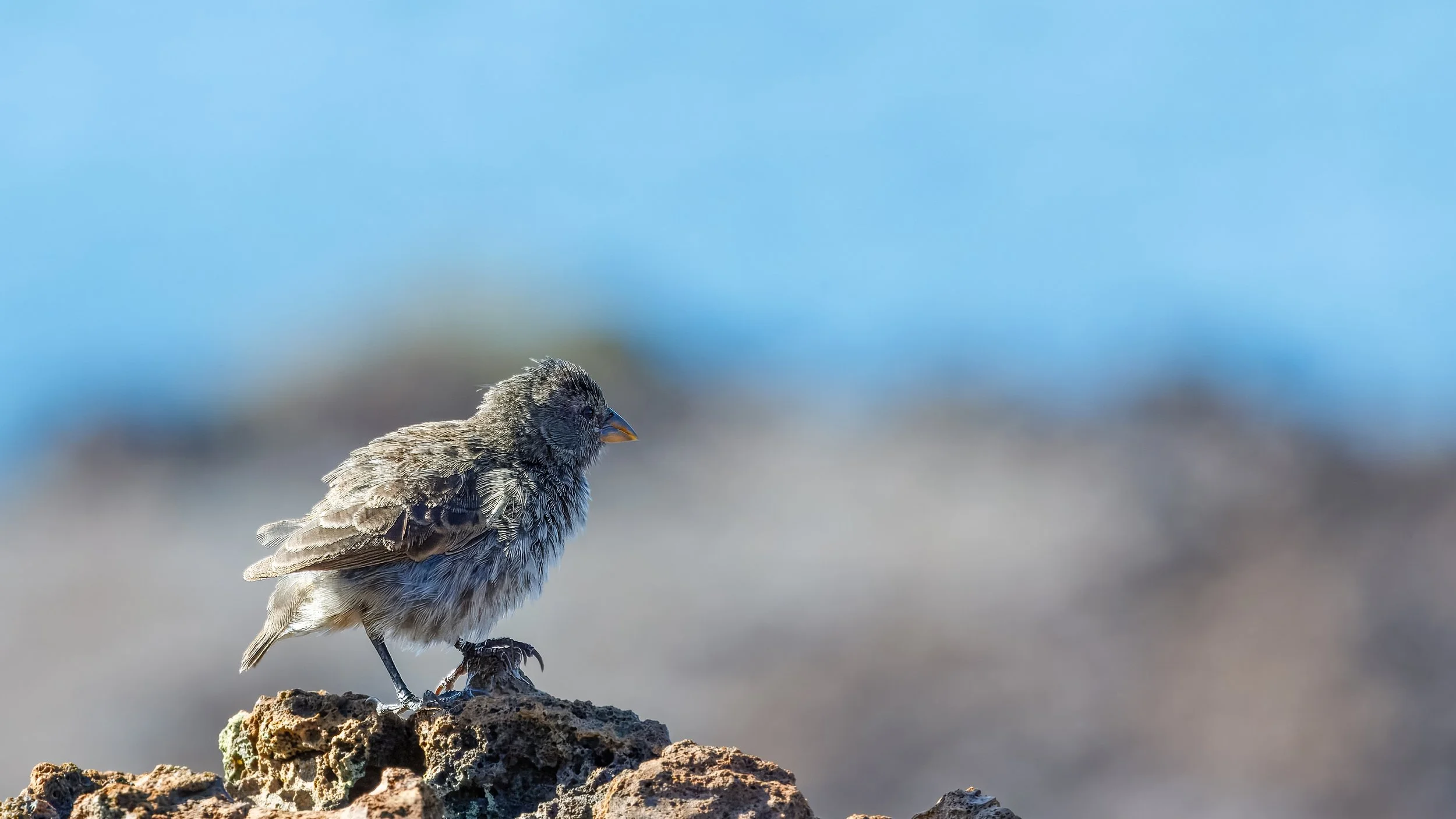
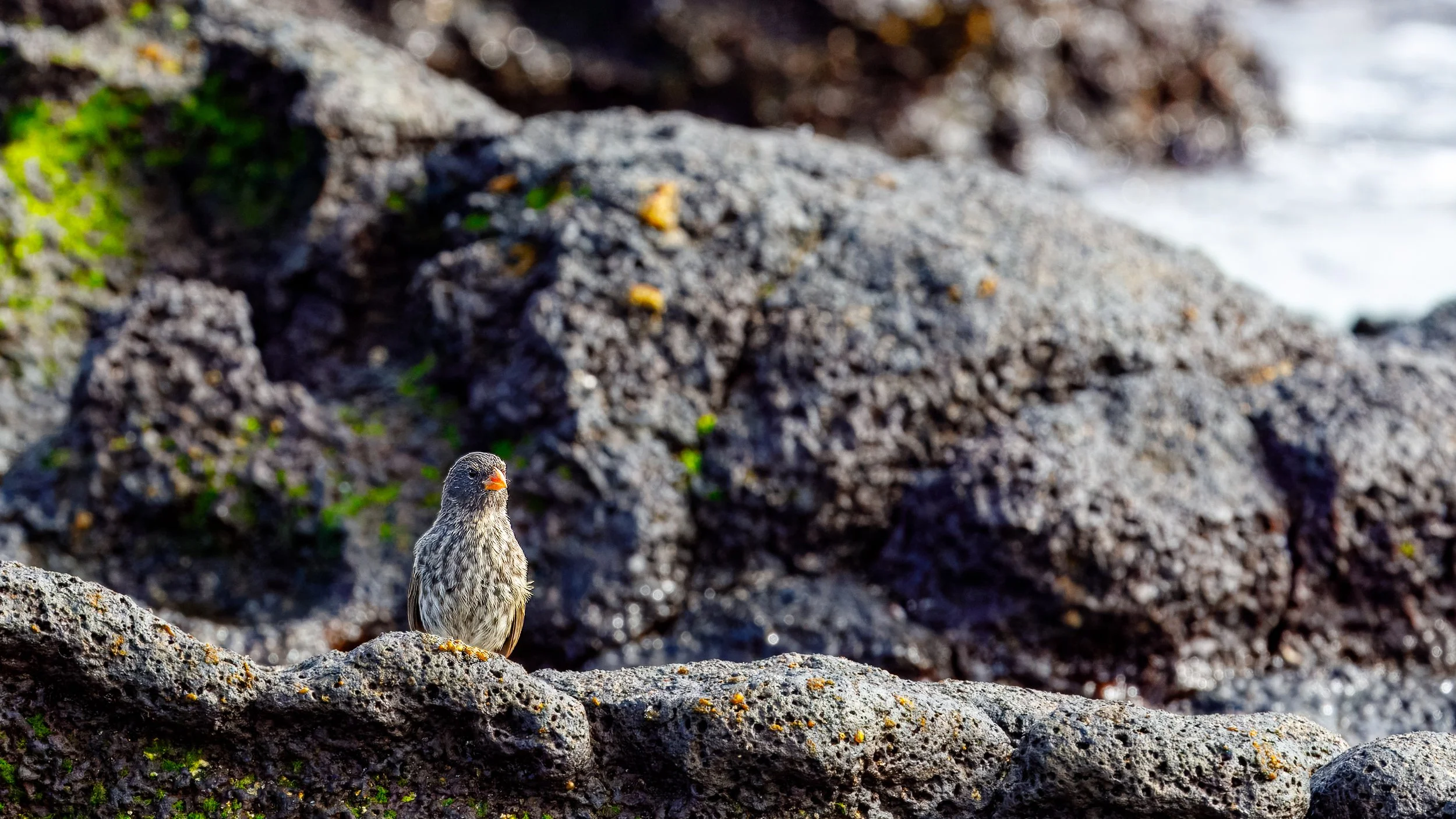
One of the species of Darwin Finch on the islands
Floreana Mockingbird, one of four species of mockingbirds endemic to the Galapagos Islands
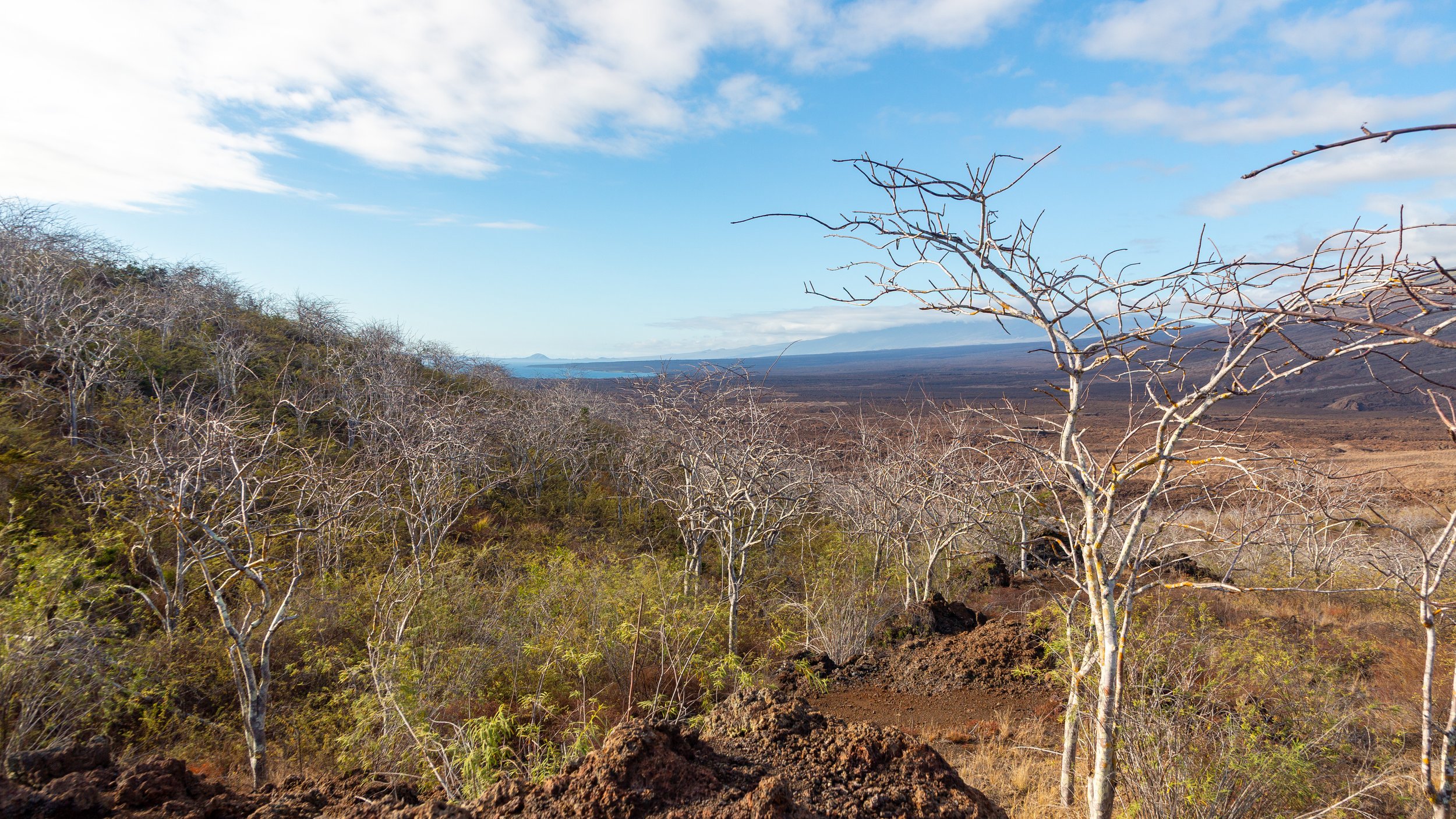
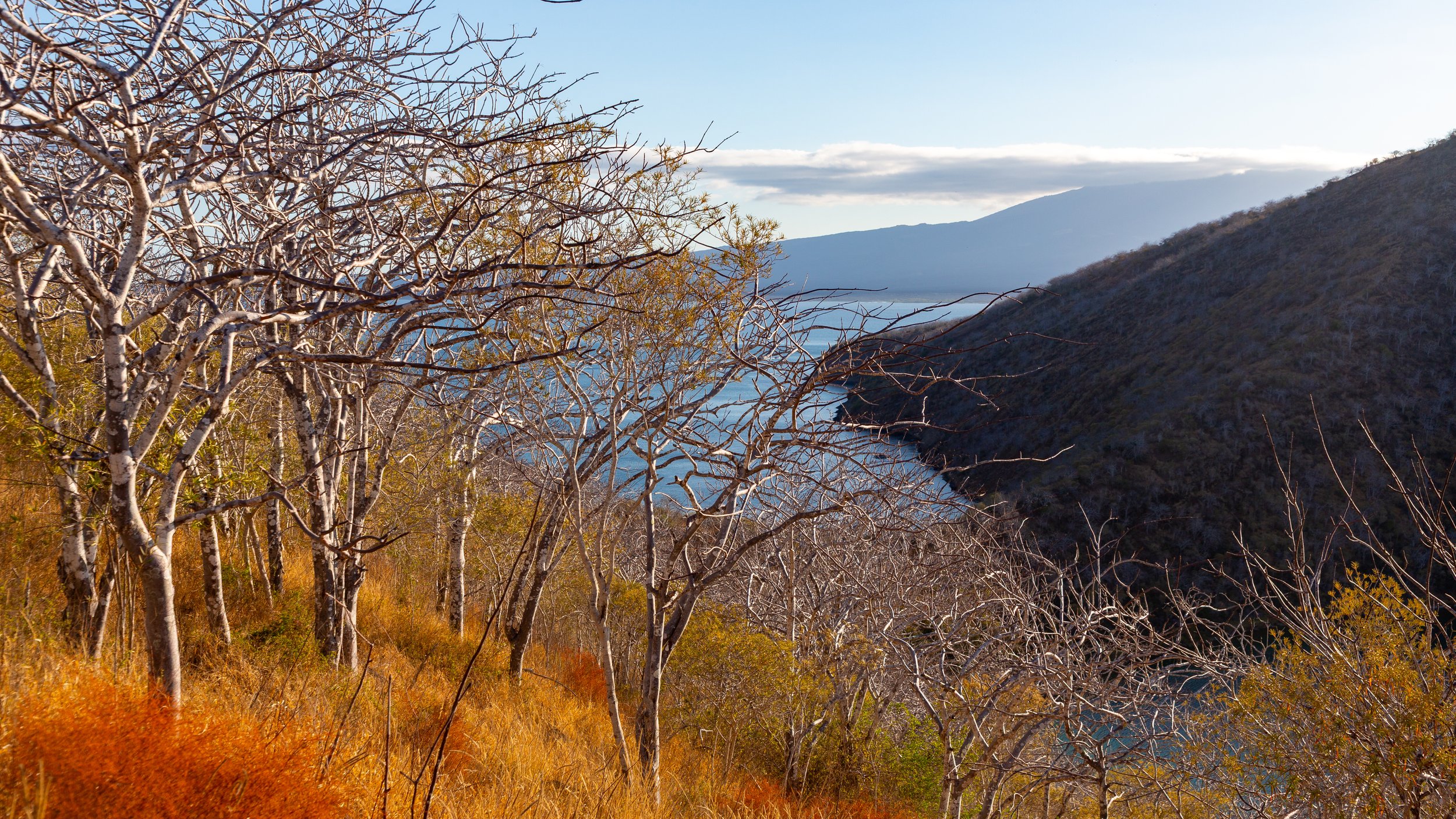
Volcanic tuff and palo santo trees are typical terrain
Looking across from the end of the trail
Zooming into the Galapagos mockingbird
More of the volcanic terrain with one of the many cones
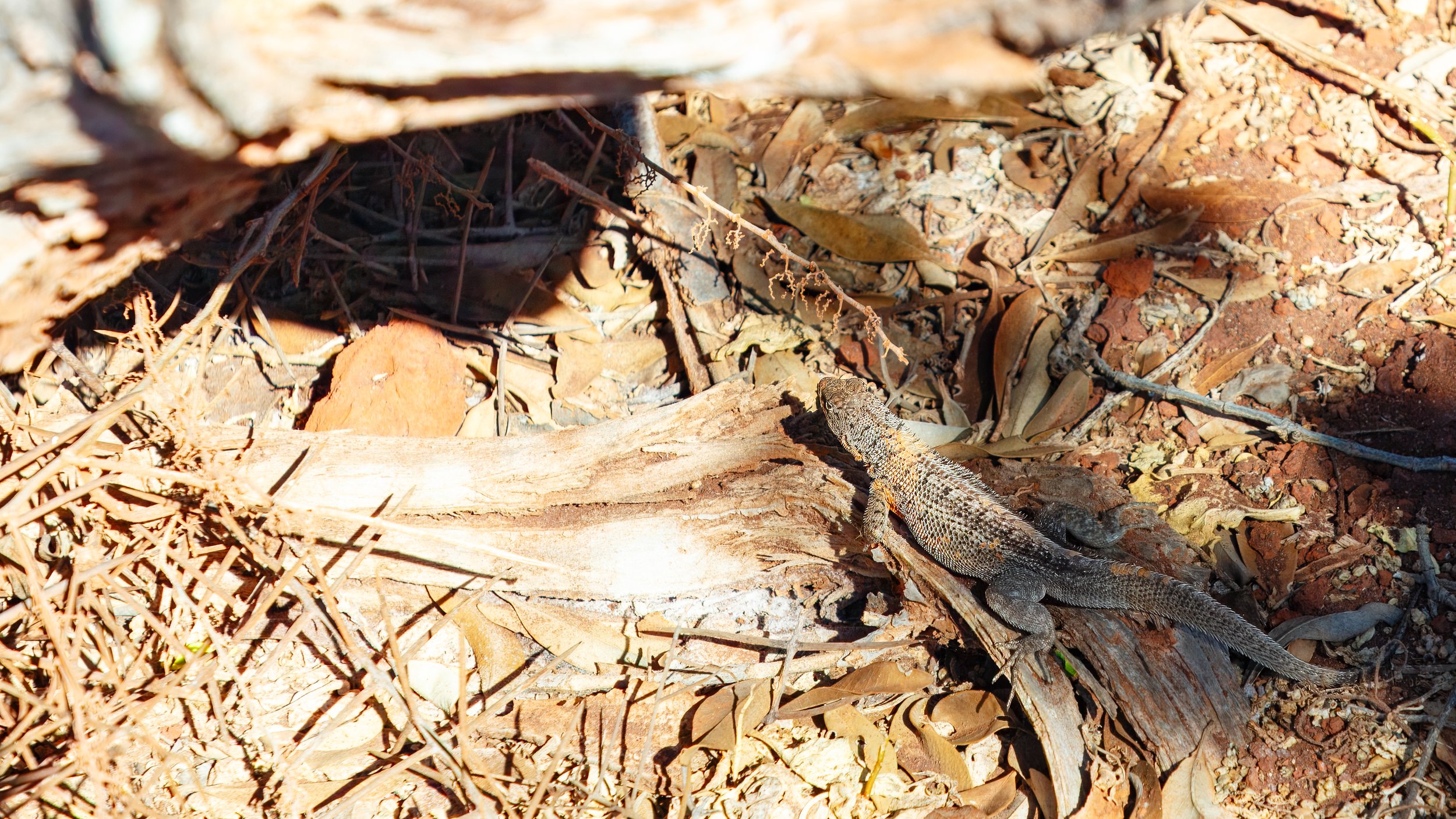
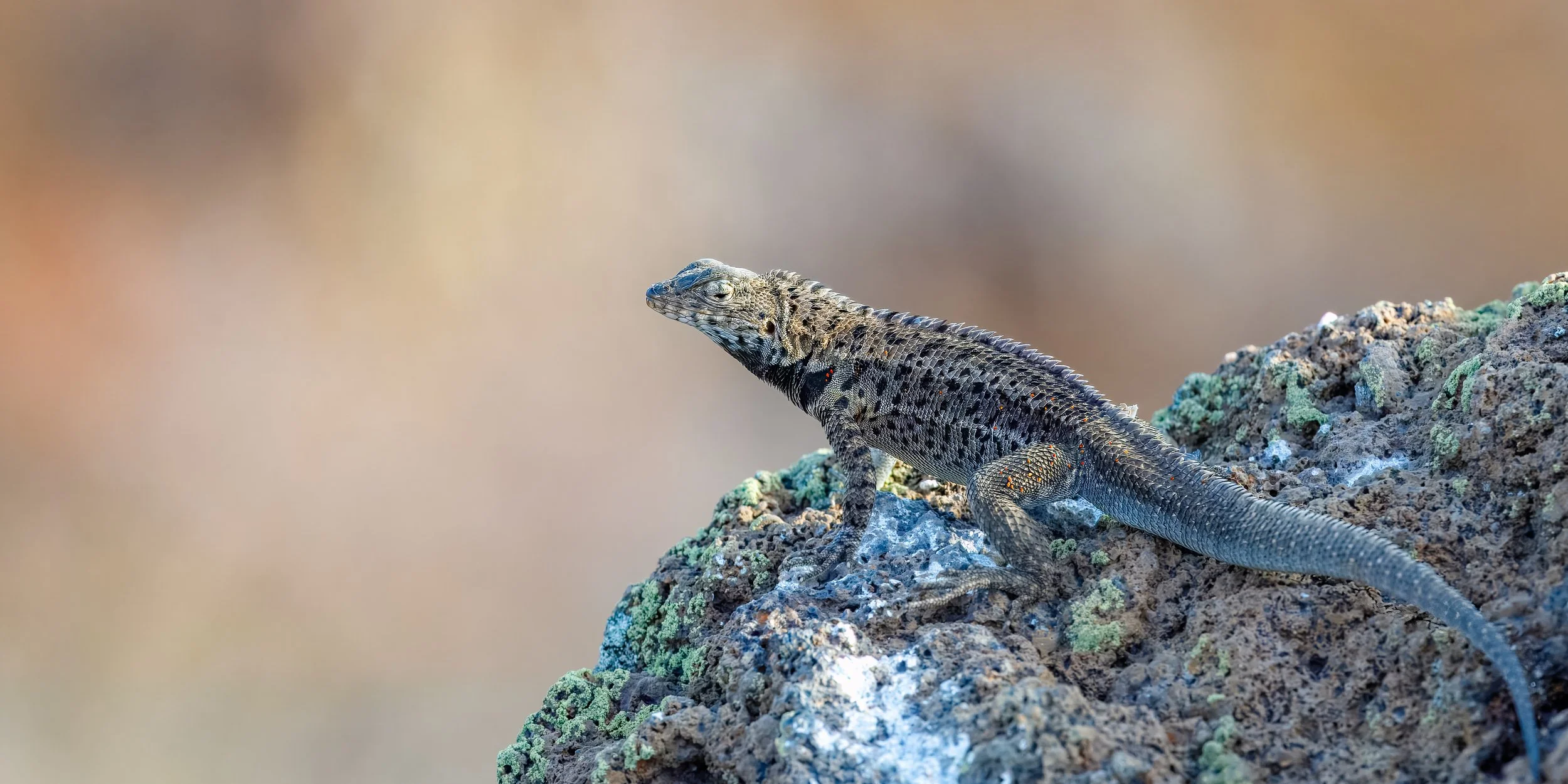
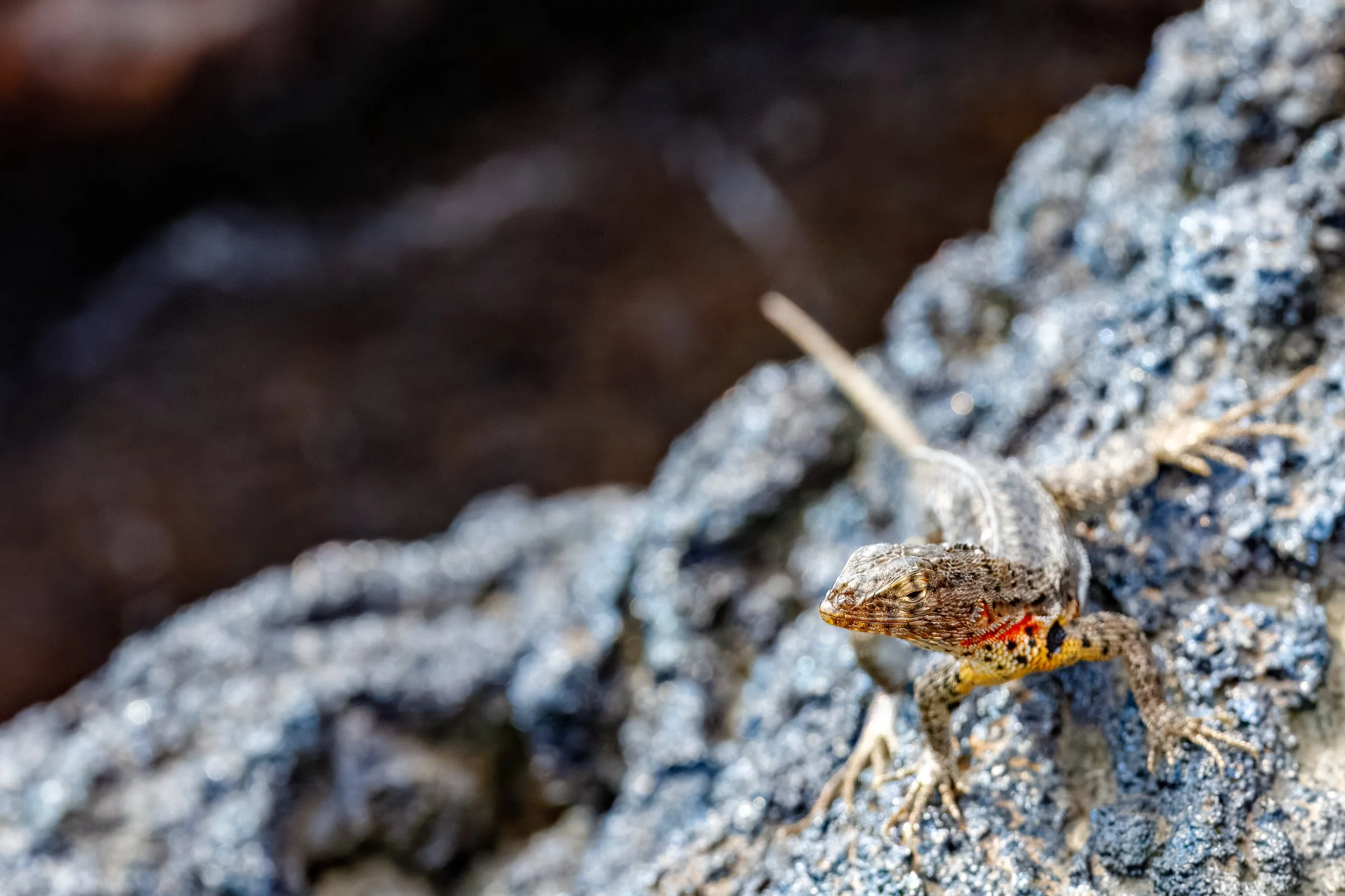
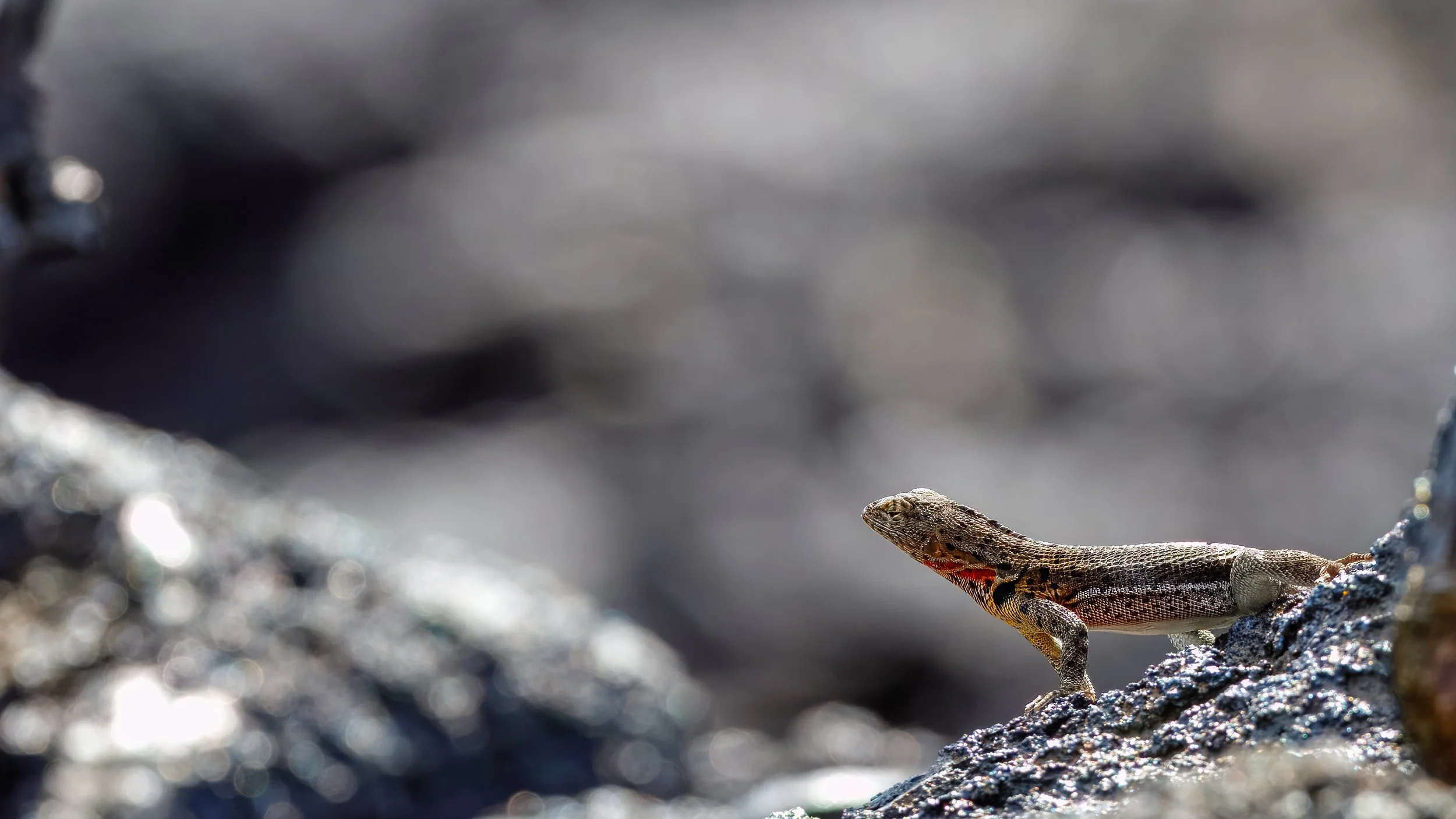
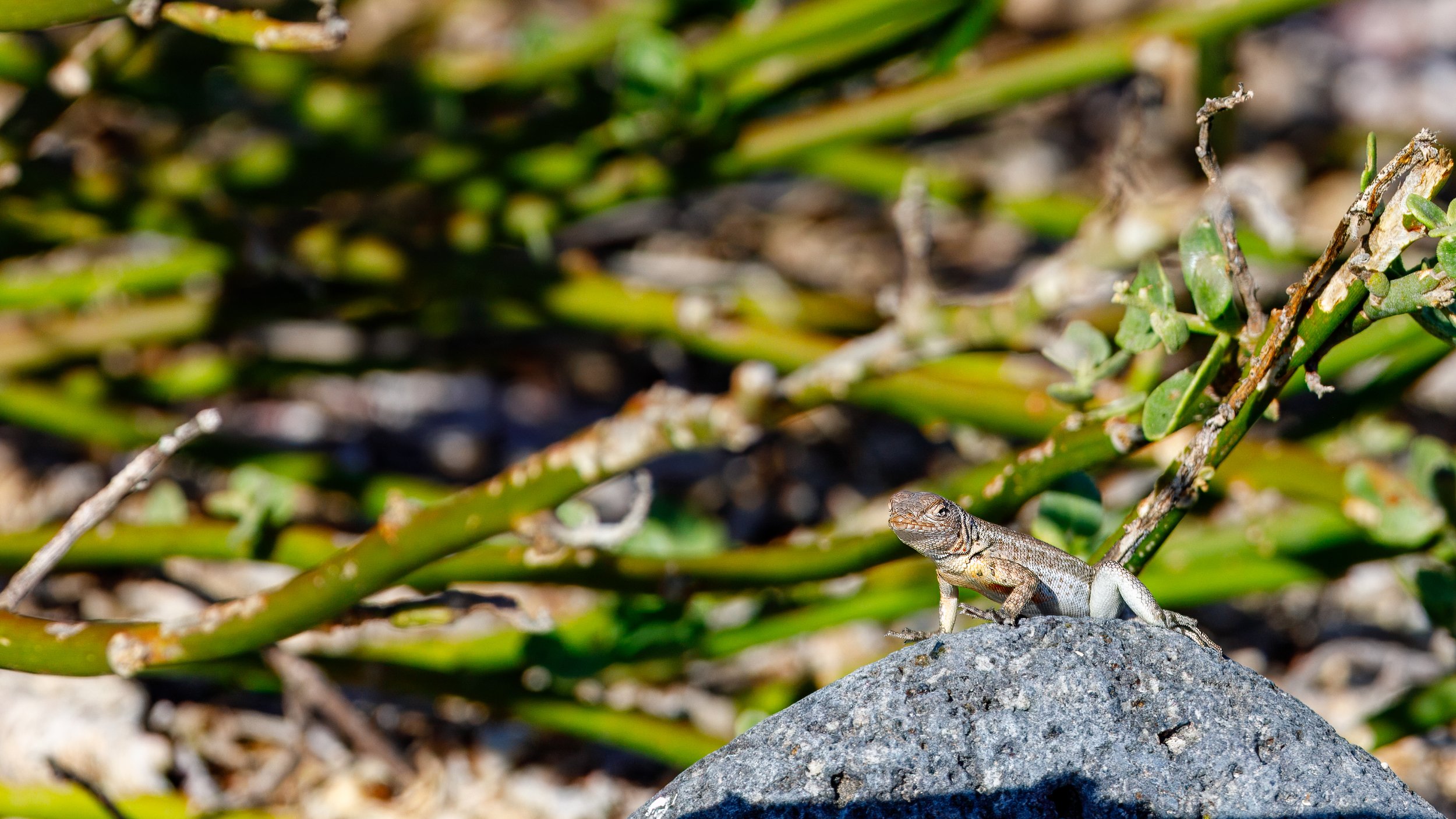
Galapagos lava lizard, endemic to the Galapagos Islands, enjoying basking on volcanic rock
Another beautiful mockingbird shot
Another view of the volcanic lake with Tagus Cove in the background
Our last view of the cove with more of Isabela Island in the background
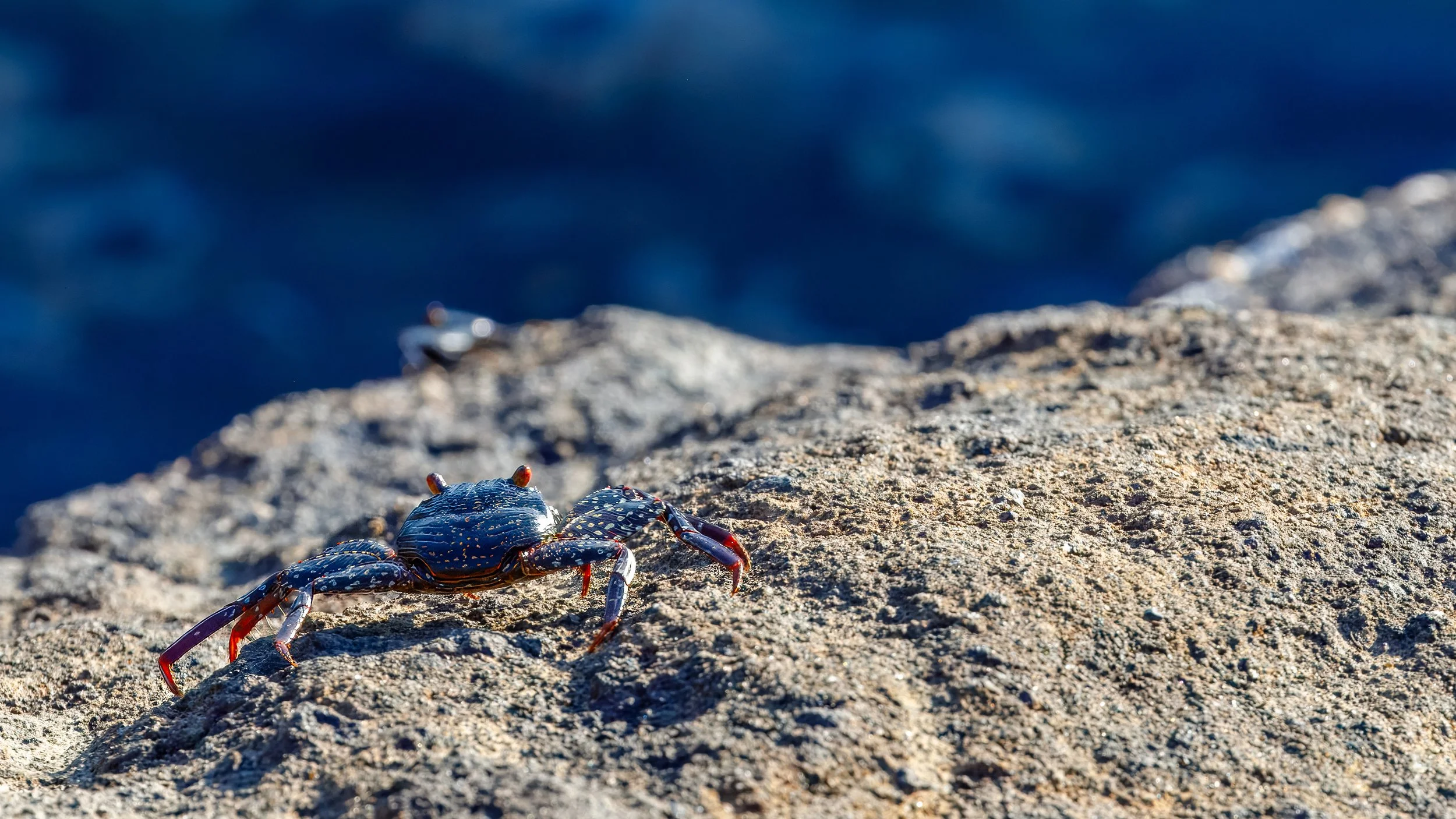
Another Sally Lightfoot crab. Young crabs are dark, to camouflage with black lava rock, before developing the bright red shell
Several flightless cormorants resting on the rocky coastline, restricted to the shores of Isabela and Fernandina islands
Back on the ship, looking back on Isabela Island before heading out
Although we had crossed the equator twice the previous day, they formally announced our evening crossing that night as we head back north
Isabela Island was the turnaround point for our Inner Loop tour as the furthest location. Although we had done it the night before, having just recently straddled the border near Quito and having flown over it many times, it was nice to formally acknowledge the new experience of an equatorial crossing over the ocean. It would have been nice to call out the moment as we were enjoying dinner and not paying attention to the exact crossing time.
Oct 1 - morning
After our longest overnight journey, we returned to Santiago Island, this time on the east coast at Sullivan Bay. After breakfast, we headed out for our excursion, the longer walk on the lava.
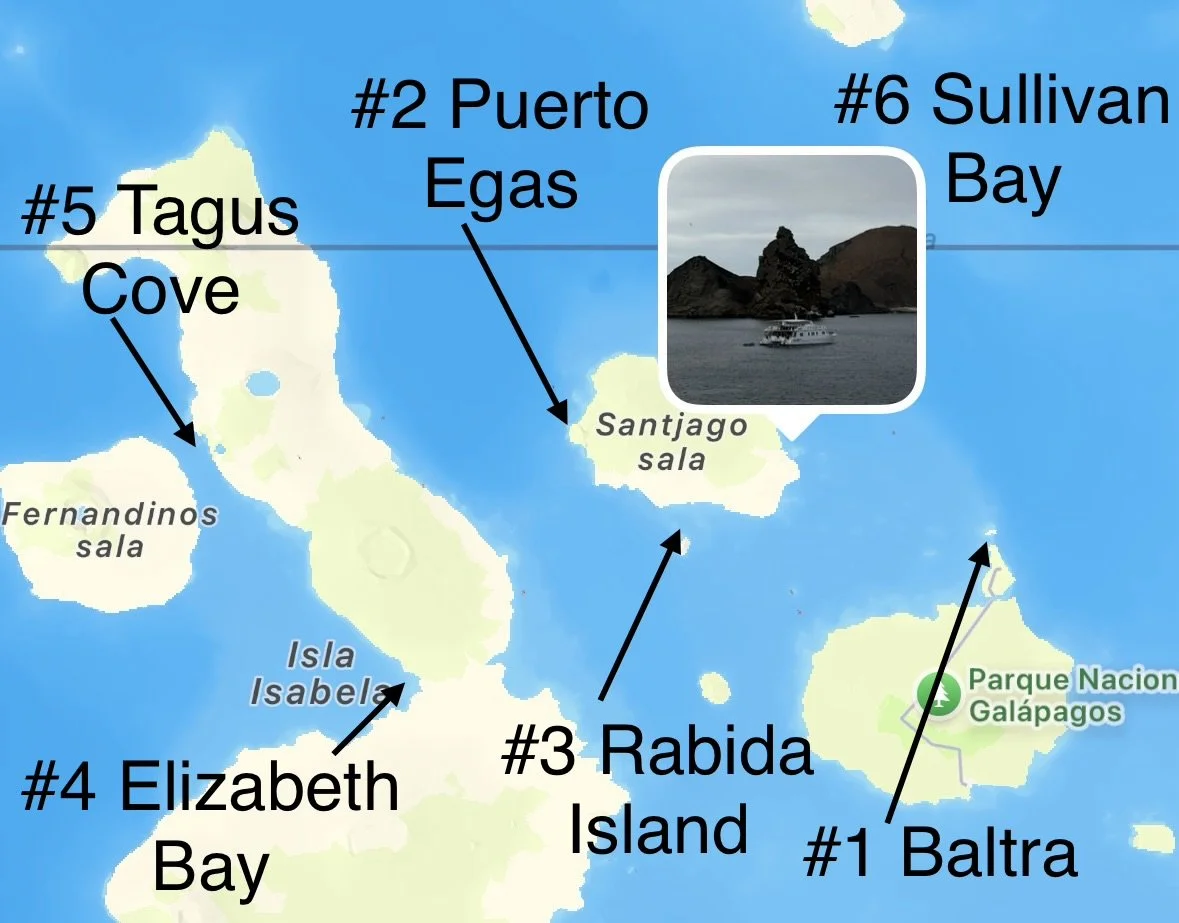
Showing all of our docking locations we are almost back to where we started
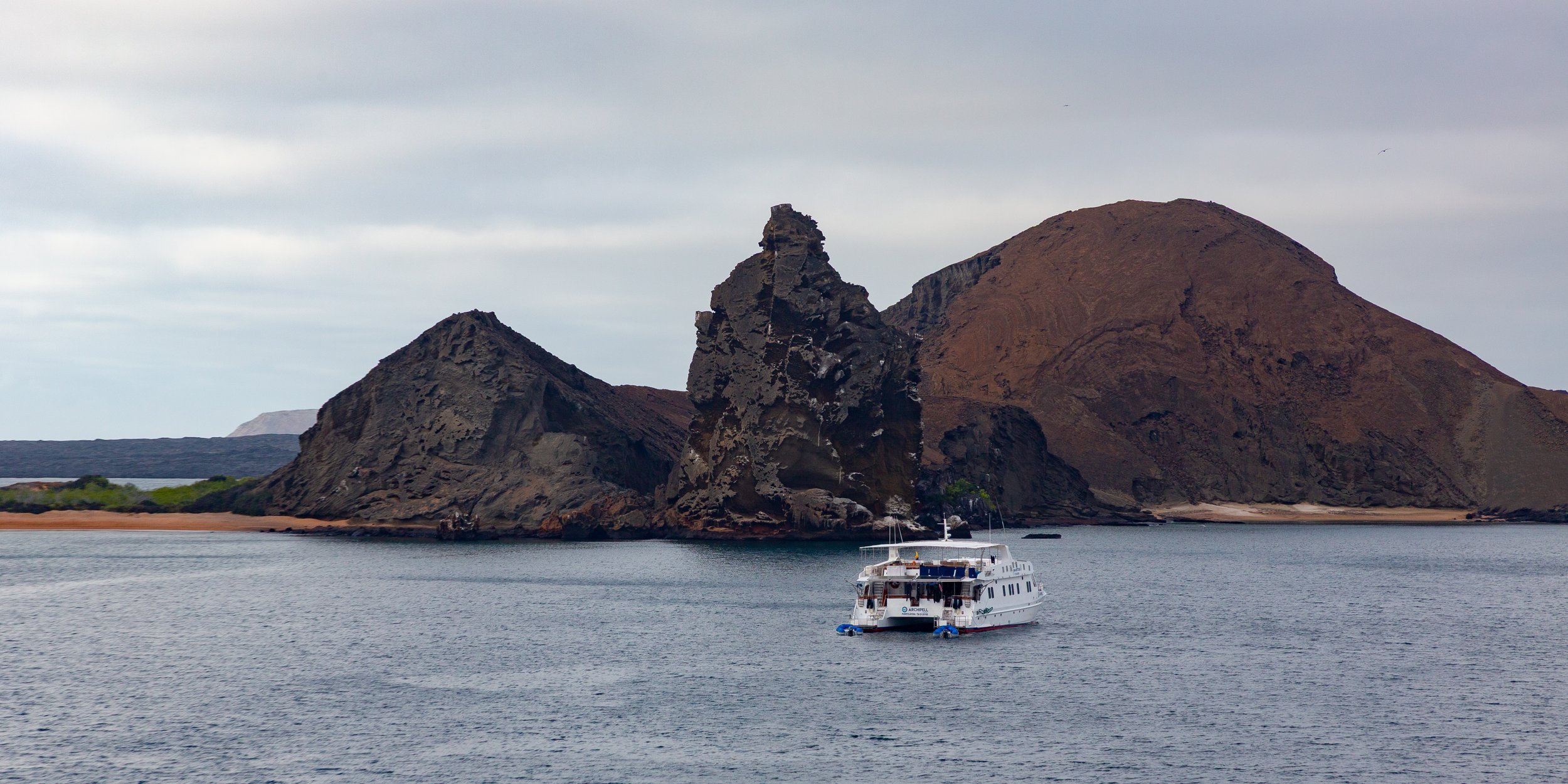
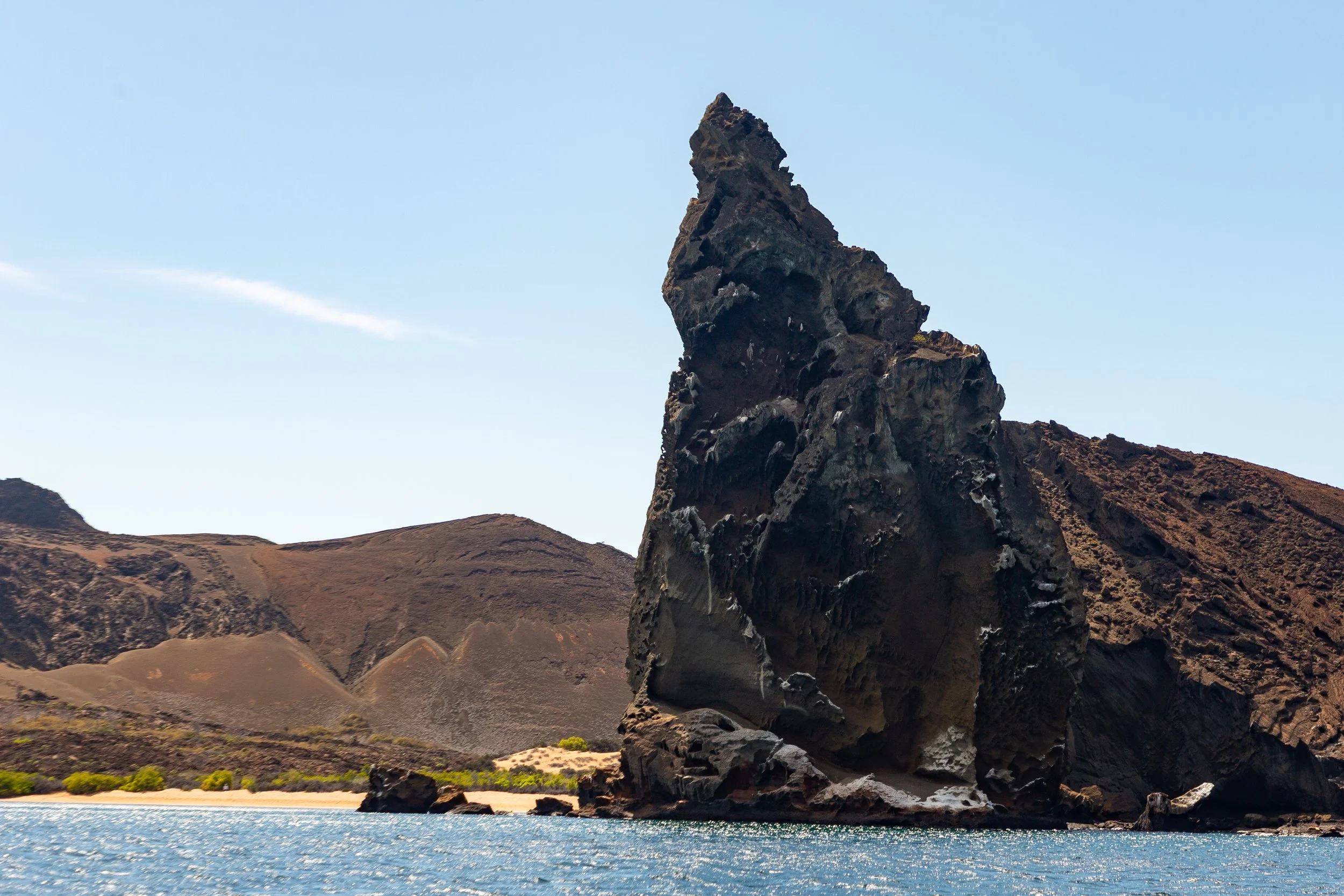
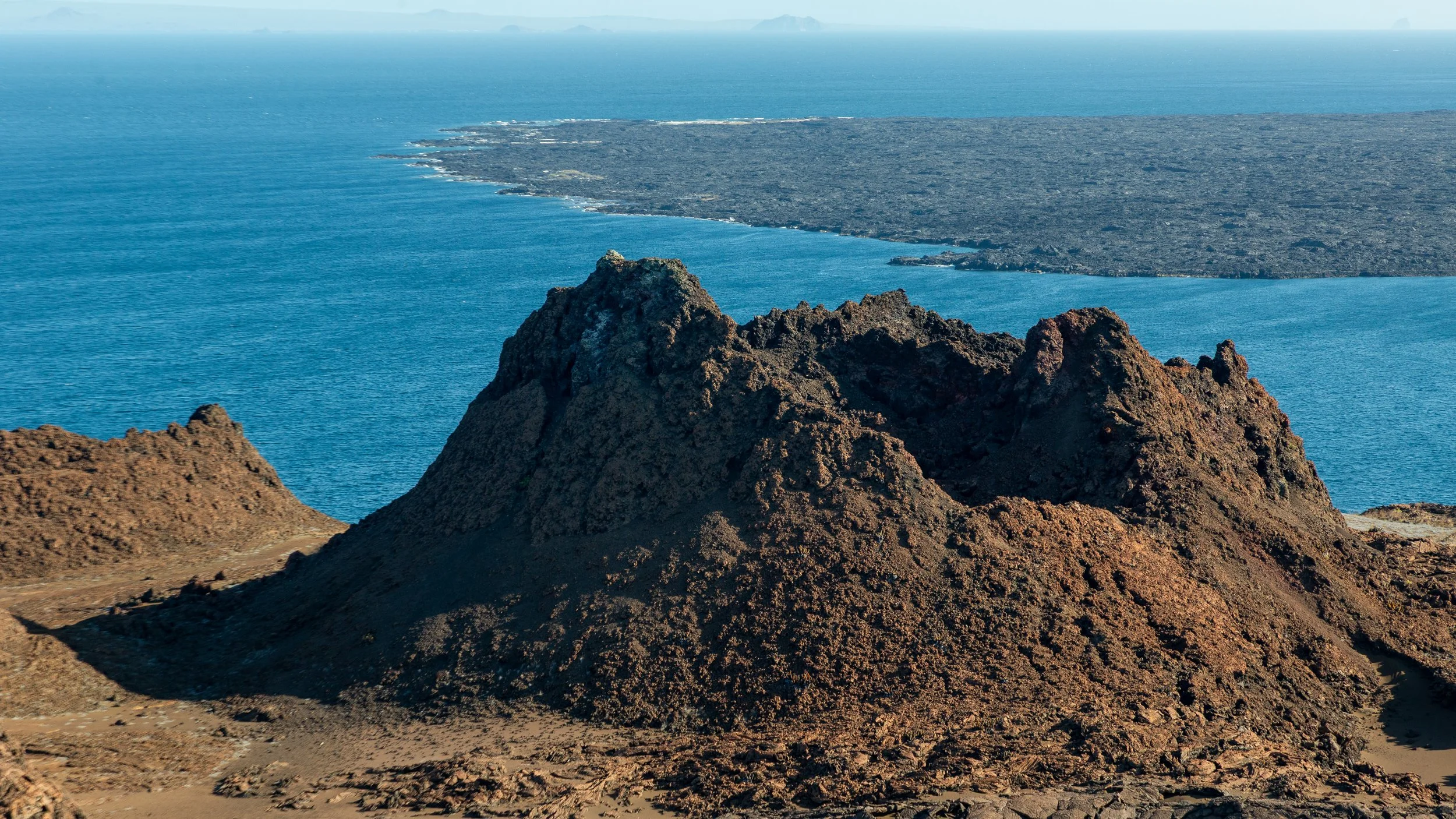
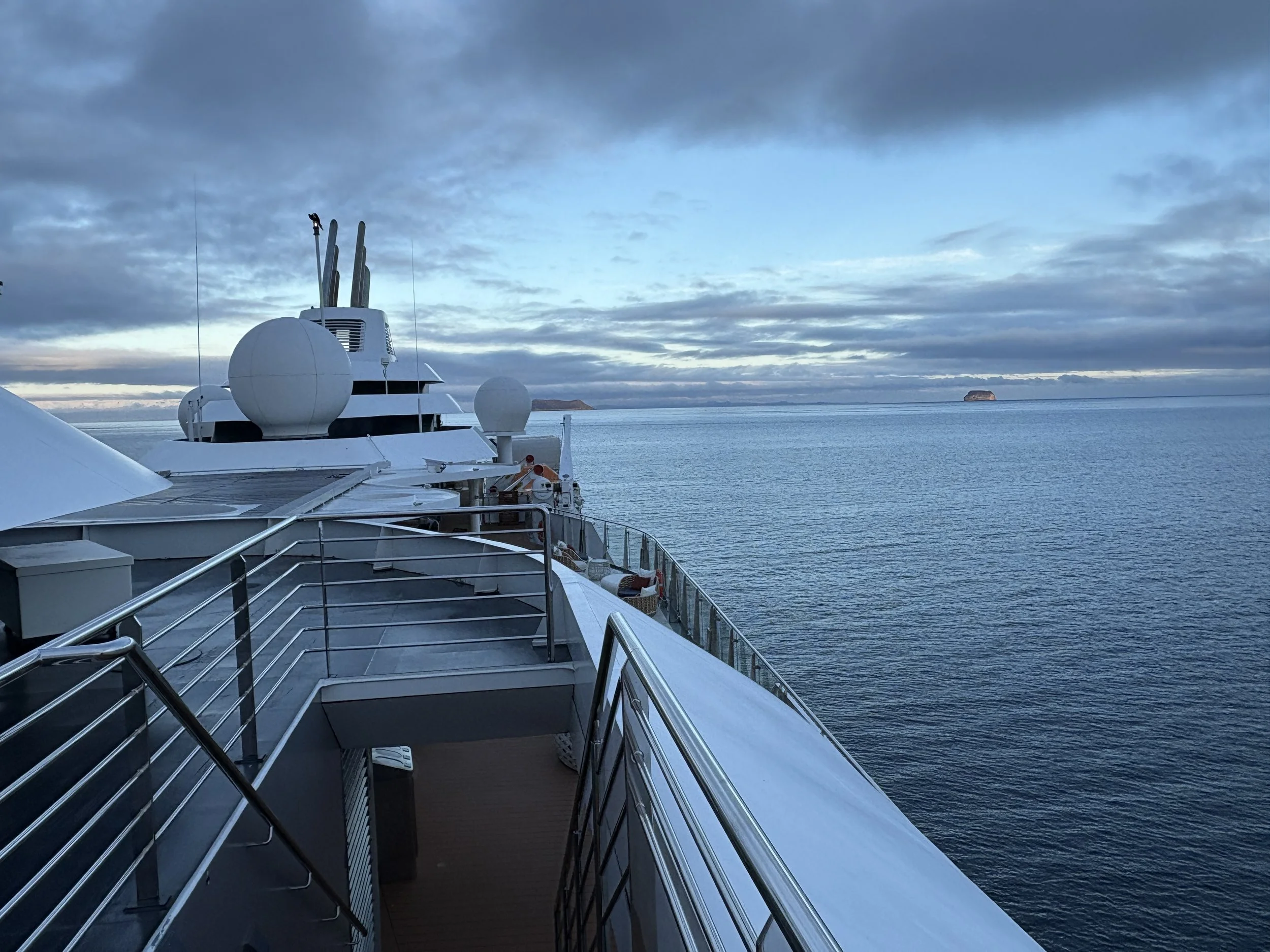
From our anchoring position, we got a preview of Pinnacle Rock on Bartolomé Island, our afternoon destination
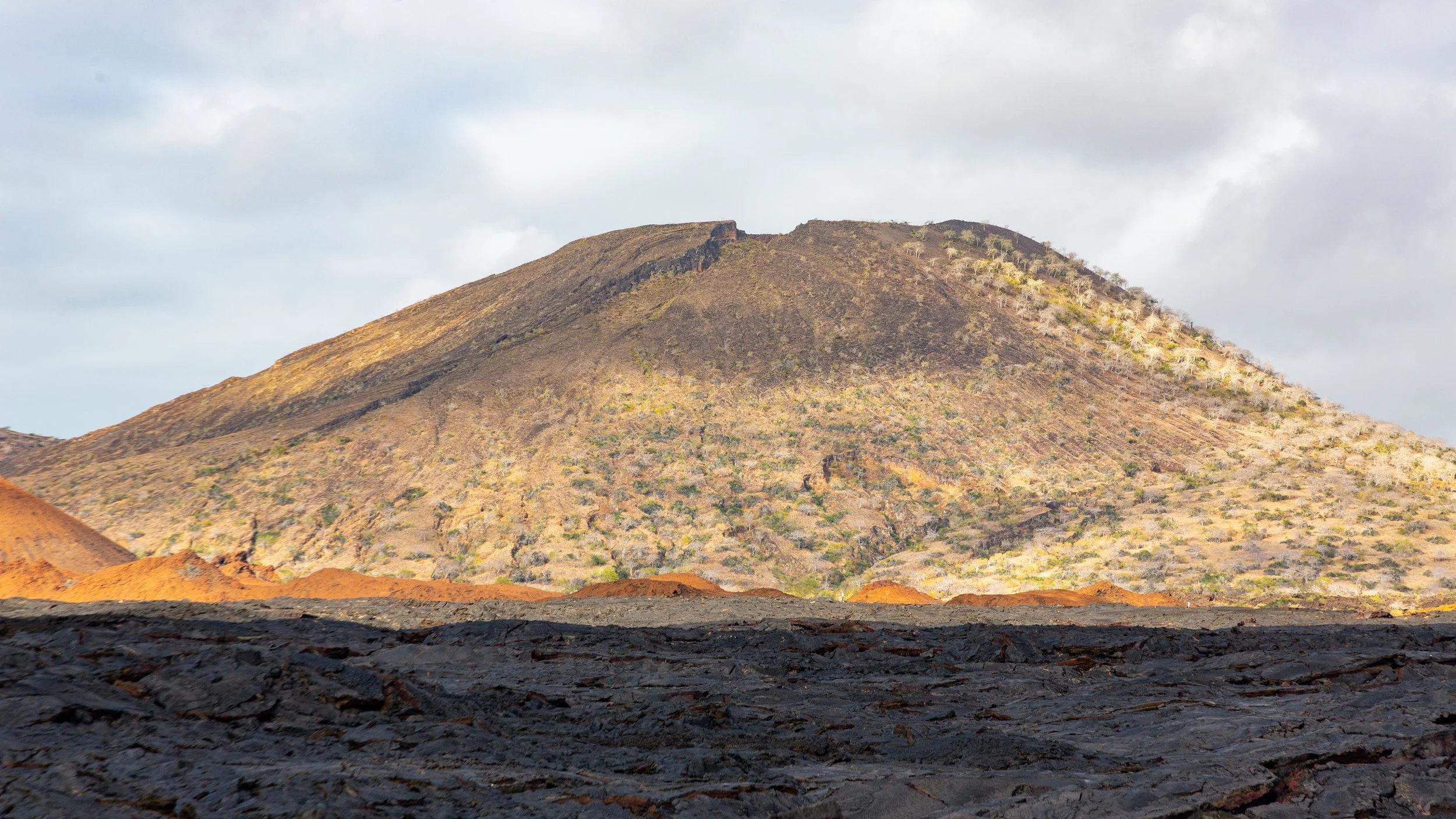
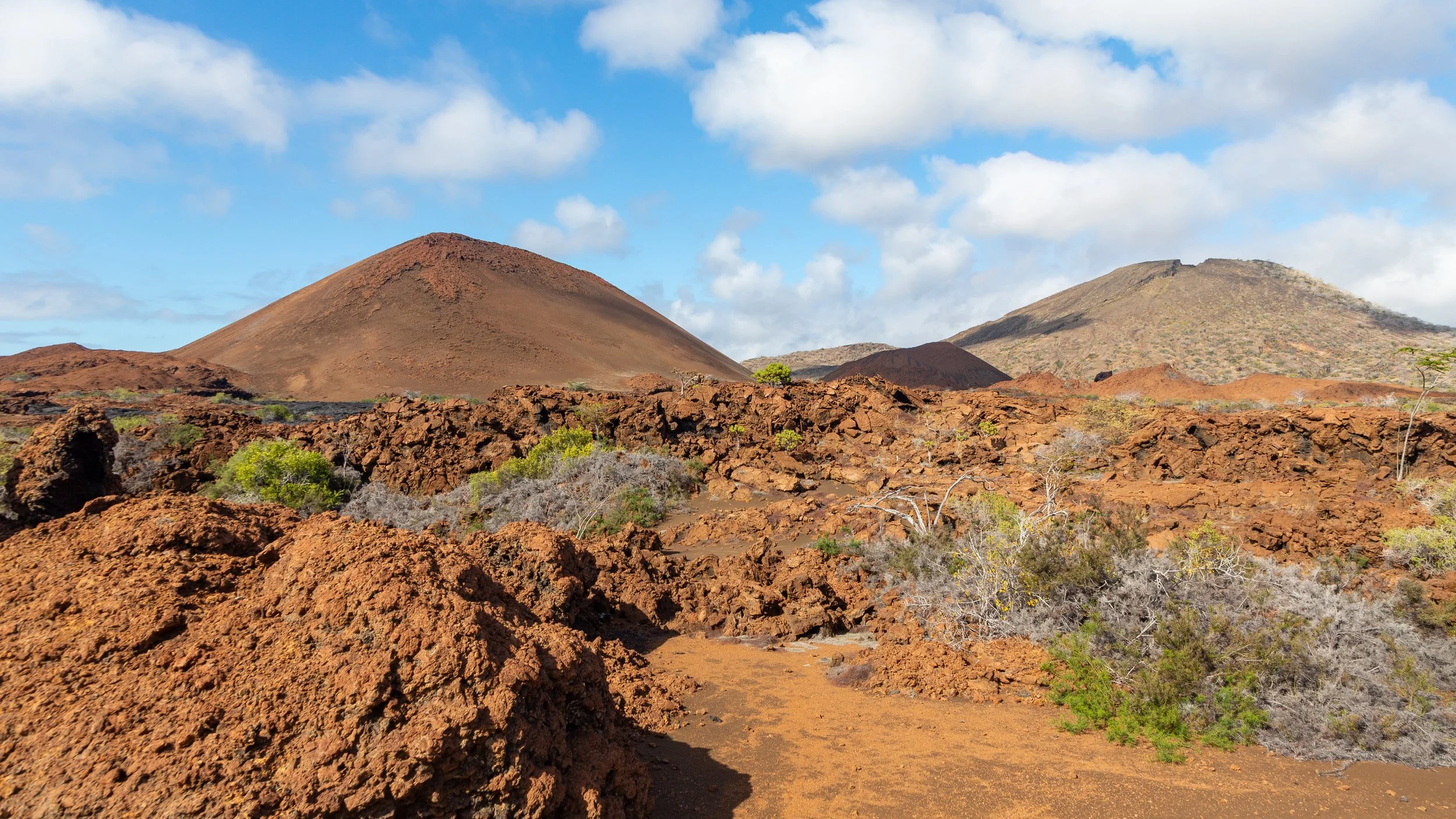
One of numerous cinder cones on the east coast of Santiago Island
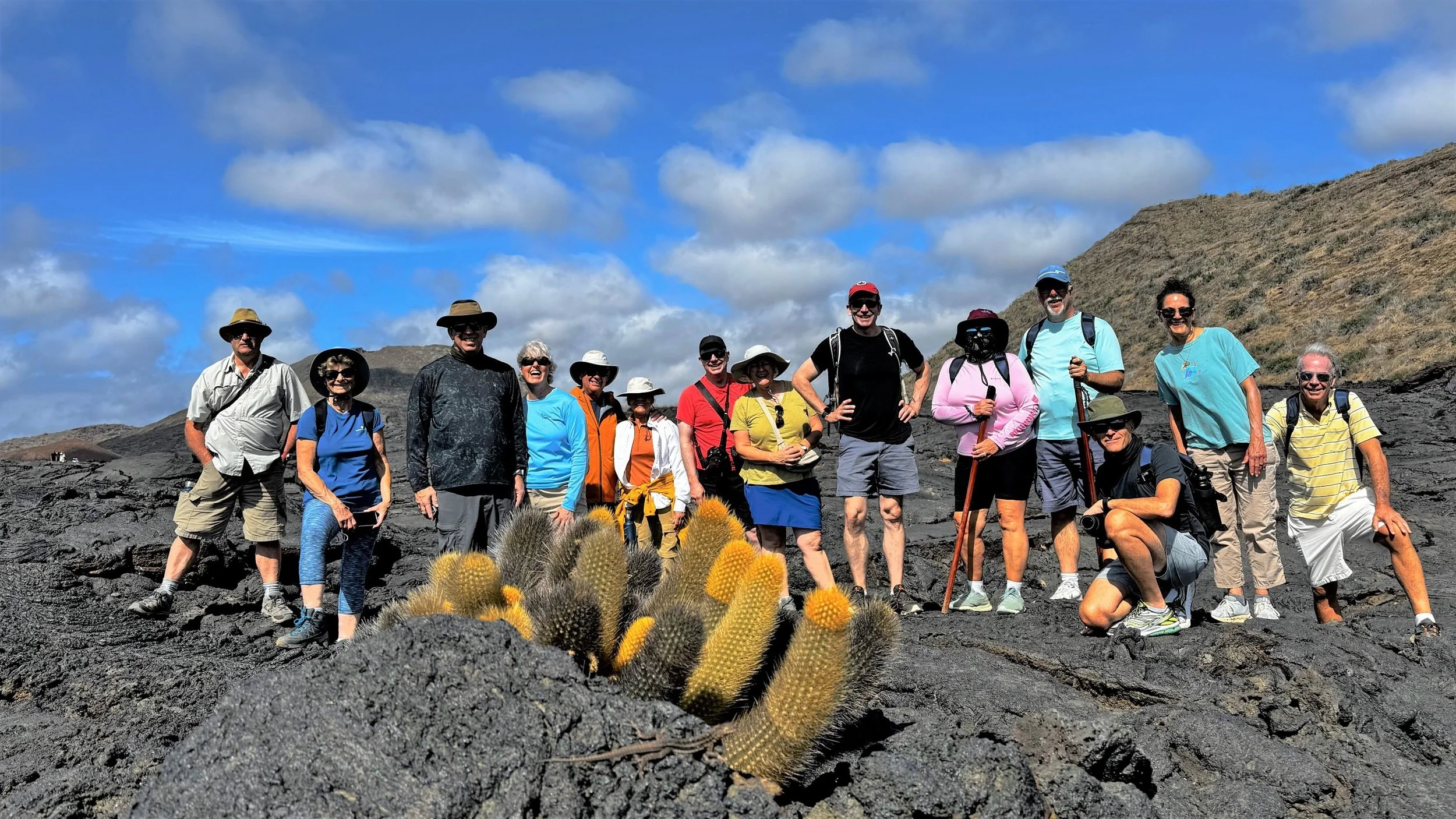
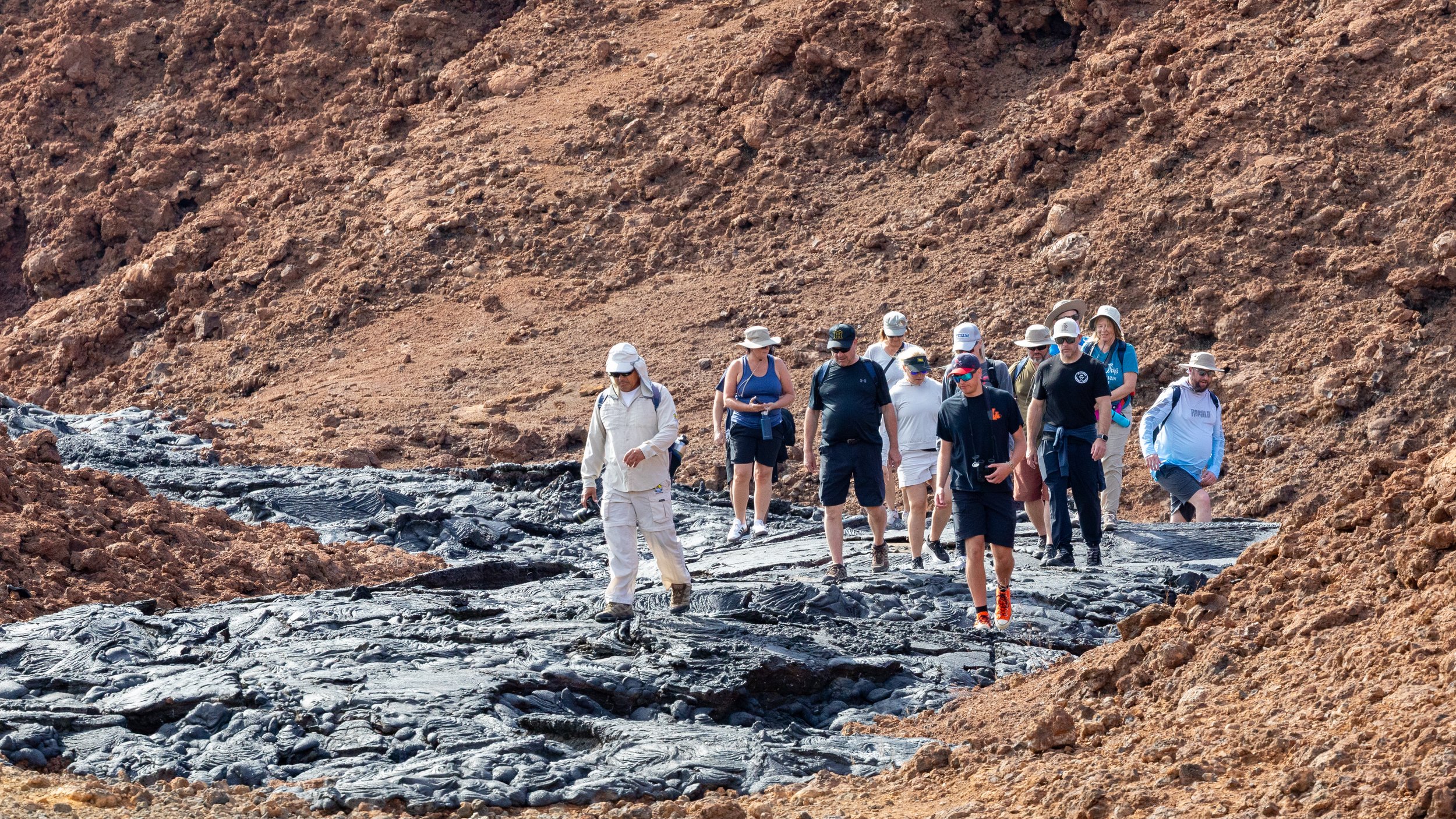
Our crew of lava-walk hikers
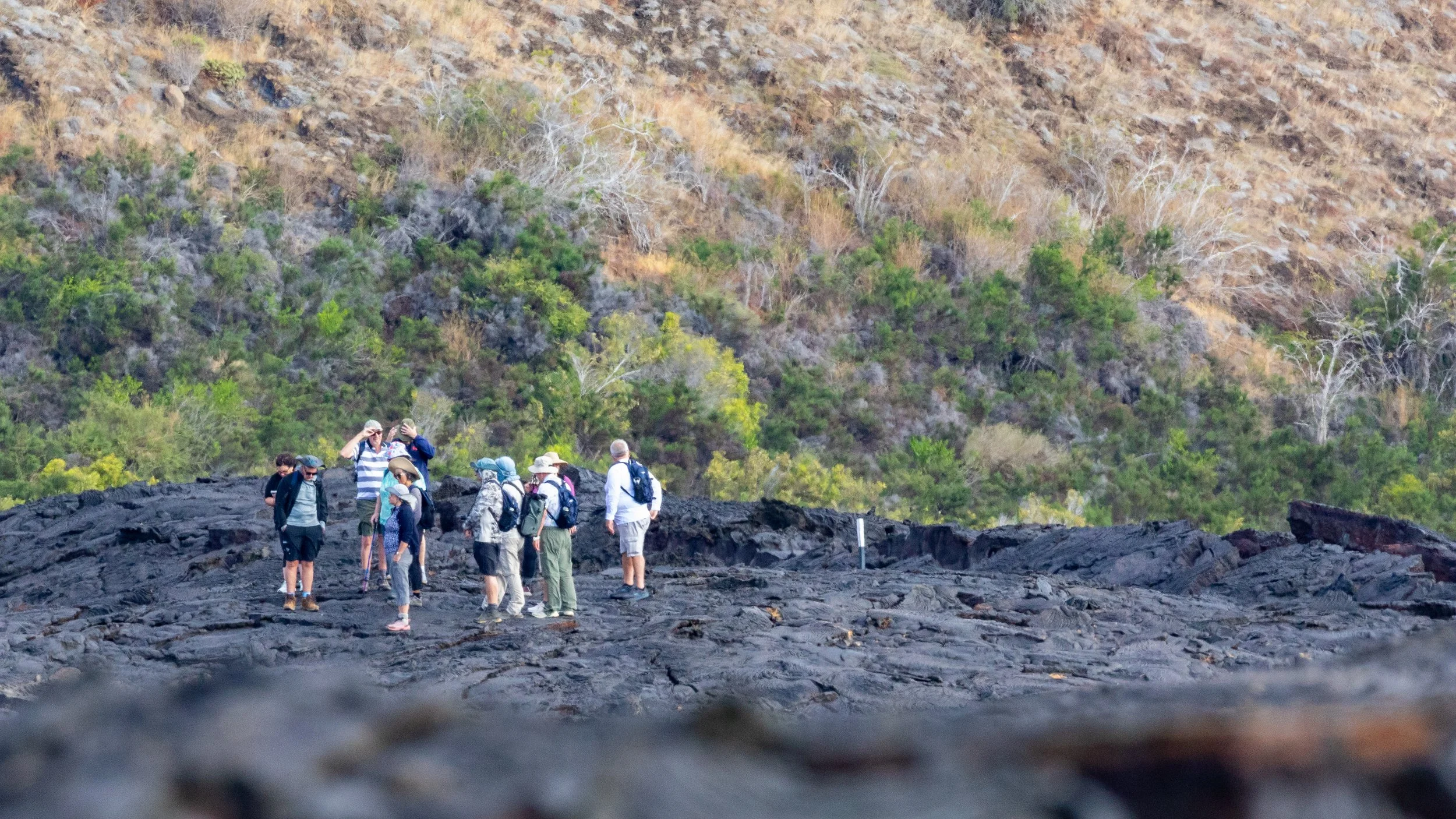
One of the other tourist groups exploring the smooth pahoehoe lava
Zooming into the lava flow
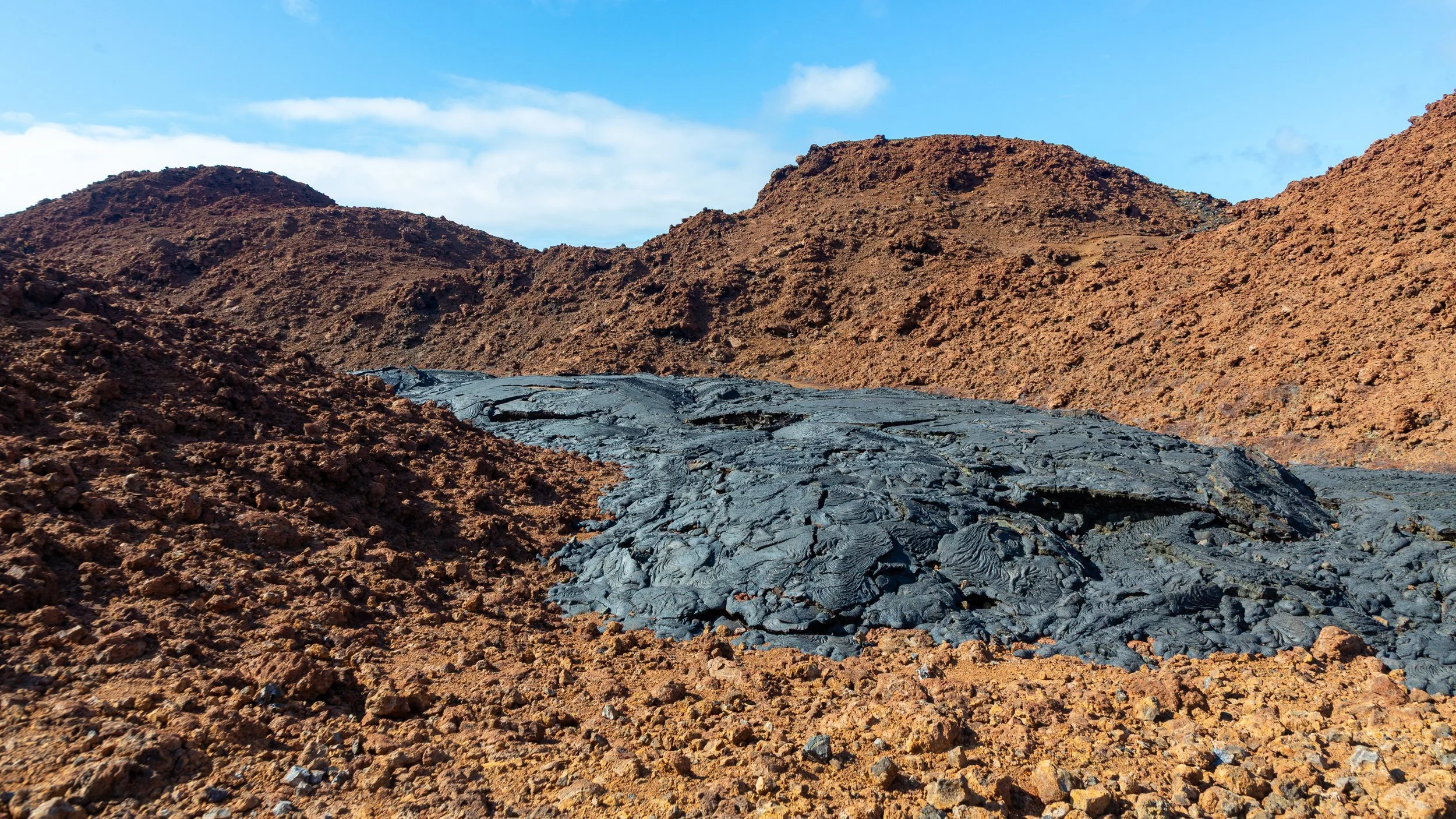
Combined terrain shows the different stages of volcanic activity on the island
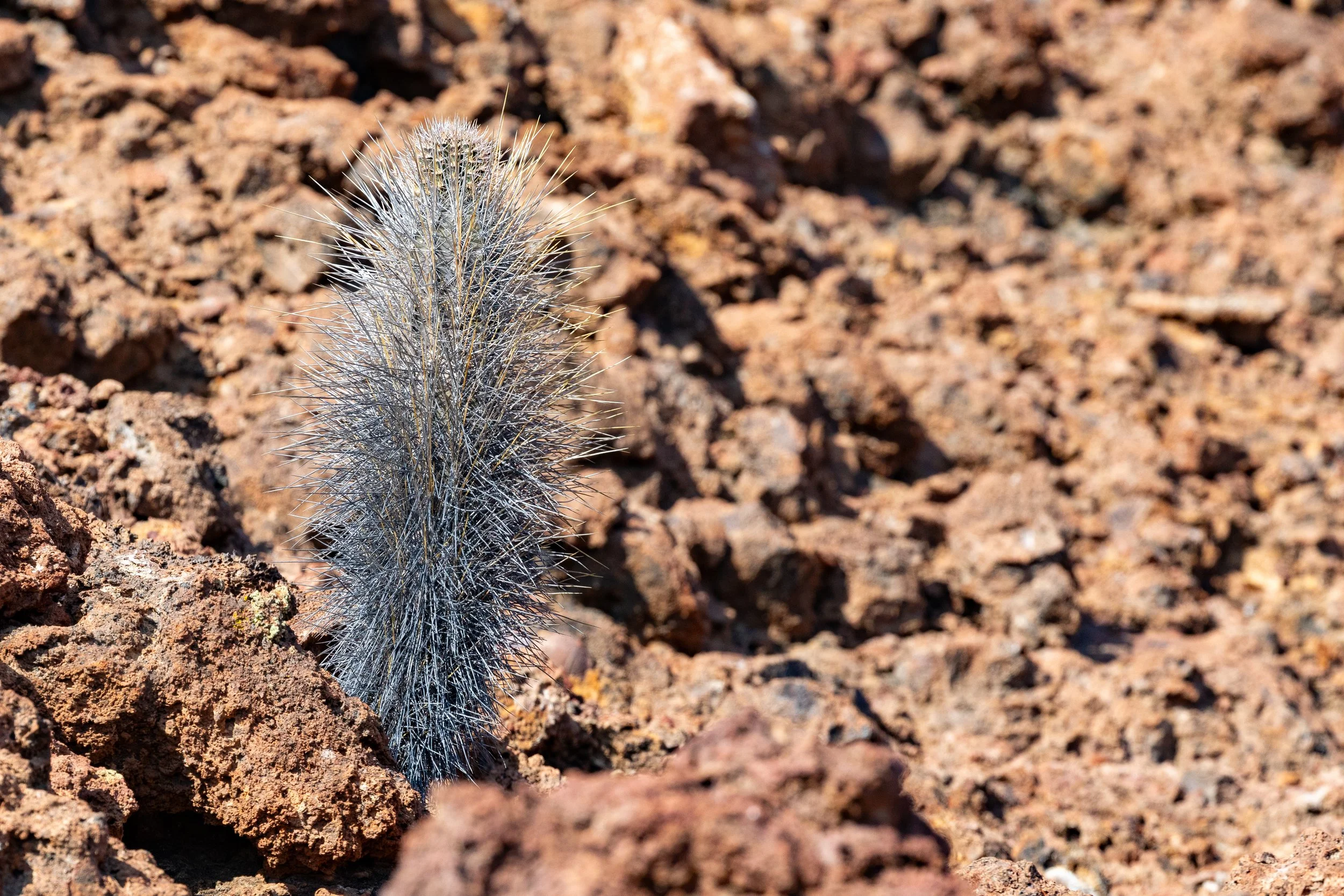
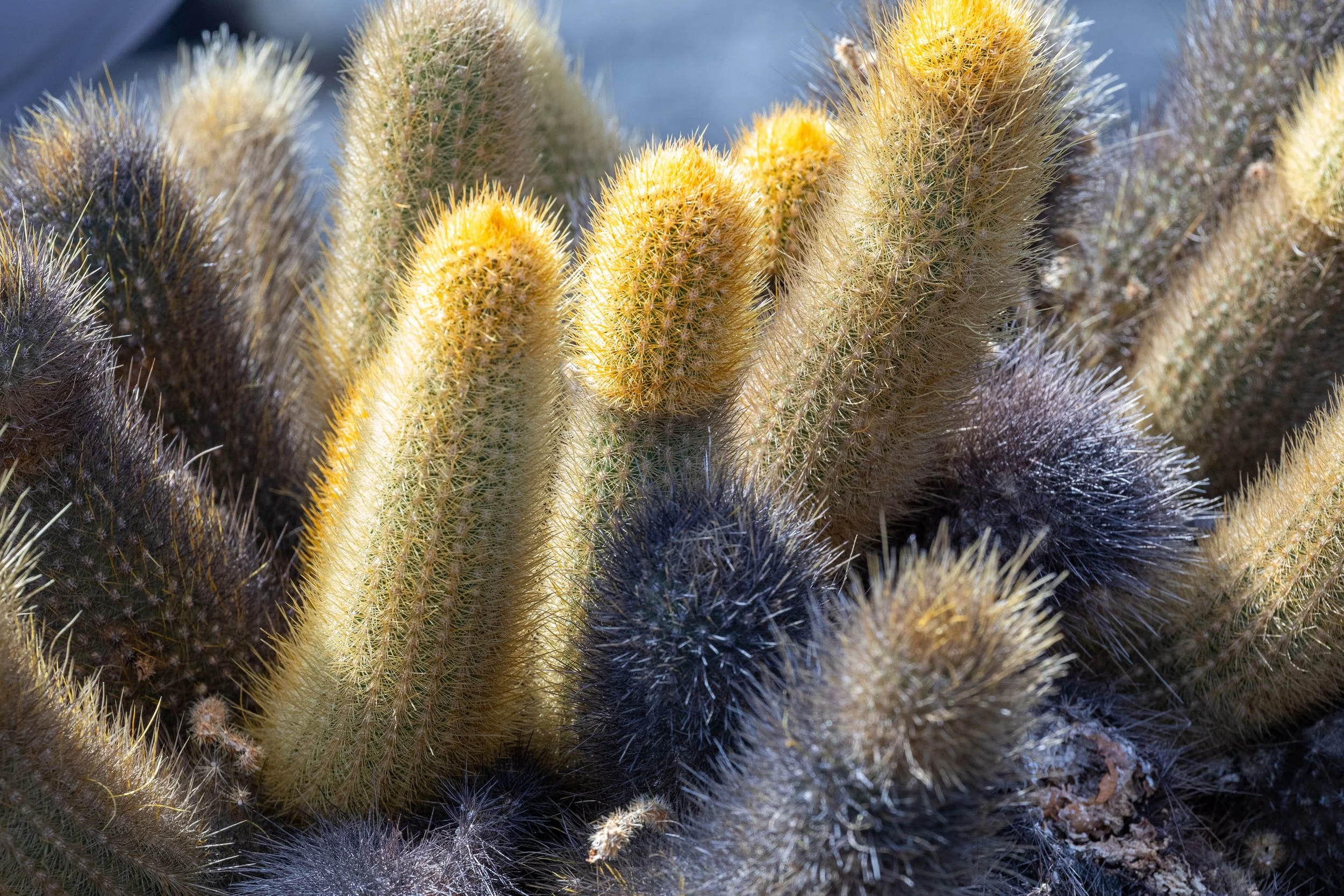
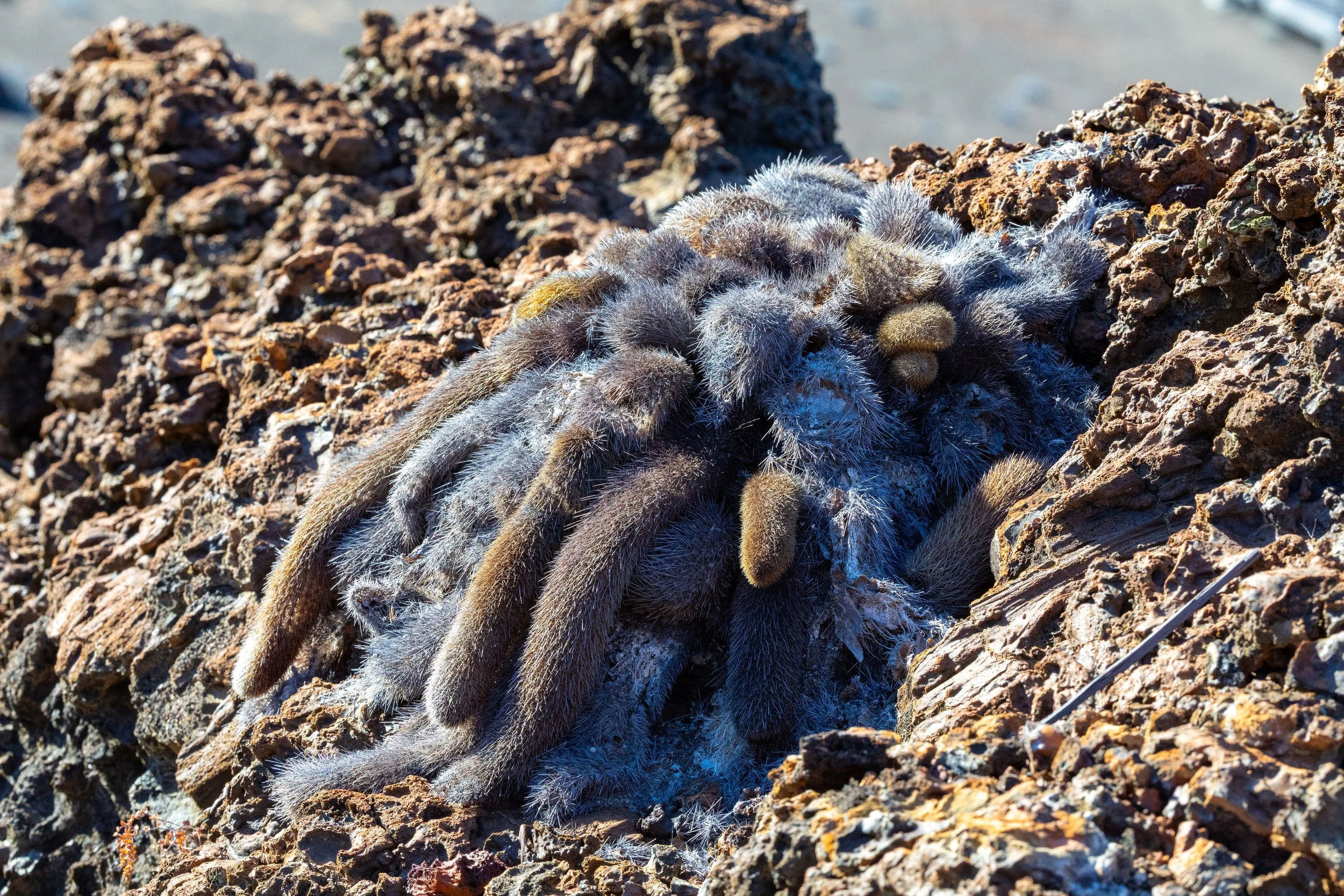
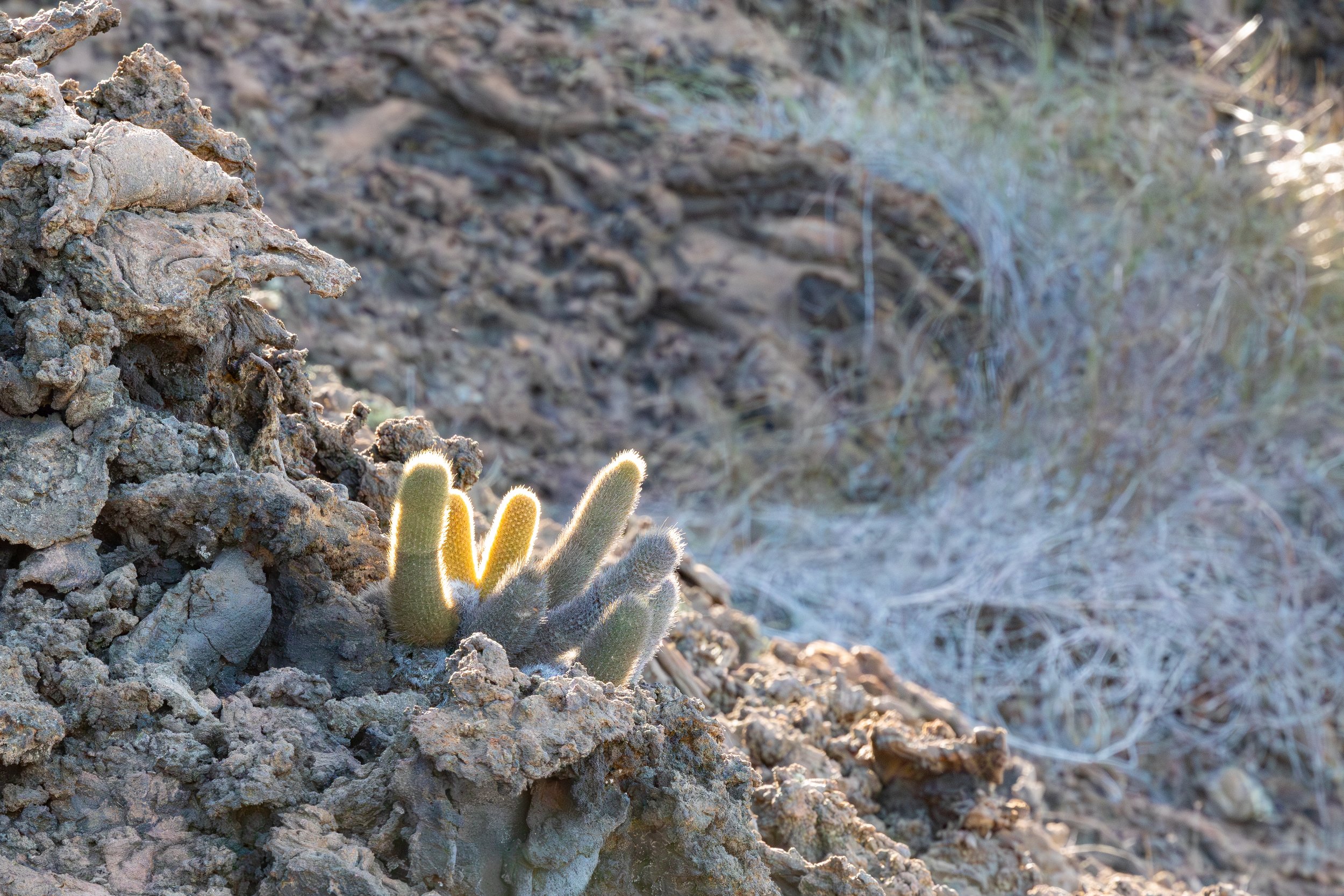
The lava cactus, unique to the Galápagos Islands, is one of the first pioneers to settle among the lava rocks
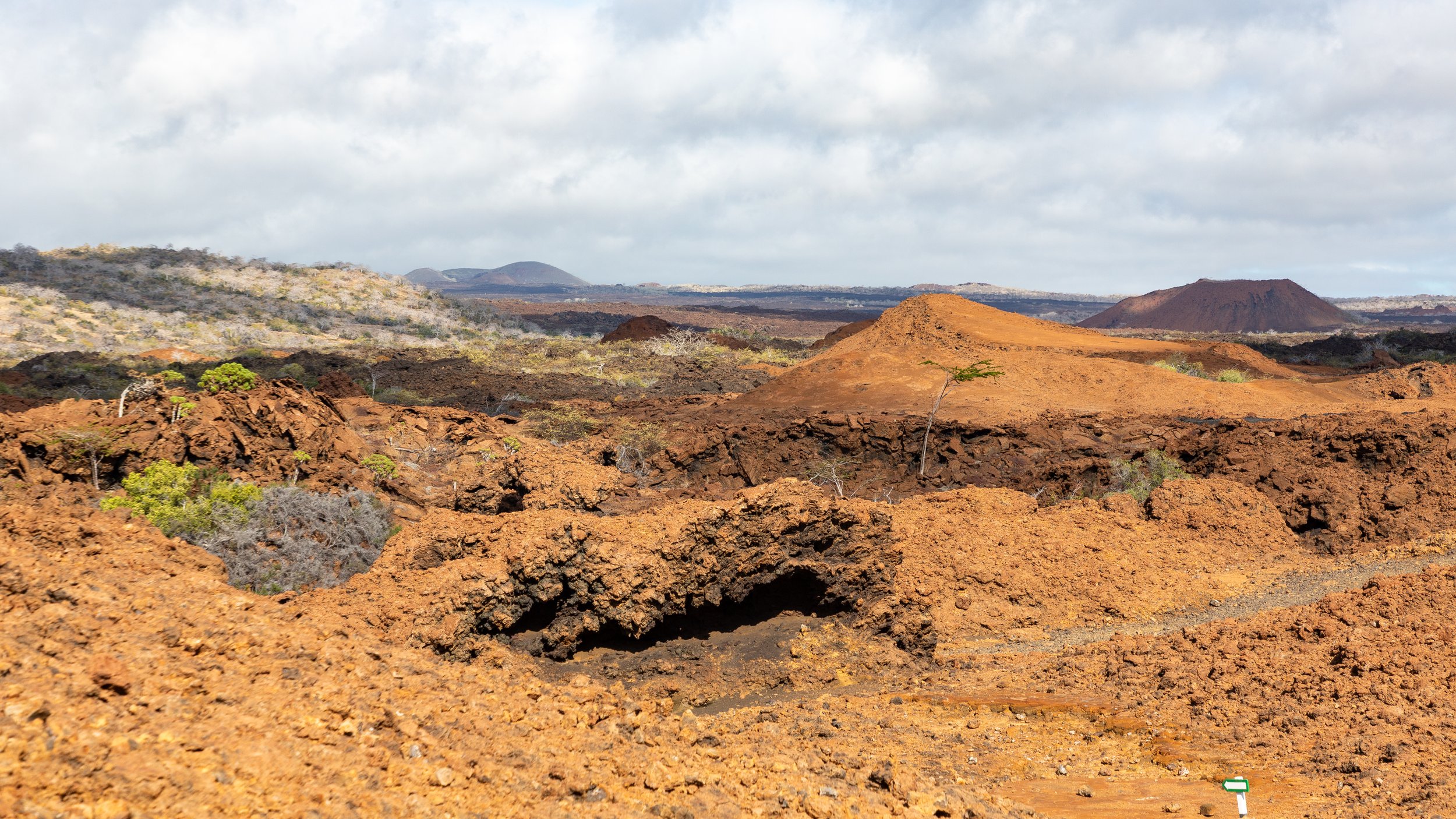
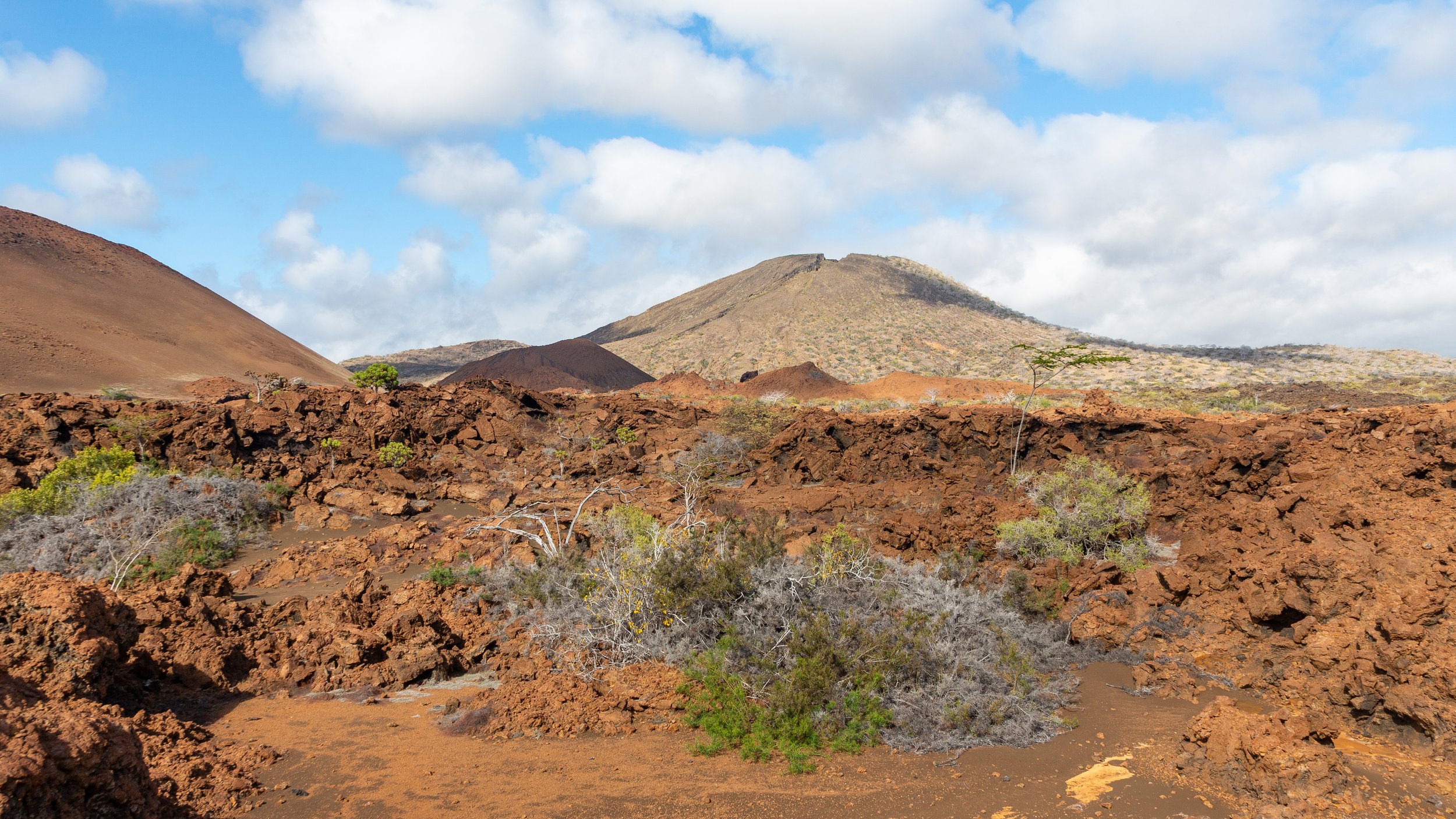
Surveying the varied uninhabited terrain
Seeing the mixture of dormant and active vegetation
Blue skies contrasting with the browns and greys
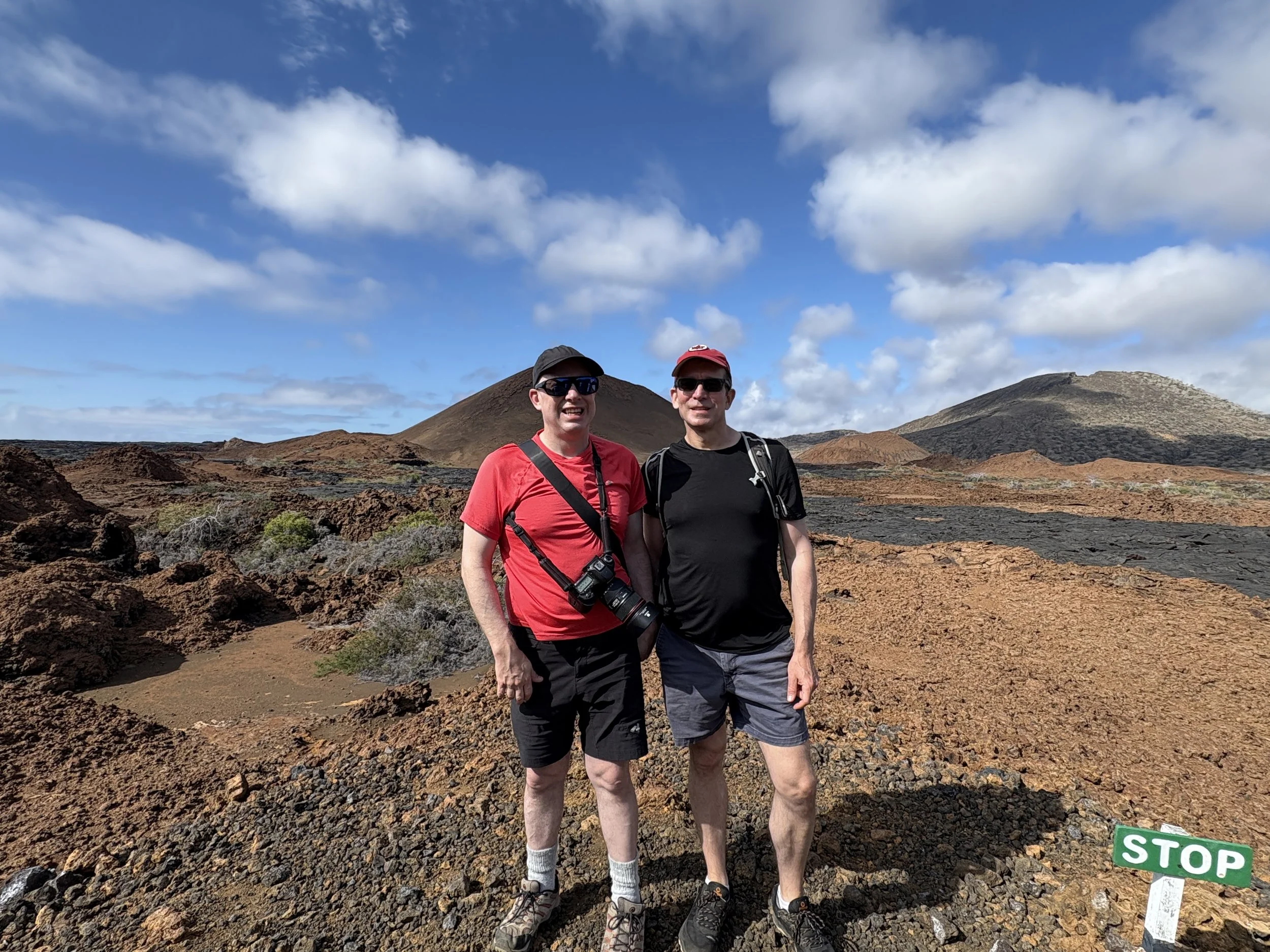
Staying just inside the stop line
Another group following behind
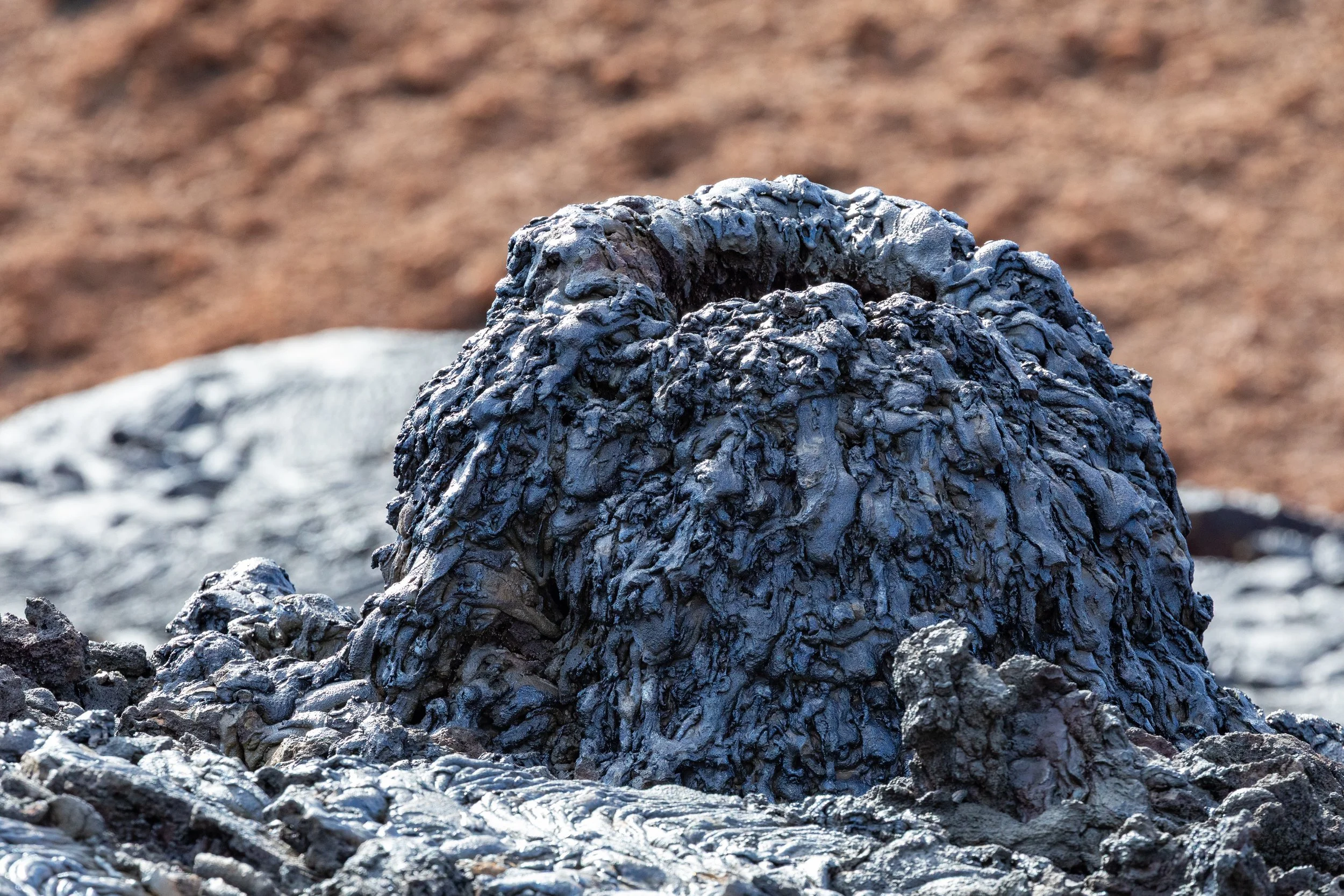
A spatter cone, a type of small, steep-sided volcanic cone
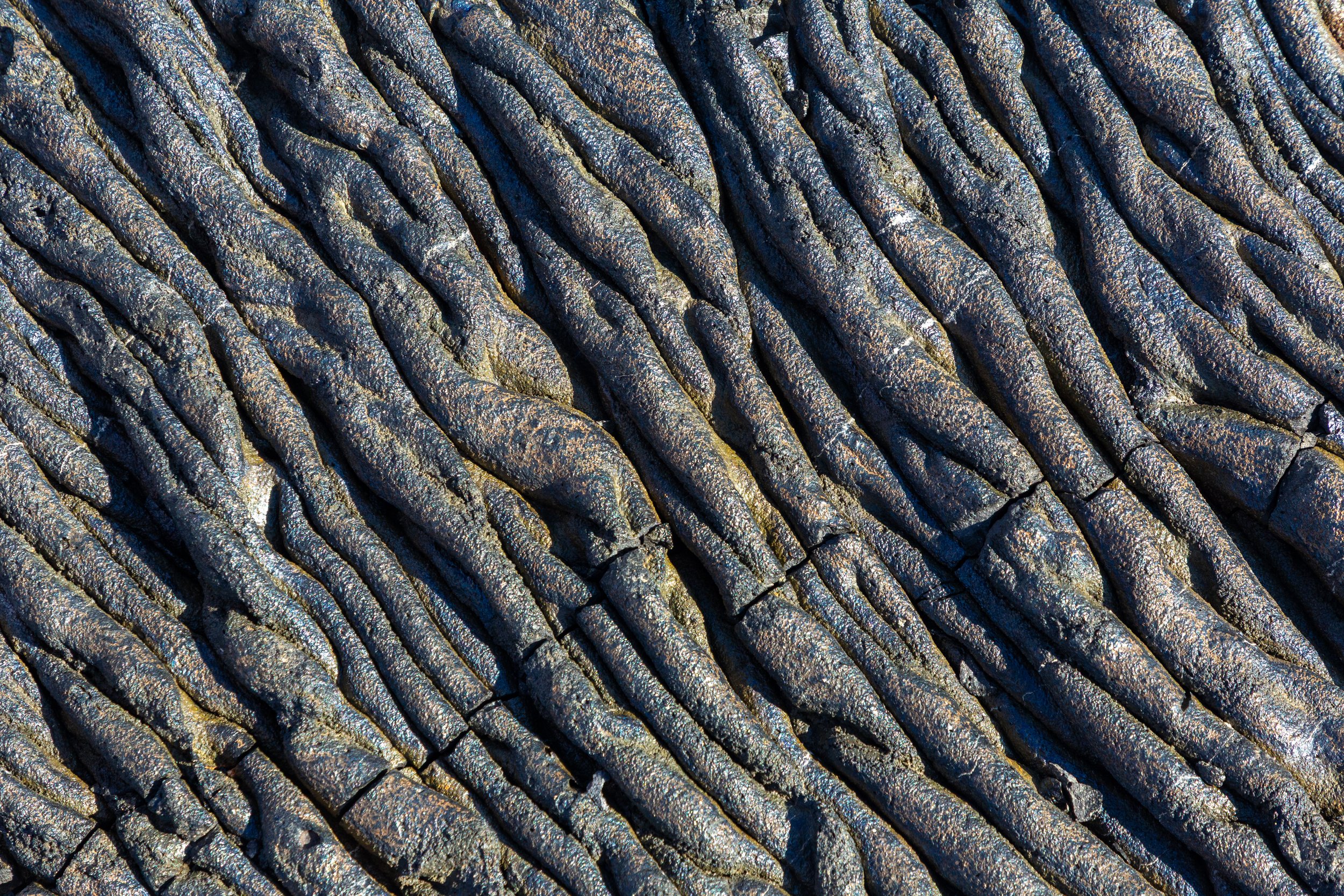
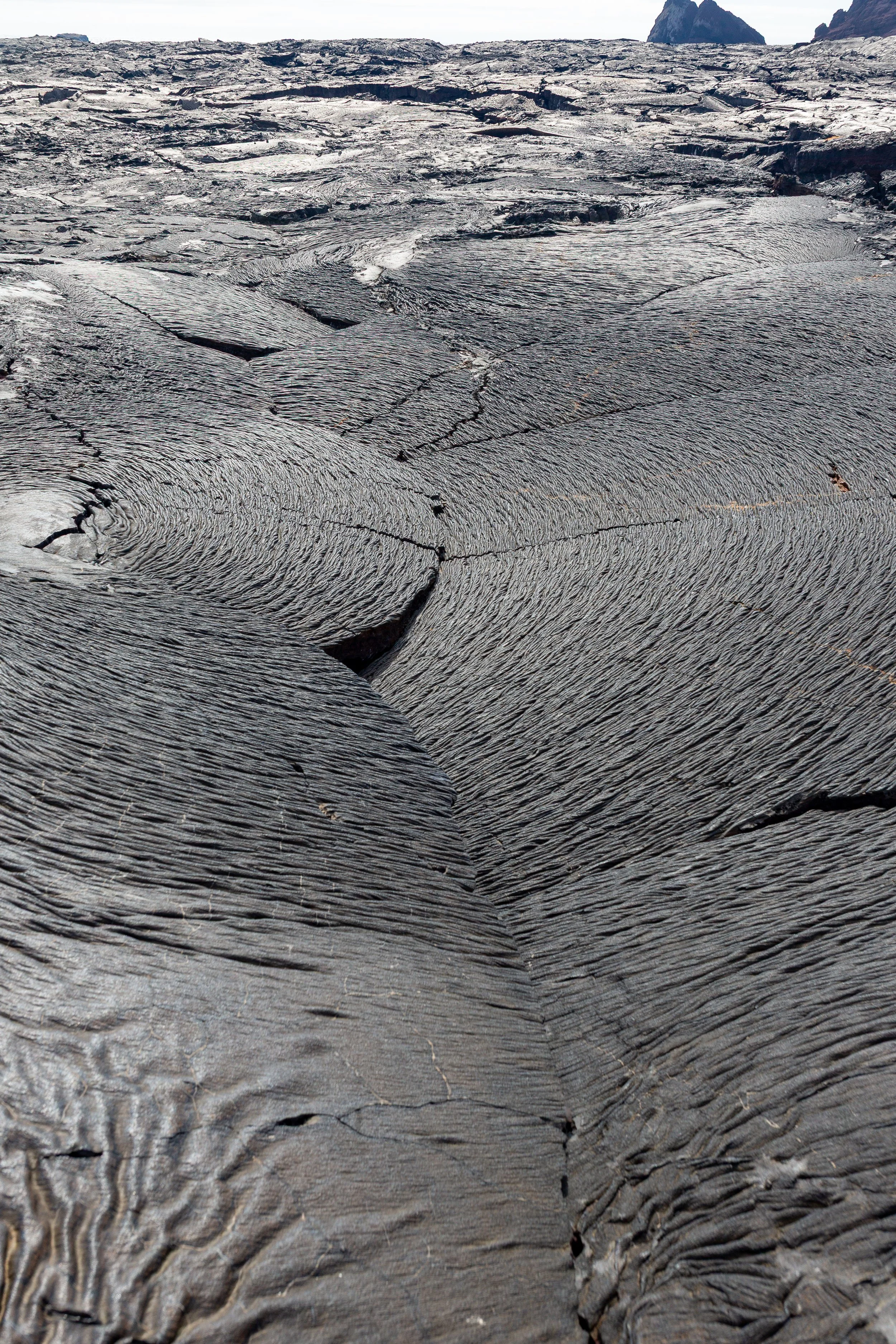
Vast field of newer lava has incredible patterns
Larger collection of lava cactus
Another more colourful lava lizard
Beautiful lizard profile
Looking back on the beach before we made our way back to the tender
One of the other groups, not up for a hike, does a wildlife tender ride, rather than a landing
Another view of Pinnacle Rock volcanic spire on our way back to the ship
Back on the ship, we had an early lunch and for the first time stayed at the same anchor position, as our afternoon activities were around the nearby Bartolome Island.
Oct 1 - Afternoon
As our first snorkeling experience was far from a success, we had chosen not to try again. However, we also recognized that we were missing out on opportunities by staying on ship, so asked for permission to join the deep-water snorkeling trip but to stay on the tender during the snorkeling.
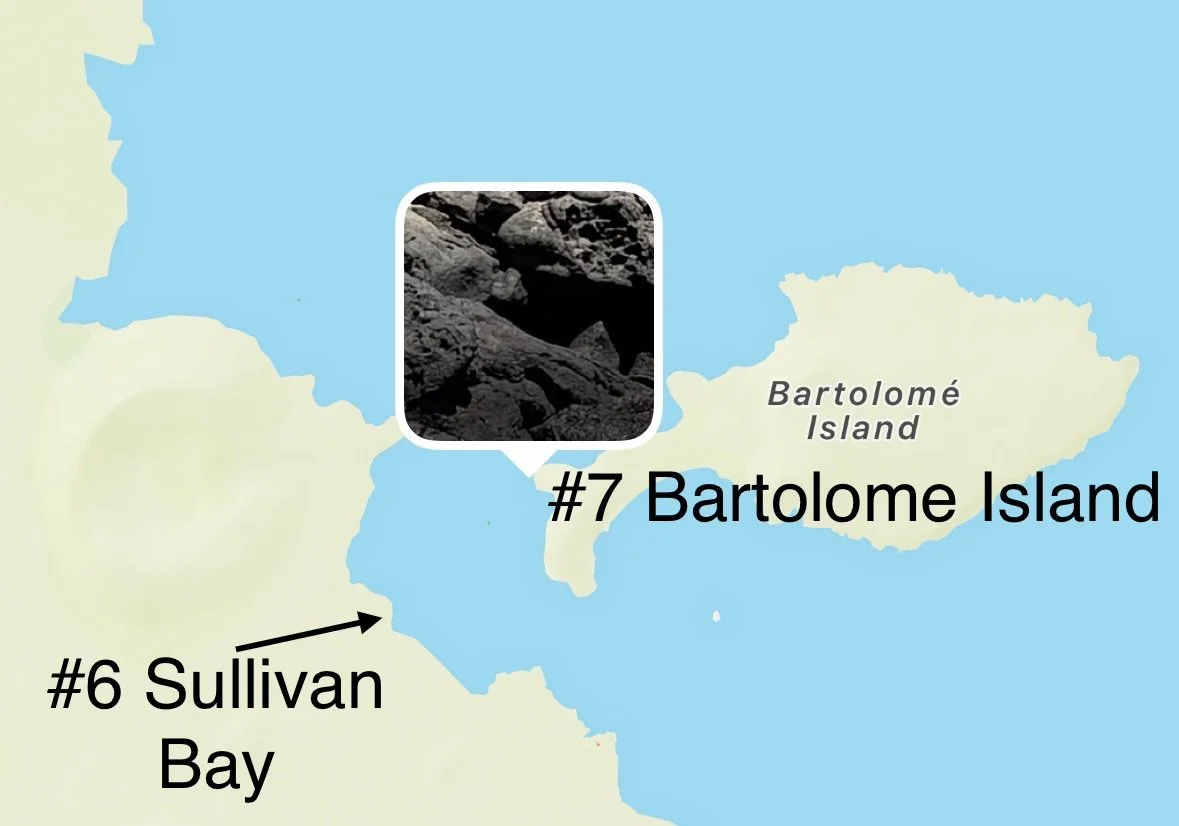
Although the ship did not move, our afternoon outings were spent around Bartolome Island
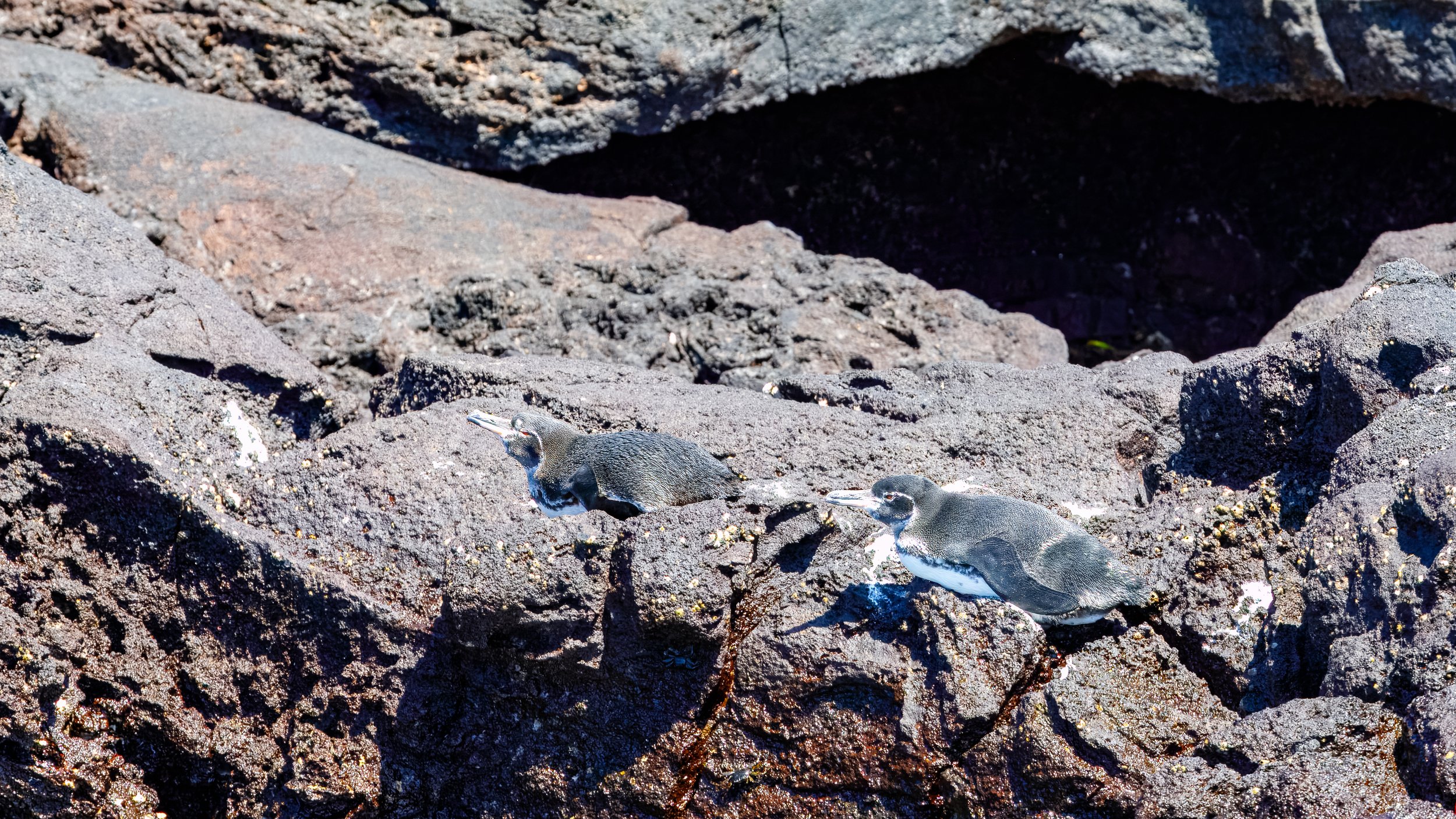
From the tender boat, we were able to get a closeup of some Galapagos penguins resting near the snorkelers
Catching a brown pelican in flight
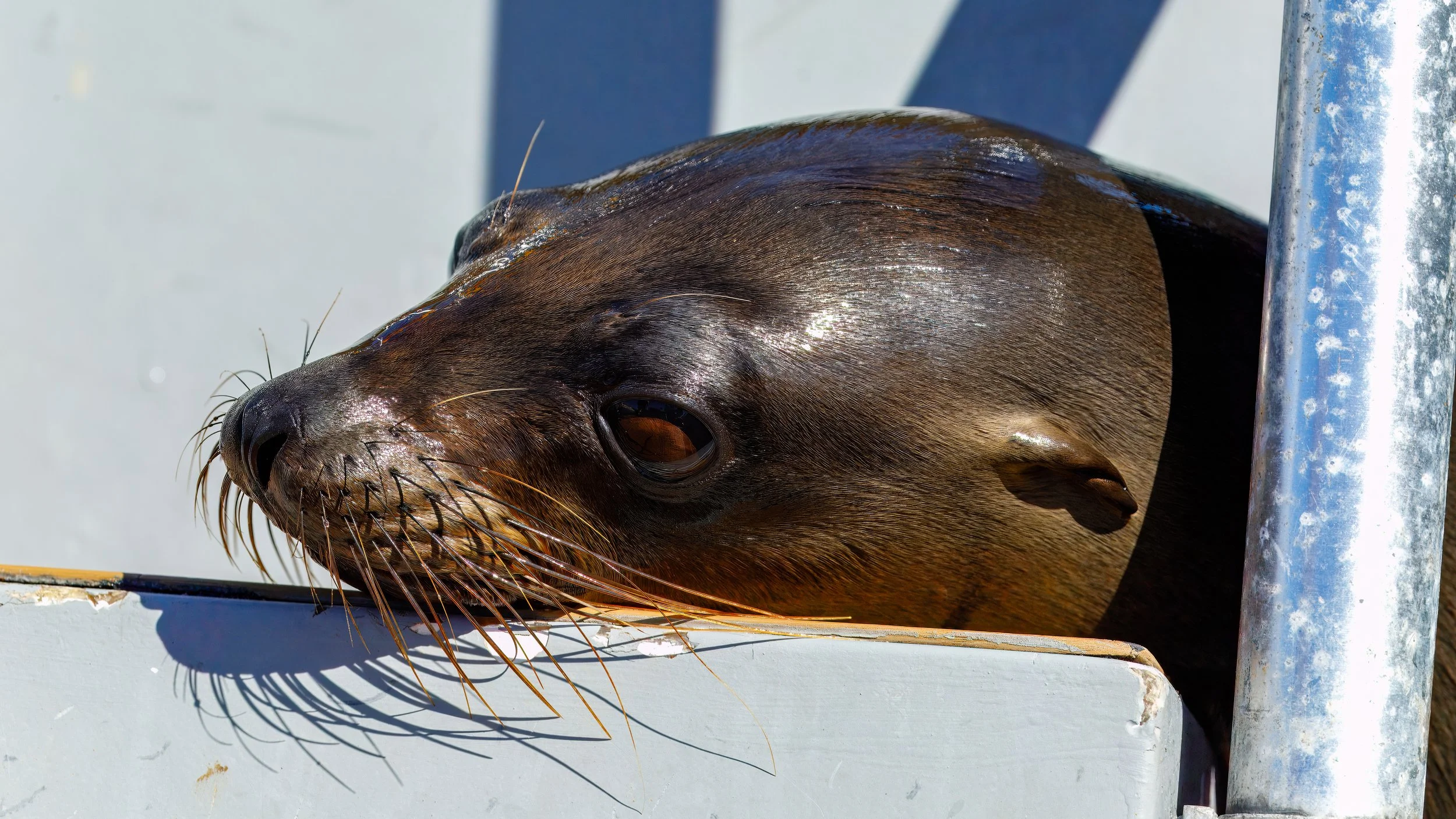
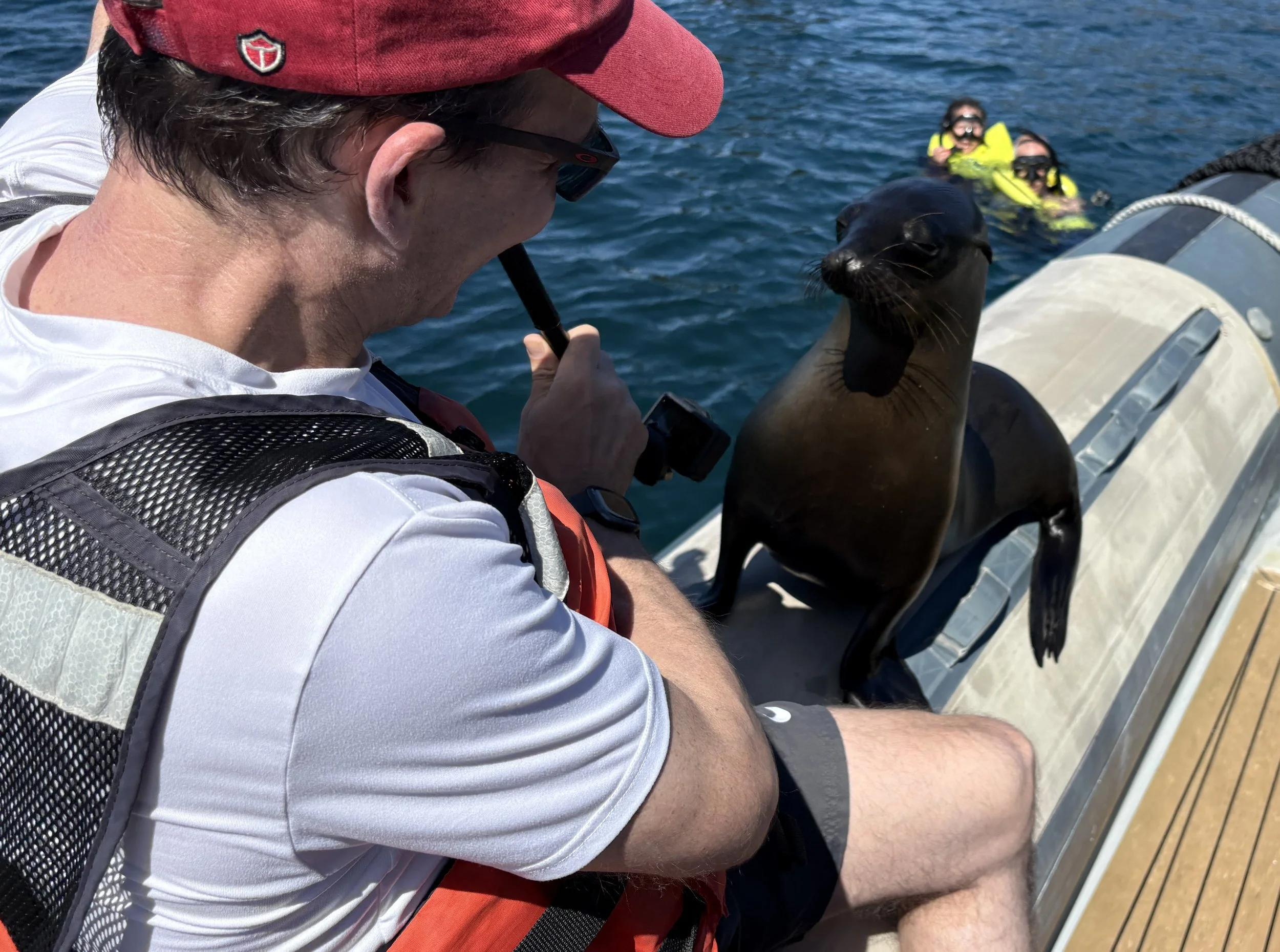
While our snorkelers were in the water, a young male sealion took interest in the boat and stopped by for a visit
Our guide assured us that the adolescent sealions were not aggressive and just curious, so we enjoyed the visit
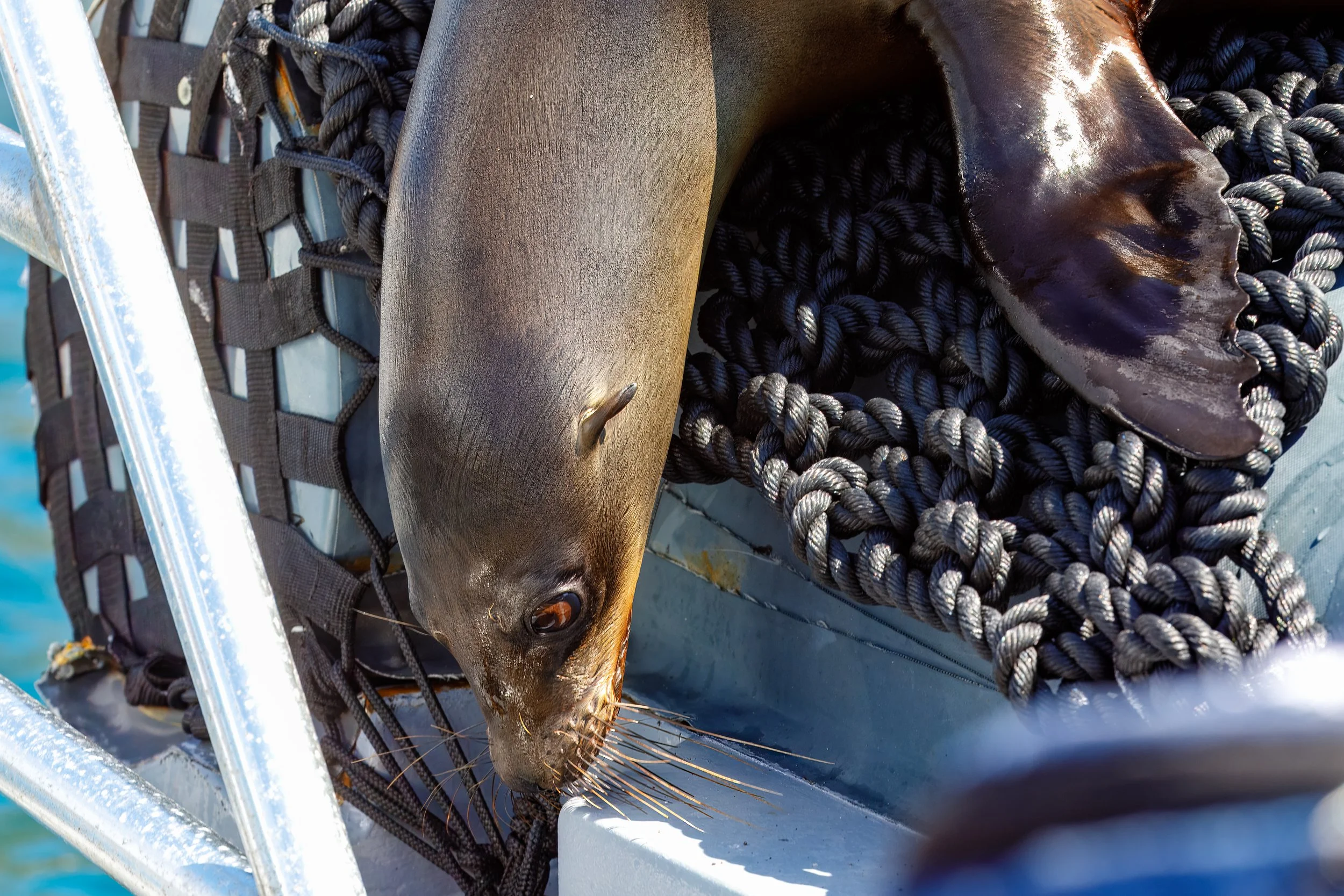
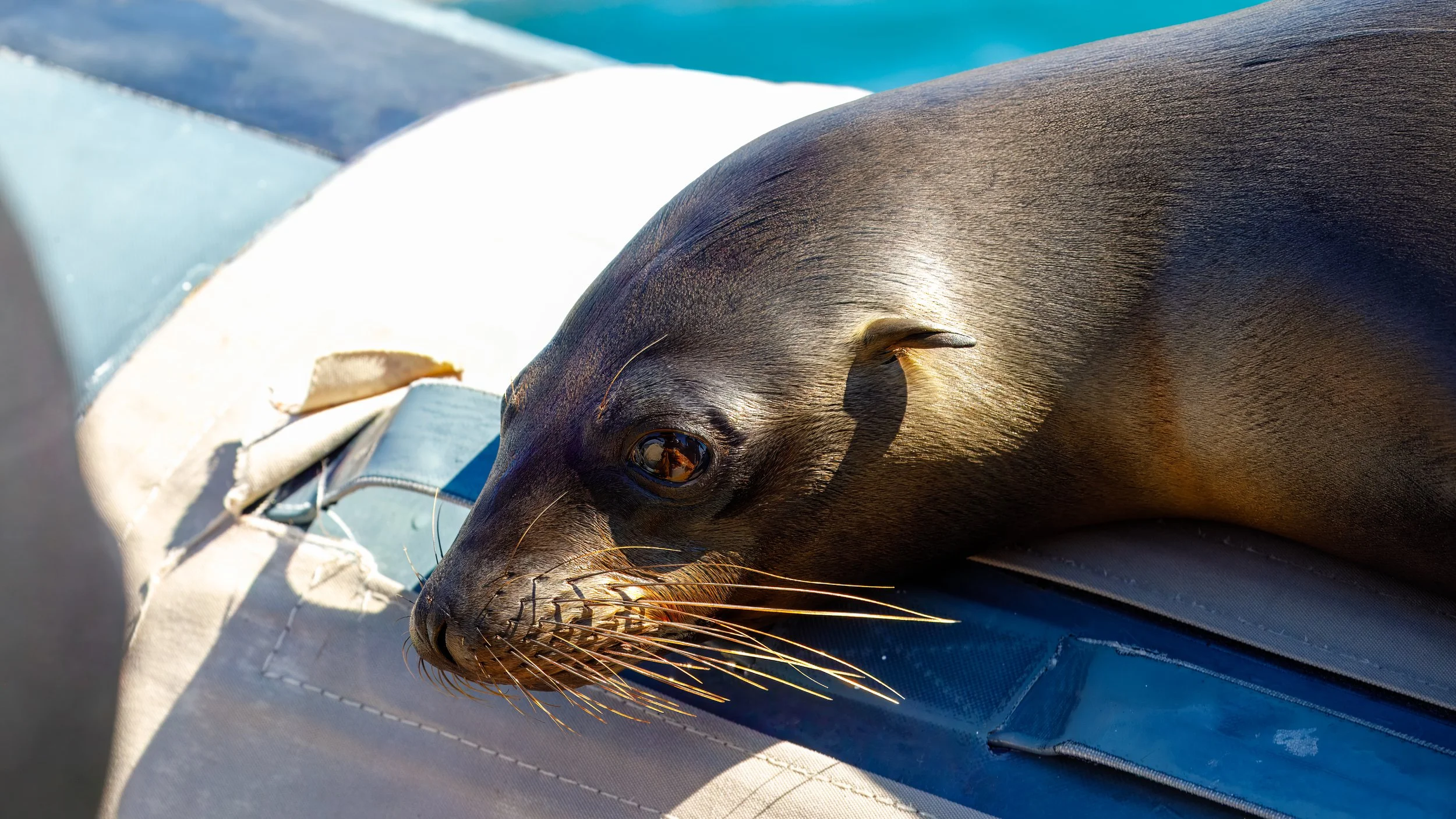
Playing on the netting, he watched for the snorkeler’s return
His interest was not limited to just the boat, as he wanted to get up close and personal with us all
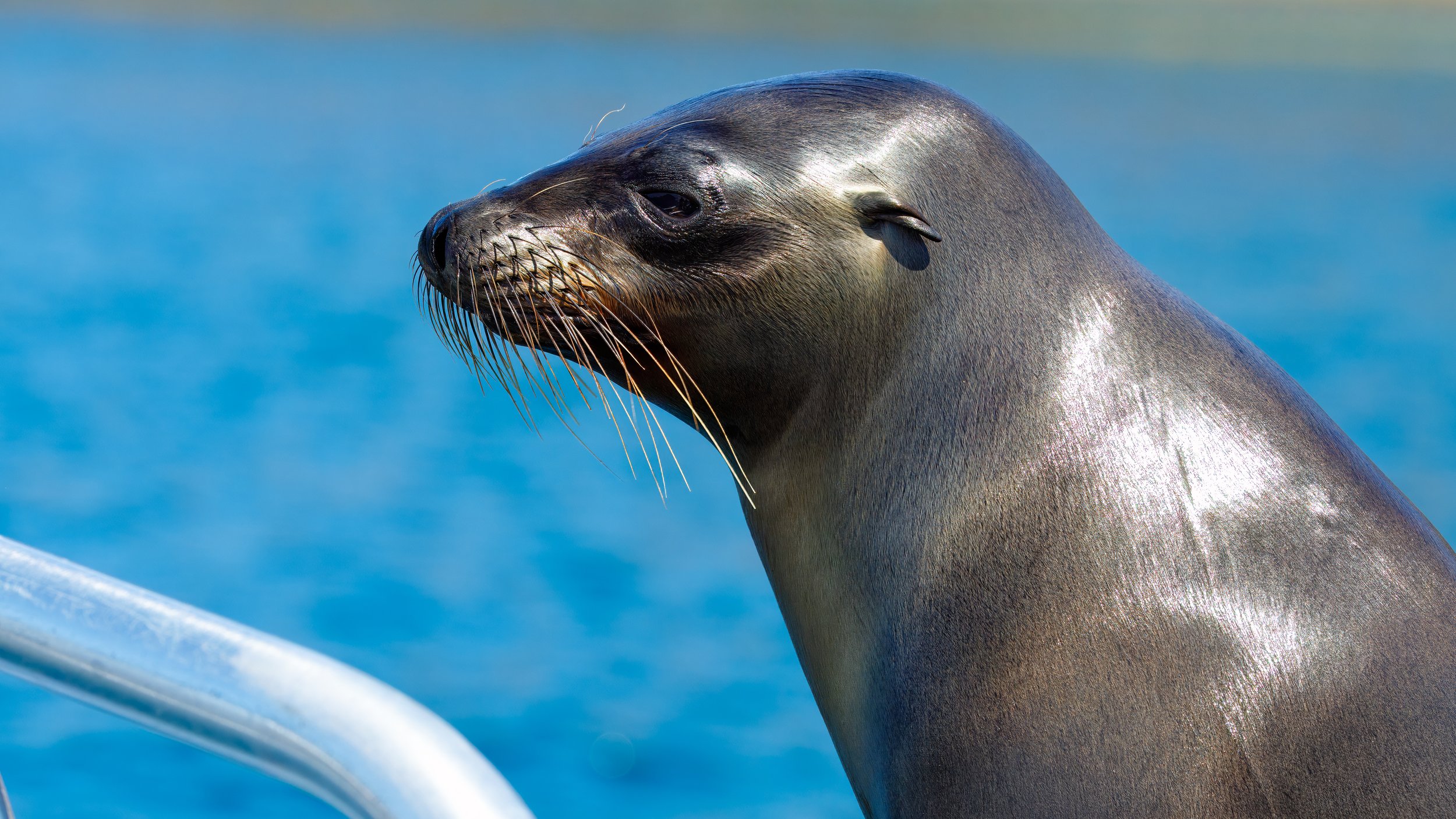
Such a handsome sealion
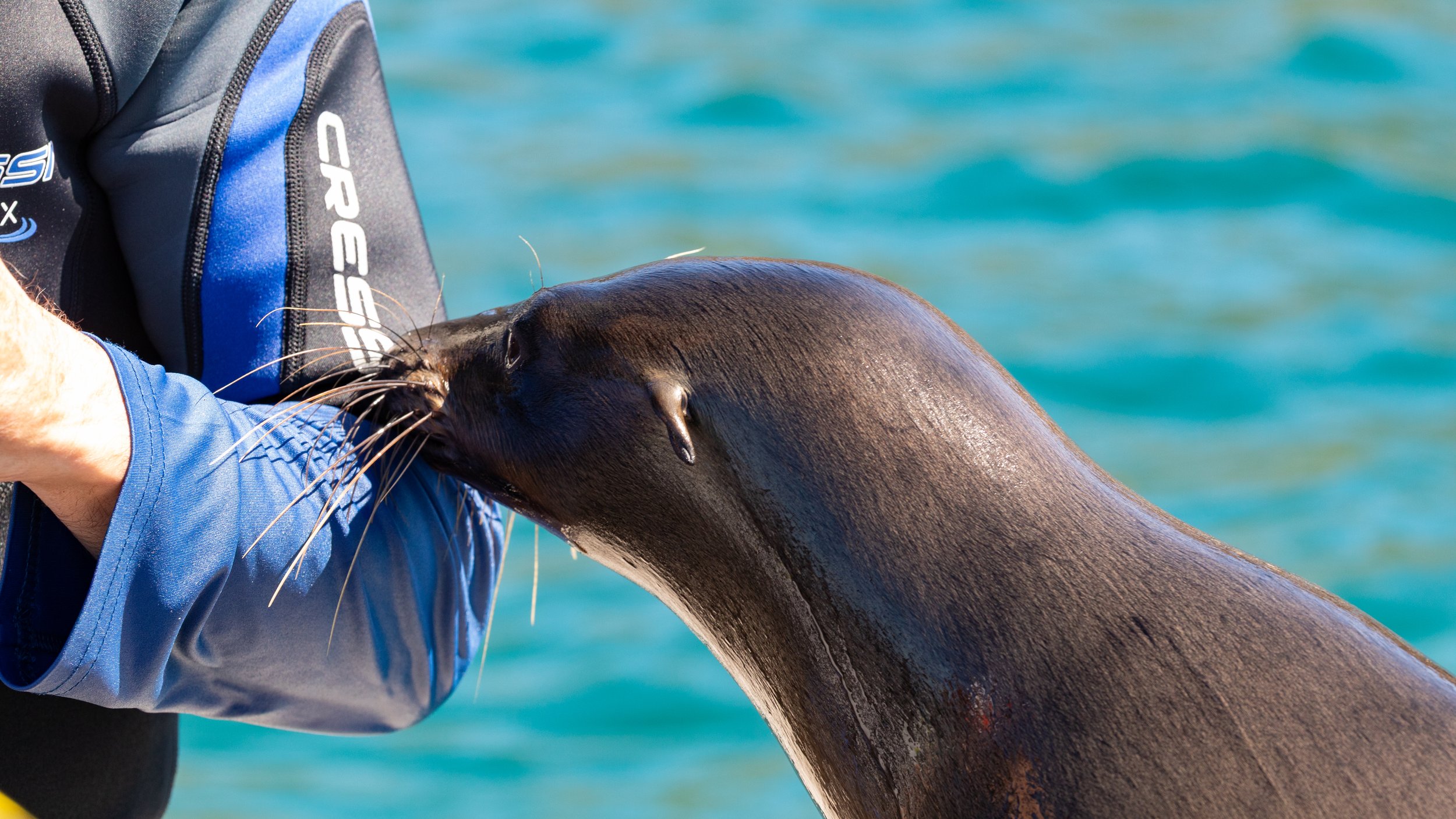
As I was getting sniffed up close I reminded myself that he was just curious
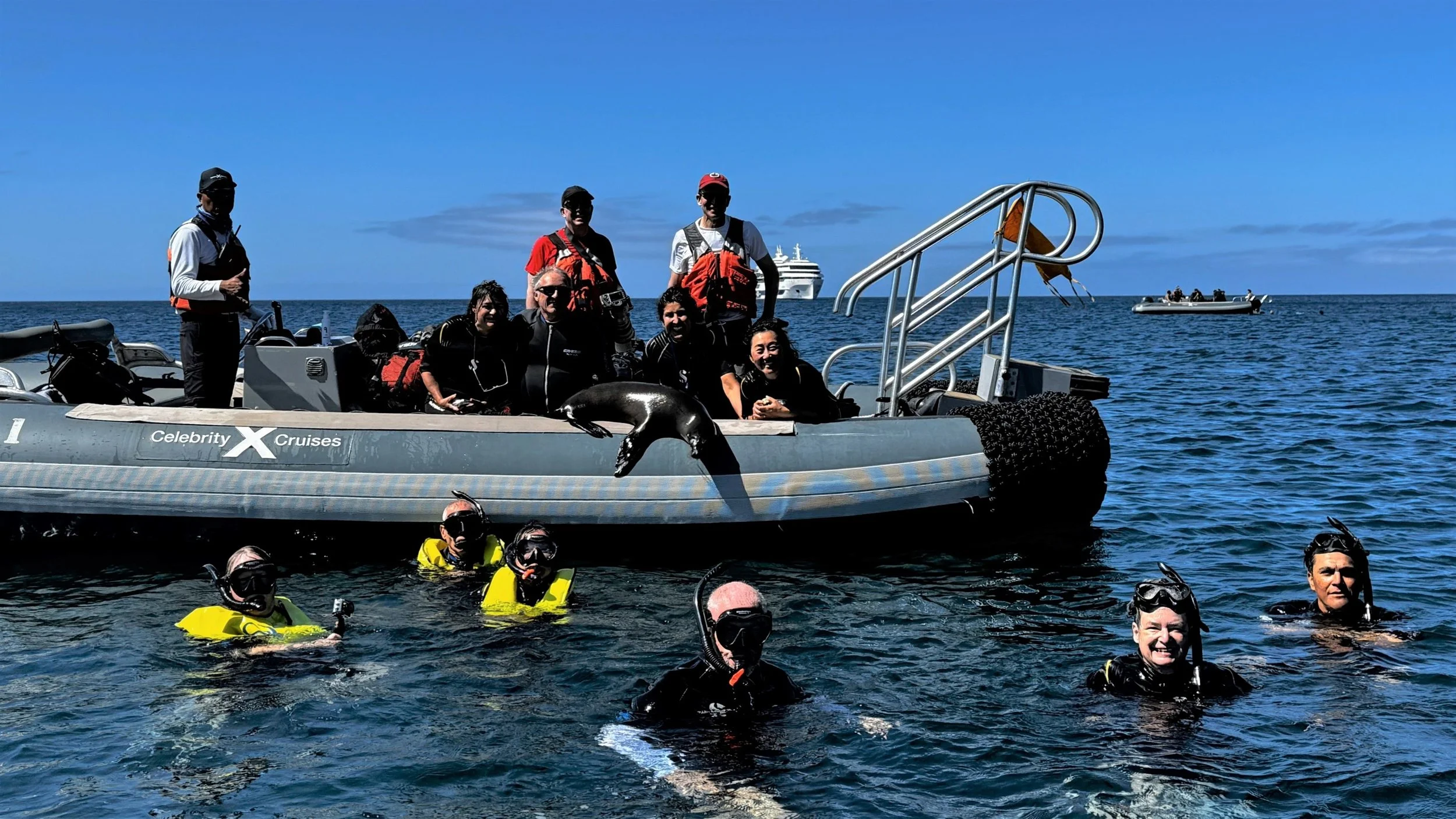
A guide on another boat got a photo of our lucky group
After the snorkeling ride-along, we had a quick break before heading to North Bartolome Island and catching this resting sealion
Cruising by the beach before our landing
After our dry landing, Tom caught a photo of a well-framed bird
Lava cactus
A small ground finch
Another collection of lava cactus
As we started our climb, passing through some rocky, arid terrain
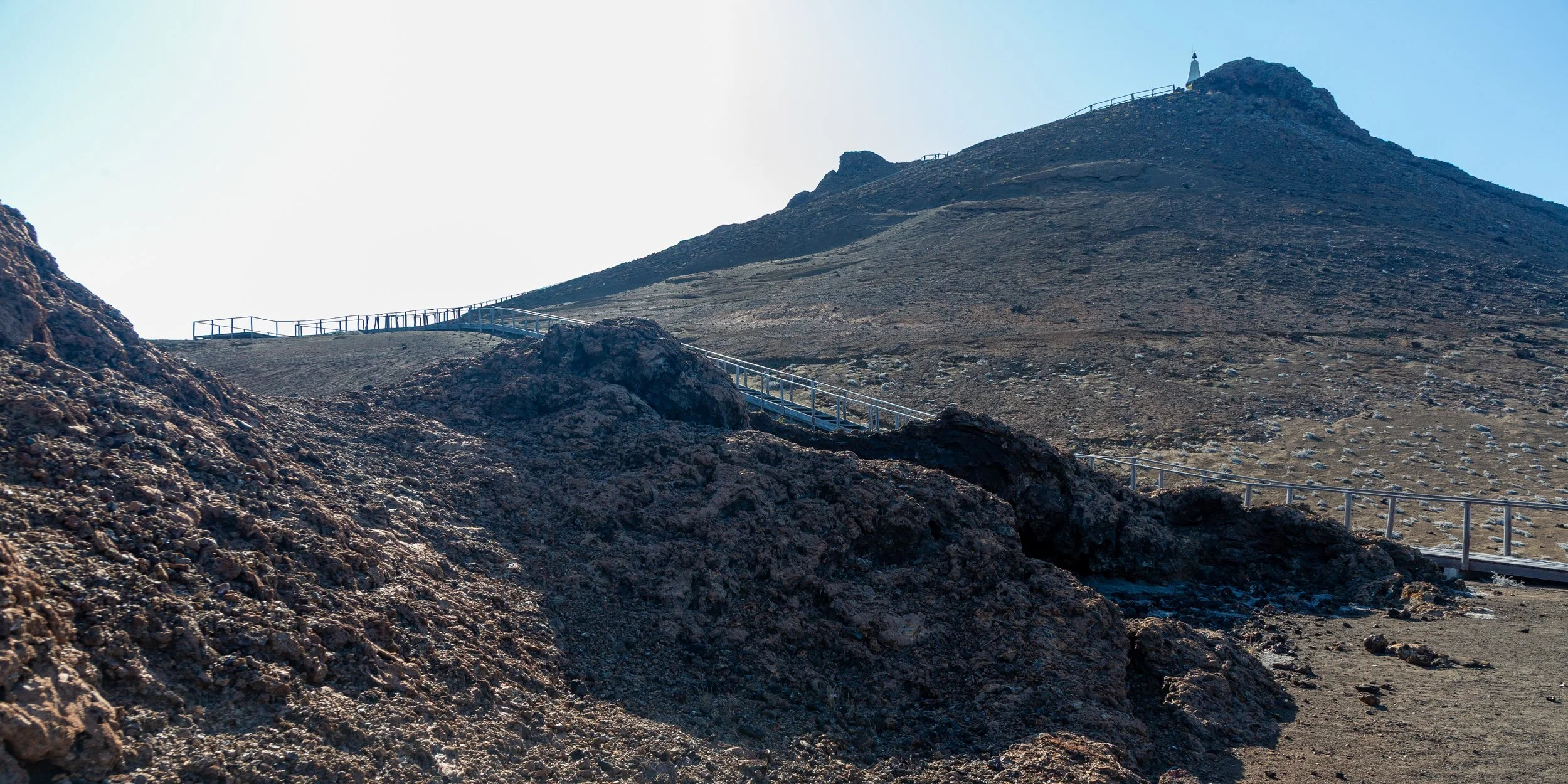
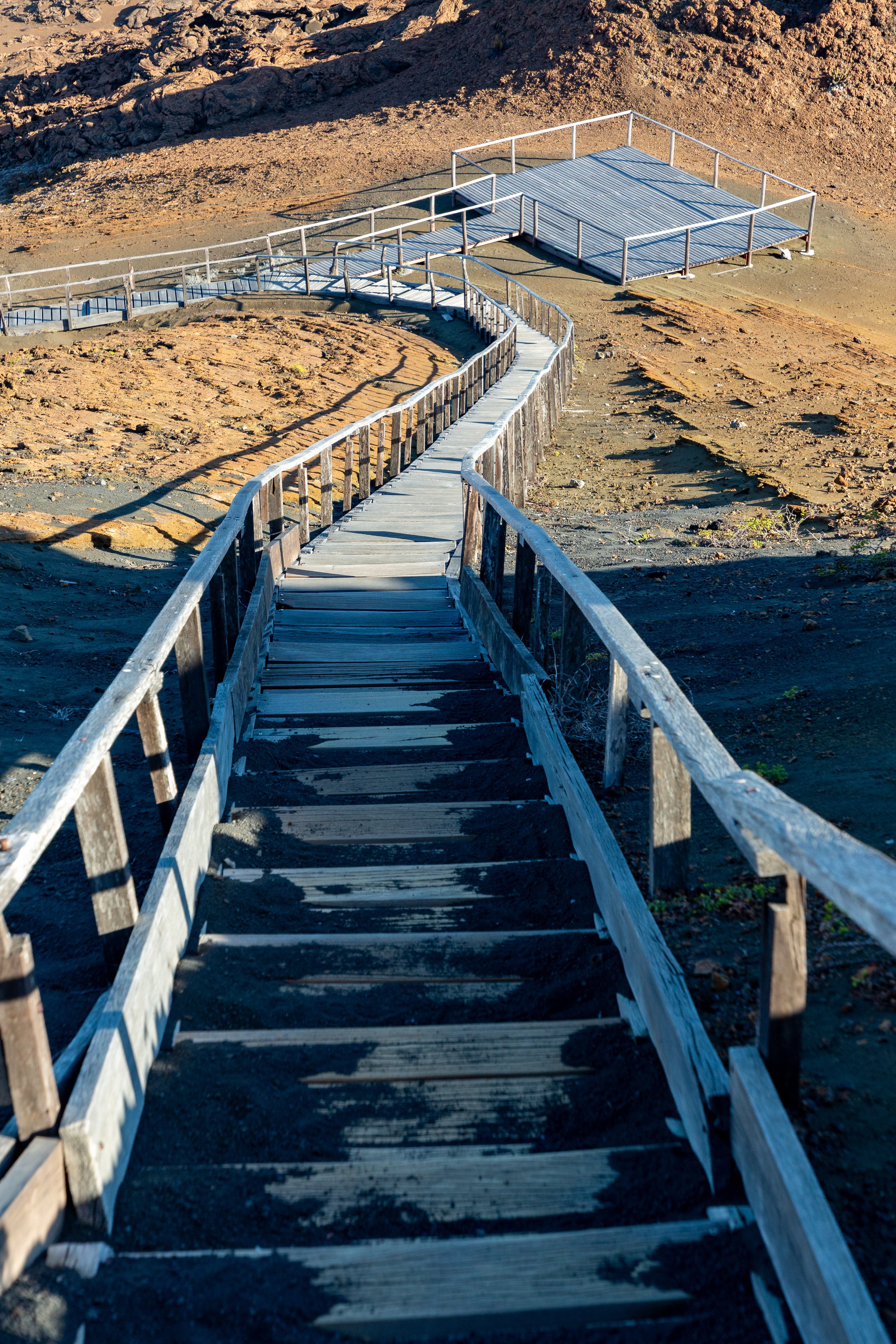
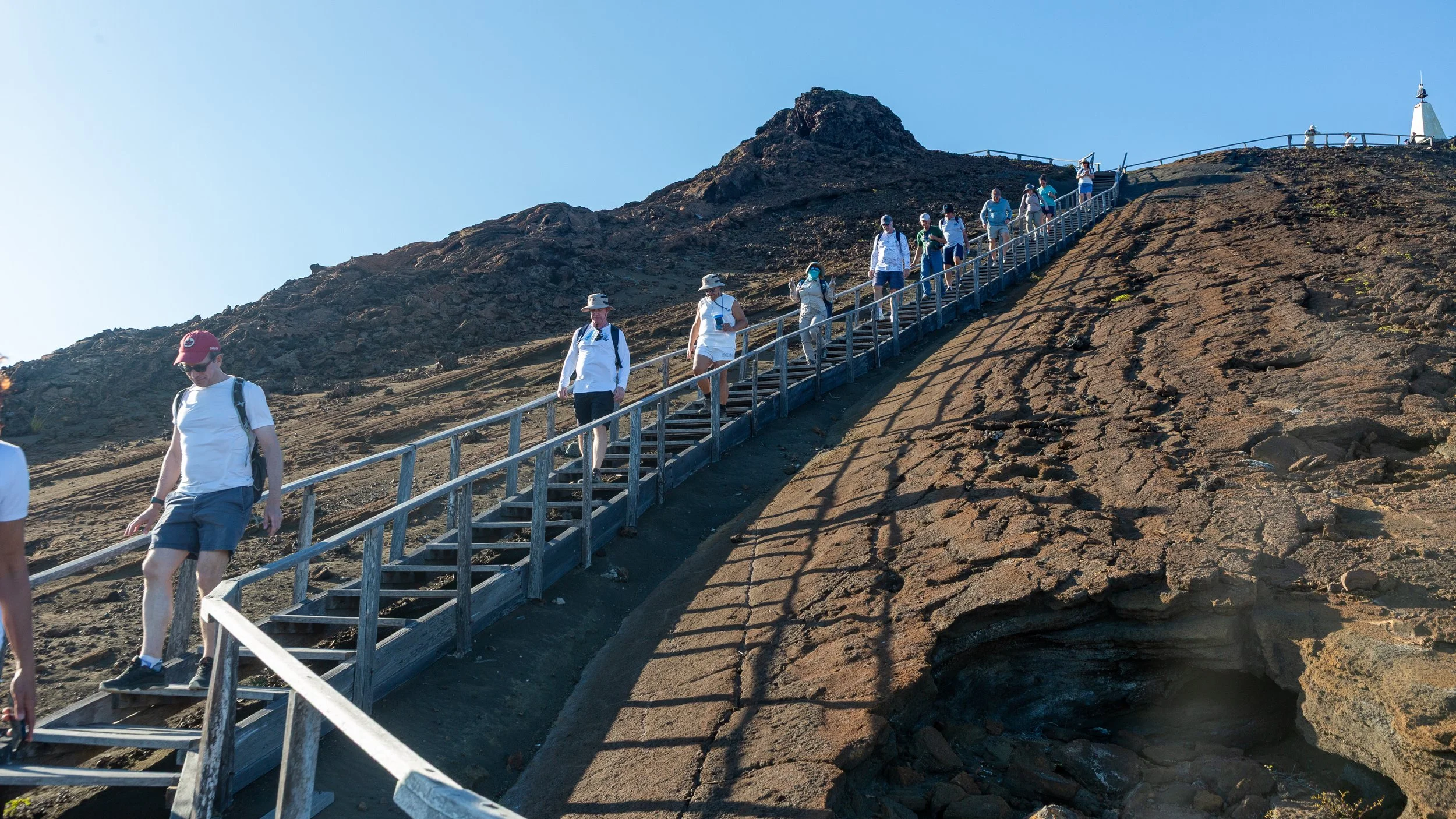
A preview of our hike to the lighthouse at the top; although it was a lot of steps, we stopped often
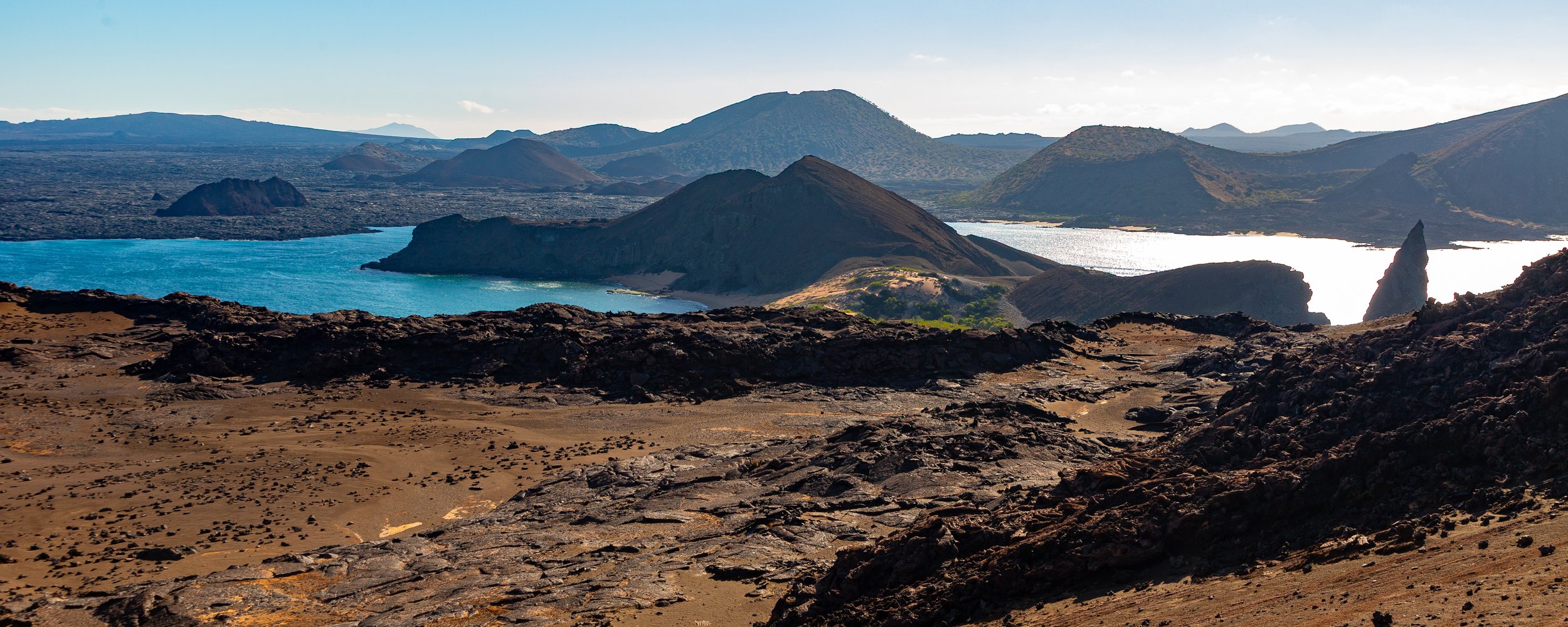
A great view of both Bartolome island across Sullivan Bay to Santiago Island and our morning hike
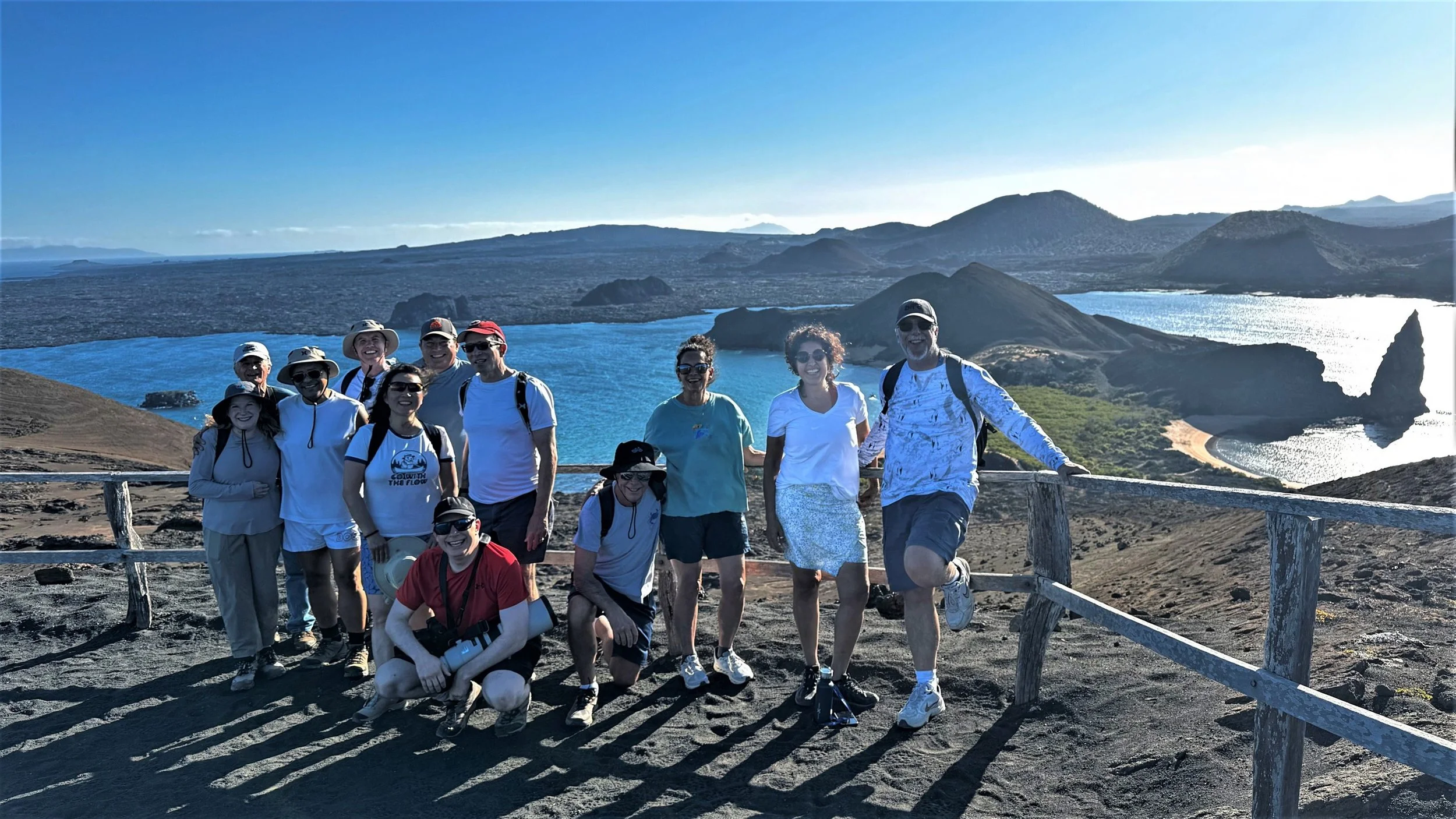
Evidence that we all made it to the top
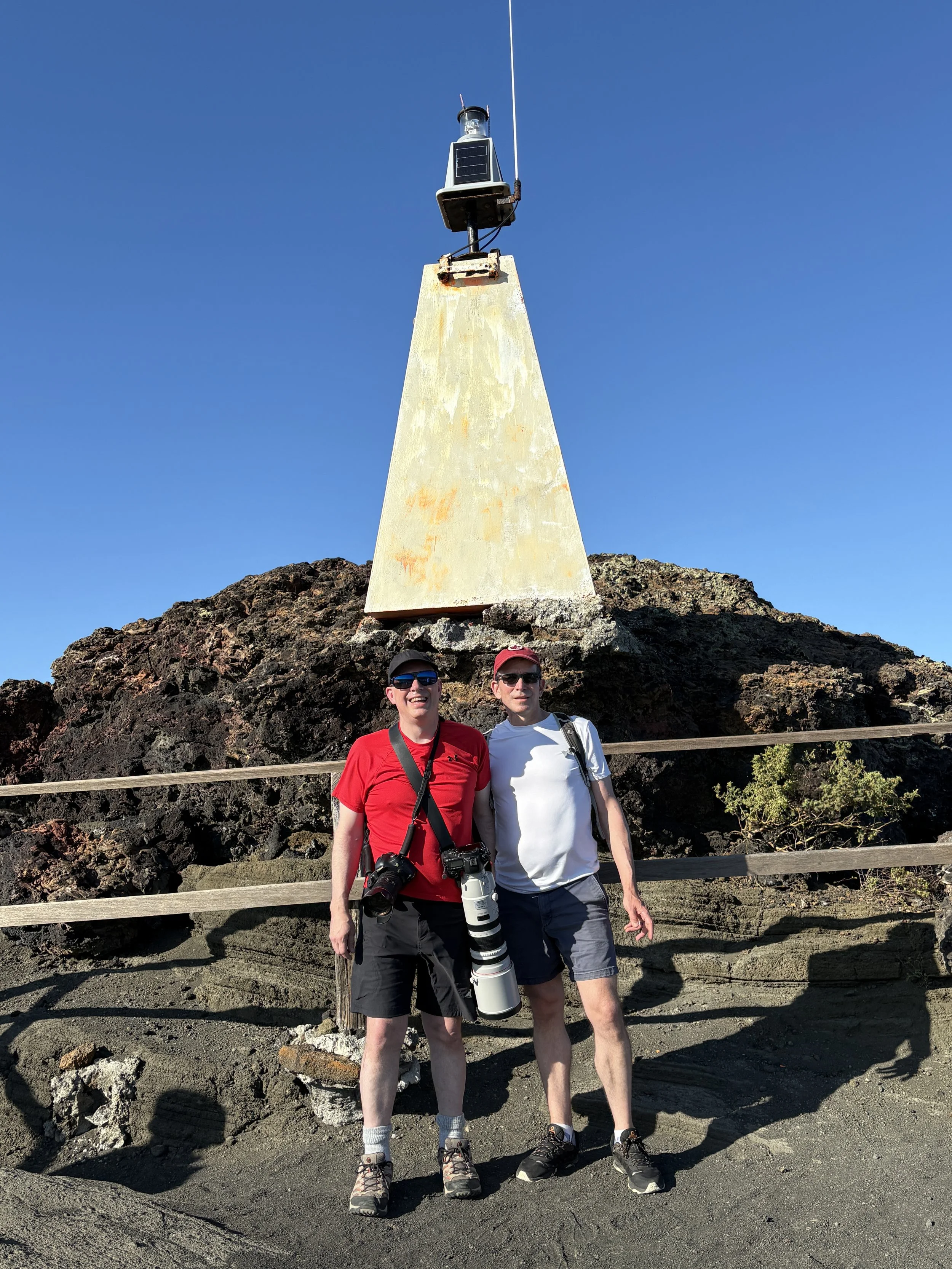
Standing under the light marker at the top of the hill
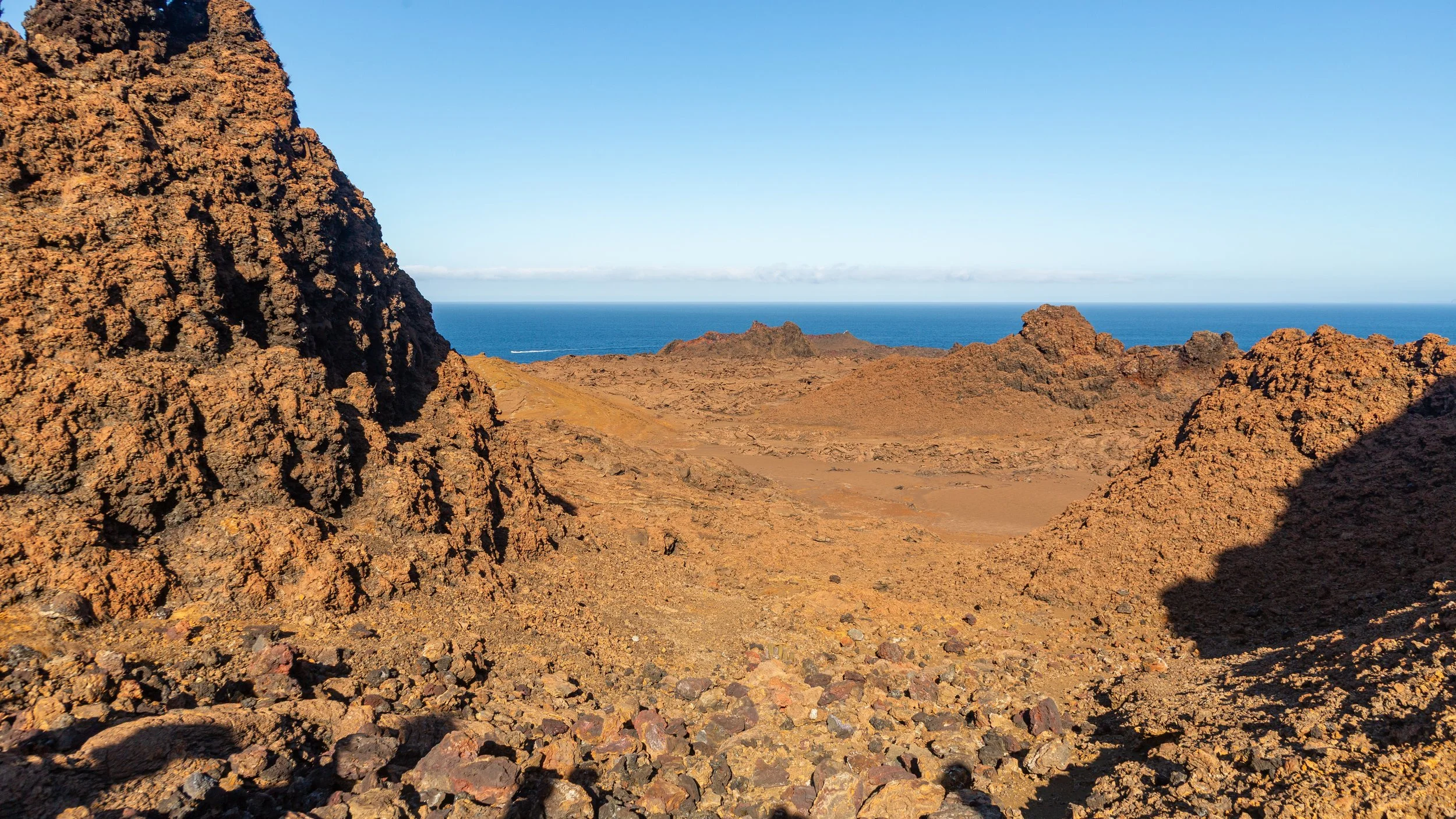
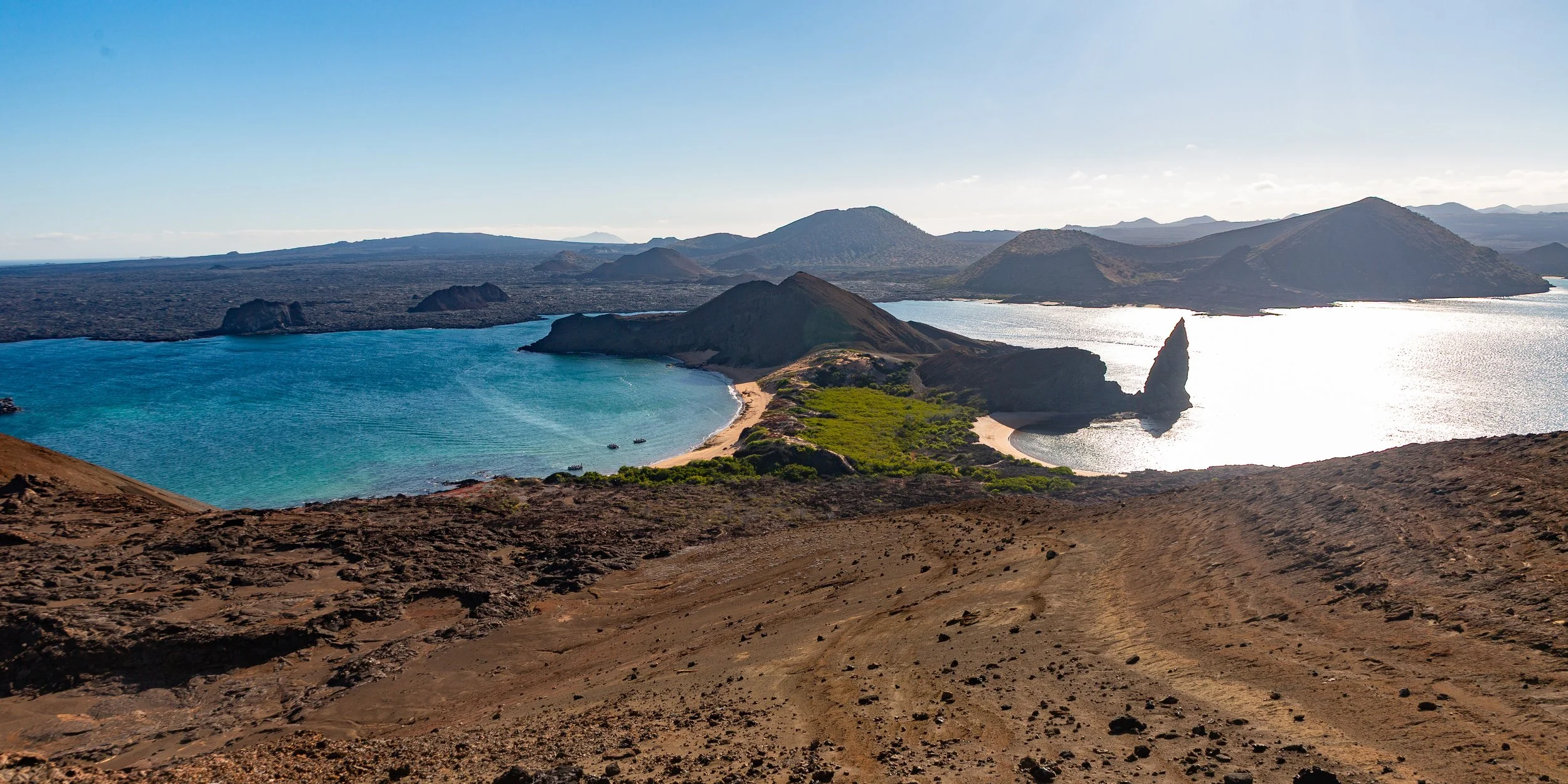
Catching the varied terrain of the island leading out to the Pinnacle Rock that we’d seen throughout the day
Parasitic Cone from the summit
View of our ship from the summit
Looking down at the path back to the boat landing
Making our way down
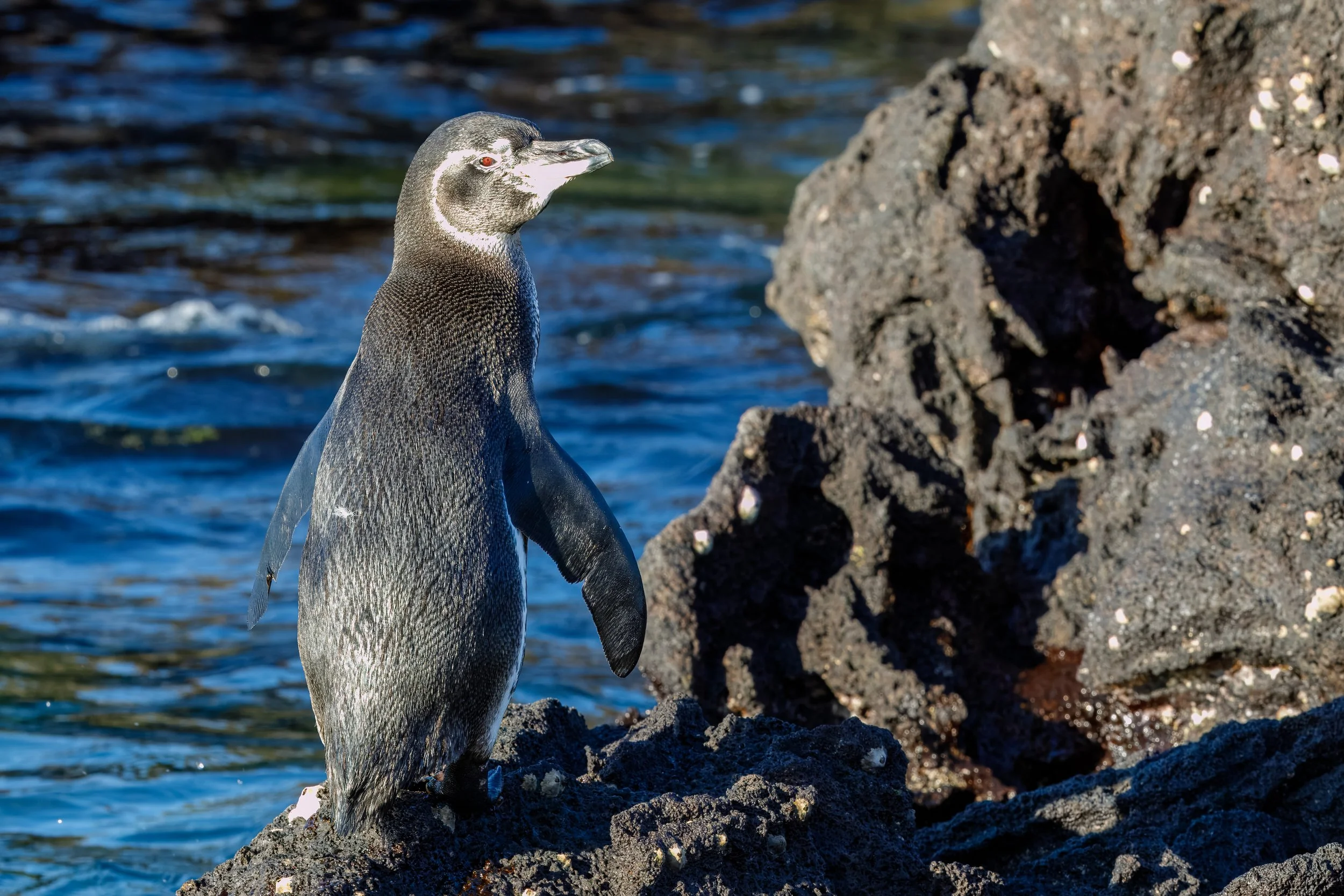
On the way back to the ship we got close to a Galapagos Penguin along the shoreline
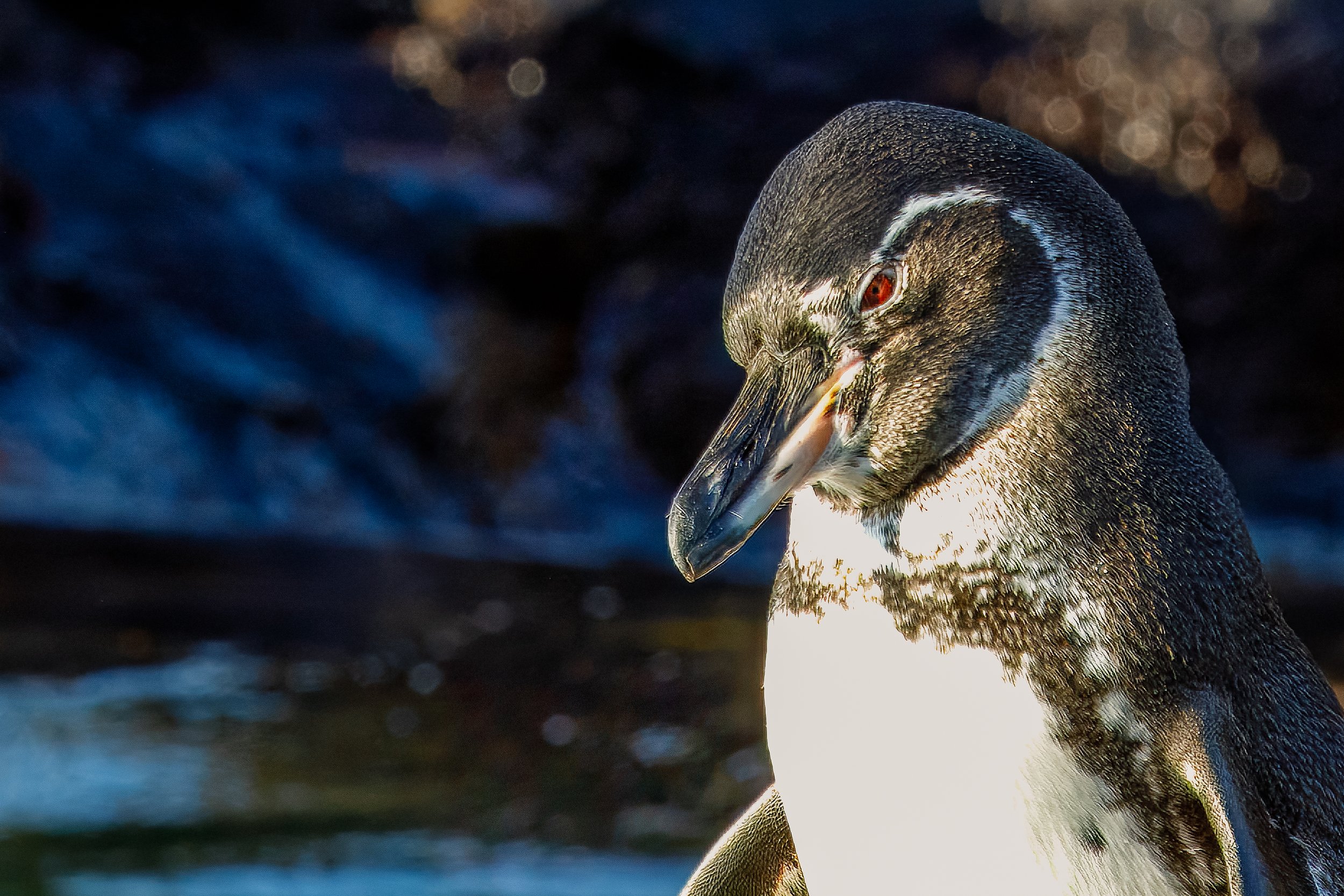
Another amazing penguin shot
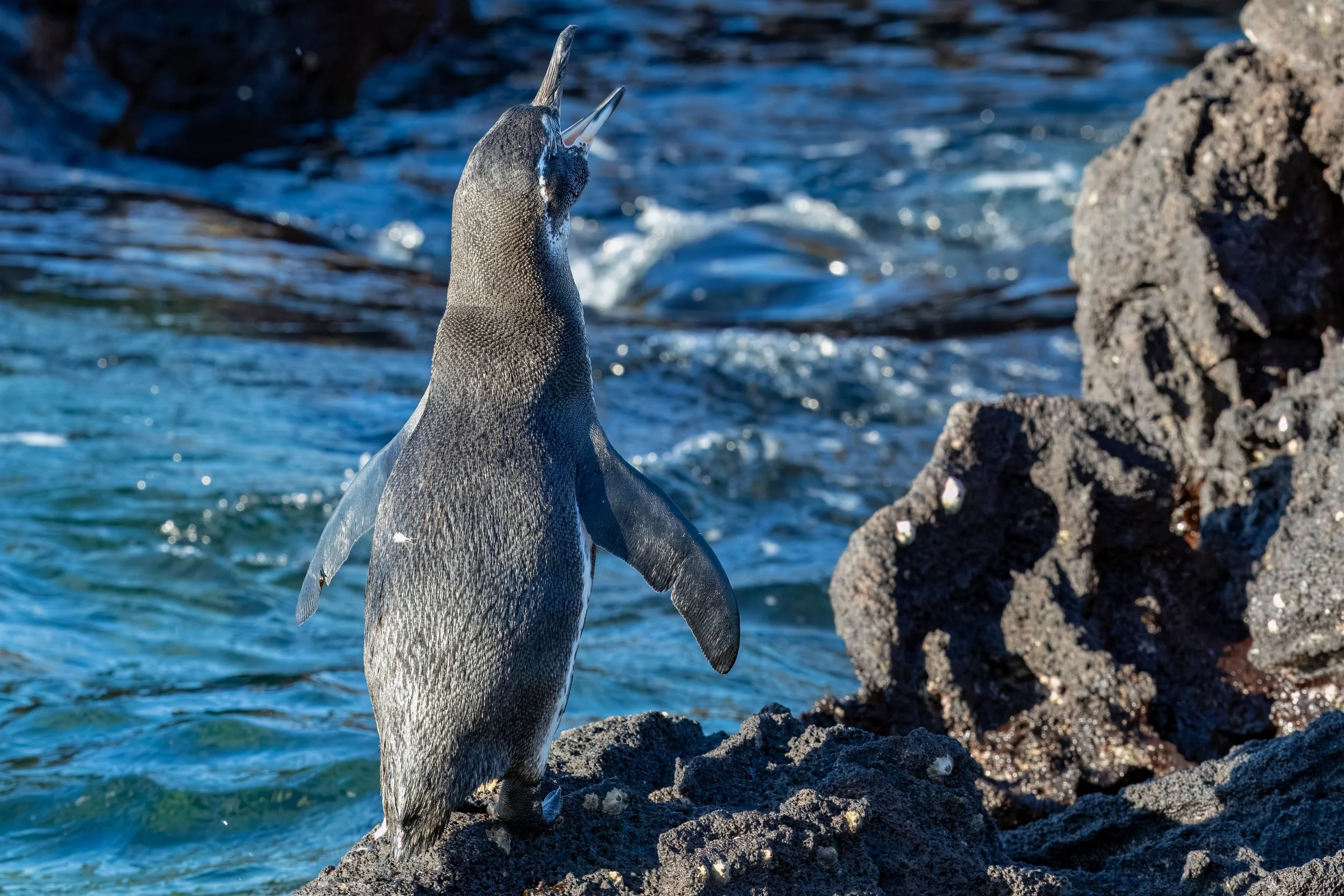
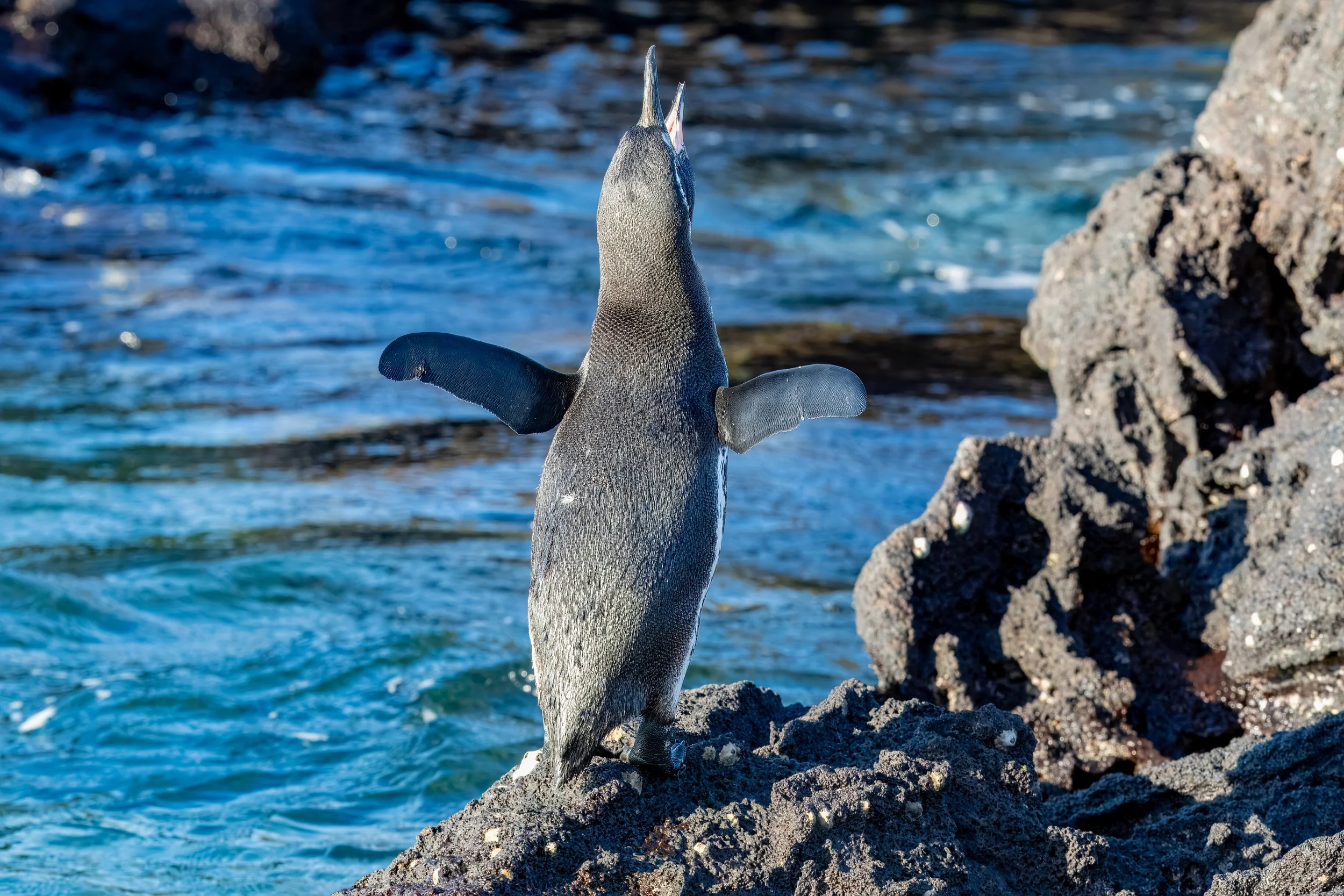
Penguin making himself heard
Brown pelican
More relaxed pelican
Raised flippers to experience the refreshing breeze, while making the song of their people
Our last penguin sighting for the trip
A very active group of Galapagos Penguins
Back at the ship after a long day, we were ready for the daily cocktail, excursion briefing, and a late dinner, before trying to checkout the stars from the upper deck.
Oct 2 - morning
After our overnight sailing, we were anchored at Santa Cruz near Las Bachas Beach. We had an early breakfast, followed by a beach walk.
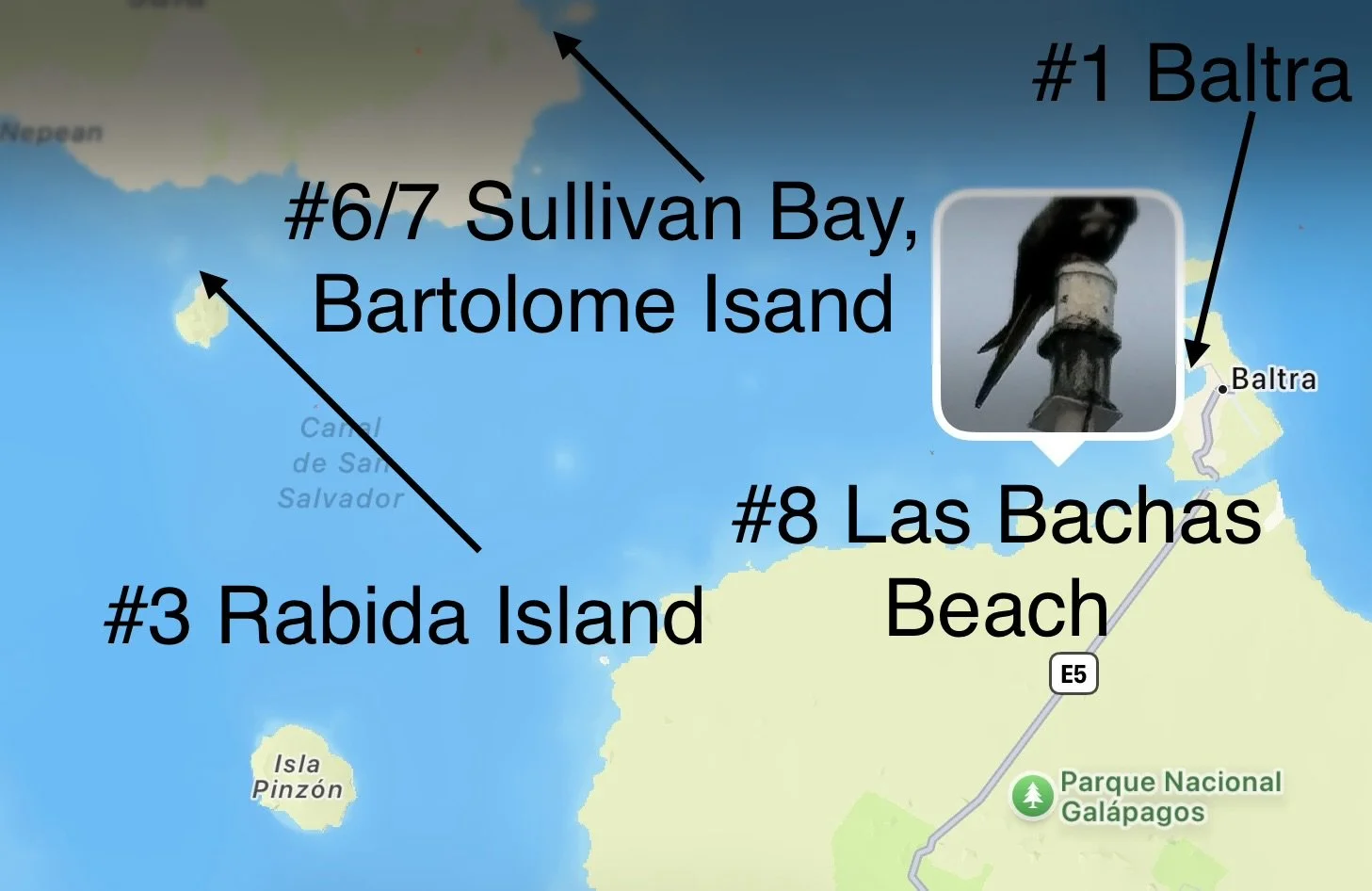
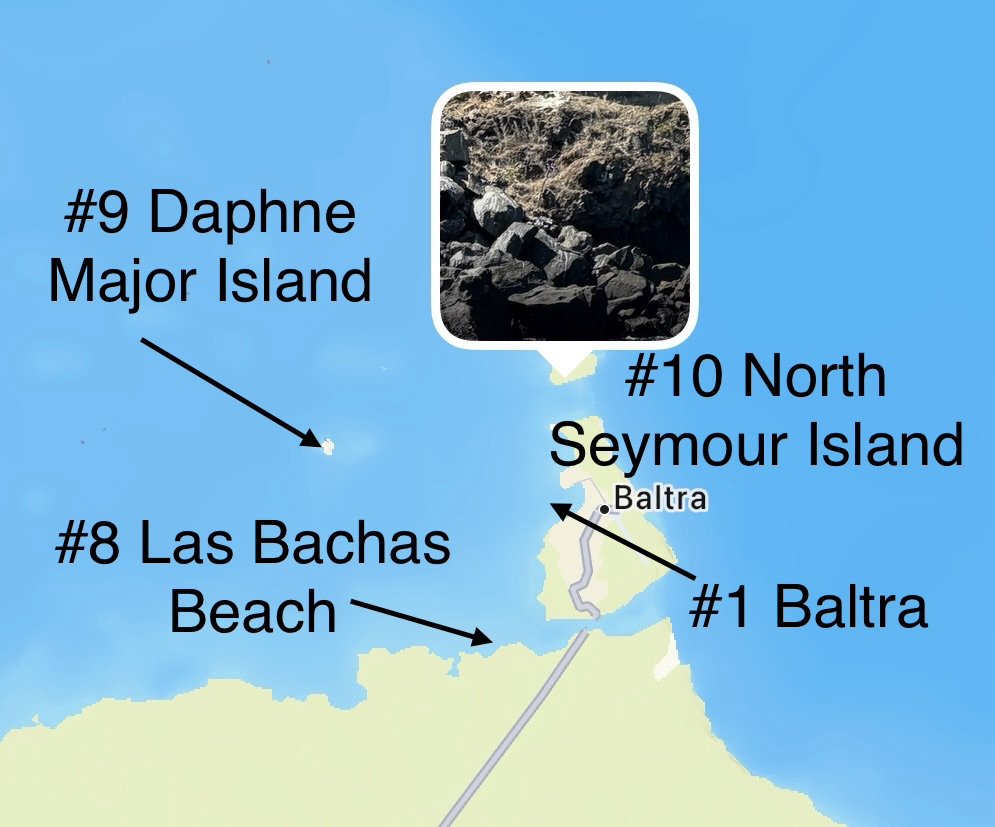
We anchored not too far from we were the day before and close to the start of our trip, this time to visit Las Bachas Beach
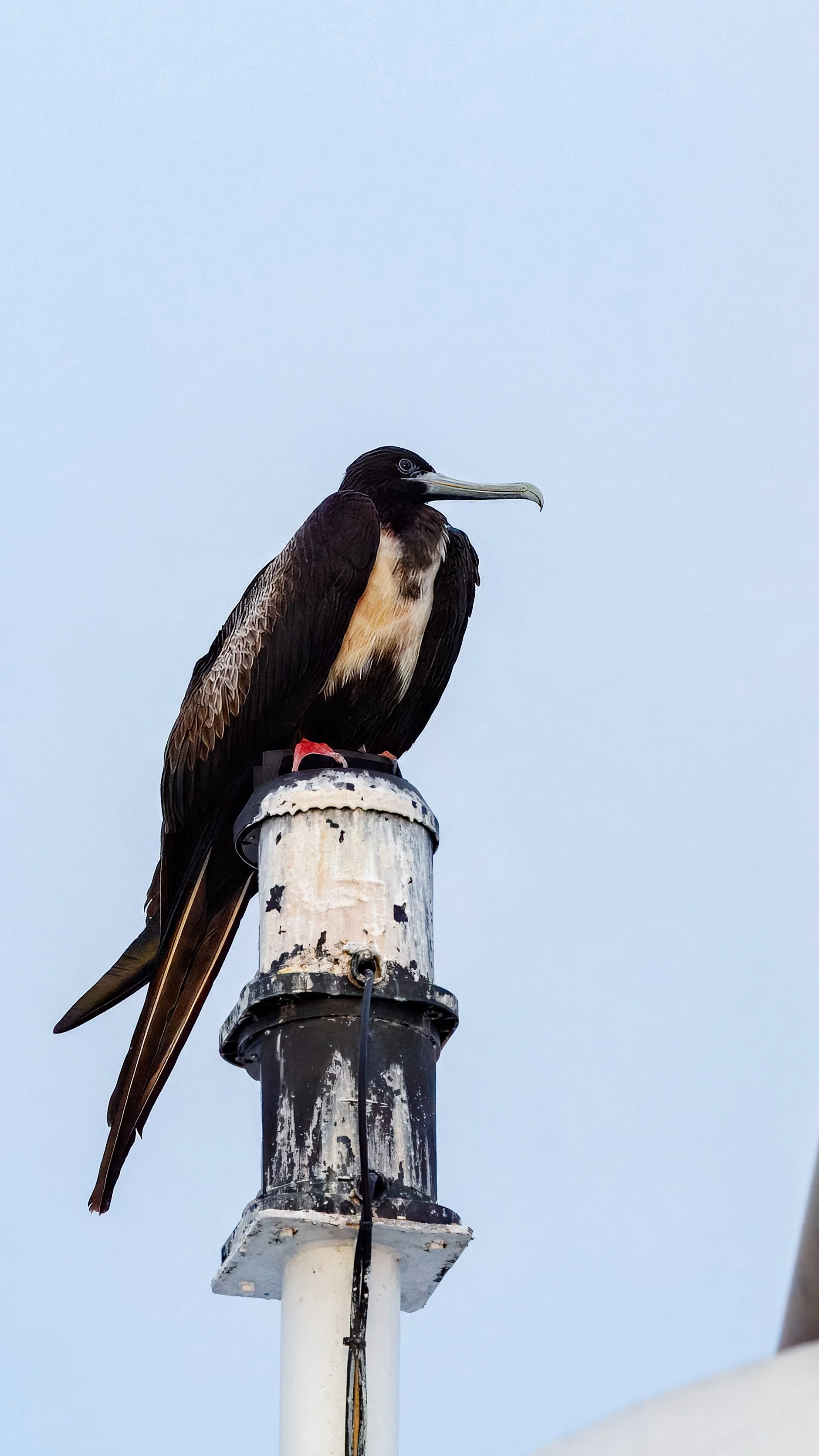
Frigate bird resting on our ship stack
We never tired of the beauty of the ship
Tender heading back for more guests
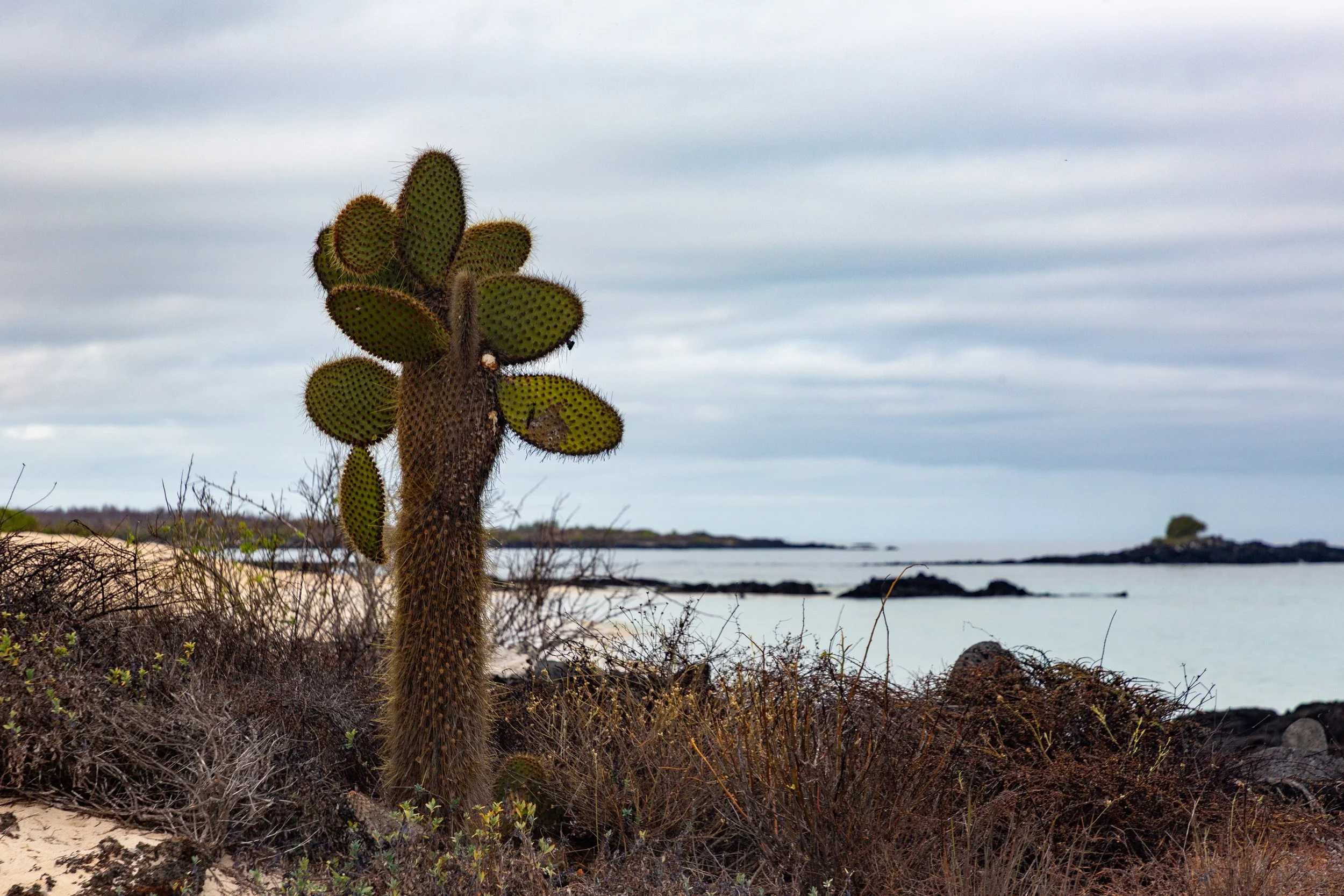
Galápagos prickly pear cactus at the start of our Las Bachas Beach walk
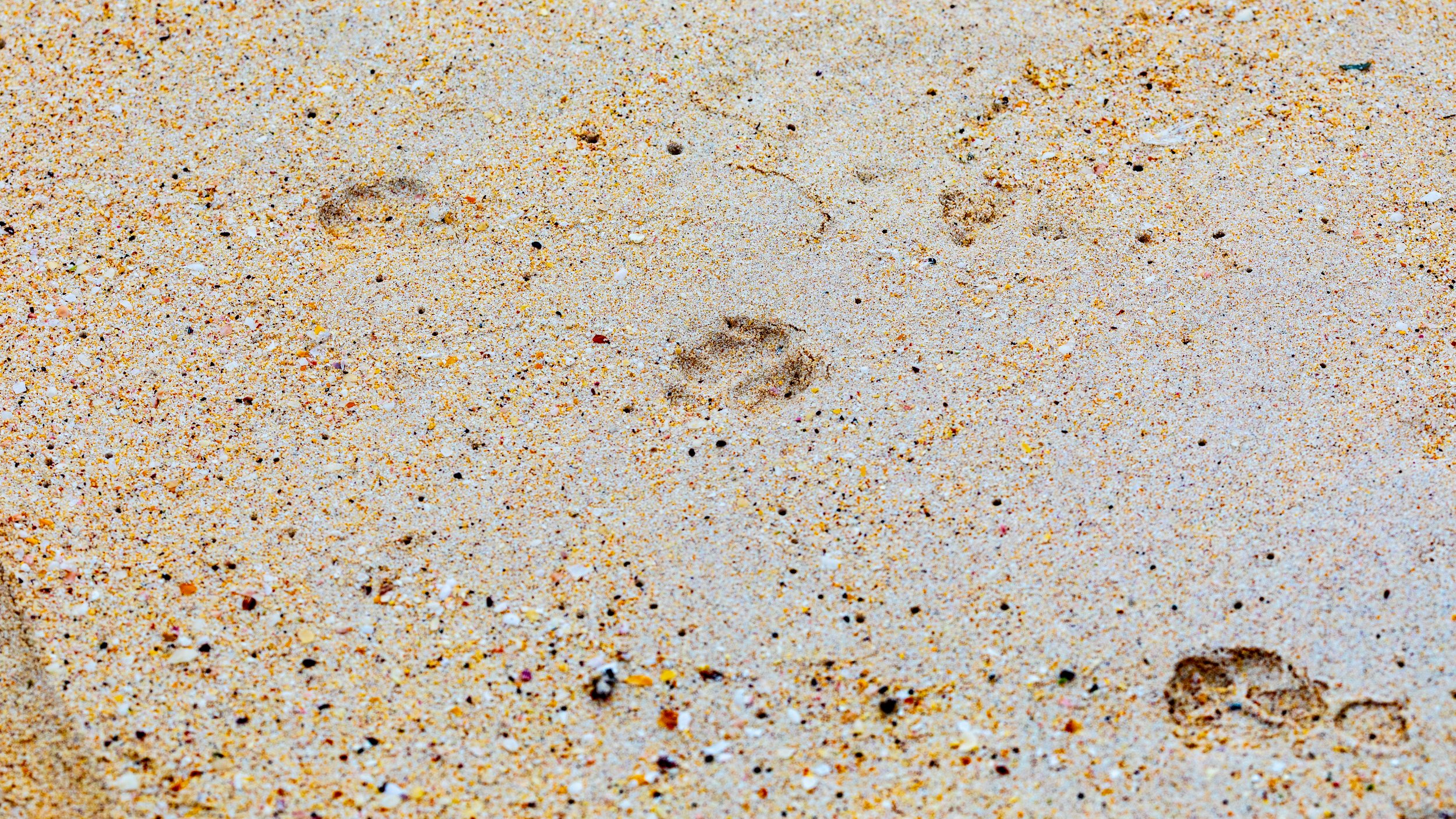
Cat tracks in the sand showed that they haven’t been able to eradicate the invasive species that threatens the bird and turtle population
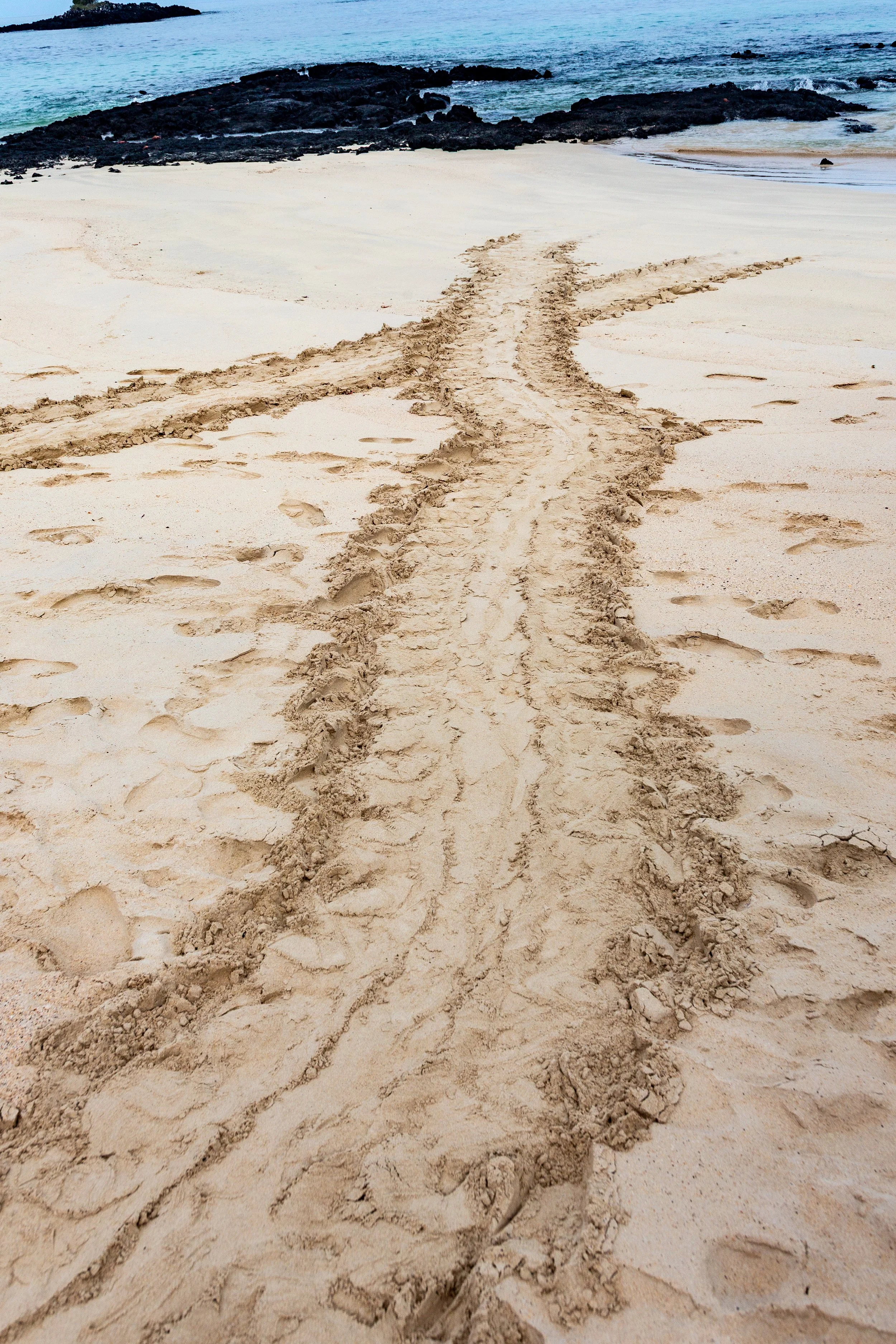
Sea turtle path along the sand to their nesting locations
Another Sally Lightfoot crab
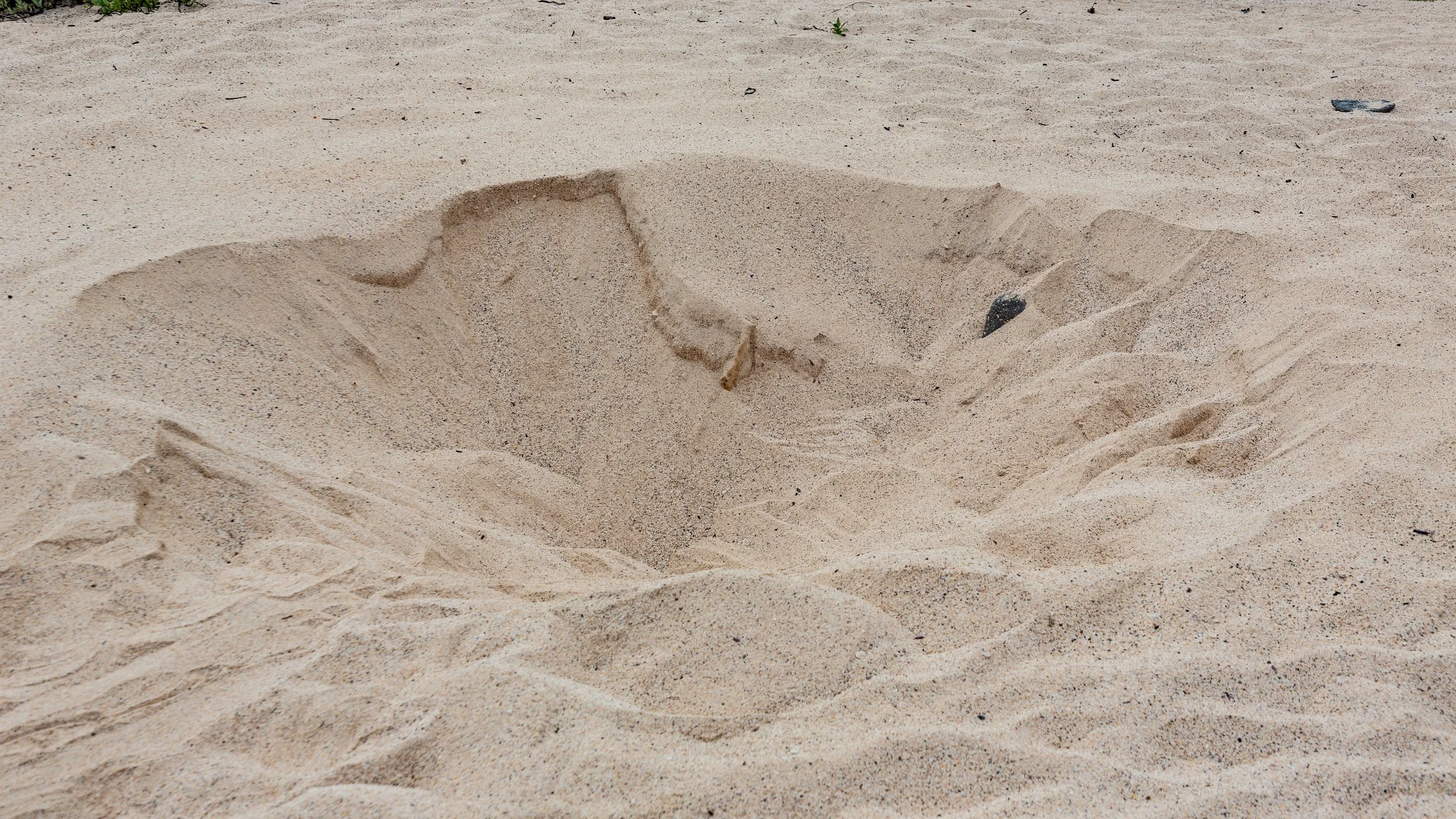
Large sea turtle nest
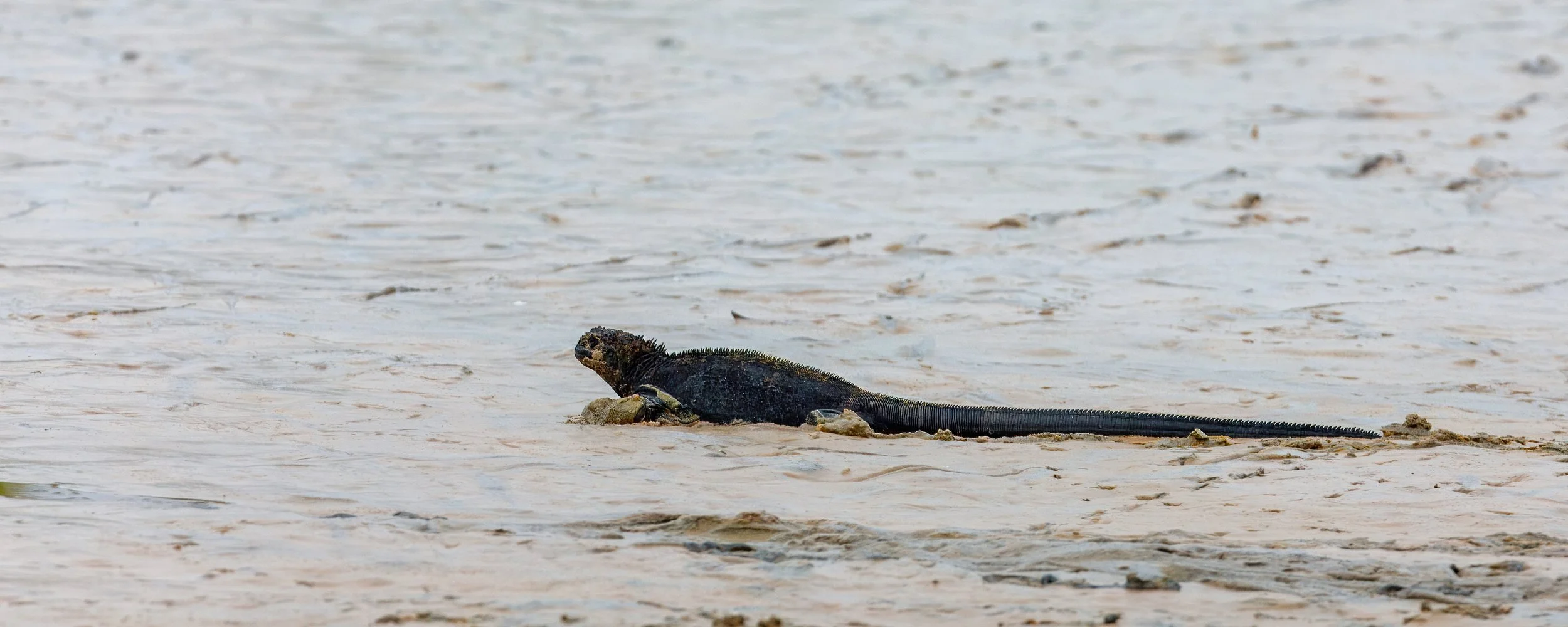
Sea iguana stuck in the mud as the tide rolls out
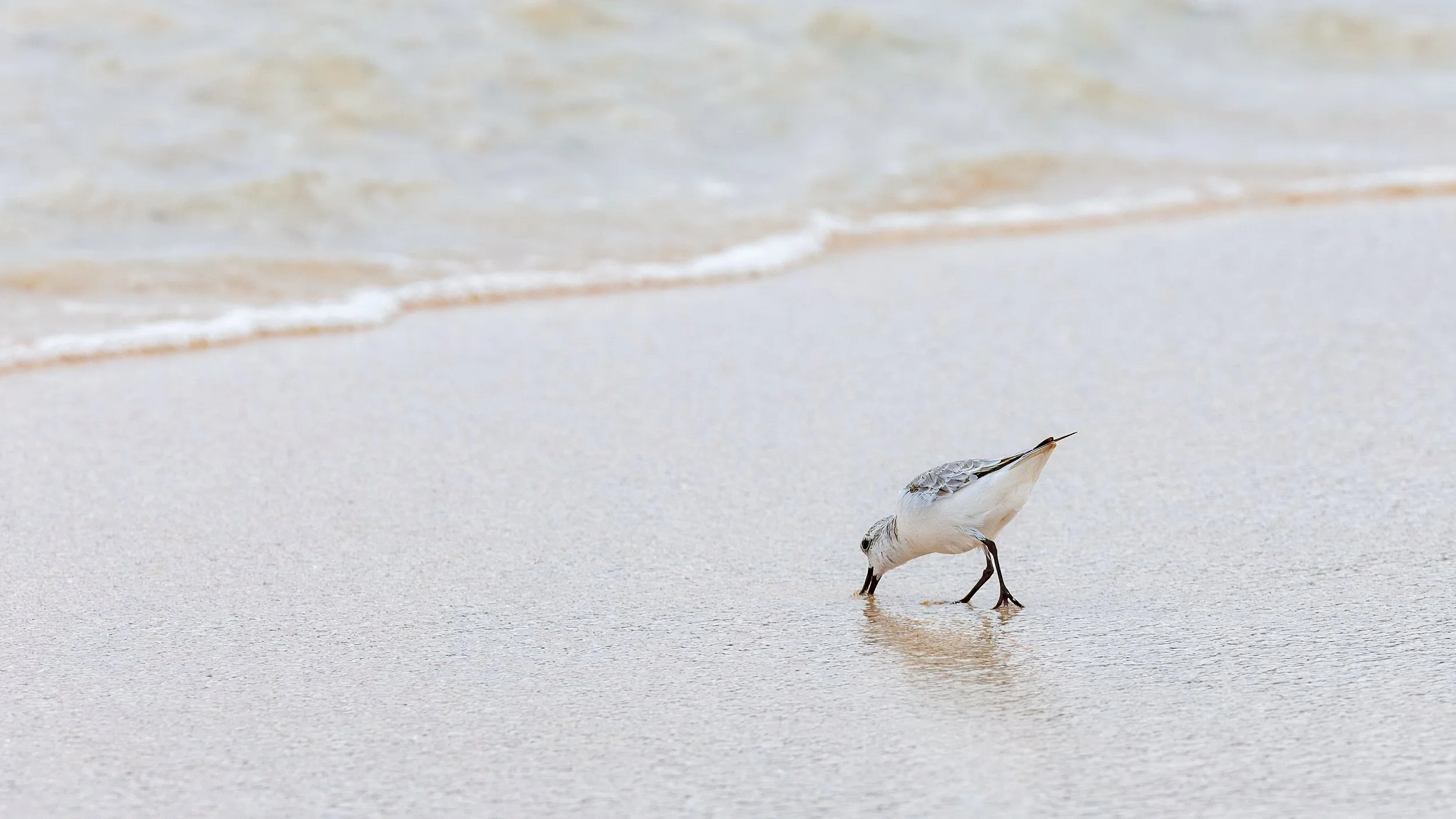
The Sanderling is a common migrant shorebird searching for food on the beach
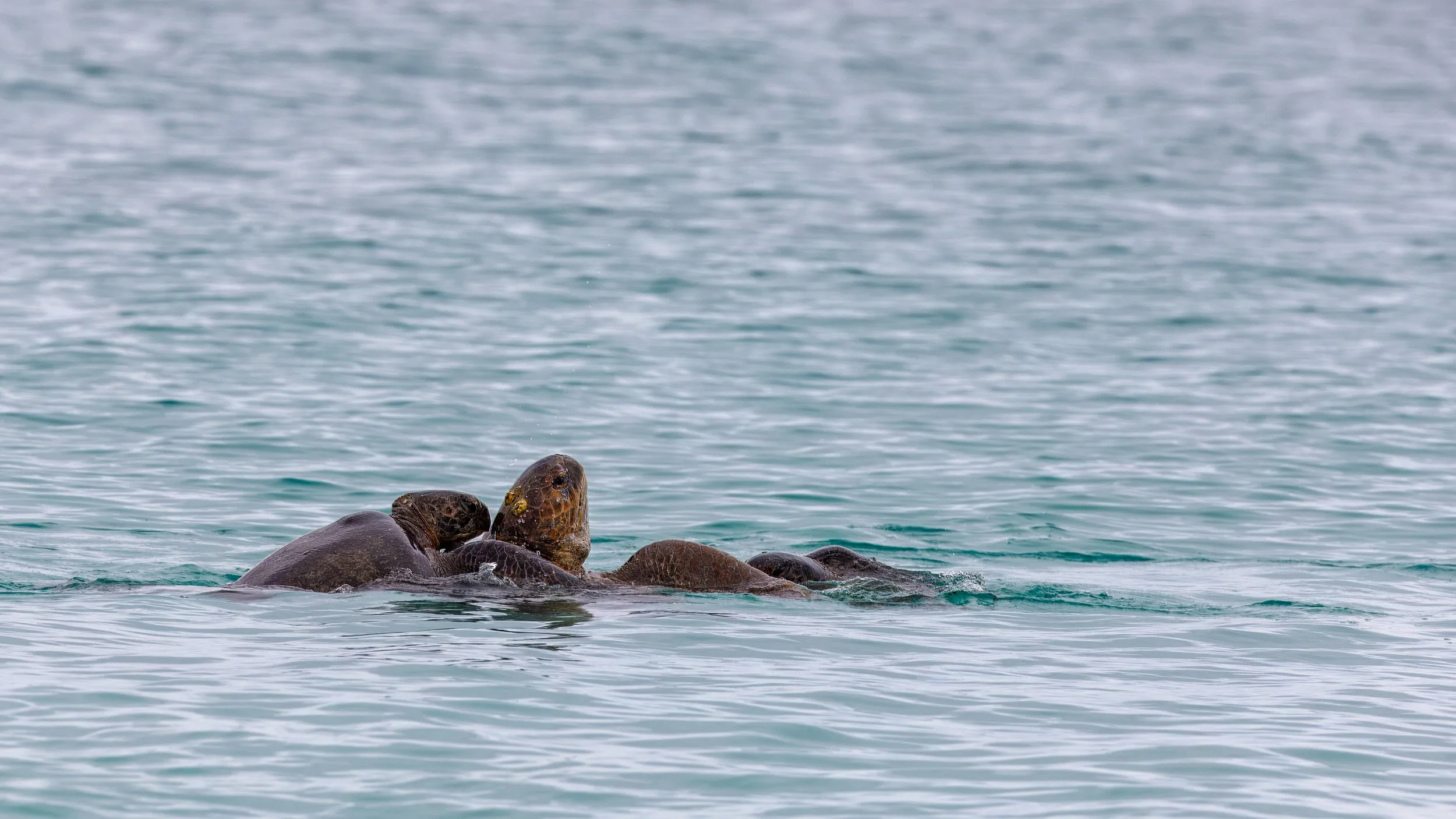
Mating sea turtles close to the beach
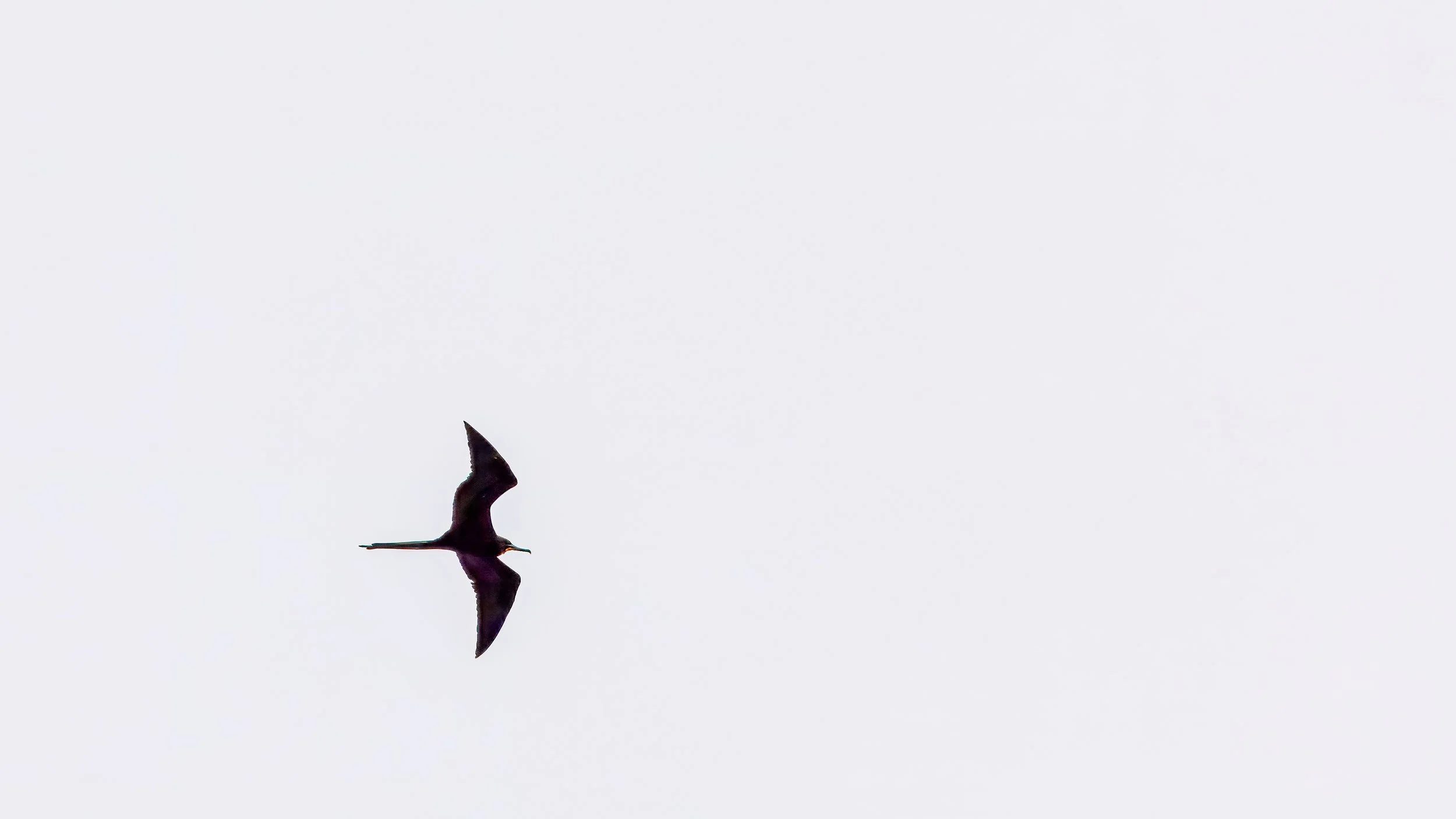
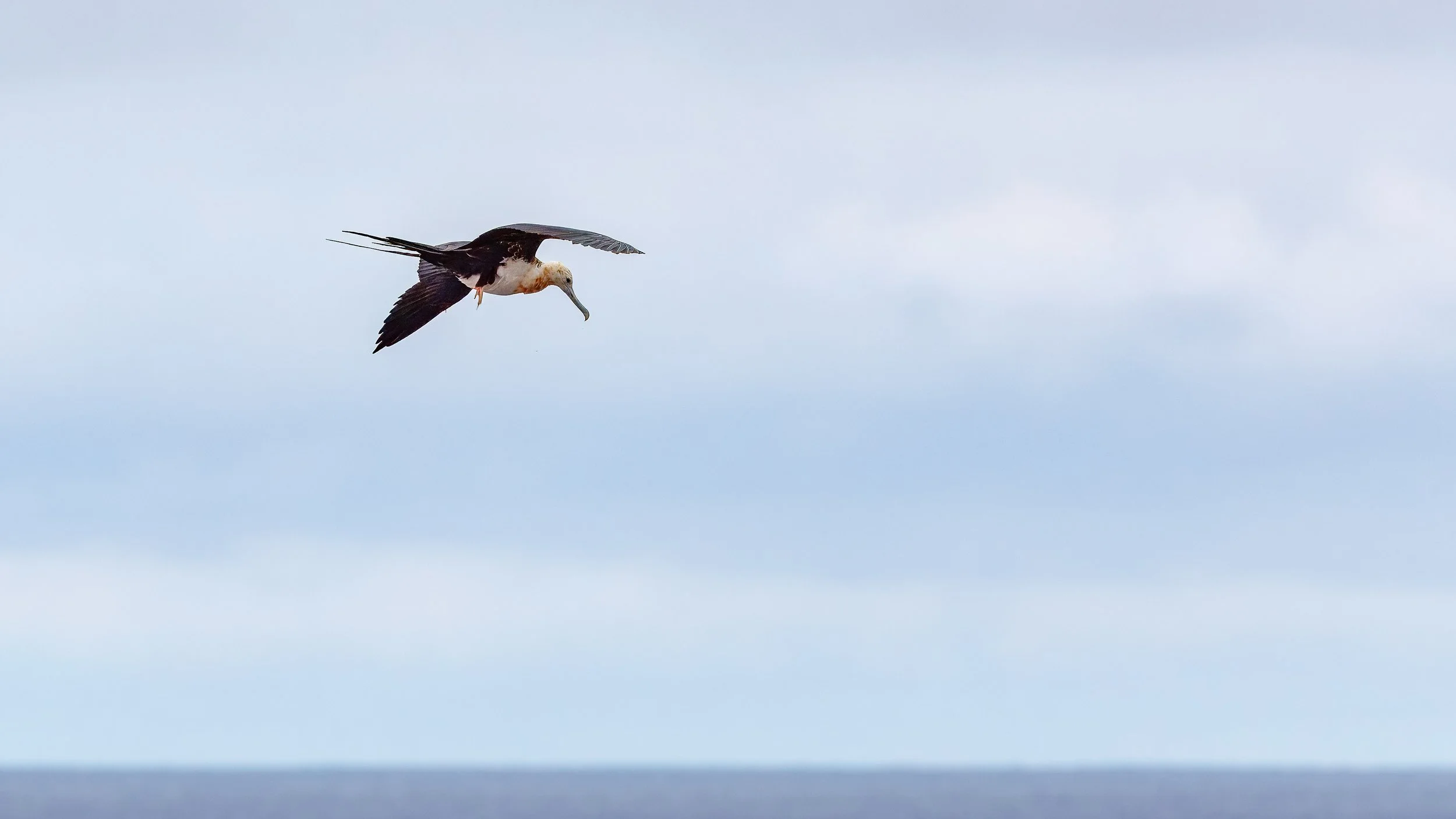
Frigatebird in flight
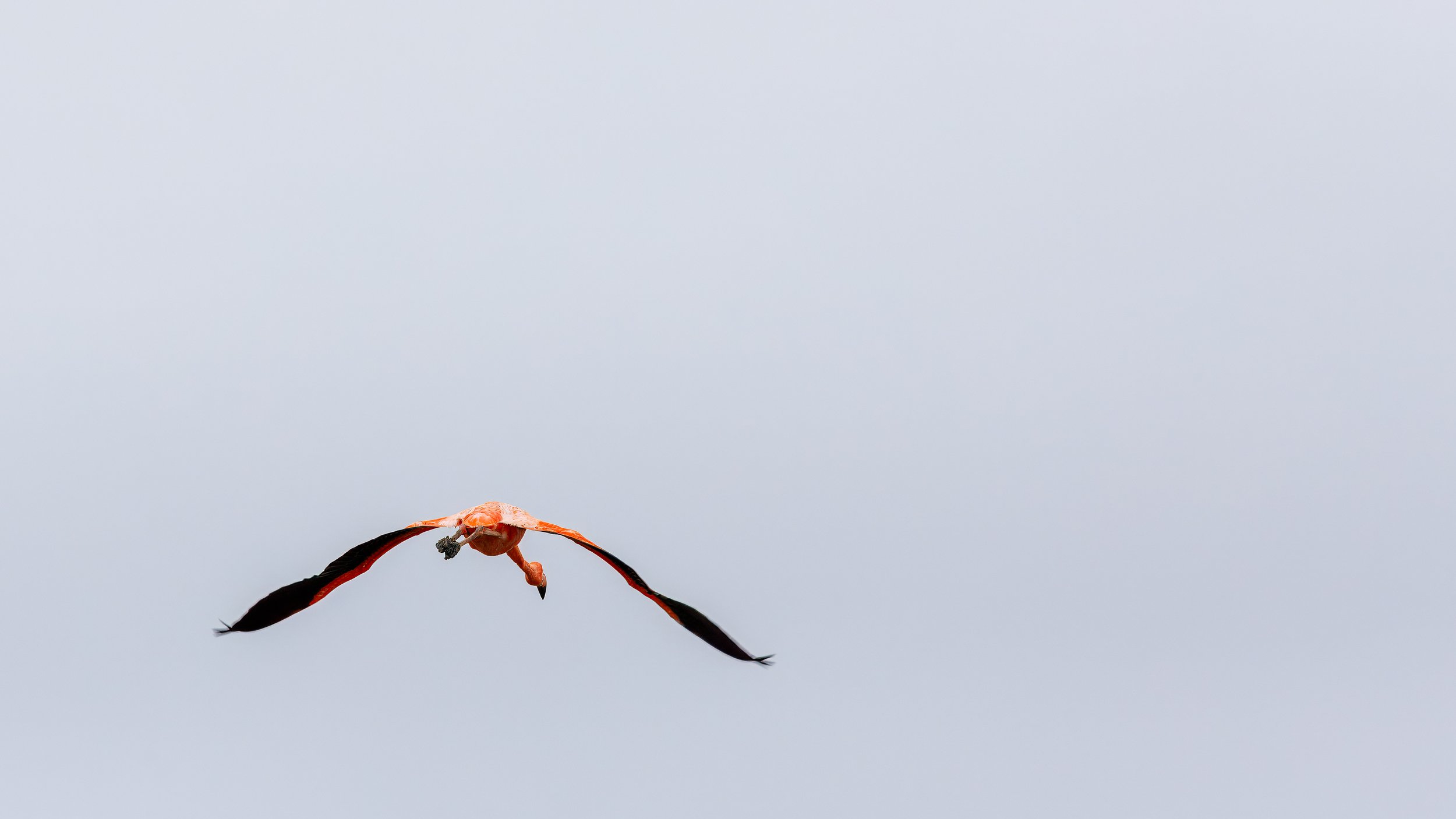
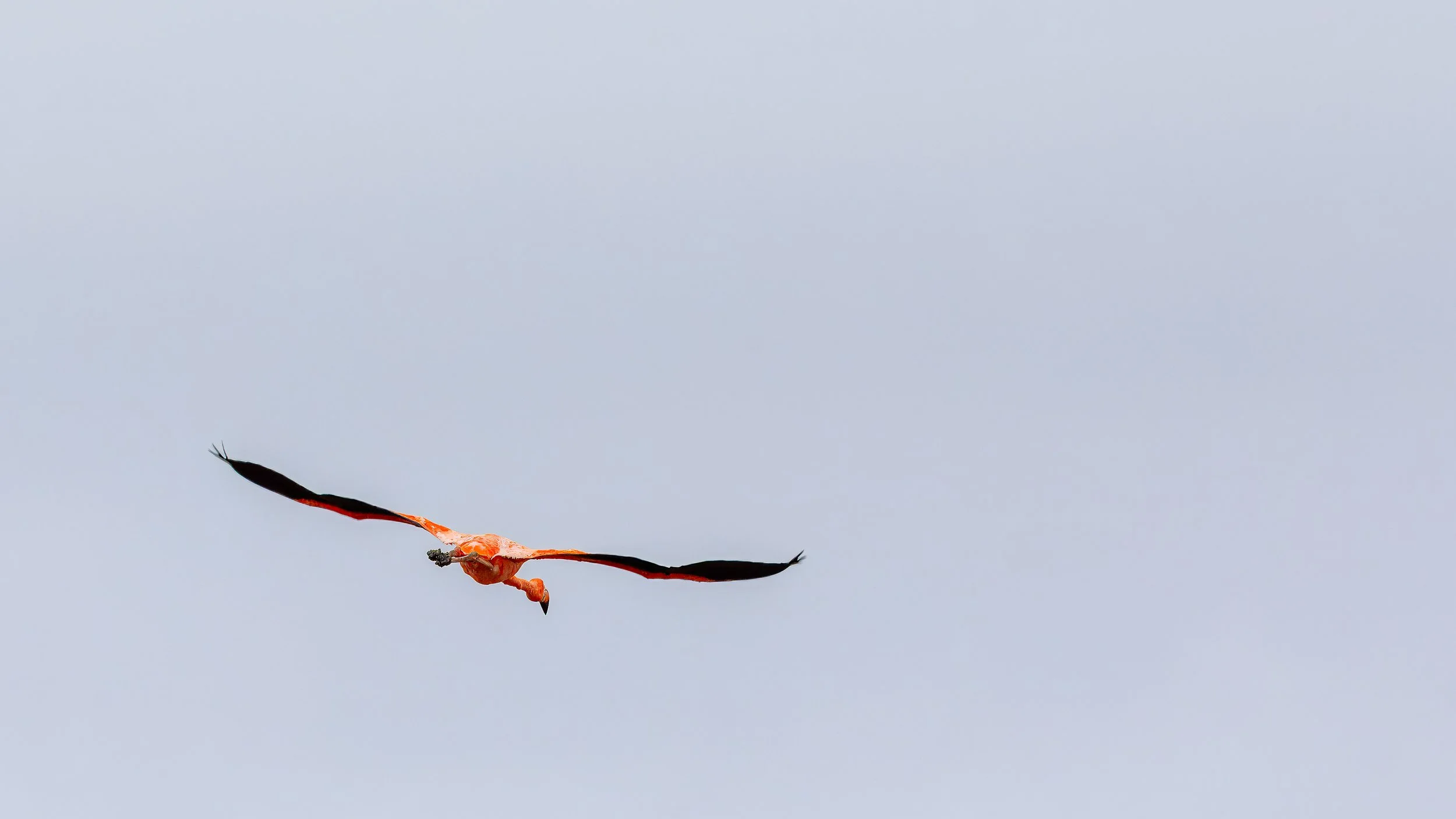
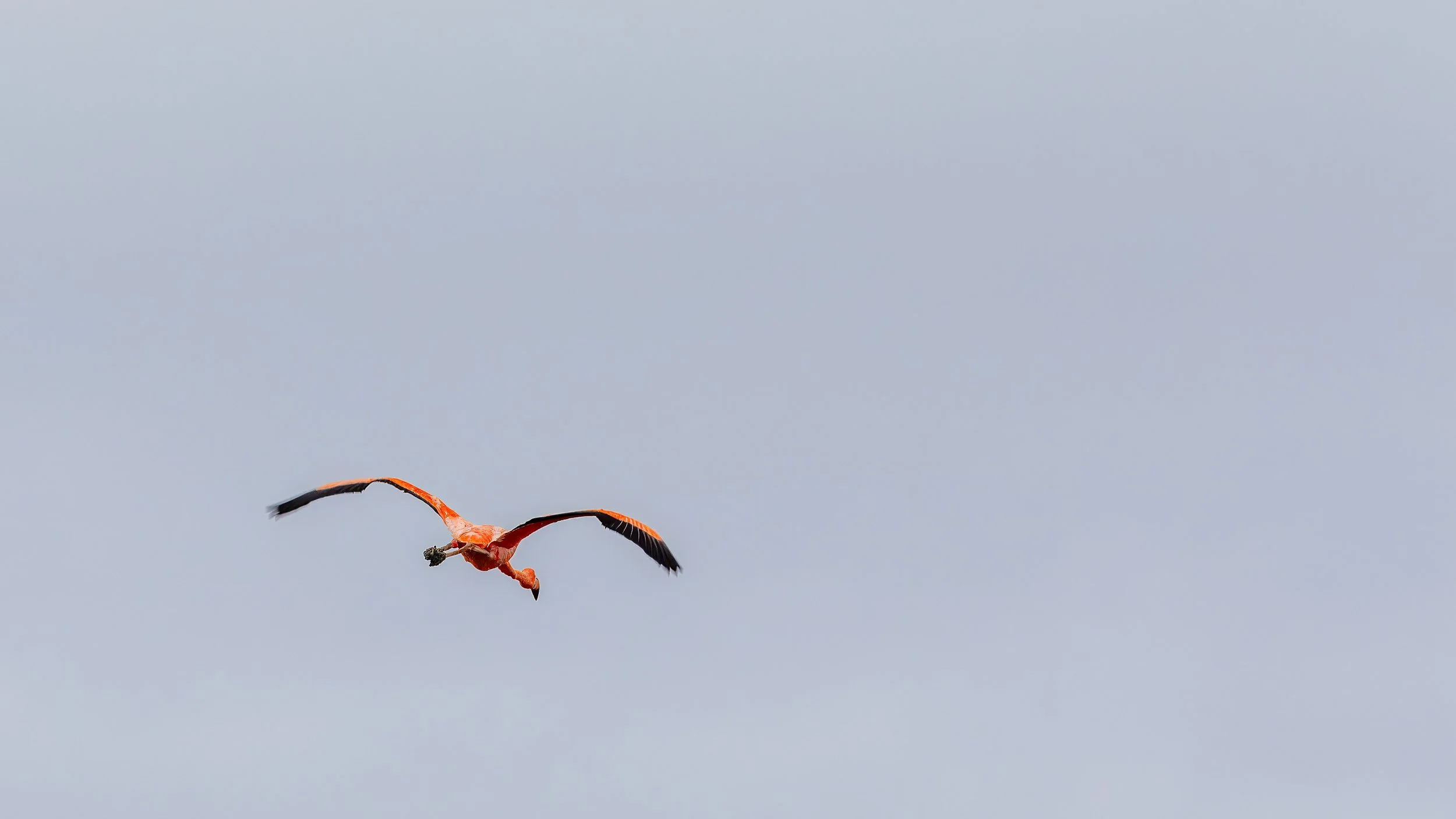
Rare shot of a flamingo in flight
Having missed them on the ground, we were so lucky to catch this one shortly after takeoff
Last shot as it disappears in the distance
The vibrant and varied colours make it hard to tire of the Sally Lightfoot crabs
Darwin finch perched on the lava rock formations on the beach
A larger collection of Sally Lightfoot crabs
A large gathering of sea iguanas was our reward for hiking to the other end of the beach
Another tender ready to take guests back to the ship
Another frigatebird in flight
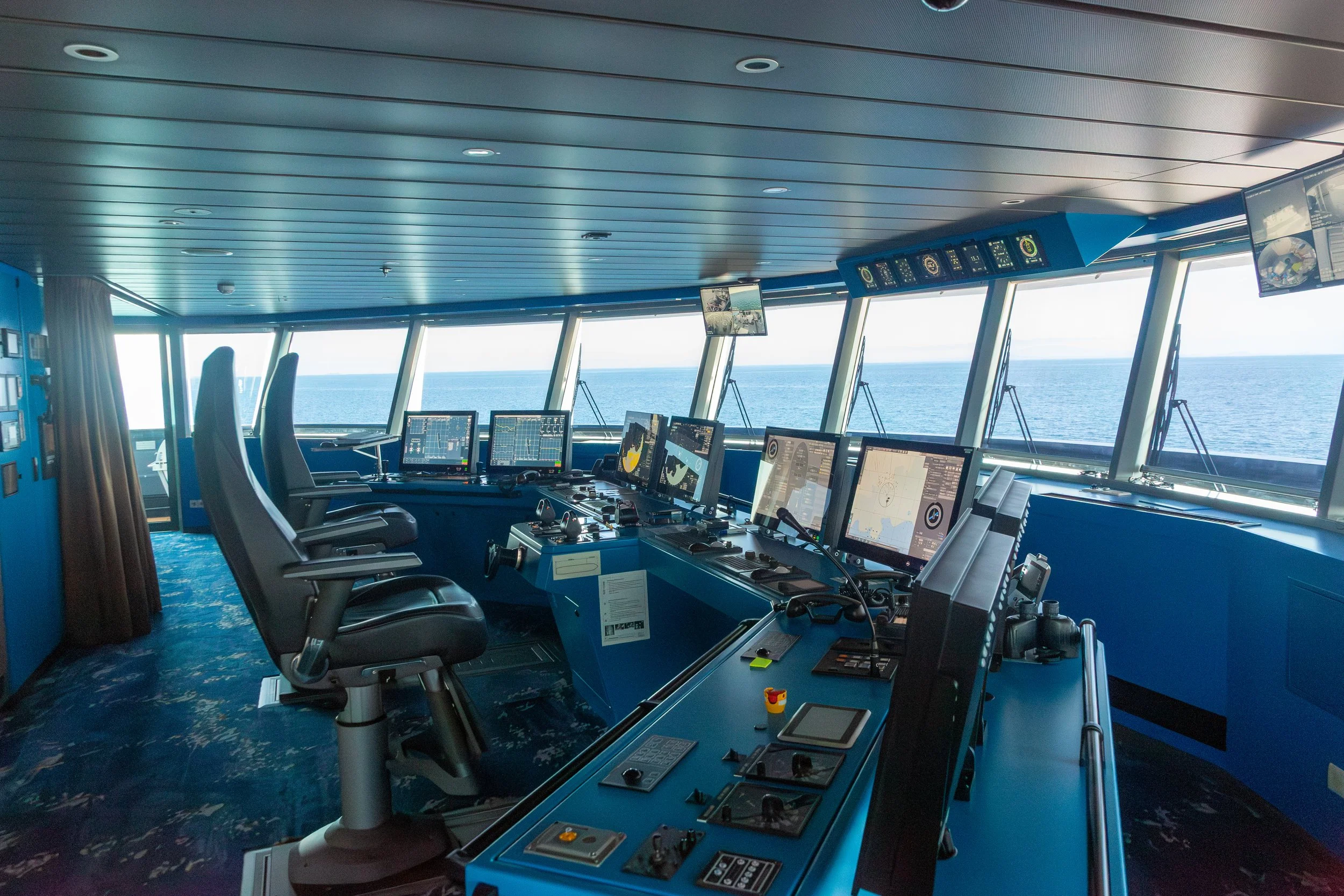
After arriving back on ship we enjoyed a visit to the bridge
Although the morning was spent so close to where we started, it was great to discover what we had left earlier in the week on the northern shore of Santa Cruz.
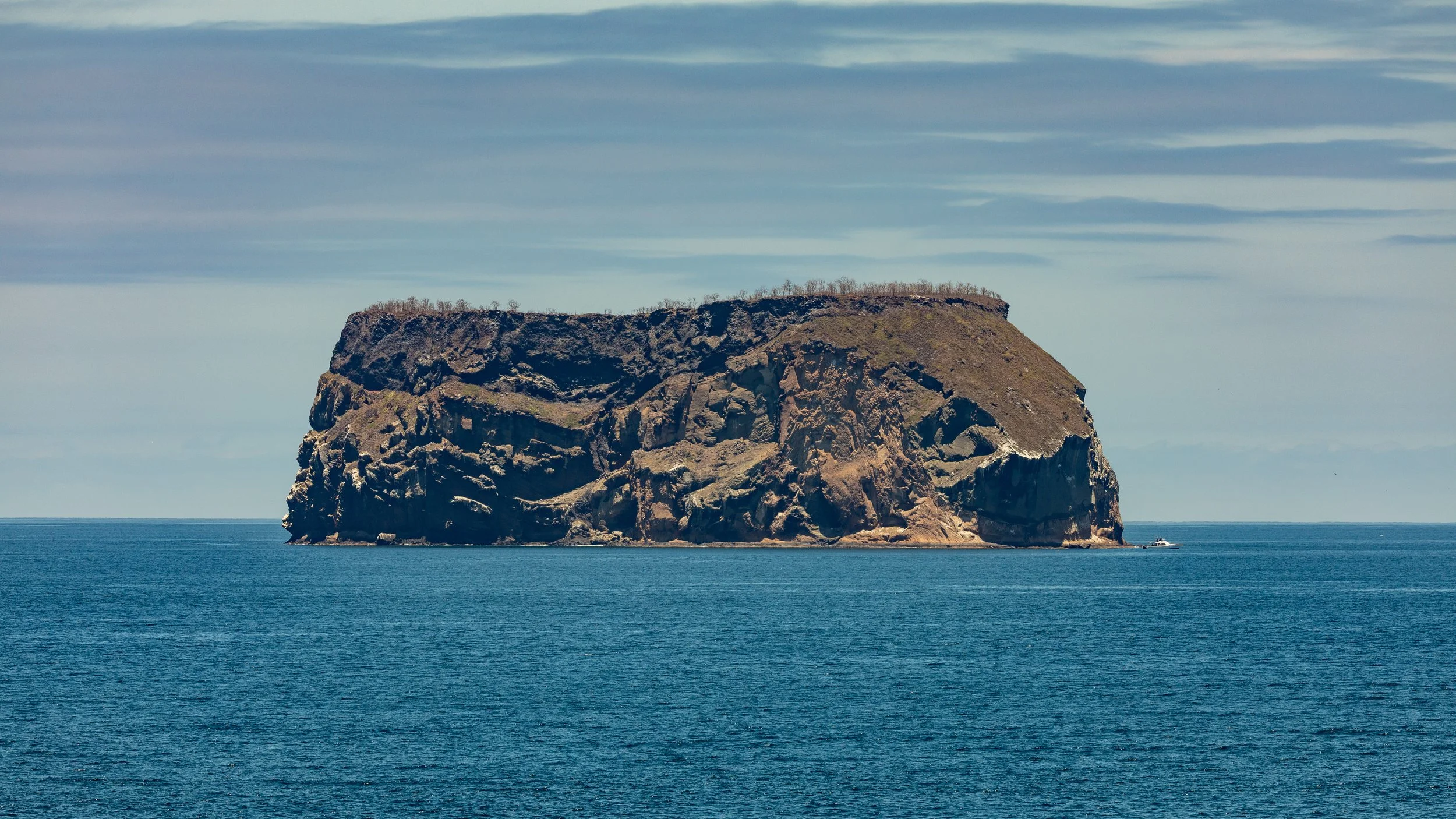
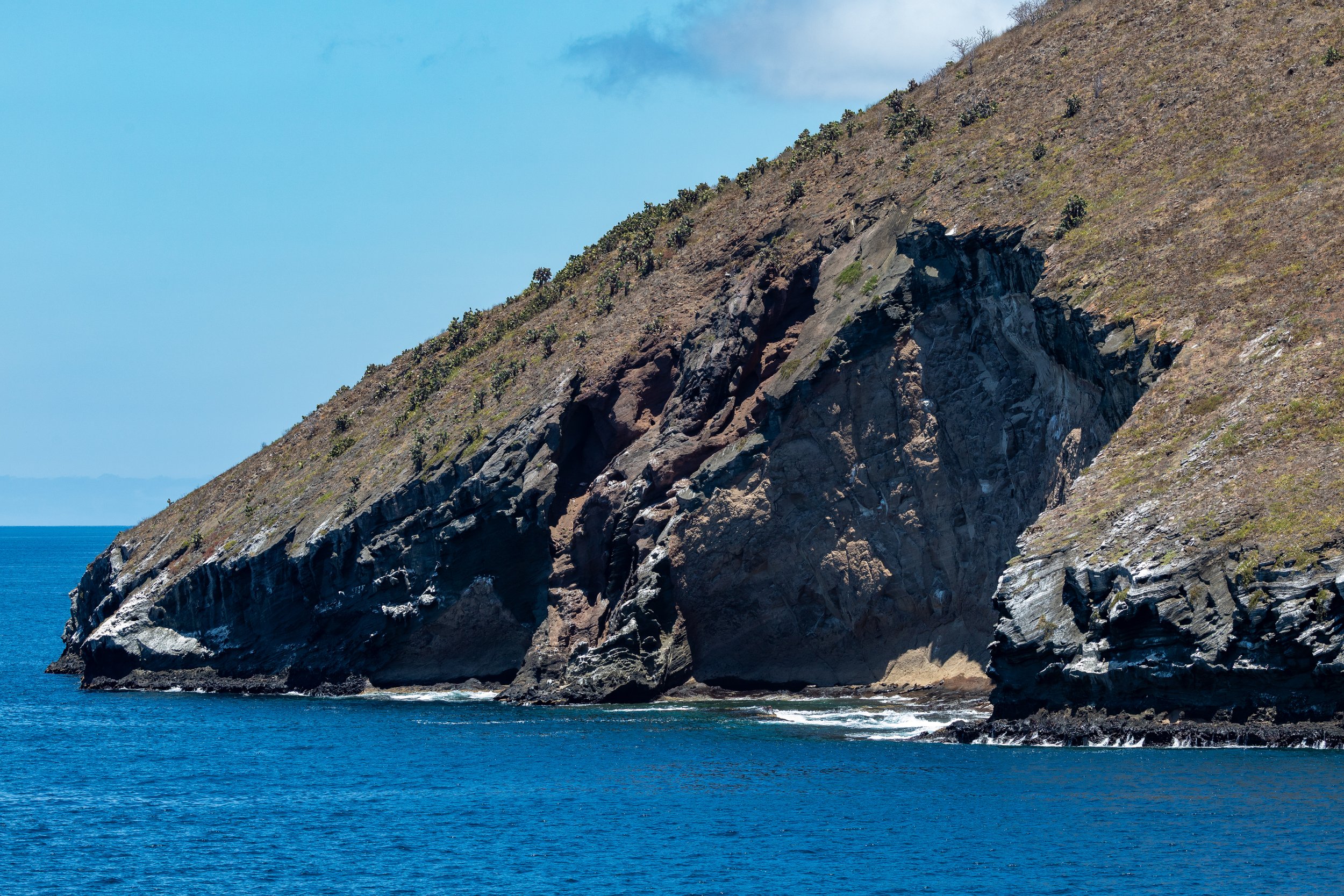
After lunch, the boat made a pass by of Daphne Major Island to see some nesting birds and the rocky terrain. We again signed up to ride along with the deep water snorkel trip before our long rocky walk on North Seymour Island.
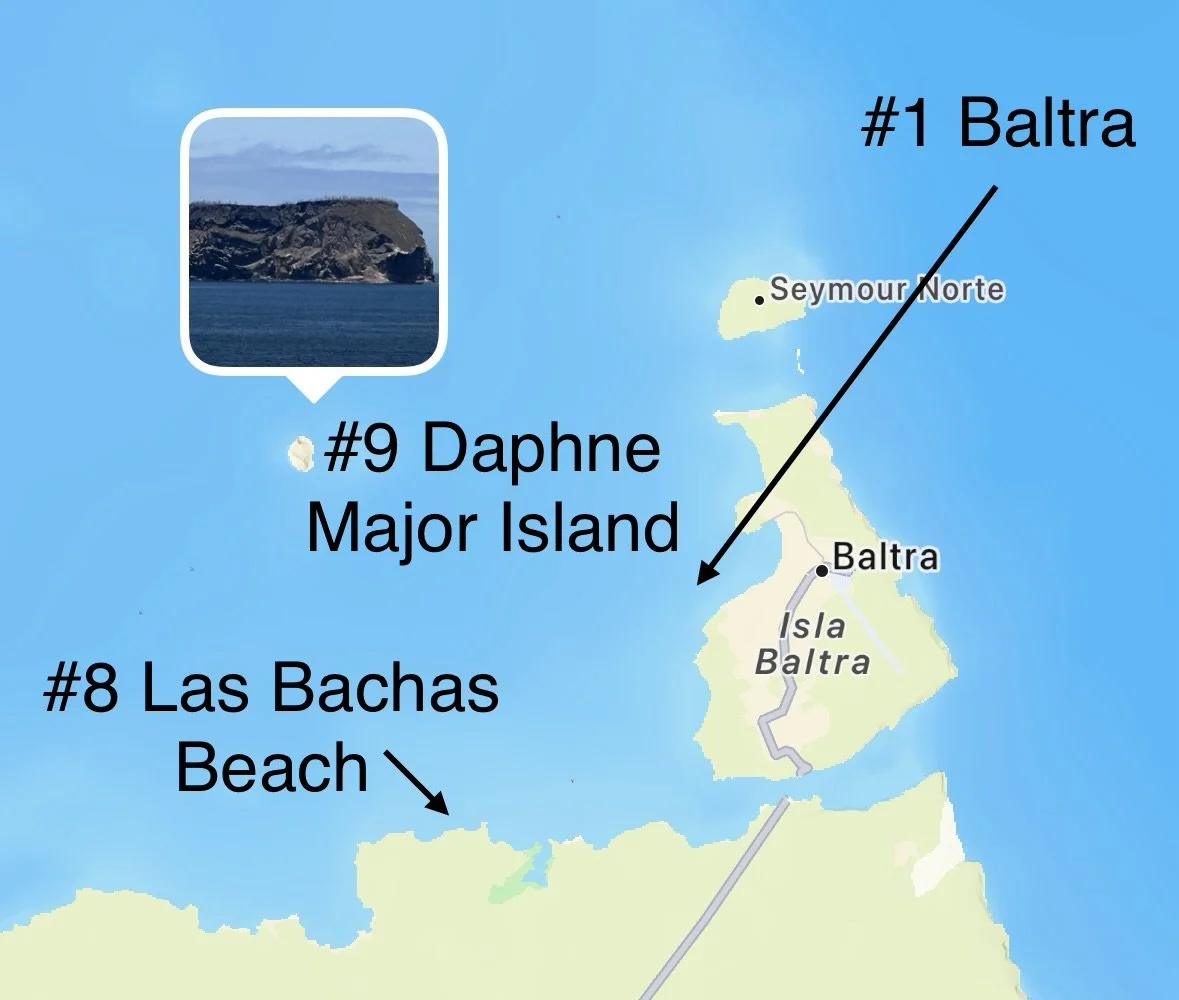
With a very short distances of travel after lunch the boat navigates around nearby Daphne Major Island
Approaching Daphne Major Island
Circling the island home to many birds
Later in the afternoon we anchored offshore from North Seymour Island to transfer for a dry landing
From the snorkel ride, Tom caught lots of bird photos including a magnificent frigatebird in flight
White-tailed tropicbird
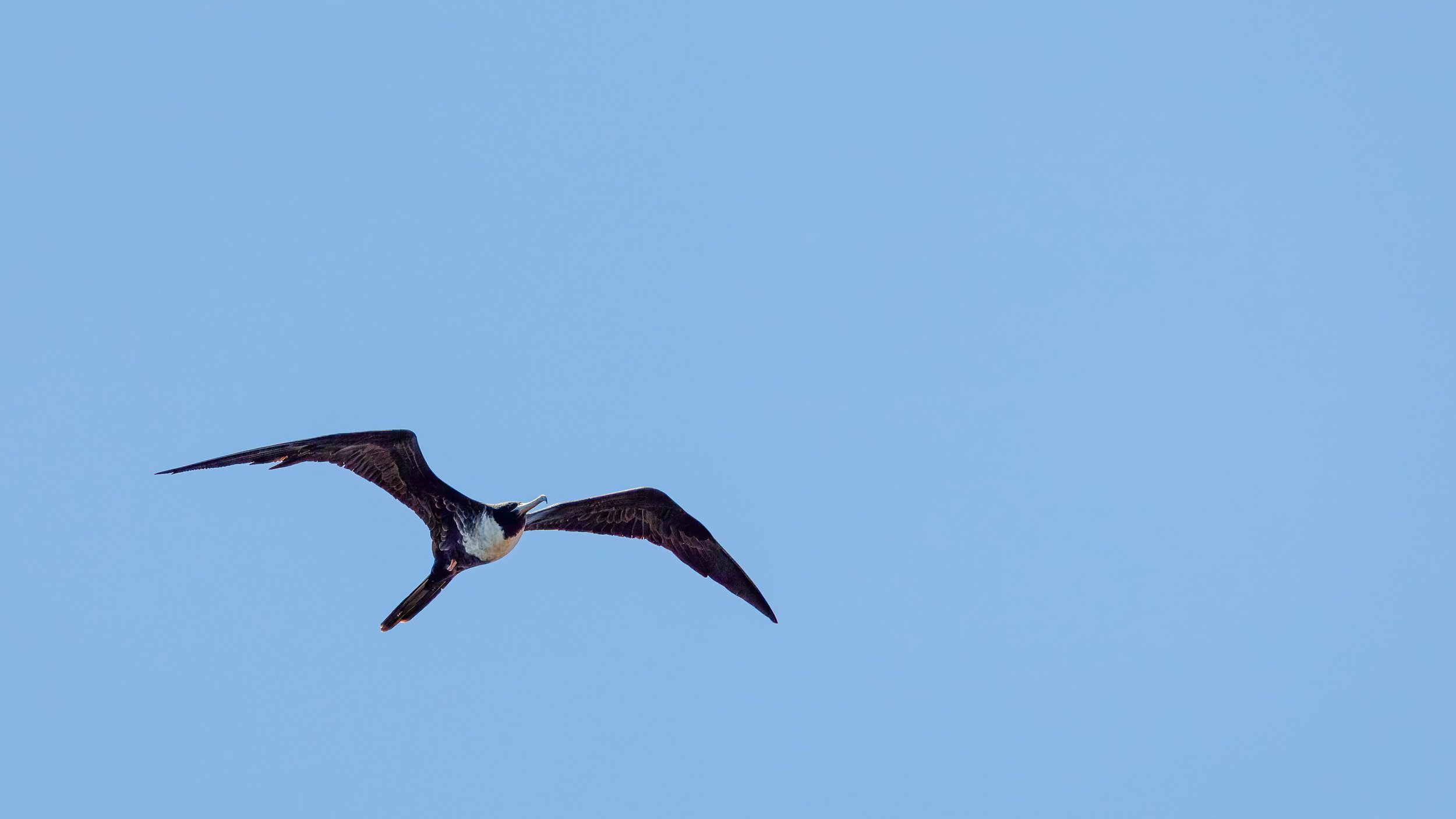
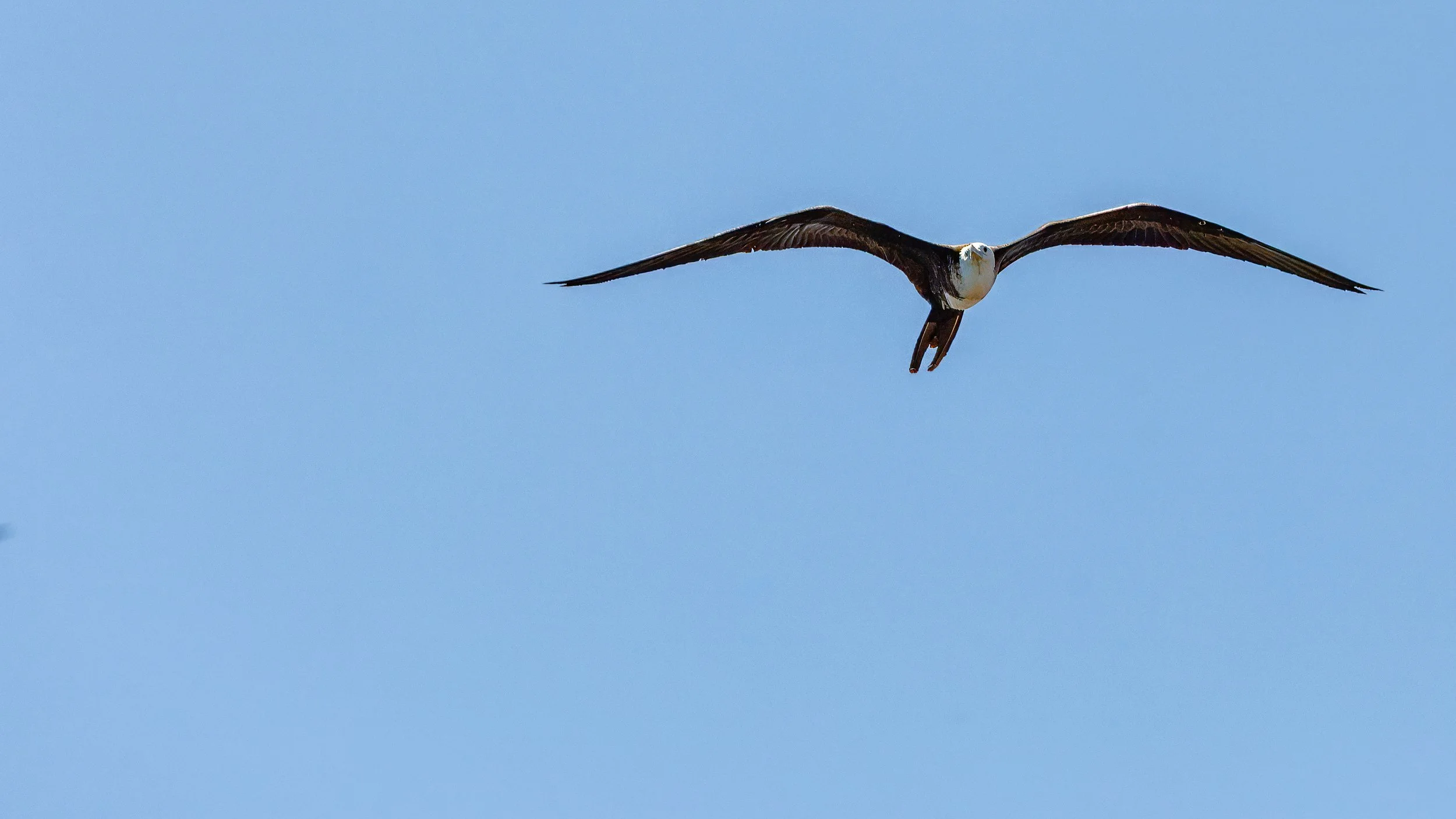
Another magnificent frigatebird
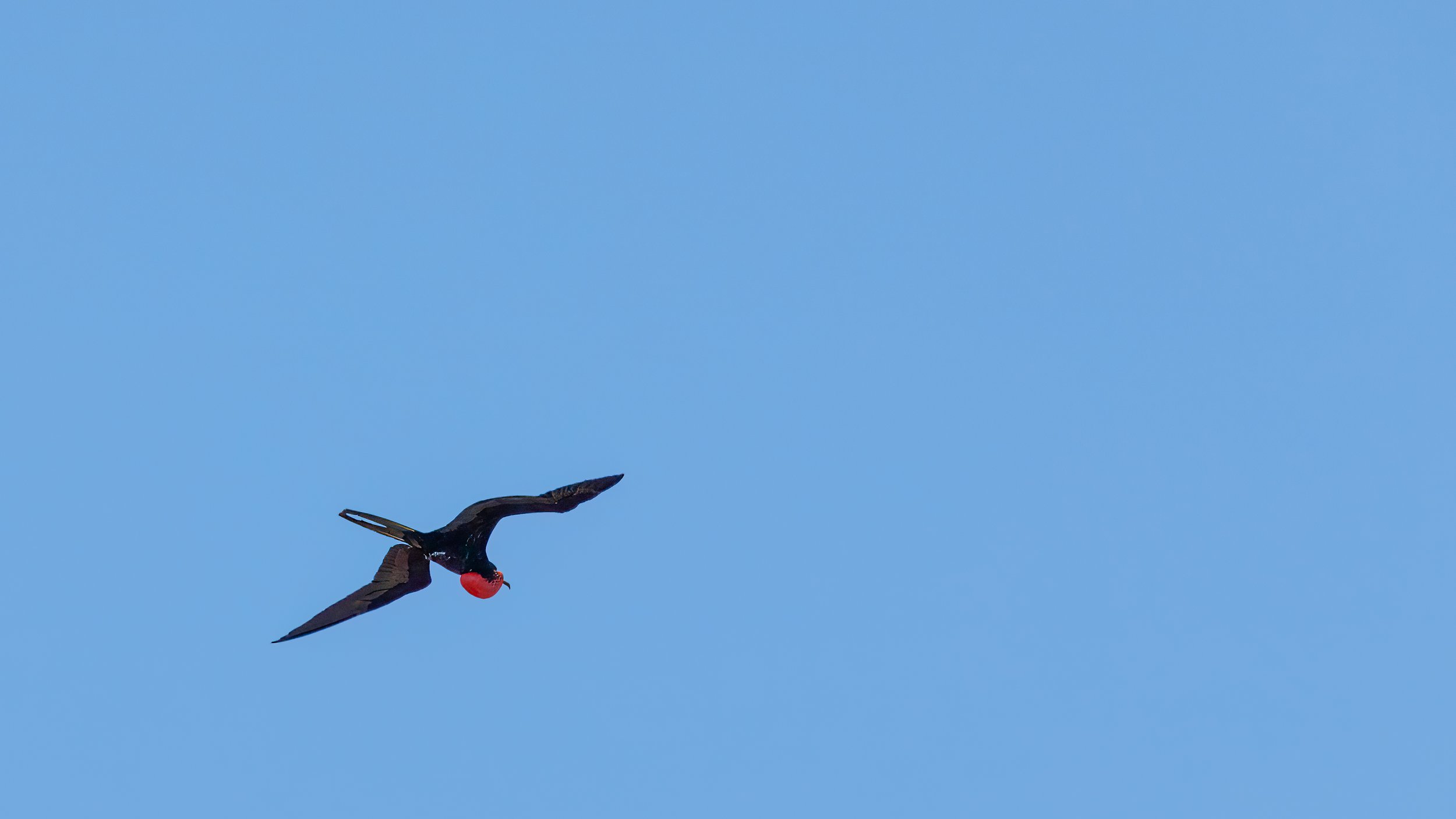
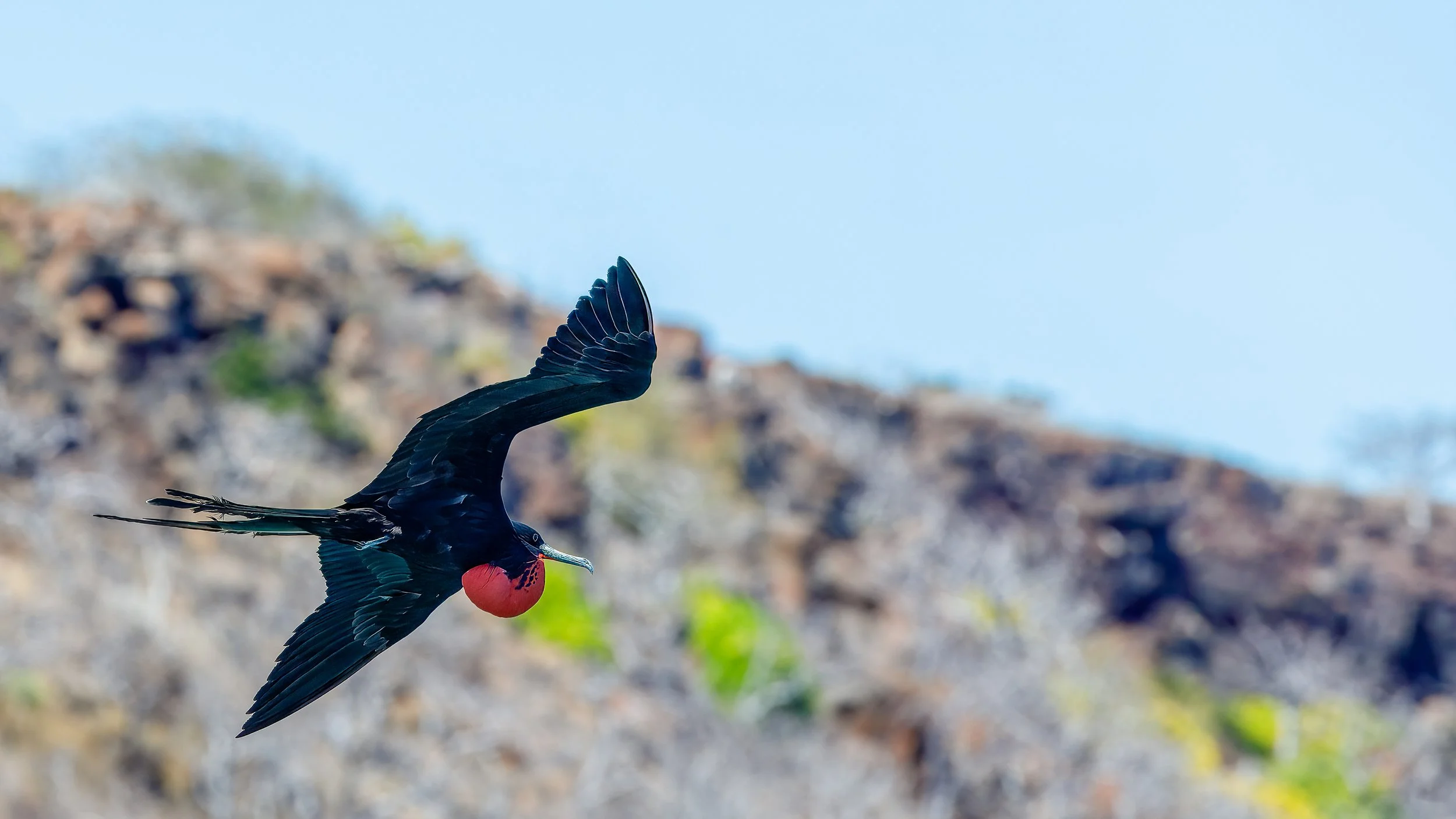
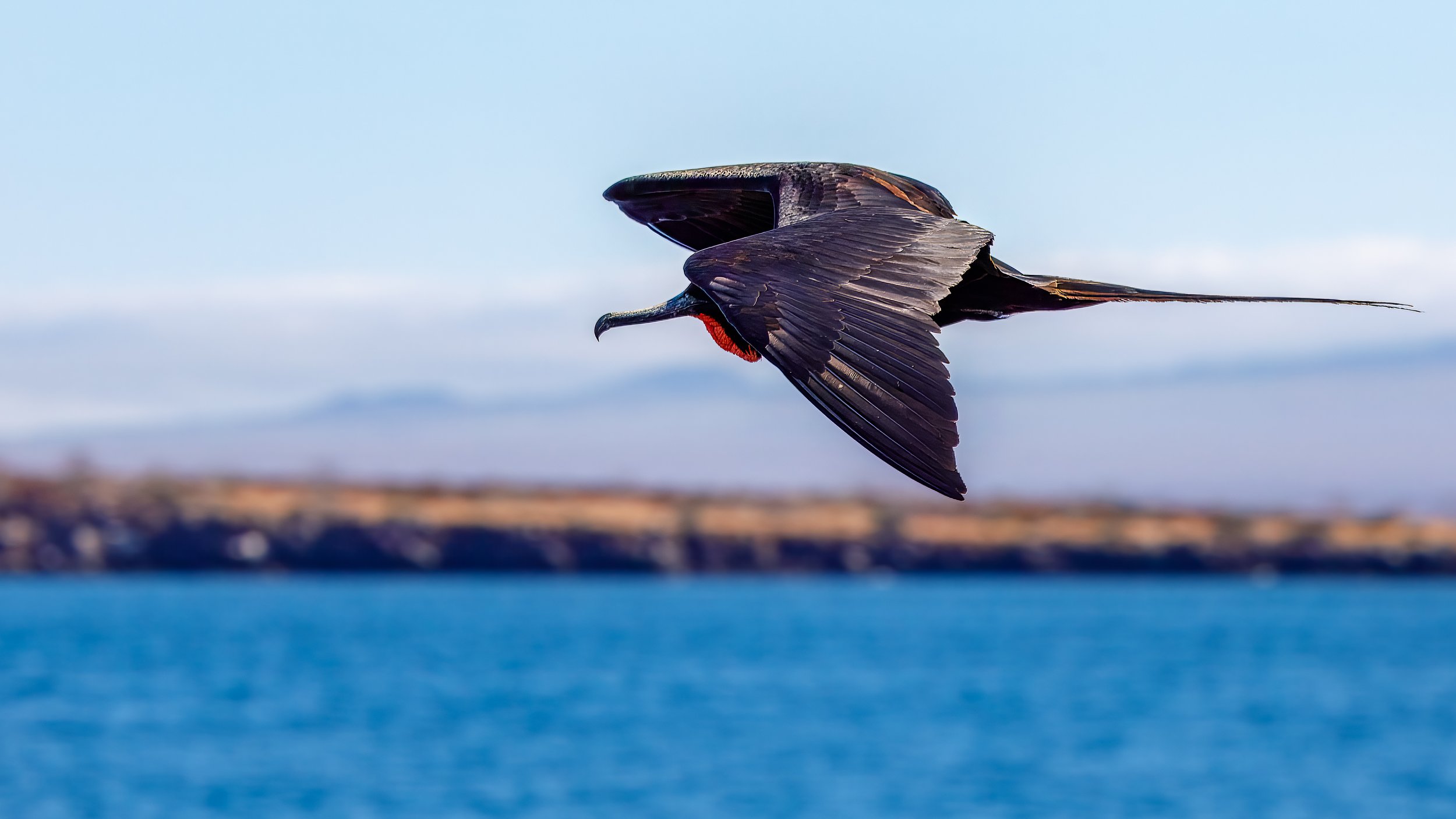
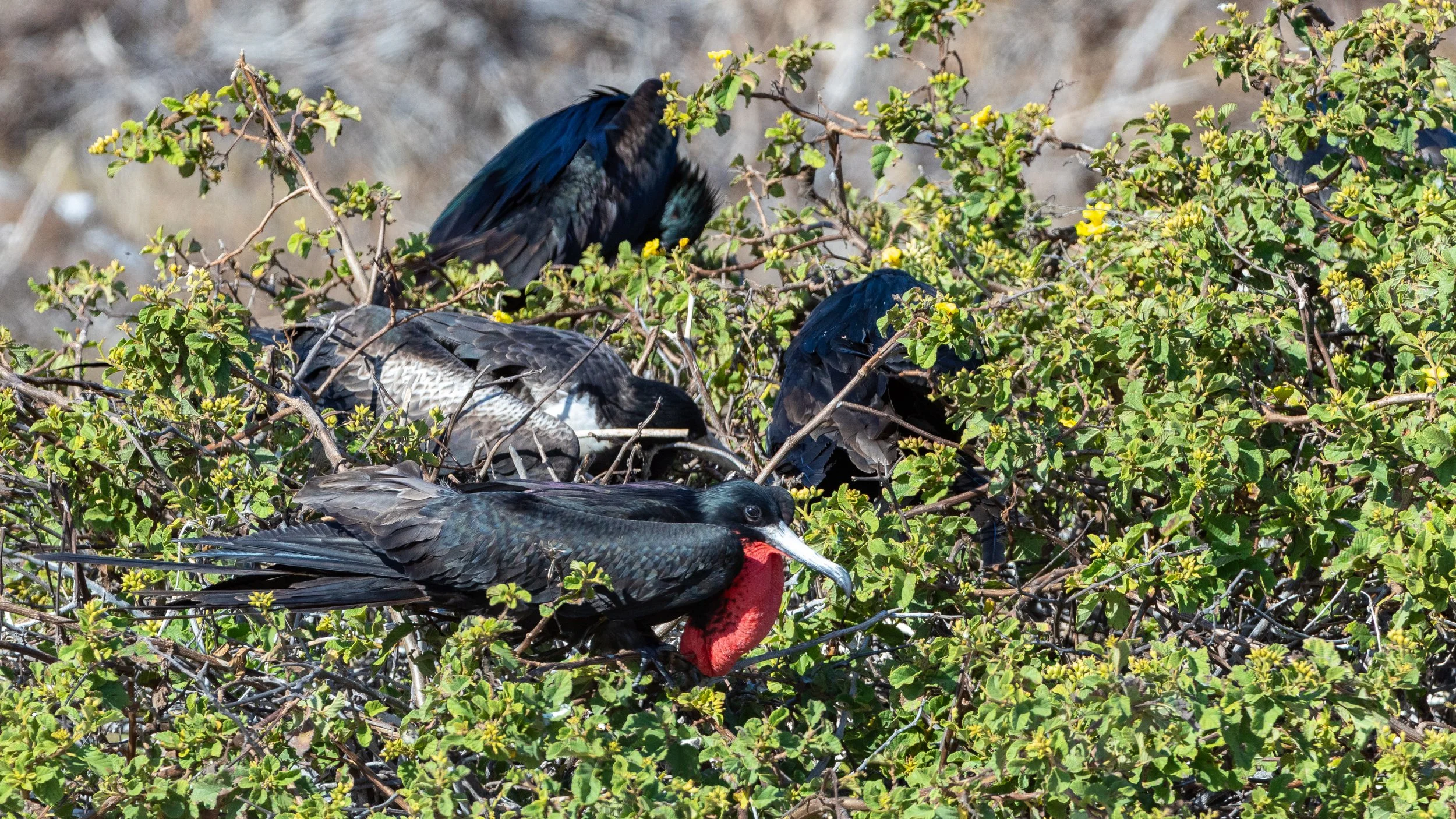
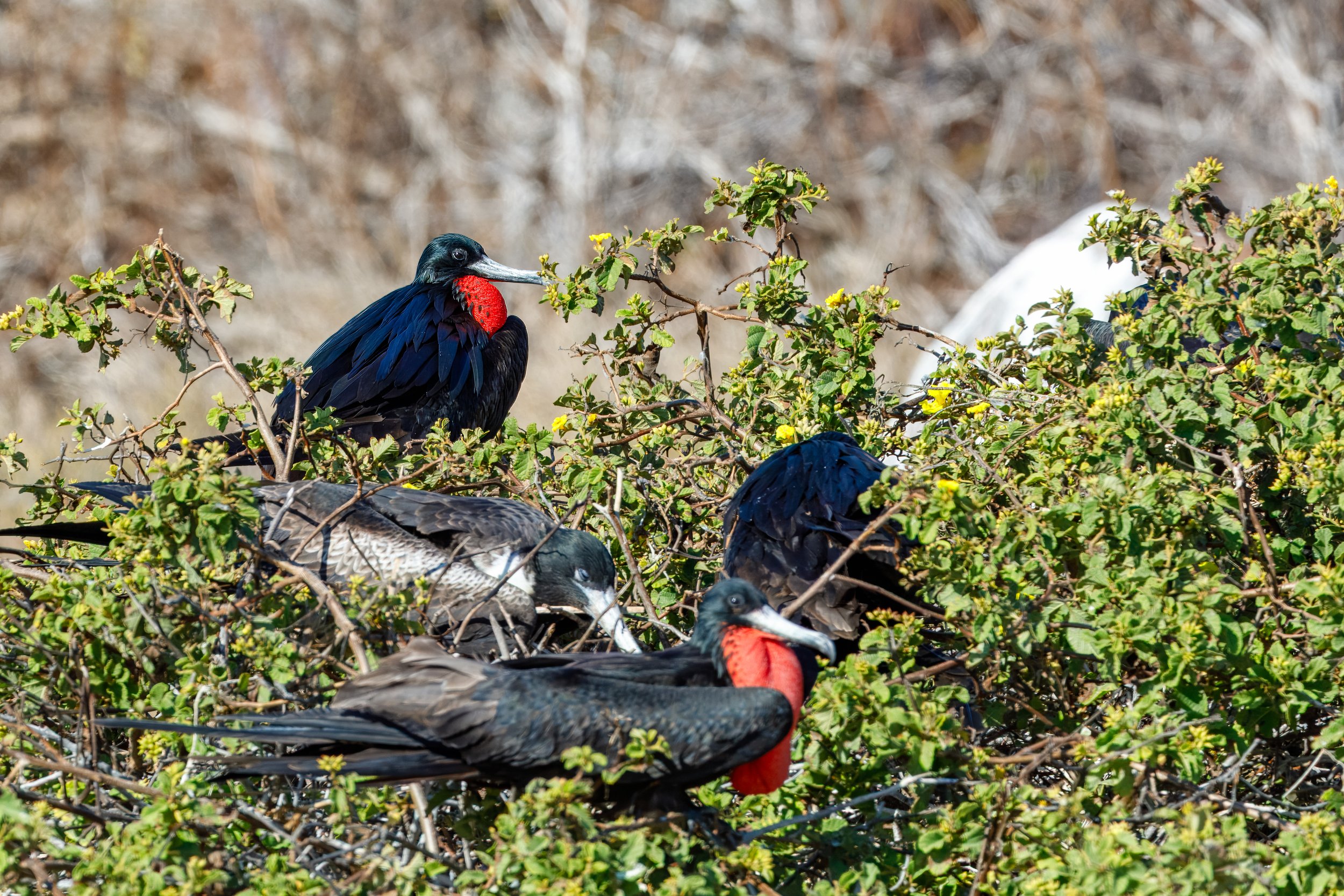
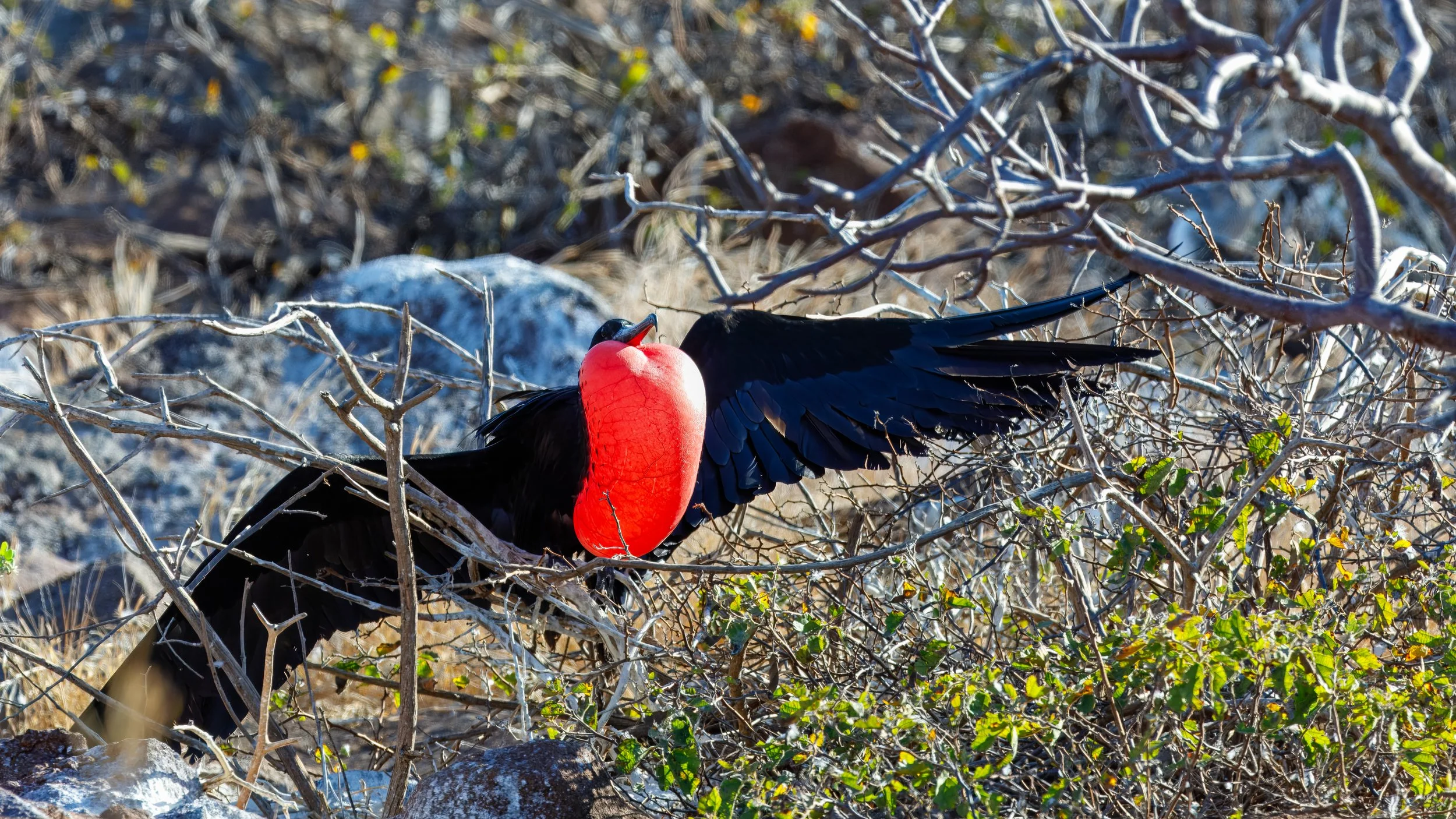
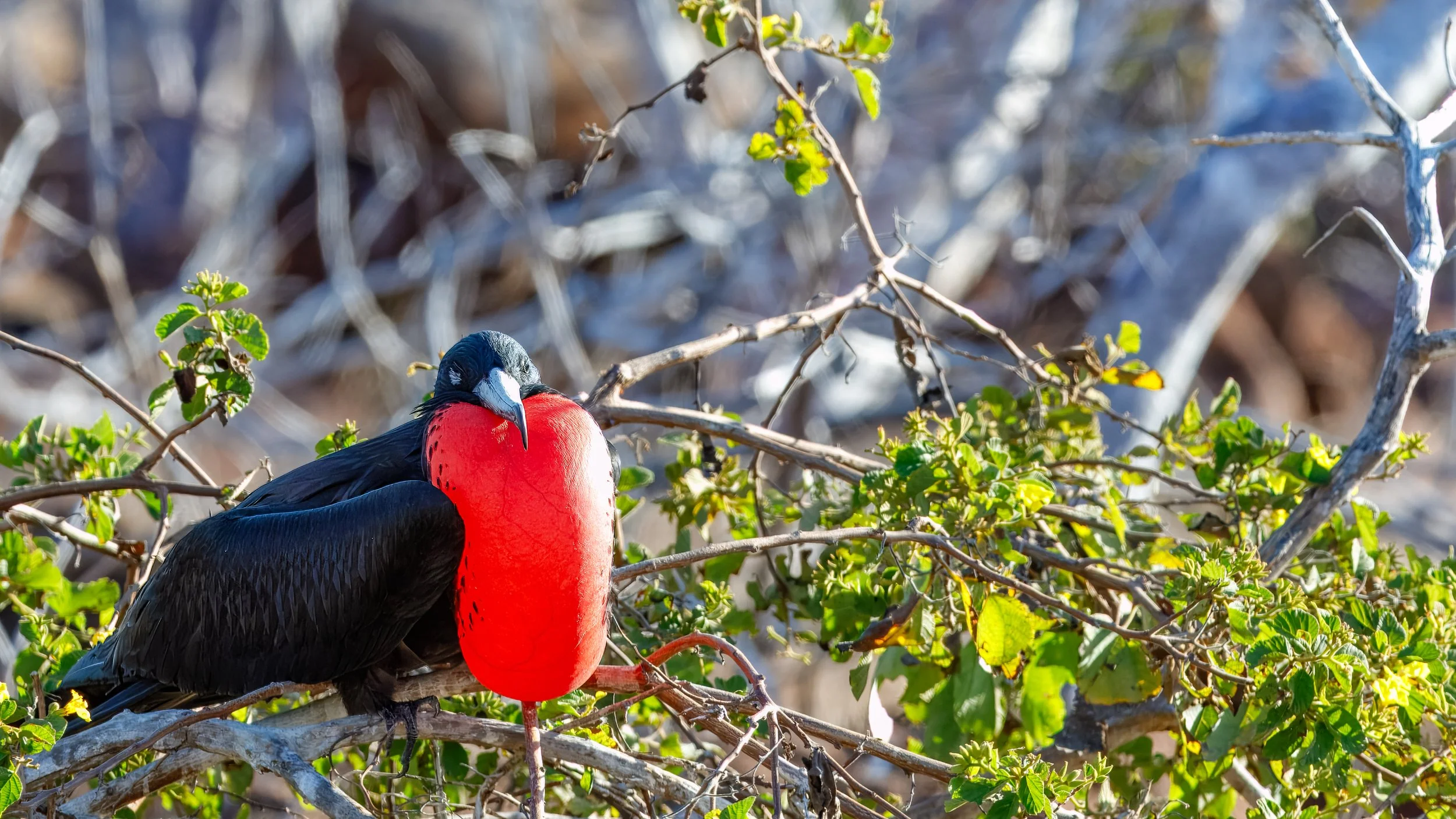
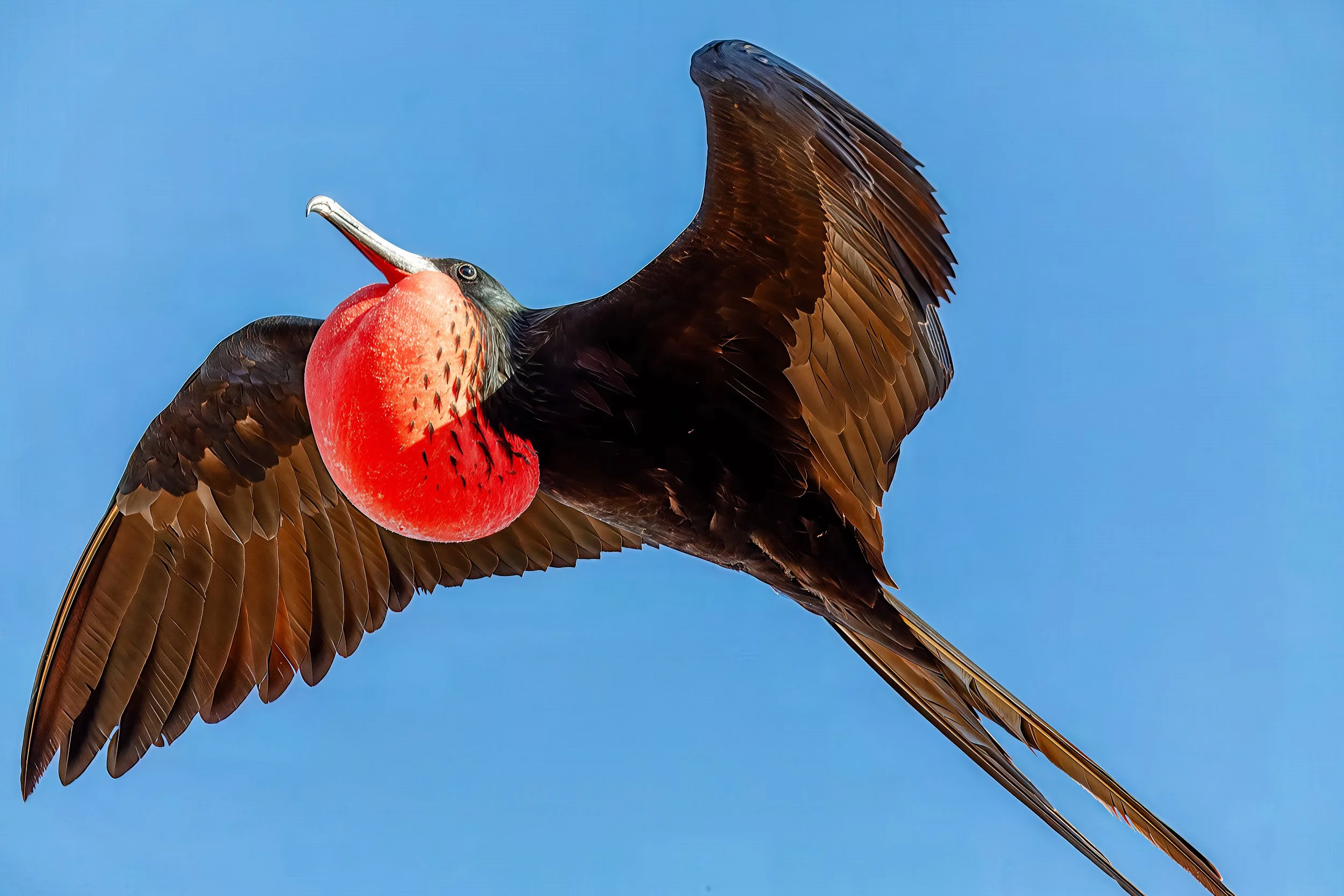
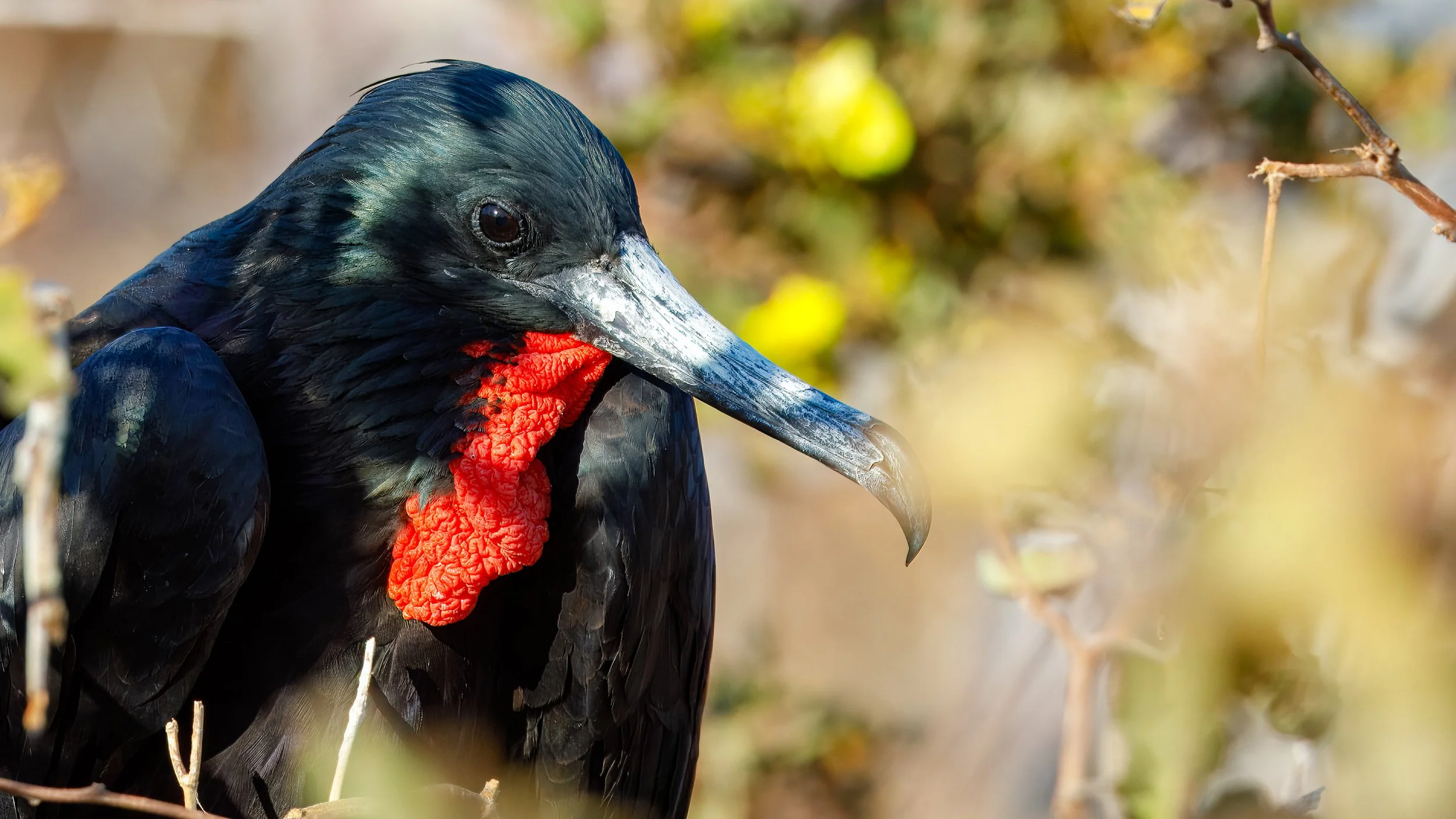
Male magnificent frigatebird showing off throat (gular) sac that inflates during the breeding season
A female frigate
Another sea bird along the coast line
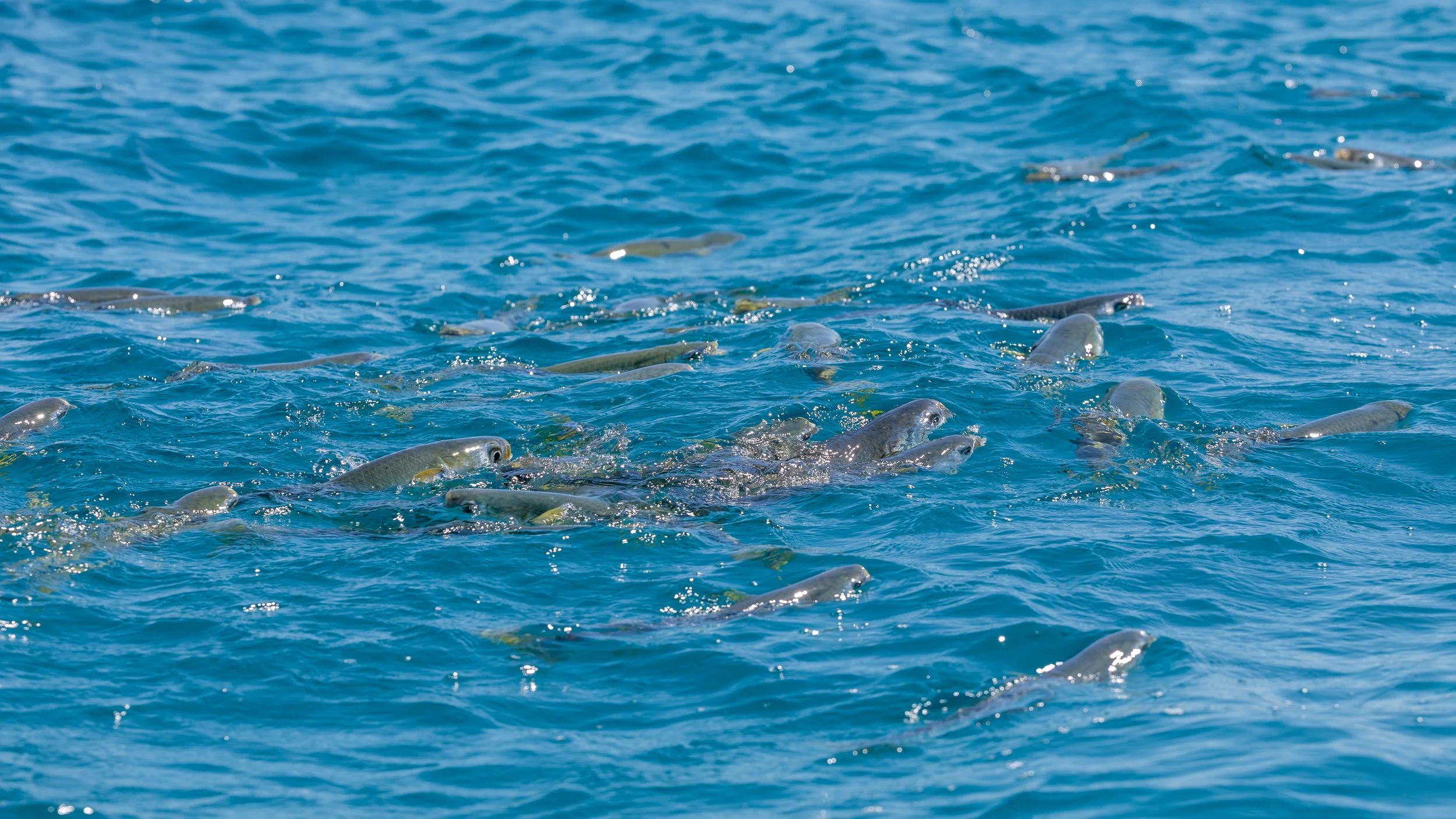
A large group of fish visible from the surface
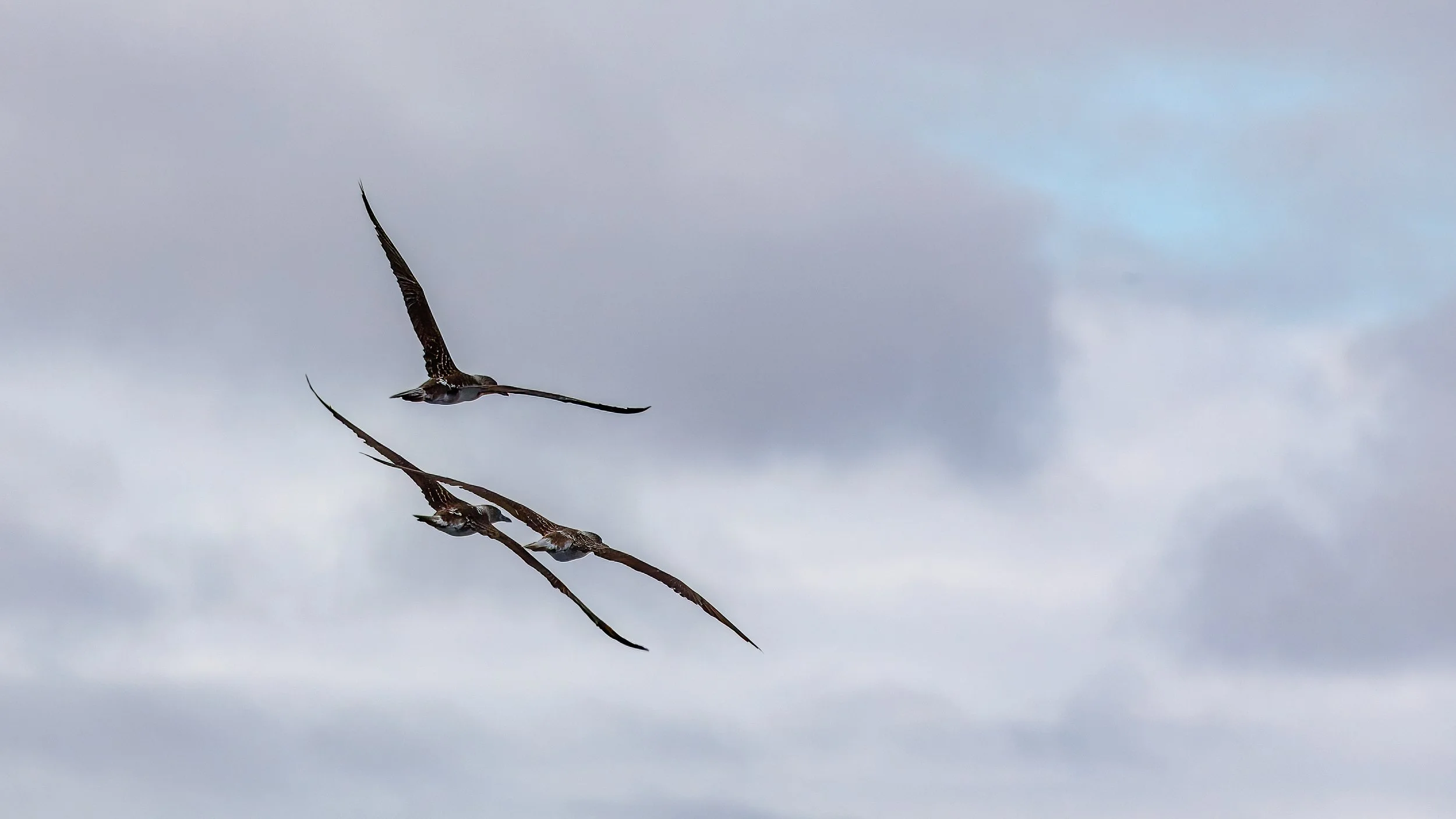
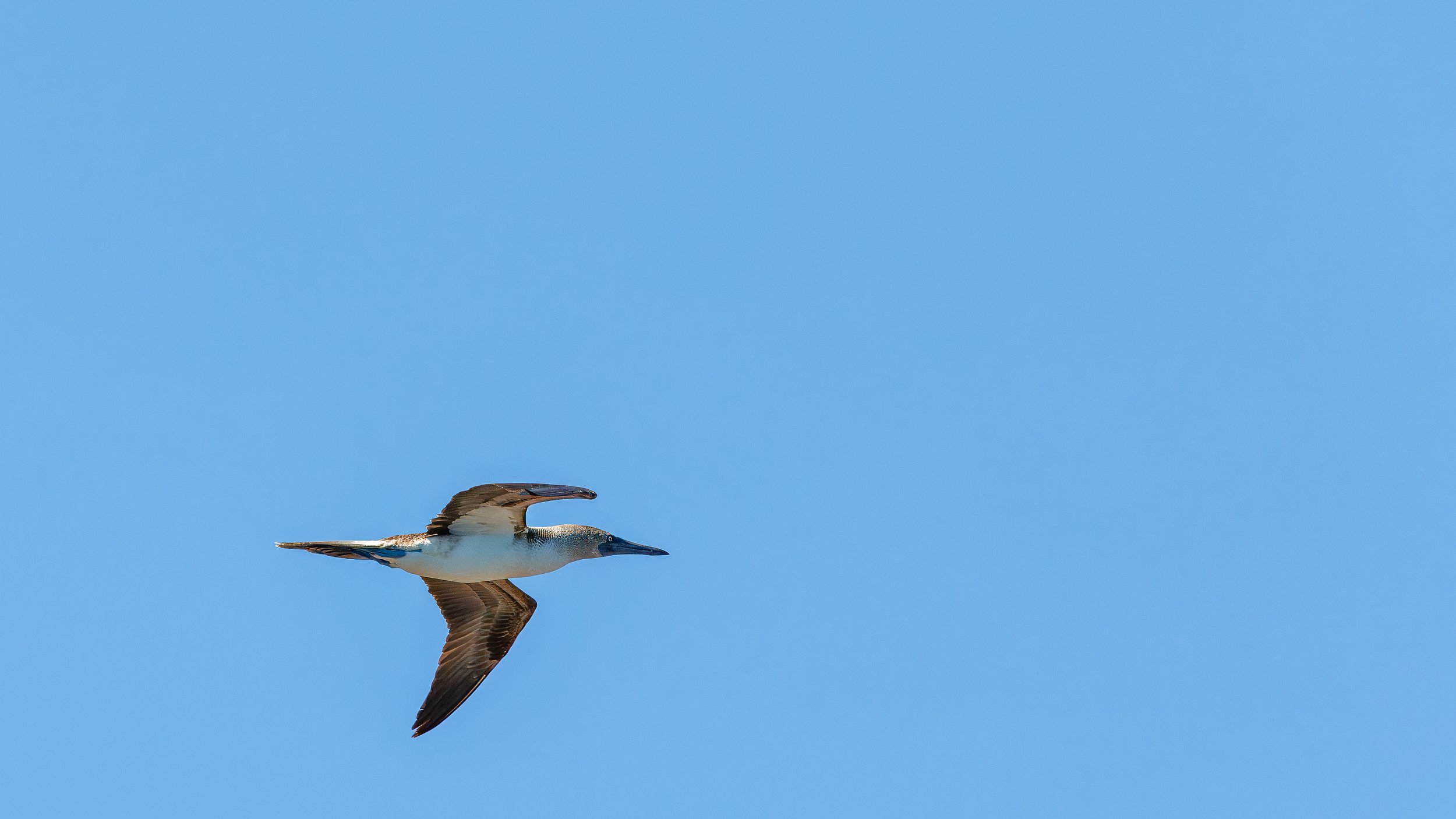
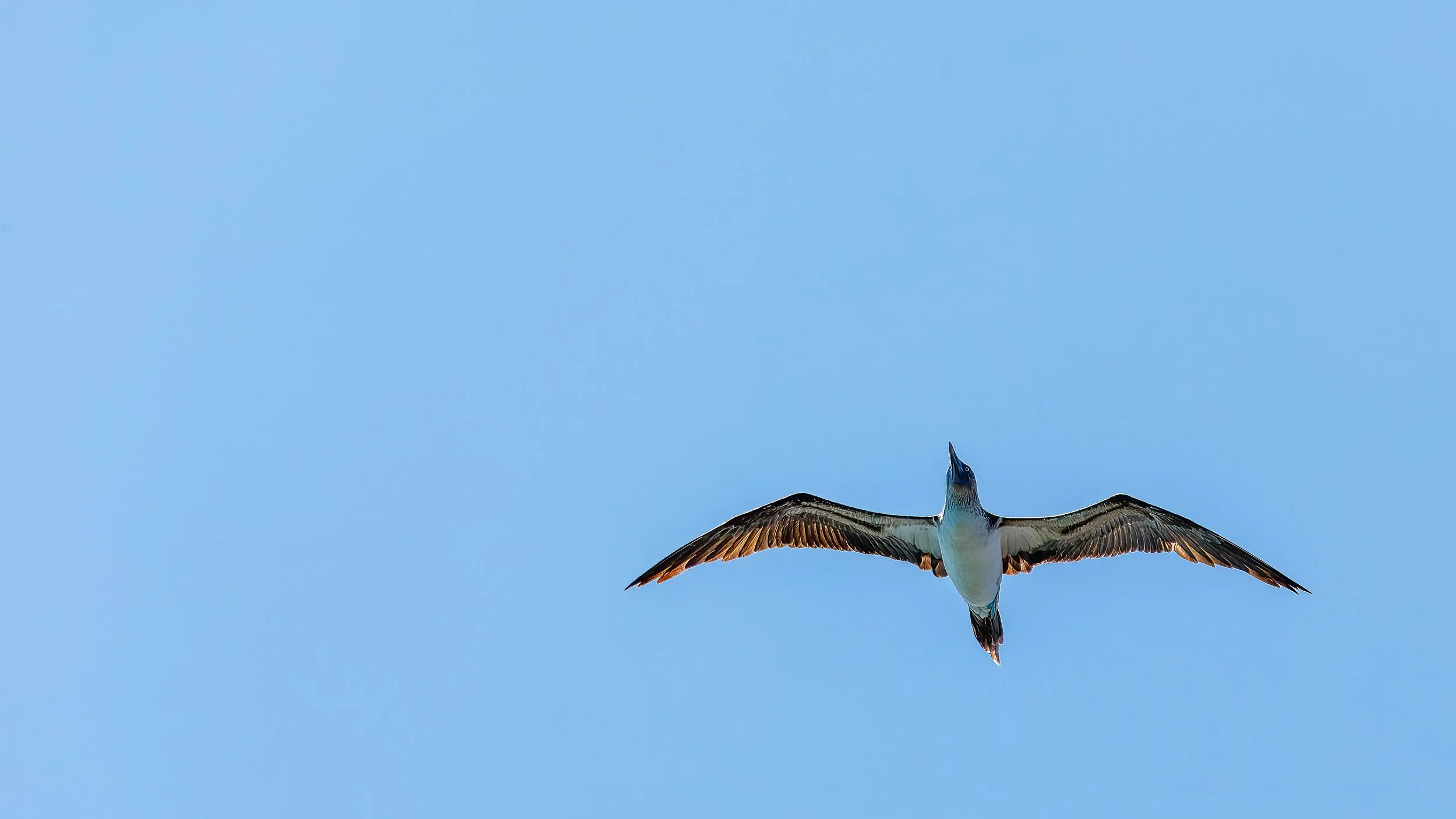
Blue feet are not visible when a blue footed booby is inflight
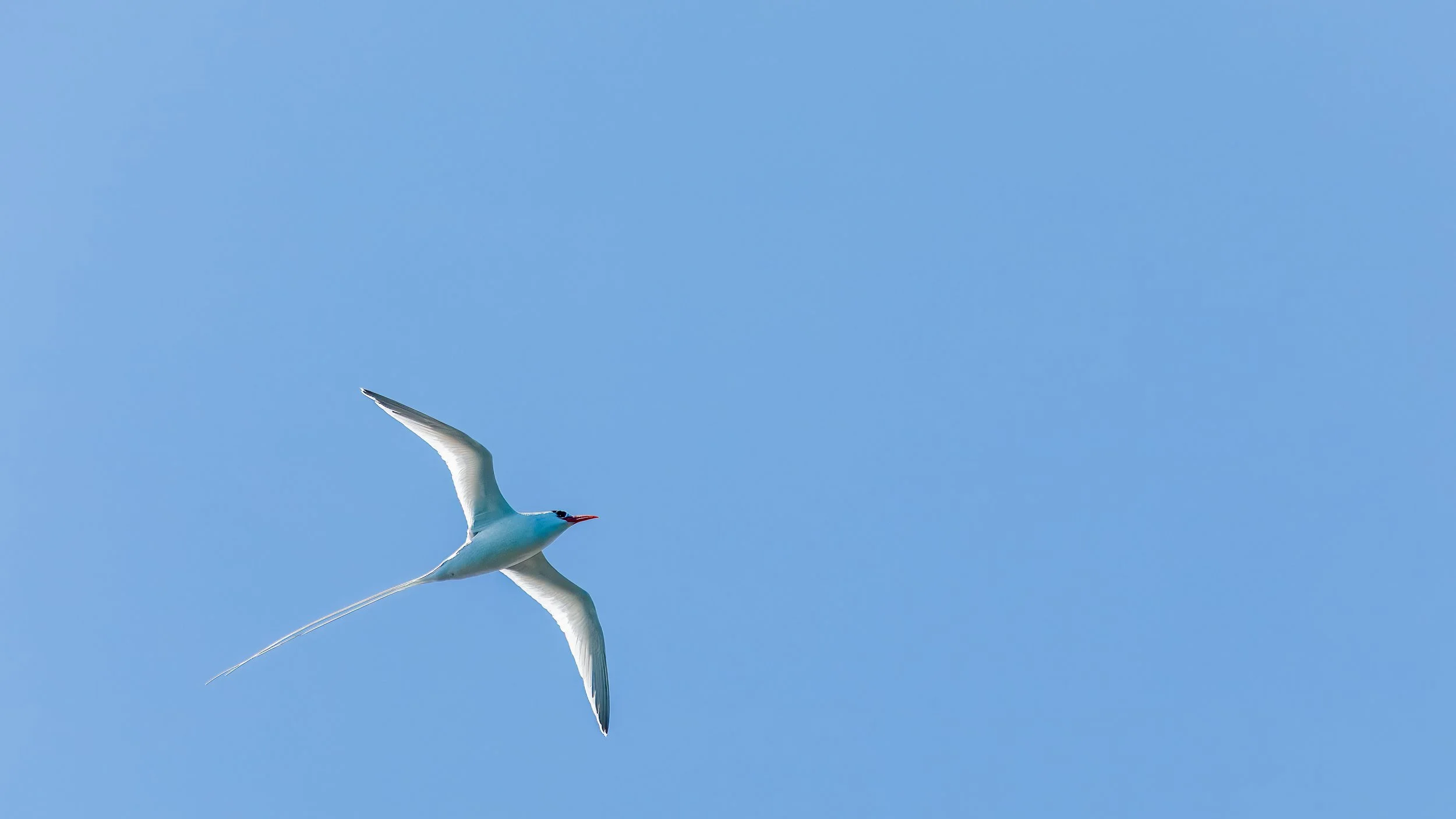
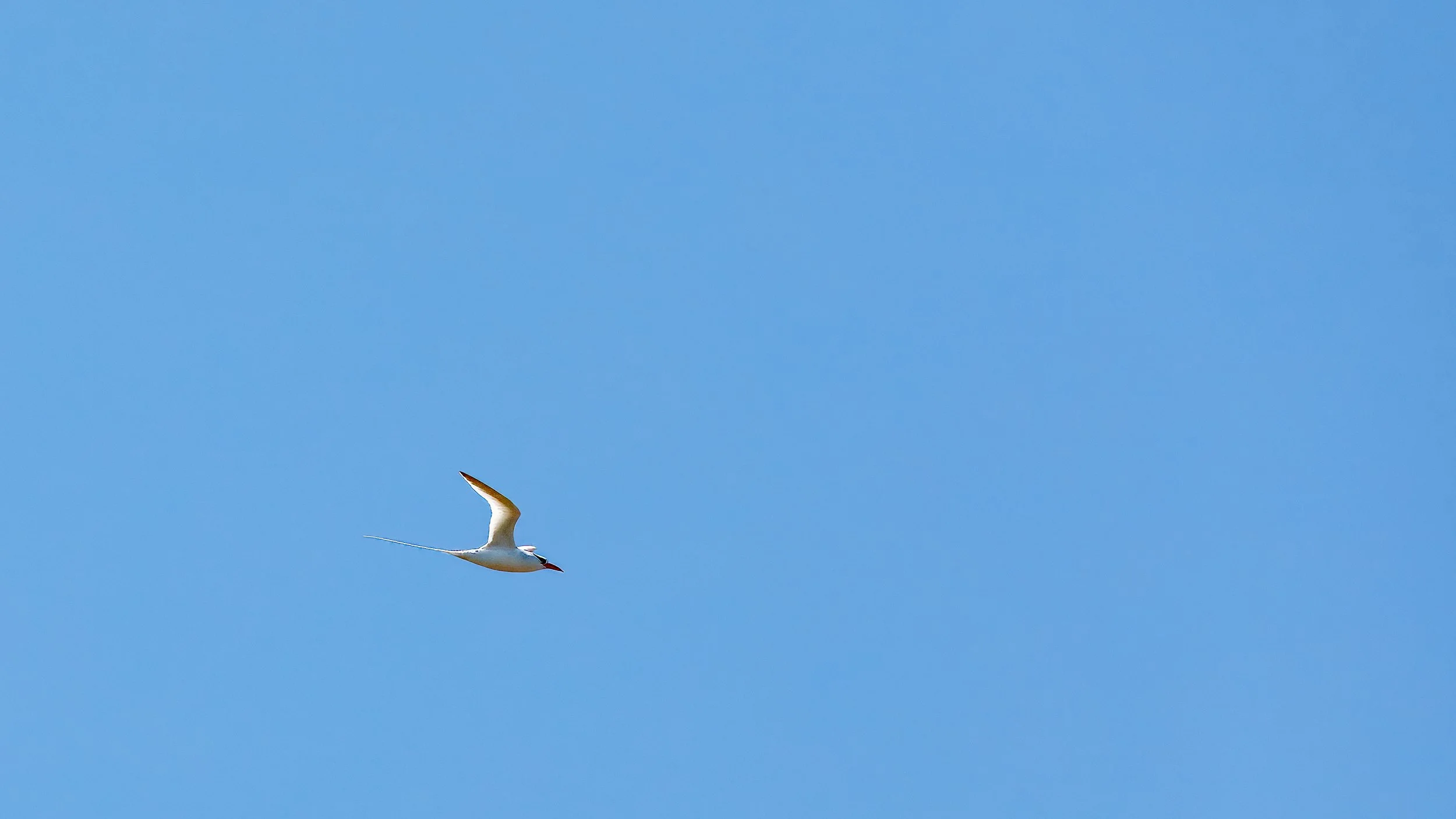
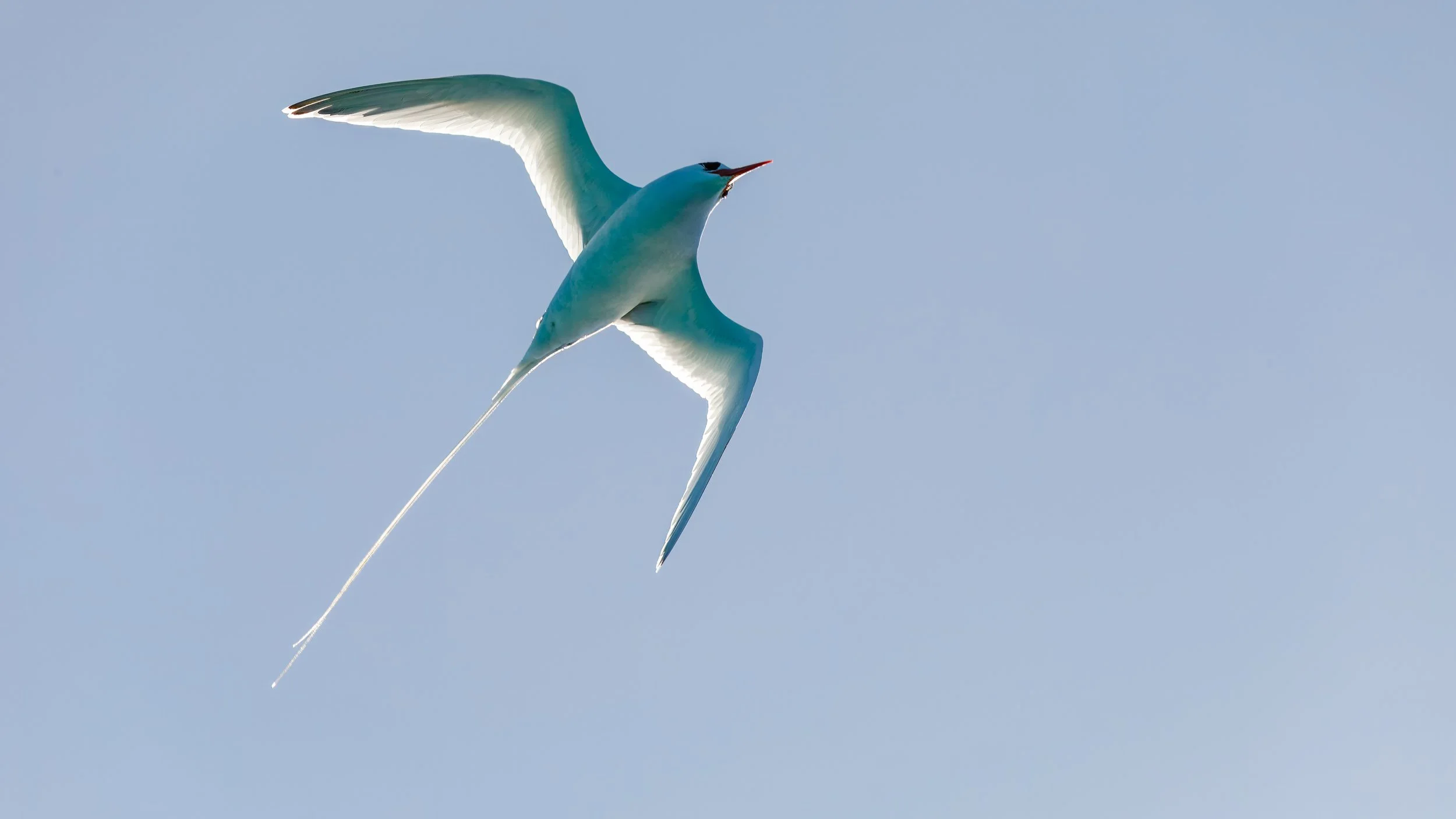
Red-billed Tropicbird
Another blue footed booby
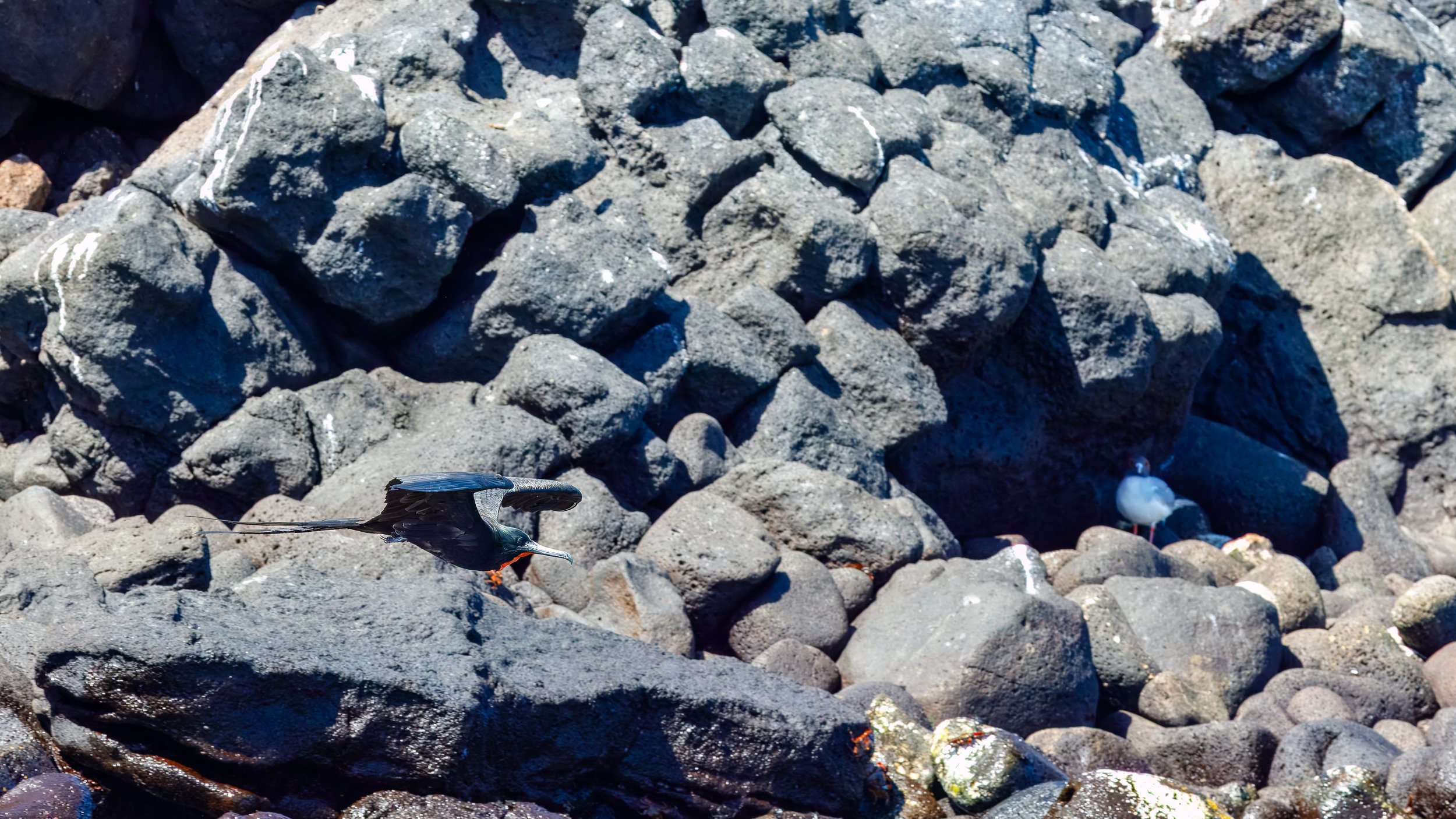
Male frigatebird with the uninflated gular sack along the shore
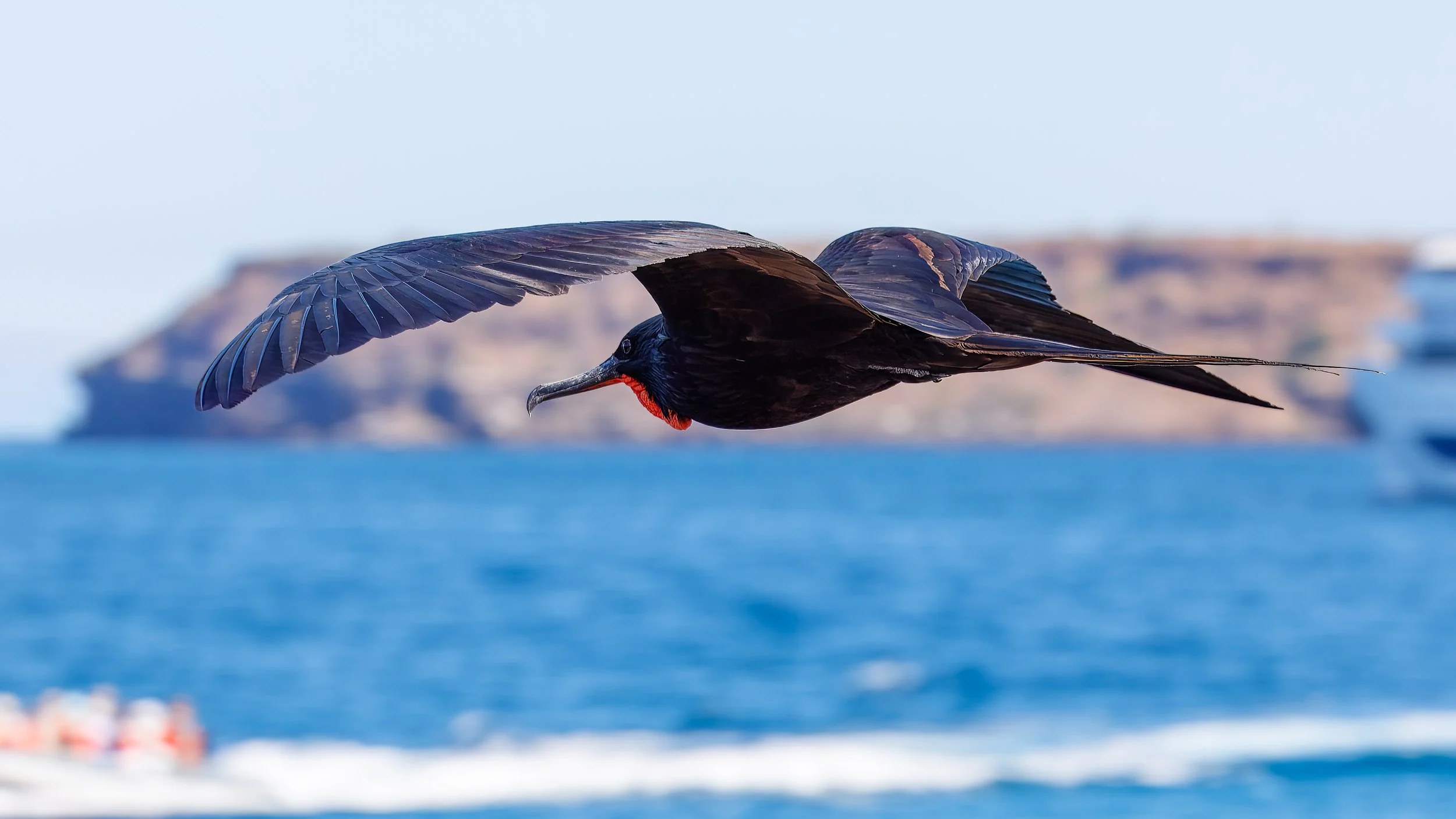
Magnificent frigate advertising their pouch for a potential mate
White-tailed tropicbird in flight
Now from land on North Seymour, Tom is able to capture a male in flight with Baltra in the background
Another beautiful bird in flight
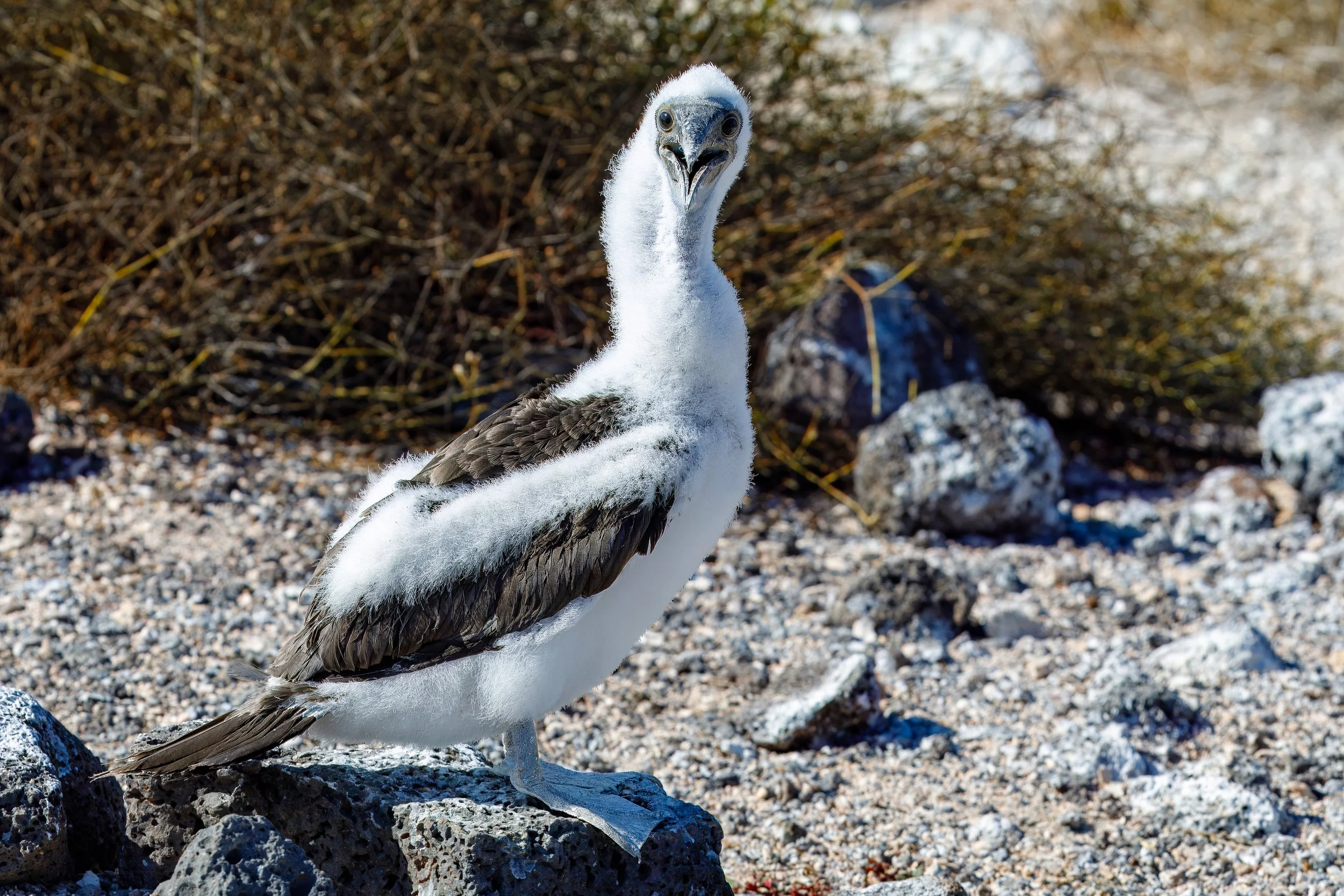
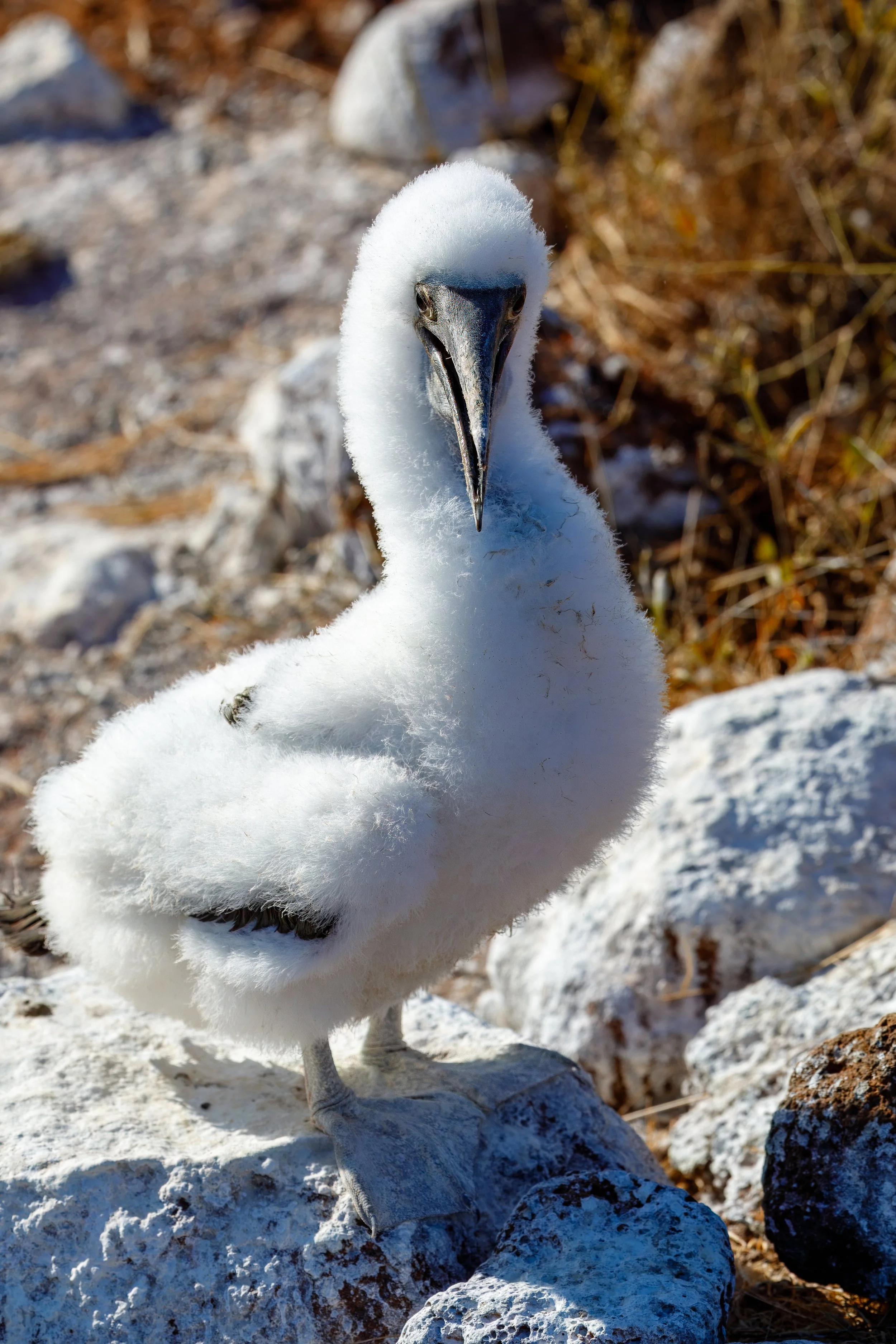
Young blue footed booby on the trail
The birds are not disturbed by the visitors, but seem quite curious
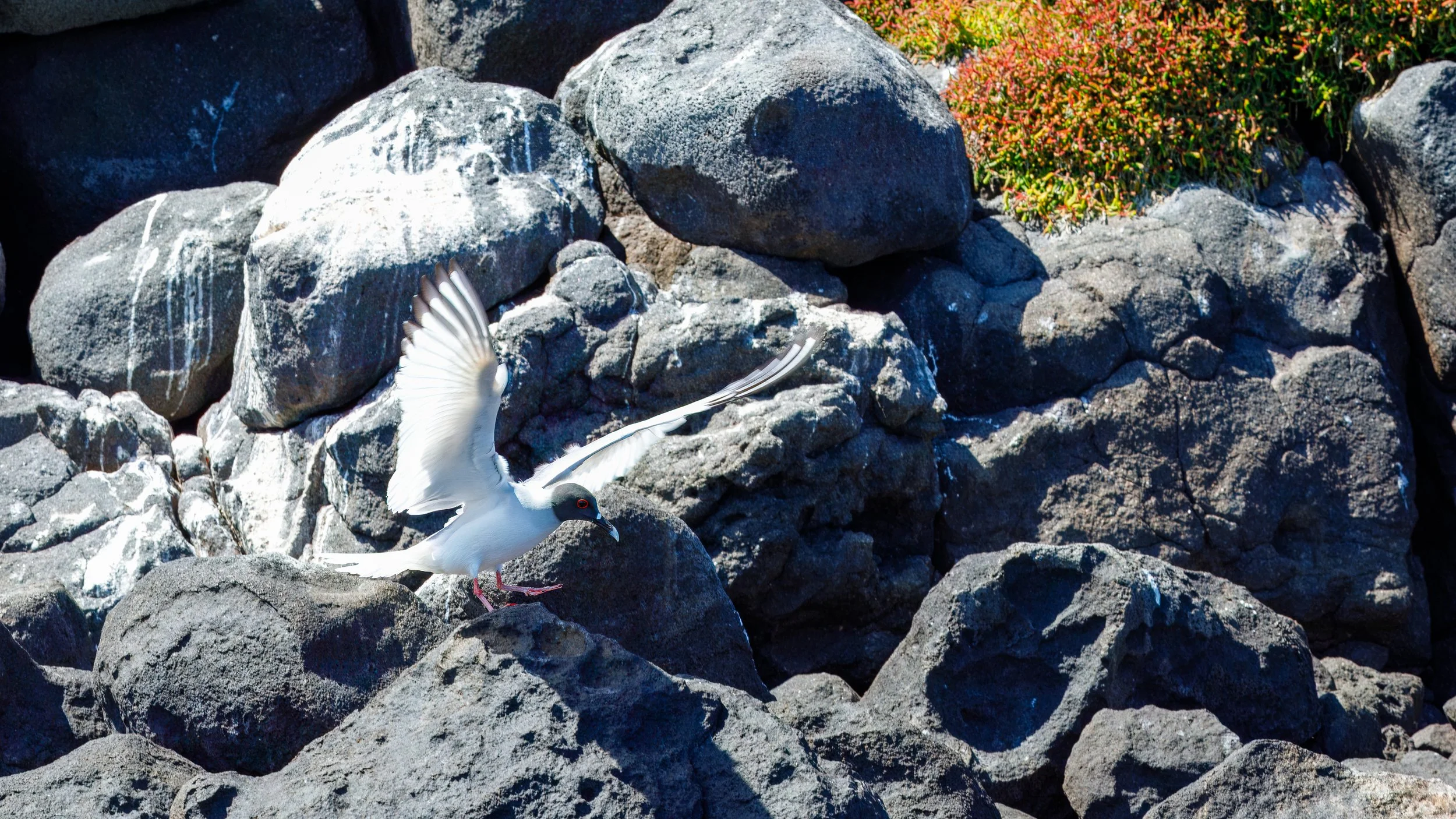
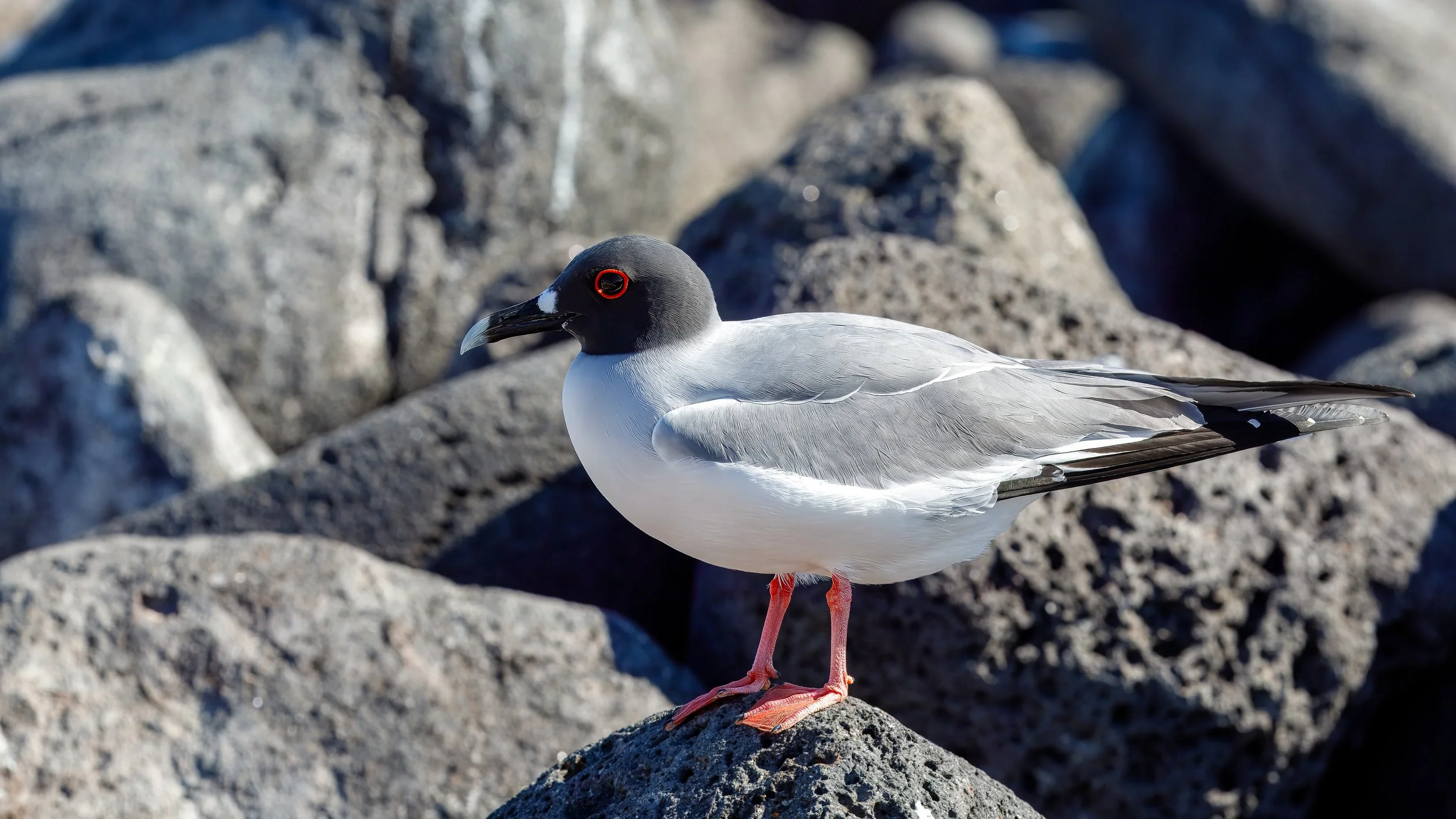
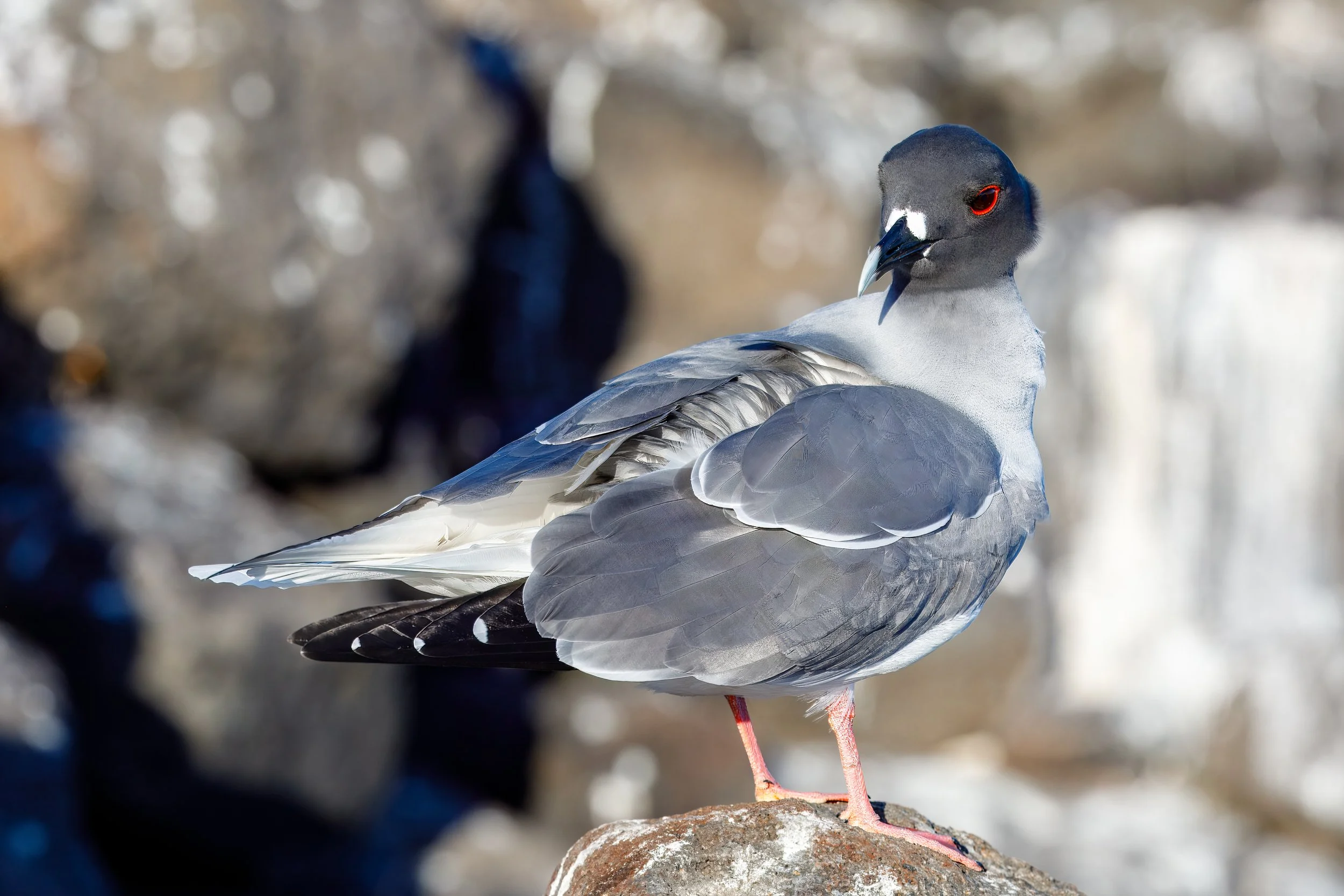
Swallow-tailed Gull
Another frigate resting in the tree
A larger gathering requires some luck to get a clear view through the foliage
Another lava lizard
Nesting blue footed booby
Another curious young booby
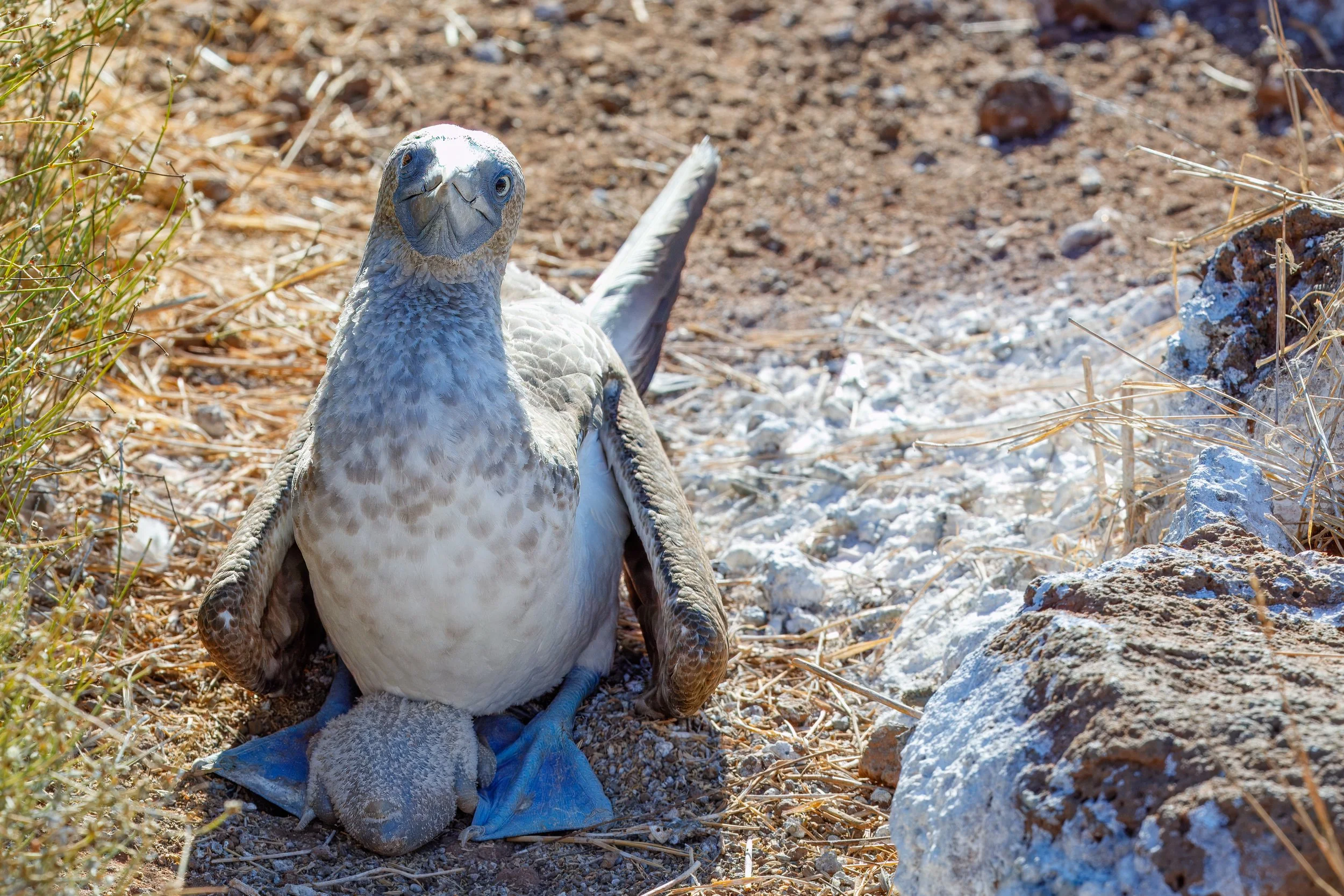
Blue footed mother with new hatchling
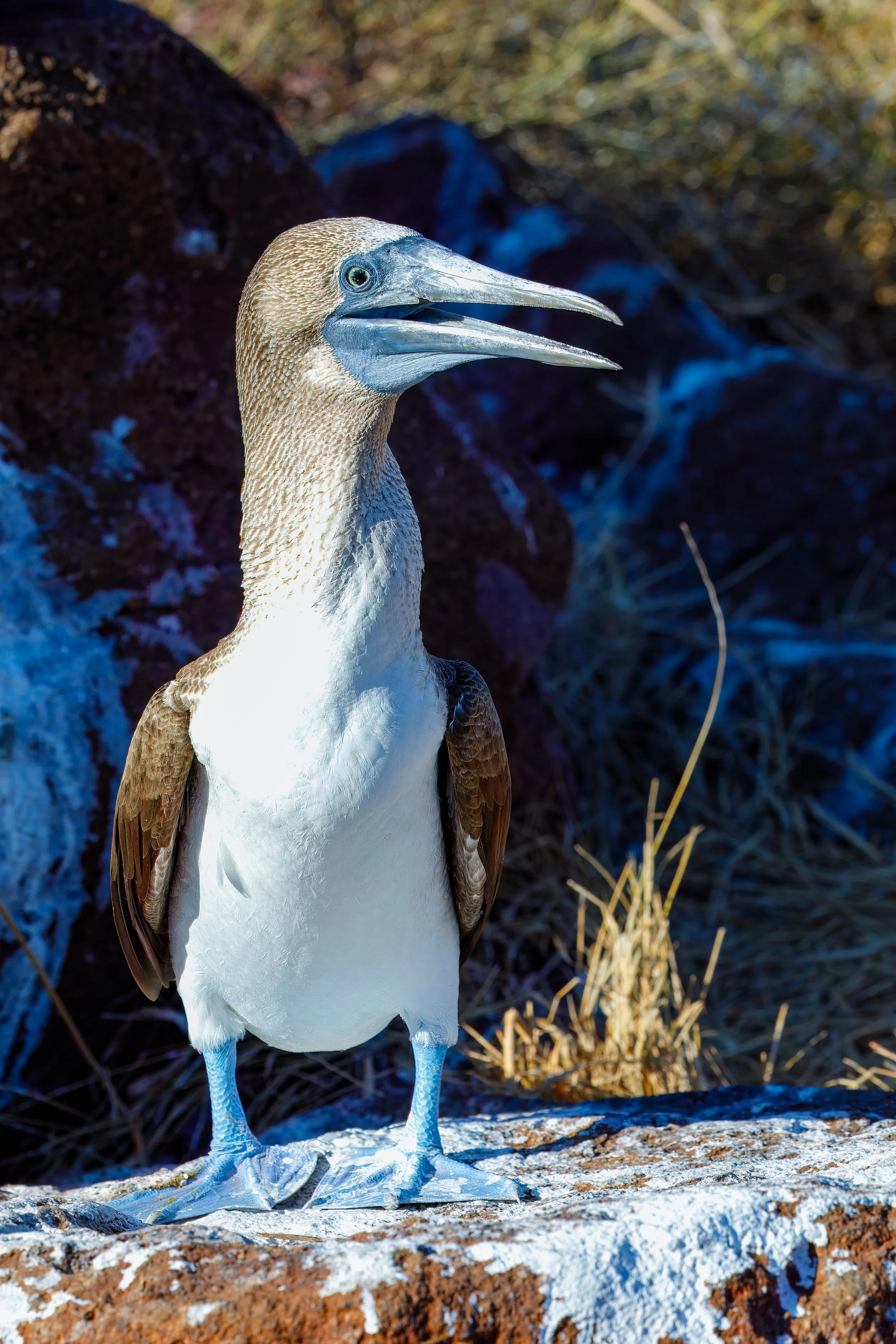
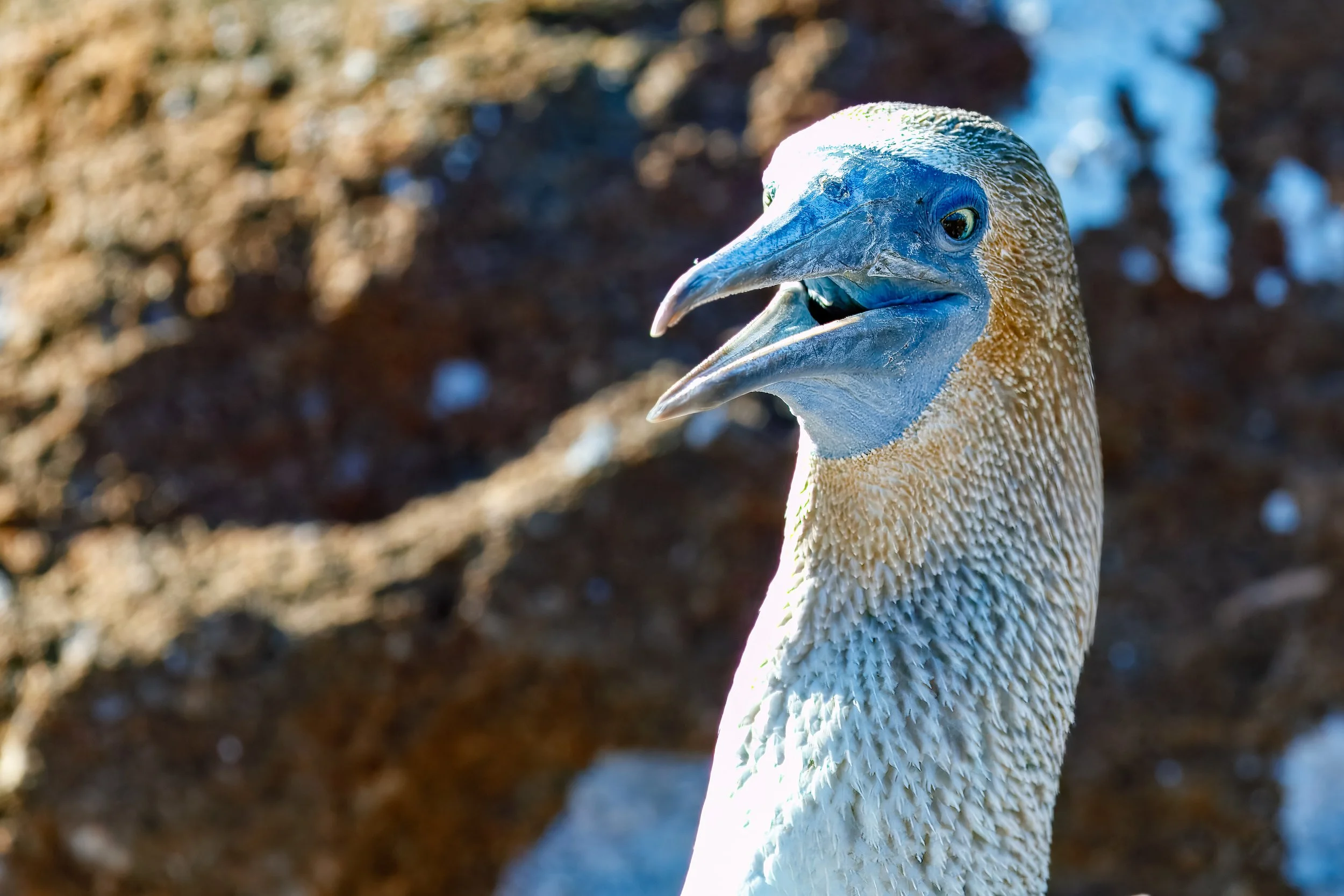
Showing off the beautiful blue beak and feet
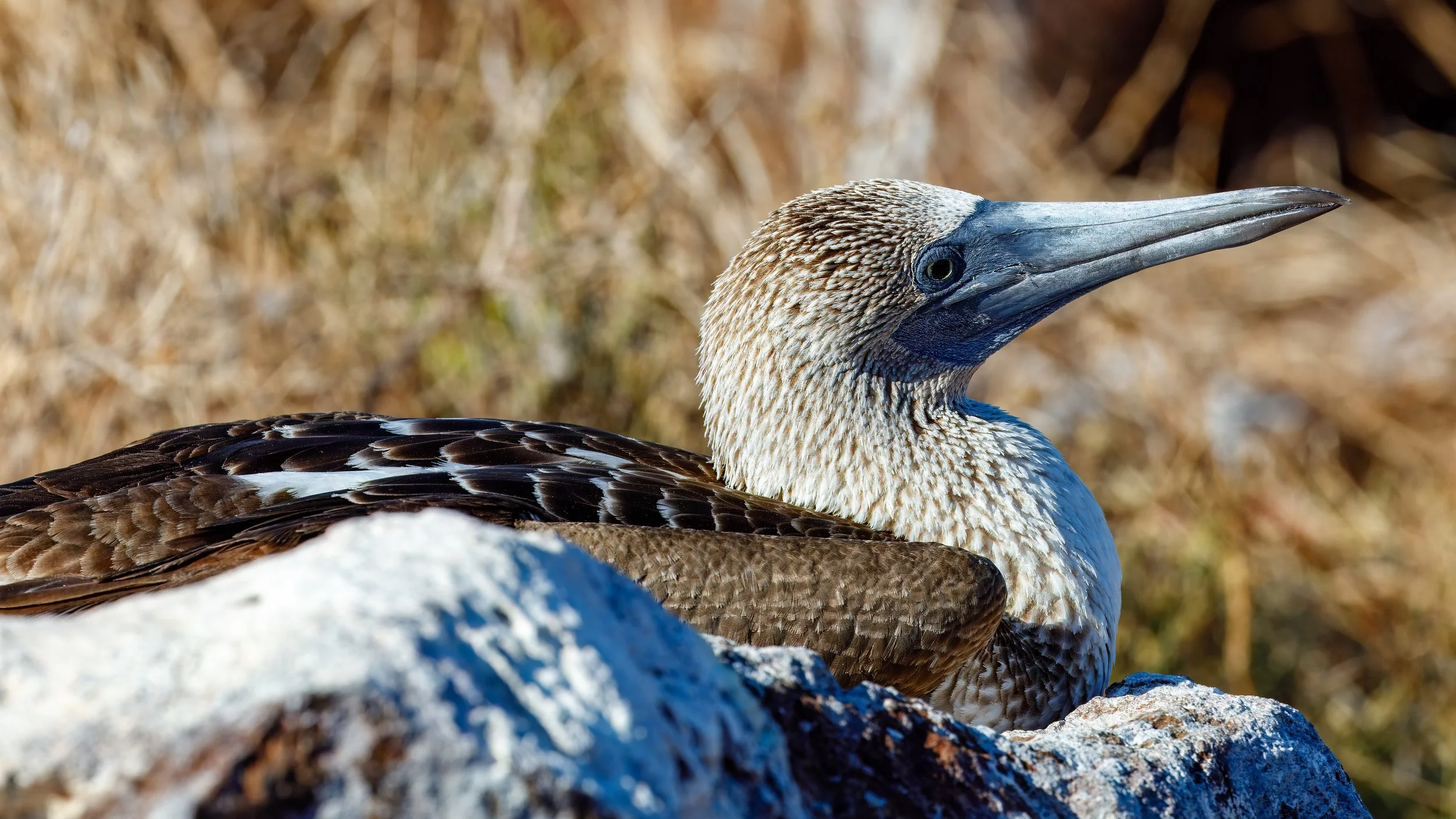
Beautiful photo capturing the head and curious expression
Fully engorged throat (gular) sac on full display
An award worthy photo
Another magnificent photo
Our guide always with us made sure we respected the nature and observed all that is around us
Moving away from the birds we found a land iguana
Continuing to observe the land iguana’s movement
Another land iguana
A relaxing male magnificent frigate
Two young blue boobies
Another swallow-tailed gull
After our afternoon hike, the tenders took us back to the ship in time for happy hour and another wonderful dinner on the ship, as we sailed towards San Cristobal Island.
Oct 3 - morning
Anchored near Puerto Baquerizo Moreno, we enjoyed an early breakfast before catching the tender for our morning hike near the San Cristóbal Environmental Interpretation Center.
One of our longer sailings brought us to the south coast of San Cristobal
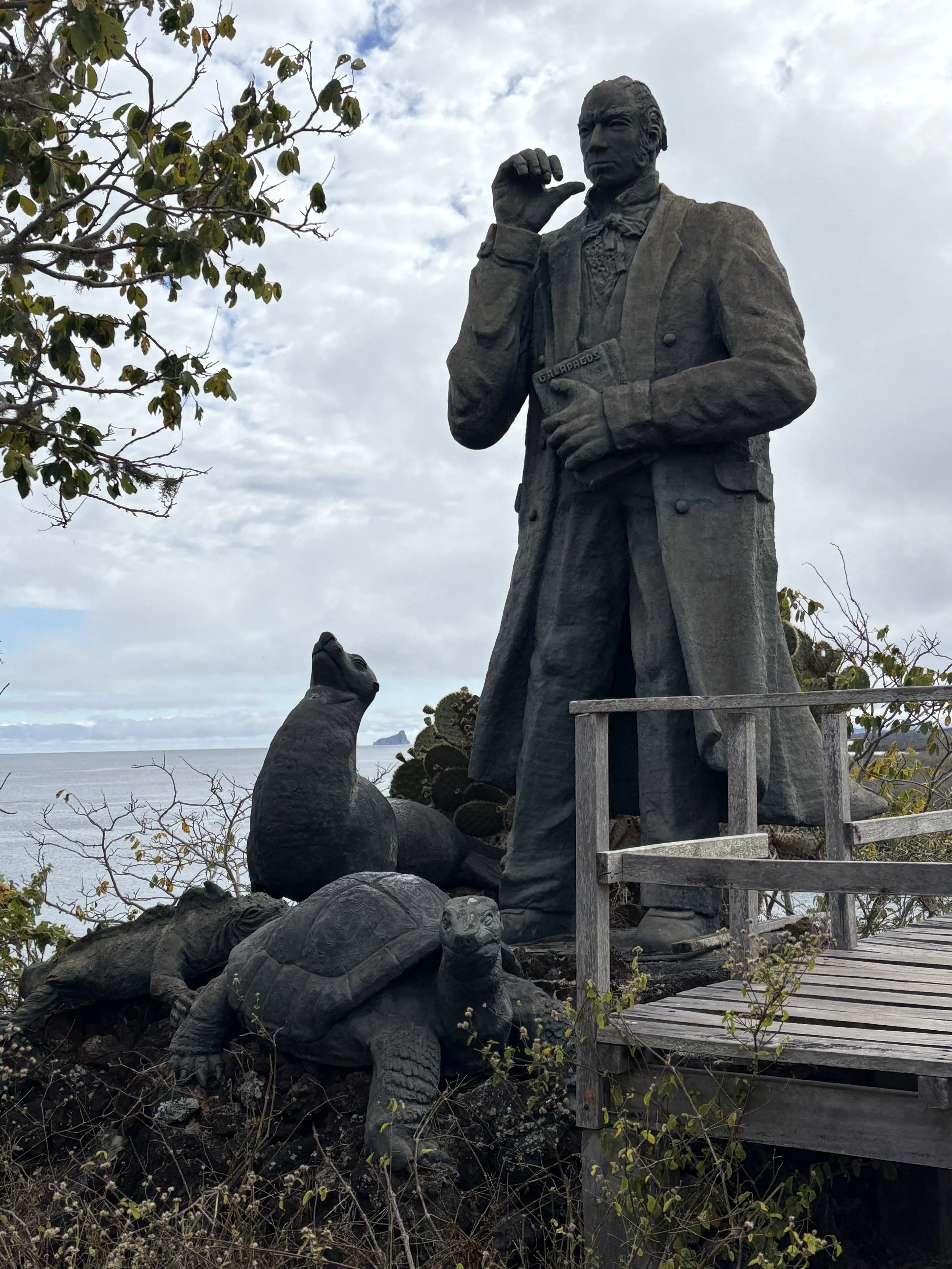
Bronze Darwin statue commemorates the location where Darwin first disembarked in the Galápagos Islands during the voyage of the HMS Beagle on September 16, 1835
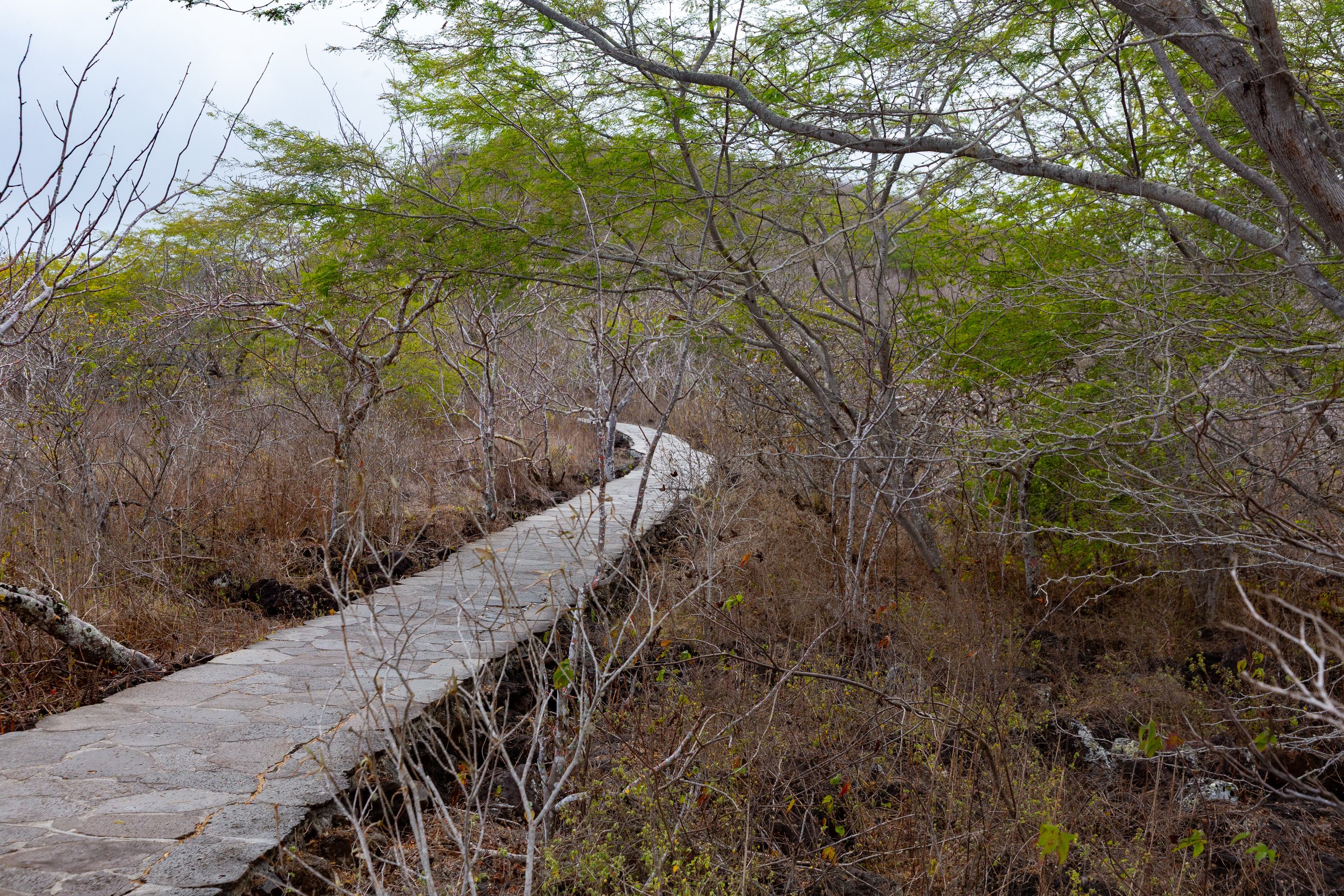
Much of the trail is on the boardwalk
Española mockingbird, also known as the Hood mockingbird.
Our ship is anchored across the bay
Sealion swimming along the coast
Continuing to catch the sealion in motion
A very active sealion
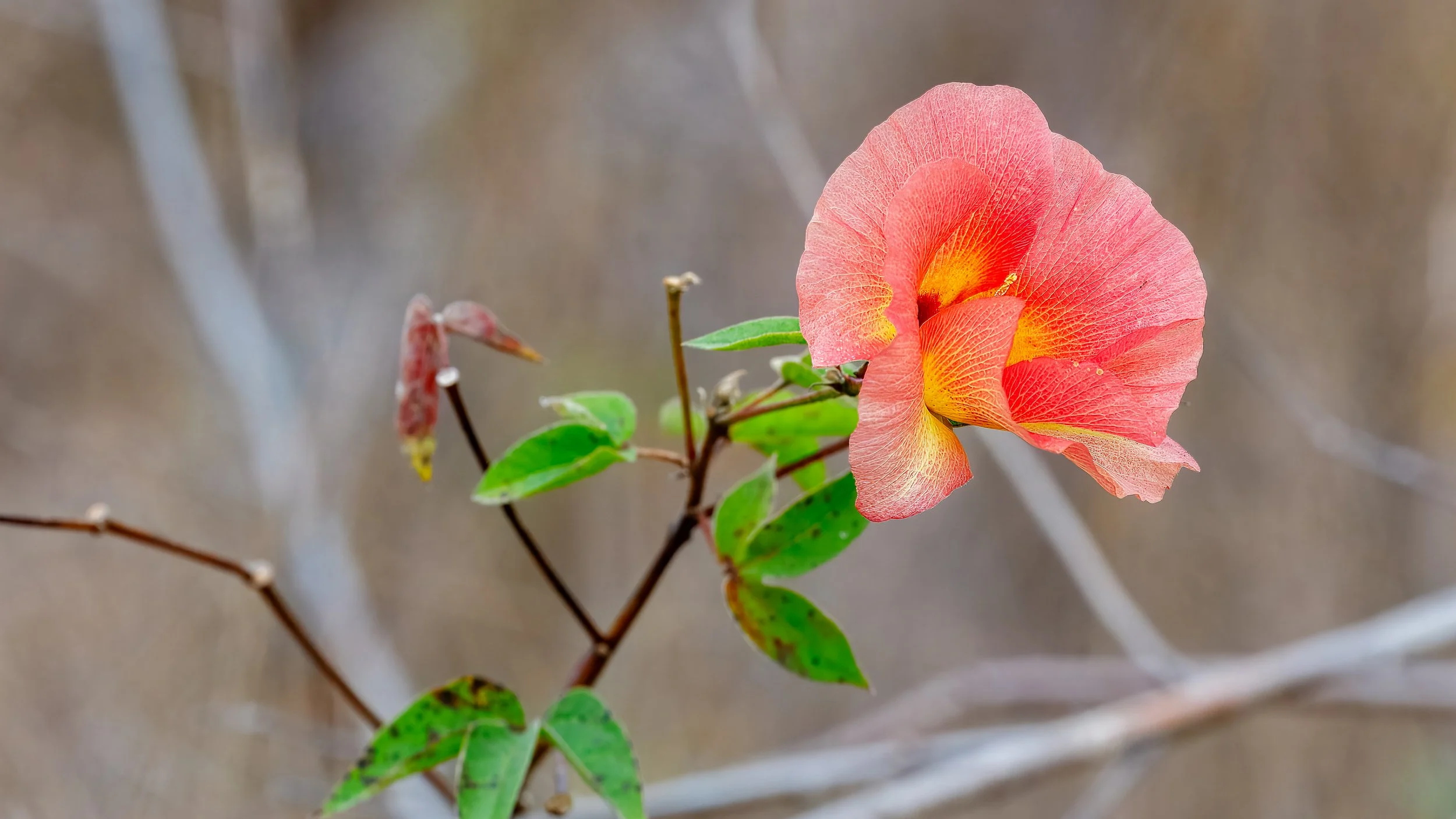
Blooming flower along the trail
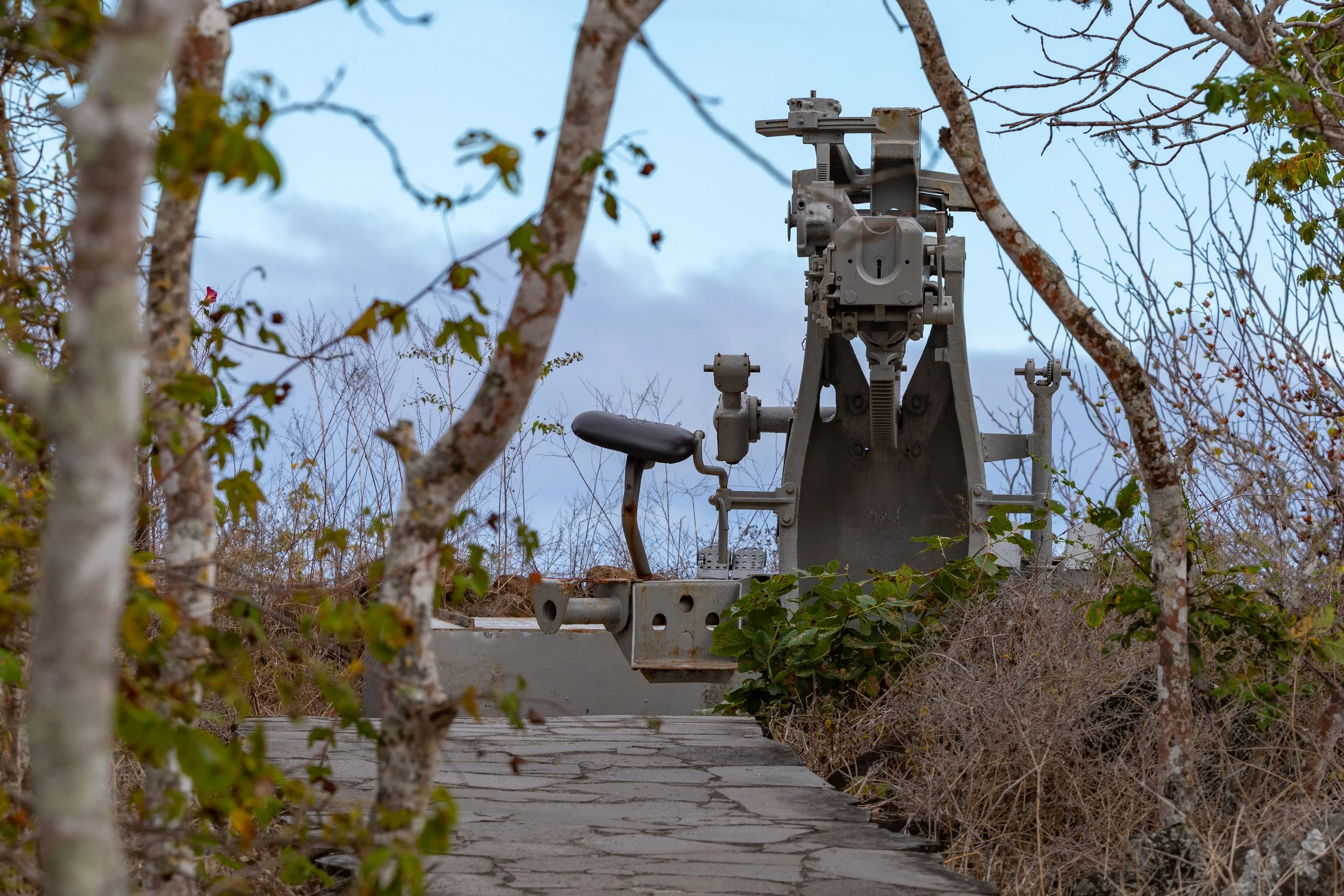
Some old coastal defenses
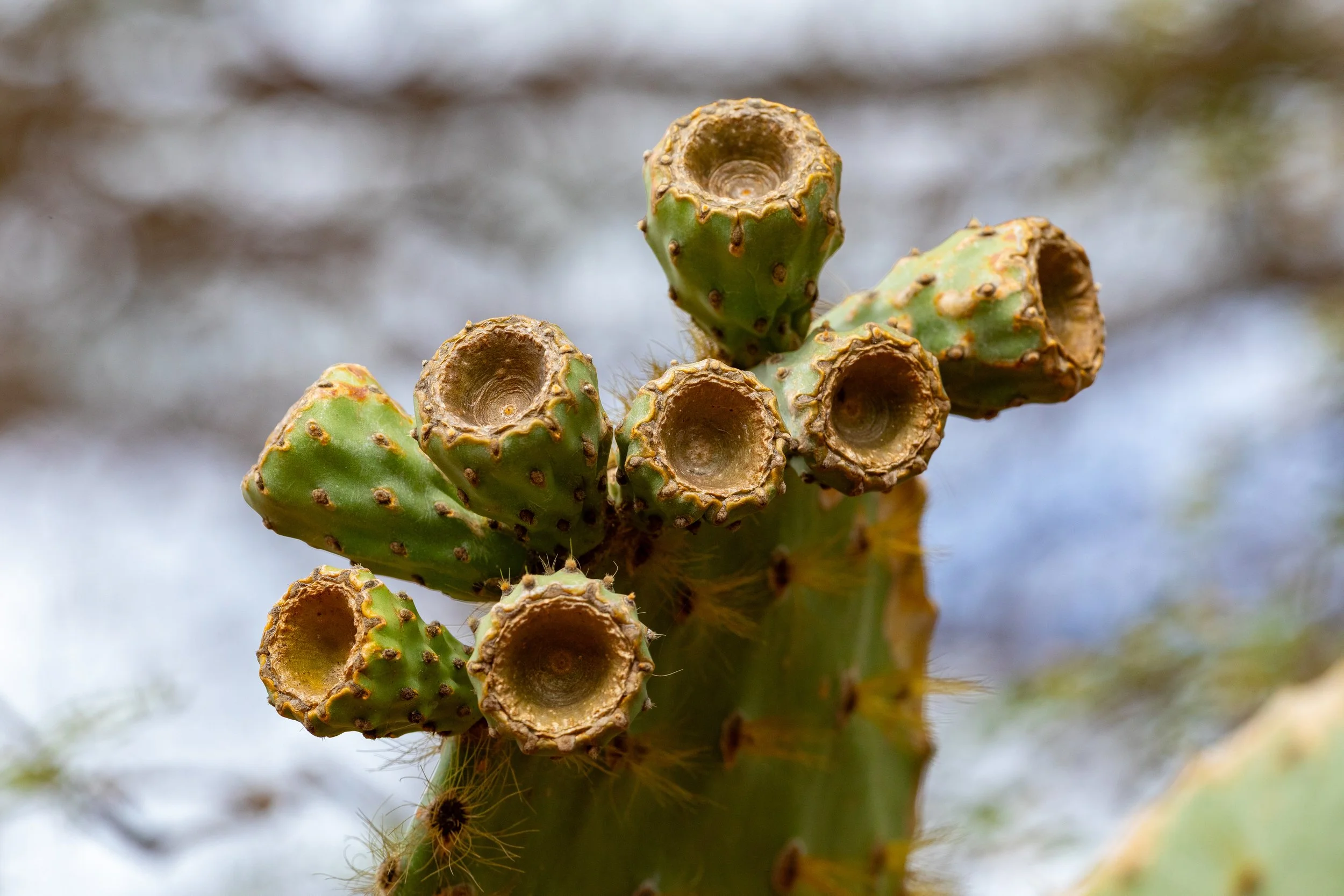
Prickly pear cactus
On our way back into town there are a number of sealions
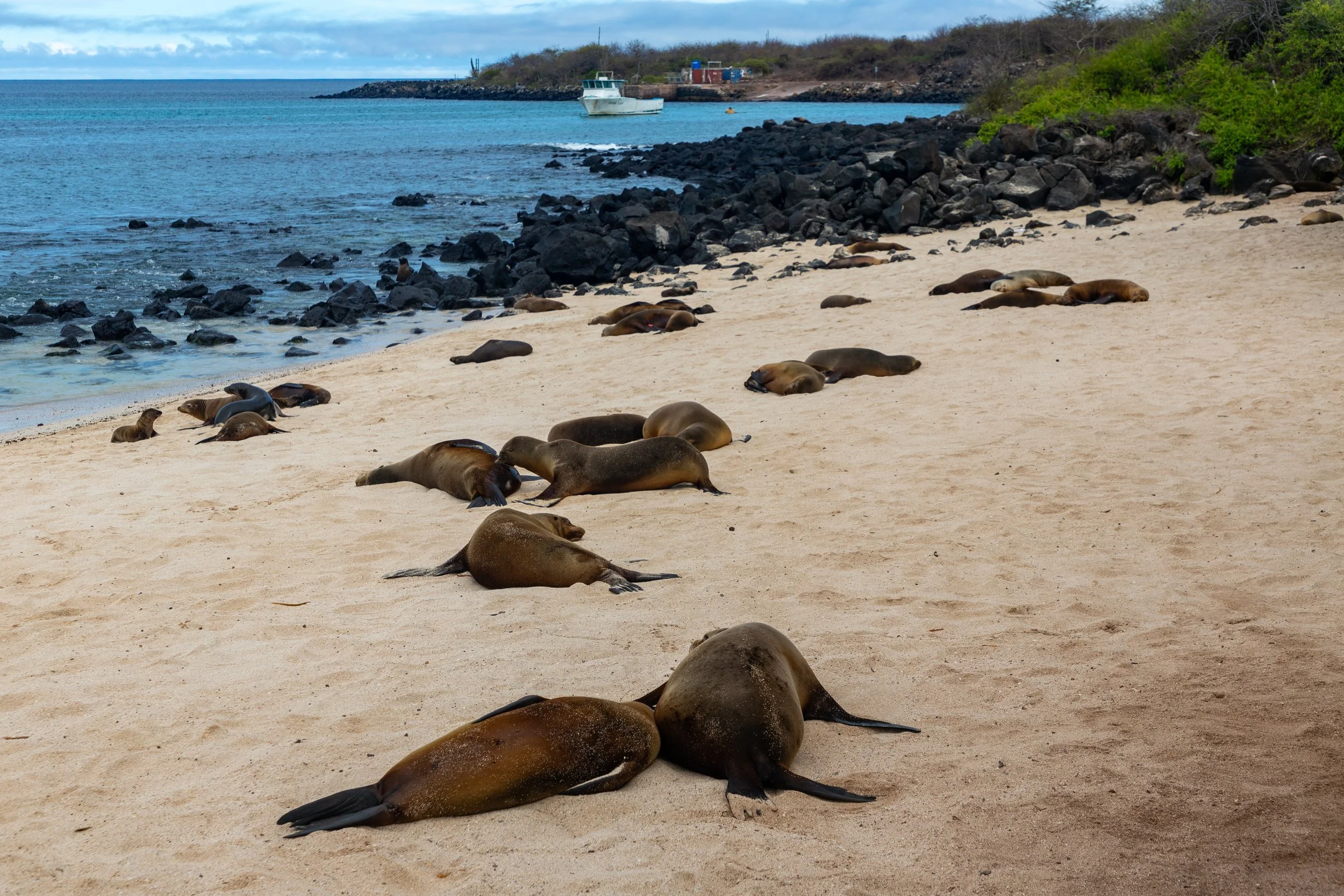
A large number of sealions have taken over Playa Mann
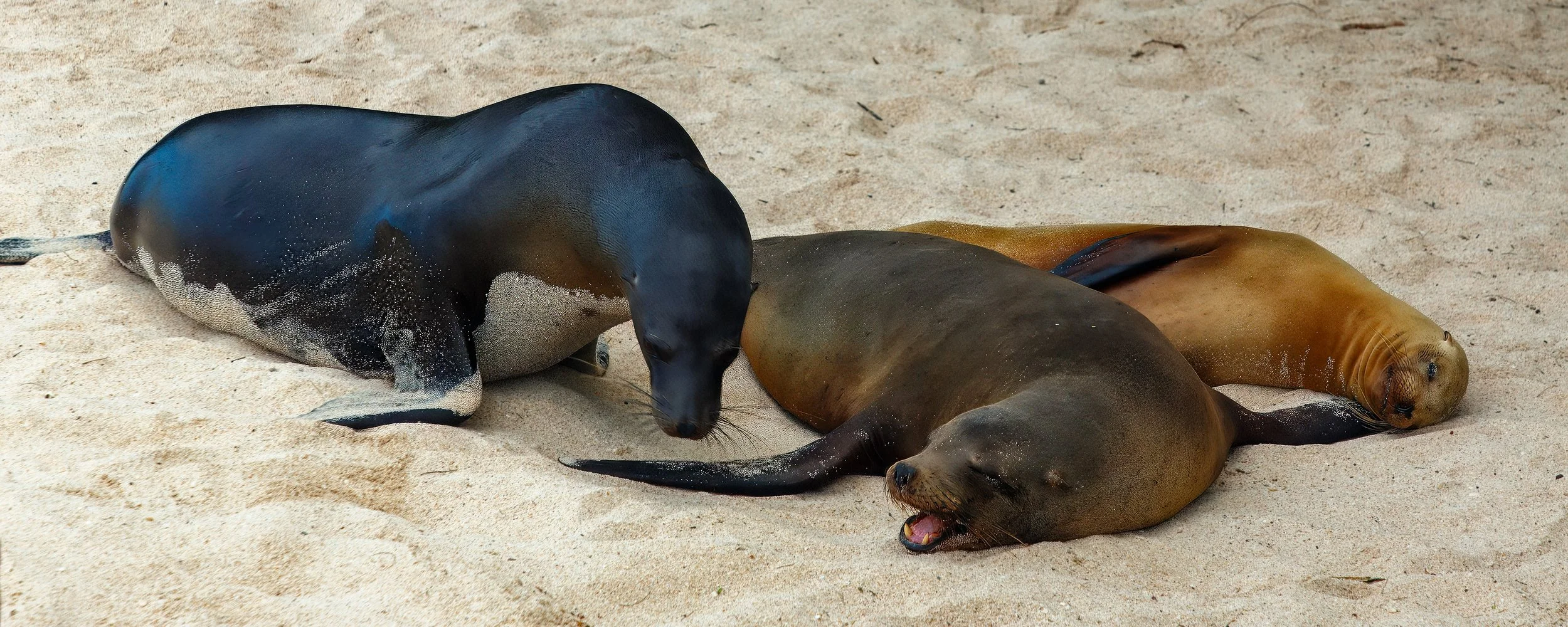
Lots of interaction on the beach this morning
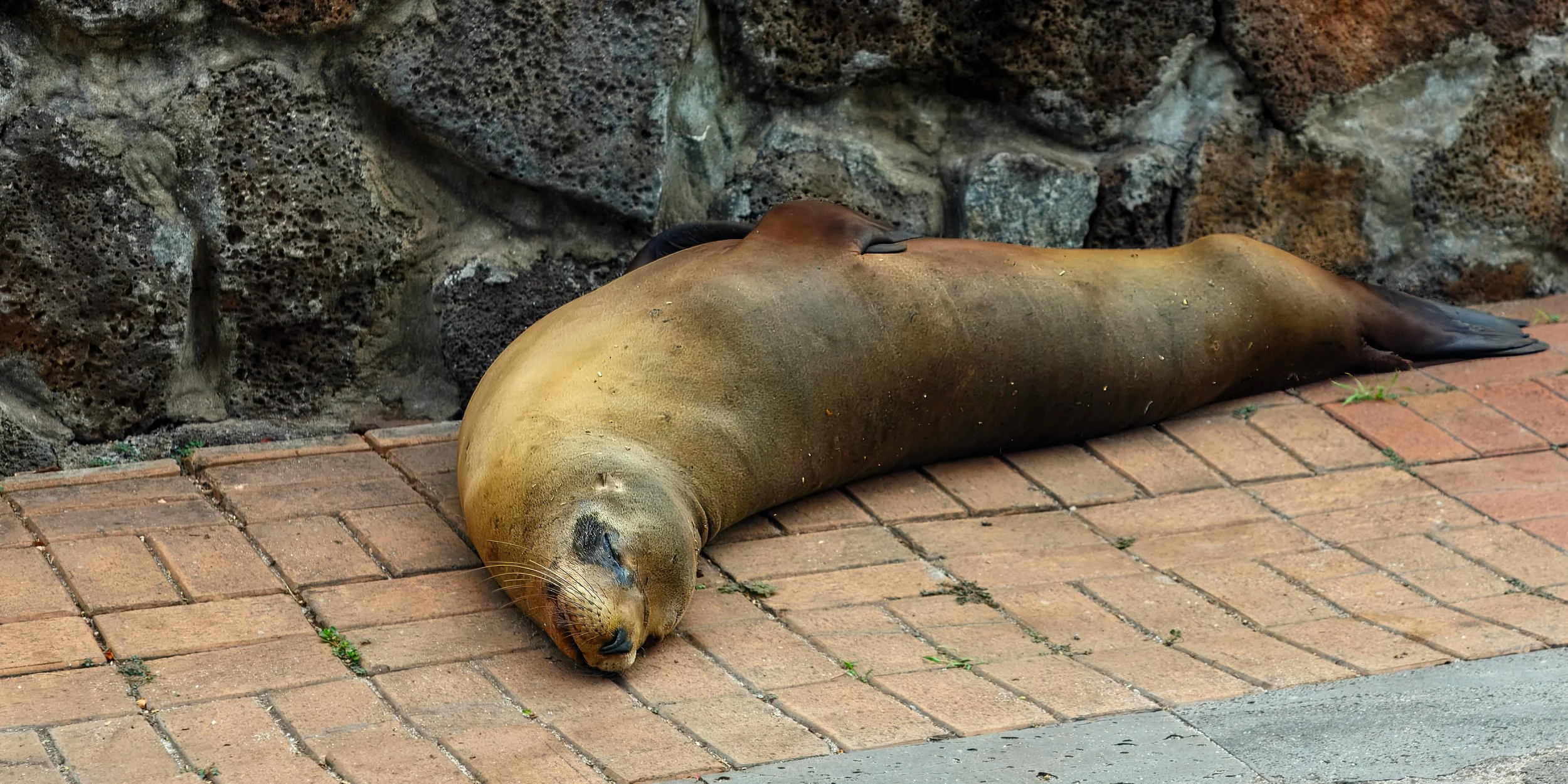
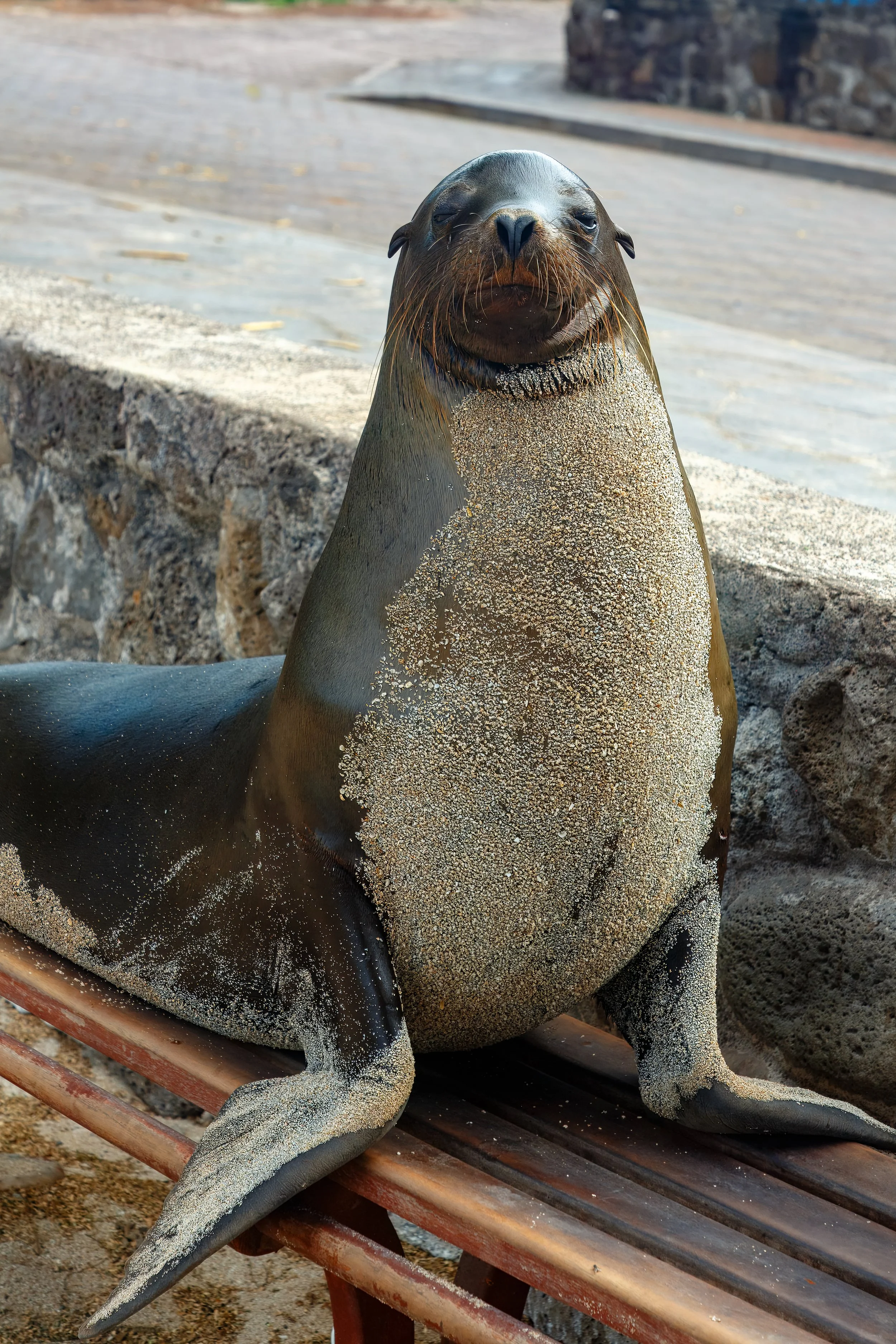
This one has moved on from the beach to a park bench
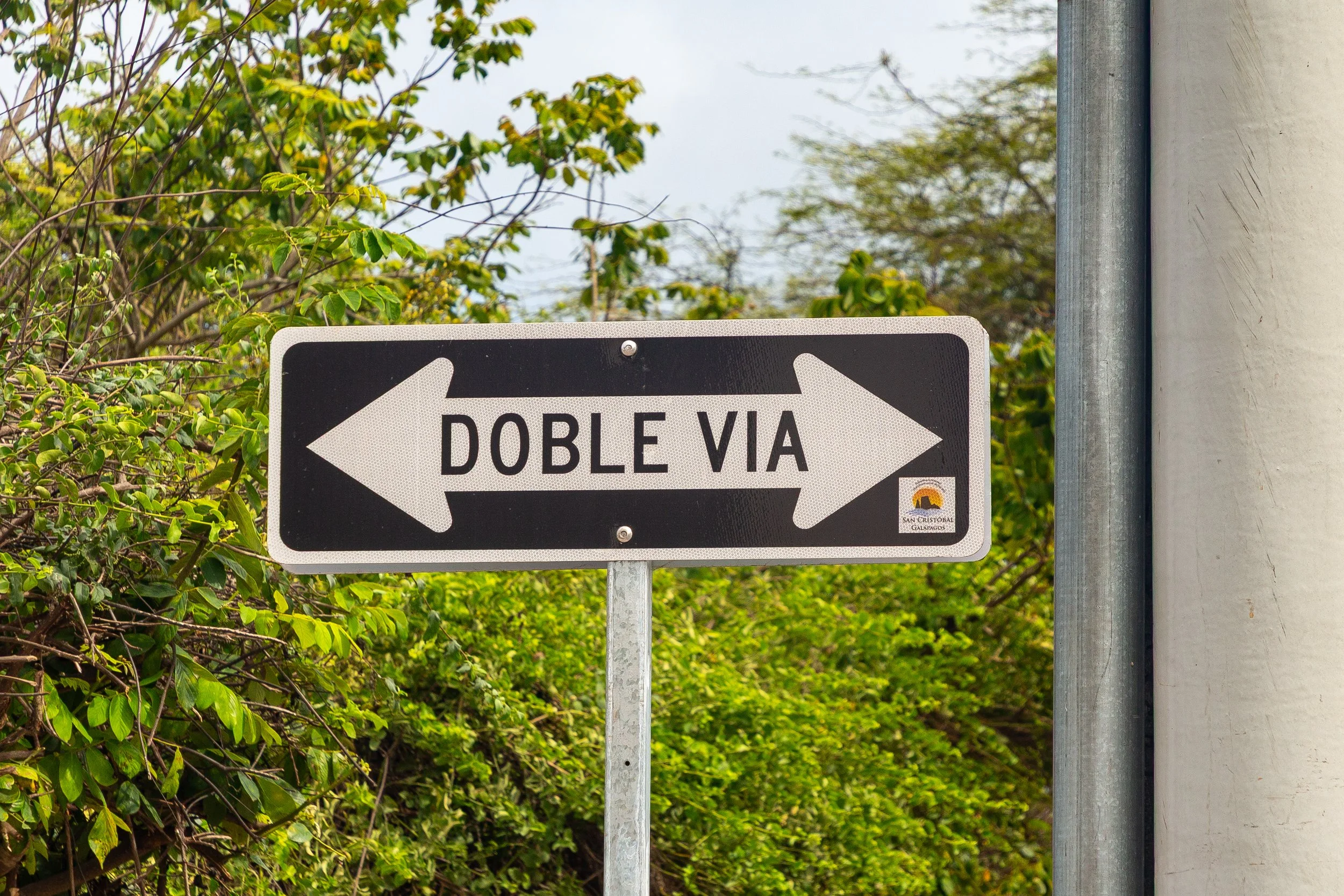
The opposite of a one way sign is apparently necessary here
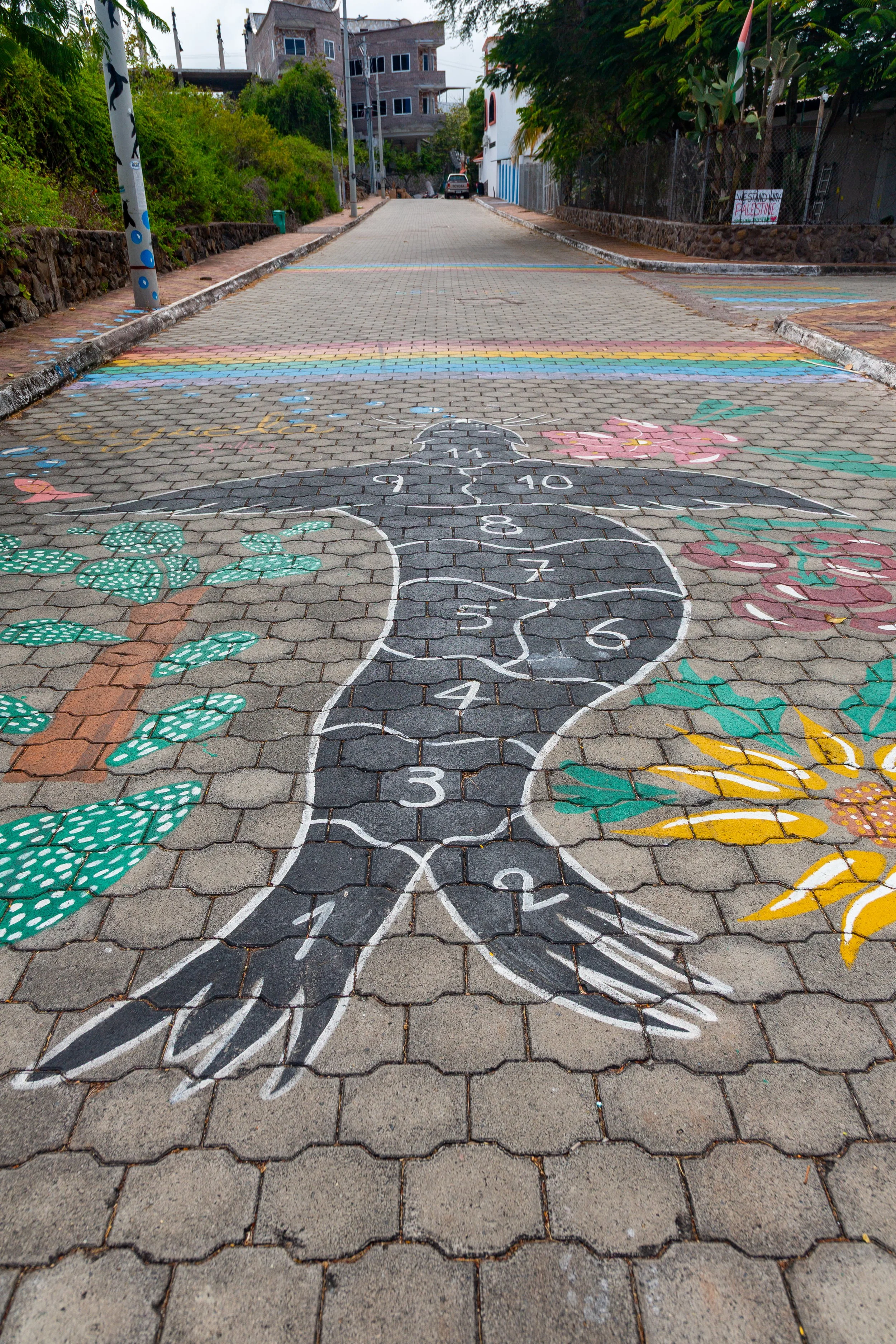
A colourful game of hopscotch on the road into town
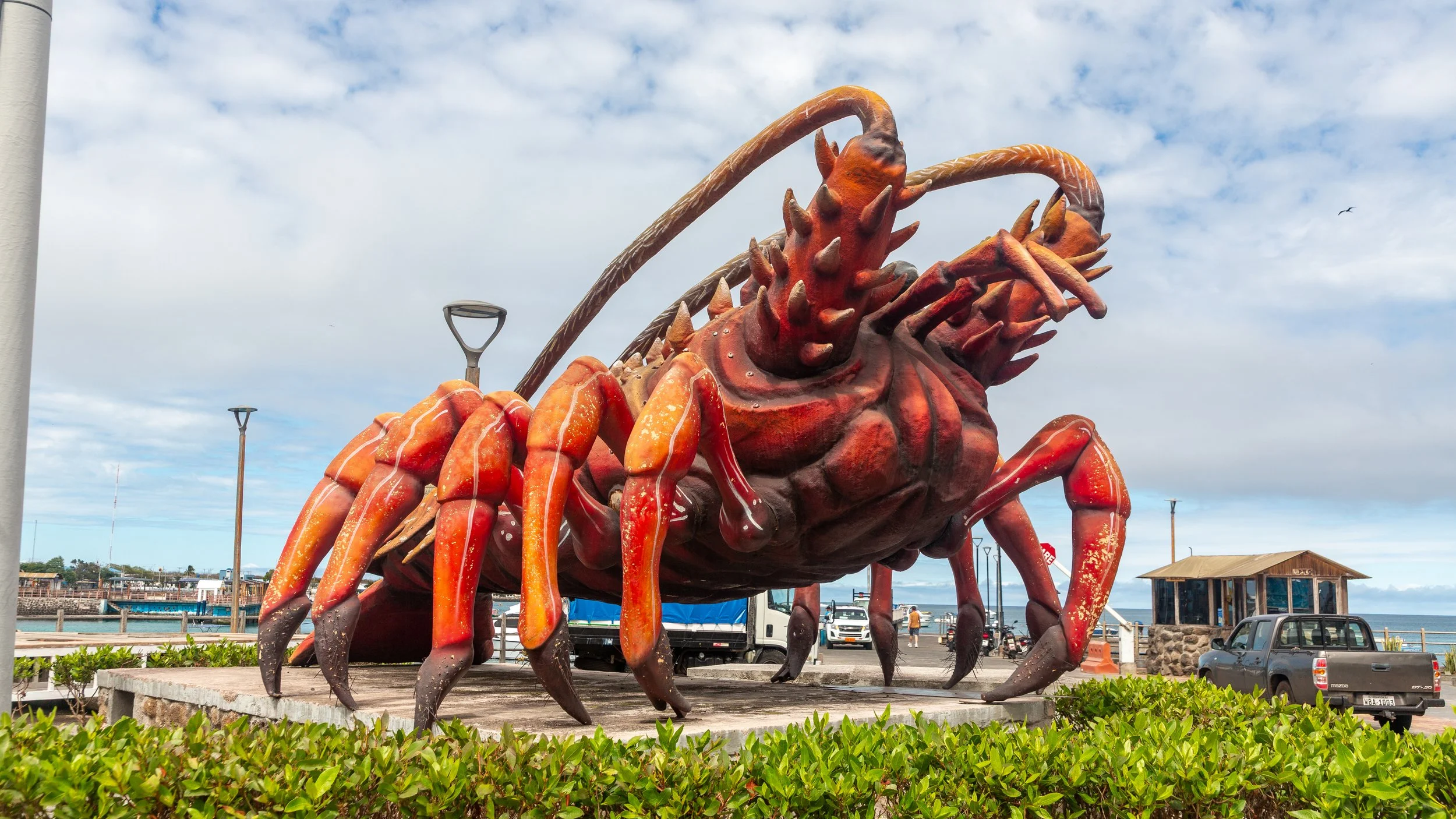
Spiny lobster statue at San Cristobal harbour
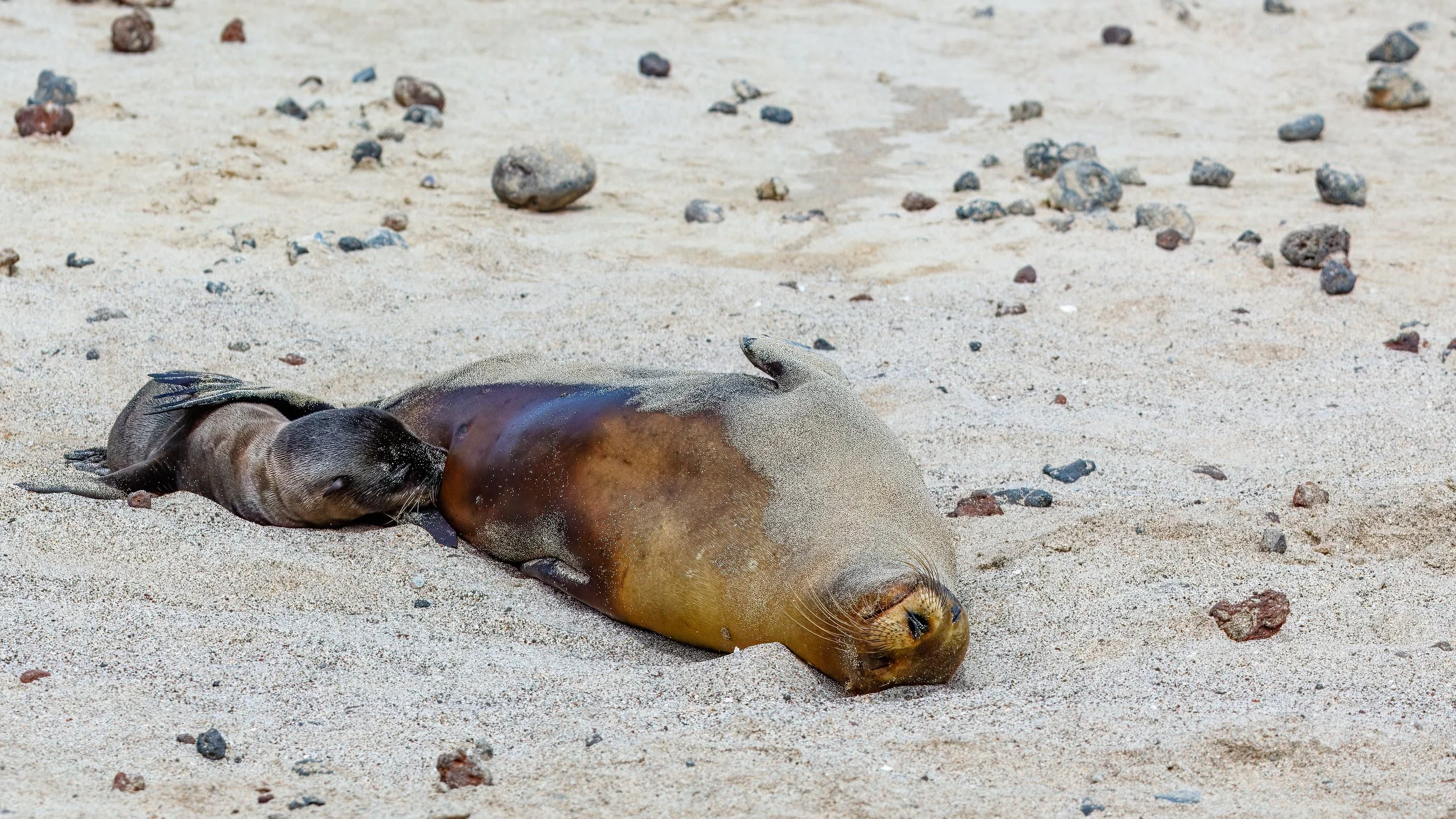
A feeding sealion pup
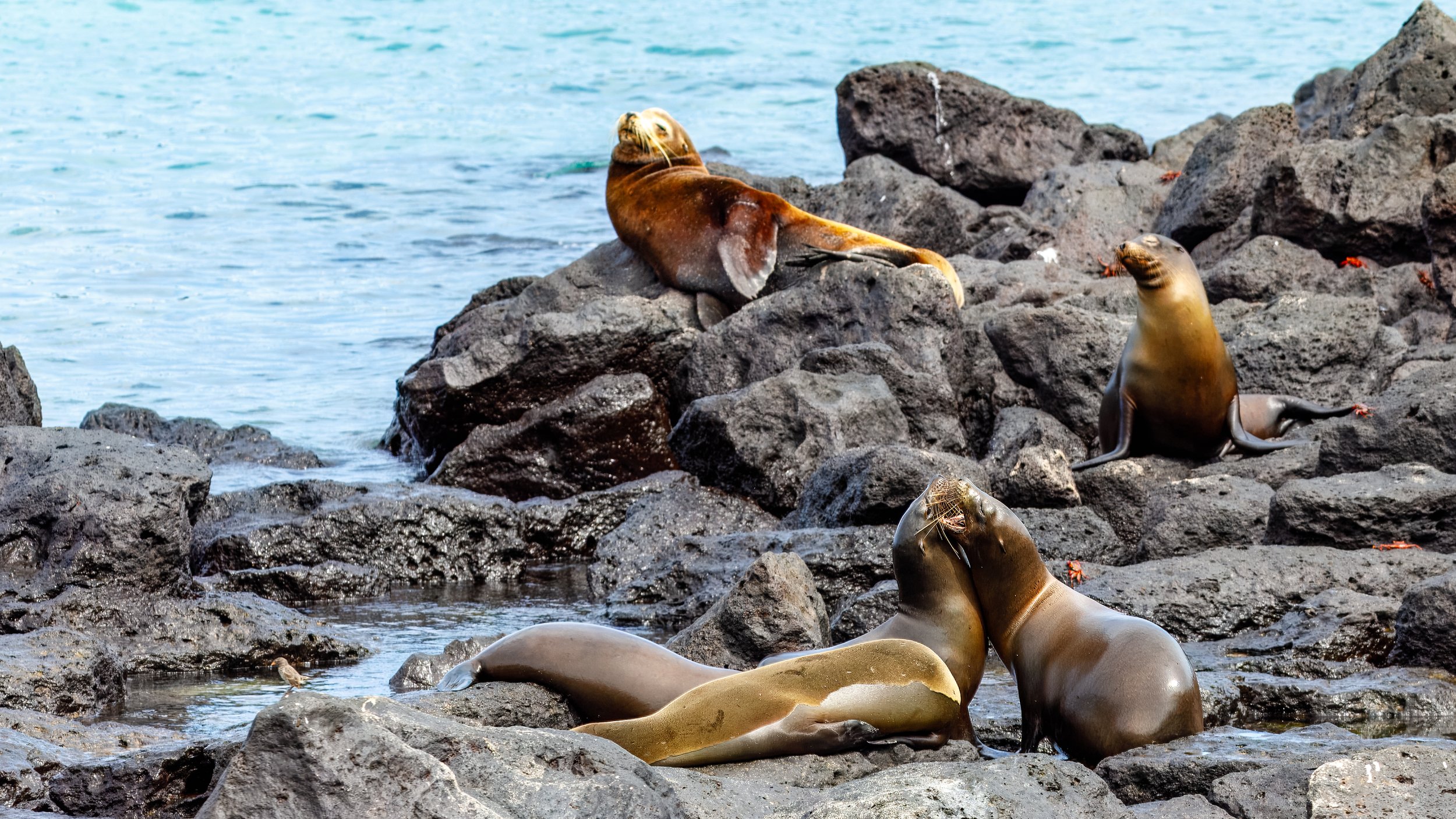
Another active group of sealions
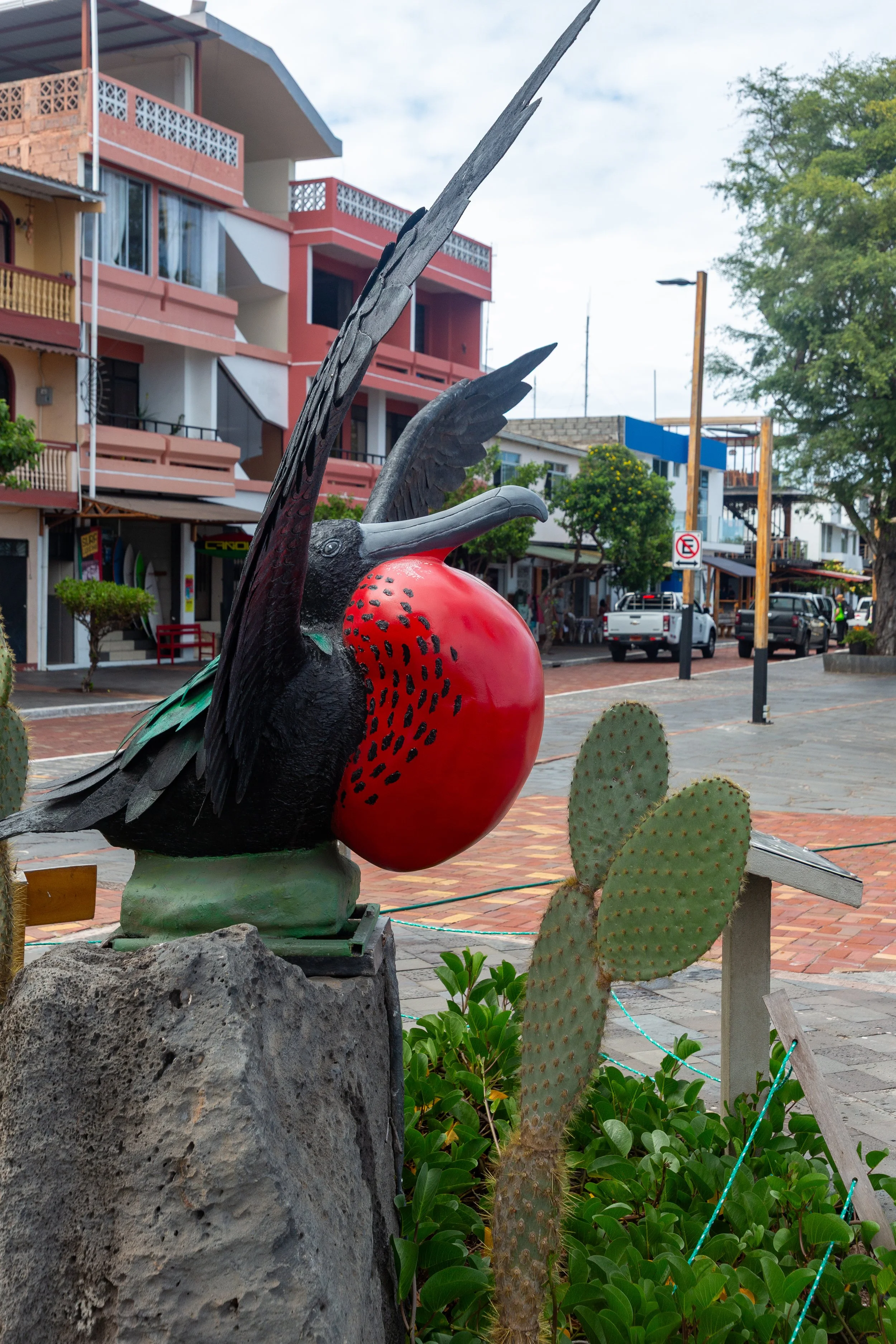
A statue of the male magnificent frigate bird almost as impressive as what we saw in person the day before
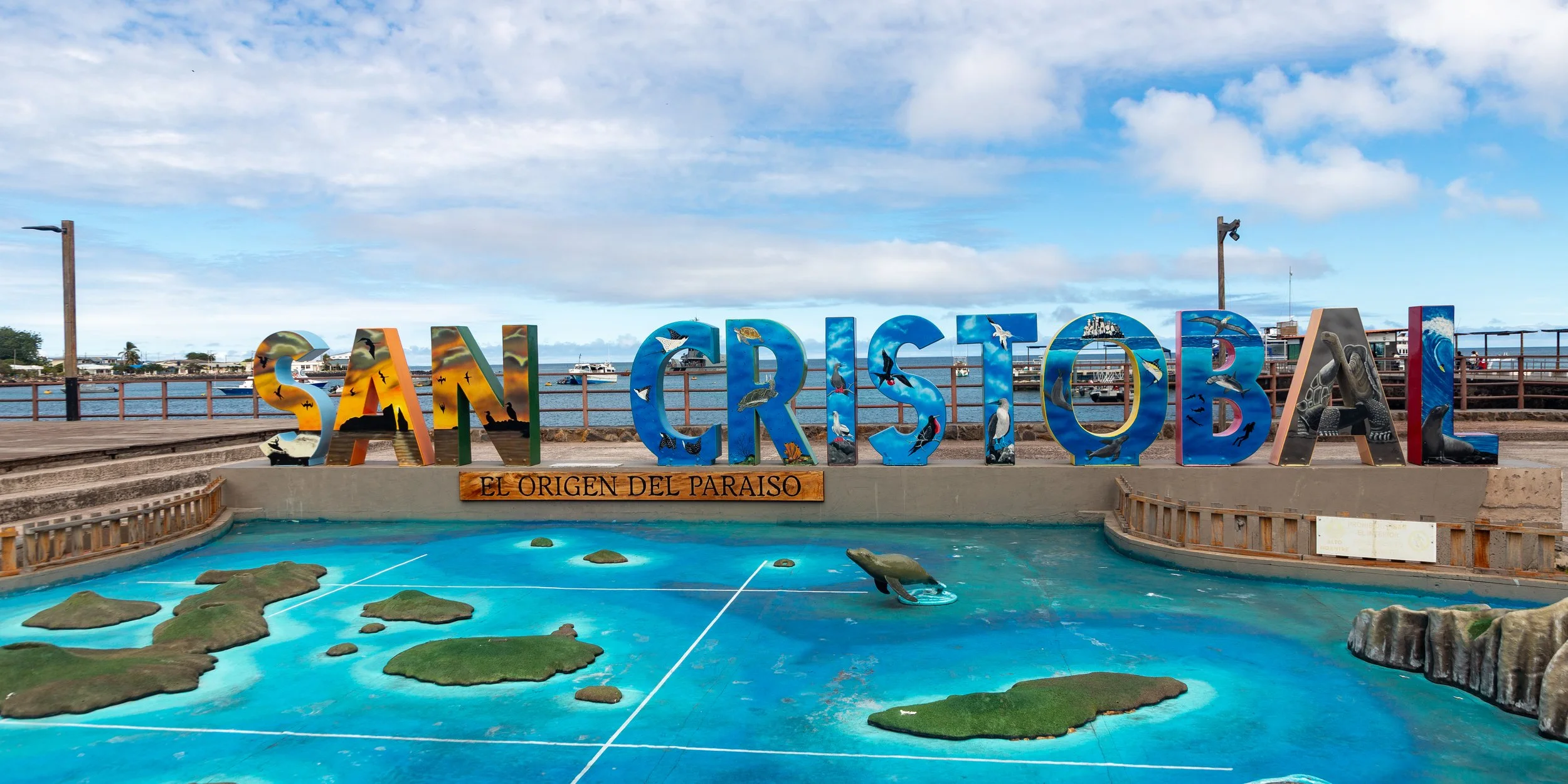
Map of the islands at San Cristobal main dock
Having been isolated on the ship since we departed, it was a little strange being in a small tourist town with local residents. In addition to seeing how the locals live on the islands, there was a bit of time for souvenir shopping before the tender boats took us back to the ship for lunch.
This was also another place to remember that the ship operates on its own time zone that is consistent with Quito, and one hour later than the actual time zone that the locals operate under. It was a bit baffling why they chose this option until I learned that the hours of the national park are 6:00am-6:00pm. These hours would mean that our schedule on local time would appear to require an earlier start to the day. If you create your own imaginary time zone then your passengers can sleep in before starting their day.
Oct 3 - afternoon
With everyone back on the ship and our own time zone, we sailed to the opposite side of San Cristobal, where we would have our afternoon excursion. For our option we chose a strenuous hike, as it promised more bird opportunities and some beautiful scenery.
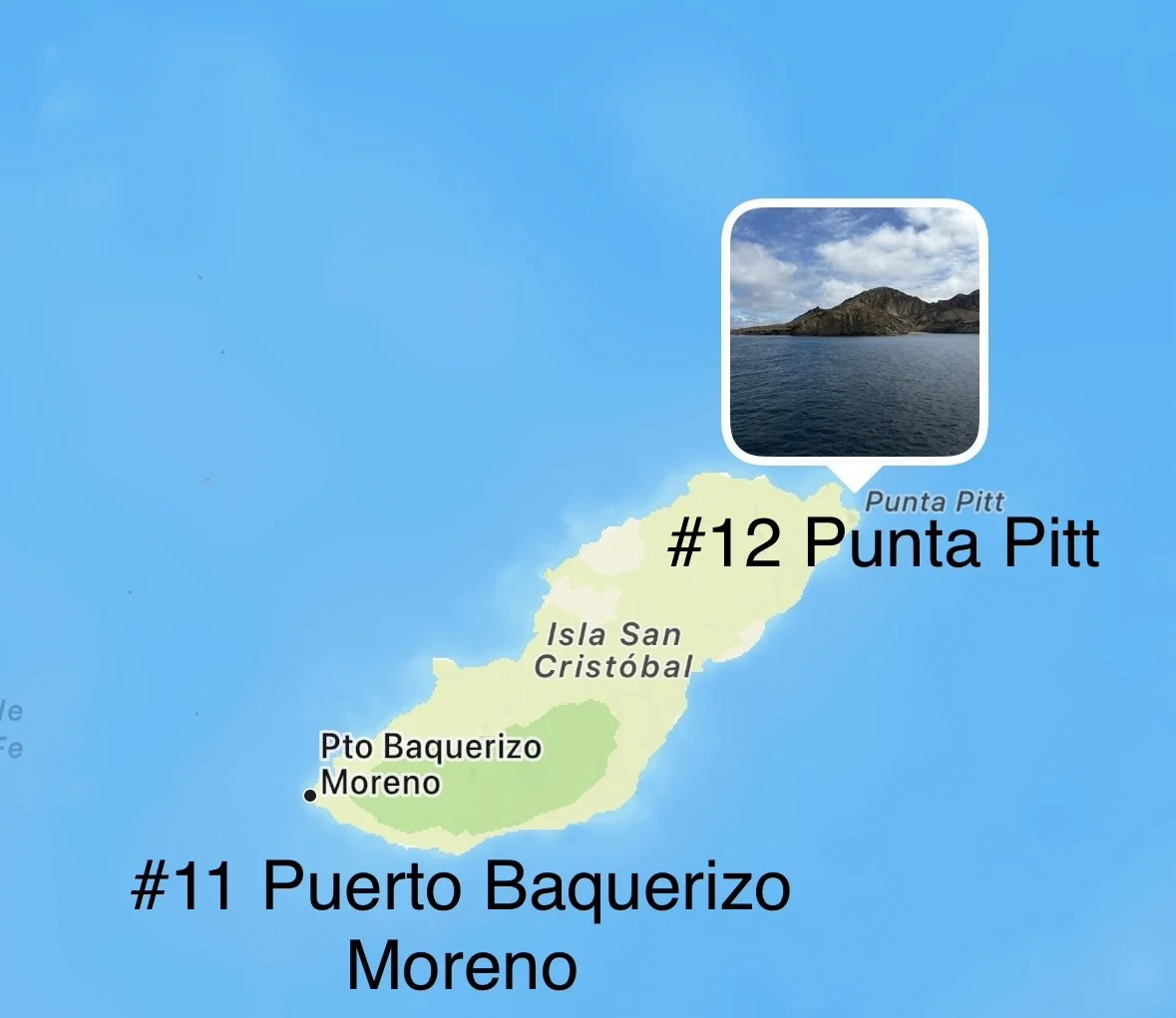
After moving north along the west coast we anchored outside of Punta Pitt for the afternoon
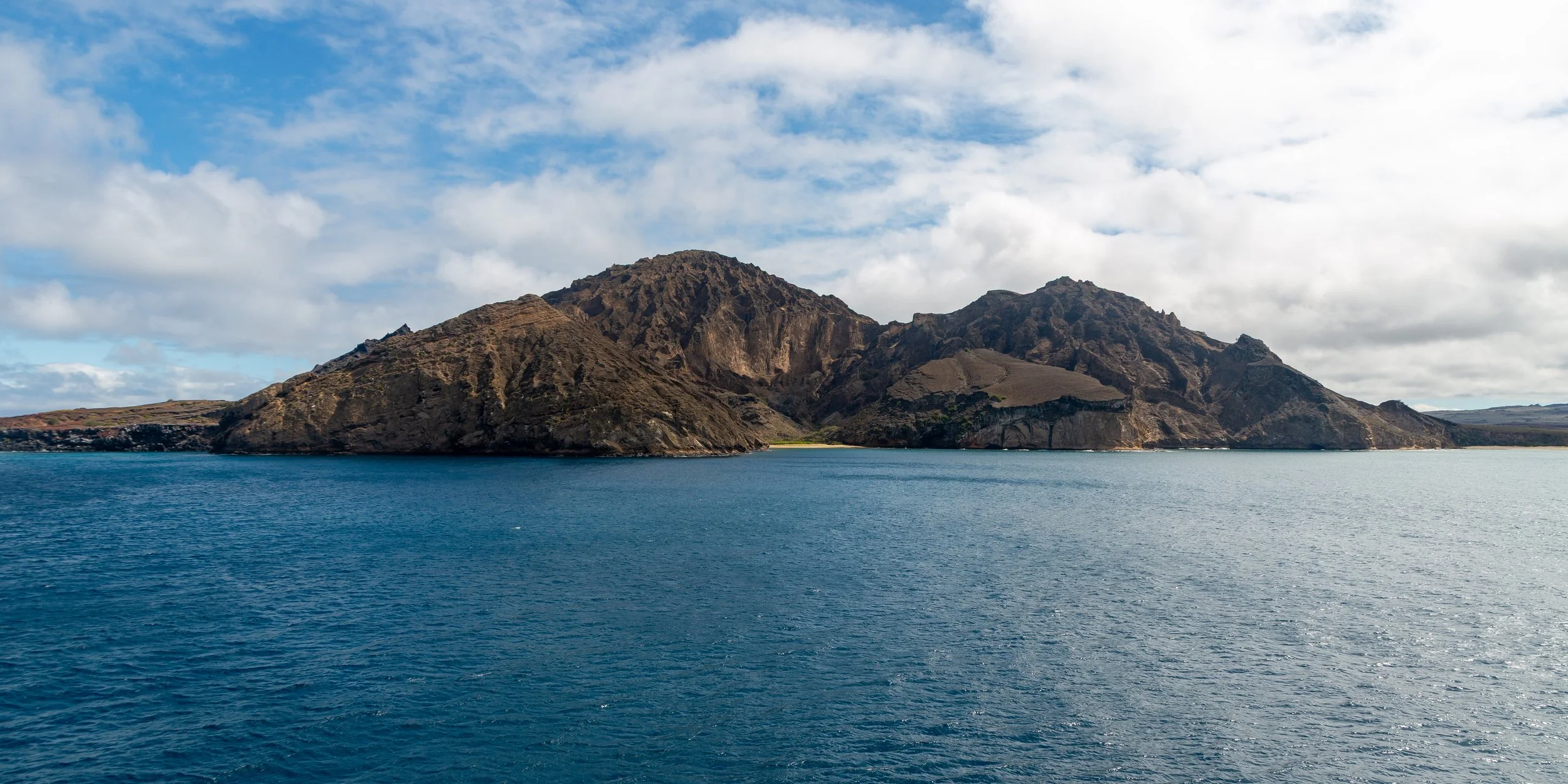
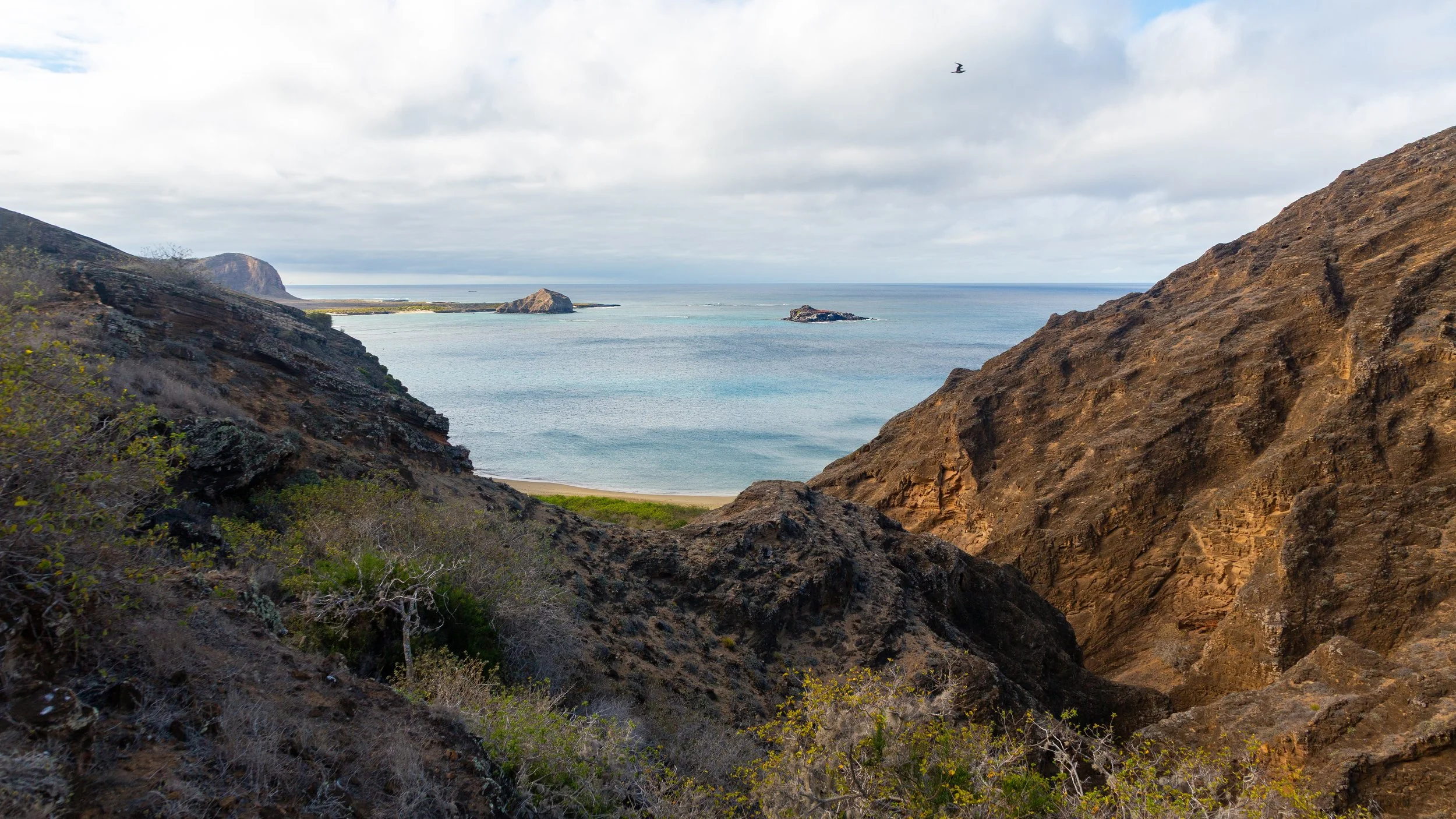
Approaching Punta Pitt and some of the peaks that we’d be climbing
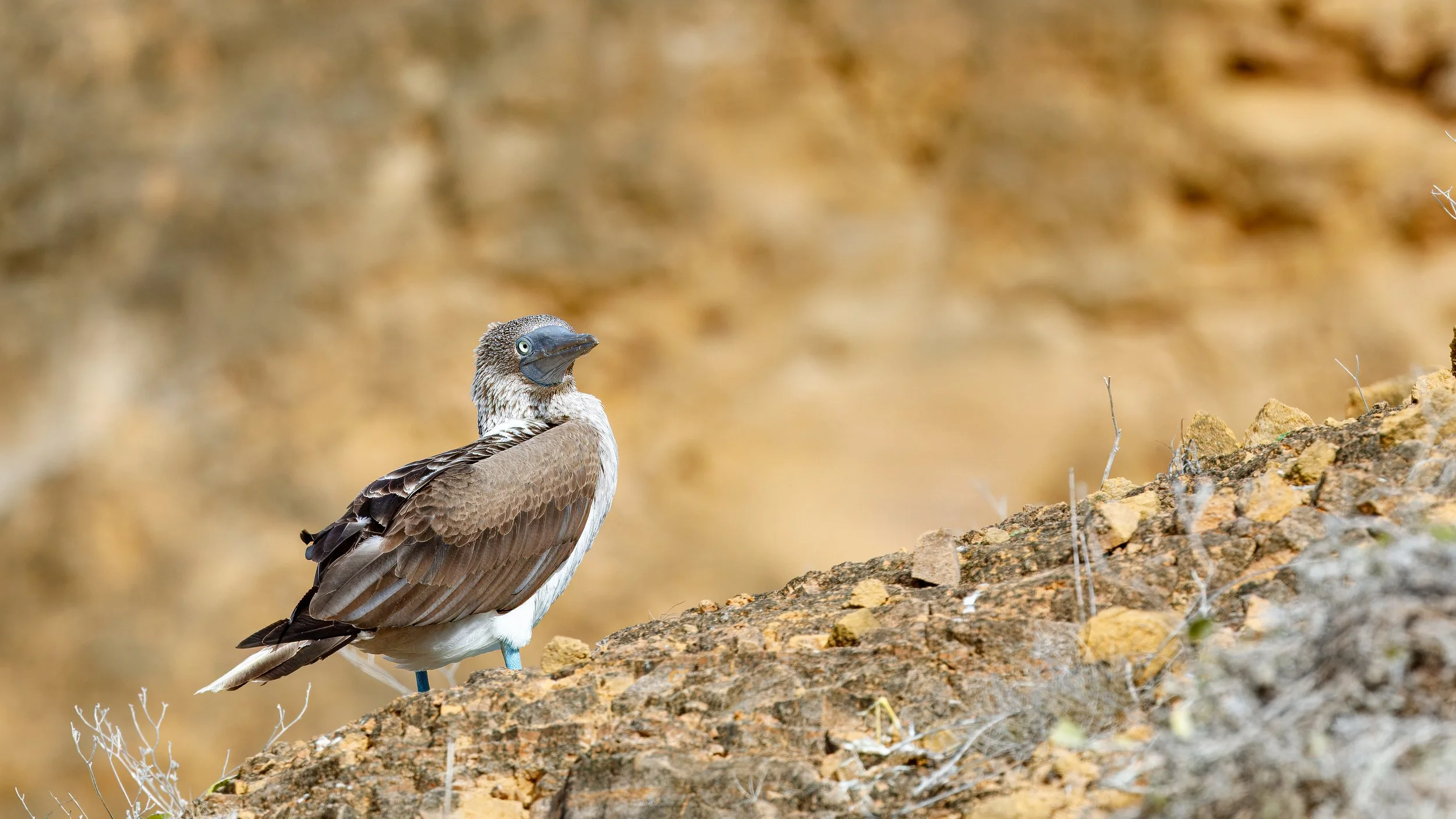
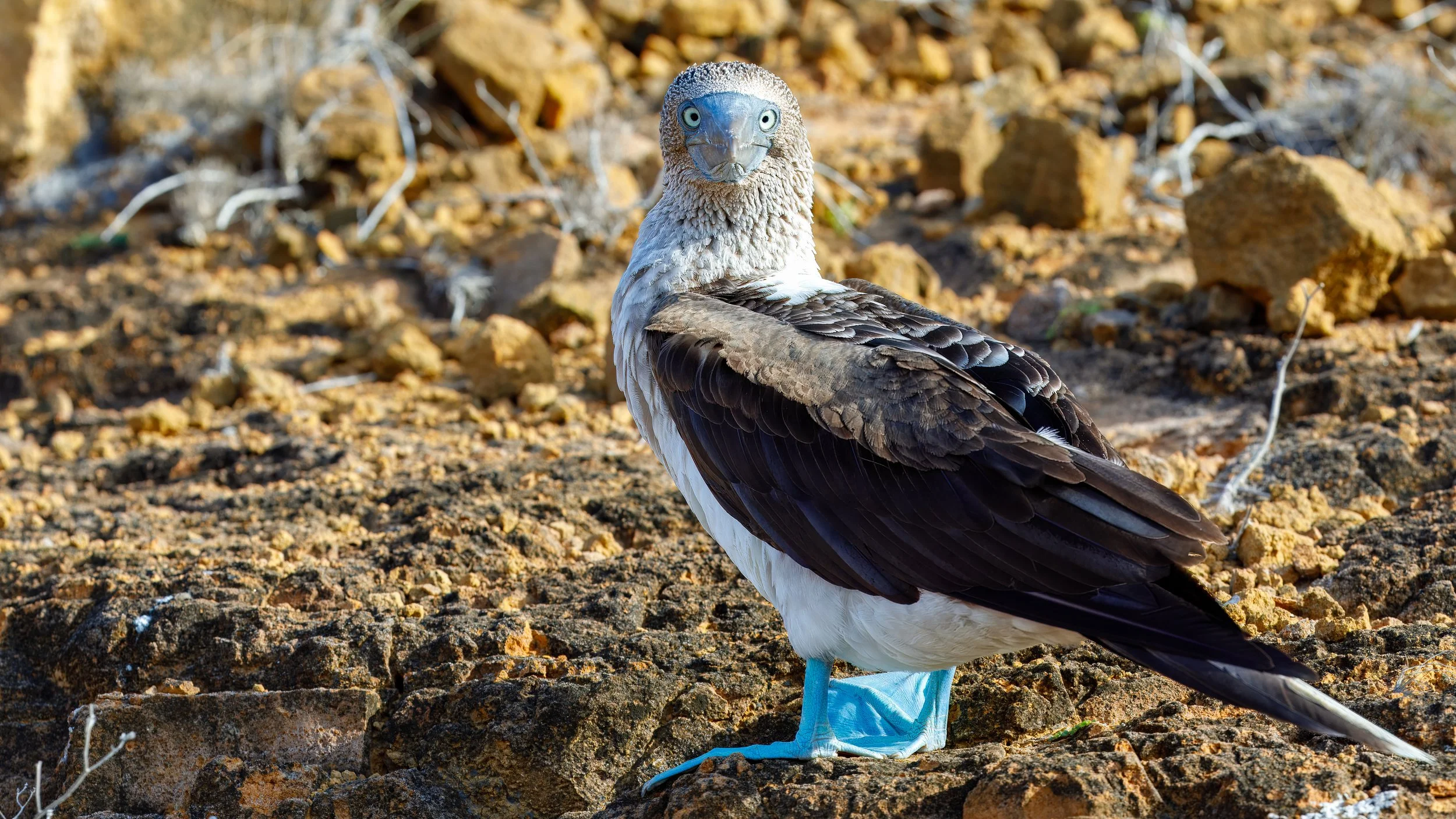
Although we were on the search for red-footed boobies, this was our first blue-footed
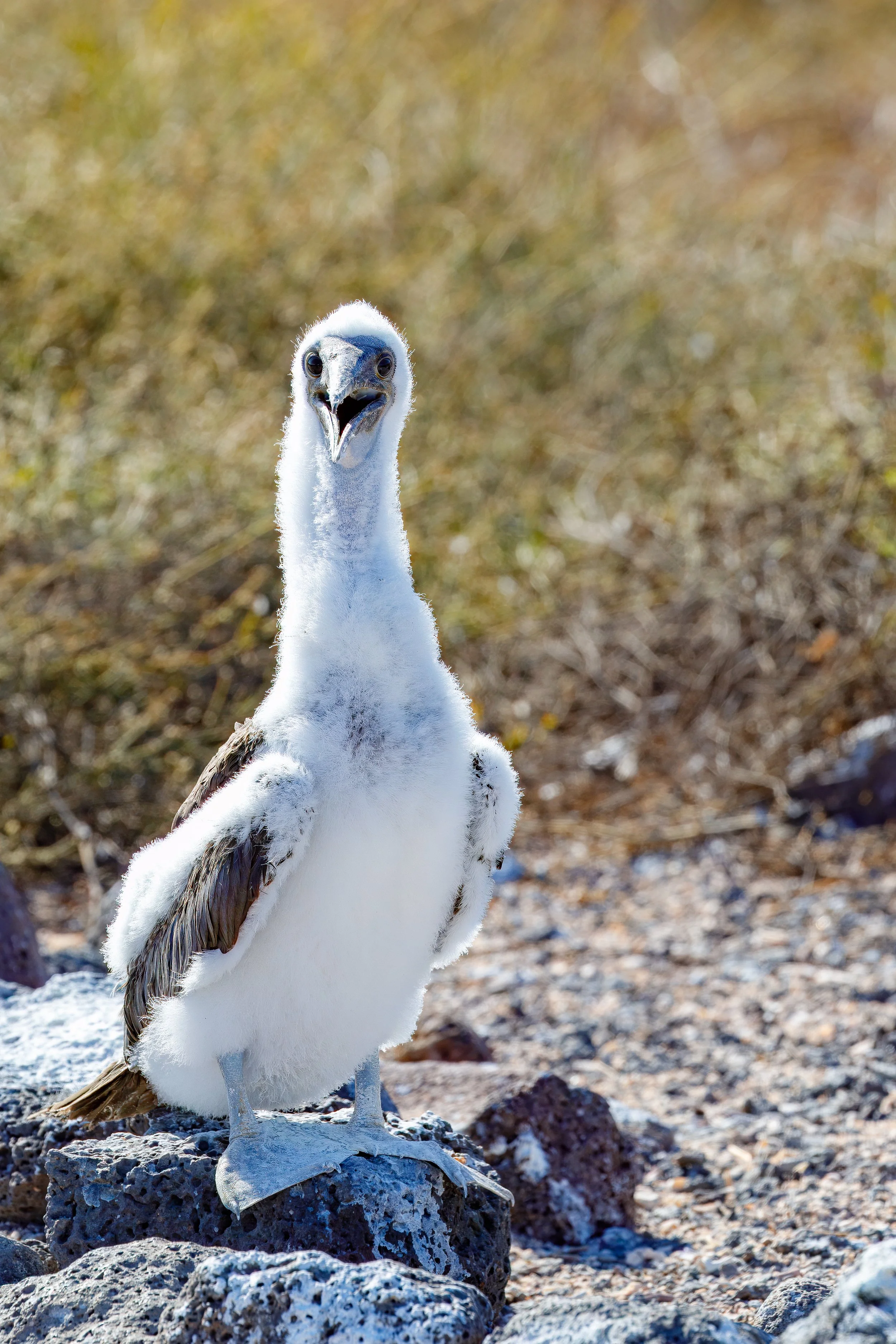
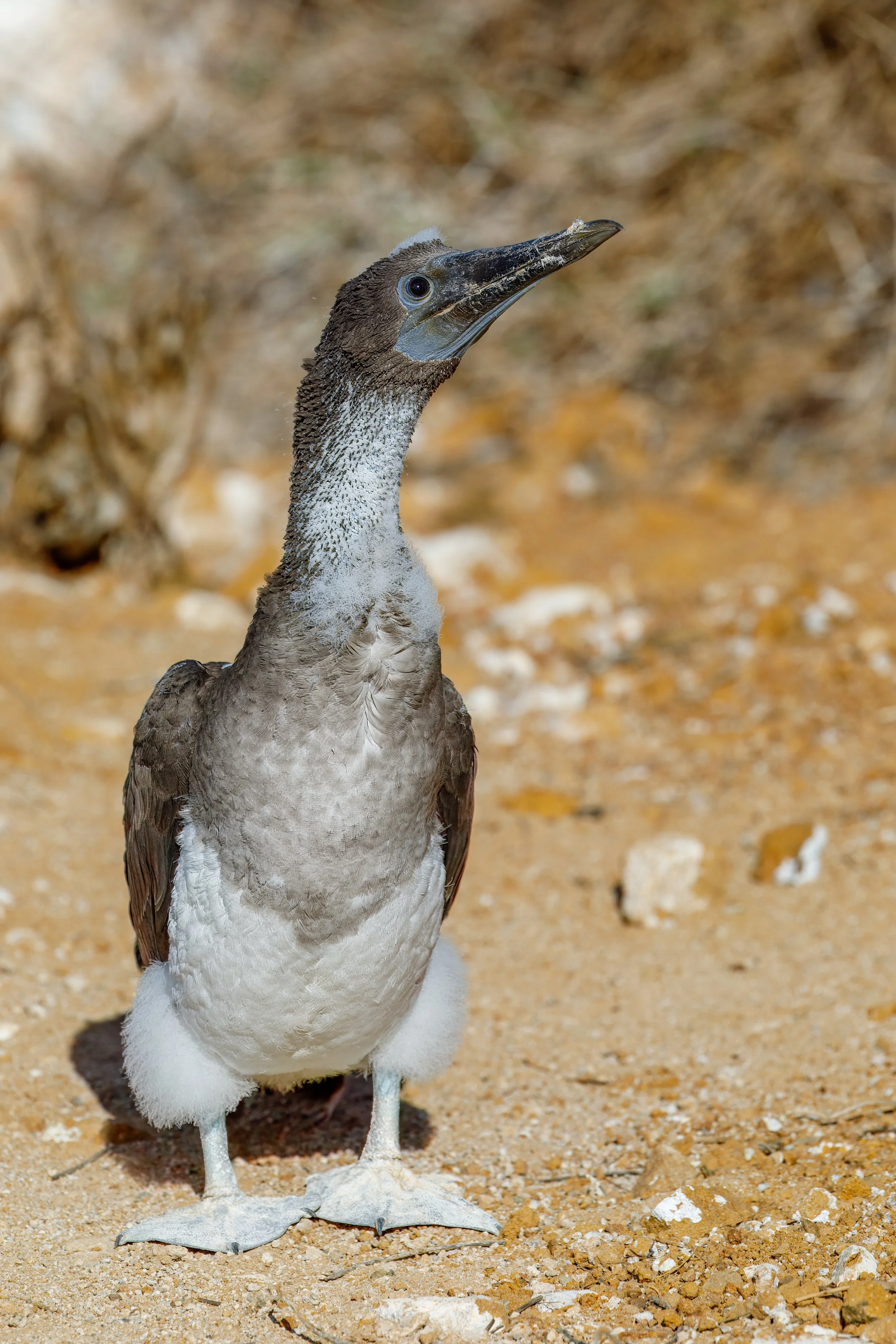
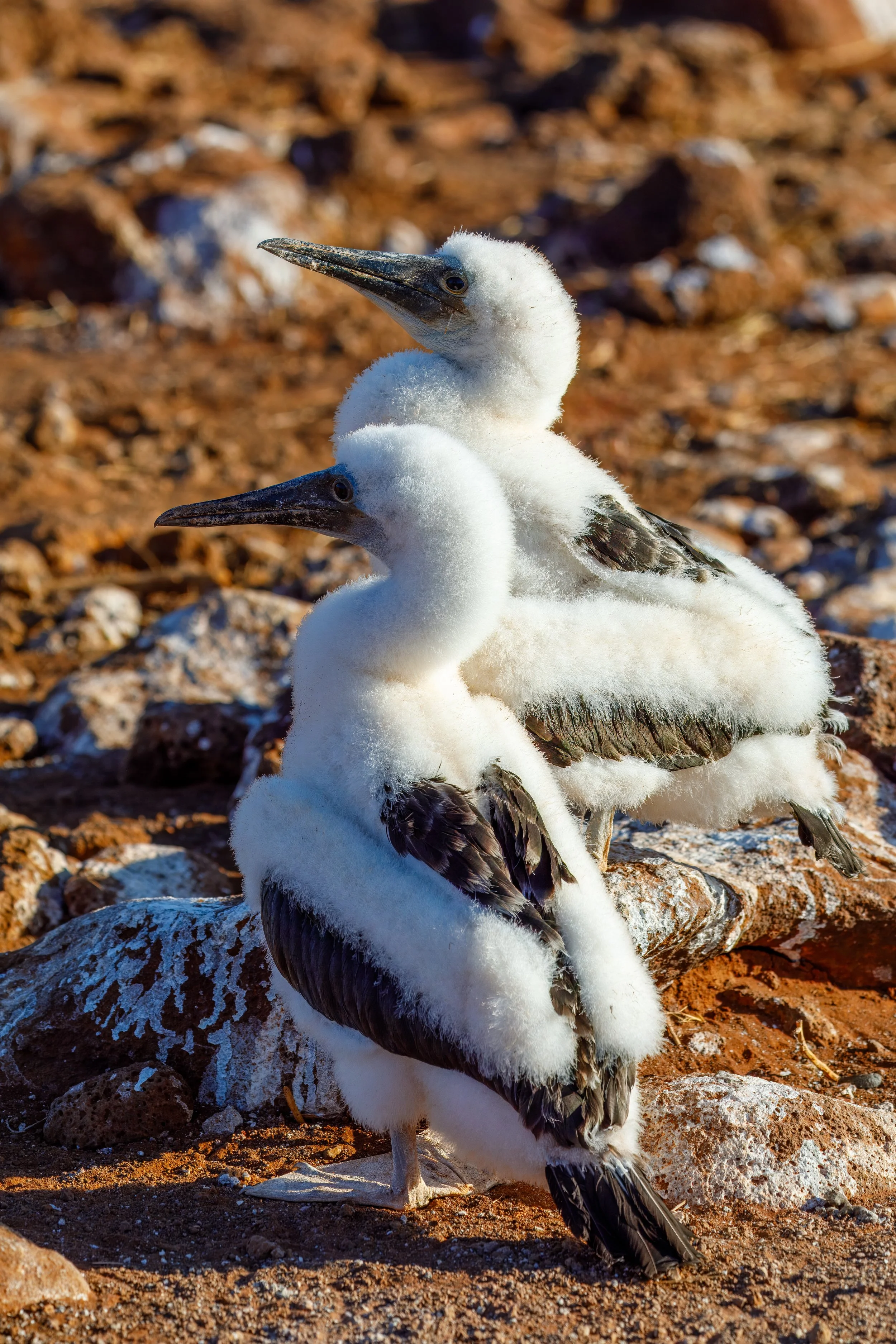
Younger (pre-blue footed) booby, partially completed shedding its adolescent white down
Fully adult blue-footed booby
Looking back on the progress we’ve made on our hike
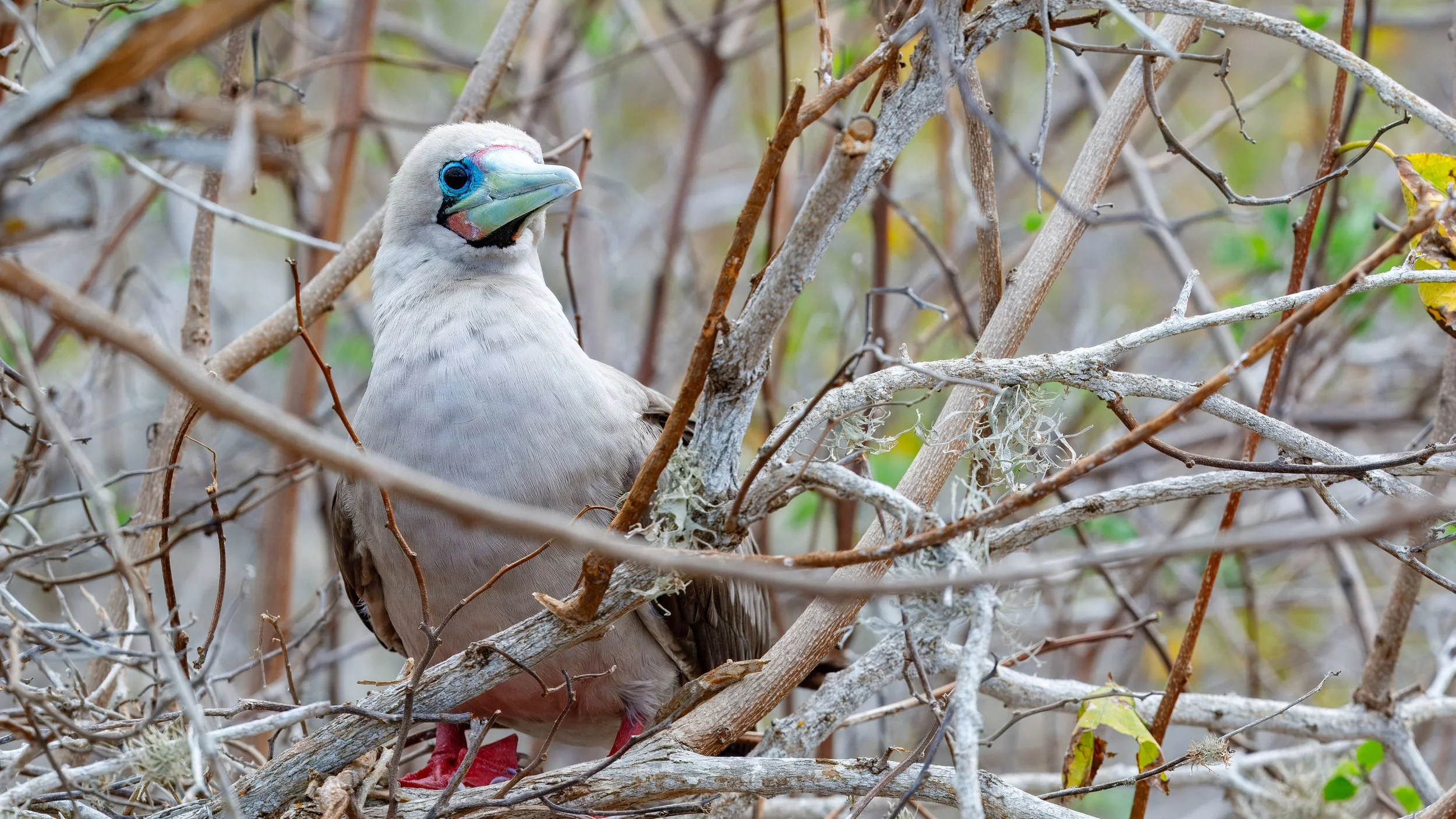
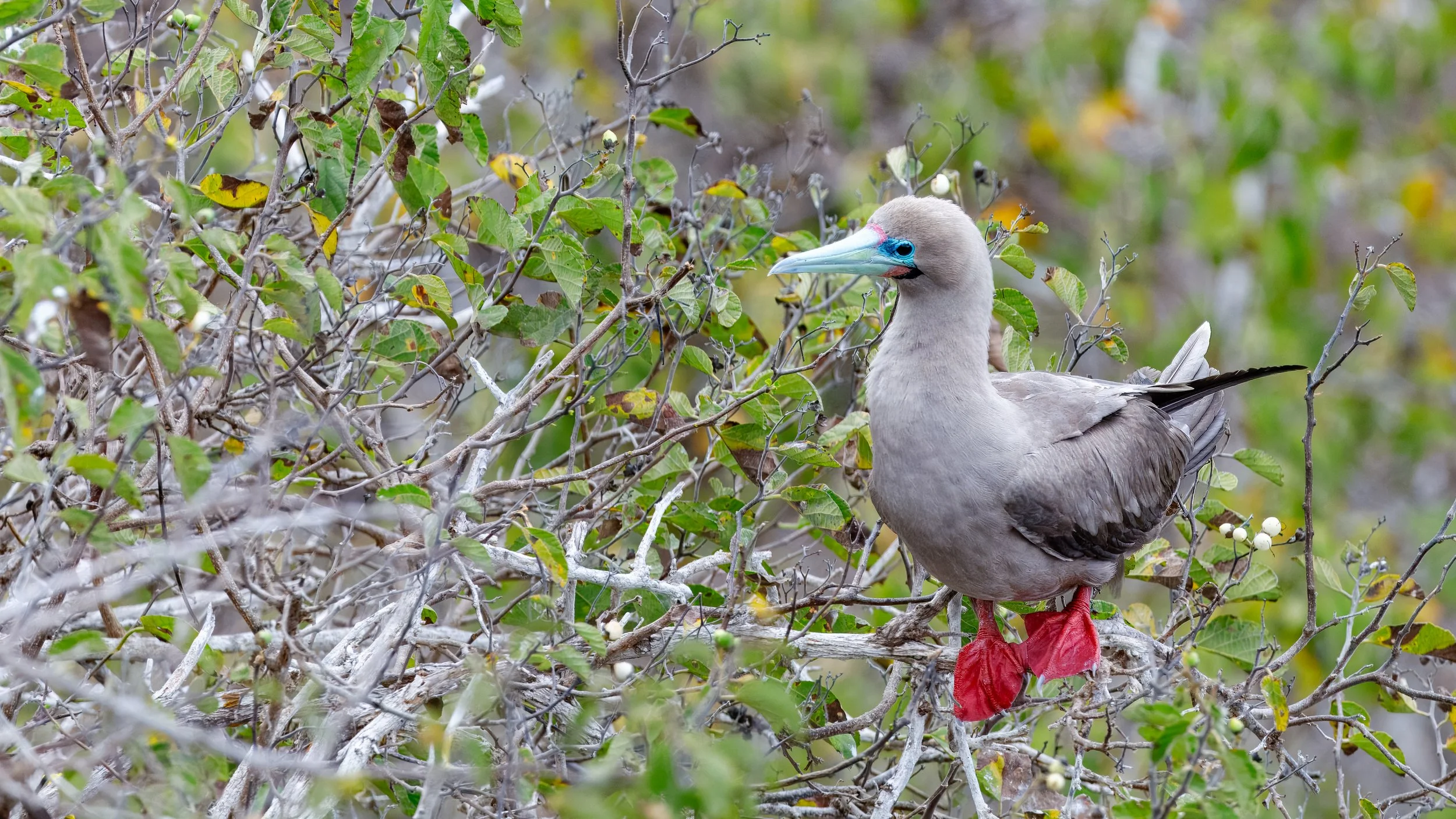
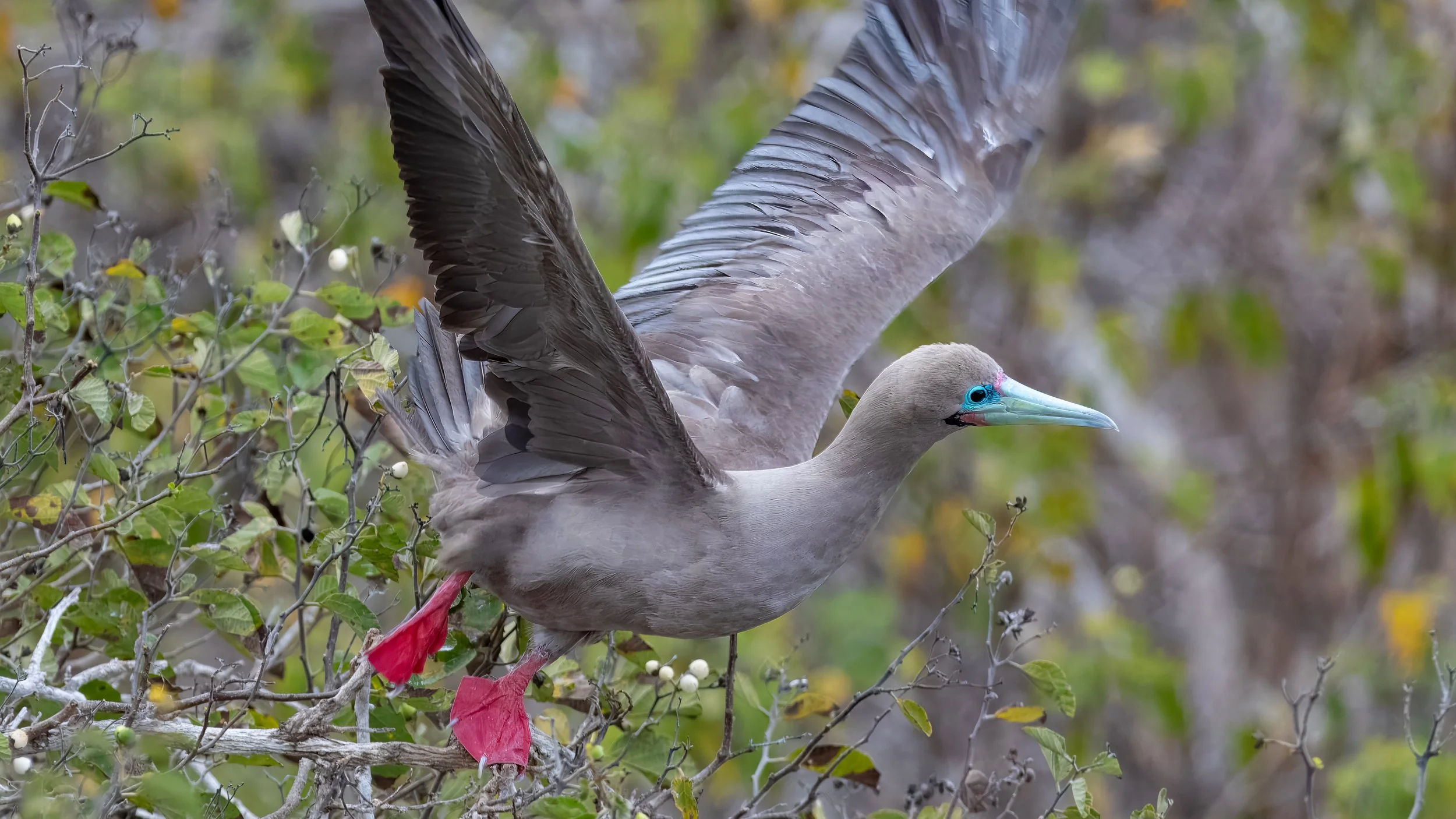
Red-footed boobies nest in trees and are much harder to observe
A great shot of the red-footed booby
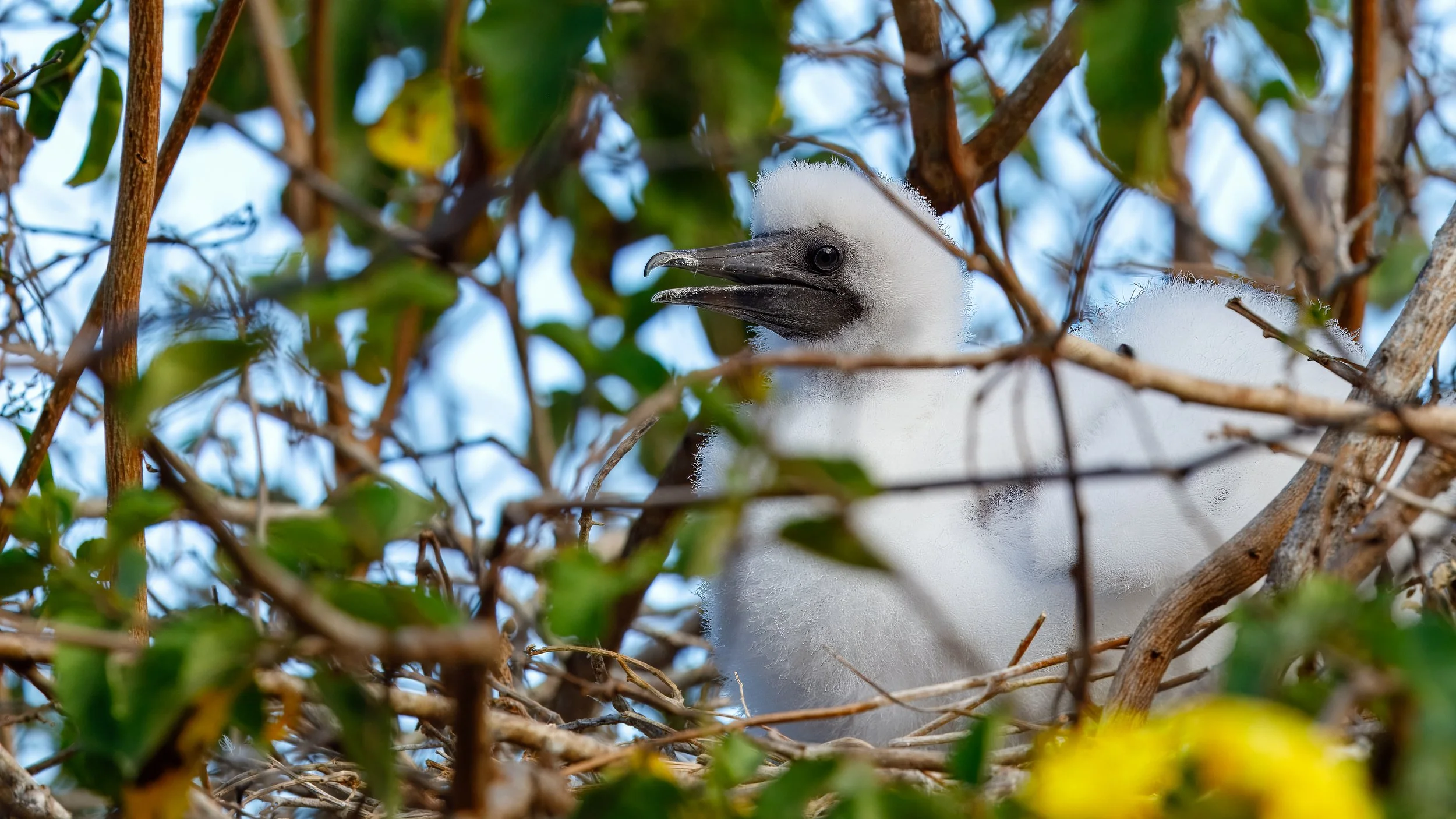
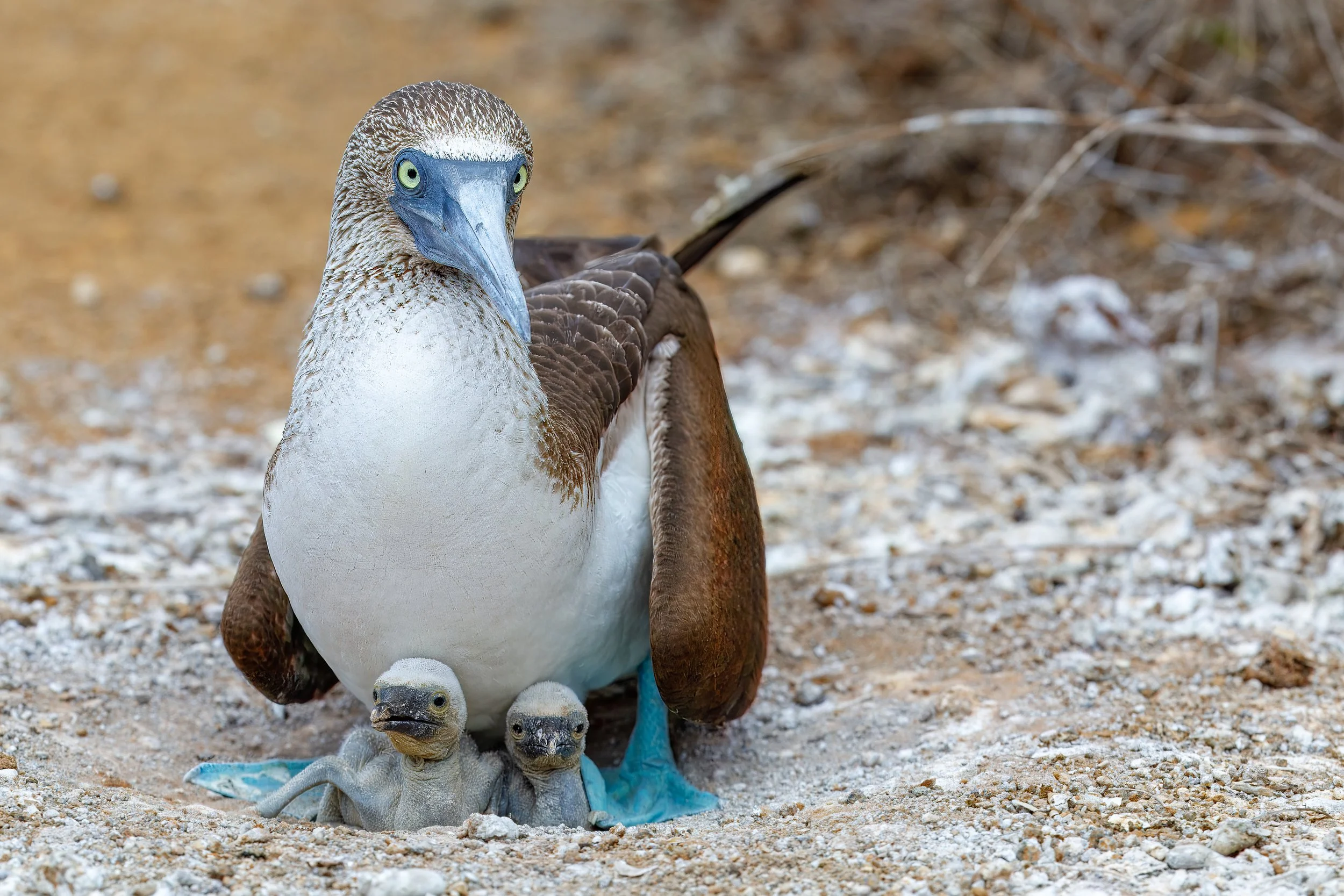
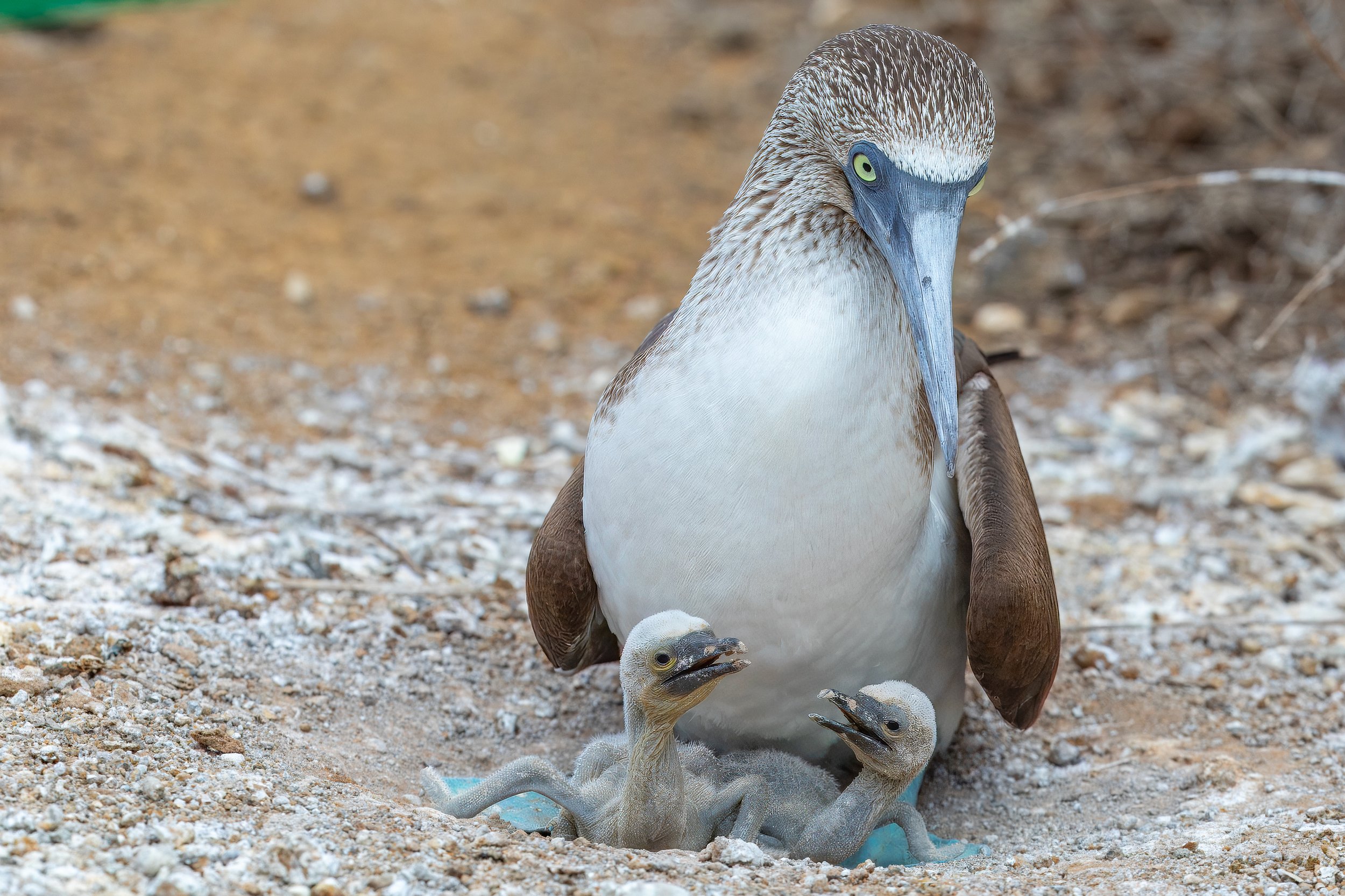
Mother with two very young blue-footed booby hatchlings
It was remarkable how open the nests were and how comfortable the mother was with our presence
Beautiful shot of the distinctive red feet
Tom making photography look easy as he was able to catch this shot just as they flew out of the tree
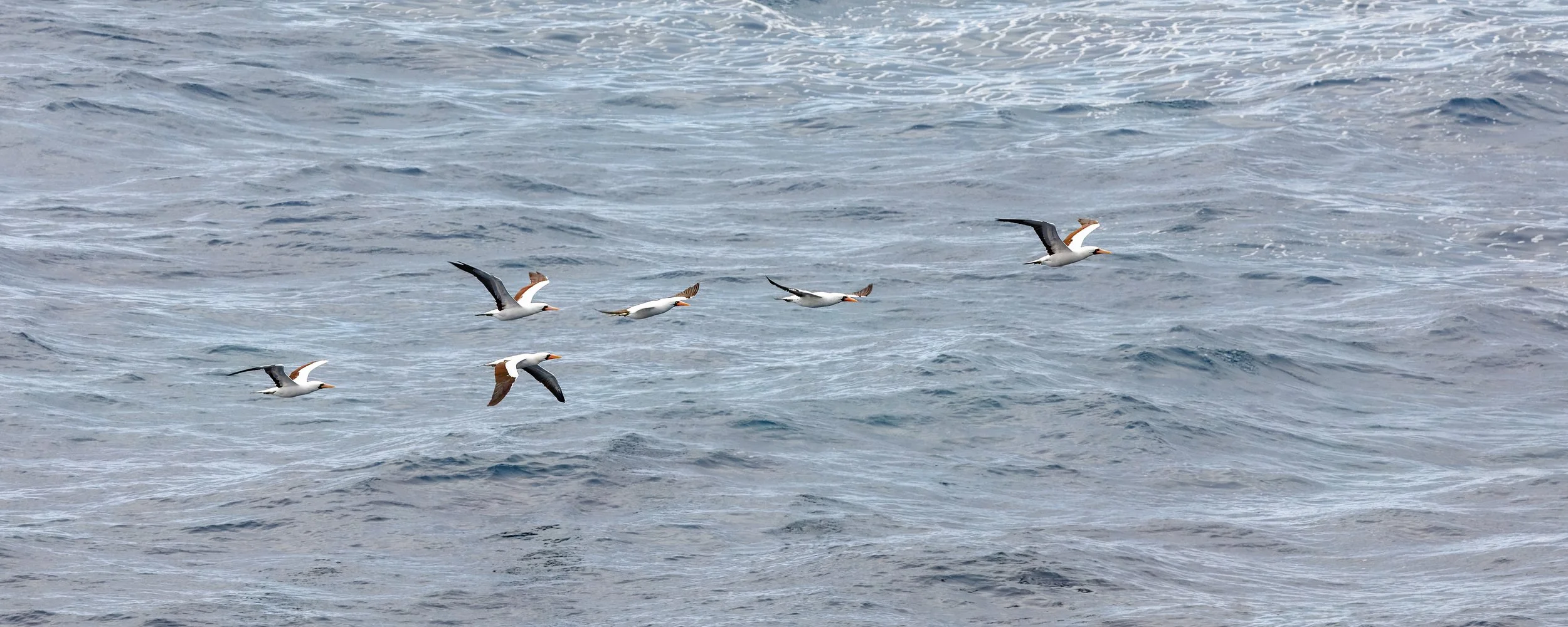
Now focusing on the sea able to capture a flock offshore
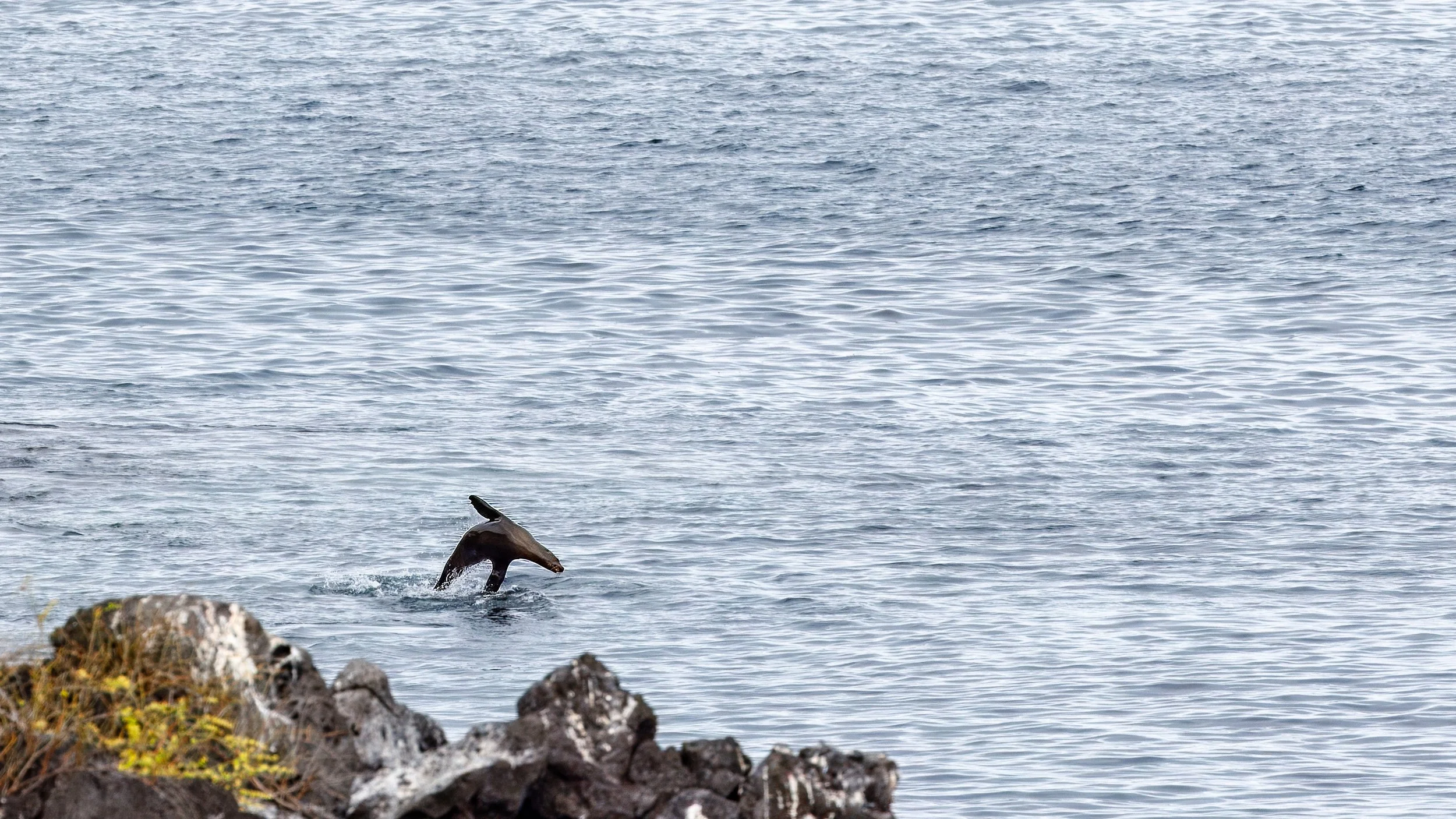
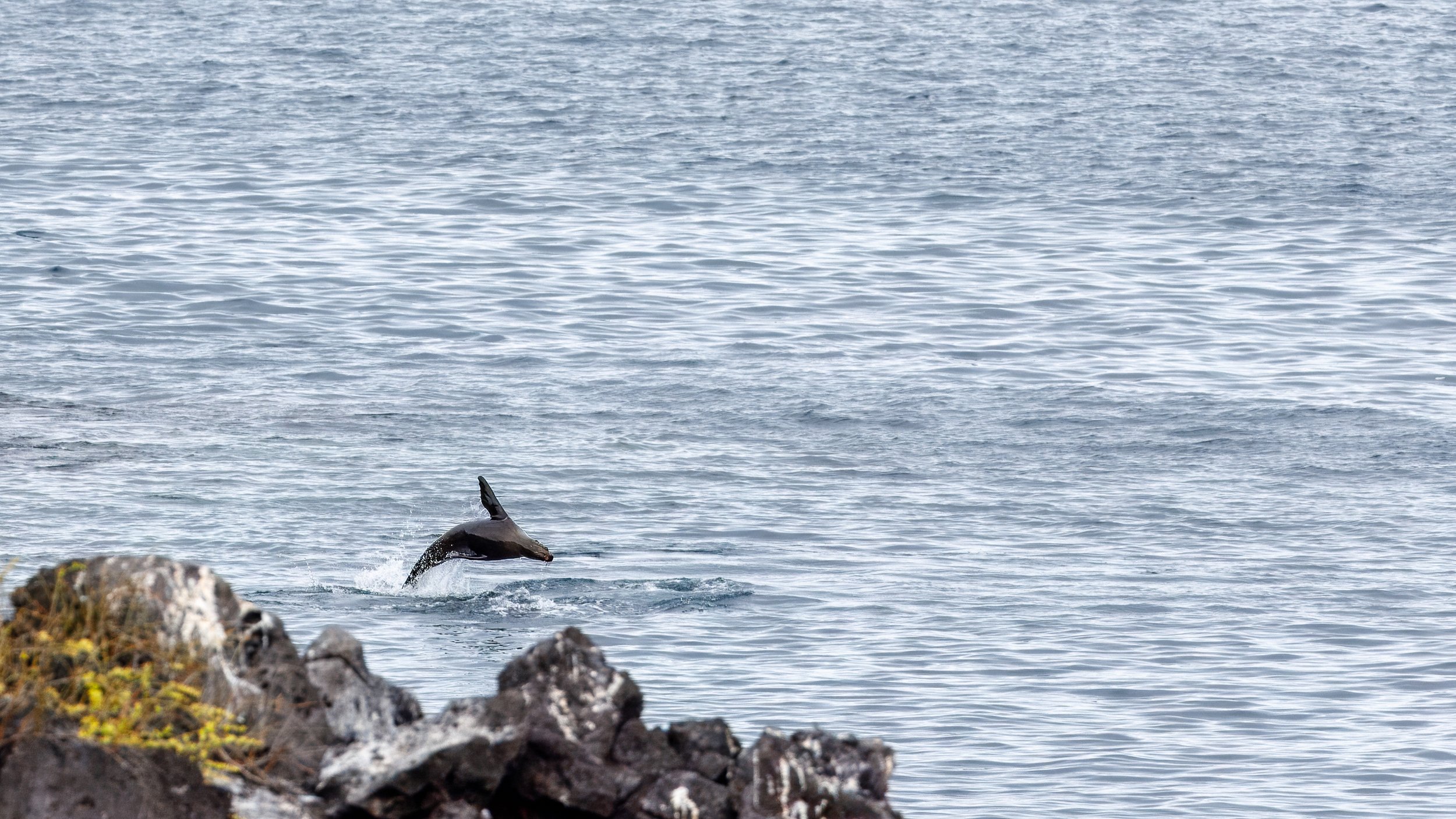
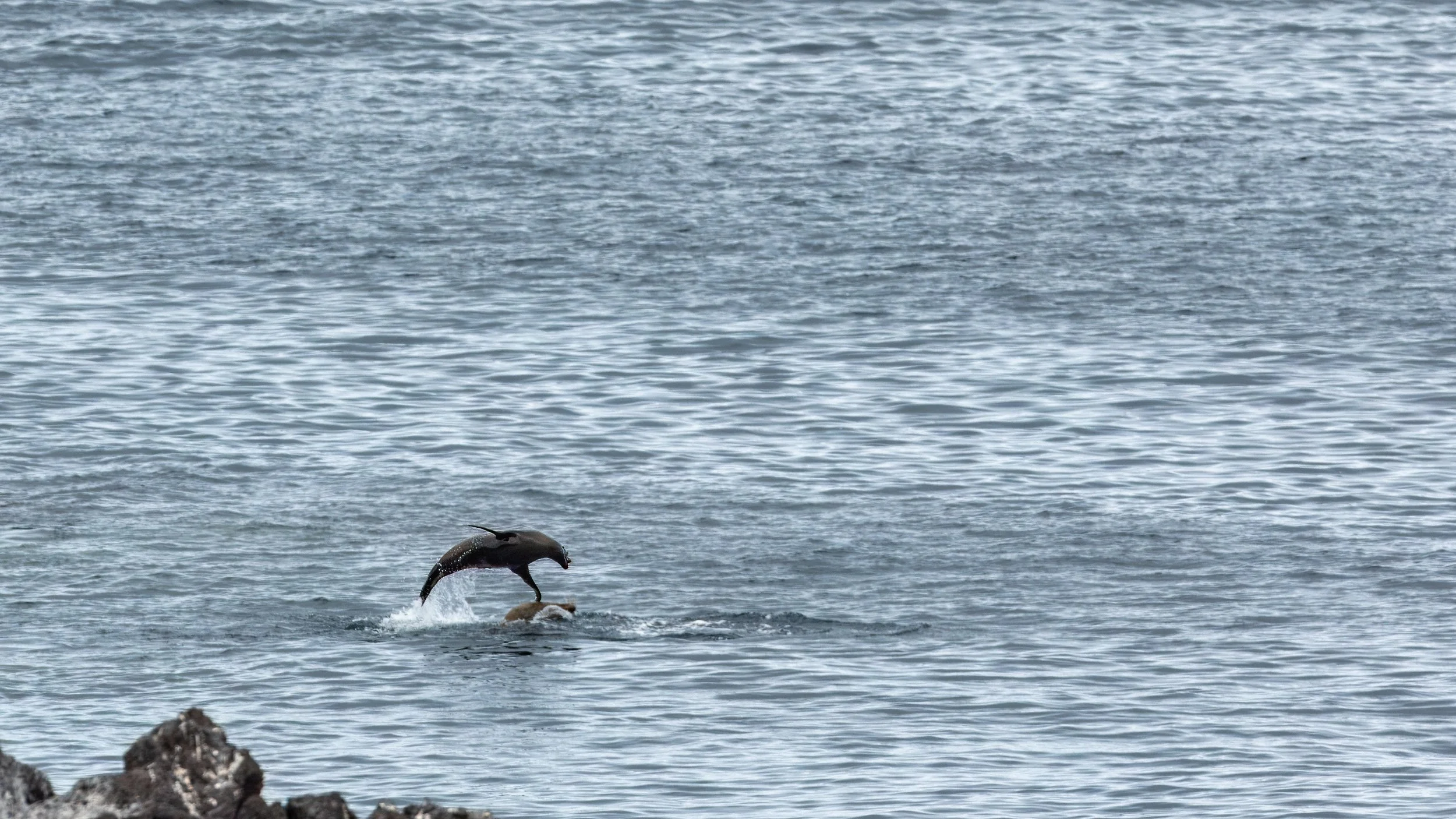
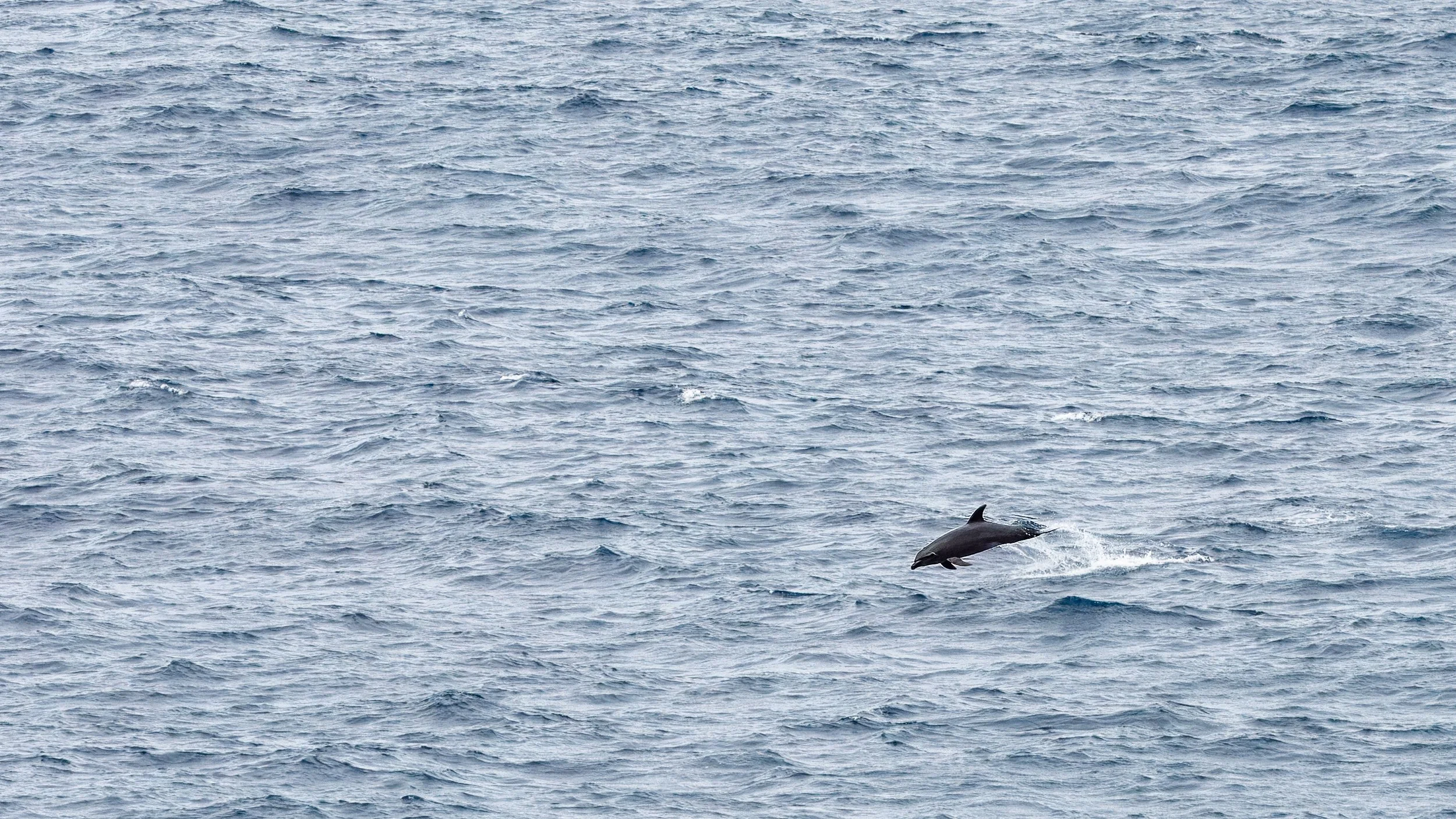
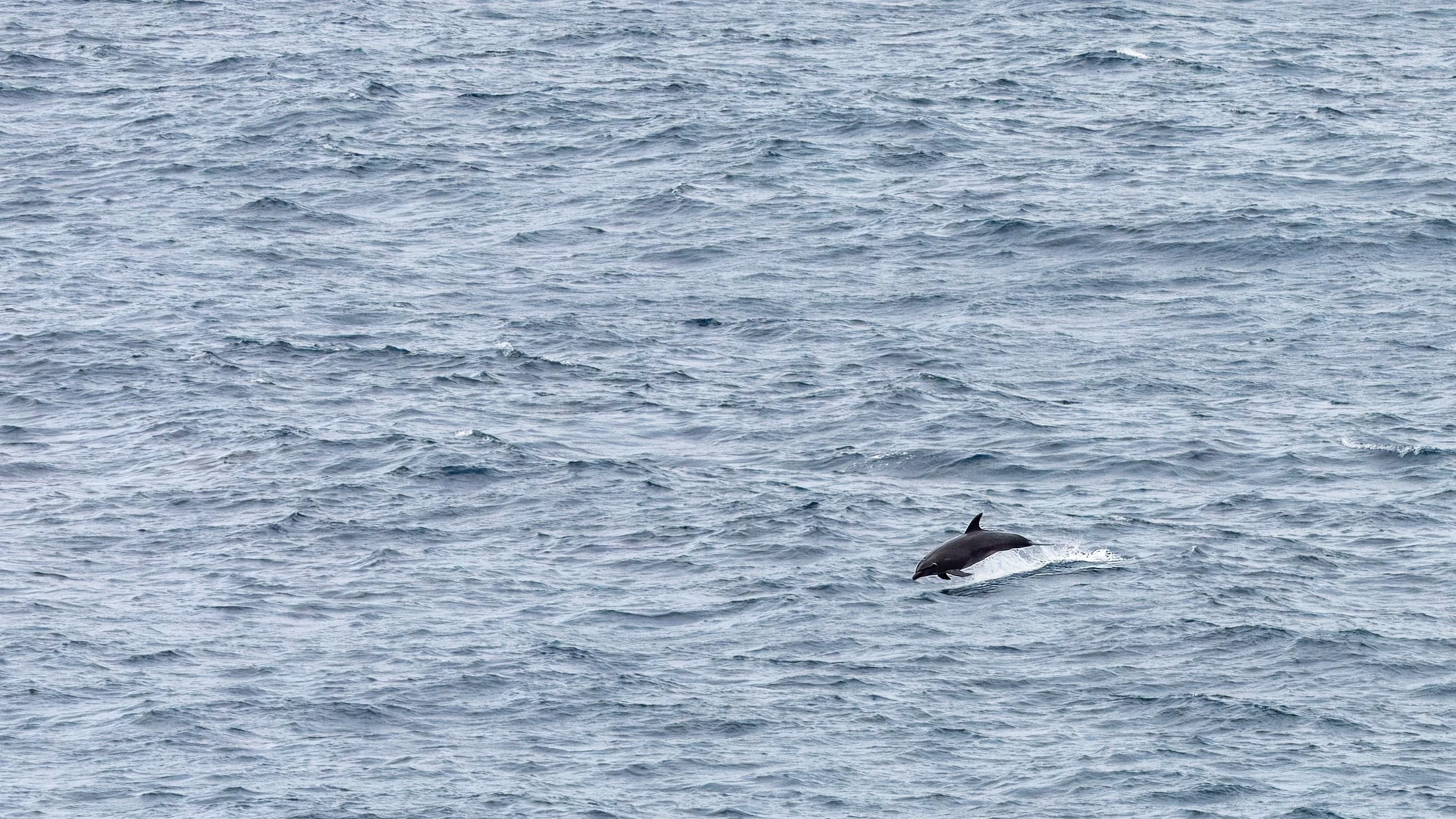
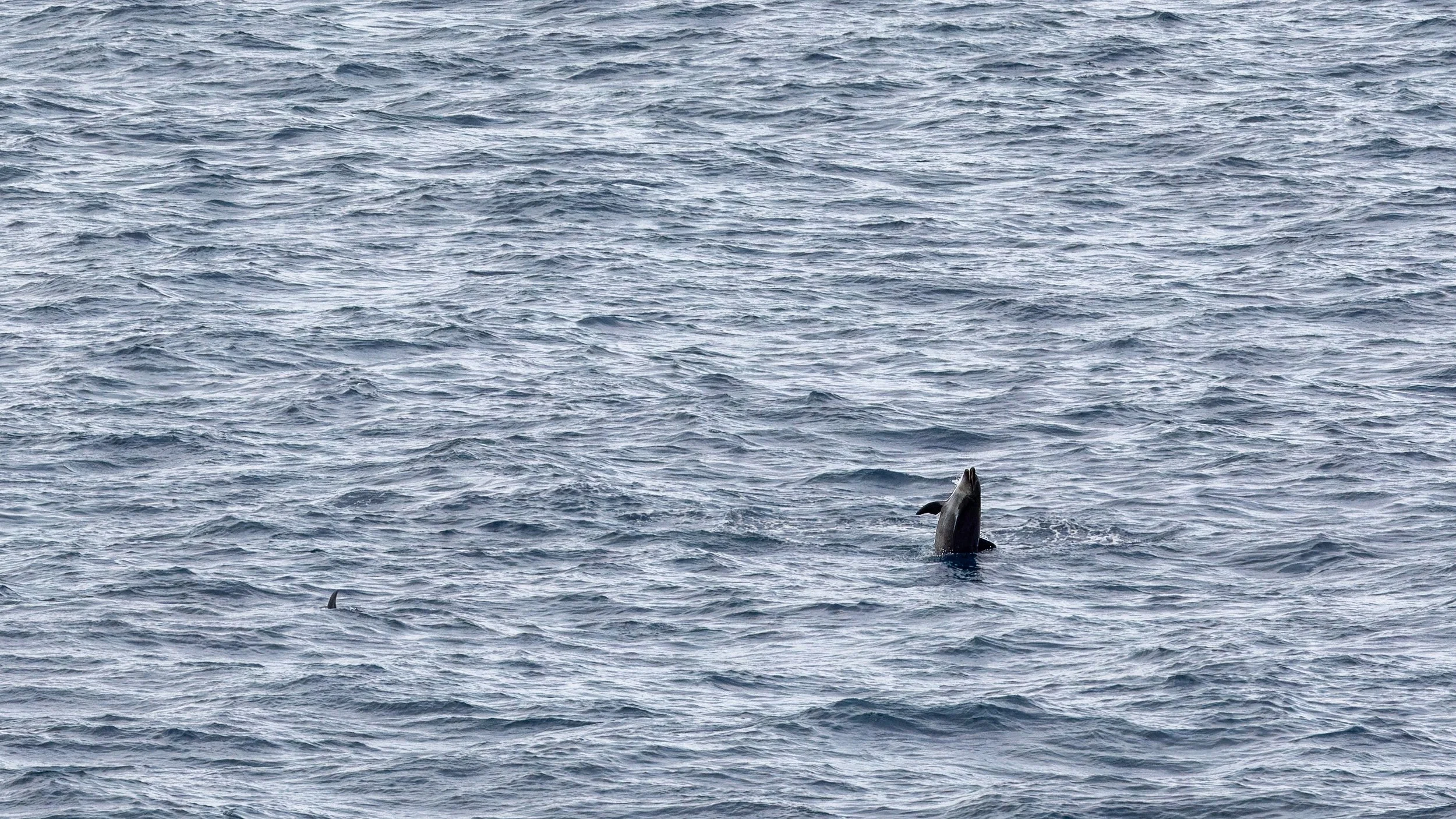
From our lookout, we also captured some dolphins in motion near where those that elected for a tender ride (instead of our hike) were observing
Continuing to follow the jumping dolphins
Juvenile or female frigatebird
Dolphin putting on a show. Unfortunately Tom wasn’t able to capture the nearby whales that were also making an appearance
Late afternoon sun on the tender ride back to the ship
Arriving back at the ship close to sundown
Although with the hike it was a later arrival than usual, we still had time for happy hour and our normal excursion briefing before another wonderful dinner, as we started to sail back to Santa Cruz. Having seen the red-footed booby we’d now covered most of the creatures on our list, with the exception of the giant tortoises which were going to be the focus of our final day.
Oct 4
Our last day was a full one off the ship with departure after breakfast and back just in time for happy hour. We were now back at Santa Cruz where we’d previously visited Las Bachas on the north coast. This time from our anchor, we were dropped off in Puerto Ayora, the largest town in the Galapagos, with a population of almost 13,000 people. Once again among locals, we a little more cautious of our surroundings, but had lots of time to explore the touristed areas after our official visit to the Giant Tortoise Breeding Center at the Charles Darwin Research Station.
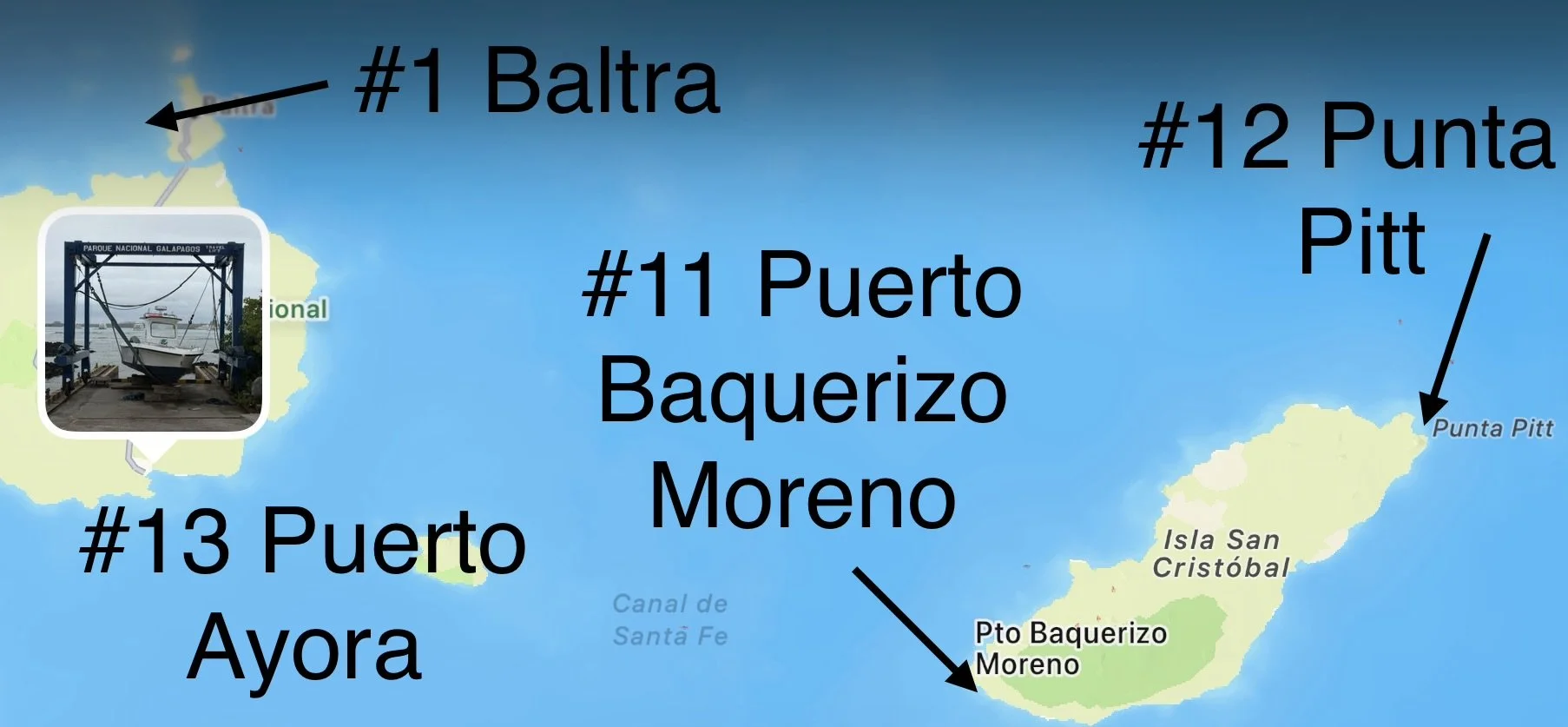
Overnight we’d made it Puerto Ayora on the southern coast, opposite to Baltra where the airport is
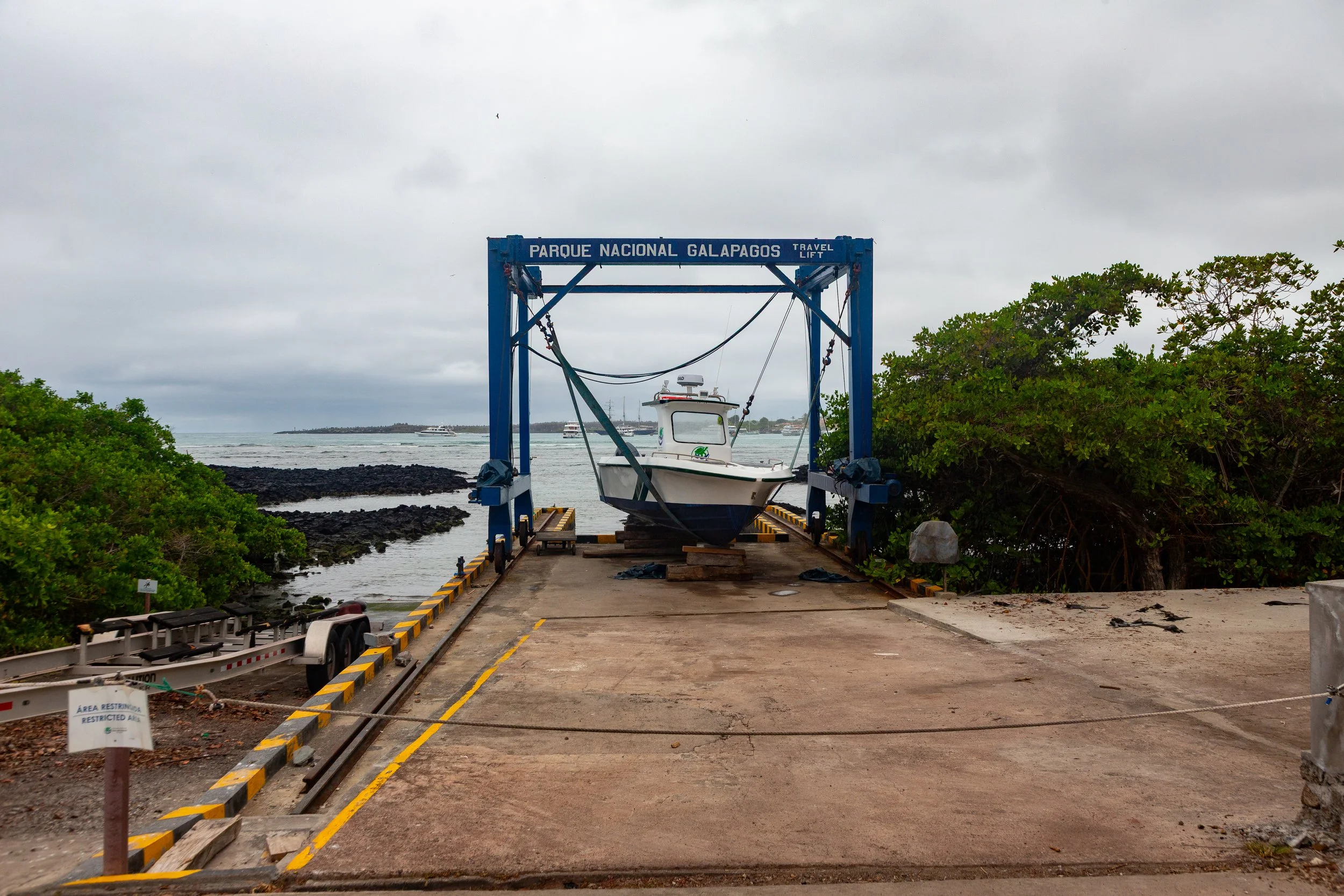
National park boat launch
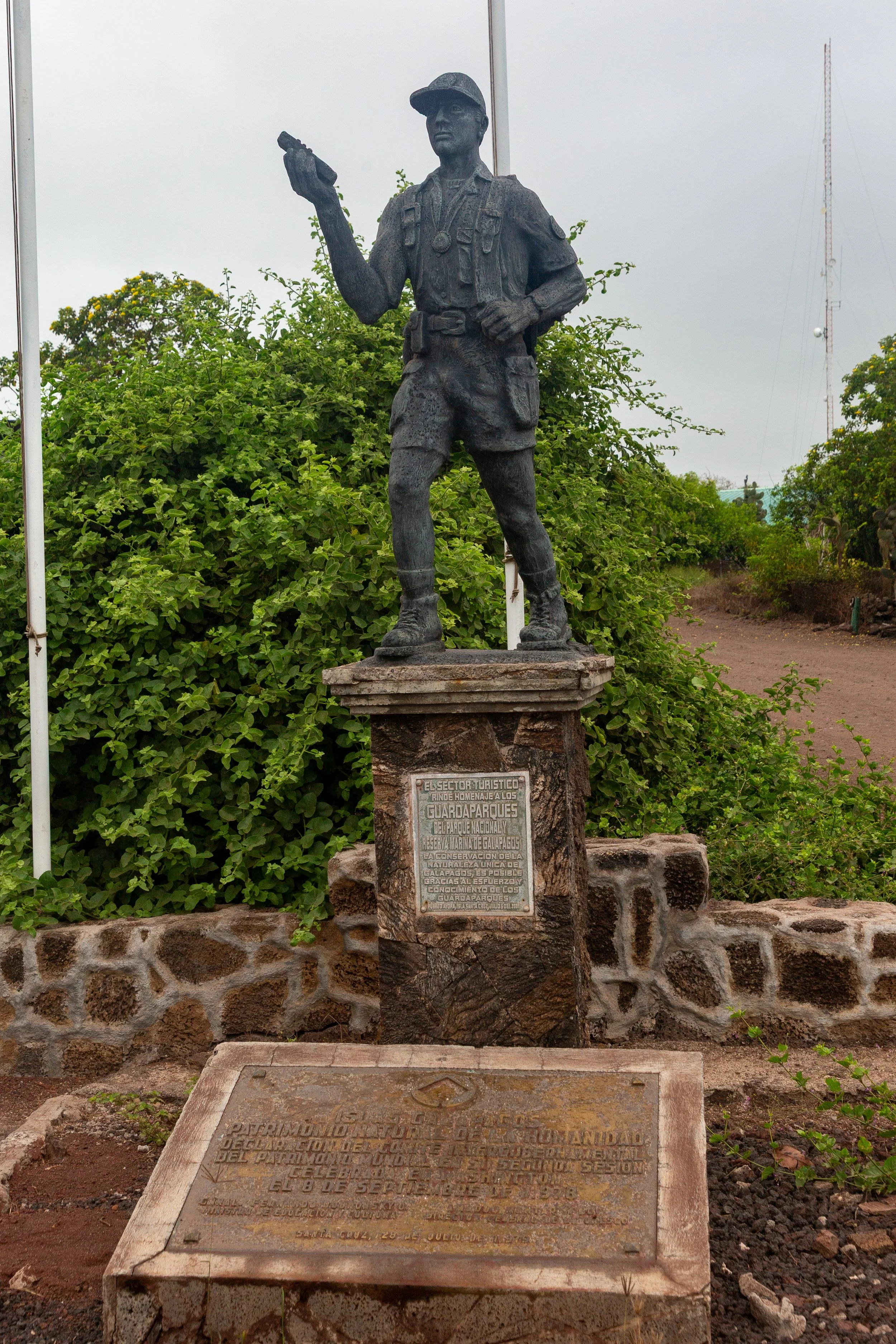
Statue of a park ranger, recognizing their hard work and role in tourism, in addition to a plaque acknowledging the “Islas Galapagos” as a UNESCO World Heritage Site
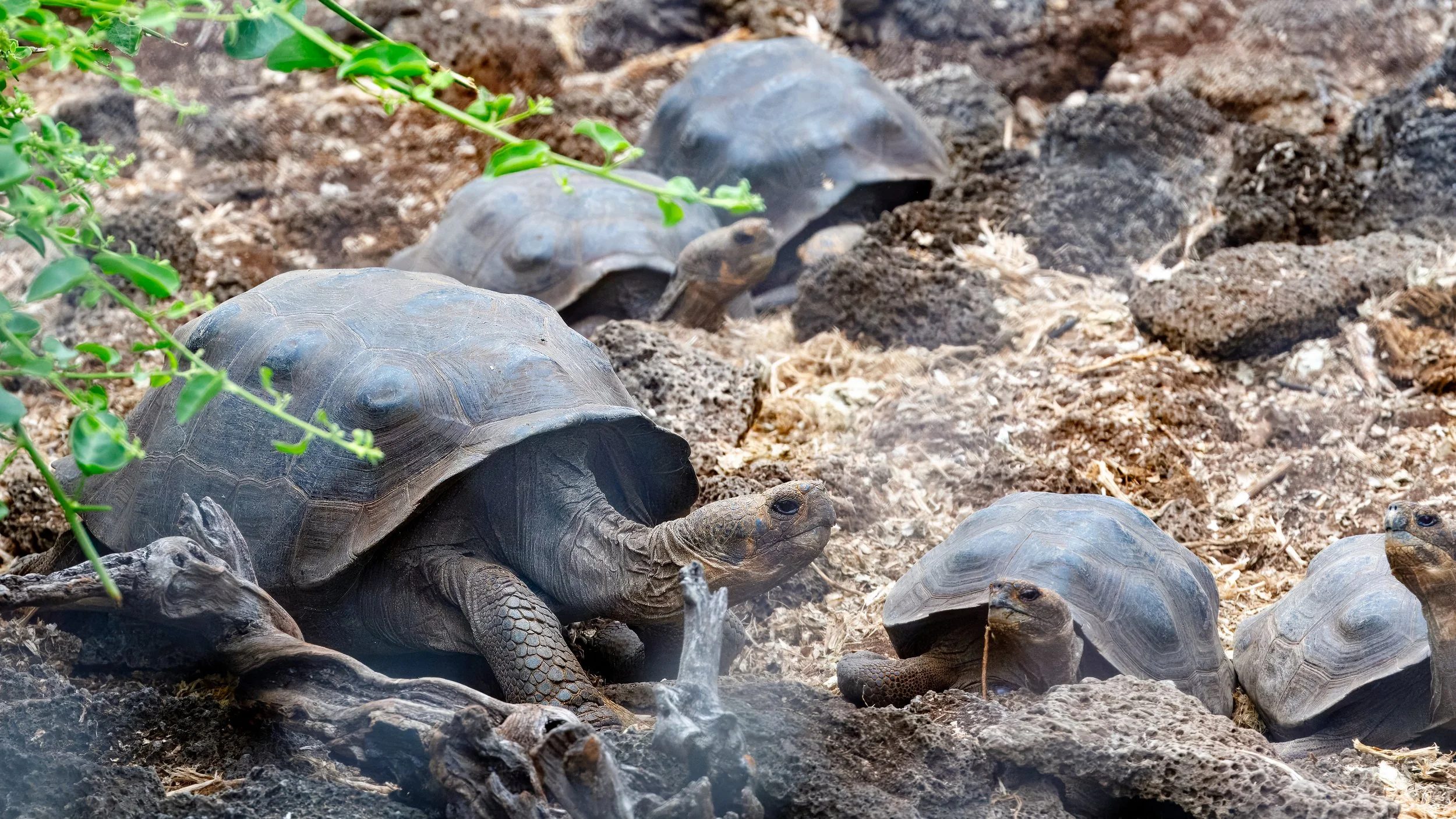
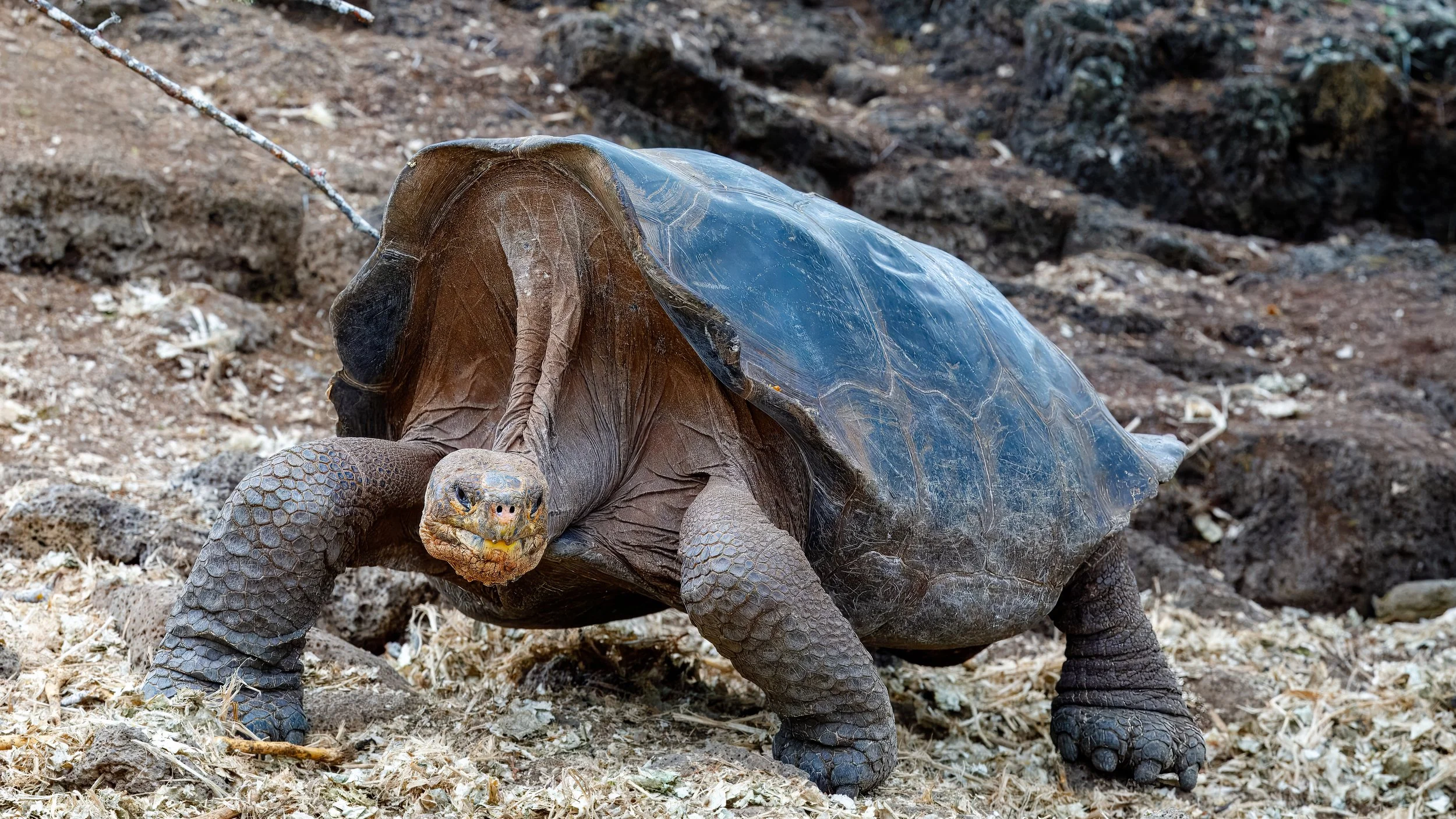
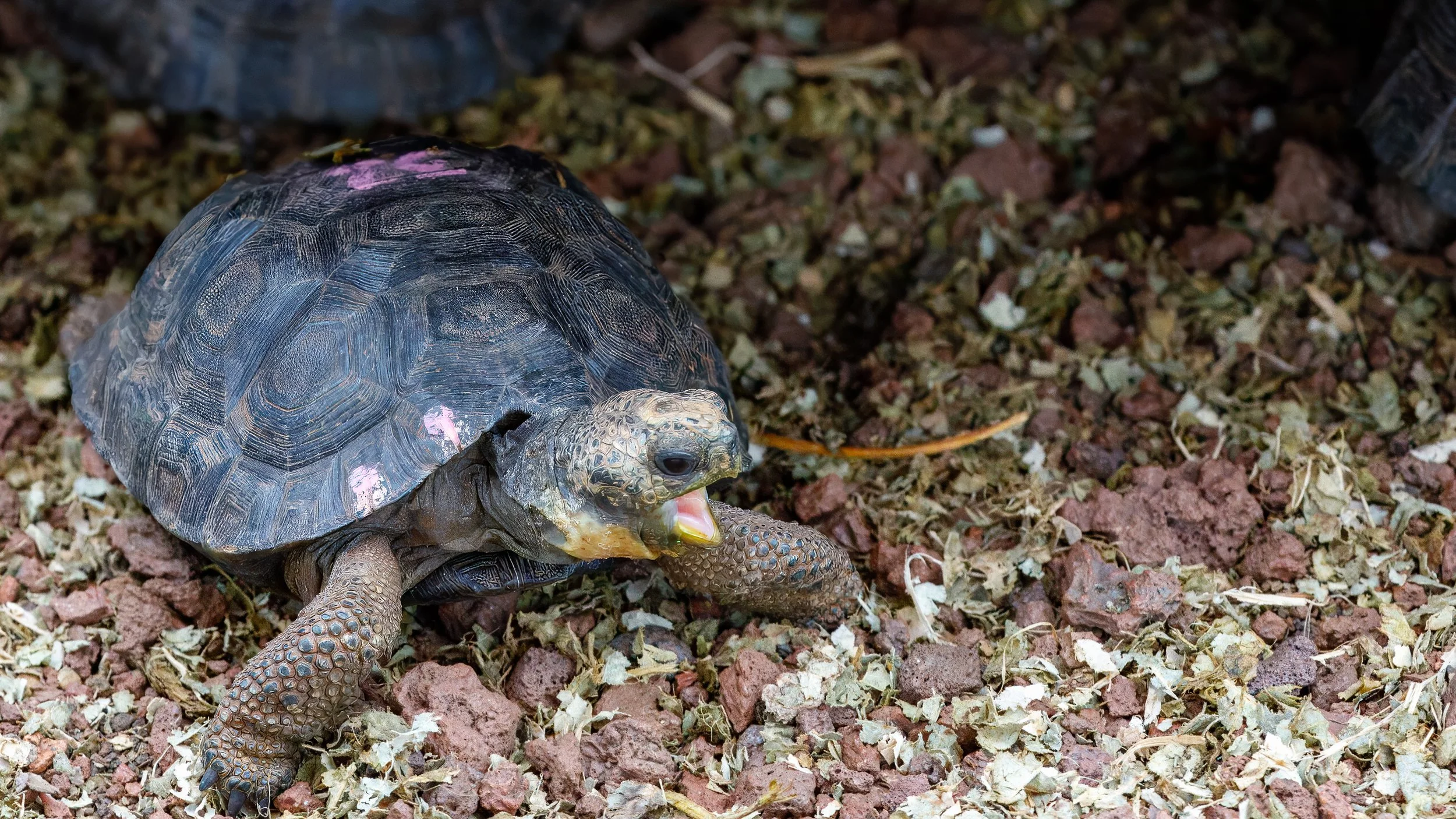
One of the many pens of giant tortoises in the breeding centre helping to maintain the population
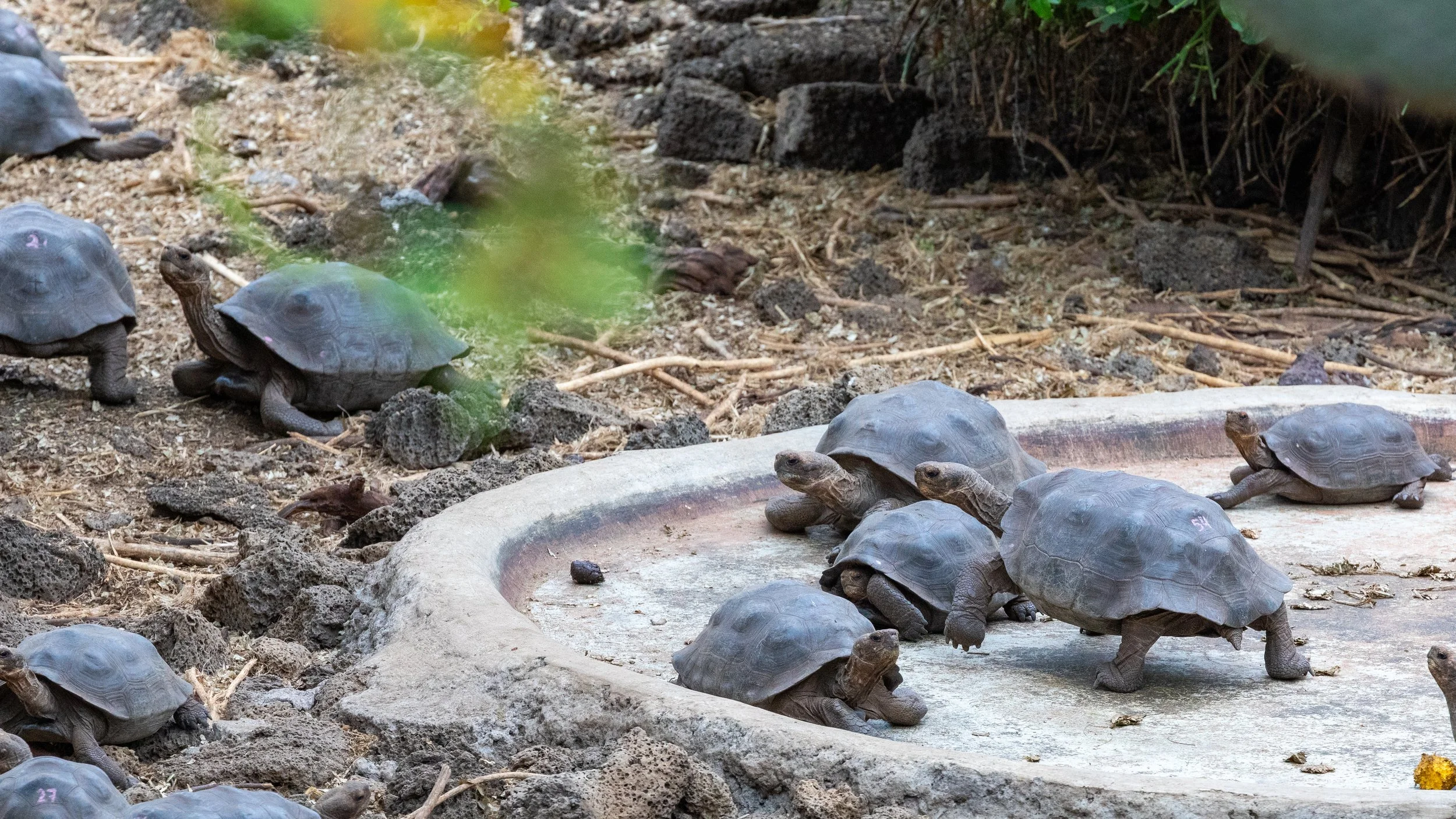
Younger tortoises; pens were generally divided by age / size
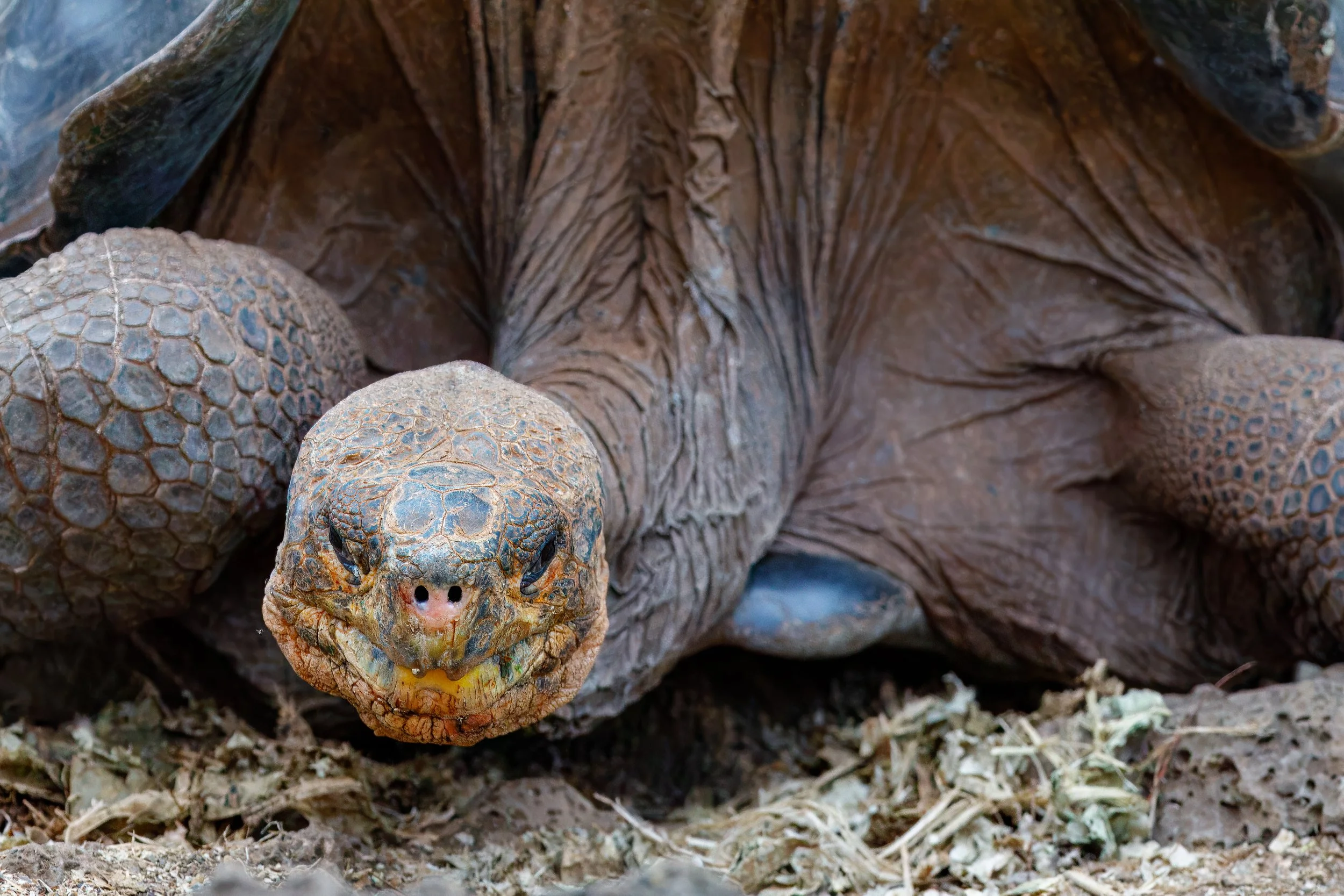
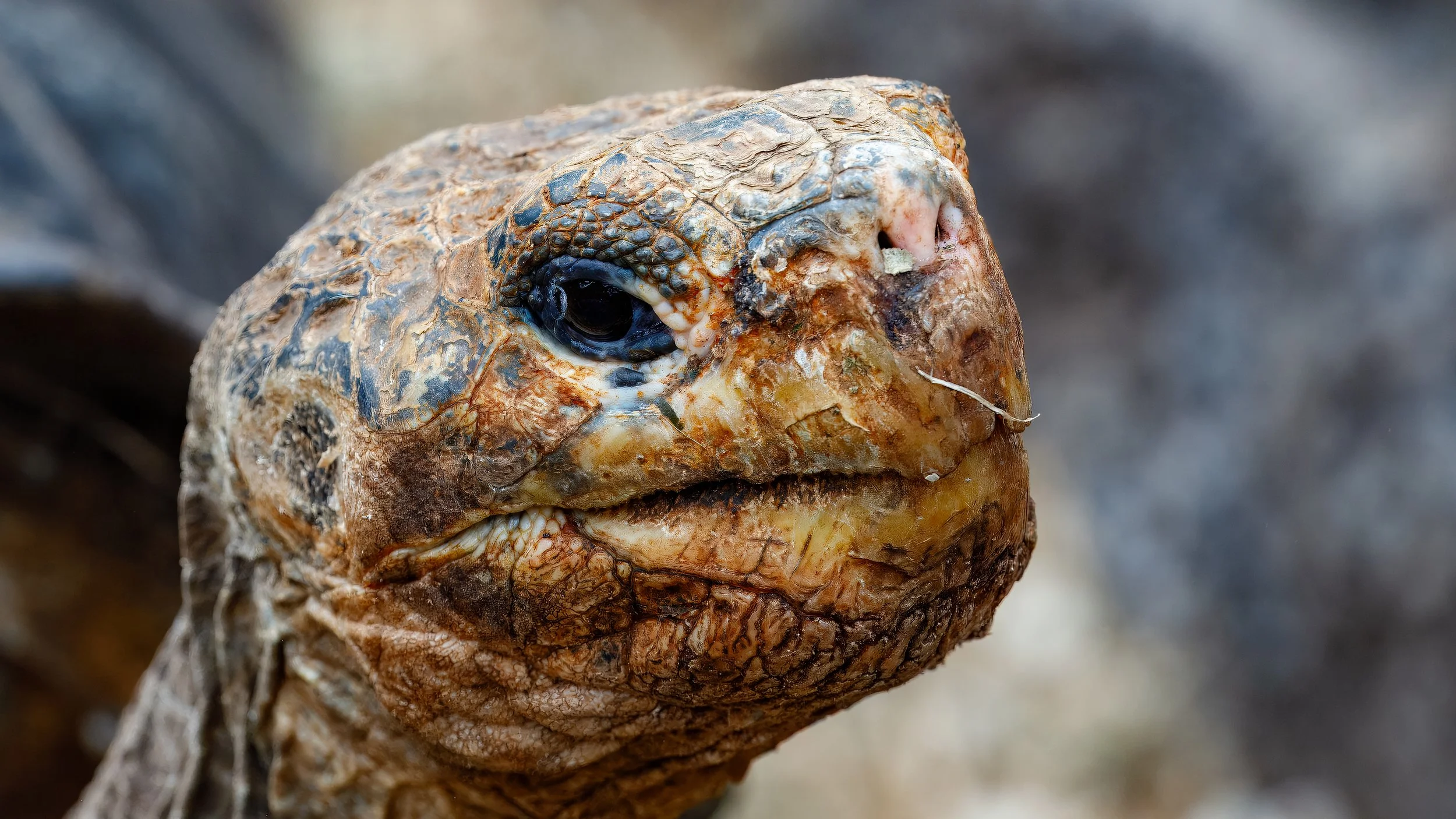
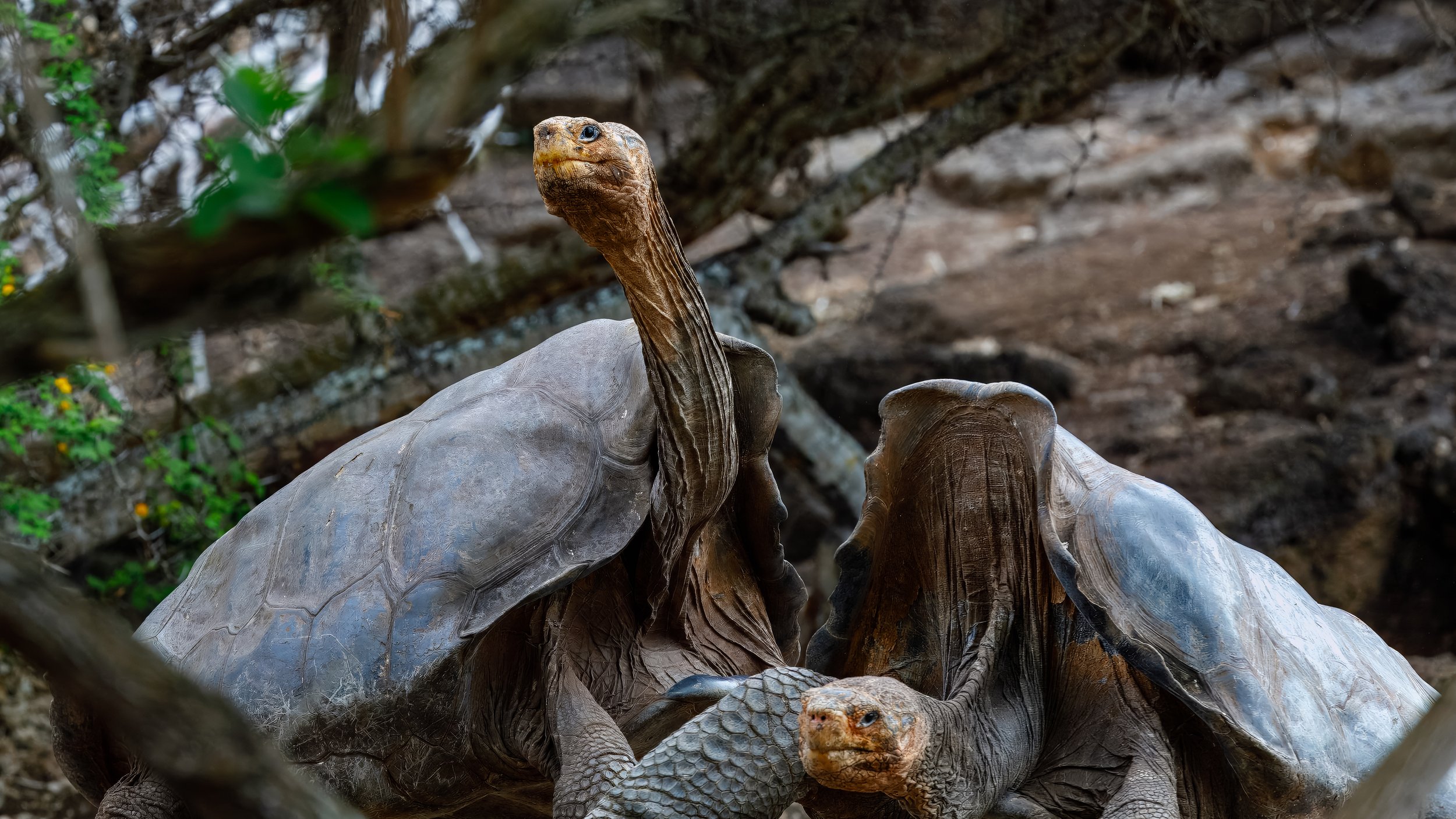
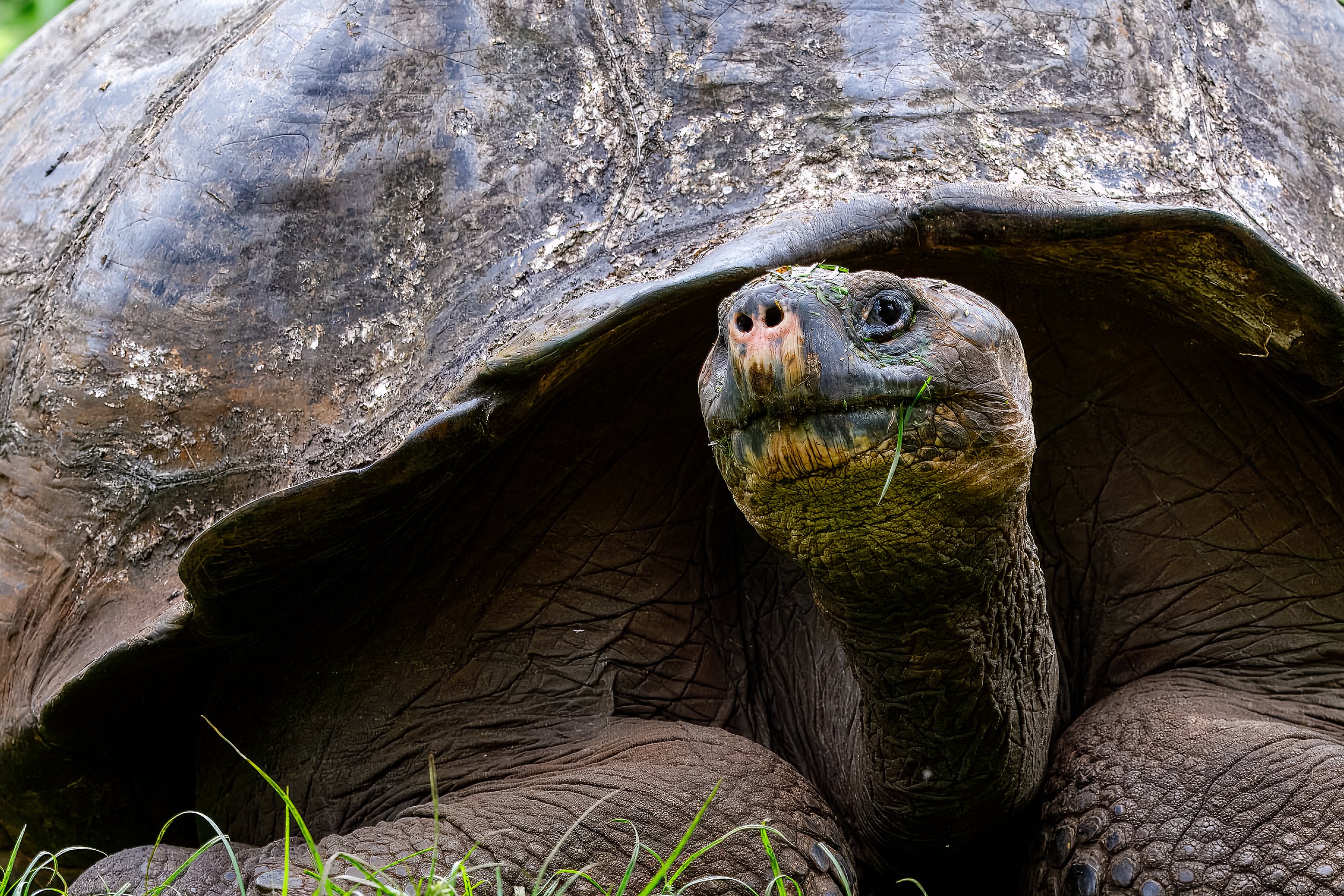
Expressive face of one of the older ones
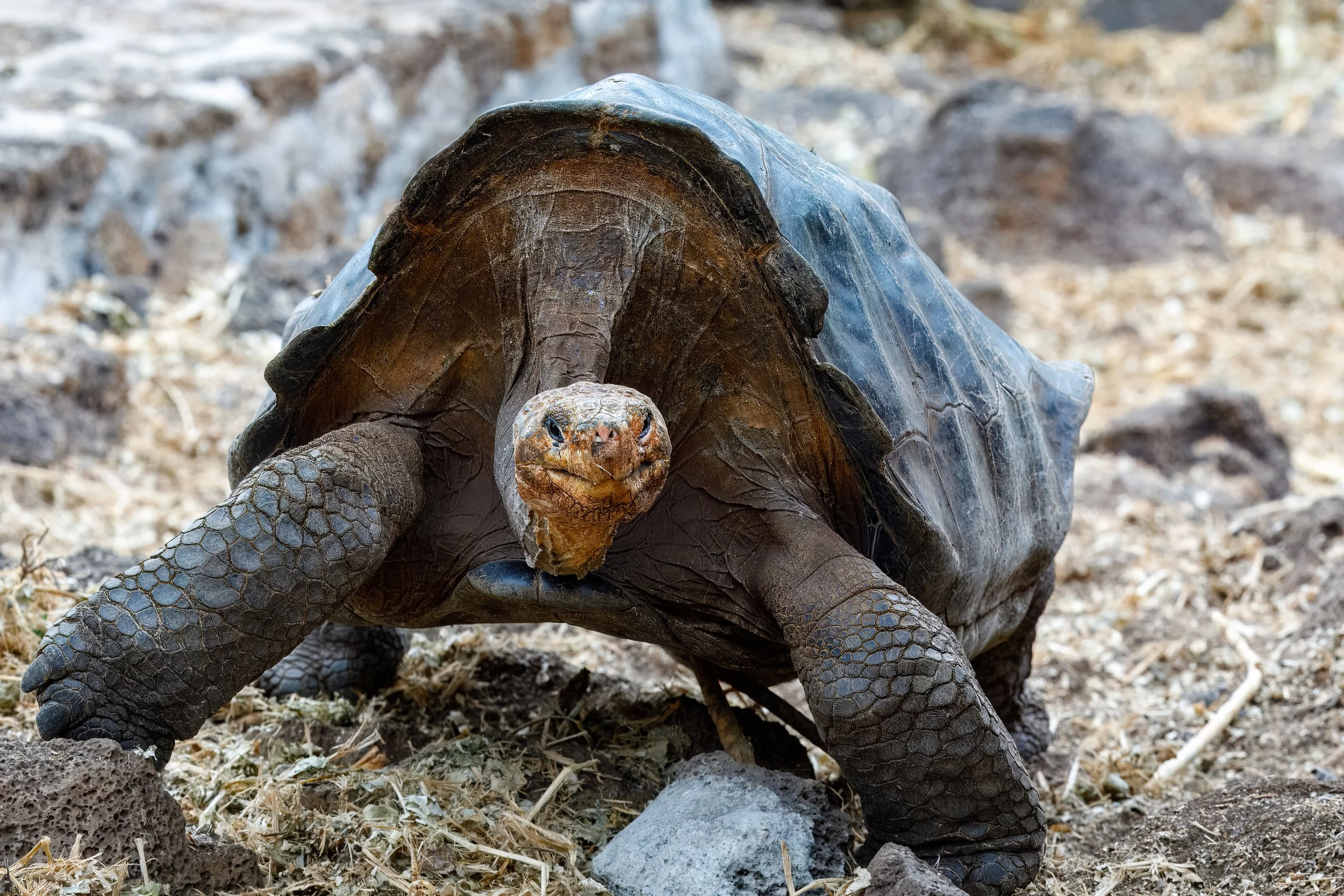
The prehistoric features definitely gave off dinosaur vibes
Although there were hundreds, it was fascinating to watch their movements and interactions
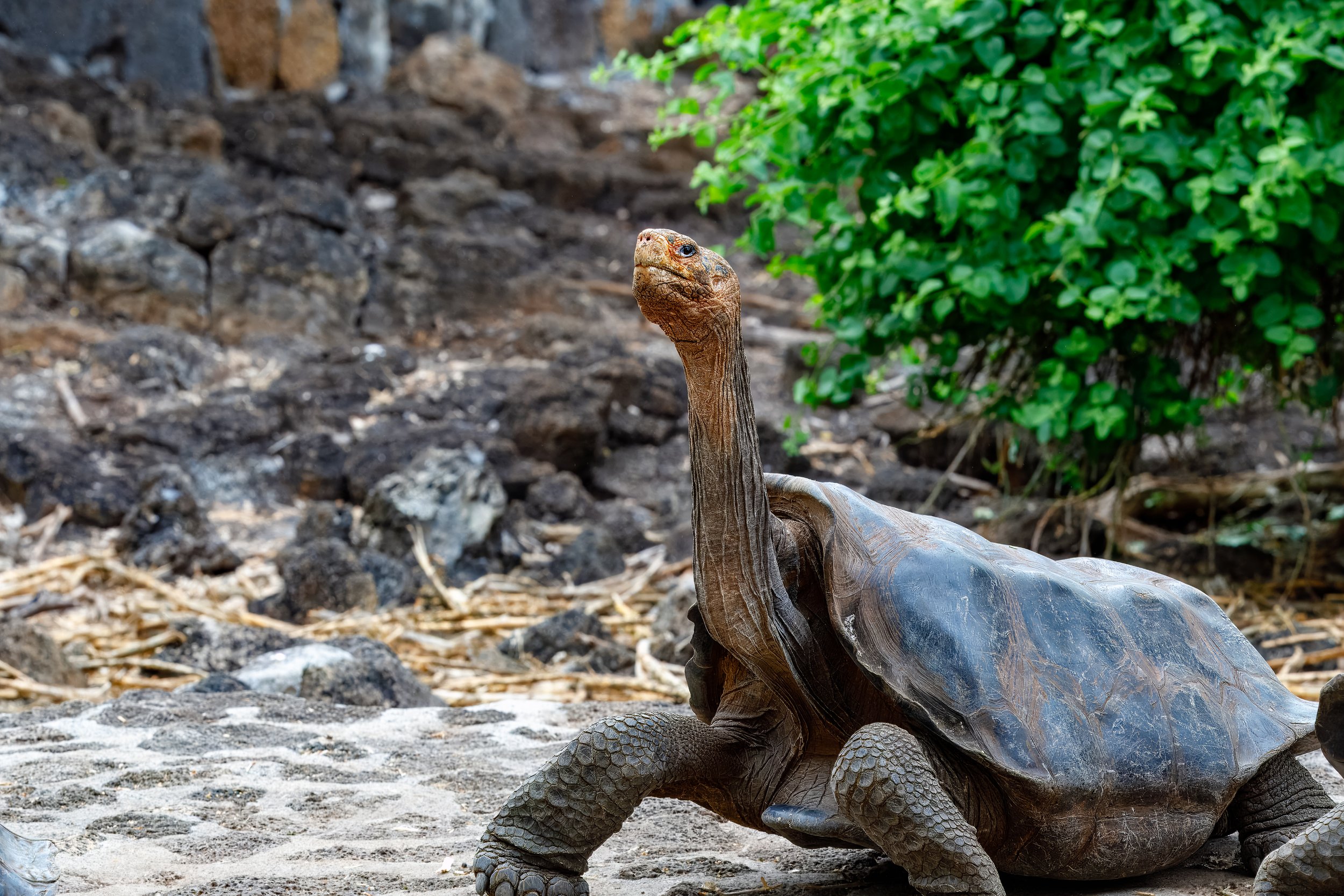
The longer neck helps get to the higher leaves and helps assert dominance between competitors
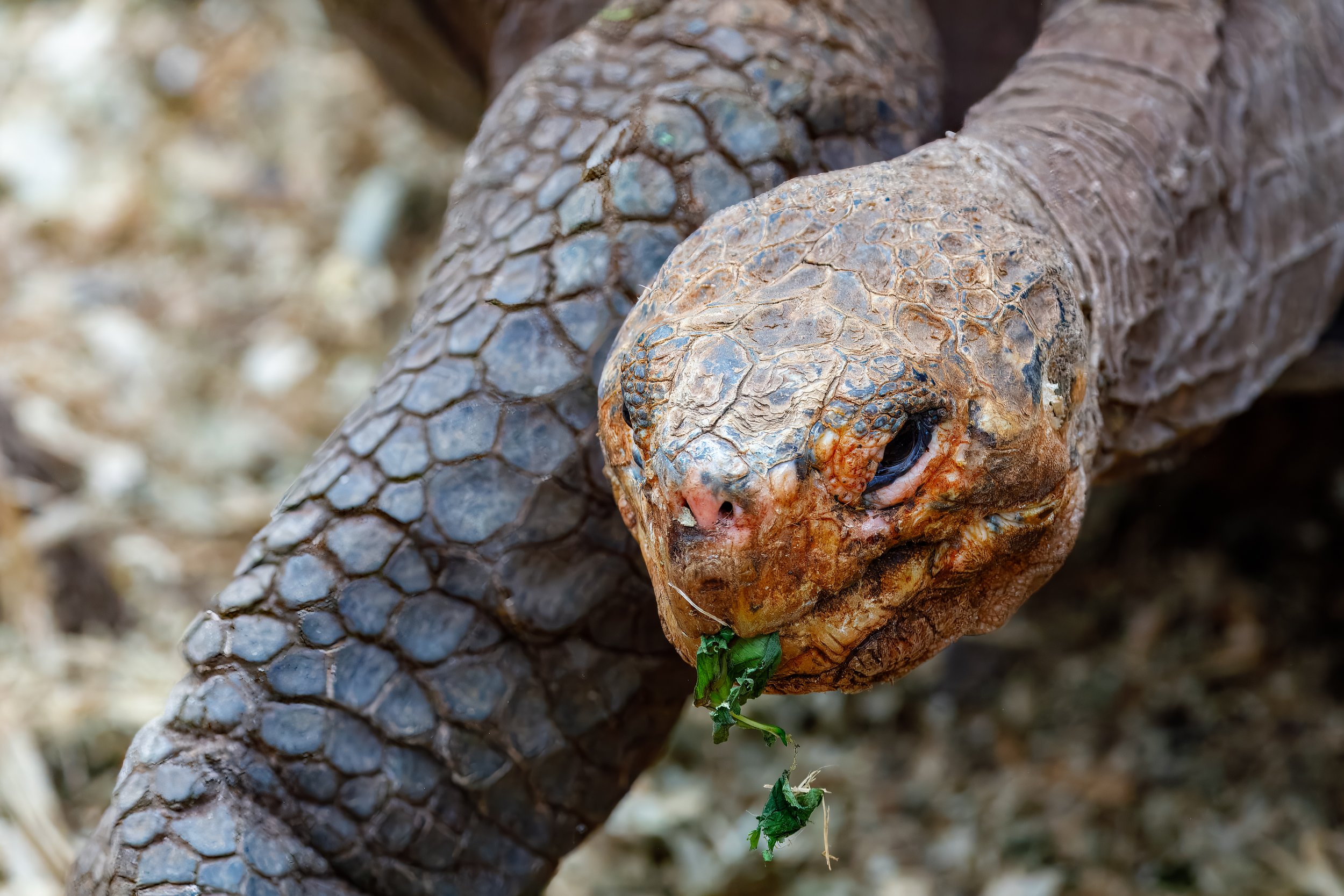
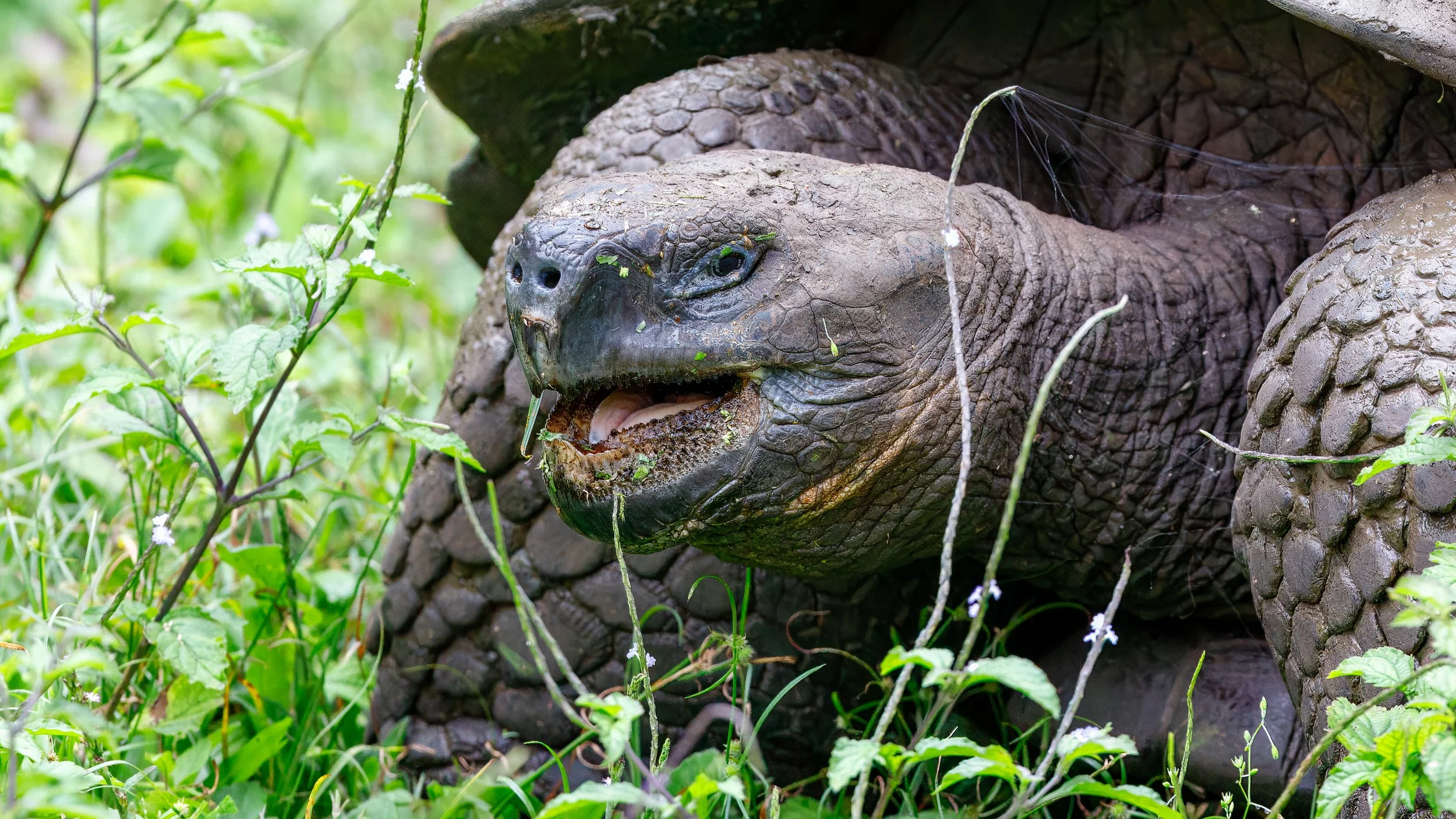
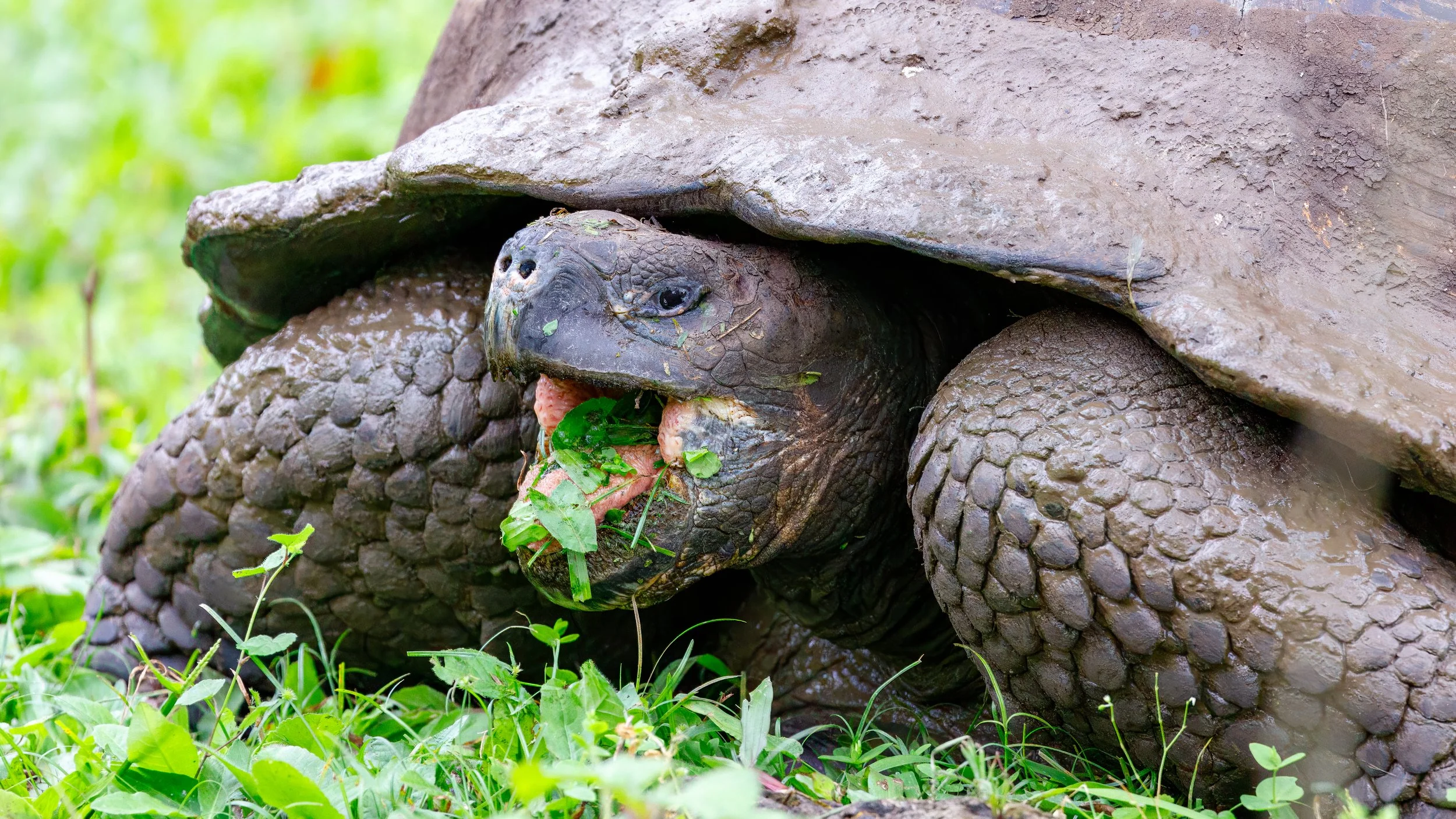
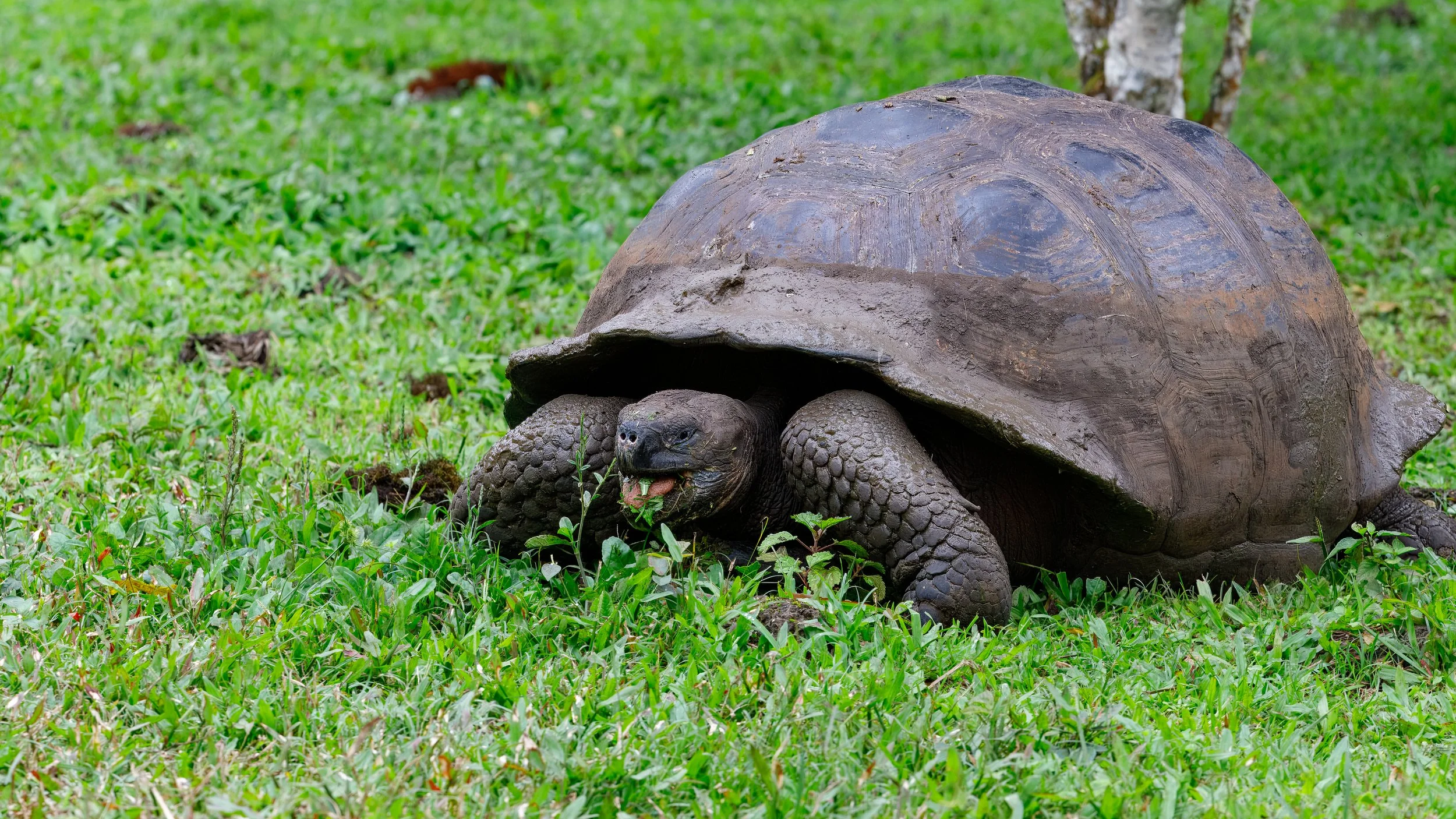
Munching on some vegetation
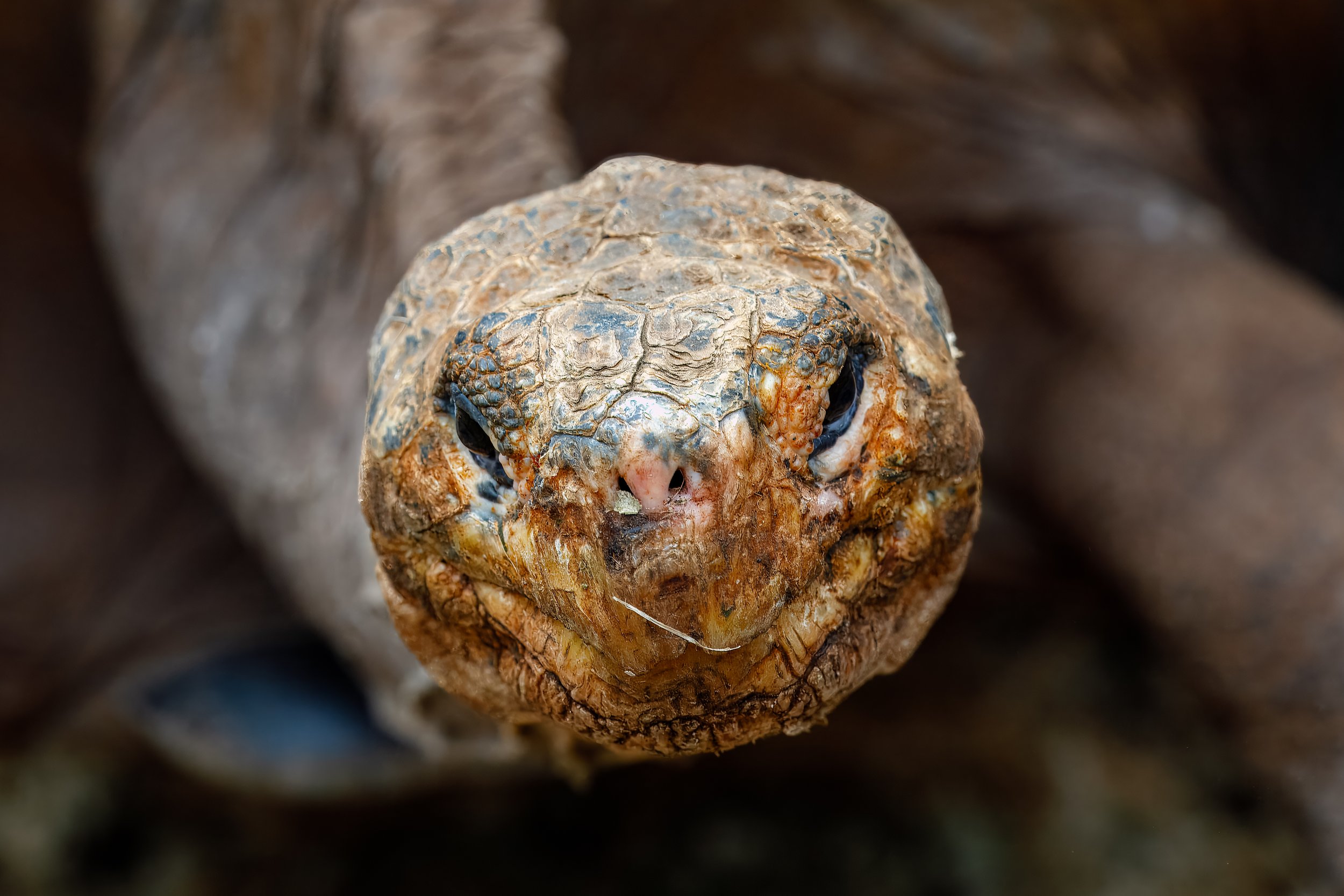
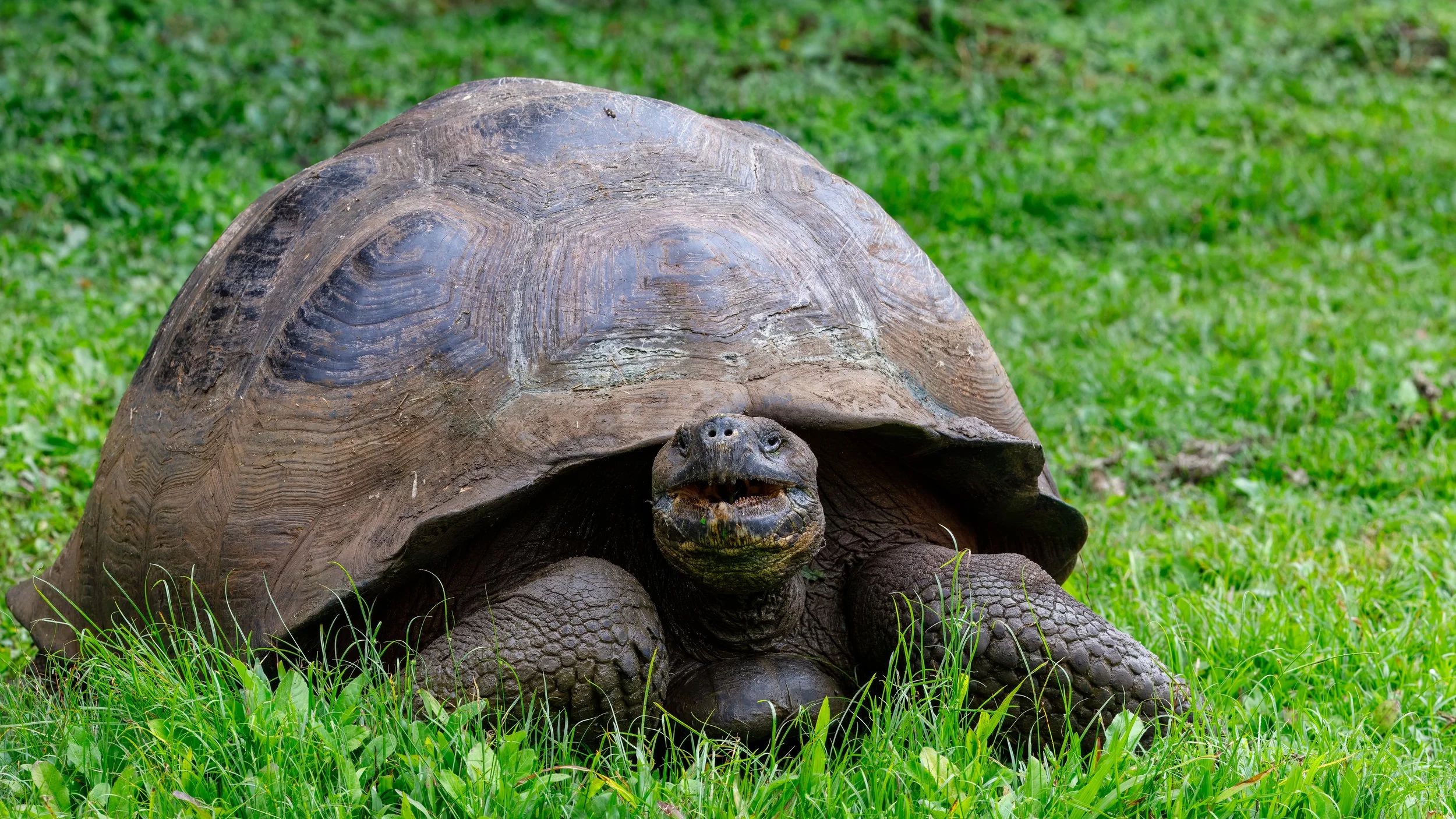
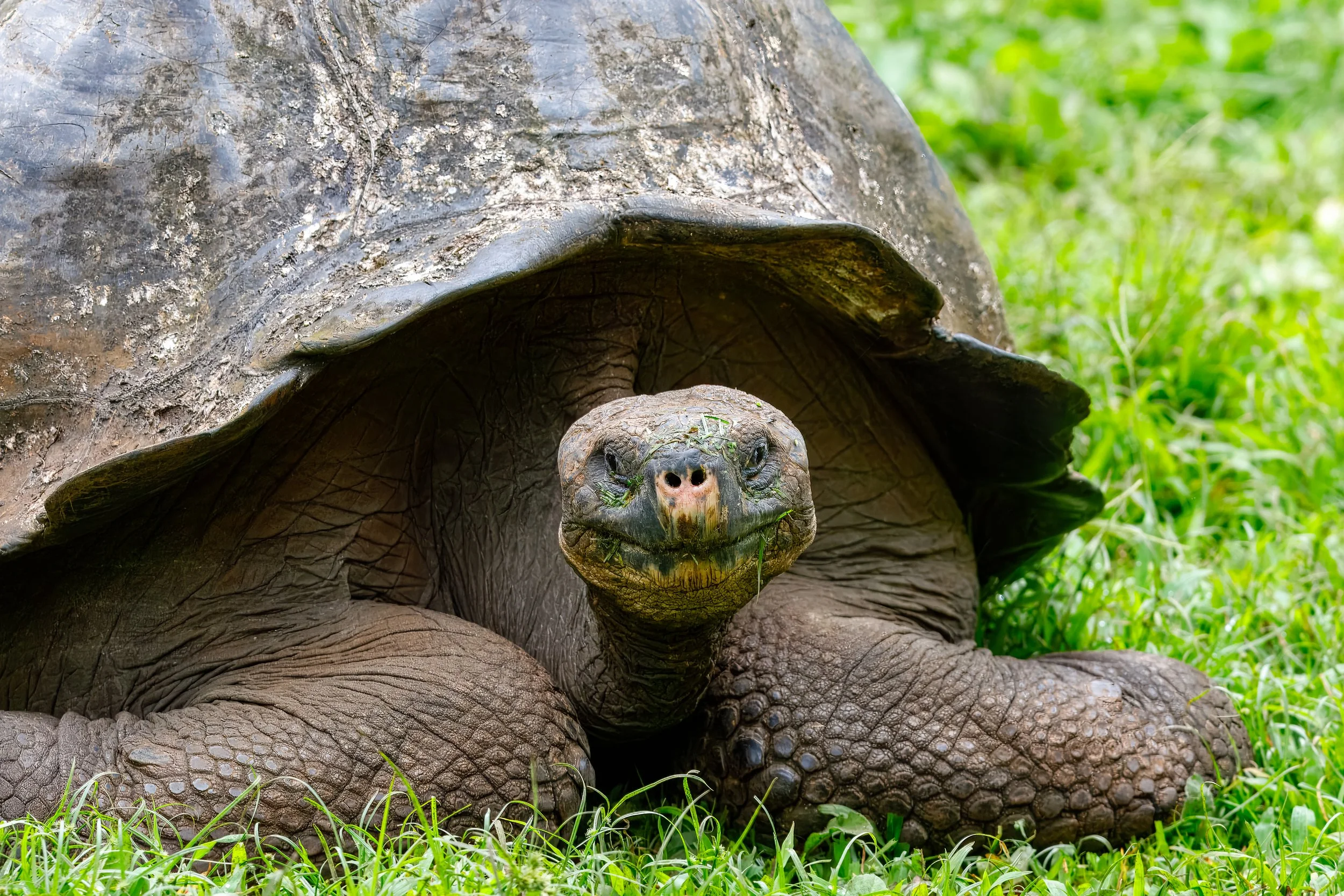
Not quite a smile, but definitely looking curious
Also giving off a bit of an ET vibe
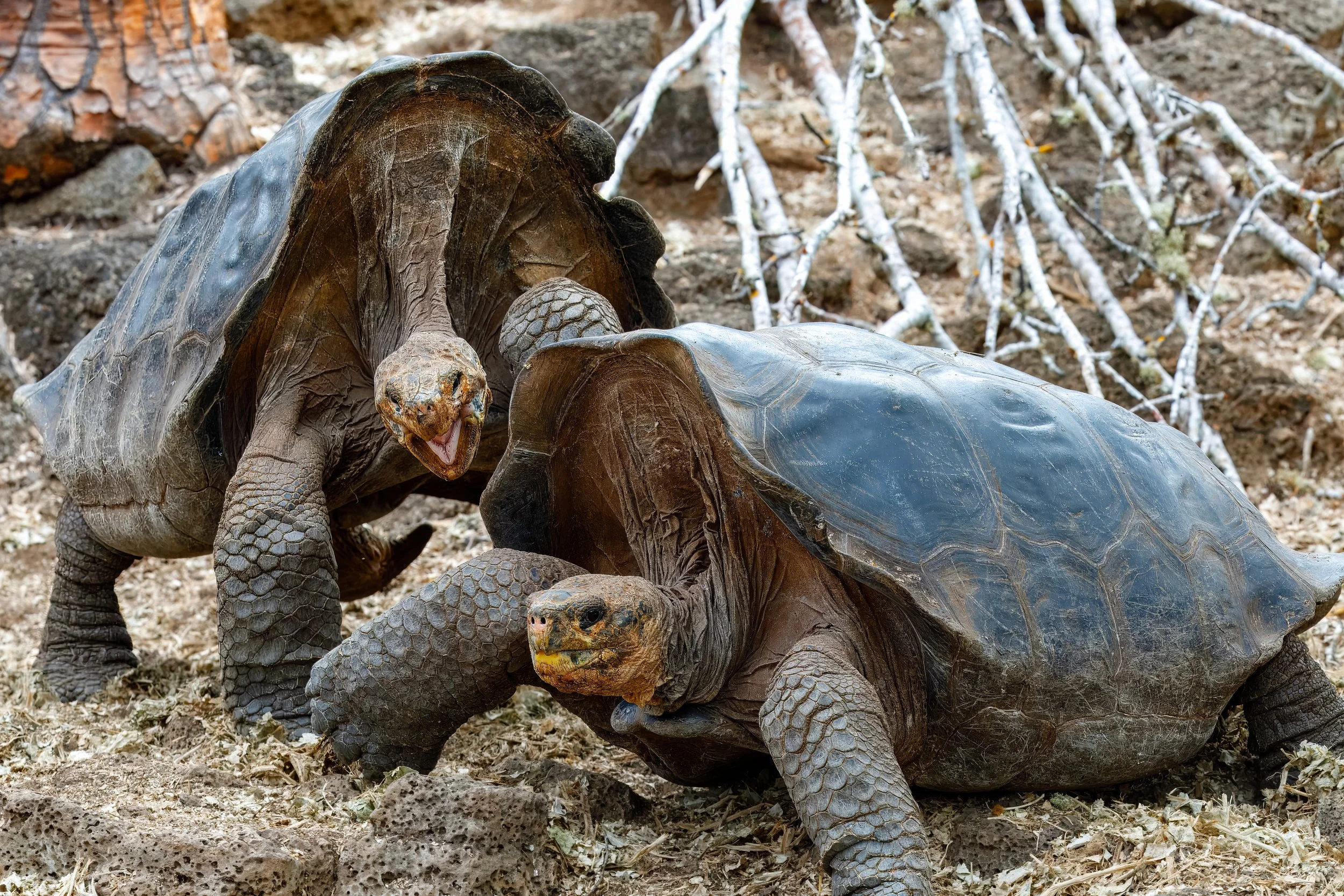
In the small quarters there were lots of interactions
This much smaller tortoise has a marker to help keep track of who’s who
One last shot before leaving the breeding centre, which although had a bit of a zoo like feel was at least more connected to the surroundings and populating animals in the park
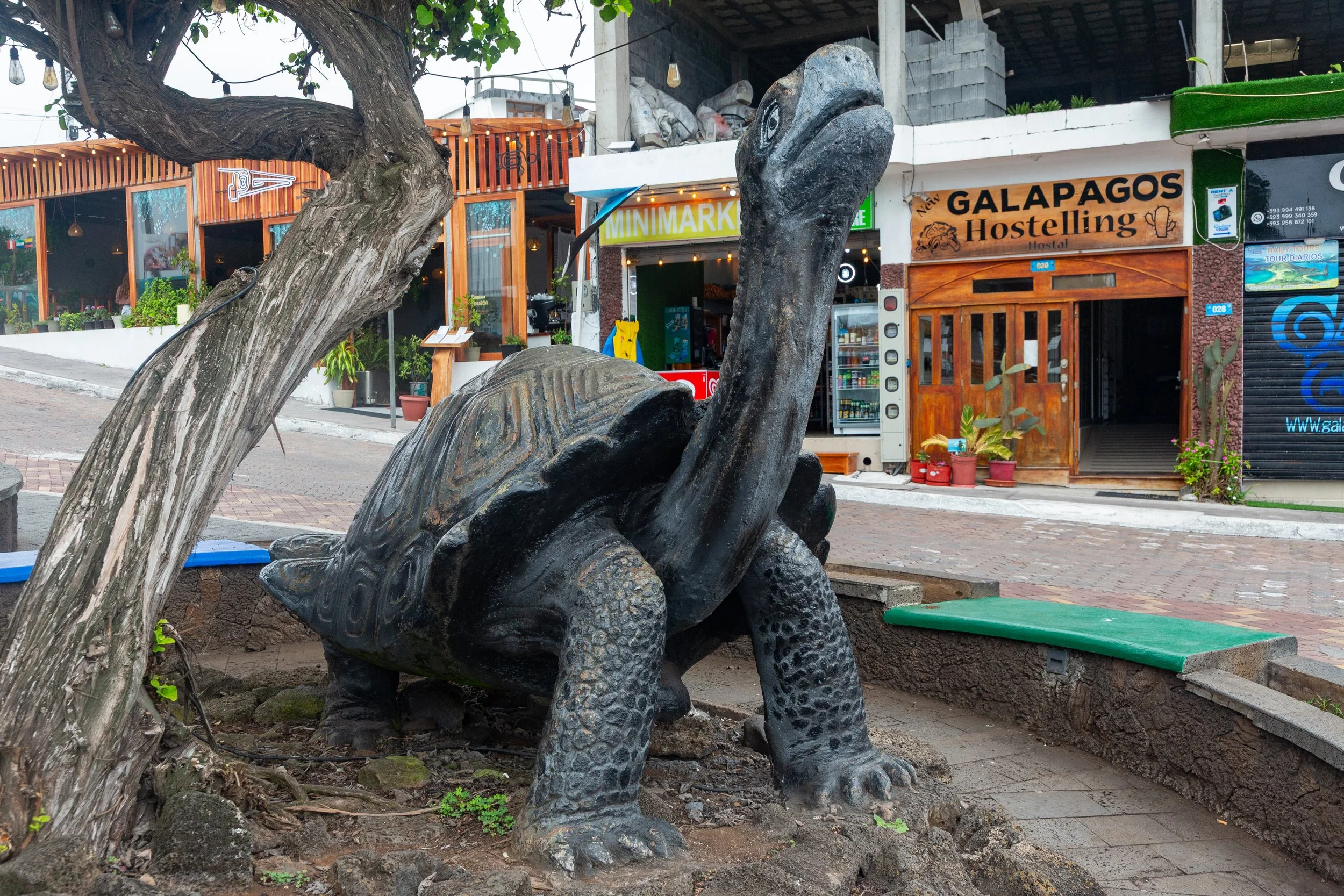
The main tourist street knows what drives the economy
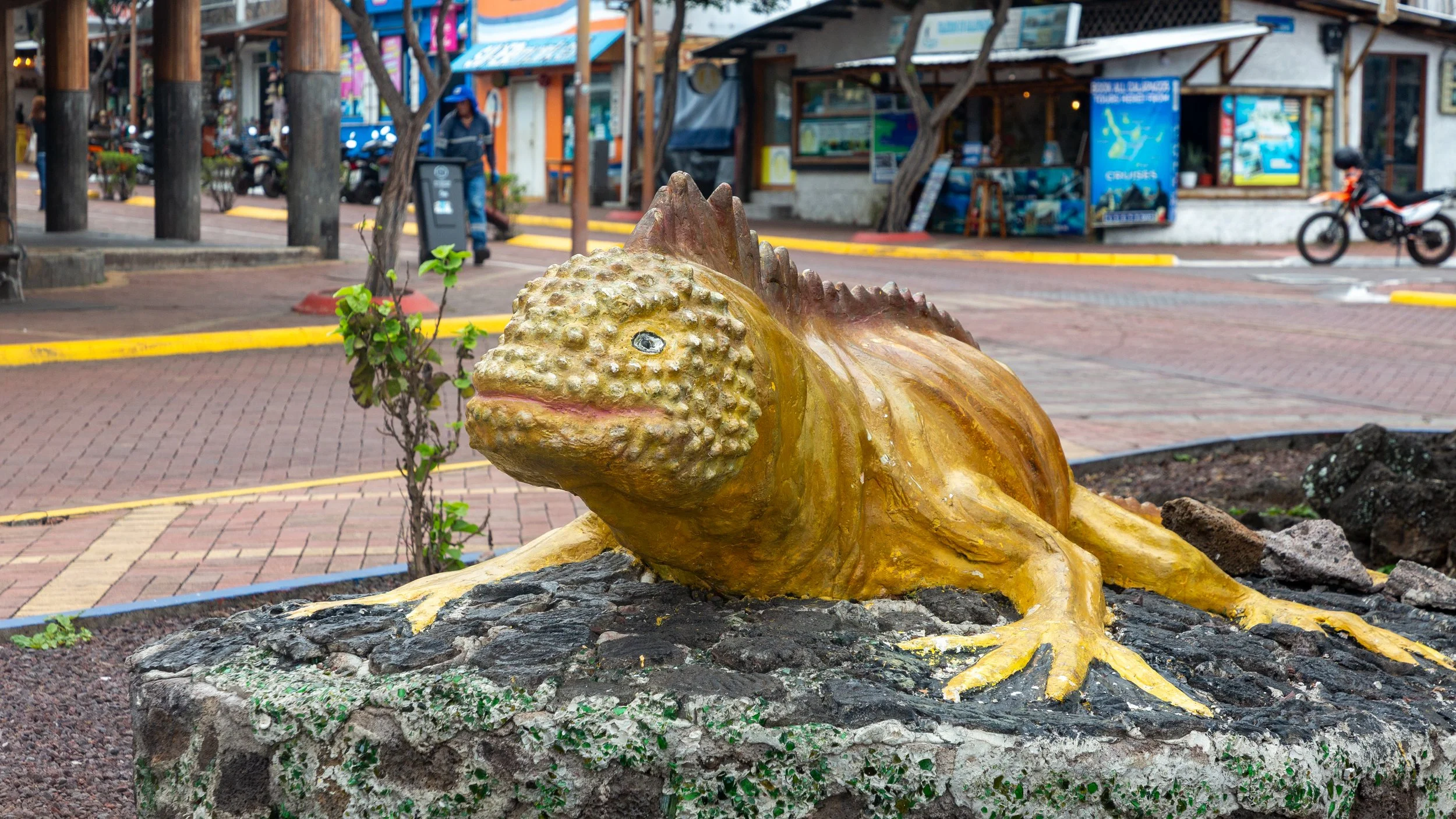
A reminder that iguanas are also important creatures
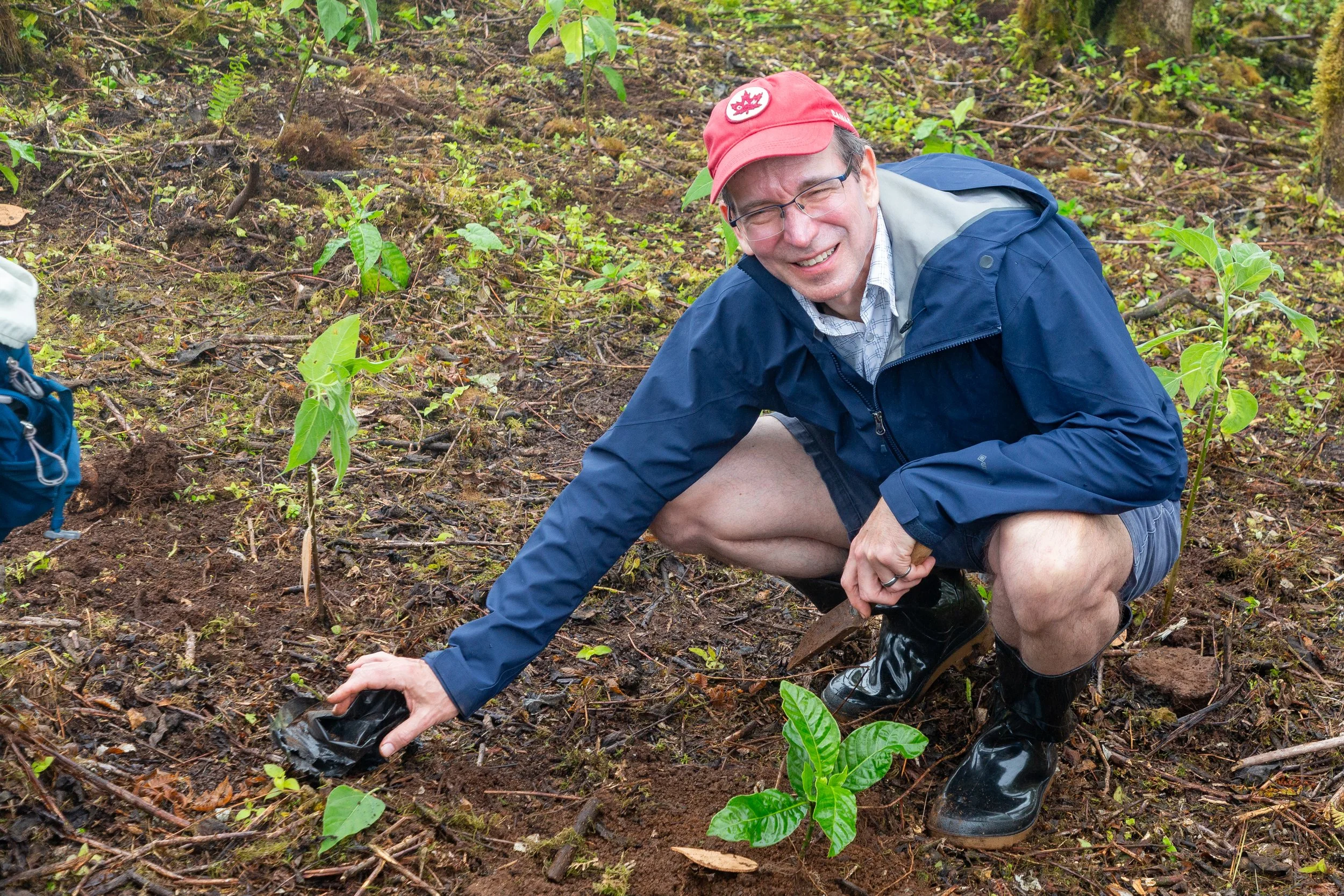
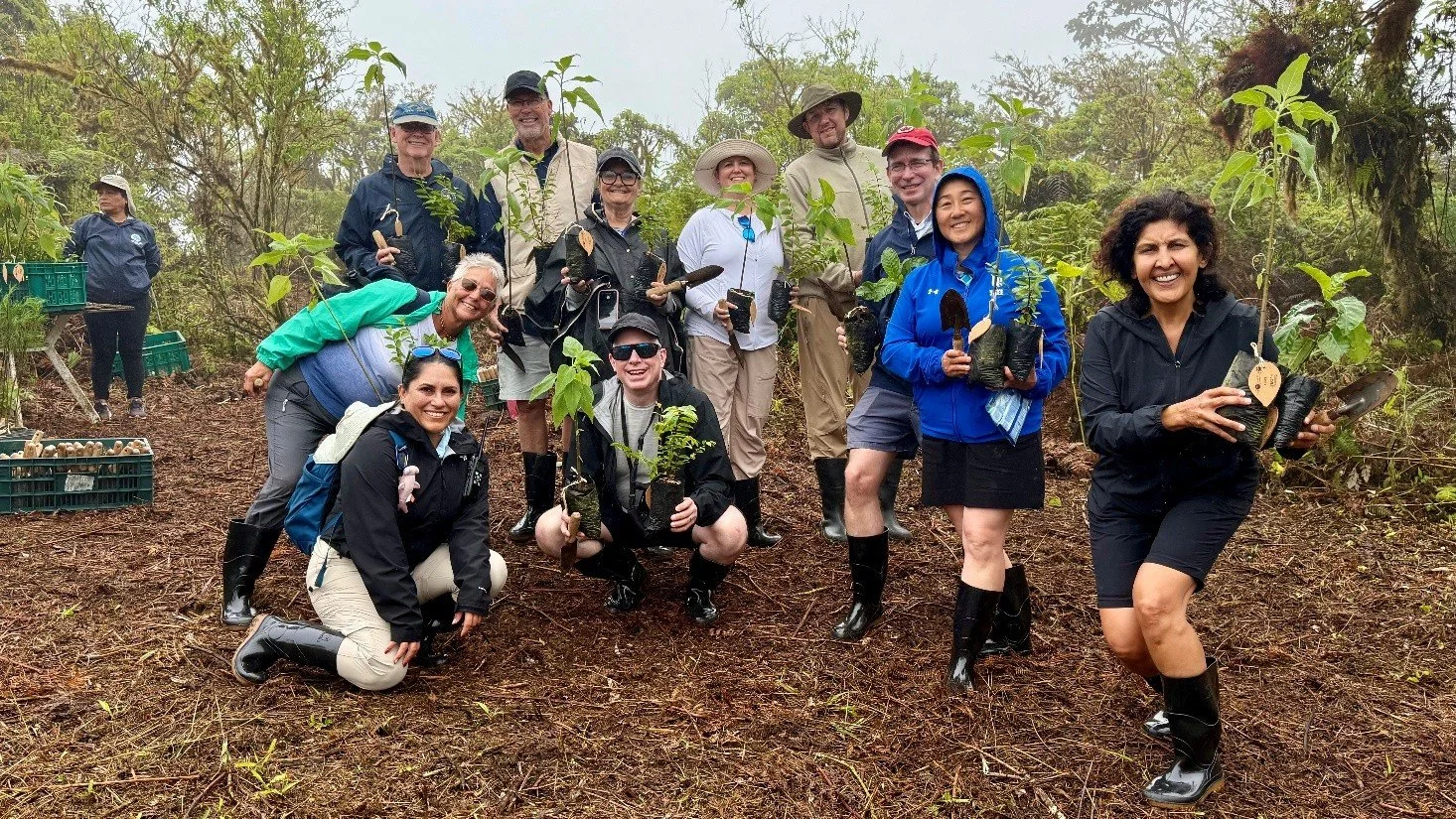
Now in the highlands, we found some more wet weather and assisted Celebrity in tree planting, ultimately not having to do much at all as the hard work had been done for us already
Our larger group of tree “planters”
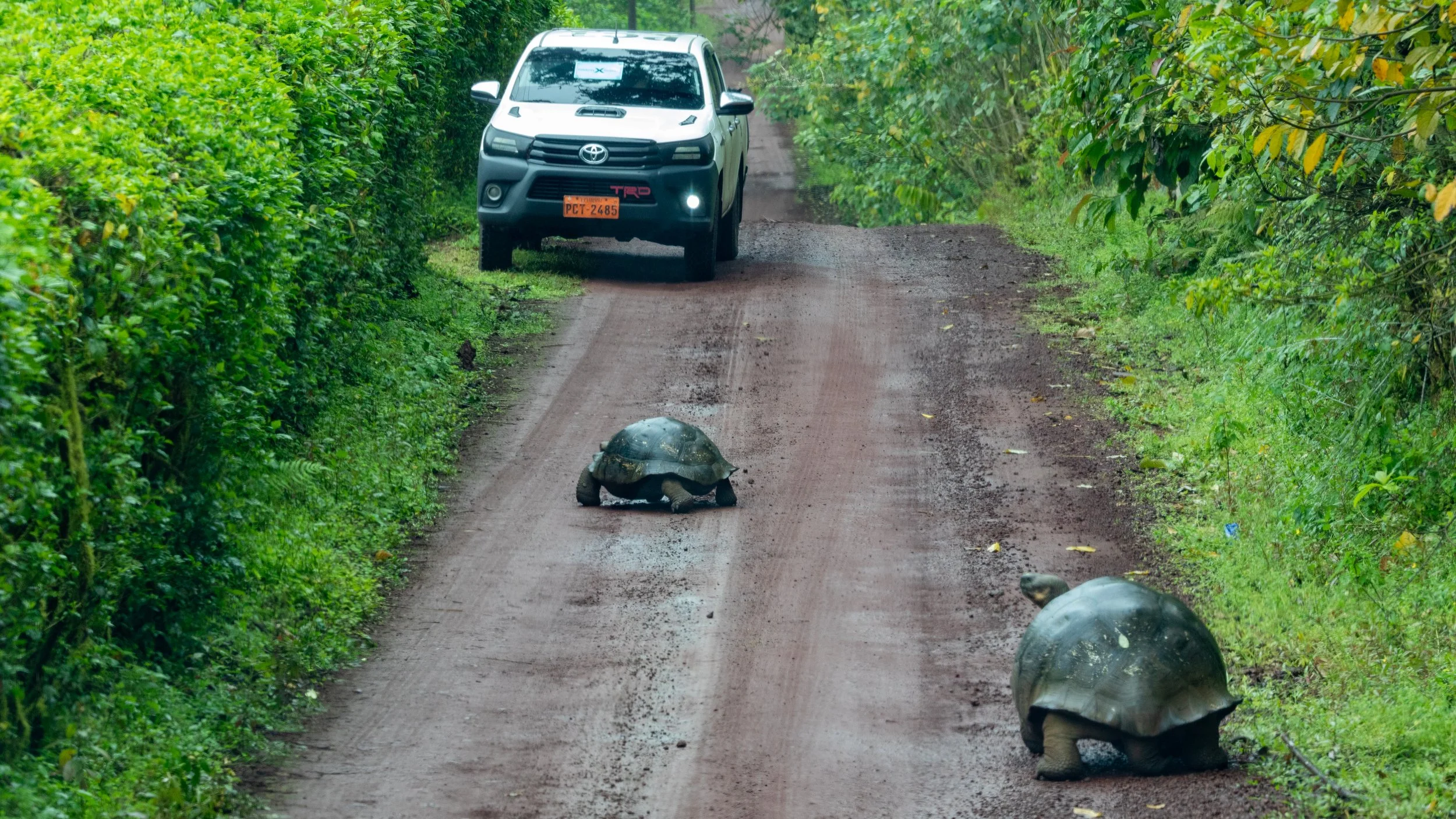
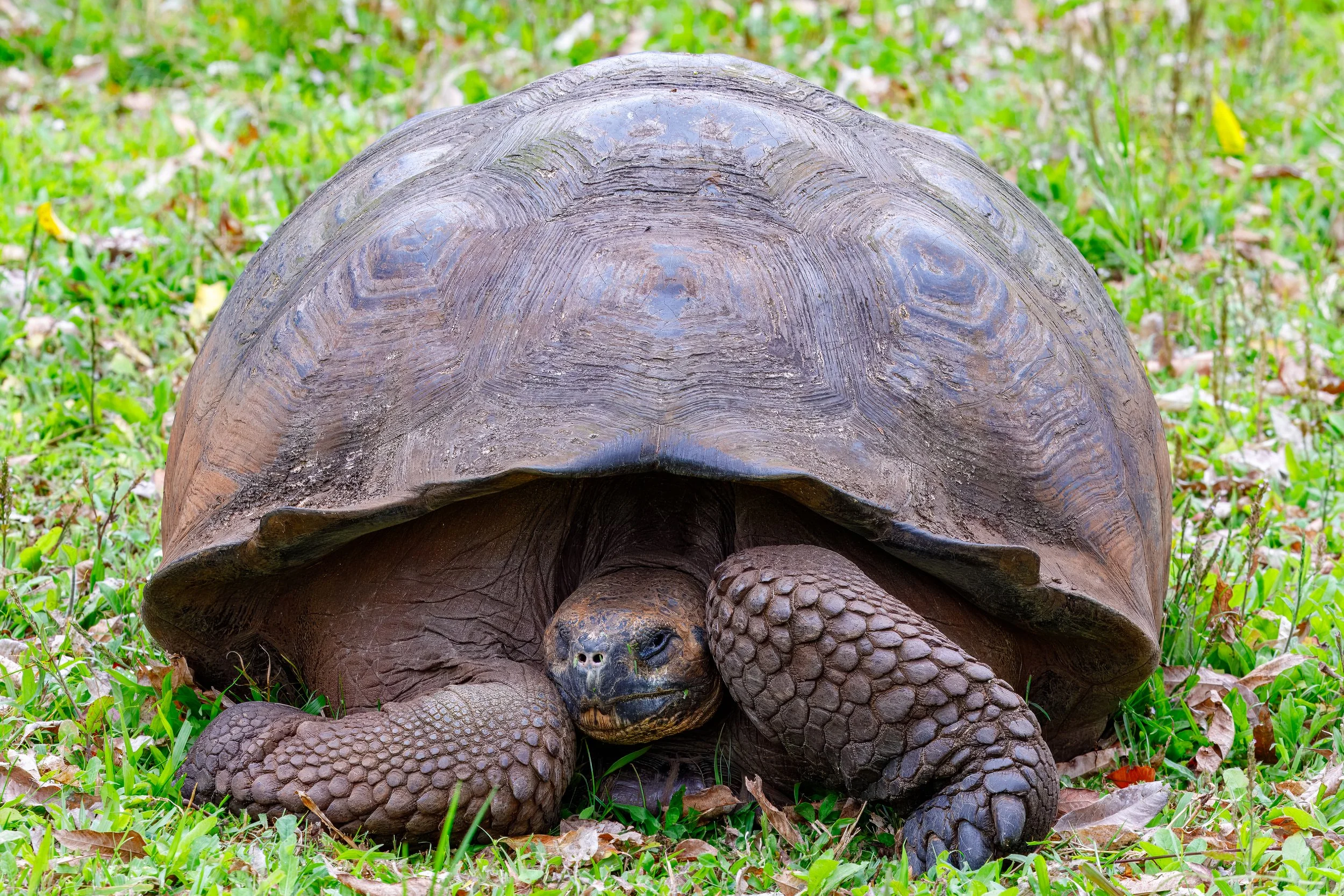
The reality of giant tortoises in Santa Cruz is that they roam freely inside and outside the national park
After lunch and traditional dance display at El Manzanillo Ranch, we were given a tour of their grounds that back onto the national park
The owners of the ranch recognized that they had an environment that the tortoises naturally enjoyed so built an attraction with a nice restaurant to connect the tourists
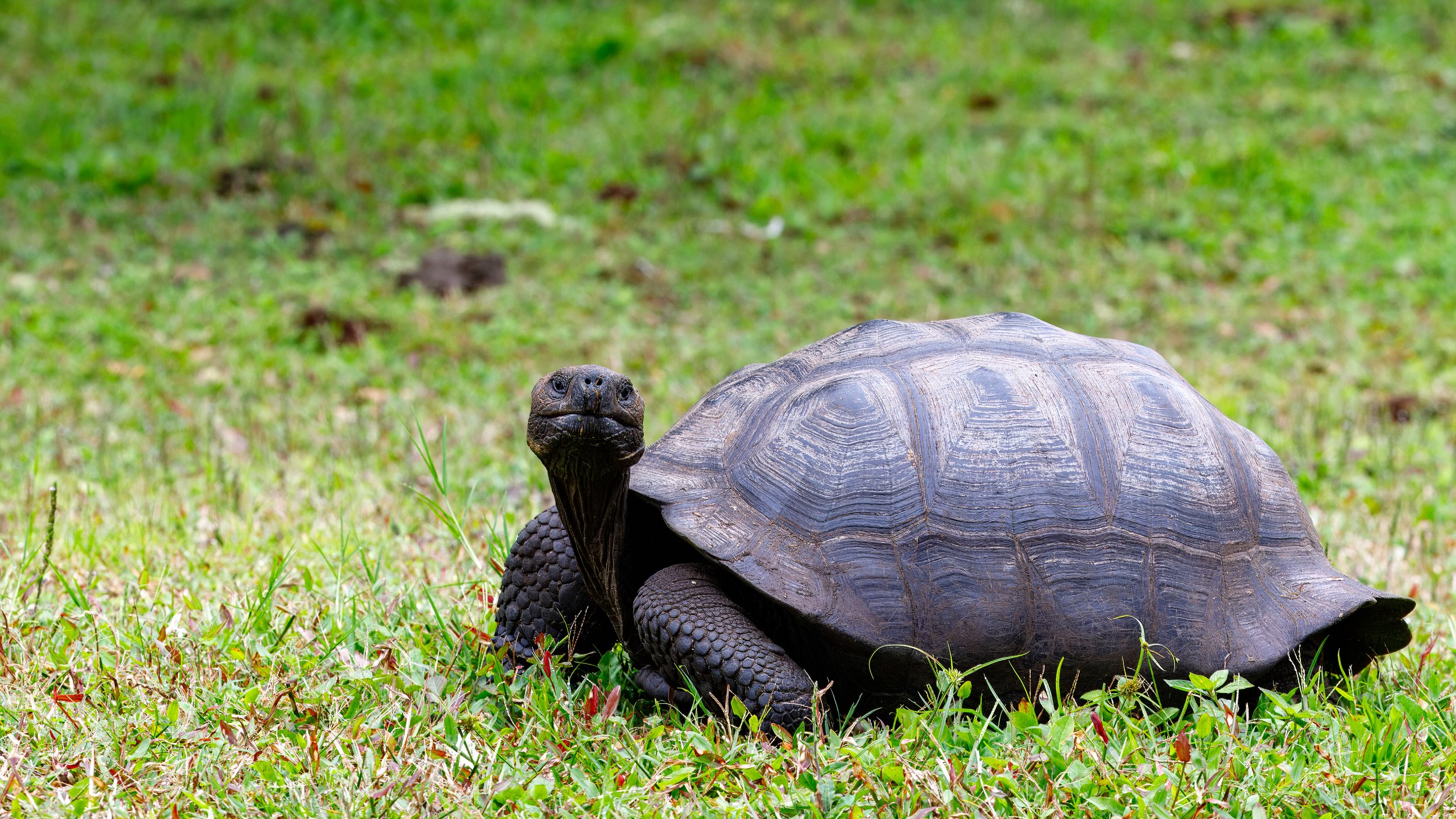
Although more natural than the breeding centre, it was still kind of zoo-like, even though the tortoises could move freely
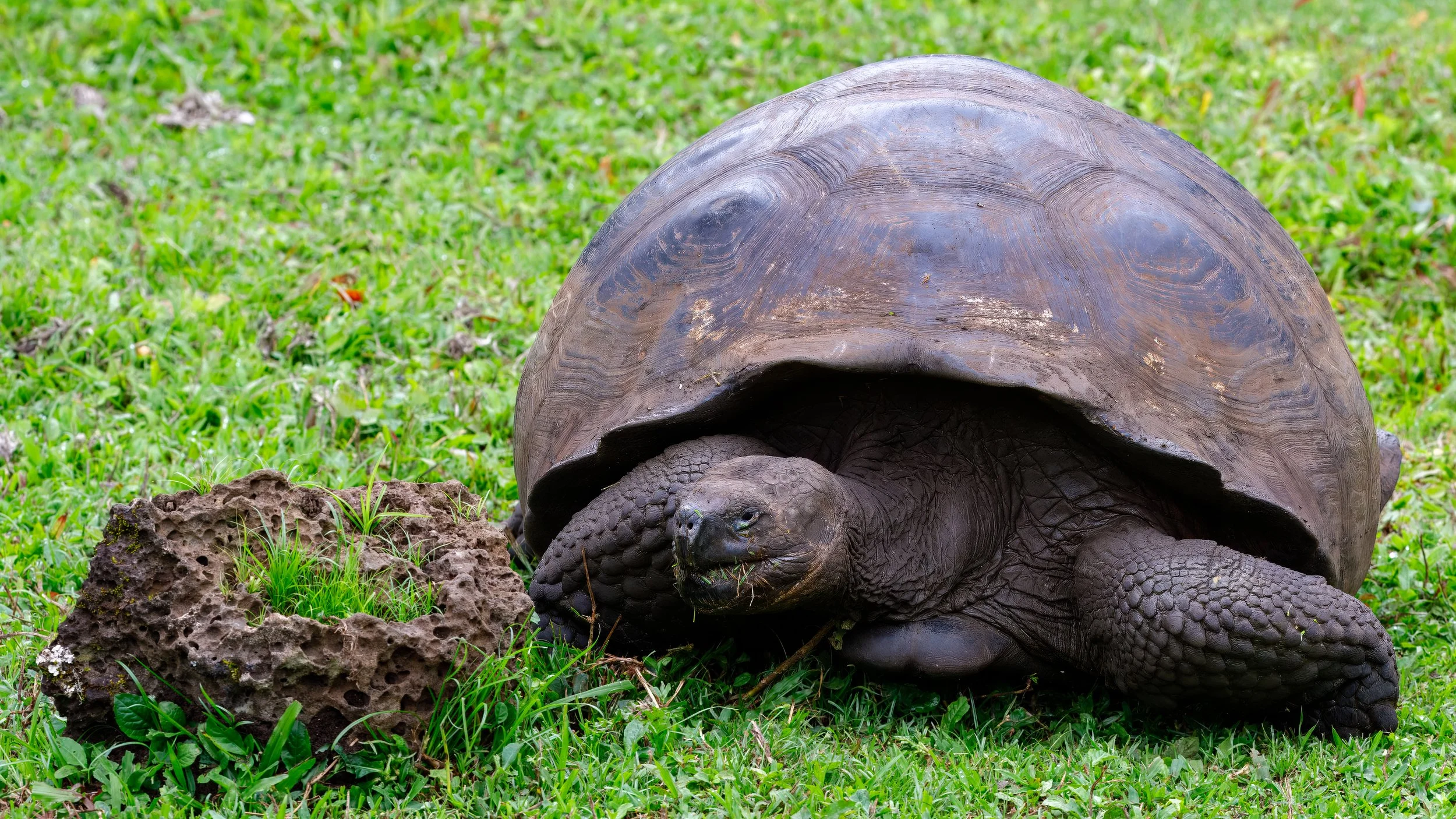
Having lots of green grass helped to keep them around
They did spent a lot of time eating and not doing a lot of movement
Tom’s lens allowed some good close-ups without scaring them
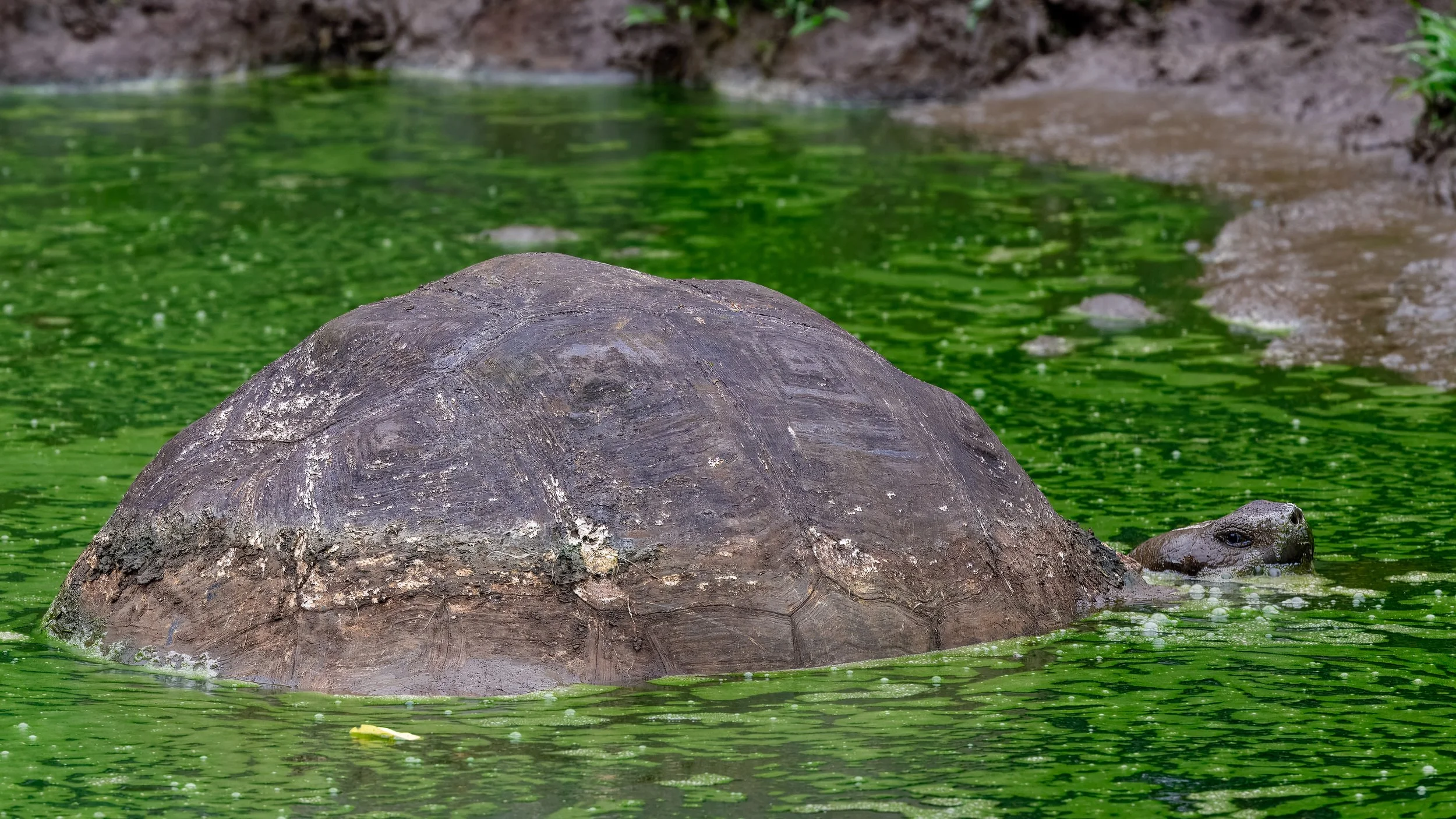
Floating in a small marsh
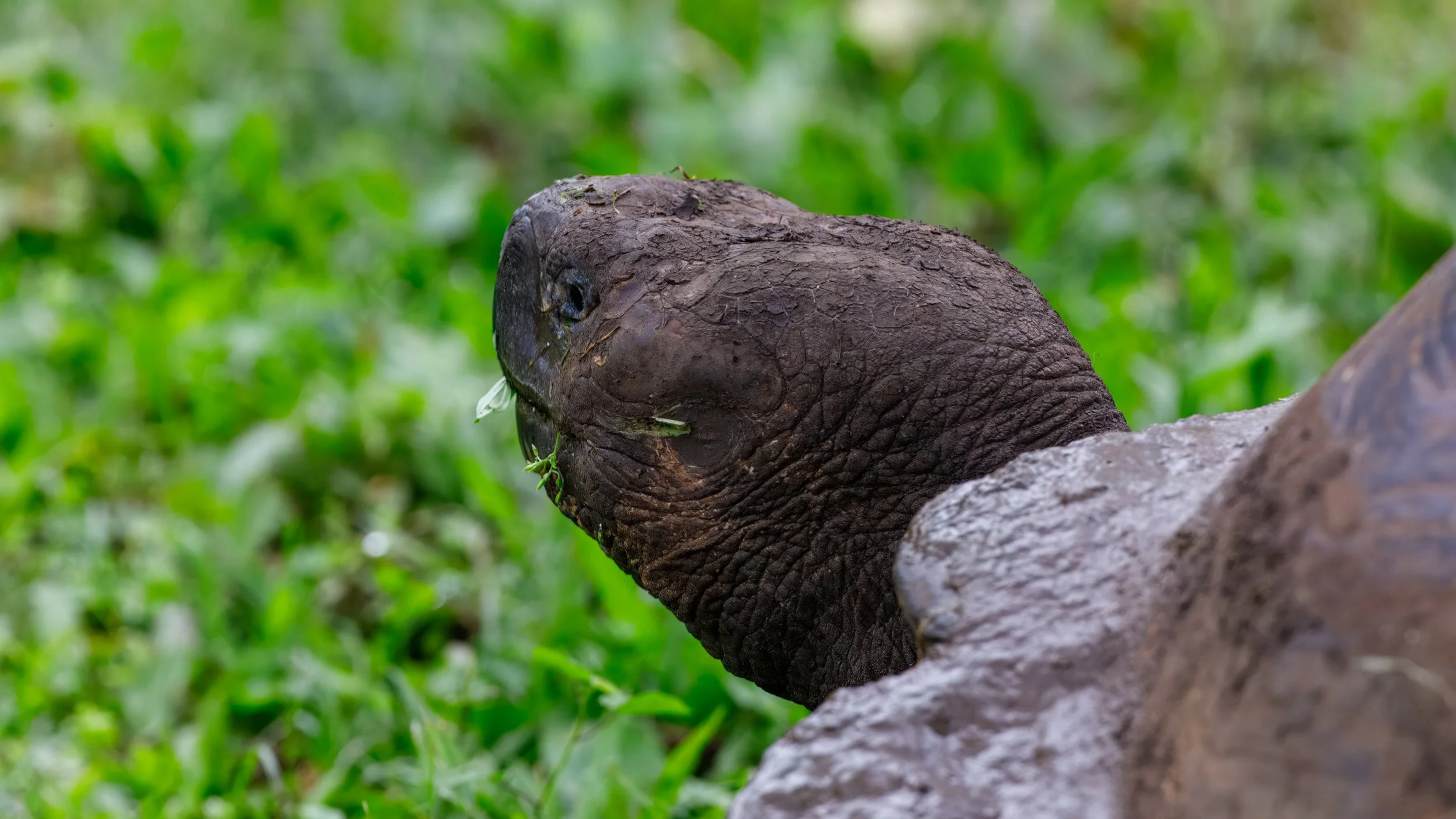
Wonderful contrast with the green grass
Apparently they could work a bit on their etiquette
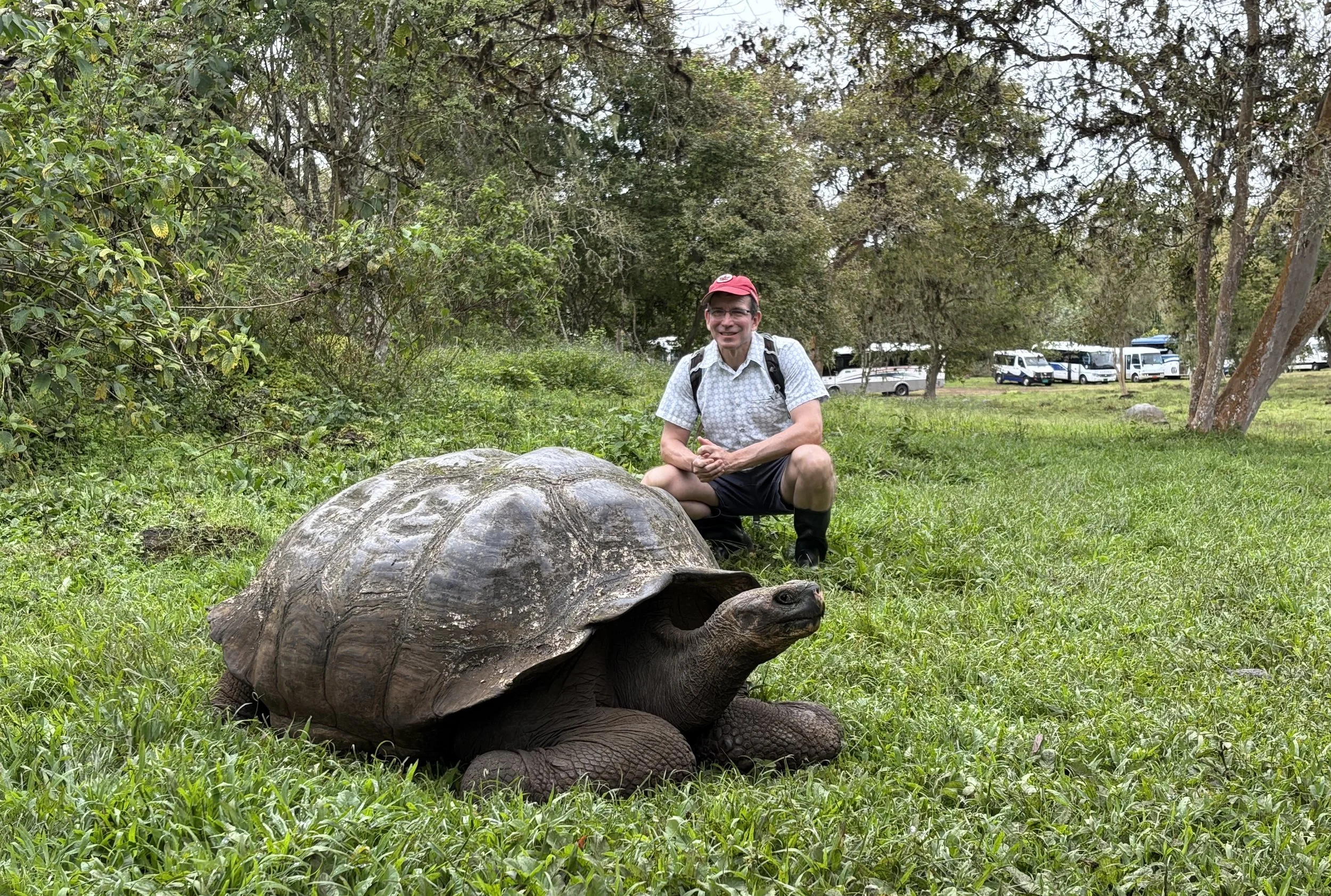
Doing my best to pose and not cause any turtling behaviour
Catching a few last shots before we head back to the bus
Another curious look, but luckily no retreat into the shell
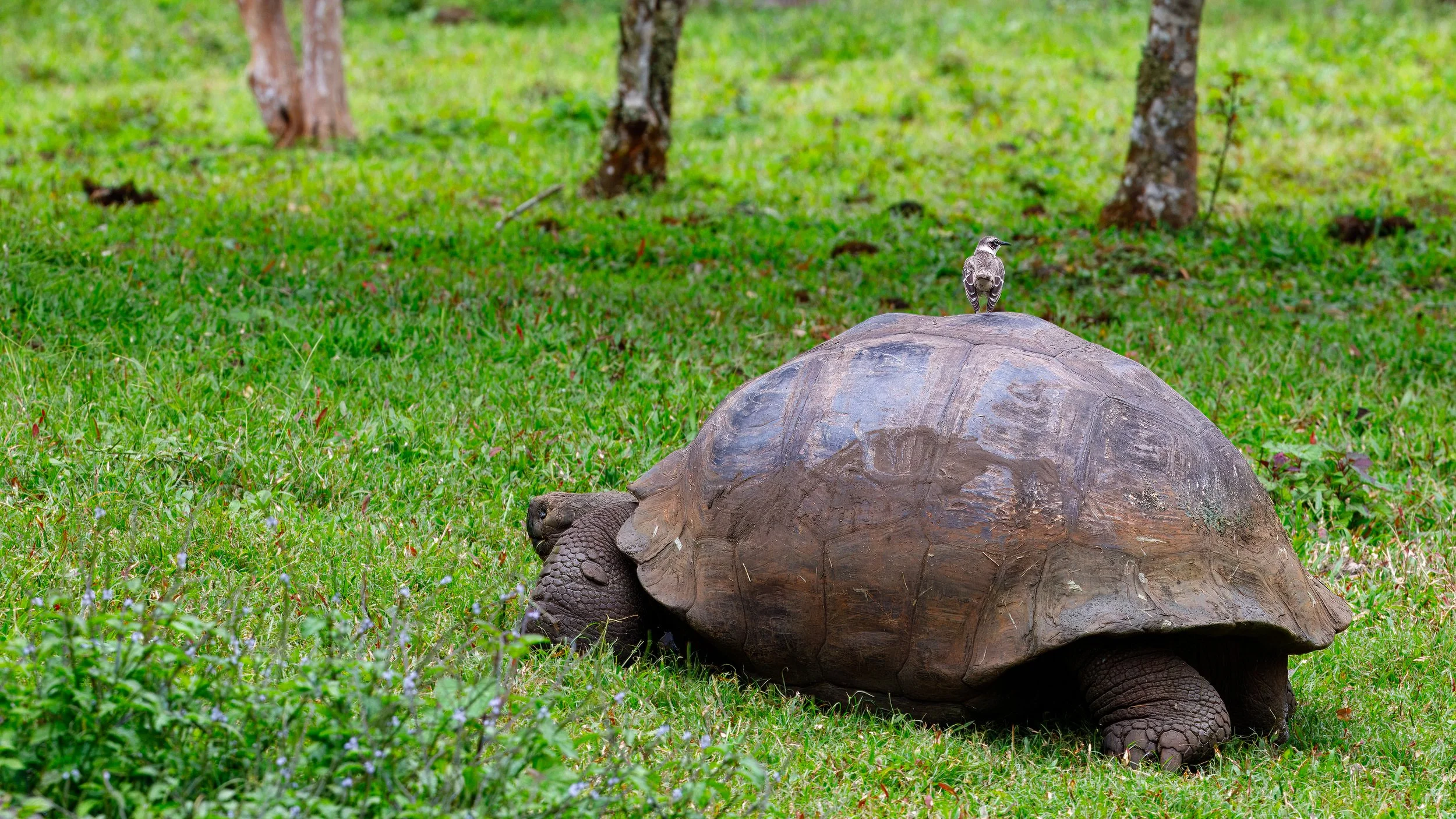
A bird along for the slow-moving ride
Having now completed our list of Galapagos creatures, we headed back on the bus to Puerto Ayora. They left plenty of time for souvenir shopping, but we grabbed an early tender to get back to the ship and start back. On arrival, ending our last excursion, we enjoyed our last welcome drink and snack and relaxed in the lounge before the formal closing and farewell toast from the captain. We enjoyed our last dinner with the new friends we’d met on the cruise as a final send-off for an extraordinary week.
Oct 5
With the formal cruise program over we anchored off Baltra Island where we’d started seven days earlier, and after breakfast left our suites and waited for our turn to disembark.
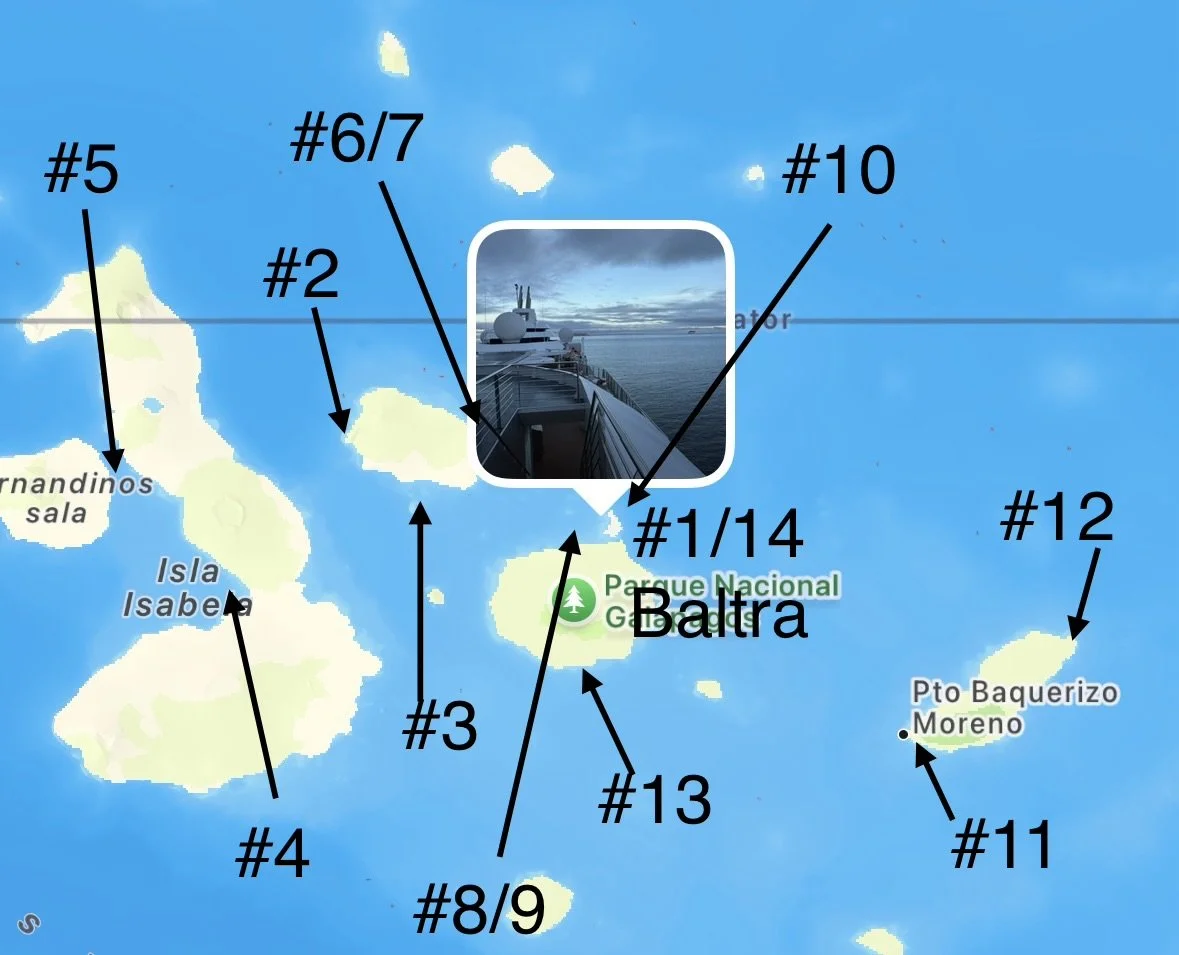
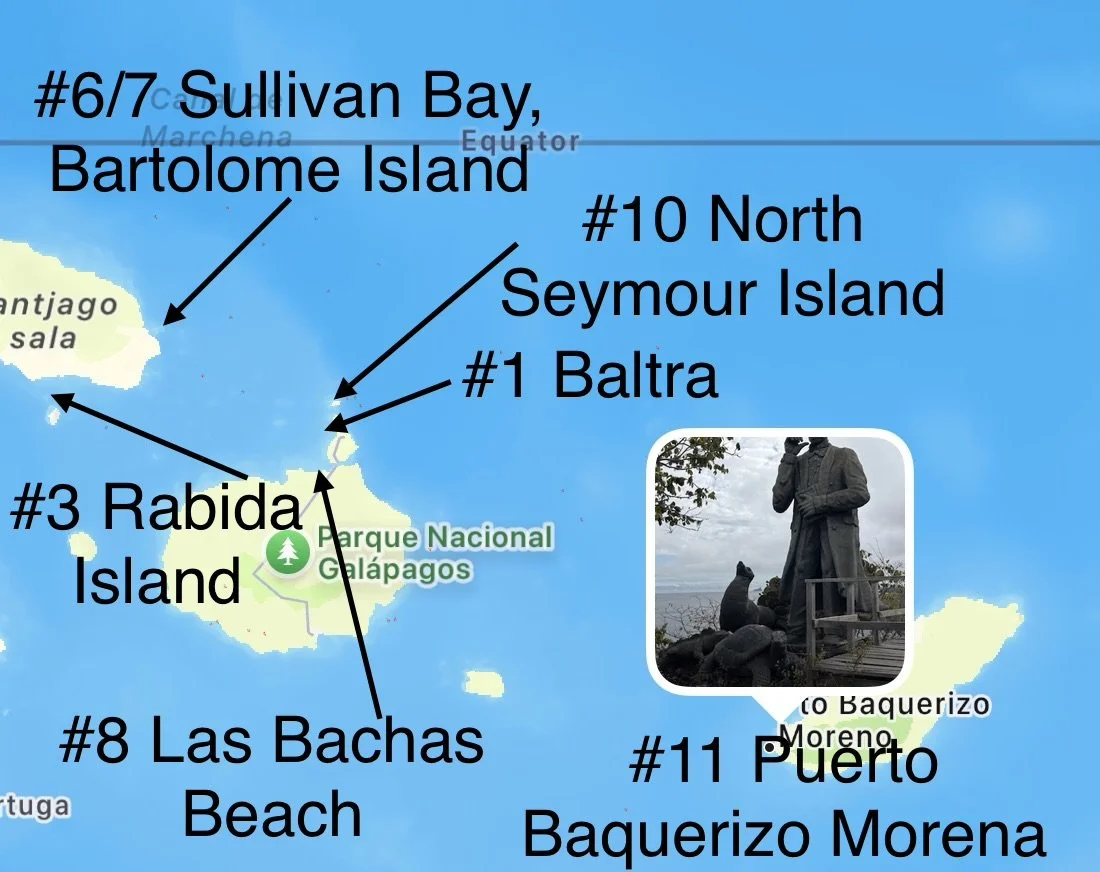
Back at Baltra, recapping our stops we’d covered in seven days
Approximate path in broader context
Catching sunrise on the upper deck before our last breakfast
Photo of the sitting area in our room
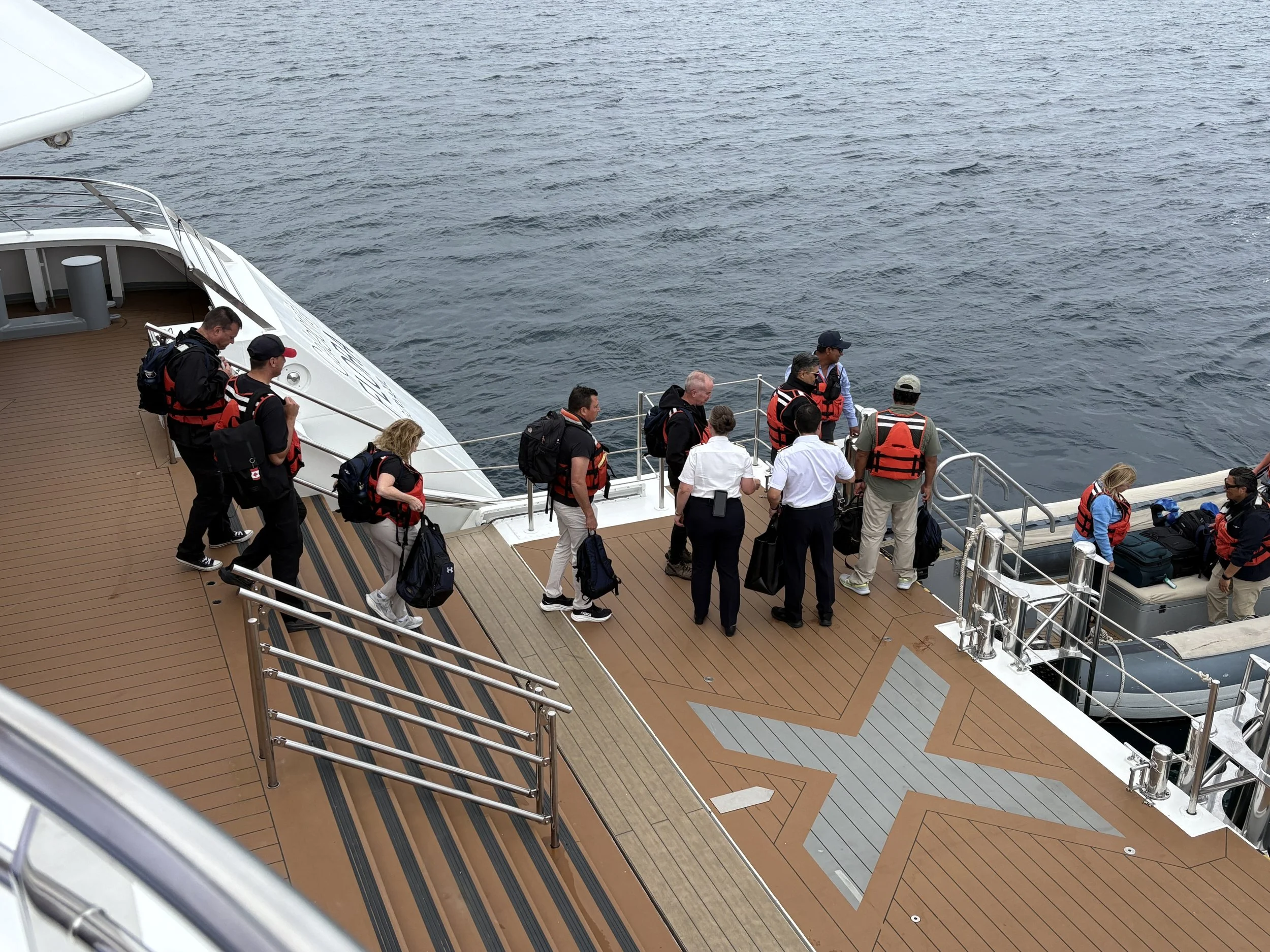
Previous group of passengers making their transfer
Galapagos Sealion greats us on the pier at Baltra
And a final land iguana is hanging around just outside the airport terminal
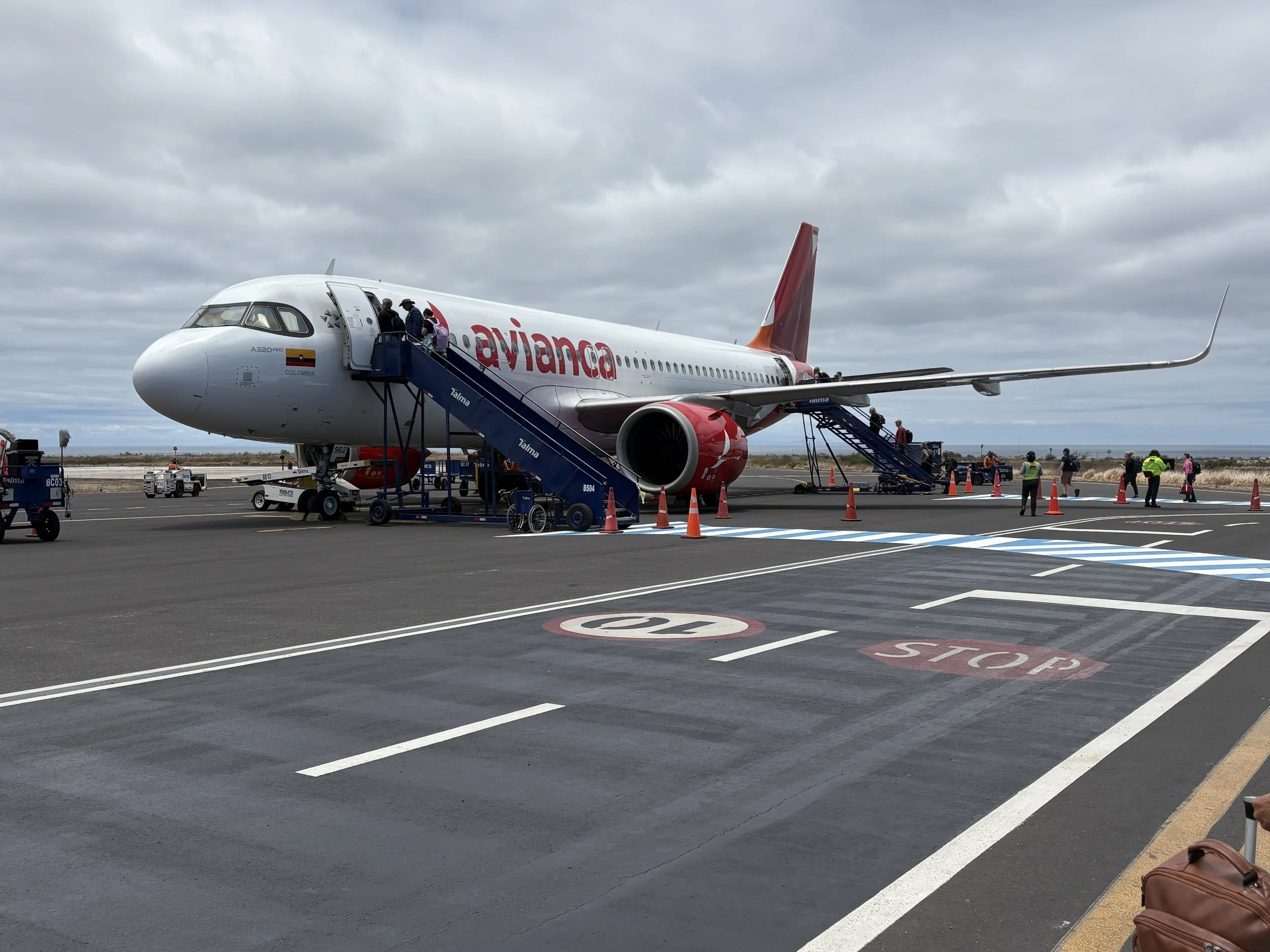
Boarding our charter flight back to Quito
After our charter flight to Quito, we were dropped at a hotel nearer to the airport as we had a very early flight. I had a quick workout in the gym, in a small attempt to work off all of the calories that I’d taken on, and then had a final dinner with some of our cruise mates at the hotel before turning in early.
Oct 6
To catch the Air Canada flight from Bogota to Montreal, we had to leave Quito around 4:00am, which made for a very early start to the day. The first flight was smooth, but unfortunately the 9:00am AC flight quickly showed a one hour delay, due to crew constraints, that ultimately led a flight cancelation, with a makeup flight 24 hours later. As we both needed to get back to work and were soon traveling to Madrid, we pushed to get on the later Avianca non-stop flight to Toronto, which ironically was our original plan until we understood how uncomfortable that plane was in business class.
Unfortunately Air Canada wasn’t willing to put us back in business class, so we had to learn just how uncomfortable that plane could be in economy for almost 6 hours. Glad to be home regardless, we made it back safely and ready for work the next morning.
Despite the travel challenges, we had a tremendous time and as well as crossing off our 43rd of 50 Places to See Before You Die, we counted off our 116th country visited.