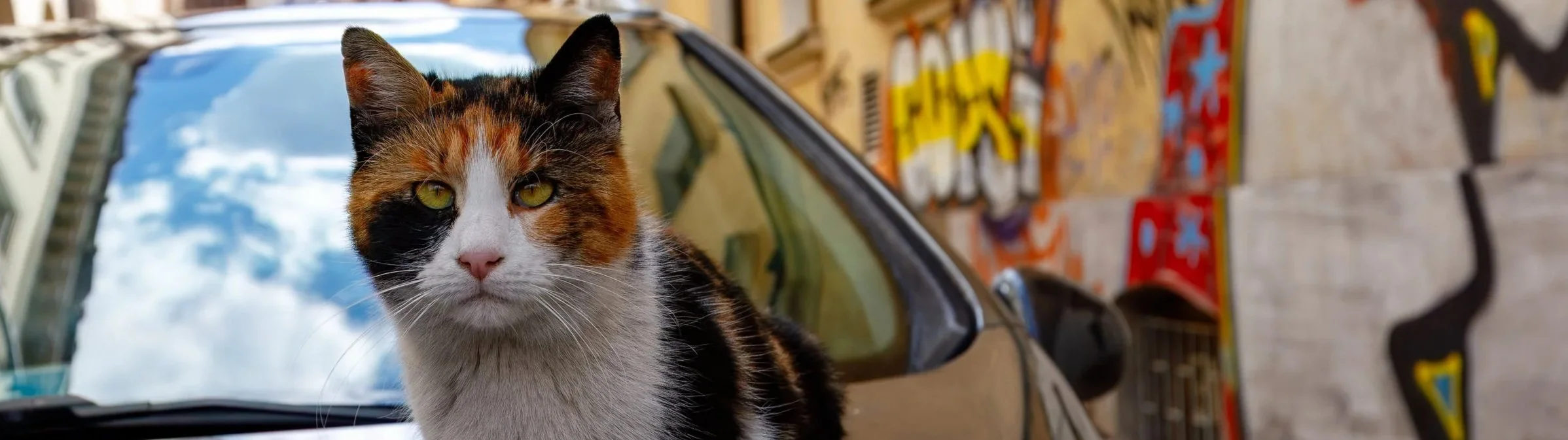
Bosnia
Apr 3-6
AC886 YYZ-VIE, OS729 VIE-SJJ, OS732 SJJ-VIE, OC55 VIE-YUL, AC419 YUL-YYZ
Over the last yew years, we have managed to visit most of the countries that were formerly part of Yugoslavia. We have enjoyed our visit to each, and Bosnia and Herzegovina was the final remaining country. Each has its own distinct elements as well as some commonality including the impacts from the Yugoslav wars that still leave visible scars throughout.
Apr 4
After our overnight flight from Toronto, a short connection in Vienna, and checking into our hotel, we were able to get out and explore Sarajevo.
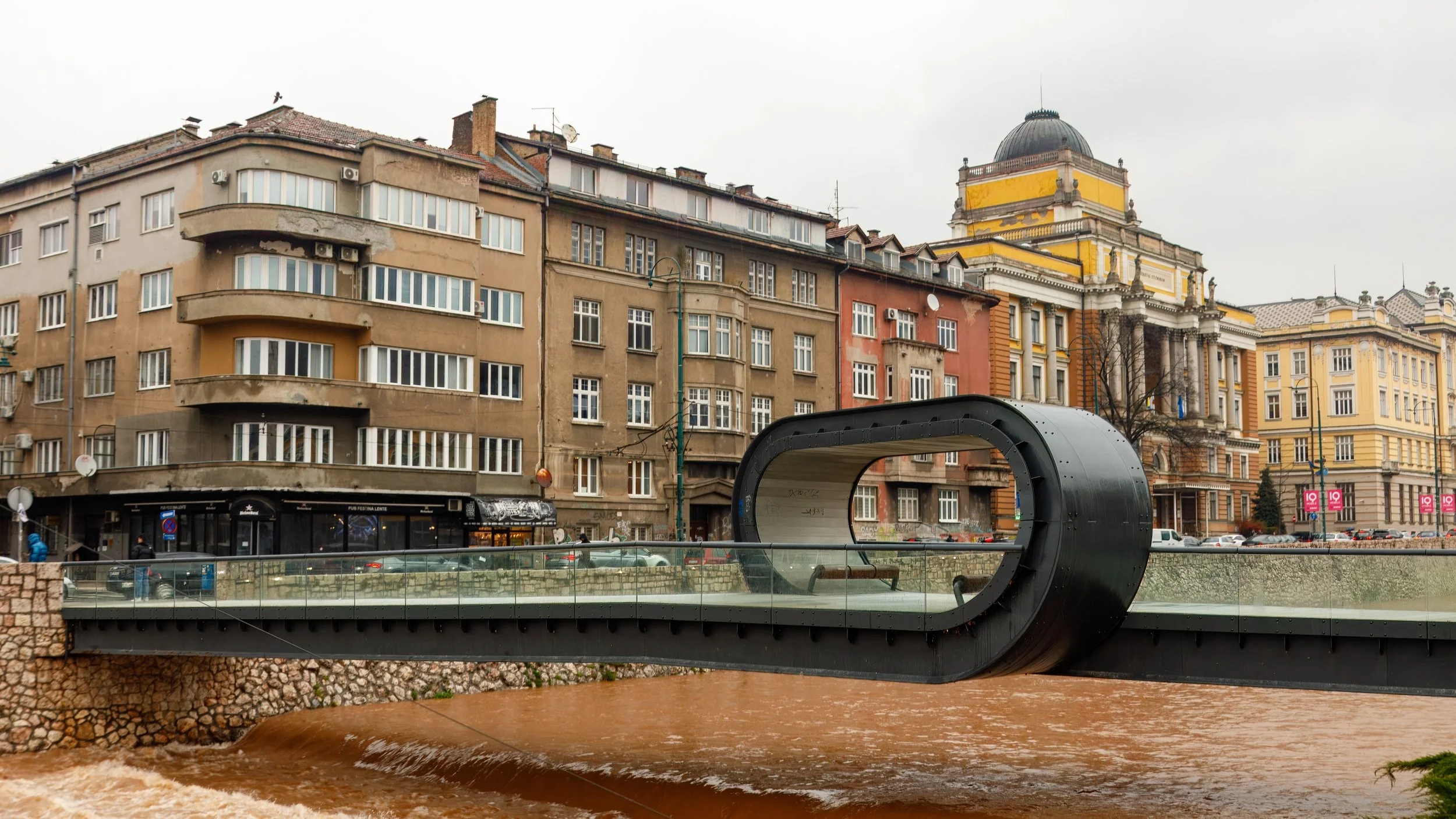
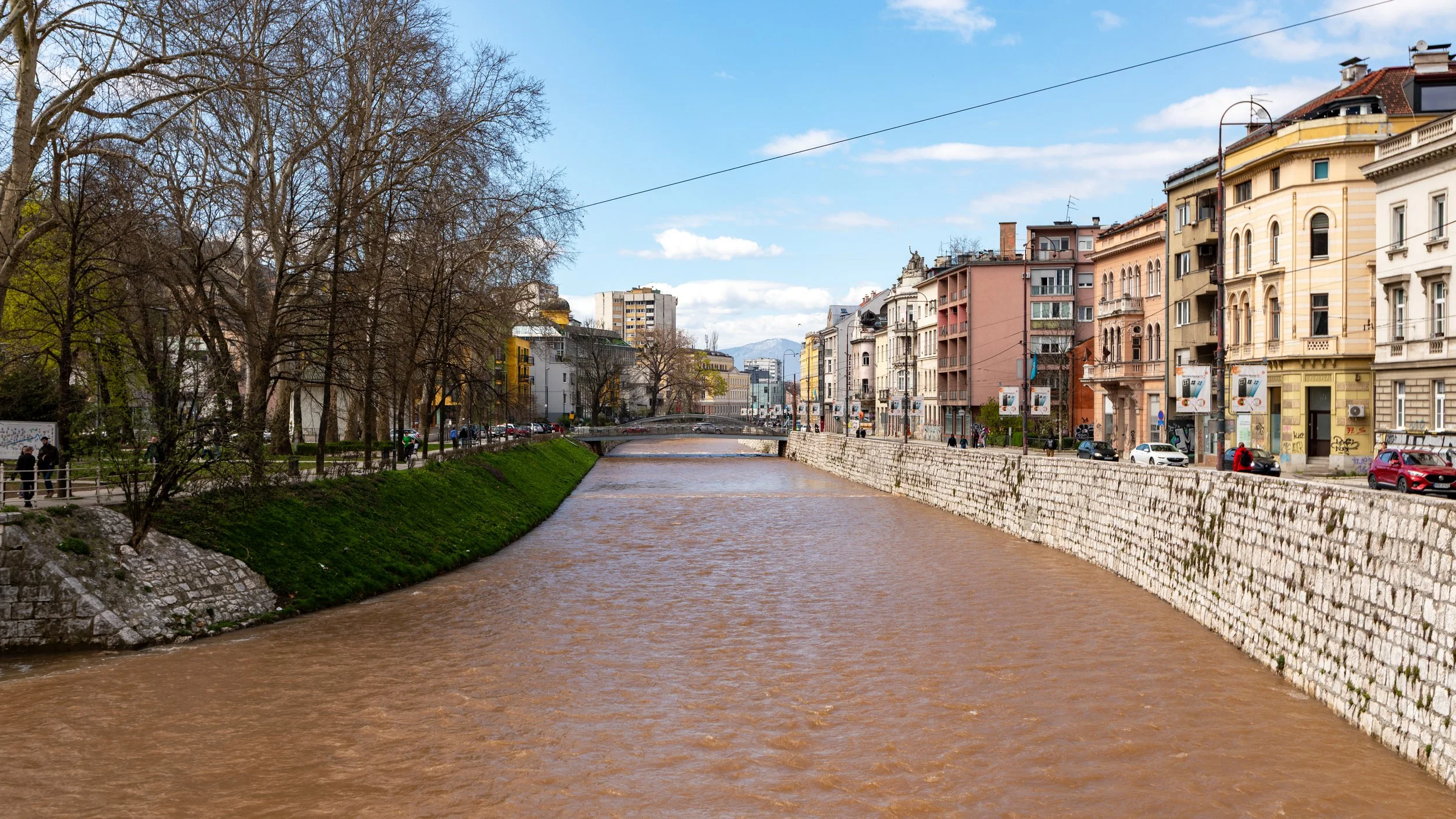
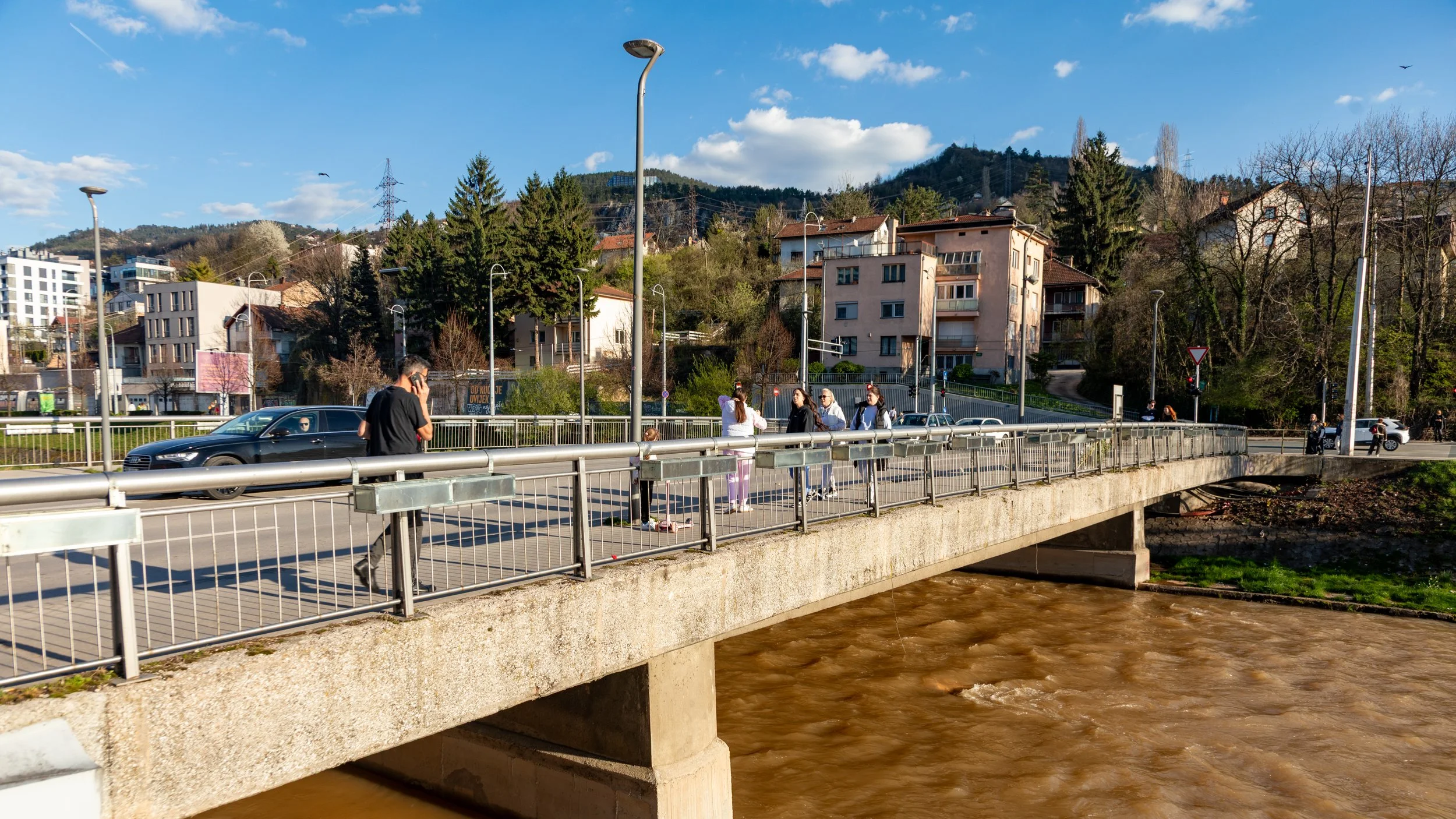
Festina Lente pedestrian bridge, spanning the Miljacka River near our hotel
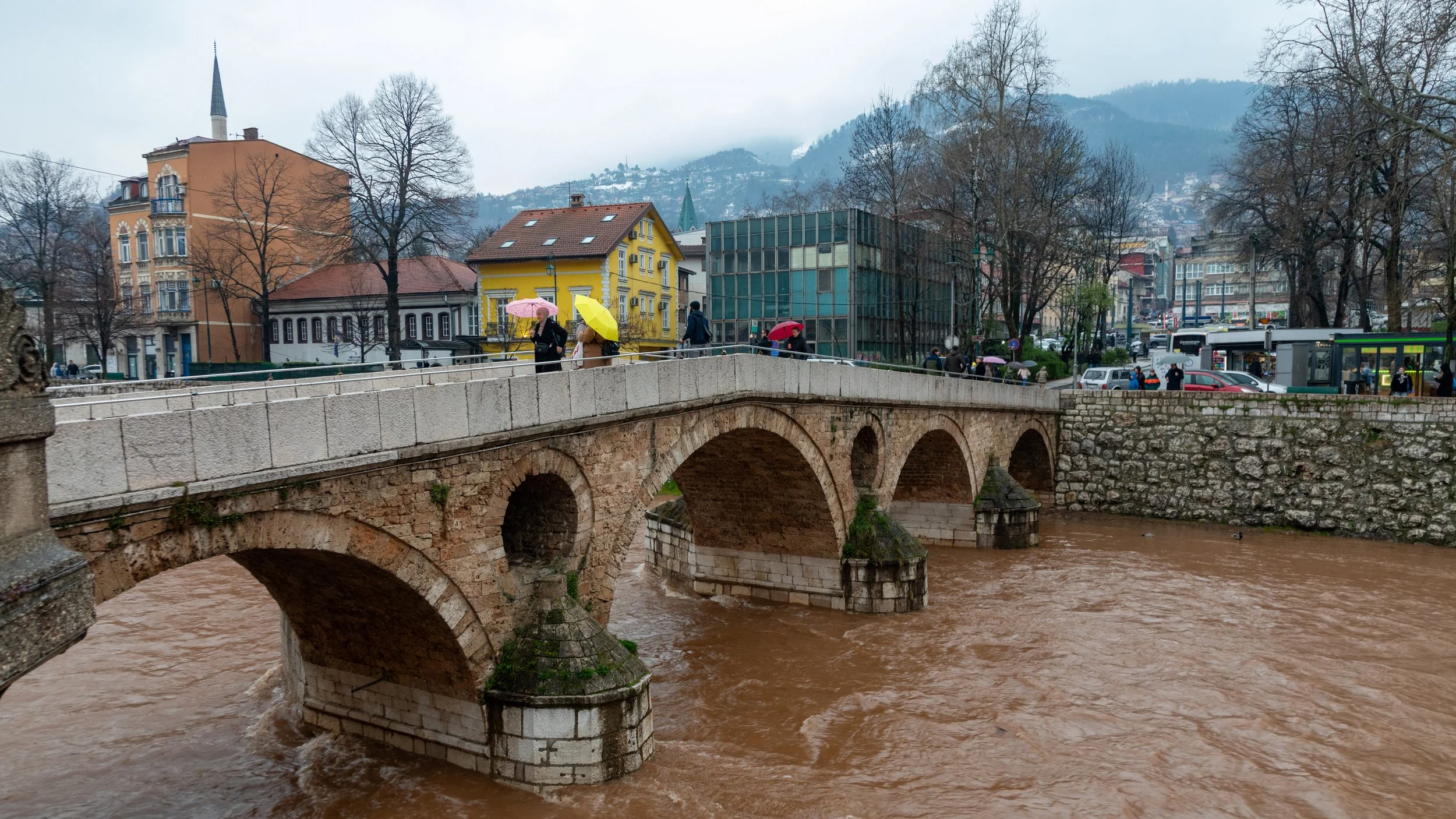
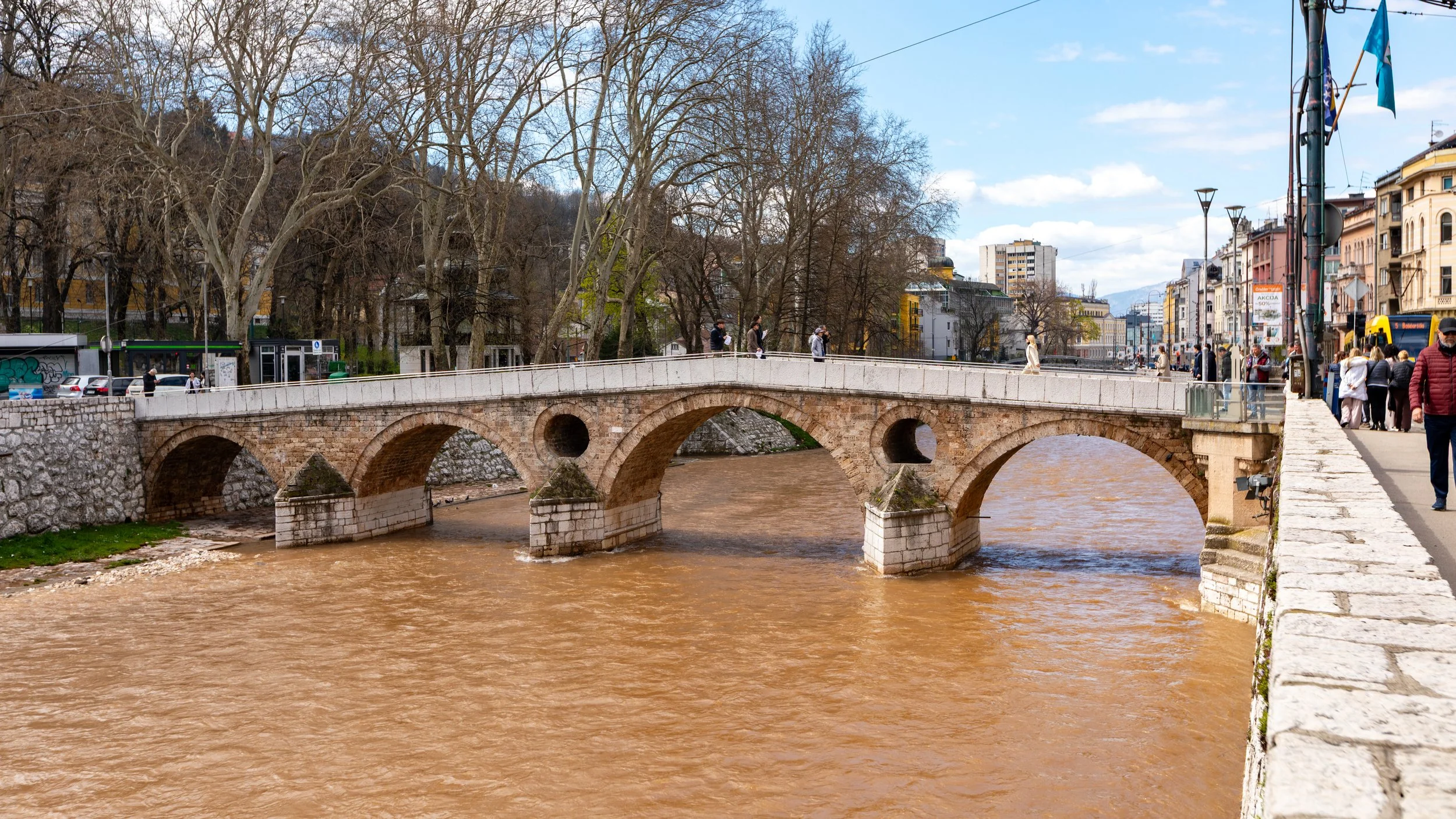
Latin Bridge (Latinska ćuprija), an Ottoman-era stone bridge significant as the site of the assassination of Archduke Franz Ferdinand in 1914, which triggered World War I
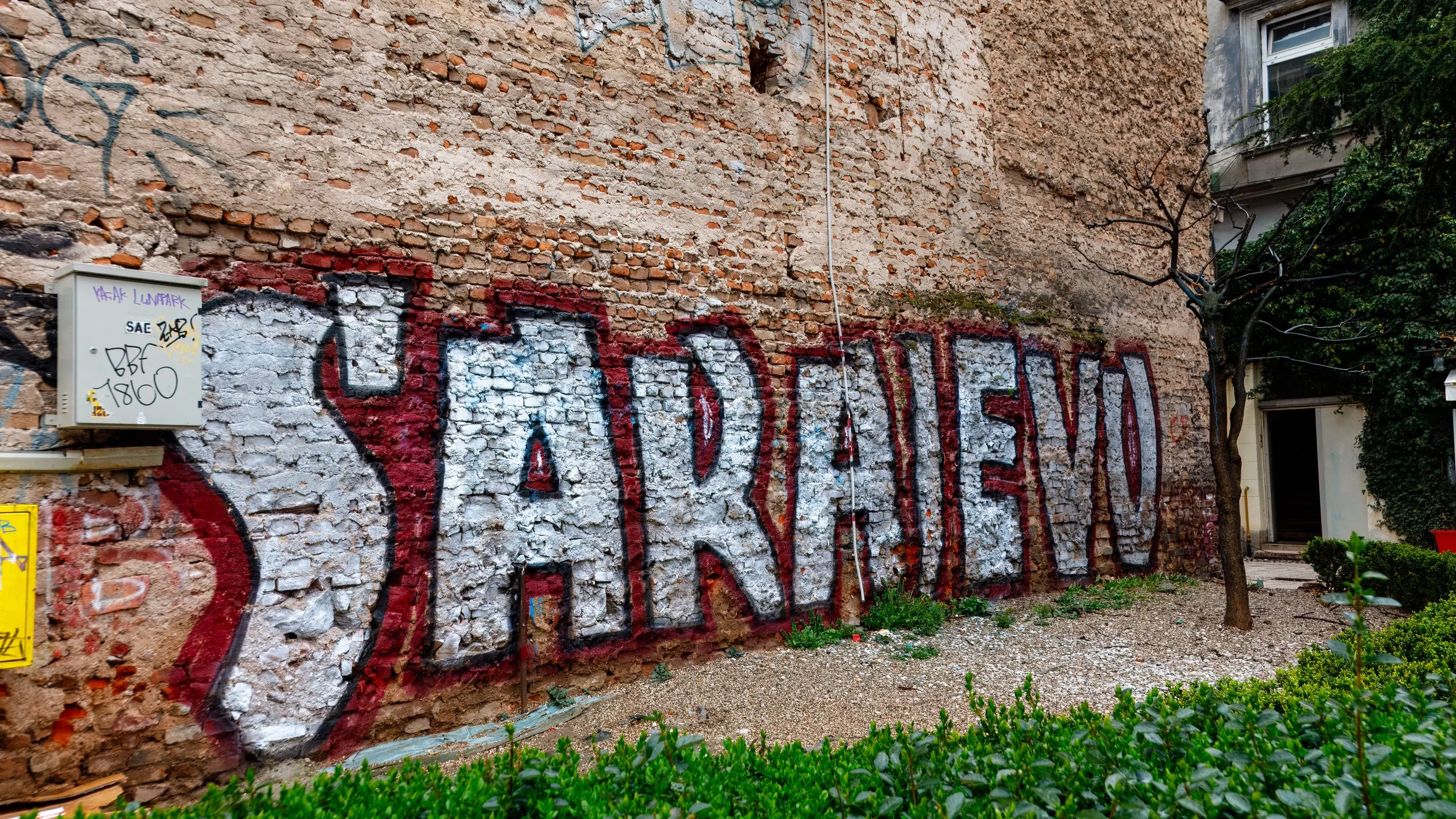
Local graffiti on some of the stone walls in the old city
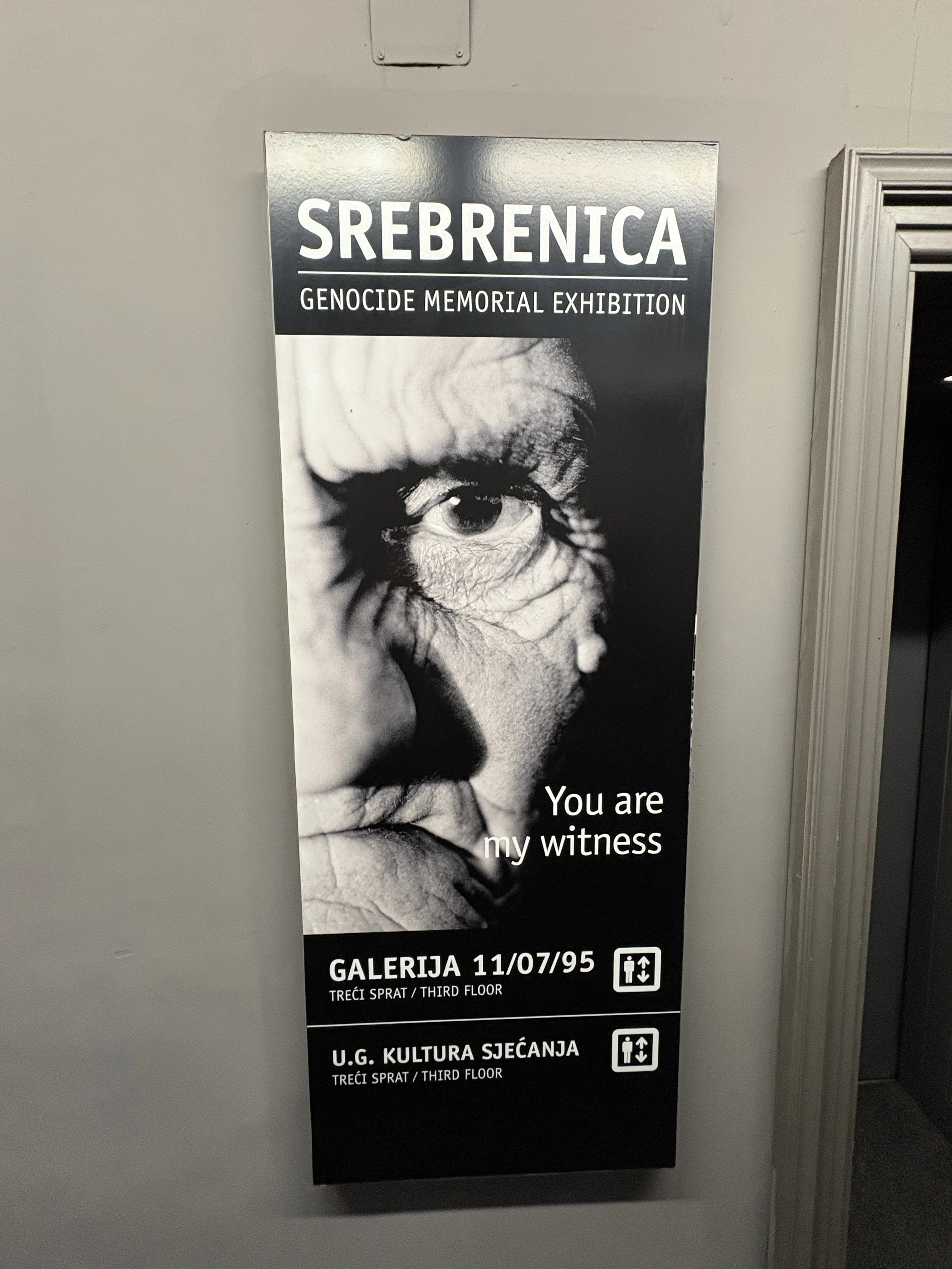
Very powerful exhibit at Gallery 11/07/95, dedicated to memorializing the Srebrenica Genocide, the horrific massacre of 8,000 Bosnian Muslims in the town of Srebrenica
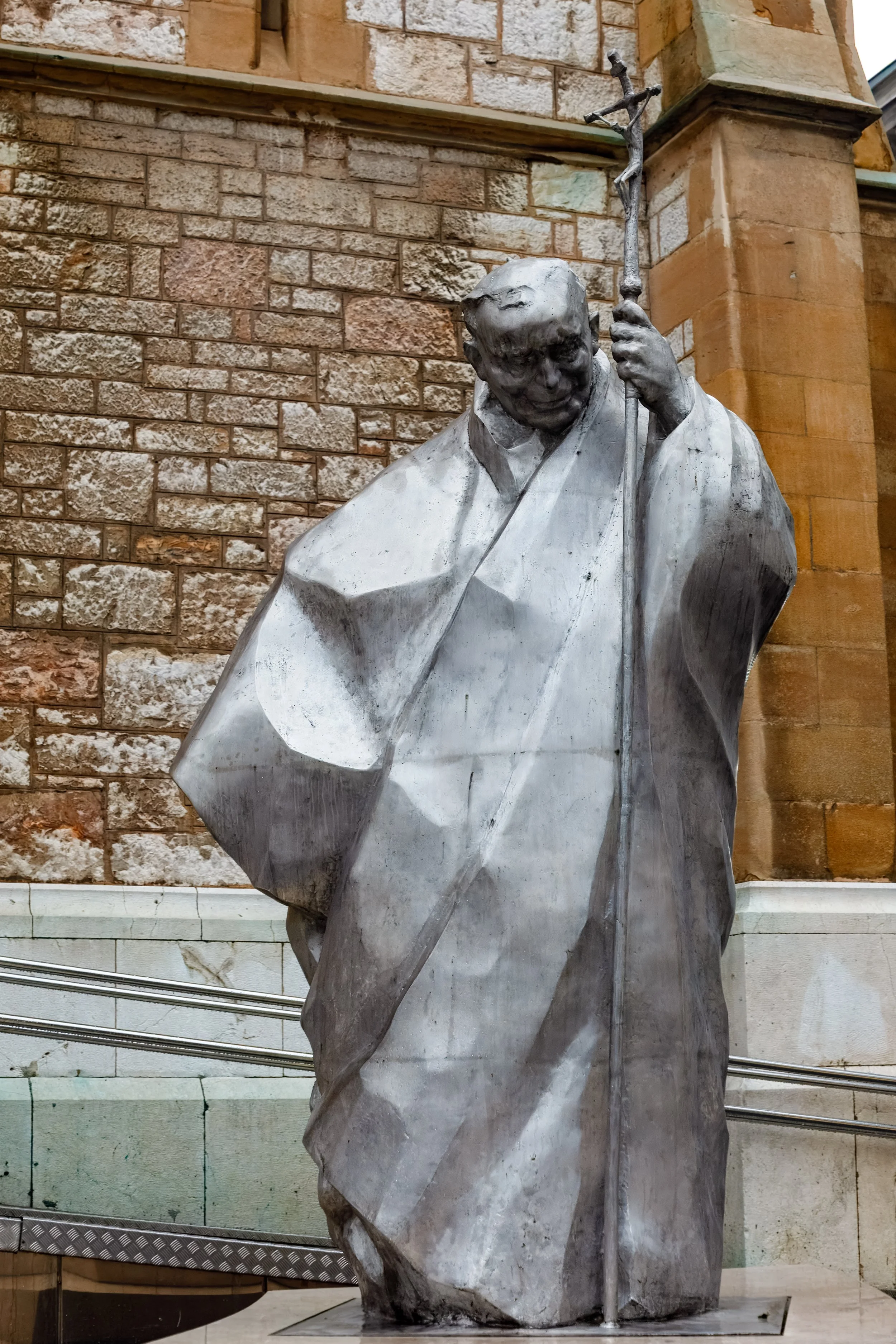
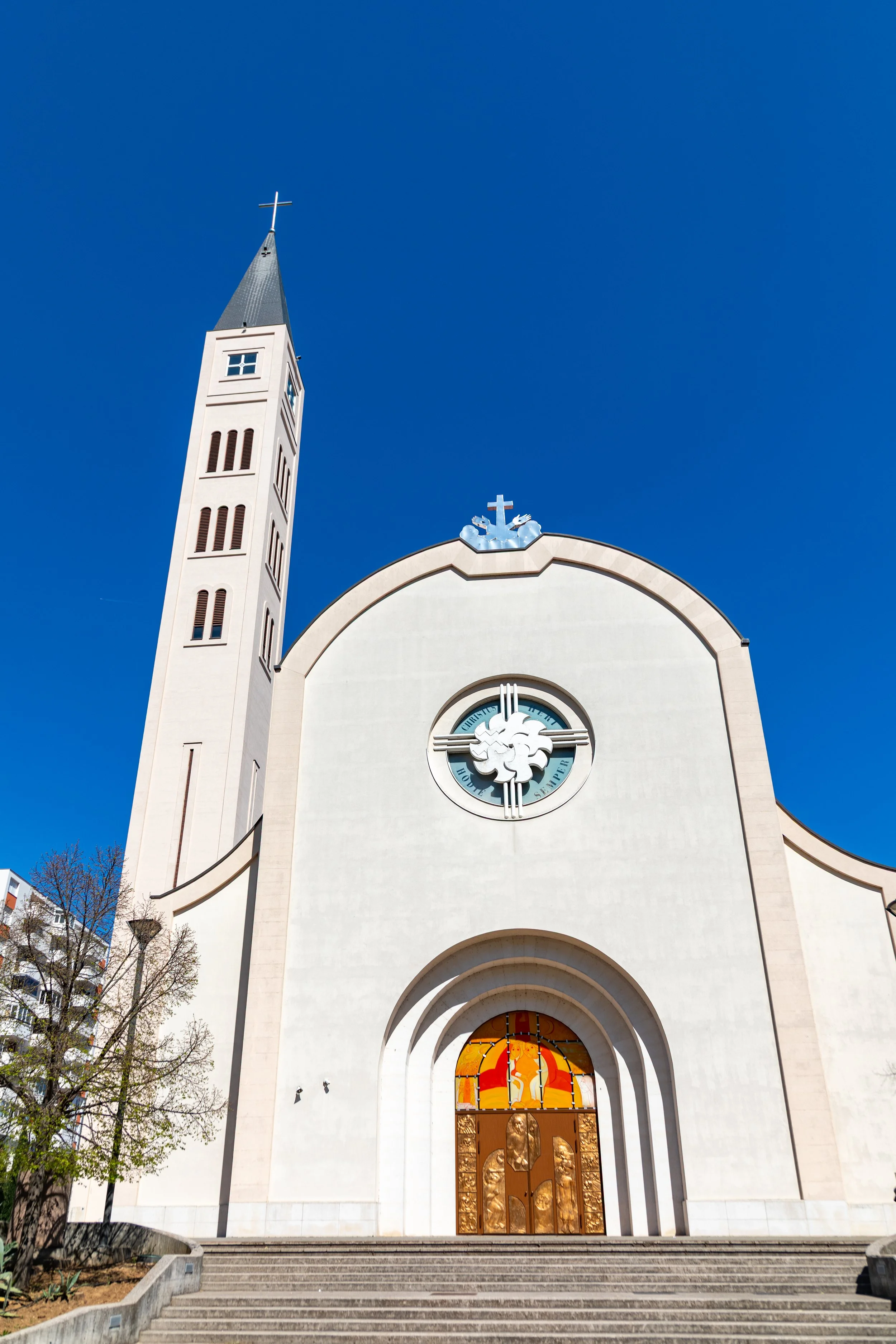
3m-tall aluminum sculpture honouring Pope John Paul II, in front of the Sacred Heart Cathedral
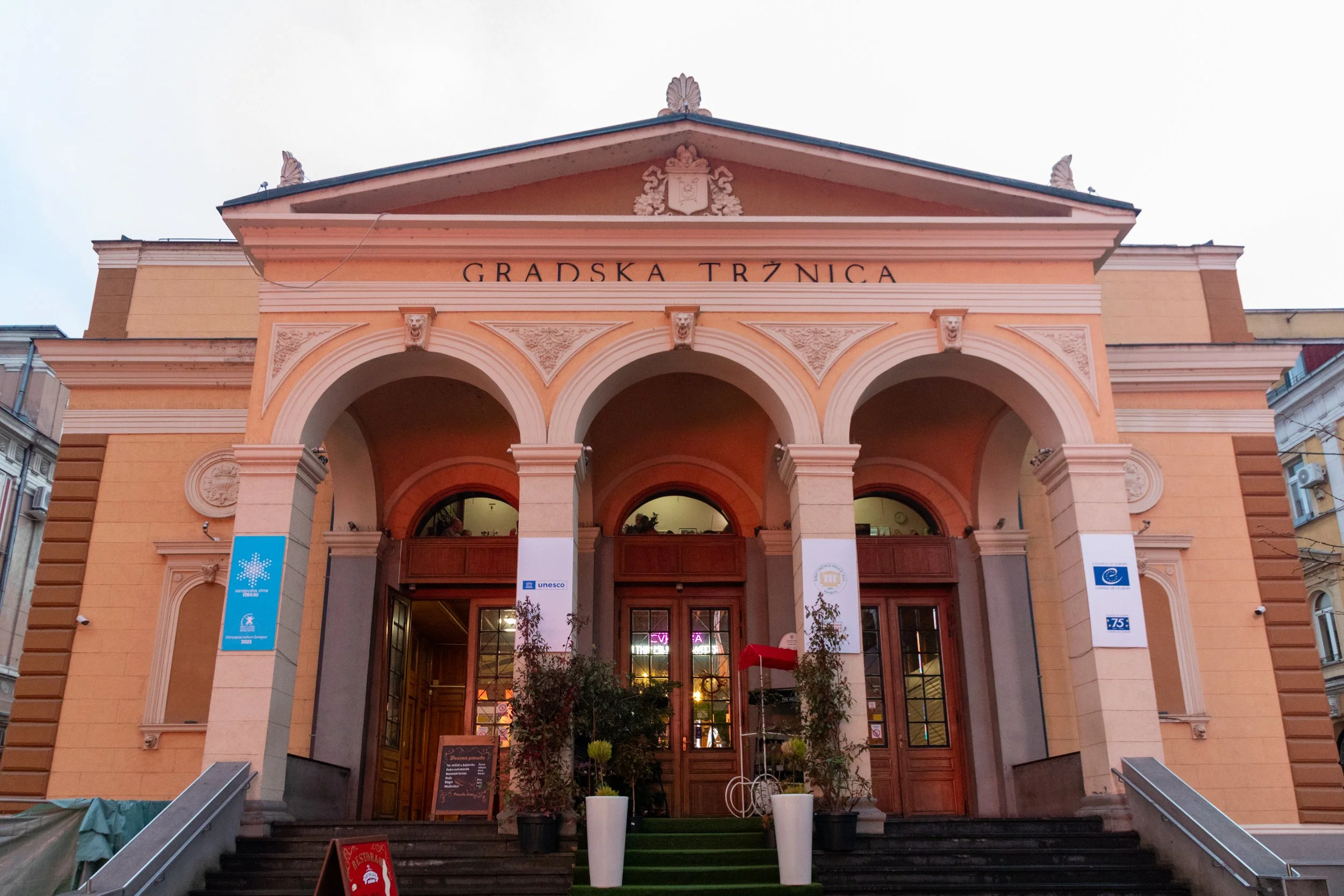
Gradska Tržnica (City Market), completed in 1894 in a Neo-Renaissance style
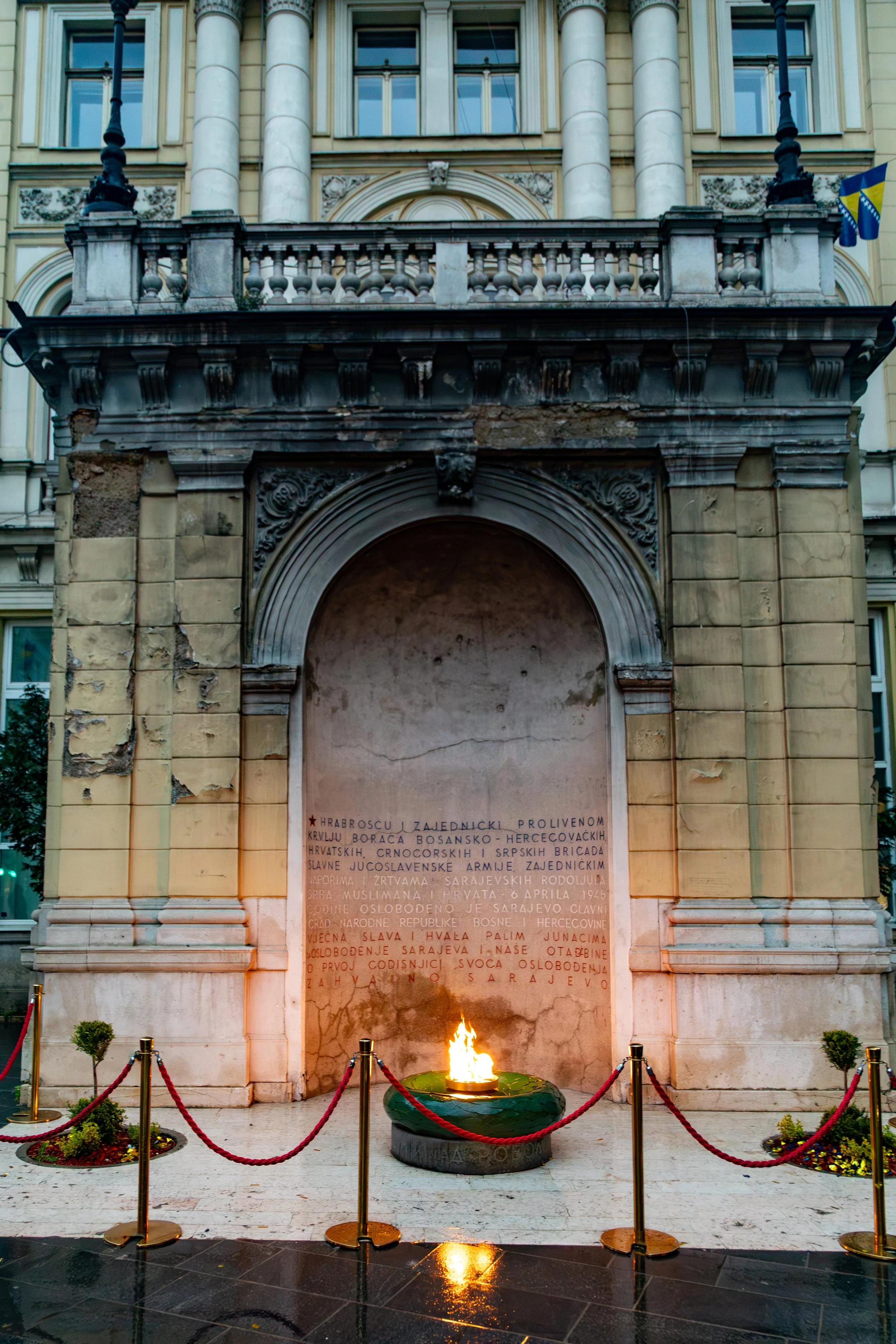
Eternal Flame (1946) monument, dedicated to the victims of World War II
We ended our walking tour of the old town back at our hotel, and then found a nearby restaurant for a late dinner.
Apr 4
For our next full day in Bosnia, we had arranged for a rental car at the airport, and planned to make our way to the nearby historic town of Mostar. Before we left the city, we made a brief stop at the Sarajevo Tunnel of Hope museum. The tunnel is a remnant of a critical wartime supply tunnel that allowed Bosnians in Sarajevo to travel and pass supplies between two of their territories separated by the UN-controlled airport runway, safe from the sniper threat posed by Serbs controlling the surrounding mountains.
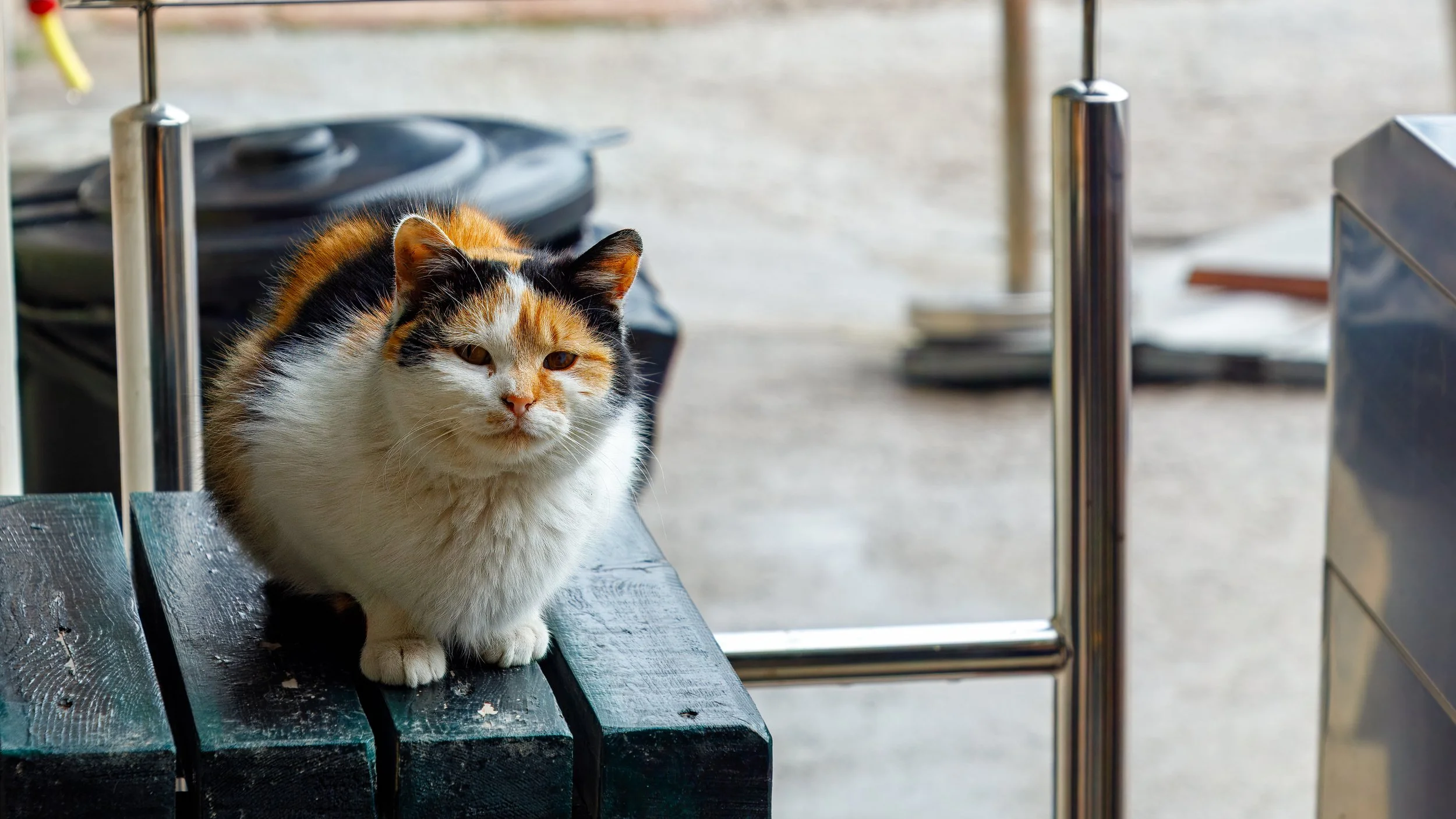
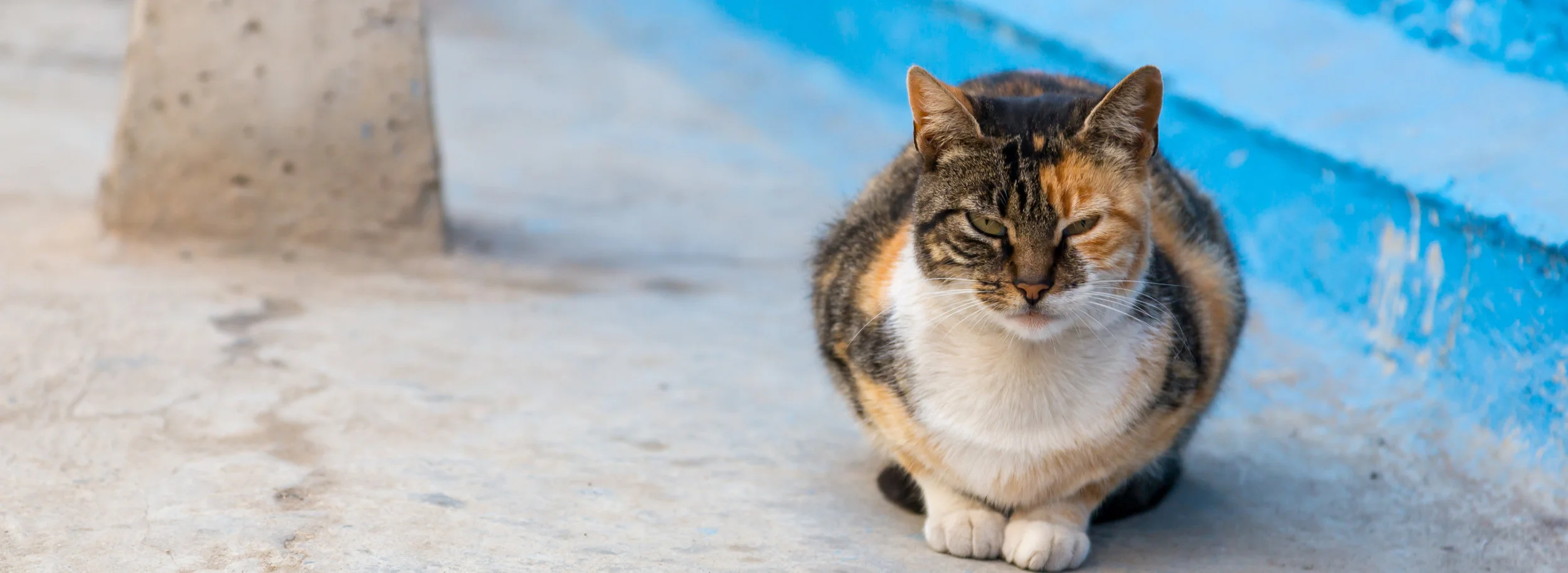
Local cat supervises the tunnel museum
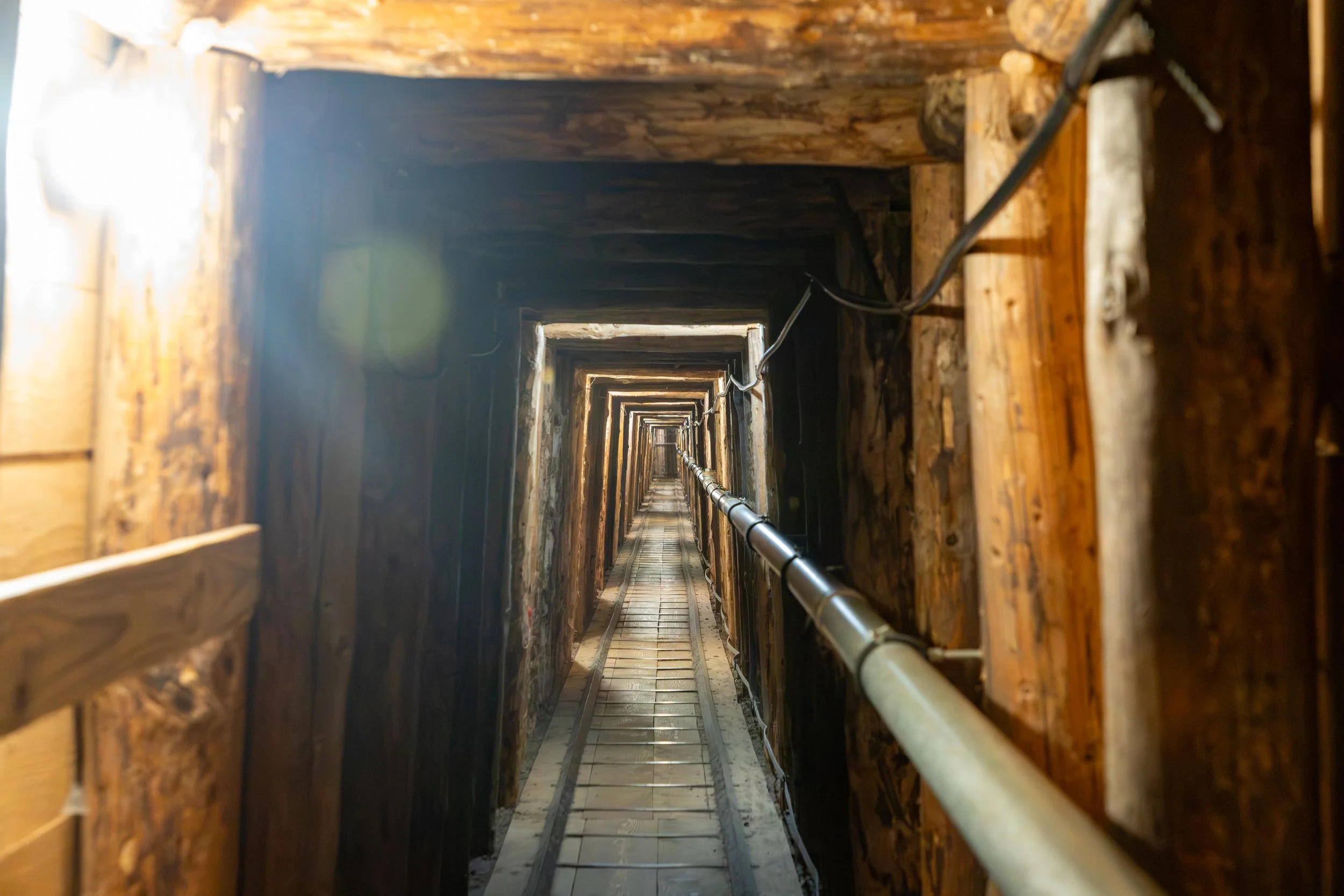
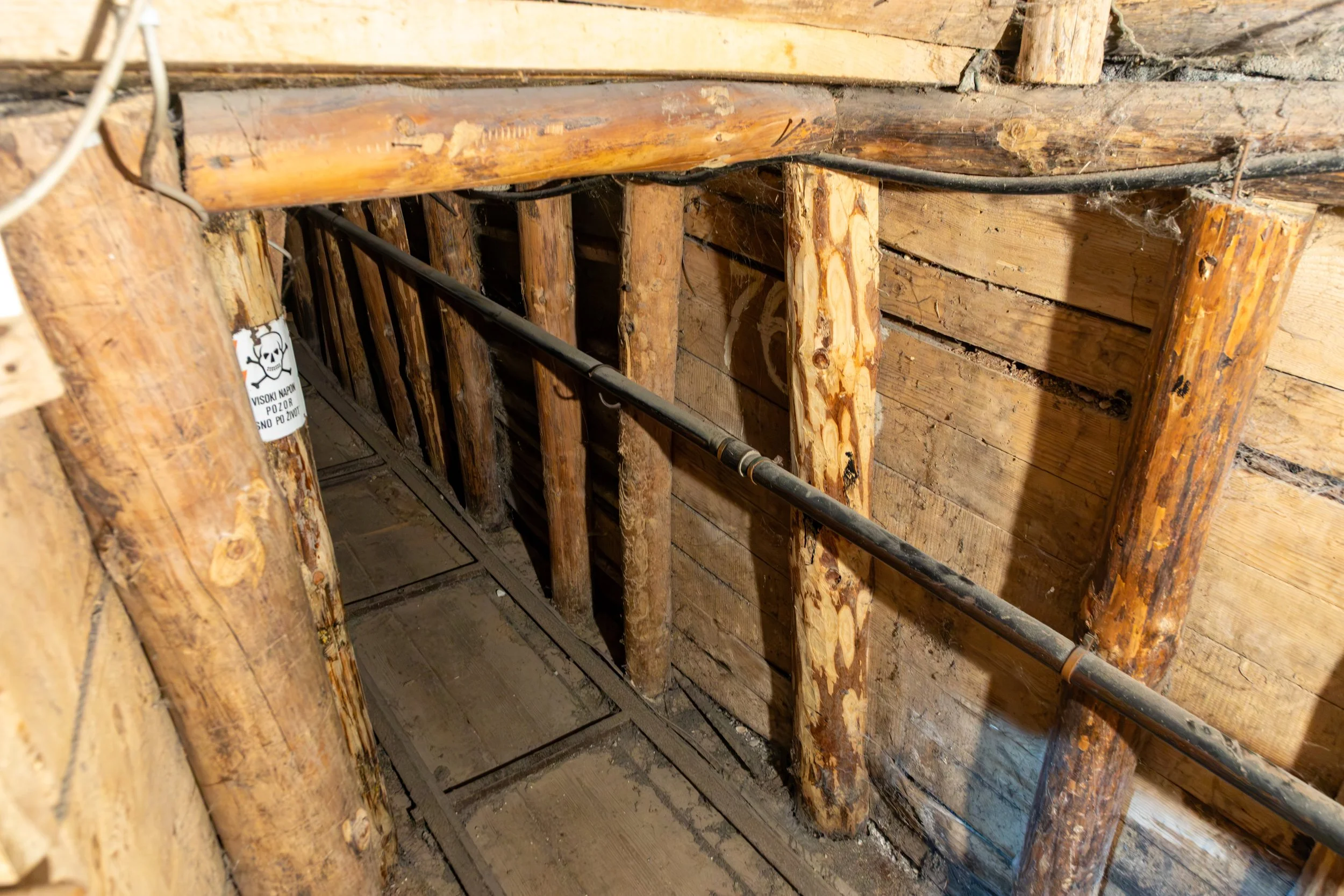
Portion of the critical 500m tunnel constructed between March and June 1993 during the Siege of Sarajevo
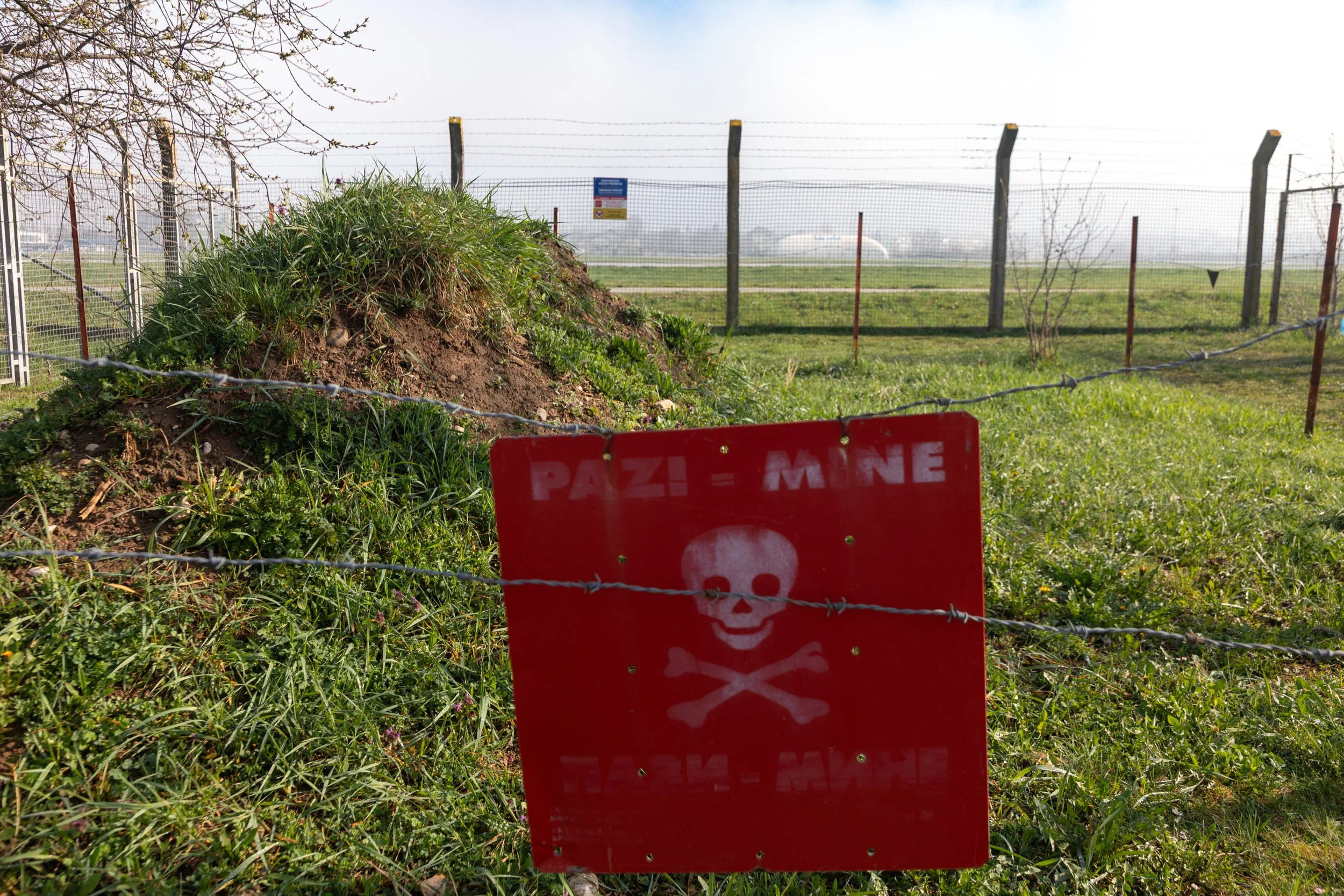
An area near the airport still not fully cleared of the risk of landmines still plaguing the country
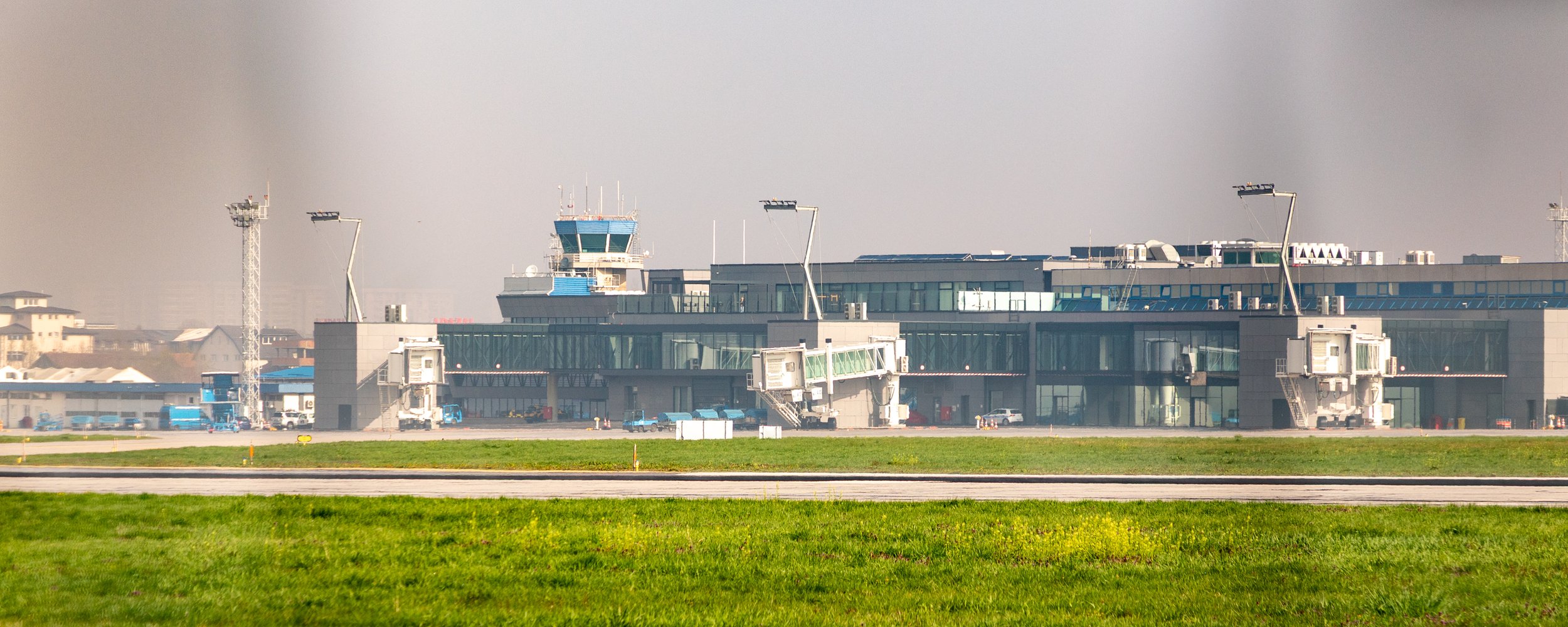
Looking across to the modern airport from the tunnel entrance
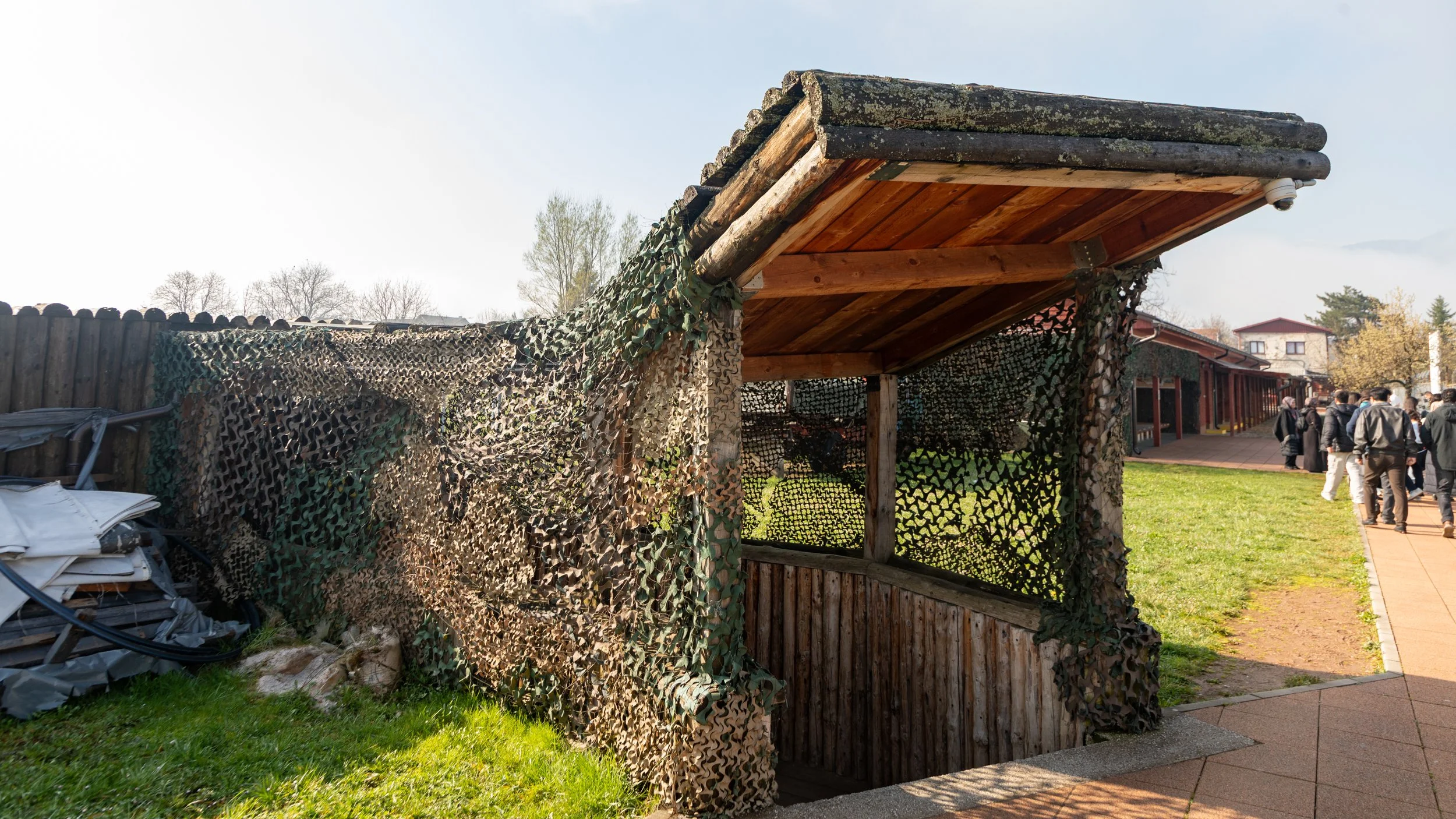
Tunnel entrance
Tunnel portion with original rail tracks used for moving supplies
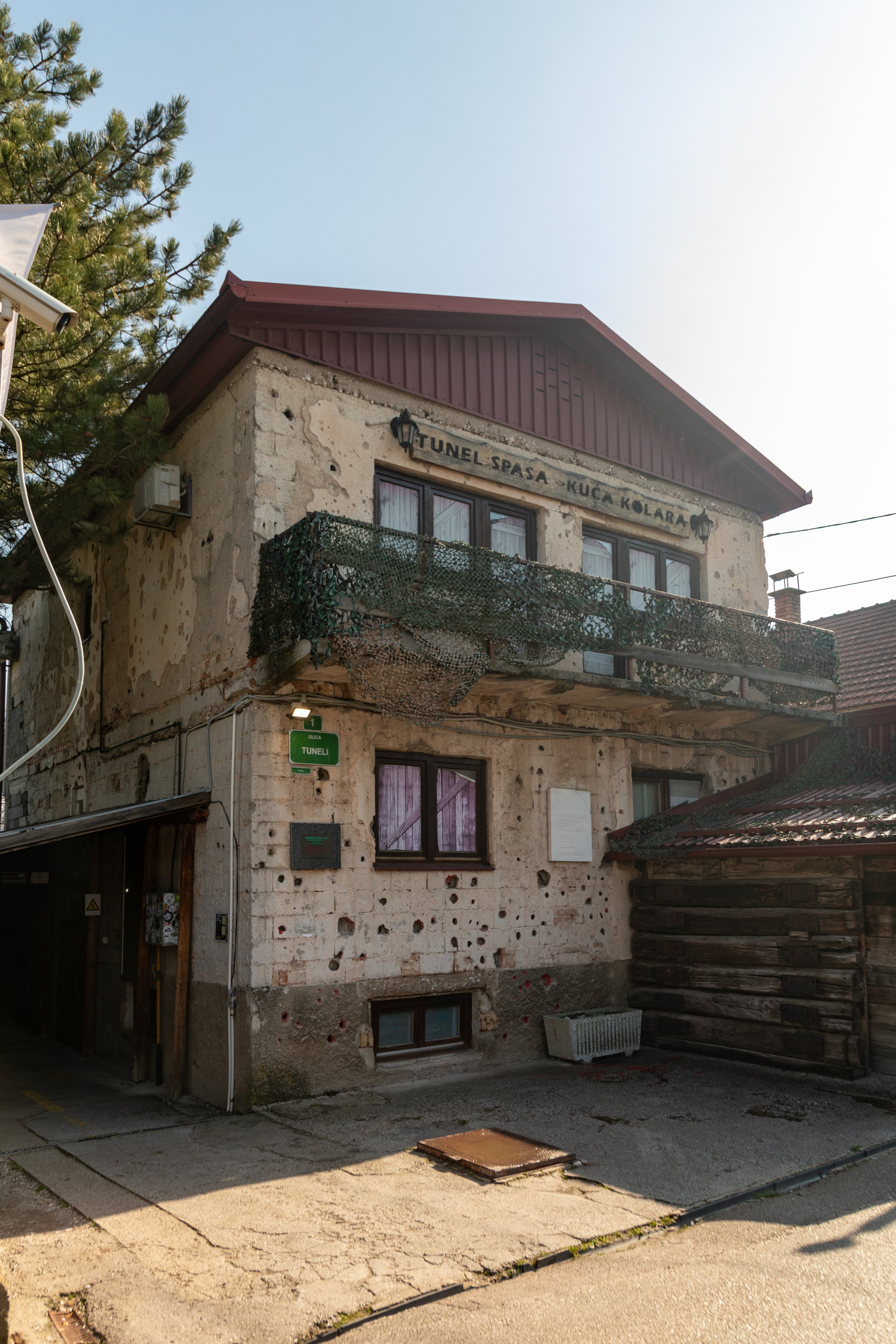
The nondescript cottage was not publicly exposed as the entrance to the tunnel until after the conflict
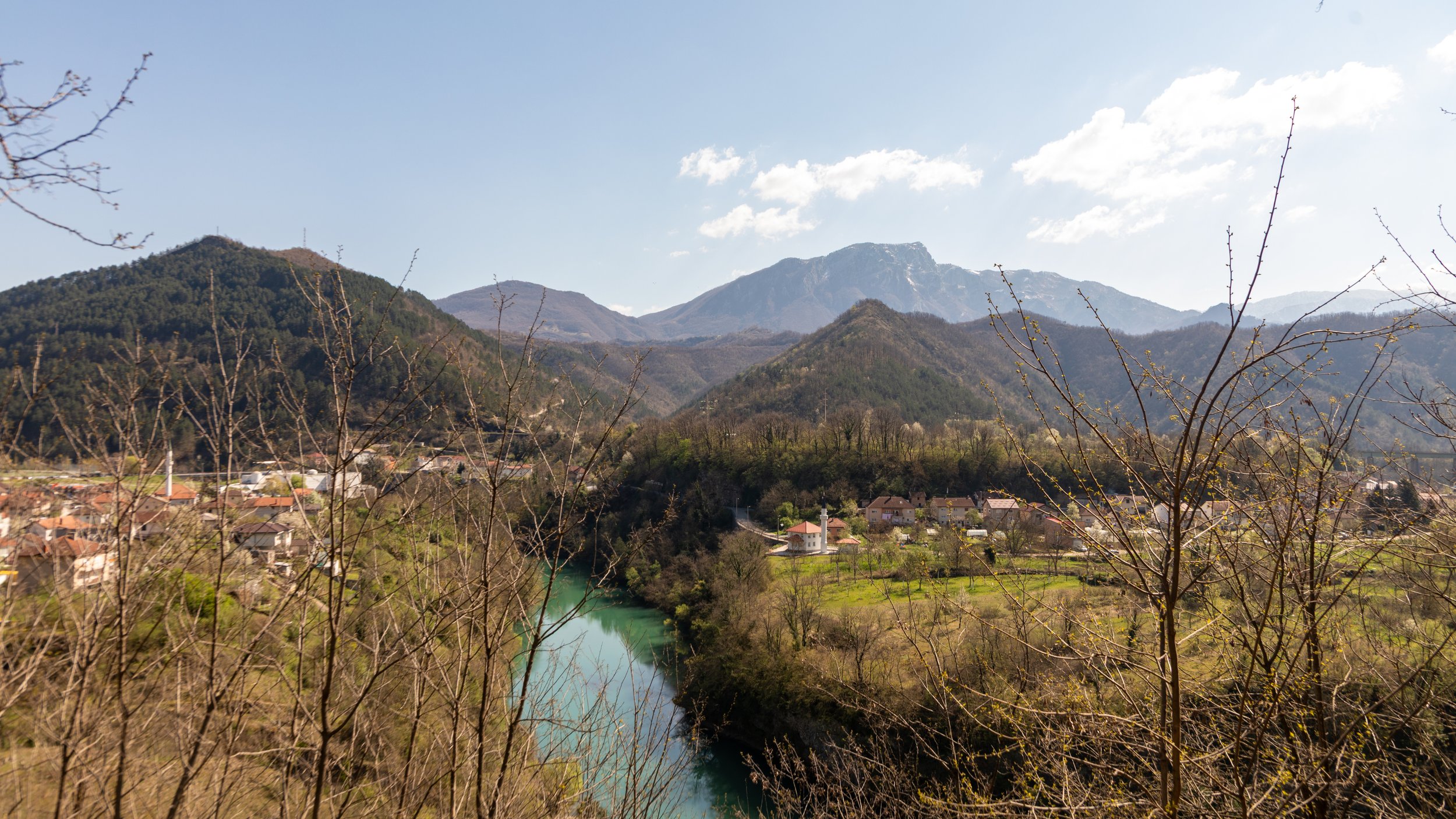
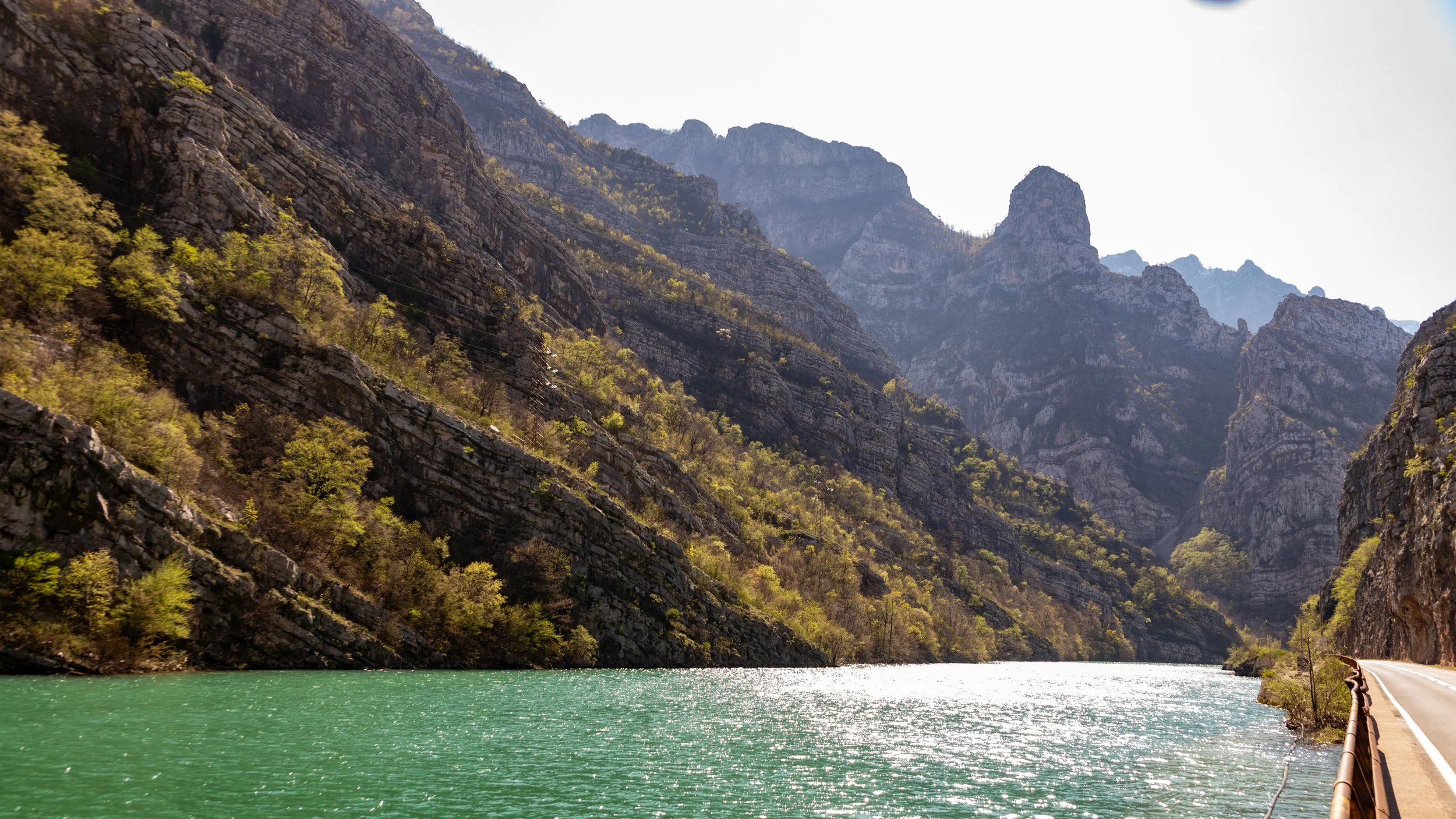
Nertva River flowing through picturesque village of Jeacici
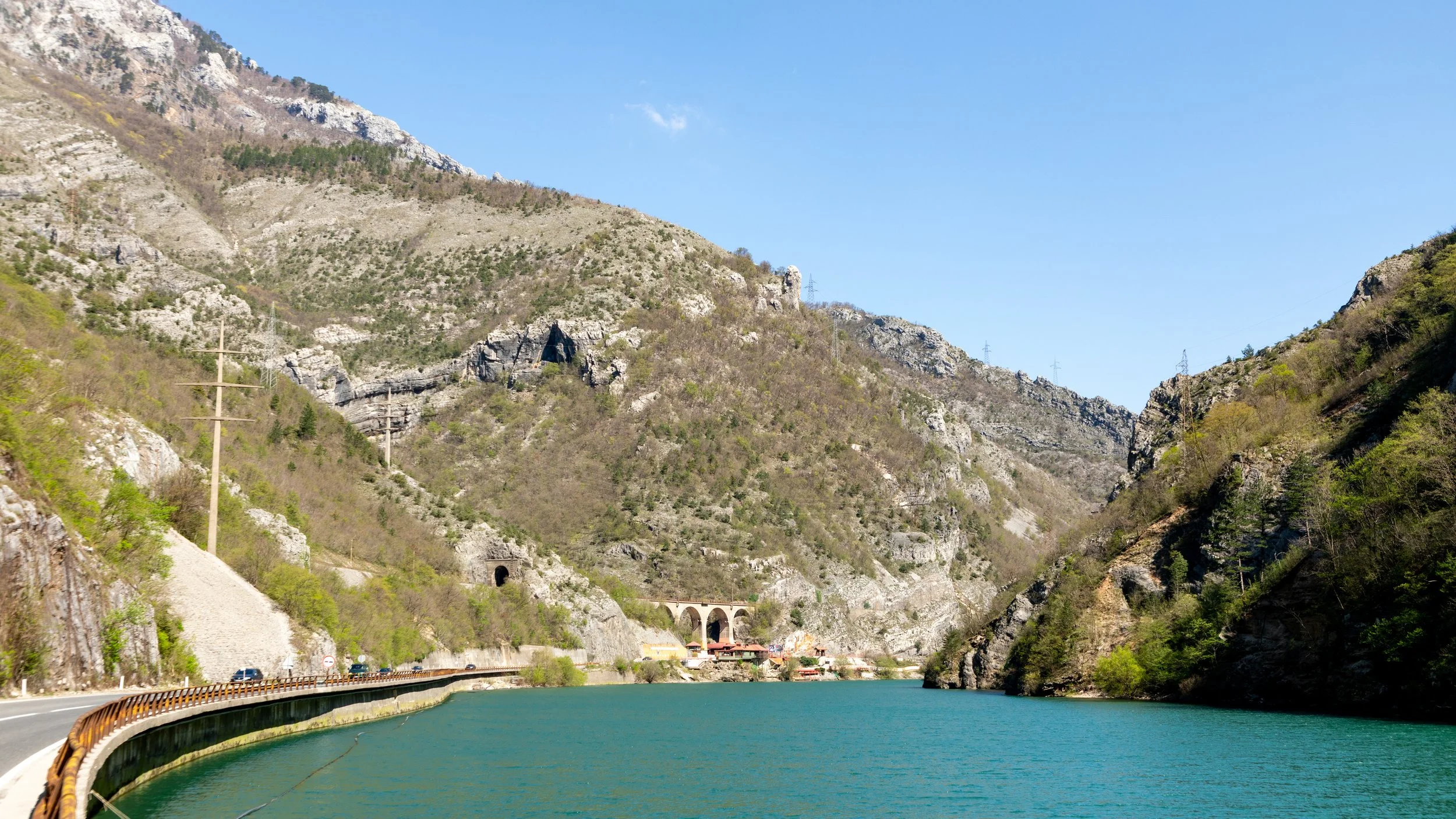
Continuing to follow the Neretva River Canyon
The modern road cradles the river
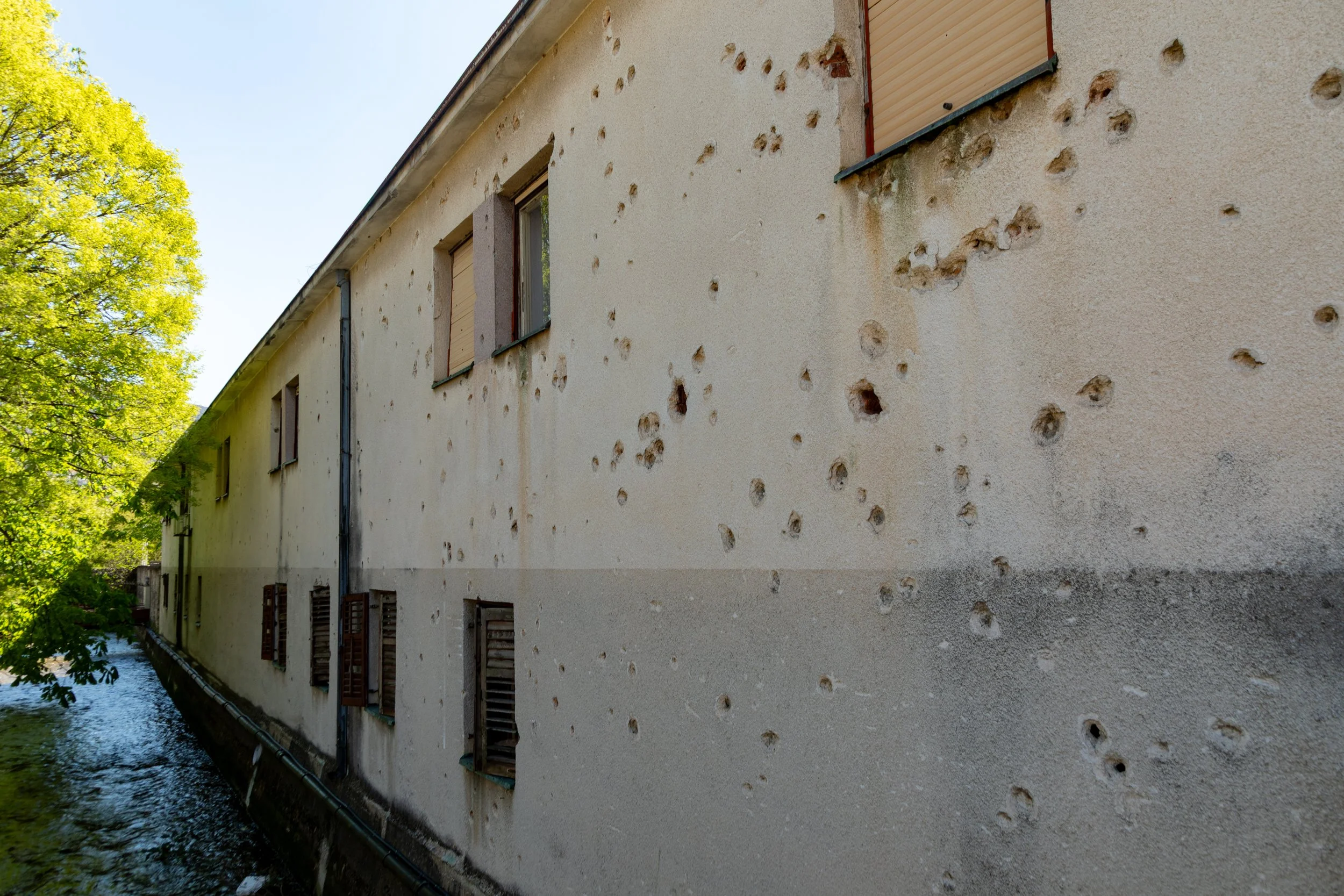
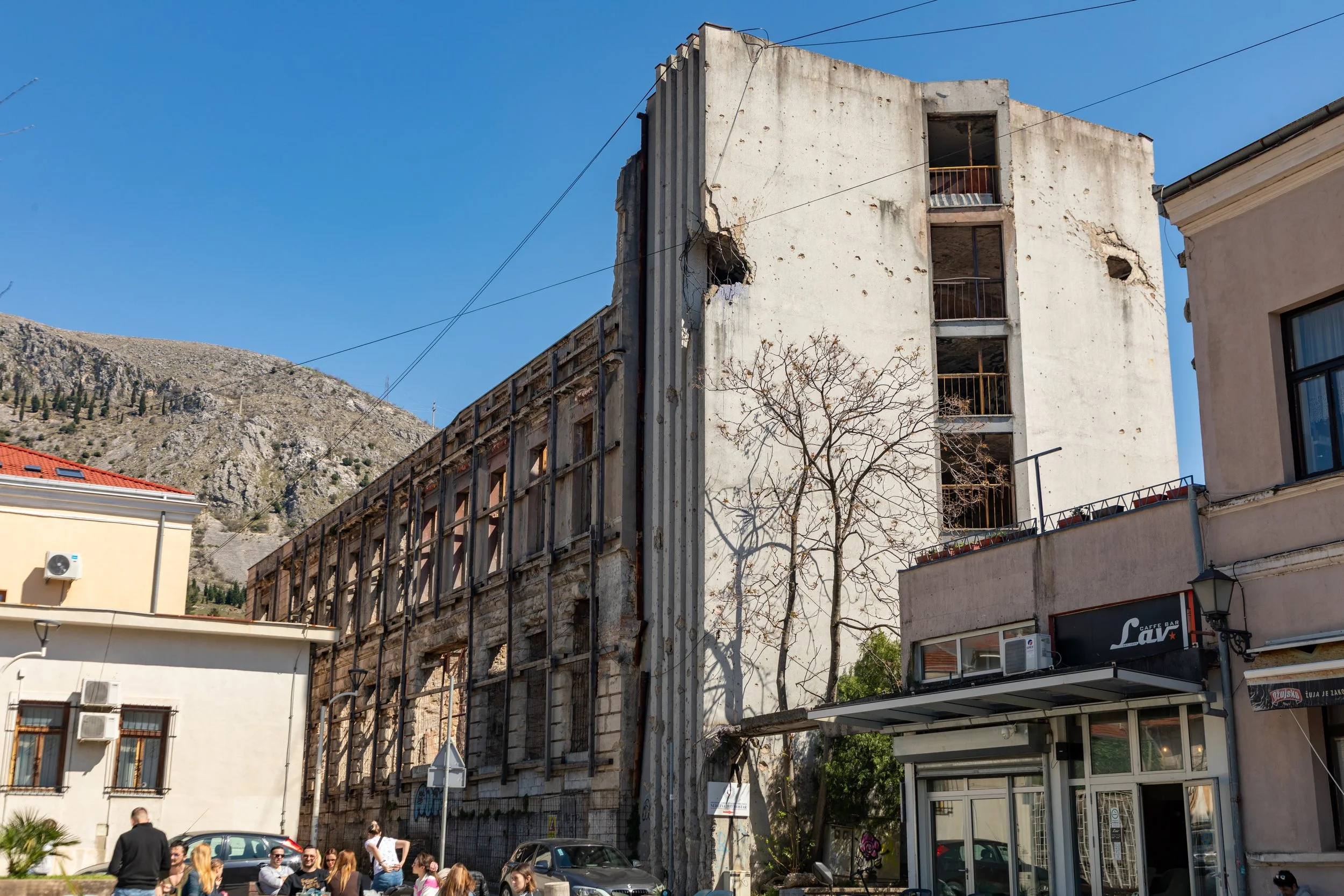
Arriving in Mostar, we noticed that, as in Sarajevo, there are still pockmarks on the buildings from the wartime shelling
Church of St. Peter and Paul, rebuilt after the 1990 war
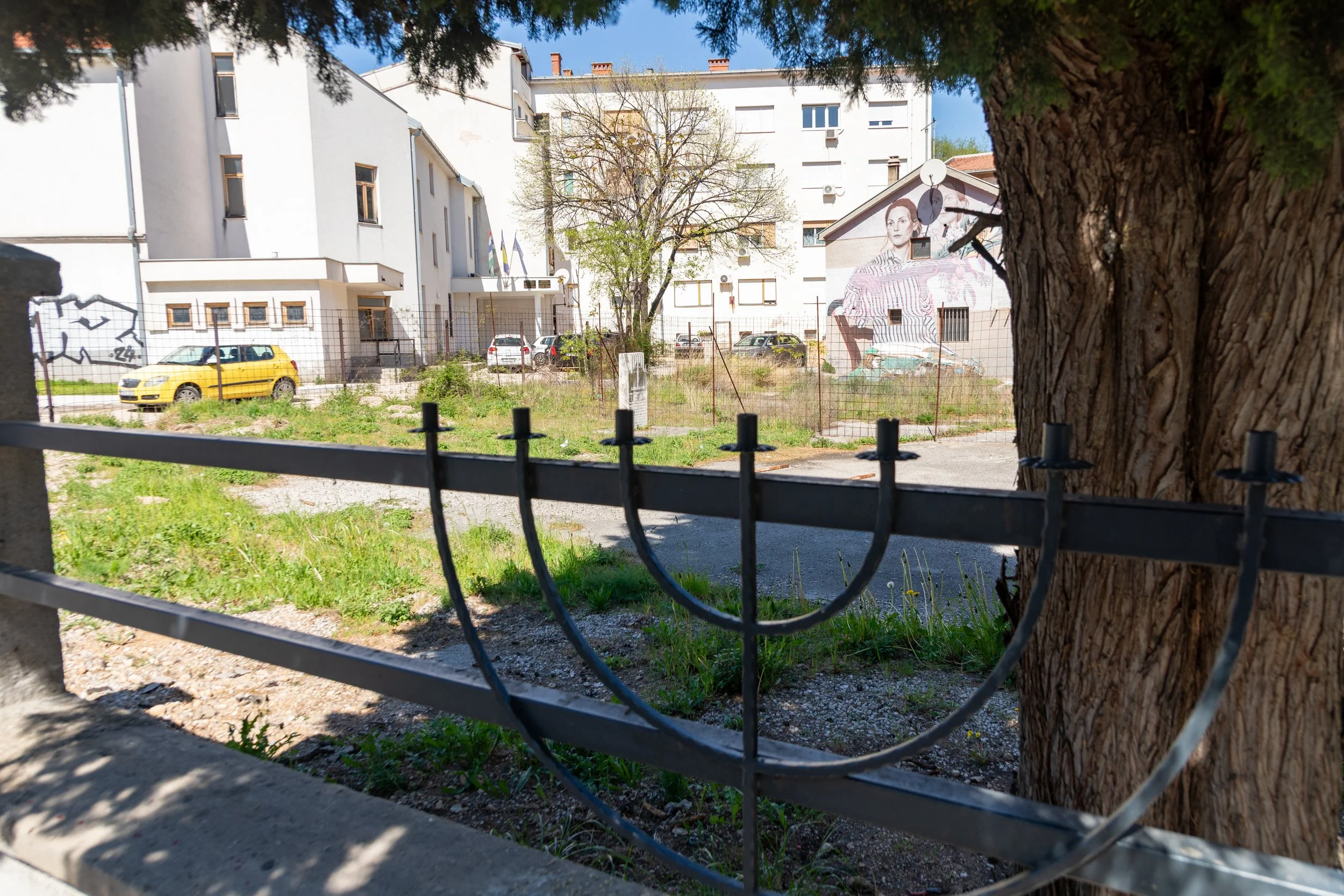
Site of a Jewish synagogue that once stood, before being damaged in World War II and later burned during the 90s wars
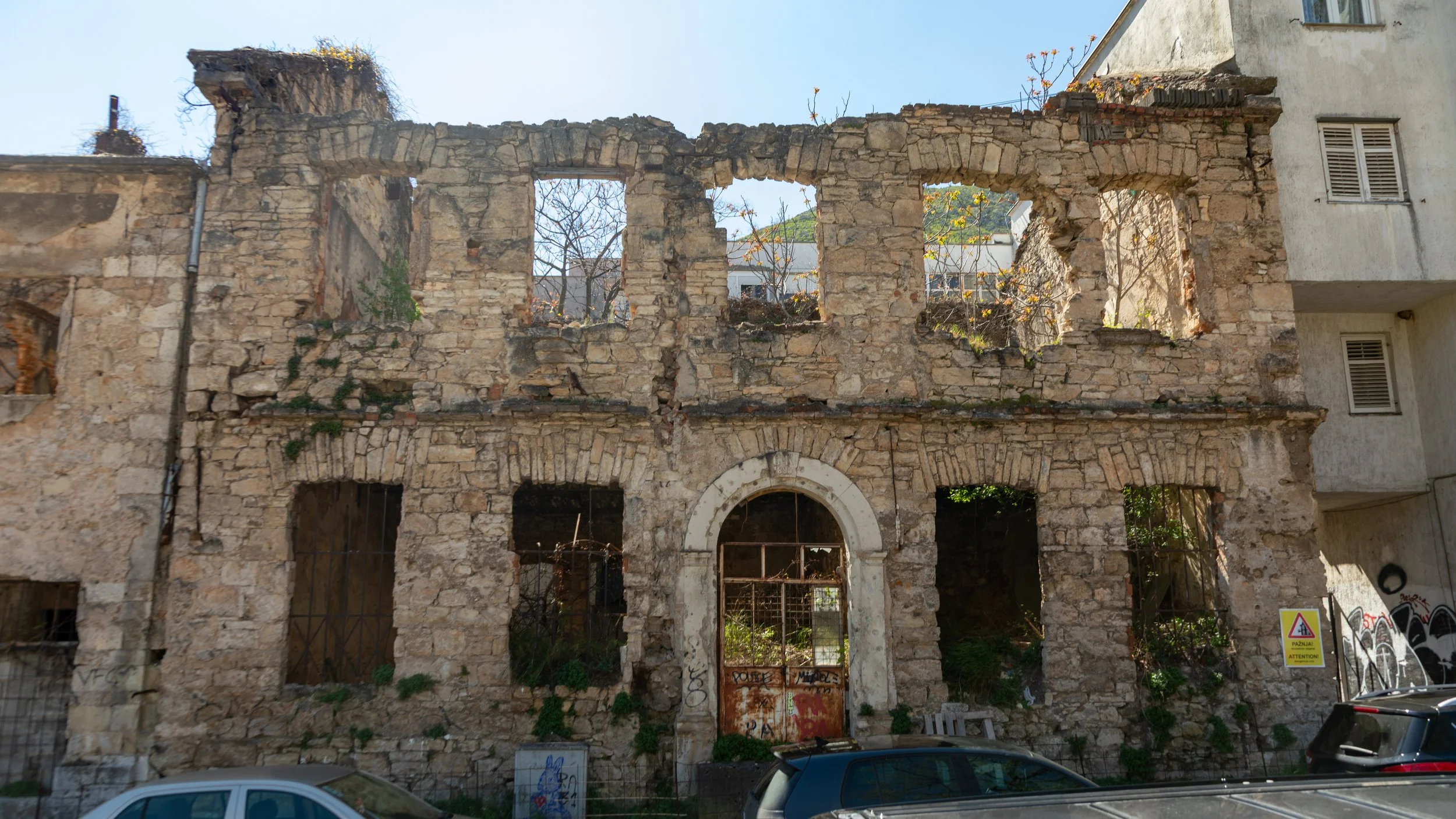
Remnant of the Bosnian War, which heavily affected Mostar, left standing as a reminder of the conflict
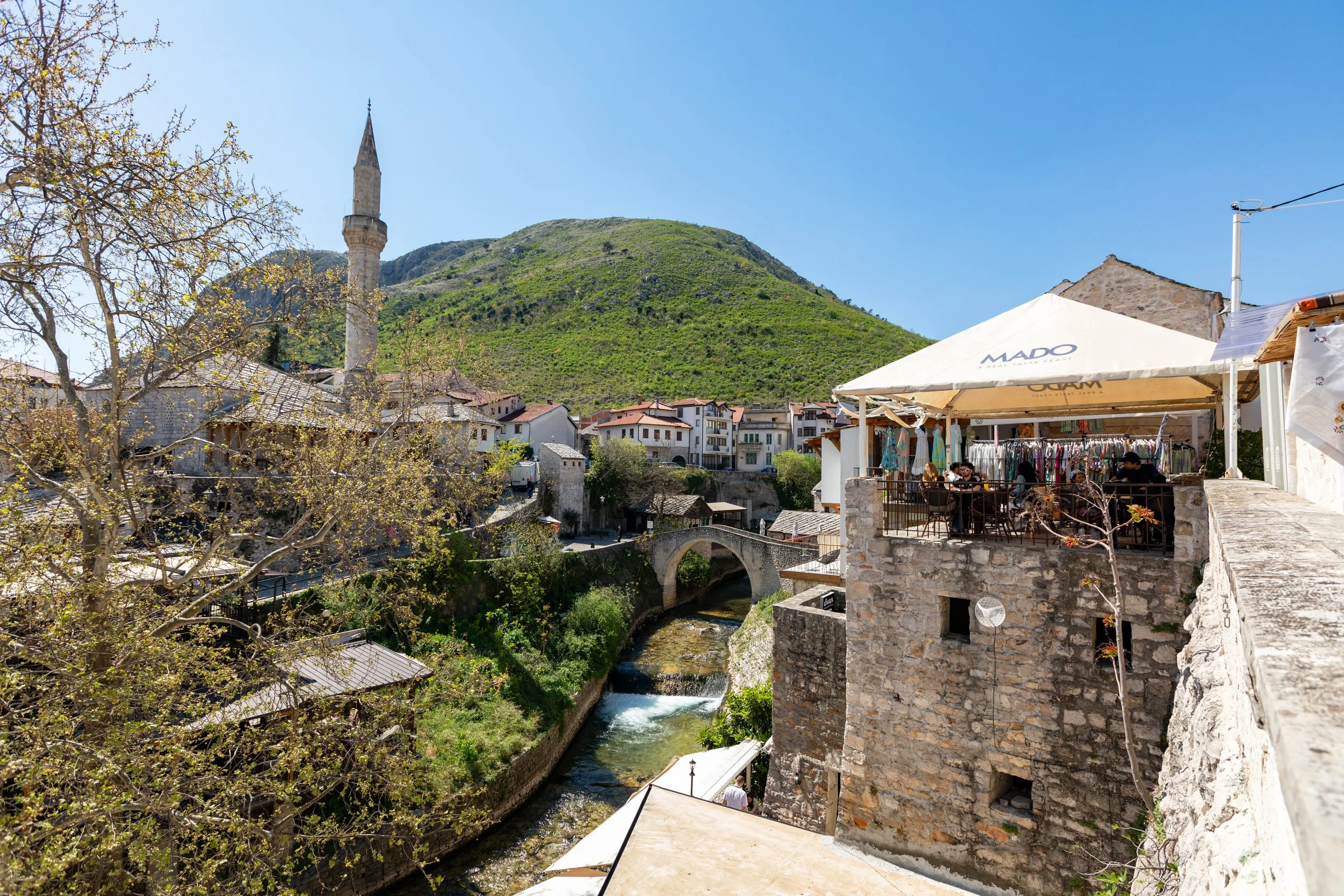
Looking down on the lower town and the Crooked Bridge, built to practice techniques before building the more famous Stari Most
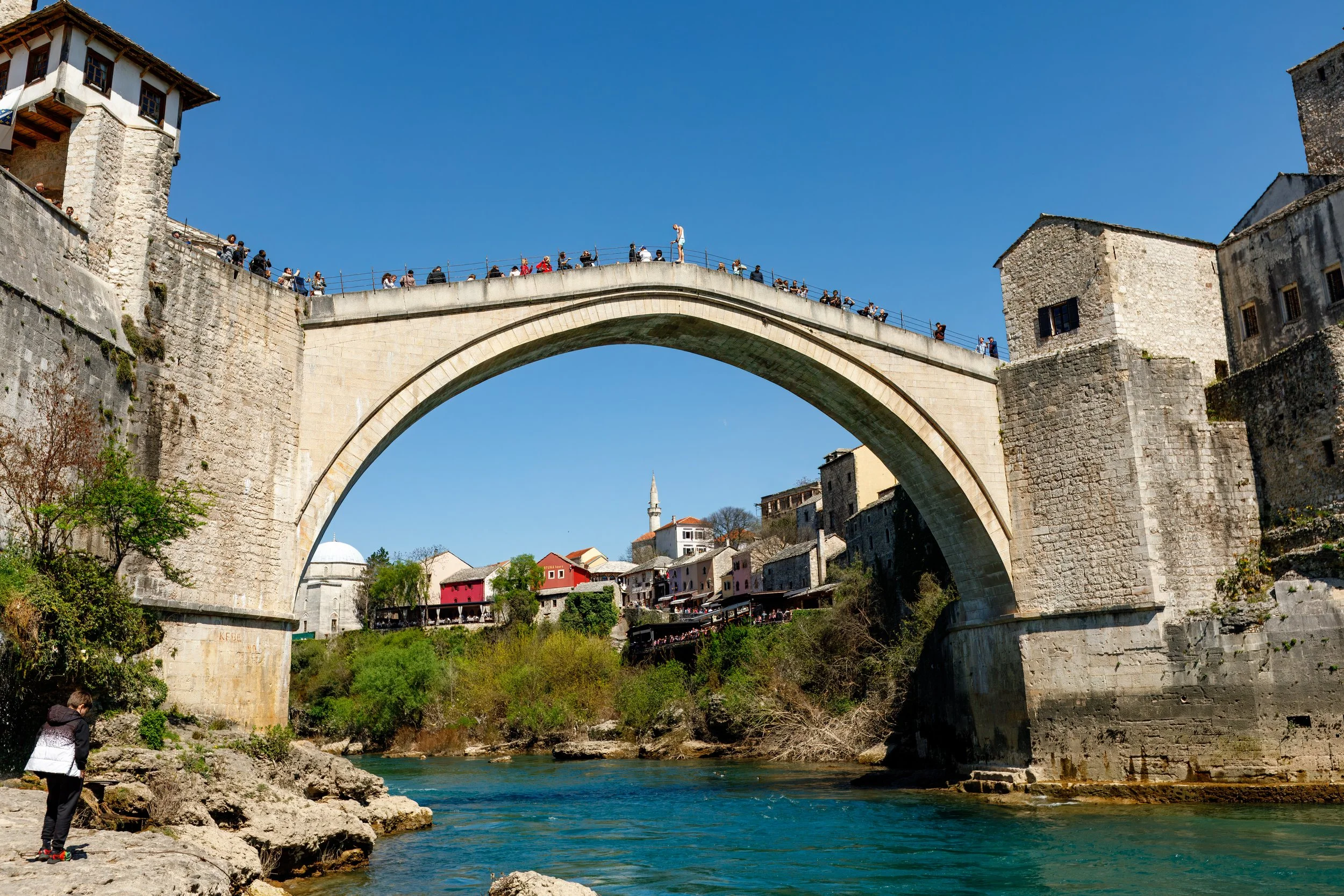
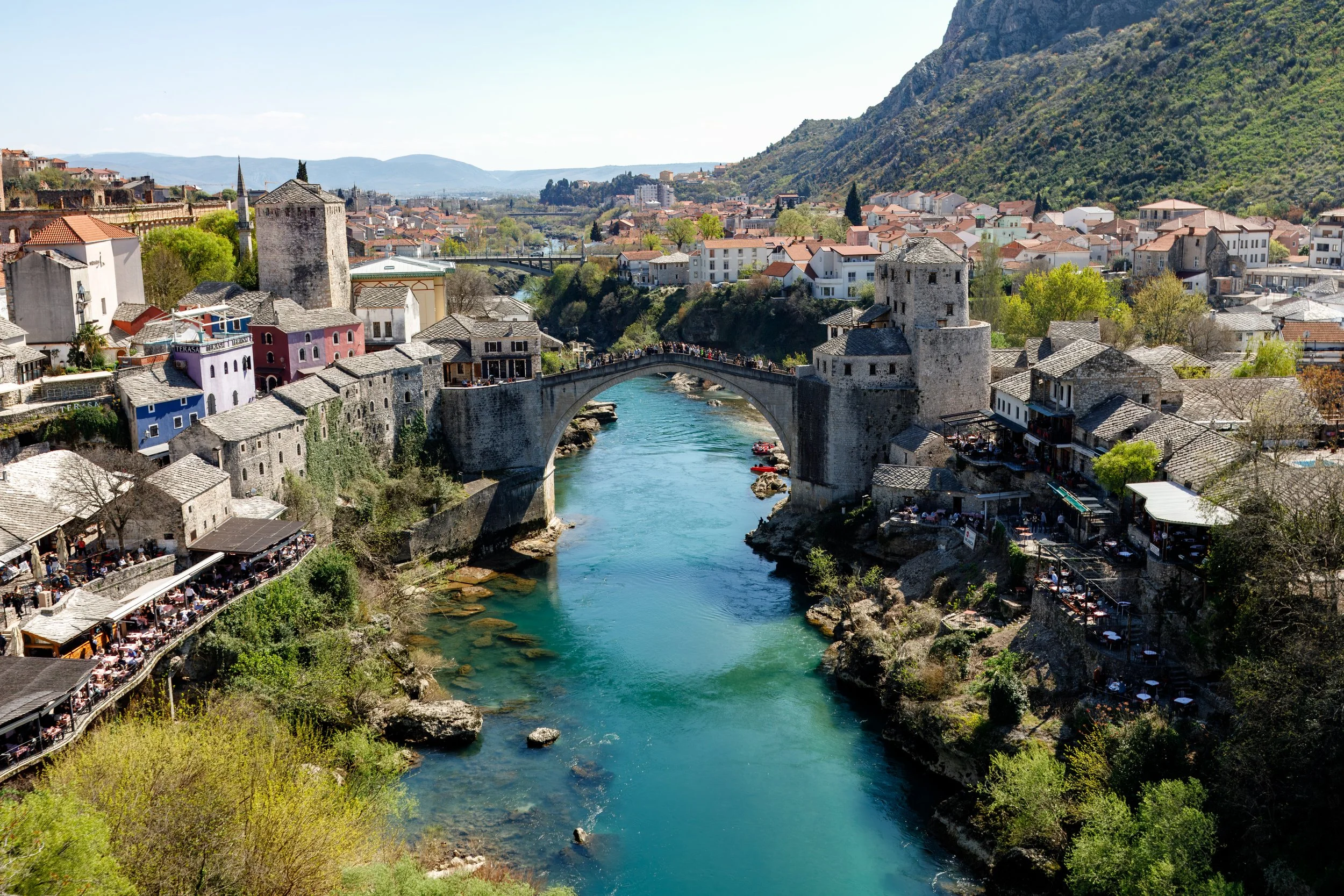
The iconic Stari Most (old bridge) packed with tourists and a “diver” trying to get some attention with intention of a leap into the cold water below
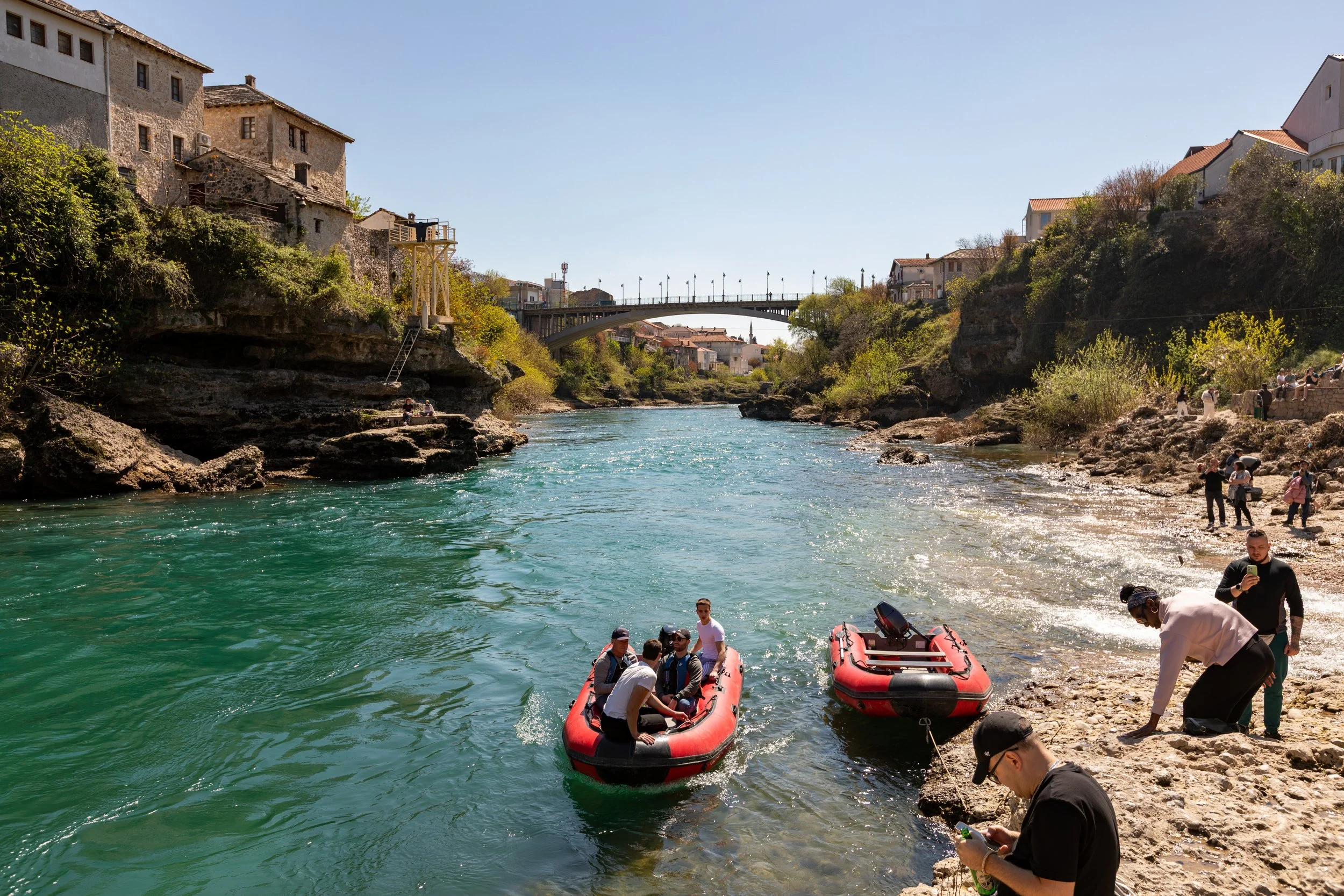
From below Stari Most, tour boats make trips under the famous bridge that stood for 400 years before being shelled into collapse in November 1993
From the top of the bridge you can see how the old town towers over the rocky cliff
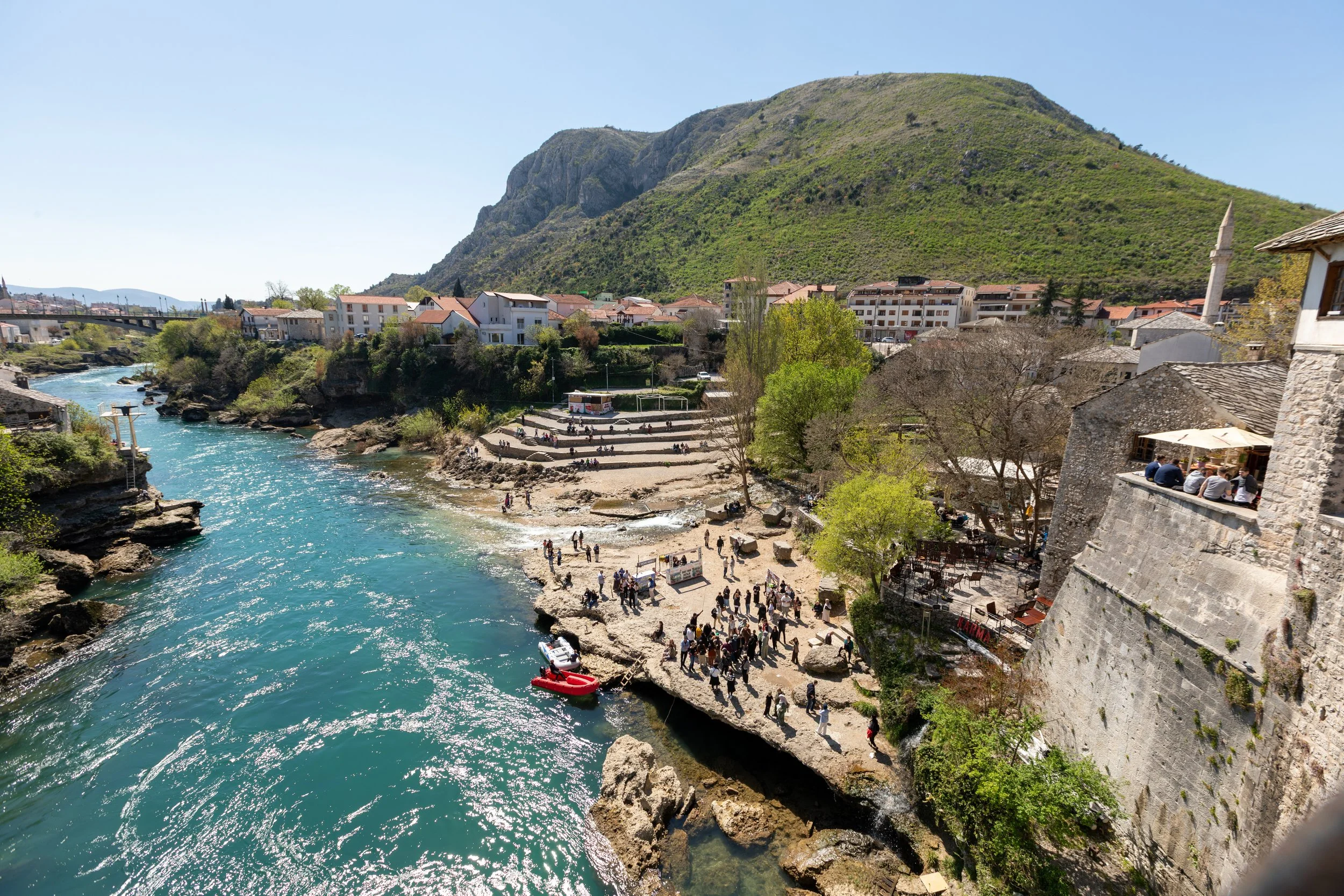
Looking below where the tourists gather to capture their perfect shot of the iconic bridge
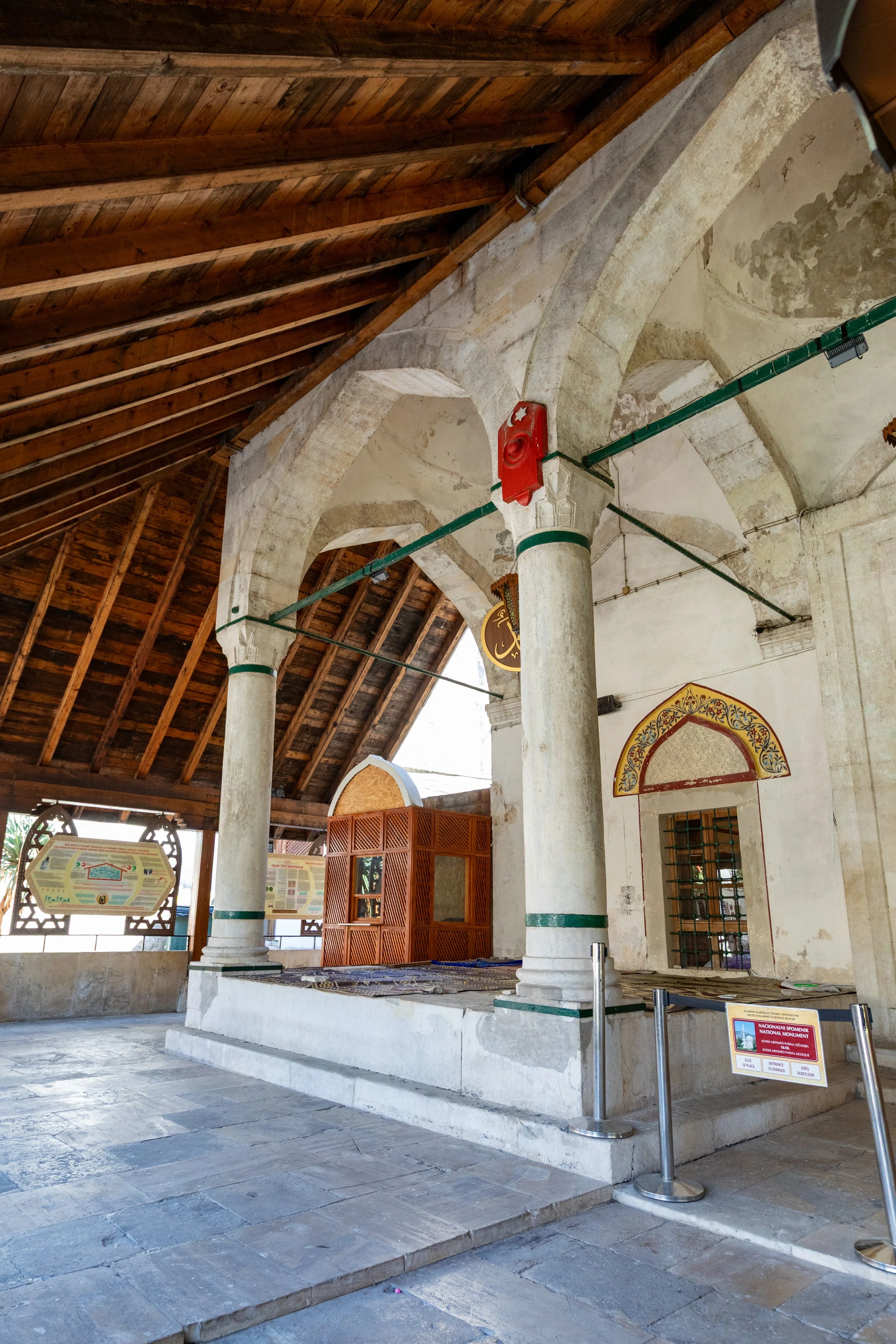
Koski Mehmed Pasha Mosque, constructed between 1617 and 1619
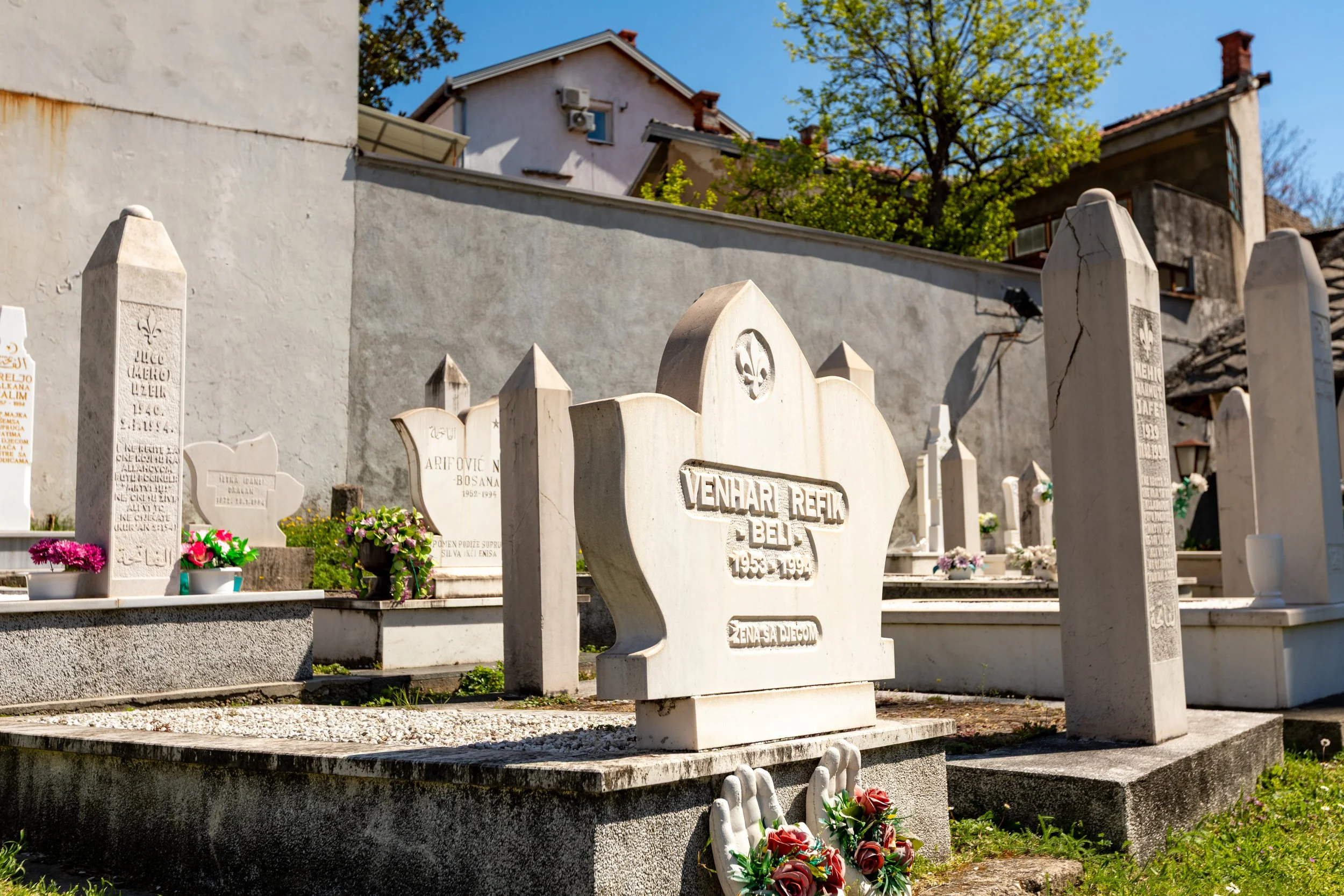
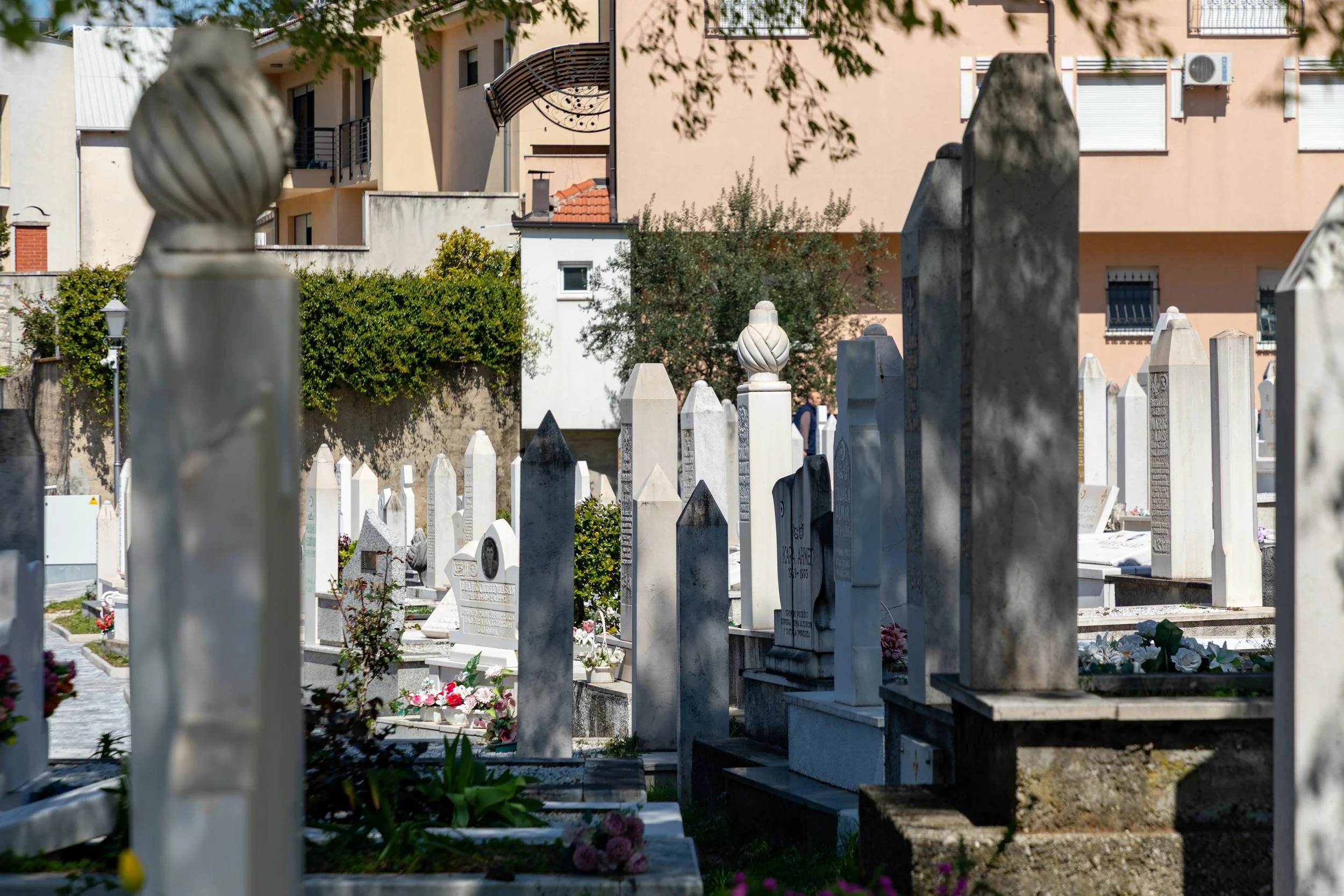
The New Muslim Cemetery was a park before the Yukoslav Wars; all the gravestones are dated 1993-1995.
The expansive graveyard, a reminder of the significant toll of the war
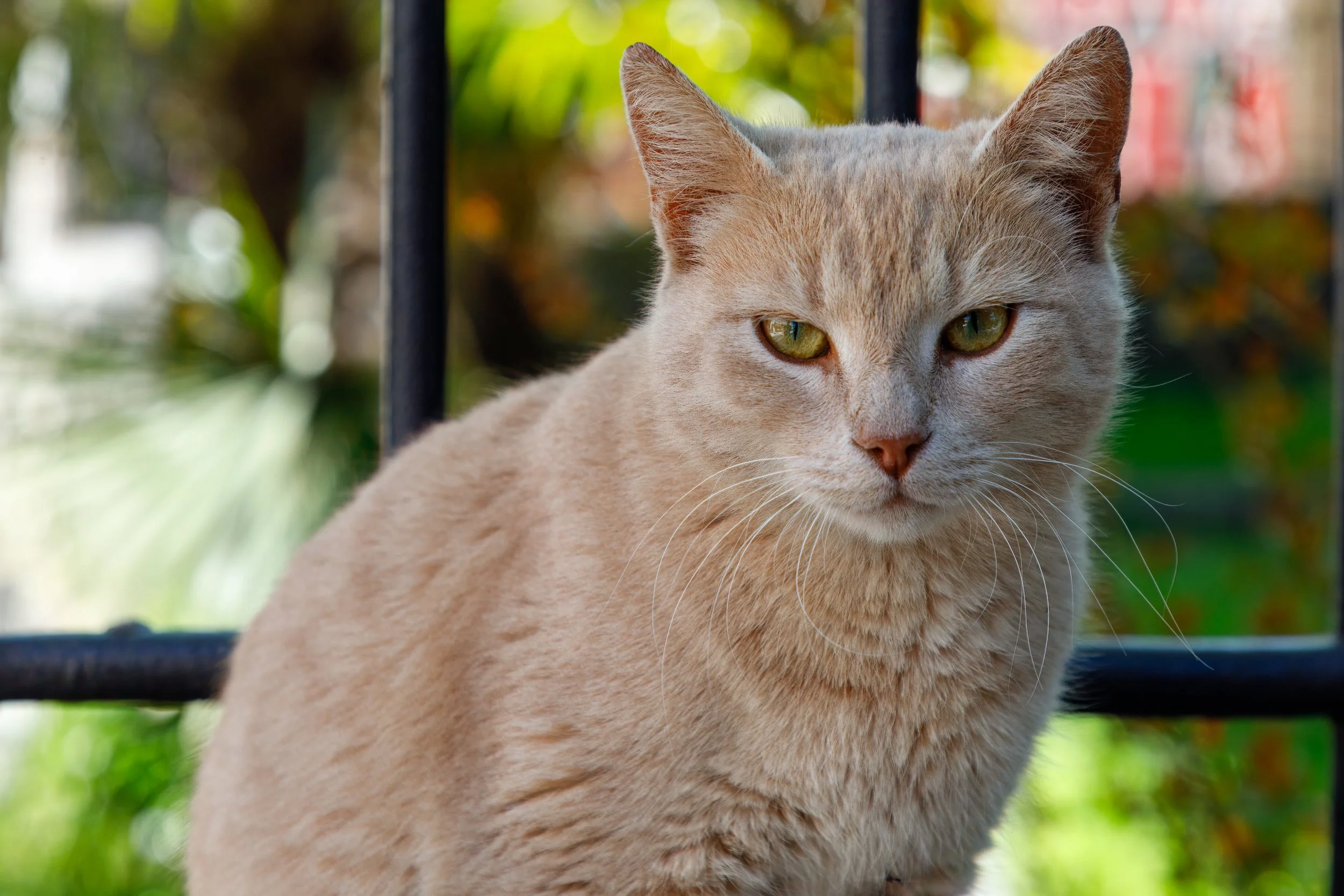
Another local cat strolling the old city
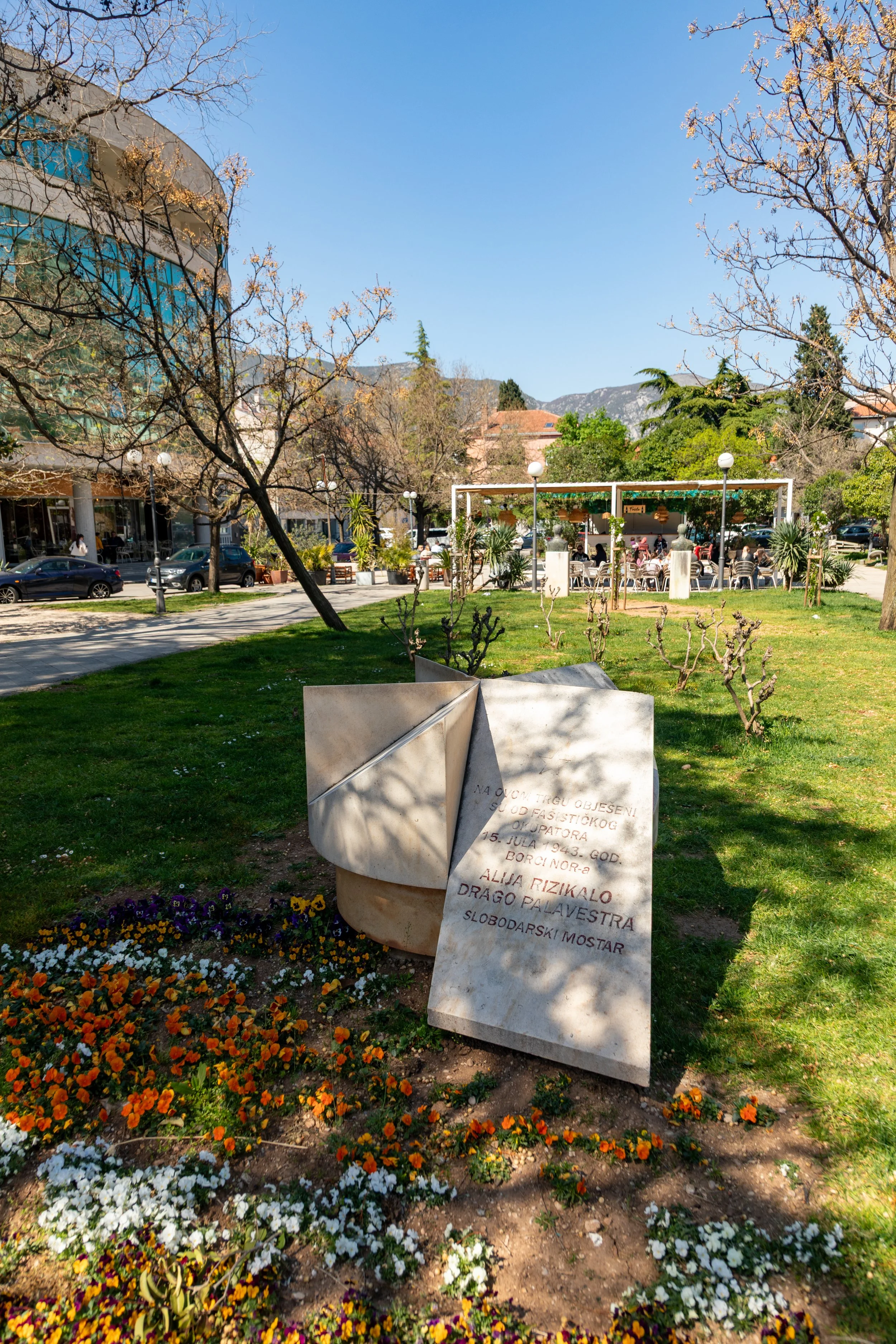
Musala Park monument to those fallen during WWII
Ruins show significant damage from shell fire during the Yugoslav War, preserved as a reminder of the conflict
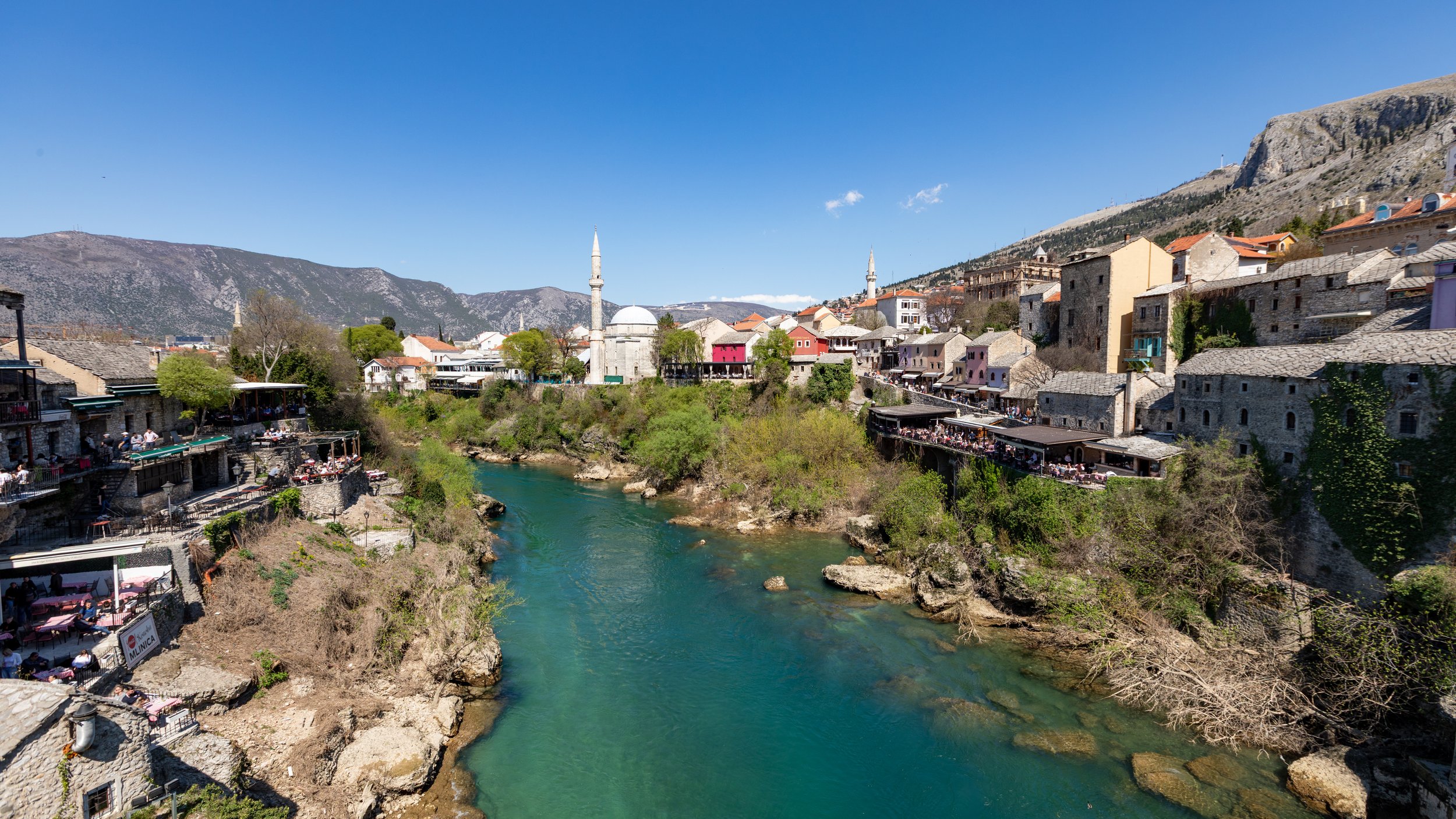
Koski Mehmed-pasha’s Mosque grounds provide a perfect viewpoint for the old city and Stari Most, rebuilt in the original style between 2001-2004.
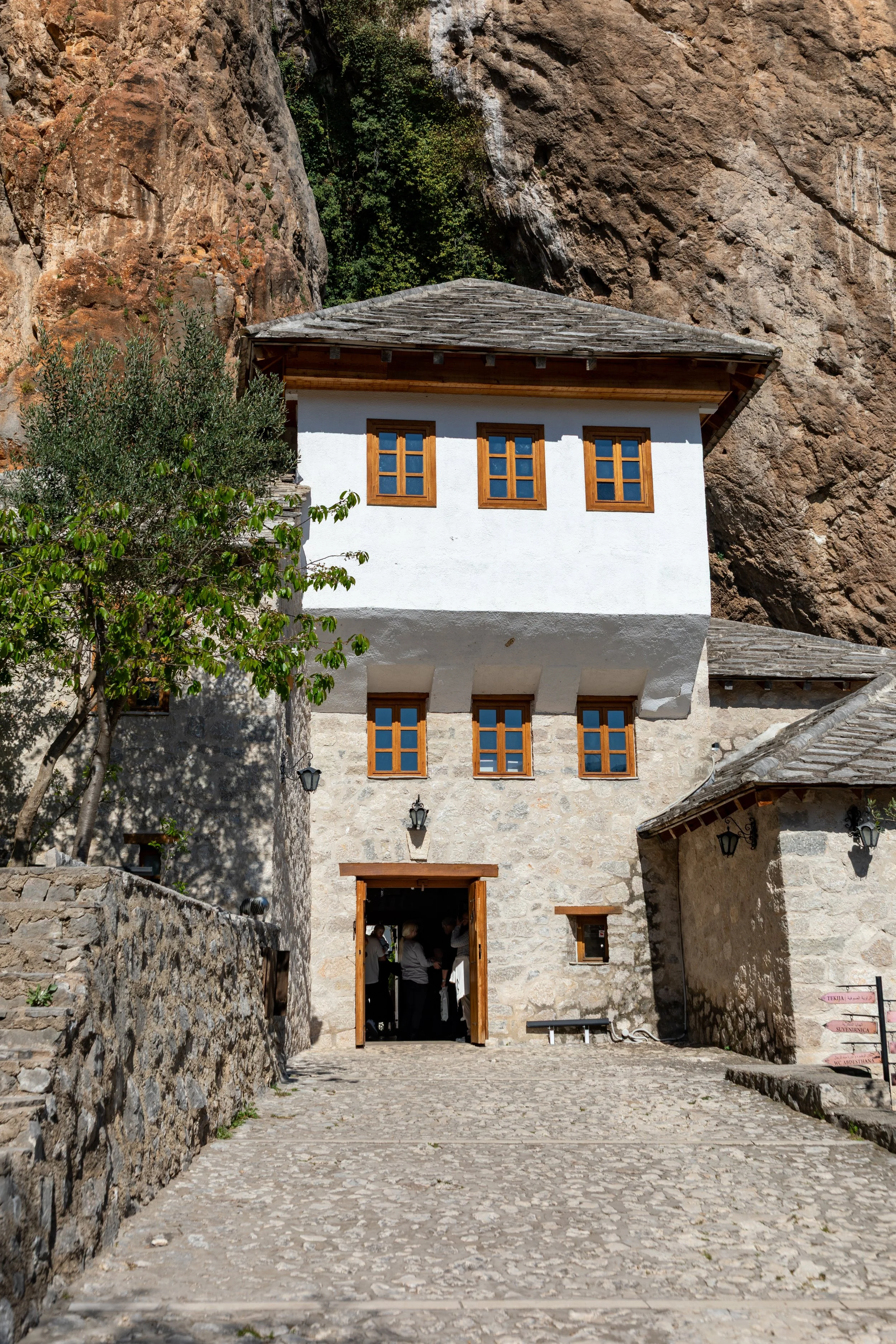
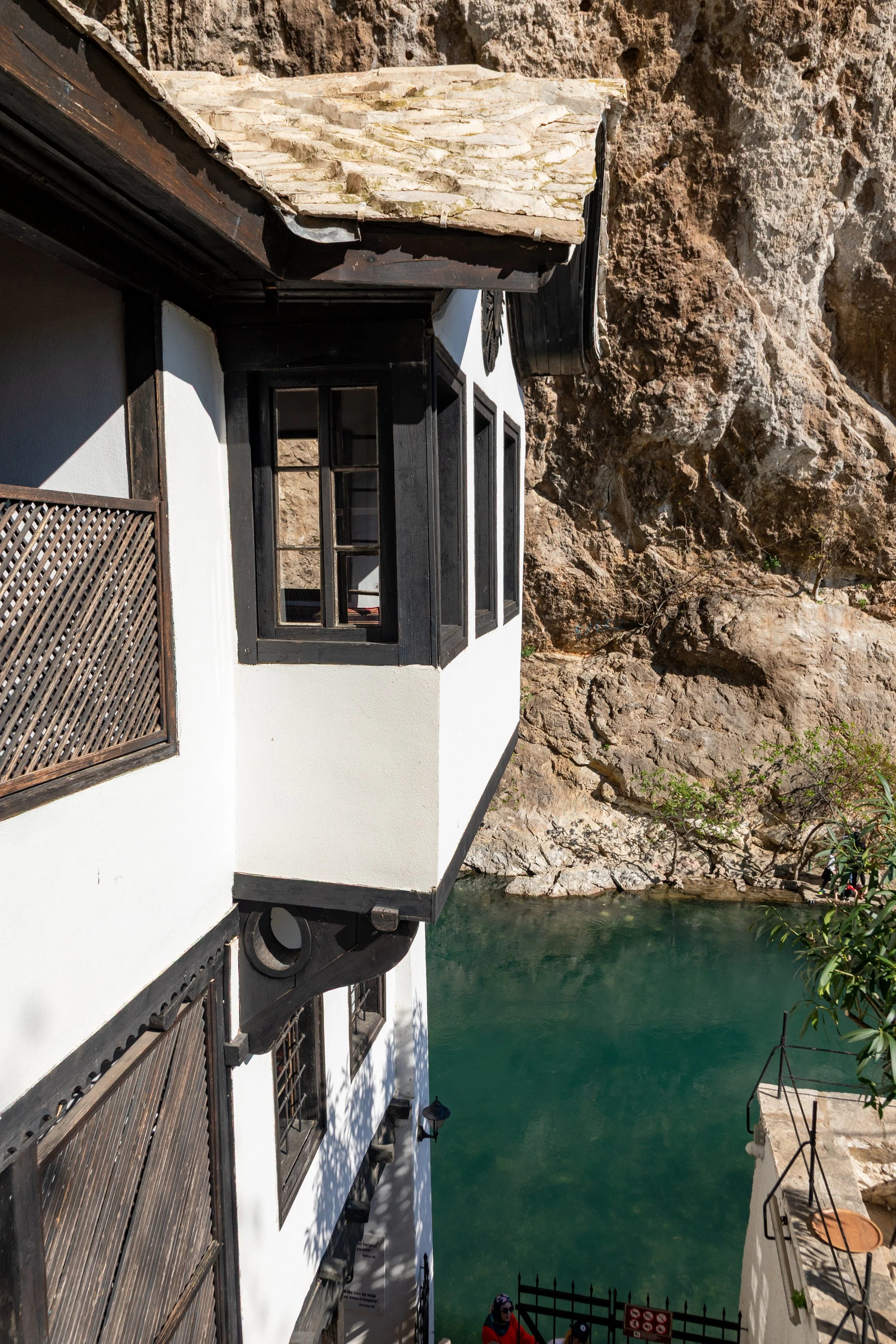
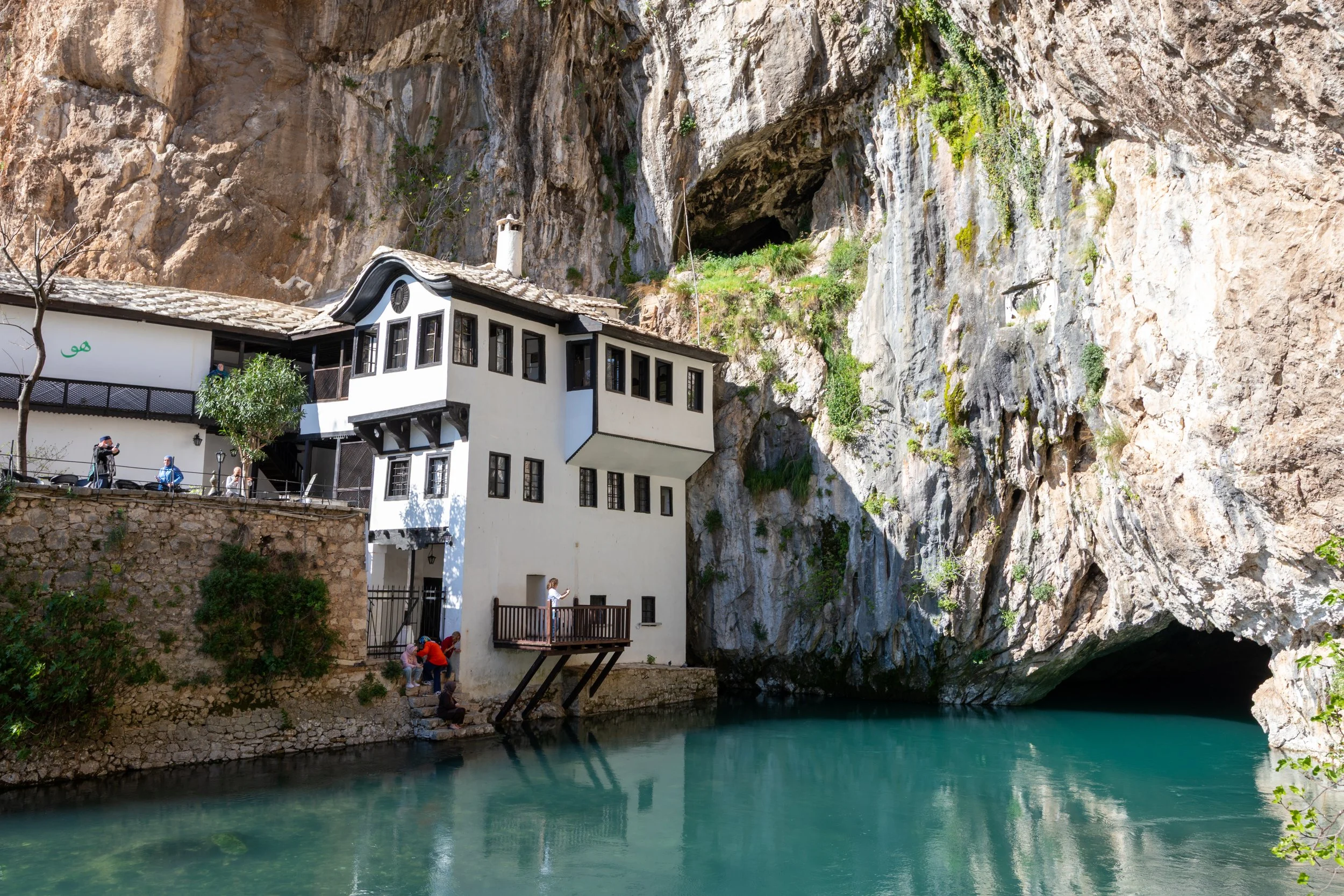
Further outside Mostar is Blagaj Tekke, a monastery built for the Dervish in the 14th century
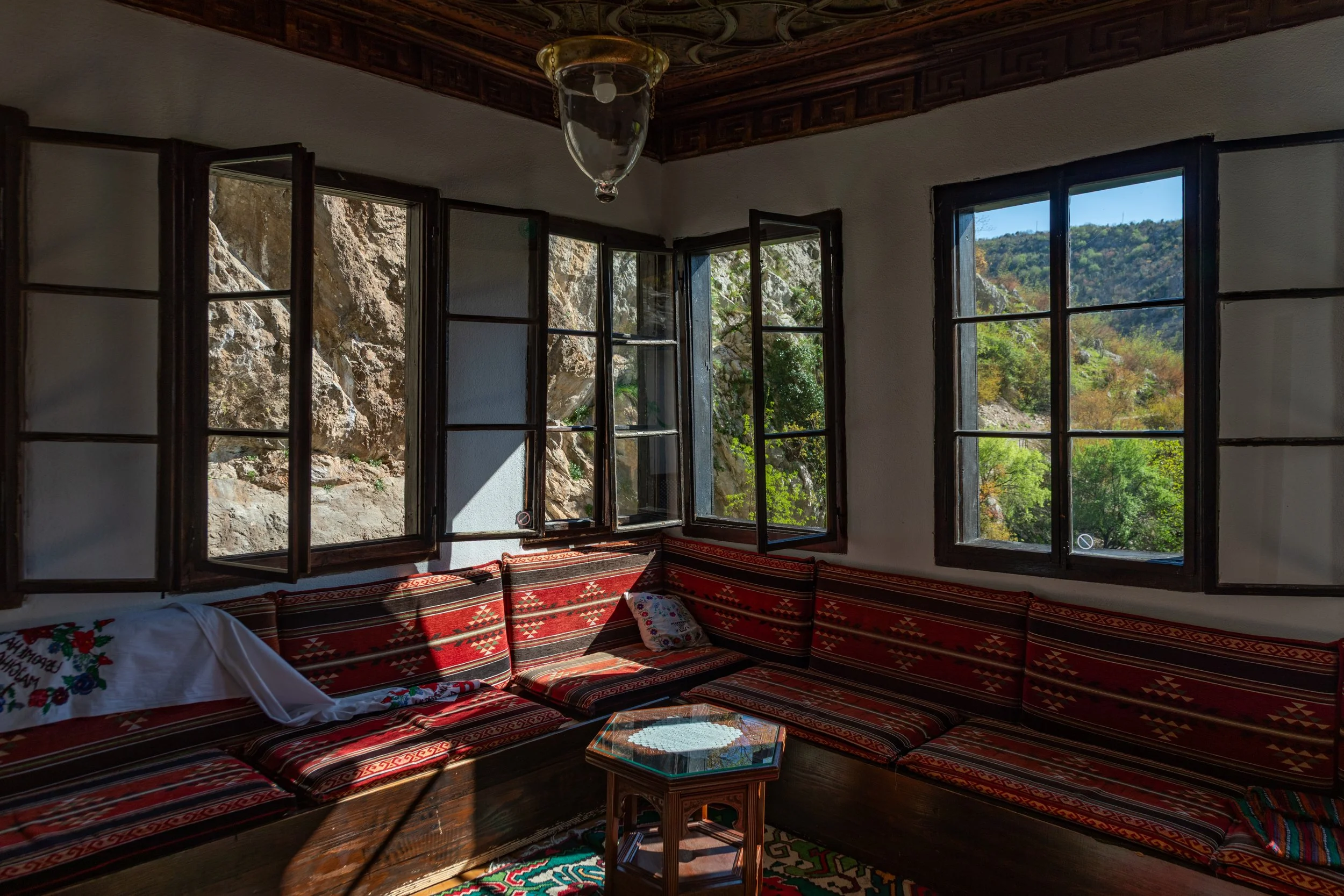
Exploring the interior
Looking out on to the building and the spring of the Buna river
Across the river, we get a good perspective of how the monastery was built into the cliff
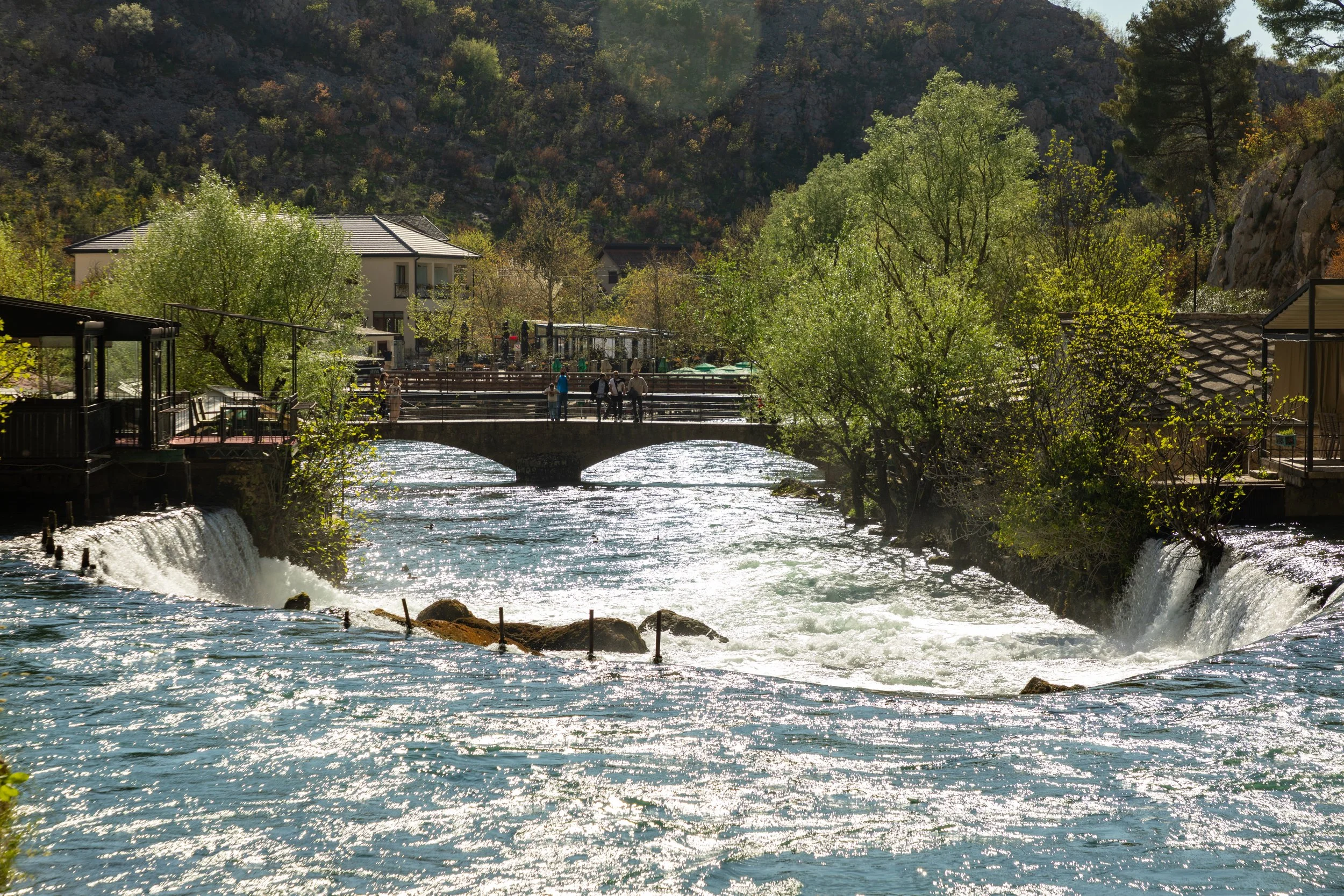
Buna River flowing away from the monastery
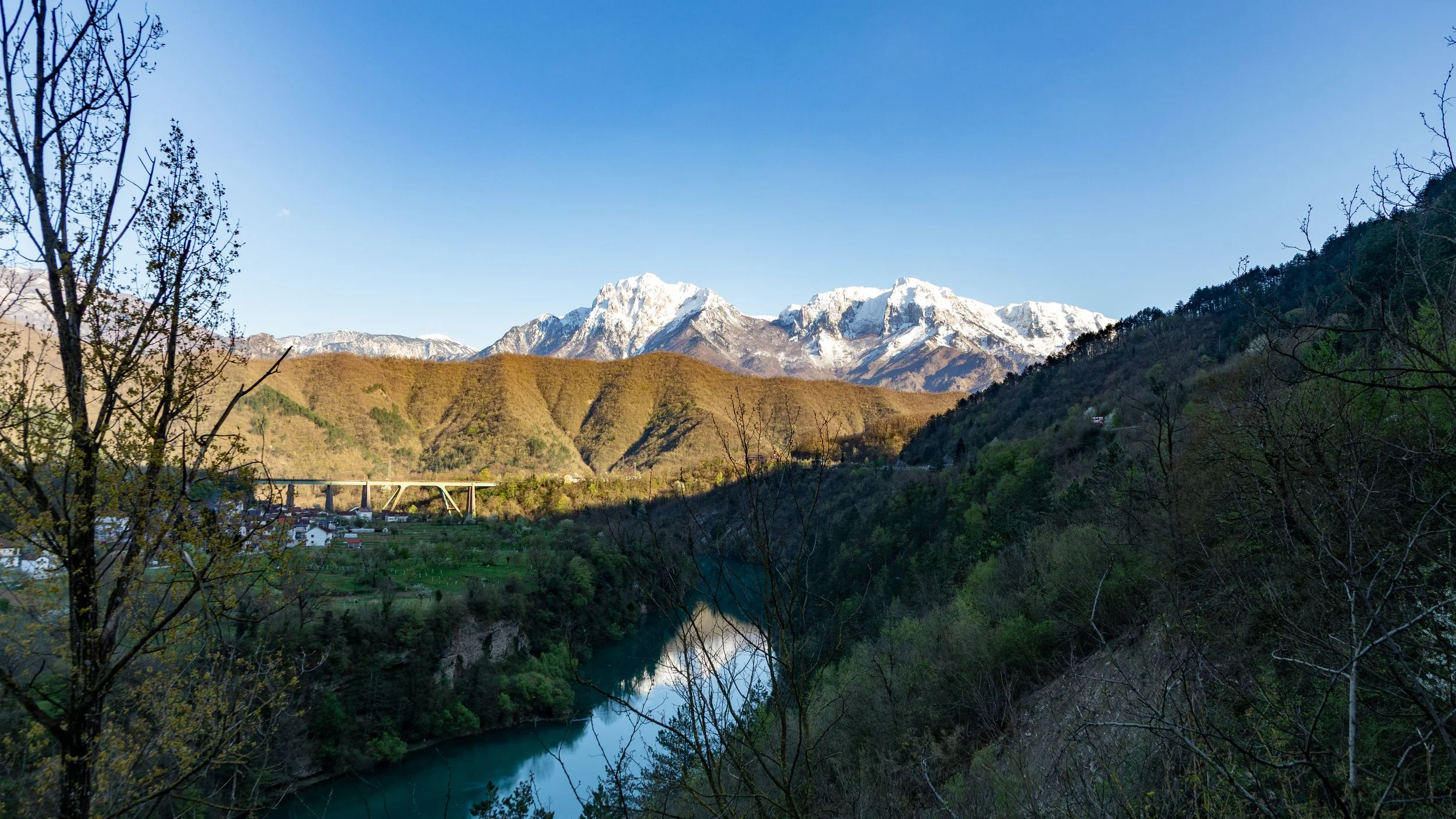
Stopping again at Jablanica and Neretva River with bluer skies
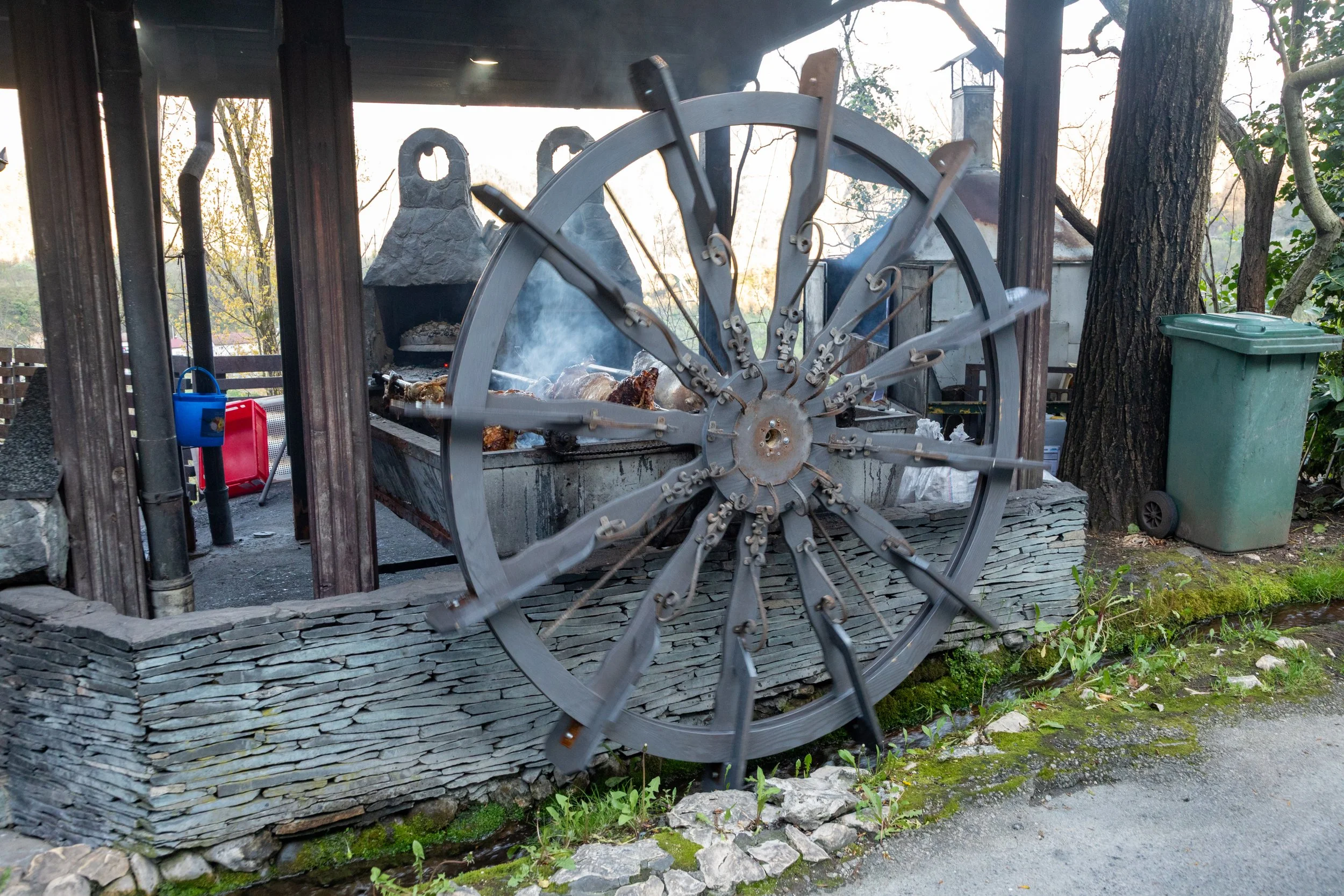
Restaurant powering a turning spit with a water wheel
We enjoyed our time exploring outside of Sarajevo and had our car back at the airport before dark. Unfortunately, there was a football match in the city that disrupted the regular bus service, so it took us a little while to find our way back to the hotel. With a long day behind us, we just grabbed dinner at the hotel before getting some rest.
April 5
We started Easter Sunday with a nice breakfast in the hotel and planned a full day exploring the sights of Sarajevo that we hadn’t covered on Friday.
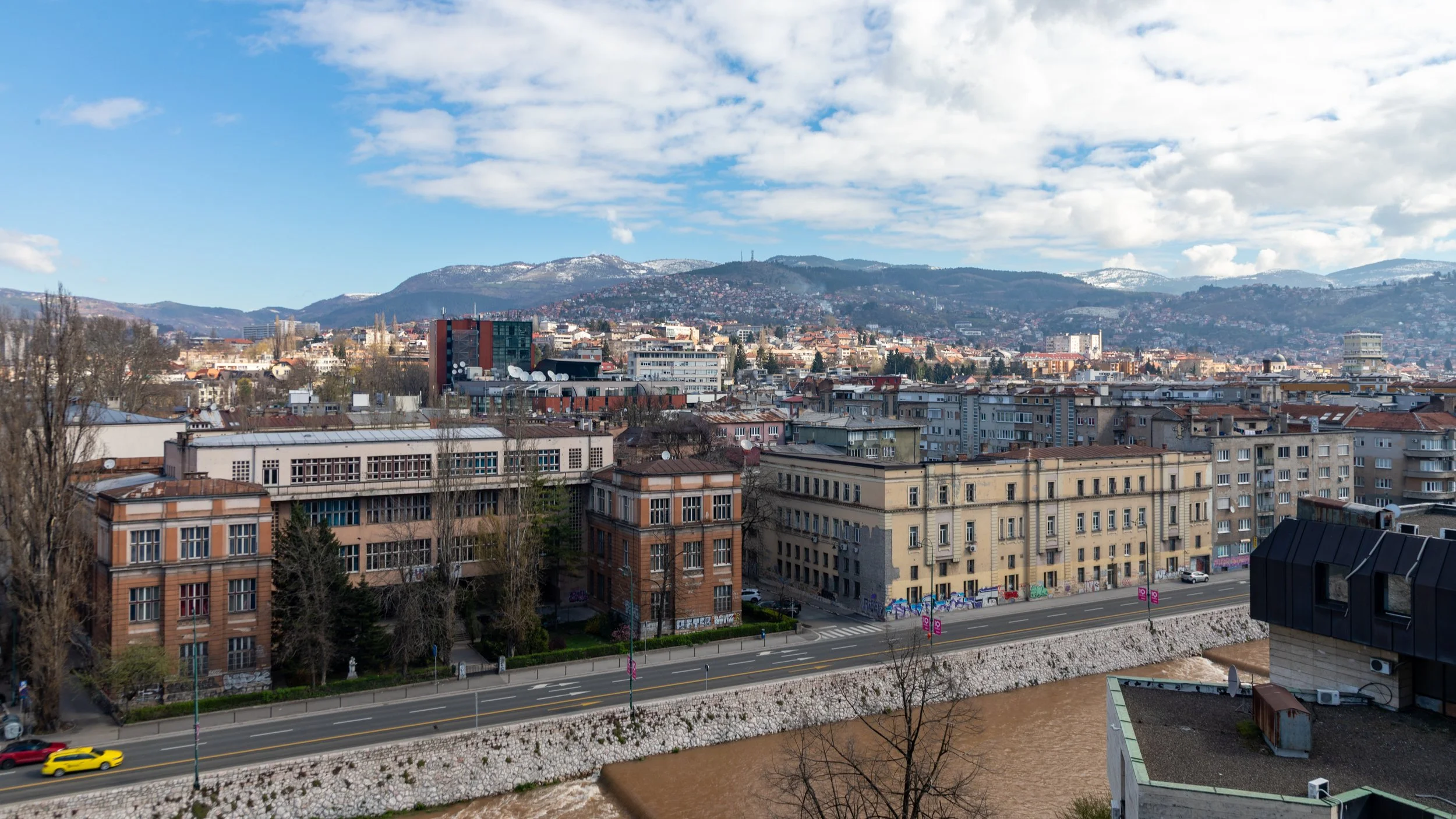
View of Sarajevo and the surrounding mountains from our hotel roof
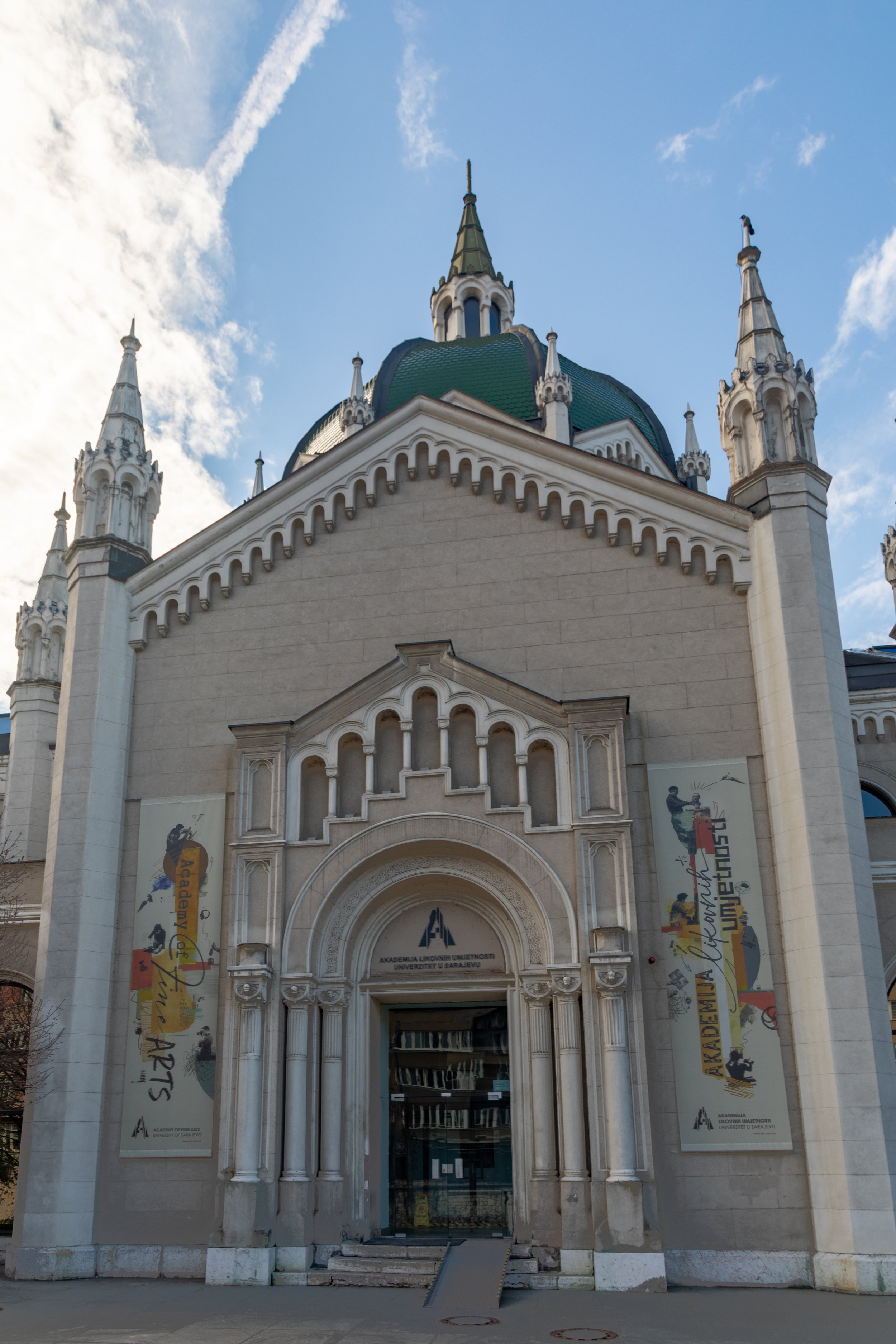
Academy of Fine Arts Sarajevo, originally built as an Evangelical church
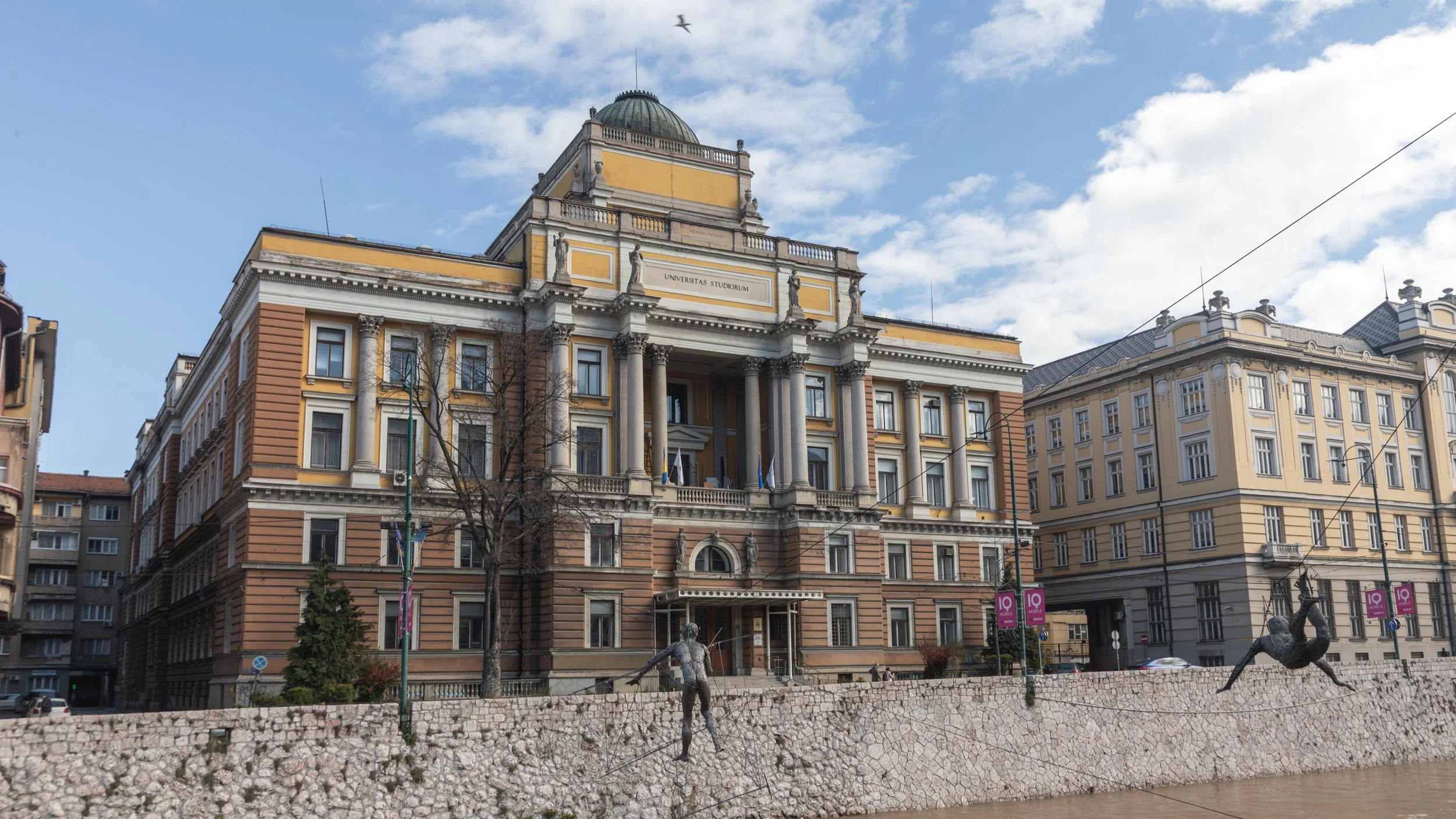
Rectorate of the University of Sarajevo and the Faculty of Law, constructed in the 1850s, with statues hanging over the Miljacka River
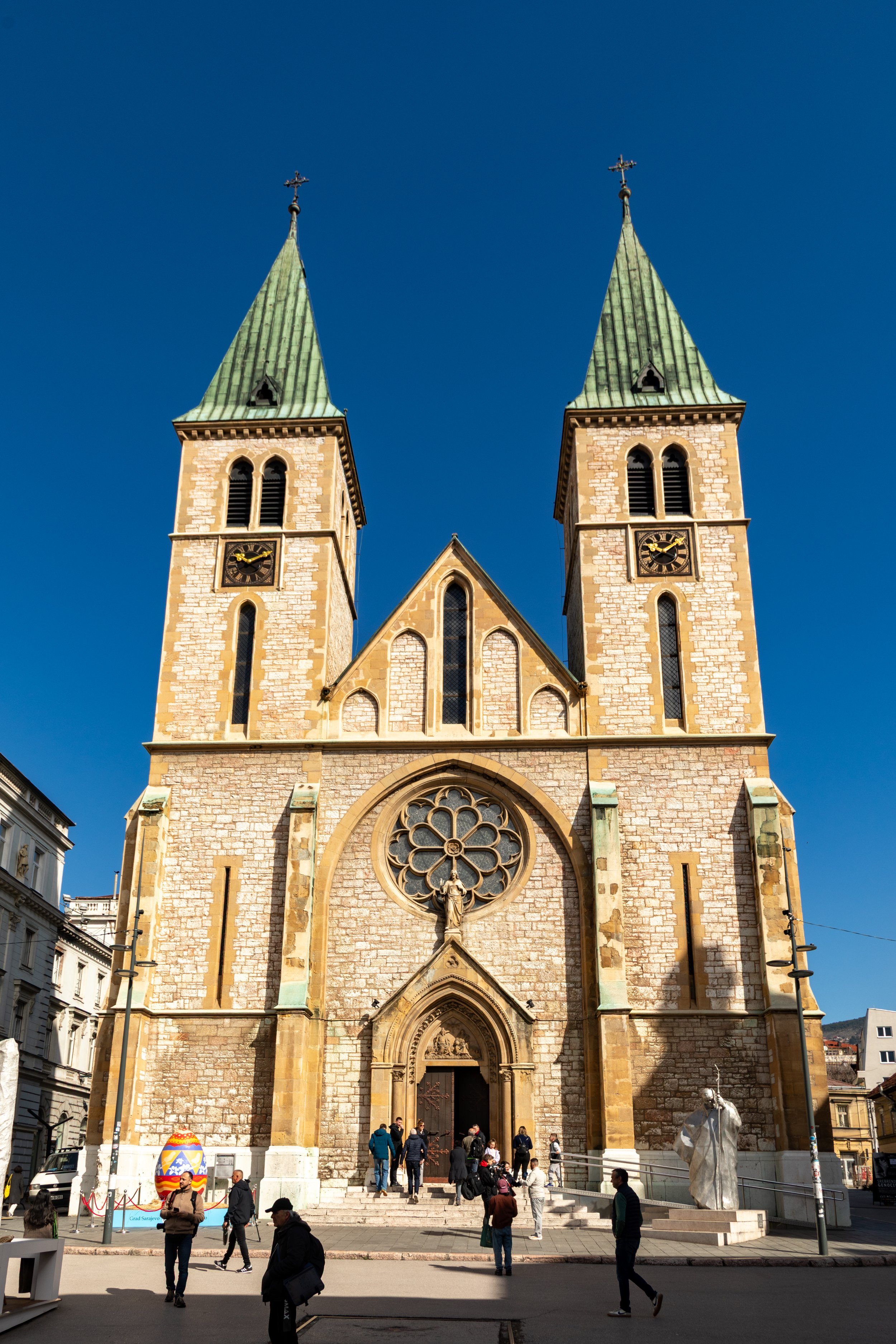
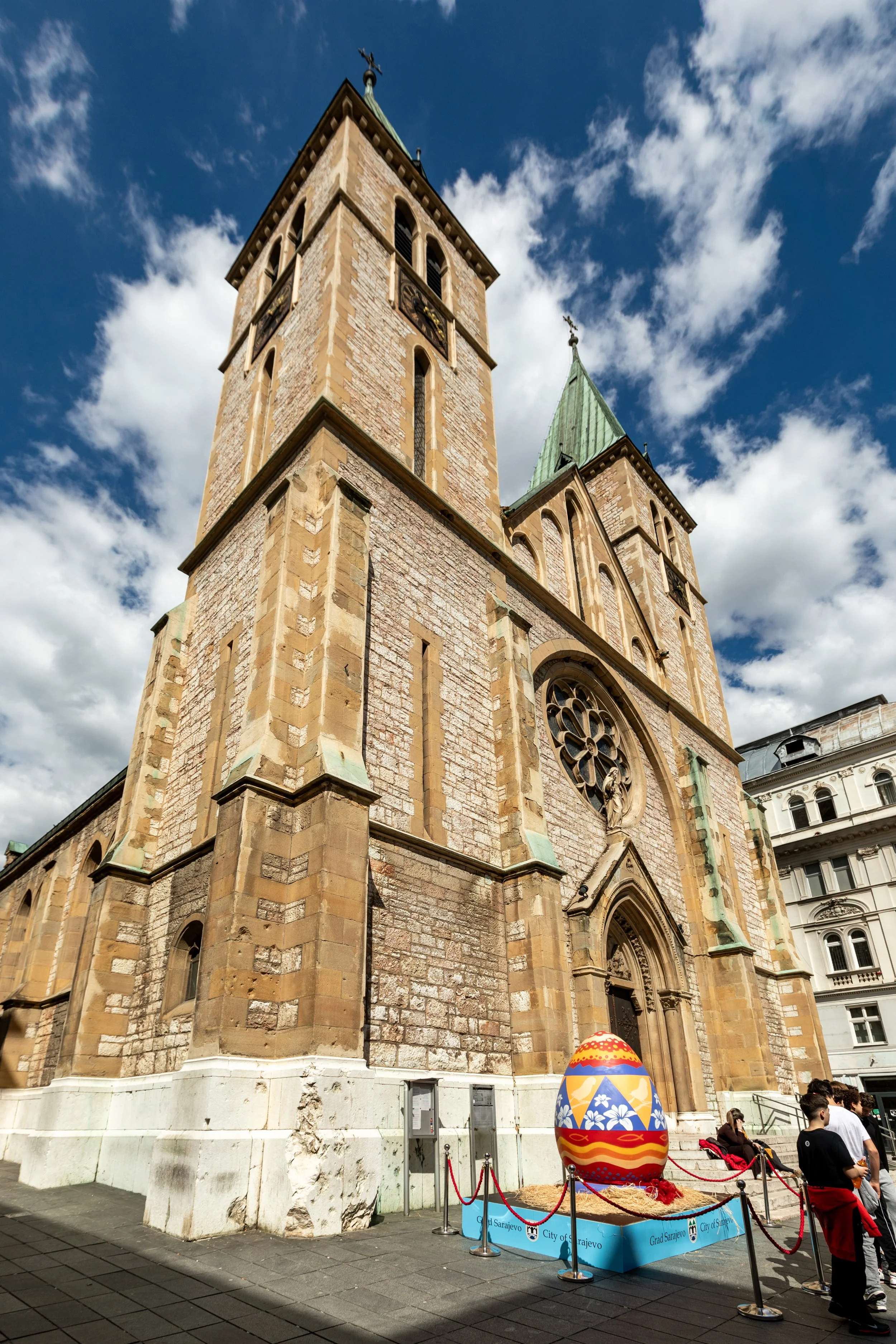
Sacred Heart Cathedral, in the Gothic Revival style, completed in 1889
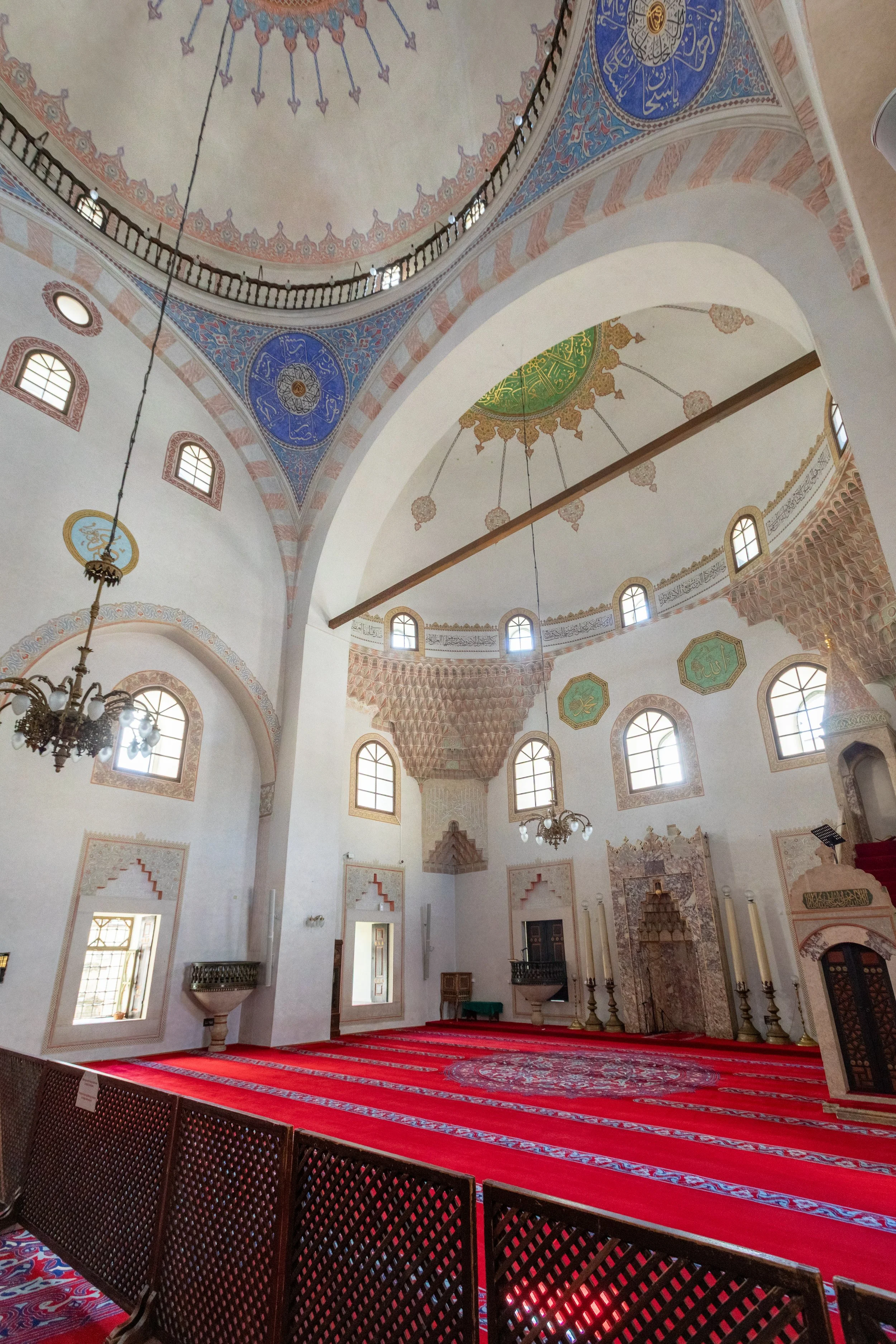
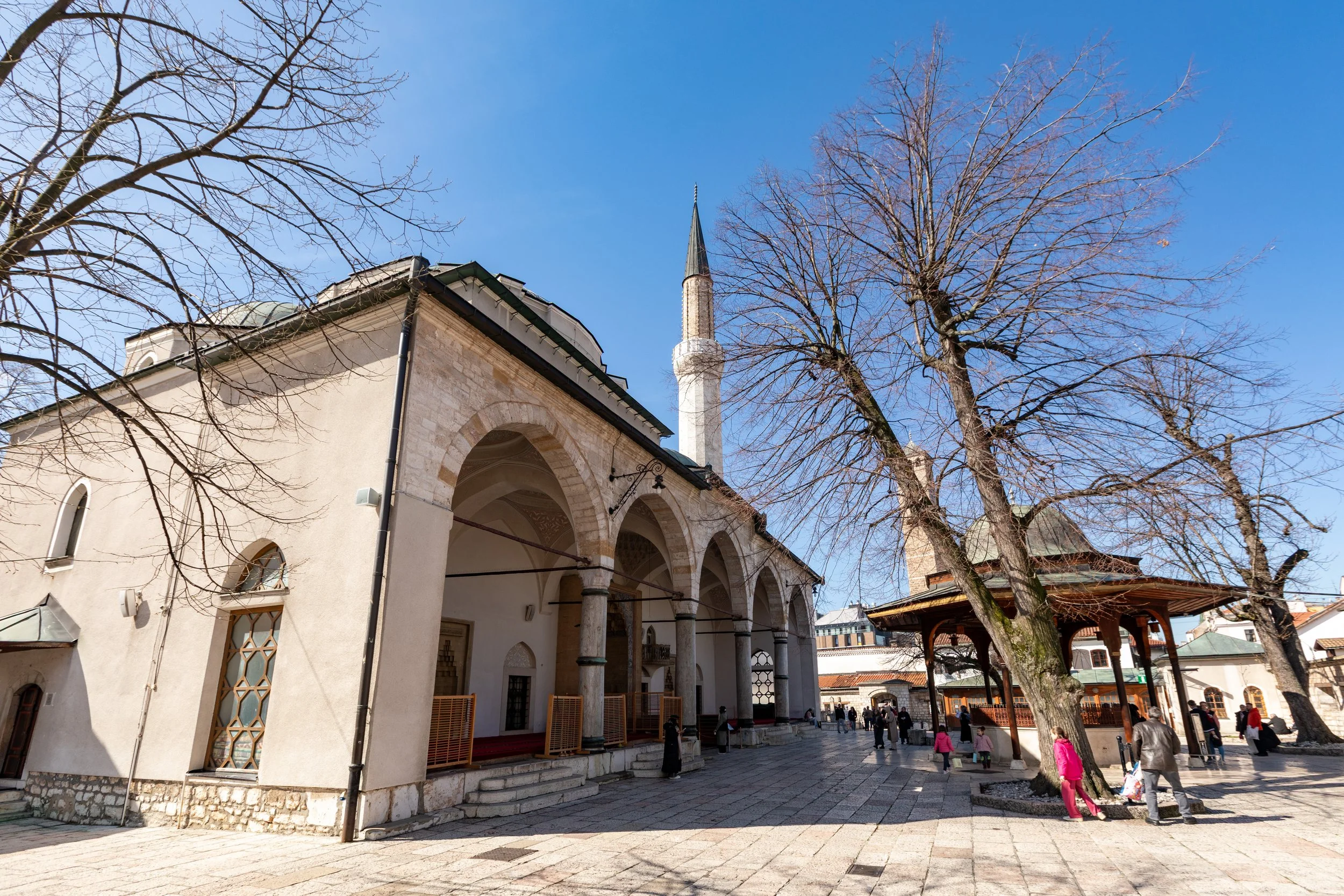
Interior of the historic (1531) Gazi Husrev-beg Mosque
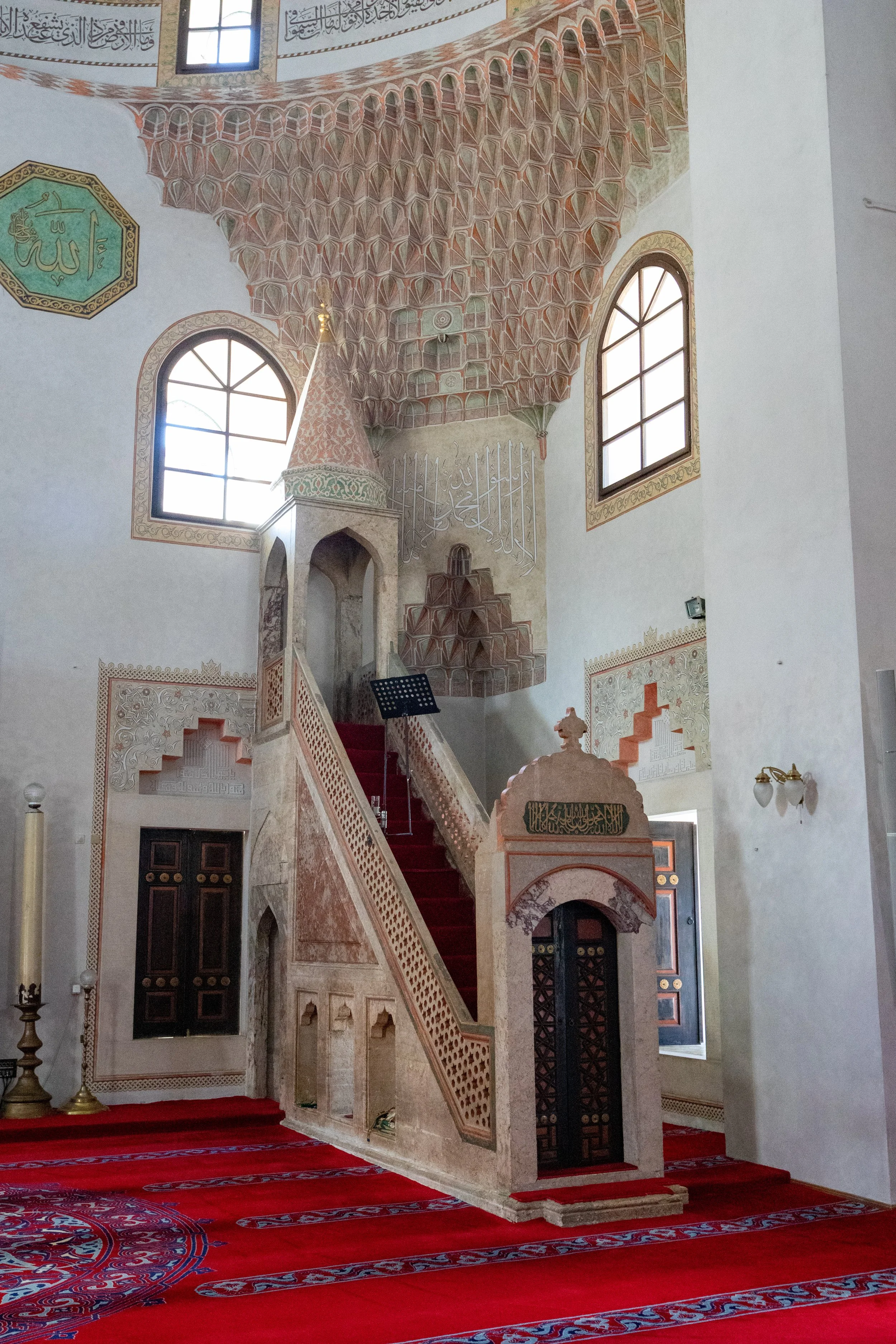
The minbar (pulpit) and the mihrab (prayer niche) of the mosque
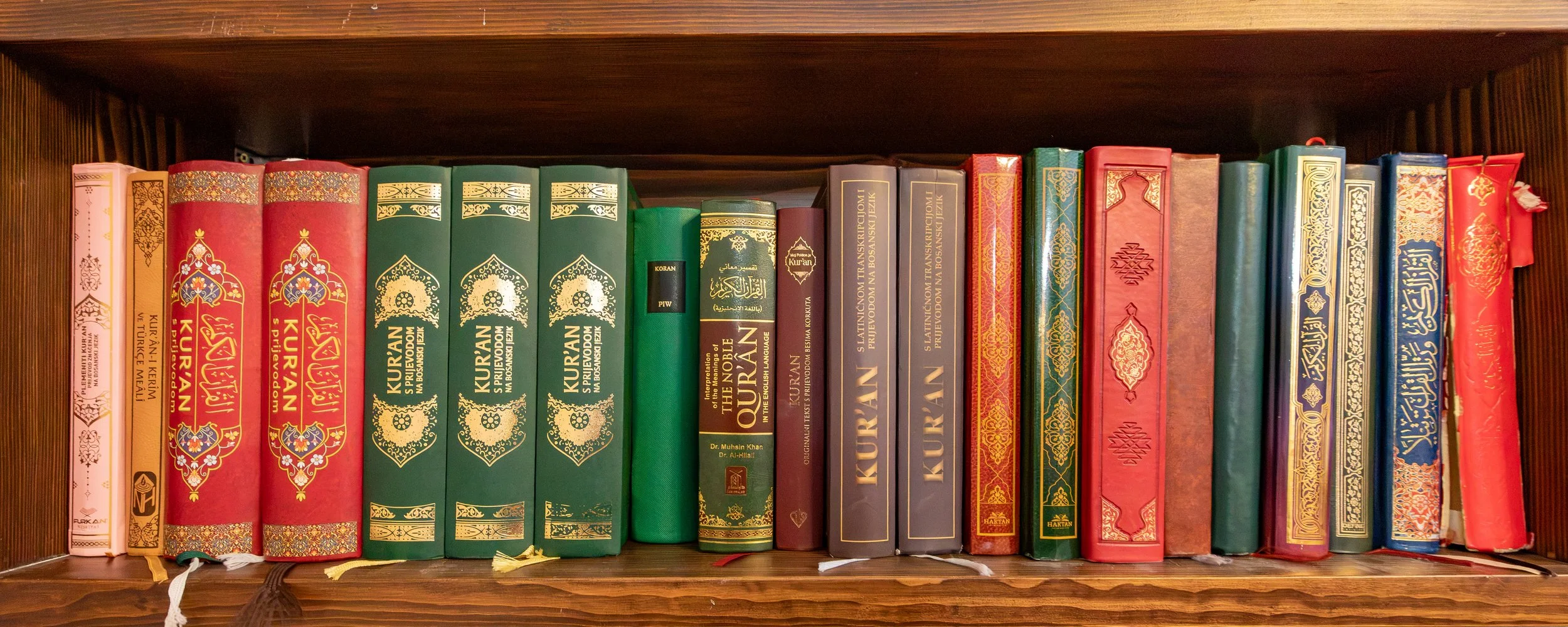
The small mosque library
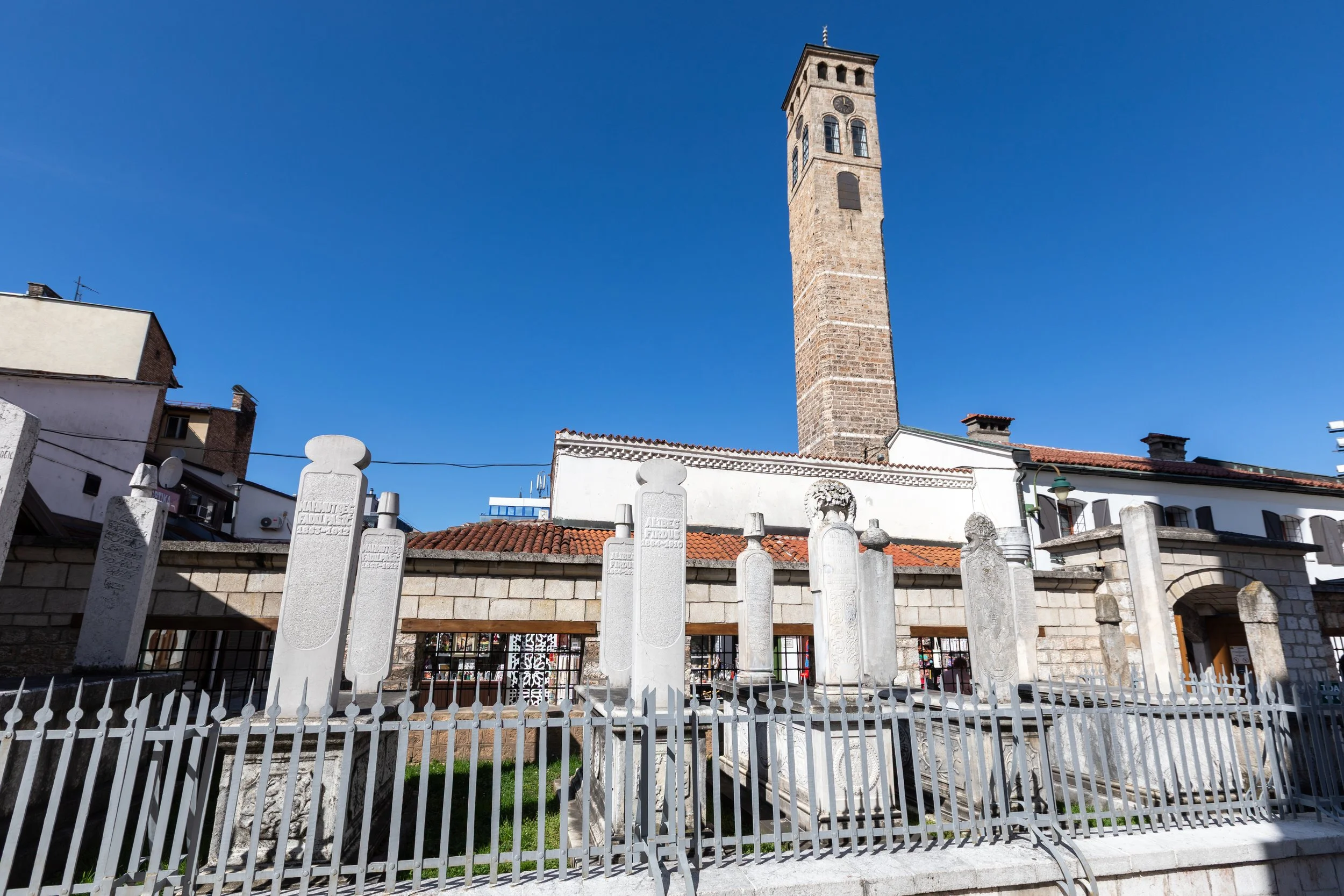
The 17th century Sarajevo Clock Tower (Sahat-kula) towers over a local cemetery
A view of the mosque and its minaret from its courtyard
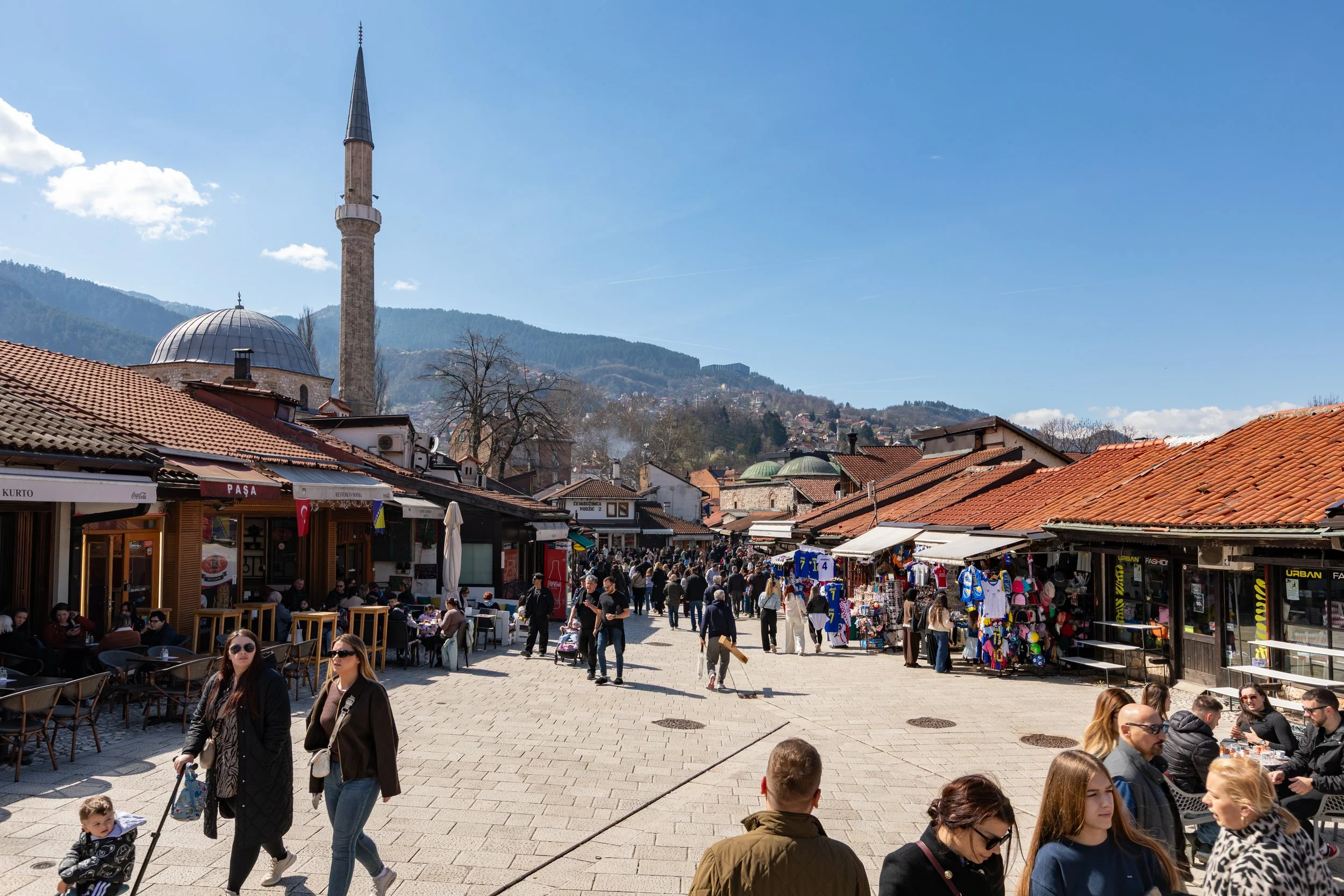
Baščaršija Square (aka Pigeon Square), the historic old bazaar and cultural center of Sarajevo with the Ottoman influences
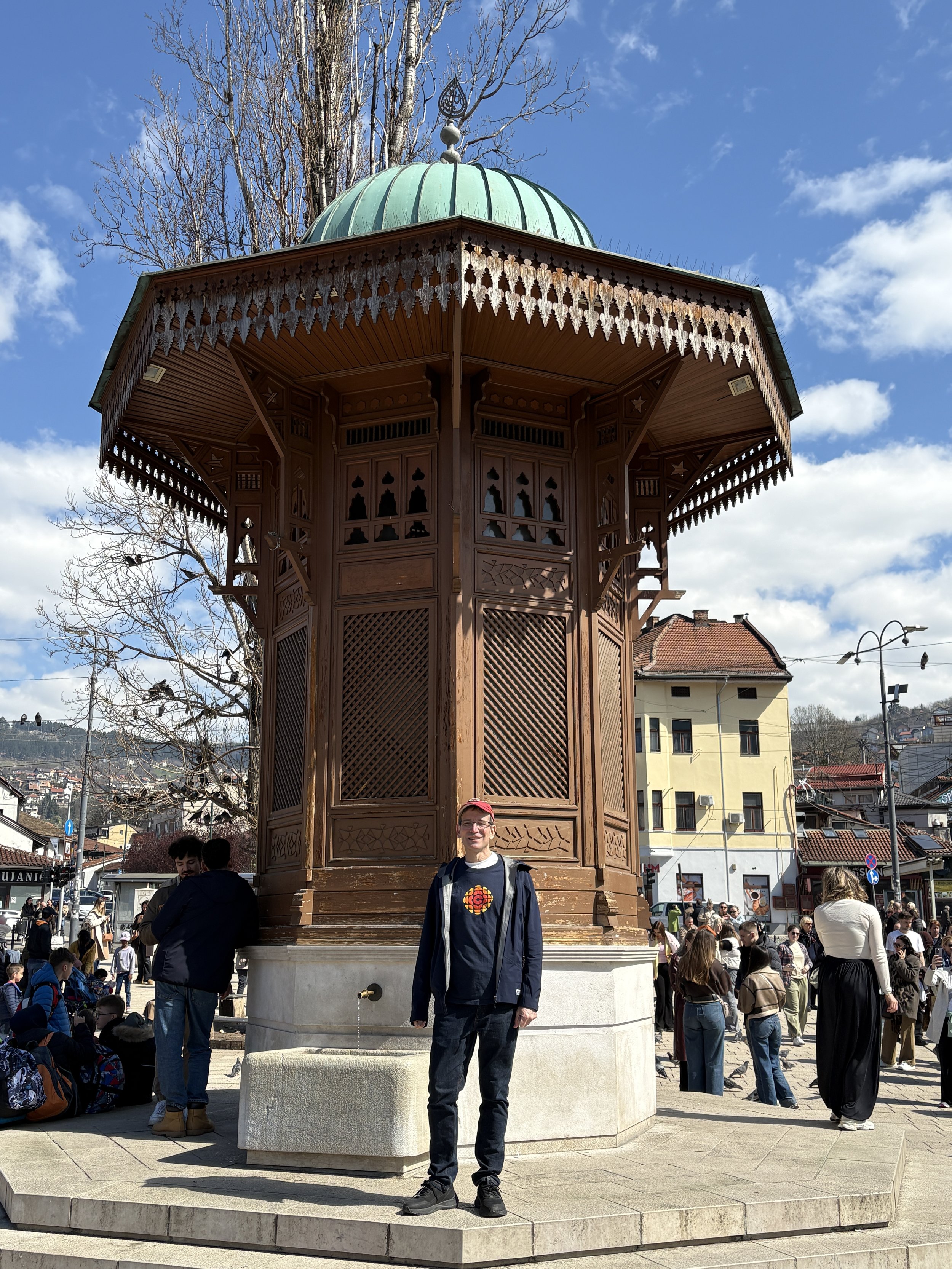
Standing in front of the squares’ centrepiece (Sebilj) fountain
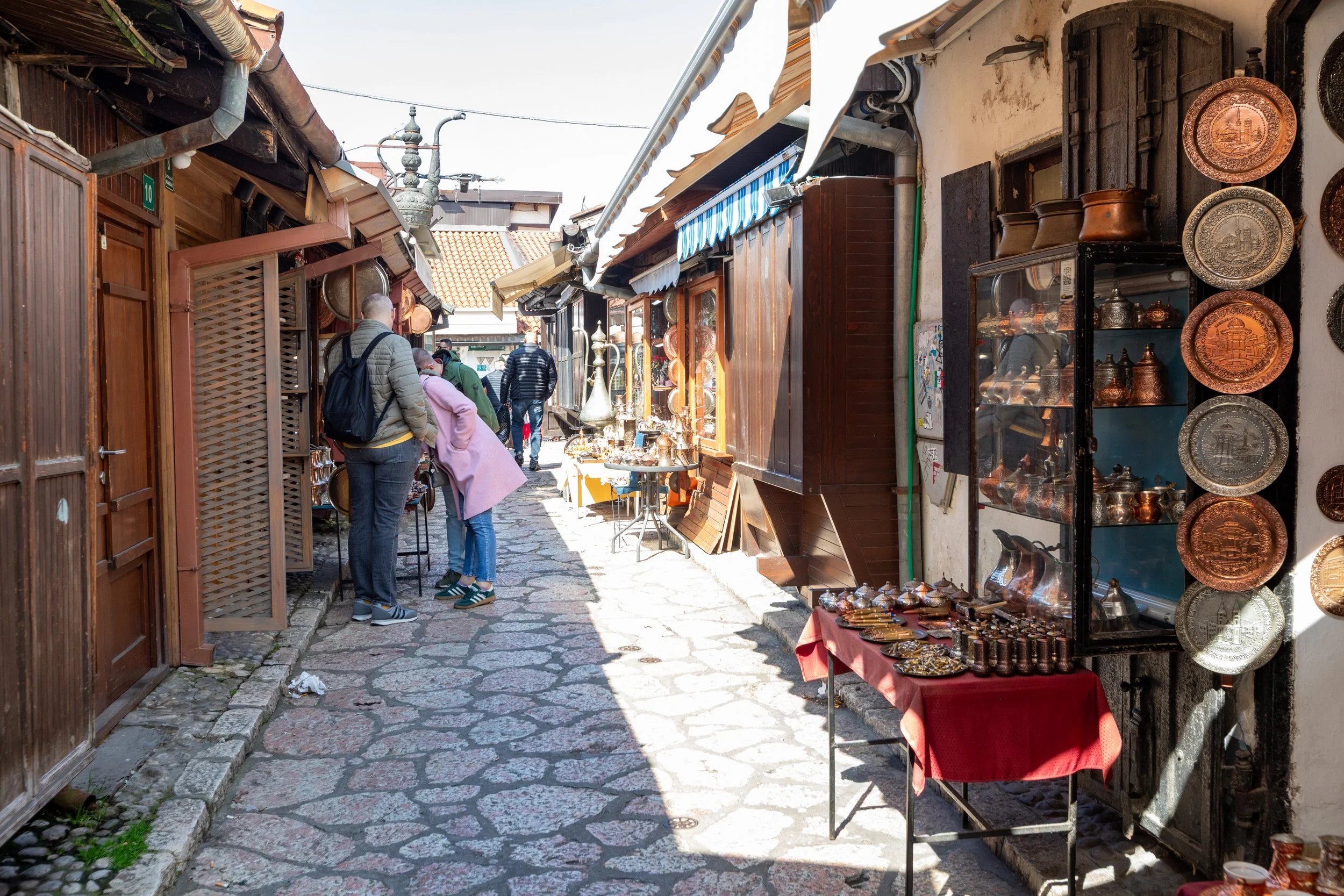
Coppersmith Street with its many tourist shops
Inside one of many courtyards hidden behind the stone-walled shops
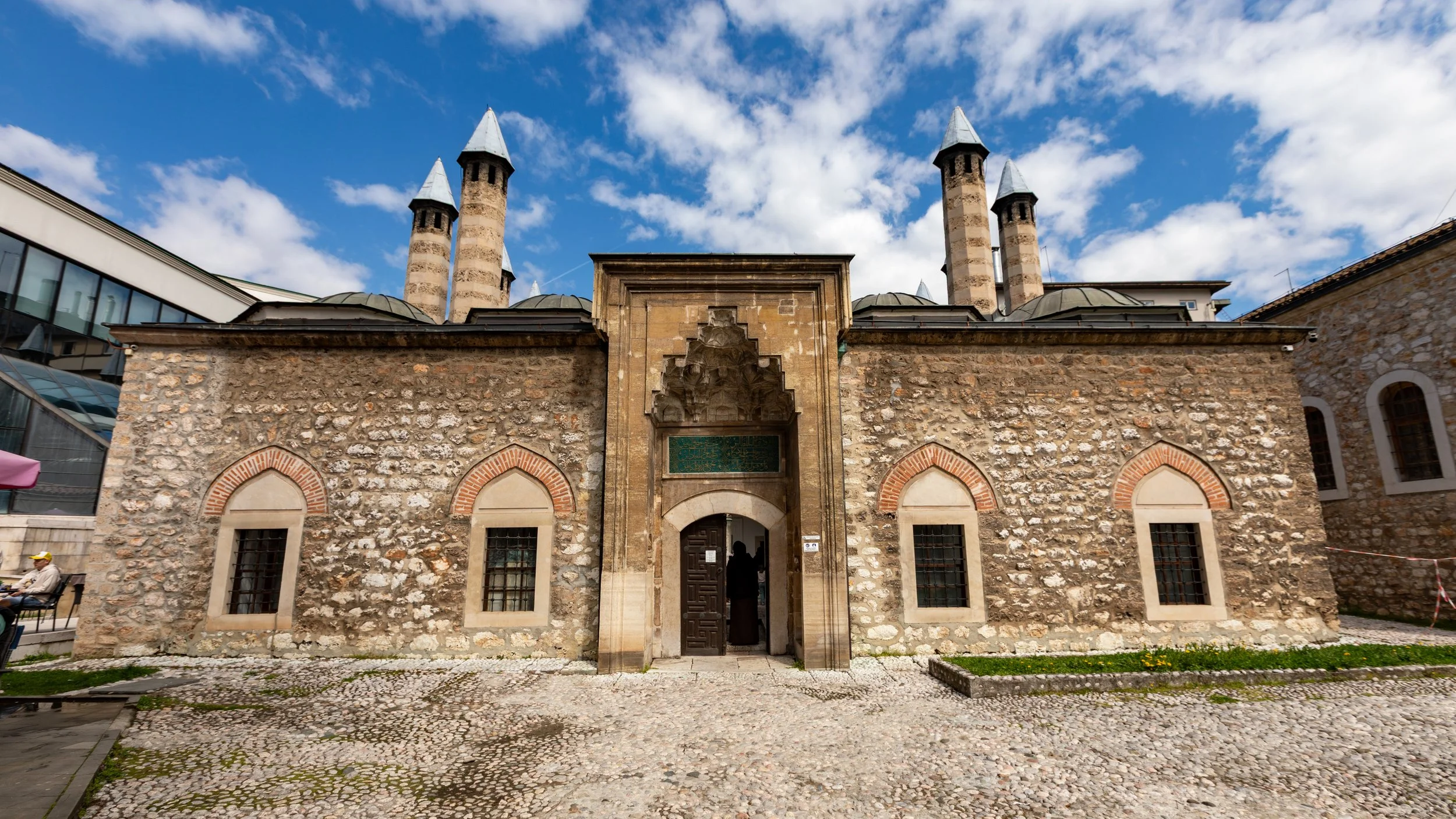
16th century Gazi Husrev-begov Hanikah, a historic dervish school, historically served as a centre for higher education in Islamic mysticism
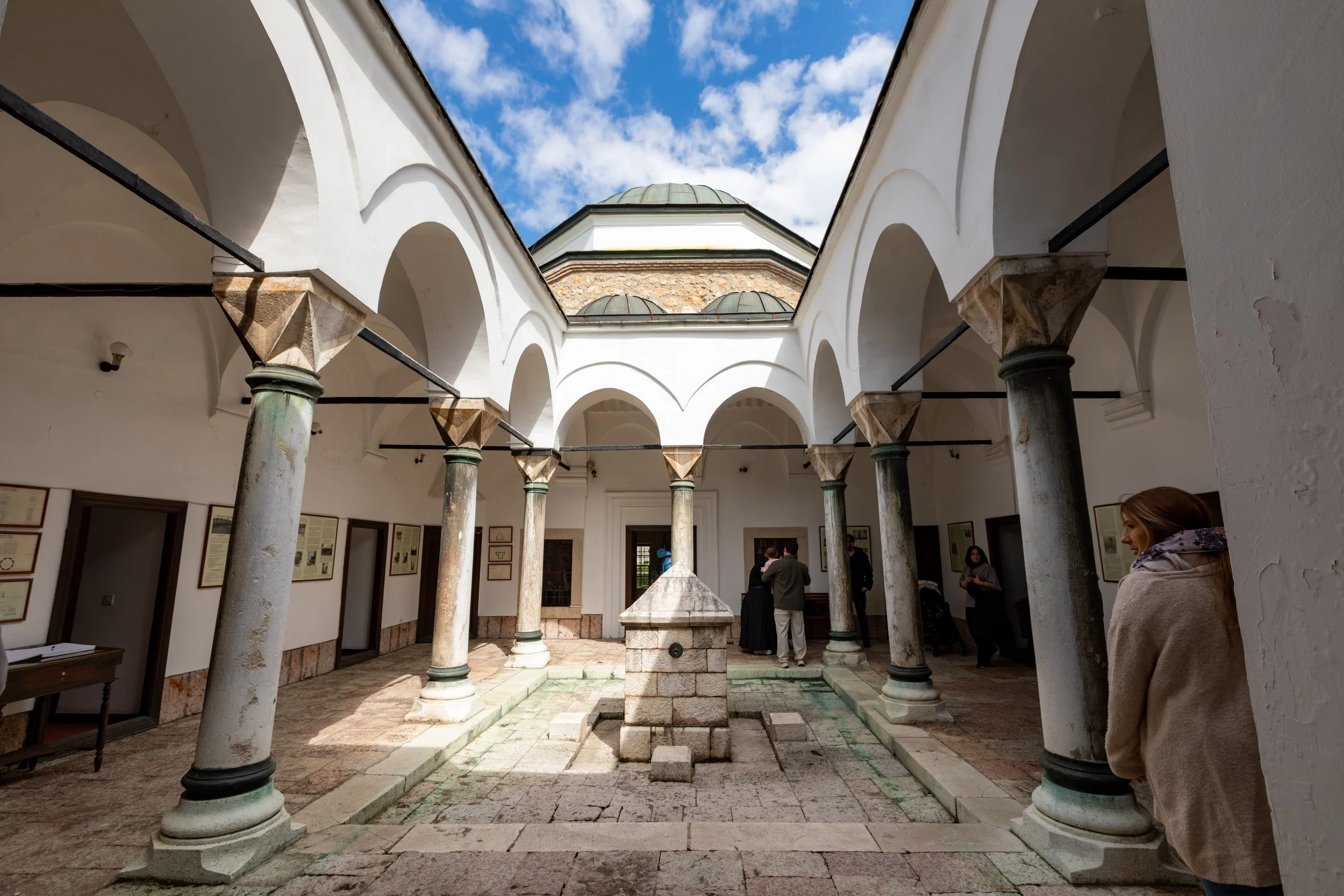
The interior courtyard of Gazi Husrev-beg Madrasa in Sarajevo
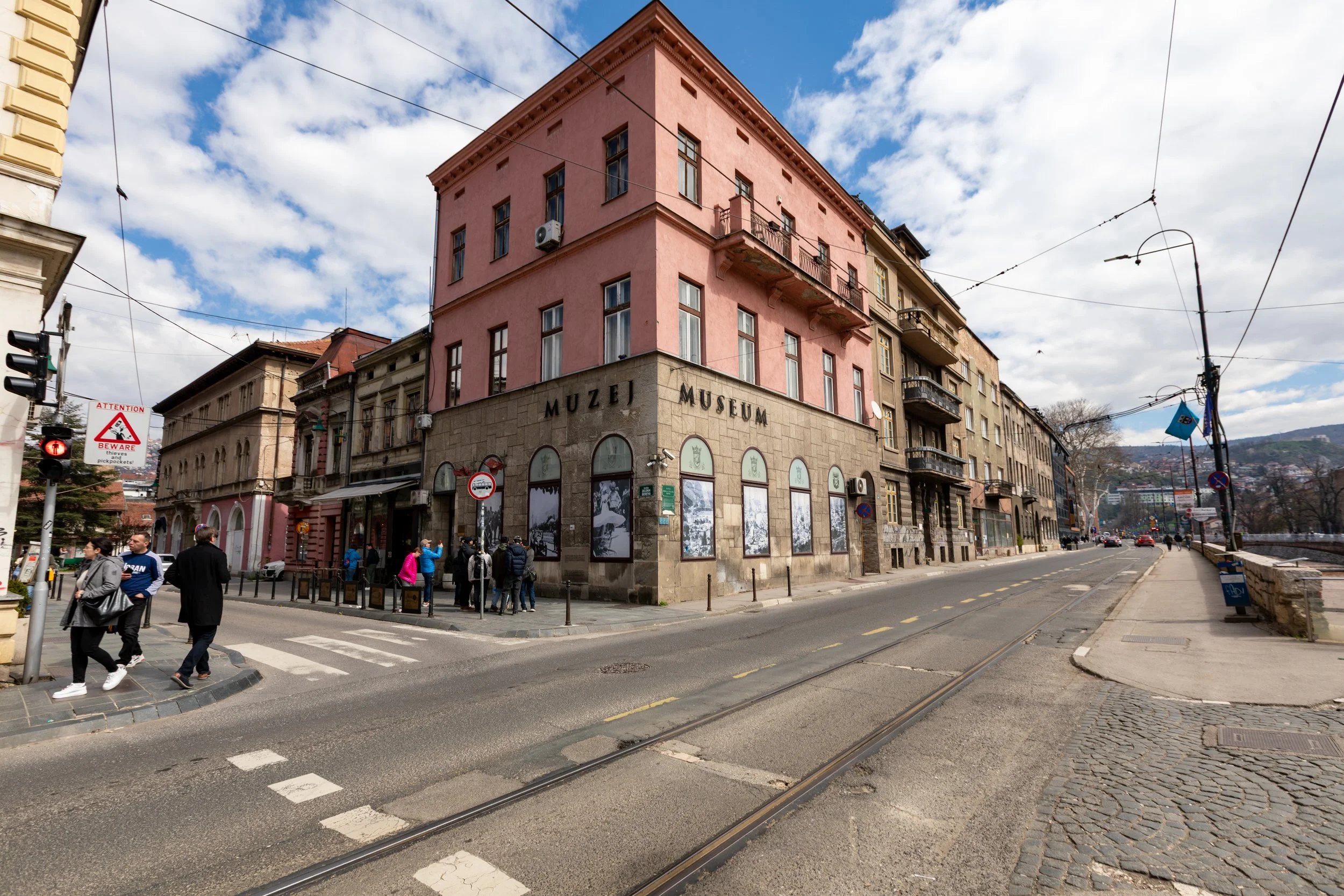
The Museum of Sarajevo 1878–1918, located on the corner where Archduke Franz Ferdinand was assassinated in 1914
Blue skies over the fast moving Miljacka River
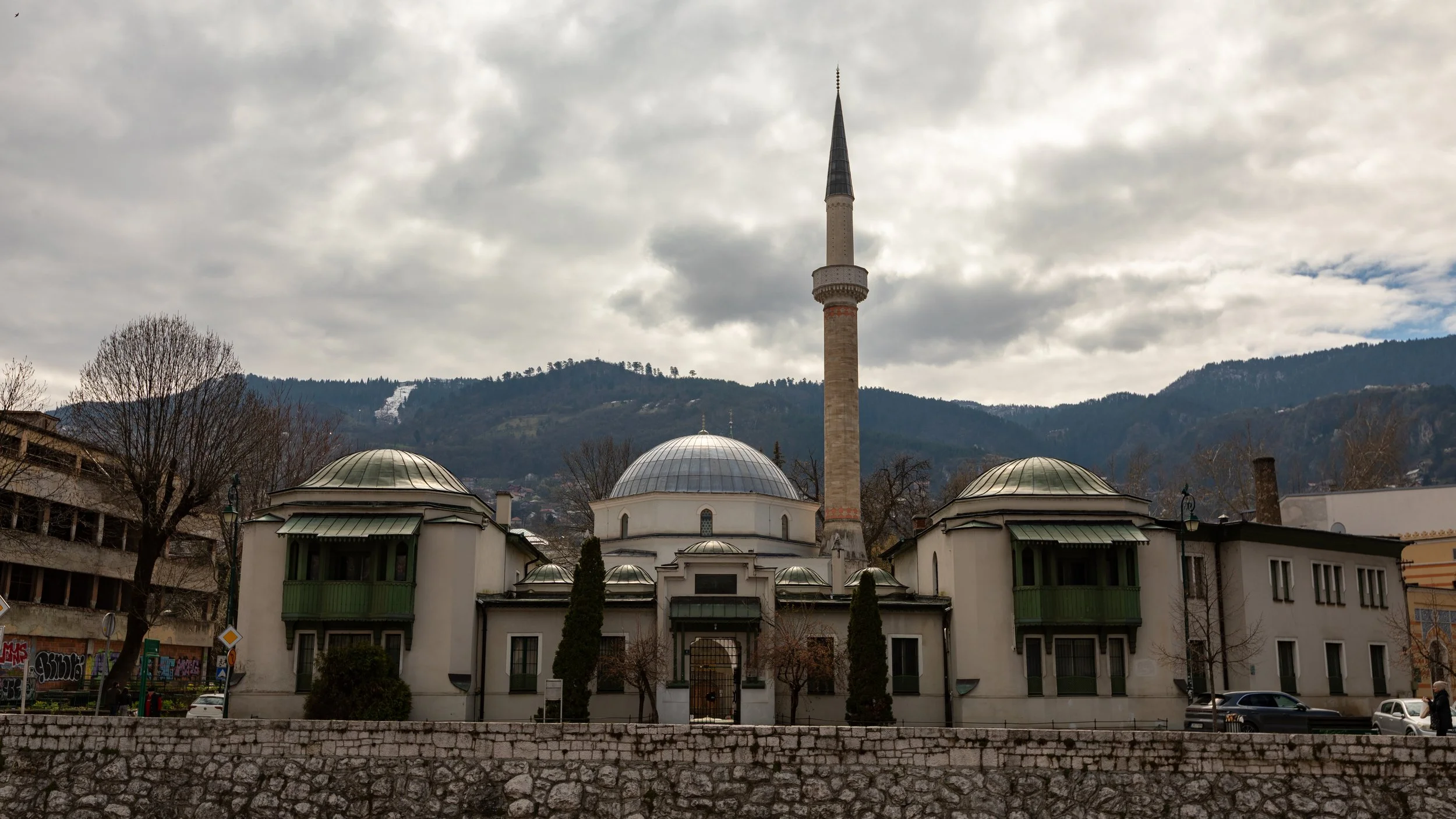
Across the river, Emperor's Mosque (Careva Džamija), built in 1457, the first mosque in Sarajevo.
The Latin Bridge, a stone arch bridge dating from 1798
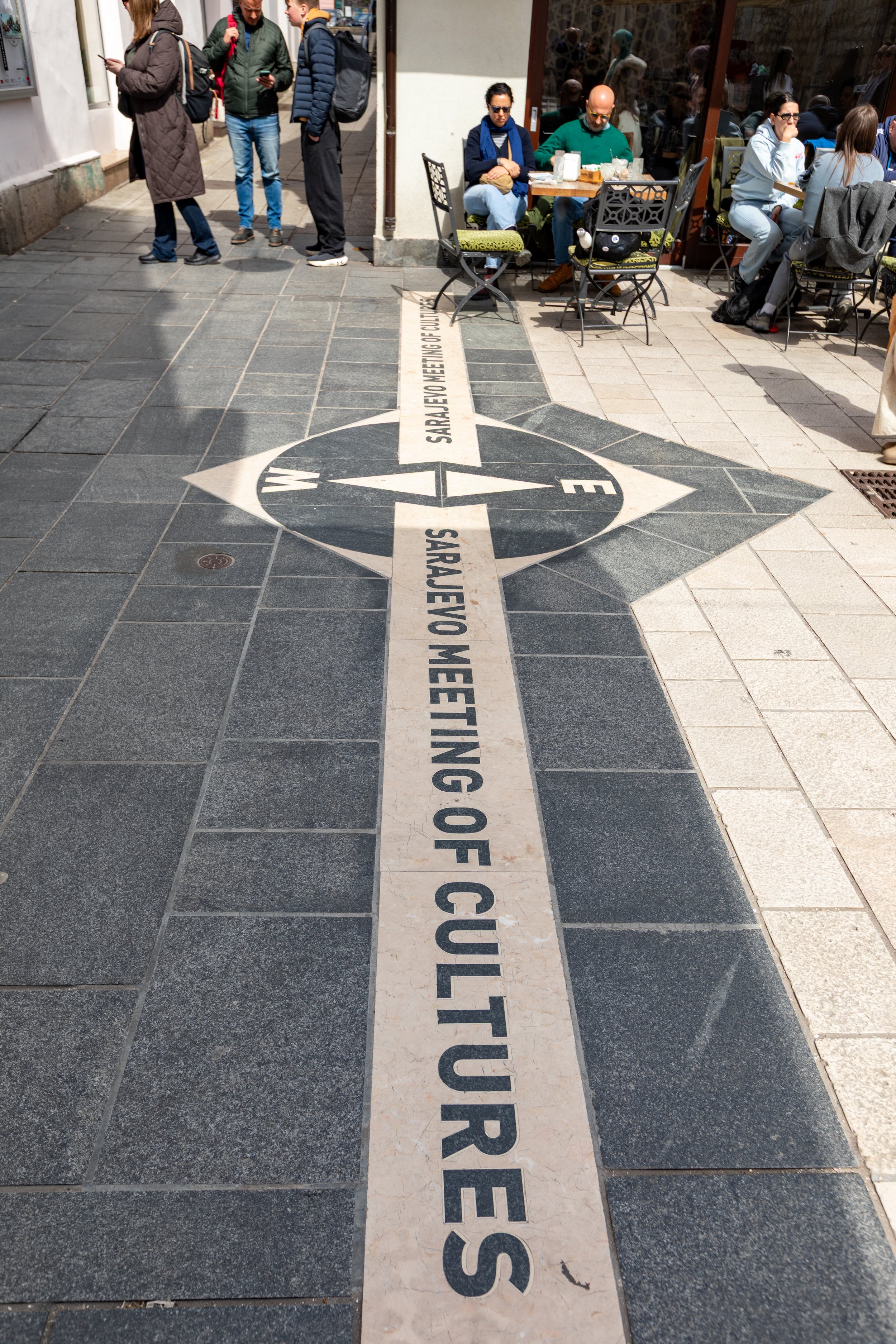
Intersection point where the city architecture shifts from its Ottoman (eastern) past to the more modern Austrian (western) influences
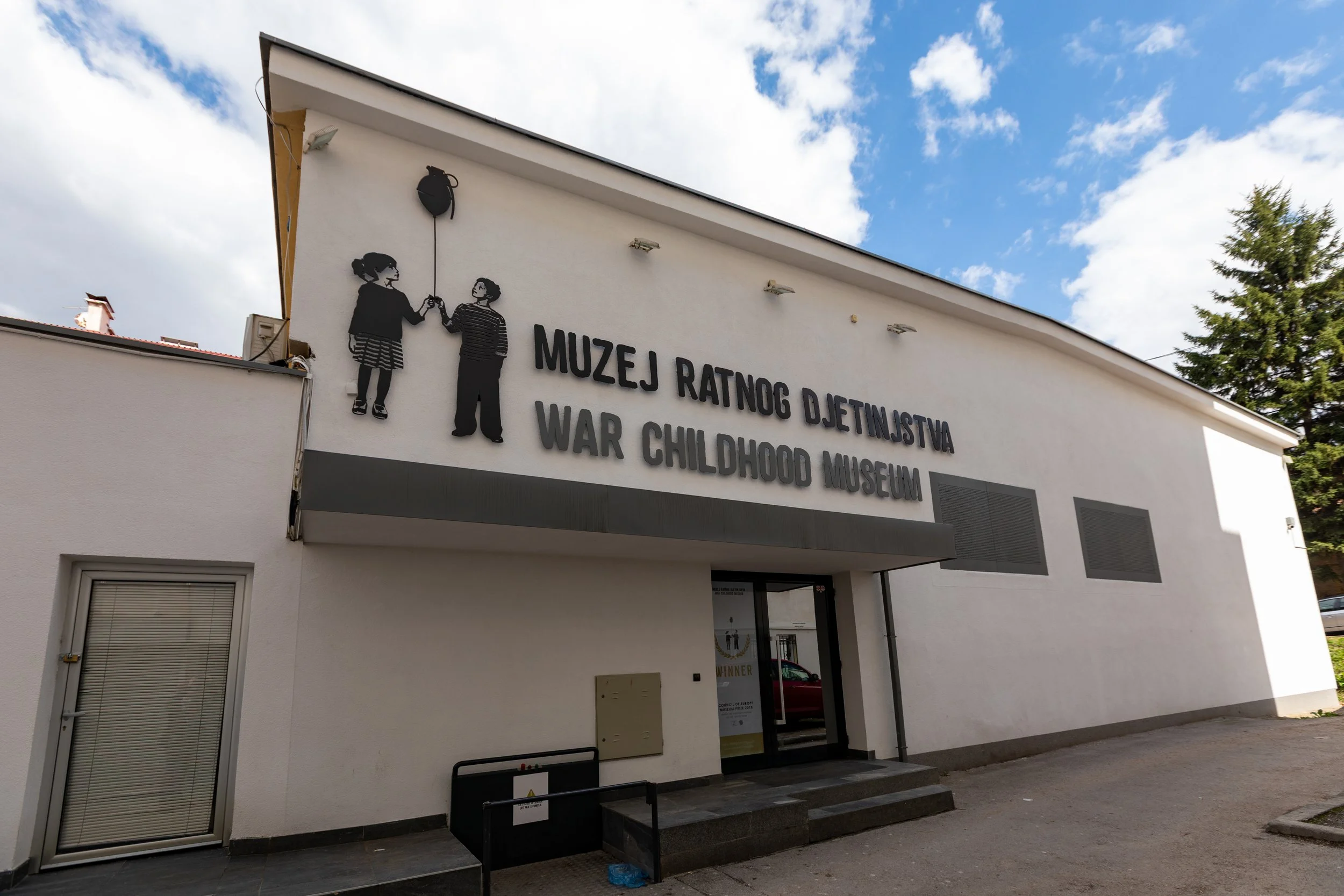
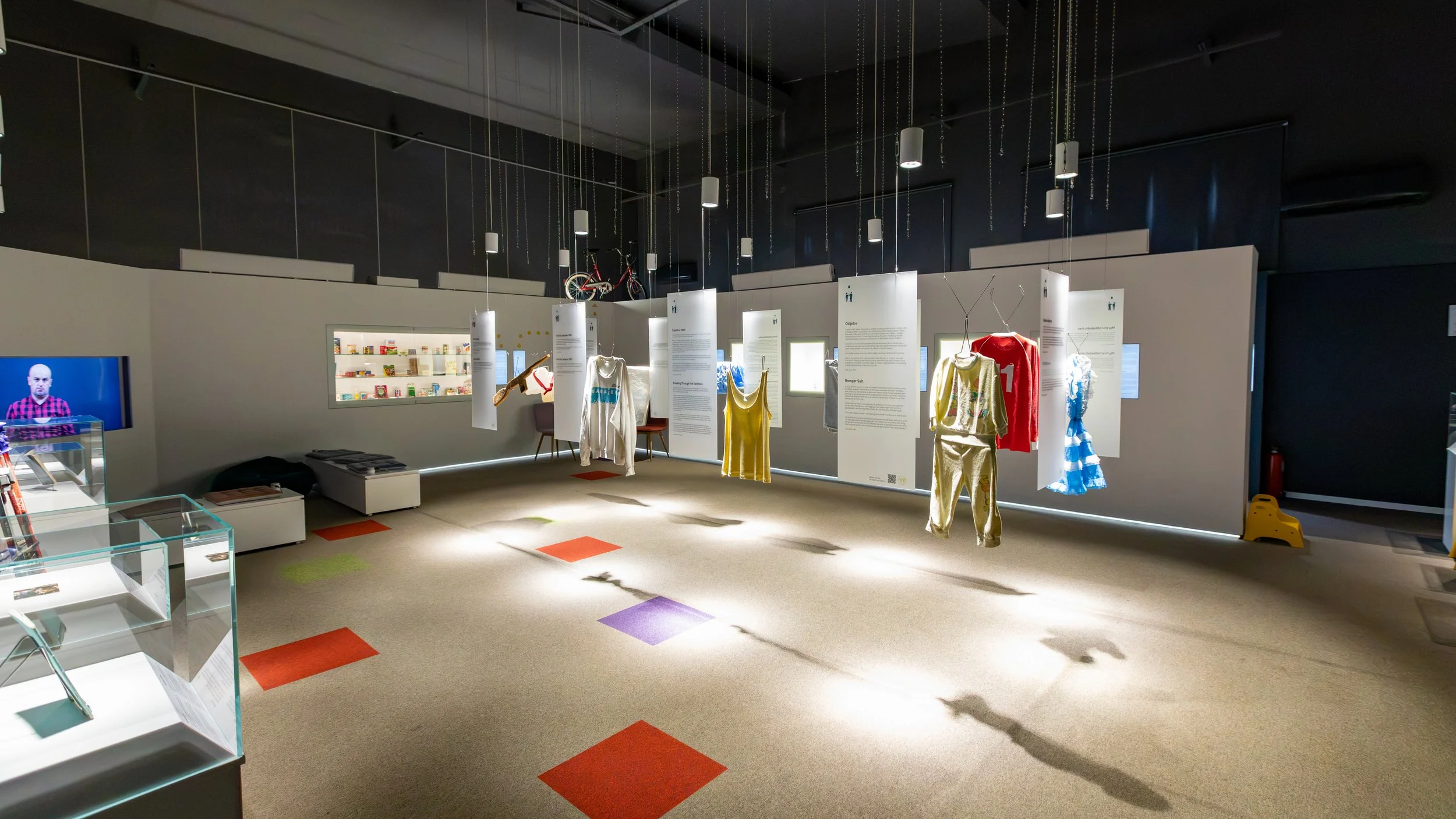
Very powerful War Childhood Museum documents the impact of war on children’s lives, with a focus on Sarajevo siege years, but touching on other conflicts throughout the world
Personal artifacts with the commentary and stories bring the realities of living in wartimes into perspective
This neo-Renaissance church is the Church of Saints Cyril and Methodius (1896)
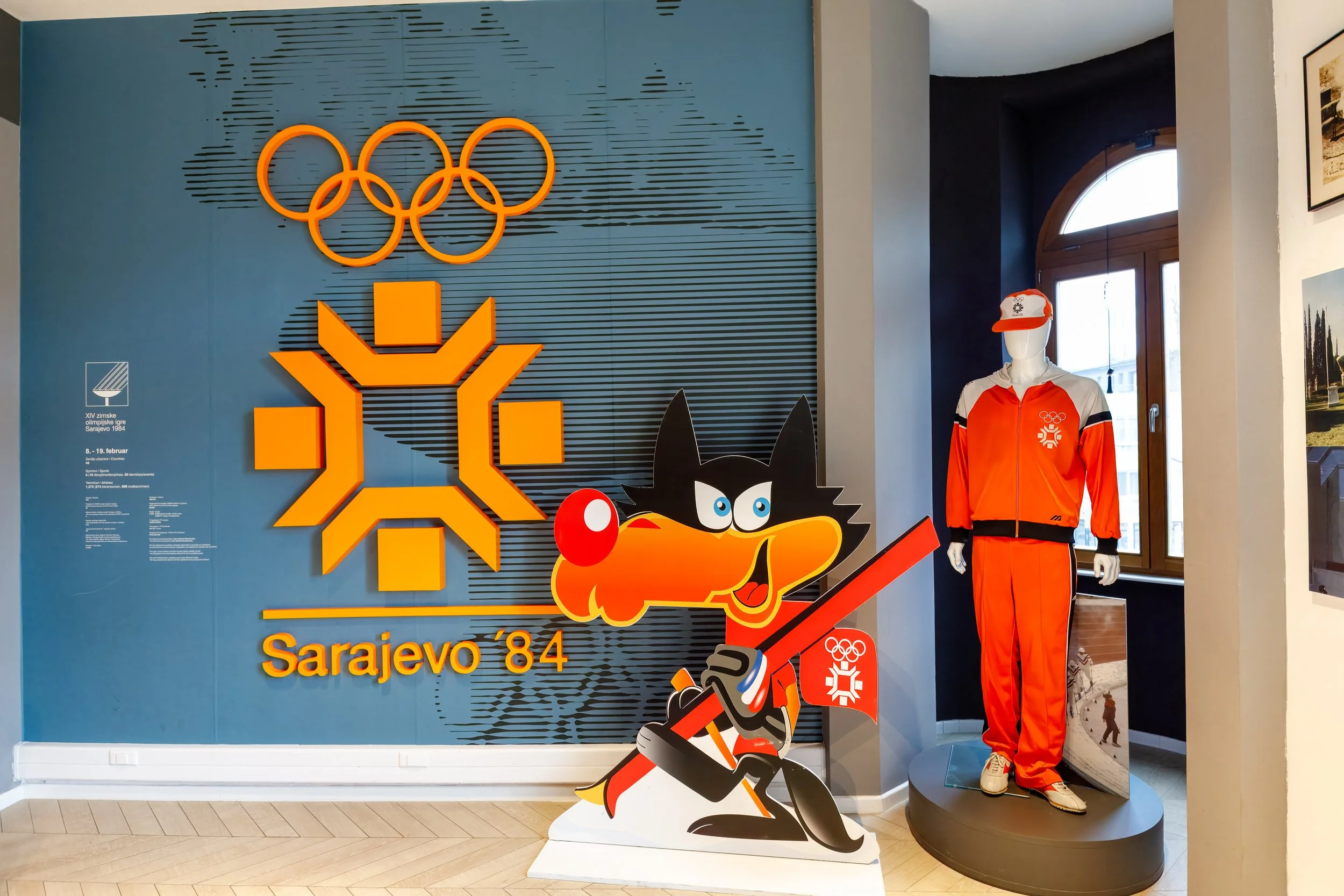
For GenXers, before the Yugoslav war, our first reference point to Sarajevo was the 1984 winter Olympics. The Olympic Museum Sarajevo commemorates the games and originally opened during the Olympics in 1984.
The 1984 games mascot, Vučko, has remained an unofficial symbol of the city, a reminder of the happier times before the Olympic sites became the backdrop to war and siege
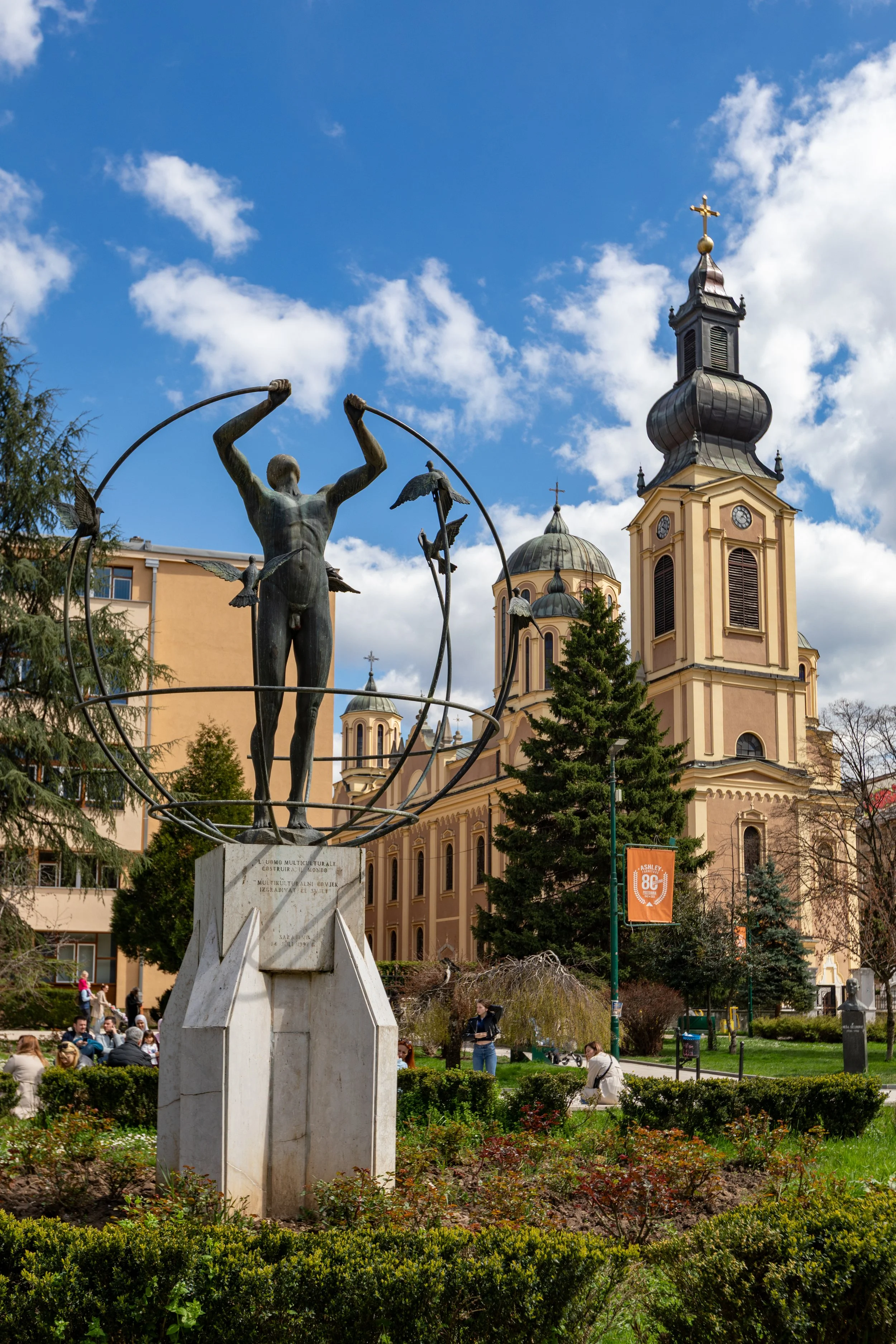
"Multicultural Man Builds the World" sculpture in “Liberation and Izetbegović Square” with the Serbian Orthodox Cathedral of the Nativity of the Theotokos in the background
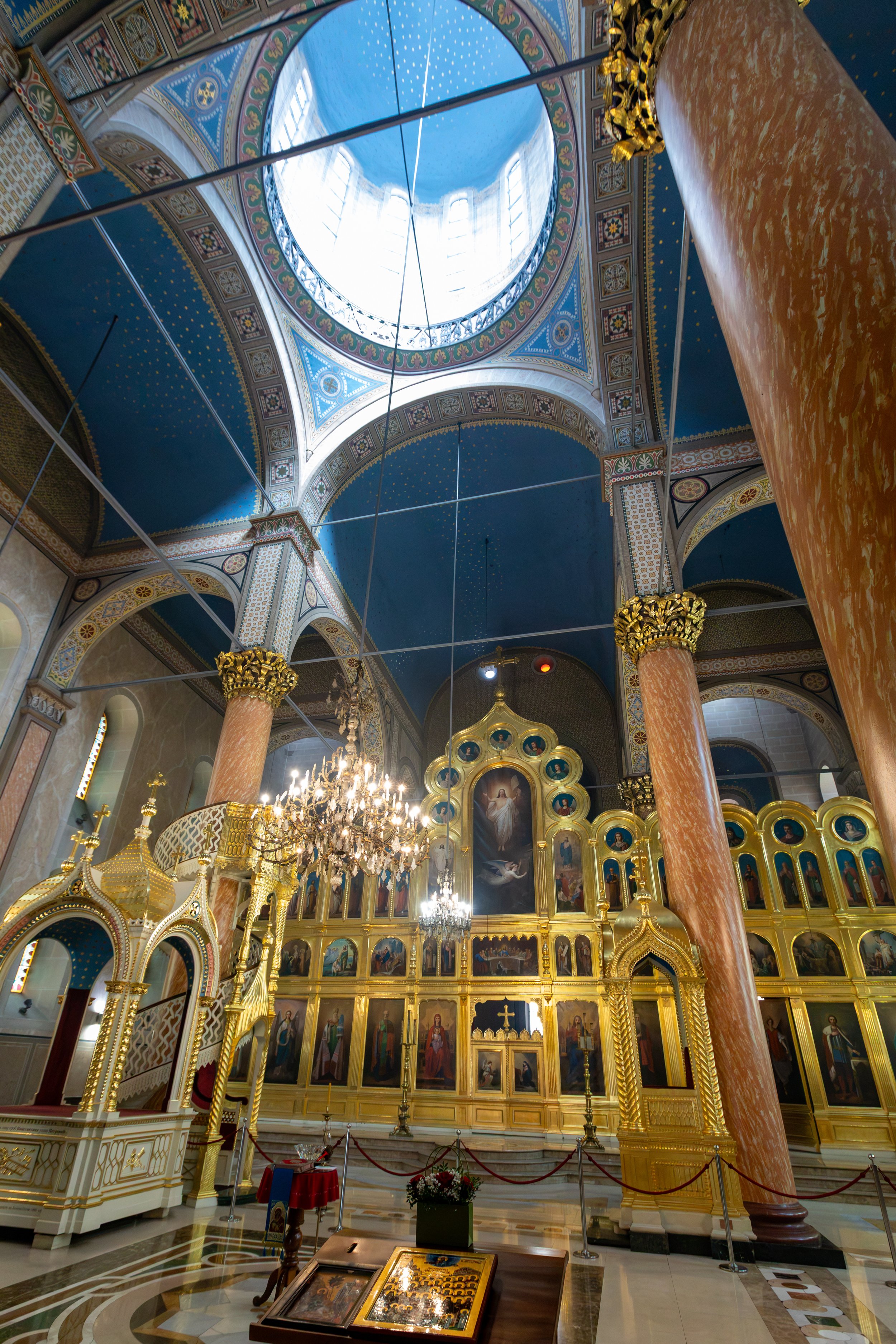
Large central dome and richly decorated golden iconostasis in the interior of the Cathedral of the Nativity of the Theotokos church
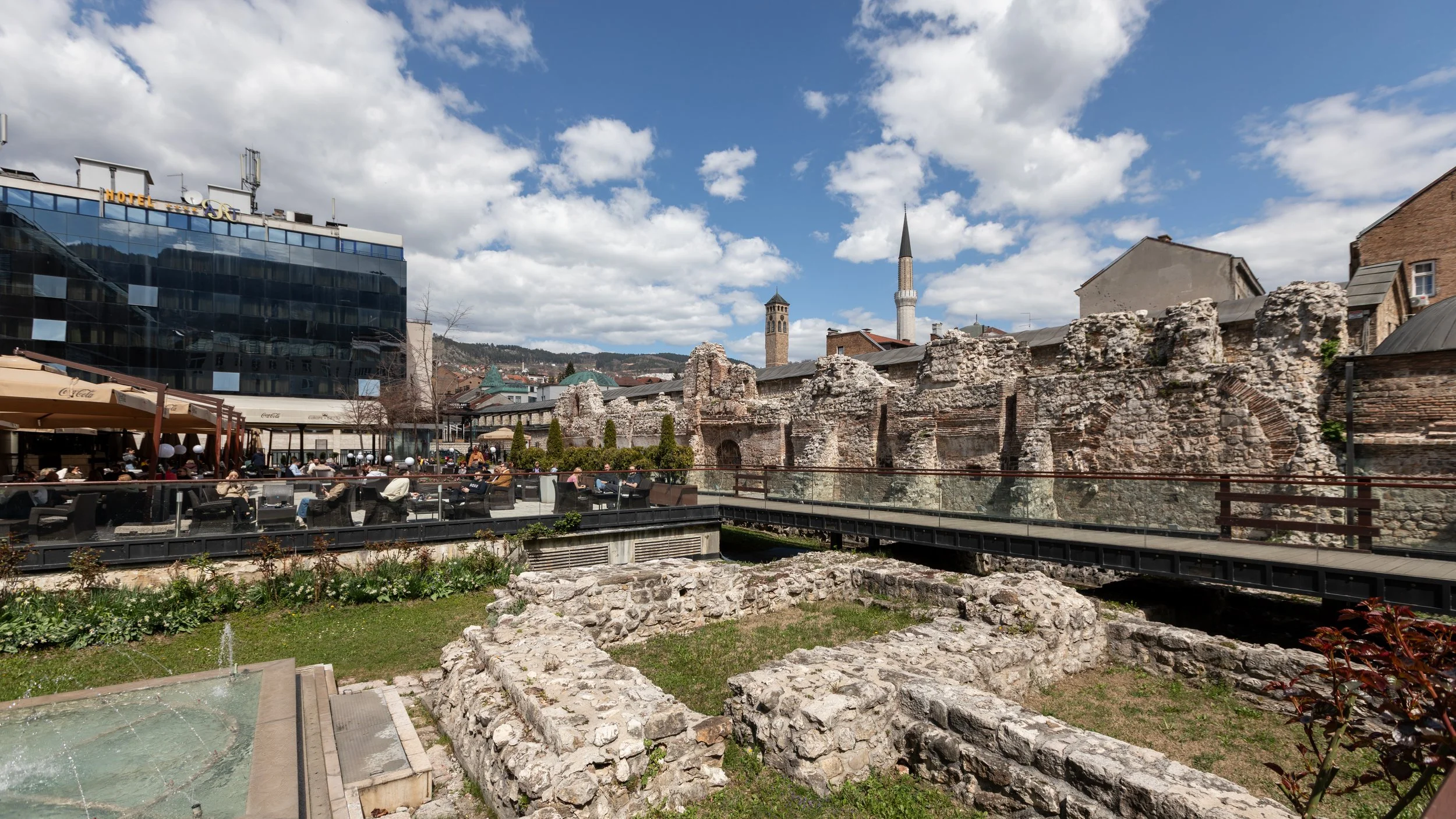
Tašlihan ruins, a 16th-century Ottoman caravanserai, which served as a trading hub and inn for merchants and their pack animals
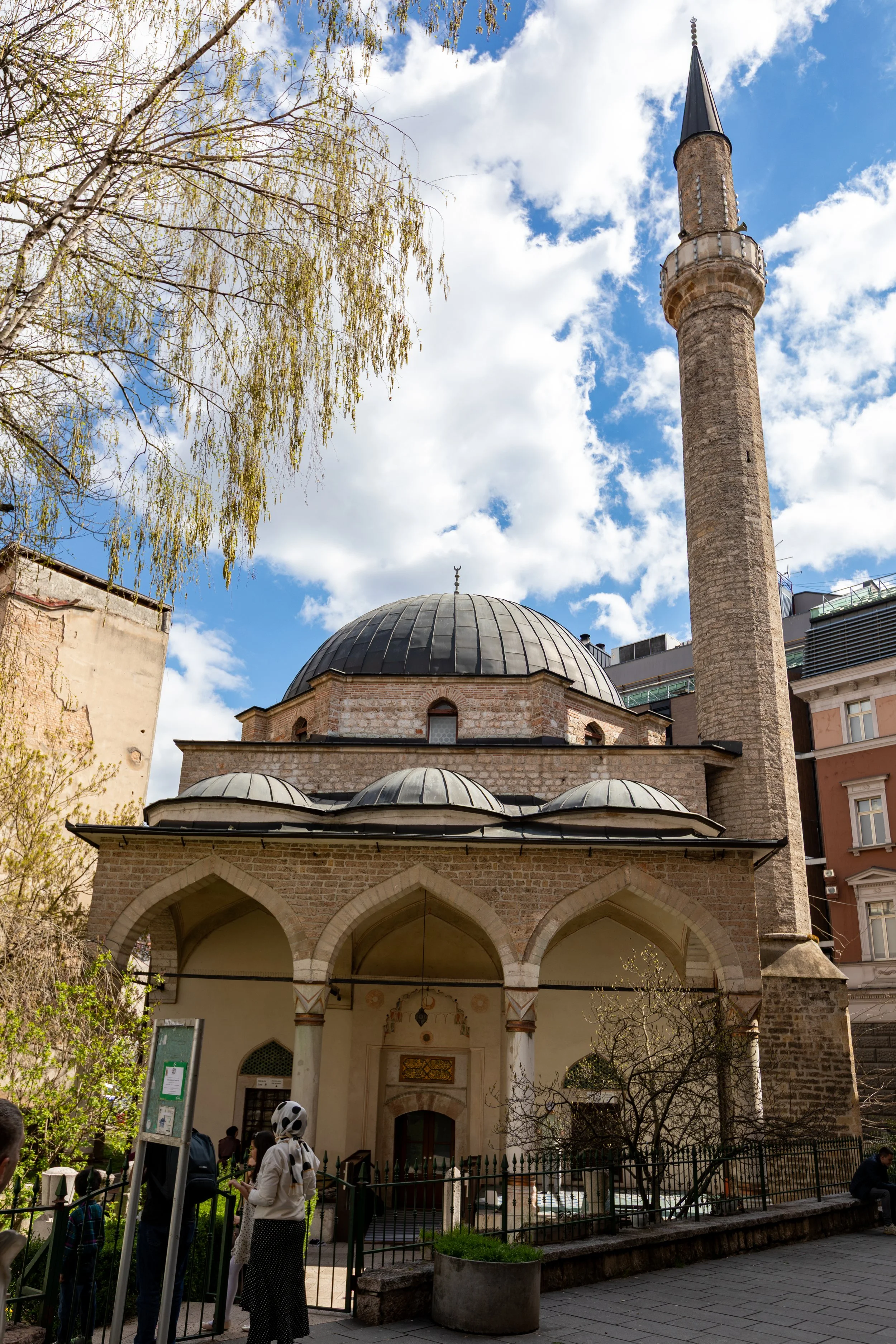
Ferhadija Mosque, a 16th-century Ottoman-style landmark, is one of five surviving dome mosques from that era in the city and was declared a national monument in 2004
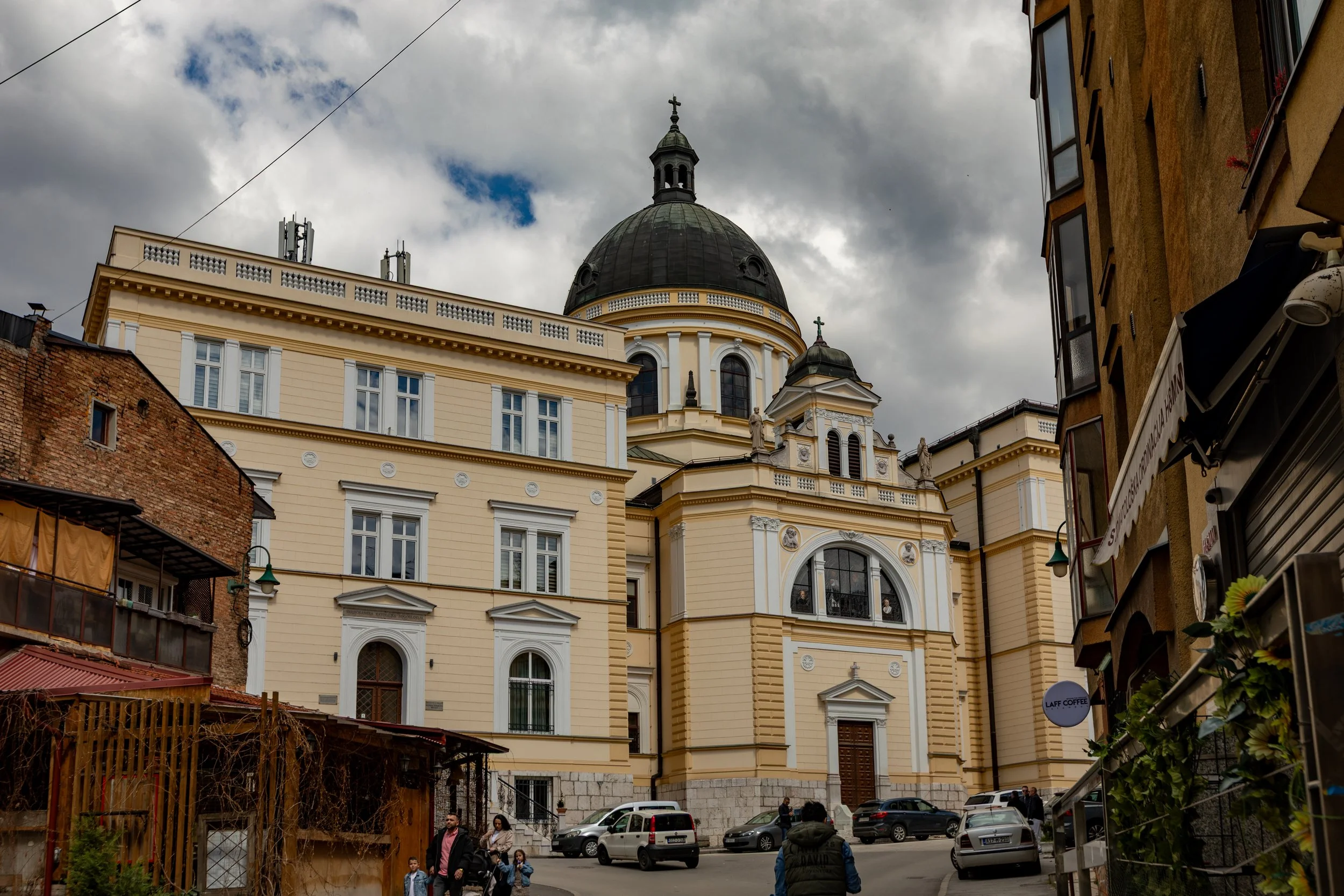
For Easter, there was a giant egg outside the Sacred Heart Cathedral (1889), the largest Catholic cathedral in the country
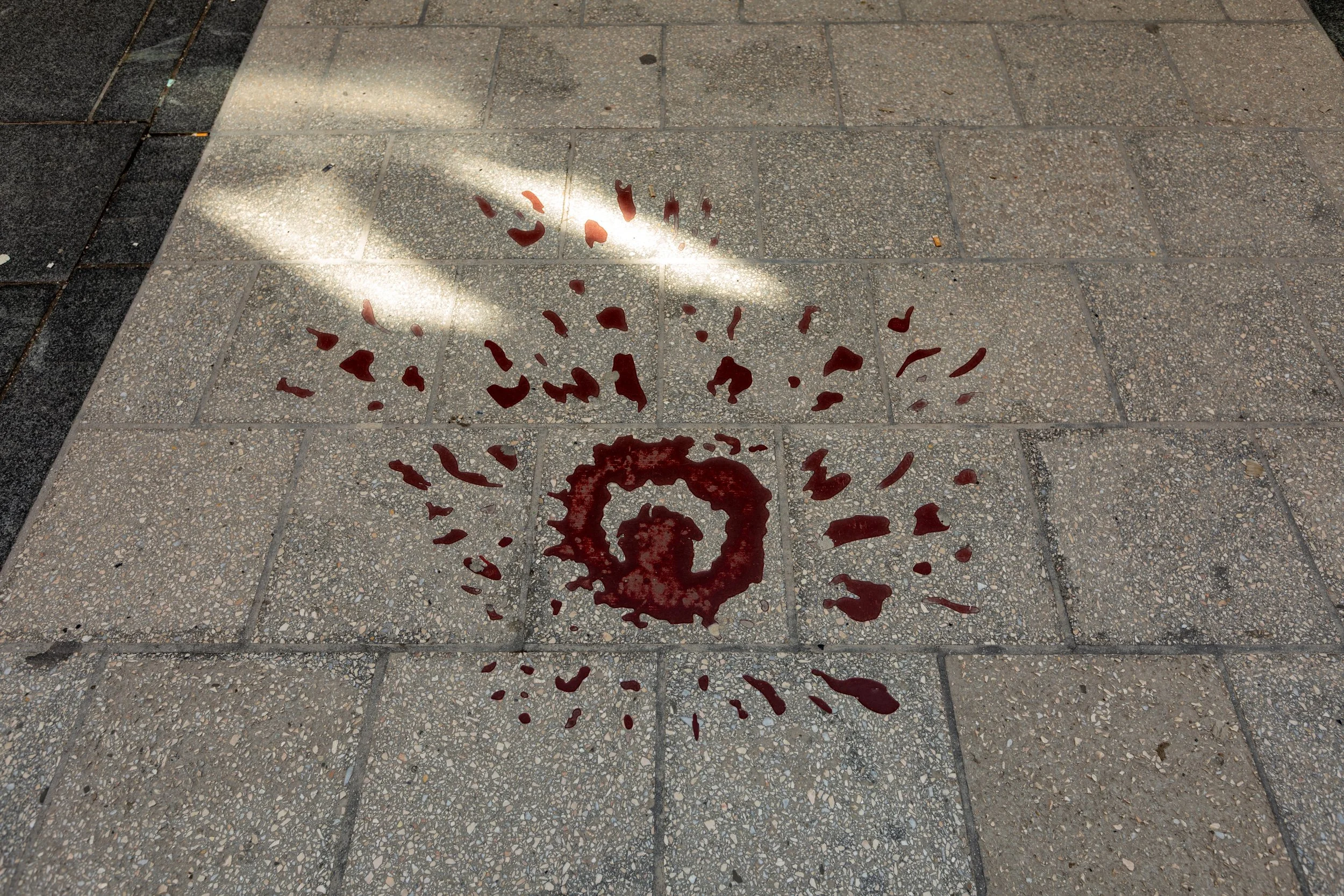
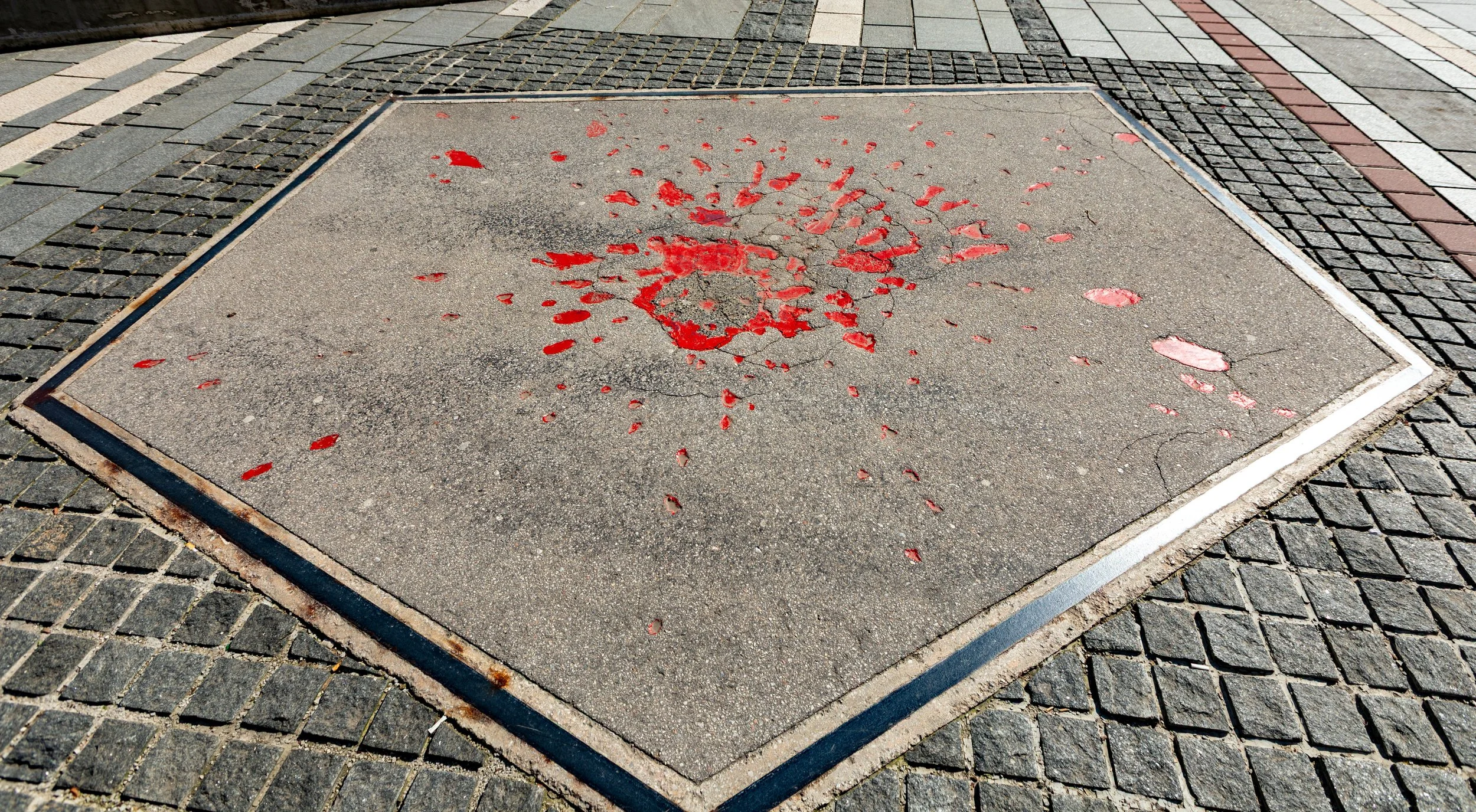
One of many Sarajevo Roses, memorials marking the spot of a mortar shell explosion (killing at least three) during the Siege of Sarajevo, created by filling the concrete scars left by mortar fragmentation with red resin
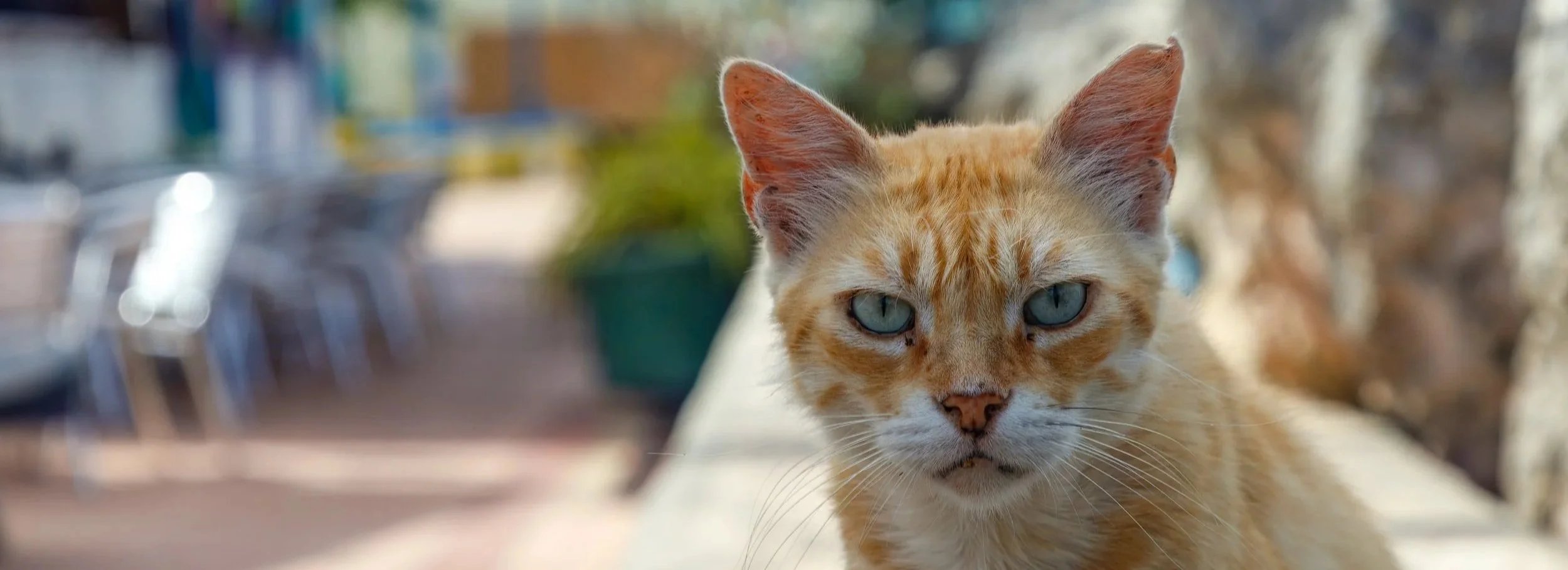
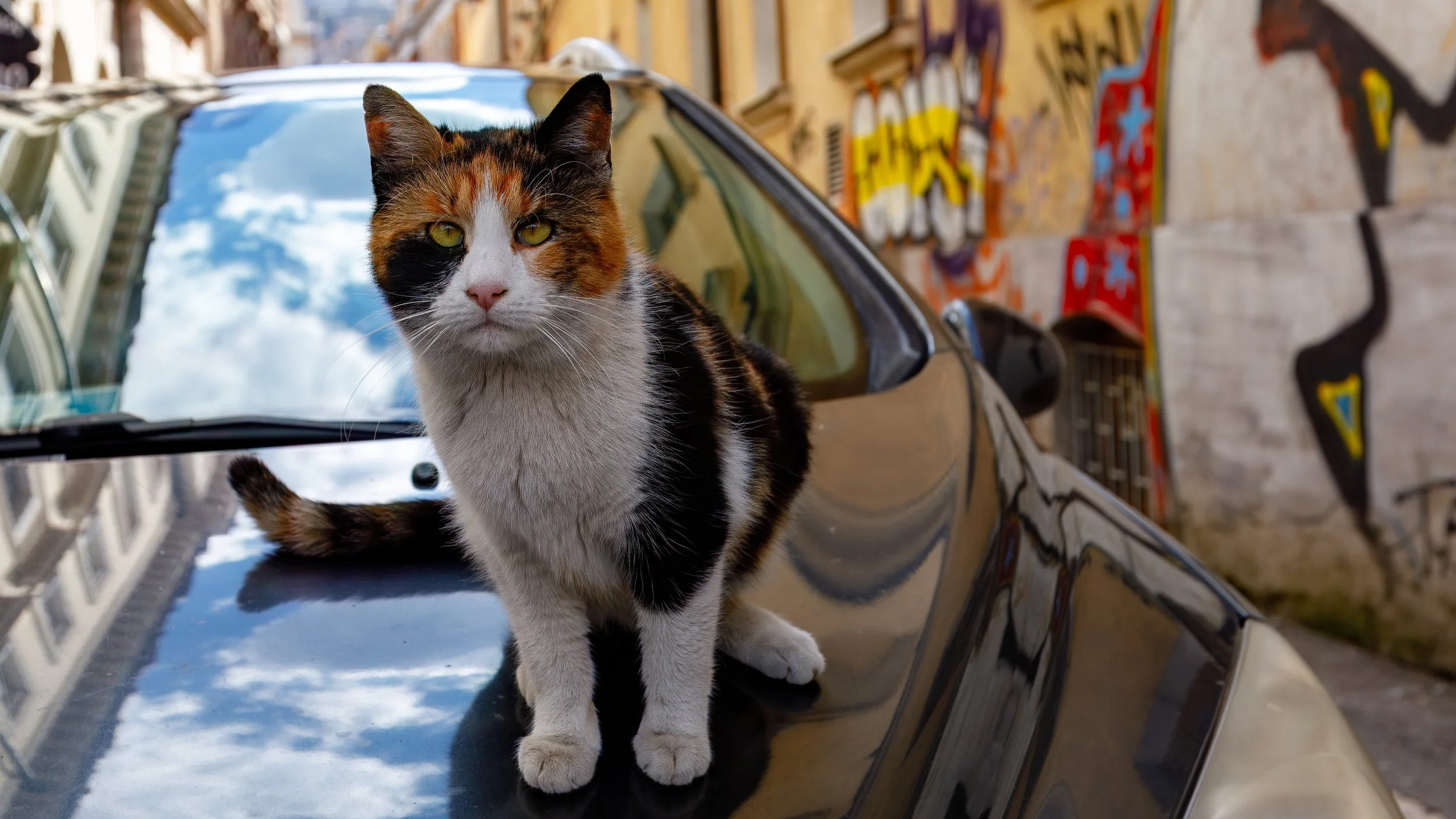
Continuing the collection of photos of the cats of Bosnia
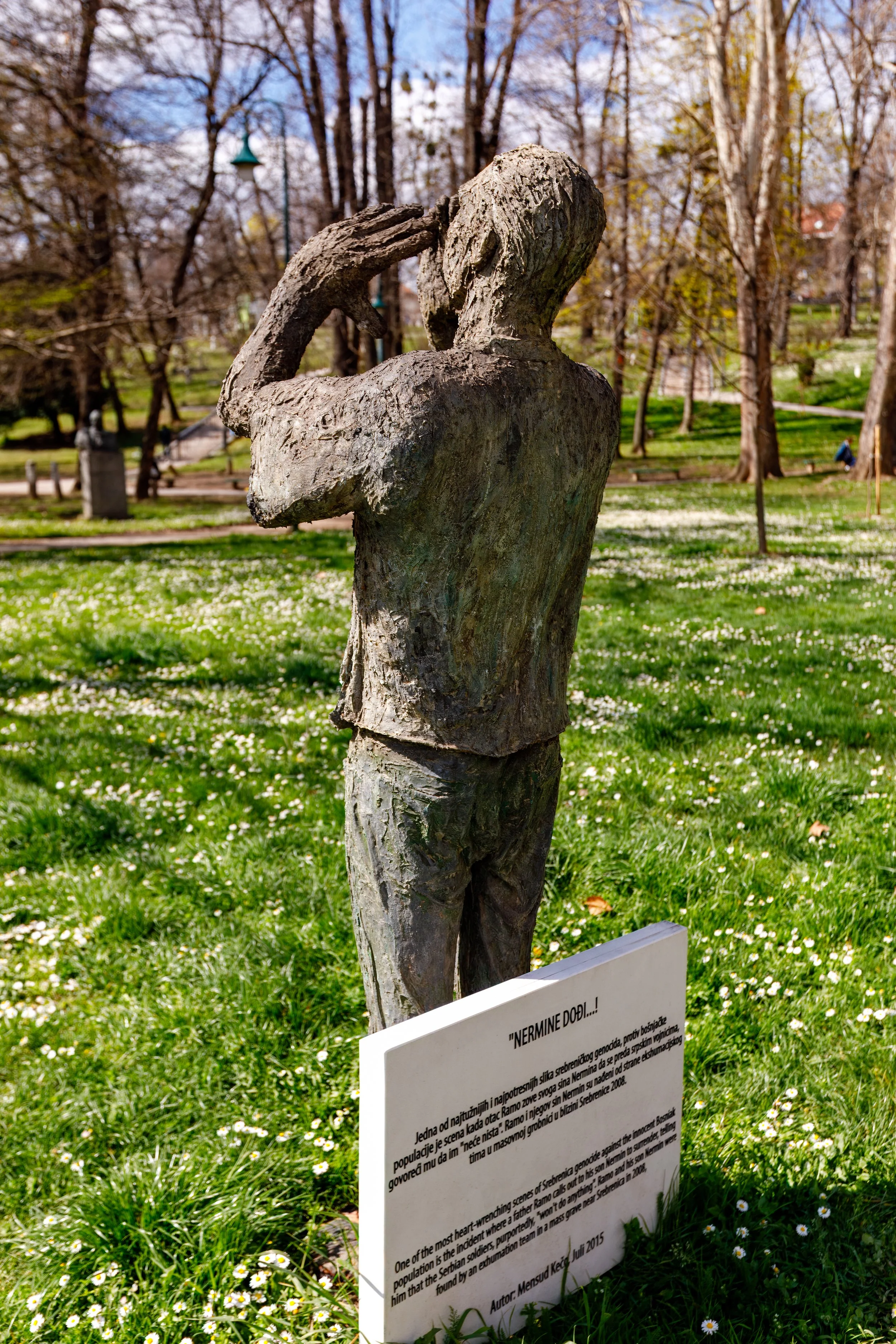
Nermine, dođi! (Nermin, come here!) memorial sculpture in Veliki Park commemorates the victims of the Srebrenica genocide, depicting a father calling for his son, who was ultimately found to be in a mass grave
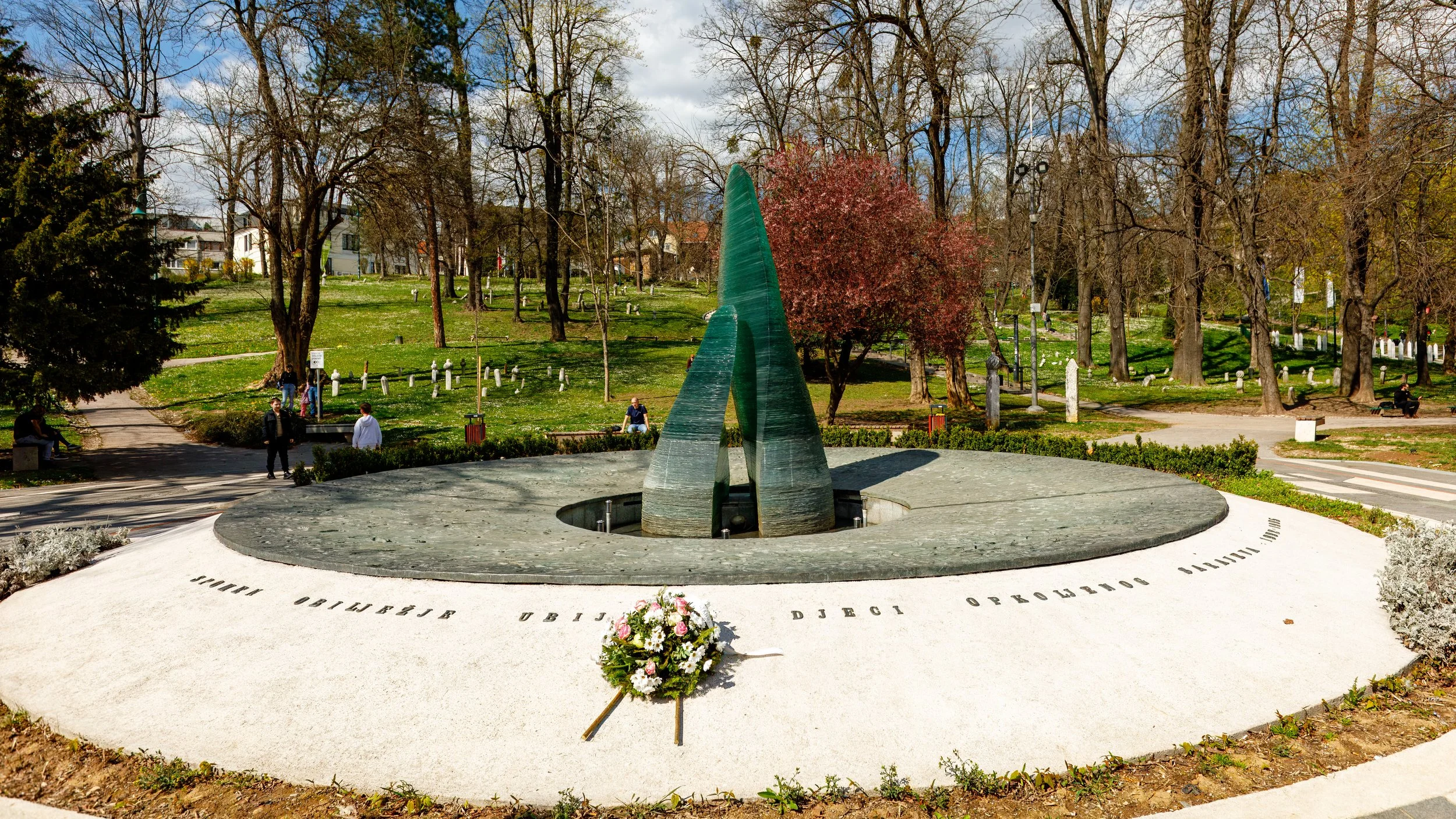
Also in Veliki Park (Great Park), this monument honours the children killed during the (1992 to 1995) Siege of Sarajevo
A better example of a Sarajevo Rose near the park
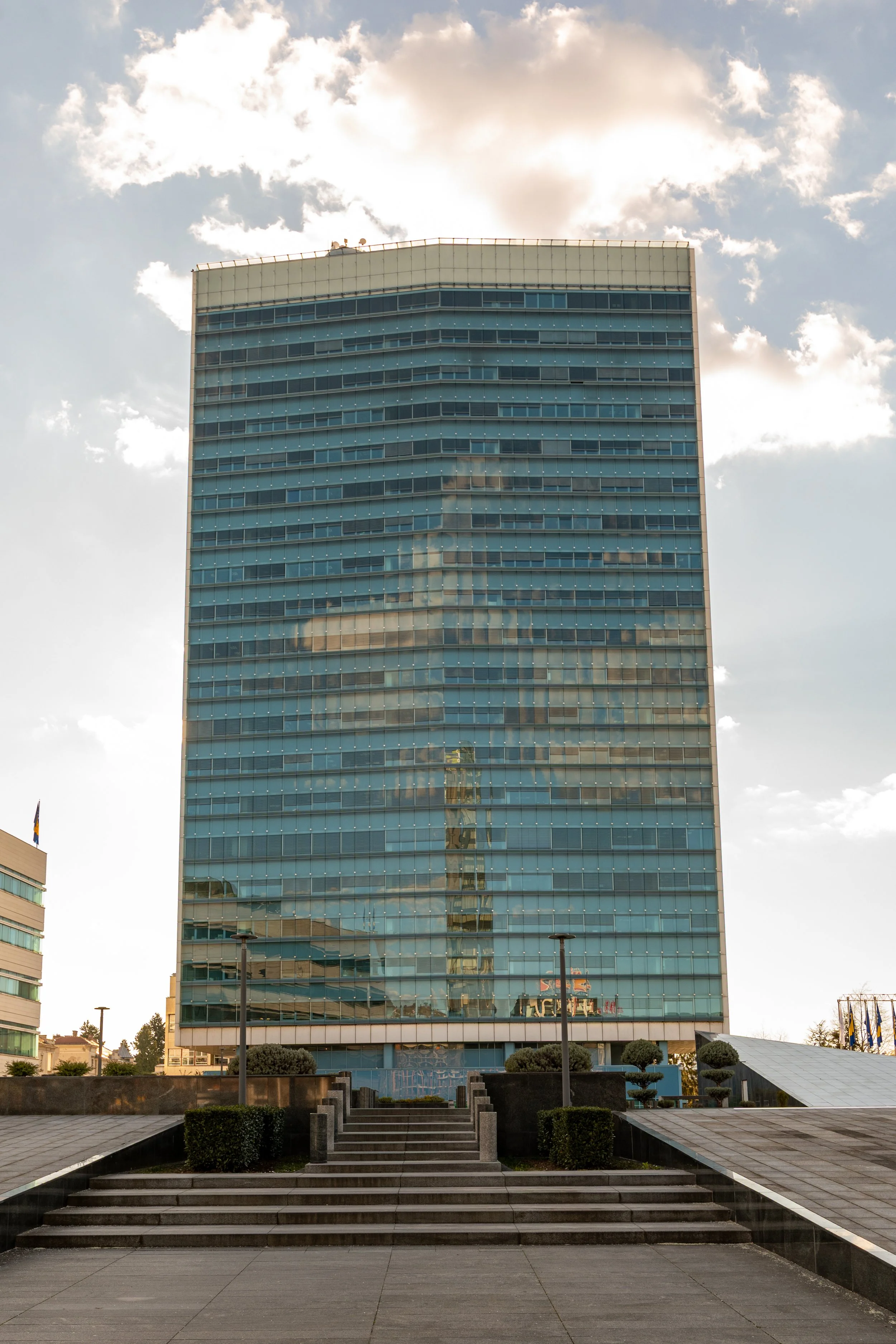
A government office tower houses the Council of Ministers of Bosnia and Herzegovina (originally constructed in 1974). During the siege, this was at the centre of Sniper Alley, where Bosniaks trapped in the city and surrounded by Bosnian Serbs had to navigate the risk of snipers (targeting anyone in the city as enemies). The snipers in the mountains, with a clear view down the wide open intersection, would shoot anyone they saw moving through.
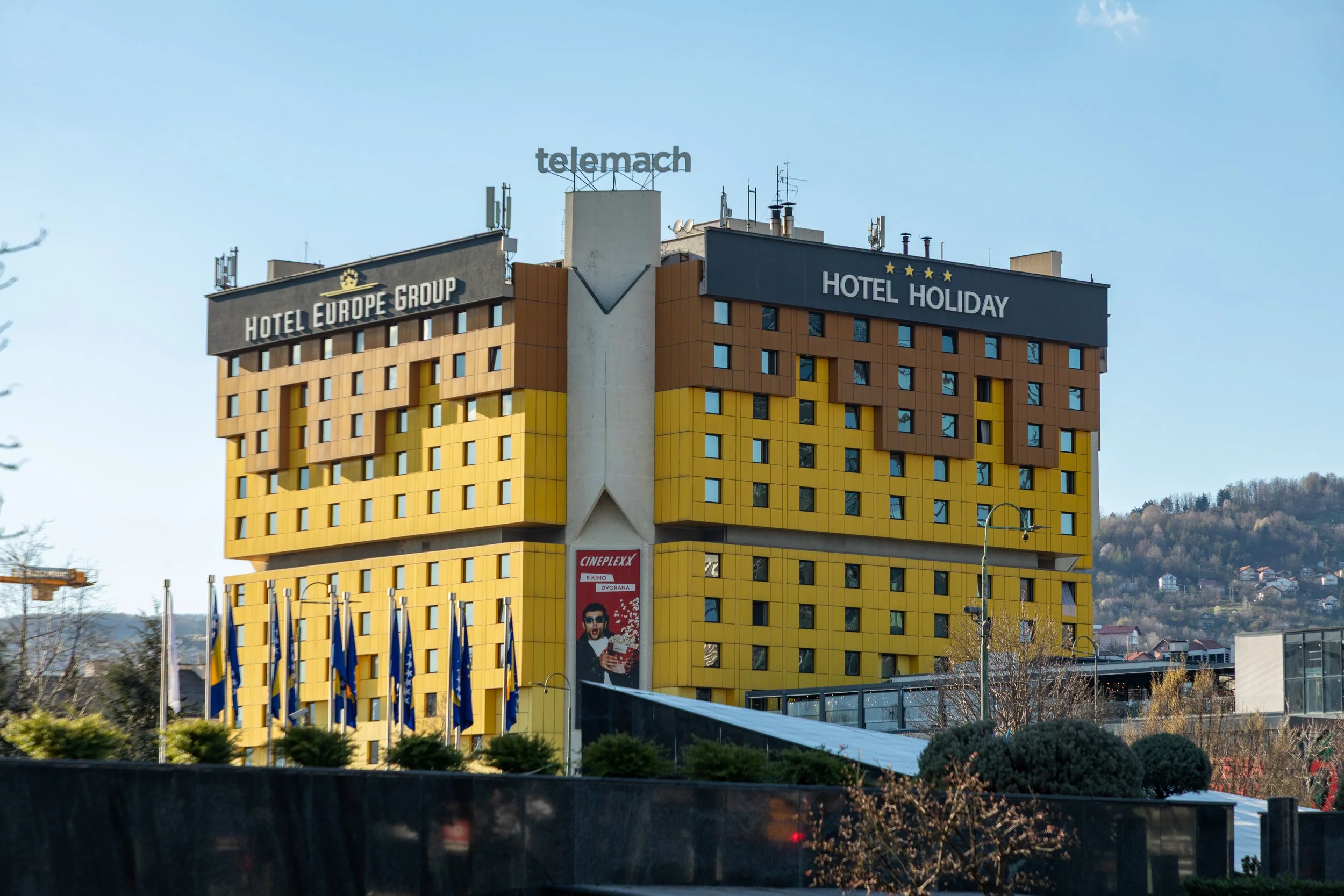
Now rebranded, this was the Holiday Inn constructed for the Olympics, but later the location of the first shots of Bosnian War where Radovan Karadžić, the former Bosnian Serb leader, instructed snipers to open fire on unarmed protesters below
From “Romeo and Juiet Bridge” (originally the Vrbanja Bridge), you can see the mountains that were controlled by the Bosnian Serb snipers. These snipers killed two lovers that had tried to escape across the bridge and died in the each others arms. Their bodies laid there for days as the risk of further sniper fire prevented moving them.
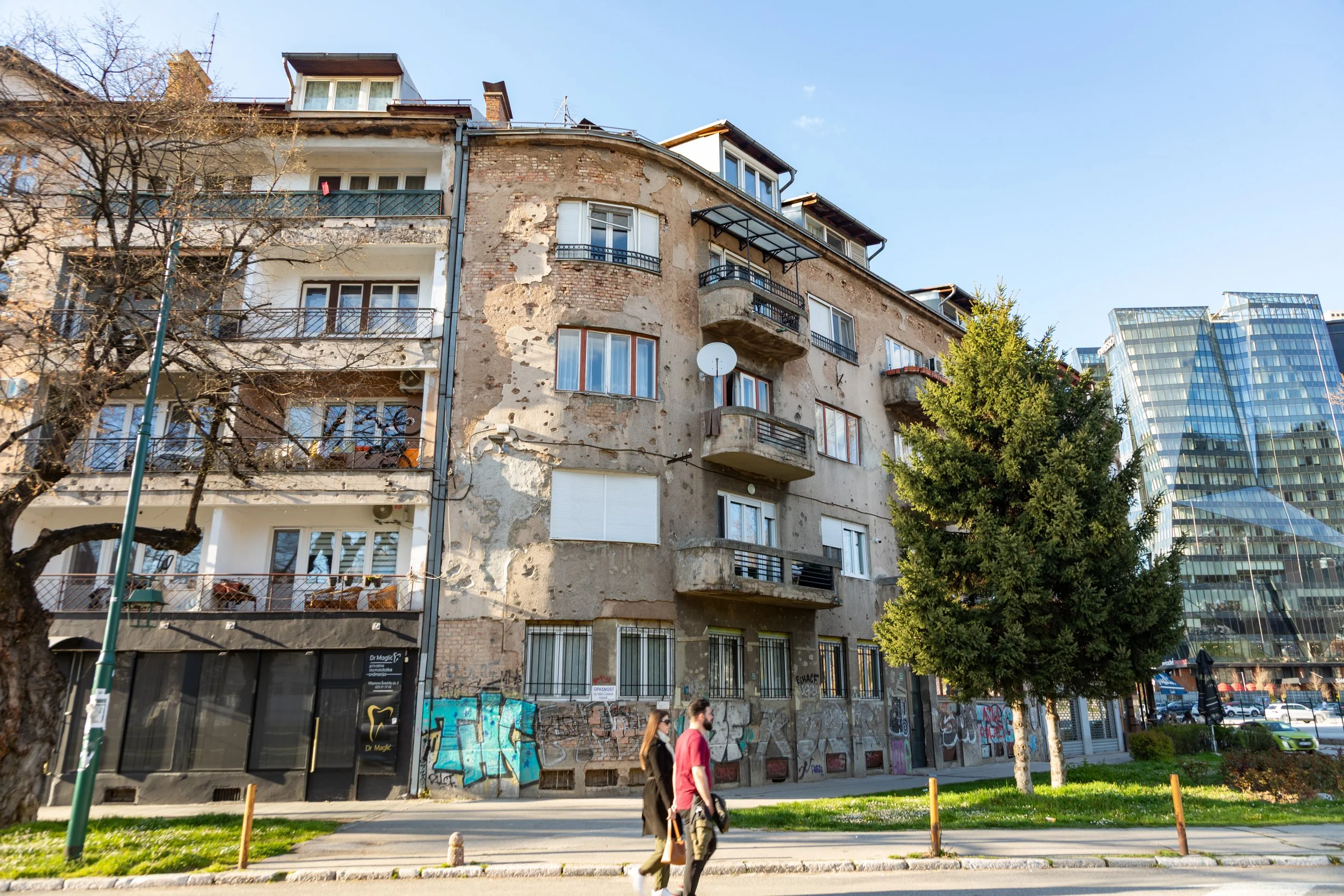
Pockmarks from the shelling still mark this still-occupied apartment building
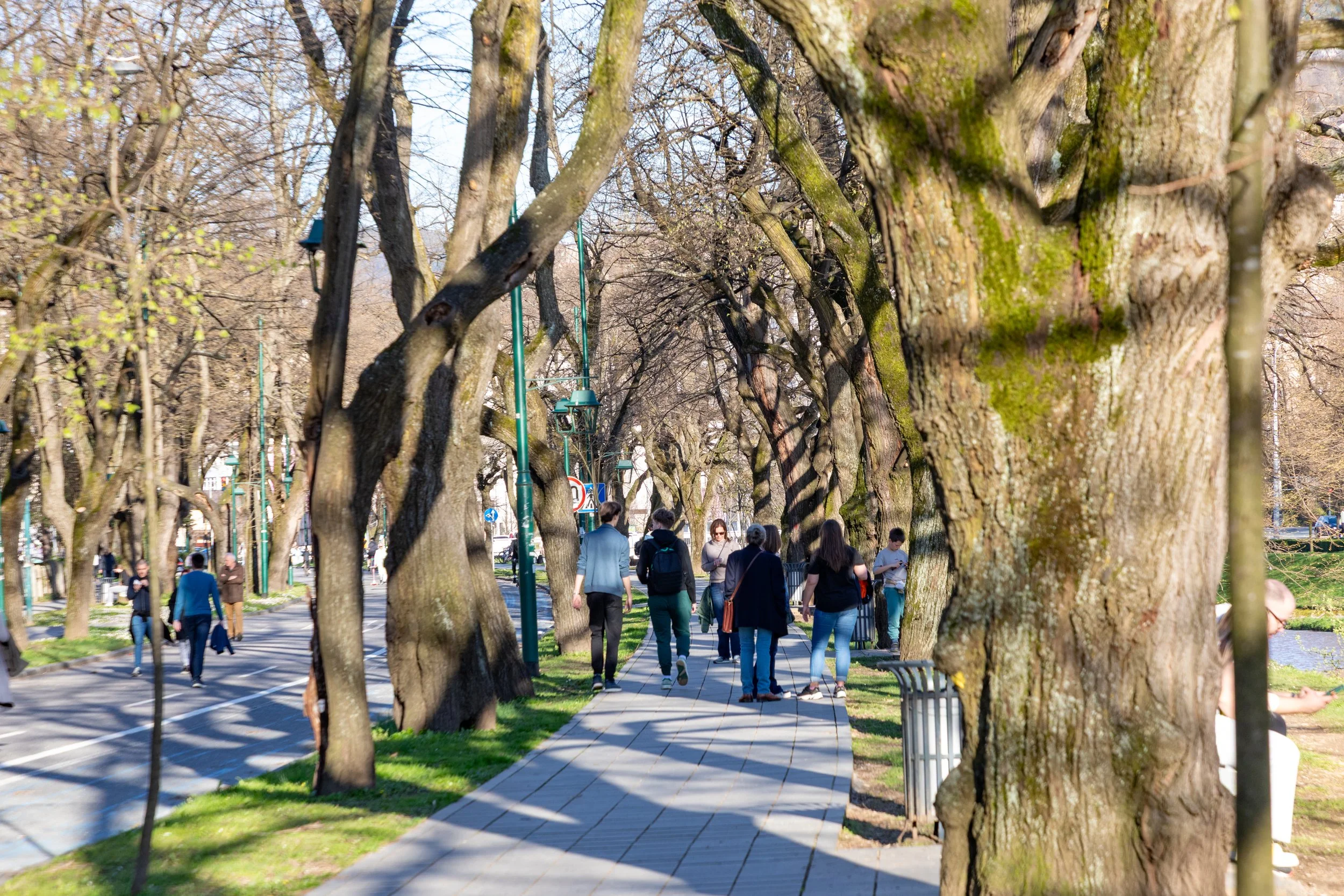
Tree-lined Woodrow Wilson Promenade still has these old trees, only surviving the siege because they were too close to enemy lines to be cut down and burned for fuel
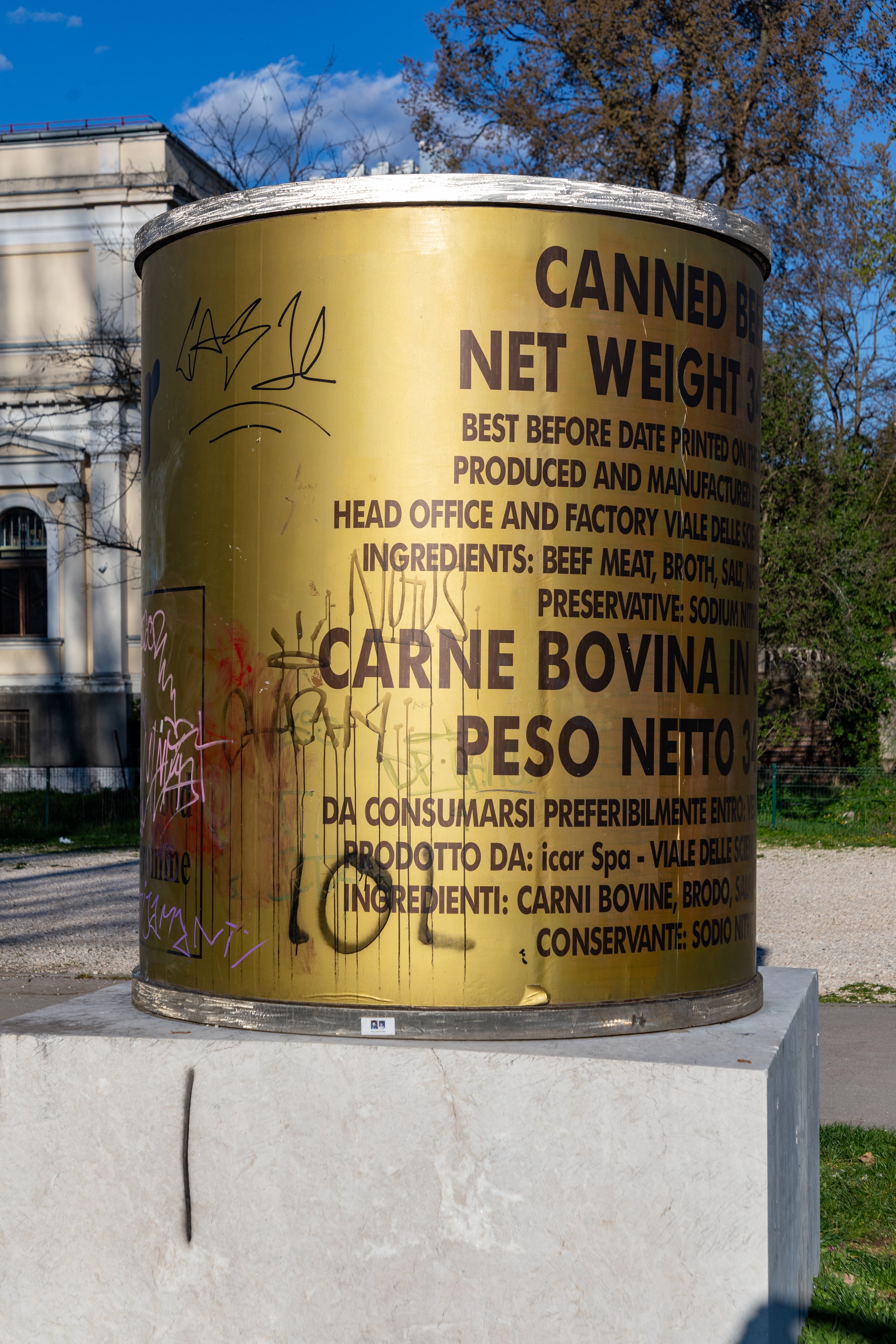
The 2007 ICAR Canned Beef Monument is a sarcastic "tribute" often referred to as the "Monument to the International Community" from the "Grateful Citizens of Sarajevo", who actually felt the humanitarian aid was severely lacking
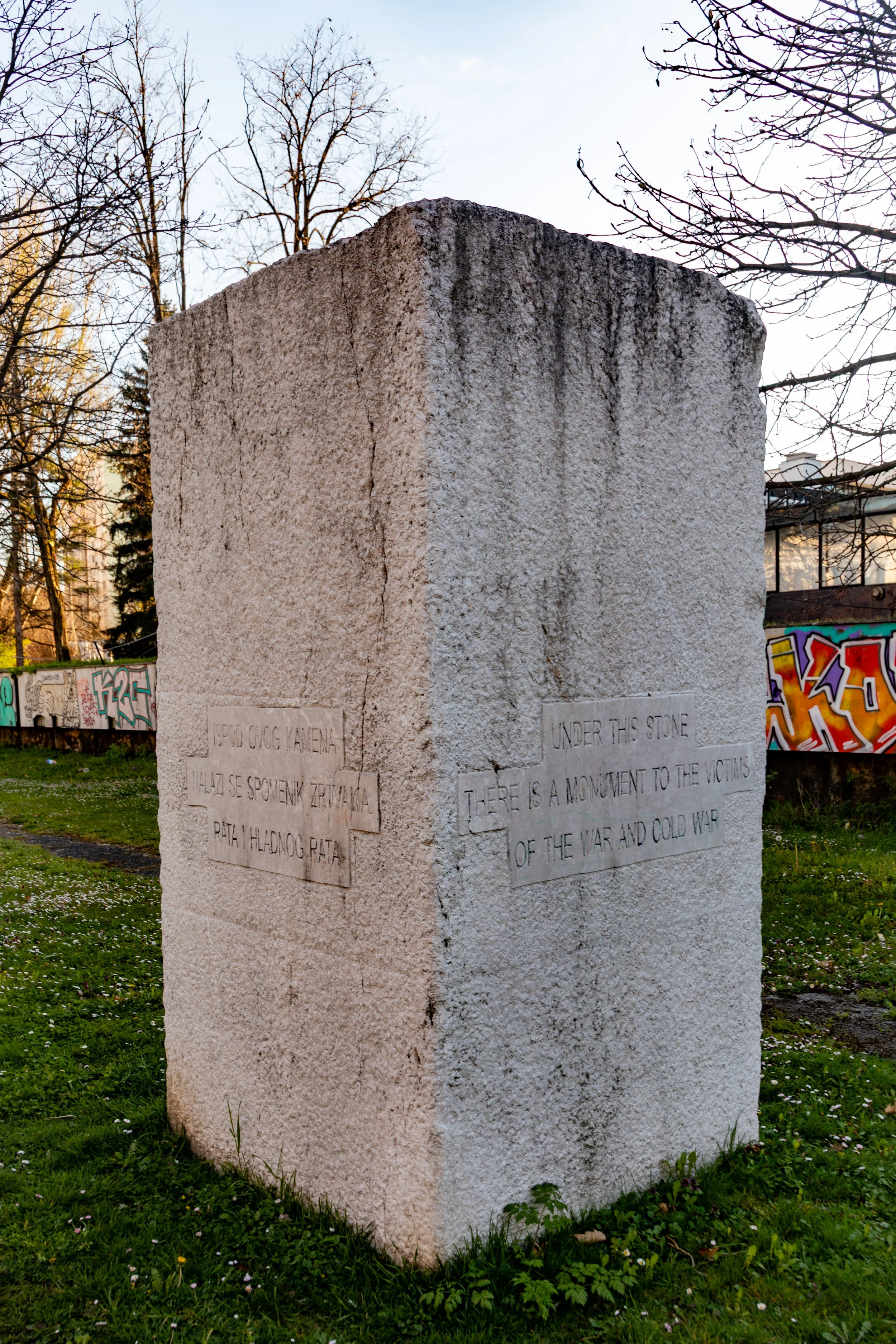
With more dry humor this stone reads “Under this stone there is a monument to the victims of the war and cold war”
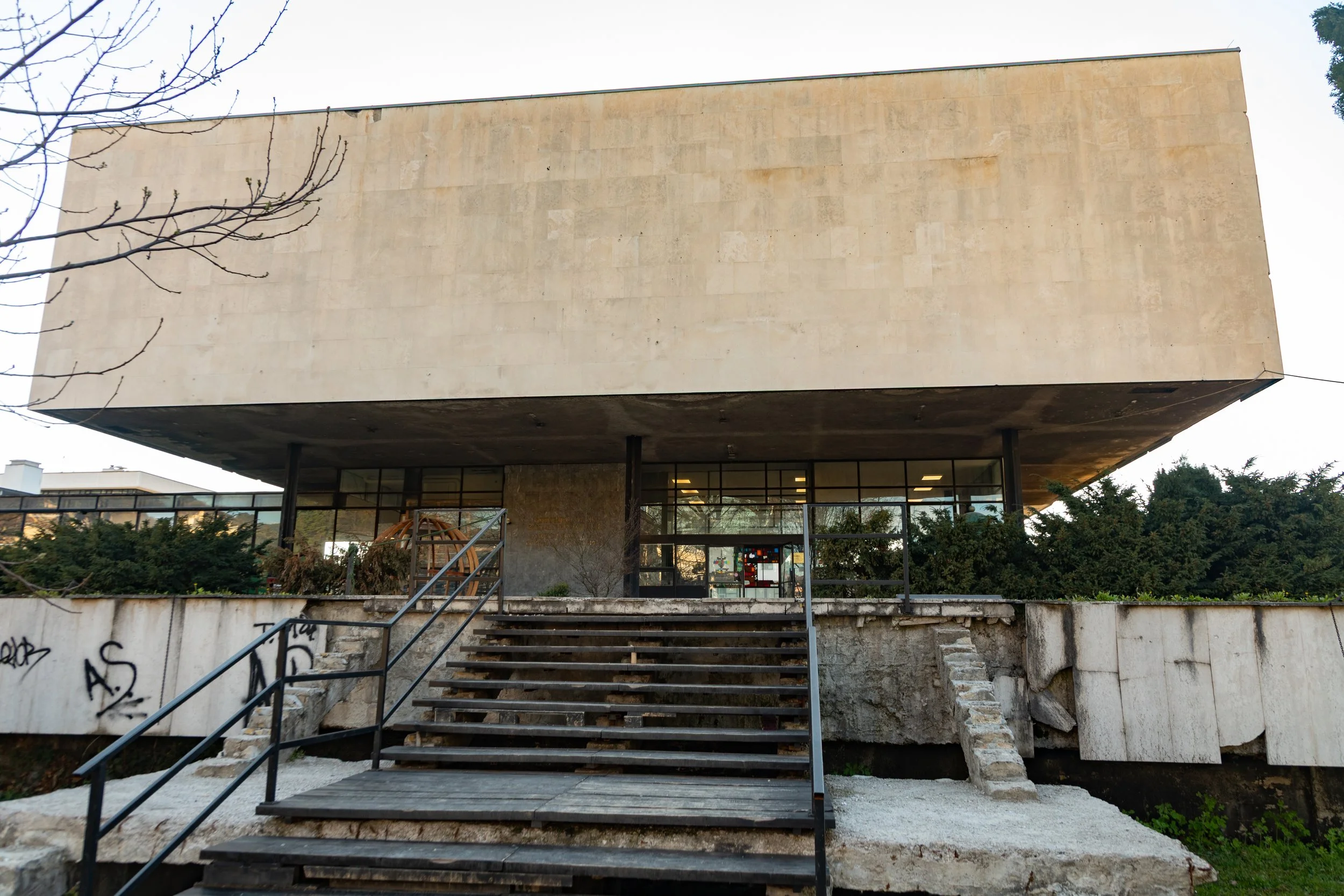
The Historical Museum has a number of artifacts telling the history of the city and tales from the Yugoslav war and siege
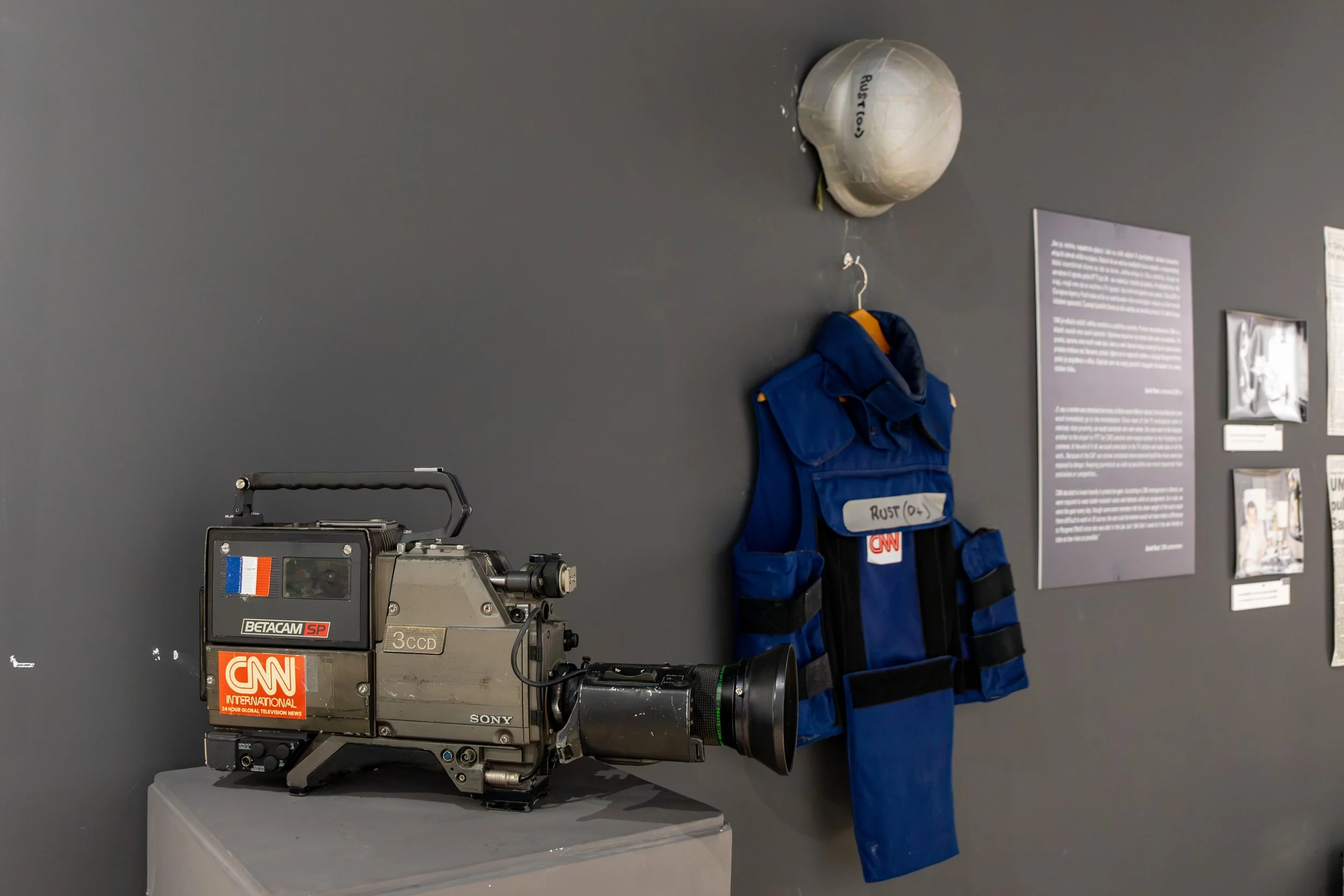
Artifacts from Dave Rust’s on-the-ground reporting for CNN, marked with his blood type in case of injury
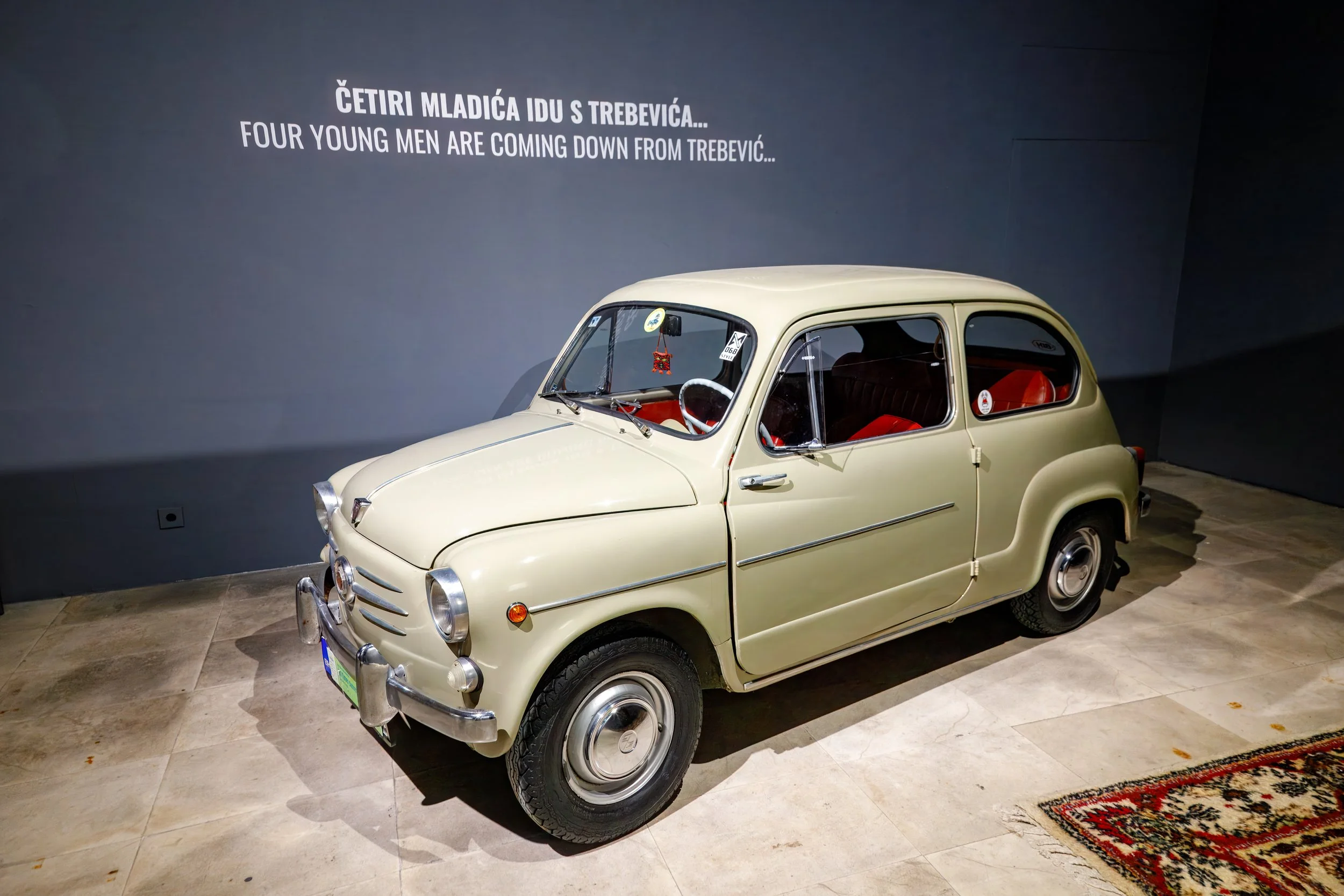
An old Fiat 600, part of an exhibit in the museum documenting life before the war
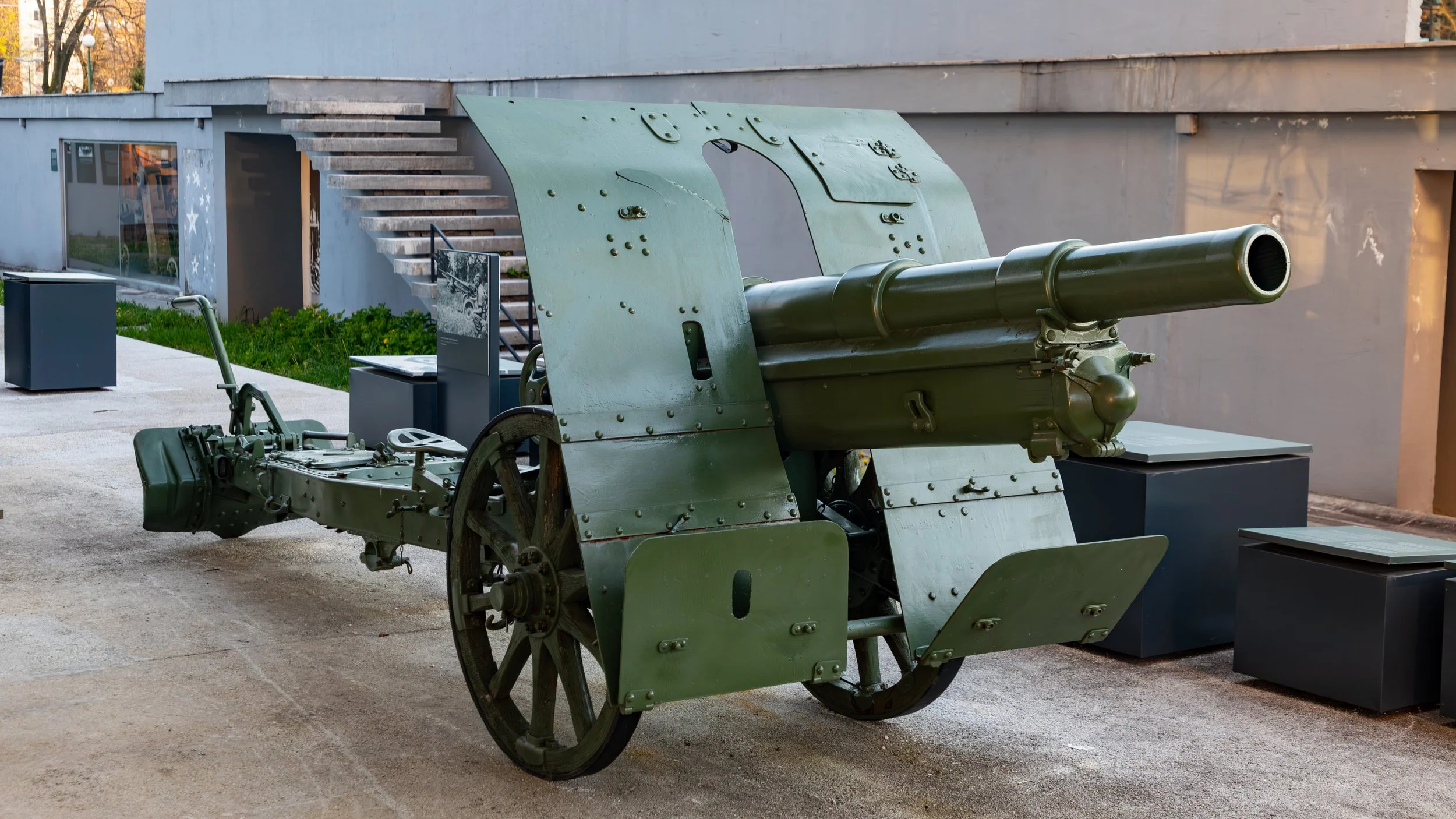
Some of the ground artillery on display in the museum
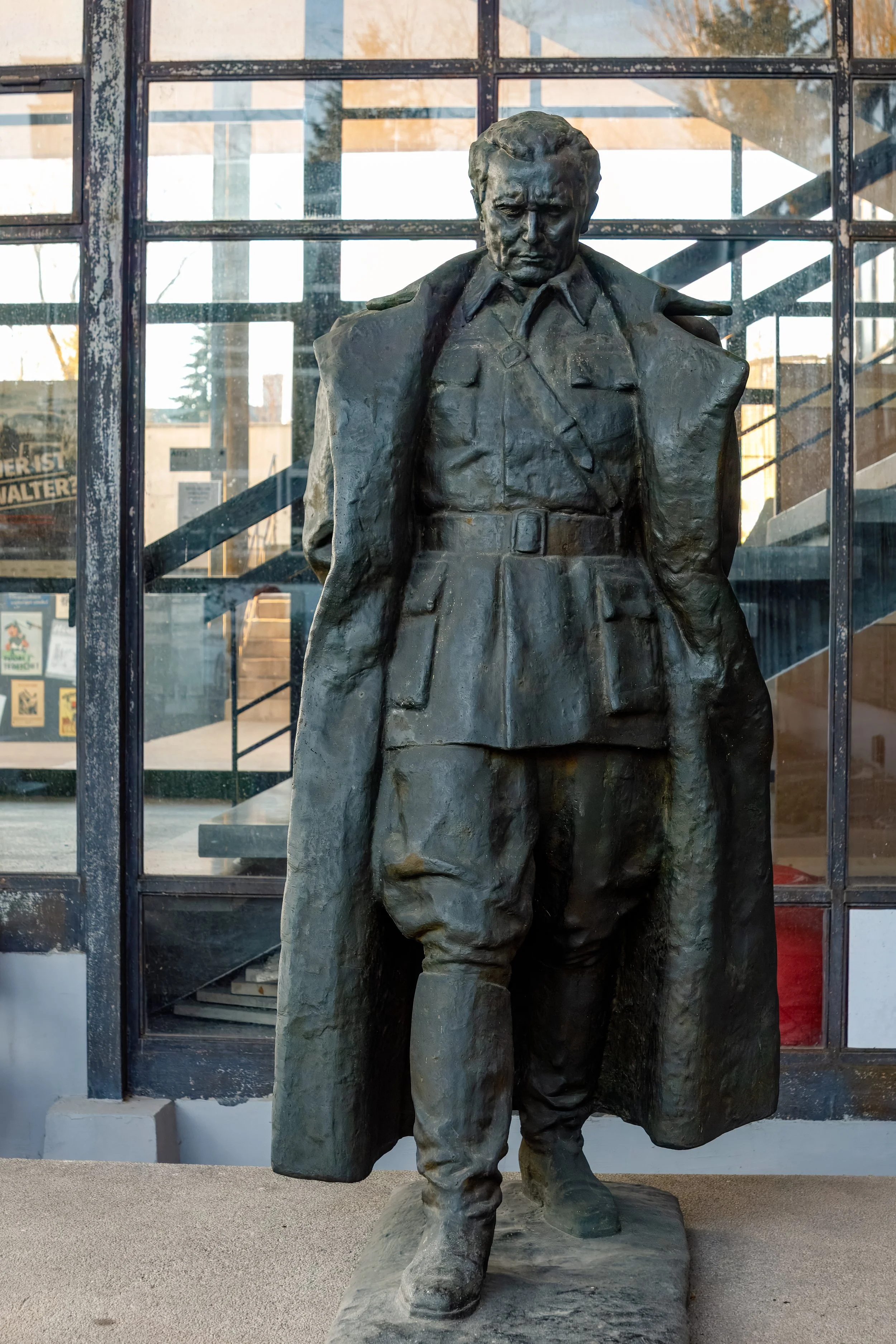
Bronze depiction of Josip Broz Tito, the former President of Yugoslavia from 1953 until his death in 1980, in the museum lobby
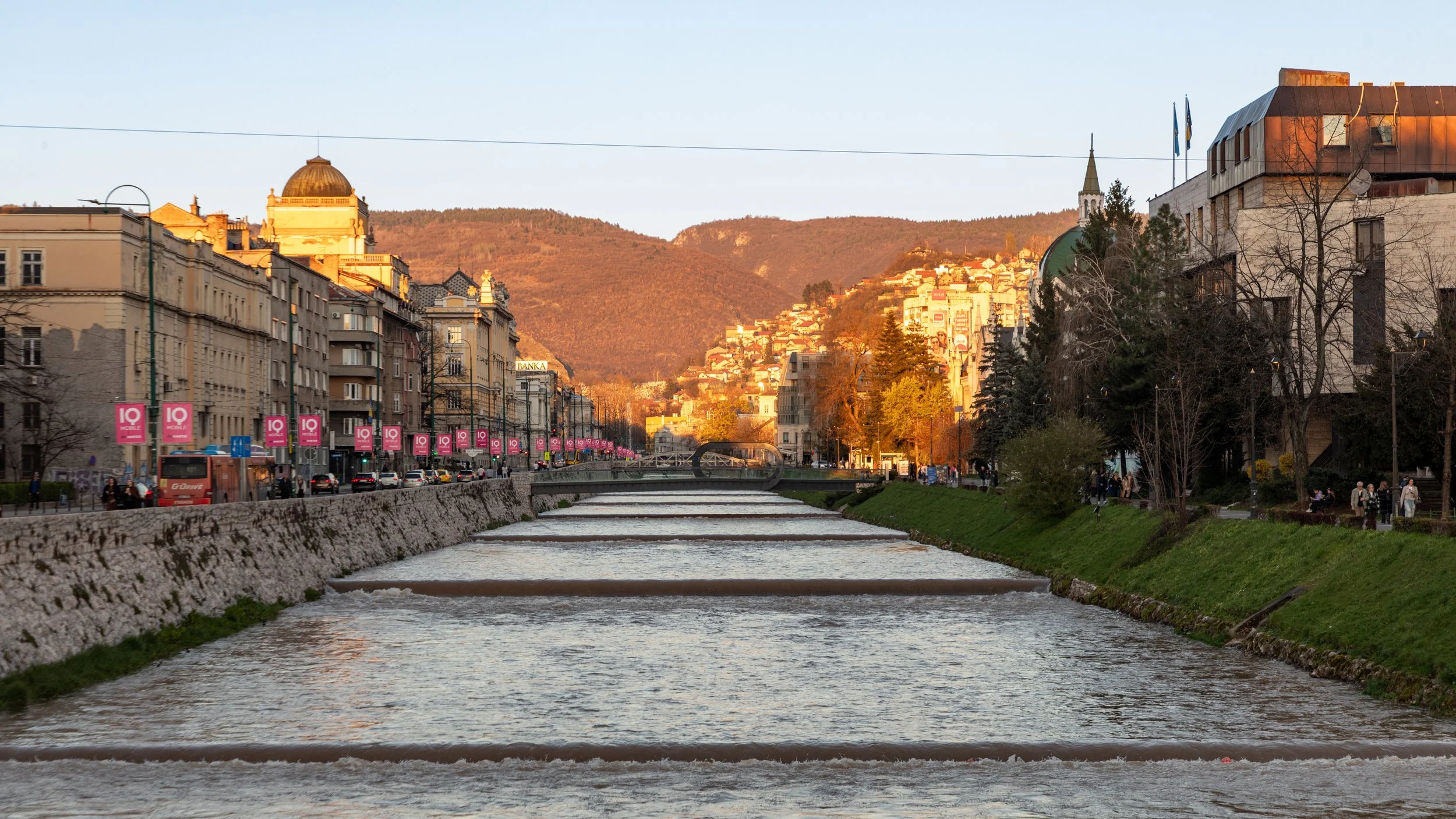
Sunset over the Miljacka River and the surrounding mountains, as we head out from our hotel for dinner
After a very busy Easter Sunday, we had a simple dinner of falafel wraps from a small takeout place near the University, and grabbed a beer at a small bar patio along the diver.
Apr 6
With an early flight back through Vienna, we had an early wake call and Uber ride to the airport. Although we only had a long weekend in Bosnia, we learned a lot of history and finally had all the pieces in the story of what was Yugoslavia from 1918 to 1992 and officially marked Country #121.