Santiago and Mendoza
Nov 18-25
AC18 YYZ-SCL, Nov 20 LA434 SCL-MDZ, Nov 24 LA435 MDZ-SCL, AC19 SCL-YYZ
Of all the travel that we completed in 2025, this trip was one of the furthest in advance that was booked. We have a credit card that comes with companion passes that are most valuable when used for long flights that can get upgraded to business class. At the end of 2024, I found a nice routing to Santiago on a non-stop flight that we could confirm into business class, so locked in the tickets and then later planned the rest of the vacation.
It had been many years since our previous trip to Chile, so there were many possibilities to explore the area, but I was more interested in visiting the Mendoza wine region of Argentina, so I confirmed some hotel stays at the Park Hyatt at a great rate, and bracketed it with time in Chile before and after.
Nov 19
In the overnight flight, we managed to get some decent rest, so we didn’t need too much time to refresh in the hotel before heading out to explore. Our hotel was a in Las Condes, a very upscale part of Santiago, but was also well-connected to transit and the rest of the city. Having the Lonely Planet ebook, we decided to follow the Santiago Centro walking tour, starting at Plaza de Armas.
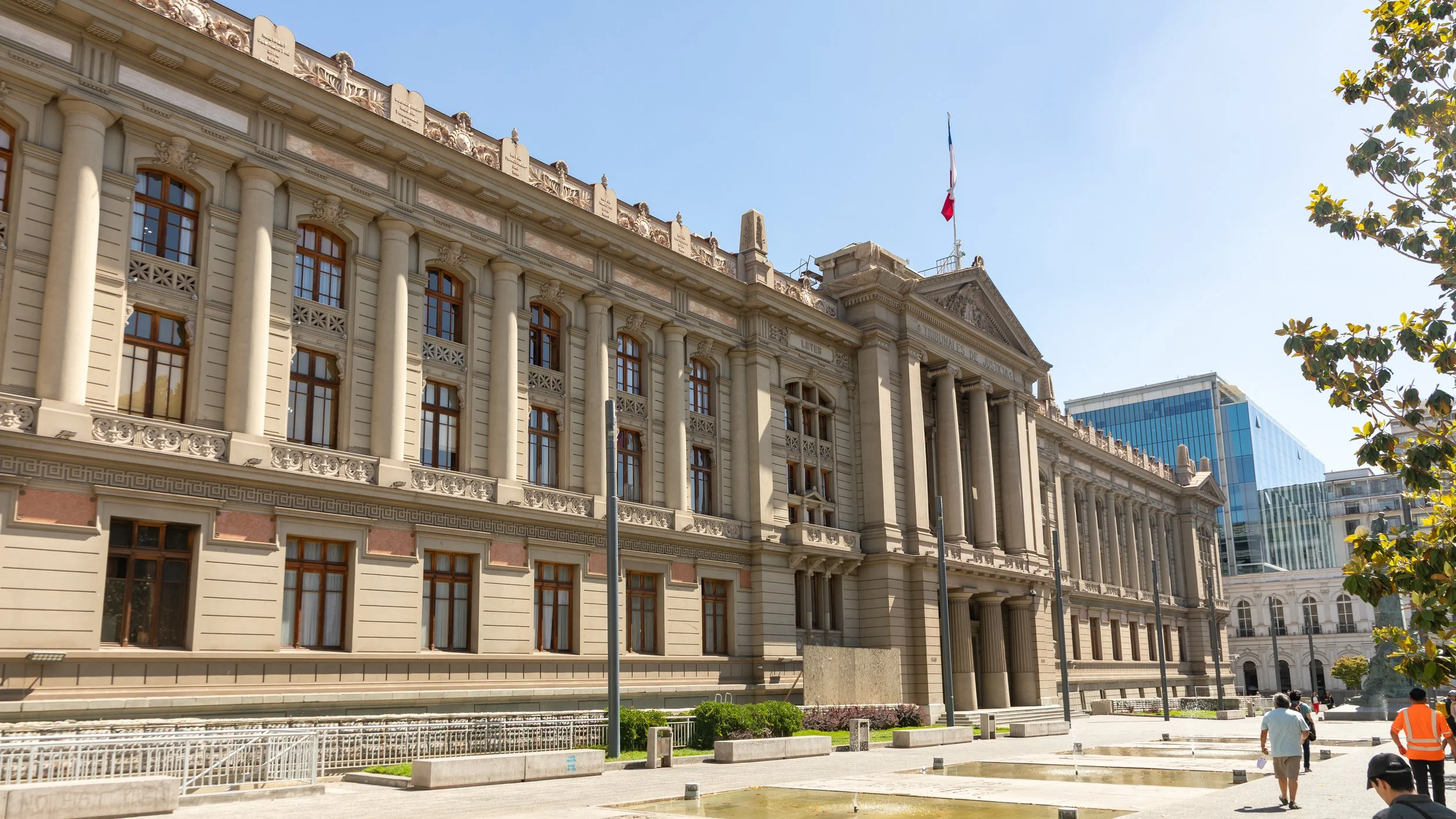
Palacio de los Tribunales de Justicia (Supreme Court)
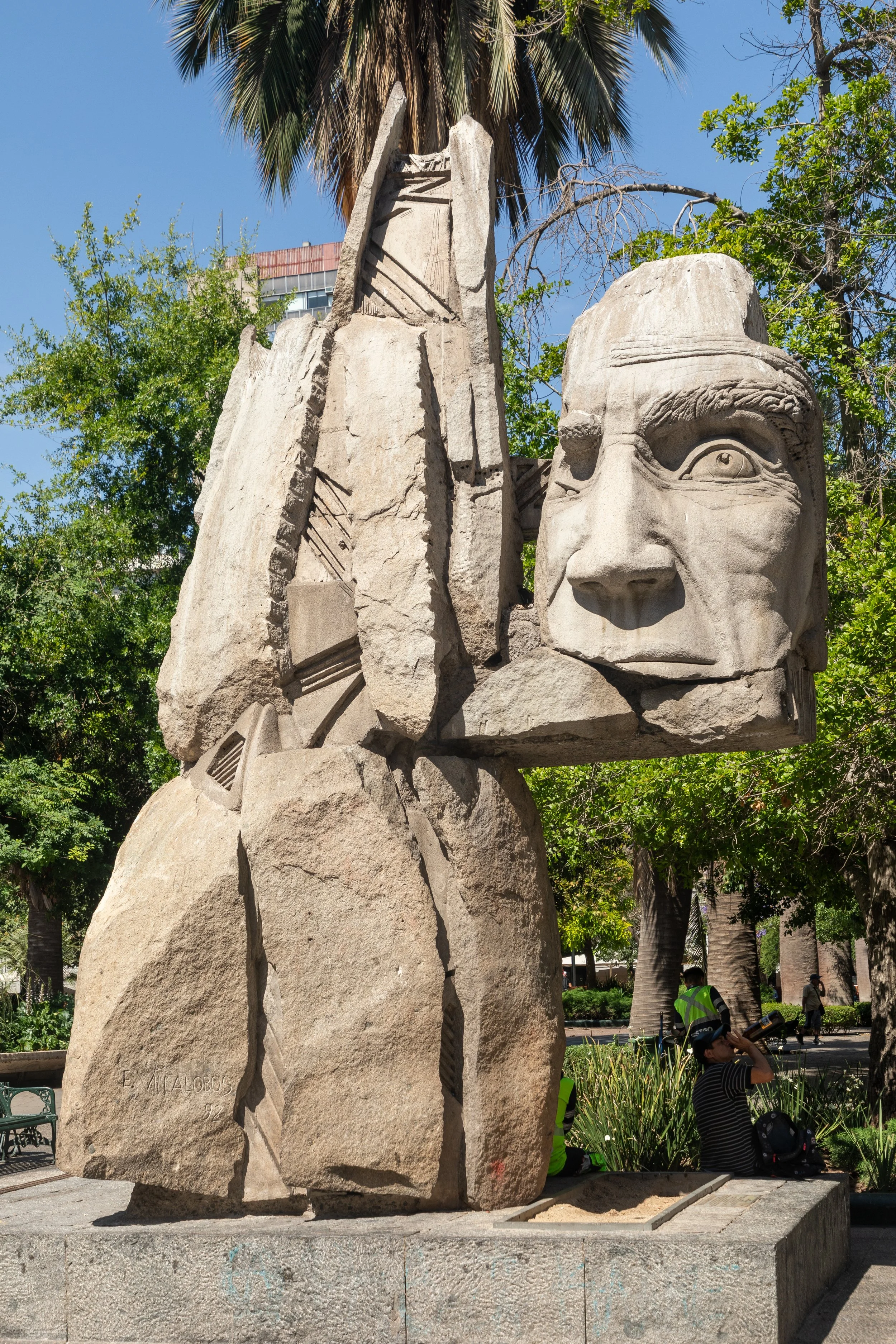
Monument to the Indigenous People, displayed prominently in the Plaza de Armas
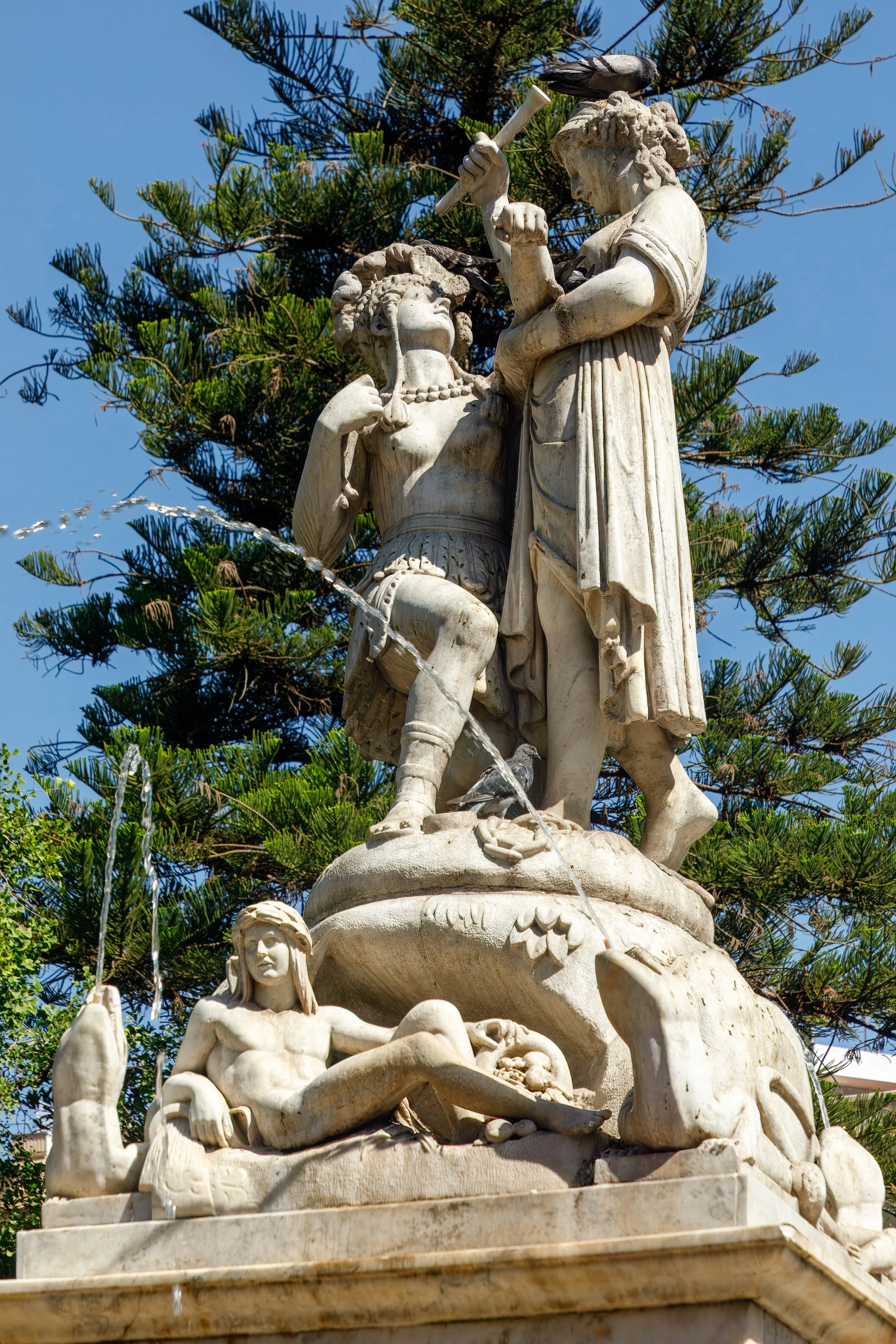
Monumento a la Libertad Americana, also located in the Plaza
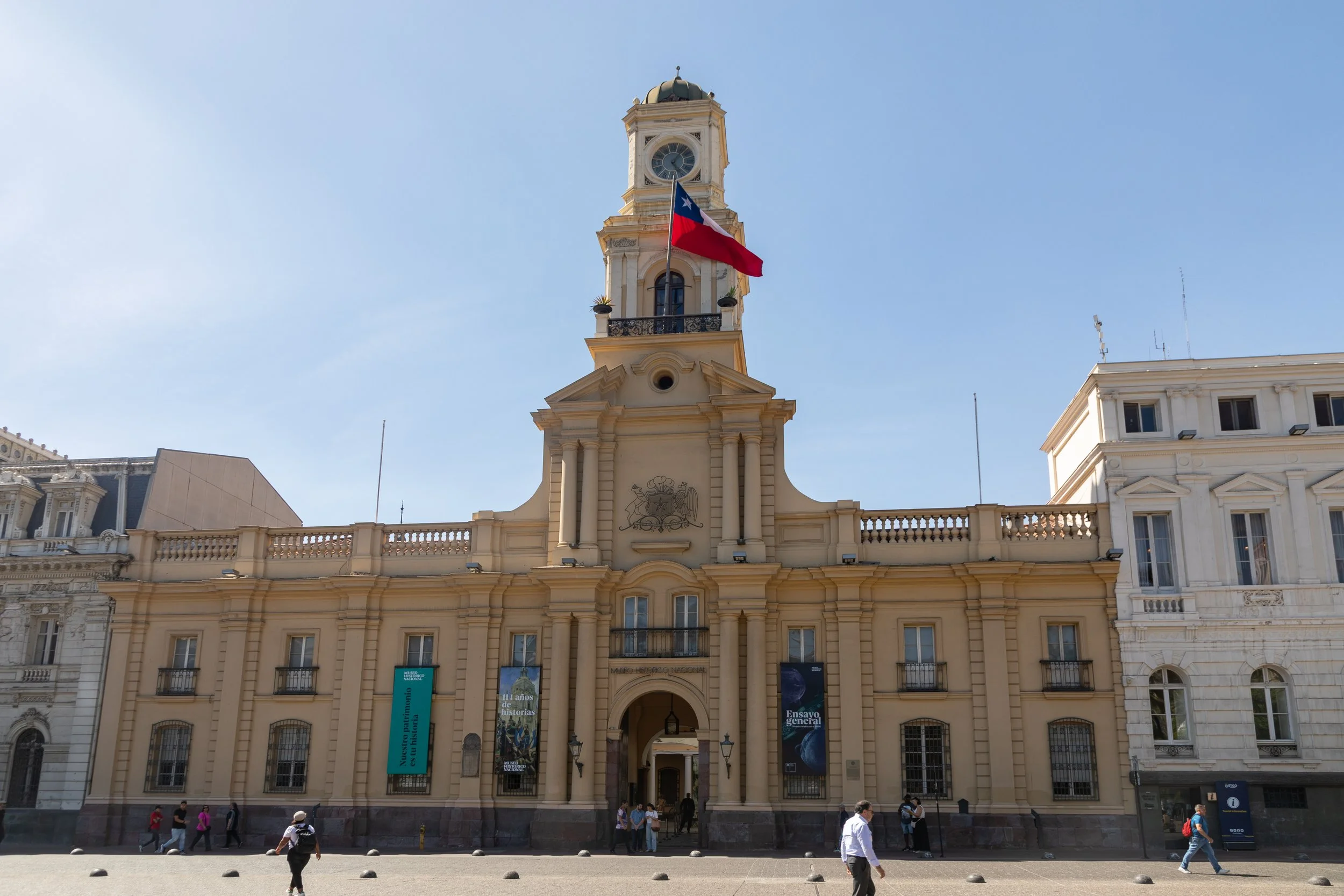
The Royal Court Palace
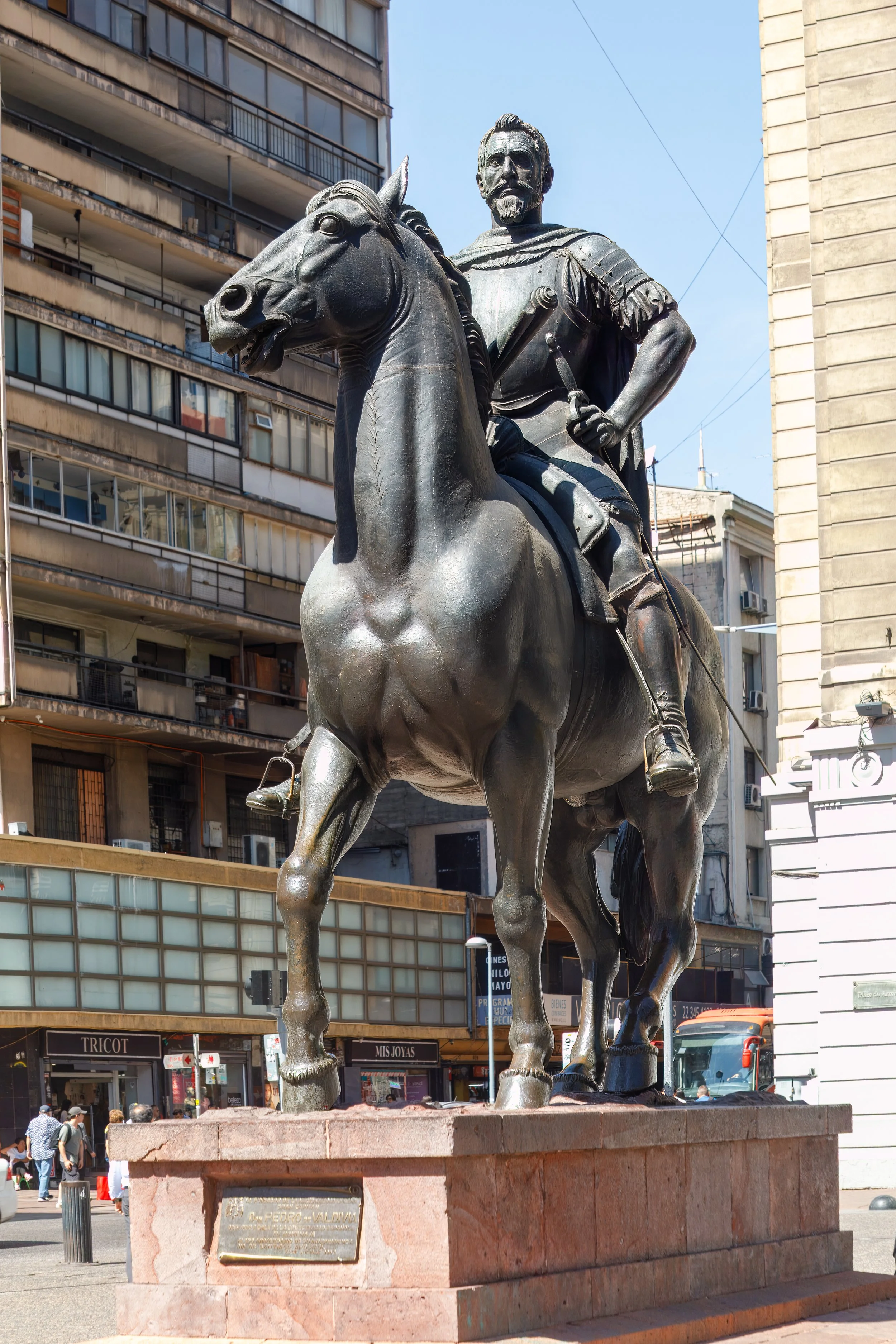
The main monument to Pedro de Valdivia, founder of Santiago
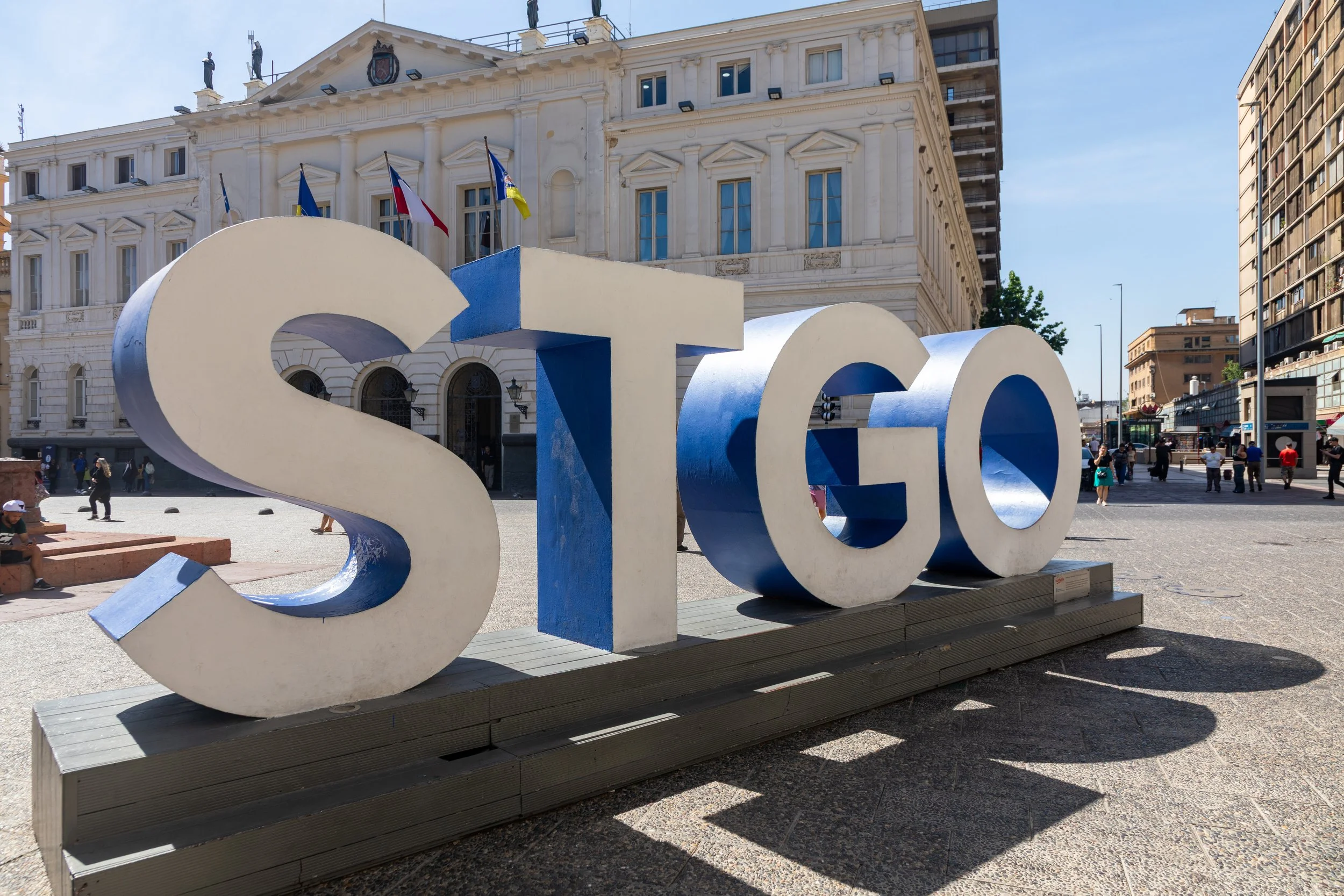
City sign ready for selfies, also in the plaza
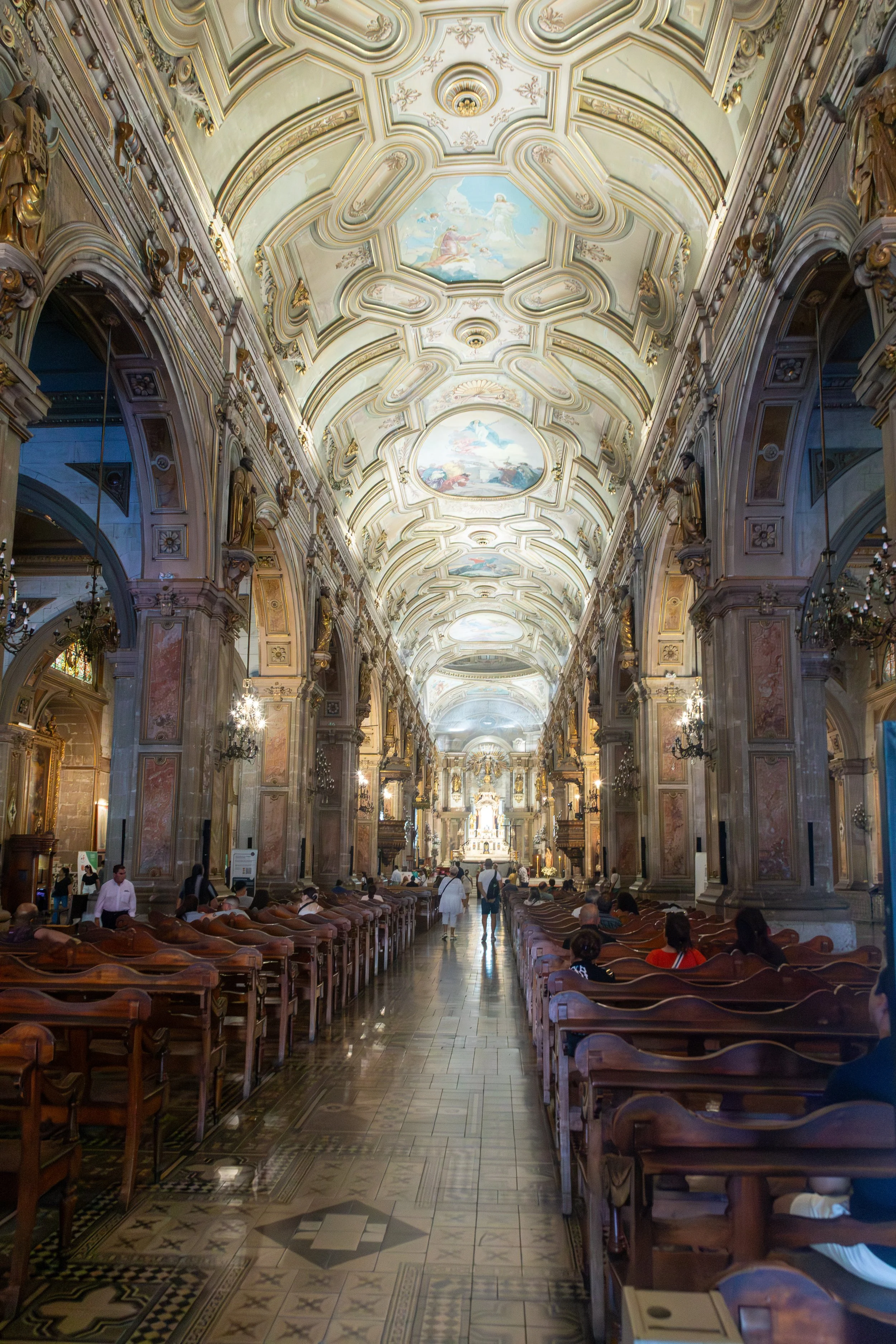
Interior of Catedral Metropolitana, built between 1748 and 1800
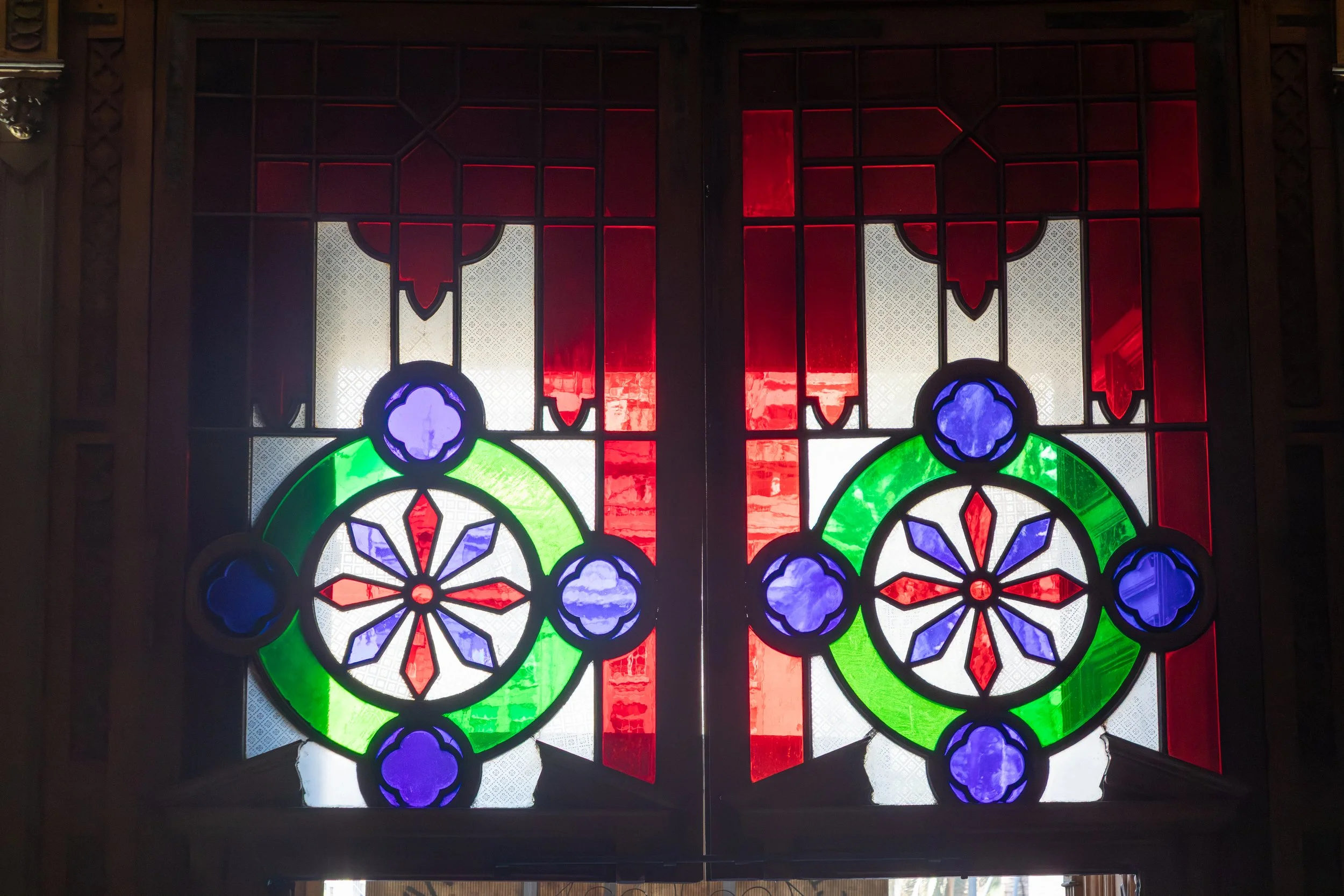
Cathedral stained glass
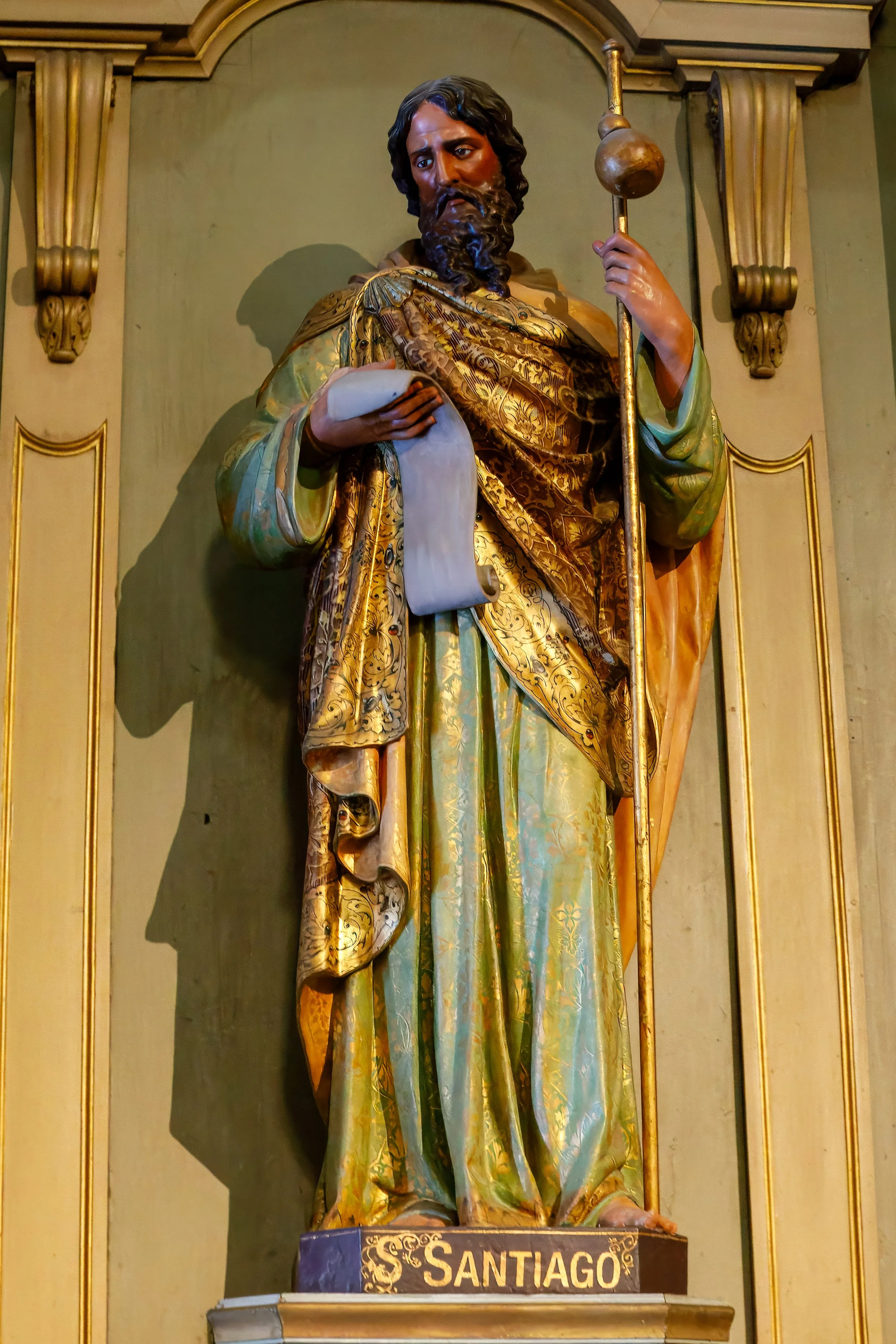
One of the carved statues decorating the cathedral
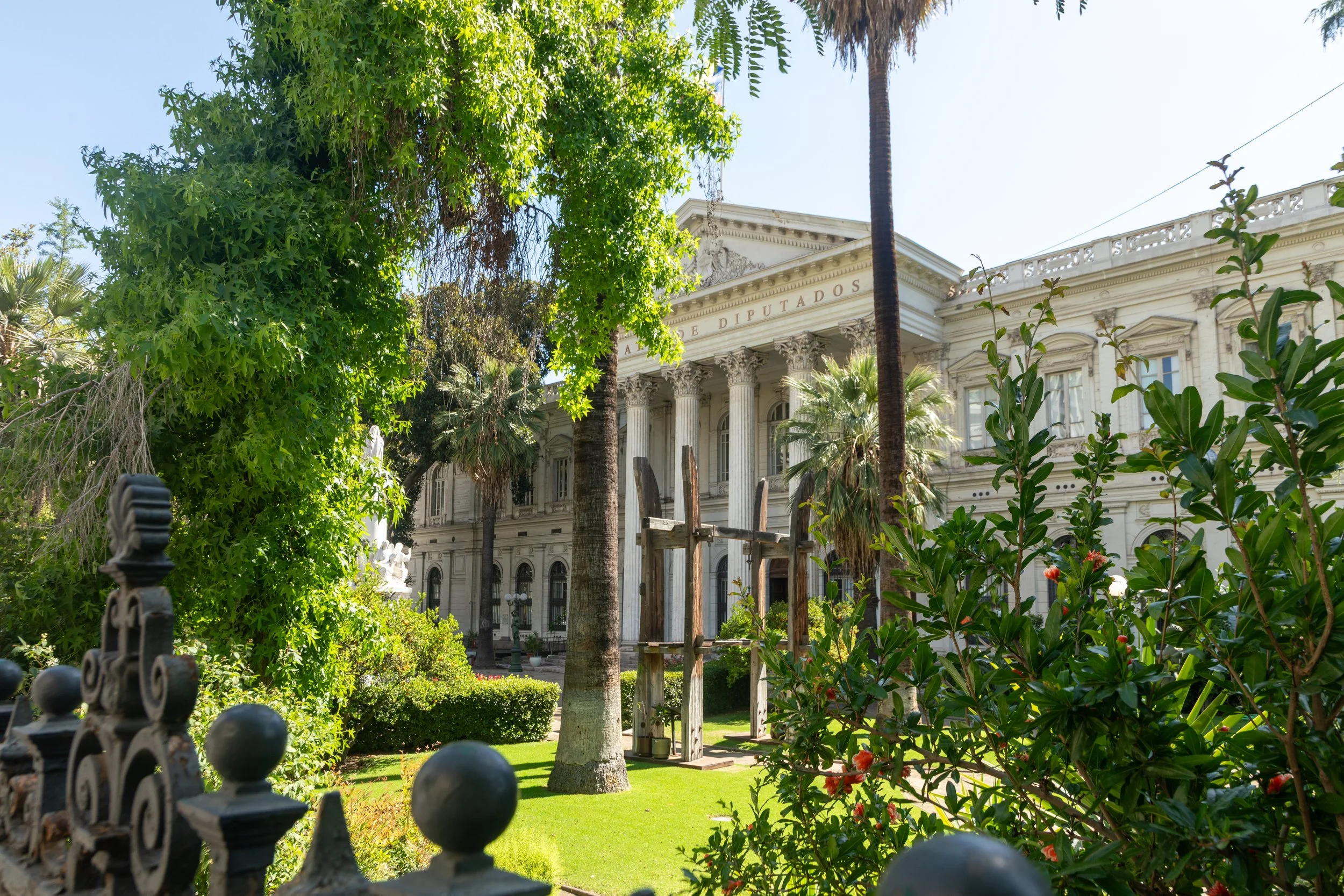
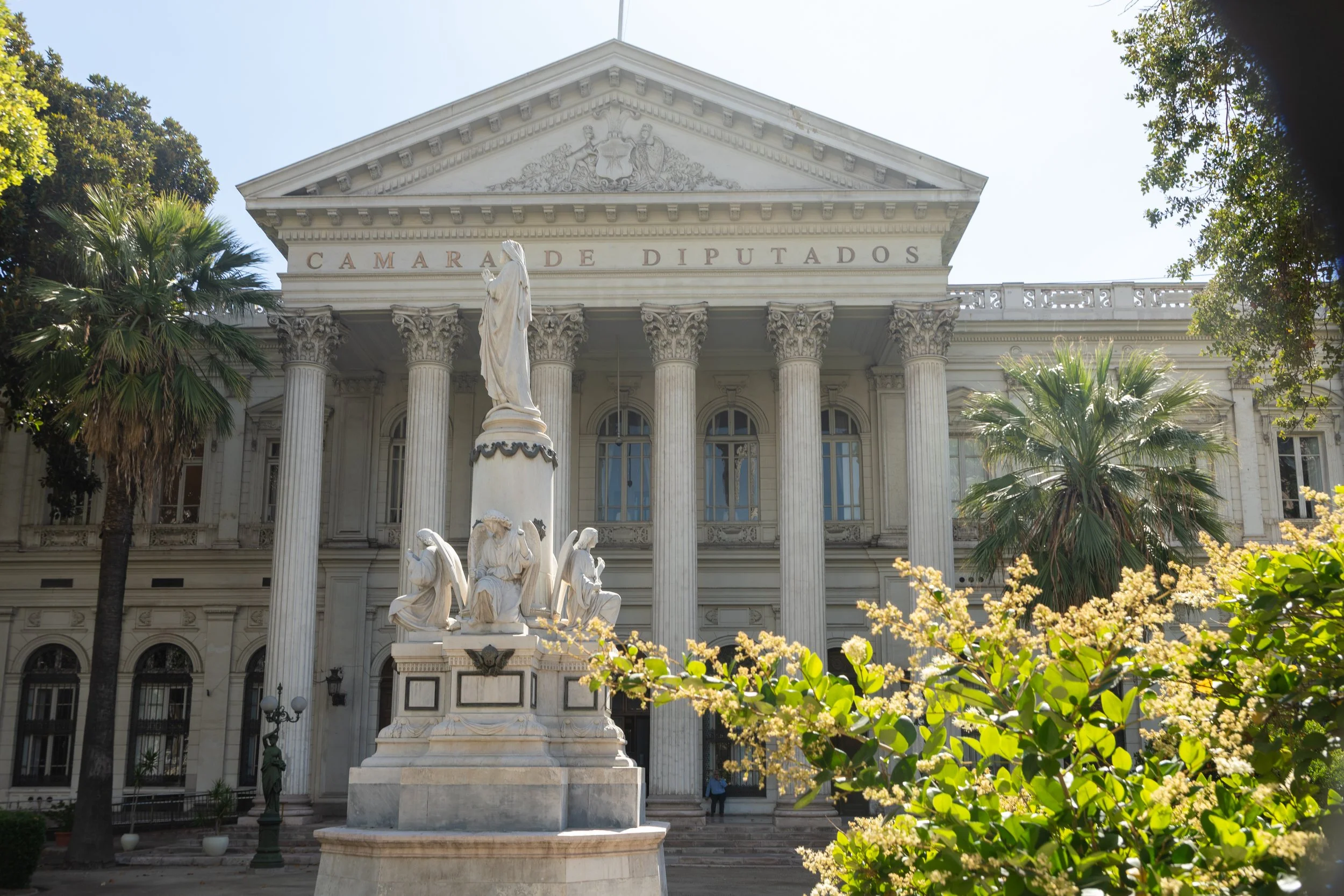
The former National Congress Building served as the meeting place for the Chilean Congress, until the 1973 military coup
A monument to the victims of the 1863 Church of the Company fire, in front of the Congress building
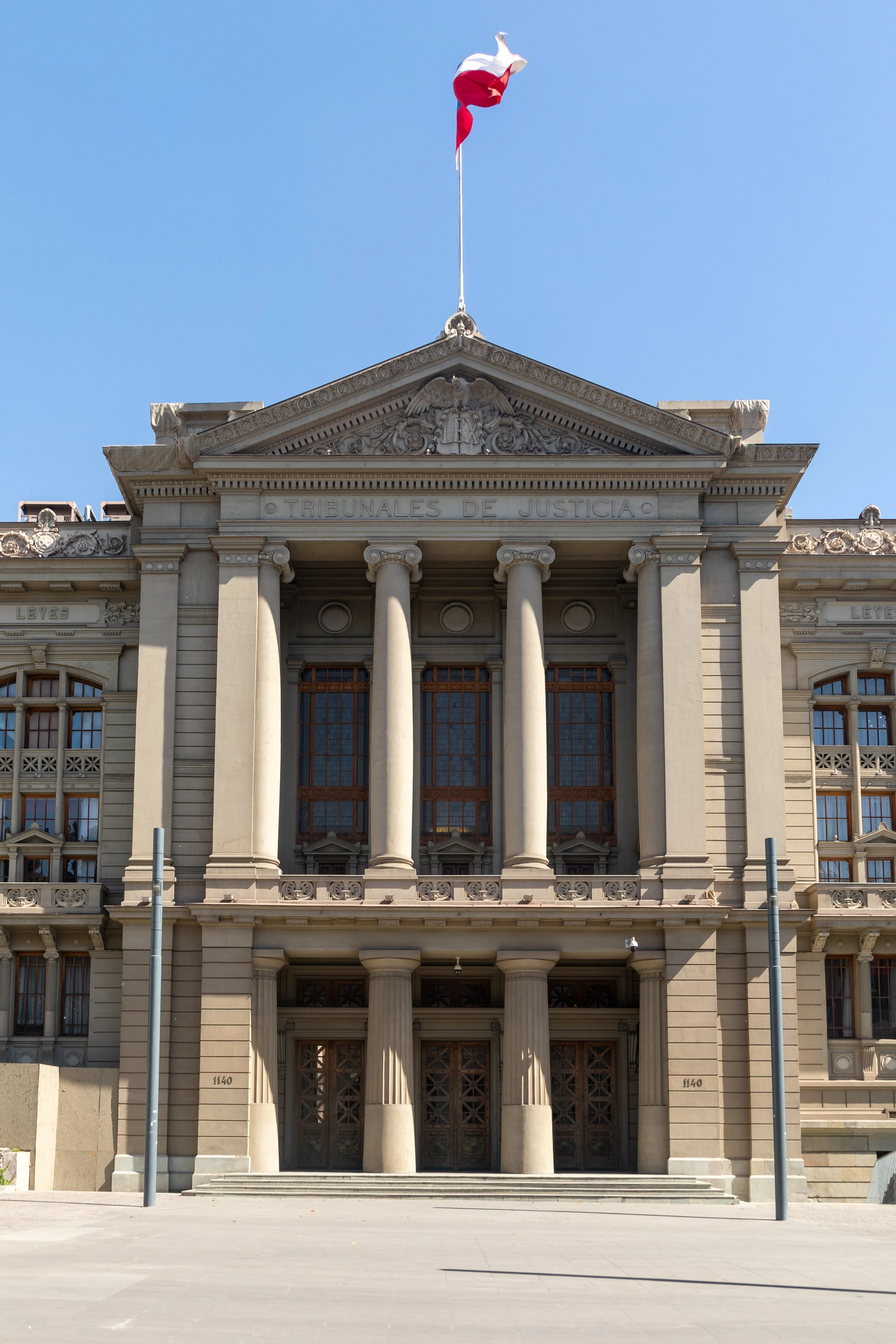
Supreme Court of Justice building
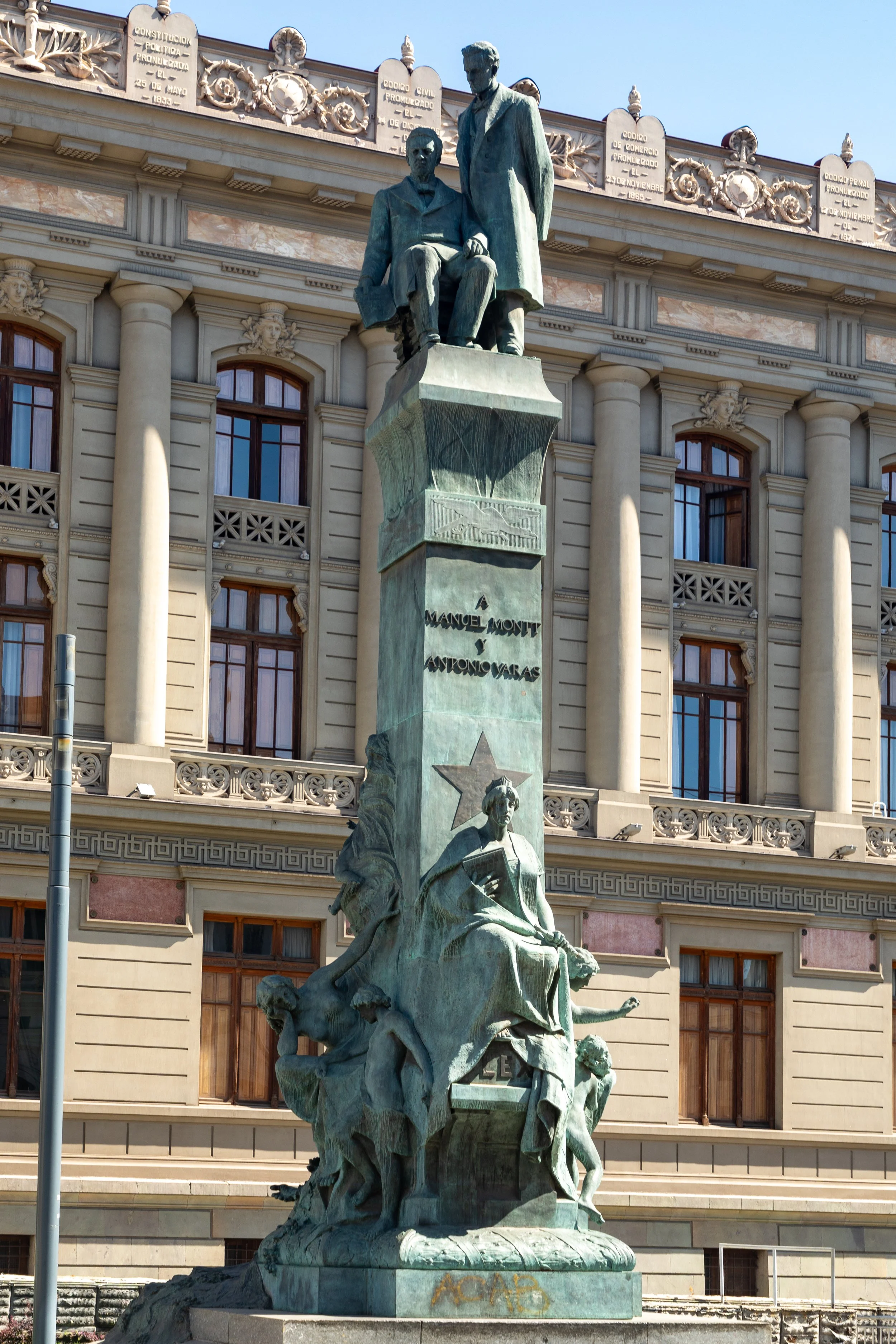
Montt-Varas Monument in the foreground and the Palacio de los Tribunales de Justicia in the background
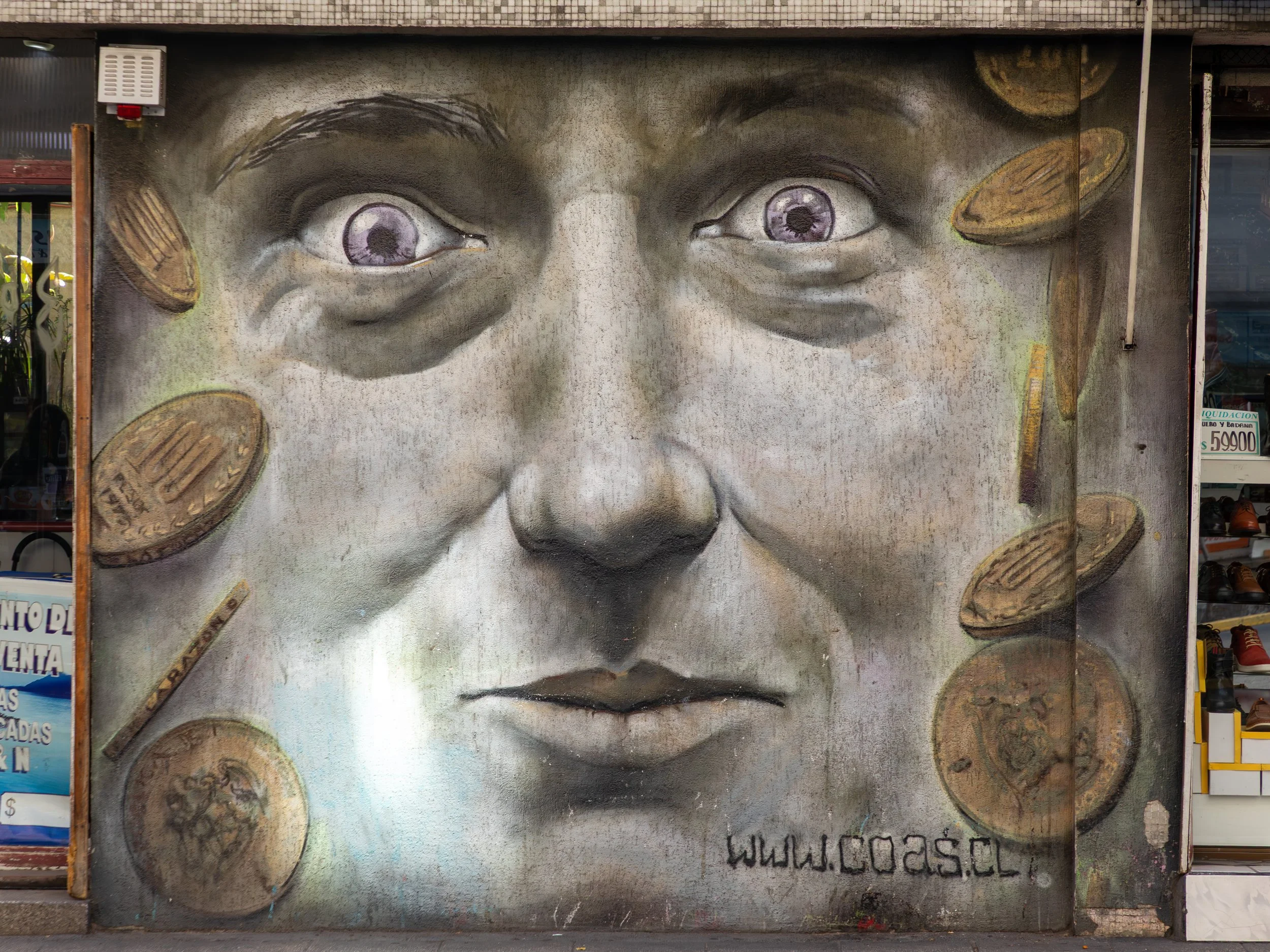
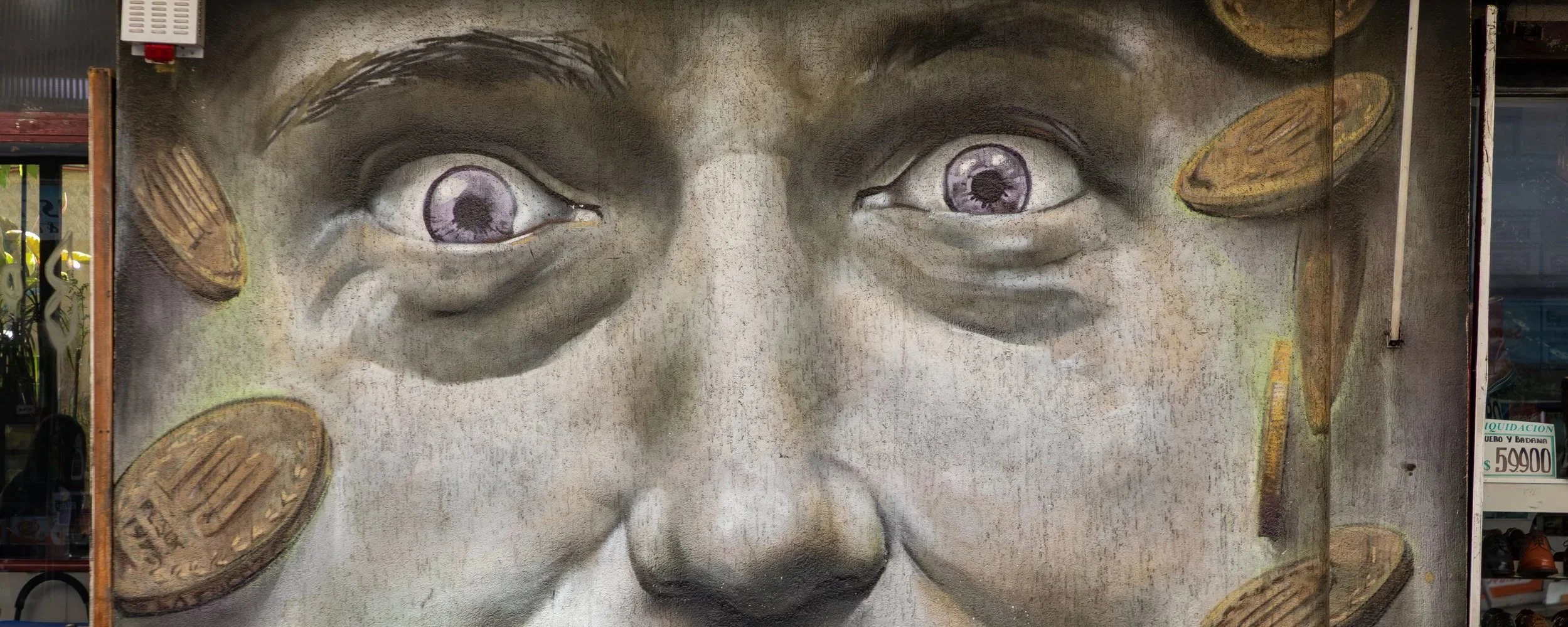
Street mural art in the old city
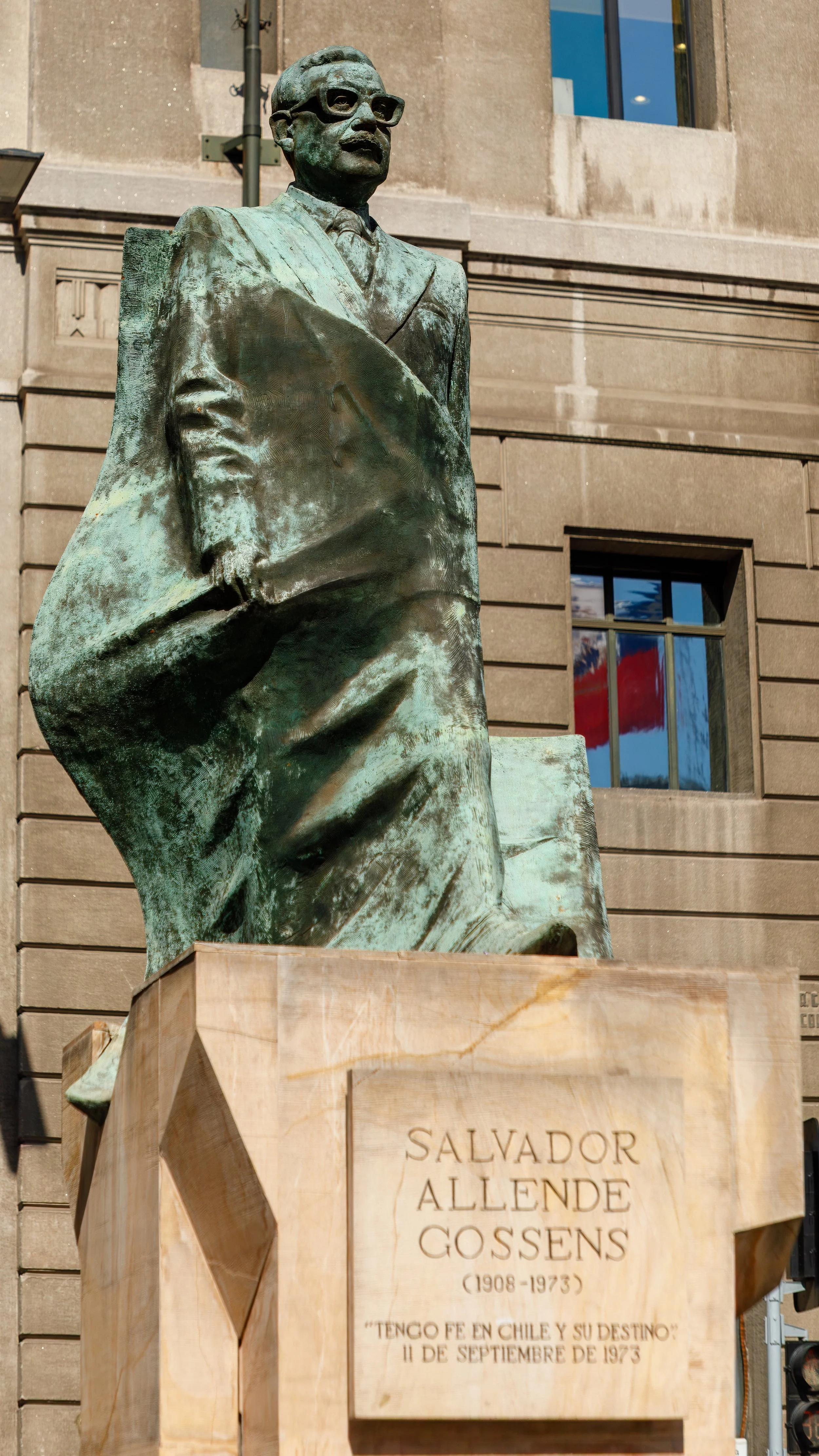
Bronze statue of Salvador Allende Gossens, the first socialist leader of Chile, elected president in 1970
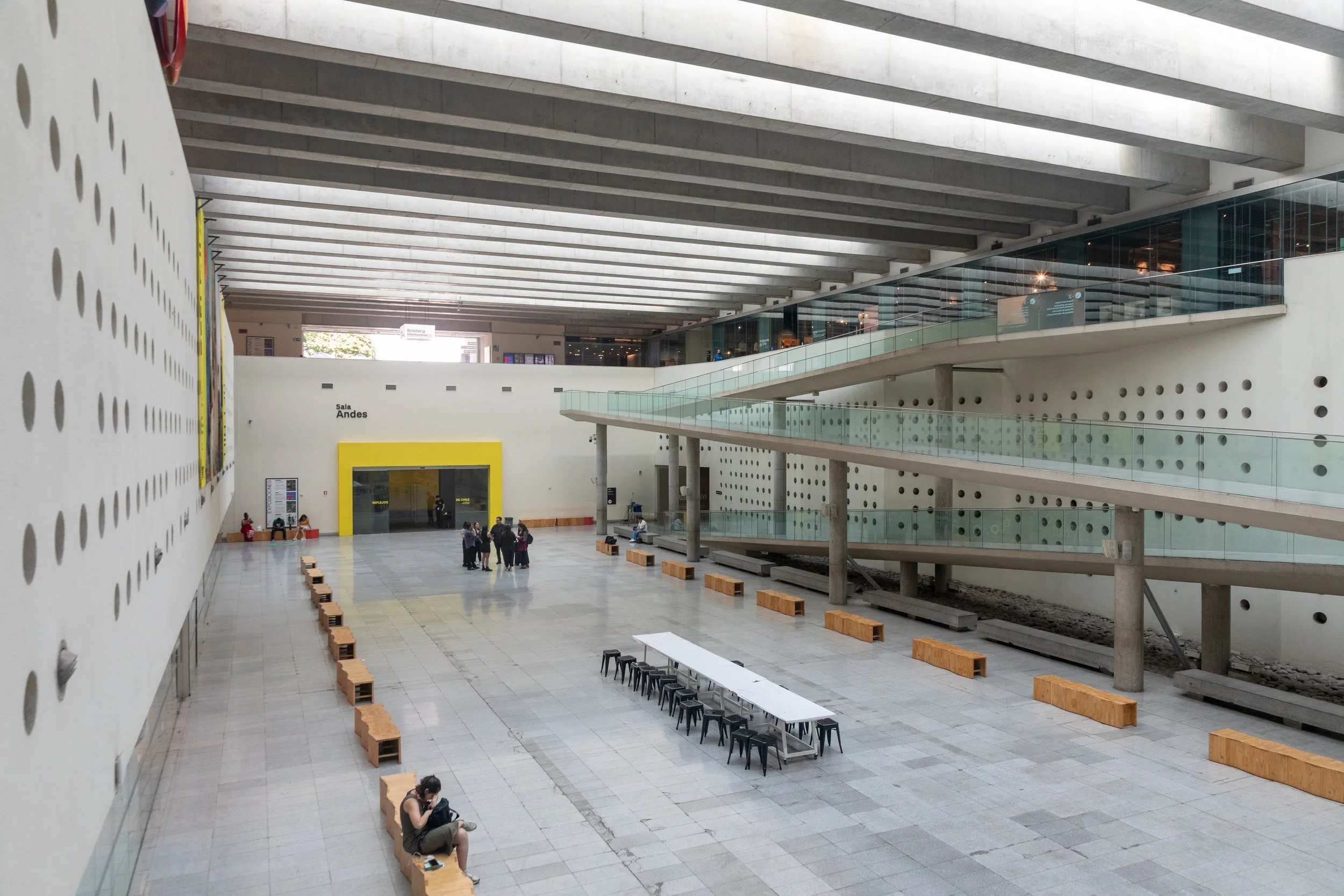
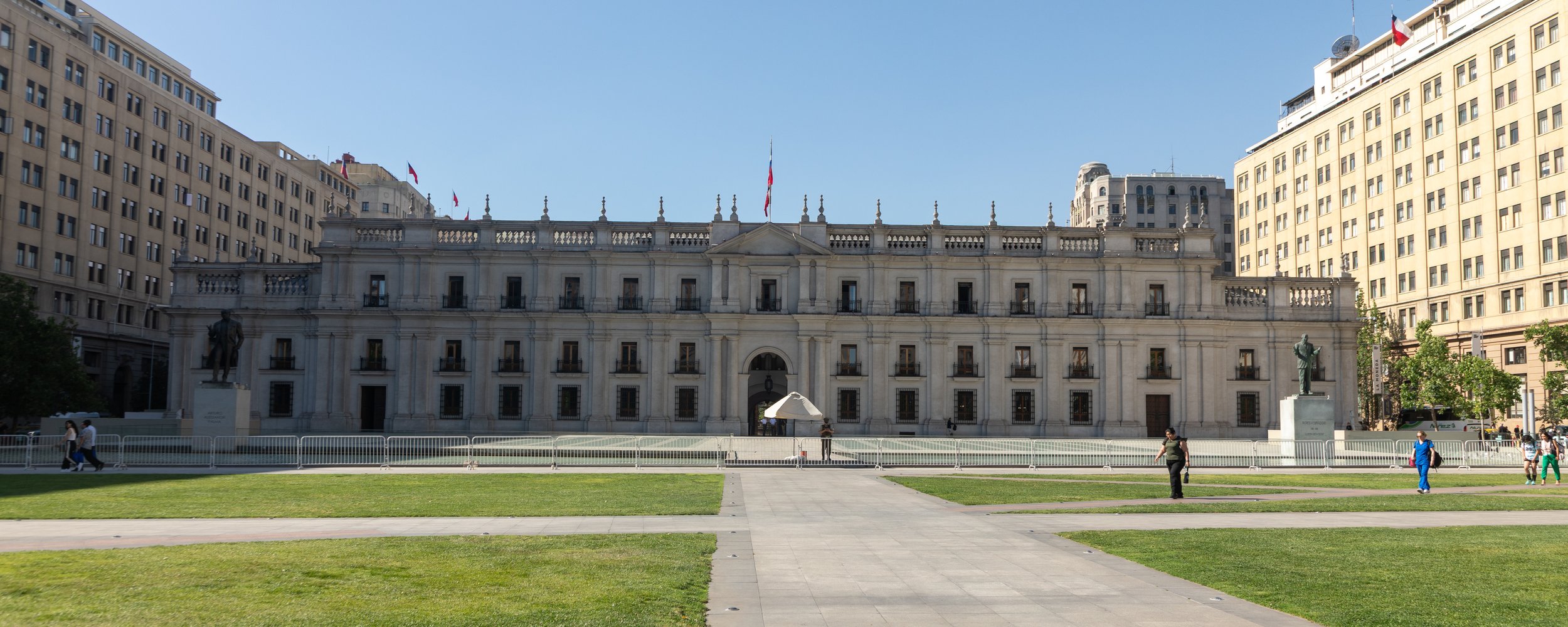
Centro Cultural La Moneda (CCLM) sits below the Palacio de la Moneda (presidential palace)
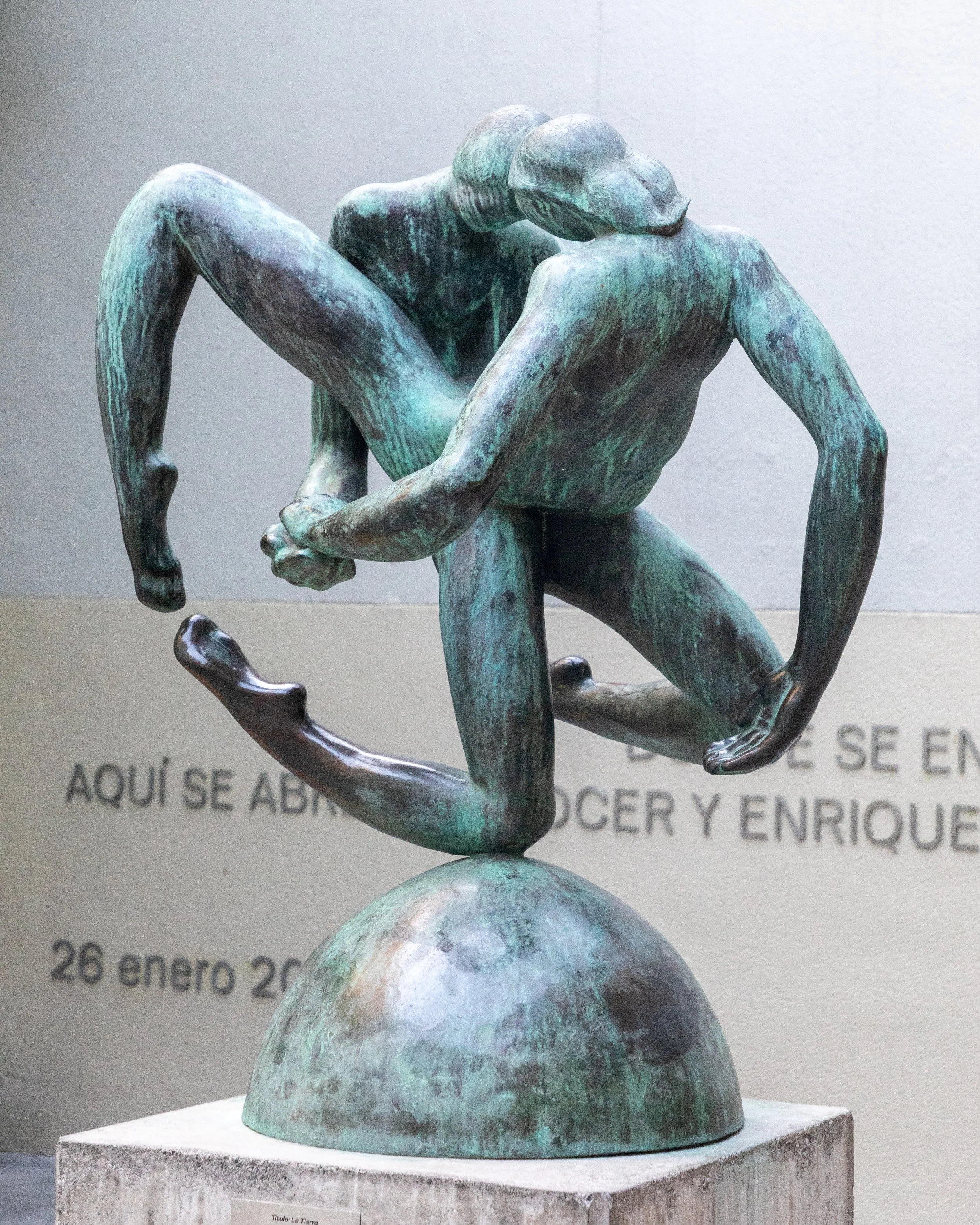
Bronze sculpture titled La Tierra (The Earth) by Chilean artist Totila Albert
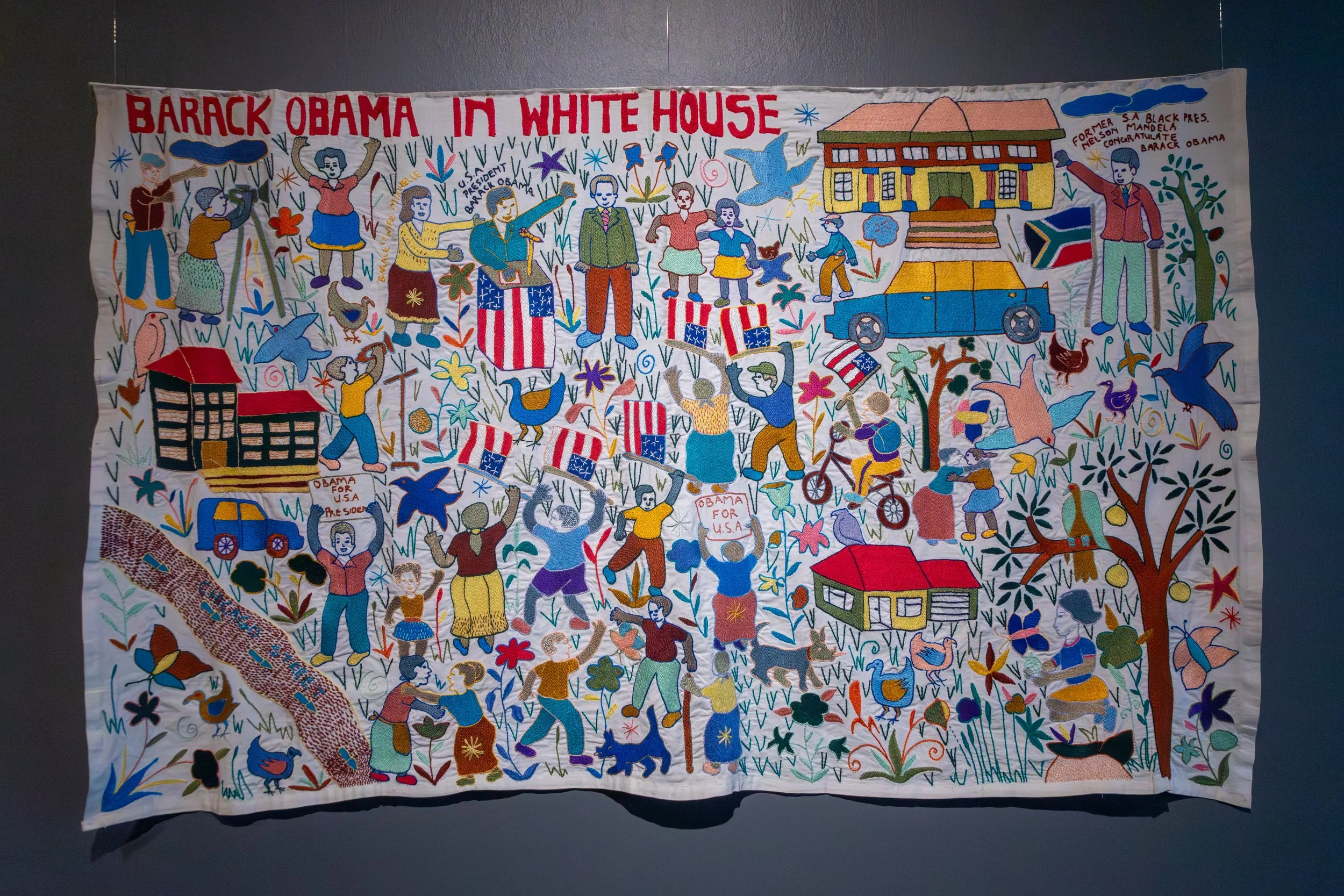
Textile artwork titled "BARACK OBAMA IN WHITE HOUSE" in one of the museums in the CCLM complex
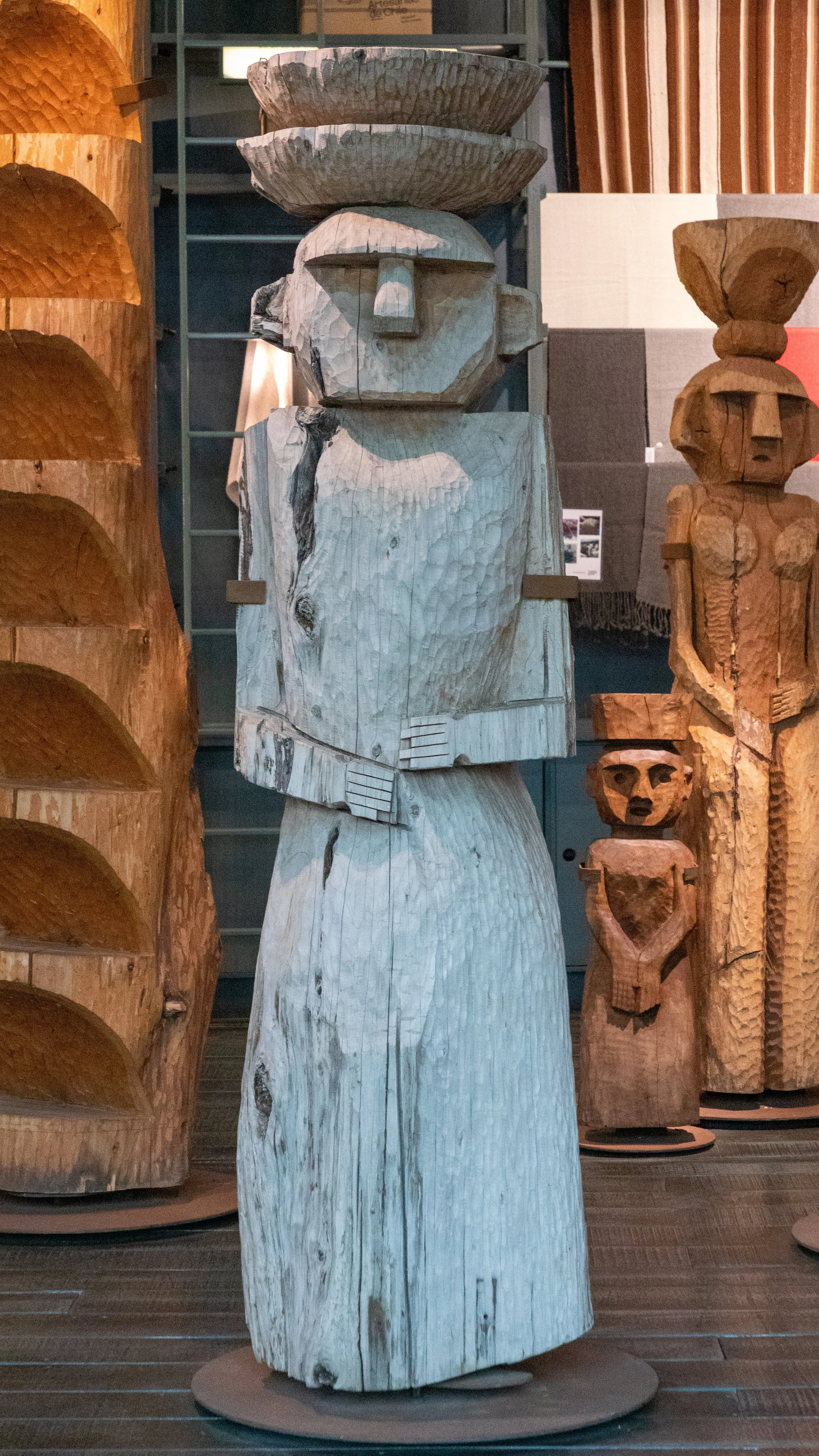
Traditional wood carvings showing similar features to the Easter Island Moai
The opposite side of La Moneda Palace was one of the first places we recognized from our previous trip to Santiago
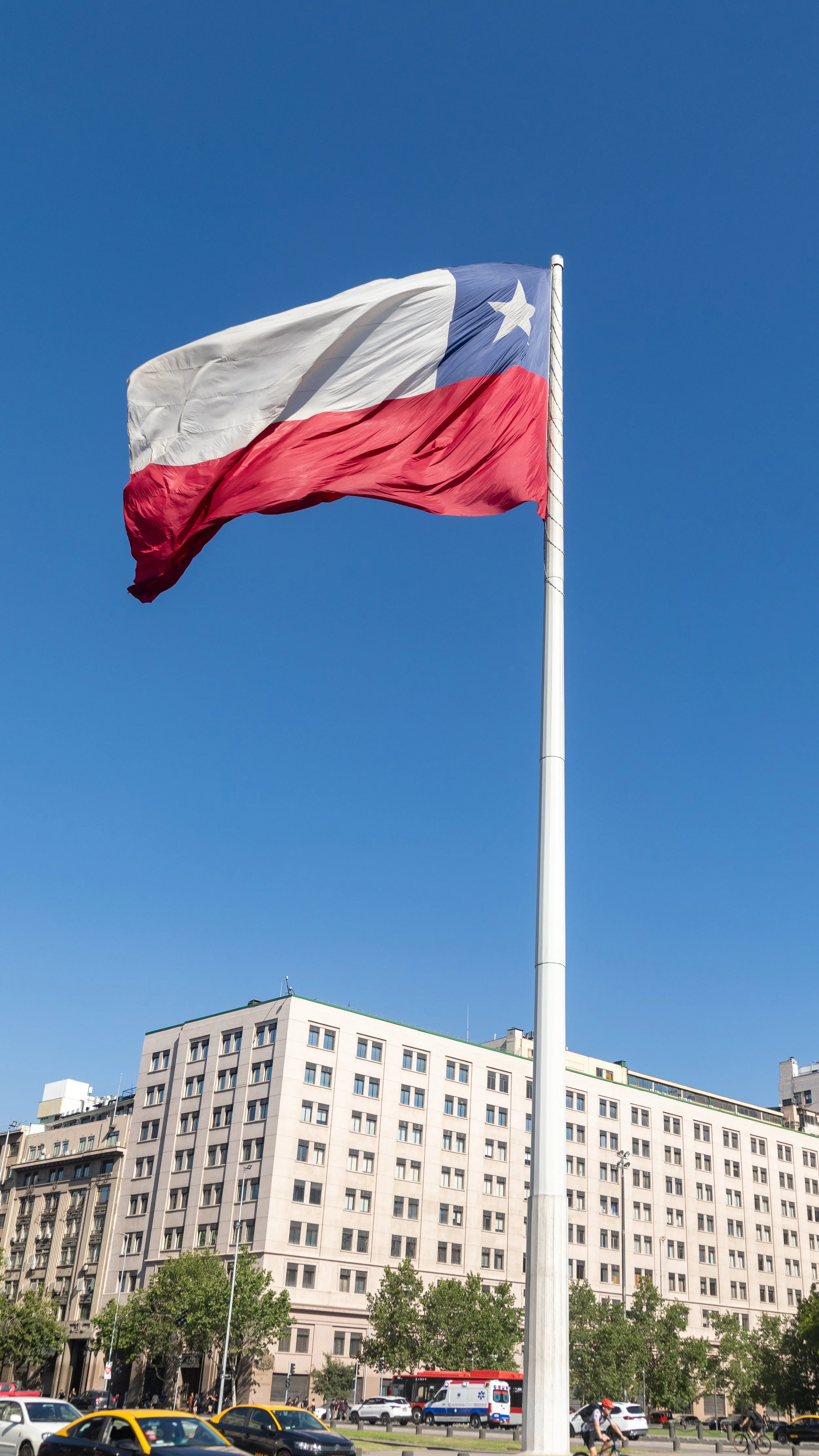
Massive Chilean flag outside the palace
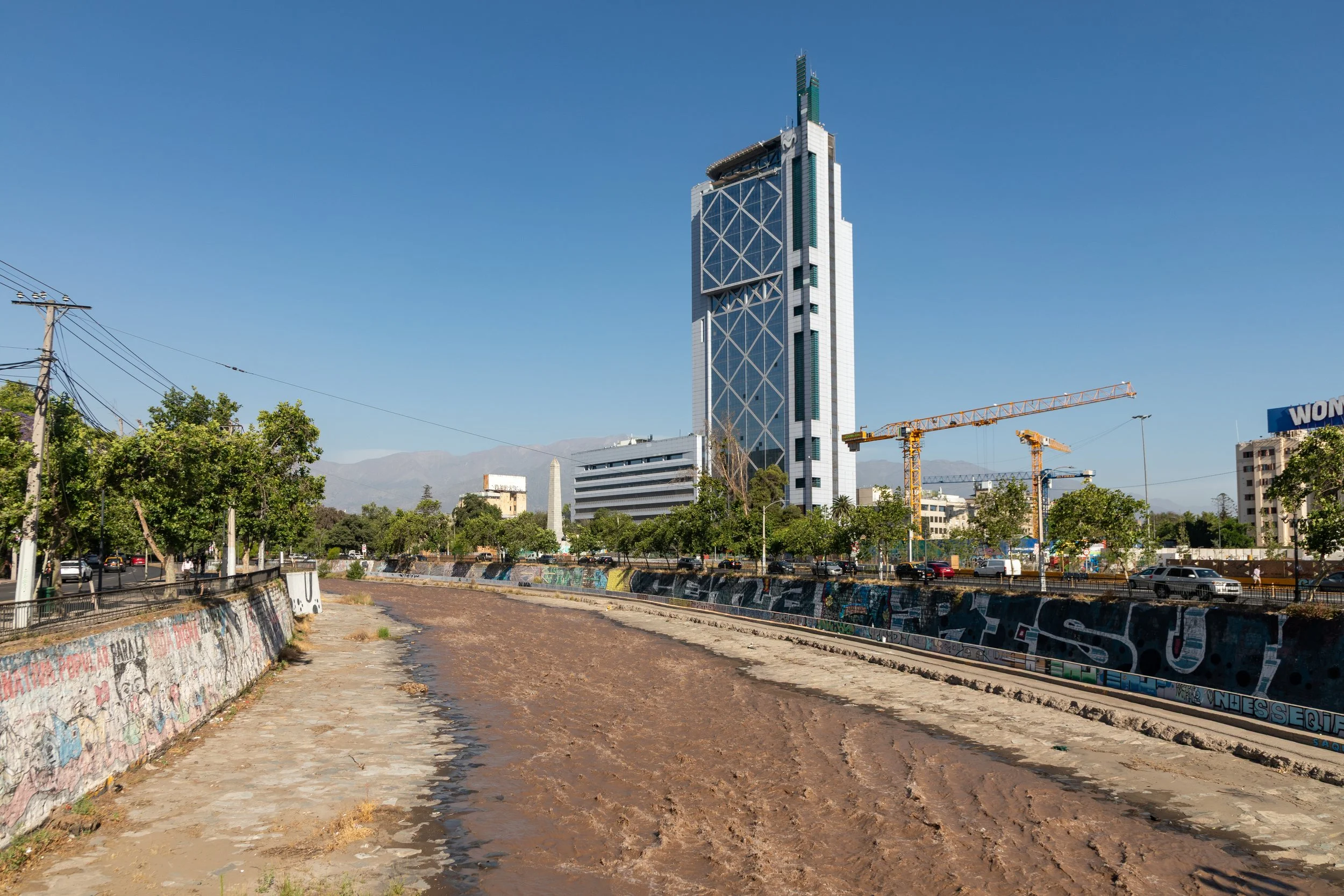
The Mapocho River, cutting through the Bellavista neighbourhood
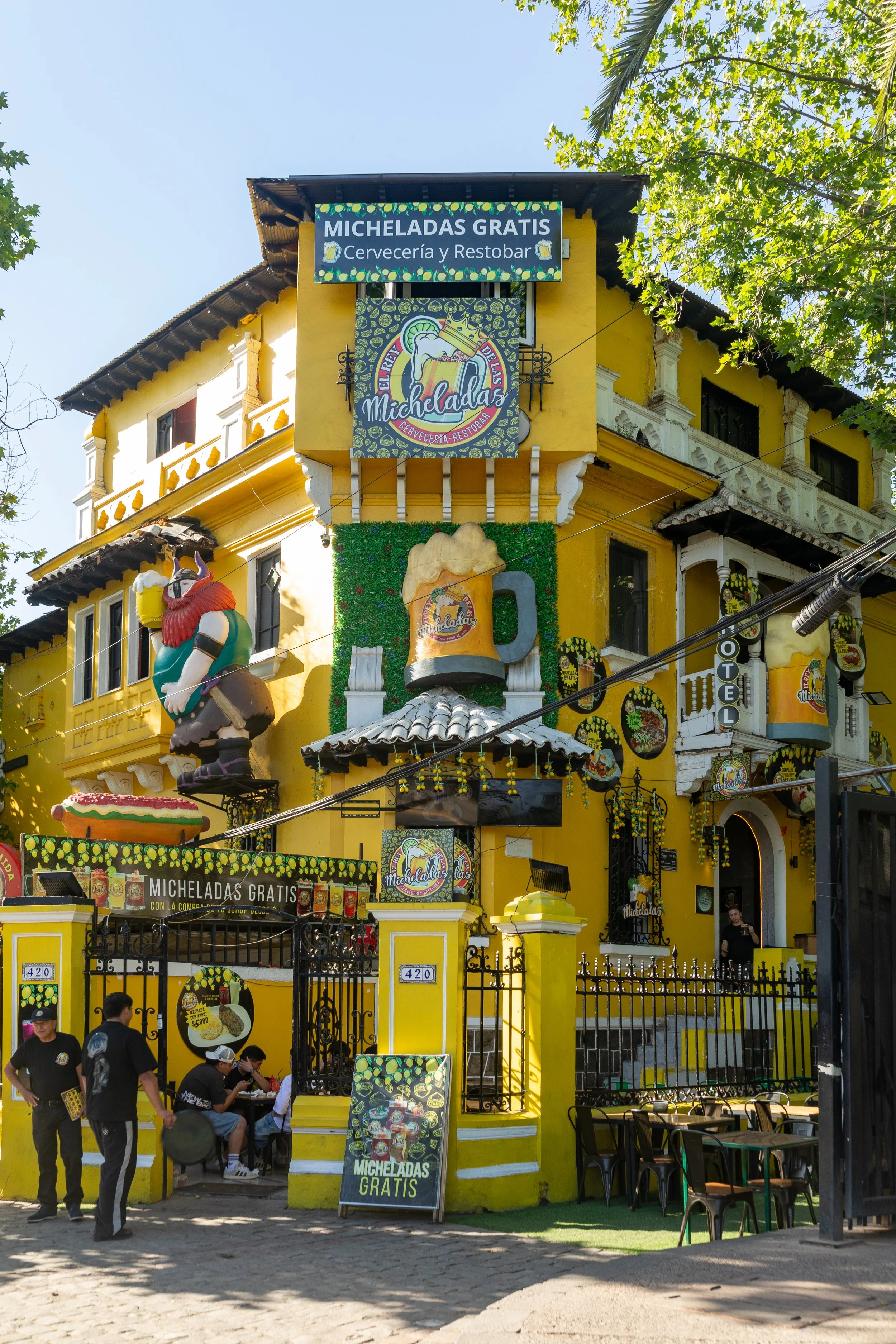
Micheladas Gratis Cervecería, one of the many bars in the Bellavista area
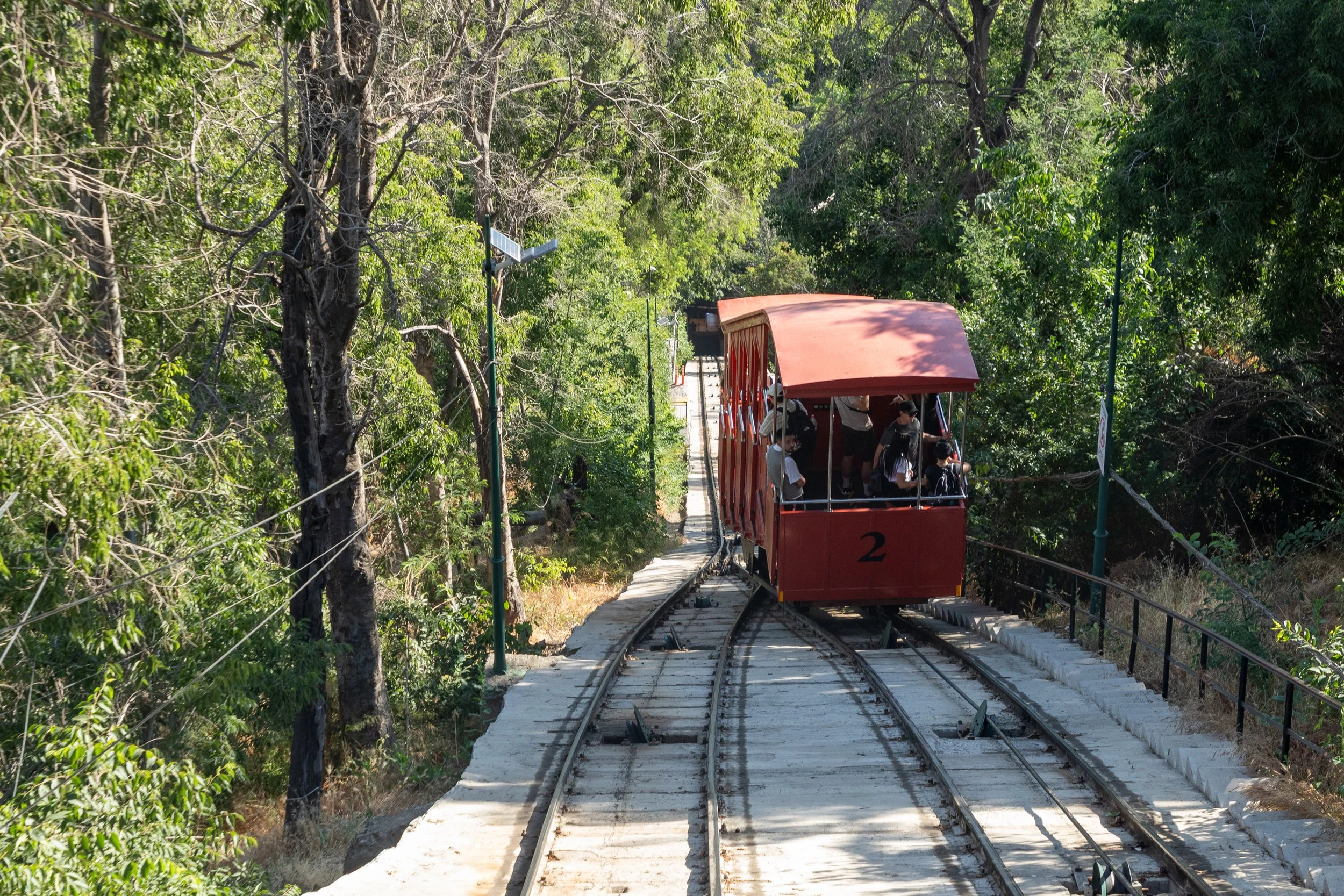
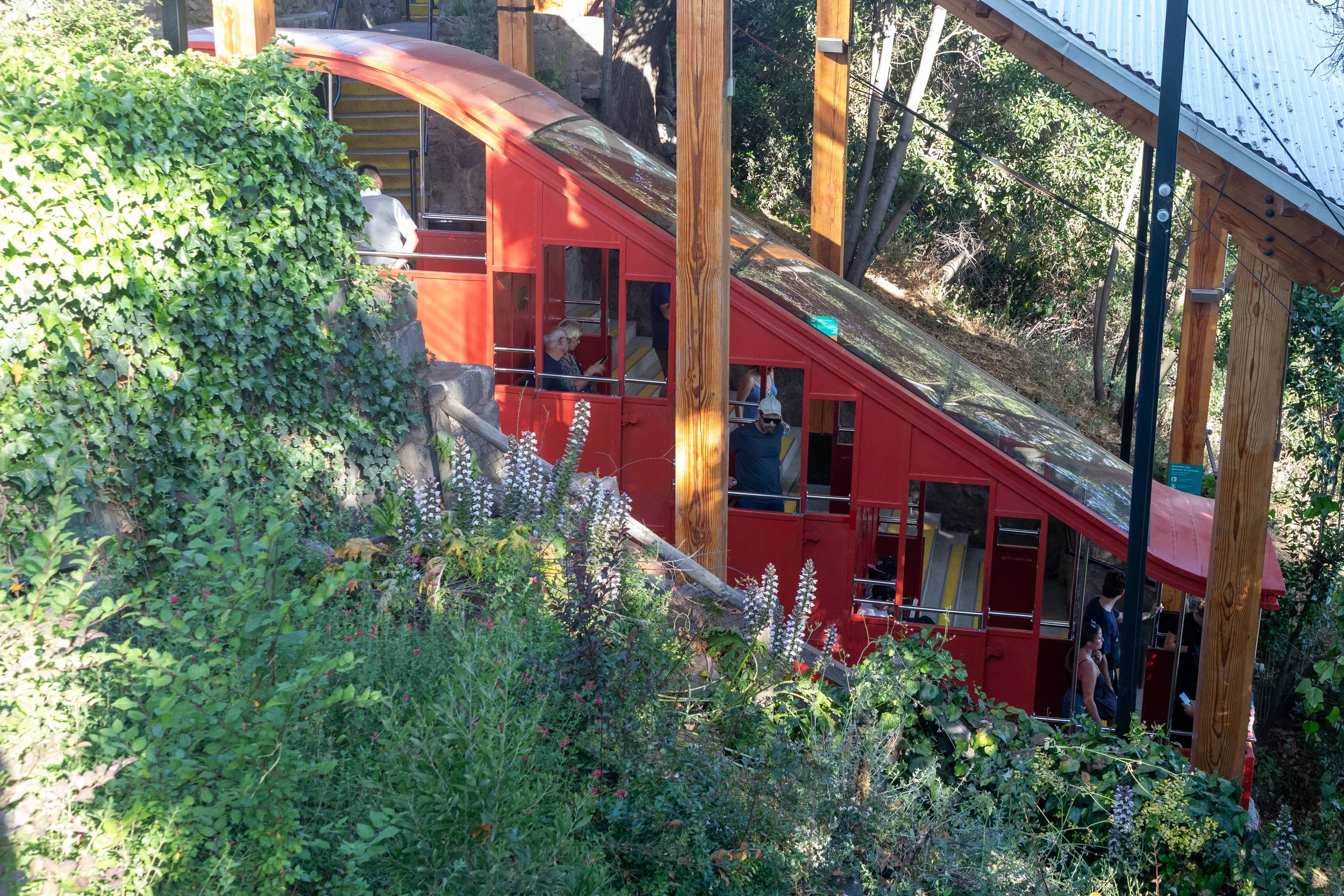
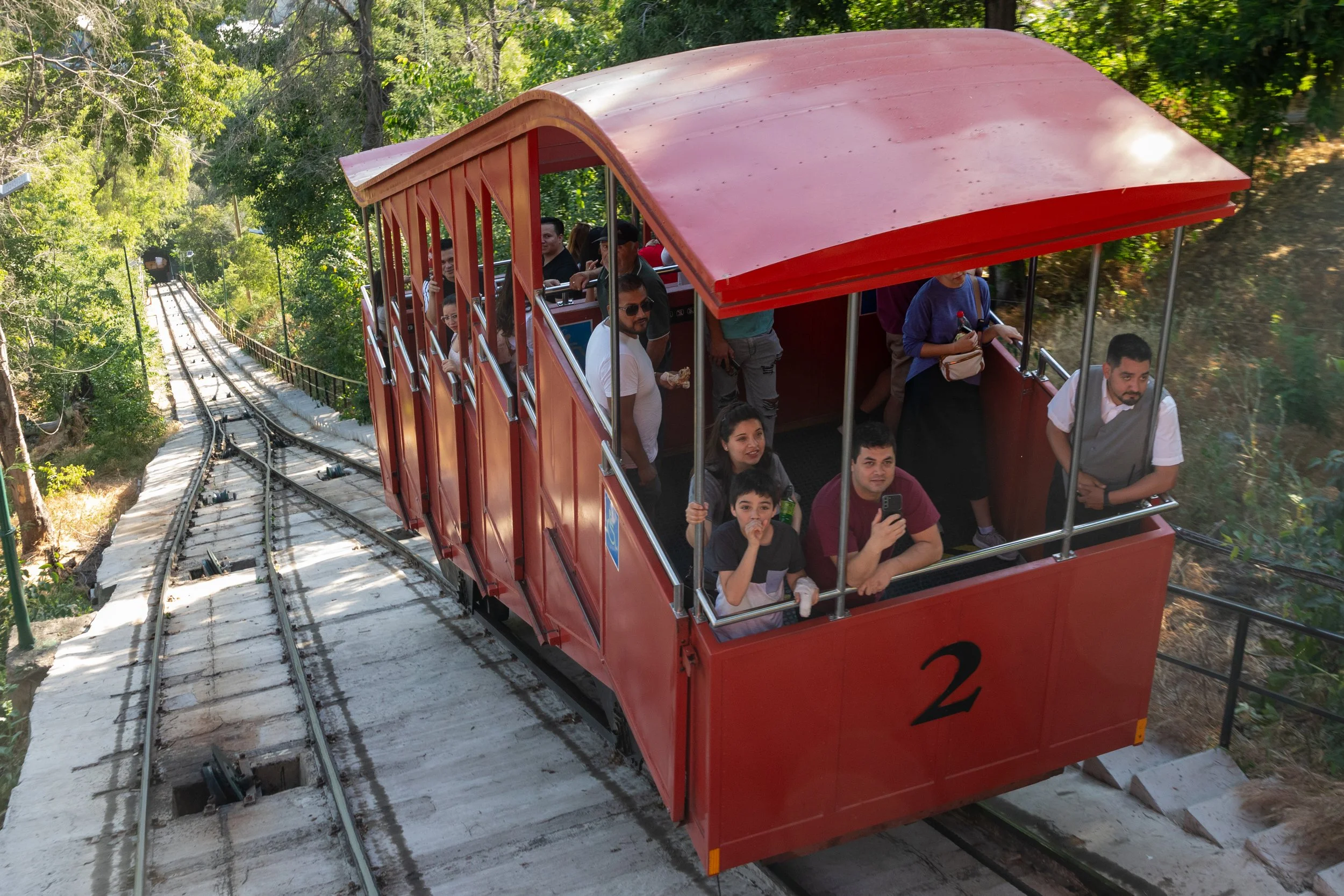
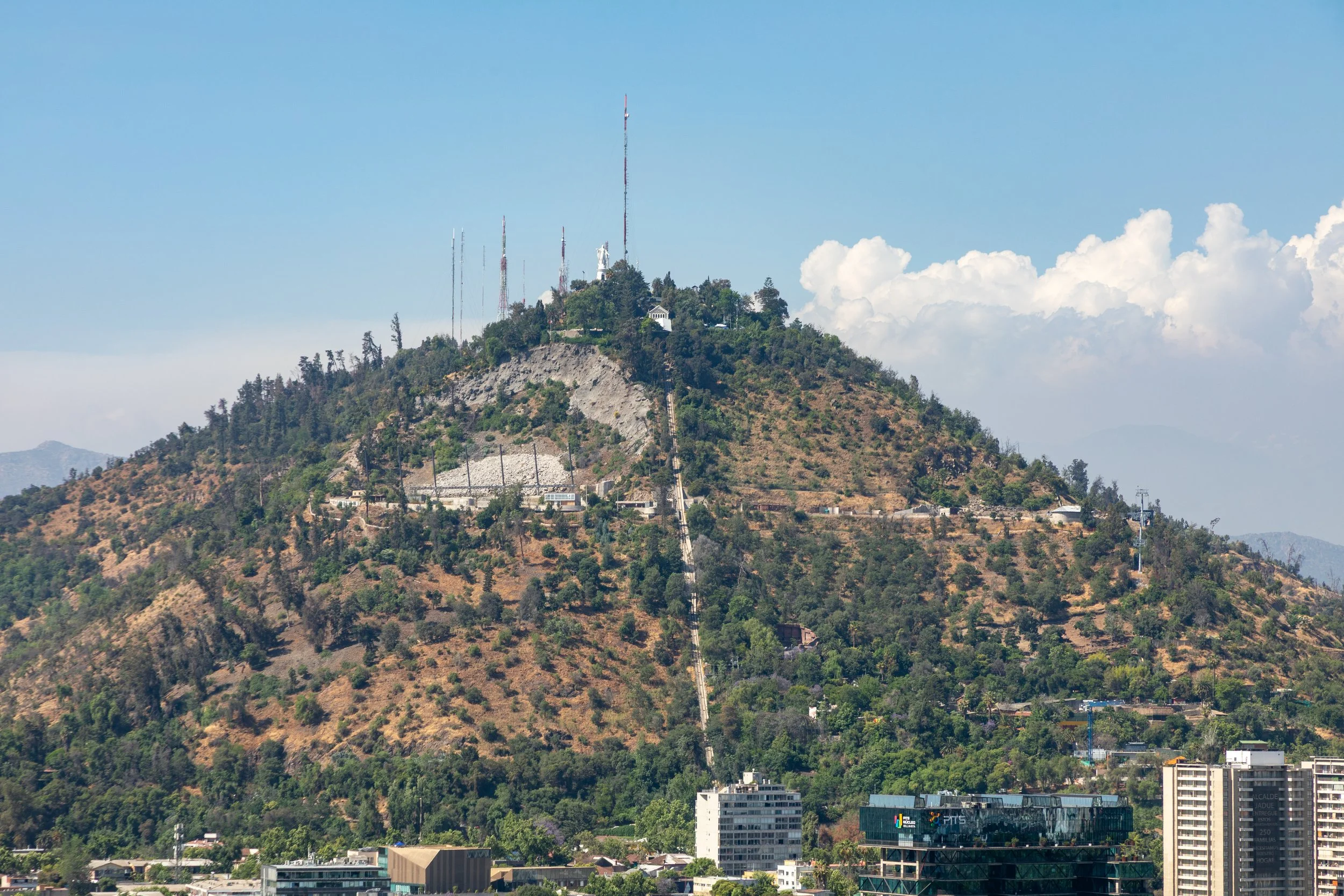
Riding the funicular to the viewpoint on Parque Metropolitano de Santiago
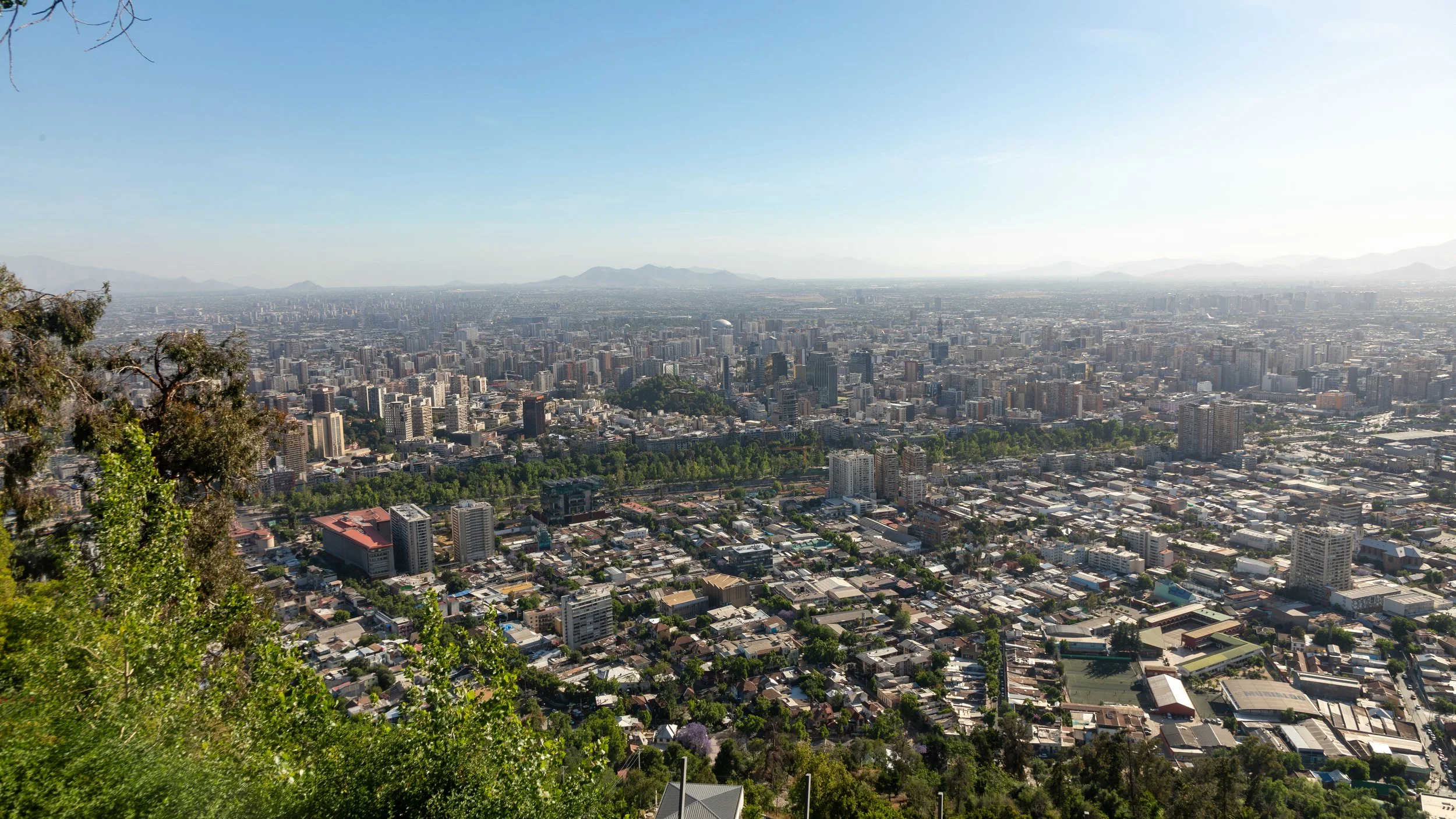
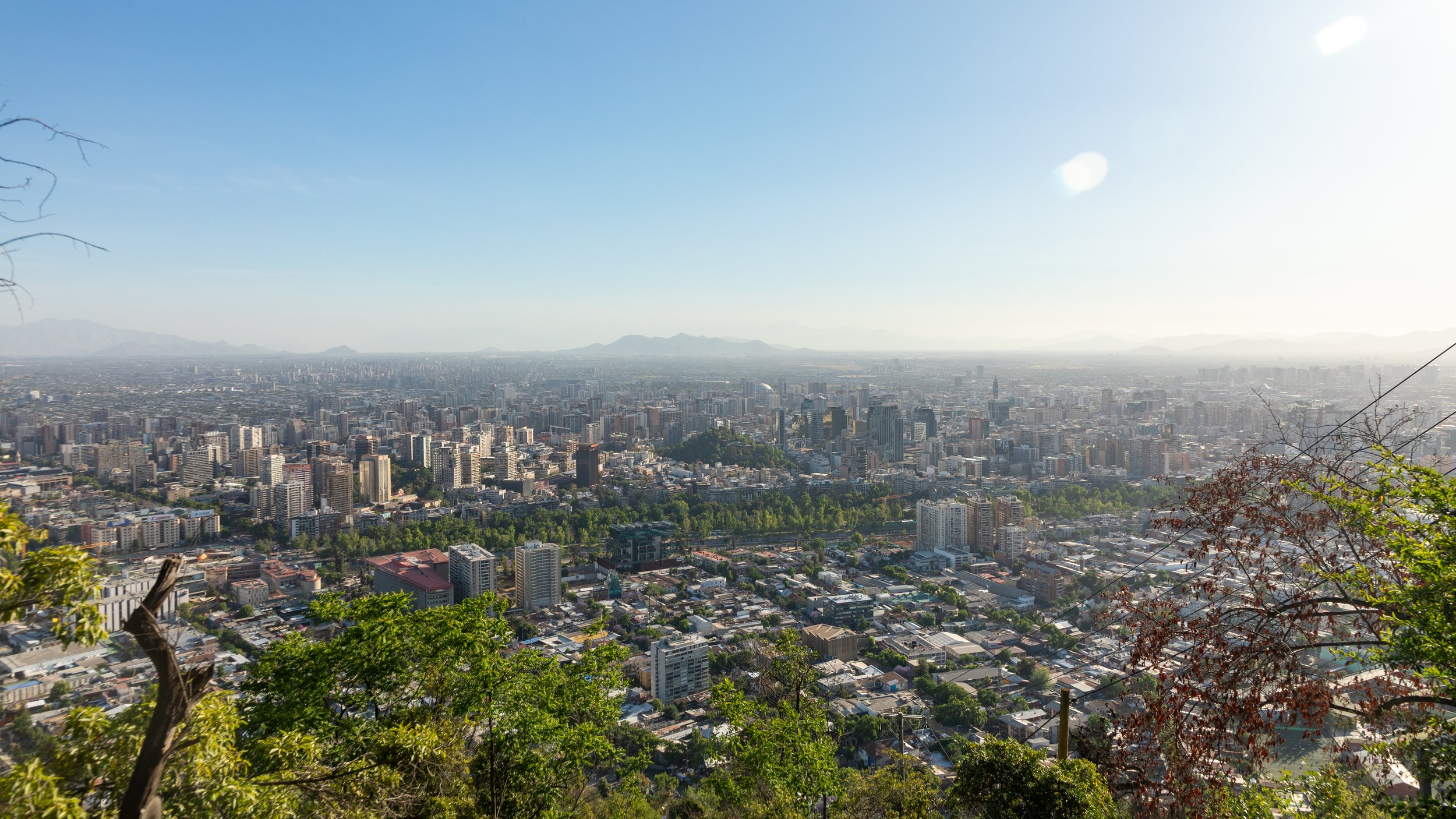
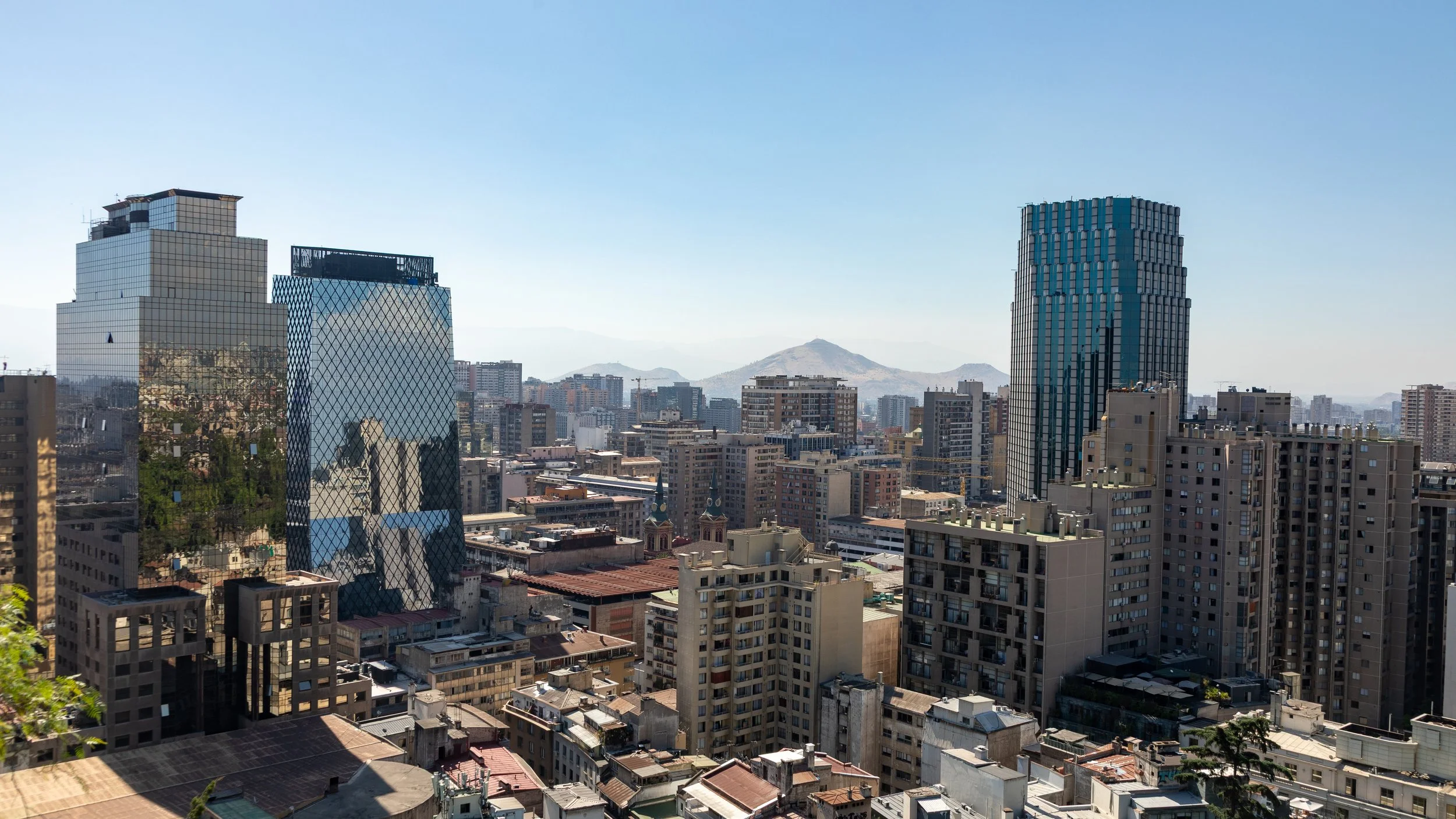
Looking down on the expanse of Santiago below
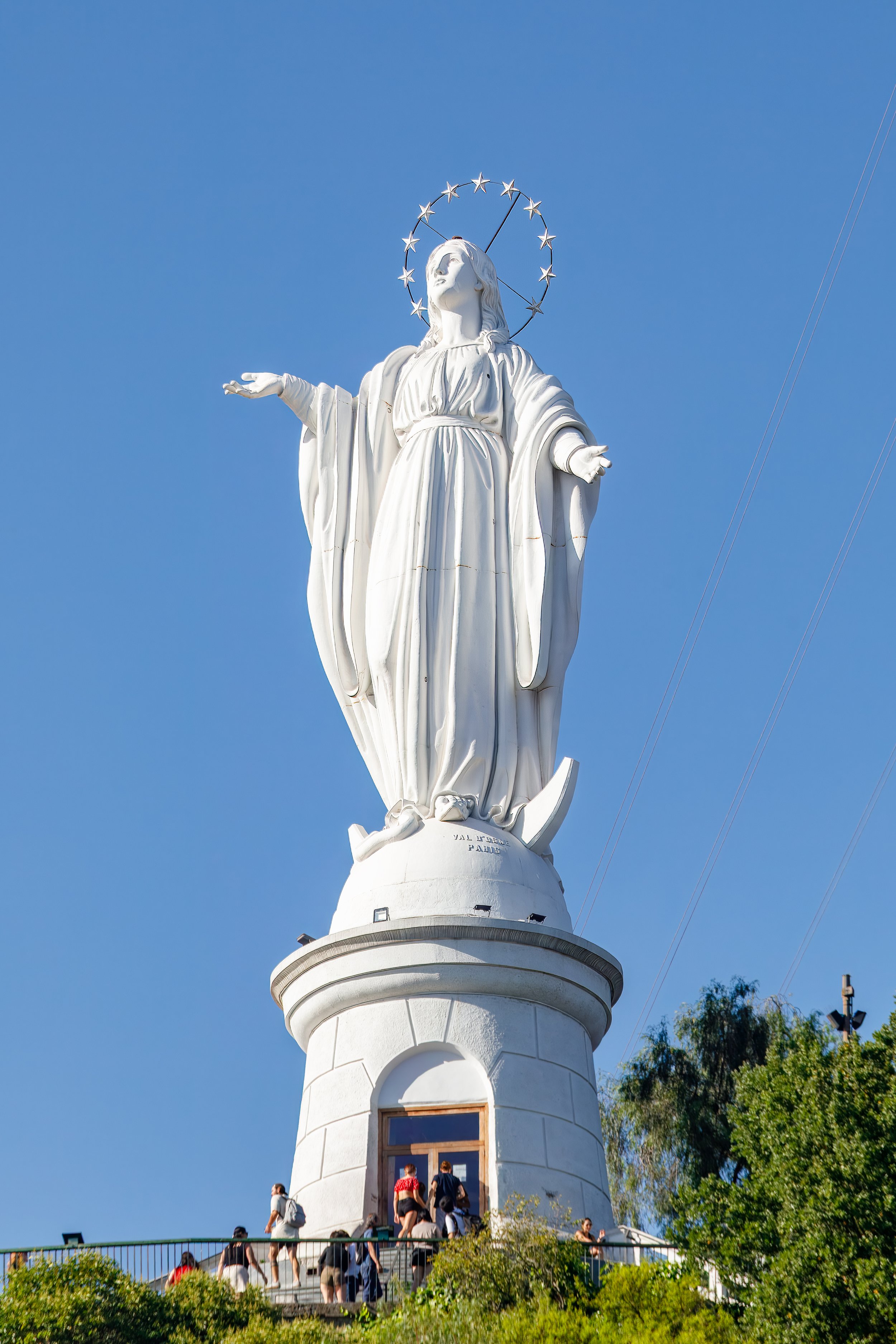
14m high Virgen de la Inmaculada Concepcion. quite similar to the one in Quito
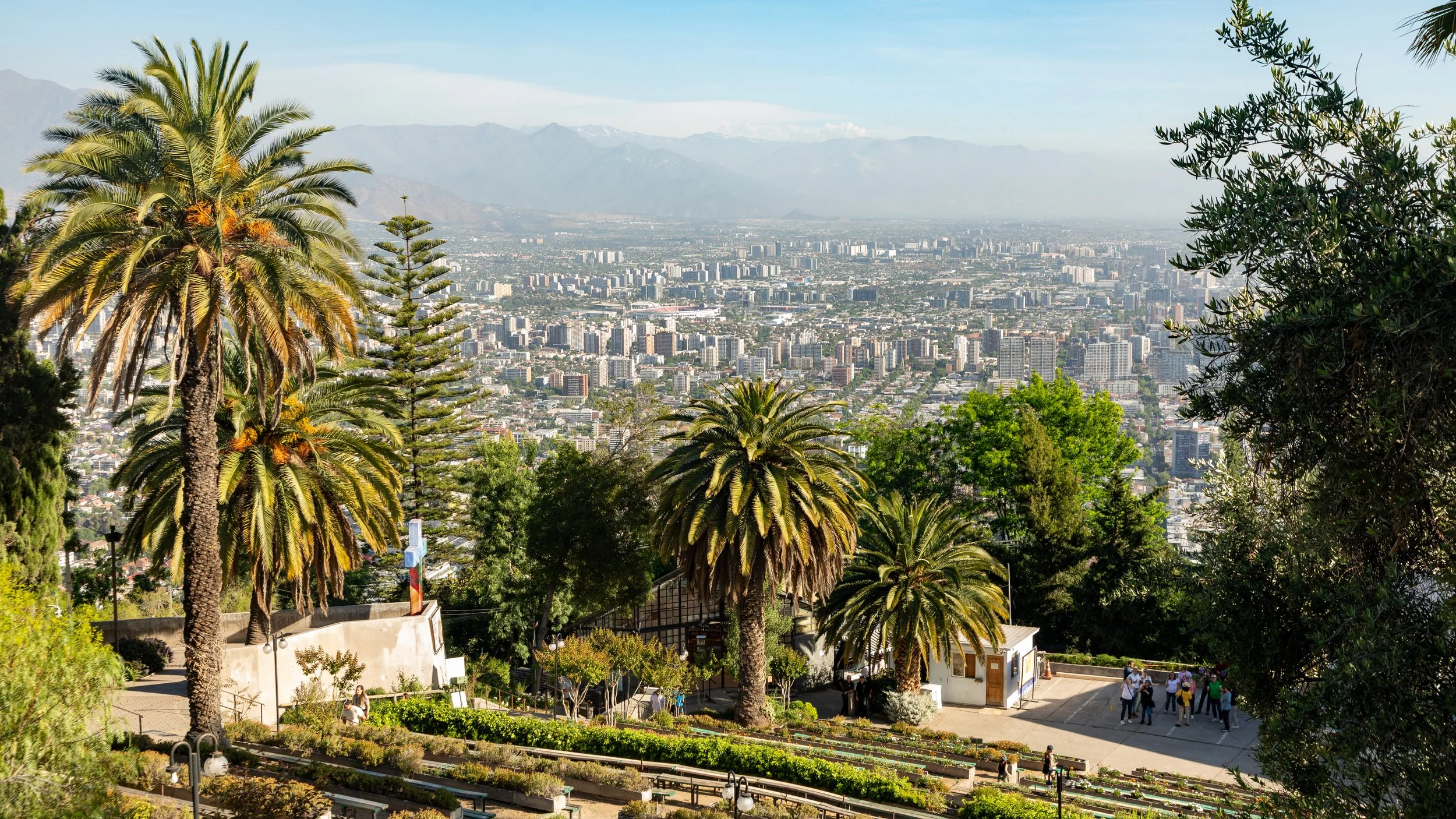
Tiered landscaped gardens leading up to the statue
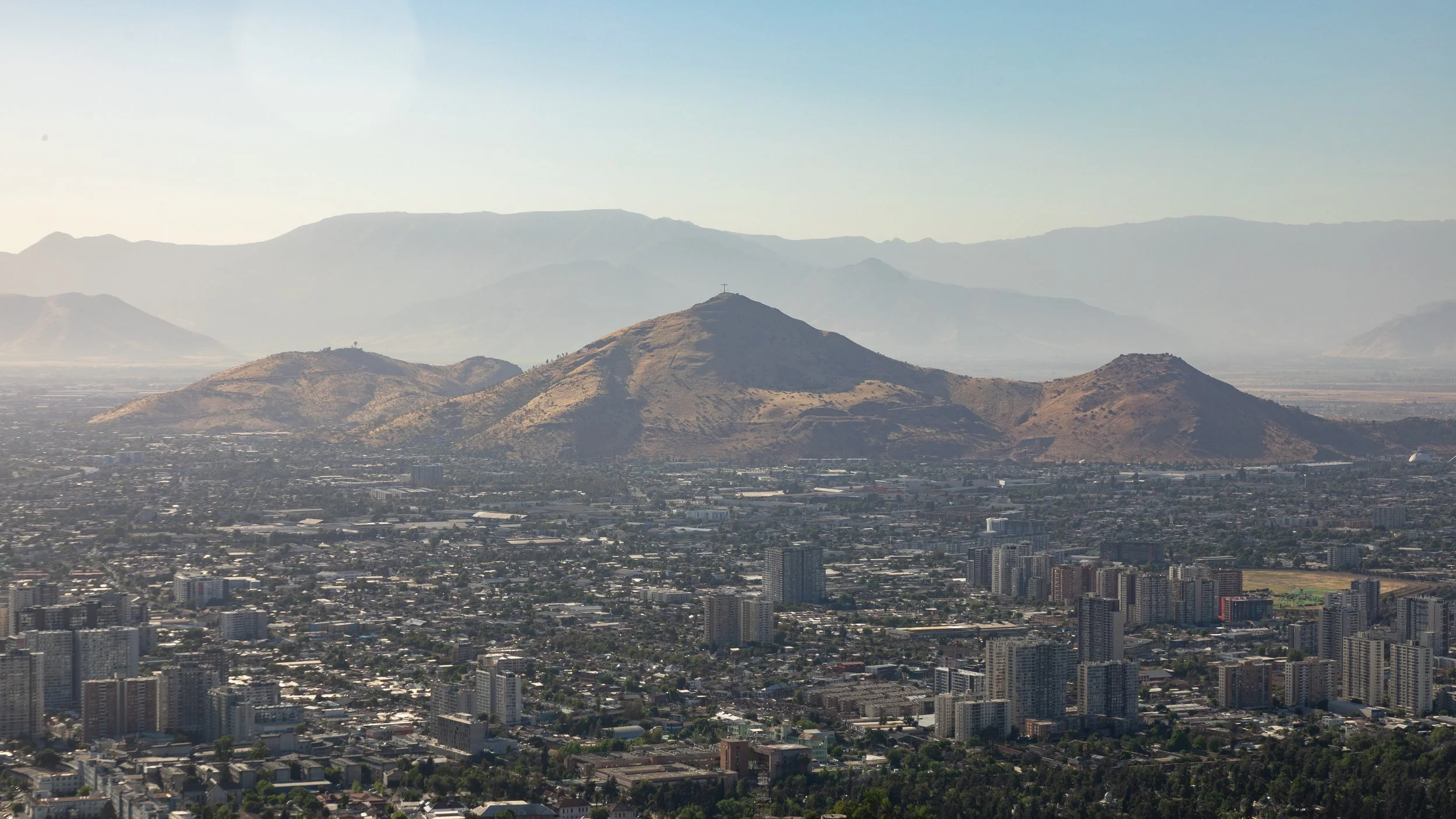
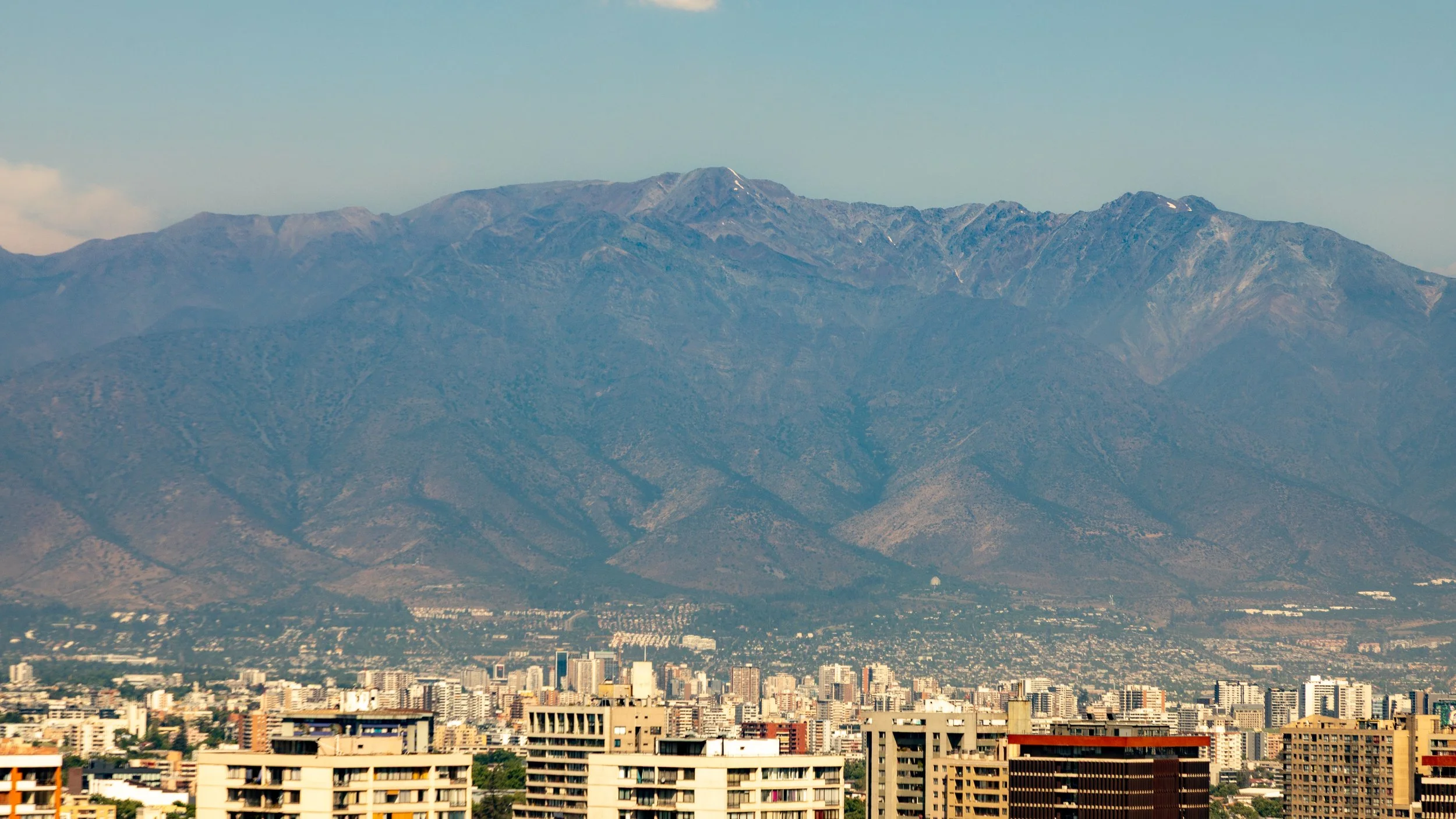
Looking forward to the Andes mountains that run into the outskirts of the city
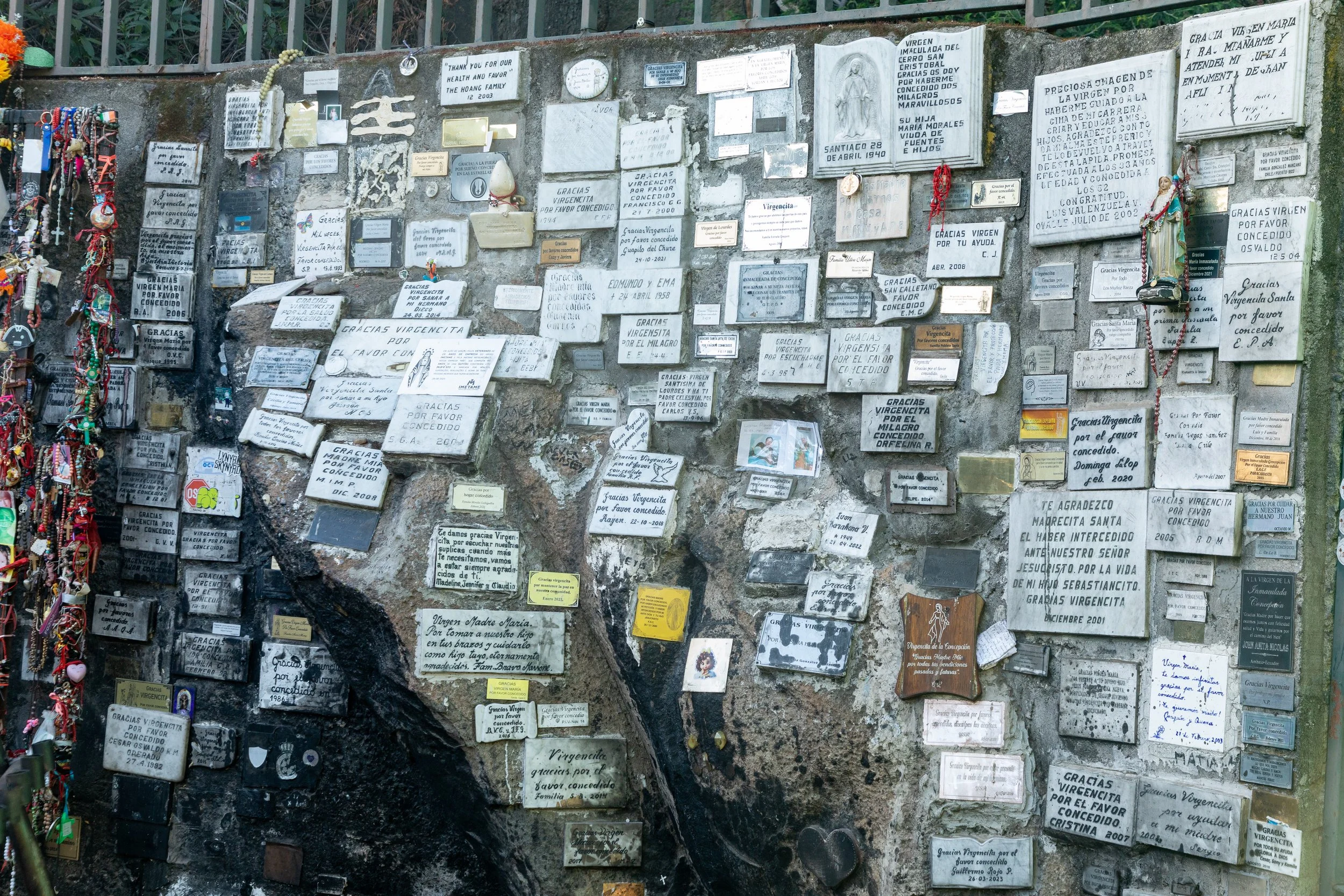
At the Sanctuary of Our Lady of the Holy Rosary of Las Lajas, cards left by pilgrims to express gratitude for favors or miracles attributed to the Virgin Mary
Funicular station at the top
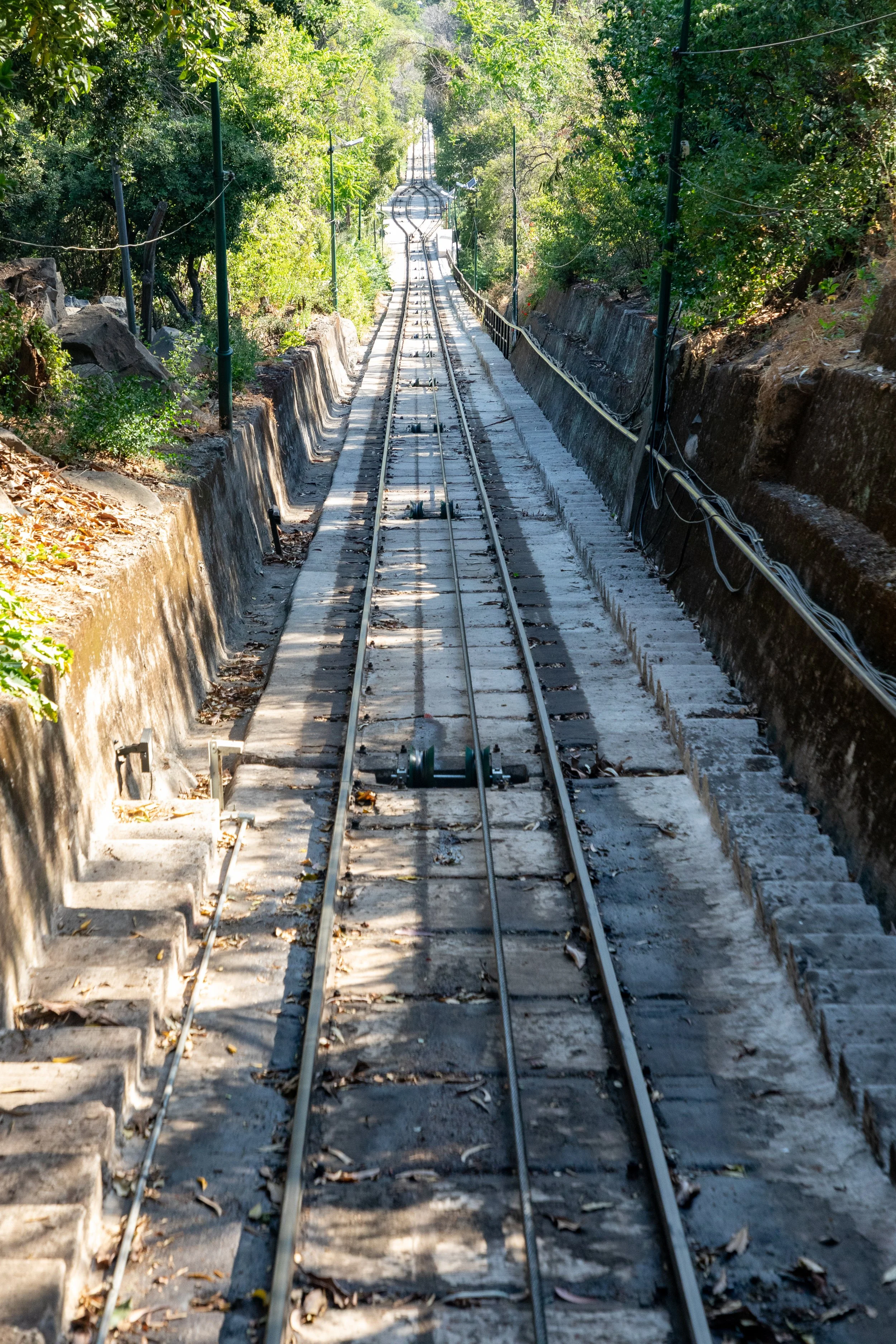
Looking down the track
Making our way back down
Passing zone
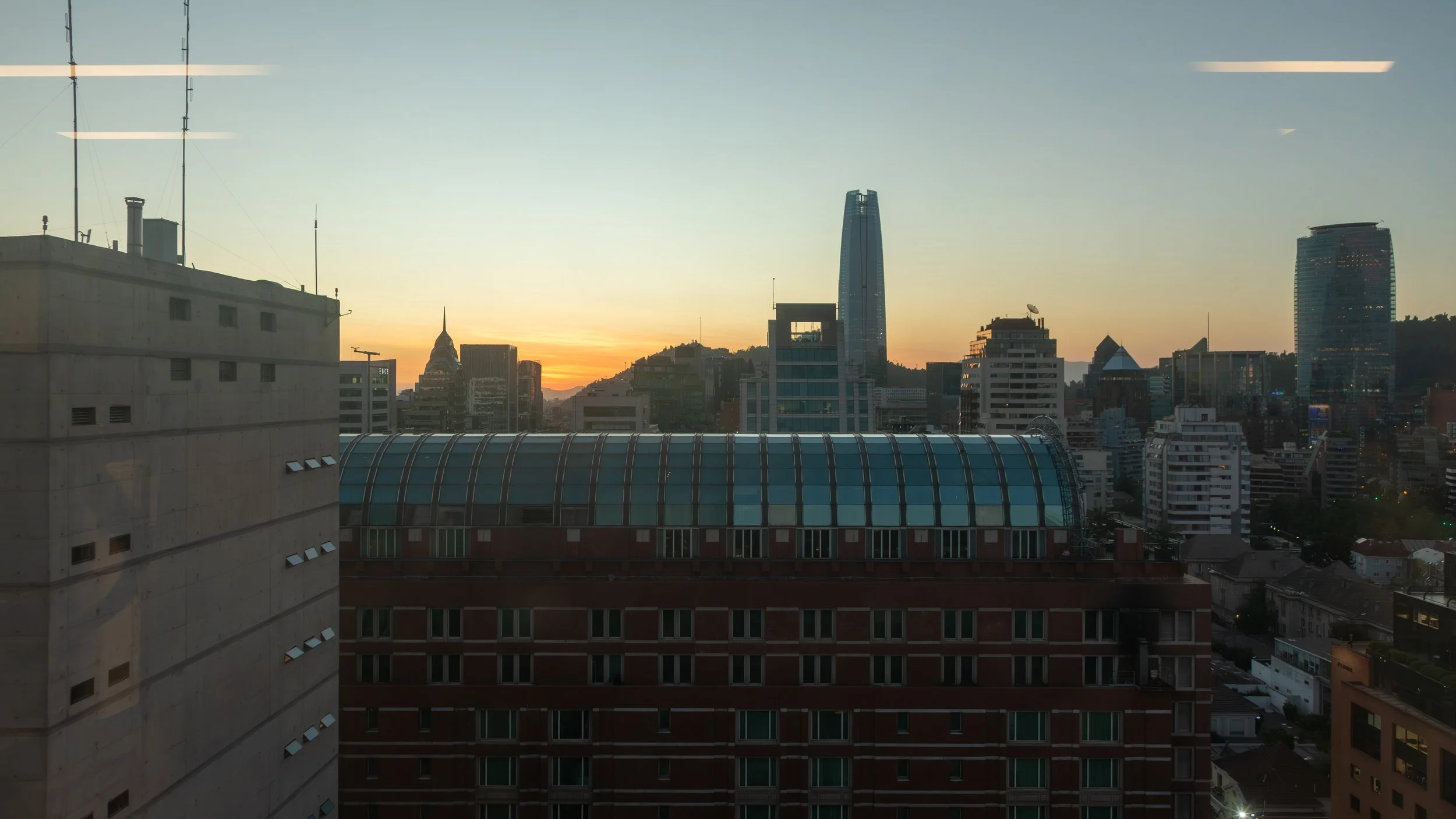
Enjoying sunset from the balcony in our hotel room
After our dinner in Patio Bellavista, a collection of bars and restaurants, we enjoyed the warm weather and late evening sun. Since our last visit to Santiago in 2008 was so long ago, we had forgotten a lot of what we’d visited, but it was also clear how much development had occurred. Our visit, then, had us driving on ring roads that weren’t complete and a limited subway system. Our 2025 visit found a complex array of highways, tunnels and subways connecting modern skyscrapers.
Nov 20
After an early breakfast at the hotel, we made our way back to the airport for our short flight to Mendoza. Once there, we picked up our rental car and headed to our hotel in central Mendoza.
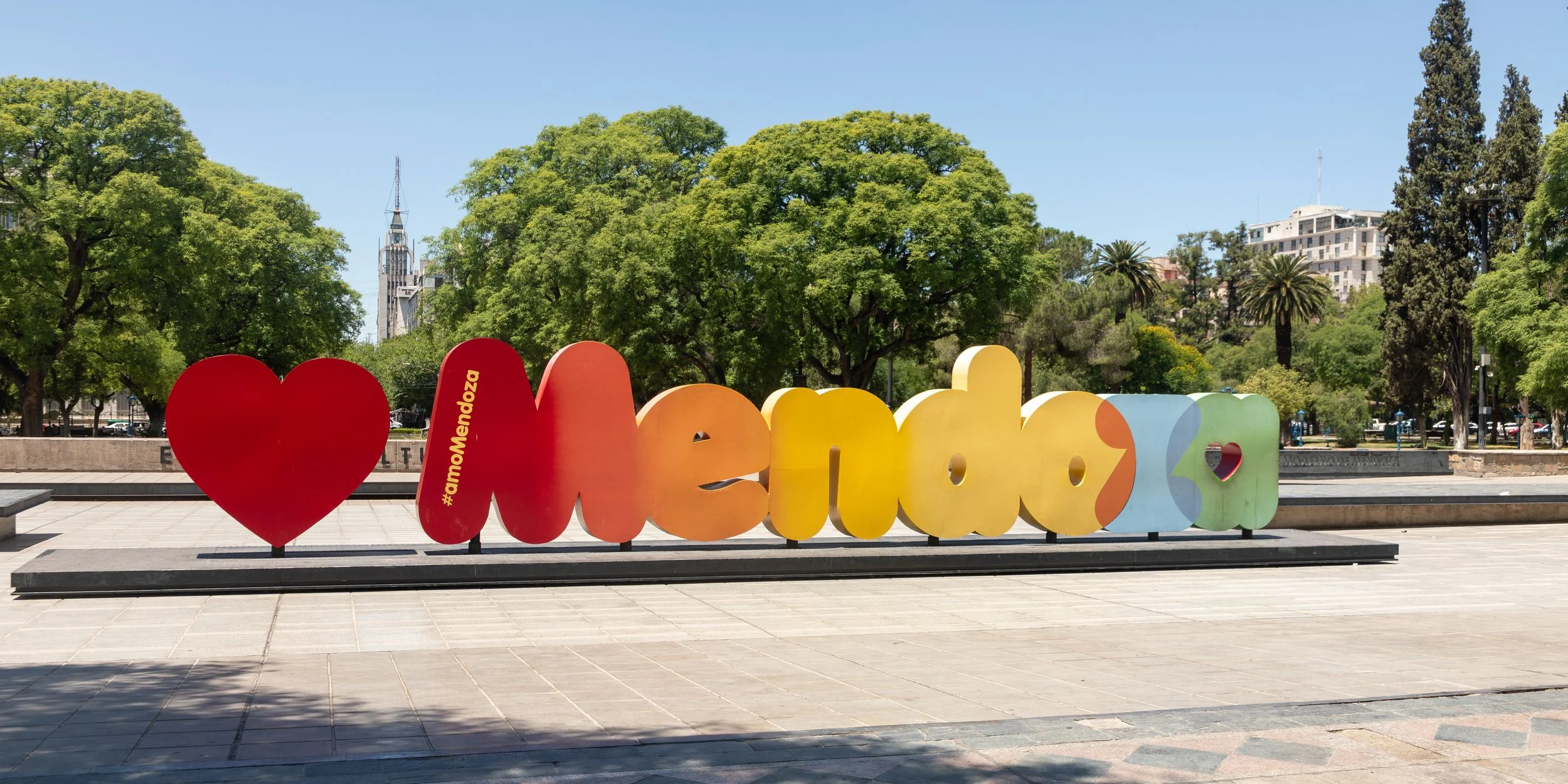
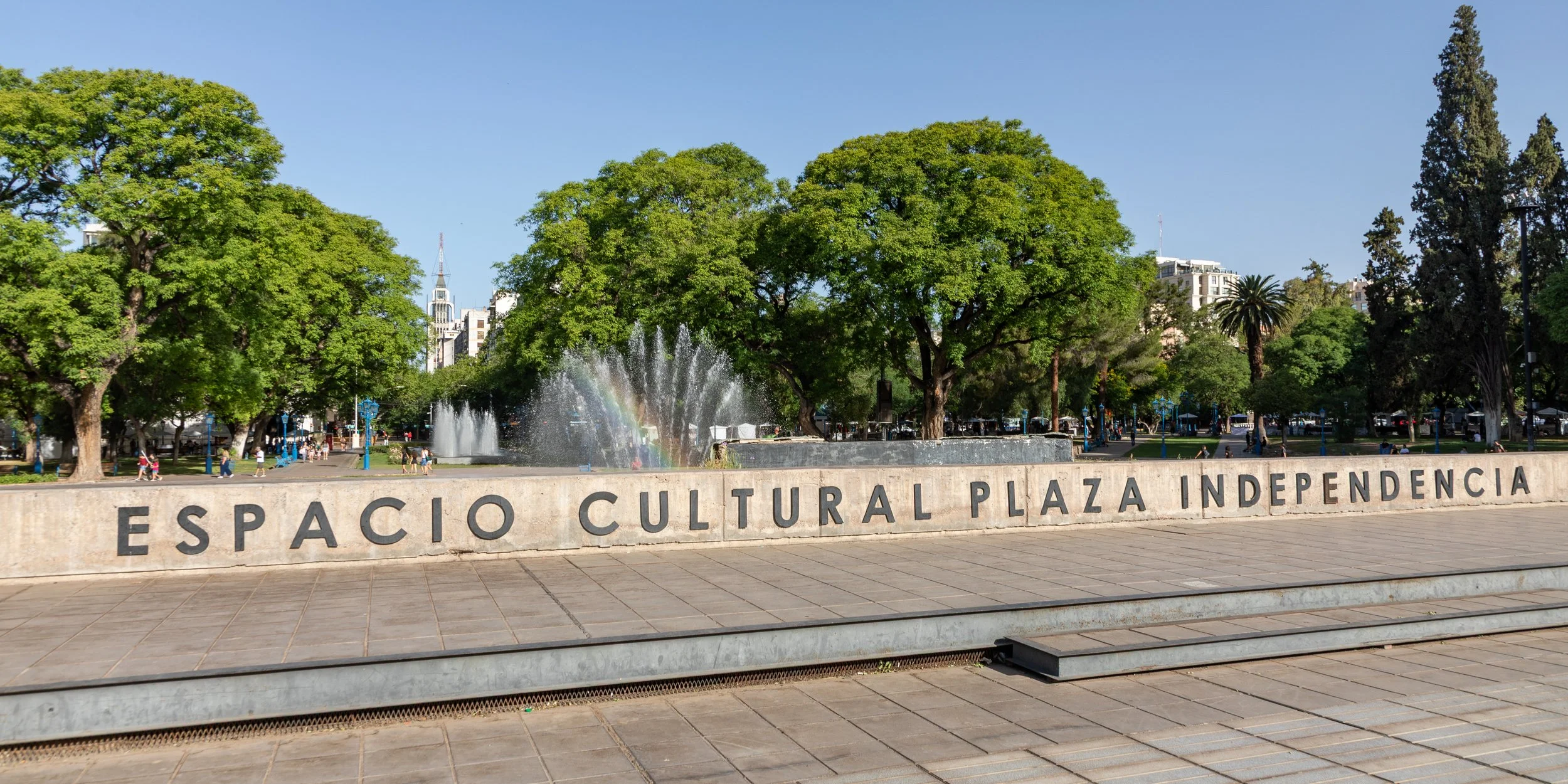
Mendoza sign in Plaza Independencia, the large central square across the street from our hotel
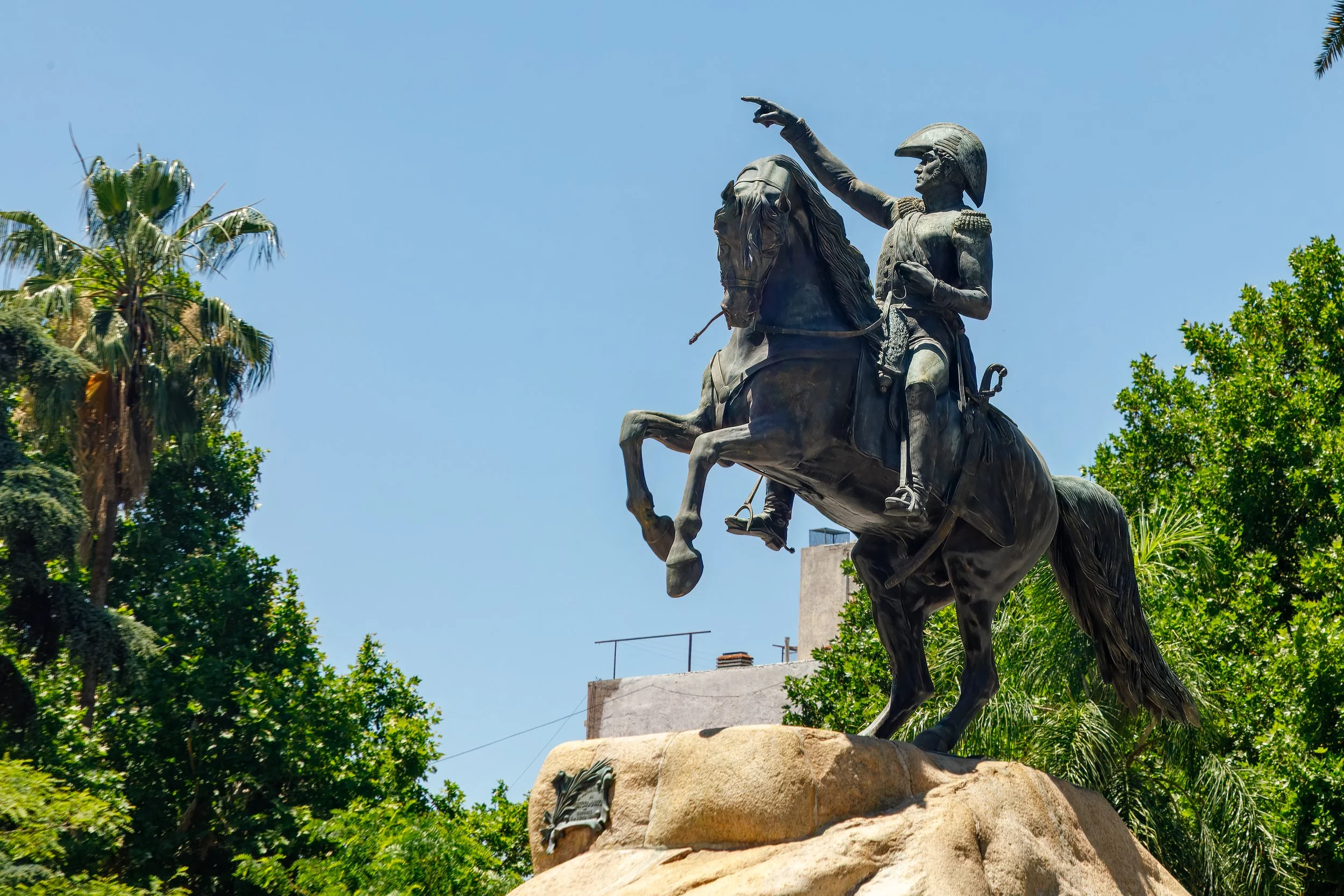
Monumento Al General San Martin in Plaza San Martin, one of the four smaller squares that radiate one block out from the corners of the central square, that were built as safe gathering spaces when the city was rebuilt after the devastating 1861 Earthquake killed many in their homes
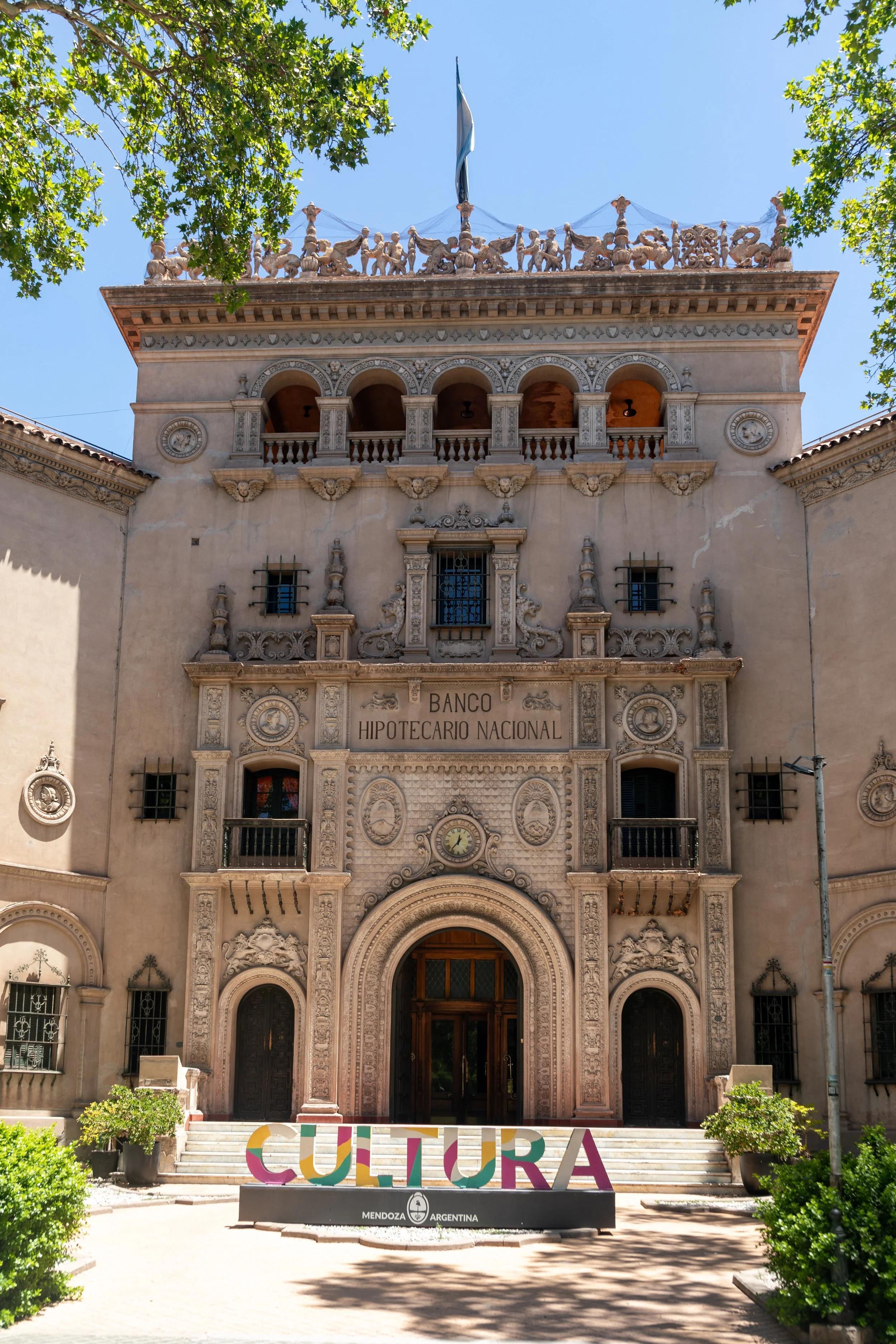
Ministerio de Cultura (1924) Building (Ministry of Culture), originally a bank building
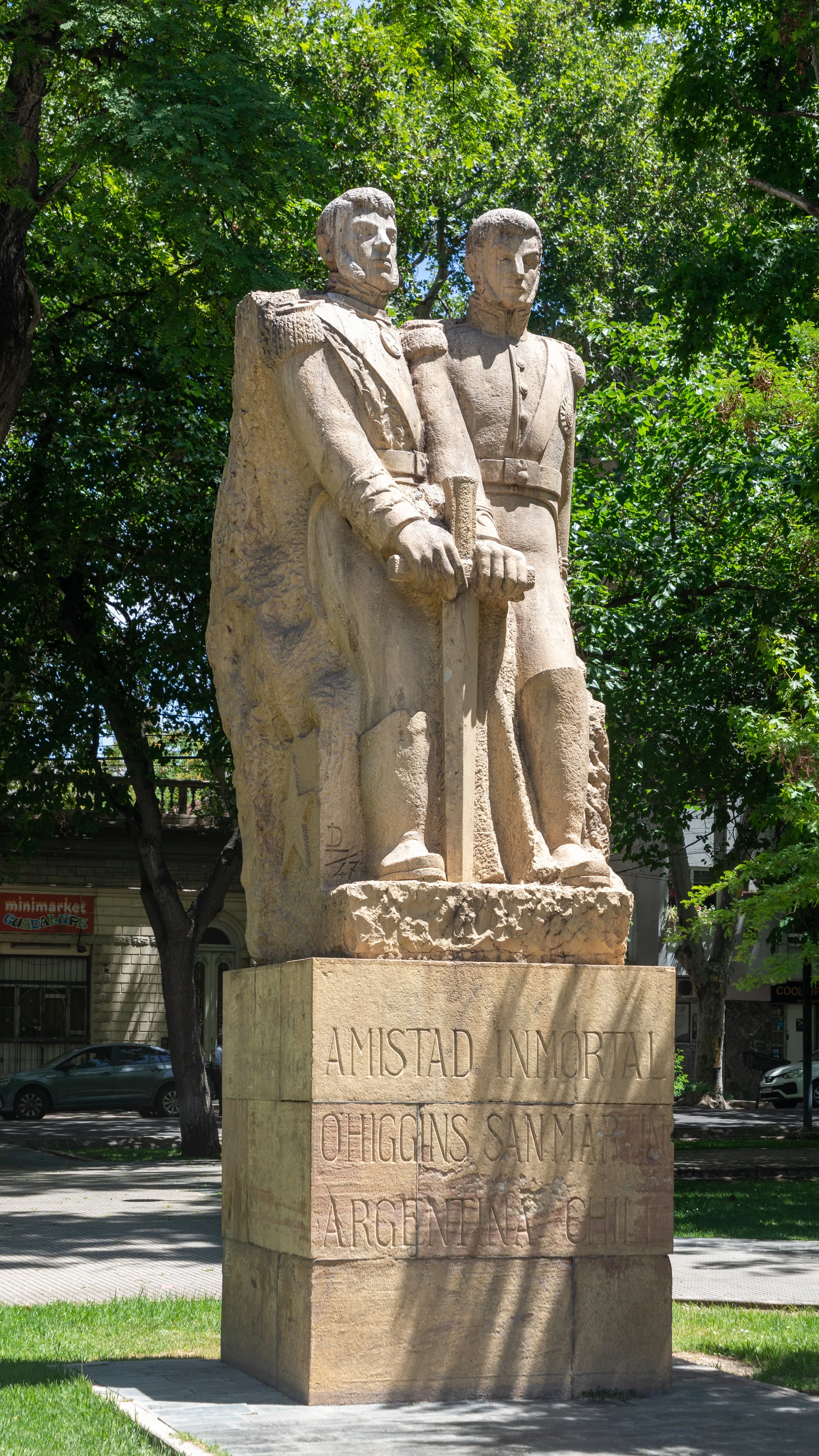
The Monument to the Argentine-Chilean Brotherhood in Plaza Chile symbolizes the friendship between the two nations, which strengthened after Chile provided aid to Mendoza following 1861 earthquake
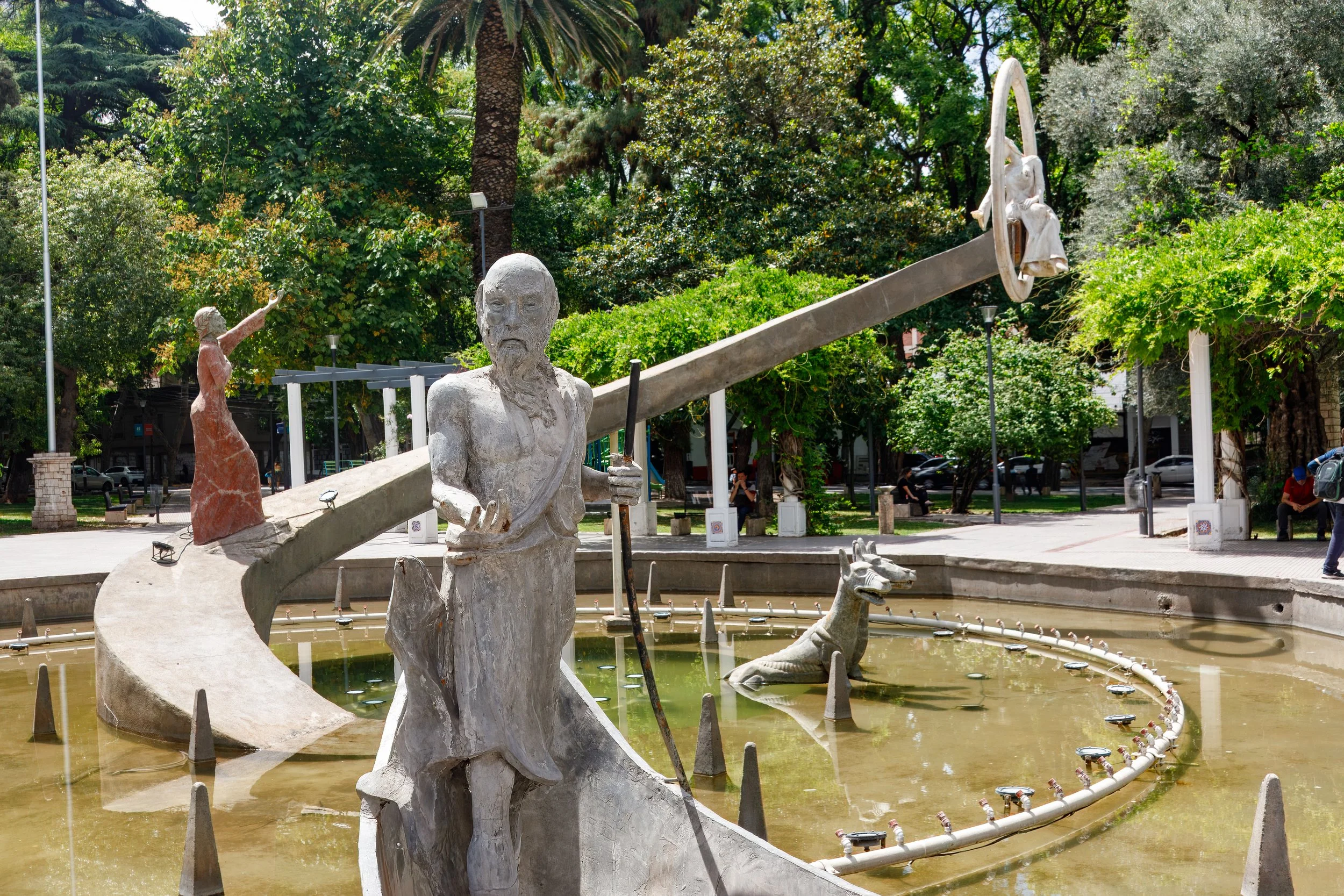
Moving on to our third square, this is the fountain sculpture in Plaza Italia, honoring Dante Alighieri
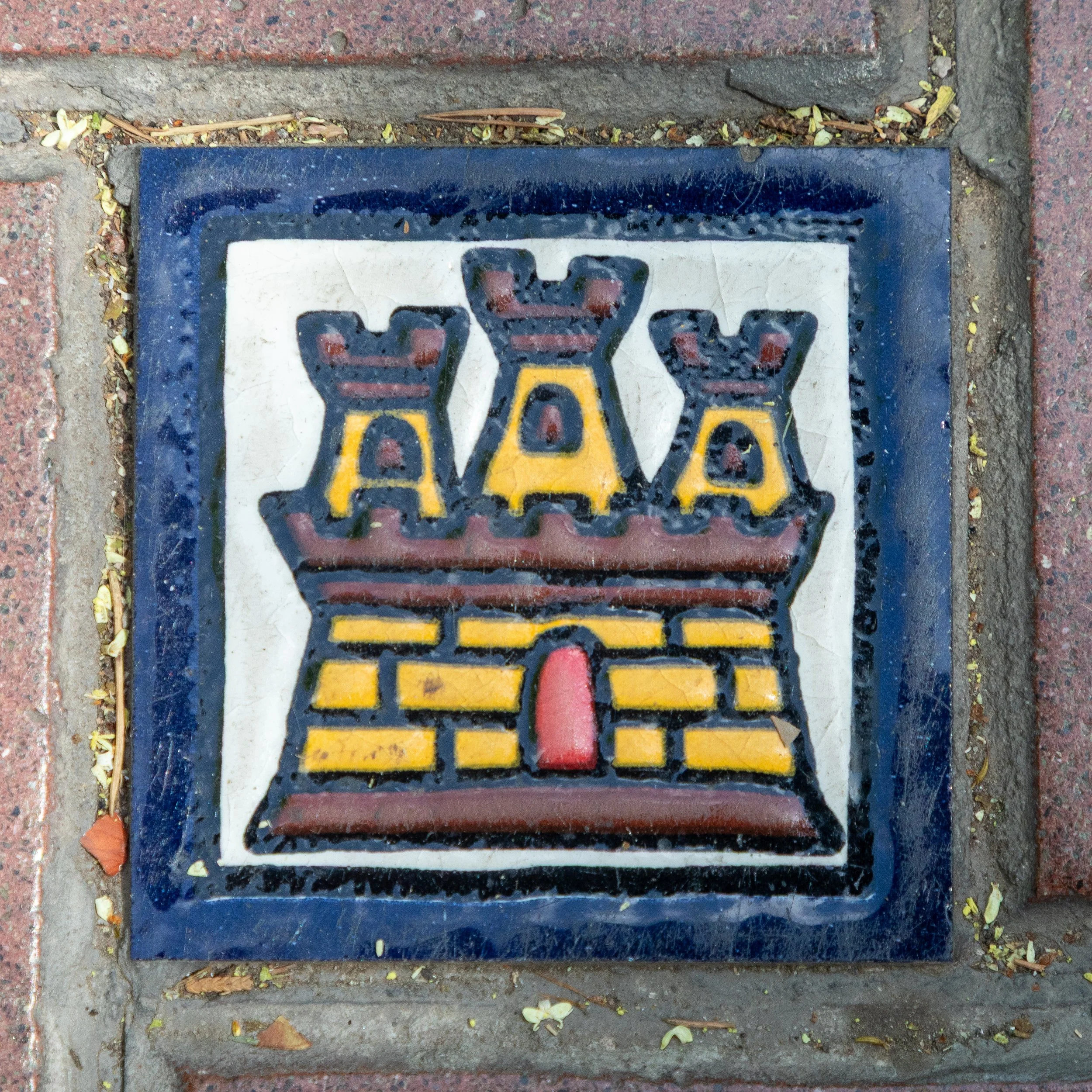
Decorative tiles in Plaza España, completing our tour of the four squares of downtown Mendoza
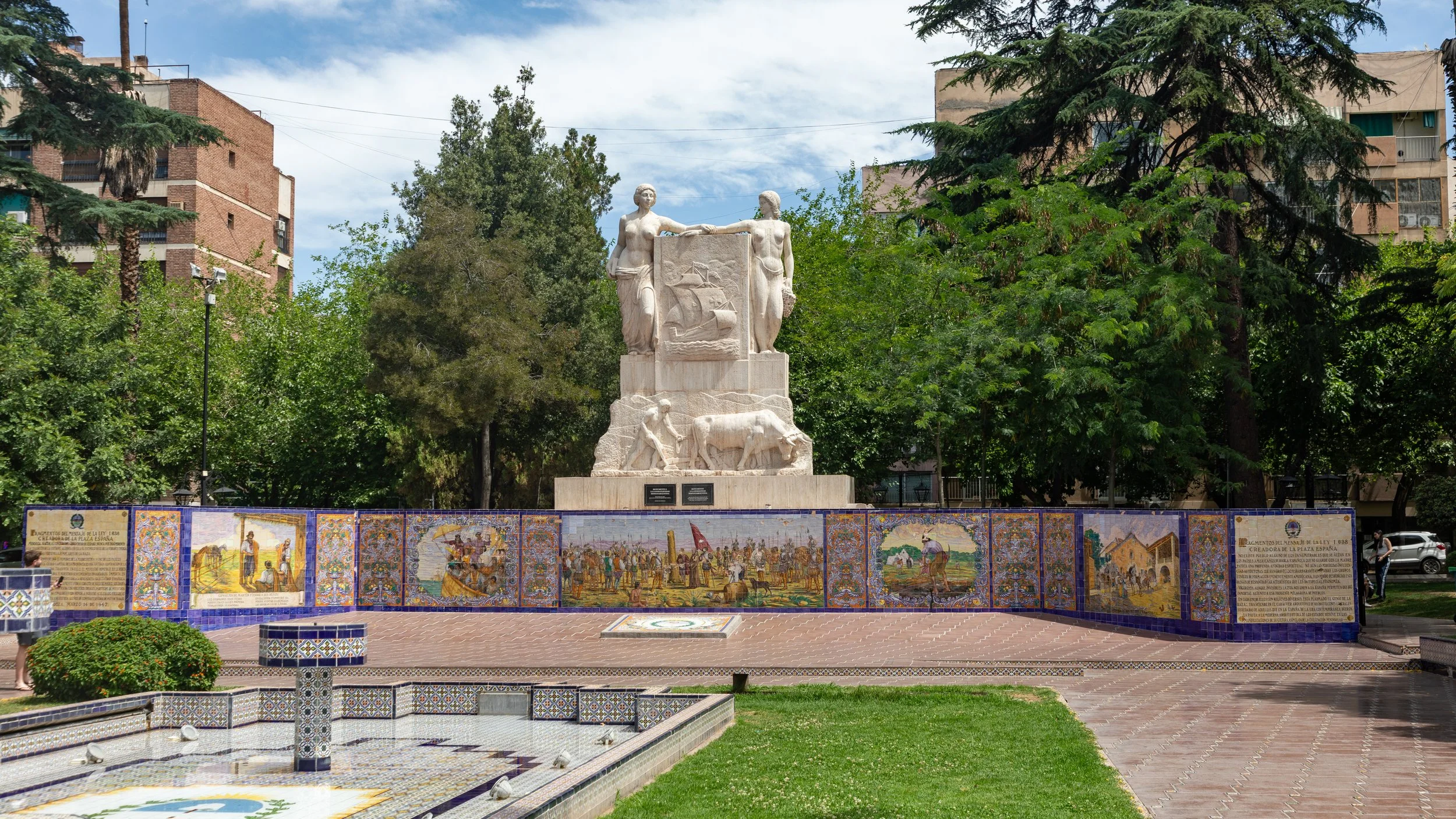
A large central monument dedicated to the Hispano-Argentine Fellowship, in Plaza España
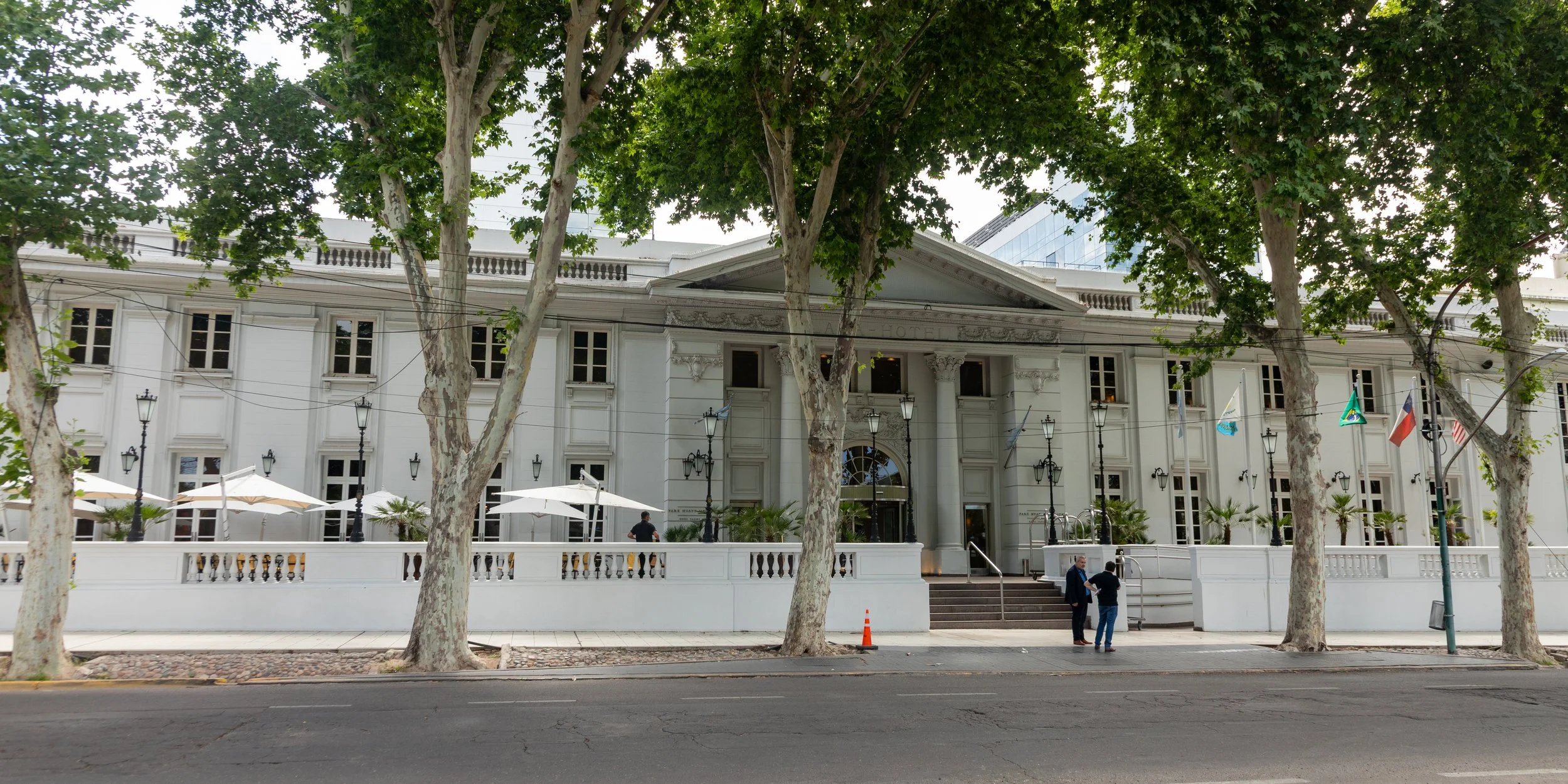
The restored 19th-century Spanish colonial facade that fronts the Park Hyatt hotel
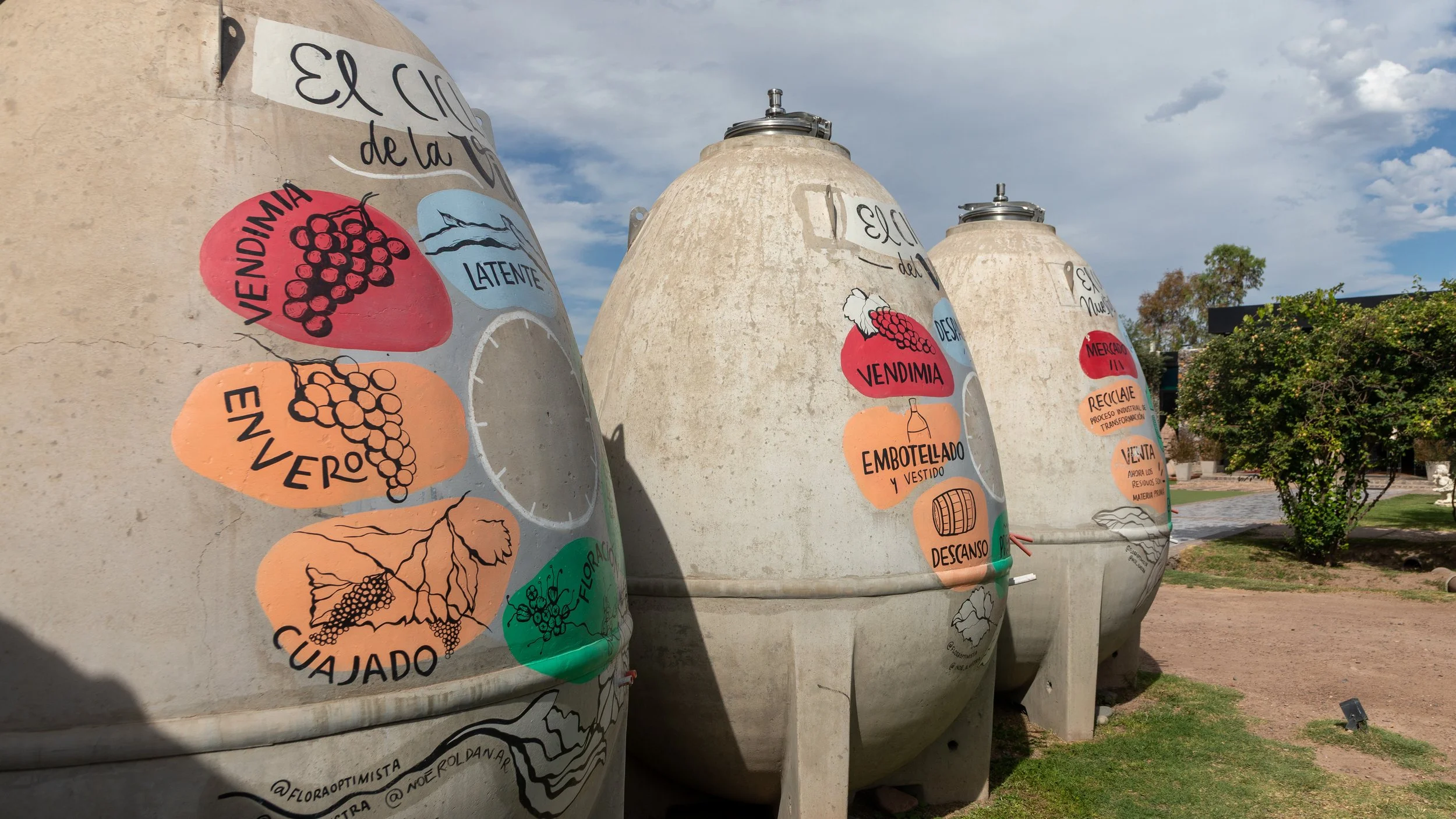
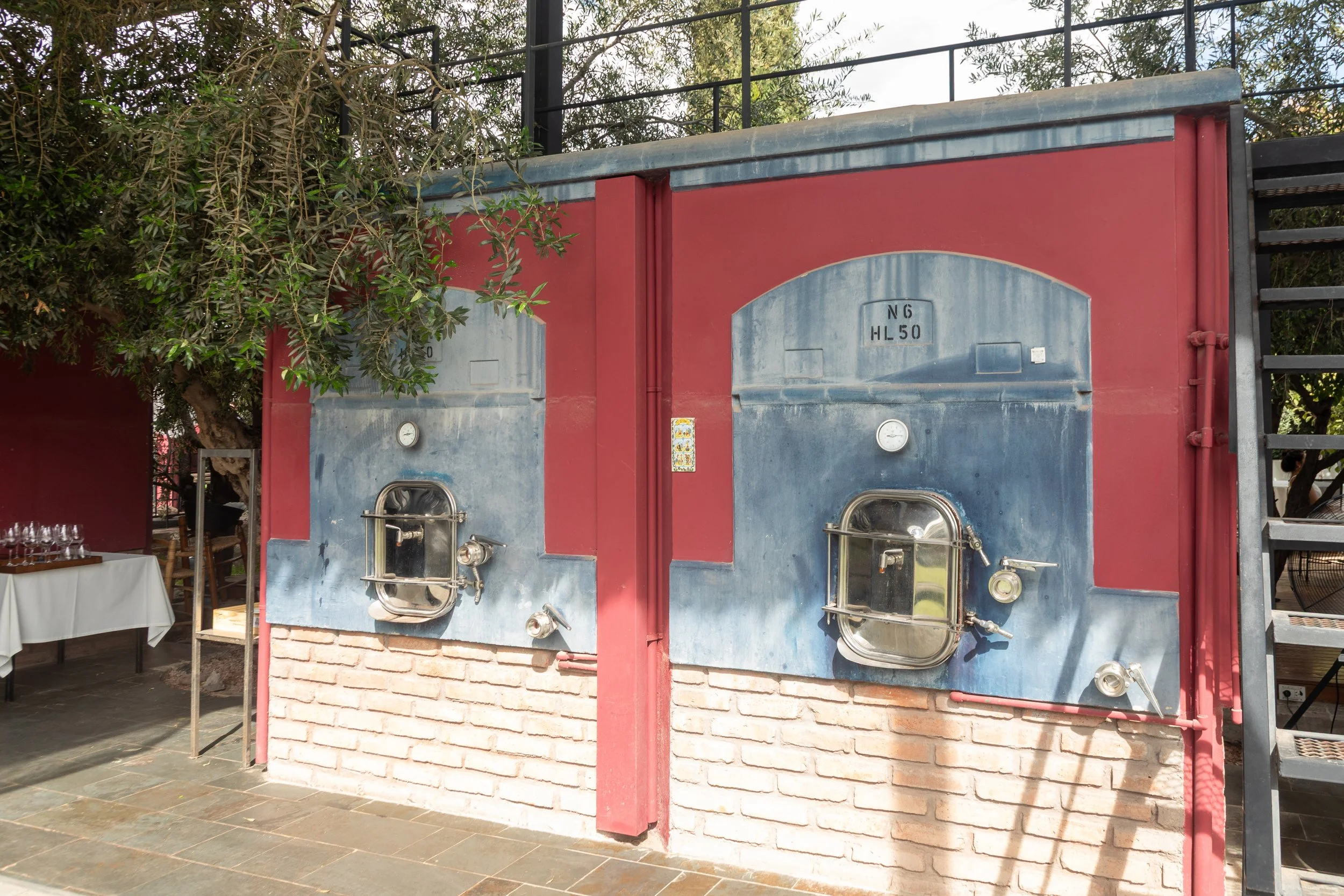
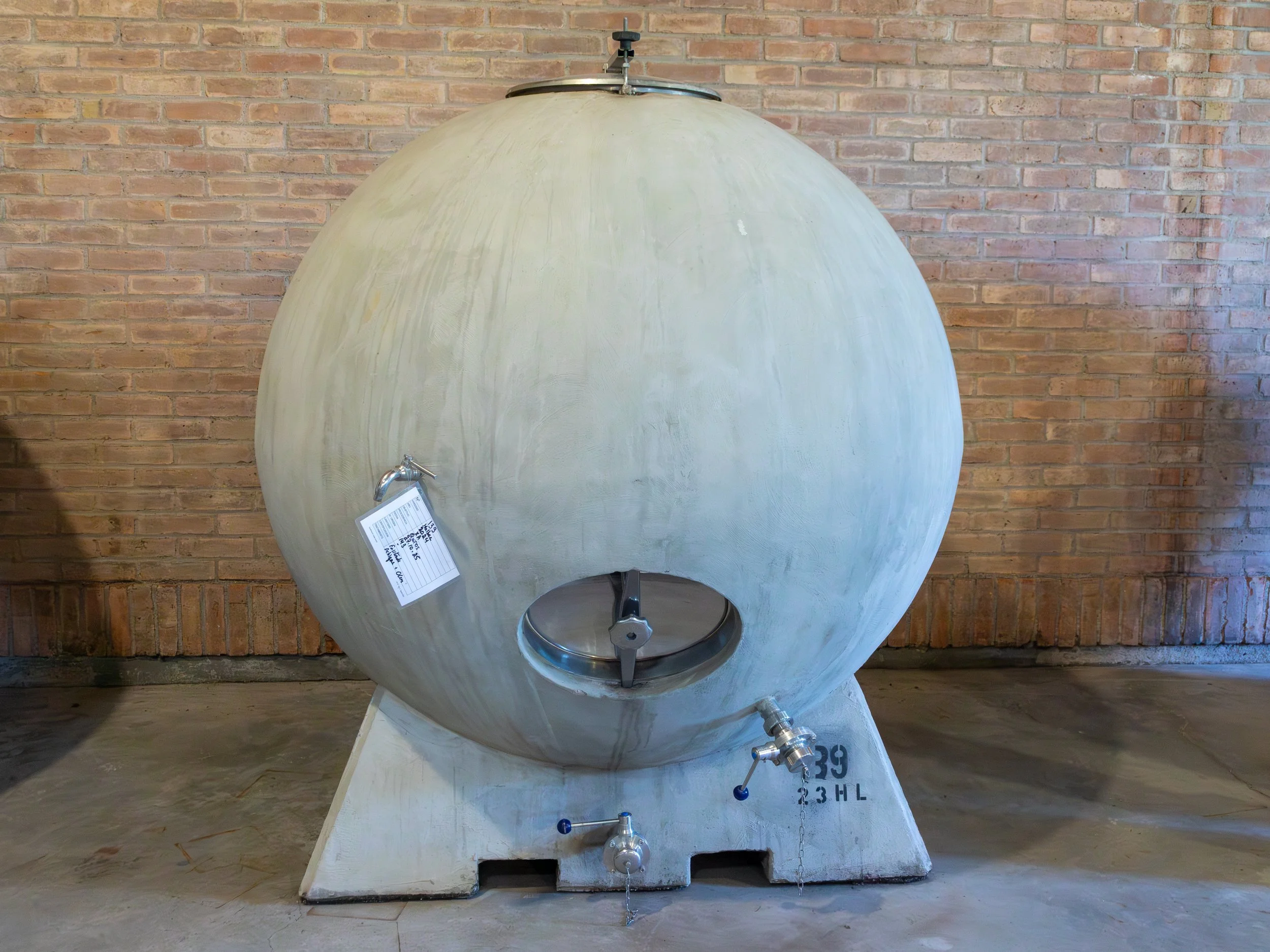
Egg-shaped concrete vats for wine fermentation, at Bodega El Enemigo, our first winery of the trip
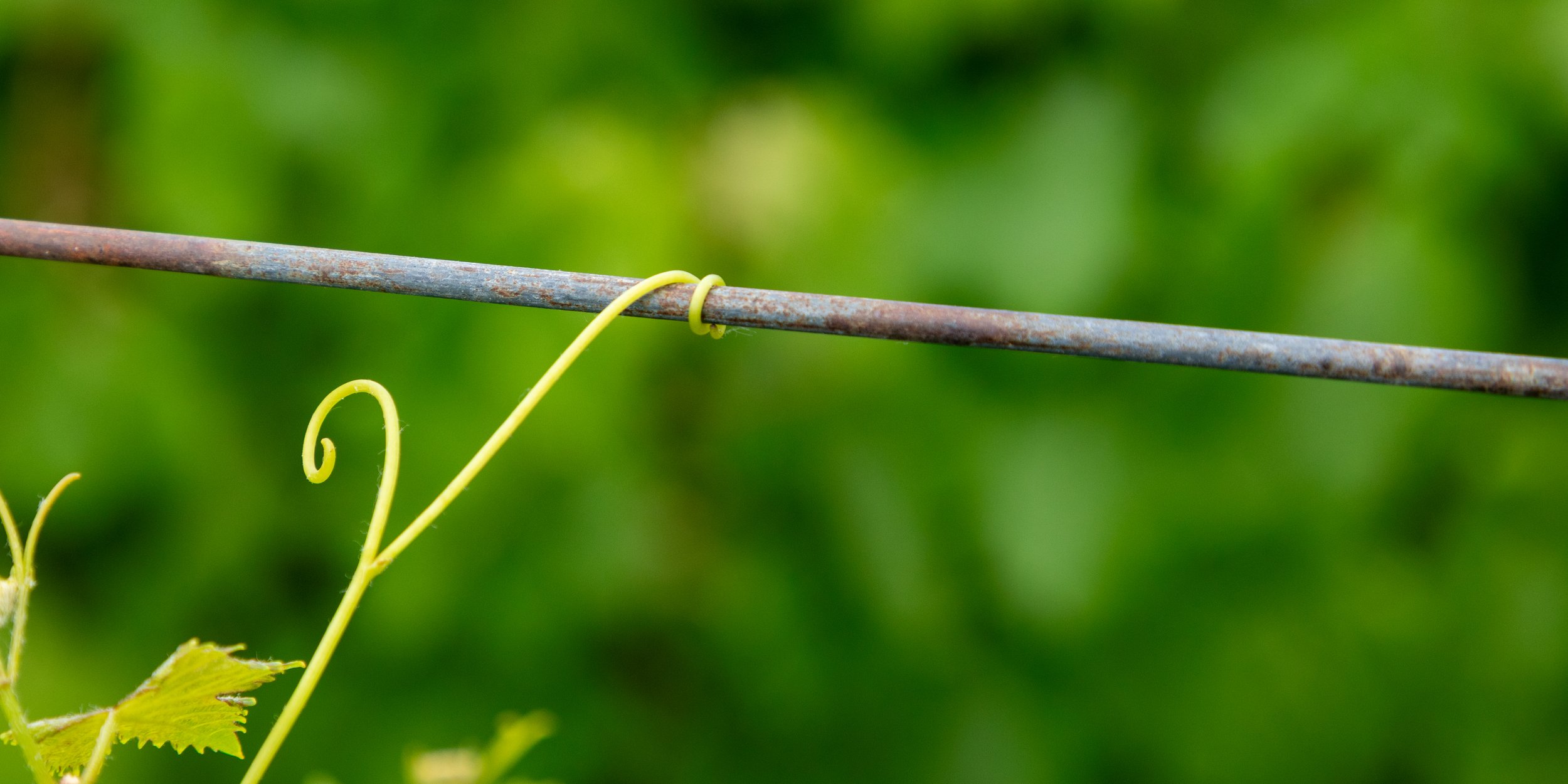
A grapevine grabbing onto stabilizing wires as it matures
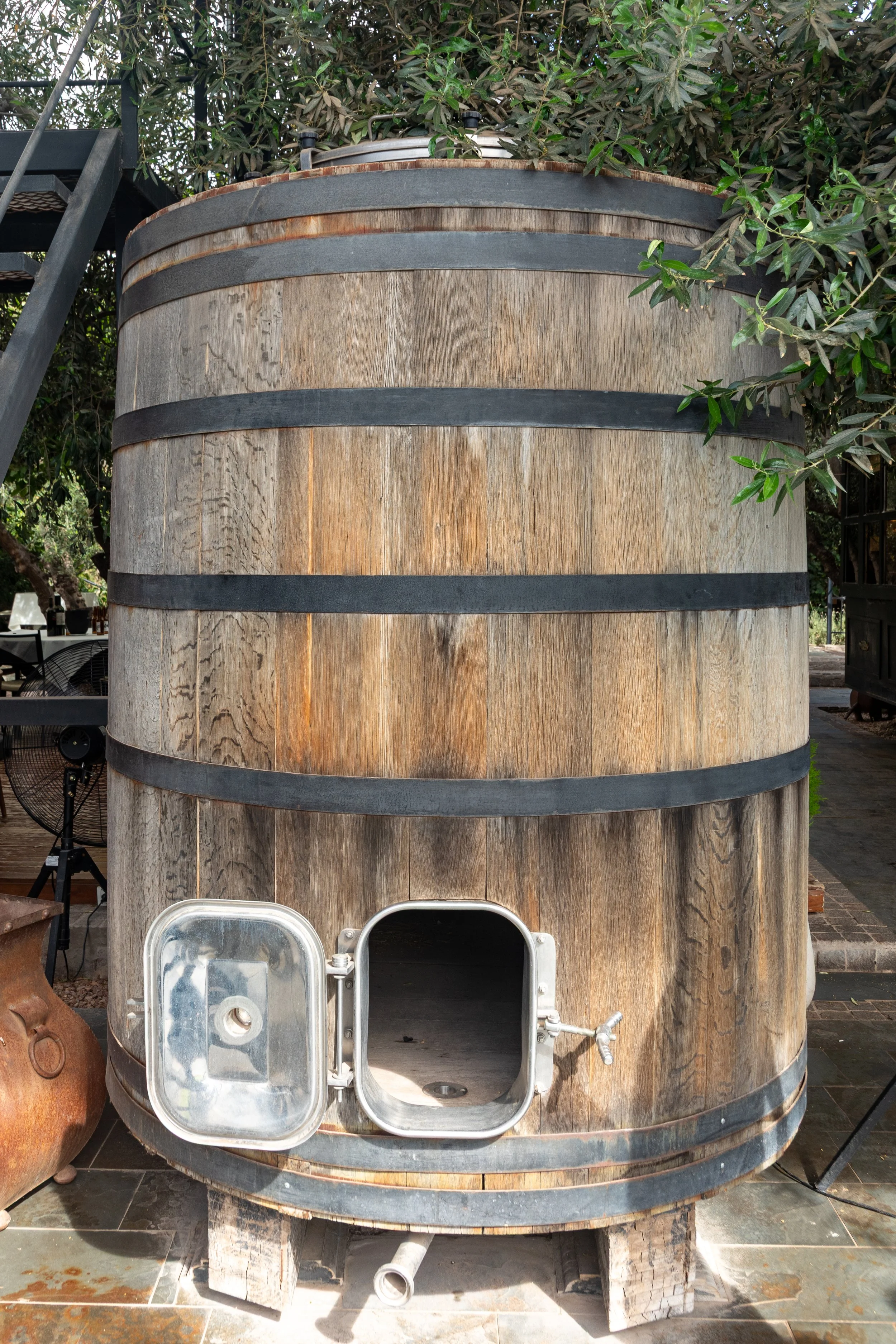
Wooden fermentation vessel
A larger metal and concrete tank
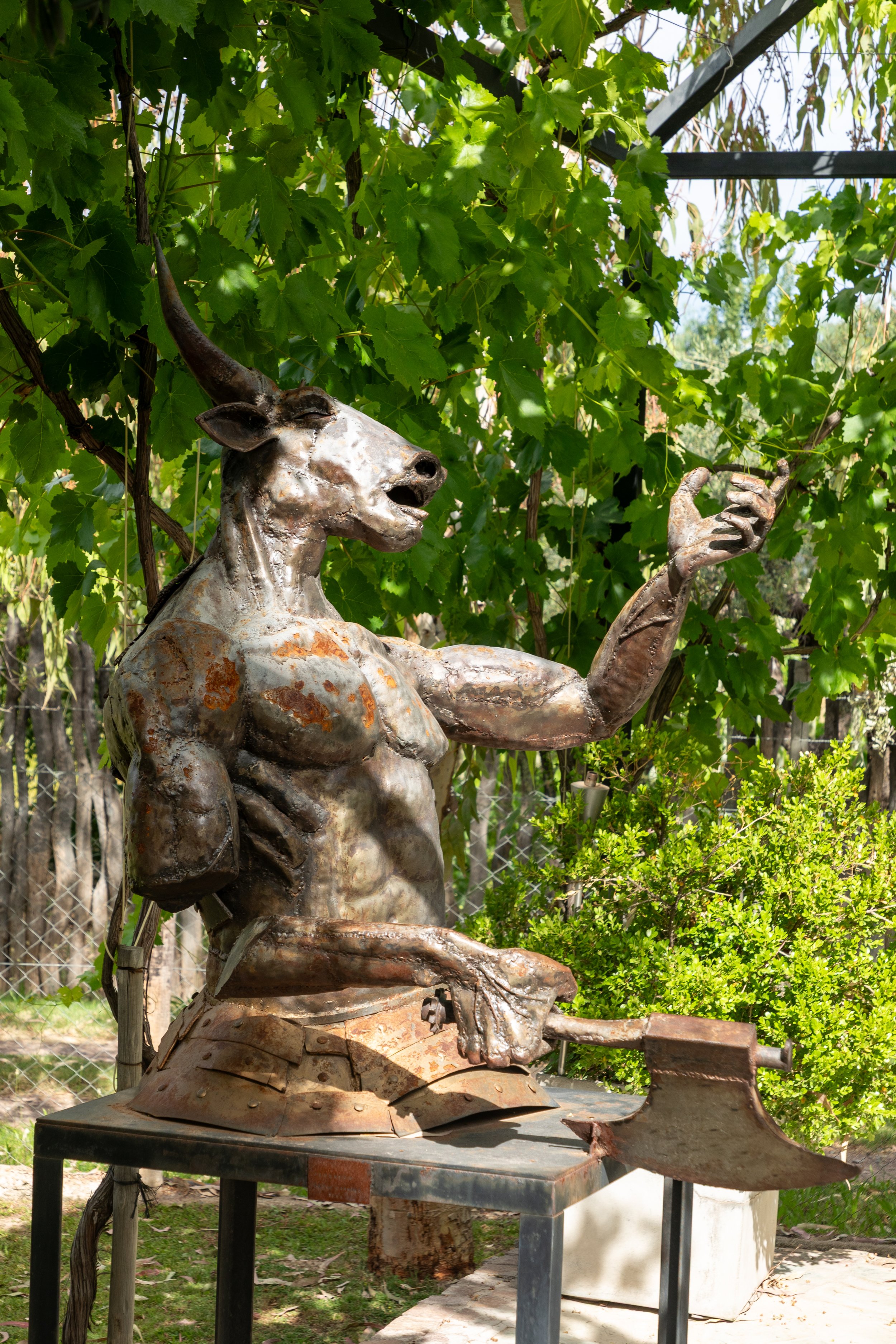
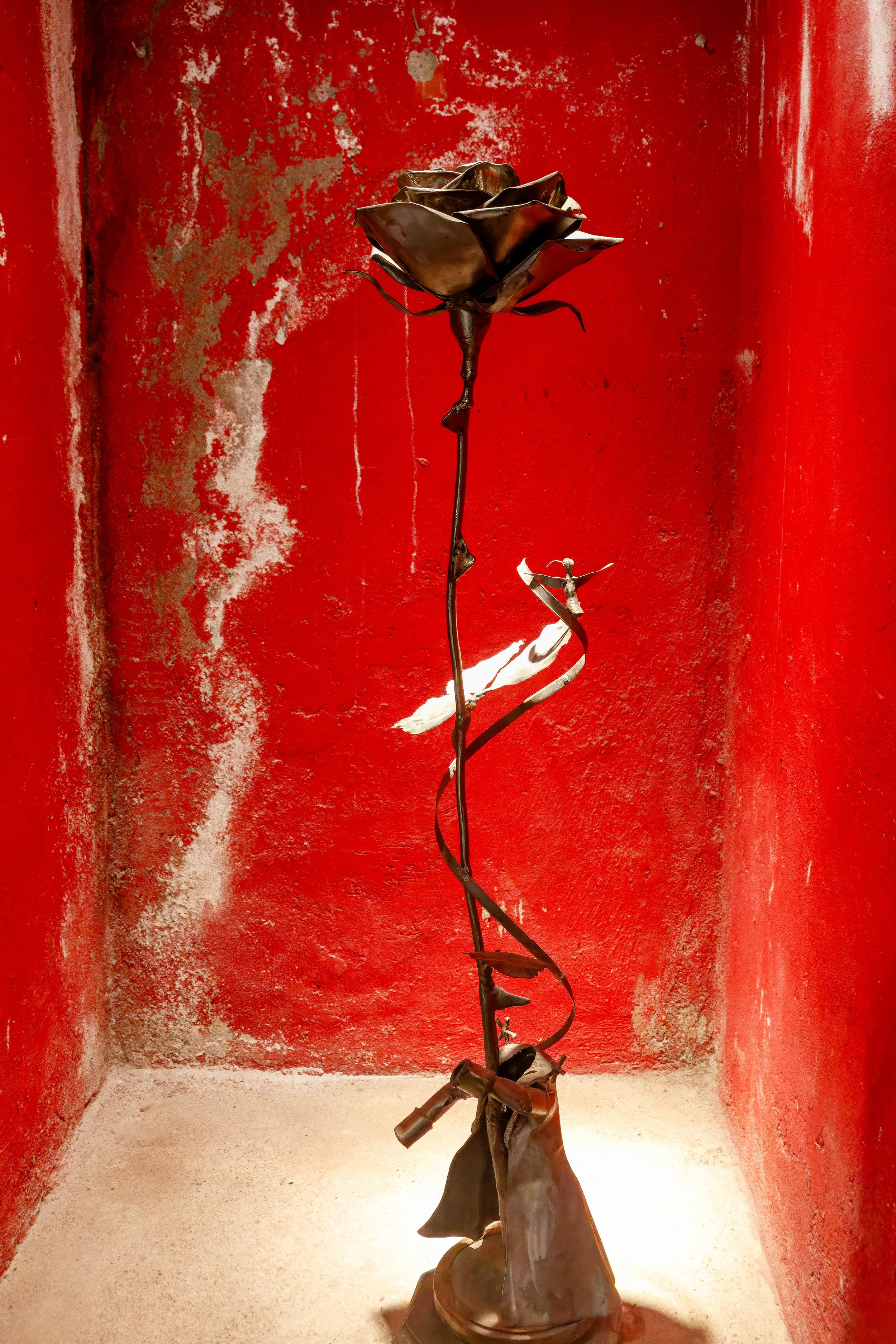
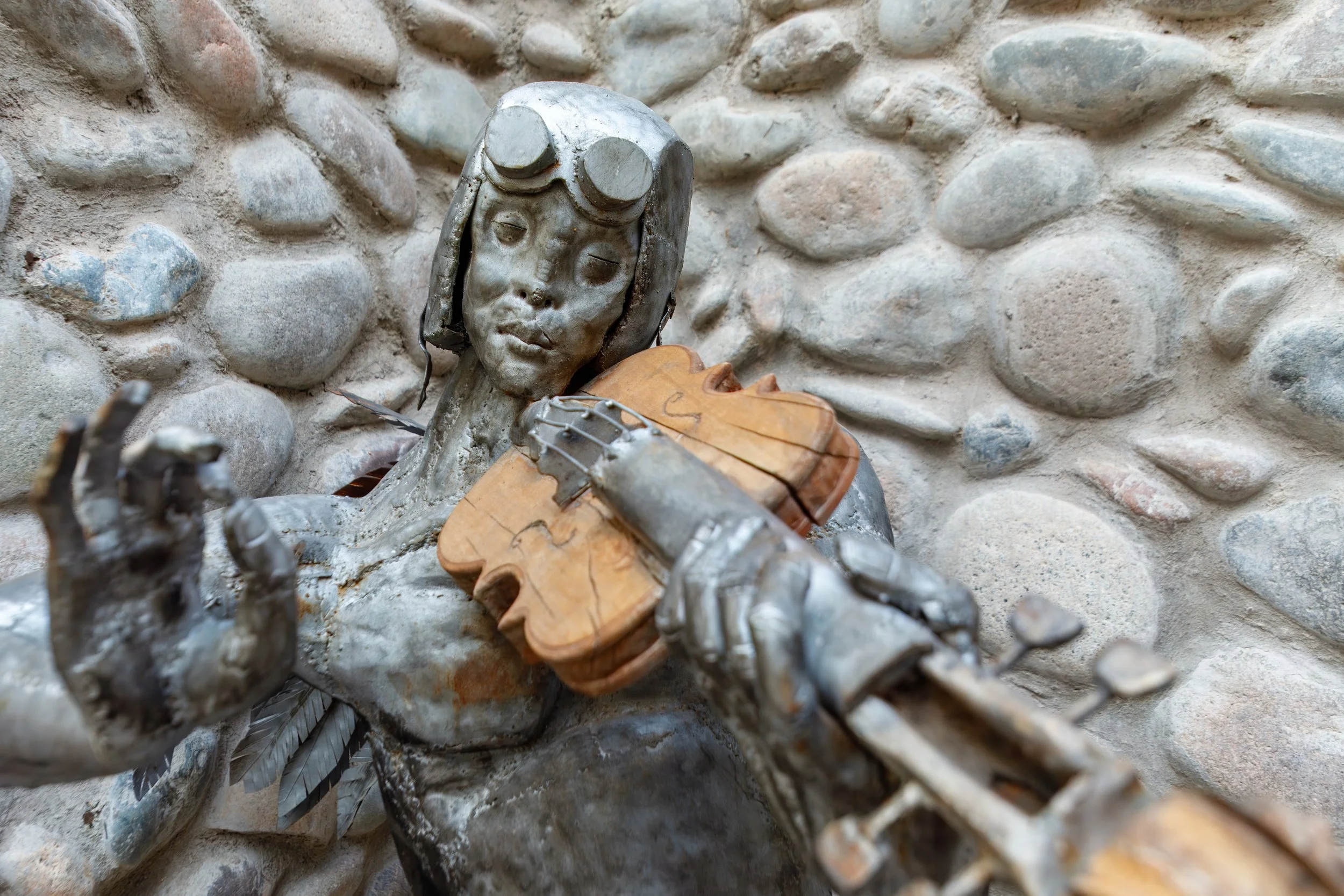
One of various sculptures in the garden outside the tasting room
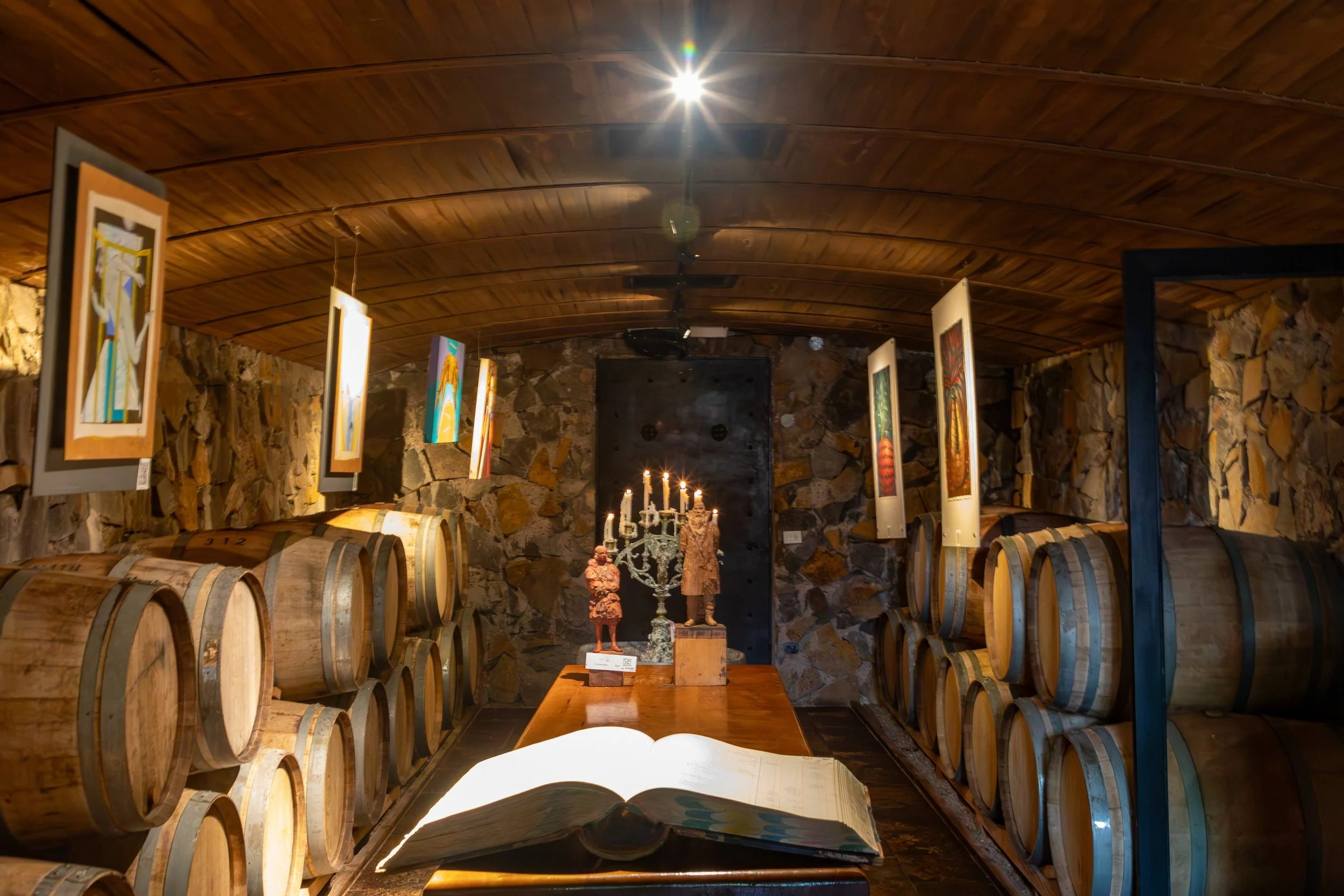
Old barrel room
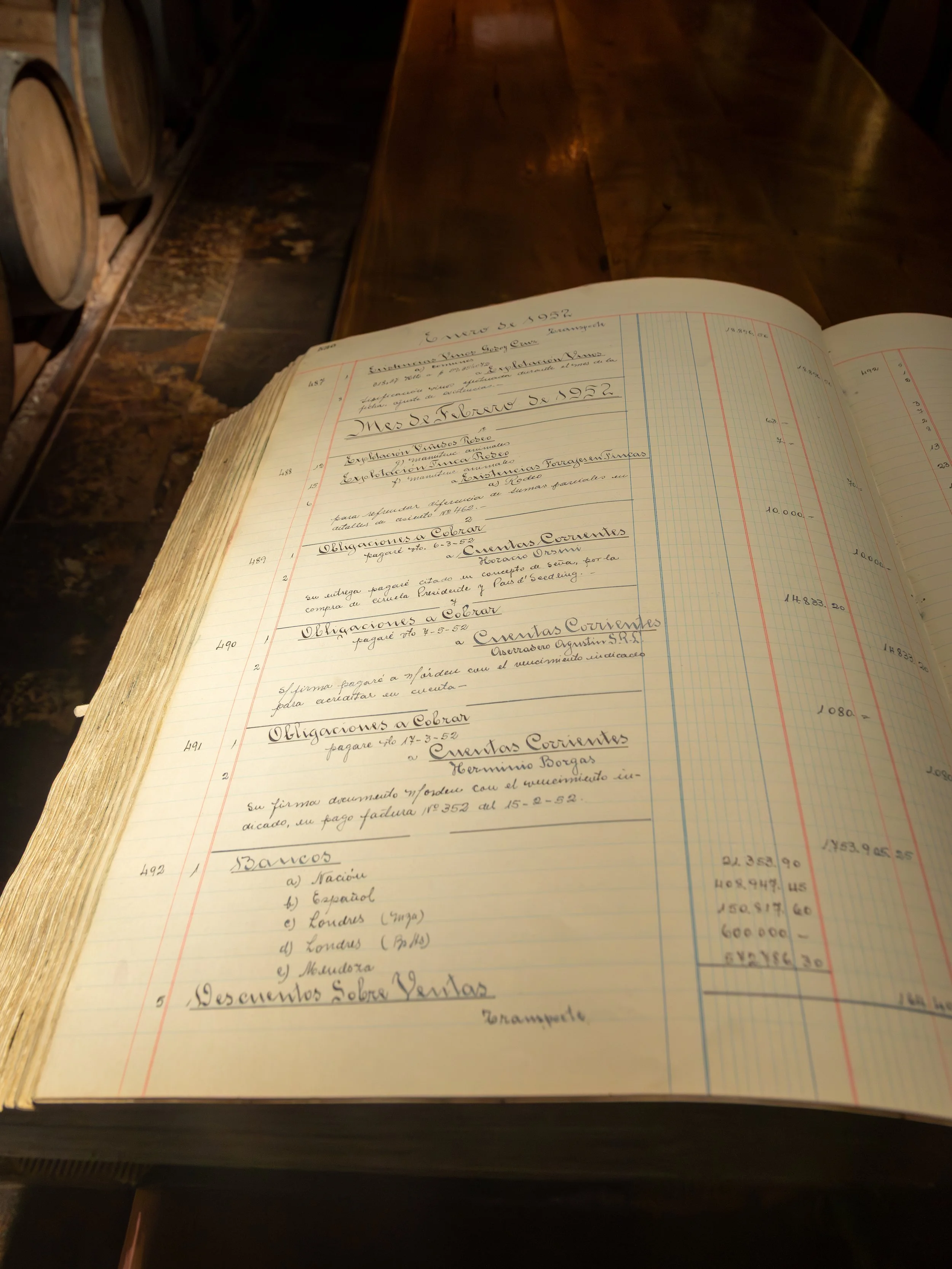
A page from the old handwritten general ledger from the winery
Flower sculpture
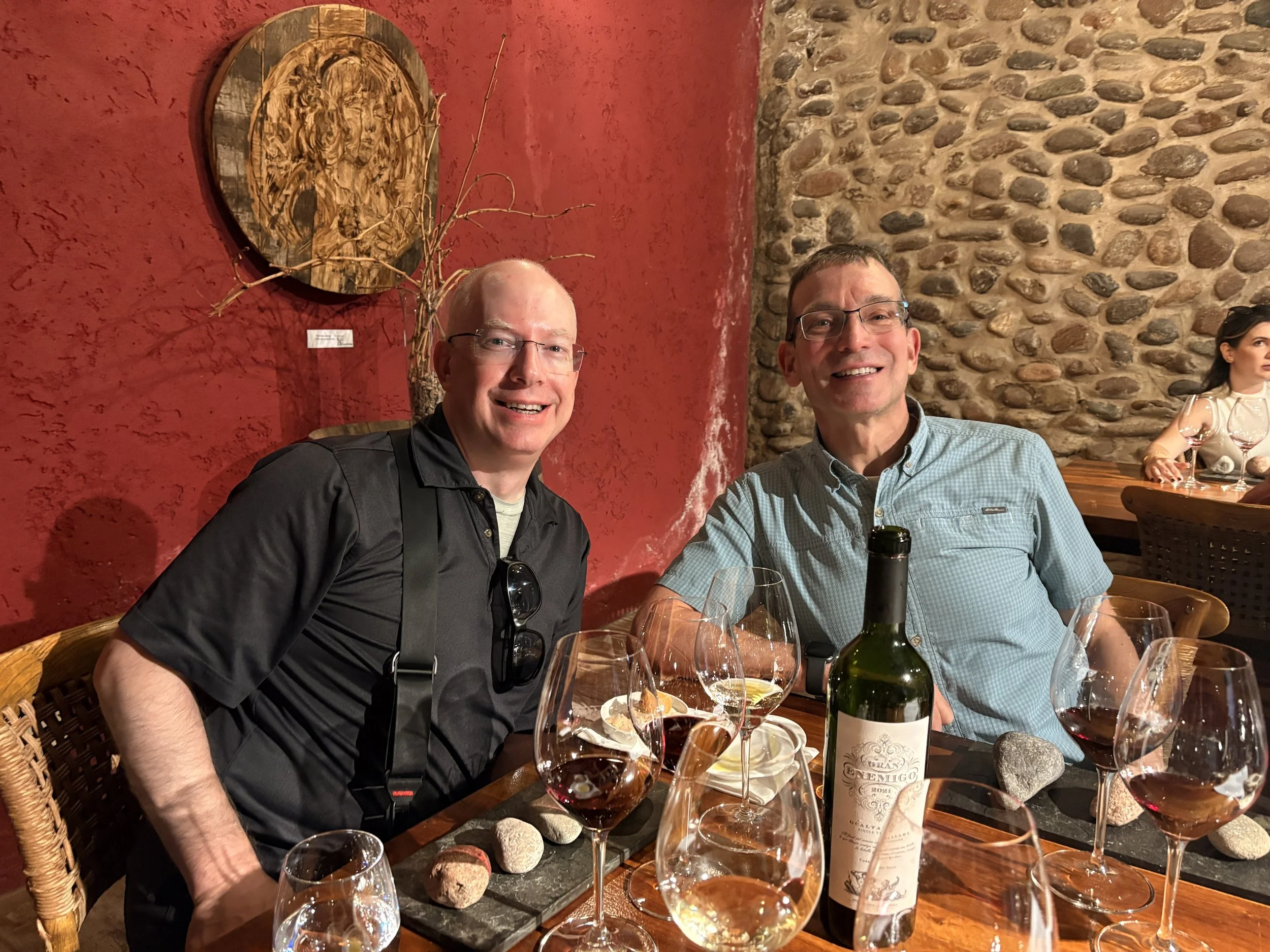
Enjoying our tasting; no, the rocks in front of us were not for tasting.
More exterior art
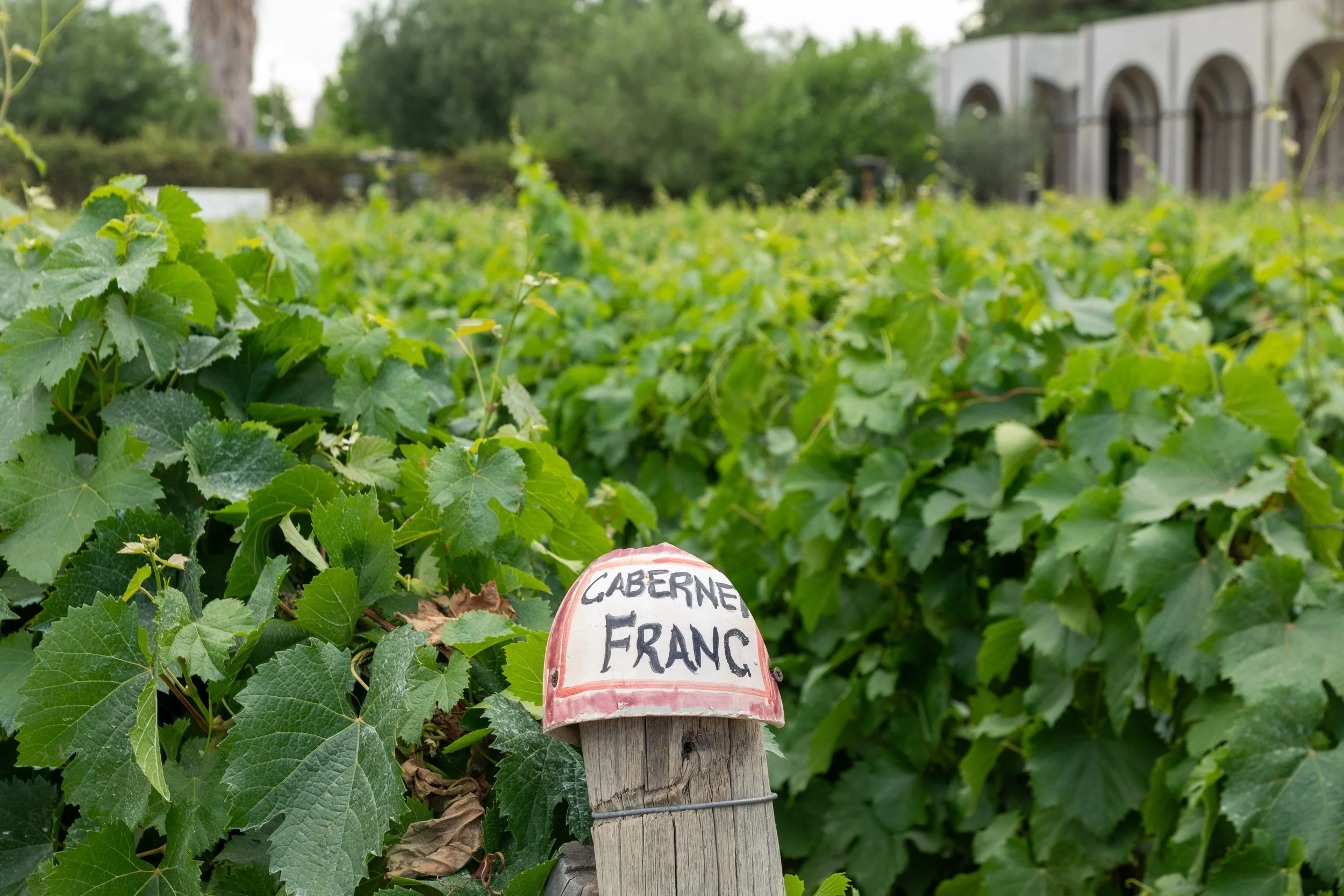
Touring the vineyard’s varietals
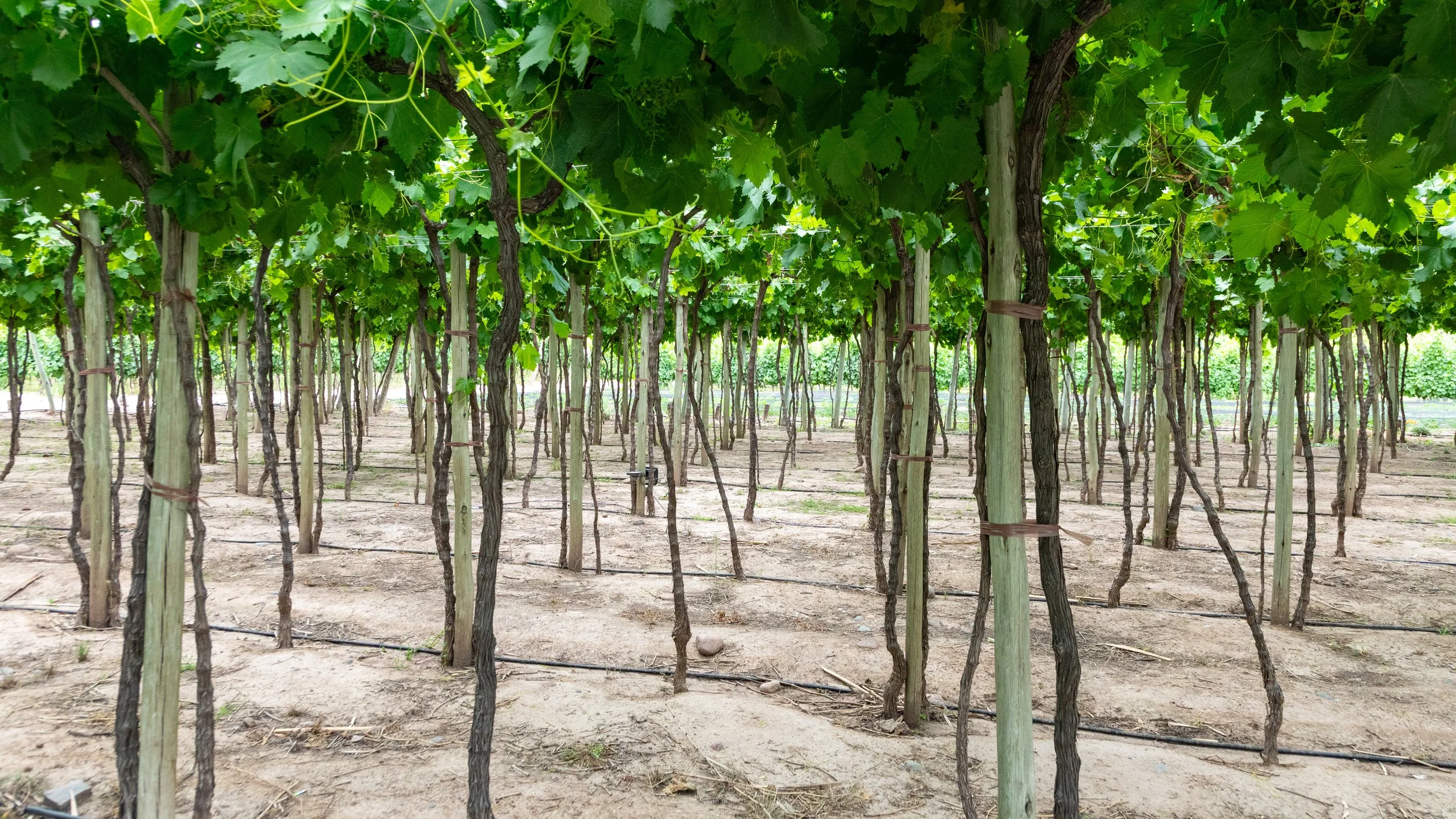
The well-maintained vines form a canopy of grape leaves
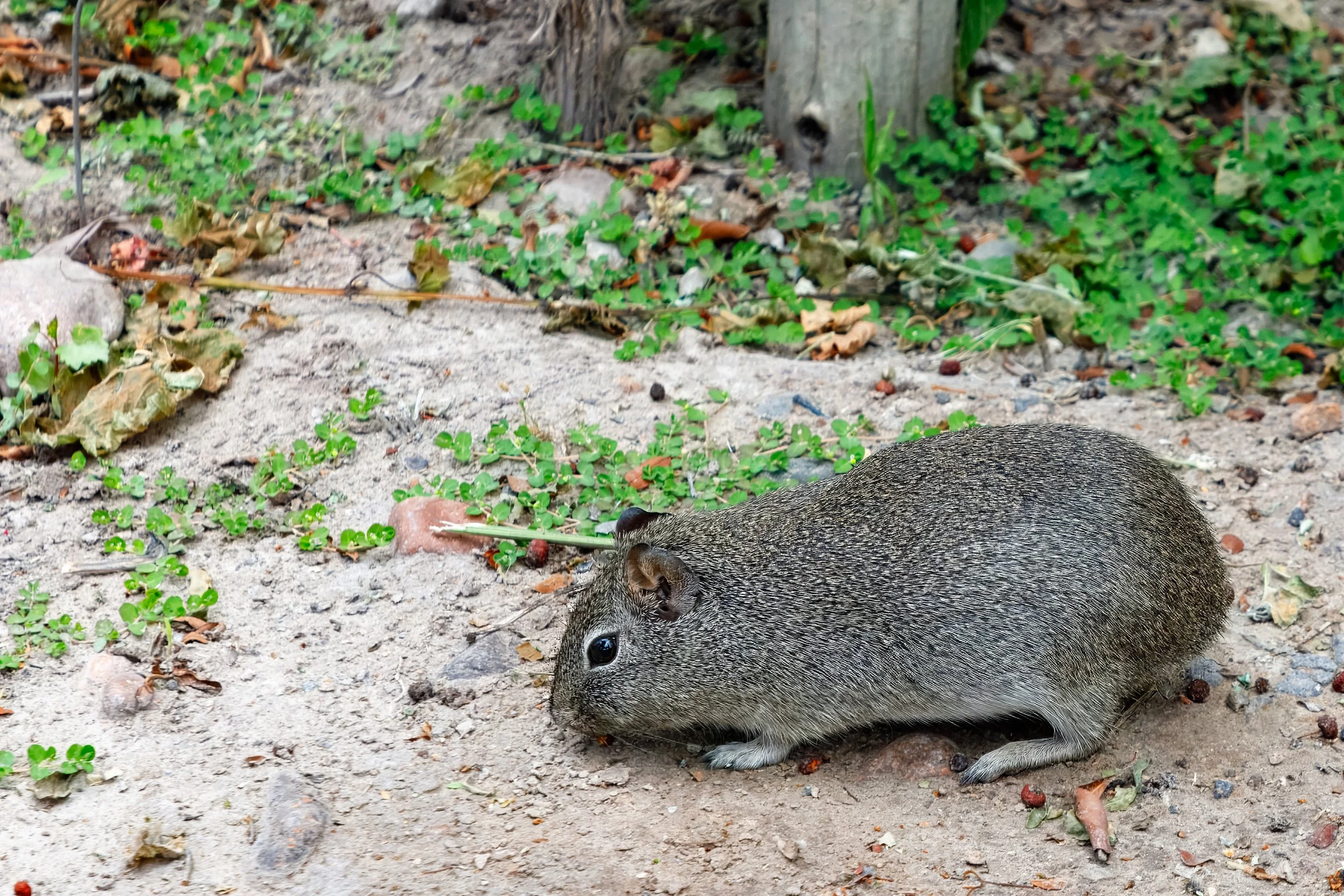
On our way back to the car we found a guinea pig in the wild
After the tasting, we left Maipu for our hotel in Mendoza with a bottle of wine in hand, ready for another wine tasting in the hotel, before exploring the local restaurant scene for a late (for us) dinner. Our first day in Mendoza region did not disappoint; the town itself was really charming with the whole wine region to explore.
Nov 21
We had decided to not overdo the wine tasting, as we were driving ourselves and ultimately didn’t want to get overwhelmed with wine, so planned one tasting per day in different areas. For our second day, we wanted to explore the Valle de Uco region, located 80km south of Mendoza. This area is closer to the Andes, providing a picturesque backdrop for the vineyards. After breakfast, we left Mendoza and headed towards the Uco region.
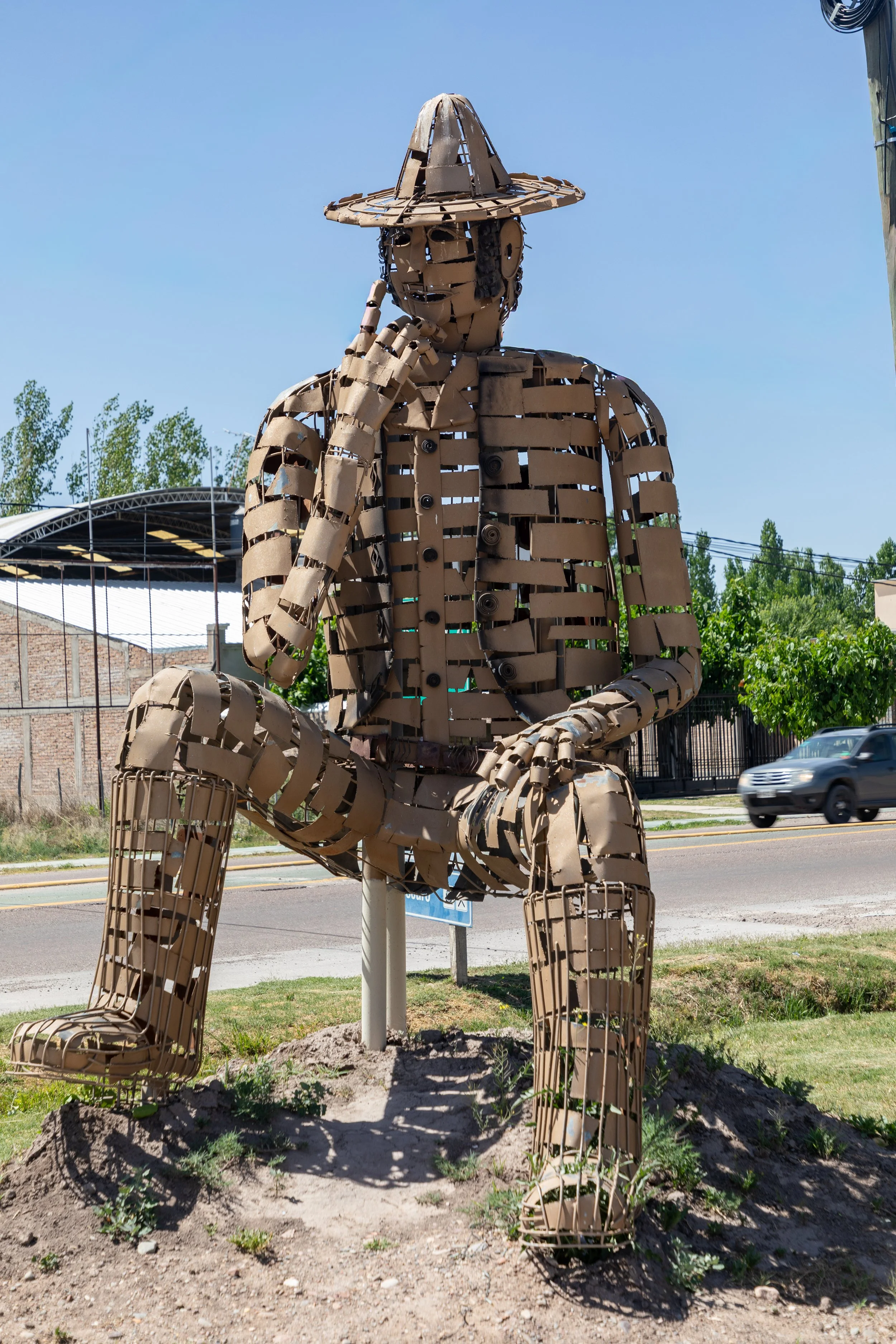
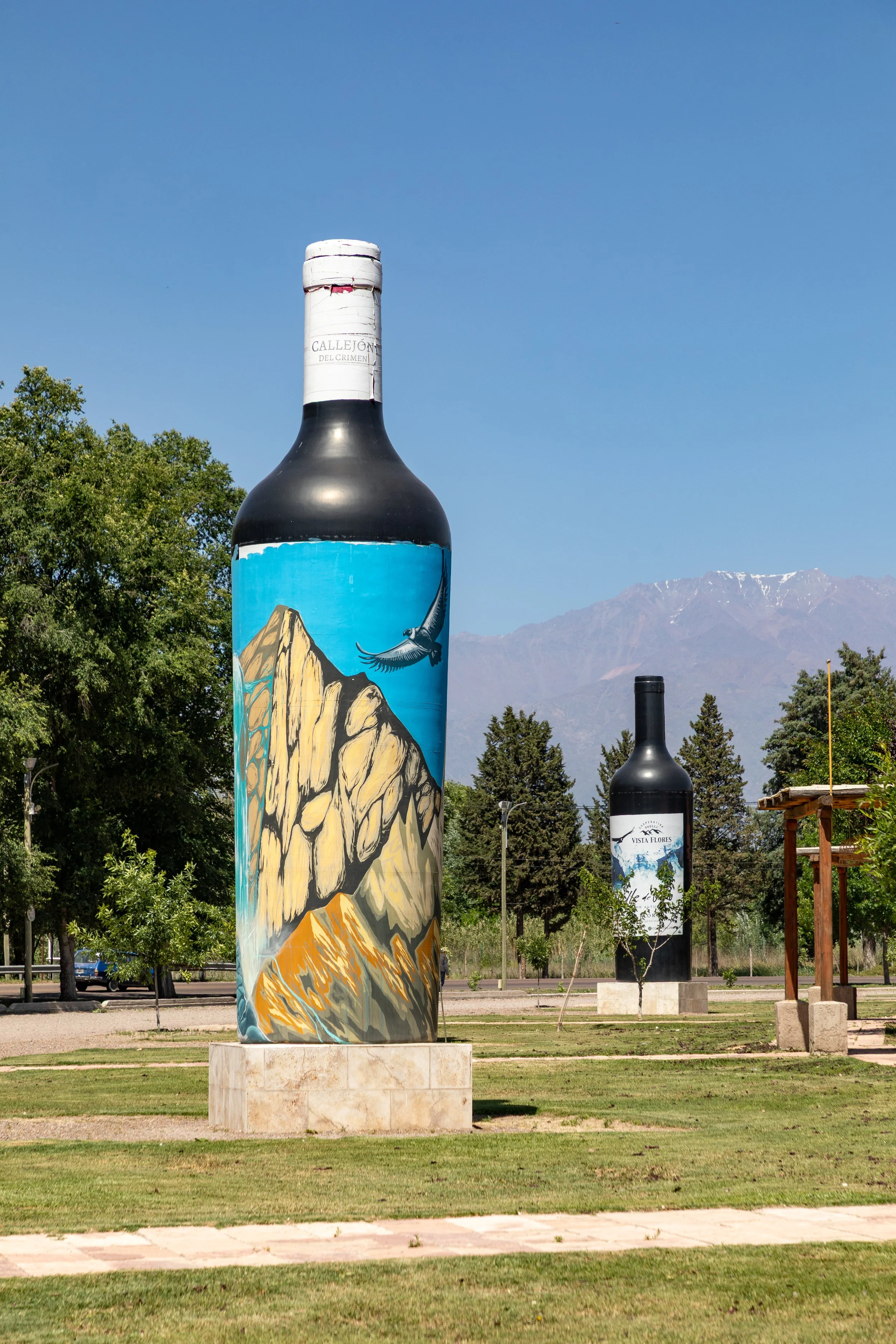
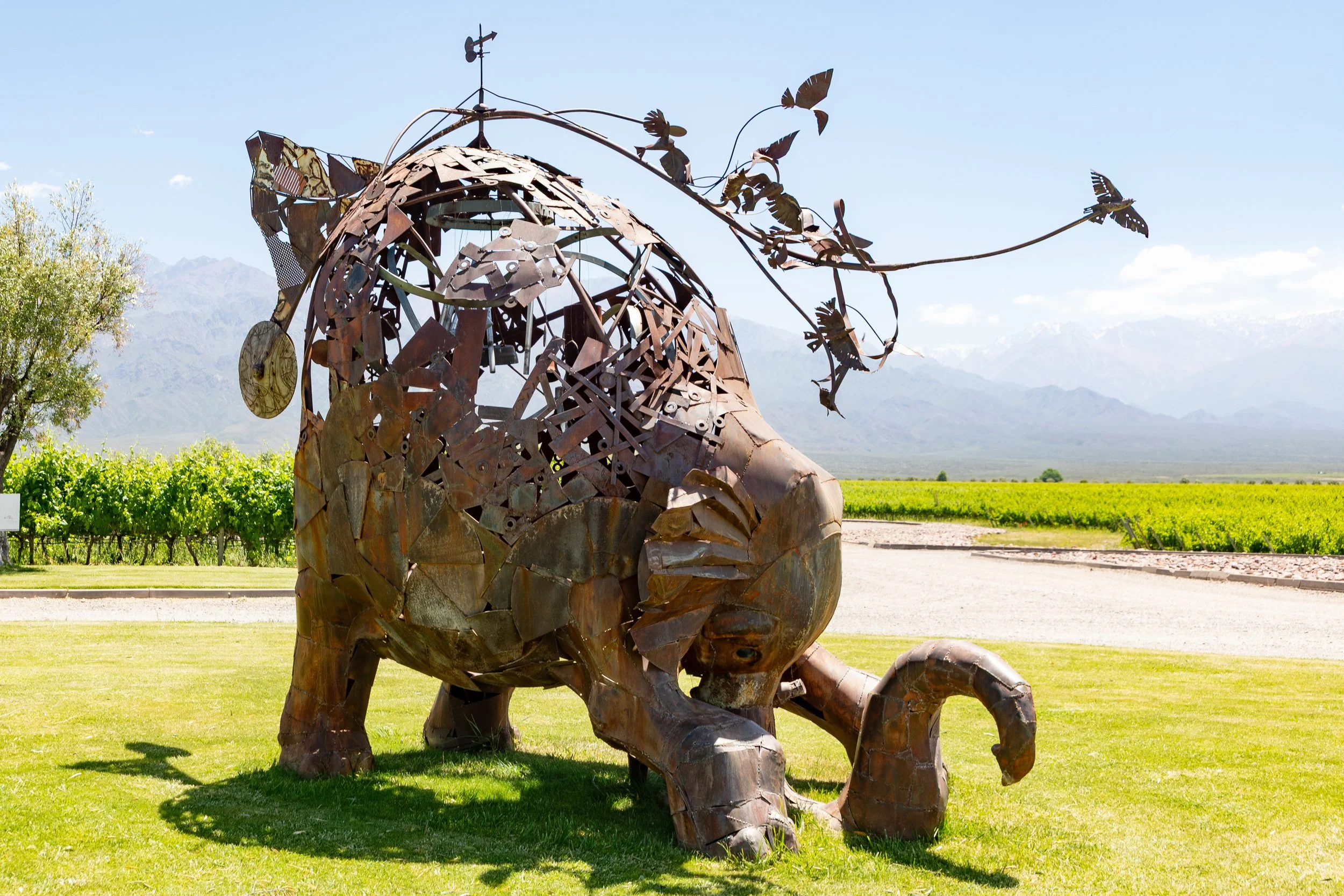
One of a number of huge sculptures at a collection of stores and restaurants, as we head into the Uco region
Wine bottle sculpture, in the same plaza, with the Andes in the background
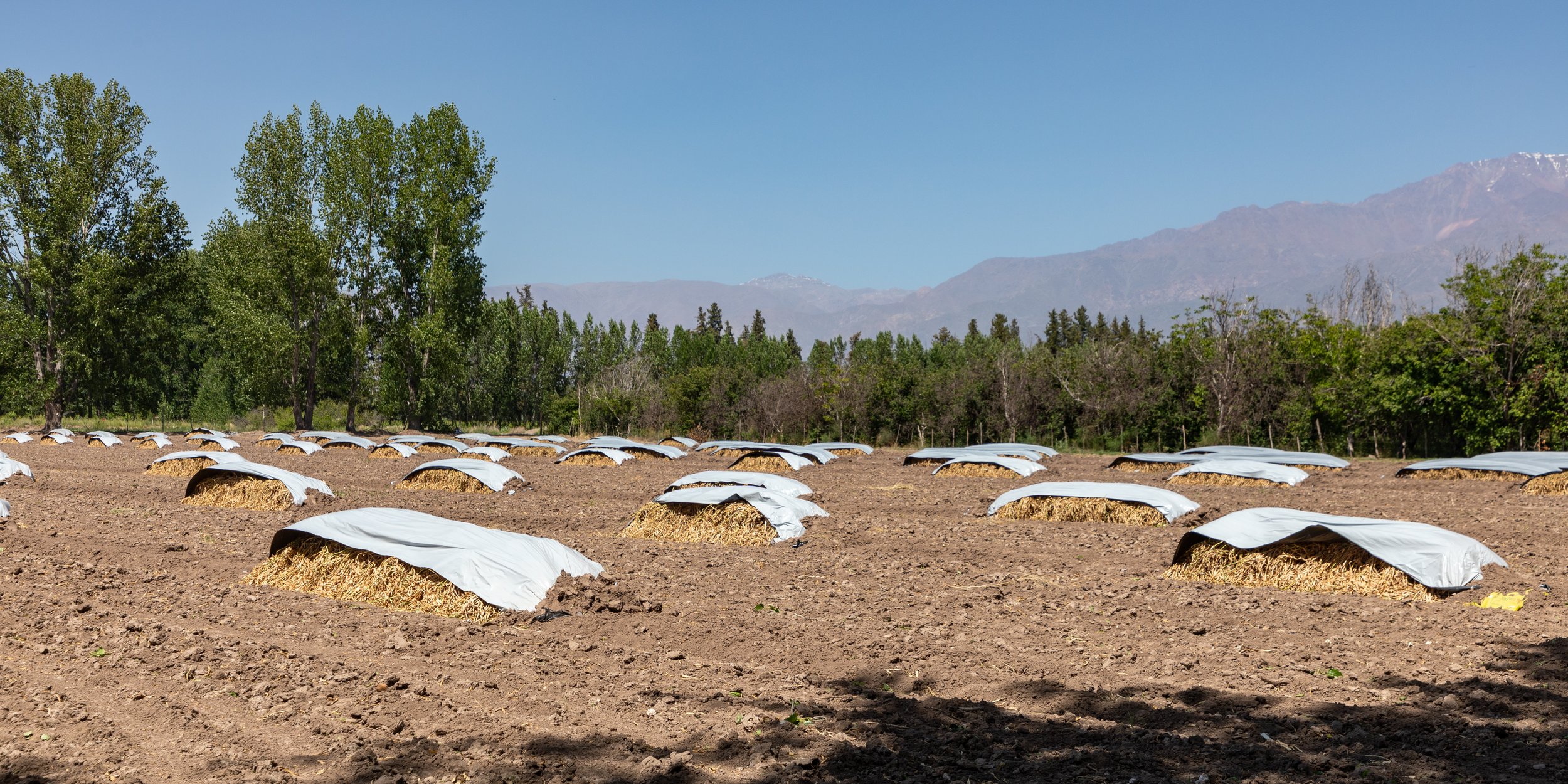
Farm field outside of Vista Flores; we ran across this farming method throughout the region, but never learned what they were growing
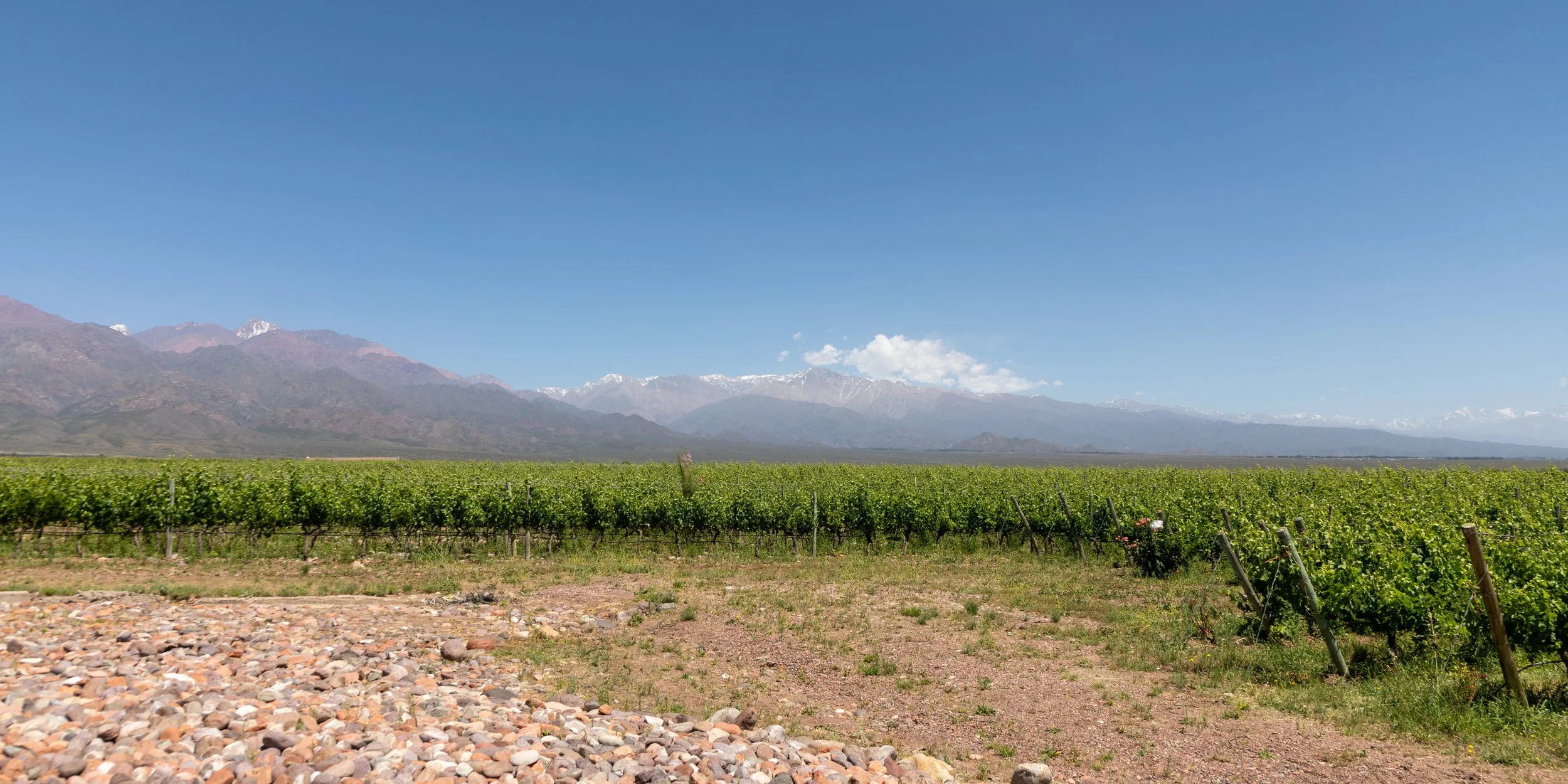
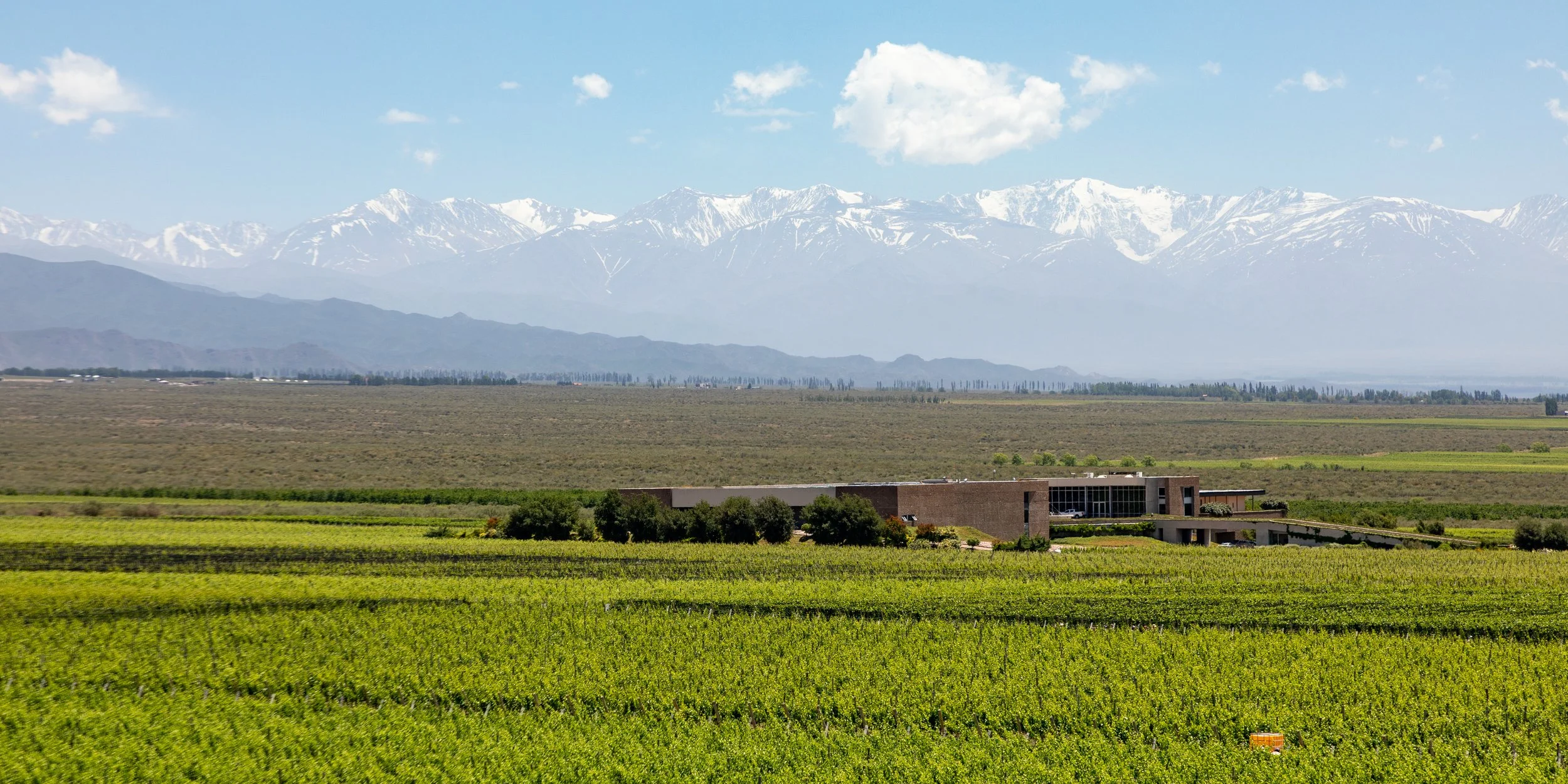
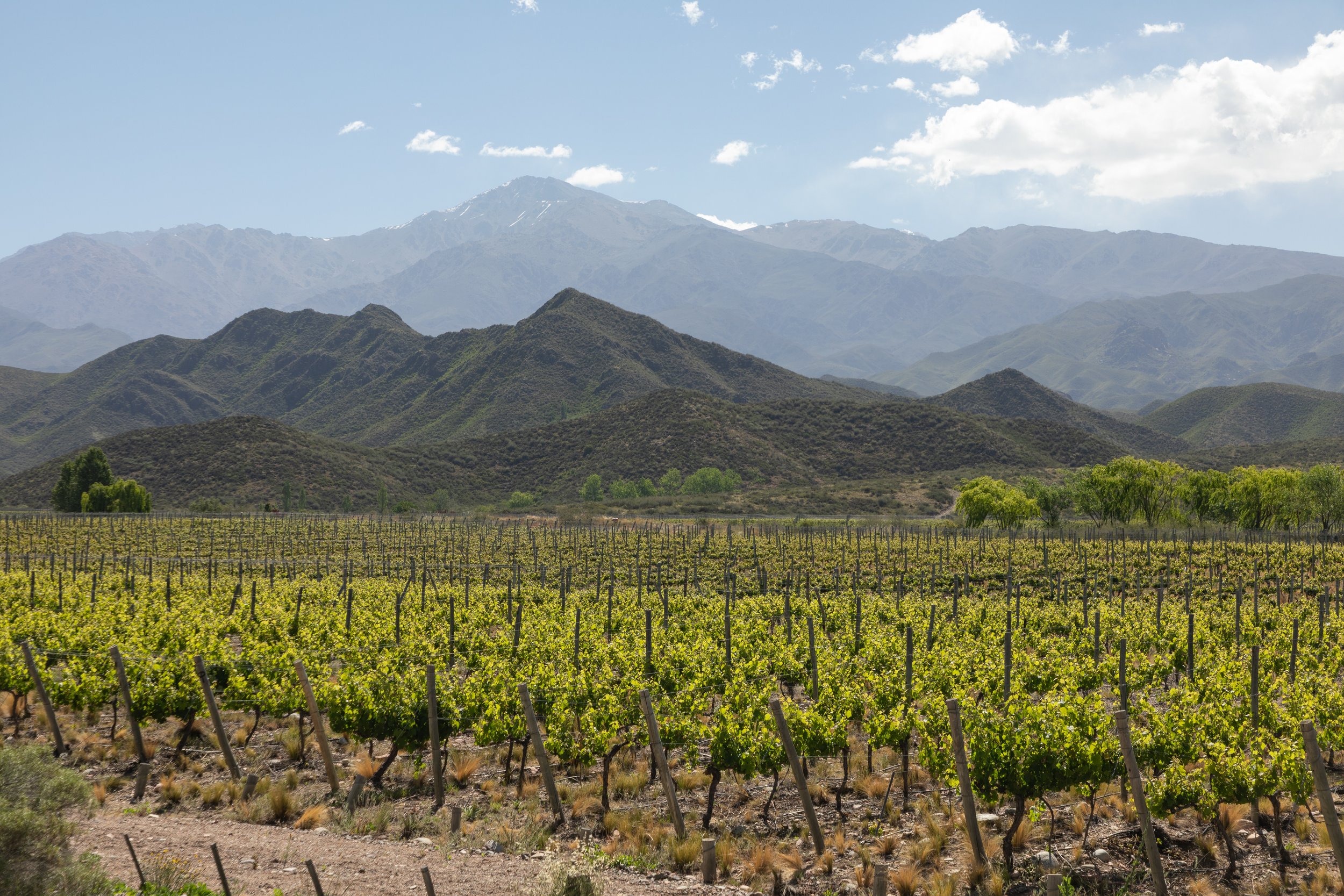
From Bodego Monteviejo, the vineyards run right up to the Andes
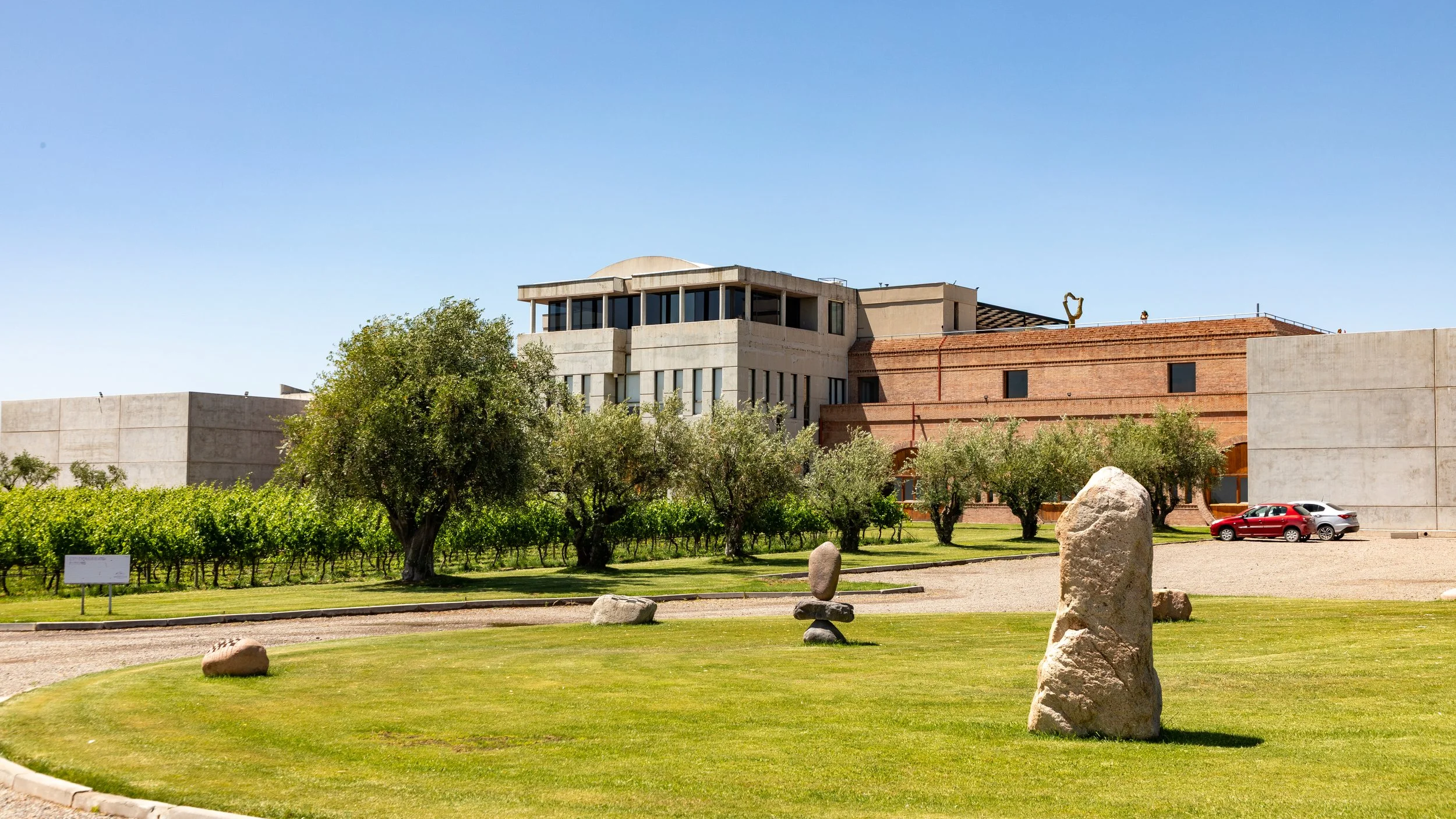
The impressive winery building has the cellars, restaurant, and production and bottling facilities, and was the start of our tour. It ended up being a private tour, as we were the only English speakers at that time.
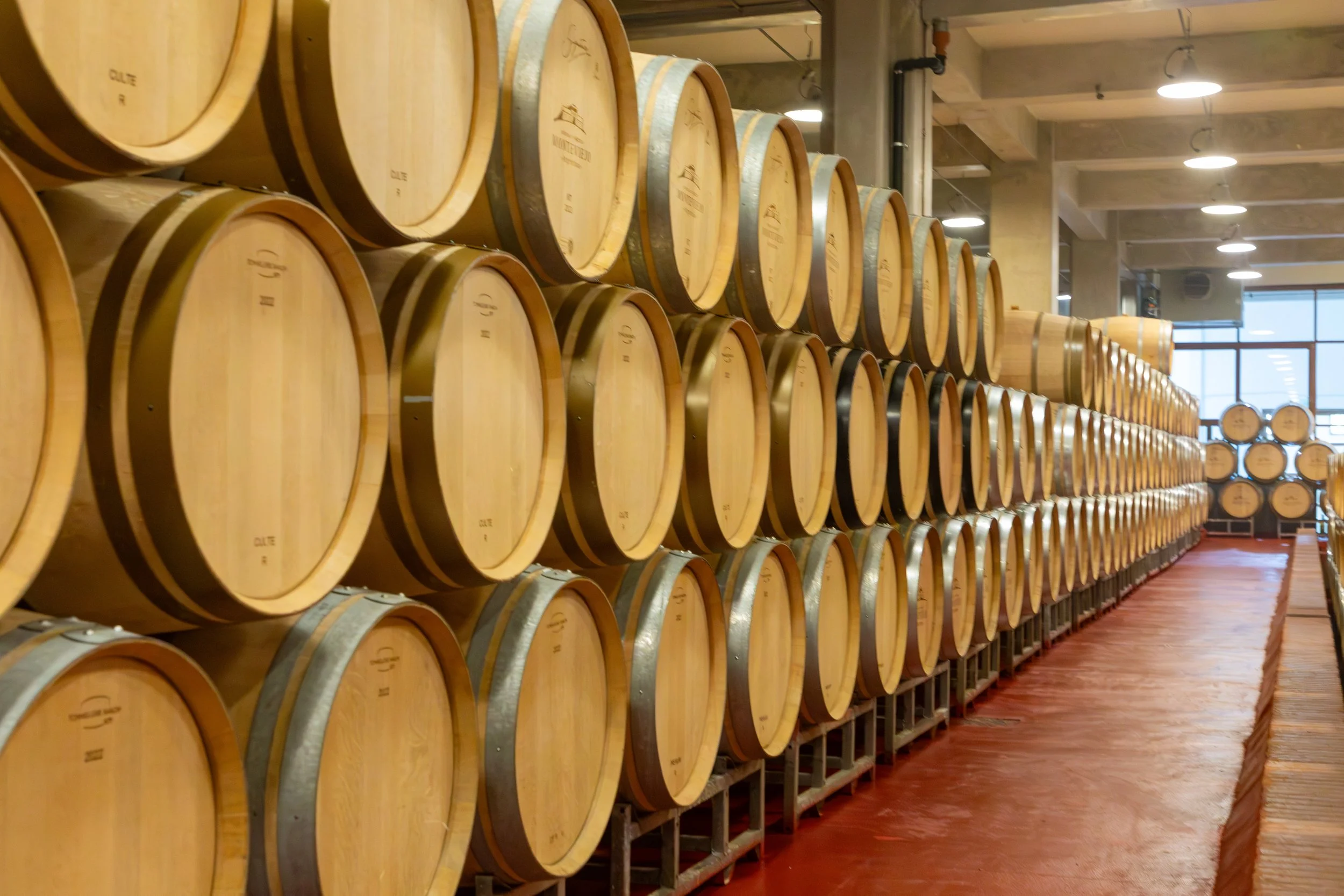
Walking through the barrel aging room, the smell of wine was tremendous
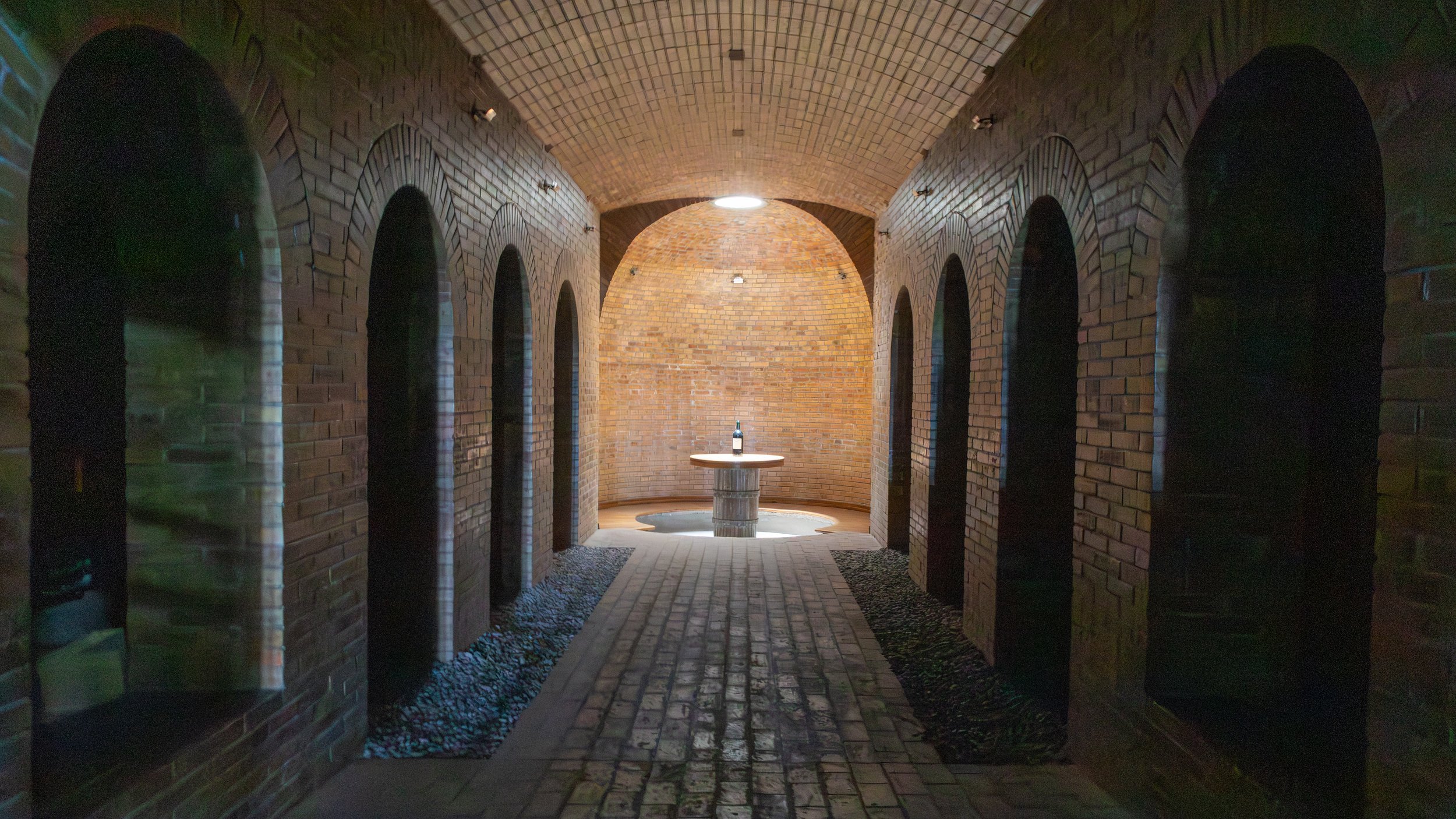
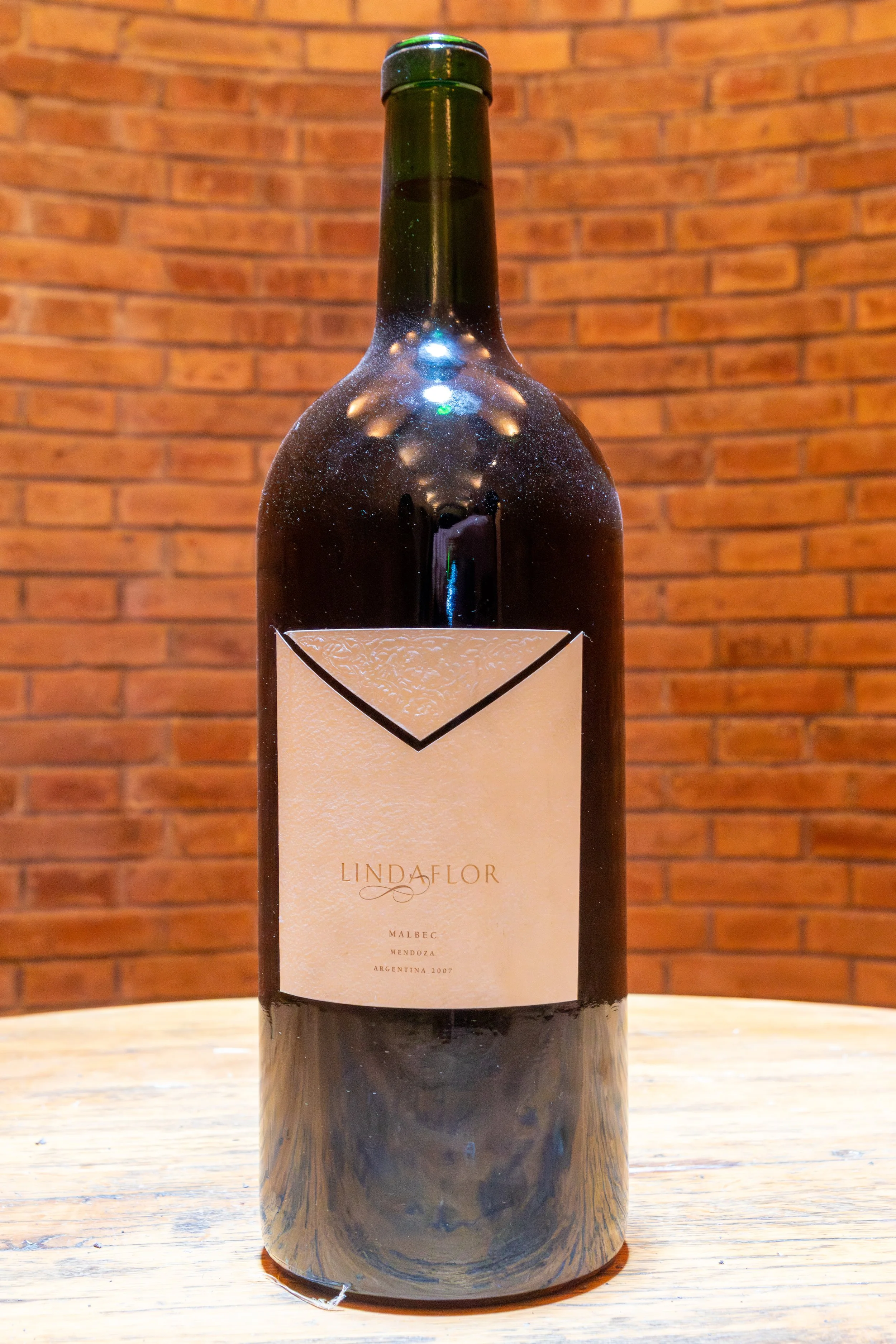
The family cellar was very impressive, with one bottle given a prominent display podium
Lindaflor is the premium brand for Monteviejo
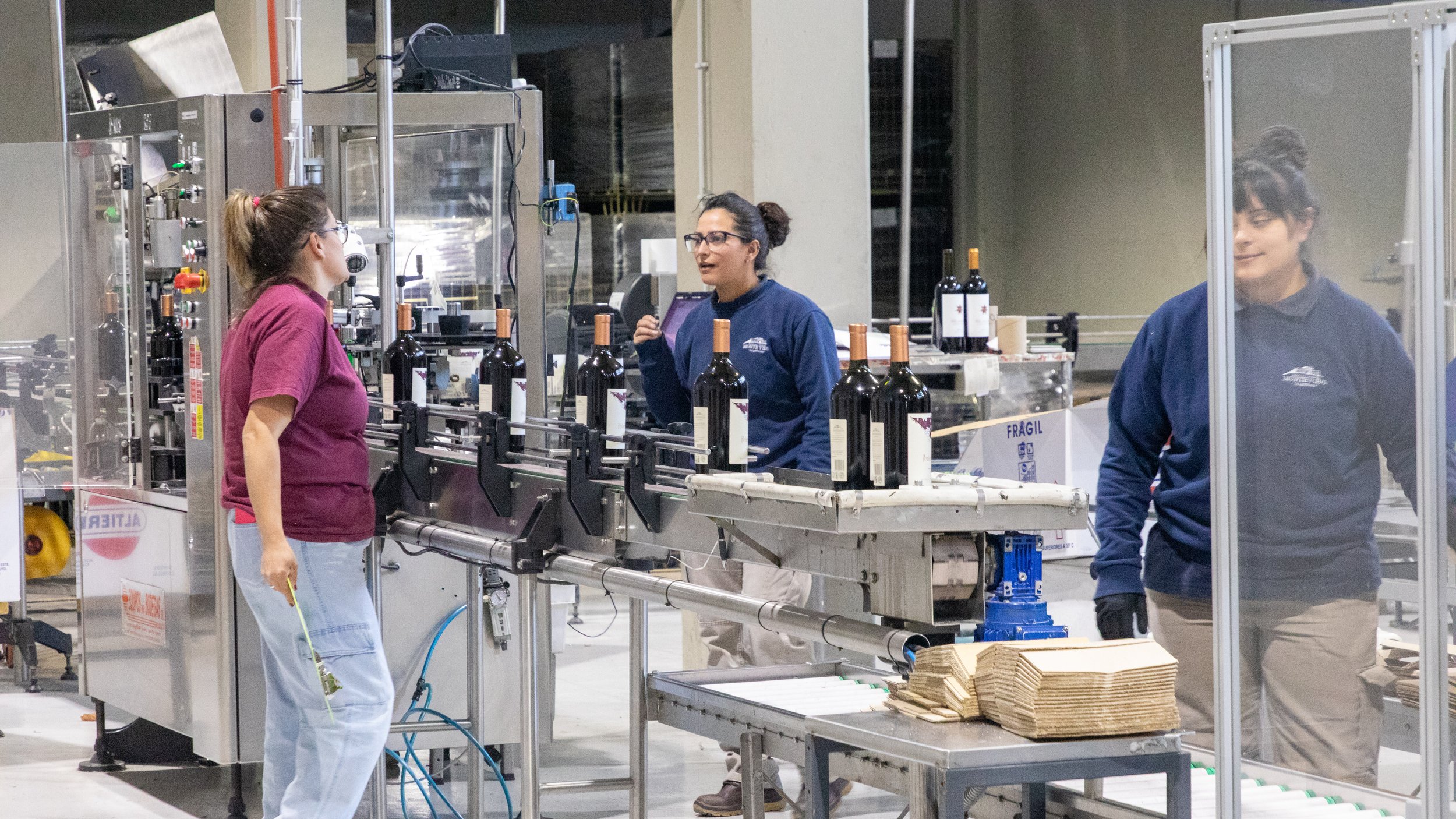
Watching the labeling and packing processes. We learned that the labels are applied only right before packing and shipping, as aging labeled bottles tends to damage the labels.
Another winery in the same region
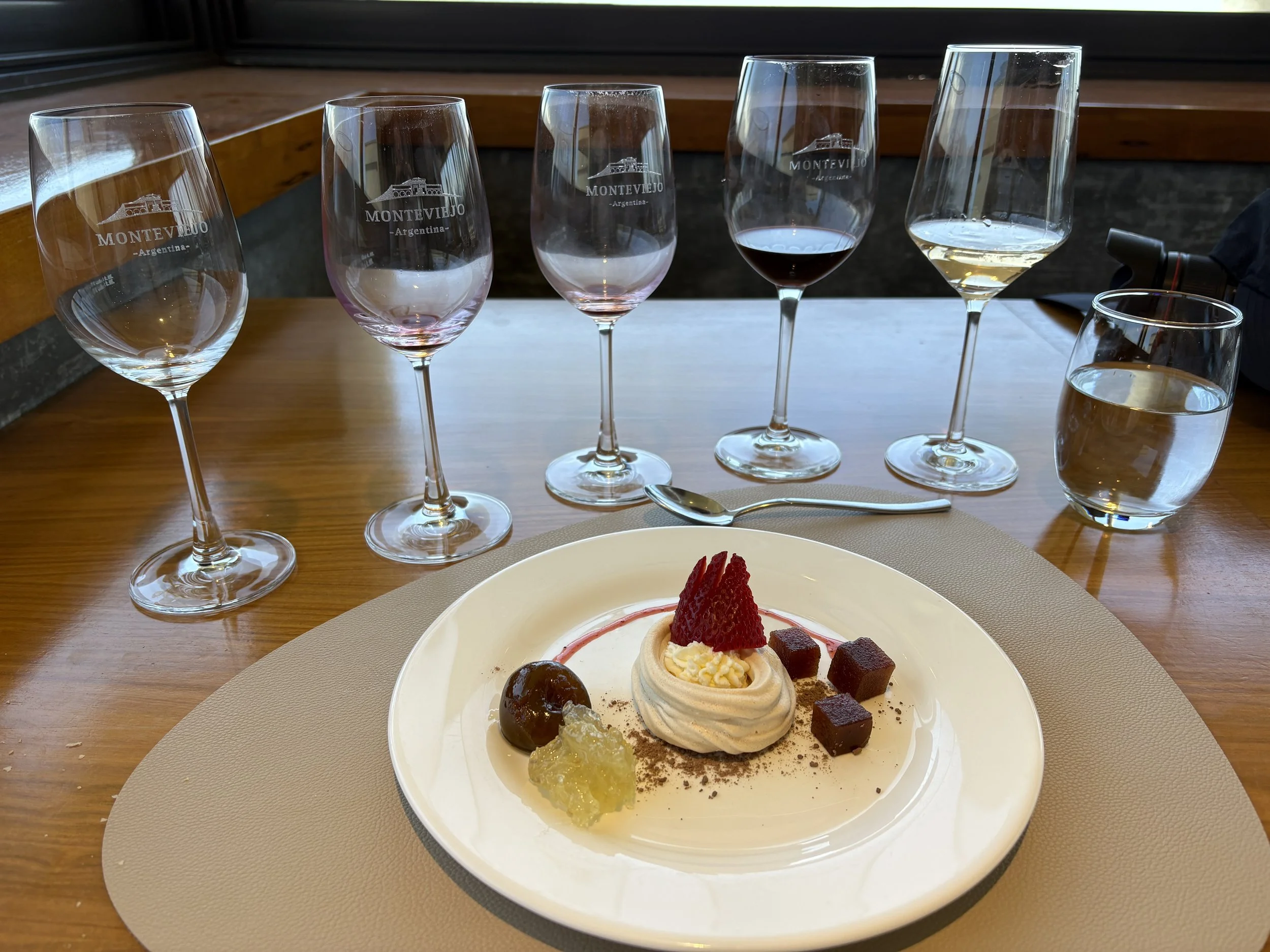
Having made it to our fifth course, we were tasting our fifth wines. As Tom had to drive, I finished about half of his wine in addition to mine.
After our wine pairing lunch, we explored the rooftop patio
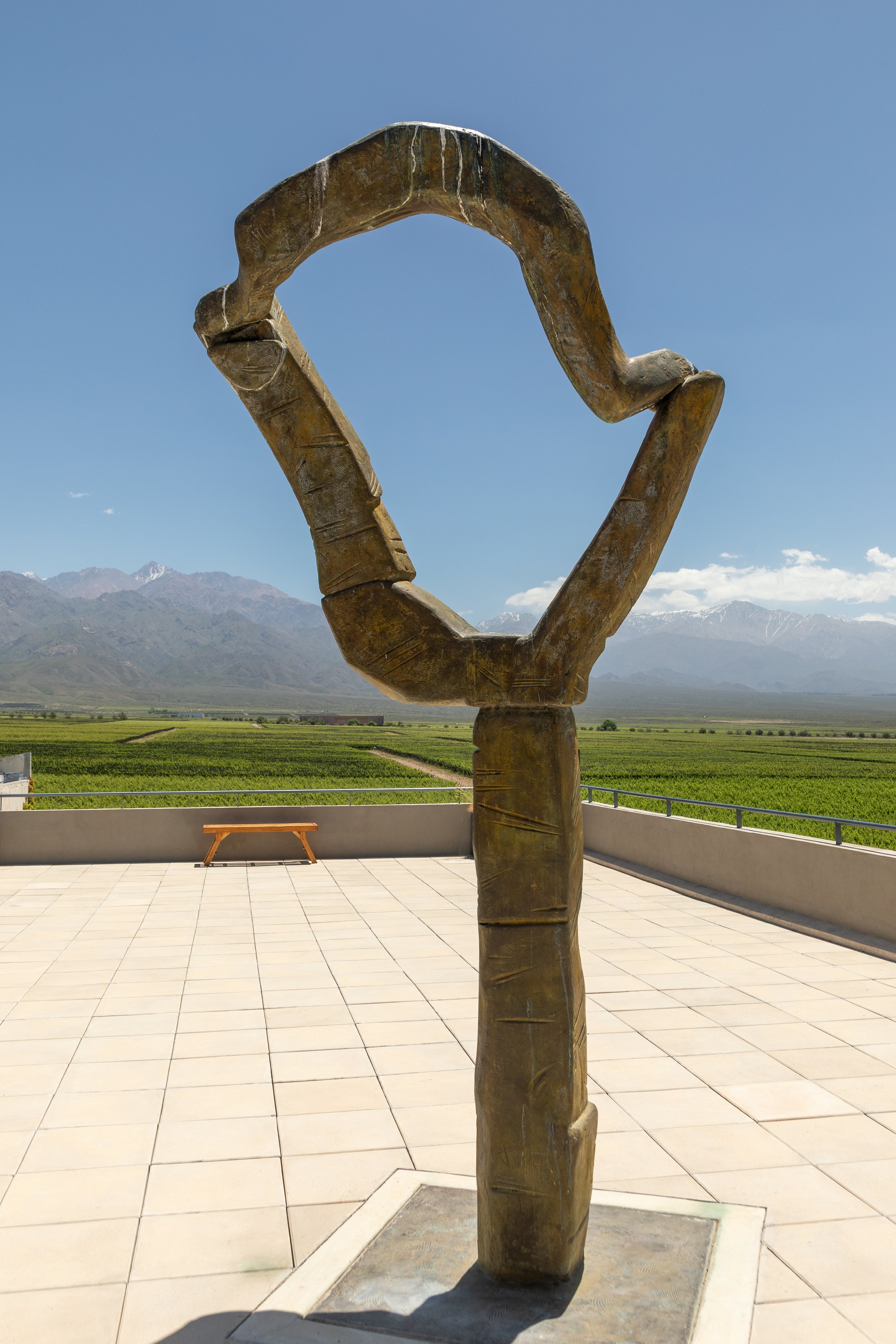
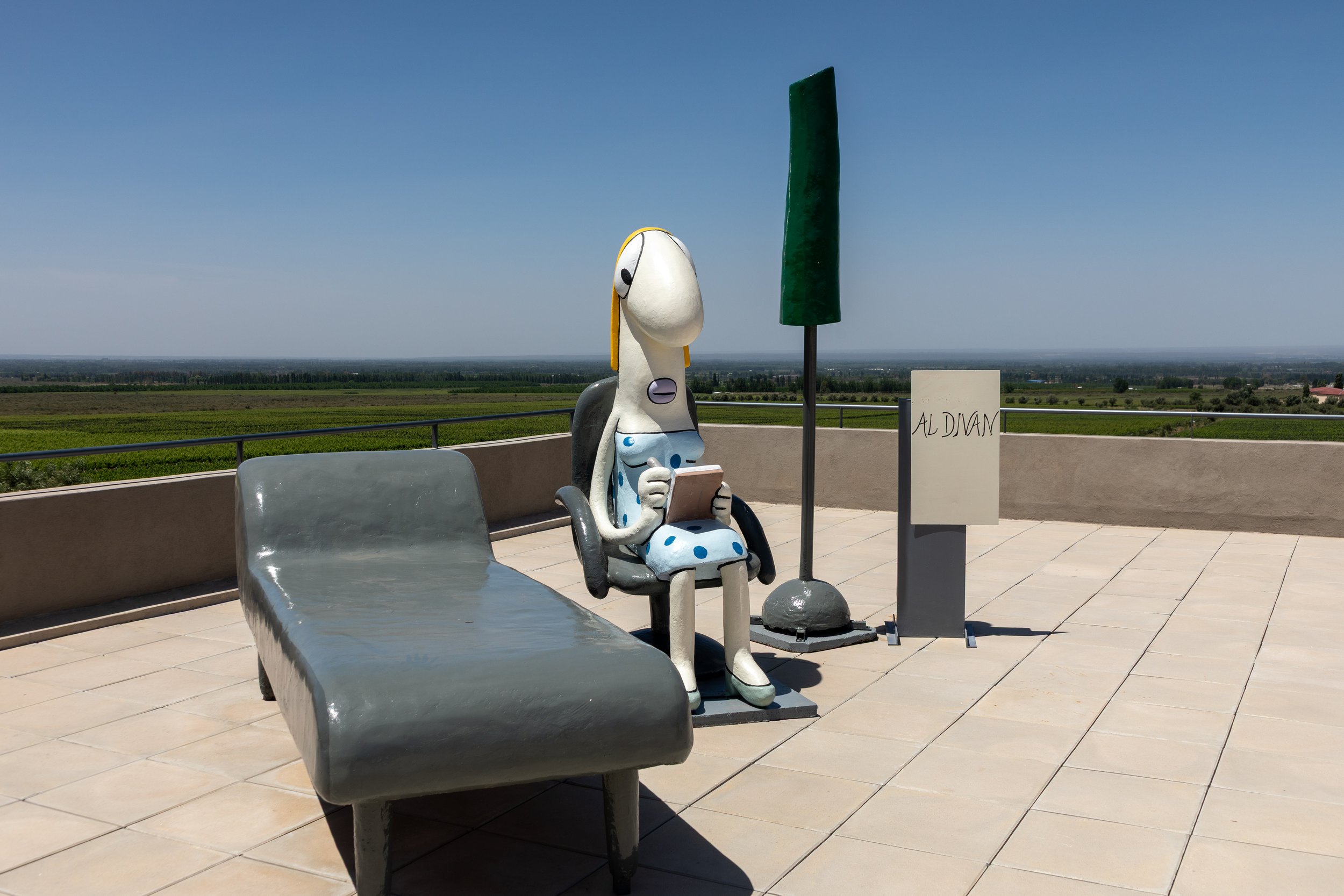
Sculpture by the artist Tom Claassen, part of the art collection at the Bodega
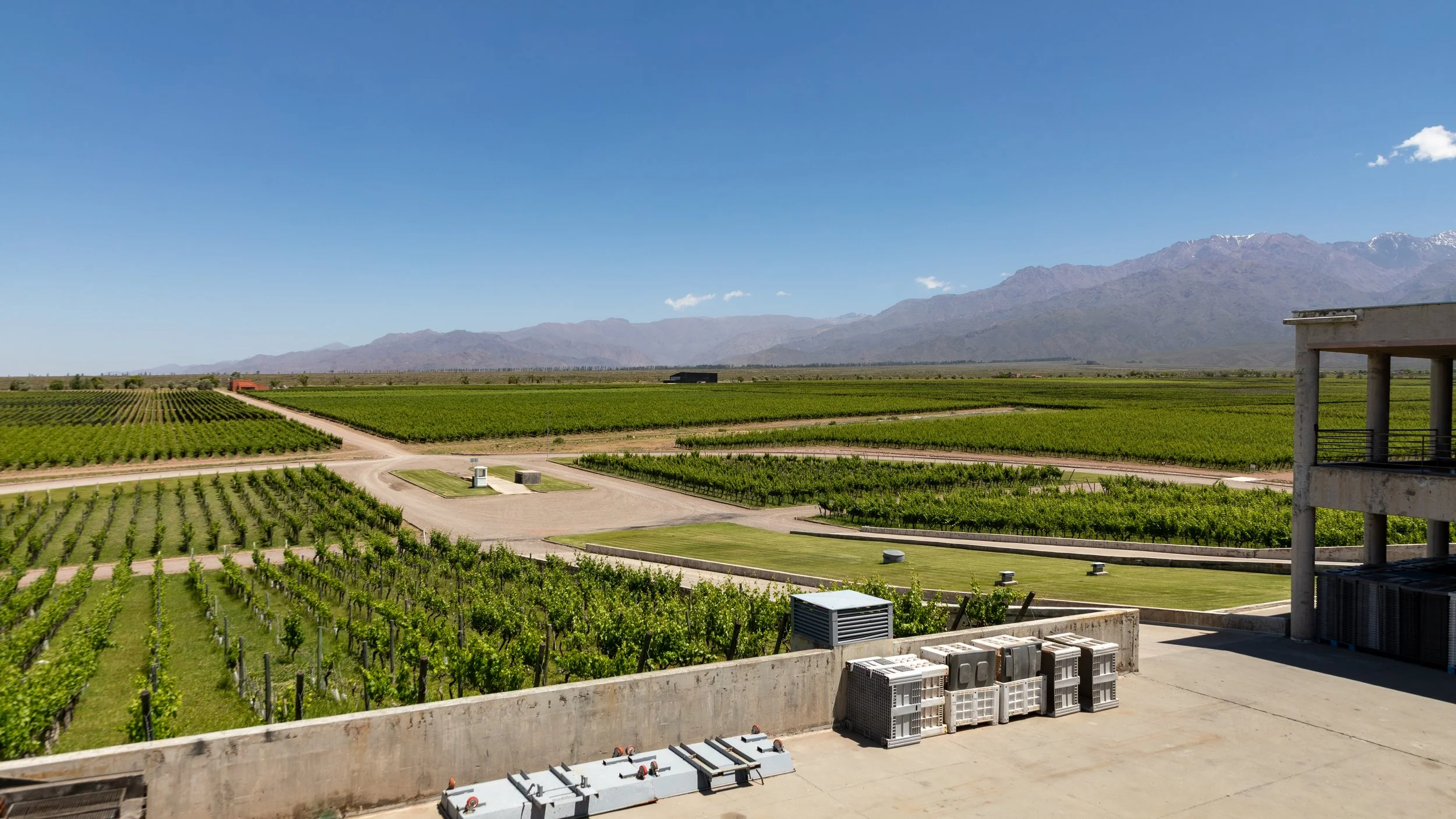
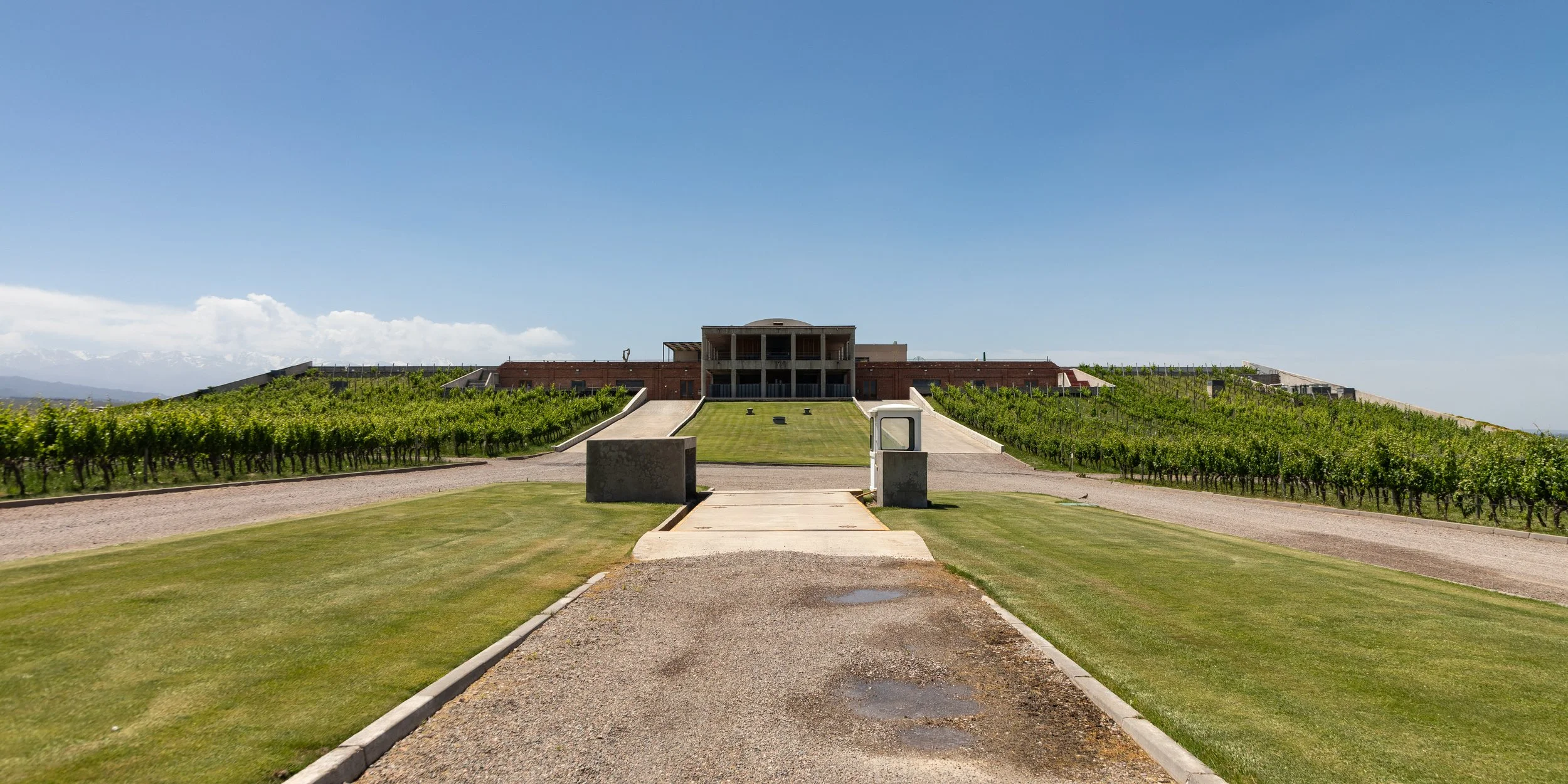
Surveying the grounds and ramp terrace that leads into main building. The grape vines on the ramp are just landscaping, and are not used for wine, as they’re planted in what is essentially a large green roof.
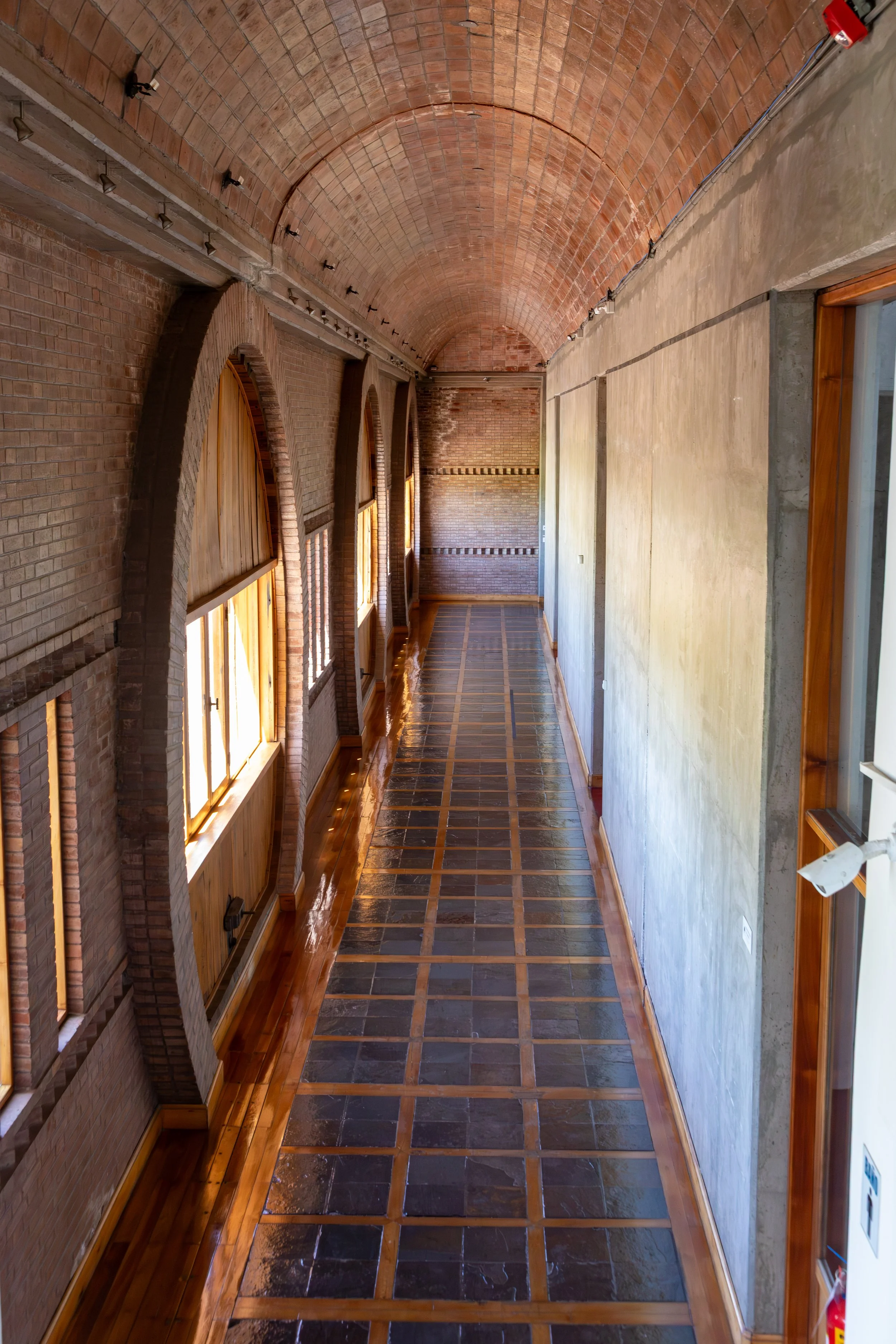
The very high ceilings provide an element of grandeur to the building
More outside sculptures at the Bodego
Looking back at the winery you can see the vines planted on the sloped roof
Taking the scenic route back to Mendoza, we stopped at the Manzano Historic Reserve
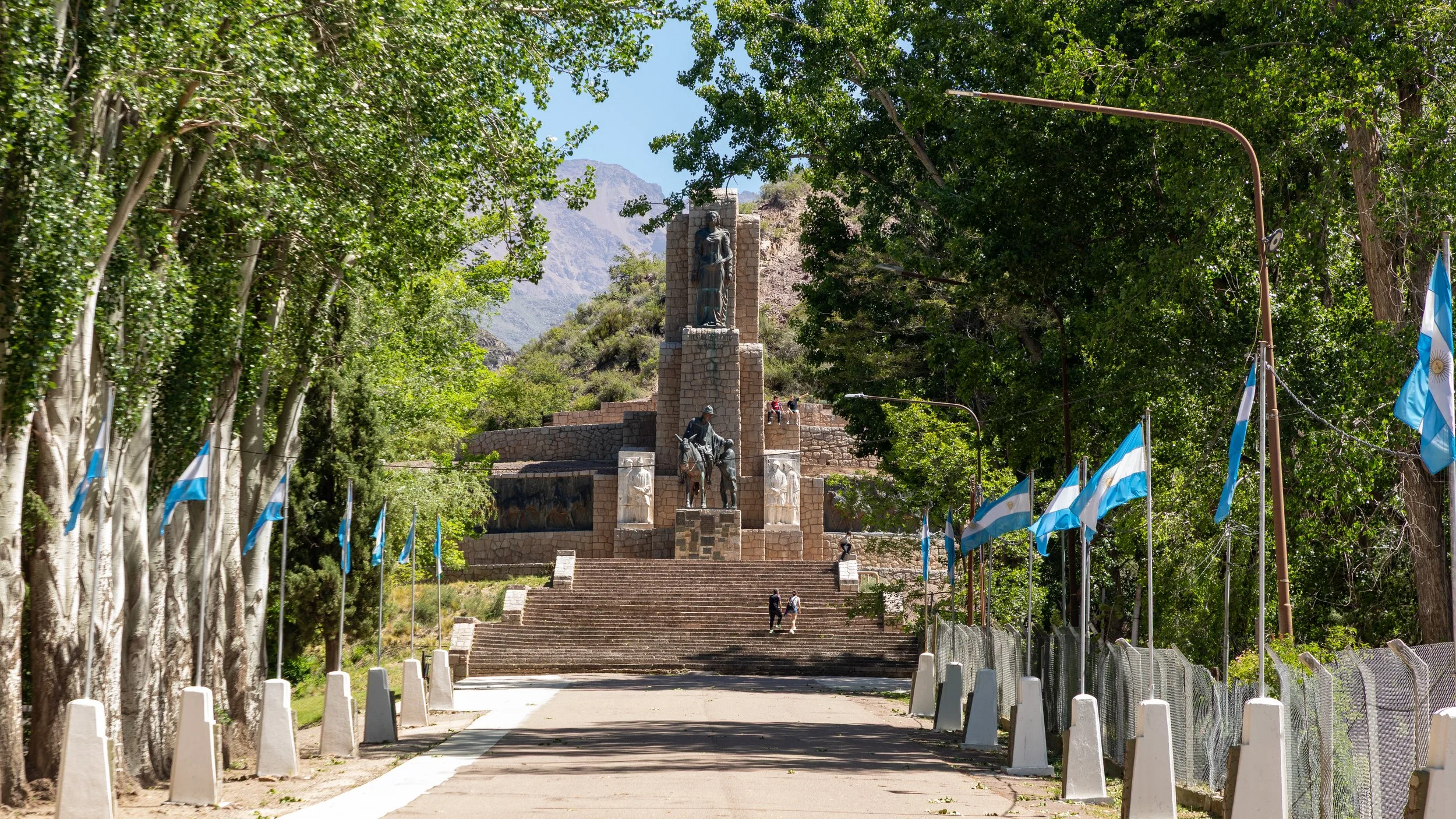
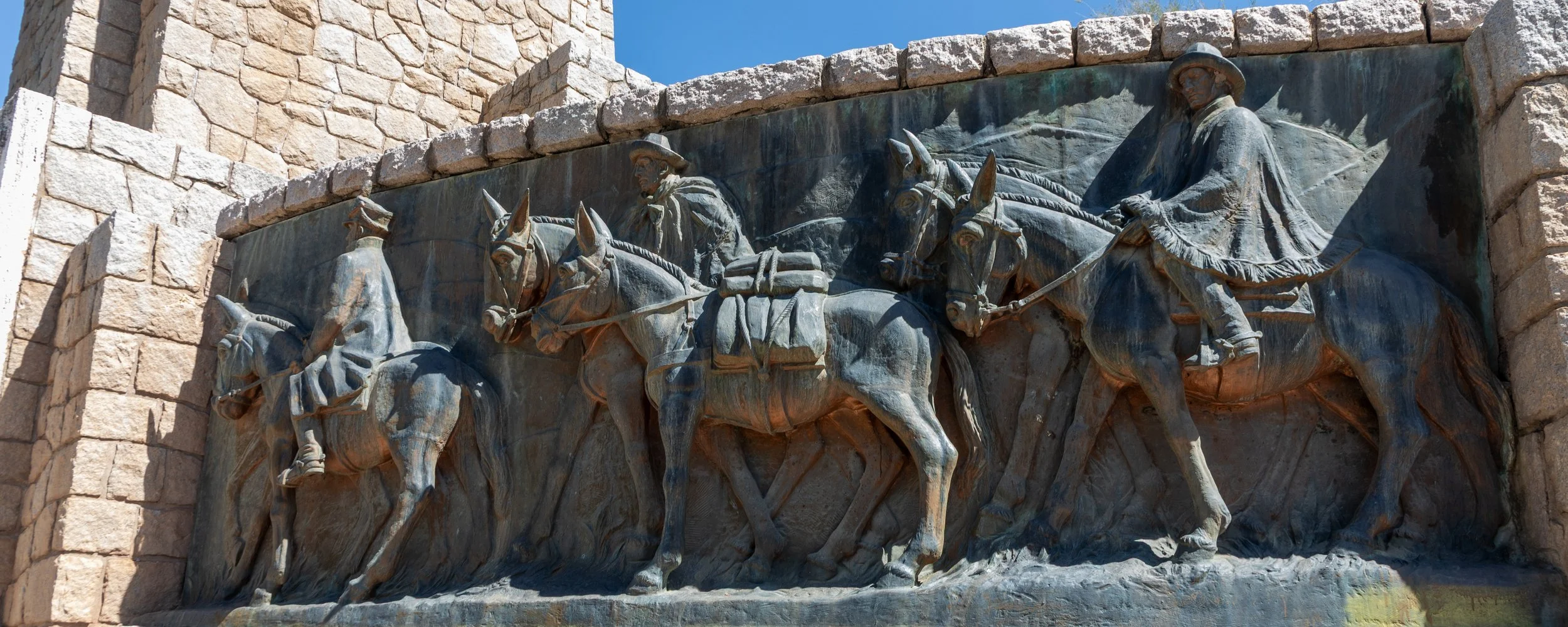
El Manzano Histórico commemorates General José de San Martín's return to his homeland after his victorious military campaigns for South American independence
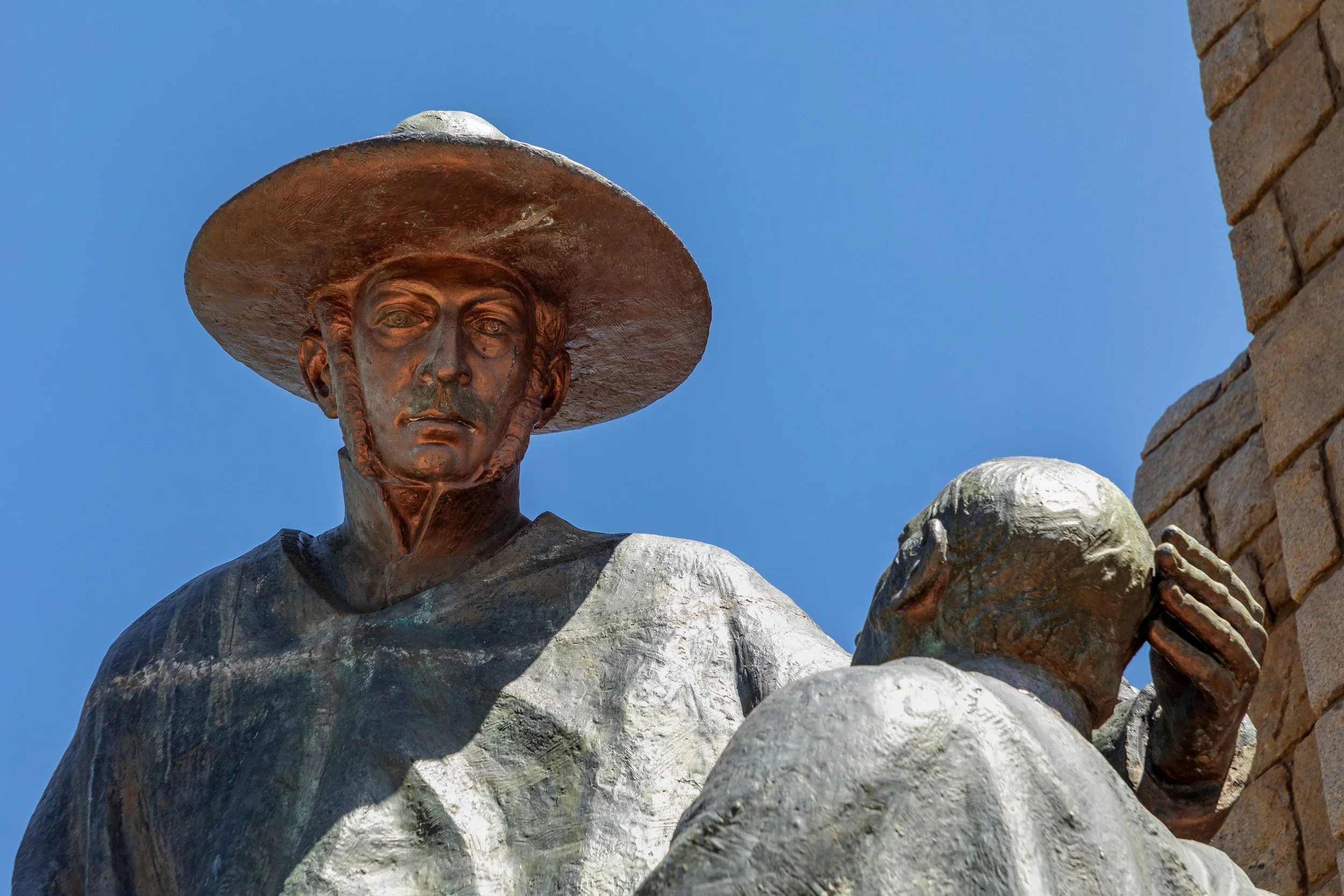
More elements of the monument depicting the return
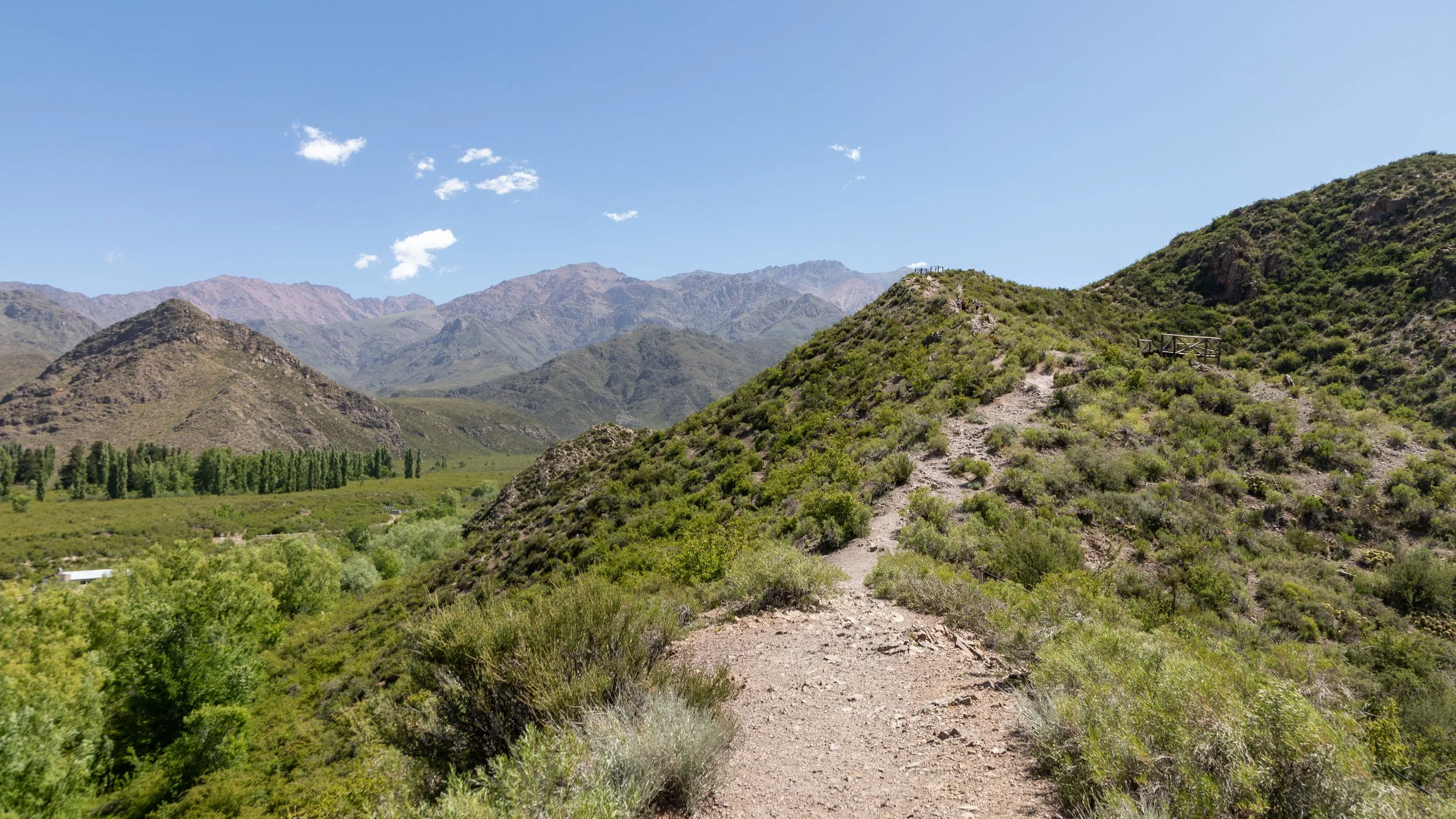
Taking a short hike up the hillside
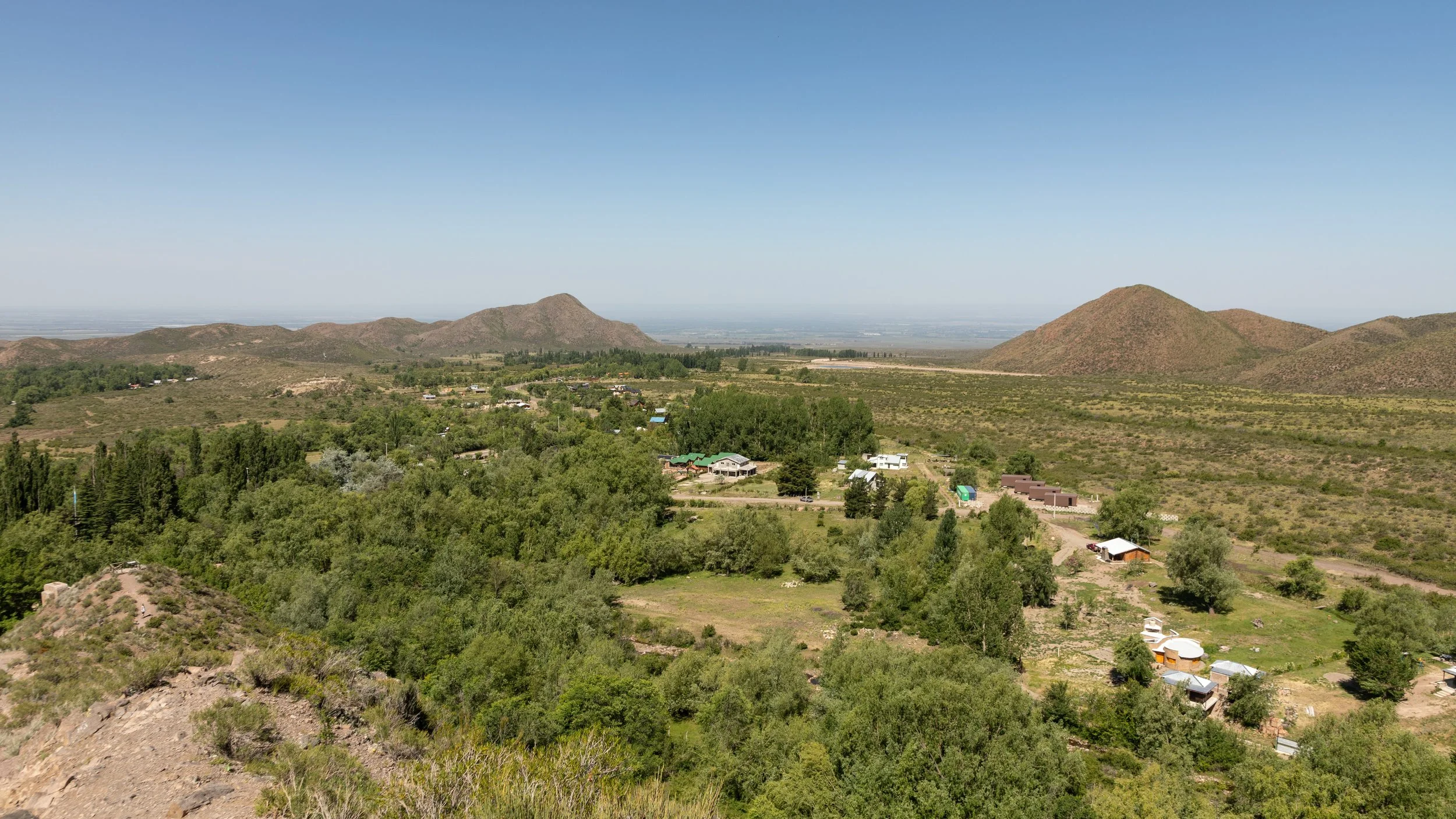
Smaller hills line the valley
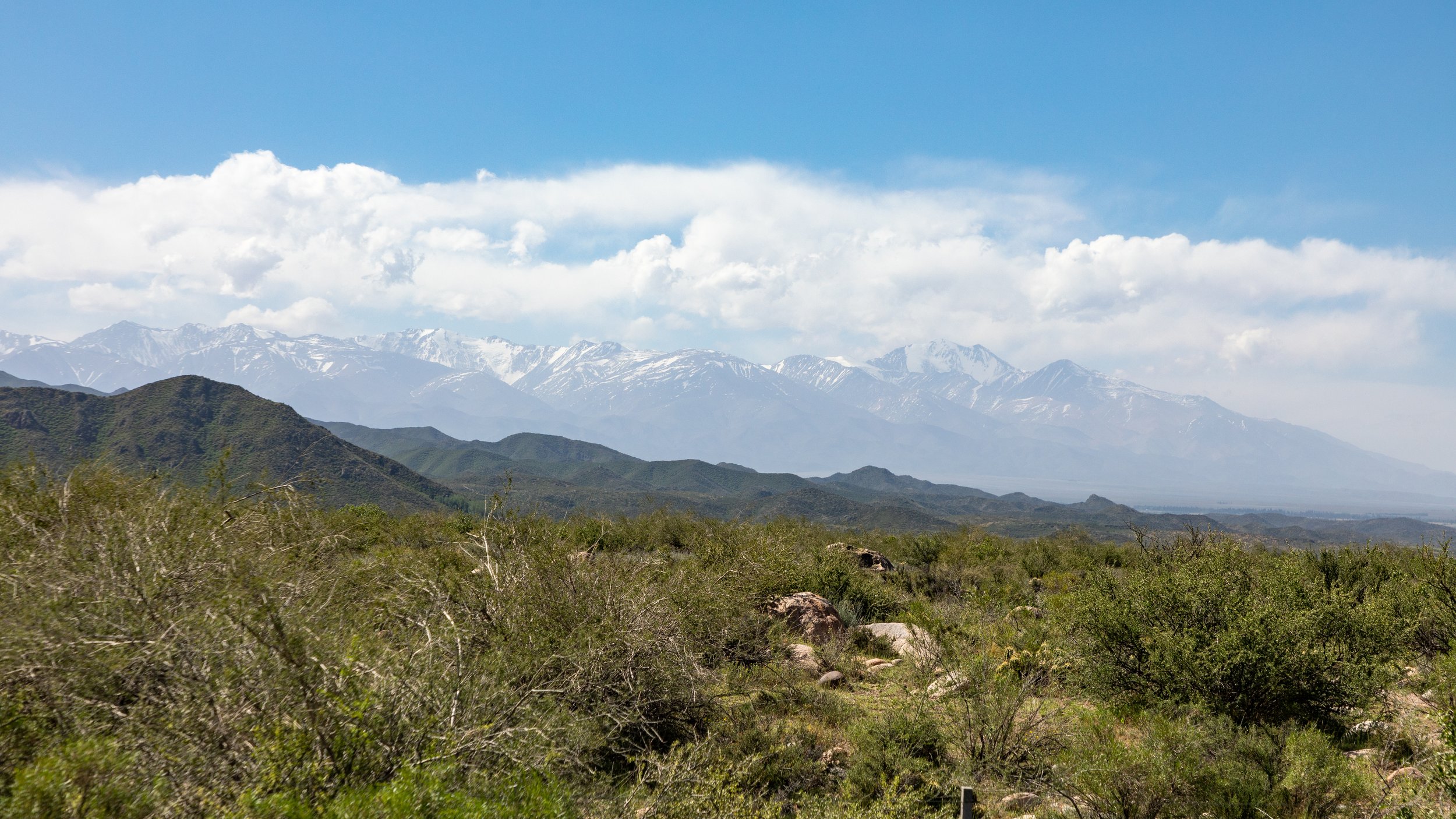
Continuing our journey south to Mendoza, the Andes tower in the distance
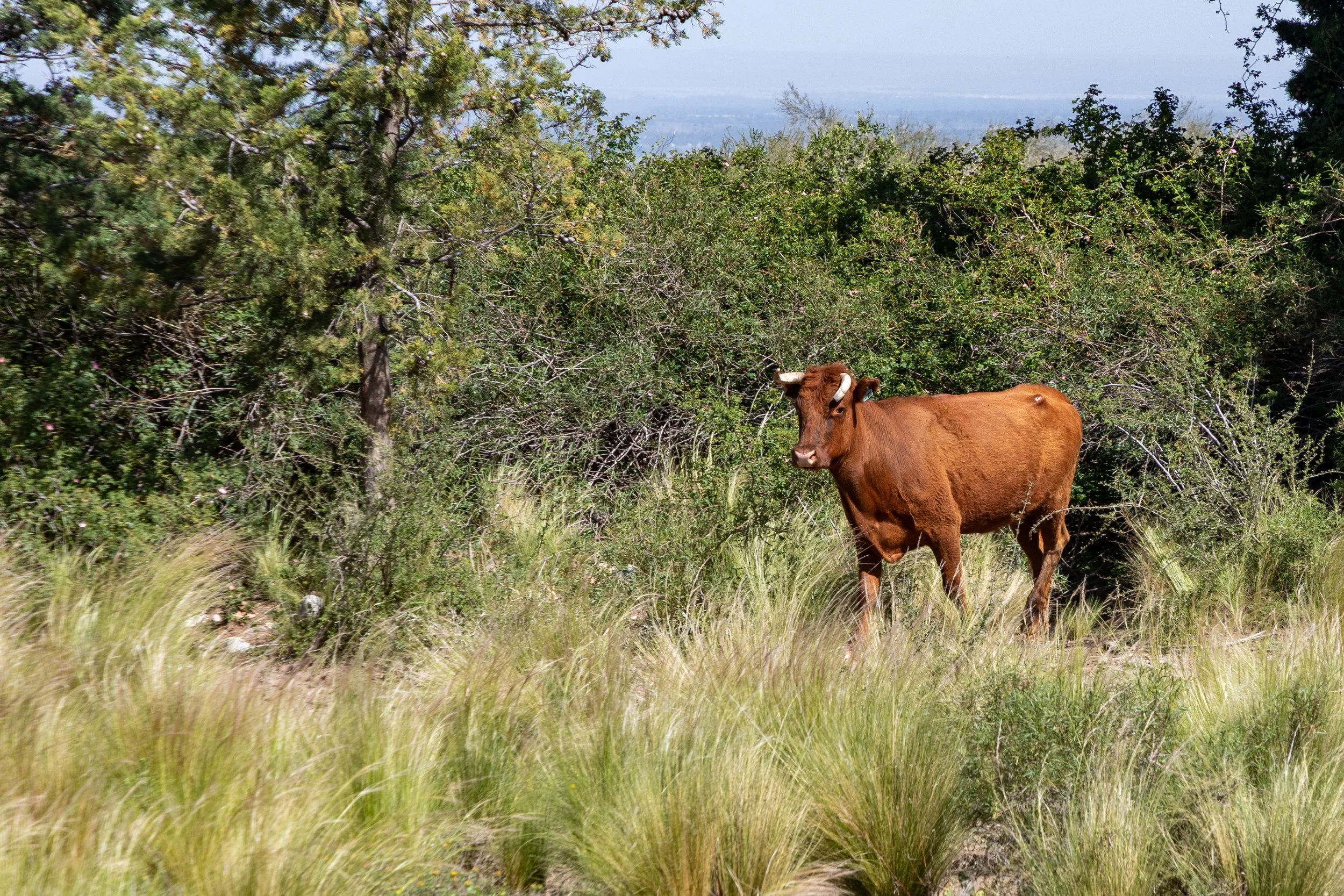
Cattle roaming the roadside brush
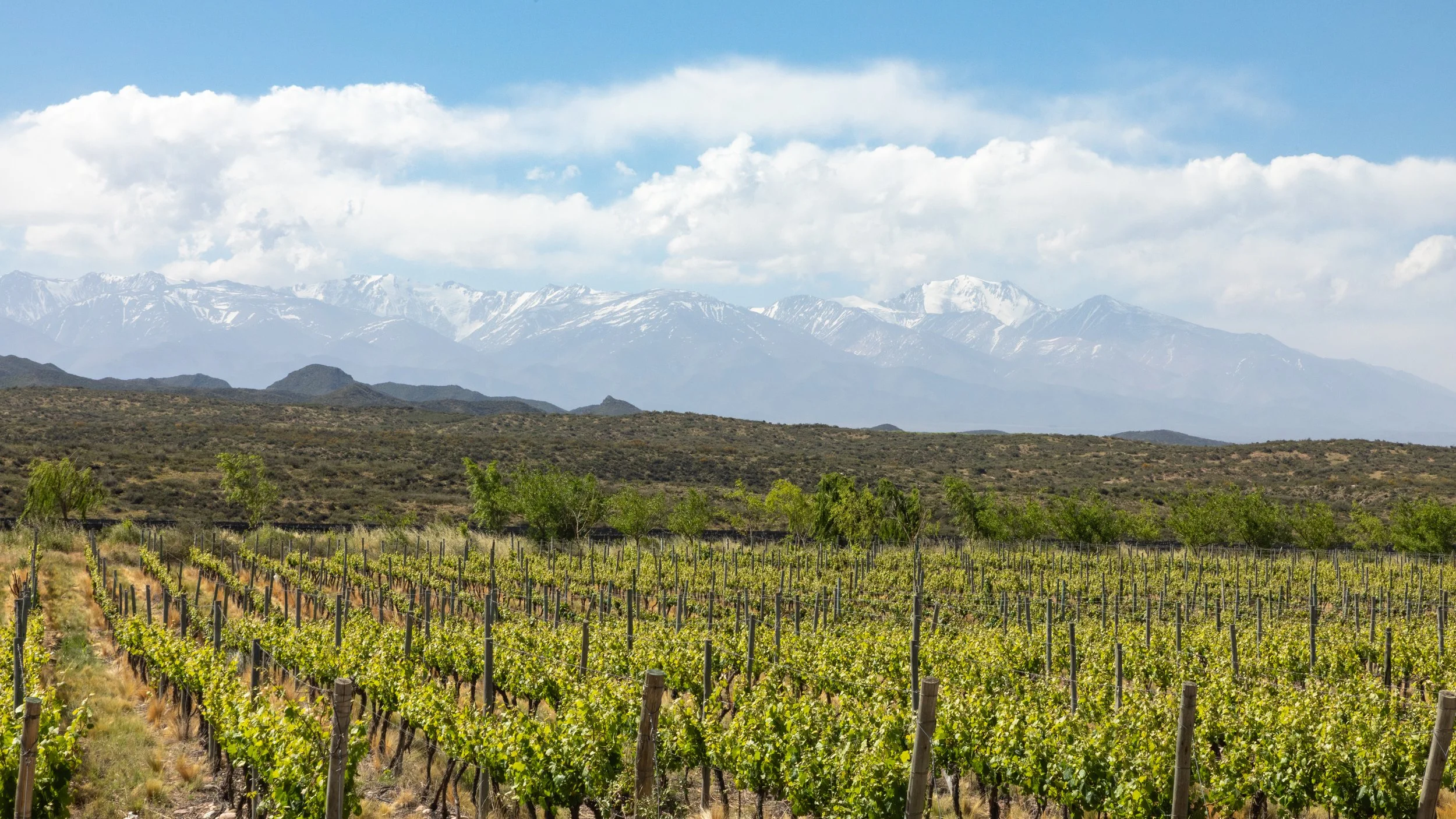
More vineyards along the way with snow capped mountains
Andes with fewer snow caps
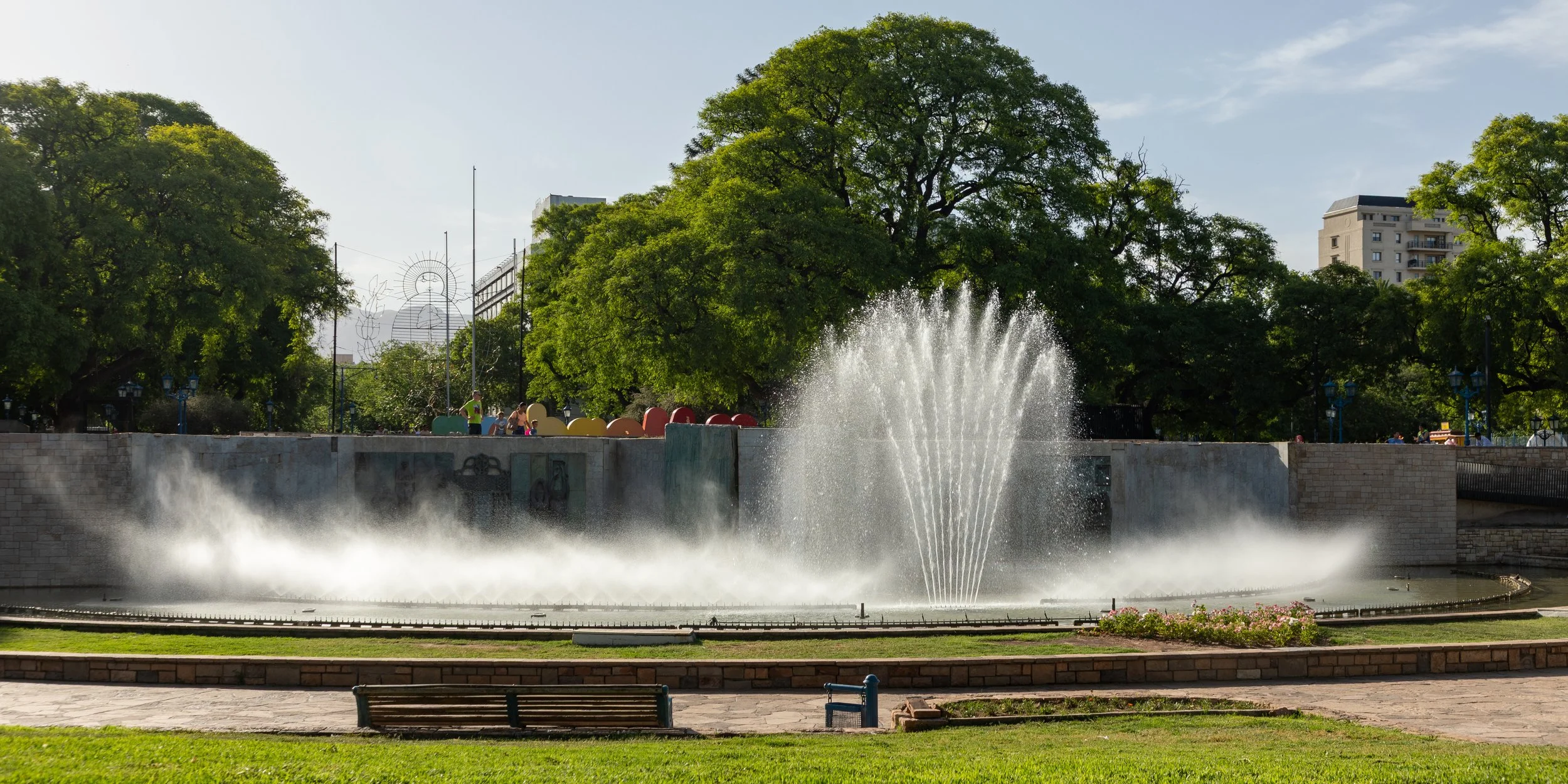
Back in Mendoza, we were able to capture the fountain in Independence Plaza
On our previous visit, the fountain wasn’t running; happy to see it in full force
With our second winery complete, and more of the region under our belts, we rested in our hotel before heading out for dinner near the hotel.
Nov 22
For our third day and third winery, we visited the closer Luján de Cuyo region, but had an earlier start with our tour at 9:30am. After breakfast, we made our way to Alta Vista winery.
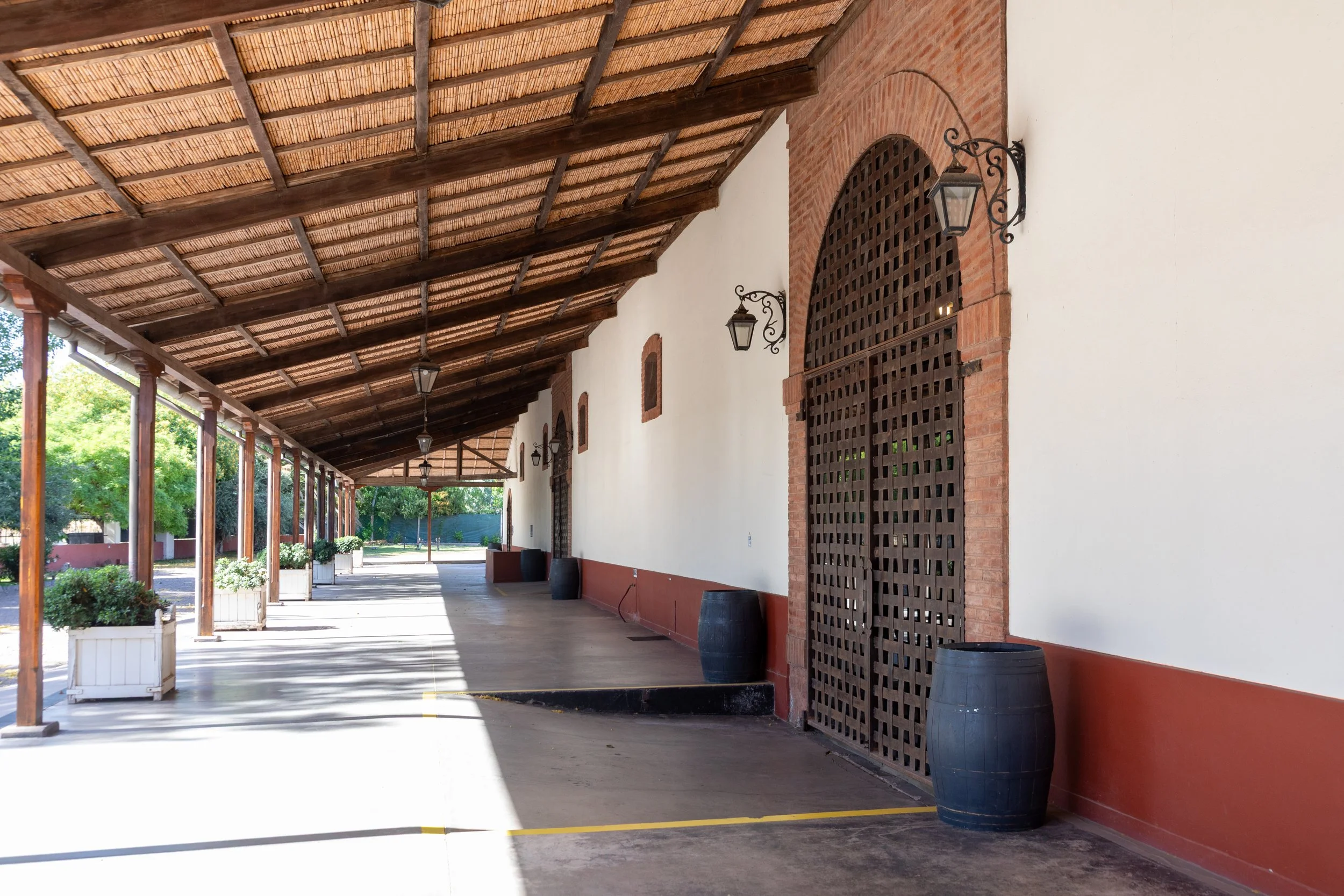
Alta Vista is located in a meticulously restored 1890 winery
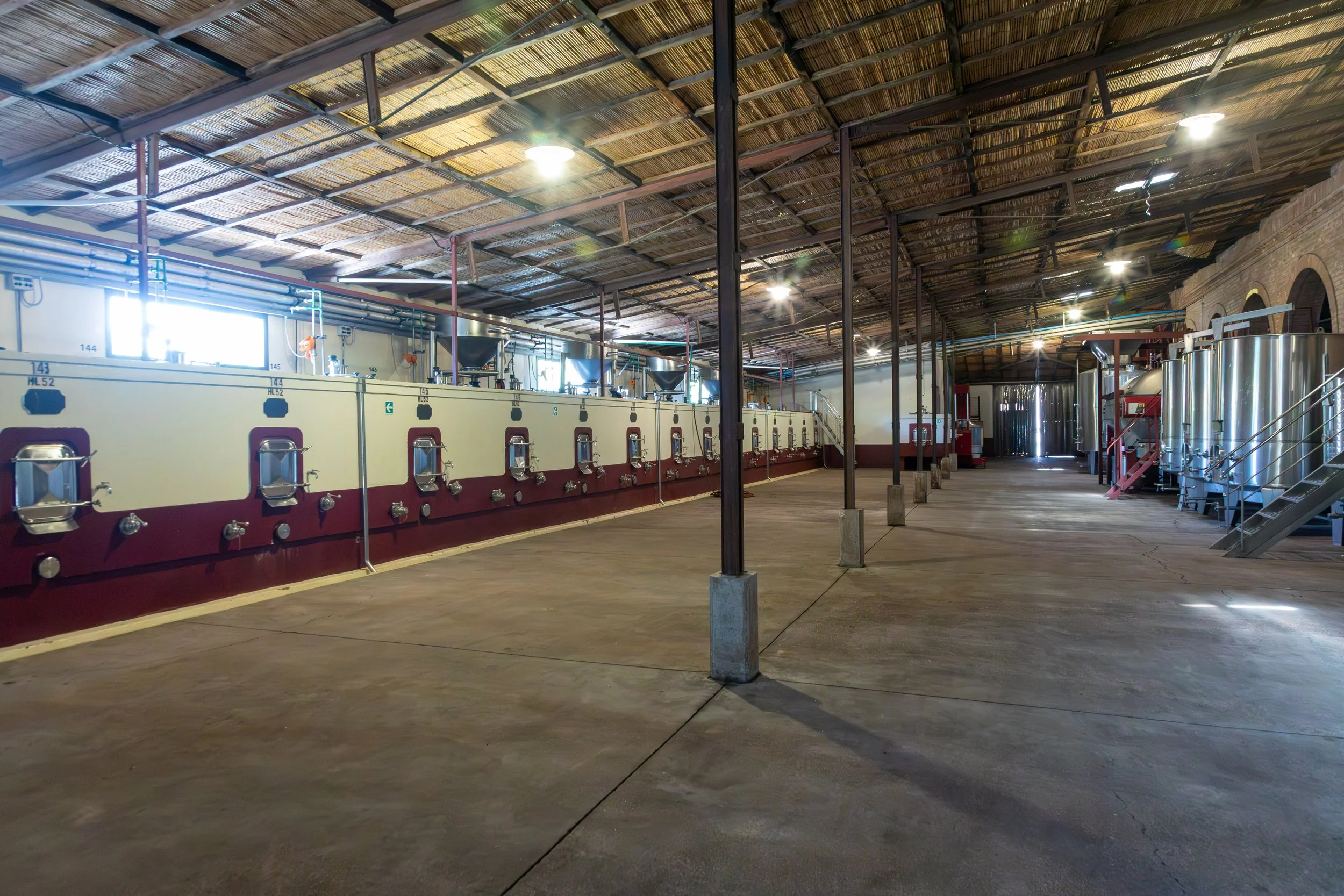
Historic metal tanks line the winery walls, with its high ceilings and natural ventilation keeping temperatures comfortable
Concrete tank
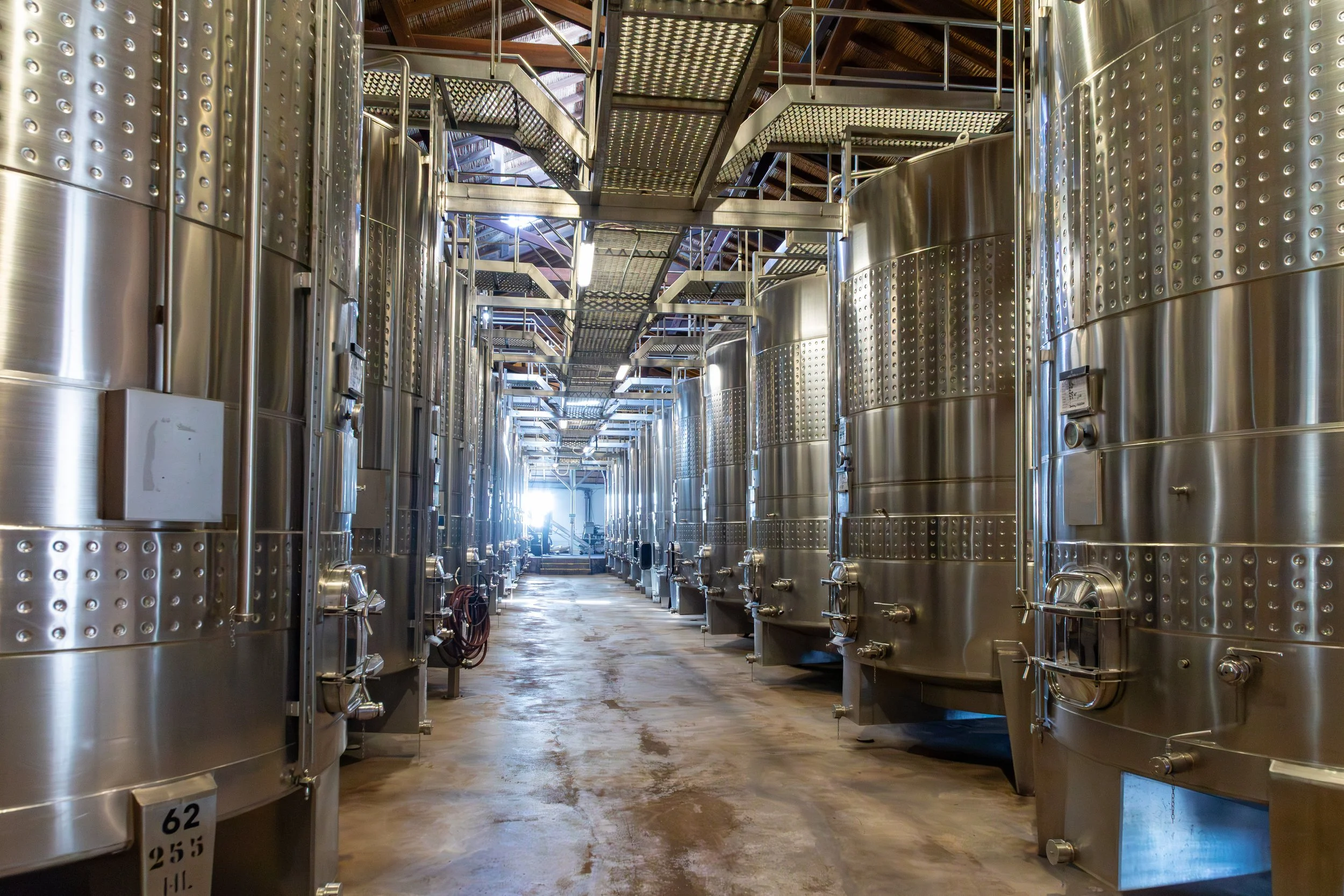
Steel tanks are a more modern addition to the winery
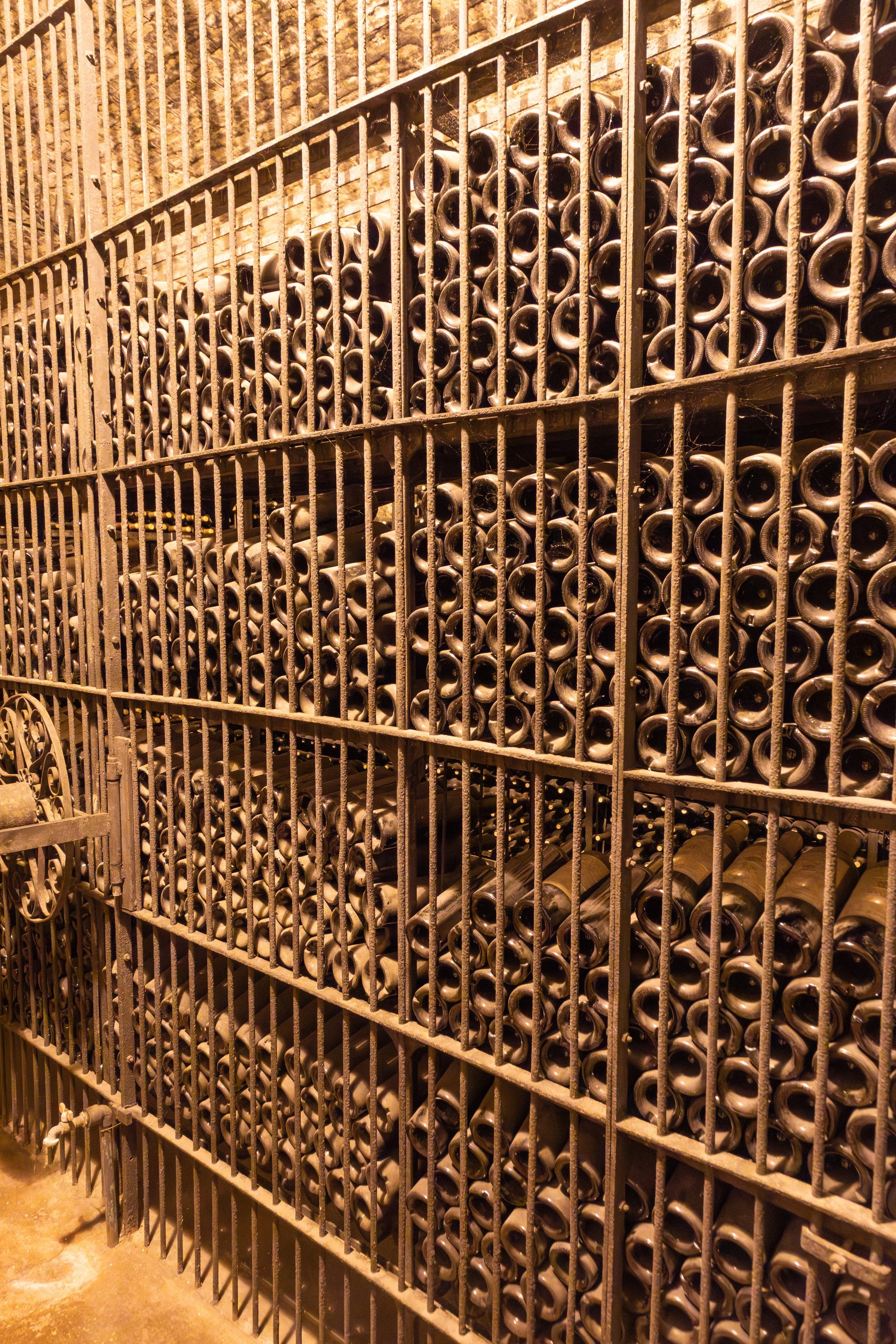
The extensive family cellar has a large collection of the various vintages
More of the large collection
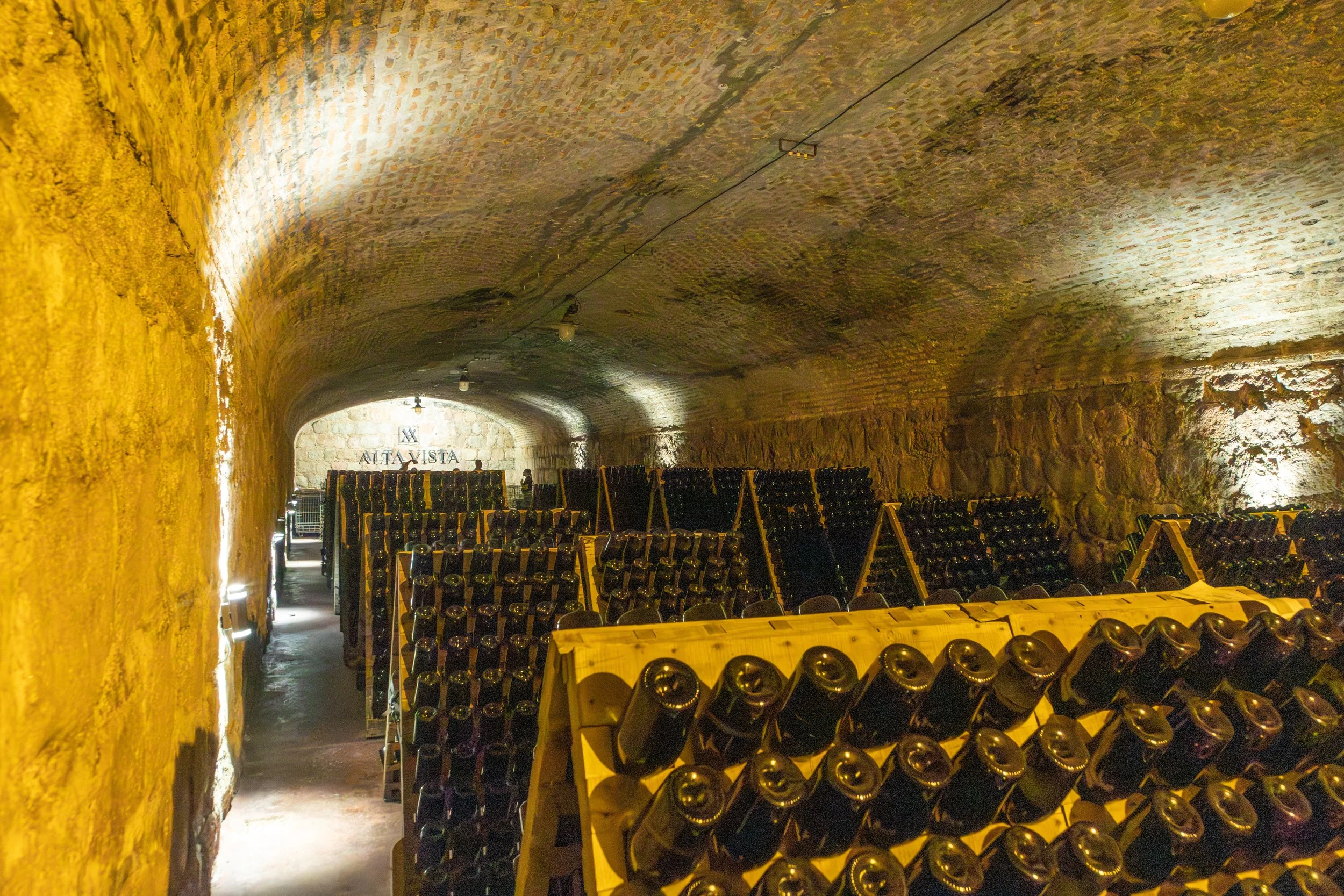
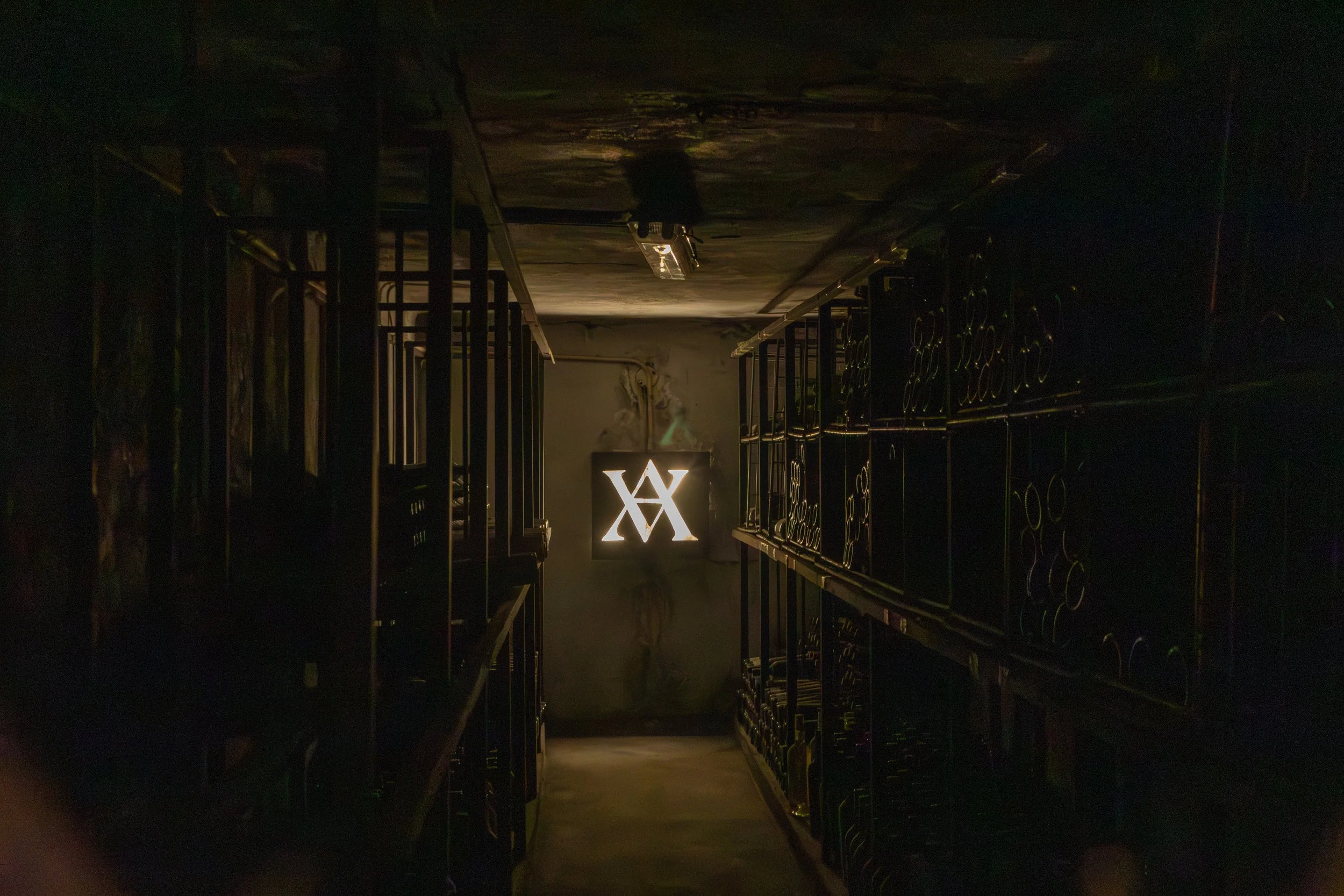
Altavista logo on the walls of the cellar
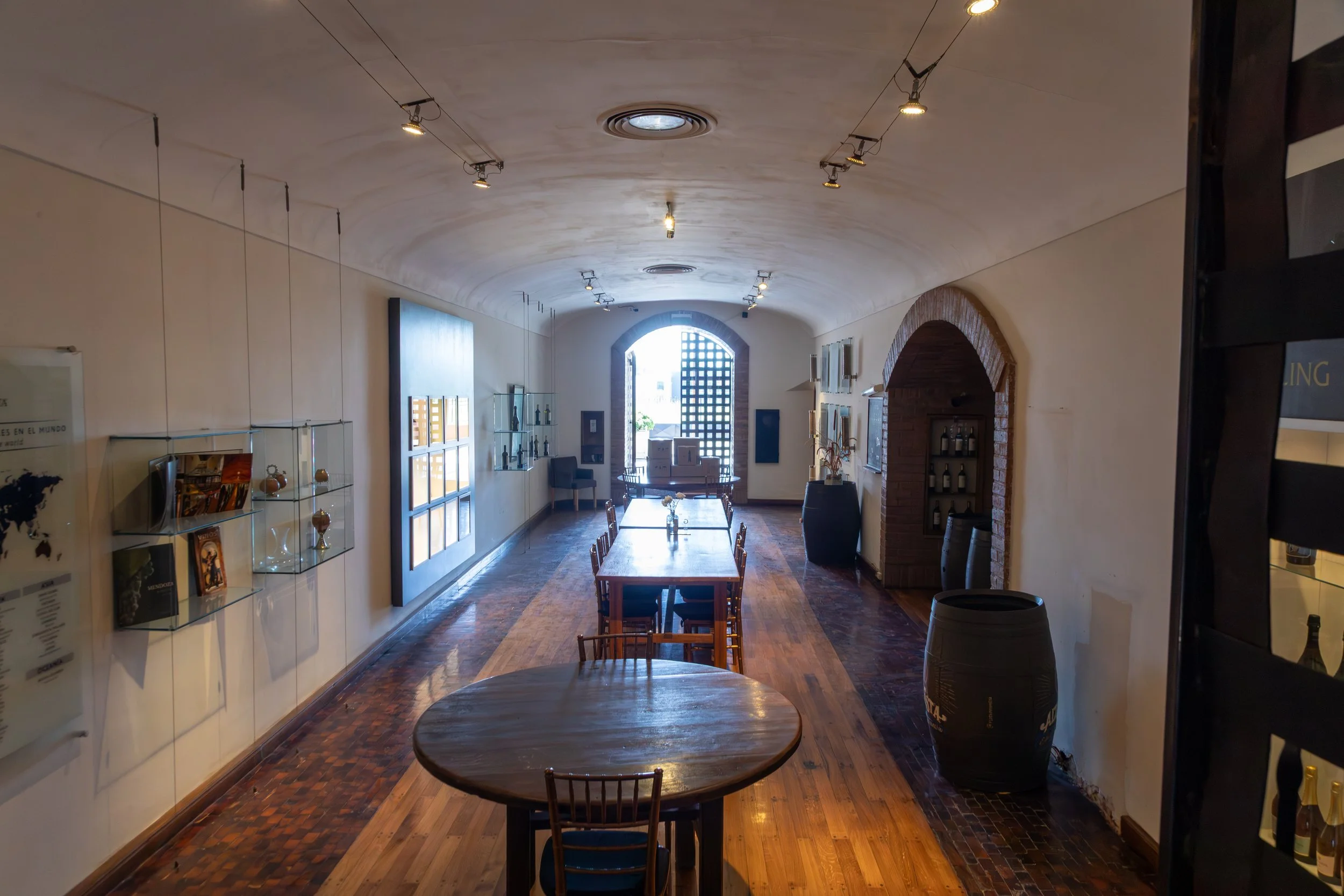
One of the larger tasting rooms
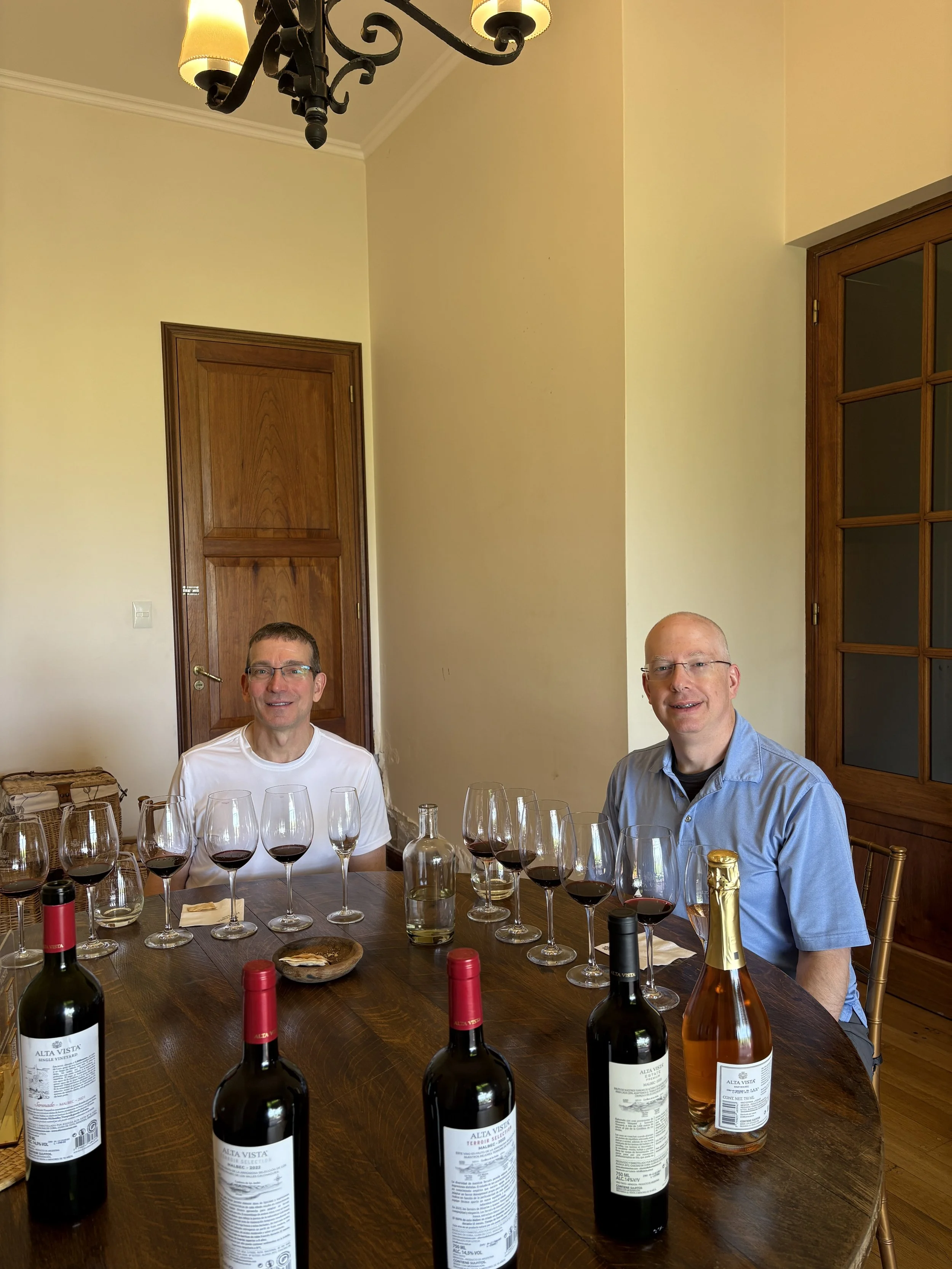
Alta Vista had an option for a tasting exclusively made up of Malbec, which allowed us to compare the differences of terroir and style
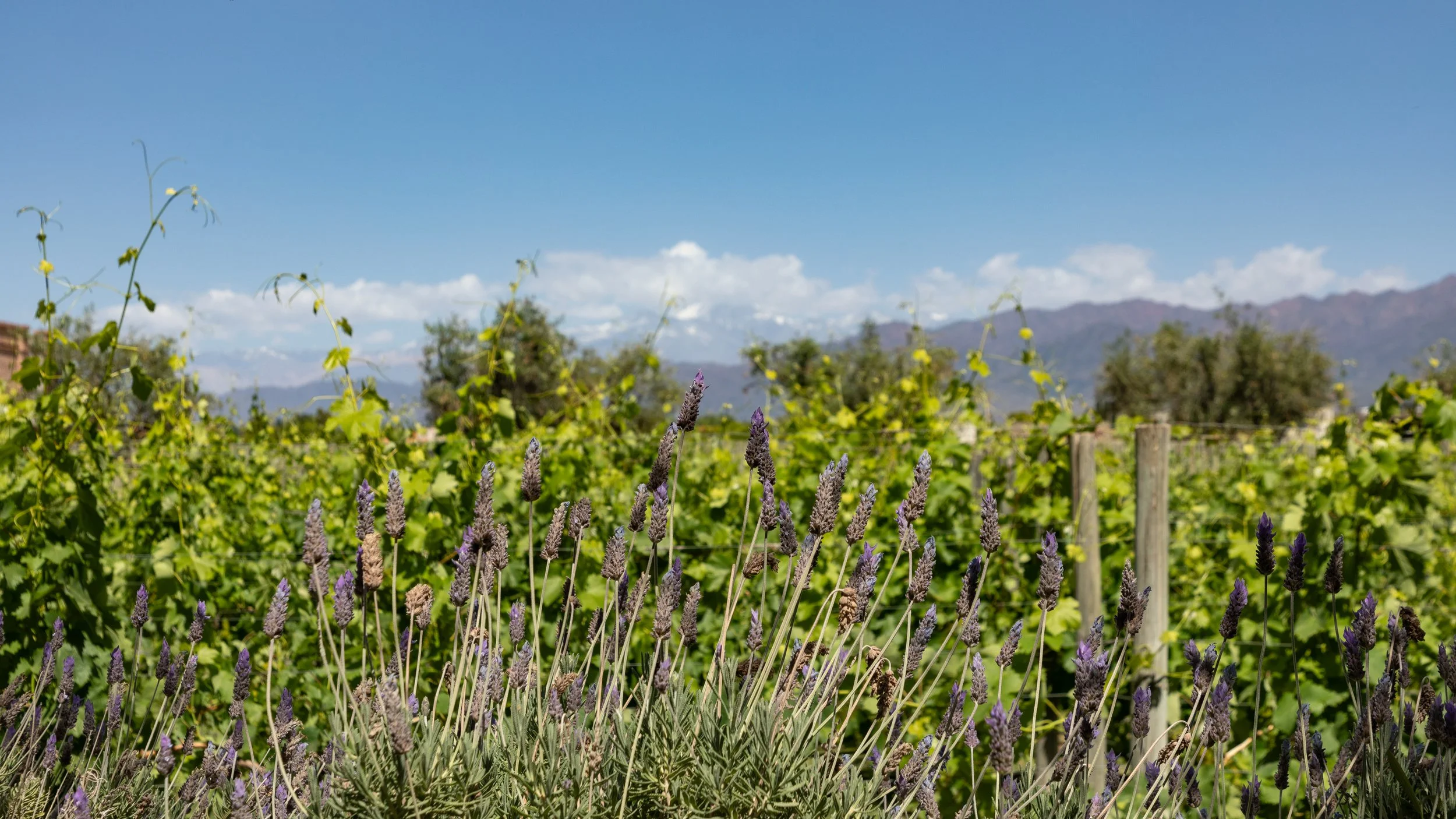
The Alta Vista vineyards with the mountains in the background
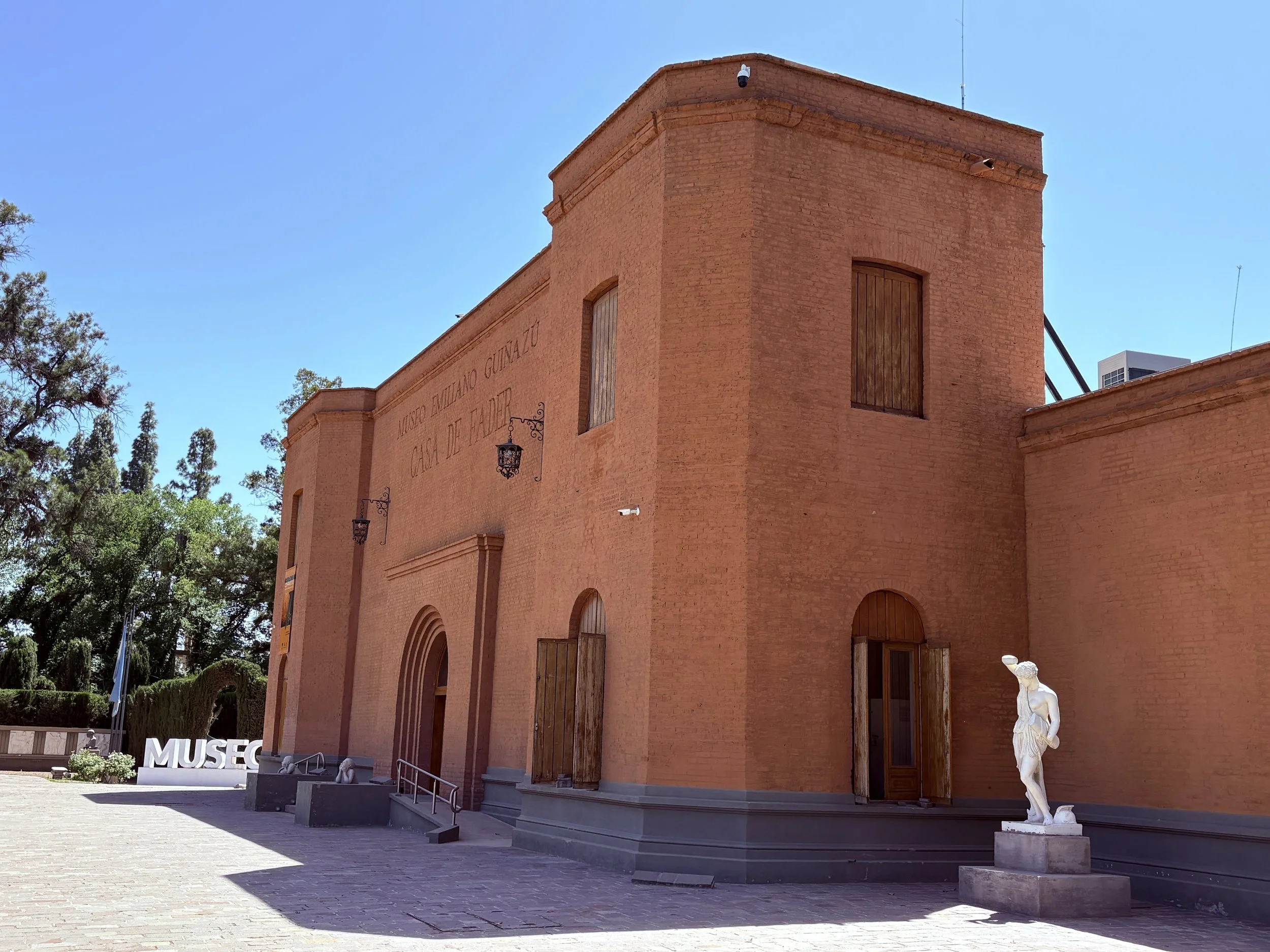
Museo Provincial de Bellas Artes Emiliano Guinazu
One of the many statues outside the museum
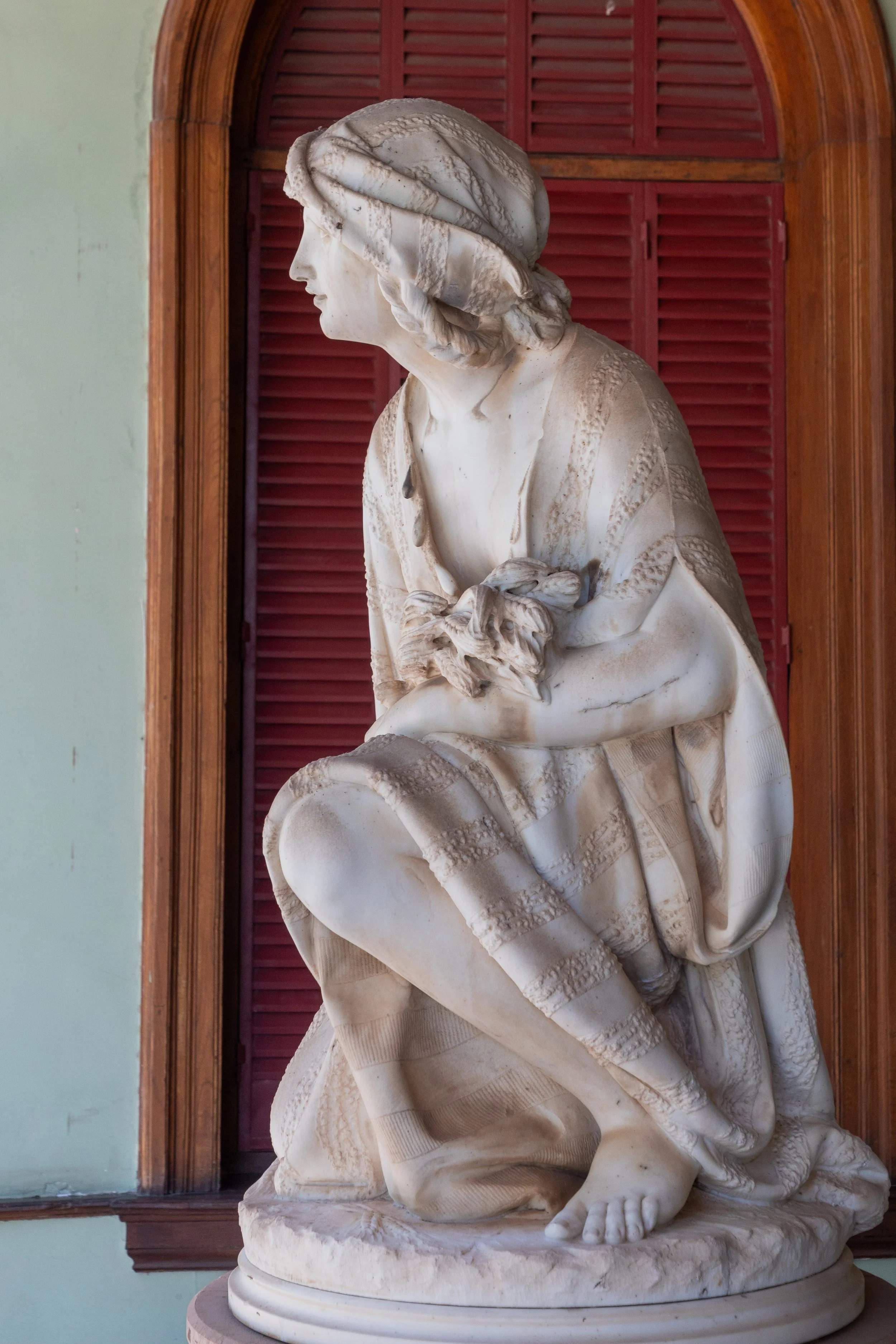
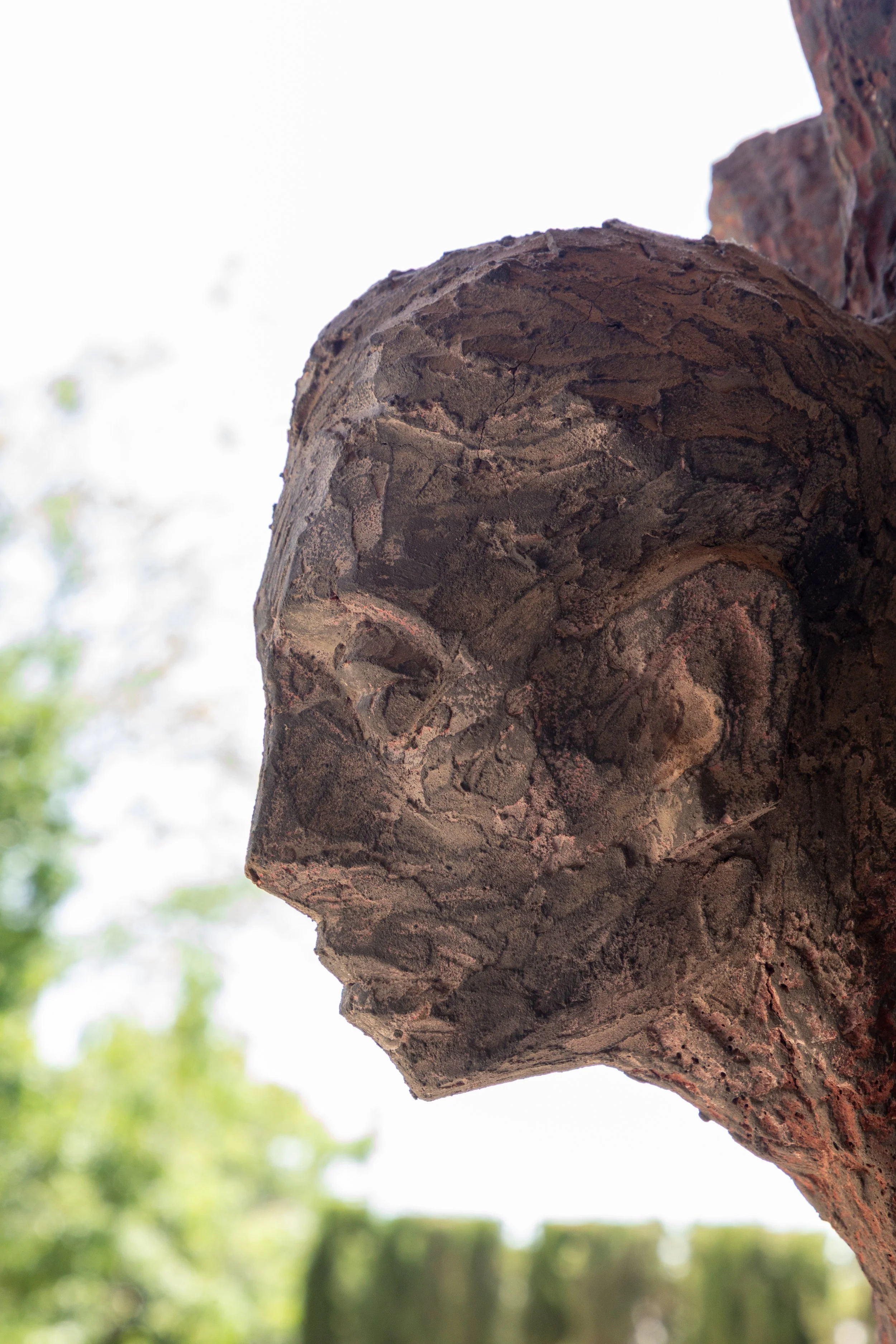
Closeup of one of the sculptures
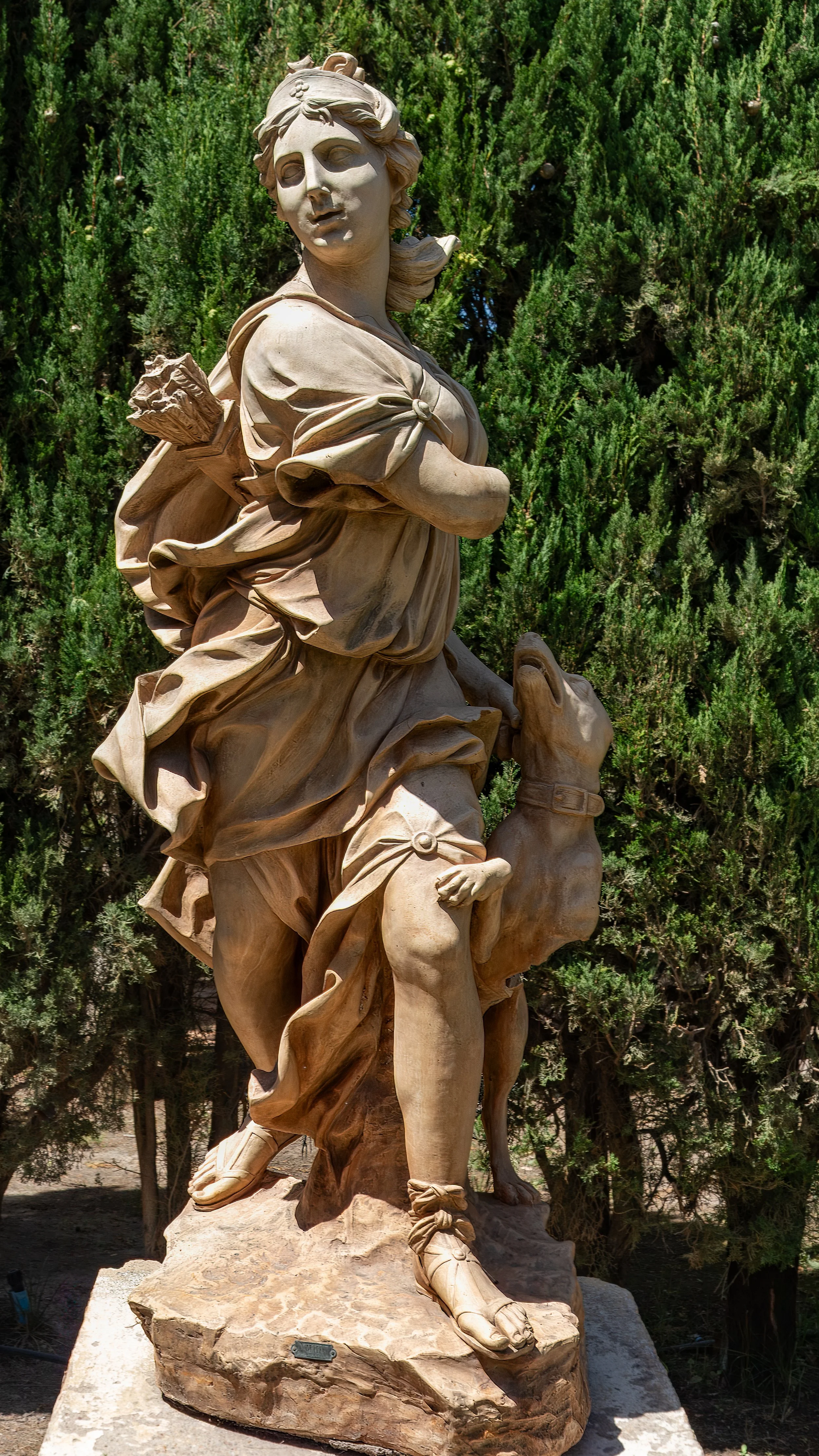
Diana cazadora anonimo Greek Statue
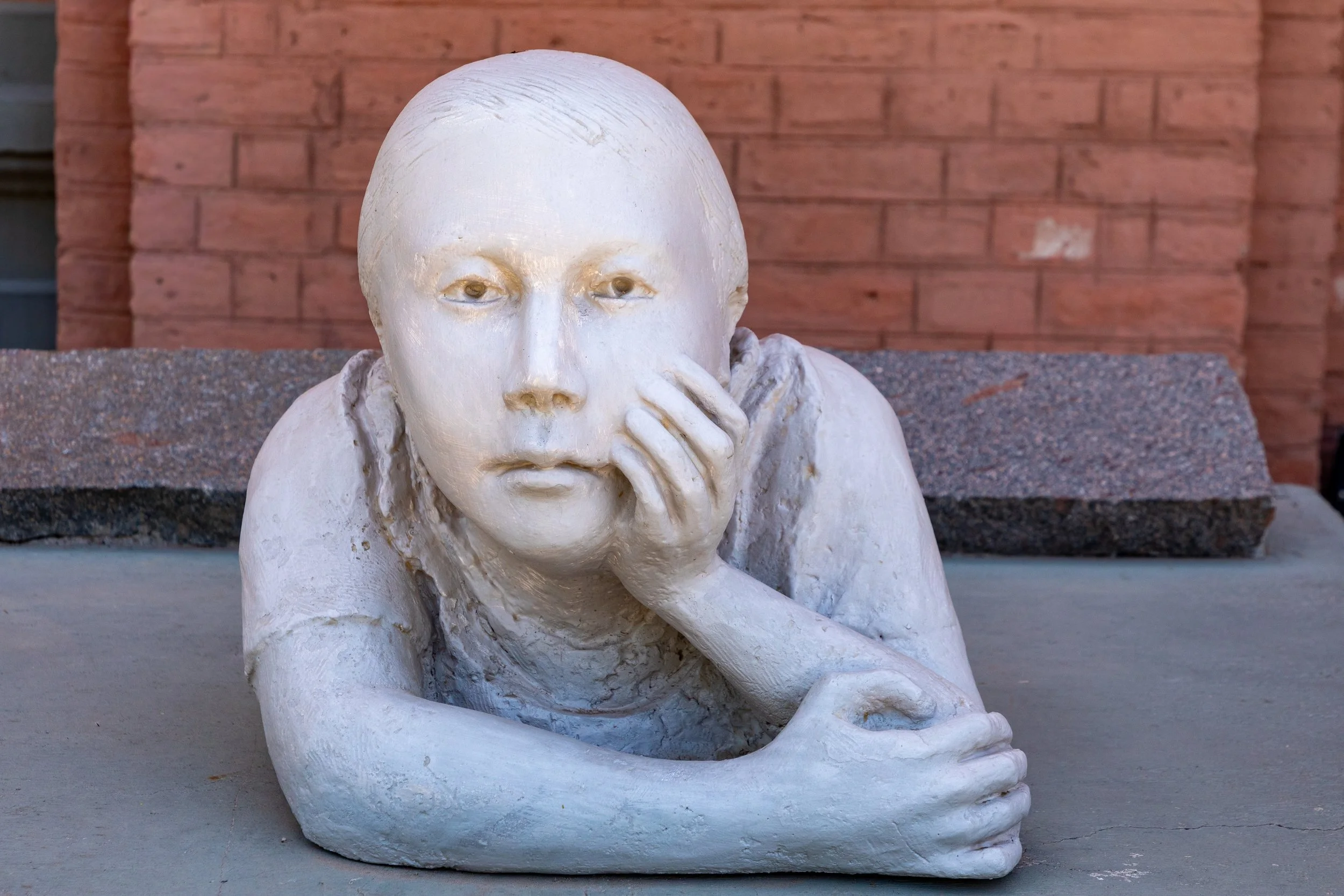
More modern sculpture at the museum
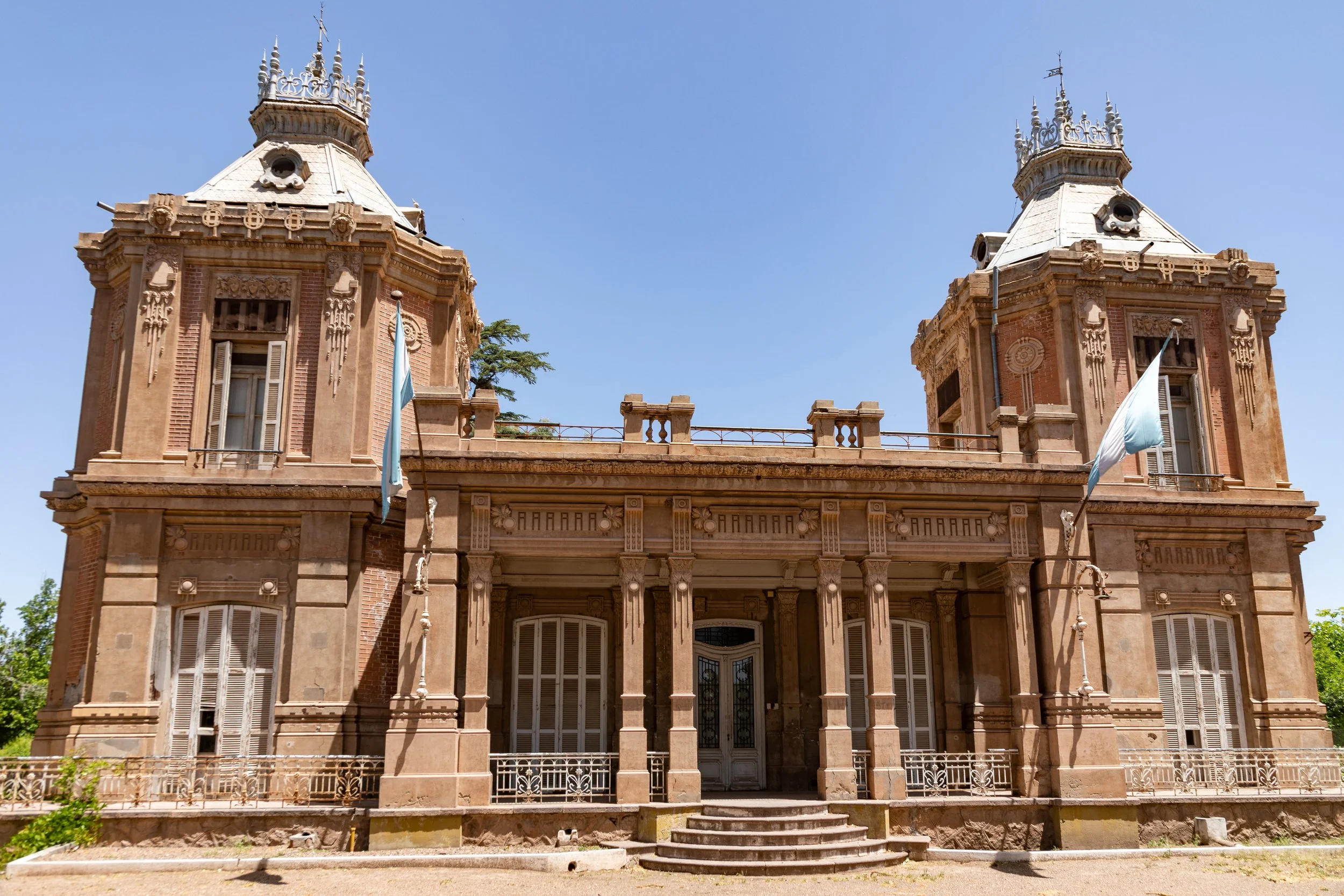
Historic mansion that houses the Museo Nacional del Vino y la Vendimia (National Museum of Wine and Harvest) in Maipo
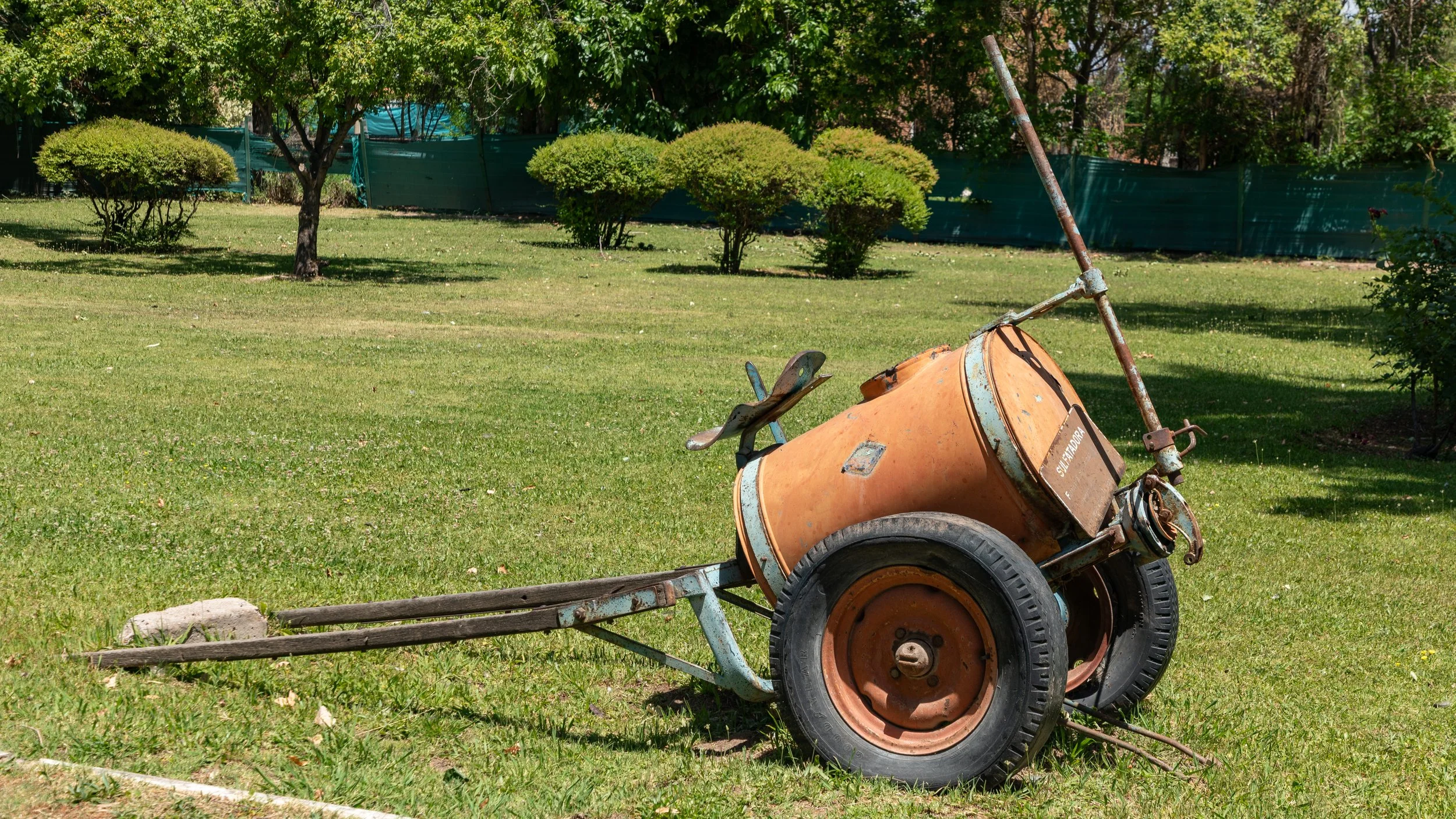
Historic farming equipment on the museum grounds
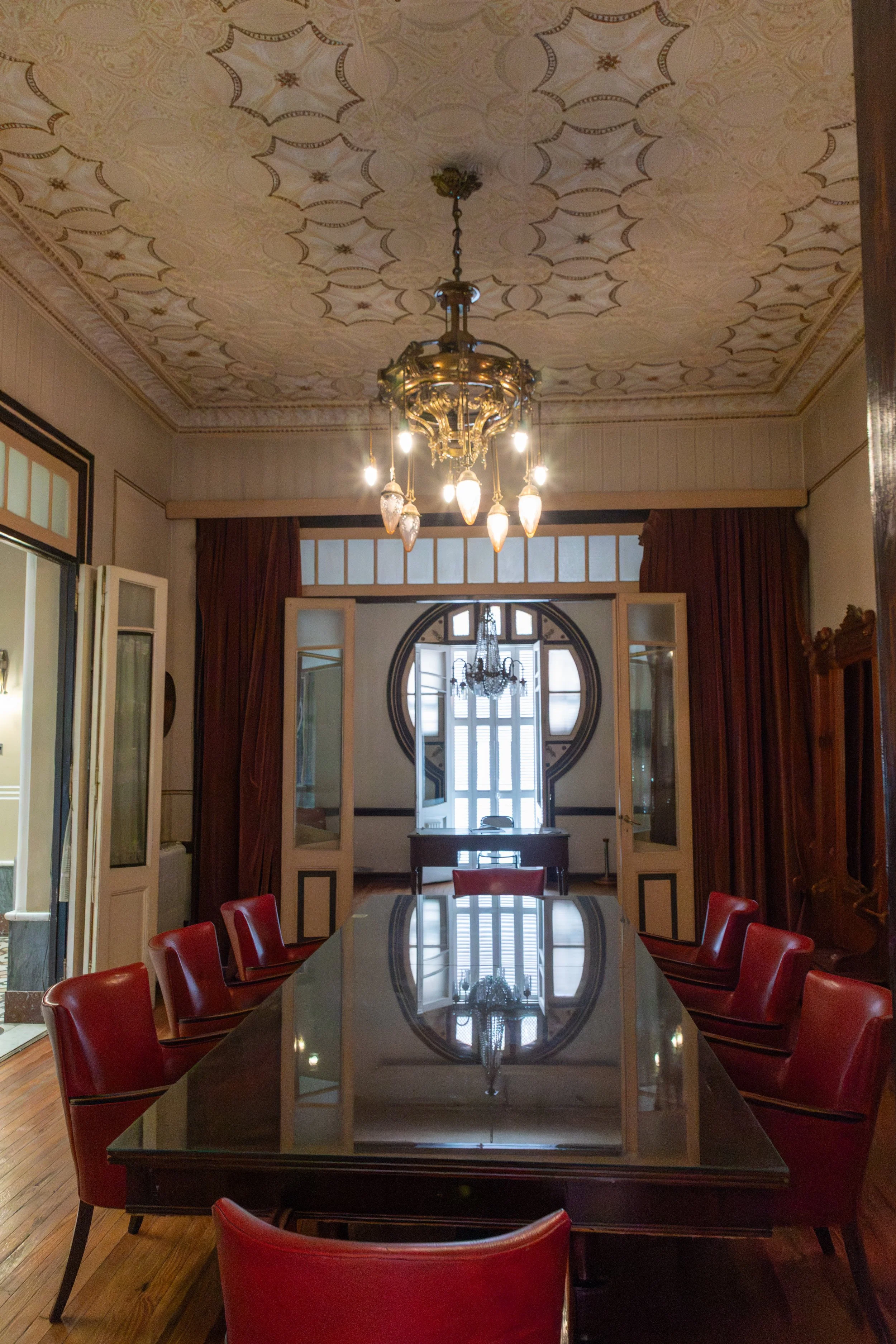
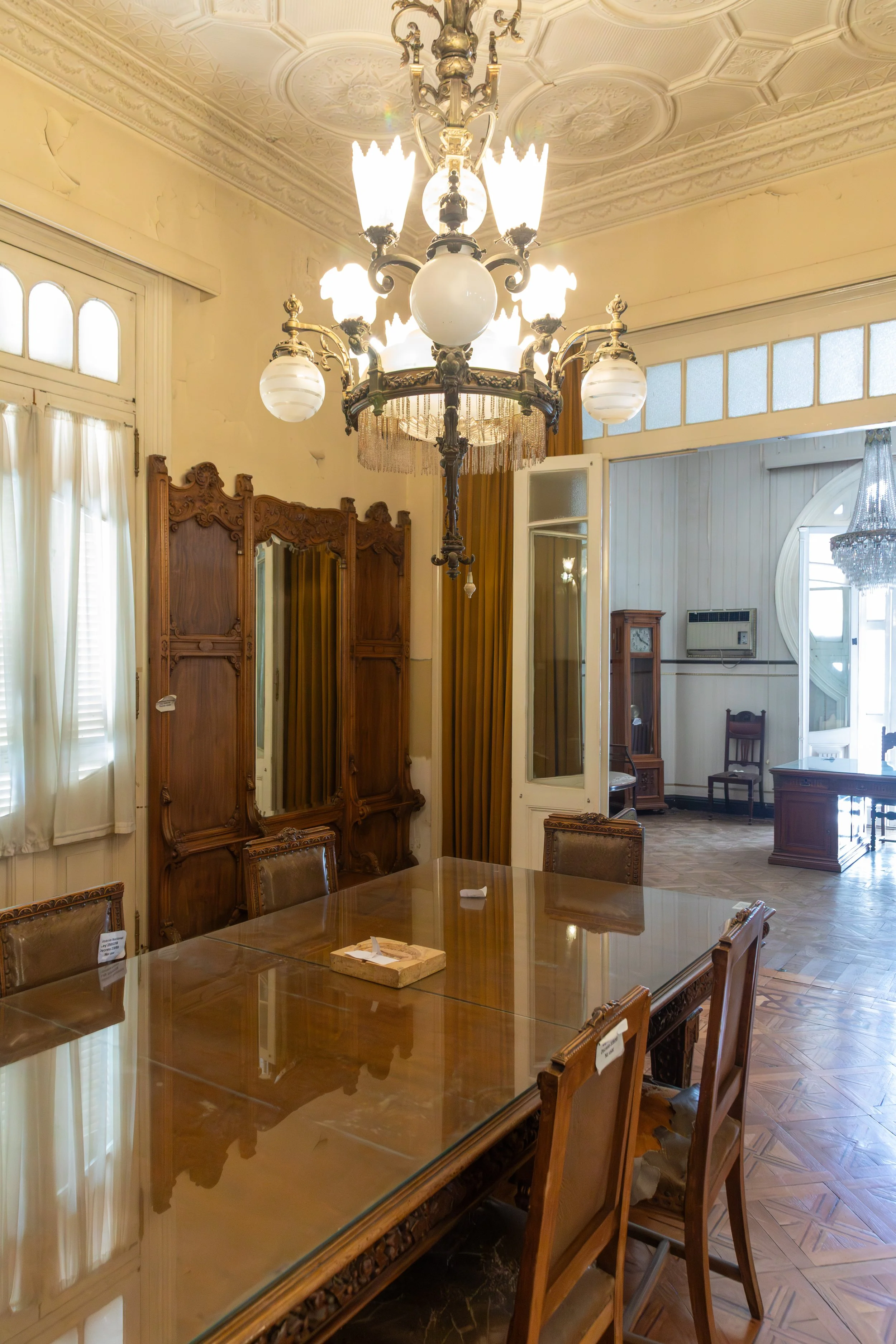
Main dining room in the wine museum
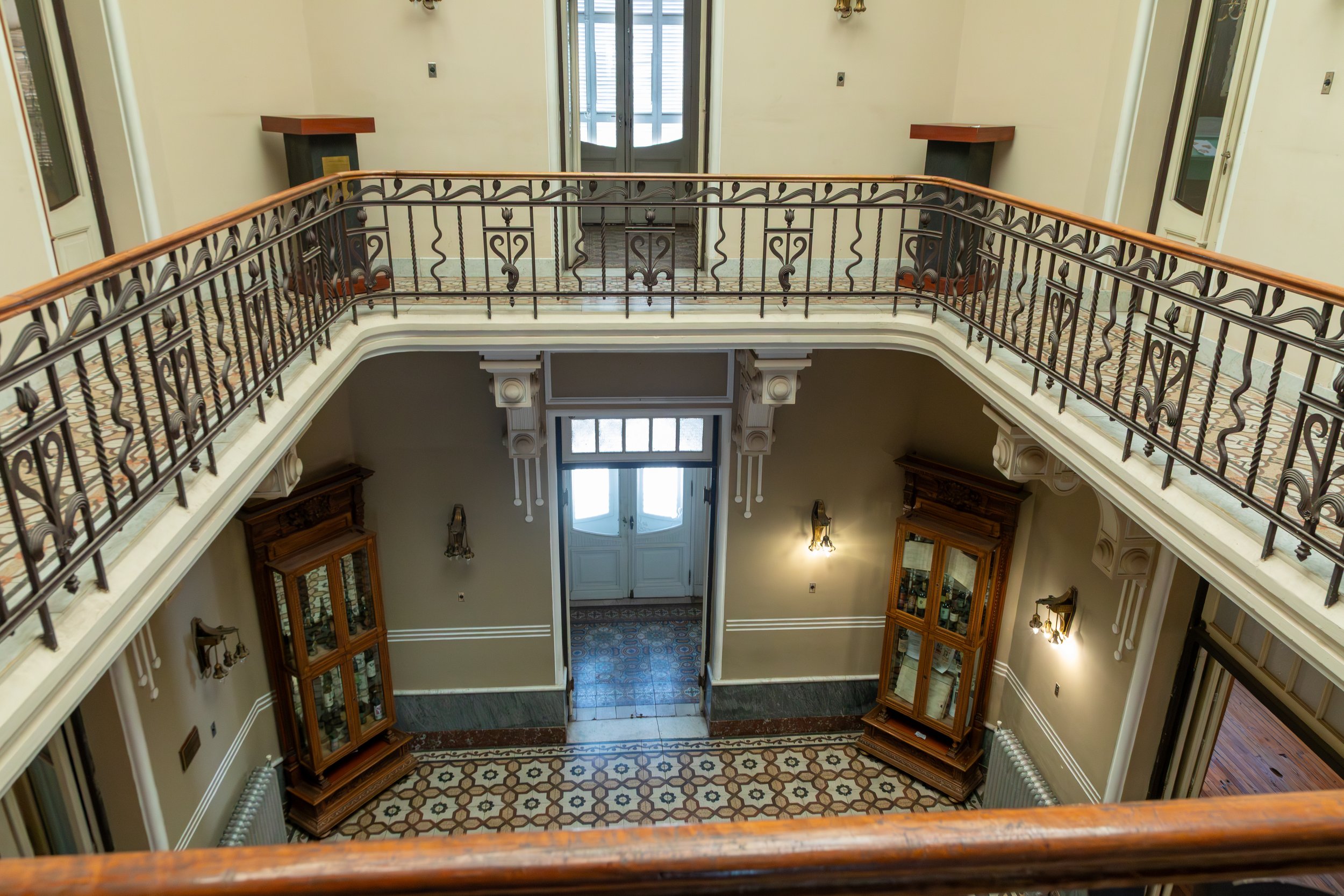
The lower floor impressively restored with the wine displays on the second floor
Main foyer
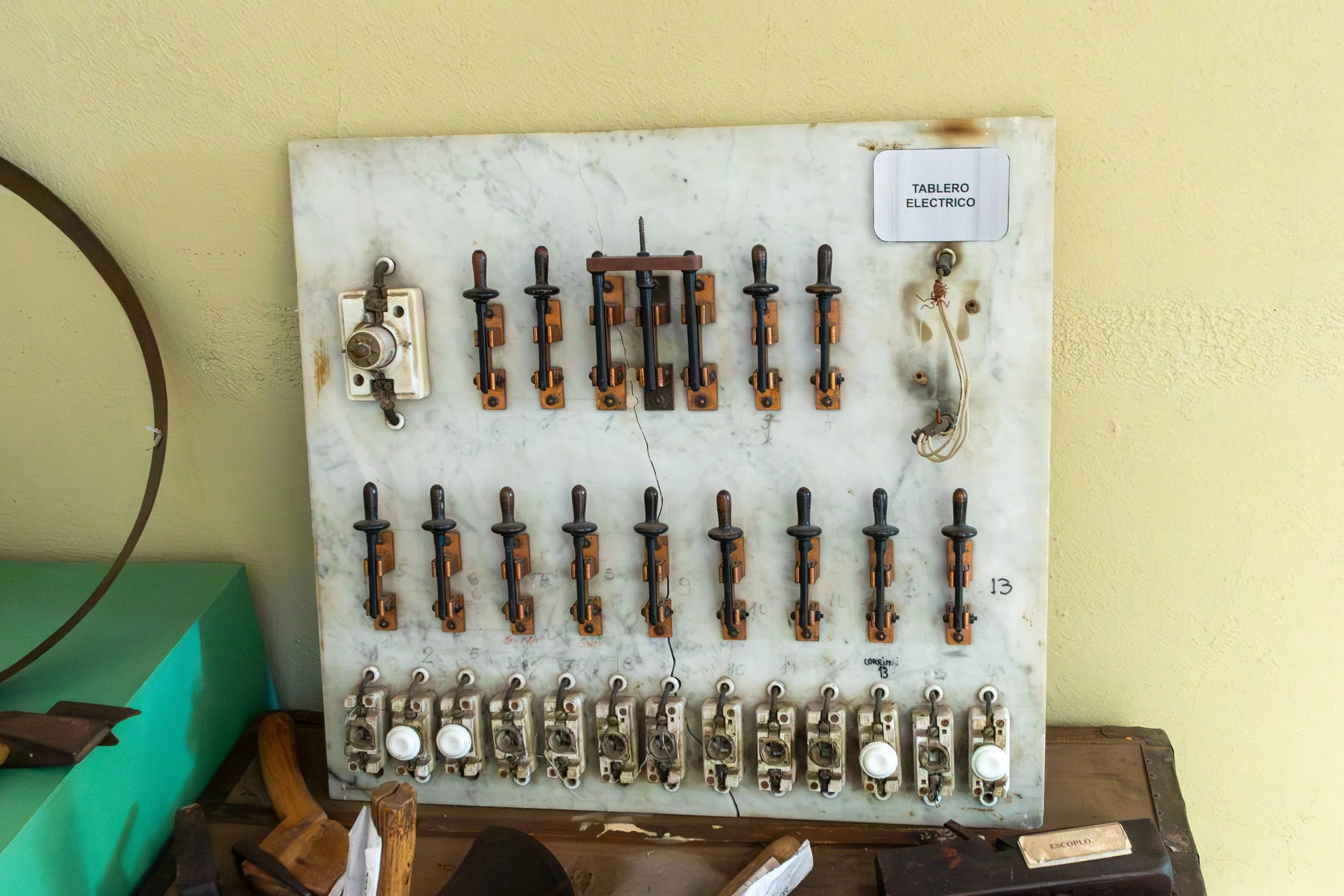
The wine story was interesting, but Tom preferred the historical electrical infrastructure
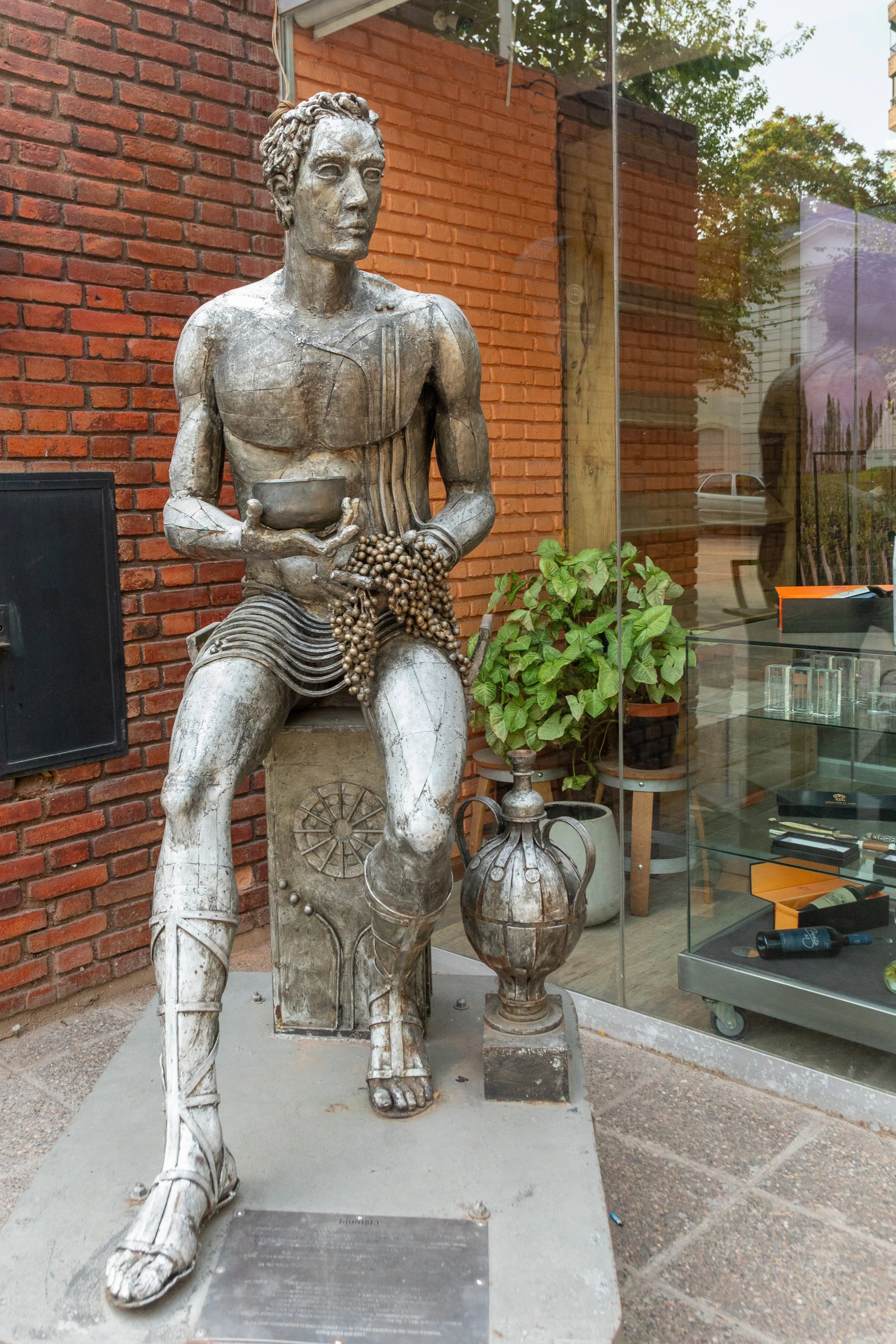
Back in Mendoza, after a rest, we decided to explore more, finding this statue outside one of the local restaurants
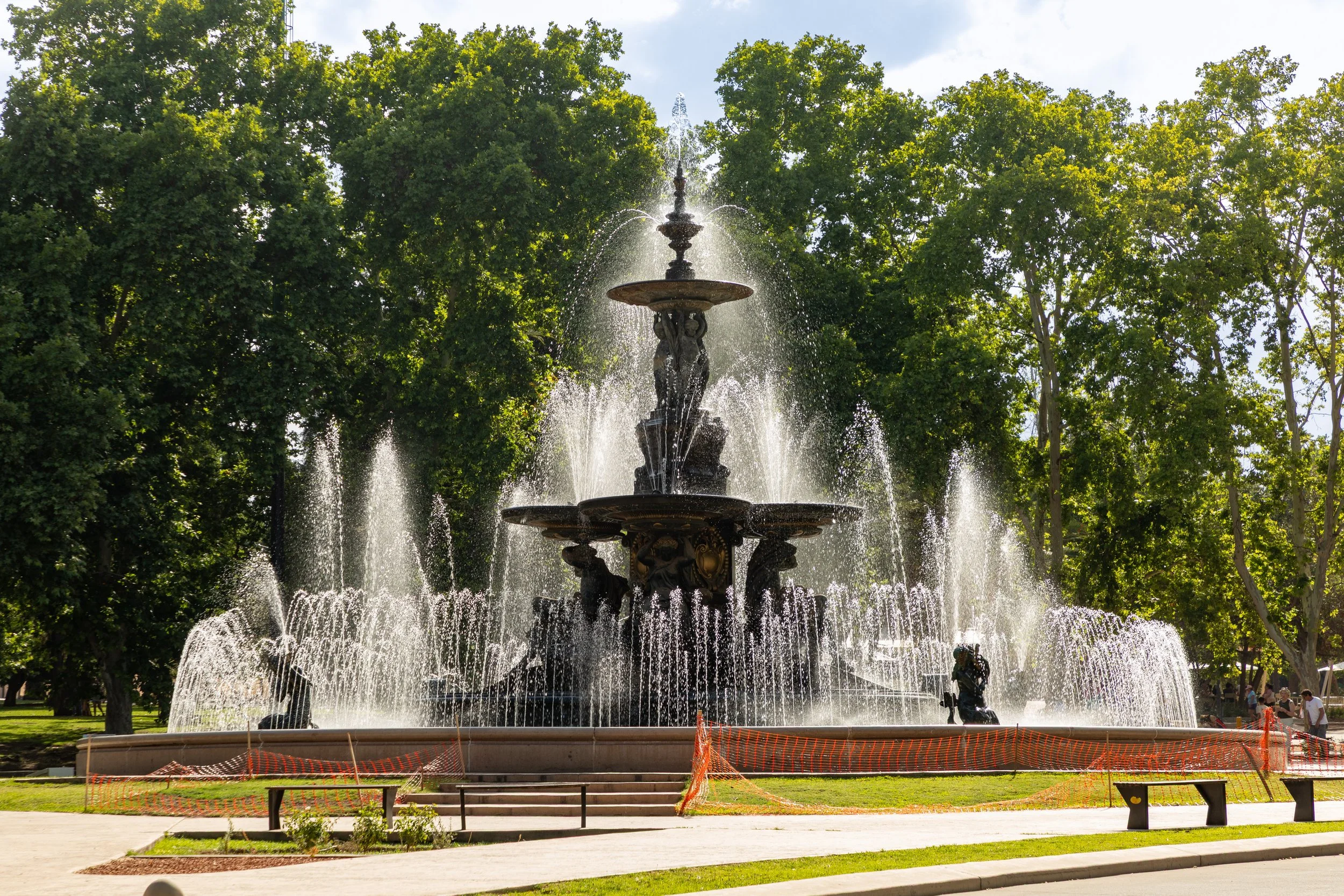
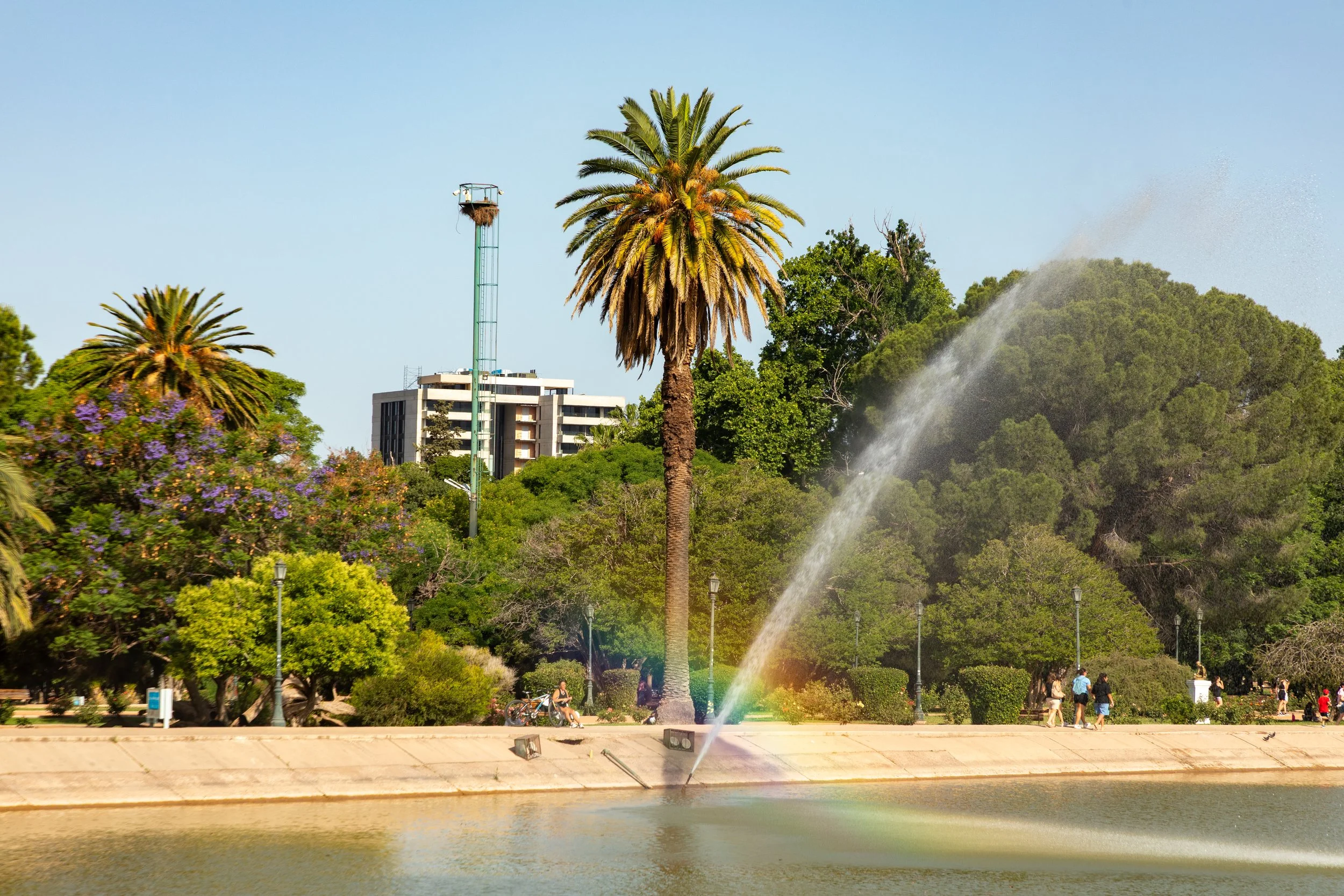
Funete de los Continentes in Parque General San Martin
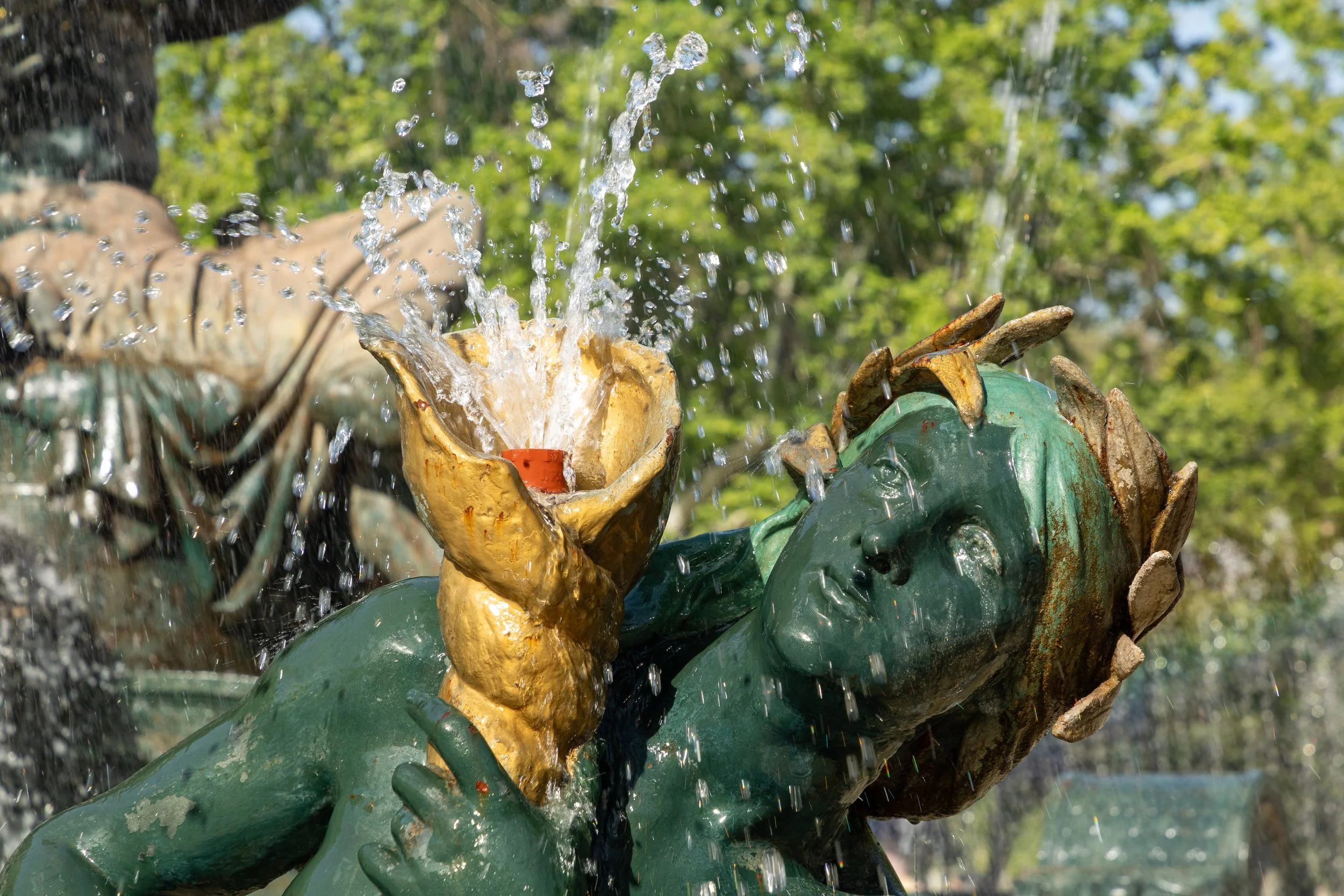
Zooming in on one of the fountain’s detailed figures
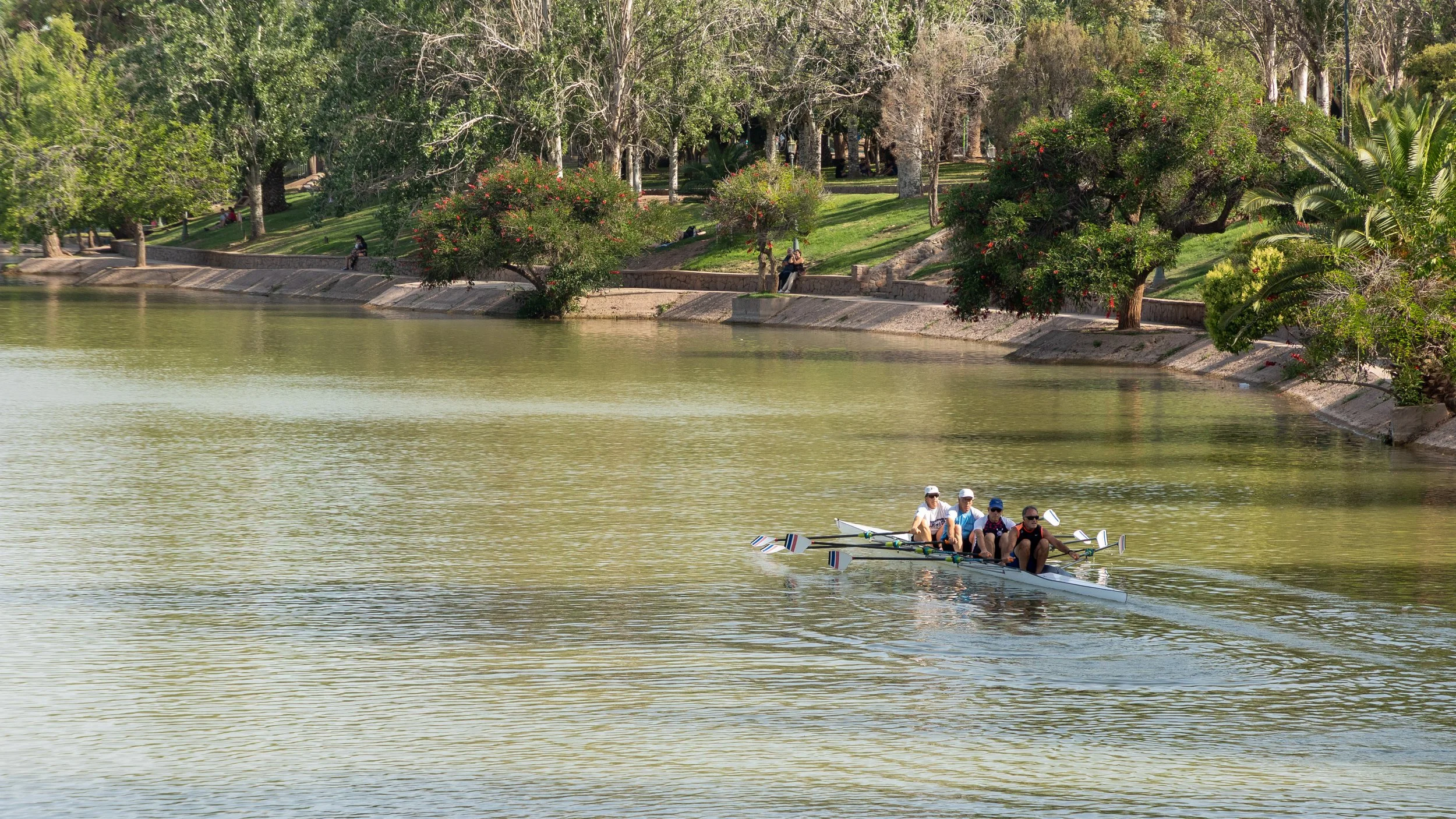
Rowers getting some practice in on a nice Saturday evening
Looking back at the expansive park
Although it was relatively early, we decided to stop at a recommended restaurant on the way back to the hotel. We enjoyed a great collection of tapas and a local wine, and then continued on to the hotel.
Nov 23
For our last day in Mendoza, we moved on from wine and headed into the mountains towards the Chilean border. The day started out a little hazy, so we weren’t sure what to expect, but were hoping to enjoy some great views from the mountains.
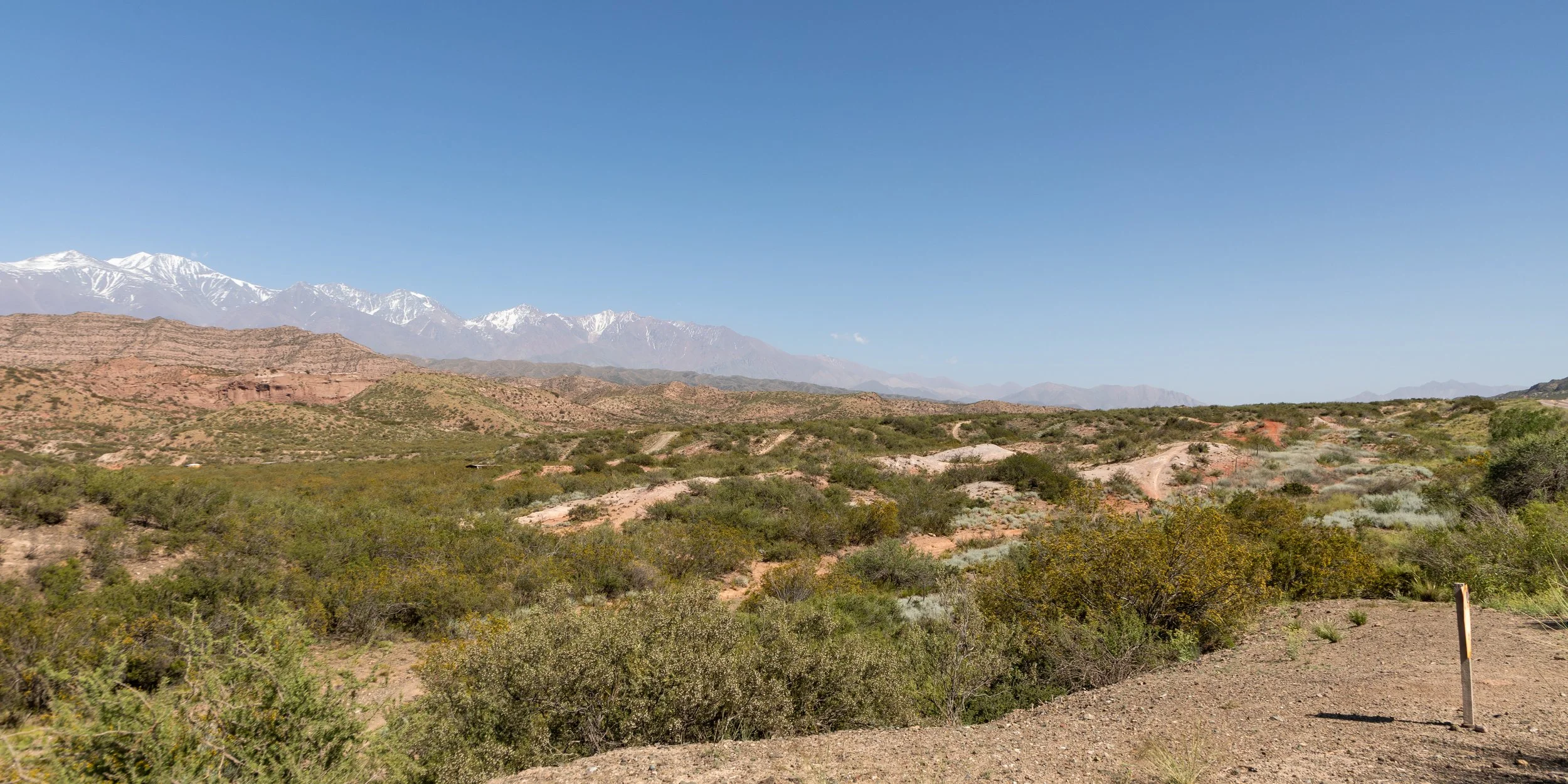
Stopping for a view off Hwy 7 as we head west from Mendoza
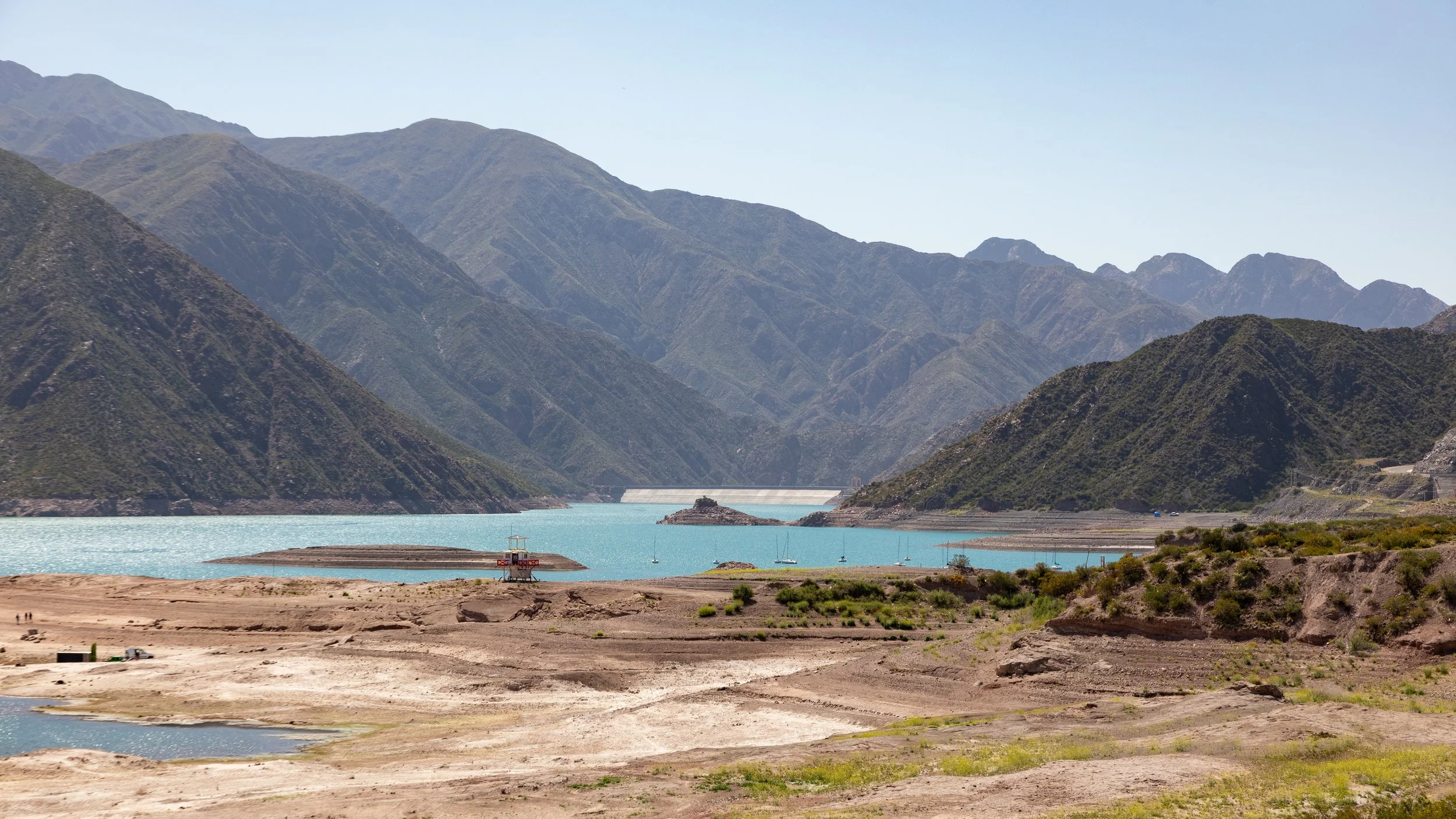
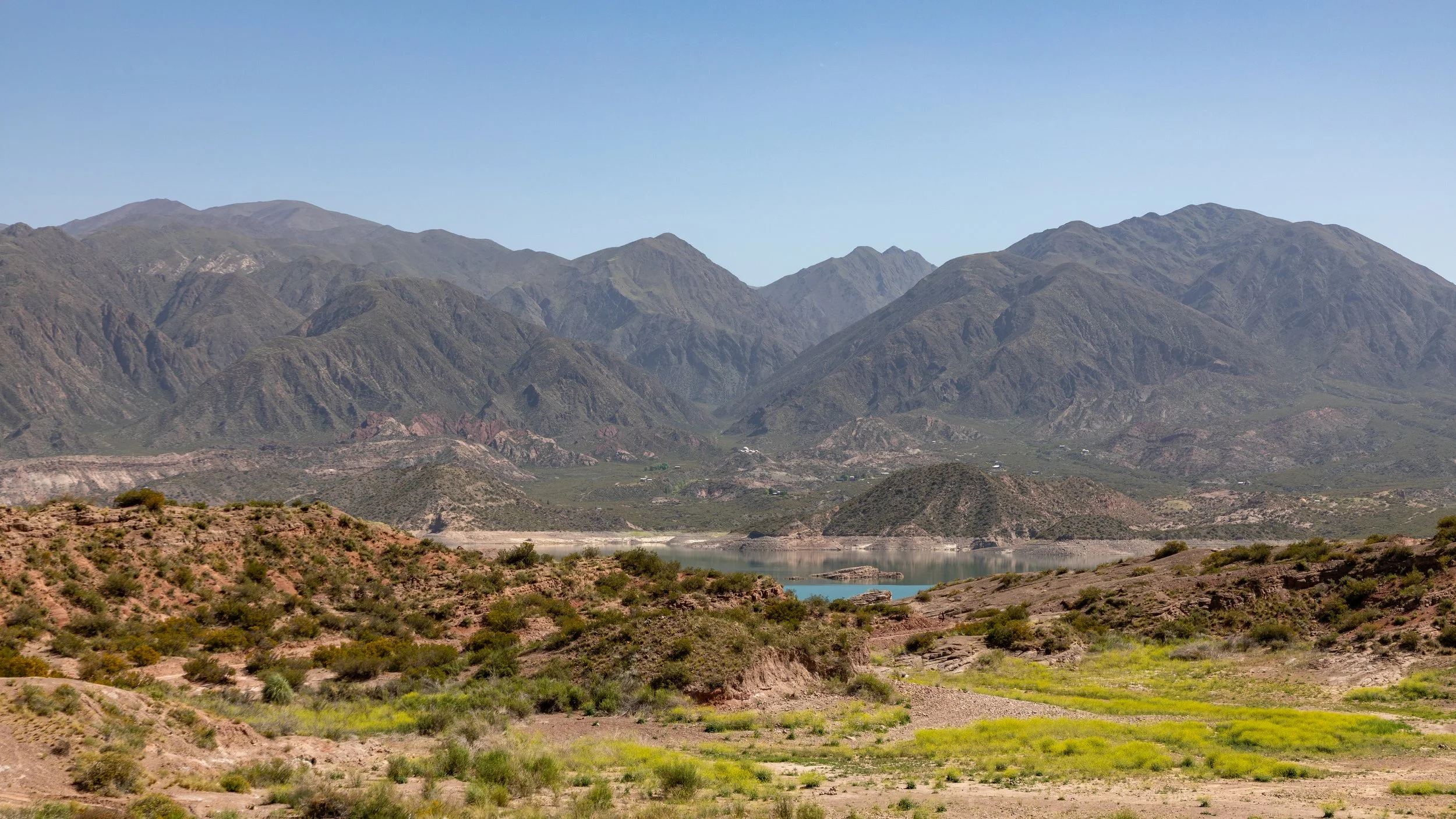
Potrerillos Lake formed by the damming of the Mendoza river
The terrain is very similar to California wine country
Panoramic view of Potrerillos Lake
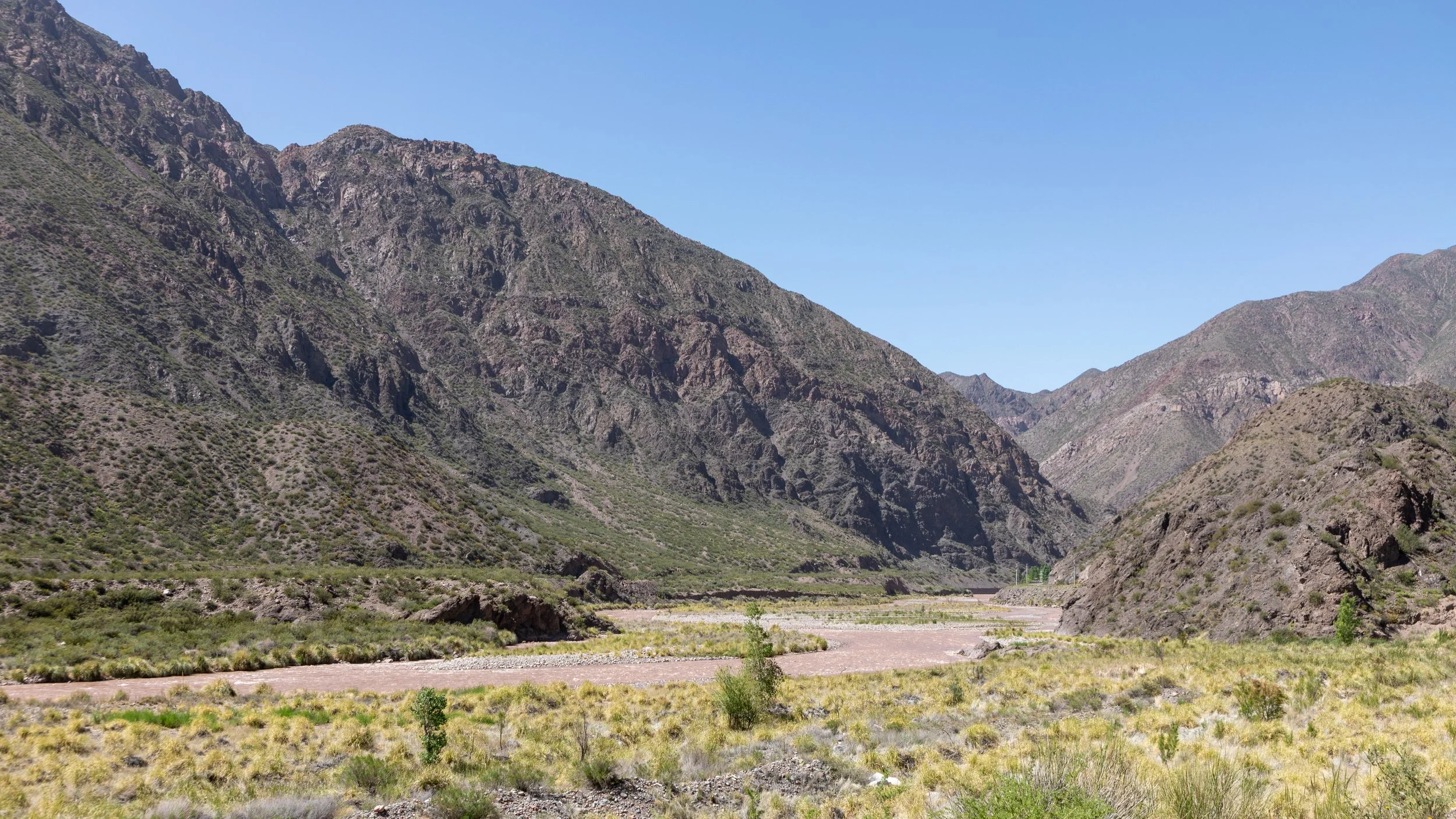
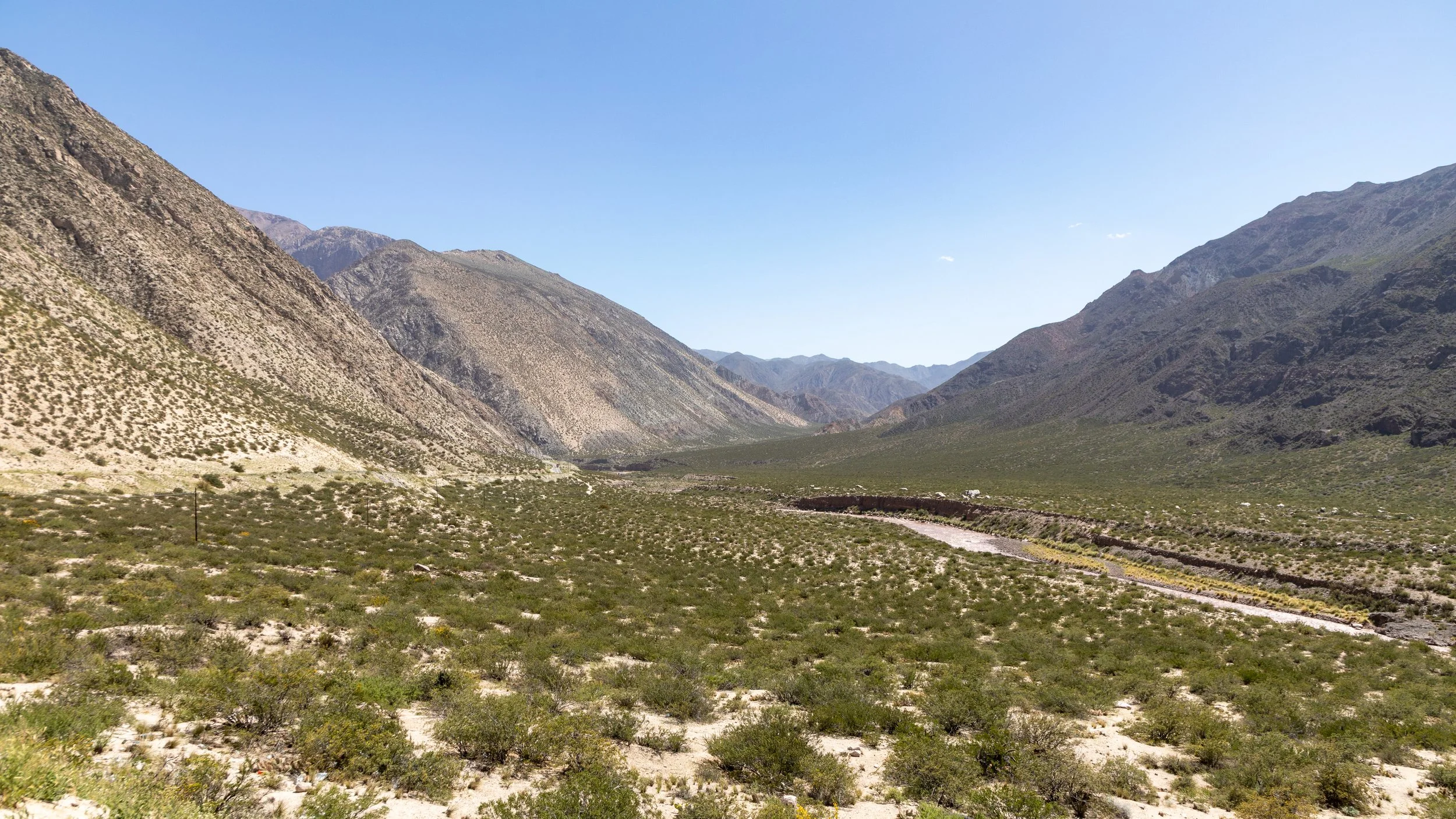
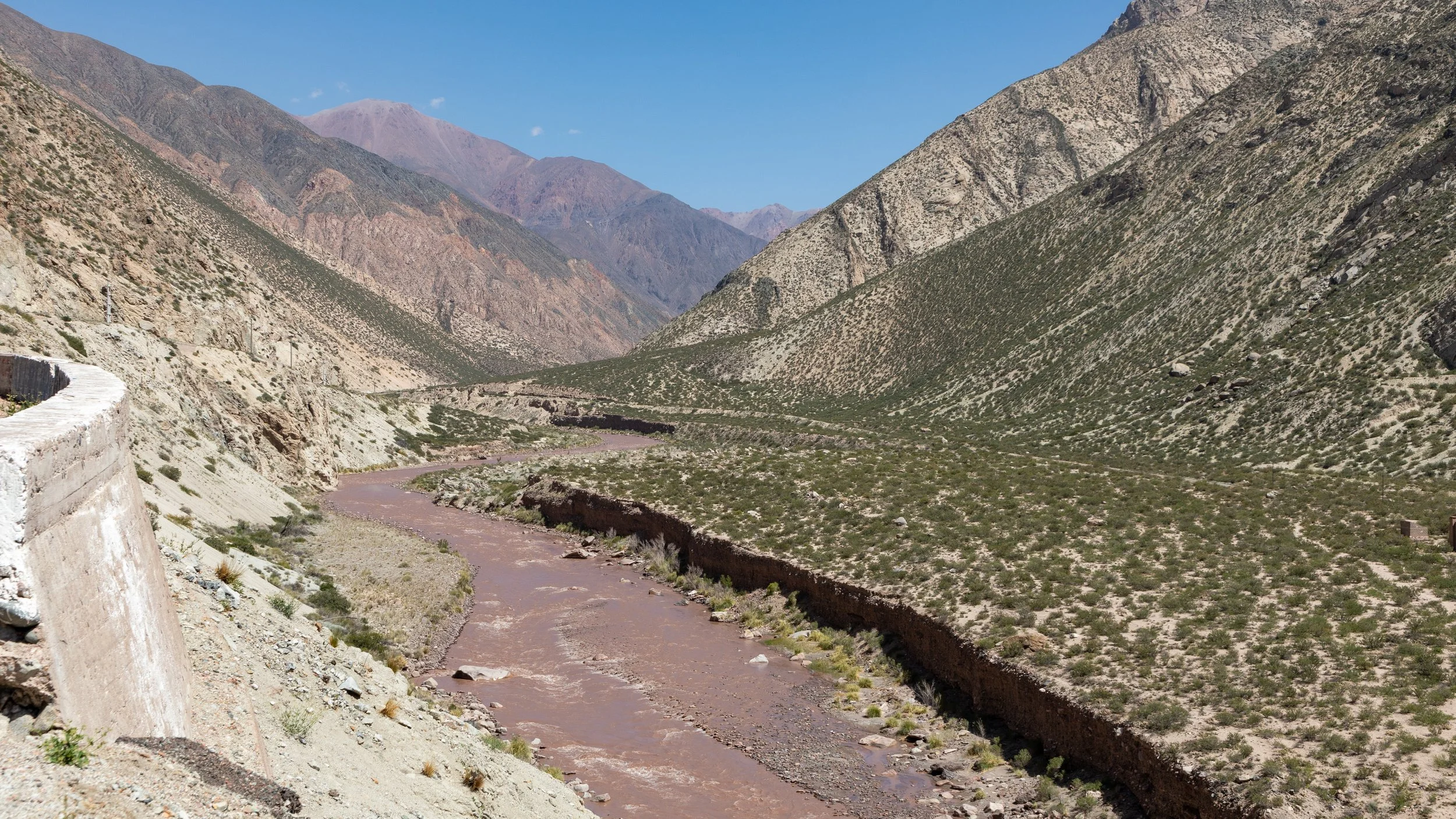
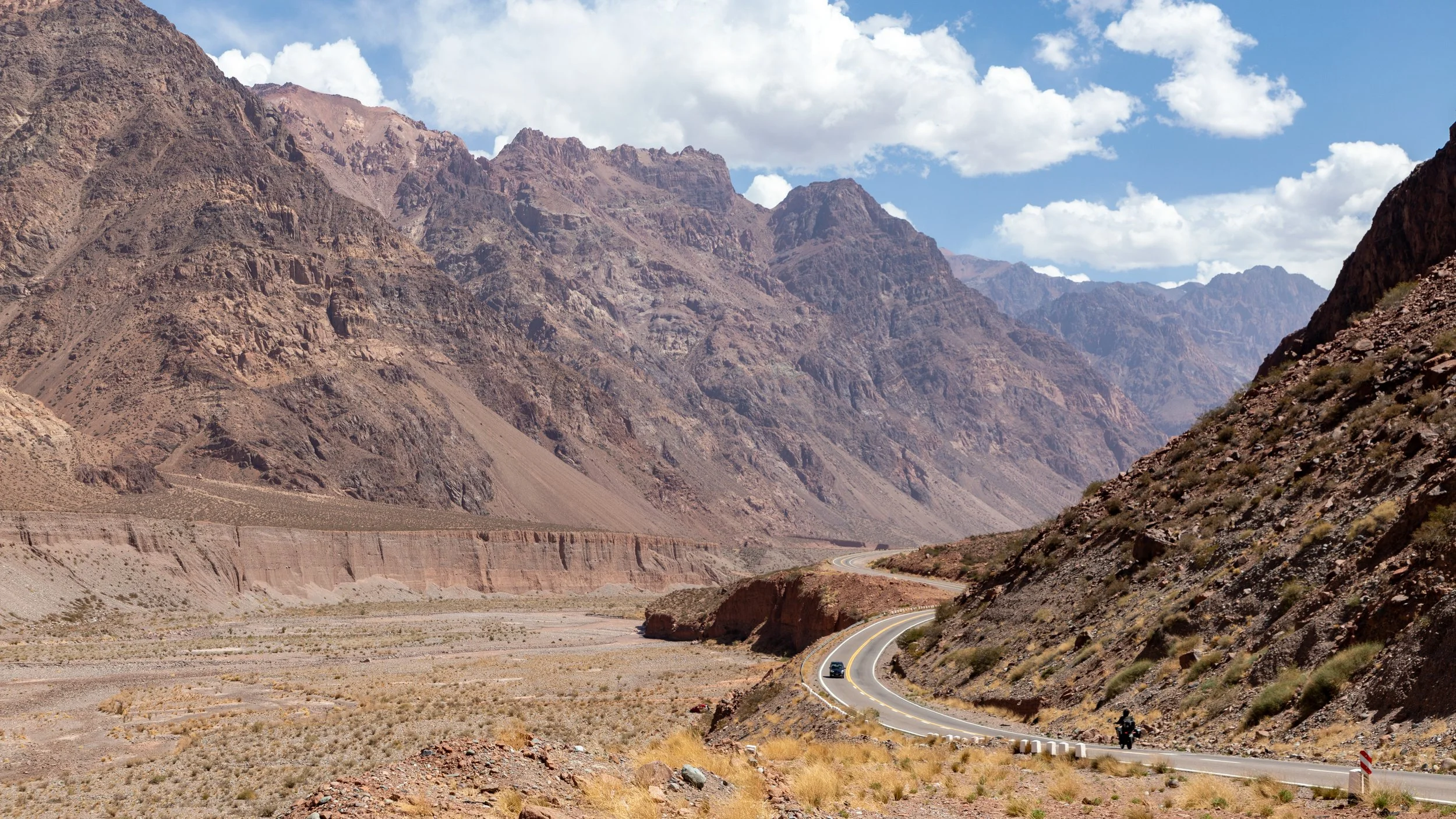
Continuing inland, the road follows the Mendoza River
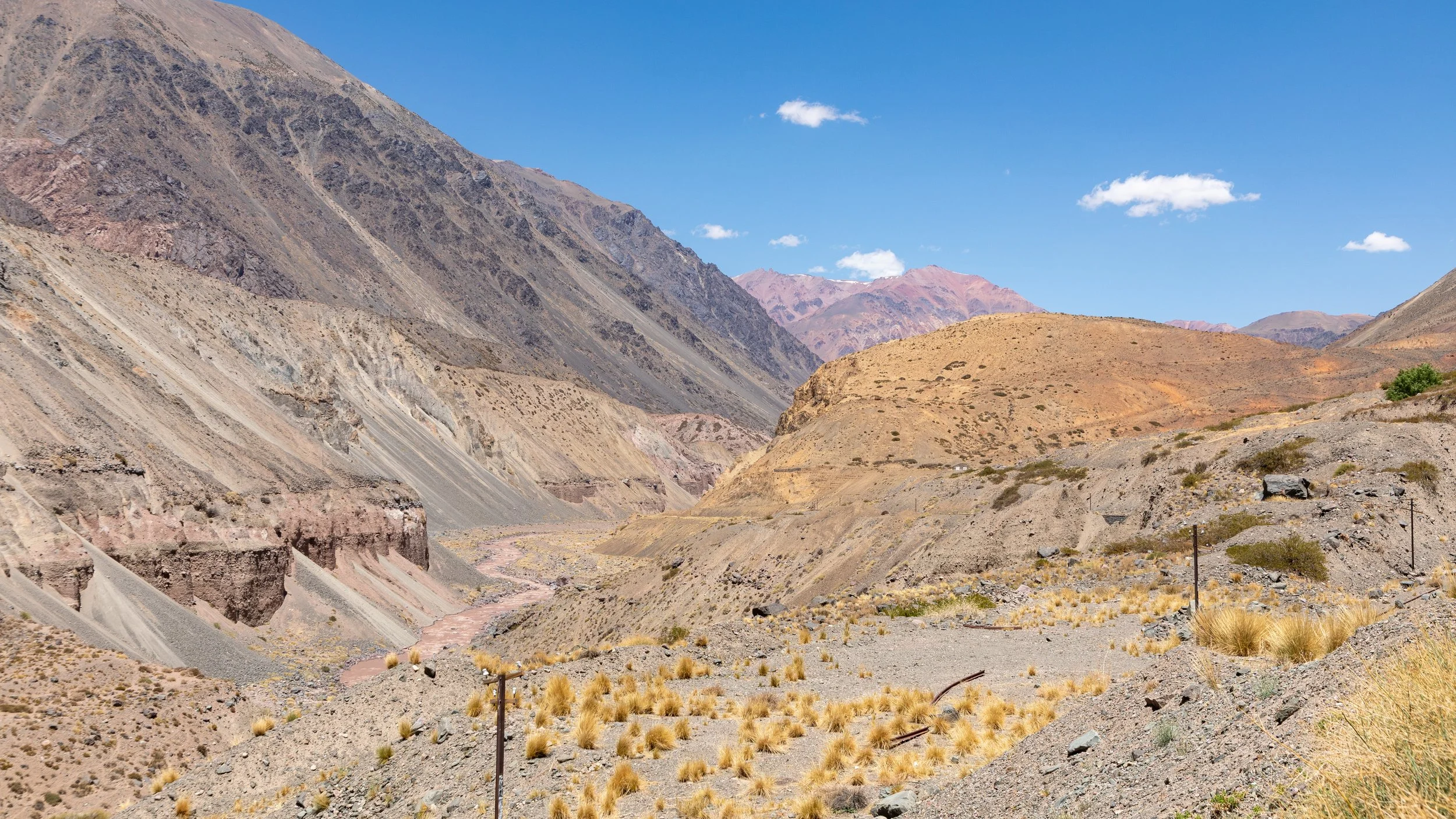
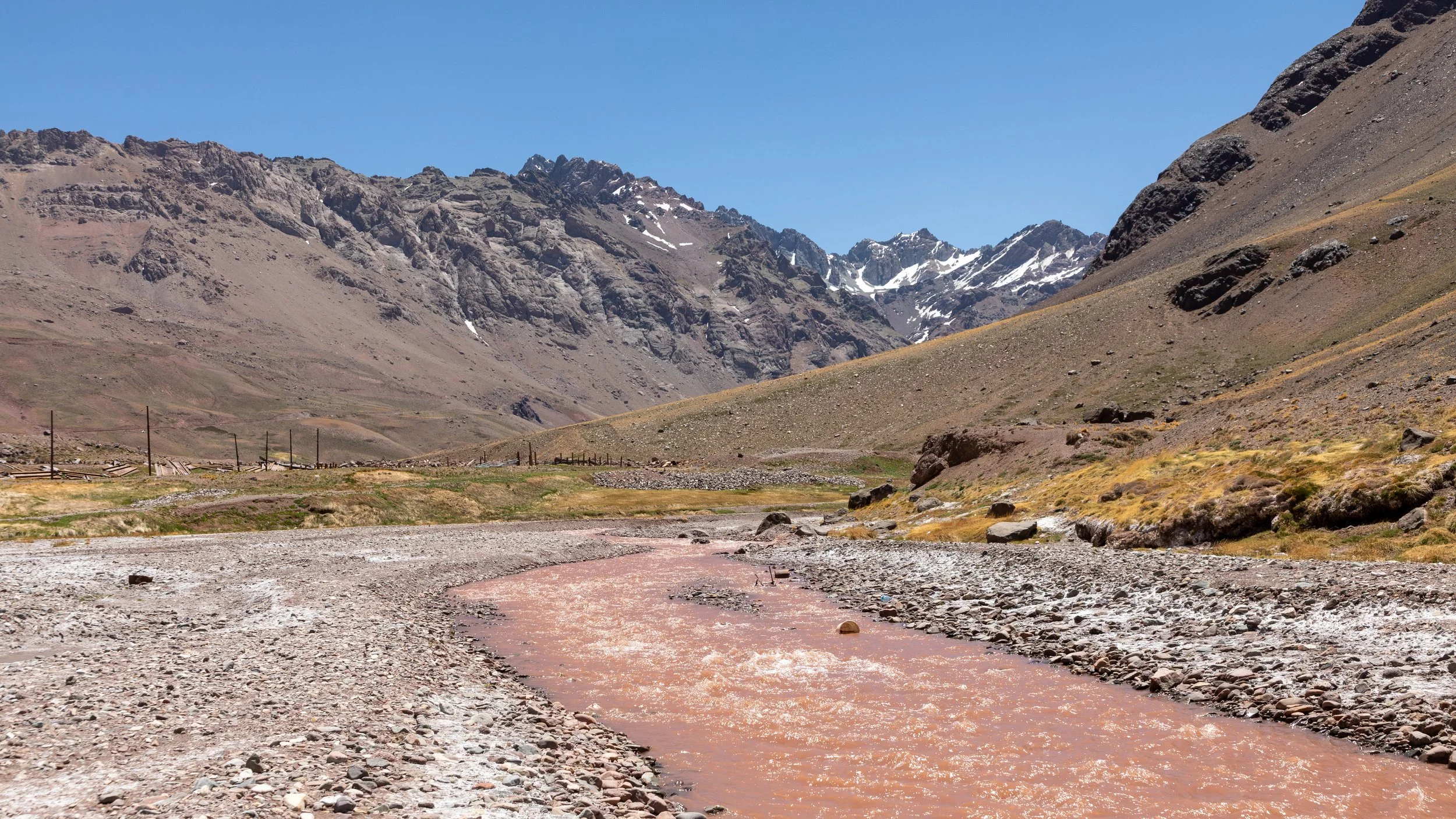
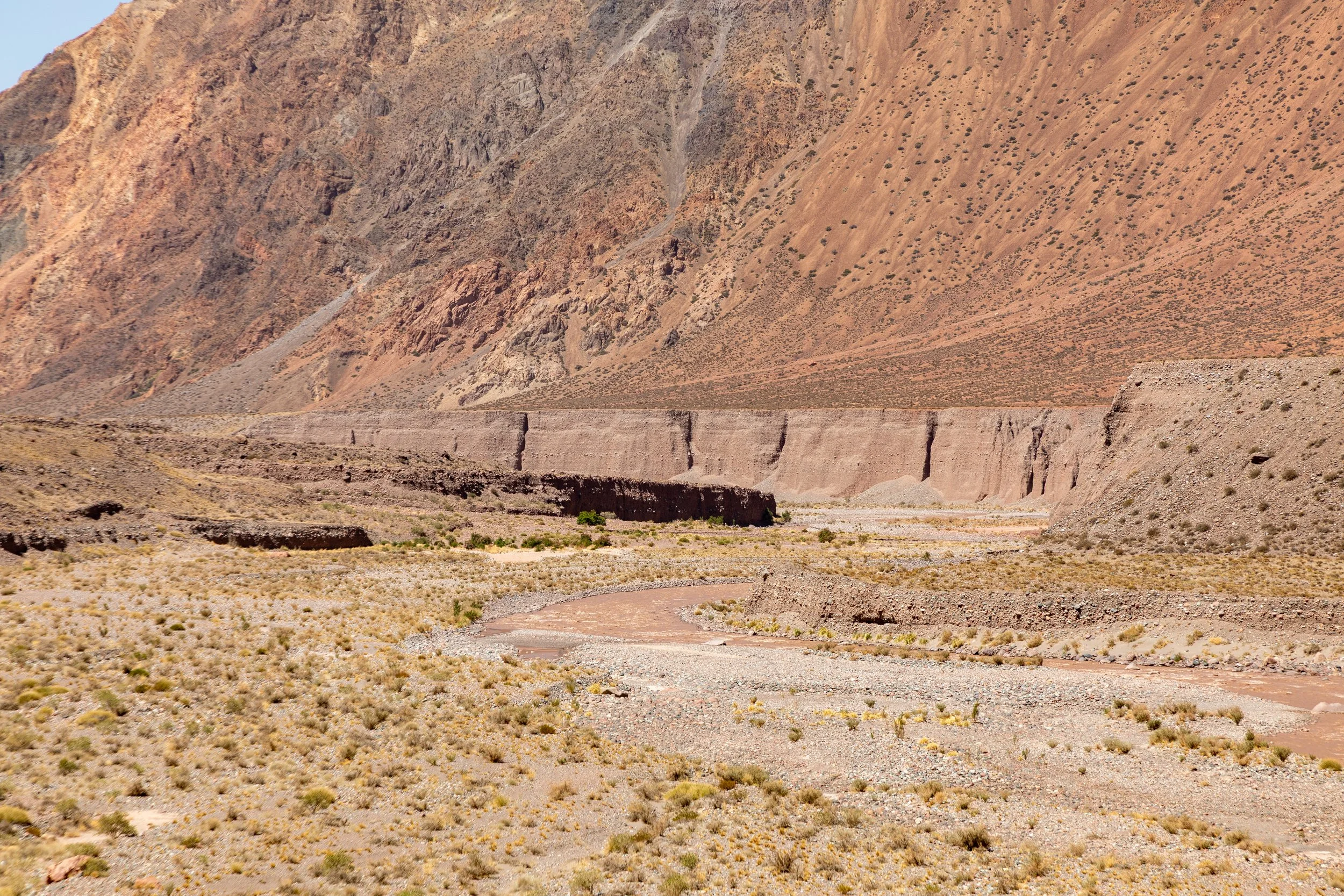
Consistent with recent droughts, the river level was quite low, but there was still some green vegetation in the valley
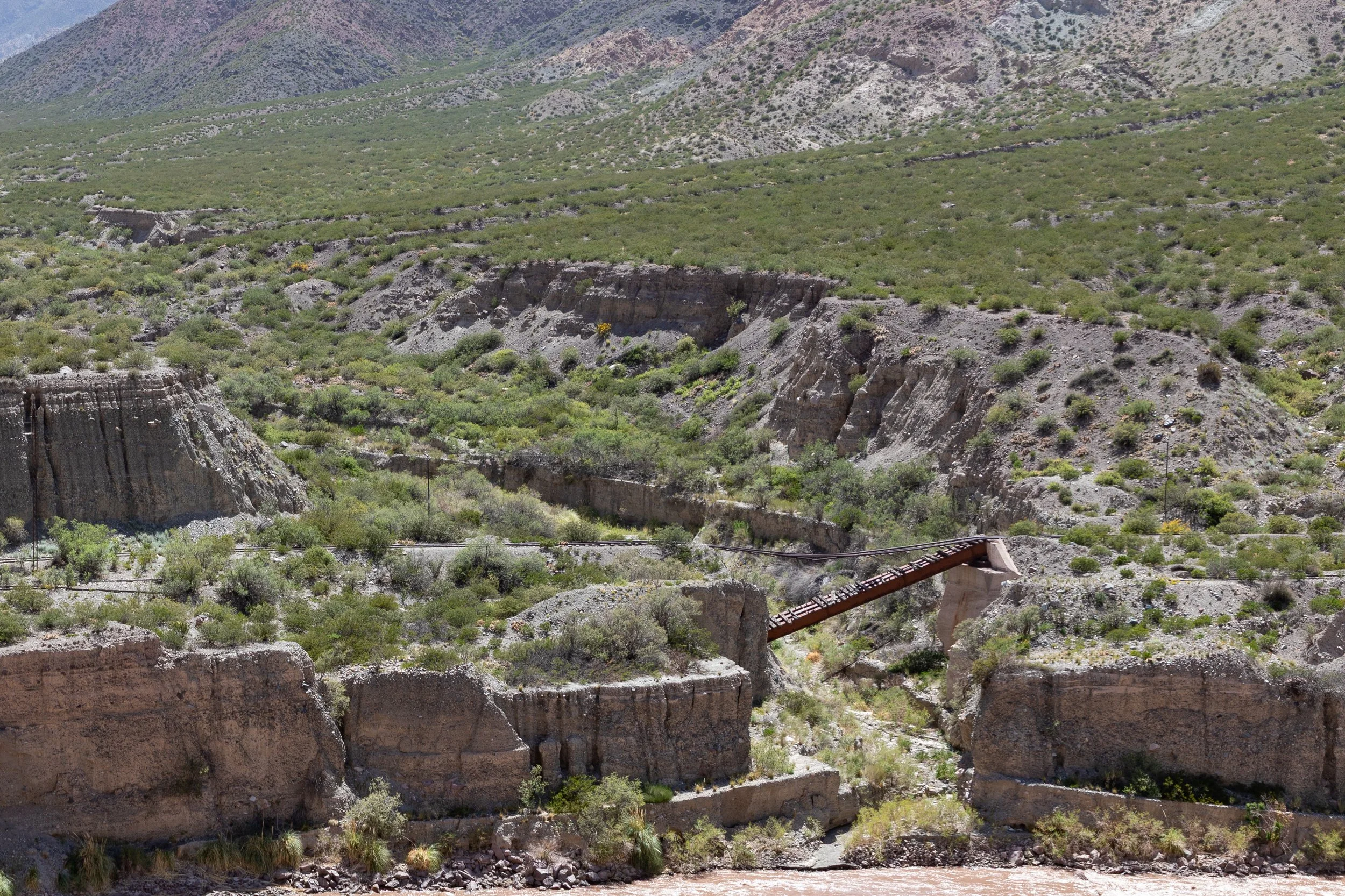
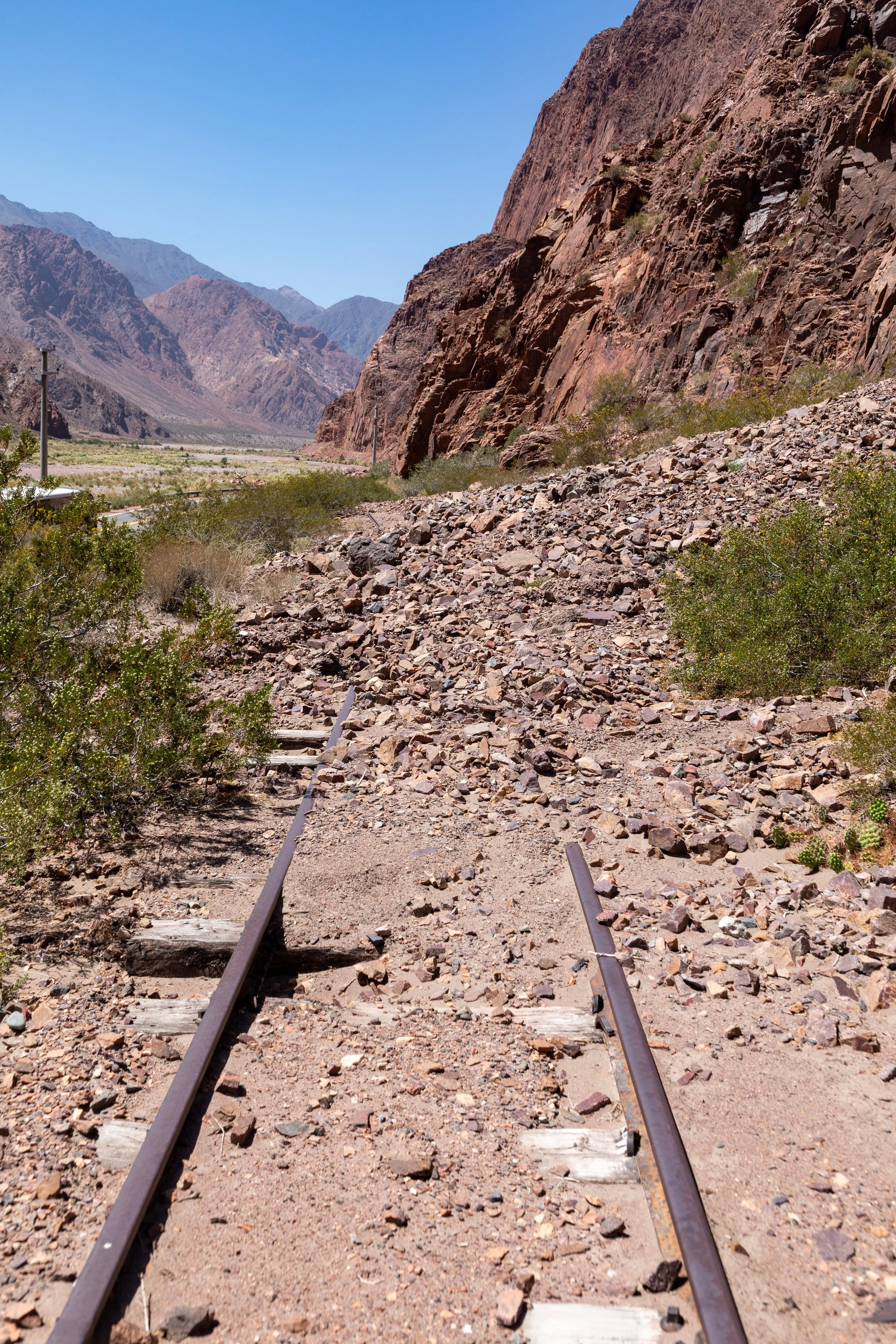
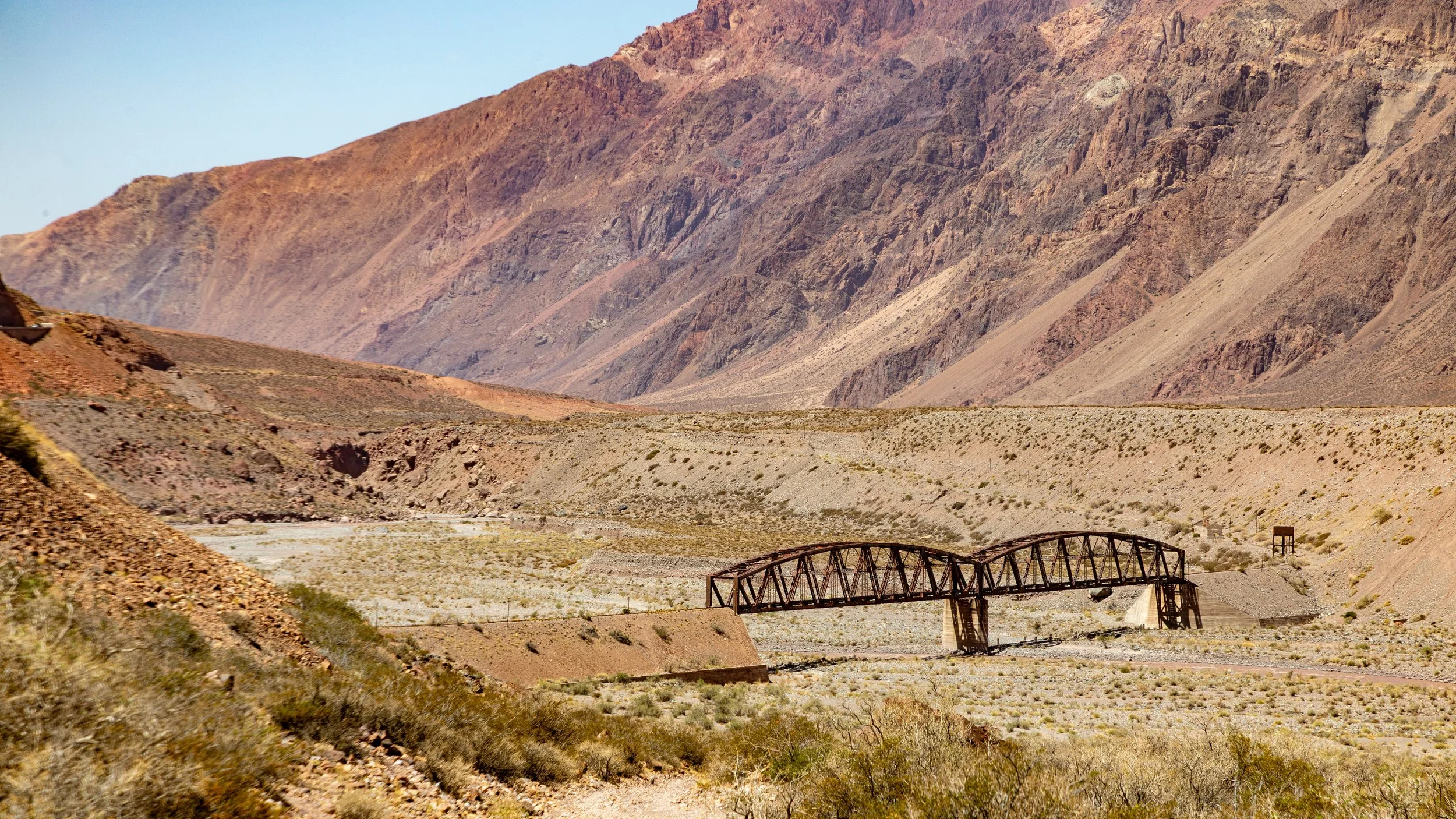
A railway used to run parallel to the highway to the Chilean border, but was too expensive to maintain through various landslides
Abandoned railway infrastructure
Continuing through the river valley towards the town of Uspallata
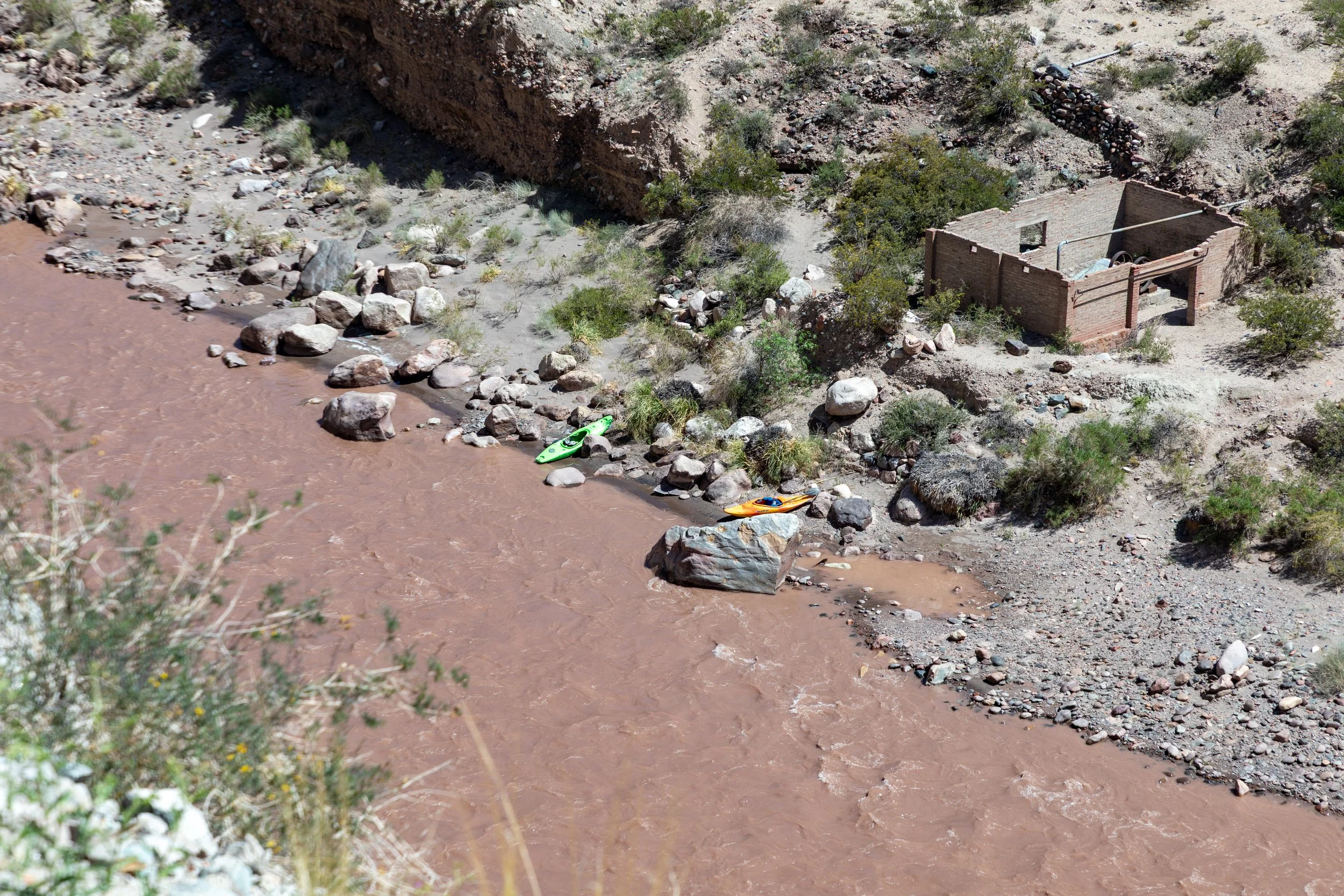
Kayakers enjoying the river
Inspecting the partially buried railway tracks
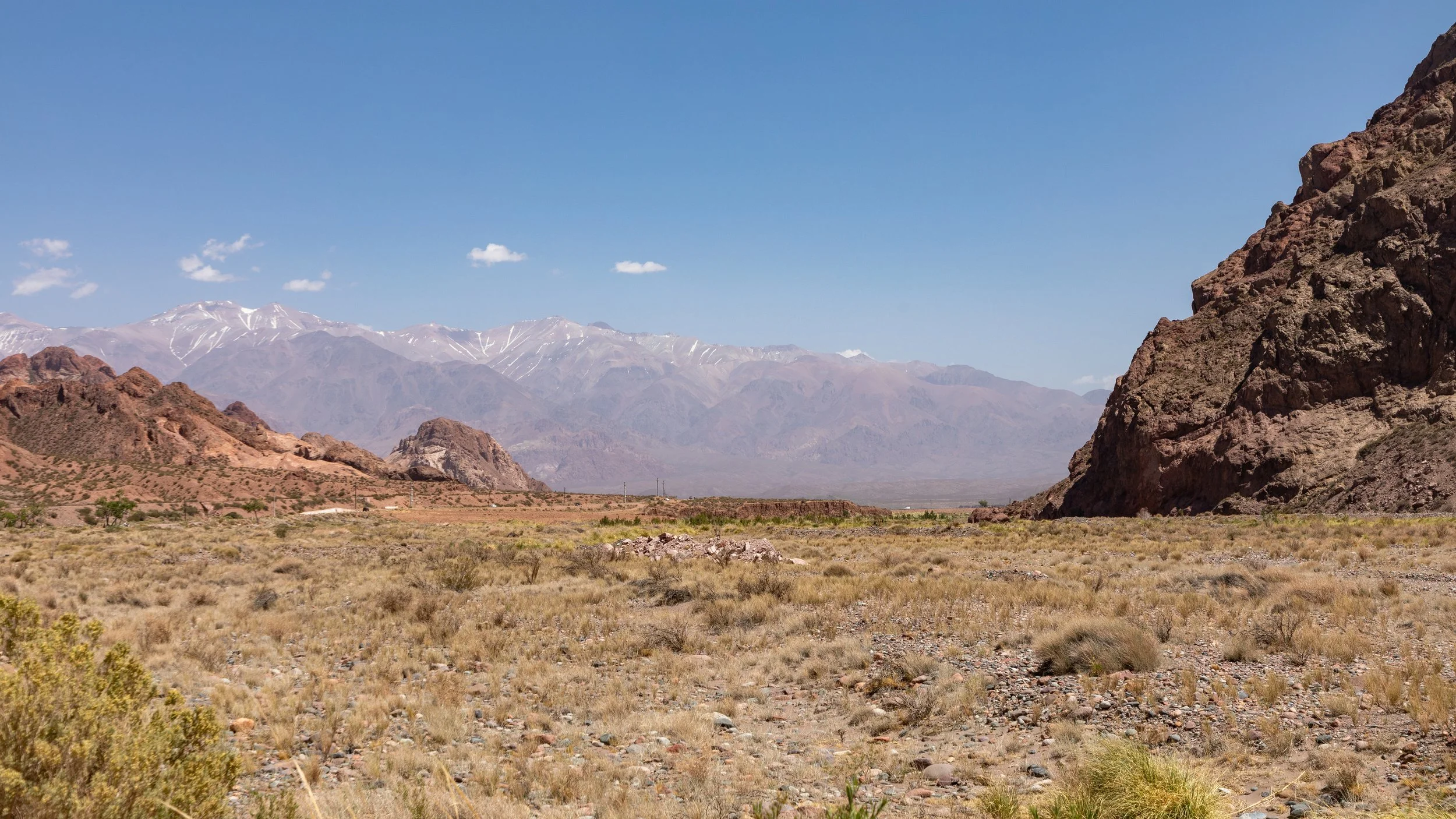
Getting closer to some of the snow-covered peaks
Parque Provincial Aconcagua
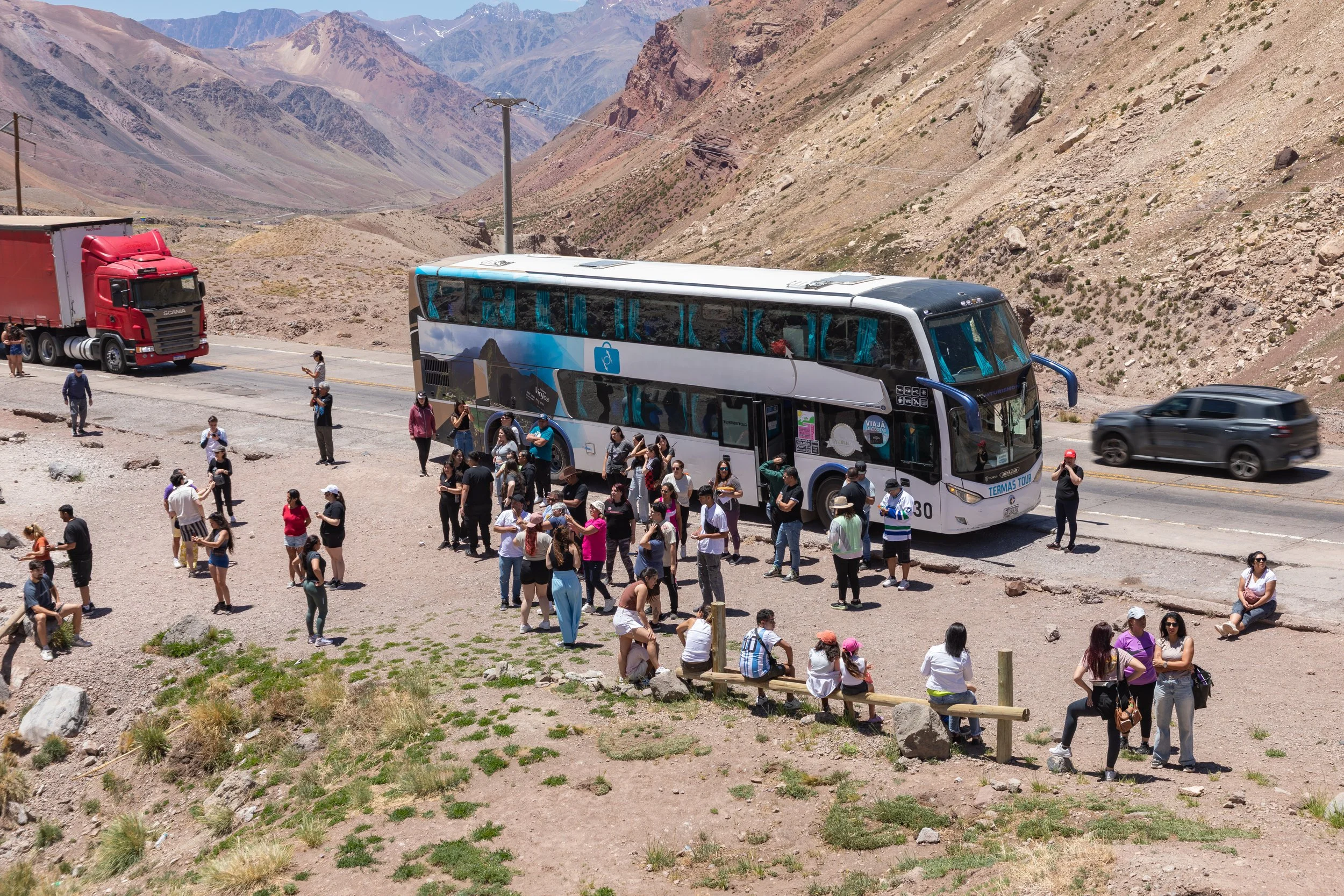
Tour buses stop at a lookout outside the park
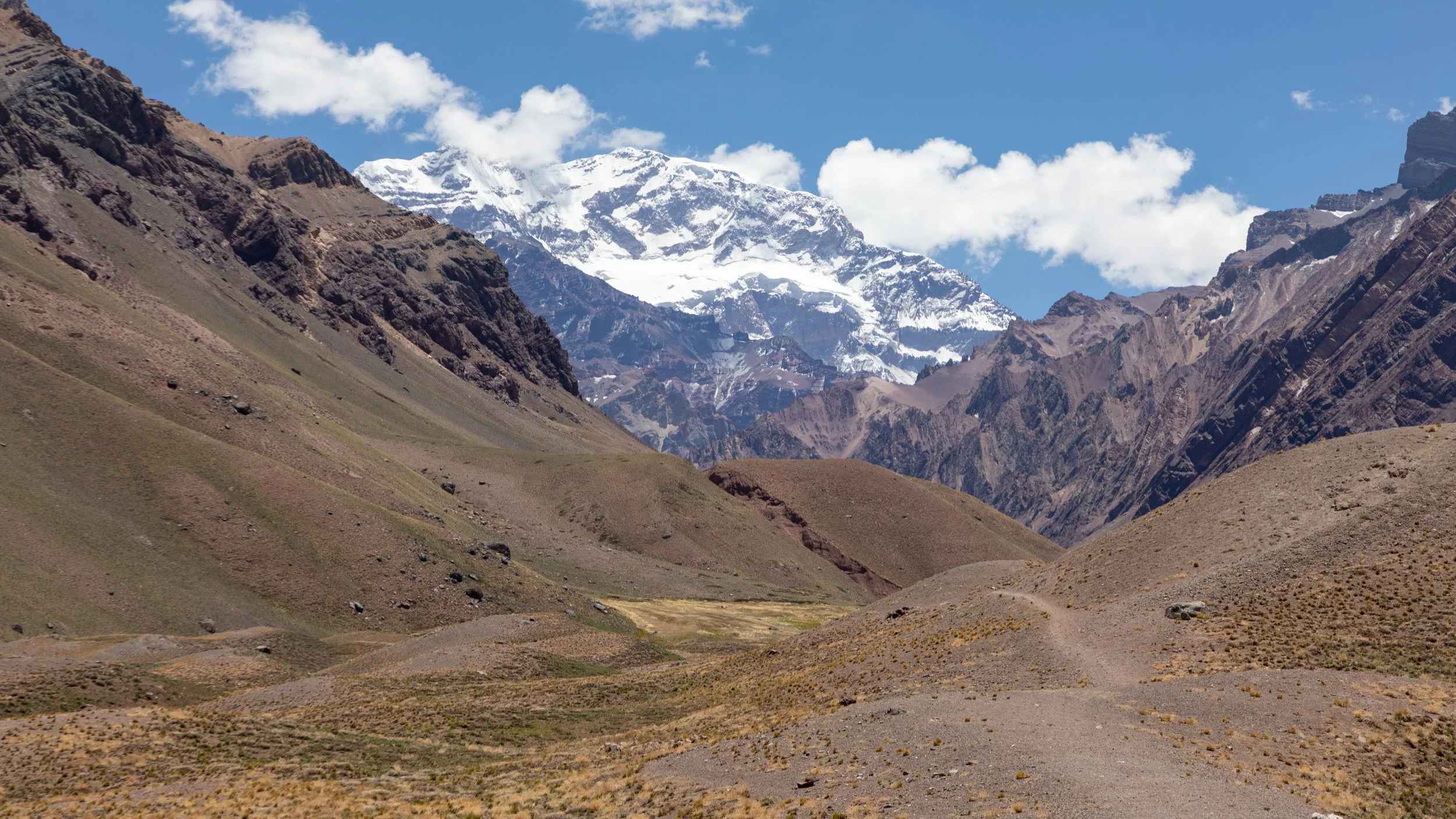
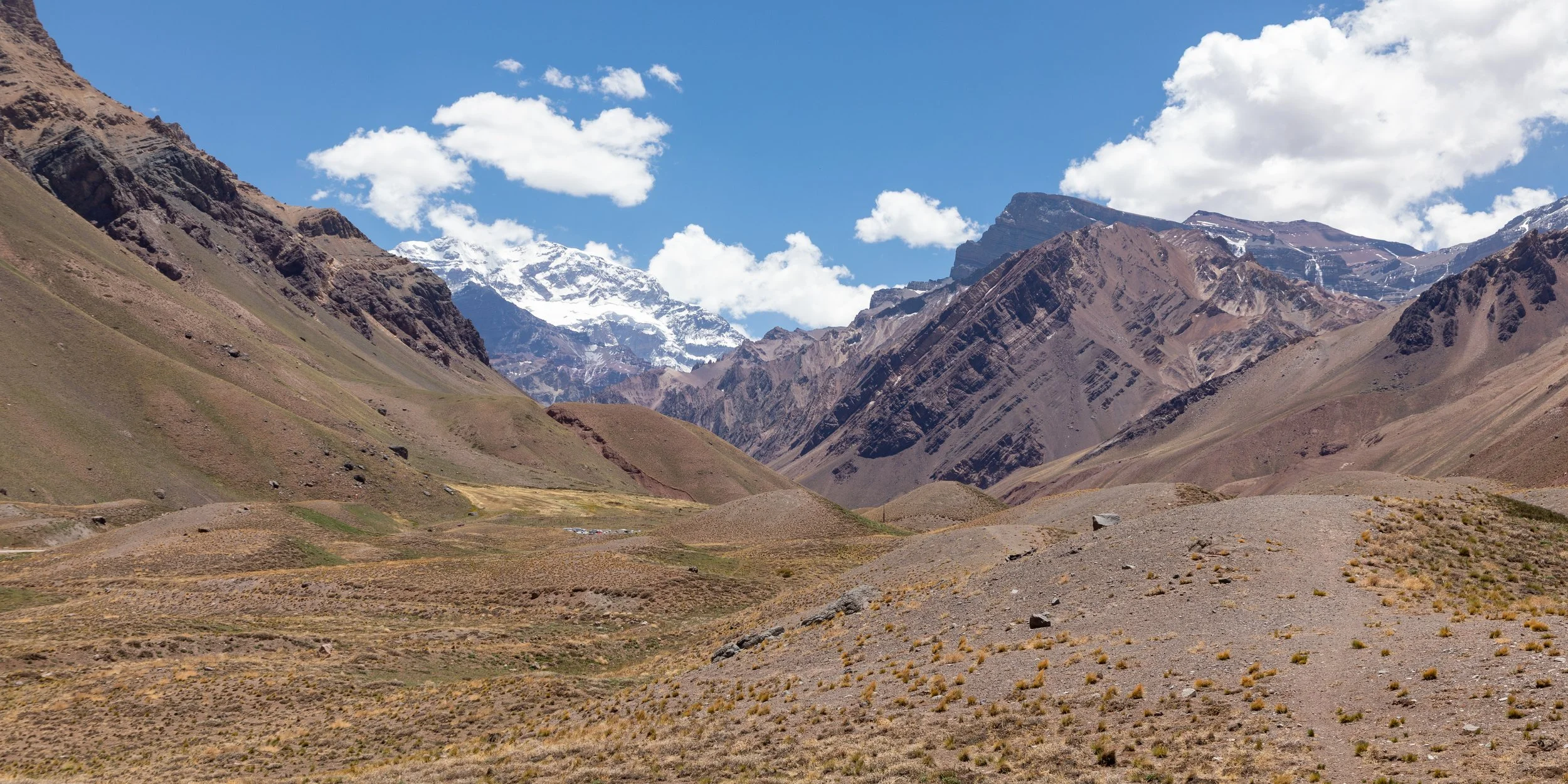
The Andes mountain view is the highlight of the park
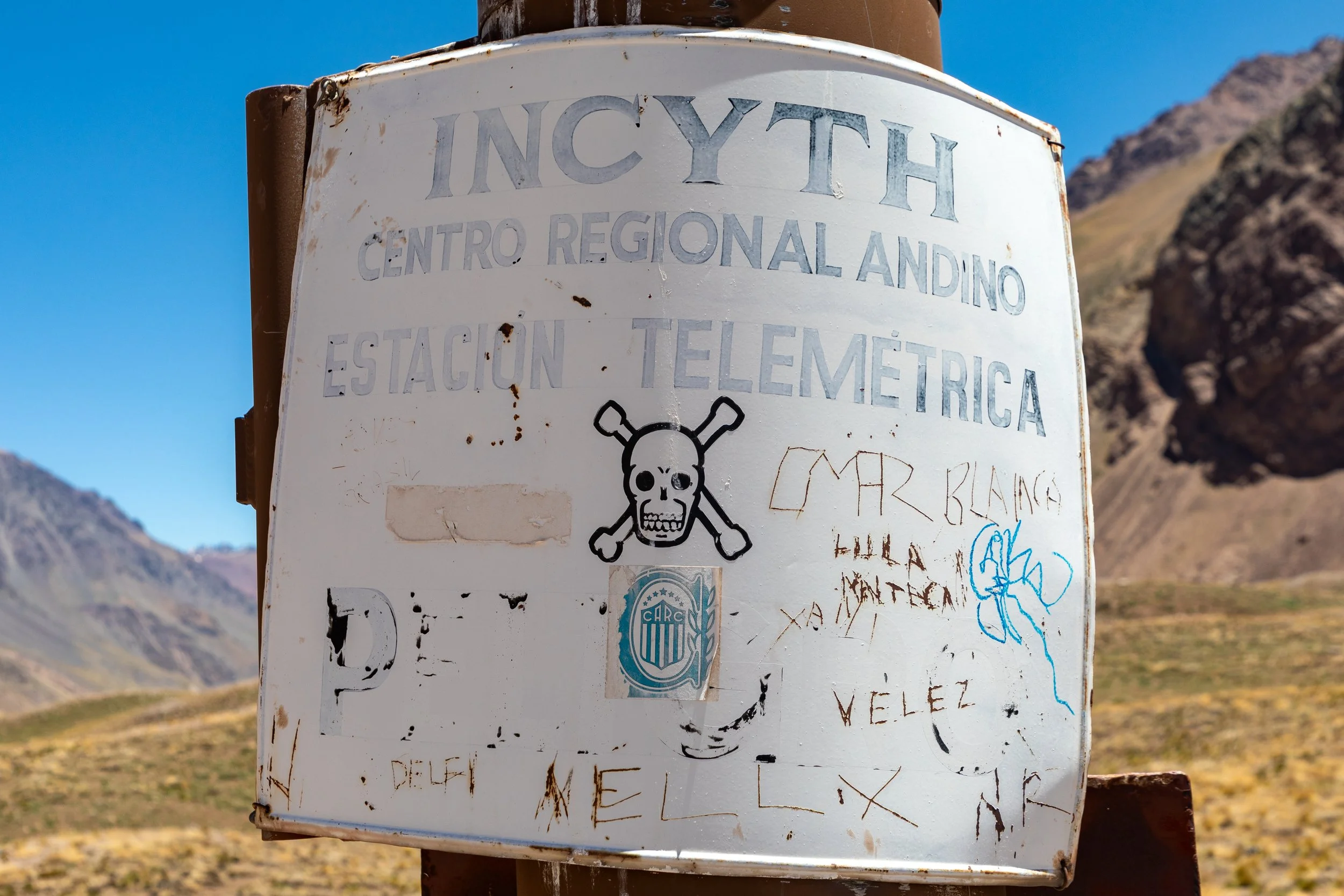
Apparently we should have been more careful
More of the beautiful scenery in the provincial park
Last view on our quick hike
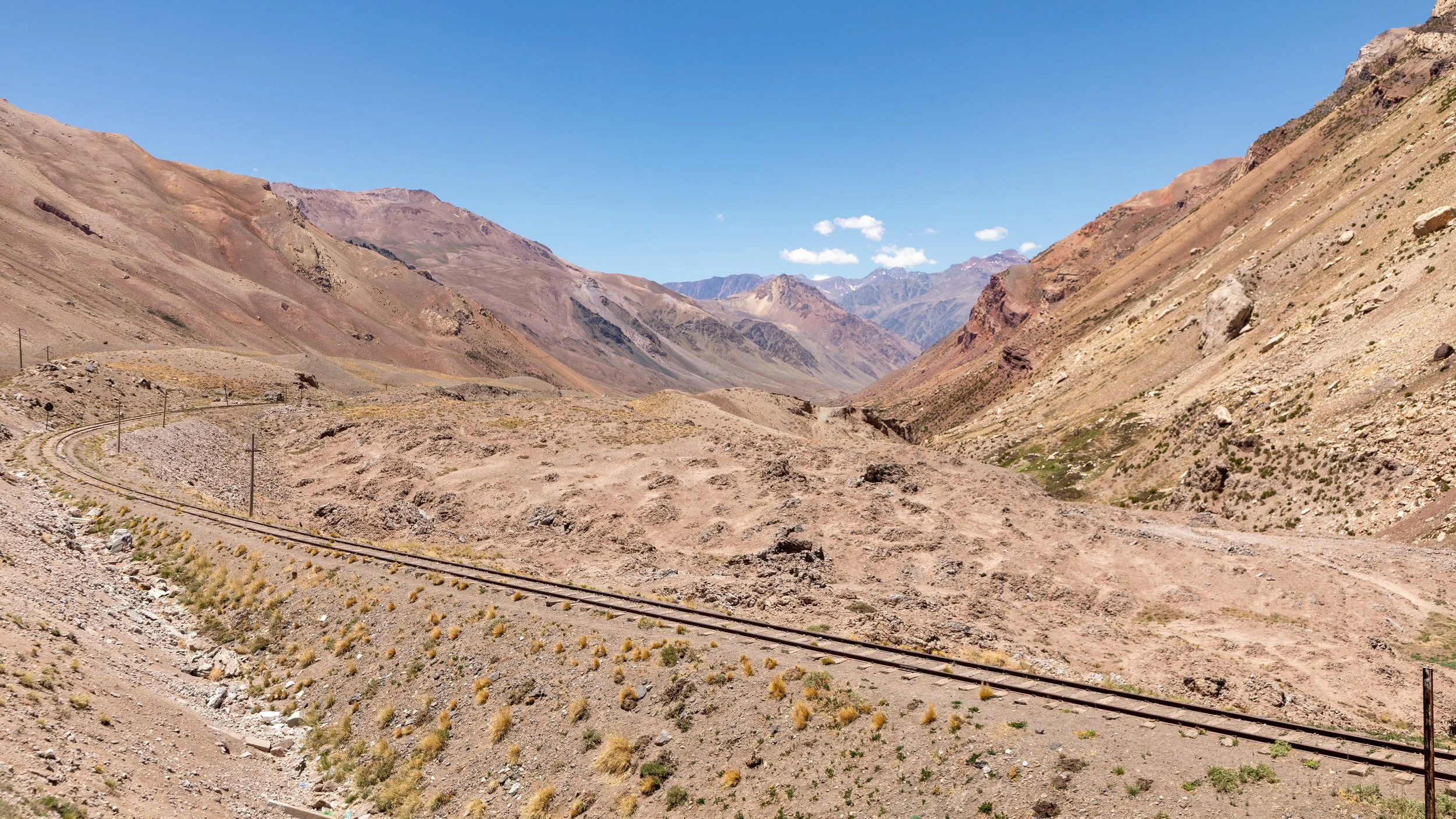
More of the last patch of track heading to the Chilean border
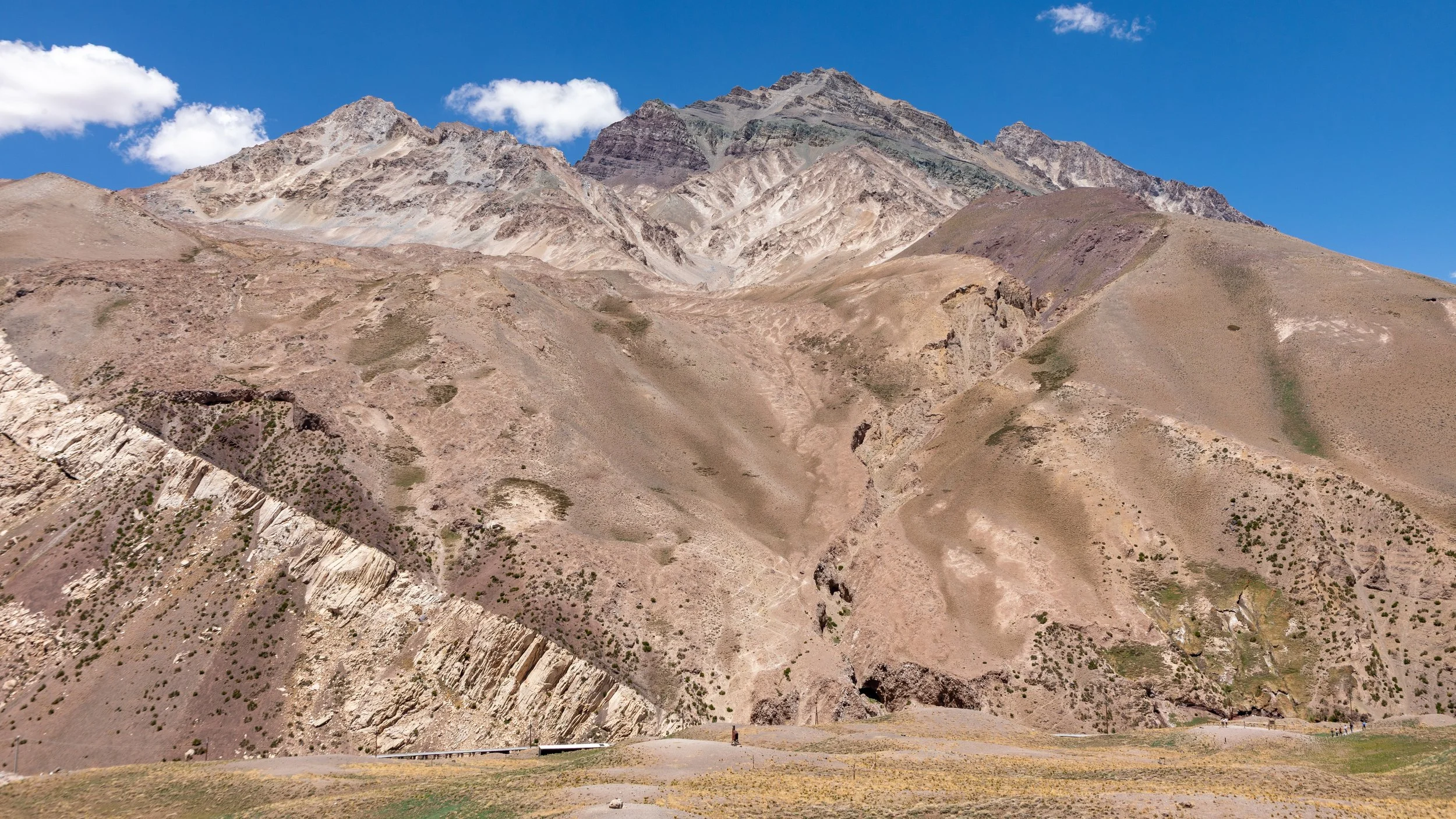
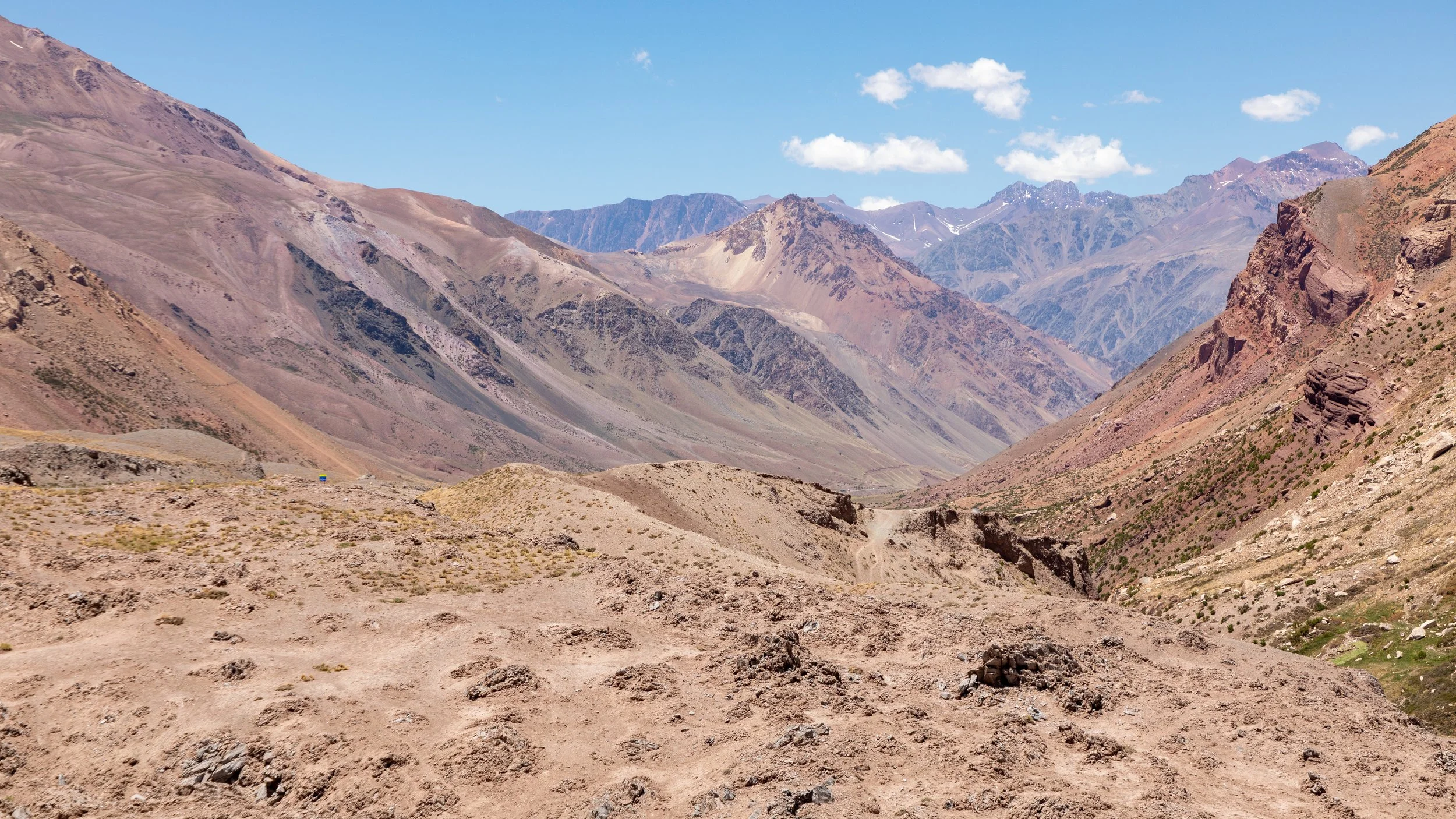
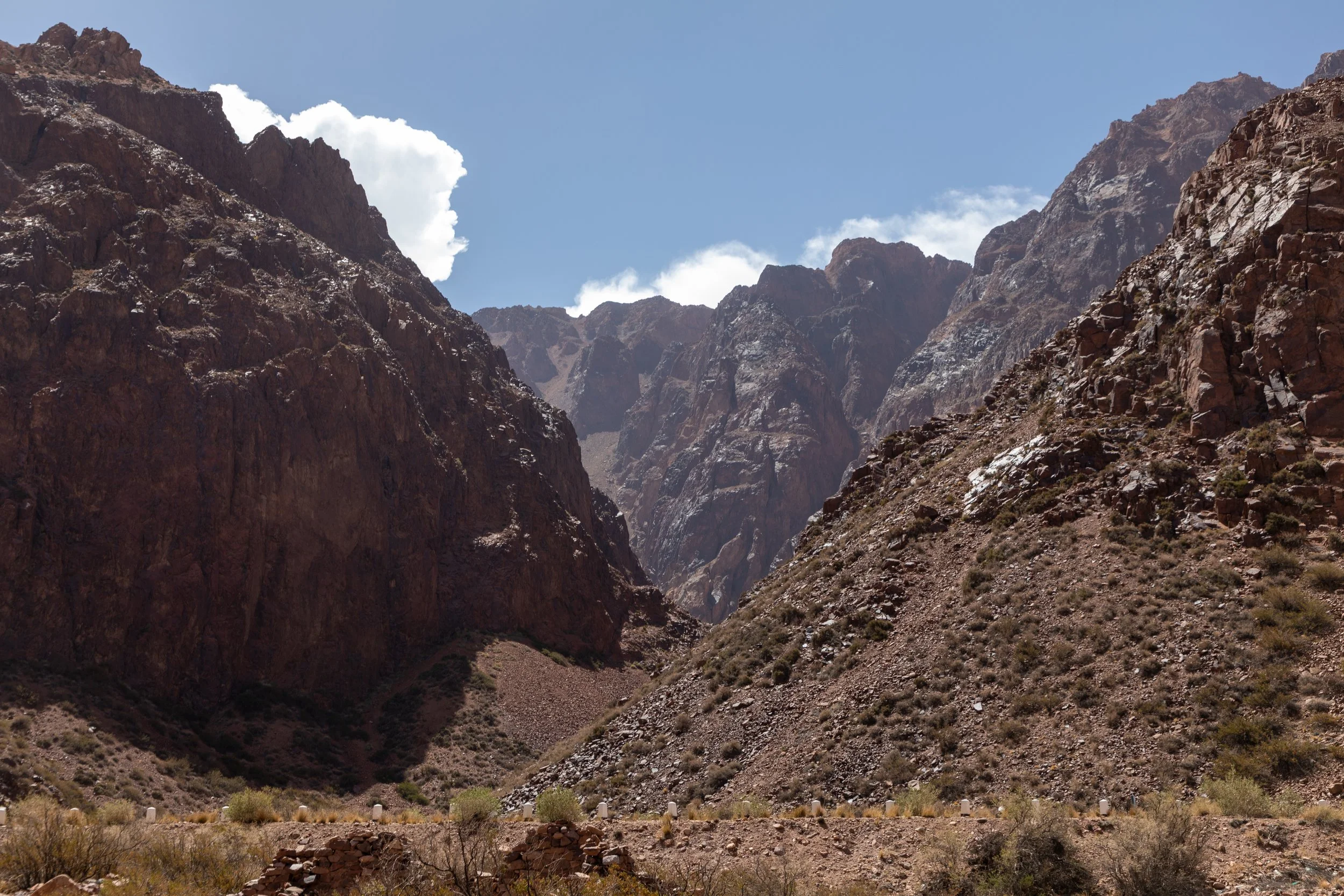
More of the varied mountain terrain with a wide mixture of colours
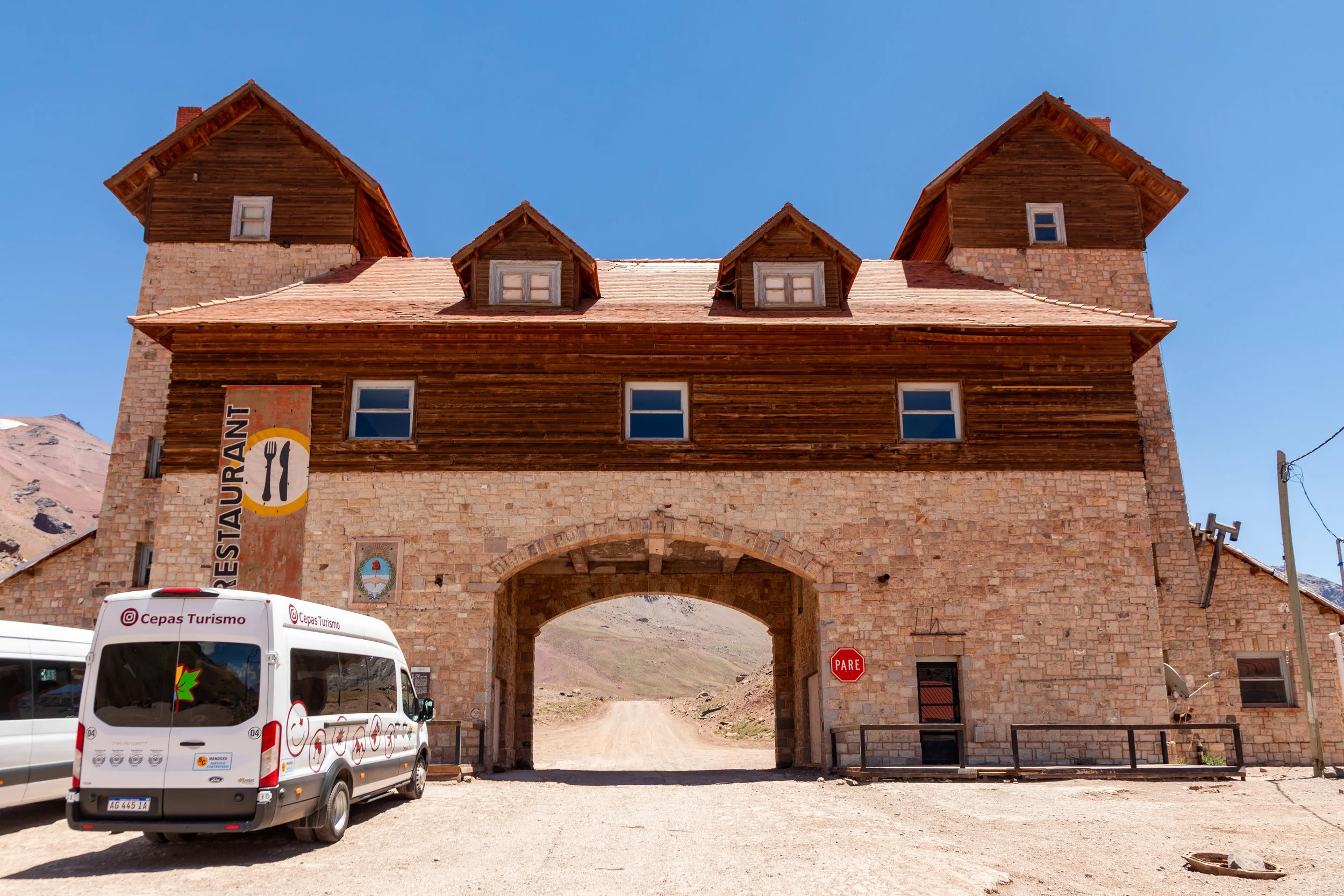
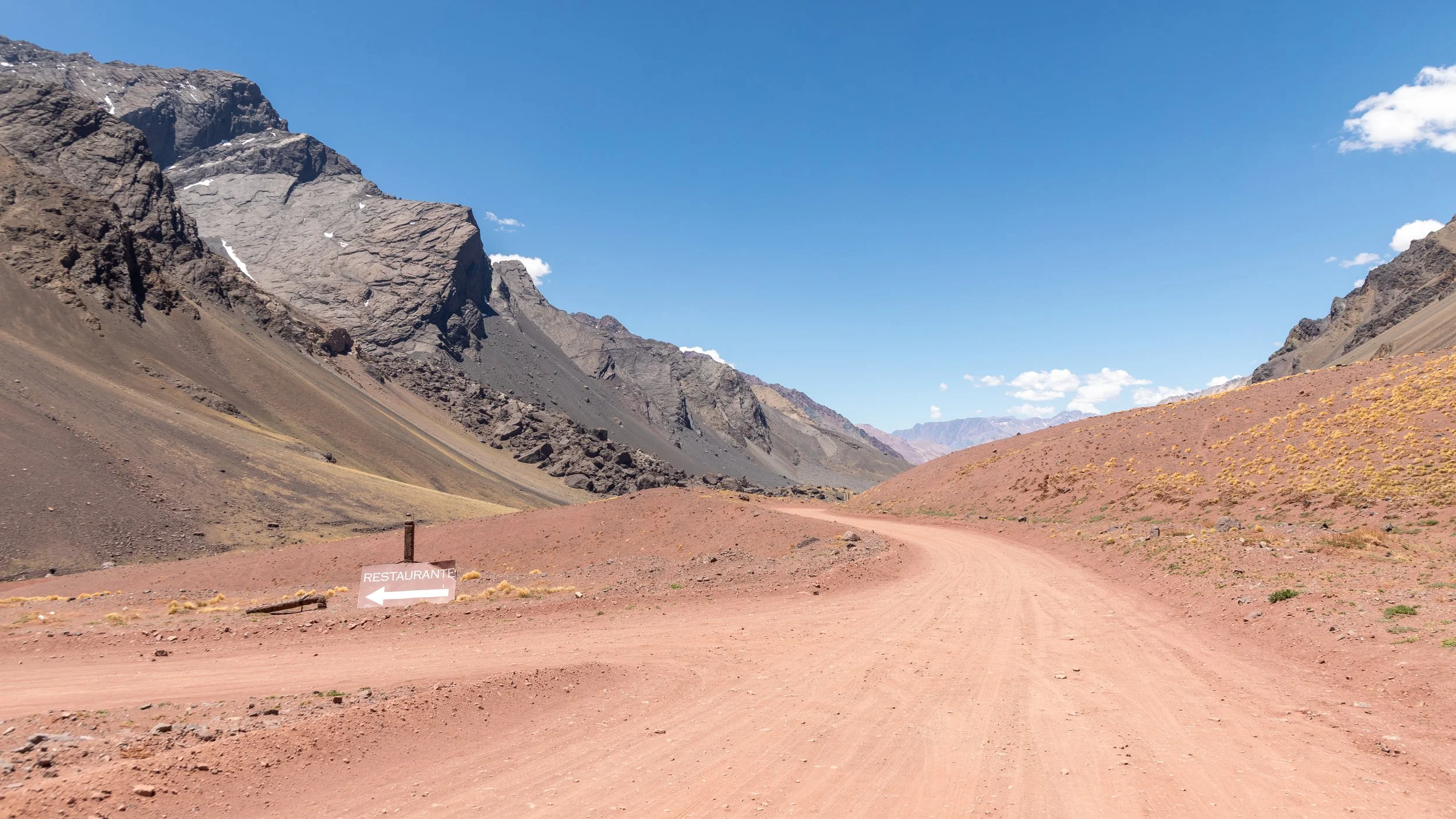
Arco de las Cuevas in Las Cuevas leads to the high mountain route to the Cristo Redentor pass into Chile, a windy, unpaved alternative to the modern highway tunnel
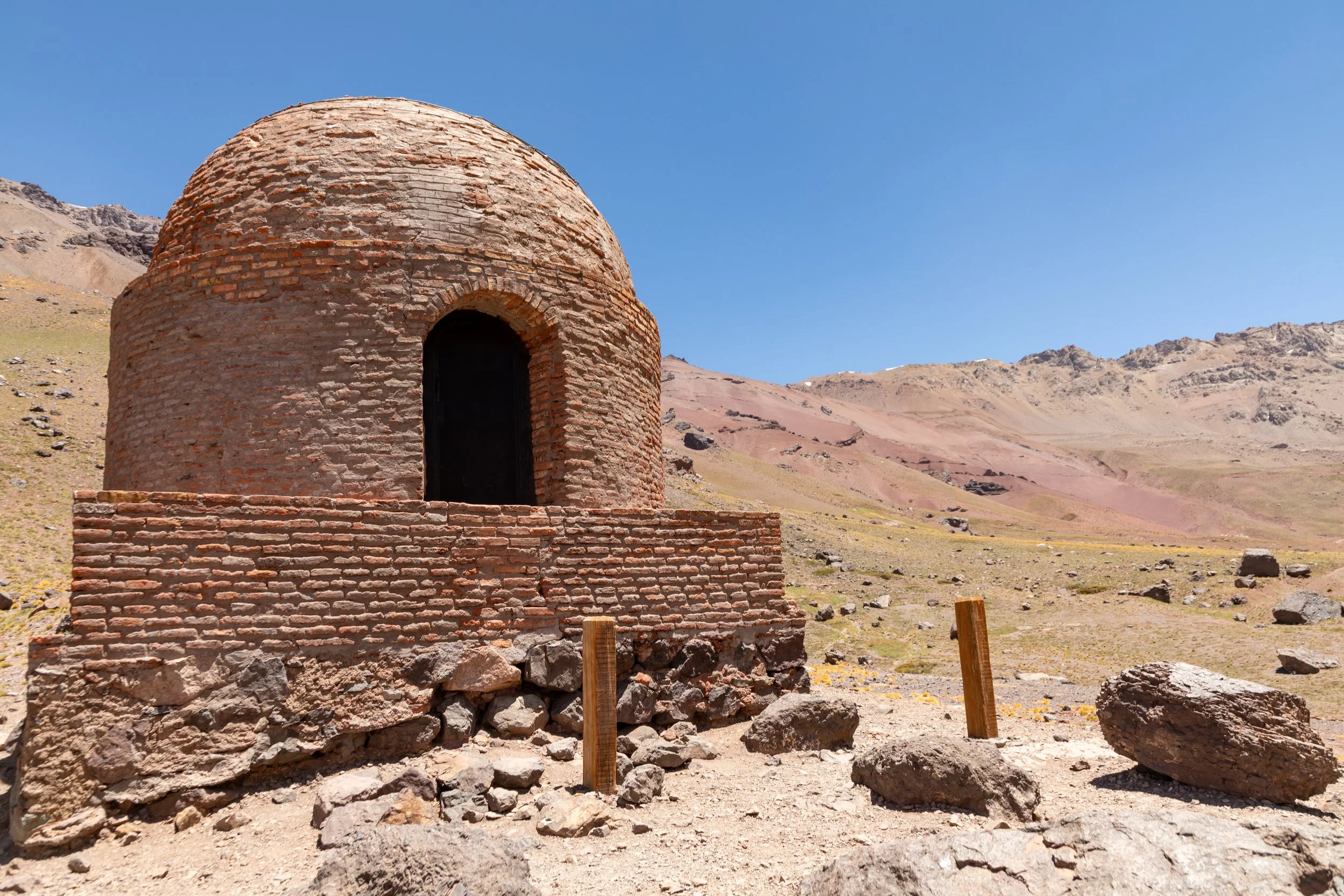
One of a number of Casuchas del Rey, or "King's Huts," a series of historical mountain shelters located in the Andes between Chile and Argentina, constructed in the 17th century to provide refuge for royal couriers who distributed mail across the mountain range
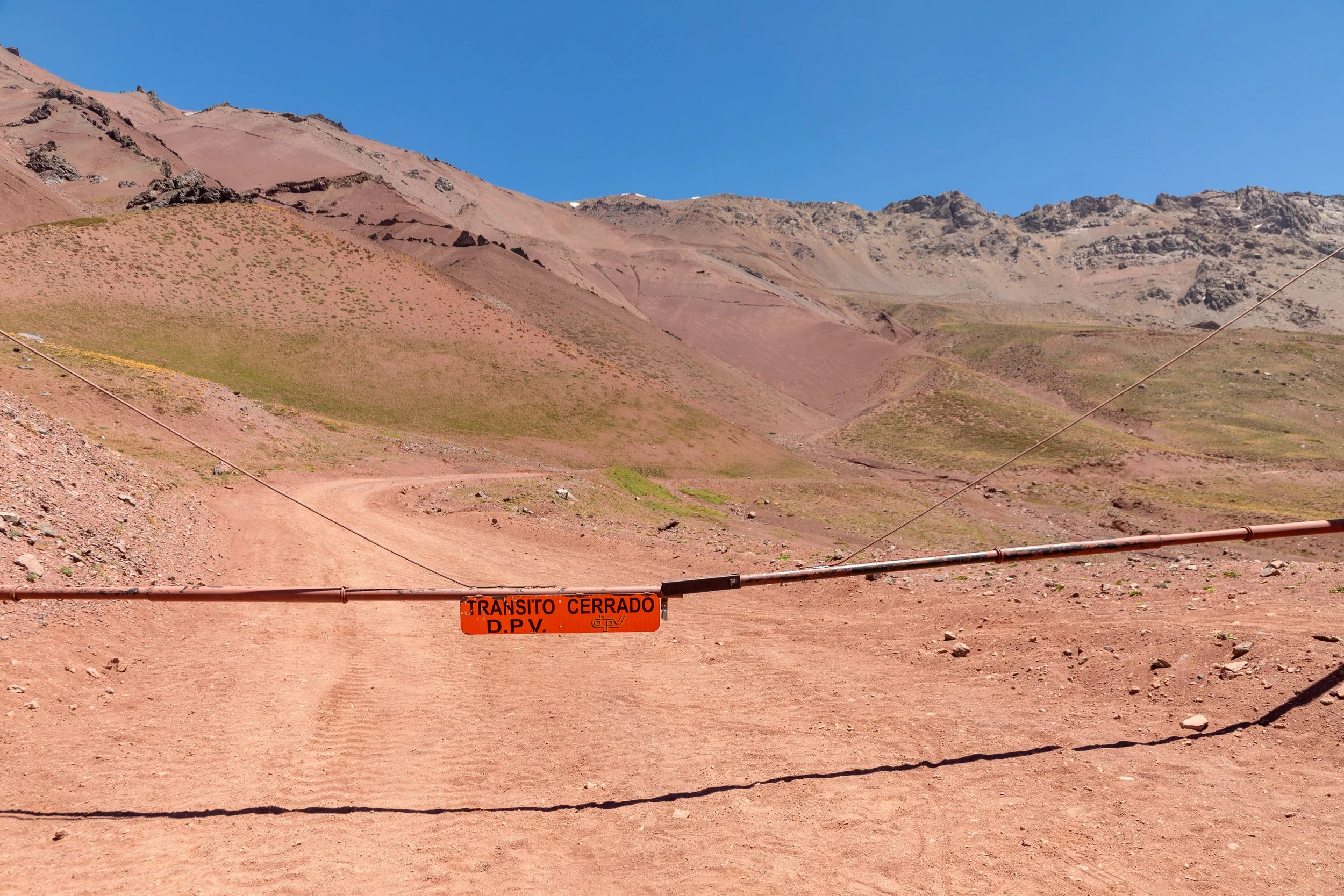
Unfortunately a landslide covered the road leading to Cristo Redentor pass, so we were unable to visit
The pass is no longer necessary as a new tunnel connects Argentina with Chile through the mountain
The start of the old dirt pass
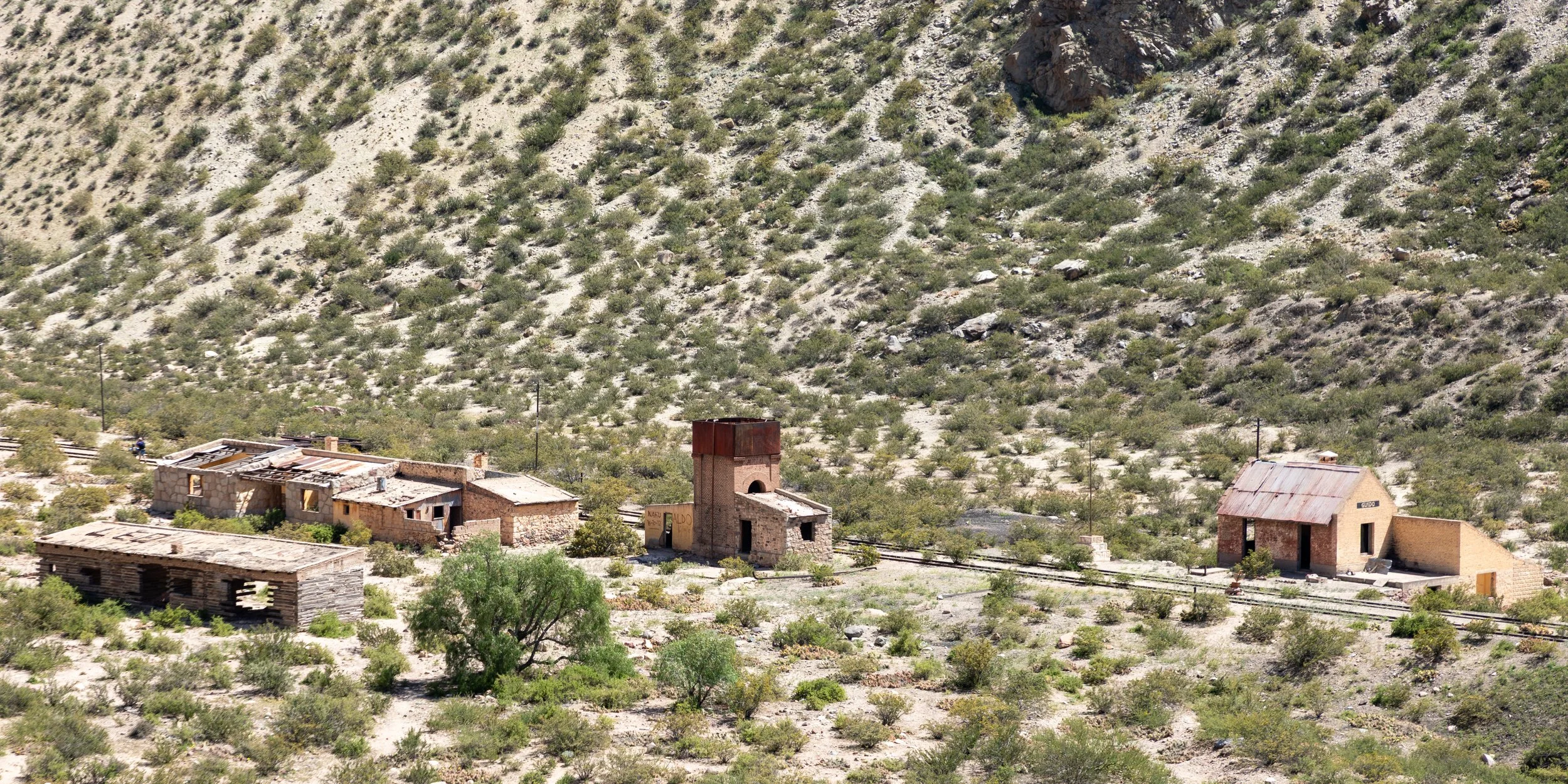
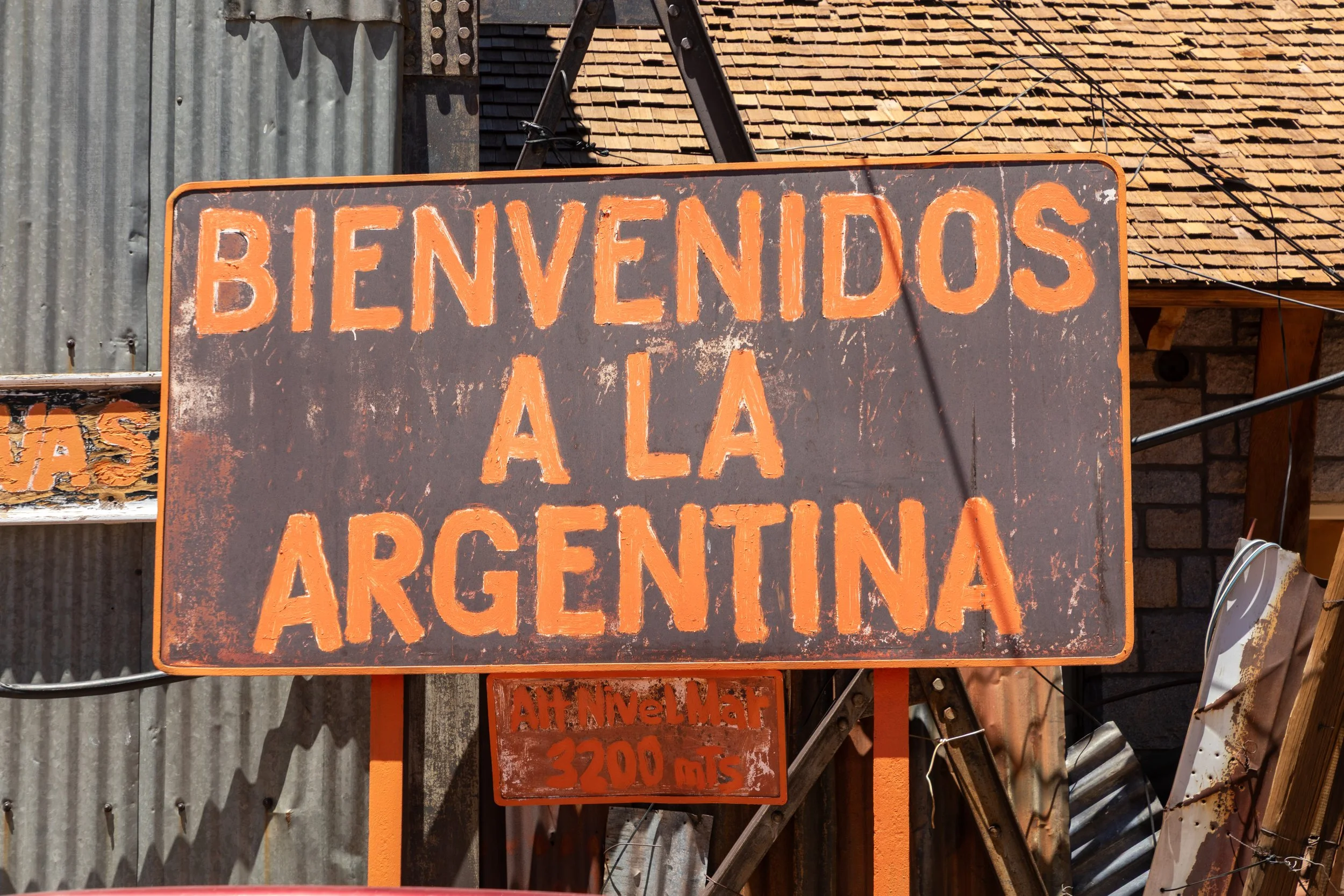
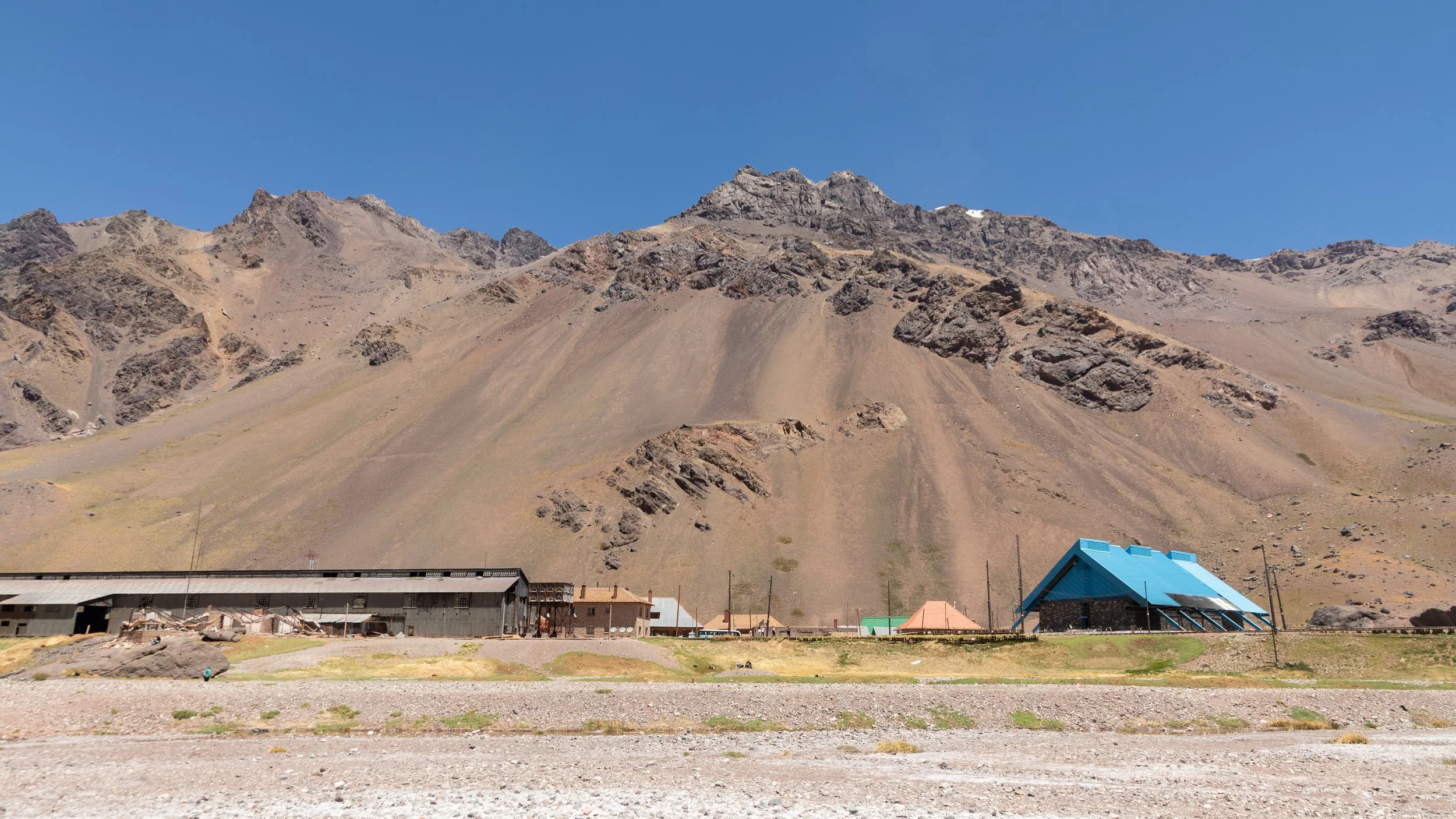
An old railway station welcomes visitors from Chile at this border service town of Las Cuevas
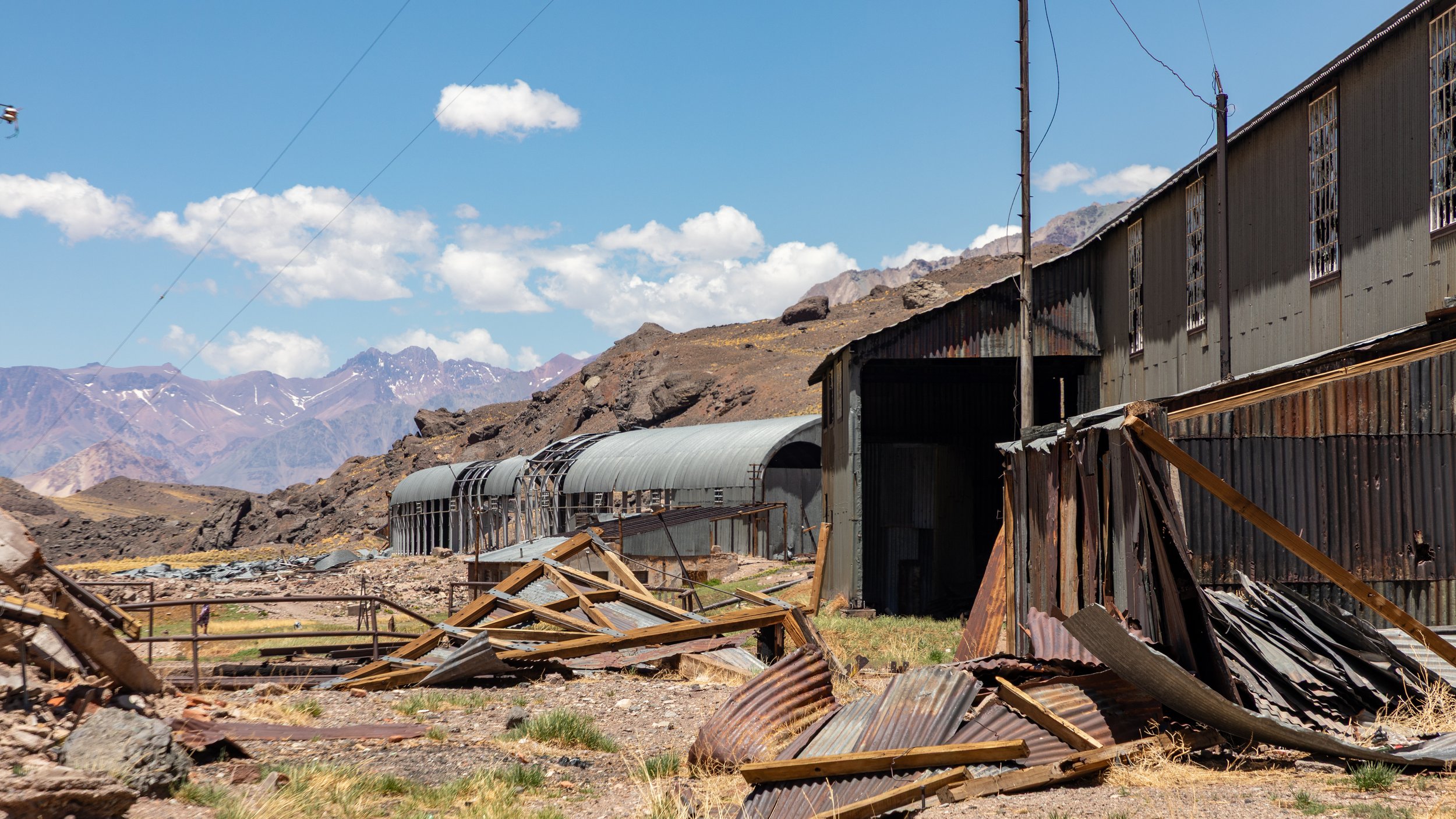
More of the derelict infrastructure
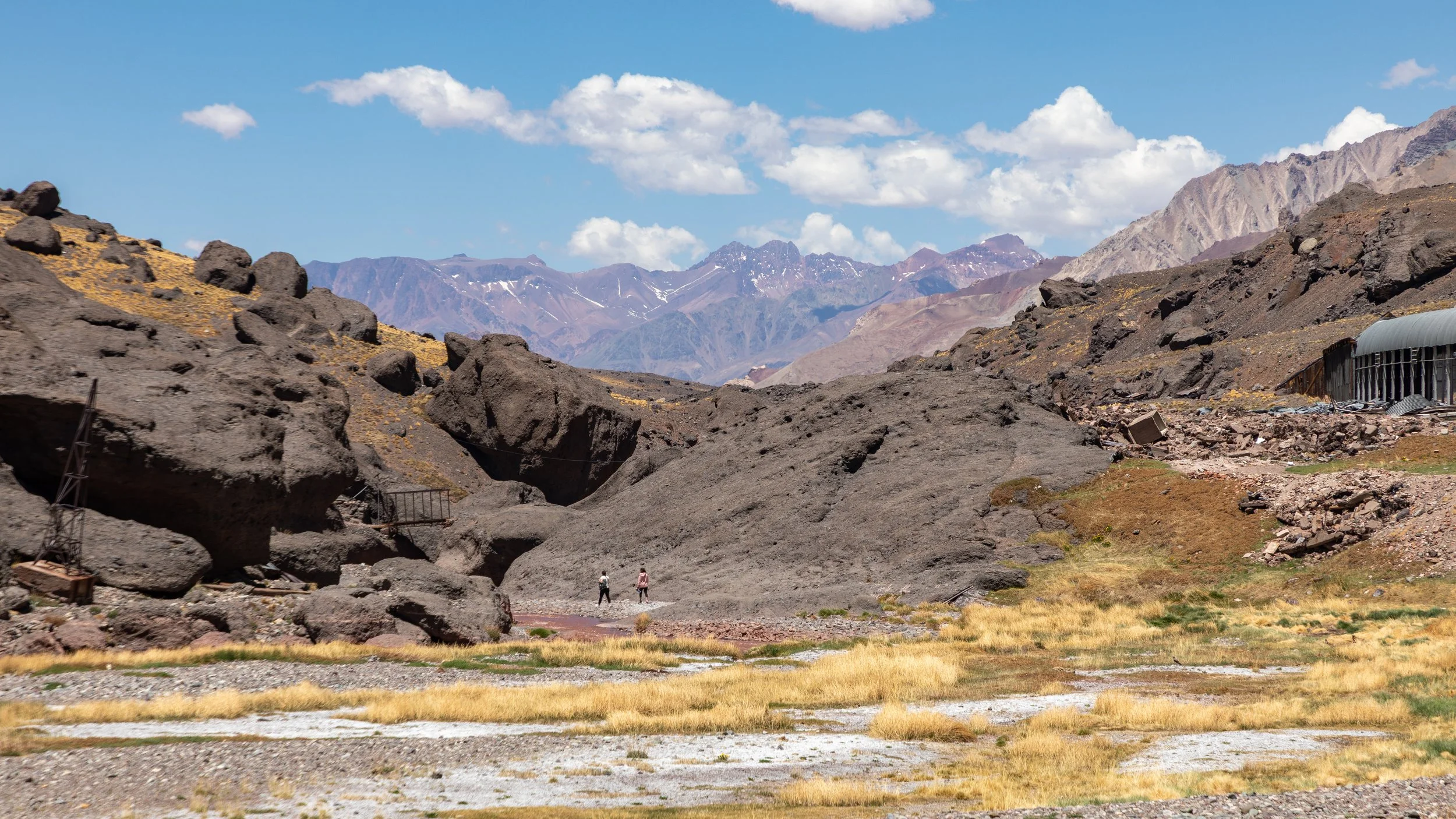
The Cuevas River narrows at the border
Looking towards Chile on the river bank
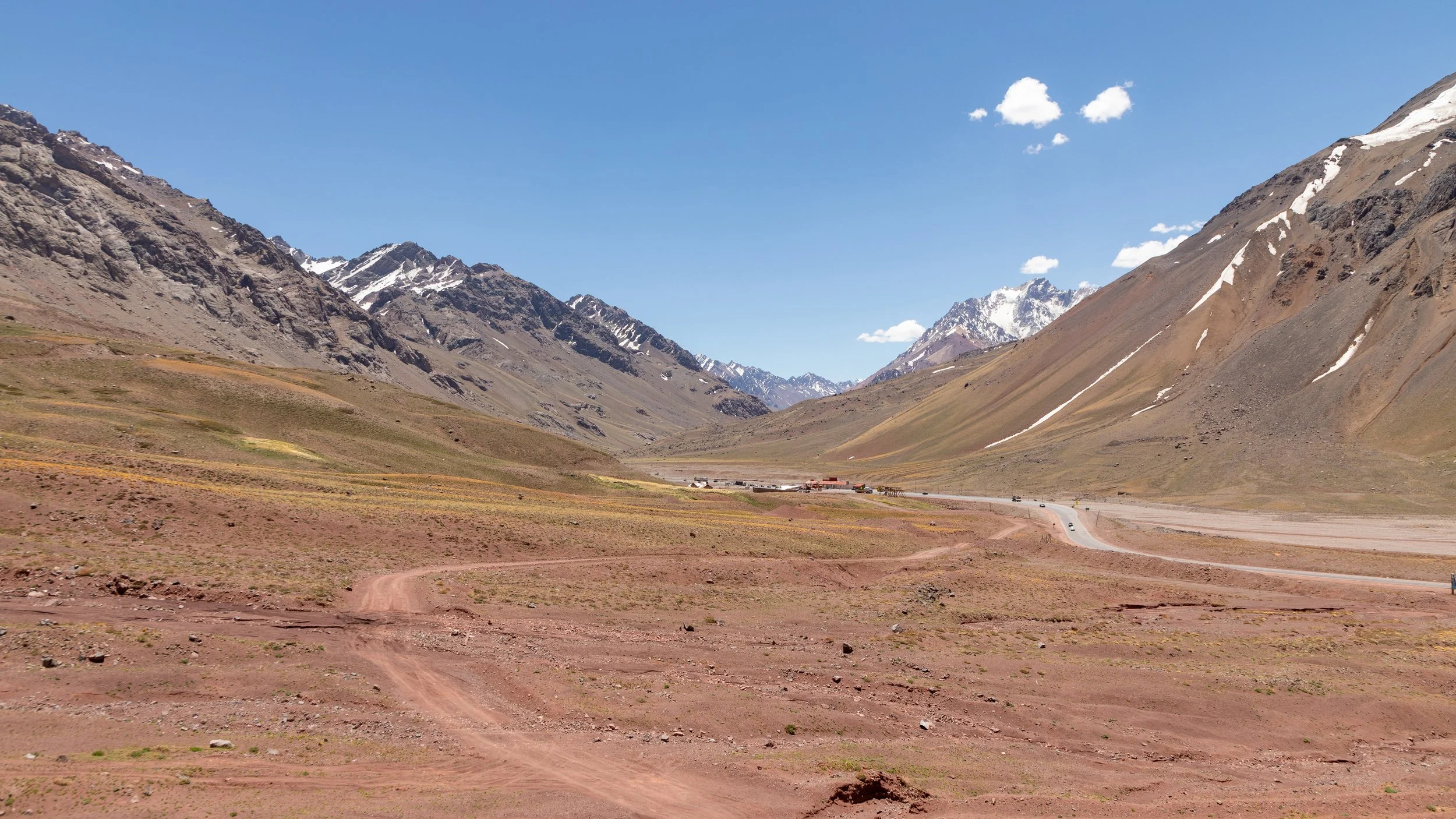
One last view of Las Cuevas before we headed back towards Mendoza
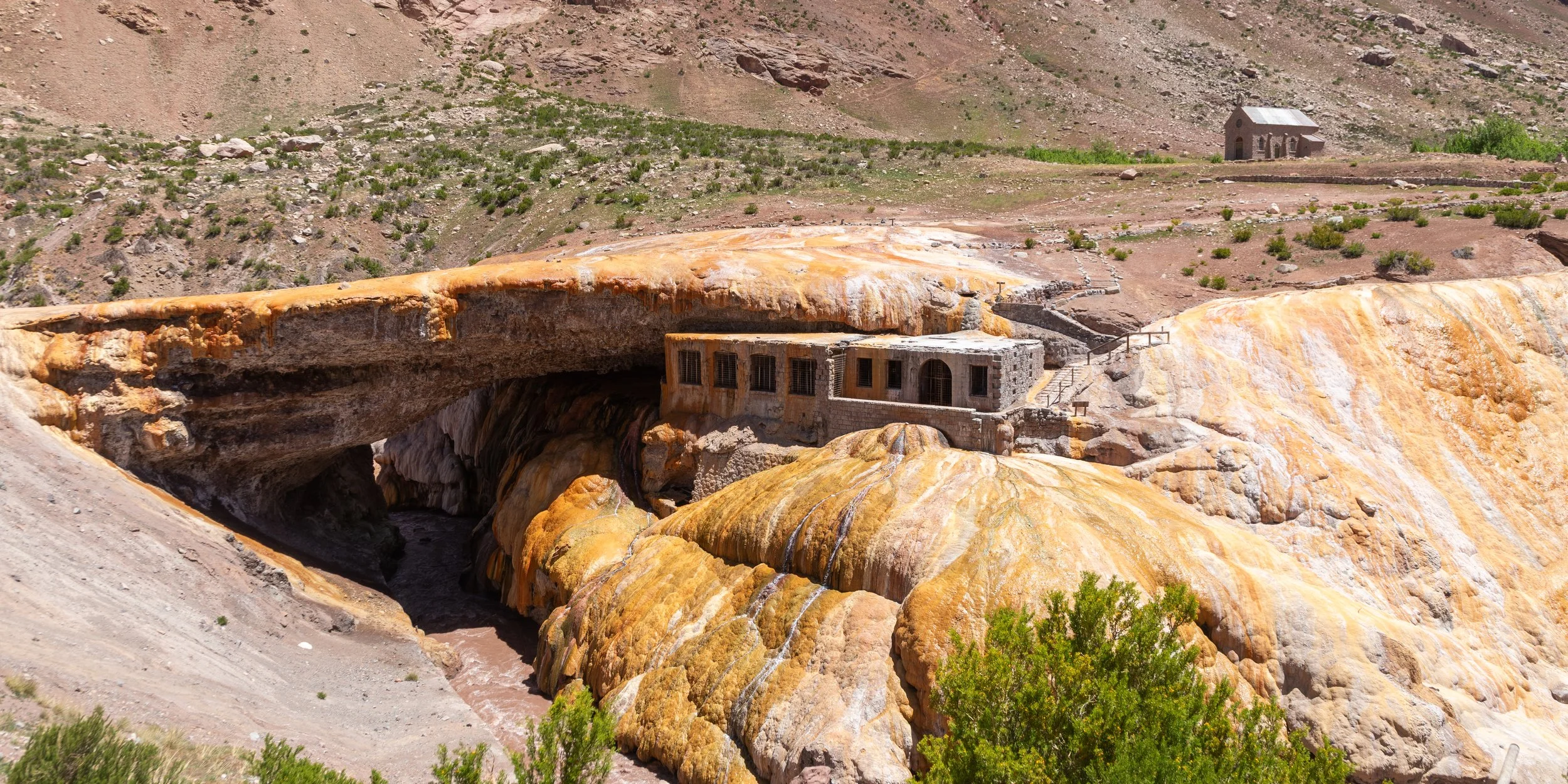
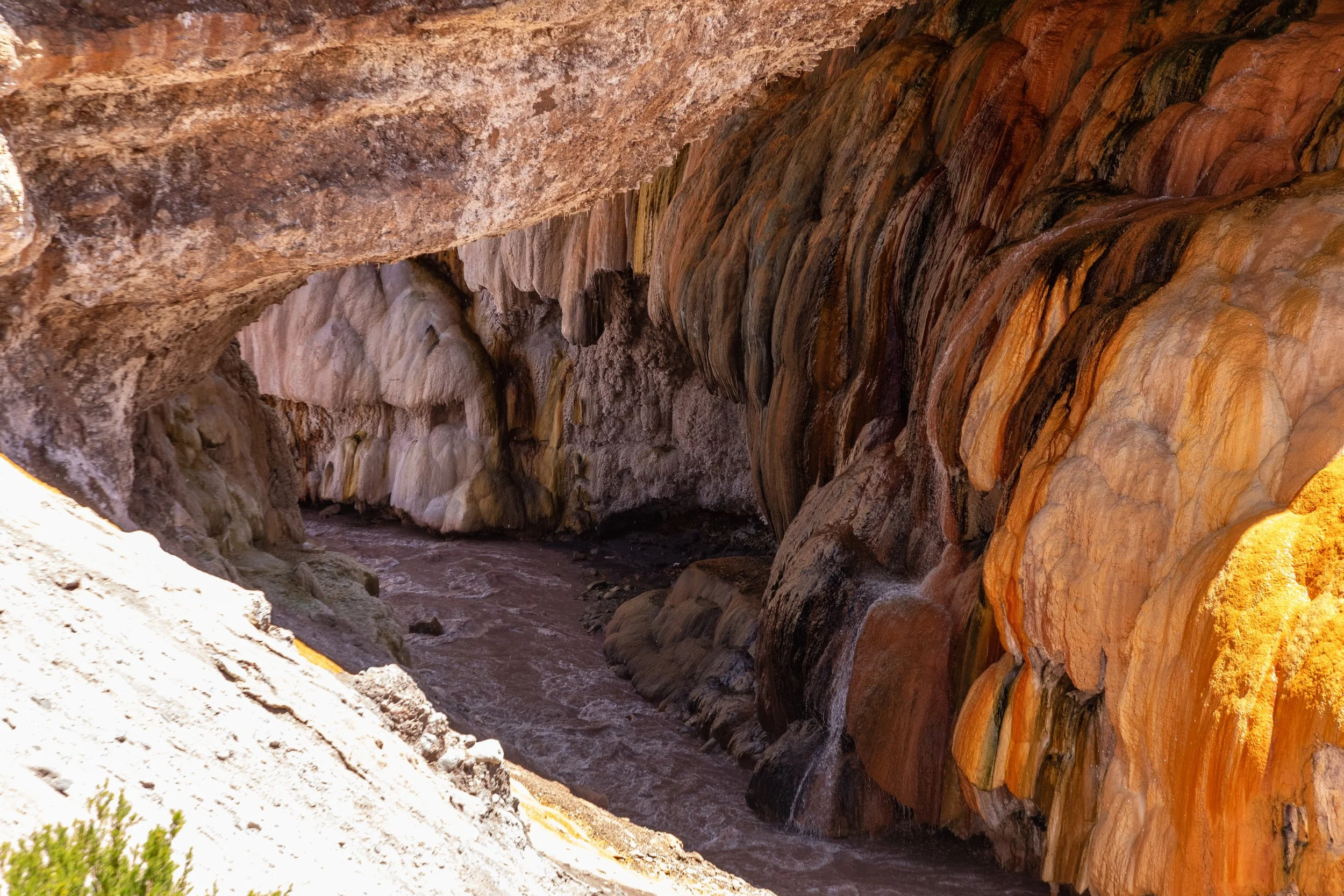
Puente Del Inca, Natural Bridge over the Cuevas River
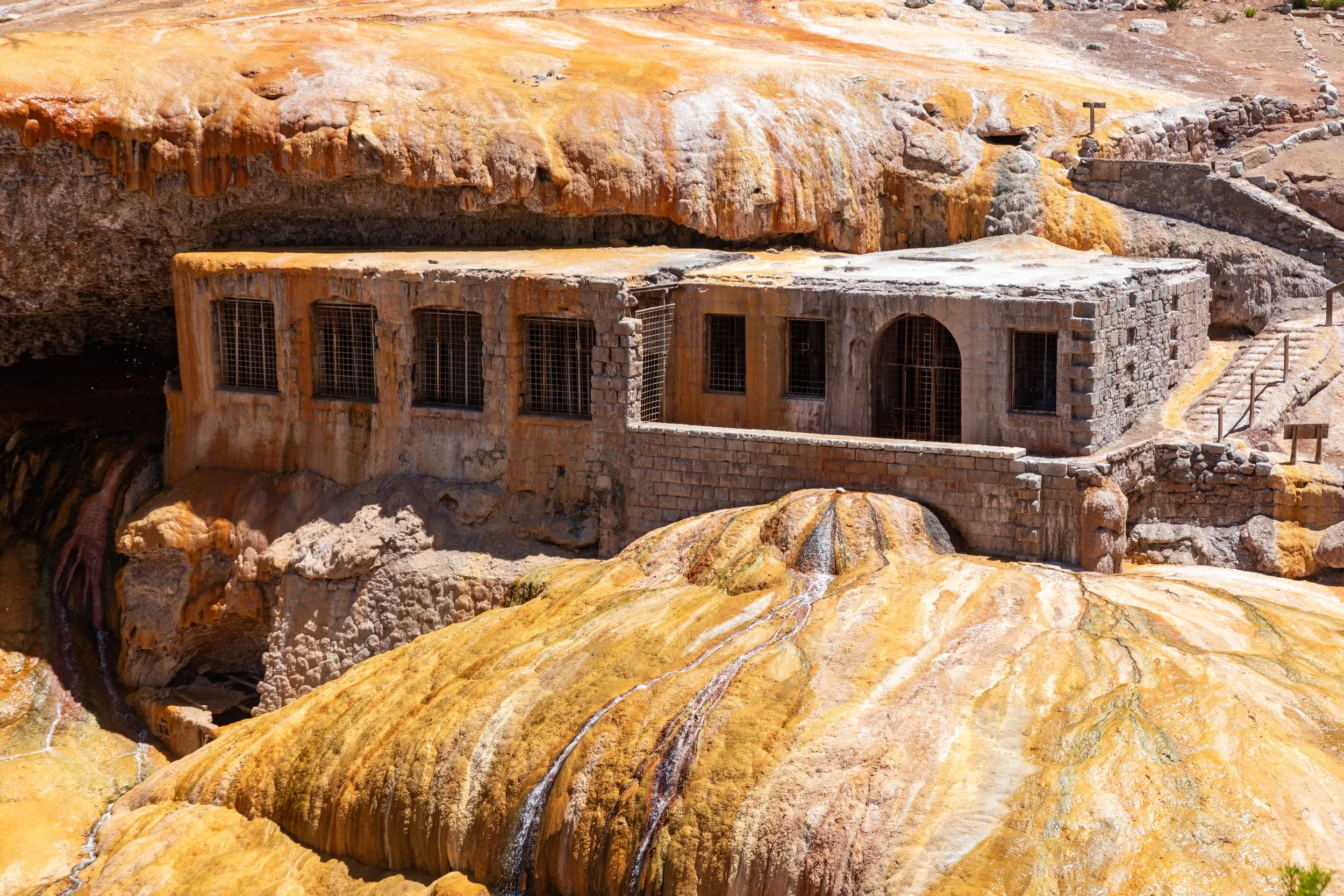
Remains of a hotel built in 1925 that featured thermal baths for the guests, later destroyed by an avalanche in 1965
Closeup of the natural bridge that was a stopping point for the Incas before becoming a modern tourist attraction
Railway bridges will likely last longer than the railway ran
Darker rocks contrast the red
Looking back on Hwy 7 through the valley as we continued driving back towards Mendoza
Seeing how the river cuts through the sandy hillside, it’s not surprising that avalanches are a common concern
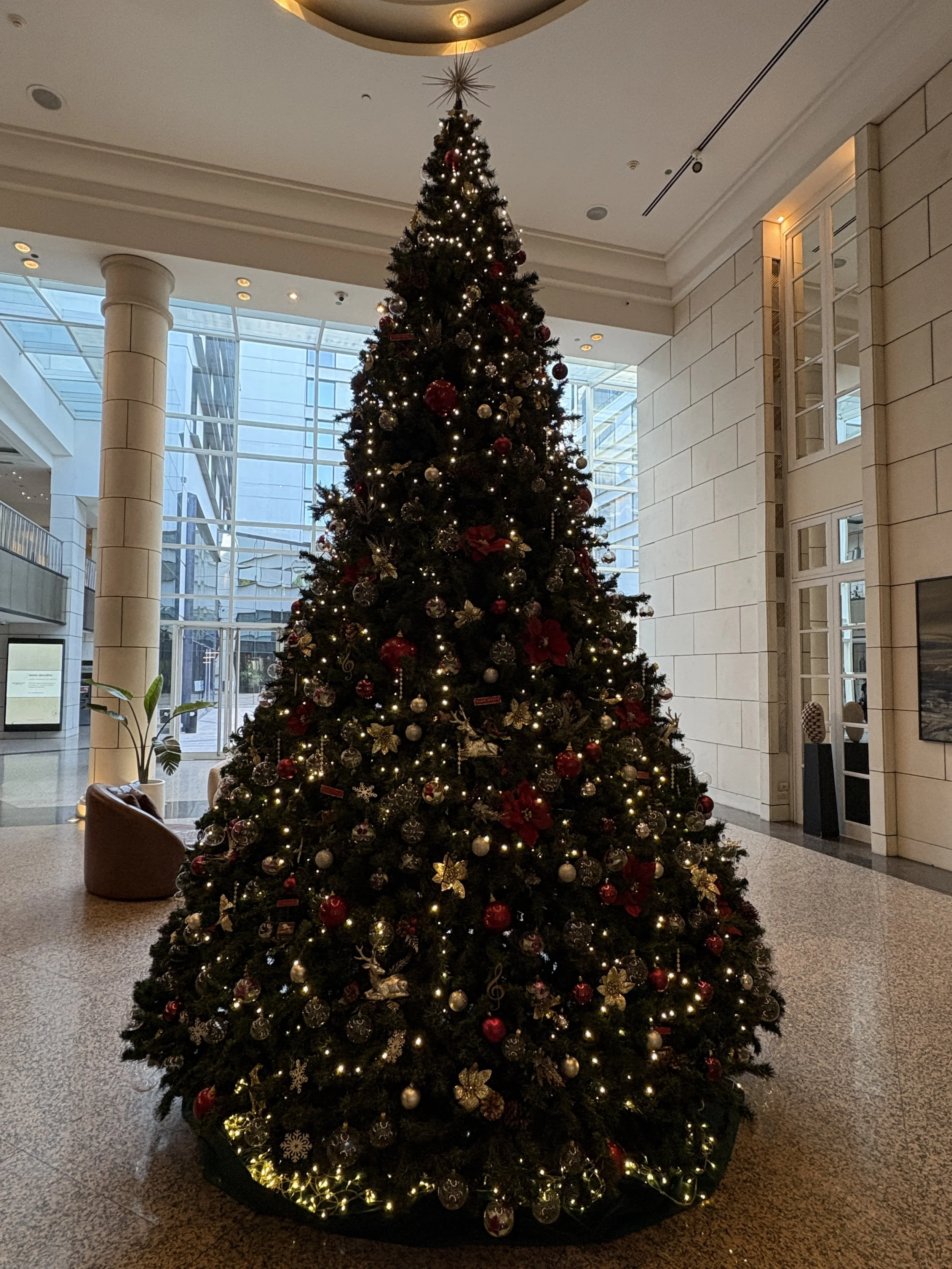
Back in Mendoza, the lobby of our hotel, now ready for the holidays
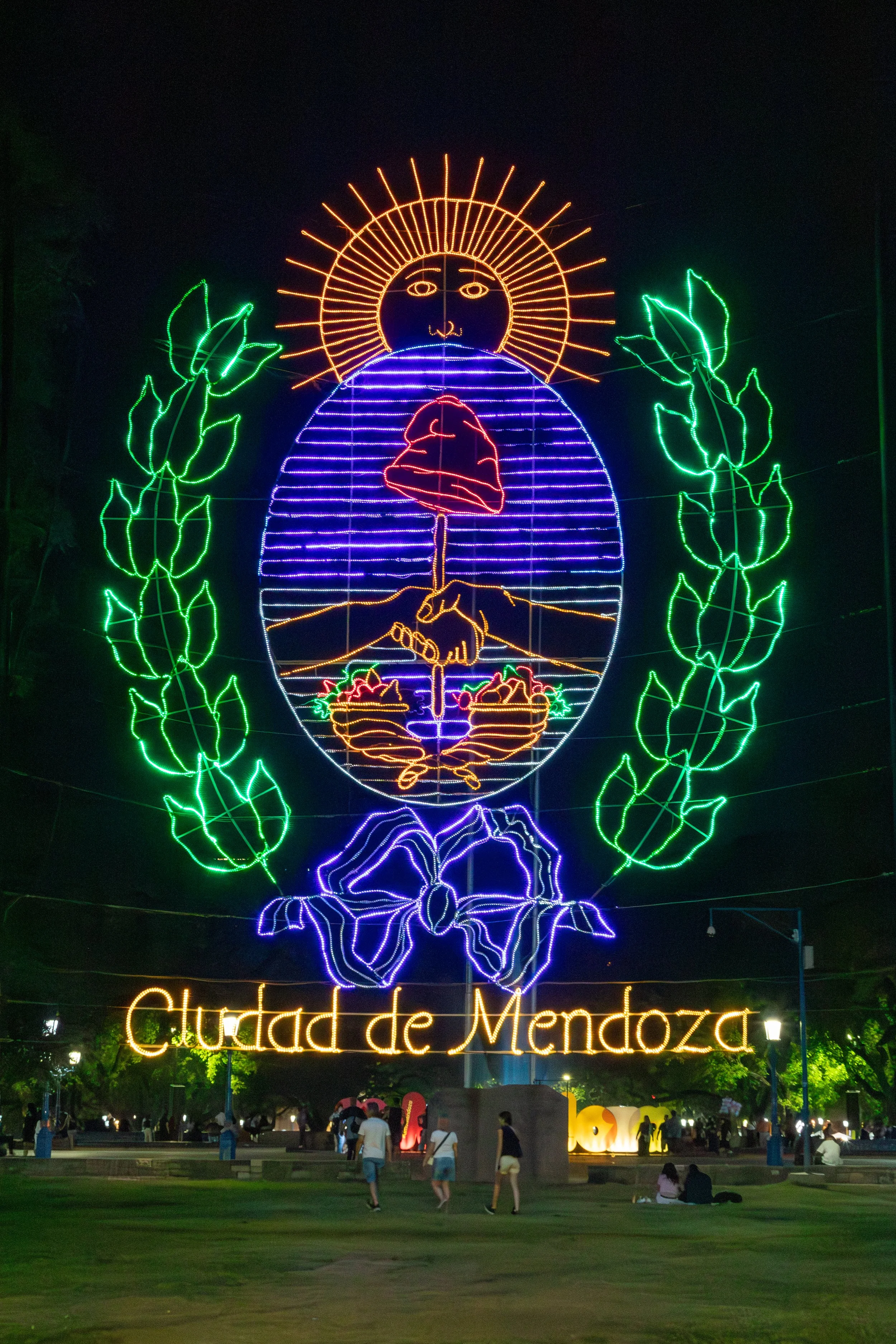
After dinner, Tom captured some of the Christmas decorations in Independence Plaza outside our hotel
For our last meal in Mendoza, we want back to the pizza place we had discovered on the first night. Not the most Argentinian of cuisine, but very good Napoleon Pizza that hit the spot after a day of driving.
Nov 24
After breakfast, we made our way to the airport for our flight back to Santiago. Once back in Santiago, we made our way back to the hotel and headed out to explore more of the city.
Bicentennial Park was a short walk from our hotel and home to numerous monuments
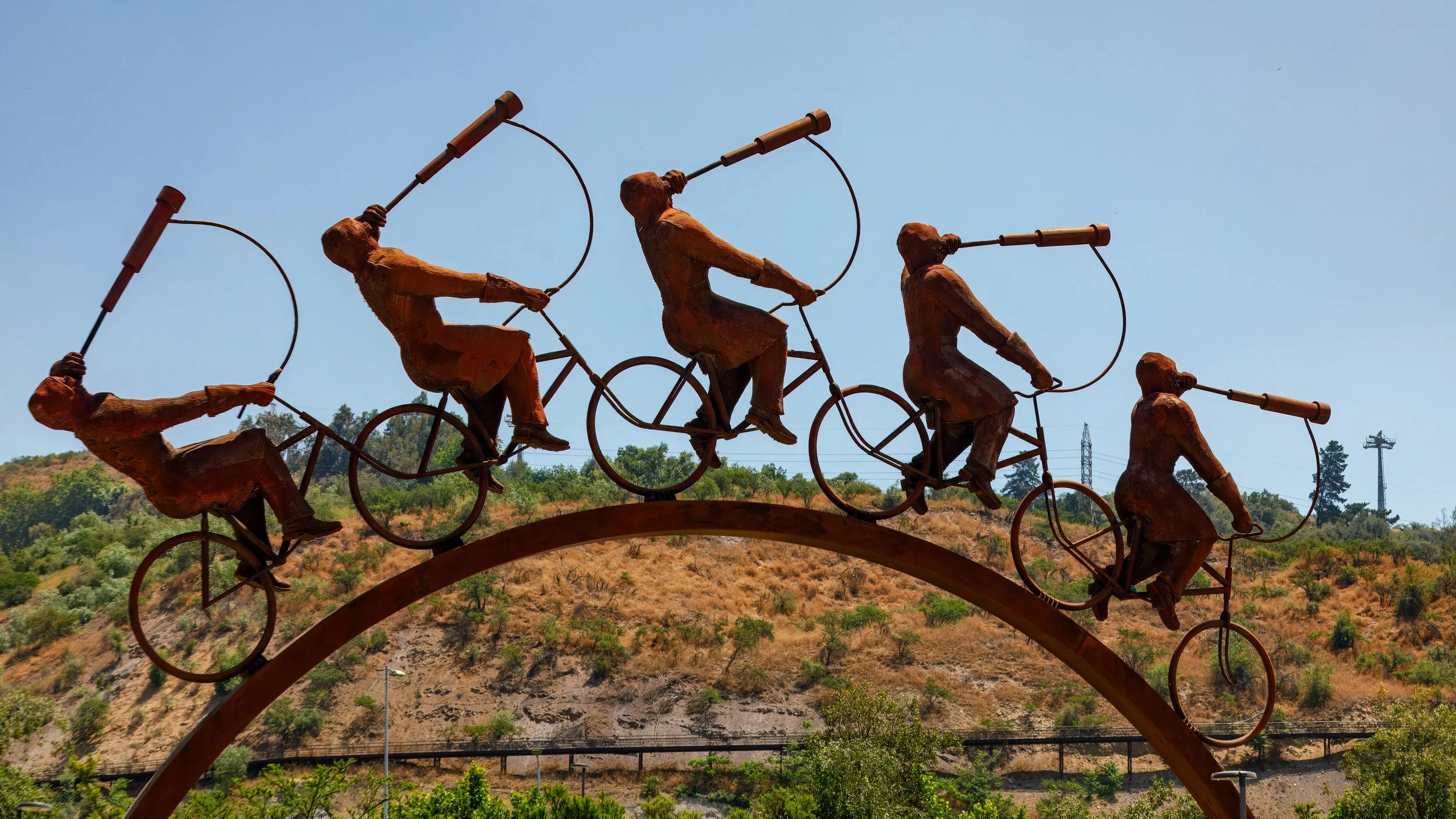
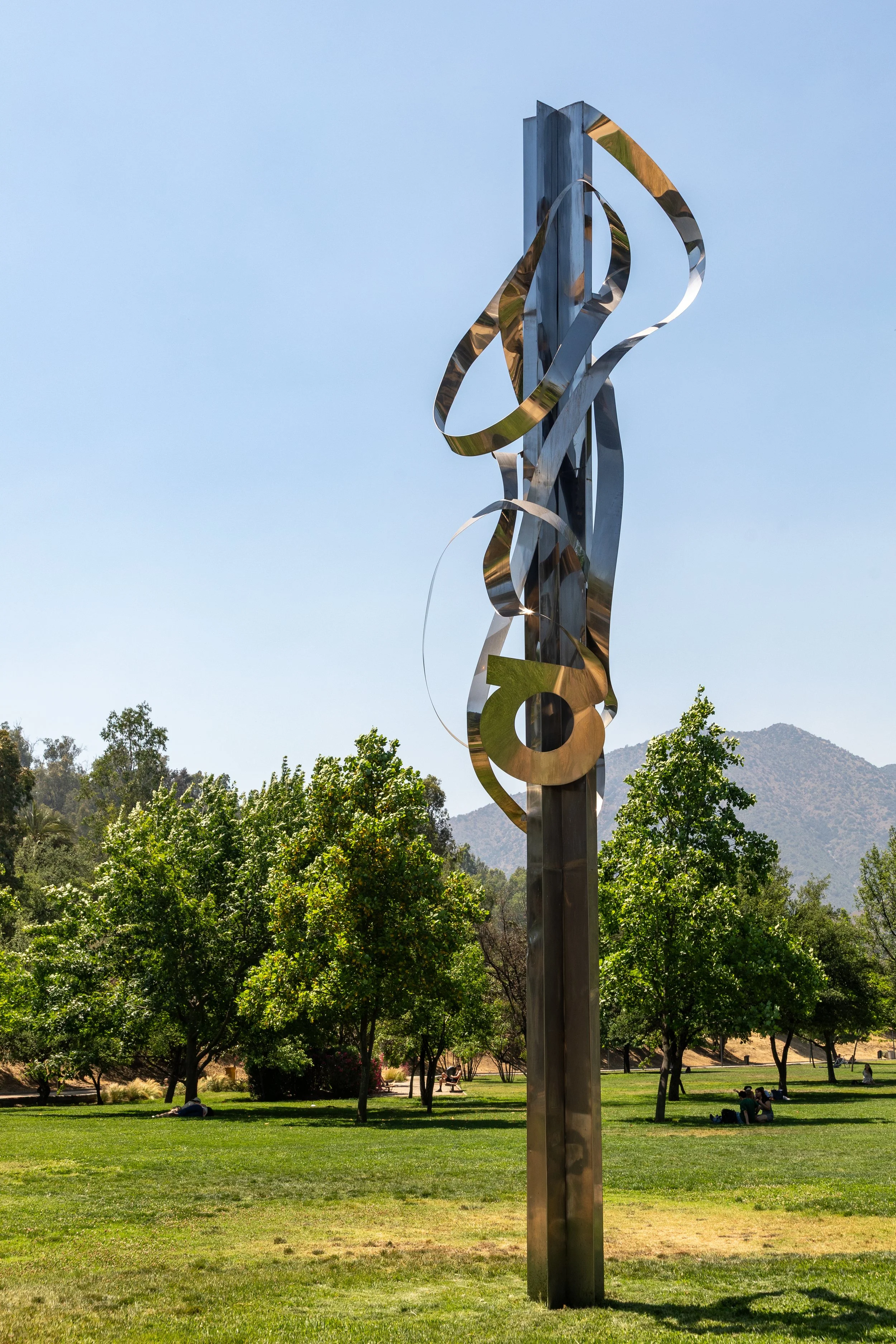
"La Búsqueda" (The Search) sculpture, created by Chilean artist Hernán Puelma
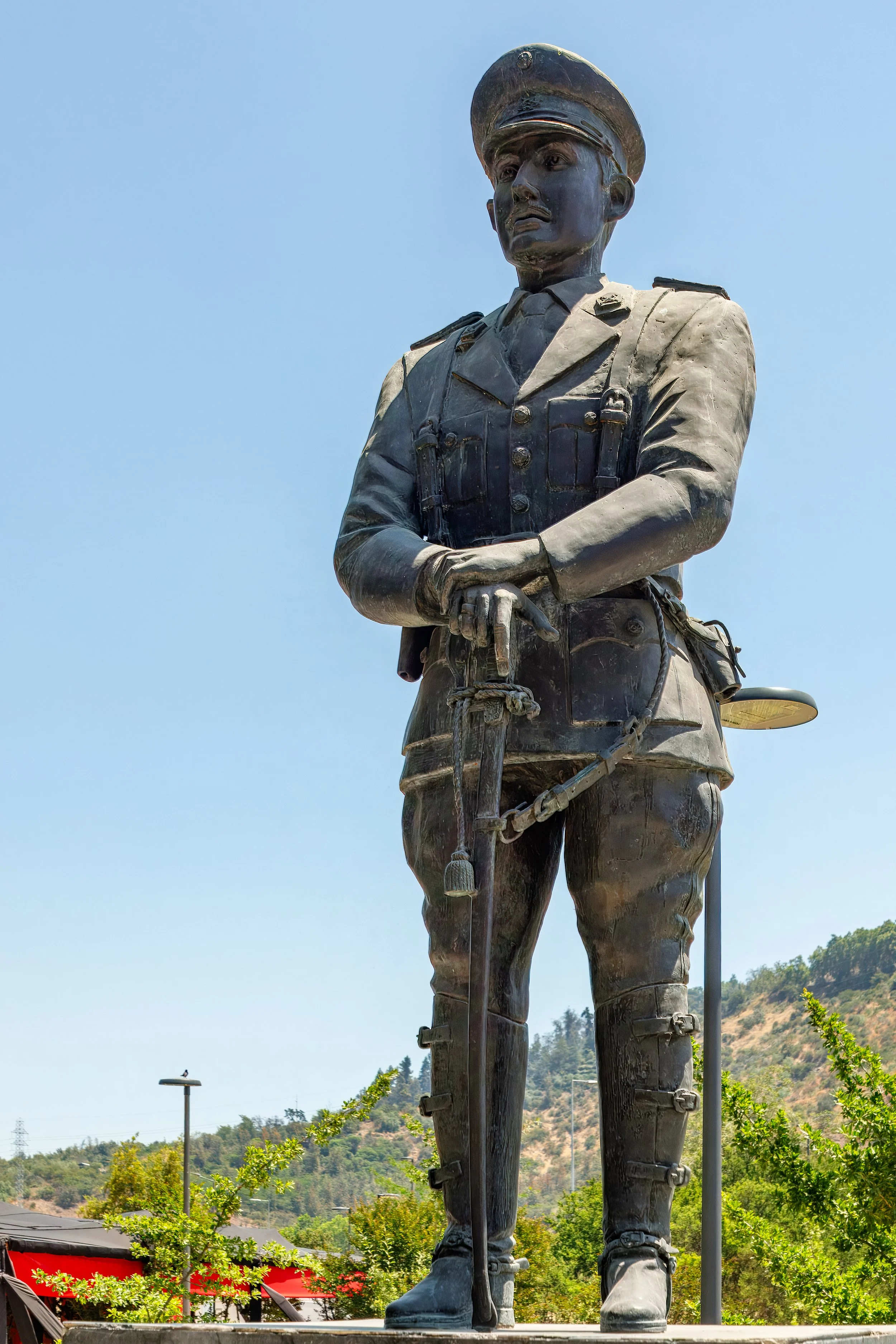
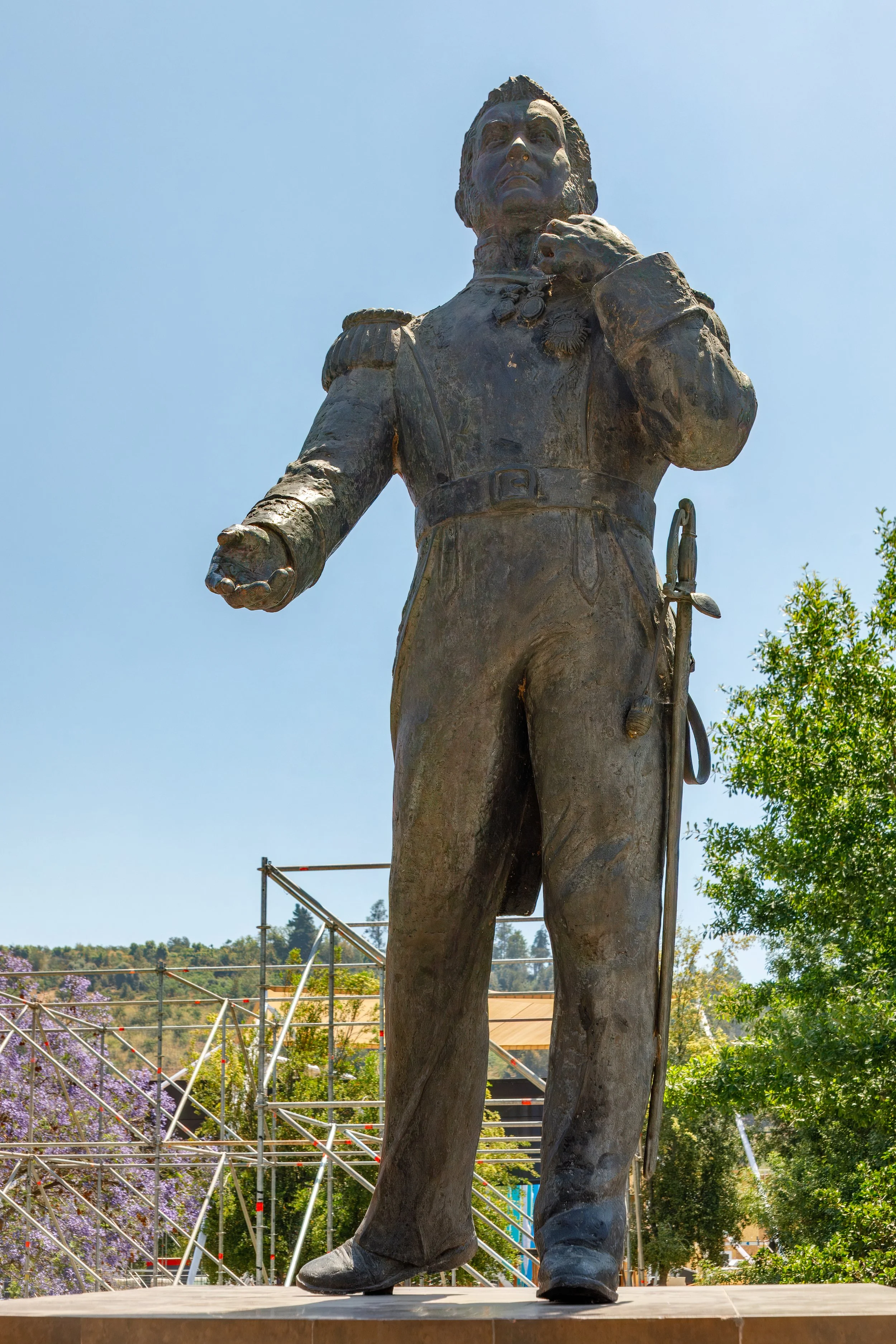
Bronze sculpture of General José de San Martín, an Argentine general and one of the liberators of South America from Spanish rule, a national hero in Argentina, Chile, and Peru
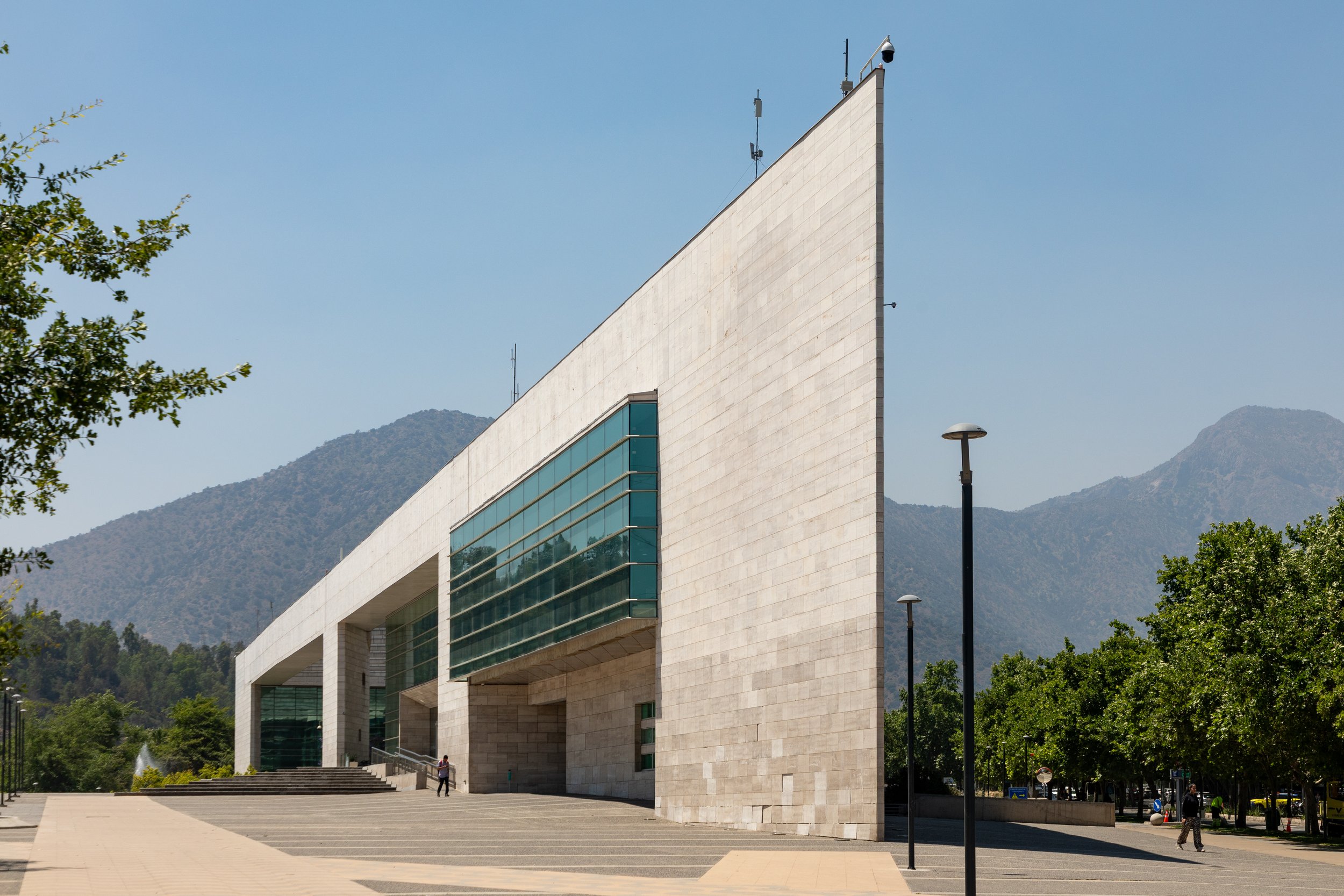
Modern Municipalidad de Vitacura (Vitacura City Hall) on the outskirts of the park
Modern sculpture on the edge of the park
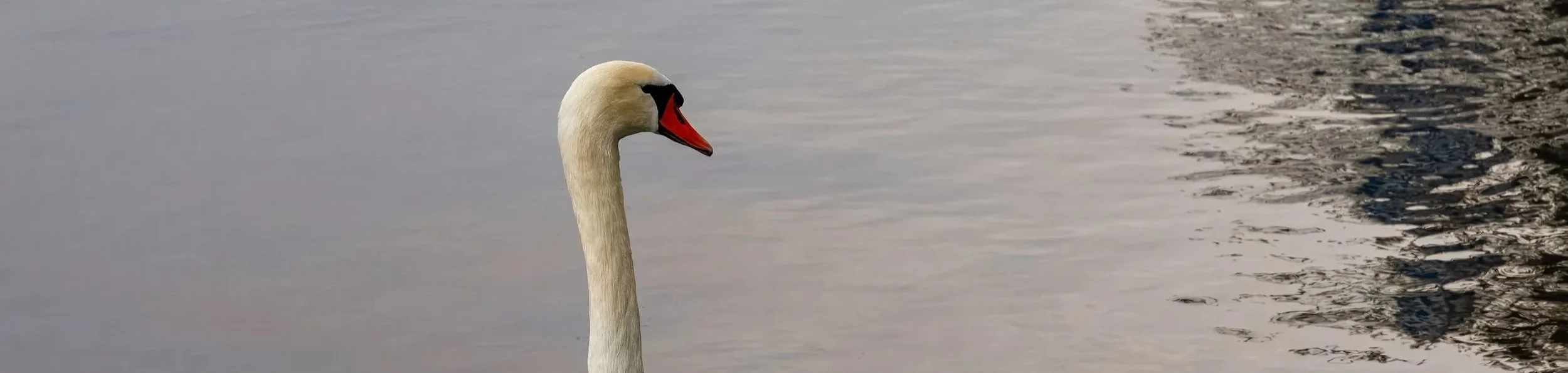
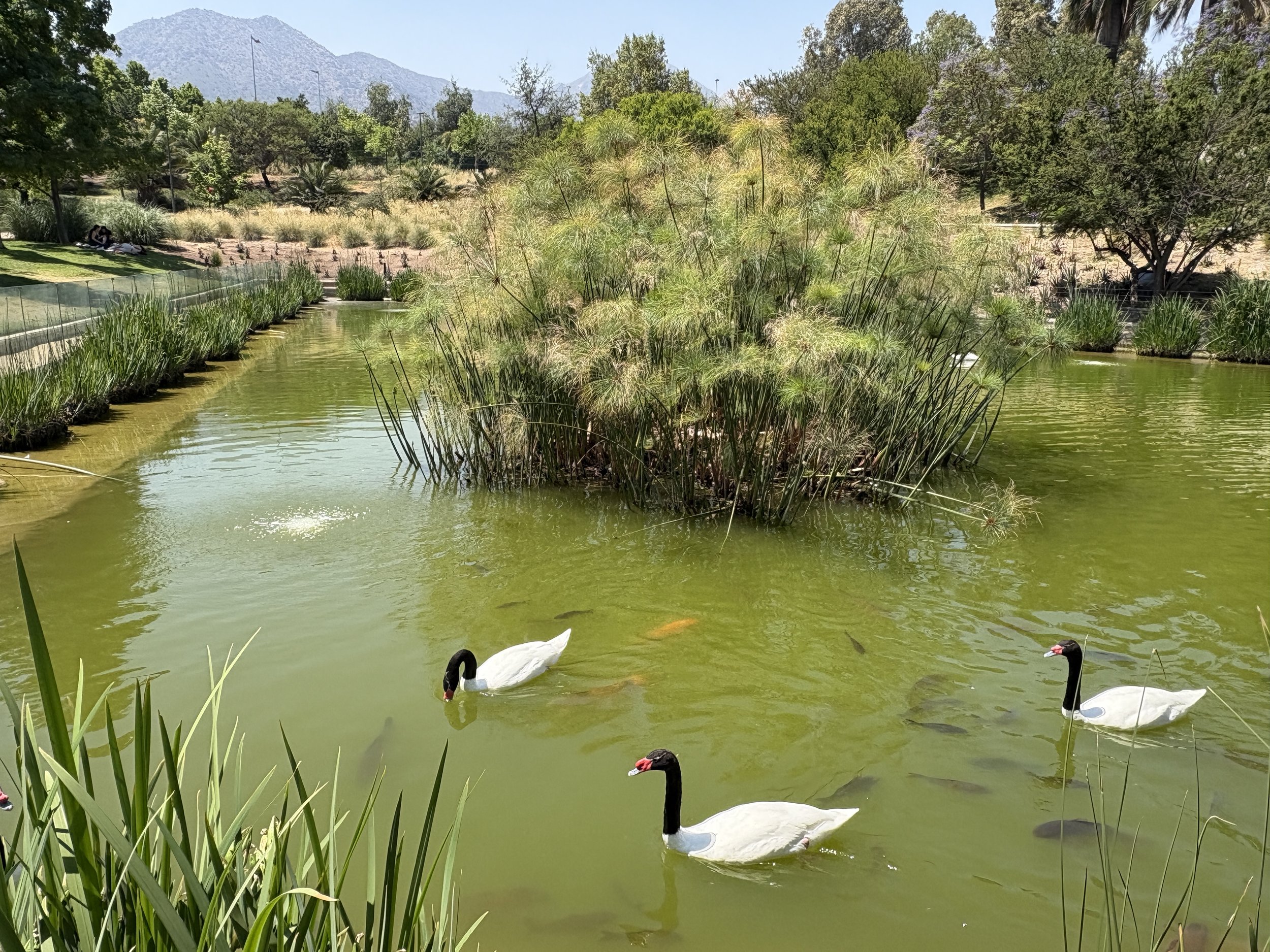
Swans on the large lagoon on the northern end of the park
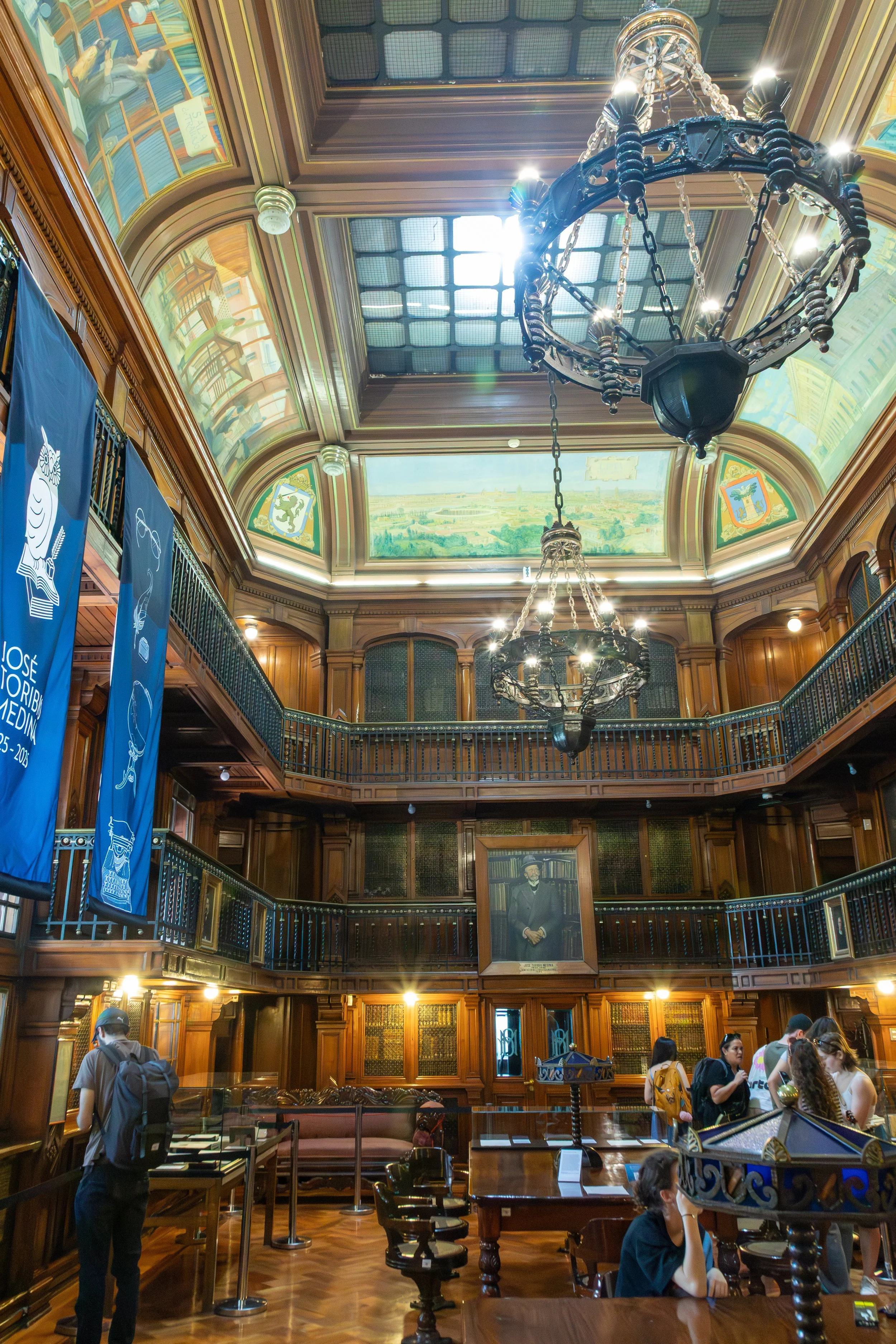
Back in the city center, we explored the National Library
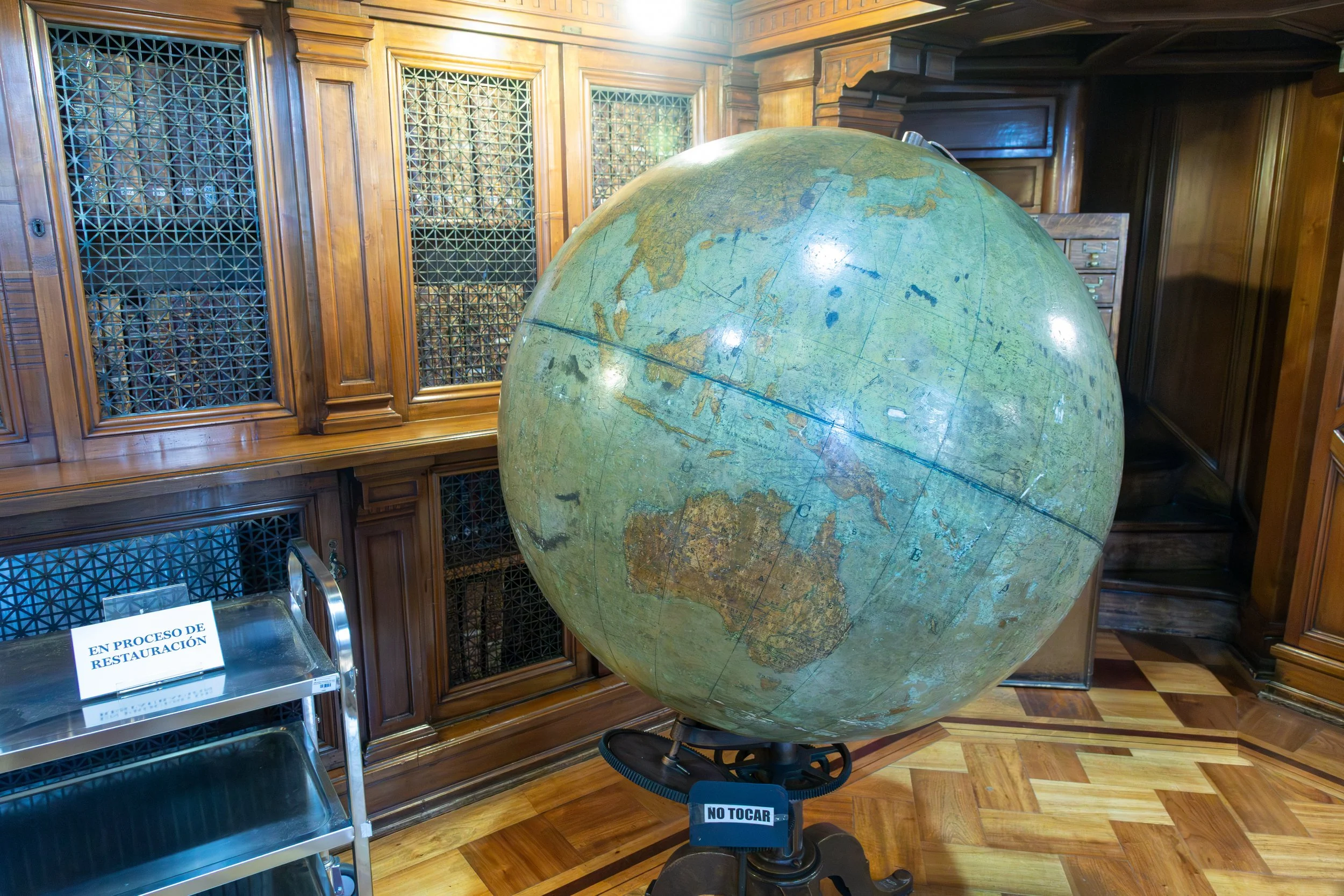
Historic globe in the museum shows a snapshot of the view of the planet at that time
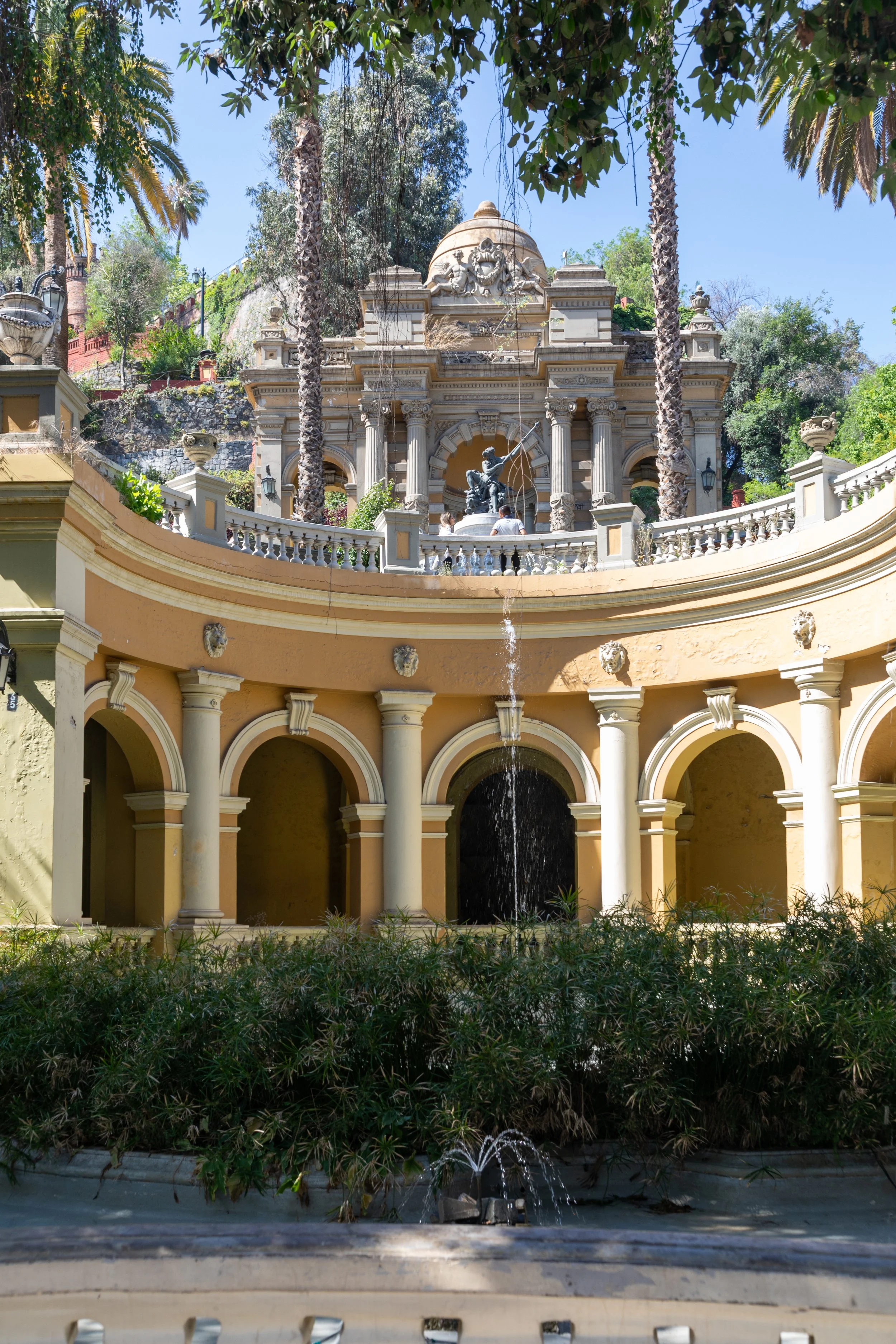
Neptune Fountain, the centrepiece of Santa Lucia park
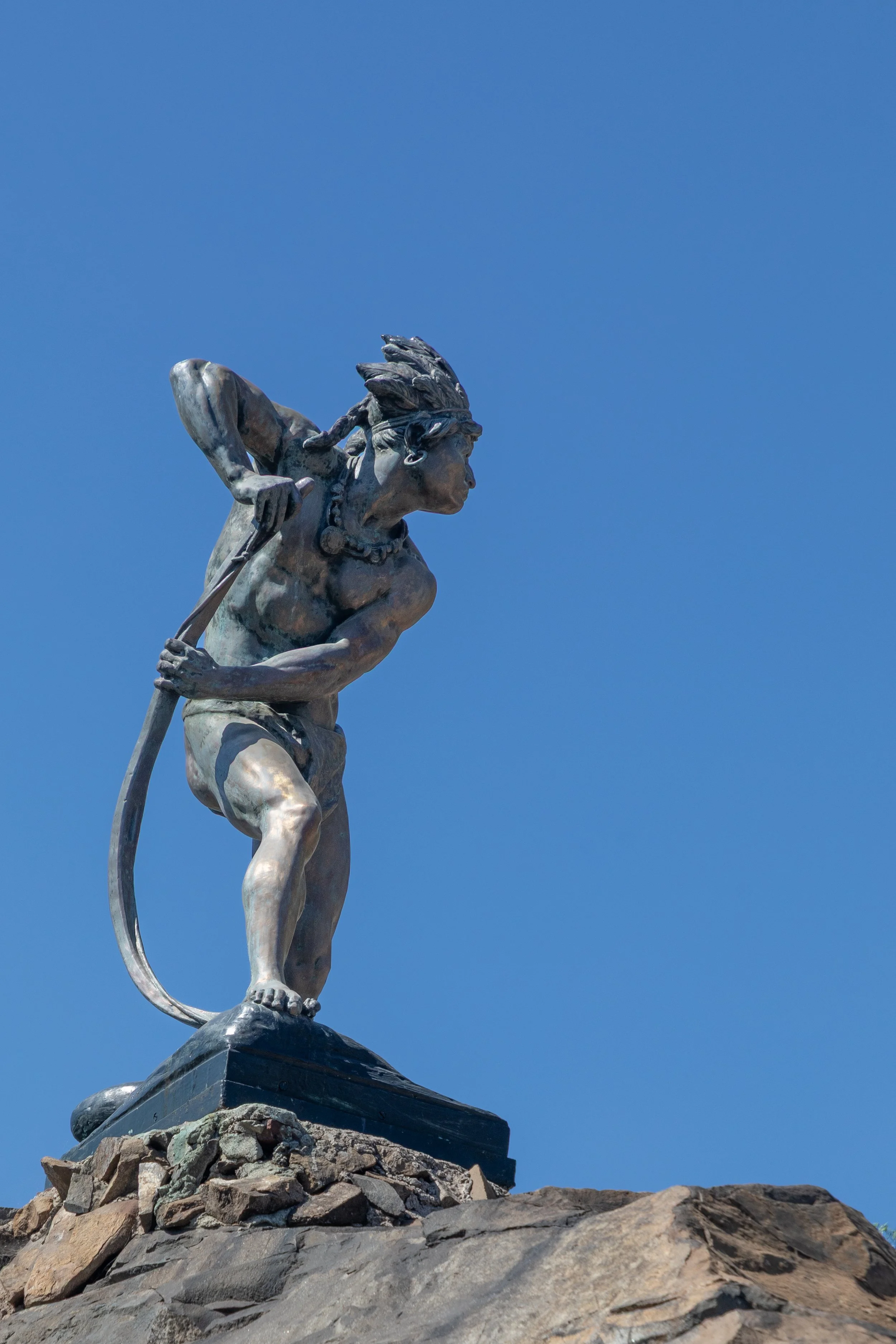
One of the statues decorating the hillside park
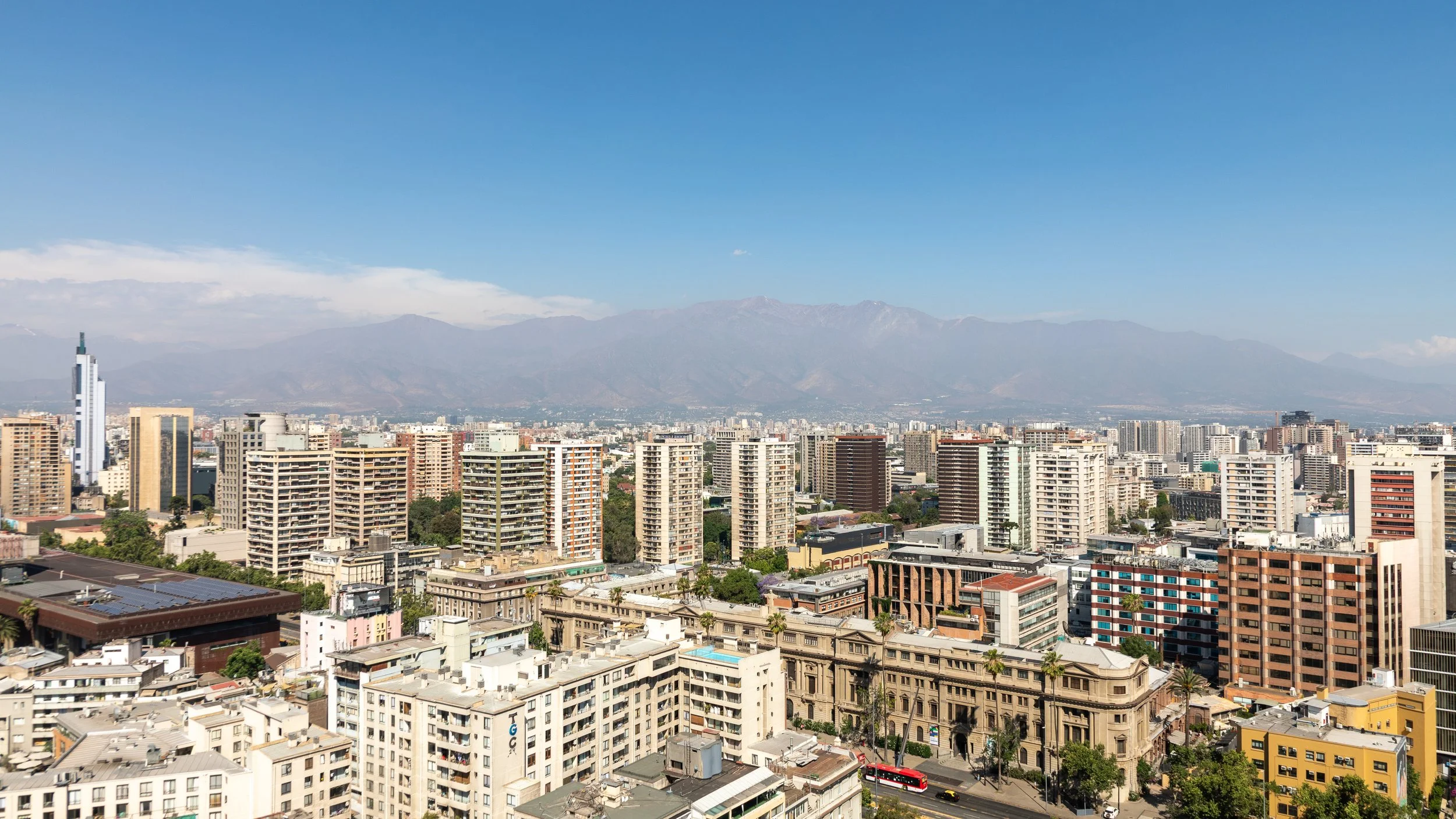
Looking down on the town centre from the hilltop
Looking across to the funicular running up Bellavista, where we visited at the beginning of the trip
More of the city and surrounding mountains from the lookout
Making our way back down to the city
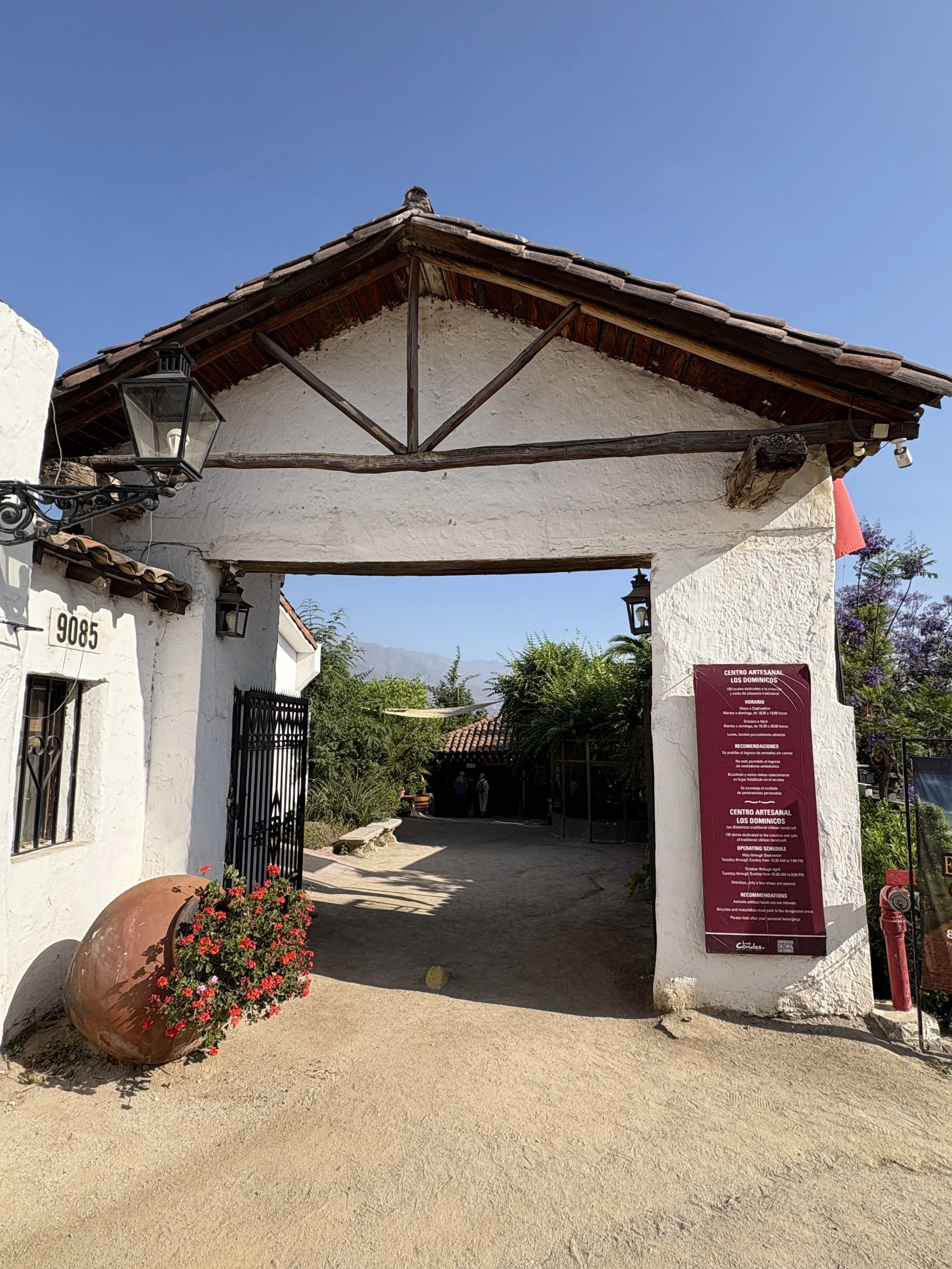
The Centro Artesnal Los Dominicos, a restored market, has a collection of shops
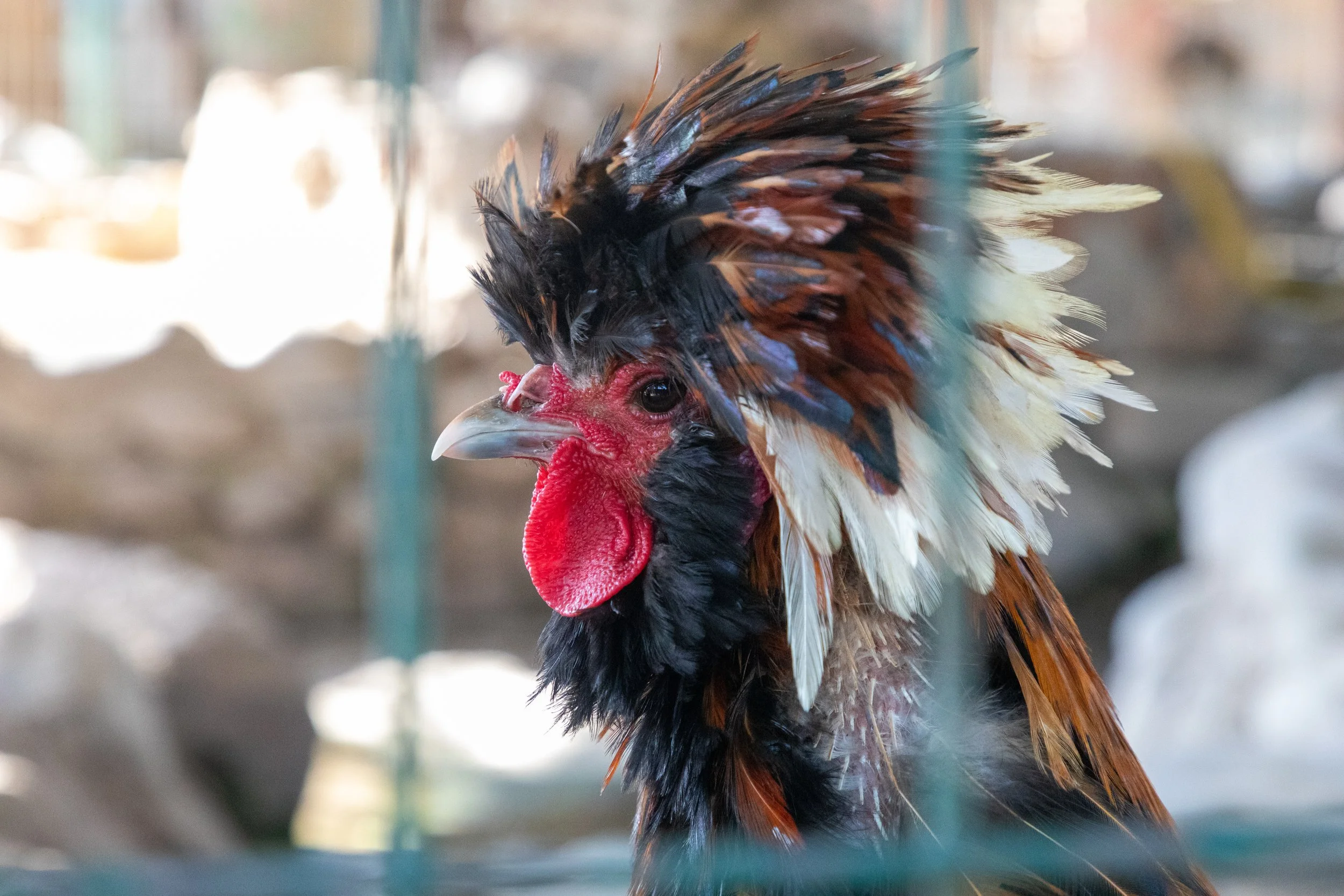
A chicken coop in the centre of the market area
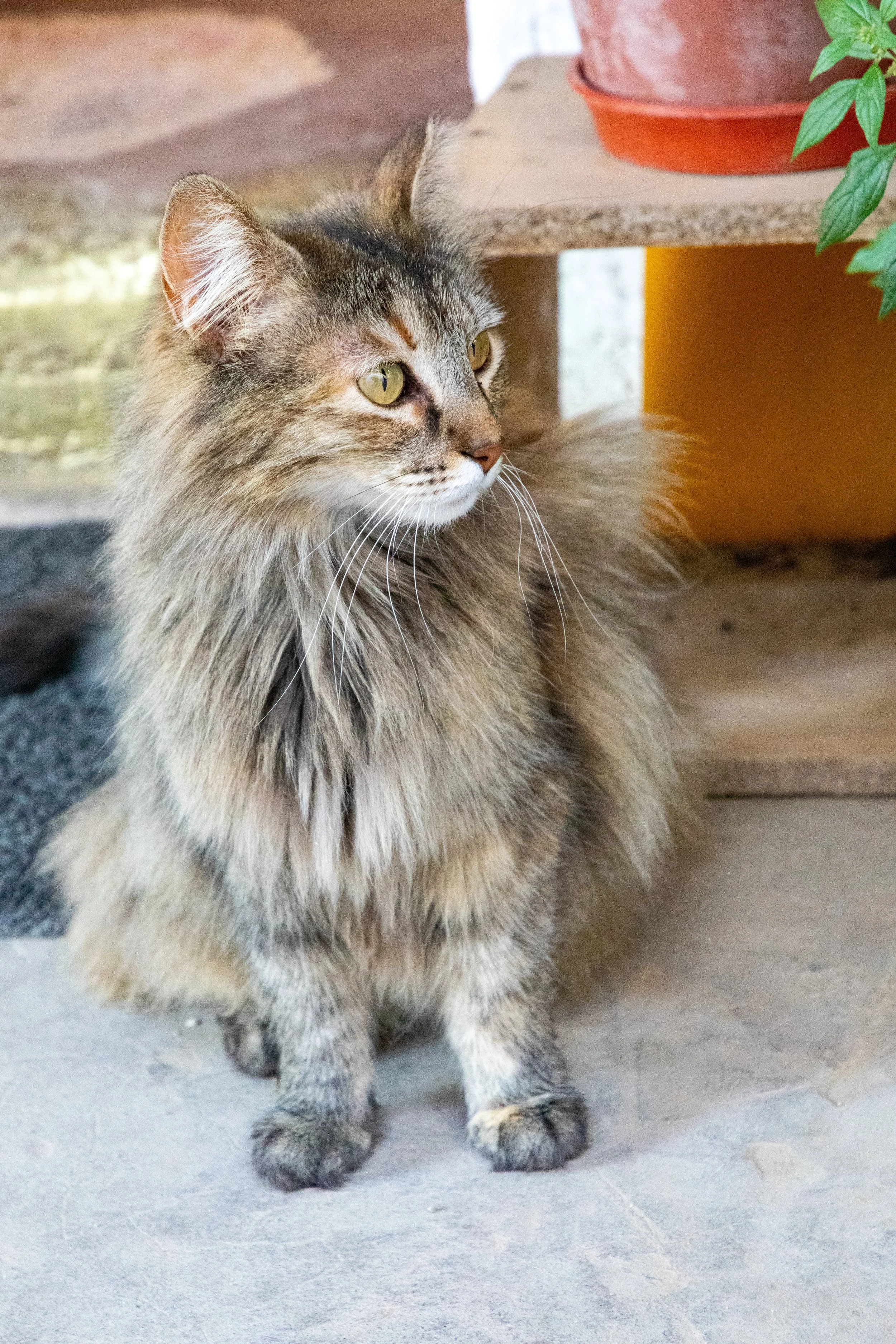
A friendly cat was roaming freely
Having made a full day exploring the city, we headed back to the hotel. Our hotel restaurant had a pretty interesting menu and was obviously very convenient, so we enjoyed a nice dinner before laying down for the evening.
Nov 25
Our flight back to Toronto wasn’t until 7pm, so we had a good portion of the day to see more of Santiago. After breakfast we headed out.
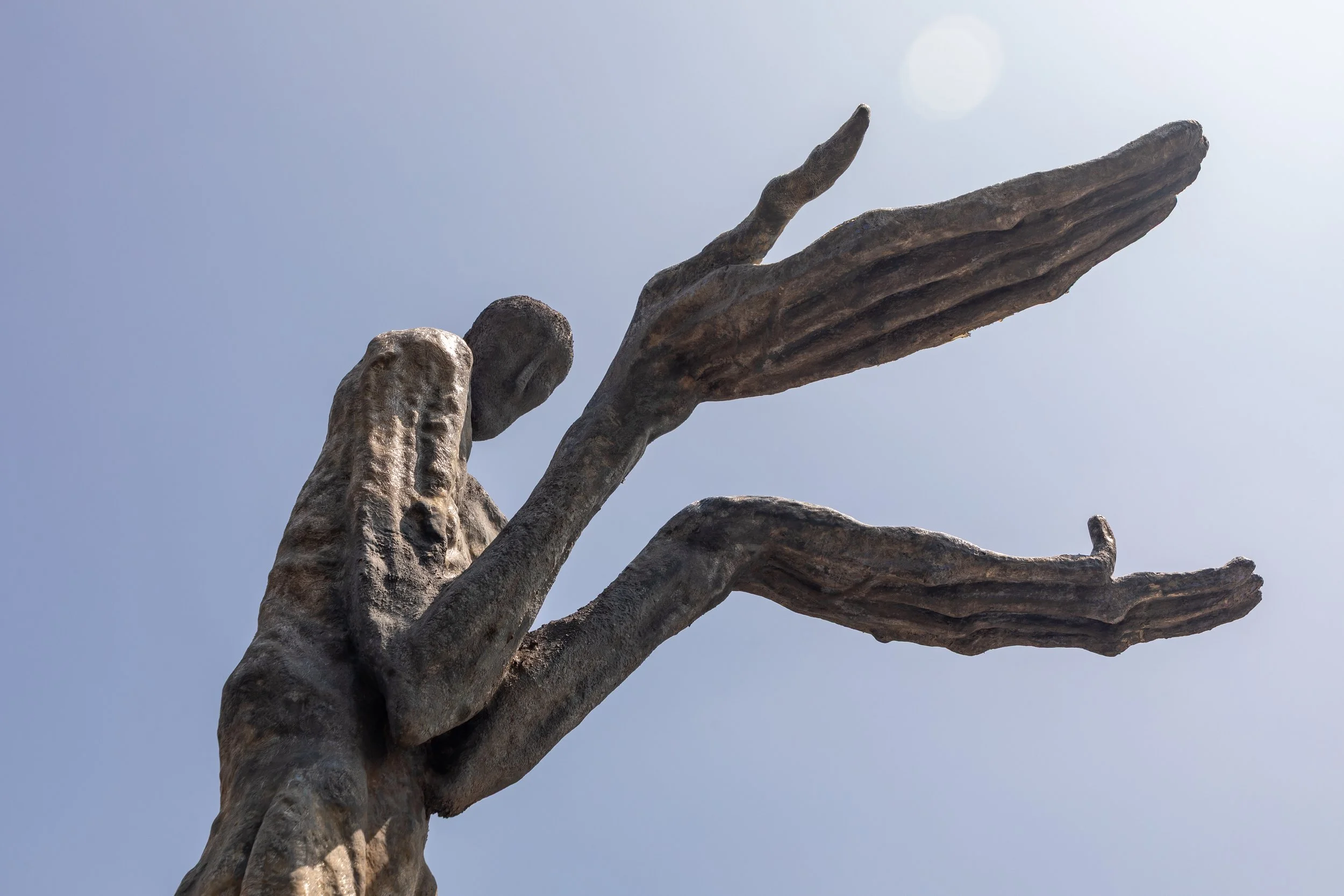
Sculpture outside Municipal Theatre in Las Condes
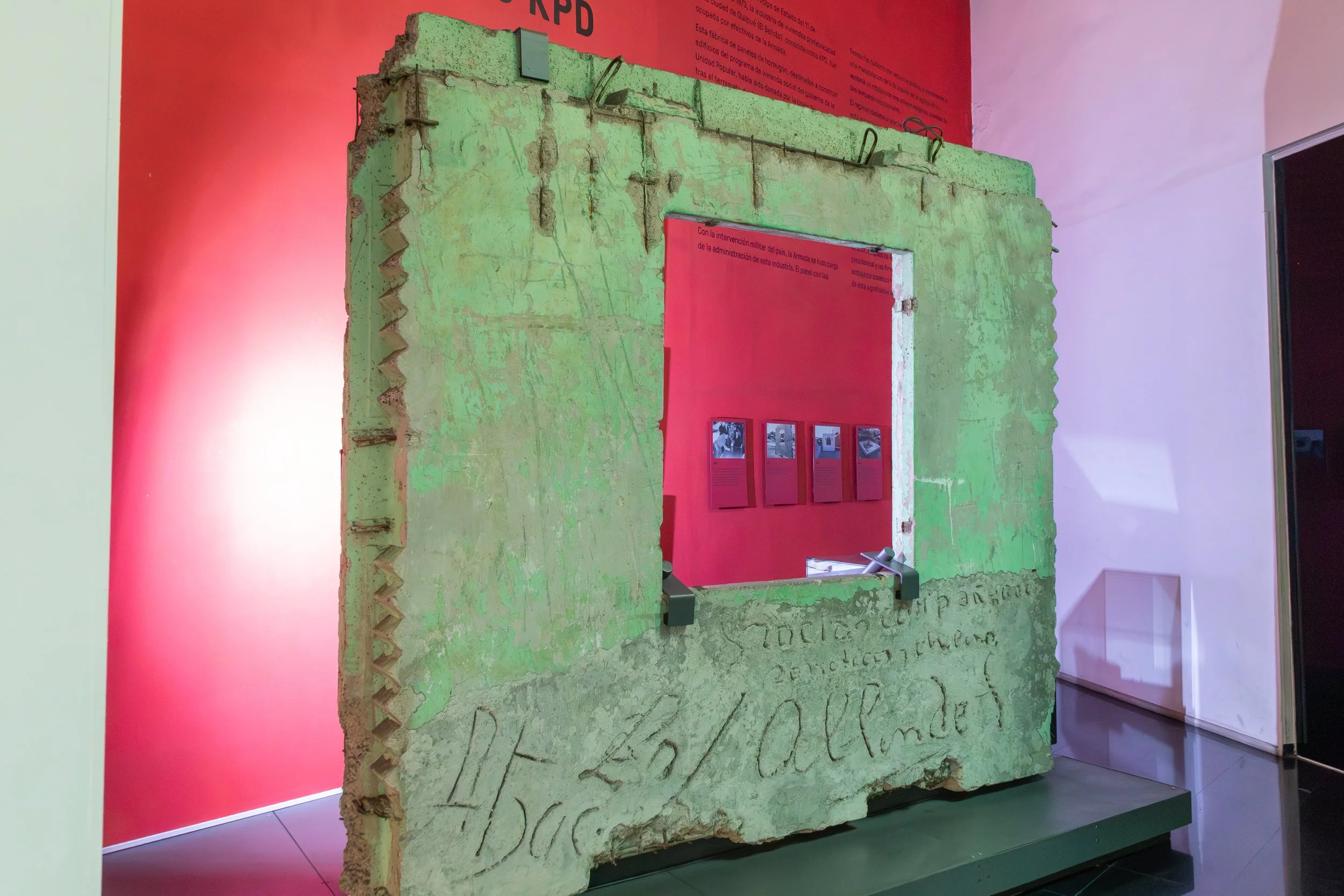
Artifact in the Museum of Memory and Human Rights
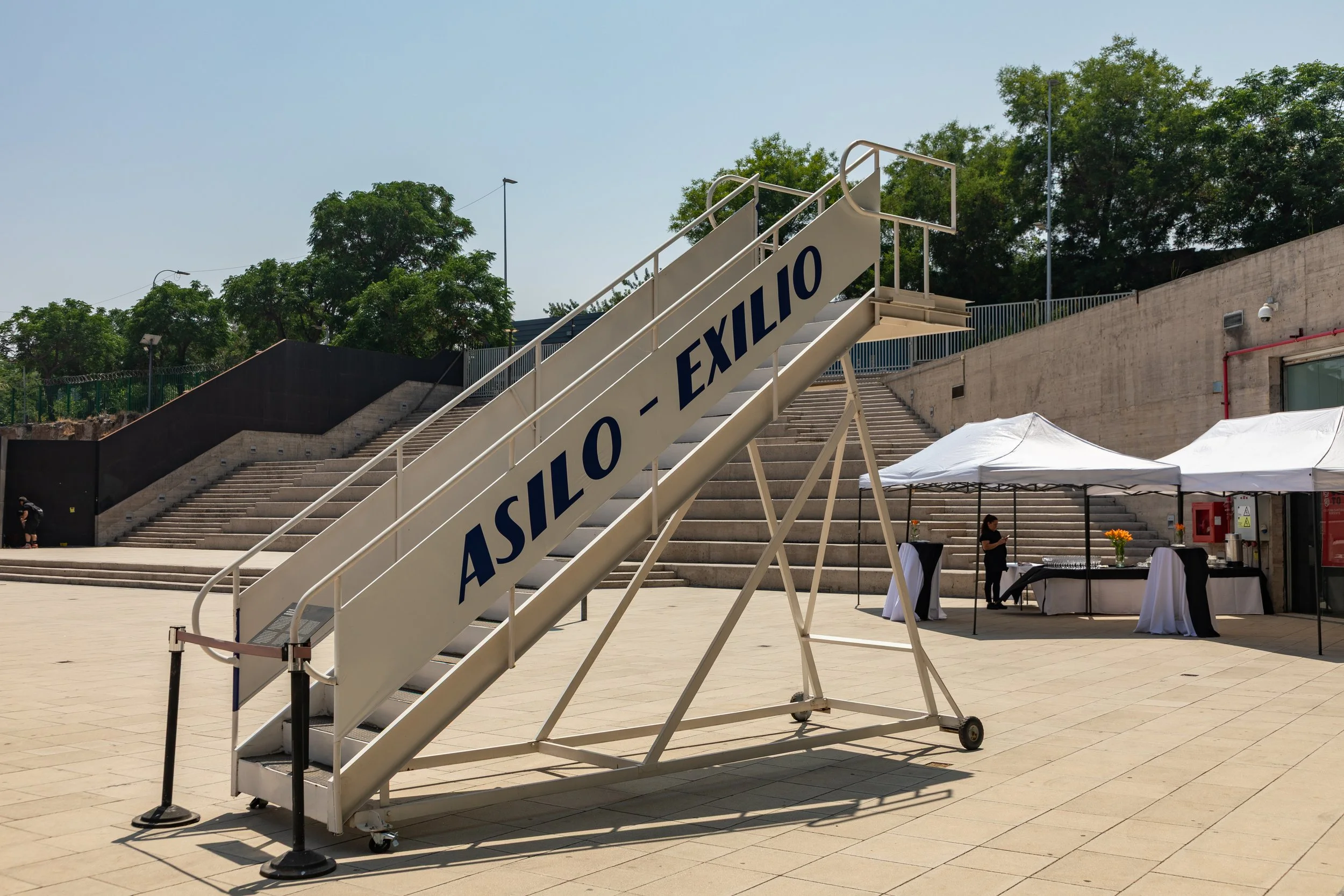
"ASILO - EXILIO" (Asylum - Exile) jet bridge exhibit outside the museum
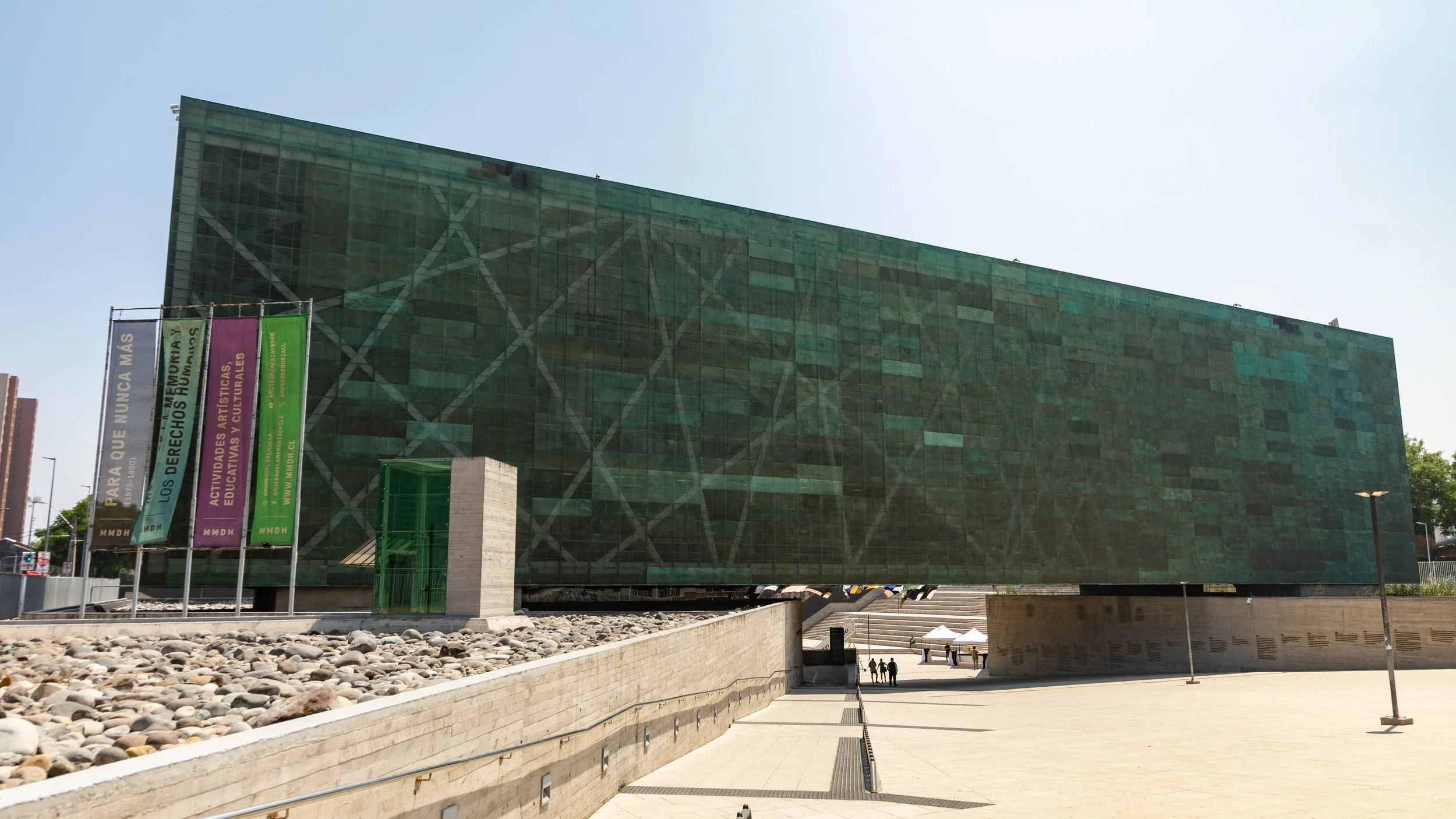
Museum of Memory and Human Rights impressive exterior, unfortunately the main museum was closed for updates during our visit
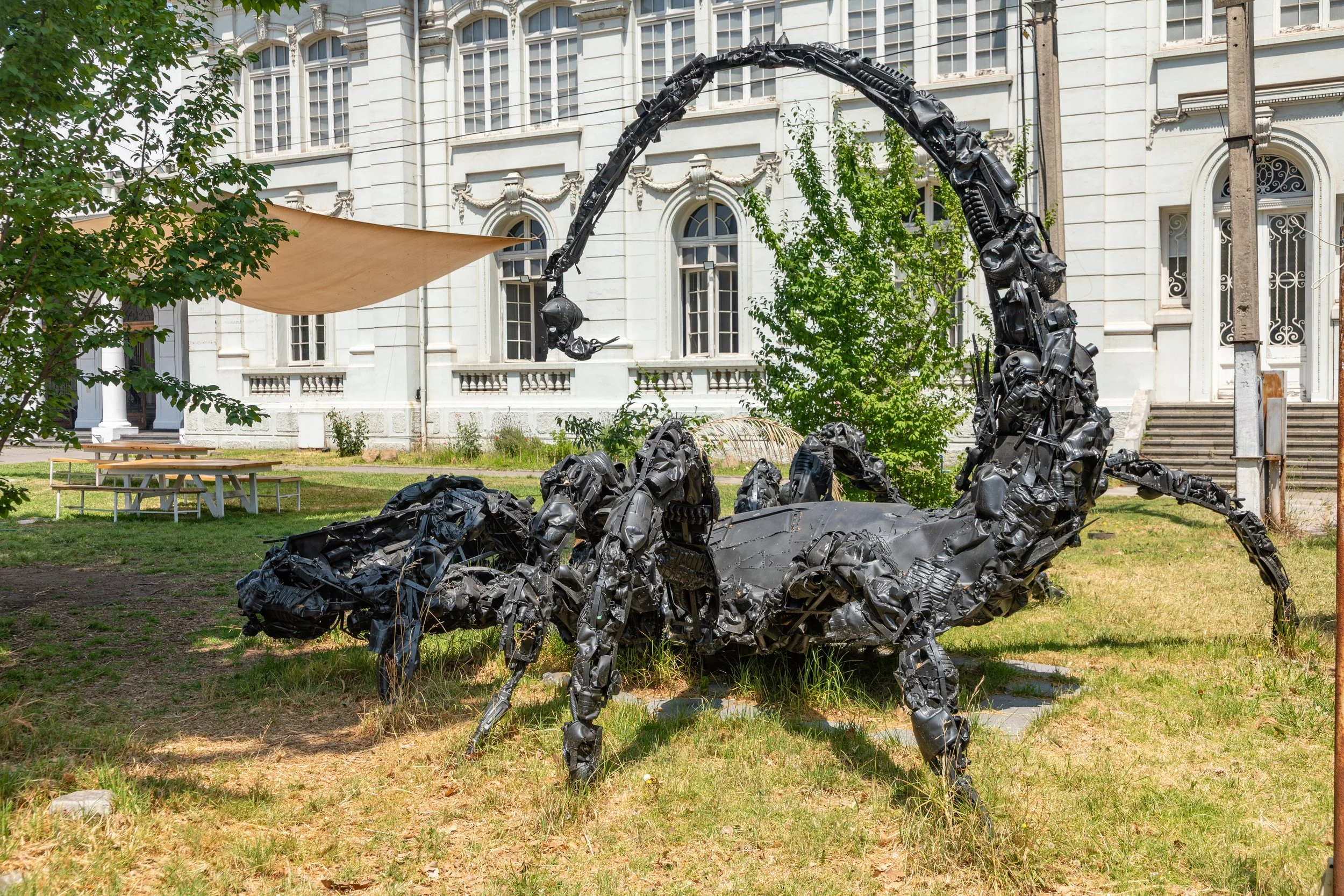
Sculpture outside of the Museum of Contemporary Art
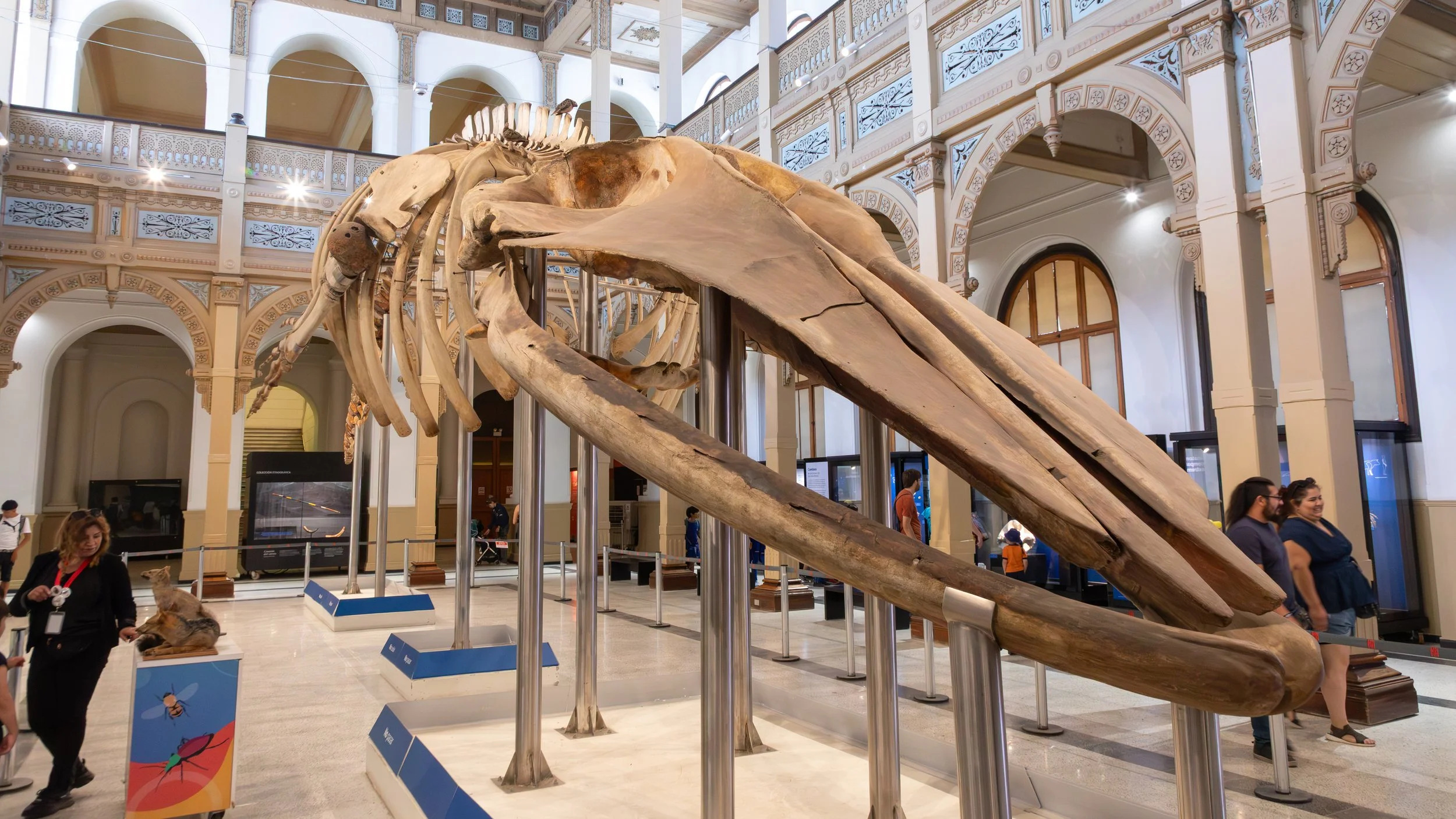
Whale skeleton on display in the National Museum of History
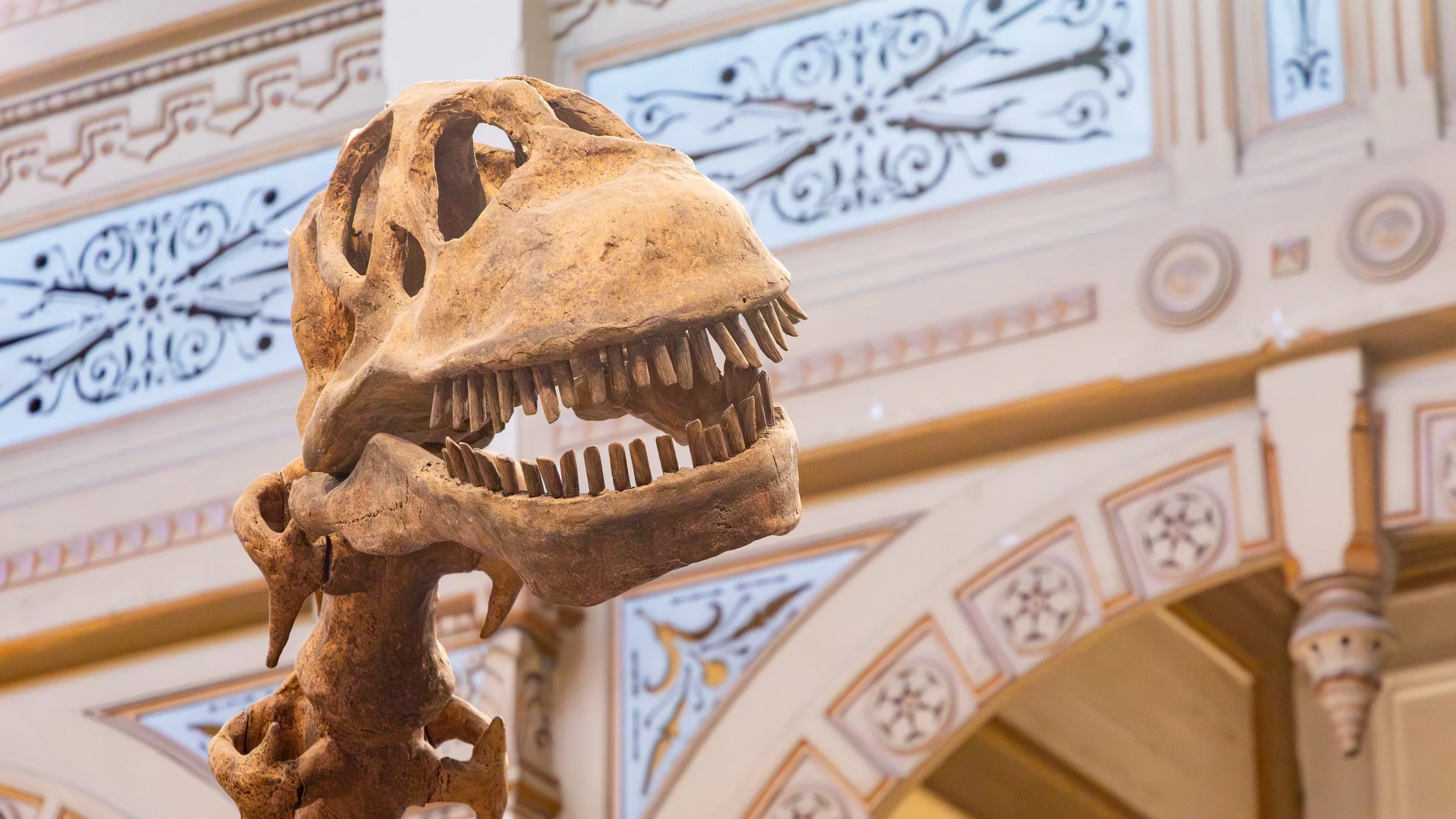
The dinosaur exhibit in the museum takes up a good portion of the main hall
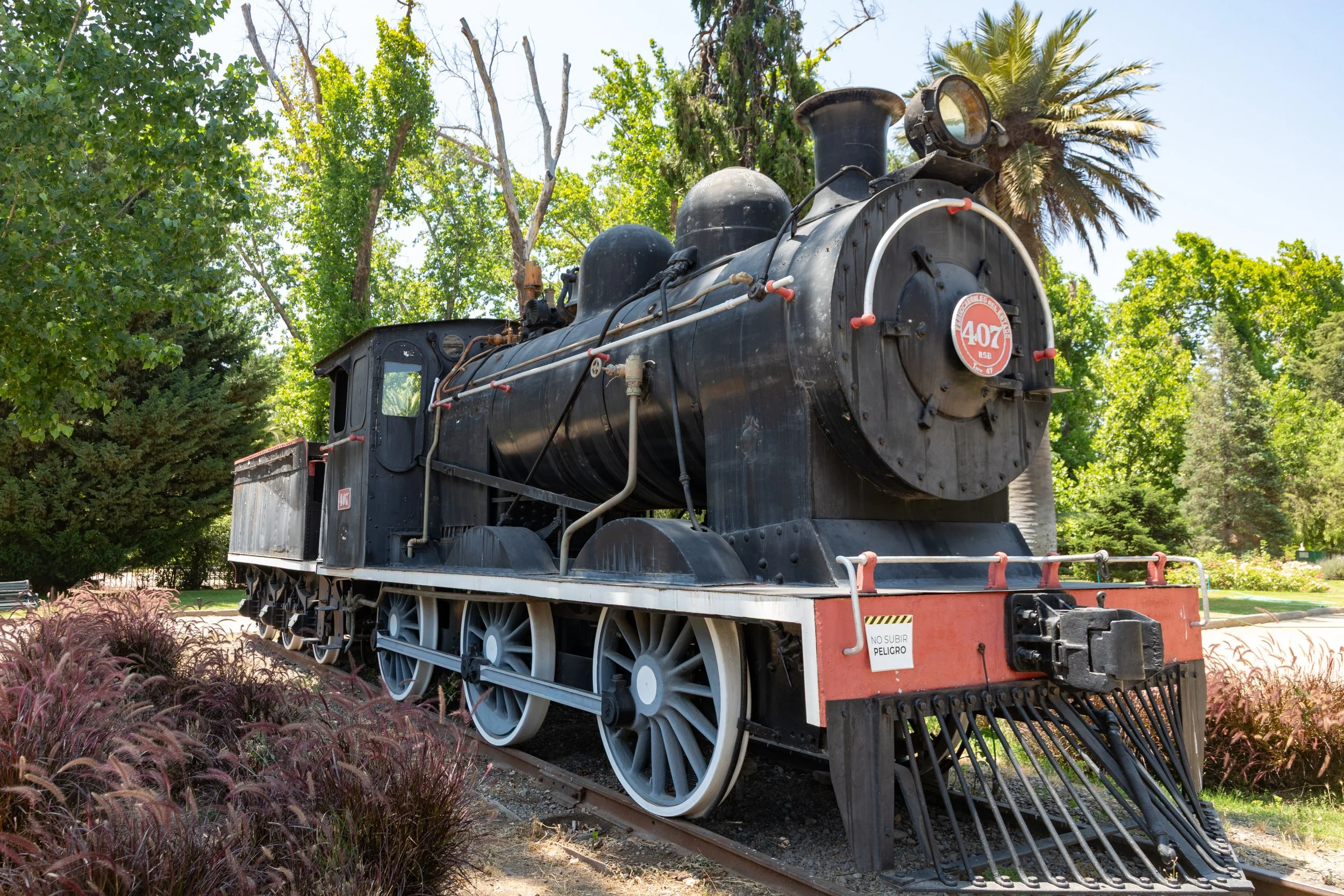
Outdoor Museo Ferroviario train museum has an impressive collection of train engines and cars
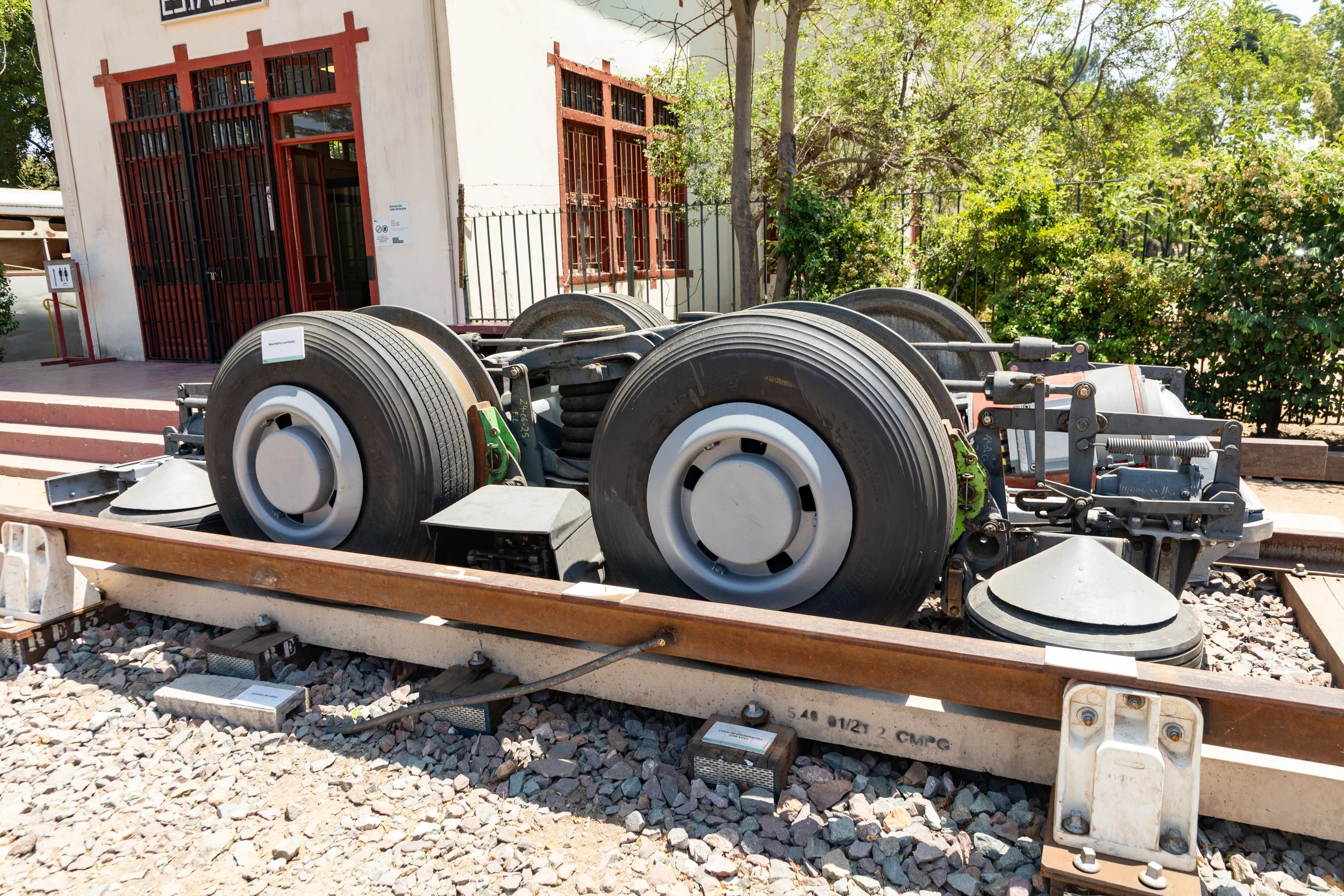
Subway train wheel mechanism
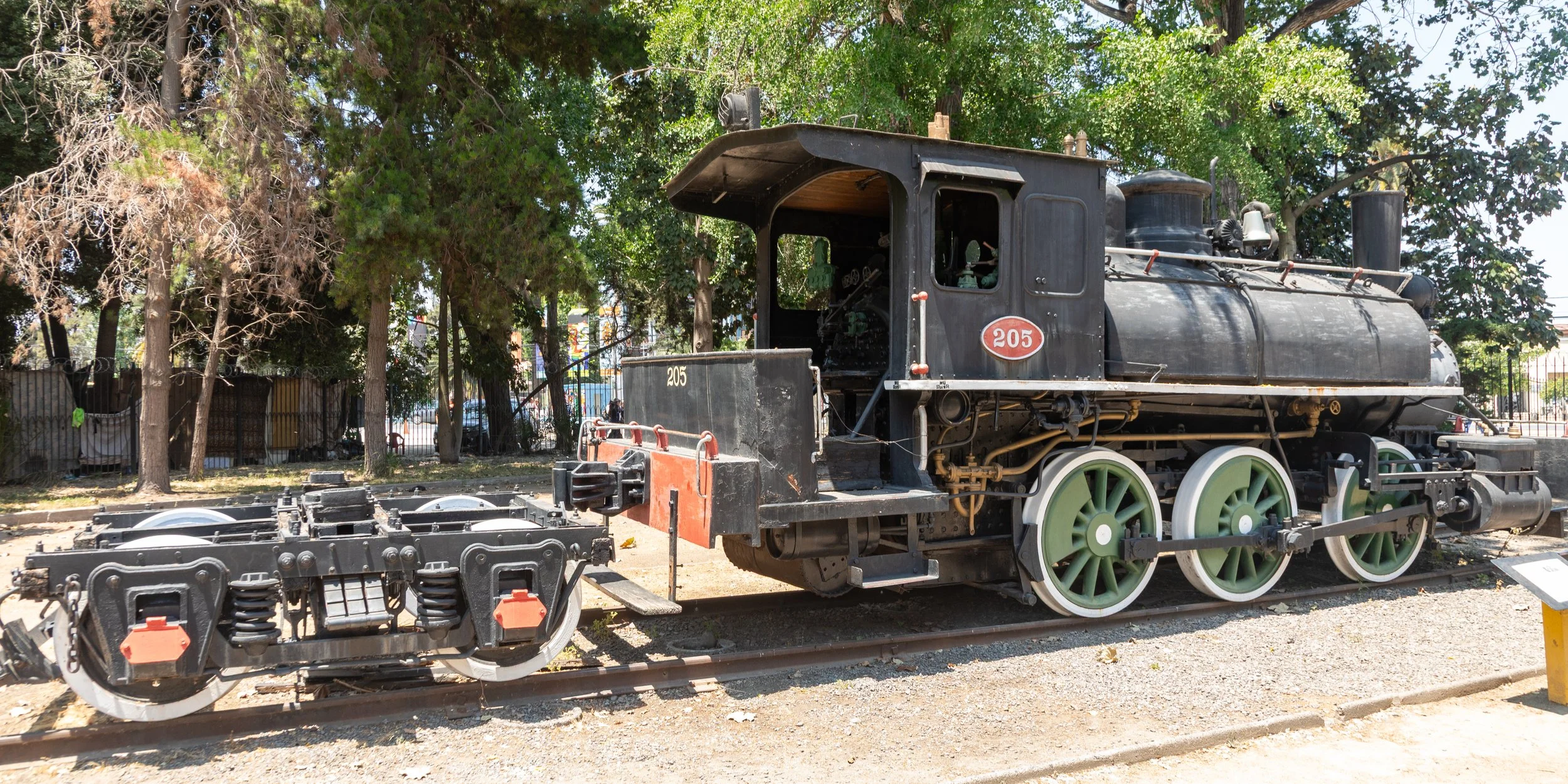
Locomotive 205 was built in the US in 1893, and was used as a yard locomotive for train assembly and shunting in the stations
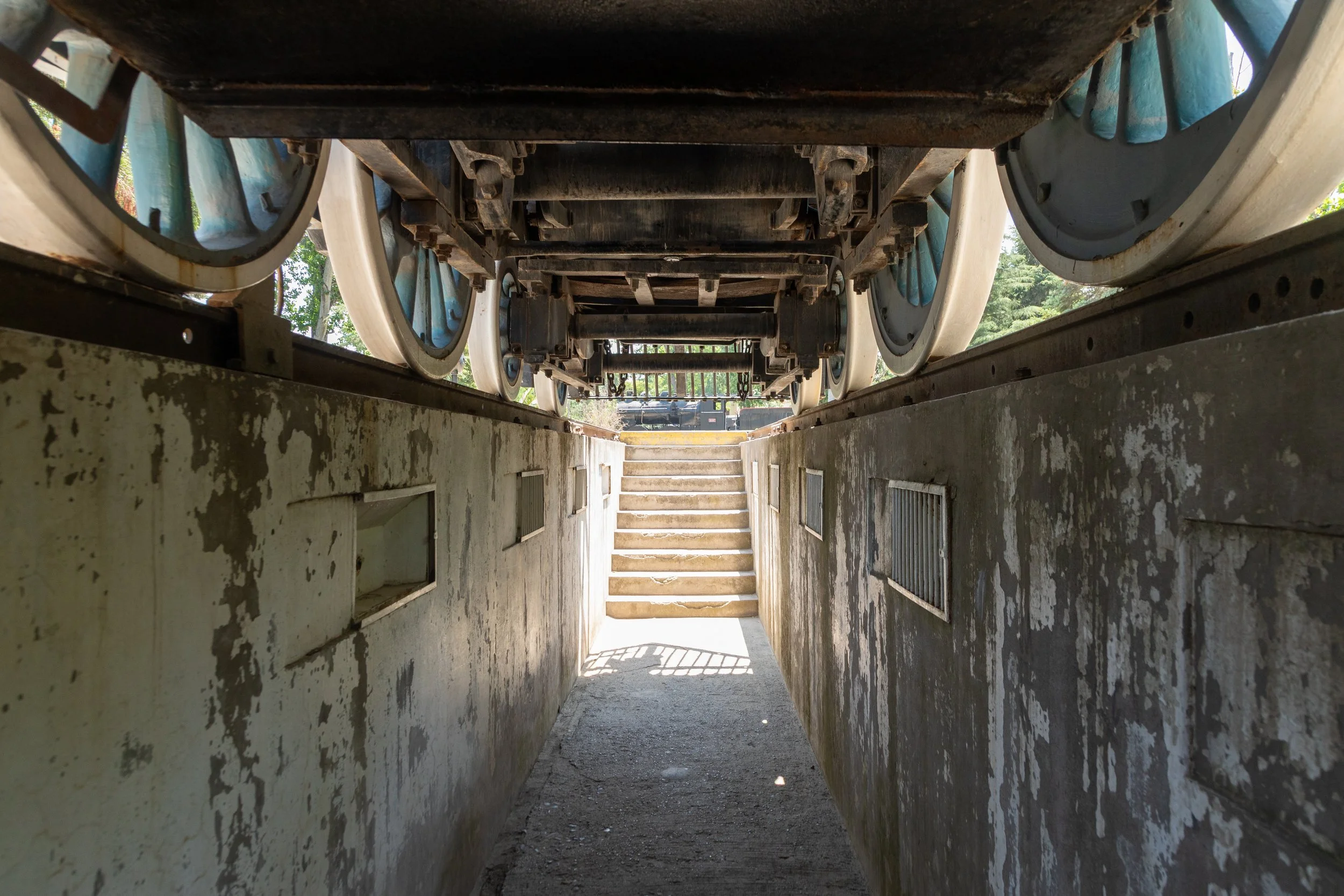
Trench allowed us to view the train underside
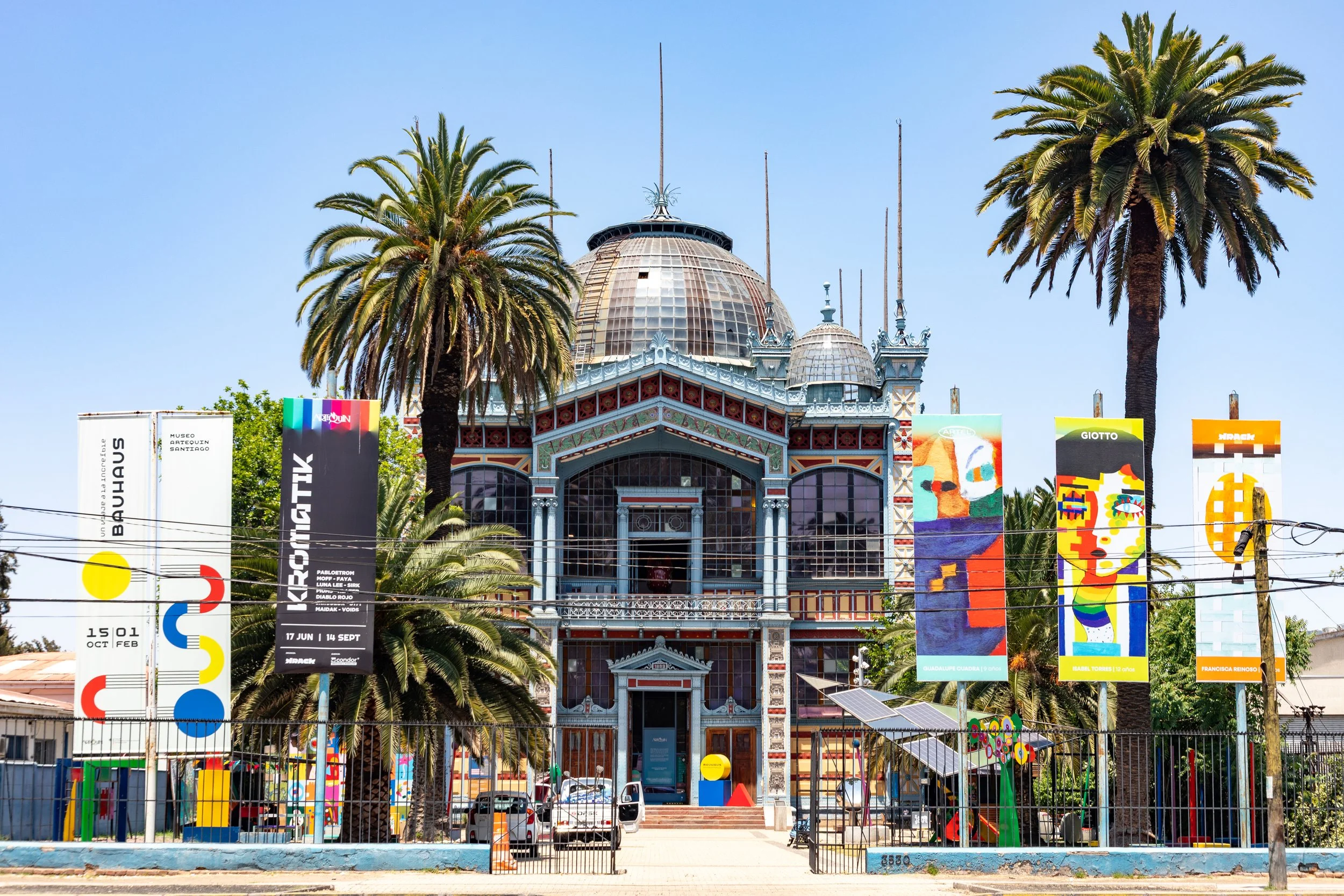
Artequin Museum in the Paris Pavilion
Having explored the museum and park area, we wanted to head back to the hotel, but unfortunately had no ability to add funds to our transit card at the station, so had to search out other options. After a long and somewhat frustrating walk, we ended up taking an Uber to the hotel. Back at the hotel, we had enough time to pack and head to the airport for our overnight flight home.
Between our time in Santiago and Mendoza, we had a great visit, and I was glad that we had one last extended vacation to cap off an already busy year of travel.